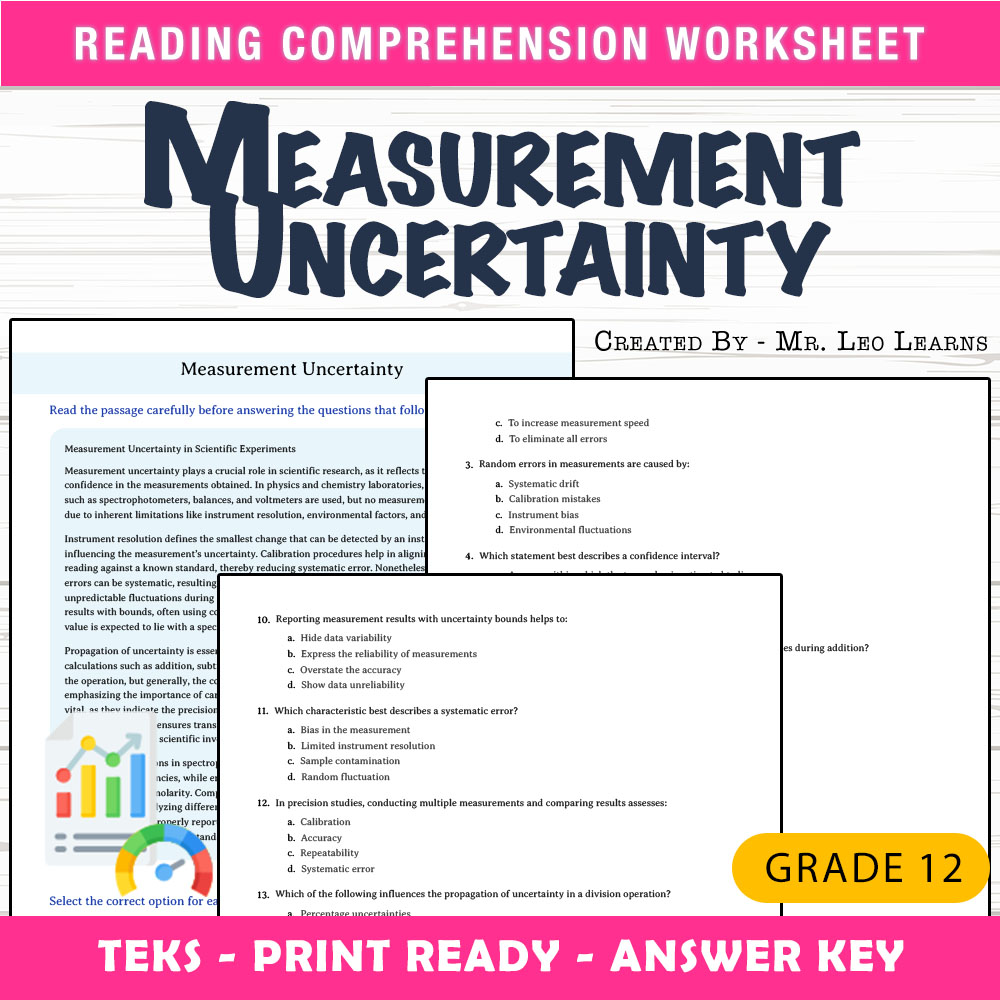
Imagine standing in front of your class, preparing to introduce the concept of measurement uncertainty. Students often find this topic abstract and challenging, especially when trying to understand how measurements are influenced by various factors and why this matters in scientific research. This worksheet provides a straightforward, print-ready resource to help clarify these concepts, offering a structured approach that guides students through the fundamental principles of measurement uncertainty, calibration, and instrument sensitivity. Designed for easy classroom integration, it helps students grasp essential skills in evaluating measurement accuracy, ultimately building confidence in how they interpret data and make scientific conclusions.
What This Resource Helps Students Do
This worksheet is crafted to support students in developing a clear understanding of measurement uncertainties. It encourages independent thinking by leading students through key concepts such as the factors that affect measurement precision, and the importance of calibration. The multiple-choice questions provide opportunities for students to apply their knowledge, reinforce their understanding, and recognize the significance of measurement accuracy in scientific experiments. This resource supports skill-building in analyzing measurement data and understanding the role of instrument limitations, aiding students in connecting theory to practical application within scientific contexts.
Inside the PDF
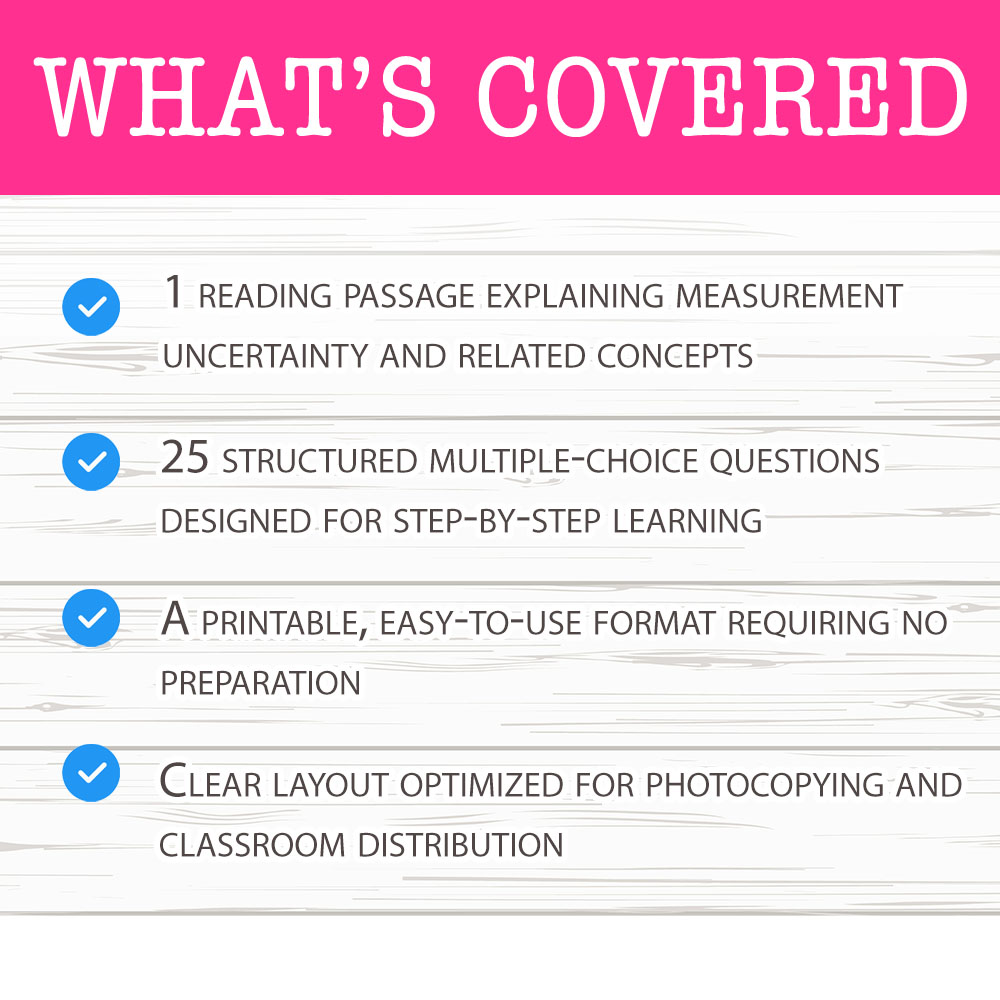
• 1 reading passage explaining measurement uncertainty and related concepts
• 25 structured multiple-choice questions designed for step-by-step learning
• A printable, easy-to-use format requiring no preparation
• Clear layout optimized for photocopying and classroom distribution
How It Improves Learning
This worksheet enhances learning by breaking down complex concepts into manageable sections, making it easier for students to understand and retain. The reading passage provides foundational knowledge, while the questions challenge students to think critically about the factors influencing measurement accuracy. The multiple-choice format offers immediate practice opportunities, helping students identify misconceptions and correct their understanding in real time. By engaging with this resource, students develop stronger reasoning skills and greater confidence in evaluating measurement data, preparing them for both classroom assessments and real-world scientific application. The clear layout and focused questions help reinforce key ideas, leading to improved comprehension and a deeper appreciation for precision in science.
Core Skills Students Will Develop
- ➡️ Understanding measurement uncertainty and its importance
- ➡️ Applying concepts of calibration and instrument sensitivity
- ➡️ Analyzing factors that influence measurement precision
- ➡️ Critical thinking about experimental accuracy and data interpretation
Ways Teachers Use This Worksheet
This resource is versatile for various instructional purposes. It can serve as a helpful tool for classwork during lessons on measurement principles, as an assessment to gauge student understanding, or as homework to reinforce concepts outside of class. It also works well for small-group discussions or formative assessment reviews, providing a consistent and effective way to evaluate progress. Additionally, teachers can assign it as early finisher work or use it for review sessions, ensuring students have multiple avenues to practice and master measurement accuracy in science.
Why This PDF Saves Time
This worksheet is ready to print and distribute immediately, saving teachers valuable preparation time. Its clear, straightforward layout eliminates the need for extensive customization or additional materials. The print-and-go format ensures consistent presentation, helping teachers maintain instructional flow without delays. Reliable and easy to use, this resource provides a practical solution to reinforce measurement concepts effectively in a busy classroom environment.
End your lesson with confidence knowing this well-structured, classroom-friendly worksheet is designed to help your students understand measurement uncertainty thoroughly. It encourages independent learning while providing a solid foundation for more advanced scientific inquiry. Ready to print, simple to implement, and focused on student success — this resource is a dependable addition to your science teaching toolkit. 😊