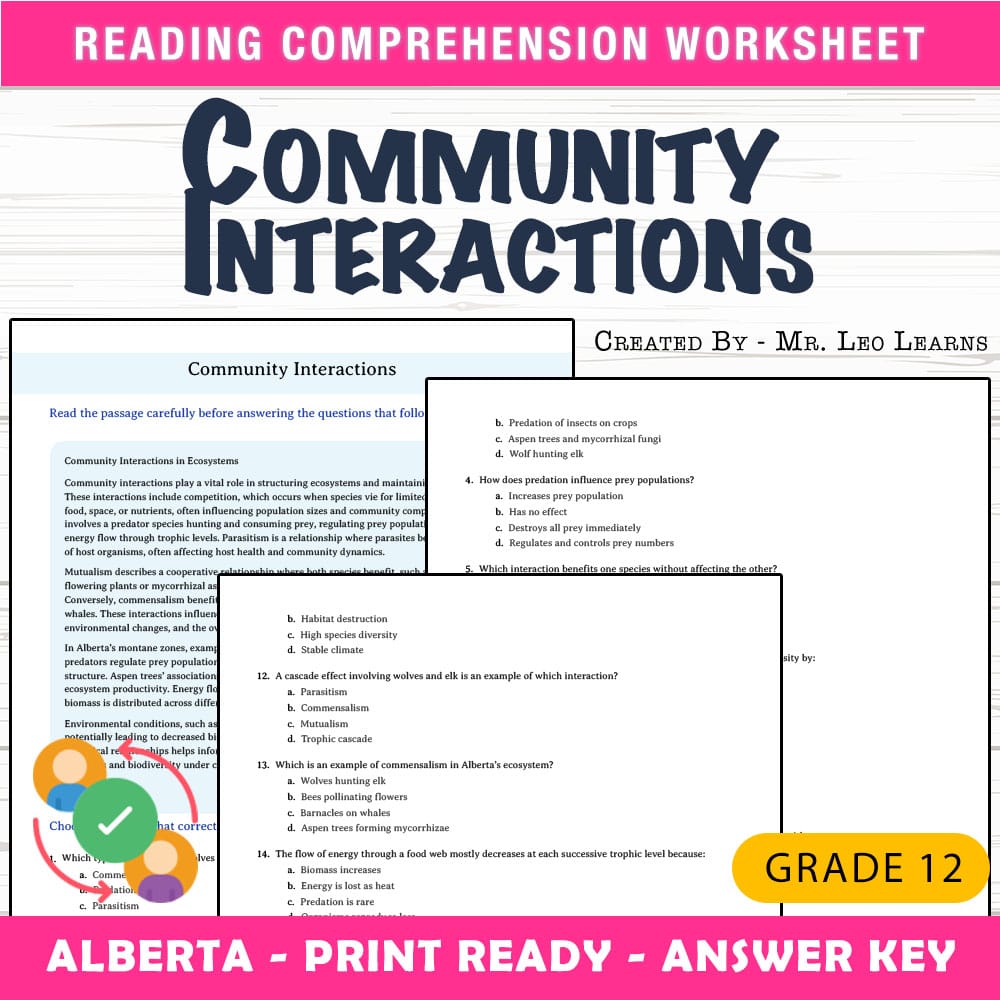
Imagine walking into a classroom where students are engaged in exploring how living organisms interact within their ecosystems. Some students are confused about concepts like mutualism, parasitism, and food webs, while others are struggling to connect these ideas to real-world examples. This worksheet offers a straightforward, print-and-go resource that helps clarify these complex interactions with a series of thoughtfully designed multiple-choice questions. It provides an accessible way for teachers to support student understanding of community interactions, ensuring learners develop confidence in analyzing ecological relationships and ecosystems.
What This Resource Helps Students Do
This worksheet guides students through key concepts of community interactions in ecosystems, helping them analyze and understand different types of biological relationships. By answering multiple-choice questions based on a reading passage, students practice extracting relevant information, applying their knowledge to different scenarios, and reinforcing core ecological ideas. This resource supports independent thinking while building familiarity with vocabulary such as mutualism, parasitism, predation, and food webs, ensuring students can confidently interpret ecological data and explanations.
Inside the PDF
• 1 reading passage with comprehension focus
• 25 multiple-choice questions targeting community interactions
• A print-ready layout designed for easy photocopying
• Clear formatting suitable for classroom assessment or practice
• PDF answer key included for quick grading and review
How It Improves Learning
This worksheet enhances understanding by providing structured questions that guide students through critical concepts of ecology. The reading passage sets context, helping students connect theoretical ideas with real-world ecosystems. The multiple-choice format encourages active engagement, allowing learners to apply reasoning and differentiate between types of interactions. As students progress through the questions, they reinforce their understanding of ecological relationships, leading to increased confidence in their ability to analyze and interpret community dynamics. The worksheet’s simplicity supports diverse learning styles and reduces anxiety around complex topics, ultimately fostering deeper comprehension and retention.
Core Skills Students Will Develop
- ➡️ Understanding types of ecological interactions
- ➡️ Analyzing food webs and energy flow
- ➡️ Applying ecological vocabulary accurately
- ➡️ Interpreting scientific text and data
Ways Teachers Use This Worksheet
This versatile resource can be used in various ways, from classroom station activities and independent practice to homework assignments or formative assessments. Teachers may incorporate it after a lesson on ecosystems to reinforce learning or assign it as review for upcoming tests. It is especially useful for small-group discussions or for providing early finishers with meaningful, curriculum-aligned work. This worksheet helps build foundational ecological knowledge through consistent, structured practice, supporting student success across learning environments.
Why This PDF Saves Time
This ready-to-print worksheet eliminates the need for extensive preparation, allowing teachers to focus on instruction rather than resource creation. Its clear, well-organized layout facilitates quick photocopying and distribution, ensuring that lessons stay on schedule. The included answer key offers immediate grading support, saving valuable time during assessment. With this resource, teachers can confidently provide high-quality practice that is both reliable and easy to implement, streamlining their workflow.
End your lesson with confidence, knowing that this printable worksheet is classroom-ready and designed to enhance student understanding of community interactions. It supports diverse instructional strategies and helps students develop critical ecological thinking skills with clarity and ease. Plus, it’s a dependable tool that teachers can rely on time and again😊