
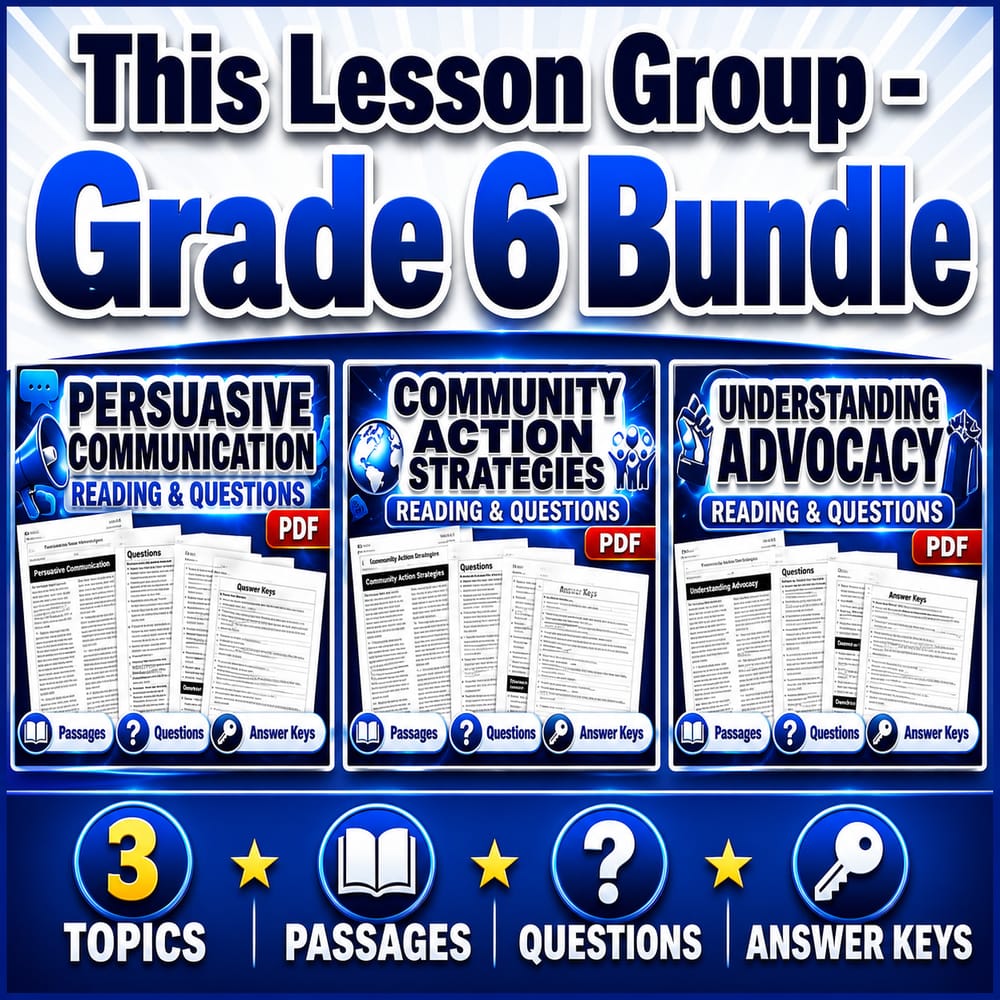
Grade 6 Advocacy for Health Lesson Bundle in Health Class Aligned to NHES Standards
$9.60$12.00Save $2.40
Sunny Desk Resources
·2 followers·18 sales
SubjectHealthGradeGrade 6Pages48 Pages
What’s included
3 worksheets · 48 pages · Save $2.40 (20%) · prices shown inside the bundle
 6th Grade Health – Persuasive Communication Worksheet (NHES Standards) (PDF)
- Explain how persuasive communication can influence health attitudes and behaviors.
- Identify persuasive techniques used in effective health messages.
- Describe how message reception can change based on social, cultural, and individual factors.
$3.20$4.00 6th Grade Health Worksheet – Community Action Strategies (PDF) NHES
- Explain how community action can address a specific health concern by organizing people, resources, and partners.
- Identify advocacy and communication strategies that encourage health-enhancing behaviors and policies.
- Apply steps for teamwork, planning, and evaluation to support a community health initiative.
$3.20$4.00 6th Grade Health | Understanding Advocacy Worksheet (NHES) (PDF)
- Define health advocacy and explain how it can improve community health outcomes.
- Identify ways individuals and groups influence health-related decision-making.
- Use persuasive communication strategies to advocate for a health improvement idea.
$3.20$4.00
Reviews & Feedback
Loading reviews...
Questions & Answers
Loading questions…
About this bundle
Related categories
Frequently asked questions
Who is Grade 6 Advocacy for Health Lesson Bundle in Health Class Aligned to NHES Standards designed for?
Grade 6 Advocacy for Health Lesson Bundle in Health Class Aligned to NHES Standards is designed for Grade 6 students and Health learners and can be used in classrooms, homeschool, or independent practice.
How do I download Grade 6 Advocacy for Health Lesson Bundle in Health Class Aligned to NHES Standards?
Add it to your cart and complete checkout. After payment, you can download immediately from your account, and you'll also receive a download link by email.
Similar Products

Grade 7 Advocacy for Health Health Lesson Bundle aligned to NHES Standards
$9.60$12.00

Grade 11 Health | Advocacy for Health Unit Bundle – NHES Standards Aligned
$12.00$15.00

Grade 10 Health Advocacy Unit | NHES-Aligned Worksheet Collection
$12.00$15.00

Health Advocacy & Community Action Lesson Bundle | Grade 6 Health | NHES
$12.00$15.00

Grade 8 Advocacy for Health Health Lesson Bundle: NHES Standards Guide
$6.40$8.00