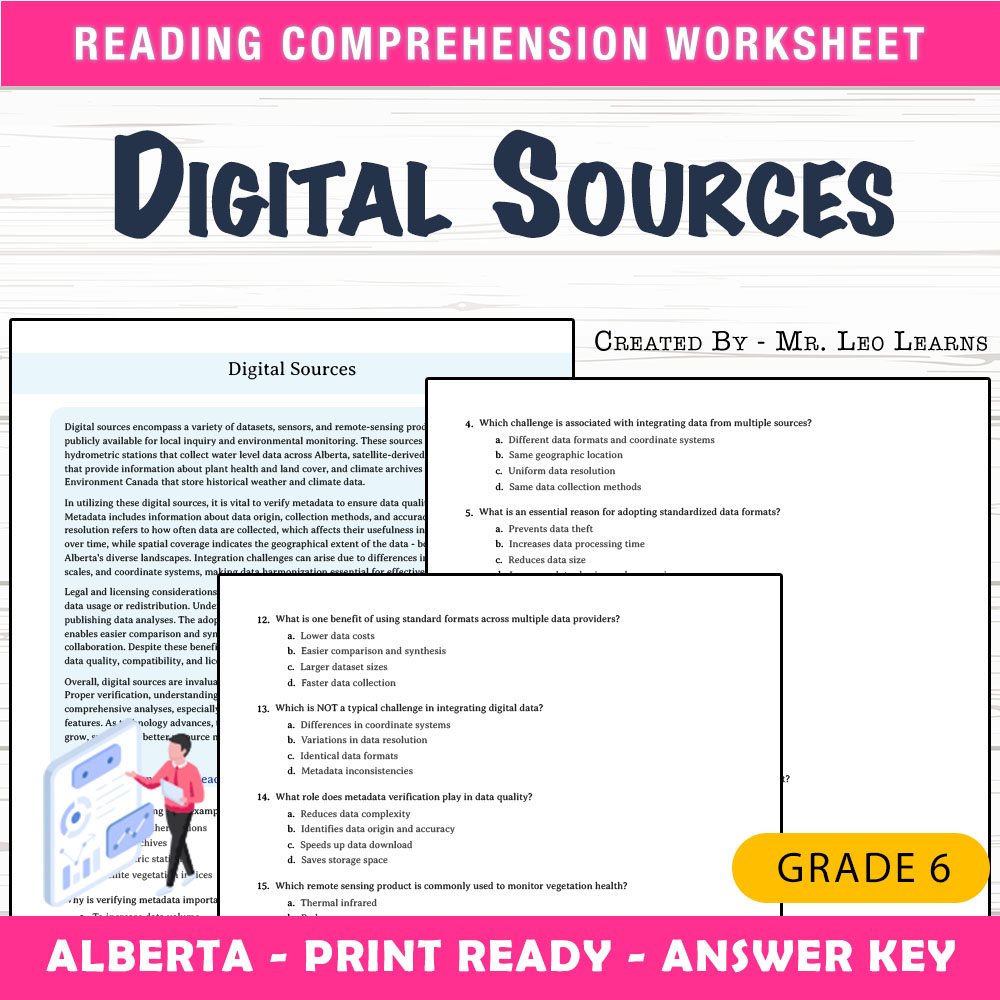
Imagine walking into your classroom and seeing students engaged in understanding the role of digital sources in science. Some students may feel overwhelmed by the variety of datasets, sensors, and remote sensing products they need to interpret, especially when trying to connect these concepts to real-world applications. This worksheet provides a straightforward, print-ready resource designed to clarify these ideas through targeted multiple-choice questions, giving students a focused way to reinforce their understanding of digital sources used in environmental monitoring and data validation.
What This Resource Helps Students Do
This worksheet actively supports students in developing their knowledge of digital sources in science, including datasets, sensors, and remote sensing technologies. It guides them through reading comprehension, critical thinking, and application of concepts with carefully designed multiple-choice questions that encourage reasoning. Students learn to identify specific examples of digital datasets used in real-world scenarios, understand why metadata verification is essential, and grasp how various digital tools contribute to environmental science. The practice promotes independent thinking while building confidence in analyzing digital information, an increasingly vital skill in modern science literacy.
Inside the PDF
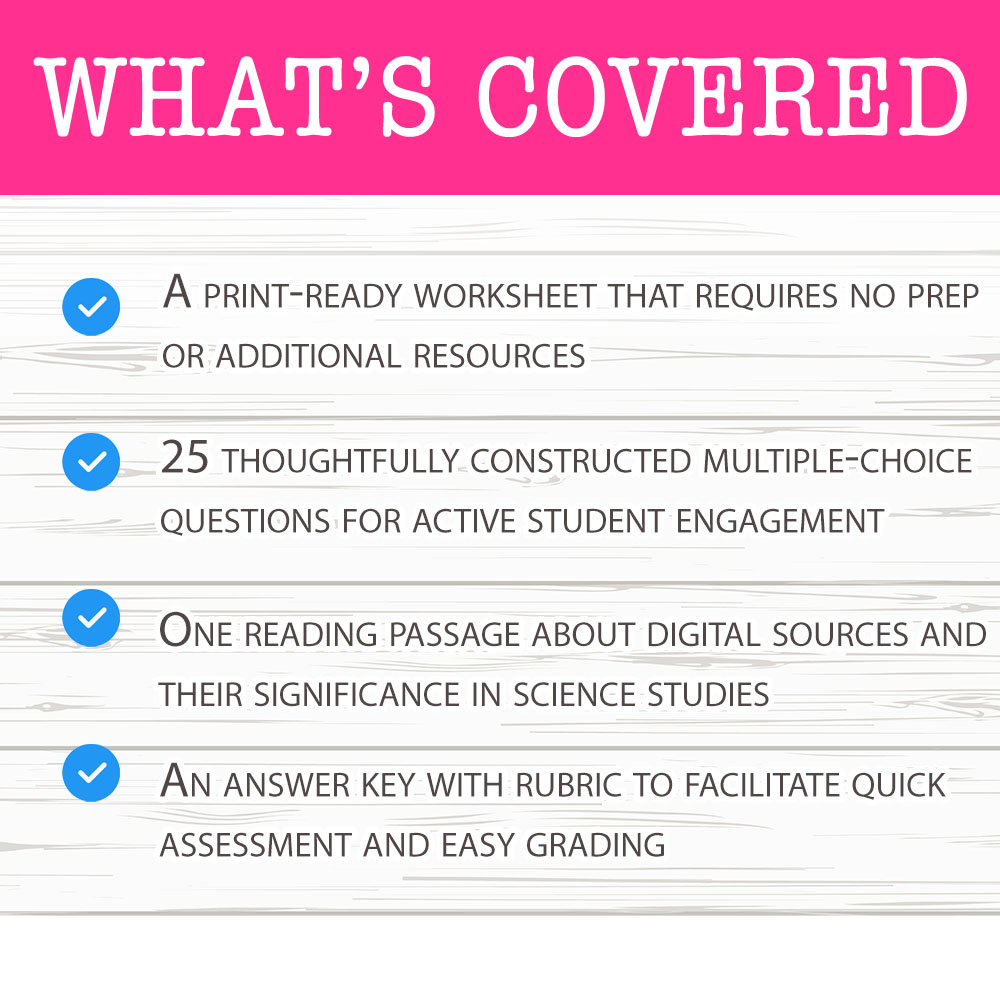
• A print-ready worksheet that requires no prep or additional resources
• 25 thoughtfully constructed multiple-choice questions for active student engagement
• One reading passage about digital sources and their significance in science studies
• An answer key with rubric to facilitate quick assessment and easy grading
• Formatted for straightforward photocopying and classroom distribution
How It Improves Learning
This worksheet encourages clarity and confidence by guiding students to analyze and interpret real-world digital data scenarios. Its multiple-choice format allows students to practice applying concepts, which enhances reasoning skills and helps solidify understanding. The questions target key aspects of digital sources, such as datasets used in provincial environmental monitoring, and emphasize the importance of verifying metadata to ensure data accuracy. As students progress through the worksheet, they move from initial confusion to a solid understanding of digital sources' roles and limitations in scientific research. This targeted practice helps students recognize the relevance of digital tools in their science learning and builds their ability to assess digital information critically.
Core Skills Students Will Develop
- ➡️ Scientific literacy regarding digital data
- ➡️ Critical thinking about data sources
- ➡️ Interpreting informational passages
- ➡️ Applying scientific concepts to real-world contexts
Ways Teachers Use This Worksheet
This worksheet functions well as a classwork assignment, supporting active learning during instruction. It can be used for homework to reinforce lesson material, or as a quick assessment to check understanding after a unit on digital data in science. It also lends itself to small-group discussions or as an early finisher activity for students needing additional practice. Teachers find it useful for review sessions, or as a formative assessment tool to gauge student comprehension of digital sources and data verification strategies.
Why This PDF Saves Time
The ready-to-print PDF format ensures teachers spend less time preparing materials. With the student worksheet and corresponding answer key included, it offers a reliable, consistent resource that can be printed and handed out immediately. Its straightforward layout minimizes photocopying effort, and the clarity of the questions supports quick assessment without additional setup, making it a practical classroom tool for busy teachers.
This resource is designed to be classroom-friendly, easy to integrate into your lesson plans, and effective in helping students understand the importance of digital sources in science. It provides a simple, yet comprehensive way to strengthen students’ data literacy skills and confidence in analyzing digital information. You can print it today and feel assured that your students are receiving meaningful practice that enhances their understanding of digital data in science contexts. 😊