
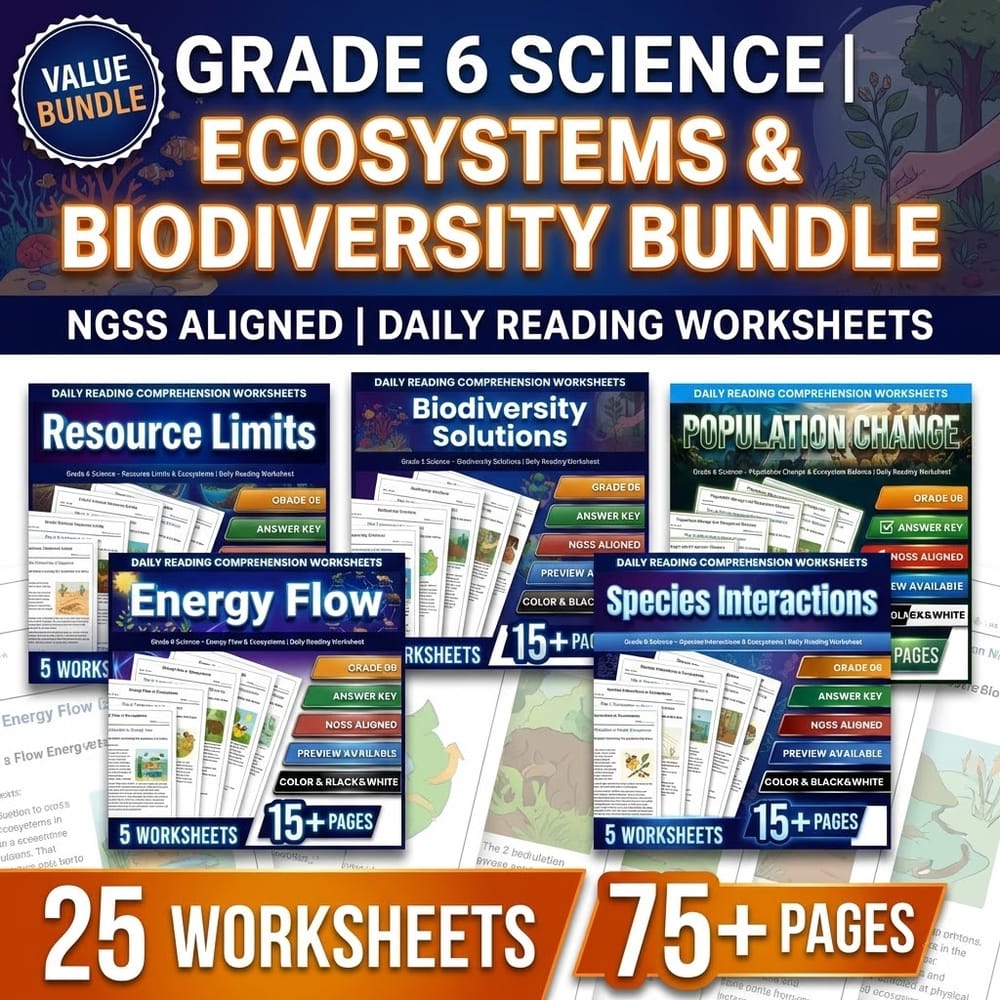
Grade 6 Science Ecosystems Lesson Bundle | NGSS Interactions & Energy
$16.00$20.00Save $4.00
Elena Brooks
·5 followers·12 sales
SubjectScienceGradeGrade 6
What’s included
5 worksheets · Save $4.00 (20%) · prices shown inside the bundle
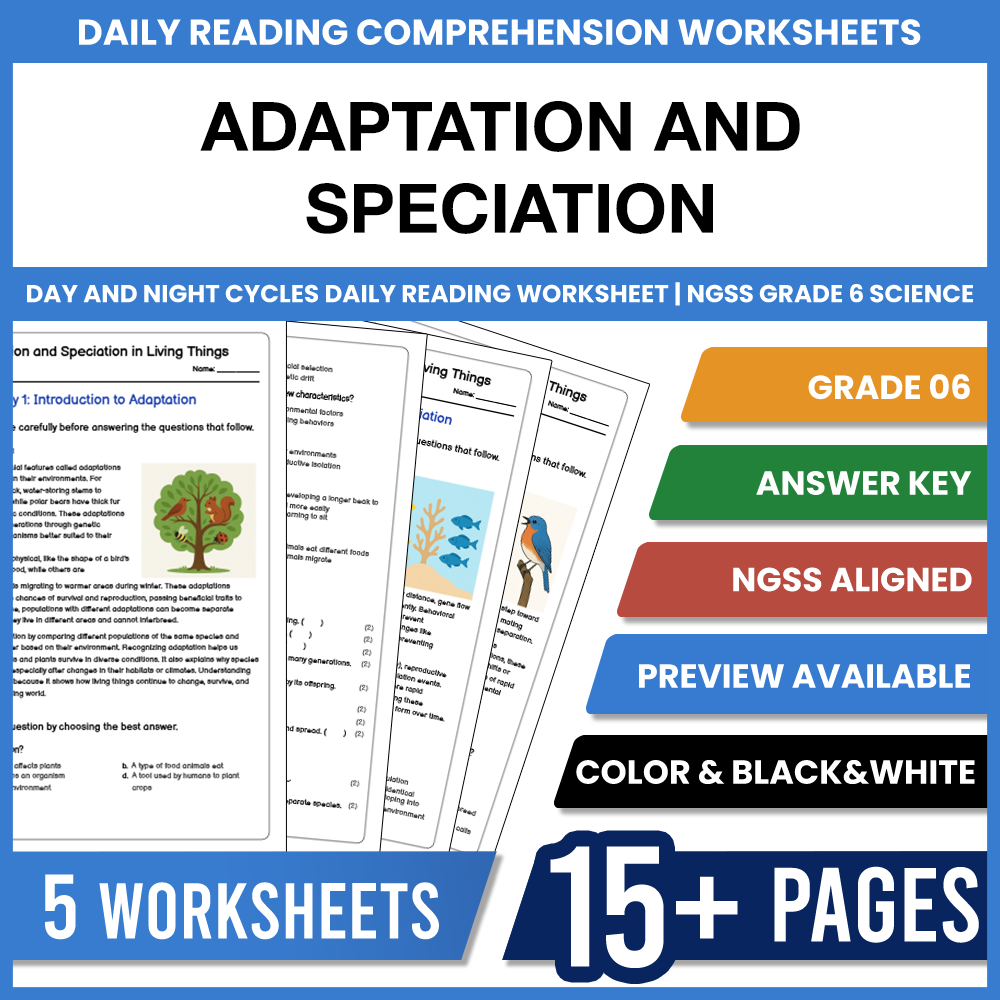 Grade 6 Science – Resource Limits & Ecosystems | Daily Reading Worksheet
- Understand how water availability influences plant and animal life in deserts
- Interpret data and patterns related to resource scarcity
- Connect resource limitations to population and species distribution
$3.20$4.00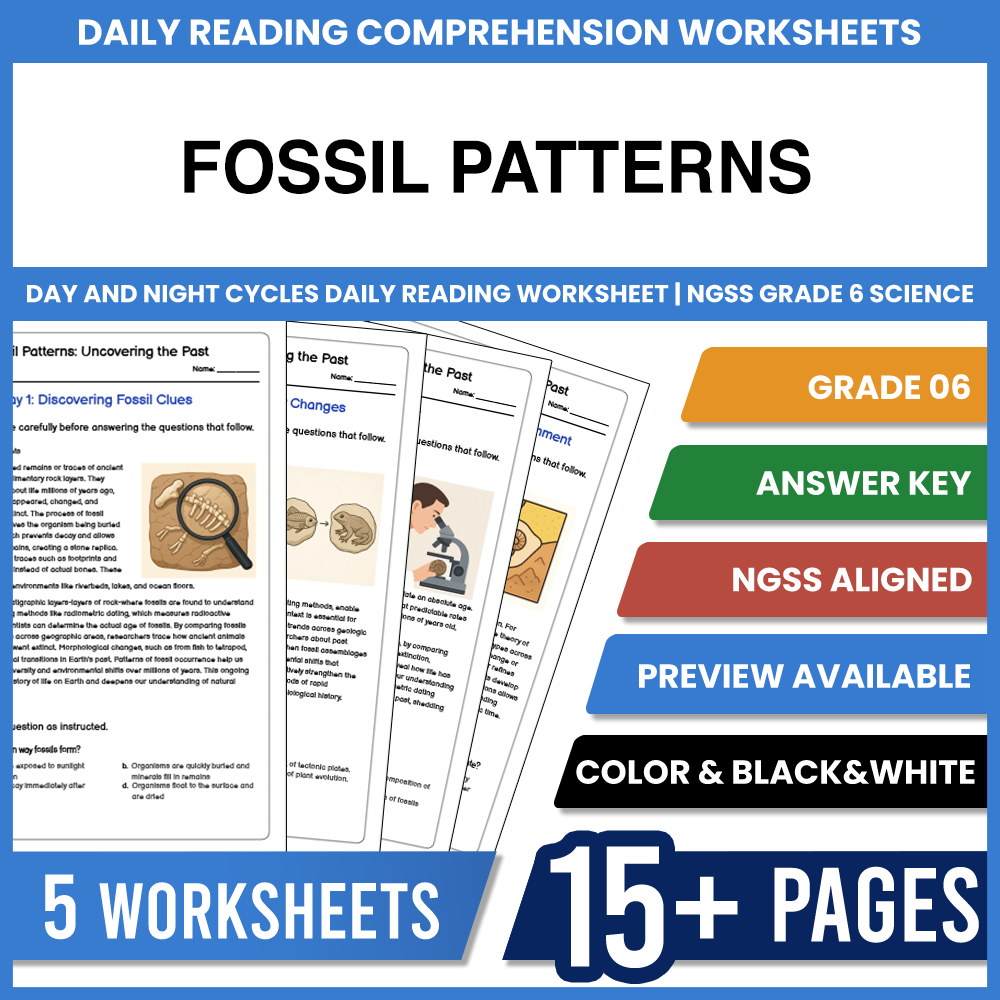 Grade 6 Science – Biodiversity Solutions | Daily Reading Worksheet
- Understand different conservation strategies for protecting coral reefs.
- Compare ecological trade-offs and effectiveness of various biodiversity solutions.
- Analyze case studies of habitat restoration and invasive species management.
$3.20$4.00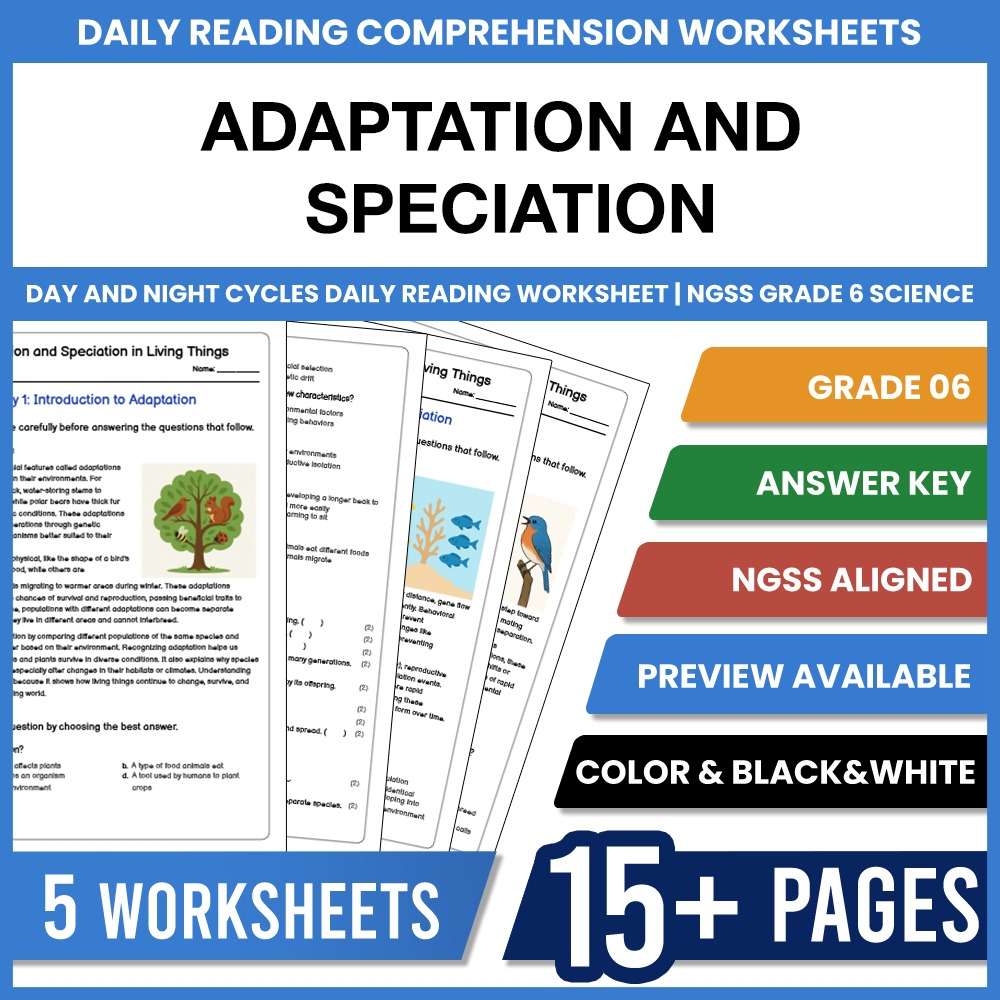 Grade 6 Science Population Change & Ecosystem Balance | Daily Reading Worksheet
- Understand how predator reintroduction impacts prey populations and ecosystem health.
- Analyze data related to population changes in various ecosystems.
- Construct evidence-based arguments about factors influencing population dynamics.
$3.20$4.00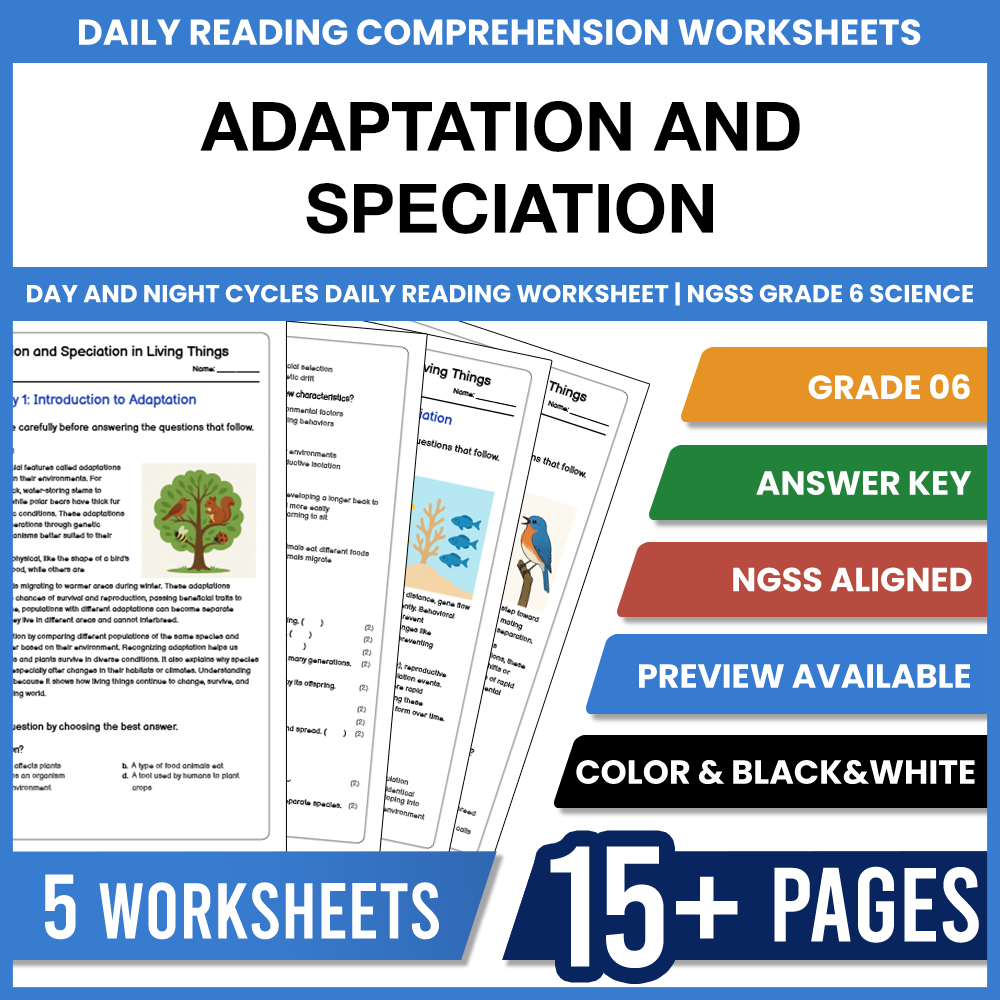 Grade 6 Science – Energy Flow & Ecosystems | Daily Reading Worksheet
- Understand the concept of energy transfer within food webs
- Identify the roles of producers, consumers, and decomposers
- Describe how energy diminishes across trophic levels
$3.20$4.00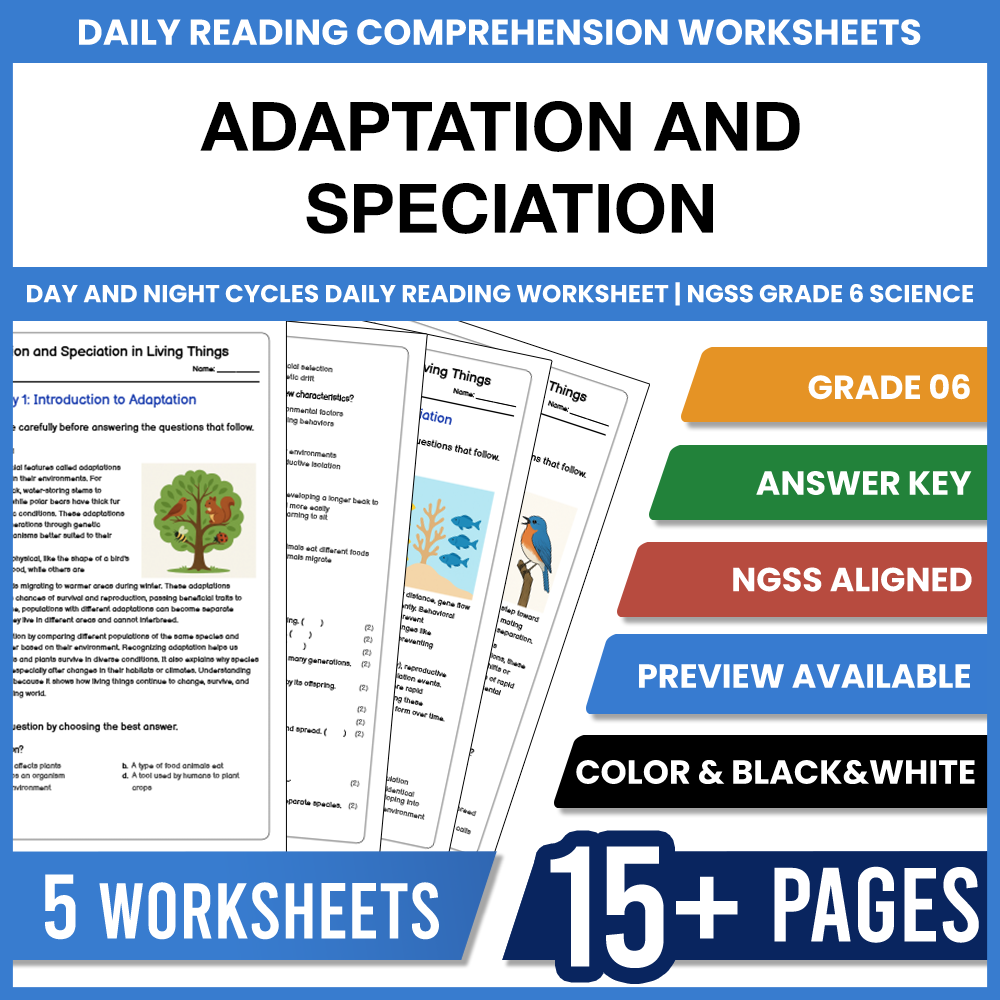 Grade 6 Science – Species Interactions & Ecosystems | Daily Reading Worksheet
- Identify mutualism among species in forest ecosystems
- Explain how species benefit from mutualistic relationships
- Predict patterns of species interactions across different ecosystems
$3.20$4.00
Reviews & Feedback
Loading reviews...
Questions & Answers
Loading questions…
About this bundle
Related categories
Frequently asked questions
Who is Grade 6 Science Ecosystems Lesson Bundle | NGSS Interactions & Energy designed for?
Grade 6 Science Ecosystems Lesson Bundle | NGSS Interactions & Energy is designed for Grade 6 students and Science learners and can be used in classrooms, homeschool, or independent practice.
How do I download Grade 6 Science Ecosystems Lesson Bundle | NGSS Interactions & Energy?
Add it to your cart and complete checkout. After payment, you can download immediately from your account, and you'll also receive a download link by email.
Similar Products

Ecosystems Interactions Energy Dynamics Lesson Bundle | Grade 6 Science | NGSS
$24.00$30.00

Grade 8 Ecosystems Interactions Energy Dynamics Science Lesson Bundle NGSS
$12.80$16.00

Grade 7 Ecosystems Interactions Energy Dynamics Science Lesson Bundle: NGSS
$20.00$25.00

Grade 9 Ecosystems Lesson Bundle: Interactions, Energy & Dynamics NGSS
$20.00$25.00

Grade 10 Science Ecosystems Interactions Energy and Dynamics Lesson Bundle | NGSS
$16.80$21.00