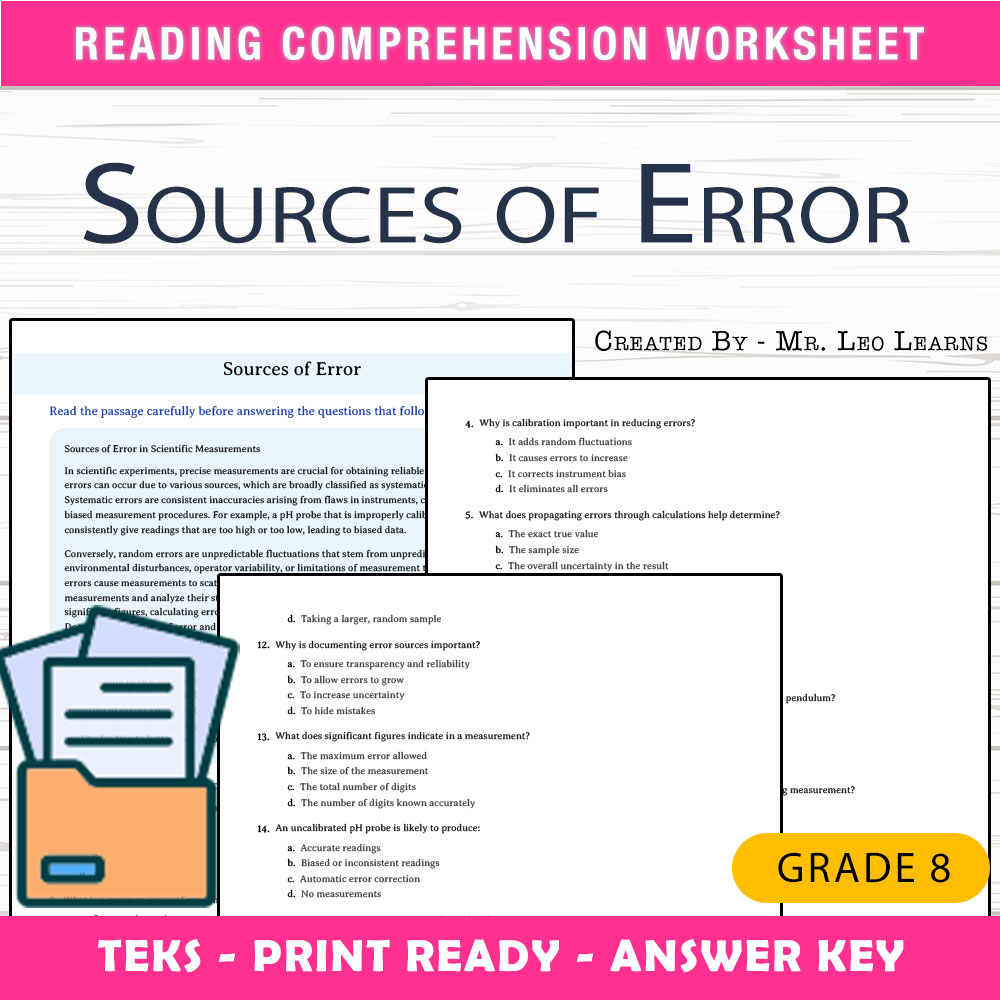
Imagine standing in a bustling classroom, facing students who are eager to understand the importance of accuracy and precision in scientific measurements. Despite their curiosity, many struggle to identify different types of errors that can occur during experiments or measurements. This challenge often leads to misunderstandings about how data can be affected by human or instrument inaccuracies. To address this, this worksheet provides a clear, structured way for students to explore the concept of sources of error in science. Through a thoughtfully designed PDF format, students gain the confidence to recognize and analyze errors, helping them improve their experimental skills and scientific reasoning.
What This Resource Helps Students Do
This worksheet helps students develop a comprehensive understanding of various sources of error in scientific experiments. It guides them through reading comprehension on the importance of precise measurements and how errors can impact results. The multiple-choice questions reinforce key concepts such as the difference between systematic and random errors, and students practice identifying causes of measurement inaccuracies. This resource supports independent practice, enabling learners to analyze real-world scenarios and apply their knowledge to improve measurement accuracy and experimental reliability.
Inside the PDF
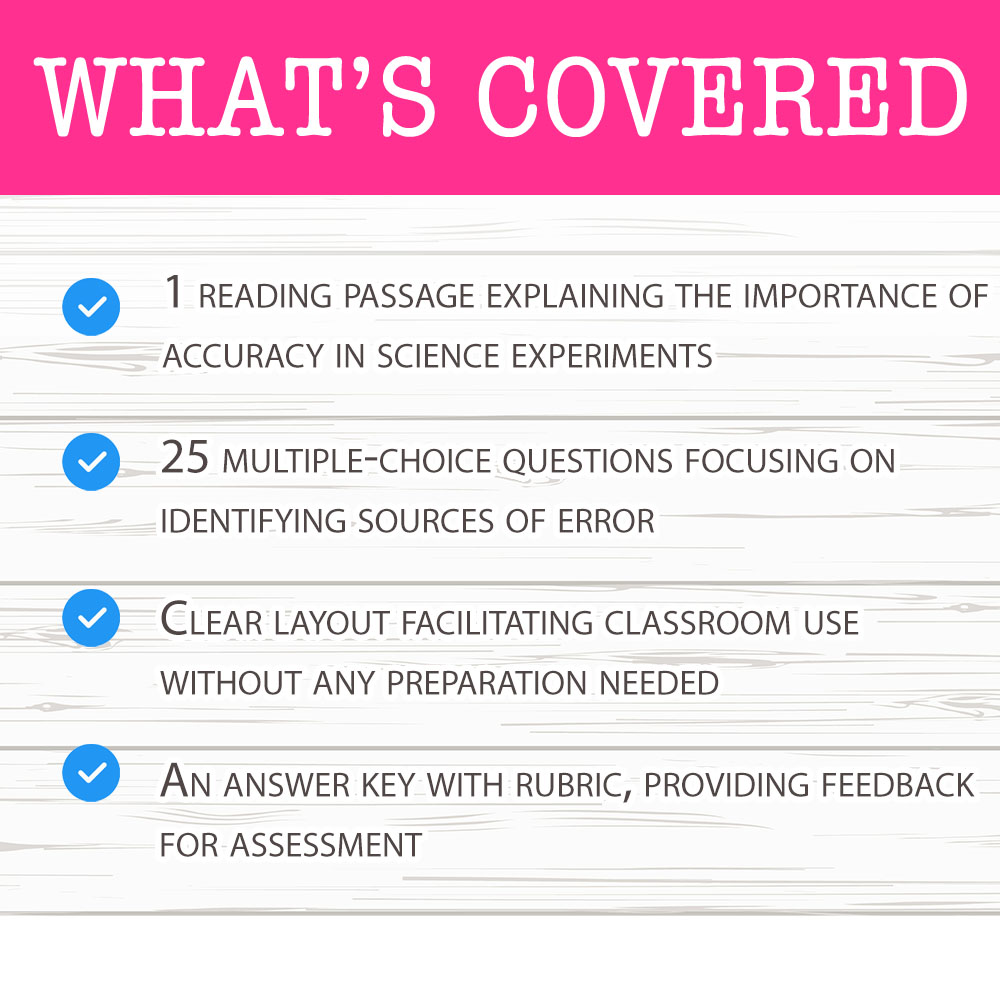
• 1 reading passage explaining the importance of accuracy in science experiments
• 25 multiple-choice questions focusing on identifying sources of error
• A print-ready format designed for easy photocopying
• Clear layout facilitating classroom use without any preparation needed
• An answer key with rubric, providing feedback for assessment
How It Improves Learning
This worksheet promotes clarity in understanding the different types of measurement errors, helping students distinguish between systematic and random errors. The reading passage provides foundational knowledge, setting the stage for engaged, focused practice. The multiple-choice questions reinforce this learning, encouraging students to reason through common scenarios where errors might occur. By applying their understanding to practical questions, students build confidence in identifying measurement issues and learn strategies to minimize errors in real experiments. This structured approach moves students from initial confusion to a more confident grasp of how to improve accuracy, laying a vital foundation for more advanced scientific inquiry.
Core Skills Students Will Develop
- ➡️ Understanding different sources of measurement error
- ➡️ Distinguishing between systematic and random errors
- ➡️ Applying error identification techniques in scientific contexts
- ➡️ Developing critical thinking around experimental reliability
Ways Teachers Use This Worksheet
This worksheet serves multiple practical purposes in the classroom. It can be used as part of a lesson on scientific measurement to reinforce concepts during instruction or served as independent practice for students to deepen their understanding. Teachers often assign this as a homework activity to encourage thoughtful analysis outside the classroom. It's also useful for review sessions before assessments, as well as for small-group discussions where students collaborate to analyze error examples. Additionally, early finishers can work through this worksheet confidently without additional preparation, ensuring productive use of time and continuous engagement with the topic.
Why This PDF Saves Time
The straightforward, print-ready PDF format means no additional setup or extensive preparation for the teacher. Just print the worksheet and answer key, and it’s ready for immediate classroom use. The clear layout ensures easy photocopying, making this a reliable resource for busy teachers seeking consistent, high-quality materials. Its design minimizes prep time while maximizing instructional value, giving teachers a dependable tool that supports efficient lesson delivery and student practice.
By providing a ready-to-use, classroom-friendly resource focused on sources of error, this worksheet helps enhance student understanding and confidence in scientific measurements. It is tailored to support your teaching goals, helping students grasp critical concepts with clarity and confidence. 😊