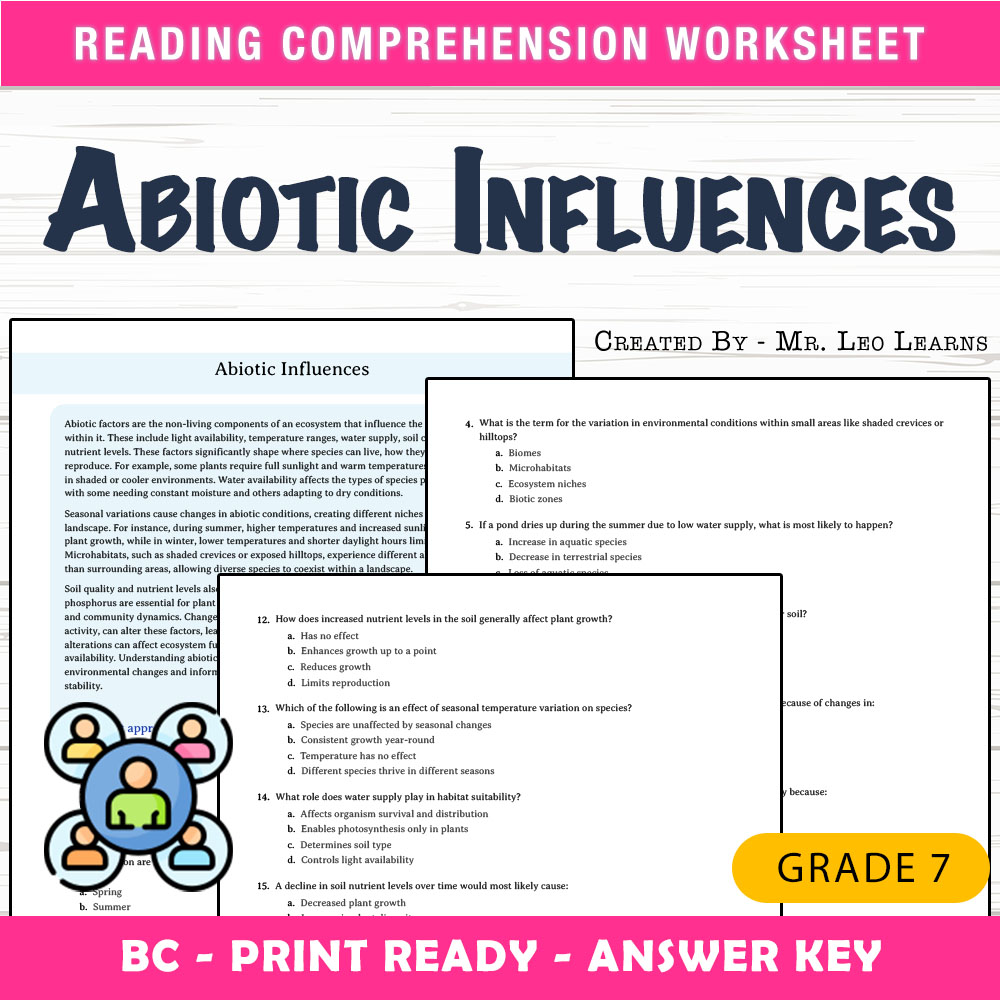
Imagine standing at the front of your classroom, observing students deeply engaged in learning about ecosystems. Some students may find understanding the impact of non-living components on living organisms challenging, especially when trying to differentiate between abiotic and biotic factors. This worksheet provides a straightforward, print-ready resource that helps clarify these concepts with minimal preparation. It guides students through assessing how abiotic factors like sunlight, temperature, and soil influence ecosystems and organism behavior, promoting active thinking and understanding.
What This Resource Helps Students Do
This worksheet is designed to support students in developing their understanding of abiotic influences within ecosystems. It offers a structured approach to examine how non-living factors affect living organisms and their environment. Through reading comprehension and multiple-choice questions, students learn to identify key abiotic factors and analyze their effects. This resource encourages independent thinking, helps reinforce classroom lessons, and builds confidence in applying ecological concepts in various contexts. By working through the questions, students improve their skills in scientific reasoning, analyzing data, and understanding the interconnectedness of ecosystems.
Inside the PDF
• One reading passage about abiotic factors and their influence on ecosystems
• 25 multiple-choice questions to test understanding and critical thinking
• A print-ready format that requires no additional preparation
• An answer key with rubric included for easy grading
• Layout optimized for photocopying and classroom distribution
How It Improves Learning
This worksheet enhances student learning by systematically guiding them through key concepts related to abiotic factors. The reading passage sets a clear foundation, helping students grasp what abiotic influences are and why they matter in ecosystems. The accompanying questions reinforce comprehension and challenge students to apply their knowledge to real-world examples. The multiple-choice format offers immediate opportunities for practice and self-assessment, helping students identify areas for improvement. Teachers can use this worksheet as a formative assessment to monitor understanding or as a reinforcement activity after instruction. Ultimately, it helps students move from misunderstandings to clarity, fostering confidence in ecological science.
Core Skills Students Will Develop
- ➡️ Understanding the role of non-living factors in ecosystems
- ➡️ Analyzing scientific information from texts
- ➡️ Applying ecological concepts to new scenarios
- ➡️ Improving multiple-choice reasoning and test-taking skills
Ways Teachers Use This Worksheet
This worksheet serves multiple instructional purposes. It can be used as an on-the-spot classwork activity to reinforce lessons about ecosystems, as homework to extend understanding outside classroom hours, or as an assessment tool to gauge student comprehension. Additionally, teachers can incorporate it into small-group review sessions or early finisher activities to ensure all students engage with key concepts. Its versatility makes it a supportive resource for formative assessment, review, or differentiated instruction, providing clarity and practice without adding extra prep work.
Why This PDF Saves Time
Designed for quick implementation, this printable worksheet requires no additional preparation beyond printing. Its clear layout facilitates easy photocopying, allowing teachers to distribute it efficiently. The inclusion of an answer key simplifies grading and ensures consistent assessment standards. Instead of creating your own questions or searching for suitable resources, this ready-to-use PDF provides a reliable tool to reinforce understanding of abiotic influences. It saves valuable planning time while maintaining high-quality instruction, helping you focus more on supporting student learning rather than on worksheet design.
Remember, this printable resource is designed to be classroom-ready, saving you time and effort while supporting student success. It’s an effective, straightforward way to deepen understanding of ecological concepts with confidence. 😊