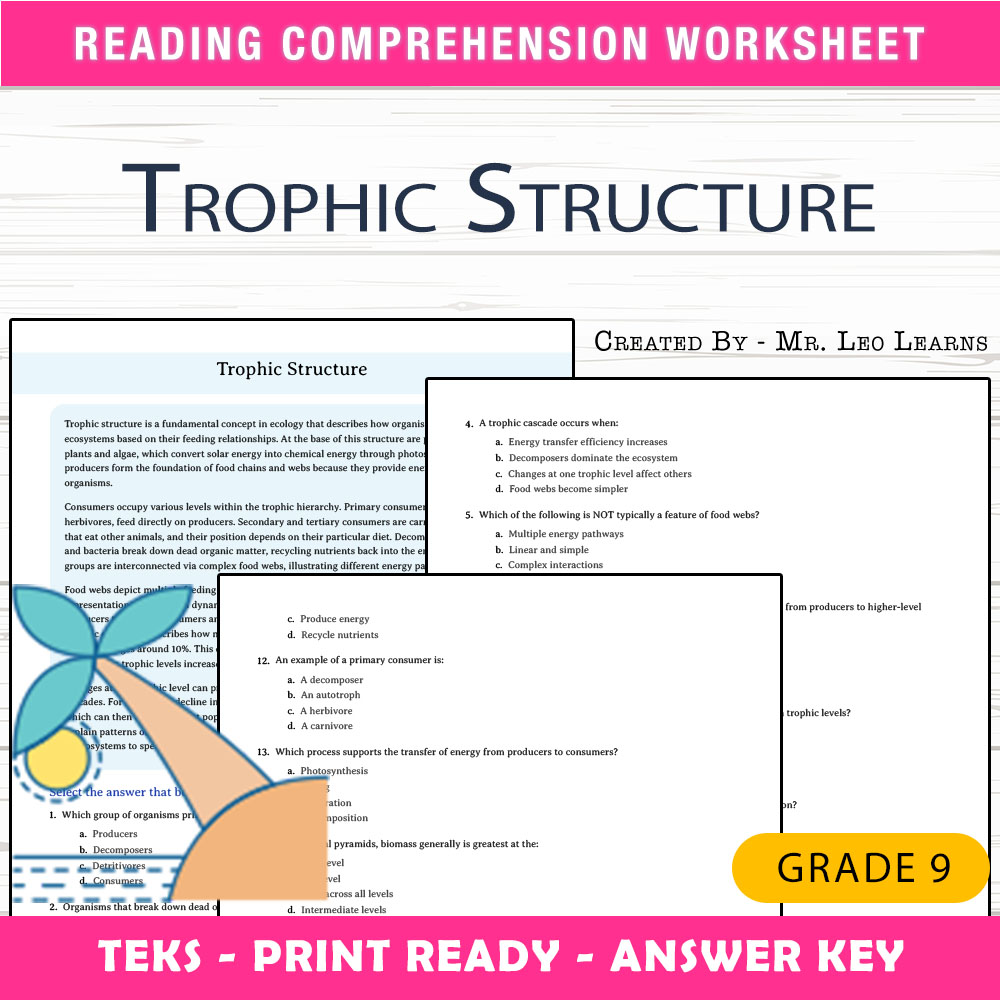
Imagine standing in your classroom as students attentively work through a challenging science topic, trying to understand the complex relationships within ecosystems. They’re faced with the task of grasping the concept of trophic structure — how different organisms are interconnected through feeding relationships and energy flow. This worksheet provides a straightforward, print-ready resource that supports clarity and confidence in teaching this fundamental ecology topic. Designed as a practical tool, it helps students develop a clear understanding of trophic levels, energy transfer, and ecological balance, making it easier for teachers to guide meaningful classroom discussions and assessment.
What This Resource Helps Students Do
This worksheet encourages students to analyze and synthesize information about trophic levels and ecological relationships. They will read a concise passage that introduces the key concepts of trophic structure, followed by multiple-choice questions that reinforce understanding of core ideas such as energy flow, consumer roles, and ecological impact. Through guided questions, students can independently practice identifying different levels within a food chain and distinguishing between producers, consumers, and decomposers. This process gradually builds their confidence and reasoning skills while providing a clear pathway for understanding complex ecosystems.
Inside the PDF
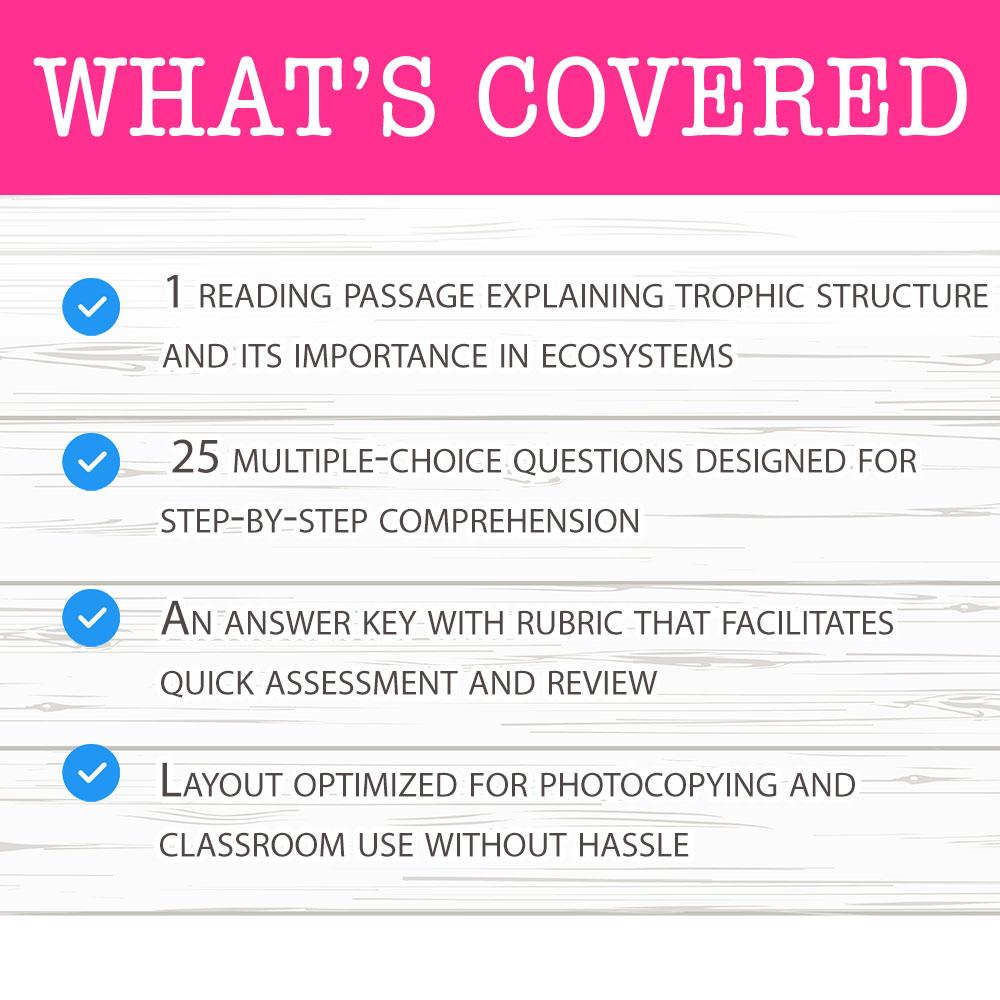
• 1 reading passage explaining trophic structure and its importance in ecosystems
• 25 multiple-choice questions designed for step-by-step comprehension
• A printable, easy-to-use format requiring no preparation
• An answer key with rubric that facilitates quick assessment and review
• Layout optimized for photocopying and classroom use without hassle
How It Improves Learning
This worksheet enhances learning by breaking down complex ecological concepts into manageable parts. The reading passage provides students with a solid foundation, while the questions challenge them to apply what they've learned in real-world scenarios. The multiple-choice format fosters critical thinking and reinforces key ideas, making abstract concepts more tangible. By working through these questions, students can identify gaps in their understanding and clarify misconceptions independently. Teachers can use it to informally assess comprehension during class or as a formative activity to support ongoing instruction. Overall, the worksheet guides students from initial uncertainty to greater confidence and mastery of trophic structure, setting a strong foundation for further ecological studies.
Core Skills Students Will Develop
- ➡️ Understanding ecological relationships
- ➡️ Identifying trophic levels within ecosystems
- ➡️ Applying concepts of energy transfer and food chains
- ➡️ Developing critical reading and comprehension skills
Ways Teachers Use This Worksheet
This resource can be used as part of classroom discussions, individual seatwork, or homework assignments. It is especially useful for review after a lesson on ecosystems or for small-group activities focusing on ecological concepts. Teachers may also incorporate it into assessments or use it as a quick formative check to gauge student understanding. Its printable, self-contained format makes it versatile for various instructional contexts, providing a consistent and reliable activity to support student learning and engagement.
Why This PDF Saves Time
This worksheet offers a ready-made, print-ready resource that eliminates the need for teachers to prepare materials from scratch. Its straightforward layout is designed for easy photocopying and distribution, allowing educators to focus more on instructional delivery and student interaction. The included answer key with rubric streamlines grading, saving valuable time during assessment periods. By providing a consistent, high-quality activity, this PDF helps ensure that student practice aligns closely with learning objectives without requiring additional prep work, making classroom management more efficient and effective.
With this worksheet, teachers have a practical, classroom-ready tool that supports student understanding of trophic structure, enhances ecological literacy, and saves preparation time. It’s an accessible resource designed to help students grasp essential concepts confidently, ensuring that every classroom session moves smoothly toward learning success. 😊