
Reading comprehension Worksheets
40,284 type resources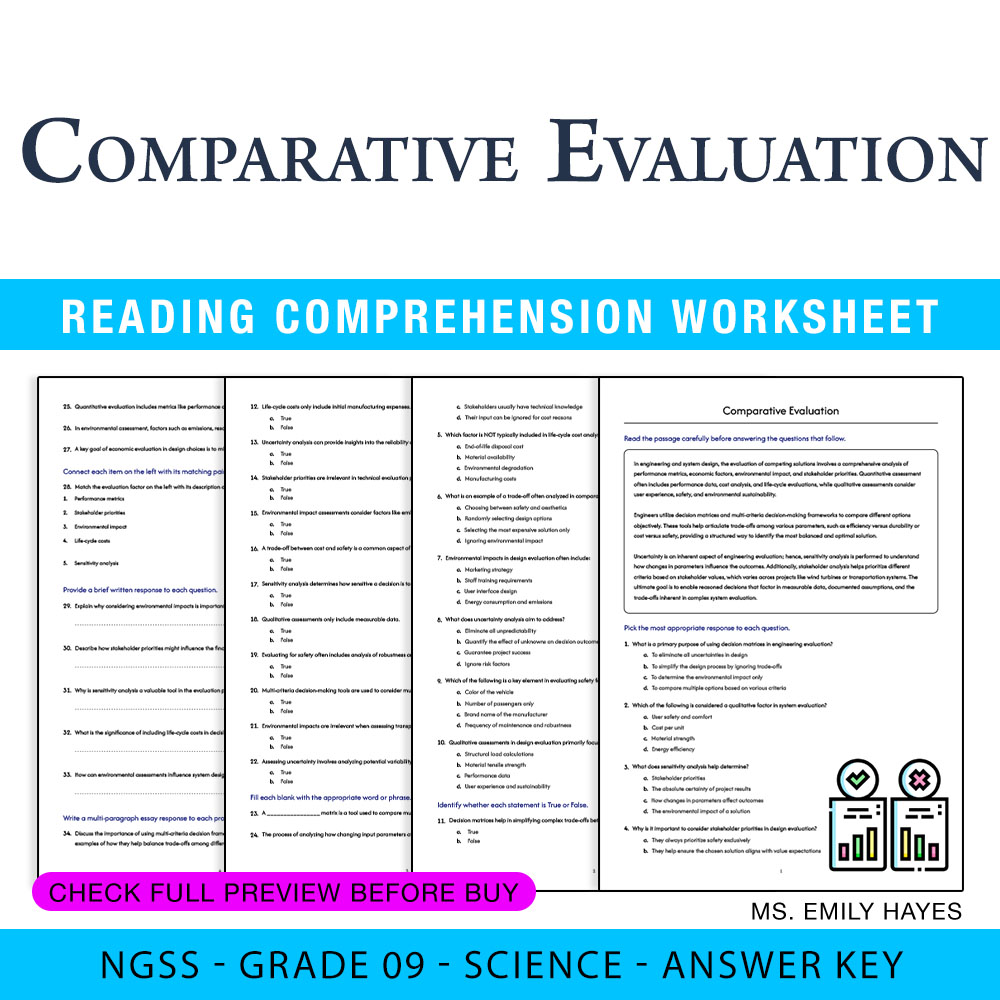
9th Grade Science | Comparative Evaluation Worksheet (PDF+ Answer Key)
 Created byCopper Leaf Classroom
Learning Objectives
- Understand the process of evaluating and comparing different design solutions using quantitative and qualitative criteria.
- Learn to apply decision frameworks and matrices to analyze trade-offs among performance metrics such as efficiency, durability, cost, and safety.
- Analyze the impact of uncertainty and stakeholder priorities in the selection of optimal systems or components.
Instant download
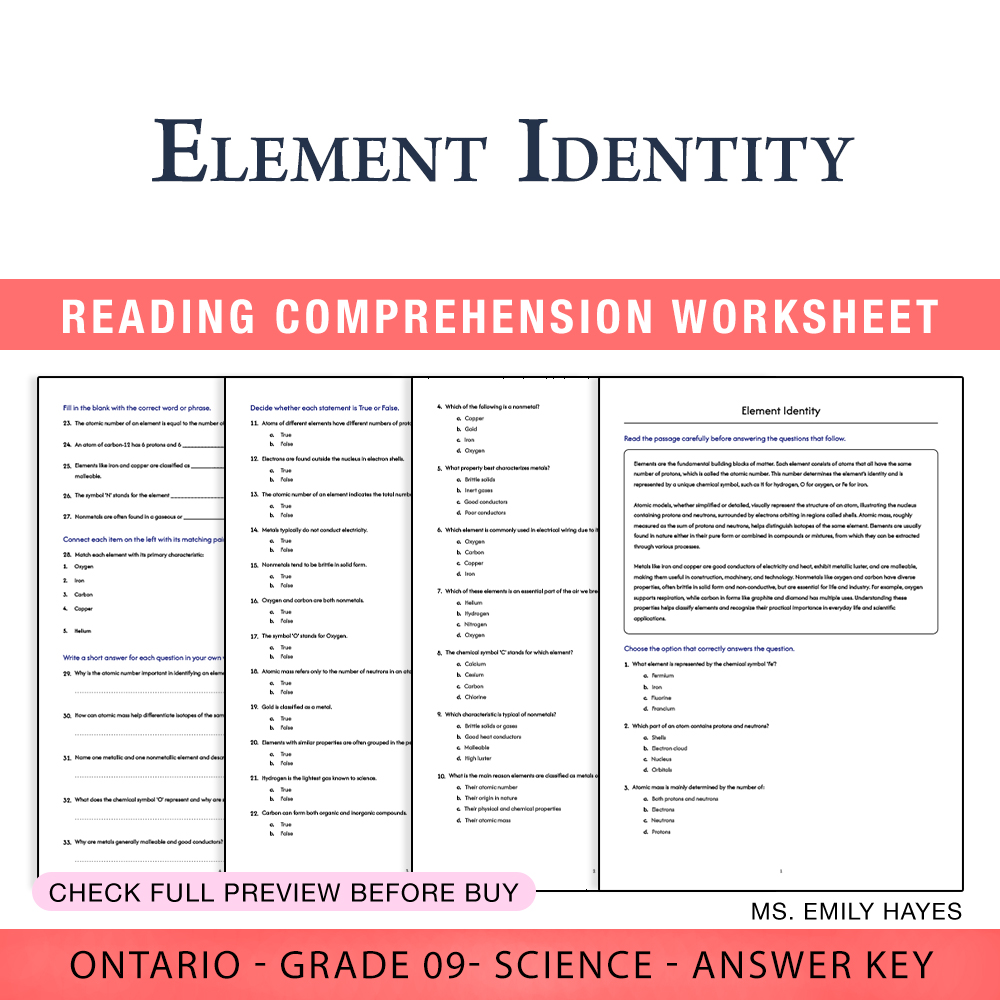
Grade 9 Science | Element Identity Worksheet (PDF + Answer Key)
Created byCopper Leaf ClassroomLearning Objectives
- Understand that elements are defined by their number of protons and their chemical symbols.
- Learn how atomic models represent atomic identity and the significance of atomic mass and symbols.
- Identify the properties of representative elements and distinguish between natural occurrence and extraction.
Instant download
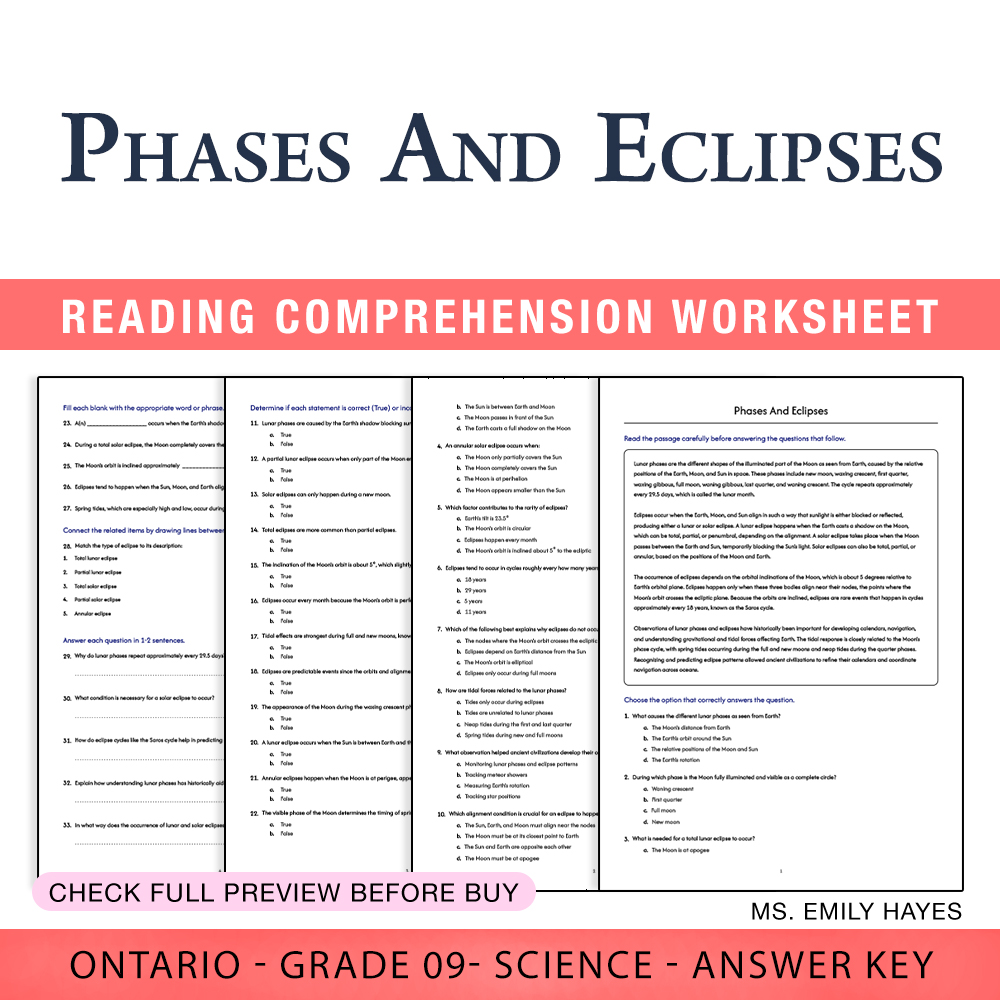
Grade 9 Science | Phases And Eclipses Worksheet (PDF + Answer Key)
Created byCopper Leaf ClassroomLearning Objectives
- Describe the geometry and conditions that produce lunar and solar eclipses.
- Distinguish between partial, total, and annular lunar and solar eclipses.
- Explain the relationship between lunar phases, tidal effects, and historical navigation uses.
Instant download
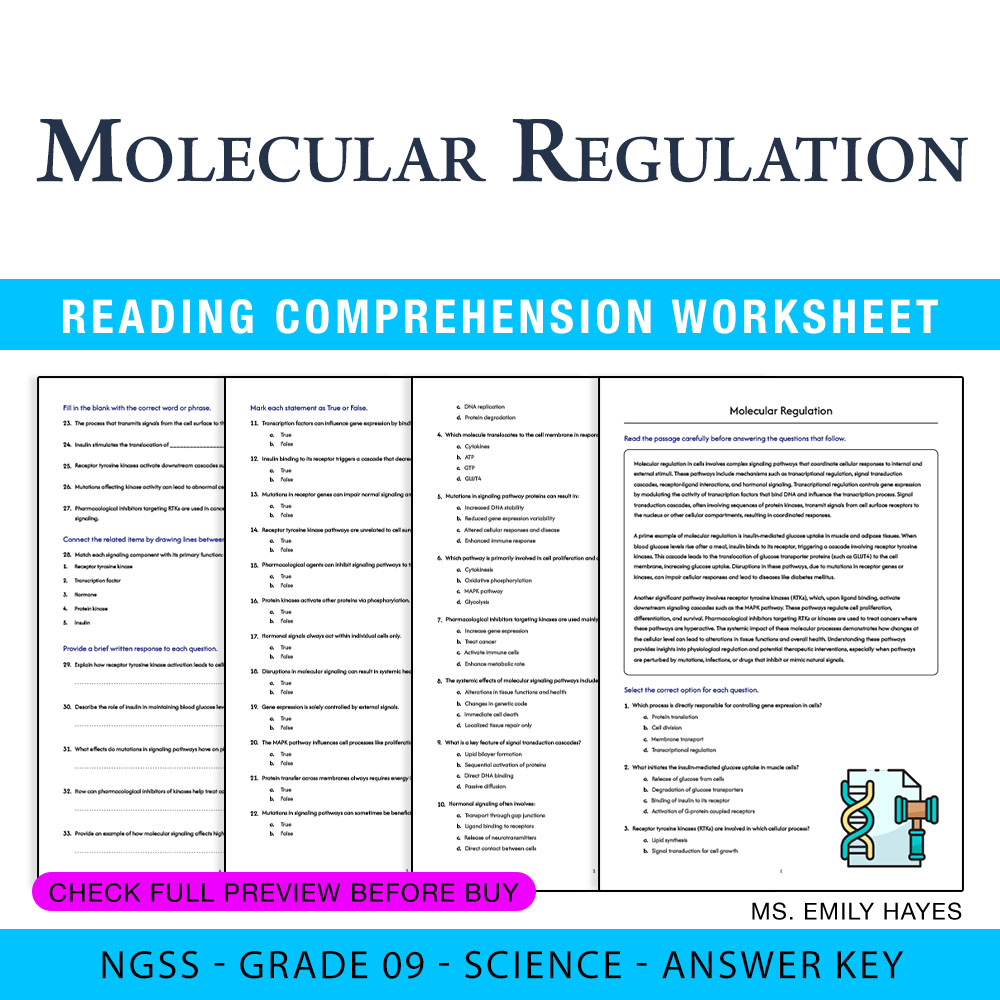
Grade 9 Science | Molecular Regulation Worksheet (PDF+ Answer Key)
Created byCopper Leaf ClassroomLearning Objectives
- Explain the key molecular signaling pathways that control gene expression and protein activity.
- Describe how regulatory networks impact cellular functions and physiological outcomes.
- Interpret the effects of perturbations such as mutations or inhibitors on molecular pathways.
Instant download
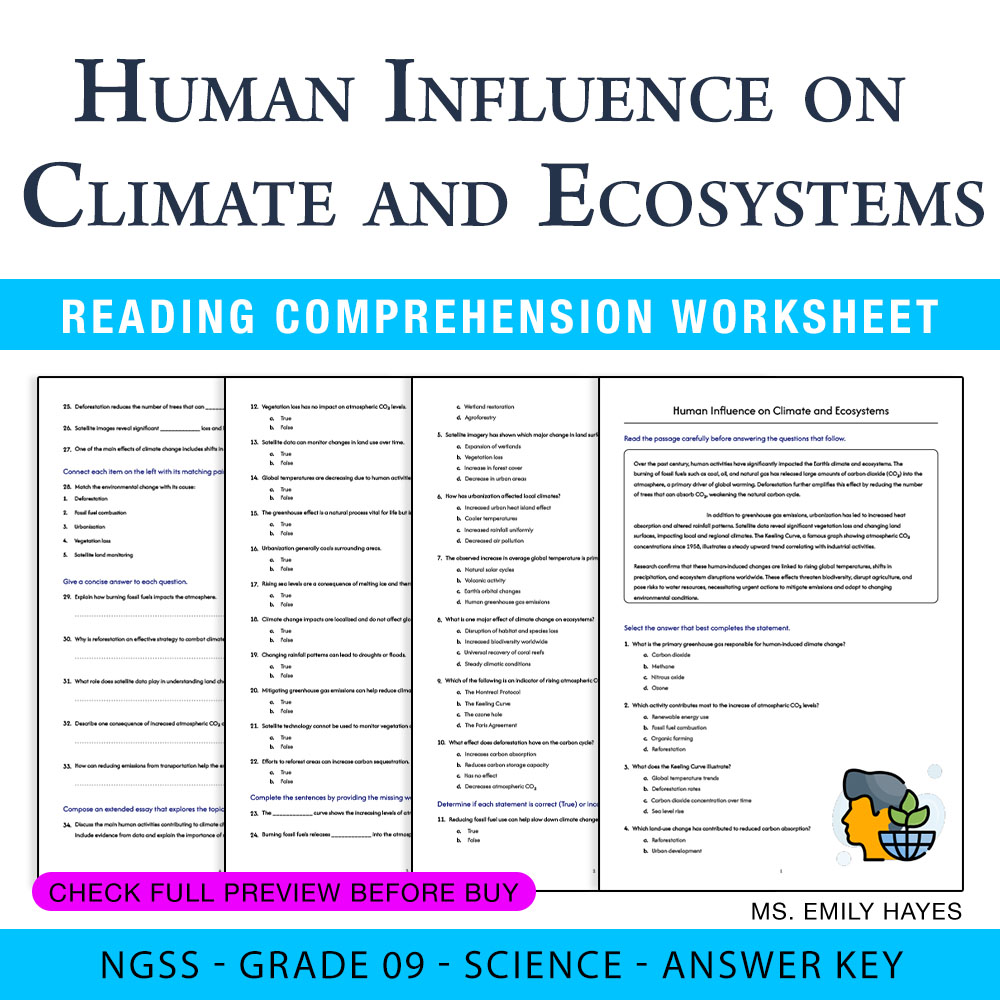
Grade 9 Science | Human Influence and Ecosystems Worksheet (PDF + Answer Key)
Created byCopper Leaf ClassroomLearning Objectives
- Understand the evidence linking human activities such as fossil fuel combustion and deforestation to climate change
- Analyze historical and satellite data indicating environmental changes over time
- Evaluate the impacts of anthropogenic change on the biosphere and hydrosphere
Instant download
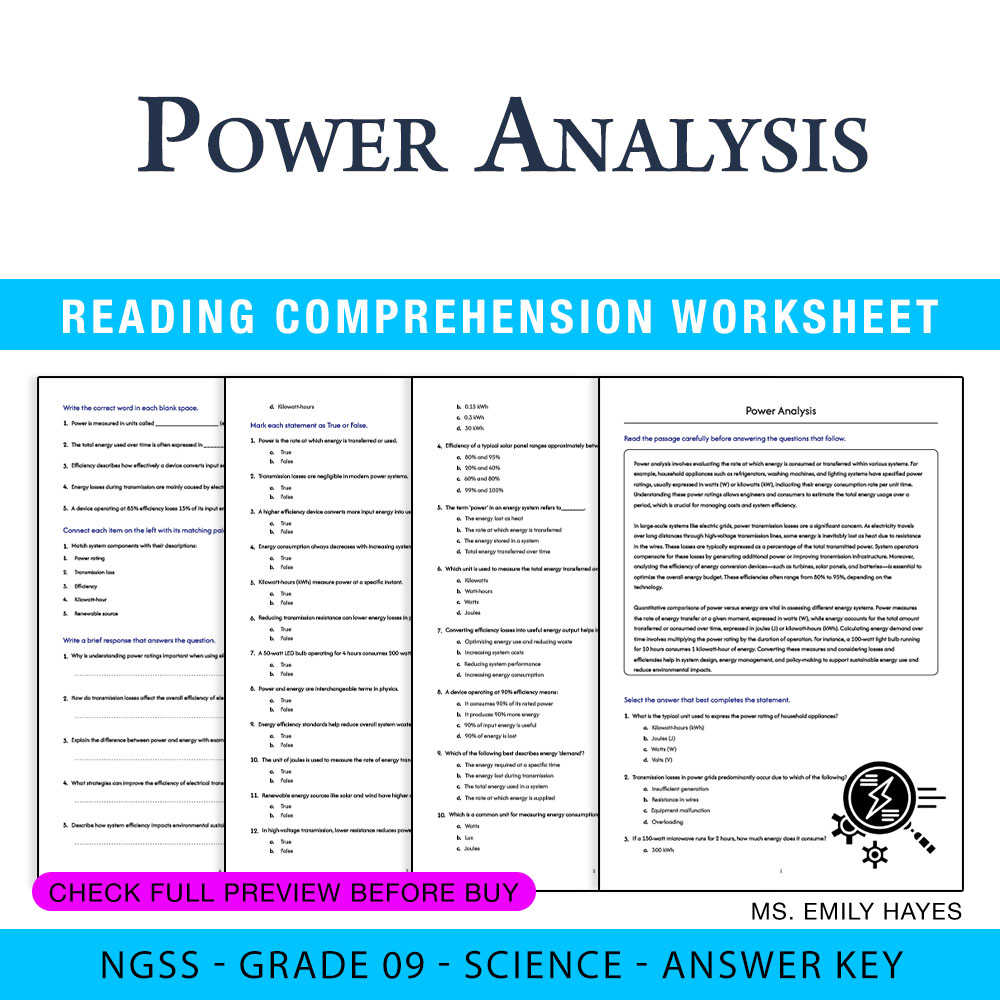
9th Grade Science | Power Analysis Worksheet (PDF + Answer Key)
Created byCopper Leaf ClassroomLearning Objectives
- Understand the concept of power and how it relates to energy consumption over time.
- Calculate and compare energy demands and efficiencies in different systems and appliances.
- Analyze the impact of transmission losses and system efficiencies on overall energy use.
Instant download
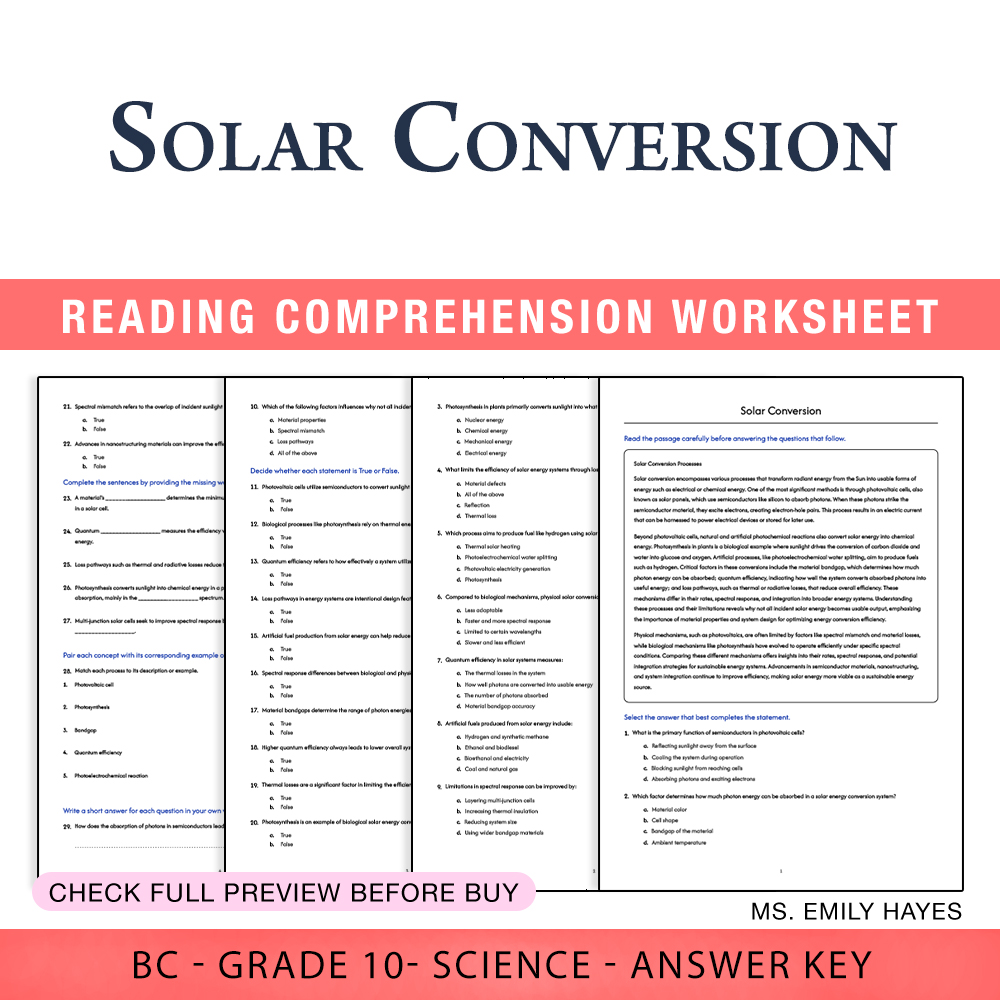
Grade 10 Science | Solar Conversion Worksheet (PDF + Answer Key)
Created byCopper Leaf ClassroomLearning Objectives
- Understand the processes involved in solar energy transformation into electrical and chemical energy.
- Describe how semiconductors absorb photons and generate electrical currents.
- Explain the role of bandgaps, quantum efficiency, and loss pathways in energy conversion.
Also included in: Grade 10 Science BC – Energy, Thermodynamics & Ecosystems (PDF + Answer Key) +1 more
Instant download
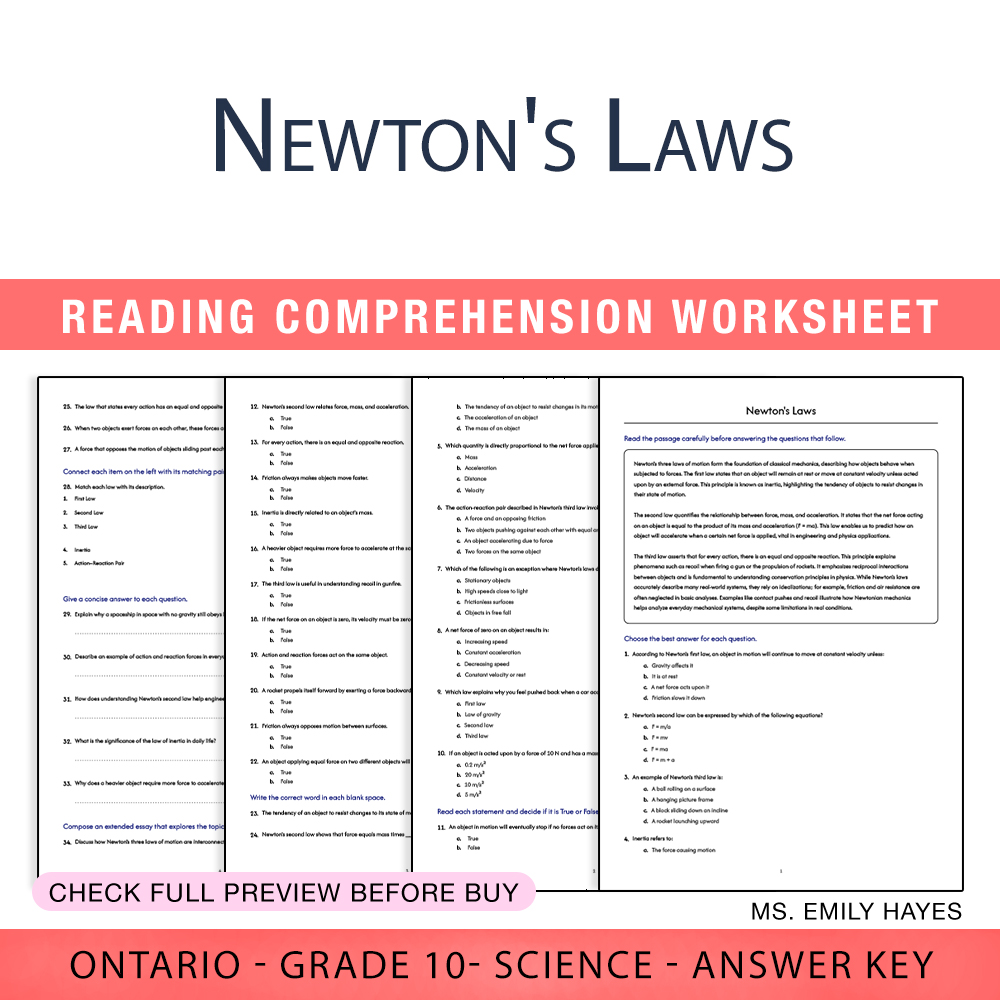
10th Grade Science | Newton's Laws Worksheet (PDF + Answer Key)
Created byCopper Leaf ClassroomLearning Objectives
- Understand and describe the three laws of motion articulated by Sir Isaac Newton.
- Connect concepts of inertia, net force, and reciprocal interactions in physical systems.
- Apply Newton's second law to predict the motion of objects based on force and mass.
Instant download
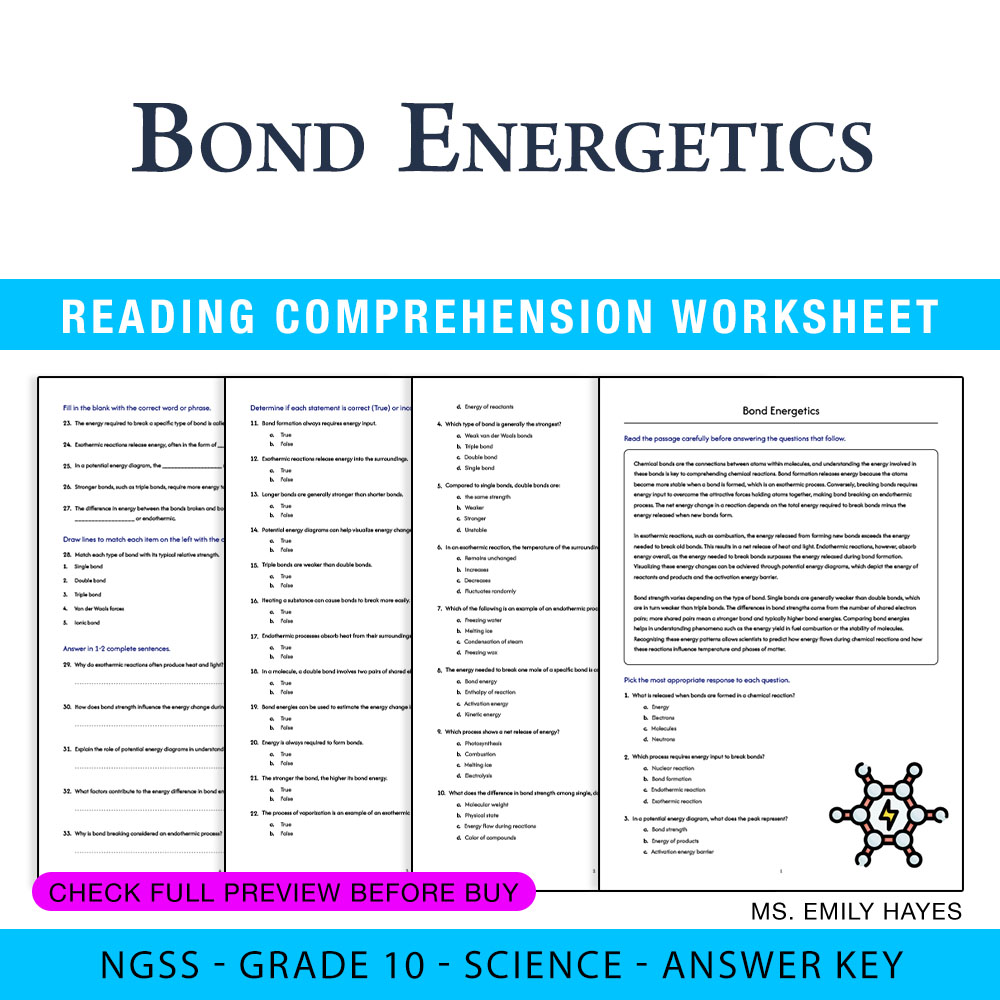
Grade 10 Science | Bond Energetics Worksheet (PDF+ Answer Key)
Created byCopper Leaf ClassroomLearning Objectives
- Explain how bond formation and breaking relate to energy changes in chemical reactions.
- Differentiate between exothermic and endothermic processes using bond energy concepts.
- Apply potential energy diagrams to understand energy flow during chemical reactions.
Instant download
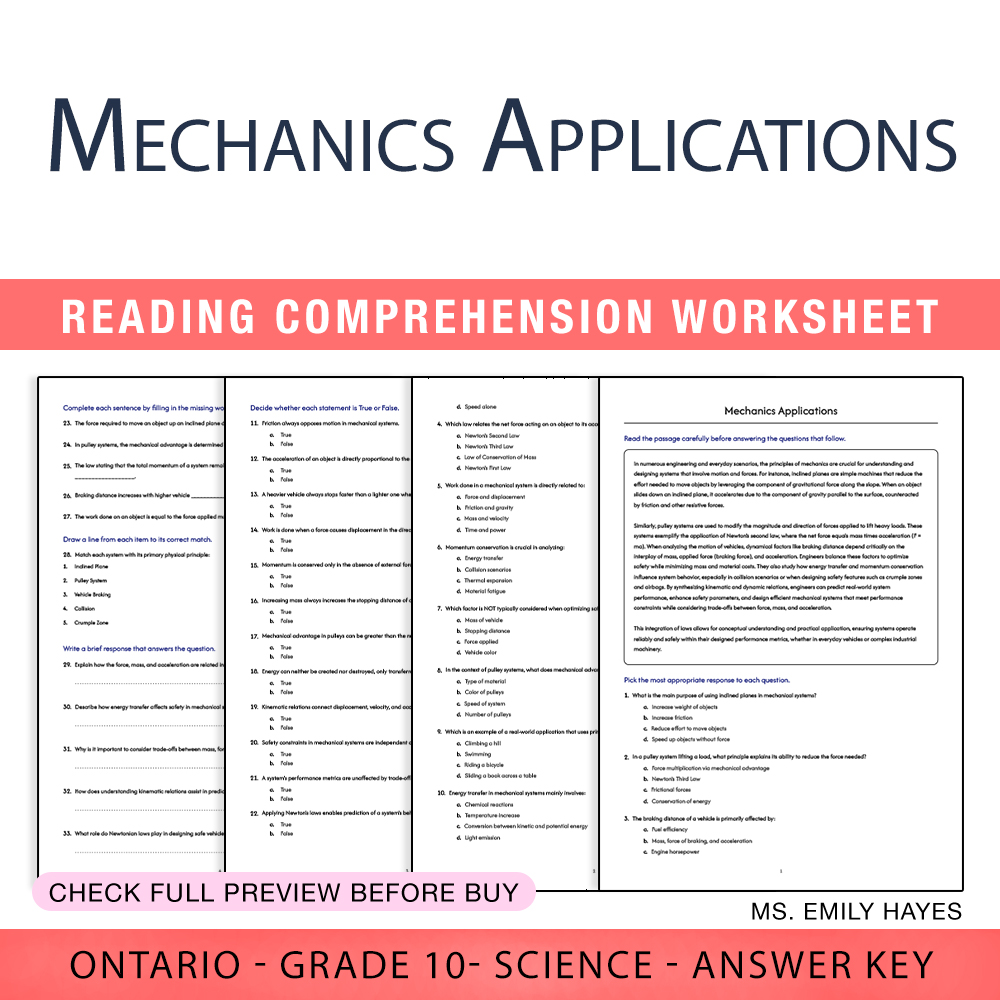
10th Grade Science | Mechanics Applications Worksheet (PDF + Answer Key)
Created byCopper Leaf ClassroomLearning Objectives
- Analyze and interpret kinematic relations in various mechanical systems.
- Apply Newtonian dynamics to solve practical problems involving forces, motion, and energy.
- Connect concepts of work, momentum, and safety parameters such as stopping distance.
Instant download
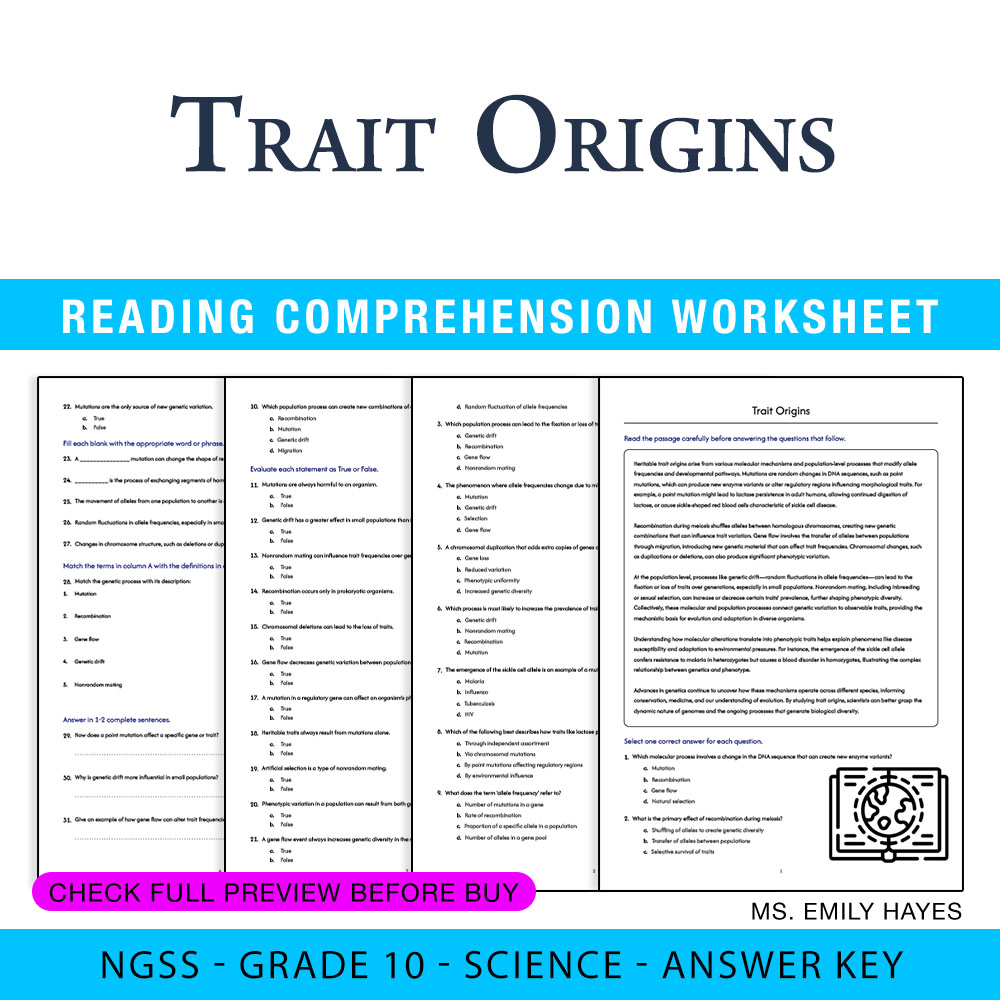
Grade 10 Science | Trait Origins Worksheet (PDF + Answer Key)
Created byCopper Leaf ClassroomLearning Objectives
- Explain the molecular processes that lead to heritable trait variations, including mutation, recombination, gene flow, and chromosomal changes.
- Describe how population processes such as genetic drift and nonrandom mating influence trait distribution across generations.
- Connect molecular genetic changes to phenotypic traits, illustrating examples like lactase persistence and sickle cell allele emergence.
Instant download
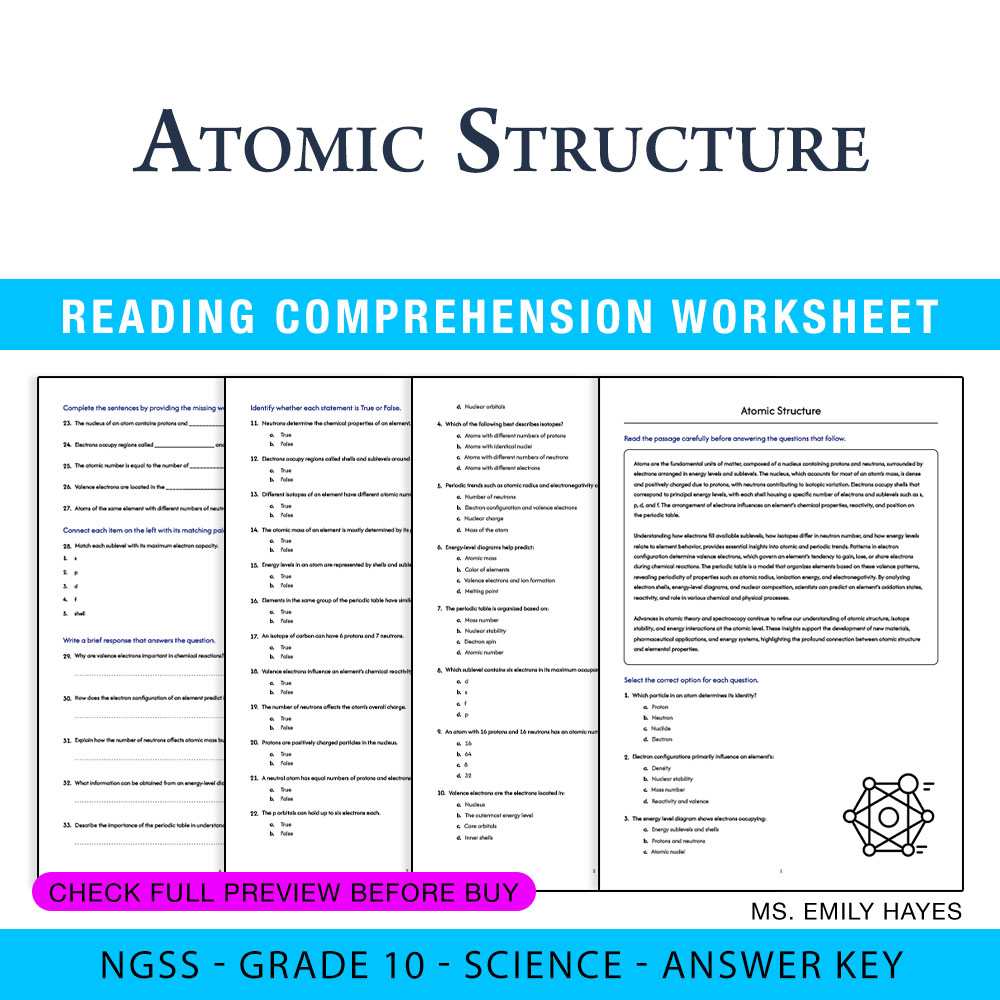
10th Grade Science | Atomic Structure Worksheet (PDF+ Answer Key)
Created byCopper Leaf ClassroomLearning Objectives
- Describe the structure of atomic nuclei and electron configurations.
- Explain periodic trends based on electron arrangements and isotope compositions.
- Interpret energy-level diagrams, sublevel occupancy, and periodicity for elemental behavior.
Instant download
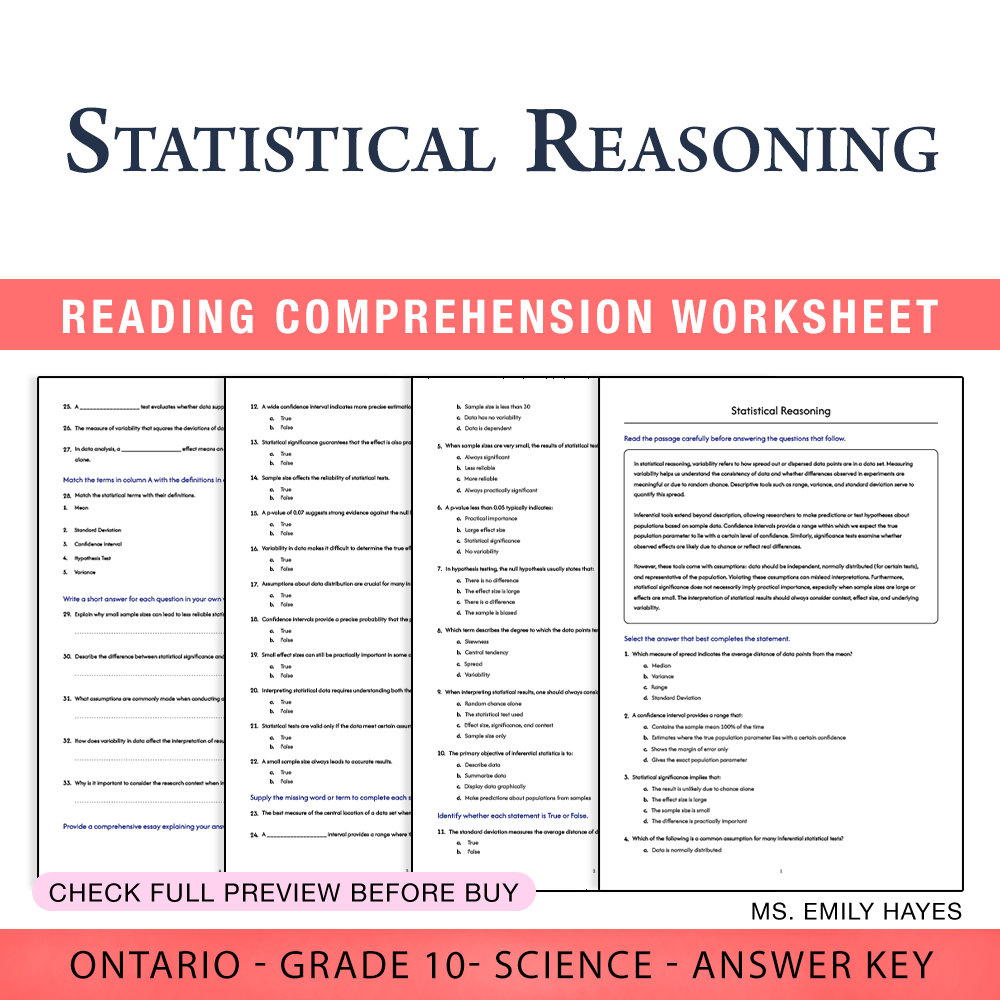
Grade 10 Science | Statistical Reasoning Worksheet (PDF + Answer Key)
Created byCopper Leaf ClassroomLearning Objectives
- Understand and interpret measures of central tendency and variability in data sets.
- Apply inferential tools such as confidence intervals and hypothesis tests appropriately.
- Identify limitations and assumptions behind statistical analyses.
Instant download
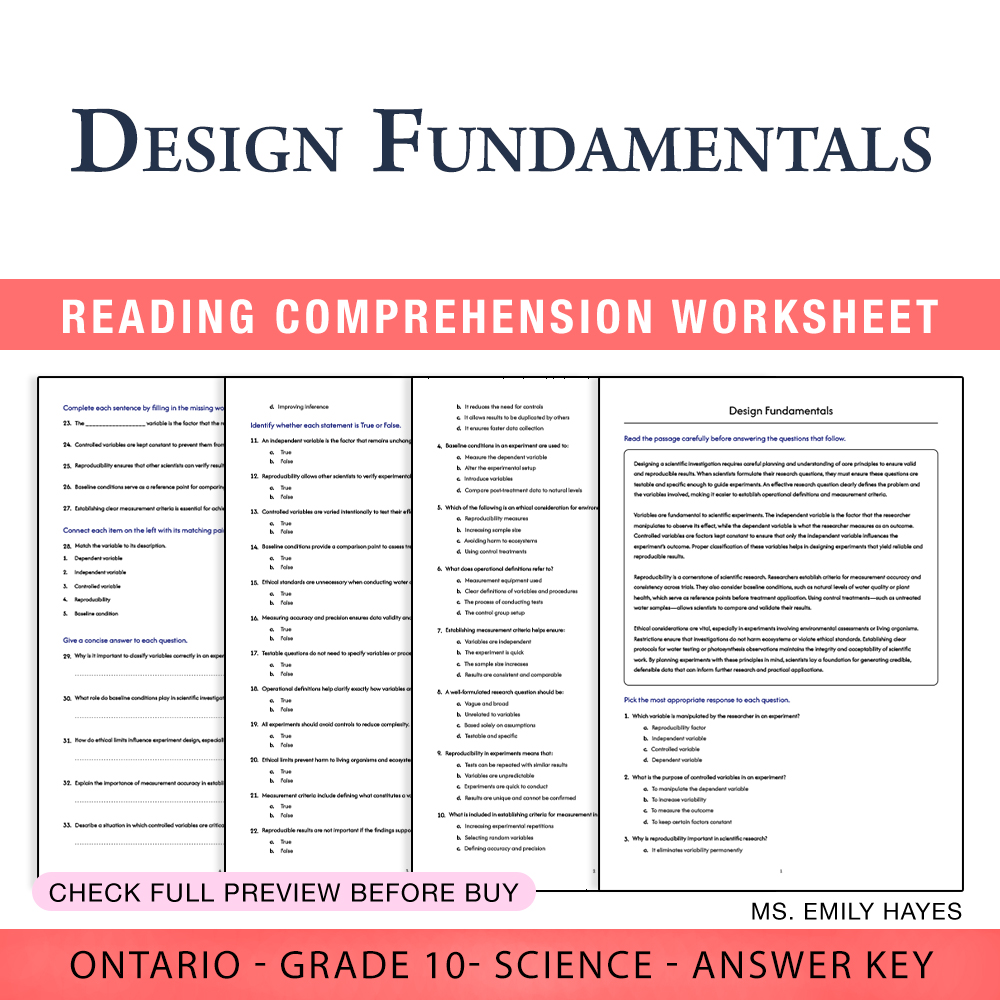
Grade 10 Science | Design Fundamentals Worksheet (PDF + Answer Key)
Created byCopper Leaf ClassroomLearning Objectives
- Understand core principles for formulating testable questions and operational definitions.
- Distinguish between independent, dependent, and controlled variables in scientific investigations.
- Identify criteria for ensuring reproducibility and measurement consistency.
Instant download
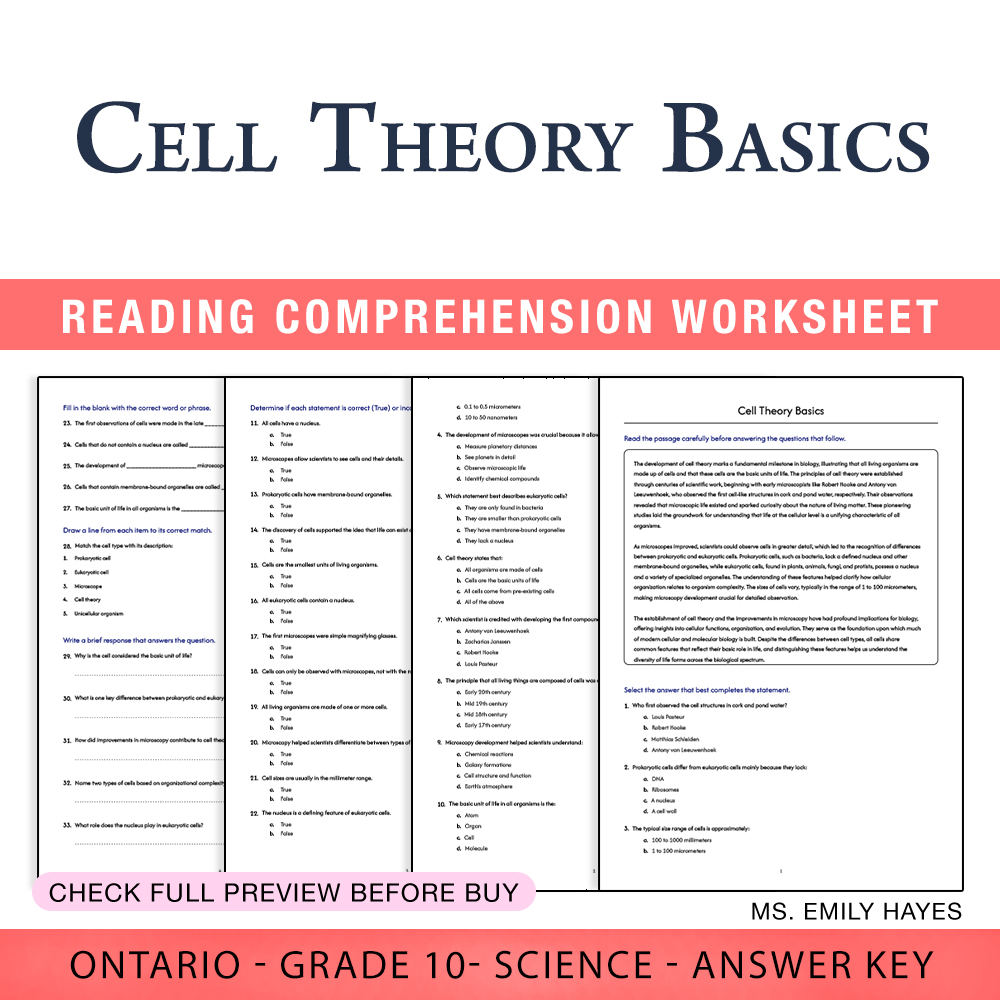
Grade 10 Science | Cell Theory Basics Worksheet (PDF + Answer Key)
Created byCopper Leaf ClassroomLearning Objectives
- Understand the fundamental principles of cell theory and their historical development.
- Differentiate between unicellular and multicellular organisms and their organizational complexity.
- Identify the basic sizes and scales relevant to cells and microscopy.
Instant download
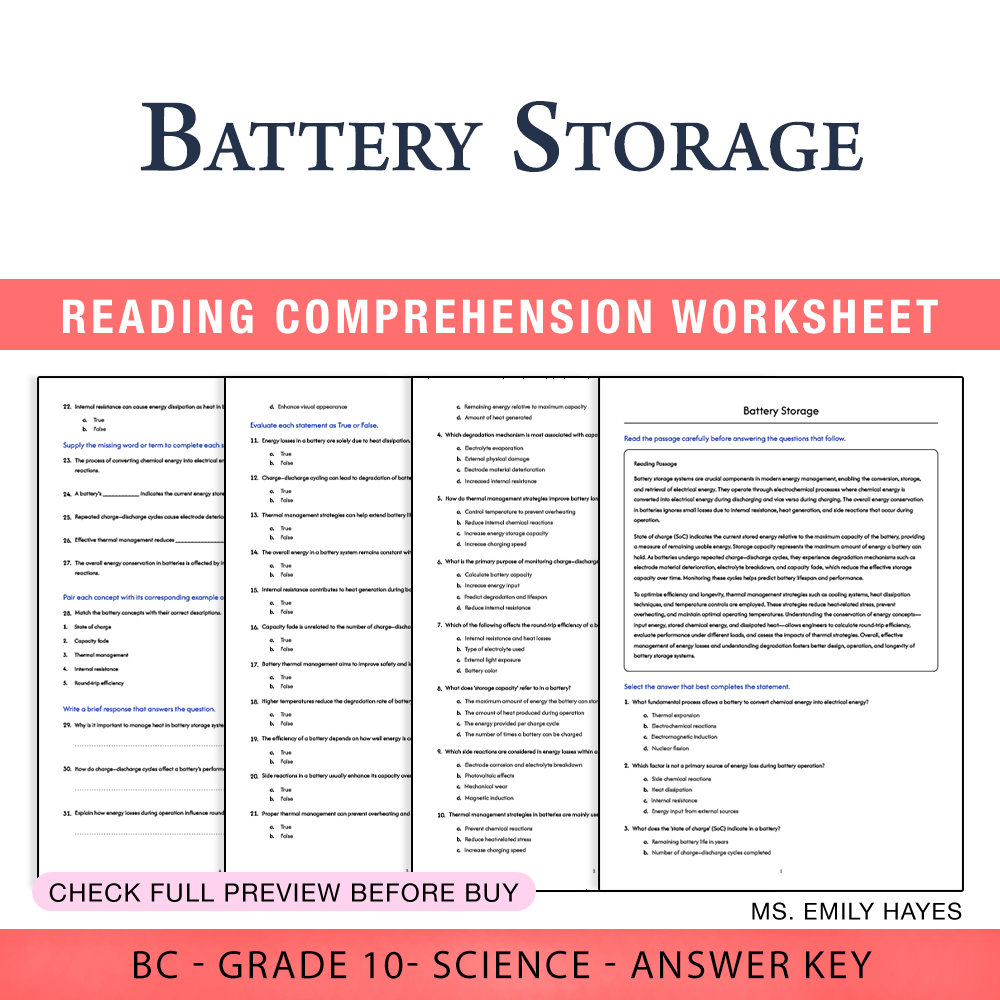
Grade 10 Science | Battery Storage Worksheet (PDF + Answer Key)
Created byCopper Leaf ClassroomLearning Objectives
- Explain how battery storage converts chemical energy to electrical energy and back, understanding energy conservation and losses.
- Describe the concepts of state of charge, storage capacity, and charge–discharge cycles in batteries.
- Analyze how energy losses affect round-trip efficiency and how thermal management impacts battery performance and longevity.
Also included in: Grade 10 Science BC – Energy, Thermodynamics & Ecosystems (PDF + Answer Key) +1 more
Instant download
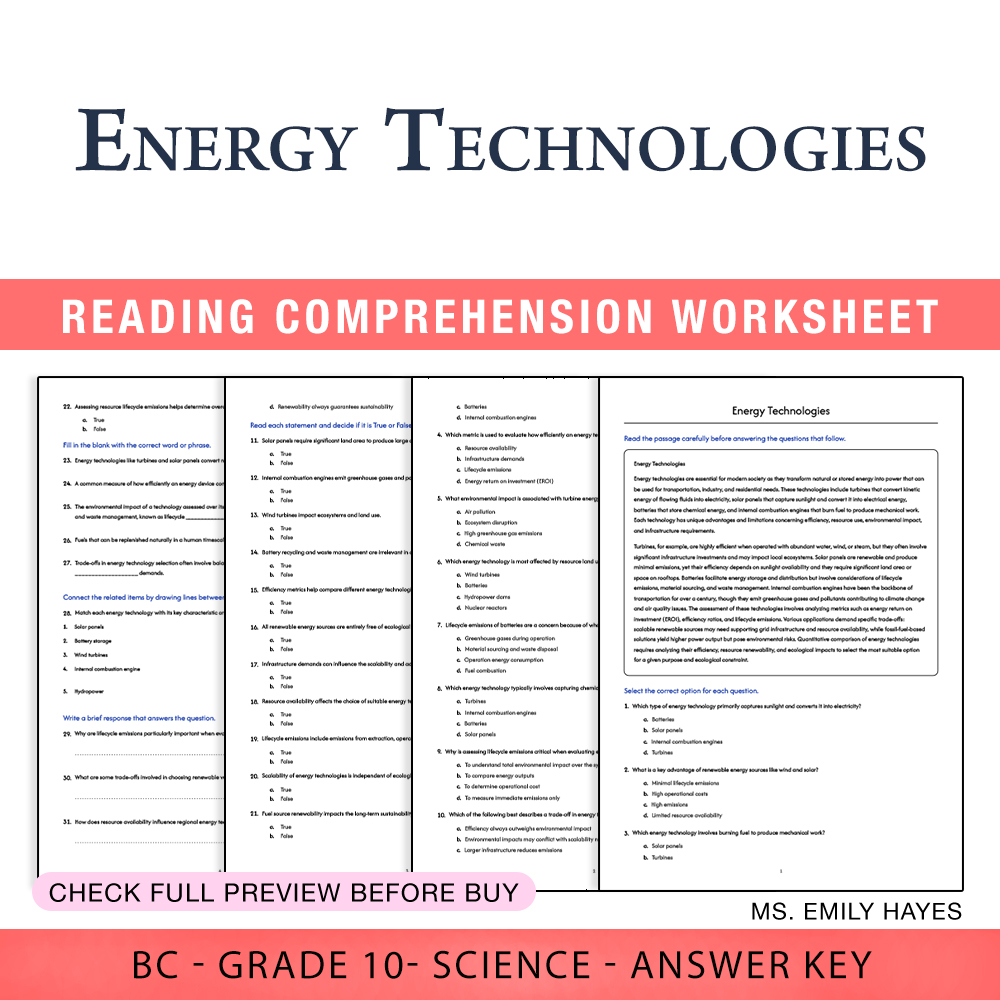
Grade 10 Science | Energy Technologies Worksheet (PDF + Answer Key)
Created byCopper Leaf ClassroomLearning Objectives
- Understand how different energy technologies convert natural or stored energy into usable power.
- Evaluate the efficiency, renewability, and environmental impacts of various energy devices and systems.
- Compare and contrast different energy technologies based on lifecycle emissions, waste, and infrastructure demands.
Also included in: Grade 10 Science BC – Energy, Thermodynamics & Ecosystems (PDF + Answer Key) +1 more
Instant download
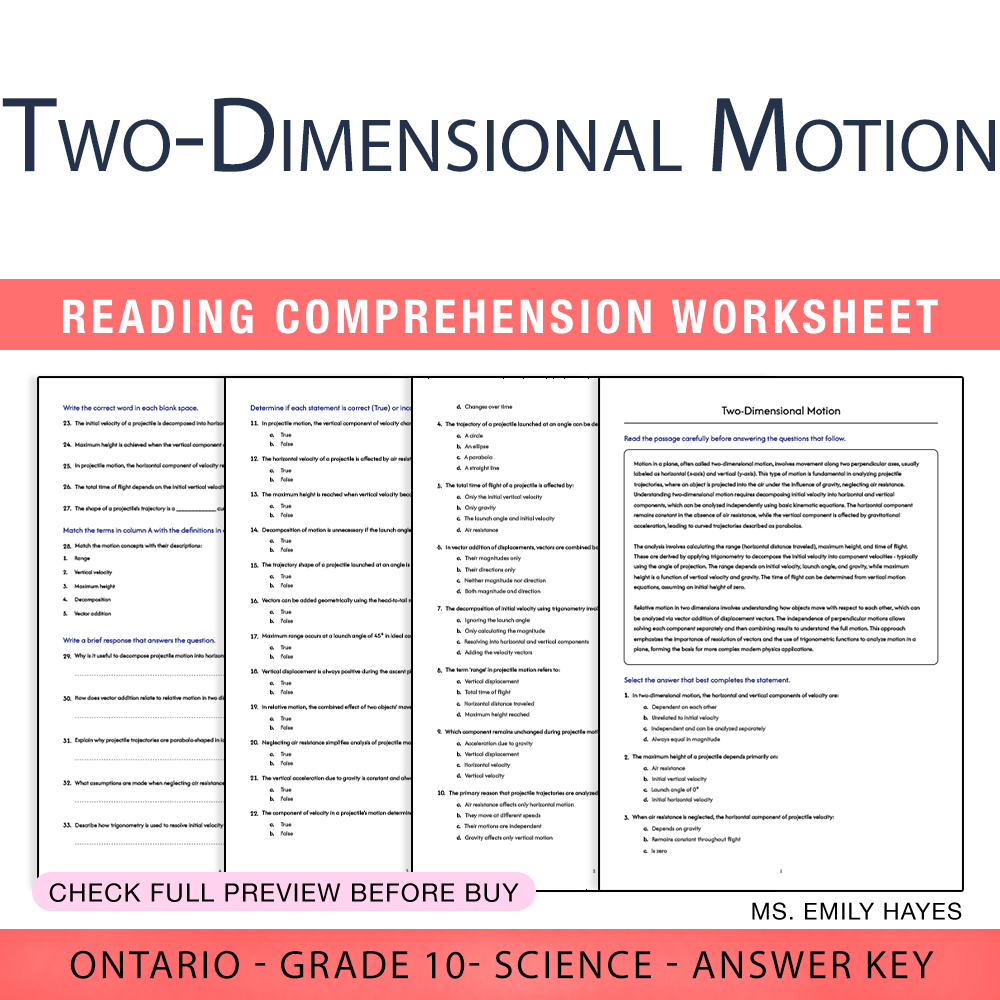
Grade 10 Science | Two-Dimensional Motion Worksheet (PDF + Answer Key)
Created byCopper Leaf ClassroomLearning Objectives
- Understand the decomposition of motion into orthogonal components in projectile motion.
- Derive and apply formulas for range, maximum height, and time of flight.
- Analyze relative motion in two dimensions and understand vector addition of displacements.
Instant download
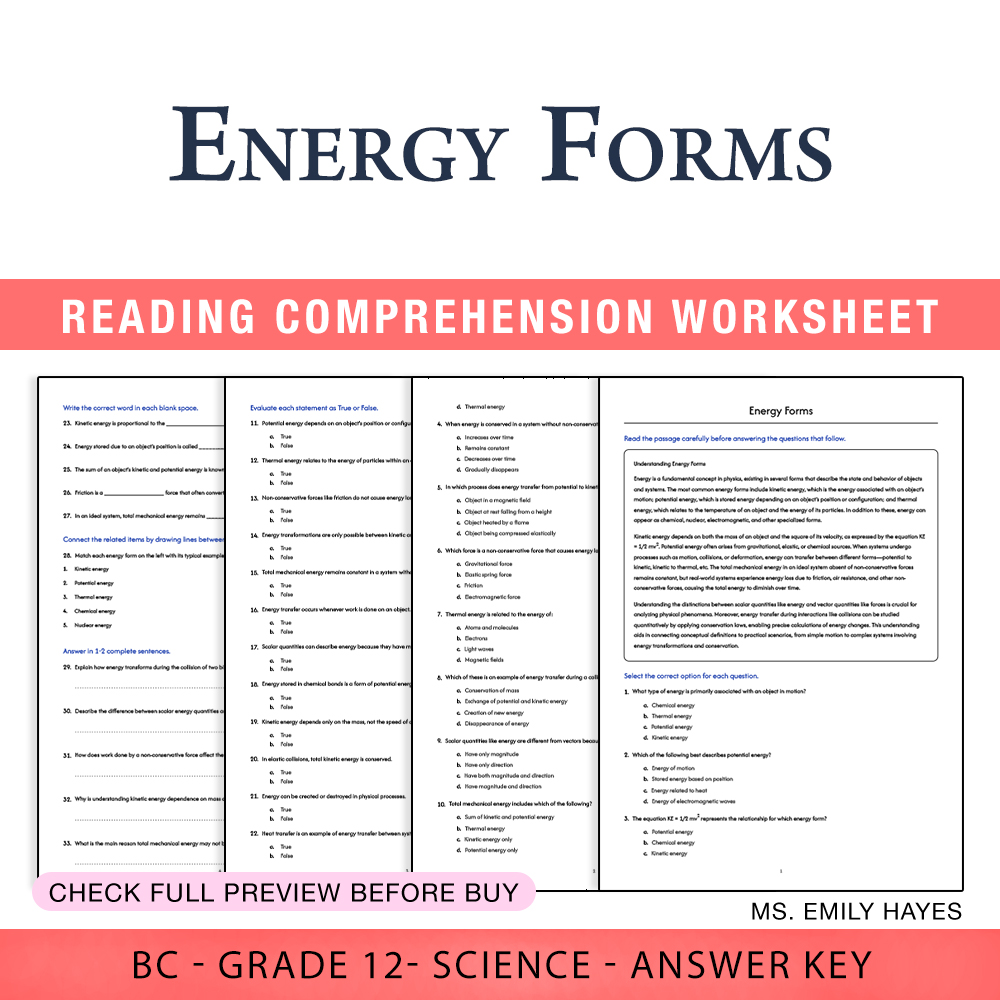
Grade 12 Science | Energy Forms Worksheet (PDF + Answer Key)
Created byCopper Leaf ClassroomLearning Objectives
- Define and differentiate between various forms of energy such as kinetic, potential, and thermal.
- Explain how energy transforms from one form to another during different physical processes.
- Understand the concept of total mechanical energy and how it changes in systems influenced by non-conservative forces.
Also included in: Grade 12 Science BC– Physics, Quantum, and Energy Concepts (PDF+ Answer Keys) +1 more
Instant download
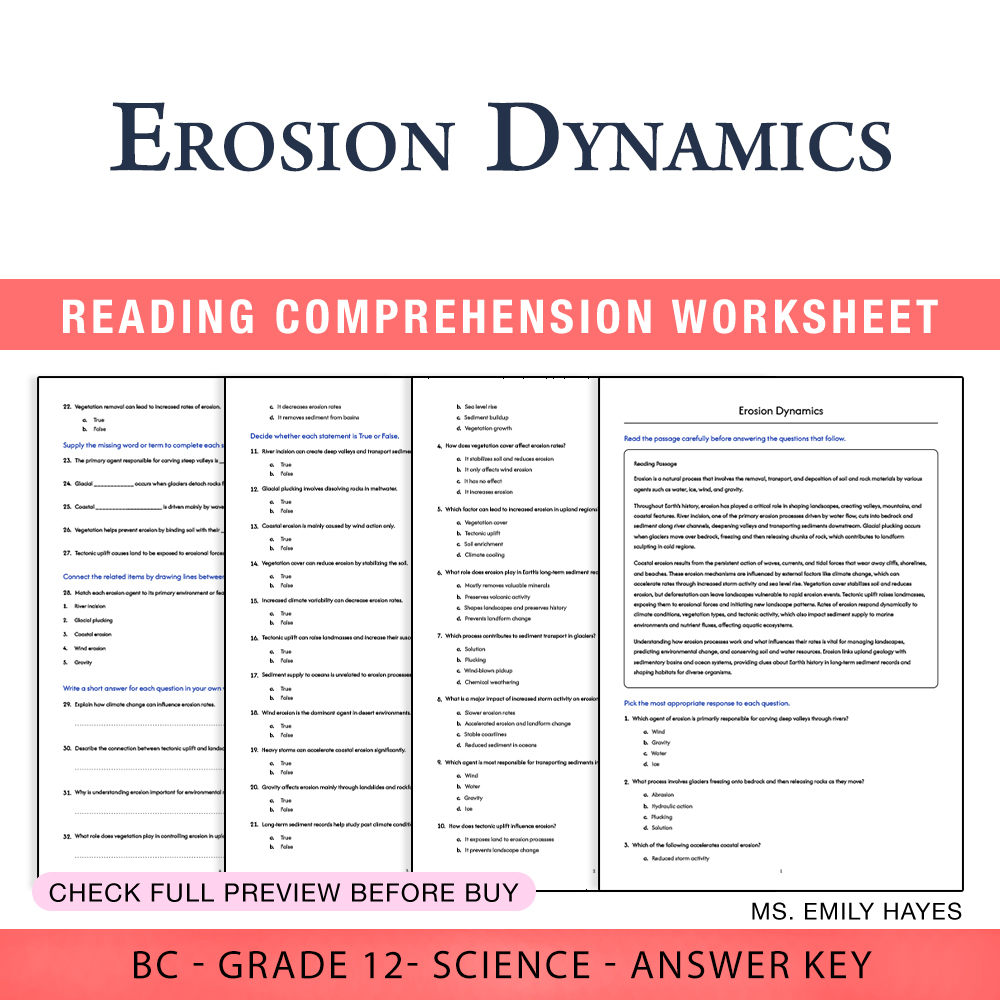
Grade 12 Science | Erosion Dynamics Worksheet (PDF + Answer Key)
Created byCopper Leaf ClassroomLearning Objectives
- Describe the processes involved in erosion, including detachment, transport, and deposition of sediments.
- Identify different erosion mechanisms such as river incision, glacial plucking, and coastal erosion.
- Analyze how climate, vegetation, and tectonic activity influence erosion rates and landscape changes.
Also included in: Grade 12 Science BC | Earth Structures & Geology Bundle (PDF+ Answer Keys) +1 more
Instant download
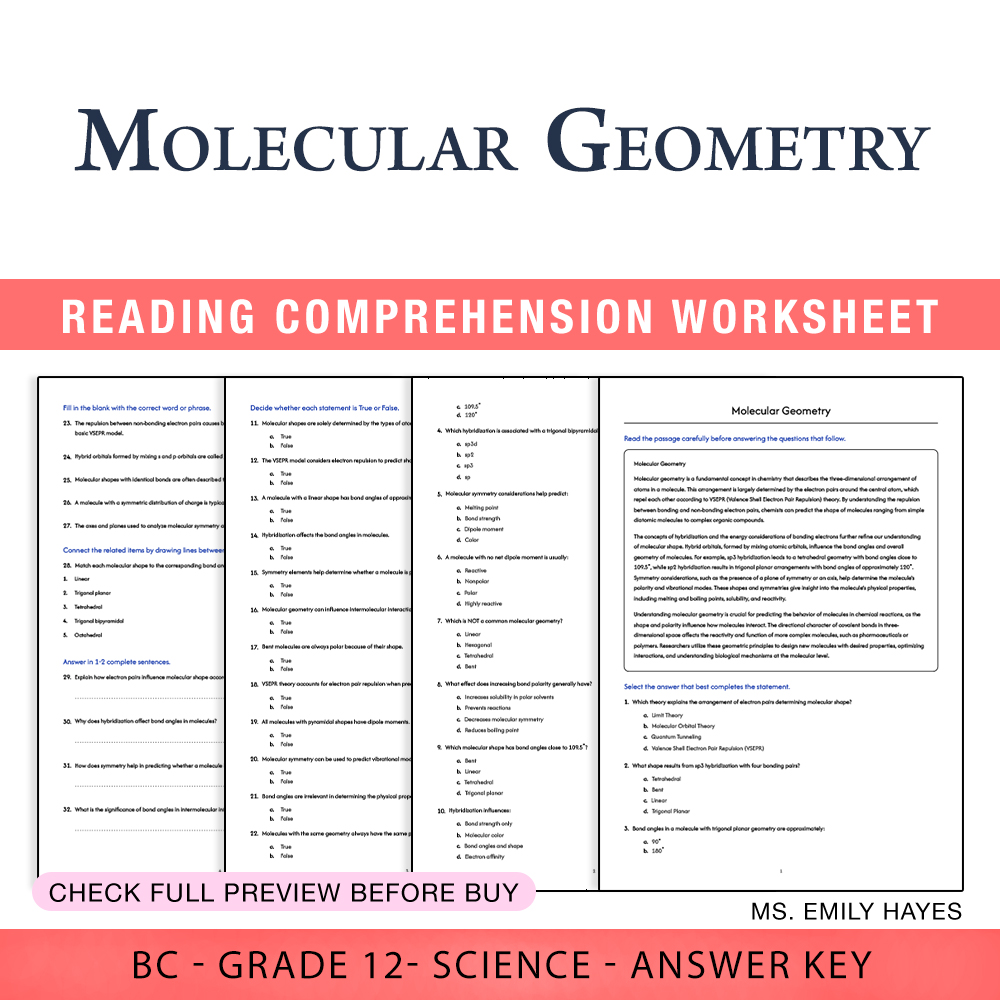
Grade 12 Science | Molecular Geometry Worksheet (PDF + Answer Key)
Created byCopper Leaf ClassroomLearning Objectives
- Explain the principles of electron pair repulsion and how they determine molecular shape.
- Identify common molecular geometries based on VSEPR and hybridization.
- Determine bond angles and relate molecular shape to polarity and intermolecular forces.
Also included in: Grade 12 Science BC – Thermochemistry to Atomic Structures (PDF+ Answer Keys) +1 more
Instant download
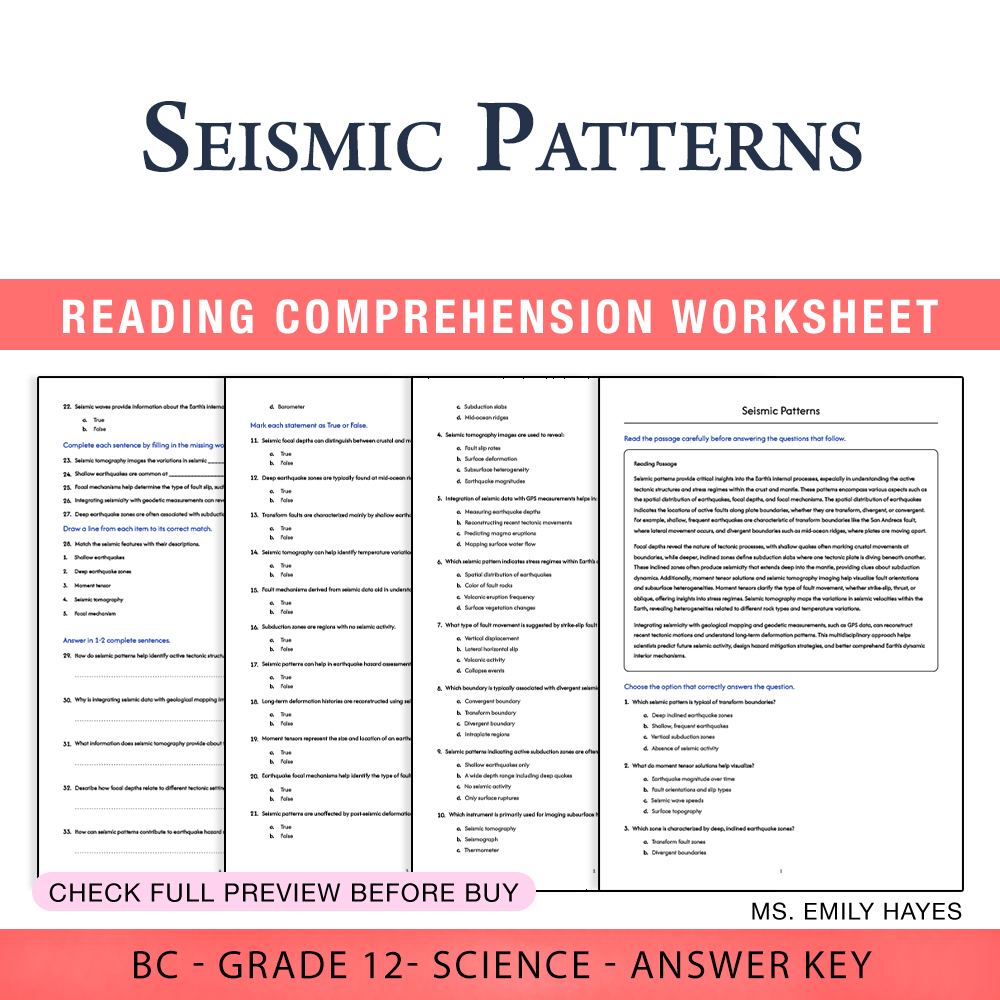
Grade 12 Science | Seismic Patterns Worksheet (PDF + Answer Key)
Created byCopper Leaf ClassroomLearning Objectives
- Describe the key seismic patterns that reveal tectonic structures and stress regimes.
- Differentiate between shallow and deep earthquake zones based on focal depths.
- Interpret seismic data related to fault mechanisms and subsurface heterogeneity.
Also included in: Grade 12 Science BC | Earth Structures & Geology Bundle (PDF+ Answer Keys) +1 more
Instant download
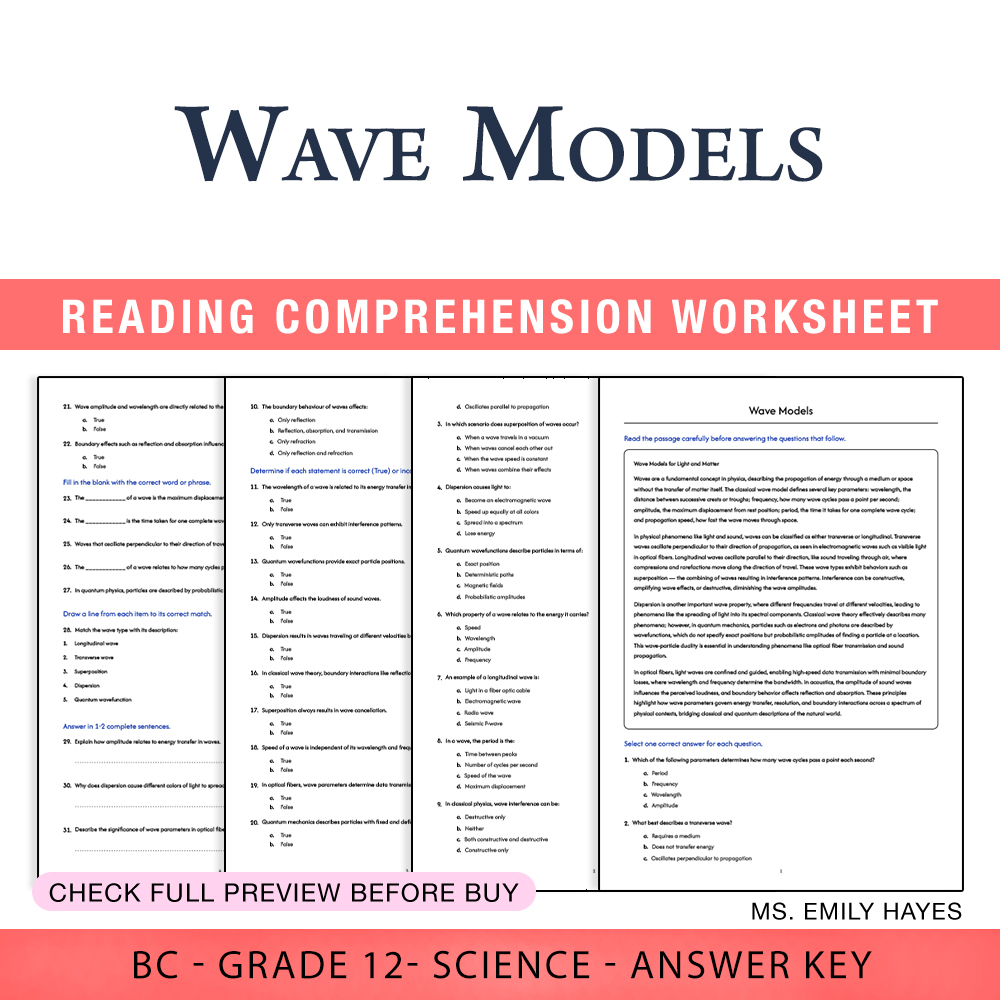
Grade 12 Science | Wave Models Worksheet (PDF + Answer Key)
Created byCopper Leaf ClassroomLearning Objectives
- Understand the key parameters that define wave movement, including wavelength, frequency, amplitude, period, and propagation speed.
- Distinguish between transverse and longitudinal waves through their defining features and examples.
- Explain the concepts of superposition, interference, and dispersion in wave behavior.
Also included in: Grade 12 Science BC– Physics, Quantum, and Energy Concepts (PDF+ Answer Keys) +1 more
Instant download
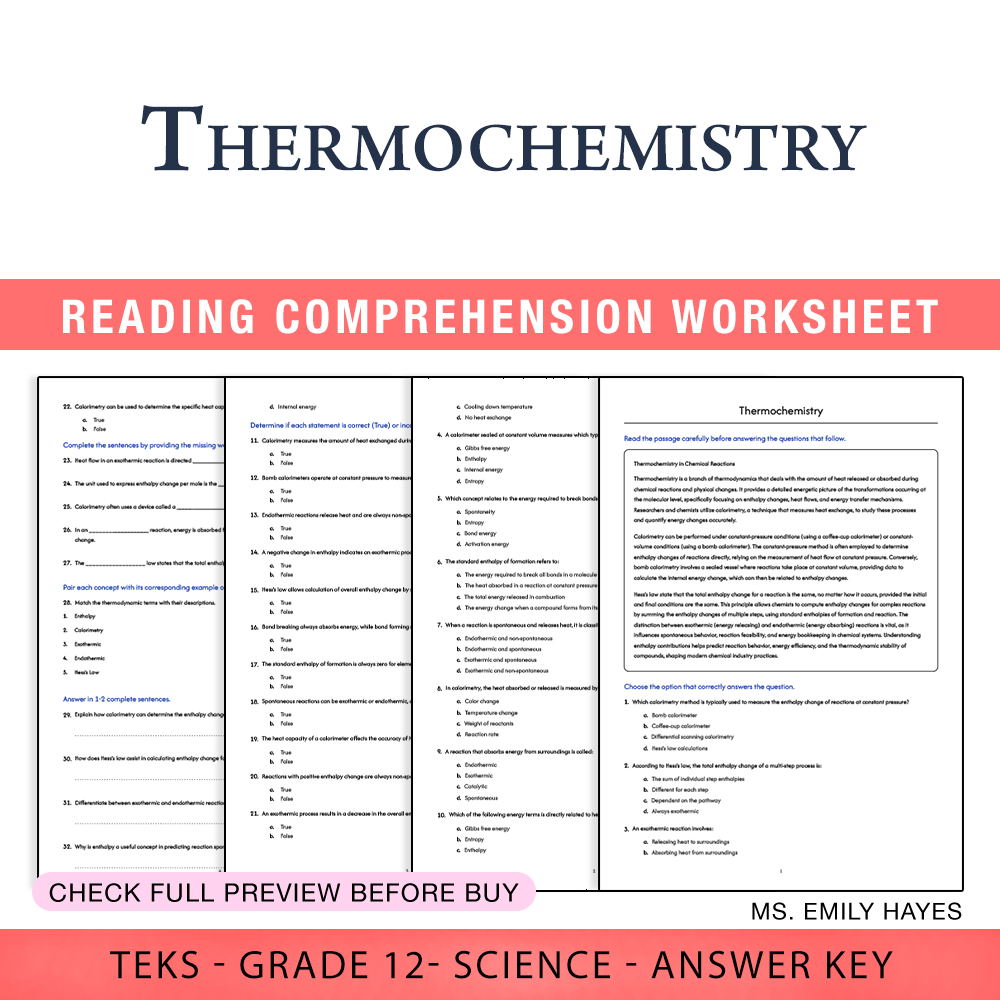
Grade 12 Science | Thermochemistry Worksheet (PDF+ Answer Key)
Created byCopper Leaf ClassroomLearning Objectives
- Explain the concepts of enthalpy, heat flow, and calorimetry in chemical reactions.
- Apply Hess's law to calculate enthalpy changes in multi-step processes.
- Differentiate between exothermic and endothermic reactions based on energy flow.
Instant download
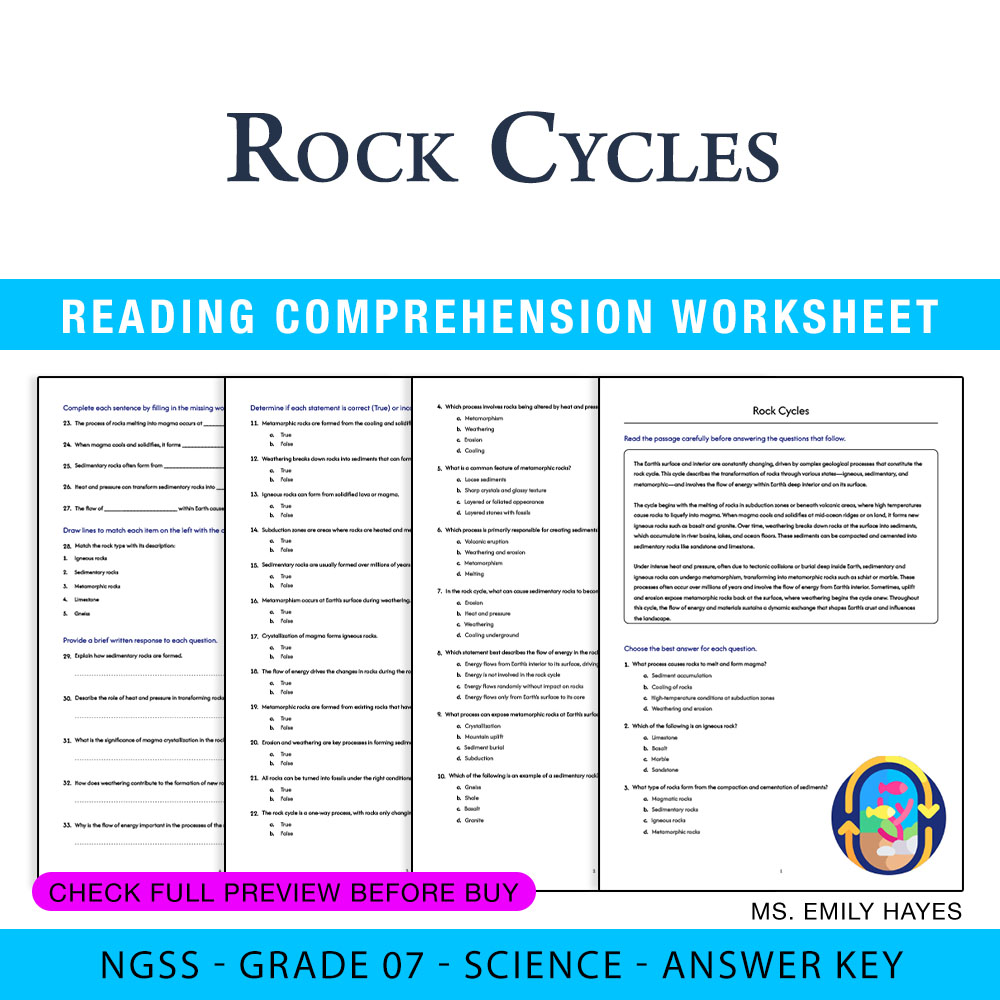
7th Grade Science | Rock Cycles Worksheet (PDF+ Answer Key)
Created byCopper Leaf ClassroomLearning Objectives
- Describe the stages of the rock cycle, including processes such as melting, cooling, weathering, and metamorphism.
- Identify and explain the different types of rocks—igneous, sedimentary, and metamorphic—and their formation processes.
- Understand how Earth's internal and surface processes drive the transformation of rocks over geological time.
Instant download
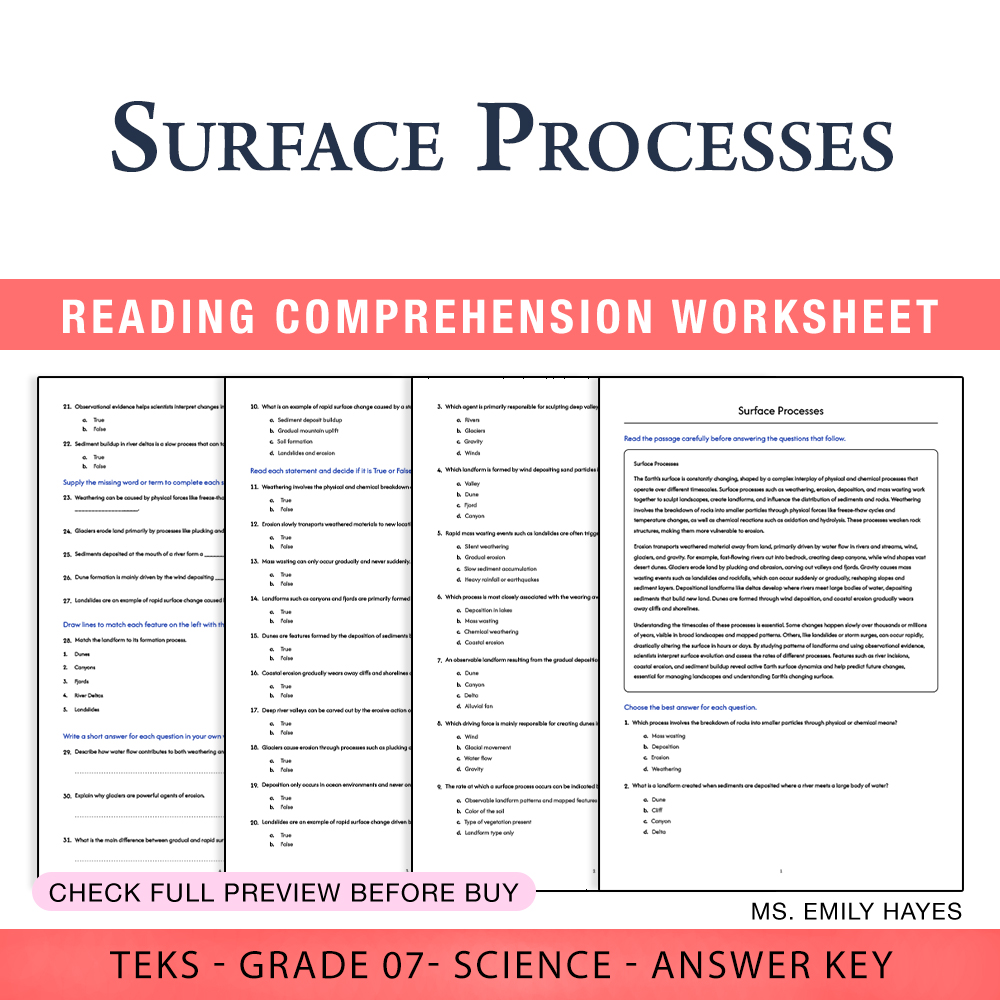
Grade 7 Science | Surface Processes Worksheet (PDF+ Answer Key)
Created byCopper Leaf ClassroomLearning Objectives
- Describe the physical and chemical processes shaping Earth's surface, including weathering, erosion, deposition, and mass wasting.
- Identify driving forces such as water flow, wind, glaciers, and gravity that influence landform development.
- Link observable landforms like deltas, canyons, and dunes to specific surface processes and their rates.
Instant download
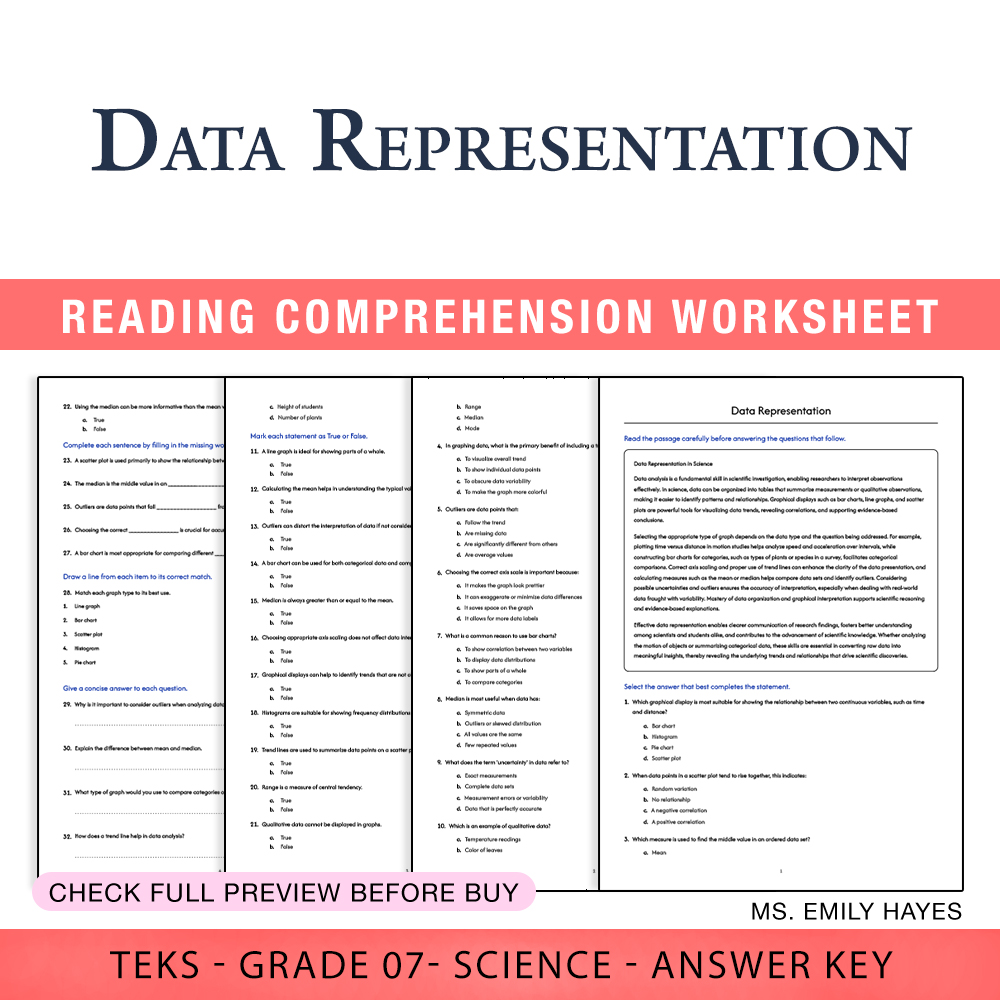
7th Grade Science | Data Representation Worksheet (PDF+ Answer Key)
Created byCopper Leaf ClassroomLearning Objectives
- Understand how to organize data into tables, graphs, and summary statistics.
- Identify appropriate graph types for different data sets.
- Interpret trends and relationships from graphical displays.
Instant download
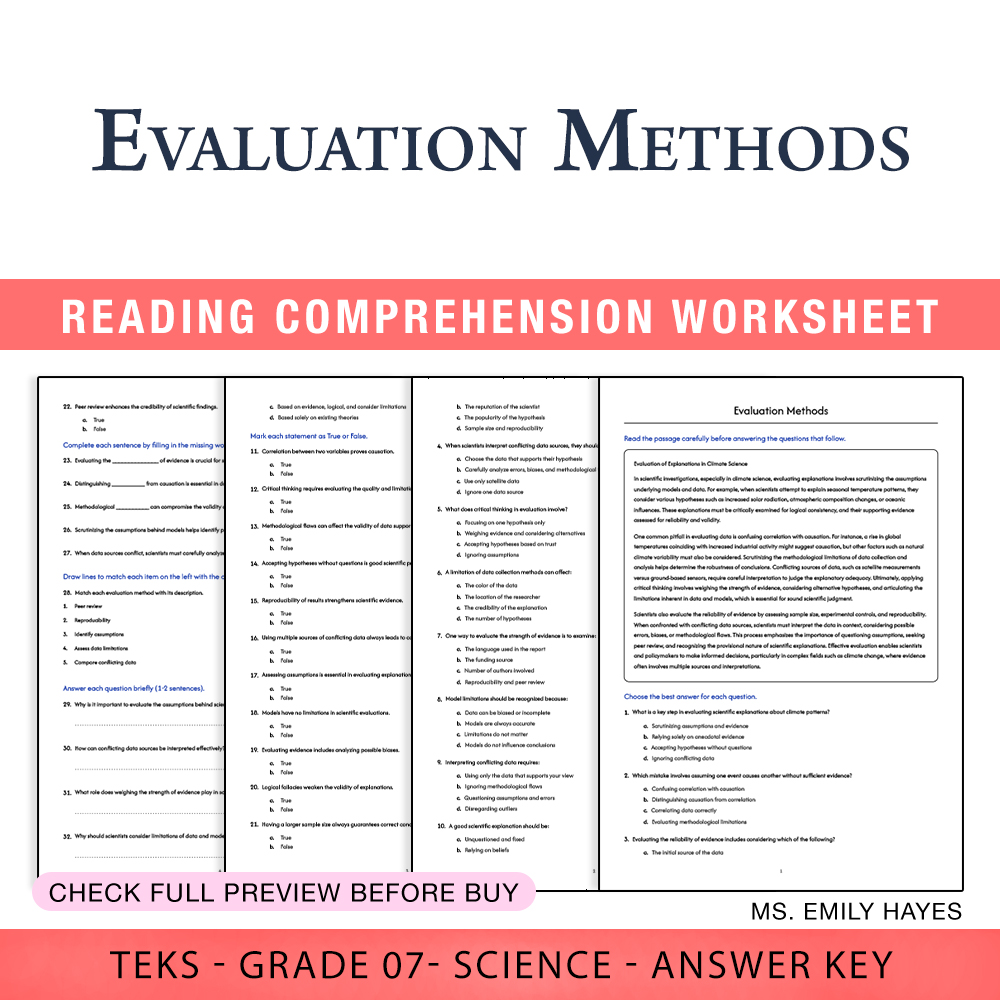
7th Grade Science | Evaluation Methods Worksheet (PDF+ Answer Key)
Created byCopper Leaf ClassroomLearning Objectives
- Apply critical thinking skills to evaluate explanations and models.
- Identify logical fallacies and distinguish correlation from causation.
- Assess the strength of evidence and recognize limitations of data and models.
Instant download
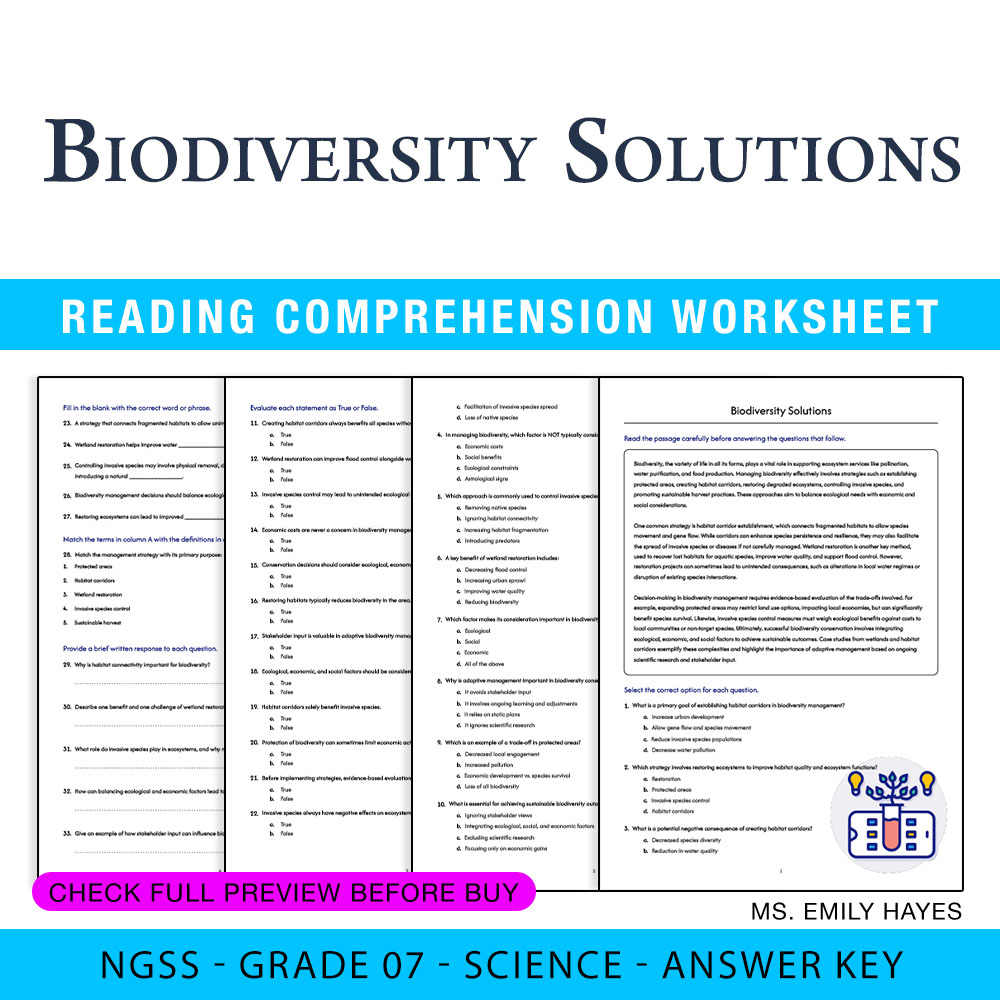
7th Grade Science | Biodiversity Solutions Worksheet (PDF +Answer Key)
Created byCopper Leaf ClassroomLearning Objectives
- Understand different management strategies used to maintain biodiversity and their ecological, economic, and social trade-offs.
- Evaluate case examples such as wetland restoration and habitat corridor establishment for their benefits and potential unintended effects.
- Compare and analyze alternative biodiversity conservation approaches using evidence-based reasoning.
Instant download
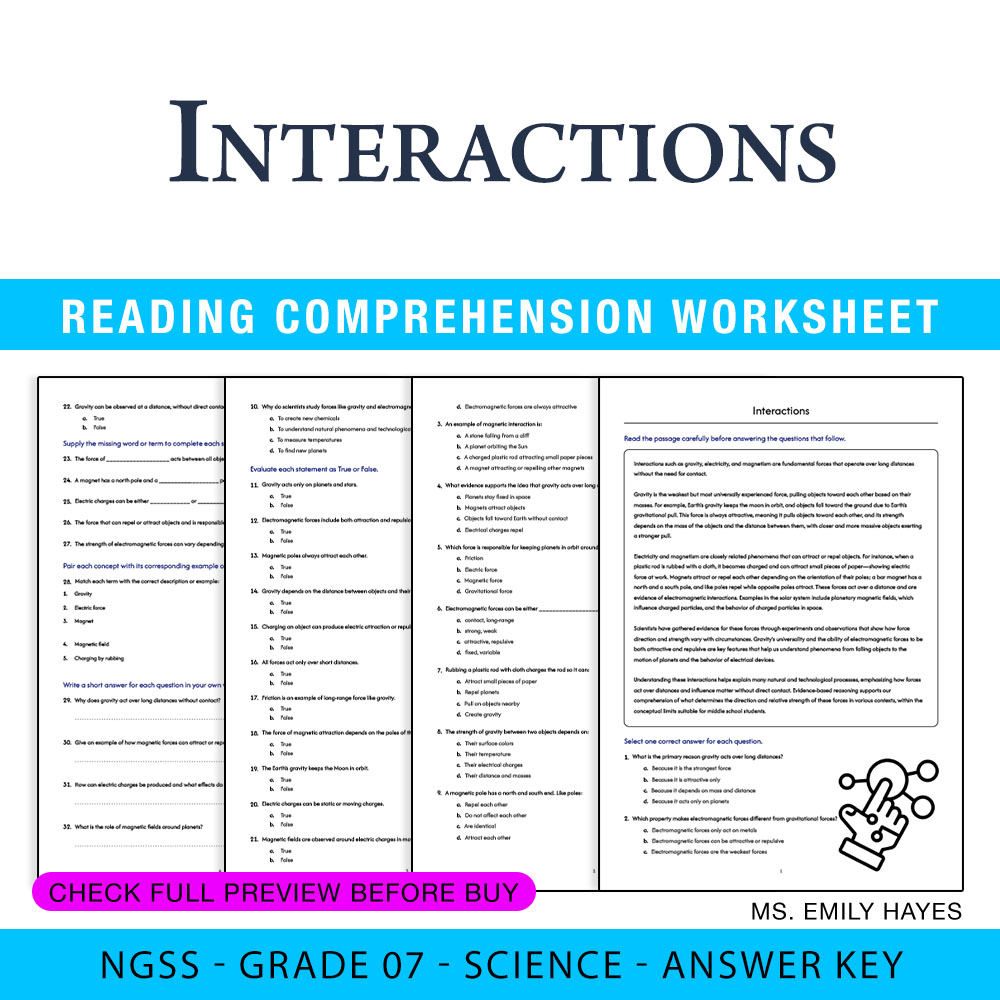
7th Grade Science | Interactions Worksheet (PDF+ Answer Key)
Created byCopper Leaf ClassroomLearning Objectives
- Explain the nature of gravitational, electric, and magnetic interactions as long-range forces that act without contact.
- Describe how gravity is universally attractive and how electromagnetic forces can be attractive or repulsive.
- Relate gravitational attraction to mass and distance in qualitative terms.
Instant download
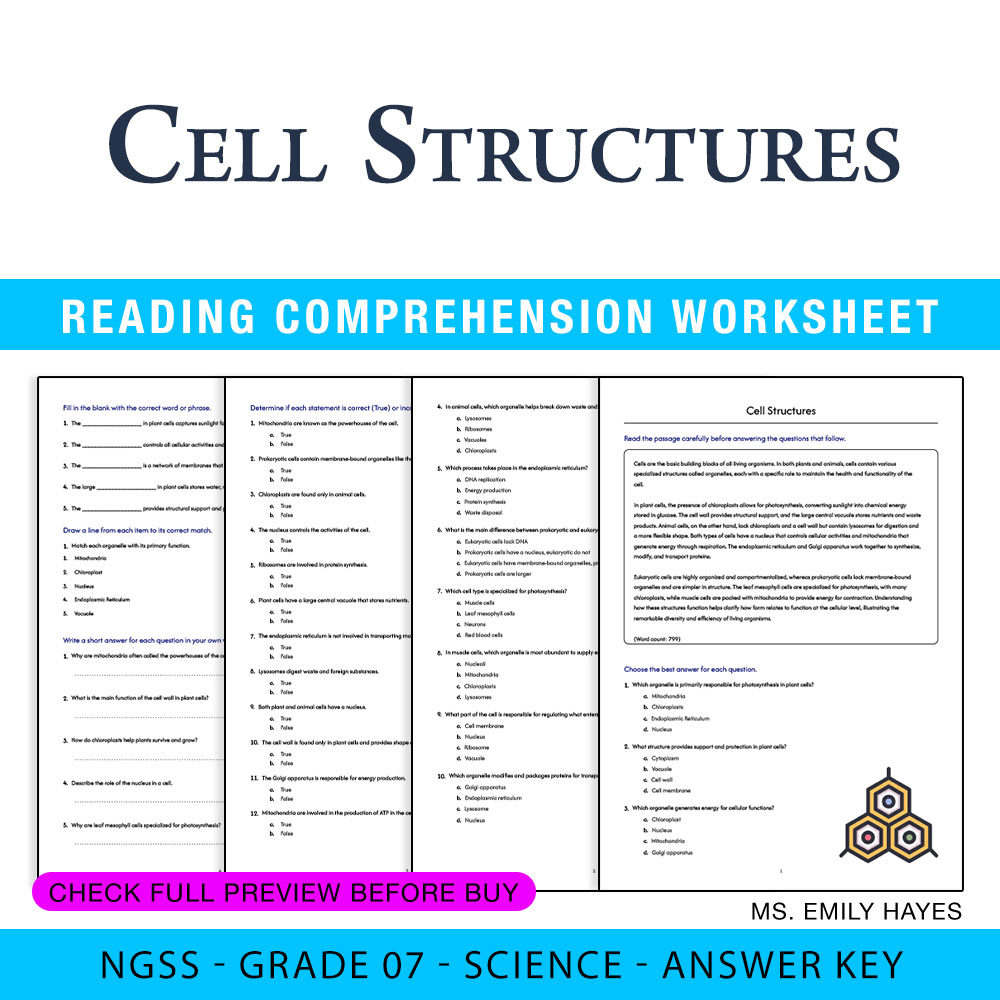
7th Grade Science | Cell Structures Worksheet (PDF + Answer Key)
Created byCopper Leaf ClassroomLearning Objectives
- Describe the main organelles of plant and animal cells and their functions.
- Connect cell structure to its role in processes like transport, synthesis, and compartmentalization.
- Compare eukaryotic cell organelles with prokaryotic cell organization.
Instant download
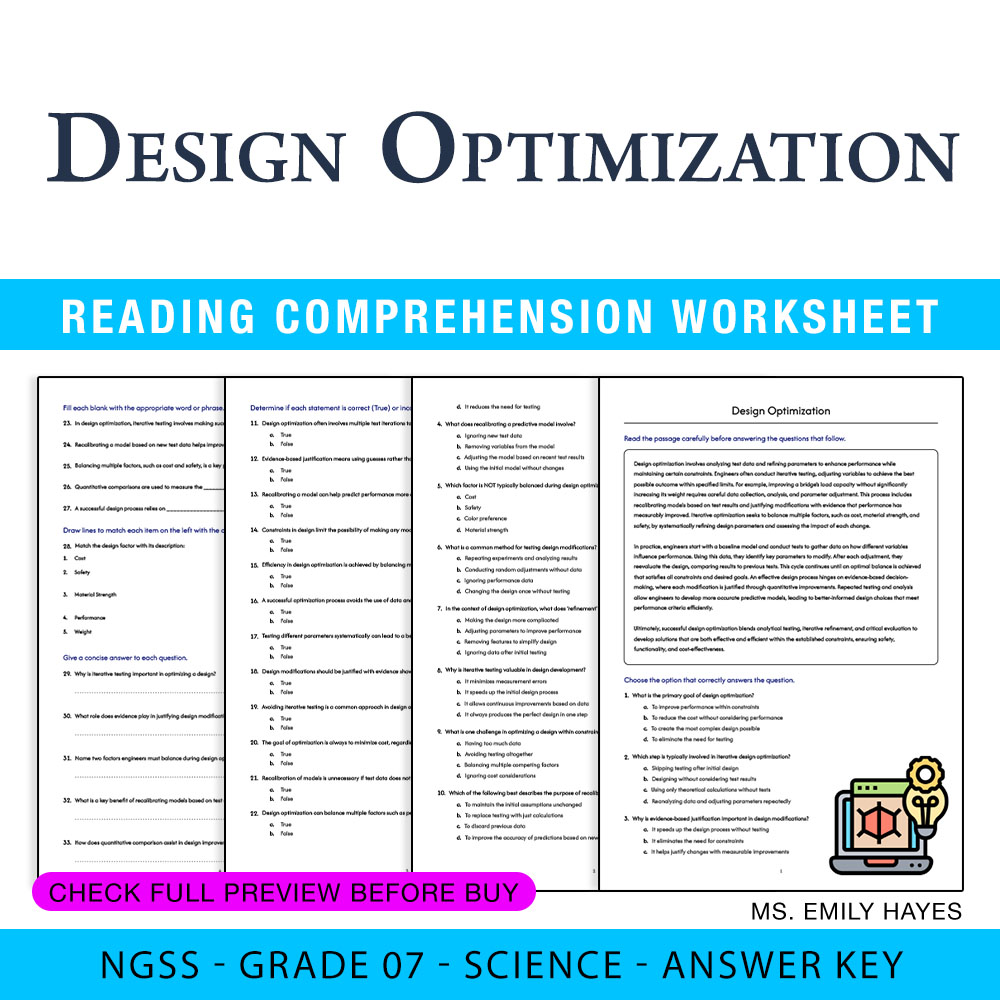
7th Grade Science | Design Optimization Worksheet (PDF+ Answer Key)
Created byCopper Leaf ClassroomLearning Objectives
- Analyze experimental test data to identify factors influencing design performance.
- Apply iterative parameter adjustments based on quantitative comparisons to improve design solutions.
- Justify modifications to design specifications with evidence of performance improvements within constraints.
Instant download
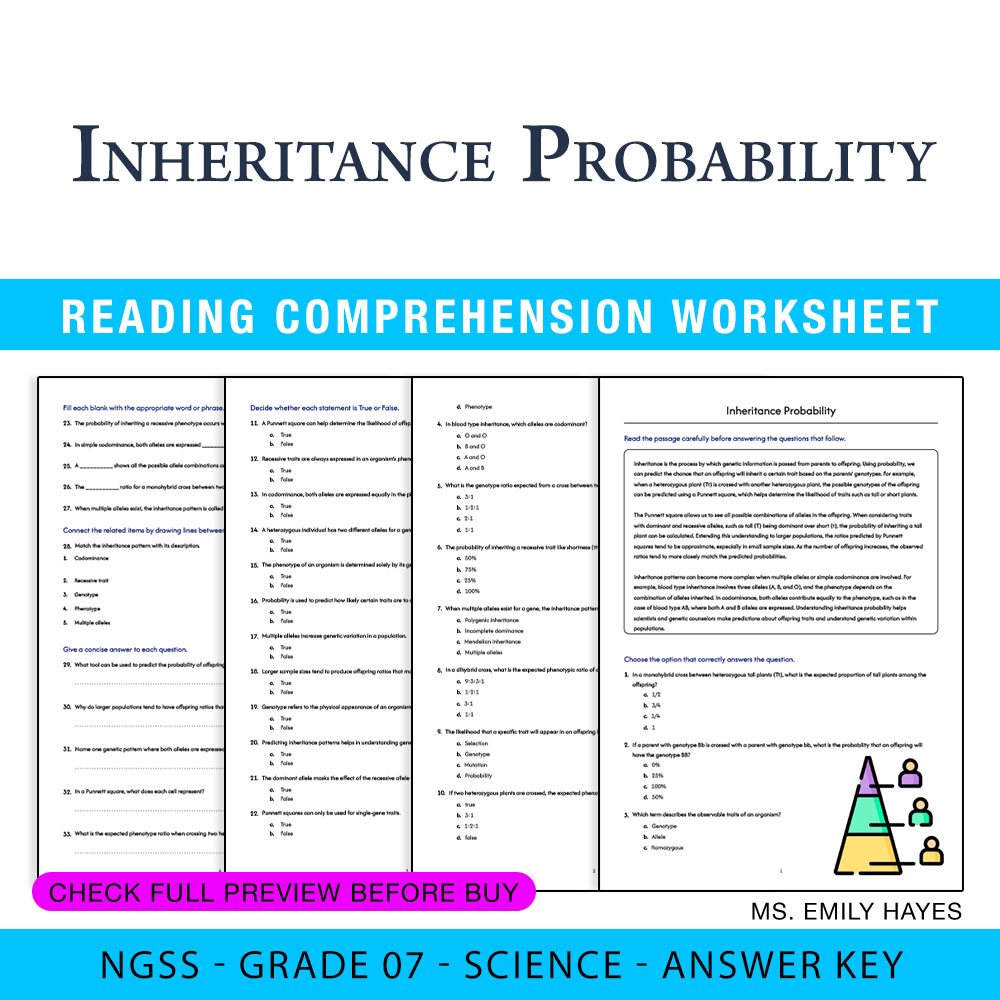
7th Grade Science | Inheritance Probability Worksheet (PDF+ Answer Key)
Created byCopper Leaf ClassroomLearning Objectives
- Understand how probability concepts apply to genetic inheritance and predict offspring traits using Punnett squares.
- Calculate expected genotype and phenotype ratios for monohybrid crosses involving dominant and recessive alleles.
- Connect outcomes of Punnett squares to the probability of inheritance and extend predictions to larger populations.
Instant download
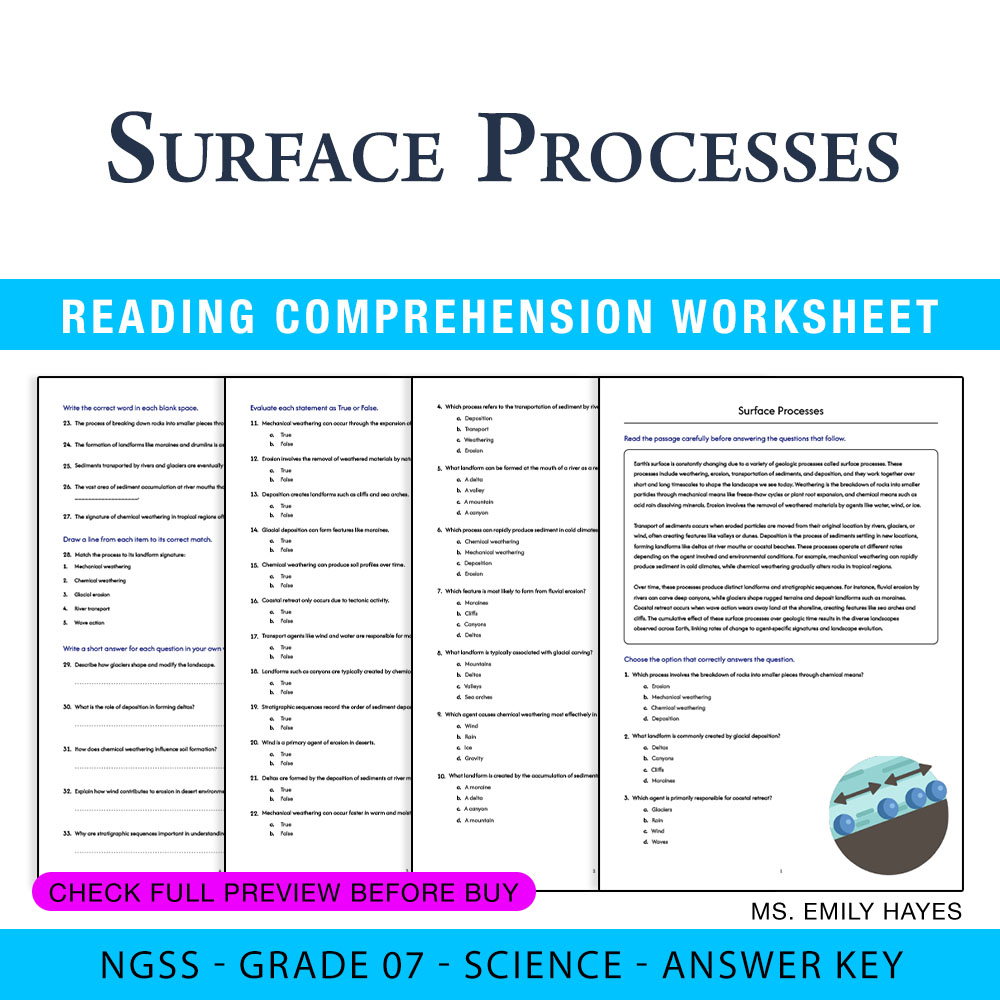
7th Grade Science | Surface Processes Worksheet (PDF+ Answer Key)
Created byCopper Leaf ClassroomLearning Objectives
- Describe the main types of surface processes such as weathering, erosion, transport, and deposition.
- Explain how different agents create specific landforms and signatures on Earth's surface.
- Connect rates of landscape change with geologic timescales and processes.
Instant download
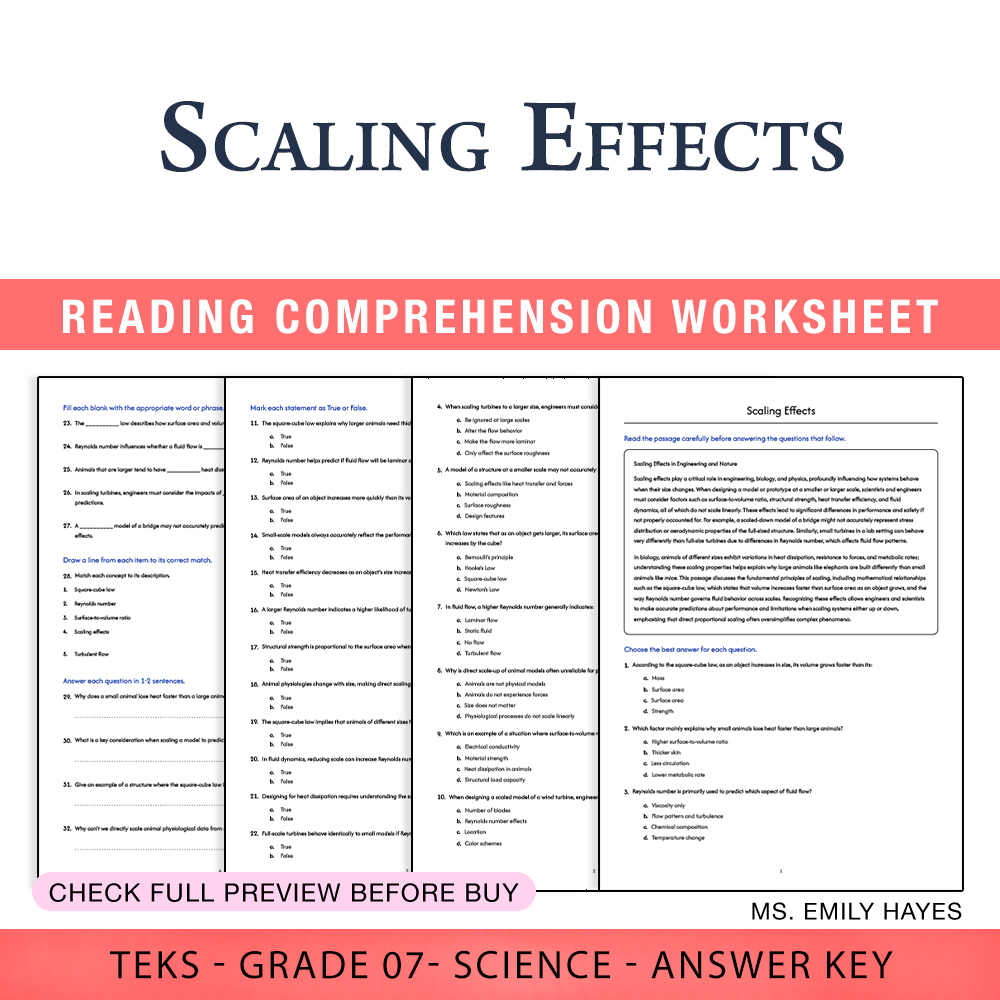
7th Grade Science | Scaling Effects Worksheet (PDF+ Answer Key)
Created byCopper Leaf ClassroomLearning Objectives
- Understand how physical behavior changes when scaling models to full size.
- Explain the relationships described by the square-cube law and surface-to-volume ratios.
- Analyze the implications of Reynolds number in fluid flow at different scales.
Instant download
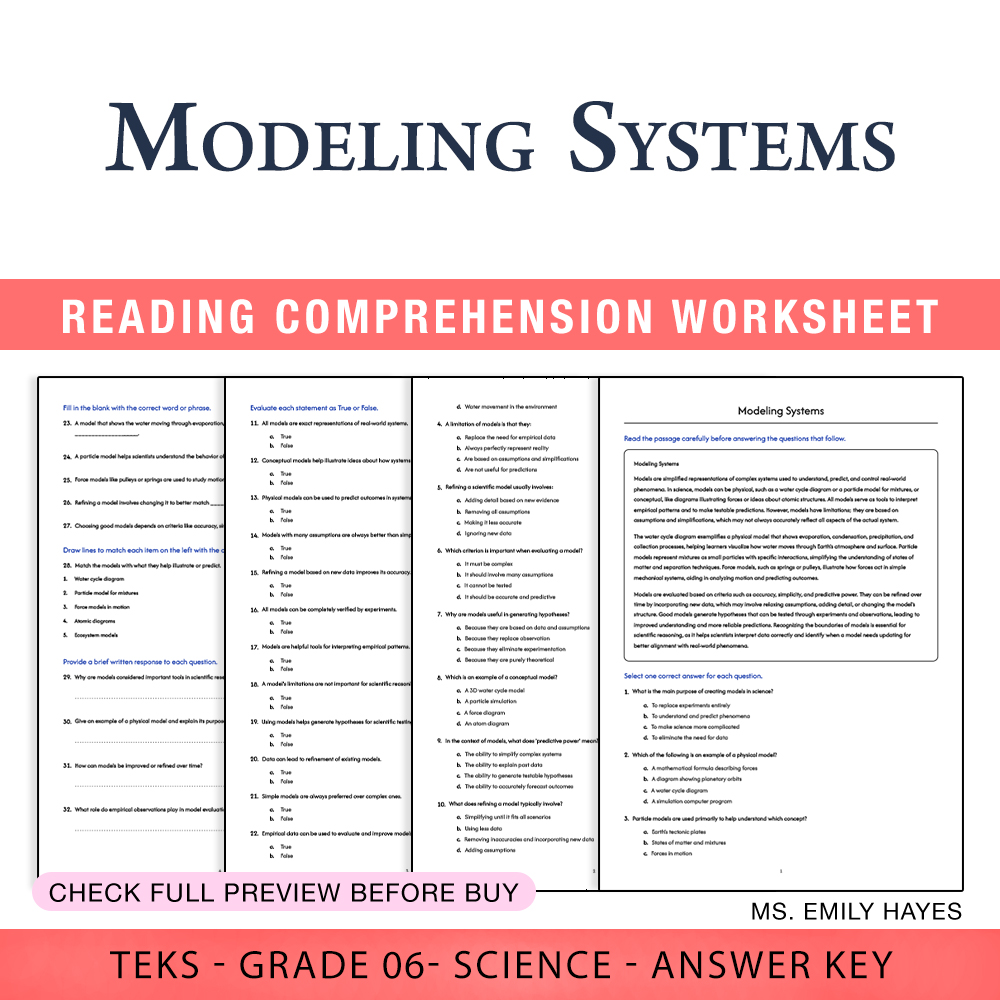
6th Grade Science | Modeling Systems Worksheet (PDF+ Answer Key)
Created byCopper Leaf ClassroomLearning Objectives
- Understand the purpose and types of models used in science.
- Describe how physical and conceptual models can predict outcomes and interpret data.
- Evaluate the limitations of models based on empirical evidence.
Instant download
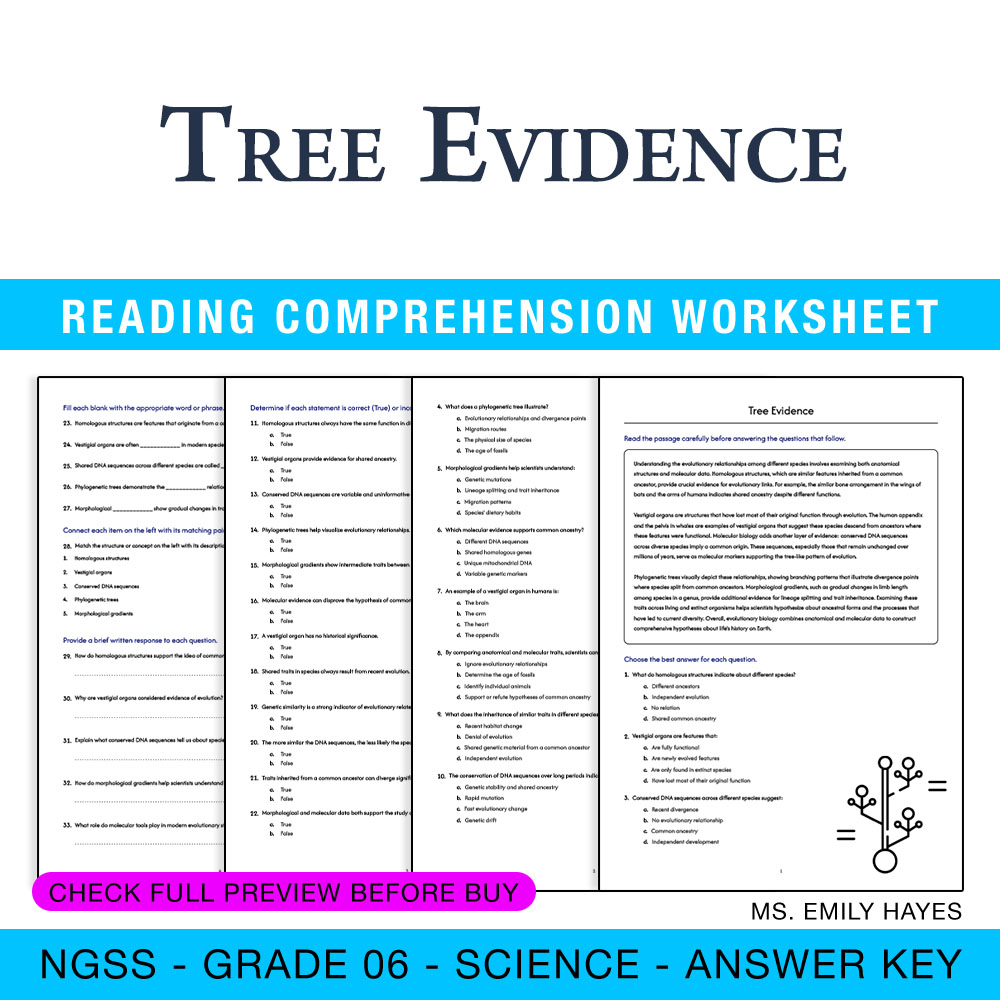
6th Grade Science | Tree Evidence Worksheet (PDF + Answer Key)
Created byCopper Leaf ClassroomLearning Objectives
- Understand how homologous structures, vestigial organs, and conserved DNA sequences support hypotheses of common ancestry.
- Analyze phylogenetic trees and morphological gradients to interpret evolutionary relationships.
- Evaluate evidence from both anatomical and molecular traits to explain divergence among taxa.
Instant download
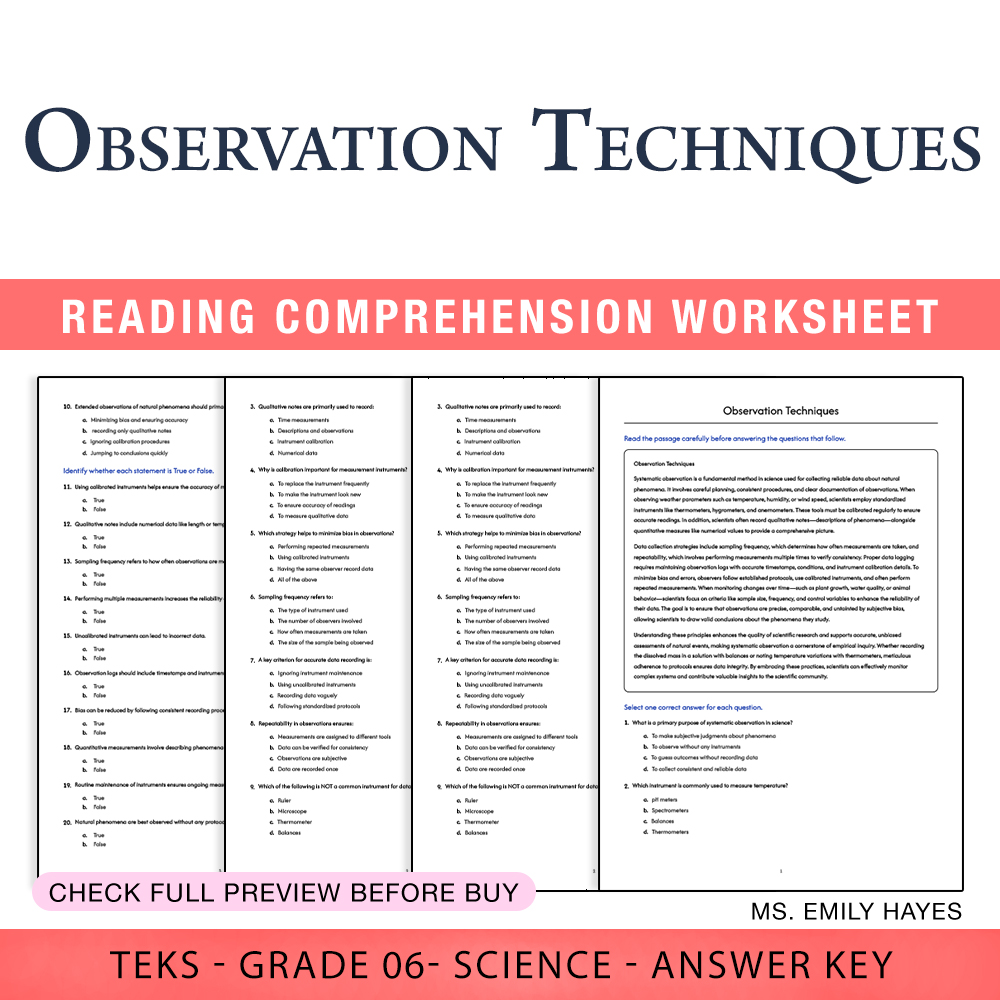
6th Grade Science | Observation Techniques Worksheet (PDF+ Answer Key)
Created byCopper Leaf ClassroomLearning Objectives
- Define systematic observation and explain its importance in scientific data collection.
- Distinguish between qualitative notes and quantitative measurements in data recording.
- Identify common instruments such as rulers, balances, and thermometers used in observation.
Instant download
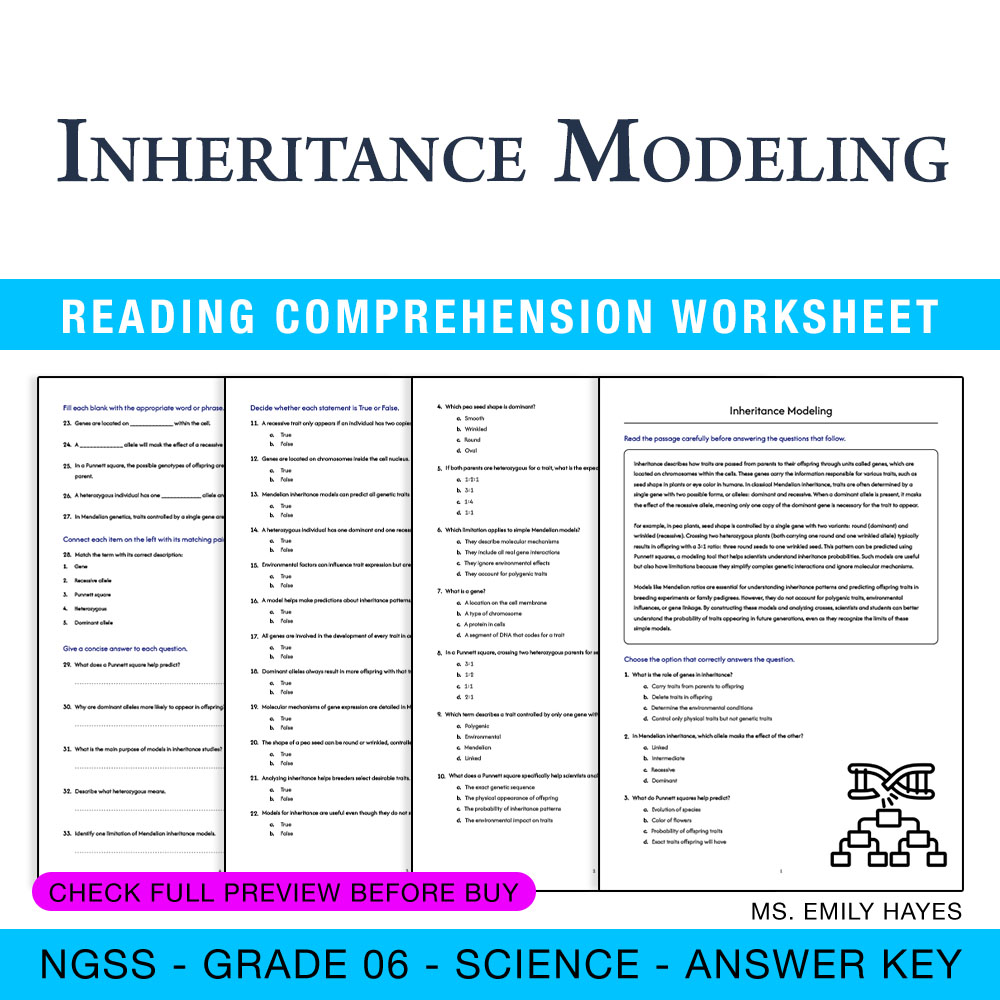
6th Grade Science | Inheritance Modeling Worksheet (PDF + Answer Key)
Created byCopper Leaf ClassroomLearning Objectives
- Understand how traits are transmitted from parents to offspring through genes.
- Use Mendelian cross examples to predict inheritance ratios of dominant and recessive traits.
- Construct and interpret models for simple inheritance patterns, including monohybrid crosses.
Also included in: Grade 6 Science | Inheritance and Variation Unit Pack (PDF+ Answer Key)
Instant download
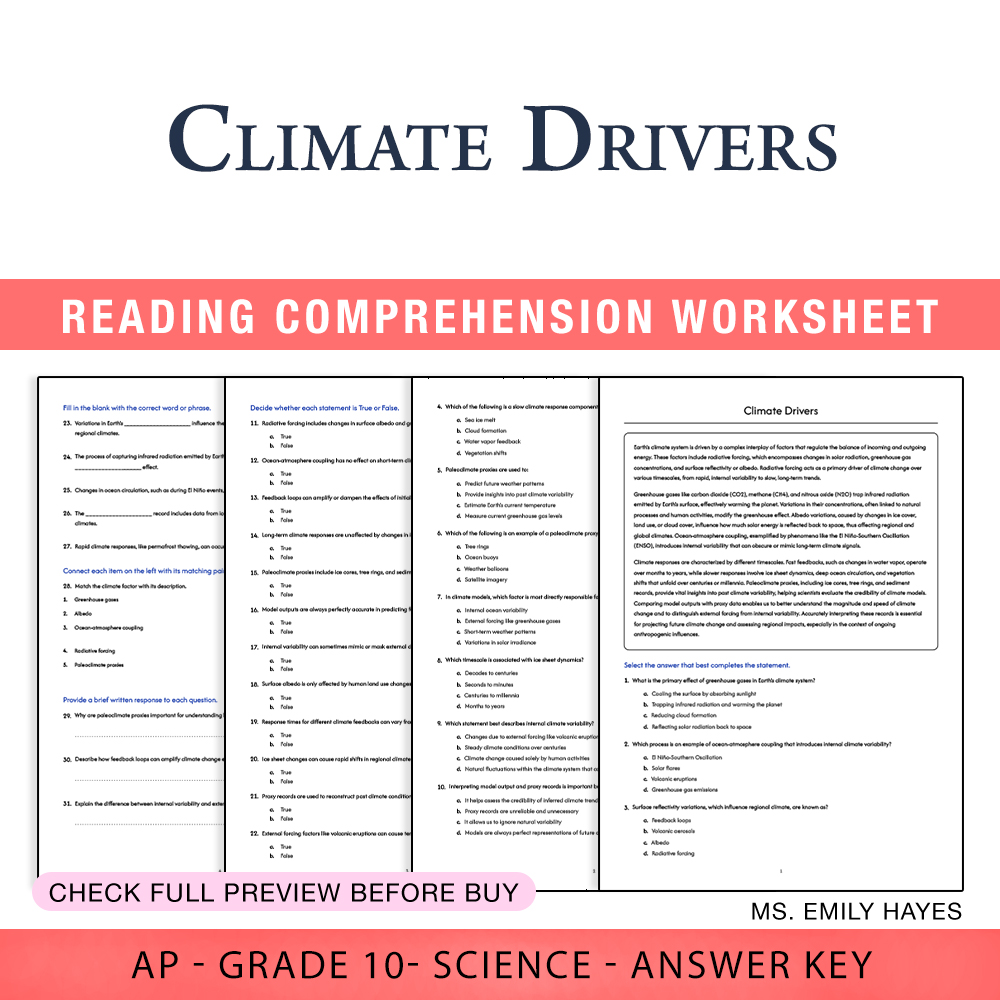
10th Grade Science | Climate Drivers Worksheet (PDF+ Answer Key)
Created byCopper Leaf ClassroomLearning Objectives
- Analyze the factors influencing Earth's climate, including radiative forcing, greenhouse gases, and albedo variations.
- Interpret energy-balance models, feedback loop diagrams, and paleoclimate proxies to understand climate changes.
- Evaluate the timescales of climate response and distinguish between internal variability and external forcing.
Also included in: Grade 10 Science AP – Surface Processes & Earth Systems (PDF + Answer Key) +1 more
Instant download
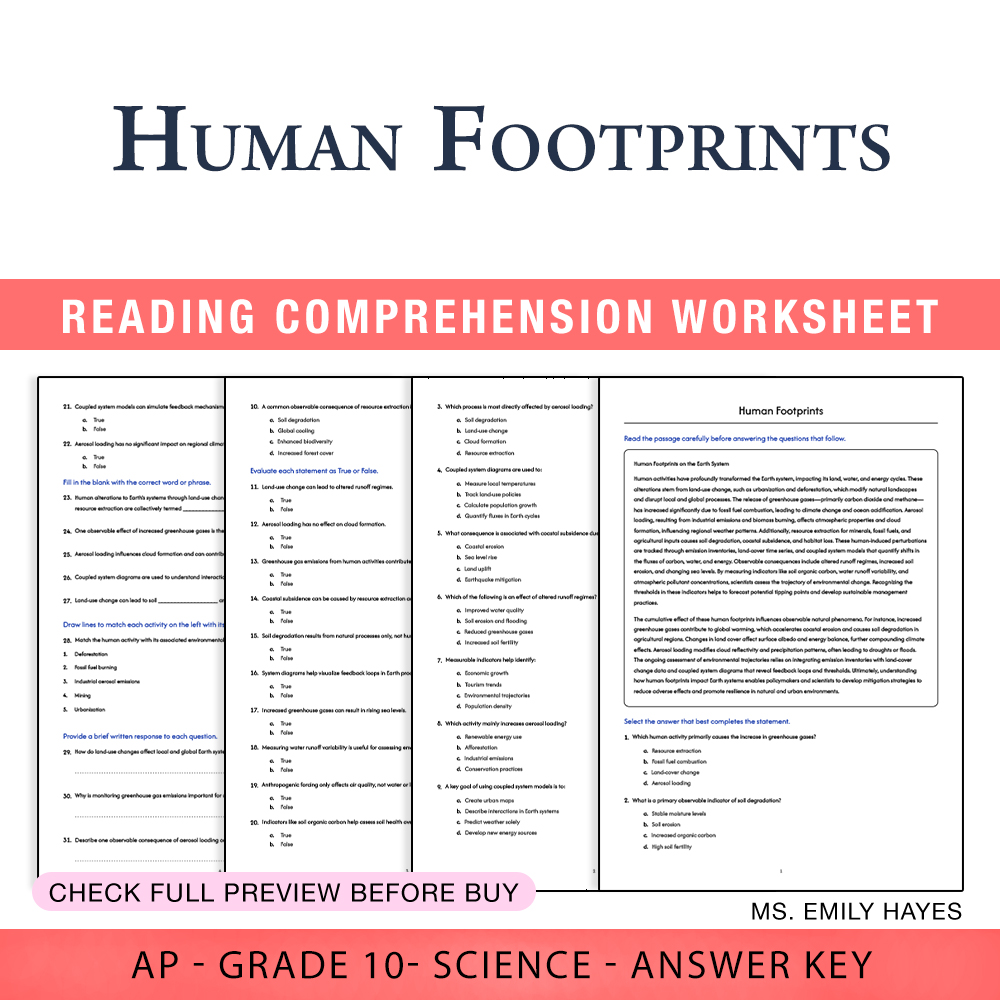
10th Grade Science | Human Footprints Worksheet (PDF+ Answer Key)
Created byCopper Leaf ClassroomLearning Objectives
- Understand how human activities alter Earth's land, water, and energy systems.
- Learn to identify indicators used to measure environmental changes due to anthropogenic forcing.
- Analyze the impacts of land-use change, greenhouse gas emissions, aerosol loading, and resource extraction.
Also included in: Grade 10 Science AP – Surface Processes & Earth Systems (PDF + Answer Key) +1 more
Instant download
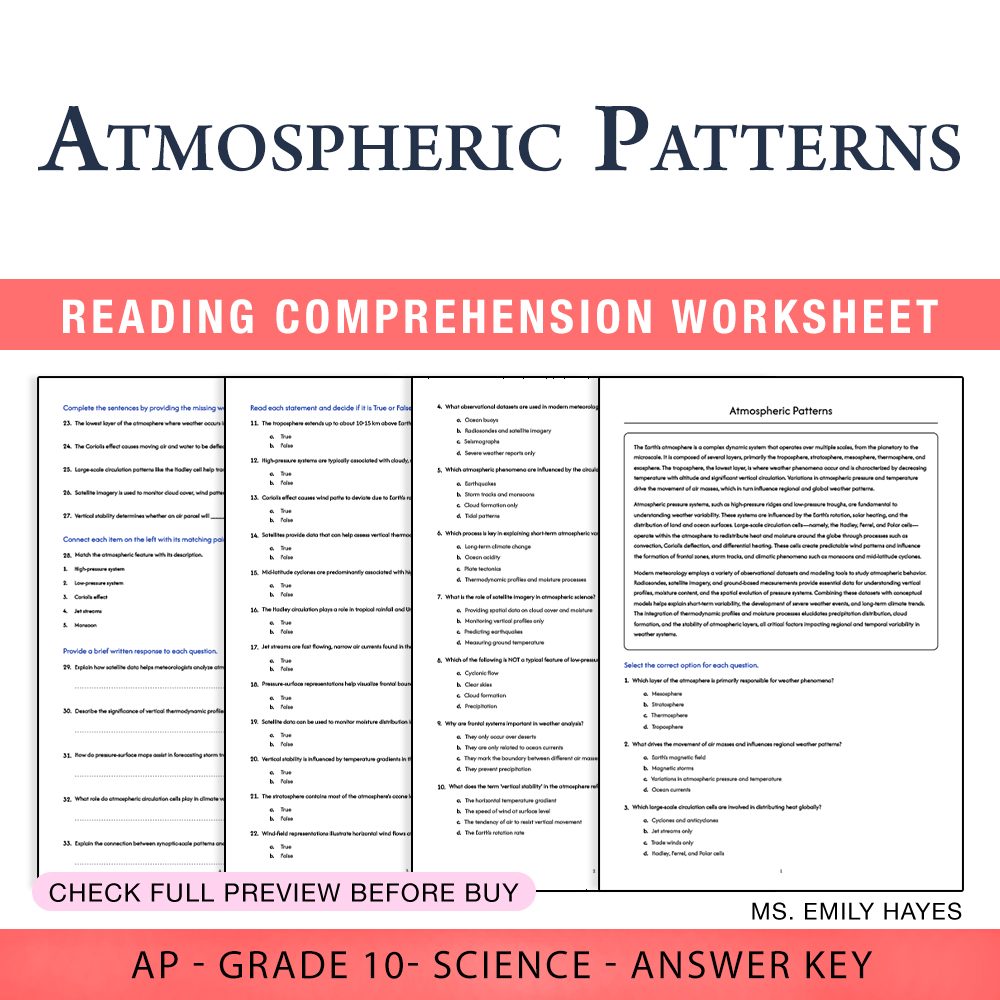
10th Grade Science | Atmospheric Patterns Worksheet (PDF+ Answer Key)
Created byCopper Leaf ClassroomLearning Objectives
- Describe the structure and dynamics of atmospheric pressure systems and circulation cells.
- Interpret hypsometric, wind-field, and pressure-surface representations of atmospheric phenomena.
- Connect large-scale synoptic patterns to regional weather events such as monsoons and cyclones.
Also included in: Grade 10 Science AP – Surface Processes & Earth Systems (PDF + Answer Key) +1 more
Instant download
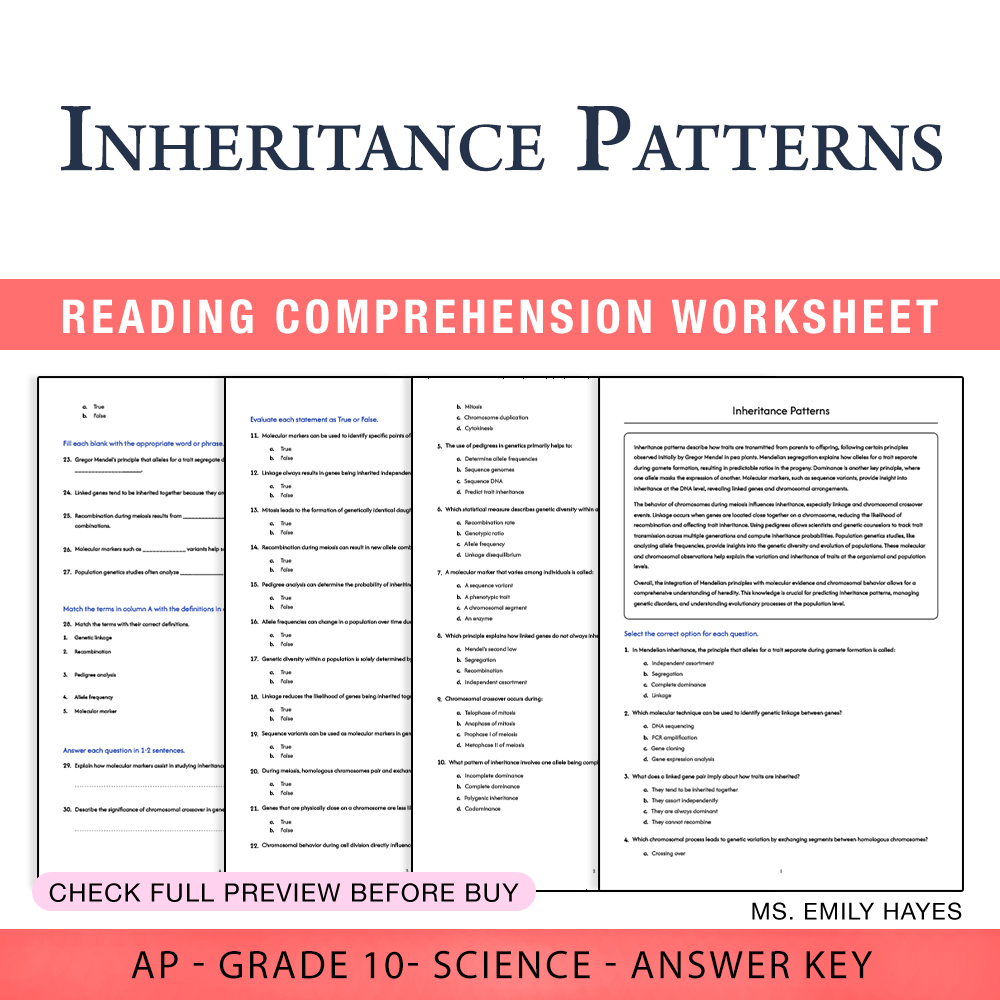
10th Grade Science | Meiosis & Variation Worksheet (PDF + Answer Key)
Created byCopper Leaf ClassroomLearning Objectives
- Explain the processes involved in meiosis and how they generate genetic variation.
- Describe the roles of homologous pairing, recombination, independent assortment, and chromosomal segregation.
- Link cytogenetic and molecular mechanisms to changes in genotypic and phenotypic variation.
Also included in: Grade 10 Science | Key Concepts in Biology & Ecosystems (PDF+ Answer Key) +1 more
Instant download
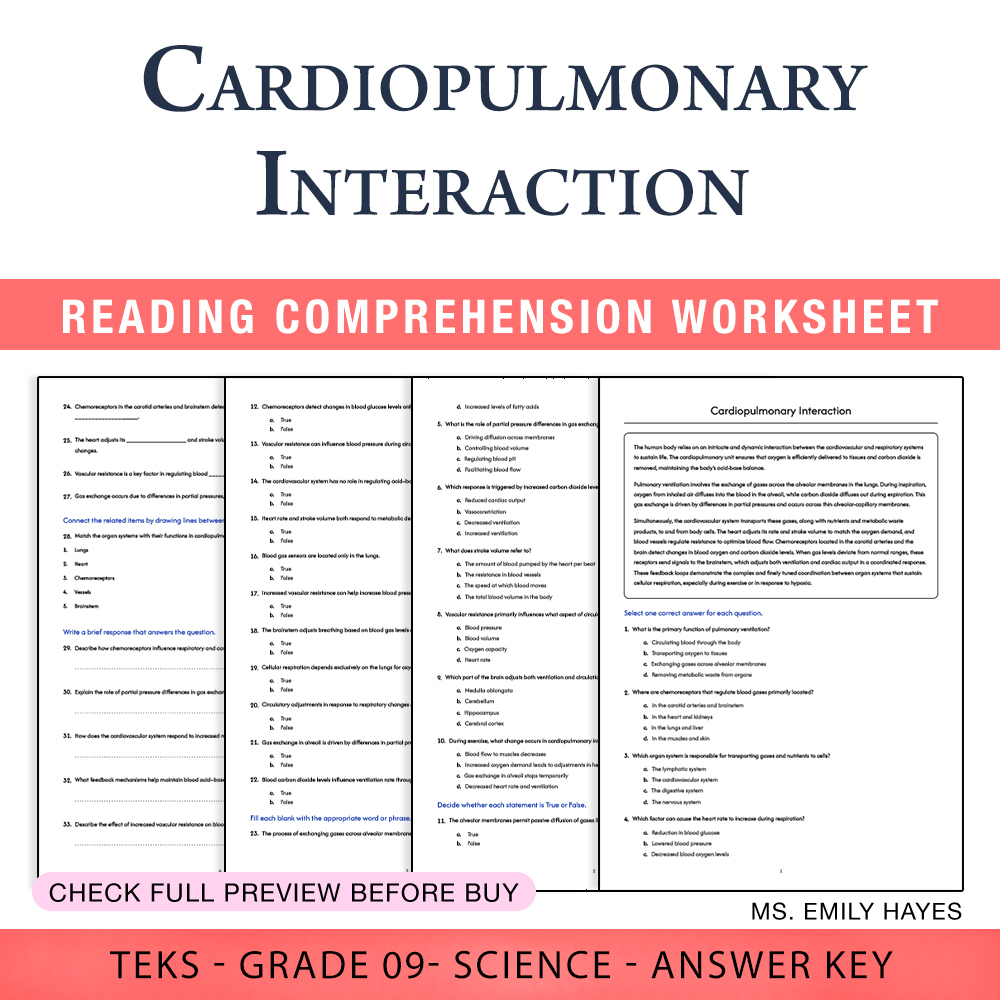
Grade 9 Science | Cardiopulmonary Interaction Worksheet (PDF+ Answer Key)
Created byCopper Leaf ClassroomLearning Objectives
- Understand how the heart and lungs work together to regulate oxygen and carbon dioxide levels.
- Describe the processes of pulmonary ventilation and cardiovascular transport.
- Explain how the body adjusts heart rate, stroke volume, and vascular resistance in response to respiratory changes.
Instant download
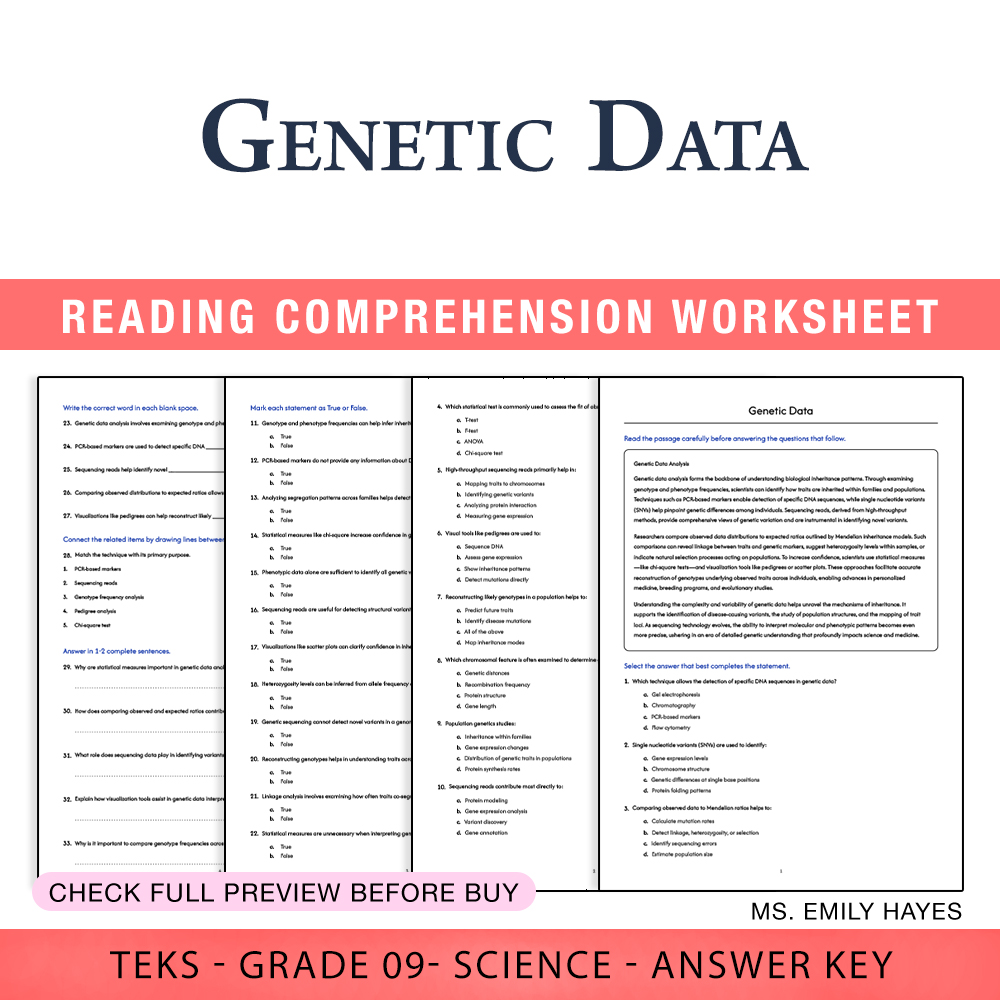
Grade 9 Science | Genetic Data Analysis Worksheet (PDF+ Answer Key)
Created byCopper Leaf ClassroomLearning Objectives
- Interpret patterns of inheritance and allele transmission through analysis of genetic data.
- Understand and apply techniques such as genotype and phenotype frequency examination, PCR markers, SNPs, and sequencing reads.
- Compare observed versus expected genetic data distributions to infer linkage, heterozygosity, or selection.
Instant download
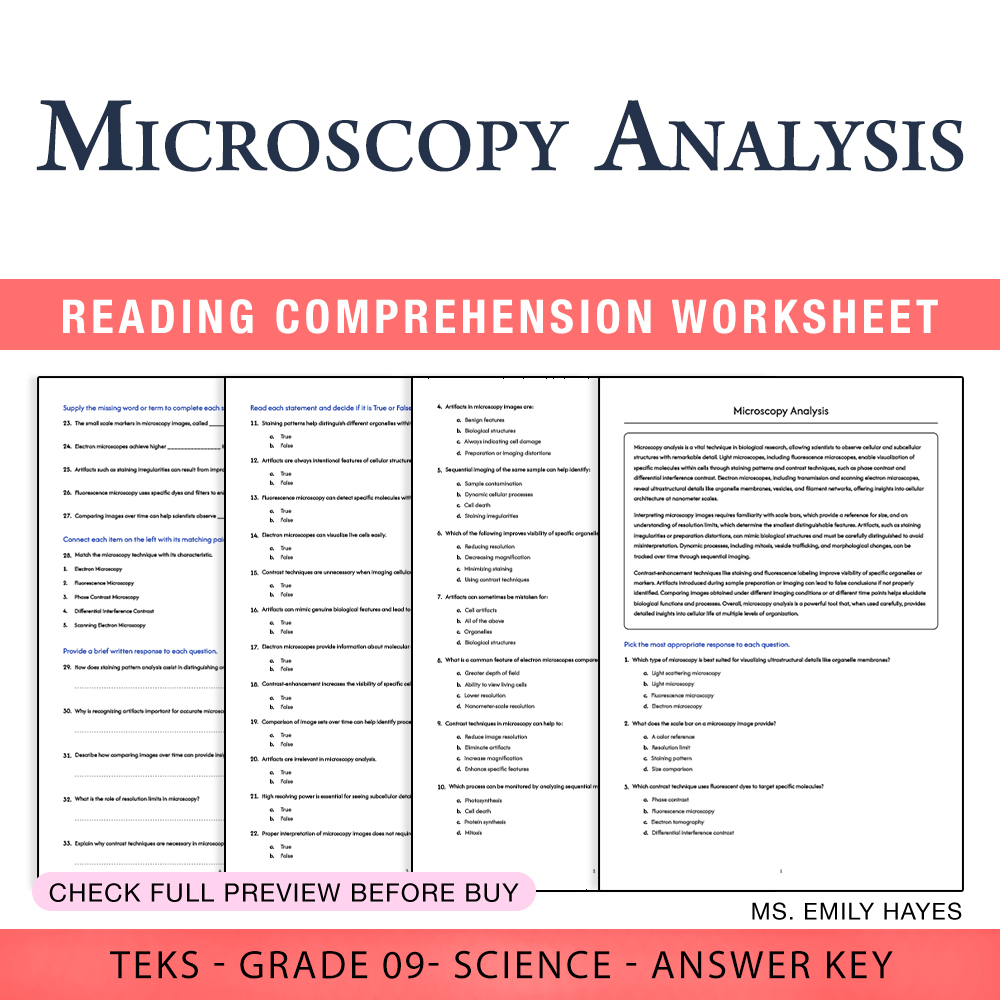
Grade 9 Science | Microscopy Analysis Worksheet (PDF+ Answer Key)
Created byCopper Leaf ClassroomLearning Objectives
- Interpret microscopy images using scale bars, resolution, and staining patterns.
- Distinguish between methods such as electron and fluorescence microscopy.
- Apply contrast techniques and identify artifacts in image analysis.
Instant download
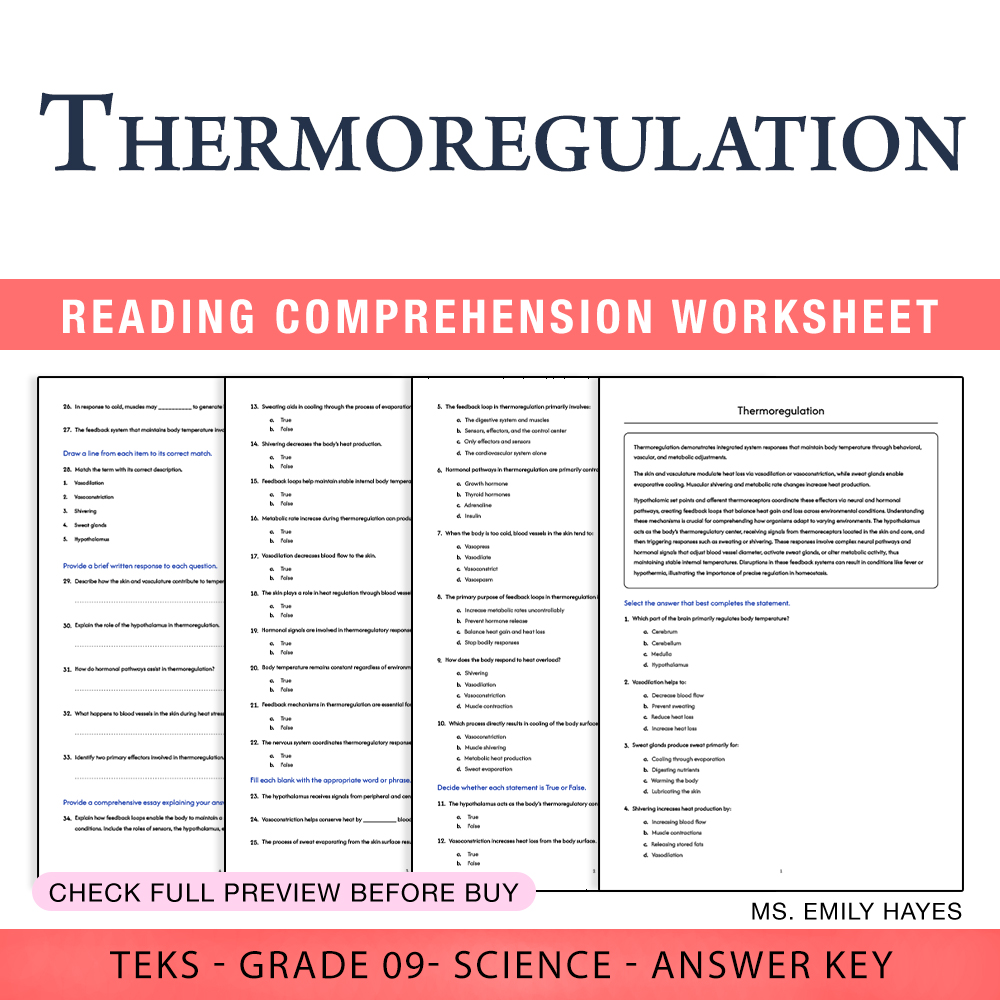
9th Grade Science | Thermoregulation Worksheet (PDF+ Answer Key)
Created byCopper Leaf ClassroomLearning Objectives
- Understand the biological processes involved in thermoregulation.
- Identify key effectors and mechanisms that maintain body temperature.
- Explain the roles of neural and hormonal pathways in thermoregulation.
Instant download
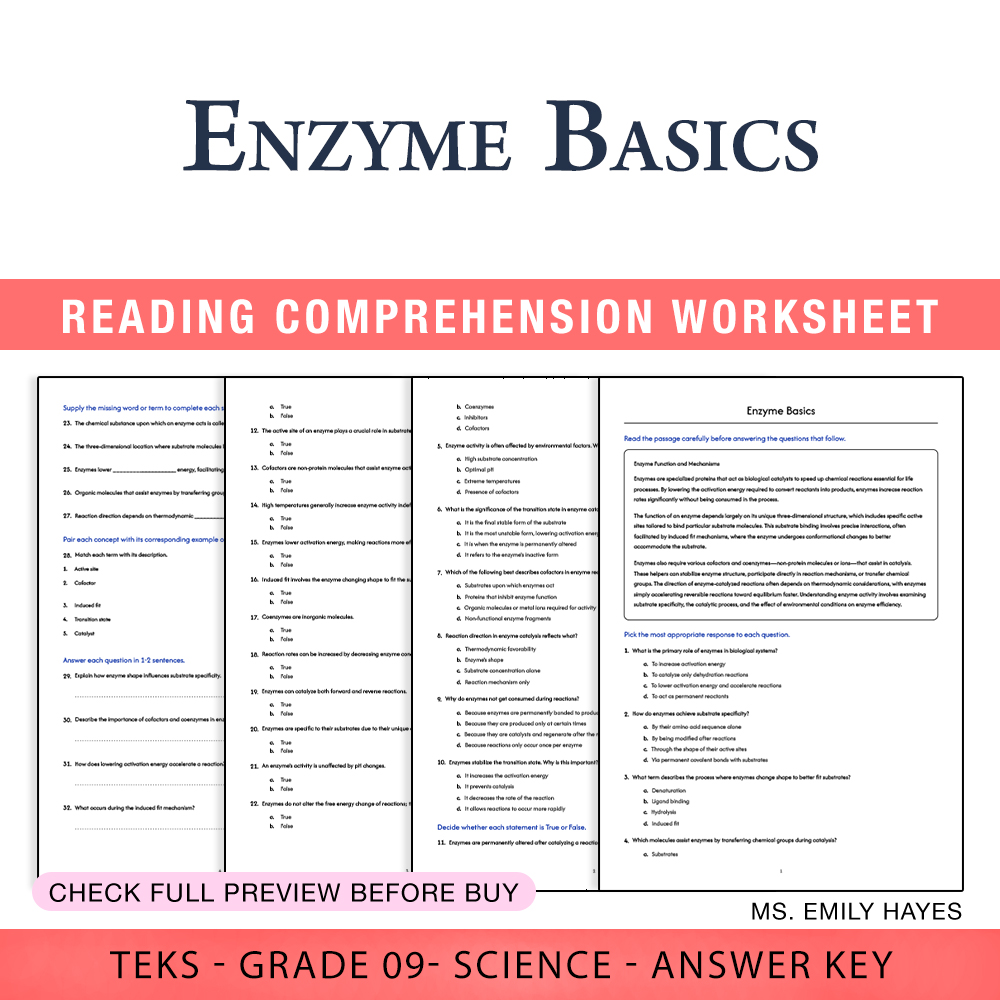
9th Grade Science | Enzyme Basics Worksheet (PDF+ Answer Key)
Created byCopper Leaf ClassroomLearning Objectives
- Understand the role of enzymes as biological catalysts in metabolic reactions.
- Describe how enzyme structure and active sites determine substrate specificity.
- Explain the concepts of activation energy and transition states in enzyme reactions.
Instant download
Browse more categories
About Reading comprehension Worksheets
Find reading comprehension worksheets for class practice, homework, or self-study. All 40,284 are instant PDF downloads.
Each resource here is built by an independent educator and reviewed for quality. Worksheets print straight from PDF and suit classroom use, homework, or extra practice; most come with answer keys, and you can preview before purchasing.