
Grade 10 Worksheets
9,385 grade resources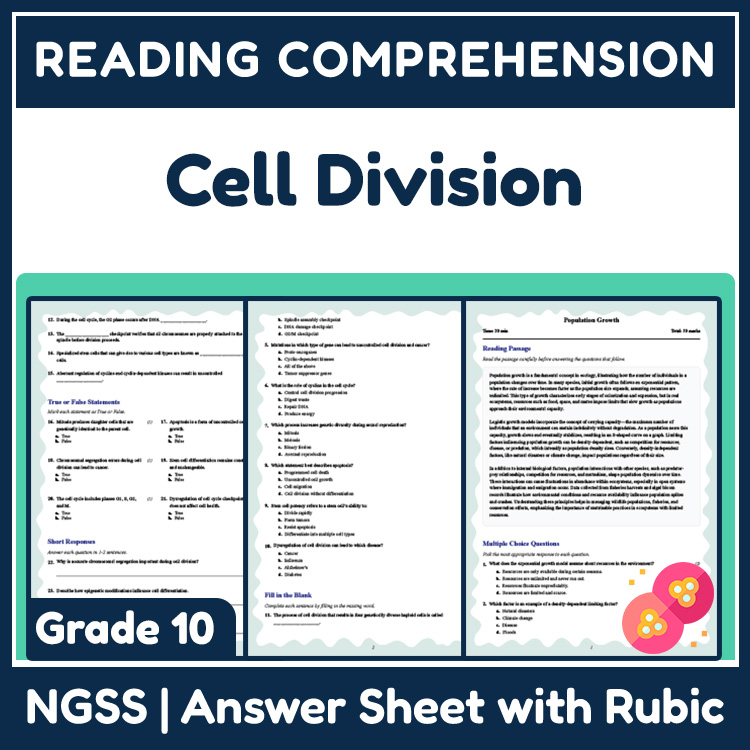
Grade 10 Science | Cell Division Reading Worksheet with Answer Key (PDF)
JCreated byJ.S SheetsLearning Objectives
- Understand the processes of mitosis and meiosis and their roles in cell division.
- Explain the cell cycle, checkpoints, and how dysregulation can lead to diseases such as cancer.
- Describe mechanisms of differentiation and the significance of stem cell potency in development.
Also included in: Grade 10 Science Unit | Cellular & Physiological Systems Worksheets
Instant download
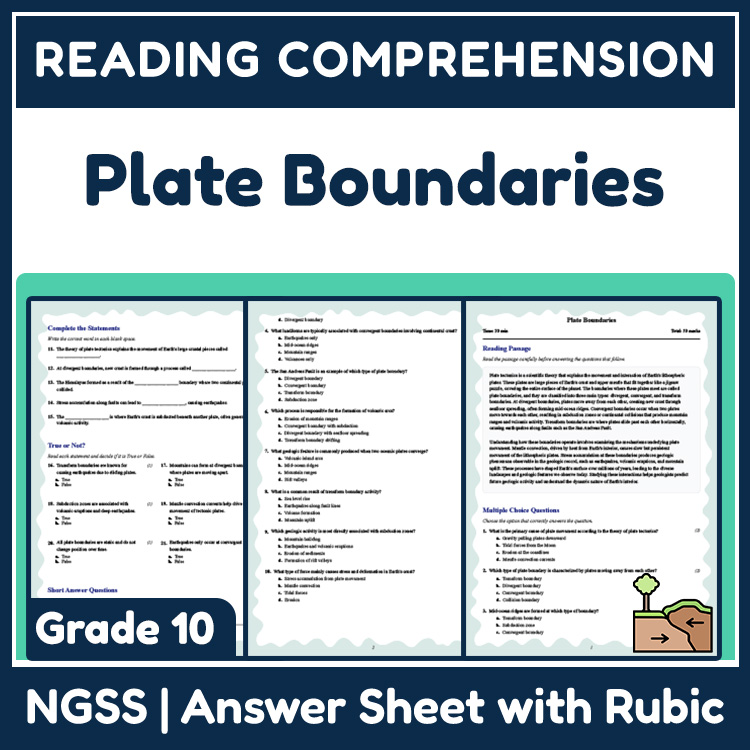
Grade 10 Science | Plate Boundaries Reading Worksheet (PDF + Answer Key)
JCreated byJ.S SheetsLearning Objectives
- Describe the different types of plate boundaries and their characteristics.
- Explain the processes associated with divergent, convergent, and transform boundaries.
- Identify geologic phenomena resulting from plate interactions, such as earthquakes, volcanoes, and mountain formation.
Also included in: Grade 10 Science Unit | Earth Systems & Climate Change Worksheets Bundle
Instant download
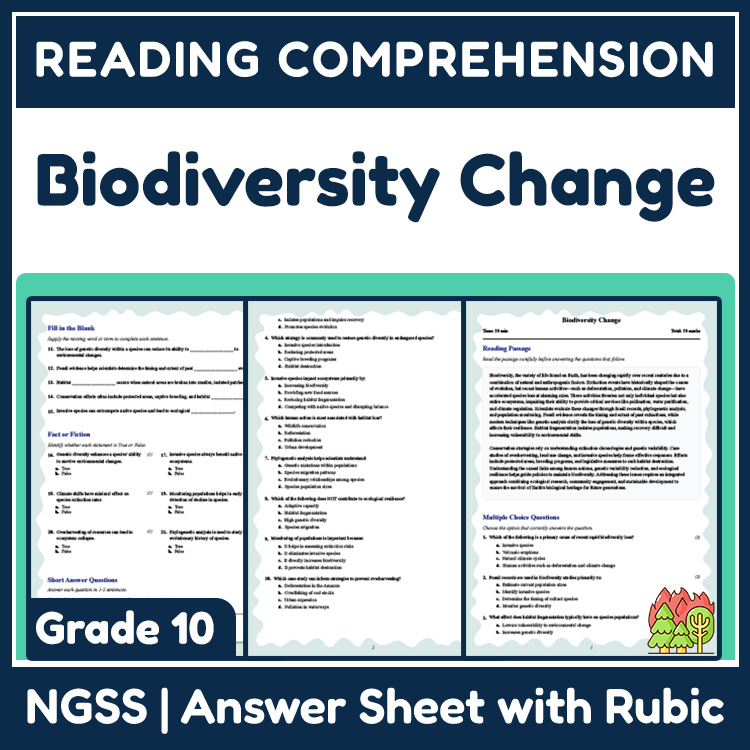
Grade 10 Science | Biodiversity Change Reading Worksheet (PDF & Answer Key)
JCreated byJ.S SheetsLearning Objectives
- Understand factors influencing biodiversity loss and recovery
- Analyze evidence methods used in biodiversity studies
- Evaluate human impacts on ecological resilience
Also included in: Grade 10 Science | Evolution & Biodiversity Unit Worksheet Bundle
Instant download
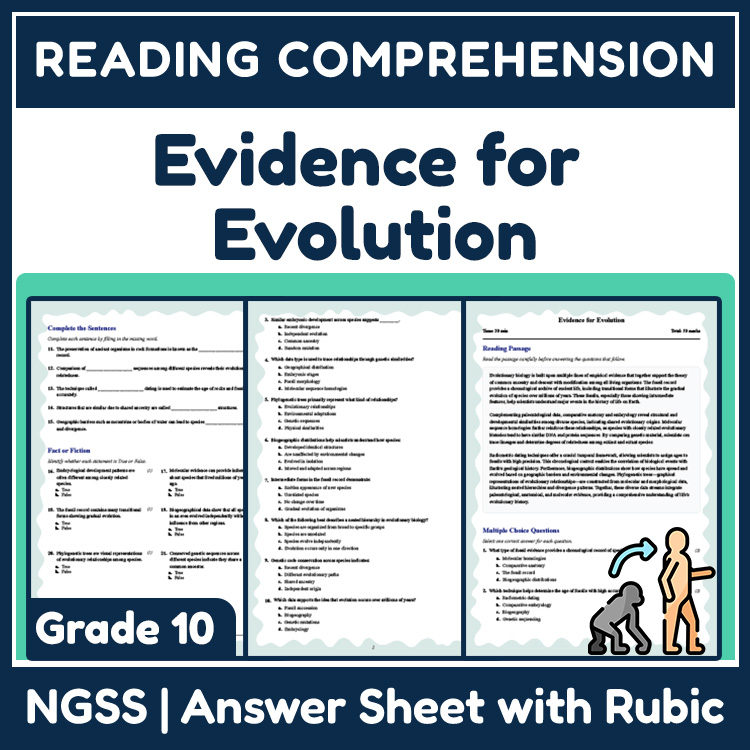
Grade 10 Science | Evidence for Evolution Reading Worksheet (PDF + Answer Key)
JCreated byJ.S SheetsLearning Objectives
- Understand the various lines of evidence supporting common ancestry and evolution.
- Explain how fossil records, comparative anatomy, embryology, and molecular data contribute to evolutionary studies.
- Interpret phylogenetic relationships and patterns of divergence among species.
Also included in: Grade 10 Science | Evolution & Biodiversity Unit Worksheet Bundle
Instant download
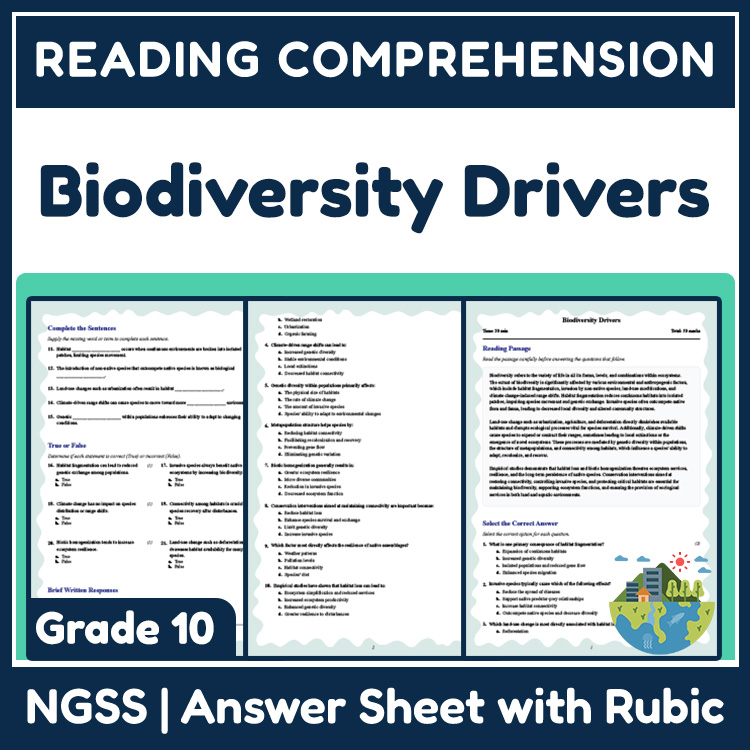
Grade 10 Science | Biodiversity Drivers Reading Worksheet (PDF + Answer Key)
JCreated byJ.S SheetsLearning Objectives
- Understand the key factors influencing species richness and community composition.
- Evaluate how habitat fragmentation, invasive species, land-use change, and climate shifts impact biodiversity.
- Analyze mechanisms like genetic diversity, metapopulation structure, and connectivity in species survival.
Also included in: Grade 10 Science | Ecosystems & Biodiversity Uanit Worksheets
Instant download
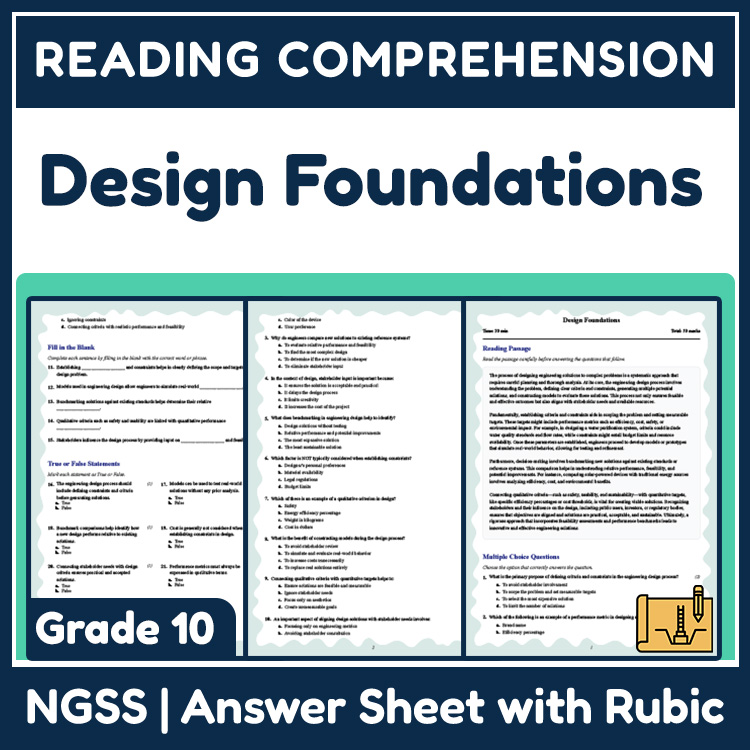
10th Grade Science | Design Foundations Reading Worksheet (PDF + Answer Key)
JCreated byJ.S SheetsLearning Objectives
- Understand the engineering design process and its key components.
- Learn how to define criteria and constraints for complex problems.
- Develop skills to construct models and generate multiple solution concepts.
Also included in: Grade 10 Science Unit | Systems Analysis & Design Foundations Worksheets
Instant download
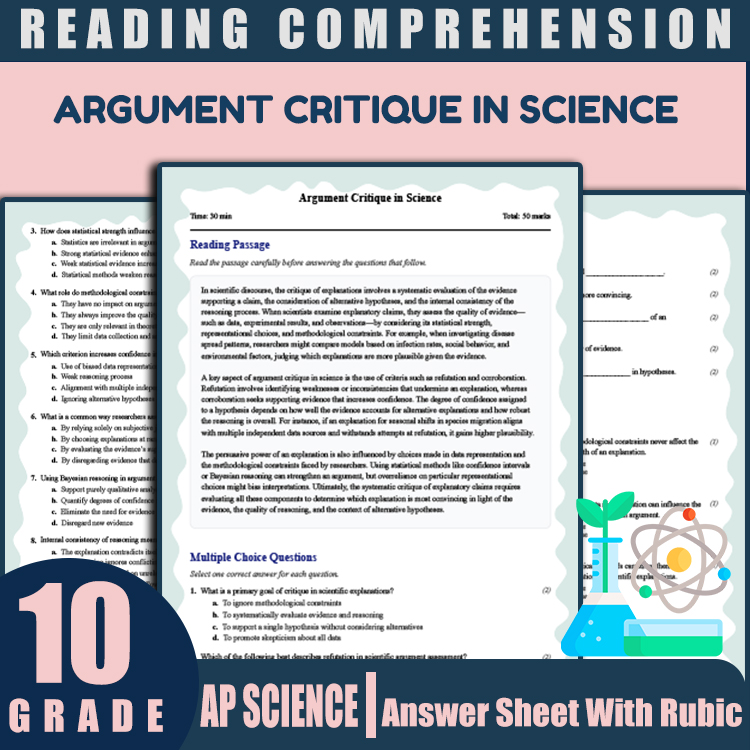
Grade 10 Science | Argument Critique in Science Reading Worksheet & Answer Key
JCreated byJ.S SheetsLearning Objectives
- Develop skills to systematically evaluate explanatory claims in scientific arguments.
- Identify and analyze evidence quality, alternative hypotheses, and internal consistency of reasoning.
- Understand how statistical strength, representational choices, and methodological constraints influence argument persuasiveness.
Also included in: Grade 10 Science Unit Worksheet Pack – Data Analysis & Scientific Reasoning +1 more
Instant download
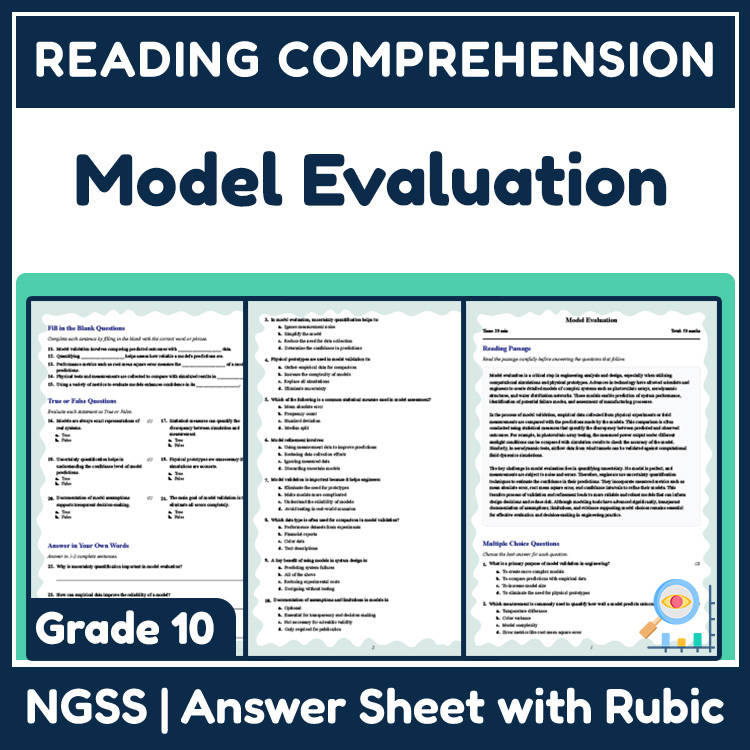
Grade 10 Science | Model Evaluation Reading Worksheet with Answer Key (PDF)
JCreated byJ.S SheetsLearning Objectives
- Understand the role of quantitative modeling and data analysis in evaluating models.
- Explain methods for validating models through comparison of simulations and measurements.
- Apply statistical tools to assess model accuracy and uncertainty.
Also included in: Grade 10 Science Unit | Systems Analysis & Design Foundations Worksheets
Instant download
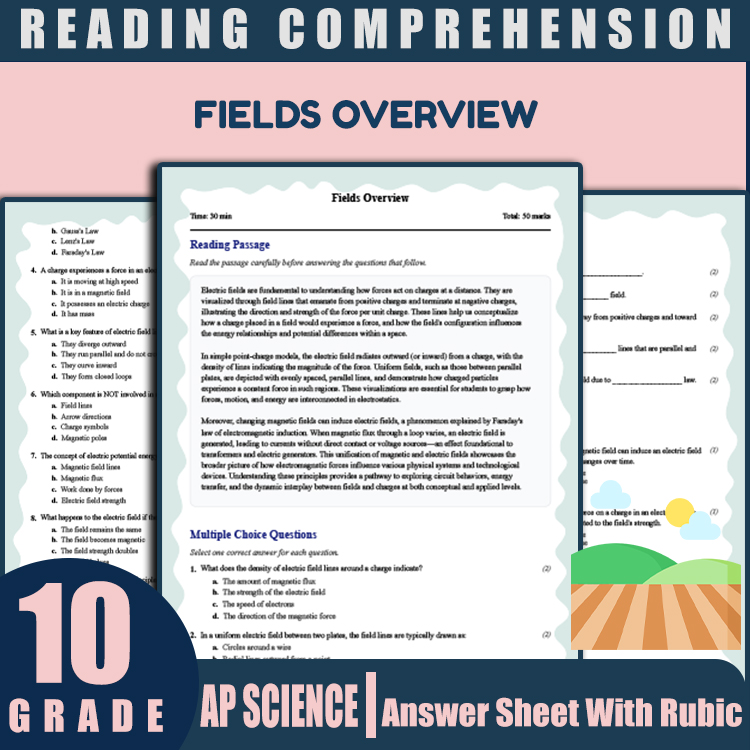
Grade 10 Science | Fields Overview Reading Worksheet (PDF + Rubric)
JCreated byJ.S SheetsLearning Objectives
- Understand the basic concepts of electric fields and how they represent forces on charges.
- Interpret field-line diagrams and relate them to force interactions and potential energy differences.
- Recognize the connection between changing magnetic fields and induced electric effects at an introductory level.
Also included in: Grade 10 Science Unit Bundle | Motion, Forces & Energy Worksheets (PDF) +1 more
Instant download
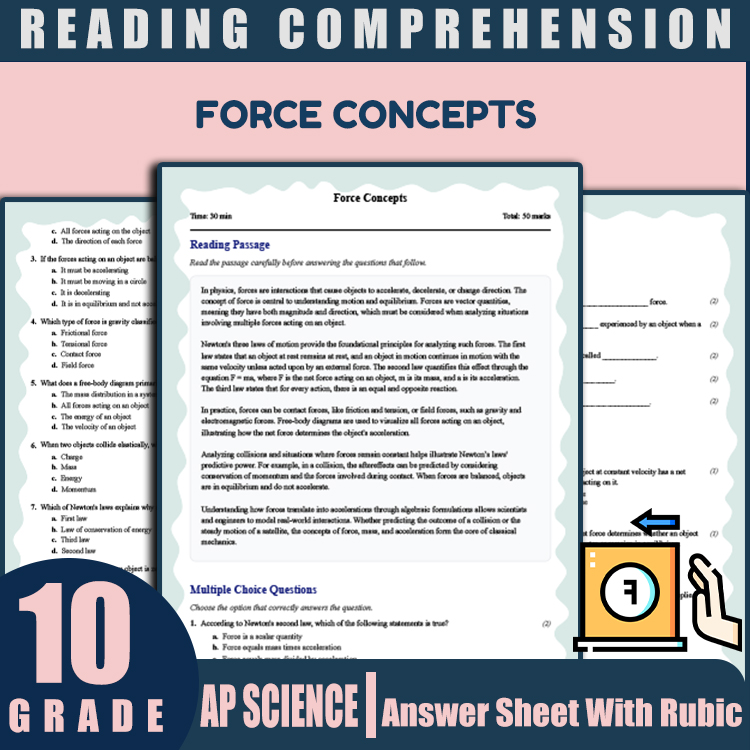
Grade 10 Science | Force Concepts Reading Worksheet with Answer Key (PDF)
JCreated byJ.S SheetsLearning Objectives
- Explain the vector nature of forces and how to determine net force in various situations.
- Interpret free-body diagrams and understand their role in analyzing forces.
- Apply Newton’s three laws to predict the motion of objects during collisions and under constant forces.
Also included in: Grade 10 Science Unit Bundle | Motion, Forces & Energy Worksheets (PDF) +1 more
Instant download
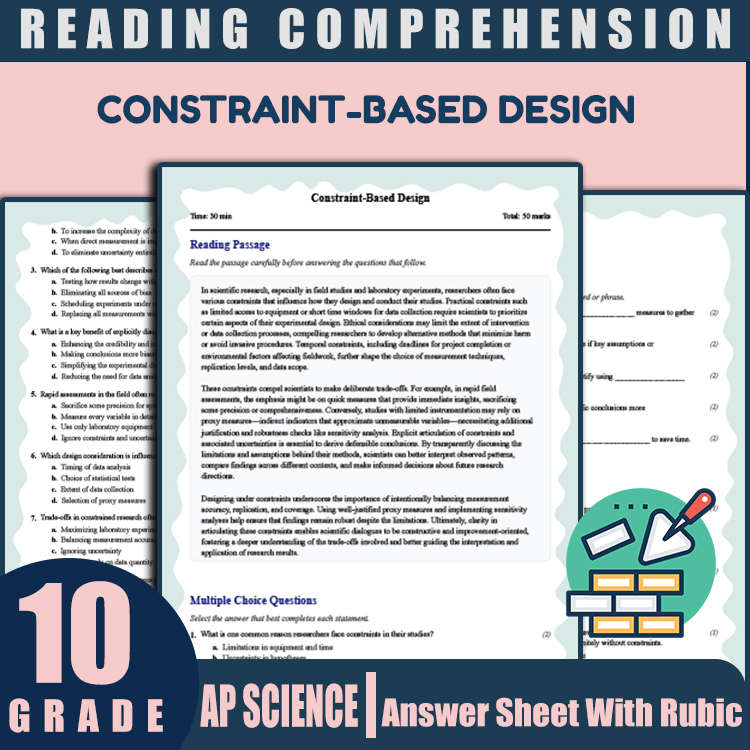
Grade 10 Science | Constraint-Based Design Reading Worksheet (PDF + Rubric)
JCreated byJ.S SheetsLearning Objectives
- Understand the principles of constraint-based design in scientific research.
- Analyze scenarios where practical, ethical, or temporal constraints influence experimental approaches.
- Evaluate trade-offs among replication, measurement precision, and scope in observational studies.
Also included in: Grade 10 Science Unit Worksheet Pack – Data Analysis & Scientific Reasoning +1 more
Instant download
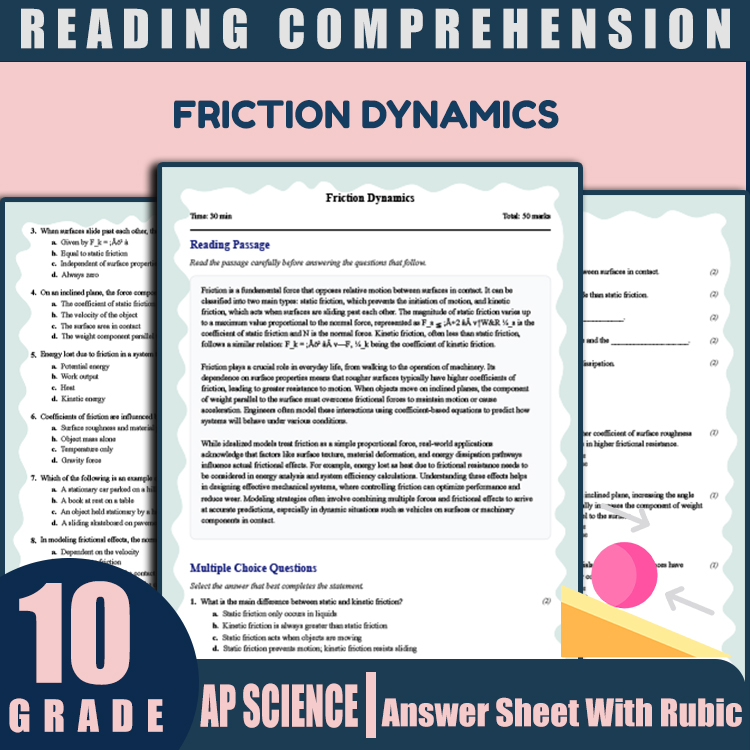
Grade 10 Science | Friction Dynamics Reading Worksheet (PDF + Answer Key)
JCreated byJ.S SheetsLearning Objectives
- Describe the difference between static and kinetic friction and how each depends on the normal force and surface properties.
- Analyze how frictional forces influence motion on inclined planes and surface contact scenarios using coefficient-based models.
- Understand how friction contributes to energy dissipation and how it affects the net force in dynamic systems.
Also included in: Grade 10 Science Unit Bundle | Motion, Forces & Energy Worksheets (PDF) +1 more
Instant download
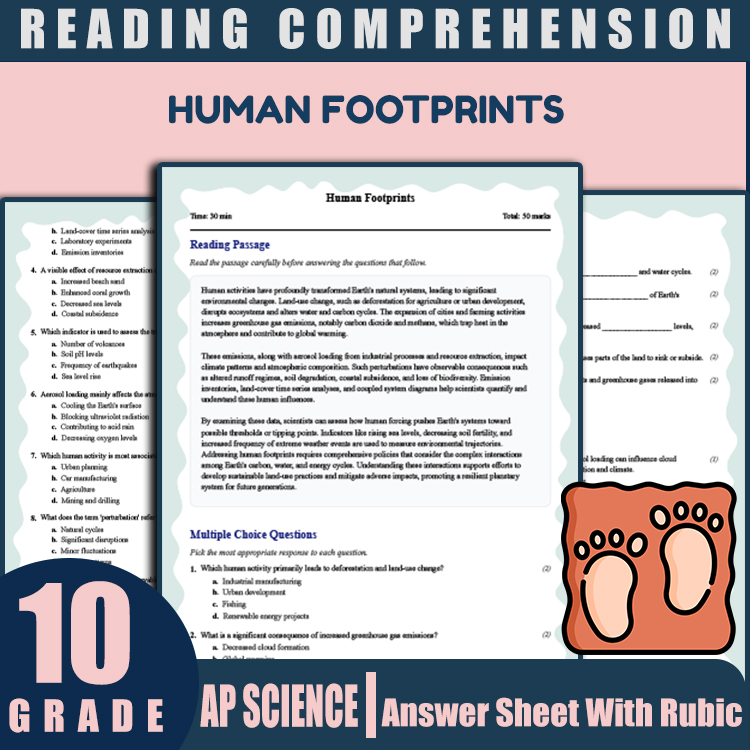
10th Grade Science | Human Footprints Reading Worksheet (PDF & Answer Key)
JCreated byJ.S SheetsLearning Objectives
- Understand the various ways human activities alter Earth's systems such as land use, greenhouse gases, and resource extraction.
- Analyze how these alterations impact environmental cycles and observable consequences like soil degradation and coastal subsidence.
- Learn to interpret emission inventories, land-cover time series, and system diagrams related to human environmental impact.
Also included in: Grade 10 Science Unit | Earth Processes & Climate Worksheets (PDF + Answer Key) +1 more
Instant download
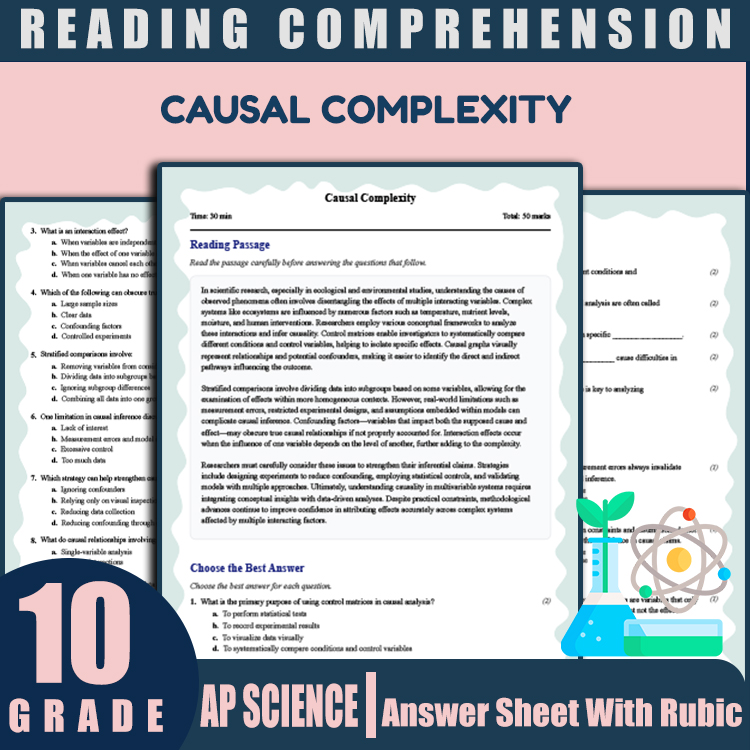
10th Grade Science | Causal Complexity Reading Worksheet & Answer Key (PDF)
JCreated byJ.S SheetsLearning Objectives
- Understand how to analyze multivariable causal relationships in complex systems.
- Learn to apply conceptual frameworks such as control matrices, causal graphs, and stratified comparisons.
- Identify confounding factors and interaction effects in ecosystem productivity studies.
Also included in: Grade 10 Science Unit Worksheet Pack – Data Analysis & Scientific Reasoning +1 more
Instant download
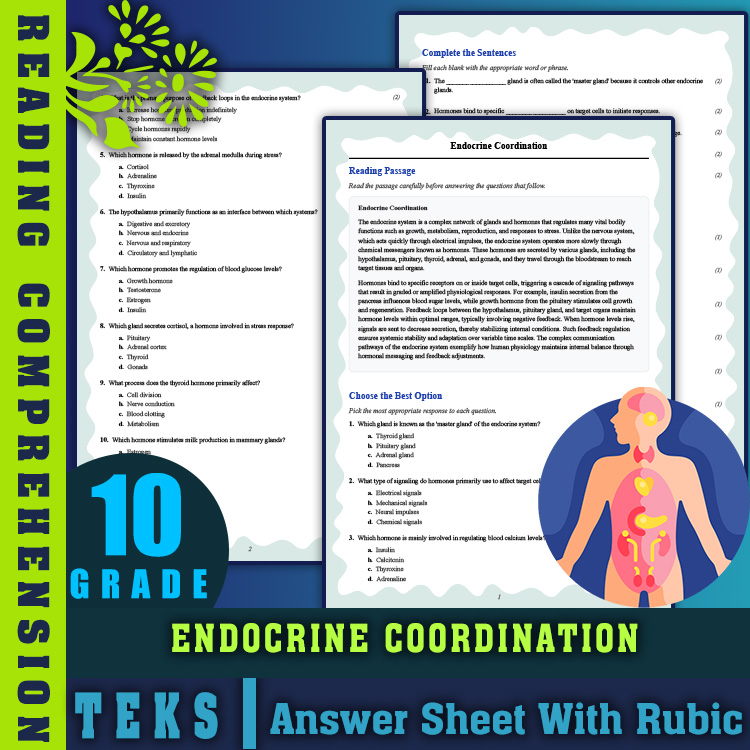
Grade 10 Science | Endocrine Coordination Reading Worksheet (PDF + Rubric)
JCreated byJ.S SheetsLearning Objectives
- Understand the role of hormones and endocrine glands in regulating bodily functions.
- Explain the feedback mechanisms involved in endocrine system regulation.
- Describe how hormones communicate and produce physiological effects.
Instant download
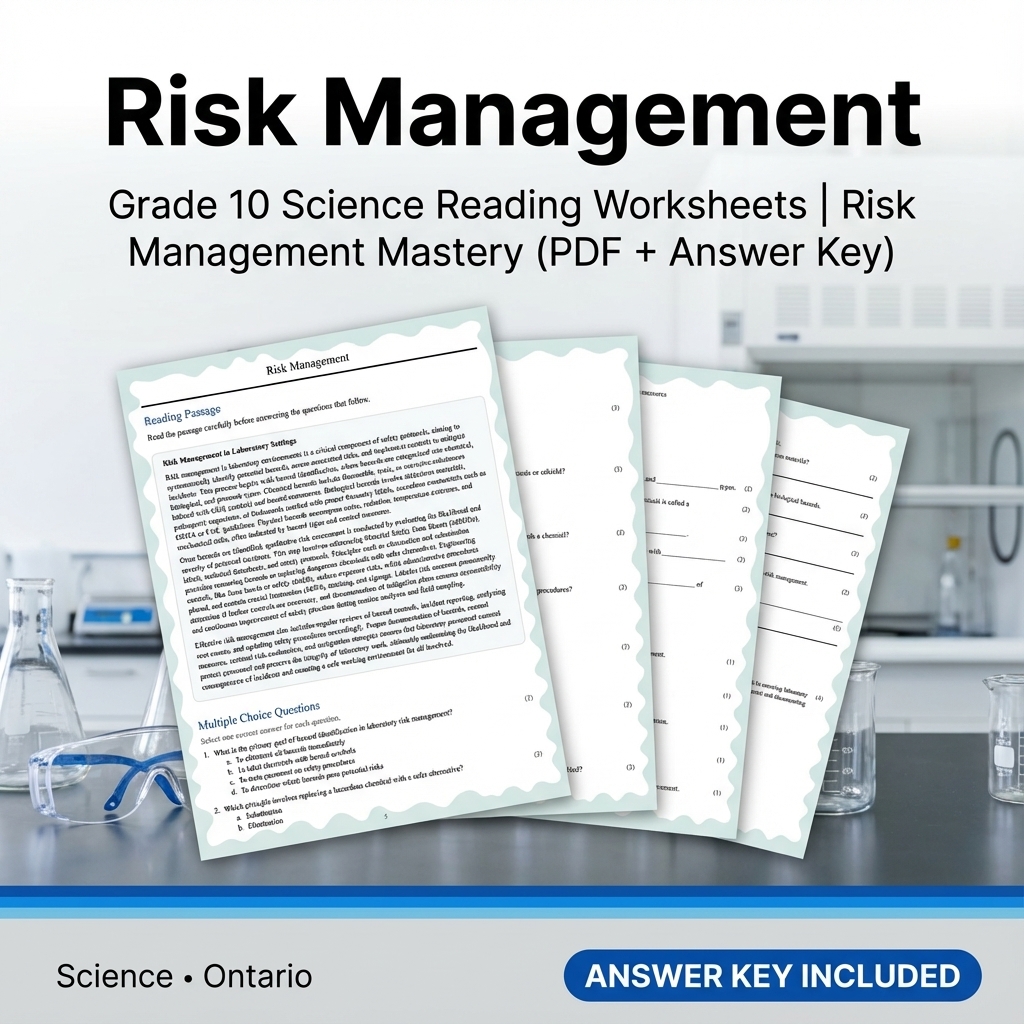
Grade 10 Science Reading Worksheets | Risk Management Mastery (PDF + Answer Key)
JCreated byJ.S SheetsLearning Objectives
- Understand the systematic process of hazard identification in laboratory settings.
- Explain the principles of risk assessment and mitigation to reduce incidents.
- Identify common chemical, biological, and physical hazards and their labels.
Also included in: Grade 10 Science UNIT Bundle – Data Representation, Safety & Research Skills +1 more
Instant download
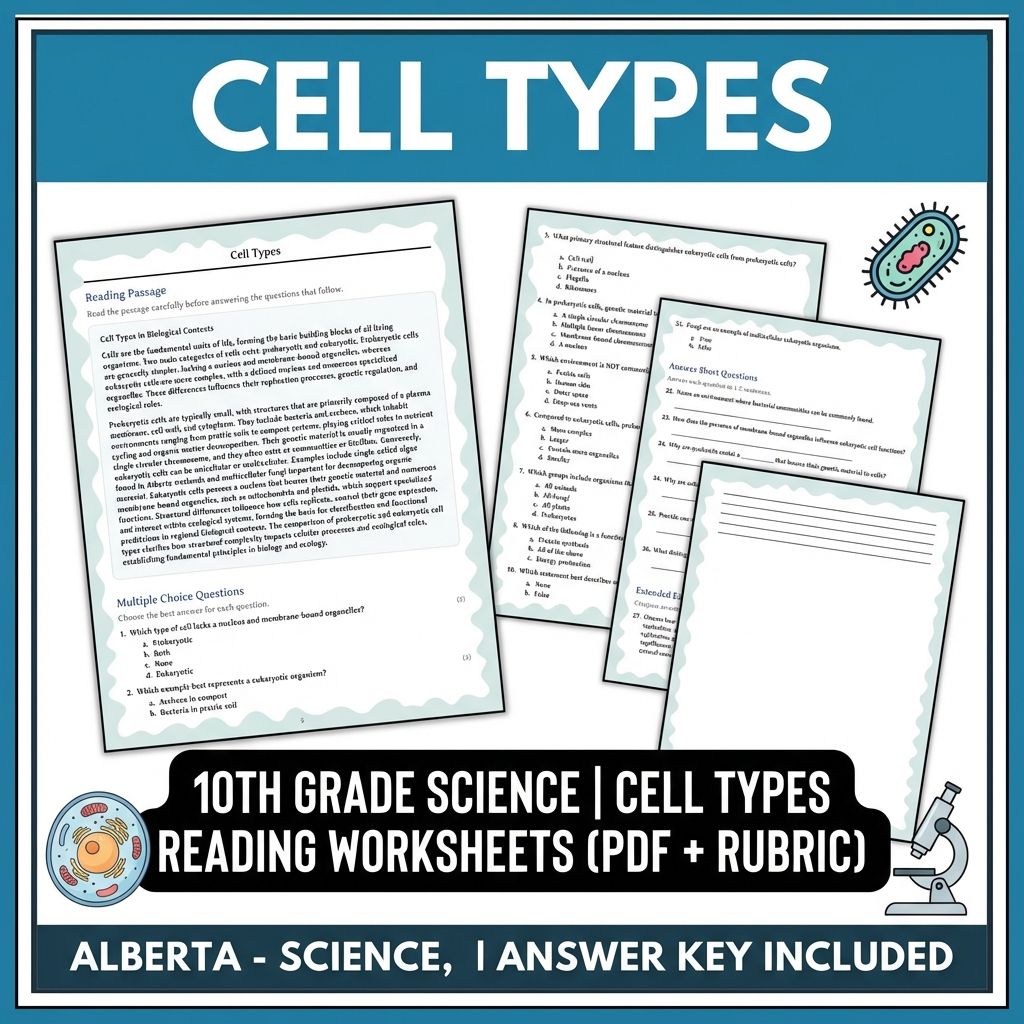
10th Grade Science | Cell Types Reading Worksheets (PDF + Rubric)
JCreated byJ.S SheetsLearning Objectives
- Understand the structural differences between prokaryotic and eukaryotic cells.
- Identify examples of prokaryotic and eukaryotic cells in various environments.
- Explain how structural complexity influences cellular functions such as replication and genetic control.
Also included in: Grade 10 Science | Cell Systems, Energy, & Homeostasis (Standards-Aligned) +1 more
Instant download
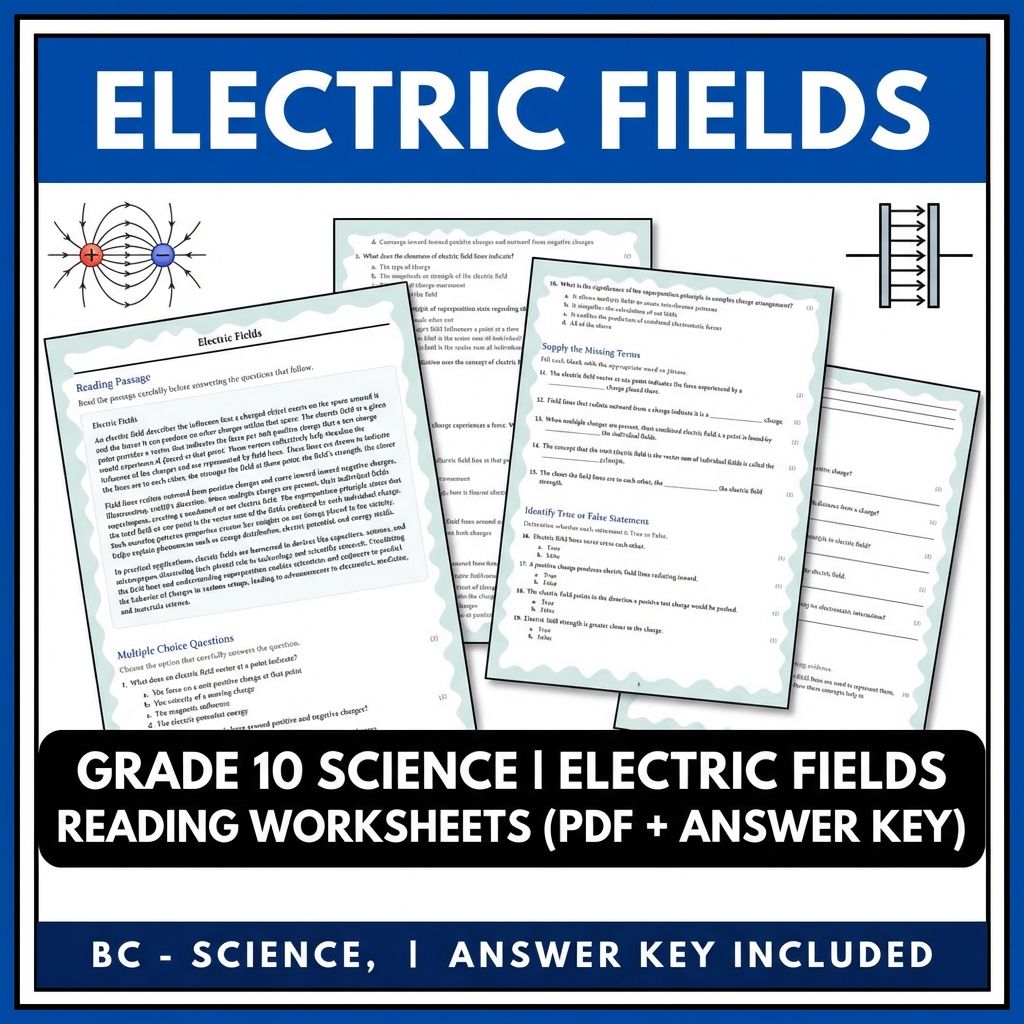
Grade 10 Science | Electric Fields Reading Worksheets (PDF + Answer Key)
JCreated byJ.S SheetsLearning Objectives
- Understand what an electric field is and how it influences space around charged objects.
- Interpret the significance of field vectors and their directions.
- Explain how electric field lines represent the direction and strength of fields.
Instant download
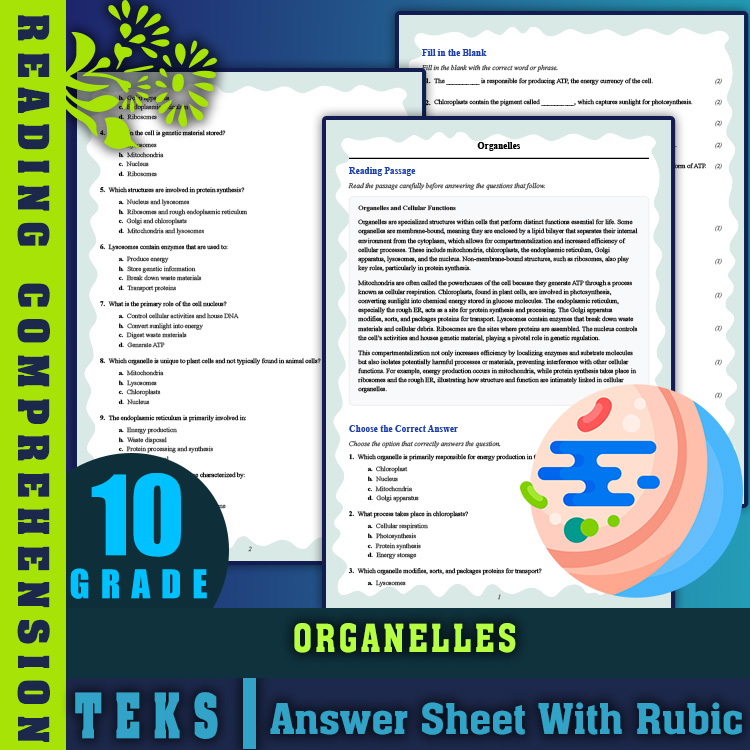
Grade 10 Science Reading Worksheets | Organelles Mastery Practice PDF
JCreated byJ.S SheetsLearning Objectives
- Understand the structure and function of key cell organelles.
- Explain how compartmentalization in cells increases efficiency of cellular processes.
- Identify organelles involved in energy conversion, synthesis, storage, and genetic control.
Instant download
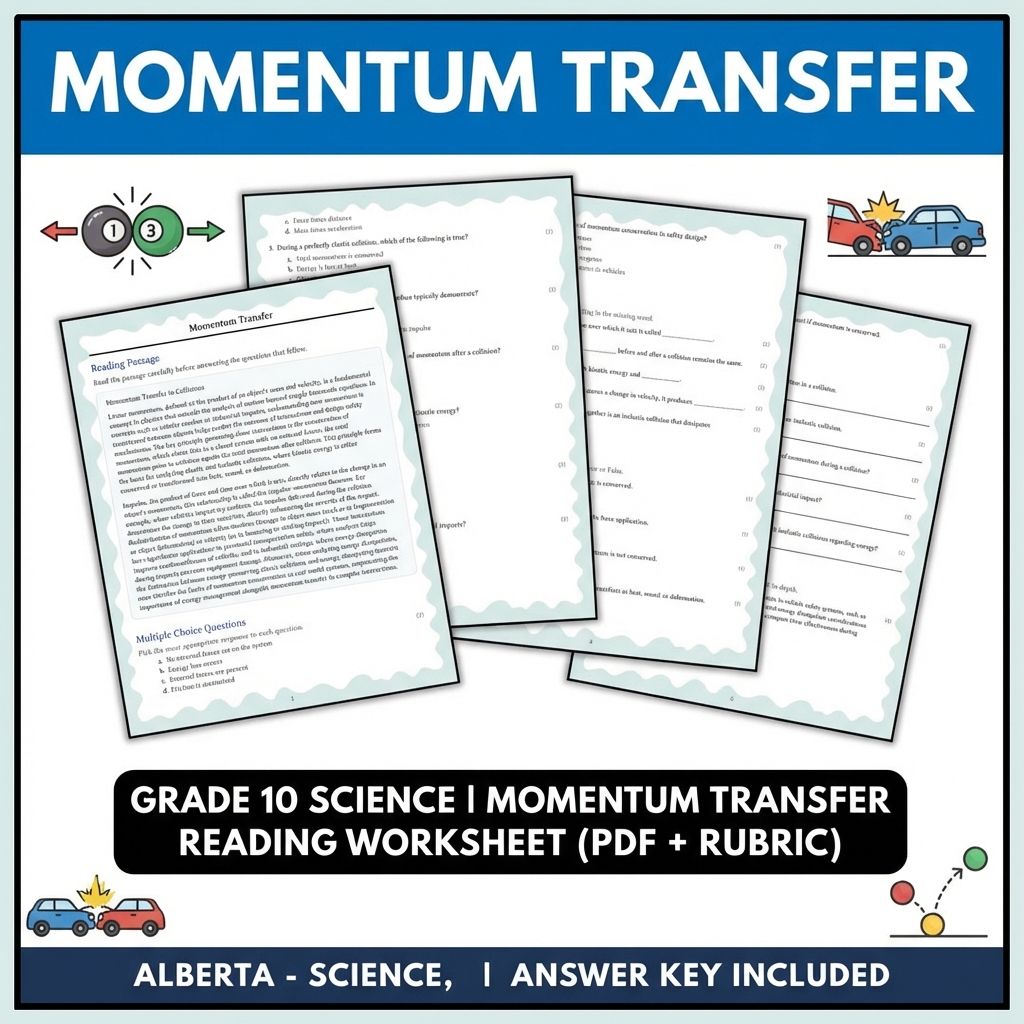
Grade 10 Science | Momentum Transfer Reading Worksheet (PDF + Rubric)
JCreated byJ.S SheetsLearning Objectives
- Understand the principles of conservation of momentum in collisions.
- Explain how impulse relates to changes in momentum during interactions.
- Analyze how velocity and mass changes redistribute momentum in dynamic systems.
Also included in: Grade 10 Science Bundle | Energy, Circuits & Mechanics (Answer Keys Included) +1 more
Instant download
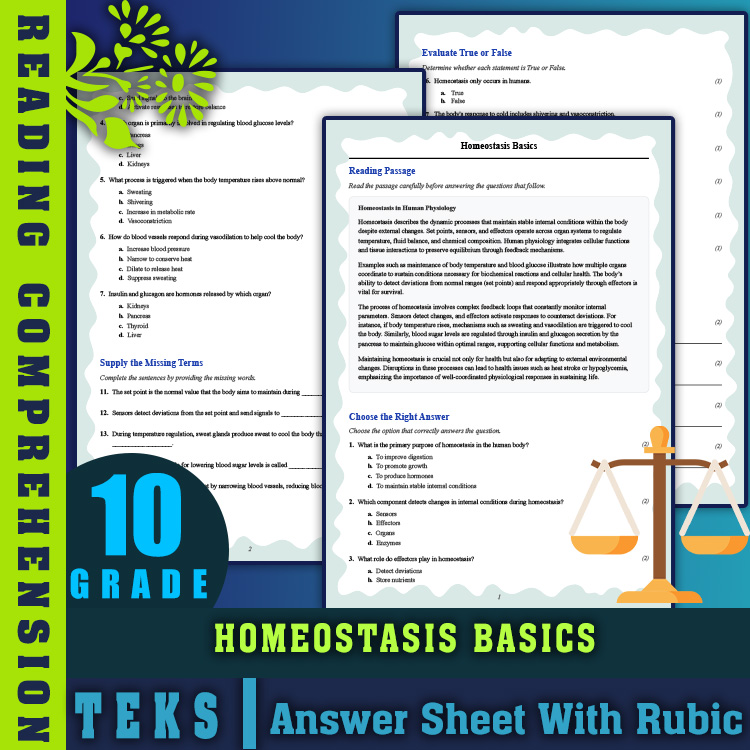
Grade 10 Science | Homeostasis Basics Reading Worksheet & Answer Key (PDF)
JCreated byJ.S SheetsLearning Objectives
- Understand the concept of homeostasis and its importance in human physiology.
- Identify the key components involved in maintaining internal stability, including set points, sensors, and effectors.
- Describe feedback mechanisms that regulate temperature, fluid balance, and chemical composition in the body.
Instant download
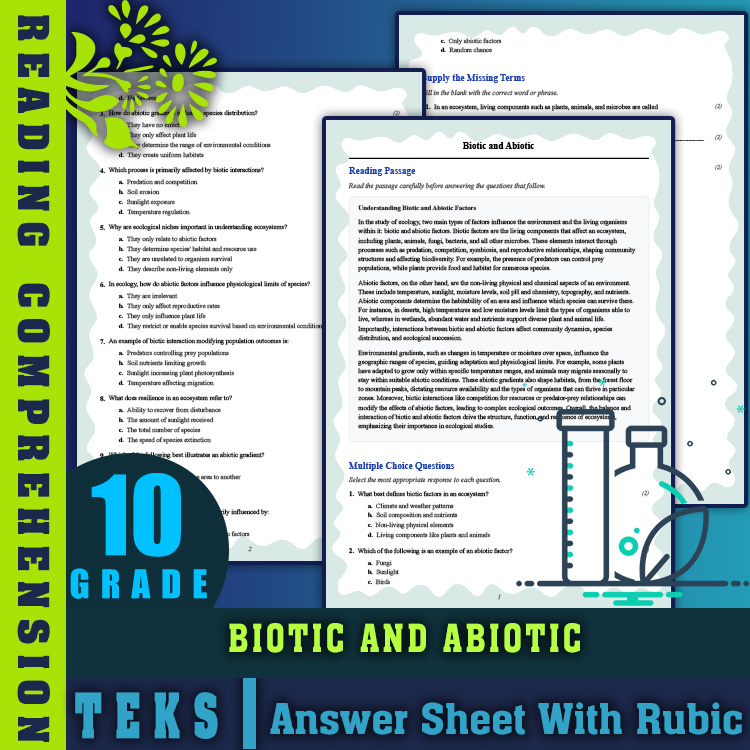
10th Grade Science | Biotic and Abiotic Factors Reading Worksheet (PDF + Rubric)
JCreated byJ.S SheetsLearning Objectives
- Understand the definitions and differences between biotic and abiotic factors in ecosystems.
- Identify examples of biotic and abiotic elements in various environments.
- Explain how interactions between biotic and abiotic factors influence ecological communities.
Instant download
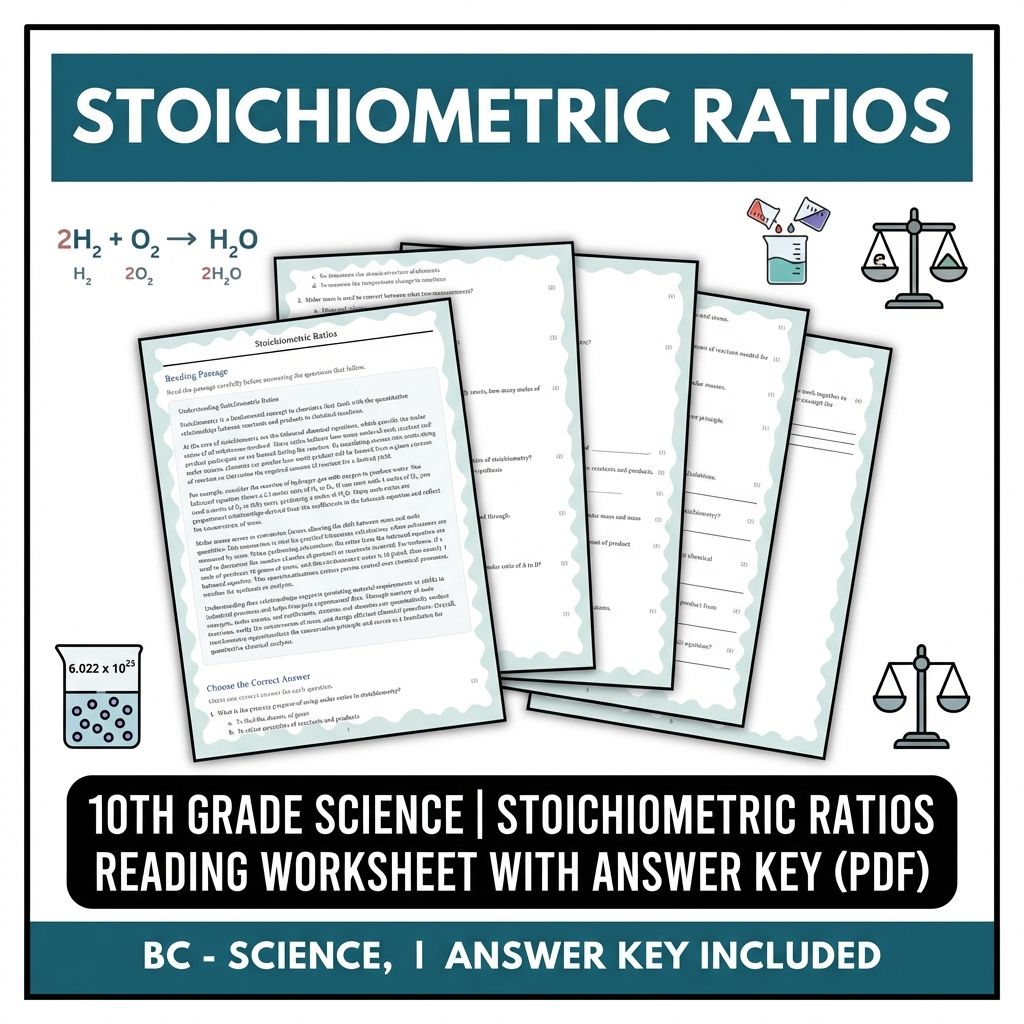
10th Grade Science | Stoichiometric Ratios Worksheet with Answer Key (PDF)
JCreated byJ.S SheetsLearning Objectives
- Understand how stoichiometric ratios connect quantities of reactants and products via molar relationships.
- Apply molar masses to convert between mass and moles in chemical reactions.
- Use balanced chemical equations to determine proportional relationships of substances involved.
Instant download
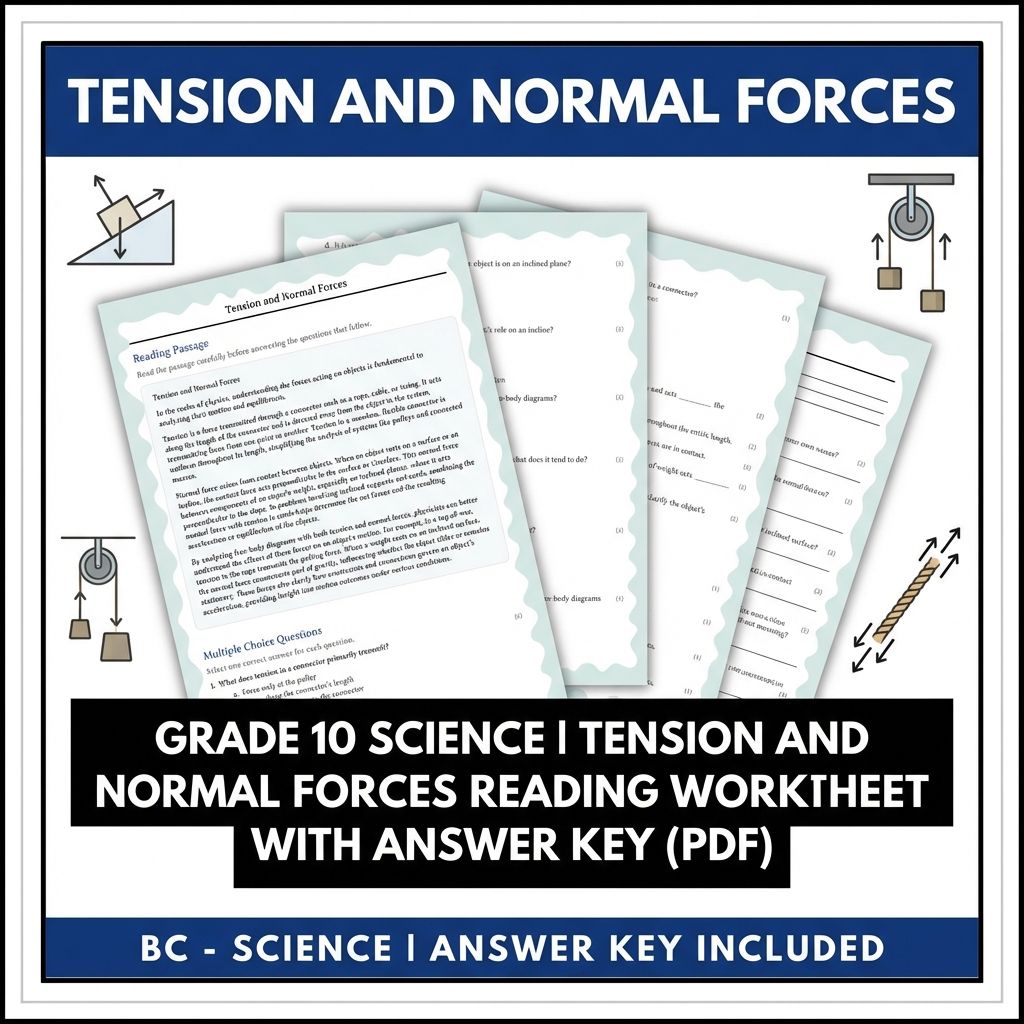
Grade 10 Science | Tension and Normal Forces Worksheet with Answer Key (PDF)
JCreated byJ.S SheetsLearning Objectives
- Understand how tension transmits forces through connectors and acts along their length in various systems.
- Describe the origin and role of the normal force in contact situations and on inclined surfaces.
- Explain how combining tension and normal forces in free-body diagrams helps analyze motion and equilibrium.
Instant download
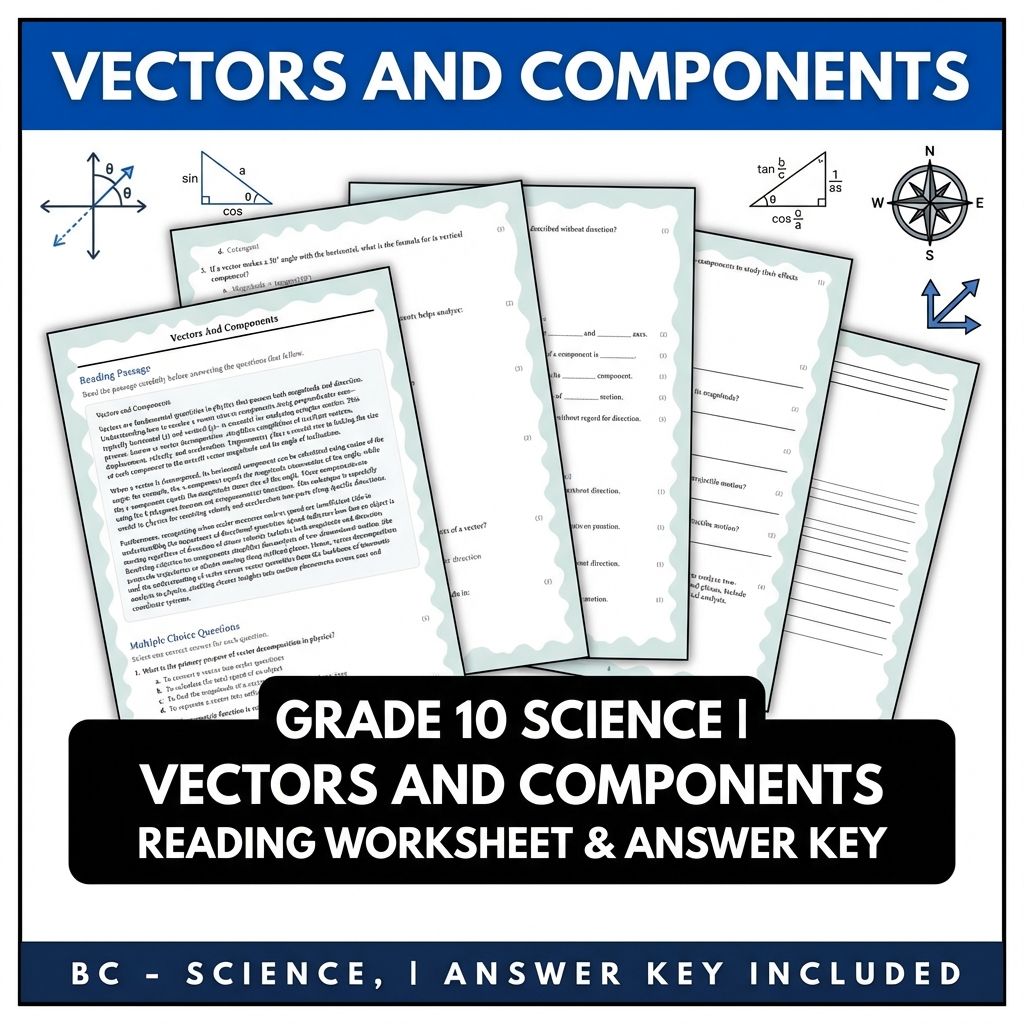
Grade 10 Science | Vectors and Components Reading Worksheet & Answer Key
JCreated byJ.S SheetsLearning Objectives
- Understand the decomposition of vectors into orthogonal components along perpendicular axes.
- Apply trigonometric functions to relate component magnitudes to a vector's overall direction.
- Analyze two-dimensional motion by resolving velocity and acceleration into horizontal and vertical components.
Instant download
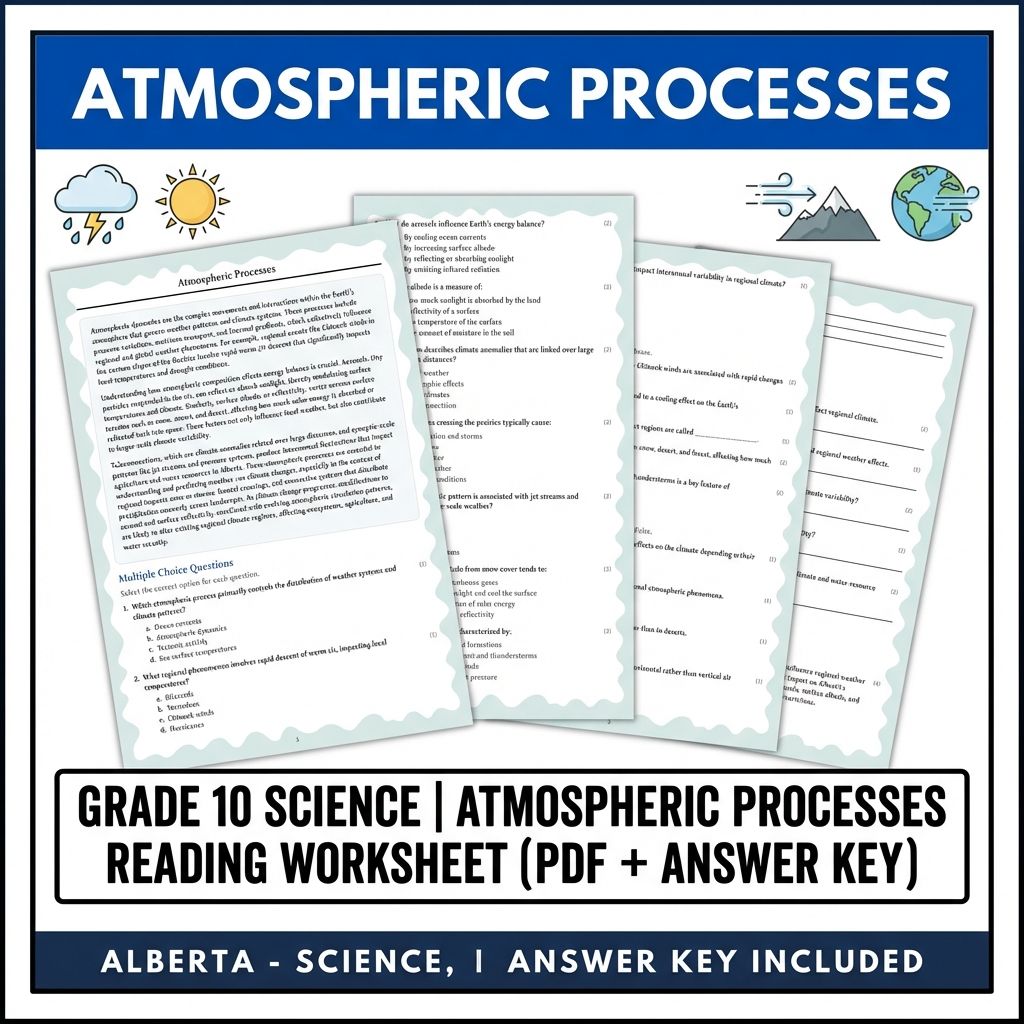
Grade 10 Science | Atmospheric Processes Reading Worksheet (PDF + Answer Key)
JCreated byJ.S SheetsLearning Objectives
- Understand the main atmospheric dynamics that influence weather and climate.
- Identify regional phenomena such as Chinook winds, frontal systems, and convective storms.
- Explain how atmospheric composition, aerosols, and surface albedo affect energy balance.
Also included in: Grade 10 Science Unit Bundle – Earth Systems, Climate & Remote Sensing Worksheets +1 more
Instant download
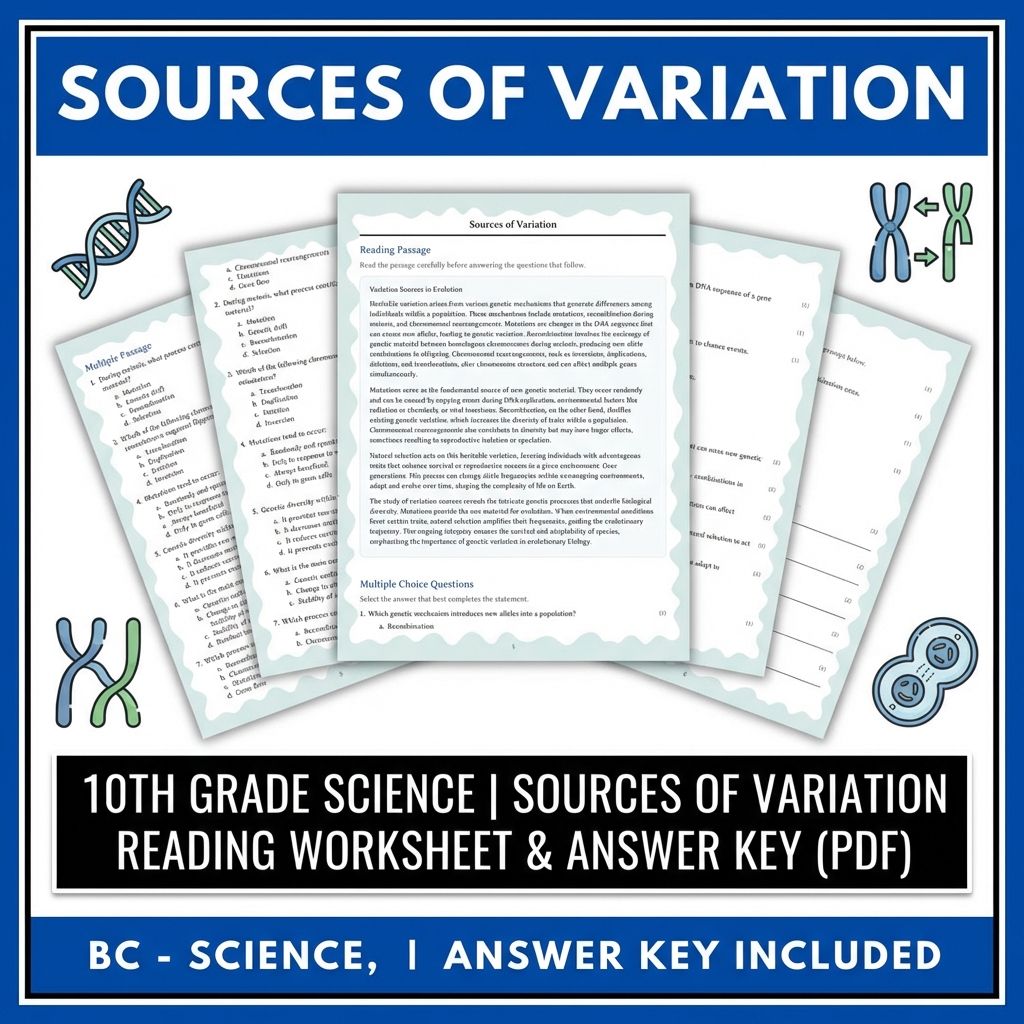
10th Grade Science | Sources of Variation Reading Worksheet & Answer Key (PDF)
JCreated byJ.S SheetsLearning Objectives
- Explain how mutations contribute to heritable variation in a population.
- Describe the roles of recombination and chromosomal rearrangements in genetic diversity.
- Analyze how natural selection acts on variation sources to influence evolution.
Instant download
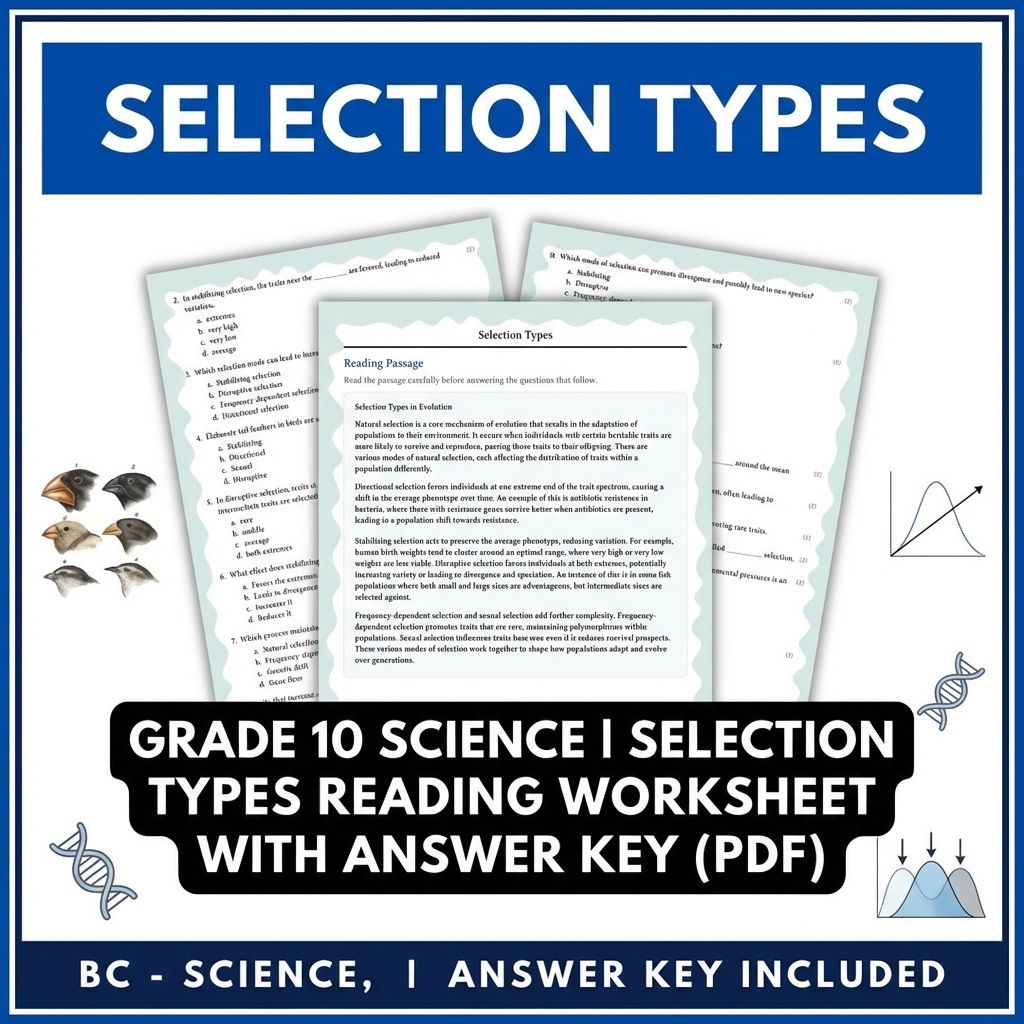
Grade 10 Science | Selection Types Reading Worksheet with Answer Key (PDF)
JCreated byJ.S SheetsLearning Objectives
- Describe the different modes of natural selection: directional, stabilizing, and disruptive.
- Explain how frequency-dependent and sexual selection influence trait distribution.
- Identify real-world examples of each type of selection.
Instant download
Grade 10 Science | Heat Transfer Reading Worksheet (PDF + Answer Key)
JCreated byJ.S SheetsLearning Objectives
- Explain the mechanisms of heat transfer: conduction, convection, and radiation.
- Identify the properties of materials that influence heat transfer rates.
- Analyze examples of heat transfer in natural and human-made systems.
Instant download
Grade 10 Science | Orbits and Energy Reading Worksheet with Answer Key (PDF)
JCreated byJ.S SheetsLearning Objectives
- Understand the principles of orbital motion and the role of gravity.
- Explain how orbital speed depends on mass and distance.
- Distinguish between different types of orbits and energy states.
Instant download
Grade 10 Science Reading Worksheets | Analytical Techniques Mastery (PDF)
JCreated byJ.S SheetsLearning Objectives
- Understand various analytical chemistry methods used for qualitative and quantitative analysis.
- Describe how spectroscopic, chromatographic, and titrimetric techniques are applied in real-world contexts.
- Interpret instrumental data, detection limits, and calculations for assessing substance composition and compliance.
Also included in: Grade 10 Science Unit Bundle | Chemical Reactions & Properties Worksheets +1 more
Instant download
Grade 10 Science | Energy Capture Reading Worksheets (PDF + Answer Key)
JCreated byJ.S SheetsLearning Objectives
- Understand the process of photosynthesis and how light energy is converted to chemical energy.
- Identify the roles of chlorophyll and pigments in energy capture.
- Explain environmental factors influencing photosynthetic efficiency.
Also included in: Grade 10 Science | Cell Systems, Energy, & Homeostasis (Standards-Aligned) +1 more
Instant download
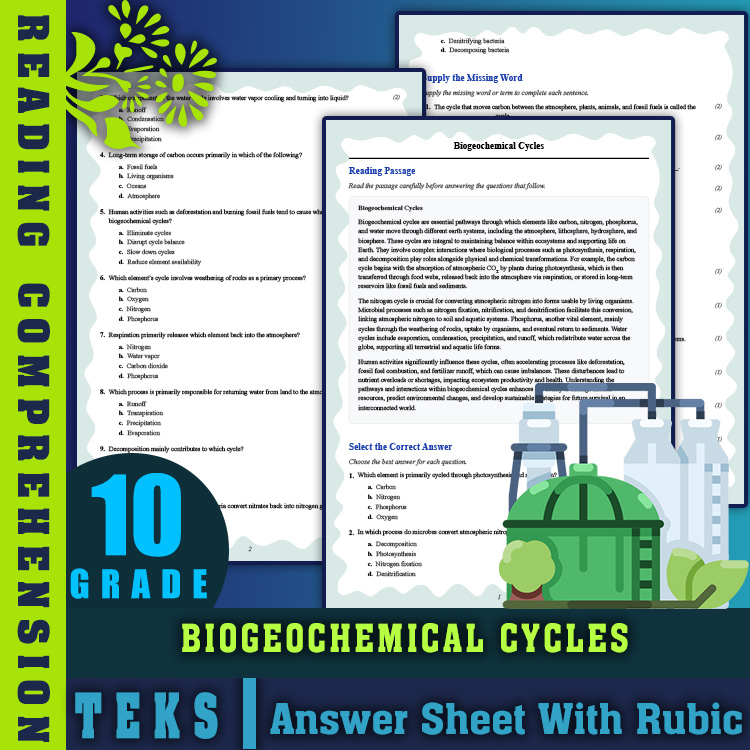
Grade 10 Science | Biogeochemical Cycles Reading Worksheet (PDF + Answer Key)
JCreated byJ.S SheetsLearning Objectives
- Understand the main biogeochemical cycles and their pathways
- Explain how biological and physical processes interact within cycles
- Recognize human impacts on biogeochemical cycles
Instant download
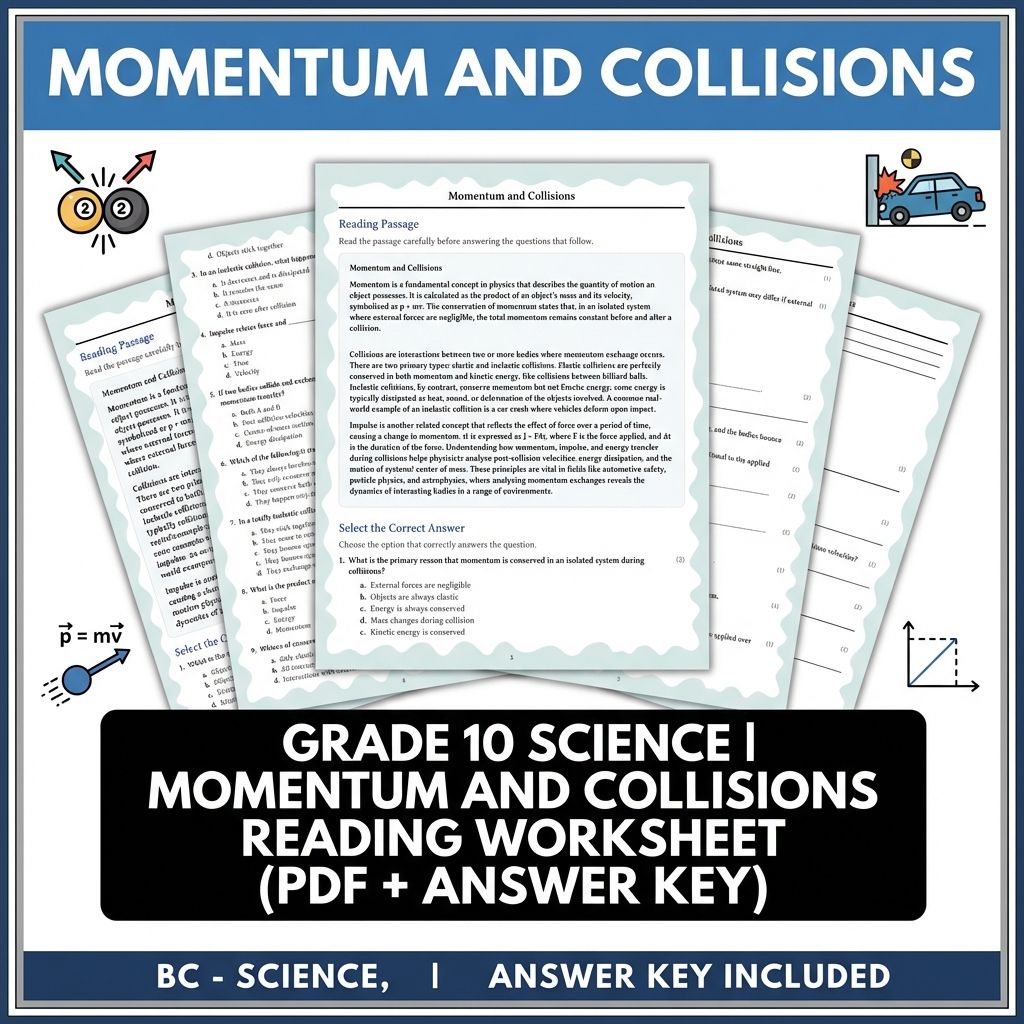
Grade 10 Science | Momentum and Collisions Reading Worksheet (PDF + Answer Key)
JCreated byJ.S SheetsLearning Objectives
- Understand the concept of linear momentum and its conservation in collisions.
- Differentiate between elastic and inelastic collisions and their characteristics.
- Explain the relationship between force, impulse, and change in momentum.
Instant download
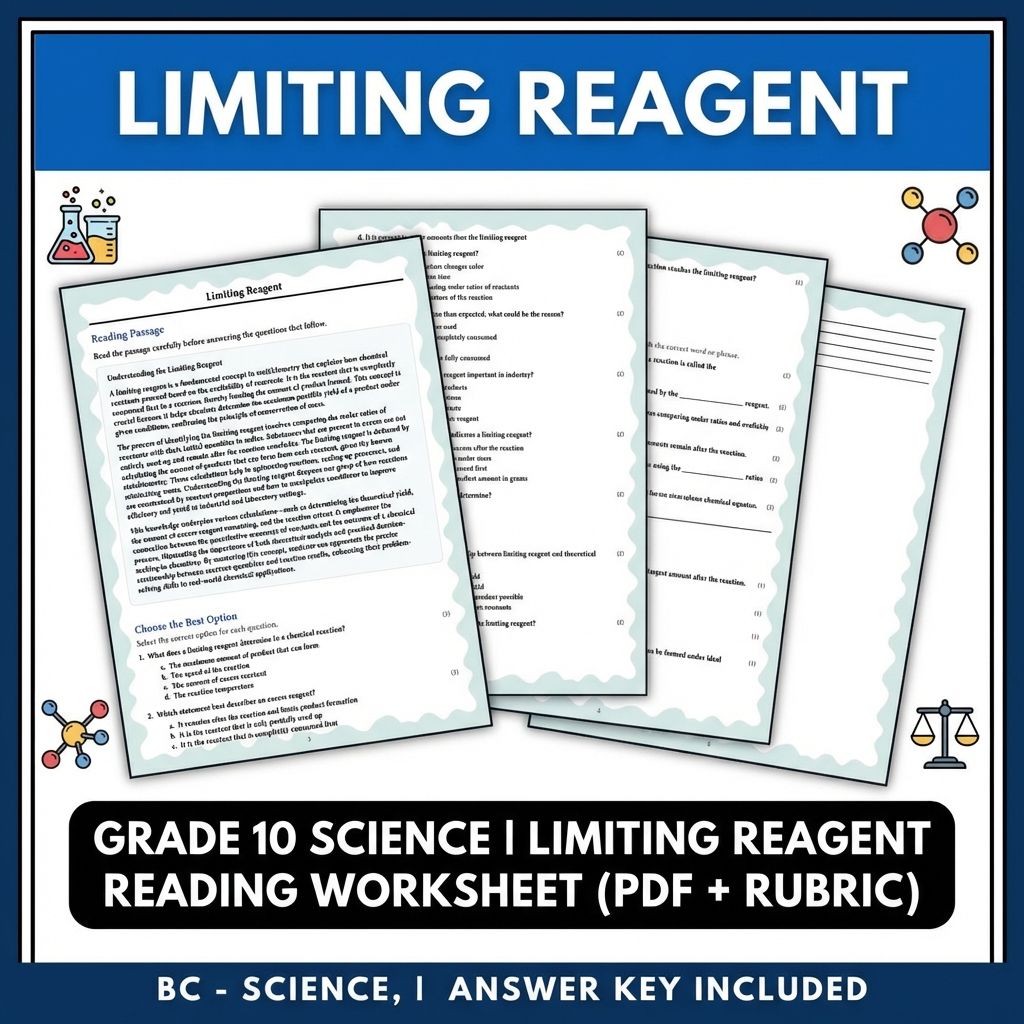
Grade 10 Science | Limiting Reagent Reading Worksheet (PDF + Rubric)
JCreated byJ.S SheetsLearning Objectives
- Define and explain the concept of a limiting reagent in chemical reactions.
- Describe how to identify the limiting reactant using stoichiometric ratios and mole calculations.
- Understand the significance of the limiting reagent in calculating theoretical yield.
Instant download
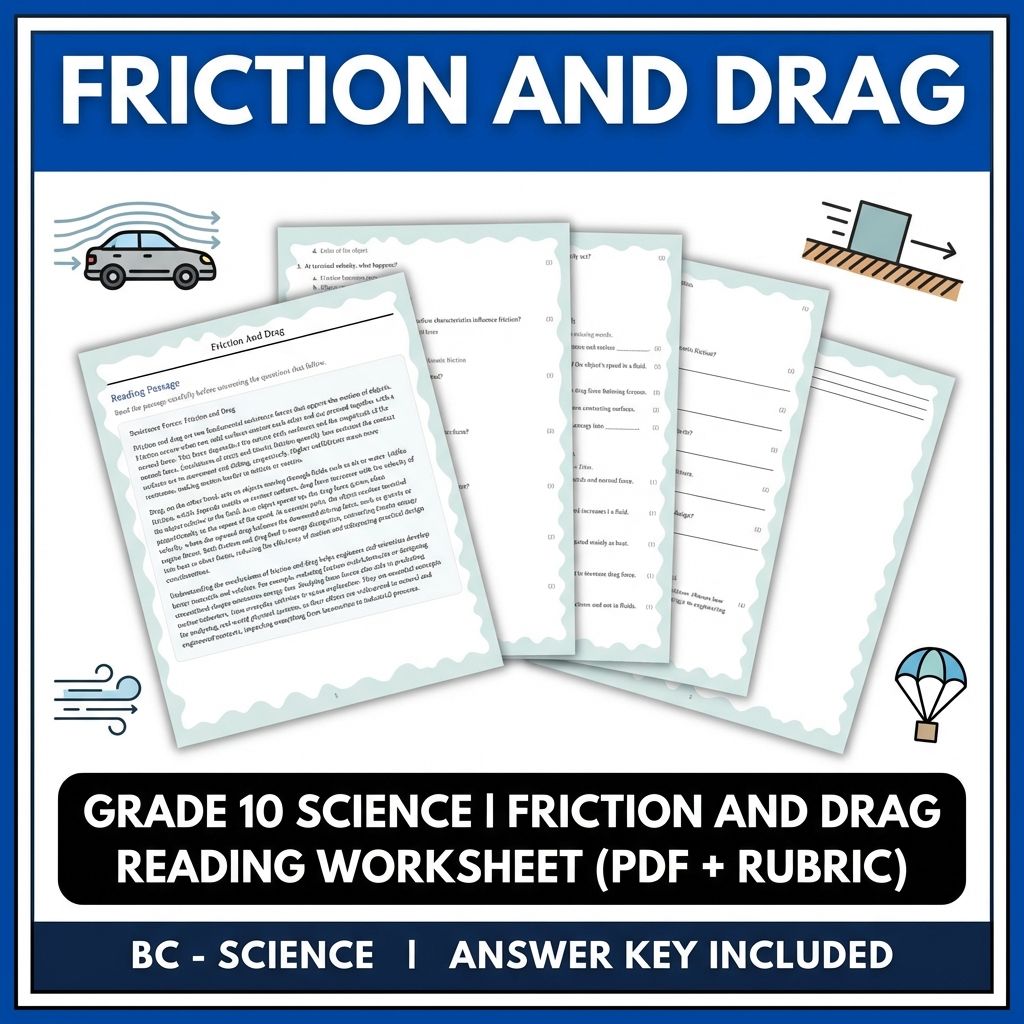
Grade 10 Science | Friction and Drag Reading Worksheet (PDF + Rubric)
JCreated byJ.S SheetsLearning Objectives
- Understand the concepts of friction and drag as resistance forces in motion.
- Describe how surface characteristics influence static and kinetic friction.
- Explain how drag force depends on object speed and fluids.
Instant download
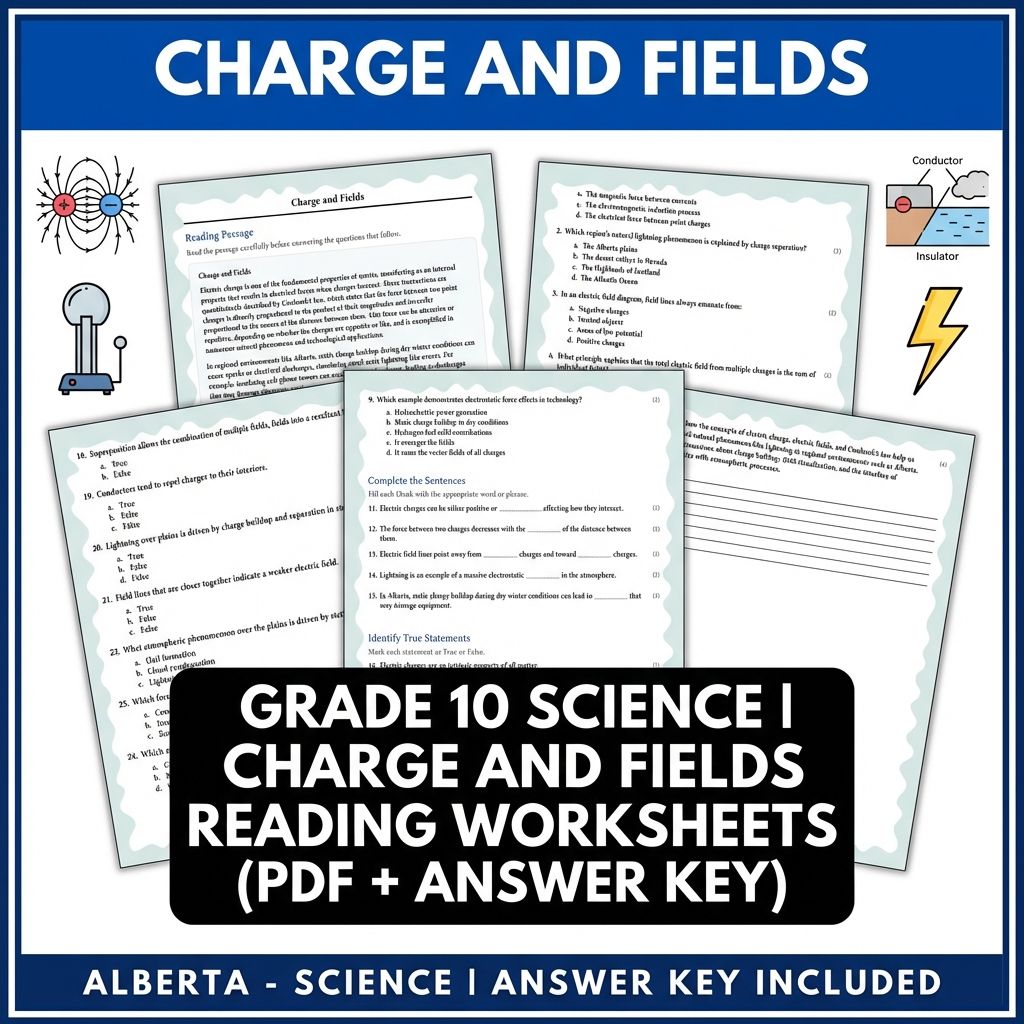
Grade 10 Science | Charge and Fields Reading Worksheets (PDF + Answer Key)
JCreated byJ.S SheetsLearning Objectives
- Understand the concepts of electric charge and Coulomb's law as they relate to electrostatic forces.
- Visualize electric field lines and comprehend the principles of superposition in electric fields.
- Apply regional examples, such as static charge buildup during dry conditions or lightning, to real-world phenomena.
Also included in: Grade 10 Science Bundle | Energy, Circuits & Mechanics (Answer Keys Included) +1 more
Instant download
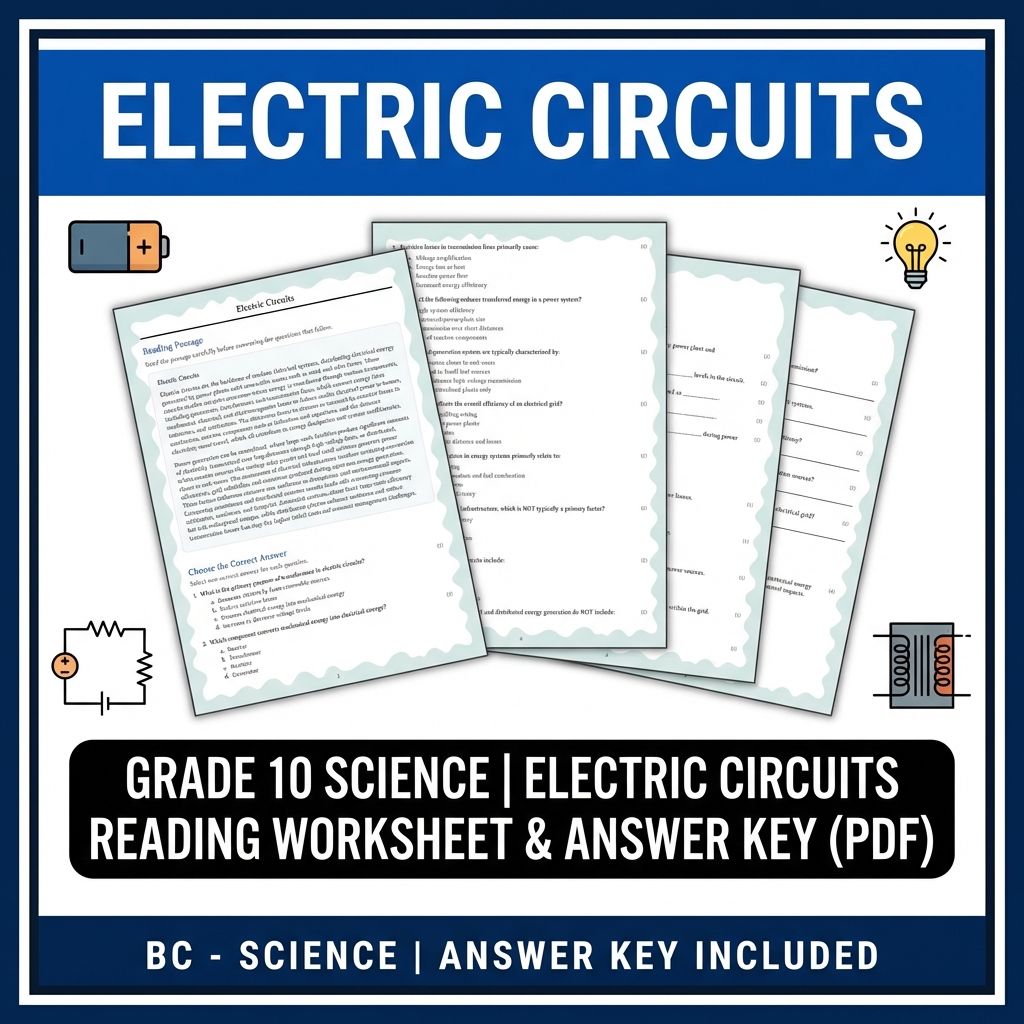
Grade 10 Science | Electric Circuits Reading Worksheet & Answer Key (PDF)
JCreated byJ.S SheetsLearning Objectives
- Understand fundamental components and operation of electric circuits.
- Identify the functions of generators, transformers, and transmission lines.
- Evaluate factors affecting energy efficiency in electrical infrastructure.
Instant download
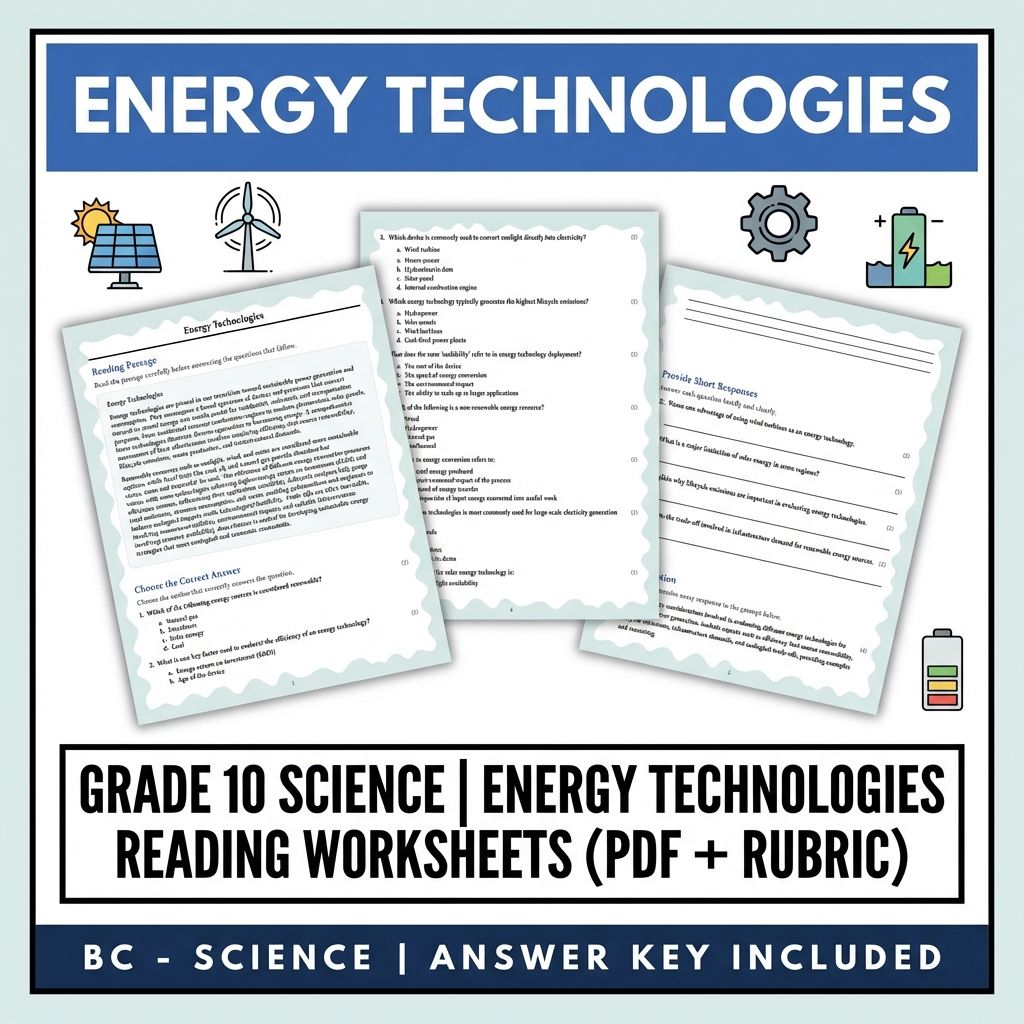
Grade 10 Science | Energy Technologies Reading Worksheets (PDF + Rubric)
JCreated byJ.S SheetsLearning Objectives
- Describe various energy technologies and how they convert different energy sources into usable power.
- Evaluate the efficiency, environmental impact, and scalability of different energy technologies.
- Compare renewable and non-renewable energy sources based on lifecycle emissions and resource availability.
Instant download
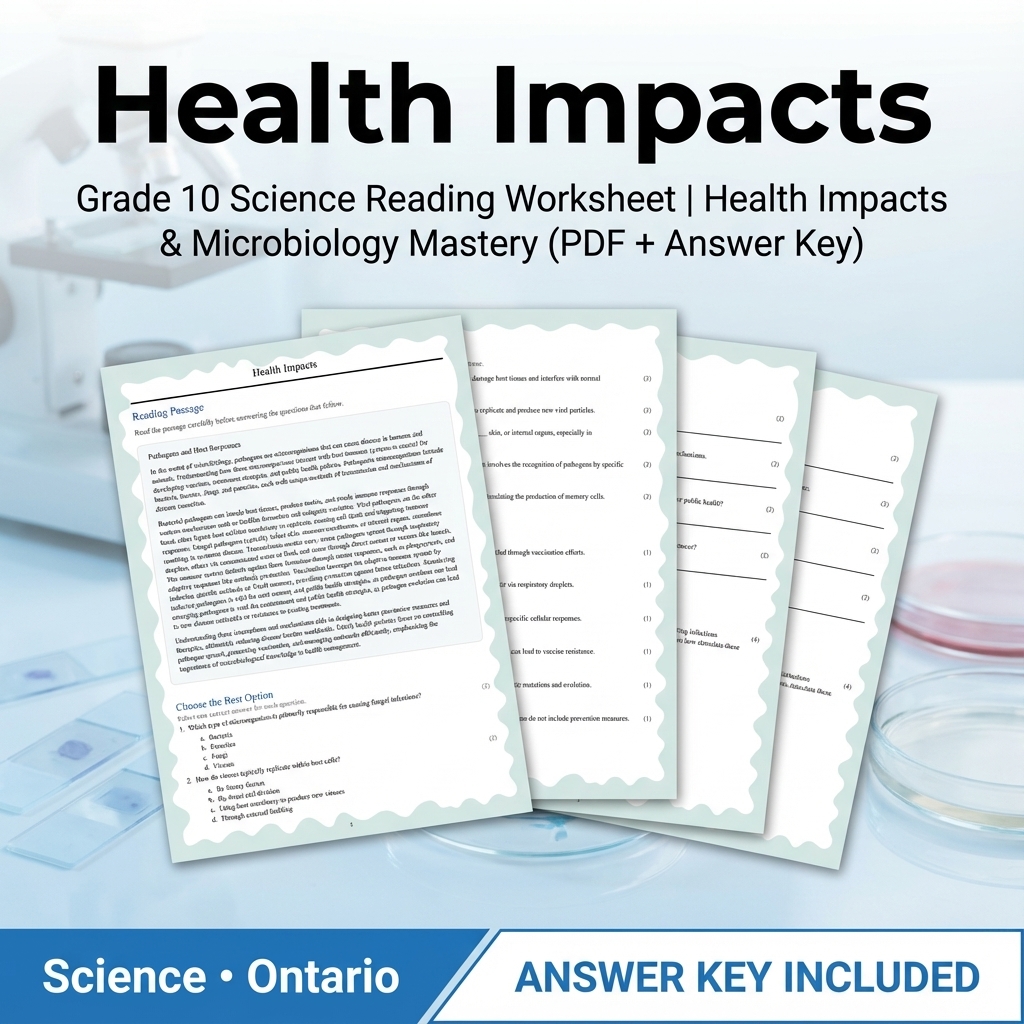
Grade 10 Science | Health Impacts & Microbiology Mastery (PDF + Answer Key)
JCreated byJ.S SheetsLearning Objectives
- Understand the role of pathogenic microorganisms and their interactions with host systems.
- Identify modes of pathogen transmission and pathogenic mechanisms.
- Differentiate bacterial, viral, and fungal disease processes.
Also included in: Grade 10 Science Unit Bundle | Cell Biology, Microbes & Energy Activities +1 more
Instant download
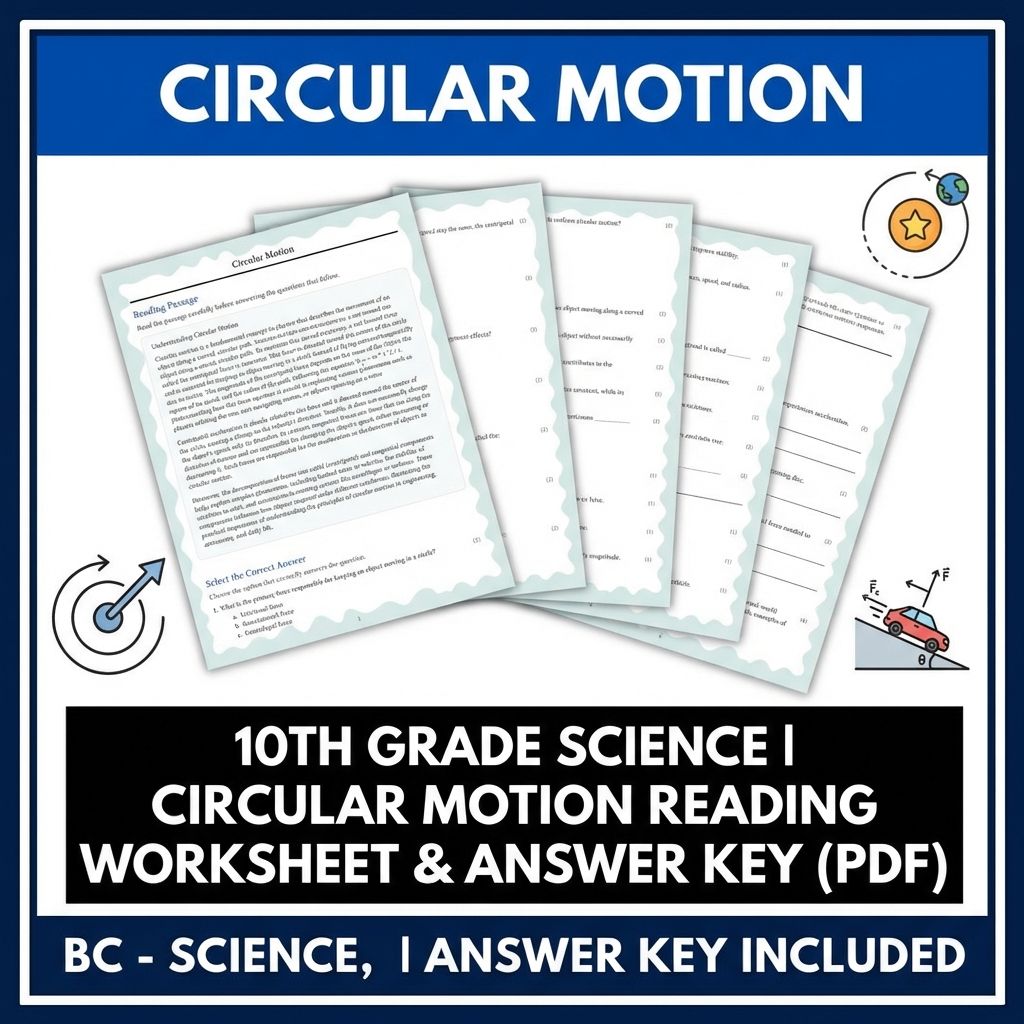
10th Grade Science | Circular Motion Reading Worksheet & Answer Key (PDF)
JCreated byJ.S SheetsLearning Objectives
- Explain the concept of centripetal force and its role in circular motion.
- Differentiate between centripetal acceleration and tangential acceleration.
- Describe how radial and tangential components influence motion in rotating systems.
Instant download
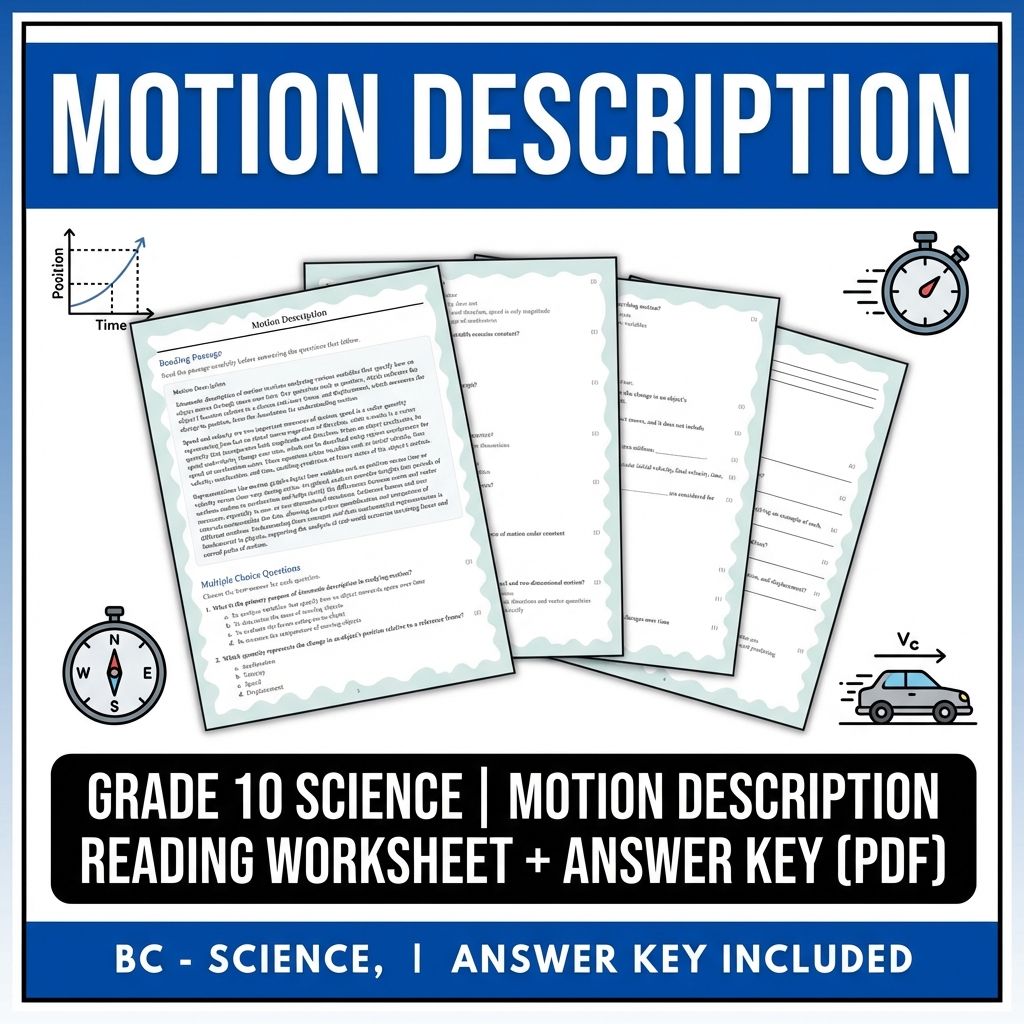
Grade 10 Science | Motion Description Reading Worksheet + Answer Key (PDF)
JCreated byJ.S SheetsLearning Objectives
- Understand the key concepts of position, displacement, speed, velocity, and acceleration in motion along a line or curve.
- Explain how time intervals and reference frames are used to analyze motion.
- Interpret motion graphs and equations to predict future states of an object under constant acceleration.
Instant download
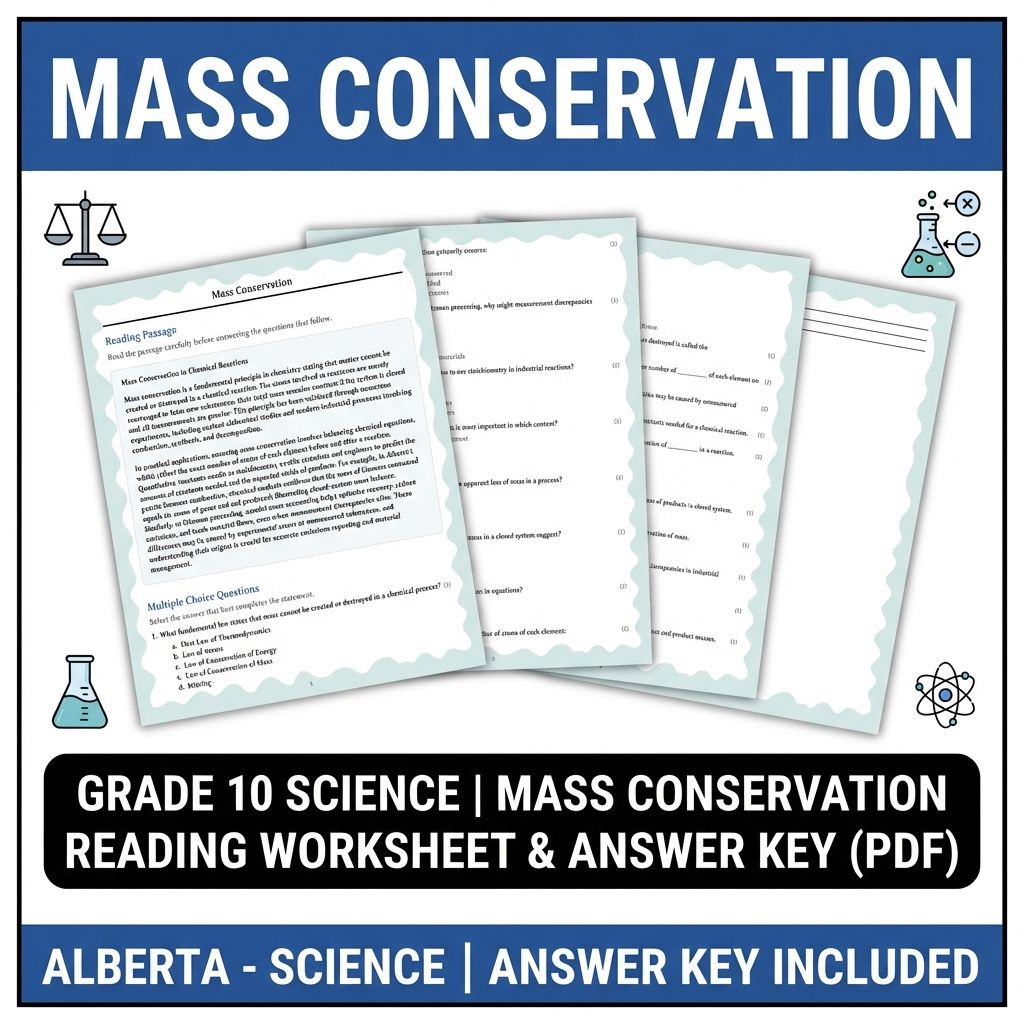
Grade 10 Science | Mass Conservation Reading Worksheet & Answer Key (PDF)
JCreated byJ.S SheetsLearning Objectives
- Understand the principle of conservation of mass during chemical reactions.
- Learn how to balance symbolic chemical equations to reflect mass conservation.
- Apply mass accounting techniques to quantify reactants and products in industrial processes.
Also included in: Grade 10 Science Unit Bundle | Chemical Reactions & Properties Worksheets +1 more
Instant download
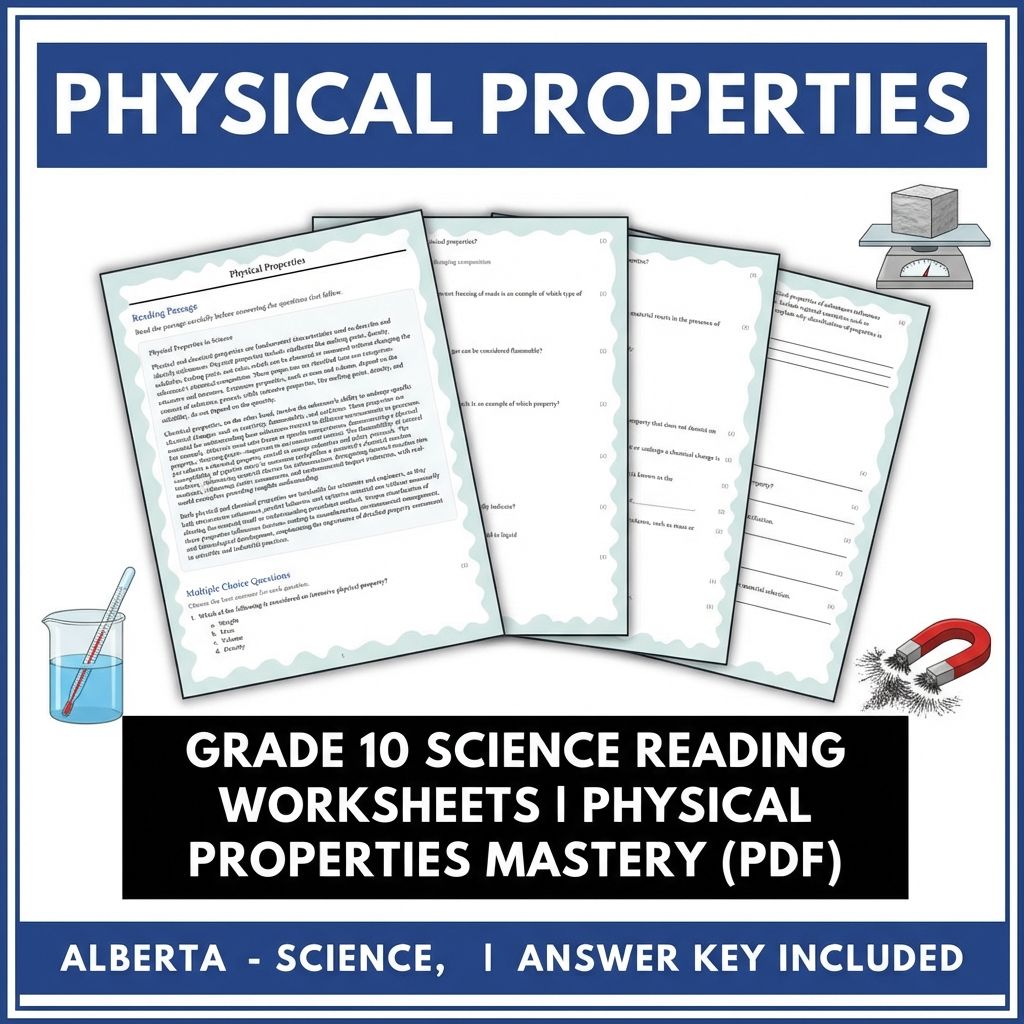
Grade 10 Science Reading Worksheets | Physical Properties Mastery (PDF)
JCreated byJ.S SheetsLearning Objectives
- Understand the distinction between physical and chemical properties of substances.
- Identify examples of intensive and extensive physical properties such as melting point, density, and solubility.
- Recognize chemical properties like reactivity and oxidation tendencies and understand their significance.
Also included in: Grade 10 Science Unit Bundle | Chemical Reactions & Properties Worksheets +1 more
Instant download
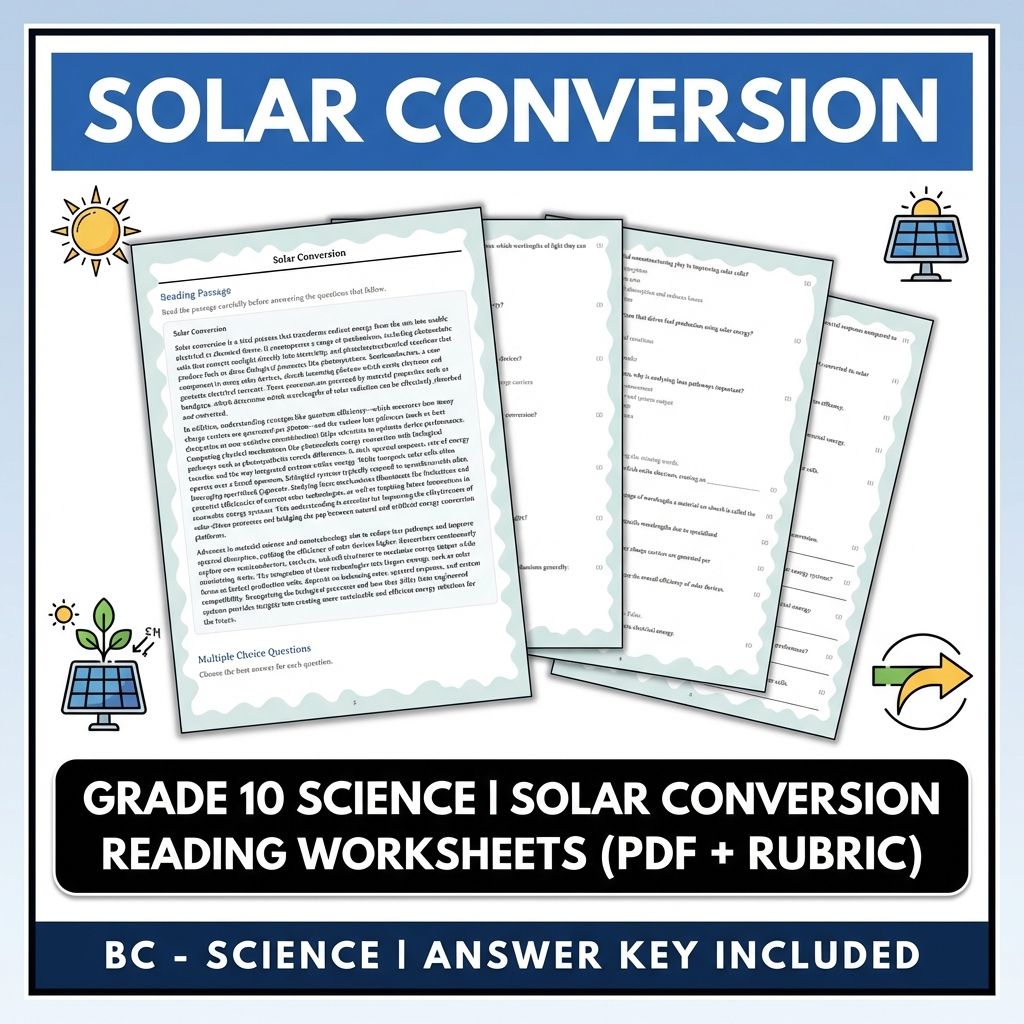
Grade 10 Science | Solar Conversion Reading Worksheets (PDF + Rubric)
JCreated byJ.S SheetsLearning Objectives
- Understand the processes involved in solar energy conversion, including photovoltaic and photoelectrochemical pathways.
- Identify key material properties such as bandgaps and quantum efficiency that affect energy conversion efficiency.
- Compare physical and biological mechanisms of energy conversion, noting differences in spectral response and integration into energy systems.
Instant download
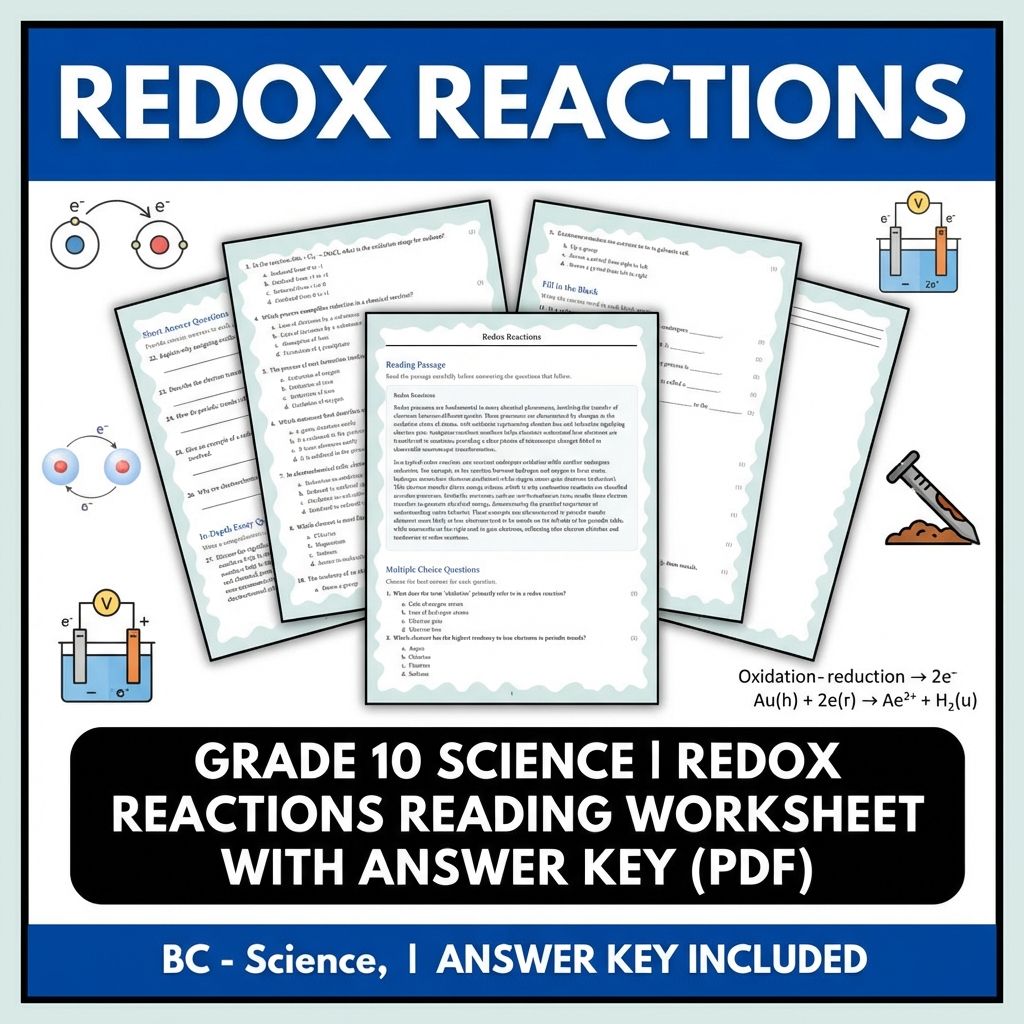
Grade 10 Science | Redox Reactions Reading Worksheet with Answer Key (PDF)
JCreated byJ.S SheetsLearning Objectives
- Explain the concept of oxidation and reduction as electron transfer processes in redox reactions.
- Assign oxidation numbers to elements involved in chemical reactions.
- Identify whether atoms are oxidized or reduced during reactions.
Instant download
10th Grade Science | Ecosystem Stability Reading Worksheets (PDF + Rubric)
JCreated byJ.S SheetsLearning Objectives
- Understand the concept of ecosystem resilience and how it relates to stability.
- Identify factors that influence recovery and thresholds in ecosystems.
- Analyze disturbances and their effects on ecosystems such as forests and coral reefs.
Also included in: Grade 10 Science | Ecosystems & Biodiversity Uanit Worksheets
Instant download
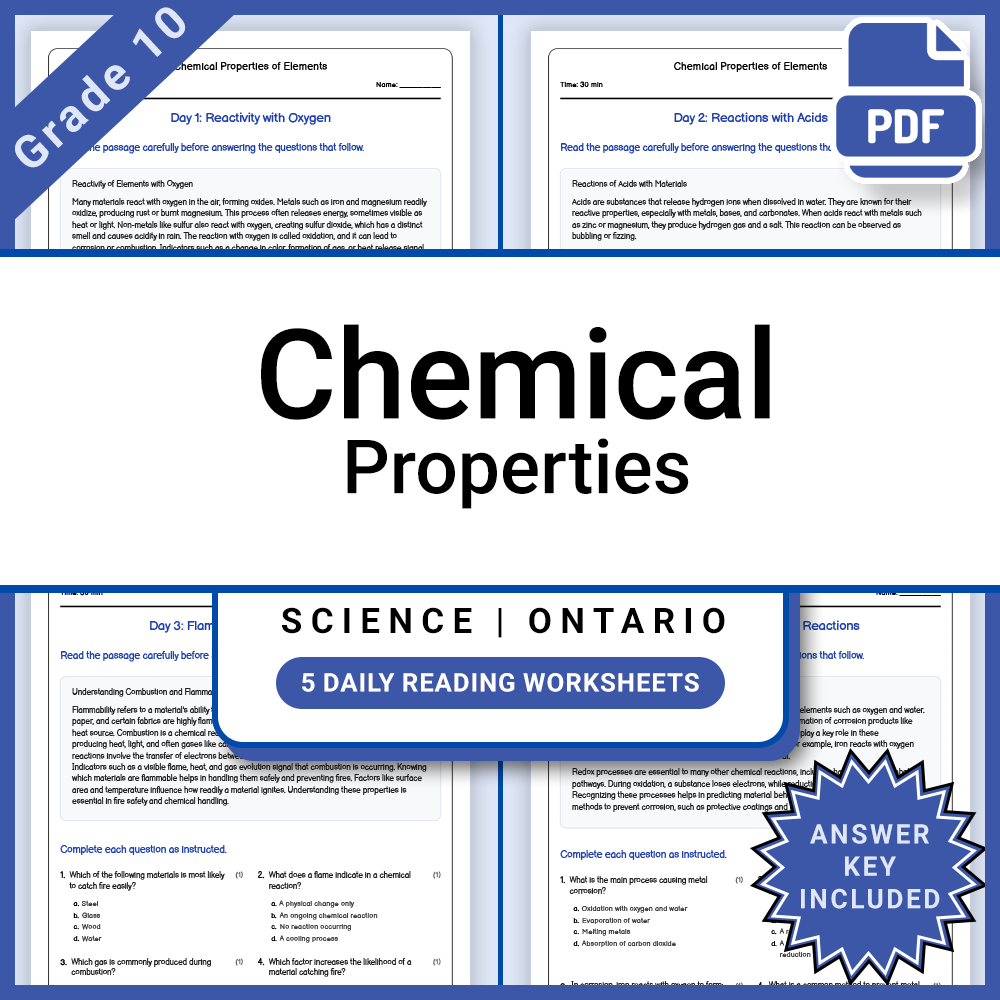
Grade 10 Science – Chemical Properties Daily Reading Worksheet + Answer Key
JCreated byJ.S SheetsLearning Objectives
- Identify substances that react with oxygen
- Observe signs of oxidation
- Understand chemical reactions and reactivity
Also included in: Grade 10 Science Lesson Group Bundle | Ontario Framework +1 more
Instant download
Browse more categories
About Grade 10 Worksheets
Find Grade 10 worksheets covering algebra, biology, literature, and history. All 9,385 resources download instantly as PDFs for classwork, homework, or review.
MyTeachingSheets worksheets are made by real teacher-authors and checked before they go live. Download any as a print-ready PDF for lessons, homework, or independent practice — most include answer keys, and previews are always free.