
Grade 10 Worksheets
9,385 grade resources
Transmission Losses Assessment for Grade 10 Science | Alberta Standards
 Created byPrism Point Learning
Learning Objectives
- Understand how current, resistance, and voltage affect energy losses in power transmission.
- Identify strategies used to minimize transmission losses over long distances.
- Explain the role of transformers in voltage regulation and their impact on power efficiency.
Also included in: Grade 10 Energy, Motion and Electricity Science Lesson Bundle: Alberta +1 more
Instant download
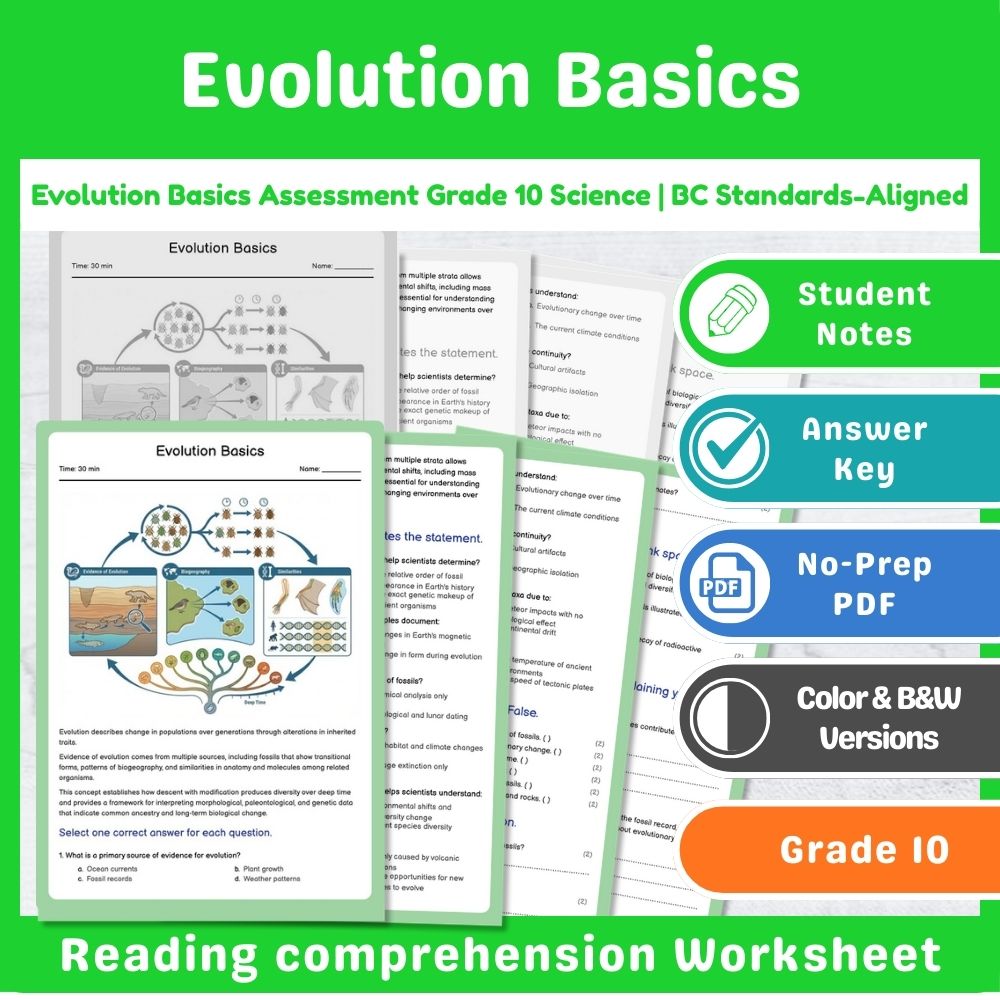
Evolution Basics Assessment Grade 10 Science | BC Standards-Aligned
Created byPrism Point LearningLearning Objectives
- Describe the concept of evolution and its importance in biological history.
- Identify sources of evidence that support the theory of evolution.
- Explain how morphological, paleontological, and genetic data demonstrate common ancestry.
Instant download

Motors And Generators Assessment for Grade 10 Science | Alberta Standards
Created byPrism Point LearningLearning Objectives
- Explain the operational principles of electric motors and generators.
- Describe how electromagnetic interactions produce rotation in coils within magnetic fields.
- Identify applications of motors and generators in regional power and industry.
Also included in: Grade 10 Energy, Motion and Electricity Science Lesson Bundle: Alberta +1 more
Instant download
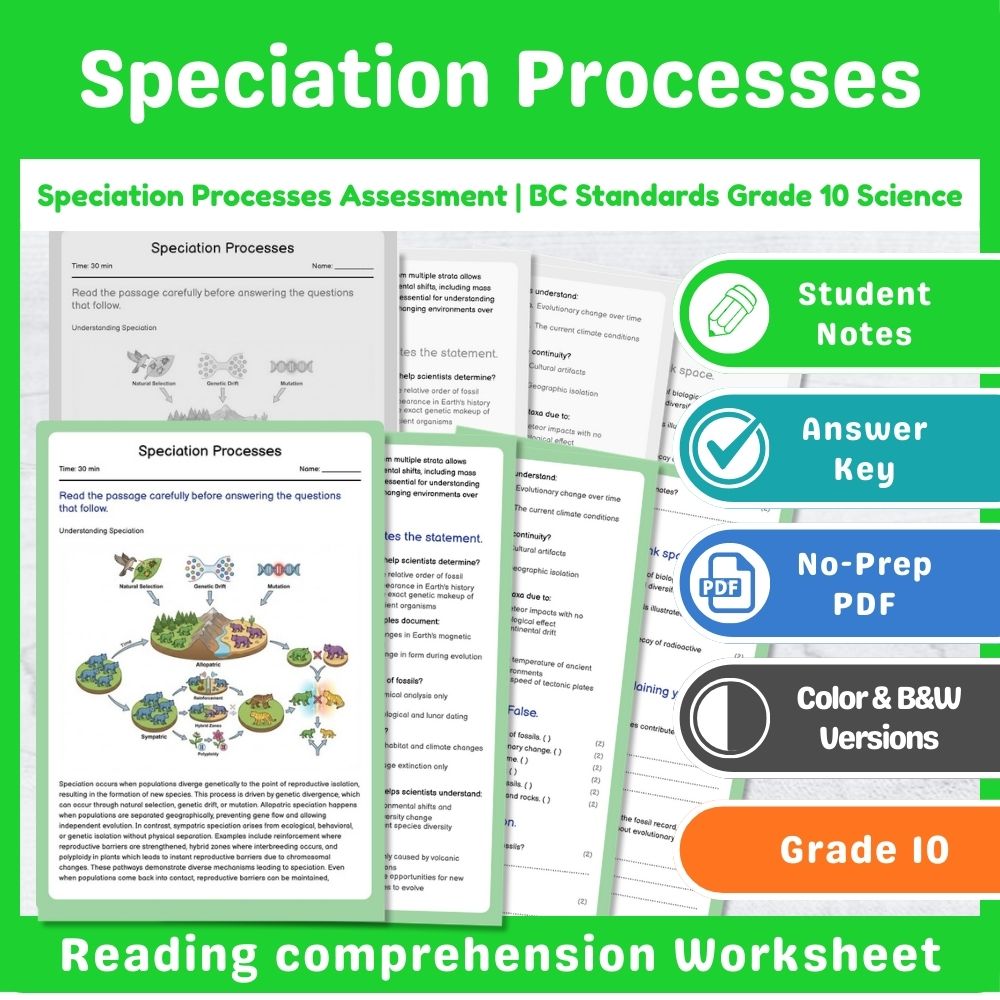
Speciation Processes Assessment | BC Standards Grade 10 Science
Created byPrism Point LearningLearning Objectives
- Describe the key mechanisms involved in speciation, including allopatric and sympatric pathways.
- Explain how reproductive barriers maintain species divergence even after contact.
- Identify different pathways of speciation such as reinforcement, hybrid zones, and polyploidy.
Instant download

Orbital Geometry Assessment for Grade 10 Science | Standards-Aligned
Created byPrism Point LearningLearning Objectives
- Understand Earth's axial tilt and revolution effects on seasons and day length.
- Explain the Moon's orbit and its phases such as new and full moon.
- Describe how Earth's rotation influences star movement and how planetary orbits affect apparent motion.
Also included in: Grade 10 Climate Systems Science Lesson Bundle Assessments – General
Instant download
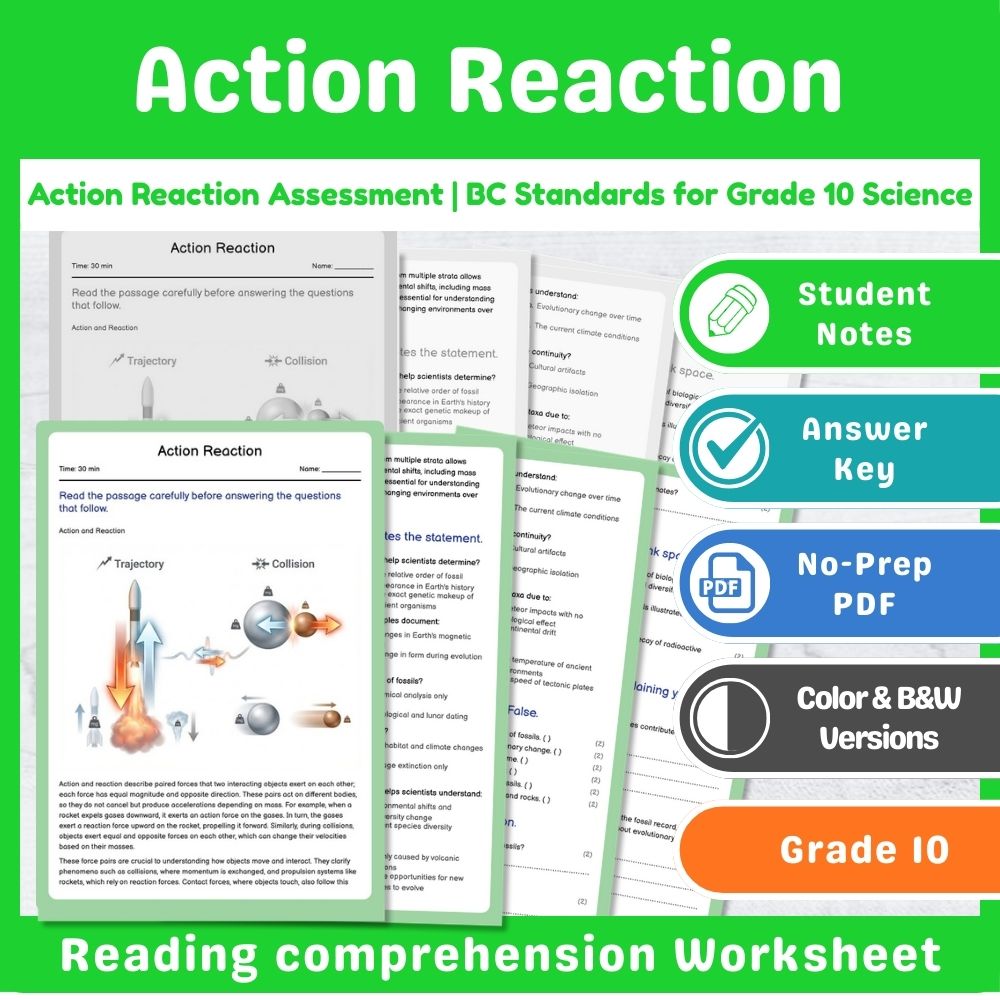
Action Reaction Assessment | BC Standards for Grade 10 Science
Created byPrism Point LearningLearning Objectives
- Explain the concept of Newton's third law of motion in terms of action-reaction pairs.
- Identify real-life examples of action-reaction forces such as collisions and rocket thrust.
- Describe how forces act on different objects and result in acceleration depending on mass.
Instant download

Adaptation Types Assessment | BC Standards Grade 10 Science
Created byPrism Point LearningLearning Objectives
- Define different types of adaptations and explain their roles in survival and reproduction.
- Identify morphological, physiological, and behavioral adaptations with examples.
- Analyze how adaptations involve trade-offs and are influenced by environmental pressures.
Instant download
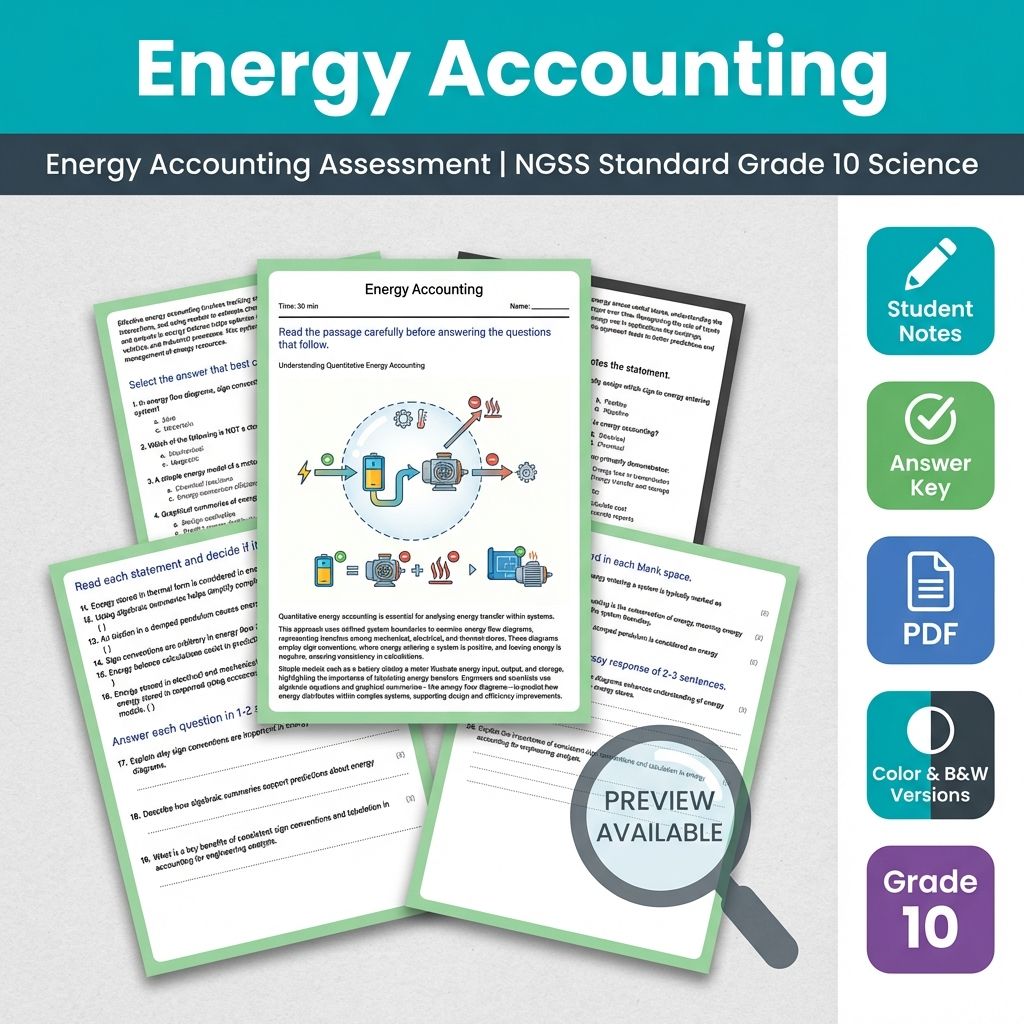
Energy Accounting Assessment | NGSS Standard Grade 10 Science
Created byPrism Point LearningLearning Objectives
- Understand and apply system boundaries, energy flow diagrams, and computational models in energy accounting.
- Identify energy transfer processes among mechanical, electrical, and thermal stores.
- Use sign conventions and tabulate energy transfers to analyze system energy distribution.
Also included in: Grade 10 Science | Work & Power NGSS Assessment Mini Bundle – Printable
Instant download

Circuit Fundamentals Assessment | Alberta Grade 10 Science Standards
Created byPrism Point LearningLearning Objectives
- Define current, voltage, and resistance and explain their interrelationships.
- Understand Ohm's law and its application in simple circuits.
- Differentiate between series and parallel electrical circuits.
Also included in: Grade 10 Energy, Motion and Electricity Science Lesson Bundle: Alberta +1 more
Instant download
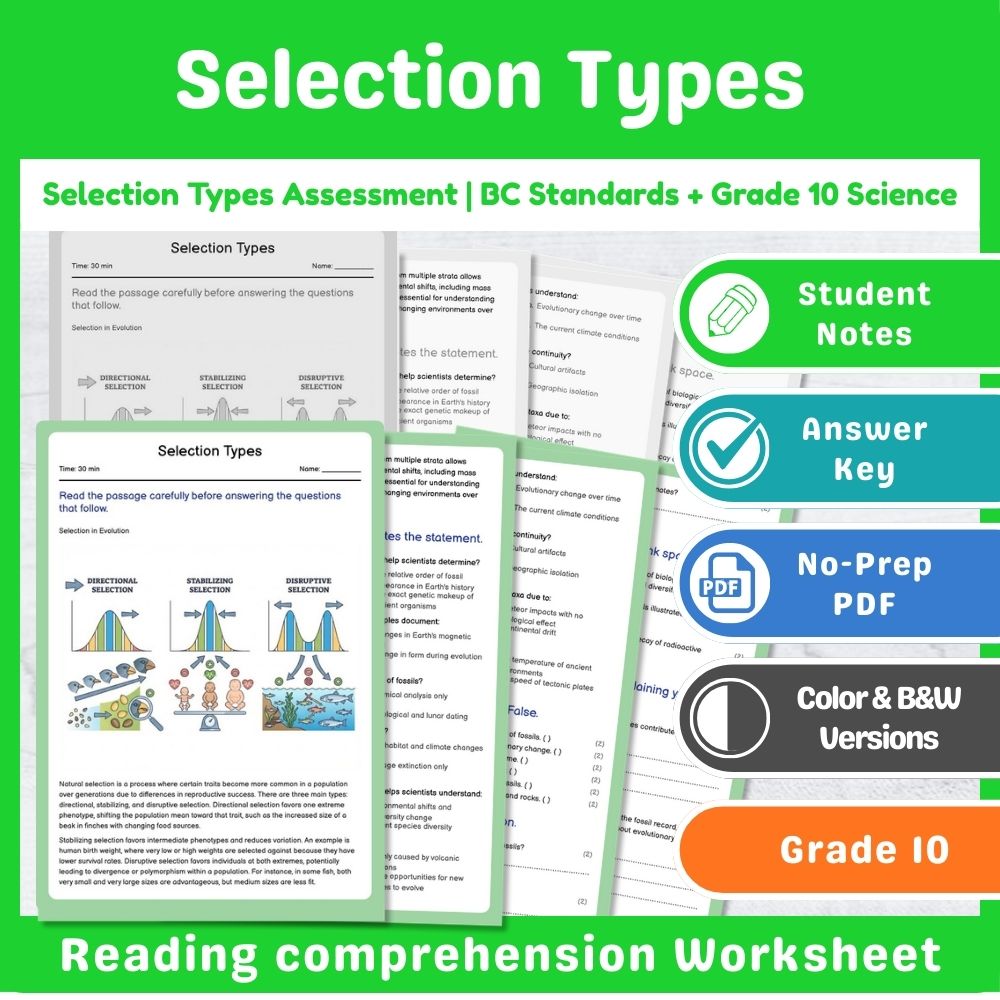
Selection Types Assessment | BC Standards + Grade 10 Science
Created byPrism Point LearningLearning Objectives
- Identify the different modes of natural selection and understand their effects on populations.
- Interpret how directional, stabilizing, and disruptive selection modify trait distributions over time.
- Explain the roles of frequency-dependent and sexual selection in evolution.
Instant download
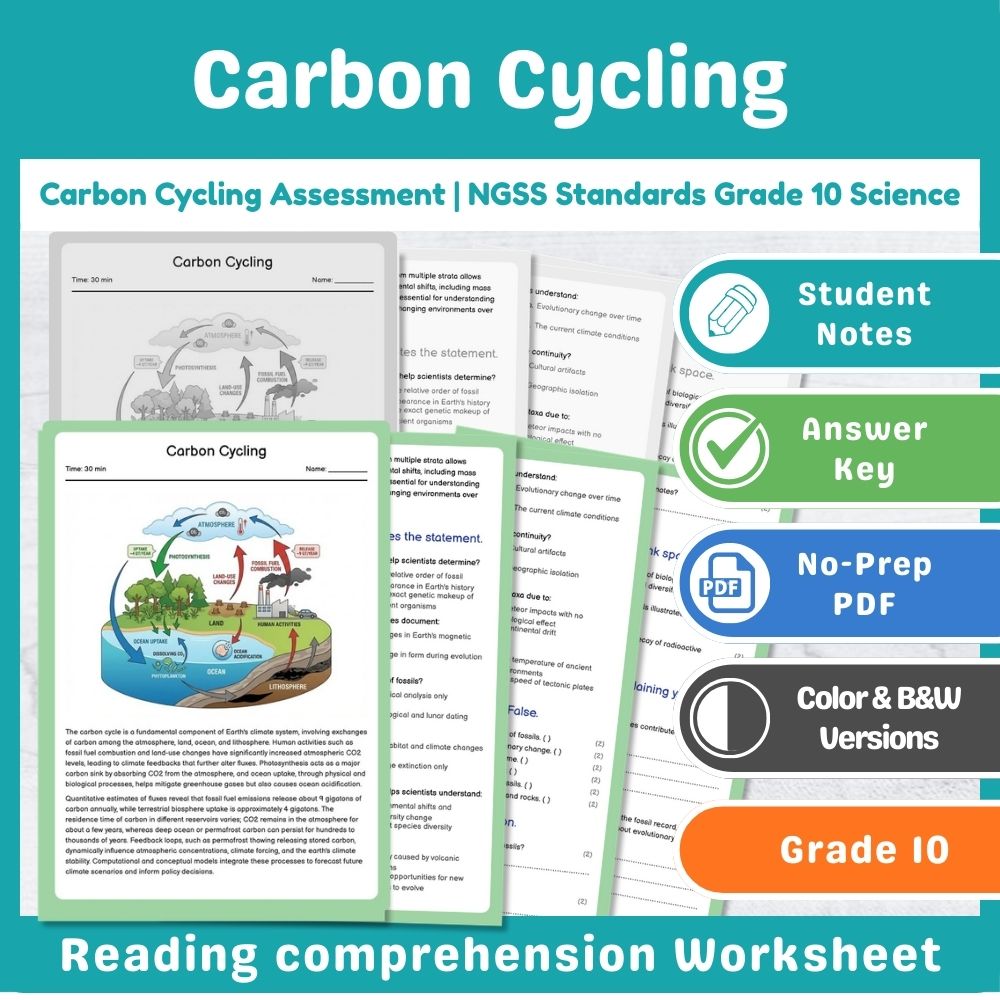
Carbon Cycling Assessment | NGSS Standards Grade 10 Science
Created byPrism Point LearningLearning Objectives
- Describe the components of the global carbon cycle, including sources and sinks.
- Explain feedback mechanisms influencing atmospheric CO2 concentrations.
- Quantify the flux magnitudes, residence times, and their impact on climate.
Also included in: Grade 10 Science Resource Tradeoffs Assessment | NGSS Standards-Aligned
Instant download
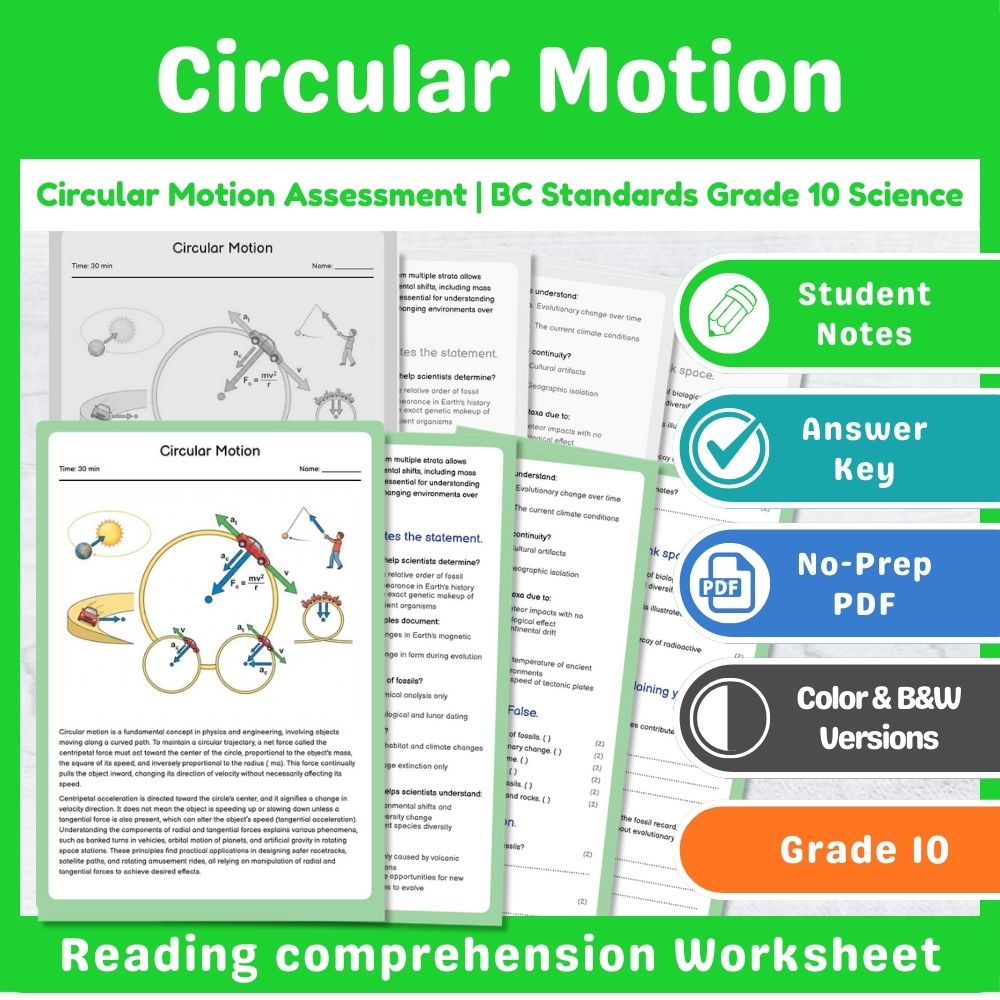
Circular Motion Assessment | BC Standards Grade 10 Science
Created byPrism Point LearningLearning Objectives
- Explain the concept of centripetal force and its role in circular motion.
- Differentiate between centripetal acceleration and tangential acceleration.
- Describe how radial and tangential components explain phenomena like banked turns and orbital motion.
Instant download
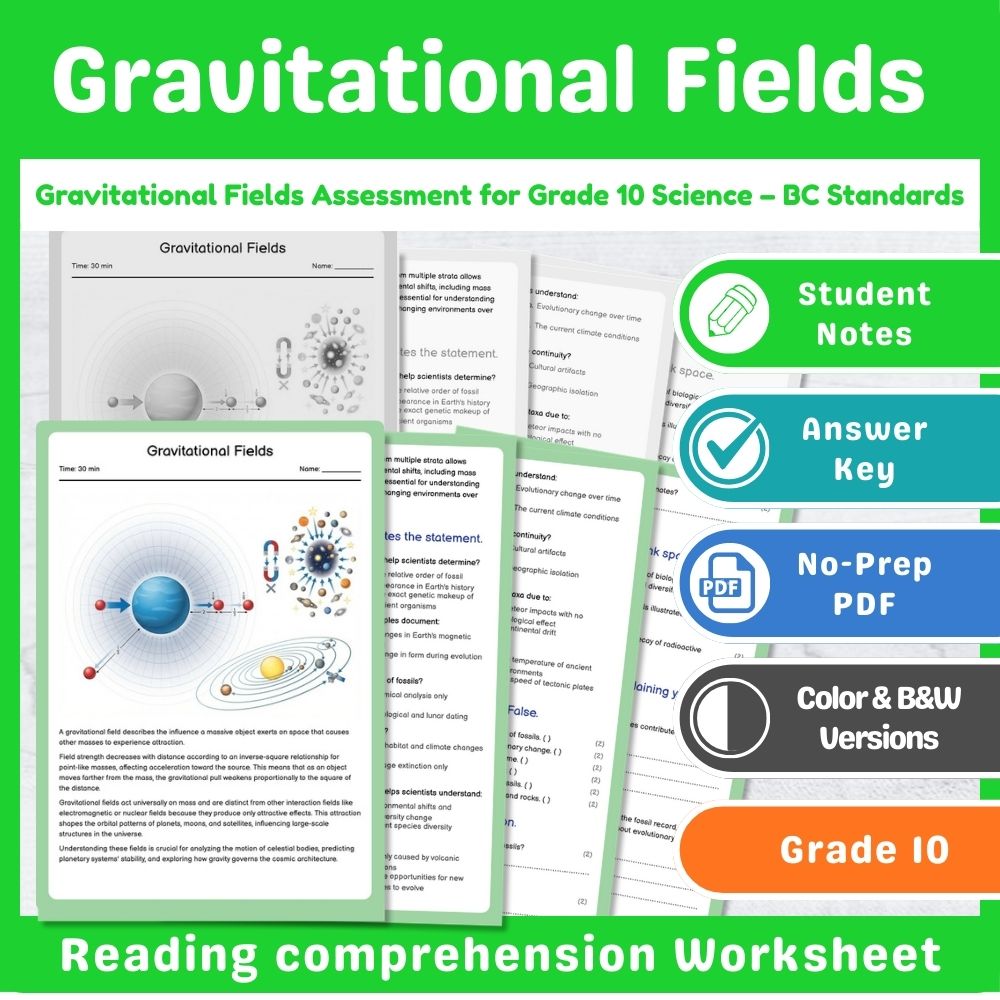
Gravitational Fields Assessment for Grade 10 Science – BC Standards
Created byPrism Point LearningLearning Objectives
- Understand the concept of gravitational fields and their influence.
- Explain how field strength varies with distance.
- Describe the effects of gravitational fields on objects in space.
Instant download
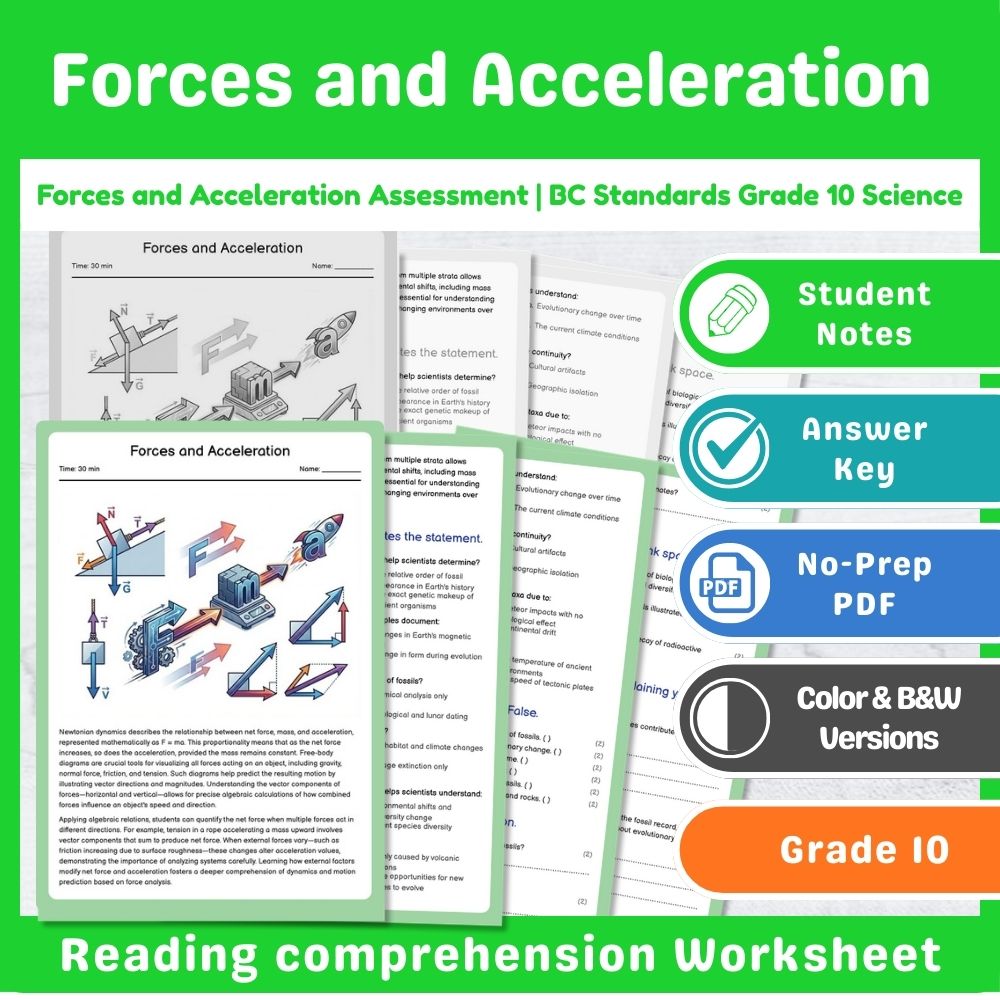
Forces and Acceleration Assessment | BC Standards Grade 10 Science
Created byPrism Point LearningLearning Objectives
- Understand how net force affects acceleration according to Newton's Second Law.
- Identify and interpret free-body diagrams representing forces like gravity, normal force, friction, and tension.
- Apply algebraic and vector methods to analyze how forces combine to change motion.
Instant download
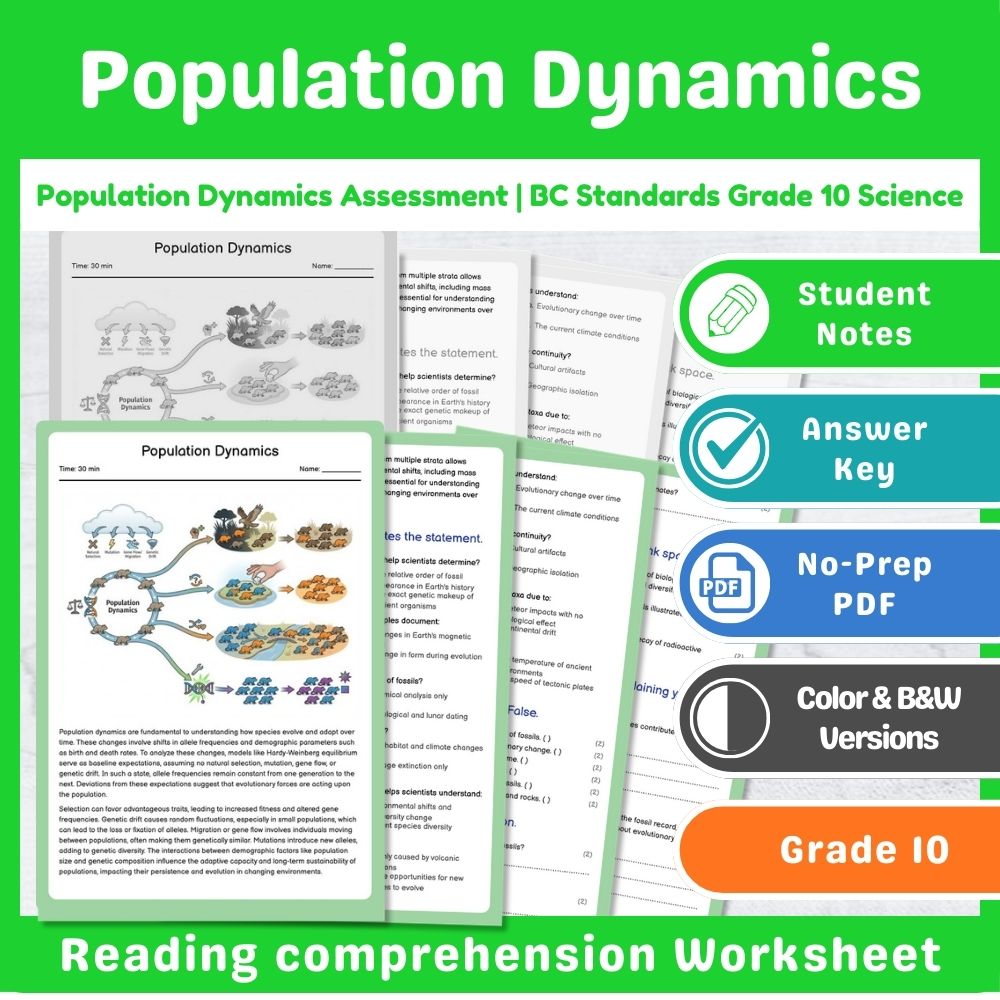
Population Dynamics Assessment | BC Standards Grade 10 Science
Created byPrism Point LearningLearning Objectives
- Understand basic concepts of population dynamics and evolutionary forces.
- Identify the role of models like Hardy-Weinberg equilibrium in population studies.
- Analyze how factors such as selection, mutation, migration, and drift influence genetic variation.
Instant download
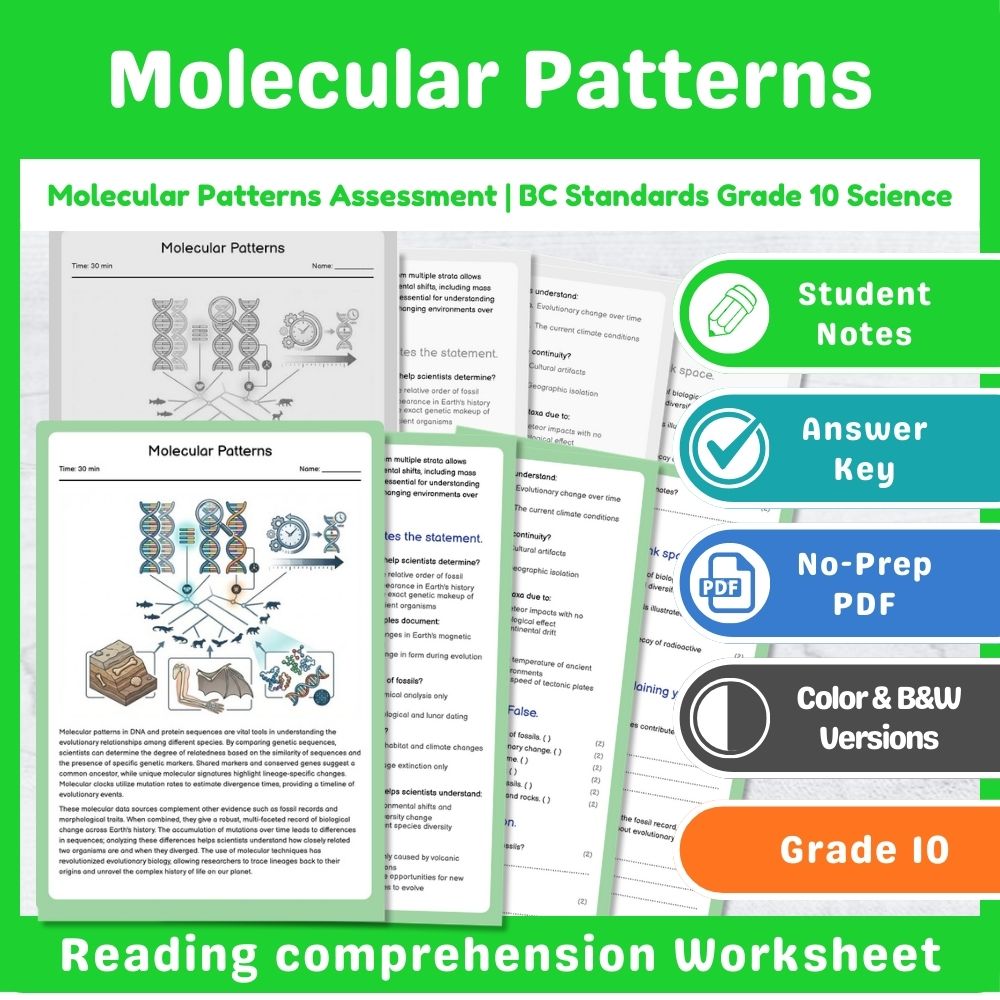
Molecular Patterns Assessment | BC Standards Grade 10 Science
Created byPrism Point LearningLearning Objectives
- Explain how molecular patterns in DNA and proteins reveal genetic relatedness among organisms.
- Describe how molecular clocks estimate divergence times and the significance of shared genetic markers.
- Identify conserved genes and lineage-specific molecular signatures as evidence of common ancestry.
Instant download
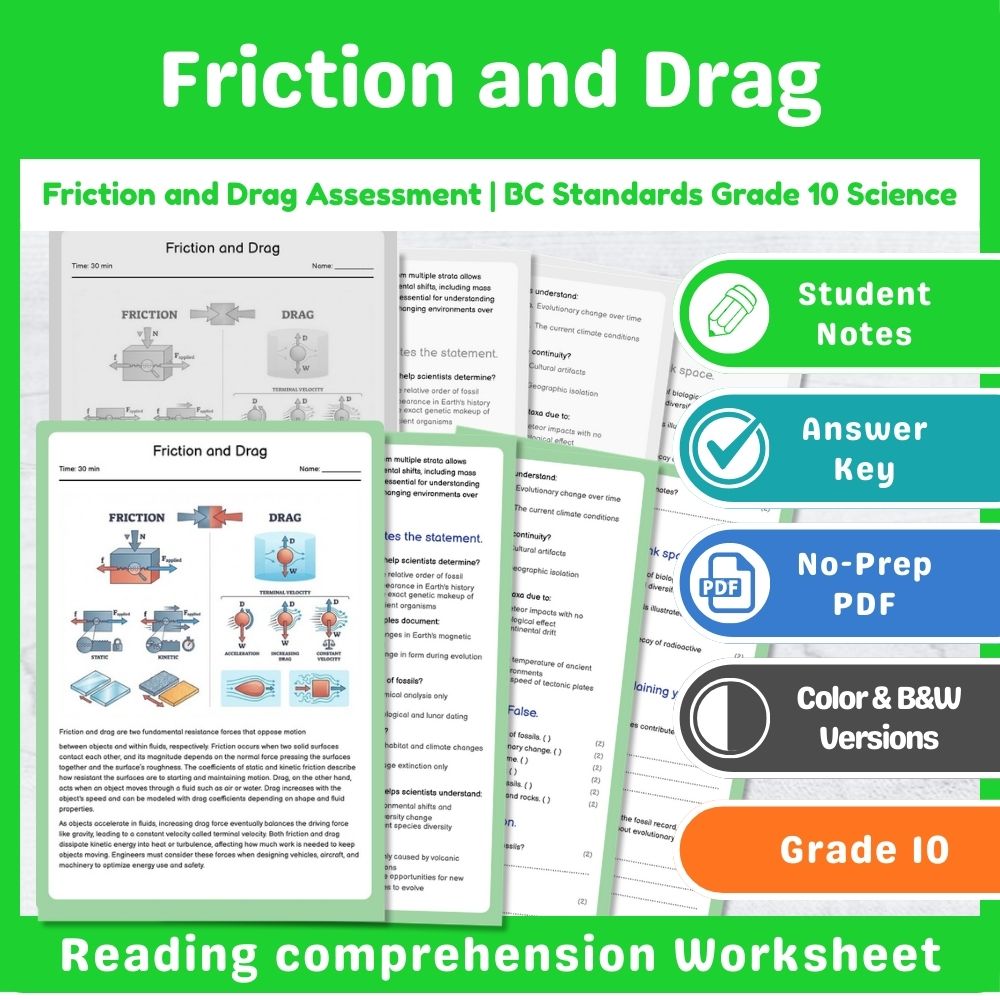
Friction and Drag Assessment | BC Standards Grade 10 Science
Created byPrism Point LearningLearning Objectives
- Understand the mechanisms of friction and drag as resistance forces in motion.
- Describe how contact surfaces affect friction based on normal force and surface characteristics.
- Explain how drag acts in fluids and the concept of terminal velocity.
Instant download
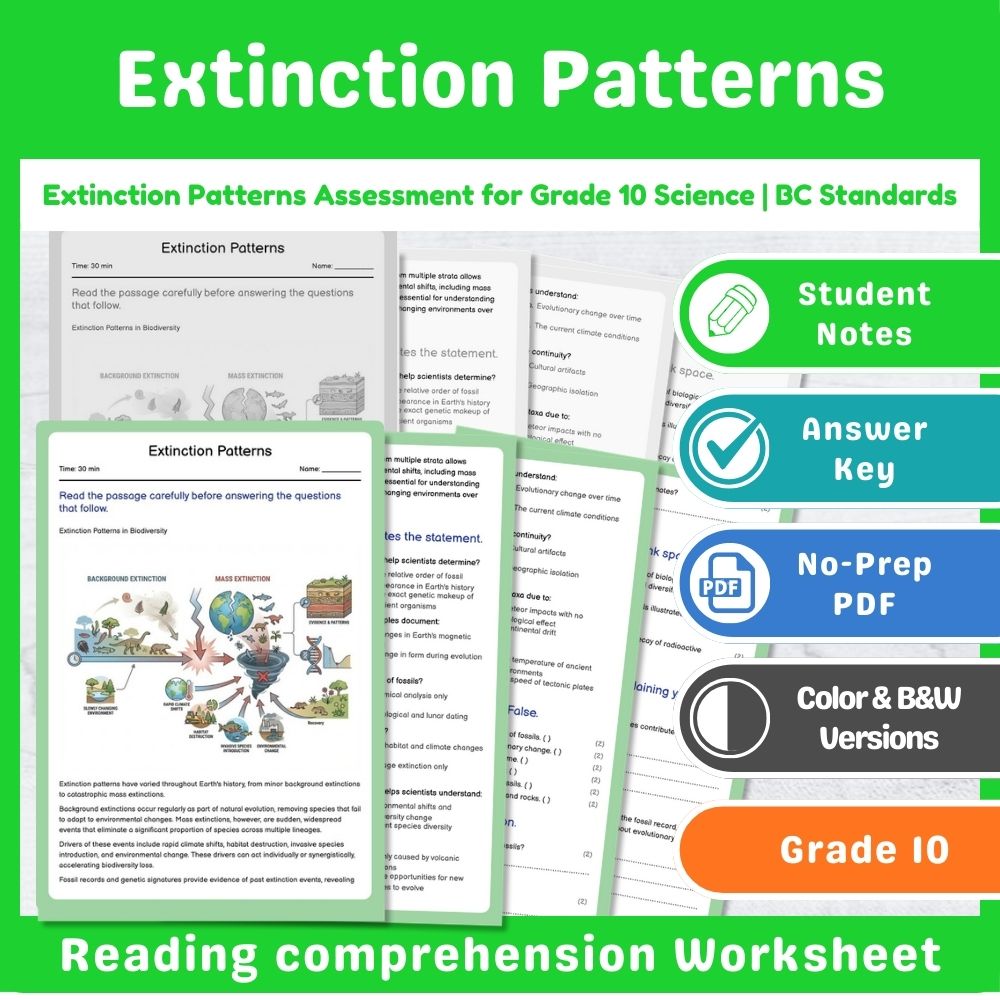
Extinction Patterns Assessment for Grade 10 Science | BC Standards
Created byPrism Point LearningLearning Objectives
- Understand various extinction patterns from background losses to mass extinctions.
- Identify causes and drivers of extinction events such as environmental changes and invasive species.
- Explain how fossil and genetic signatures reveal past biodiversity crises.
Instant download
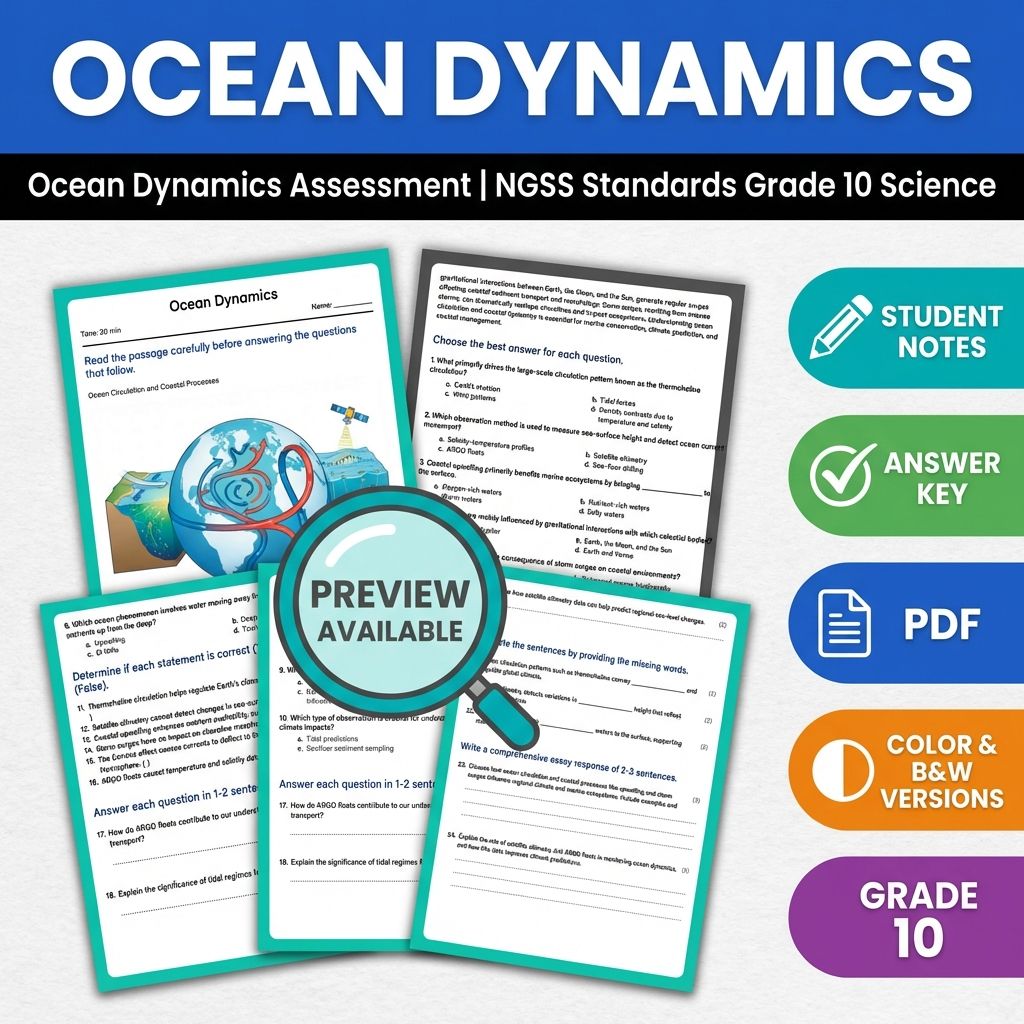
Ocean Dynamics Assessment | NGSS Standards Grade 10 Science
Created byPrism Point LearningLearning Objectives
- Describe the key circulation patterns driven by ocean dynamics, including thermohaline circulation, gyres, and coastal upwelling.
- Explain how observations from ARGO floats, satellite altimetry, and salinity-temperature profiles help understand heat and mass transport in oceans.
- Analyze the influence of tidal regimes and storm surges on coastal sediment transport, shoreline morphology, and ecosystems.
Instant download
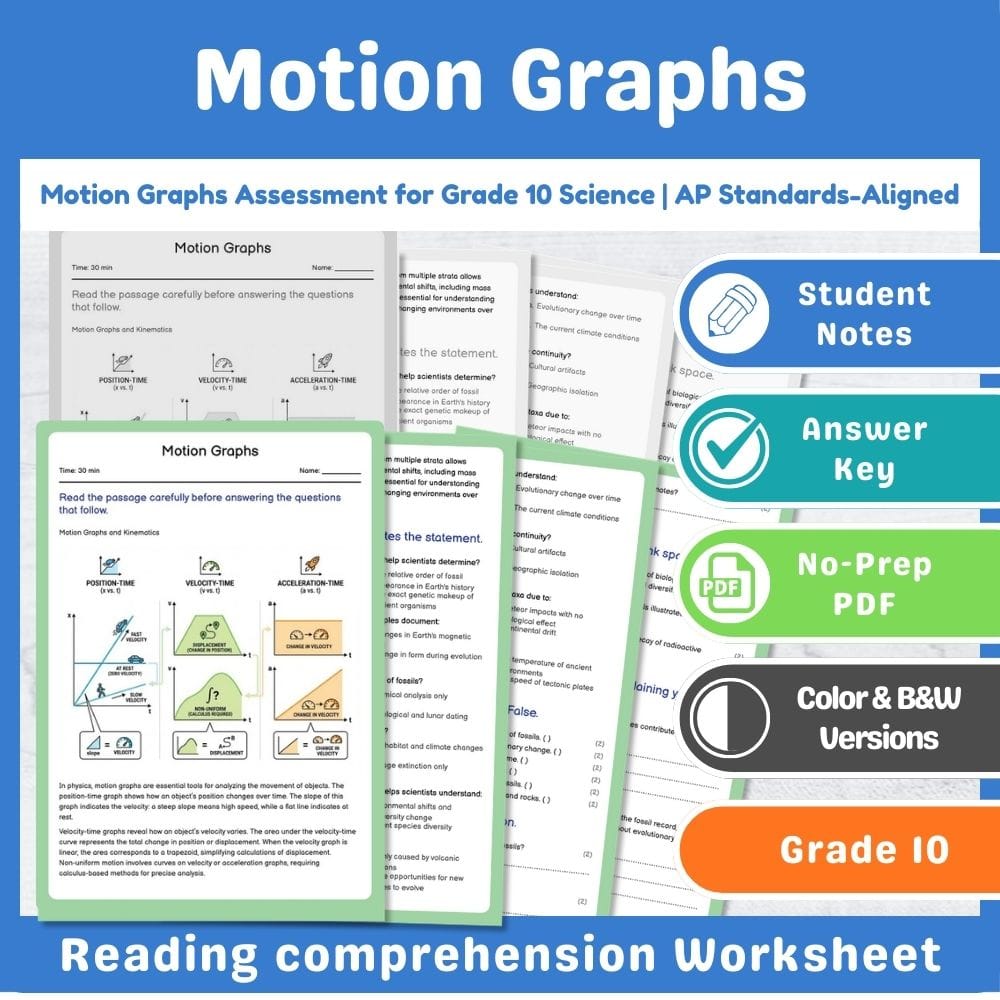
Motion Graphs Assessment for Grade 10 Science | AP Standards-Aligned
Created byPrism Point LearningLearning Objectives
- Understand how the slope of a motion graph relates to velocity and acceleration.
- Interpret areas under motion graphs to determine total displacement and change in velocity.
- Connect features of position, velocity, and acceleration graphs to physical quantities in motion analysis.
Also included in: Lesson Grade 10 Science Assessment Bundle | AP Standards-Aligned
Instant download

Dynamic Equilibrium Assessment for Grade 10 Science – Alberta Standards
Created byPrism Point LearningLearning Objectives
- Understand the concept of dynamic equilibrium and the factors influencing it.
- Interpret equilibrium constant expressions and predict system shifts due to external changes.
- Apply principles of chemical equilibrium to industrial and environmental contexts.
Also included in: Grade 10 Matter and Chemical Change Science Lesson Bundle: Alberta +1 more
Instant download

Mechanical Calculations Assessment | Alberta Grade 10 Science Standards
Created byPrism Point LearningLearning Objectives
- Understand energy conservation principles involving potential and kinetic energy in systems with friction, springs, and gravity.
- Apply numerical methods to solve energy transfer problems in real-world contexts.
- Analyze the effects of non-conservative work such as friction on energy calculations.
Also included in: Grade 10 Energy, Motion and Electricity Science Lesson Bundle: Alberta +1 more
Instant download
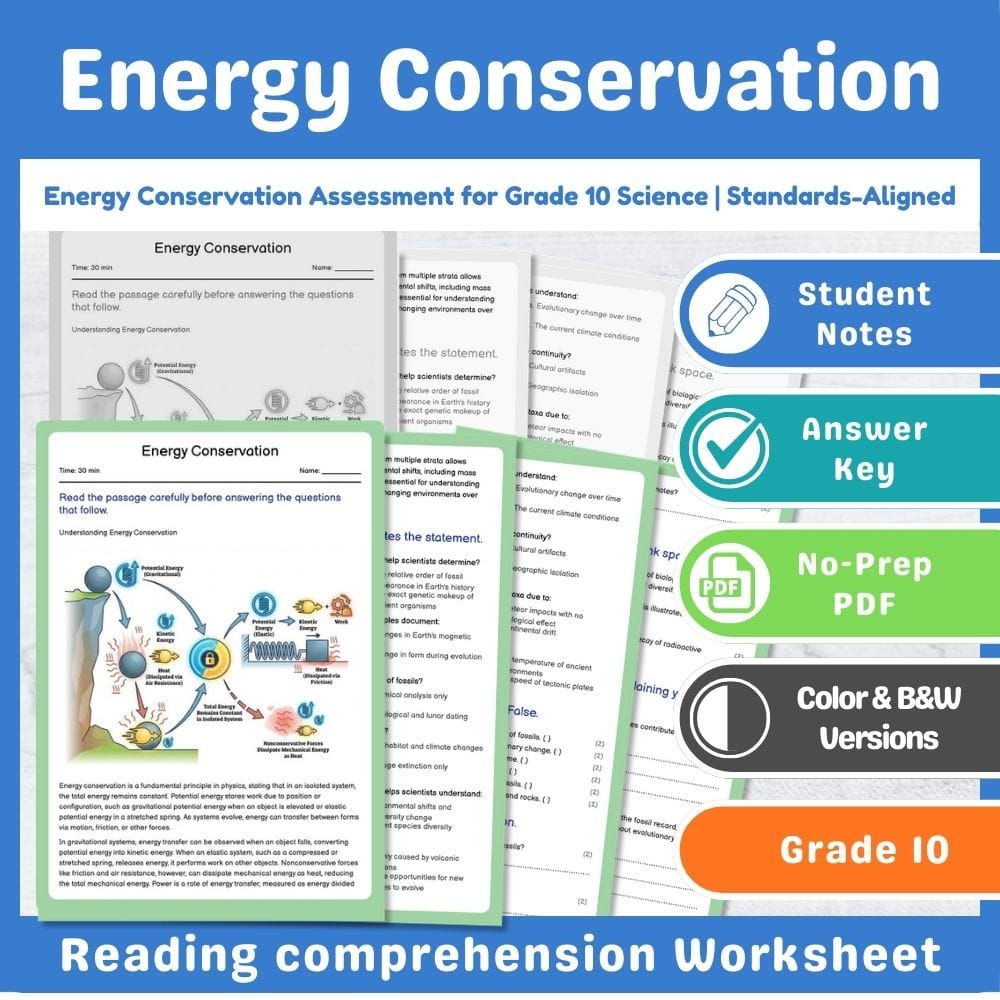
Energy Conservation Assessment for Grade 10 Science | Standards-Aligned
Created byPrism Point LearningLearning Objectives
- Explain the principles of potential energy in gravitational and elastic systems.
- Describe energy transfer and conversion processes in mechanical systems.
- Analyze the effect of nonconservative forces on mechanical energy.
Also included in: Lesson Grade 10 Science Assessment Bundle | AP Standards-Aligned
Instant download

Evidence Supporting Evolution Assessment | General Grade 10 Science
Created byPrism Point LearningLearning Objectives
- Understand the different types of evidence used to support claims about biological change over time.
- Identify how fossil records, comparative anatomy, molecular data, and biogeography contribute to evolutionary understanding.
- Analyze how multiple lines of evidence reinforce conclusions about evolution despite limitations in individual datasets.
Also included in: Grade 10 Evolution and Genetics Science Lesson Bundle: General Unit
Instant download
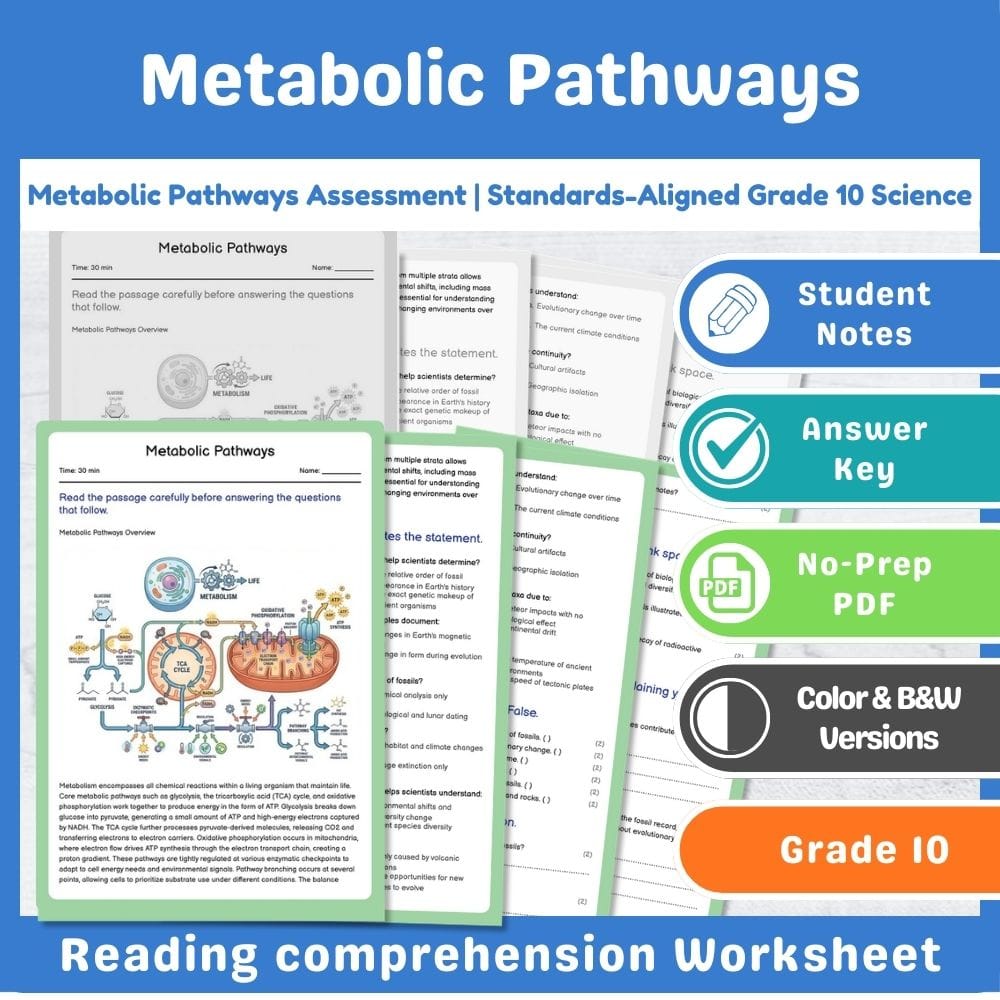
Metabolic Pathways Assessment | Standards-Aligned Grade 10 Science
Created byPrism Point LearningLearning Objectives
- Describe the main metabolic pathways including glycolysis, the tricarboxylic acid cycle, and oxidative phosphorylation.
- Explain how cells generate ATP and conserve energy through electron flow and intermediate transformations.
- Identify regulatory checkpoints and pathway branching points that control cellular metabolism.
Also included in: Lesson Grade 10 Science Assessment Bundle | AP Standards-Aligned
Instant download
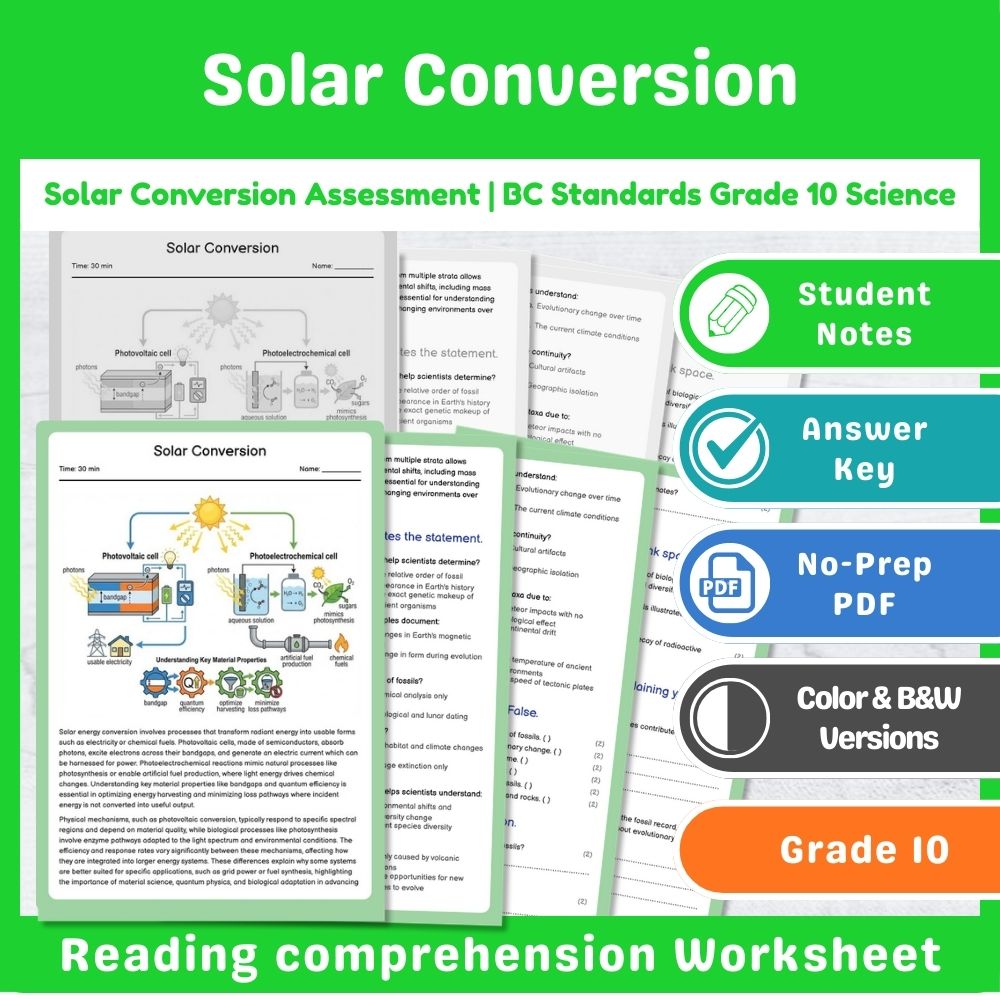
Solar Conversion Assessment Grade 10 Science | BC Standards-Aligned
Created byPrism Point LearningLearning Objectives
- Explain the processes involved in solar energy conversion, including photovoltaic and photoelectrochemical methods.
- Describe how semiconductors absorb photons and generate electrical current.
- Understand material properties such as bandgaps and quantum efficiency relevant to solar conversion.
Also included in: Grade 10 Science | Energy Assessment - BC Standards-Aligned Mini Bundle
Instant download
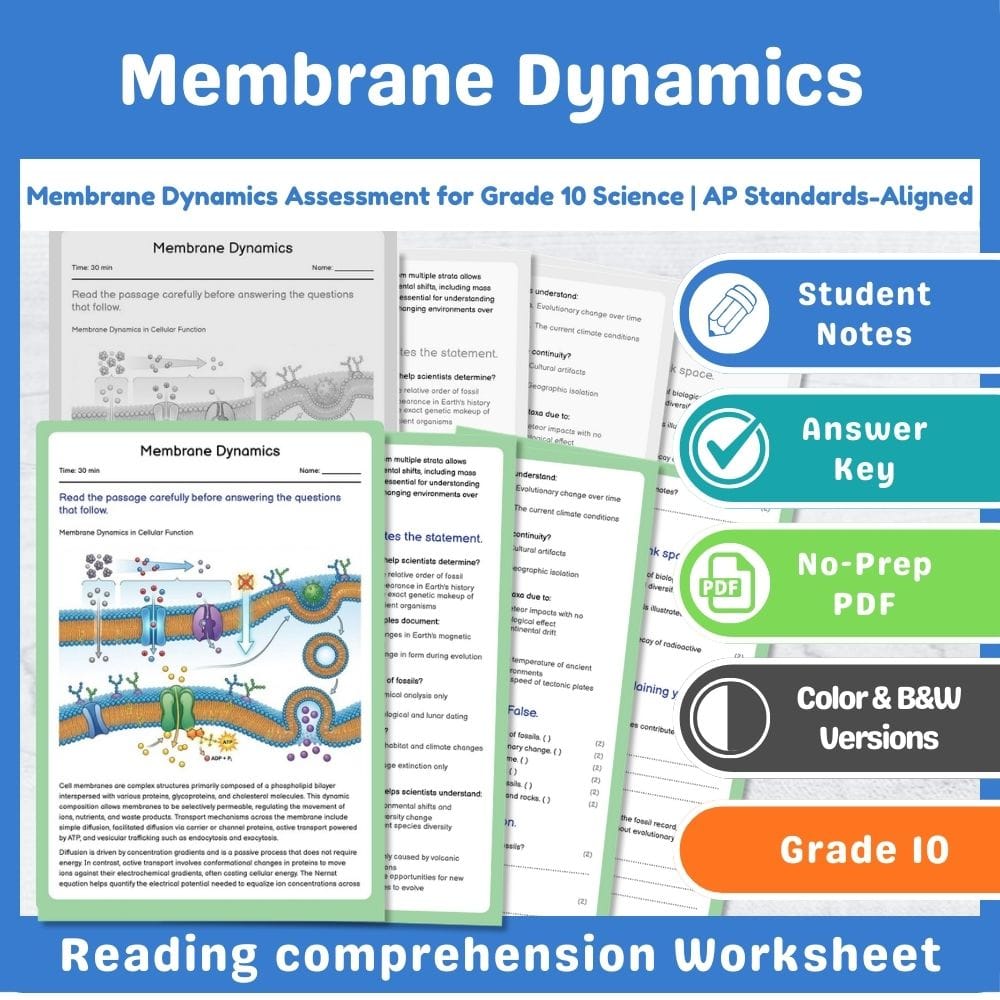
Membrane Dynamics Assessment for Grade 10 Science | AP Standards-Aligned
Created byPrism Point LearningLearning Objectives
- Understand key concepts related to Science
- Apply knowledge through practice questions
- Demonstrate comprehension of the material
Also included in: Lesson Grade 10 Science Assessment Bundle | AP Standards-Aligned
Instant download
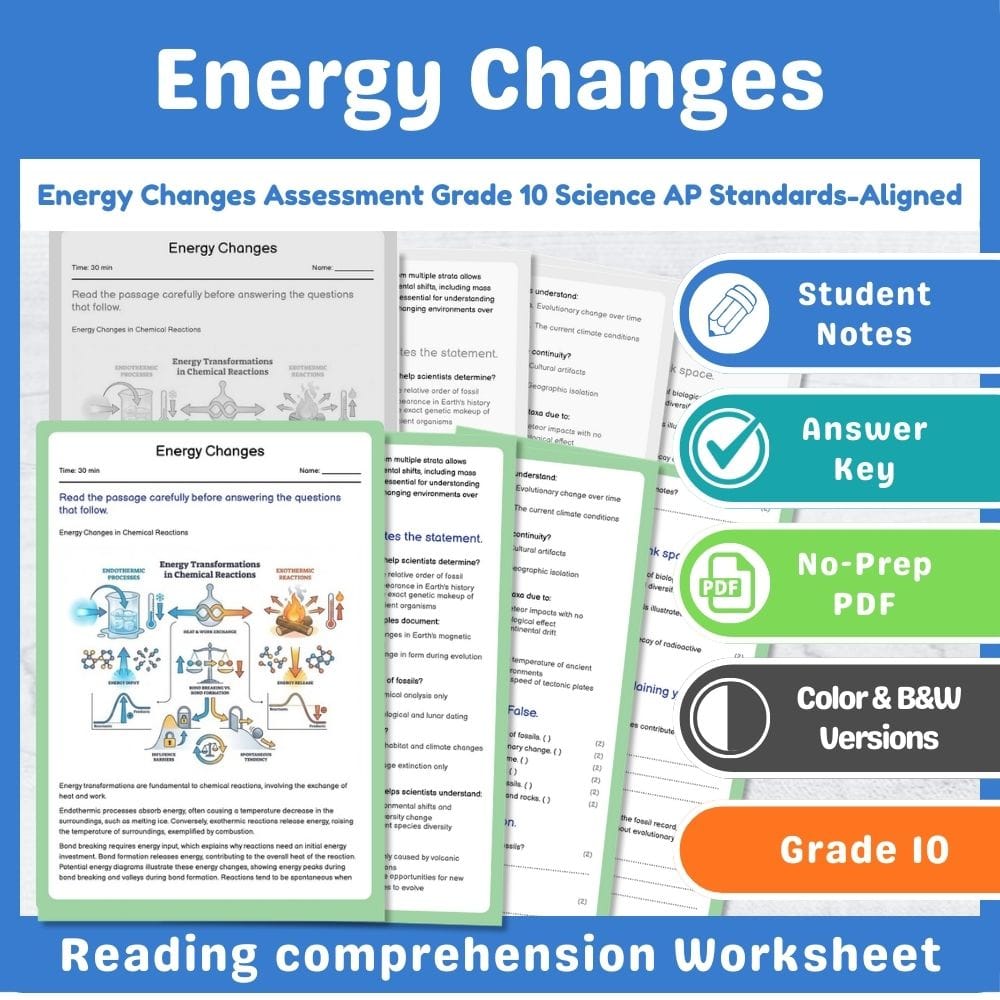
Energy Changes Assessment Grade 10 Science AP Standards-Aligned
Created byPrism Point LearningLearning Objectives
- Describe the differences between endothermic and exothermic processes.
- Understand how bond breaking and formation relate to reaction heat.
- Explain the concepts of enthalpy and potential energy diagrams.
Also included in: Lesson Bundle | Grade 10 Science Assessment Paired with AP Standards
Instant download
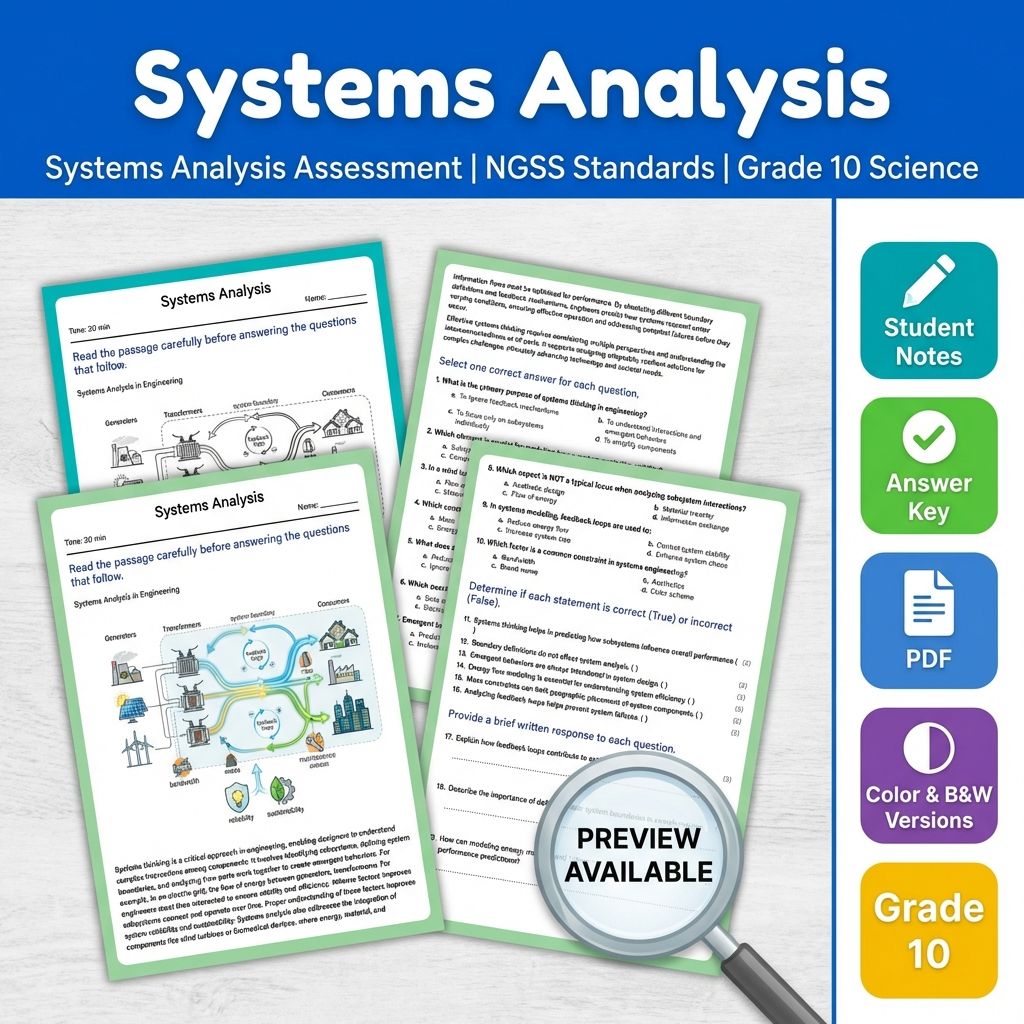
Systems Analysis Assessment | NGSS Standards | Grade 10 Science
Created byPrism Point LearningLearning Objectives
- Understand systems thinking principles and their application to engineering problems.
- Identify interactions between subsystems and define system boundaries accurately.
- Analyze emergent behaviors and feedback loops within complex systems.
Also included in: Grade 10 Science Assessment Mini Bundle | Engineering Design & Systems
Instant download
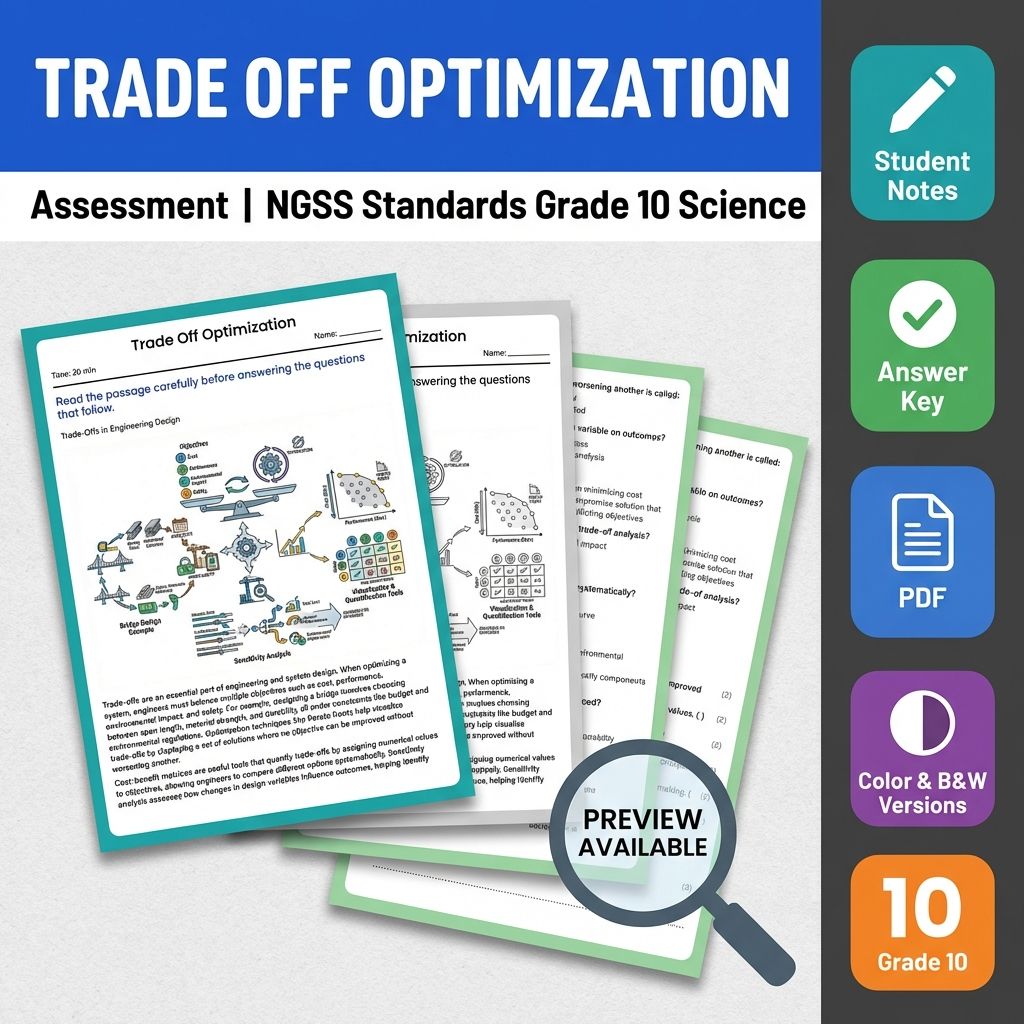
Trade Off Optimization Assessment | NGSS Standards Grade 10 Science
Created byPrism Point LearningLearning Objectives
- Understand how to analyze trade-offs and make optimization decisions in engineering design.
- Learn to use cost-benefit matrices, Pareto fronts, and sensitivity analysis to evaluate options.
- Apply concepts of performance metrics, constraints, and objective weighting to real-world problems.
Also included in: Grade 10 Science Assessment Mini Bundle | Engineering Design & Systems
Instant download
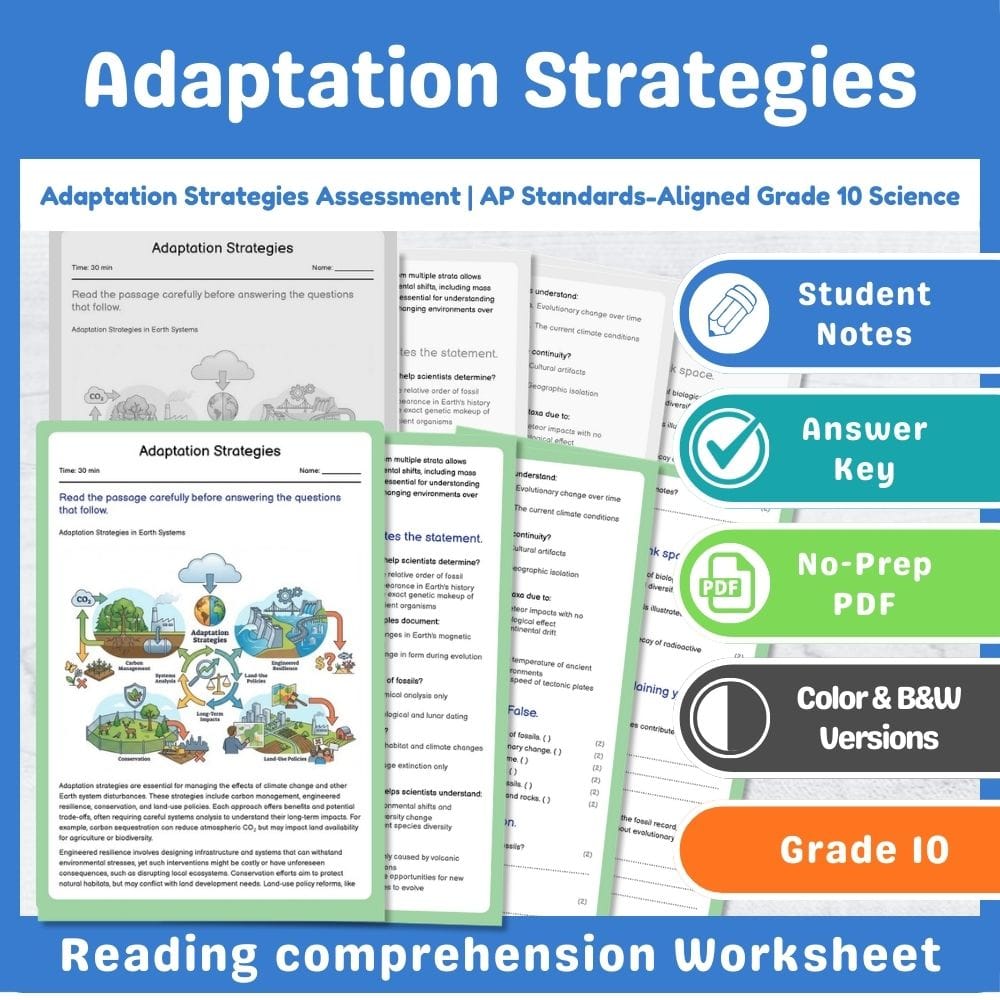
Adaptation Strategies Assessment for Grade 10 Science | Standards-Aligned
Created byPrism Point LearningLearning Objectives
- Understand different adaptation strategies in Earth systems.
- Assess trade-offs and potential effects of mitigation actions.
- Apply systems thinking and scenario analysis to evaluate intervention outcomes.
Also included in: Lesson Bundle | Grade 10 Science Earth and Space Standards-Aligned
Instant download

Physical Properties Assessment | Alberta Standards Grade 10 Science
Created byPrism Point LearningLearning Objectives
- Differentiate between intensive and extensive physical properties of substances.
- Identify examples of physical and chemical properties in real-world materials.
- Explain how property classification influences material selection and environmental behavior.
Also included in: Grade 10 Matter and Chemical Change Science Lesson Bundle: Alberta +1 more
Instant download
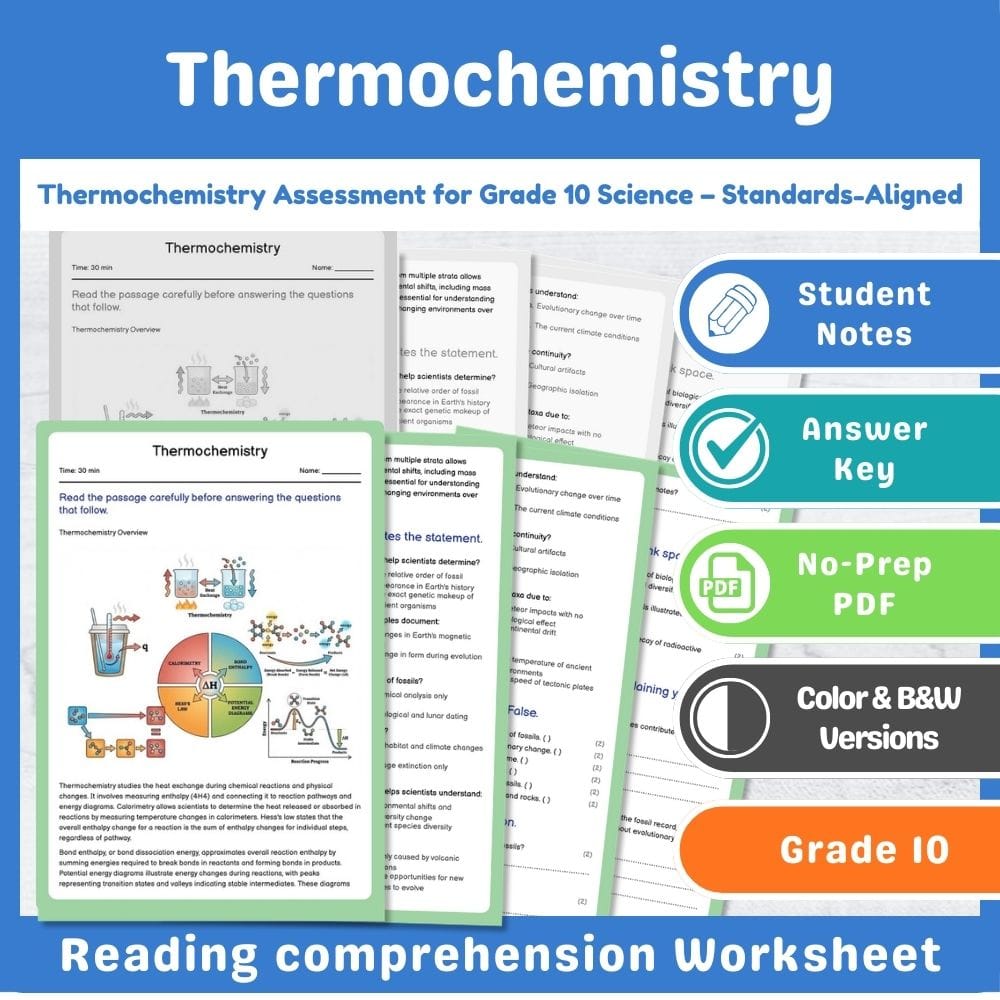
Thermochemistry Assessment for Grade 10 Science – Standards-Aligned
Created byPrism Point LearningLearning Objectives
- Describe thermochemical representations and calculations connecting enthalpy changes to reaction stoichiometry.
- Interpret calorimetric energy accounting and Hess's law for pathway decomposition.
- Relate bond enthalpy approximations to overall reaction enthalpy and analyze potential energy diagrams.
Also included in: Lesson Bundle | Grade 10 Science Assessment Paired with AP Standards
Instant download
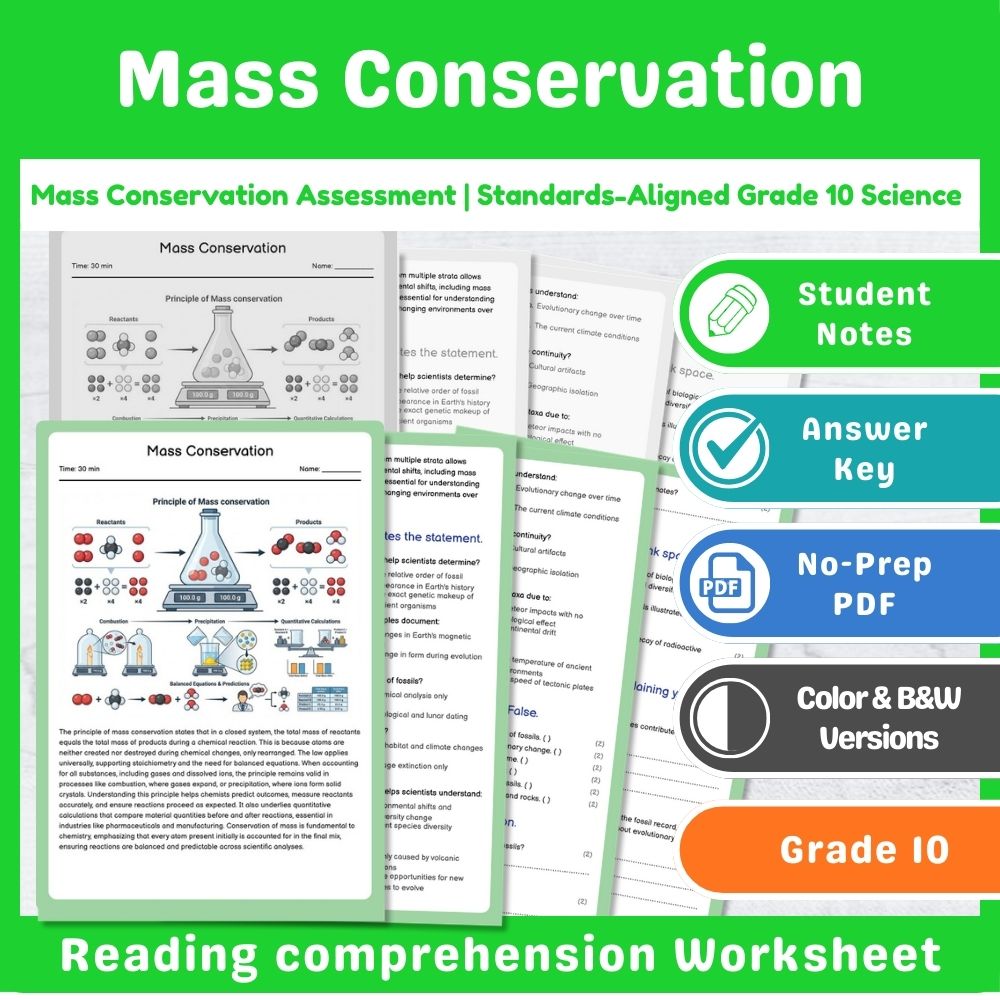
Mass Conservation Assessment | Standards-Aligned Grade 10 Science Worksheet
Created byPrism Point LearningLearning Objectives
- Understand the principle of conservation of mass in chemical reactions.
- Identify how mass is conserved in different types of chemical processes.
- Apply the concept of mass conservation to balance chemical equations.
Instant download
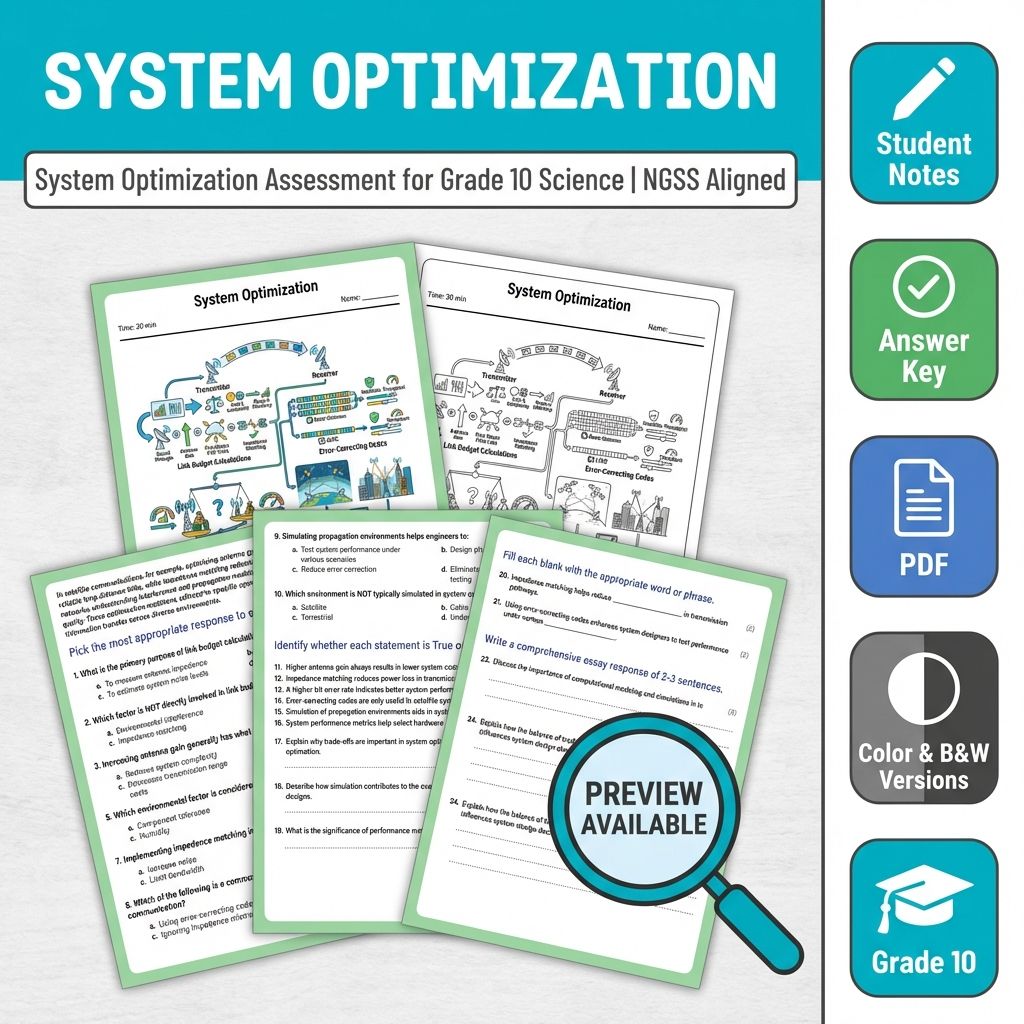
System Optimization Assessment for Grade 10 Science | NGSS Aligned
Created byPrism Point LearningLearning Objectives
- Understand mathematical models used for system optimization in communication networks.
- Analyze trade-offs among range, throughput, and reliability in system design.
- Apply concepts of antenna gain, impedance matching, and error correction to optimize performance.
Instant download
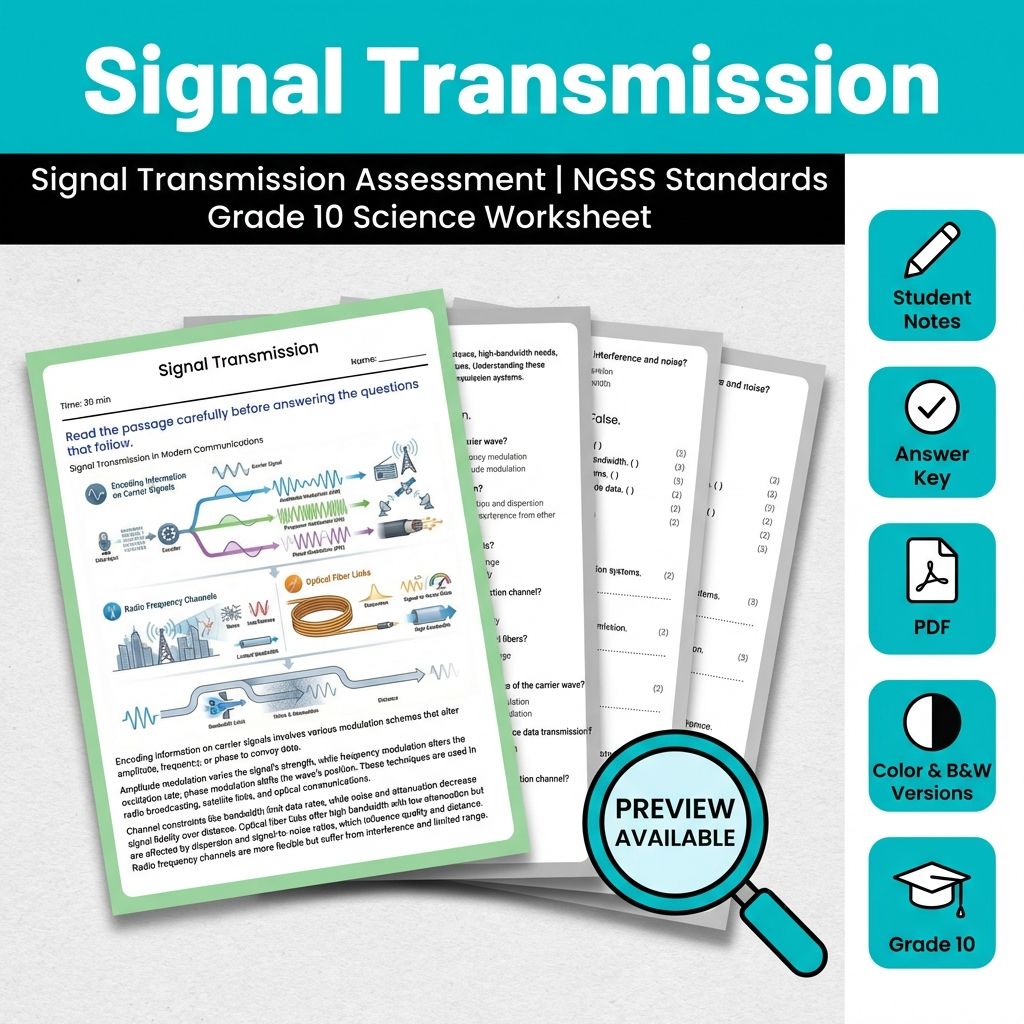
Signal Transmission Assessment | NGSS Standards Grade 10 Science Worksheet
Created byPrism Point LearningLearning Objectives
- Describe various modulation schemes used in encoding information on carrier signals.
- Evaluate the trade-offs between bandwidth, noise, and signal fidelity in different transmission modes.
- Explain how channel constraints such as attenuation and dispersion affect communication systems.
Instant download
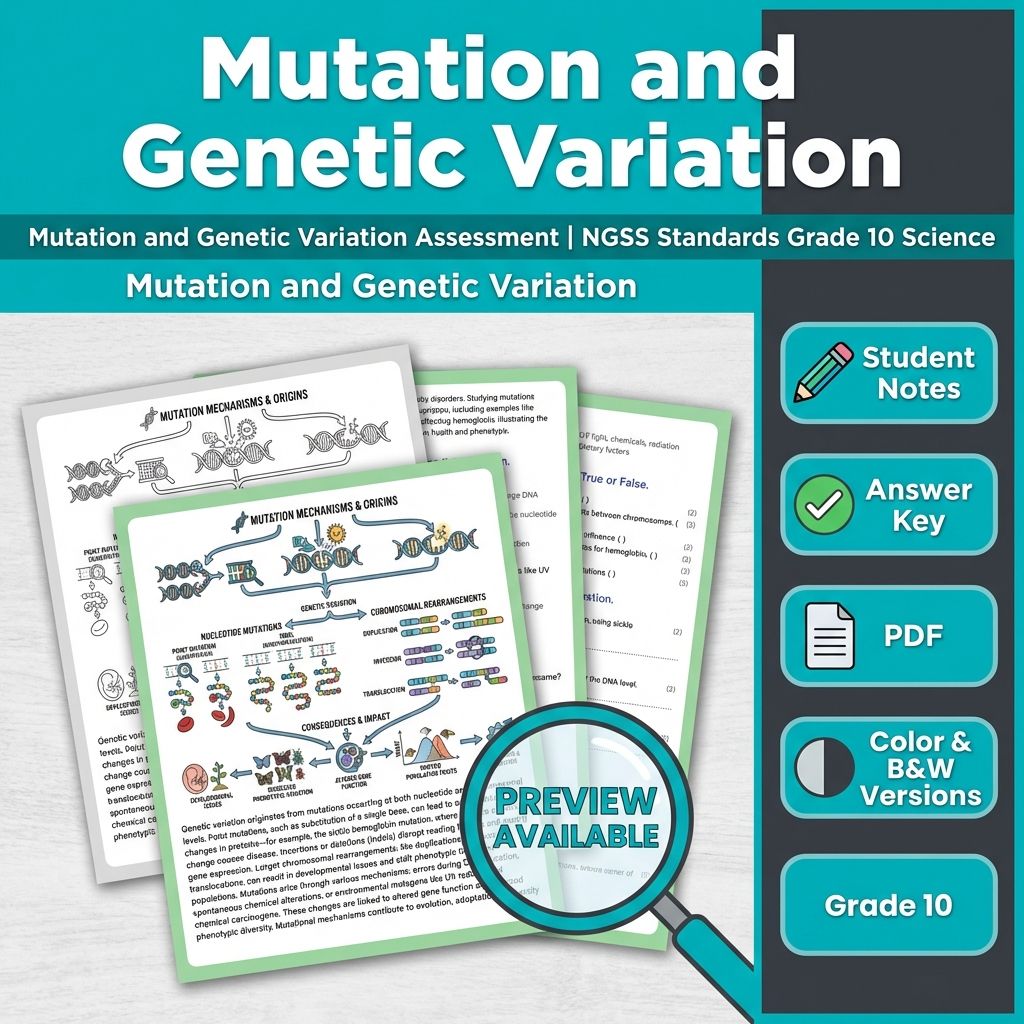
Mutation and Genetic Variation Assessment | NGSS Standards Grade 10 Science
Created byPrism Point LearningLearning Objectives
- Understand the mechanisms of genetic mutations at nucleotide and chromosomal levels.
- Identify different types of mutations and their effects on gene function and phenotype.
- Analyze examples of mutations, such as sickle hemoglobin, to understand their biological significance.
Also included in: Grade 10 Science | DNA, Mendelian Patterns & Mutation NGSS Assessment
Instant download
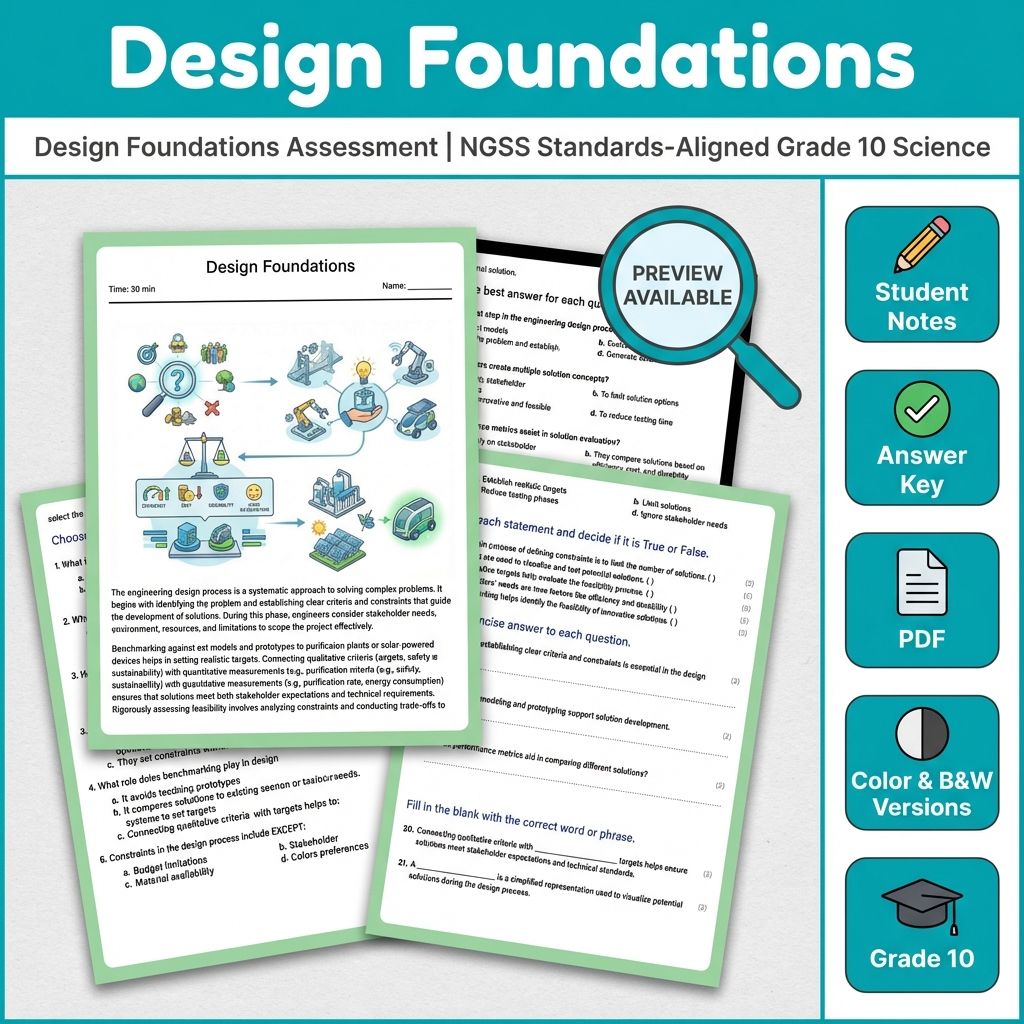
Design Foundations Assessment | NGSS Standards-Aligned Grade 10 Science
Created byPrism Point LearningLearning Objectives
- Understand the steps of the engineering design process for complex problems.
- Define criteria and constraints, and learn how to construct models.
- Develop multiple solution concepts and evaluate them against performance metrics.
Also included in: Grade 10 Science Assessment Mini Bundle | Engineering Design & Systems
Instant download

Meiosis and Variation Assessment | Florida NGSSS Grade 10 Science
Created byPrism Point LearningLearning Objectives
- Explain how meiosis reduces chromosome number and produces gametes with half the genetic material
- Describe how homologous chromosome separation and genetic recombination generate variation among gametes
- Connect heritable genetic variation to natural selection and population change over time
Also included in: Grade 10 Cells, Genetics & Evolution Science Lesson Bundle | Florida NGSSS +1 more
Instant download

Specialized Cells Assessment | Florida NGSSS Standards - Grade 10 Science
Created byPrism Point LearningLearning Objectives
- Explain how specialized cell structures relate to specific functions in multicellular organisms
- Identify examples of cell specialization for transport, protection, absorption, and signaling
- Interpret how surface characteristics and cell connections affect tissue and system performance
Also included in: Grade 10 Cells, Genetics & Evolution Science Lesson Bundle | Florida NGSSS +1 more
Instant download

Hydrologic Cycle Assessment for Grade 10 Science | Alberta Standards
Created byPrism Point LearningLearning Objectives
- Explain the processes involved in the hydrologic cycle including evaporation, transpiration, condensation, and runoff.
- Describe water movement from mountain snowpack to regional aquifers and rivers.
- Analyze how climate variability and watershed characteristics affect regional water resources.
Also included in: Grade 10 Earth and Space Systems Science Lesson Bundle for Alberta +1 more
Instant download
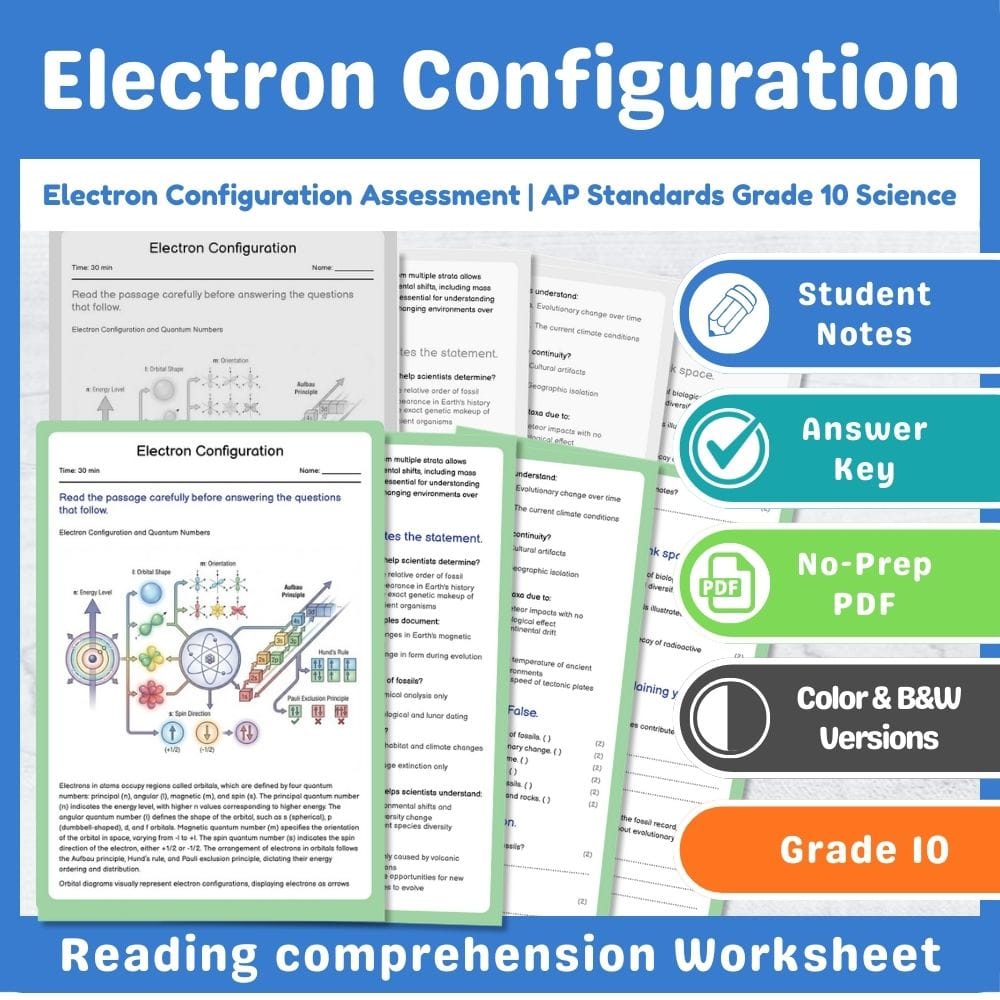
Electron Configuration Assessment | AP Standards Grade 10 Science
Created byPrism Point LearningLearning Objectives
- Understand quantum numbers and how they describe electron distribution in atoms
- Identify orbital shapes and energy ordering for electrons in atoms
- Link microscopic electron arrangements to spectral lines and chemical properties
Also included in: Lesson Bundle | Grade 10 Science Assessment Paired with AP Standards
Instant download

Reaction Classification Assessment | BC Standards Grade 10 Science
Created byPrism Point LearningLearning Objectives
- Identify and classify different types of chemical reactions based on reactant and product characteristics.
- Understand the characteristic features and observable evidence of various reaction types.
- Relate reaction classes to the periodic properties of reactants to predict products and energy changes.
Instant download

Reaction Energetics Assessment | BC Standards Grade 10 Science
Created byPrism Point LearningLearning Objectives
- Understand the principles of energy changes during chemical reactions.
- Identify differences between exothermic and endothermic reactions.
- Relate bond energies to reaction thermodynamics and feasibility.
Instant download
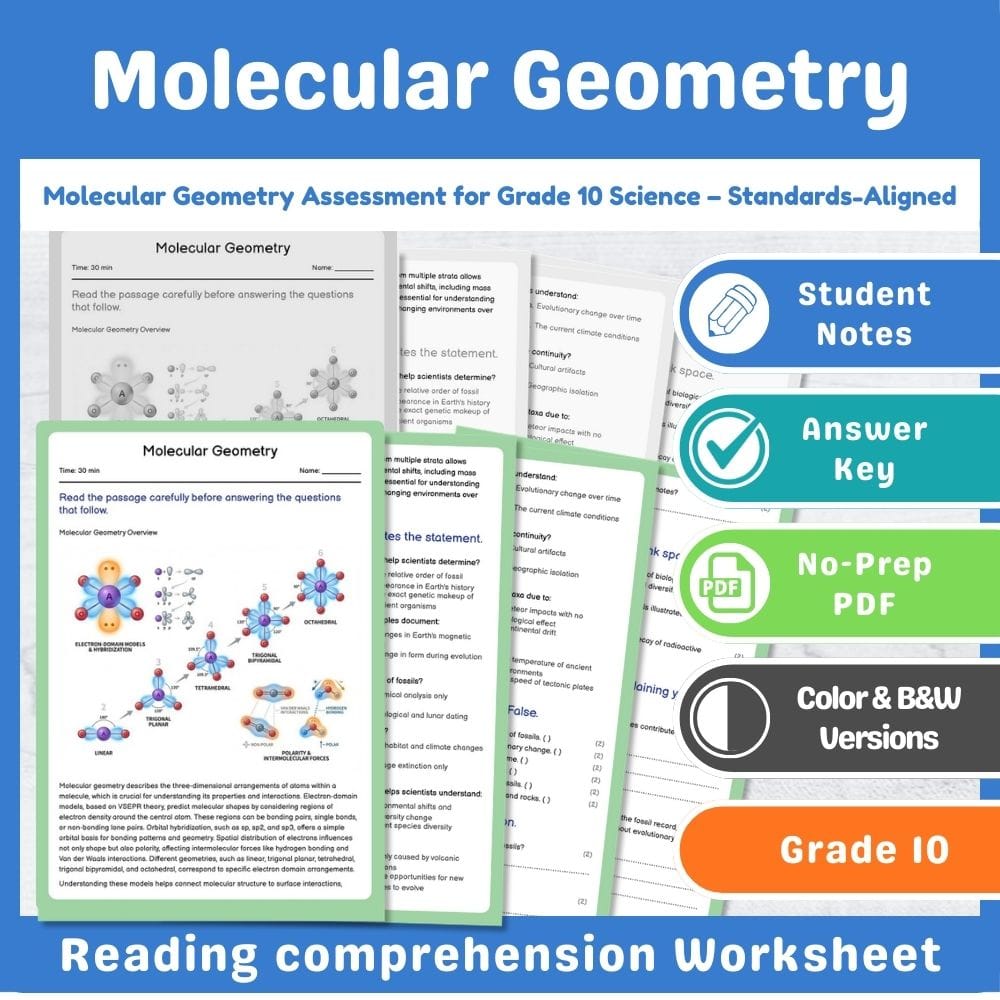
Molecular Geometry Assessment for Grade 10 Science – Standards-Aligned
Created byPrism Point LearningLearning Objectives
- Define molecular geometry using electron-domain models and orbital hybridization.
- Explain how electron domain arrangements determine molecular shapes and polarity.
- Connect molecular structures to intermolecular forces and macroscopic properties.
Also included in: Lesson Bundle | Grade 10 Science Assessment Paired with AP Standards
Instant download
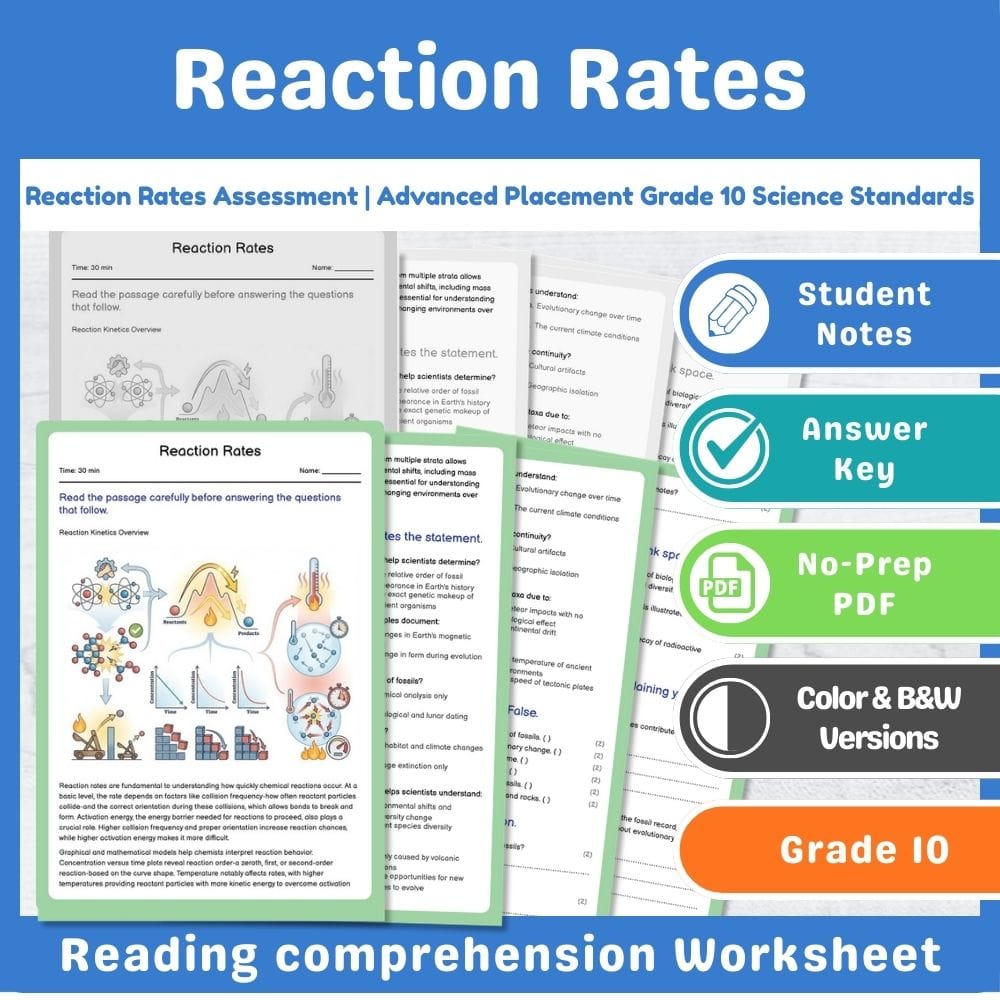
Reaction Rates Assessment | Advanced Placement Grade 10 Science Standards
Created byPrism Point LearningLearning Objectives
- Describe how collision frequency, orientation, and activation energy influence reaction rates.
- Interpret graphical and mathematical models of concentration versus time to determine reaction order.
- Explain the effects of temperature and catalysts on reaction pathways without advanced formalism.
Also included in: Lesson Bundle | Grade 10 Science Assessment Paired with AP Standards
Instant download
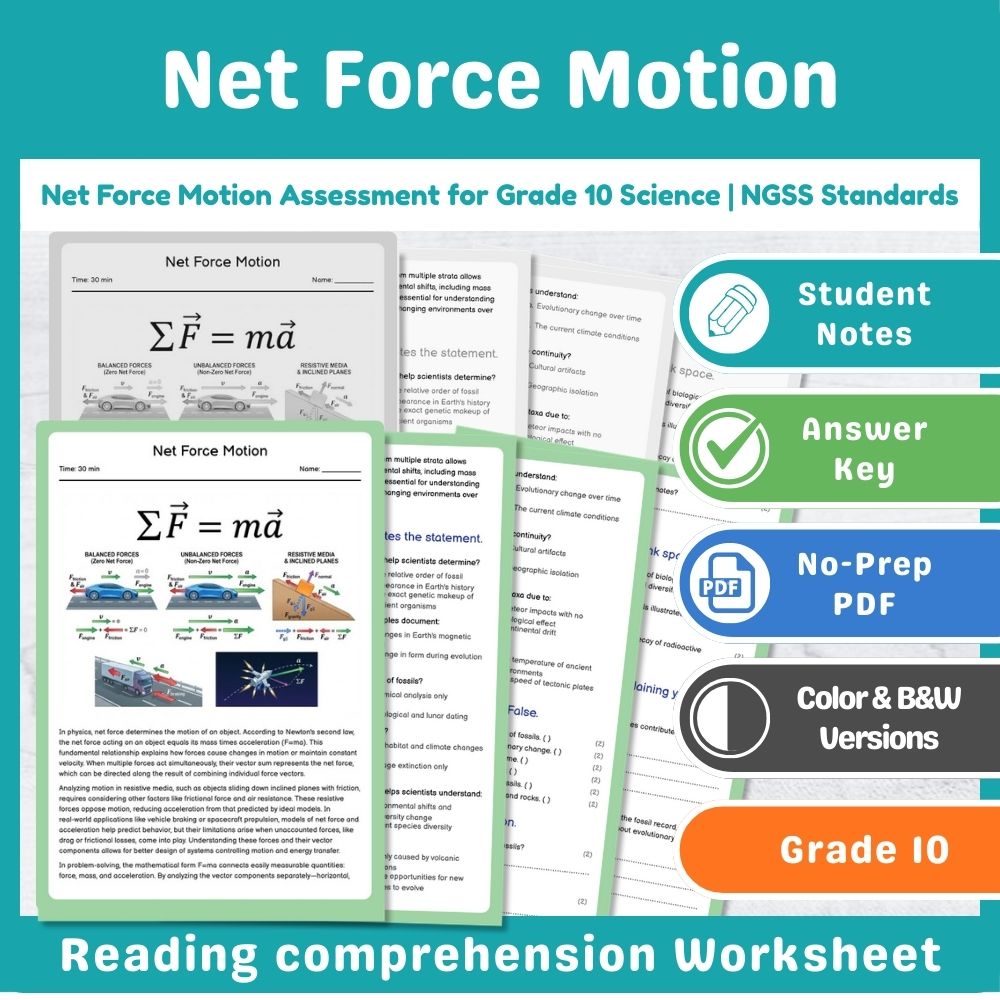
Net Force Motion Assessment for Grade 10 Science | NGSS Standards
Created byPrism Point LearningLearning Objectives
- Understand the quantitative relationship between net force, mass, and acceleration as described by Newton's second law.
- Apply vector summation to analyze net force in different motion scenarios, including inclined planes and friction.
- Use F=ma to connect force, mass, and acceleration in problem contexts like braking and constant-thrust motions.
Instant download

Periodic Trends Assessment | BC Standards-Aligned Grade 10 Science
Created byPrism Point LearningLearning Objectives
- Understand the concept of periodic trends such as atomic radius, ionization energy, and electronegativity.
- Explain how nuclear charge and electron shielding influence these trends.
- Apply knowledge of periodic trends to predict atom behavior in bonding and reactions.
Instant download
Browse more categories
About Grade 10 Worksheets
Find Grade 10 worksheets covering algebra, biology, literature, and history. All 9,385 resources download instantly as PDFs for classwork, homework, or review.
MyTeachingSheets worksheets are made by real teacher-authors and checked before they go live. Download any as a print-ready PDF for lessons, homework, or independent practice — most include answer keys, and previews are always free.