
Reading comprehension Worksheets
40,284 type resources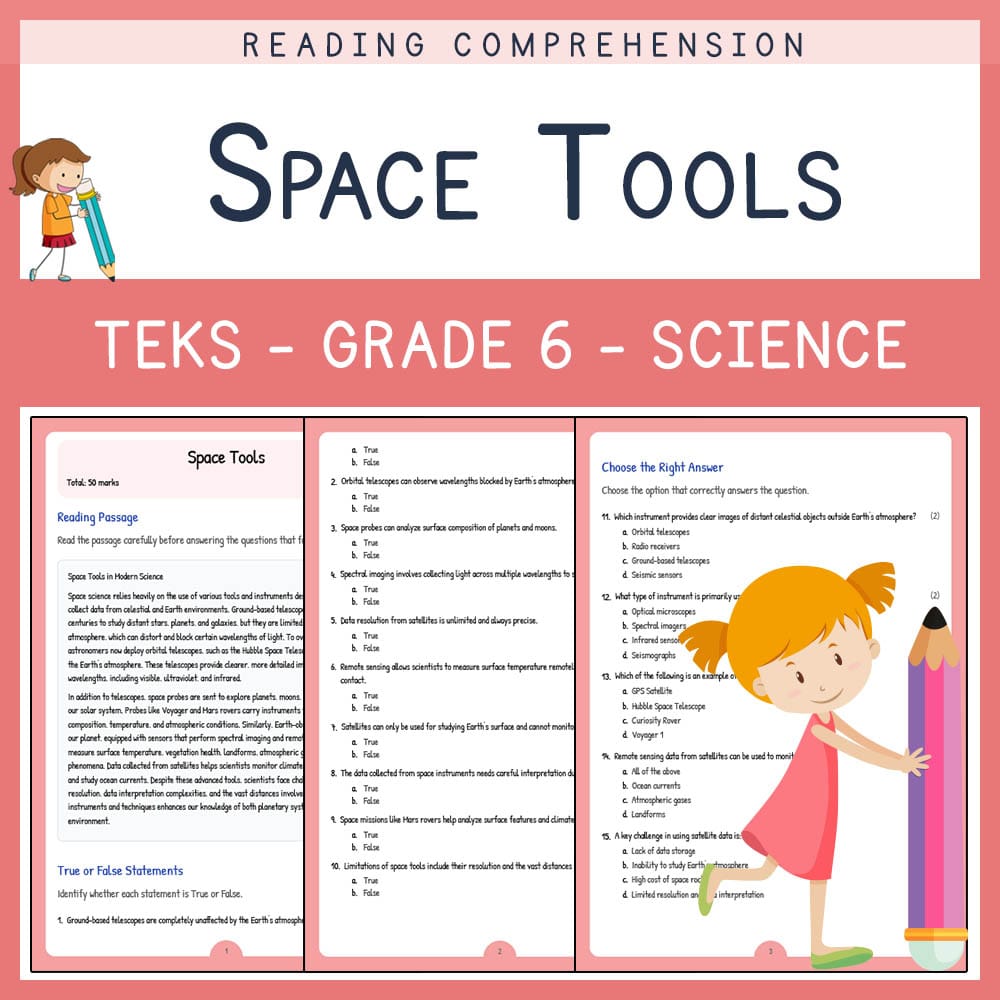
Grade 6 Science | Space Tools Worksheet | TEKS-Aligned
 Created byLumora Learning
Learning Objectives
- Understand the different instruments used in space science such as telescopes, space probes, and satellites.
- Describe how spectral imaging and remote sensing are employed to study Earth and planets.
- Identify the types of data collected from space instruments and how it helps scientists.
Also included in: Grade 6 Science | Earth and Space Science Unit Bundle | TEKS Standard
Instant download

7th Grade Science | Plate Density & Tectonic Activity Reading Worksheet (NGSS)
JCreated byJ.S SheetsLearning Objectives
- Understand the differences between oceanic and continental crust in terms of composition and density.
- Explain how plate density influences tectonic processes such as subduction and divergence.
- Identify examples of plate boundaries and relate them to seismic and volcanic activity.
Instant download
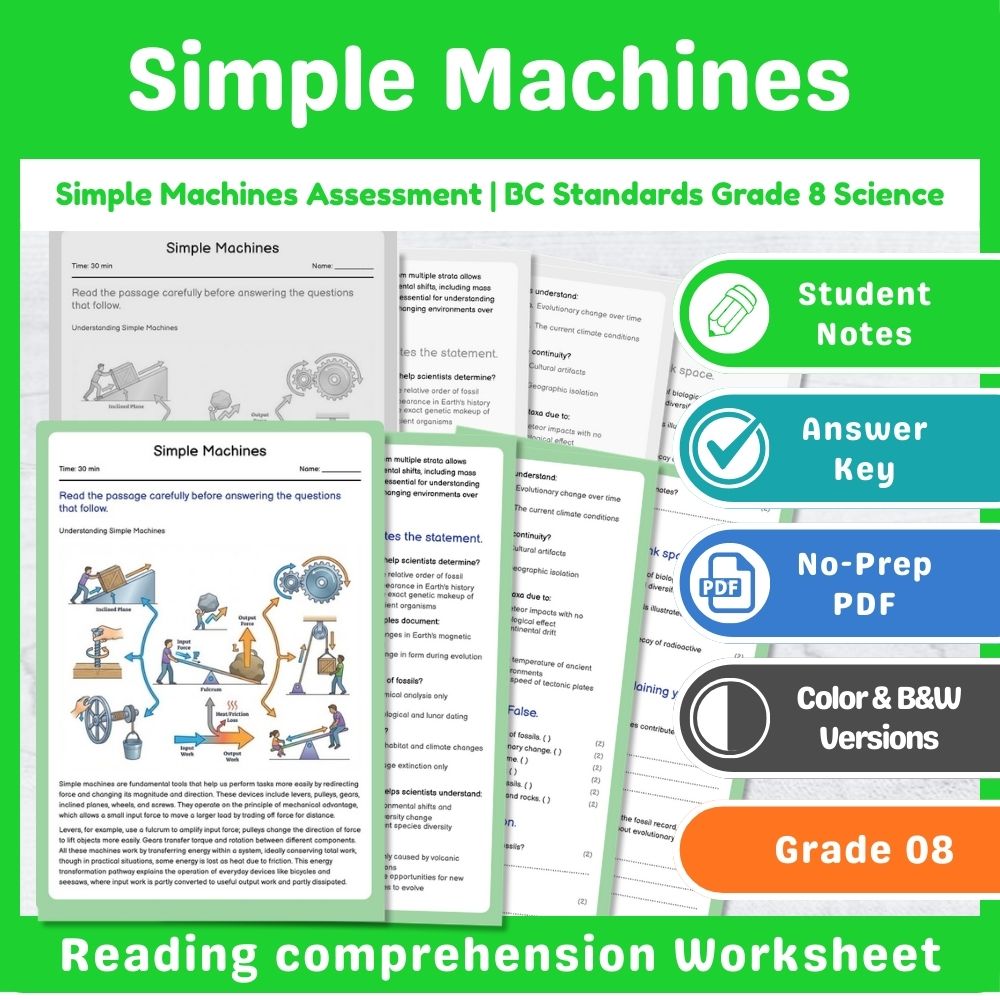
Simple Machines Assessment | BC Standards Grade 8 Science
 Created byPrism Point Learning
Learning Objectives
- Understand how simple machines redirect forces and exchange force magnitude for distance.
- Identify different types of simple machines like levers, pulleys, and gears.
- Explain how energy transfer and work conservation occur in simple machines under ideal conditions.
Instant download

6th Grade Science | Food Chains Worksheet (BC Standards) (PDF)
 Created byEvergreen Desk Education
Learning Objectives
- Explain how a food chain transfers energy and nutrients through trophic levels
- Identify producers and different consumer roles in a simple food chain
- Describe how changes in one population can affect other populations in a linear food chain
Instant download
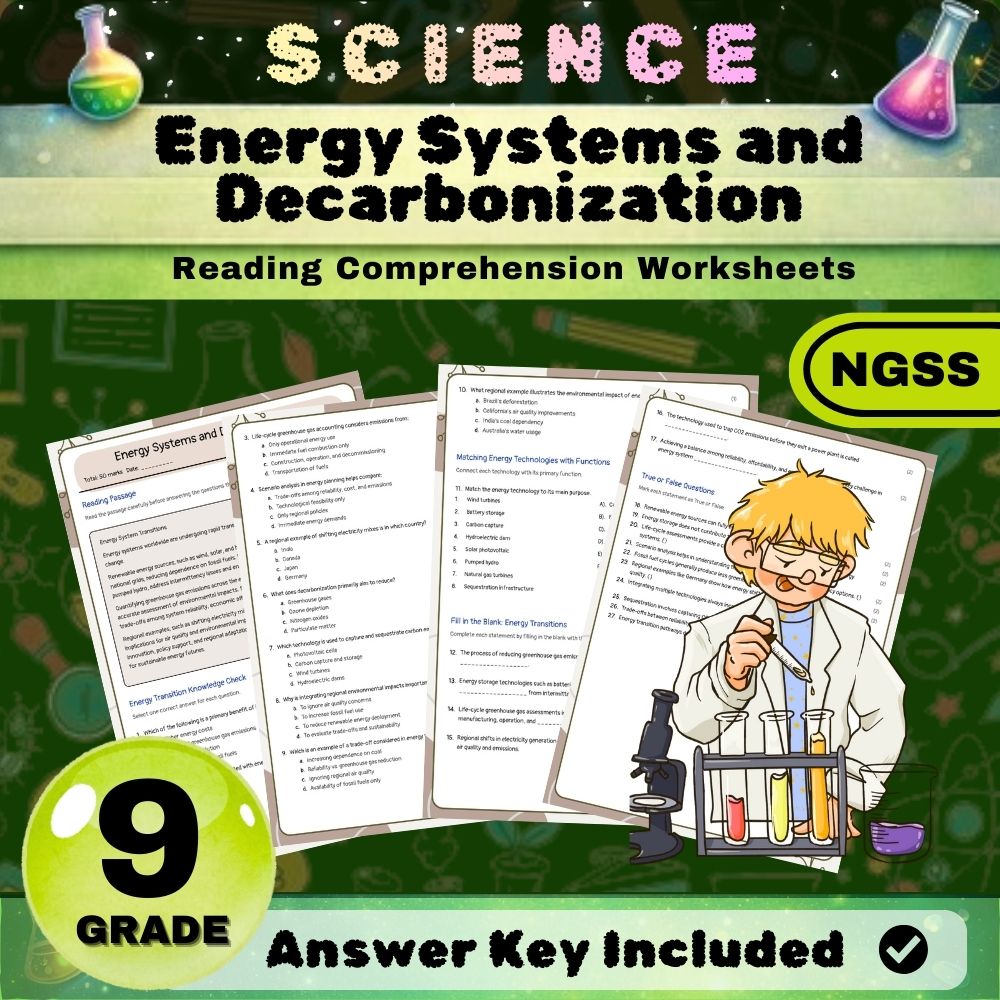
Grade 9 Science | Energy Systems & Decarbonization NGSS Worksheet (PDF)
 Created byMaple Path Learning
Learning Objectives
- Understand the transitions between different energy systems and their environmental impacts.
- Evaluate the role of renewable energy, energy storage, and grid technologies in reducing greenhouse gases.
- Analyze life-cycle emissions and trade-offs among reliability, cost, and environmental goals.
Also included in: Grade 9 Science NGSS Lesson Bundle | Earth and Human Activity Unit +1 more
Instant download
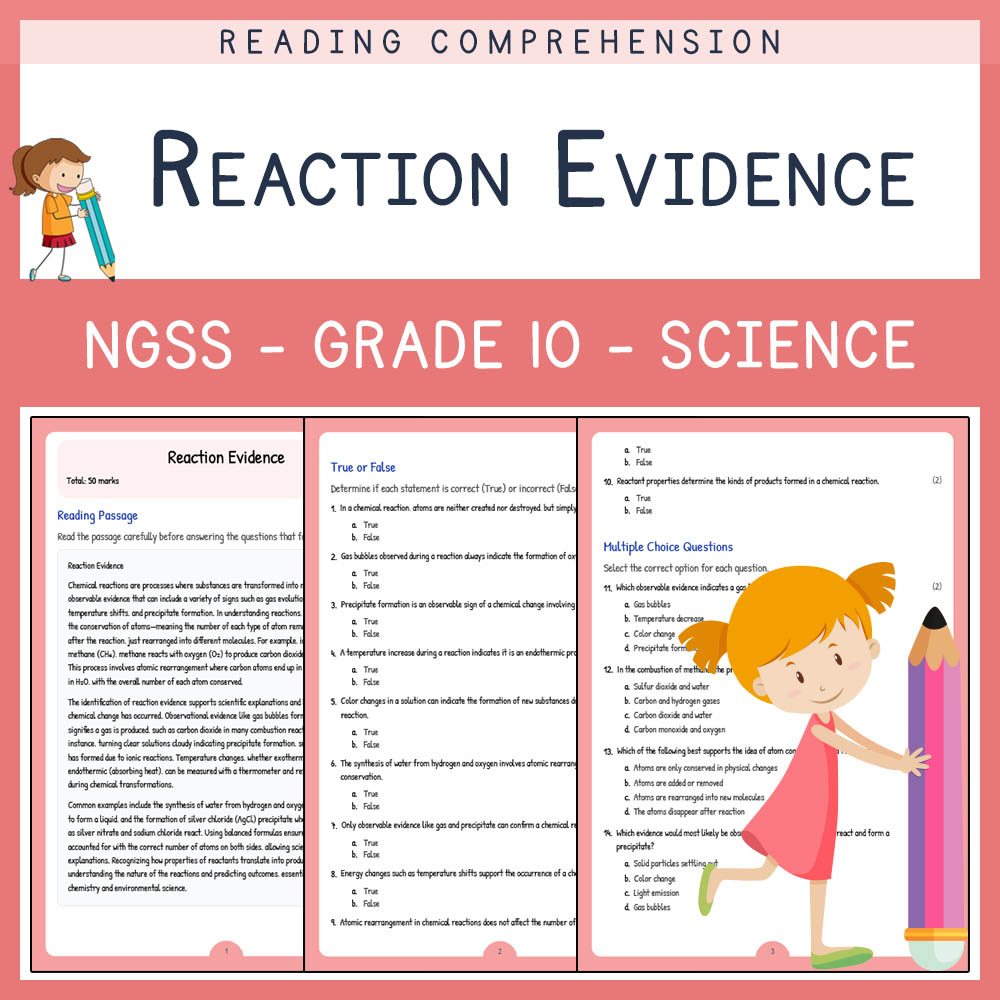
Grade 10 Science | Reaction Evidence Worksheet (PDF + Answer Key) NGSS-Aligned
Created byLumora LearningLearning Objectives
- Understand how conservation of atoms applies in chemical reactions.
- Identify observable evidence of chemical reactions such as gas evolution, color changes, temperature changes, and precipitate formation.
- Correlate reactant properties with product identities using balanced chemical formulas.
Instant download

Grade 11 Science | Biodiversity Metrics Worksheet (PDF) – Ontario Standards
Created byEvergreen Desk EducationLearning Objectives
- Define key biodiversity measures, including species richness, evenness, and diversity indices.
- Explain functional and genetic diversity and how they relate to ecosystem roles and resilience.
- Differentiate alpha, beta, and gamma diversity across spatial scales and interpret sampling considerations such as sample effort and rarefaction.
Also included in: Grade 11 Ecosystem Dynamics Science Lesson Bundle (Ontario) Worksheet Set +1 more
Instant download
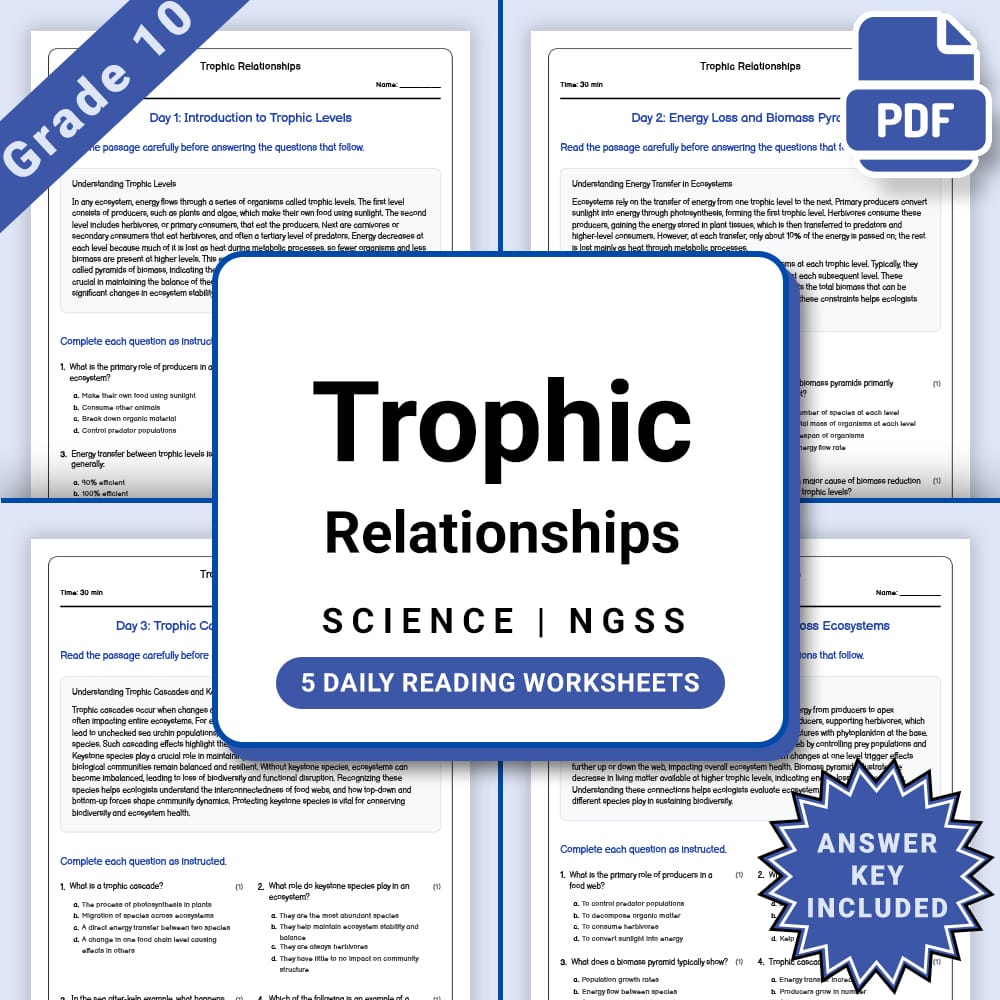
Grade 10 Science – Trophic Relationships Worksheet (PDF +Answer Key)
 Created byCopper Leaf Classroom
Learning Objectives
- Understand the structure of food webs and the flow of energy between trophic levels.
- Identify various trophic levels in ecosystems and their functions.
- Learn concepts of energy transfer efficiency, biomass pyramids, and keystone species.
Instant download
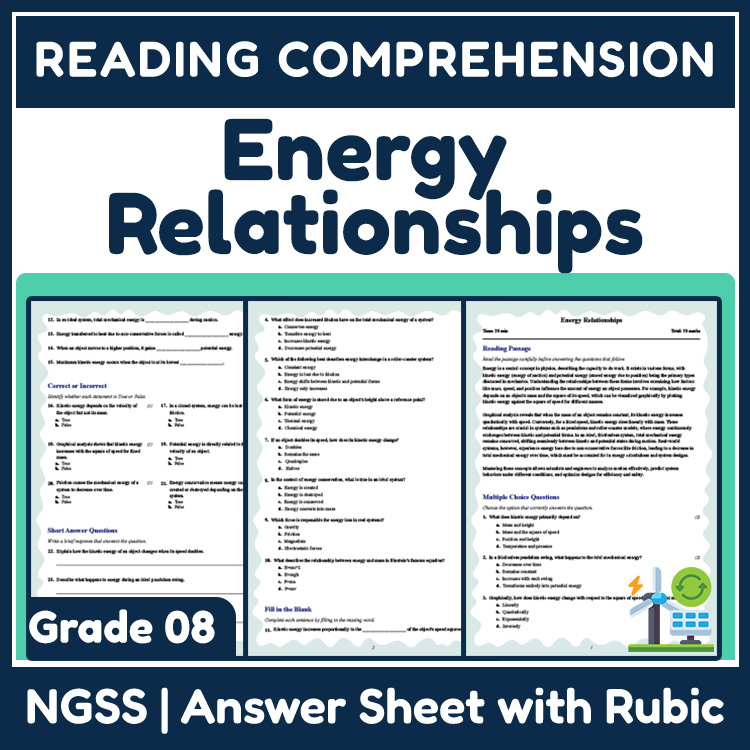
8th Grade Science | Energy Relationships Reading Worksheet (Answer Key)
JCreated byJ.S SheetsLearning Objectives
- Understand the quantitative relationships between kinetic and potential energy
- Interpret graphical displays relating energy to mass and speed
- Analyze energy transfer in systems like pendulums and roller coasters
Instant download

Grade 9 Science | Atmospheric Energy Worksheet | California Standards
Created byLumora LearningLearning Objectives
- Explain how unequal solar heating creates pressure differences that drive atmospheric circulation and winds
- Describe how energy and water vapor transfers between the surface and atmosphere influence clouds and precipitation
- Use the idea of local energy balance (temperature, humidity, pressure) to predict short-term weather patterns
Instant download

Grade 4 Health | Predicting Outcomes Worksheet (NHES) PDF
 Created bySunny Desk Resources
Learning Objectives
- Explain how predicting outcomes helps people make healthier choices.
- Identify short-term and long-term effects of health decisions.
- Use cause-and-effect clues to choose actions that support wellness.
Also included in: Grade 4 Decision-Making Skills in Health Lesson Bundle aligned to NHES +1 more
Instant download

Grade 4 Health – Choosing Wisely Worksheet (PDF) – NHES Standards
Created bySunny Desk ResourcesLearning Objectives
- Identify the choices available in everyday health situations.
- Explain how different options can lead to different immediate health outcomes.
- Use simple decision-making steps to choose healthier snacks and activities.
Also included in: Grade 4 Decision-Making Skills in Health Lesson Bundle aligned to NHES +1 more
Instant download

Laboratory Protocols Test Prep Worksheet | Grade 10 Science Ontario
Created byPrism Point LearningLearning Objectives
- Identify appropriate personal protective equipment (PPE) for common laboratory tasks and hazards
- Apply protocols for reagent storage, labeling, segregation, and waste handling to reduce risk
- Use emergency response steps (spill containment and first-aid escalation) to protect people and preserve data quality
Also included in: Grade 10 Evidence-Based Science Data Analysis Lesson Bundle: Ontario
Instant download

Variable Isolation Practice Worksheet | Grade 10 Science Assessment Ontario
Created byPrism Point LearningLearning Objectives
- Explain how variable isolation and control techniques (factorial layouts, blocking, replication) support stronger causal claims in multifactor inquiries.
- Interpret interaction effects and blocking choices to understand when results are due to the variables of interest versus nuisance variables.
- Evaluate whether evidence is attributable causation or mainly correlational, using design criteria and ethical constraints.
Also included in: Grade 10 Evidence-Based Science Data Analysis Lesson Bundle: Ontario
Instant download
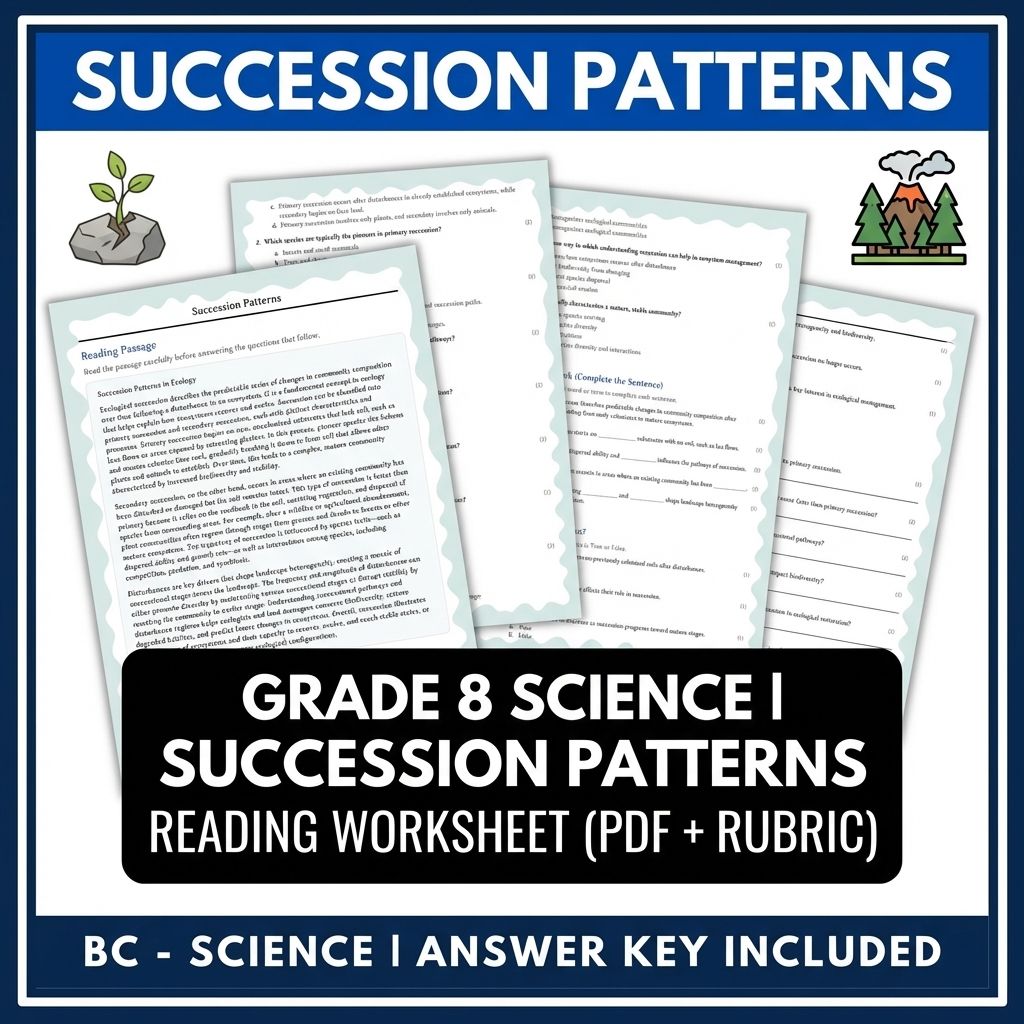
Grade 8 Science | Succession Patterns Reading Worksheet (PDF + Rubric)
JCreated byJ.S SheetsLearning Objectives
- Understand the process and stages of ecological succession.
- Differentiate between primary and secondary succession.
- Identify factors influencing succession pathways and landscape heterogeneity.
Instant download
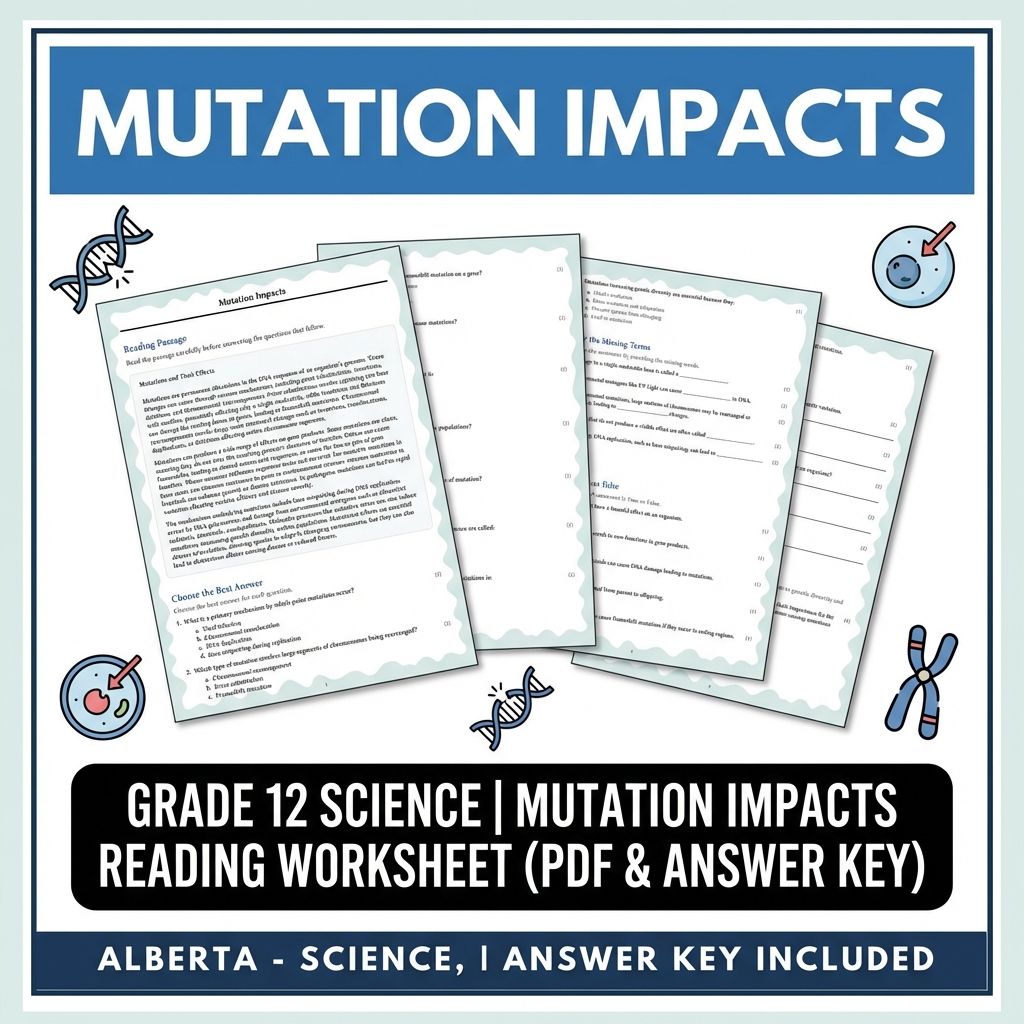
Grade 12 Science | Mutation Impacts Reading Worksheet (PDF & Answer Key)
JCreated byJ.S SheetsLearning Objectives
- Describe different types of genetic mutations and their mechanisms.
- Explain the variable effects of mutations on gene products and organism traits.
- Assess the significance of mutations in agriculture, livestock, and pathogen diversity.
Also included in: Grade 12 Science UNIT Bundle: Molecular Genetics, Evolution & Ecology Activities +1 more
Instant download
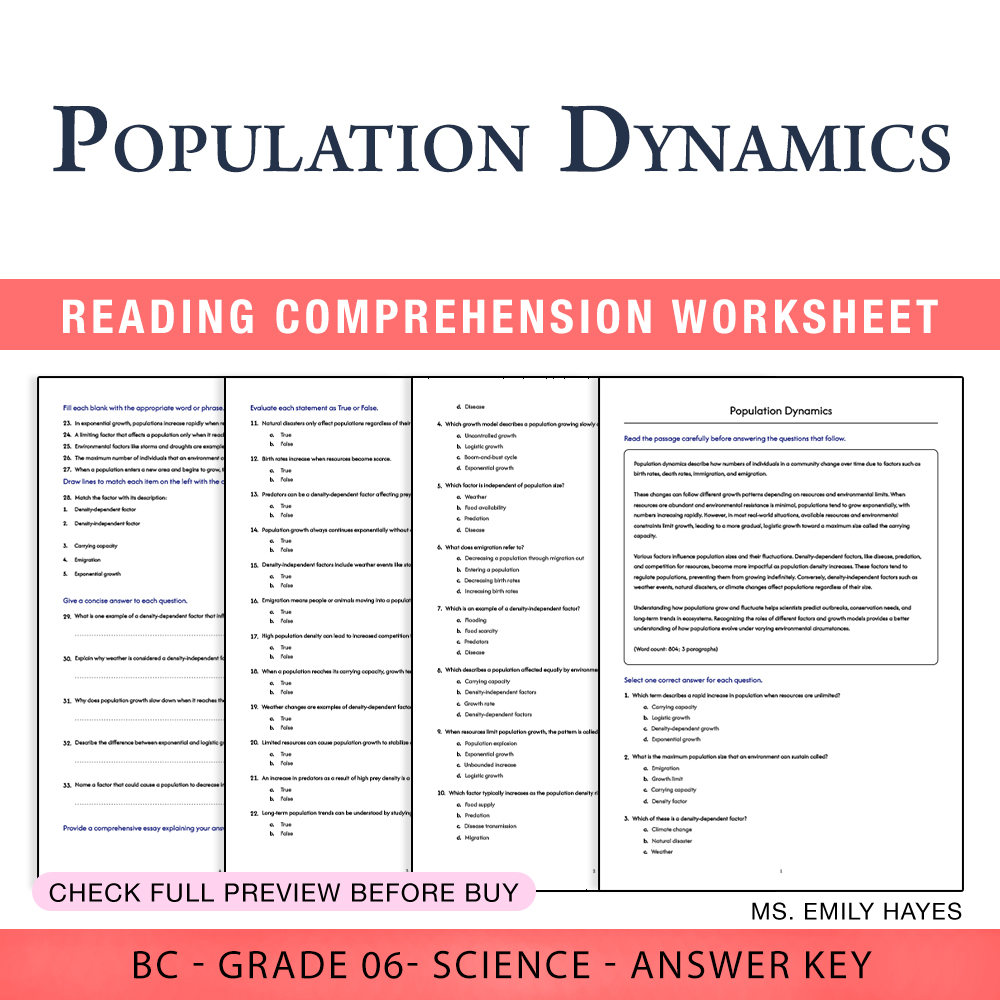
6th Grade Science | Population Dynamics Worksheet (PDF+ Answer Key)
Created byCopper Leaf ClassroomLearning Objectives
- Understand the basic concepts of population change, including birth and death rates, immigration, and emigration.
- Differentiate between growth models such as exponential and logistic growth.
- Identify and explain factors affecting population density, including density-dependent and density-independent factors.
Also included in: Grade 6 Science BC | Ecosystems and Human Impact Unit (PDF + Answer Keys) +1 more
Instant download

Equilibrium Systems Practice Worksheet | Grade 10 Science Ontario
Created byPrism Point LearningLearning Objectives
- Explain static equilibrium using the criteria ΣF = 0 and (when applicable) Στ = 0.
- Determine how support reactions and tensions distribute in simple static systems (qualitatively).
- Interpret equilibrium as zero net acceleration, not as the absence of individual forces.
Also included in: Grade 10 Motion & Forces Kinematics Science Lesson Bundle for Ontario
Instant download
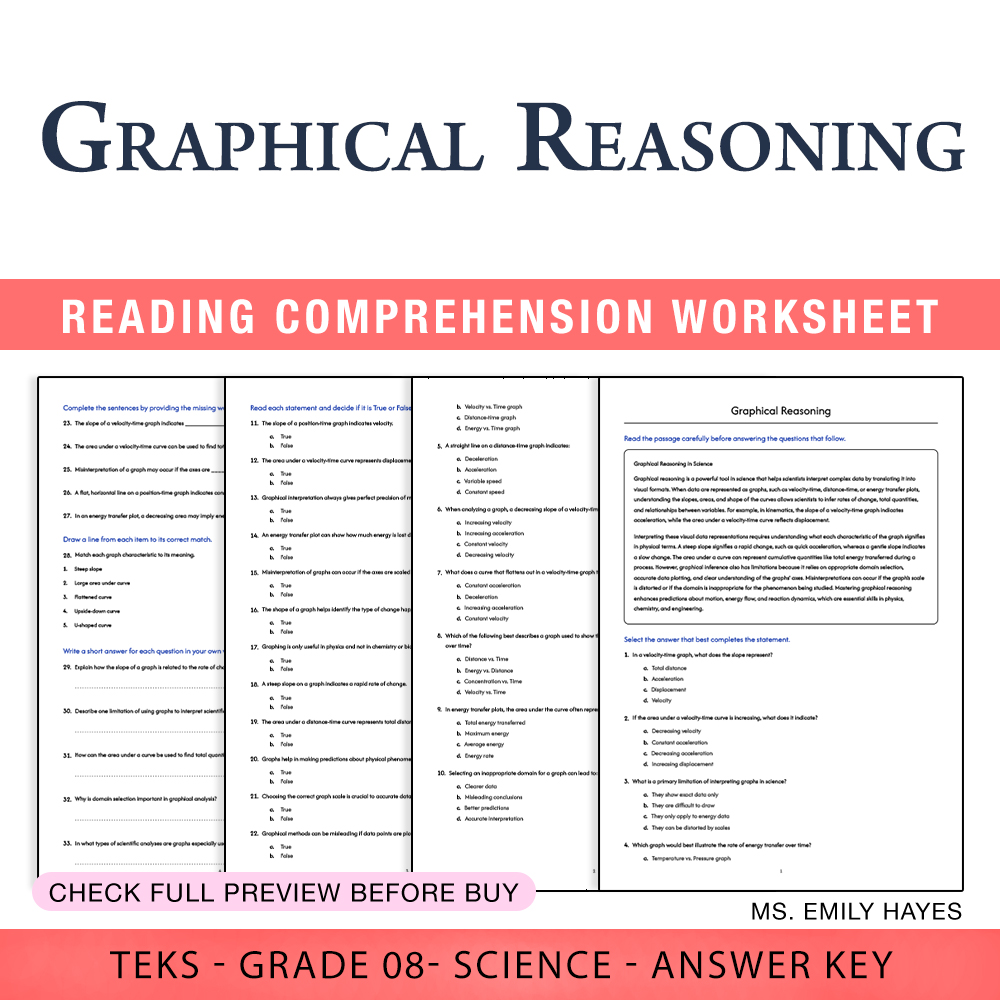
8th Grade Science | Graphical Reasoning Worksheet (PDF+ Answer Key)
Created byCopper Leaf ClassroomLearning Objectives
- Interpret slopes, areas under curves, and rates of change in graphical data.
- Connect mathematical graphs with physical phenomena such as motion, energy, and reaction rates.
- Translate between equations, data tables, and graphical representations to support scientific reasoning.
Instant download
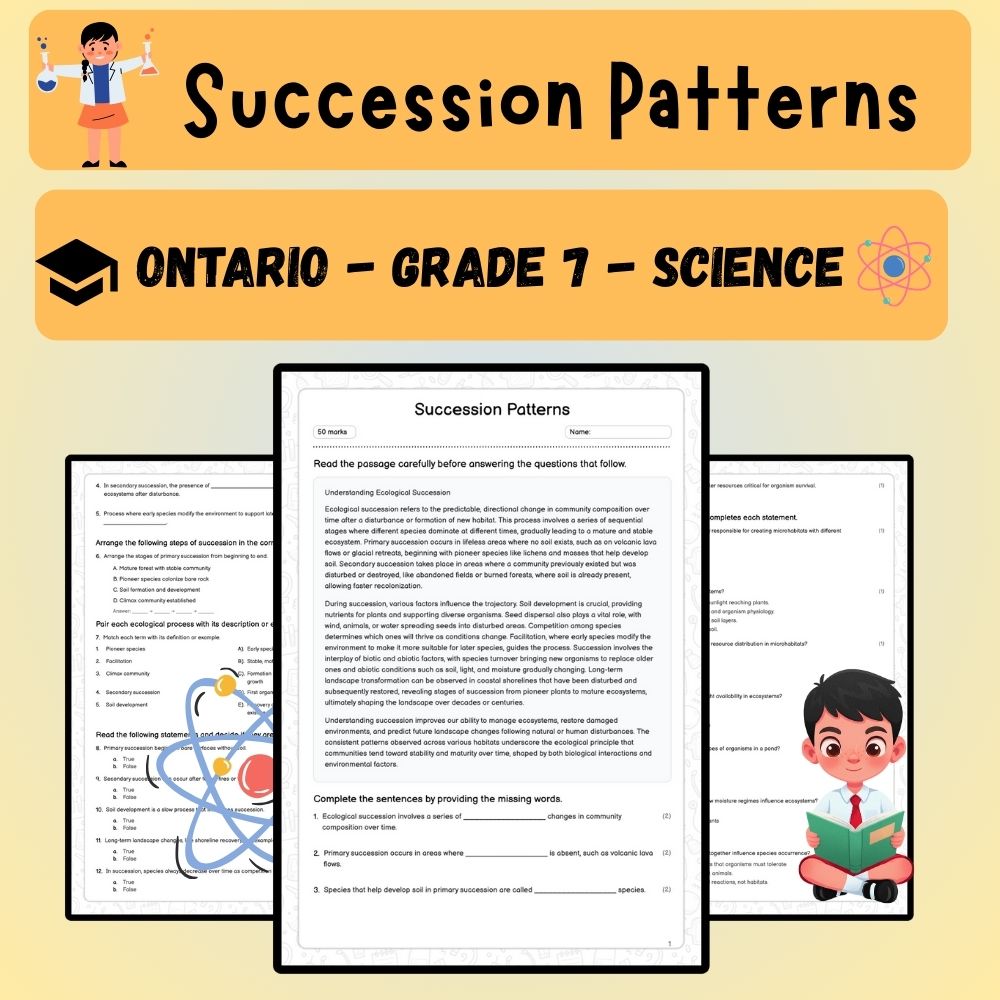
Grade 7 Science | Understanding Succession Patterns Worksheet (PDF )
Created byPrism Point LearningLearning Objectives
- Describe the process of ecological succession and distinguish between primary and secondary succession.
- Identify and explain characteristic stages of succession and the environmental drivers influencing it.
- Analyze examples of succession in real-world landscapes, such as abandoned fields and disturbed shorelines.
Also included in: Grade 7 Science UNIT Bundle | Ecosystems & Biodiversity Worksheets +1 more
Instant download

Grade 12 Science | Waves Interact with Matter Worksheet | California Standards
Created byLumora LearningLearning Objectives
- Explain how waves interact with different materials through absorption, reflection, refraction, and transmission.
- Describe the factors that influence wave-matter interactions, including properties of waves and substances.
- Analyze how wave interactions result in observable effects such as heating or charge movement.
Instant download

Grade 10 Science | Human Impacts Worksheet | BC Aligned
Created byLumora LearningLearning Objectives
- Understand how human activities affect biodiversity and ecosystems.
- Identify the main factors through which human impacts alter natural environments.
- Explain how climate change interacts with human activities to influence species and habitats.
Also included in: Grade 10 Science | Evolution & Biodiversity Lesson Bundle | BC Framework
Instant download

Grade 10 Science | Mechanisms Overview Worksheet | BC Standards
Created byLumora LearningLearning Objectives
- Understand the main mechanisms of evolution and how they influence allele frequencies.
- Explain how natural selection leads to adaptation within populations.
- Identify the roles of genetic drift, gene flow, and mutation in evolution.
Also included in: Grade 10 Science | Evolution & Biodiversity Lesson Bundle | BC Framework
Instant download
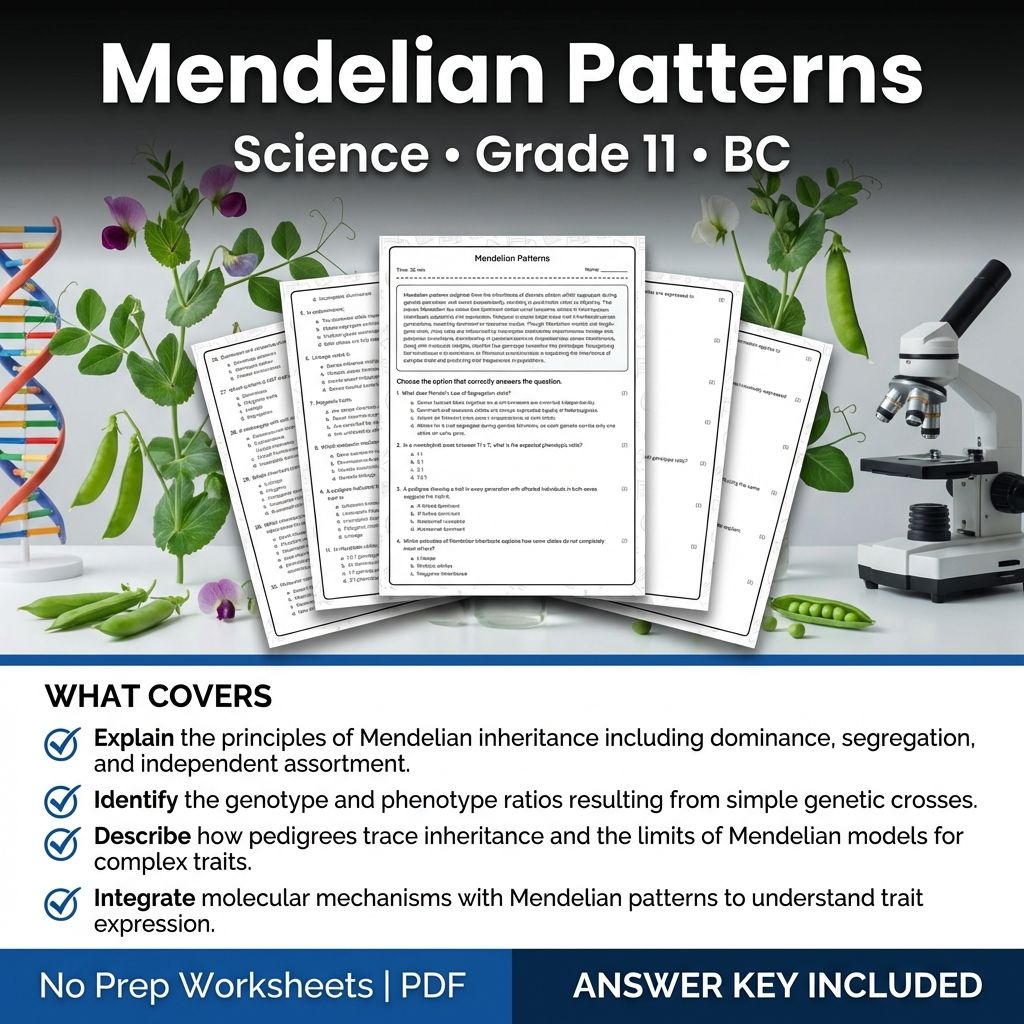
11th Grade Science | Mendelian Patterns Worksheet & Answer Key PDF
 Created byCoral Reef Learning
Learning Objectives
- Explain the principles of Mendelian inheritance including dominance, segregation, and independent assortment.
- Identify the genotype and phenotype ratios resulting from simple genetic crosses.
- Describe how pedigrees trace inheritance and the limits of Mendelian models for complex traits.
Instant download
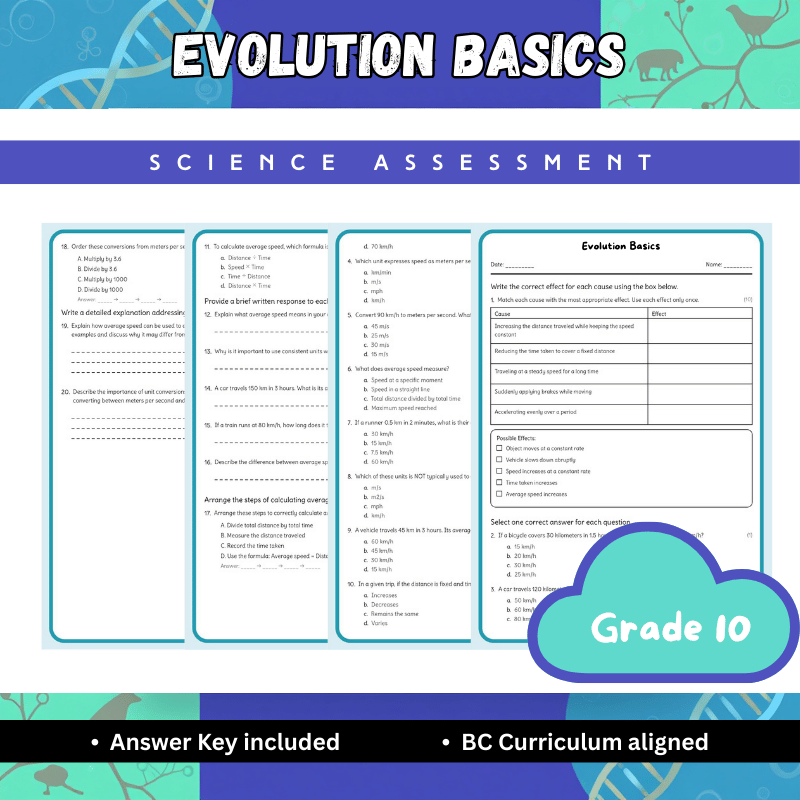
10th Grade Science | Evolution Basics Worksheet (PDF) – BC Standards
 Created byBright Mind Resources
Learning Objectives
- Understand the concept of evolution and how populations change over generations.
- Identify different types of evidence that support the theory of evolution.
- Interpret data from fossils, biogeography, and molecular similarities to explain common ancestry.
Instant download
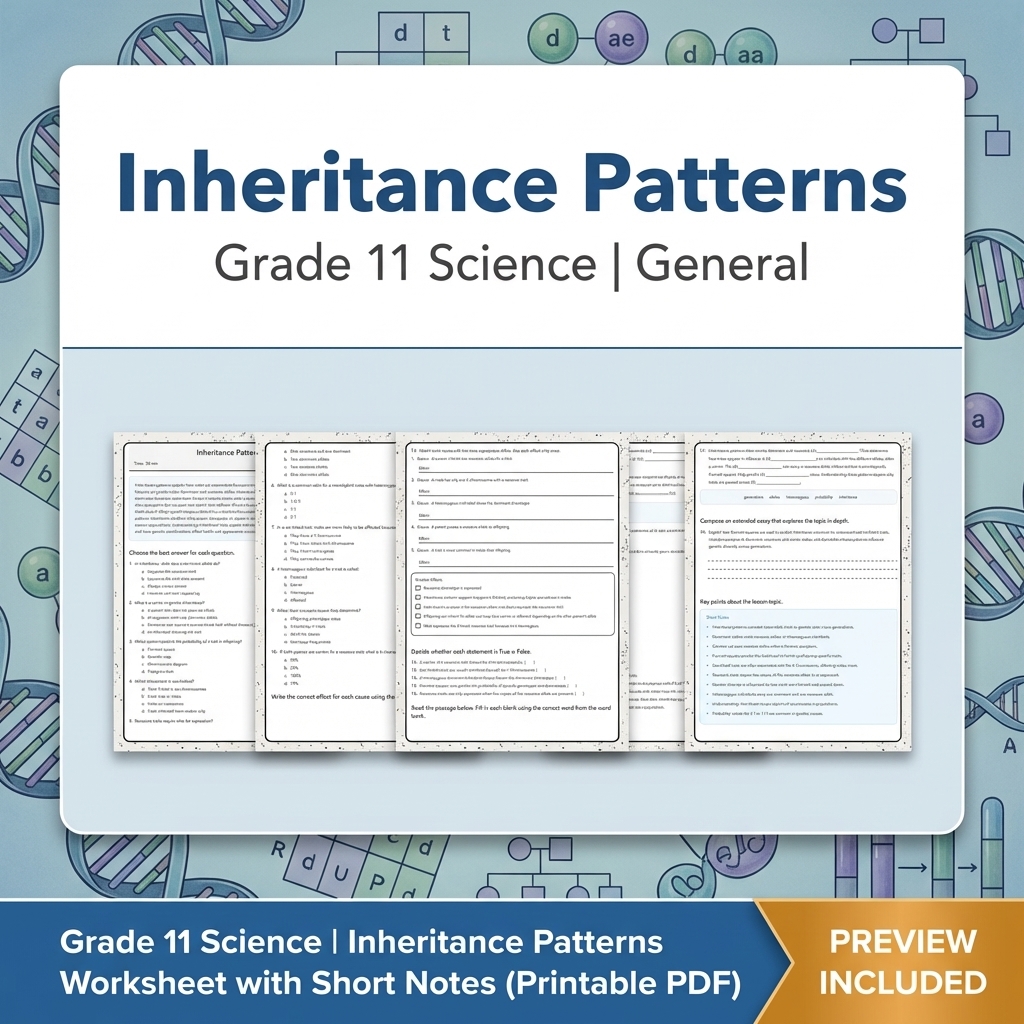
Grade 11 Science | Inheritance Patterns Worksheet with Short Notes
 Created byMeadowlark Worksheets
Learning Objectives
- Understand how inheritance patterns connect observable traits to genetic rules across generations.
- Learn how Punnett squares predict offspring outcomes for autosomal and sex-linked traits.
- Identify dominant, recessive, and carrier states and their influence on trait inheritance.
Also included in: Grade 11 Biology Foundations Science Lesson Bundle: General Worksheets +1 more
Instant download
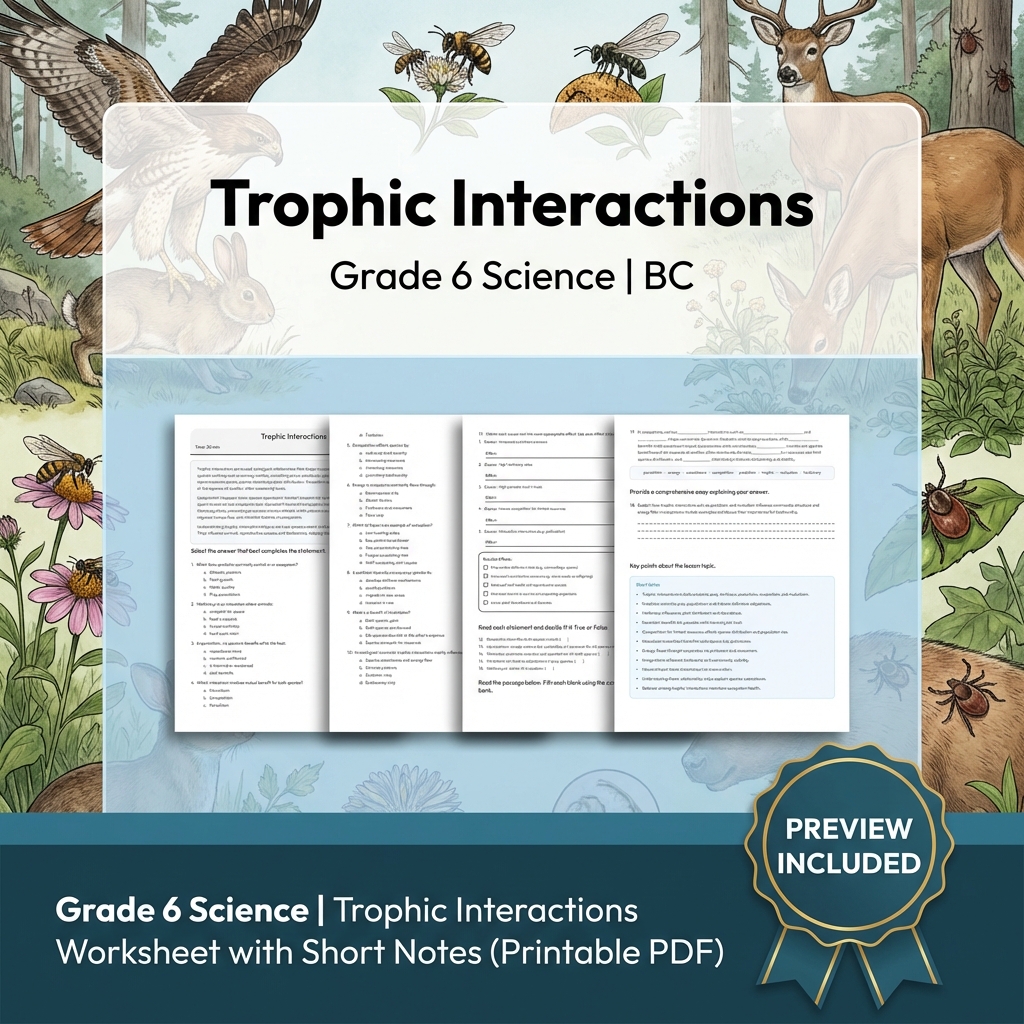
Grade 6 Science | Trophic Interactions Worksheet with Short Notes (PDF)
Created byMeadowlark WorksheetsLearning Objectives
- Understand the different types of trophic interactions, including predation, herbivory, parasitism, competition, and mutualism.
- Identify examples of trophic interactions and explain their roles in ecosystems.
- Describe how trophic interactions influence community structure and energy flow.
Also included in: Grade 6 Science | Ecosystems & Interdependence UNIT Worksheet Bundle +1 more
Instant download

Stoichiometric Calculations Worksheet | Grade 11 Science Practice
Created byPrism Point LearningLearning Objectives
- Use balanced chemical equations and mole ratios to convert between mass and moles and between moles of reactants and products.
- Determine the limiting reagent and predict which product forms in the smallest theoretical amount.
- Calculate percent yield by comparing actual yield to theoretical yield.
Instant download
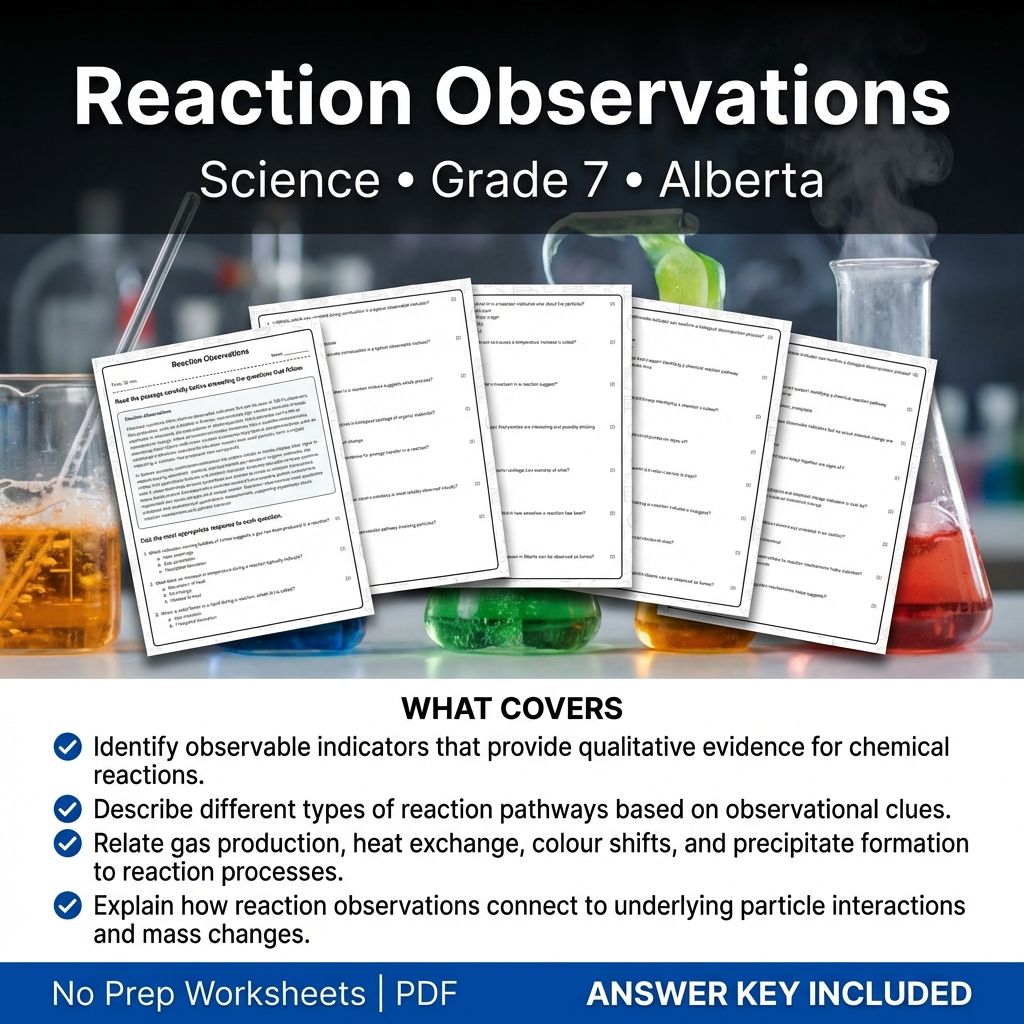
Reaction Observations Worksheet | Alberta Grade 7 Science Practice
Created byCoral Reef LearningLearning Objectives
- Identify observable indicators that provide qualitative evidence for chemical reactions.
- Describe different types of reaction pathways based on observational clues.
- Relate gas production, heat exchange, colour shifts, and precipitate formation to reaction processes.
Instant download
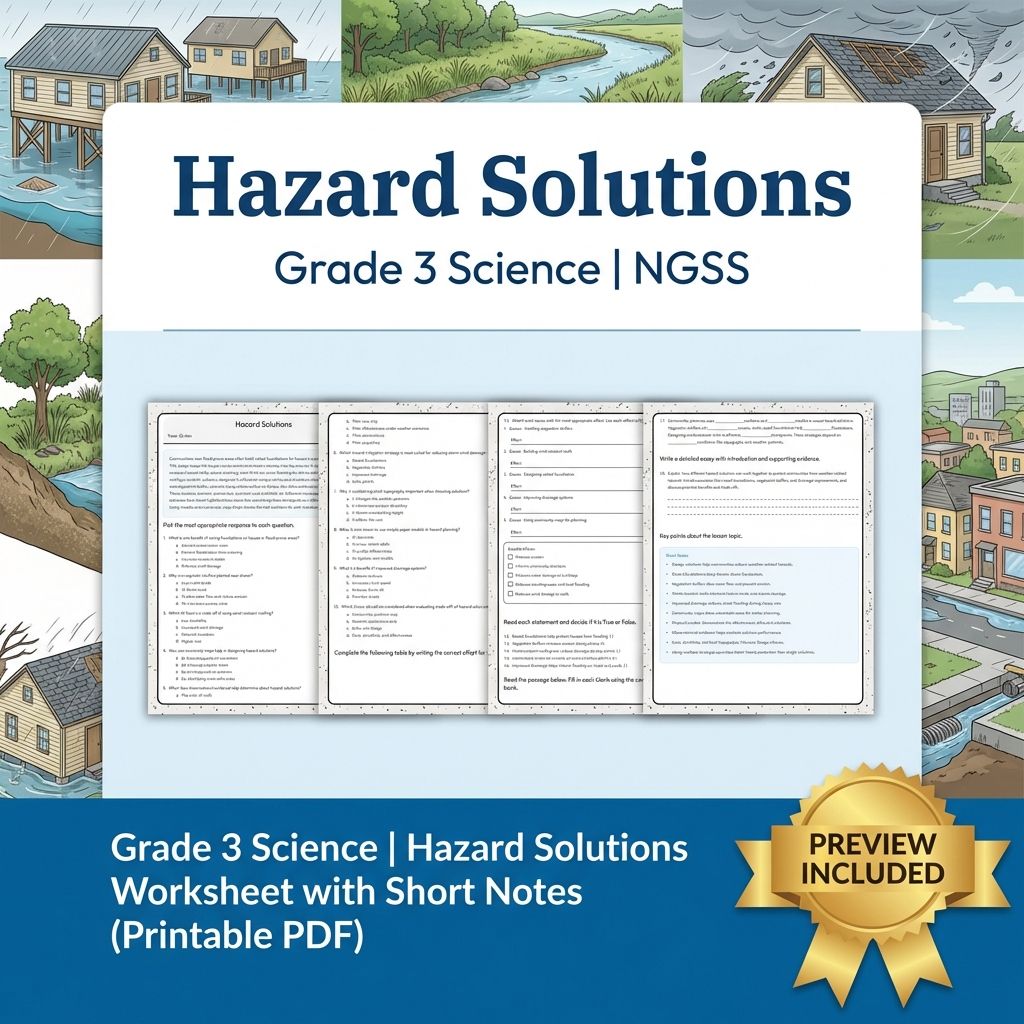
Grade 3 Science | Hazard Solutions Worksheet with Short Notes (Printable PDF)
Created byMeadowlark WorksheetsLearning Objectives
- Identify different design solutions that reduce weather-related hazards.
- Make reasoned claims about the effectiveness of hazard mitigation strategies.
- Use observational evidence and models to compare hazard mitigation options.
Also included in: Grade 3 Science | Earth and Human Activity NGSS Unit Bundle (Worksheet Included) +1 more
Instant download
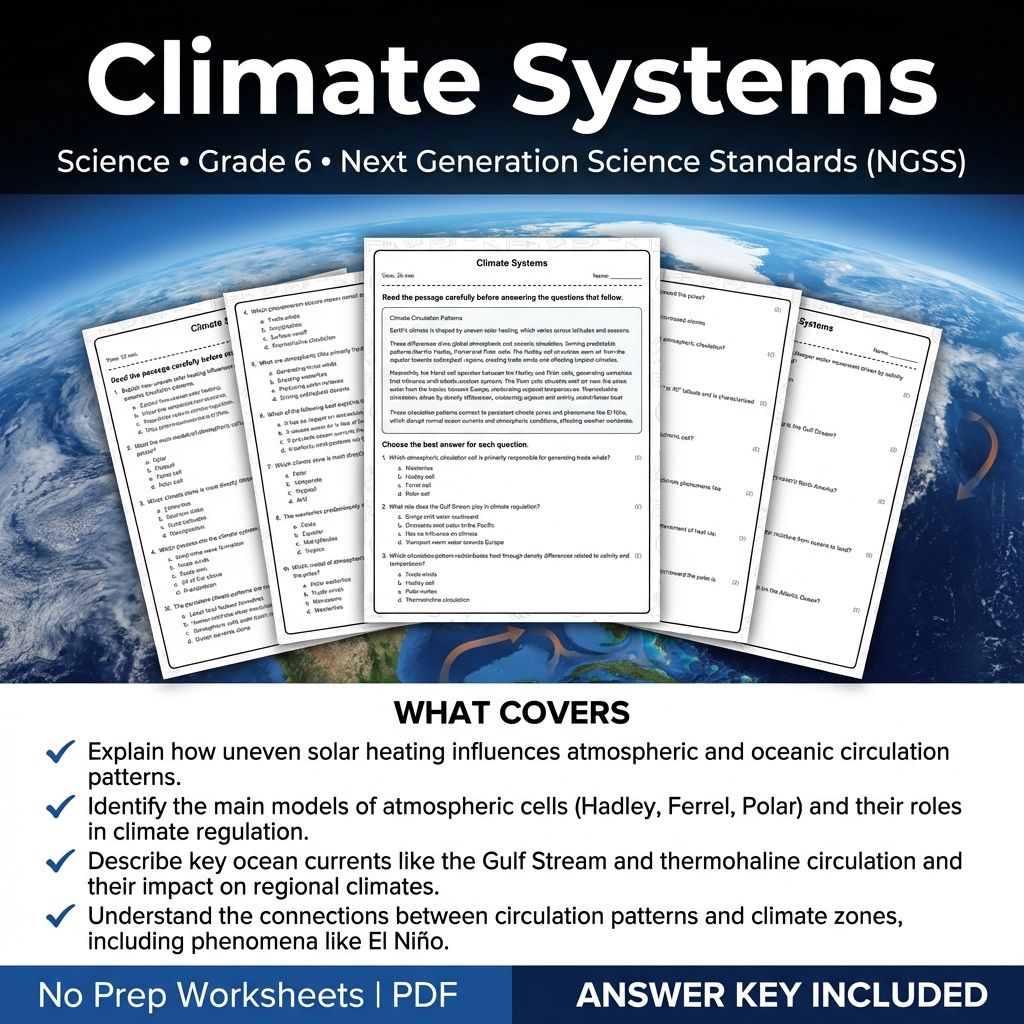
6th Grade Science | Climate Systems Worksheet with Answer Key (Printable PDF)
Created byCoral Reef LearningLearning Objectives
- Explain how uneven solar heating influences atmospheric and oceanic circulation patterns.
- Identify the main models of atmospheric cells (Hadley, Ferrel, Polar) and their roles in climate regulation.
- Describe key ocean currents like the Gulf Stream and thermohaline circulation and their impact on regional climates.
Instant download
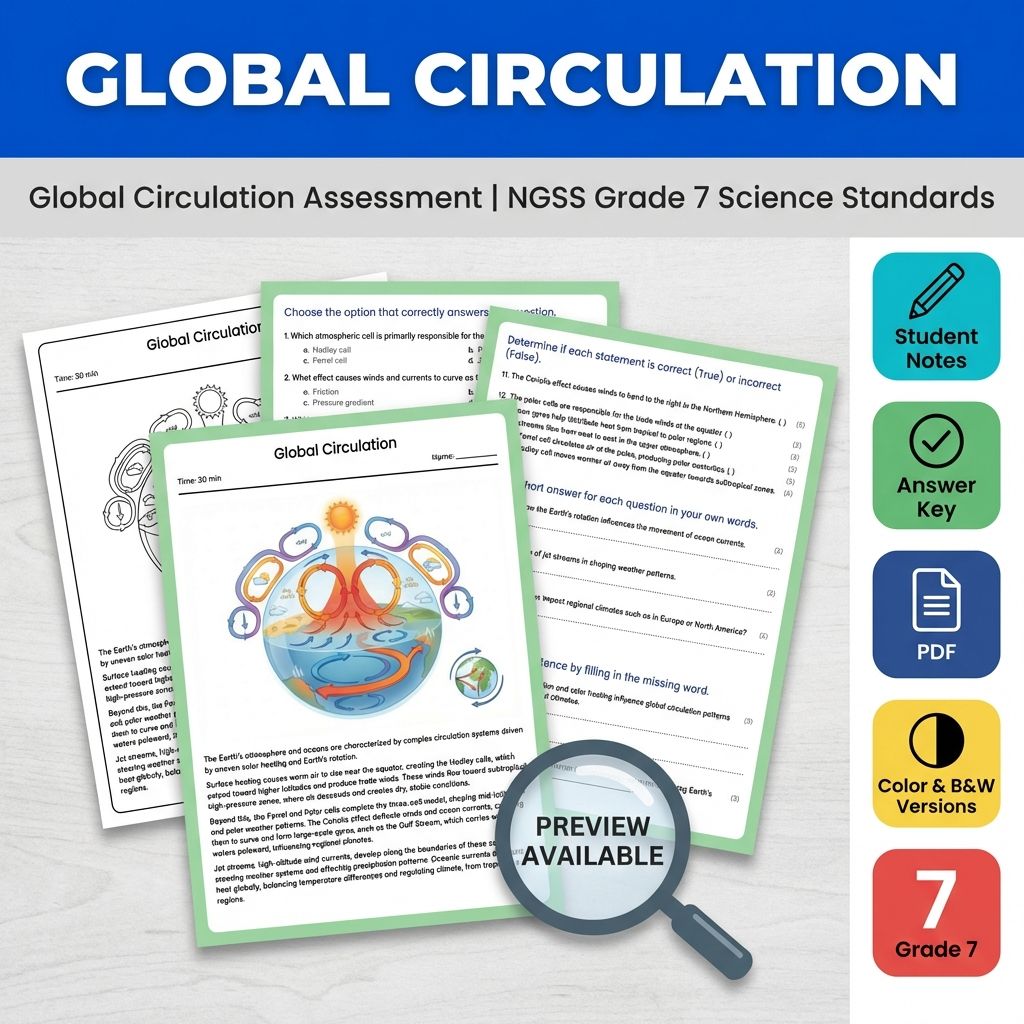
Global Circulation Assessment | NGSS Grade 7 Science Standards
Created byPrism Point LearningLearning Objectives
- Explain the basic principles of Earth's atmospheric and oceanic circulation patterns.
- Identify the main cells, wind belts, and ocean currents associated with global climate.
- Understand the influence of Coriolis effect and jet streams on weather and climate zones.
Also included in: Grade 7 Science Lesson | Earth's Systems NGSS Not specified Unit +1 more
Instant download
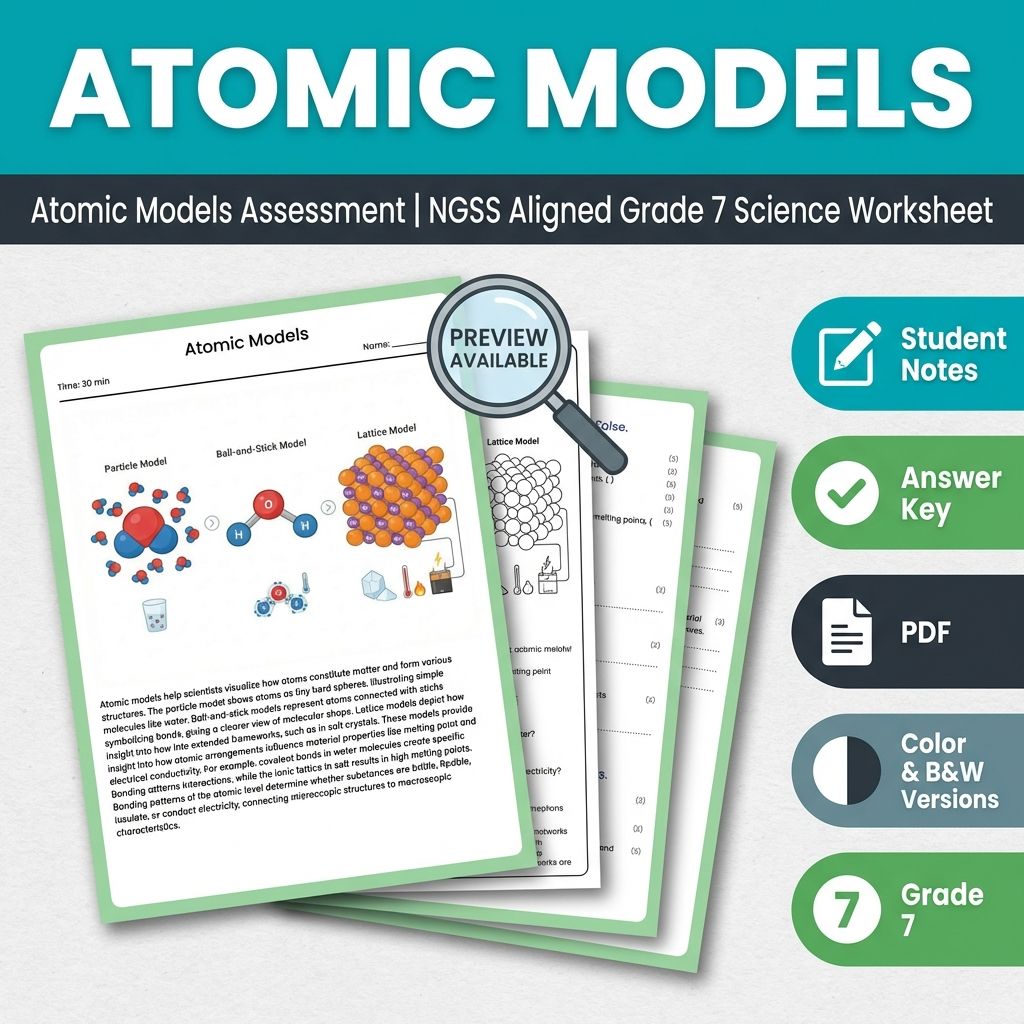
Atomic Models Assessment | NGSS Aligned Grade 7 Science Worksheet
Created byPrism Point LearningLearning Objectives
- Understand different atomic model representations such as particle, ball-and-stick, and lattice models.
- Identify how atoms form molecules and extended structures through bonding patterns.
- Explain the relationship between subatomic particles, atomic number, and material properties.
Also included in: Grade 7 Science Lesson | Matter and Its Interactions Standards +1 more
Instant download
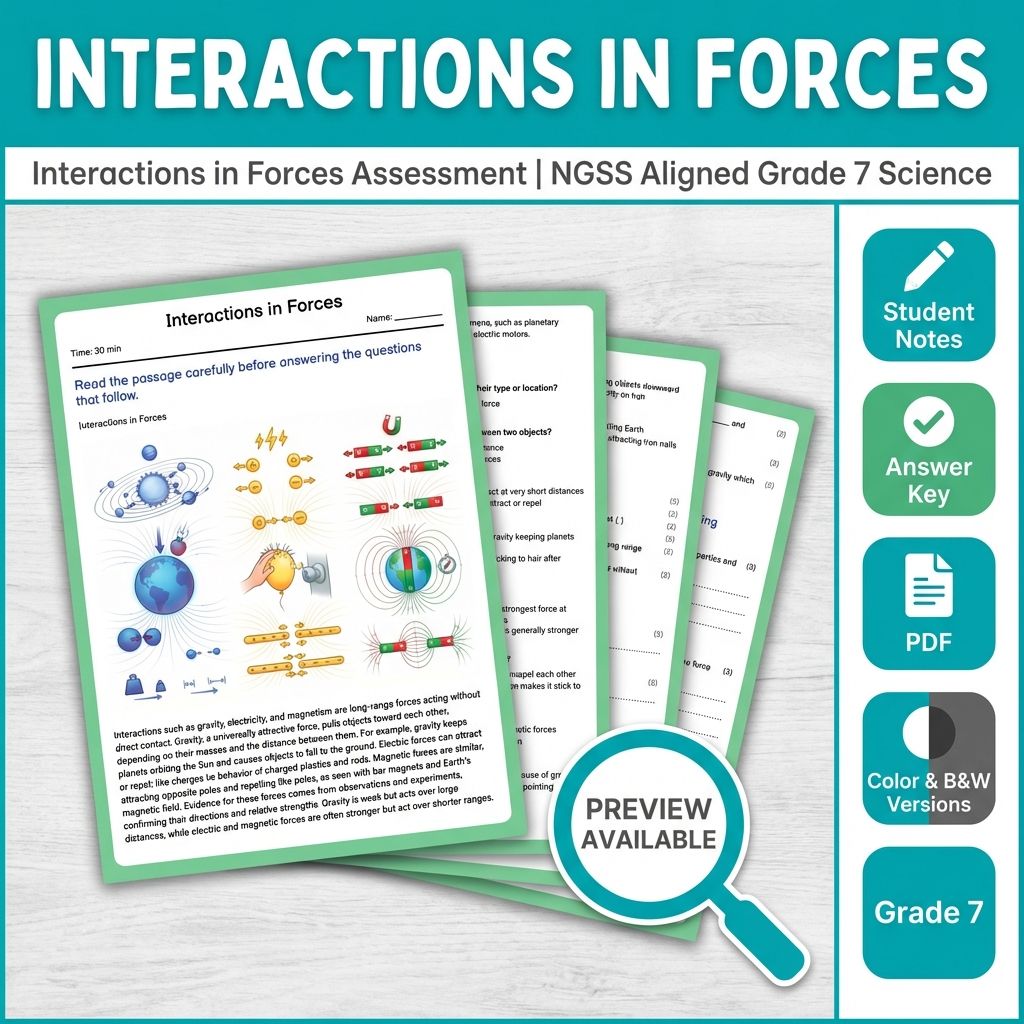
Interactions in Forces Assessment | NGSS Aligned Grade 7 Science
Created byPrism Point LearningLearning Objectives
- Describe gravitational, electric, and magnetic interactions as long-range forces that act without contact.
- Explain the universal attraction of gravity and how electric and magnetic forces can be attractive or repulsive.
- Relate gravitational attraction to mass and distance in qualitative terms using evidence-based reasoning.
Also included in: Grade 7 Science Mini Bundle – Forces & Interactions NGSS Unit (Printable) +1 more
Instant download
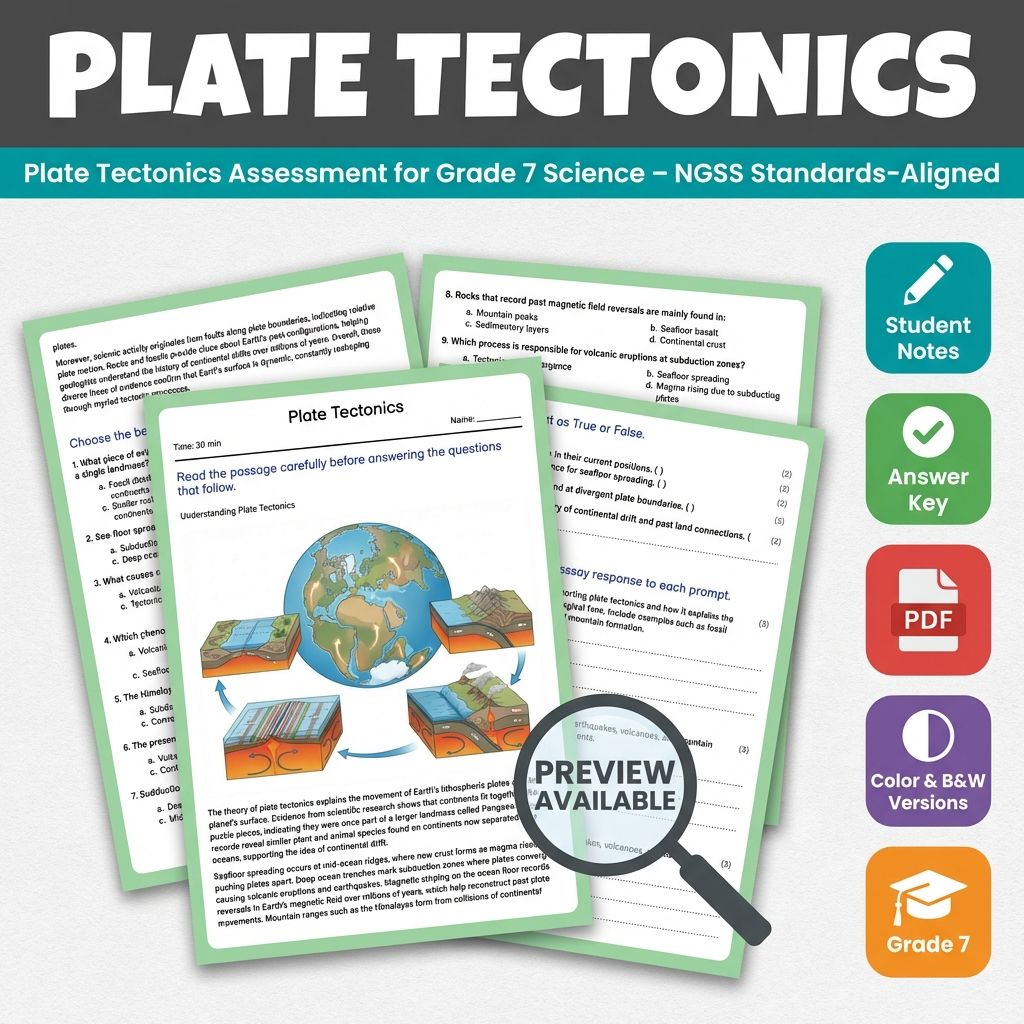
Plate Tectonics Assessment for Grade 7 Science – NGSS Standards-Aligned
Created byPrism Point LearningLearning Objectives
- Understand how geologic and fossil evidence supports the theory of plate tectonics and continental movement.
- Identify features such as mid-ocean ridges, trenches, and mountain ranges as evidence of tectonic activity.
- Explain how rock types, fossil distribution, and seafloor structures record Earth's geological history.
Also included in: Grade 7 Science Lesson | Earth's Systems NGSS Not specified Unit +1 more
Instant download
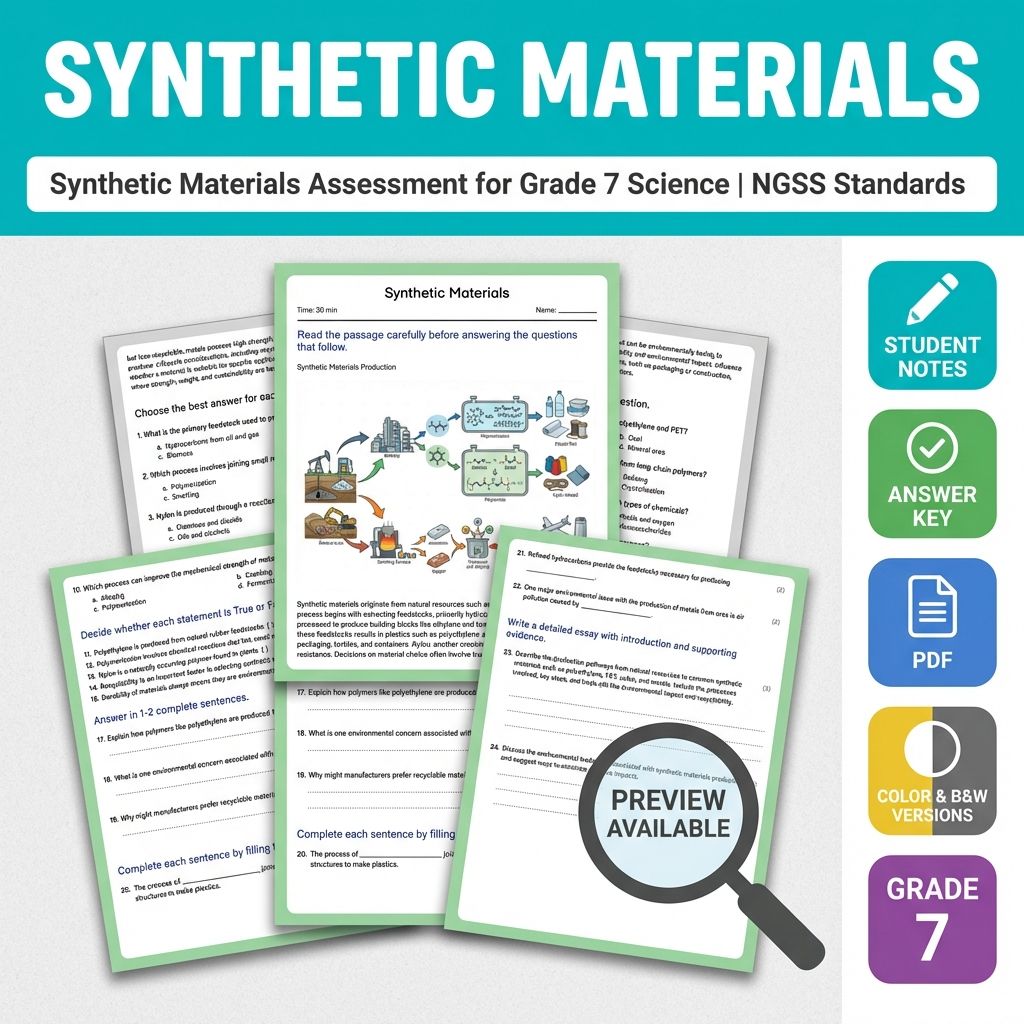
Synthetic Materials Assessment for Grade 7 Science | NGSS Standards
Created byPrism Point LearningLearning Objectives
- Describe how natural resources are transformed into synthetic materials through production pathways including feedstocks, polymerization, and refining steps.
- Identify examples such as polyethylene, PET, nylon, and metals derived from ores, and explain their manufacturing processes.
- Discuss the advantages and disadvantages, including durability, recyclability, and environmental impacts, of various synthetic materials.
Also included in: Grade 7 Science Lesson | Matter and Its Interactions Standards +1 more
Instant download
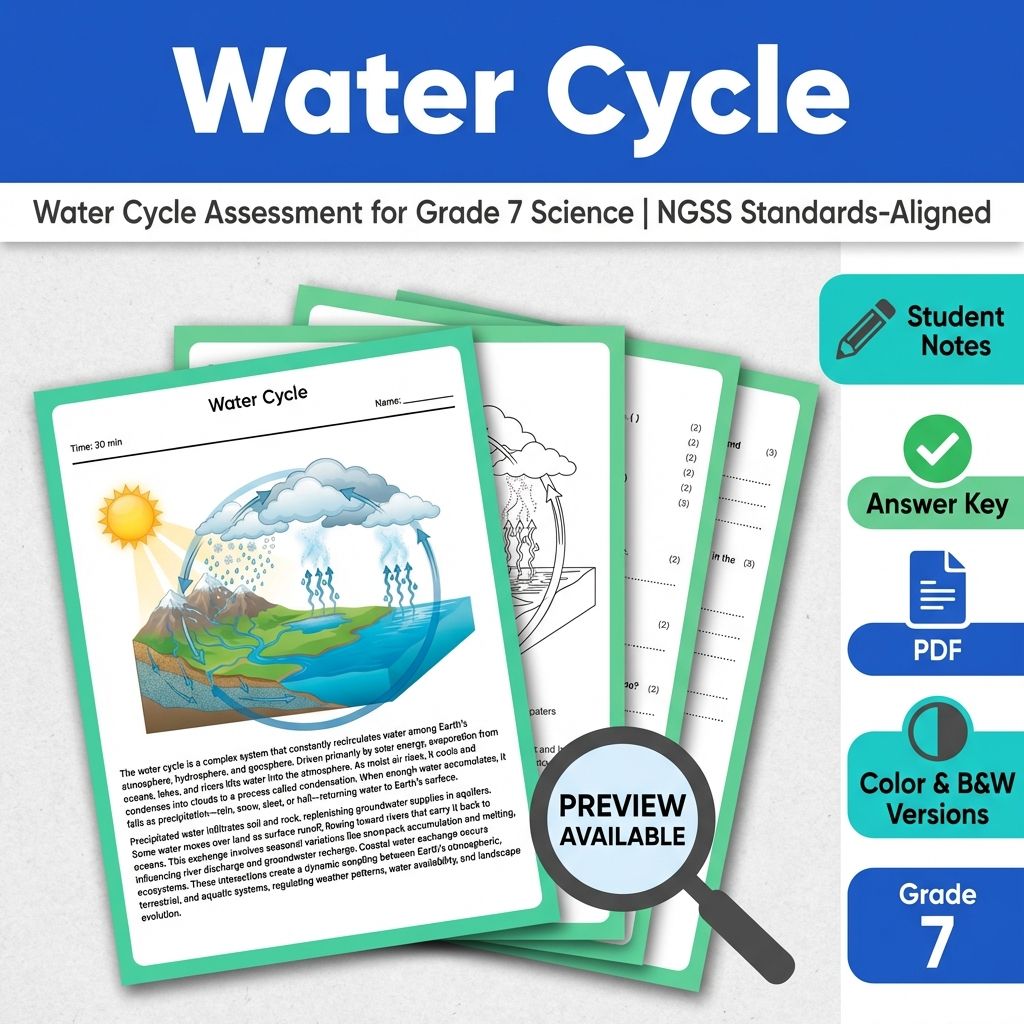
Water Cycle Assessment for Grade 7 Science | NGSS Standards-Aligned
Created byPrism Point LearningLearning Objectives
- Describe the processes involved in the water cycle, including evaporation, condensation, and precipitation.
- Explain how water moves through Earth's spheres via processes such as infiltration, runoff, and groundwater flow.
- Identify the interactions among rivers, aquifers, and ocean exchange in the water cycle, especially seasonal and seasonal variations.
Also included in: Grade 7 Science Lesson | Earth's Systems NGSS Not specified Unit +1 more
Instant download
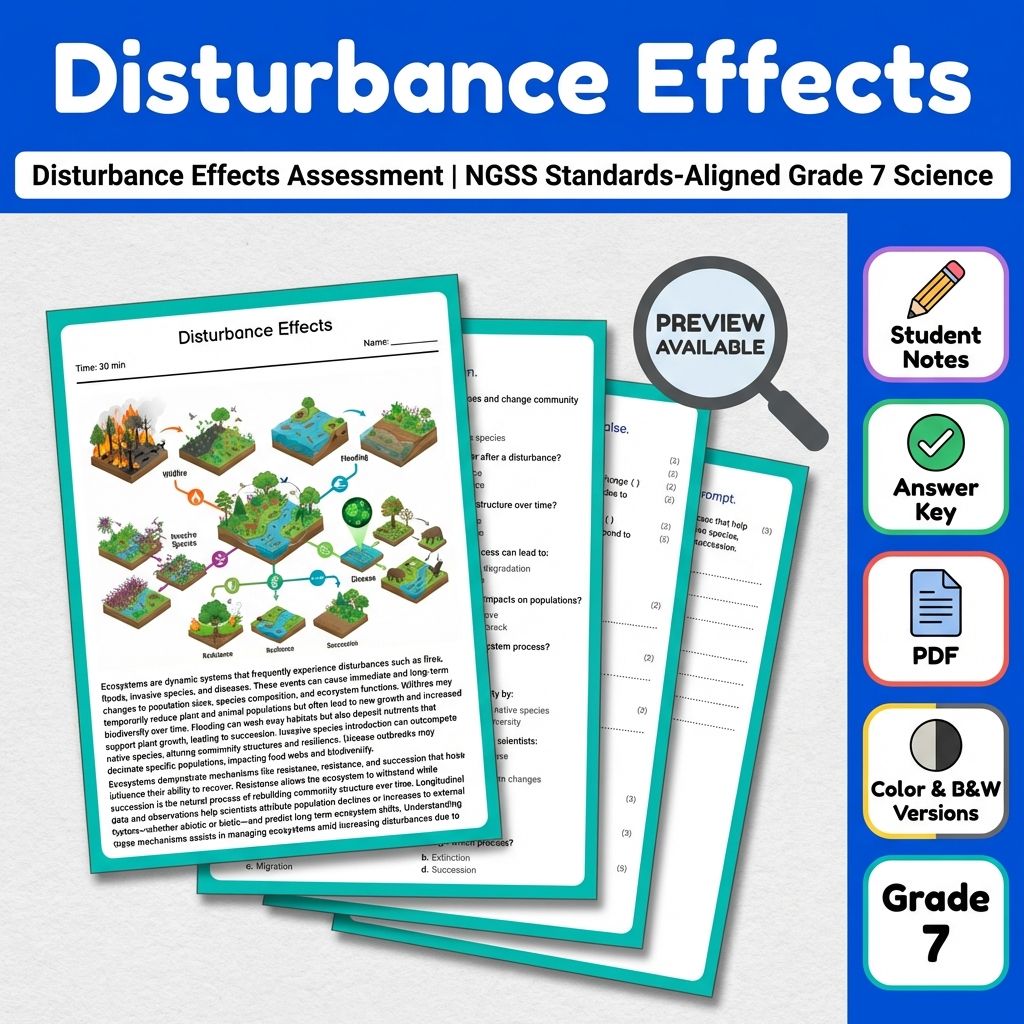
Disturbance Effects Assessment | NGSS Standards-Aligned Grade 7 Science
Created byPrism Point LearningLearning Objectives
- Understand how physical and biological disturbances impact ecosystems and populations.
- Identify mechanisms such as resilience, resistance, and succession that influence ecosystem recovery.
- Interpret empirical data and observations to determine causes of population changes.
Also included in: Grade 7 Science Mini Bundle | Ecosystems: Interactions & Energy – NGSS +1 more
Instant download
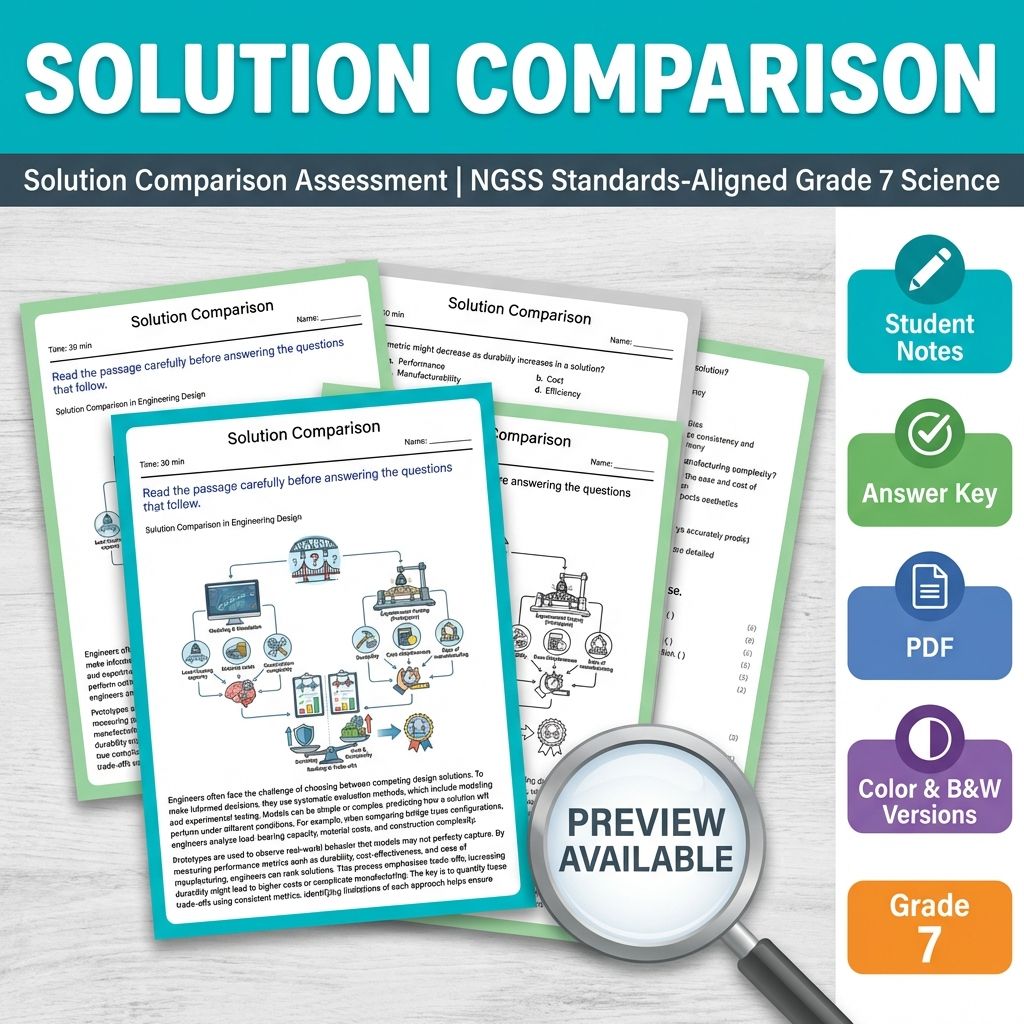
Solution Comparison Assessment | NGSS Standards-Aligned Grade 7 Science
Created byPrism Point LearningLearning Objectives
- Understand systematic evaluation of different design solutions using modeling and analysis.
- Identify and quantify trade-offs among performance, cost, durability, and manufacturability.
- Apply models to predict and observe behaviors of prototypes in engineering contexts.
Also included in: Grade 7 Science Lesson Unit: Engineering Design Standards-Aligned Not Specified +1 more
Instant download
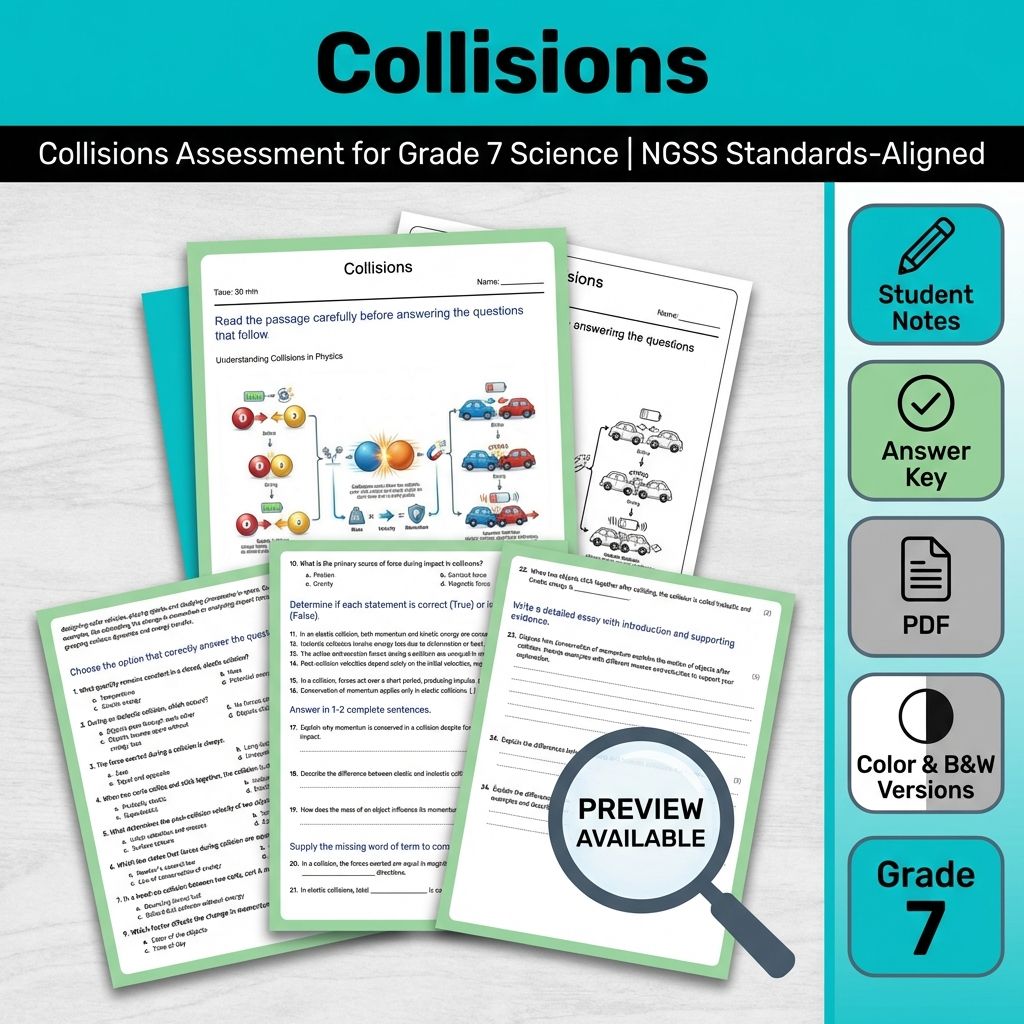
Collisions Assessment for Grade 7 Science | NGSS Standards-Aligned
Created byPrism Point LearningLearning Objectives
- Explain the principles of momentum conservation during collisions.
- Differentiate between elastic and inelastic collisions.
- Calculate post-collision velocities using mass and velocity data.
Also included in: Grade 7 Science Mini Bundle – Forces & Interactions NGSS Unit (Printable) +1 more
Instant download
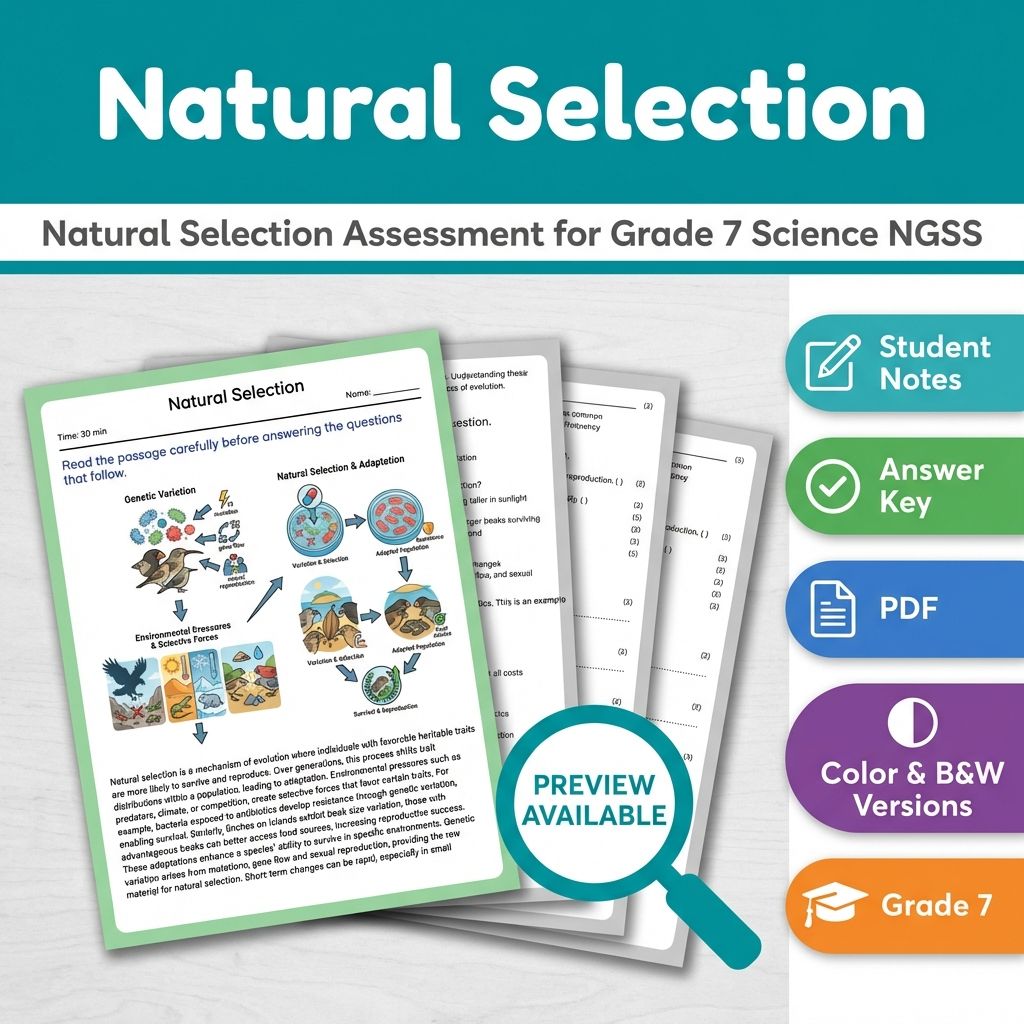
Natural Selection Assessment for Grade 7 Science NGSS
Created byPrism Point LearningLearning Objectives
- Explain how heritable variation and environmental pressures influence natural selection.
- Identify examples of adaptation in different species.
- Describe how reproductive success and selective pressures shape evolution.
Also included in: Grade 7 Science Mini Bundle – Biological Evolution: Unity & Diversity +1 more
Instant download
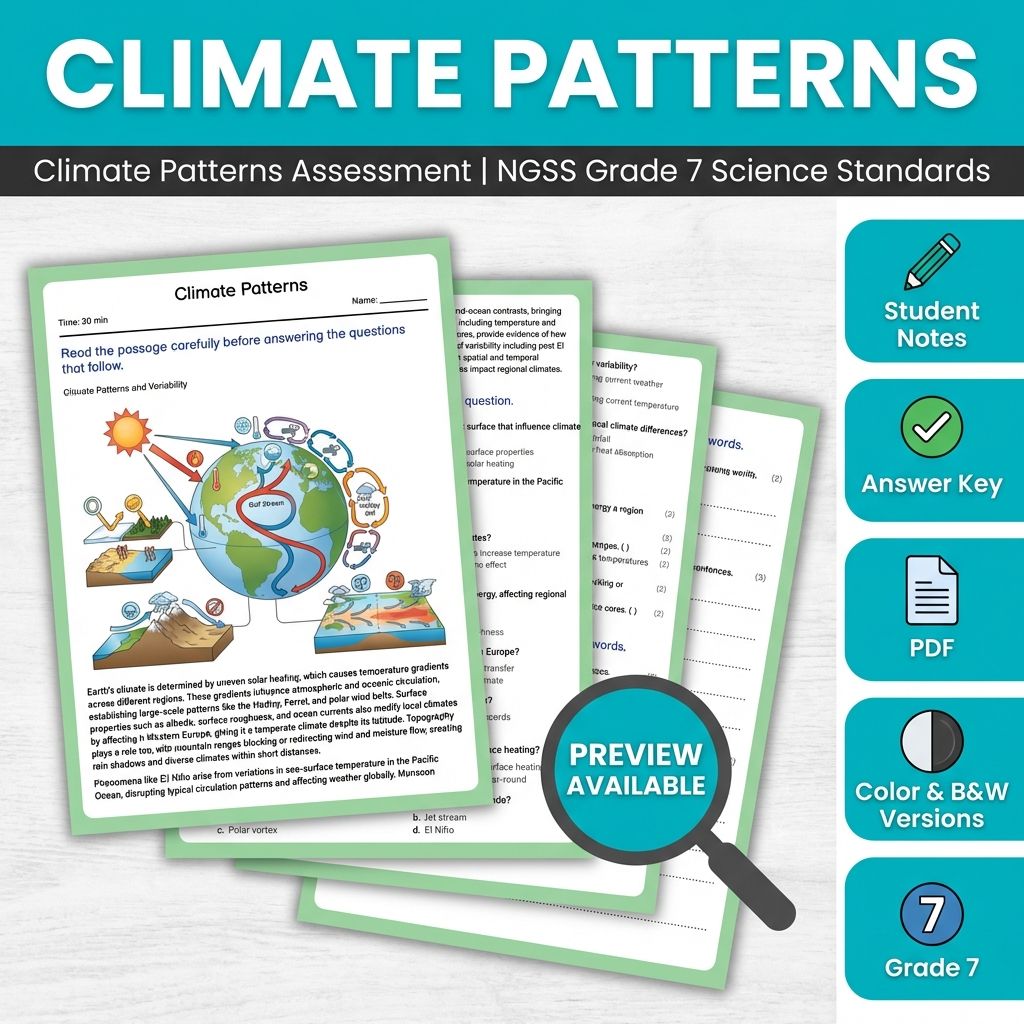
Climate Patterns Assessment | NGSS Grade 7 Science Standards
Created byPrism Point LearningLearning Objectives
- Understand how uneven solar heating influences regional climate patterns.
- Identify key features such as El Niño, monsoon regimes, and wind belts that affect climate zones.
- Analyze how surface properties and topography modify local climates.
Also included in: Grade 7 Science Lesson | Earth's Systems NGSS Not specified Unit +1 more
Instant download
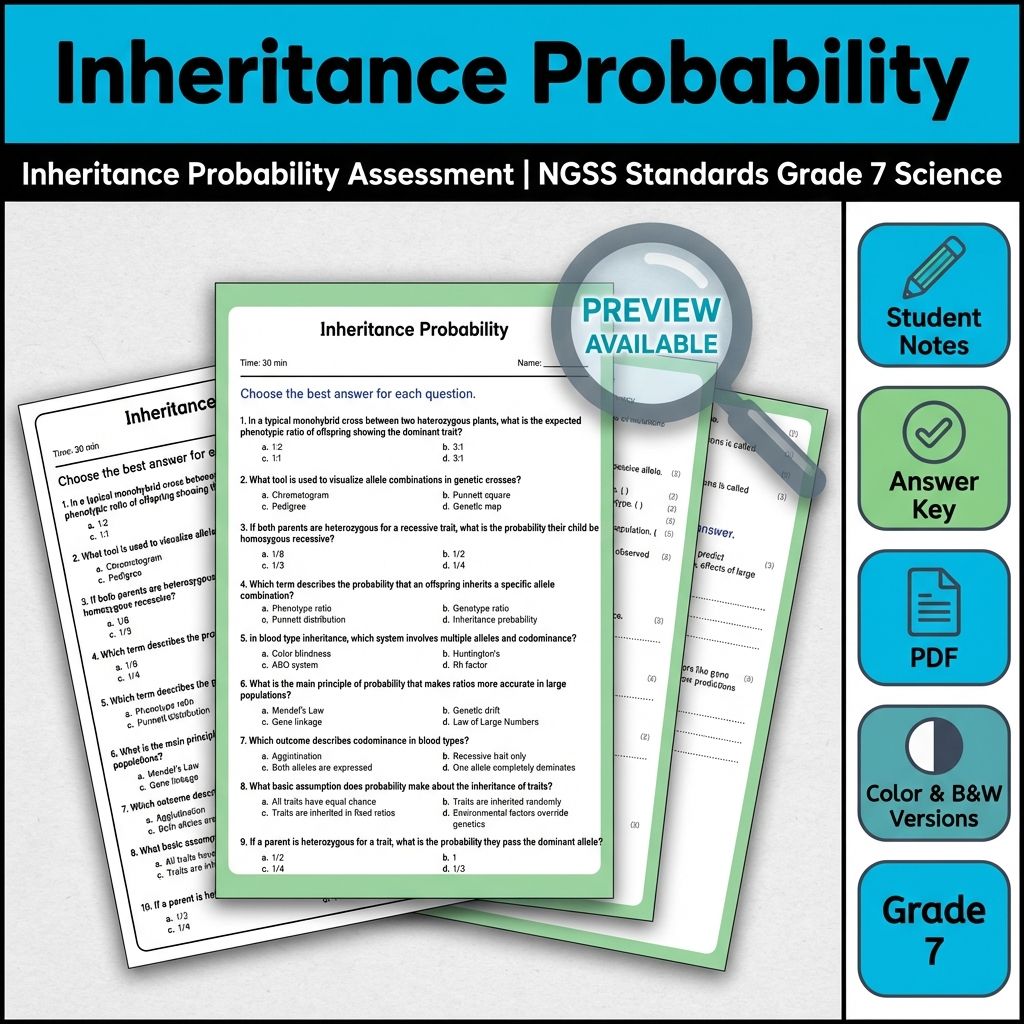
Inheritance Probability Assessment | NGSS Standards Grade 7 Science
Created byPrism Point LearningLearning Objectives
- Understand how probability concepts apply to predicting genetic variation among offspring.
- Interpret genotype and phenotype ratios resulting from monohybrid crosses using Punnett squares.
- Calculate expected proportions of different genotypes and phenotypes in genetic crosses.
Also included in: Grade 7 Science Mini Bundle – Heredity: Inheritance and Variation of Traits +1 more
Instant download
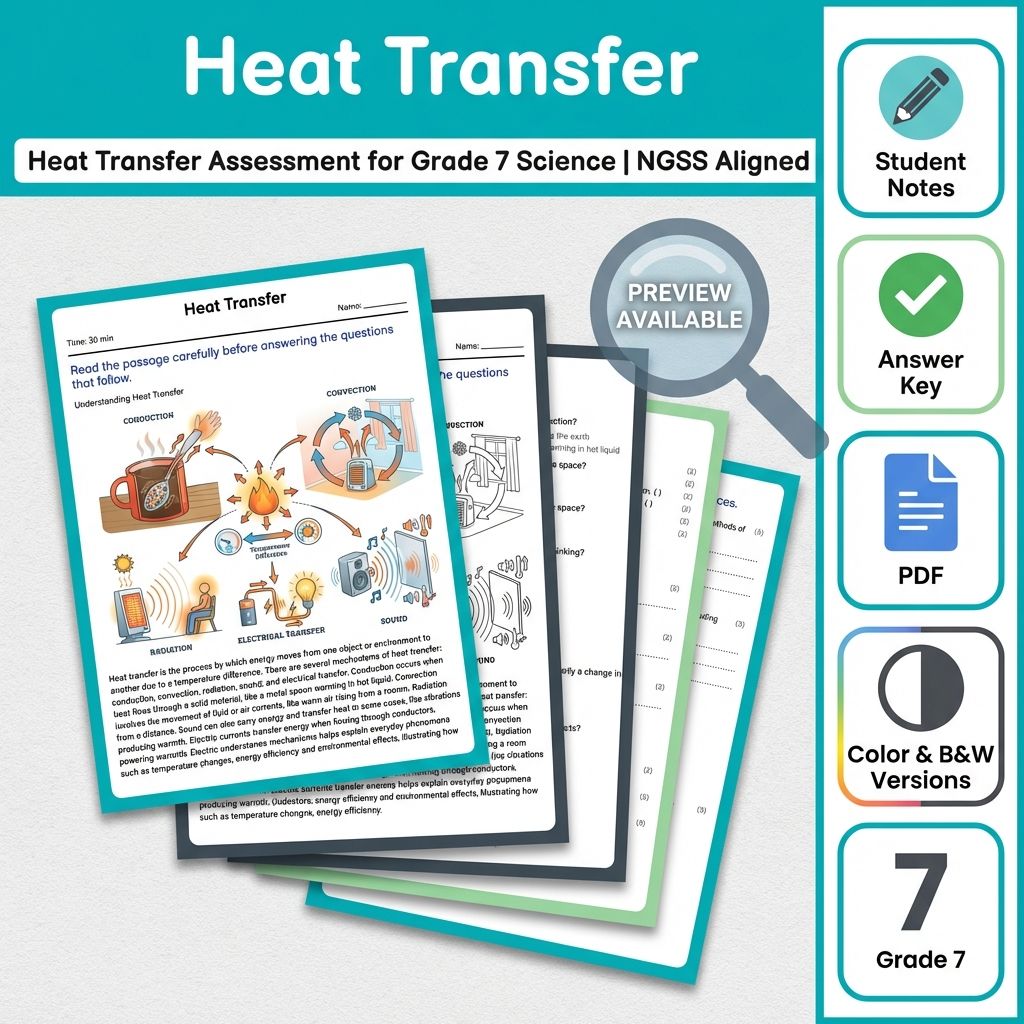
Heat Transfer Assessment for Grade 7 Science | NGSS Aligned
Created byPrism Point LearningLearning Objectives
- Understand the different mechanisms of heat transfer: conduction, convection, radiation, sound, and electric current.
- Identify examples of each heat transfer process in real-life situations.
- Describe observable evidence of energy transfer such as temperature changes and rate differences.
Also included in: Grade 7 Science Mini Bundle | Energy Unit & NGSS Standards-Aligned Resources +1 more
Instant download
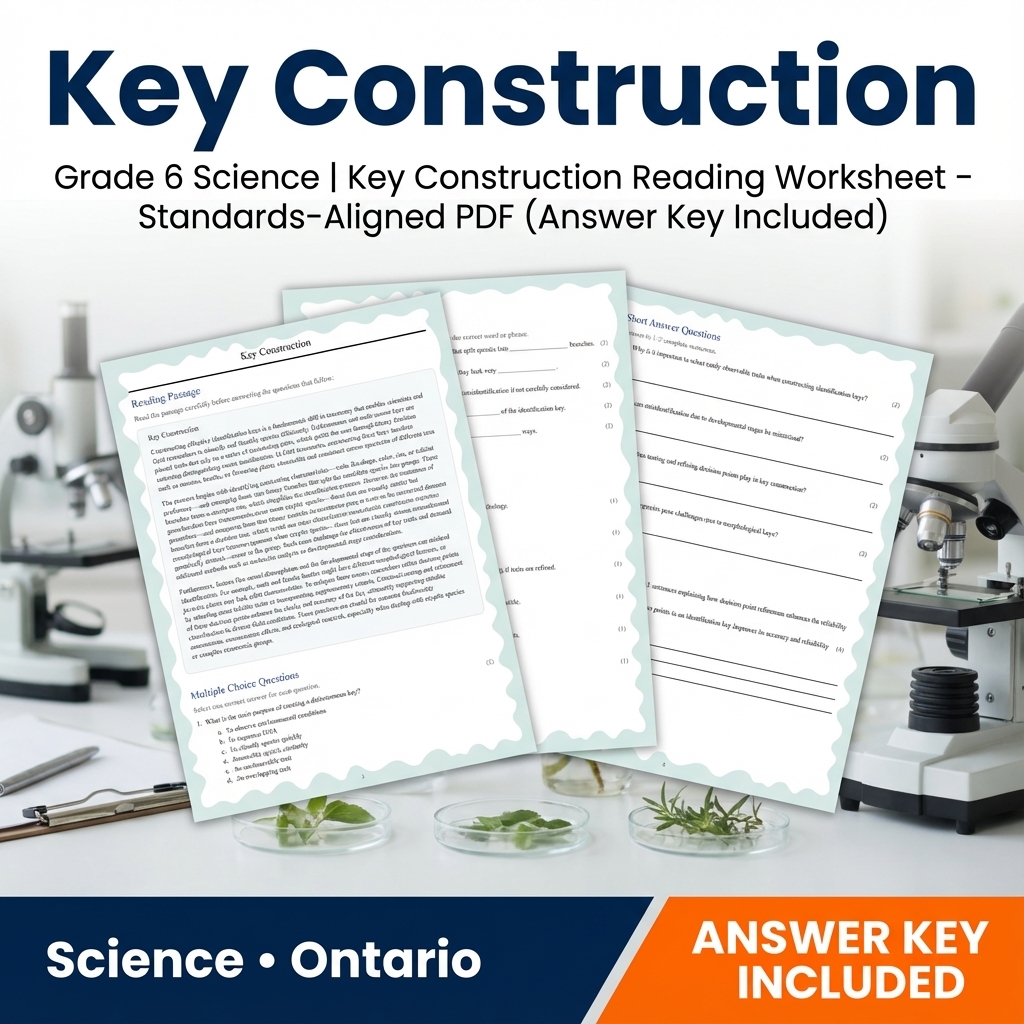
6th Grade Science | Key Construction Reading Worksheet (PDF + Answer Key)
JCreated byJ.S SheetsLearning Objectives
- Understand the procedures for constructing dichotomous and multi-access keys based on contrasting traits.
- Identify limitations of morphological keys, including issues caused by cryptic species, developmental stages, and sexual dimorphism.
- Learn methods for refining decision points to improve classification accuracy in field inventories.
Also included in: Grade 6 Science Unit Bundle – Ecosystems, Biodiversity & Environmental Impact +1 more
Instant download

Grade 3 Health Worksheet | Healthy Practices (NHES) – PDF
Created bySunny Desk ResourcesLearning Objectives
- Identify healthy daily habits that support physical, mental, and emotional well-being.
- Explain how informed choices and self-regulation help people maintain healthy routines.
- Use scenarios to choose appropriate actions for avoiding tobacco, limiting screen time, and managing stress.
Also included in: This Lesson Group - Grade 3 Bundle +1 more
Instant download

Grade 3 Health | Decision Steps Worksheet (NHES) (PDF)
Created bySunny Desk ResourcesLearning Objectives
- Explain the steps of making a healthy, safe decision: identify options, consider pros and cons, and choose the best option.
- Describe advantages and disadvantages of different choices using clear reasons.
- Practice using decision steps to solve everyday health and safety situations.
Also included in: Grade 3 Decision-Making Skills in Health Lesson Bundle: National Health Education Standards +1 more
Instant download
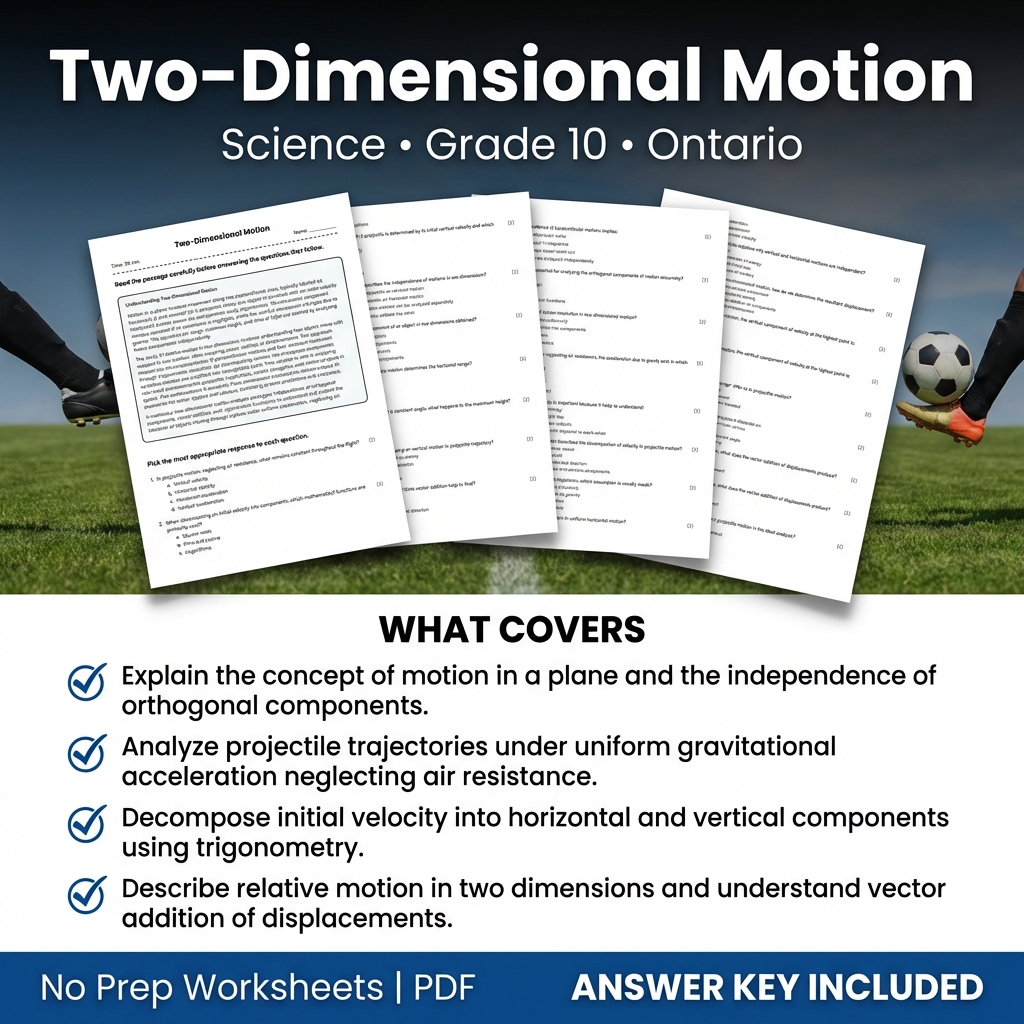
Grade 10 Science Worksheet on Two-Dimensional Motion | Ontario Standards
Created byCoral Reef LearningLearning Objectives
- Explain the concept of motion in a plane and the independence of orthogonal components.
- Analyze projectile trajectories under uniform gravitational acceleration neglecting air resistance.
- Decompose initial velocity into horizontal and vertical components using trigonometry.
Instant download
Browse more categories
About Reading comprehension Worksheets
Find reading comprehension worksheets for class practice, homework, or self-study. All 40,284 are instant PDF downloads.
Each resource here is built by an independent educator and reviewed for quality. Worksheets print straight from PDF and suit classroom use, homework, or extra practice; most come with answer keys, and you can preview before purchasing.