
Reading comprehension Worksheets
40,289 type resources
Grade 7 Science Worksheet | Food Building Blocks & Energy Use
 Created byEvergreen Desk Education
Learning Objectives
- Explain how food molecules are broken down and rearranged into new molecules needed for growth and repair.
- Describe how chemical energy in food becomes usable energy for life processes.
- Connect nutrition choices to changes in body condition over time.
Instant download

Grade 7 Science | Environment & Traits - Daily Reading Comprehension
 Created byCoral Reef Learning
Learning Objectives
- Understand how external environmental factors influence phenotype.
- Identify examples of traits affected by environment.
- Differentiate between inherited genetic traits and environmentally influenced traits.
Instant download

Grade 7 Science | Population Impacts on Water Resources - Reading Comprehension
Created byCoral Reef LearningLearning Objectives
- Understand how human population growth influences water demand in different regions.
- Identify the relationship between urbanization and freshwater availability.
- Analyze how resource consumption impacts ecosystems and biodiversity.
Instant download
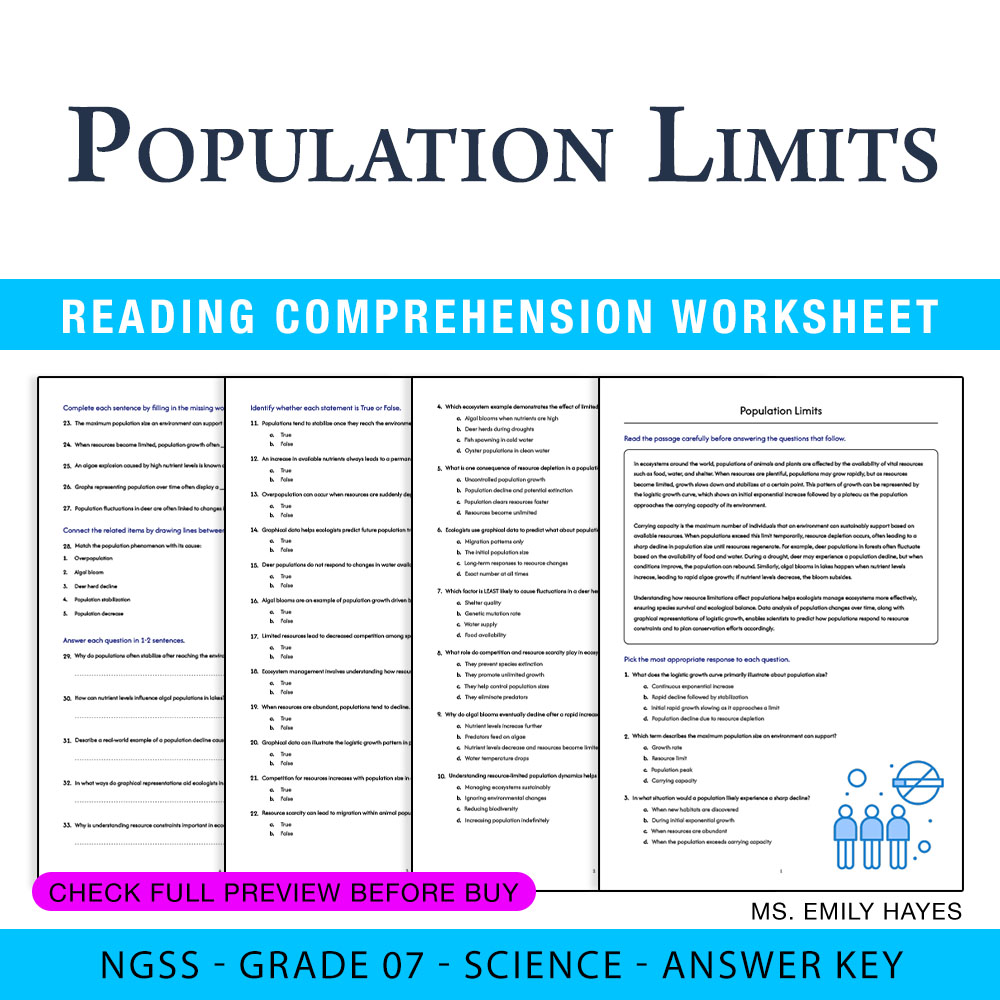
7th Grade Science | Population Limits Worksheet (PDF +Answer Key)
 Created byCopper Leaf Classroom
Learning Objectives
- Understand how resource availability influences population growth and stability.
- Analyze graphical data representing population responses to environmental constraints.
- Interpret quantitative data sets related to ecosystem resource limits.
Instant download

Material Properties Test Prep Worksheet | Grade 7 Science Ontario
 Created byPrism Point Learning
Learning Objectives
- Define and explain key material properties: density, tensile strength, compressive strength, stiffness (modulus), ductility, toughness, and thermal expansion.
- Describe how material properties affect structural performance, including deformation and likely failure modes.
- Compare wood, steel, and reinforced concrete in terms of strength-to-weight, stiffness, and typical behavior under load.
Instant download
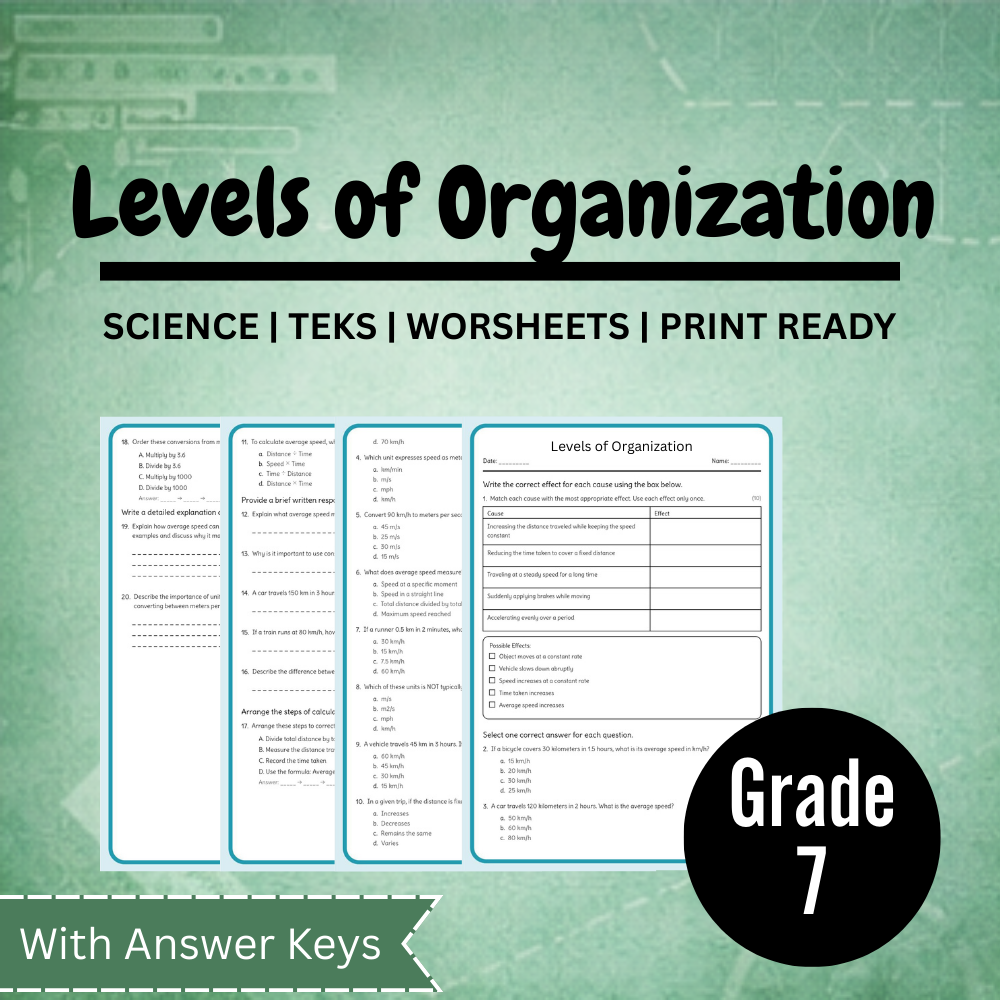
Grade 7 Science | Levels of Organization Worksheet (Answer Key) – TEKS Aligned
 Created byBright Mind Resources
Learning Objectives
- Describe the hierarchical levels of biological organization from individual to biosphere.
- Identify the roles of producers, consumers, and decomposers within ecosystems.
- Explain energy flow through trophic levels and its importance for system stability.
Also included in: Grade 7 Science Unit Bundle – Ecosystems, Adaptation & Environmental Impact +2 more
Instant download

Grade 7 Science | Ecological Restoration Principles - Reading Comprehension
Created byCoral Reef LearningLearning Objectives
- Understand the key principles of ecological restoration
- Identify different restoration approaches and their applications
- Recognize factors influencing successful habitat connectivity and species selection
Instant download
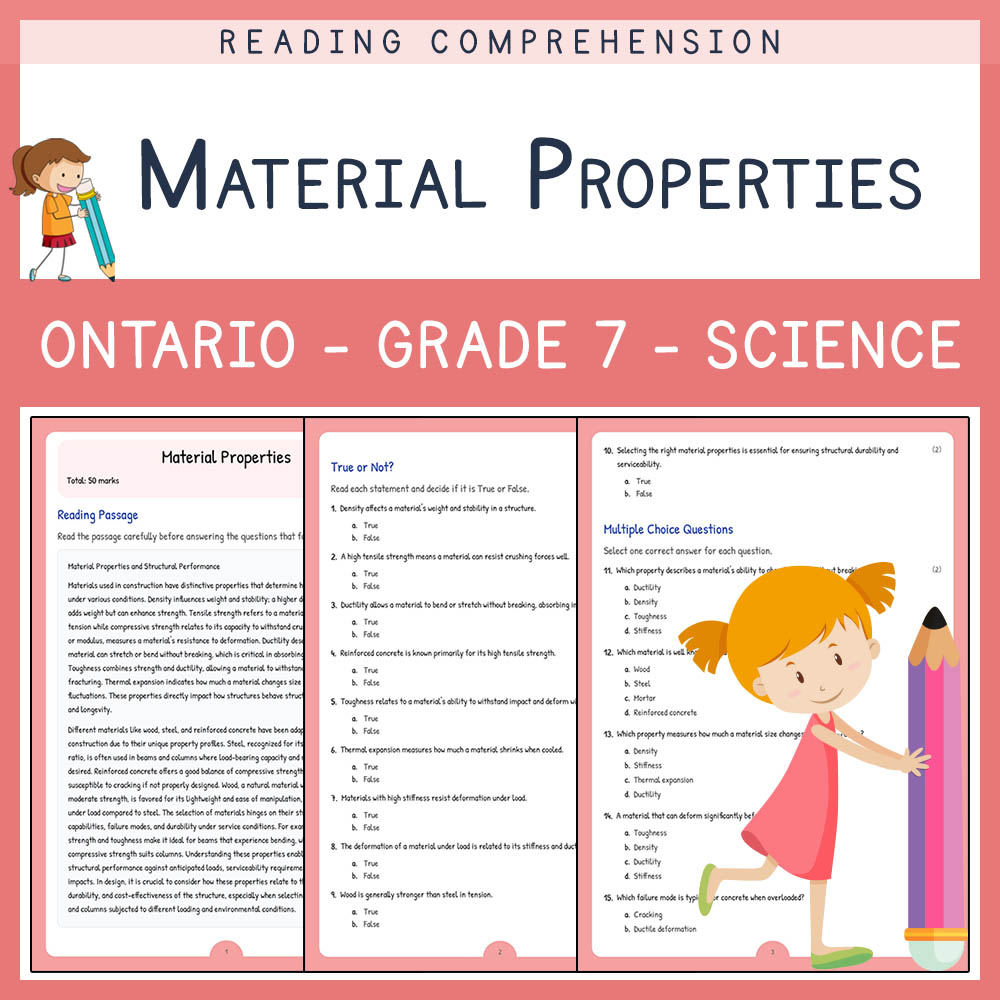
Grade 7 Science | Material Properties Worksheet & Answer Key (PDF)
 Created byLumora Learning
Learning Objectives
- Define key material properties such as density, tensile and compressive strength, stiffness, ductility, toughness, and thermal expansion.
- Explain how these properties influence the performance of structural materials.
- Contrast common construction materials—wood, steel, and reinforced concrete—in terms of strength-to-weight ratio, deformation, and failure modes.
Also included in: Grade 7 Science | Form Function Design Structures Unit Bundle | Ontario
Instant download
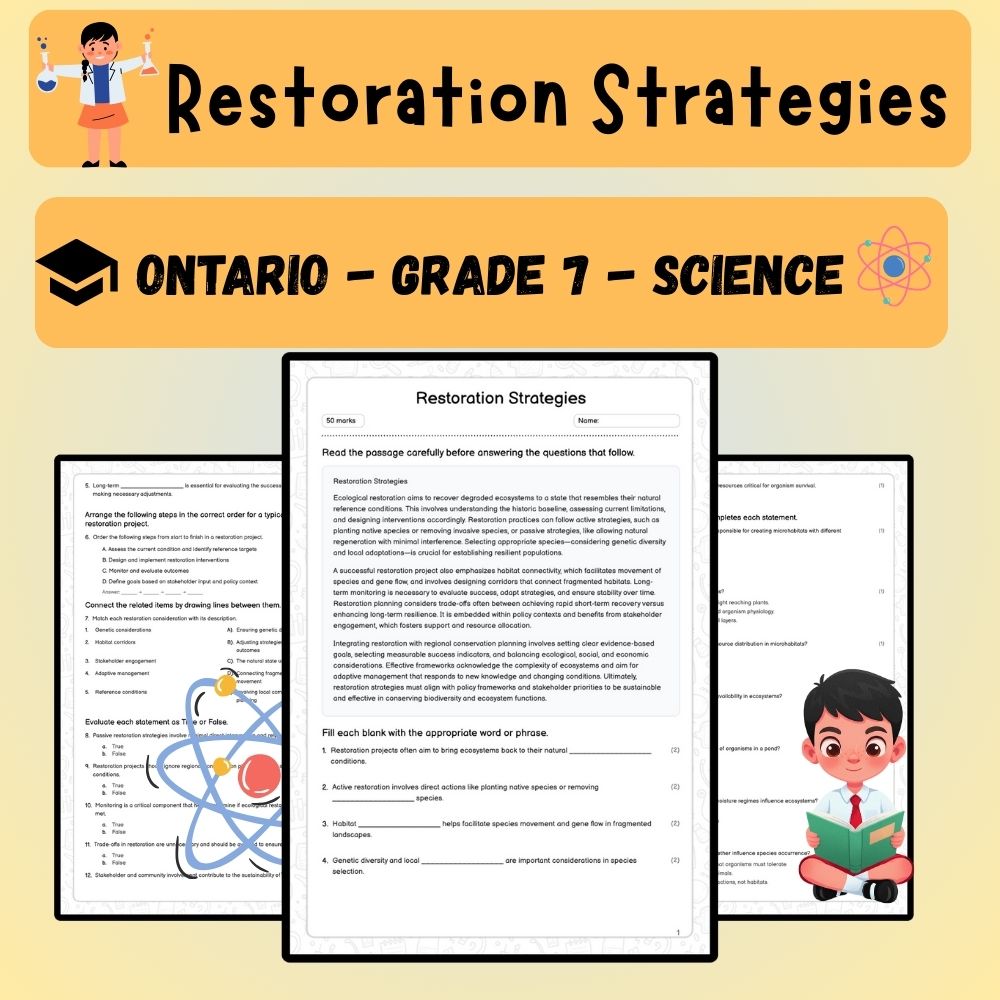
Grade 7 Science – Restoration Strategies Worksheet (PDF ) | Ontario Standards
Created byPrism Point LearningLearning Objectives
- Understand the principles of ecological restoration including reference conditions and approaches.
- Identify factors involved in species selection, habitat connectivity, and long-term monitoring in restoration projects.
- Evaluate trade-offs between short-term recovery and long-term resilience in restoration planning.
Also included in: Grade 7 Science UNIT Bundle | Ecosystems & Biodiversity Worksheets +1 more
Instant download
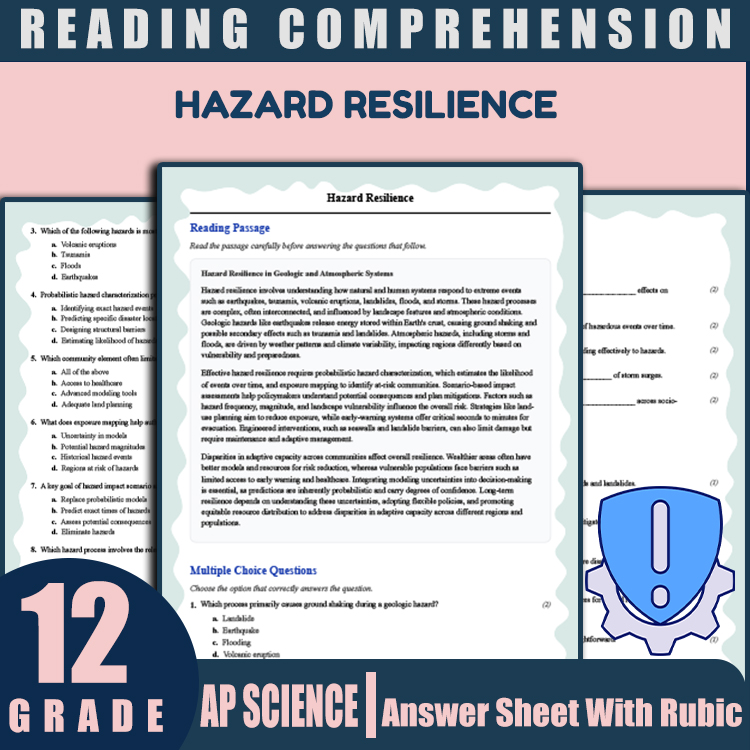
Grade 12 Science | Hazard Resilience Reading Worksheets & Answer Key (PDF)
JCreated byJ.S SheetsLearning Objectives
- Understand the processes behind geologic and atmospheric hazards such as earthquakes, tsunamis, and storms.
- Analyze how hazard probability, landscape vulnerability, and resilience strategies affect risk reduction.
- Evaluate approaches like land-use planning, early-warning systems, and engineered interventions in hazard scenarios.
Also included in: Grade 12 Science Unit | Earth Systems & Climate Change Worksheet Bundle (PDF) +1 more
Instant download
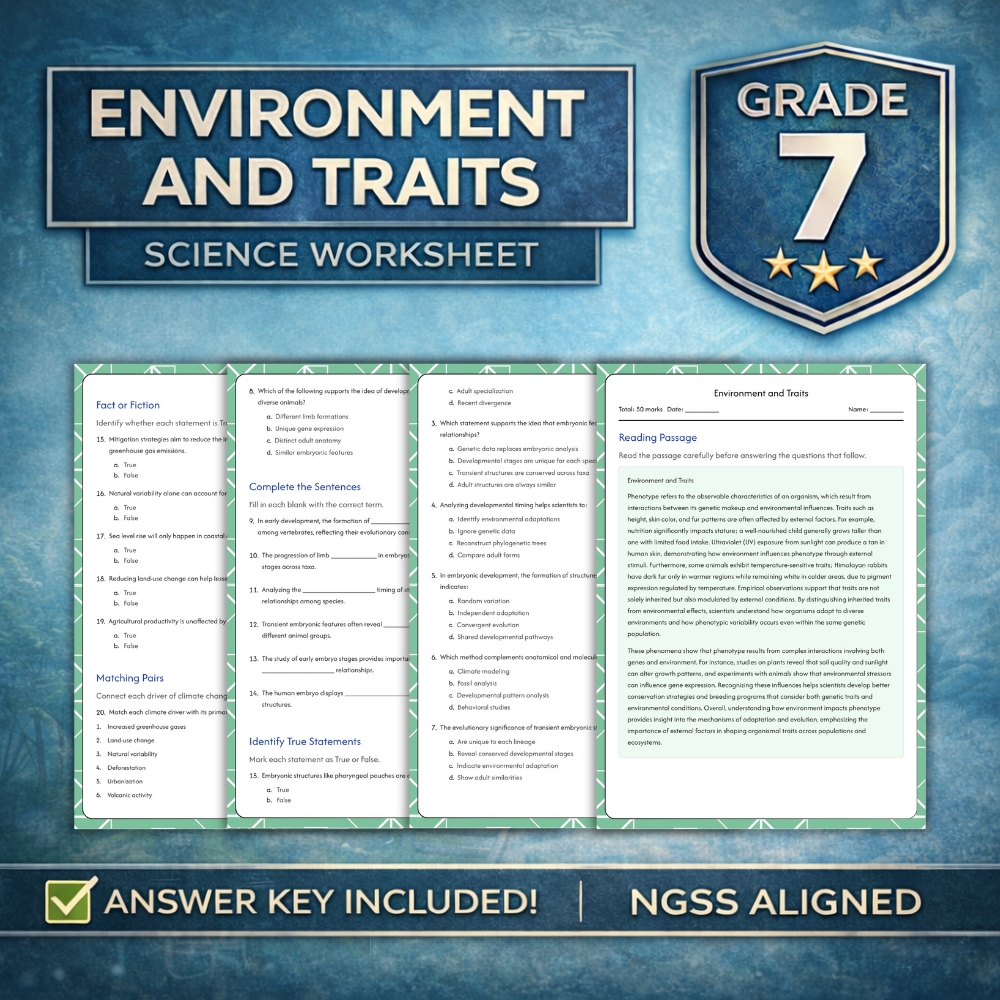
7th Grade Science | Environment and Traits NGSS Worksheet (Printable PDF)
 Created byCedar Grove Learning
Learning Objectives
- Understand how phenotype results from interactions between genetic makeup and environmental factors.
- Identify examples of traits influenced by environmental conditions.
- Distinguish between inherited genetic traits and environmentally modulated traits.
Instant download
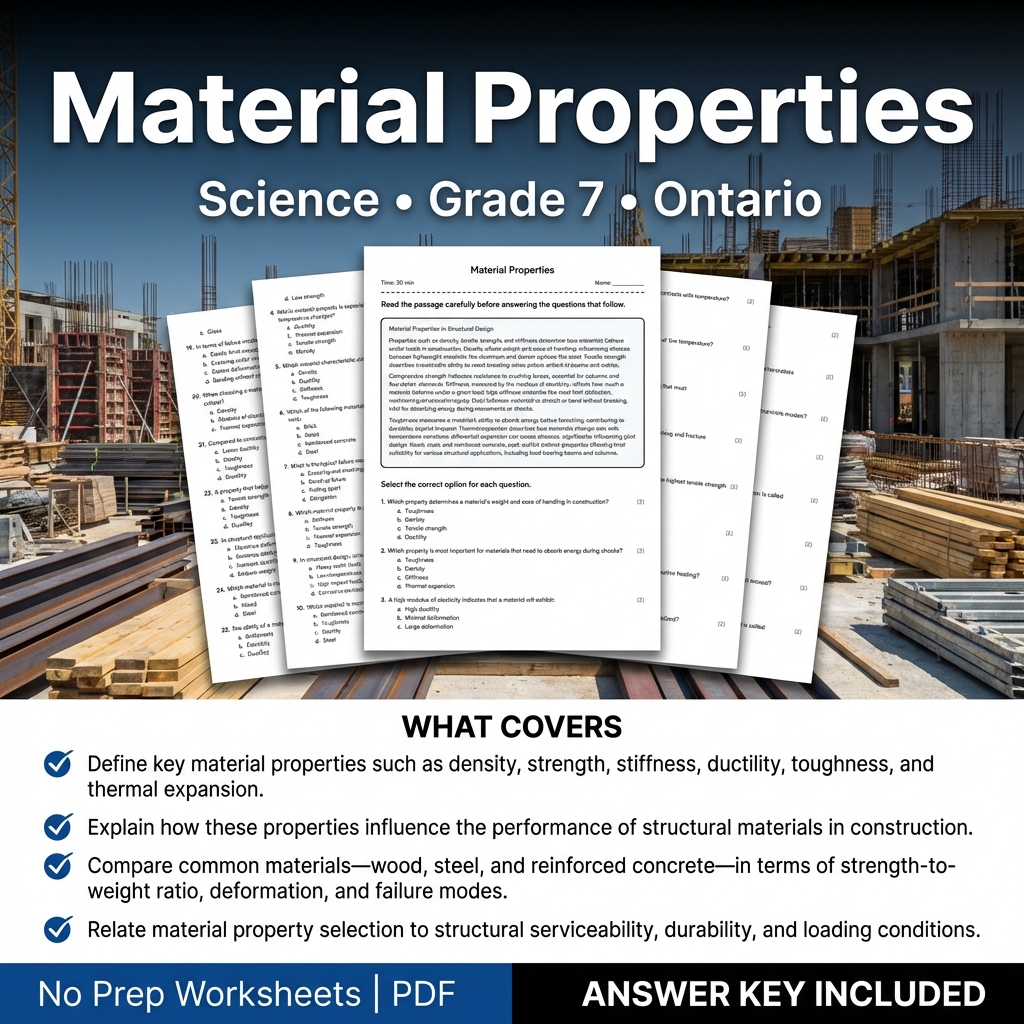
Material Properties Worksheet for Grade 7 Science | Ontario Standard Practice
Created byCoral Reef LearningLearning Objectives
- Define key material properties such as density, strength, stiffness, ductility, toughness, and thermal expansion.
- Explain how these properties influence the performance of structural materials in construction.
- Compare common materials—wood, steel, and reinforced concrete—in terms of strength-to-weight ratio, deformation, and failure modes.
Instant download
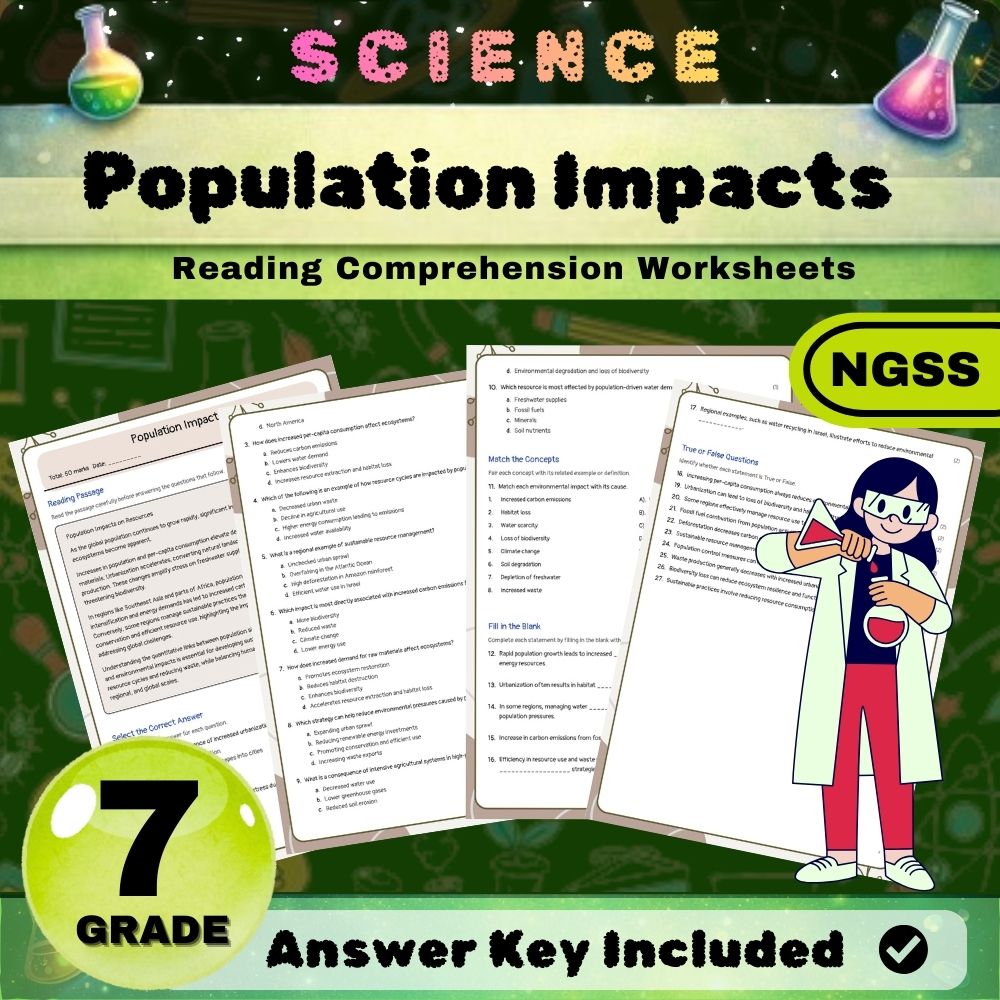
7th Grade Science | Population Impacts NGSS Worksheet (Answer Key)
 Created byMaple Path Learning
Learning Objectives
- Analyze how human population growth affects demand for water, energy, land, and materials.
- Understand the environmental consequences of increased consumption, urbanization, and waste.
- Evaluate regional examples demonstrating resource use and sustainability challenges.
Also included in: Grade 7 Science Bundle| Ecosystem Impacts & Climate Interactions NGSS Worksheets +1 more
Instant download
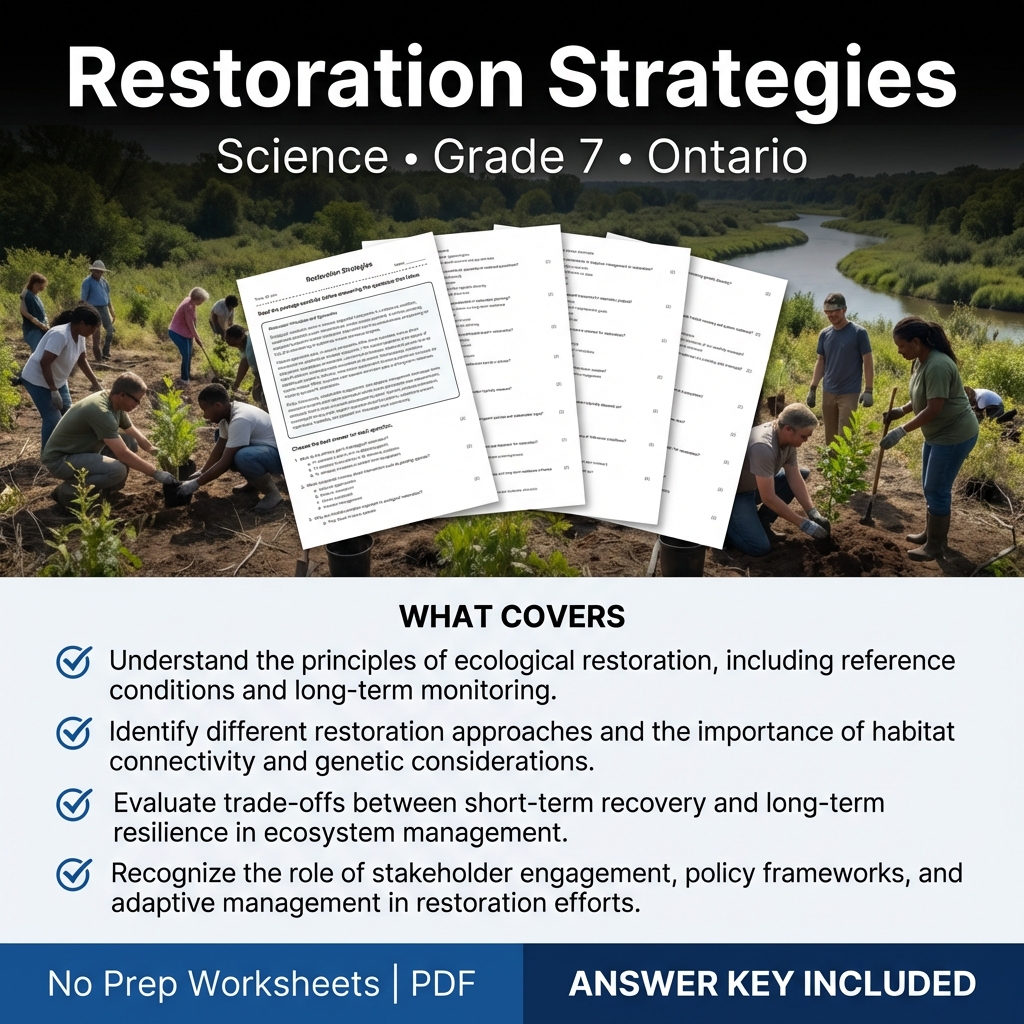
Grade 7 Science Worksheet on Restoration Strategies | Ontario Standards
Created byCoral Reef LearningLearning Objectives
- Understand the principles of ecological restoration, including reference conditions and long-term monitoring.
- Identify different restoration approaches and the importance of habitat connectivity and genetic considerations.
- Evaluate trade-offs between short-term recovery and long-term resilience in ecosystem management.
Instant download
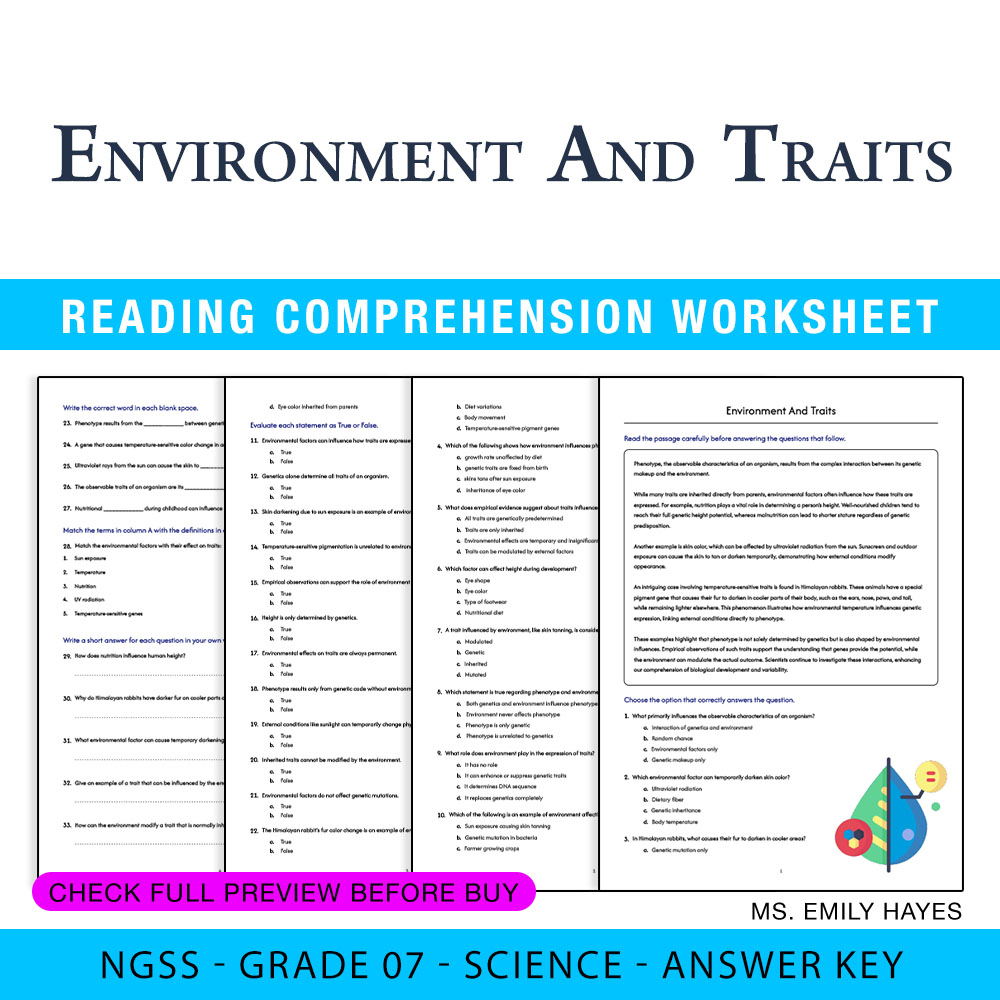
Grade 7 Science | Environment and Traits Worksheet (PDF+ Answer Key)
Created byCopper Leaf ClassroomLearning Objectives
- Explain how phenotype results from interactions between genetic makeup and environmental factors.
- Identify examples where environmental factors influence traits such as height, skin color, and pigmentation.
- Distinguish inherited genetic traits from environmentally modulated traits.
Instant download
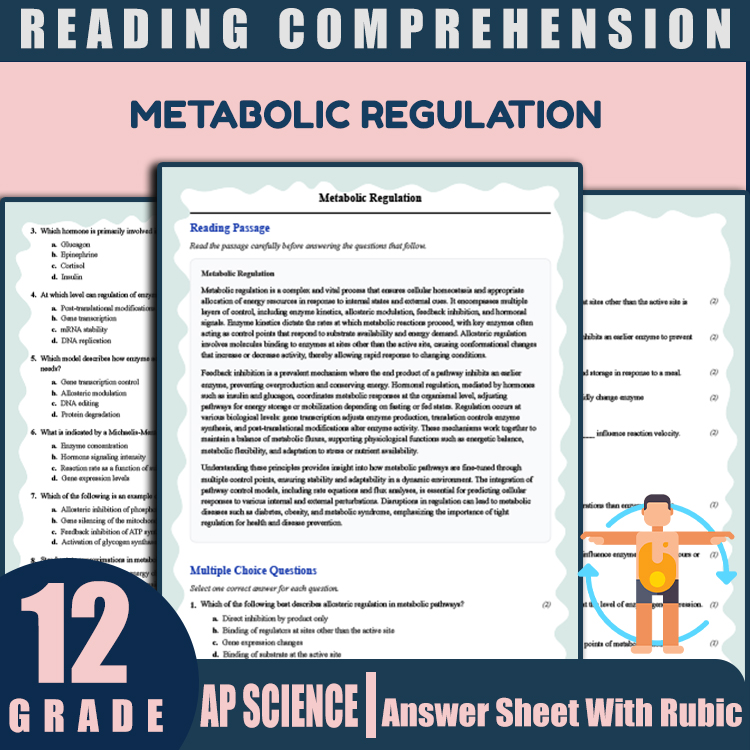
Grade 12 Science | Metabolic Regulation Reading Worksheet (PDF + Rubric)
JCreated byJ.S SheetsLearning Objectives
- Understand the principles of enzyme kinetics and how they influence metabolic pathways.
- Explain the mechanisms of allosteric modulation, feedback inhibition, and hormonal regulation in metabolism.
- Distinguish between regulation at transcriptional, translational, and post-translational levels.
Also included in: Grade 12 Science Unit Worksheet Pack | Molecular Biology, Genetics & Ecosystems +1 more
Instant download
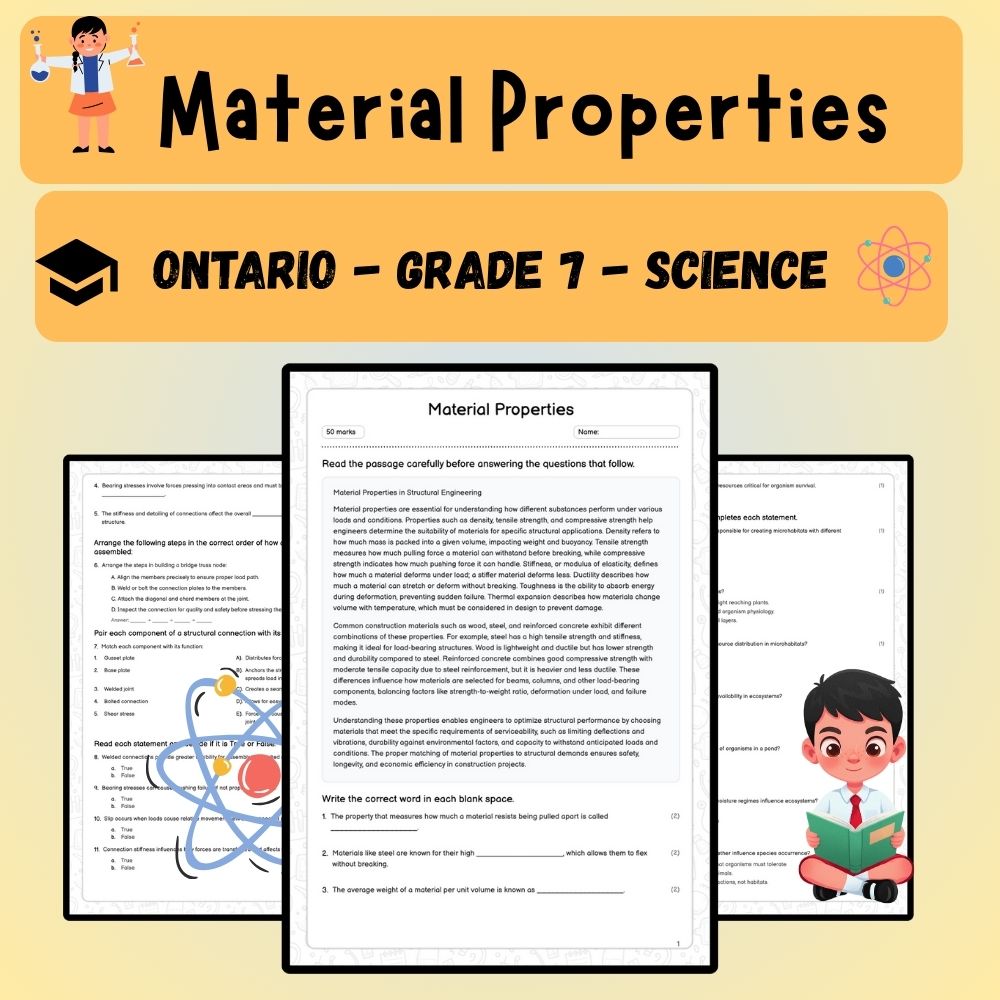
Grade 7 Science – Understanding Material Properties Worksheet (PDF )
Created byPrism Point LearningLearning Objectives
- Define key material properties such as density, tensile strength, compressive strength, stiffness (modulus), ductility, toughness, and thermal expansion.
- Explain how these properties influence the structural performance of materials.
- Compare construction materials like wood, steel, and reinforced concrete in terms of strength-to-weight ratio, deformation, and failure modes.
Also included in: Grade 7 Science Unit | Structural Engineering & Material Testing Worksheets Bundle +1 more
Instant download

Grade 7 Evolutionary Change Worksheet | Natural Selection | Florida NGSSS
Created byEvergreen Desk EducationLearning Objectives
- Explain why evolutionary change happens at the population level rather than the individual level.
- Describe how heritable variation can lead to certain traits becoming more common over generations.
- Use evidence and examples to connect evolutionary change to changing environments.
Instant download
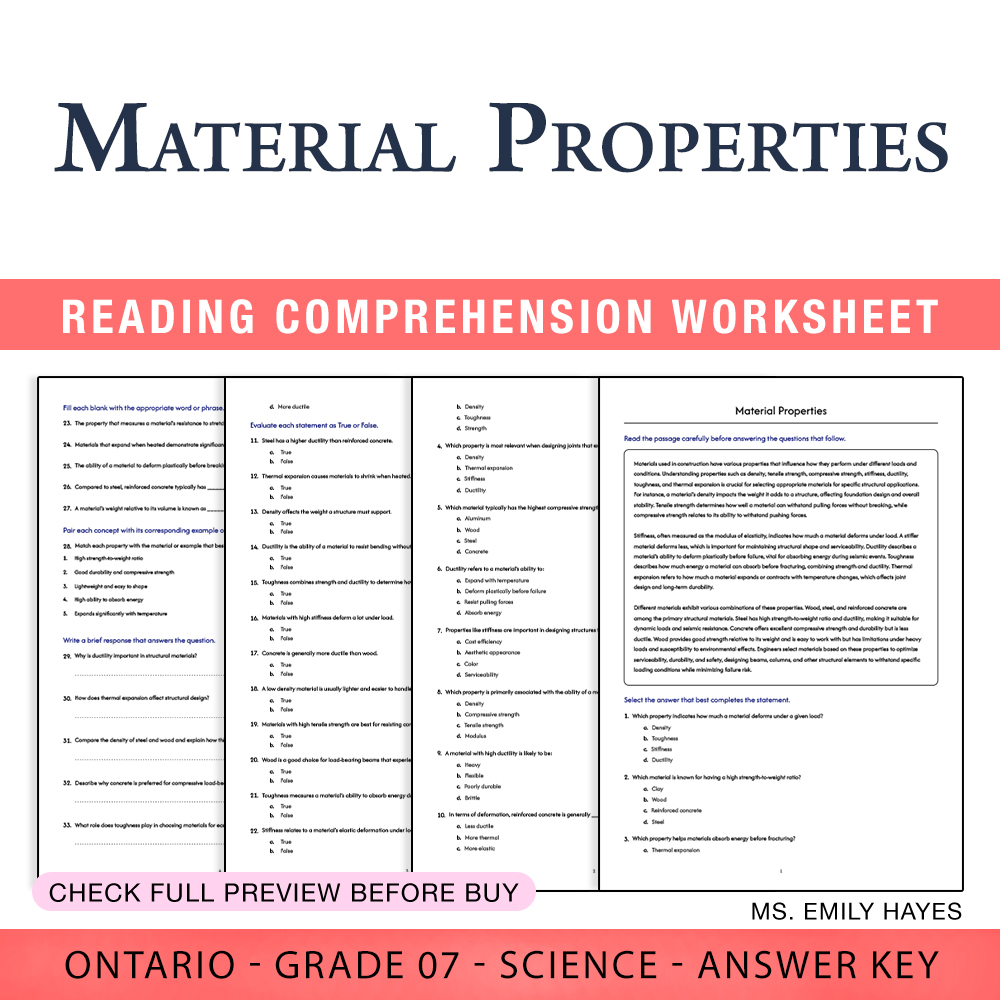
7th Grade Science | Material Properties Worksheet (PDF+ Answer Key)
Created byCopper Leaf ClassroomLearning Objectives
- Define and explain key material properties such as density, tensile and compressive strength, stiffness, ductility, toughness, and thermal expansion.
- Compare common construction materials—wood, steel, and reinforced concrete—in terms of their strength-to-weight ratio, deformation under load, and failure modes.
- Relate material properties to structural performance, serviceability, durability, and loading conditions.
Instant download
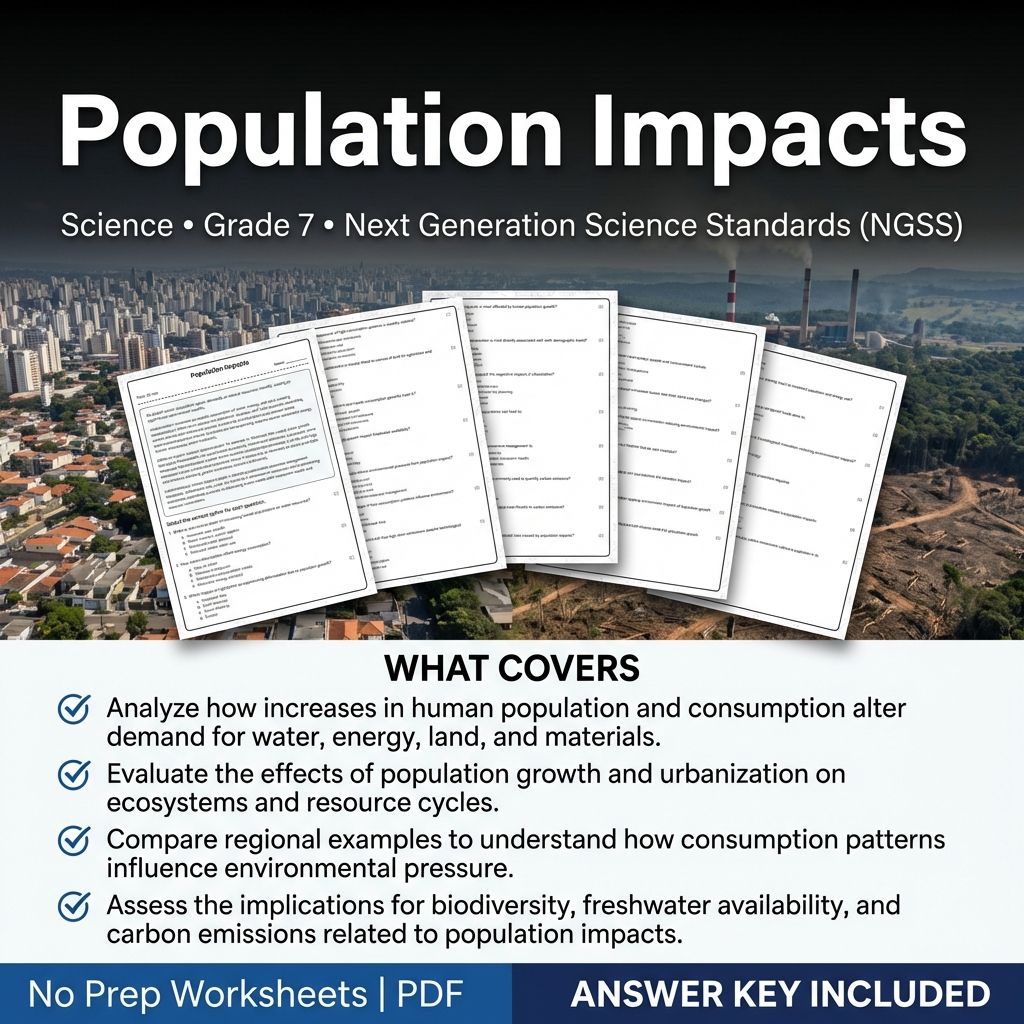
7th Grade Science Worksheet | Population Impacts & Environment (PDF & Answers)
Created byCoral Reef LearningLearning Objectives
- Analyze how increases in human population and consumption alter demand for water, energy, land, and materials.
- Evaluate the effects of population growth and urbanization on ecosystems and resource cycles.
- Compare regional examples to understand how consumption patterns influence environmental pressure.
Instant download

Grade 7 Science – Food Building Blocks Reading Worksheet | Standards-Aligned
Created byBright Mind ResourcesLearning Objectives
- Identify different types of food molecules: carbohydrates, proteins, fats, vitamins, and minerals.
- Understand the roles of food molecules in providing energy and building materials for the body.
- Recognize how food molecules are broken down and used in body processes.
Also included in: Grade 7 Energy Transfer Science Daily Reading: Lesson Bundle | California Std. +1 more
Instant download

Grade 7 Science | Levels of Organization in Ecosystems - Reading Comprehension
Created byCoral Reef LearningLearning Objectives
- Understand the hierarchy of biological organization from individuals to the biosphere
- Identify roles of producers, consumers, and decomposers in an ecosystem
- Explain the flow of energy through different trophic levels
Instant download

Environment And Traits Test Prep Worksheets | Grade 7 Science
Created byPrism Point LearningLearning Objectives
- Explain how phenotype can result from interactions between inherited genes and environmental conditions.
- Use evidence examples (nutrition, ultraviolet exposure, temperature) to support claims about trait variability.
- Distinguish inherited genetic contributions from environmental modulation when describing observed traits.
Also included in: Grade 7 Genetics Science Lesson Bundle NGSS: Inheritance, Traits, DNA
Instant download
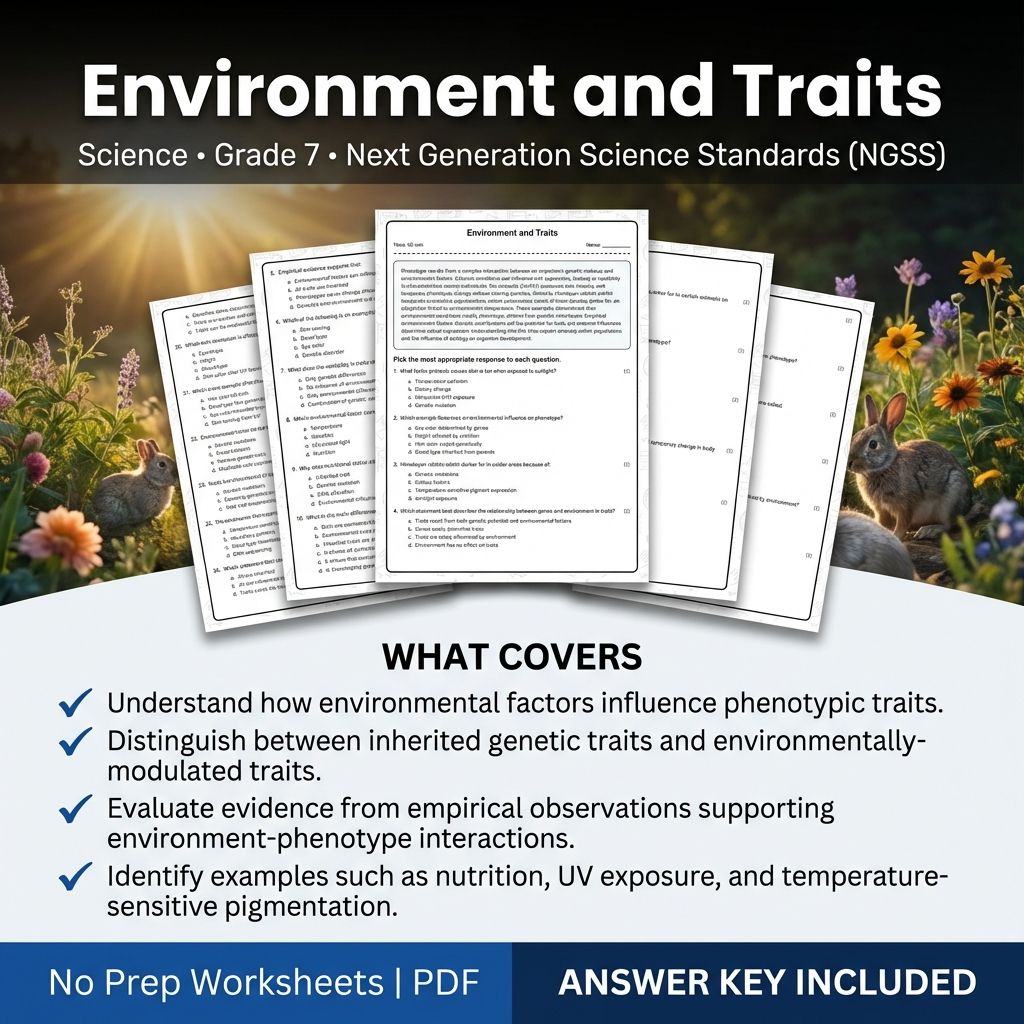
7th Grade Science | Environment and Traits Worksheet & Answer Key (Printable PDF)
Created byCoral Reef LearningLearning Objectives
- Understand how environmental factors influence phenotypic traits.
- Distinguish between inherited genetic traits and environmentally-modulated traits.
- Evaluate evidence from empirical observations supporting environment-phenotype interactions.
Instant download
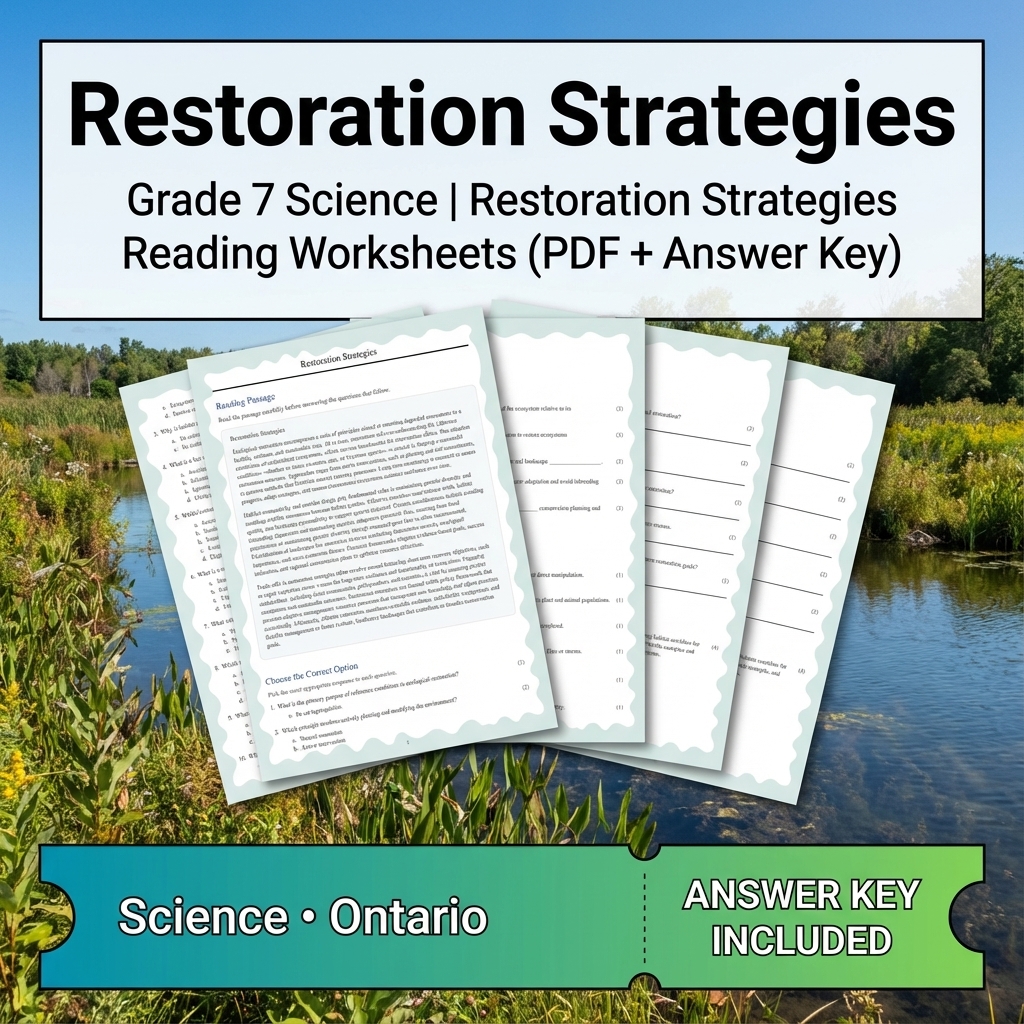
Grade 7 Science | Restoration Strategies Reading Worksheets (PDF + Answer Key)
JCreated byJ.S SheetsLearning Objectives
- Understand the key principles of ecological restoration, including reference conditions and species selection.
- Analyze different approaches to restoration, such as active versus passive strategies, and their implications.
- Evaluate long-term monitoring, habitat connectivity, and prioritization criteria in restoration projects.
Also included in: Grade 7 Science | Ecosystems, Biodiversity & Environmental Stewardship +1 more
Instant download
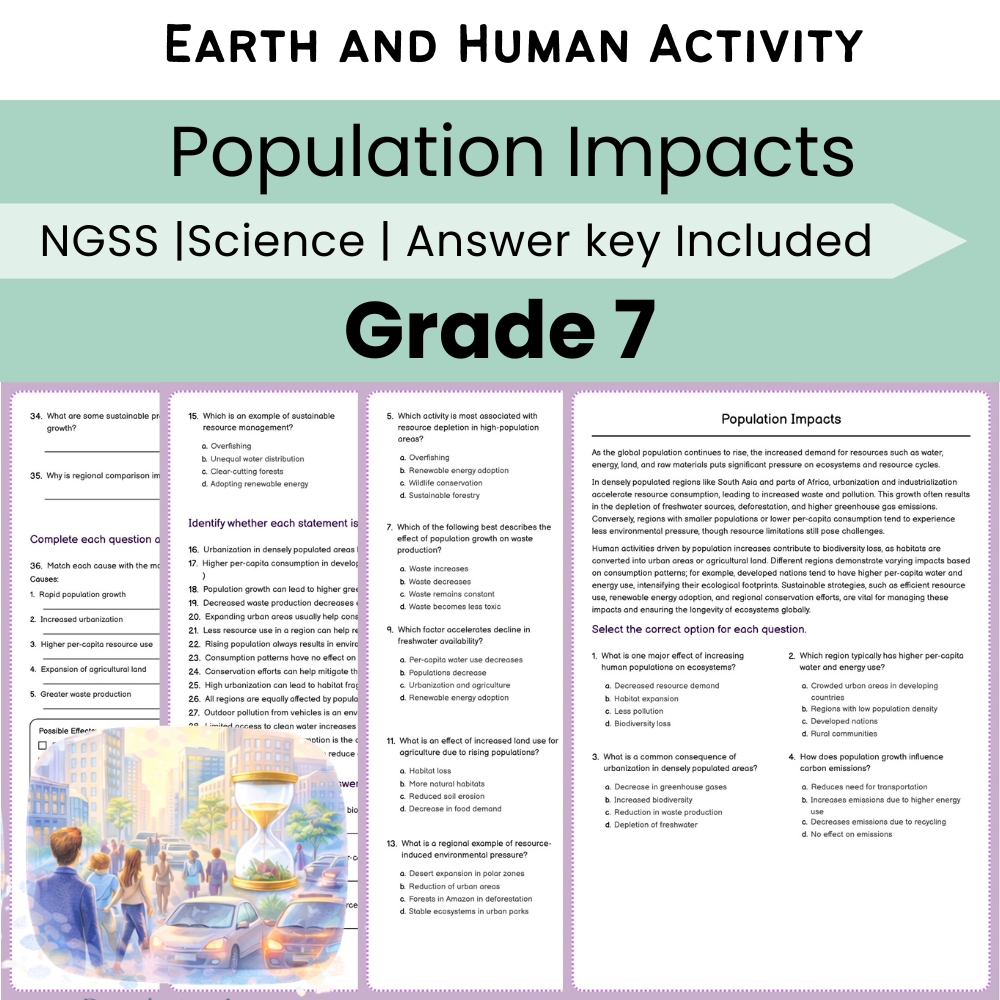
Population Impacts Worksheet | Grade 7 Science Assessment & Student Practice
Learning Objectives
- Analyze how increases in human population and per-capita consumption affect demand for water, energy, land, and raw materials.
- Evaluate the environmental consequences of population growth on biodiversity, freshwater resources, and carbon emissions.
- Compare regional examples to understand how consumption patterns influence environmental pressures.
Also included in: Grade 7 Science Lesson Bundle | Earth and Human Activity NGSS +1 more
Instant download
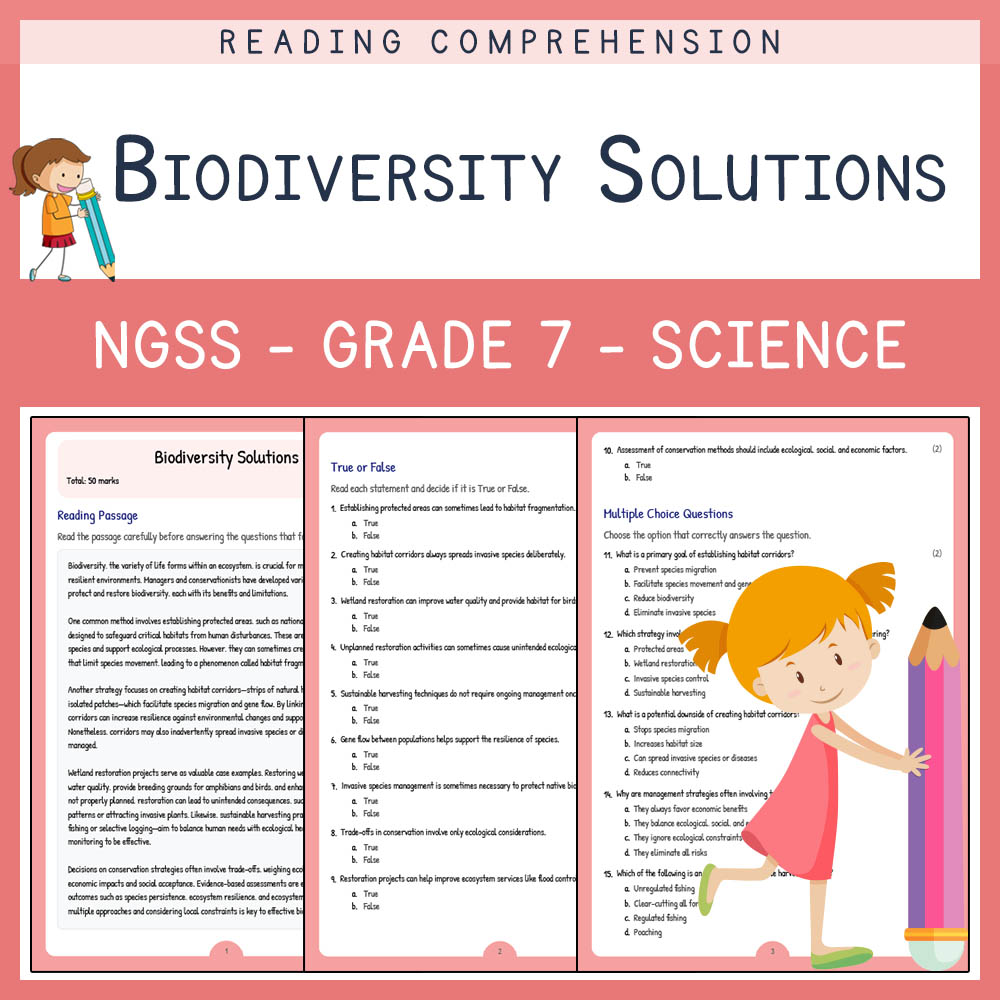
Grade 7 Science | Biodiversity Solutions Worksheet (Answer Key & Rubric)
Created byLumora LearningLearning Objectives
- Understand various management strategies for maintaining biodiversity and ecosystem services.
- Evaluate the benefits and potential trade-offs of approaches such as habitat corridors, protected areas, and restoration.
- Analyze case examples like wetland restoration and corridor establishment for their ecological, economic, and social impacts.
Instant download
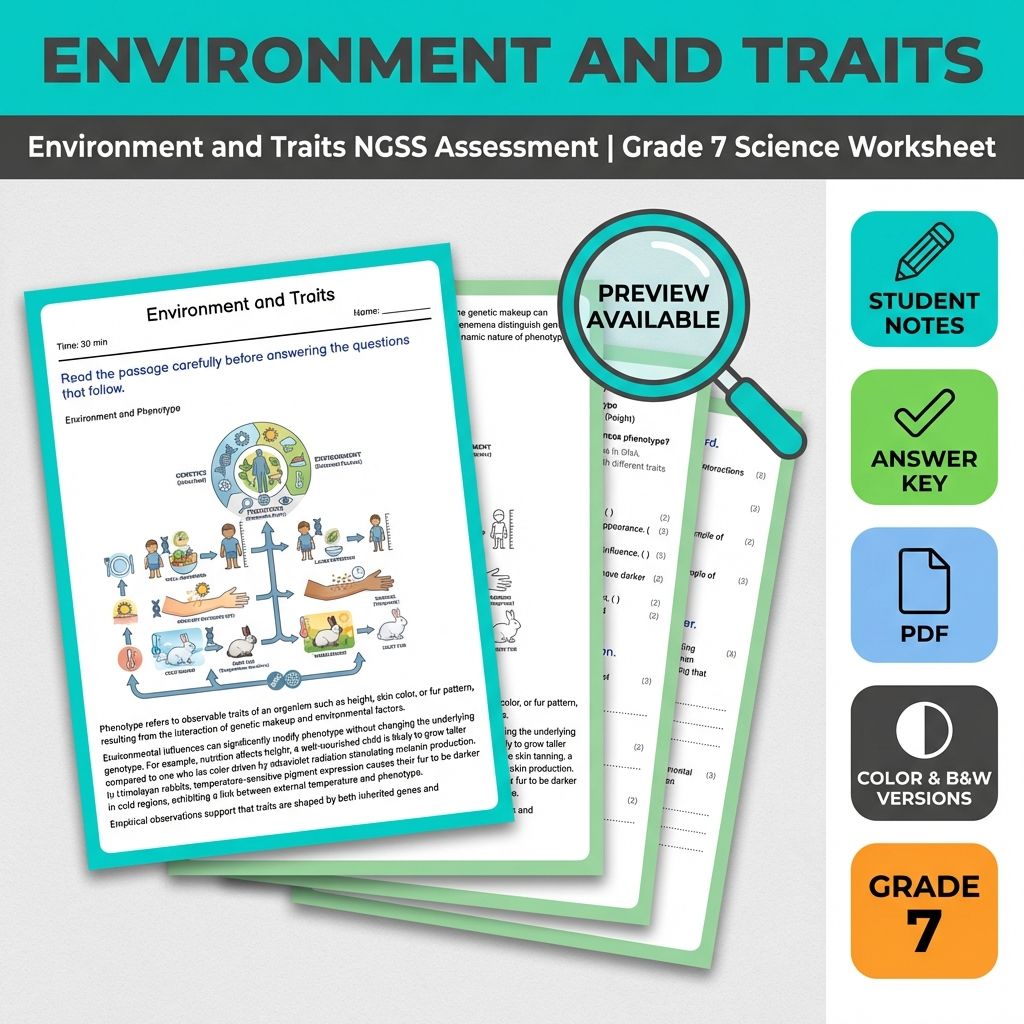
Environment and Traits NGSS Assessment | Grade 7 Science Worksheet
Created byPrism Point LearningLearning Objectives
- Understand how phenotype results from interactions between genetics and environment.
- Identify examples illustrating environmental influence on traits.
- Distinguish inherited genetic traits from environmentally modulated traits.
Also included in: Grade 7 Science Mini Bundle – Heredity: Inheritance and Variation of Traits +1 more
Instant download
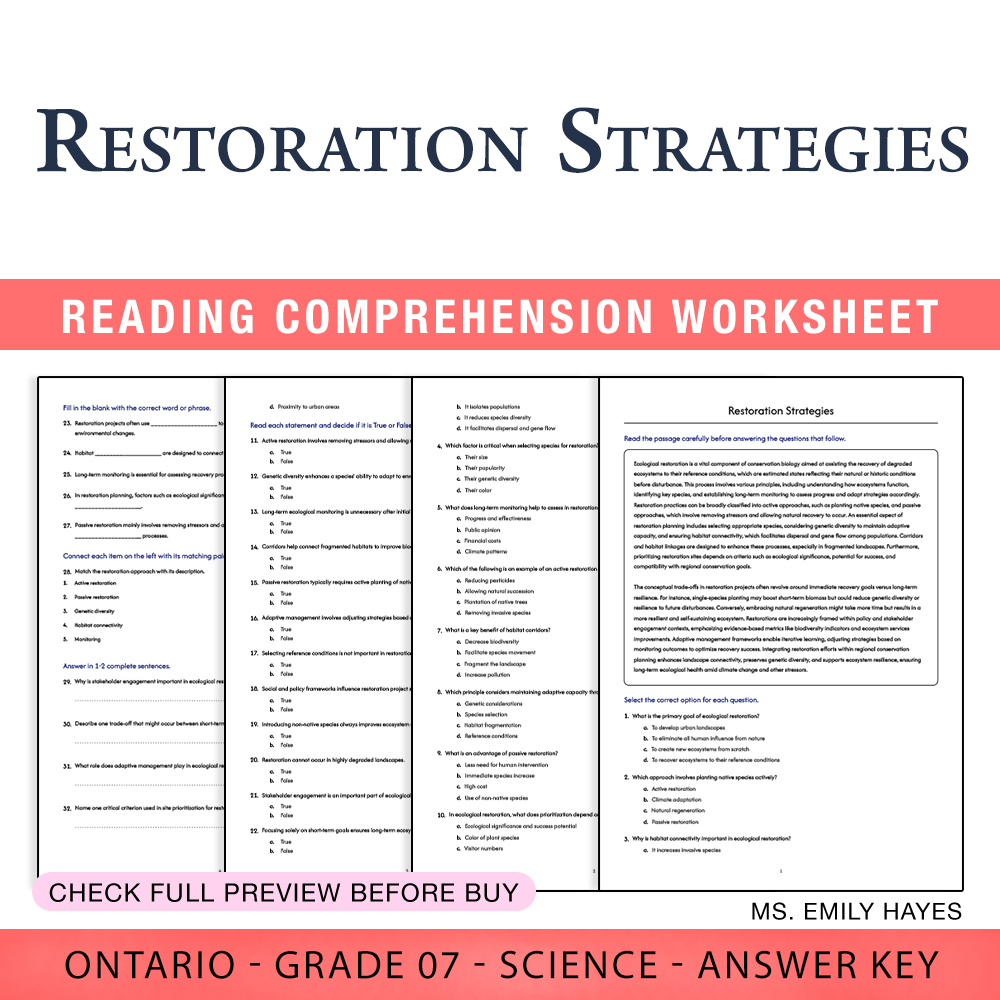
7th Grade Science | Restoration Strategies Worksheet (PDF+ Answer Key)
Created byCopper Leaf ClassroomLearning Objectives
- Explain the principles of ecological restoration, including reference conditions and long-term monitoring.
- Identify and differentiate active versus passive restoration approaches and their applications.
- Analyze factors such as habitat connectivity, species selection, and genetic considerations in restoration planning.
Instant download

Food Building Blocks Assessment | California Standards Grade 7 Science
Created byPrism Point LearningLearning Objectives
- Explain how food molecules can be used for building body structures and for providing usable energy
- Describe how digestion and cellular processes transform food molecules into forms the body can use
- Connect eating habits to changes in growth, repair, and body condition over time
Also included in: Grade 7 Energy Flow and Matter Cycling Science lesson bundle – California Standards +1 more
Instant download
Grade 7 Science | Population Impacts Worksheet & Answer Key (NGSS Aligned)
Created byLumora LearningLearning Objectives
- Understand how human population growth influences demand for resources such as water, energy, land, and raw materials.
- Analyze the effects of increased consumption on ecosystems, biodiversity, and resource cycles.
- Evaluate regional examples to compare how consumption patterns shape environmental pressures.
Instant download
Grade 7 Science – Biodiversity Solutions Worksheet(PDF + Answer Key)
Created byCopper Leaf ClassroomLearning Objectives
- Understand management strategies for maintaining biodiversity and ecosystem health.
- Compare trade-offs and consequences of different biodiversity management approaches.
- Evaluate case examples such as wetland restoration and corridor creation.
Instant download
Grade 7 Science | Material Properties Reading Worksheet (PDF + Answer Key)
JCreated byJ.S SheetsLearning Objectives
- Understand key material properties such as density, strength, stiffness, ductility, toughness, and thermal expansion.
- Explain how these properties influence the structural performance of different construction materials.
- Compare common materials—wood, steel, and reinforced concrete—in terms of strength-to-weight ratio, deformation, and failure modes.
Also included in: Grade 7 Science Unit Bundle – Structural Engineering & Material Testing +1 more
Instant download
7th Grade Science | Population Impacts Worksheet (PDF+ Answer Key)
Created byCopper Leaf ClassroomLearning Objectives
- Understand how human population growth affects demand for natural resources and ecosystems.
- Analyze regional examples showing the relationship between consumption patterns and environmental pressures.
- Evaluate sustainable resource management strategies to mitigate negative impacts of population growth.
Instant download

Levels of Organization Assessment | TEKS Standards Grade 7 Science
Created byPrism Point LearningLearning Objectives
- Describe the hierarchical levels of organization from individuals to the biosphere.
- Identify different roles of producers, consumers, and decomposers in ecosystems.
- Explain how energy flows through trophic levels and its impact on system stability.
Instant download

Grade 7 Science | Levels of Organization Worksheet (TEKS)
Created byEvergreen Desk EducationLearning Objectives
- Describe hierarchical levels of biological organization from individual organisms to the biosphere.
- Explain how producers, consumers, and decomposers function in ecosystems and how energy flows through trophic levels.
- Analyze how structure at different organization levels supports ecosystem stability and resilience.
Instant download
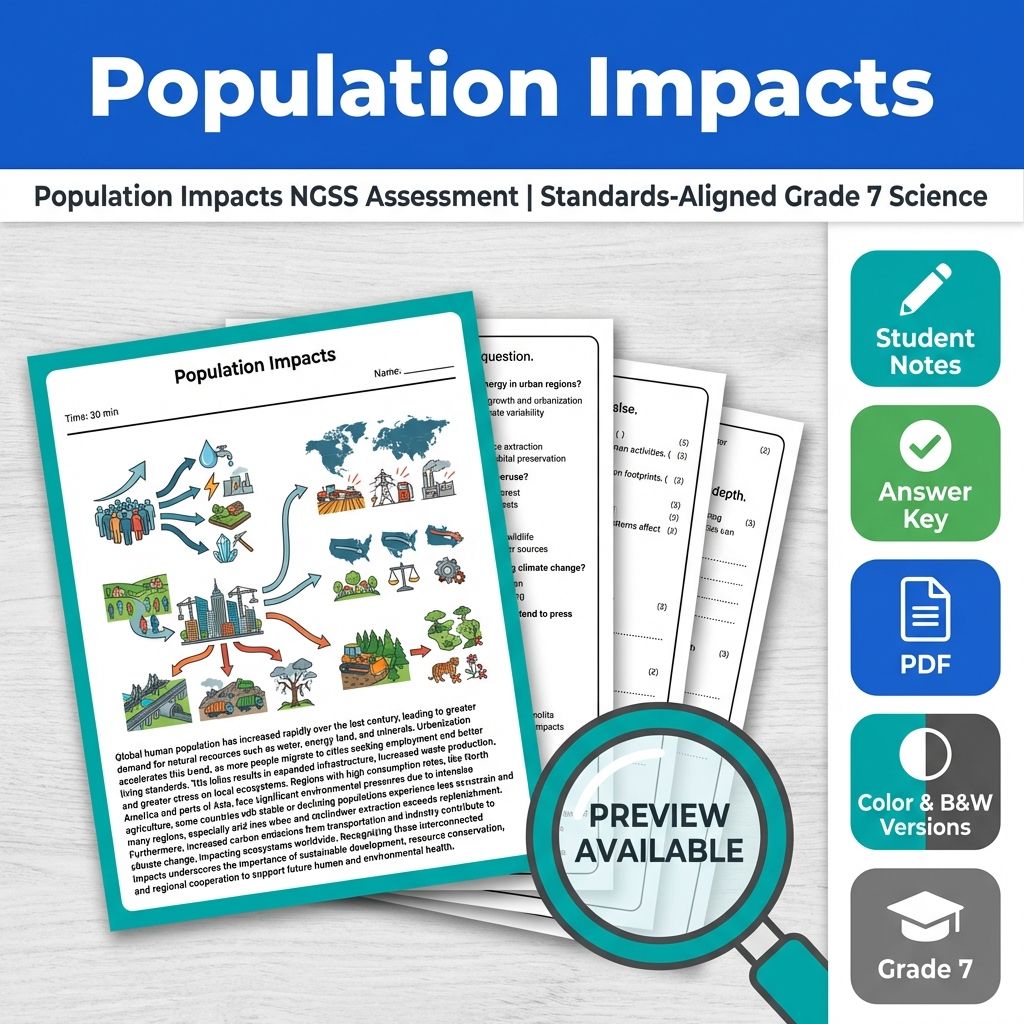
Population Impacts NGSS Assessment | Standards-Aligned Grade 7 Science
Created byPrism Point LearningLearning Objectives
- Understand how increased human population affects demand for water, energy, land, and raw materials.
- Analyze the consequences of population growth on ecosystems, biodiversity, and resource cycles.
- Evaluate regional examples to compare how consumption patterns influence environmental pressures.
Also included in: Grade 7 Science Mini Bundle | Earth and Human Activity NGSS Not specified +1 more
Instant download

7th Grade ELA Source Evaluation Worksheet (PDF) | Common Core aligned
 Created byGolden Apple Studio
Learning Objectives
- Identify strategies for finding relevant print and digital sources for a research question.
- Evaluate source reliability by considering author expertise, evidence quality, and publication context.
- Use direct quotations and paraphrases accurately while connecting evidence to claims.
Also included in: Grade 7 ELA Writing Routinely & Claims Lesson Bundle | CCSS +1 more
Instant download

11th Grade Science | Impulse Applications Worksheet & Answer Key (Printable PDF)
Created byCoral Reef LearningLearning Objectives
- Understand the impulse–momentum relationship and its application in designing crash-protection systems.
- Evaluate force–time data to assess safety constraints during collisions.
- Analyze material deformation parameters to improve crash system effectiveness.
Also included in: Grade 11 Science Unit Bundle – Forces, Impulse & Conservation Practice PDFs +1 more
Instant download

Earth System Feedbacks Worksheet Grade 11 Science NGSSS Climate Systems
Created byEvergreen Desk EducationLearning Objectives
- Explain how positive and negative feedbacks affect Earth system changes
- Use specific examples (water vapor, ice albedo, clouds) to describe feedback pathways
- Evaluate how human activities can strengthen or weaken feedback mechanisms
Instant download

AP Biology Population Genetics Worksheet | Grade 11 Science Practice
Created byPrism Point LearningLearning Objectives
- Explain how Hardy-Weinberg equilibrium provides a null model for allele frequency change in populations.
- Calculate genotype frequencies from allele frequencies and interpret how microevolutionary forces alter them over time.
- Compare the effects of selection, genetic drift, mutation, and migration on evolutionary trajectories and adaptive potential.
Also included in: AP Biology Systems Integration Lesson Bundle: Grade 11 Science | AP
Instant download

Grade 11 ELA – Mastering Logical Presentation & Writing |Daily Reading Worksheet
 Created byQuiet Forest Education
Learning Objectives
- Understand the importance of well-structured introductions in persuasive and expository writing.
- Identify key elements that make an introduction clear and engaging.
- Analyze examples of effective introductions that preview the main idea.
Instant download

Testable Ideas Worksheet Grade 11 Science Activities | NGSSS
Created byPrism Point LearningLearning Objectives
- Explain how hypotheses make testable predictions and how evidence supports or challenges them.
- Distinguish between an idea, a hypothesis, and testable outcomes in scientific investigations.
- Use results—confirming or not—to refine assumptions and improve future predictions.
Instant download

Grade 11 ELA – Literary Structure Techniques Daily Worksheet | TEKS Aligned
Created byQuiet Forest EducationLearning Objectives
- Analyze how chronological order and flashbacks influence story understanding.
- Identify narrative time techniques used in literature.
- Explain how shifts in narrative perspective affect character development and theme.
Instant download

Grade 11 ELA – Inferences from Diction & Tone | Daily Reading Worksheet
Created byQuiet Forest EducationLearning Objectives
- Identify tone and attitude in texts based on word choice
- Recognize use of connotative language and figurative expressions
- Connect diction to speaker's motivation and central concerns
Instant download

Grade 11 Health Worksheet | Understanding Health Determinants (NHES)
 Created bySunny Desk Resources
Learning Objectives
- Identify major health determinants (socioeconomic status, environment, genetics, and cultural influences) and describe how each can affect health outcomes.
- Explain how multiple determinants interact to shape opportunities for health promotion and disease prevention.
- Evaluate real-world scenarios to determine which determinants may be influencing health and what actions could reduce harm.
Also included in: Grade 11 Health Promotion & Disease Prevention Health Lesson Bundle | NHES +1 more
Instant download

Grade 11 Health Resources & Options Worksheet (NHES) – PDF
Created bySunny Desk ResourcesLearning Objectives
- Identify trustworthy health information sources and support services for decision-making
- Evaluate how using different resources can expand or limit health-related options
- Analyze real-life scenarios involving mental health, peer influence, and access to healthcare
Also included in: Grade 11 Health Decision-Making & Risk Assessment Lesson Bundle (NHES) +1 more
Instant download

Grade 11 Health | Conflict Resolution Worksheet (NHES) (PDF)
Created bySunny Desk ResourcesLearning Objectives
- Explain how conflict resolution helps people resolve disputes peacefully and maintain positive relationships.
- Identify strategies for communicating perspectives calmly and respectfully during disagreements.
- Describe how different conflict styles affect outcomes and how to choose appropriate responses.
Also included in: Grade 11 Refusal & Communication Health Lesson Bundle Worksheets - NHES +1 more
Instant download
Browse more categories
About Reading comprehension Worksheets
Find reading comprehension worksheets for class practice, homework, or self-study. All 40,289 are instant PDF downloads.
Each resource here is built by an independent educator and reviewed for quality. Worksheets print straight from PDF and suit classroom use, homework, or extra practice; most come with answer keys, and you can preview before purchasing.