
Reading comprehension Worksheets
40,289 type resources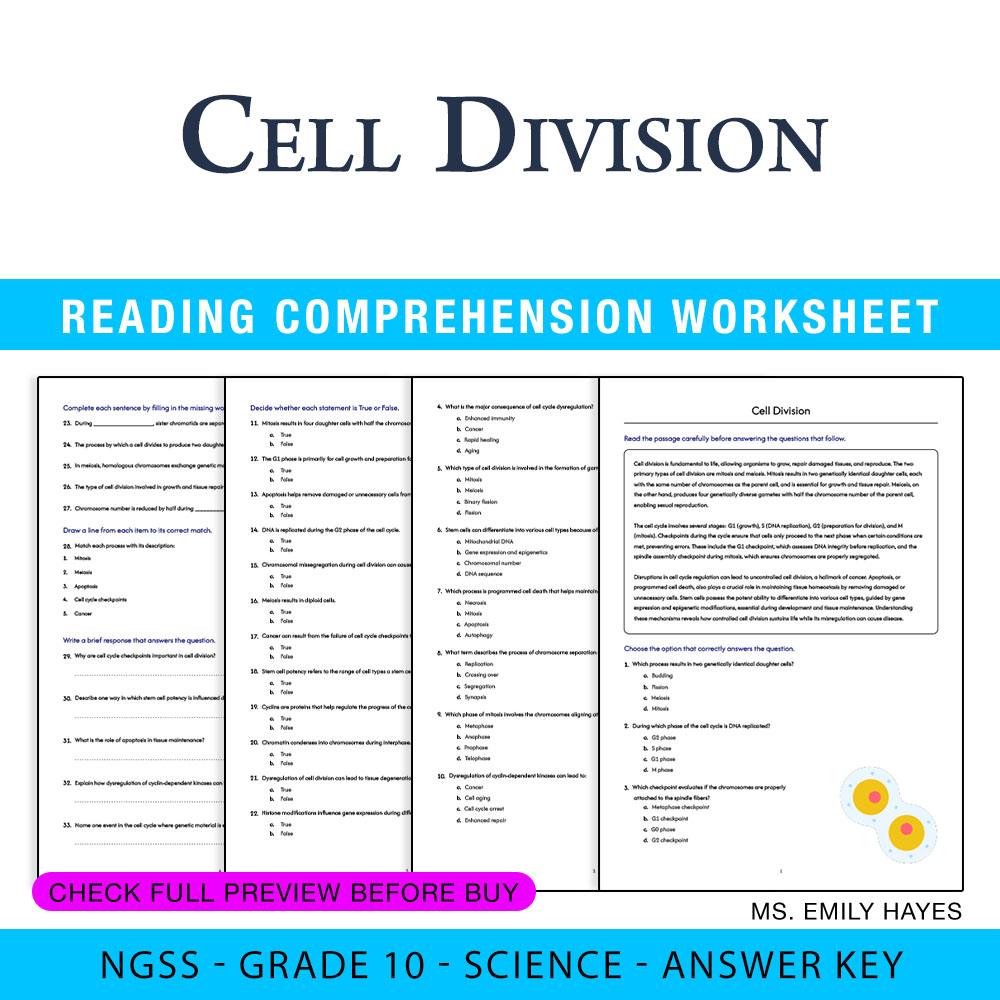
Grade 10 Science | Cell Division Worksheet (PDF+ Answer Key)
 Created byCopper Leaf Classroom
Learning Objectives
- Explain the processes of mitosis and meiosis and their roles in cell division.
- Describe the cell cycle, including checkpoints and regulation mechanisms.
- Identify consequences of cell cycle dysregulation, such as cancer.
Instant download
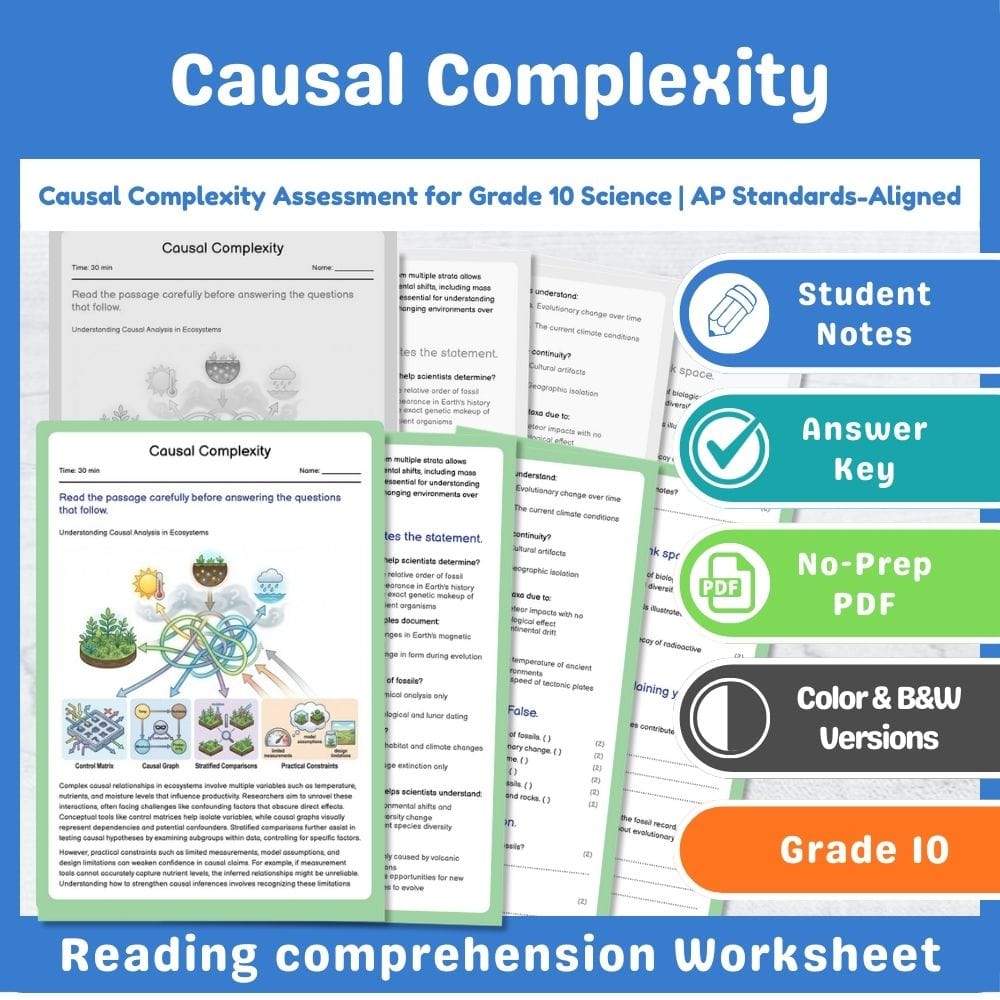
Causal Complexity Assessment for Grade 10 Science | AP Standards-Aligned
 Created byPrism Point Learning
Learning Objectives
- Understand methods for disentangling multivariable causal relationships in complex systems.
- Apply conceptual frameworks like control matrices, causal graphs, and stratified comparisons.
- Identify confounding factors and interaction effects in ecological and environmental contexts.
Instant download

Grade 10 Science – Negative Feedback Worksheet (TEKS) PDF
 Created byEvergreen Desk Education
Learning Objectives
- Explain how negative feedback systems maintain internal stability using sensors, control centers, and effectors.
- Interpret how deviations from a set point trigger antagonistic (opposite) corrective responses.
- Compare negative feedback to positive feedback using temperature, blood glucose, and blood pressure examples.
Instant download
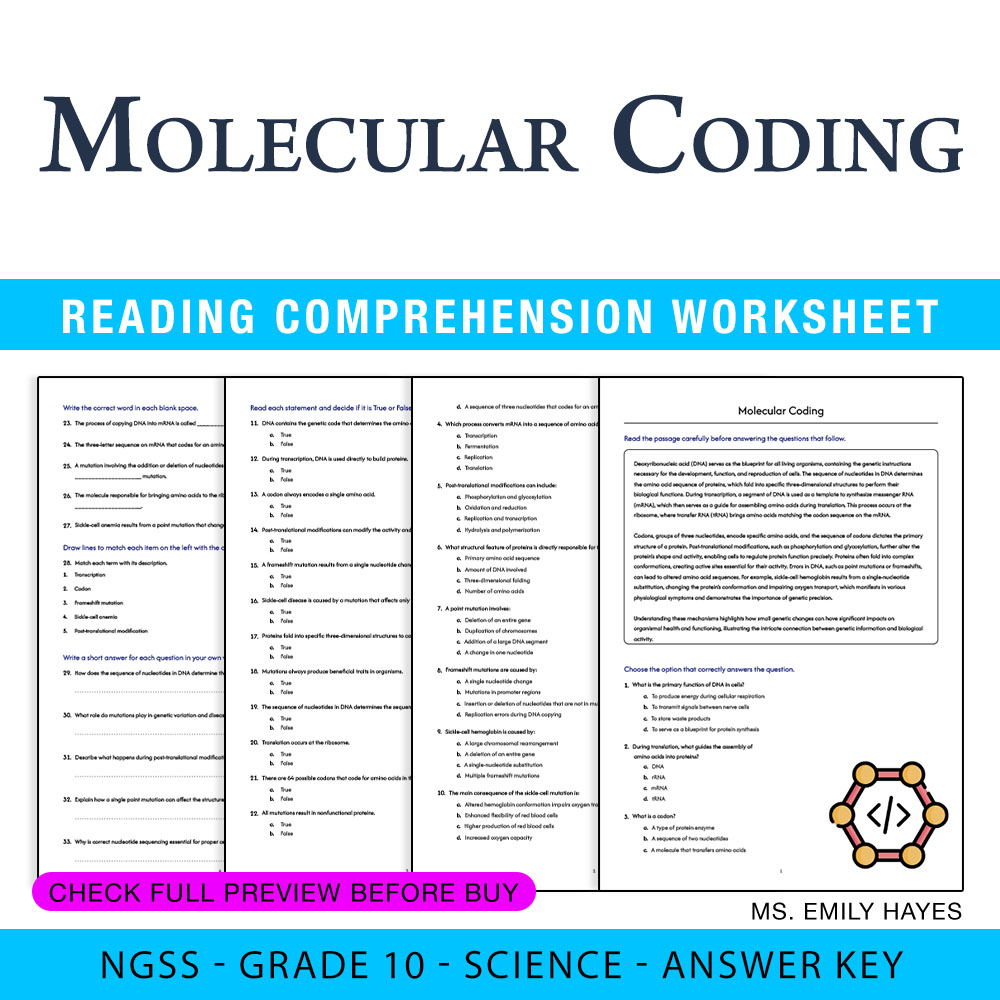
10th Grade Science | Molecular Coding Worksheet (PDF+ Answer Key)
Created byCopper Leaf ClassroomLearning Objectives
- Understand the relationship between DNA sequences and protein structure.
- Explain the processes of transcription and translation in protein synthesis.
- Identify how mutations can alter protein function, including sickle-cell hemoglobin.
Instant download
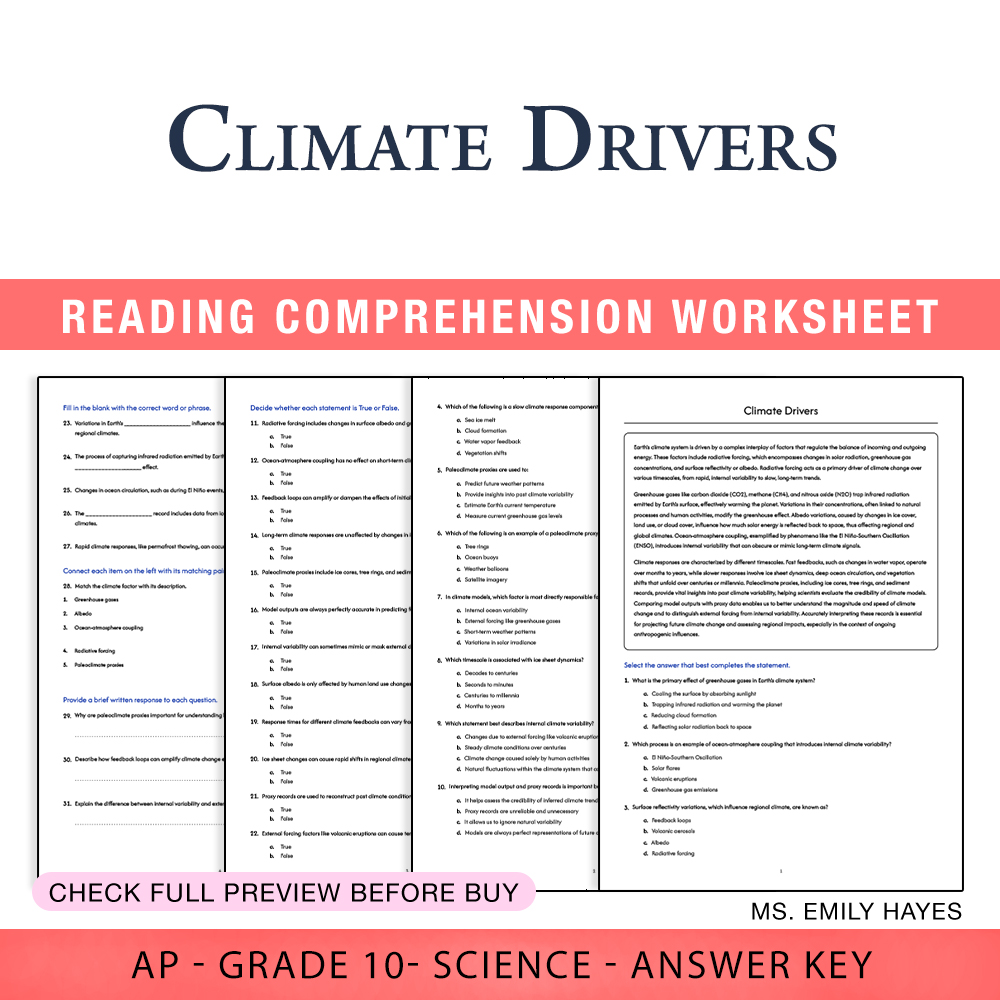
10th Grade Science | Climate Drivers Worksheet (PDF+ Answer Key)
Created byCopper Leaf ClassroomLearning Objectives
- Analyze the factors influencing Earth's climate, including radiative forcing, greenhouse gases, and albedo variations.
- Interpret energy-balance models, feedback loop diagrams, and paleoclimate proxies to understand climate changes.
- Evaluate the timescales of climate response and distinguish between internal variability and external forcing.
Also included in: Grade 10 Science AP – Surface Processes & Earth Systems (PDF + Answer Key) +1 more
Instant download

Grade 10 Science – Orbital Gravity Models | Daily Reading Worksheet
 Created byBright Mind Resources
Learning Objectives
- Understand the basic concepts of gravity and how it affects celestial bodies.
- Identify the relationship between centripetal acceleration and orbital motion.
- Describe how gravitational forces sustain planetary and satellite orbits.
Also included in: Grade 10 Climate Linkages Science Daily Reading Worksheets Bundle | CA Standards +1 more
Instant download
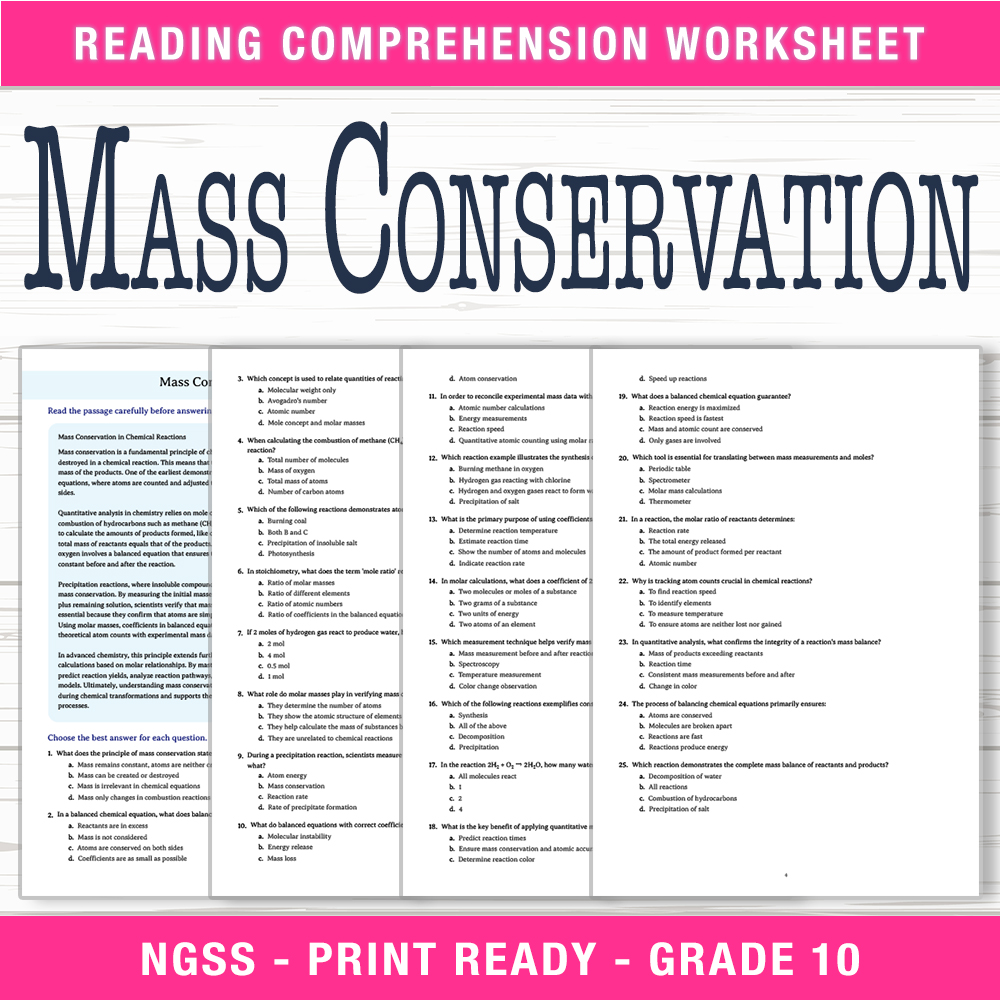
Grade 10 Science | Mass Conservation Worksheet (PDF + Answer Key)
 Created byRiverstone Classroom
Learning Objectives
- Understand the principle of mass conservation in chemical reactions through balanced equations.
- Apply molar concepts and molar masses to verify invariant atom counts before and after reactions.
- Use quantitative representations to demonstrate the conservation of mass in combustion, synthesis, and precipitation reactions.
Instant download

Grade 10 Science | Rock Cycle Energy Flow - Daily Reading Comprehension
 Created byCoral Reef Learning
Learning Objectives
- Identify the main stages of the rock cycle.
- Understand the sources of energy involved in Earth's geologic processes.
- Connect evidence from Earth’s outcrops, fossils, and geochemical signatures to the rock cycle.
Instant download
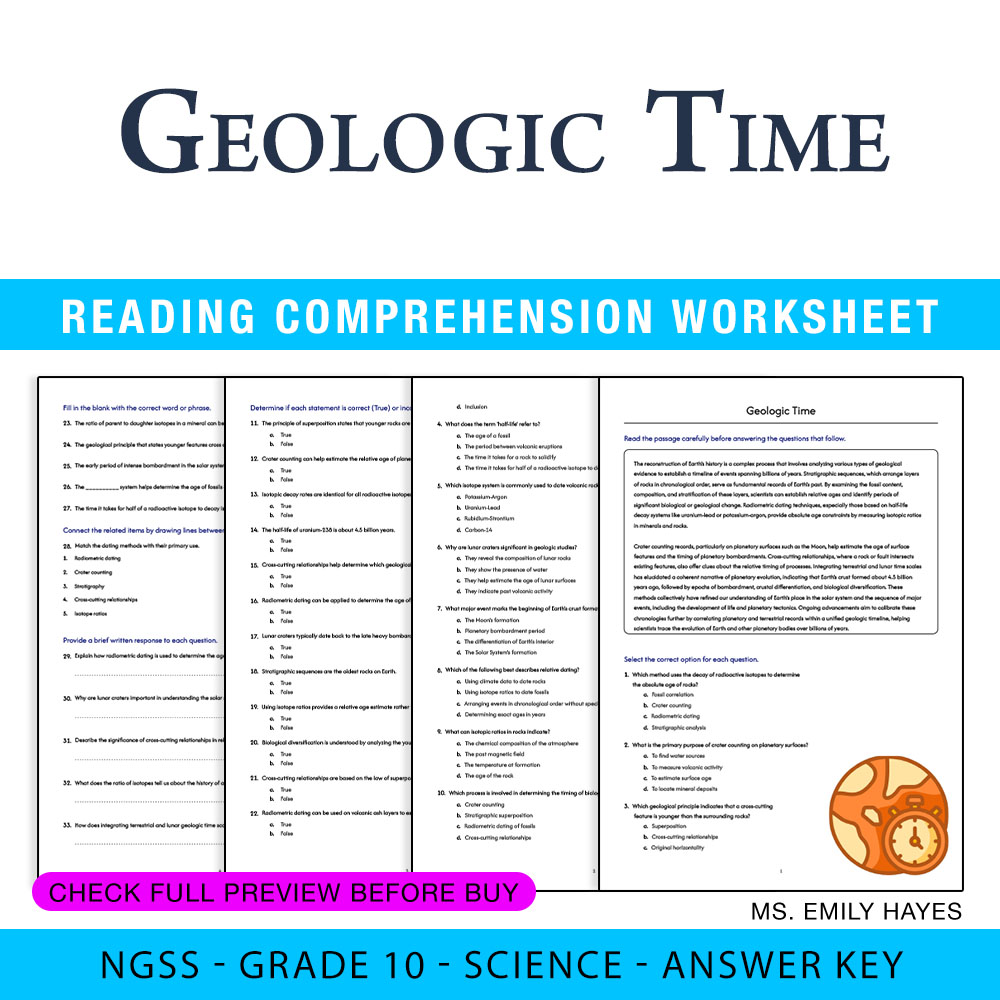
10th Grade Science | Geologic Time Worksheet (PDF+ Answer Key)
Created byCopper Leaf ClassroomLearning Objectives
- Understand methods used to reconstruct Earth's geologic history, including stratigraphy and radiometric dating.
- Describe the role of isotopic ratios, half-life decay, and crater counting in determining relative and absolute ages.
- Explain how terrestrial and lunar geologic time scales are integrated to understand Earth's history within the solar system context.
Instant download

Grade 10 Science | Membrane Structure - Daily Reading Comprehension
Created byCoral Reef LearningLearning Objectives
- Understand the fluid mosaic model of the plasma membrane
- Identify the roles of phospholipids, cholesterol, and membrane proteins
- Explain membrane asymmetry and its significance
Instant download
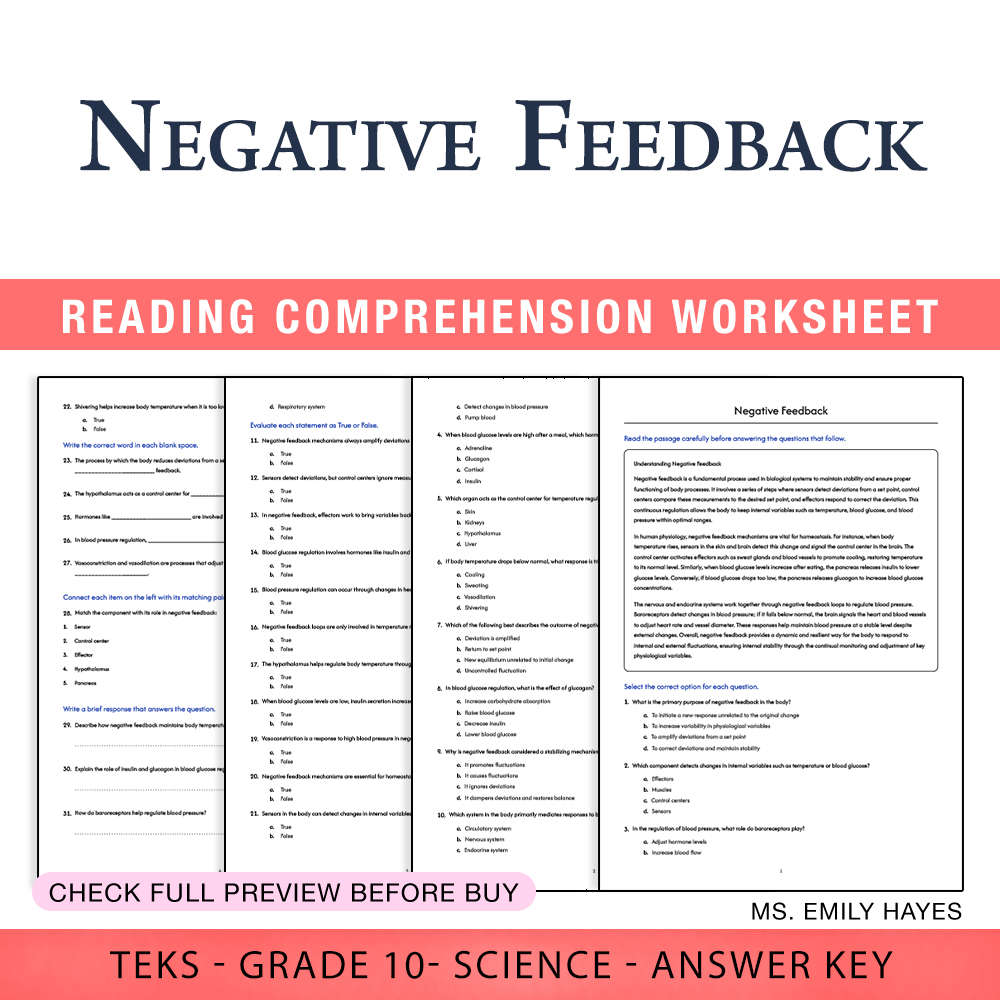
10th Grade Science | Negative Feedback Worksheet (PDF+ Answer Key)
Created byCopper Leaf ClassroomLearning Objectives
- Understand the concept of negative feedback in physiological regulation.
- Identify the components involved in negative feedback mechanisms, including sensors, control centers, and effectors.
- Explain how negative feedback maintains homeostasis for temperature, blood glucose, and blood pressure.
Instant download
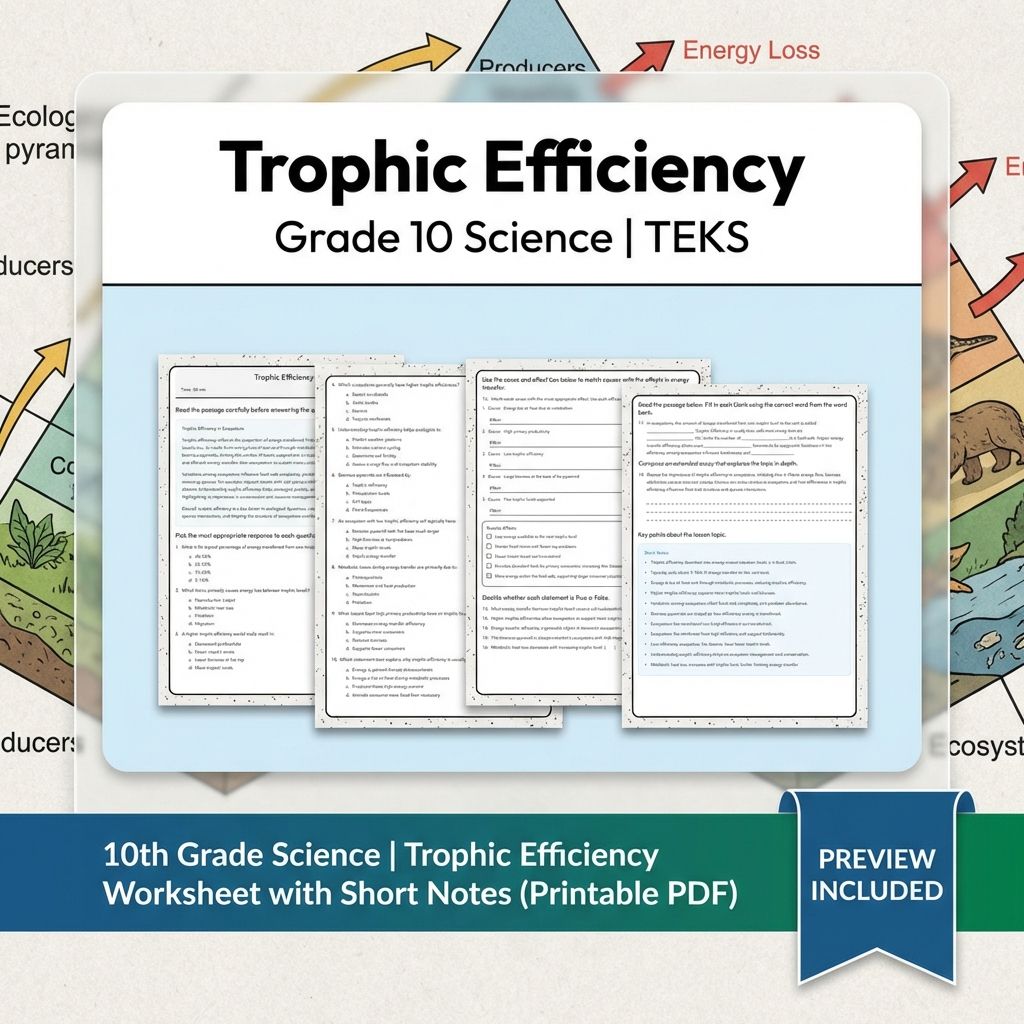
10th Grade Science | Trophic Efficiency Worksheet with Short Notes (PDF)
 Created byMeadowlark Worksheets
Learning Objectives
- Explain the concept of trophic efficiency and its significance in ecosystems.
- Identify factors that influence energy transfer between trophic levels.
- Analyze how trophic efficiency affects biomass pyramids and food web structure.
Instant download

Grade 10 Science – Membrane Structure & Function | Daily Reading Worksheet
Created byBright Mind ResourcesLearning Objectives
- Understand the fluid mosaic model of the plasma membrane
- Identify the roles of lipids and proteins in membrane structure
- Describe the functions of membrane components such as cholesterol and microdomains
Also included in: Grade 10 Cell Structure & Function Science Daily Reading Lesson Bundle | TEKS +2 more
Instant download
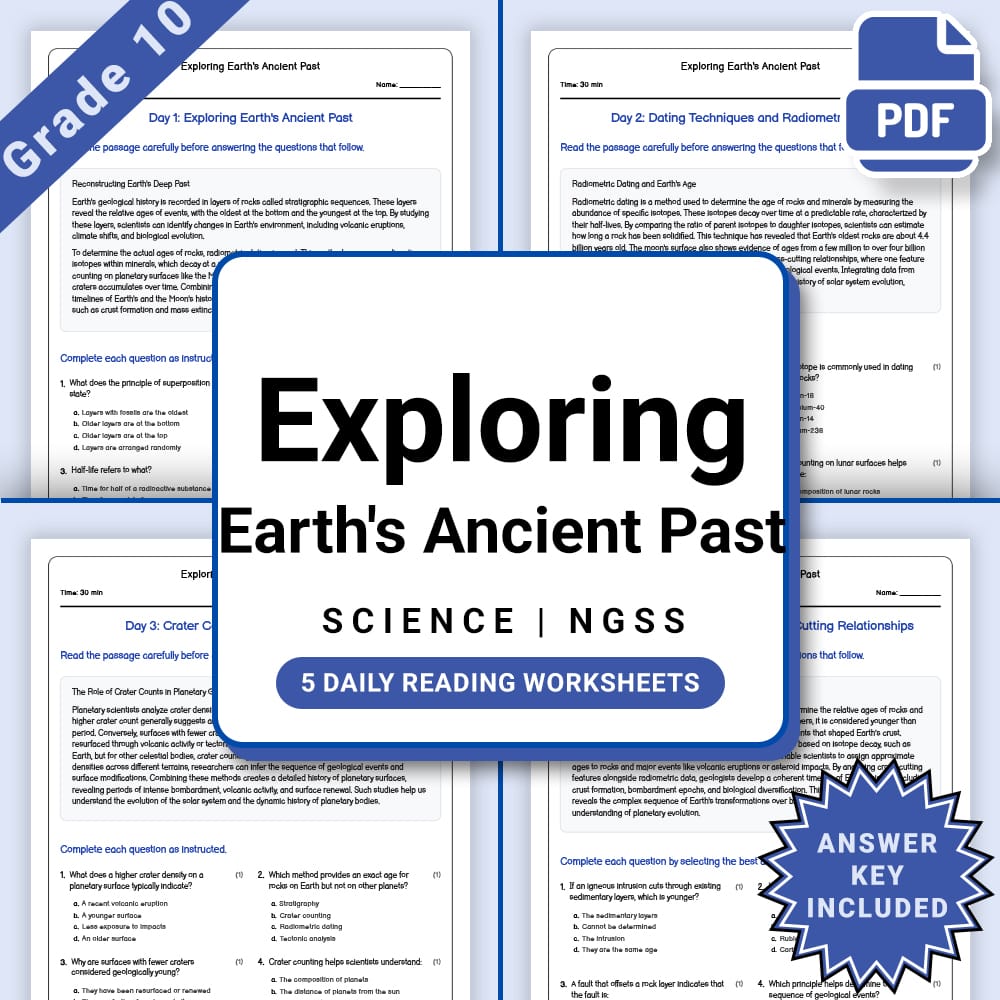
Grade 10 Science – Exploring Earth's Ancient Past Worksheet (PDF +Answer Key)
Created byCopper Leaf ClassroomLearning Objectives
- Understand how stratigraphic sequences reveal Earth's history.
- Explain the principles of relative and absolute dating methods.
- Describe how radiometric decay and crater counting help determine ages of planetary surfaces.
Instant download
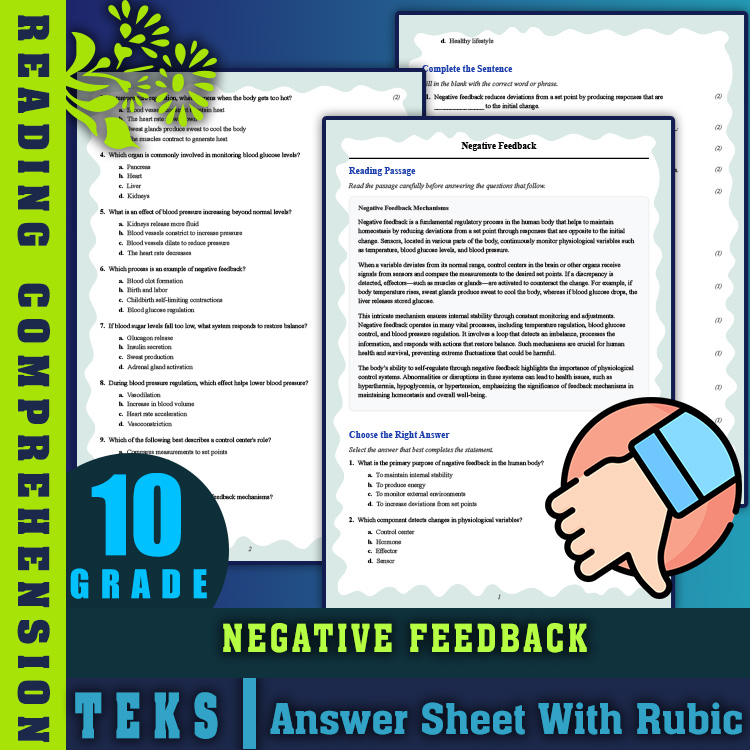
10th Grade Science | Negative Feedback Reading Worksheet with PDF Answer Key
JCreated byJ.S SheetsLearning Objectives
- Understand the concept of negative feedback and its role in physiological regulation.
- Identify key components involved in negative feedback mechanisms such as sensors, control centers, and effectors.
- Explain how negative feedback maintains stability in internal body variables like temperature, blood glucose, and blood pressure.
Instant download
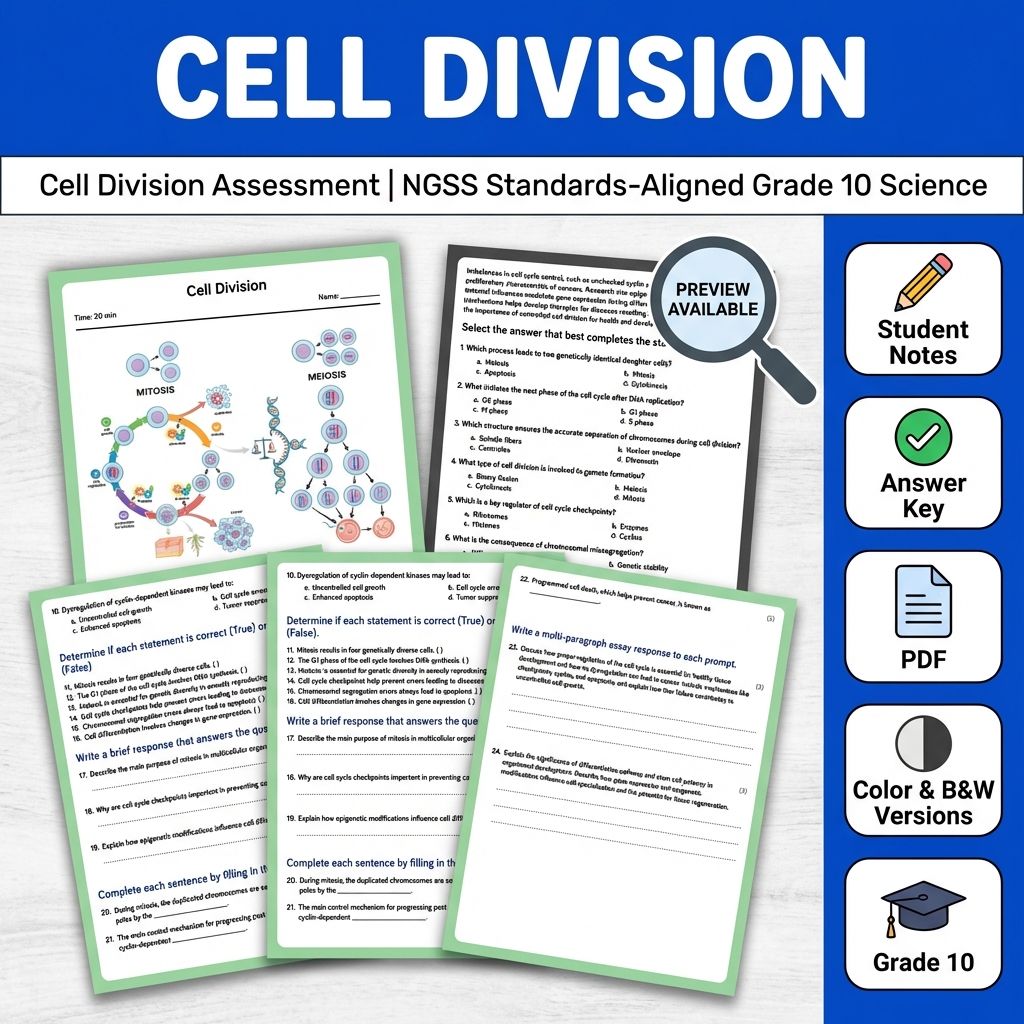
Cell Division Assessment | NGSS Standards-Aligned Grade 10 Science
Created byPrism Point LearningLearning Objectives
- Understand the processes of mitosis and meiosis and their roles in cell division.
- Identify the phases of the cell cycle and checkpoints that control cell division.
- Explain the significance of chromosomal segregation, apoptosis, and cellular differentiation.
Also included in: Grade 10 Science | Cell Signaling & Physiology NGSS Assessment Bundle
Instant download

Grade 10 Science – Rock Cycle & Energy Flow | Daily Reading Worksheet
Created byBright Mind ResourcesLearning Objectives
- Understand the processes involved in the rock cycle
- Learn how energy flow from Earth's interior influences rock formation
- Identify evidence that supports the understanding of the rock cycle
Also included in: Grade 10 Climate Linkages Science Daily Reading Worksheets Bundle | CA Standards +1 more
Instant download
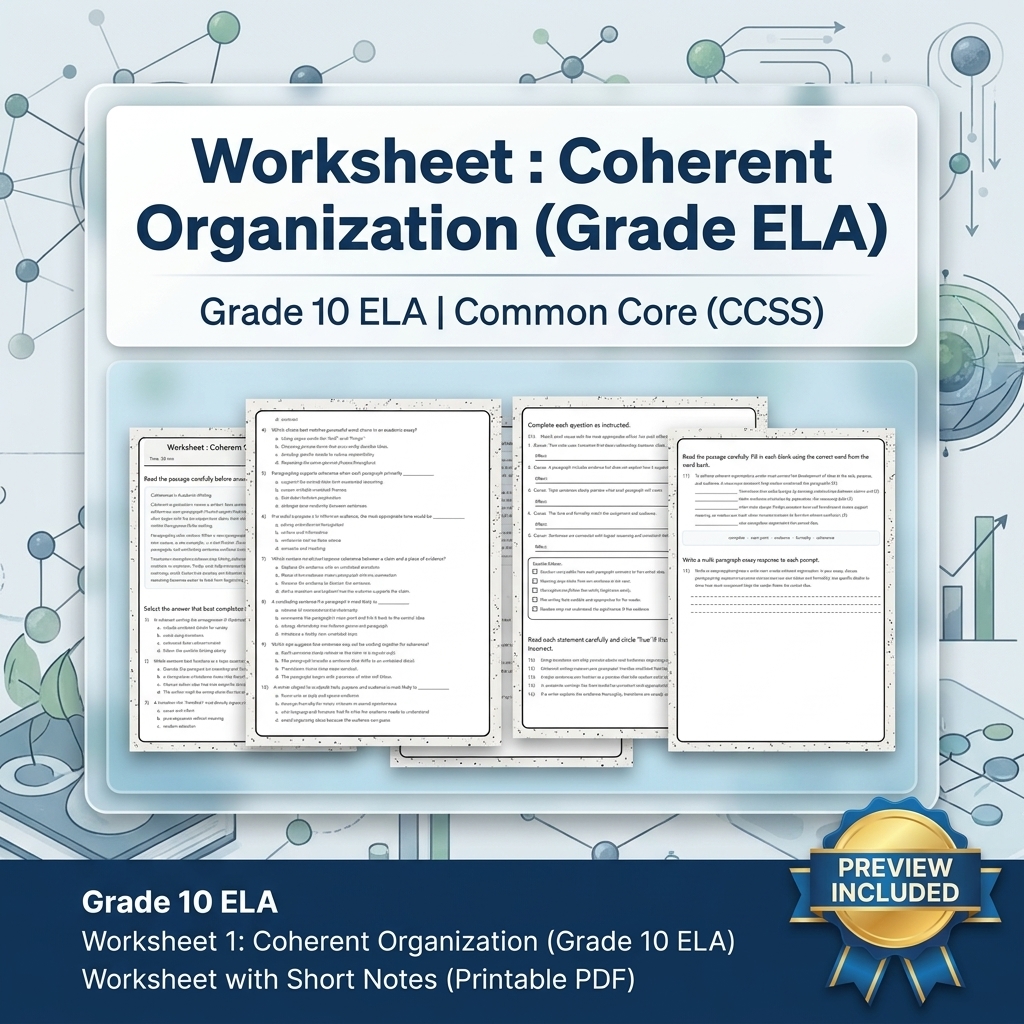
Grade 10 ELA Coherent Organization Worksheet with Short Notes (Printable PDF)
Created byMeadowlark WorksheetsLearning Objectives
- Identify how coherent organization aligns development with a specific task, purpose, and audience.
- Use transitions and sentence-to-sentence connections to maintain clear meaning across a text.
- Evaluate and improve paragraphing, tone, and formality to support an author’s central idea.
Also included in: Grade 10 Transitions & Style ELA Lesson Bundle | Common Core (CCSS) +1 more
Instant download
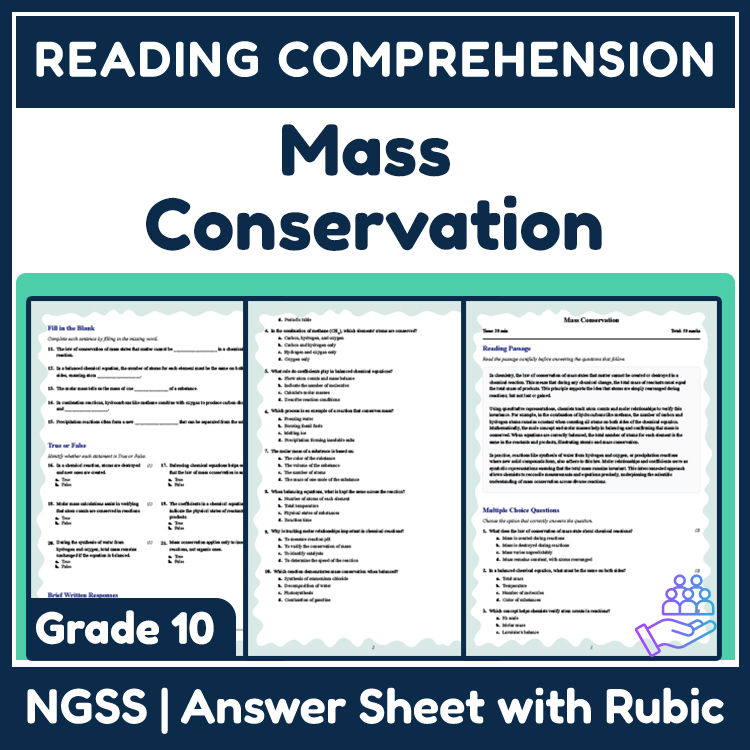
10th Grade Science | Mass Conservation Reading Worksheet with PDF Answer Key
JCreated byJ.S SheetsLearning Objectives
- Understand the principle of mass conservation in chemical reactions through quantitative representations.
- Apply balancing techniques to molecular and atomic counts in chemical equations.
- Use molar mass, mole concept, and coefficients to verify the invariance of total mass before and after reactions.
Also included in: Grade 10 Science Unit | Reaction Kinetics & Atomic Structure Worksheets
Instant download
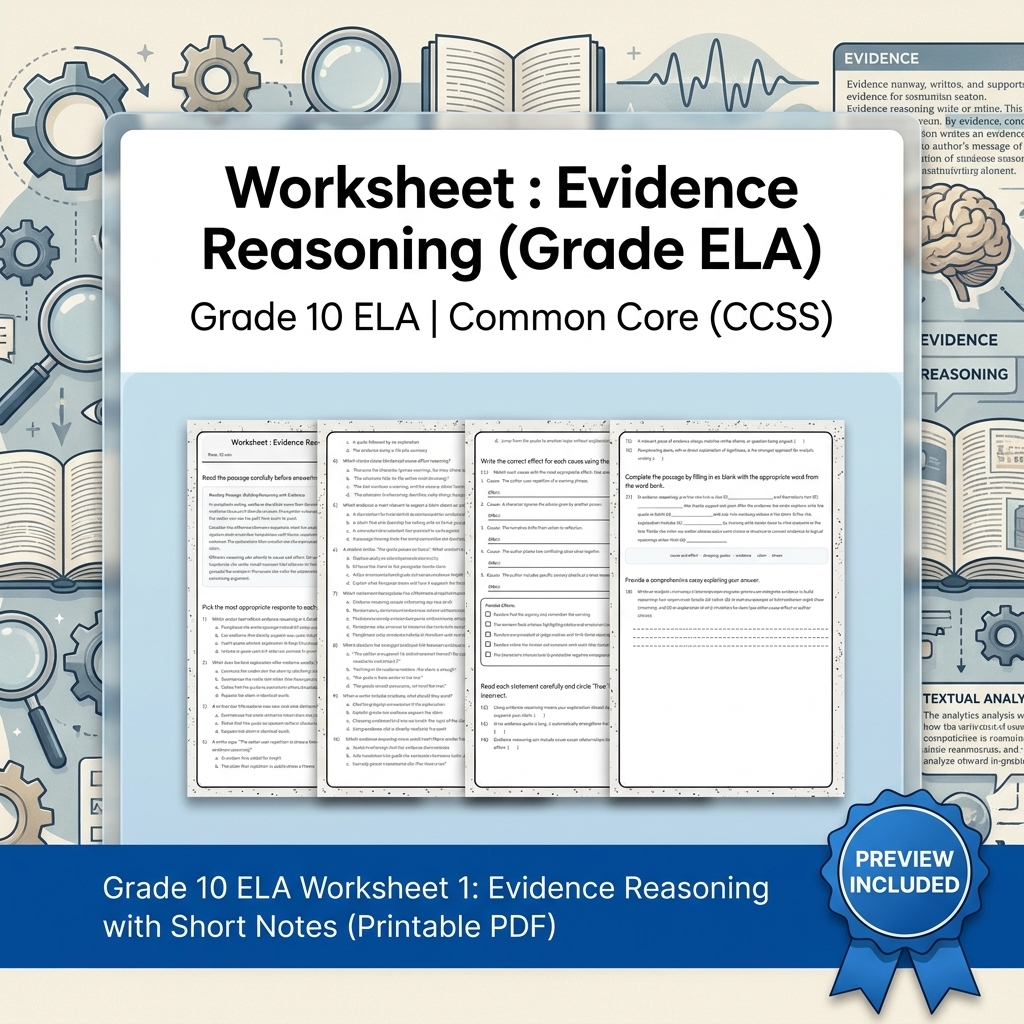
Grade 10 ELA Worksheet 1: Evidence Reasoning with Short Notes (Printable PDF)
Created byMeadowlark WorksheetsLearning Objectives
- Identify how writers select evidence that is relevant to a specific claim.
- Explain how evidence supports reasoning by connecting quotation or paraphrase to a point and “why it matters.”
- Use cause-and-effect and logical connections to interpret evidence accurately.
Also included in: Grade 10 Transitions & Style ELA Lesson Bundle | Common Core (CCSS) +1 more
Instant download
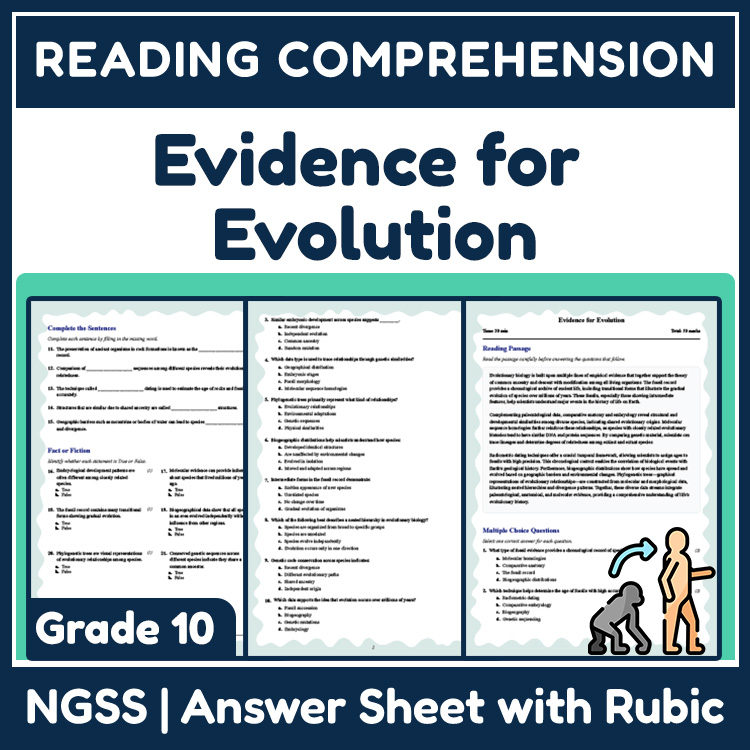
Grade 10 Science | Evidence for Evolution Reading Worksheet (PDF + Answer Key)
JCreated byJ.S SheetsLearning Objectives
- Understand the various lines of evidence supporting common ancestry and evolution.
- Explain how fossil records, comparative anatomy, embryology, and molecular data contribute to evolutionary studies.
- Interpret phylogenetic relationships and patterns of divergence among species.
Also included in: Grade 10 Science | Evolution & Biodiversity Unit Worksheet Bundle
Instant download

Grade 10 Science | Homology & Commonality in Biology - Daily Reading Practice
Created byCoral Reef LearningLearning Objectives
- Identify homologous structures in different species
- Compare internal body plans and developmental pathways
- Understand how molecular components indicate shared ancestry
Instant download

Grade 10 Health Biological Factors Worksheet | Ontario Health Education
Created byPrism Point LearningLearning Objectives
- Explain how genetics can influence health risks and normal development.
- Describe how physical development and hormonal changes relate to different life stages.
- Identify ways people can use biological information to support lifelong health choices.
Instant download
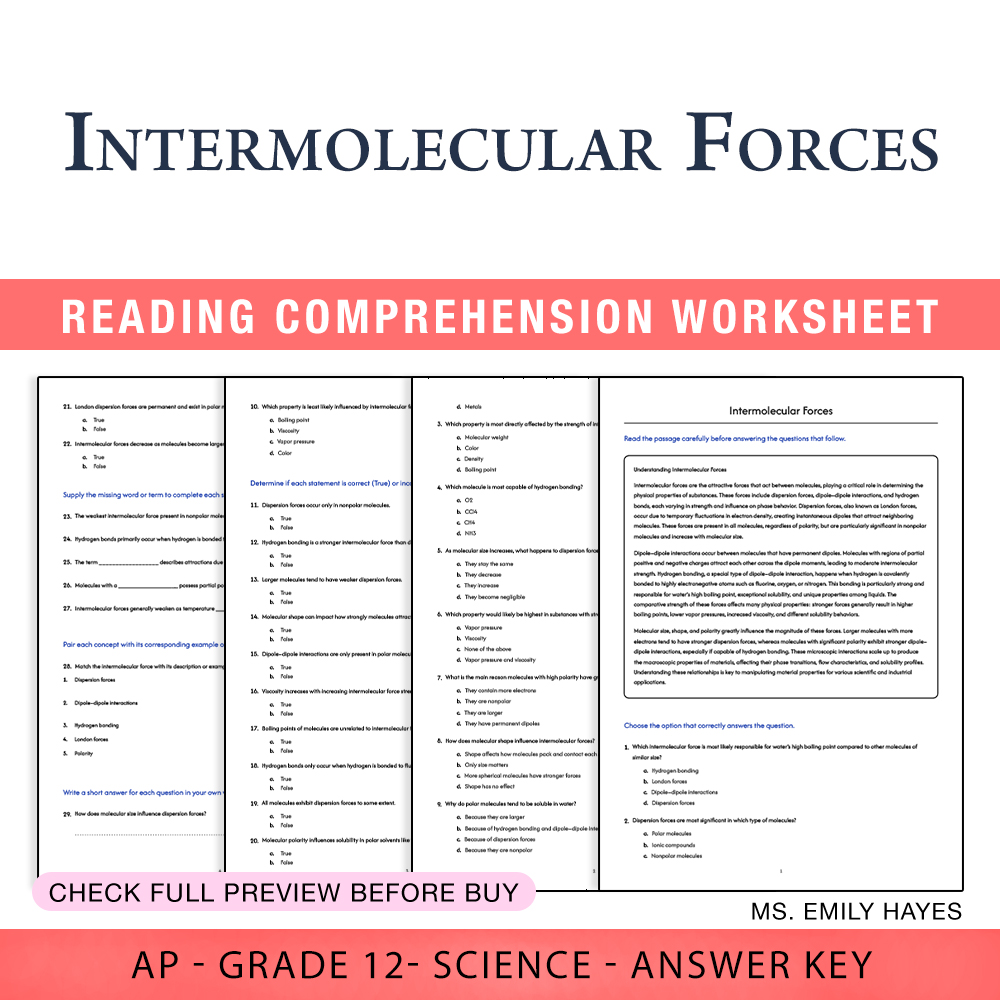
Grade 12 Science | Intermolecular Forces Assessment Worksheet (PDF+ Answer Key)
Created byCopper Leaf ClassroomLearning Objectives
- Explain the differences between dispersion forces, dipole–dipole interactions, and hydrogen bonding.
- Relate the strength of intermolecular forces to properties like boiling point, vapor pressure, viscosity, and solubility.
- Analyze how molecular size, shape, and polarity influence intermolecular forces.
Also included in: Grade 12 Science | Chemical Bonding & Reaction Concepts (PDF+ Answer Key) +1 more
Instant download

Greenhouse Climate Assessment | Florida NGSSS Grade 12 Science
Created byPrism Point LearningLearning Objectives
- Explain how greenhouse gases affect Earth’s energy budget by interacting with infrared radiation
- Describe radiative forcing and how changes in greenhouse gas concentrations influence climate trends
- Evaluate how climate feedbacks can amplify or dampen temperature changes
Also included in: Grade 12 Science Assessment Lesson Bundle: Florida NGSSS Standards +1 more
Instant download

Work And Power Assessment for Grade 12 Science – Florida NGSSS
Created byPrism Point LearningLearning Objectives
- Explain how work depends on force magnitude and the angle between force and displacement
- Use the relationship between work and changes in mechanical energy to interpret real situations
- Calculate power from energy transfer rate and connect it to how quickly work is done
Also included in: Grade 12 Momentum, Energy, and Reactions Science Assessment Lesson Bundle – Florida NGSSS +1 more
Instant download

Newton Second Law Assessment | NGSSS Standard Grade 12 Science
Created byPrism Point LearningLearning Objectives
- Explain how acceleration is related to net force and mass using Newton’s Second Law
- Determine the direction and magnitude of acceleration from multiple forces using vector sums
- Apply Newton’s Second Law to predict how changes in force or mass affect motion
Also included in: Grade 12 Momentum, Energy, and Reactions Science Assessment Lesson Bundle – Florida NGSSS +1 more
Instant download

Grade 12 Science | Cycle Dynamics Worksheet | TEKS Aligned
 Created byLumora Learning
Learning Objectives
- Describe the pathways and fluxes of carbon and nitrogen among Earth's atmosphere, biosphere, hydrosphere, and lithosphere.
- Apply steady-state and reservoir exchange concepts to environmental systems.
- Analyze the impact of human activities such as fossil fuel combustion and fertilizer runoff on natural cycles.
Instant download
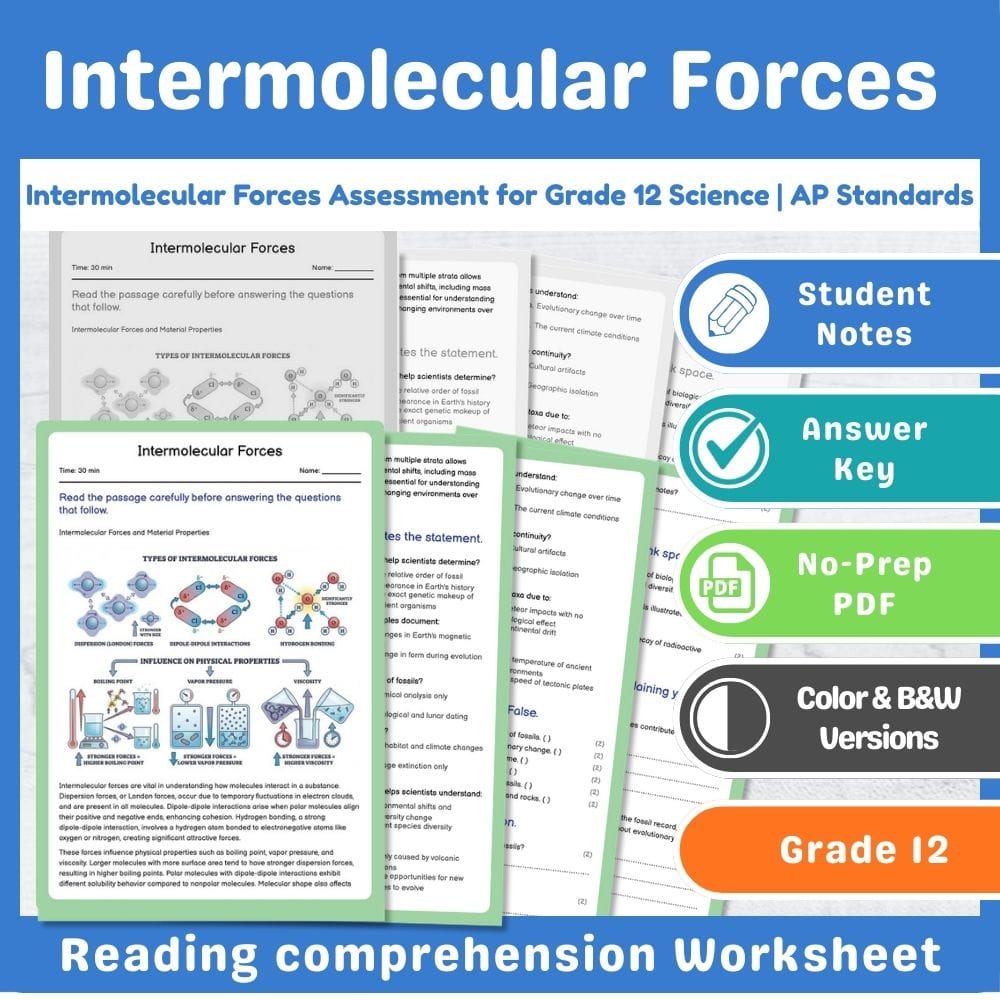
Intermolecular Forces Assessment for Grade 12 Science | AP Standards
Created byPrism Point LearningLearning Objectives
- Describe the differences between dispersion forces, dipole–dipole interactions, and hydrogen bonding.
- Explain how molecular size, shape, and polarity influence intermolecular forces.
- Relate intermolecular forces to macroscopic properties such as boiling point, vapor pressure, viscosity, and solubility.
Instant download
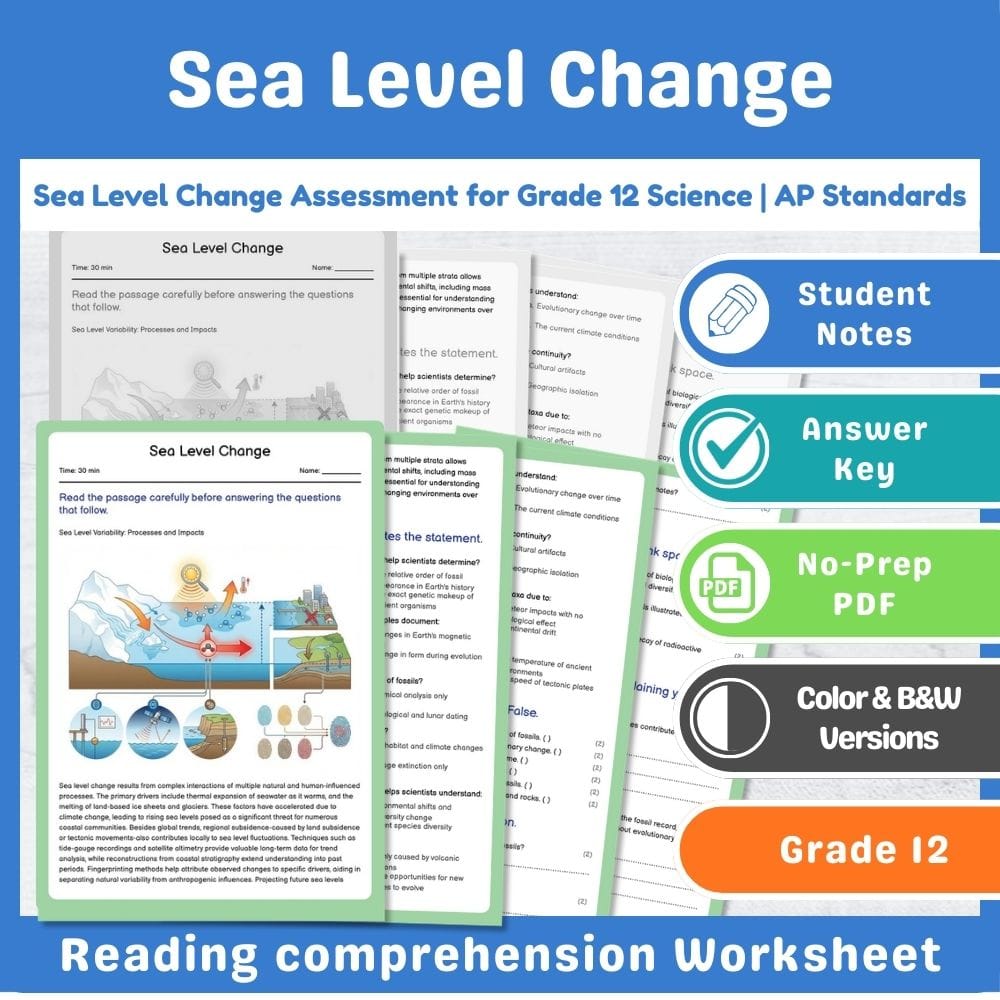
Sea Level Change Assessment for Grade 12 Science | AP Standards
Created byPrism Point LearningLearning Objectives
- Understand the key drivers that influence sea level variability, including thermal expansion, land-ice melt, and glacio-isostatic adjustment.
- Interpret data from tide gauges and satellite altimetry records to analyze sea level trends.
- Explain how human activities and regional factors affect sea level changes and coastal systems.
Instant download
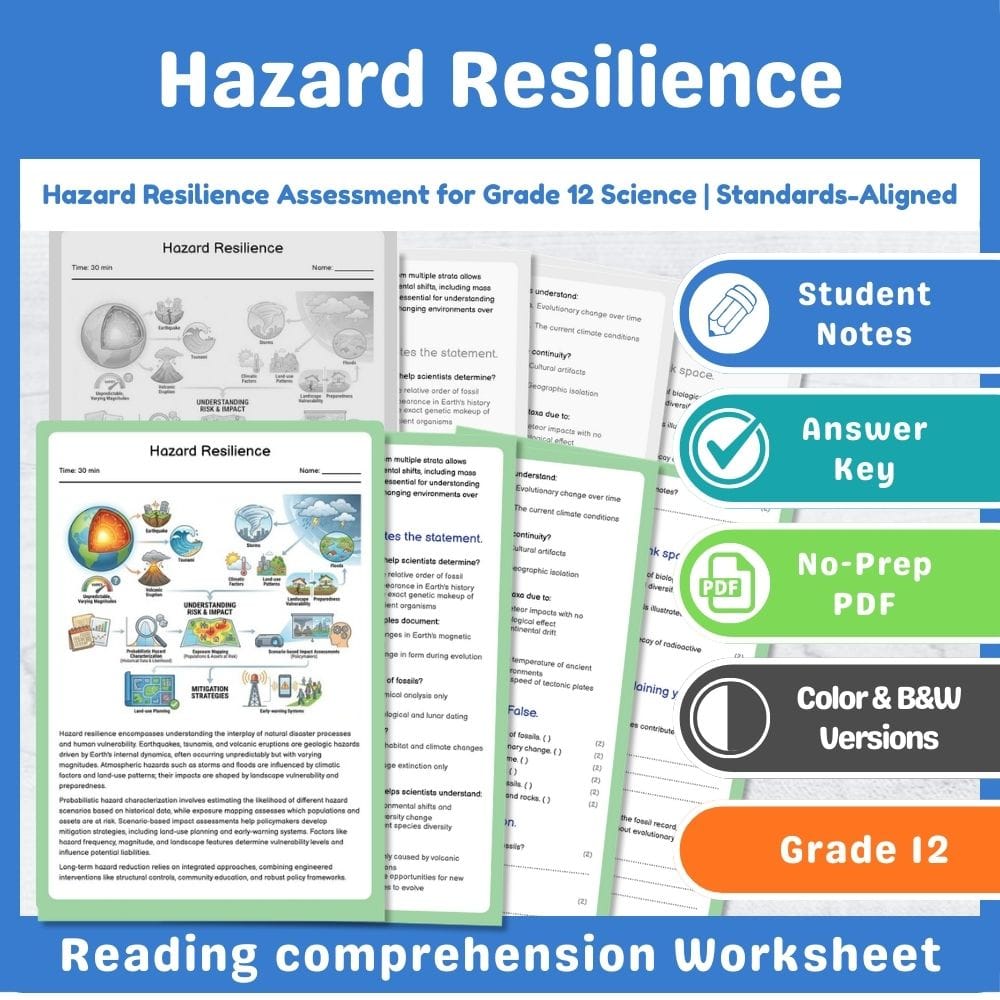
Hazard Resilience Assessment for Grade 12 Science | Standards-Aligned
Created byPrism Point LearningLearning Objectives
- Understand the key hazard processes including earthquakes, tsunamis, volcanic eruptions, landslides, floods, and extreme storms.
- Evaluate probabilistic hazard characterization, exposure mapping, and impact assessment methods.
- Analyze how hazard frequency, magnitude, and vulnerability affect landscapes and communities.
Instant download
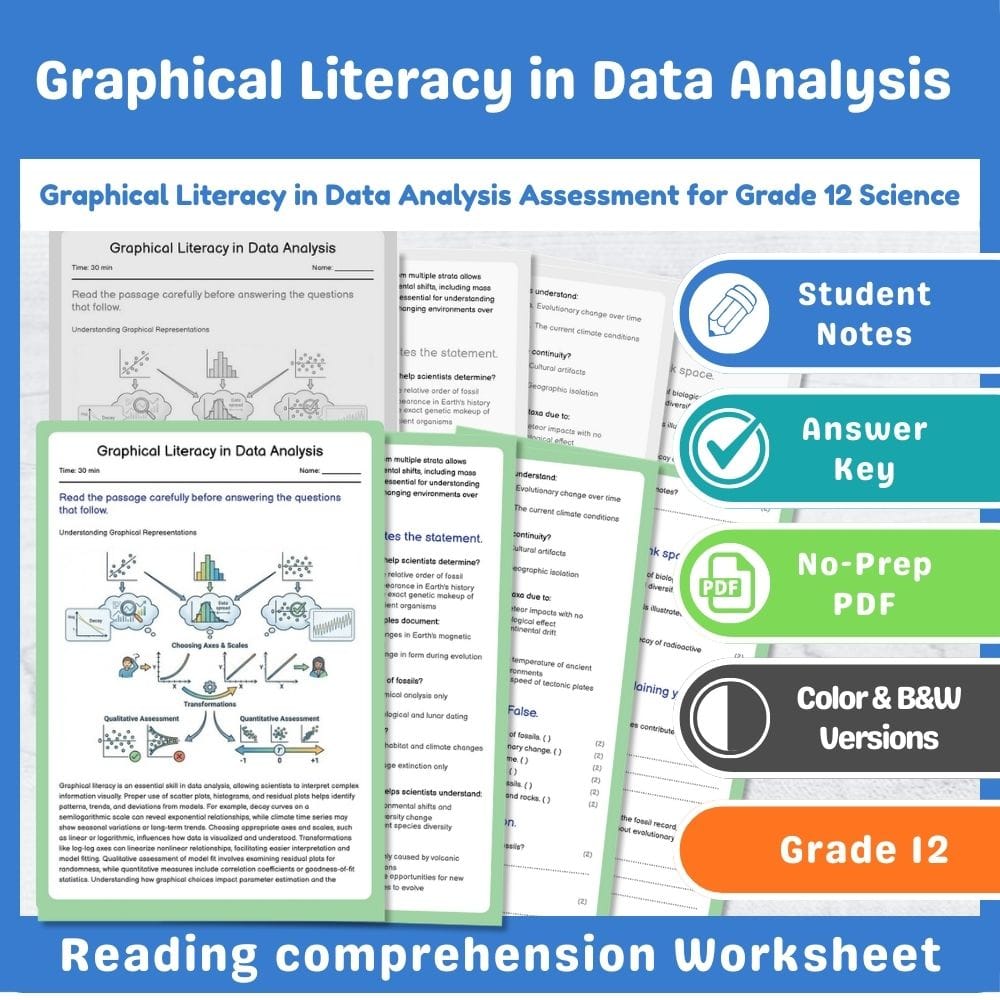
Graphical Literacy in Data Analysis Assessment for Grade 12 Science
Created byPrism Point LearningLearning Objectives
- Explain and interpret conventions used in various graphical representations such as scatter plots, histograms, and residual plots.
- Identify trends, scale choices, and transformations in graphical data to make informed conclusions.
- Assess the quality of model fits visually and quantitatively, understanding how graphical choices affect analysis outcomes.
Instant download
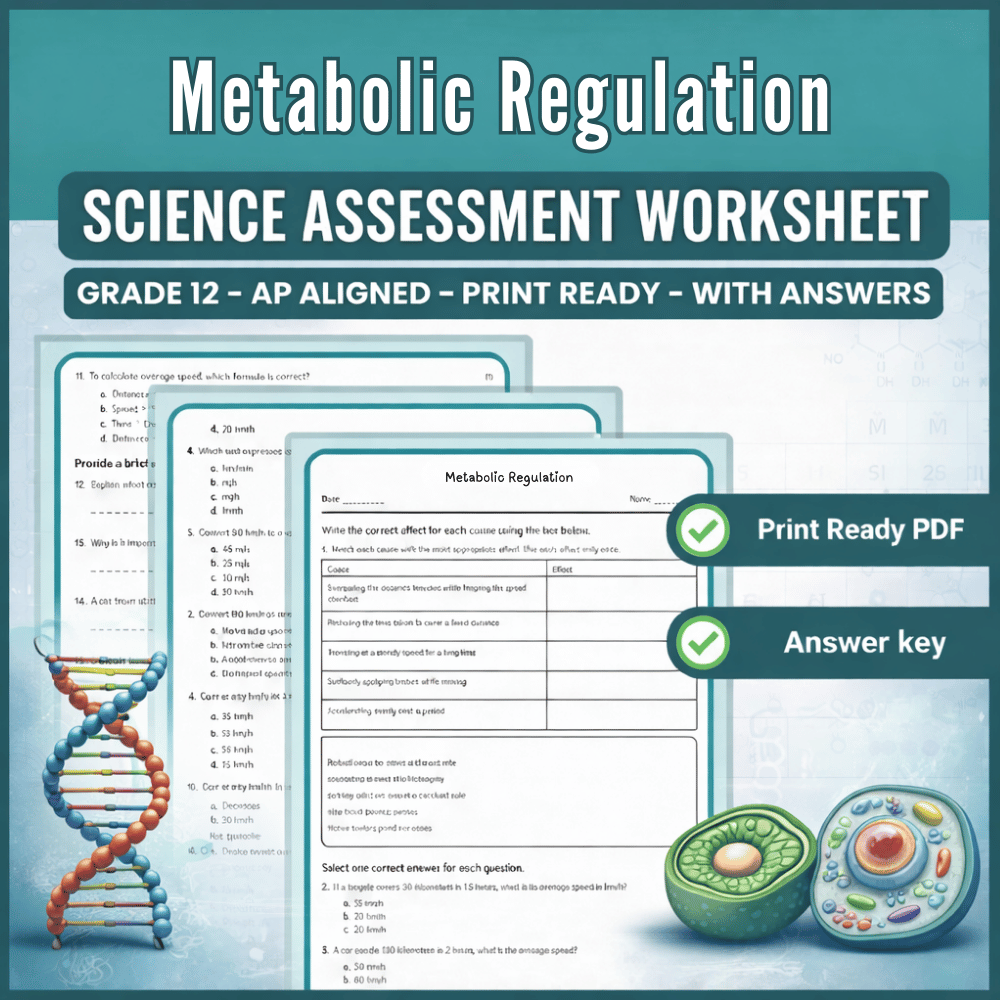
Grade 12 Science | Metabolic Regulation Worksheet (AP Standards) (PDF)
Created byBright Mind ResourcesLearning Objectives
- Understand the principles of enzyme kinetics, allosteric modulation, feedback inhibition, and hormonal regulation in metabolic pathways.
- Apply rate equations, flux diagrams, and steady-state approximations to analyze pathway responses to perturbations.
- Distinguish regulation mechanisms at transcriptional, translational, and post-translational levels.
Instant download
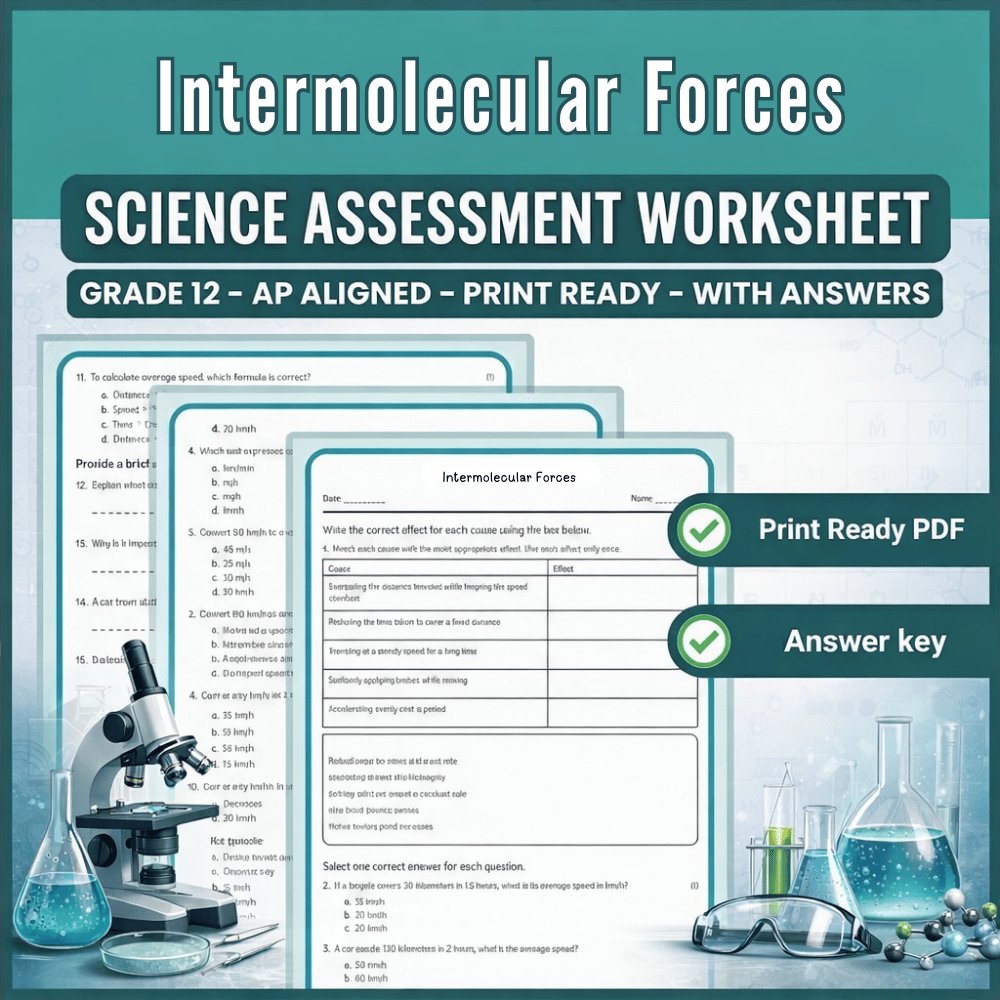
Grade 12 Science – Intermolecular Forces Worksheet (AP) (PDF)
Created byBright Mind ResourcesLearning Objectives
- Describe the different types of intermolecular forces: dispersion, dipole–dipole, and hydrogen bonding.
- Explain how intermolecular forces influence macroscopic properties like boiling point, vapor pressure, viscosity, and solubility.
- Analyze the relationship between molecular size, shape, polarity, and the strength of intermolecular forces.
Instant download
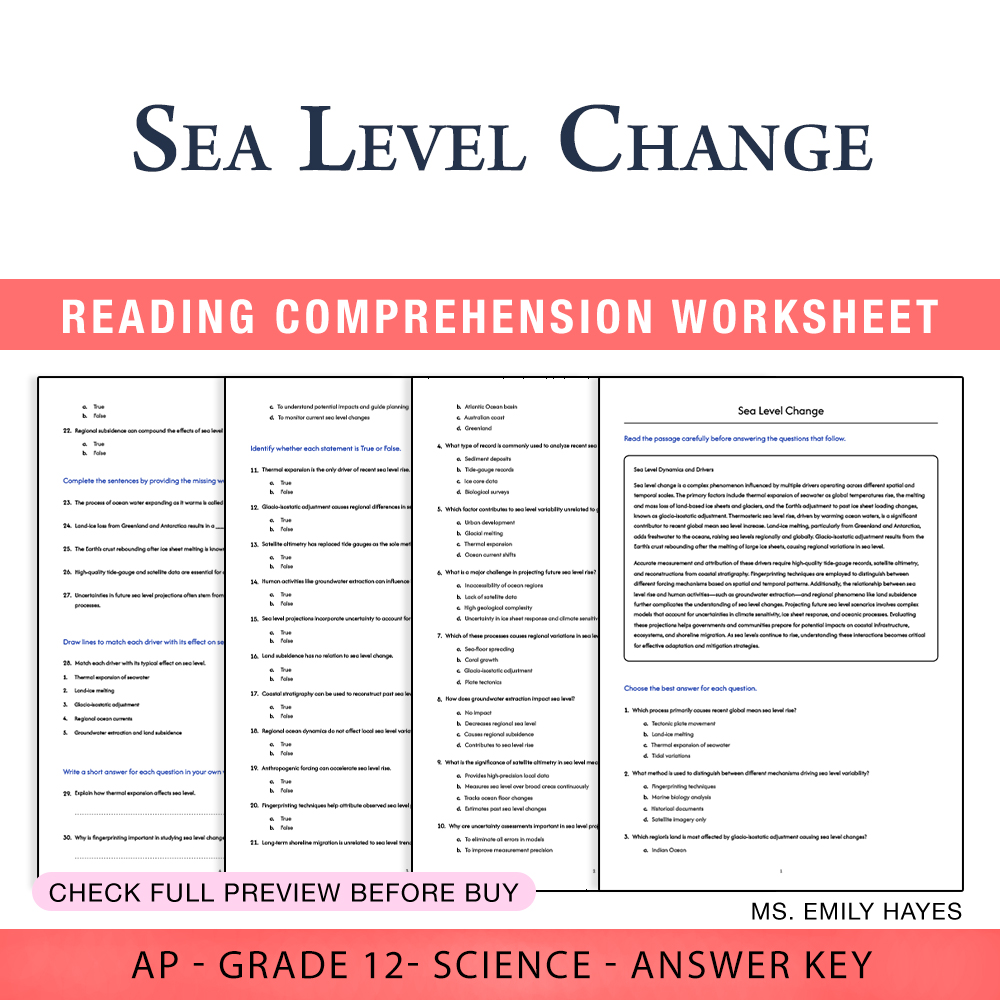
Grade 12 Science | Sea Level Change Assessment Worksheet (PDF+ Answer Key)
Created byCopper Leaf ClassroomLearning Objectives
- Describe the main drivers contributing to variability in sea level, including thermal expansion, land-ice mass change, and glacio-isostatic adjustment.
- Interpret tide-gauge and satellite altimetry data for sea level analysis.
- Evaluate methods for reconstructing historical sea level changes from coastal stratigraphy and fingerprinting techniques.
Also included in: Grade 12 Science | Earth Systems & Climate AP Worksheet (PDF + Answer Key) +1 more
Instant download
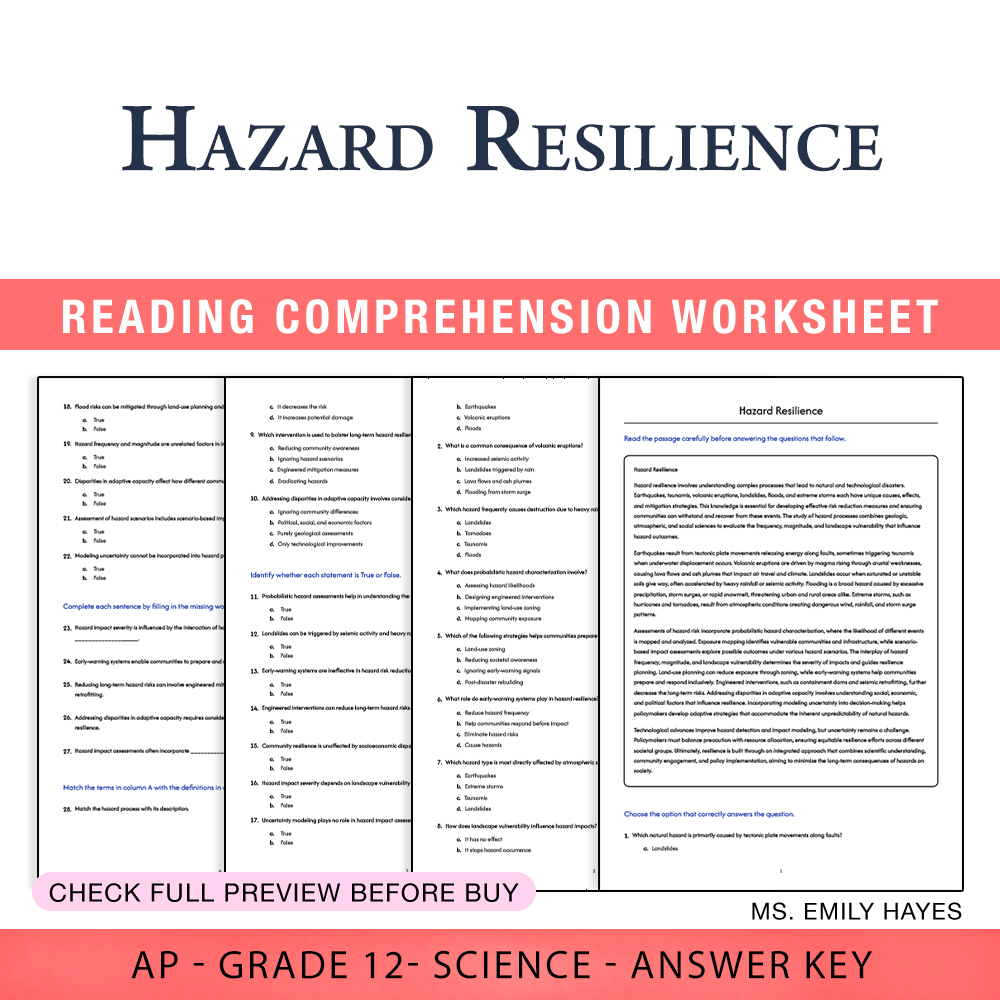
12th Grade Science | Hazard Resilience Assessment Worksheet (PDF+ Answer Key)
Created byCopper Leaf ClassroomLearning Objectives
- Analyze the interplay of geologic and atmospheric hazard processes and their impact on communities.
- Evaluate hazard risk and resilience concepts through probabilistic and scenario-based assessments.
- Identify strategies for reducing long-term hazard consequences via land-use planning and early-warning systems.
Also included in: Grade 12 Science | Earth Systems & Climate AP Worksheet (PDF + Answer Key) +1 more
Instant download
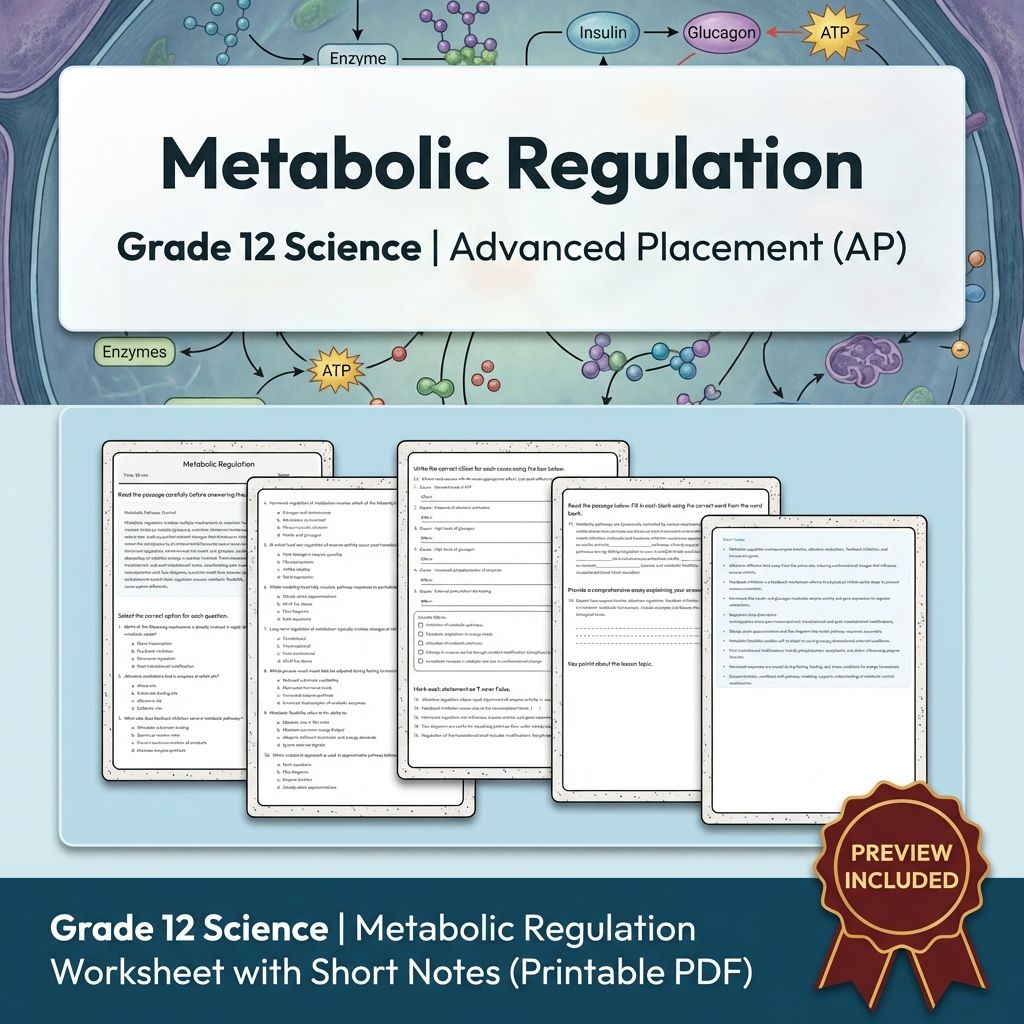
Grade 12 Science | Metabolic Regulation Worksheet with Short Notes (PDF)
Created byMeadowlark WorksheetsLearning Objectives
- Understand the principles of pathway control including enzyme kinetics and allosteric modulation.
- Describe feedback inhibition and hormonal regulation in maintaining metabolic homeostasis.
- Use rate equations, flux diagrams, and steady-state approximations to analyze pathway responses.
Also included in: Grade 12 Science Unit Worksheet Pack – Molecular Biology & Ecosystems (PDF) +1 more
Instant download
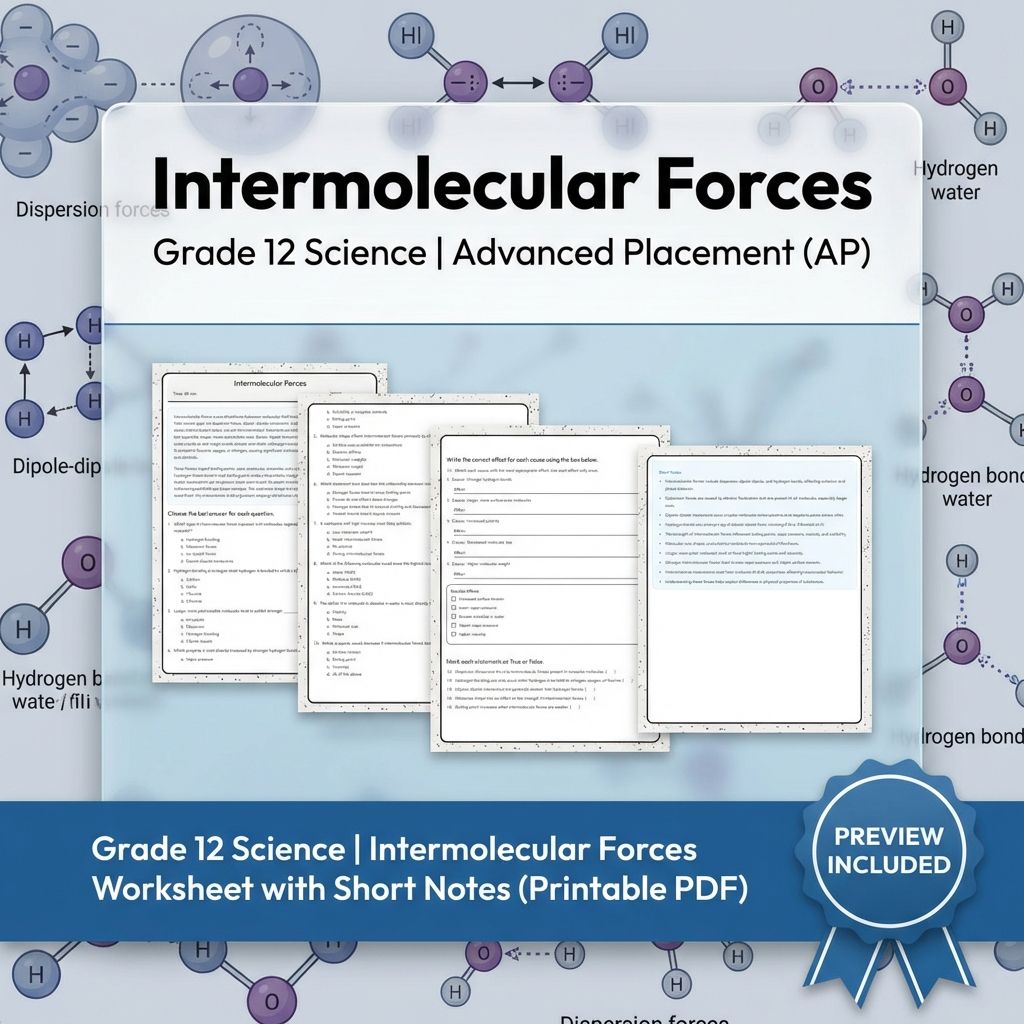
Grade 12 Science | Intermolecular Forces Worksheet with Short Notes (PDF)
Created byMeadowlark WorksheetsLearning Objectives
- Describe the three main types of intermolecular forces: dispersion, dipole–dipole, and hydrogen bonding.
- Explain how intermolecular forces influence physical properties such as boiling point, vapor pressure, viscosity, and solubility.
- Analyze the role of molecular size, shape, and polarity in mediating intermolecular interactions.
Also included in: Grade 12 Science Unit Atomic Structure & Chemical Bonding Worksheet Bundle (PDF) +1 more
Instant download
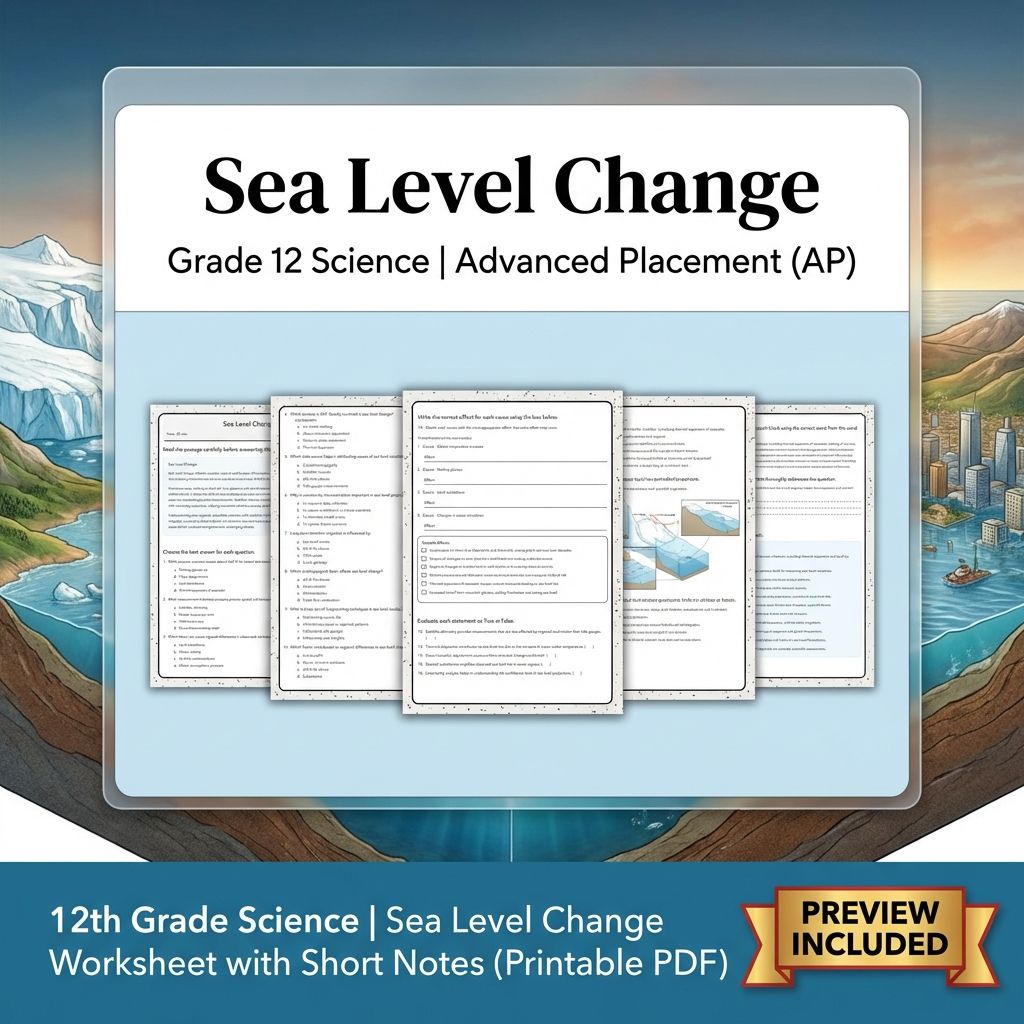
12th Grade Science | Sea Level Change Worksheet with Short Notes (PDF)
Created byMeadowlark WorksheetsLearning Objectives
- Understand the main drivers of sea level variability, including thermal expansion and land-ice loss.
- Identify key methods used to measure and attribute sea level changes globally and regionally.
- Relate sea level trends to human activities, regional subsidence, and ocean dynamics.
Also included in: Grade 12 Science Unit Bundle: Earth Systems, Climate & Tectonics Worksheet Pack +1 more
Instant download
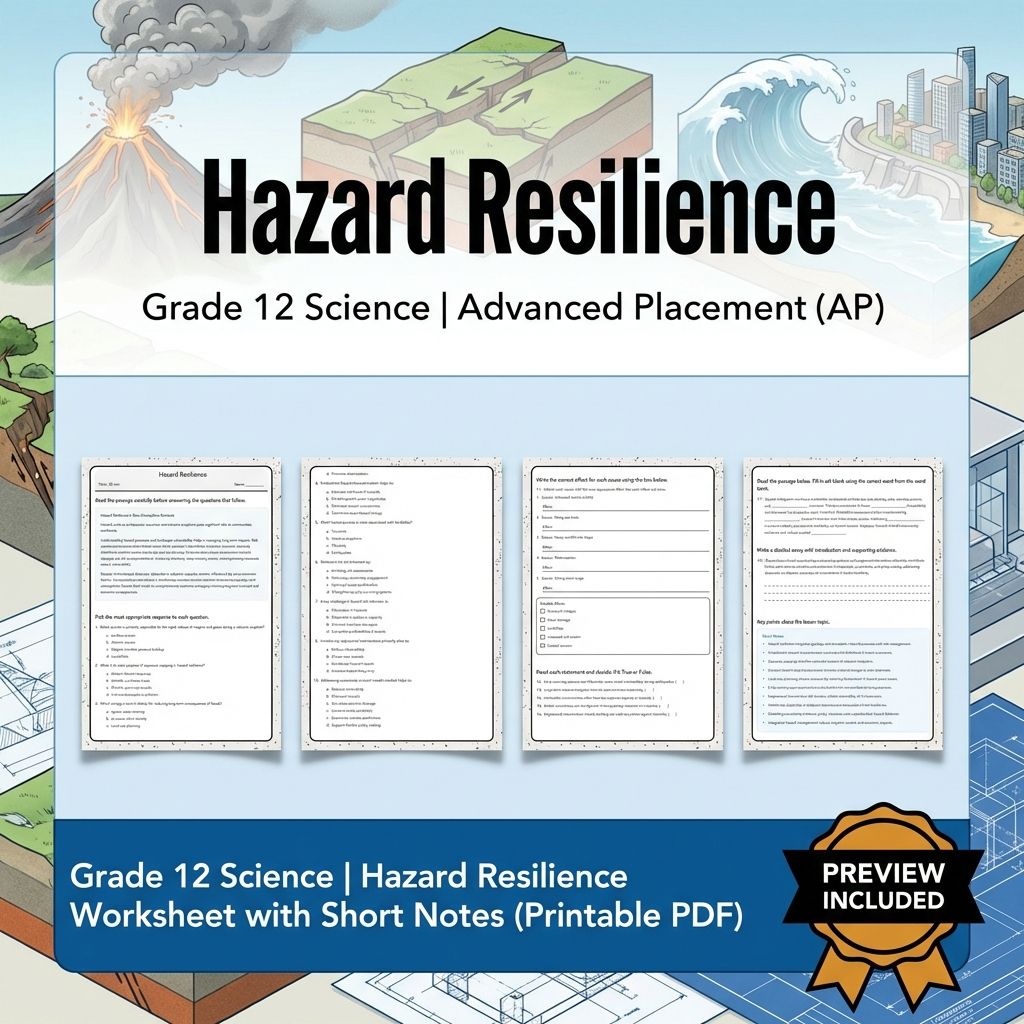
Grade 12 Science | Hazard Resilience Worksheet with Short Notes (Printable PDF)
Created byMeadowlark WorksheetsLearning Objectives
- Understand the key geologic and atmospheric hazard processes and their impacts.
- Analyze how risk, resilience, and vulnerability influence hazard management strategies.
- Evaluate probabilistic hazard assessment, exposure mapping, and scenario-based impact analysis.
Also included in: Grade 12 Science Unit Bundle: Earth Systems, Climate & Tectonics Worksheet Pack +1 more
Instant download
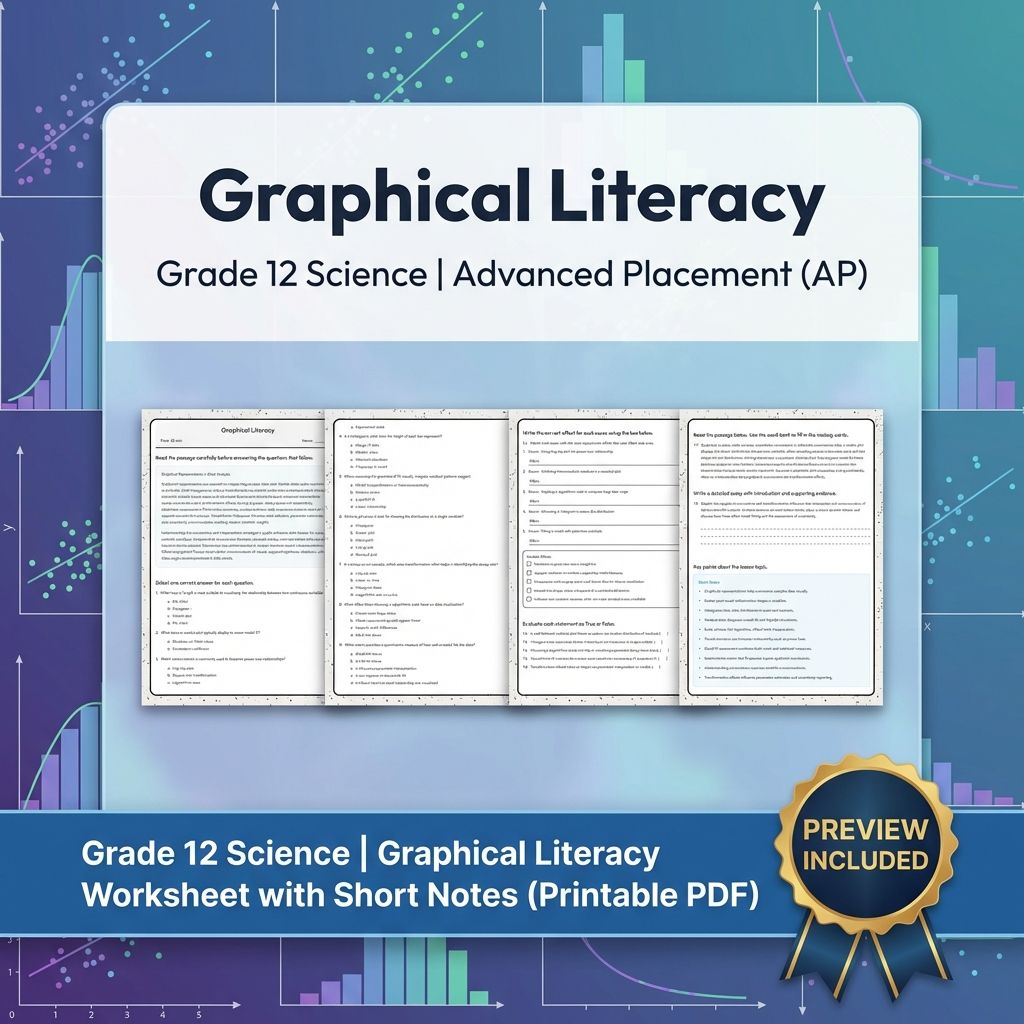
Grade 12 Science | Graphical Literacy Worksheet with Short Notes (PDF)
Created byMeadowlark WorksheetsLearning Objectives
- Understand the conventions used in different types of graphical representations such as scatter plots, histograms, and residual plots.
- Interpret trends, scale choices, and transformations in various graphs to extract meaningful information.
- Assess the quality of graphical fits both qualitatively and quantitatively.
Also included in: Grade 12 Science Unit Bundle Data Analysis & Probabilistic Reasoning Worksheets +1 more
Instant download
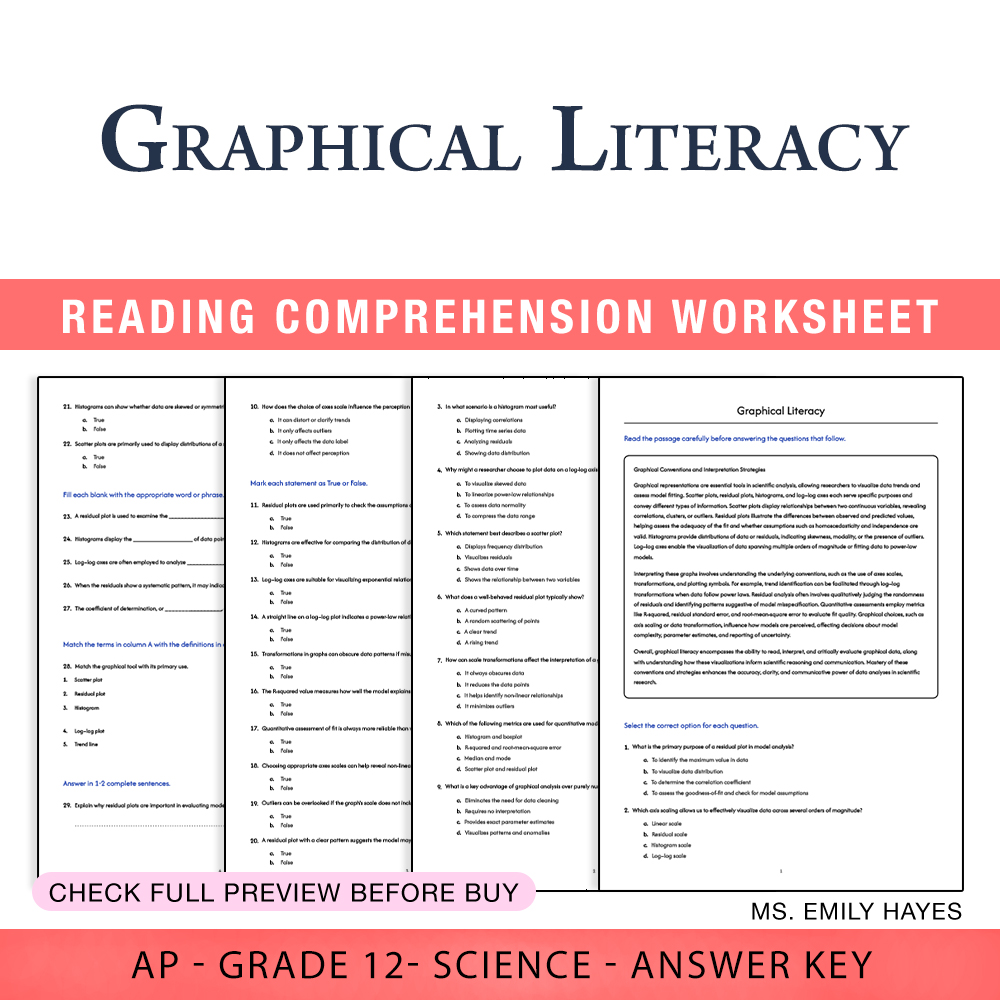
12th Grade Science | Graphical Literacy Worksheet (PDF+ Answer Key)
Created byCopper Leaf ClassroomLearning Objectives
- Understand the conventions used in graphical representations such as scatter plots, residual plots, histograms, and log–log axes.
- Interpret trends, scale choices, and transformation effects in various graphs.
- Assess the quality of model fits both qualitatively and quantitatively.
Also included in: Grade 12 Science AP | Data Analysis and Modeling Skills (PDF+ Answer Key) +1 more
Instant download
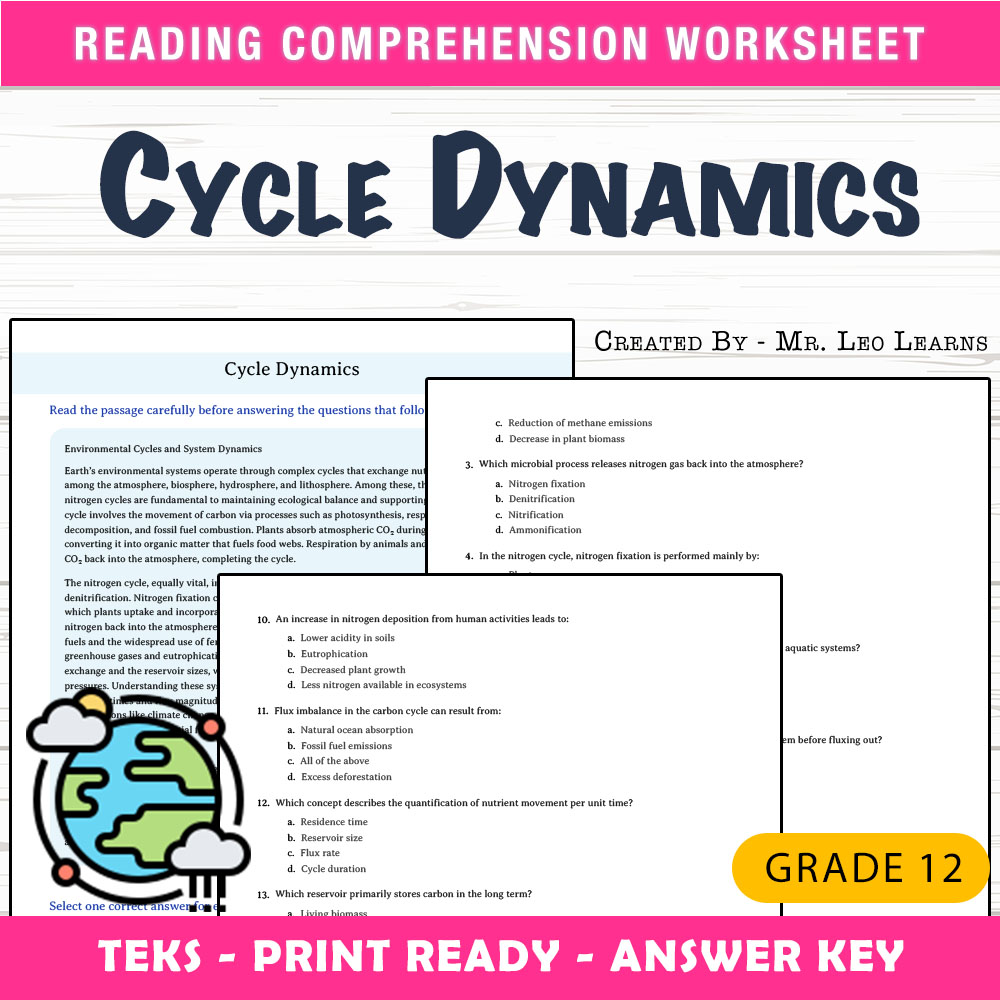
Grade 12 Science — Cycle Dynamics Worksheet for Mastery
 Created byThe Resource Hub
Learning Objectives
- Understand the flow of carbon and nitrogen among Earth's systems.
- Apply steady-state and flux concepts to environmental cycles.
- Analyze human impacts on biogeochemical fluxes such as fossil fuel use and fertilizer runoff.
Also included in: Grade 12 Science | Sustainability & Environmental Management Worksheet Bundle +1 more
Instant download
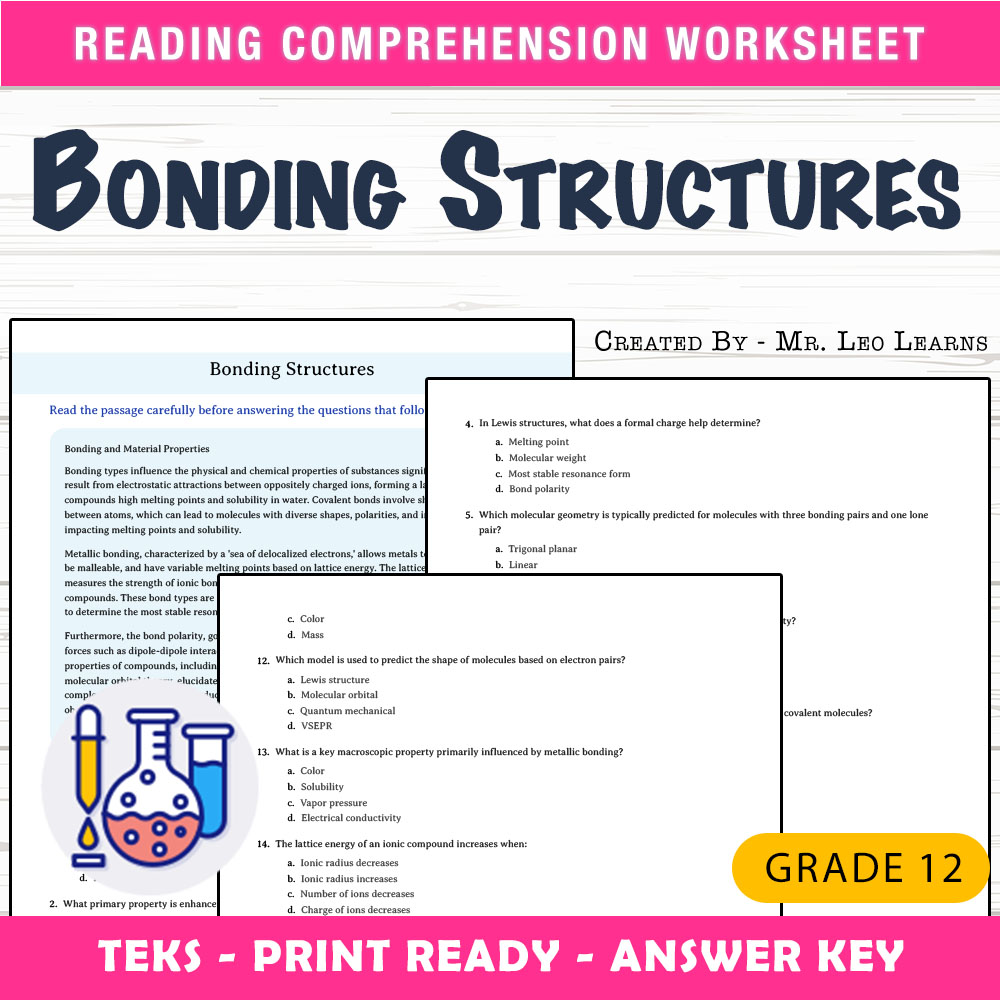
Grade 12 Science – Bonding Structures Worksheet for Mastering Chemical Bonds
Created byThe Resource HubLearning Objectives
- Classify and compare ionic, covalent, and metallic bonds based on electrostatic interactions, lattice energy, polarity, and bond order.
- Utilize Lewis structures, formal charge assessments, and VSEPR theory to determine molecular shapes and polarity.
- Explain the relationship between bonding types and macroscopic properties such as melting point, conductivity, and solubility using lattice models and orbital concepts.
Also included in: Grade 12 Science Worksheet Bundle | Chemistry & Chemical Reactions Mastery +1 more
Instant download

Grade 12 Science | Cycle Dynamics Worksheet with Short Notes (Printable PDF)
Created byMeadowlark WorksheetsLearning Objectives
- Understand the pathways of carbon and nitrogen in environmental systems.
- Apply quantitative reasoning to reservoir exchange rates and steady-state concepts.
- Analyze human activities' impacts on natural fluxes and system connectivity.
Also included in: Grade 12 Science Unit | Environmental Management & Biodiversity Worksheets +2 more
Instant download
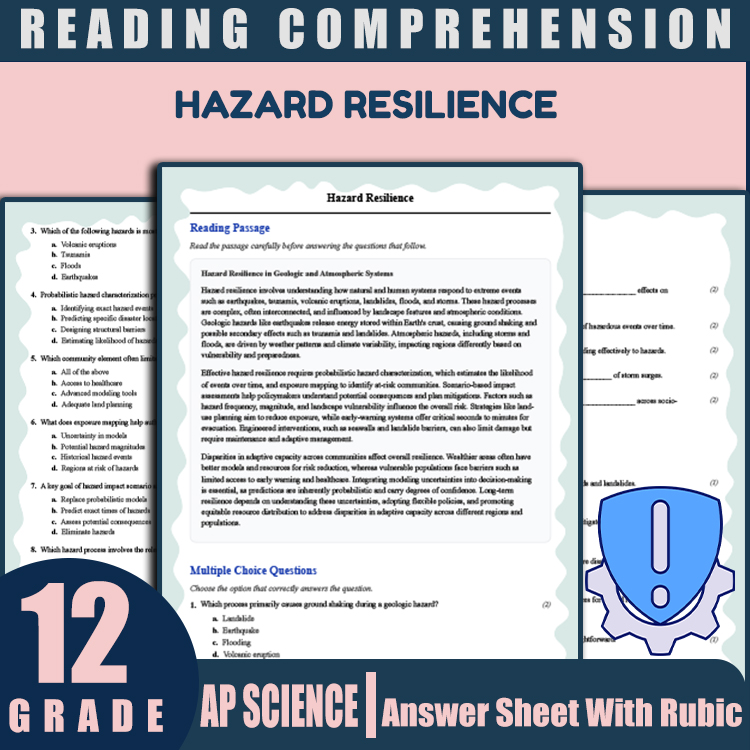
Grade 12 Science | Hazard Resilience Reading Worksheets & Answer Key (PDF)
JCreated byJ.S SheetsLearning Objectives
- Understand the processes behind geologic and atmospheric hazards such as earthquakes, tsunamis, and storms.
- Analyze how hazard probability, landscape vulnerability, and resilience strategies affect risk reduction.
- Evaluate approaches like land-use planning, early-warning systems, and engineered interventions in hazard scenarios.
Also included in: Grade 12 Science Unit | Earth Systems & Climate Change Worksheet Bundle (PDF) +1 more
Instant download
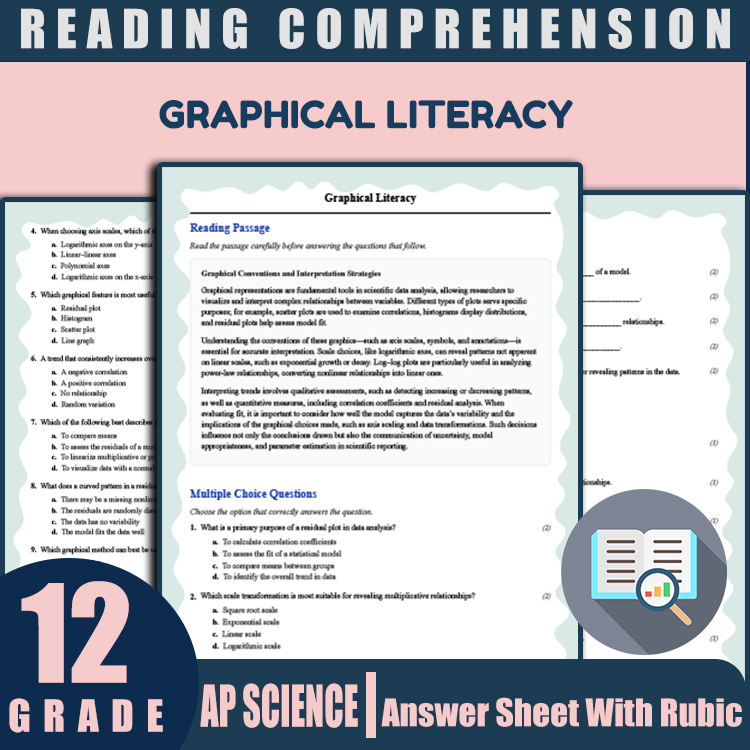
12th Grade Science | Graphical Literacy Reading Worksheet (PDF + Rubric)
JCreated byJ.S SheetsLearning Objectives
- Understand the conventions and interpretation strategies for different types of graphical representations, including scatter plots, residual plots, histograms, and log–log axes.
- Identify trends, assess model fit, and interpret the effects of scale transformations in various graphical data displays.
- Evaluate the appropriateness of graphical choices and comprehend their influence on model selection, parameter estimation, and uncertainty communication.
Also included in: Grade 12 Science Unit | Data, Modeling & Evidence Reading Worksheets Pack +1 more
Instant download

Conservation of Matter Worksheet Grade 7 Science NGSSS Practice
Created byEvergreen Desk EducationLearning Objectives
- Explain the law of conservation of matter using the idea that mass is not created or destroyed in chemical reactions.
- Use balanced-mass reasoning to predict whether the total mass of reactants equals the total mass of products.
- Identify everyday examples (such as sealed containers) that support conservation of matter.
Instant download
Browse more categories
About Reading comprehension Worksheets
Find reading comprehension worksheets for class practice, homework, or self-study. All 40,289 are instant PDF downloads.
Each resource here is built by an independent educator and reviewed for quality. Worksheets print straight from PDF and suit classroom use, homework, or extra practice; most come with answer keys, and you can preview before purchasing.