
Reading comprehension Worksheets
40,289 type resources
Grade 10 Science | Constraint-Based Design Worksheet (AP Standards) (PDF)
 Created byEvergreen Desk Education
Learning Objectives
- Explain how practical, ethical, and temporal constraints influence the design of observational and comparative science studies
- Justify proxy measures when ideal variables cannot be measured directly and explain how that affects conclusions
- Evaluate trade-offs among replication, measurement precision, and scope using sensitivity ideas
Also included in: Grade 10 Scientific Modeling & Quantitative Reasoning Science Lesson Bundle (AP) +1 more
Instant download
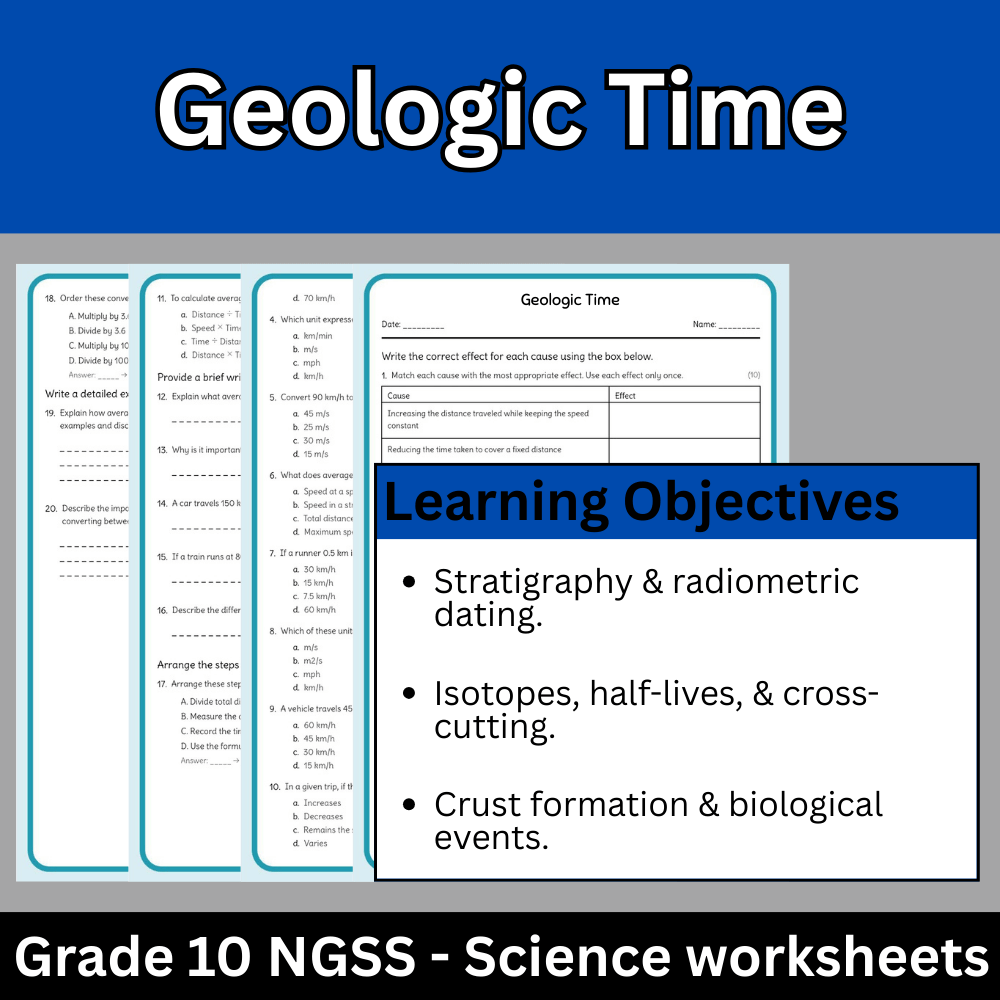
Grade 10 Science | Geologic Time Concepts Worksheet (Answer Key) NGSS
 Created byBright Mind Resources
Learning Objectives
- Understand the methods used to reconstruct Earth's geologic history, including stratigraphy and radiometric dating.
- Interpret isotopic ratios, half-life decay systems, and cross-cutting relationships to determine relative and absolute ages.
- Explain major events in Earth's history such as crust formation, bombardment epochs, and biological diversification.
Instant download

Refining For Clarity Worksheet Pack | Grade 4 ELA Practice
 Created bySunny Desk Resources
Learning Objectives
- Identify and correct mechanical errors that affect clarity, such as capitalization and punctuation.
- Revise sentences to improve clarity by adding, removing, or rewriting words and sentence boundaries.
- Use precise word choice and remove redundancy so the central idea is easier to understand.
Also included in: Word Relationships & Sentence Control Lesson Bundle | Grade 4 ELA | BC +1 more
Instant download

Friction And Drag Assessment | NGSSS Standards Grade 10 Science
 Created byPrism Point Learning
Learning Objectives
- Explain how nonconservative forces like friction and drag oppose motion and remove mechanical energy
- Analyze how friction and drag affect acceleration and velocity over time
- Relate real-world observations (slowing down, reaching terminal velocity) to the concept of net force
Also included in: Grade 10 Waves Energy Forces Science Lesson Mini Bundle | Florida NGSSS +1 more
Instant download
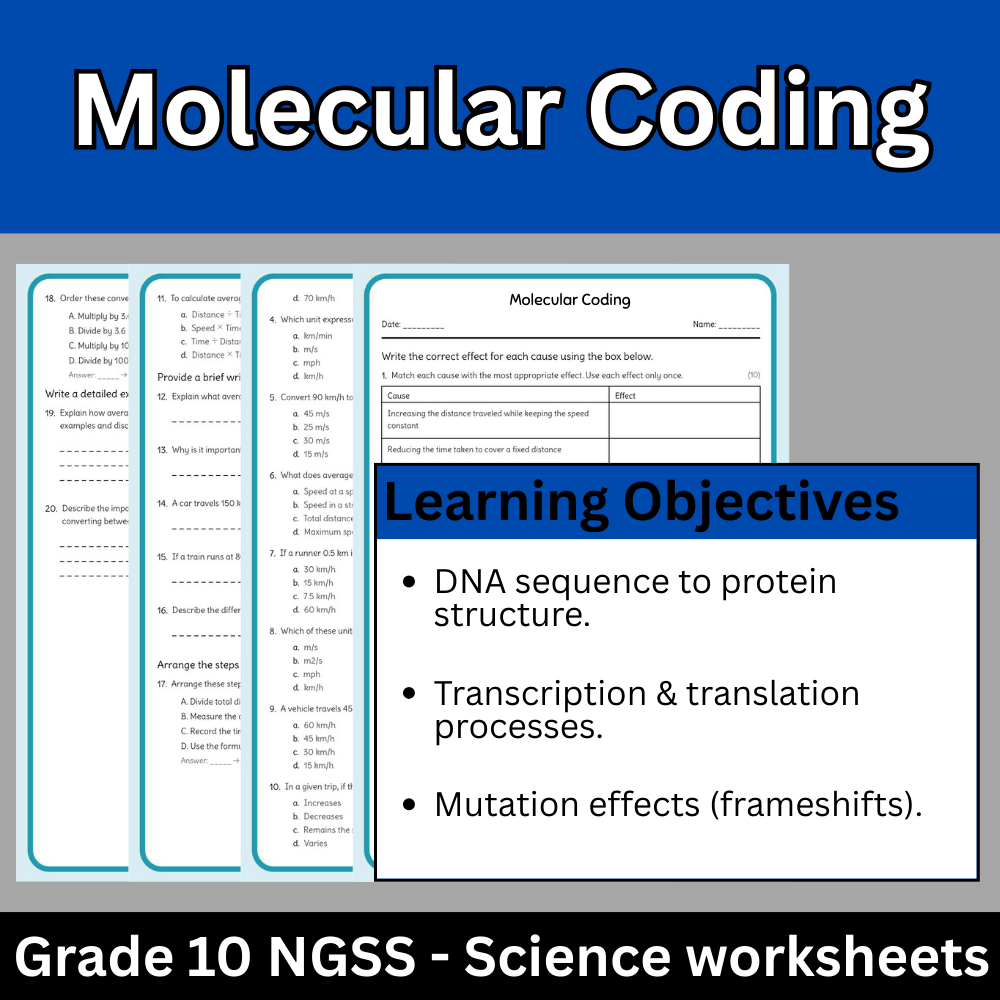
Grade 10 Science | Molecular Coding Worksheet (NGSS Aligned, PDF) Practice Set
Created byBright Mind ResourcesLearning Objectives
- Describe how DNA sequence determines the amino acid sequence and protein structure.
- Explain the processes of transcription and translation in protein synthesis.
- Identify how mutations, such as point mutations and frameshifts, affect protein structure and function.
Instant download

Grade 10 Science — Worksheet MCQ Paper for Mastering Plate Tectonics
 Created byThe Resource Hub
Learning Objectives
- Understand the mechanisms of plate motion, mantle convection, and subduction.
- Interpret tectonic settings through maps, cross-sections, and seismic evidence.
- Connect plate interactions to geological phenomena such as mountain building, volcanism, and earthquakes.
Also included in: Grade 10 Earth and Space Sciences Lesson Bundle | AP Curriculum +1 more
Instant download

Genomic Technologies Assessment | TEKS Grade 10 Science Standards
Created byPrism Point LearningLearning Objectives
- Explain how polymerase chain reaction amplifies specific DNA sequences.
- Describe the process of DNA sequencing and its applications.
- Understand the mechanism and uses of CRISPR for gene editing.
Also included in: Lesson Grade 10 Genetics: DNA, RNA, Protein Science Lesson Bundle TEKS
Instant download

Respectful Discussion Skills Worksheet Pack | Grade 5 ELA Practice
Created bySunny Desk ResourcesLearning Objectives
- Use turn-taking and active listening to show respect during discussions.
- Respond to others by building on ideas and using respectful language.
- Disagree about ideas using evidence and questions that extend thinking.
Also included in: Listening and Speaking Lesson Bundle | Grade 5 ELA | Alberta +1 more
Instant download

Geologic Time Worksheet Grade 10 Science Activities | Earth History NGSSS
Created byPrism Point LearningLearning Objectives
- Use relative dating principles (superposition and cross-cutting relationships) to order geologic events.
- Explain how unconformities indicate gaps in deposition or erosion within the geologic record.
- Describe how index fossils and fossil patterns help reconstruct geologic intervals and environmental change.
Also included in: Space & Earth Systems Lesson Bundle | Grade 10 Science | Florida NGSSS
Instant download

Grade 10 Science — Worksheet MCQ Paper for Climate Drivers
Created byThe Resource HubLearning Objectives
- Understand the main factors that influence Earth's climate, including radiative forcing and greenhouse gases.
- Analyze how albedo variations and ocean-atmosphere coupling affect regional and long-term climate change.
- Interpret data from energy-balance models and proxy records to assess climate trends.
Also included in: Grade 10 Earth and Space Sciences Lesson Bundle | AP Curriculum +1 more
Instant download

Grade 6 Food Web Energy Paths Worksheet | California Science PDF & Answer Key
Created byEvergreen Desk EducationLearning Objectives
- Explain how energy moves through an ecosystem using food webs and trophic levels
- Differentiate the roles of producers, consumers, and decomposers in energy flow
- Interpret arrows and links in a food web to predict energy pathways
Instant download

Grade 10 Science – Homology & Commonality | Daily Reading Worksheet
Created byBright Mind ResourcesLearning Objectives
- Understand the concept of homologous structures in different species
- Identify shared features that indicate common ancestry
- Explain how internal body plans and developmental pathways reveal evolutionary relationships
Also included in: Grade 10 Genetics & Evolution Science Lesson Bundle | California Standards +1 more
Instant download

Causal Complexity Practice Worksheet | Grade 10 AP Science Skills
Created byPrism Point LearningLearning Objectives
- Explain why multivariable causal questions can produce misleading conclusions when confounding factors and interactions are ignored
- Use conceptual tools (control matrices, causal graphs, and stratified comparisons) to plan how to separate causal effects from correlations
- Describe how design limits, measurement errors, and model assumptions affect confidence in causal claims
Also included in: AP Science Inquiry Skills Lesson Bundle | Grade 10 | Modeling & CER
Instant download
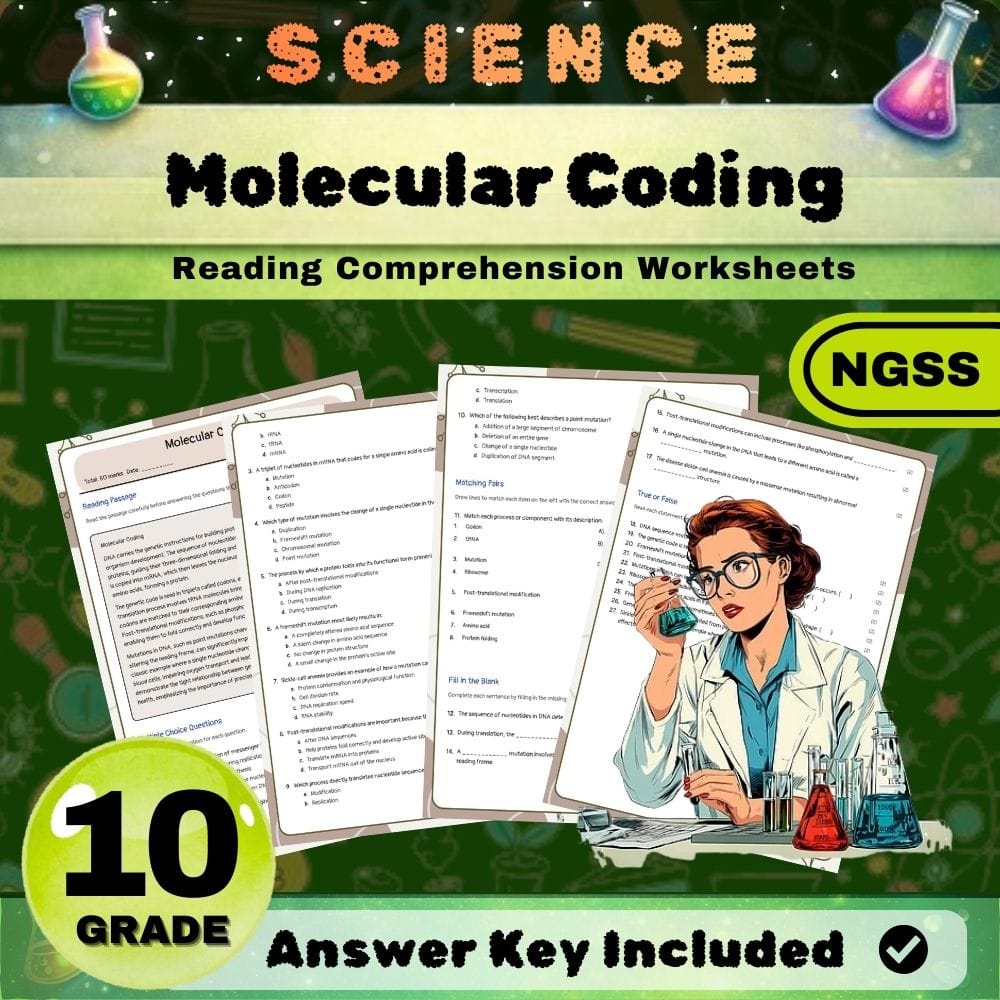
Grade 10 Science | Molecular Coding Worksheet (NGSS) (PDF)
 Created byMaple Path Learning
Learning Objectives
- Explain how DNA sequences determine protein structure through transcription and translation.
- Identify the roles of codons, ribosomes, and post-translational modifications in protein synthesis.
- Analyze how point mutations and frameshift mutations alter protein conformation and function.
Also included in: Grade 10 Science From Molecules to Organisms Lesson Bundle | NGSS +1 more
Instant download

Grade 10 Science | Molecular Evidence in Evolution - Daily Reading Comprehension
 Created byCoral Reef Learning
Learning Objectives
- Understand how DNA, RNA, and protein sequences are used to analyze evolutionary relationships.
- Identify the concepts of sequence similarity and conserved genes.
- Explain the significance of molecular clocks in estimating divergence times.
Instant download

Grade 10 Science – Membrane Structure & Function | Daily Reading Worksheet
Created byBright Mind ResourcesLearning Objectives
- Understand the fluid mosaic model of the plasma membrane
- Identify the roles of lipids and proteins in membrane structure
- Describe the functions of membrane components such as cholesterol and microdomains
Also included in: Grade 10 Cell Structure & Function Science Daily Reading Lesson Bundle | TEKS +2 more
Instant download
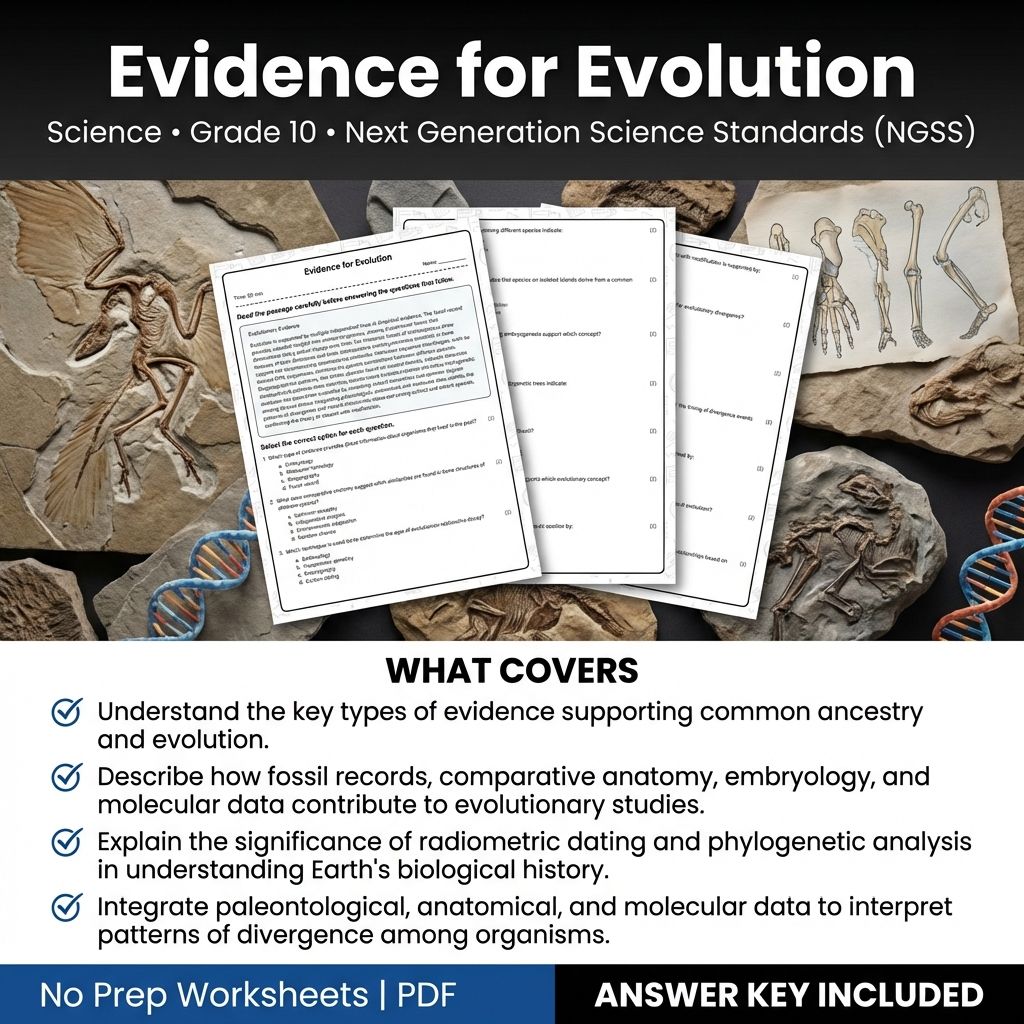
10th Grade Science | Evidence for Evolution Worksheet & Answer Key (PDF)
Created byCoral Reef LearningLearning Objectives
- Understand the key types of evidence supporting common ancestry and evolution.
- Describe how fossil records, comparative anatomy, embryology, and molecular data contribute to evolutionary studies.
- Explain the significance of radiometric dating and phylogenetic analysis in understanding Earth's biological history.
Also included in: Grade 10 Science Unit Worksheet Bundle – Genetics, Evolution & Biodiversity +1 more
Instant download
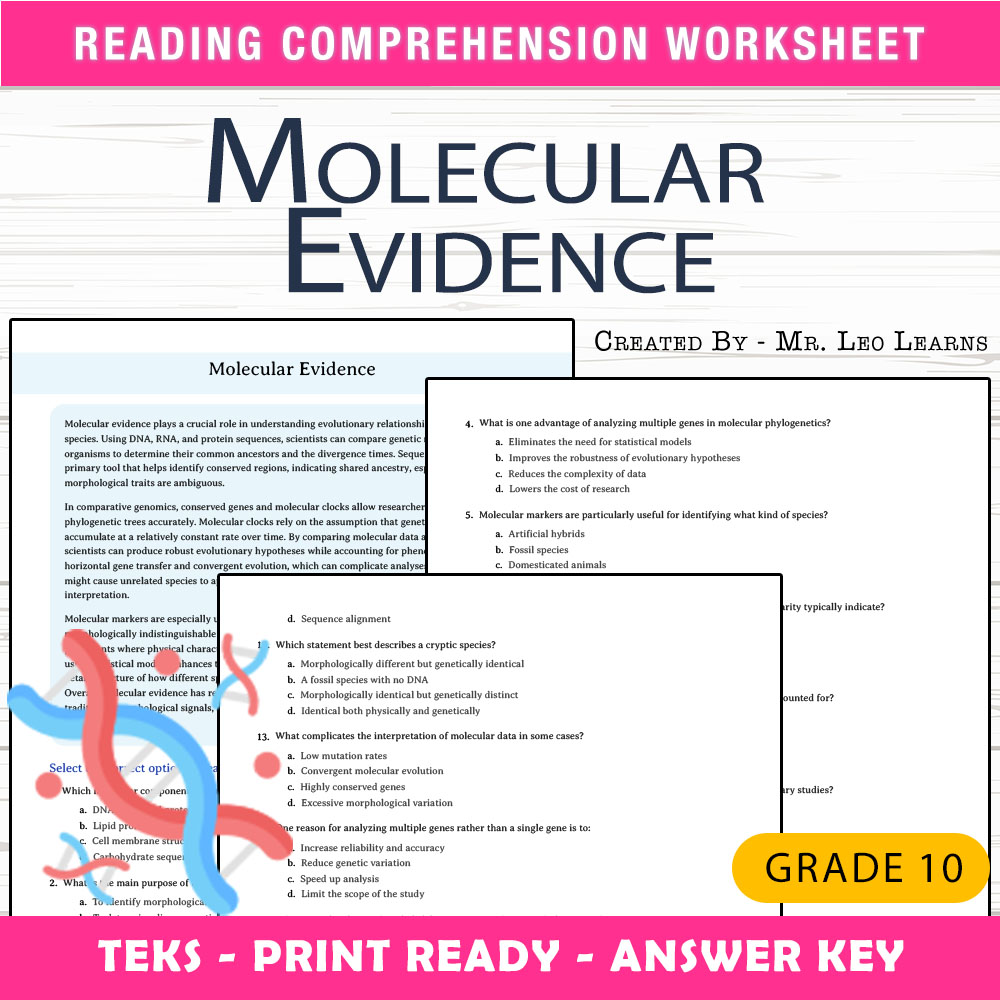
Grade 10 Science – Molecular Evidence Worksheet for Mastery
Created byThe Resource HubLearning Objectives
- Understand how DNA, RNA, and protein sequences are used to infer evolutionary relationships.
- Identify key molecular methods such as sequence similarity and molecular clocks used in phylogenetics.
- Recognize factors like horizontal gene transfer and convergent evolution that affect molecular analysis.
Also included in: Grade 10 Science | Evolution & Heredity Worksheet Bundle (Mastery Skills Pack) +2 more
Instant download

Evolutionary Evidence Practice Worksheet | Grade 10 Science NGSS
Created byPrism Point LearningLearning Objectives
- Explain how fossils, comparative anatomy, embryology, and molecular data provide evidence for common ancestry and descent with modification.
- Use radiometric dating to connect fossils to geological time and interpret evolutionary patterns.
- Describe how biogeographic distributions and phylogenetic relationships support evolutionary hypotheses.
Also included in: Grade 10 Evolution & Speciation Science Lesson Bundle (NGSS)
Instant download

Grade 10 ELA Coherent Organization Worksheet (PDF) | Common Core CCSS
 Created byGolden Apple Studio
Learning Objectives
- Explain how task, purpose, and audience shape coherent organization in a piece of writing
- Evaluate whether paragraphing supports a central idea and whether transitions connect claims to evidence
- Identify how style (tone, word choice, and formality) helps maintain meaning across a text
Also included in: Grade 10 ELA Evidence-Based Argument & Synthesis Lesson Bundle | CCSS +1 more
Instant download

Grade 10 Science | Evidence for Evolution Worksheet with Short Notes (PDF)
 Created byMeadowlark Worksheets
Learning Objectives
- Understand the main types of evidence supporting evolution and common ancestry.
- Describe how fossil records, comparative anatomy, embryology, and molecular data support evolutionary theory.
- Explain the importance of radiometric dating and molecular sequencing in reconstructing evolutionary history.
Also included in: Grade 10 Science NGSS Unit Bundle | Biological Evolution & Diversity Worksheets +1 more
Instant download
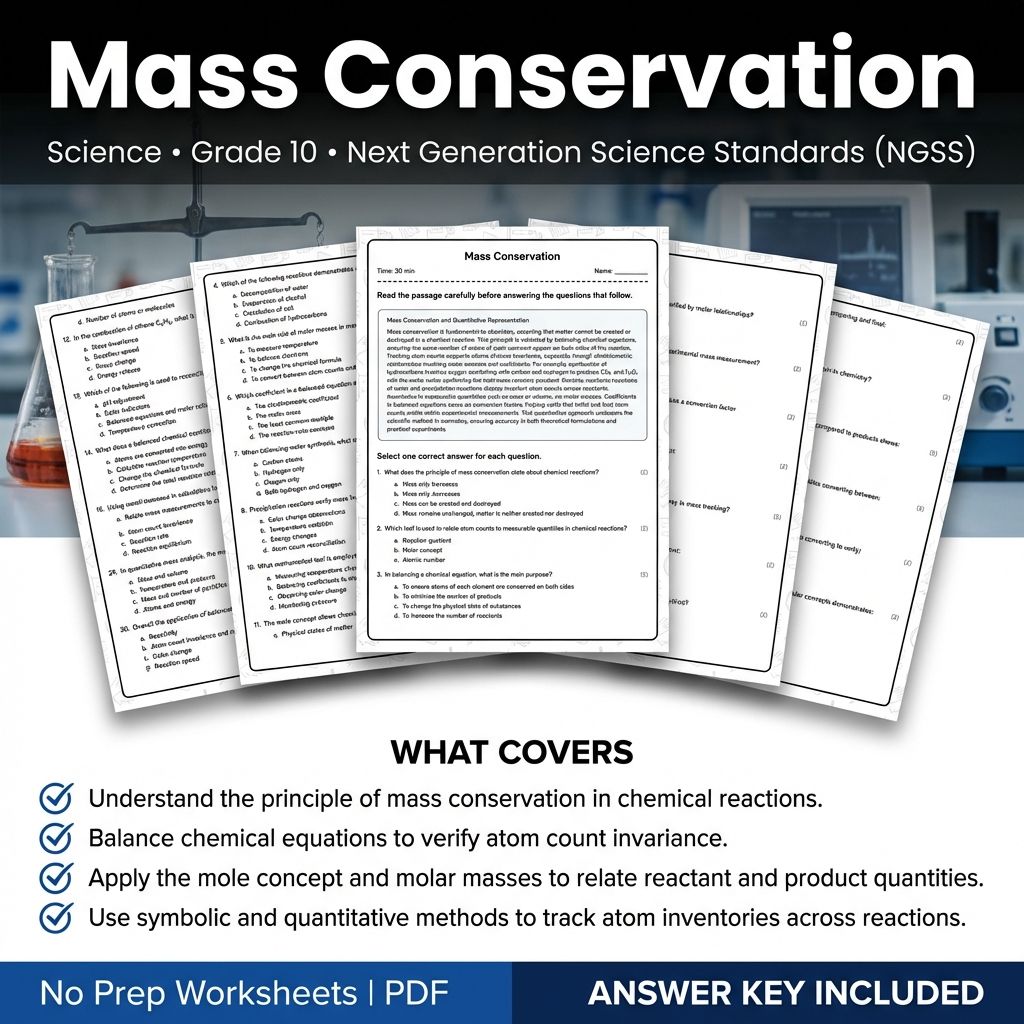
10th Grade Science | Mass Conservation Worksheet & Answer Key (Printable PDF)
Created byCoral Reef LearningLearning Objectives
- Understand the principle of mass conservation in chemical reactions.
- Balance chemical equations to verify atom count invariance.
- Apply the mole concept and molar masses to relate reactant and product quantities.
Also included in: Grade 10 Science UNIT Worksheet Pack| Reaction Rates, Equilibrium & Interactions +1 more
Instant download

Grade 10 ELA Evidence Reasoning Worksheet (CCSS) | Reading & Analysis
Created byGolden Apple StudioLearning Objectives
- Explain how writers use relevant textual evidence to support claims and build logical reasoning.
- Differentiate between a quote, a paraphrase, and an evidence-backed explanation that links to the claim.
- Practice selecting and interpreting evidence to clarify why it matters and what it proves.
Also included in: Grade 10 ELA Evidence-Based Argument & Synthesis Lesson Bundle | CCSS +1 more
Instant download

Grade 10 Science | Membrane Structure Worksheet (TEKS) (PDF)
Created byEvergreen Desk EducationLearning Objectives
- Explain the fluid mosaic model, including lateral movement of membrane components
- Describe how phospholipid bilayer asymmetry and cholesterol influence membrane behavior
- Compare major membrane protein functions (receptors, transporters, enzymes) and how orientation affects signaling
Instant download
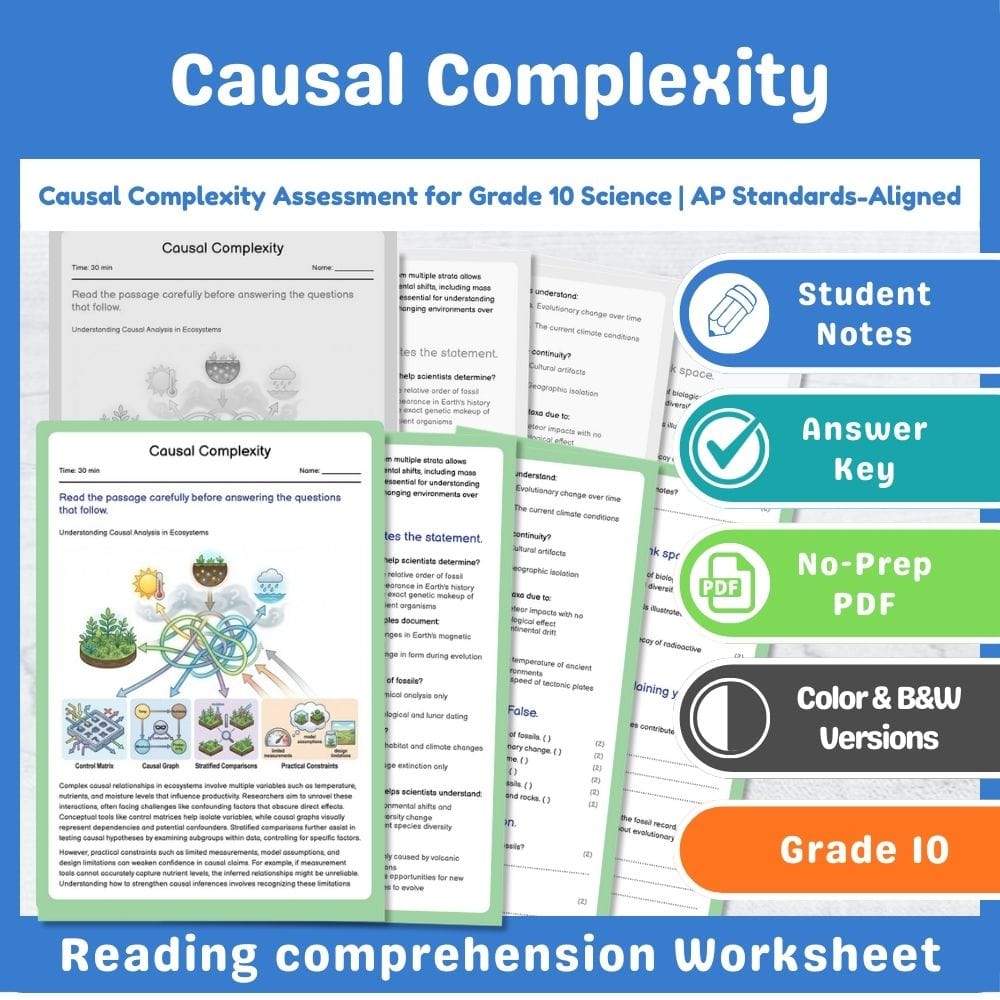
Causal Complexity Assessment for Grade 10 Science | AP Standards-Aligned
Created byPrism Point LearningLearning Objectives
- Understand methods for disentangling multivariable causal relationships in complex systems.
- Apply conceptual frameworks like control matrices, causal graphs, and stratified comparisons.
- Identify confounding factors and interaction effects in ecological and environmental contexts.
Instant download
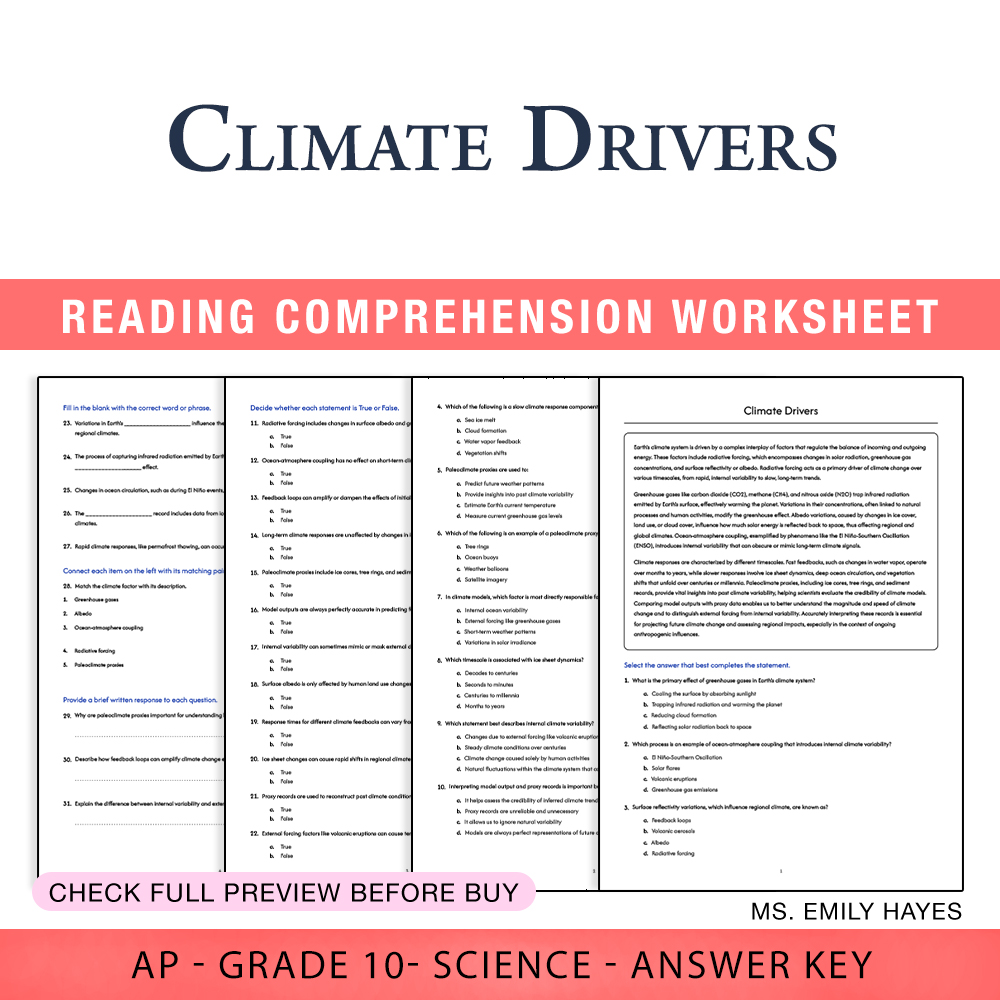
10th Grade Science | Climate Drivers Worksheet (PDF+ Answer Key)
 Created byCopper Leaf Classroom
Learning Objectives
- Analyze the factors influencing Earth's climate, including radiative forcing, greenhouse gases, and albedo variations.
- Interpret energy-balance models, feedback loop diagrams, and paleoclimate proxies to understand climate changes.
- Evaluate the timescales of climate response and distinguish between internal variability and external forcing.
Also included in: Grade 10 Science AP – Surface Processes & Earth Systems (PDF + Answer Key) +1 more
Instant download
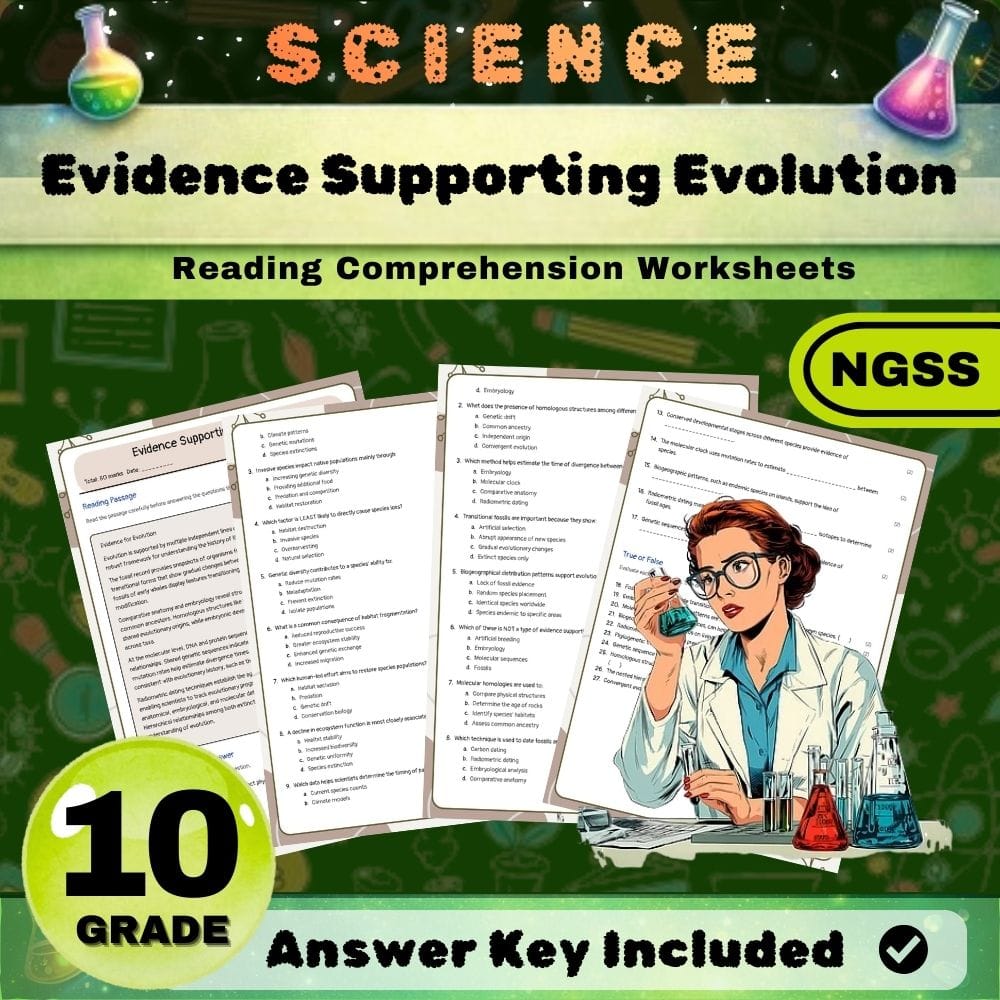
Grade 10 Science | Evidence Supporting Evolution Worksheet (NGSS PDF)
Created byMaple Path LearningLearning Objectives
- Identify various types of evidence that support the theory of evolution.
- Explain how fossil records, comparative anatomy, embryology, and molecular data contribute to understanding life's history.
- Describe how radiometric dating provides a temporal context for fossils and evolutionary events.
Also included in: Grade 10 Science | Biological Evolution Unity and Diversity Lesson Bundle | NGSS +1 more
Instant download
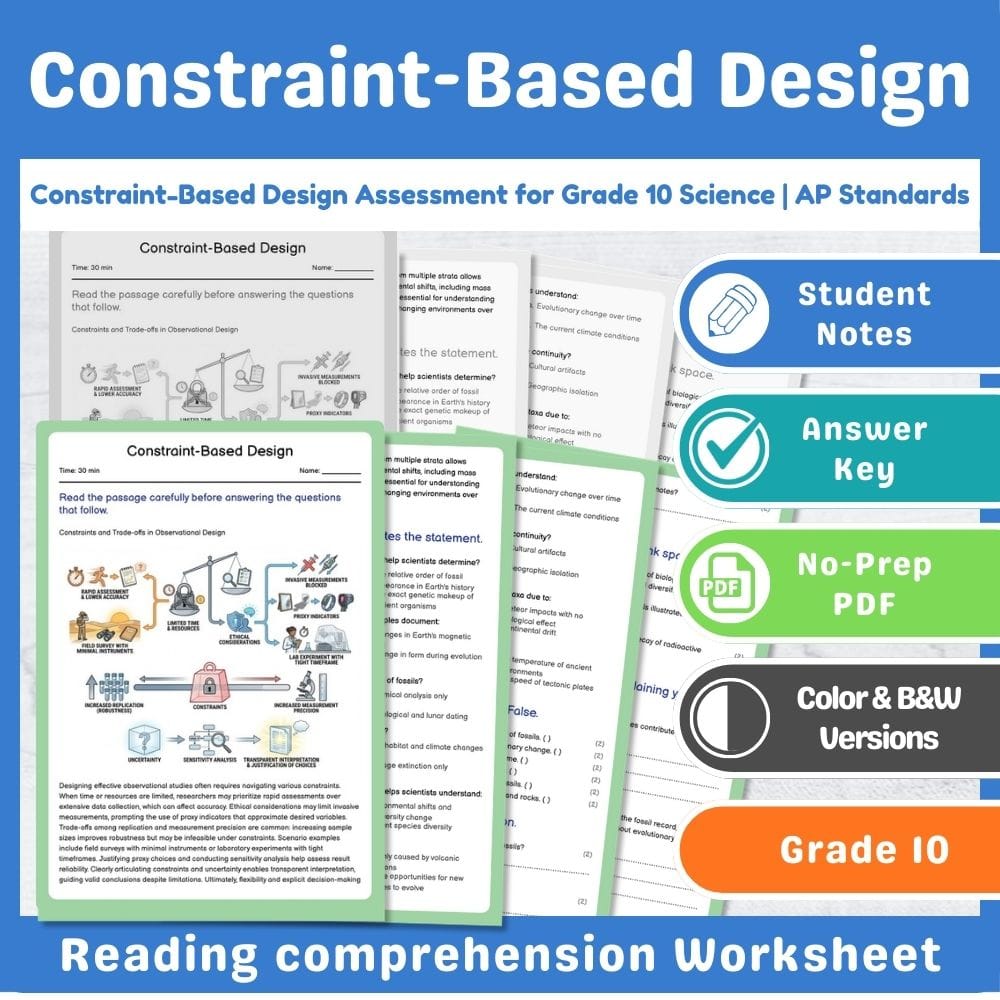
Constraint-Based Design Assessment for Grade 10 Science | AP Standards
Created byPrism Point LearningLearning Objectives
- Understand the considerations involved in designing studies under practical, ethical, or temporal constraints.
- Identify trade-offs among replication, measurement precision, and scope.
- Apply understanding of proxy measures and sensitivity analysis to assess robustness.
Instant download
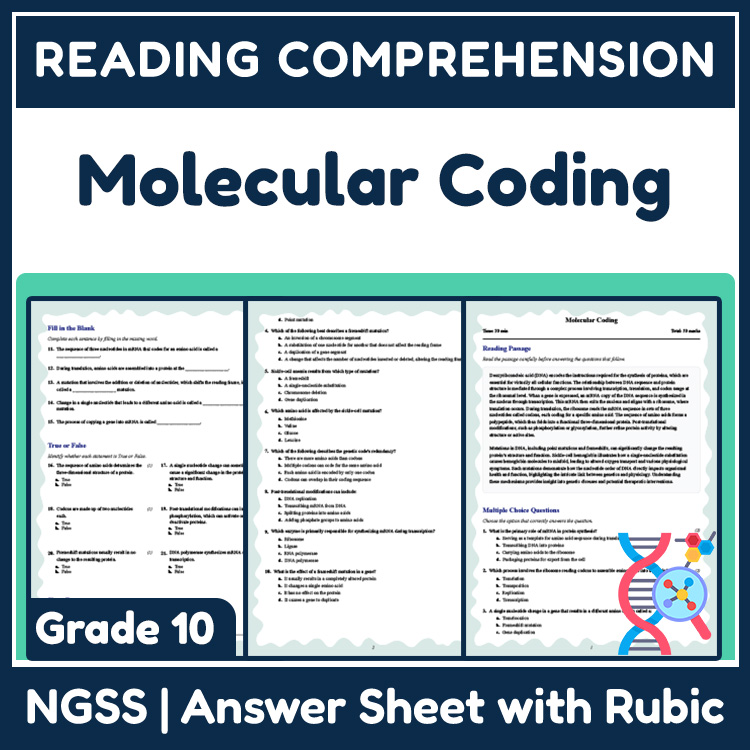
10th Grade Science | Molecular Coding Reading Worksheet (PDF + Answer Key)
JCreated byJ.S SheetsLearning Objectives
- Understand how DNA sequence determines amino acid order in proteins
- Describe the process of transcription and translation
- Explain codon usage and ribosomal synthesis
Also included in: Grade 10 Science Unit | Cellular & Physiological Systems Worksheets
Instant download
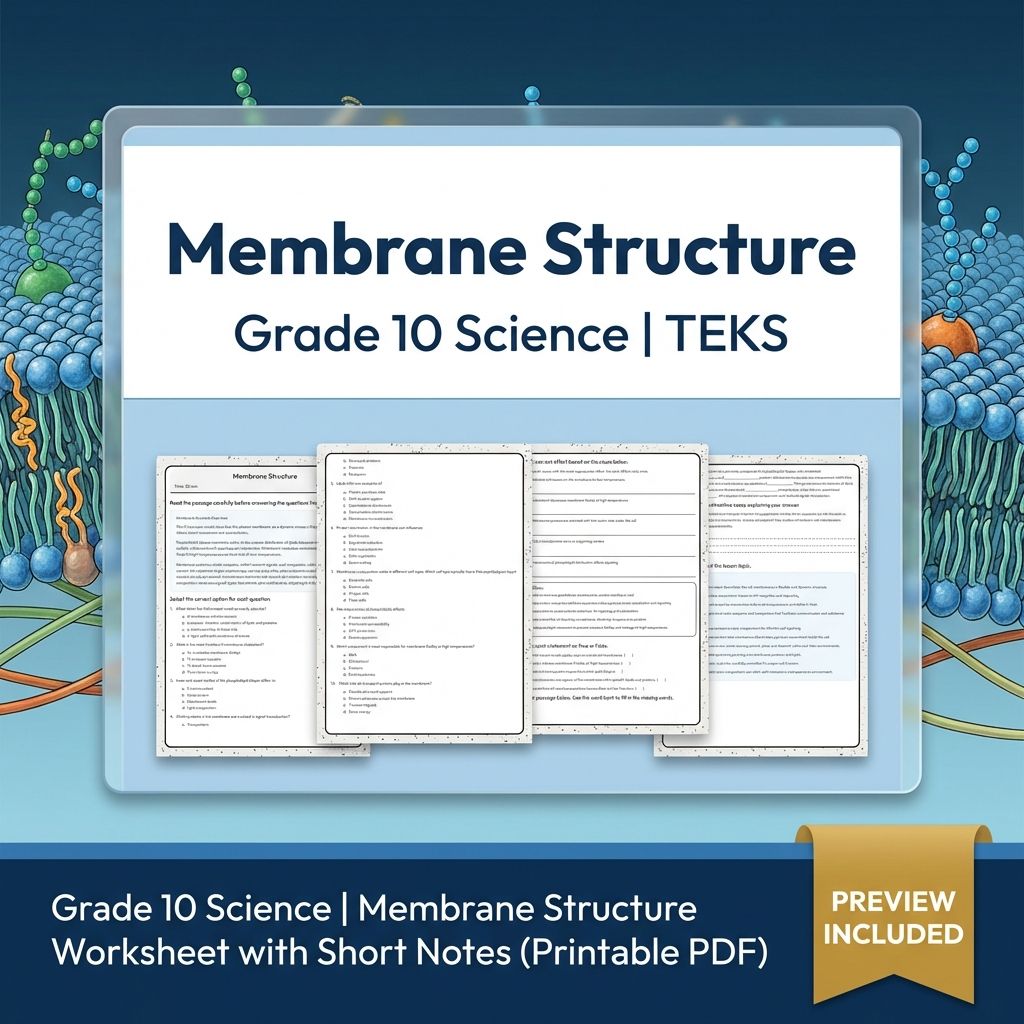
Grade 10 Science | Membrane Structure Worksheet with Short Notes (Printable PDF)
Created byMeadowlark WorksheetsLearning Objectives
- Describe the fluid mosaic model and its components.
- Explain the asymmetry of the phospholipid bilayer.
- Discuss cholesterol's role in membrane fluidity at different temperatures.
Instant download

Membrane Transport Practice Worksheets | Grade 10 Science Review
Created byPrism Point LearningLearning Objectives
- Explain how the fluid mosaic model describes the plasma membrane and how cholesterol affects permeability
- Differentiate channels, carriers, and pumps by structure and transport selectivity
- Use concentration gradients and membrane permeability to describe passive transport (diffusion and osmosis)
Also included in: Grade 10 Cells & Energy Science Lesson Bundle Ontario Framework Pack
Instant download
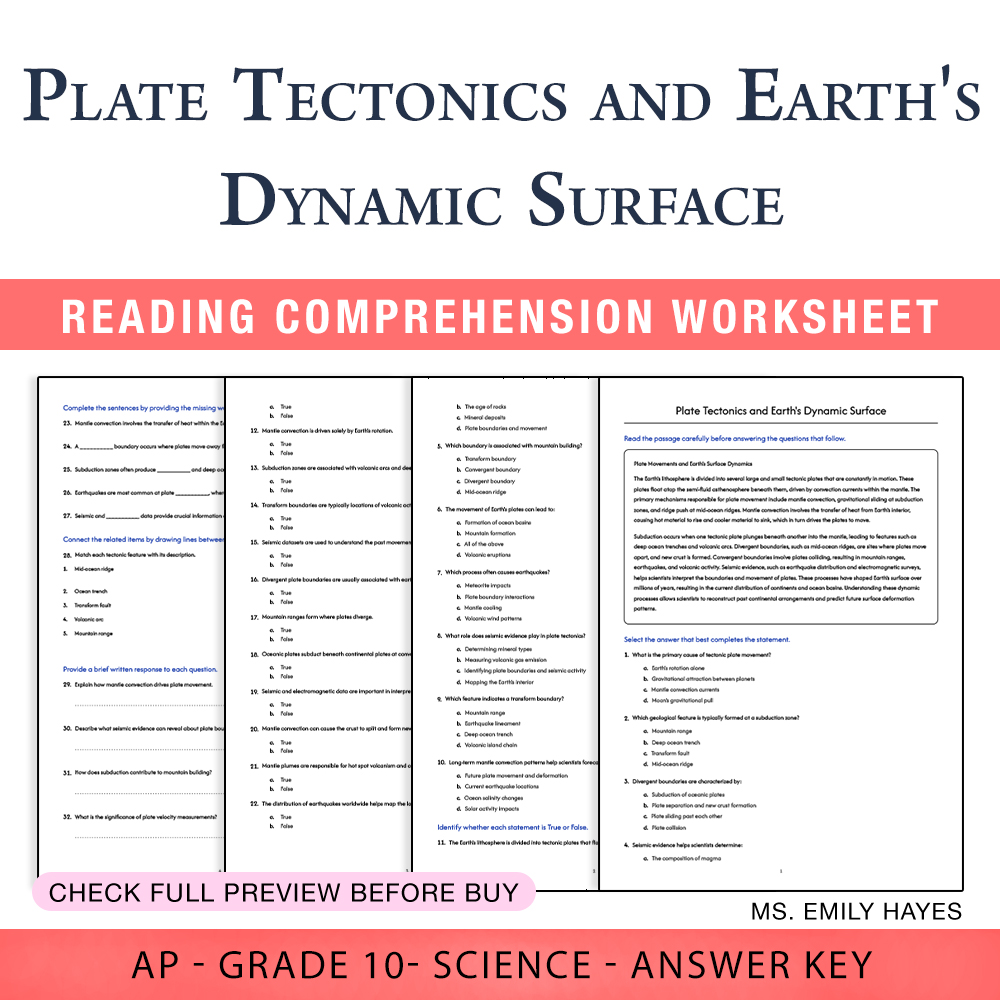
Grade 10 Science |Plate Tectonics & Earth's Surface Worksheet (PDF + Answer Key)
Created byCopper Leaf ClassroomLearning Objectives
- Describe the mechanisms of plate motion, including mantle convection and subduction.
- Interpret tectonic settings using maps, cross-sections, and seismic evidence.
- Explain how plate interactions influence mountain building, volcanism, and earthquakes.
Also included in: Grade 10 Science AP – Surface Processes & Earth Systems (PDF + Answer Key) +1 more
Instant download
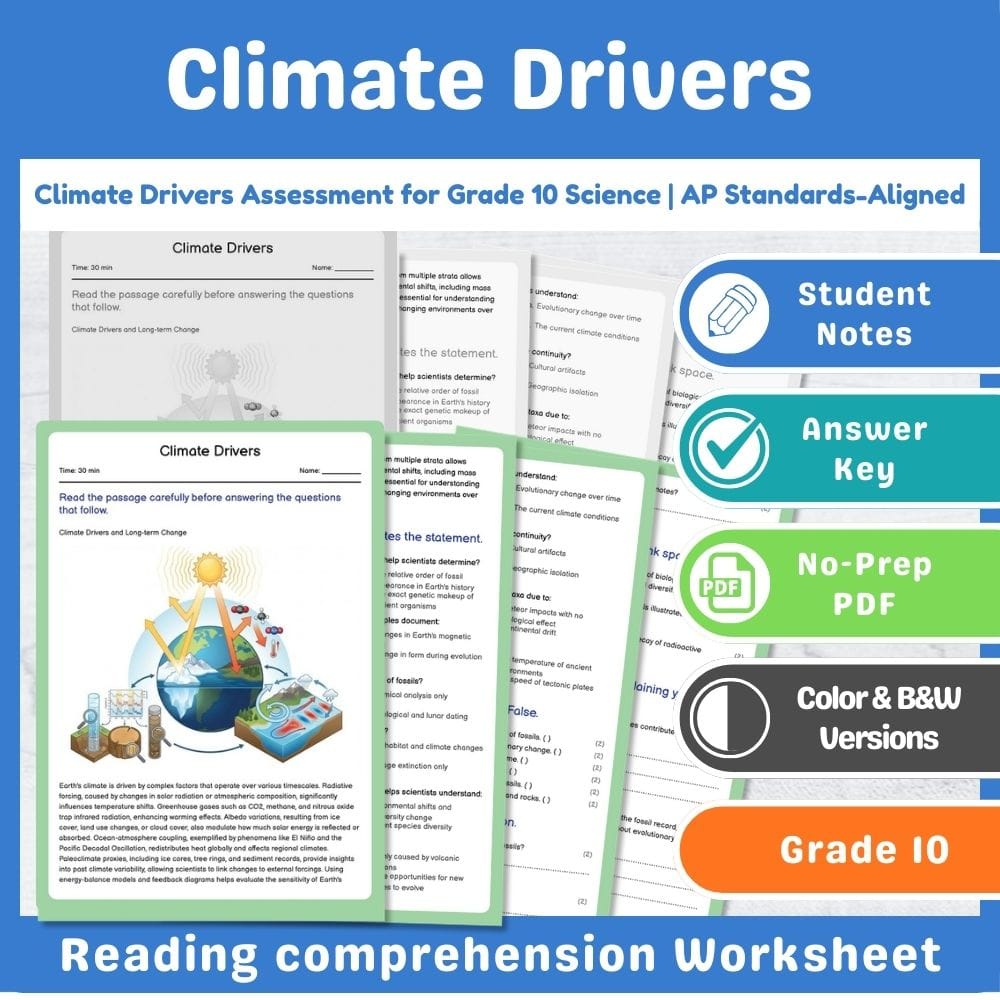
Climate Drivers Assessment for Grade 10 Science | AP Standards-Aligned
Created byPrism Point LearningLearning Objectives
- Explain the main factors influencing Earth's climate, including radiative forcing and greenhouse gases.
- Analyze the role of albedo variations and ocean-atmosphere interactions in climate systems.
- Interpret energy-balance models, feedback diagrams, and proxy records to assess climate change.
Also included in: Lesson Bundle | Grade 10 Science Earth and Space Standards-Aligned
Instant download

Grade 10 Science – Negative Feedback Worksheet (TEKS) PDF
Created byEvergreen Desk EducationLearning Objectives
- Explain how negative feedback systems maintain internal stability using sensors, control centers, and effectors.
- Interpret how deviations from a set point trigger antagonistic (opposite) corrective responses.
- Compare negative feedback to positive feedback using temperature, blood glucose, and blood pressure examples.
Instant download
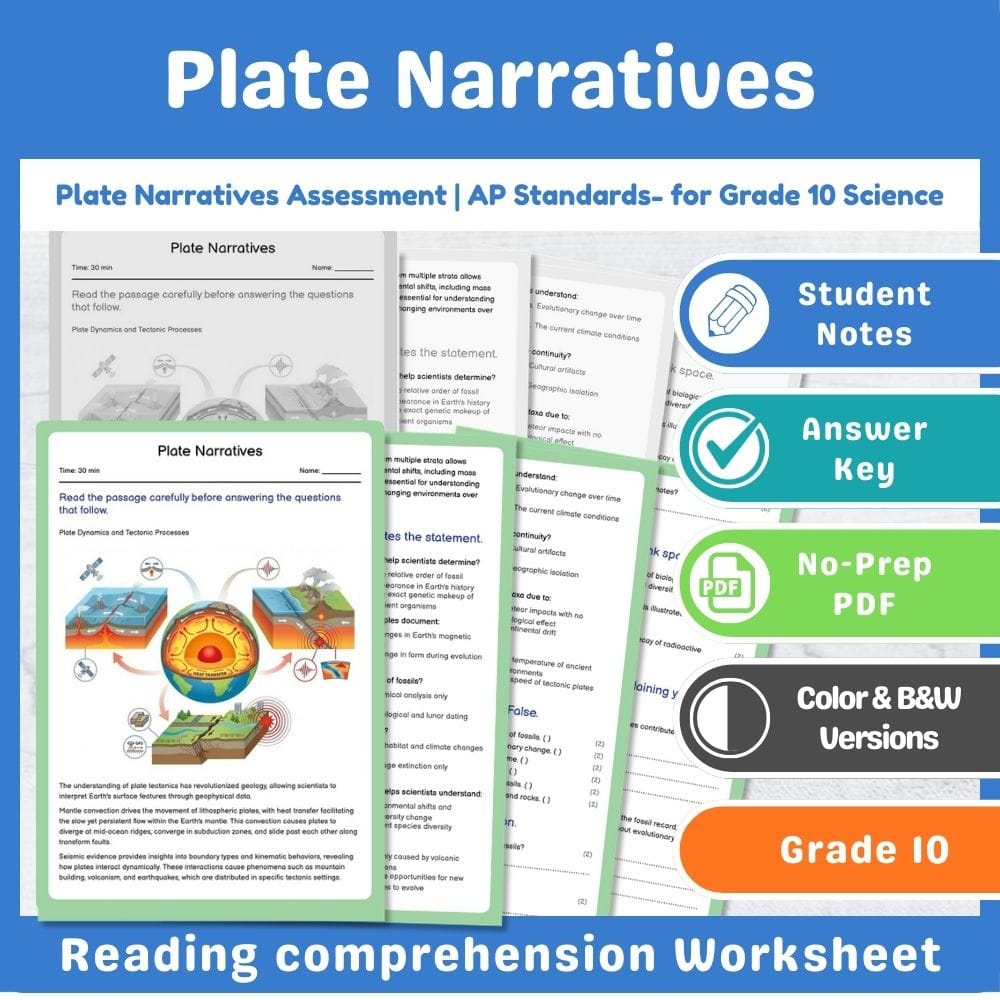
Plate Narratives Assessment | AP Standards-Aligned Evaluation for Grade 10 Science
Created byPrism Point LearningLearning Objectives
- Explain mechanisms of plate motion, mantle convection, and subduction.
- Interpret tectonic settings using maps, cross-sections, and seismic evidence.
- Connect plate interactions to mountain building, volcanism, and earthquake distribution.
Also included in: Lesson Bundle | Grade 10 Science Earth and Space Standards-Aligned
Instant download
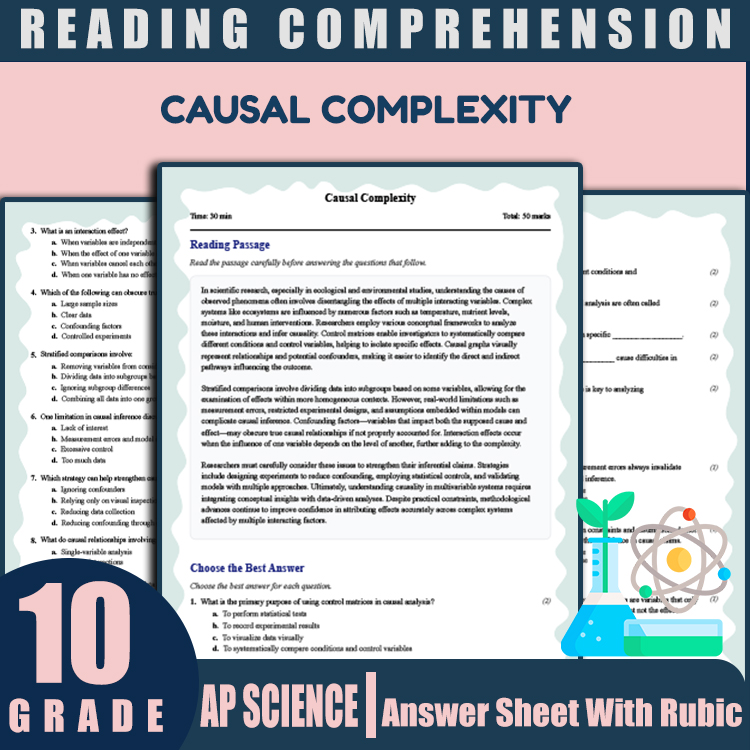
10th Grade Science | Causal Complexity Reading Worksheet & Answer Key (PDF)
JCreated byJ.S SheetsLearning Objectives
- Understand how to analyze multivariable causal relationships in complex systems.
- Learn to apply conceptual frameworks such as control matrices, causal graphs, and stratified comparisons.
- Identify confounding factors and interaction effects in ecosystem productivity studies.
Also included in: Grade 10 Science Unit Worksheet Pack – Data Analysis & Scientific Reasoning +1 more
Instant download
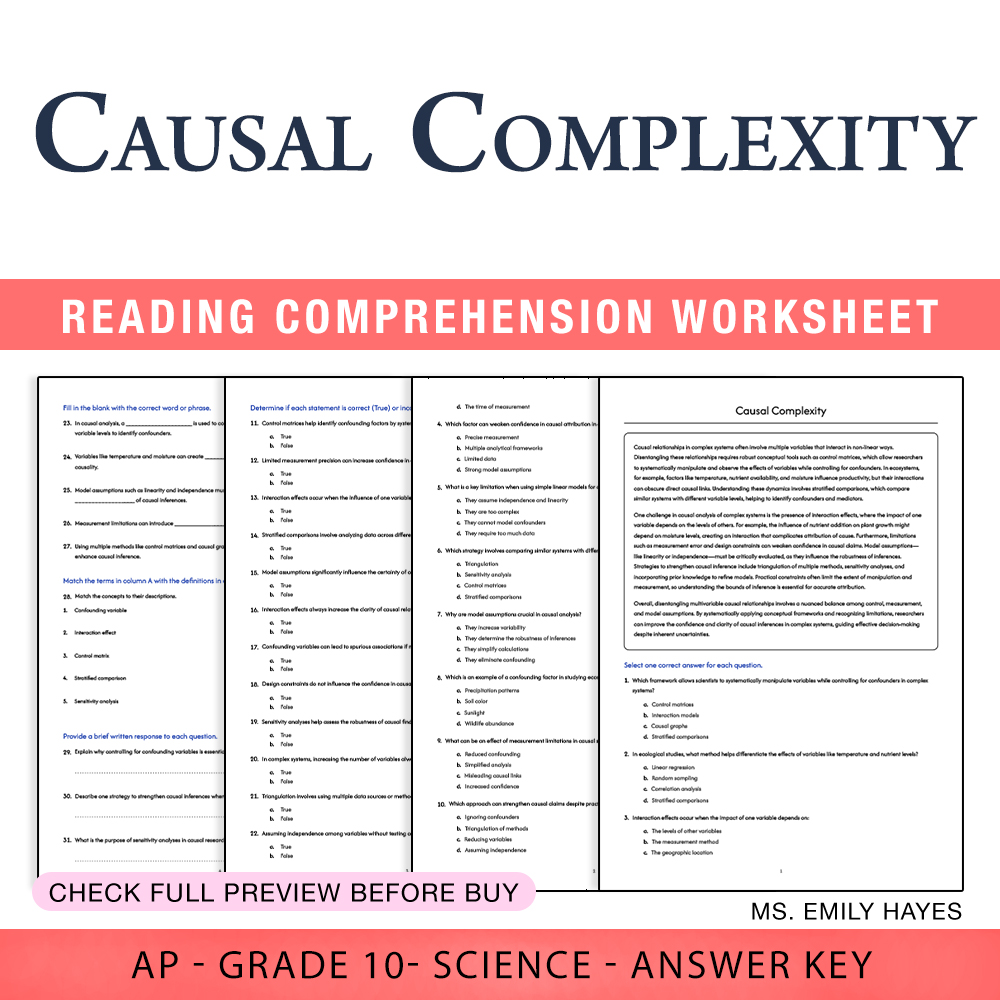
10th Grade Science | Causal Complexity Worksheet (PDF+ Answer Key)
Created byCopper Leaf ClassroomLearning Objectives
- Understand different frameworks used to analyze multivariable causal relationships.
- Identify confounding factors and interaction effects in complex systems.
- Evaluate the influence of design constraints and model assumptions on causal inference.
Also included in: Grade 10 Science AP | Data Analysis & Modeling Skills (PDF + Answer Key) +1 more
Instant download

Grade 4 Health Worksheet | Safety Measures Aligned with NHES (PDF)
Created bySunny Desk ResourcesLearning Objectives
- Identify common safety hazards at home, school, and in the community
- Explain how safety rules and equipment (like helmets and seat belts) prevent injuries
- Describe safe actions to take when an accident or emergency happens
Also included in: Grade 4 Safety & Well-Being Health Lesson Bundle aligned to NHES Standards +1 more
Instant download
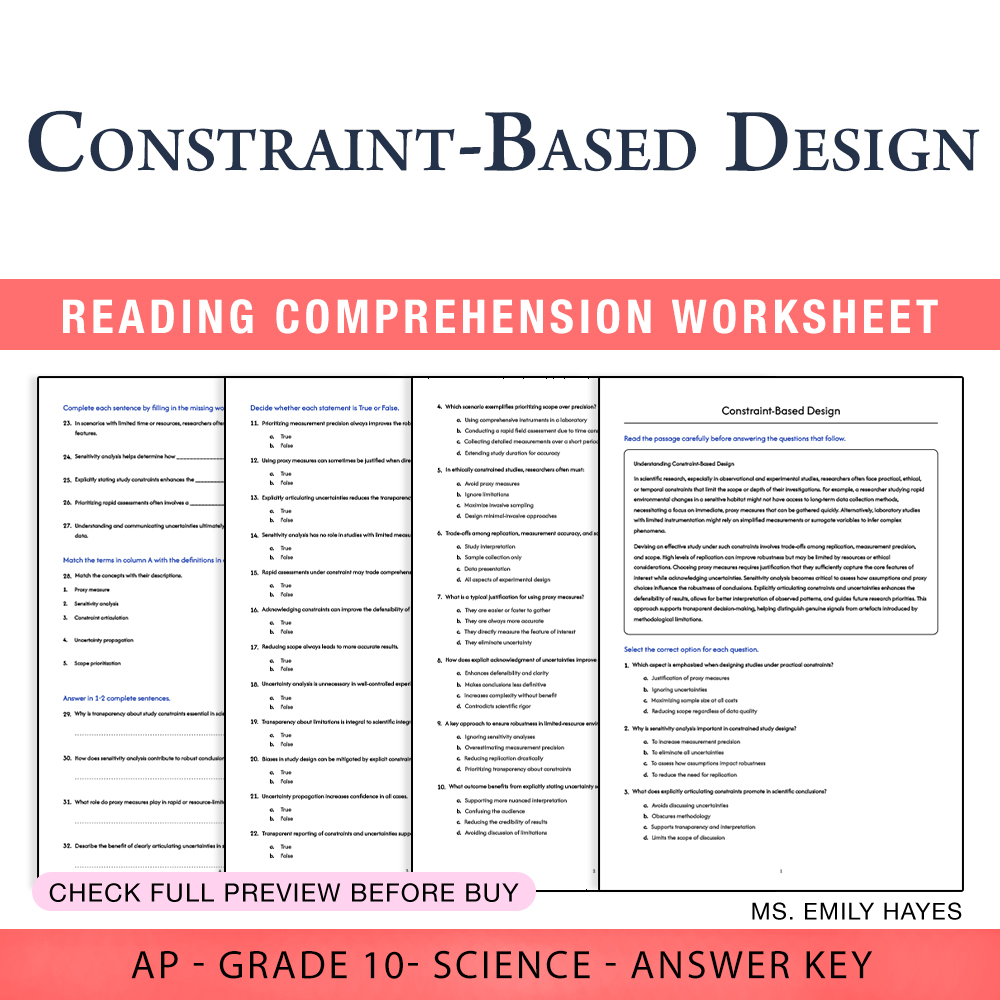
Grade 10 Science | Constraint-Based Design Worksheet (PDF+ Answer Key)
Created byCopper Leaf ClassroomLearning Objectives
- Understand the challenges and trade-offs involved in constraint-based experimental design.
- Identify strategies for prioritizing observational and experimental constraints.
- Evaluate the role of proxy measures and sensitivity analyses in robust conclusions.
Also included in: Grade 10 Science AP | Data Analysis & Modeling Skills (PDF + Answer Key) +1 more
Instant download

Grade 10 Science | Homology & Commonality in Biology - Daily Reading Practice
Created byCoral Reef LearningLearning Objectives
- Identify homologous structures in different species
- Compare internal body plans and developmental pathways
- Understand how molecular components indicate shared ancestry
Instant download

Multiple Accounts Comparison Worksheet Grade 5 ELA | Compare Texts
Created bySunny Desk ResourcesLearning Objectives
- Compare two accounts of the same event by identifying similarities and differences in details and emphasis.
- Analyze how an author’s or source’s purpose influences what information they include and how they explain it.
- Use evidence from informational texts to support conclusions about how accounts shape understanding.
Also included in: Grade 5 ELA Reading: Informational Text Lesson Bundle | General ELA +1 more
Instant download
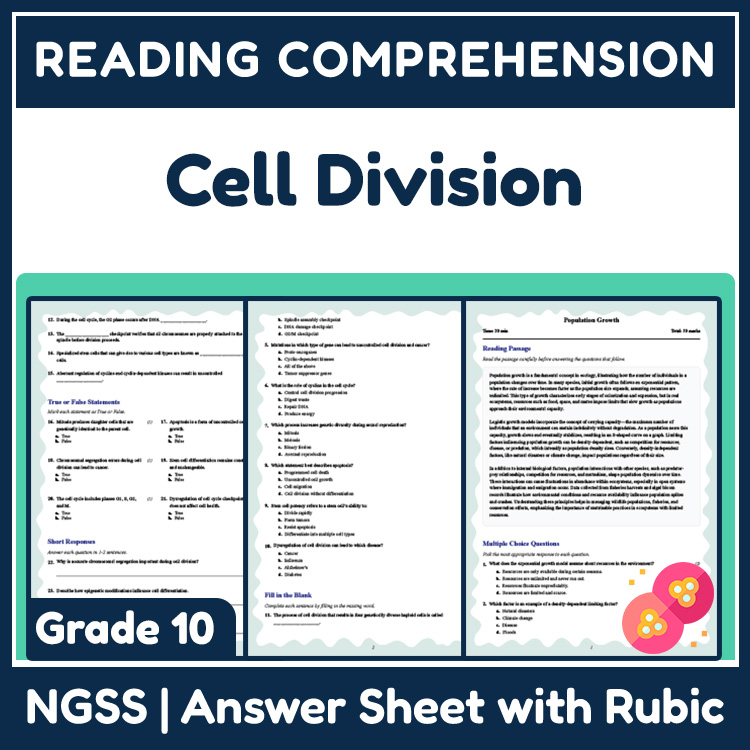
Grade 10 Science | Cell Division Reading Worksheet with Answer Key (PDF)
JCreated byJ.S SheetsLearning Objectives
- Understand the processes of mitosis and meiosis and their roles in cell division.
- Explain the cell cycle, checkpoints, and how dysregulation can lead to diseases such as cancer.
- Describe mechanisms of differentiation and the significance of stem cell potency in development.
Also included in: Grade 10 Science Unit | Cellular & Physiological Systems Worksheets
Instant download

Negative Feedback Assessment | TEKS Grade 10 Science Standards
Created byPrism Point LearningLearning Objectives
- Define negative feedback as a regulatory process that maintains internal stability.
- Explain how sensors, control centers, and effectors work together in negative feedback mechanisms.
- Identify physiological variables regulated by negative feedback, such as temperature, blood glucose, and blood pressure.
Also included in: Grade 10 Homeostasis and Feedback Science Lesson Bundle | TEKS
Instant download

Grade 10 Health Decisions Worksheet | Immediate vs Long Term Effects
Created byPrism Point LearningLearning Objectives
- Explain how health-related choices can cause immediate and long-term effects.
- Evaluate possible outcomes before making a health and safety decision.
- Use consequences to support personal responsibility and safer behavior.
Instant download

Grade 10 Science | Orbital Gravity Models Worksheet | California Standards
 Created byLumora Learning
Learning Objectives
- Explain how gravity can produce centripetal acceleration in orbital motion
- Connect orbital shape and periodic timing to evidence-based models of gravity
- Interpret how observations of planetary and satellite orbits support a unified force model
Instant download

Monitoring Progress Health Worksheet | Grade 6 NHES Goal Setting Activity
Created byPrism Point LearningLearning Objectives
- Explain why self-monitoring helps people meet health goals
- Use examples to distinguish between recording progress and making changes
- Identify effective ways to reflect on successes and challenges
Instant download

Contextual Word Meaning Worksheet Pack | Grade 4 ELA Practice
Created bySunny Desk ResourcesLearning Objectives
- Explain how context clues help determine the meaning of a word in a specific sentence or passage
- Select the correct meaning of a word with multiple meanings by using evidence from the text
- Connect word meaning to author’s purpose, tone, and theme to improve comprehension
Also included in: Theme, Text Evidence & Character Development Lesson Bundle | Grade 4 ELA | Common Core +1 more
Instant download

Evidence Reasoning Worksheet Grade 10 ELA | CCSS Analysis & Writing
Created bySunny Desk ResourcesLearning Objectives
- Select text-based evidence that is directly relevant to a specific claim
- Explain what evidence shows and connect it logically to the author’s point
- Use evidence and reasoning to build analytic paragraphs rather than dropping quotes alone
Also included in: Grade 10 Transitions, Research & Argument Writing Lesson Bundle | CCSS ELA +1 more
Instant download
Browse more categories
About Reading comprehension Worksheets
Find reading comprehension worksheets for class practice, homework, or self-study. All 40,289 are instant PDF downloads.
Each resource here is built by an independent educator and reviewed for quality. Worksheets print straight from PDF and suit classroom use, homework, or extra practice; most come with answer keys, and you can preview before purchasing.