
Reading comprehension Worksheets
40,284 type resources
Grade 9 Science | Energy Pathways Worksheet (AP Standard, PDF)
 Created byBright Mind Resources
Learning Objectives
- Describe the process of ATP production during cellular respiration and photosynthesis.
- Explain how catabolic and anabolic reactions are coupled in energy transfer.
- Compare the roles of electron transport chains in photosynthesis and cellular respiration.
Instant download
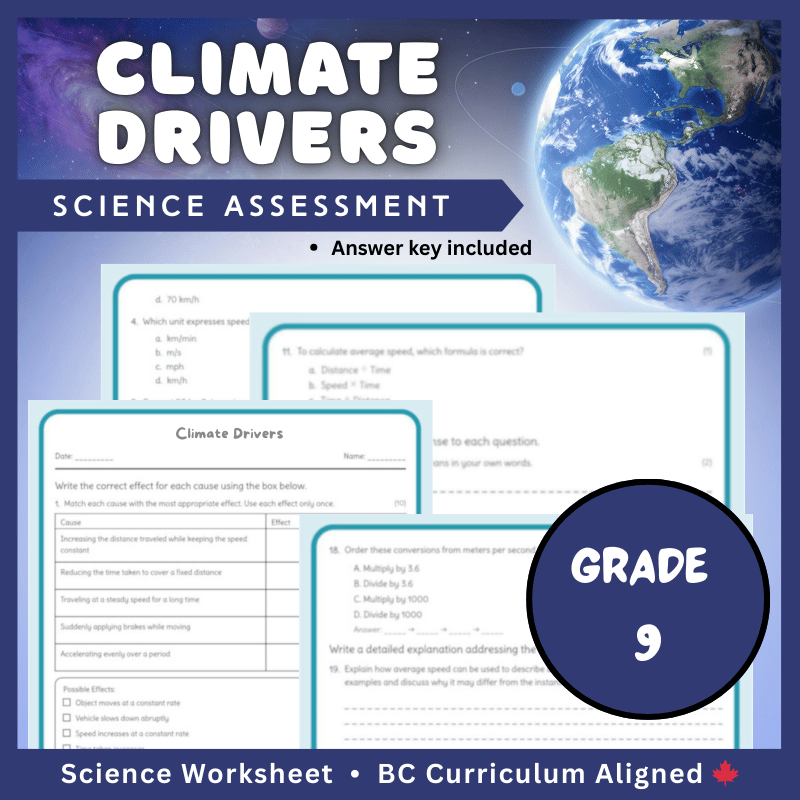
Grade 9 Science | Climate Drivers Worksheet (PDF) – BC Standards & Concepts
Created byBright Mind ResourcesLearning Objectives
- Understand how Earth's atmosphere, hydrosphere, cryosphere, lithosphere, and biosphere interact to influence climate.
- Identify the main drivers of climate variability and change, including solar energy and internal heat.
- Explain the role of energy balance, greenhouse gases, aerosols, ocean circulation, and land surface properties in shaping regional climates.
Instant download
Grade 9 Science – Reaction Types Worksheet (Ontario | PDF)
Created byBright Mind ResourcesLearning Objectives
- Identify and classify different types of chemical reactions such as synthesis, decomposition, single and double displacement, and combustion.
- Describe observable outcomes and patterns in reactant-product relationships for each reaction type.
- Explain how reaction classification helps in predicting products and understanding conservation of mass.
Instant download
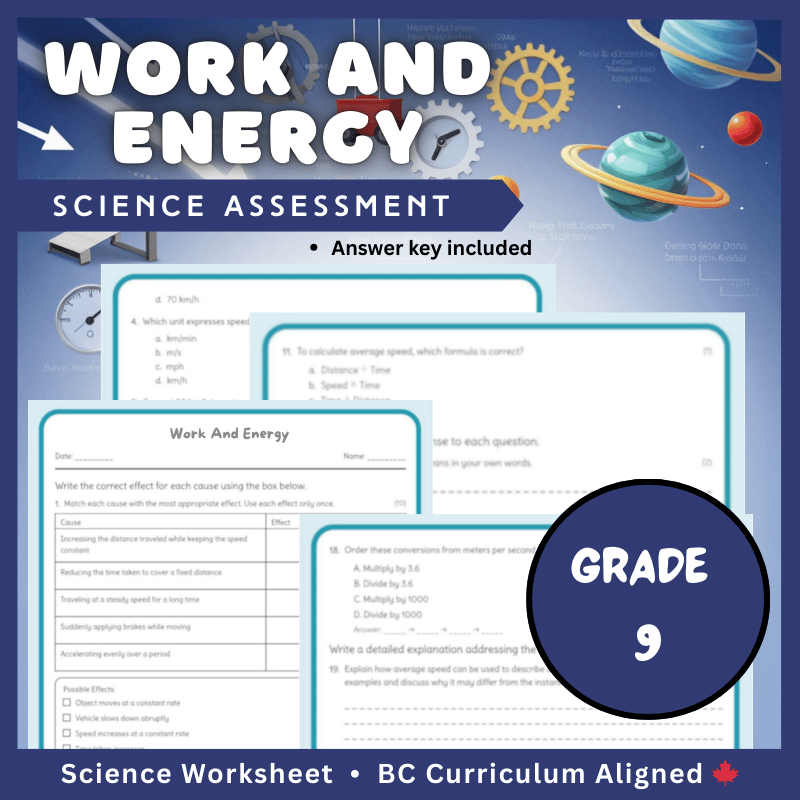
Grade 9 Science | Work and Energy Worksheet (PDF) – BC Standards & Practice
Created byBright Mind ResourcesLearning Objectives
- Explain the concept of work as energy transfer involving force and displacement.
- Identify the factors that influence the amount of work done on an object.
- Differentiate between positive and negative work in various scenarios.
Instant download
Grade 9 Science | Vectors and Forces Worksheet (PDF) | Ontario Standards
Created byBright Mind ResourcesLearning Objectives
- Understand how to represent forces using vectors, including magnitude and direction.
- Learn to resolve forces into components and compute the resultant vector.
- Apply graphical and analytical methods to analyze forces in two-dimensional contexts.
Instant download
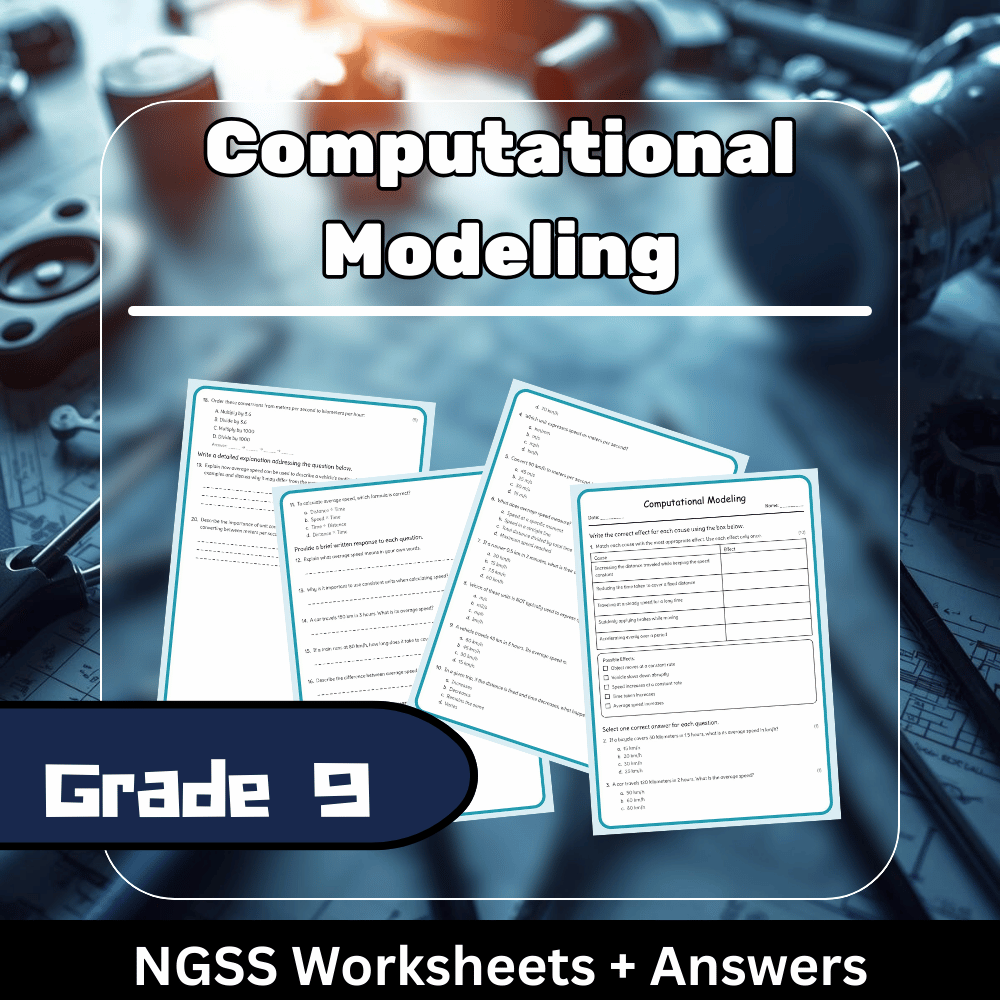
Grade 9 Science | Computational Modeling Worksheet (Answer Key) NGSS Aligned
Created byBright Mind ResourcesLearning Objectives
- Understand the role of mathematical and computational methods in system modeling.
- Learn how to formulate models, estimate parameters, and perform numerical tuning.
- Apply sensitivity analysis to evaluate design variables in engineering systems.
Instant download
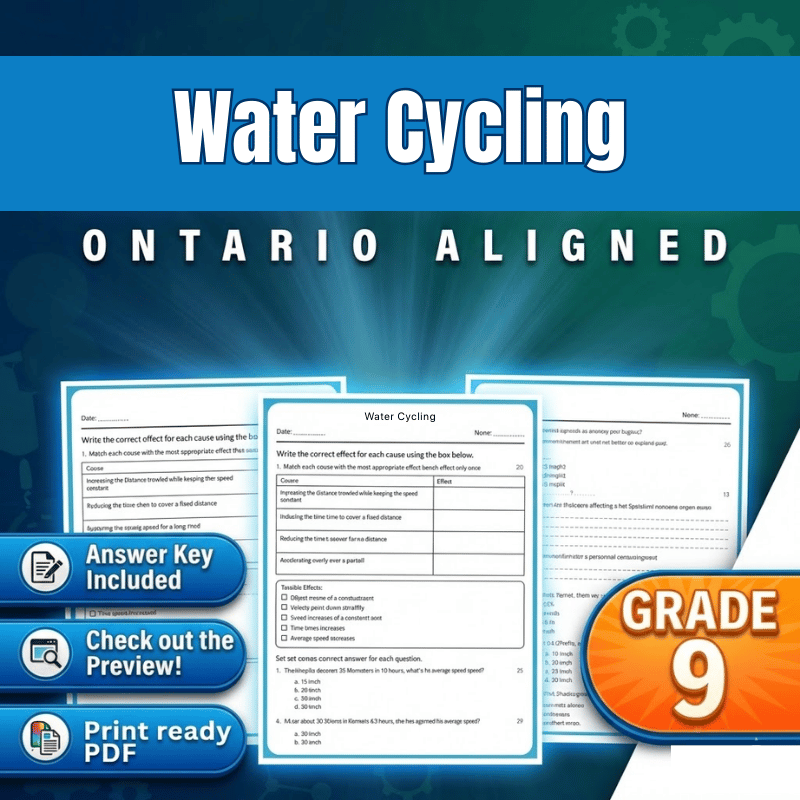
Grade 9 Science | Water Cycling Worksheet (Ontario) – Practice Set (PDF)
Created byBright Mind ResourcesLearning Objectives
- Explain the processes involved in the water cycle, including evaporation, condensation, precipitation, infiltration, runoff, and groundwater flow.
- Describe residence times of water in different reservoirs and the fluxes that control water availability.
- Analyze how watershed characteristics, porosity, and permeability affect water flow and distribution.
Instant download
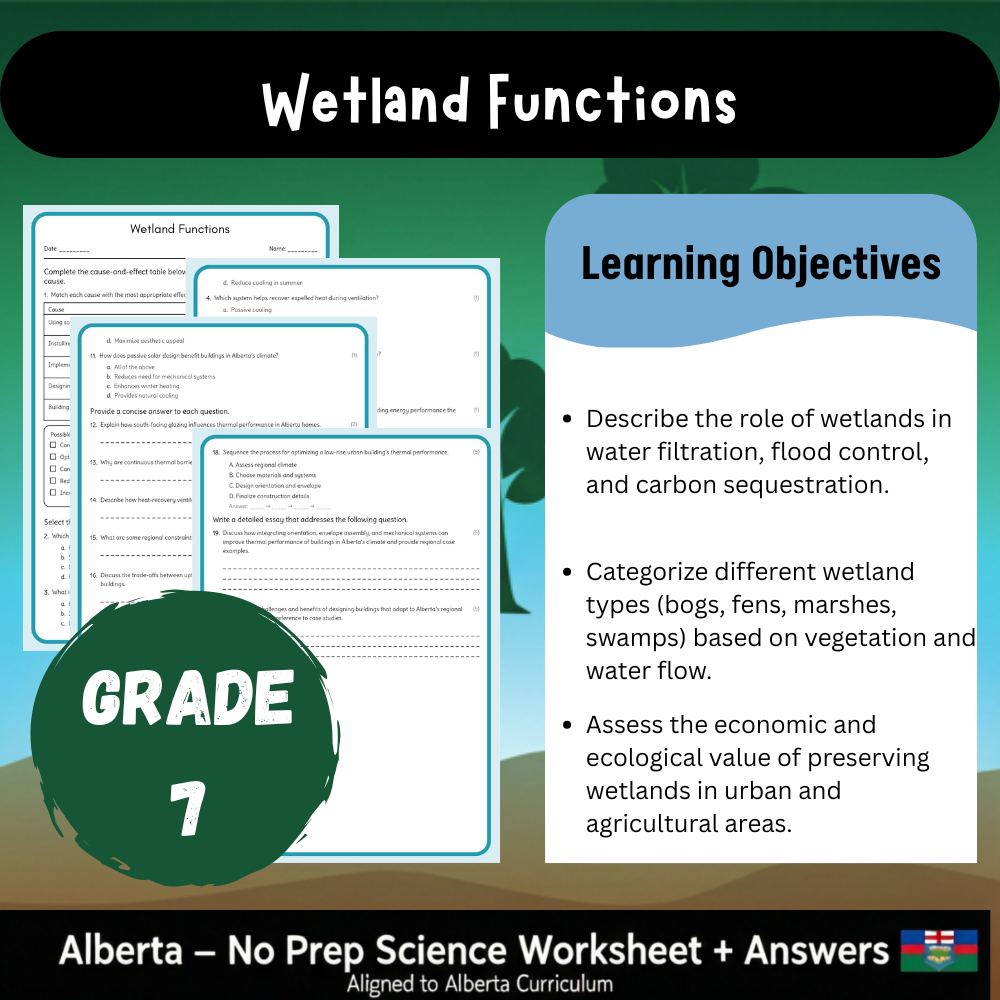
Grade 7 Science | Wetland Functions Worksheet (PDF) – Alberta Standards
Created byBright Mind ResourcesLearning Objectives
- Describe the hydrological, chemical, and biological functions of wetlands.
- Identify examples of wetland types and their ecological roles.
- Explain how wetlands contribute to landscape water regulation and biodiversity.
Instant download
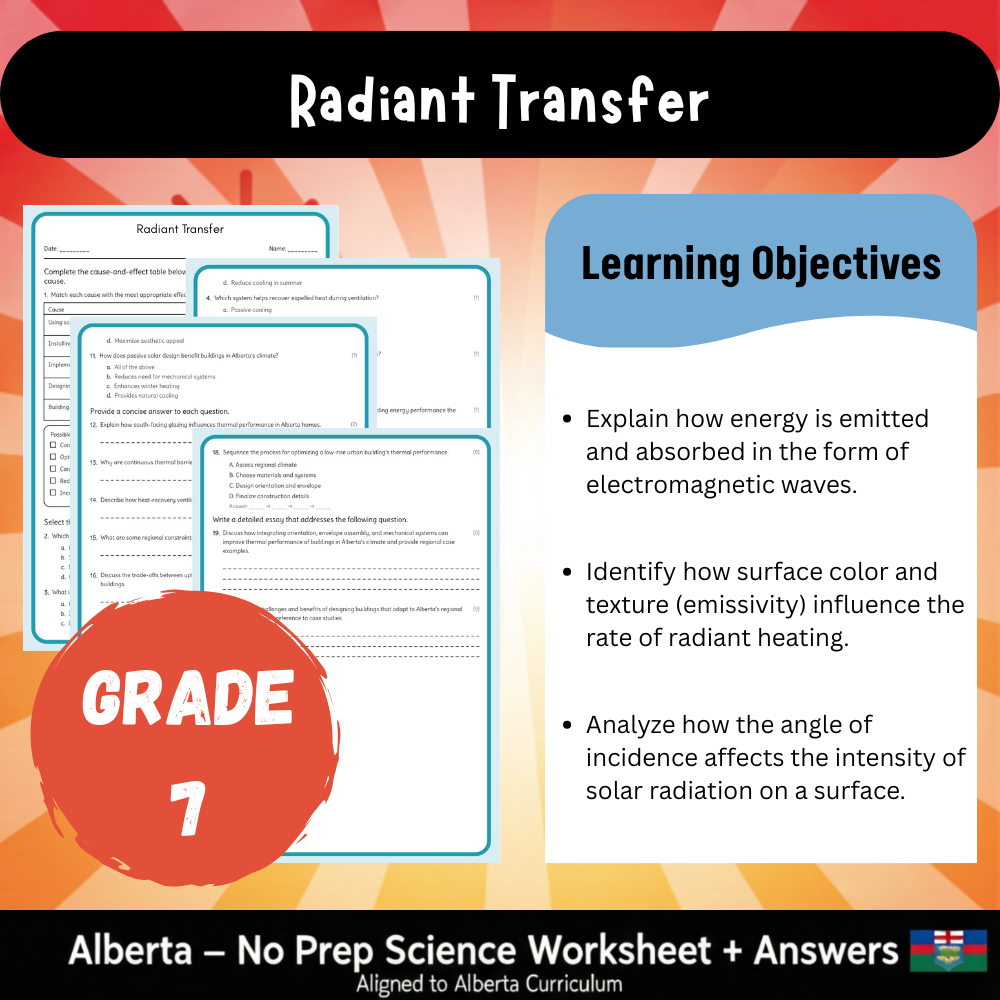
Grade 7 Science – Radiant Transfer Worksheet (PDF) | Alberta Standards
Created byBright Mind ResourcesLearning Objectives
- Explain the concept of radiant transfer and how energy moves through electromagnetic waves.
- Identify factors such as solar radiation intensity, surface absorptivity, and emissivity that affect radiative heating.
- Analyze how seasonal changes and surface types influence radiative balances and local microclimates.
Instant download
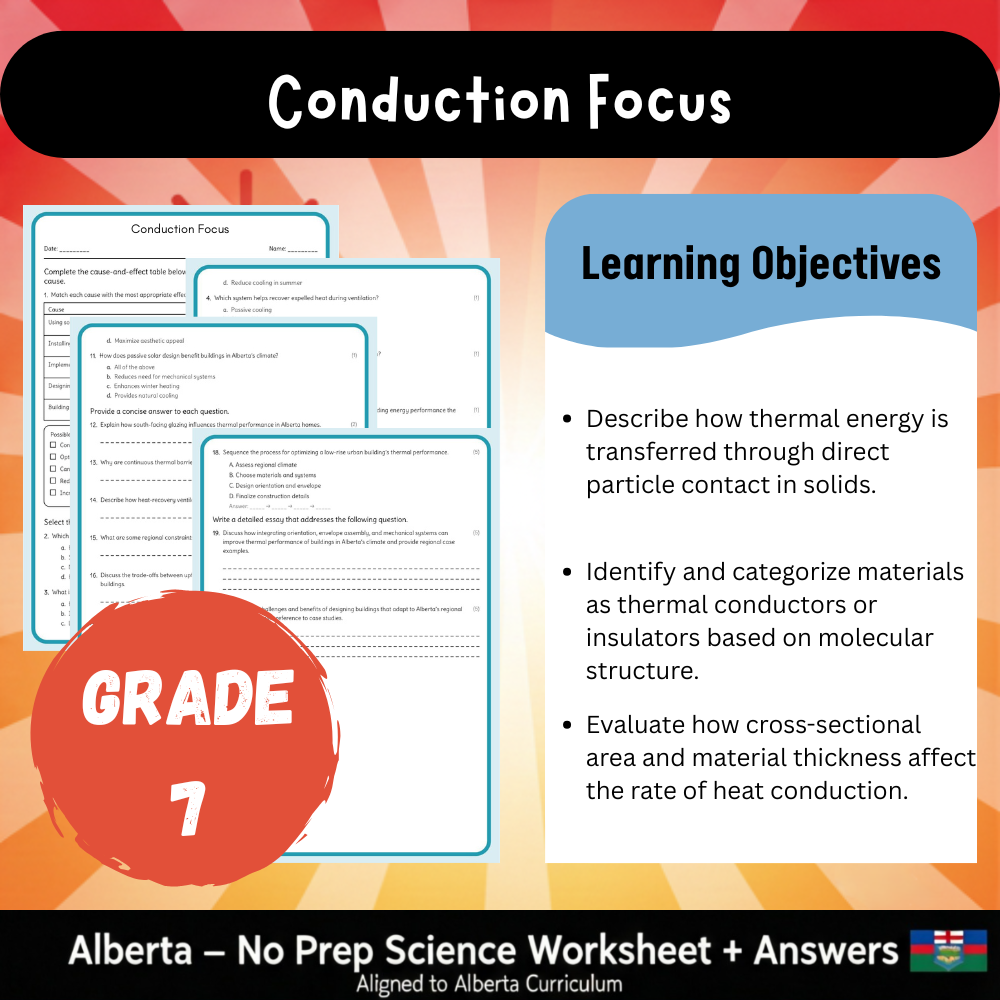
Grade 7 Science – Conduction Worksheet (PDF) Aligned with Alberta Standards
Created byBright Mind ResourcesLearning Objectives
- Understand the process of heat conduction and how it transfers energy within solids.
- Identify materials that are good conductors and insulators based on their properties.
- Explain how material properties influence heat transfer in regional structures.
Instant download
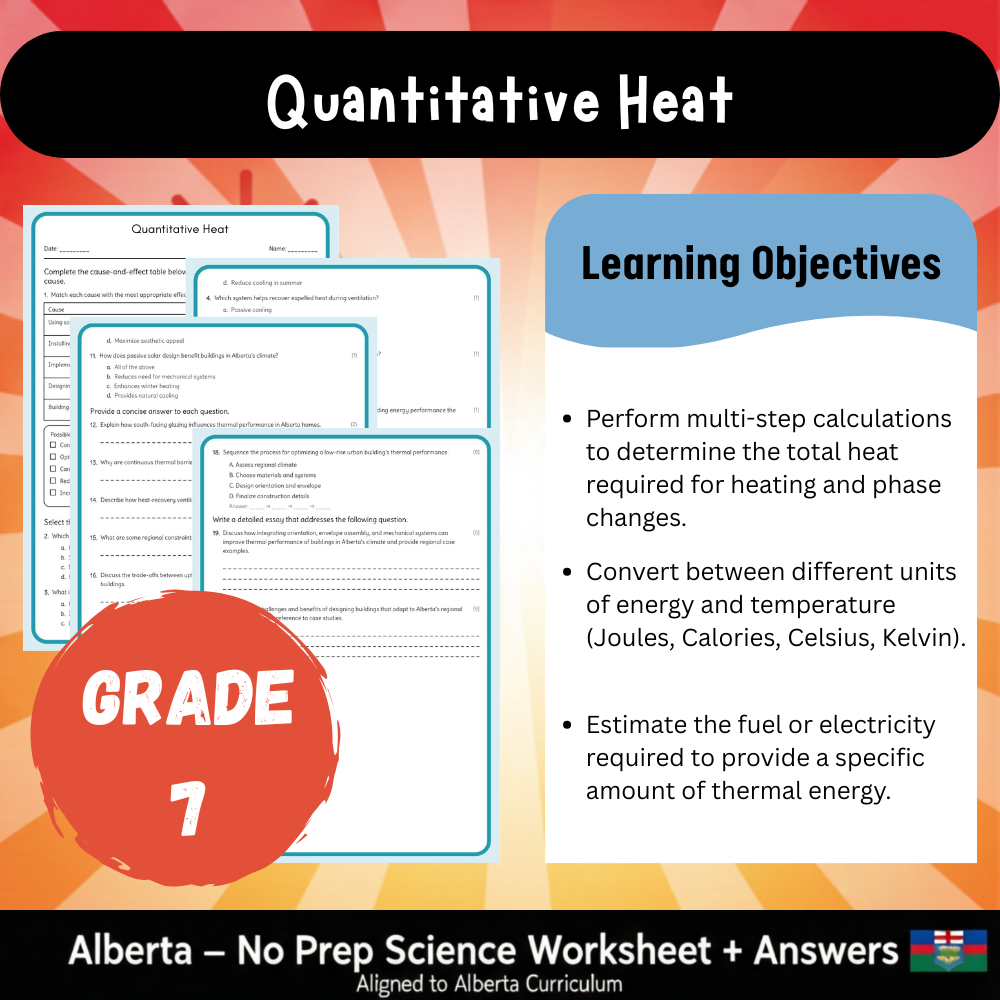
Grade 7 Science | Quantitative Heat Worksheet (PDF) – Alberta Standards
Created byBright Mind ResourcesLearning Objectives
- Understand how energy transfer in thermal processes is represented numerically.
- Apply formulas involving specific heat, mass, and temperature change to calculate energy transfer.
- Use practical examples to estimate energy needs in real-world settings like heating water or melting snow.
Instant download
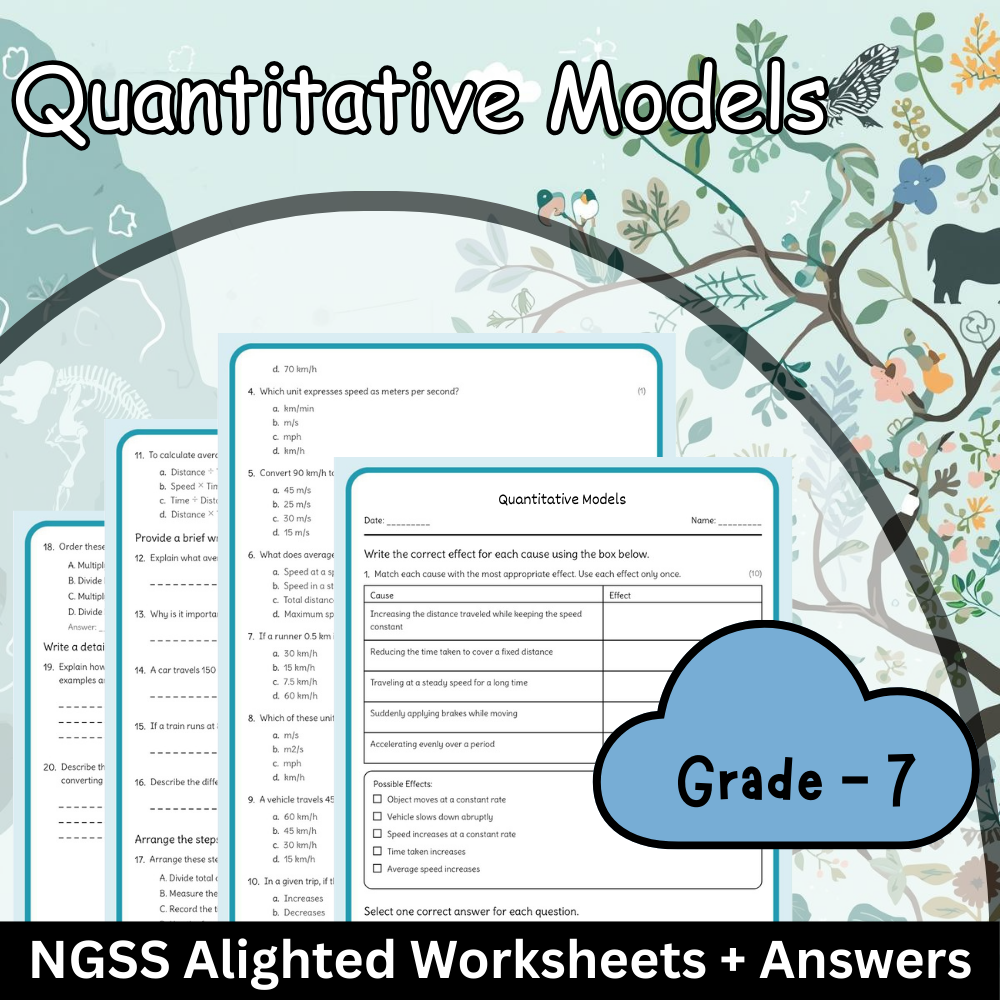
Grade 7 Science | Quantitative Models Worksheet (Answer Key) – NGSS Aligned
Created byBright Mind ResourcesLearning Objectives
- Understand how mathematical and statistical tools quantify traits, population dynamics, and evolutionary processes.
- Apply models like Hardy-Weinberg and probability-based inheritance to analyze genetic data.
- Interpret graphs and charts displaying fitness differentials and allele frequency changes.
Instant download
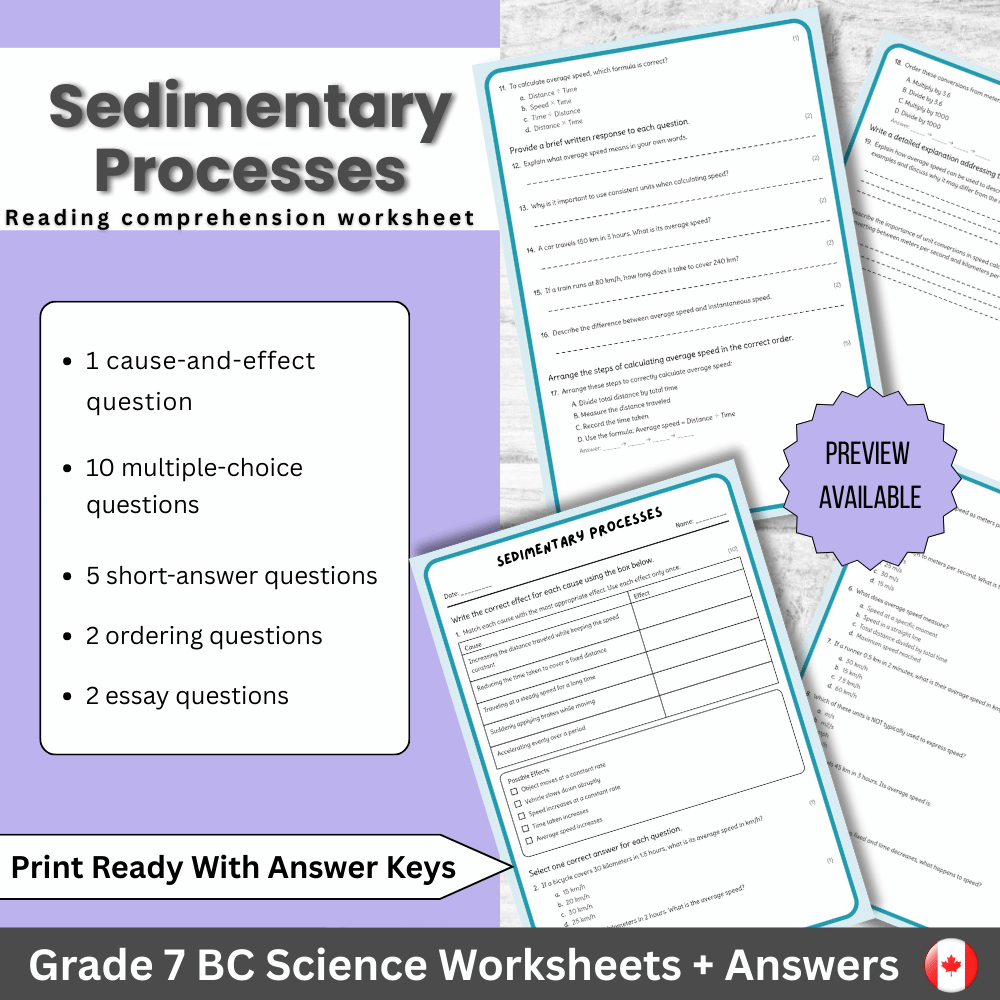
Grade 7 Science | Sedimentary Processes Worksheet (Answer Key) | BC Standards
Created byBright Mind ResourcesLearning Objectives
- Describe the steps involved in the formation of sedimentary rocks.
- Identify features of sedimentary environments such as bedding, fossils, and structures.
- Explain how mechanical and chemical weathering contribute to sediment formation.
Instant download
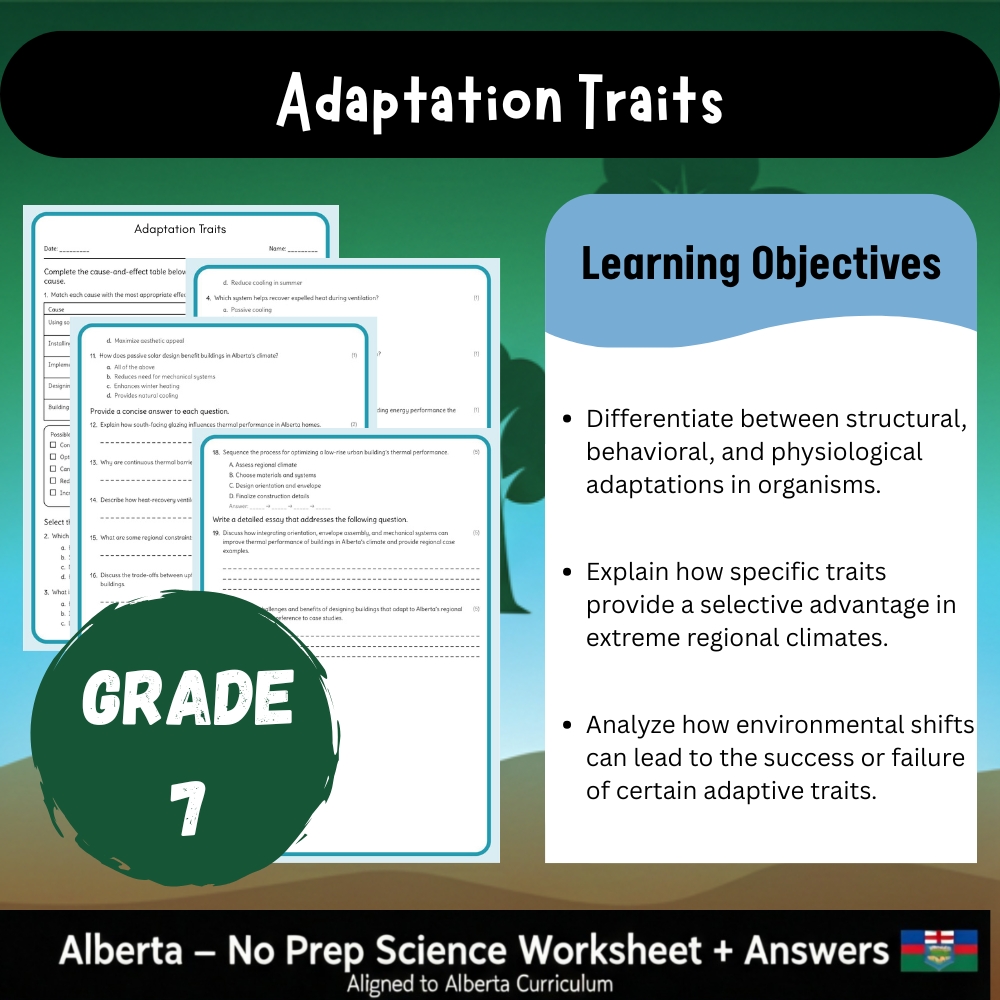
Grade 7 Science | Adaptation Traits Worksheet (PDF) – Alberta Standards
Created byBright Mind ResourcesLearning Objectives
- Define and identify structural, physiological, and behavioral adaptation traits in species.
- Explain how adaptive traits contribute to survival and reproduction in specific environments.
- Analyze examples of adaptation in boreal species, prairie plants, mammals, and root architectures.
Instant download
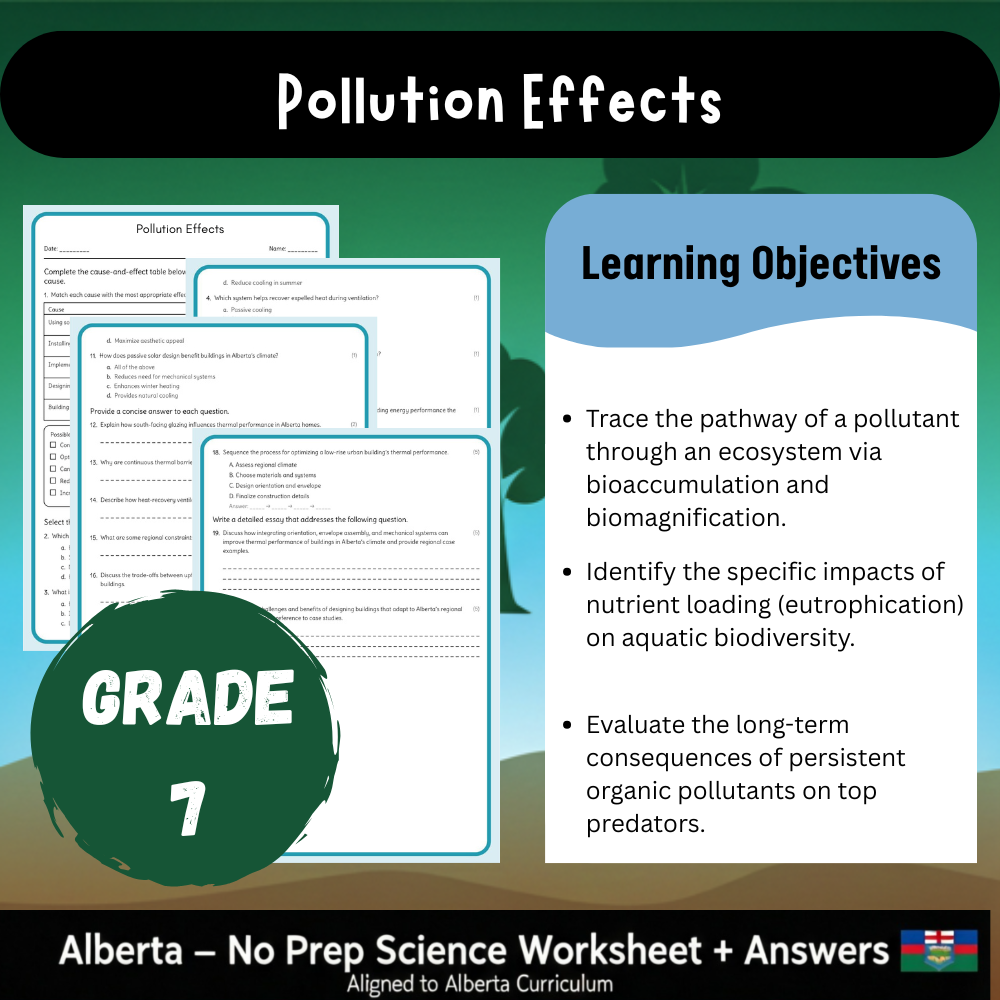
Grade 7 Science | Pollution Effects Worksheet (PDF) – Alberta Standards
Created byBright Mind ResourcesLearning Objectives
- Understand how different types of pollutants affect terrestrial and aquatic ecosystems.
- Identify sources of nutrient runoff, hydrocarbons, and airborne deposition in Alberta.
- Explain pathways of pollutant exposure and bioaccumulation risks.
Instant download
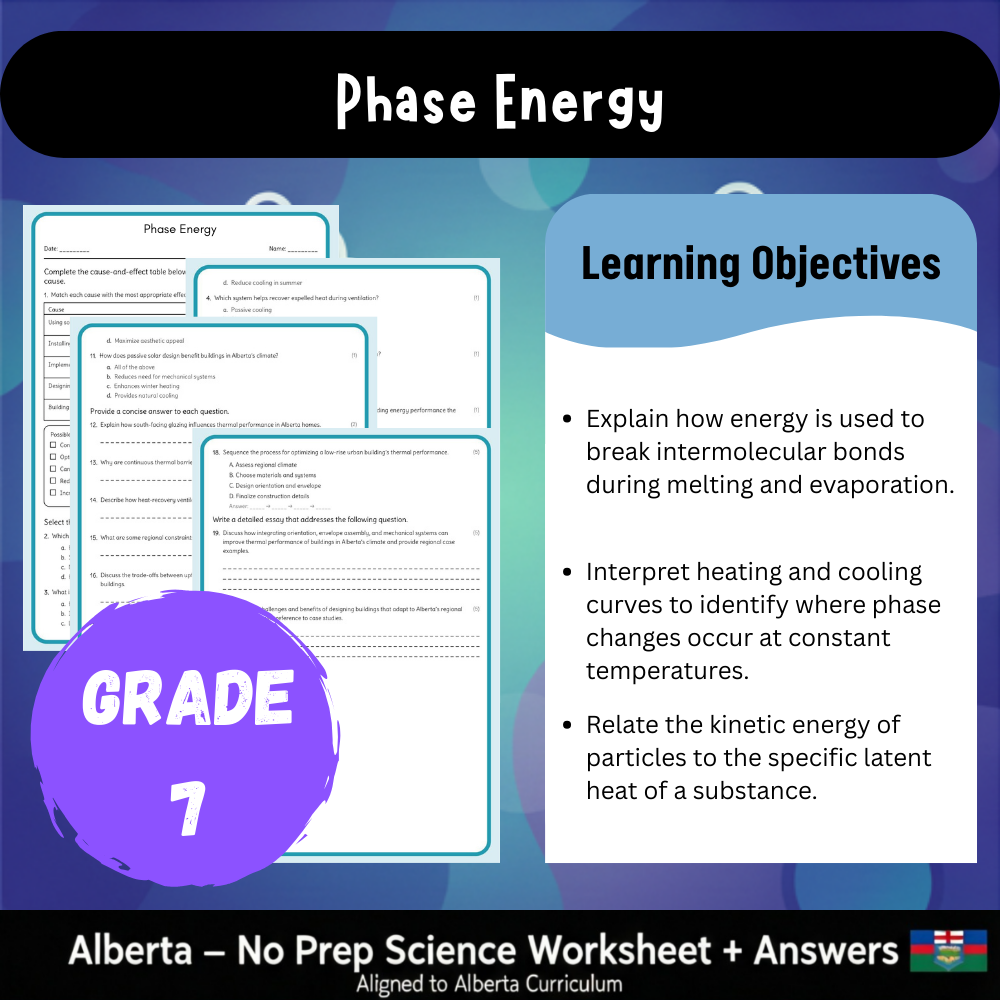
Grade 7 Science – Phase Energy Concept Worksheet (Worksheet + Answer Key) – Alberta Standards
Created byBright Mind ResourcesLearning Objectives
- Explain how phase changes reflect changes in particle kinetic and potential energy.
- Identify energy absorption and release during melting, freezing, evaporation, and condensation.
- Relate microscopic particle interactions to macroscopic energy phenomena.
Instant download
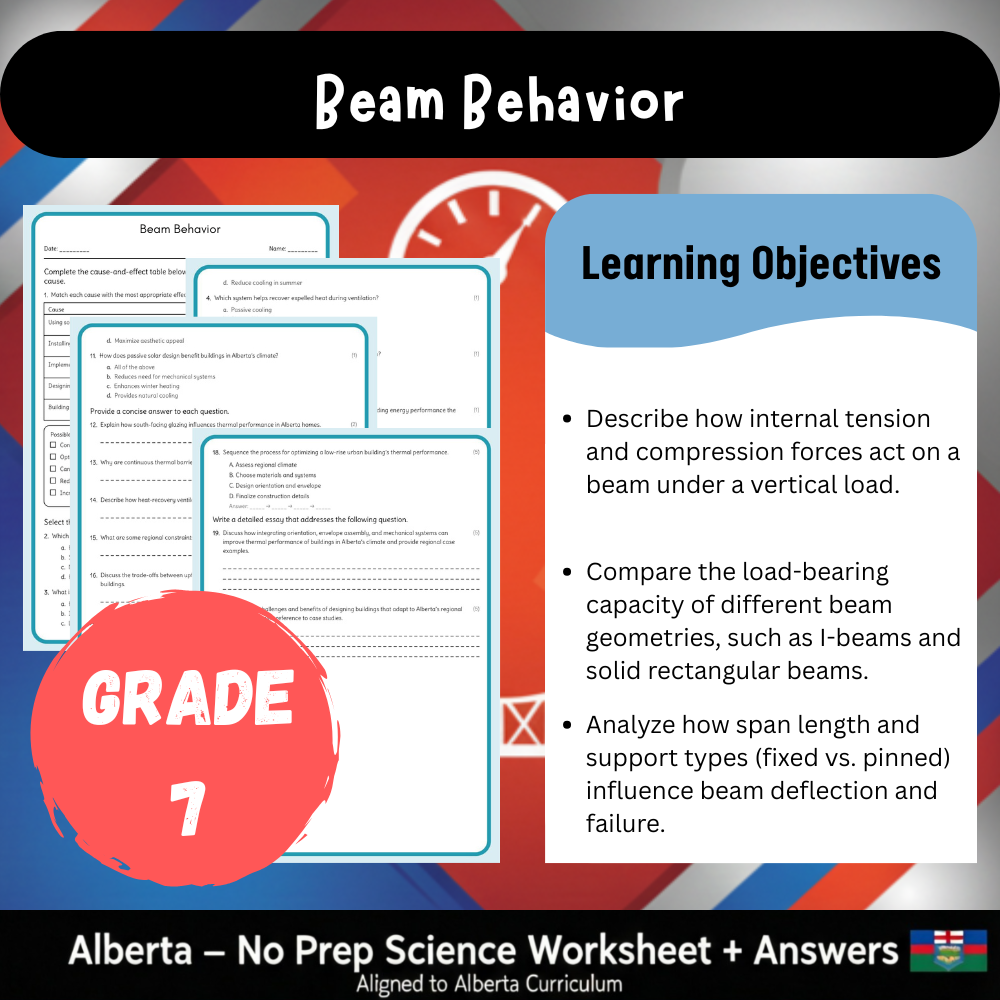
Grade 7 Science worksheet | Beam Behavior – Support & Load Analysis (PDF)
Created byBright Mind ResourcesLearning Objectives
- Understand the concepts of span, support conditions, and load types in beam performance.
- Identify how beam materials and geometries influence stability and comfort.
- Relate beam behavior to real-world examples like overpass girders and floor joists.
Instant download
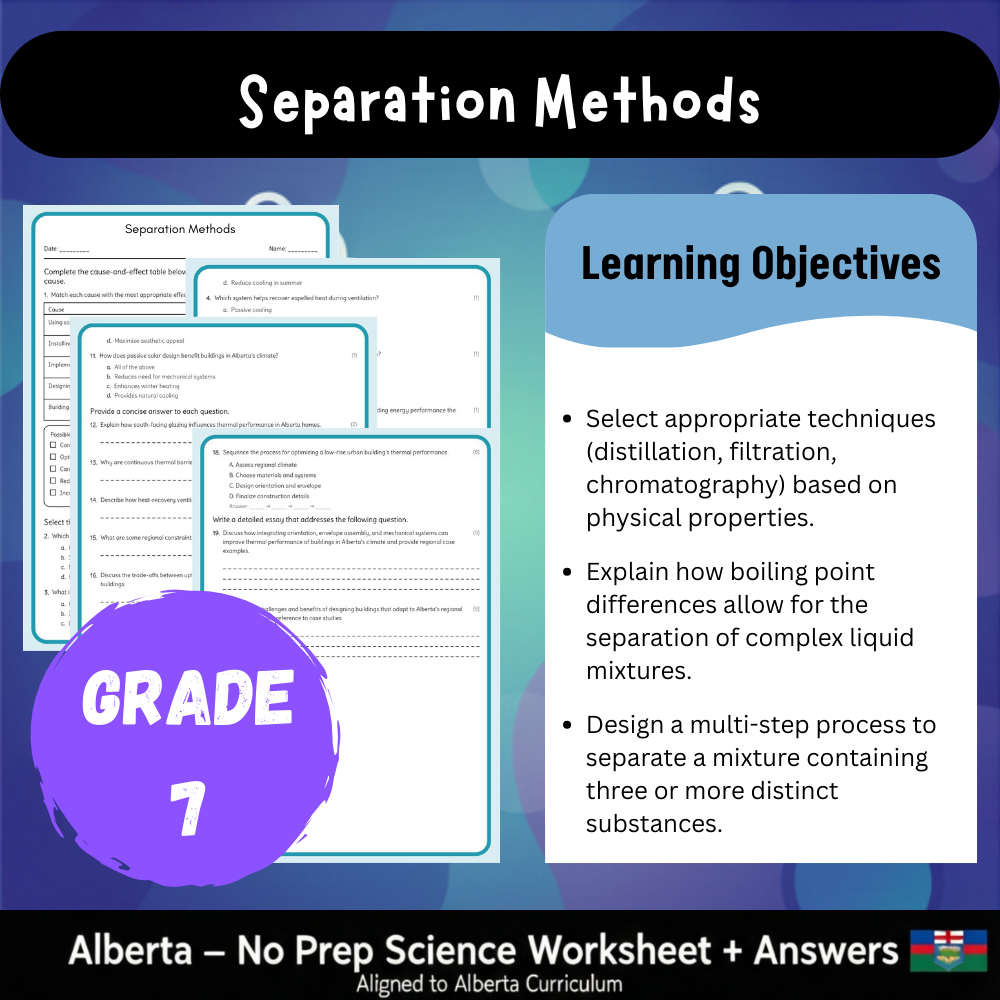
Grade 7 Science | Separation Methods Worksheet (PDF) – Alberta Standards
Created byBright Mind ResourcesLearning Objectives
- Understand various separation techniques based on physical properties.
- Identify suitable methods for separating different mixtures.
- Explain real-world applications of separation methods.
Instant download
Grade 7 Science – Surface Processes Worksheet (NGSS Aligned) | PDF
Created byBright Mind ResourcesLearning Objectives
- Understand the key geologic processes that modify Earth's surface over time.
- Describe the differences between mechanical and chemical weathering.
- Identify landforms created by erosion, transportation, and deposition.
Instant download
7th Grade Science | Matter Cycling Worksheet (NGSS) – Science PDF
Created byBright Mind ResourcesLearning Objectives
- Explain how matter is cycled within organisms during processes like digestion, biosynthesis, and respiration.
- Describe the flow of carbon and nitrogen through food into biomolecules and their eventual release or excretion.
- Identify biochemical pathways such as macromolecule synthesis and decomposition that demonstrate matter recycling.
Instant download
Grade 7 Science | Material Properties Worksheet (Answer Key) – NGSS Aligned
Created byBright Mind ResourcesLearning Objectives
- Distinguish between physical and chemical properties of materials.
- Identify measurable descriptors such as density, melting point, solubility, conductivity, reactivity, and flammability.
- Analyze property data to support material identification and separation strategies.
Instant download
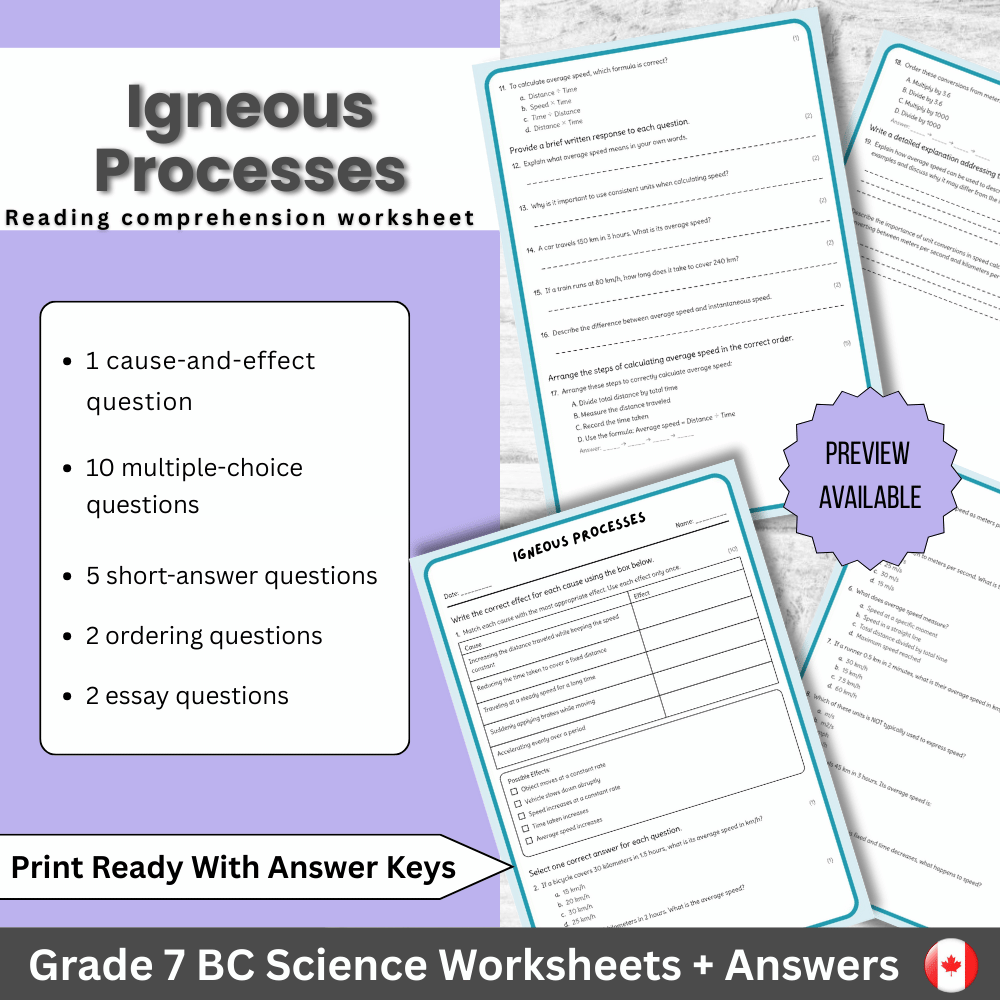
Grade 7 Science – Igneous Processes Worksheet (PDF) | Standard BC
Created byBright Mind ResourcesLearning Objectives
- Explain how magma forms through various geological processes.
- Describe how cooling rates affect igneous rock textures and mineral composition.
- Analyze the role of fractional crystallization and magma mixing in rock diversity.
Instant download
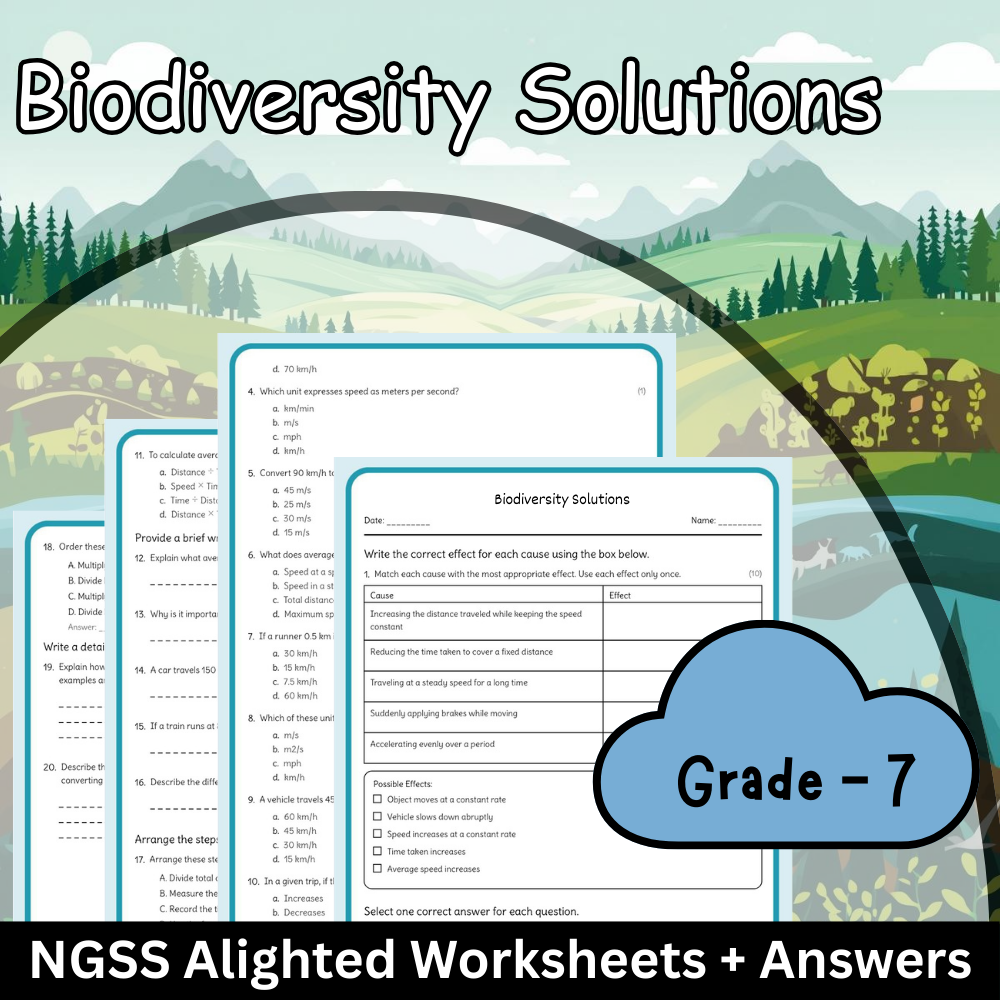
Grade 7 Science | Biodiversity Solutions Worksheet (NGSS-Aligned) – PDF
Created byBright Mind ResourcesLearning Objectives
- Evaluate various management strategies for maintaining biodiversity and ecosystem services.
- Analyze case examples such as wetland restoration and corridor establishment.
- Compare benefits and unintended consequences of different approaches.
Instant download
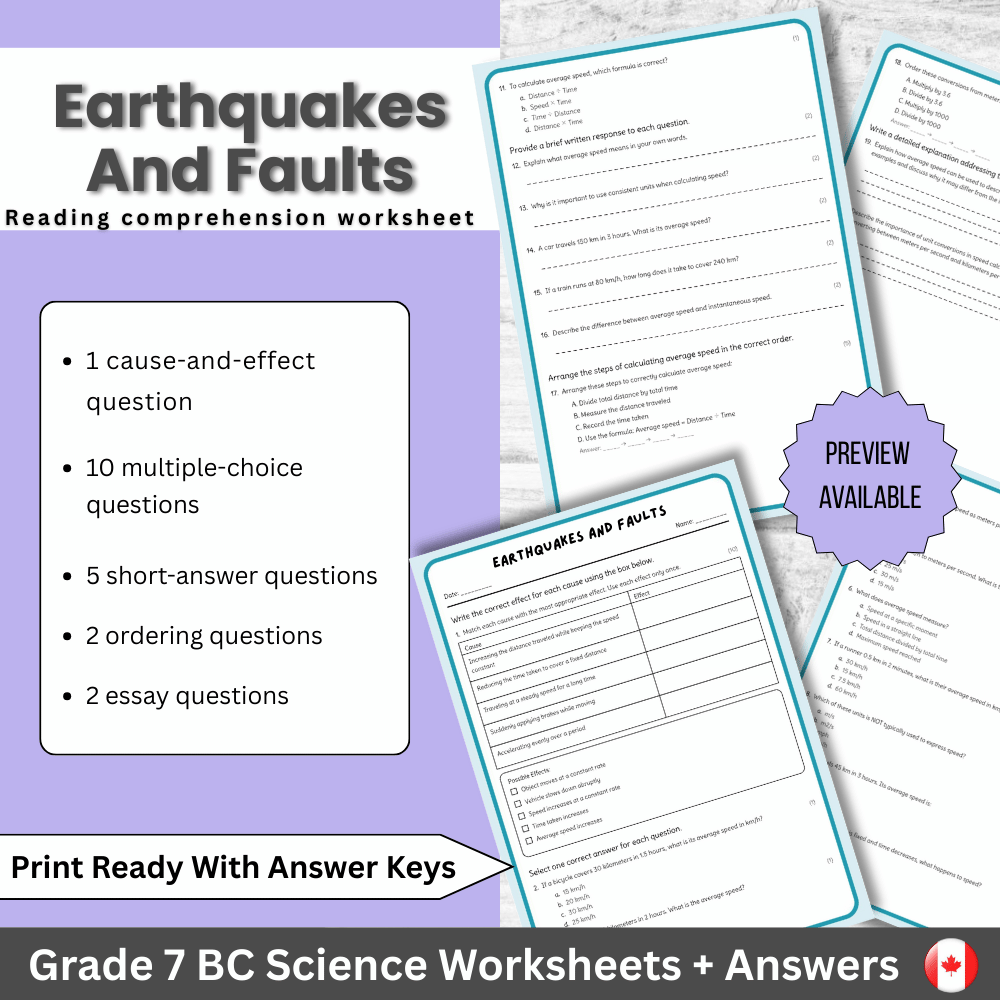
Grade 7 Science | Earthquakes, Faults & Seismic Activity Worksheet (PDF)
Created byBright Mind ResourcesLearning Objectives
- Explain how seismicity relates to fault movement and tectonic stress.
- Identify the different fault types and their seismic signatures.
- Describe how energy is released during earthquakes and what factors influence their intensity.
Instant download
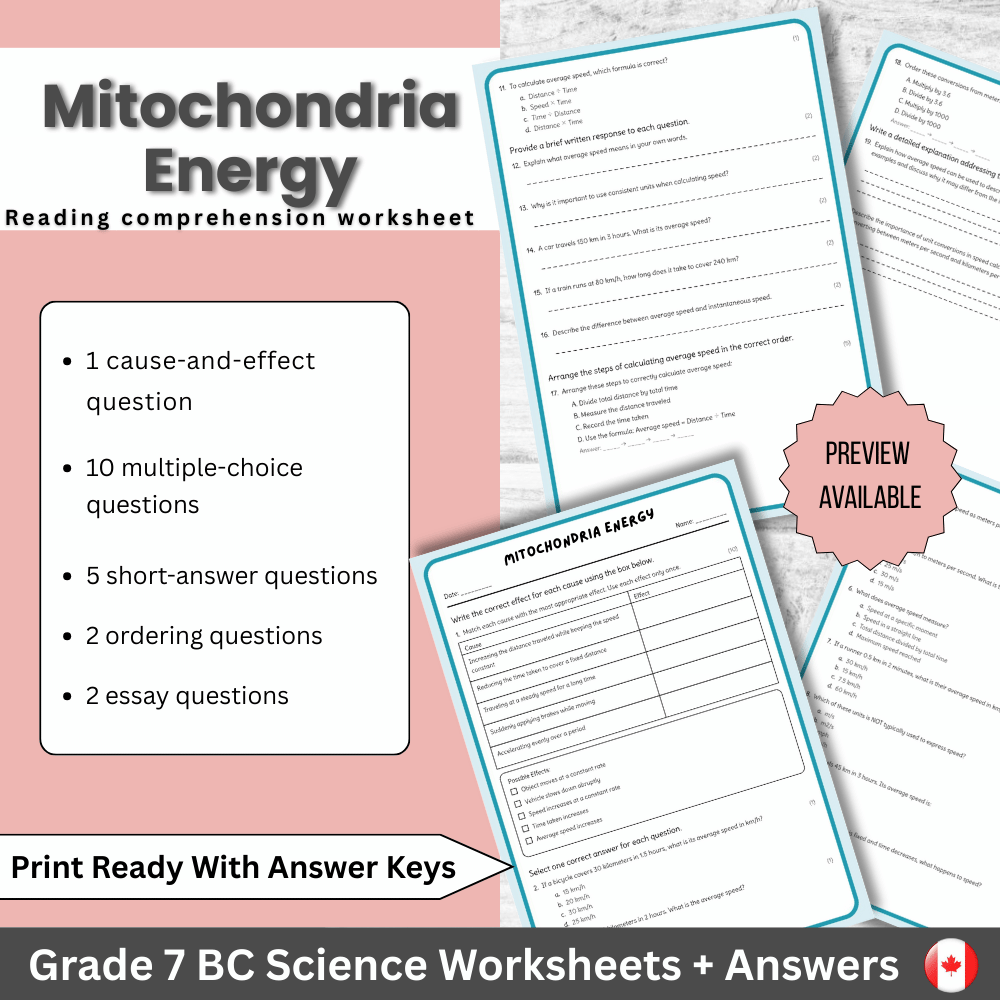
Grade 7 Science | Mitochondria Energy Concept Worksheet (Answers) – BC Standards
Created byBright Mind ResourcesLearning Objectives
- Explain the structure and function of mitochondria in energy production.
- Describe the process of cellular respiration and how mitochondria generate ATP.
- Identify the variations in mitochondrial activity in different cell types.
Instant download
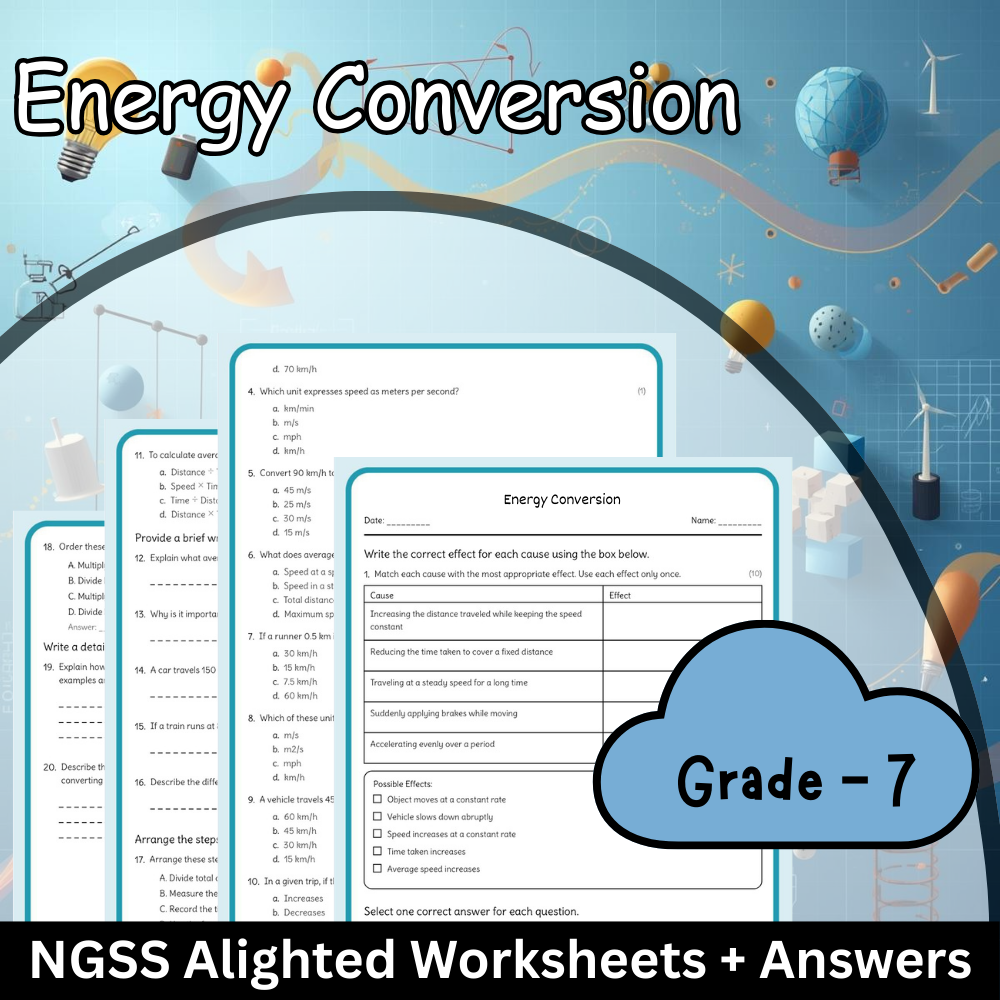
Grade 7 Science | Energy Conversion Worksheet – NGSS Aligned (PDF)
Created byBright Mind ResourcesLearning Objectives
- Explain how devices convert energy from one form to another.
- Identify examples of energy transformation in common devices.
- Understand the concepts of energy transfer, conservation, and thermal losses.
Instant download
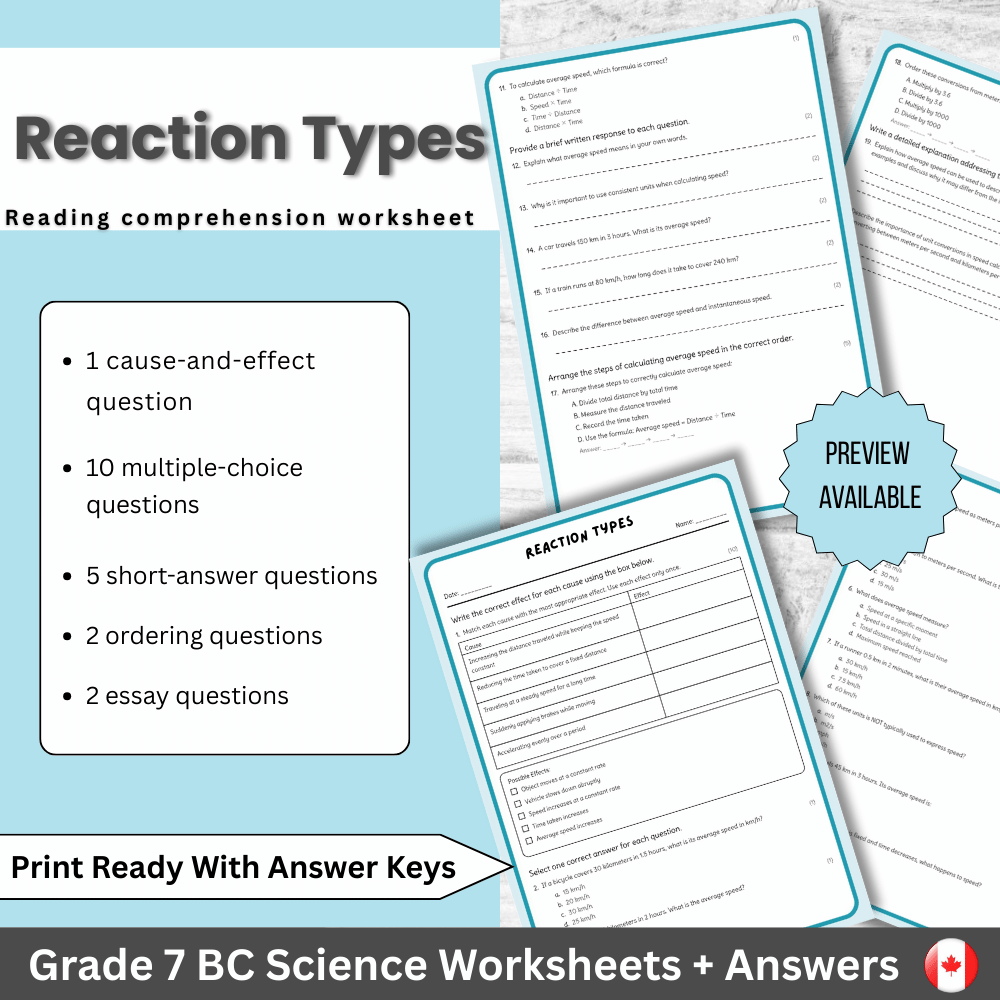
Grade 7 Science | Reaction Types Worksheet (PDF) for BC Standards
Created byBright Mind ResourcesLearning Objectives
- Identify and classify different reaction types such as synthesis, decomposition, displacement, acid-base, and combustion.
- Understand how bonds are broken and formed during chemical reactions and how atoms rearrange.
- Predict reaction products based on reaction type and recognize the conservation of atoms during reactions.
Instant download
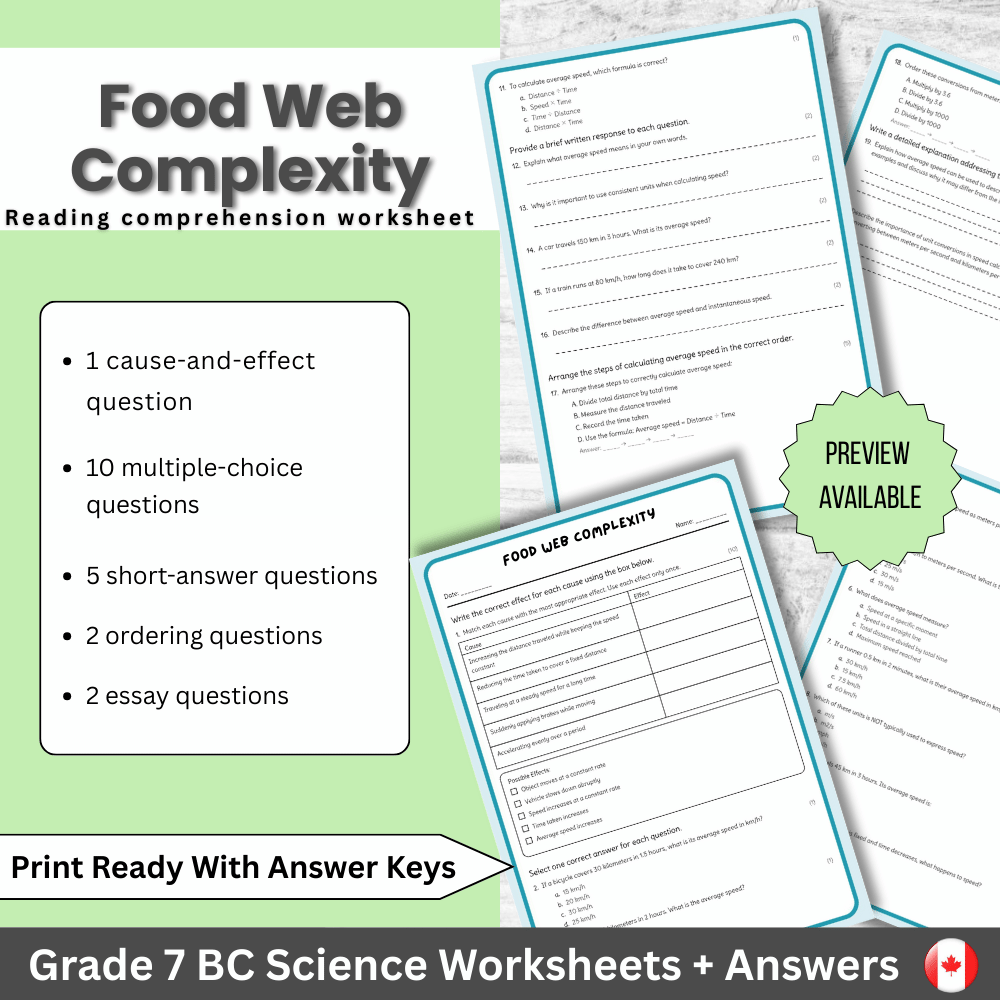
Grade 7 Science – Food Web Complexity Worksheet (Worksheet + Answer Key) PDF
Created byBright Mind ResourcesLearning Objectives
- Understand the structure and components of a food web, including producers, consumers, and decomposers.
- Explain how interconnected feeding relationships contribute to ecosystem stability.
- Analyze how changes to species affect energy flow and ecological resilience.
Instant download
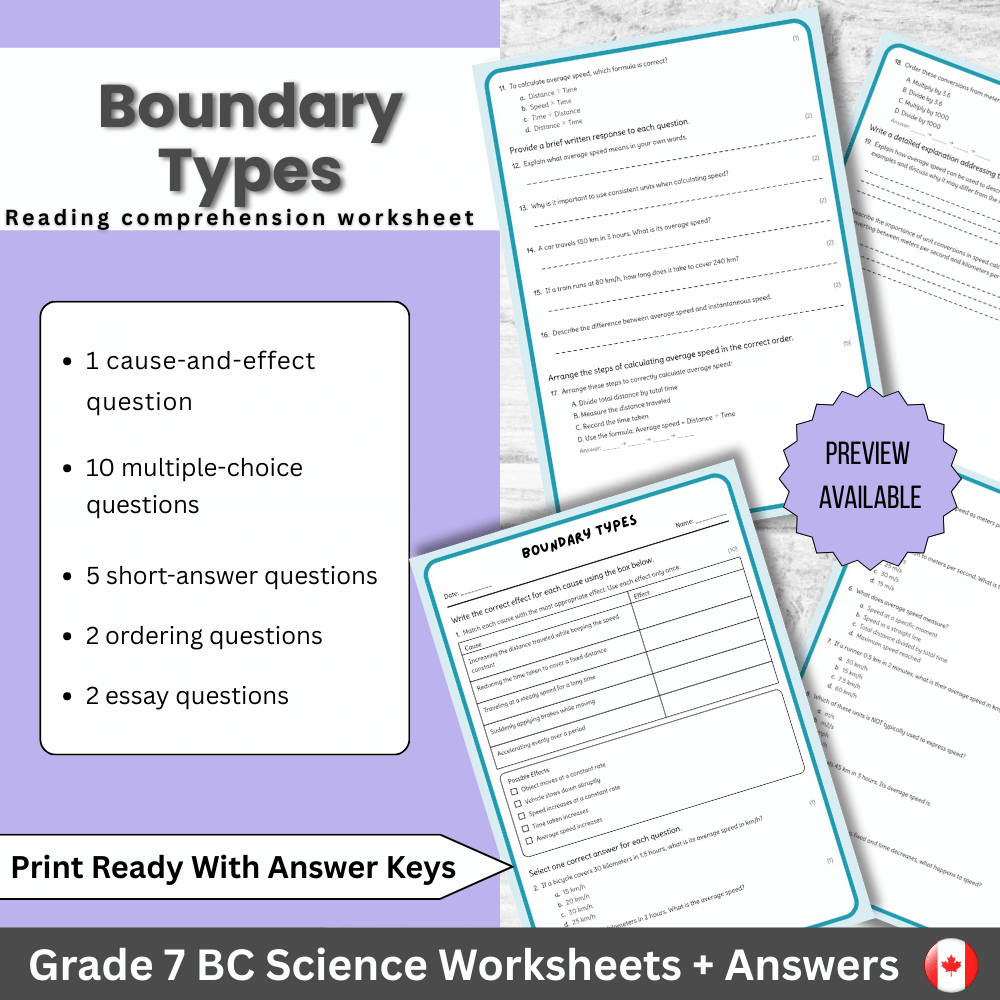
Grade 7 Science | Boundary Types Worksheet + Answer Key (PDF)
Created byBright Mind ResourcesLearning Objectives
- Identify the three principal boundary types and their characteristic landforms.
- Explain processes such as crustal extension, magma upwelling, subduction, and lateral motion.
- Describe how different boundary types influence topography, volcanic activity, and seismicity.
Instant download
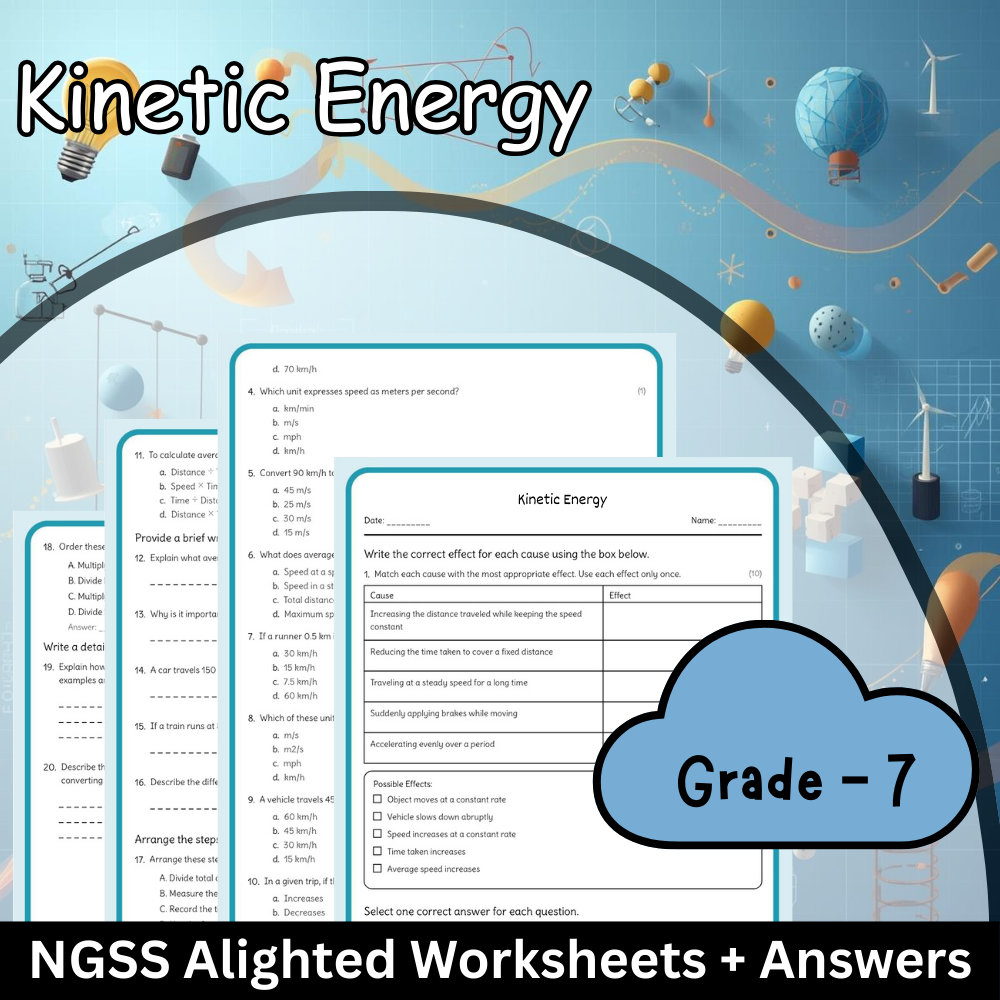
Grade 7 Science | Kinetic Energy Worksheet (Answer Key) – NGSS Standards
Created byBright Mind ResourcesLearning Objectives
- Construct and interpret graphical relationships between kinetic and potential energy, mass, and speed.
- Understand proportional and quantitative patterns in energy changes due to mass and speed doubling.
- Analyze energy calculations and relate graphs to motion scenarios such as a bicycle, pendulum, and roller-coaster.
Instant download
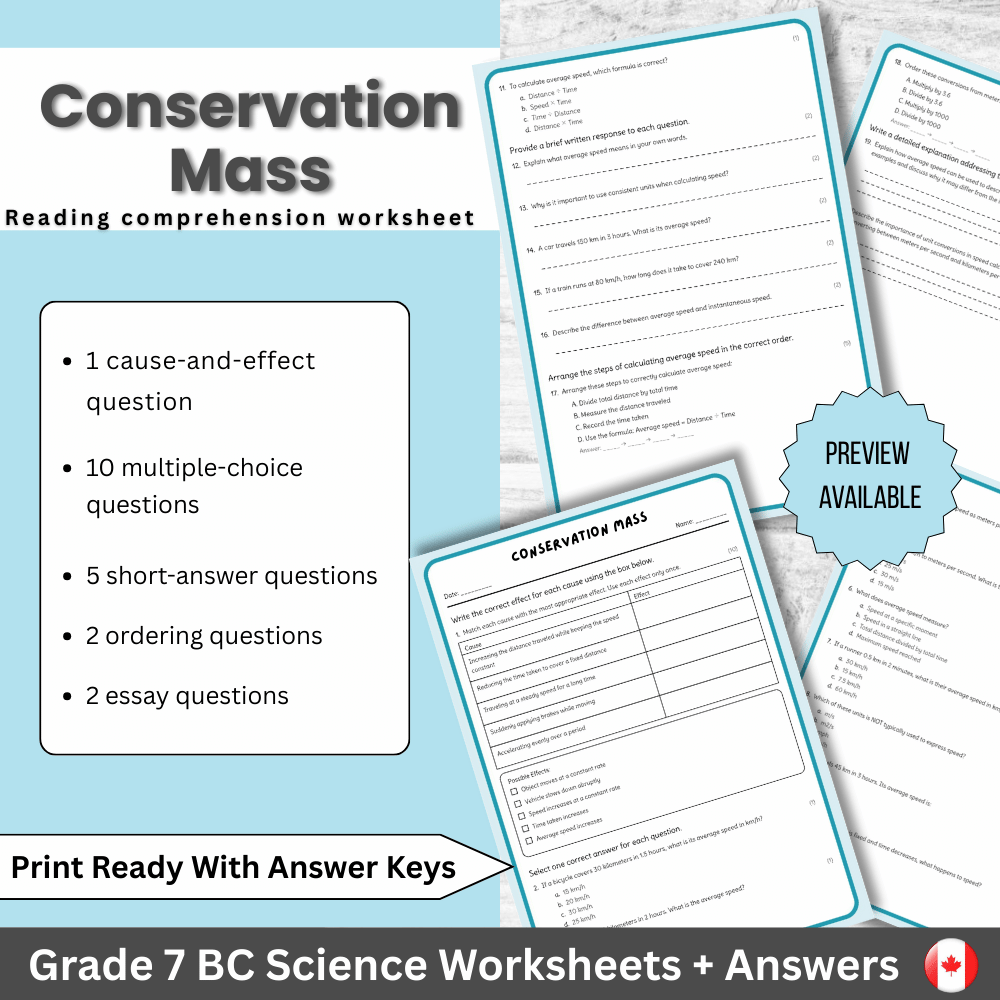
Grade 7 Science | Conservation of Mass Worksheet + Answer Key (PDF)
Created byBright Mind ResourcesLearning Objectives
- Understand the principle of conservation of mass in chemical reactions.
- Describe how atoms are conserved and rearranged during chemical changes.
- Explain the significance of closed systems in mass conservation.
Instant download
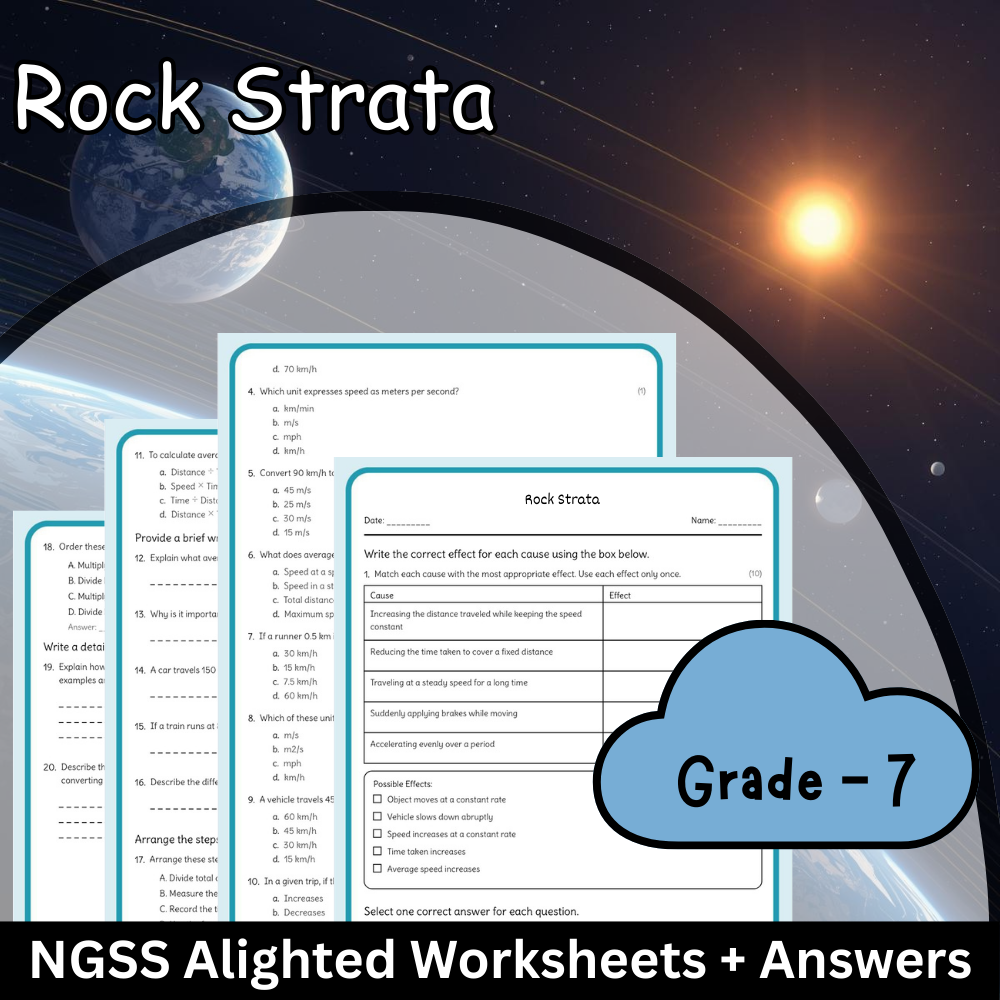
Grade 7 Science | Rock Strata & Stratigraphy NGSS Worksheet (PDF)
Created byBright Mind ResourcesLearning Objectives
- Understand the principles of relative dating such as superposition, original horizontality, and cross-cutting relationships.
- Identify key stratigraphic markers like fossils, unconformities, and intrusions used to correlate rock layers.
- Synthesize stratigraphic data and field observations to interpret Earth's geological history.
Instant download
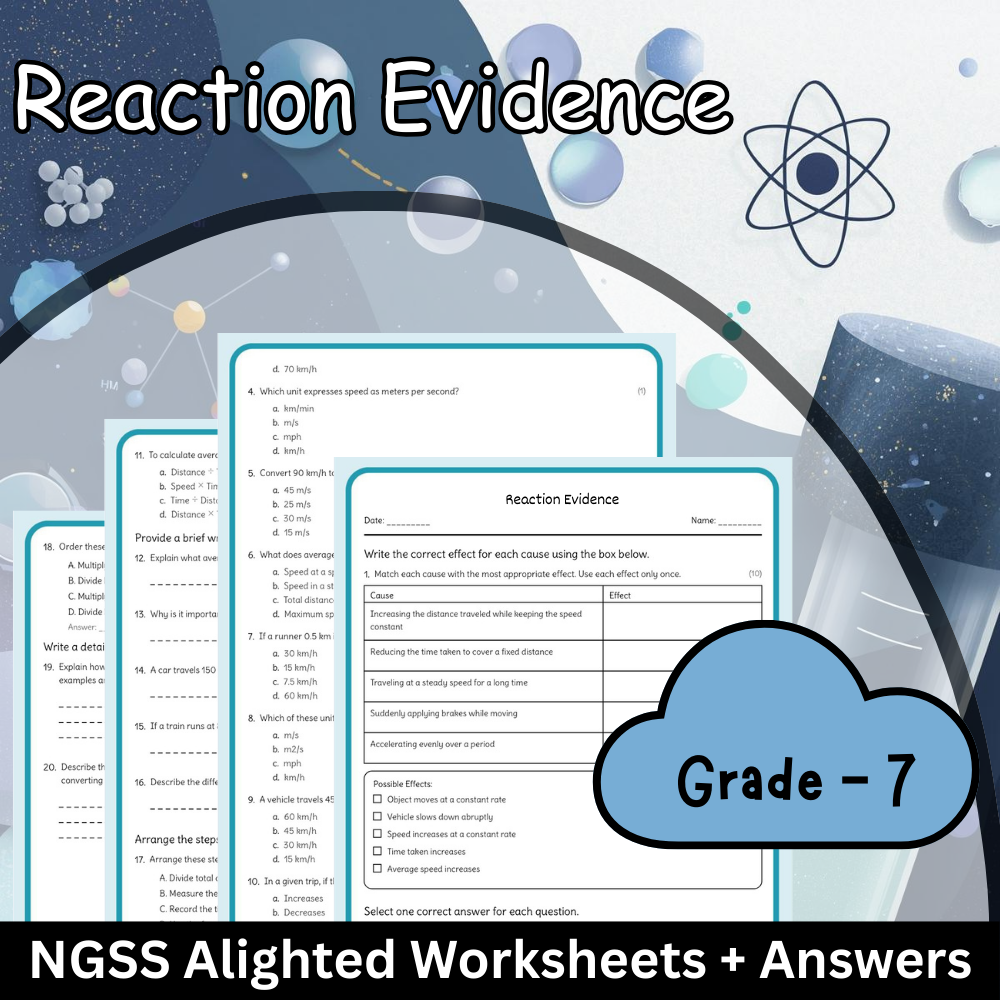
Grade 7 Science – Reaction Evidence Worksheet (PDF) | NGSS Standards
Created byBright Mind ResourcesLearning Objectives
- Identify different indicators that suggest a chemical reaction has taken place.
- Explain examples of chemical reactions based on observable signs like gas production, precipitate formation, color change, temperature change, and irreversibility.
- Understand how mass measurements in sealed systems relate to the conservation of mass principle in chemical reactions.
Instant download
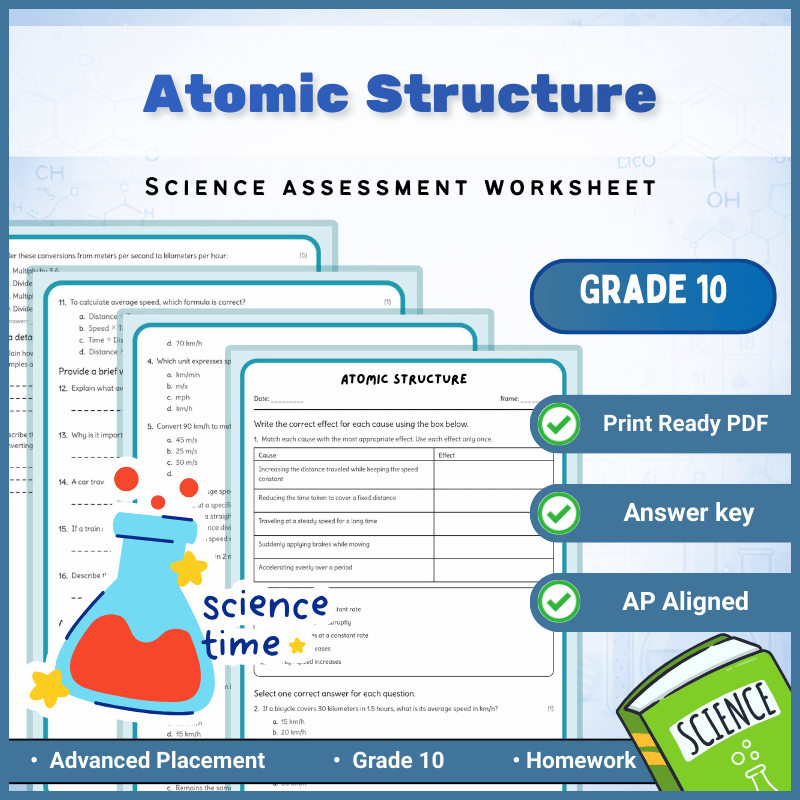
Grade 10 Science | Atomic Structure Worksheet + Answer Key (AP Standard)
Created byBright Mind ResourcesLearning Objectives
- Describe the subatomic components of atoms and their roles.
- Explain how emission spectra and scattering experiments provide evidence for atomic structure.
- Connect shell models and quantum numbers with atomic properties.
Instant download
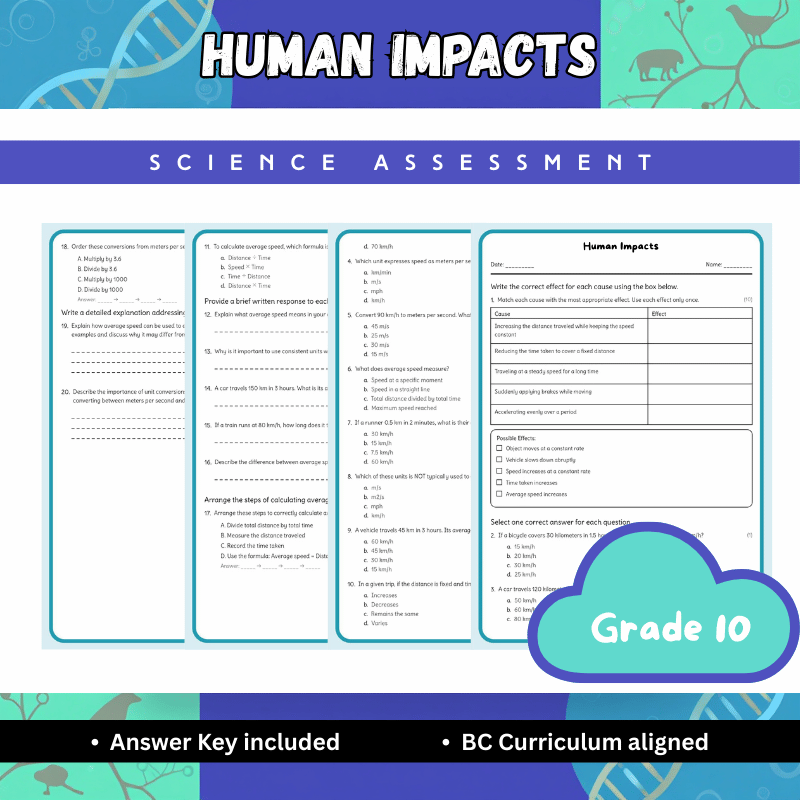
Grade 10 Science | Human Impacts Worksheet (PDF) – BC Standards & Key Concepts
Created byBright Mind ResourcesLearning Objectives
- Understand how human activities affect biodiversity and ecosystems.
- Identify specific human impacts such as habitat fragmentation, pollution, and invasive species.
- Analyze how climate change influences species' ranges and behaviors.
Instant download
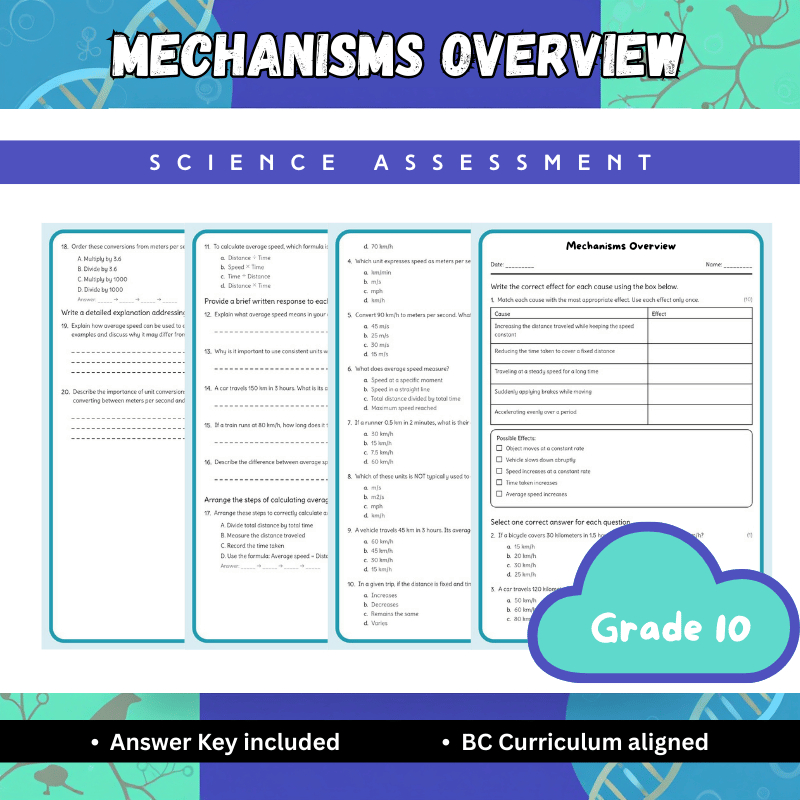
Grade 10 Science | Mechanisms of Evolution Worksheet (Answer Key) | BC Standards
Created byBright Mind ResourcesLearning Objectives
- Identify and describe the key mechanisms of evolution including natural selection, genetic drift, gene flow, and mutation.
- Explain how each mechanism influences allele frequencies within populations.
- Analyze the effects of these mechanisms on the evolution and adaptation of species.
Instant download
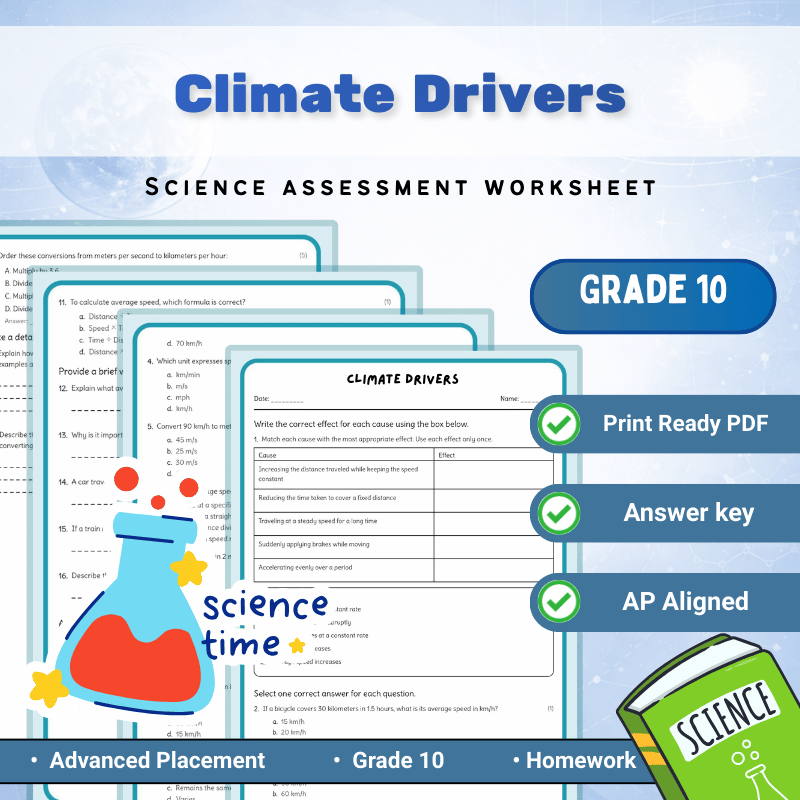
Grade 10 Science | Climate Drivers Worksheet (AP Standards + Answer Key)
Created byBright Mind ResourcesLearning Objectives
- Identify key factors influencing Earth's climate, including radiative forcing and greenhouse gases.
- Interpret feedback loops and their effects on climate variability.
- Evaluate model outputs and proxy records to assess long-term climate trends.
Instant download
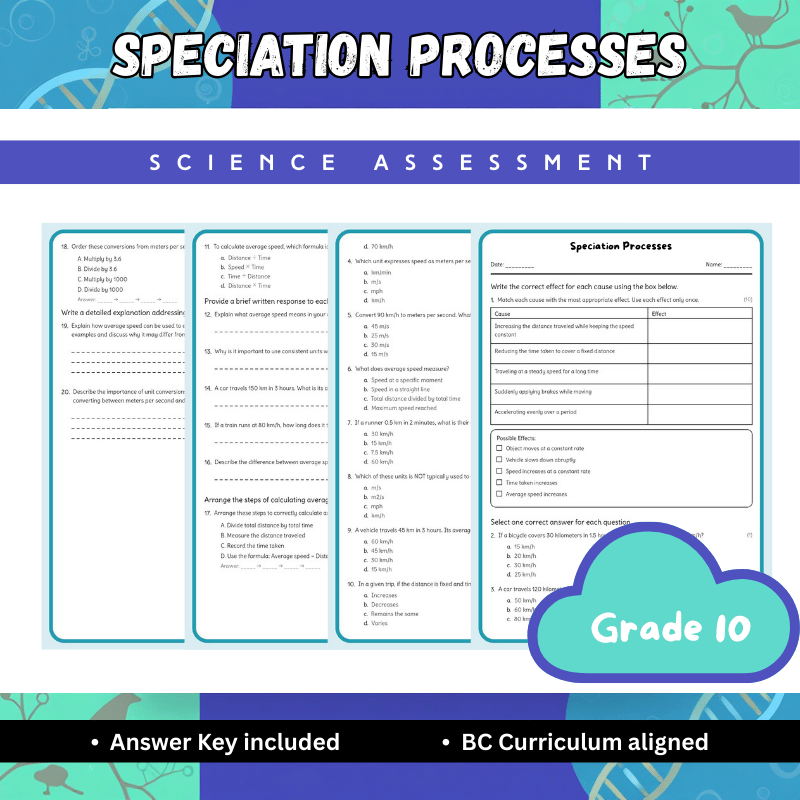
Grade 10 Science | Speciation Processes Worksheet (PDF) – BC Standards
Created byBright Mind ResourcesLearning Objectives
- Explain what causes speciation to occur and identify different types of speciation.
- Describe the mechanisms that lead to reproductive isolation.
- Differentiate between allopatric and sympatric speciation.
Instant download
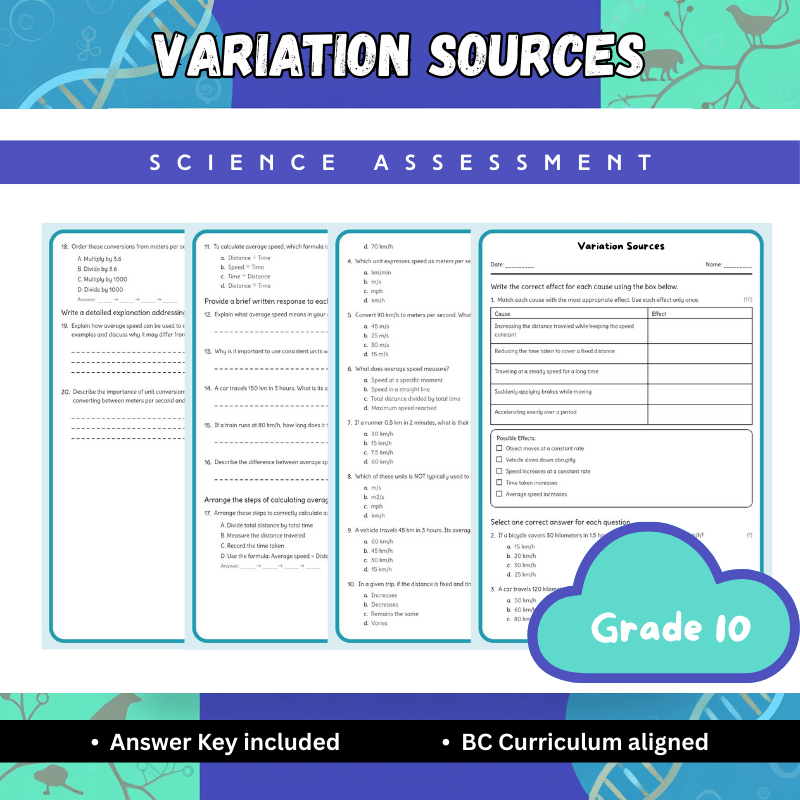
Grade 10 Science | Variation Sources Worksheet + Answer Key BC Standard
Created byBright Mind ResourcesLearning Objectives
- Identify the main sources of heritable variation in populations.
- Explain how mutations, recombination, and chromosomal rearrangements contribute to genetic diversity.
- Describe the process of natural selection and how it acts on variation within populations.
Instant download
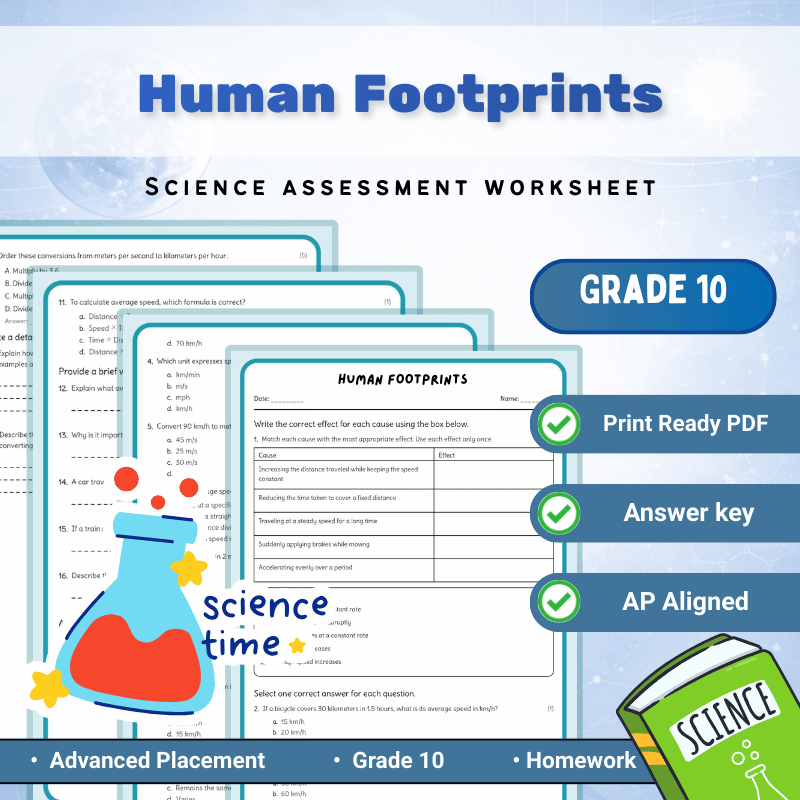
Grade 10 Science | Human Footprints AP Worksheet (PDF) – Environmental Impact
Created byBright Mind ResourcesLearning Objectives
- Understand how human activities alter Earth's land, water, and energy systems.
- Identify observable environmental consequences of anthropogenic forces.
- Analyze land-use changes, greenhouse gas emissions, and resource extraction impacts.
Instant download
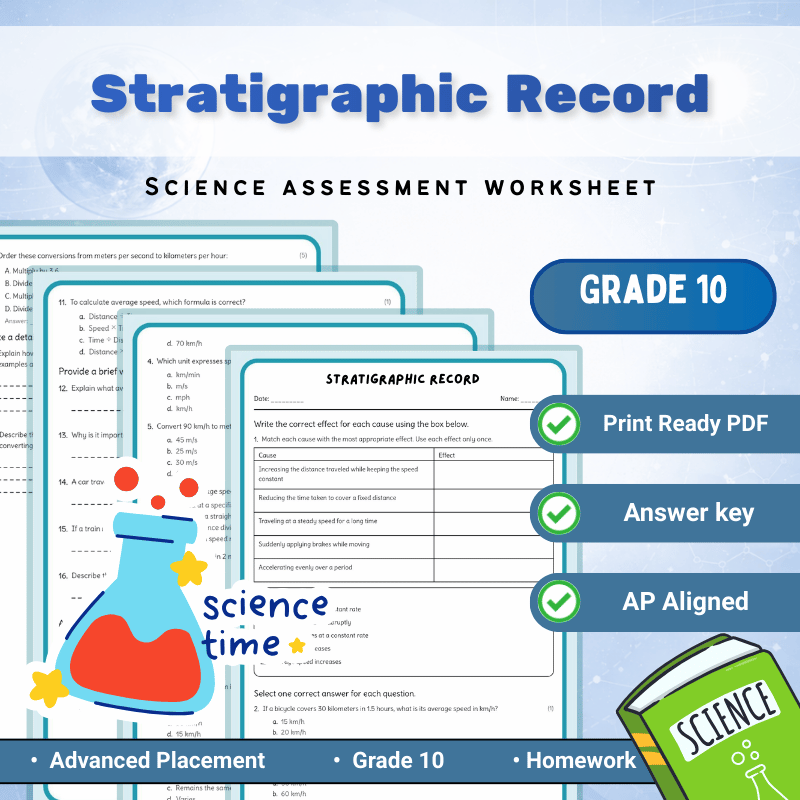
Grade 10 Science | Stratigraphic Record Worksheet (AP Standard) (PDF)
Created byBright Mind ResourcesLearning Objectives
- Interpret stratigraphic sequences and fossil assemblages to determine Earth's history timeline.
- Apply principles such as superposition, correlation, and unconformities to stratigraphic data.
- Evaluate radiometric decay methods and error considerations in dating geological events.
Instant download
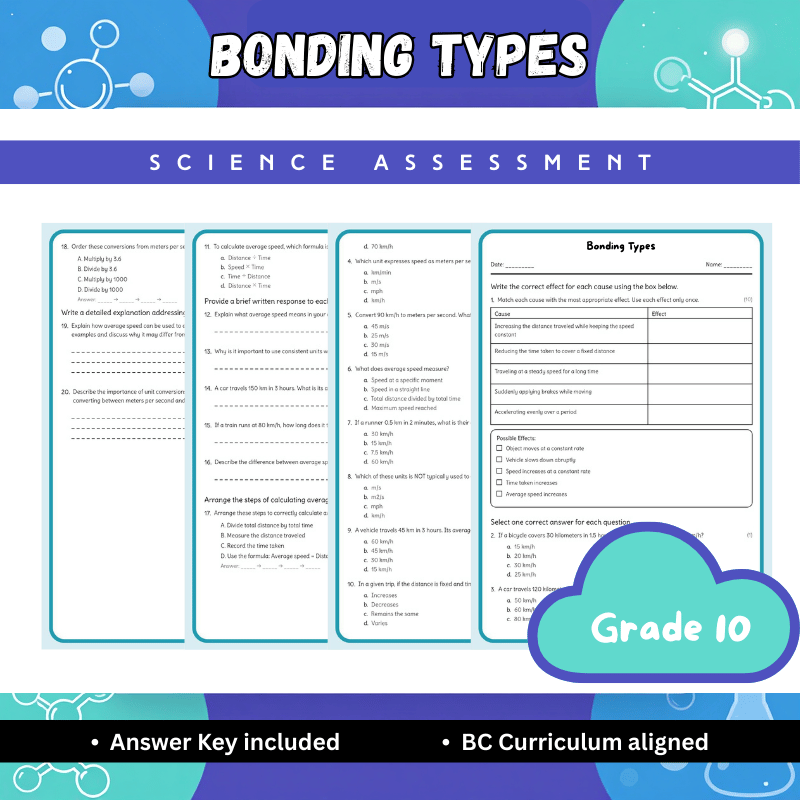
Grade 10 Science | Bonding Types Worksheet (Worksheet + Answer Key) BC Standard
Created byBright Mind ResourcesLearning Objectives
- Describe the differences between ionic, covalent, and metallic bonds.
- Explain how atoms achieve stable electron configurations through different bonding types.
- Relate bonding types to the periodic table to predict properties of compounds.
Instant download
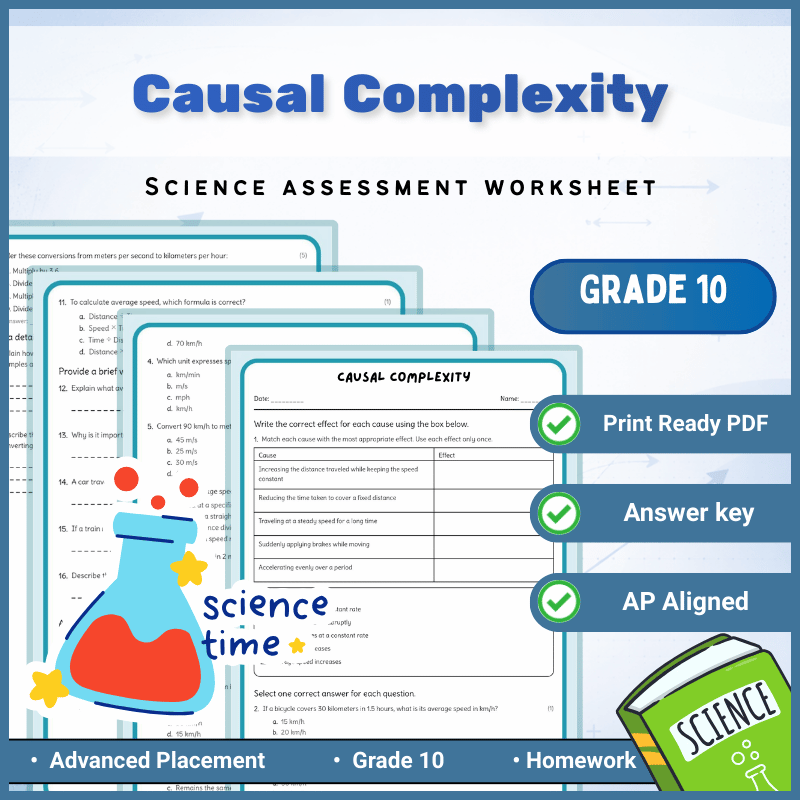
Grade 10 Science – Causal Complexity Worksheet (AP Standards | PDF)
Created byBright Mind ResourcesLearning Objectives
- Understand strategies for disentangling multivariable causal relationships
- Learn how to interpret control matrices, causal graphs, and stratified comparisons
- Identify confounding factors and interaction effects in complex systems
Instant download
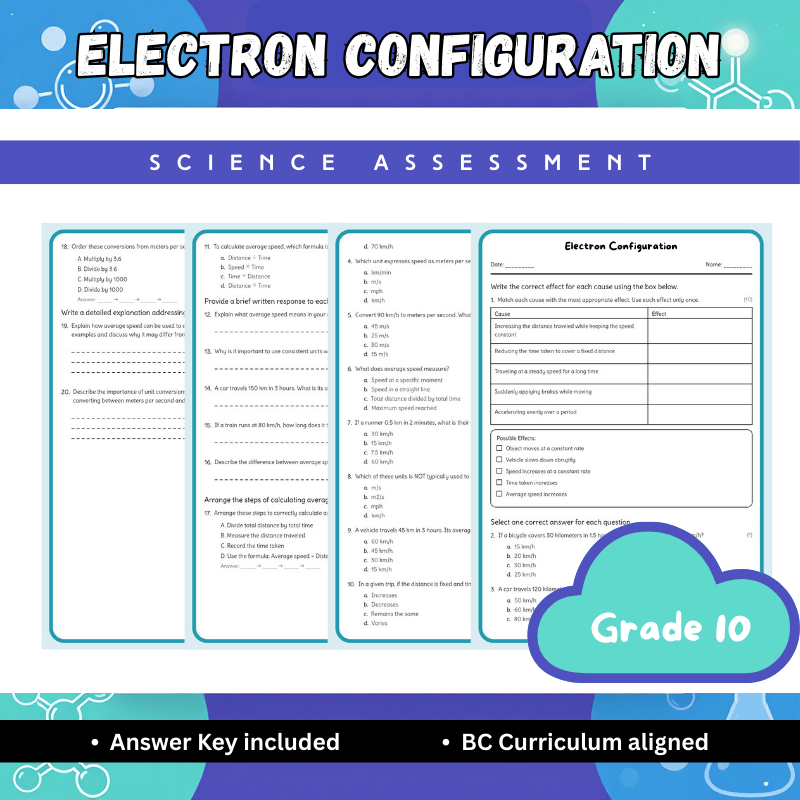
Grade 10 Science | Electron Configuration Worksheet(Answer Key) for BC Standards
Created byBright Mind ResourcesLearning Objectives
- Describe how electrons occupy energy levels and orbitals around an atomic nucleus.
- Explain the significance of valence electrons in bonding and reactivity.
- Relate patterns in electron configuration to the element's group and period positions.
Instant download
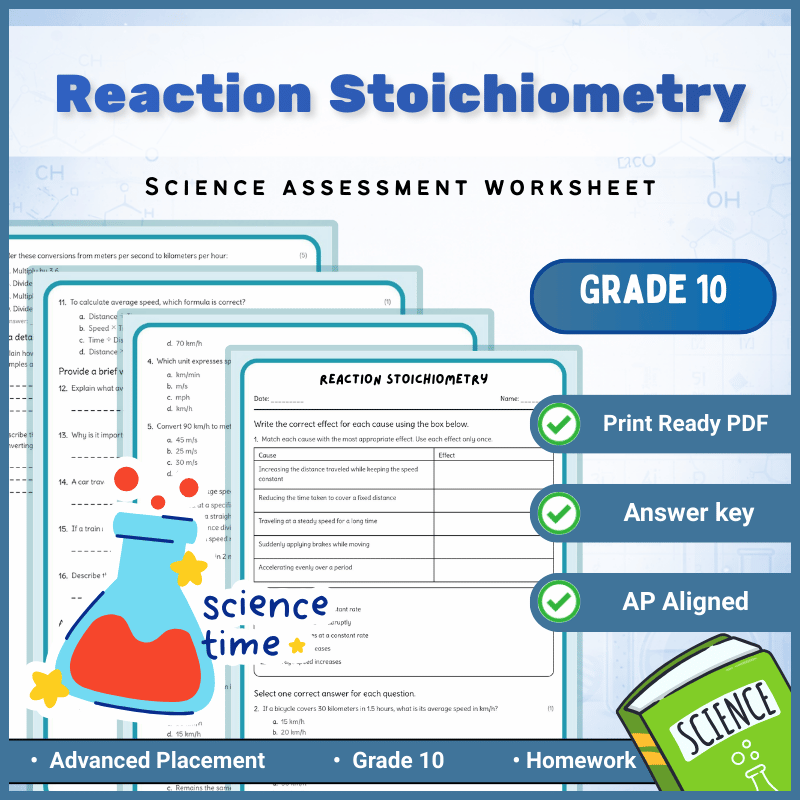
Grade 10 Science | Reaction Stoichiometry Worksheet + Answer Key (AP Standard)
Created byBright Mind ResourcesLearning Objectives
- Understand and apply mole concepts and molar mass in chemical calculations.
- Balance chemical equations and interpret them to determine relationships between substances.
- Perform stoichiometric calculations including mass-to-mass conversions, limiting reagent, and theoretical yield.
Instant download
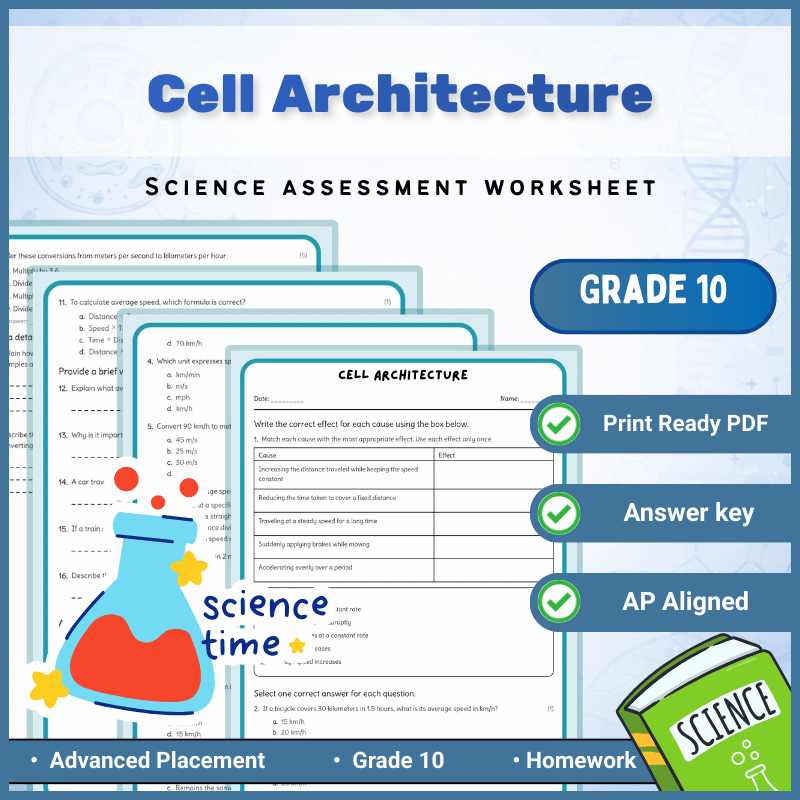
Grade 10 Science | Cell Architecture Worksheet (PDF) for AP Standards
Created byBright Mind ResourcesLearning Objectives
- Understand the hierarchical organization of cellular components from macromolecules to tissues.
- Compare and contrast prokaryotic and eukaryotic cell structures.
- Relate ultrastructural evidence to functional roles such as compartmentalization and protein targeting.
Instant download
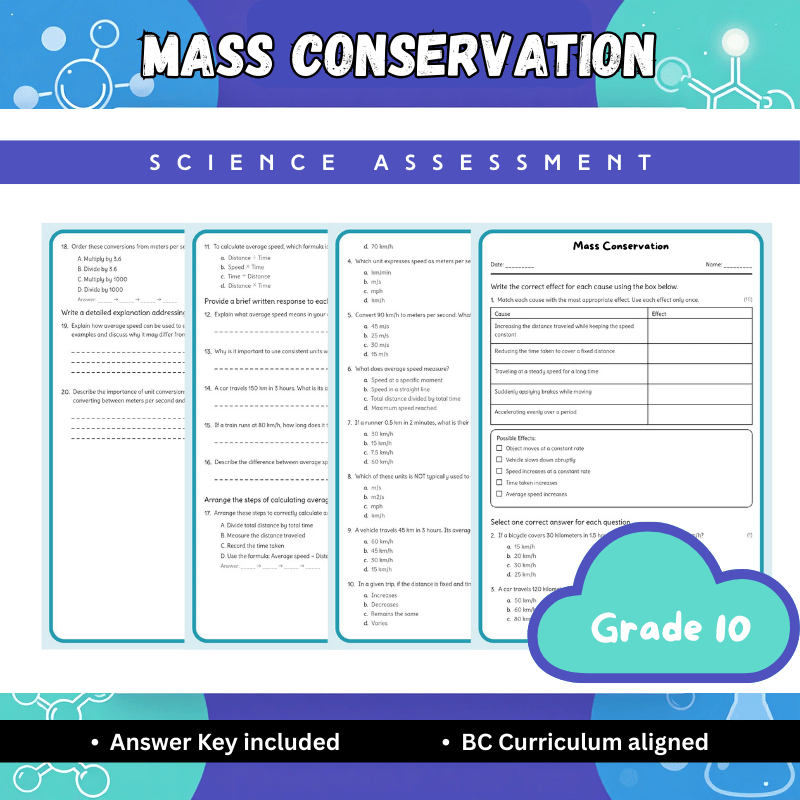
Grade 10 Science | Limiting Reagent Worksheet (Answer Key) – BC Standards
Created byBright Mind ResourcesLearning Objectives
- Understand the concept of a limiting reagent in a chemical reaction.
- Compare stoichiometric ratios and available amounts to identify the limiting reagent.
- Explain how the limiting reagent determines the maximum amount of product formed.
Instant download
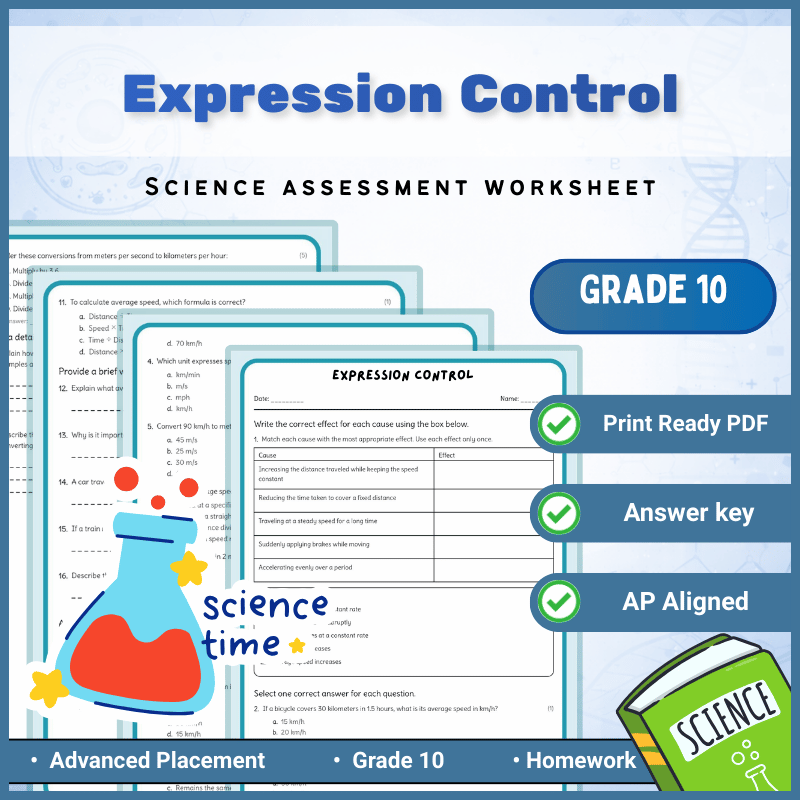
Grade 10 Science | Expression Control Worksheet (AP Standard + PDF)
Created byBright Mind ResourcesLearning Objectives
- Understand mechanisms regulating gene expression in prokaryotic and eukaryotic systems.
- Identify key components like promoter architecture, transcription factors, chromatin modifications, and post-transcriptional controls.
- Describe how signal integration influences transcriptional output and phenotypic plasticity.
Instant download
Browse more categories
About Reading comprehension Worksheets
Find reading comprehension worksheets for class practice, homework, or self-study. All 40,284 are instant PDF downloads.
Each resource here is built by an independent educator and reviewed for quality. Worksheets print straight from PDF and suit classroom use, homework, or extra practice; most come with answer keys, and you can preview before purchasing.