
Reading comprehension Worksheets
40,284 type resources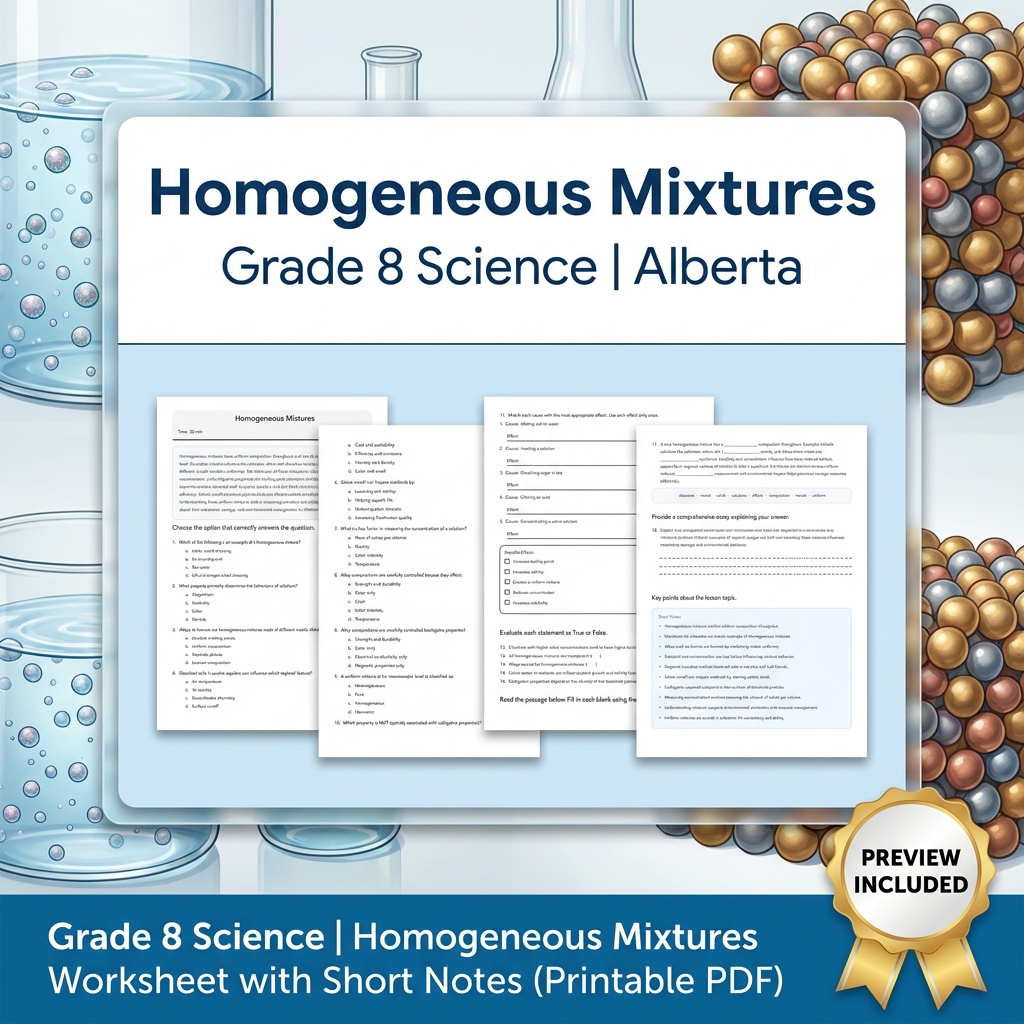
Grade 8 Science | Homogeneous Mixtures Worksheet with Short Notes (PDF)
 Created byMeadowlark Worksheets
Learning Objectives
- Understand what homogeneous mixtures are and identify examples
- Explain factors that influence the behavior of solutions and alloys
- Analyze regional examples like dissolved salts and fuel blends
Also included in: Grade 8 Science Unit | Matter & Chemical Change Worksheets Pack +1 more
Instant download
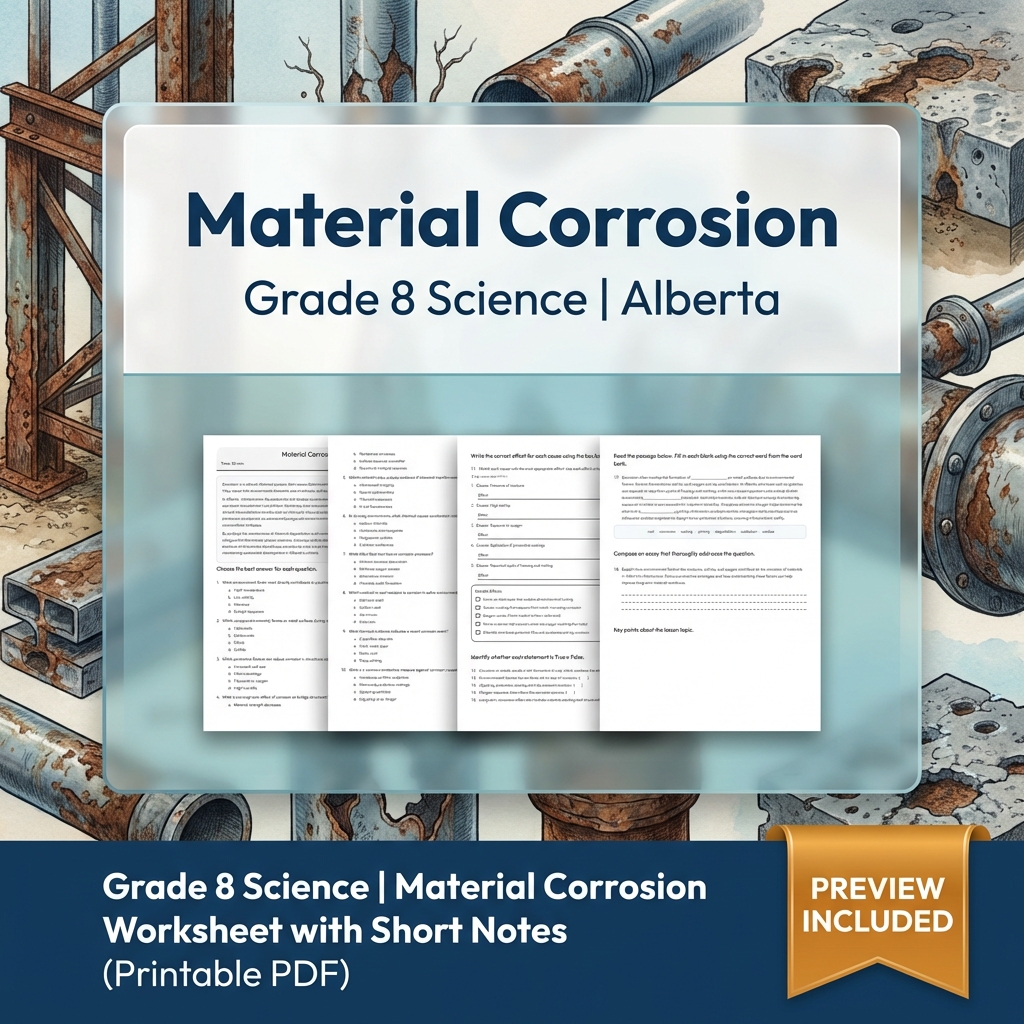
Grade 8 Science | Material Corrosion Worksheet with Short Notes (Printable PDF)
Created byMeadowlark WorksheetsLearning Objectives
- Understand the chemical processes involved in material corrosion.
- Identify environmental factors that influence corrosion in infrastructure.
- Analyze evidence of corrosion-related chemical transformations.
Also included in: Grade 8 Science Unit | Matter & Chemical Change Worksheets Pack +1 more
Instant download
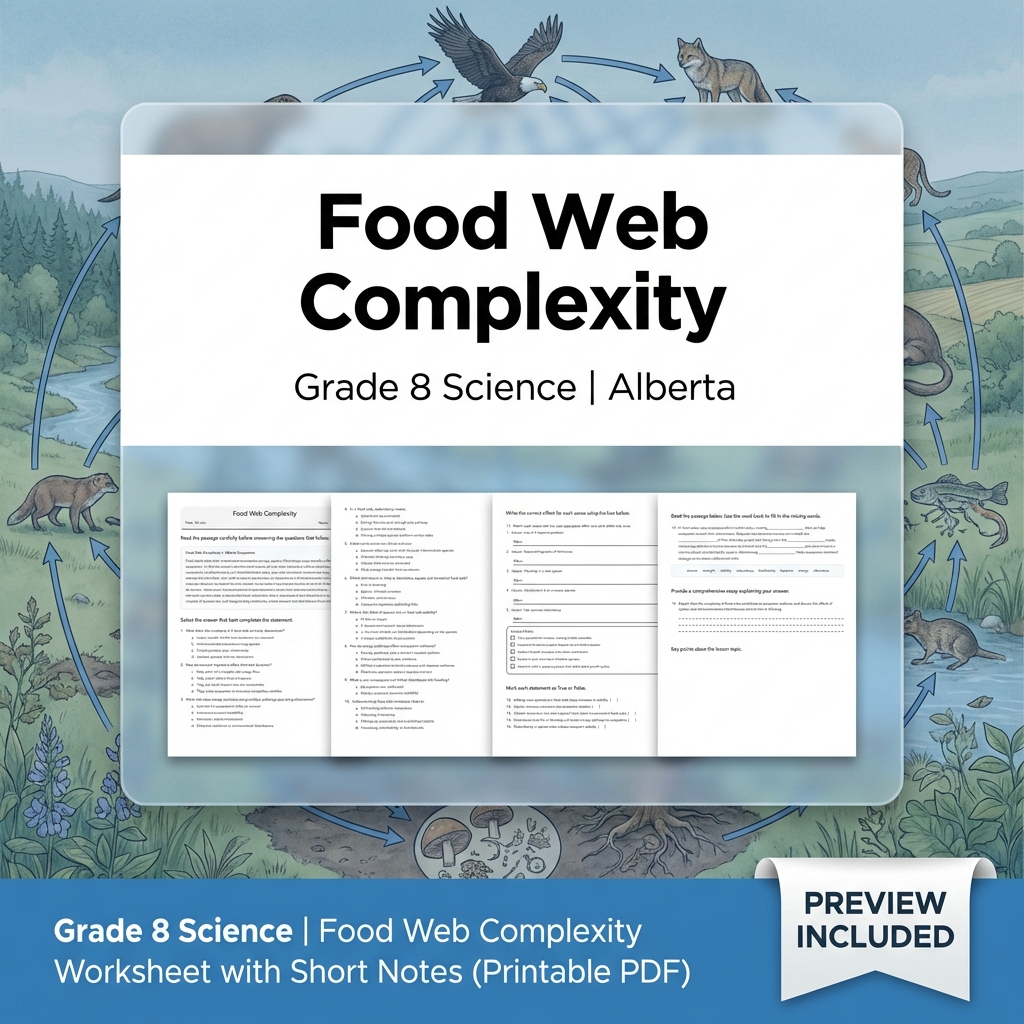
Grade 8 Science | Food Web Complexity Worksheet with Short Notes (Printable PDF)
Created byMeadowlark WorksheetsLearning Objectives
- Understand the structure and components of food webs in aquatic and terrestrial systems.
- Analyze how species interactions influence ecosystem stability and resilience.
- Evaluate the effects of seasonal migrations and life-cycle stages on energy pathways.
Also included in: Grade 8 Science | Interactions & Ecosystems UNIT Worksheet Bundle +1 more
Instant download

Grade 8 Science | Population Effects Worksheet with Short Notes (Printable PDF)
Created byMeadowlark WorksheetsLearning Objectives
- Understand how population growth influences resource consumption and Earth's systems.
- Identify key indicators of environmental changes related to demographic patterns.
- Analyze cause-and-effect relationships between human activities and ecological impacts.
Also included in: Grade 8 Science | Earth and Human Activity NGSS Unit Bundle (Collection) +1 more
Instant download
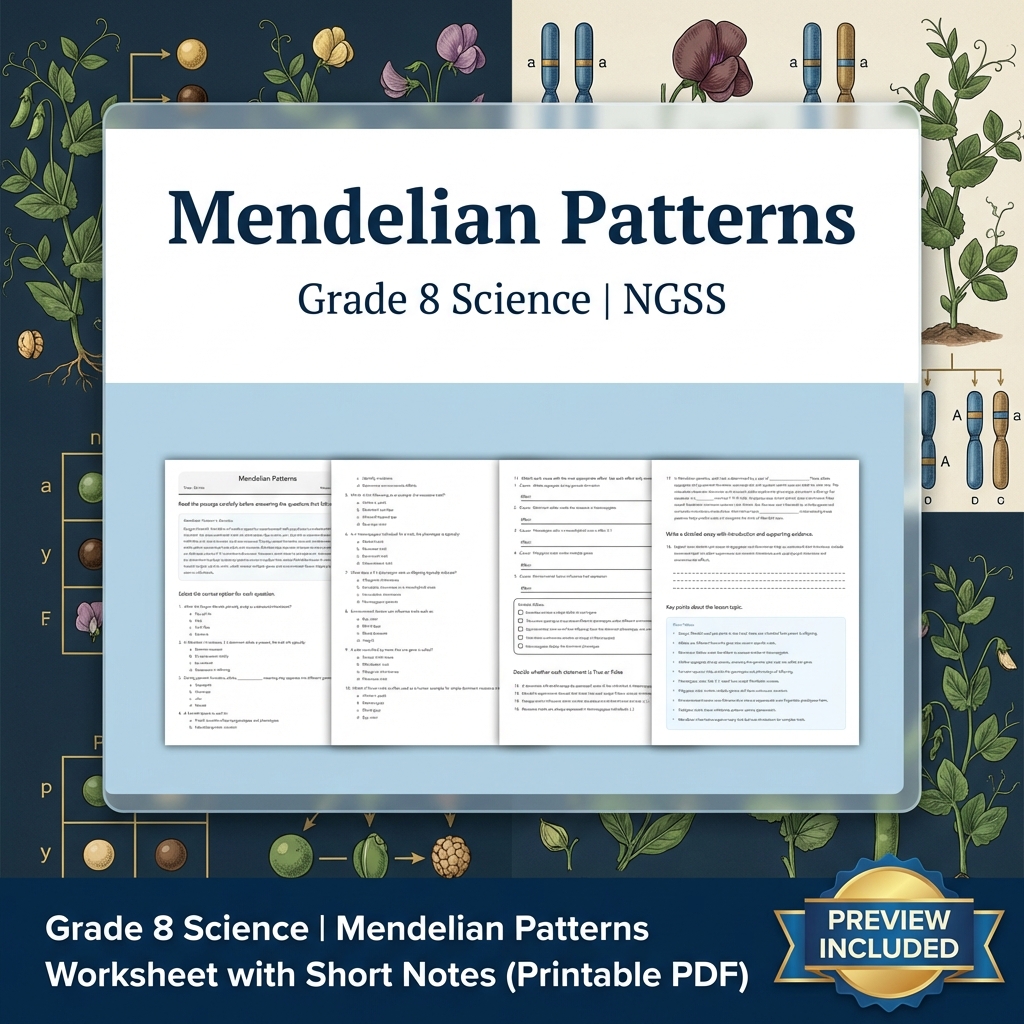
Grade 8 Science | Mendelian Patterns Worksheet with Short Notes (Printable PDF)
Created byMeadowlark WorksheetsLearning Objectives
- Understand how allele combinations determine observable traits through Mendelian inheritance.
- Identify dominant and recessive alleles and predict genotypic and phenotypic ratios using Punnett squares.
- Explain the segregation of alleles during gamete formation and interpret basic pedigree charts.
Also included in: Grade 8 Science Heredity: Inheritance & Variation UNIT Bundle (NGSS Worksheets) +1 more
Instant download

Grade 8 Science | Climate Drivers Worksheet with Short Notes (Printable PDF)
Created byMeadowlark WorksheetsLearning Objectives
- Identify and understand the key drivers influencing global temperature changes.
- Evaluate evidence from paleoclimate and modern records to assess climate change causes.
- Formulate testable questions about climate drivers and evidence.
Also included in: Grade 8 Science | Earth and Human Activity NGSS Unit Bundle (Collection) +1 more
Instant download
Grade 11 Science Energy Accounting Worksheet with Short Notes (Printable PDF)
Created byMeadowlark WorksheetsLearning Objectives
- Understand the principles of energy transfer among system components.
- Apply computational models to relate heat, work, and stored energy.
- Compare energy predictions with real data to assess conservation of energy.
Also included in: Grade 11 Science Energy UNIT Bundle | NGSS-Aligned Instructional Worksheets +1 more
Instant download

Grade 11 Science | Systems Modeling Worksheet with Short Notes (Printable PDF)
Created byMeadowlark WorksheetsLearning Objectives
- Understand how Earth system components are synthesized through various models.
- Identify the roles of tectonics, surface processes, ocean circulation, and feedbacks in climate evolution.
- Analyze observational data constraints such as paleoproxies, seismic tomography, and geodetic records.
Also included in: Grade 11 Science | Earth’s Systems NGSS Unit Bundle – Classroom-Ready Worksheets +1 more
Instant download
Grade 11 Science | Force and Acceleration Worksheet with Short Notes (PDF)
Created byMeadowlark WorksheetsLearning Objectives
- Explain Newton's second law and how net force affects acceleration.
- Apply the formula F = ma to different physical scenarios.
- Analyze free-fall motion and identify acceleration due to gravity.
Also included in: Grade 11 Science NGSS Motion and Stability Forces & Interactions Unit Bundle +1 more
Instant download
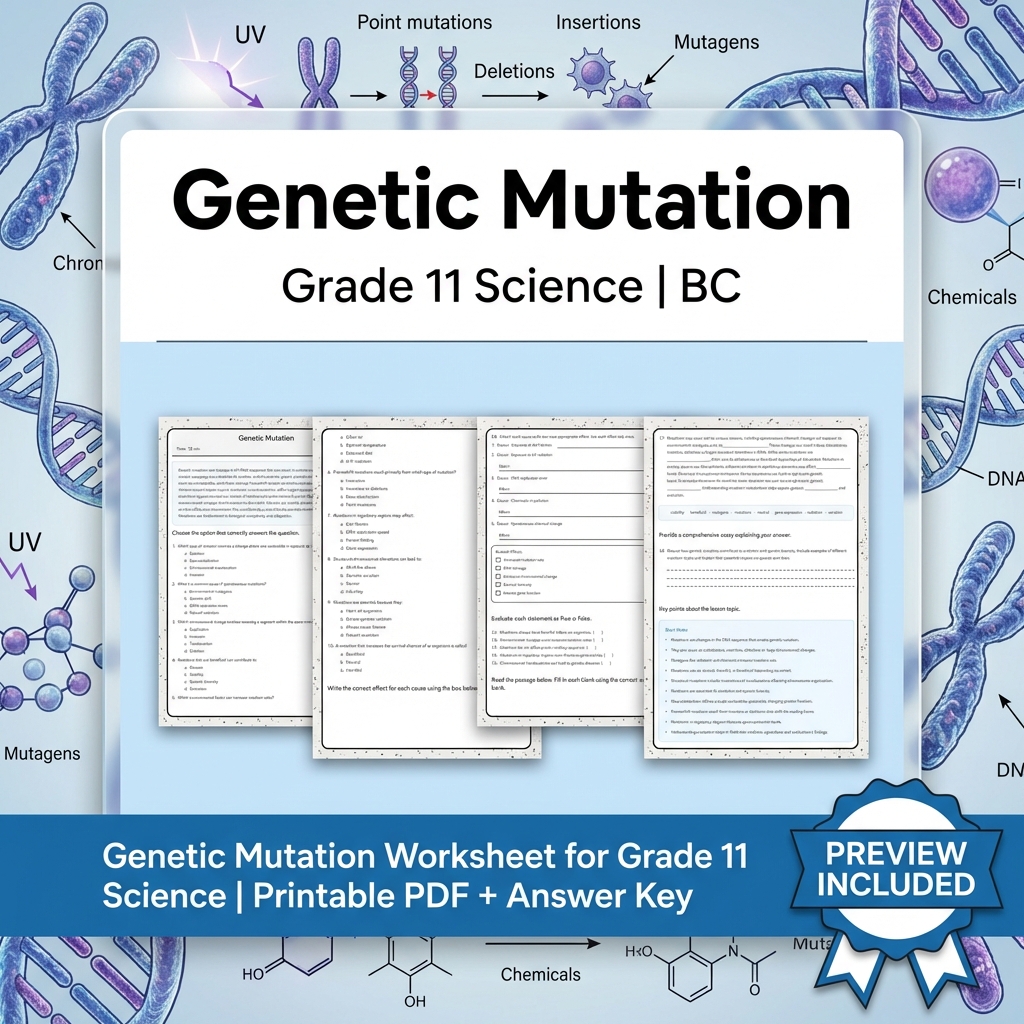
Genetic Mutation Worksheet for Grade 11 Science | Printable PDF + Answer Key
Created byMeadowlark WorksheetsLearning Objectives
- Understand the different types of genetic mutations and how they alter DNA.
- Identify causes and effects of mutations in organisms.
- Analyze the role of mutations in evolution and genetic diversity.
Also included in: Grade 11 Science Lesson Bundle BC Framework Worksheets for Biology and Genetics +1 more
Instant download
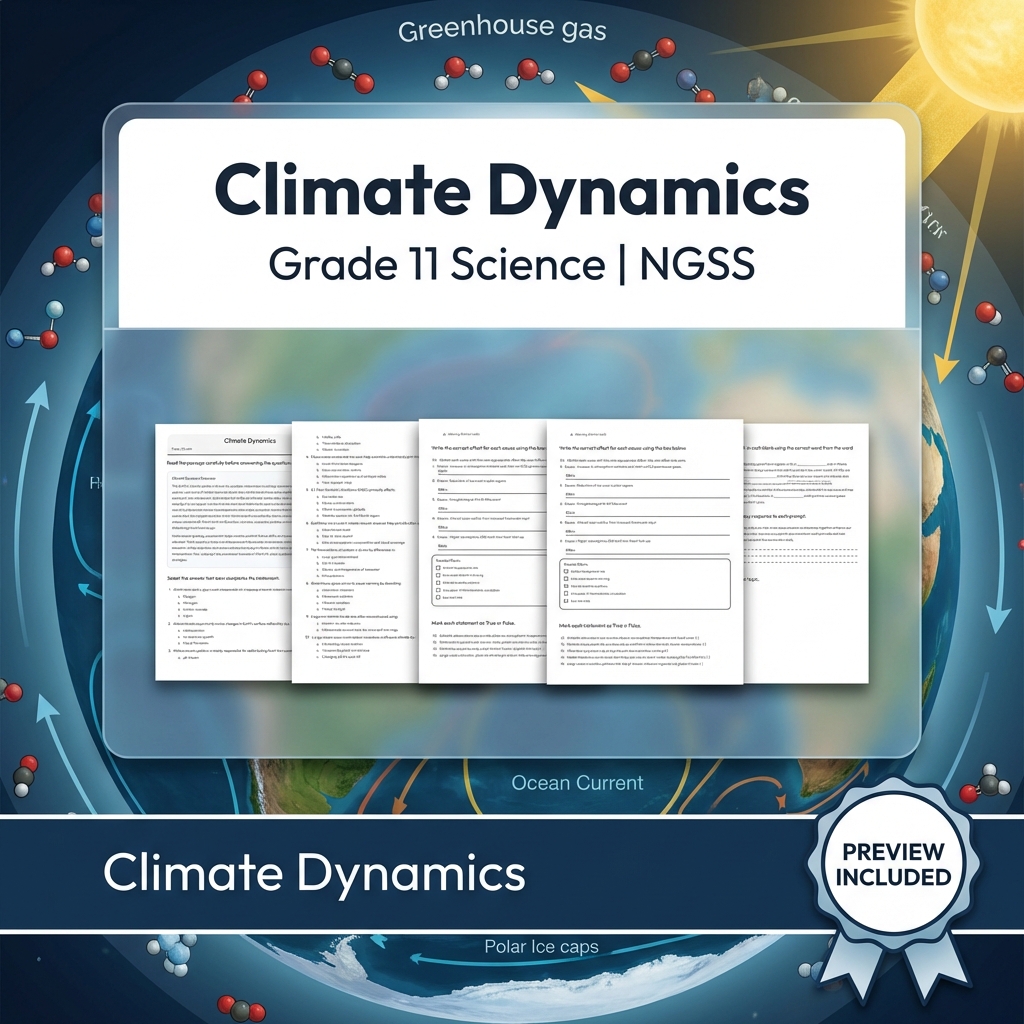
Grade 11 Science | Climate Dynamics Worksheet with Short Notes (Printable PDF)
Created byMeadowlark WorksheetsLearning Objectives
- Understand the components that influence climate variability and change.
- Analyze the role of atmospheric gases, radiative processes, and ocean-atmosphere interactions.
- Interpret instrumental, satellite, and paleoclimate proxy data related to climate shifts.
Also included in: Grade 11 Science | Earth’s Systems NGSS Unit Bundle – Classroom-Ready Worksheets +1 more
Instant download
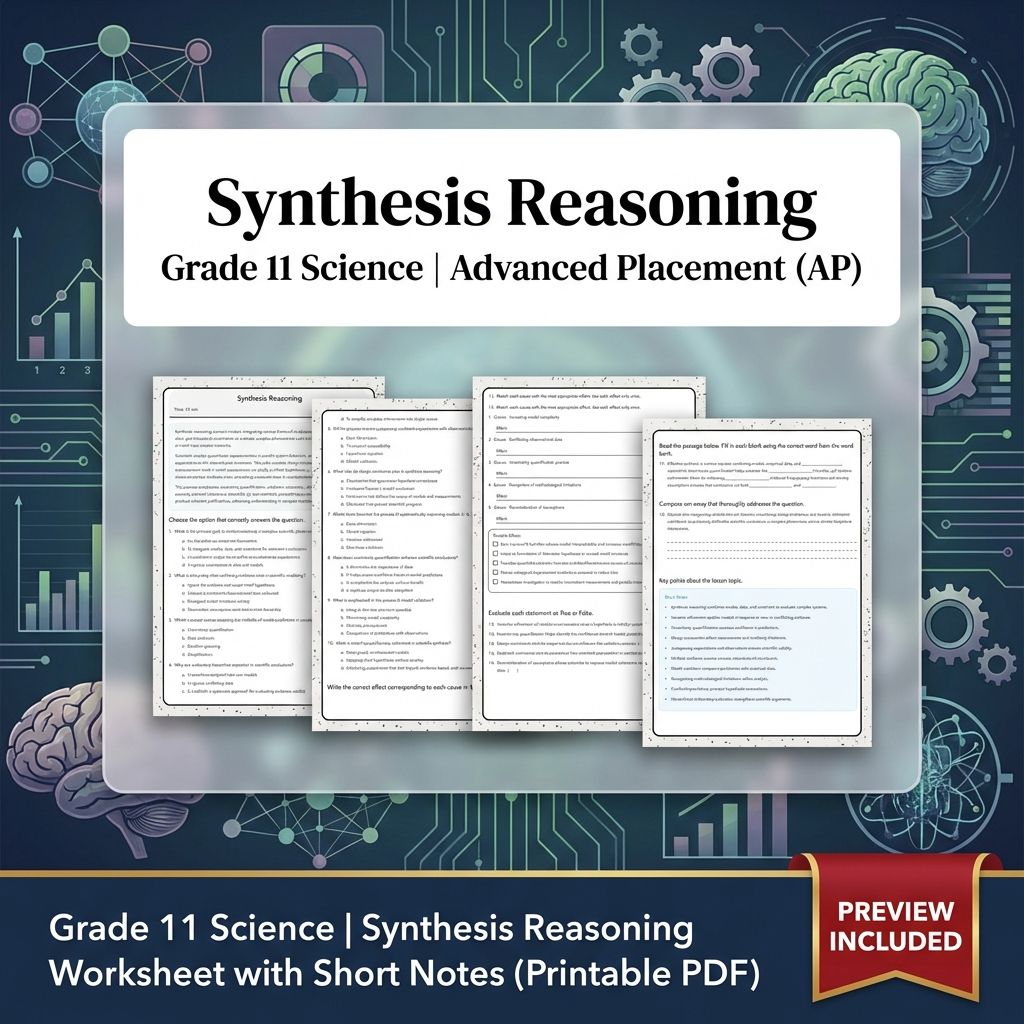
Grade 11 Science | Synthesis Reasoning Worksheet with Short Notes (PDF)
Created byMeadowlark WorksheetsLearning Objectives
- Understand how to synthesize quantitative data, models, and empirical evidence to form scientific conclusions.
- Evaluate the role of model validation, uncertainty quantification, and design constraints in complex phenomena.
- Develop skills to justify hypotheses by juxtaposing expected models, observational summaries, and methodological limitations.
Also included in: Grade 11 Science Unit Bundle | Data Analysis & Scientific Reasoning Worksheets +1 more
Instant download
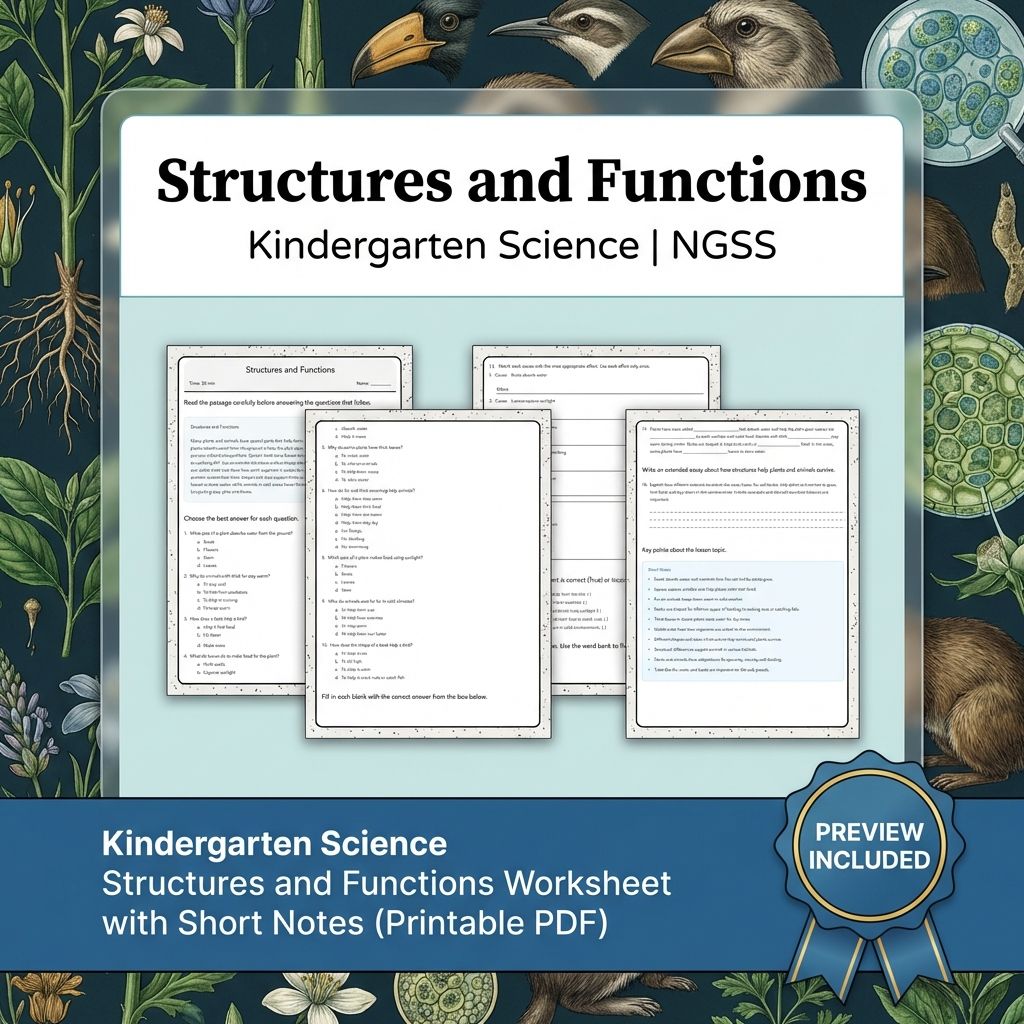
Kindergarten Science Structures and Functions Worksheet with Short Notes (PDF)
Created byMeadowlark WorksheetsLearning Objectives
- Understand how external structures help plants and animals survive.
- Identify examples of structures that support growth, movement, and obtaining food.
- Link visible traits to their functions in different organisms.
Also included in: Kindergarten Science Unit | Structures & Processes NGSS Bundle +1 more
Instant download
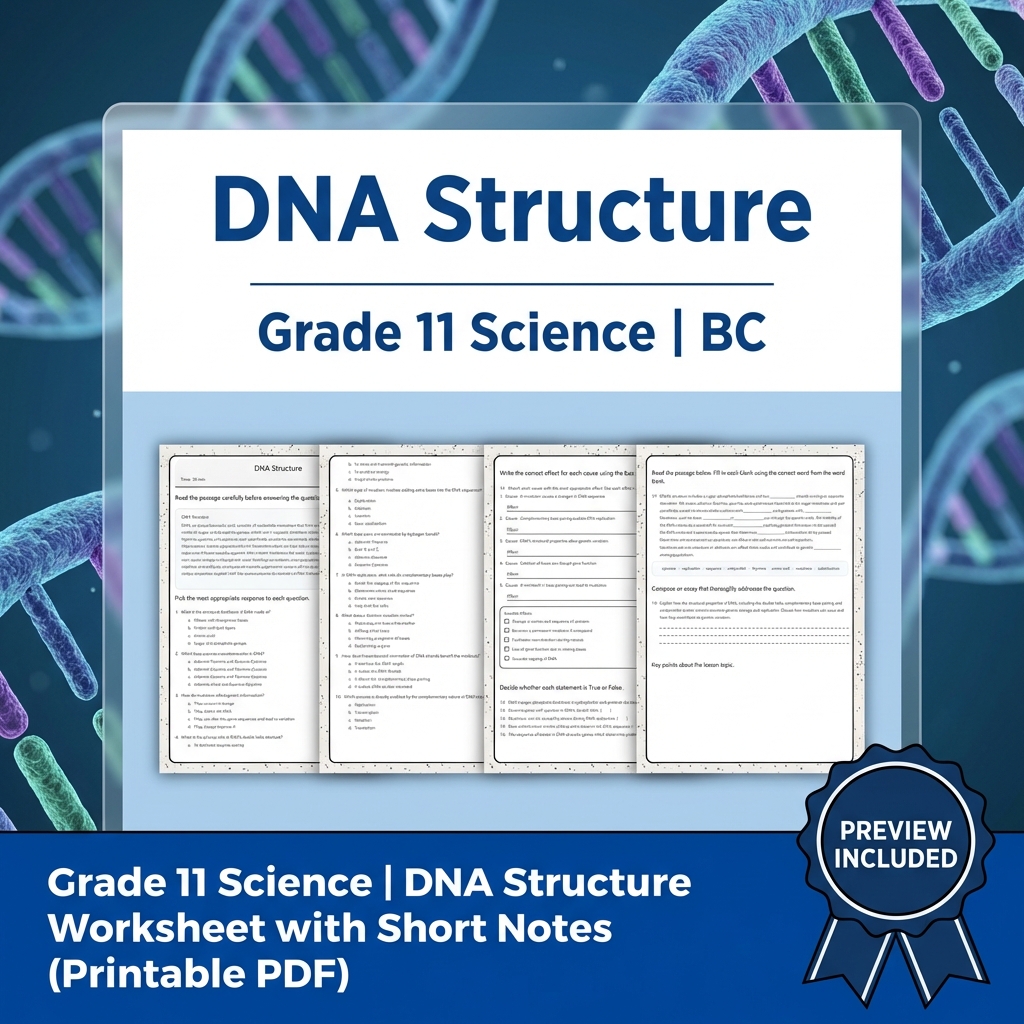
Grade 11 Science | DNA Structure Worksheet with Short Notes (Printable PDF)
Created byMeadowlark WorksheetsLearning Objectives
- Understand the basic structural components of DNA, including nucleotides and double helix formation.
- Describe complementary base pairing and its significance in DNA replication and gene expression.
- Explain how mutations such as base substitutions, insertions, or deletions can alter genetic information.
Also included in: Grade 11 Science Lesson Bundle BC Framework Worksheets for Biology and Genetics +1 more
Instant download
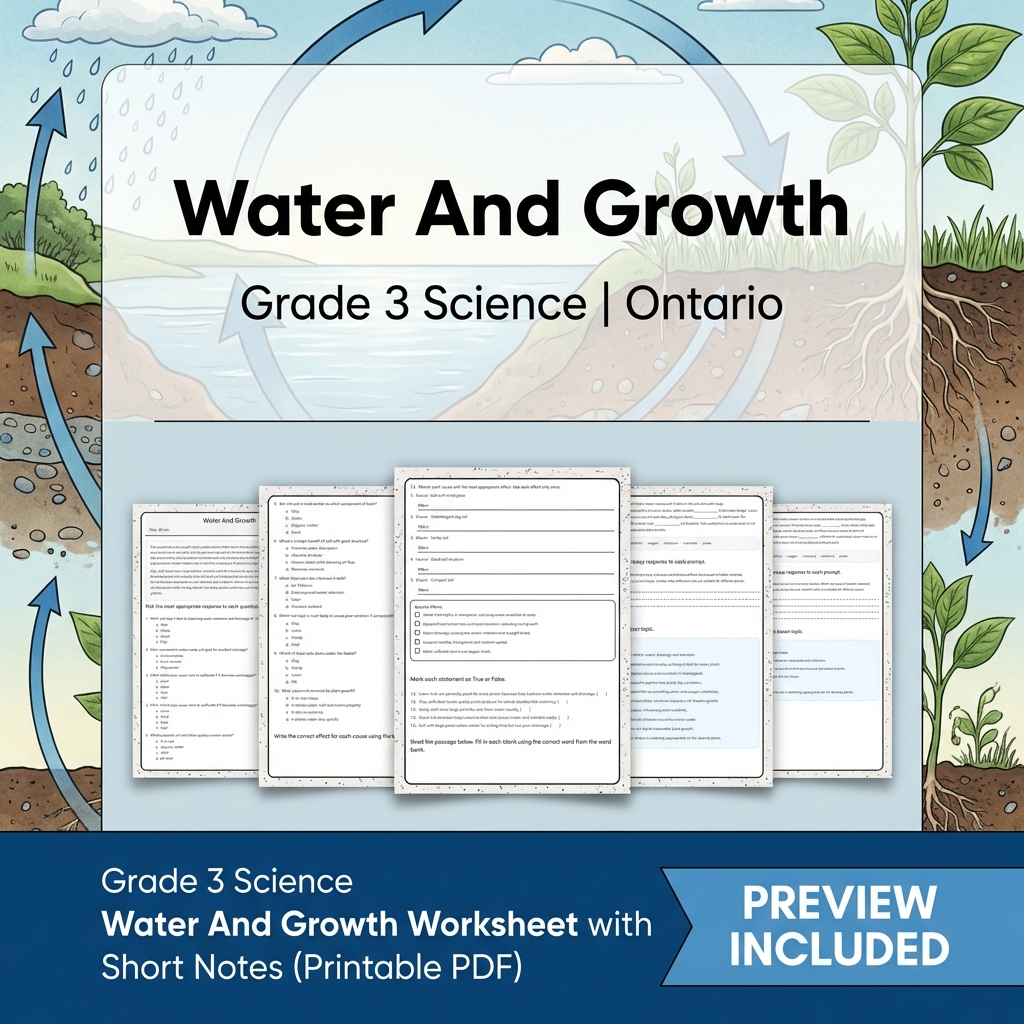
Grade 3 Science Water And Growth Worksheet with Short Notes (Printable PDF)
Created byMeadowlark WorksheetsLearning Objectives
- Understand how soil properties affect water retention, drainage, and aeration in plant growth.
- Identify differences among loam, clay, and sandy soils and their suitability for plants.
- Learn about pore size, soil structure, and their impact on water movement and oxygen supply to roots.
Also included in: Grade 3 Science Lesson Group Worksheets | Ontario Framework +1 more
Instant download
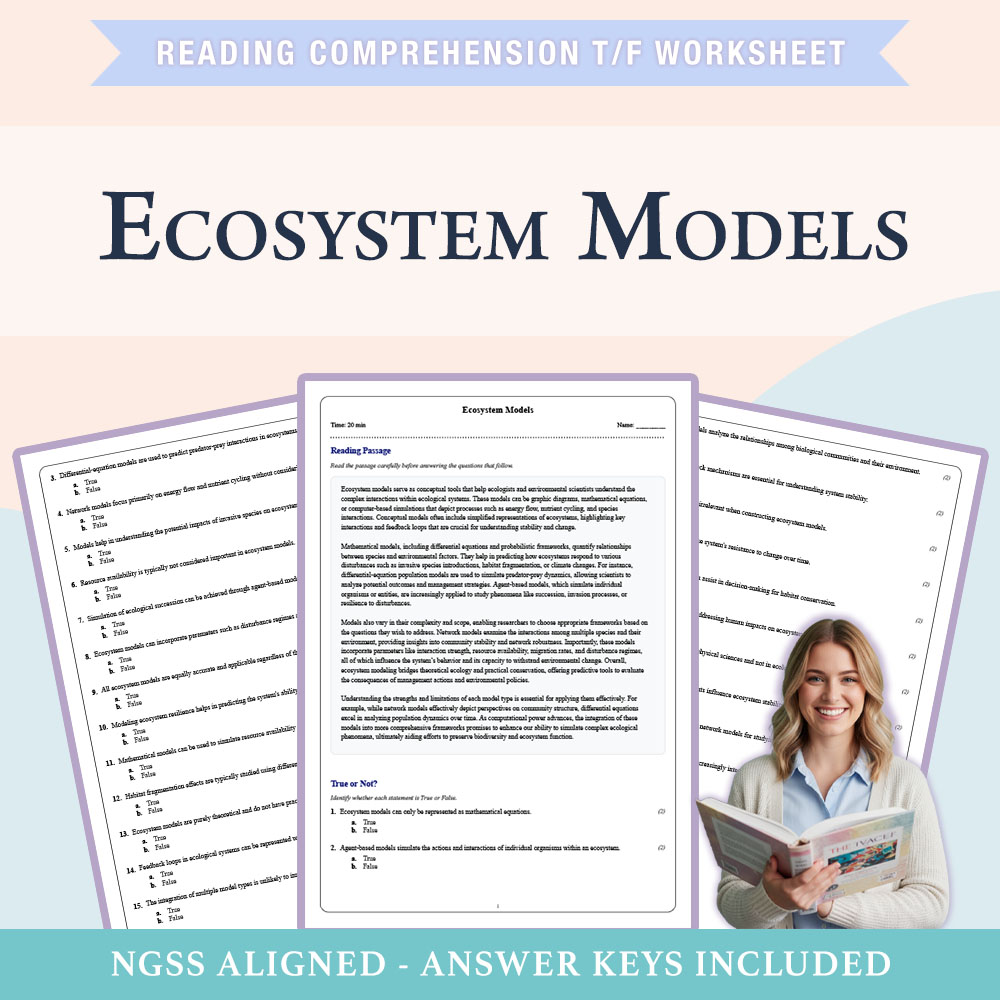
11th Grade Science | Ecosystem Models Worksheet (PDF + Answer Key)
 Created byCopper Leaf Classroom
Learning Objectives
- Understand the concept of ecosystem models and their purpose in representing ecological dynamics.
- Identify different types of ecosystem models and their applications.
- Evaluate statements about ecosystem models for their accuracy based on understanding.
Instant download
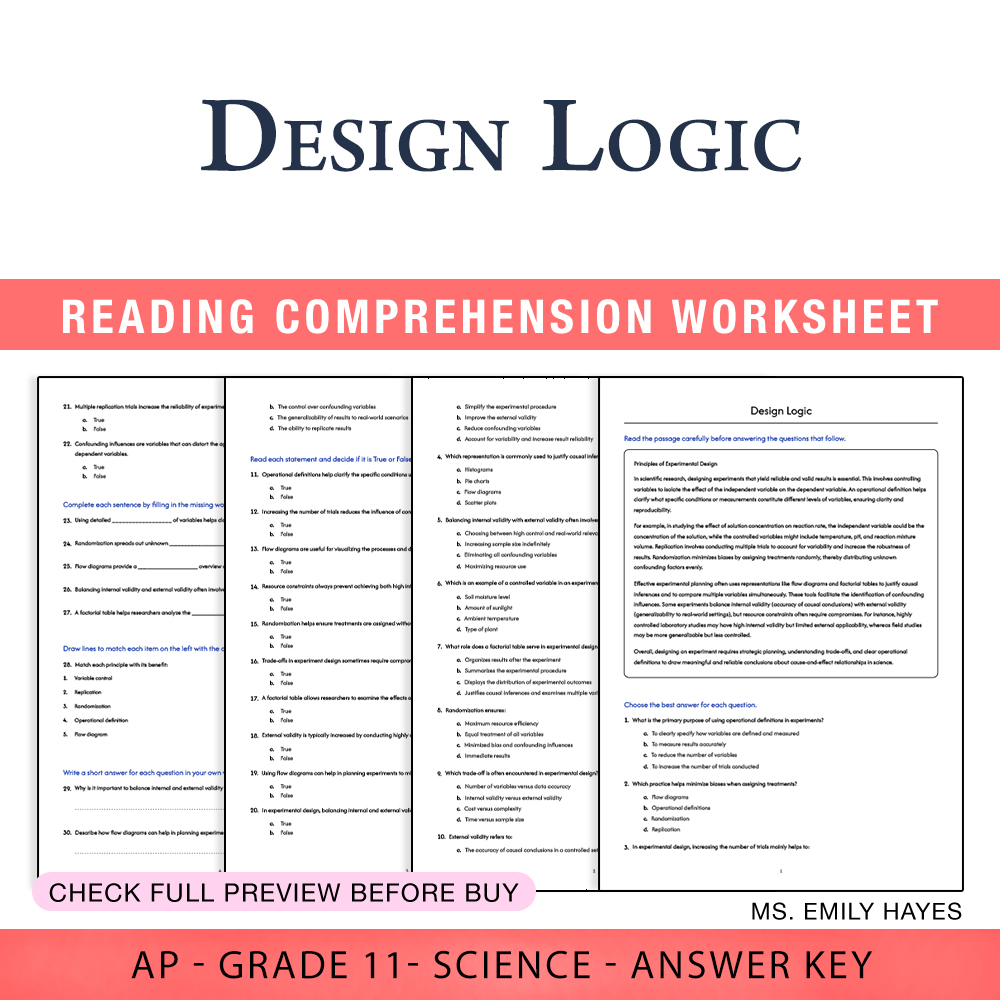
Grade 11 Science | Design Logic Assessment Worksheet (PDF+ Answer Key)
Created byCopper Leaf ClassroomLearning Objectives
- Understand principles of experimental design including variable control and operational definitions.
- Recognize the importance of replication and randomization in experiments.
- Analyze trade-offs among internal validity, external validity, and resource constraints.
Also included in: Grade 11 Science AP | Science Practices & Inquiry Skills(PDF+ Answer Key) +1 more
Instant download
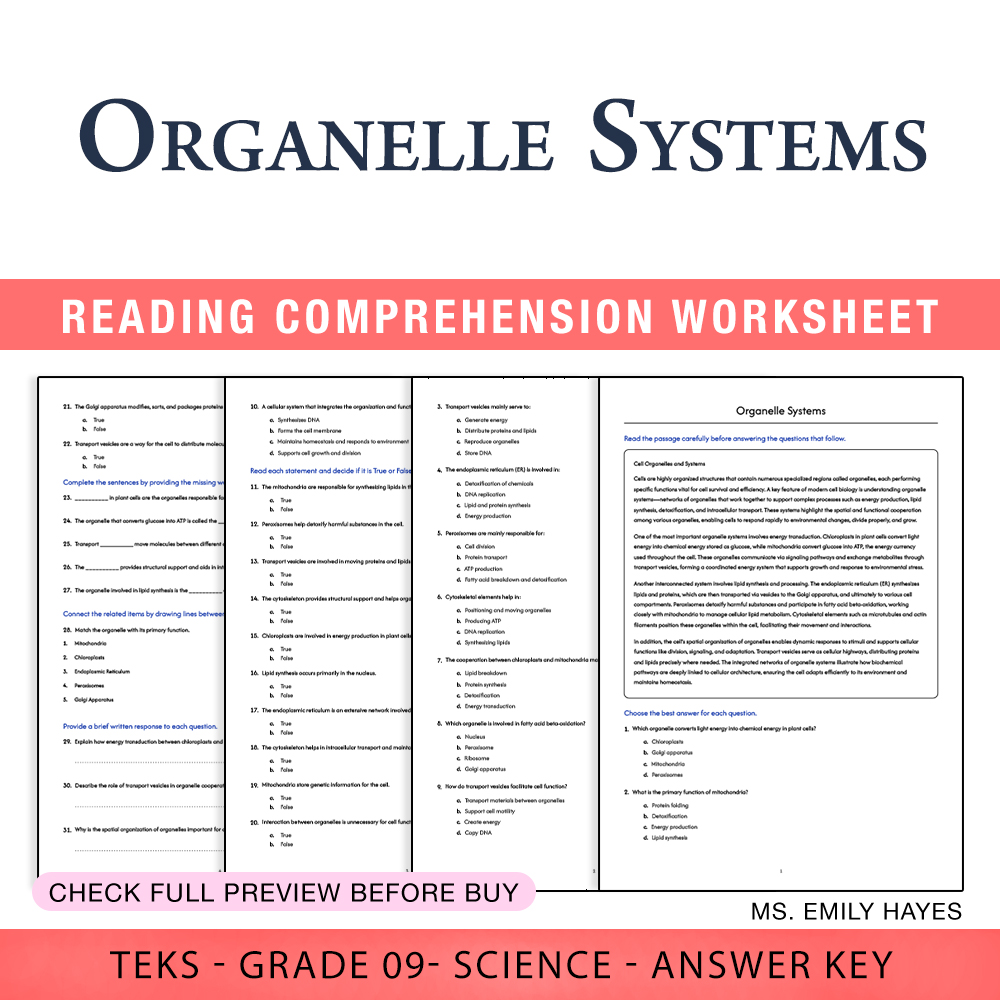
Grade 9 Science | Organelle Systems Worksheet (PDF+ Answer Key)
Created byCopper Leaf ClassroomLearning Objectives
- Describe the roles of key organelle systems in cell function.
- Explain how organelle networks coordinate cellular processes such as metabolism and maintenance.
- Identify interactions between organelles like chloroplasts, mitochondria, ER, and peroxisomes.
Instant download
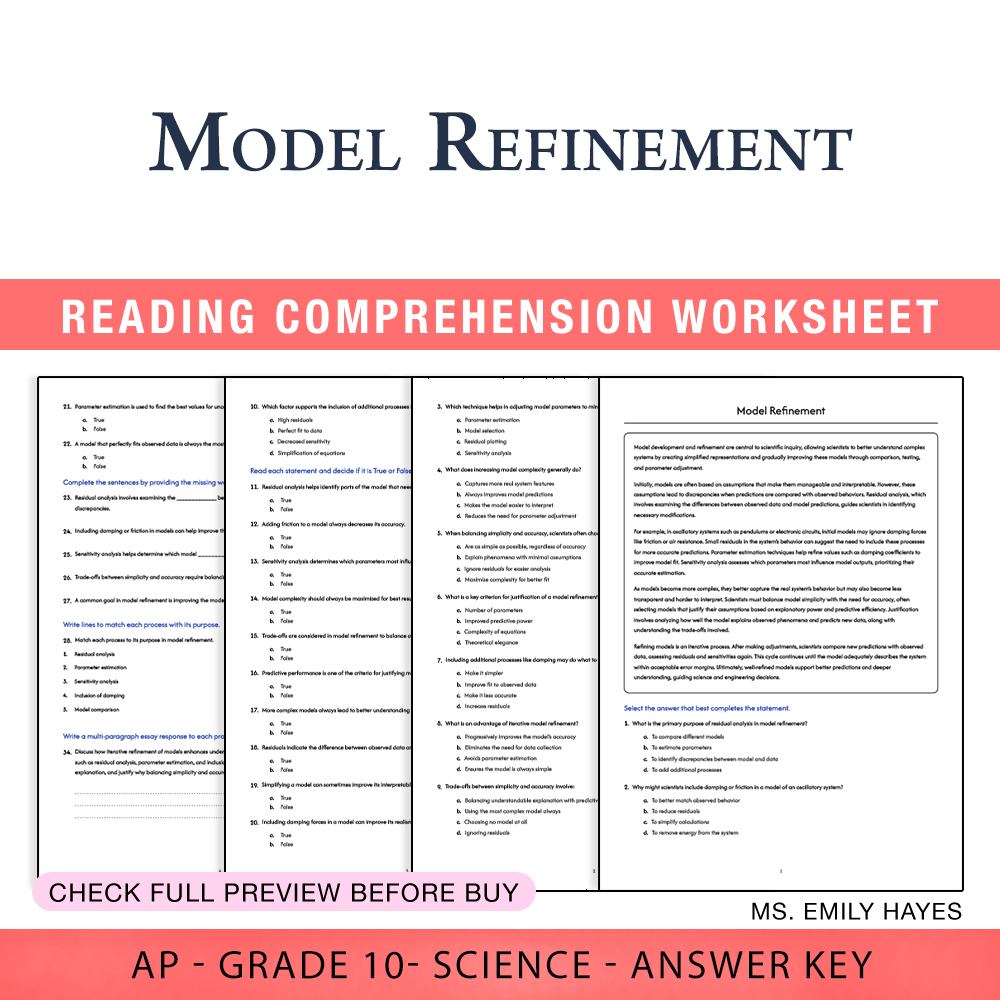
10th Grade Science | Model Refinement Worksheet (PDF+ Answer Key)
Created byCopper Leaf ClassroomLearning Objectives
- Understand the iterative process of model refinement based on observed data and residual analysis.
- Learn how to estimate and adjust parameters in physical and mathematical models.
- Identify additional processes such as damping or friction to improve model accuracy.
Also included in: Grade 10 Science AP | Data Analysis & Modeling Skills (PDF + Answer Key) +1 more
Instant download

Grade 7 Science | Decomposition Cycles Worksheet (PDF+ Answer Key)
Created byCopper Leaf ClassroomLearning Objectives
- Understand the processes involved in decomposition and nutrient cycling.
- Identify the roles of detritivores, fungi, bacteria, and abiotic factors in decomposition.
- Explain the transformations of carbon and nitrogen during decomposition.
Instant download
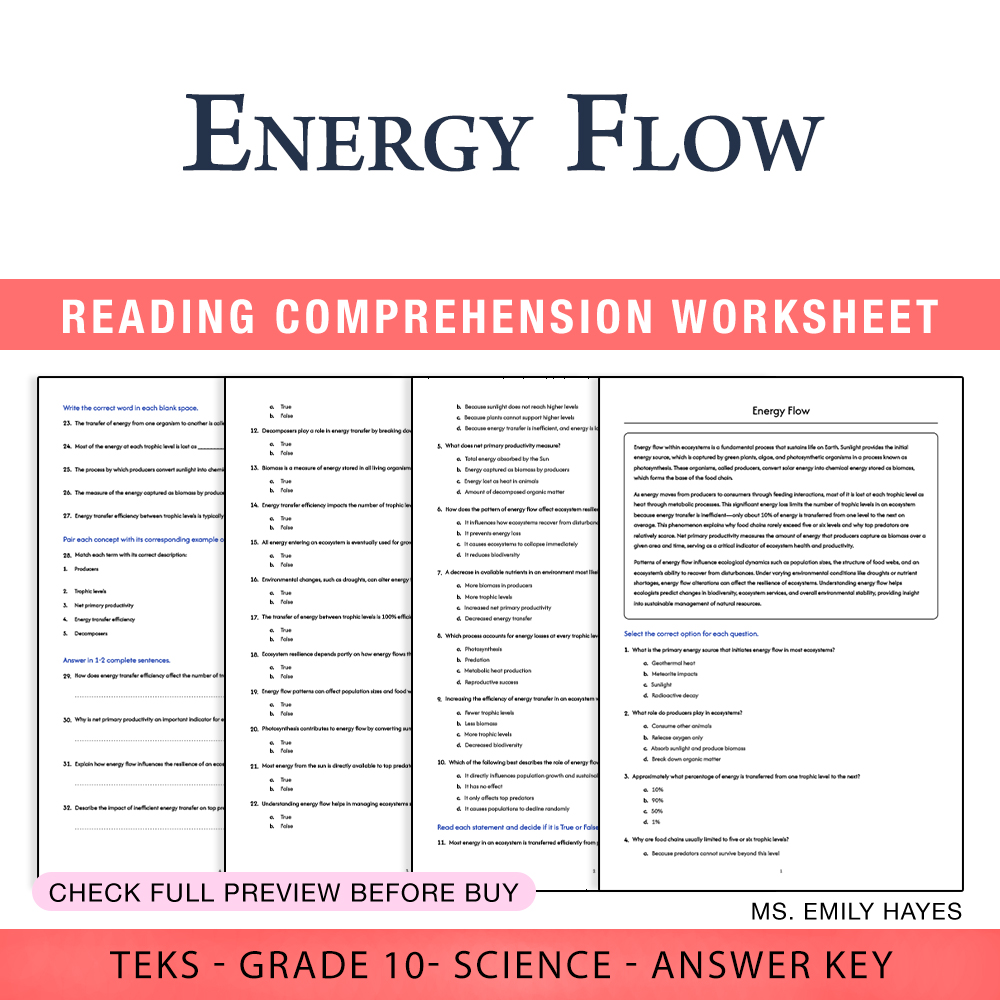
10th Grade Science | Energy Flow Worksheet (PDF+ Answer Key)
Created byCopper Leaf ClassroomLearning Objectives
- Describe how energy flows through ecosystems from sunlight to various trophic levels.
- Explain the concept of energy transfer efficiency and its effects on ecological populations and food webs.
- Identify the role of net primary productivity in ecosystems.
Instant download
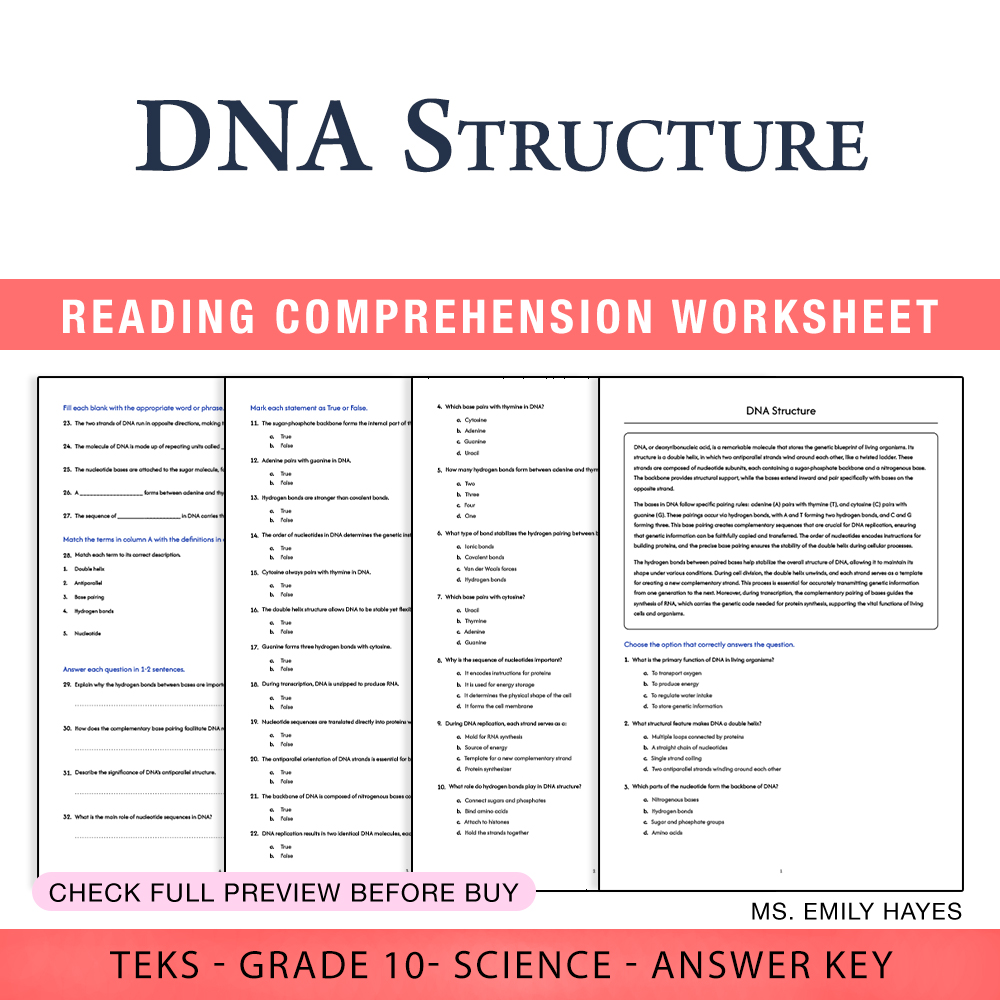
10th Grade Science | DNA Structure Worksheet (PDF+ Answer Key)
Created byCopper Leaf ClassroomLearning Objectives
- Describe the double helix structure of DNA and its components.
- Explain the base pairing rules and their significance in genetic information.
- Understand how hydrogen bonds stabilize the DNA double helix.
Instant download
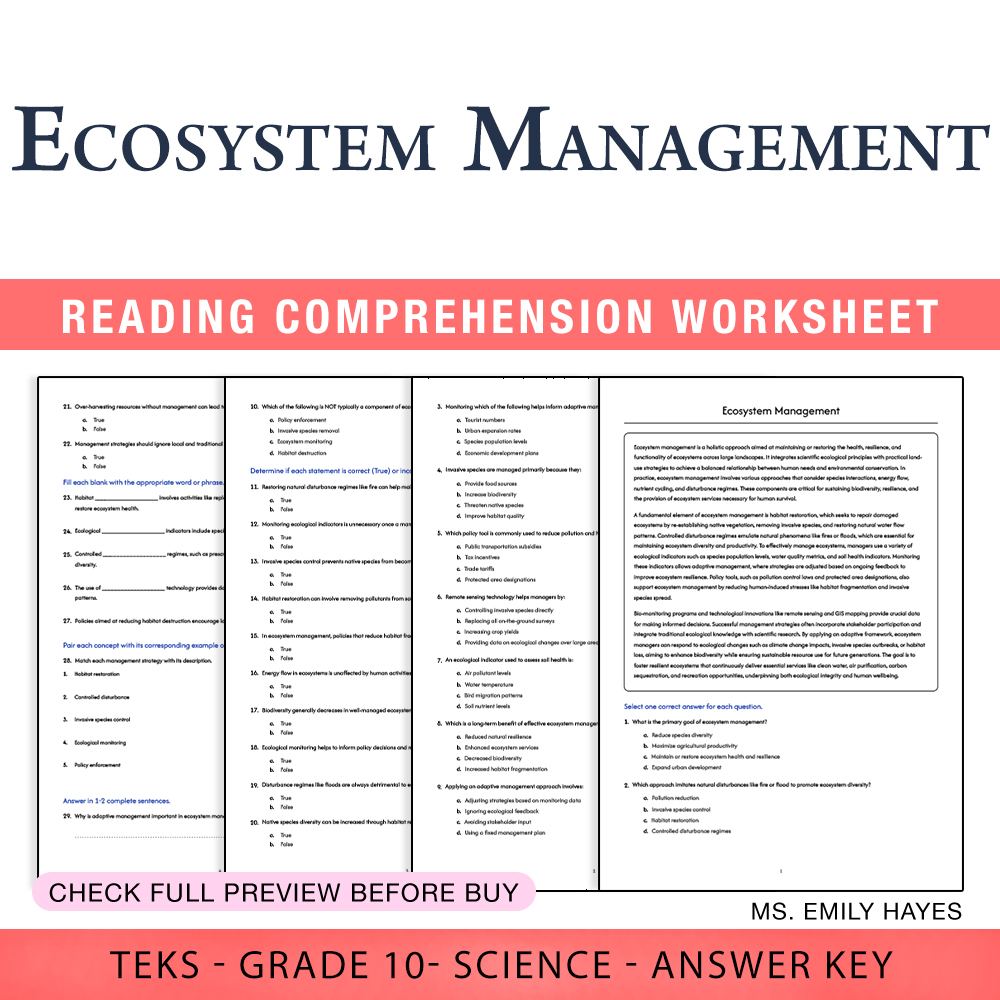
Grade 10 Science | Ecosystem Management Worksheet (PDF+ Answer Key)
Created byCopper Leaf ClassroomLearning Objectives
- Understand the principles and strategies used in ecosystem management.
- Identify various ecological components such as species interactions, energy flow, and nutrient cycles.
- Evaluate management approaches including habitat restoration and controlling invasive species.
Instant download
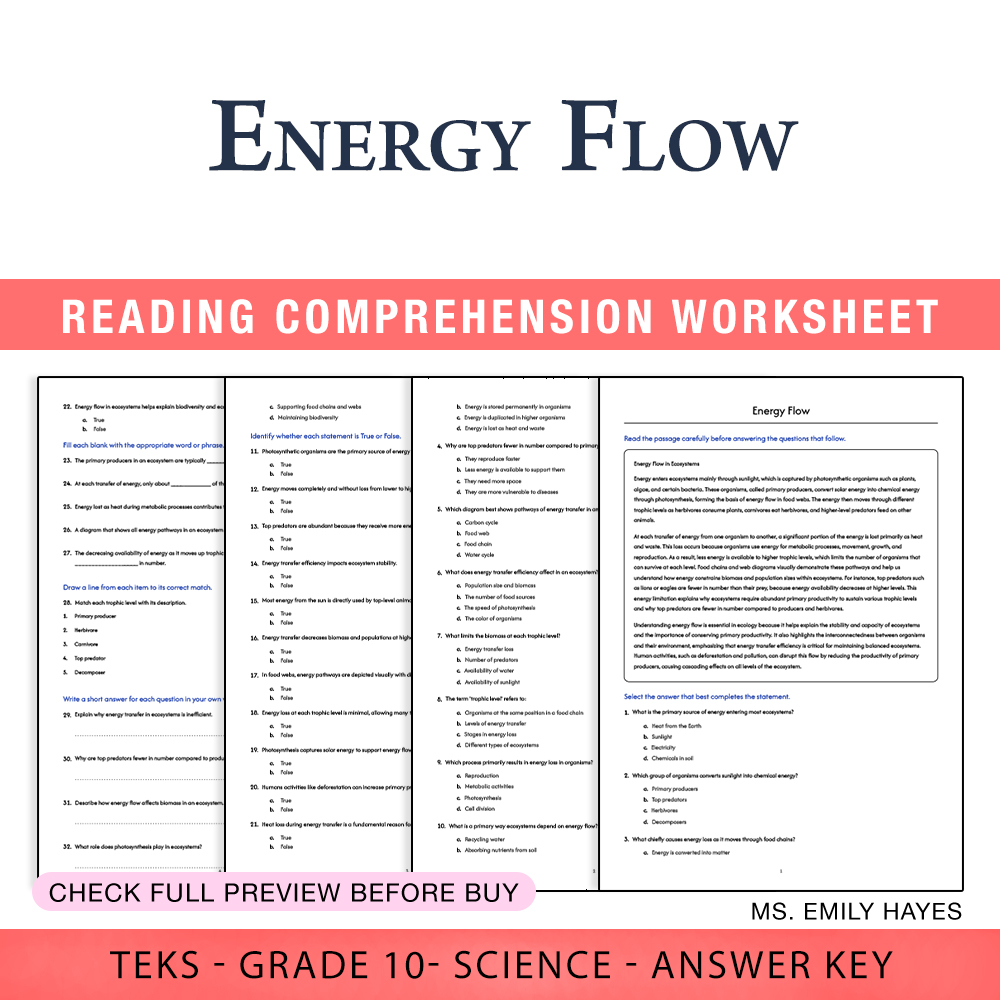
Grade 10 Science | Energy Flow Worksheet (PDF+ Answer Key)
Created byCopper Leaf ClassroomLearning Objectives
- Understand how energy enters and moves through ecosystems via trophic levels.
- Explain the concept of energy transfer and loss in food chains and webs.
- Describe the relationship between energy flow, biomass, and population sizes.
Instant download
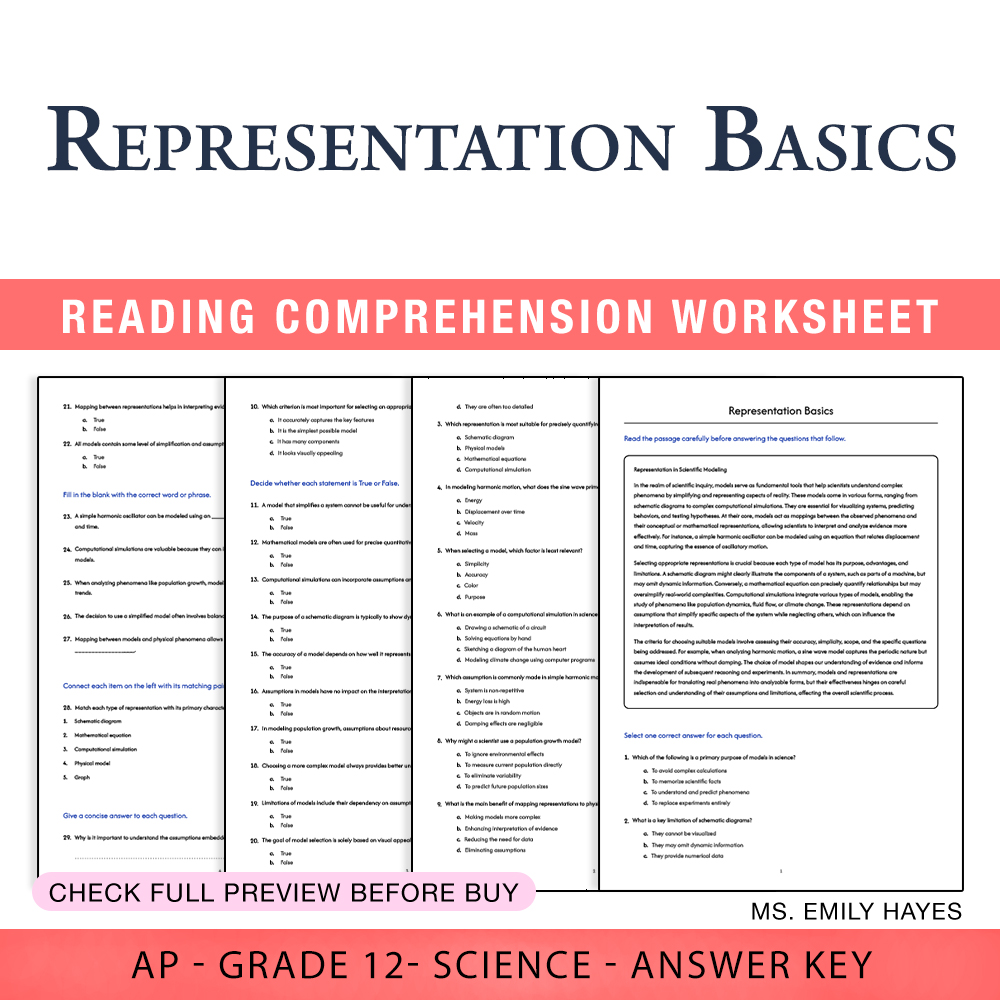
Grade 12 Science | Representation Basics Worksheet (PDF+ Answer Key)
Created byCopper Leaf ClassroomLearning Objectives
- Understand different types of models used in scientific representation.
- Identify the purpose, limits, and criteria for selecting models in science.
- Apply mapping between models and physical phenomena such as harmonic motion and population growth.
Also included in: Grade 12 Science AP | Data Analysis and Modeling Skills (PDF+ Answer Key) +1 more
Instant download
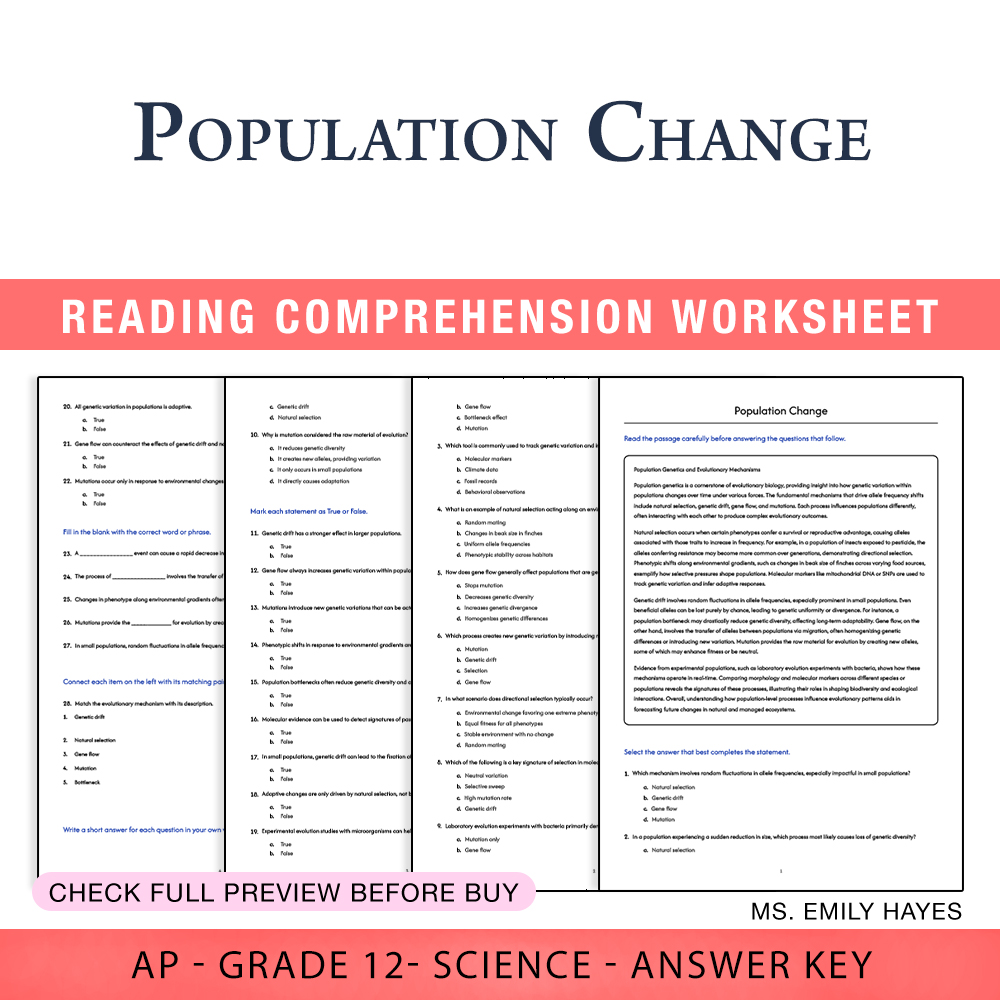
Grade 12 Science | Population Change Assessment Worksheet (PDF+ Answer Key)
Created byCopper Leaf ClassroomLearning Objectives
- Describe mechanisms that alter allele frequencies in populations, including natural selection, genetic drift, gene flow, and mutation.
- Use case examples such as phenotypic shifts in environmental gradients to illustrate population-level processes.
- Relate fitness differences to changes in allele frequencies using quantitative models.
Also included in: Grade 12 Science | AP Biology & Ecology Worksheet Bundle (PDF+ Answer Keys) +1 more
Instant download
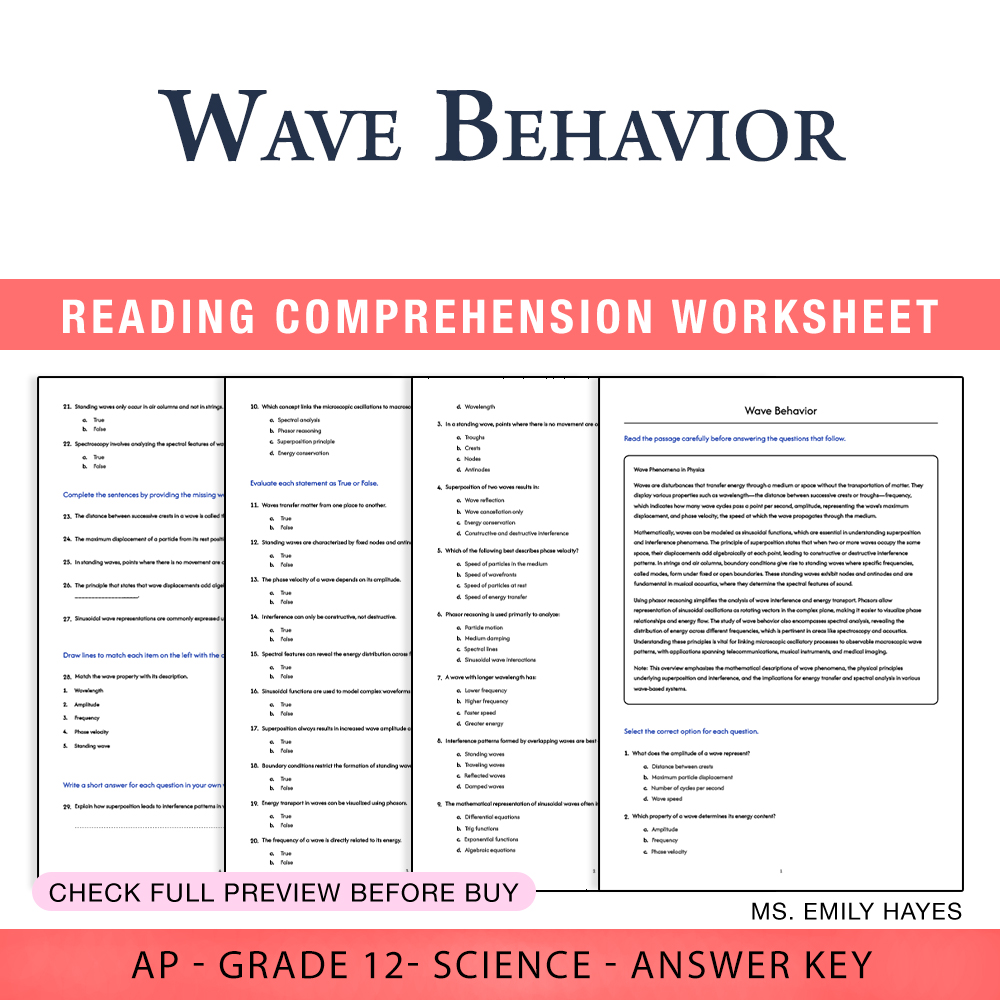
Grade 12 Science | Wave Behavior Worksheet (PDF+ Answer Key)
Created byCopper Leaf ClassroomLearning Objectives
- Understand the fundamental properties of waves, including wavelength, frequency, phase velocity, and amplitude.
- Explain the principles of superposition and interference in wave phenomena.
- Analyze standing wave formation, boundary conditions, and mode structures in strings and air columns.
Also included in: Grade 12 Science AP – Energy, Motion & Electricity Mastery(PDF+ Answer Key) +1 more
Instant download
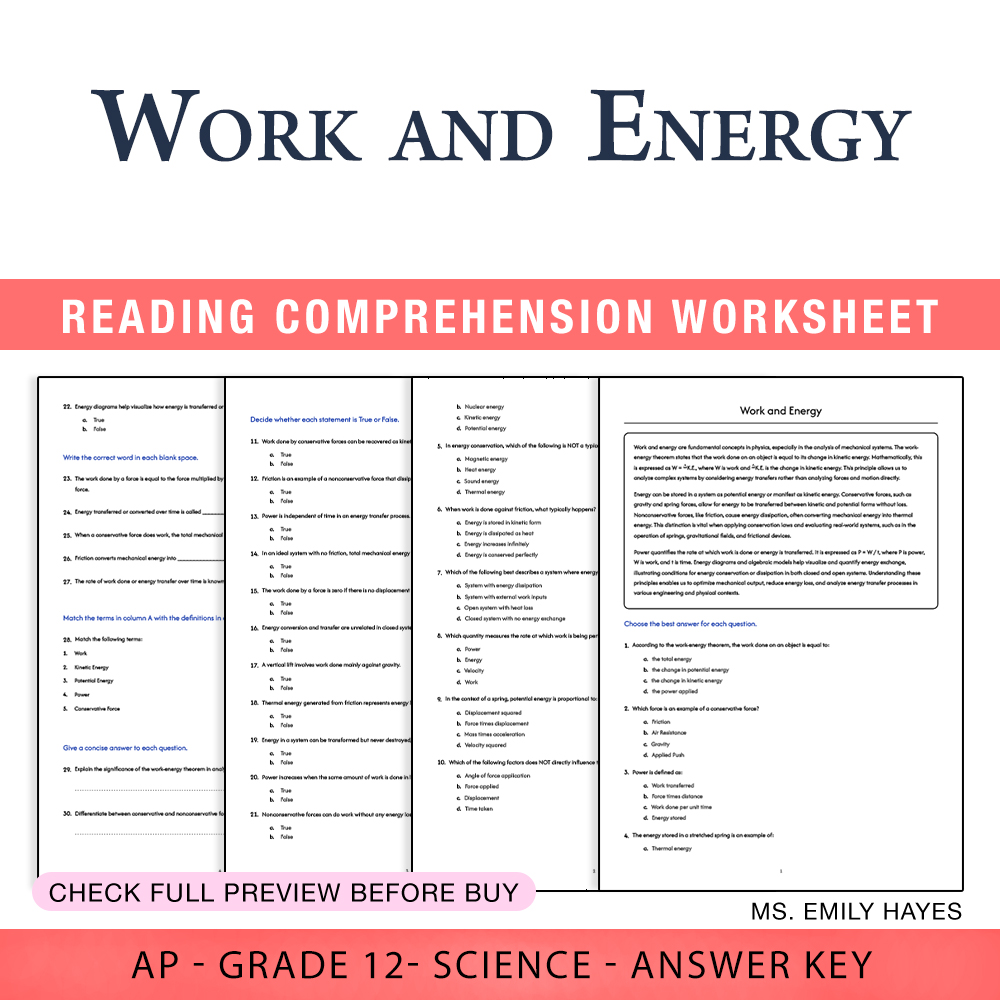
Grade 12 Science | Work and Energy Assessment Worksheet (PDF+ Answer Key)
Created byCopper Leaf ClassroomLearning Objectives
- Describe the work-energy principle and its application to mechanical systems.
- Differentiate between conservative and nonconservative forces using energy conservation.
- Calculate work, power, and energy transfer in various mechanical contexts.
Also included in: Grade 12 Science AP – Energy, Motion & Electricity Mastery(PDF+ Answer Key) +1 more
Instant download
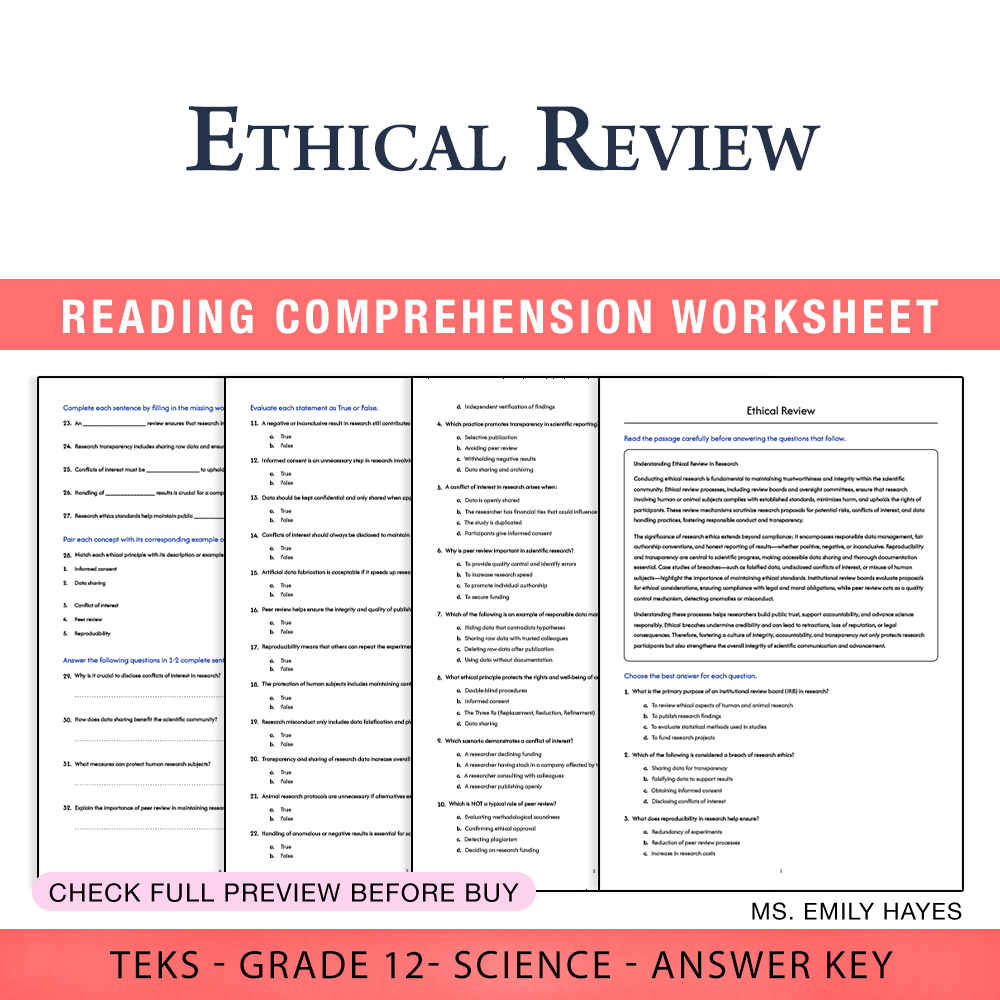
Grade 12 Science | Ethical Review Worksheet (PDF+ Answer Key)
Created byCopper Leaf ClassroomLearning Objectives
- Understand the principles and importance of research ethics and integrity.
- Identify key standards for data management, authorship, and conflict of interest.
- Analyze case studies related to ethical breaches and misconduct in research.
Instant download
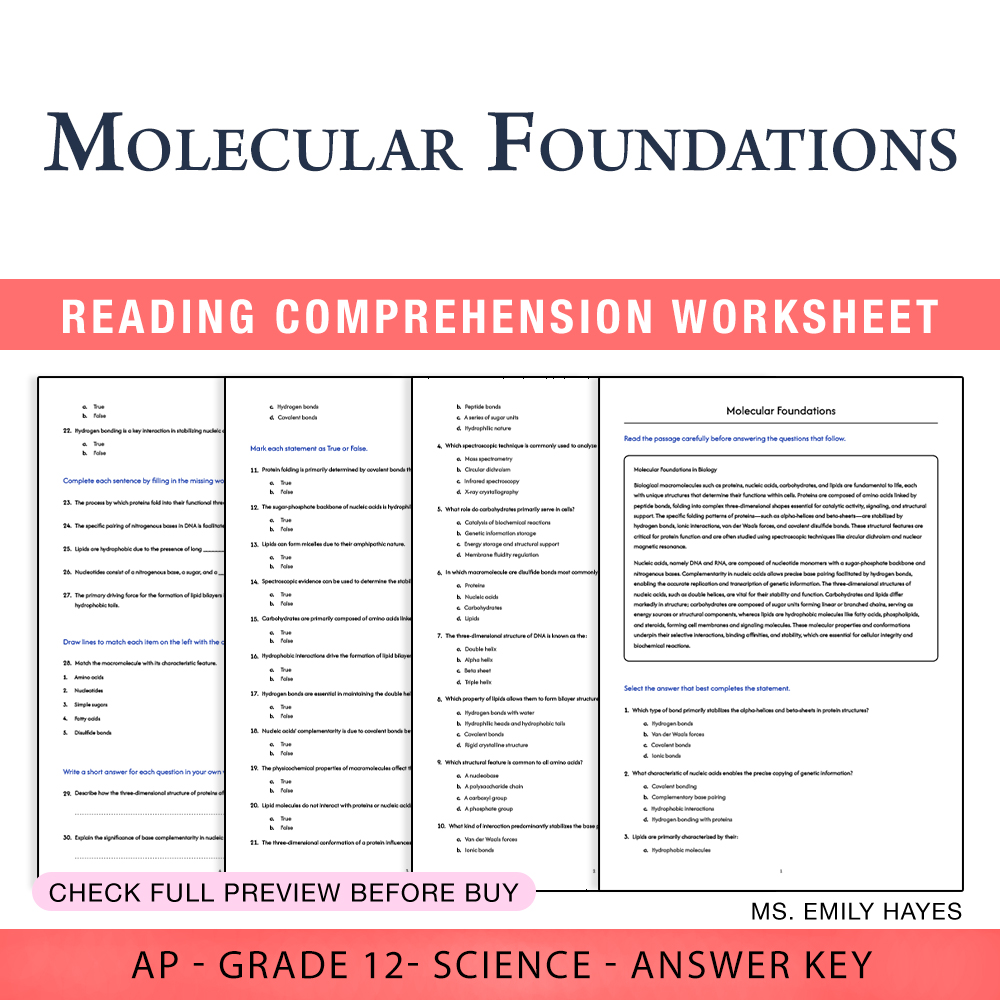
Grade 12 Science | Molecular Foundations Worksheet (PDF+ Answer Key)
Created byCopper Leaf ClassroomLearning Objectives
- Describe the molecular structure and composition of biological macromolecules.
- Explain how molecular form influences the function of proteins, nucleic acids, carbohydrates, and lipids.
- Analyze structural models, bonding diagrams, and spectroscopic evidence to understand molecular interactions.
Also included in: Grade 12 Science | AP Biology & Ecology Worksheet Bundle (PDF+ Answer Keys) +1 more
Instant download
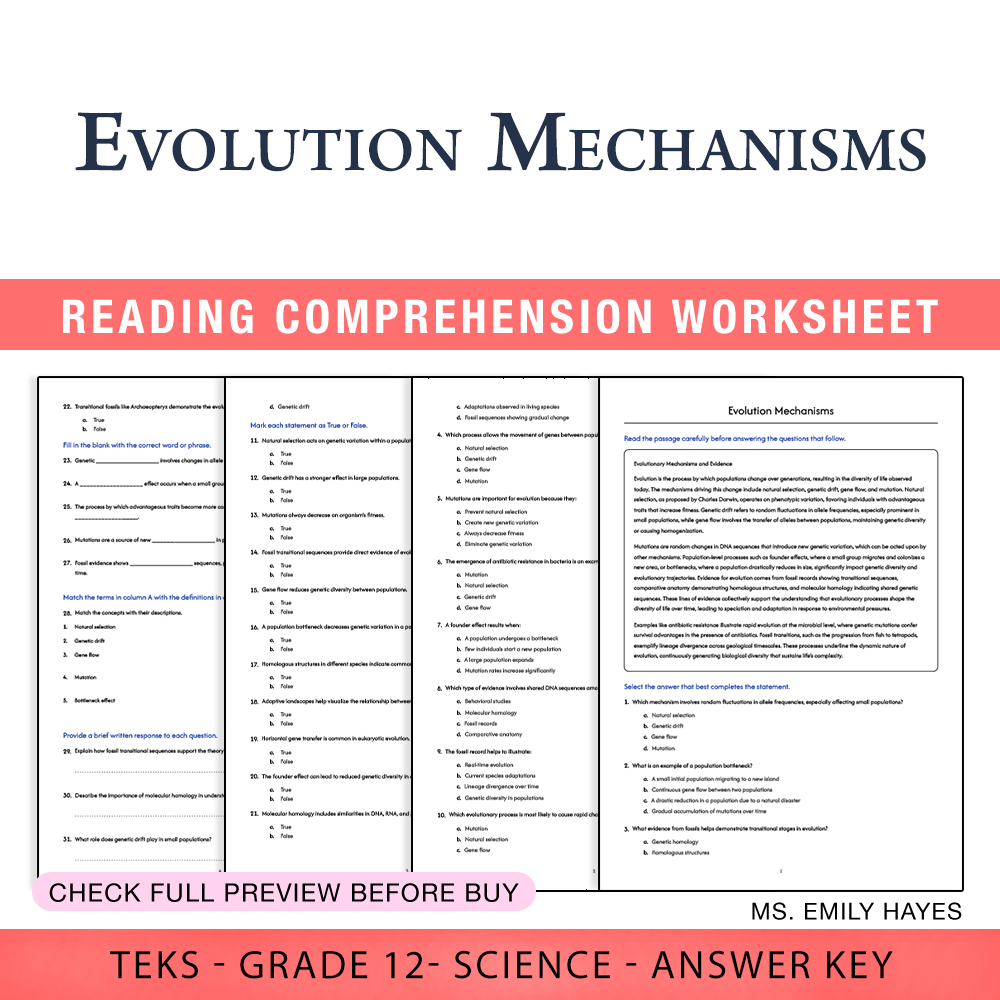
12th Grade Science | Evolution Mechanisms Worksheet (PDF+ Answer Key)
Created byCopper Leaf ClassroomLearning Objectives
- Understand the key mechanisms that drive biological diversity, including natural selection, genetic drift, gene flow, and mutation.
- Identify and explain evidence supporting evolutionary processes from fossil, anatomical, and molecular data.
- Analyze population-level processes such as founder effects and bottlenecks that influence evolution.
Instant download
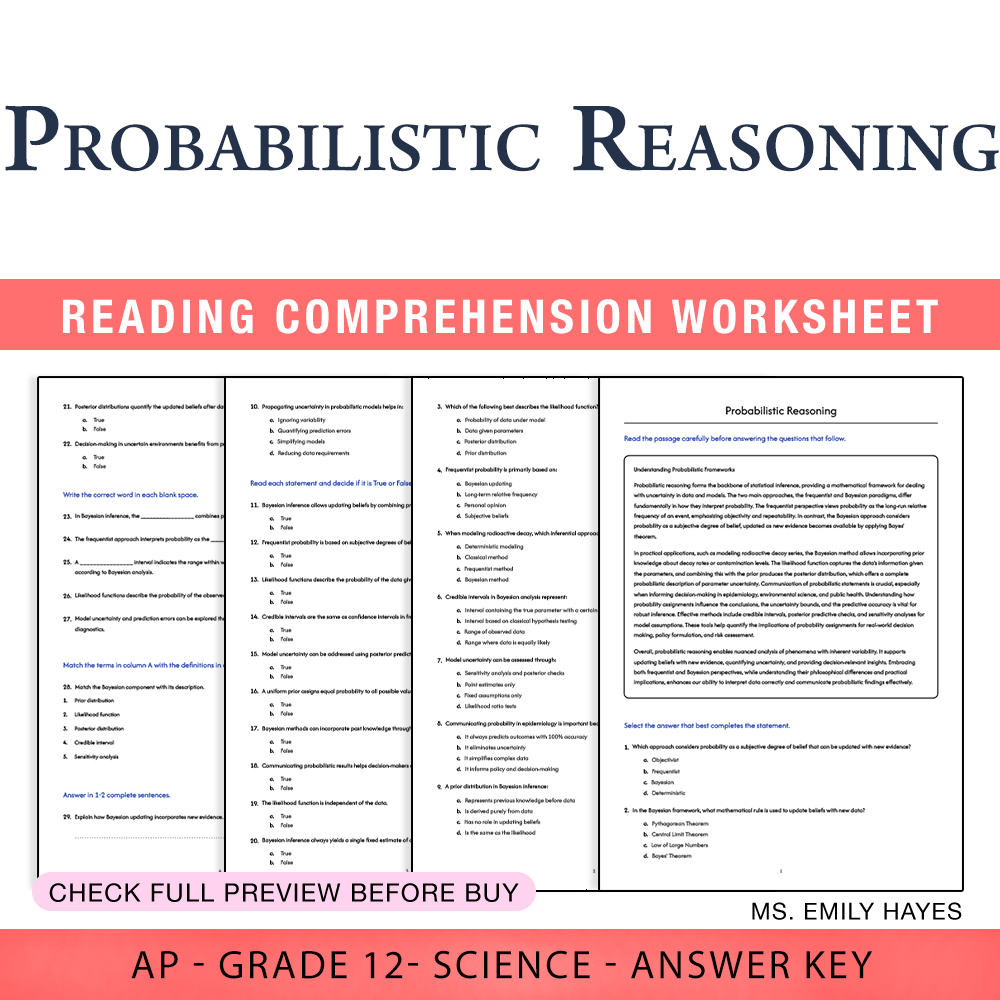
Grade 12 Science | Probabilistic Reasoning Worksheet (PDF+ Answer Key)
Created byCopper Leaf ClassroomLearning Objectives
- Understand the principles of probabilistic frameworks for quantifying uncertainty.
- Differentiate between frequentist and Bayesian perspectives in statistical inference.
- Apply probability concepts to phenomena like radioactive decay and epidemiology.
Also included in: Grade 12 Science AP | Data Analysis and Modeling Skills (PDF+ Answer Key) +1 more
Instant download
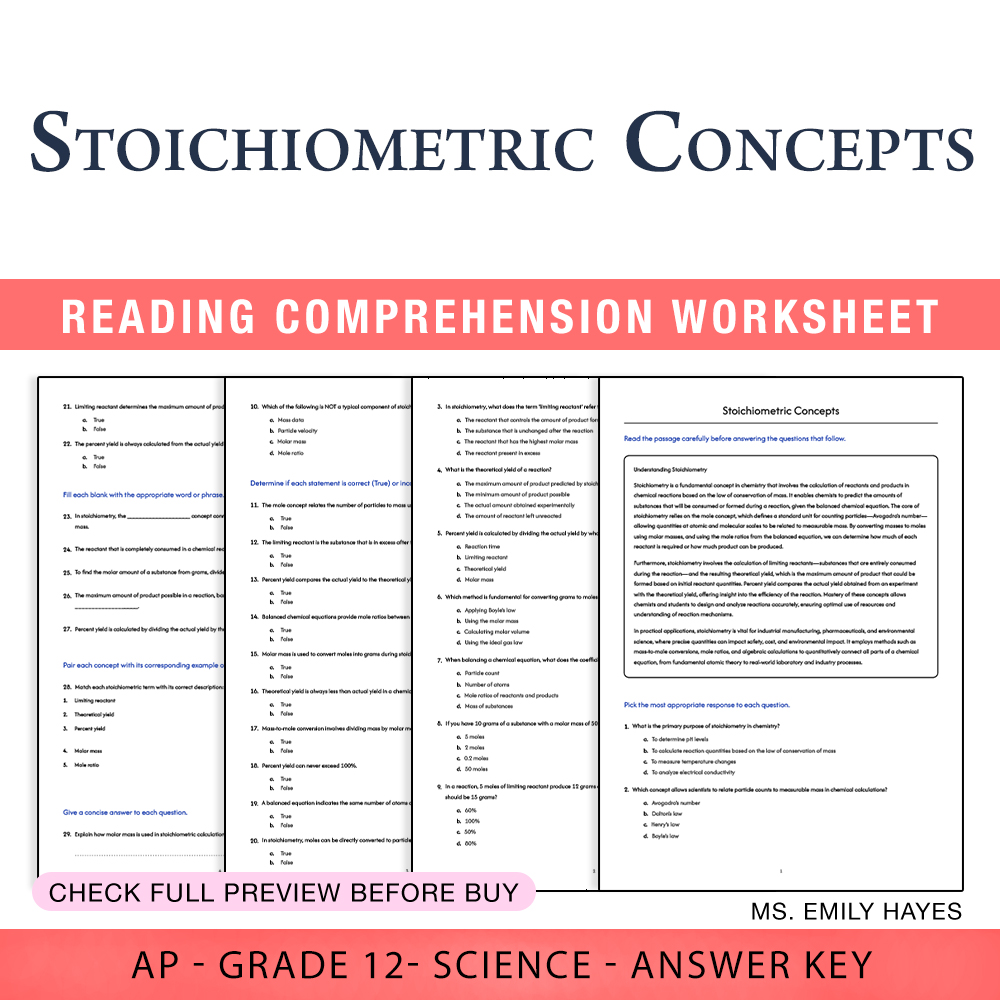
12th Grade Science | Stoichiometric Concepts Worksheet (PDF+ Answer Key)
Created byCopper Leaf ClassroomLearning Objectives
- Define and interpret quantitative relationships in chemical reactions using the mole concept and molar mass.
- Apply balanced chemical equations to relate amounts of reactants and products.
- Calculate limiting reactants, theoretical yield, and percent yield from mass and mole data.
Also included in: Grade 12 Science | Chemical Bonding & Reaction Concepts (PDF+ Answer Key) +1 more
Instant download
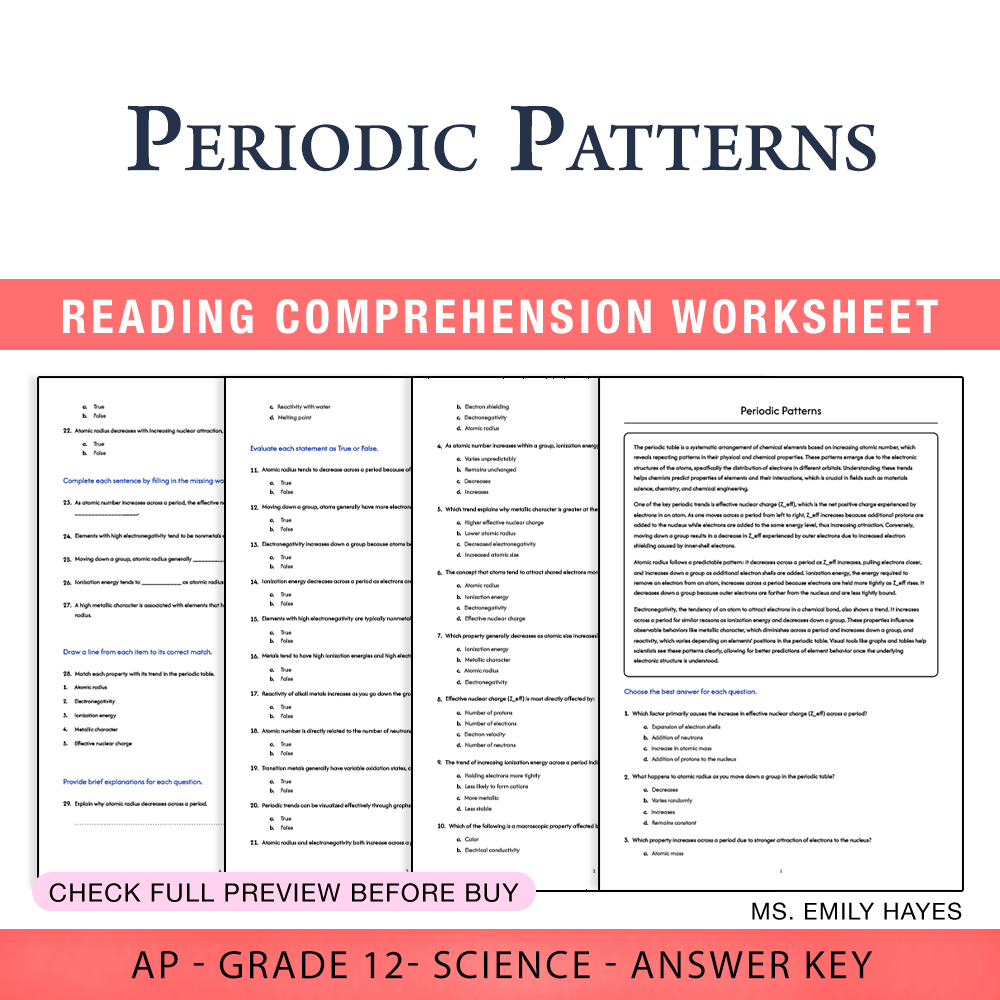
12th Grade Science | Periodic Patterns Worksheet (PDF+ Answer Key)
Created byCopper Leaf ClassroomLearning Objectives
- Understand the trends of effective nuclear charge, atomic radius, ionization energy, and electronegativity across the periodic table.
- Relate periodic properties to electronic structure and observable macroscopic properties like reactivity.
- Interpret tabular and graphical data to predict element behavior based on periodic trends.
Also included in: Grade 12 Science | Chemical Bonding & Reaction Concepts (PDF+ Answer Key) +1 more
Instant download
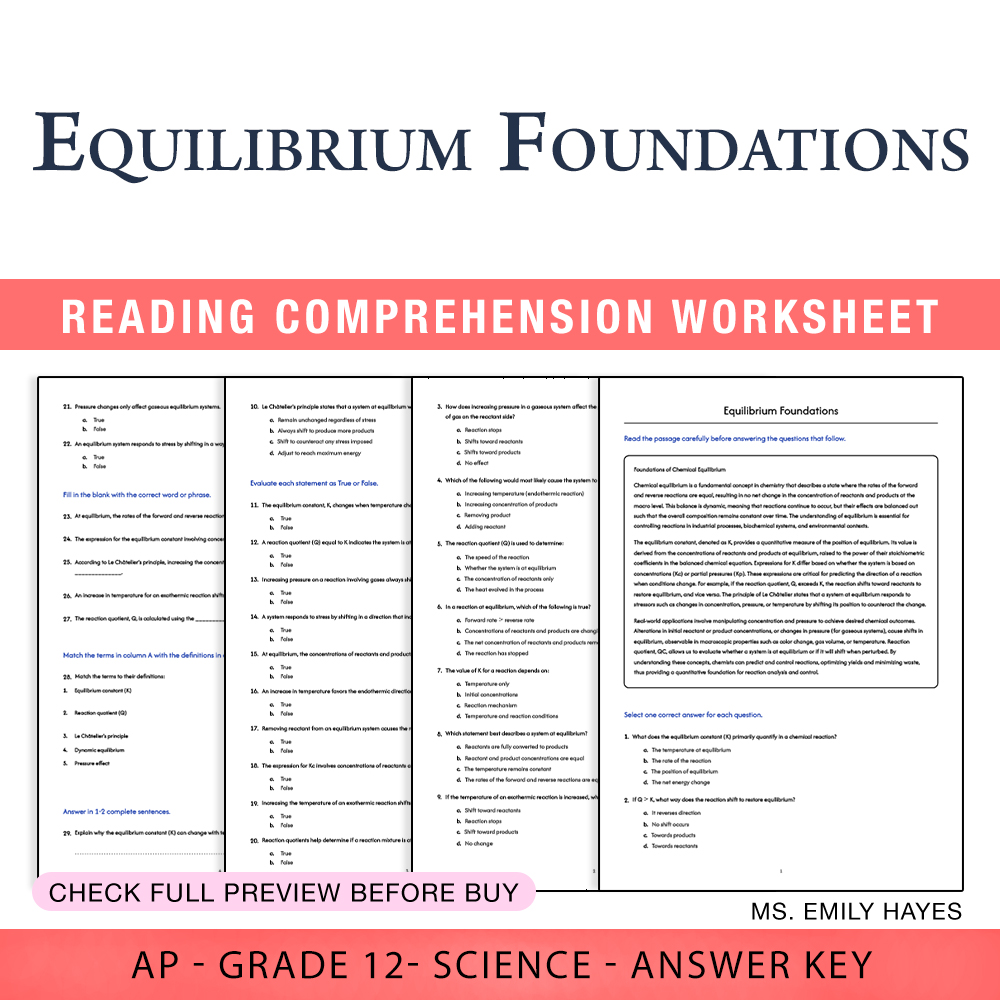
Grade 12 Science | Equilibrium Foundations Worksheet (PDF+ Answer Key)
Created byCopper Leaf ClassroomLearning Objectives
- Explain the concept of chemical equilibrium as a dynamic balance between forward and reverse reactions.
- Define and interpret the equilibrium constant as a quantitative measure of reaction position.
- Relate concentration and pressure expressions to the directionality and response of reactions to perturbations.
Also included in: Grade 12 Science | Chemical Bonding & Reaction Concepts (PDF+ Answer Key) +1 more
Instant download
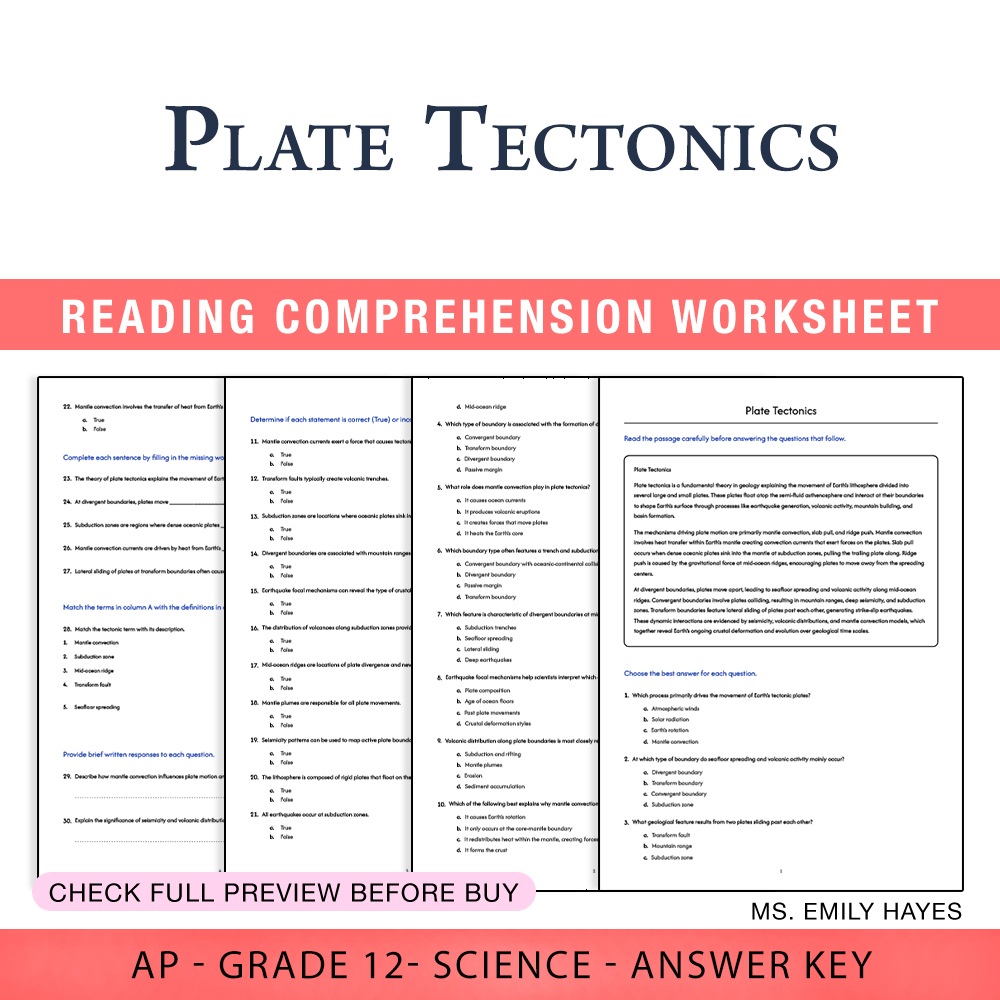
Grade 12 Science | Plate Tectonics Assessment Worksheet (PDF+ Answer Key)
Created byCopper Leaf ClassroomLearning Objectives
- Explain the mechanisms of lithospheric plate movement and deformation at different plate boundaries.
- Identify the geological and seismic features associated with convergent, divergent, and transform boundaries.
- Interpret seismicity, volcanic distribution, and mantle convection models to understand crustal evolution.
Also included in: Grade 12 Science | Earth Systems & Climate AP Worksheet (PDF + Answer Key) +1 more
Instant download
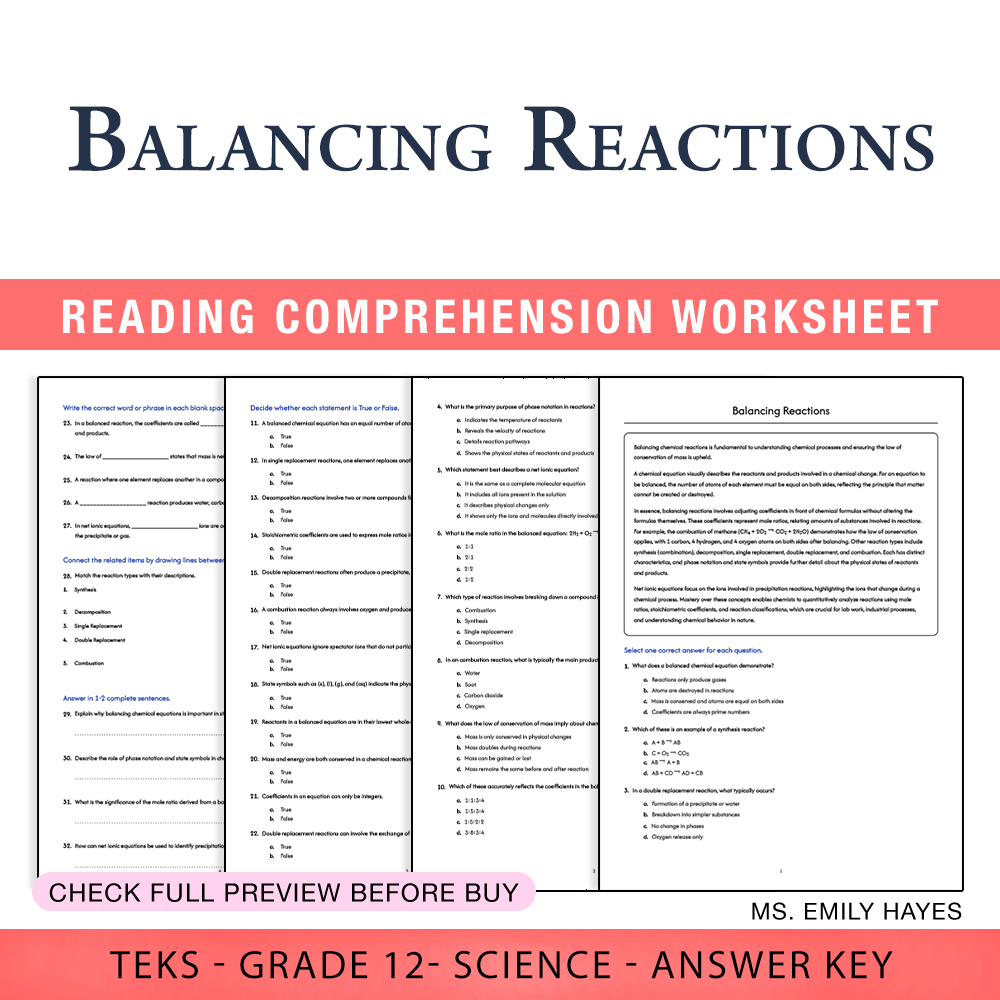
12th Grade Science | Balancing Reactions Worksheet (PDF+ Answer Key)
Created byCopper Leaf ClassroomLearning Objectives
- Understand the representation of chemical change through symbolic chemical equations.
- Apply the law of conservation of mass to produce balanced equations.
- Classify reaction types including synthesis, decomposition, single and double replacement, and combustion.
Instant download
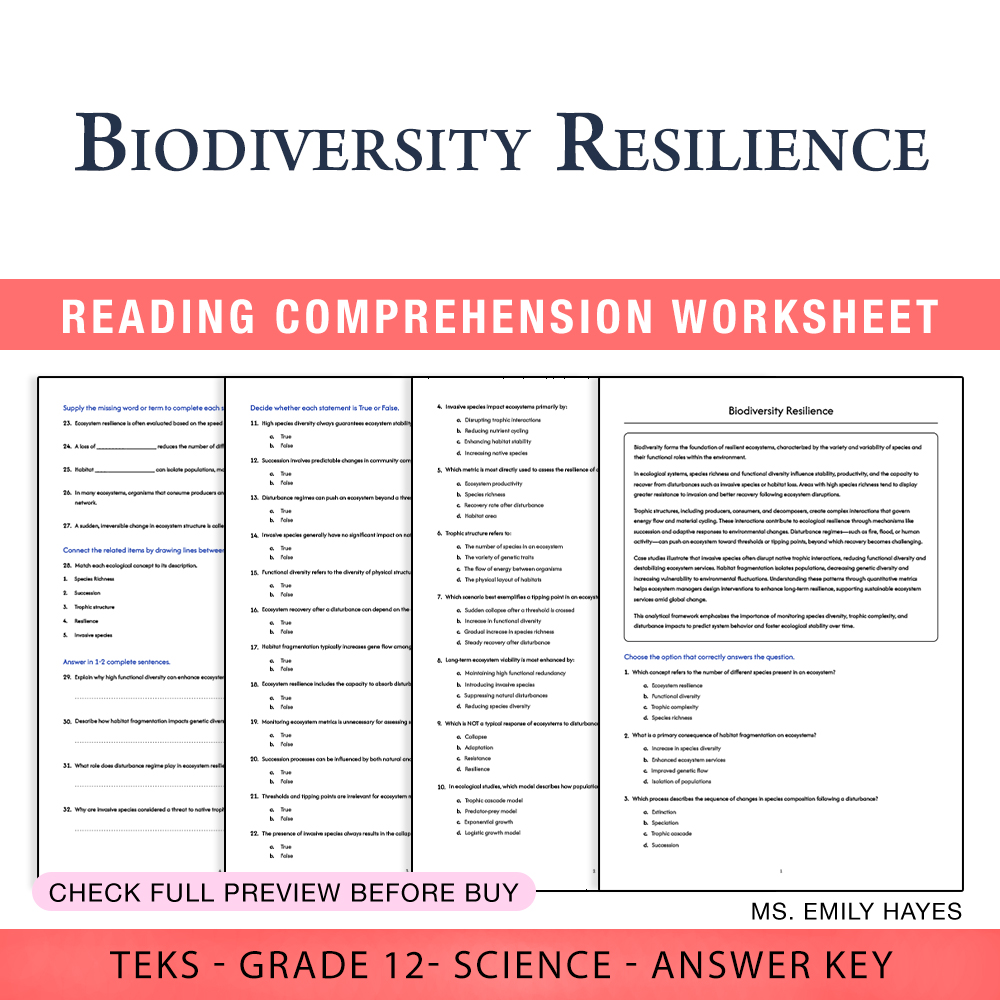
Grade 12 Science | Biodiversity Resilience Worksheet (PDF+ Answer Key)
Created byCopper Leaf ClassroomLearning Objectives
- Understand key concepts such as species richness, functional diversity, and trophic structure in ecosystems.
- Analyze mechanisms of ecological resilience, including succession dynamics and disturbance regimes.
- Assess the impacts of invasive species and habitat fragmentation on ecosystem stability.
Instant download
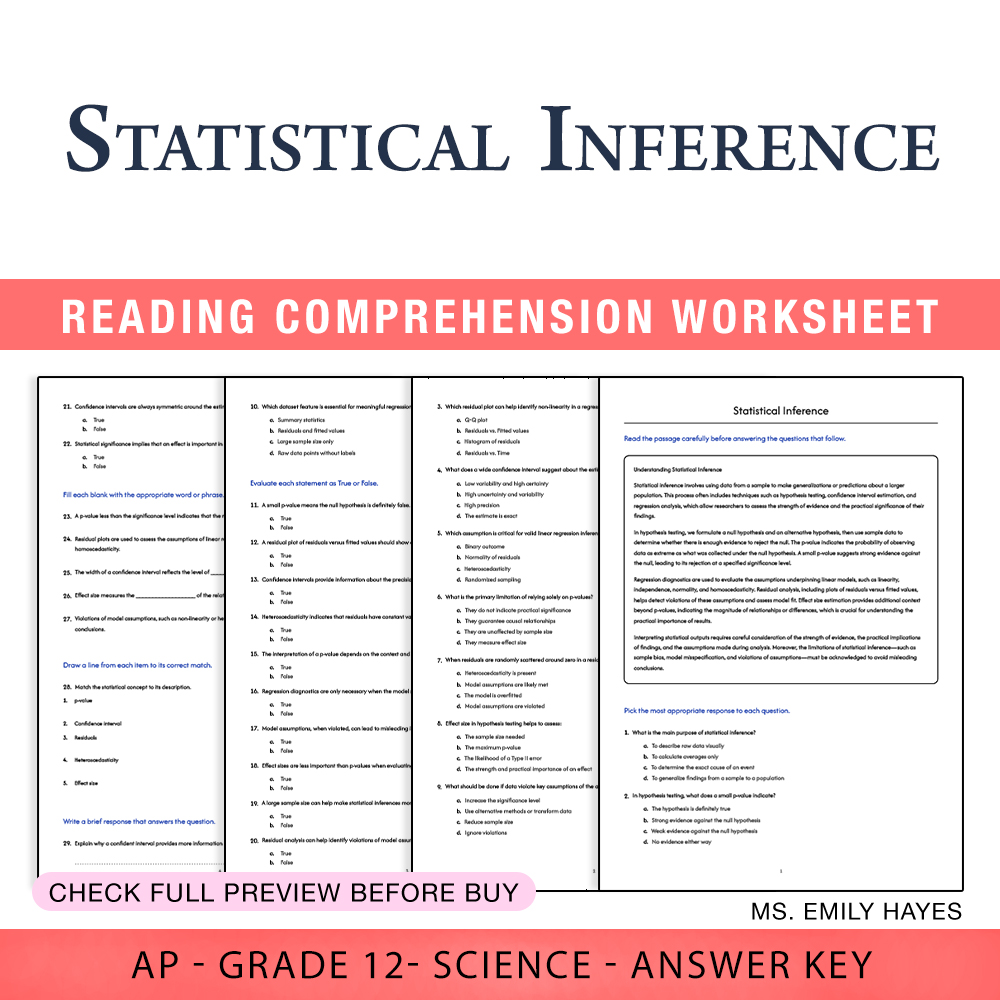
Grade 12 Science | Statistical Inference Worksheet (PDF+ Answer Key)
Created byCopper Leaf ClassroomLearning Objectives
- Understand key concepts of hypothesis testing, including p-values and confidence intervals.
- Interpret regression outputs and residual diagnostics to assess model assumptions.
- Evaluate effect sizes and the limitations of statistical inference in real-world data analysis.
Also included in: Grade 12 Science AP | Data Analysis and Modeling Skills (PDF+ Answer Key) +1 more
Instant download
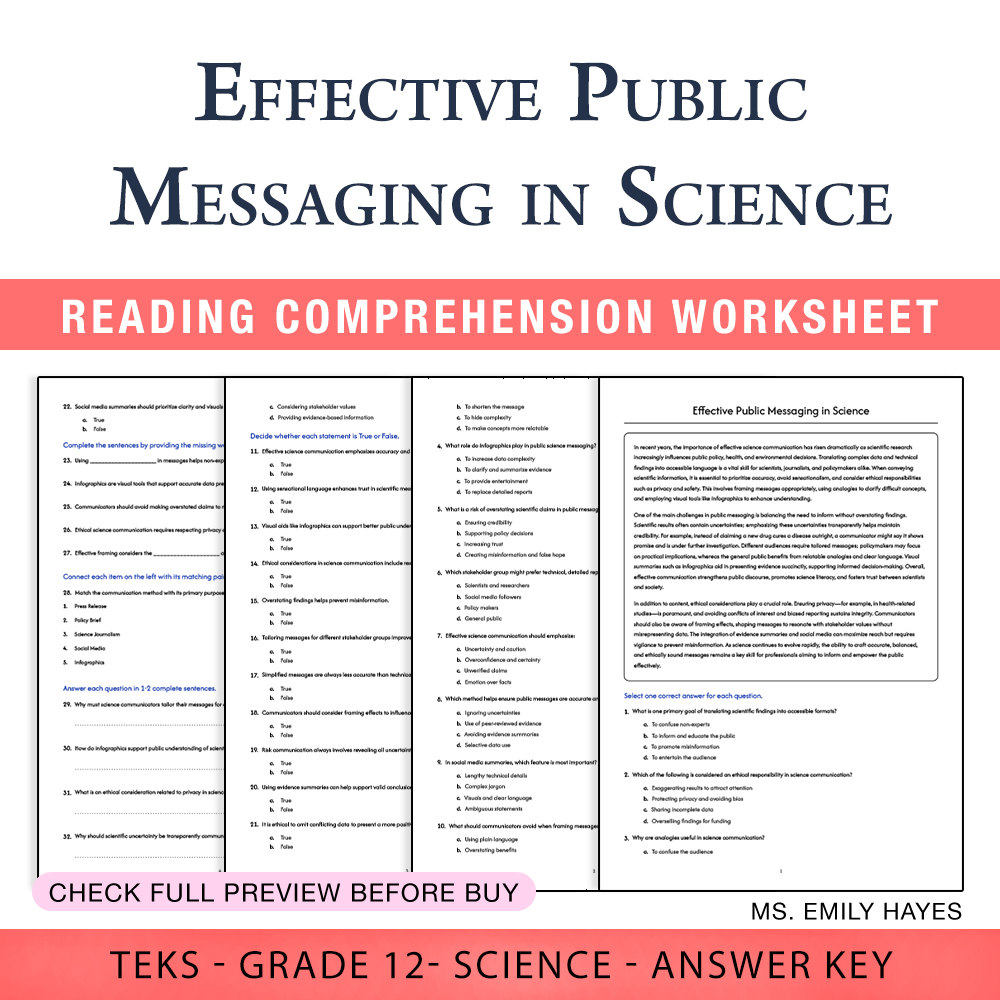
Grade 12 Science | Effective Public Messaging Worksheet (PDF+ Answer Key)
Created byCopper Leaf ClassroomLearning Objectives
- Understand the components of translating scientific findings into accessible formats for the public.
- Identify key principles for accurate and ethical science communication.
- Analyze different messaging strategies for various stakeholder audiences.
Instant download
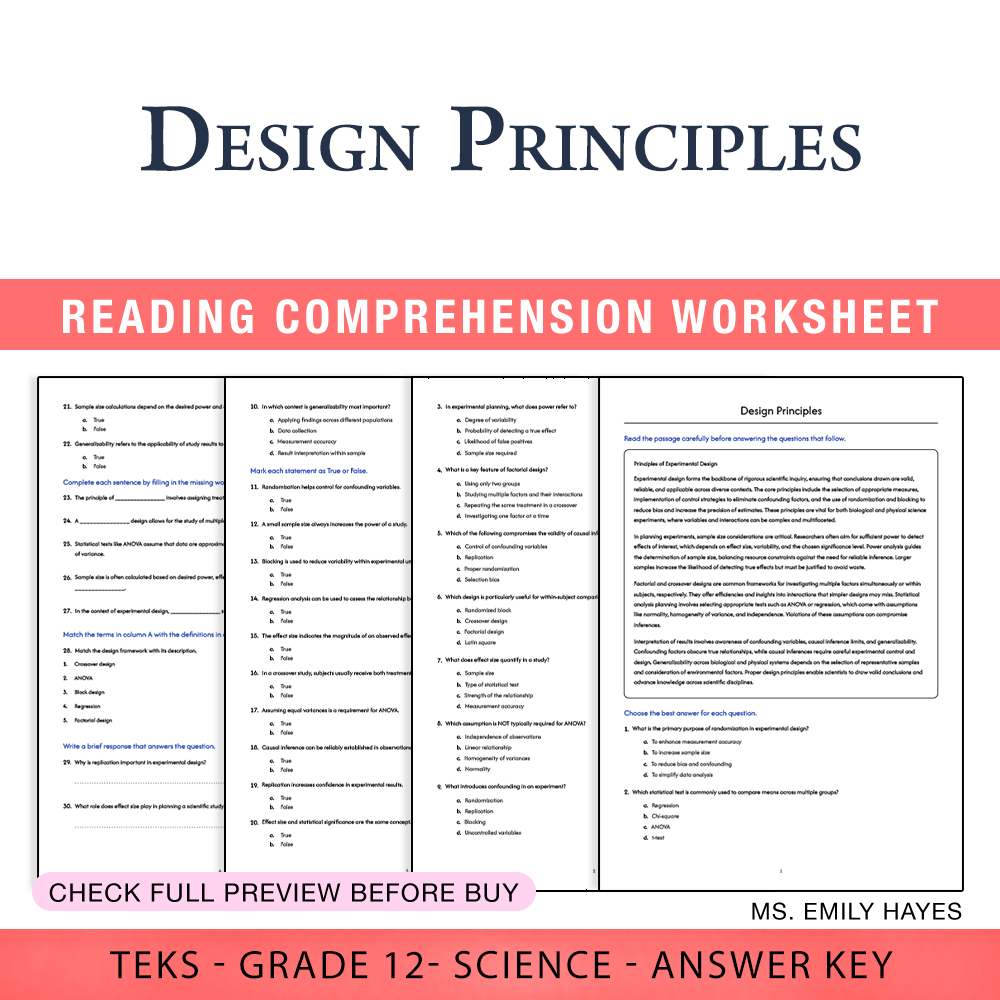
Grade 12 Science | Design Principles Worksheet (PDF+ Answer Key)
Created byCopper Leaf ClassroomLearning Objectives
- Explain key principles of experimental design, including the selection of measures, control strategies, and randomization.
- Identify methods to optimize sample size, power, and effect size in scientific studies.
- Design and interpret factorial, crossover, ANOVA, and regression frameworks in research planning.
Instant download
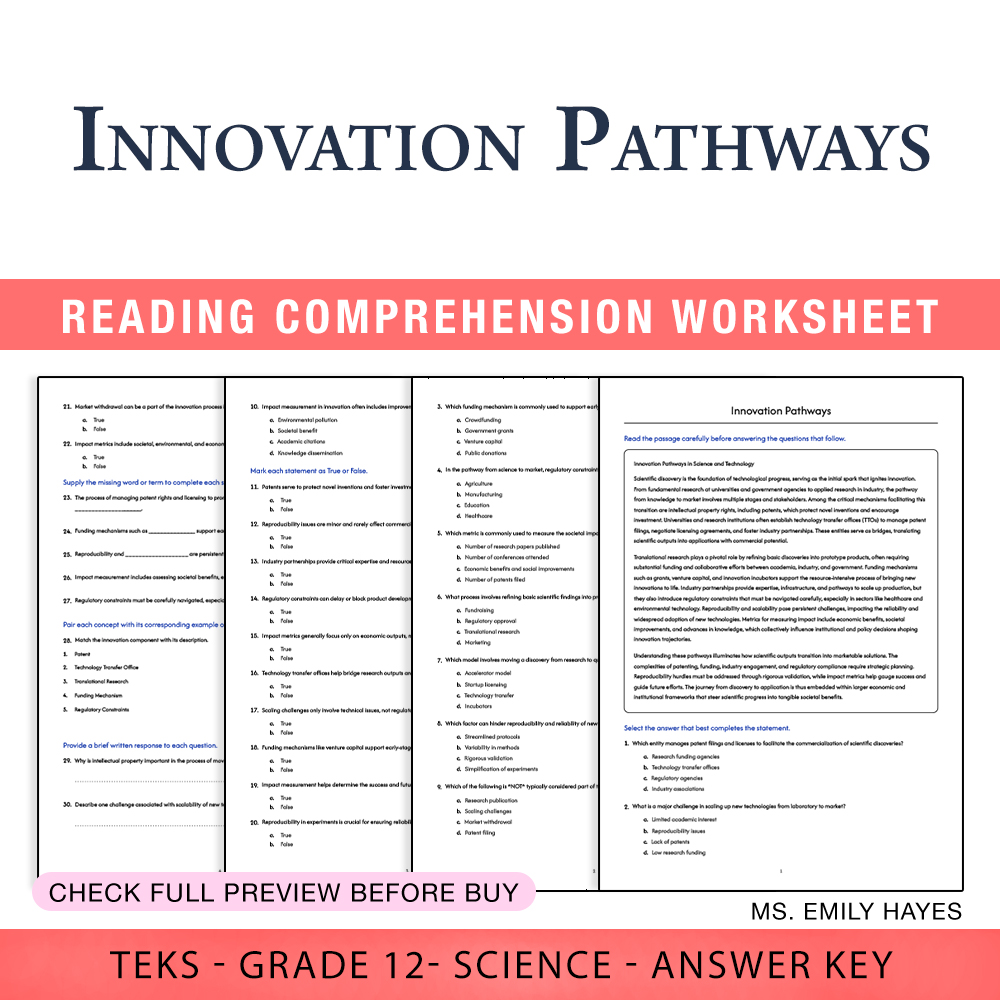
Grade 12 Science | Innovation Pathways Worksheet (PDF+ Answer Key)
Created byCopper Leaf ClassroomLearning Objectives
- Explain the process of translating scientific discoveries into market-ready technologies.
- Identify key components like patenting, technology transfer, and regulatory considerations in innovation.
- Analyze funding mechanisms and industry partnerships that support translational research.
Instant download
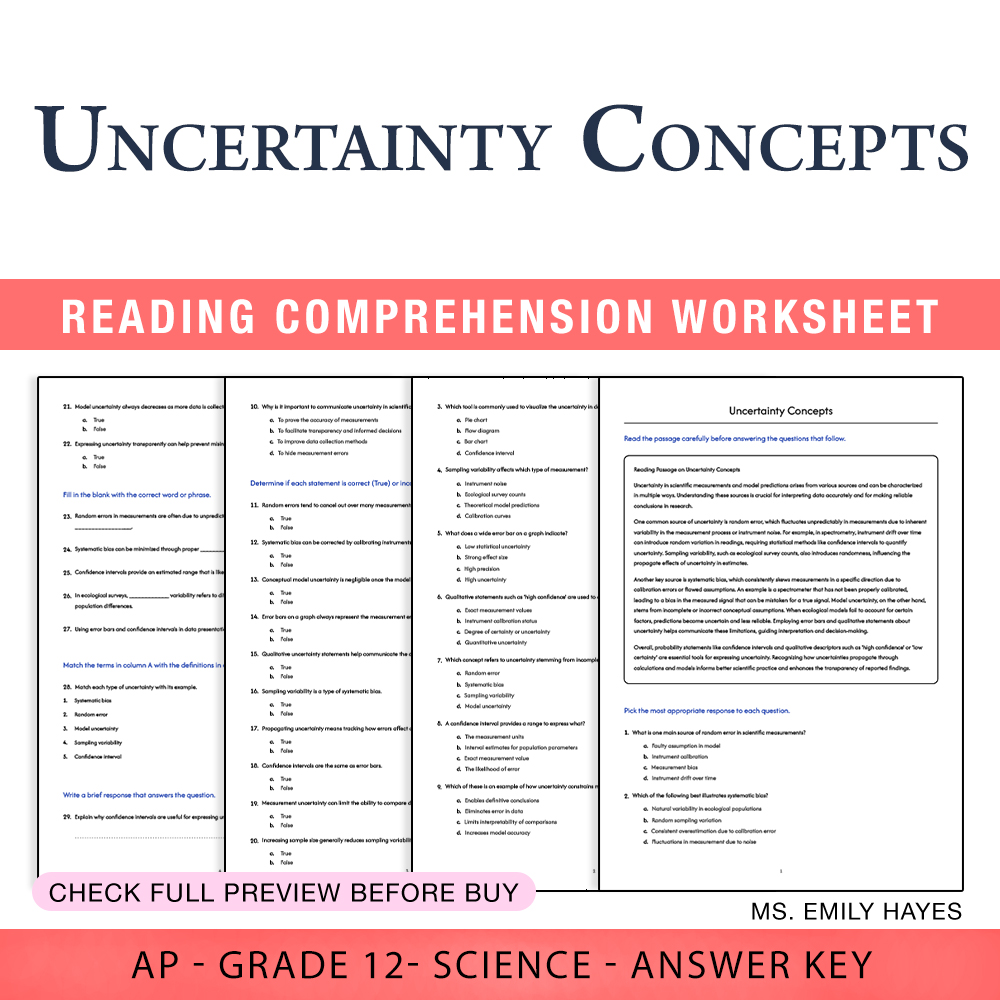
Grade 12 Science | Uncertainty Concepts Worksheet (PDF+ Answer Key)
Created byCopper Leaf ClassroomLearning Objectives
- Identify different sources and types of uncertainty in scientific measurements and models.
- Distinguish between systematic bias, random error, and conceptual model uncertainty using real-world examples.
- Understand and interpret statistical and qualitative expressions of uncertainty such as confidence intervals and error bars.
Also included in: Grade 12 Science AP | Data Analysis and Modeling Skills (PDF+ Answer Key) +1 more
Instant download
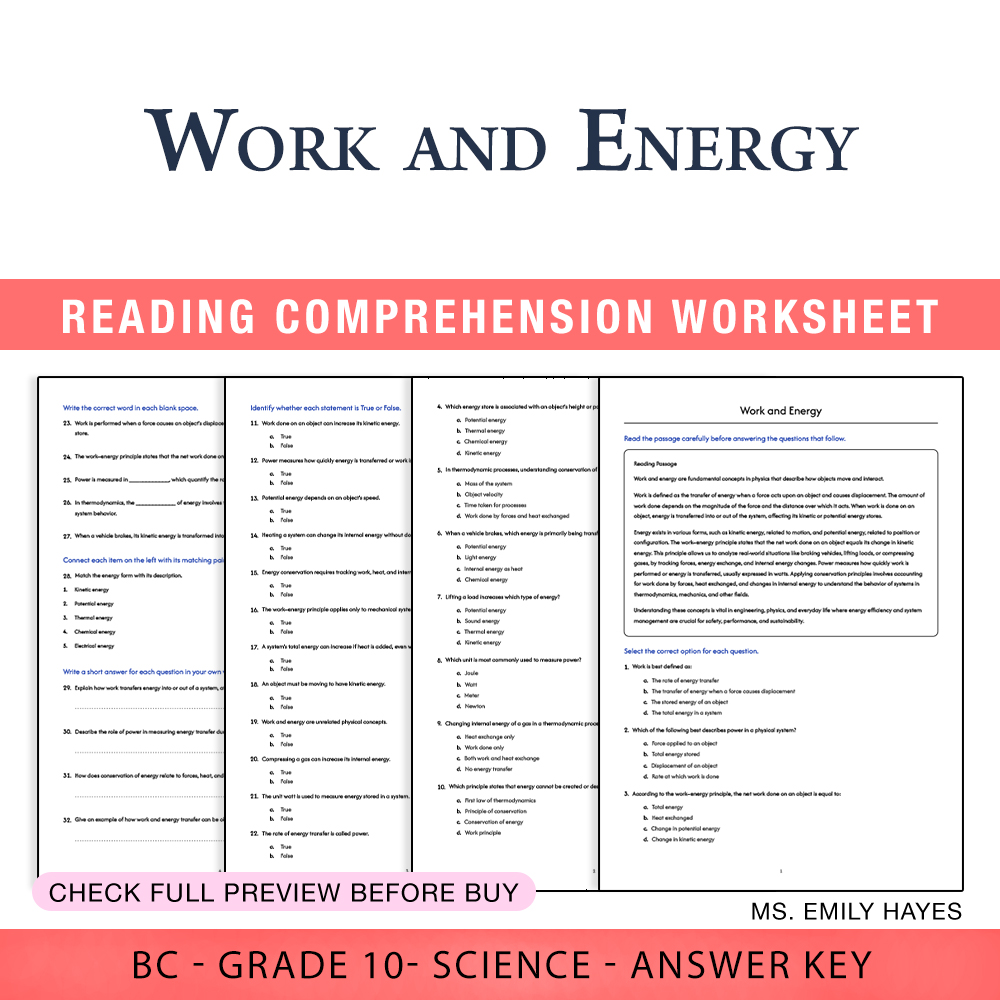
Grade 10 Science | Work and Energy Worksheet (PDF + Answer Key)
Created byCopper Leaf ClassroomLearning Objectives
- Explain the relationship between work and energy transfer in physical systems.
- Apply the work–energy principle to analyze different scenarios involving forces and motion.
- Calculate power as the rate of energy transfer in various applications.
Also included in: Grade 10 Science BC – Energy, Thermodynamics & Ecosystems (PDF + Answer Key) +1 more
Instant download
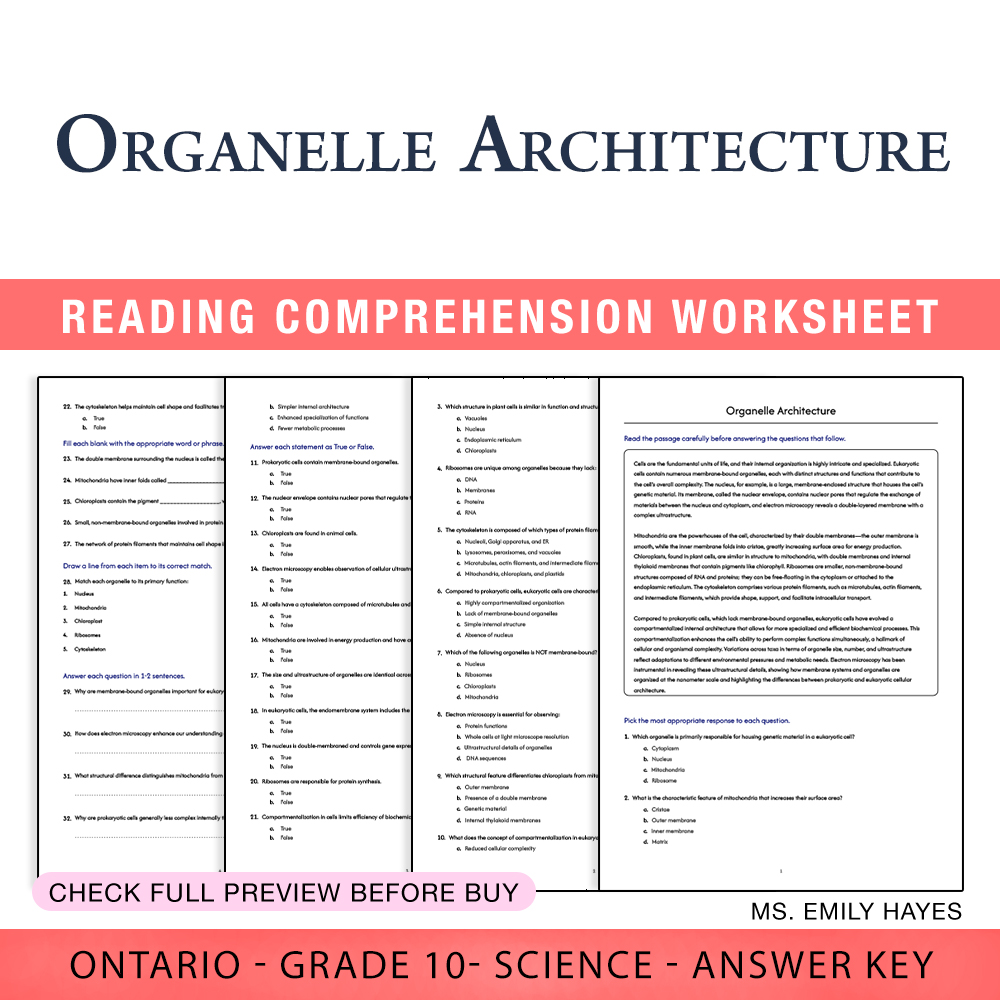
Grade 10 Science | Organelle Architecture Worksheet (PDF + Answer Key)
Created byCopper Leaf ClassroomLearning Objectives
- Describe the major cellular organelles and membrane-bound compartments, emphasizing their structural characteristics and ultrastructure.
- Compare the internal organization of prokaryotic and eukaryotic cells, focusing on compartmentalization and morphological differences.
- Explain how cellular compartmentalization contributes to cellular complexity and function observed across different taxa.
Instant download
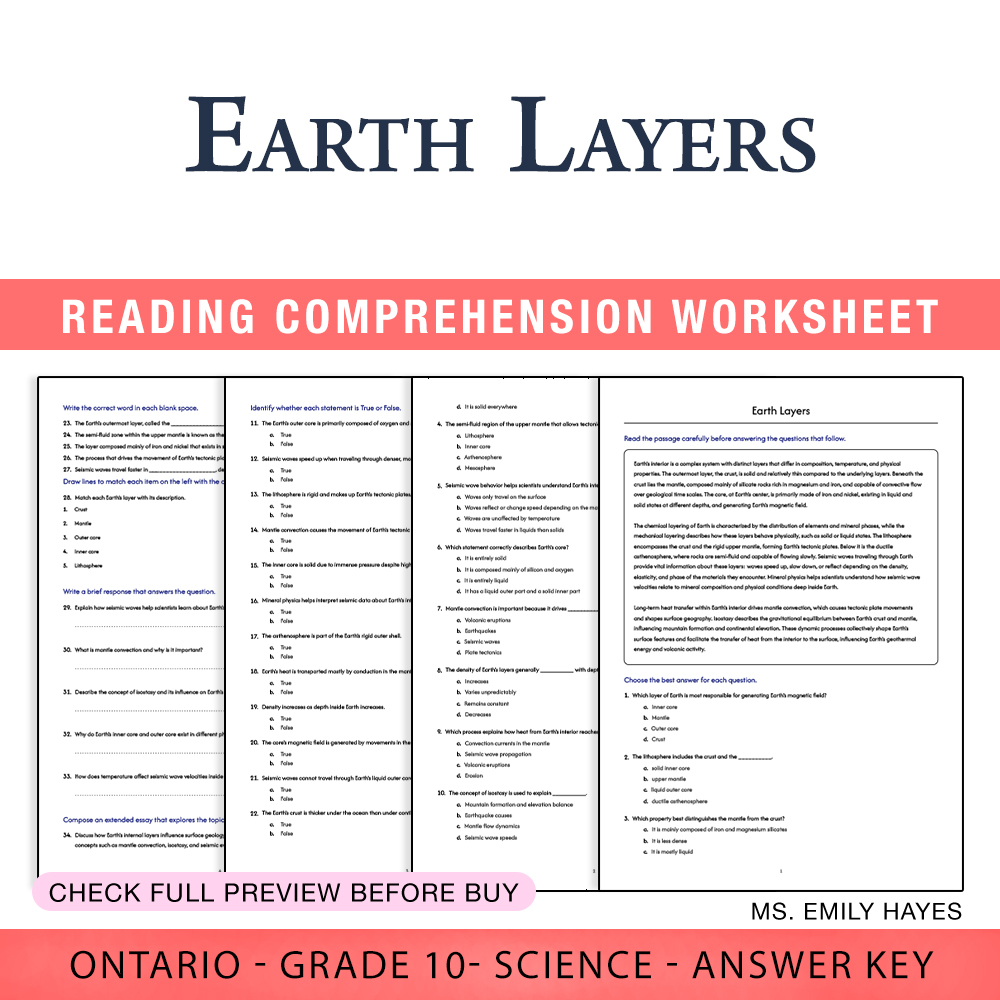
Grade 10 Science | Earth Layers Worksheet (PDF + Answer Key)
Created byCopper Leaf ClassroomLearning Objectives
- Describe the different layers of Earth's internal structure, including the crust, mantle, and core.
- Explain the mechanical and chemical layering of Earth and how seismic waves reveal these layers.
- Understand the concepts of lithosphere, asthenosphere, and the role of density, temperature, and composition in Earth's interior.
Instant download
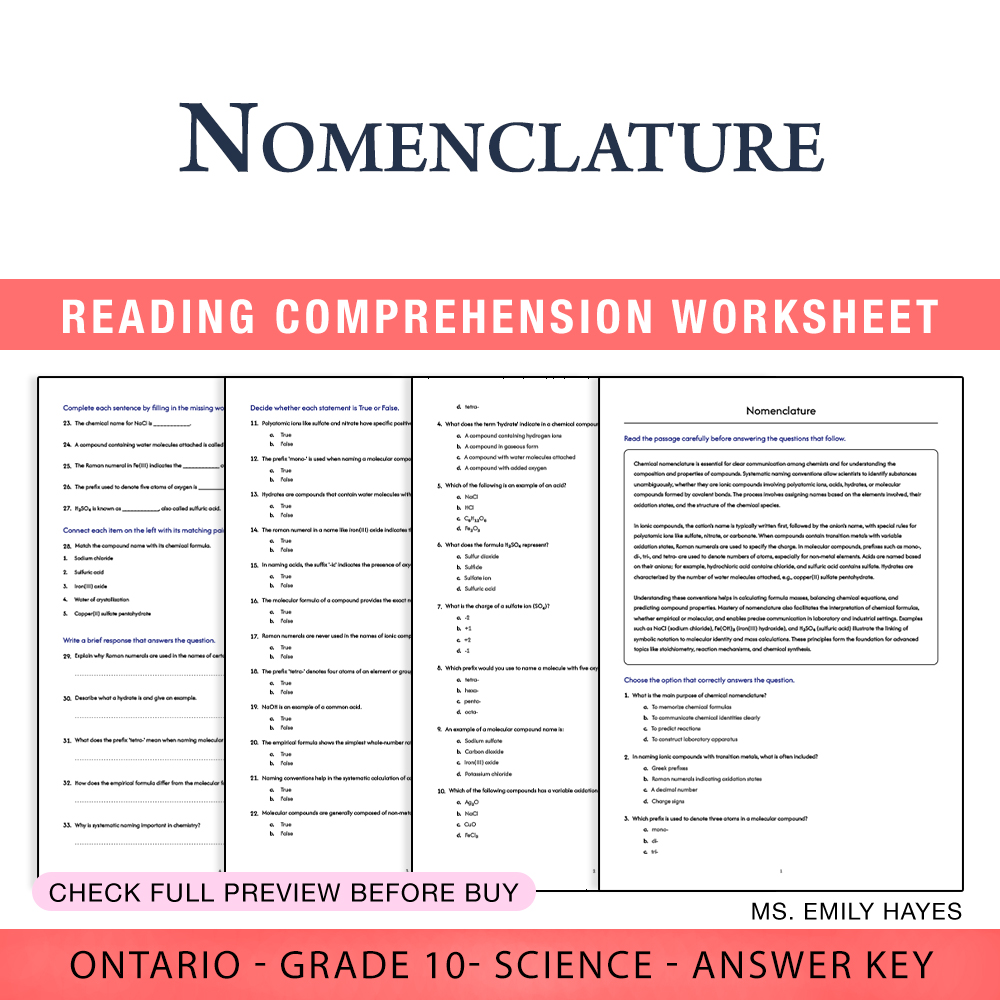
Grade 10 Science | Nomenclature Worksheet (PDF + Answer Key)
Created byCopper Leaf ClassroomLearning Objectives
- Understand and apply systematic naming conventions for ionic and molecular compounds.
- Identify and name polyatomic ions, acids, hydrates, and compounds with variable oxidation states.
- Construct and interpret empirical and molecular formulas based on charge balance and formula mass.
Instant download
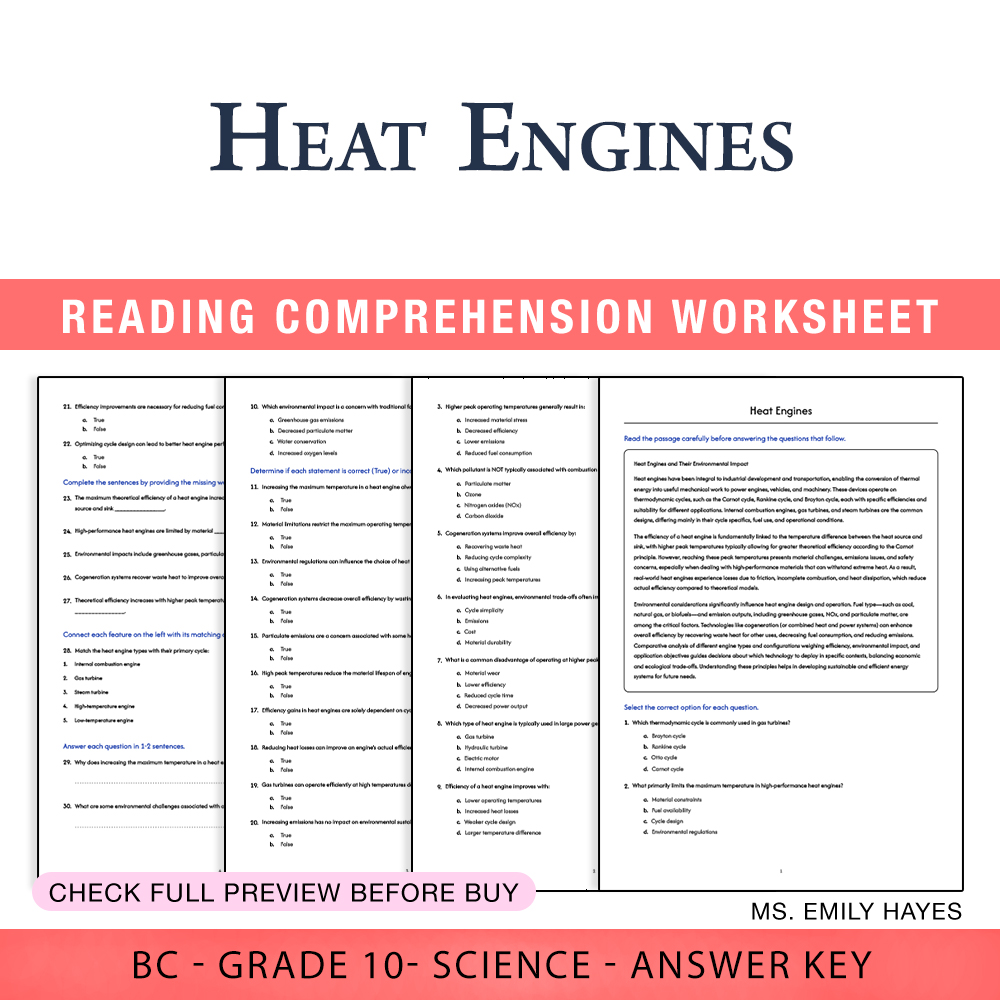
Grade 10 Science | Heat Engines Concept Worksheet (PDF + Answer Key)
Created byCopper Leaf ClassroomLearning Objectives
- Explain how heat engines convert thermal energy into mechanical work.
- Identify different types of heat engines and their designs.
- Analyze factors affecting the efficiency of heat engines, including temperature differences and cycle design.
Also included in: Grade 10 Science BC – Energy, Thermodynamics & Ecosystems (PDF + Answer Key) +1 more
Instant download
Browse more categories
About Reading comprehension Worksheets
Find reading comprehension worksheets for class practice, homework, or self-study. All 40,284 are instant PDF downloads.
Each resource here is built by an independent educator and reviewed for quality. Worksheets print straight from PDF and suit classroom use, homework, or extra practice; most come with answer keys, and you can preview before purchasing.