
Grade 10 Worksheets
9,385 grade resources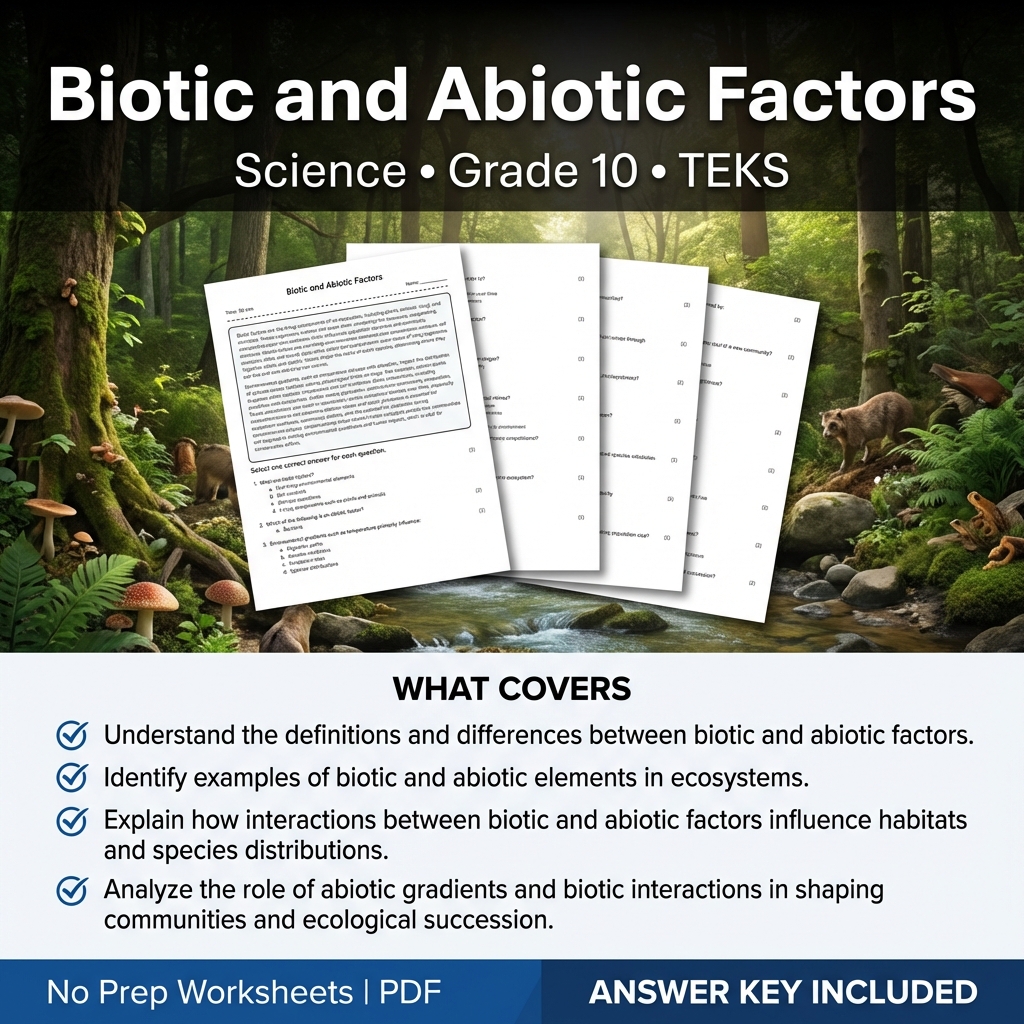
Biotic and Abiotic Factors Worksheet for Grade 10 Science TEKS
 Created byCoral Reef Learning
Learning Objectives
- Understand the definitions and differences between biotic and abiotic factors.
- Identify examples of biotic and abiotic elements in ecosystems.
- Explain how interactions between biotic and abiotic factors influence habitats and species distributions.
Instant download
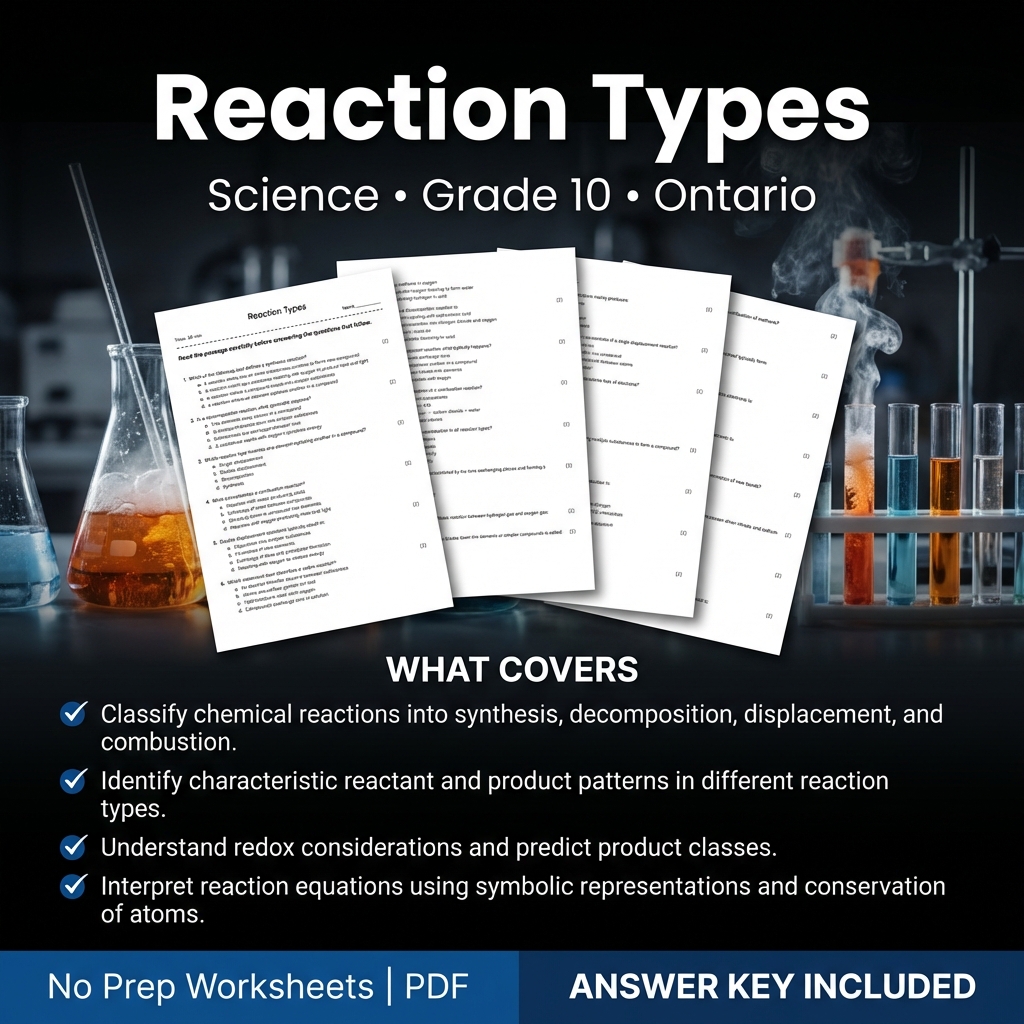
Reaction Types Worksheet for Grade 10 Science | Ontario Standards
Created byCoral Reef LearningLearning Objectives
- Classify chemical reactions into synthesis, decomposition, displacement, and combustion.
- Identify characteristic reactant and product patterns in different reaction types.
- Understand redox considerations and predict product classes.
Instant download
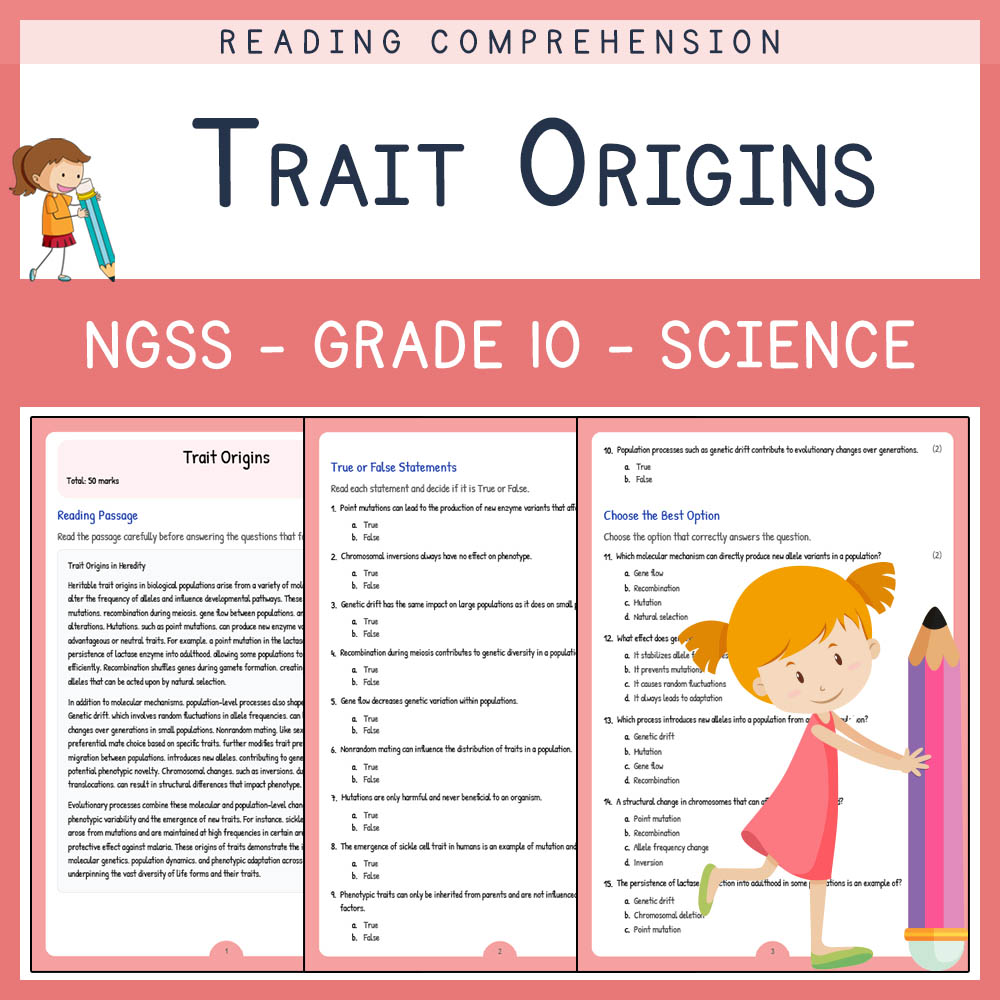
Grade 10 Science | Trait Origins Worksheet & Answer Key – NGSS Aligned
 Created byLumora Learning
Learning Objectives
- Explain how heritable traits originate from molecular mechanisms such as mutation, recombination, gene flow, and chromosomal changes.
- Identify various processes that modify trait distributions at the population level, including genetic drift and nonrandom mating.
- Connect molecular changes to observable phenotypic variations and understand their impact across generations.
Instant download
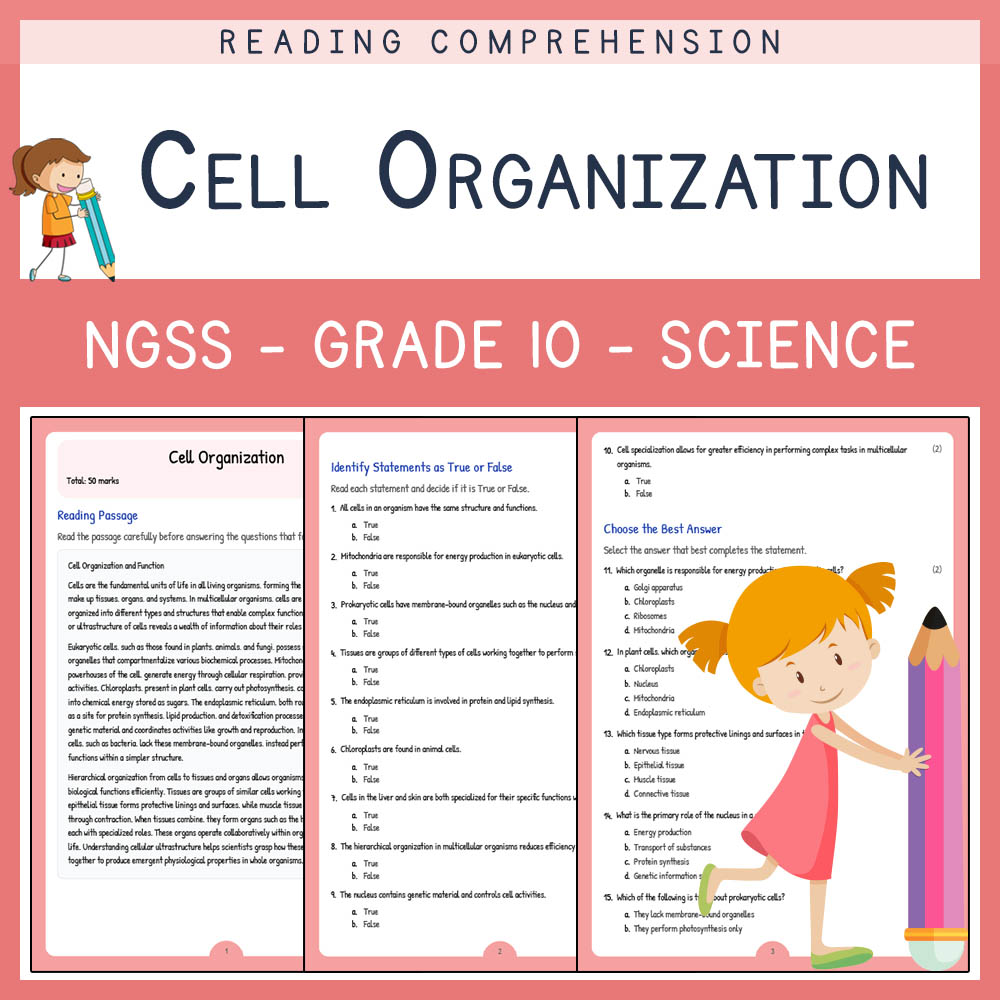
Grade 10 Science | Cell Organization Worksheet (PDF + Answer Key) NGSS-Aligned
Created byLumora LearningLearning Objectives
- Identify and describe the structure and function of membrane-bound organelles in eukaryotic cells.
- Compare cellular structures between eukaryotic and prokaryotic cells.
- Explain how cellular organization leads to tissue and organ function in multicellular organisms.
Instant download
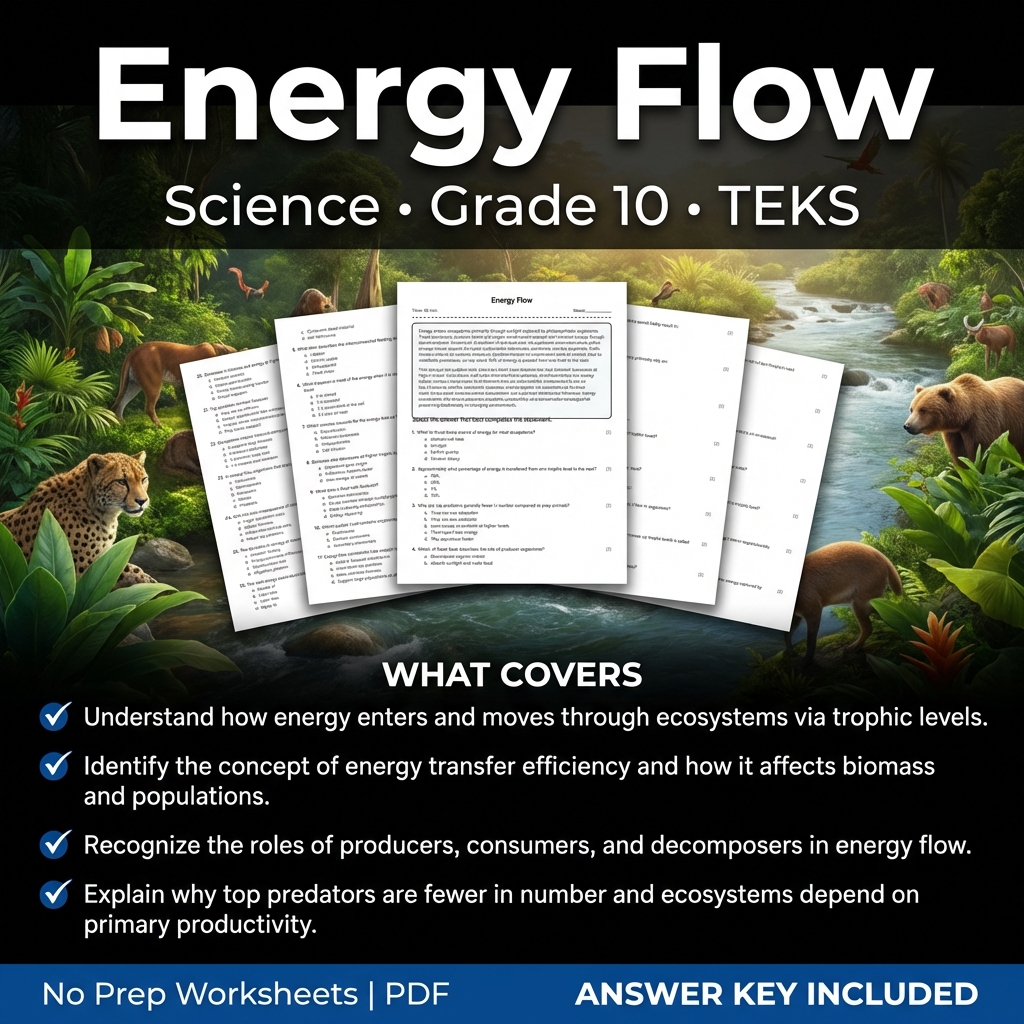
Energy Flow Science Worksheet for Grade 10 | TEKS Aligned Assessment
Created byCoral Reef LearningLearning Objectives
- Understand how energy enters and moves through ecosystems via trophic levels.
- Identify the concept of energy transfer efficiency and how it affects biomass and populations.
- Recognize the roles of producers, consumers, and decomposers in energy flow.
Instant download
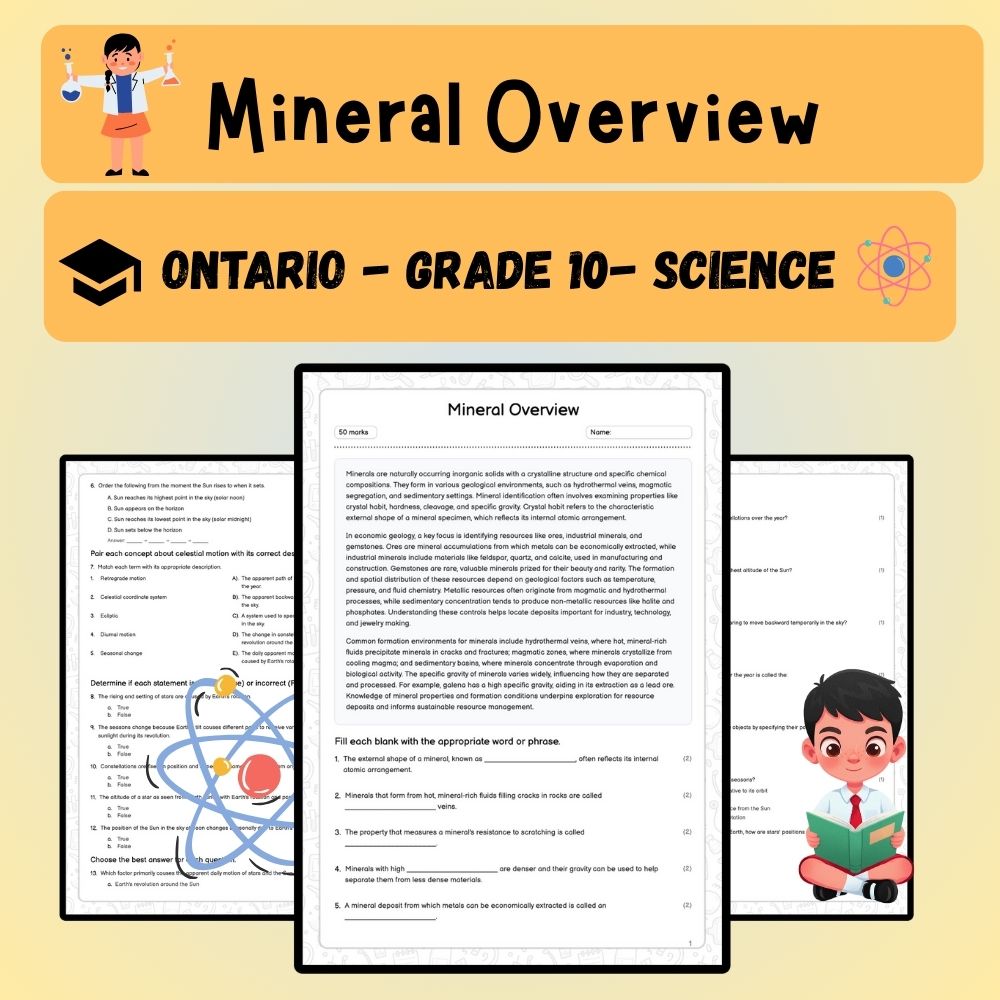
Grade 10 Science | Mineral Overview Worksheet (PDF) – Ontario Standards
 Created byPrism Point Learning
Learning Objectives
- Understand the classification and properties of minerals used in geology and industry.
- Identify different formation settings and their associated mineral resources.
- Differentiate between ores, industrial minerals, and gemstones based on their properties and uses.
Also included in: Grade 10 Science UNIT Bundle | Earth Processes & Resources Ontario Standards +1 more
Instant download
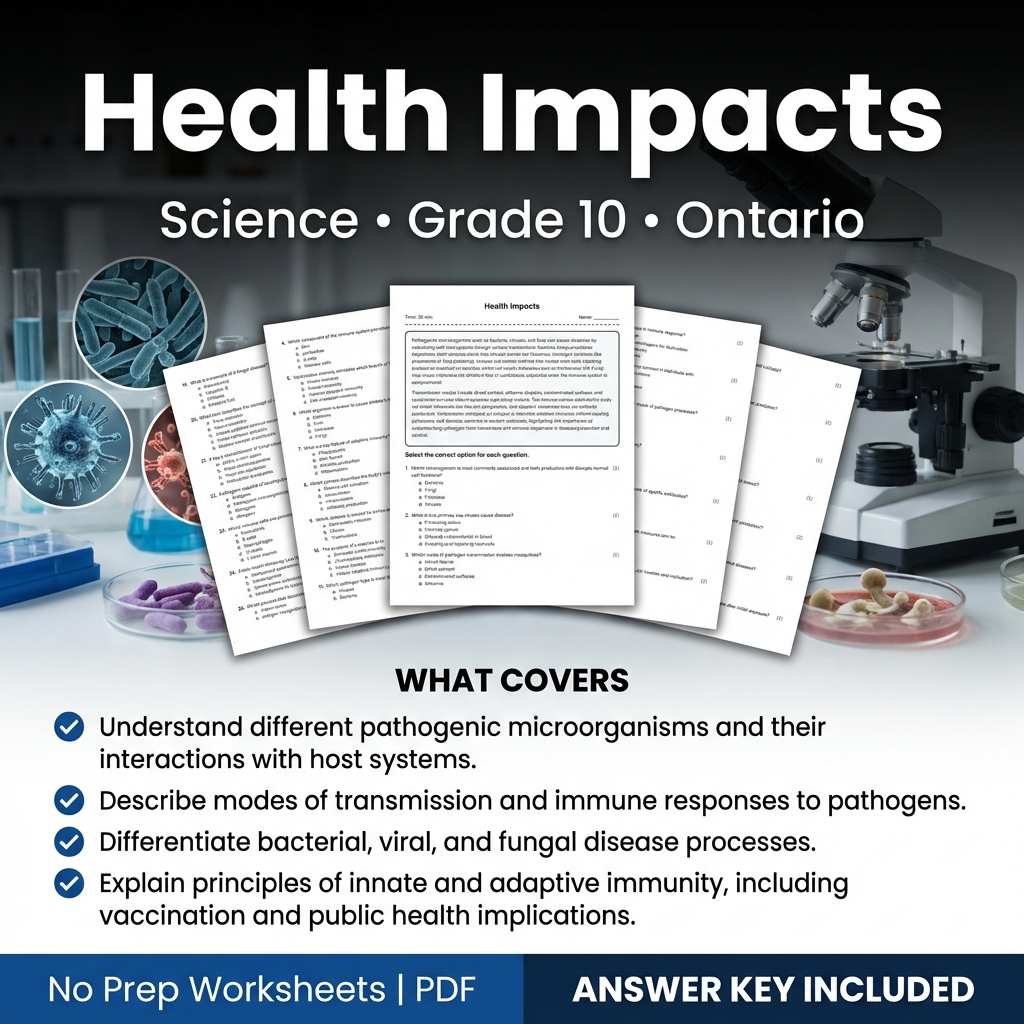
Health Impacts Worksheet for Grade 10 Science | Ontario Standards
Created byCoral Reef LearningLearning Objectives
- Understand different pathogenic microorganisms and their interactions with host systems.
- Describe modes of transmission and immune responses to pathogens.
- Differentiate bacterial, viral, and fungal disease processes.
Instant download
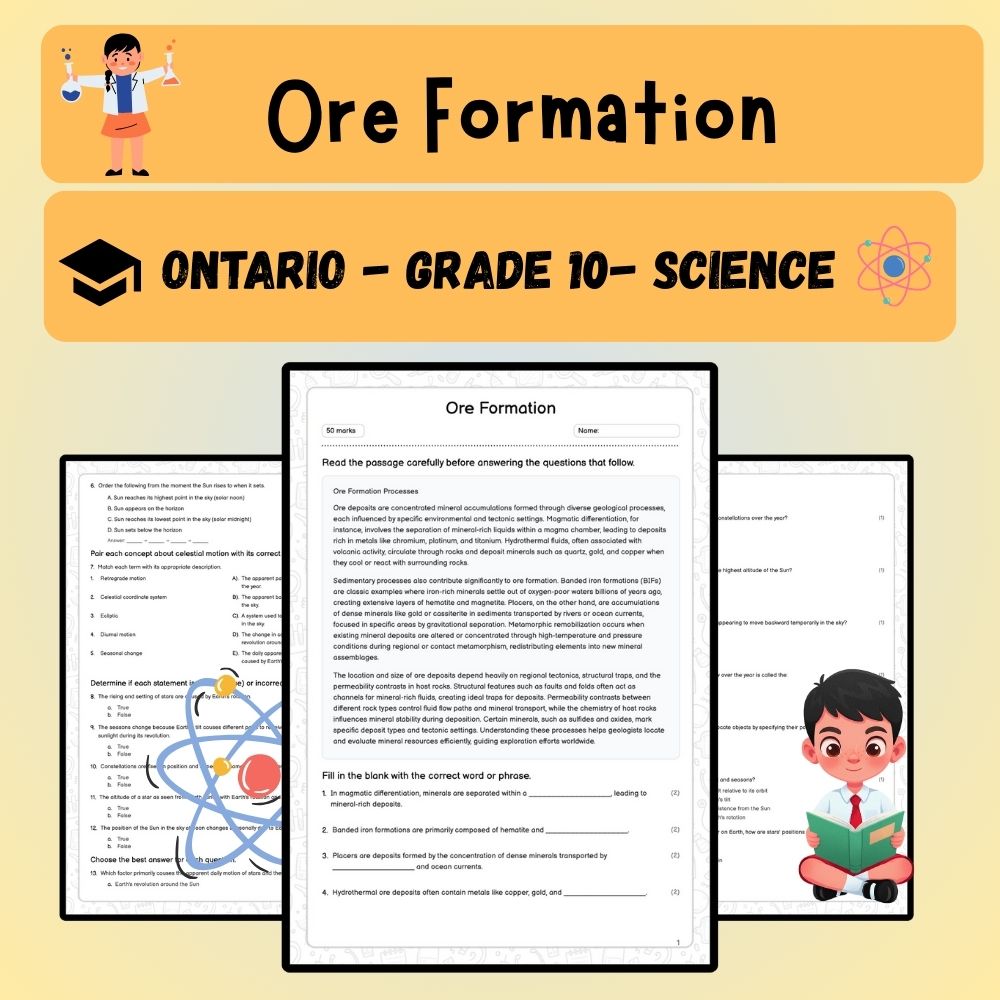
Grade 10 Science | Ore Formation Worksheet (Worksheet + Answer Key) – Ontario Standard
Created byPrism Point LearningLearning Objectives
- Describe principal ore-forming processes including magmatic differentiation, hydrothermal fluid circulation, sedimentary concentration, and metamorphic remobilization.
- Explain spatial controls such as structural traps, permeability contrasts, and host-rock chemistry in ore deposit localization.
- Identify typical mineral assemblages associated with different deposit types and tectonic settings.
Also included in: Grade 10 Science UNIT Bundle | Earth Processes & Resources Ontario Standards +1 more
Instant download
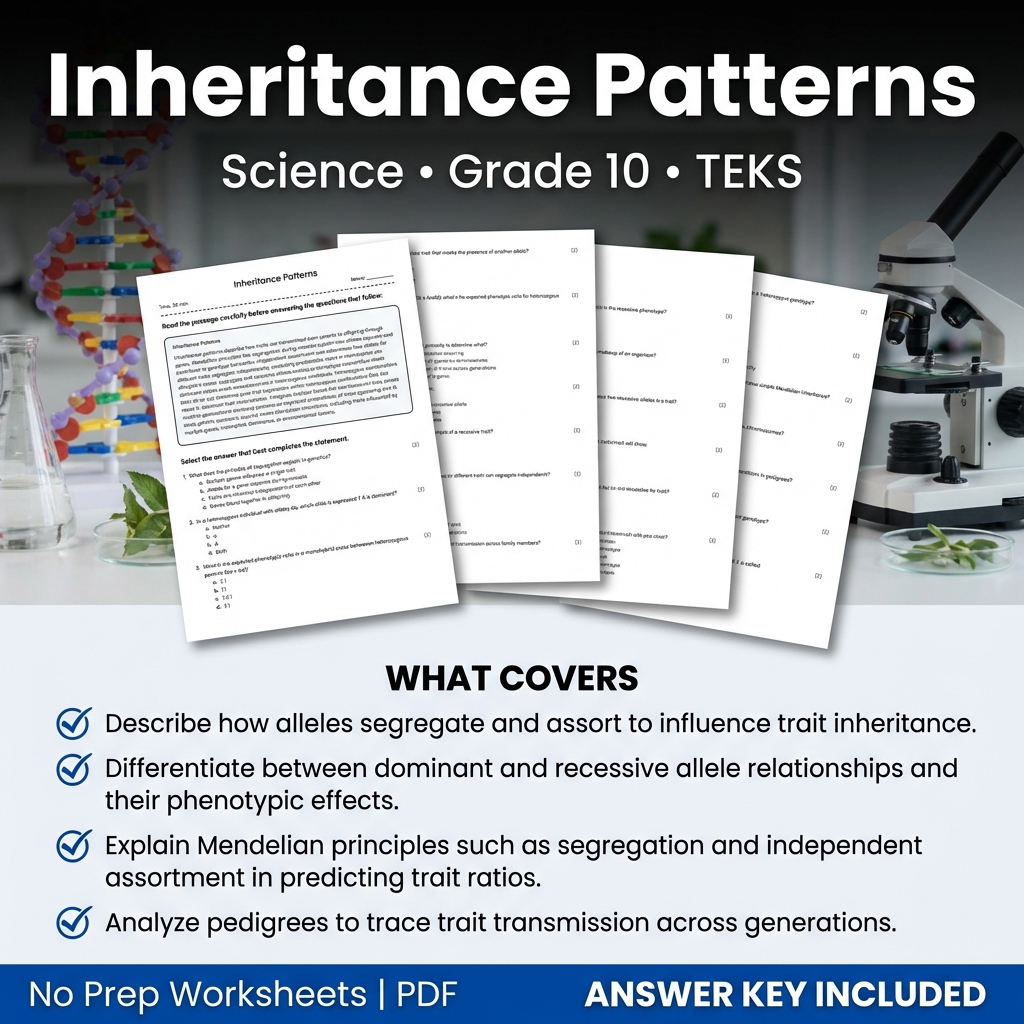
Inheritance Patterns Worksheet for Grade 10 Science TEKS
Created byCoral Reef LearningLearning Objectives
- Describe how alleles segregate and assort to influence trait inheritance.
- Differentiate between dominant and recessive allele relationships and their phenotypic effects.
- Explain Mendelian principles such as segregation and independent assortment in predicting trait ratios.
Instant download
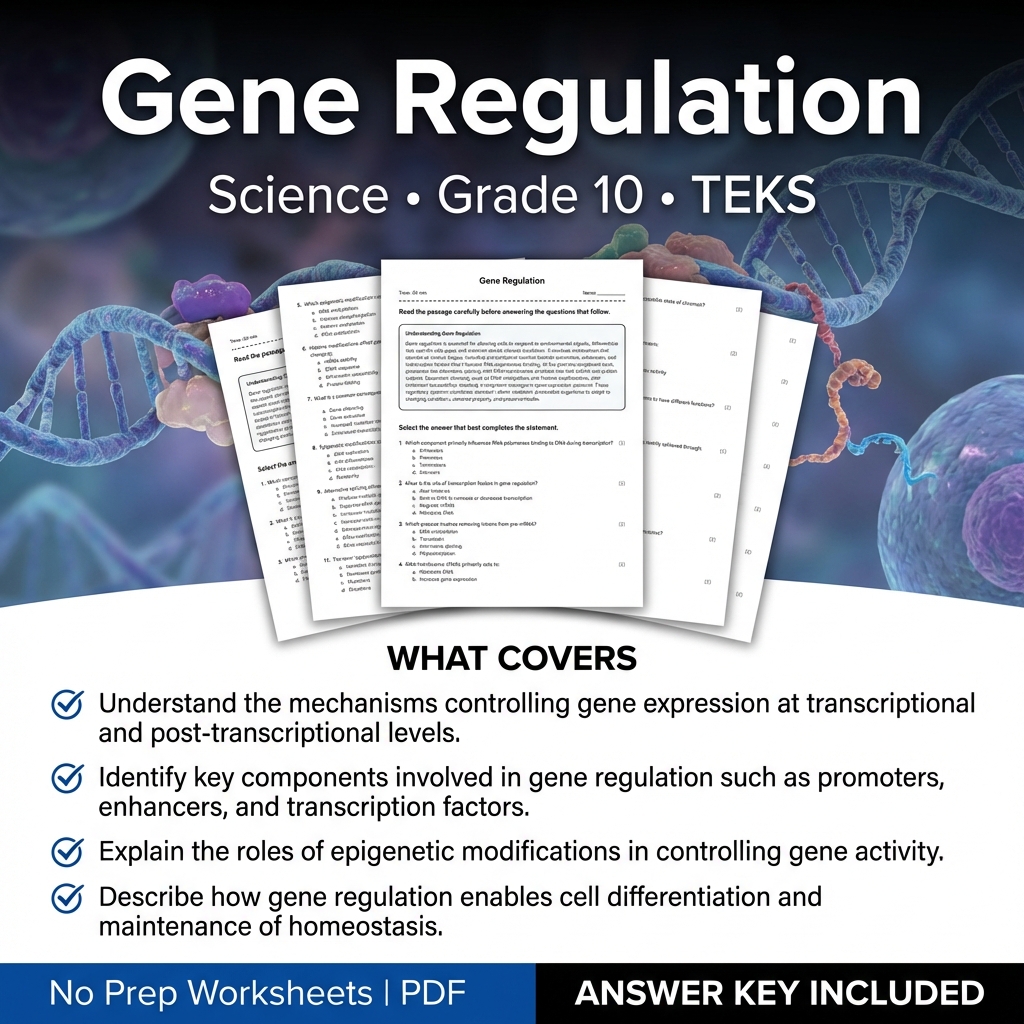
Gene Regulation Worksheet for Grade 10 Science TEKS Alignment
Created byCoral Reef LearningLearning Objectives
- Understand the mechanisms controlling gene expression at transcriptional and post-transcriptional levels.
- Identify key components involved in gene regulation such as promoters, enhancers, and transcription factors.
- Explain the roles of epigenetic modifications in controlling gene activity.
Instant download
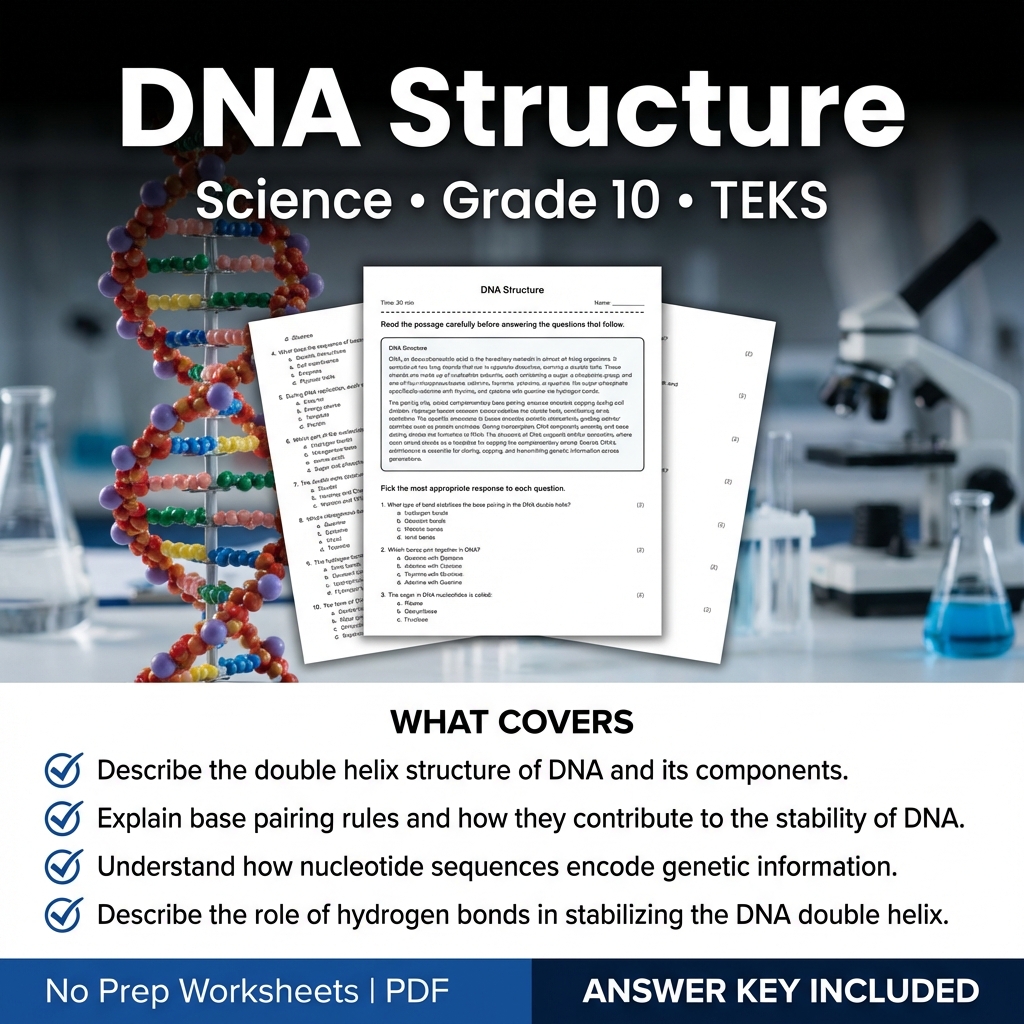
Grade 10 Science Worksheet on DNA Structure | TEKS Aligned
Created byCoral Reef LearningLearning Objectives
- Describe the double helix structure of DNA and its components.
- Explain base pairing rules and how they contribute to the stability of DNA.
- Understand how nucleotide sequences encode genetic information.
Instant download
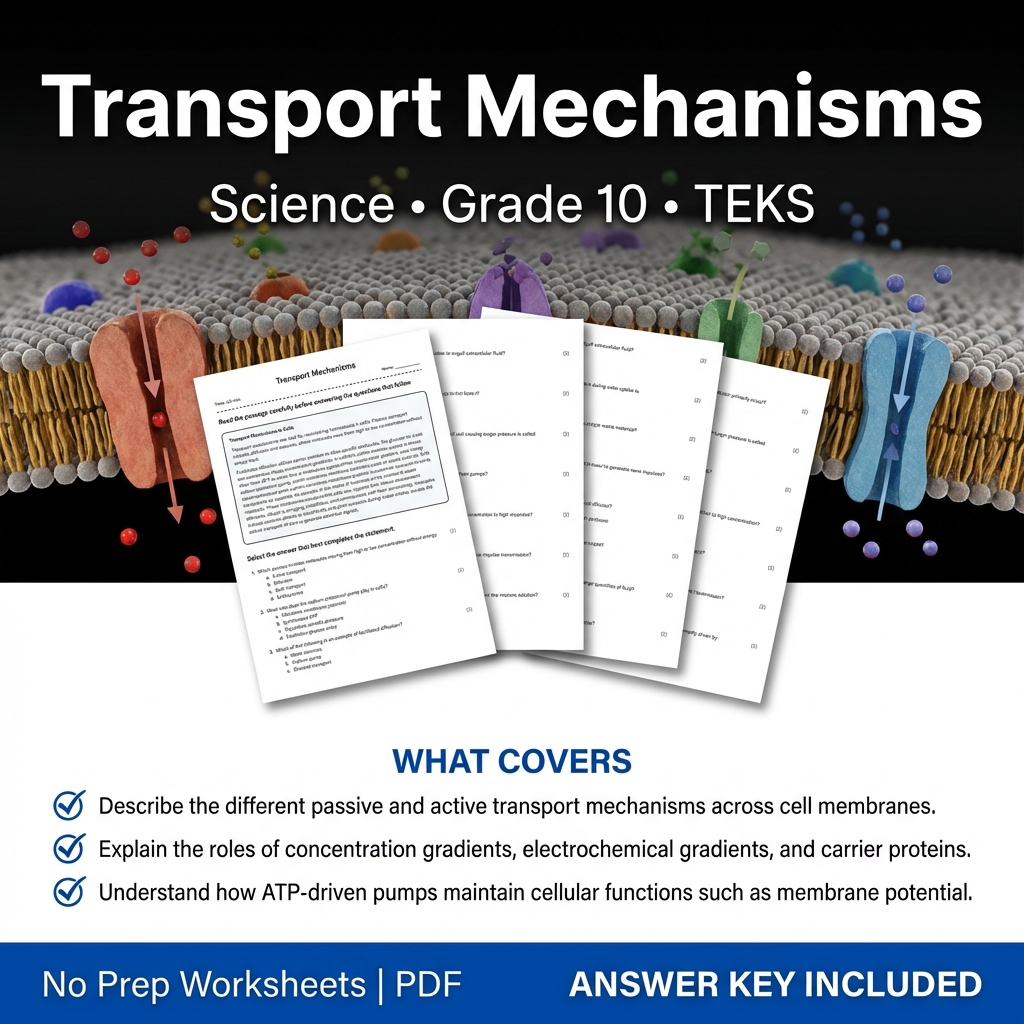
Transport Mechanisms Worksheet for Grade 10 Science | TEKS Aligned
Created byCoral Reef LearningLearning Objectives
- Describe the different passive and active transport mechanisms across cell membranes.
- Explain the roles of concentration gradients, electrochemical gradients, and carrier proteins.
- Understand how ATP-driven pumps maintain cellular functions such as membrane potential.
Instant download
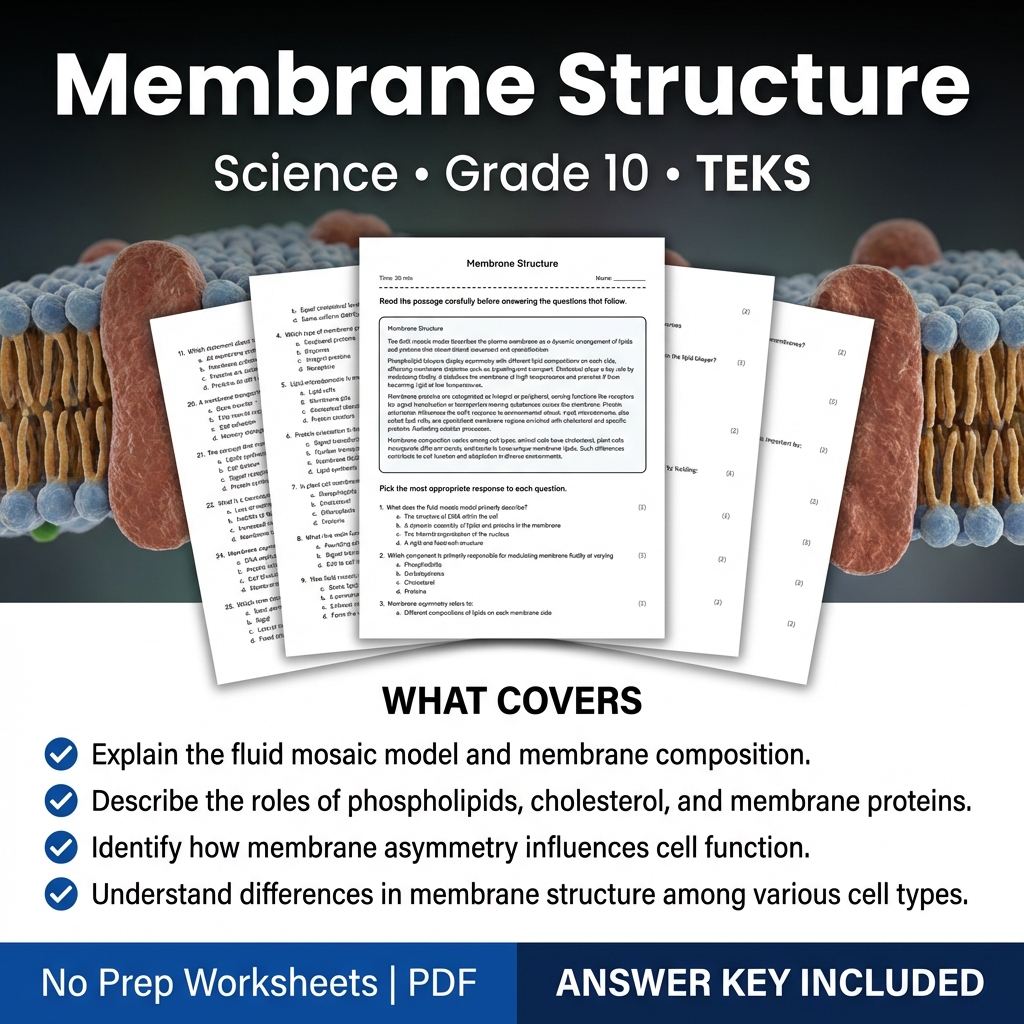
Membrane Structure Worksheet for Science Grade 10 | TEKS Standard Practice
Created byCoral Reef LearningLearning Objectives
- Explain the fluid mosaic model and membrane composition.
- Describe the roles of phospholipids, cholesterol, and membrane proteins.
- Identify how membrane asymmetry influences cell function.
Instant download
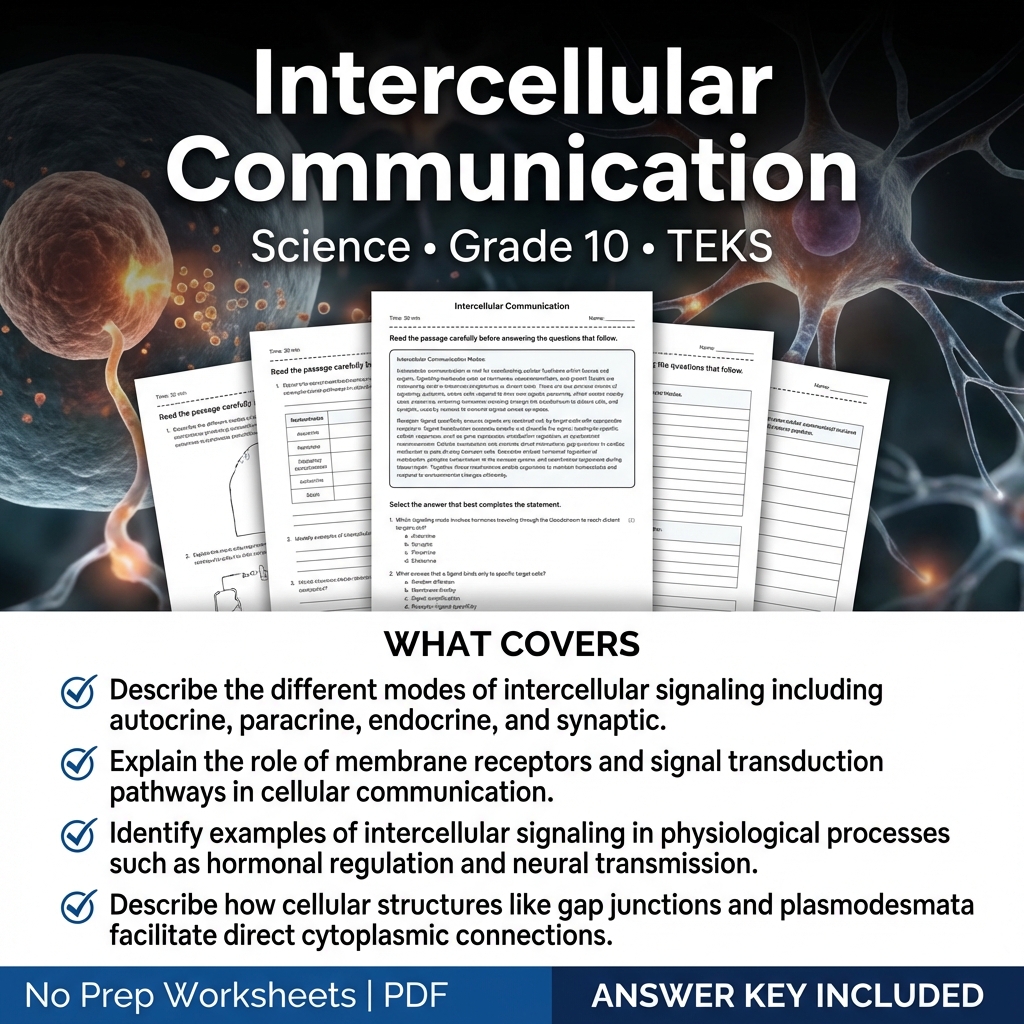
Grade 10 Science Worksheet | Intercellular Communication Practice
Created byCoral Reef LearningLearning Objectives
- Describe the different modes of intercellular signaling including autocrine, paracrine, endocrine, and synaptic.
- Explain the role of membrane receptors and signal transduction pathways in cellular communication.
- Identify examples of intercellular signaling in physiological processes such as hormonal regulation and neural transmission.
Instant download
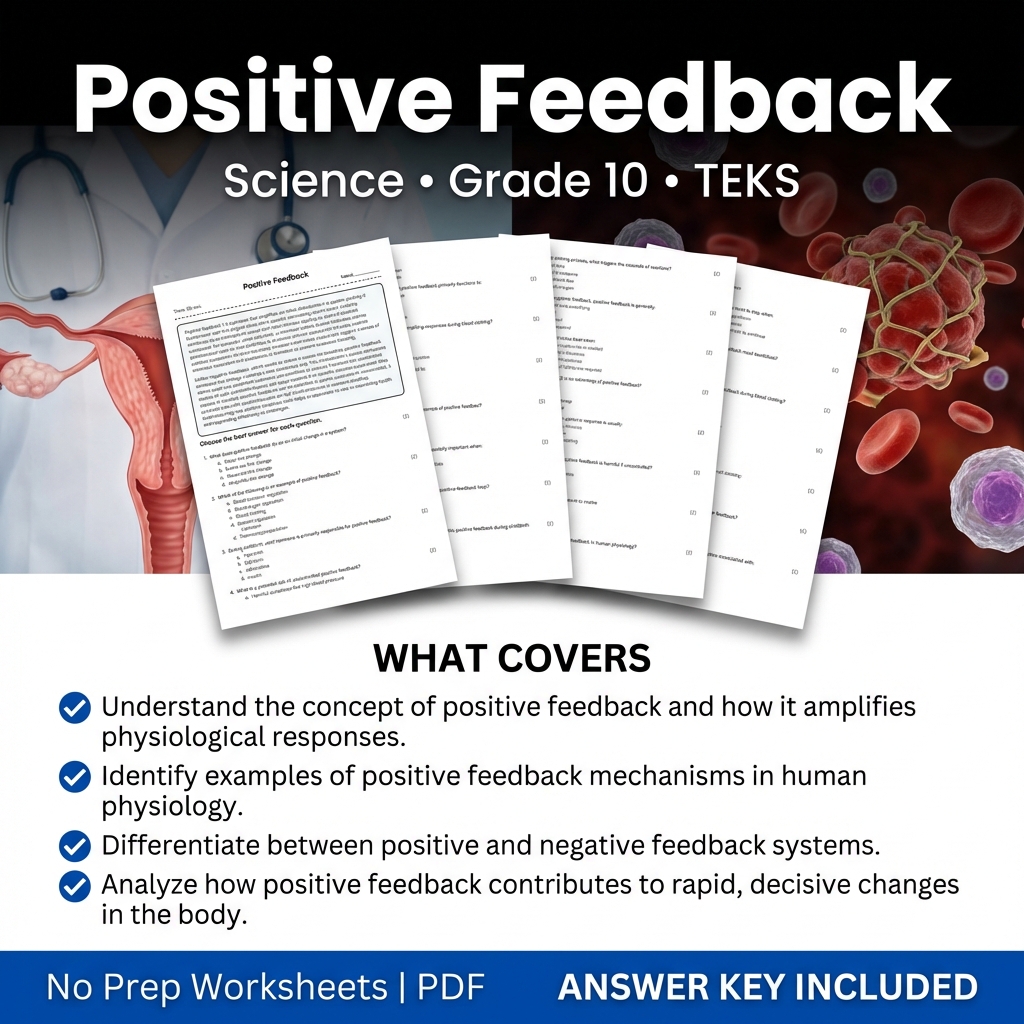
Grade 10 Science Worksheet on Positive Feedback | TEKS Aligned
Created byCoral Reef LearningLearning Objectives
- Understand the concept of positive feedback and how it amplifies physiological responses.
- Identify examples of positive feedback mechanisms in human physiology.
- Differentiate between positive and negative feedback systems.
Instant download
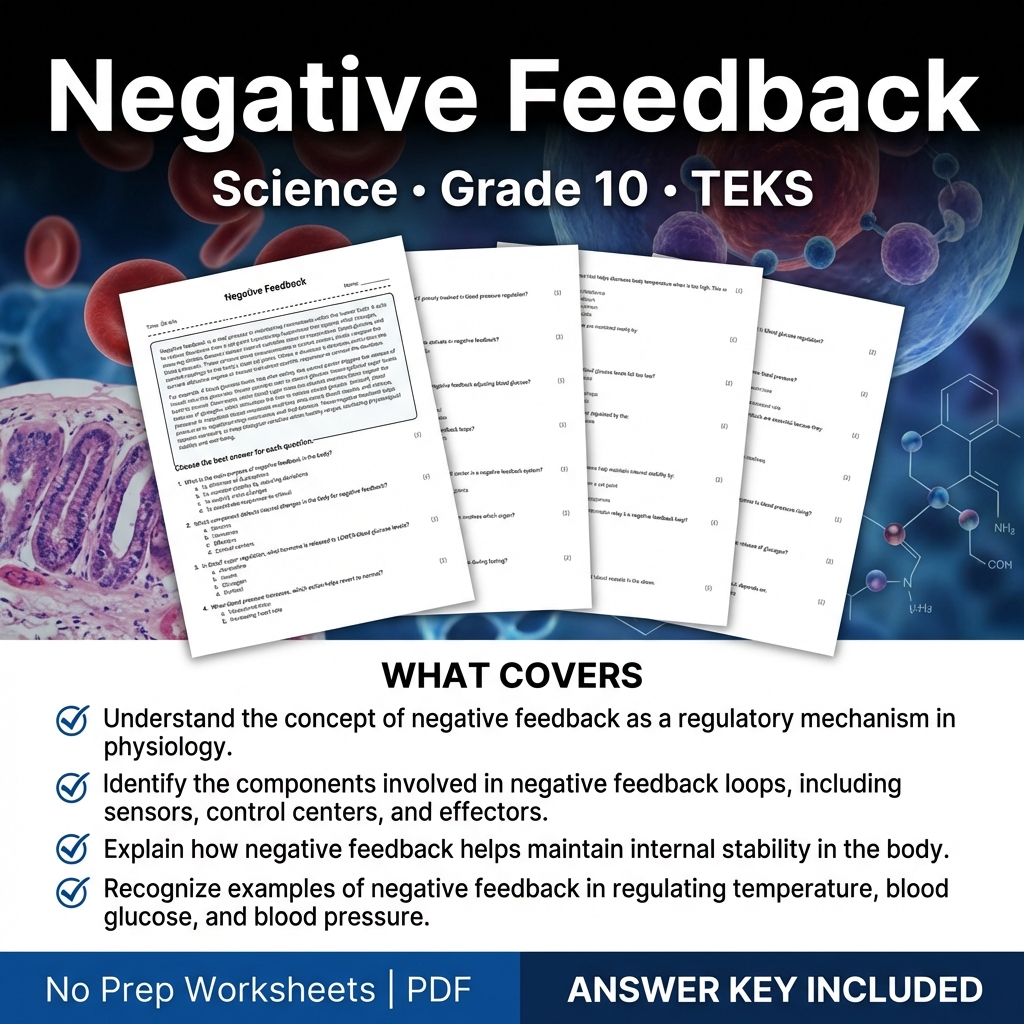
Negative Feedback Worksheet for Grade 10 Science | TEKS aligned
Created byCoral Reef LearningLearning Objectives
- Understand the concept of negative feedback as a regulatory mechanism in physiology.
- Identify the components involved in negative feedback loops, including sensors, control centers, and effectors.
- Explain how negative feedback helps maintain internal stability in the body.
Instant download
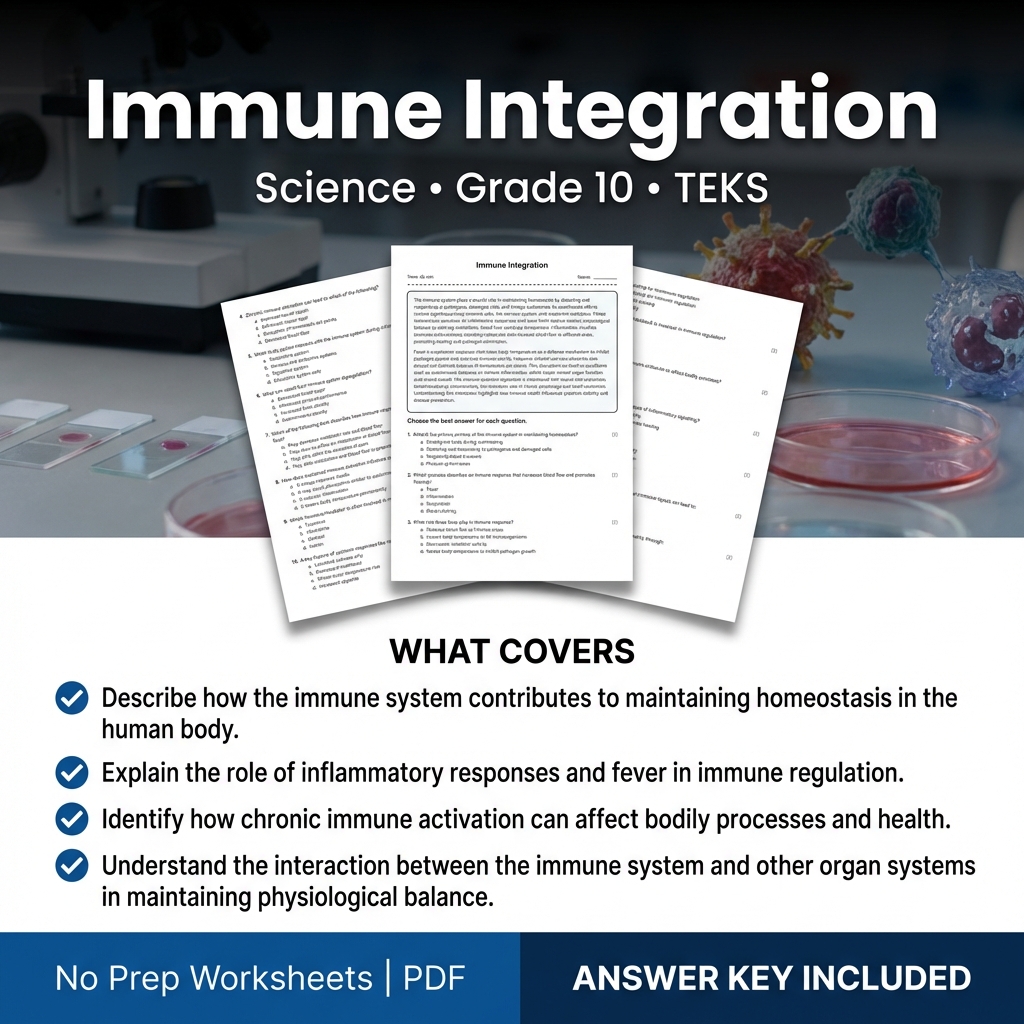
Grade 10 Science Worksheet on Immune Integration | TEKS Aligned
Created byCoral Reef LearningLearning Objectives
- Describe how the immune system contributes to maintaining homeostasis in the human body.
- Explain the role of inflammatory responses and fever in immune regulation.
- Identify how chronic immune activation can affect bodily processes and health.
Instant download
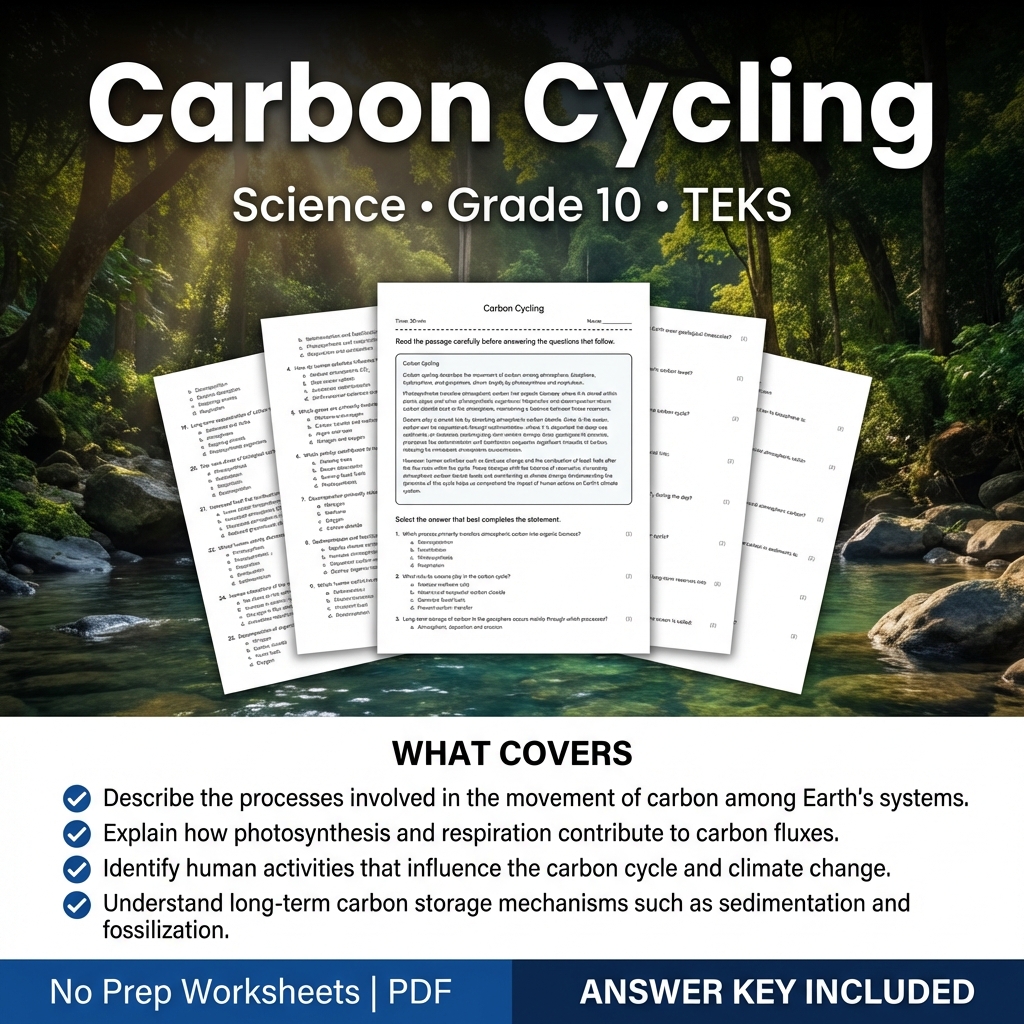
Carbon Cycling Worksheet for Grade 10 Science | TEKS Standard Practice
Created byCoral Reef LearningLearning Objectives
- Describe the processes involved in the movement of carbon among Earth's systems.
- Explain how photosynthesis and respiration contribute to carbon fluxes.
- Identify human activities that influence the carbon cycle and climate change.
Instant download
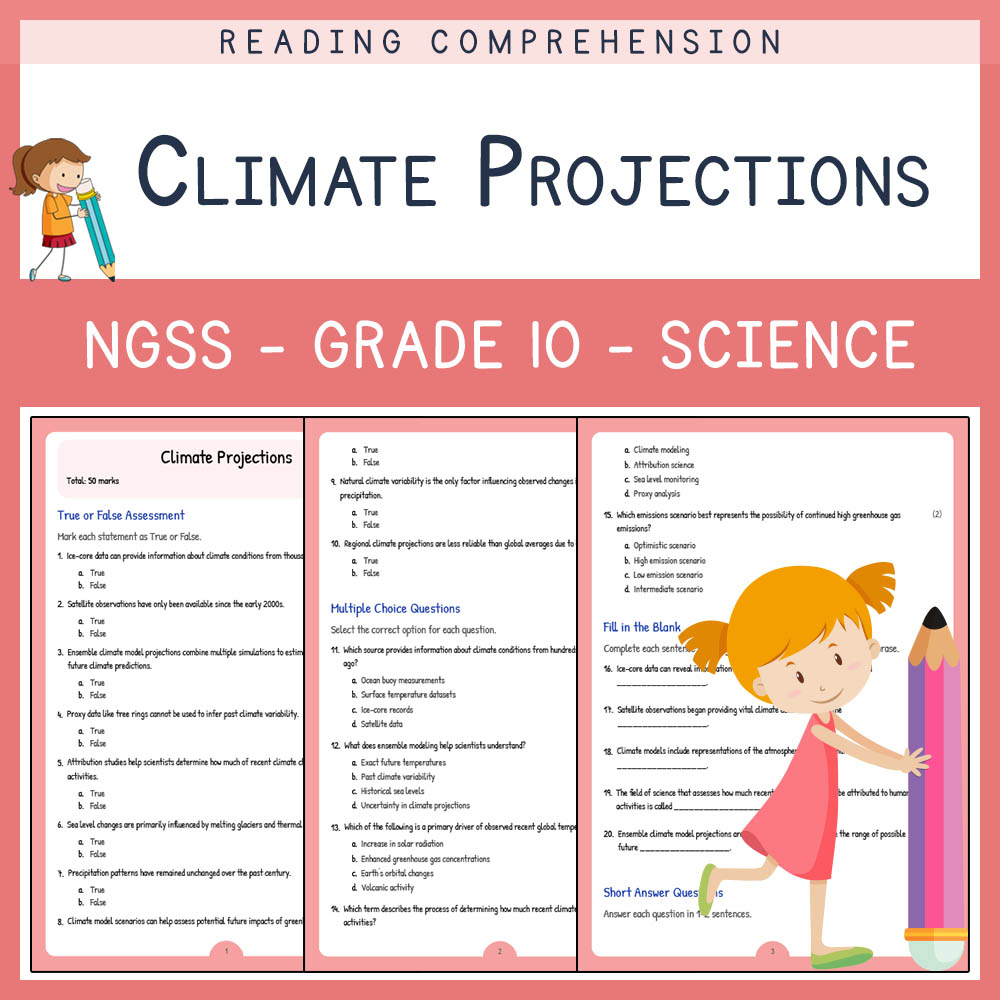
Grade 10 Science | Climate Projections Worksheet + Answer Key (NGSS-Aligned)
Created byLumora LearningLearning Objectives
- Understand methods used to analyze historical climate data and model outputs.
- Interpret trends and variability in global and regional temperature, precipitation, and sea level.
- Evaluate the sources of uncertainty in climate projections and their implications for future planning.
Instant download
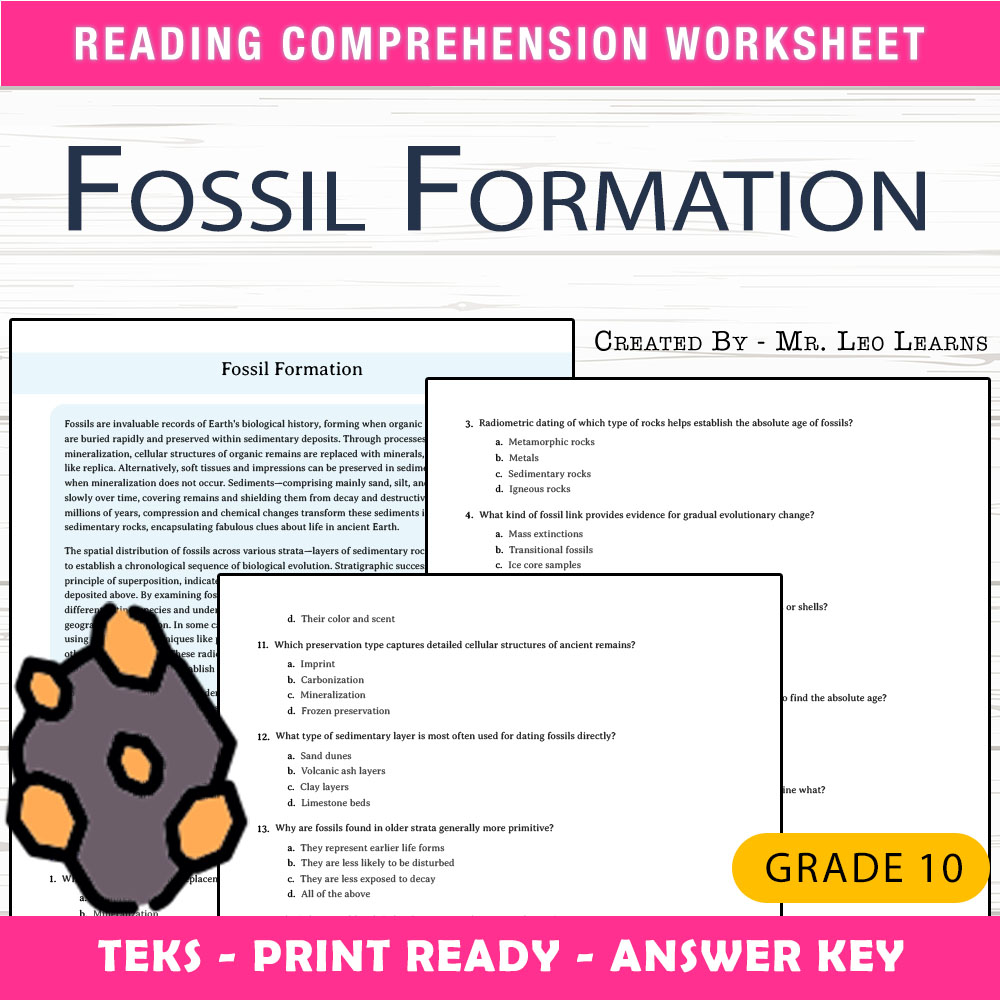
Grade 10 Science – Fossil Formation Worksheet for Mastery | PDF + Answer Key
 Created byThe Resource Hub
Learning Objectives
- Describe the process of fossil formation including mineralization, compression, and imprint preservation.
- Explain how fossil distribution provides environmental and temporal context.
- Identify methods used to determine the age of fossils, including relative and radiometric dating.
Also included in: Grade 10 Science | Evolution & Heredity Worksheet Bundle (Mastery Skills Pack) +2 more
Instant download
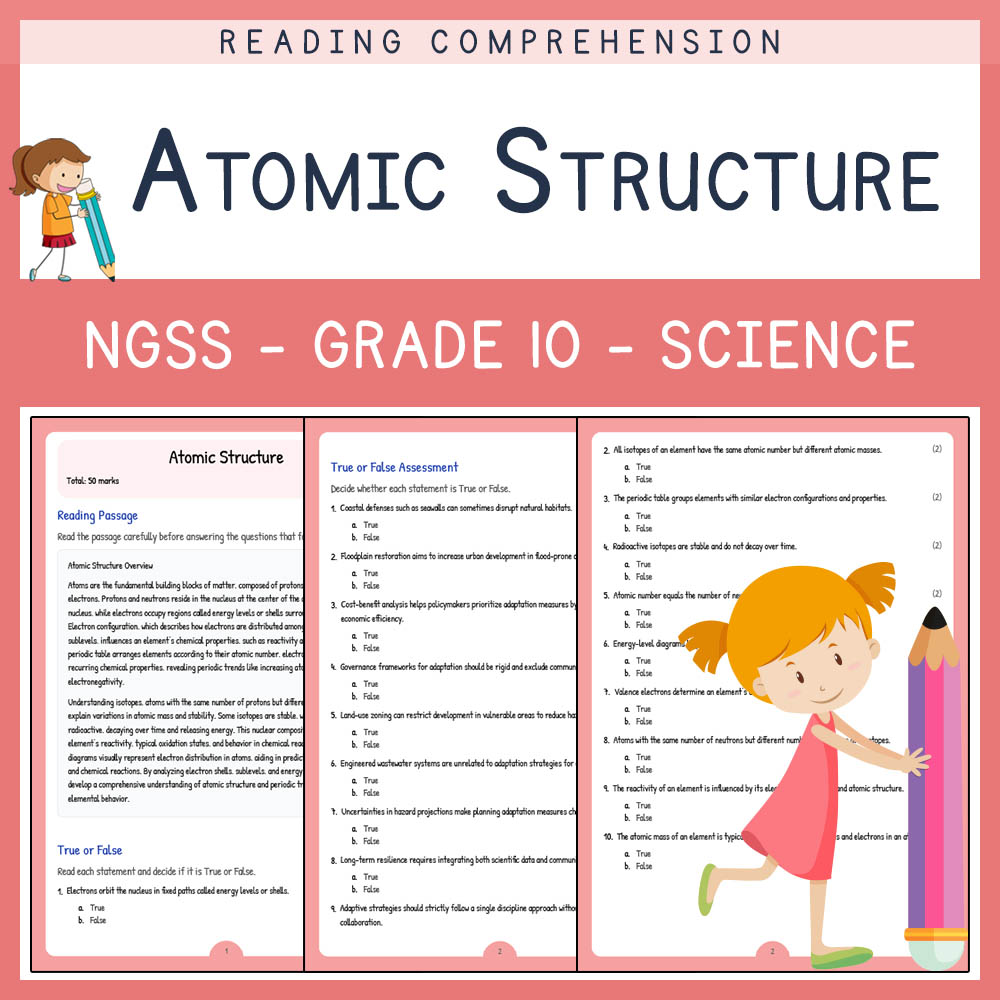
Grade S10 cience | Atomic Structure Worksheet & Answer Key (PDF)
Created byLumora LearningLearning Objectives
- Understand the electron configuration and how it relates to periodic trends and elemental properties.
- Interpret energy-level diagrams, electron shells, and sublevel occupancy to analyze atomic behaviors.
- Explain the relationship between isotopes, atomic mass, and reactivity.
Instant download
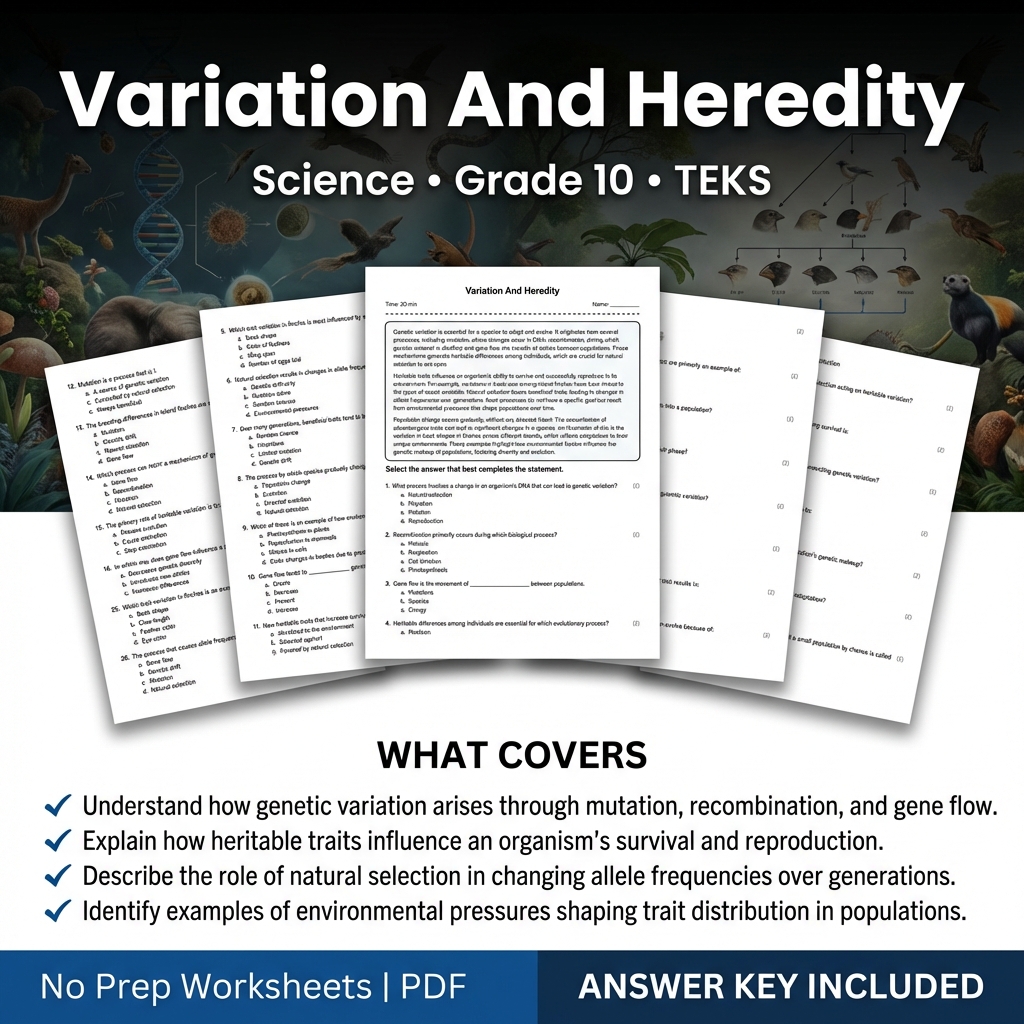
Variation And Heredity Grade 10 Science Worksheet | TEKS Standards
Created byCoral Reef LearningLearning Objectives
- Understand how genetic variation arises through mutation, recombination, and gene flow.
- Explain how heritable traits influence an organism's survival and reproduction.
- Describe the role of natural selection in changing allele frequencies over generations.
Instant download
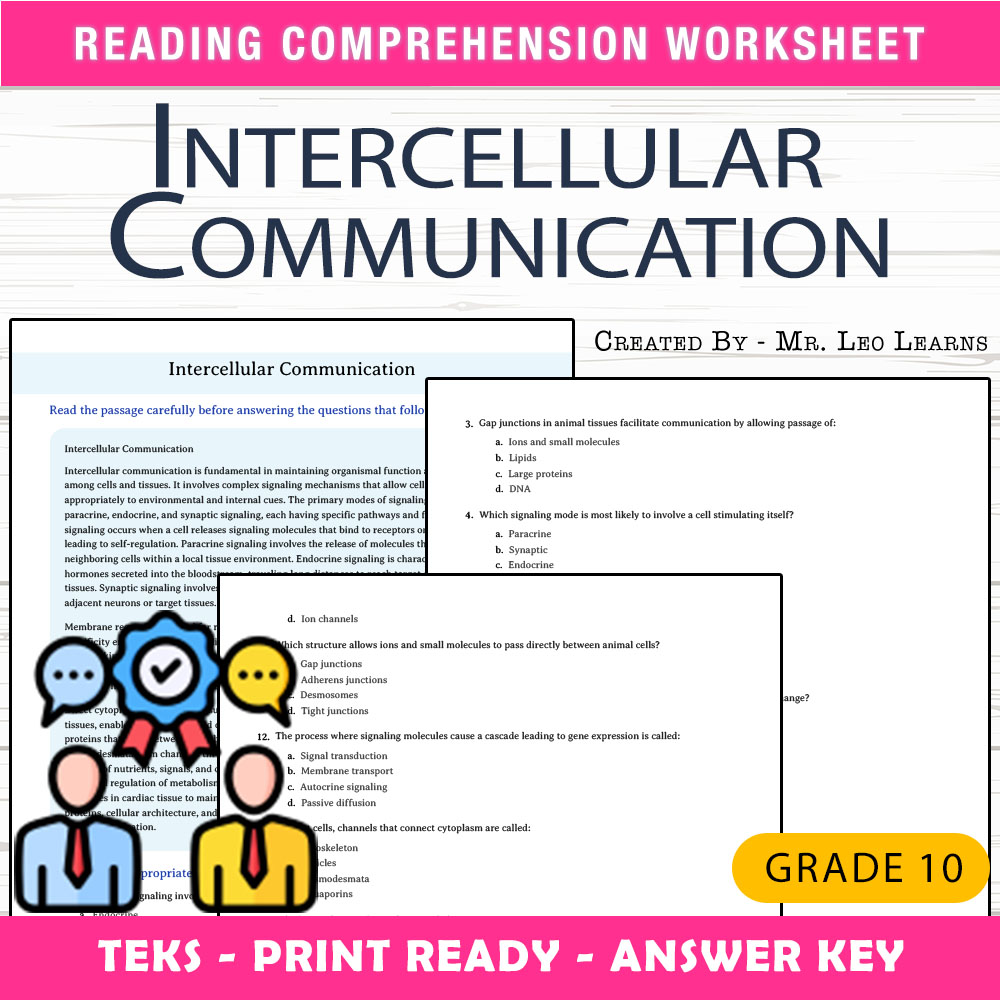
Grade 10 Science – Intercellular Communication Worksheet for Mastery
Created byThe Resource HubLearning Objectives
- Describe different modes of intercellular signaling including autocrine, paracrine, endocrine, and synaptic signaling.
- Explain the role of membrane receptors and ligand specificity in signaling.
- Understand signal transduction pathways and their importance in cellular responses.
Also included in: Grade 10 Science Cell Biology Unit | Cell Structures & Functions Worksheet Pack +1 more
Instant download
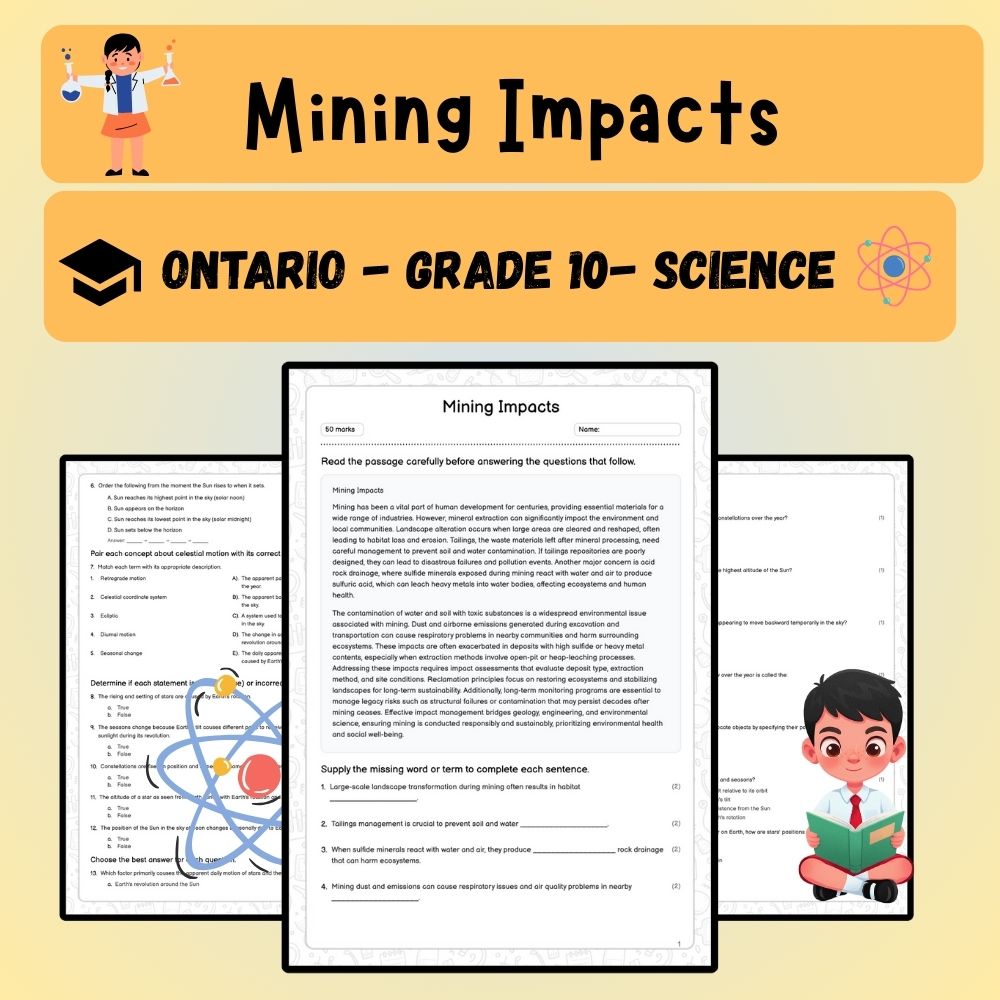
Grade 10 Science | Mining Impacts Worksheet + Answer Key – Ontario Standards (PDF)
Created byPrism Point LearningLearning Objectives
- Explain the environmental and social consequences of mineral extraction processes.
- Identify methods for impact assessment and reclamation in mining activities.
- Understand how deposit types and extraction methods influence environmental outcomes.
Also included in: Grade 10 Science UNIT Bundle | Earth Processes & Resources Ontario Standards +1 more
Instant download
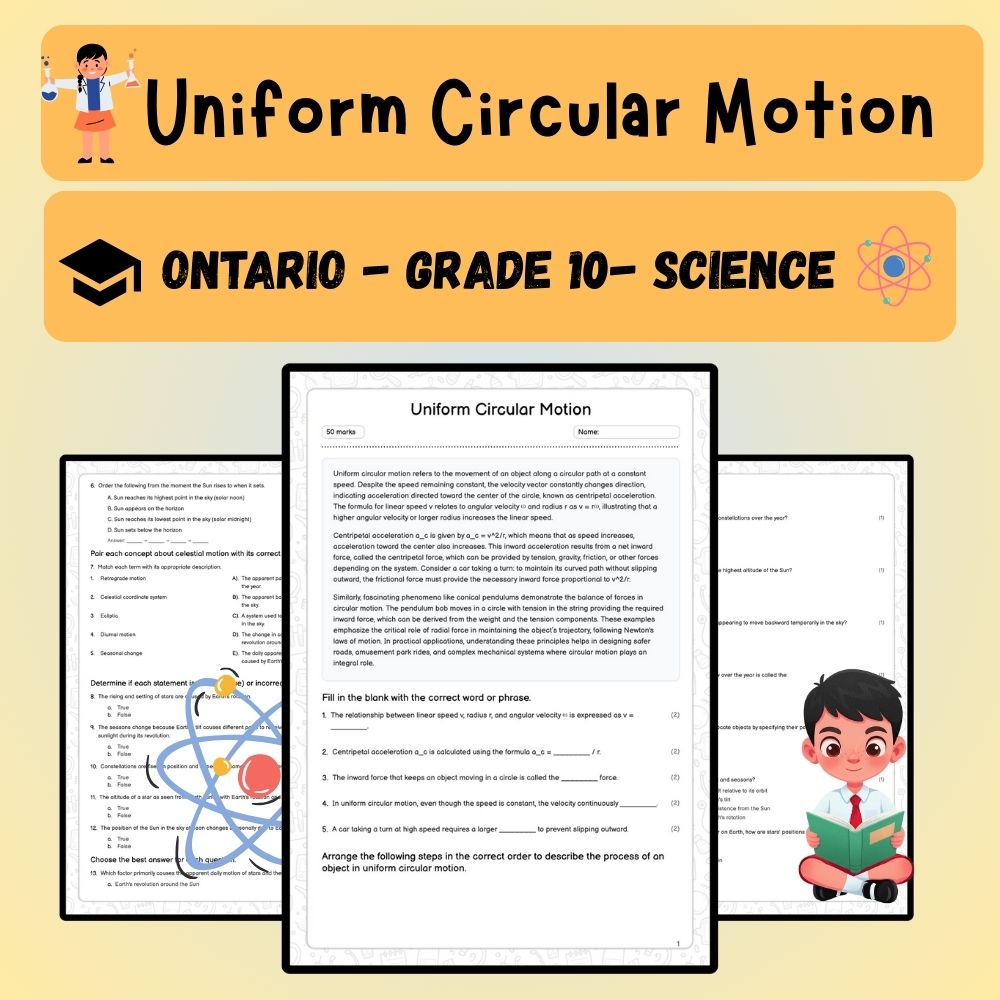
Grade 10 Science | Uniform Circular Motion Worksheet (PDF) for Ontario Standards
Created byPrism Point LearningLearning Objectives
- Explain the relationship between linear speed, angular velocity, and radius in uniform circular motion.
- Describe how centripetal acceleration depends on velocity and radius.
- Apply the formulas v = rω and a_c = v^2/r to solve problems involving circular motion.
Also included in: Grade 10 Science Unit Bundle | Motion, Forces & Mechanics Worksheets (Ontario Standards) +1 more
Instant download
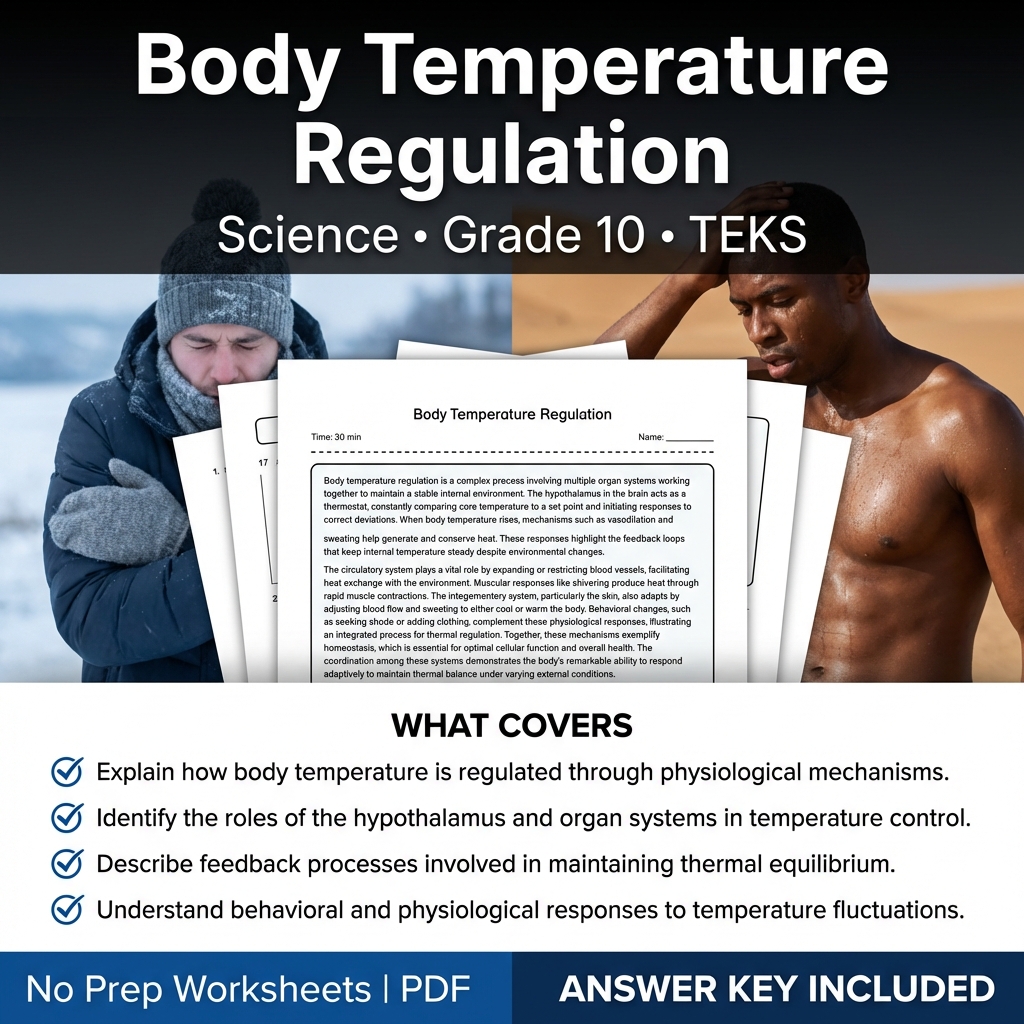
Grade 10 Science Worksheet on Body Temperature Regulation | TEKS-Aligned
Created byCoral Reef LearningLearning Objectives
- Explain how body temperature is regulated through physiological mechanisms.
- Identify the roles of the hypothalamus and organ systems in temperature control.
- Describe feedback processes involved in maintaining thermal equilibrium.
Instant download
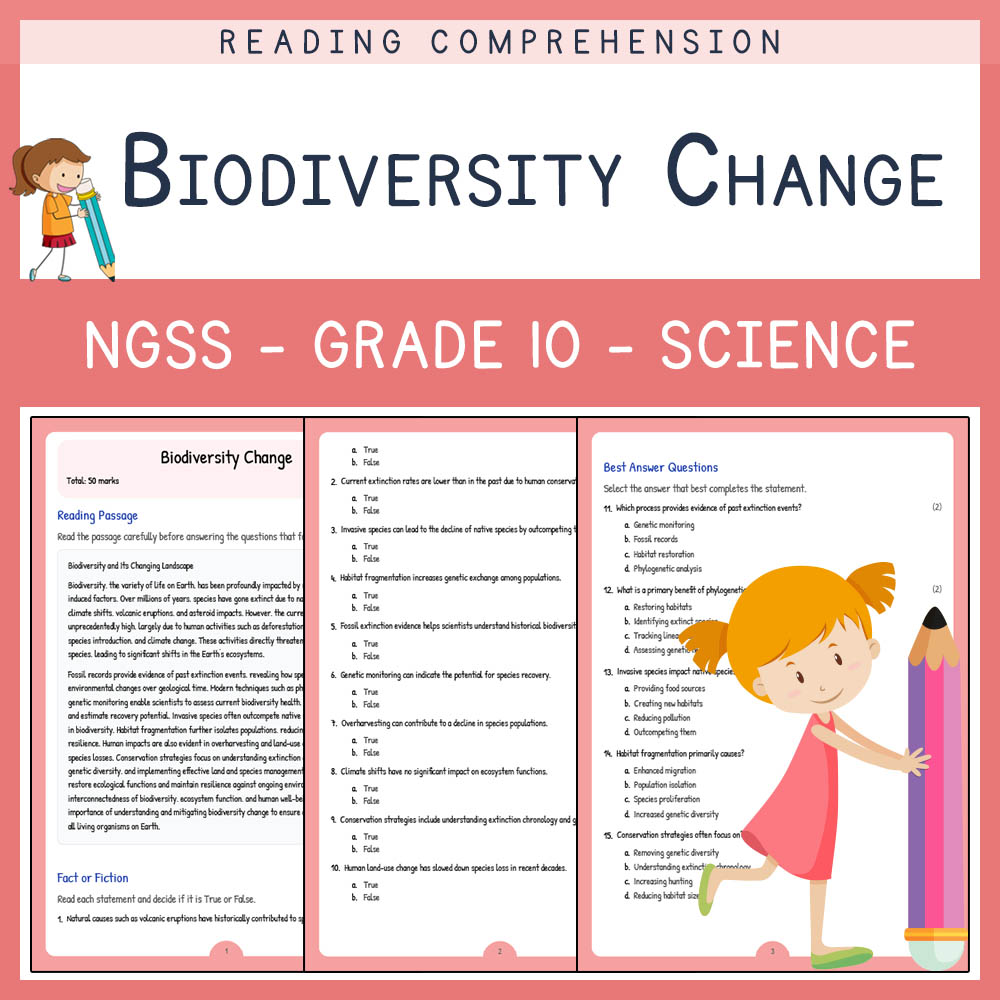
Grade 10 Science | Biodiversity Change Worksheet & Answer Key aligned with NGSS (PDF)
Created byLumora LearningLearning Objectives
- Understand the factors contributing to biodiversity loss, including fossil extinctions, invasive species, and habitat fragmentation.
- Analyze how human actions impact genetic diversity and ecosystem resilience.
- Evaluate conservation strategies and interpret evidence from fossil records and population monitoring.
Instant download
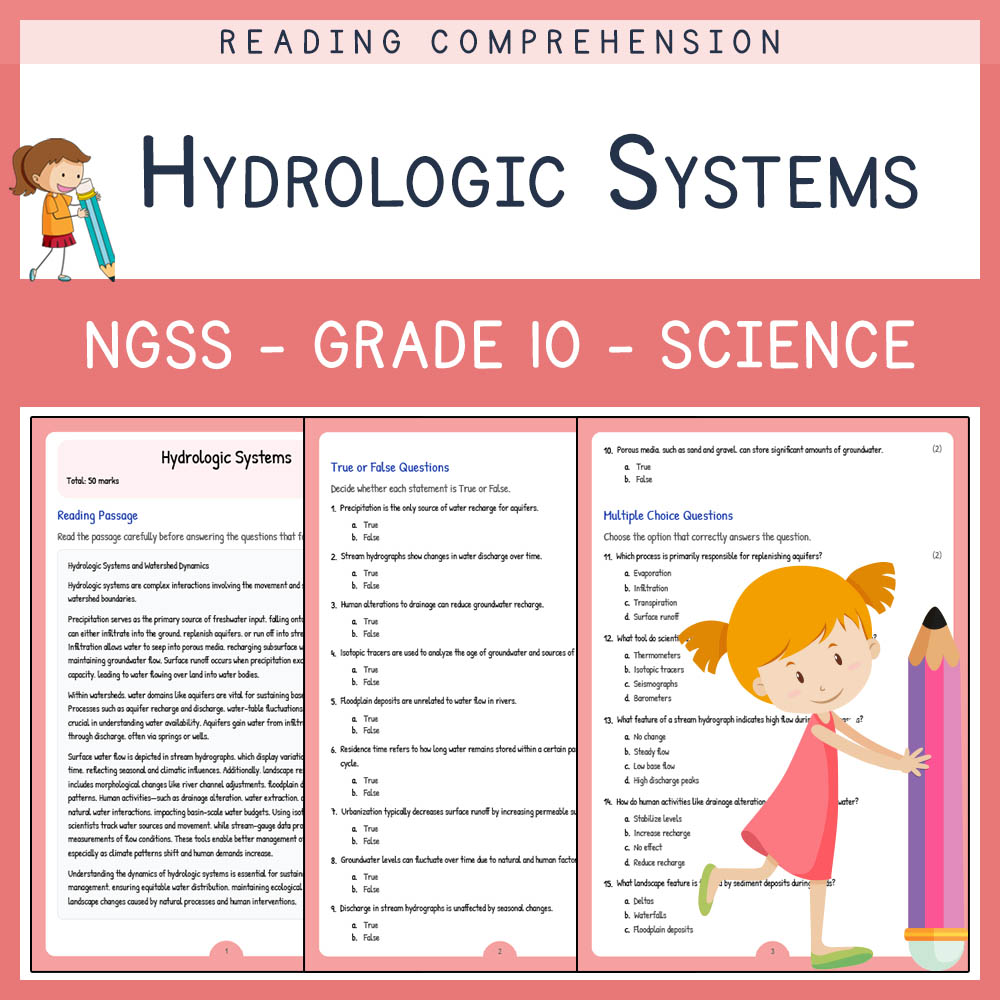
Grade 10 Science | Hydrologic Systems Worksheet (PDF + Answer Key) NGSS Aligned
Created byLumora LearningLearning Objectives
- Understand the key components and processes of hydrologic systems within watersheds.
- Analyze interactions among precipitation, surface runoff, infiltration, and groundwater in landscape responses.
- Evaluate the effects of human alterations on water budgets and river morphology.
Instant download
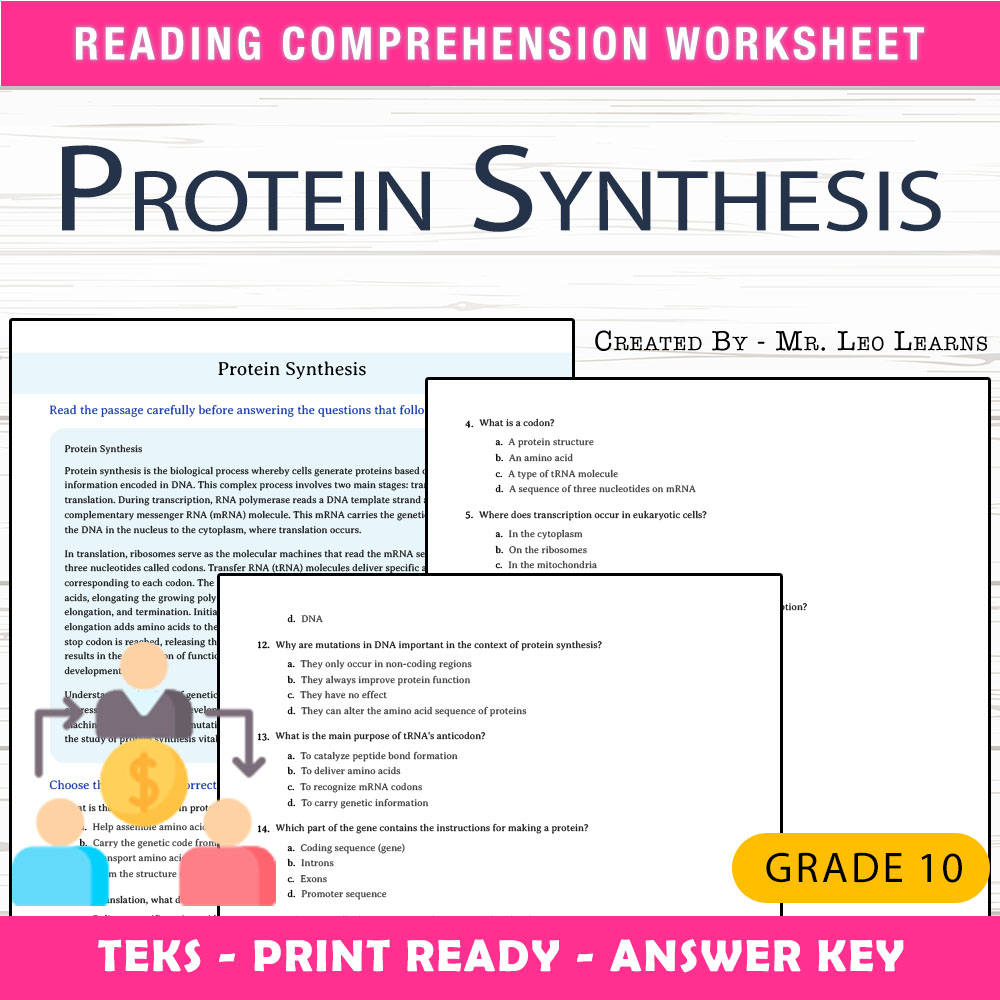
Grade 10 Science — Protein Synthesis Worksheet for Mastering Cellular Processes
Created byThe Resource HubLearning Objectives
- Understand the step-by-step processes of transcription and translation in protein synthesis.
- Identify key molecules involved in DNA to RNA to protein flow.
- Explain the roles of mRNA, tRNA, and ribosomes during protein synthesis.
Also included in: Grade 10 Science DNA & Genetics Worksheet Bundle (Mastery & Reinforcement) +1 more
Instant download
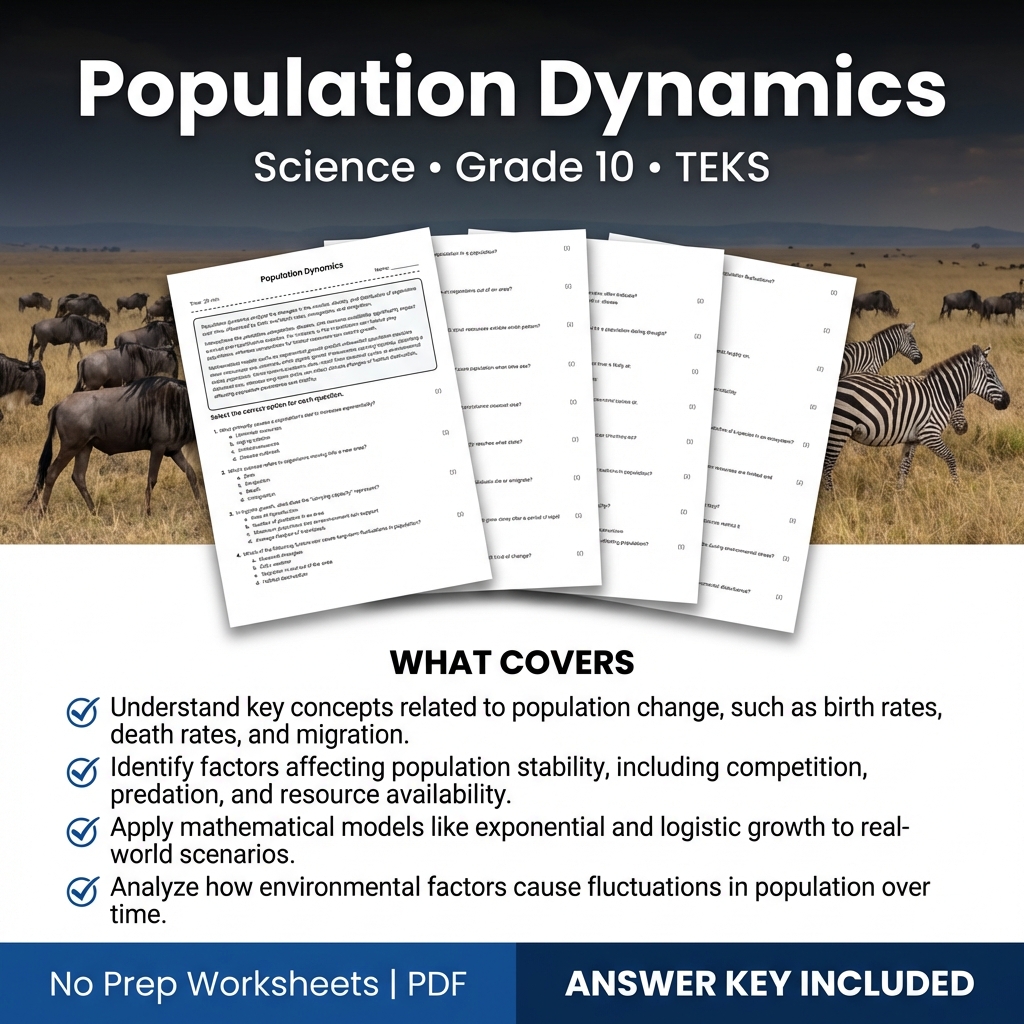
Population Dynamics Worksheet for Grade 10 Science TEKS aligned
Created byCoral Reef LearningLearning Objectives
- Understand key concepts related to population change, such as birth rates, death rates, and migration.
- Identify factors affecting population stability, including competition, predation, and resource availability.
- Apply mathematical models like exponential and logistic growth to real-world scenarios.
Instant download
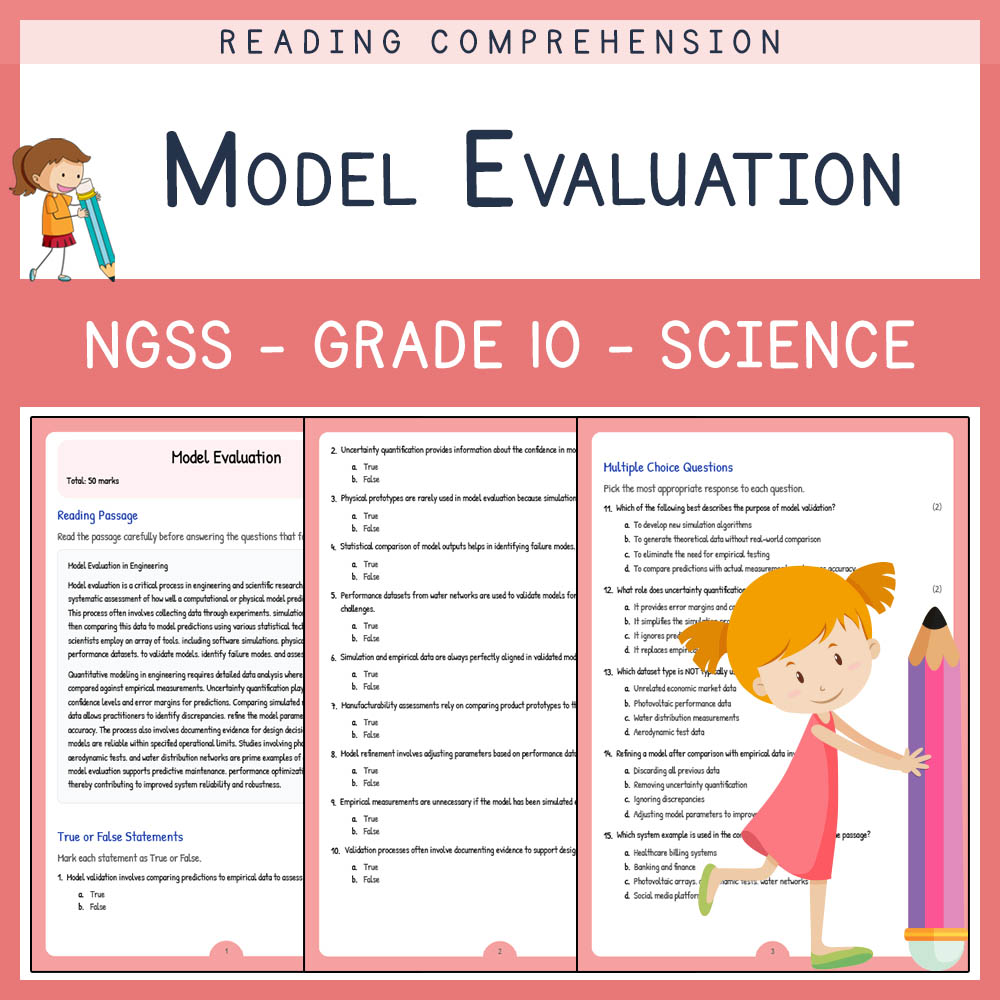
Grade 10 Science | Model Evaluation Worksheet & Answer Key NGSS Aligned (PDF)
Created byLumora LearningLearning Objectives
- Understand the principles of quantitative modeling and how to analyze prototype data.
- Learn to compare simulation results with empirical measurements for model validation.
- Apply statistical methods to assess model accuracy and quantify uncertainty.
Instant download
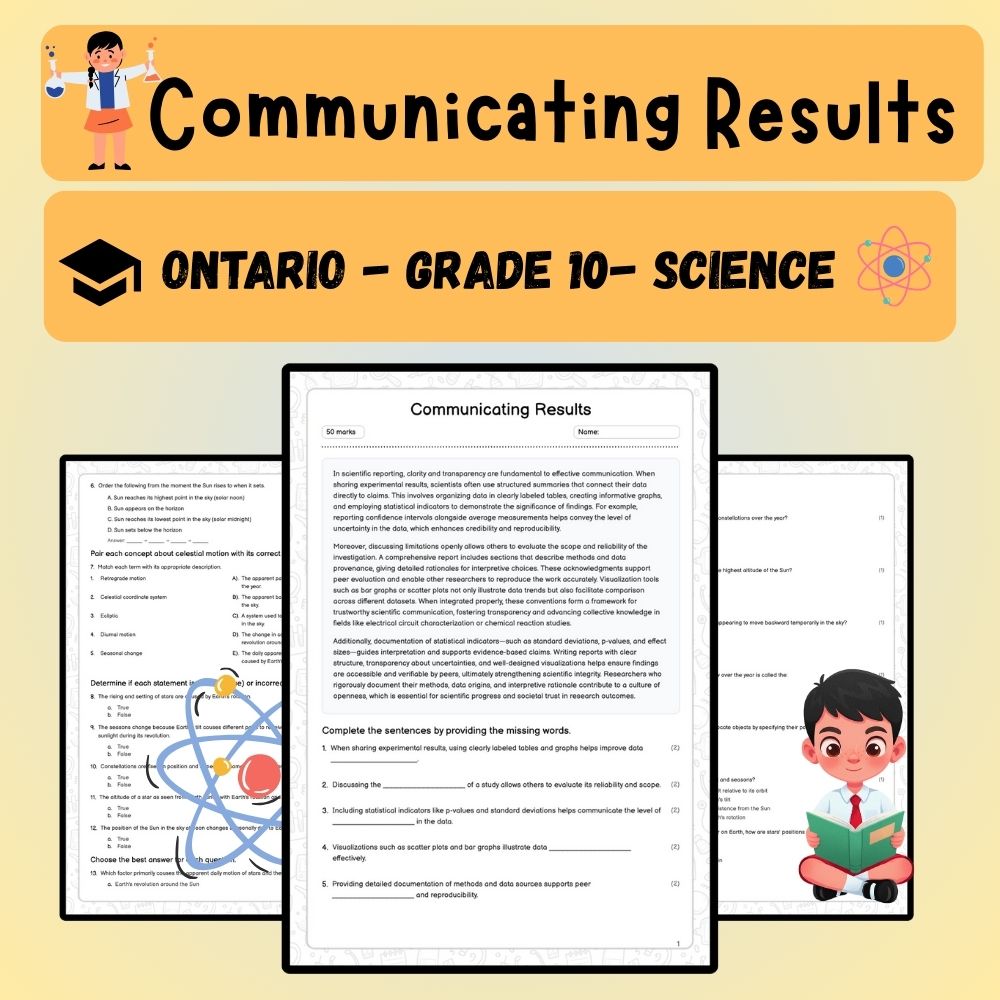
Grade 10 Science | Communicating Results Worksheet (Answer Key) – Ontario Standards
Created byPrism Point LearningLearning Objectives
- Understand the conventions for clear, evidence-based reporting of experimental results.
- Learn to structure summaries that link data to claims effectively.
- Identify ways to discuss limitations and uncertainty in reports.
Also included in: Grade 10 Science UNIT Bundle | Data Analysis, Safety & Modeling Worksheets +1 more
Instant download
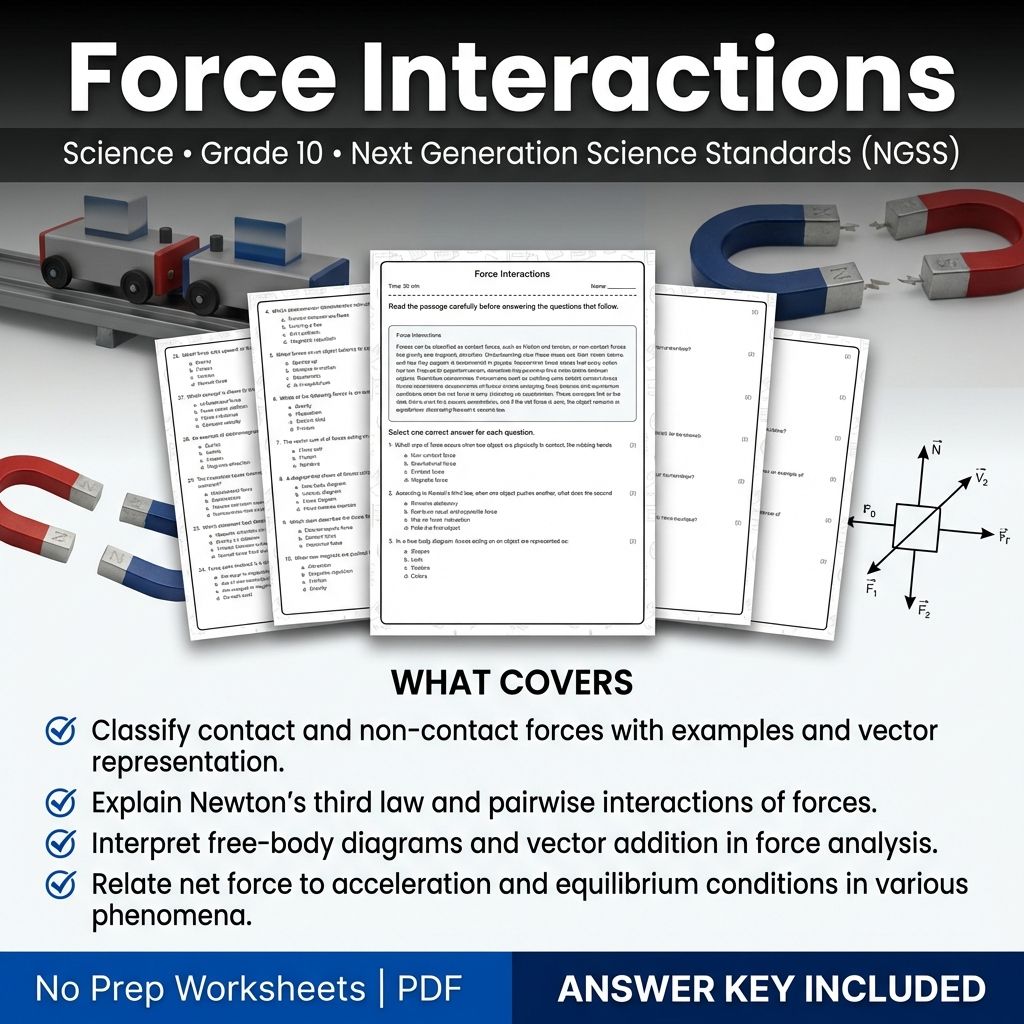
Grade 10 Science | Force Interactions Worksheet & Answer Key (Printable PDF)
Created byCoral Reef LearningLearning Objectives
- Classify contact and non-contact forces with examples and vector representation.
- Explain Newton's third law and pairwise interactions of forces.
- Interpret free-body diagrams and vector addition in force analysis.
Also included in: Grade 10 Science Unit Worksheet Bundle | Forces,Motion & Space NGSS(Answer Keys) +1 more
Instant download
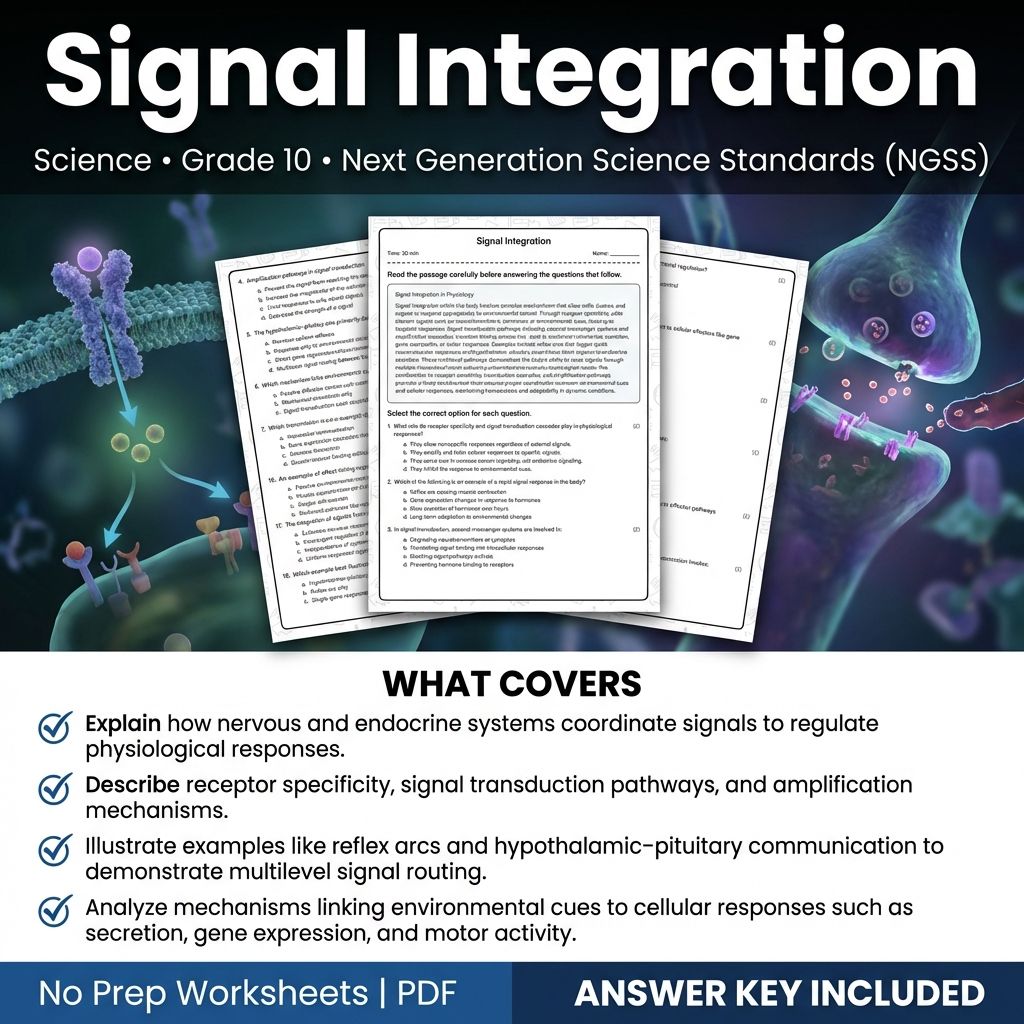
Grade 10 Science | Signal Integration Worksheet & Answer Key (PDF)
Created byCoral Reef LearningLearning Objectives
- Explain how nervous and endocrine systems coordinate signals to regulate physiological responses.
- Describe receptor specificity, signal transduction pathways, and amplification mechanisms.
- Illustrate examples like reflex arcs and hypothalamic–pituitary communication to demonstrate multilevel signal routing.
Also included in: Grade 10 Science UNIT Worksheet Pack – Signal Integration, Physiology & Genetics +1 more
Instant download
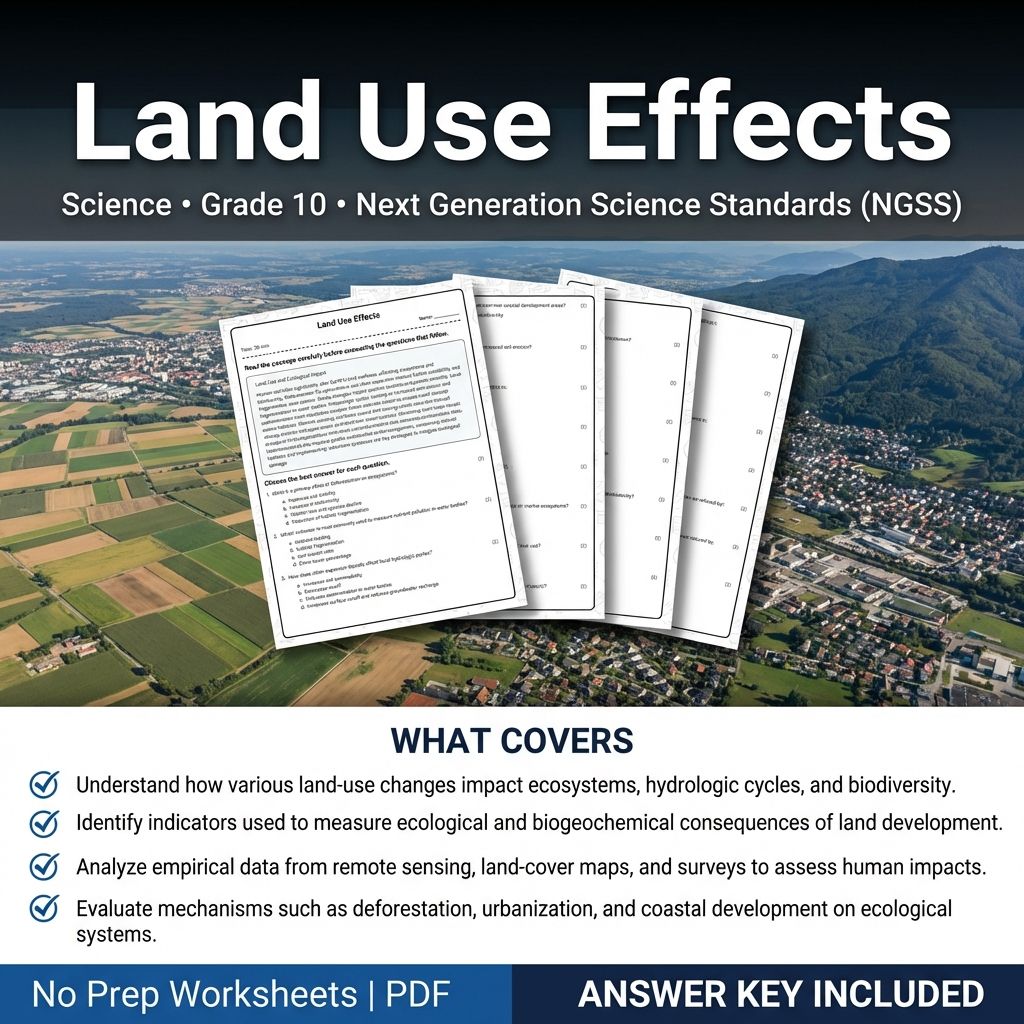
Grade 10 Science | Land Use Effects Worksheet & Answer Key (Printable PDF)
Created byCoral Reef LearningLearning Objectives
- Understand how various land-use changes impact ecosystems, hydrologic cycles, and biodiversity.
- Identify indicators used to measure ecological and biogeochemical consequences of land development.
- Analyze empirical data from remote sensing, land-cover maps, and surveys to assess human impacts.
Also included in: Grade 10 Science Unit Bundle | Environmental Impact & Climate Strategies +1 more
Instant download
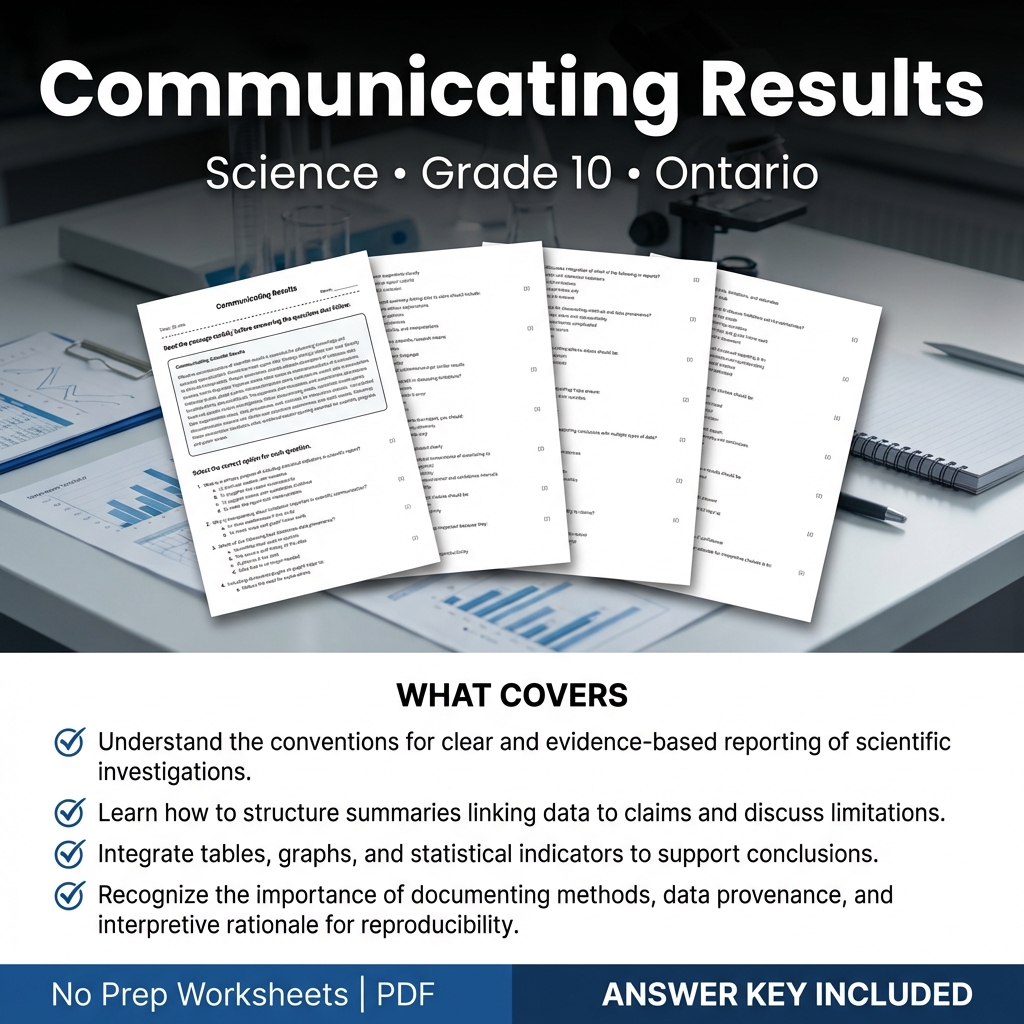
Grade 10 Science Worksheet on Communicating Results | Ontario Standards
Created byCoral Reef LearningLearning Objectives
- Understand the conventions for clear and evidence-based reporting of scientific investigations.
- Learn how to structure summaries linking data to claims and discuss limitations.
- Integrate tables, graphs, and statistical indicators to support conclusions.
Instant download
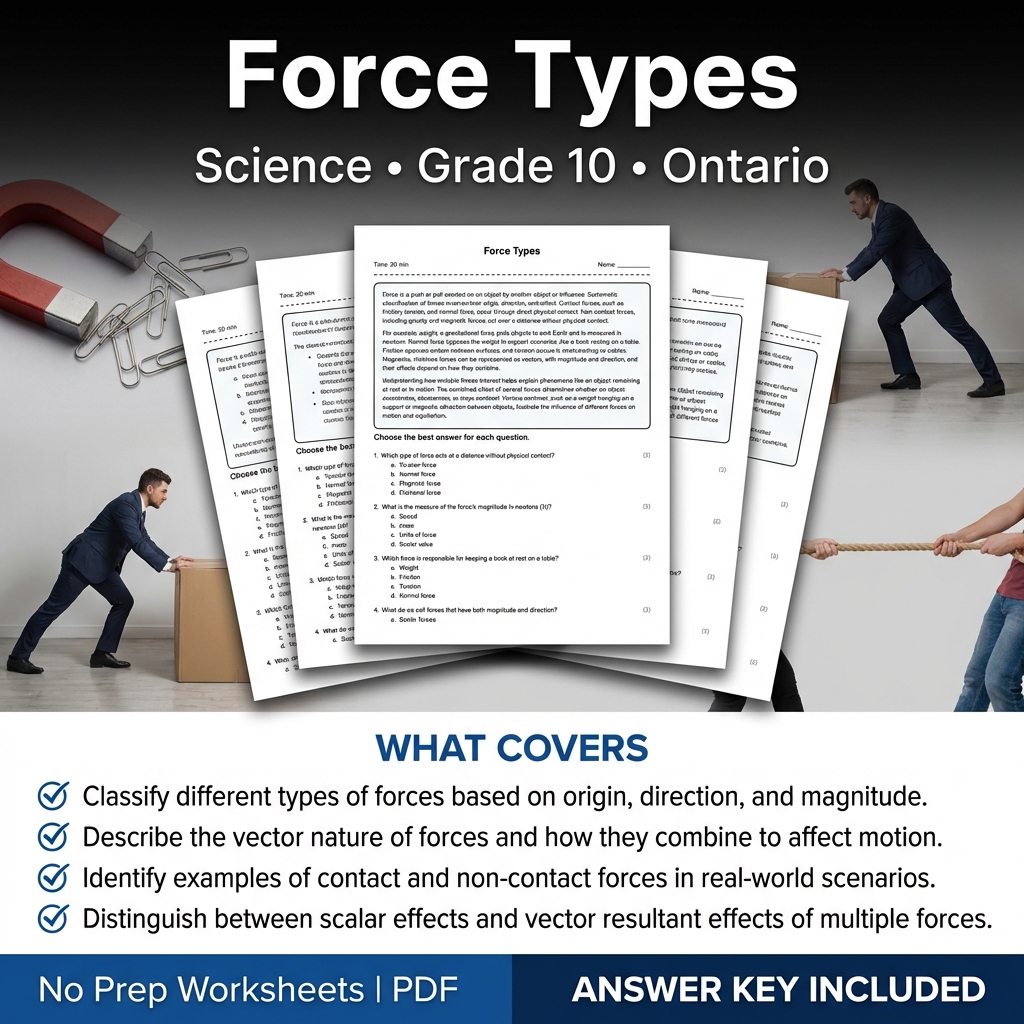
Force Types Science Worksheet for Grade 10 | Ontario Standards
Created byCoral Reef LearningLearning Objectives
- Classify different types of forces based on origin, direction, and magnitude.
- Describe the vector nature of forces and how they combine to affect motion.
- Identify examples of contact and non-contact forces in real-world scenarios.
Instant download
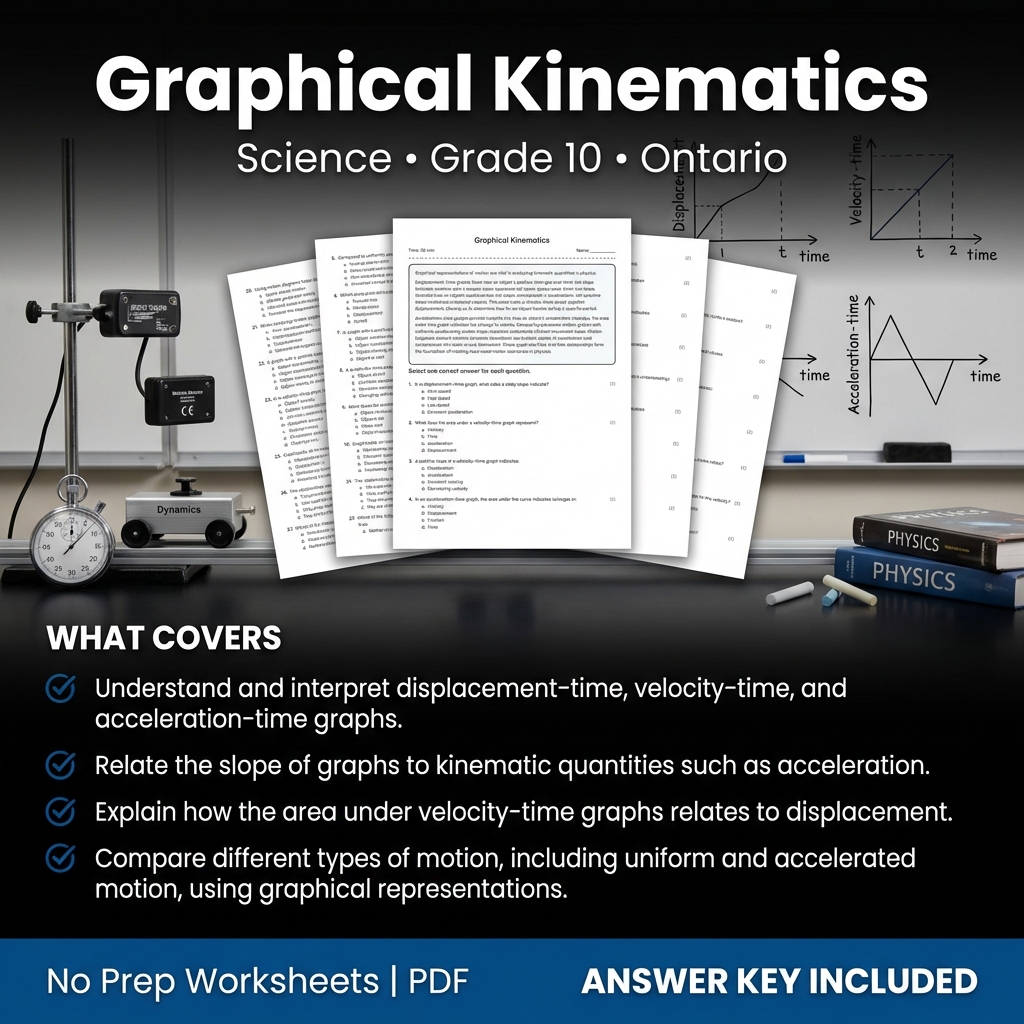
Graphical Kinematics Worksheet for Grade 10 Science – Ontario Standards
Created byCoral Reef LearningLearning Objectives
- Understand and interpret displacement–time, velocity–time, and acceleration–time graphs.
- Relate the slope of graphs to kinematic quantities such as acceleration.
- Explain how the area under velocity–time graphs relates to displacement.
Instant download
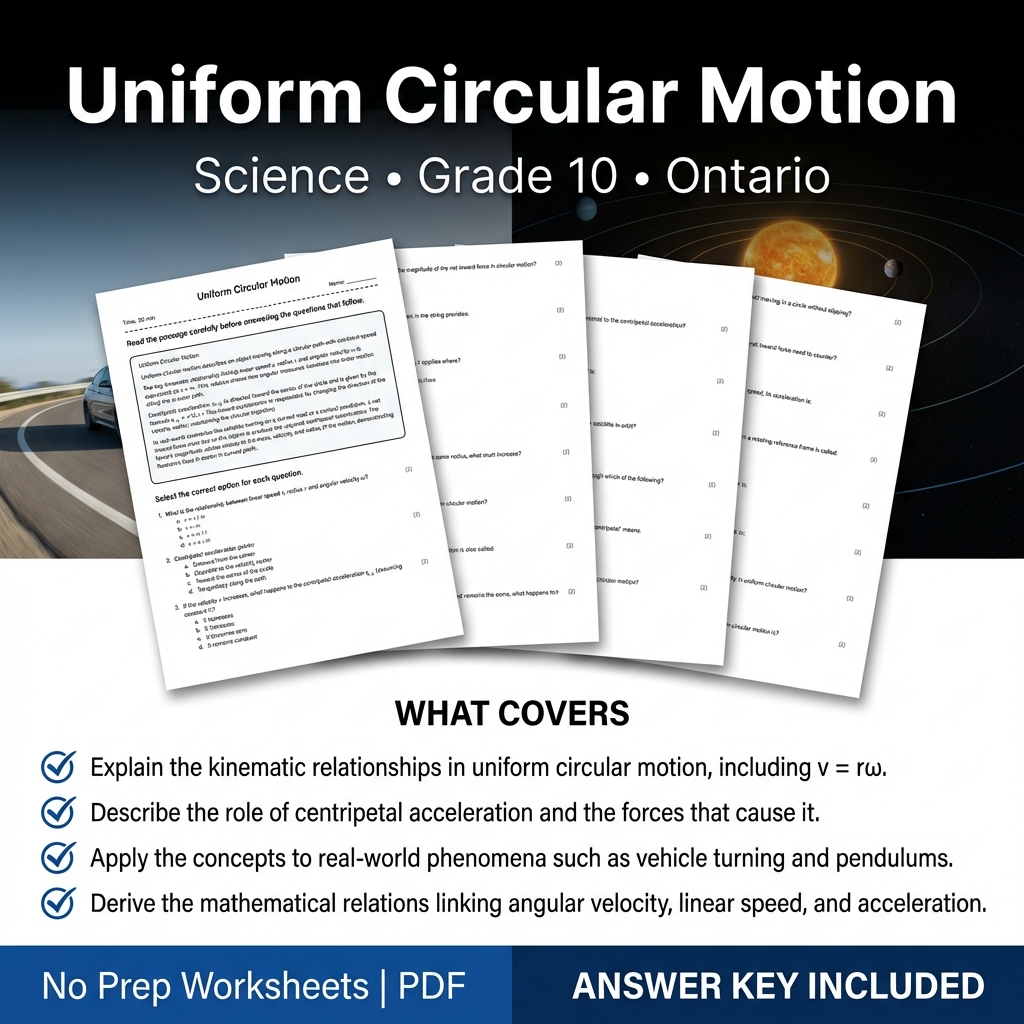
Grade 10 Science Worksheet on Uniform Circular Motion | Ontario Standards
Created byCoral Reef LearningLearning Objectives
- Explain the kinematic relationships in uniform circular motion, including v = rω.
- Describe the role of centripetal acceleration and the forces that cause it.
- Apply the concepts to real-world phenomena such as vehicle turning and pendulums.
Instant download
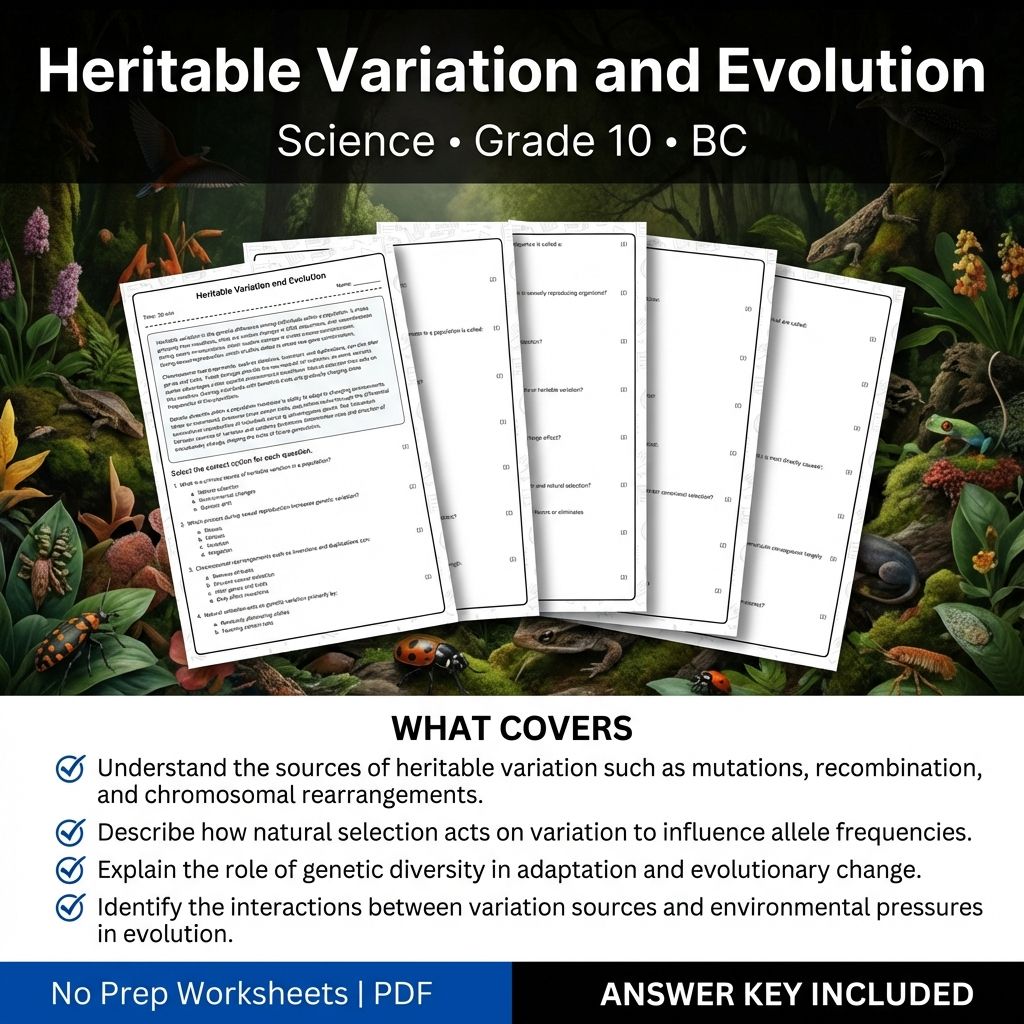
Grade 10 Science | Heritable Variation and Evolution Worksheet(PDF + Answer Key)
Created byCoral Reef LearningLearning Objectives
- Understand the sources of heritable variation such as mutations, recombination, and chromosomal rearrangements.
- Describe how natural selection acts on variation to influence allele frequencies.
- Explain the role of genetic diversity in adaptation and evolutionary change.
Instant download
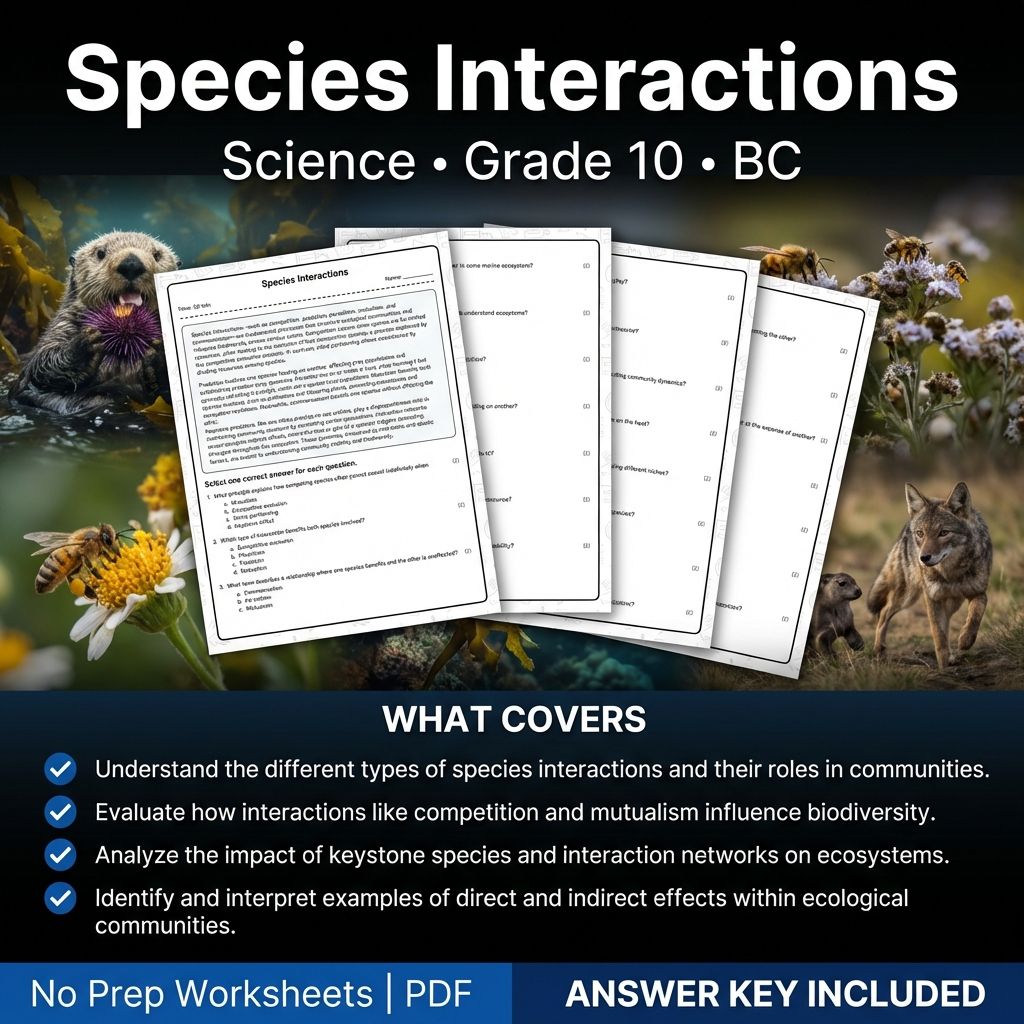
Species Interactions Worksheet for Grade 10 Science – PDF & Answer Key
Created byCoral Reef LearningLearning Objectives
- Understand the different types of species interactions and their roles in communities.
- Evaluate how interactions like competition and mutualism influence biodiversity.
- Analyze the impact of keystone species and interaction networks on ecosystems.
Instant download
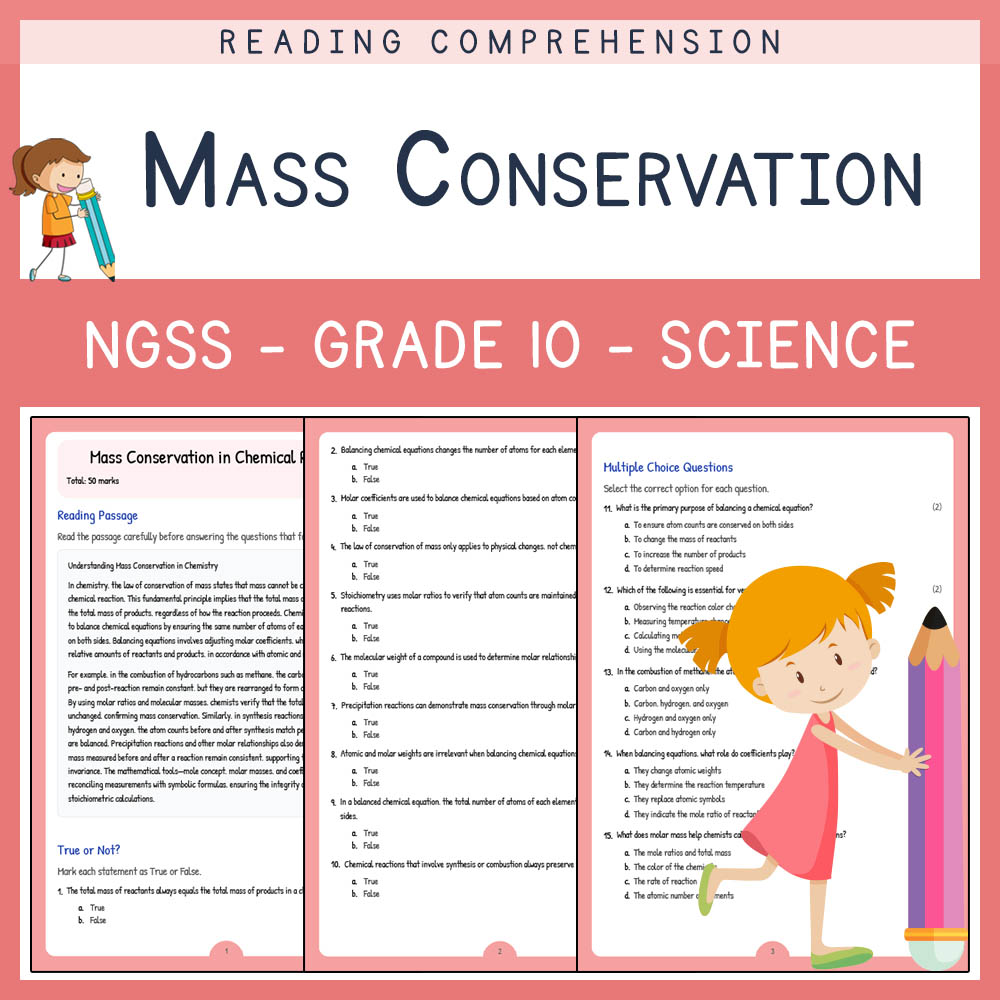
Grade 10 Science | Mass Conservation in Chemical Reactions Worksheet
Created byLumora LearningLearning Objectives
- Understand the principle of mass conservation during chemical reactions through balancing equations.
- Apply molar concepts and atomic weights to verify invariant total mass in reactions.
- Use symbolic representations to track atomic counts before and after reactions.
Instant download
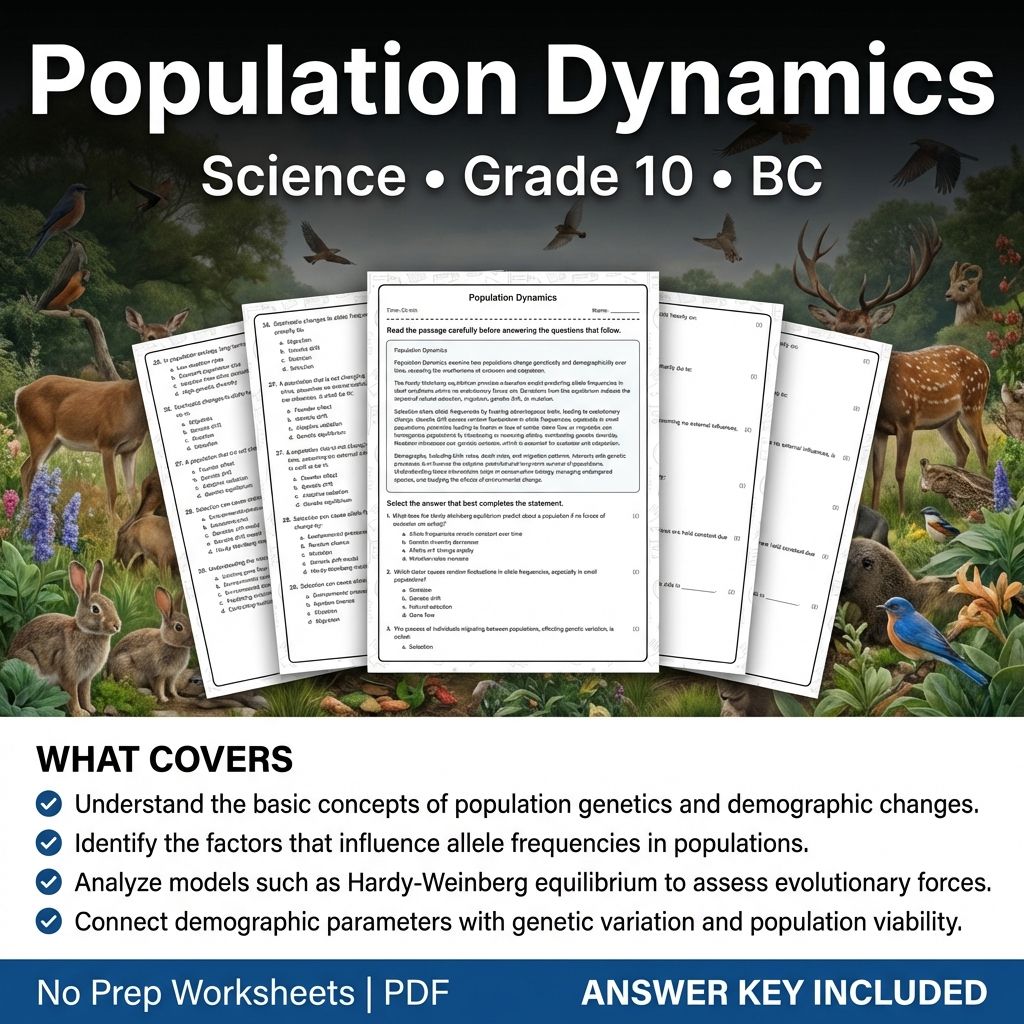
Grade 10 Science | Population Dynamics Worksheet & Answer Key (PDF)
Created byCoral Reef LearningLearning Objectives
- Understand the basic concepts of population genetics and demographic changes.
- Identify the factors that influence allele frequencies in populations.
- Analyze models such as Hardy-Weinberg equilibrium to assess evolutionary forces.
Instant download
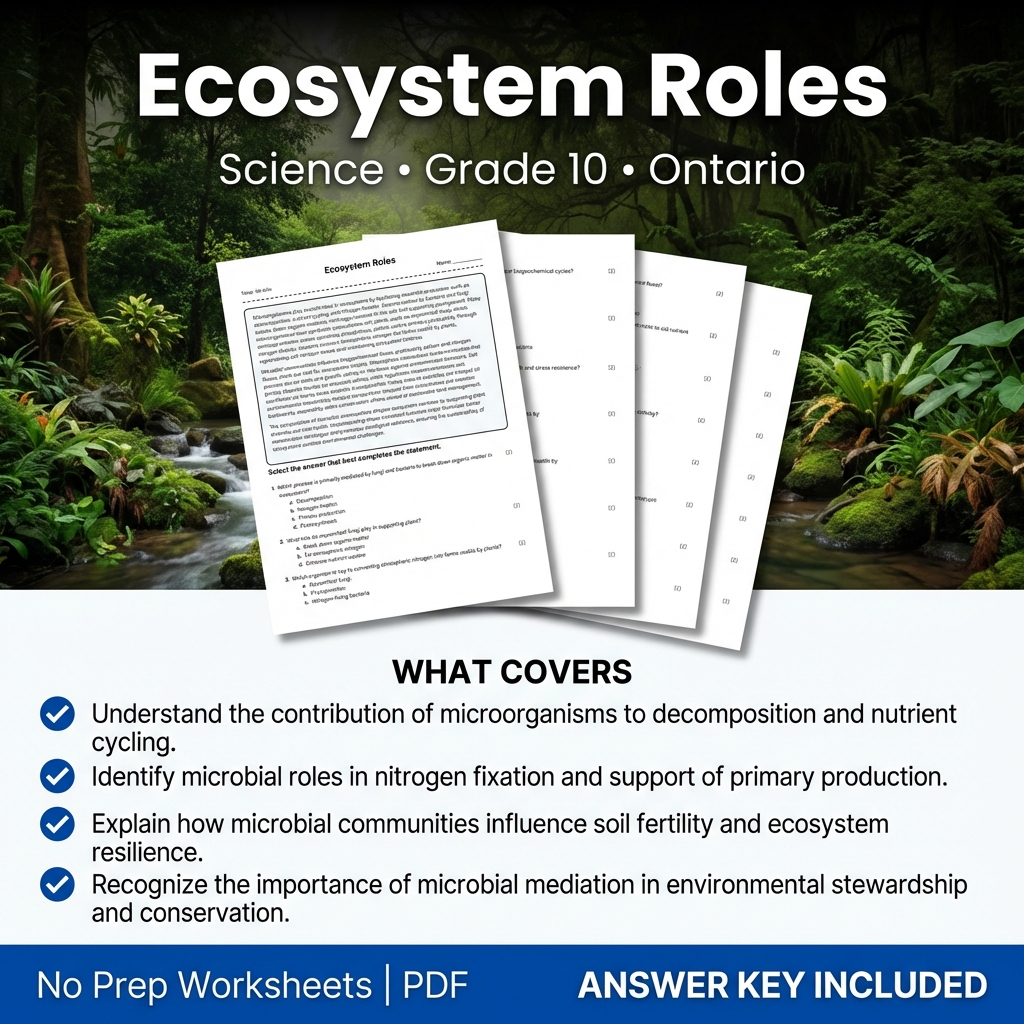
Ecosystem Roles Grade 10 Science Worksheet | Ontario
Created byCoral Reef LearningLearning Objectives
- Understand the contribution of microorganisms to decomposition and nutrient cycling.
- Identify microbial roles in nitrogen fixation and support of primary production.
- Explain how microbial communities influence soil fertility and ecosystem resilience.
Instant download
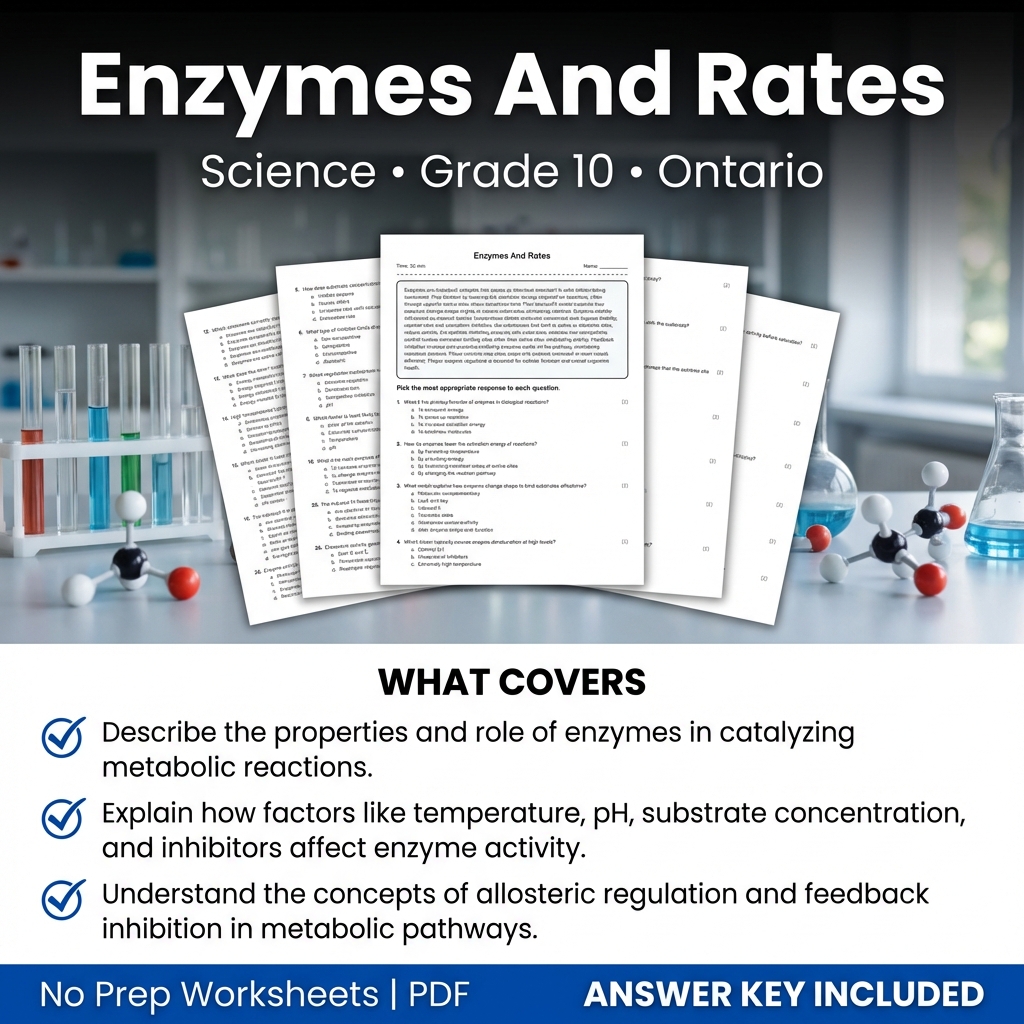
Enzymes and Rates Grade 10 Science Worksheet | Ontario Standards
Created byCoral Reef LearningLearning Objectives
- Describe the properties and role of enzymes in catalyzing metabolic reactions.
- Explain how factors like temperature, pH, substrate concentration, and inhibitors affect enzyme activity.
- Understand the concepts of allosteric regulation and feedback inhibition in metabolic pathways.
Instant download
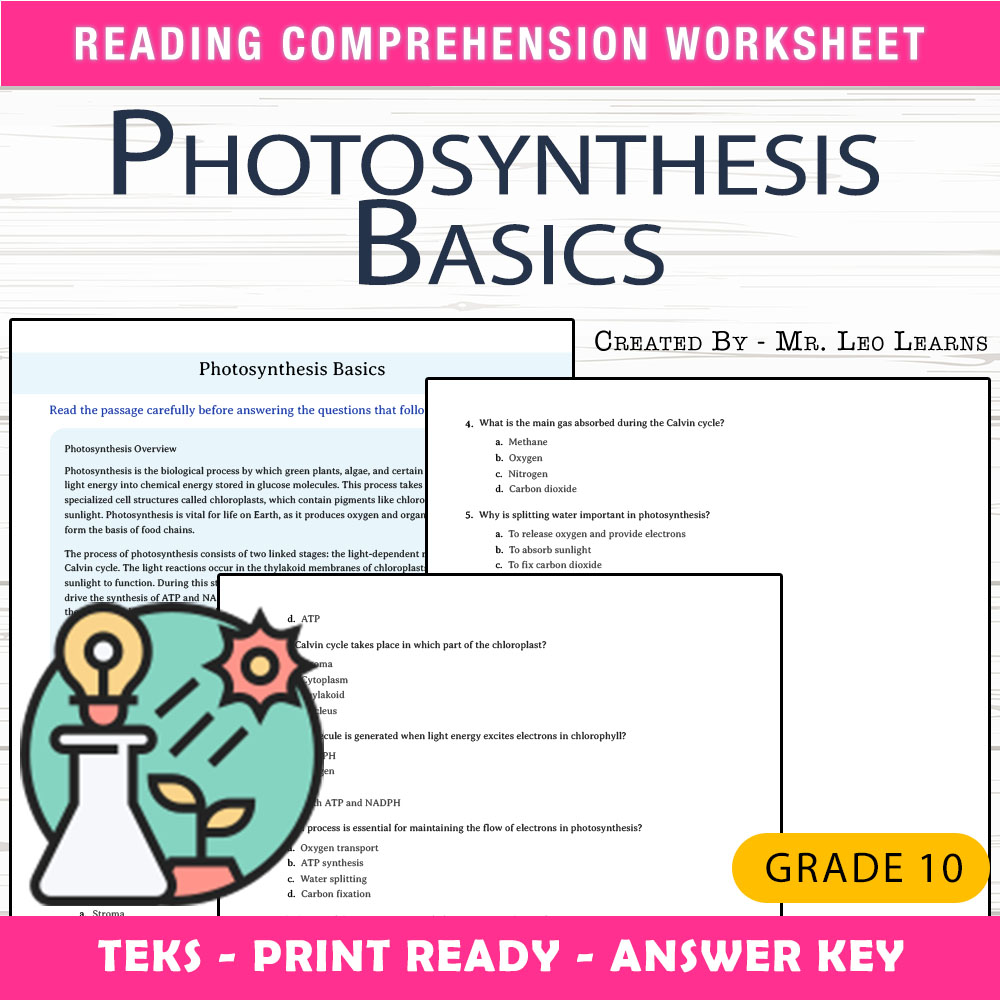
Grade 10 Science – Photosynthesis Basics Worksheet for Mastery
Created byThe Resource HubLearning Objectives
- Describe the two main stages of photosynthesis: light reactions and the Calvin cycle.
- Explain how light energy is converted into chemical energy in chloroplasts.
- Identify the key products of the light reactions and the Calvin cycle.
Also included in: Grade 10 Science Unit Bundle | Energy, Photosynthesis & Cellular Respiration +1 more
Instant download
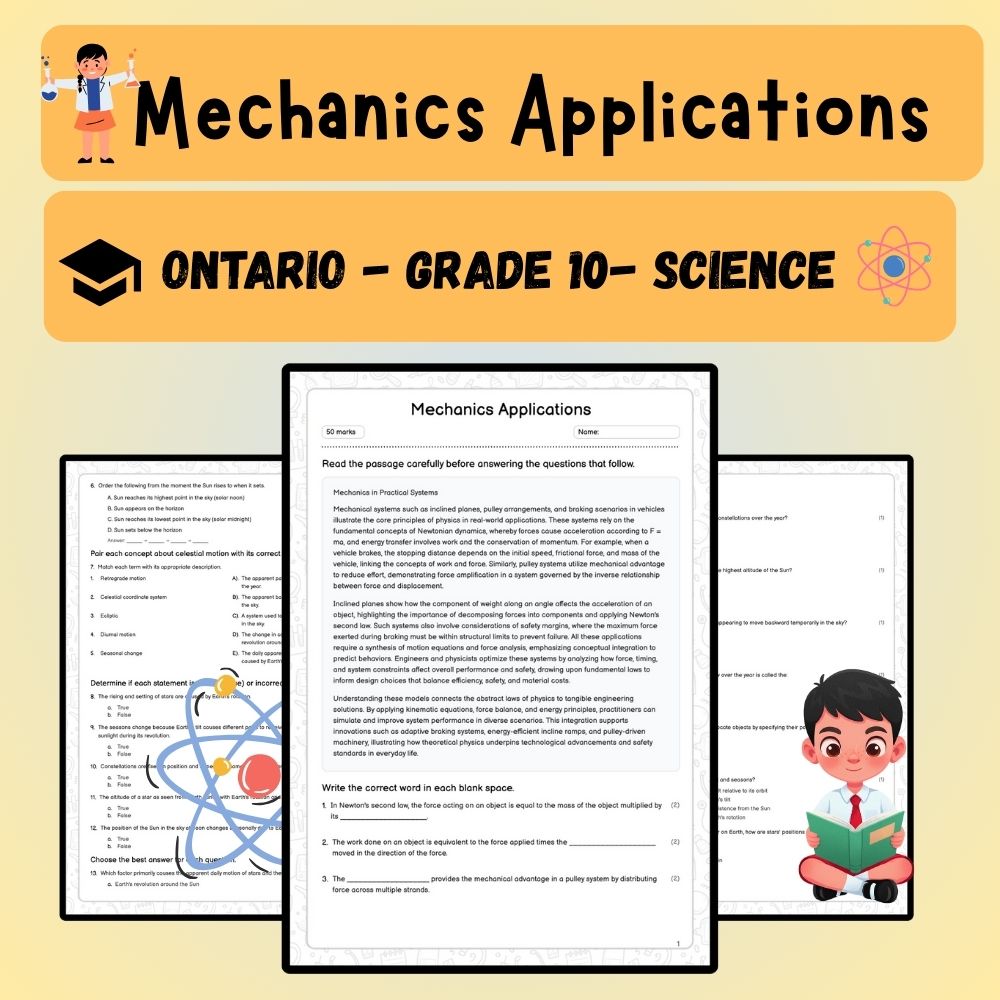
Grade 10 Science: Mechanics Applications Worksheet (Answer Key) – Ontario Standards
Created byPrism Point LearningLearning Objectives
- Understand how kinematic relations and Newtonian dynamics are applied to real-world mechanical systems.
- Analyze the connections between force, mass, acceleration, work, and momentum in practical contexts.
- Predict system behavior and interpret trade-offs between mass, force, and acceleration in engineering situations.
Also included in: Grade 10 Science Unit Bundle | Motion, Forces & Mechanics Worksheets (Ontario Standards) +1 more
Instant download
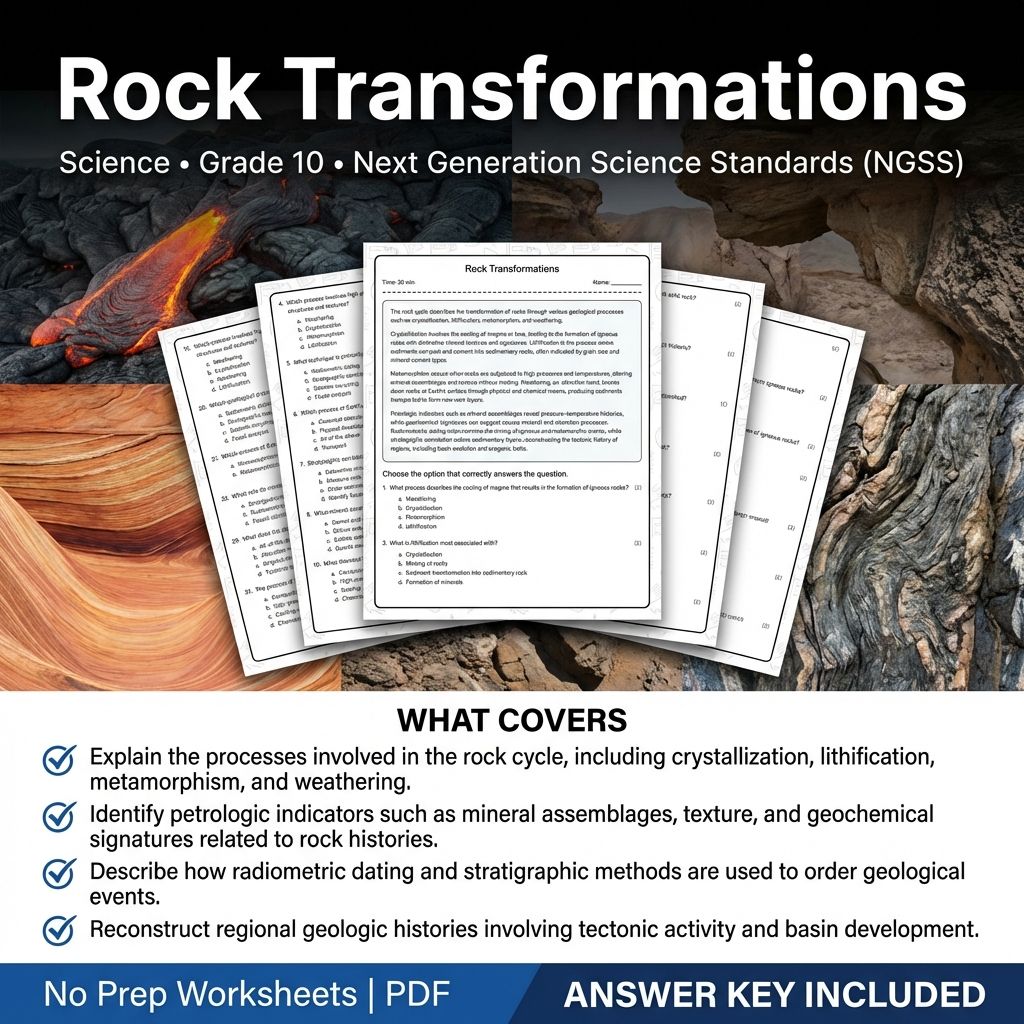
Grade 10 Science | Rock Transformations Worksheet & PDF Answer Key
Created byCoral Reef LearningLearning Objectives
- Explain the processes involved in the rock cycle, including crystallization, lithification, metamorphism, and weathering.
- Identify petrologic indicators such as mineral assemblages, texture, and geochemical signatures related to rock histories.
- Describe how radiometric dating and stratigraphic methods are used to order geological events.
Also included in: Grade 10 Science Unit Bundle – Earth's Surface Atmosphere & Geology Worksheets +1 more
Instant download
Browse more categories
About Grade 10 Worksheets
Find Grade 10 worksheets covering algebra, biology, literature, and history. All 9,385 resources download instantly as PDFs for classwork, homework, or review.
MyTeachingSheets worksheets are made by real teacher-authors and checked before they go live. Download any as a print-ready PDF for lessons, homework, or independent practice — most include answer keys, and previews are always free.