
Grade 10 Worksheets
9,388 grade resources
Political Ideologies Worksheet | Standards-Aligned Grade 10 Social Studies
JCreated byJ.S SheetsLearning Objectives
- Explain major political ideologies (liberalism, conservatism, socialism, and nationalism) and what they say about government and individual rights.
- Compare how ideologies influenced reforms and revolutionary movements across different countries.
- Evaluate how political ideologies shape debates over authority, equality, and national identity.
Instant download
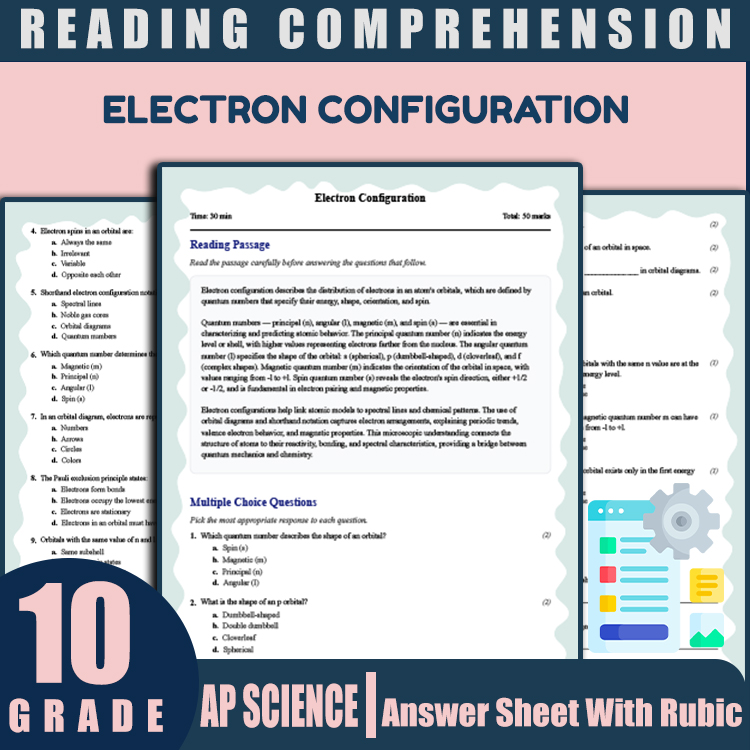
10th Grade Science | Electron Configuration Reading Worksheet (PDF + Answer Key)
JCreated byJ.S SheetsLearning Objectives
- Understand the role of quantum numbers in describing electron positions within an atom.
- Identify orbital shapes, energies, and their relationship to electron distribution.
- Interpret orbital diagrams and configuration shorthand to connect microscopic models with spectral and chemical properties.
Also included in: Grade 10 Science Unit Worksheet Bundle | Chemical Reactions & Atomic Structure +1 more
Instant download

Homeostasis Worksheets: Physiological Set Points Grade 10 Science
 Created bySunny Desk Resources
Learning Objectives
- Describe how homeostasis maintains internal conditions within tolerances despite external changes.
- Explain how sensor-effector loops help regulate variables in living systems.
- Evaluate trade-offs involved in maintaining stability through controlled transport and metabolic adjustments.
Also included in: Cell Structure, Homeostasis & Energy Lesson Bundle: Grade 10 Science Alberta +1 more
Instant download

Grade 10 Circulatory System Worksheet | Human Physiology NGSS Science
 Created byBRIGHT PATH RESOURCES
Learning Objectives
- Understand the structure and function of the heart and blood vessels
- Identify key features of the circulatory system
- Explain how blood circulates through the body
Also included in: Human Physiology Grade 10 Science Daily Reading Worksheets Lesson Bundle | Ngss +1 more
Instant download

Grade 10 Social Studies Worksheet – Impact of World Wars (California Standards)
Created bySunny Desk ResourcesLearning Objectives
- Analyze how World War I and World War II reshaped global power and international relations.
- Evaluate the effects of the world wars on economies, societies, and decolonization.
- Explain how the aftermath of the world wars influenced peace and security institutions.
Also included in: Grade 10 World Wars to Cold War Social Studies Lesson Bundle: California +1 more
Instant download

Grade 10 Social Studies | Globalization Effects Worksheet (California Standards)
Created bySunny Desk ResourcesLearning Objectives
- Explain how globalization increases economic, cultural, and technological interconnectedness.
- Analyze both opportunities and challenges created by globalization.
- Evaluate how cultural preservation and economic inequality shape debates about globalization.
Also included in: Grade 10 World Wars to Cold War Social Studies Lesson Bundle: California +1 more
Instant download

Grade 10 Science – Analytical Techniques & Spectroscopy Daily Reading Worksheet
 Created byBright Mind Resources
Learning Objectives
- Understand the principles of spectroscopic techniques used in analytical chemistry.
- Identify different applications of spectroscopy, chromatography, and titration.
- Interpret instrumental data related to environmental and industrial analyses.
Also included in: Grade 10 Chemistry Science Lesson Bundle Daily Reading Worksheets | Alberta +1 more
Instant download
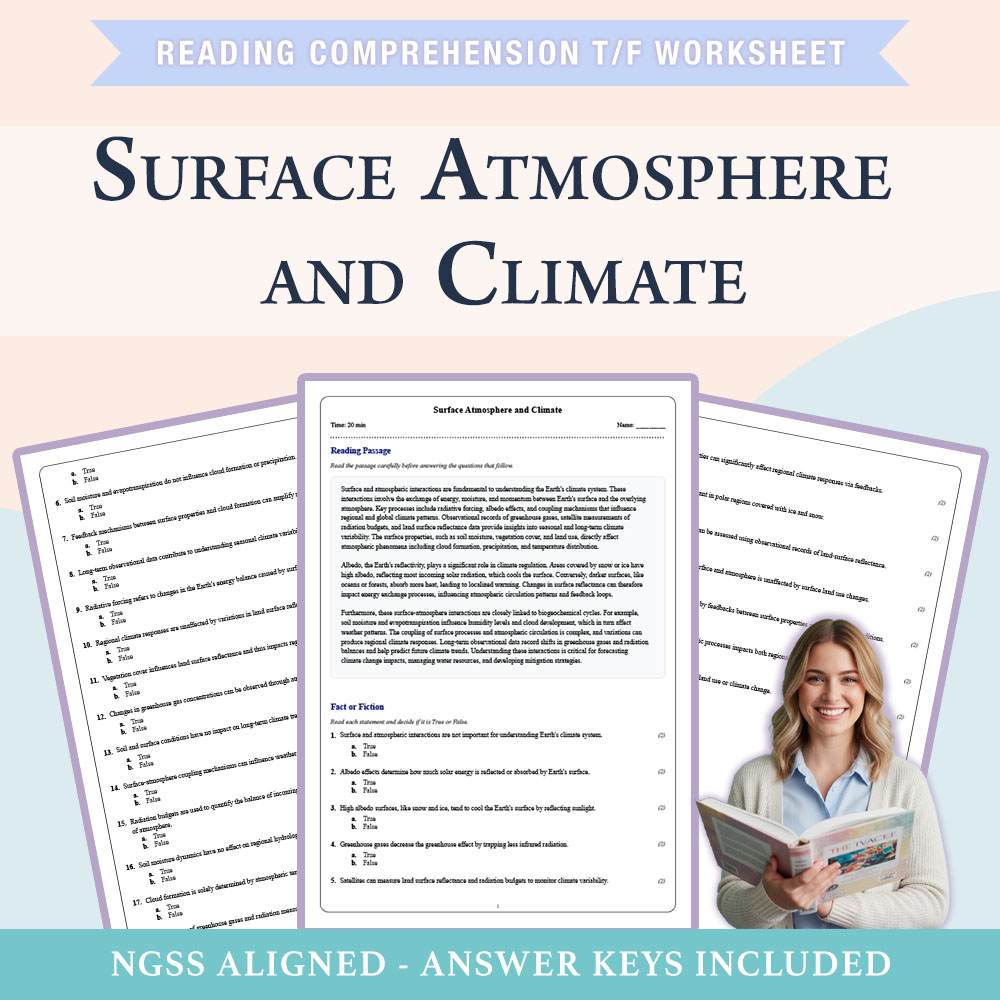
10th Grade Science | Surface Atmosphere and Climate Worksheet (PDF +Answer Key)
 Created byCopper Leaf Classroom
Learning Objectives
- Understand the interactions between surface properties and atmospheric processes.
- Identify how energy exchange and radiative forcing influence climate variability.
- Analyze the feedback mechanisms between surface reflectance, cloud formation, and precipitation patterns.
Also included in: Grade 10 Science | Earth Systems & Climate Change Bundle (PDF + Answer Key) +1 more
Instant download

Extinction Patterns Worksheet | Grade 10 Science Activities
 Created byPrism Point Learning
Learning Objectives
- Explain how background extinction and mass extinctions differ in causes and impacts on biodiversity.
- Identify major drivers of extinction patterns, including environmental change, habitat loss, invasive species, and rapid climate shifts.
- Describe how fossil and genetic evidence can reveal past extinction events and changes in community composition.
Also included in: Grade 10 Evolution, Speciation & Biodiversity Lesson Bundle | BC Science +1 more
Instant download

Trade Networks Worksheet | Standards-Based Social Studies Practice Grade 10
JCreated byJ.S SheetsLearning Objectives
- Explain how historical trade routes like the Silk Road and maritime passages connected distant regions.
- Analyze how trade networks spread goods, cultures, and technologies across continents.
- Evaluate how trade networks influence economic growth and geopolitical power in both past and modern contexts.
Instant download

Grade 10 Science – Stoichiometry Basics Worksheet (Ontario Standard, PDF)
 Created byEvergreen Desk Education
Learning Objectives
- Explain the mole concept and use Avogadro’s number to relate moles and particles.
- Calculate molar mass and convert between grams and moles using molar mass.
- Use balanced chemical equations to determine molar ratios and perform mass-to-mass conversions.
Also included in: Grade 10 Chemistry Fundamentals Science Lesson Bundle Worksheets: Ontario +1 more
Instant download

Grade 10 Science | Bonding Types Worksheet (Ontario) PDF
Created byEvergreen Desk EducationLearning Objectives
- Distinguish ionic, covalent, and metallic bonding using electron transfer vs electron sharing models.
- Explain how bonding type and structure relate to physical properties such as melting point, conductivity, and hardness.
- Use lattice structures, molecular geometry, and polarity to predict molecular behavior.
Also included in: Grade 10 Chemistry Fundamentals Science Lesson Bundle Worksheets: Ontario +1 more
Instant download

Grade 10 Social Studies Worksheet – Multiculturalism Policy (Ontario) (PDF)
Created bySunny Desk ResourcesLearning Objectives
- Explain how multiculturalism policy developed since the 1970s and 1980s and why it gained political support.
- Analyze social consequences of multiculturalism, including cultural recognition and integration challenges.
- Evaluate how demographic change and immigration patterns influenced provincial and community programs.
Also included in: Grade 10 Modern Canadian History Social Studies Lesson Bundle (Ontario) +1 more
Instant download
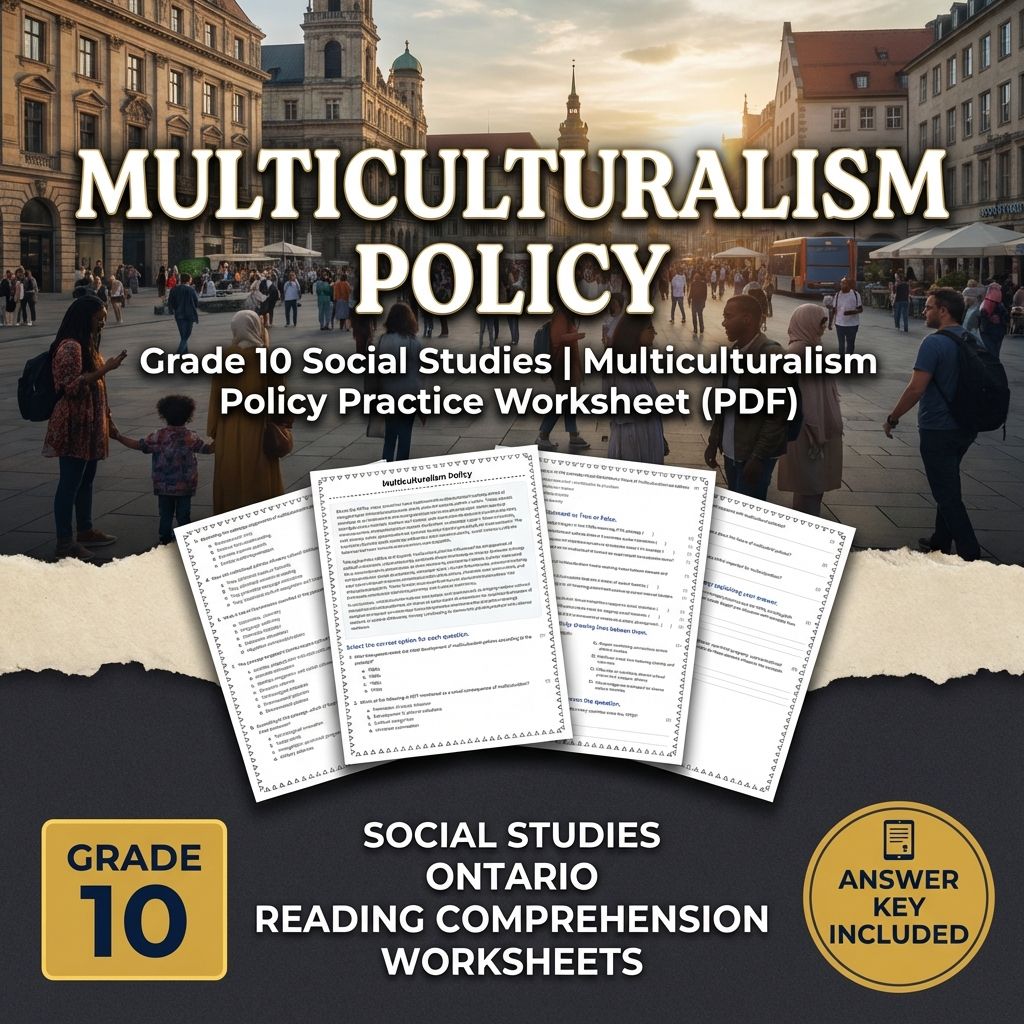
Grade 10 Social Studies | Multiculturalism Policy Practice Worksheet (PDF)
JCreated byJ.S SheetsLearning Objectives
- Analyze the evolution of multiculturalism policy since the 1970s and 1980s.
- Understand the social consequences and challenges of multicultural integration.
- Evaluate the role of cultural recognition in shaping national identity.
Instant download
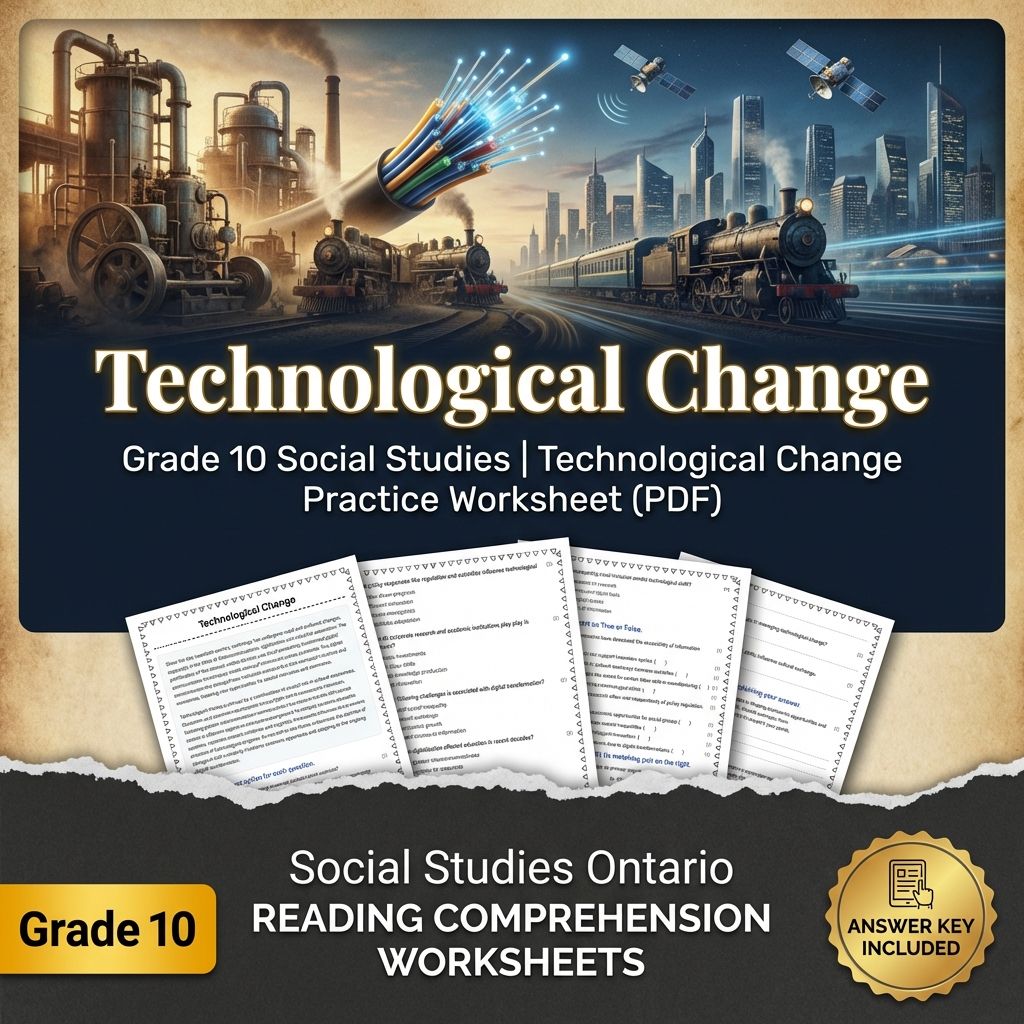
Grade 10 Social Studies | Technological Change Practice Worksheet (PDF)
JCreated byJ.S SheetsLearning Objectives
- Analyze the impact of technological advancements on communication, employment, and culture since the late twentieth century.
- Identify causes and consequences of cycles of innovation and related policy responses.
- Evaluate the ongoing influence of technological shifts on knowledge production and labor skills.
Instant download
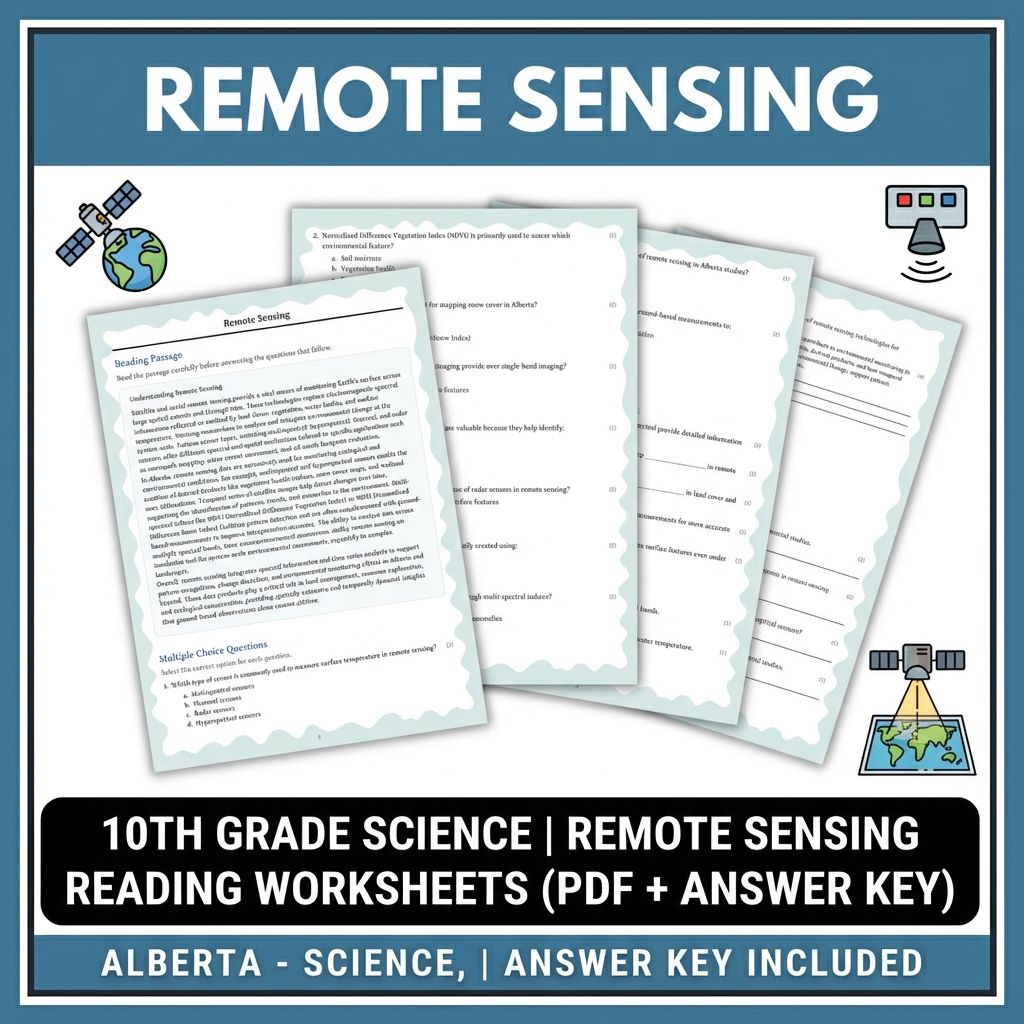
10th Grade Science | Remote Sensing Reading Worksheets (PDF + Answer Key)
JCreated byJ.S SheetsLearning Objectives
- Understand the principles and applications of satellite and aerial remote sensing.
- Identify sensor types and spectral information used in environmental monitoring.
- Learn about derived products like snowpack mapping, oil-sands footprint assessment, and prairie wetland monitoring.
Also included in: Grade 10 Science Unit Bundle – Earth Systems, Climate & Remote Sensing Worksheets +1 more
Instant download

Environmental Challenges Worksheet | Standards-Aligned Social Studies Grade 10
JCreated byJ.S SheetsLearning Objectives
- Explain how industrialization and technology contributed to environmental challenges such as pollution, deforestation, and climate change.
- Analyze how global interdependence can amplify environmental problems and shape international sustainability efforts.
- Evaluate how historical economic and technological choices affect ecological and societal health today.
Instant download

Grade 10 Science | Model Refinement Worksheet | AP Aligned
 Created byLumora Learning
Learning Objectives
- Understand the process of iterative model improvement through comparison with observed behavior.
- Learn how to estimate parameters and include additional processes such as damping or friction in models.
- Apply residual analysis and sensitivity assessment to refine models effectively.
Instant download

Grade 10 Science | Quantitative Communication Worksheet | AP Aligned
Created byLumora LearningLearning Objectives
- Understand conventions and strategies for communicating quantitative results.
- Apply uncertainty notation, significant digits, and graphical annotations appropriately.
- Interpret and justify conclusions using numerical summaries, confidence intervals, and visual aids.
Instant download

Grade 10 Science | Variables & Constraints Worksheet | AP Standards
Created byLumora LearningLearning Objectives
- Identify and classify independent, dependent, and controlled variables in experiments.
- Explain the role of constraints in shaping observational and experimental approaches.
- Analyze scenarios to determine operational definitions, boundary conditions, and limitations.
Instant download

Punctuation Clarity Worksheet for Grade 10 ELA | Standard Aligned Practice
JCreated byJ.S SheetsLearning Objectives
- Use commas correctly to manage introductory elements, coordinating structures, and nonessential information.
- Distinguish correct use of apostrophes for contractions and possessives.
- Apply semicolons and colons to clarify relationships between closely related independent clauses and to introduce explanations.
Instant download

Purposeful Presentations Worksheet Pack | Grade 10 ELA Practice
Created bySunny Desk ResourcesLearning Objectives
- Explain how a clear purpose guides the introduction, development, and closing of a spoken presentation.
- Identify how supporting details and transitions help a presentation stay coherent and easy to follow.
- Revise presentation ideas so they match a specific goal (inform, persuade, or explain a process).
Also included in: Reasoned Evidence & Purposeful Presentations Grade 10 ELA Lesson Bundle | BC +1 more
Instant download
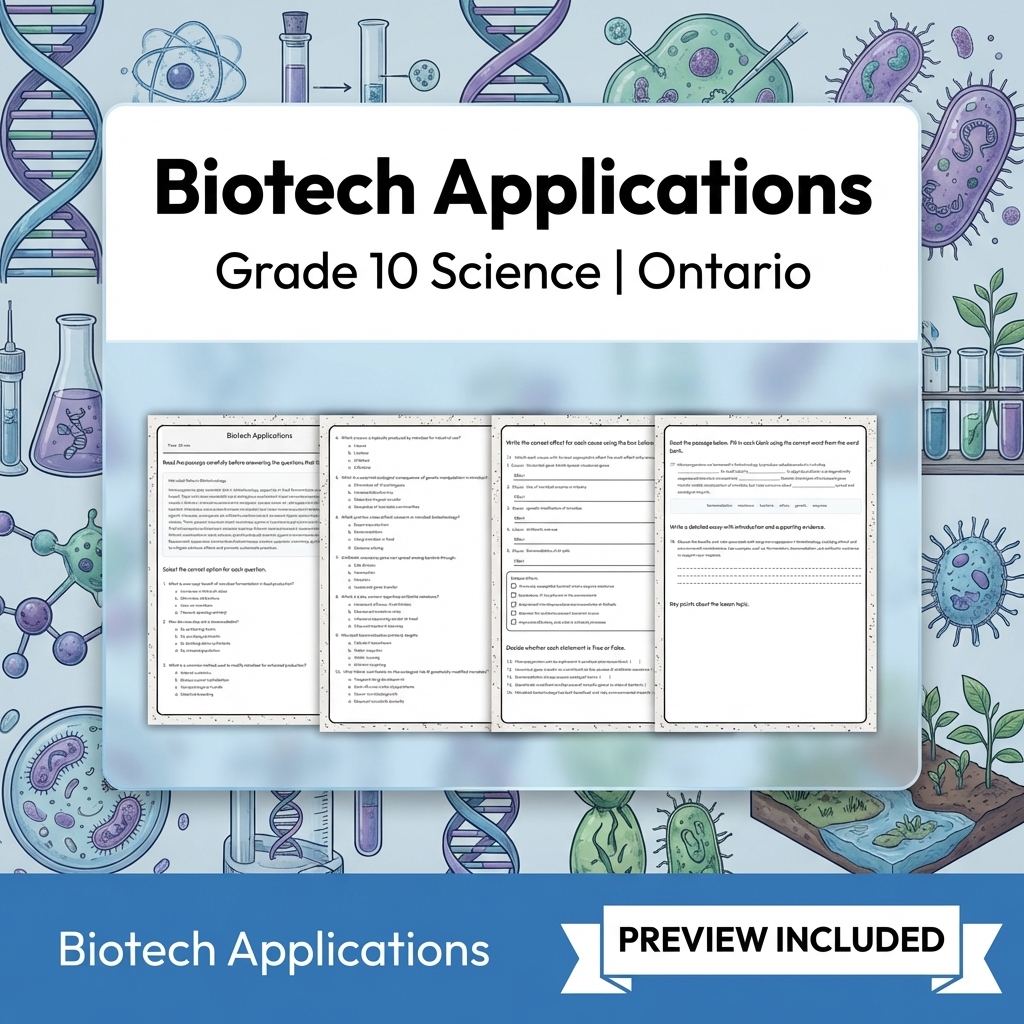
Grade 10 Science | Biotech Applications Worksheet with Short Notes
 Created byMeadowlark Worksheets
Learning Objectives
- Understand key biotechnological applications of microorganisms in fermentation, bioremediation, and enzyme production.
- Explain the principles of genetic manipulation of microbial systems for product synthesis.
- Analyze issues related to antibiotic resistance, horizontal gene transfer, and ecological impacts of microbial biotechnology.
Also included in: Grade 10 Science Lesson Group Bundle | Ontario Curriculum +1 more
Instant download

Soviet Collapse Worksheet | Grade 10 Social Studies | Standards-Aligned
JCreated byJ.S SheetsLearning Objectives
- Explain key political, economic, and social causes that contributed to the Soviet Union’s dissolution.
- Analyze how Gorbachev’s reforms (perestroika and glasnost) affected governance and public life.
- Evaluate the roles of nationalist movements and international responses in the end of the Cold War.
Instant download
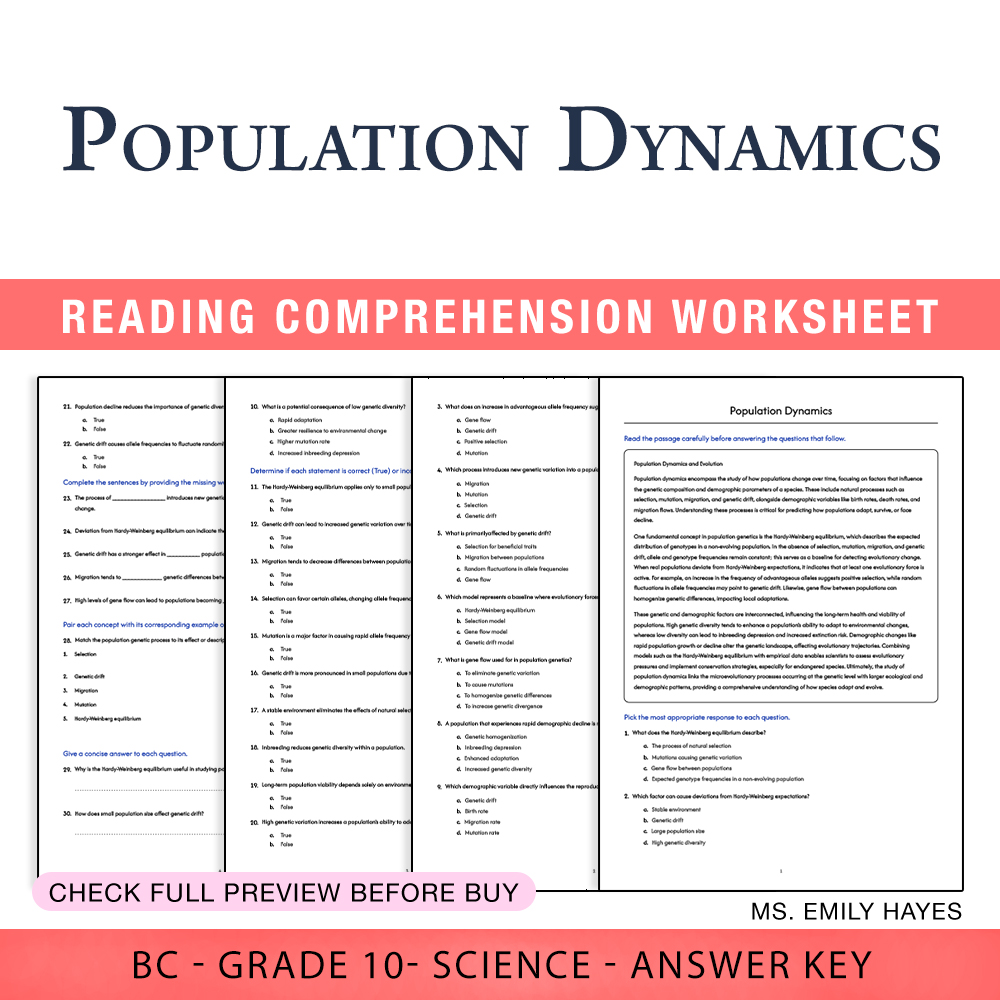
10th Grade Science | Population Dynamics Worksheet (PDF+ Answer Key)
Created byCopper Leaf ClassroomLearning Objectives
- Understand the principles of population genetics and how evolutionary forces influence allele frequencies
- Identify different models and concepts in population ecology and their significance
- Explain the Hardy-Weinberg equilibrium and what deviations indicate about evolutionary processes
Also included in: Grade 10 Science BC | Evolution, Biodiversity & Ecology (PDF + Answer Key) +1 more
Instant download
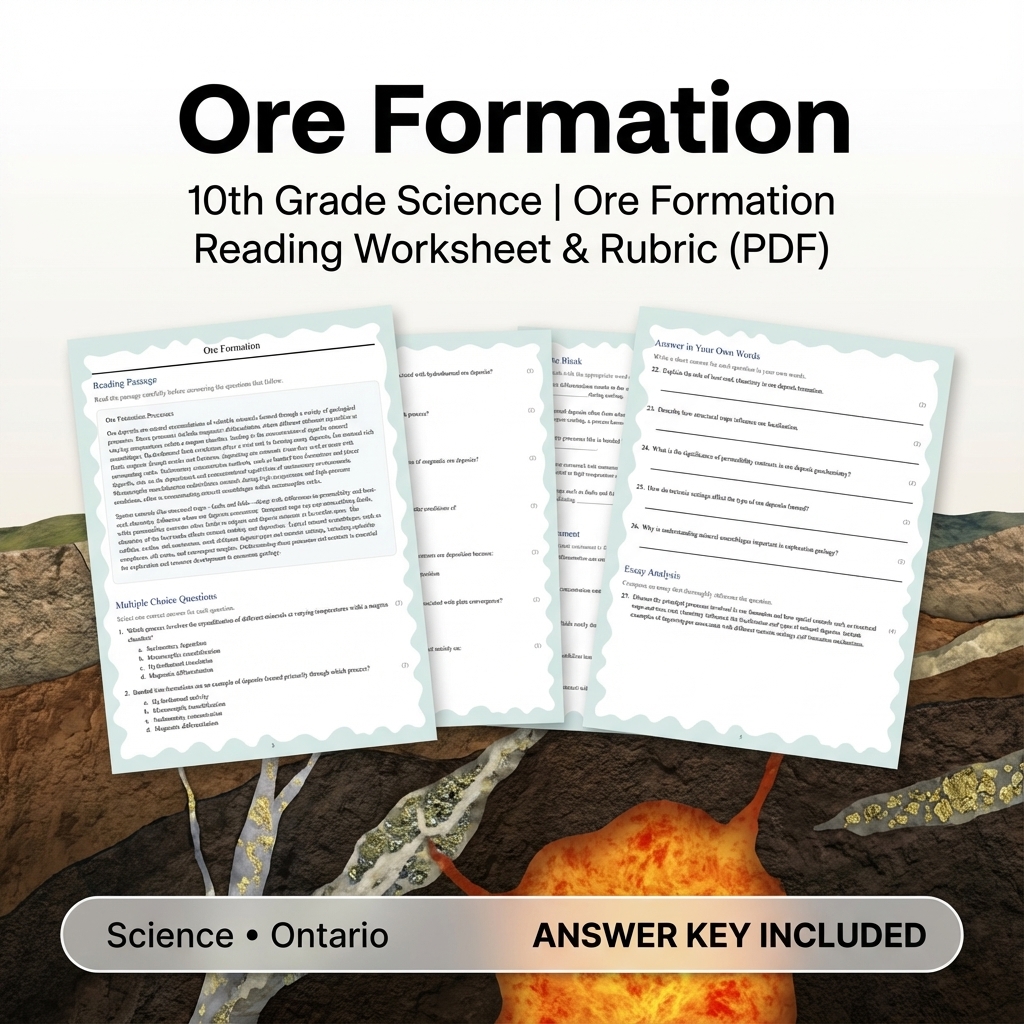
10th Grade Science | Ore Formation Reading Worksheet & Rubric (PDF)
JCreated byJ.S SheetsLearning Objectives
- Understand the principal processes involved in ore formation including magmatic, hydrothermal, sedimentary, and metamorphic mechanisms.
- Identify the types of mineral deposits associated with different ore-forming processes and tectonic settings.
- Describe spatial controls such as structural traps, permeability contrasts, and host-rock chemistry that influence ore localization.
Also included in: Grade 10 Science Unit Bundle – Earth Dynamics & Resources (PDF + Rubrics) +1 more
Instant download
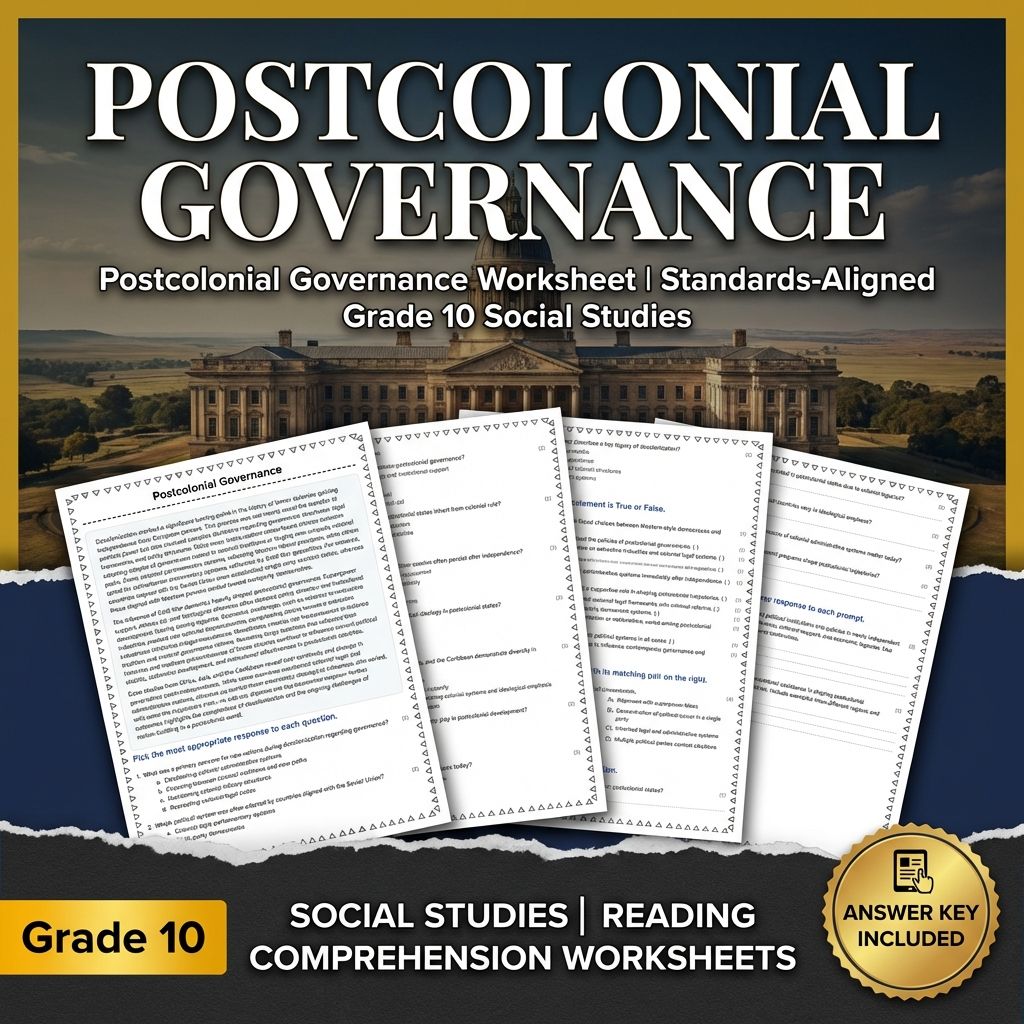
Postcolonial Governance Worksheet | Standards-Aligned Grade 10 Social Studies
JCreated byJ.S SheetsLearning Objectives
- Analyze how decolonization influenced political institutions and legal frameworks in newly independent states.
- Compare different political systems such as one-party and multi-party democracies.
- Interpret the influence of Cold War alignments on governance and policy choices.
Instant download
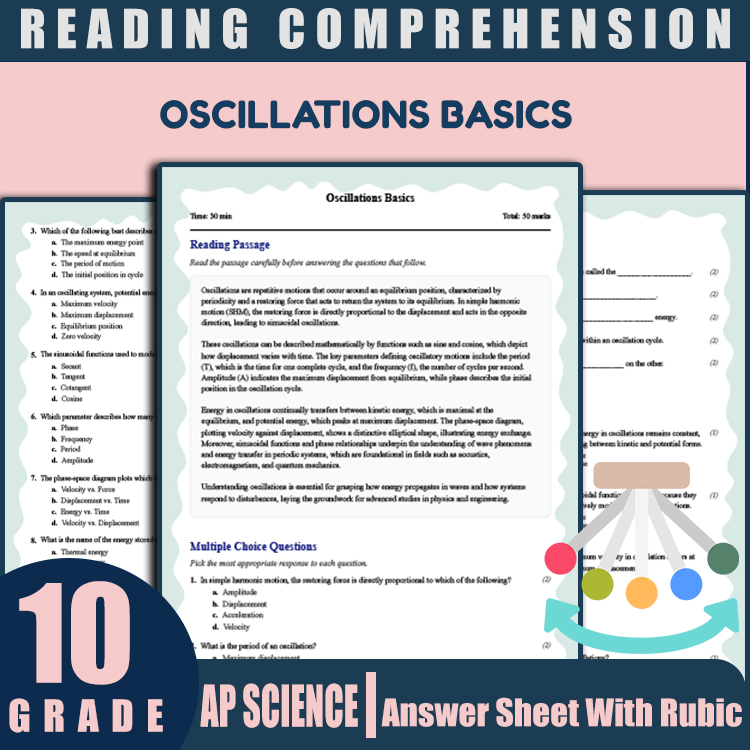
10th Grade Science | Oscillations Basics Reading Worksheet (PDF + Answer Key)
JCreated byJ.S SheetsLearning Objectives
- Understand the principles of simple harmonic motion and how restoring forces influence oscillations.
- Define key parameters such as period, frequency, amplitude, and phase in oscillatory systems.
- Explain the energy partitioning between kinetic and potential energy during oscillations.
Also included in: Grade 10 Science Unit Bundle | Motion, Forces & Energy Worksheets (PDF) +1 more
Instant download

Evidence And Details Worksheet Pack | Grade 10 ELA Practice
Created bySunny Desk ResourcesLearning Objectives
- Explain how evidence and precise details strengthen a central claim or theme
- Identify different types of evidence (facts, quotations, examples, and reasoning) and evaluate their relevance
- Revise writing so evidence is placed in the best location, explained for significance, and not repeated unnecessarily
Also included in: Grade 10 Writing Lesson Bundle – ELA Skills BC Framework +1 more
Instant download
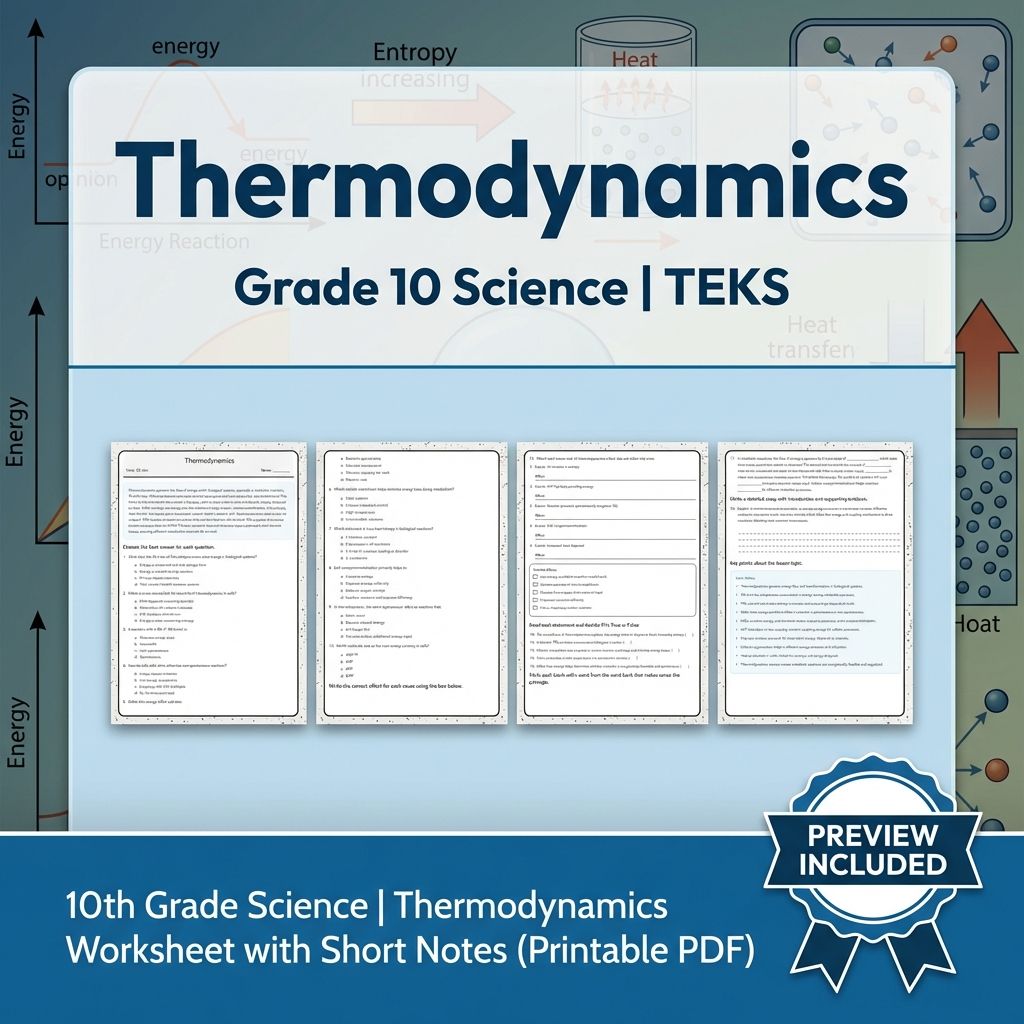
10th Grade Science | Thermodynamics Worksheet with Short Notes (PDF)
Created byMeadowlark WorksheetsLearning Objectives
- Understand the fundamental principles of thermodynamics as they relate to biological systems.
- Explain how the first and second laws of thermodynamics apply to metabolic reactions.
- Quantify the concept of Gibbs free energy and its importance in biological spontaneity.
Instant download
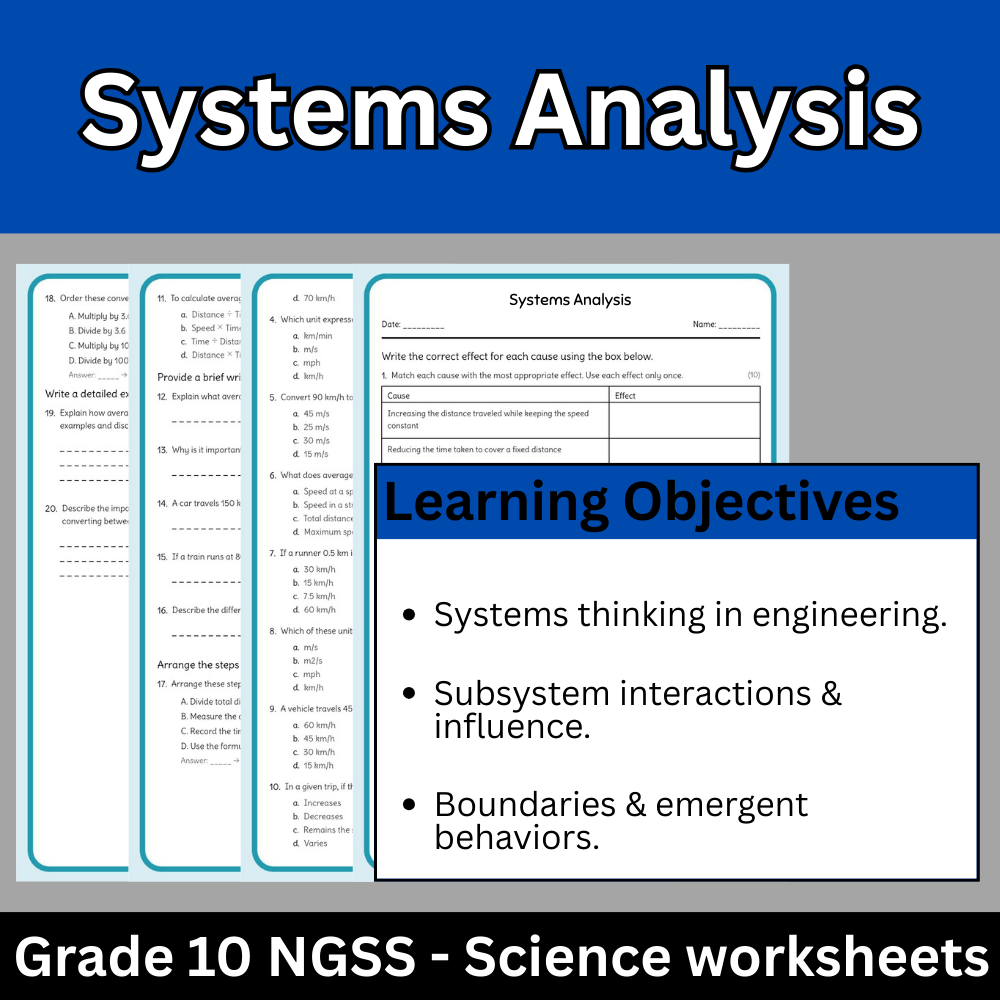
Grade 10 Science | Model Evaluation Worksheet (PDF) – NGSS Standards
Created byBright Mind ResourcesLearning Objectives
- Understand the role of quantitative data in model validation.
- Analyze prototype data to compare with simulation results.
- Learn methods for assessing reliability and predicting failure modes.
Instant download

Grade 10 Science | Atomic Structure Worksheet | AP Aligned
Created byLumora LearningLearning Objectives
- Describe the subatomic components of atoms and their roles.
- Explain how emission spectra and scattering experiments provide evidence for atomic models.
- Connect electron distribution and nuclear charge to elemental identity and isotopic variation.
Instant download
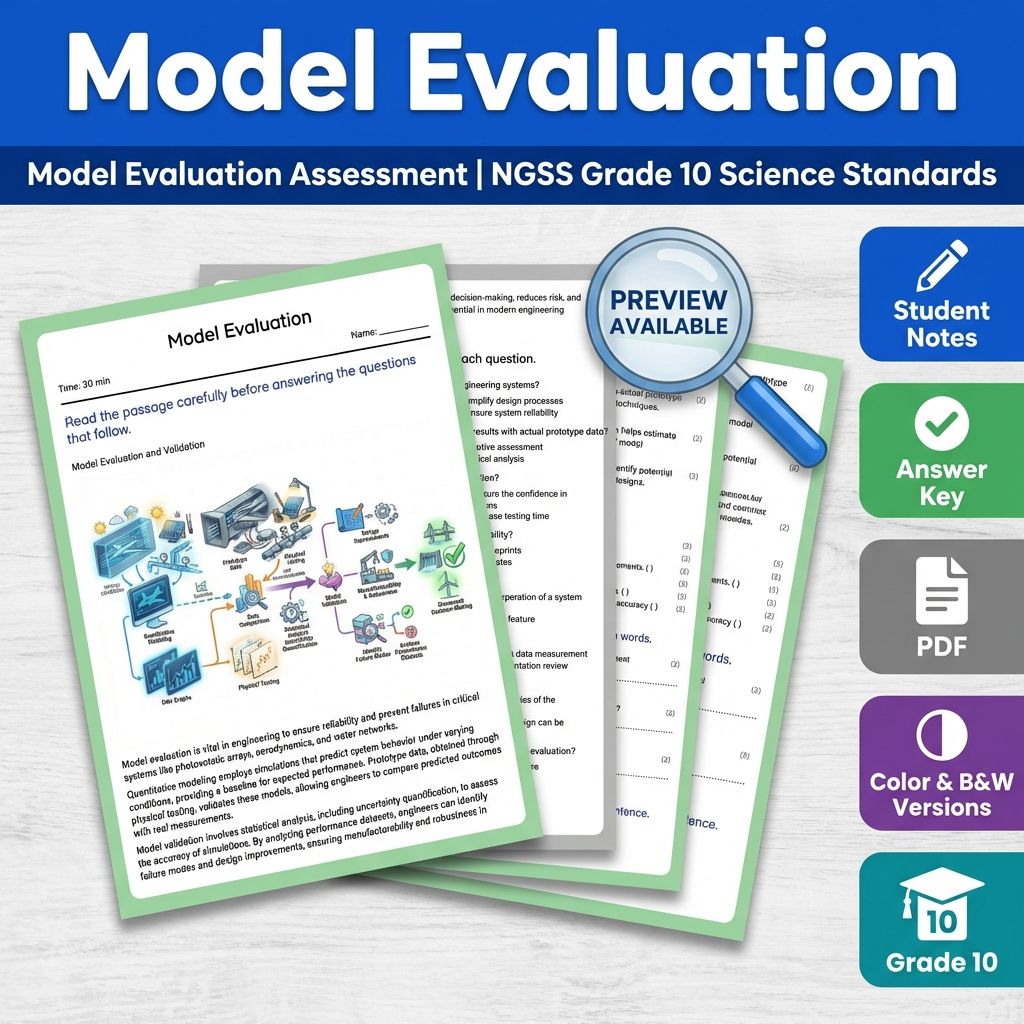
Model Evaluation Assessment | NGSS Grade 10 Science Standards
Created byPrism Point LearningLearning Objectives
- Understand the role of quantitative analysis in model validation.
- Analyze prototype data and compare it with simulation outcomes.
- Evaluate model reliability and predict failure modes using statistical metrics.
Also included in: Grade 10 Science Assessment Mini Bundle | Engineering Design & Systems
Instant download

Grade 10 Science – Ecosystem Roles & Microorganisms | Daily Reading Worksheet
Created byBright Mind ResourcesLearning Objectives
- Understand how microorganisms contribute to decomposition in ecosystems.
- Identify key microbial processes like nutrient cycling and nitrogen fixation.
- Recognize the importance of microbes in maintaining soil fertility and ecosystem stability.
Also included in: Grade 10 Cell Processes & Energy Science Daily Reading Lesson Bundle | Ontario +1 more
Instant download
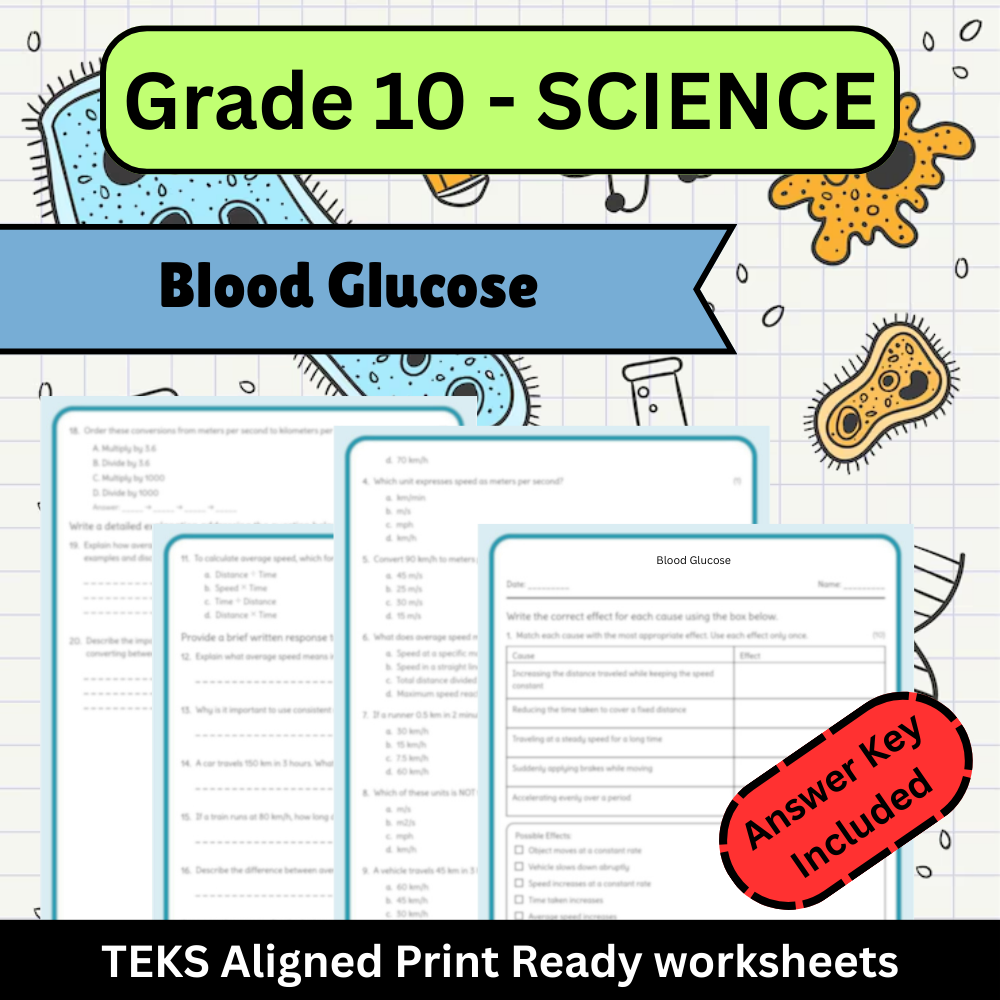
Grade 10 Science | Blood Glucose Regulation Worksheet + Answer Key| TEKS Aligned
Created byBright Mind ResourcesLearning Objectives
- Explain how the endocrine system helps regulate blood glucose levels.
- Identify the roles of insulin and glucagon in blood glucose regulation.
- Describe feedback mechanisms involved in maintaining energy homeostasis.
Also included in: Grade 10 Science | Body Systems & Homeostasis Worksheet Bundle (TEKS Aligned) +5 more
Instant download
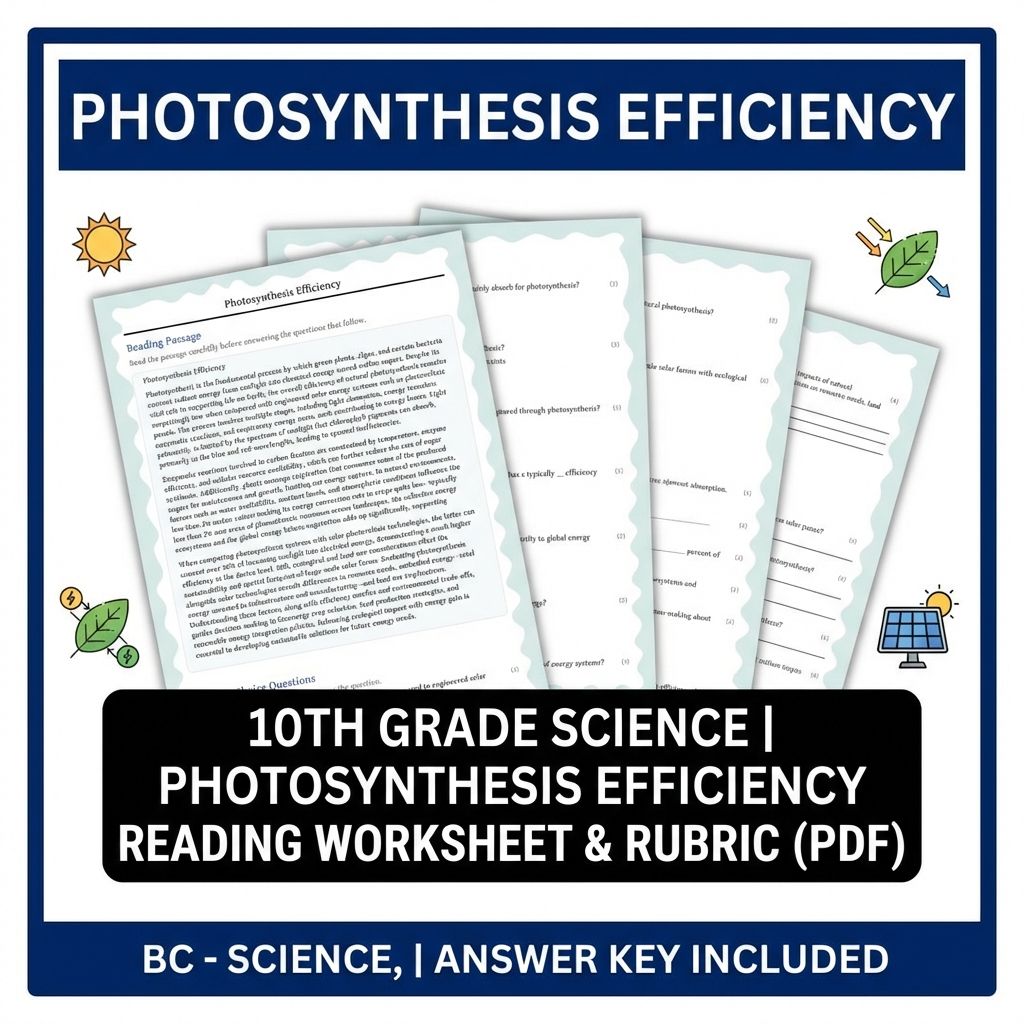
10th Grade Science | Photosynthesis Efficiency Reading Worksheet & Rubric (PDF)
JCreated byJ.S SheetsLearning Objectives
- Understand the factors limiting photosynthesis efficiency in plants.
- Compare natural photosynthetic processes with engineered solar technologies.
- Evaluate the environmental and resource trade-offs associated with bioenergy and solar energy.
Instant download
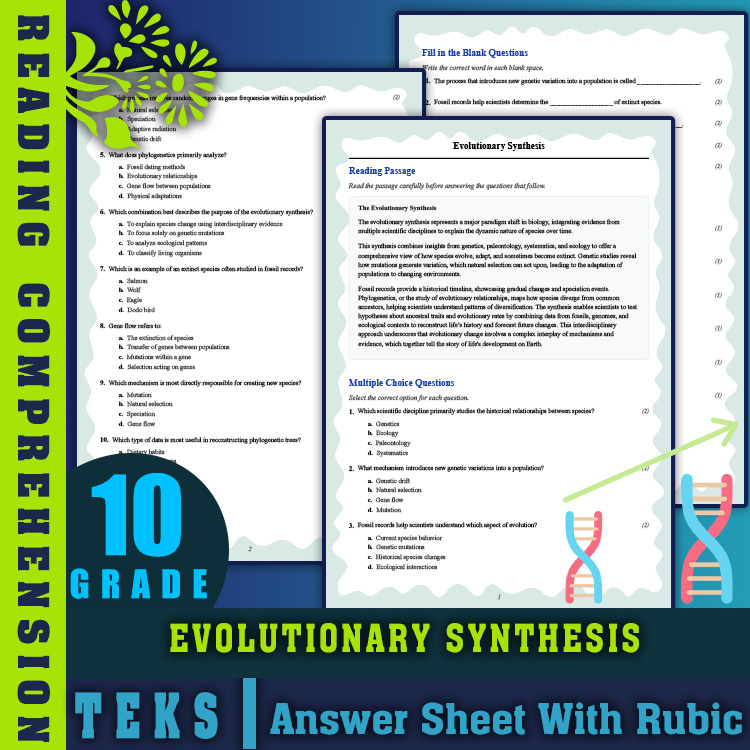
10th Grade Science | Evolutionary Synthesis Reading Worksheet (PDF + Rubric)
JCreated byJ.S SheetsLearning Objectives
- Understand how evidence from various scientific disciplines contributes to the concept of evolutionary synthesis.
- Identify mechanisms such as natural selection, genetic drift, mutation, and gene flow in evolutionary processes.
- Analyze how fossil records and phylogenetic relationships help reconstruct the history of life.
Instant download

Grade 10 Social Studies – Post-War Effects Worksheet (TEKS) (PDF)
Created bySunny Desk ResourcesLearning Objectives
- Explain how the aftermath of the World Wars and the Cold War shaped national borders and political regimes.
- Identify ways superpower rivalry influenced social structures and international conflicts.
- Use evidence from historical events to describe continuities and changes in global politics after 1945.
Also included in: Grade 10 Global Conflicts Social Studies Full-Year Worksheet Bundle – TEKS +1 more
Instant download
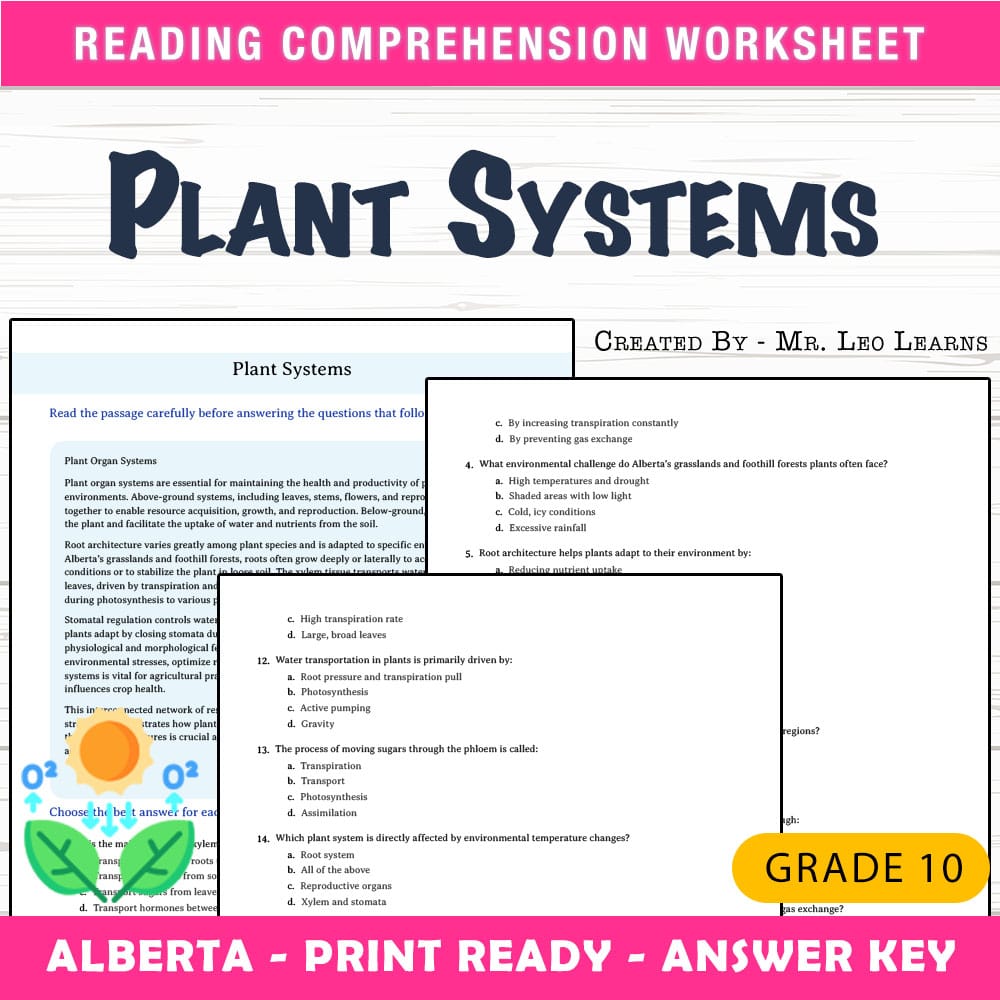
Grade 10 Science — Worksheet MCQ Paper for Plant Systems
 Created byThe Resource Hub
Learning Objectives
- Understand the roles of root architecture, xylem and phloem transport, and stomatal regulation in plant systems.
- Explain how plant organ systems coordinate resource acquisition, transport, and reproduction.
- Connect plant system morphology to environmental responses and agricultural management.
Also included in: Grade 10 Science Cells and Systems Lesson Bundle | Alberta Curriculum +1 more
Instant download

Grade 10 Periodic Trends Worksheet with Answer Key | Ontario Science PDF
 Created byClear Sky Classroom
Learning Objectives
- Explain how atomic radius, ionization energy, and electronegativity change across periods and down groups.
- Use group and period relationships to predict valence electron patterns and likely reactivity.
- Classify metals, nonmetals, and metalloids by shared physical and chemical properties.
Instant download
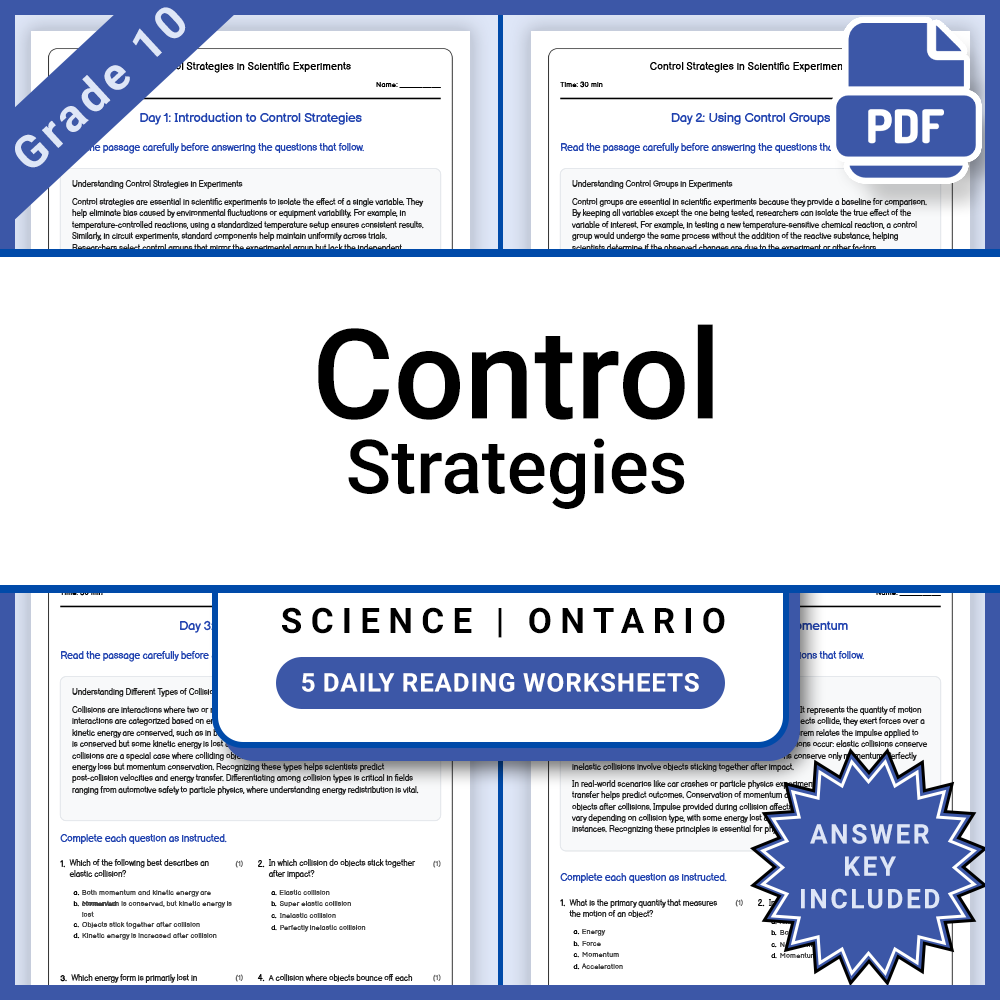
Grade 10 – Control Strategies in Scientific Experiments | Worksheet + Answer Key
JCreated byJ.S SheetsLearning Objectives
- Understand different control methods used in scientific experiments.
- Identify sources of bias and confounding in experimental procedures.
- Learn how to select appropriate control groups and levels.
Also included in: Grade 10 Science Lesson Bundle | Ontario Framework Reading Worksheets +1 more
Instant download

Pumpkin Origins Worksheet Grade 10 Fall History Culture Activity
 Created byShaNova Worksheets
Learning Objectives
- Explain how pumpkin cultivation influenced harvest festivals in early America.
- Analyze how pumpkins became symbols of abundance, health, and community cooperation.
- Use grade-appropriate vocabulary related to agriculture and historical traditions.
Instant download

Grade 10 Science | Plate Boundaries Worksheet with Short Notes (Printable PDF)
Created byMeadowlark WorksheetsLearning Objectives
- Understand the three main types of plate boundaries: divergent, convergent, and transform.
- Identify canonical phenomena such as mid-ocean ridges, subduction zones, and continental collision.
- Explain processes like seafloor spreading, volcanic arc formation, and mountain uplift.
Also included in: Grade 10 Science | Earth’s Systems Unit Bundle – NGSS Worksheet Collection +1 more
Instant download
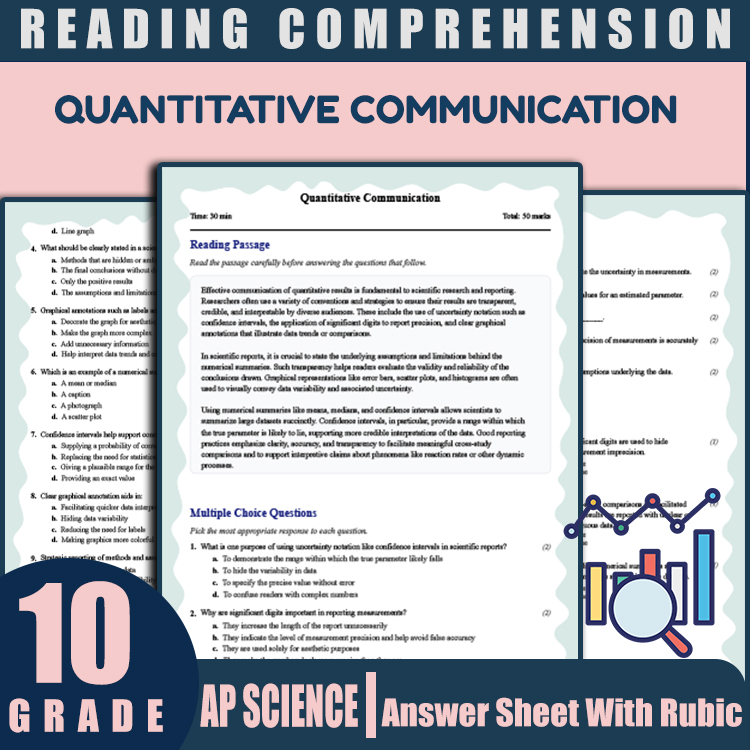
10th Grade Science | Quantitative Communication Reading Worksheets
JCreated byJ.S SheetsLearning Objectives
- Understand and interpret conventions for communicating quantitative results, including uncertainty notation and significant digits.
- Apply graphical annotation techniques to effectively present quantitative data.
- Evaluate the clarity of statements regarding assumptions and limitations in reports.
Also included in: Grade 10 Science Unit Worksheet Pack – Data Analysis & Scientific Reasoning +1 more
Instant download
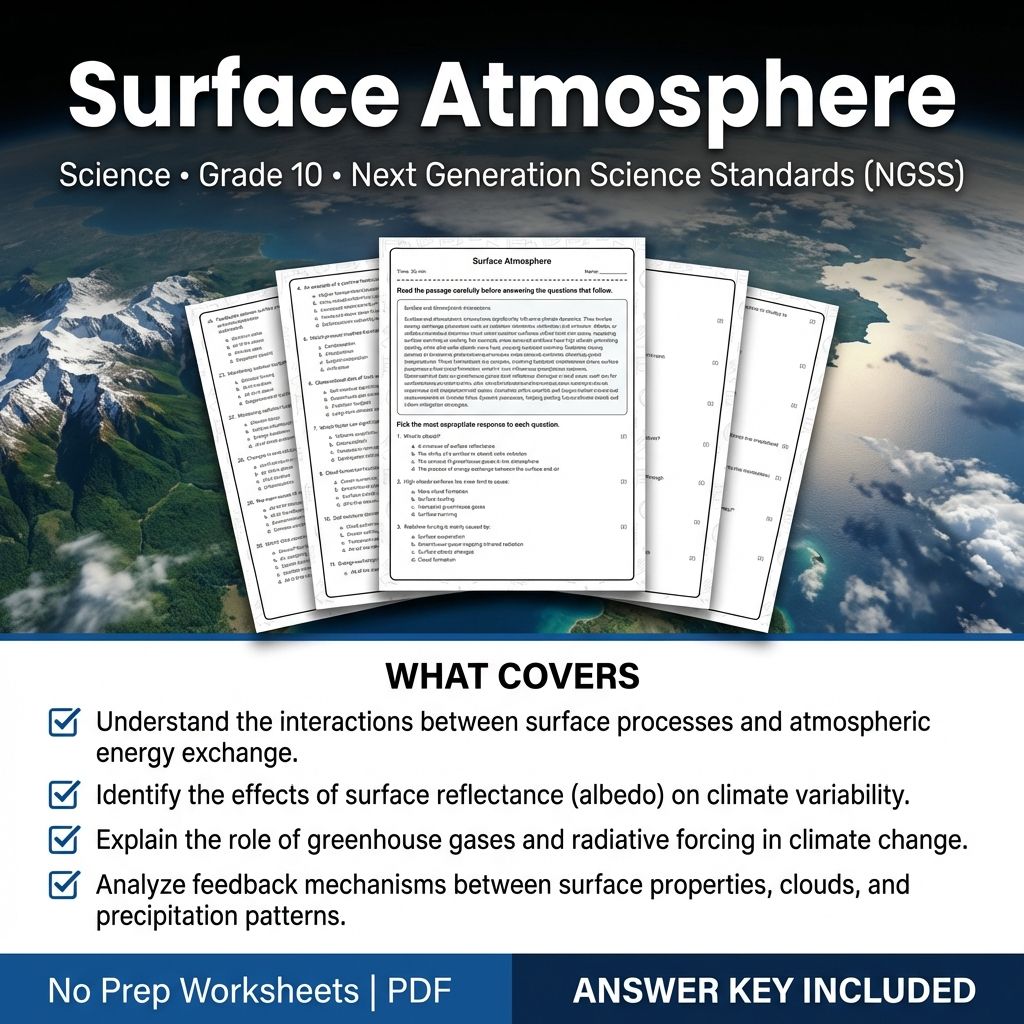
10th Grade Science | Surface Atmosphere Worksheet & Answer Key (Printable PDF)
 Created byCoral Reef Learning
Learning Objectives
- Understand the interactions between surface processes and atmospheric energy exchange.
- Identify the effects of surface reflectance (albedo) on climate variability.
- Explain the role of greenhouse gases and radiative forcing in climate change.
Also included in: Grade 10 Science Unit Bundle – Earth's Surface Atmosphere & Geology Worksheets +1 more
Instant download
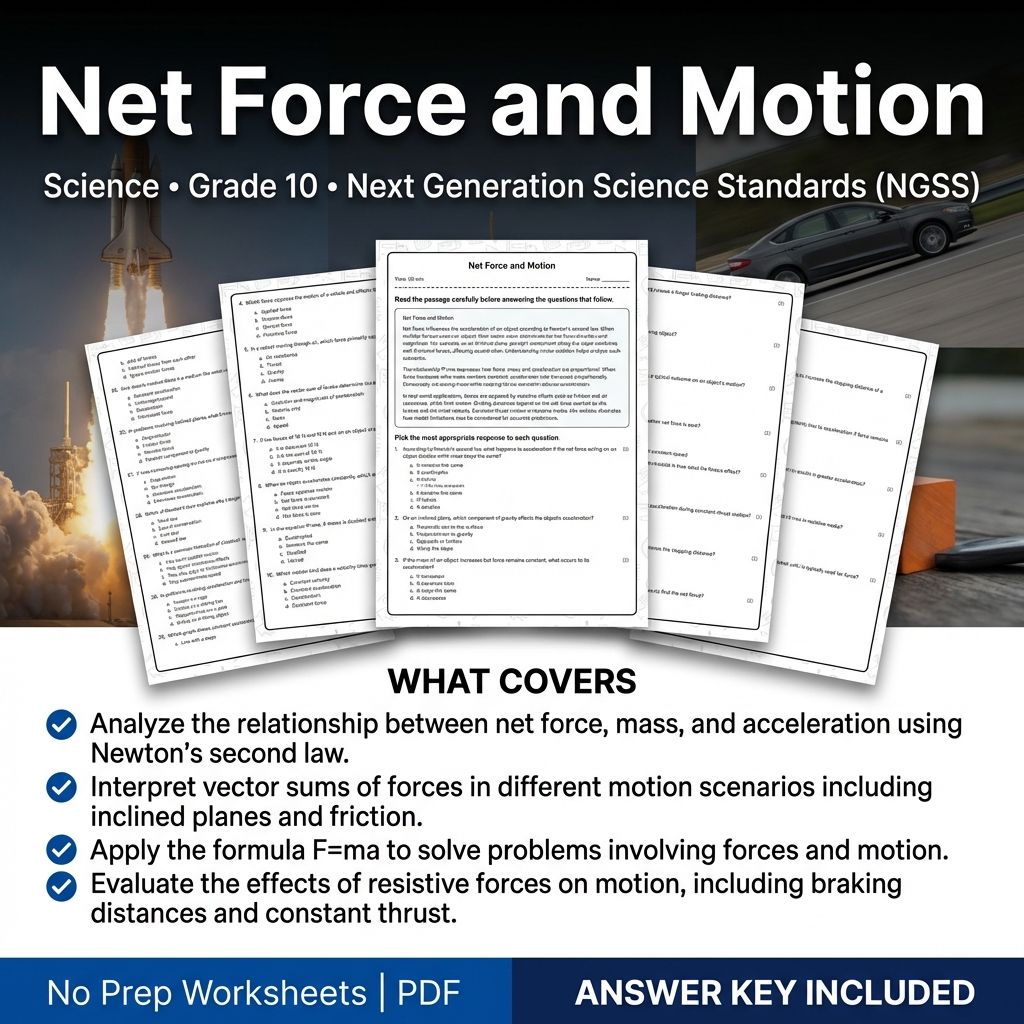
10th Grade Science | Net Force and Motion Worksheet with Answer Key (PDF)
Created byCoral Reef LearningLearning Objectives
- Analyze the relationship between net force, mass, and acceleration using Newton's second law.
- Interpret vector sums of forces in different motion scenarios including inclined planes and friction.
- Apply the formula F=ma to solve problems involving forces and motion.
Also included in: Grade 10 Science Unit Worksheet Bundle | Forces,Motion & Space NGSS(Answer Keys) +1 more
Instant download
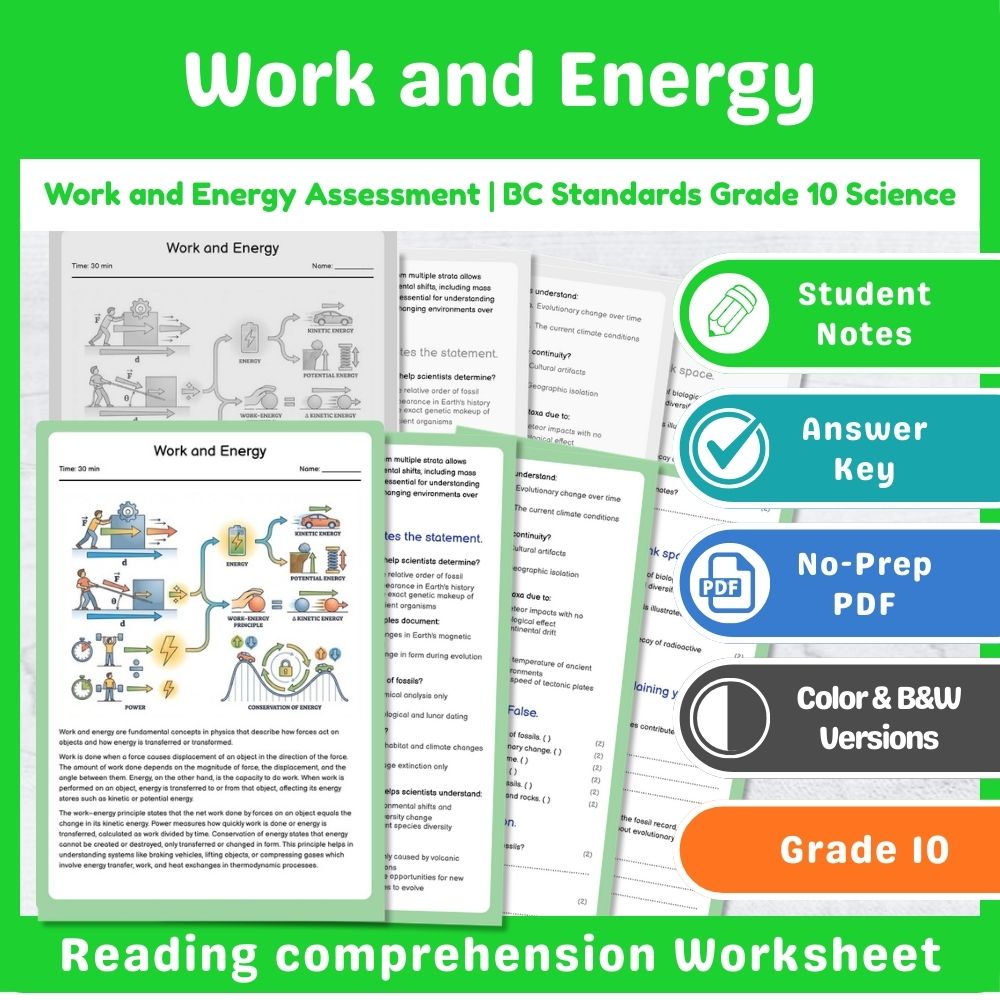
Work and Energy Assessment | BC Standards Grade 10 Science
Created byPrism Point LearningLearning Objectives
- Understand how work transfers energy between systems.
- Learn the relationship between work, energy, and power.
- Apply the work–energy principle to real-world scenarios.
Also included in: Grade 10 Science | Energy Assessment - BC Standards-Aligned Mini Bundle
Instant download

Grade 10 Worksheet B: Bond Energetics Worksheet | NGSS Practice PDF
Created byClear Sky ClassroomLearning Objectives
- Explain how bond formation and bond breaking relate to energy changes in chemical reactions.
- Distinguish exothermic and endothermic processes using bond enthalpy and potential energy ideas.
- Use qualitative bond strength trends (single < double < triple) to predict relative energy flow and temperature/phase changes.
Also included in: Grade 10 Reaction Rates & Chemical Change Science Lesson Bundle – NGSS +1 more
Instant download
Browse more categories
About Grade 10 Worksheets
Find Grade 10 worksheets covering algebra, biology, literature, and history. All 9,388 resources download instantly as PDFs for classwork, homework, or review.
MyTeachingSheets worksheets are made by real teacher-authors and checked before they go live. Download any as a print-ready PDF for lessons, homework, or independent practice — most include answer keys, and previews are always free.