
Reading comprehension Worksheets
40,289 type resources
Grade 11 Science | Population Growth - Daily Reading Comprehension
 Created byCoral Reef Learning
Learning Objectives
- Understand the key concepts of population growth, including birth and death rates.
- Identify the differences between exponential and logistic growth models.
- Explain how limiting factors influence population size.
Instant download

Grade 8 Science | Producers & Energy - Daily Reading Comprehension
Created byCoral Reef LearningLearning Objectives
- Identify different types of primary producers in ecosystems.
- Understand the role of producers in converting solar and chemical energy.
- Distinguish between various ecosystems based on producer types and productivity.
Also included in: Interactions and Ecosystems Lesson Bundle Grade 8 Science – Alberta +1 more
Instant download

Grade 8 Science | Population Patterns in Science - Daily Reading Comprehension
Created byCoral Reef LearningLearning Objectives
- Understand the basic concepts of population change.
- Identify the characteristics of exponential growth.
- Recognize factors that influence population dynamics.
Also included in: Interactions and Ecosystems Lesson Bundle Grade 8 Science – Alberta +1 more
Instant download

Grade 12 Science | Orbital Motion Models Worksheet | General Standards
 Created byLumora Learning
Learning Objectives
- Explain how gravity and motion combine to produce predictable orbital paths
- Use orbital models to relate orbital period, orbital speed, distance, and the mass of the central body
- Interpret how satellites and exoplanets provide evidence for gravitational control of trajectories
Instant download
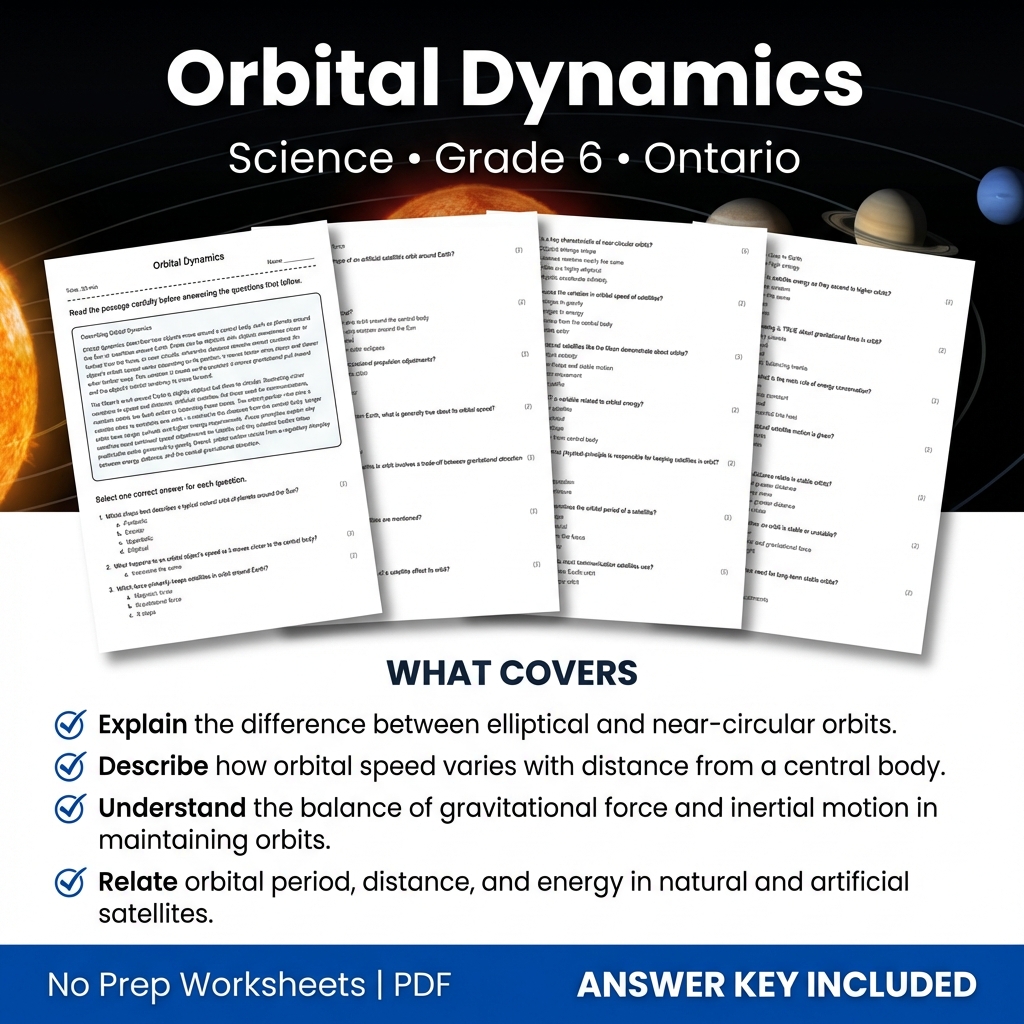
Grade 6 Science Worksheet on Orbital Dynamics | Ontario Standards
Created byCoral Reef LearningLearning Objectives
- Explain the difference between elliptical and near-circular orbits.
- Describe how orbital speed varies with distance from a central body.
- Understand the balance of gravitational force and inertial motion in maintaining orbits.
Instant download

Grade 11 Science | Gene Expression in Eukaryotic Cells - Reading Comprehension
Created byCoral Reef LearningLearning Objectives
- Understand key concepts related to Science
- Apply knowledge through practice questions
- Demonstrate comprehension of the material
Instant download
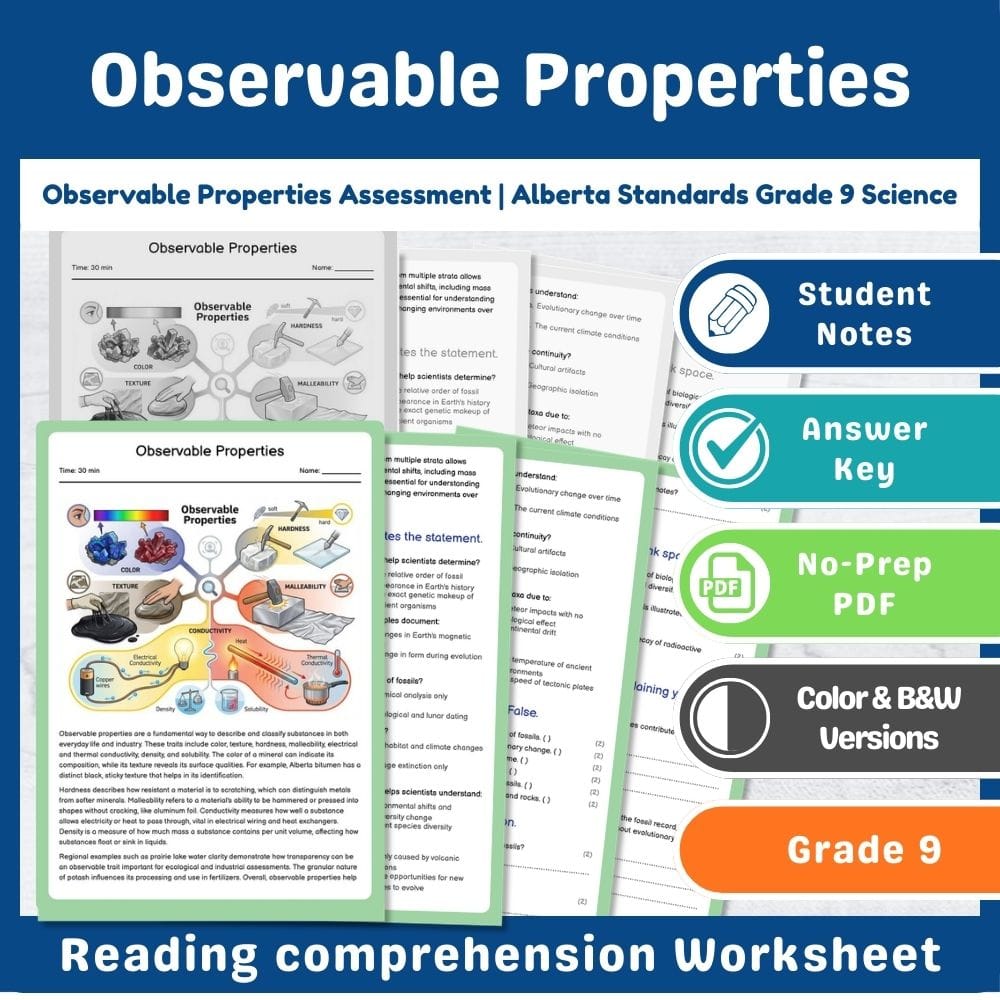
Observable Properties Assessment | Alberta Standards Grade 9 Science
 Created byPrism Point Learning
Learning Objectives
- Identify and describe various observable properties of substances.
- Understand how observable traits help classify different materials.
- Recognize regional examples illustrating material properties.
Also included in: Grade 9 Matter and Chemical Change Science Lesson Bundle | Alberta +1 more
Instant download
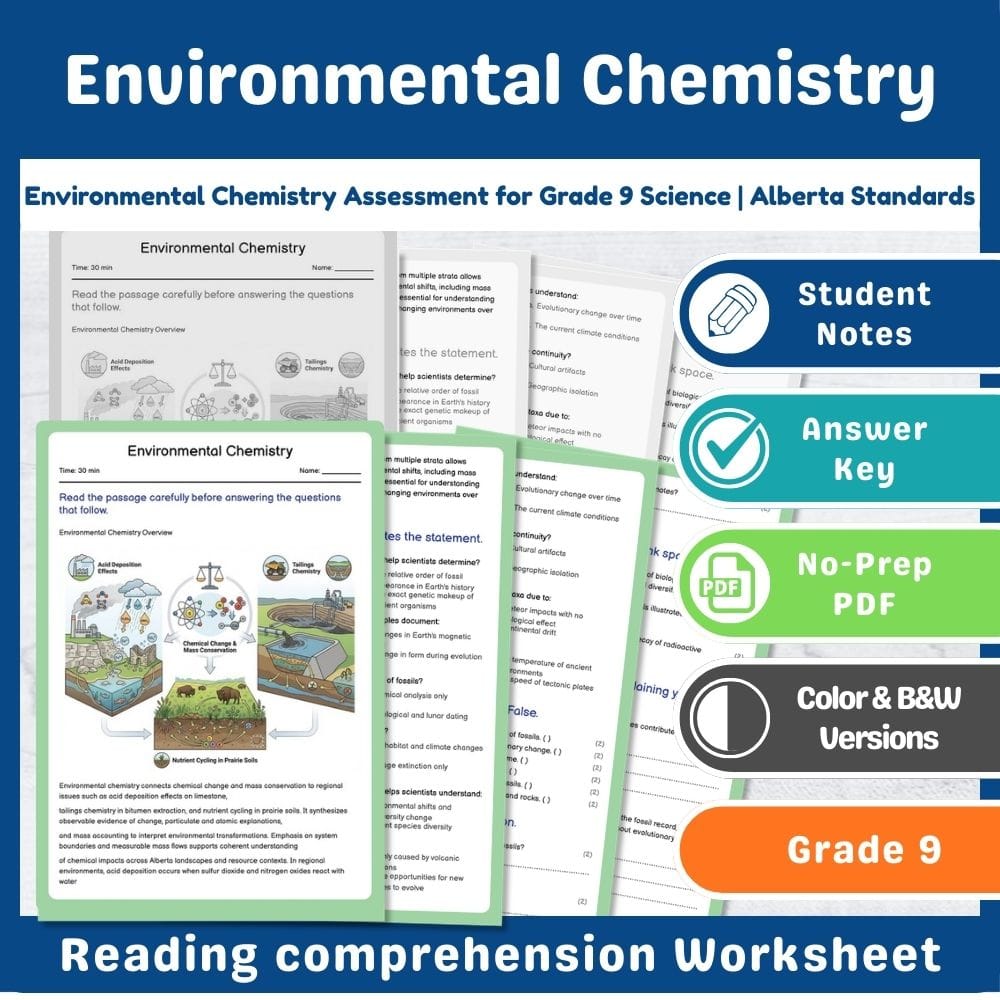
Environmental Chemistry Assessment for Grade 9 Science | Alberta Standards
Created byPrism Point LearningLearning Objectives
- Understand how chemical change and mass conservation relate to environmental issues.
- Analyze regional environmental impacts such as acid deposition and nutrient cycling.
- Interpret observable evidence of environmental transformations through particulate and atomic explanations.
Also included in: Grade 9 Matter and Chemical Change Science Lesson Bundle | Alberta +1 more
Instant download
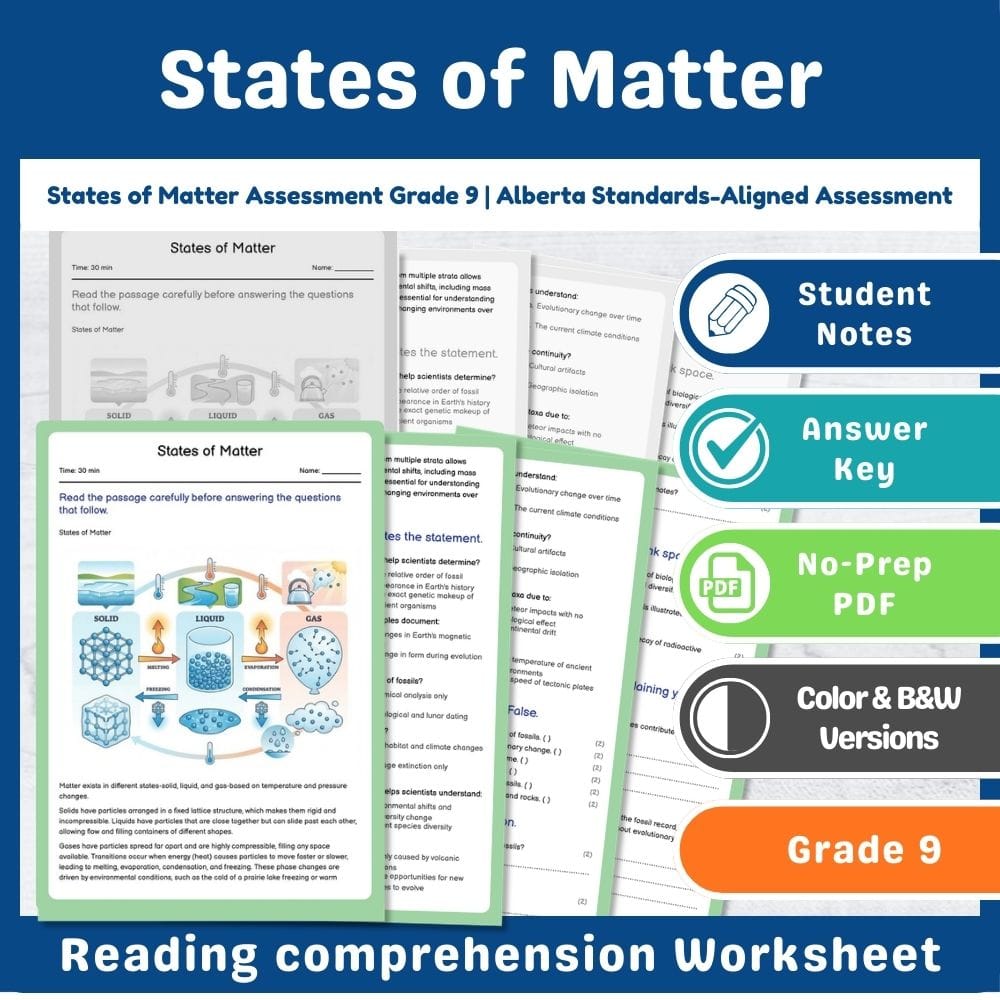
States of Matter Assessment Grade 9 | Alberta Standards-Aligned Assessment
Created byPrism Point LearningLearning Objectives
- Describe the three main states of matter: solid, liquid, and gas.
- Explain how temperature and pressure influence phase transitions.
- Identify the behaviors and properties characteristic of each state of matter.
Also included in: Grade 9 Matter and Chemical Change Science Lesson Bundle | Alberta +1 more
Instant download
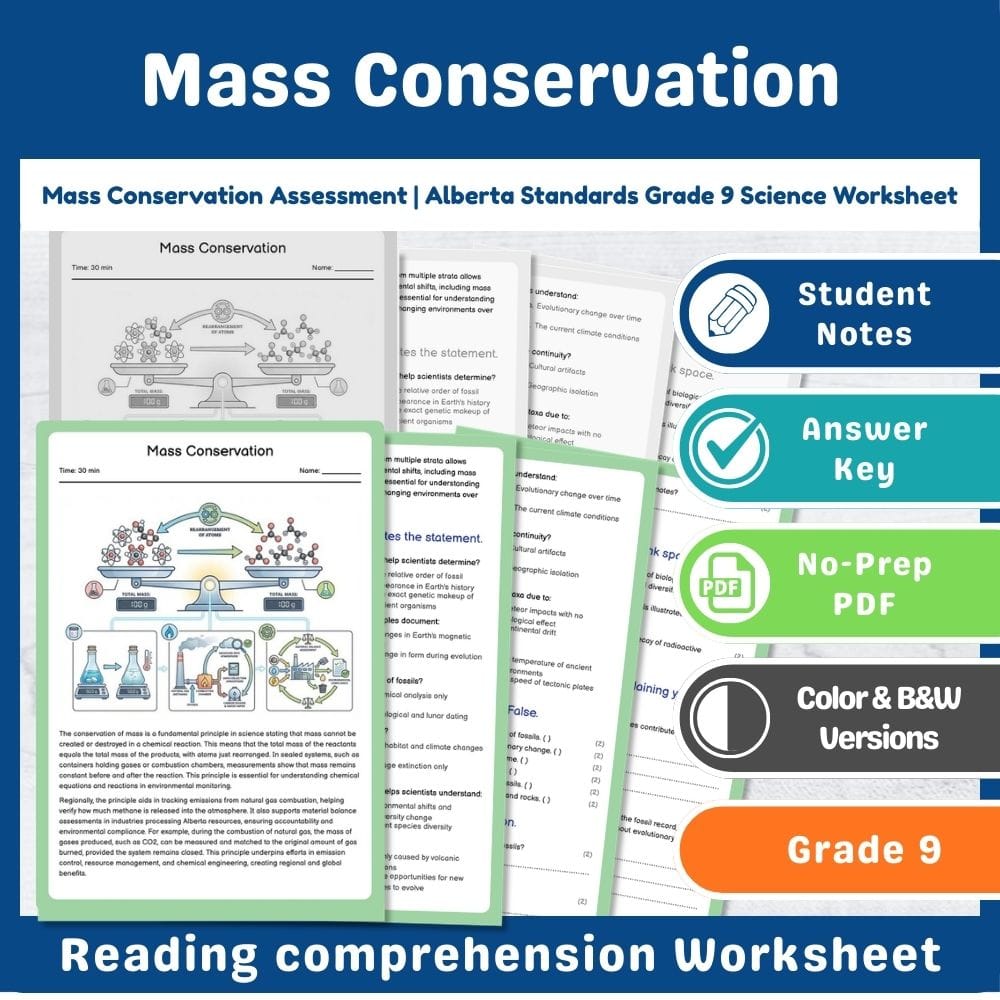
Mass Conservation Assessment | Alberta Standards Grade 9 Science Worksheet
Created byPrism Point LearningLearning Objectives
- Explain the principle of mass conservation in chemical reactions.
- Describe how mass remains constant in closed systems despite chemical changes.
- Identify regional applications of mass conservation in environmental and industrial contexts.
Also included in: Grade 9 Matter and Chemical Change Science Lesson Bundle | Alberta +1 more
Instant download
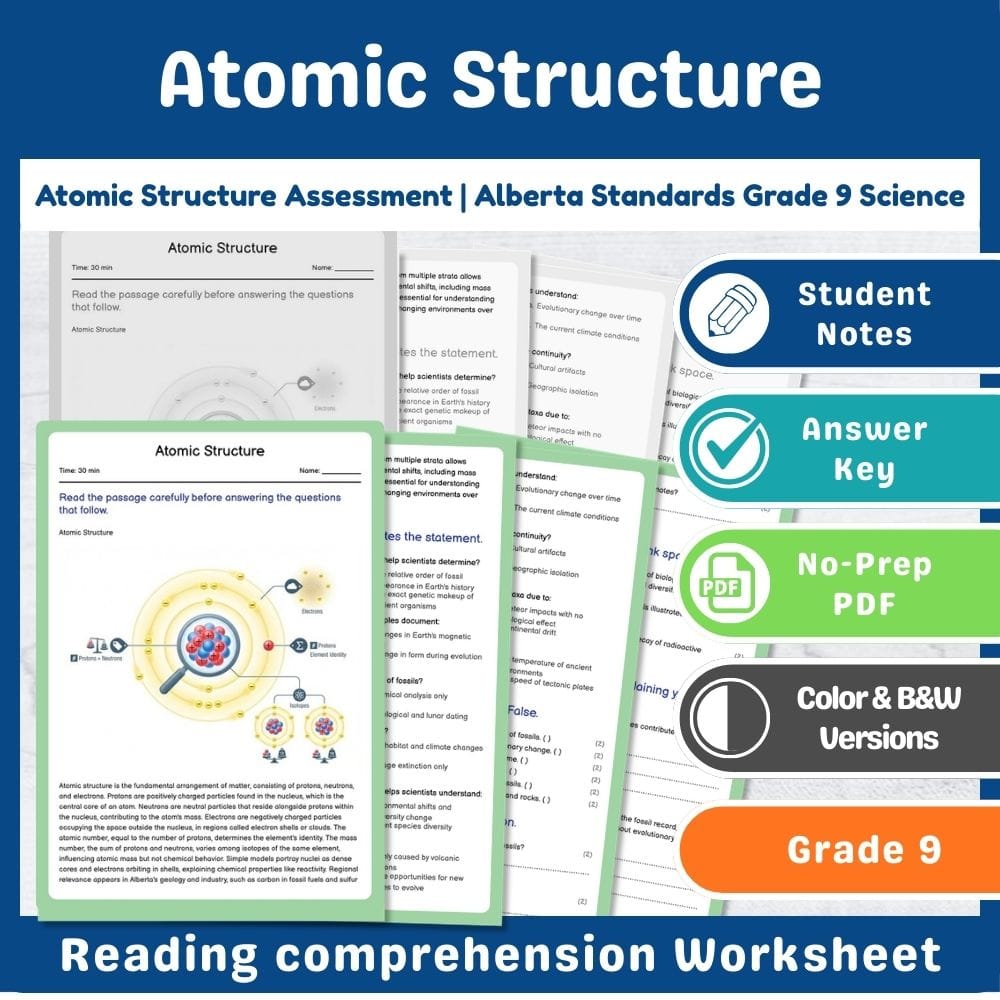
Atomic Structure Assessment | Alberta Standards Grade 9 Science
Created byPrism Point LearningLearning Objectives
- Describe the basic components of an atom: protons, neutrons, and electrons.
- Explain how atomic number and mass number define isotopes and element identity.
- Illustrate simple models of nuclei and electron shells to understand chemical behavior.
Also included in: Grade 9 Matter and Chemical Change Science Lesson Bundle | Alberta +1 more
Instant download
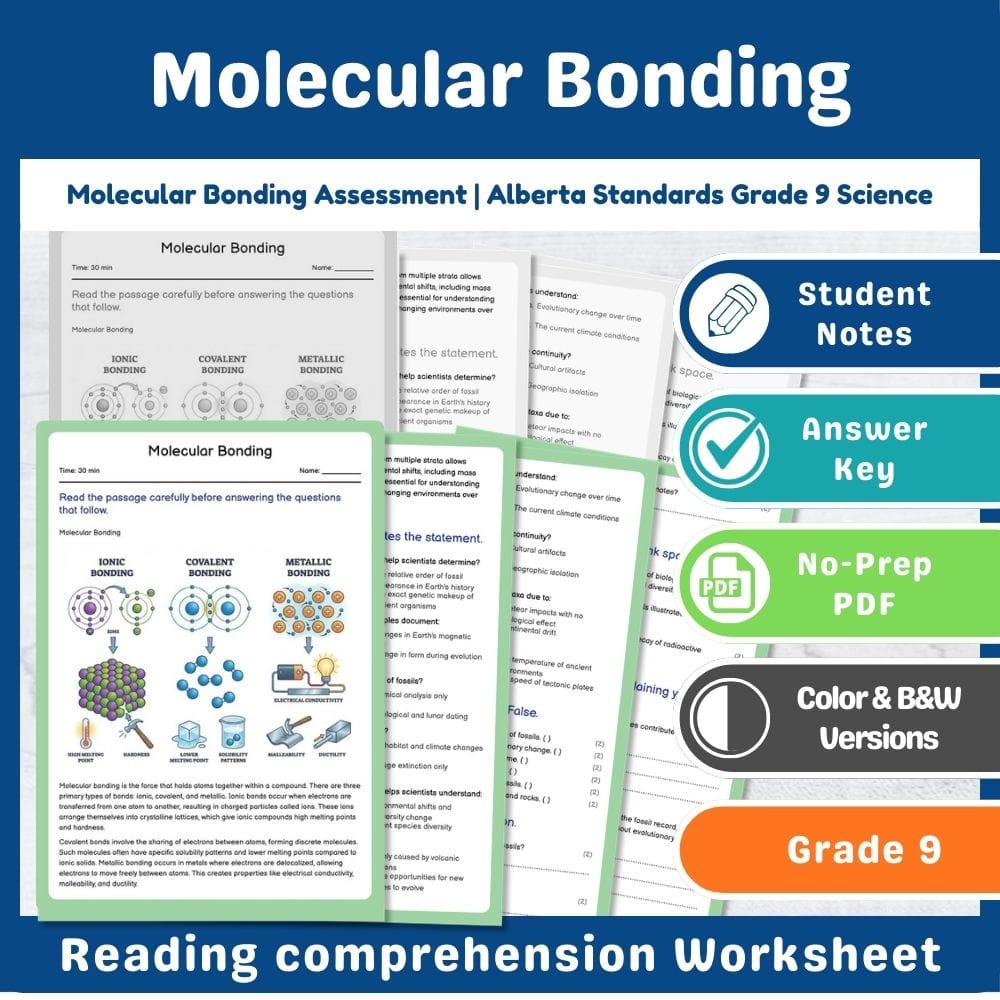
Molecular Bonding Assessment | Alberta Standards Grade 9 Science
Created byPrism Point LearningLearning Objectives
- Describe the different types of chemical bonds: ionic, covalent, and metallic.
- Identify properties of compounds based on their bonding type.
- Explain how bonding influences material properties and applications.
Also included in: Grade 9 Matter and Chemical Change Science Lesson Bundle | Alberta +1 more
Instant download

Mixtures and Solutions Assessment | Alberta Standards Grade 9 Science
Created byPrism Point LearningLearning Objectives
- Differentiate between heterogeneous mixtures and homogeneous solutions.
- Explain the roles of solute and solvent in a solution.
- Describe methods of separating mixture components based on physical properties.
Also included in: Grade 9 Matter and Chemical Change Science Lesson Bundle | Alberta +1 more
Instant download
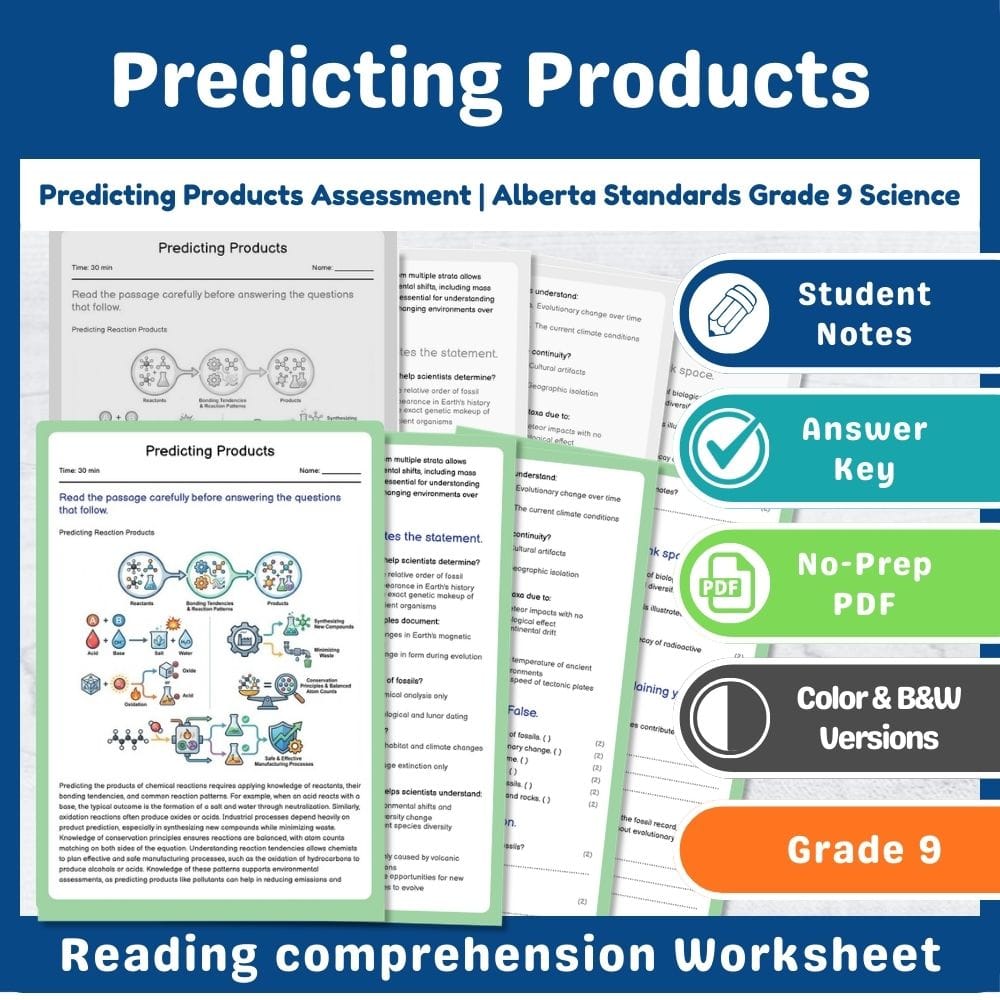
Predicting Products Assessment | Alberta Standards Grade 9 Science
Created byPrism Point LearningLearning Objectives
- Understand patterns of chemical reactions to predict likely products.
- Apply conservation principles and reactant identities in product prediction.
- Analyze industrial examples such as oxidation of hydrocarbons and neutralization reactions.
Also included in: Grade 9 Matter and Chemical Change Science Lesson Bundle | Alberta +1 more
Instant download
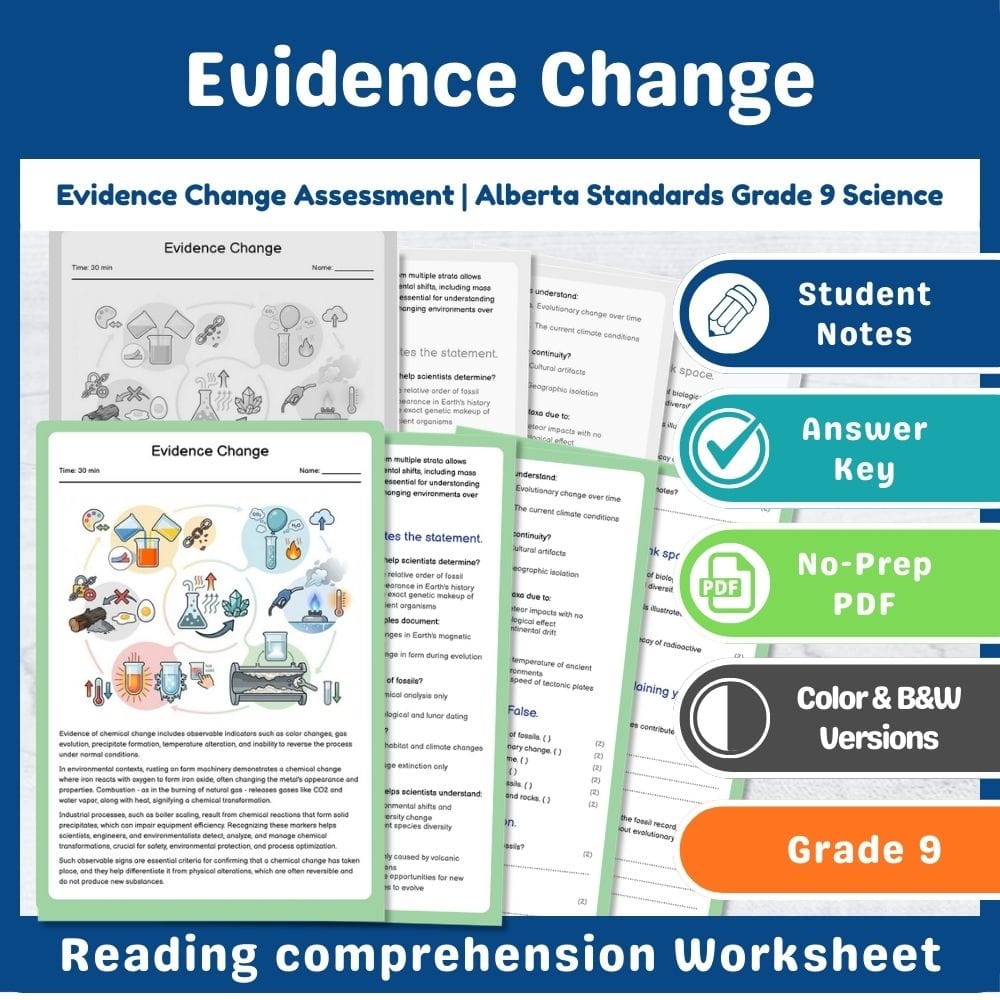
Evidence Change Assessment | Alberta Standards Grade 9 Science
Created byPrism Point LearningLearning Objectives
- Identify observable signs that indicate a chemical change has occurred.
- Distinguish between physical and chemical change markers in environmental and industrial contexts.
- Understand examples of chemical change such as rusting, combustion, and scale formation.
Also included in: Grade 9 Matter and Chemical Change Science Lesson Bundle | Alberta +1 more
Instant download
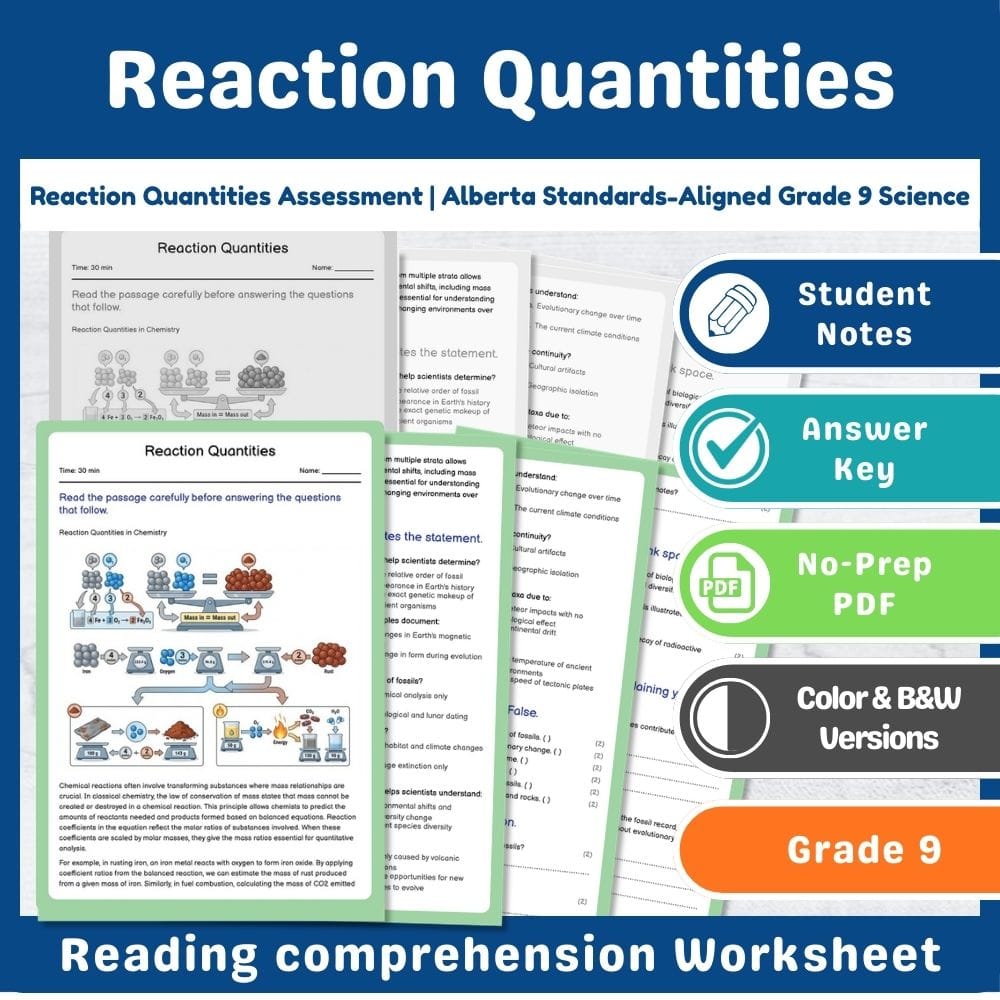
Reaction Quantities Assessment | Alberta Standards-Aligned Grade 9 Science
Created byPrism Point LearningLearning Objectives
- Understand how to interpret and use coefficient ratios in balanced chemical equations.
- Learn to relate mass measurements of reactants and products through proportional relationships.
- Apply relative mass concepts to practical scenarios involving chemical reactions.
Also included in: Grade 9 Matter and Chemical Change Science Lesson Bundle | Alberta +1 more
Instant download

Sentence Variety Worksheet Pack | Grade 12 ELA Activities
 Created bySunny Desk Resources
Learning Objectives
- Use sentence variety by balancing simple, compound, and complex sentence structures in writing.
- Apply coordination and subordination to connect ideas with clear logical relationships.
- Revise drafts by improving the placement of introductory phrases and using fragments for emphasis in moderation.
Also included in: English Language Lesson Bundle | Grade 12 ELA | BC Framework +1 more
Instant download
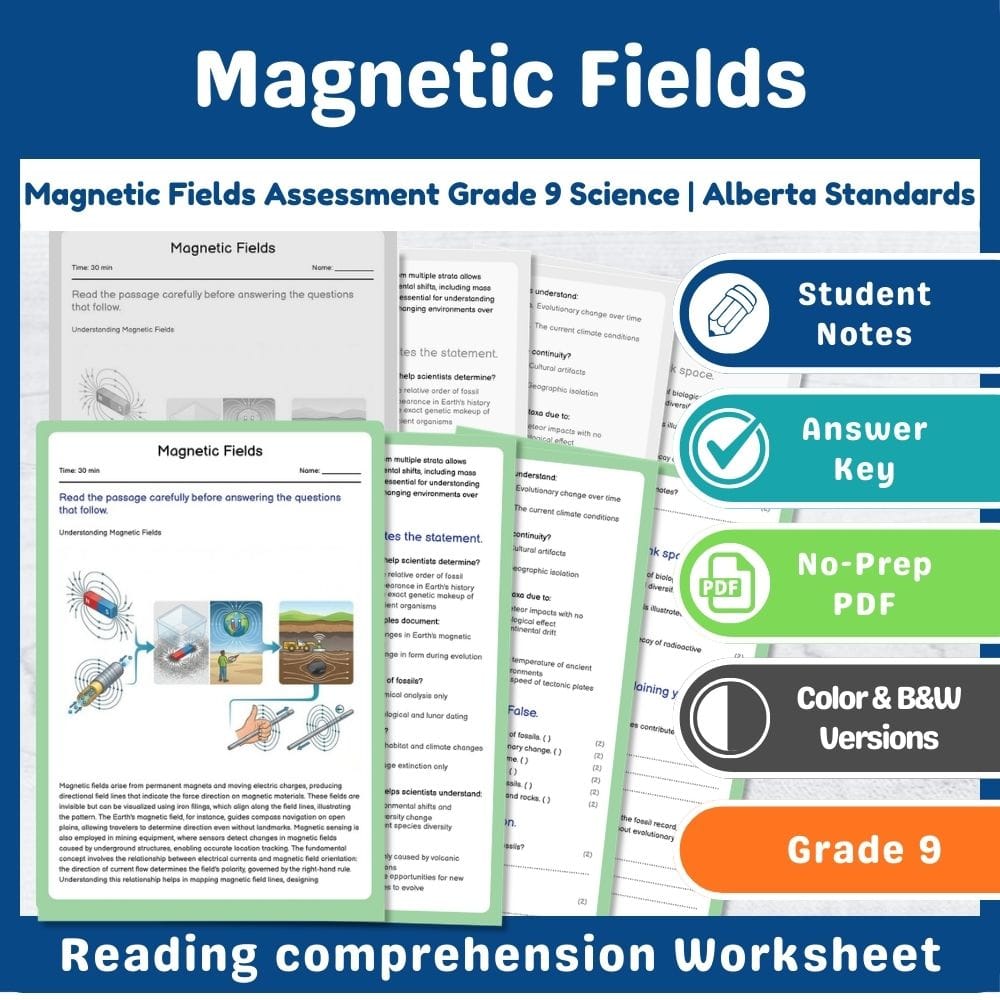
Magnetic Fields Assessment Grade 9 Science | Alberta Standards
Created byPrism Point LearningLearning Objectives
- Explain how magnetic fields are generated by permanent magnets and moving electric charges.
- Describe the concept of magnetic field lines and their directional properties.
- Connect regional phenomena like compass navigation and magnetic sensing in industry to magnetic fields.
Also included in: Grade 9 Electricity and Magnetism Science Lesson Bundle | Alberta Framework +1 more
Instant download
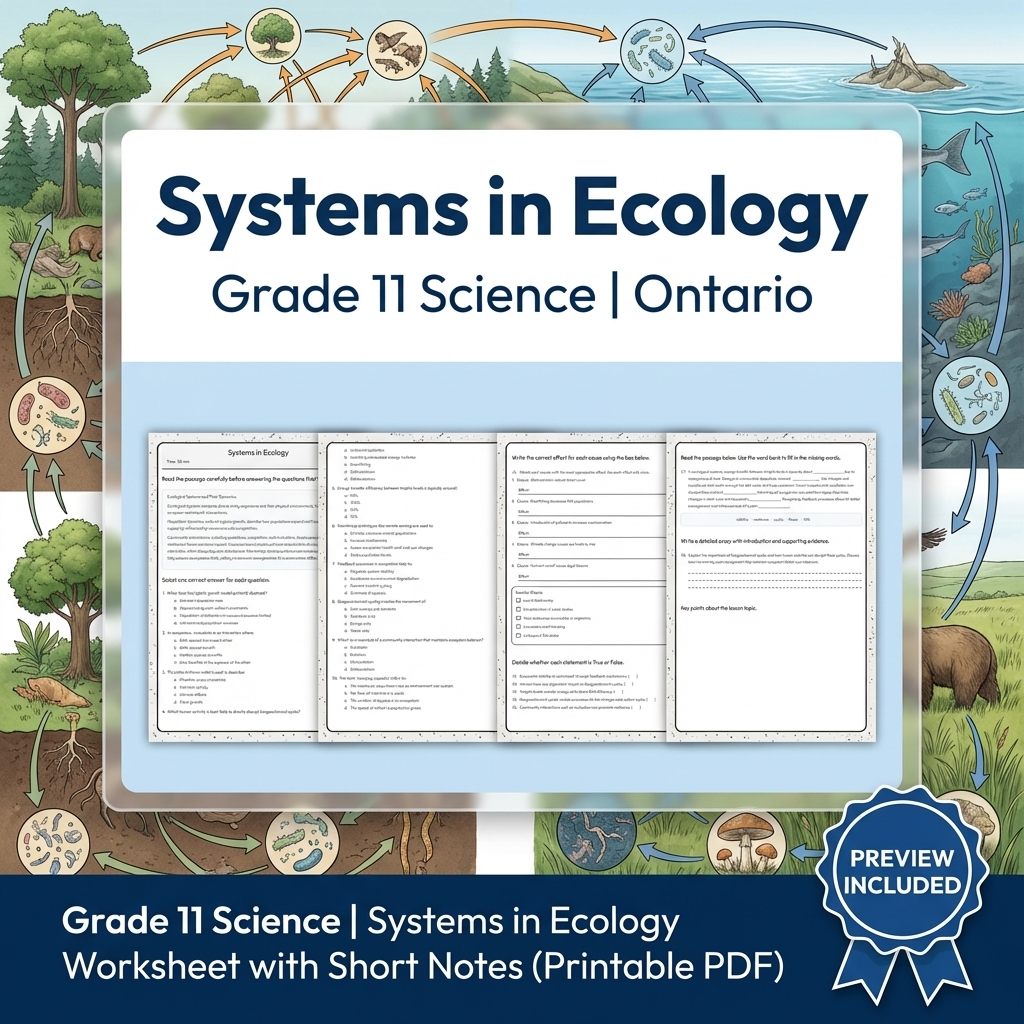
Grade 11 Science | Systems in Ecology Worksheet with Short Notes (Printable PDF)
 Created byMeadowlark Worksheets
Learning Objectives
- Understand the key components and interactions within ecological systems.
- Explain the concepts of population dynamics, community interactions, and biogeochemical cycles.
- Apply mathematical models such as logistic growth and Lotka–Volterra interactions to ecological scenarios.
Also included in: Grade 11 Science Lesson Bundle | Ontario Curriculum Topics and Skills +1 more
Instant download
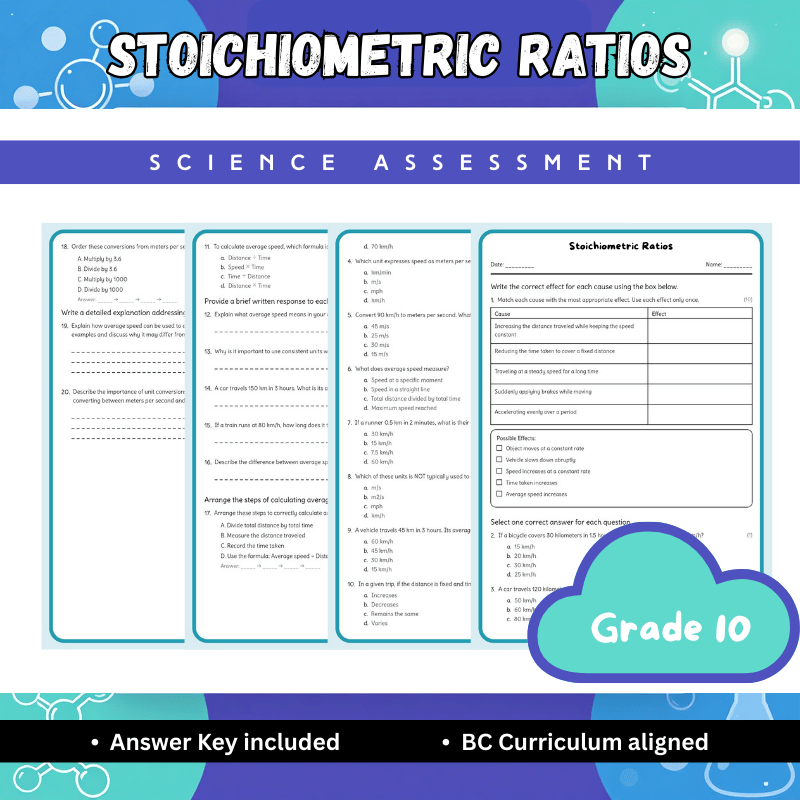
Grade 10 Science | Stoichiometric Ratios Worksheet (Answer Key) PDF
 Created byBright Mind Resources
Learning Objectives
- Understand how to interpret and use molar ratios from balanced chemical equations.
- Apply molar mass conversions to relate mass and moles of reactants and products.
- Calculate expected yields and required reactant amounts using stoichiometric ratios.
Instant download

Grade 8 Science | Limiting Factors Worksheet (PDF) - BC Standards
 Created byEvergreen Desk Education
Learning Objectives
- Explain how limiting factors determine the maximum population size (carrying capacity) in an ecosystem.
- Describe how biotic and abiotic factors can change over time and affect population growth and stability.
- Use evidence from a scenario to identify likely limiting factors and predict population outcomes.
Instant download
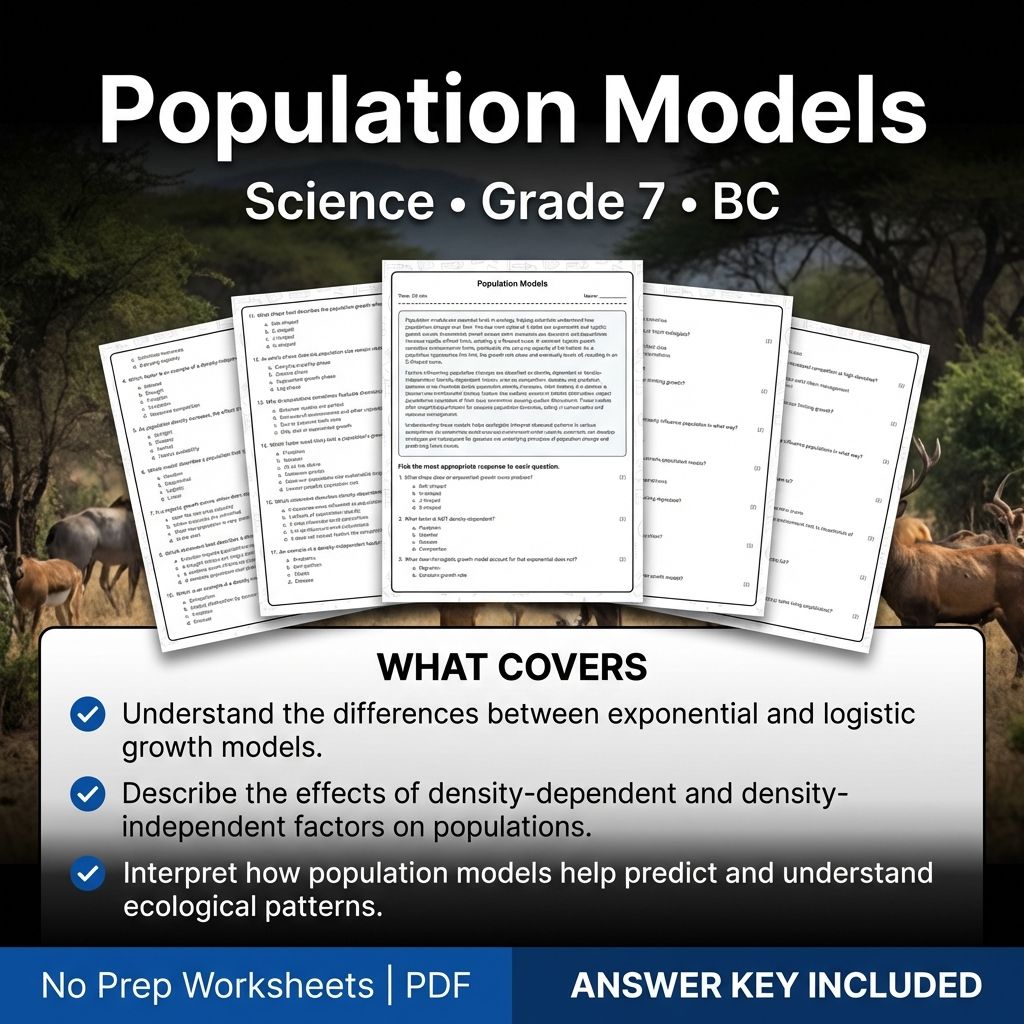
7th Grade Science Worksheet | Population Models Practice & Answer Key (Printable PDF)
Created byCoral Reef LearningLearning Objectives
- Understand the differences between exponential and logistic growth models.
- Describe the effects of density-dependent and density-independent factors on populations.
- Interpret how population models help predict and understand ecological patterns.
Instant download

Resource Networks in the Global Economy Worksheet | Grade 10 Social Studies
 Created byQuiet Forest Education
Learning Objectives
- Identify geographic patterns of resource extraction
- Understand the concept of supply chains for minerals
- Analyze environmental and social impacts of resource extraction
Instant download
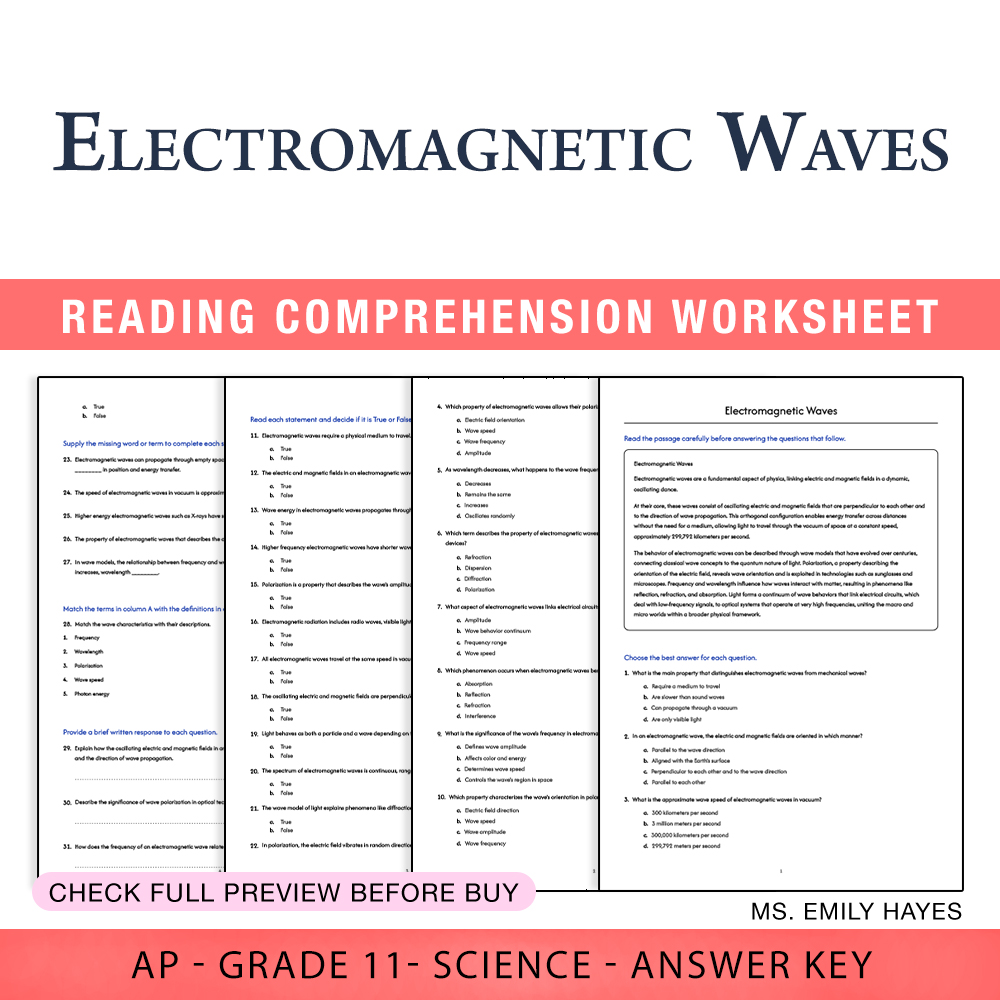
Grade 11 Science | Electromagnetic Waves Worksheet (PDF+ Answer Key)
 Created byCopper Leaf Classroom
Learning Objectives
- Understand the oscillating nature of electric and magnetic fields in electromagnetic waves.
- Describe the wave structure and how electric and magnetic fields are oriented relative to each other.
- Explain the concept of wave speed in vacuum and how energy propagates via electromagnetic waves.
Also included in: Grade 11 Science | Physics Principles Worksheet Bundle (PDF+ Answer Key)) +1 more
Instant download
Grade 9 Science | Endocrine Feedback Worksheet (Ontario) – Science (PDF)
Created byBright Mind ResourcesLearning Objectives
- Describe how hormones are synthesized, transported, and act on cells through receptor-mediated actions.
- Explain the roles of negative and positive feedback loops in hormonal regulation.
- Analyze mechanisms of glucose homeostasis involving insulin and glucagon.
Instant download
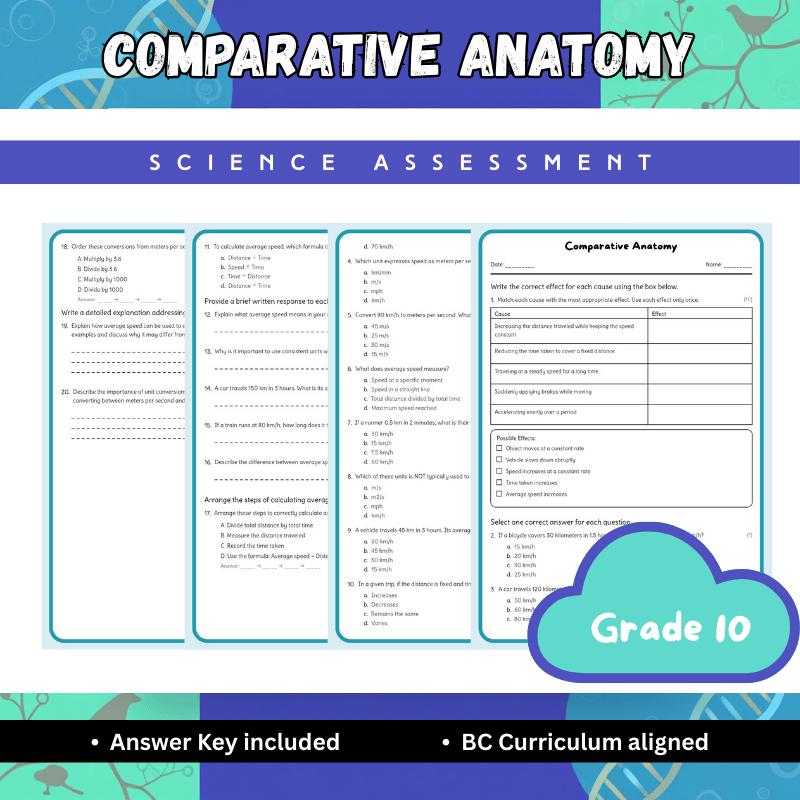
Grade 10 Science | Comparative Anatomy Learning (Answer Key) | BC Standards
Created byBright Mind ResourcesLearning Objectives
- Understand the concept of homologous, analogous, and vestigial structures in organisms.
- Identify evidence from anatomy that supports evolutionary relationships.
- Differentiate between homologous and analogous structures through examples.
Instant download
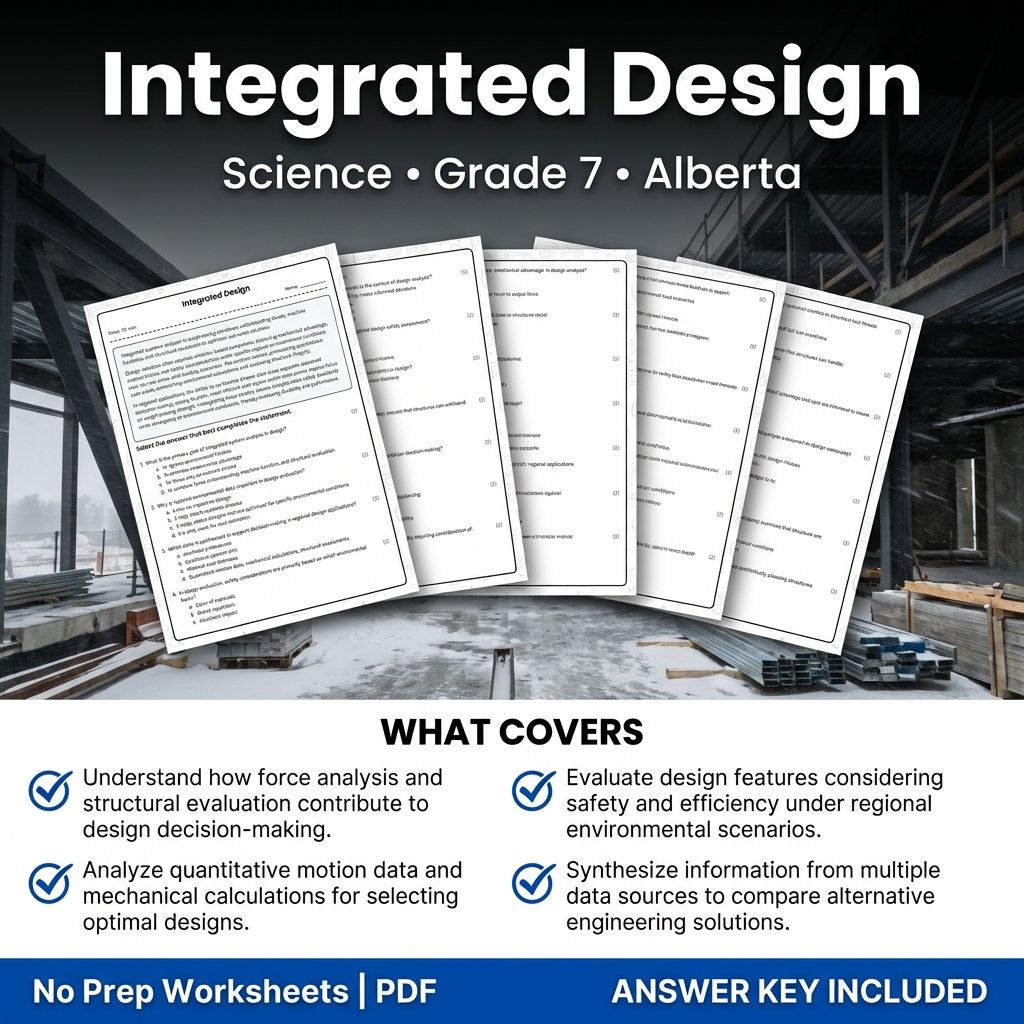
Grade 7 Science Worksheet on Integrated Design | Alberta Standards
Created byCoral Reef LearningLearning Objectives
- Understand how force analysis and structural evaluation contribute to design decision-making.
- Analyze quantitative motion data and mechanical calculations for selecting optimal designs.
- Evaluate design features considering safety and efficiency under regional environmental scenarios.
Instant download

Grade 6 Science – Flight Forces Worksheet (Ontario Standards) (PDF)
Created byEvergreen Desk EducationLearning Objectives
- Explain the four aerodynamic forces (lift, drag, thrust, and weight) and how they act on an object in motion through air.
- Use ideas of vector direction and magnitude to predict how forces affect climb, level cruise, and descent.
- Identify equilibrium conditions for steady, level flight by comparing lift and weight and thrust and drag.
Also included in: Grade 6 Flight & Aerodynamics Science Lesson Bundle Worksheets (Ontario) +1 more
Instant download
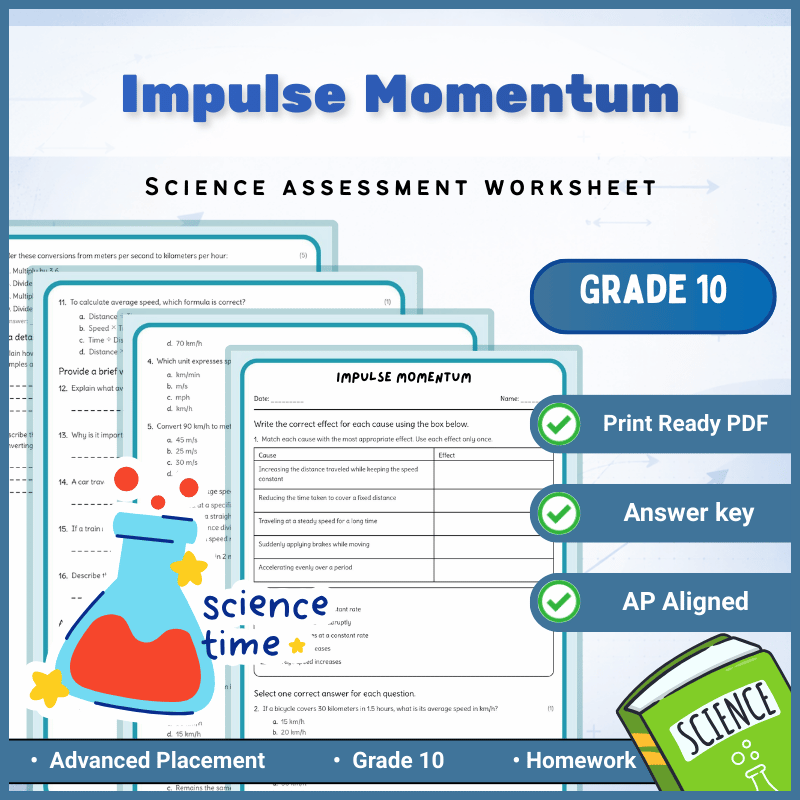
Grade 10 Science | Impulse and Momentum Practice Worksheet (Answer Key)
Created byBright Mind ResourcesLearning Objectives
- Explain the concept of impulse and how it relates to change in momentum.
- Analyze collision events using conservation of momentum in isolated systems.
- Differentiate between elastic, inelastic, and perfectly inelastic collisions and describe energy transformations.
Instant download
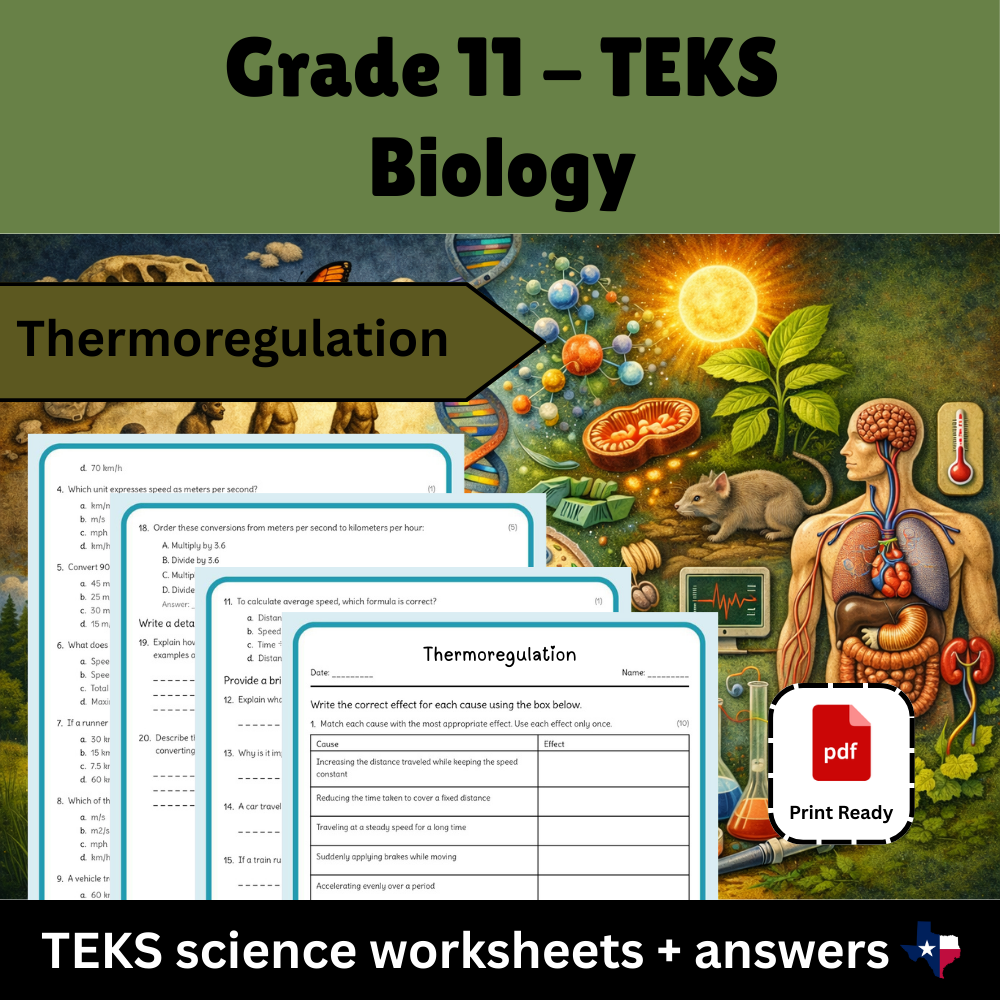
Grade 11 Science – Thermoregulation Worksheet+ Answer Key – TEKS Aligned
Created byBright Mind ResourcesLearning Objectives
- Describe the mechanisms involved in temperature homeostasis.
- Identify the roles of different body systems in thermoregulation.
- Explain how environmental factors and fever influence thermoregulatory responses.
Also included in: Grade 11 Science: Human Body & Homeostasis Unit Worksheet Bundle (TEKS Aligned) +2 more
Instant download

Thermoregulation Assessment for Grade 11 Science TEKS Standards
Created byPrism Point LearningLearning Objectives
- Understand the mechanisms of temperature homeostasis involving heat production, conservation, and dissipation.
- Identify the roles of the hypothalamus and other systems in thermoregulation.
- Explain how environmental factors and fever influence thermoregulatory responses.
Also included in: Grade 11 Homeostasis & Human Body Systems Science: Lesson Bundle TEKS
Instant download

Grade 12 Science | Genomic Applications - Daily Reading Comprehension
Created byCoral Reef LearningLearning Objectives
- Understand the basic concepts of genomic sequencing and its role in modern science.
- Identify key applications of genomics such as personalized medicine and conservation genetics.
- Recognize ethical, ecological, and societal considerations associated with genomic technologies.
Instant download
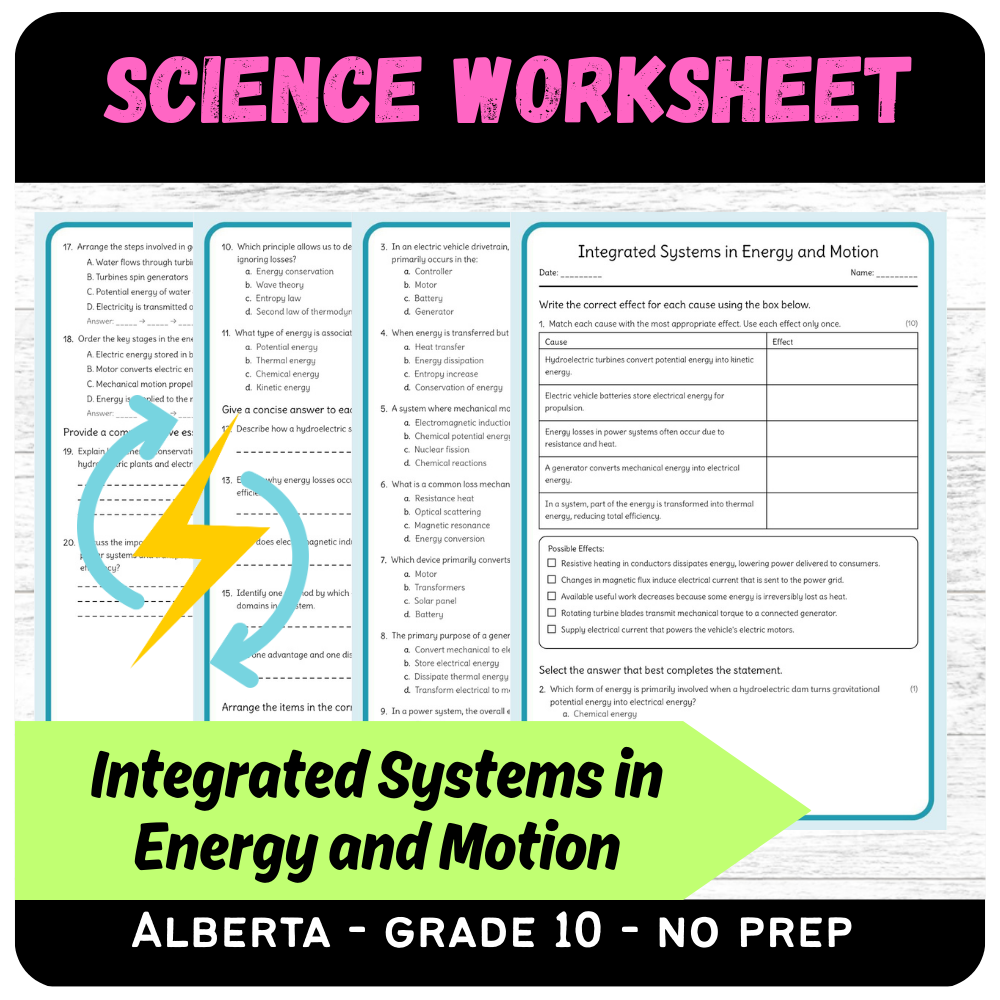
Grade 10 Science | Integrated Energy Systems Worksheet (PDF)
Created byBright Mind ResourcesLearning Objectives
- Explain the energy transformations involved in mechanical and electrical systems
- Analyze how energy losses and conservation principles affect system performance
- Apply concepts of work, energy, and electromagnetic conversion to real-world integrated systems
Instant download
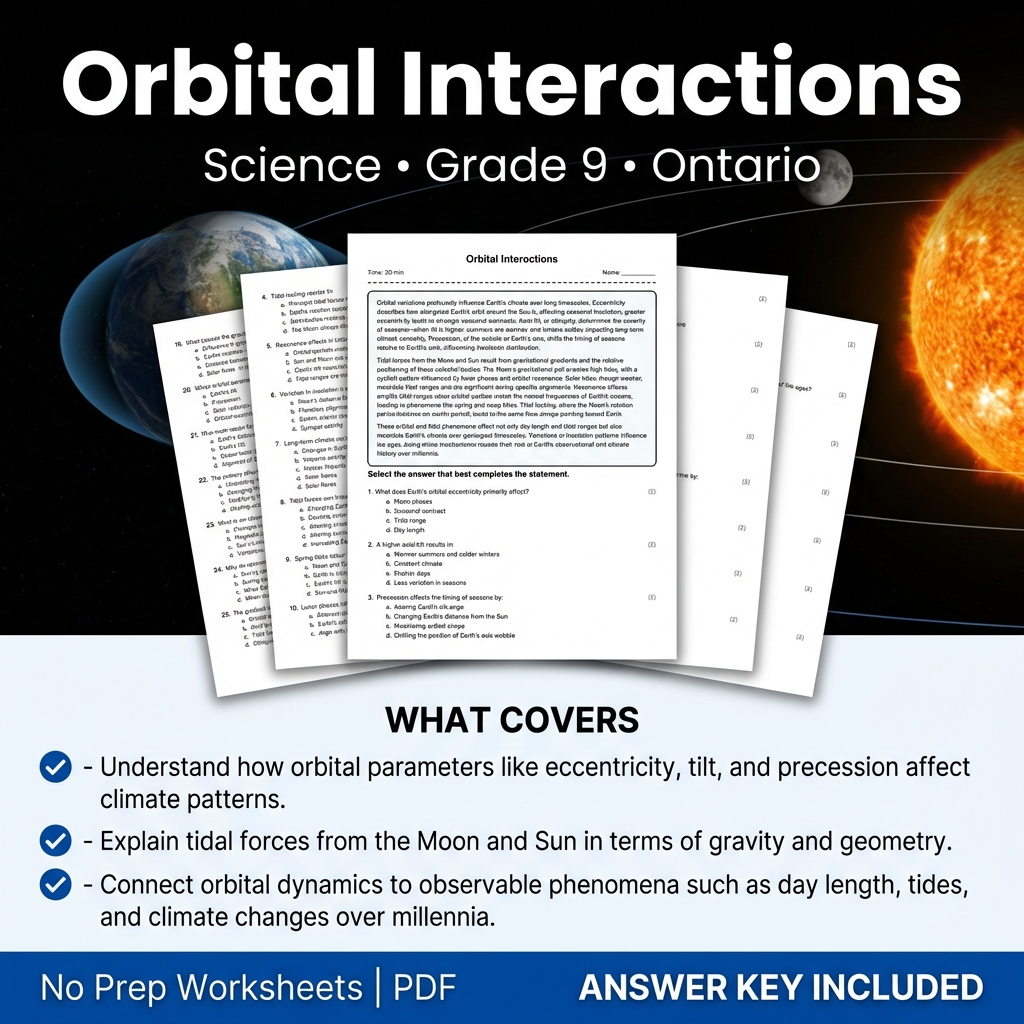
Orbital Interactions Worksheet for Grade 9 Science – Ontario Standards
Created byCoral Reef LearningLearning Objectives
- Understand how orbital parameters like eccentricity, tilt, and precession affect climate patterns.
- Explain tidal forces from the Moon and Sun in terms of gravity and geometry.
- Connect orbital dynamics to observable phenomena such as day length, tides, and climate changes over millennia.
Instant download
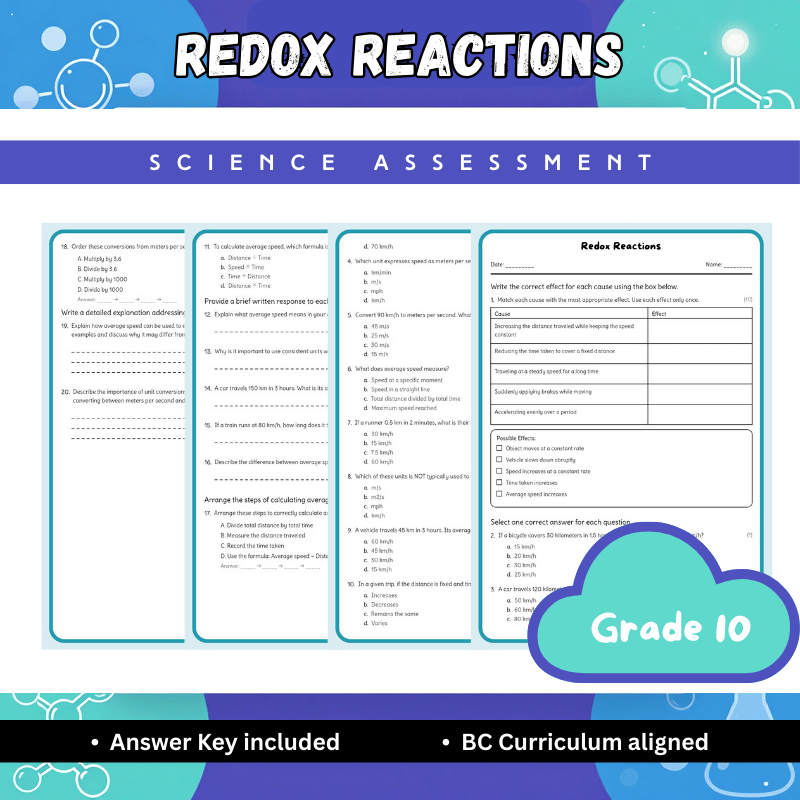
Grade 10 Science | Redox Reactions Worksheet (Answer Key) for BC Standards
Created byBright Mind ResourcesLearning Objectives
- Understand the concept of oxidation and reduction in chemical reactions.
- Identify changes in oxidation states during redox processes.
- Explain how electron transfer links microscopic processes to macroscopic phenomena.
Instant download

Grade 9 Social Studies — Vegetation and Soils Worksheet MCQ Paper
 Created byThe Resource Hub
Learning Objectives
- Explain how climate influences vegetation patterns and soil formation in different regions.
- Analyze how vegetation cover affects soil moisture, erosion, and carbon storage.
- Describe soil degradation causes and consequences, including nutrient loss and topsoil erosion.
Instant download
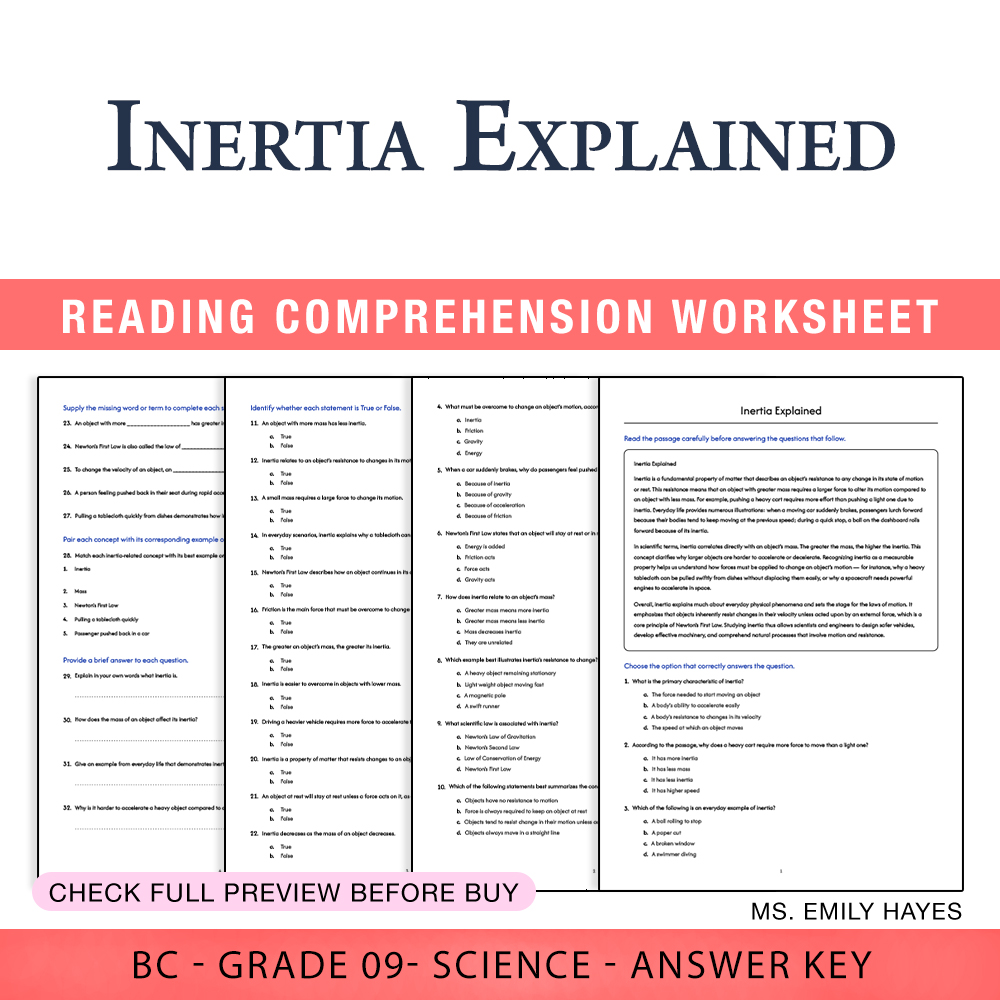
9th Grade Science | Inertia Explained Worksheet (PDF+ Answer Key)
Created byCopper Leaf ClassroomLearning Objectives
- Understand the concept of inertia and its relation to mass.
- Identify real-world examples that demonstrate inertia.
- Explain how force overcomes inertia to change an object's motion.
Also included in: Grade 9 Science Worksheet Bundle | Forces, Energy & Motion (PDF + Answer Key) +1 more
Instant download
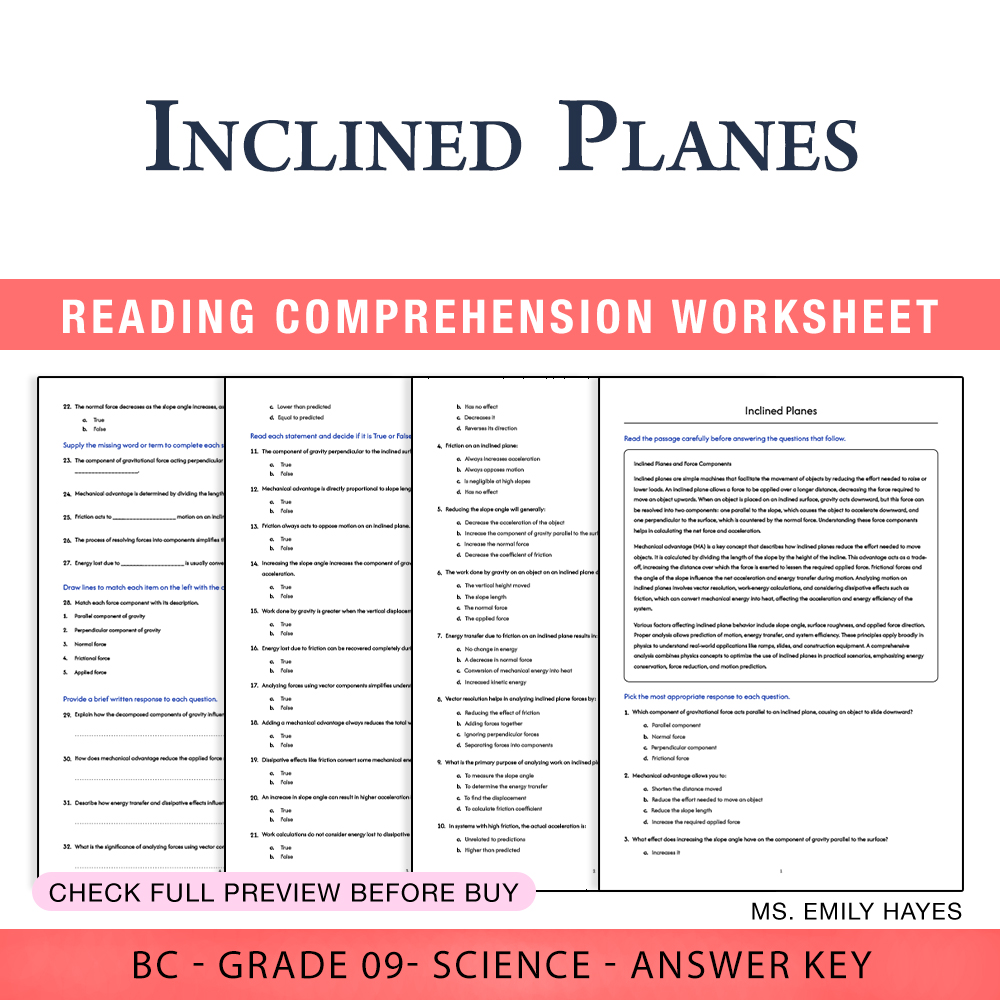
9th Grade Science | Inclined Planes Worksheet (PDF+ Answer Key)
Created byCopper Leaf ClassroomLearning Objectives
- Explain how inclined planes decompose gravitational force into components parallel and perpendicular to the surface.
- Describe the concept of mechanical advantage and how it reduces applied force at the expense of distance.
- Analyze the effects of slope angle and friction on the motion, acceleration, and energy transfer of objects on inclined planes.
Also included in: Grade 9 Science Worksheet Bundle | Forces, Energy & Motion (PDF + Answer Key) +1 more
Instant download
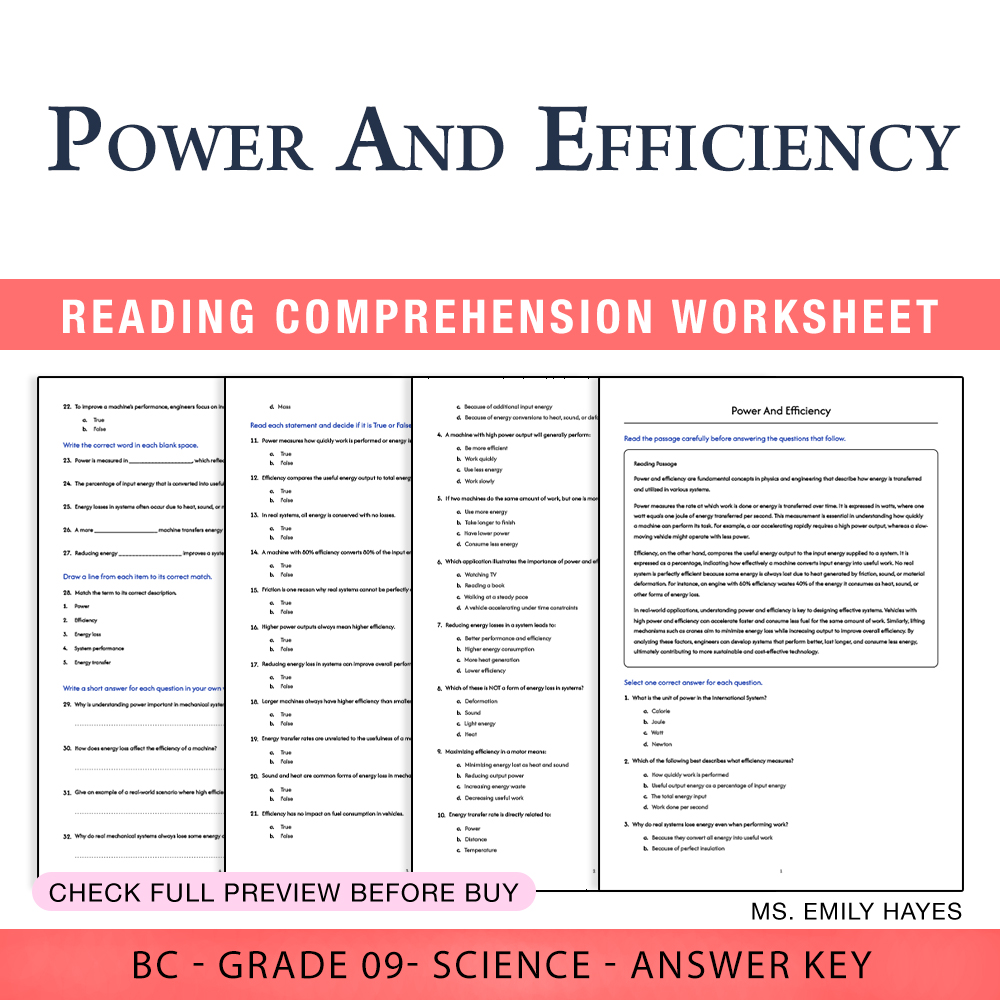
9th Grade Science | Power and Efficiency Worksheet (PDF+ Answer Key)
Created byCopper Leaf ClassroomLearning Objectives
- Understand the concepts of power and how it measures the rate of energy transfer in systems.
- Explain the meaning of efficiency and how it compares useful output energy to input energy.
- Recognize factors that cause energy loss in real systems and how they reduce efficiency.
Also included in: Grade 9 Science Worksheet Bundle | Forces, Energy & Motion (PDF + Answer Key) +1 more
Instant download
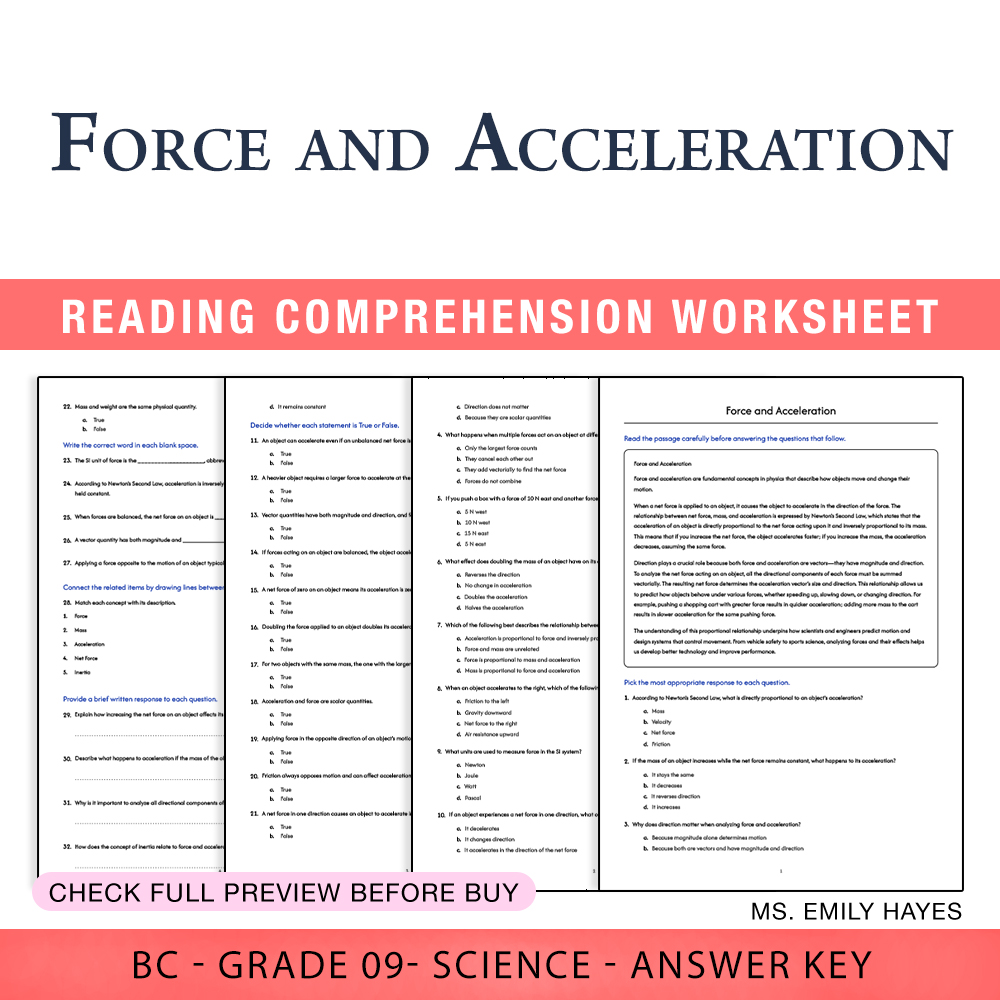
Grade 9 Science | Force and Acceleration Worksheet (PDF+ Answer Key)
Created byCopper Leaf ClassroomLearning Objectives
- Understand the relationship between net force, mass, and acceleration.
- Analyze how changes in force or mass affect acceleration.
- Apply vector concepts to force and acceleration in different directions.
Also included in: Grade 9 Science Worksheet Bundle | Forces, Energy & Motion (PDF + Answer Key) +1 more
Instant download
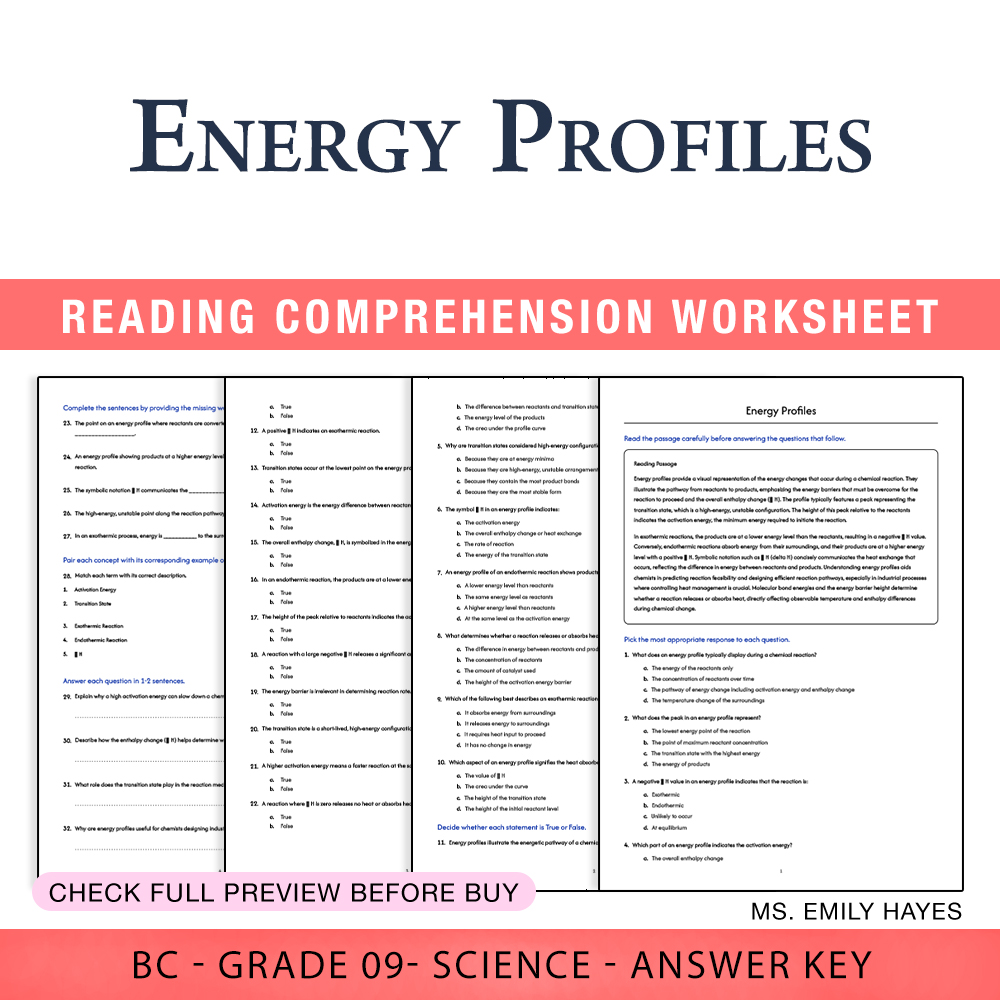
Grade 9 Science | Energy Profiles Worksheet (PDF+ Answer Key)
Created byCopper Leaf ClassroomLearning Objectives
- Describe the concept of energy profiles and their purpose in analyzing chemical reactions.
- Distinguish between exothermic and endothermic reactions based on enthalpy changes.
- Identify the significance of activation energy and transition states in reaction pathways.
Also included in: Grade 9 Science Bundle | Chemistry, Physics & Atomic Concepts (PDF + Answer Key) +1 more
Instant download
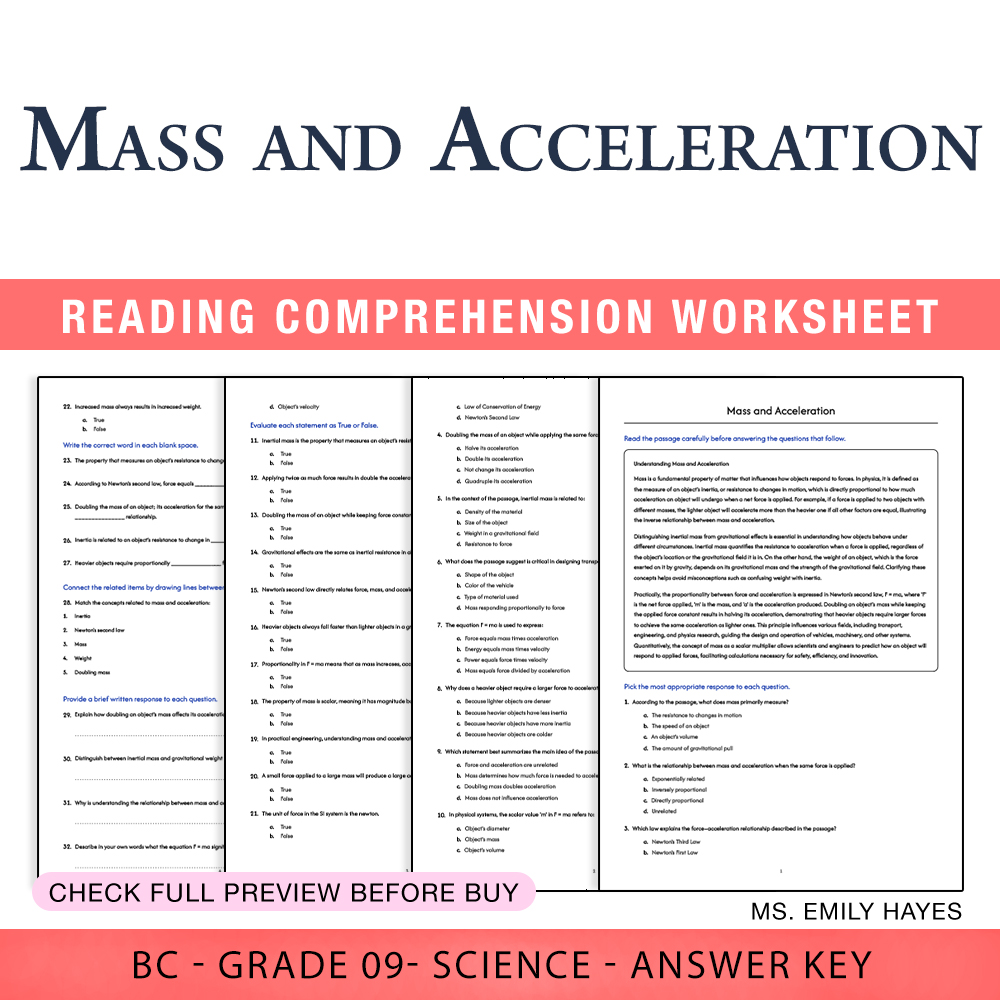
9th Grade Science | Mass and Acceleration Worksheet (PDF + Answer Key)
Created byCopper Leaf ClassroomLearning Objectives
- Explain how mass influences acceleration under a given net force.
- Distinguish between inertial mass and gravitational effects in response to forces.
- Apply the force–acceleration relationship in practical problems involving mass.
Also included in: Grade 9 Science Worksheet Bundle | Forces, Energy & Motion (PDF + Answer Key) +1 more
Instant download
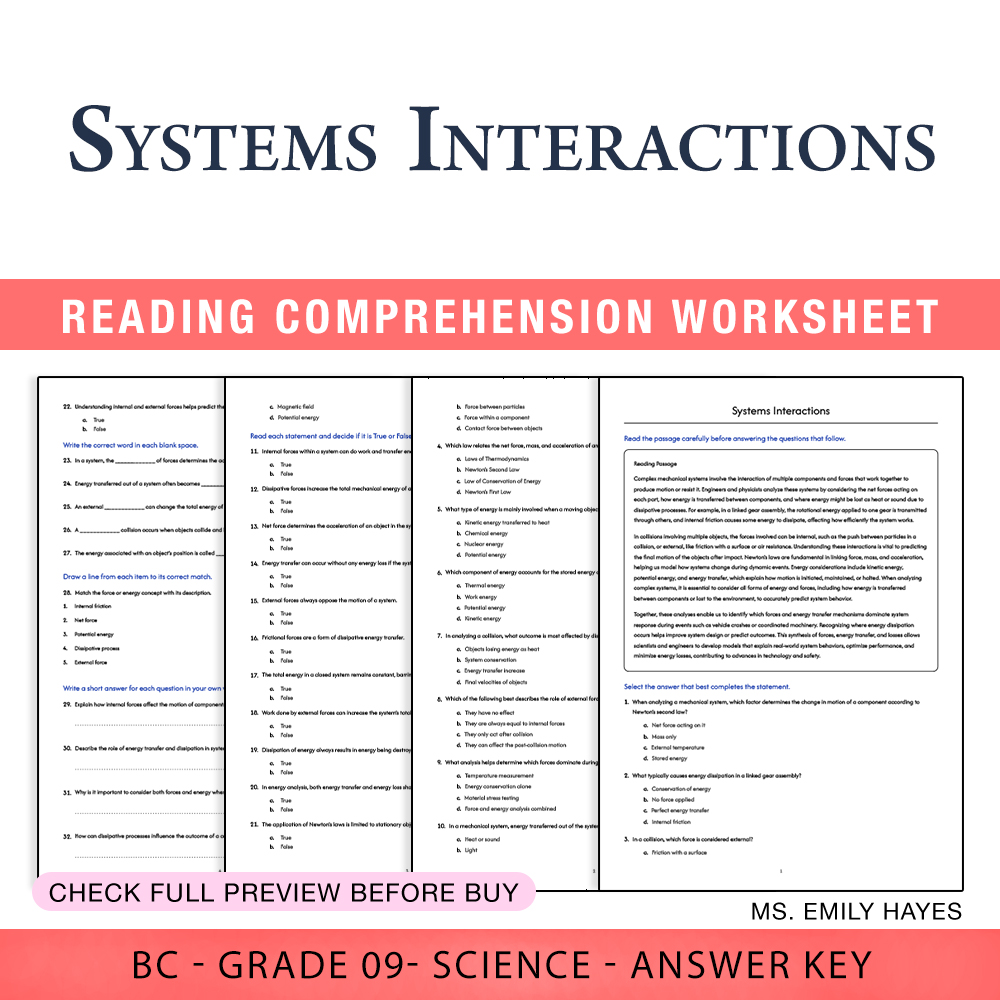
Grade 9 Science | Systems Interactions Worksheet (PDF+ Answer Key)
Created byCopper Leaf ClassroomLearning Objectives
- Understand how multiple bodies and forces interact within complex mechanical systems.
- Apply Newton’s laws, net force analysis, and energy accounting to predict system motion.
- Analyze internal and external forces, energy transfer, and energy loss in systems during events like collisions.
Also included in: Grade 9 Science Worksheet Bundle | Forces, Energy & Motion (PDF + Answer Key) +1 more
Instant download
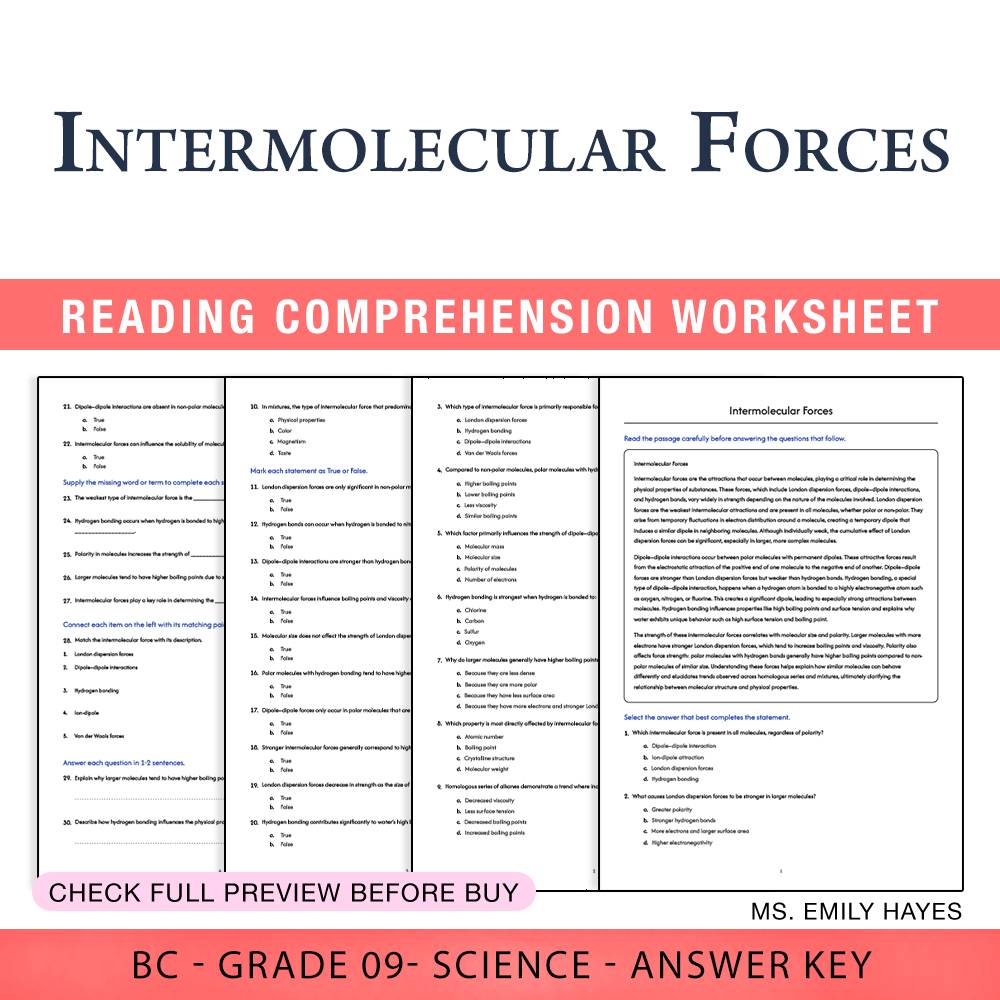
9th Grade Science | Intermolecular Forces Worksheet (PDF+ Answer Key)
Created byCopper Leaf ClassroomLearning Objectives
- Explain the types of intermolecular forces and how they affect physical properties of molecules.
- Compare London dispersion, dipole–dipole, and hydrogen bonding in terms of strength and molecular influence.
- Relate molecular structure and polarity to the strength of intermolecular forces and properties like boiling point and viscosity.
Also included in: Grade 9 Science Bundle | Chemistry, Physics & Atomic Concepts (PDF + Answer Key) +1 more
Instant download
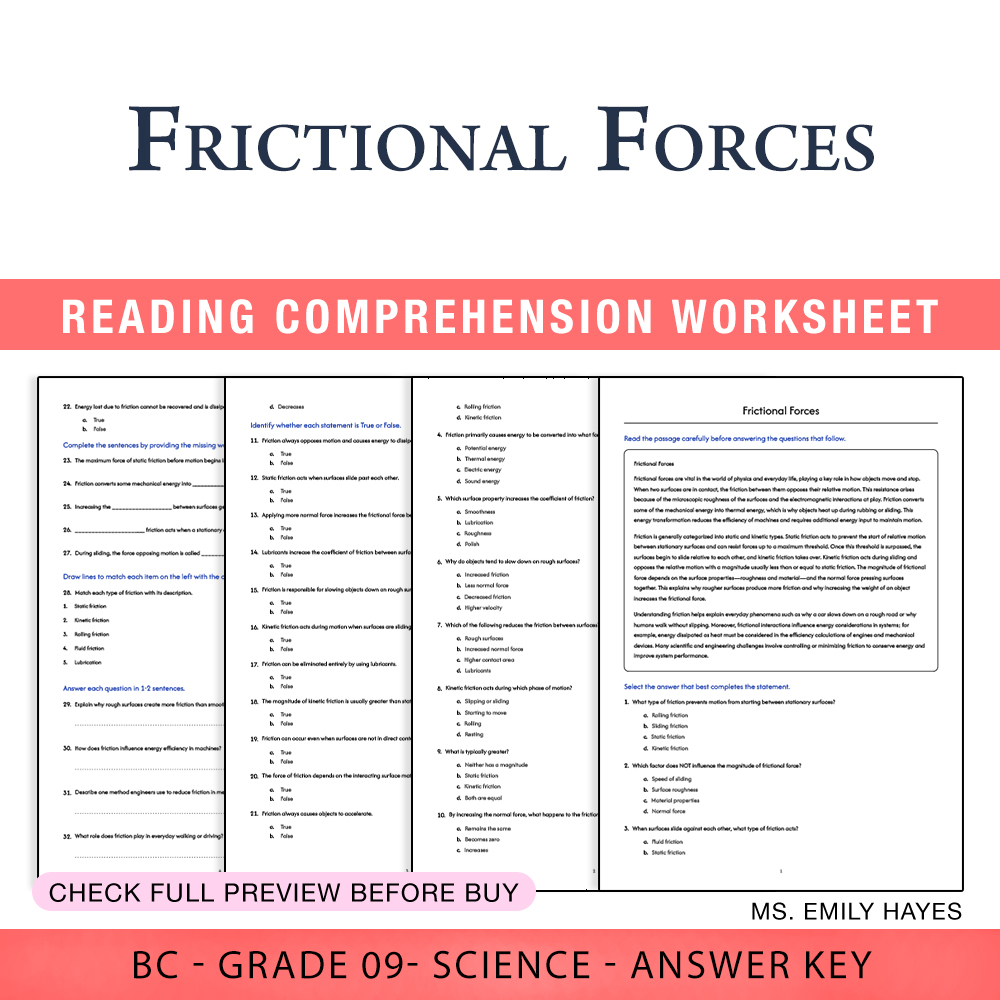
Grade 9 Science | Frictional Forces Worksheet (PDF+ Answer Key)
Created byCopper Leaf ClassroomLearning Objectives
- Explain how friction opposes motion between surfaces and converts kinetic energy to heat.
- Differentiate between static and kinetic friction and understand their roles.
- Describe factors affecting the magnitude of frictional forces.
Also included in: Grade 9 Science Worksheet Bundle | Forces, Energy & Motion (PDF + Answer Key) +1 more
Instant download
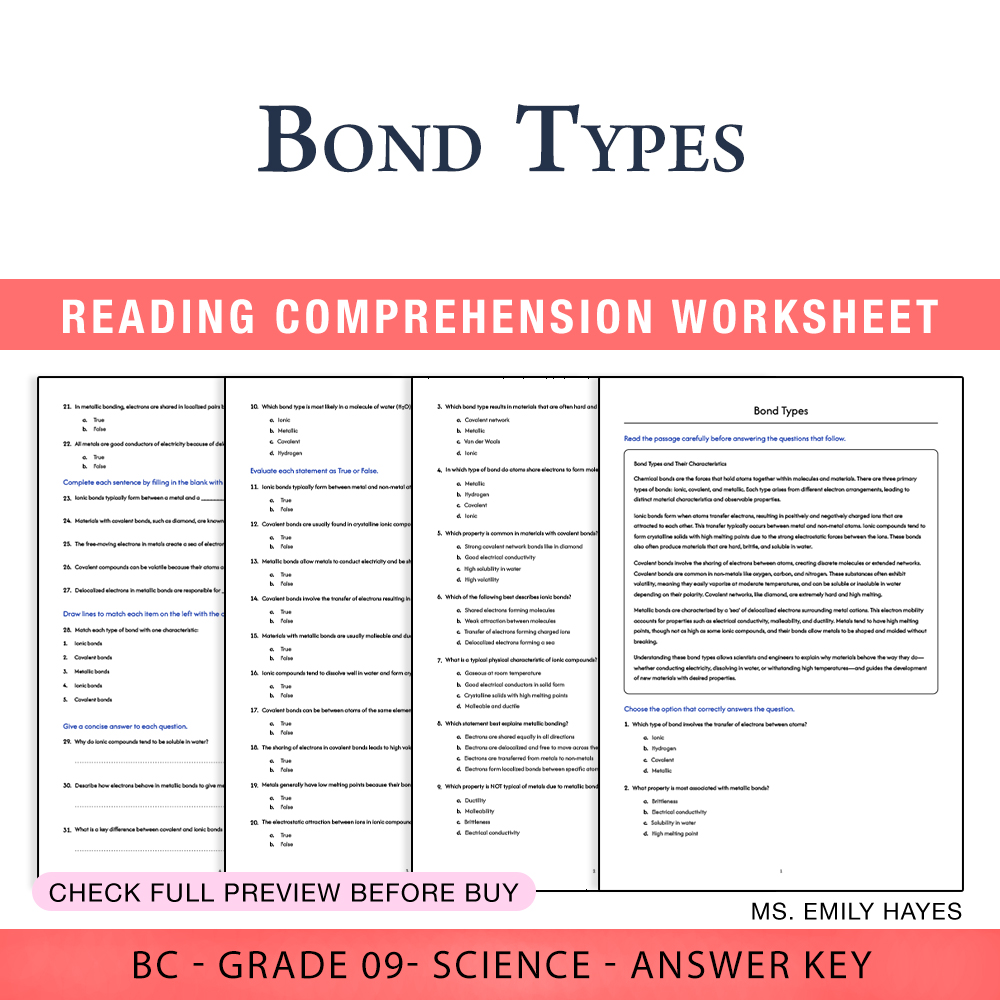
9th Grade Science | Bond Types Worksheet (PDF+ Answer Key)
Created byCopper Leaf ClassroomLearning Objectives
- Identify different types of chemical bonds: ionic, covalent, and metallic.
- Explain how electron arrangements influence bond formation and material properties.
- Distinguish between ionic, covalent, and metallic bonds based on their characteristics.
Also included in: Grade 9 Science Bundle | Chemistry, Physics & Atomic Concepts (PDF + Answer Key) +1 more
Instant download
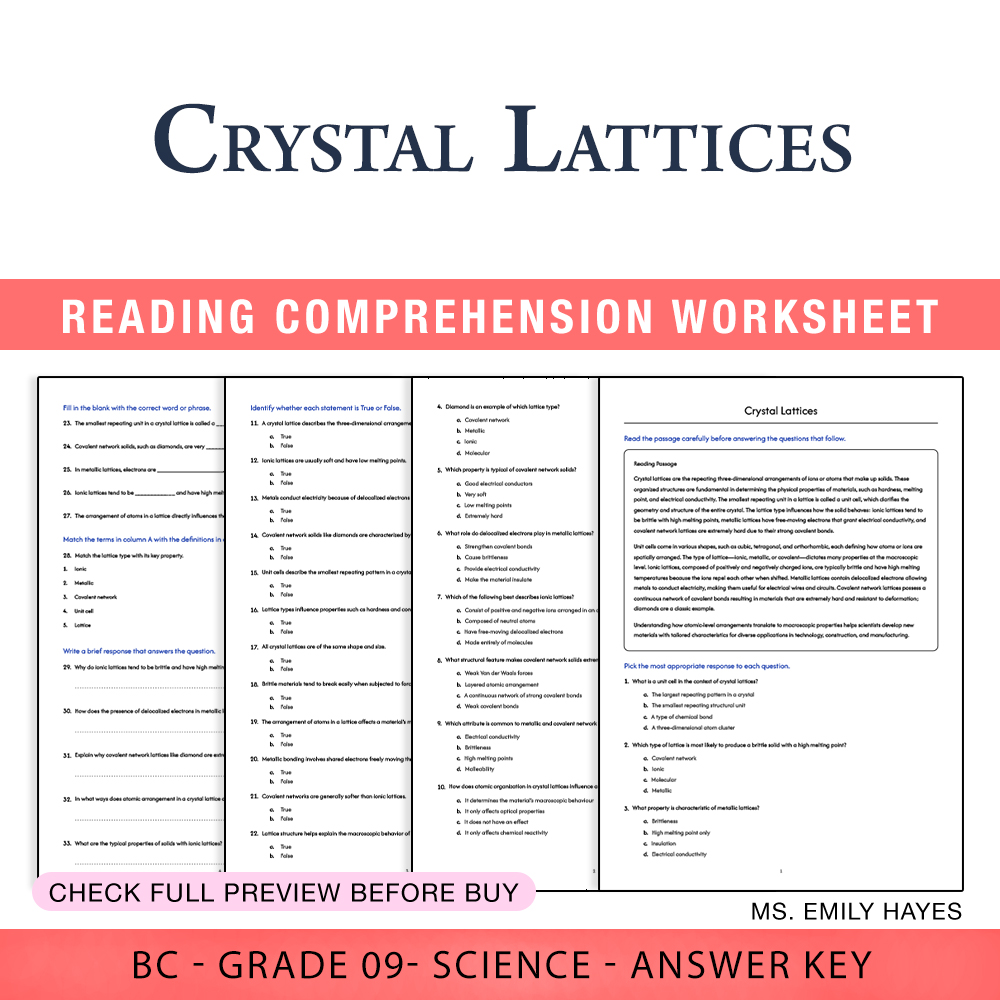
9th Grade Science | Crystal Lattices Worksheet (PDF+ Answer Key)
Created byCopper Leaf ClassroomLearning Objectives
- Understand the structure and function of different types of crystal lattices.
- Identify the characteristics and properties associated with ionic, metallic, and covalent network lattices.
- Explain how atomic arrangements influence the macroscopic properties of solids.
Also included in: Grade 9 Science Bundle | Chemistry, Physics & Atomic Concepts (PDF + Answer Key) +1 more
Instant download
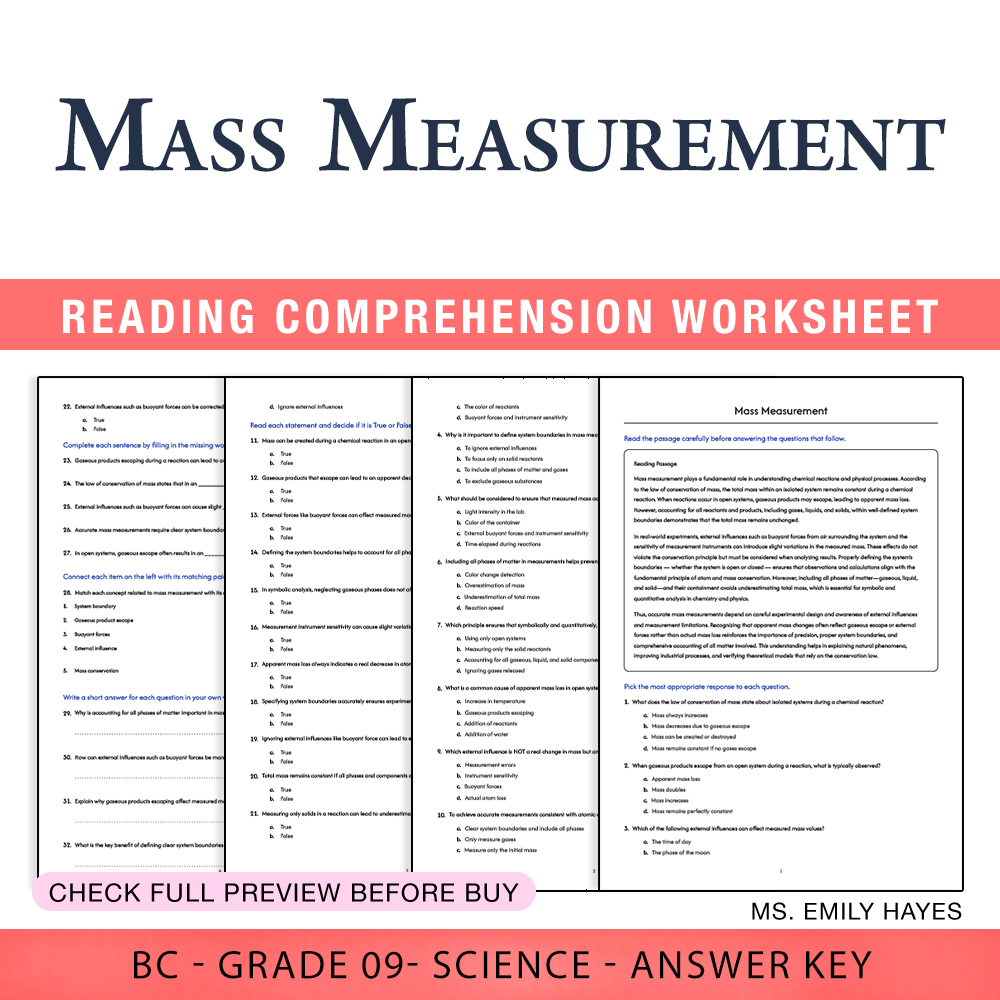
9th Grade Science | Mass Measurement Worksheet (PDF+ Answer Key)
Created byCopper Leaf ClassroomLearning Objectives
- Understand the principle of conservation of mass in chemical reactions.
- Identify factors affecting measured mass during experiments.
- Explain the importance of system boundaries in mass measurements.
Also included in: Grade 9 Science Bundle | Chemistry, Physics & Atomic Concepts (PDF + Answer Key) +1 more
Instant download
Browse more categories
About Reading comprehension Worksheets
Find reading comprehension worksheets for class practice, homework, or self-study. All 40,289 are instant PDF downloads.
Each resource here is built by an independent educator and reviewed for quality. Worksheets print straight from PDF and suit classroom use, homework, or extra practice; most come with answer keys, and you can preview before purchasing.