
Reading comprehension Worksheets
40,284 type resources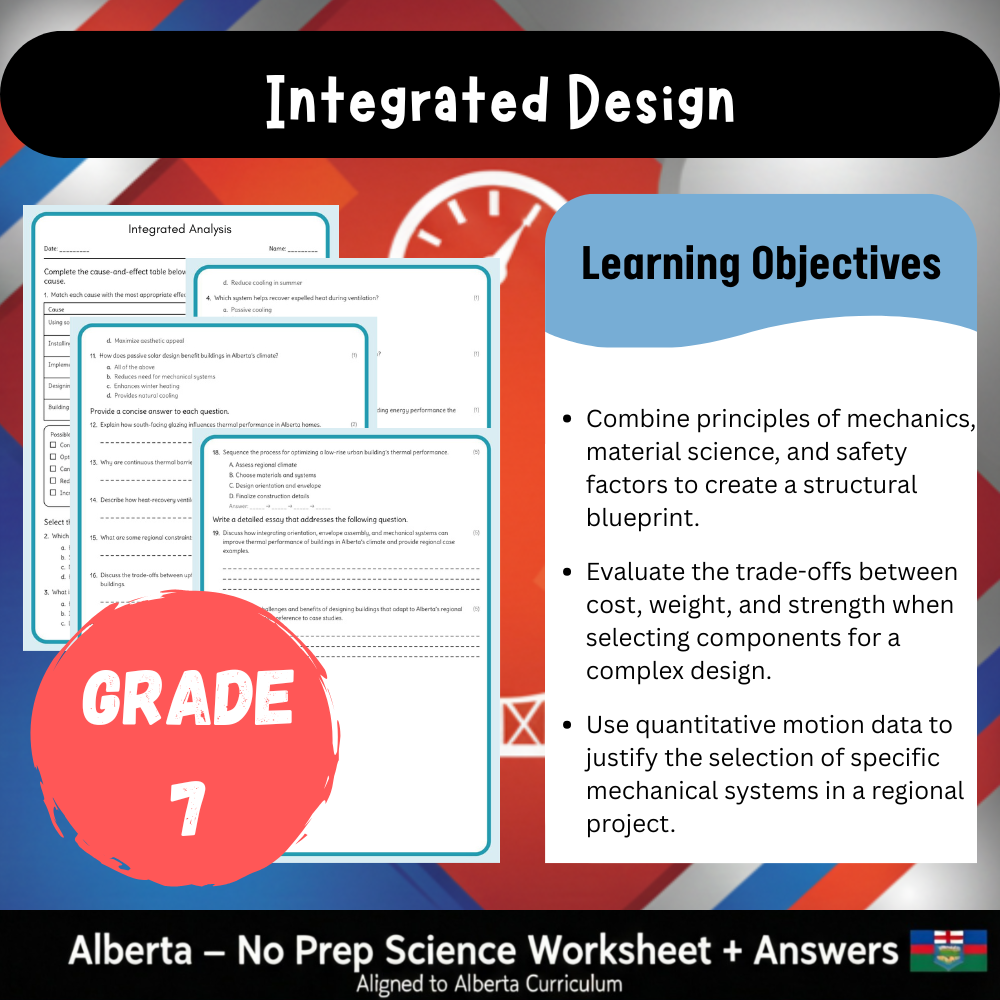
Grade 7 Science – Integrated Design Practice Worksheet (PDF)
 Created byBright Mind Resources
Learning Objectives
- Analyze regional design criteria considering force, wind, snow, and load scenarios.
- Compare alternative mechanical systems based on performance and safety criteria.
- Utilize quantitative motion data and structural assessment to justify design choices.
Instant download
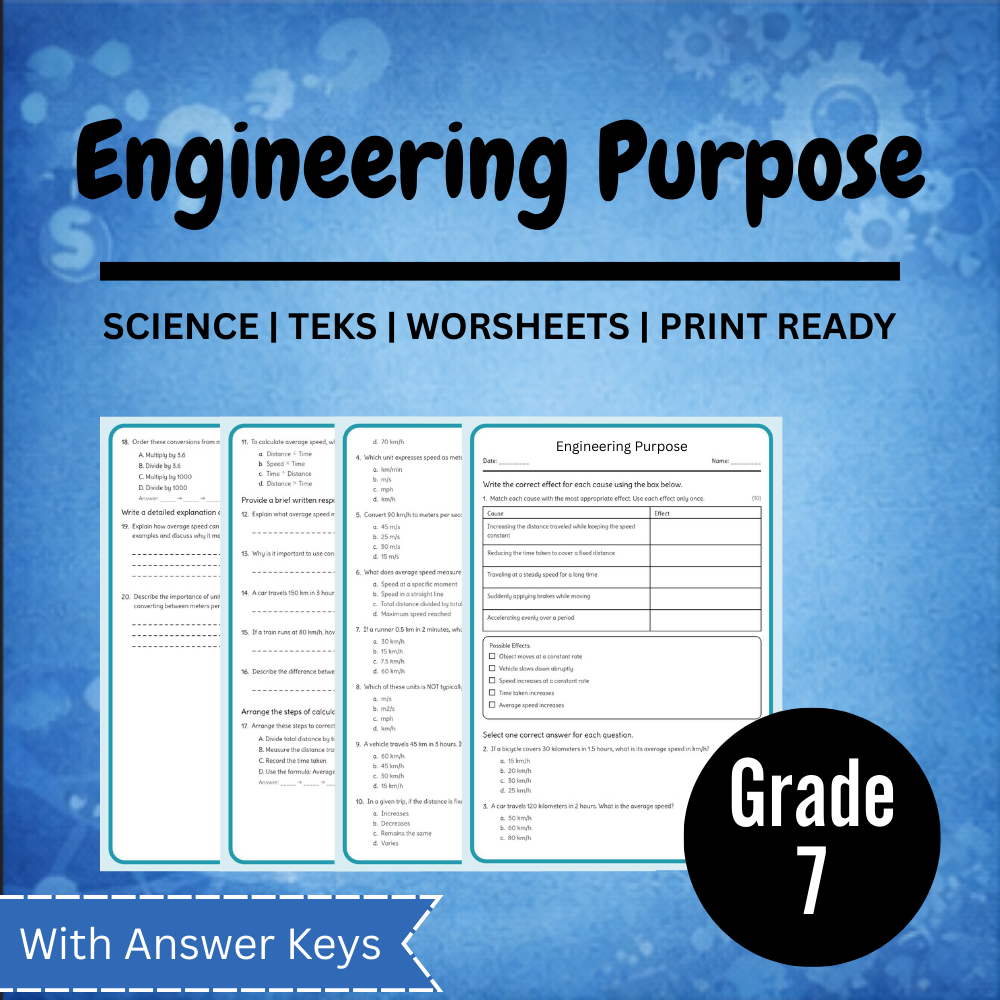
Grade 7 Science | Engineering Purpose TEKS-Aligned Worksheet (PDF)
Created byBright Mind ResourcesLearning Objectives
- Understand how engineering designs respond to system purpose and constraints
- Identify key features of structural, mechanical, and electrical systems
- Analyze trade-offs in engineering design such as cost, reliability, and performance
Also included in: Grade 7 Science Unit Bundle | Standards, Safety, Innovation & Systems Aligned TEKS +2 more
Instant download
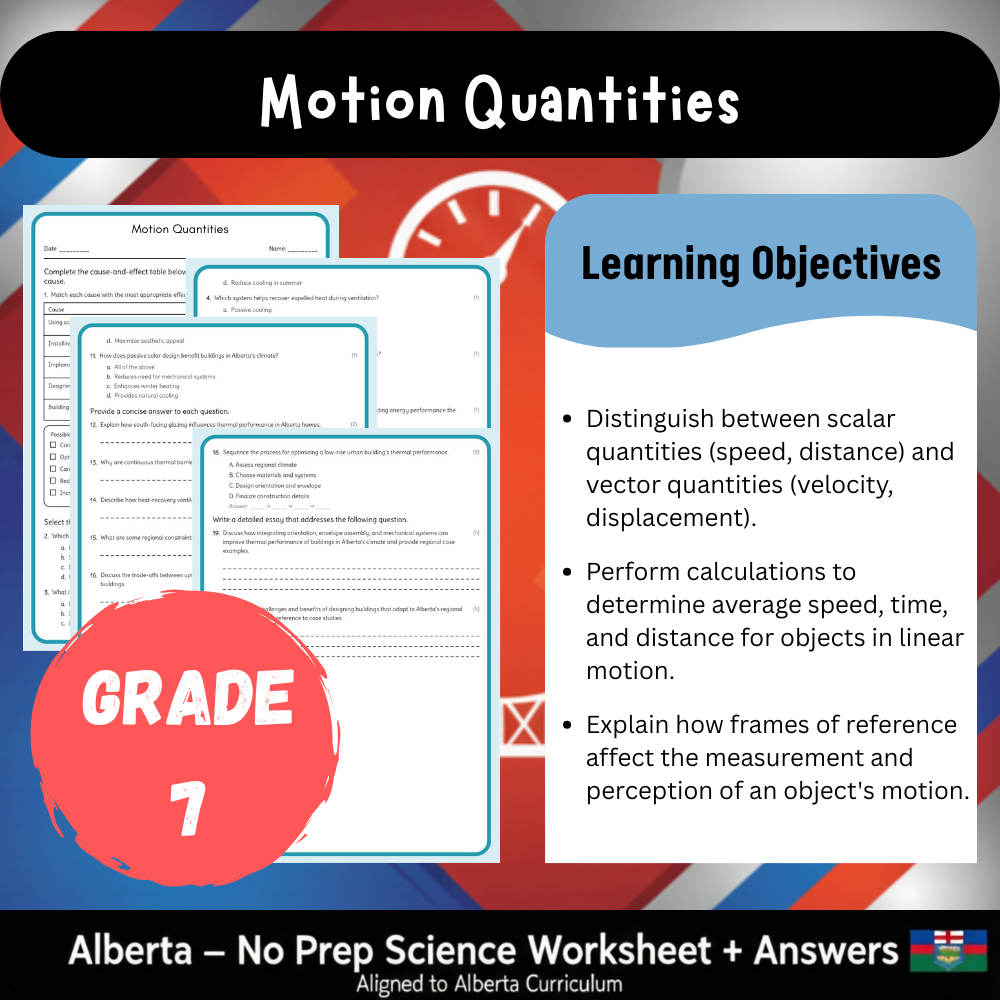
Grade 7 Science – Motion Quantities Worksheet (PDF) – Alberta Standards
Created byBright Mind ResourcesLearning Objectives
- Understand the basic quantities used to describe motion, including distance, time, and speed.
- Learn how to accurately measure and represent motion data.
- Calculate average speed from tabulated data and understand common measurement errors.
Instant download
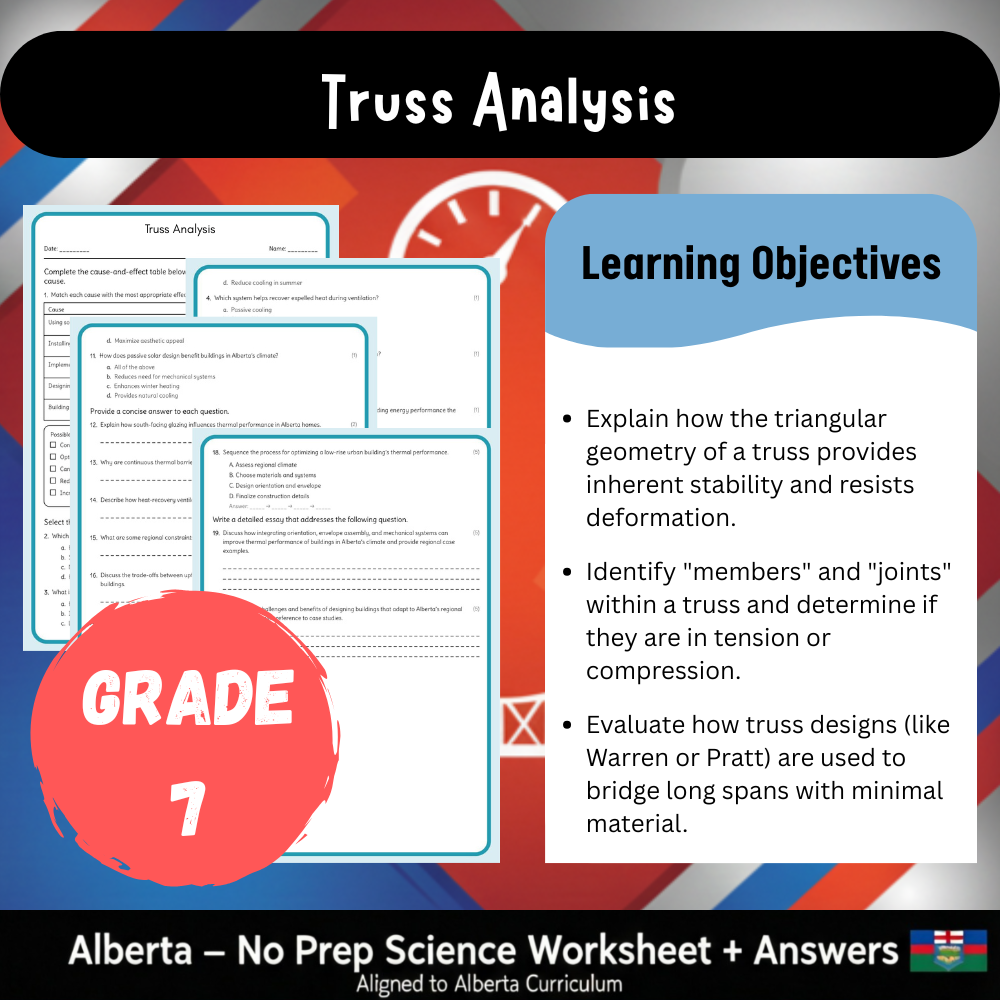
Grade 7 Science | Truss Analysis Worksheet (PDF) – Alberta Standards
Created byBright Mind ResourcesLearning Objectives
- Understand the internal force distribution in truss structures.
- Identify different types of truss forms used in regional bridge and roof designs.
- Evaluate the efficiency and redundancy of various truss configurations.
Instant download
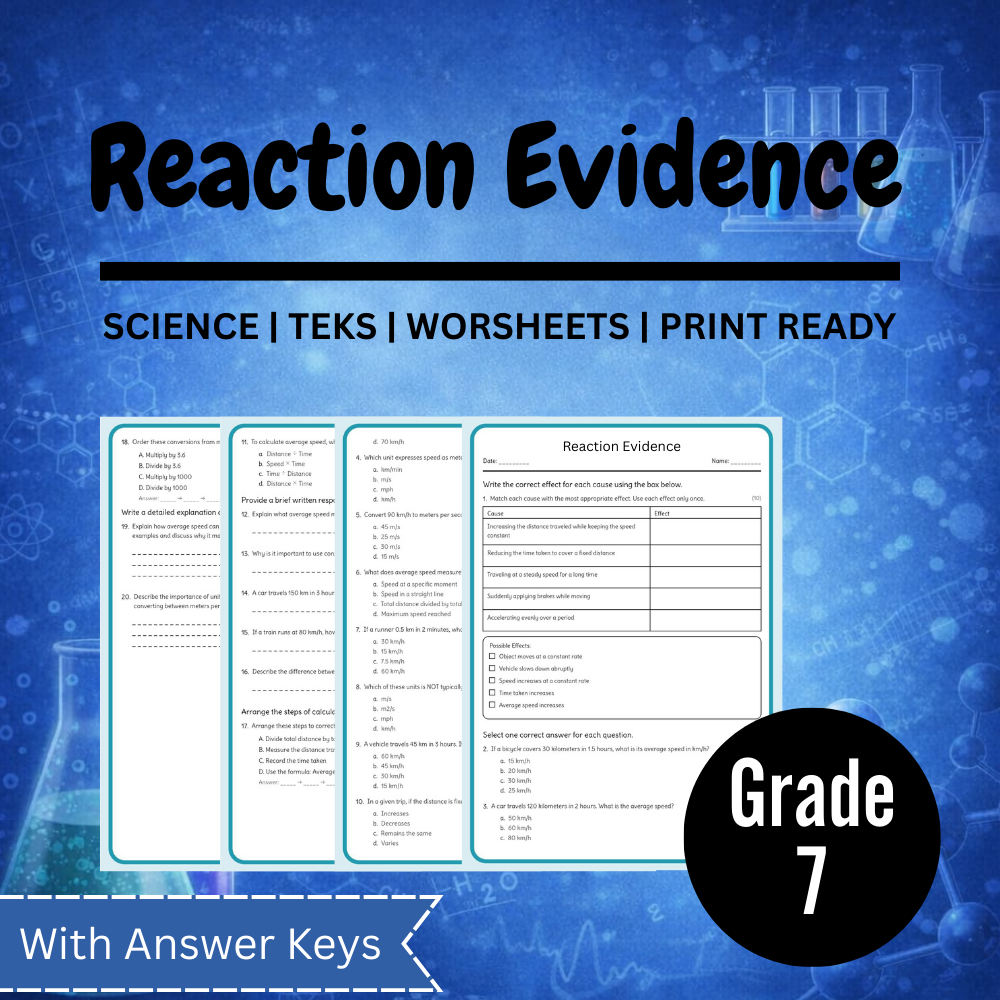
Grade 7 Science | Reaction Evidence Worksheet (PDF) – TEKS Standards & Practice
Created byBright Mind ResourcesLearning Objectives
- Identify observable indicators of chemical reactions such as gas evolution, precipitate formation, color change, and temperature change.
- Connect qualitative evidence to underlying mass and energy relationships.
- Recognize examples like acid–carbonate effervescence and precipitation reactions and interpret their indicators.
Also included in: Grade 7 Science Unit Bundle | States of Matter & Atomic Structure Worksheets +2 more
Instant download
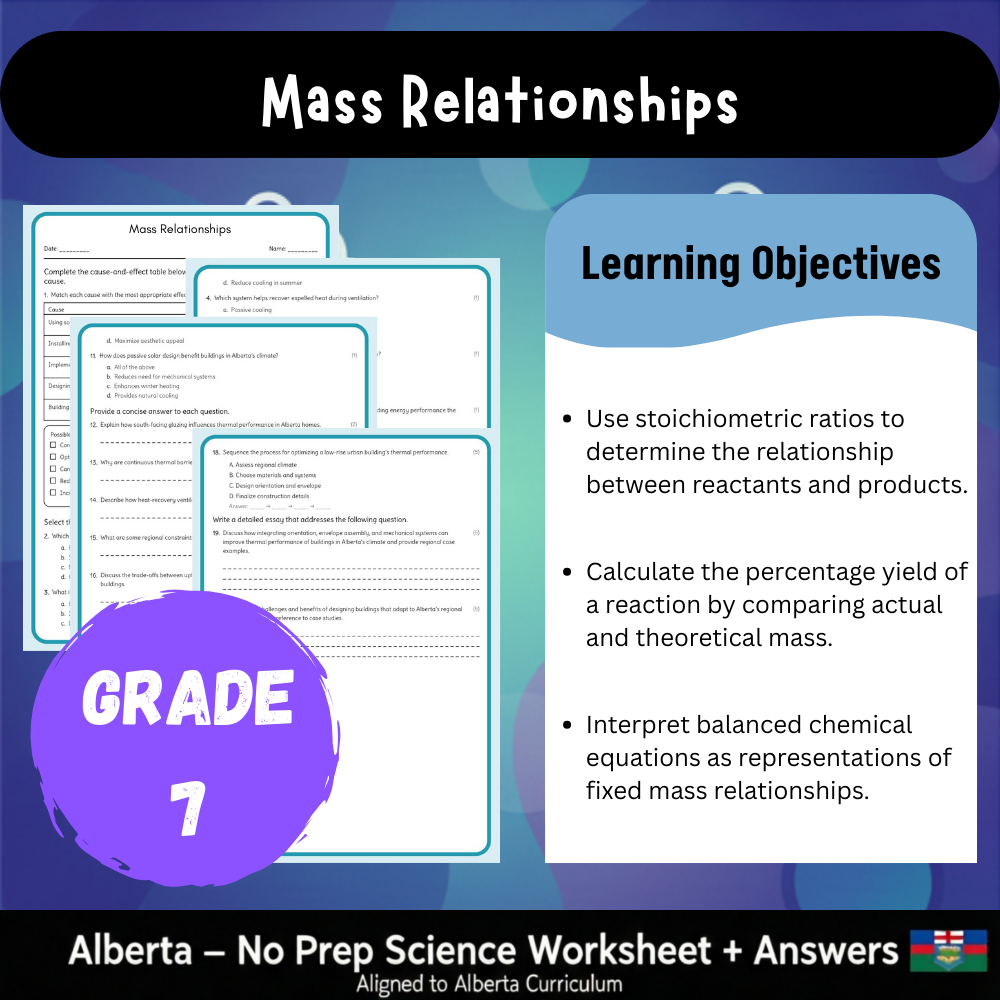
Grade 7 Science | Mass Relationships Worksheet (Worksheet + Answer Key) – Alberta Standards
Created byBright Mind ResourcesLearning Objectives
- Understand the principles of conservation of mass in chemical reactions.
- Interpret mass relationships to predict reaction yields.
- Balance inputs and outputs in closed-system reactions.
Instant download
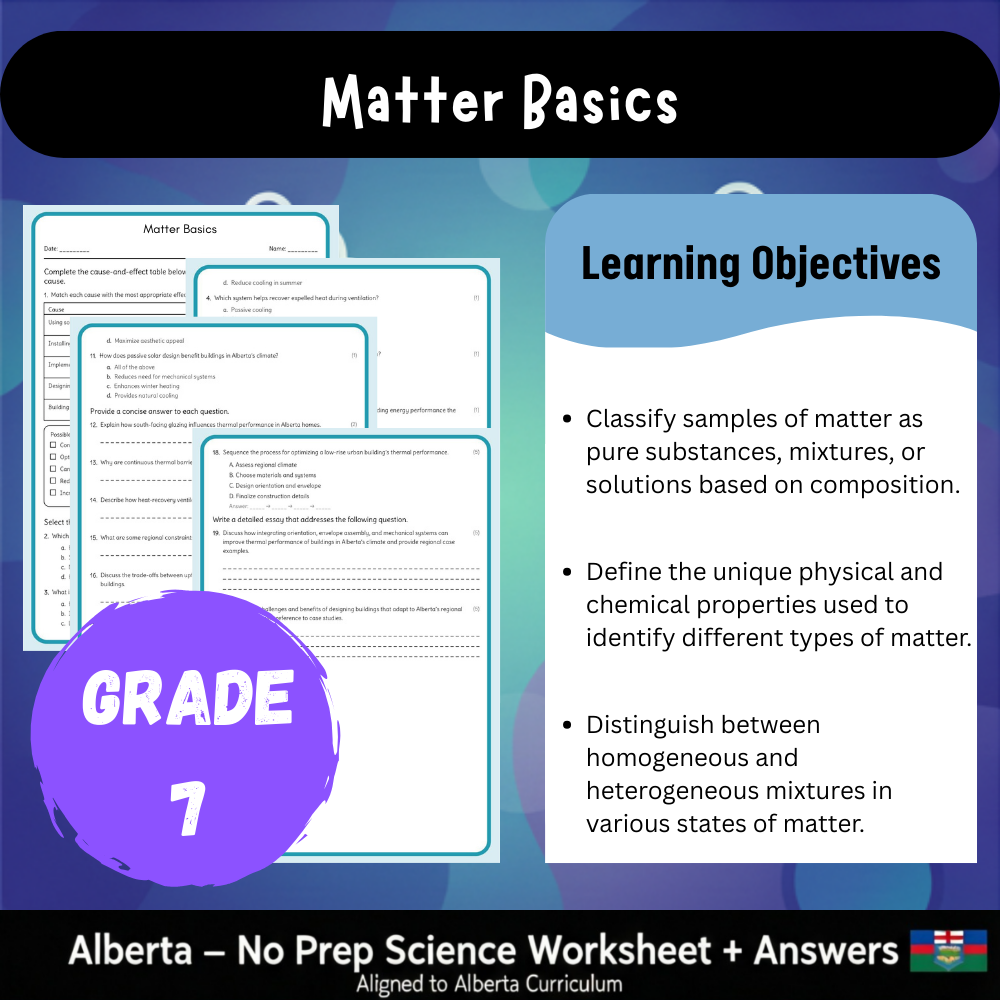
Grade 7 Science – Matter Basics Worksheet (PDF) – Alberta Standards
Created byBright Mind ResourcesLearning Objectives
- Explain the classification of matter into pure substances, mixtures, and solutions.
- Identify properties that distinguish elements and compounds as pure substances.
- Understand the differences between variable and fixed composition in mixtures and solutions.
Instant download
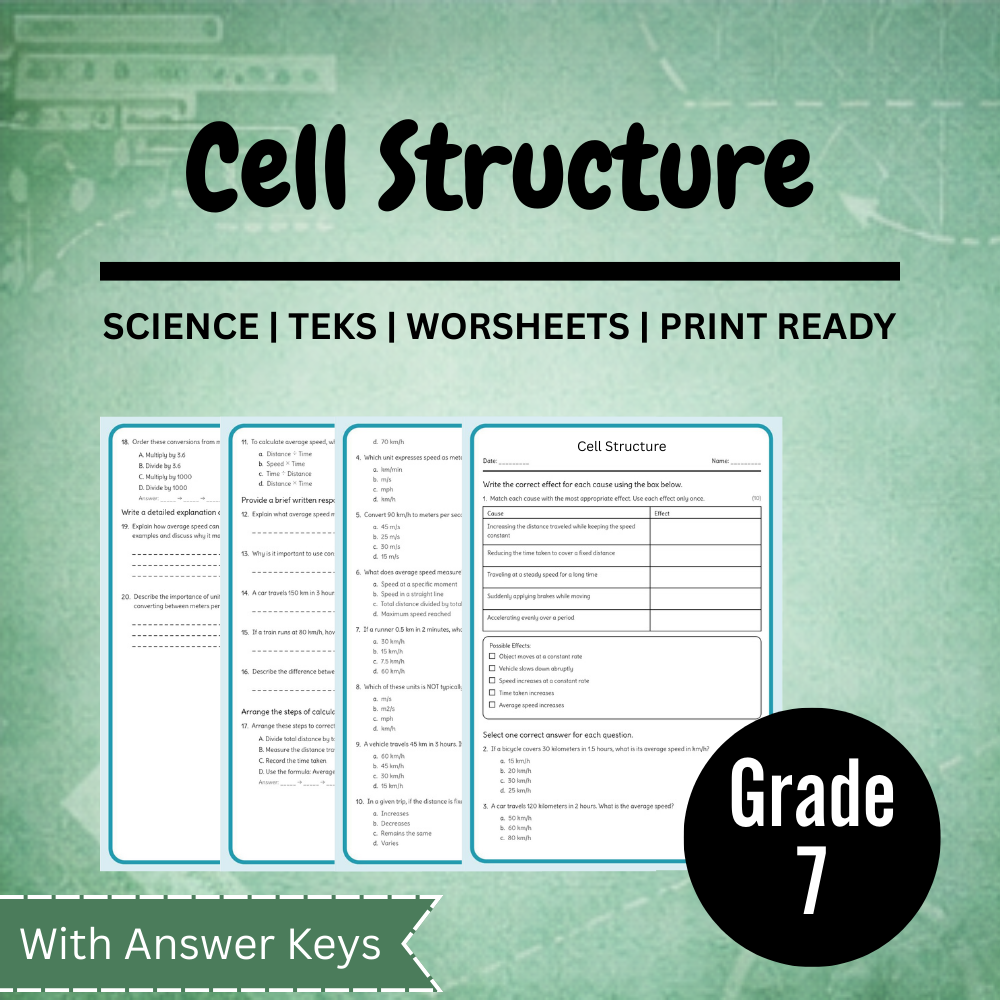
Grade 7 Science | Cell Structure Worksheet (Worksheet + Answer Key) – TEKS Aligned
Created byBright Mind ResourcesLearning Objectives
- Identify and describe major cell organelles and their functions.
- Compare cellular features of producers and consumers.
- Explain how organelle specialization supports survival and ecological interactions.
Also included in: Grade 7 Science Unit Bundle – Ecosystems, Adaptation & Environmental Impact +2 more
Instant download
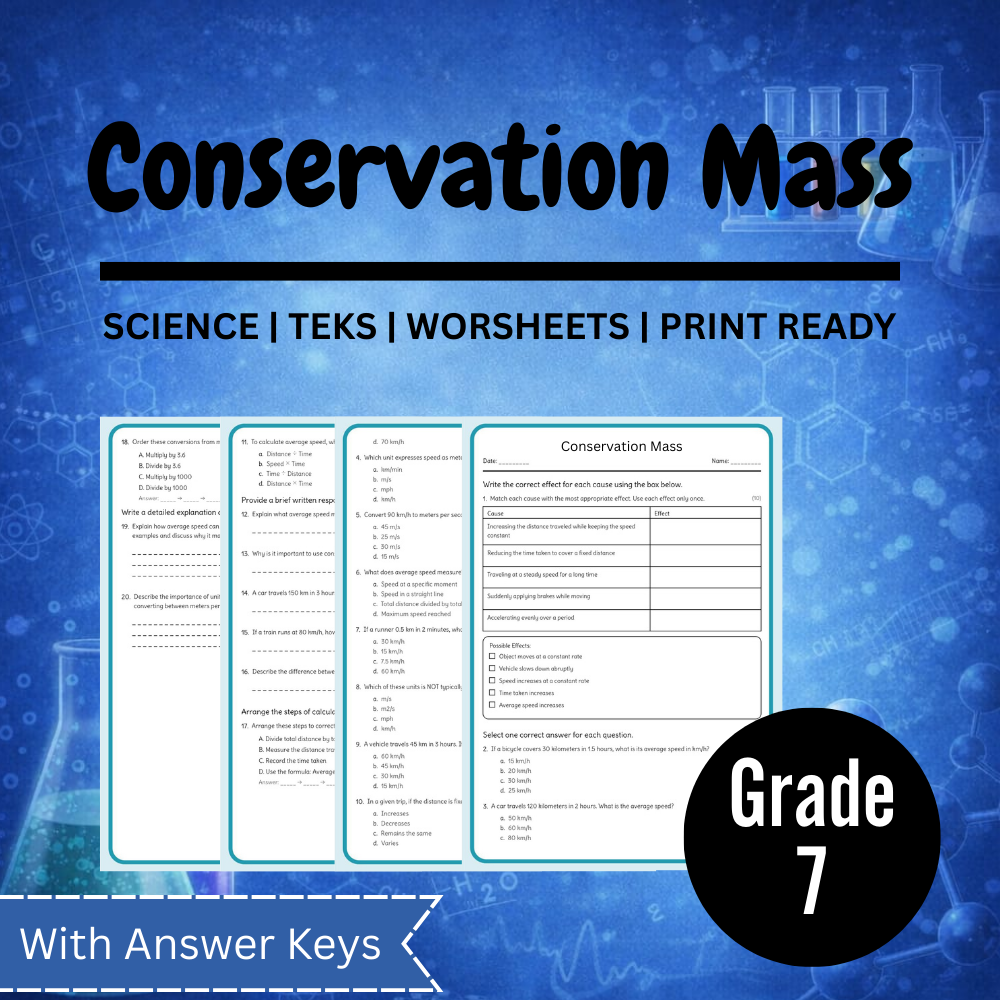
Grade 7 Science | Conservation of Mass Worksheet (Answer Key) – TEKS-Aligned
Created byBright Mind ResourcesLearning Objectives
- Understand the principle of conservation of mass in physical and chemical changes.
- Apply mass accounting to reactions and processes within a closed system.
- Balance simple chemical formulas to illustrate mass relationships.
Also included in: Grade 7 Science Unit Bundle | States of Matter & Atomic Structure Worksheets +2 more
Instant download
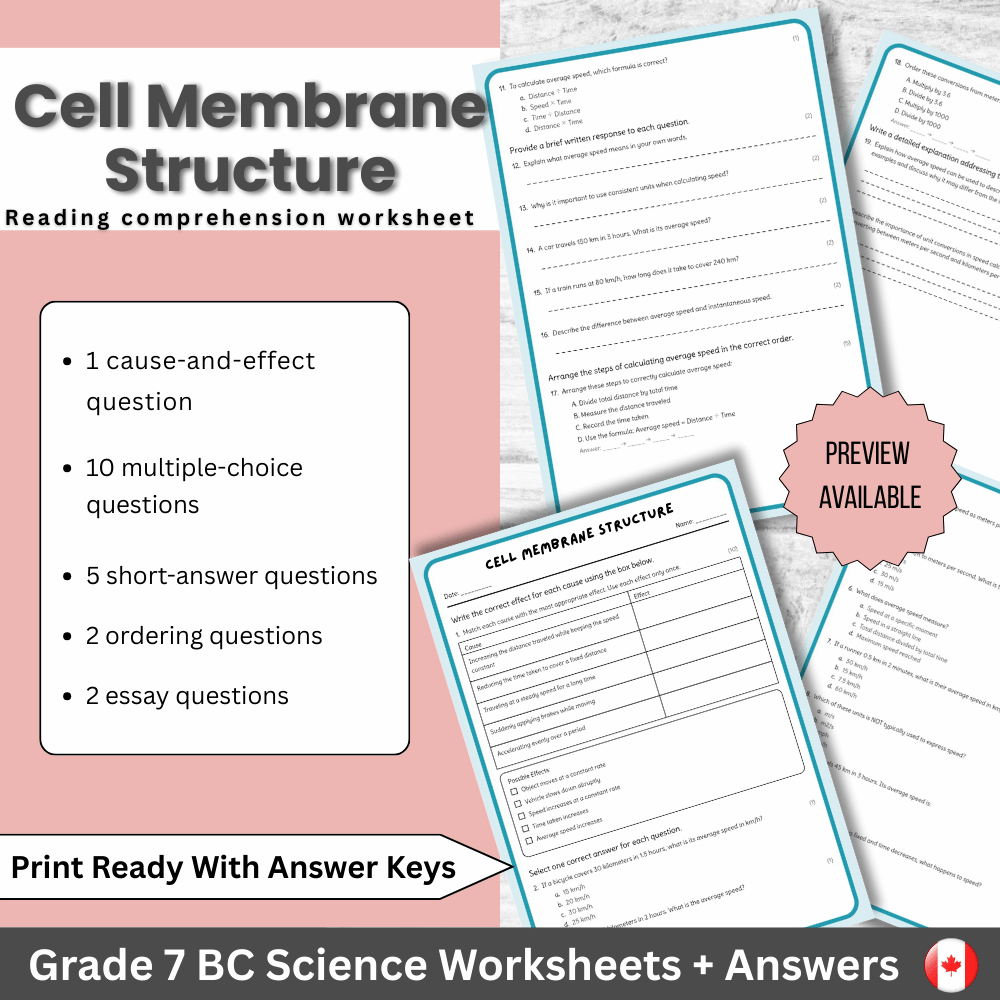
Grade 7 Science | Cell Membrane Structure Worksheet (Answer Key) – BC Standards
Created byBright Mind ResourcesLearning Objectives
- Understand the organization and components of the cell membrane as a fluid mosaic.
- Identify the functions of phospholipids, proteins, cholesterol, and carbohydrates in the membrane.
- Explain how the structure of the membrane maintains selective permeability and cellular communication.
Instant download
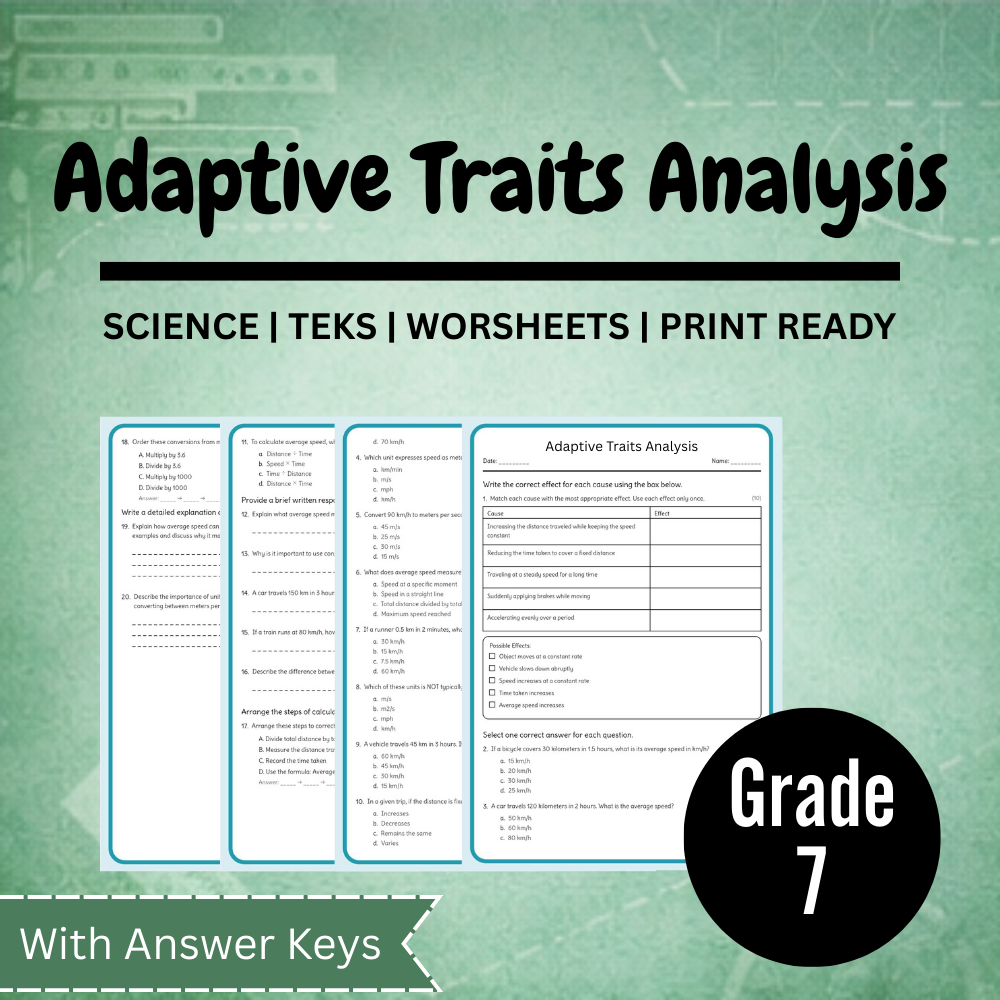
Grade 7 Science | Adaptive Traits Analysis Worksheet (PDF) – TEKS-Aligned
Created byBright Mind ResourcesLearning Objectives
- Understand how adaptive traits become common in populations through natural selection
- Identify examples of selective pressures such as pesticide resistance and camouflage
- Explain the mechanisms of variation, heritability, and differential survival
Also included in: Grade 7 Science Unit Bundle – Ecosystems, Adaptation & Environmental Impact +2 more
Instant download
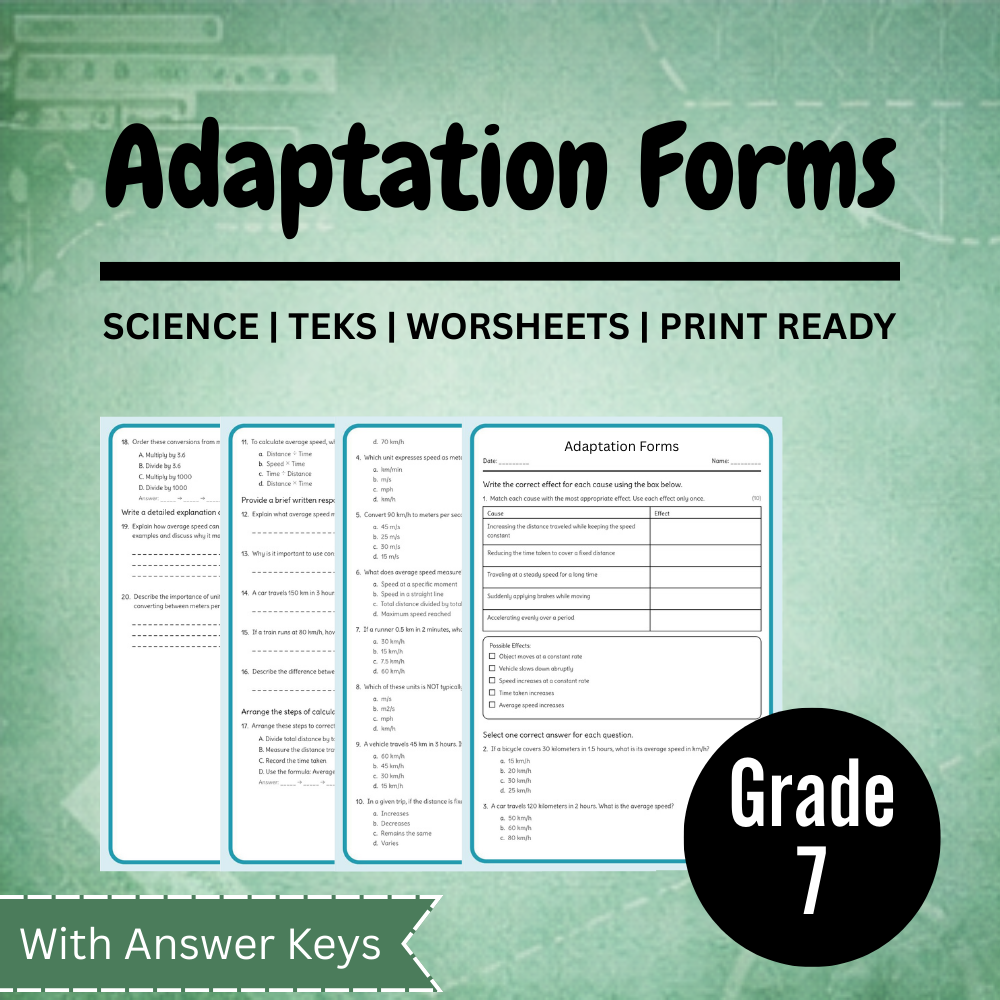
Grade 7 Science – Adaptation Forms Worksheet + Answer Key | TEKS-Aligned
Created byBright Mind ResourcesLearning Objectives
- Define morphological, physiological, and behavioral adaptations with grade-appropriate examples.
- Explain how specific traits improve survival and reproduction in particular environments.
- Distinguish adaptations from acclimatation.
Also included in: Grade 7 Science Unit Bundle – Ecosystems, Adaptation & Environmental Impact +2 more
Instant download
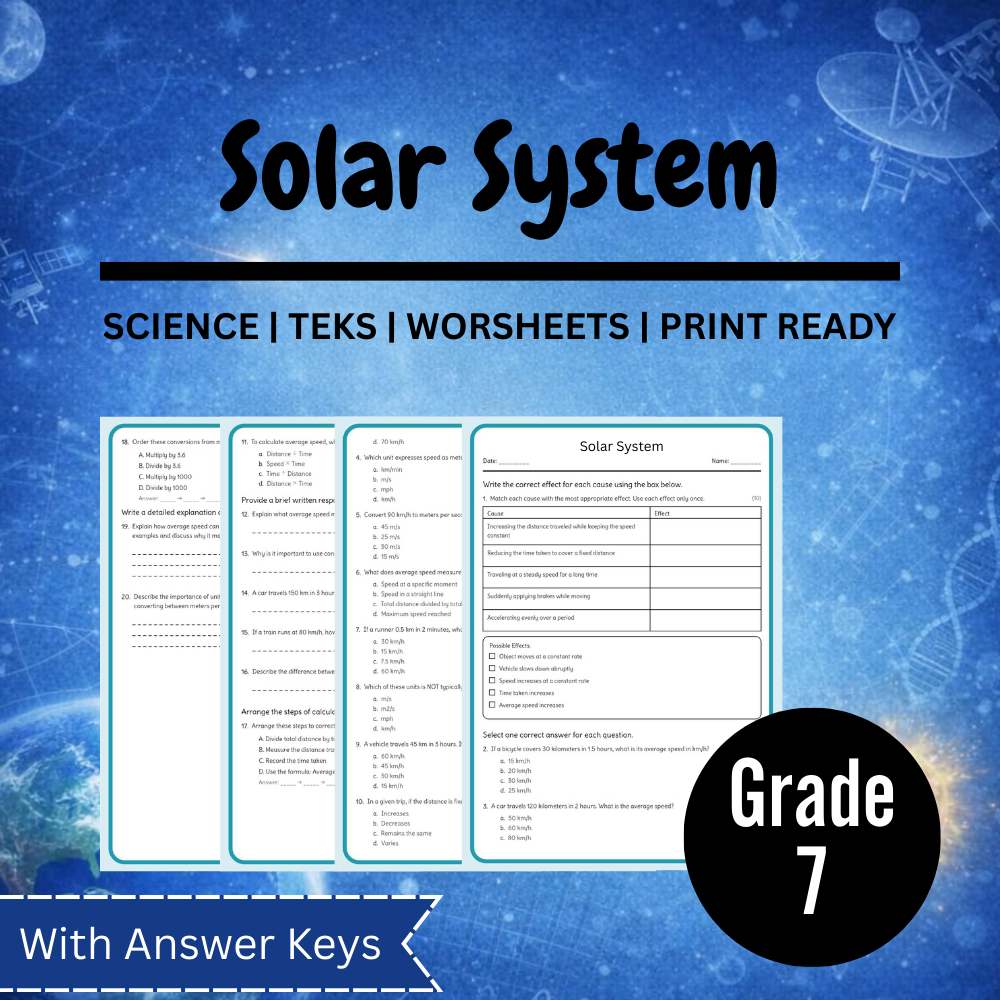
Grade 7 Science | Solar System Key Concepts Worksheet (Worksheet + Answer Key)
Created byBright Mind ResourcesLearning Objectives
- Describe the formation and origin of the solar system.
- Identify key properties of planets and their orbital features.
- Compare terrestrial planets with gas giants based on their features.
Also included in: Grade 7 Science Unit Bundle | Earth's Processes, Space & Resources TEKS Aligned +2 more
Instant download
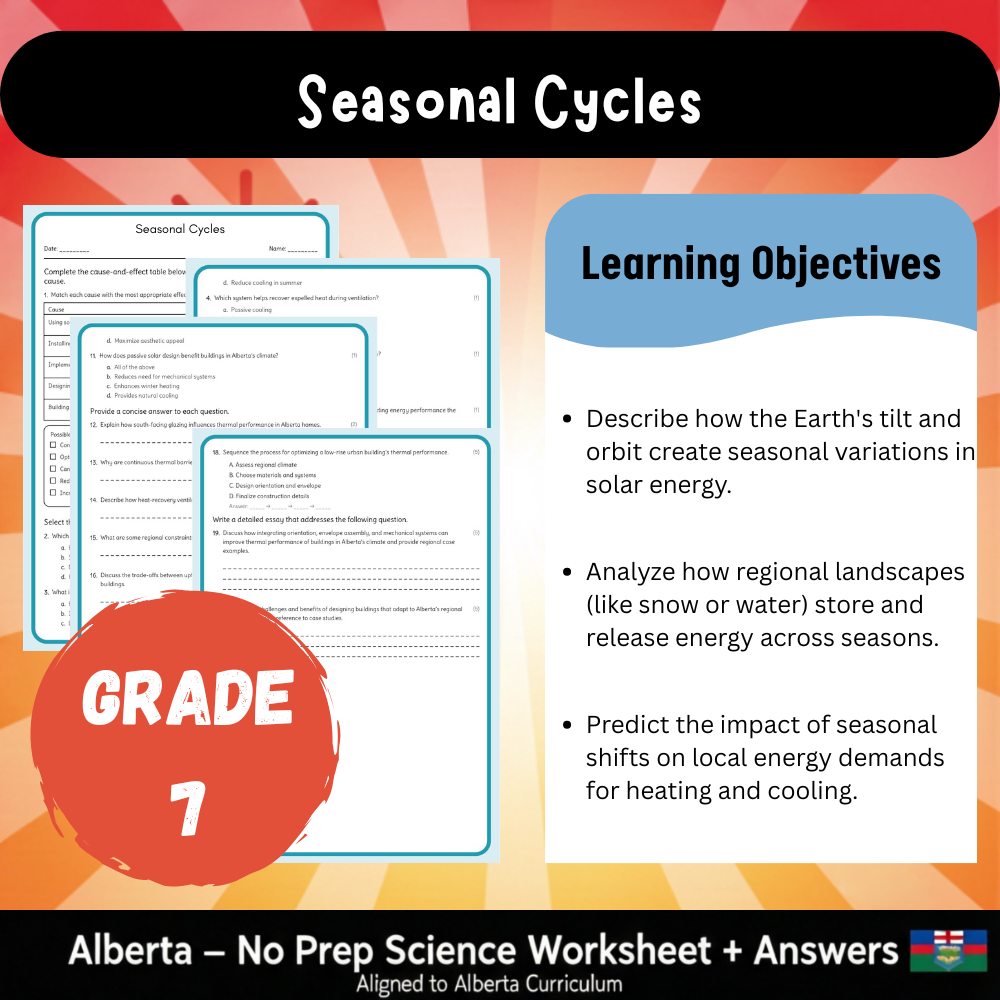
Grade 7 Science | Seasonal Cycles Worksheet (PDF) – Alberta Standards
Created byBright Mind ResourcesLearning Objectives
- Understand how seasonal thermal cycles influence regional climate and ecosystems.
- Identify the main energy pathways—radiative, latent, and sensible—in seasonal processes.
- Analyze the effects of snow cover, soil freeze-thaw dynamics, and lake stratification on energy storage.
Instant download
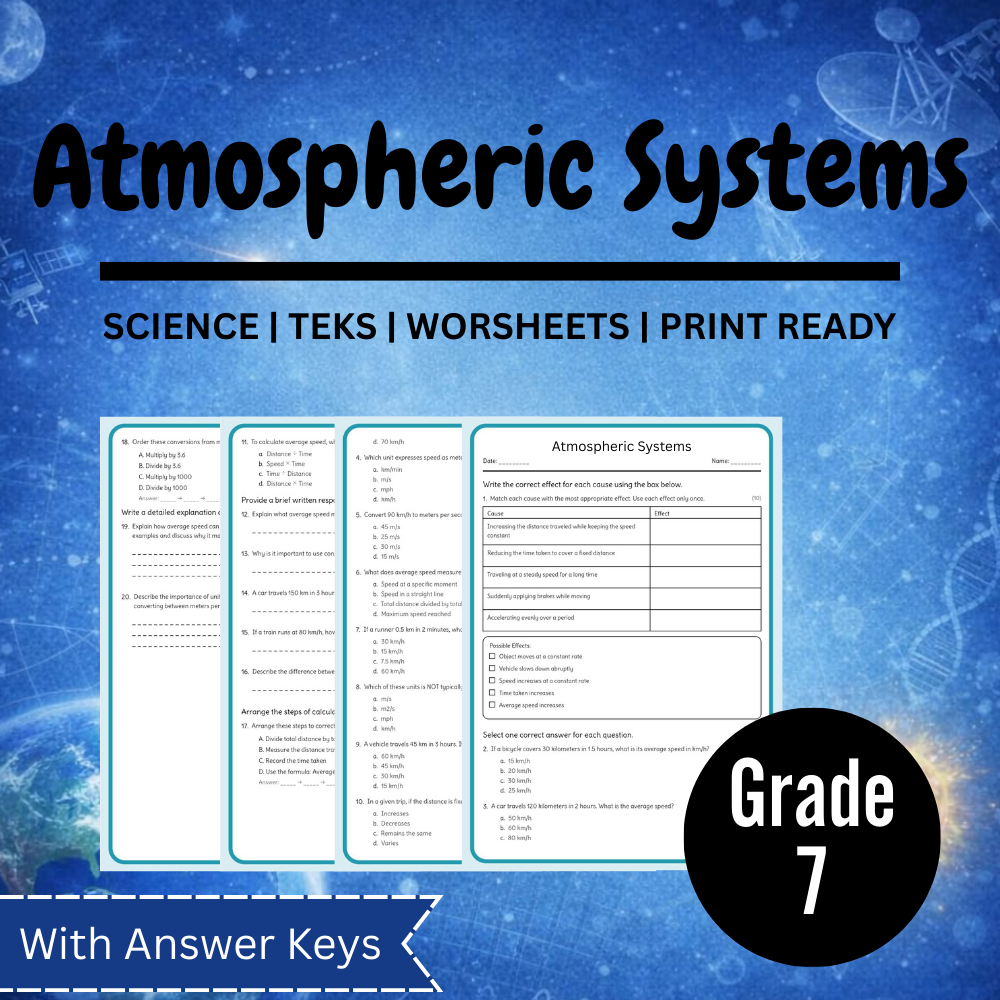
Grade 7 Science | Atmospheric Systems Worksheet + Answer Key (PDF) — TEKS Aligned
Created byBright Mind ResourcesLearning Objectives
- Describe the processes involved in atmospheric energy transfer and convection.
- Identify large-scale circulation patterns such as Hadley cells, jet streams, and pressure systems.
- Explain how air mass movement influences weather variability and climate.
Also included in: Grade 7 Science Unit Bundle | Earth's Processes, Space & Resources TEKS Aligned +2 more
Instant download
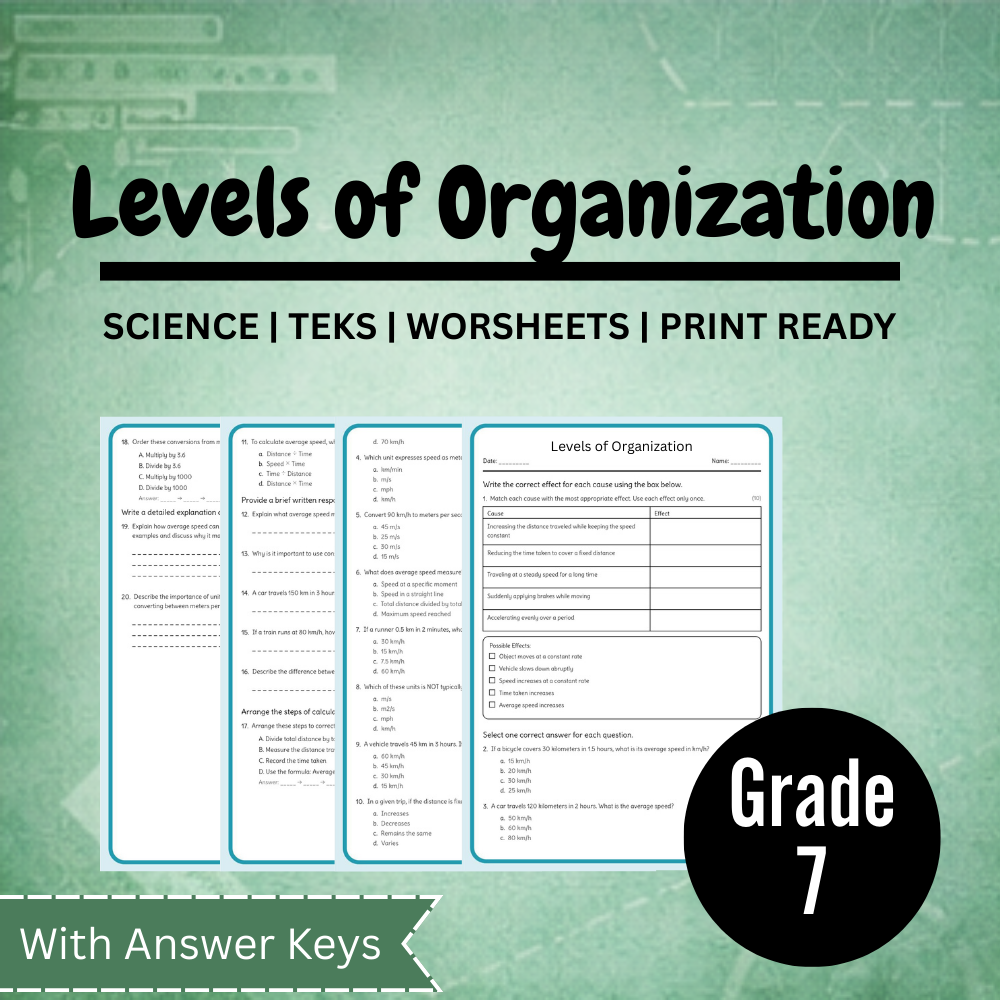
Grade 7 Science | Levels of Organization Worksheet (Answer Key) – TEKS Aligned
Created byBright Mind ResourcesLearning Objectives
- Describe the hierarchical levels of biological organization from individual to biosphere.
- Identify the roles of producers, consumers, and decomposers within ecosystems.
- Explain energy flow through trophic levels and its importance for system stability.
Also included in: Grade 7 Science Unit Bundle – Ecosystems, Adaptation & Environmental Impact +2 more
Instant download
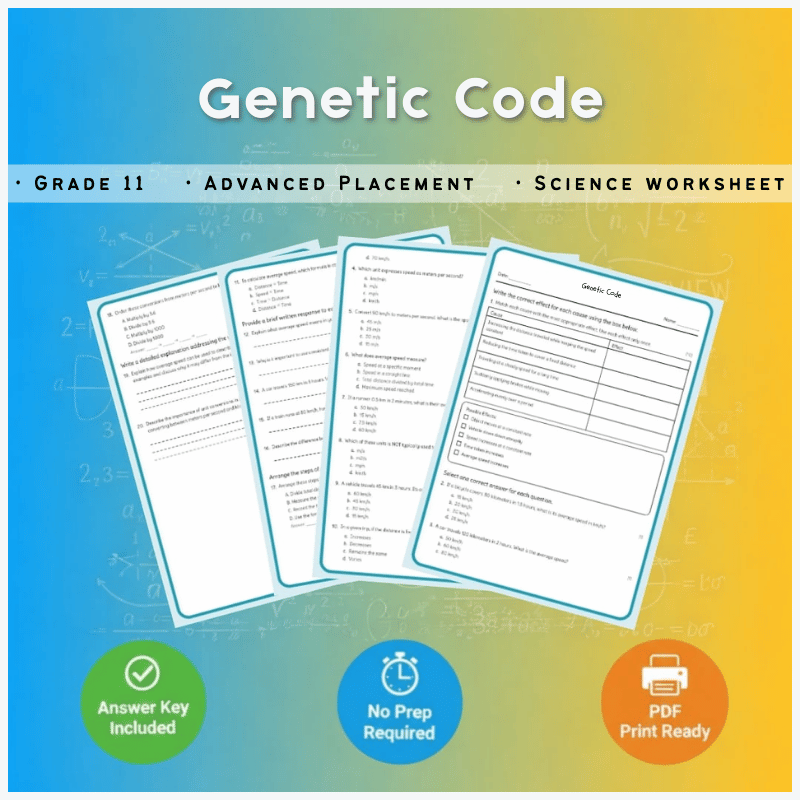
Grade 11 Science | Genetic Code Worksheet (AP Standard + Answer Key) (PDF)
Created byBright Mind ResourcesLearning Objectives
- Understand the molecular structure and base-pairing rules of nucleic acids.
- Describe the processes of transcription and translation in protein synthesis.
- Identify different mutation types and their effects on gene expression and phenotype.
Instant download
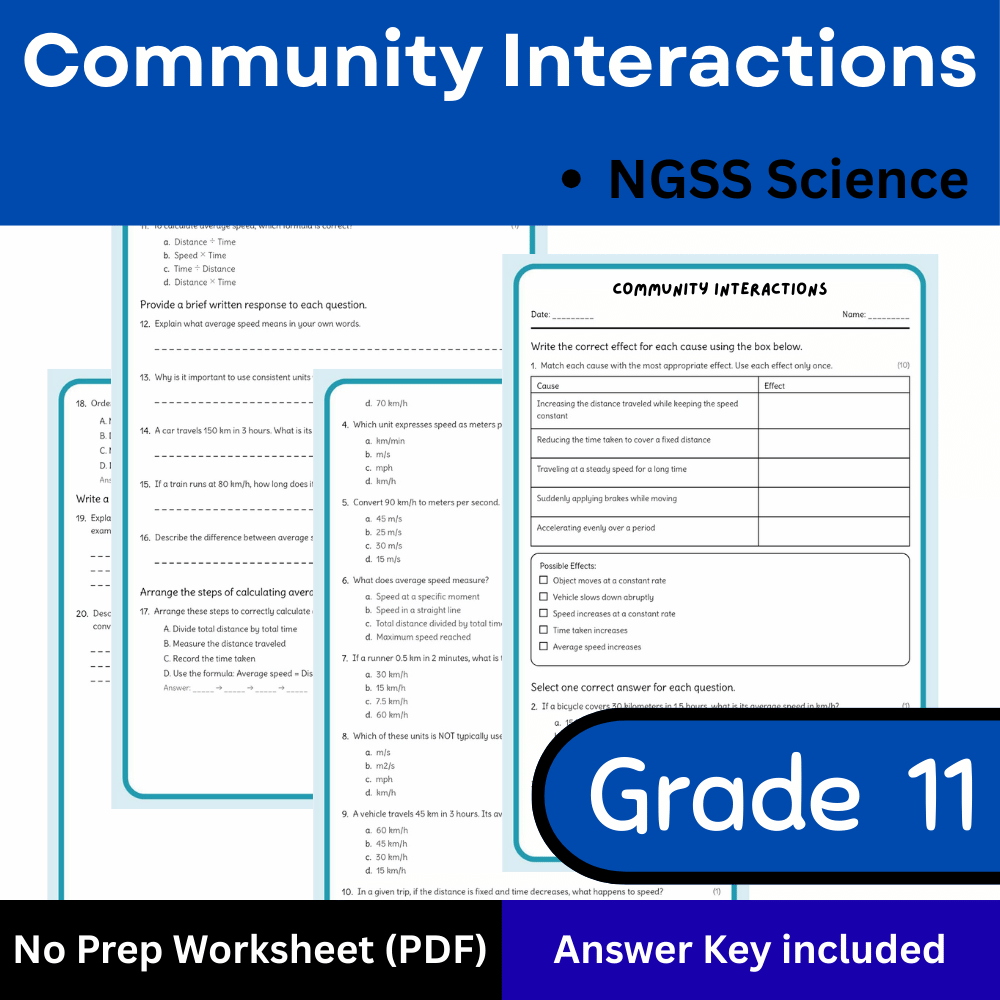
Grade 11 Science | Community Interactions Worksheets (NGSS Aligned + PDF)
Created byBright Mind ResourcesLearning Objectives
- Analyze various species interactions such as competition, mutualism, predation, parasitism, facilitation, and niche partitioning.
- Understand the roles of keystone species and trophic cascades in shaping community structure.
- Examine real-world examples like sea otter-kelp forest dynamics and pollinator networks.
Instant download
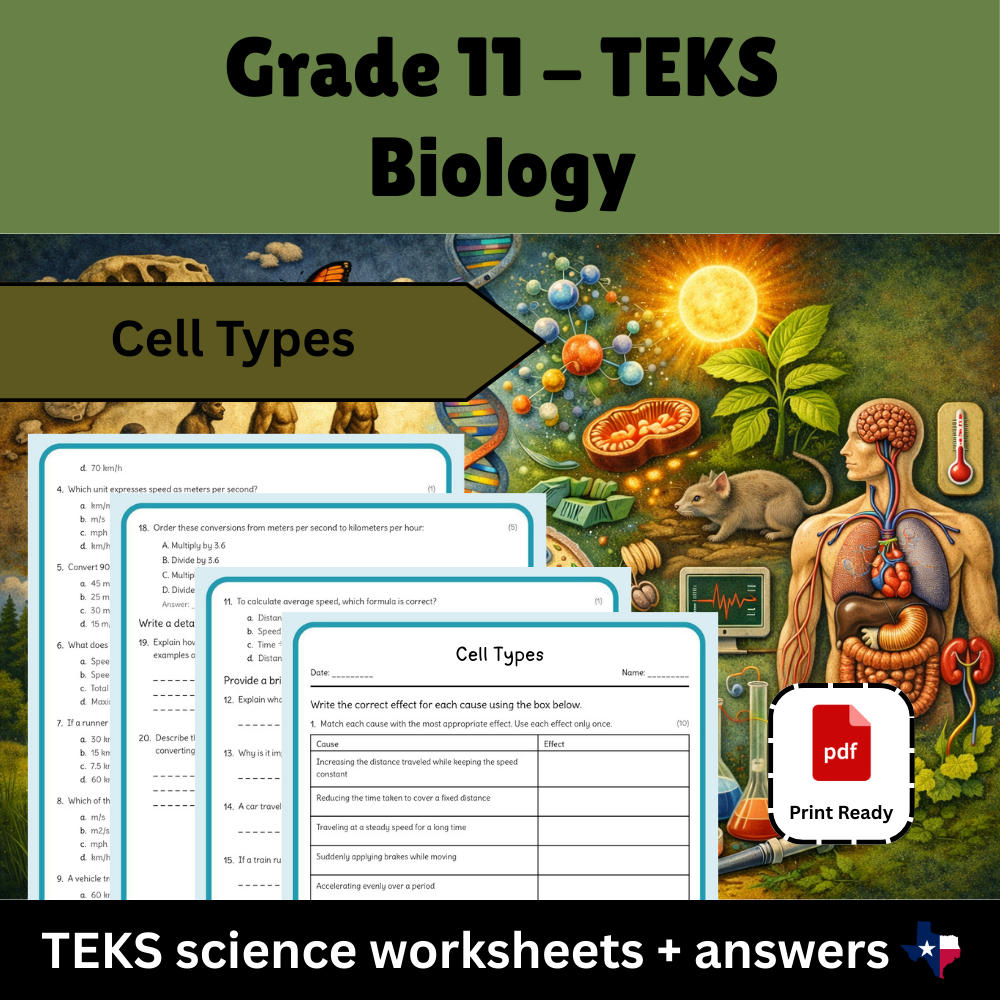
Grade 11 Science | Cell Types Worksheet (TEKS) – Science 1 PDF
Created byBright Mind ResourcesLearning Objectives
- Differentiate between prokaryotic and eukaryotic cell structures.
- Identify key features of prokaryotic and eukaryotic cells.
- Explain how cell complexity affects function and ecology.
Also included in: Grade 11 Science | Cell & Systems Dynamics Unit Worksheet Bundle (TEKS-Aligned) +2 more
Instant download
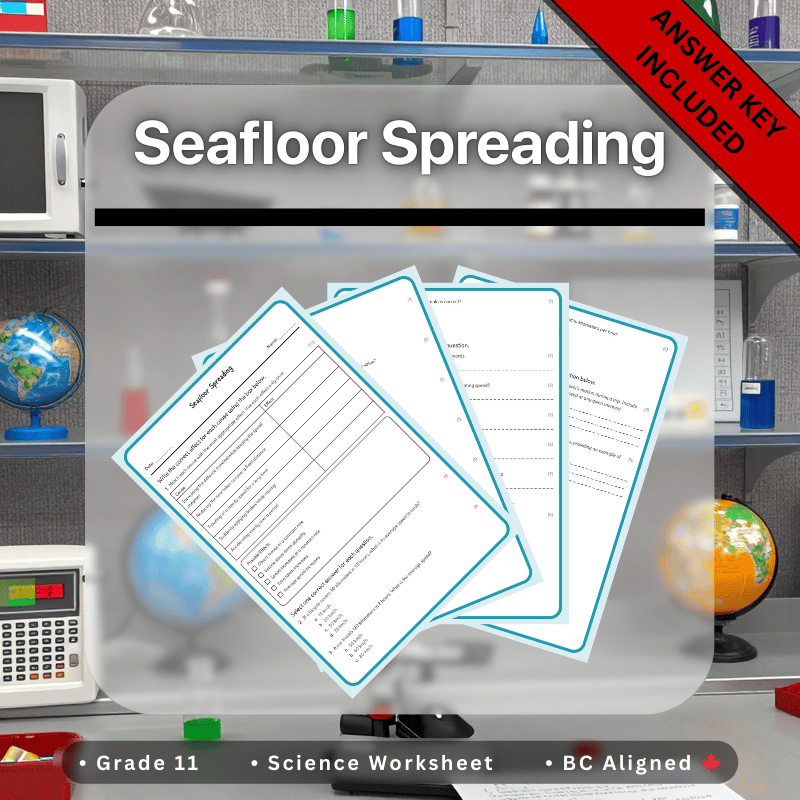
Grade 11 Science | Seafloor Spreading Worksheet – BC Standards (PDF)
Created byBright Mind ResourcesLearning Objectives
- Understand the process of seafloor spreading and how it shapes ocean basins.
- Identify the evidence supporting seafloor spreading, including magnetic stripes and crust age.
- Explain how oceanic crust records Earth's magnetic field over time.
Instant download
Grade 11 Science – Cell Structure Worksheet (PDF) | BC Standard & Answer Key
Created byBright Mind ResourcesLearning Objectives
- Identify the key components of a cell and their functions.
- Explain differences between prokaryotic and eukaryotic cells.
- Understand how microscopy and models represent cellular structures.
Instant download
Grade 11 Science | DNA Structure Worksheet + Answer Key – BC Standards (PDF)
Created byBright Mind ResourcesLearning Objectives
- Describe the fundamental components of DNA and their functions.
- Explain the significance of complementary base pairing and the double helix structure.
- Analyze how mutations such as substitutions, insertions, and deletions affect genetic information.
Instant download
Grade 11 Science | Fossil Record Analysis Worksheet (Answer Key) – BC Standards
Created byBright Mind ResourcesLearning Objectives
- Understand how the fossil record documents evolutionary change over deep time.
- Identify key methods used to date fossils and establish temporal sequences.
- Explain the significance of transitional fossils in supporting descent with modification.
Instant download
Grade 11 Science | Natural Selection Worksheet + Answer Key (PDF) – BC Standard
Created byBright Mind ResourcesLearning Objectives
- Explain how natural selection acts on heritable variation within populations.
- Identify different modes of selection: directional, stabilizing, and disruptive.
- Describe environmental factors that influence selection regimes.
Instant download
Grade 11 Science | Phylogenetic Trees Worksheet (Answer Key) – BC Standards
Created byBright Mind ResourcesLearning Objectives
- Understand how phylogenetic trees illustrate hypotheses of evolutionary relationships.
- Identify different methods used to infer evolutionary histories, such as parsimony and molecular clock.
- Distinguish between homologous traits and analogous traits in evolutionary analysis.
Instant download
Grade 11 Science | Tissue Organization Worksheet (PDF) BC Standard/Framework
Created byBright Mind ResourcesLearning Objectives
- Understand the hierarchical organization of tissues, organs, and organ systems in multicellular organisms.
- Explain how cellular differentiation leads to specialized structures and functions.
- Describe models of tissue architecture and intercellular communication in physiological processes.
Instant download
Grade 11 Science | Collisions Types Worksheet (Puzzle & Explanation) PDF
Created byBright Mind ResourcesLearning Objectives
- Understand the difference between elastic and inelastic collisions in terms of energy and momentum conservation.
- Apply conservation equations to analyze one- and two-dimensional collisions.
- Interpret physical scenarios involving collisions using center-of-mass frames and energy distribution concepts.
Instant download
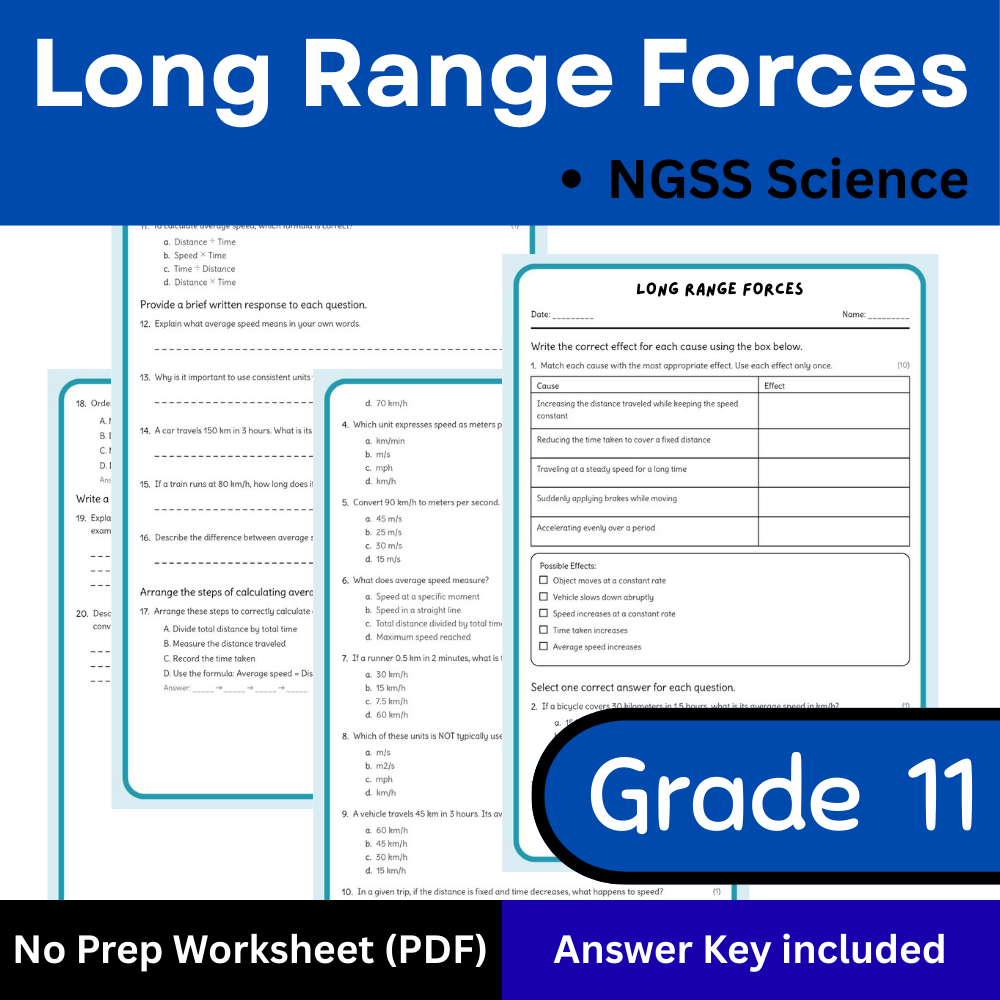
Grade 11 Science | Long Range Forces Worksheet + Answer Key (NGSS Aligned)
Created byBright Mind ResourcesLearning Objectives
- Understand and apply Newton's law of universal gravitation and Coulomb's law using inverse-square relationships.
- Use vector addition to compute net forces and predict particle motion.
- Analyze complex systems of interacting bodies, including two-body, multi-body, and point-charge arrangements.
Instant download
Grade 11 Science | Population Genetics AP Worksheet + Answer Key (PDF)
Created byBright Mind ResourcesLearning Objectives
- Explain the principles of allele frequency change in populations.
- Apply the Hardy-Weinberg equilibrium model to real-world scenarios.
- Identify the effects of selection, drift, migration, and mutation on genetic variation.
Instant download
Grade 11 Science | Classification Methods Worksheet (Answer Key) – TEKS-Aligned
Created byBright Mind ResourcesLearning Objectives
- Understand different approaches used in biological classification such as morphological, molecular, and computational methods.
- Describe how cladistic analysis identifies monophyletic groups based on shared derived characters.
- Compare phenetic and cladistic approaches to taxonomy and classification.
Also included in: Grade 11 Science | Evolution & Phylogenetics Worksheet Bundle (TEKS Aligned) +2 more
Instant download
Grade 11 Science – Metabolic Regulation Worksheet (Worksheet + Answer Key) | TEKS Aligned
Created byBright Mind ResourcesLearning Objectives
- Understand enzyme regulation mechanisms that control metabolic flux.
- Identify how structural controls like allosteric modulation and phosphorylation influence pathway activity.
- Explain the roles of compartmentalization and membrane transporters in metabolic regulation.
Also included in: Grade 11 Science Unit Bundle – Cell Function, Respiration & Photosynthesis-TEKS +2 more
Instant download
Grade 11 Science | Motion Graphs Worksheet + Answer Key – BC Standards (PDF)
Created byBright Mind ResourcesLearning Objectives
- Understand how position–time and velocity–time graphs visually represent motion.
- Interpret the slopes and areas under graphs to determine velocity and displacement.
- Identify types of motion such as uniform velocity, constant acceleration, and instantaneous events using graphs.
Instant download
Grade 11 Science | Light Reactions Worksheet (PDF) – TEKS Aligned Science 1
Created byBright Mind ResourcesLearning Objectives
- Explain the process of light-dependent reactions in photosynthesis.
- Identify the major components and steps involved in electron transport within thylakoid membranes.
- Describe how proton gradients are formed and utilized to synthesize ATP.
Also included in: Grade 11 Science Unit Bundle – Cell Function, Respiration & Photosynthesis-TEKS +2 more
Instant download
Grade 11 Science | Conceptual Modeling Worksheet (AP Standards) – PDF
Created byBright Mind ResourcesLearning Objectives
- Understand what a conceptual model represents and how it connects mechanisms to observable phenomena.
- Identify components, assumptions, scope, and qualitative predictions in conceptual models.
- Differentiate between discrete and continuous formulations in modeling.
Instant download
Grade 11 Science | Energy Molecules TEKS Worksheet (PDF) with Answer Key
Created byBright Mind ResourcesLearning Objectives
- Describe the function of ATP as the primary energy carrier in cells.
- Explain how cells produce ATP through different metabolic pathways.
- Identify the processes that utilize ATP energy for cellular functions.
Also included in: Grade 11 Science Unit Bundle – Cell Function, Respiration & Photosynthesis-TEKS +2 more
Instant download
Grade 11 Science | Calvin Cycle Worksheet (Answer Key) – TEKS Aligned
Created byBright Mind ResourcesLearning Objectives
- Explain the key steps and enzyme functions involved in the Calvin cycle.
- Identify the molecules and energy sources utilized in the process.
- Describe the output products formed from the Calvin cycle and their significance.
Also included in: Grade 11 Science Unit Bundle – Cell Function, Respiration & Photosynthesis-TEKS +2 more
Instant download
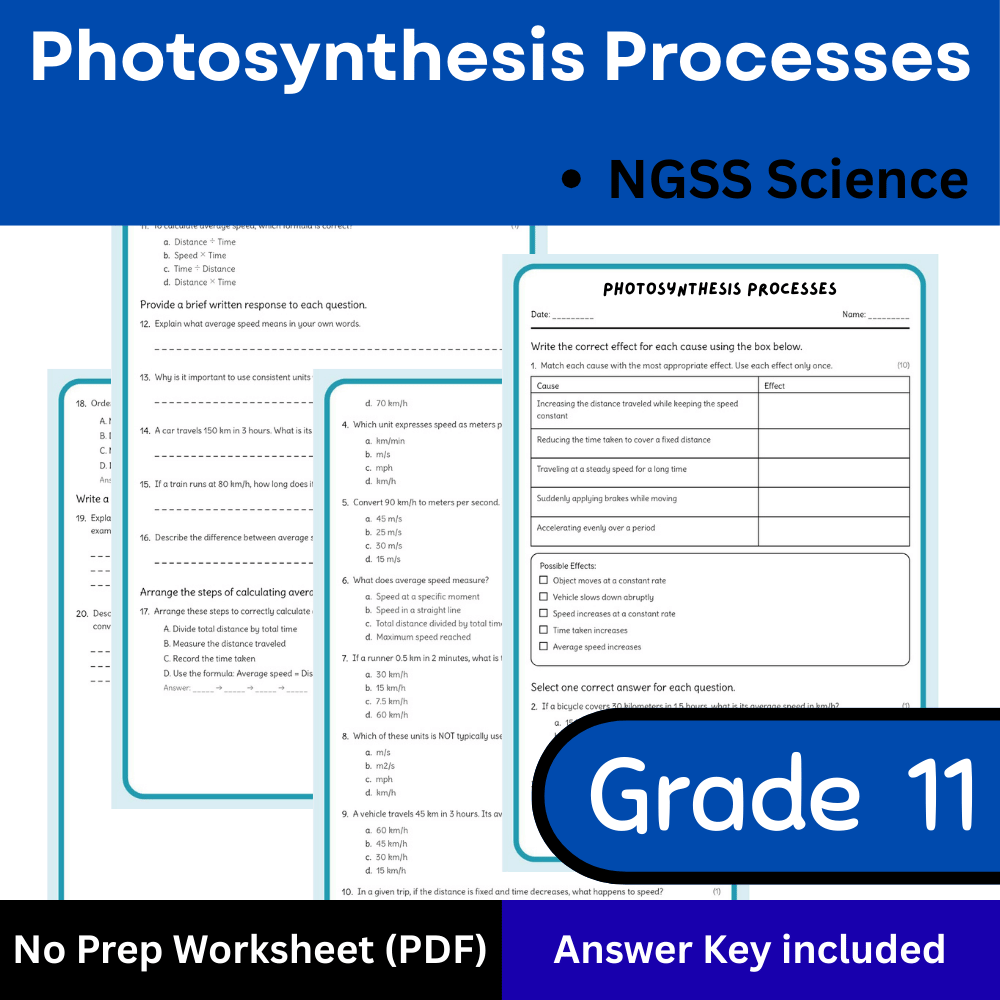
Grade 11 Science – Photosynthesis Processes Worksheet (NGSS Aligned, PDF)
Created byBright Mind ResourcesLearning Objectives
- Explain the light-driven and biochemical stages of photosynthesis, including electron transport, photophosphorylation, and the Calvin cycle.
- Describe the roles of chloroplasts, mitochondria, and gas exchange in energy transfer and metabolism.
- Understand the stoichiometry of CO2 uptake and O2 release during photosynthesis and respiration.
Instant download
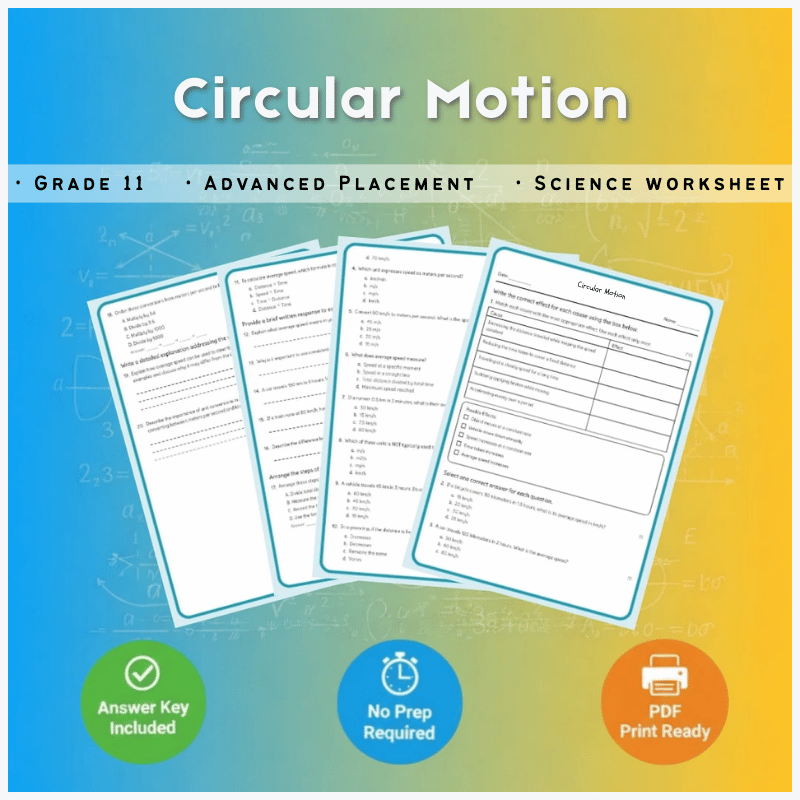
Grade 11 Science | Circular Motion Worksheet – AP Standards (PDF)
Created byBright Mind ResourcesLearning Objectives
- Explain the concepts of uniform and nonuniform circular motion, including centripetal and tangential acceleration.
- Model the net forces in circular motion using radial and tangential components.
- Describe motion in polar coordinates and understand how acceleration relates to the rate of change of velocity direction.
Instant download
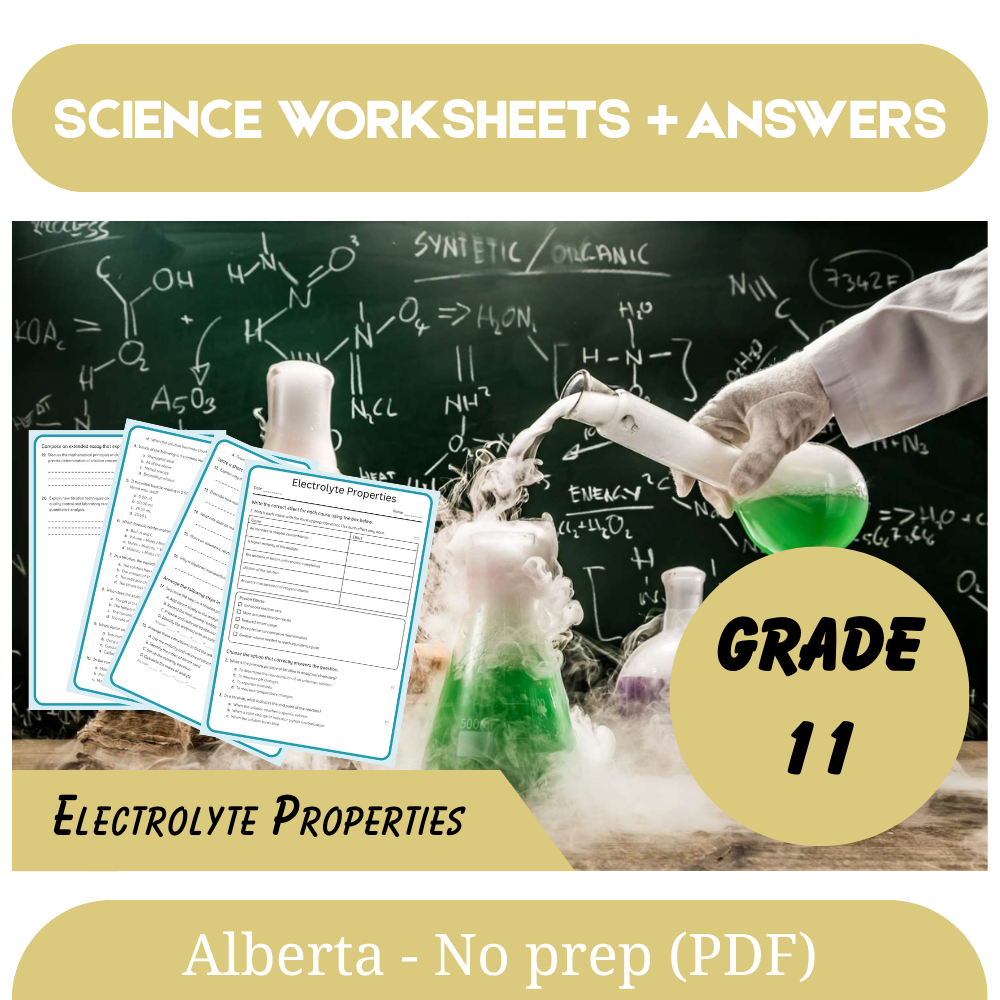
Grade 11 Science – Electrolyte Properties Worksheet (PDF)
Created byBright Mind ResourcesLearning Objectives
- Understand the difference between electrolytes and nonelectrolytes and their ability to conduct electricity.
- Analyze how electrolyte strength, ion concentration, and solute particles influence colligative properties such as freezing point depression.
Instant download
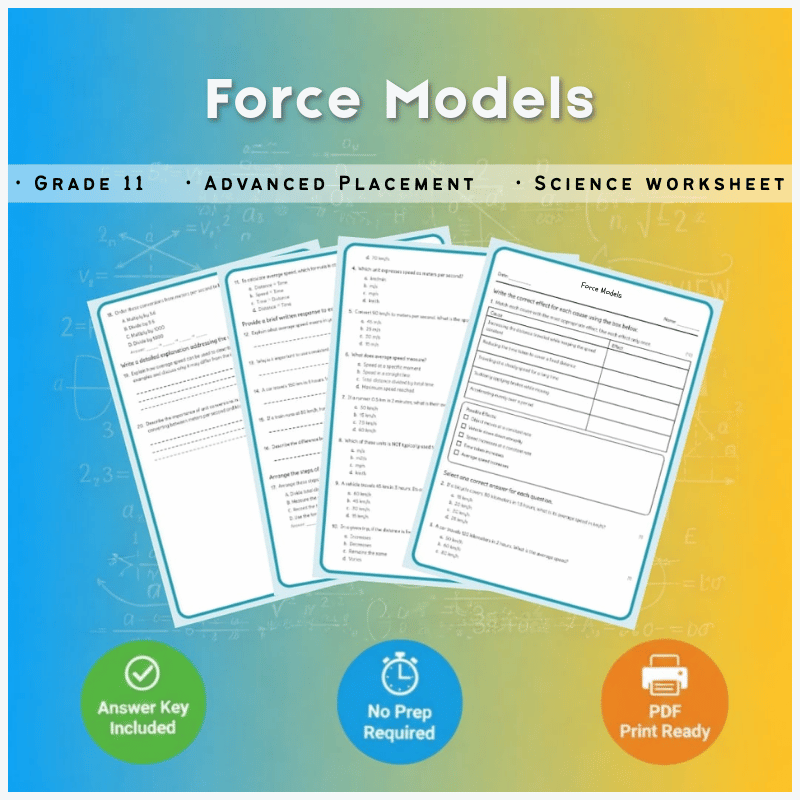
Grade 11 Science | Force Models Assessment (Answer Key) for AP Standards
Created byBright Mind ResourcesLearning Objectives
- Describe force as an interaction between objects and how it is represented in Newtonian mechanics.
- Distinguish between contact forces and long-range forces such as gravity.
- Understand how net force relates to mass and acceleration using Newton's second law.
Instant download
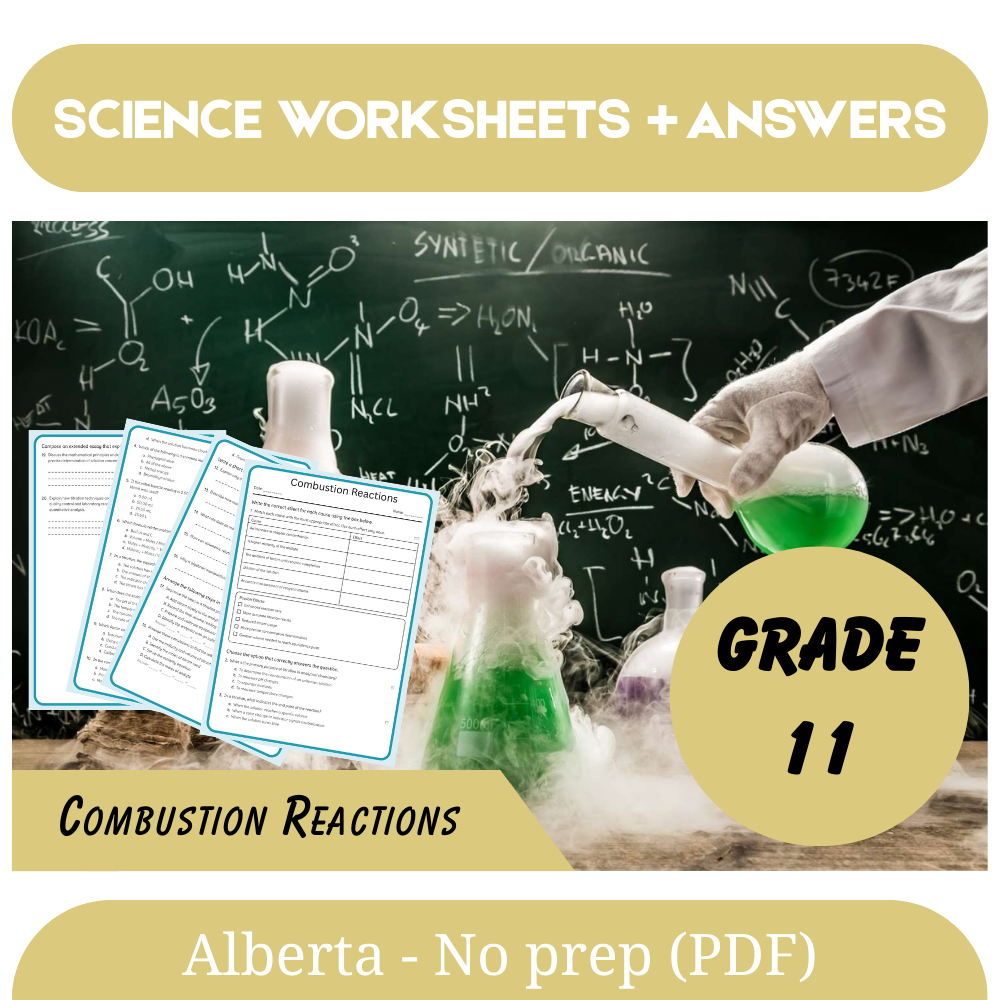
Grade 11 Science – Combustion Reactions Worksheet (PDF) – Alberta Standards
Created byBright Mind ResourcesLearning Objectives
- Understand the process of combustion and oxidation of fuels
- Identify the pollutants generated during combustion and their environmental impact
- Calculate oxygen demand and interpret emissions data for combustion processes
Instant download
Grade 11 Science – Graphical Motion Worksheet (AP Standard) & Answer Key
Created byBright Mind ResourcesLearning Objectives
- Interpret and construct position, velocity, and acceleration graphs.
- Relate slopes and areas under graphs to instantaneous and average quantities.
- Distinguish constant and variable acceleration through graphical analysis.
Instant download
Grade 11 Science – Oscillatory Motion Worksheet (AP Standard + PDF)
Created byBright Mind ResourcesLearning Objectives
- Explain the principles of simple harmonic motion in mass–spring systems and pendula.
- Derive the equations of motion for oscillatory systems and connect linear restoring forces to sinusoidal solutions.
- Describe energy interchange between kinetic and potential forms during oscillations.
Instant download
Grade 11 Science | Statistical Reasoning Worksheet (AP Standards) – Science(PDF)
Created byBright Mind ResourcesLearning Objectives
- Understand the concepts of sampling distributions and hypothesis framing.
- Interpret p-values, effect sizes, and confidence intervals in ecological and material testing contexts.
- Evaluate sample size adequacy and the assumptions behind statistical tests.
Instant download
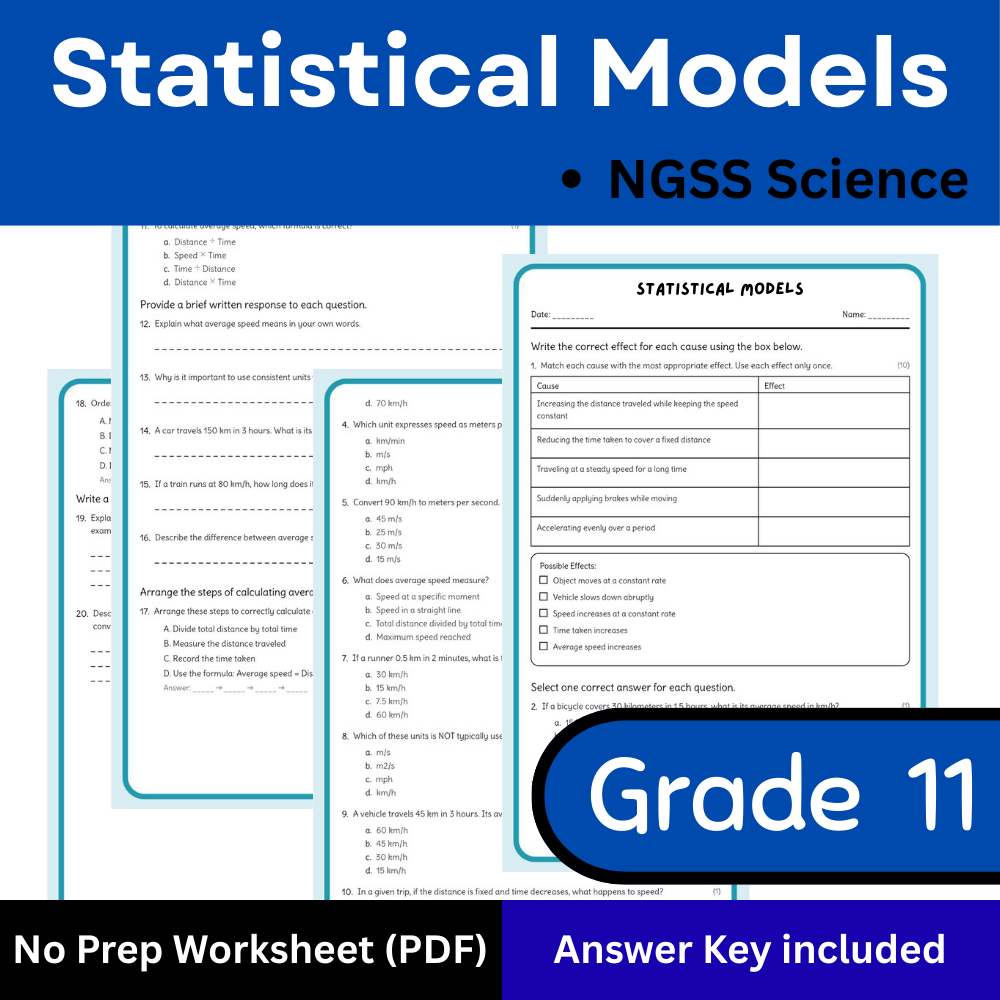
Grade 11 Science | Statistical Models & Population Genetics Worksheet (PDF)
Created byBright Mind ResourcesLearning Objectives
- Understand how statistical and probabilistic methods apply to allele frequencies and trait distributions.
- Develop and interpret Hardy–Weinberg equilibrium conditions and calculations.
- Use chi-square tests and confidence intervals to evaluate genetic data departures from expectations.
Instant download
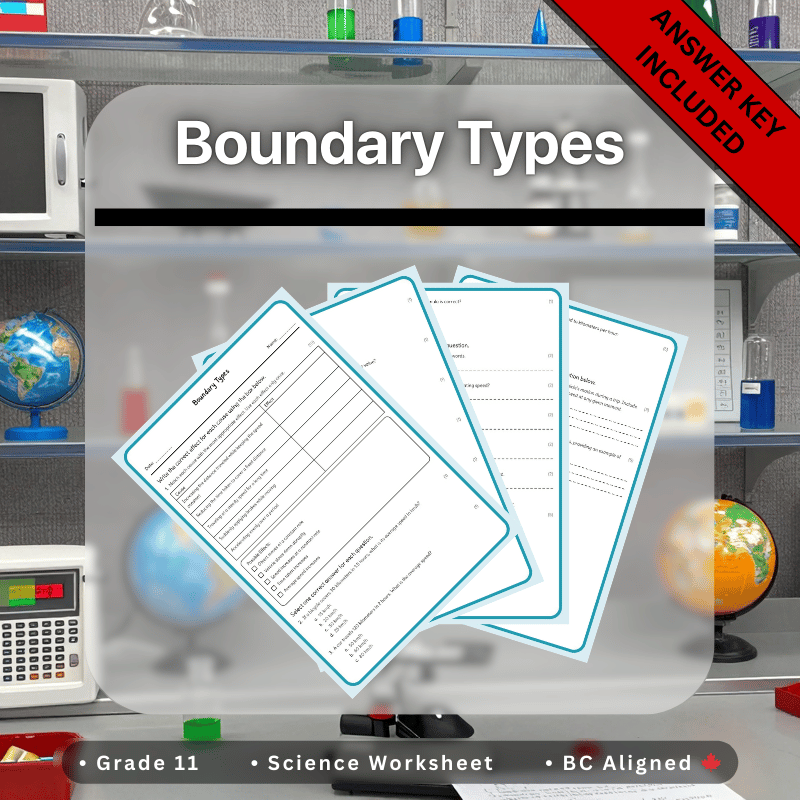
Grade 11 Science | Boundary Types Worksheet (Answer Key) – BC Standards
Created byBright Mind ResourcesLearning Objectives
- Describe the three main types of plate boundaries and their characteristics.
- Explain landforms, seismic activity, and volcanic features associated with each boundary type.
- Link surface geological features to underlying tectonic processes.
Instant download
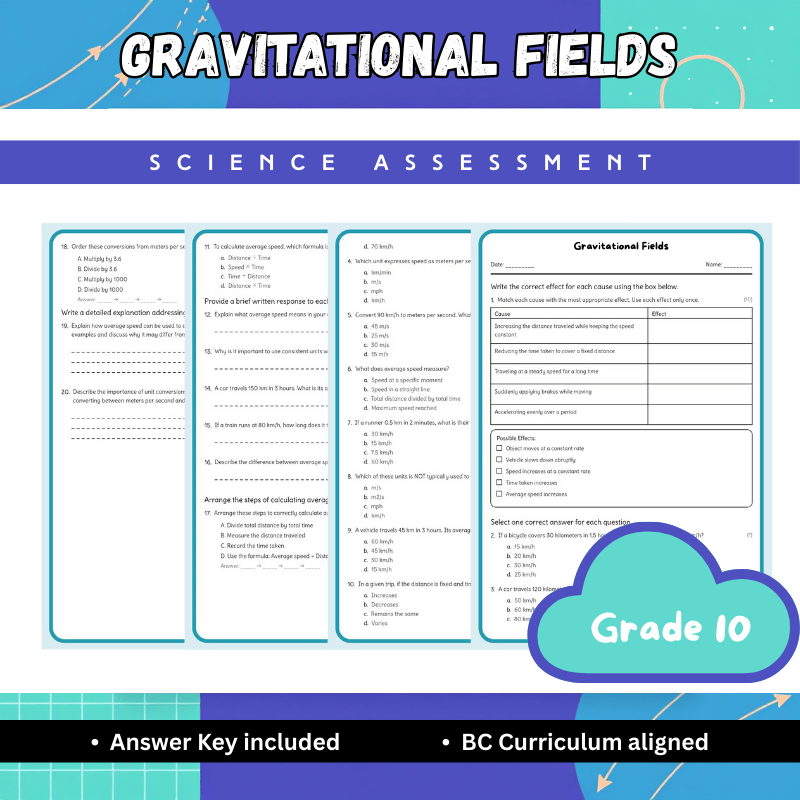
Grade 10 Science – Gravitational Fields Worksheet (PDF) | BC Standards
Created byBright Mind ResourcesLearning Objectives
- Understand the concept of gravitational fields and their influence on space.
- Describe how field strength decreases with distance according to an inverse-square law.
- Explain the effects of gravitational fields on orbital motion.
Instant download
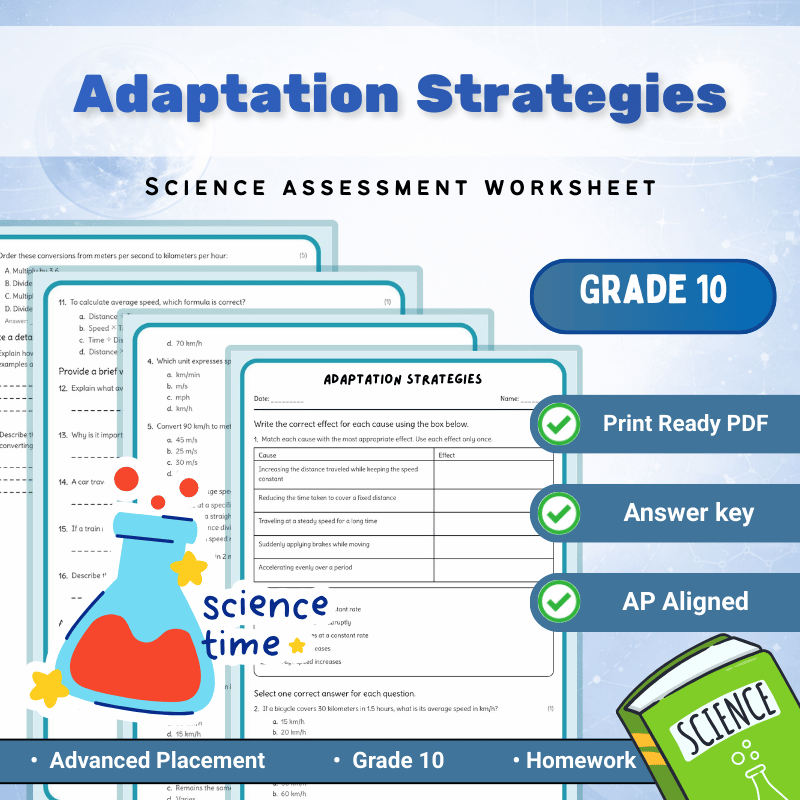
Grade 10 Science | Adaptation Strategies Worksheet (AP Standard) – PDF
Created byBright Mind ResourcesLearning Objectives
- Understand different adaptation strategies for Earth systems and their potential effects.
- Evaluate the trade-offs involved in carbon management, resilience, conservation, and land-use policies.
- Apply systems diagrams and scenario comparison techniques to assess intervention effectiveness.
Instant download
Browse more categories
About Reading comprehension Worksheets
Find reading comprehension worksheets for class practice, homework, or self-study. All 40,284 are instant PDF downloads.
Each resource here is built by an independent educator and reviewed for quality. Worksheets print straight from PDF and suit classroom use, homework, or extra practice; most come with answer keys, and you can preview before purchasing.