
Reading comprehension Worksheets
40,284 type resources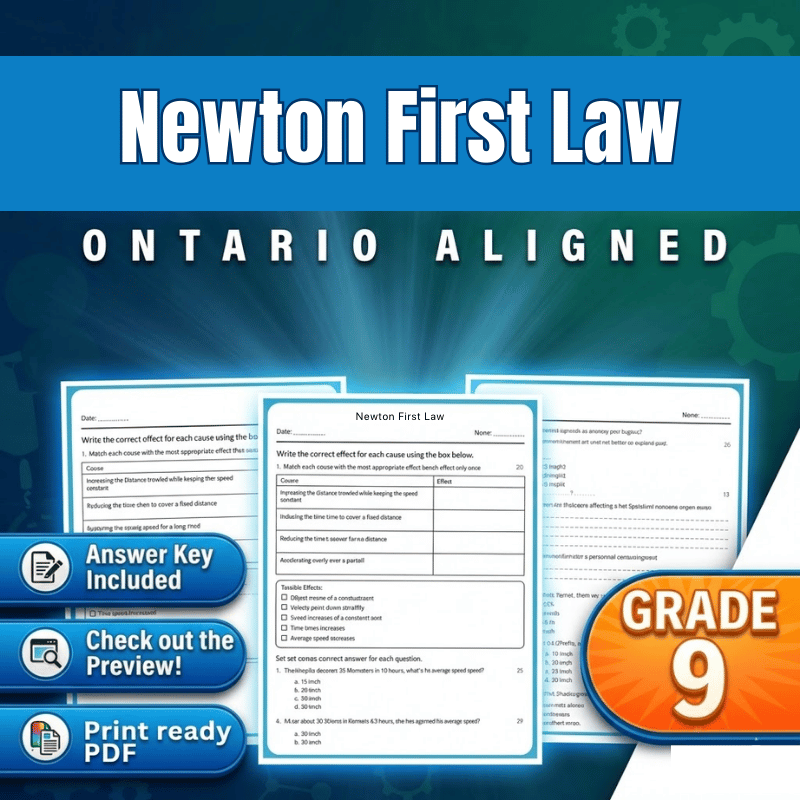
Grade 9 Science | Newton's First Law Worksheet (Ontario Standard) (PDF)
 Created byBright Mind Resources
Learning Objectives
- Explain Newton's First Law as a statement about inertia and its relationship with external forces.
- Distinguish between rest and constant velocity states of motion.
- Describe how balanced forces contribute to static and dynamic equilibrium.
Instant download
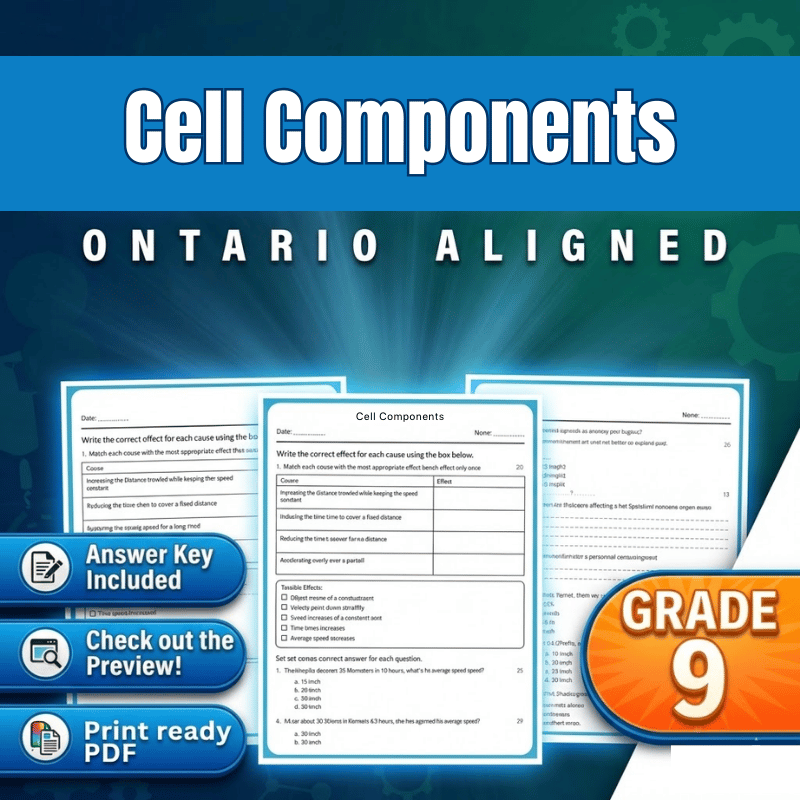
Grade 9 Science | Cell Components Worksheet (Ontario Standard) (PDF)
Created byBright Mind ResourcesLearning Objectives
- Identify major organelles of eukaryotic cells and their functions.
- Explain how structural features like membrane folding and compartmentalization influence cell activity.
- Relate the features of cell components to their specific roles in metabolism and exchange processes.
Instant download
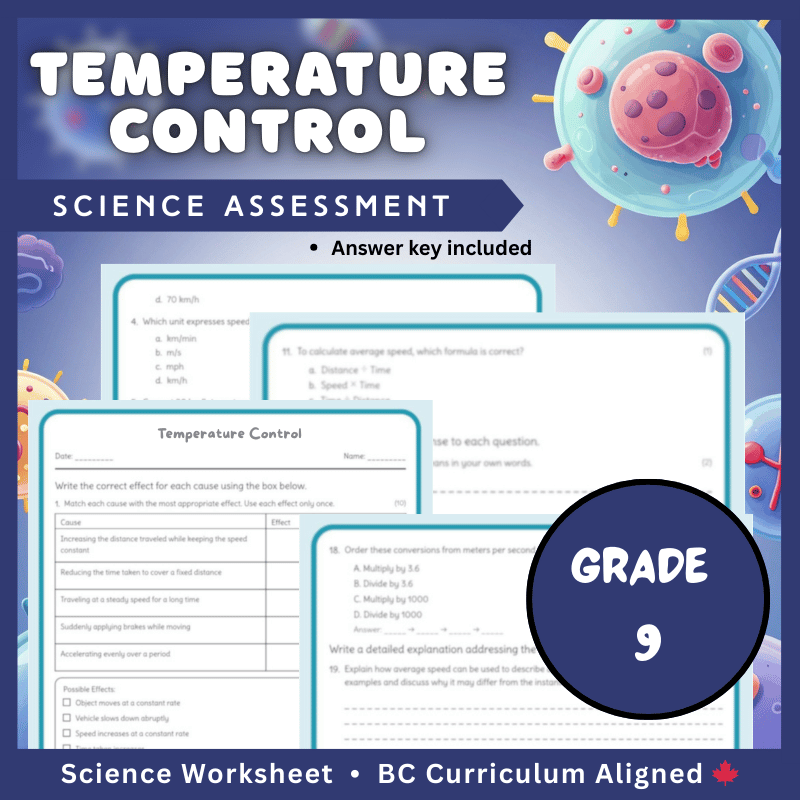
Grade 9 Science | Temperature Control Worksheet + Answer Key – BC Standard
Created byBright Mind ResourcesLearning Objectives
- Understand how the body maintains internal temperature through various mechanisms.
- Identify key components involved in thermoregulation and their functions.
- Describe the role of the hypothalamus in temperature regulation.
Instant download
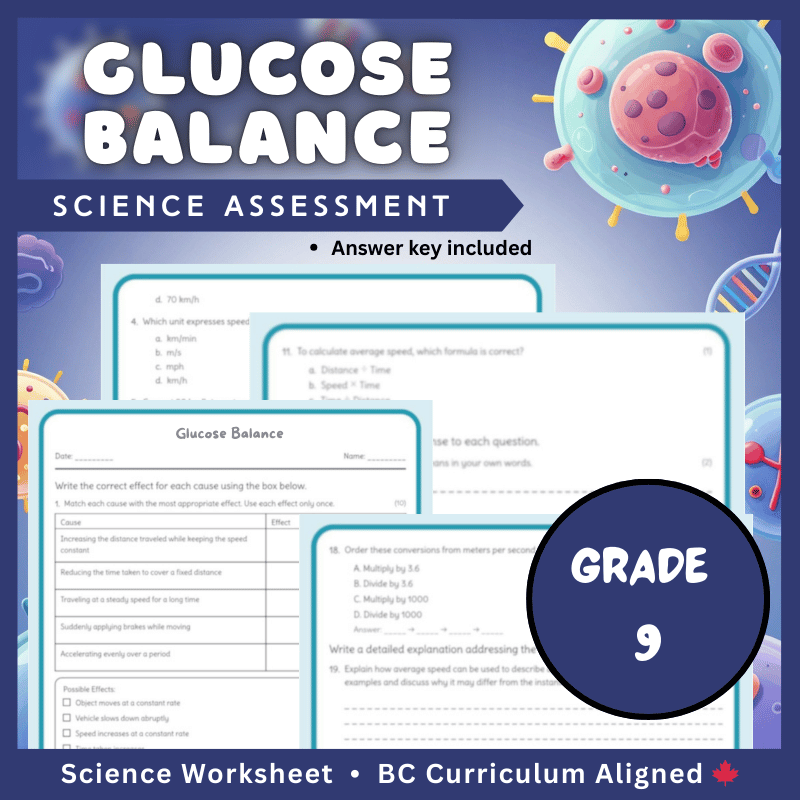
Grade 9 Science| Glucose Balance Worksheet (Answer Key) – Blood Sugar Regulation
Created byBright Mind ResourcesLearning Objectives
- Explain how insulin and glucagon regulate blood glucose levels.
- Identify the roles of liver, muscle, and adipose tissues in glucose metabolism.
- Describe endocrine feedback loops involved in glucose homeostasis.
Instant download
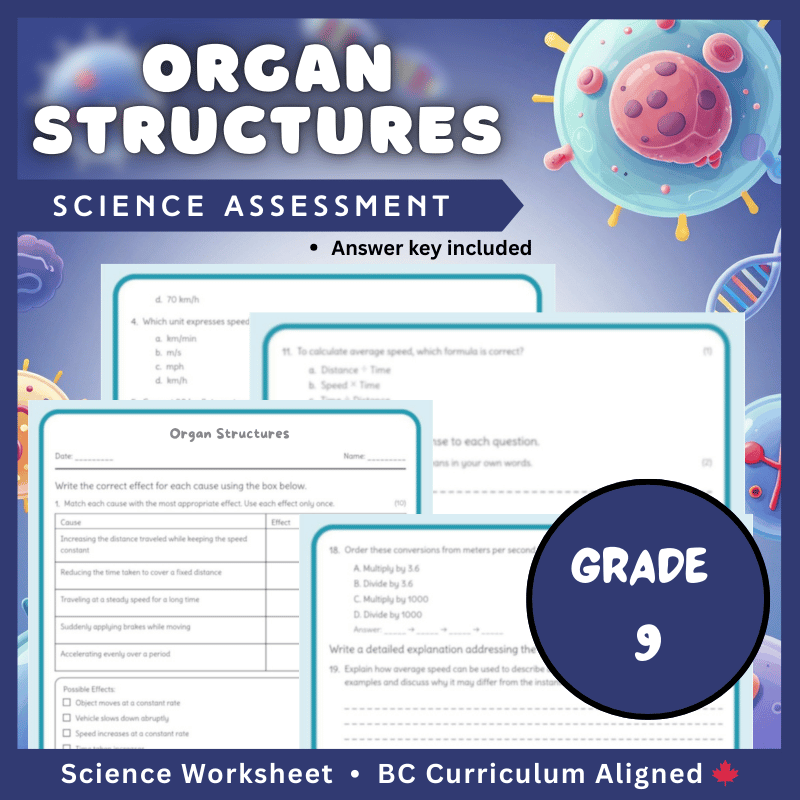
Grade 9 Science | Organ Structures Worksheet + Answer Key (PDF) | BC Standards
Created byBright Mind ResourcesLearning Objectives
- Identify the organization of tissues within organs.
- Understand how organs and systems collaborate to sustain the organism.
- Describe the relationship between tissue types, organs, and organ systems.
Instant download
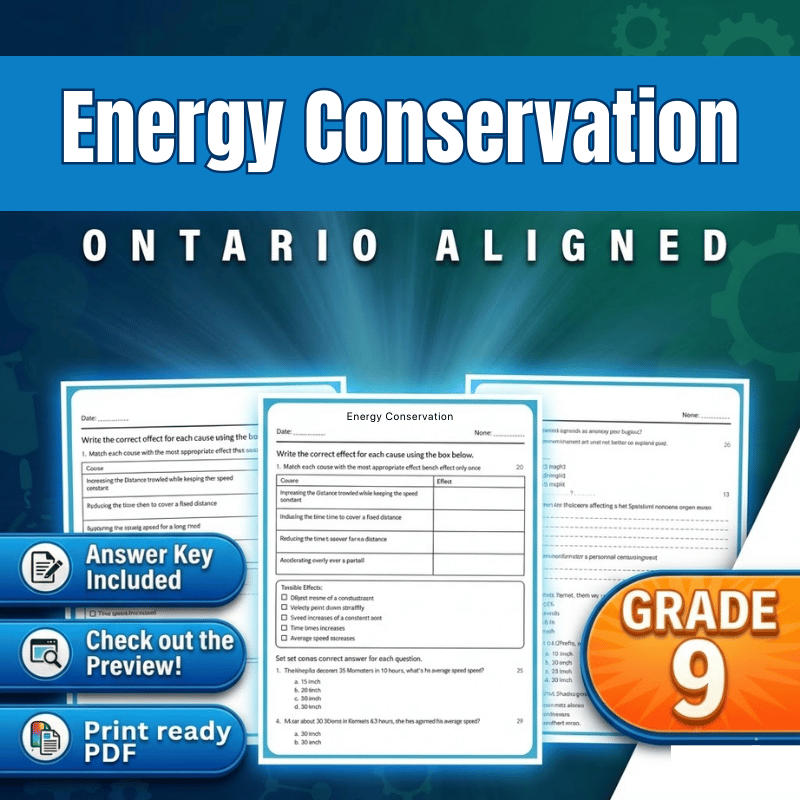
Grade 9 Science – Energy Conservation Worksheet (Ontario) – PDF
Created byBright Mind ResourcesLearning Objectives
- Understand the principles of mechanical energy conservation in ideal systems.
- Identify conditions under which total mechanical energy remains constant.
- Explore the role of non-conservative work, such as friction, in energy dissipation.
Instant download
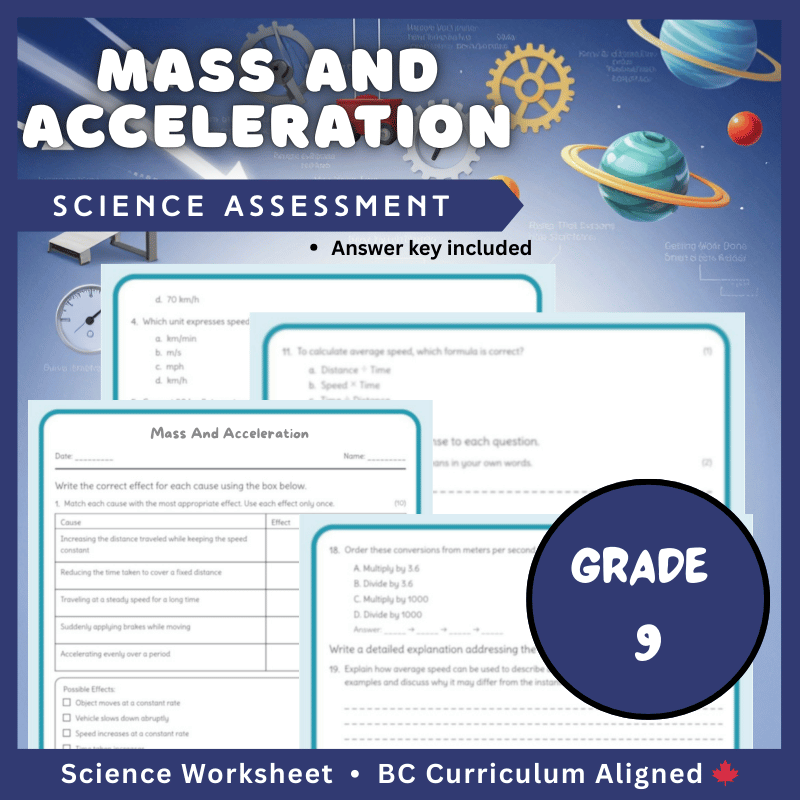
Grade 9 Science | Net Force Concept Worksheet (Answer Key) | BC Standards
Created byBright Mind ResourcesLearning Objectives
- Understand that net force is the vector sum of all forces acting on an object.
- Describe how balanced and unbalanced forces affect motion.
- Solve problems involving resolving forces into components and calculating resulting acceleration.
Instant download
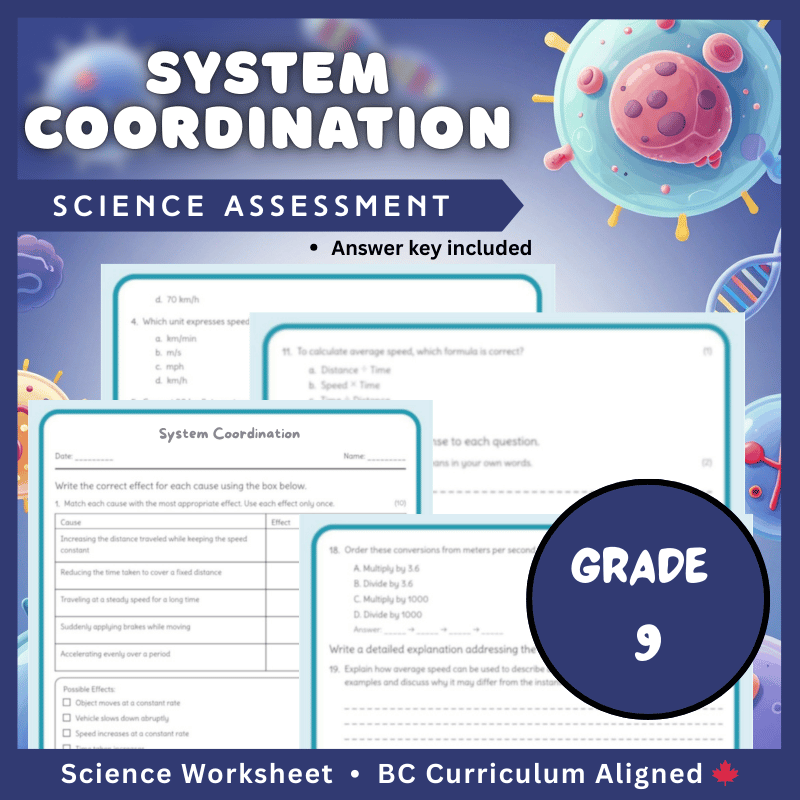
Grade 9 Science | System Coordination Worksheet (PDF) with Answer Key
Created byBright Mind ResourcesLearning Objectives
- Understand how feedback loops, redundancy, and cross-regulation contribute to multi-system coordination.
- Describe how exercise affects respiratory, cardiovascular, and metabolic responses via neural, hormonal, and local signals.
- Explain the impact of disruptions in one organ system on overall homeostasis and health outcomes.
Instant download
Grade 9 Science | Human Influence Worksheet + Answer Key | NGSS Standards
Created byBright Mind ResourcesLearning Objectives
- Analyze the effects of human activities such as fossil fuel combustion, deforestation, and urbanization on climate variables.
- Interpret data trends from indicators like the Keeling Curve and vegetation loss satellites.
- Evaluate evidence linking emissions to regional and global ecosystem changes.
Instant download
Grade 9 Science | Power Analysis Worksheet (Answer Key) aligned with NGSS
Created byBright Mind ResourcesLearning Objectives
- Understand the concepts of power, energy, and efficiency in technological systems.
- Calculate energy demand over time and assess system performance related to power output.
- Analyze energy loss and conversion efficiency in electrical systems.
Instant download
Grade 9 Science – Seismic Records Worksheet (AP Standards + Answer Key)
Created byBright Mind ResourcesLearning Objectives
- Interpret earthquake waveforms, travel-time curves, and epicenter maps to analyze subsurface structures.
- Distinguish between shallow and deep seismic events using waveform characteristics.
- Compare P- and S-wave arrivals to locate earthquake epicenters and understand fault behavior.
Instant download
Grade 9 Science Worksheet | Compound Formulas & Bonding (Ontario) (PDF)
Created byBright Mind ResourcesLearning Objectives
- Understand the concept of chemical compounds and their fixed elemental ratios.
- Identify the different types of bonding—ionic and covalent—and how they influence properties of compounds.
- Explain the law of definite composition and how chemical formulas represent element ratios.
Instant download
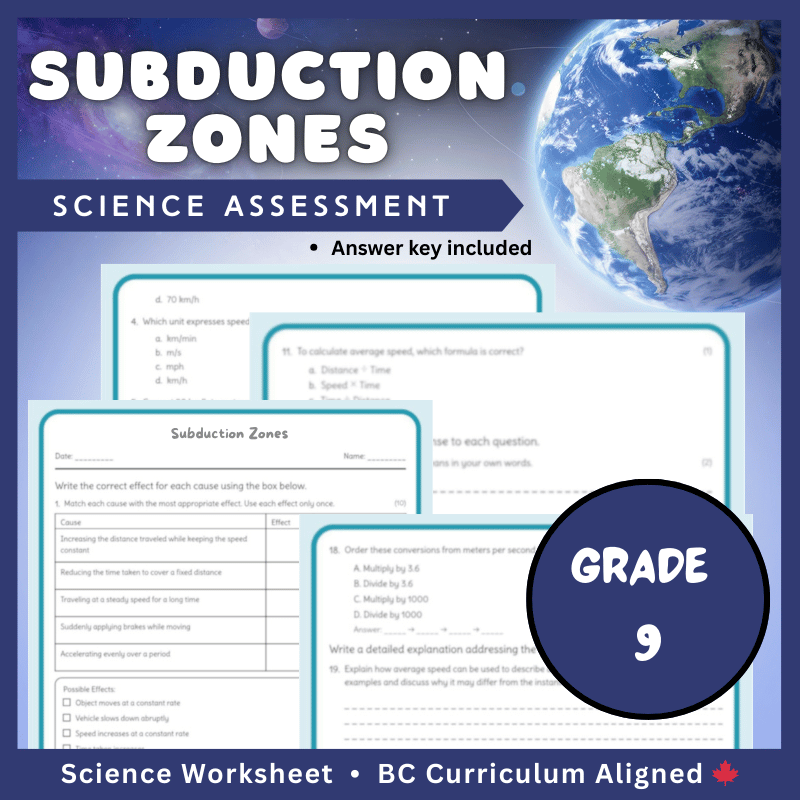
Grade 9 Science | Subduction Zones Worksheet + Answer Key (PDF)
Created byBright Mind ResourcesLearning Objectives
- Explain how subduction zones form and their features.
- Identify the processes involved in subduction zone activity.
- Describe the geological hazards associated with subduction zones, such as earthquakes and tsunamis.
Instant download
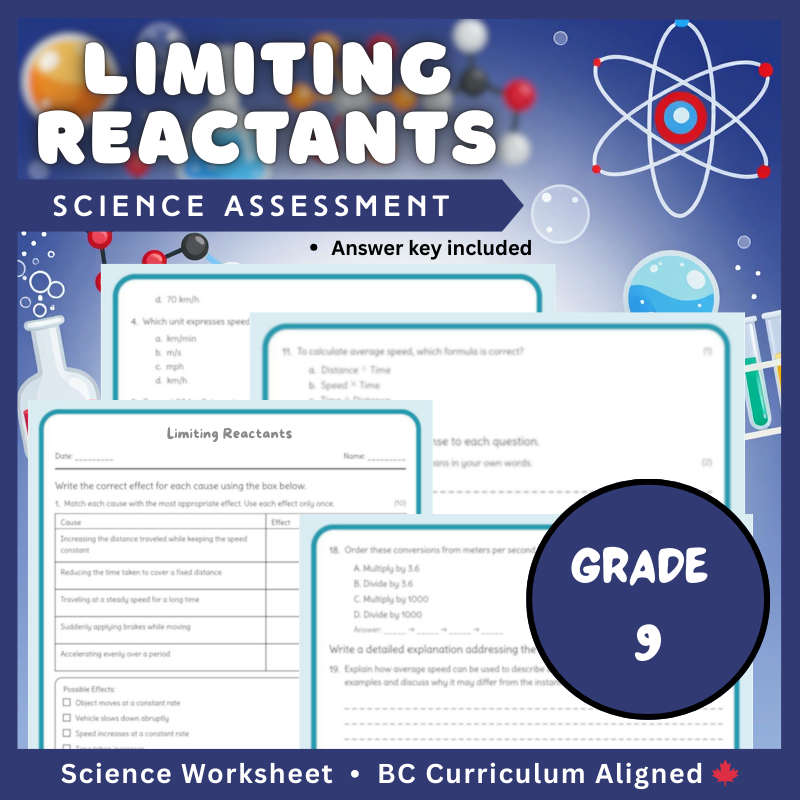
Grade 9 Science | Limiting Reactants Worksheet (Answer Key) – BC Standard
Created byBright Mind ResourcesLearning Objectives
- Understand the concept of limiting reactants and how they determine product yields.
- Calculate theoretical yield based on mole ratios and molar masses.
- Differentiate between actual yield and theoretical yield.
Instant download
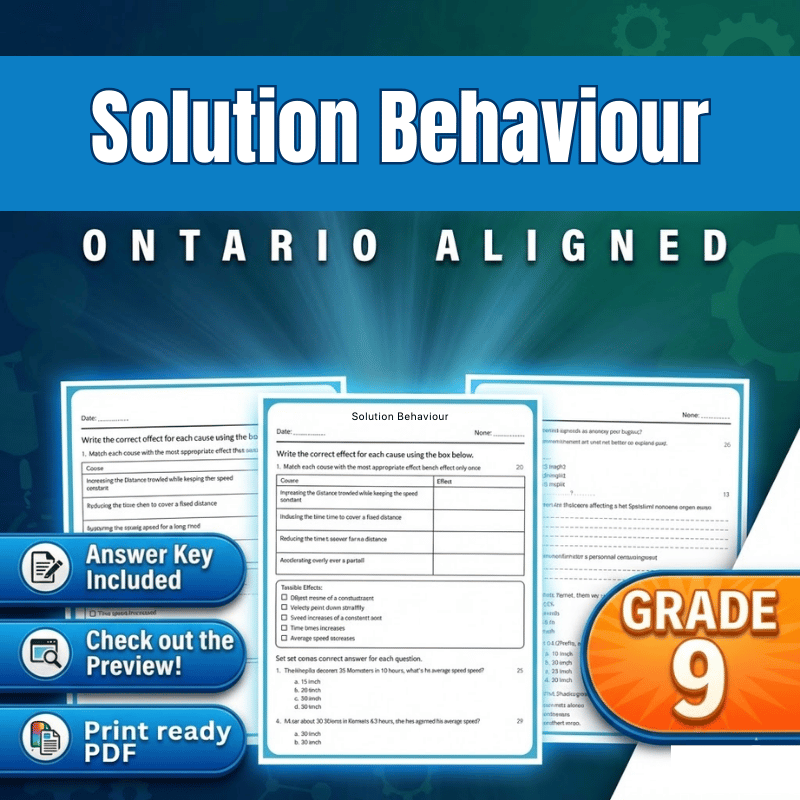
Grade 9 Science | Solution Behaviour Worksheet (Ontario Standards) (PDF)
Created byBright Mind ResourcesLearning Objectives
- Understand the process of solution formation and the interactions between solutes and solvents.
- Identify factors that influence the solubility of substances, such as temperature and agitation.
- Differentiate between saturated, unsaturated, and supersaturated solutions with examples.
Instant download
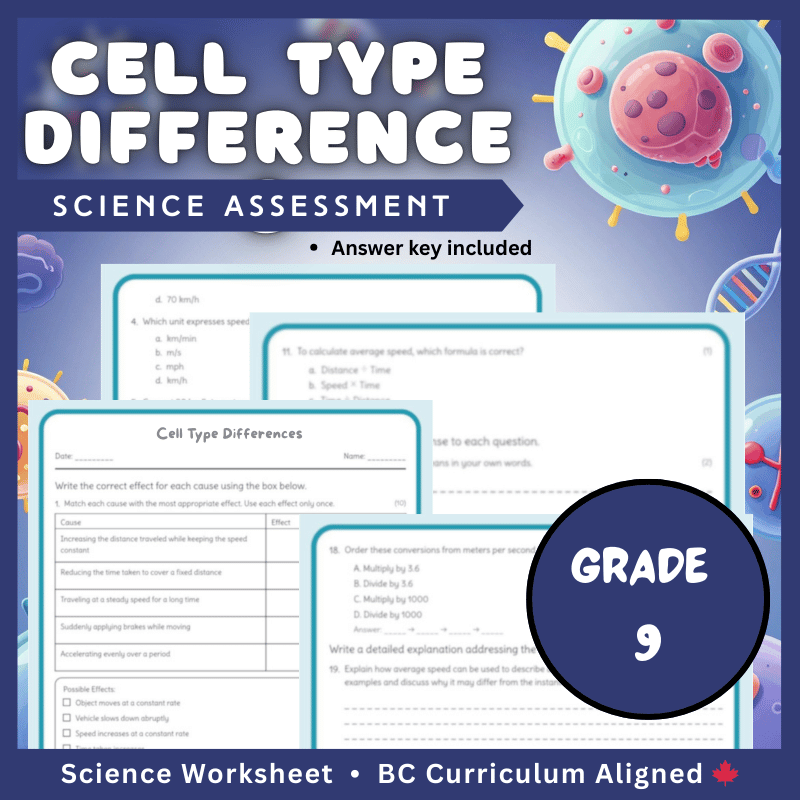
Grade 9 Science | Cell Type Differences Worksheet (Answer Key) PDF
Created byBright Mind ResourcesLearning Objectives
- Compare the structural differences between prokaryotic and eukaryotic cells.
- Identify key components of prokaryotic and eukaryotic cells.
- Explain how cellular organization affects the functions of cells in living organisms.
Instant download
Grade 9 Science | Health Factors Worksheet – Ontario Standards (PDF)
Created byBright Mind ResourcesLearning Objectives
- Understand how lifestyle and environmental factors influence human health at cellular and systemic levels.
- Interpret epidemiological data and physiological mechanisms linking behaviors to health outcomes.
- Evaluate the potential for reversing functional impairments caused by health risk factors.
Instant download
Grade 9 Science | Fluid Balance Worksheet & Answer Key (PDF) – BC Standards
Created byBright Mind ResourcesLearning Objectives
- Understand how the kidneys regulate water and ion balance through various processes.
- Describe the roles of hormones like antidiuretic hormone and aldosterone in osmoregulation.
- Explain how the nephron adjusts solute and water movement to maintain homeostasis.
Instant download
Grade 9 Science | Simple Machines Worksheet (Ontario Standard) (PDF)
Created byBright Mind ResourcesLearning Objectives
- Understand the basic types and functions of simple machines.
- Explain how simple machines modify force and displacement to achieve mechanical advantage.
- Identify examples of simple machines in real-world applications.
Instant download
Grade 9 Science | Inertia Explained Worksheet (Answer Key) – BC Standards
Created byBright Mind ResourcesLearning Objectives
- Understand the concept of inertia as resistance to change in motion.
- Relate inertia to an object's mass and its effect on acceleration.
- Identify real-world examples demonstrating inertia.
Instant download
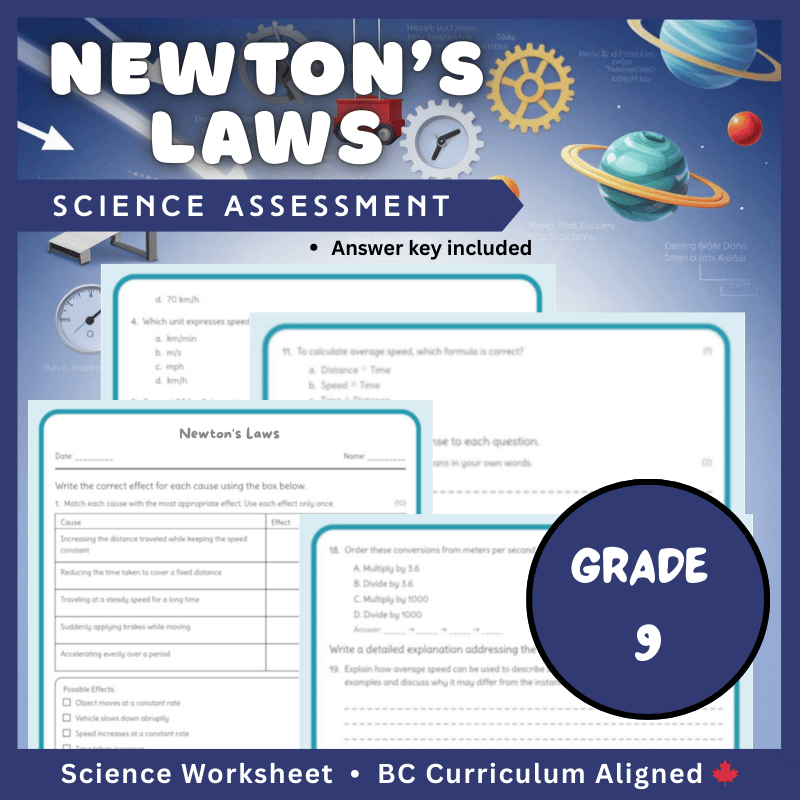
Grade 9 Science – Newton's Laws Worksheet (Answer Key) | BC Standard
Created byBright Mind ResourcesLearning Objectives
- Explain the three laws of motion proposed by Sir Isaac Newton.
- Identify observable effects that demonstrate each of Newton's laws.
- Draw connections between forces, mass, and motion outcomes.
Instant download
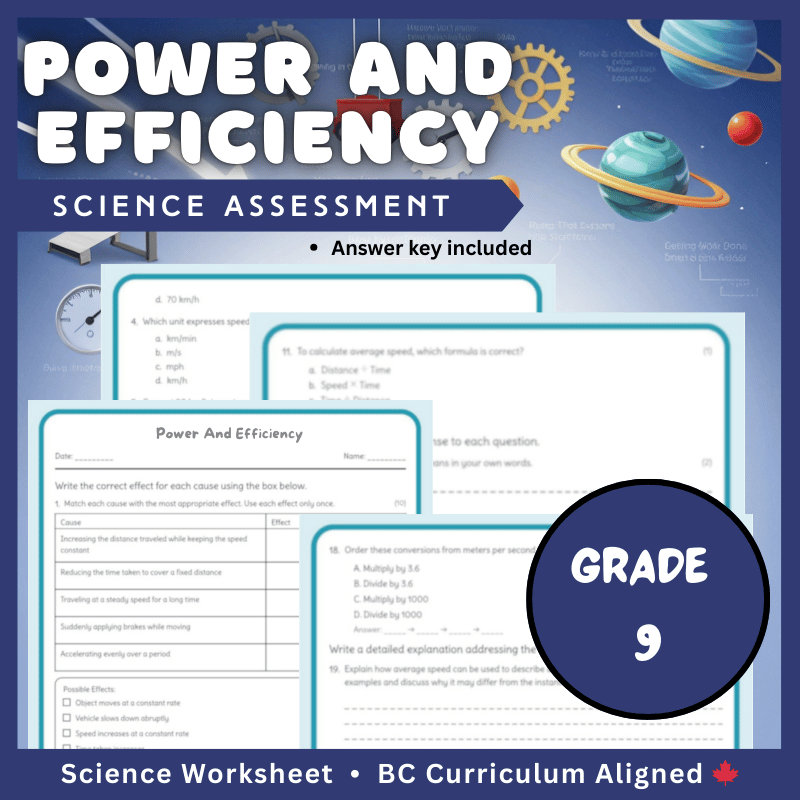
Grade 9 Science | Power and Efficiency Worksheet (Answer Key) – BC Standards
Created byBright Mind ResourcesLearning Objectives
- Understand the concepts of power and how it measures the rate of energy transfer.
- Explain the meaning of efficiency and how it compares useful output energy to input energy.
- Analyze why real systems often lose energy and how this affects efficiency.
Instant download
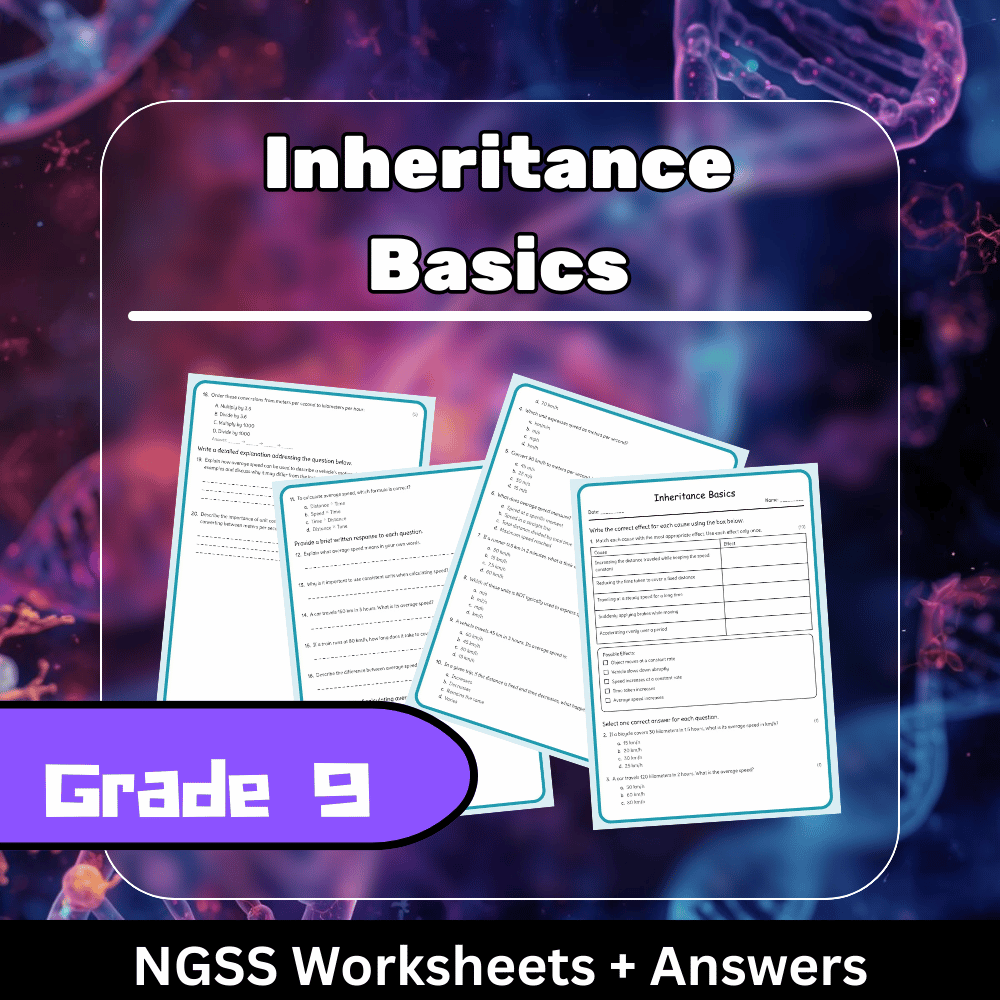
Grade 9 Science | Inheritance Basics Worksheet (Answer Key) – NGSS Aligned
Created byBright Mind ResourcesLearning Objectives
- Understand the structure of DNA and its role in inheritance.
- Describe the process of chromosome transmission during meiosis.
- Explain how genetic information is passed from parents to offspring.
Instant download
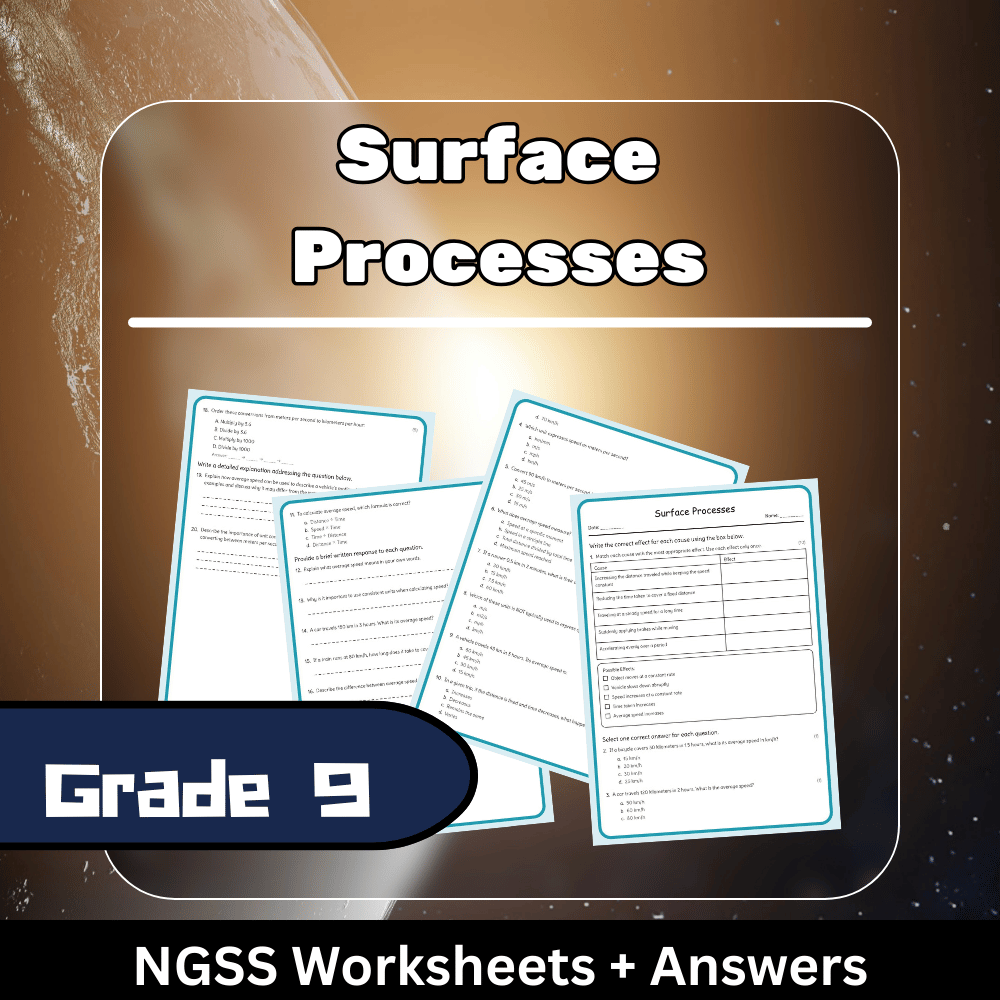
Grade 9 Science – Surface Processes Worksheet (PDF) Aligned with NGSS Standards
Created byBright Mind ResourcesLearning Objectives
- Explain how atmospheric forcing and hydrologic input influence geomorphic change and soil development.
- Identify the processes involved in chemical and physical weathering, mass wasting, and sediment transport.
- Analyze examples of surface modification such as alluvial fan formation and coastal erosion.
Instant download
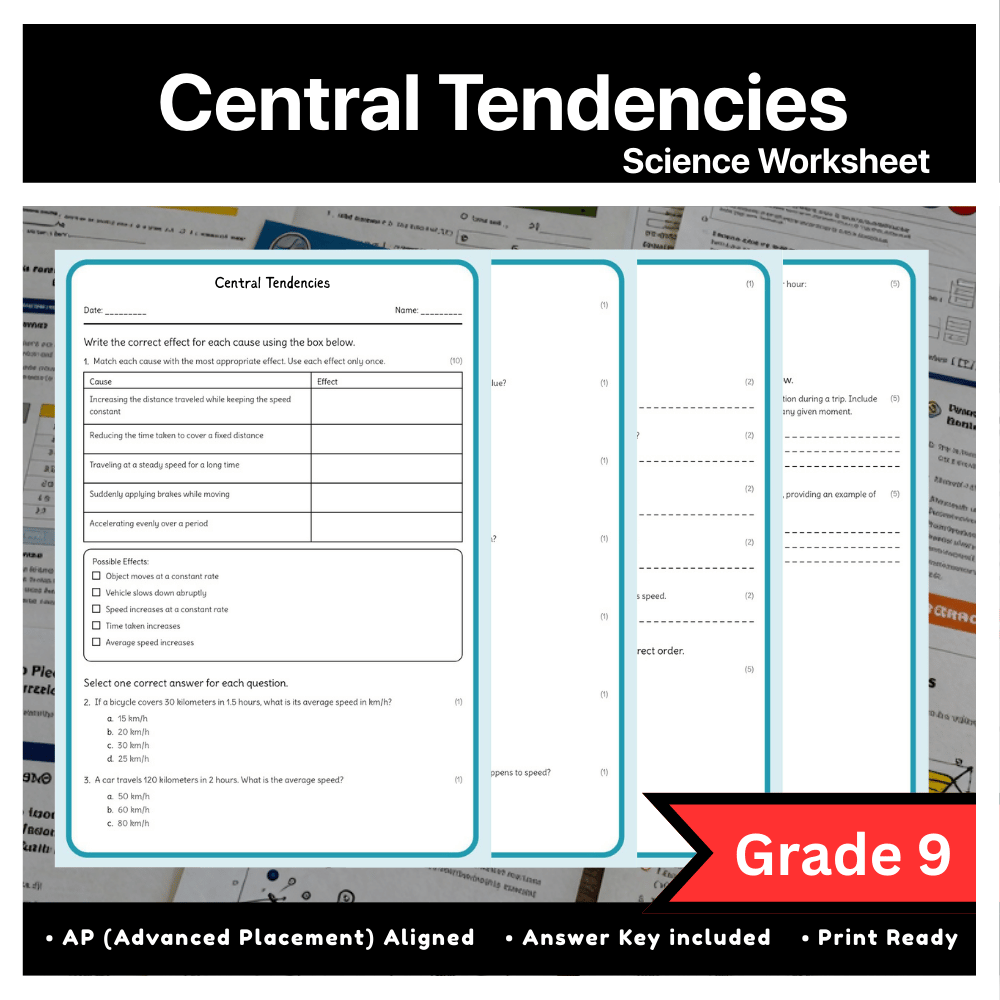
Grade 9 Science | Central Tendencies Worksheet (AP Standard) - PDF
Created byBright Mind ResourcesLearning Objectives
- Describe measures of central tendency and their appropriate uses.
- Differentiate between mean, median, and mode, and understand their sensitivities.
- Connect the choice of a central tendency to data distribution and context.
Instant download
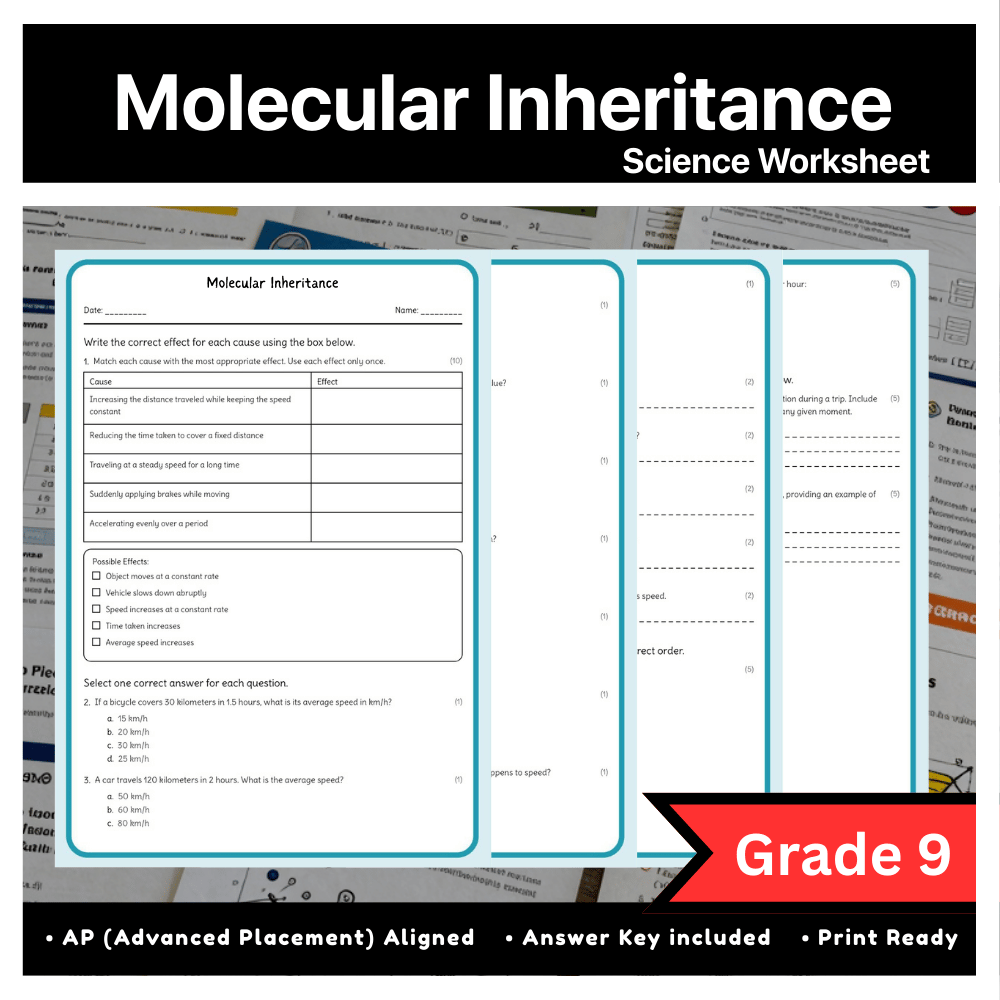
Grade 9 Science | Molecular Inheritance AP Worksheet (PDF) with Answer Key
Created byBright Mind ResourcesLearning Objectives
- Explain how DNA replication maintains fidelity and its impact on genetic information.
- Describe the processes of transcription and translation and their roles in gene expression.
- Identify how sequence variations and mutations can alter protein function and phenotype.
Instant download
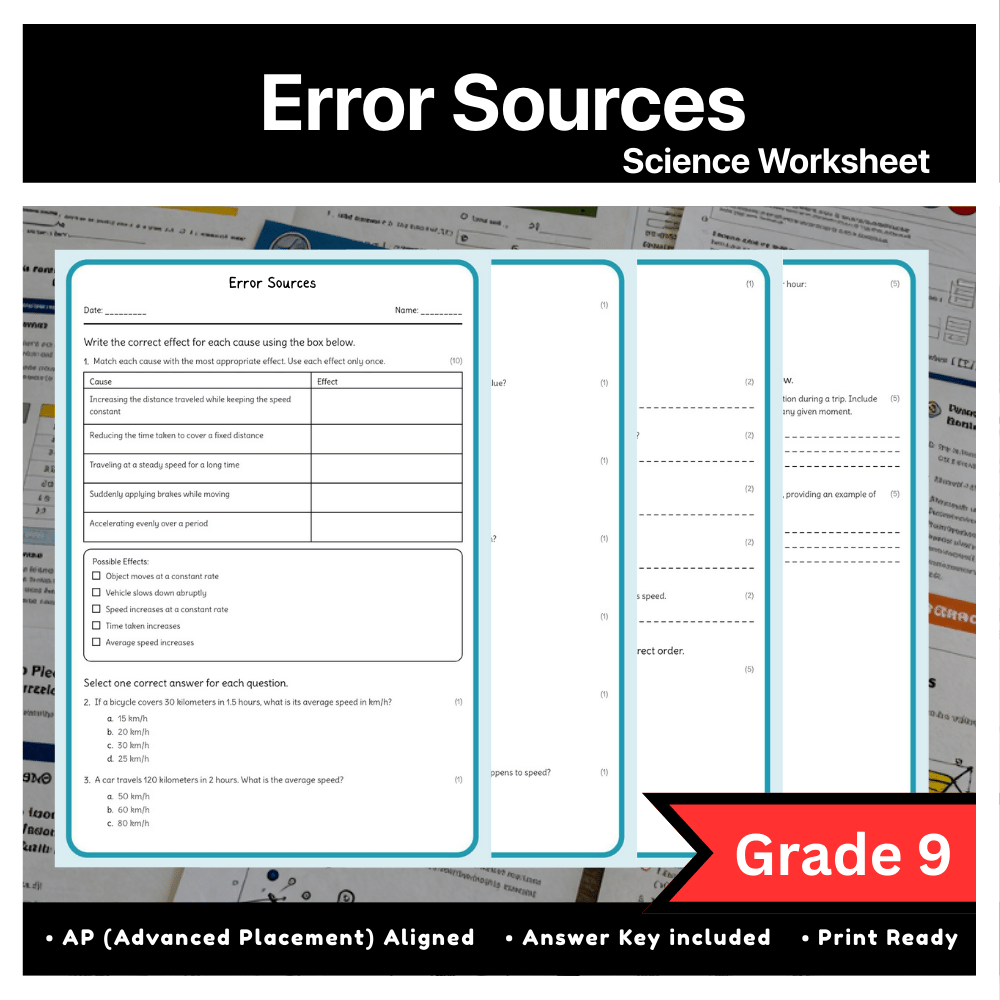
Grade 9 Science – Error Sources Worksheet (AP Standard) with Answer Key (PDF)
Created byBright Mind ResourcesLearning Objectives
- Identify common sources of systematic and random error in scientific research.
- Describe methods for detecting and quantifying bias and error.
- Explain how error contributes to overall uncertainty in data interpretation.
Instant download
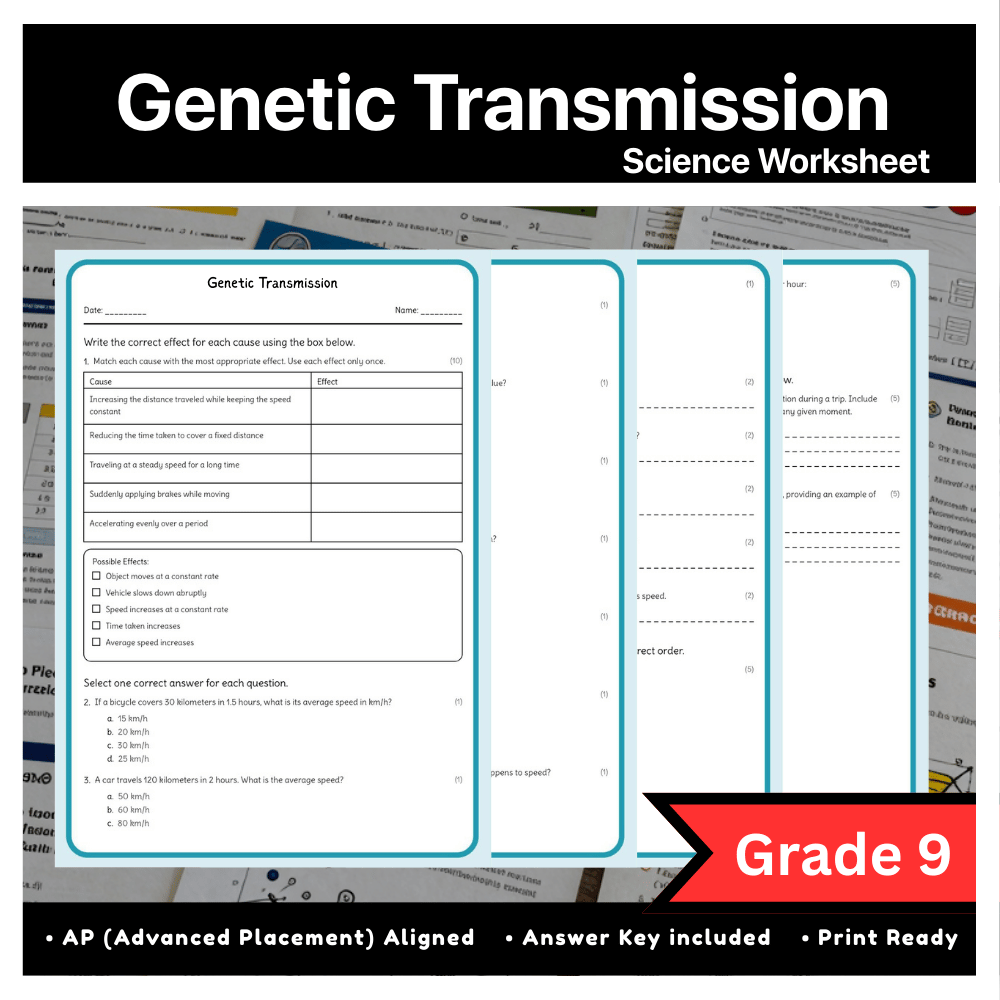
Grade 9 Science | Genetic Transmission Worksheet & Answer Key (AP Standard)
Created byBright Mind ResourcesLearning Objectives
- Understand how chromosomes behave during meiosis and relate this to Mendelian inheritance patterns.
- Explain deviations such as incomplete dominance, codominance, and linkage and their effects on traits.
- Use pedigree analysis, Punnett squares, and probability calculations to predict genotypic and phenotypic ratios.
Instant download
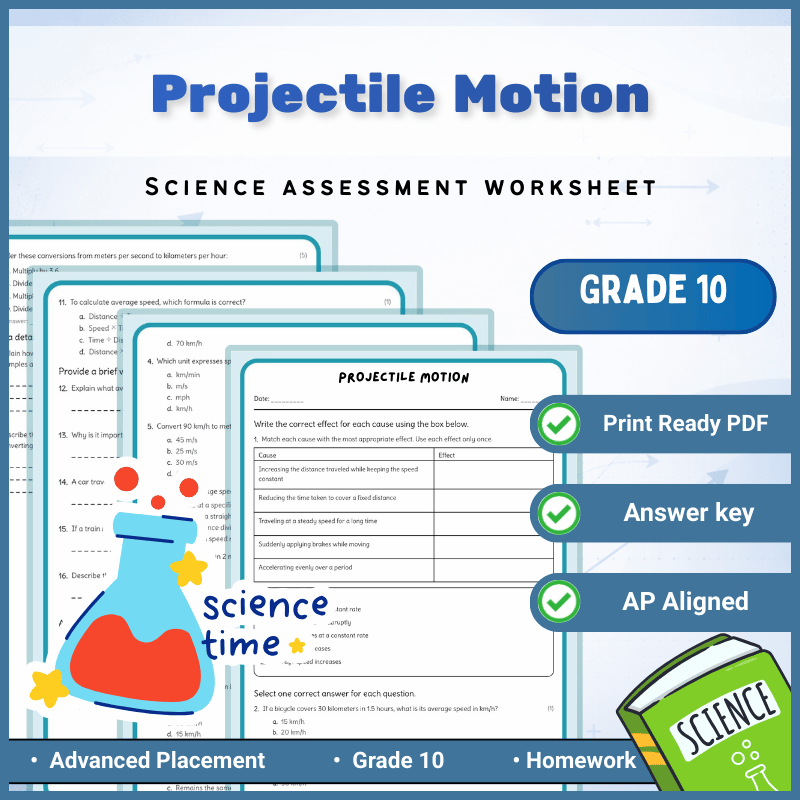
Grade 10 Science – Projectile Motion Worksheet + Answer Key (AP Standard)
Created byBright Mind ResourcesLearning Objectives
- Understand the independence of horizontal and vertical components in projectile motion.
- Apply vector decomposition to analyze projectile trajectories.
- Predict range, maximum height, and time of flight for projectiles under ideal conditions.
Instant download
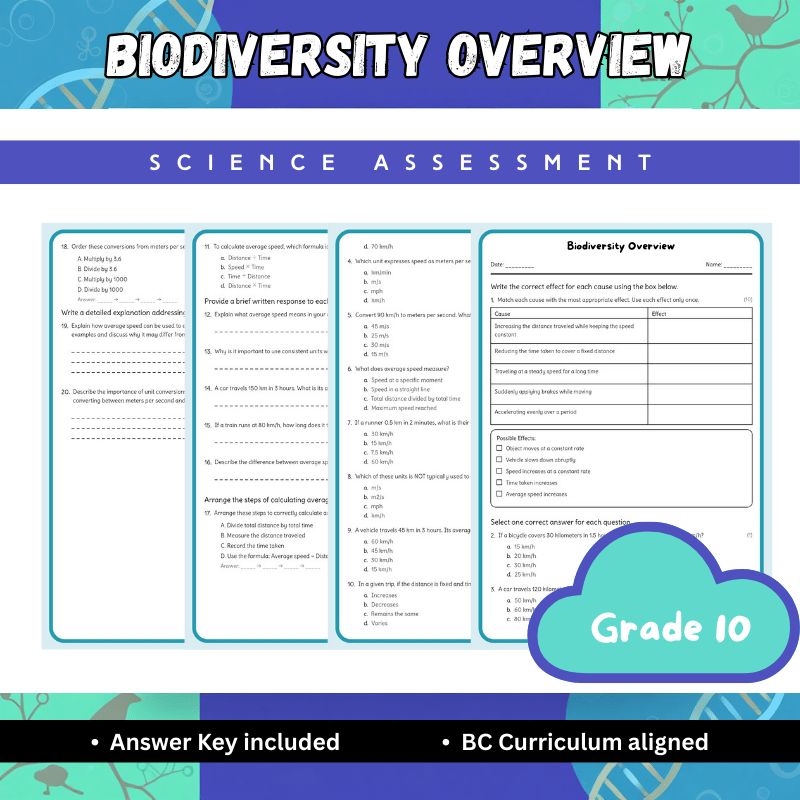
Grade 10 Science | Biodiversity Overview Worksheet + Answer Key (PDF)
Created byBright Mind ResourcesLearning Objectives
- Understand the different levels of biodiversity, including genetic, species, and ecosystem diversity.
- Identify factors that influence and shape patterns of biodiversity across regions.
- Analyze how environmental gradients, habitat availability, and evolutionary history affect biodiversity.
Instant download
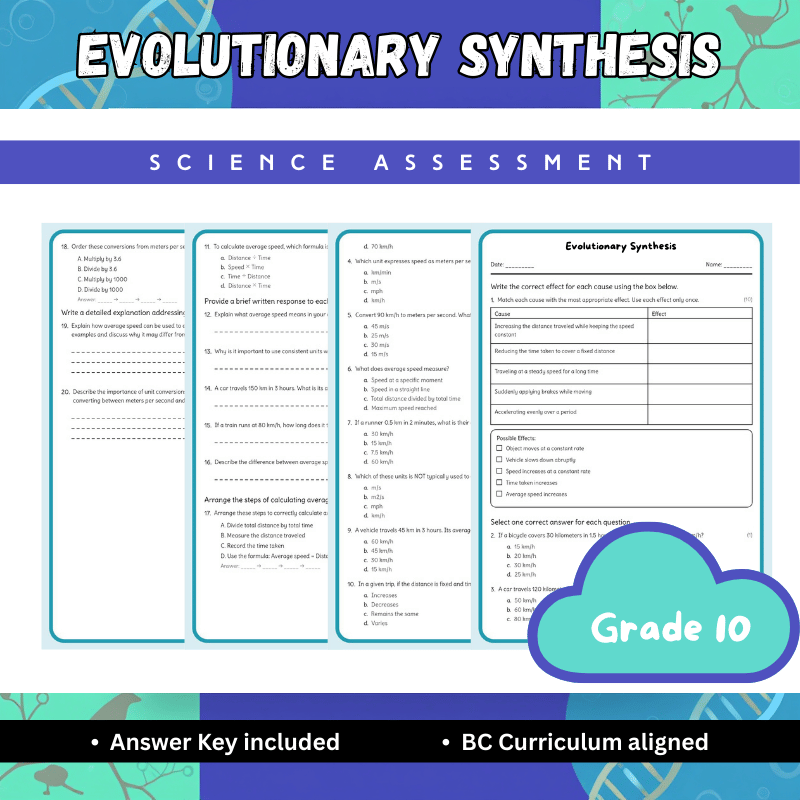
Grade 10 Science – Evolutionary Synthesis Worksheet (PDF) | BC Standards
Created byBright Mind ResourcesLearning Objectives
- Explain how fossil, anatomical, developmental, and molecular evidence are integrated to understand biodiversity.
- Describe mechanisms such as natural selection, genetic drift, and gene flow in evolution.
- Analyze case studies like island finch radiations and transitional fossils to illustrate evolutionary processes.
Instant download
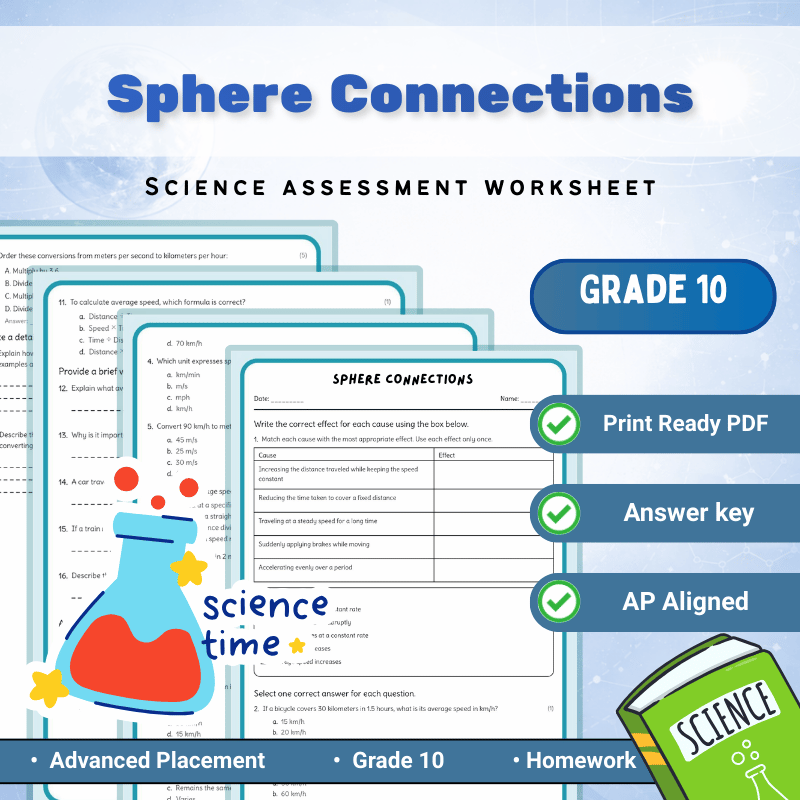
Grade 10 Science | Earth’s Spheres Interactions Worksheet – AP Standard
Created byBright Mind ResourcesLearning Objectives
- Explain the interactions among the geosphere, hydrosphere, atmosphere, and biosphere through coupled processes.
- Analyze how perturbations in one sphere can propagate and affect other spheres using flow diagrams and mass-balance reasoning.
- Apply systems thinking to interpret flow diagrams, box-and-arrow models, and indicators like streamflow and soil moisture.
Instant download
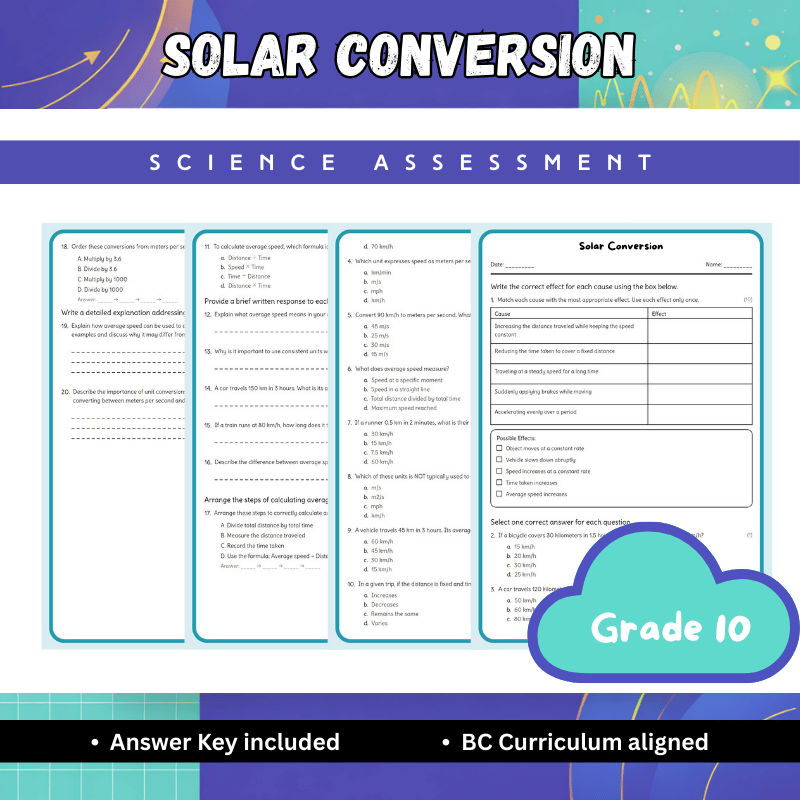
Grade 10 Science | Solar Conversion Worksheet (Answer Key) BC Standards
Created byBright Mind ResourcesLearning Objectives
- Understand the processes involved in solar energy conversion, including photovoltaic and photoelectrochemical mechanisms.
- Identify key material properties such as bandgaps and quantum efficiency that influence energy conversion efficiency.
- Compare physical and biological solar conversion mechanisms in terms of rate, spectral response, and integration into larger systems.
Instant download
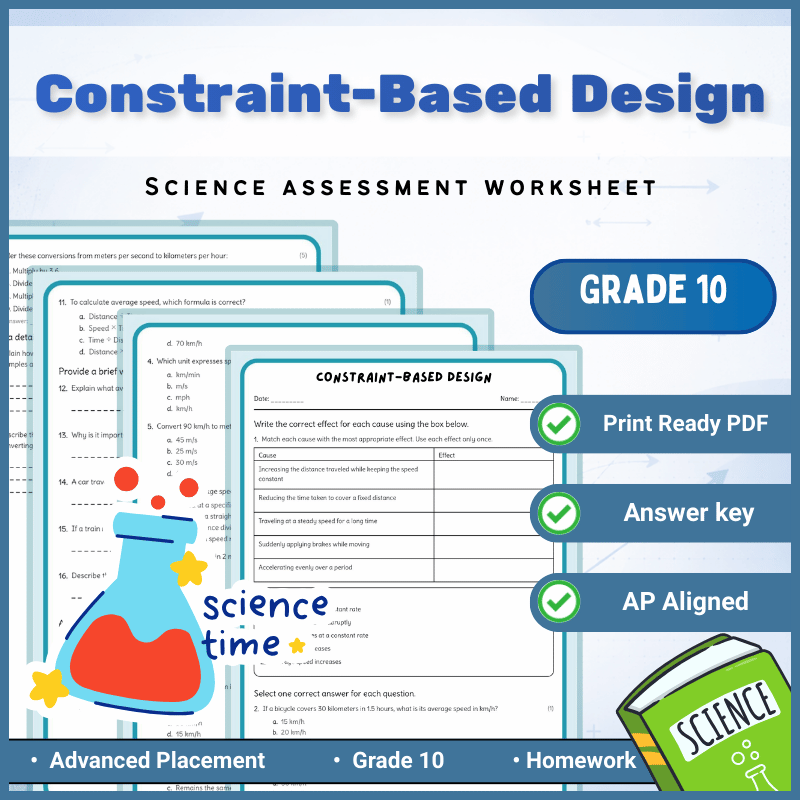
Grade 10 Science | Constraint-Based Design Worksheet (AP Standards) PDF
Created byBright Mind ResourcesLearning Objectives
- Understand the implications of constraints in designing scientific studies.
- Identify trade-offs among replication, measurement precision, and scope.
- Evaluate the use of proxy measures and sensitivity analysis under constraints.
Instant download
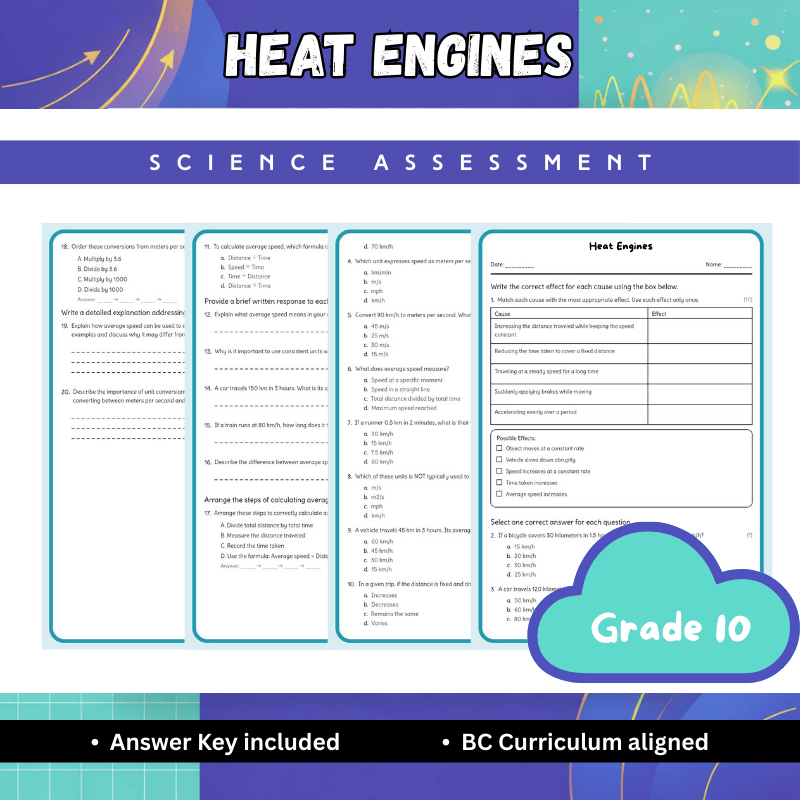
Grade 10 Science | Heat Engines Explanation Worksheet (PDF) – BC Standards
Created byBright Mind ResourcesLearning Objectives
- Understand the basic principles of heat engines and how they convert thermal energy into mechanical work.
- Identify types of heat engines such as internal combustion engines, gas turbines, and steam turbines.
- Explain factors affecting the efficiency of heat engines, including temperature differences and cycle design.
Instant download
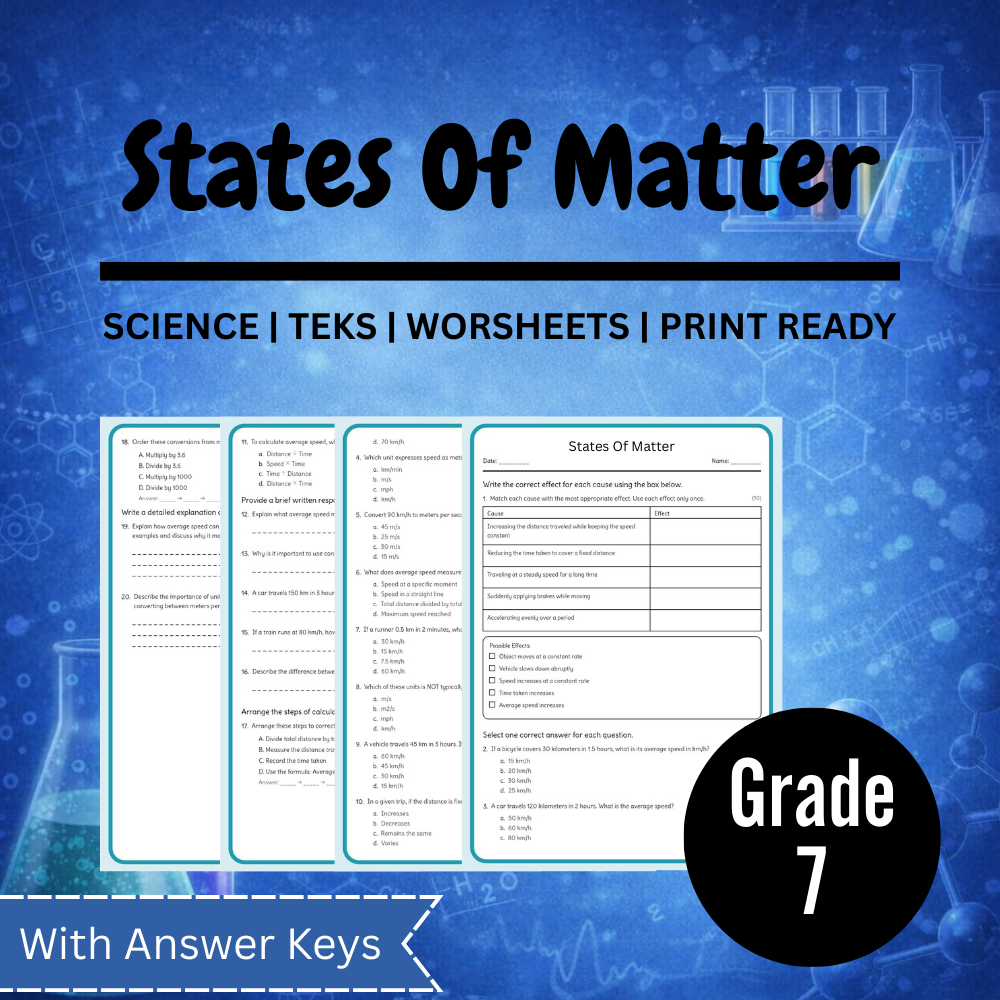
Grade 7 Science – States of Matter Worksheet (Worksheet + Answer Key) | TEKS Aligned
Created byBright Mind ResourcesLearning Objectives
- Define and characterize the three main states of matter: solid, liquid, and gas.
- Explain the processes of phase changes such as melting, freezing, vaporization, condensation, and sublimation.
- Relate temperature and pressure to phase transitions and measurable properties like density and viscosity.
Also included in: Grade 7 Science Unit Bundle | States of Matter & Atomic Structure Worksheets +2 more
Instant download
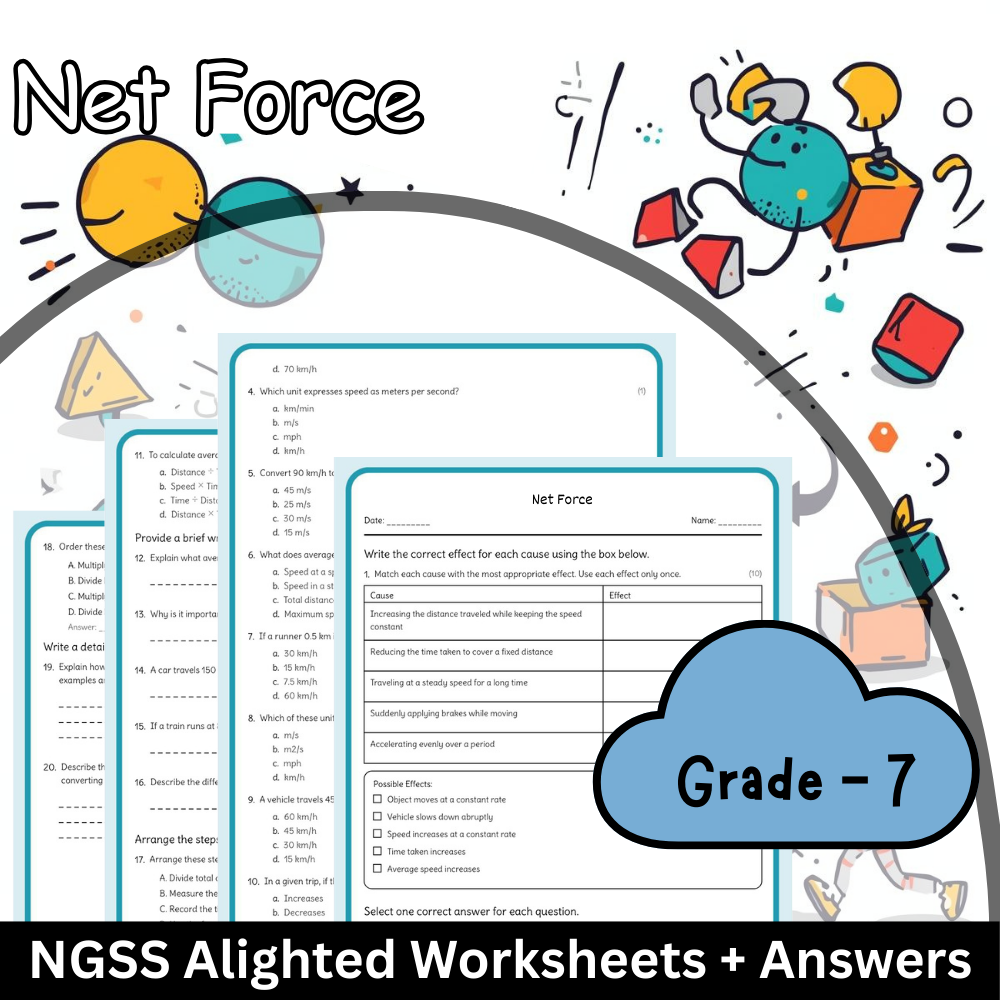
7th Grade Science | Net Force Worksheet (Worksheet + Answer Key) – NGSS Aligned
Created byBright Mind ResourcesLearning Objectives
- Define net force as the vector sum of all forces acting on an object.
- Explain how unbalanced forces can change an object's motion.
- Describe the relationship between net force, mass, and acceleration through examples and diagrams.
Instant download
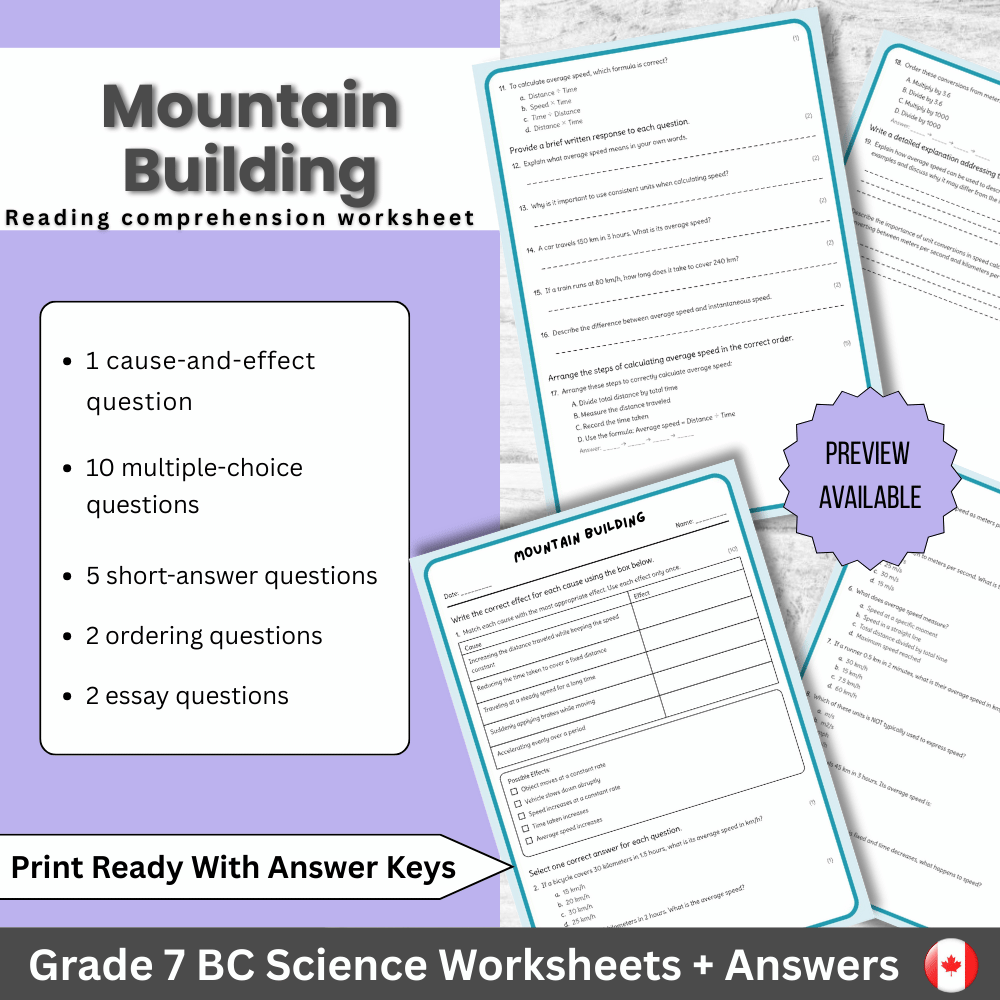
Grade 7 Science | Mountain Building Worksheet + Answer Key (PDF)
Created byBright Mind ResourcesLearning Objectives
- Explain the processes involved in mountain building through plate tectonics.
- Identify key features of orogeny, including crustal deformation, uplift, and volcanic activity.
- Describe surface processes like erosion and isostatic adjustment that shape mountain ranges.
Instant download
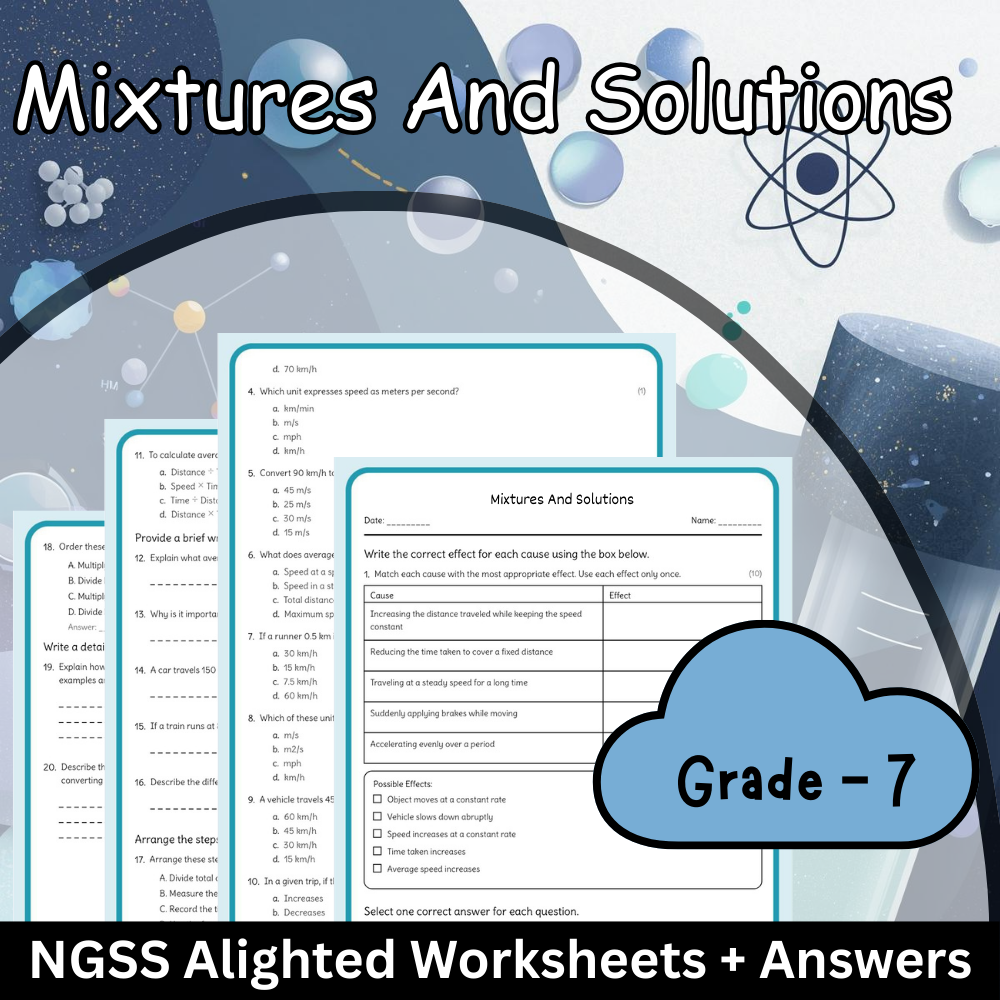
Grade 7 Science – Mixtures and Solutions Worksheet + Answer Key | NGSS-Aligned
Created byBright Mind ResourcesLearning Objectives
- Differentiate between homogeneous and heterogeneous mixtures, solutions, colloids, and suspensions.
- Explain solubility, saturation, and colligative effects in mixtures and solutions.
- Identify real-world examples of mixtures and solutions, including saltwater, emulsions, and granular mixtures.
Instant download
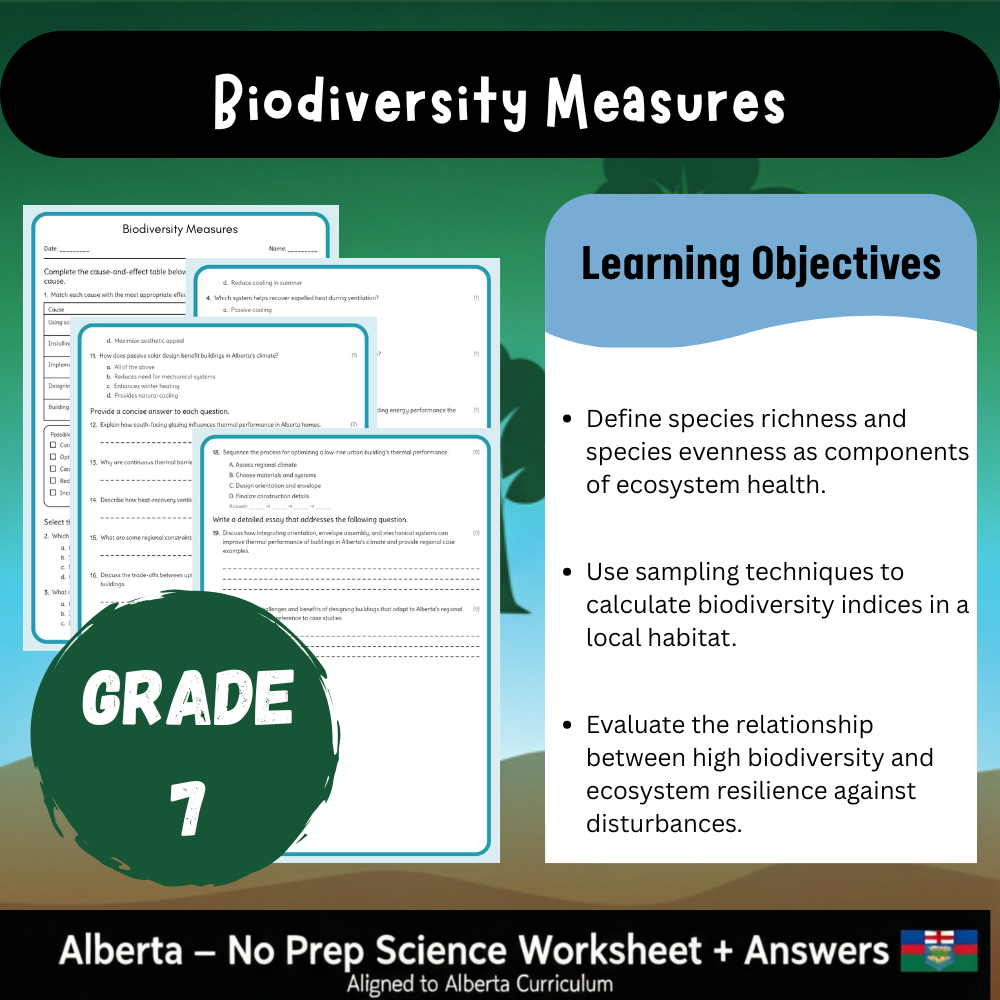
Grade 7 Science – Biodiversity Measures Worksheet (PDF) – Alberta Standard
Created byBright Mind ResourcesLearning Objectives
- Define different metrics of biodiversity such as richness, evenness, and habitat heterogeneity.
- Interpret what various biodiversity metrics reveal about ecosystem resilience and function.
- Evaluate the relationship between habitat complexity and species assemblages.
Instant download
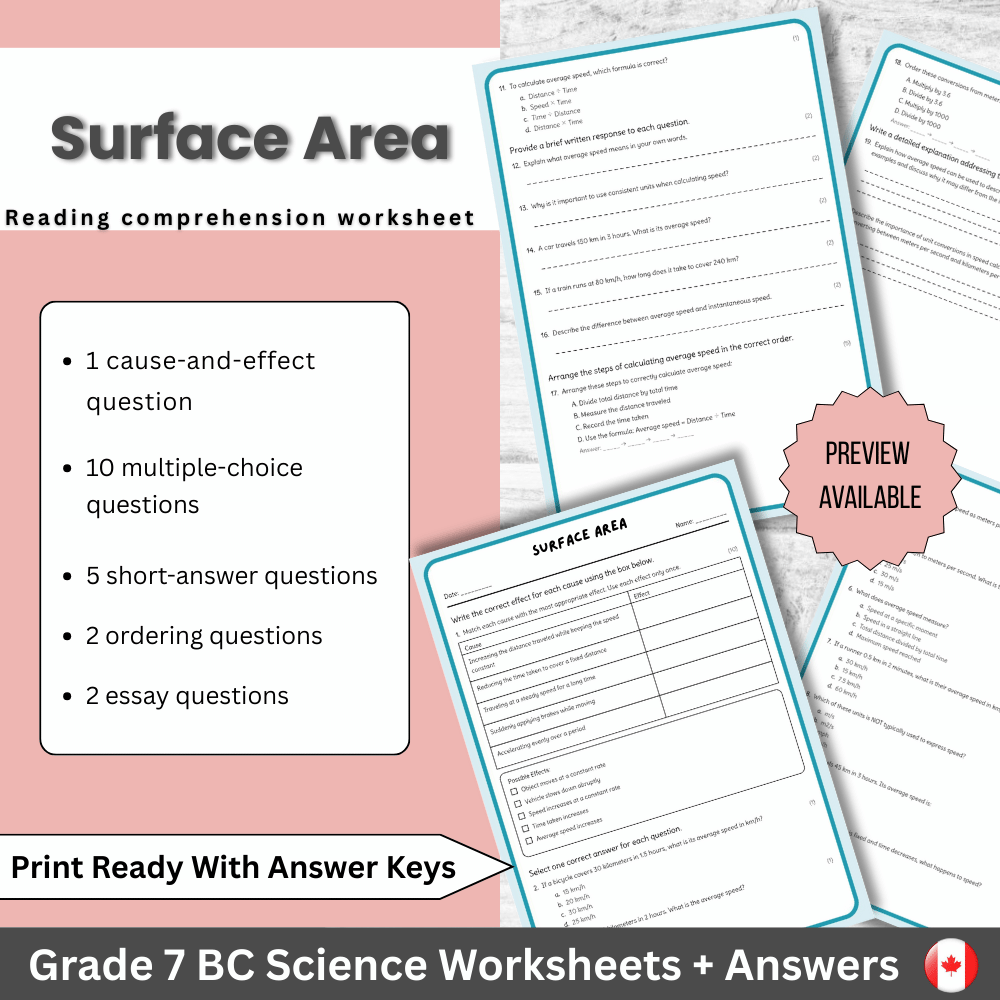
Grade 7 Science Surface Area Worksheet – Cell Size & Adaptations (PDF)
Created byBright Mind ResourcesLearning Objectives
- Explain how surface-area-to-volume ratio affects cell size and function.
- Identify adaptations that increase exchange surface area in cells and organisms.
- Describe how multicellular organisms overcome surface area limitations through specialized structures.
Instant download
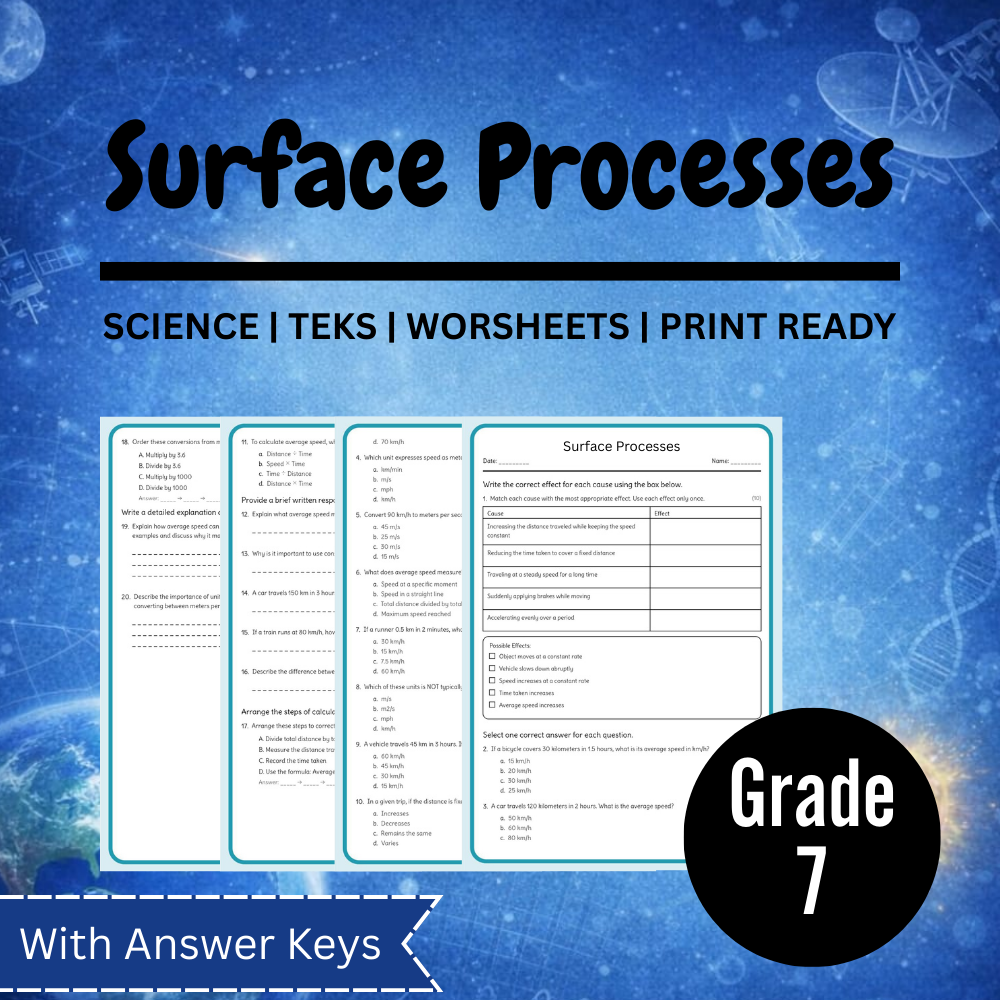
Grade 7 Science – Surface Processes Worksheet (Worksheet + Answer Key) | TEKS Aligned
Created byBright Mind ResourcesLearning Objectives
- Describe the physical and chemical processes shaping Earth's surface including weathering, erosion, and deposition.
- Identify driving forces such as water flow, wind, glaciers, and gravity that influence surface changes.
- Link observable landforms like deltas, canyons, and dunes to surface processes.
Also included in: Grade 7 Science Unit Bundle | Earth's Processes, Space & Resources TEKS Aligned +2 more
Instant download
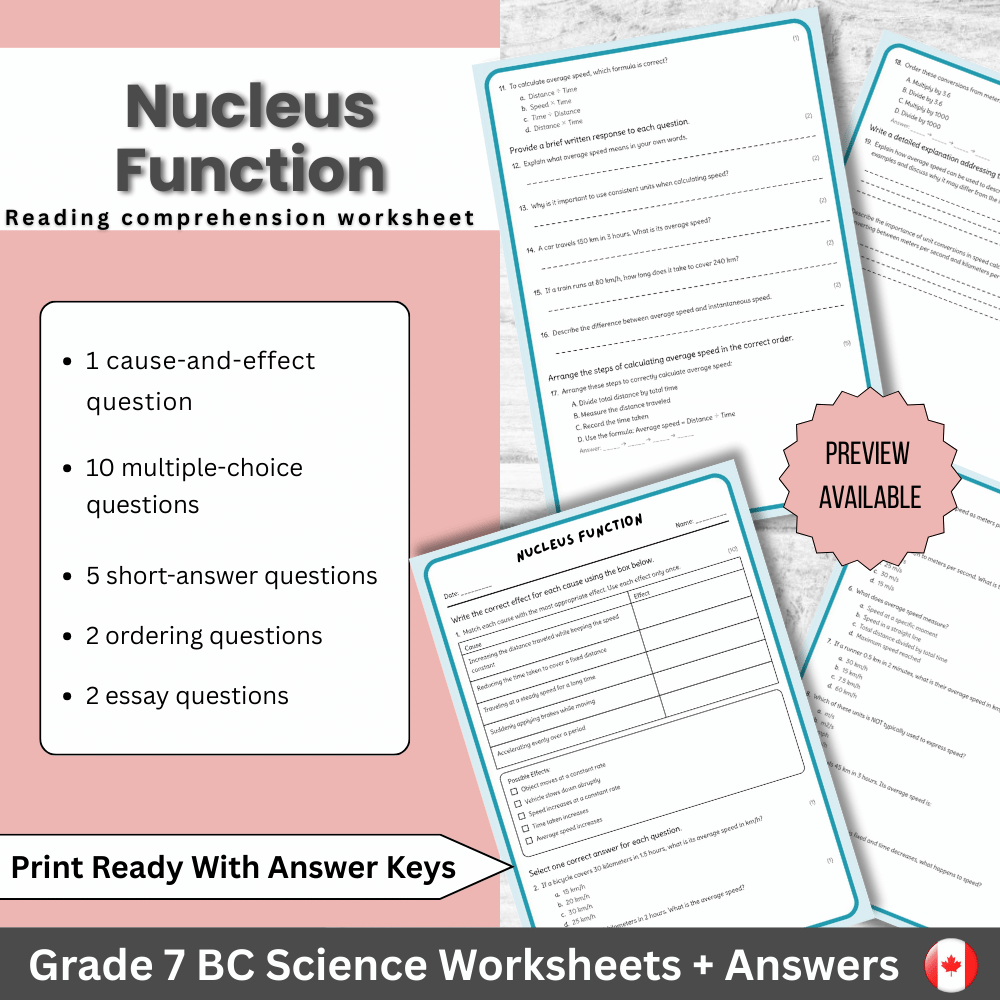
Grade 7 Science | Nucleus Function Worksheet + Answer Key | for BC Standards
Created byBright Mind ResourcesLearning Objectives
- Understand the role of the nucleus in cellular activities.
- Identify structures related to genetic material inside the nucleus.
- Explain how the nuclear envelope and pores regulate activity.
Instant download
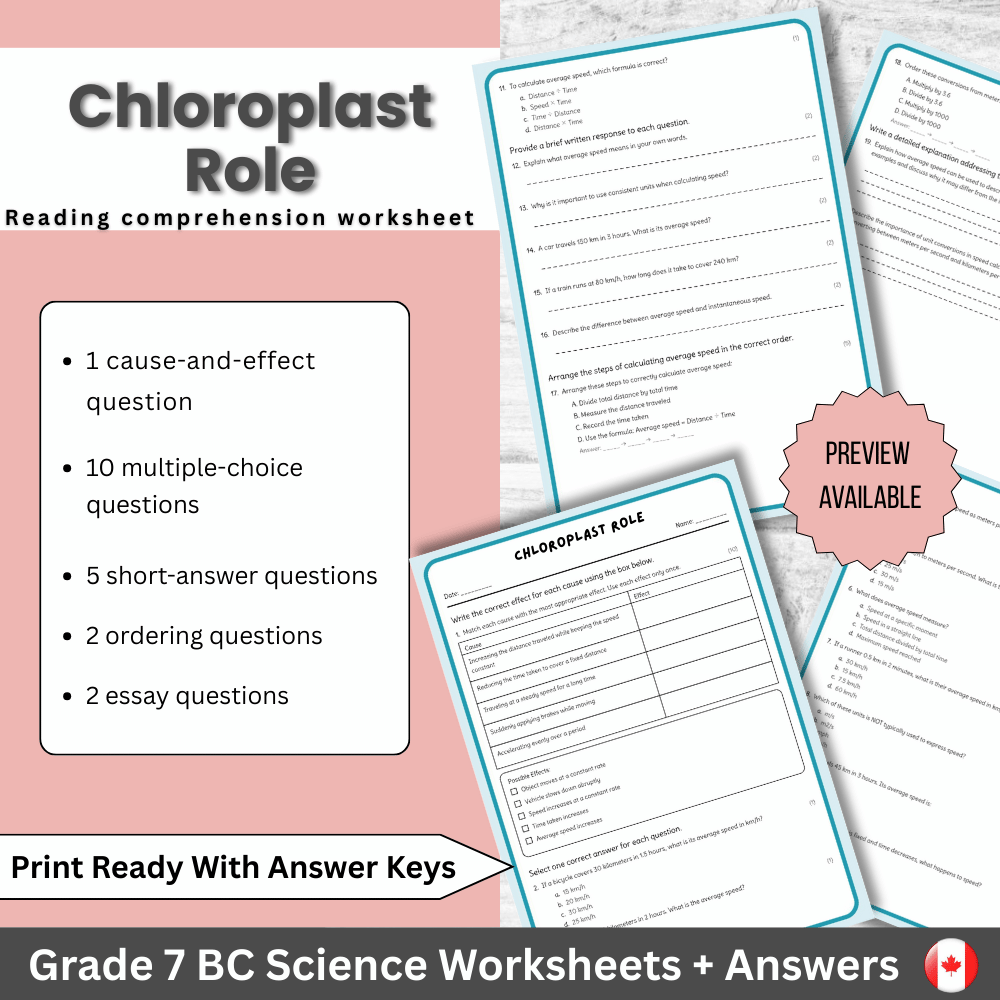
Grade 7 Science | Chloroplast Role Worksheet with Answer Key (PDF)
Created byBright Mind ResourcesLearning Objectives
- Describe the function of chloroplasts in photosynthesis.
- Explain how pigments in thylakoid membranes absorb light energy.
- Identify the process of carbon fixation in the stroma of chloroplasts.
Instant download
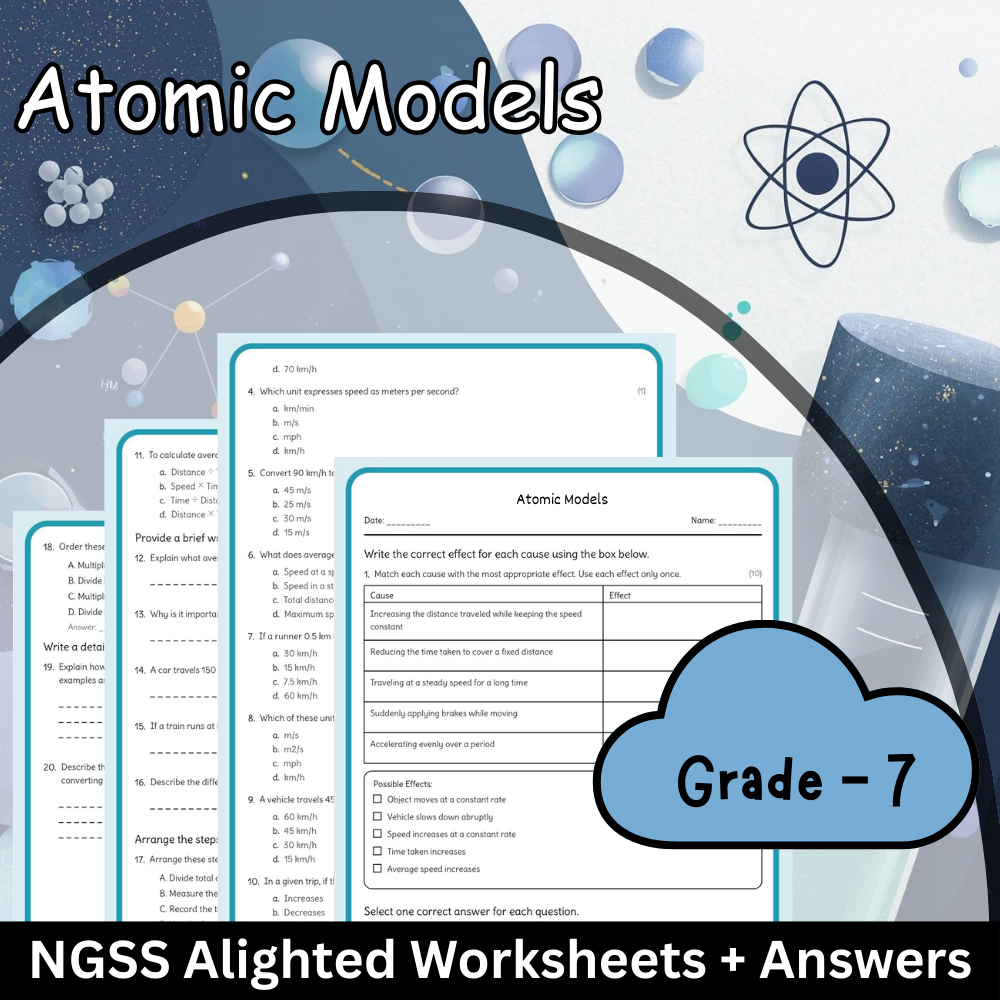
Grade 7 Science – Atomic Models Worksheet (Worksheet + Answer Key) NGSS Aligned
Created byBright Mind ResourcesLearning Objectives
- Describe how atoms are represented in particle, ball-and-stick, and lattice models.
- Explain the significance of covalent and ionic bonding in molecular and extended structures.
- Connect subatomic particles and atomic number to material properties and formula notation.
Instant download
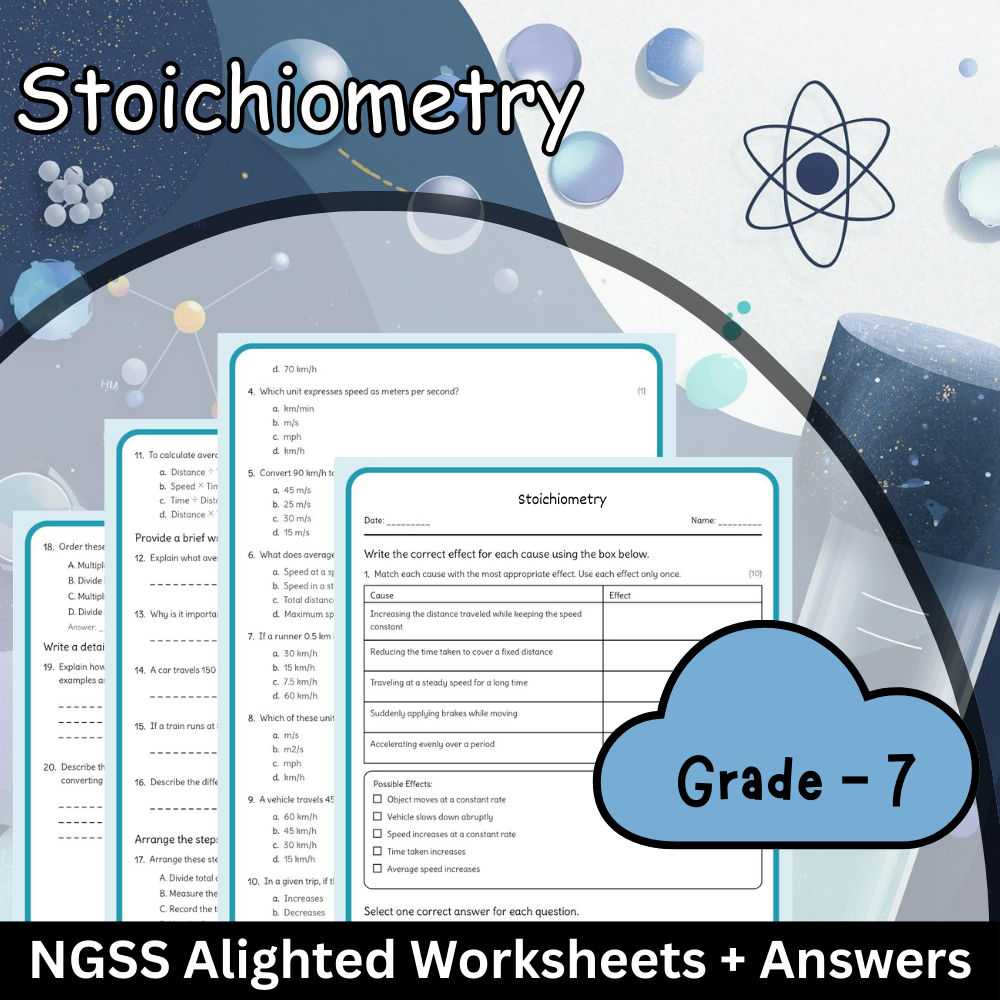
Grade 7 Science – Stoichiometry Worksheet (Answer Key) | NGSS Aligned
Created byBright Mind ResourcesLearning Objectives
- Understand how to interpret and use balanced symbolic equations in stoichiometry.
- Calculate molar and mass ratios of reactants and products in chemical reactions.
- Apply conservation principles to predict reagent needs and product yields.
Instant download
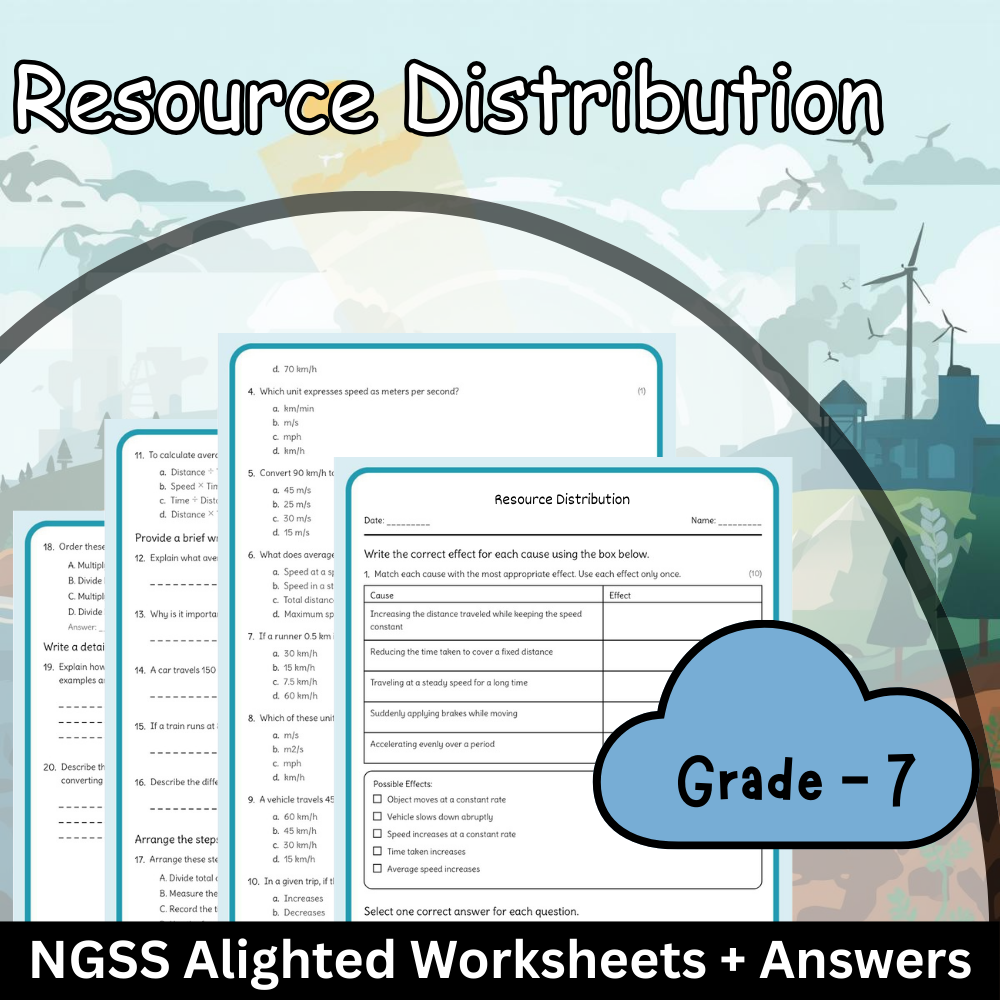
Grade 7 Science | Resource Distribution Worksheet (NGSS) - PDF
Created byBright Mind ResourcesLearning Objectives
- Understand how geologic processes influence the uneven distribution of mineral, energy, and groundwater resources.
- Connect plate tectonics, sedimentation, weathering, and biological activity to resource locations.
- Evaluate the impacts of resource extraction and consider sustainability and access issues.
Instant download
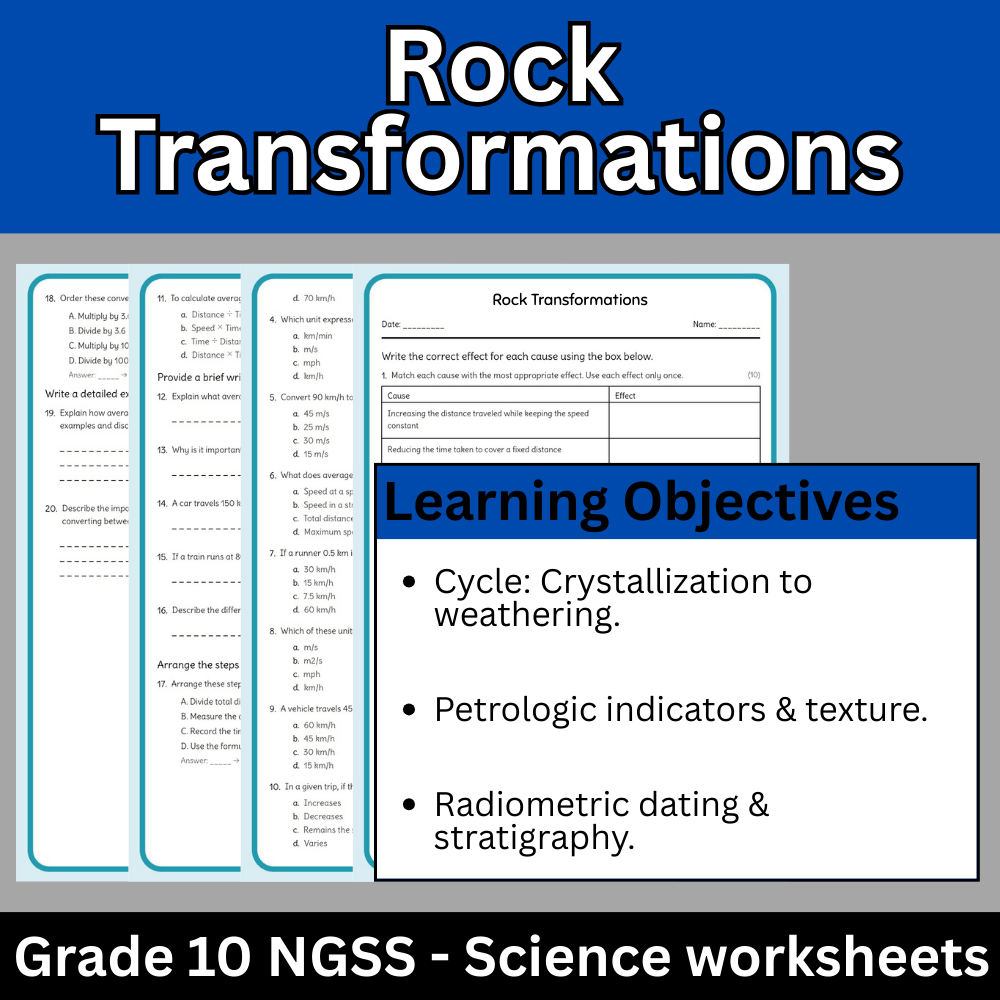
Grade 10 Science | Rock Transformations Worksheet (Answer Key) – NGSS Aligned
Created byBright Mind ResourcesLearning Objectives
- Explain the processes involved in the rock cycle including crystallization, lithification, metamorphism, and weathering.
- Identify petrologic indicators such as mineral assemblages, texture, and geochemical signatures used to interpret geological histories.
- Understand how radiometric dating and stratigraphic correlation are used to order and interpret igneous, sedimentary, and metamorphic events.
Instant download
Browse more categories
About Reading comprehension Worksheets
Find reading comprehension worksheets for class practice, homework, or self-study. All 40,284 are instant PDF downloads.
Each resource here is built by an independent educator and reviewed for quality. Worksheets print straight from PDF and suit classroom use, homework, or extra practice; most come with answer keys, and you can preview before purchasing.