
Grade 10 Worksheets
9,385 grade resources
Grade 10 Science | Shared Genetic Mechanisms Worksheet | California Standards
 Created byLumora Learning
Learning Objectives
- Explain how conserved DNA sequences and regulatory systems support the idea of common ancestry
- Describe how protein and metabolic pathway similarities suggest evolution modifies existing genetic material
- Interpret how evidence from comparative genomics and biochemical function strengthens evolutionary conclusions
Instant download

Grade 10 Science | Reference Frames Worksheet | AP Standards
Created byLumora LearningLearning Objectives
- Understand the concept of reference frames and their importance in describing motion.
- Differentiate between position, displacement, velocity, and acceleration in various reference frames.
- Interpret position-time and velocity-time graphs for uniform and accelerated motion.
Instant download

Grade 10 Science | Radiometric Dating Worksheet | NGSSS Aligned
Created byLumora LearningLearning Objectives
- Explain how radiometric dating estimates absolute geologic time using radioactive decay in minerals
- Describe the role of half-life in connecting isotope decay to the fraction of parent and daughter products remaining
- Evaluate how assumptions (starting conditions and closed-system behavior) affect the reliability of radiometric dates
Instant download

Grade 10 Science | Selection and Adaptation Worksheet | California Standards
Created byLumora LearningLearning Objectives
- Explain how natural selection changes allele frequencies over generations
- Describe how heritable variation and fitness lead to adaptation at the population level
- Use scientific terms (variation, heritability, fitness, selective pressures, adaptation) to interpret examples
Instant download

Grade 10 Science | Surface Change Climate Links Worksheet | California Standards
Created byLumora LearningLearning Objectives
- Explain how changes in Earth’s surface can alter climate through physical mechanisms such as energy balance and atmospheric circulation
- Interpret evidence from long-term records (ice cores and sediments) to make and evaluate climate-related claims
- Connect land-cover, volcanic aerosols, and topographic changes to expected shifts in temperature and precipitation
Instant download
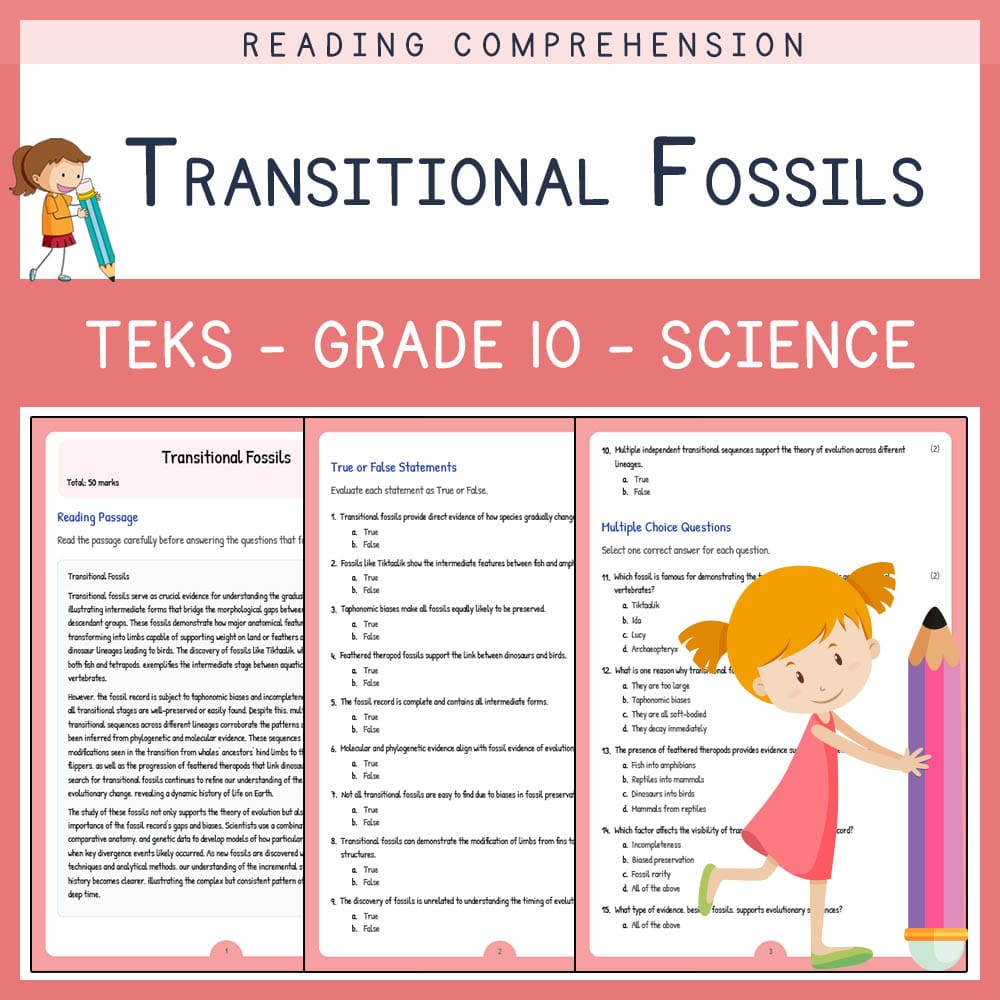
Grade 10 Science | Transitional Fossils Worksheet | TEKS-Aligned
Created byLumora LearningLearning Objectives
- Understand the role of transitional fossils in demonstrating evolutionary change.
- Identify key features of transitional fossils that link major groups.
- Evaluate the evidence supporting evolutionary sequences across clades.
Also included in: Grade 10 Science | Evolution & Classification Lesson Bundle | TEKS Aligned +1 more
Instant download

Grade 10 Science | Evolutionary Synthesis Worksheet | BC Aligned
Created byLumora LearningLearning Objectives
- Understand how fossil, anatomical, developmental, and molecular evidence contribute to evolutionary explanations.
- Identify mechanisms like natural selection, genetic drift, and gene flow in shaping biodiversity.
- Analyze case studies such as island finch radiations and transitional fossils to interpret evolutionary processes.
Also included in: Grade 10 Science | Evolution & Biodiversity Lesson Bundle | BC Framework
Instant download

Grade 10 Science | Mass Conservation Worksheet | BC Assessment
Created byLumora LearningLearning Objectives
- Understand the principle of conservation of mass in chemical reactions.
- Identify how mass is conserved in various chemical processes, including gases and solutions.
- Apply the law of mass conservation to balance chemical equations and perform stoichiometric calculations.
Instant download
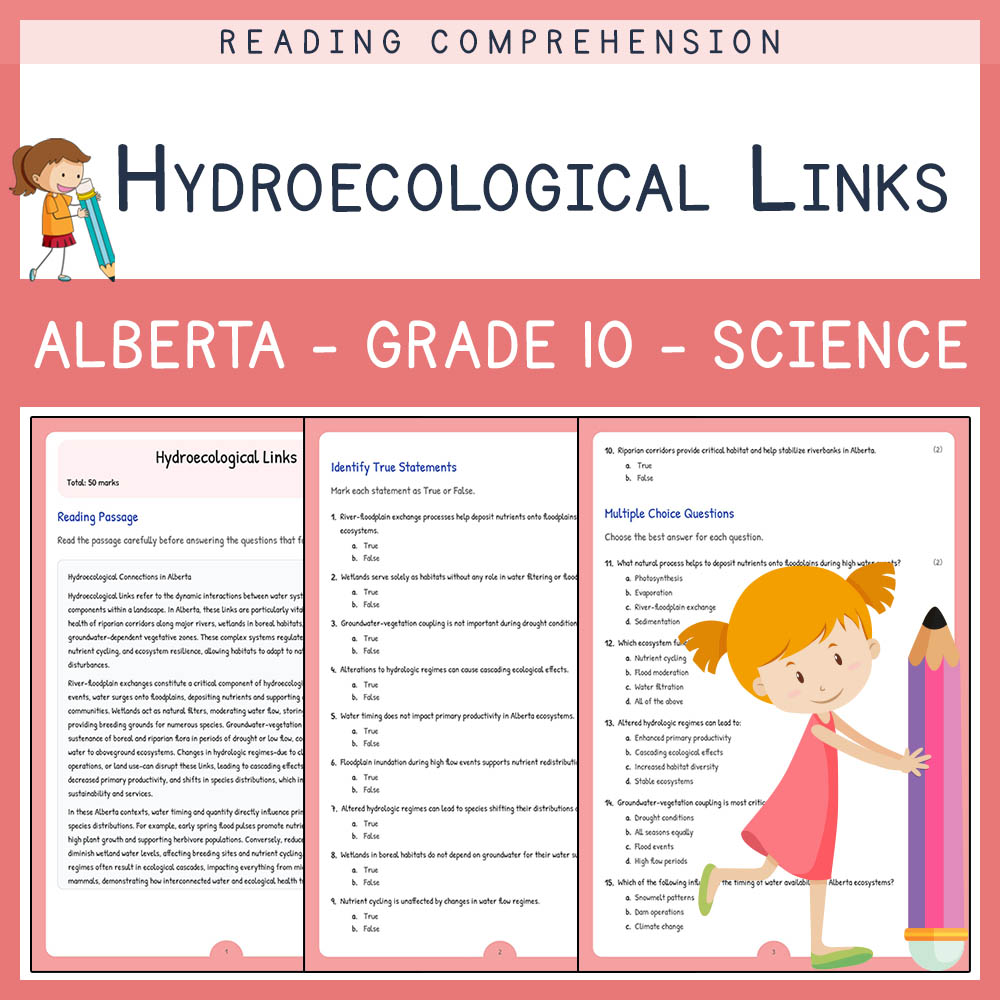
Grade 10 Science | Hydroecological Links Worksheet | Alberta Standards
Created byLumora LearningLearning Objectives
- Understand the interactions between hydrology and ecosystems in Alberta contexts.
- Identify how water availability influences habitat, productivity, and species distribution.
- Evaluate the ecological effects of altered hydrologic regimes on ecosystems.
Also included in: Grade 10 Science | Earth and Space Systems Unit Bundle | Alberta
Instant download

Grade 10 Science | Mechanical Systems Worksheet | BC Standards
Created byLumora LearningLearning Objectives
- Understand how mechanical systems transfer and transform energy through gears, pulleys, levers, and engines.
- Analyze energy paths, transfer efficiencies, and the effects of constraints like bearings and lubrication.
- Visualize work flow between system components to predict performance changes under different loads.
Instant download

Grade 10 Science | Solar Conversion Worksheet | BC Standards
Created byLumora LearningLearning Objectives
- Understand the processes involved in converting radiant energy into electrical and chemical energy.
- Identify the roles of semiconductors, bandgaps, and quantum efficiency in solar energy systems.
- Compare physical and biological energy conversion mechanisms, including their rates and spectral responses.
Instant download
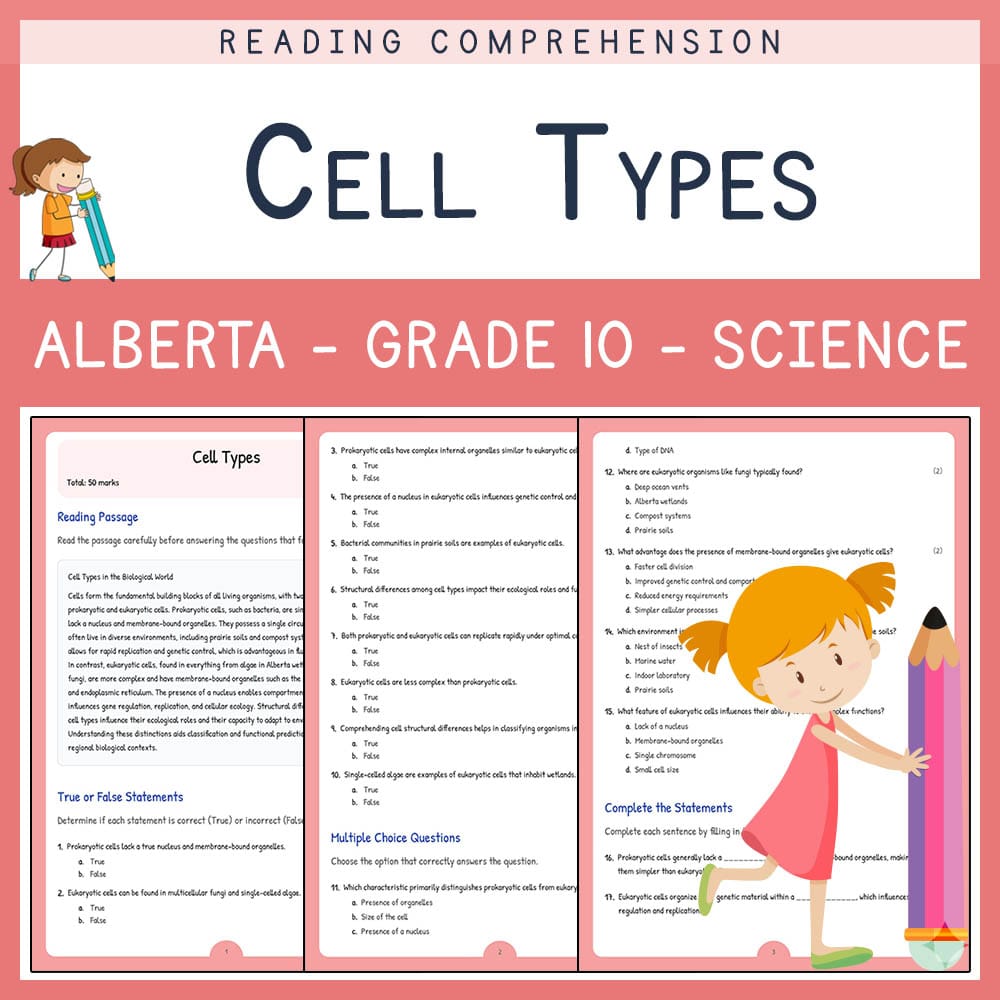
Grade 10 Science | Cell Types Worksheet | Alberta Standards
Created byLumora LearningLearning Objectives
- Differentiate between prokaryotic and eukaryotic cell structures.
- Identify examples of prokaryotic and eukaryotic cells in various environments.
- Compare the organizational complexity and functions of cell types.
Also included in: Grade 10 Science | Cells and Systems Custom Bundle Worksheets | Alberta
Instant download
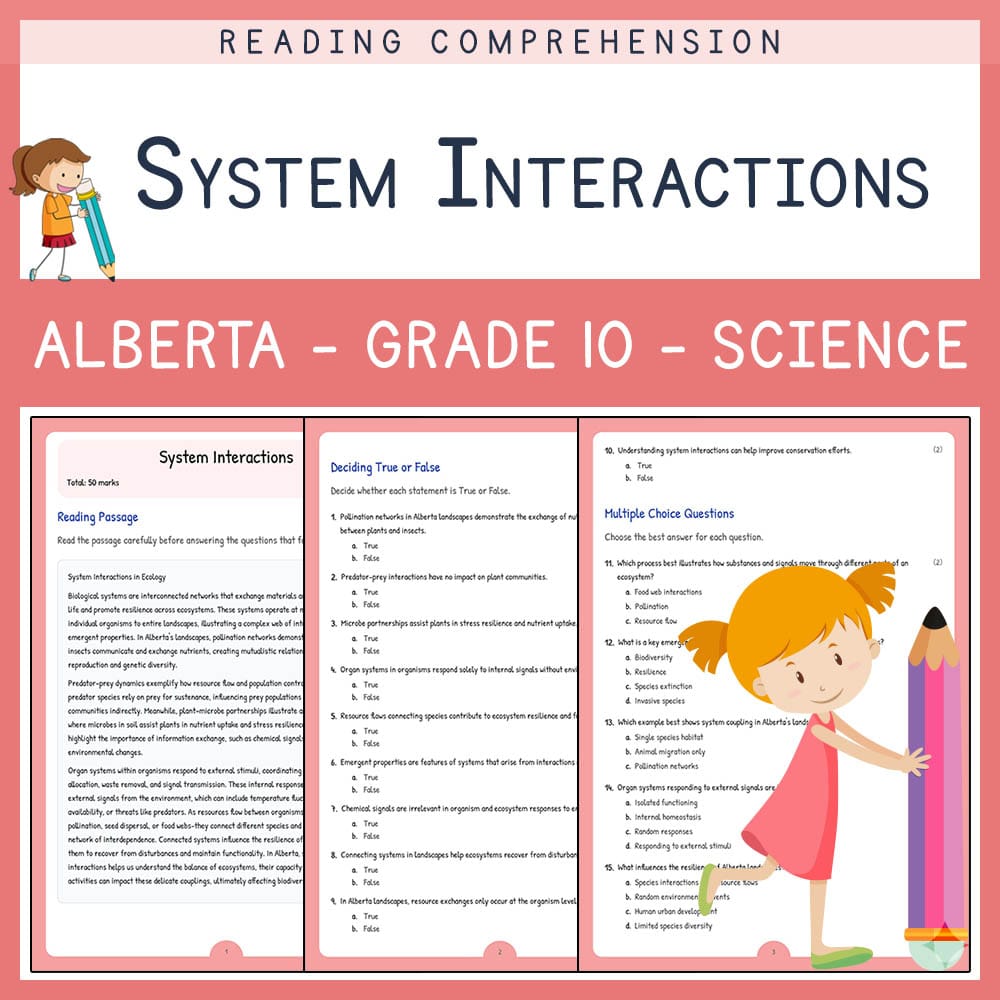
Grade 10 Science | System Interactions Worksheet | Alberta Standards
Created byLumora LearningLearning Objectives
- Understand how biological systems exchange materials and information to create emergent properties.
- Identify examples of system coupling in ecosystems and organismal responses.
- Explain how resource flows and system interactions influence resilience and function in Alberta landscapes.
Also included in: Grade 10 Science | Cells and Systems Custom Bundle Worksheets | Alberta
Instant download

Grade 10 Science | Energy Changes Worksheet | AP Aligned
Created byLumora LearningLearning Objectives
- Explain the difference between endothermic and exothermic processes in chemical reactions.
- Describe basic enthalpy concepts and how bond breaking and formation relate to reaction heat.
- Interpret potential energy diagrams and understand their significance in reaction energetics.
Instant download
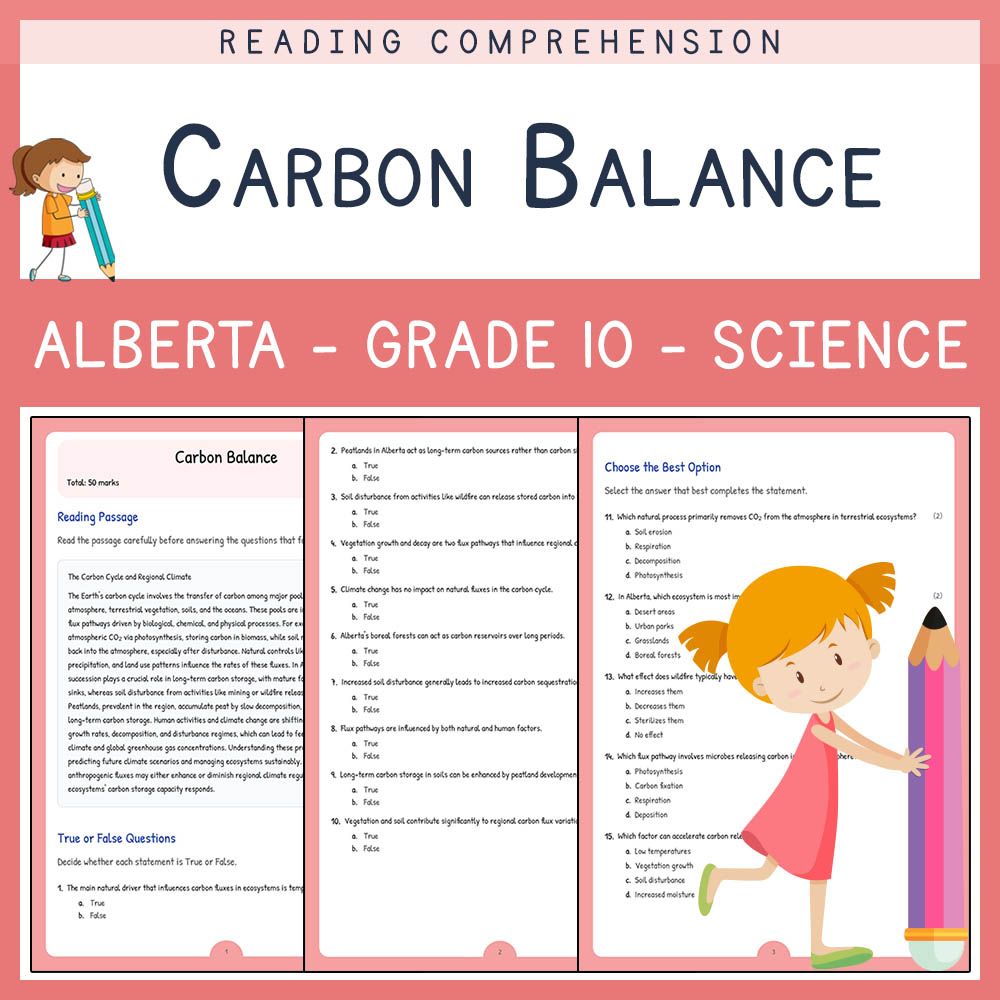
Grade 10 Science | Carbon Balance Worksheet | Alberta Standards
Created byLumora LearningLearning Objectives
- Understand the major pools and flux pathways of carbon in natural ecosystems.
- Identify regional drivers and impacts of changes in the carbon cycle.
- Analyze how shifts in carbon fluxes can affect climate feedbacks and long-term storage.
Also included in: Grade 10 Science | Earth and Space Systems Unit Bundle | Alberta
Instant download

Grade 10 Science | Data Visualization Worksheet | AP Aligned
Created byLumora LearningLearning Objectives
- Understand principles and conventions for graphical and tabular data representation.
- Identify appropriate visualization techniques for different data types and contexts.
- Interpret patterns, variability, outliers, and uncertainty in data visualizations.
Instant download
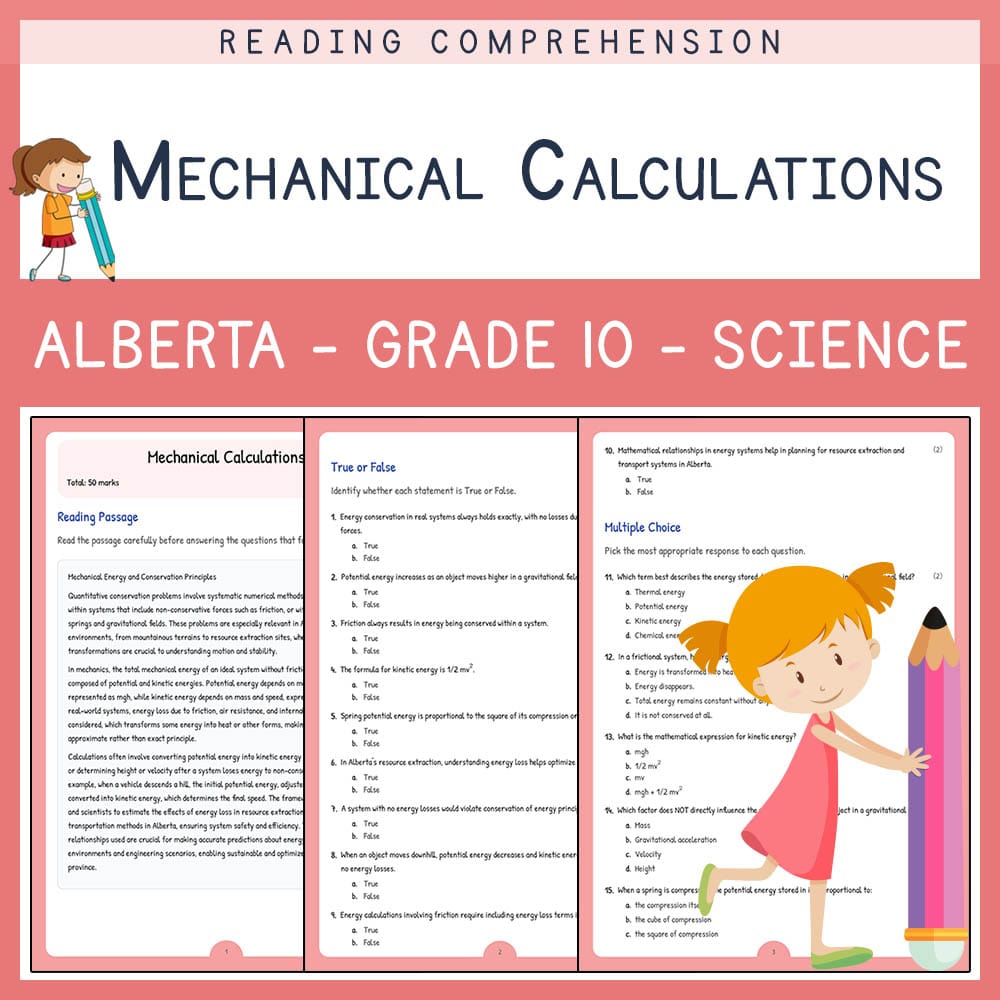
Grade 10 Science | Mechanical Calculations Worksheet | Alberta Standards
Created byLumora LearningLearning Objectives
- Understand the principles of energy conservation in mechanical systems.
- Apply quantitative methods to solve problems involving energy transfer and losses.
- Use mathematical relationships to connect energy, height, speed, and mass in real-world contexts.
Instant download
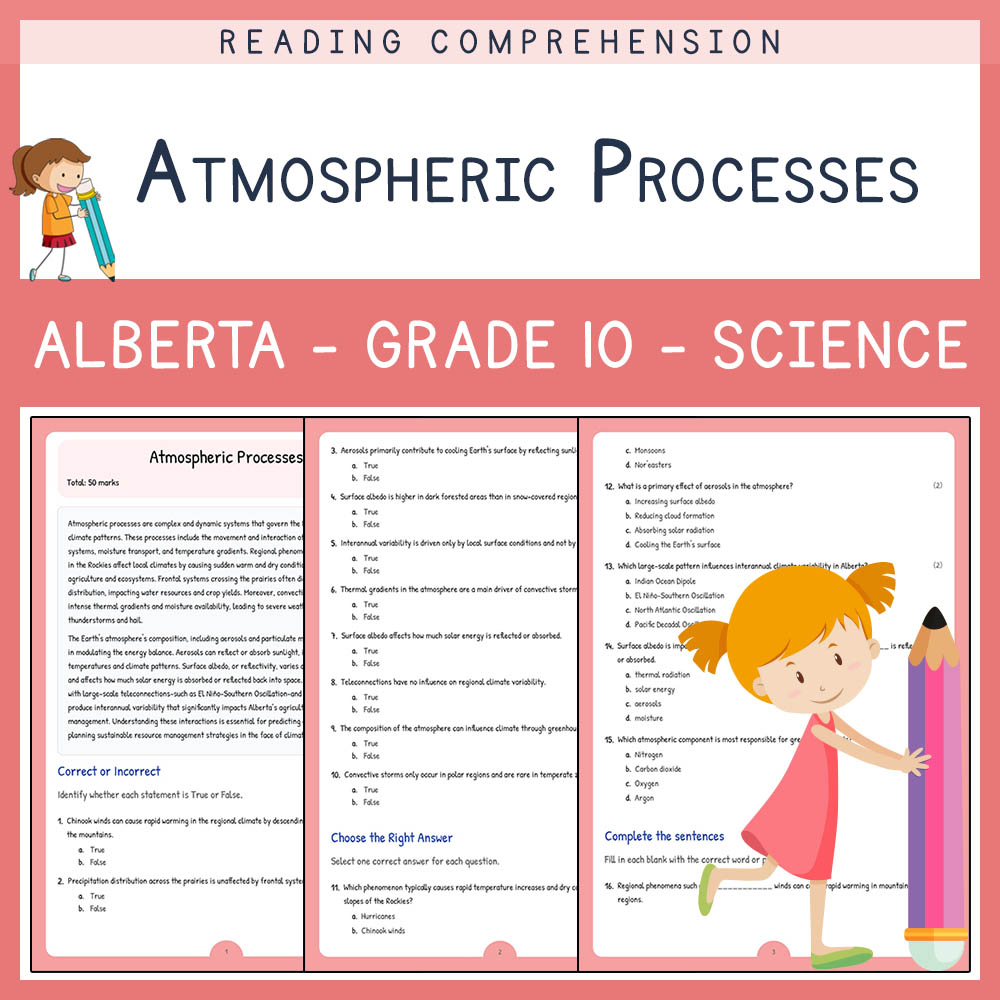
Grade 10 Science | Atmospheric Processes Worksheet | Alberta Standards
Created byLumora LearningLearning Objectives
- Understand how atmospheric pressure, moisture transport, and thermal gradients influence weather and climate.
- Identify regional phenomena like Chinook winds, frontal systems, and convective storms and their effects.
- Explain the role of atmospheric composition, aerosols, and surface albedo in energy balance modulation.
Also included in: Grade 10 Science | Earth and Space Systems Unit Bundle | Alberta
Instant download
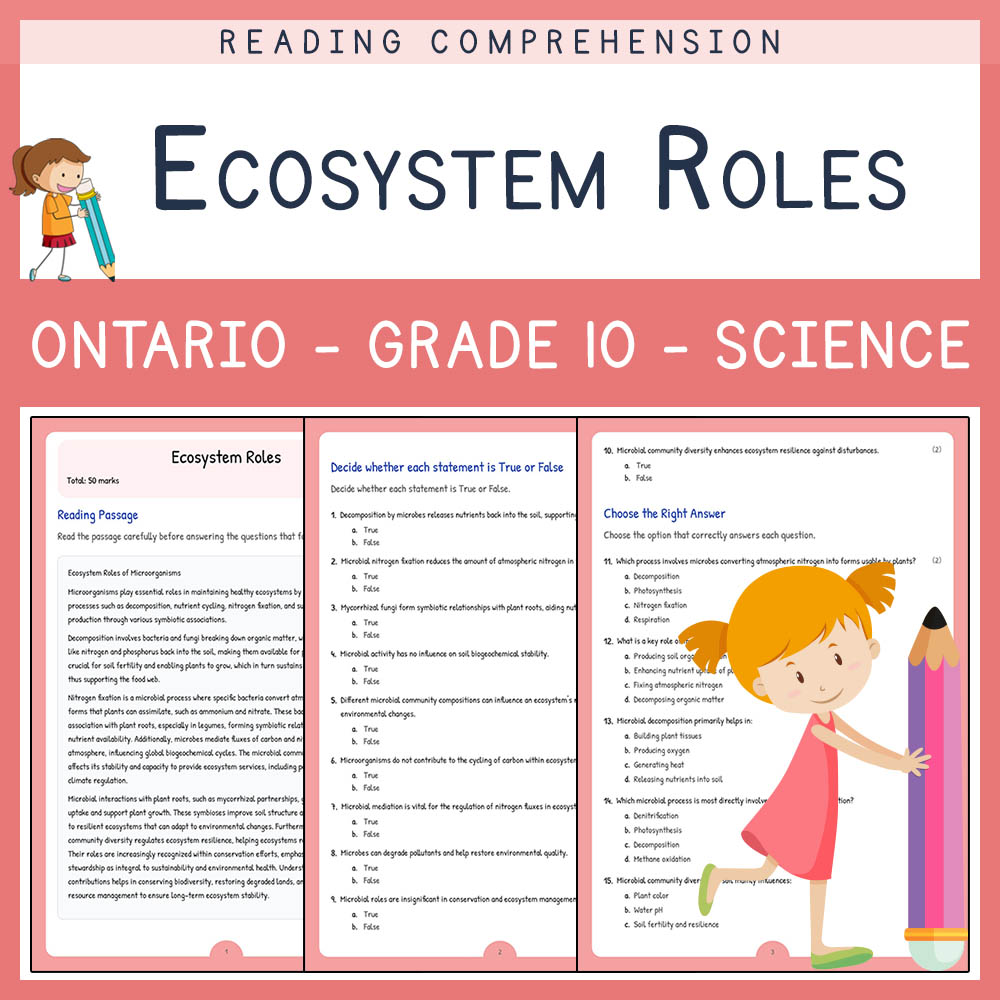
Grade 10 Science | Ecosystem Roles Worksheet Elena | Ontario Standards
Created byLumora LearningLearning Objectives
- Describe how microorganisms contribute to decomposition, nutrient cycling, nitrogen fixation, and primary production in ecosystems.
- Explain the microbial mediation of carbon and nitrogen fluxes and their influence on soil fertility and biogeochemical stability.
- Analyze the impact of microbial community composition on ecosystem services and resilience.
Instant download
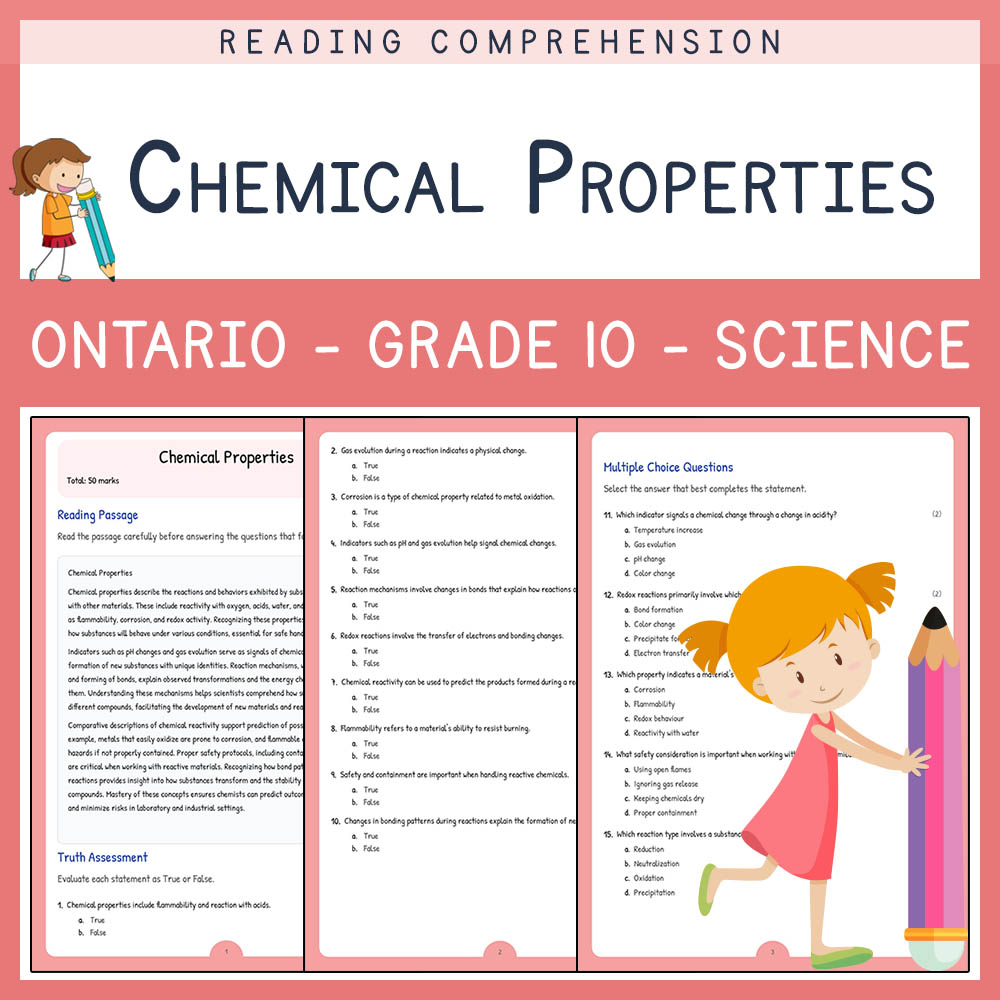
Grade 10 Science | Chemical Properties Worksheet Elena | Ontario Standard
Created byLumora LearningLearning Objectives
- Understand the characteristics that define chemical properties of substances.
- Identify indicators signaling chemical changes such as pH and gas evolution.
- Explain reaction mechanisms and how bonding patterns change during reactions.
Instant download

Grade 10 Science | Homeostasis Basics Worksheet | TEKS-Aligned
Created byLumora LearningLearning Objectives
- Define homeostasis and understand its importance in human physiology.
- Identify the key components involved in maintaining internal stability, including set points, sensors, and effectors.
- Explain how feedback mechanisms regulate temperature, fluid balance, and chemical composition.
Also included in: Grade 10 Science | Homeostasis & Body Systems Lesson Bundle | TEKS Aligned +1 more
Instant download
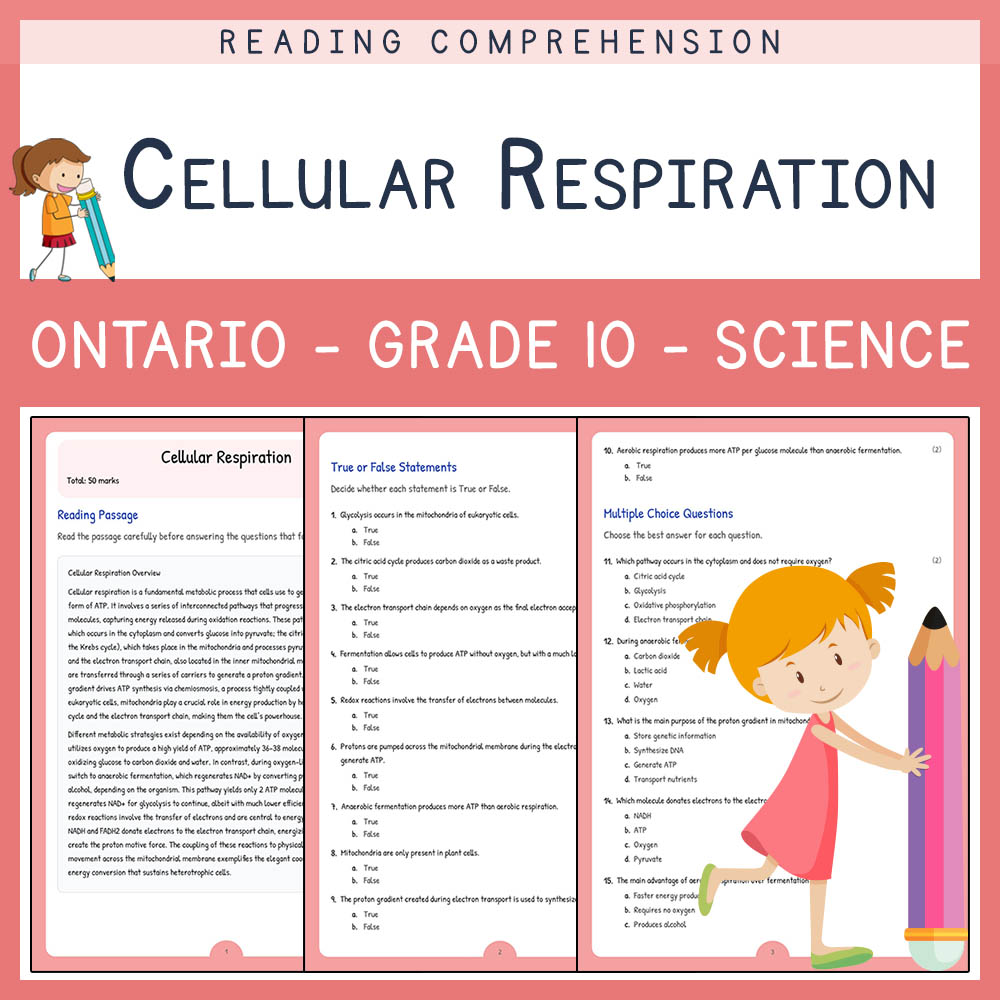
Grade 10 Science | Cellular Respiration Worksheet Elena | Ontario Standard
Created byLumora LearningLearning Objectives
- Explain the sequential pathways involved in cellular respiration, including glycolysis, the citric acid cycle, and the electron transport chain.
- Describe the role of mitochondria in energy transformation during cellular respiration.
- Differentiate between aerobic ATP production and anaerobic fermentation regarding oxygen dependence and efficiency.
Instant download
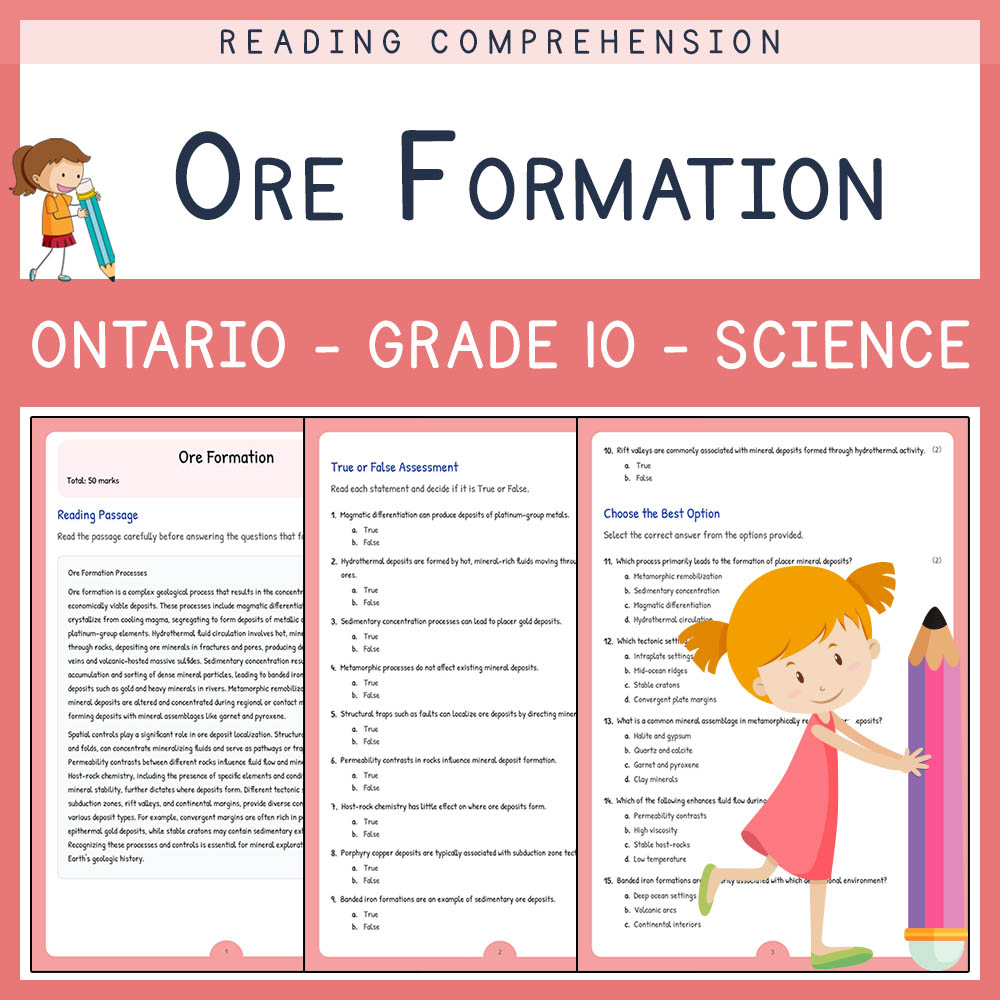
Grade 10 | Ore Formation Worksheet Elena | Science | Ontario Standards
Created byLumora LearningLearning Objectives
- Describe principal ore-forming processes including magmatic differentiation, hydrothermal circulation, sedimentary concentration, and metamorphic remobilization.
- Identify spatial controls such as structural traps, permeability contrasts, and host-rock chemistry that influence ore deposits.
- Recognize typical mineral assemblages and tectonic settings associated with different deposit types.
Instant download
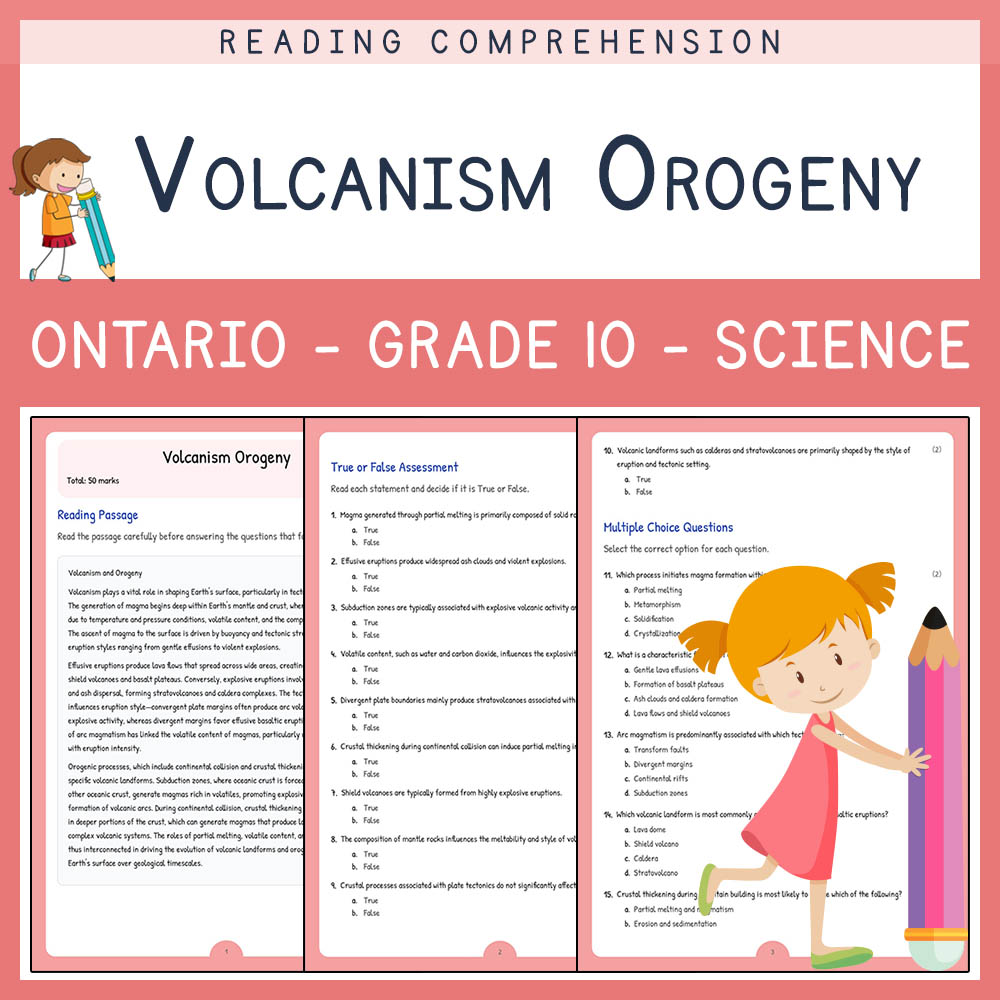
Grade 10 Science | Volcanism Orogeny Worksheet Elena | Ontario Standards
Created byLumora LearningLearning Objectives
- Describe the processes involved in magma generation, ascent, and eruption styles.
- Differentiate between effusive and explosive volcanism and their resulting landforms.
- Explain the roles of partial melting, volatile content, and tectonic setting in volcanic behavior.
Instant download
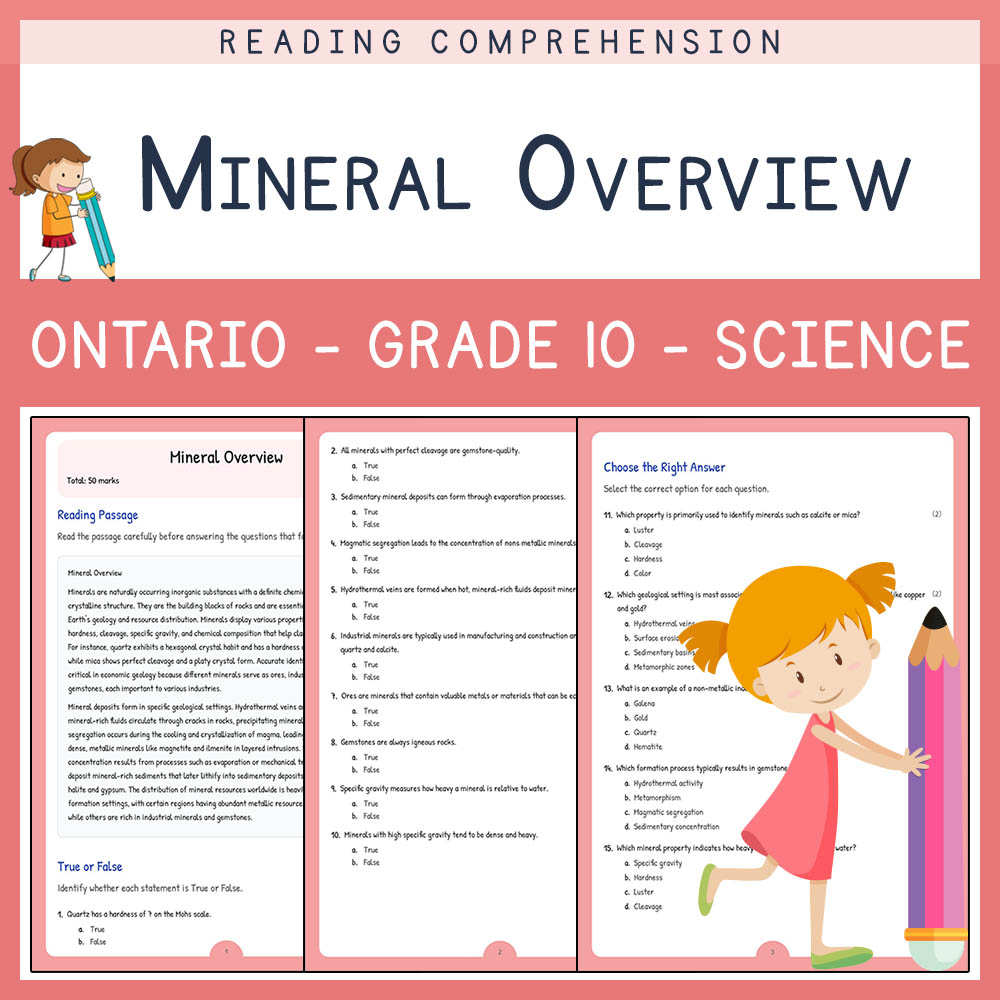
Grade 10 | Mineral Overview Worksheet Elena | Ontario Standard
Created byLumora LearningLearning Objectives
- Understand key properties used to classify minerals, including crystal habit, hardness, cleavage, and specific gravity.
- Differentiate between ores, industrial minerals, and gemstones based on their properties and formation conditions.
- Identify common geological settings where minerals and mineral deposits are formed, such as hydrothermal veins, magmatic segregation, and sedimentary concentration.
Instant download

Grade 10 Science | Surface Processes Worksheet | AP Aligned
Created byLumora LearningLearning Objectives
- Describe the key processes of weathering, erosion, sediment transport, and deposition that shape landscapes.
- Interpret surface process evidence such as sediment grain size, channel profiles, and delta growth.
- Relate surface processes to climate, lithology, and human activities influencing landscape evolution.
Instant download
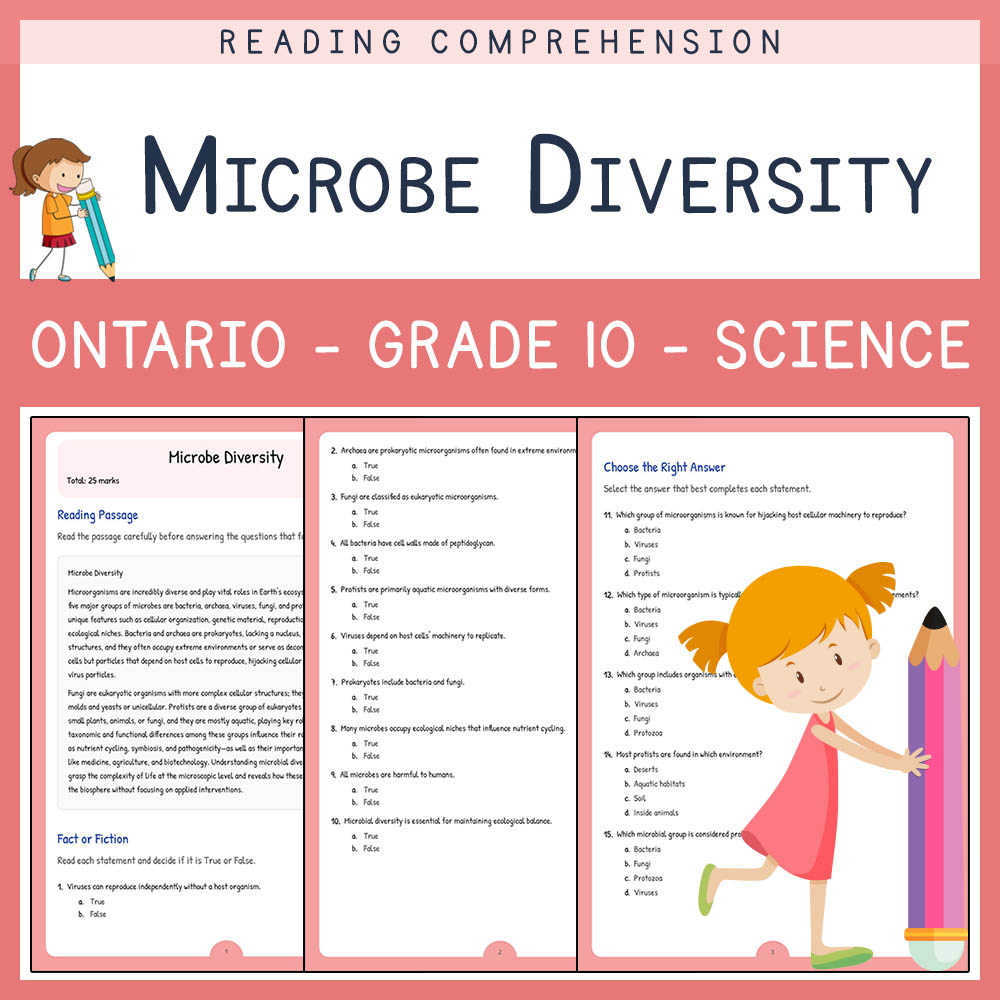
Grade 10 Science | Microbe Diversity Worksheet Elena | Ontario Standards
Created byLumora LearningLearning Objectives
- Describe the major groups of microorganisms and their cellular organization.
- Understand differences in genetic material and reproductive strategies among microbes.
- Identify ecological roles and niches of bacteria, archaea, viruses, fungi, and protists.
Instant download
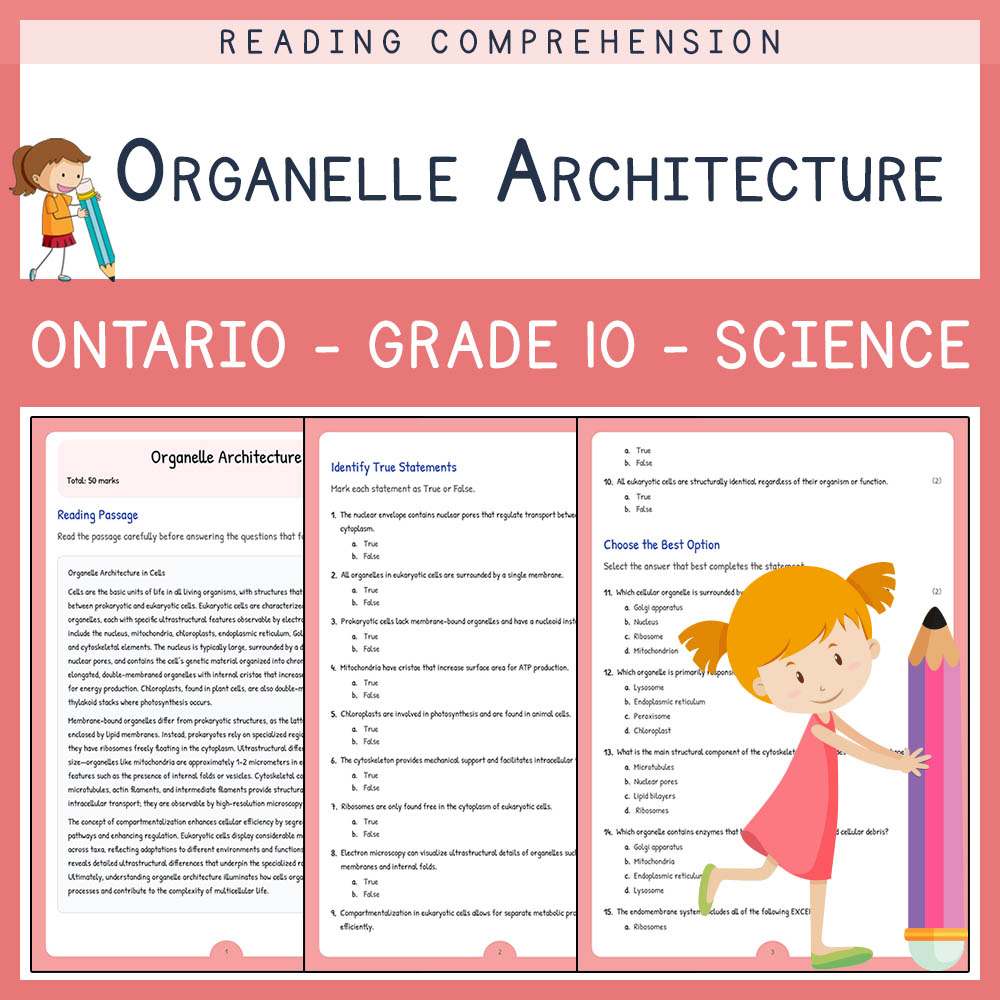
Grade 10 Science |Organelle Architecture Worksheet | Ontario Standards
Created byLumora LearningLearning Objectives
- Identify and describe the major cellular organelles and their structural features.
- Compare the ultrastructural characteristics of organelles in eukaryotic cells observable by electron microscopy.
- Differentiate between prokaryotic and eukaryotic cellular organization based on compartmentalization and morphology.
Instant download
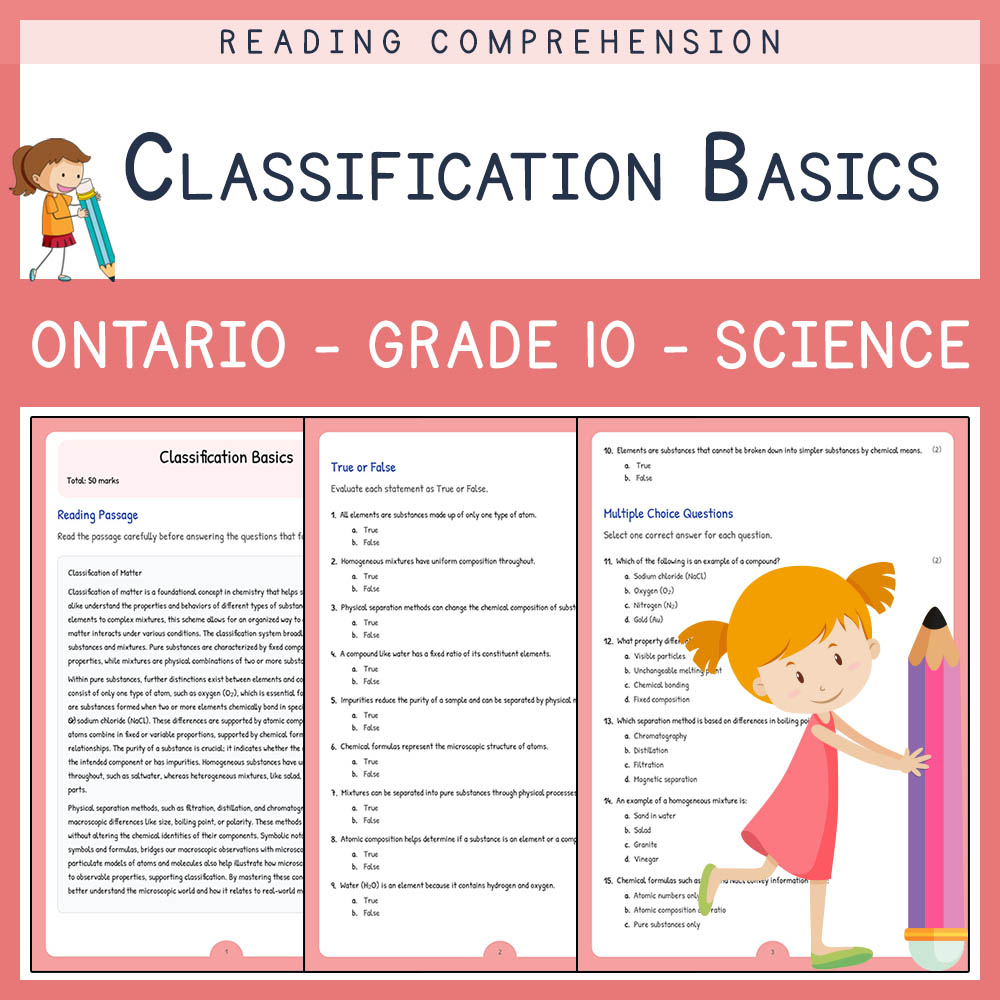
Grade 10 Science | Classification Basics Worksheet Elena | Ontario Standard
Created byLumora LearningLearning Objectives
- Understand the fundamental schemes used to classify matter into states, pure substances, and mixtures.
- Distinguish elements from compounds with representative examples such as oxygen, water, and sodium chloride.
- Explain how atomic composition, chemical formulas, and empirical relationships support classification.
Instant download
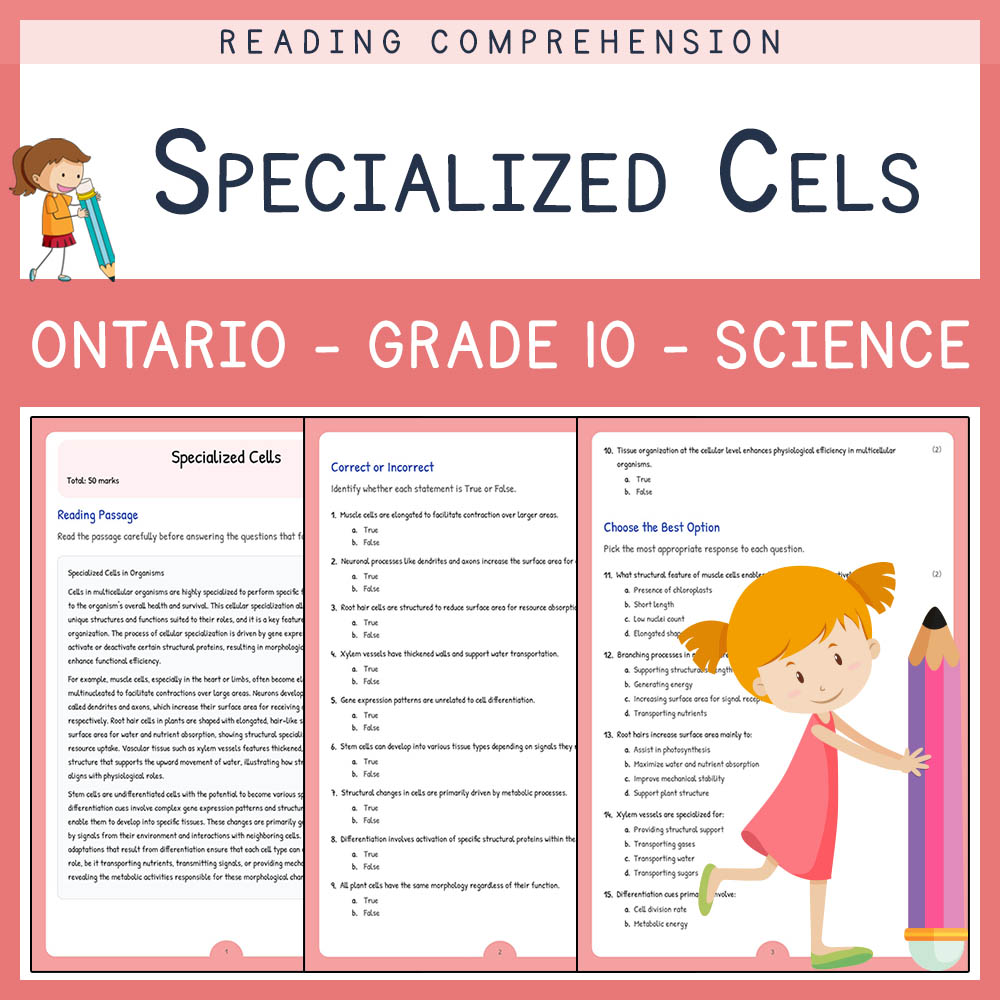
Grade 10 Science | Specialized Cells Worksheet Elena | Ontario Standard
Created byLumora LearningLearning Objectives
- Understand the concept of cellular specialization and how cells adapt structurally for specific functions.
- Identify examples of morphological adaptations in different cell types and tissues.
- Explain how gene expression and structural changes influence cell differentiation.
Instant download
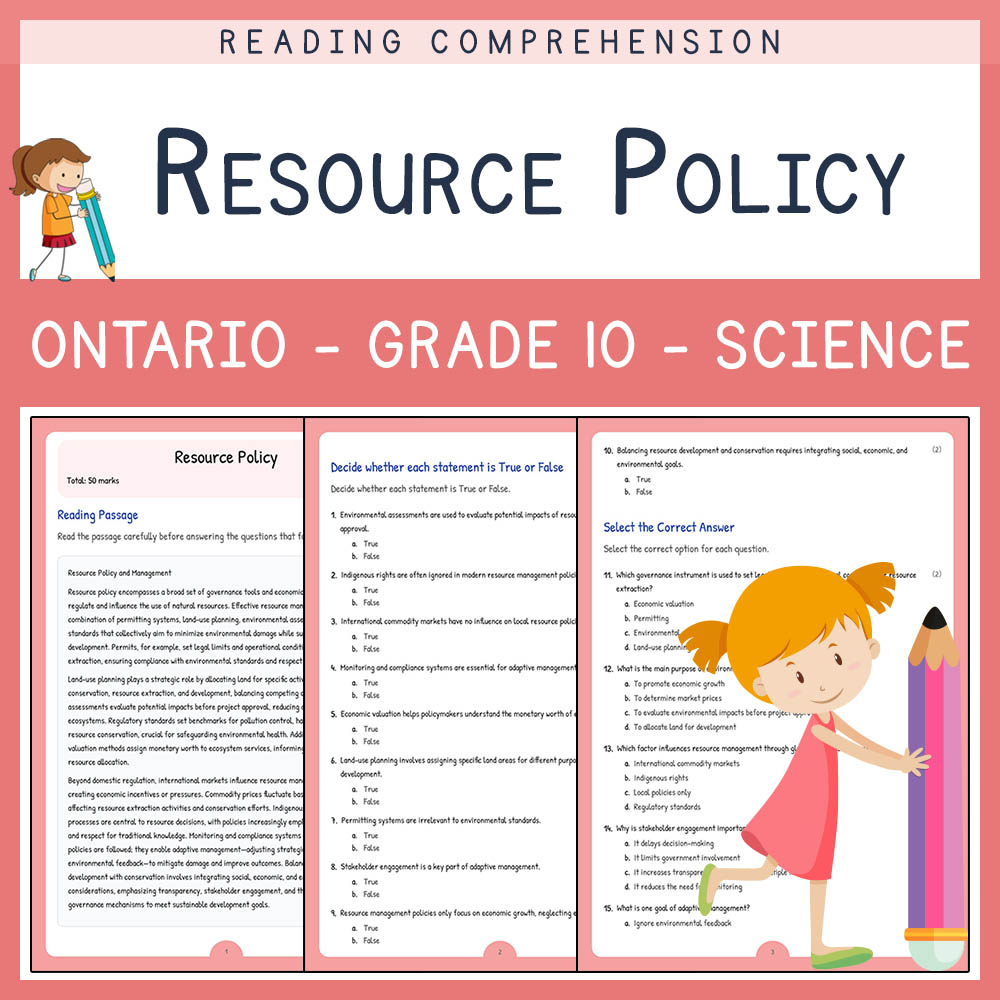
Grade 10 Science | Resource Policy Worksheet Elena | Ontario Standard
Created byLumora LearningLearning Objectives
- Understand governance instruments and economic mechanisms that influence resource use.
- Analyze the roles of permitting, land-use planning, and environmental assessment.
- Evaluate the importance of Indigenous rights, international markets, and monitoring in resource management.
Instant download

Grade 10 Science | Biotic and Abiotic Factors Worksheet Elena | TEKS Aligned
Created byLumora LearningLearning Objectives
- Understand the differences between biotic and abiotic factors in ecosystems.
- Recognize examples of biotic and abiotic components in environmental contexts.
- Explain how interactions between biotic and abiotic factors influence habitats and community structure.
Instant download
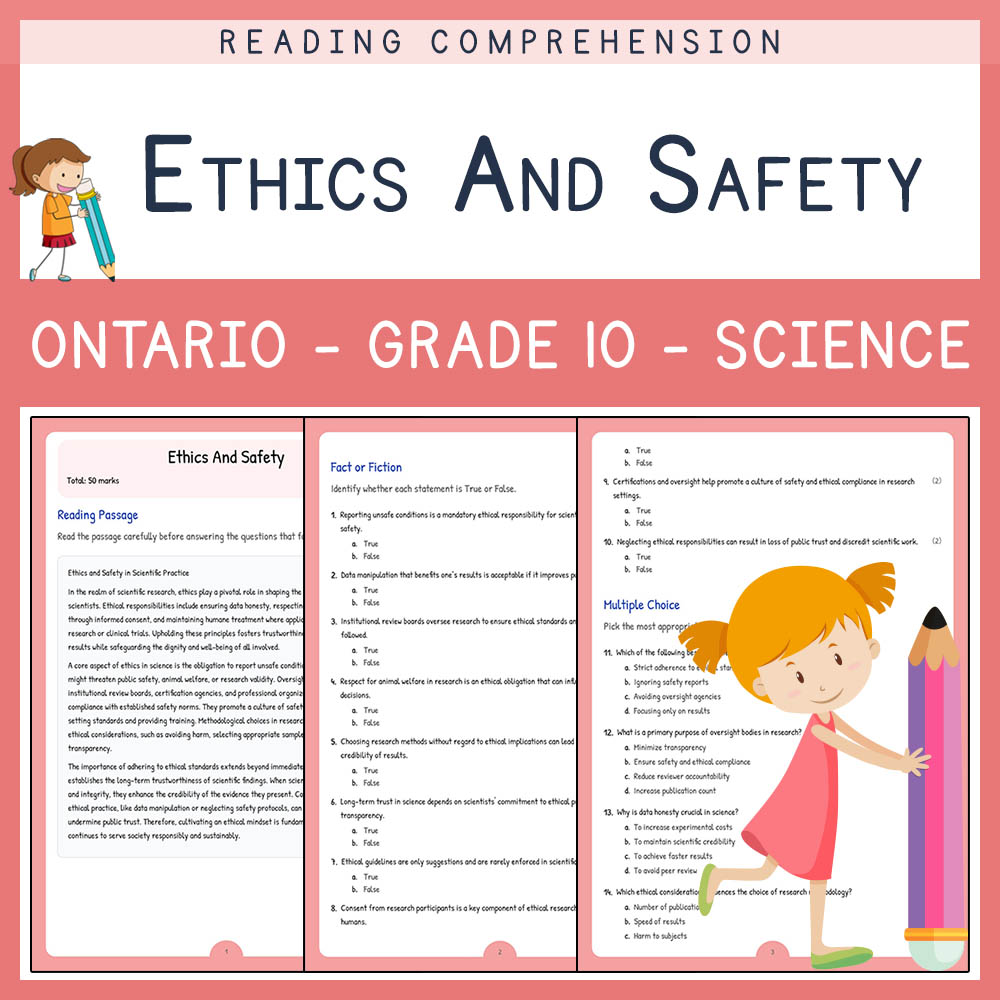
Grade 10 Science | Ethics and Safety Worksheet | Ontario Standards
Created byLumora LearningLearning Objectives
- Understand the ethical responsibilities related to safety and integrity in scientific work.
- Identify guidelines for data honesty, consent, and humane treatment in research.
- Recognize reporting obligations for unsafe conditions and oversight roles in maintaining safety culture.
Instant download
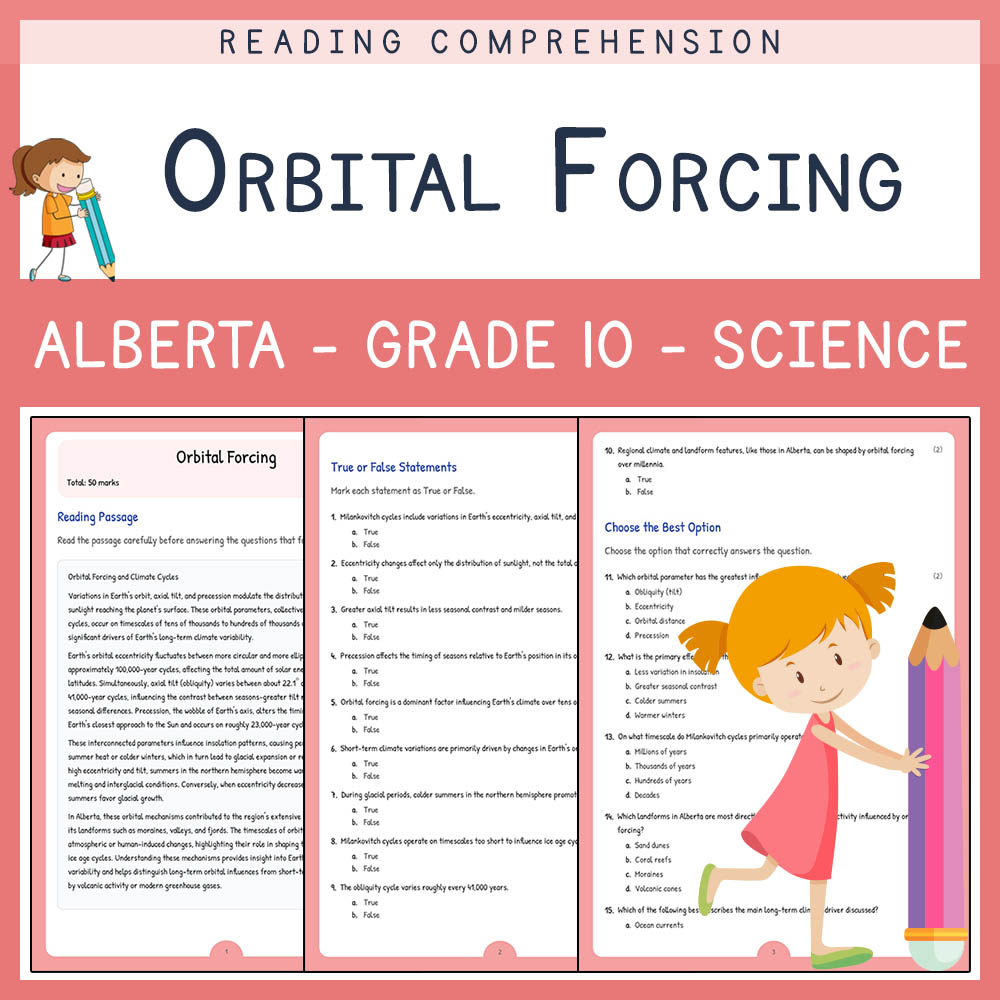
Grade 10 Science | Earth's Orbital Forcing Worksheet | Alberta Standards
Created byLumora LearningLearning Objectives
- Understand how variations in Earth's orbit influence climate cycles over long timescales.
- Explain the mechanisms by which orbital parameters affect insolation distribution and seasonal contrast.
- Distinguish between orbital drivers and shorter-term atmospheric or anthropogenic climate influences.
Also included in: Grade 10 Science | Earth and Space Systems Unit Bundle | Alberta
Instant download
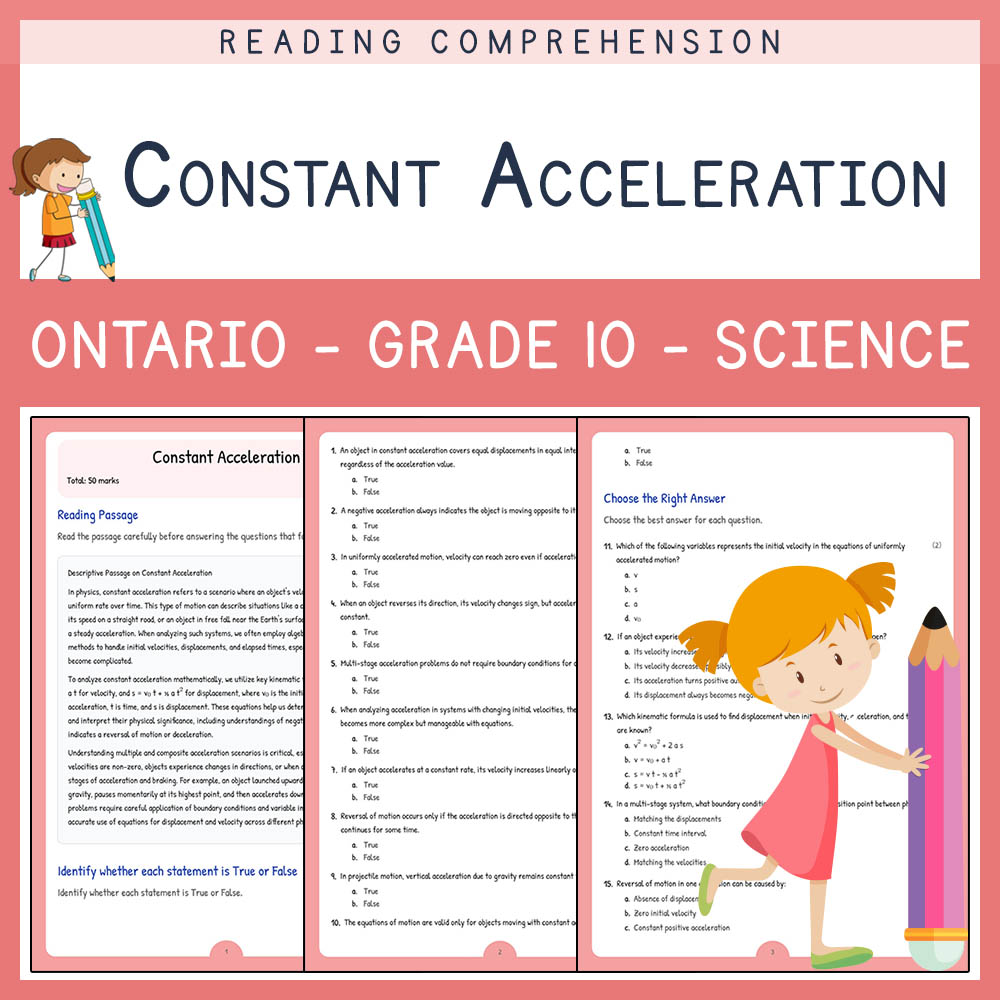
Grade 10 Science | Constant Acceleration Worksheet Elena | Ontario Standard
Created byLumora LearningLearning Objectives
- Understand the principles of uniform acceleration and their mathematical descriptions.
- Apply kinematic formulas to analyze systems with varying initial velocities, displacements, and times.
- Interpret negative acceleration and motion reversal situations in one-dimensional motion.
Also included in: Grade 10 Science | Motion & Forces Lesson Bundle | Ontario Standards
Instant download
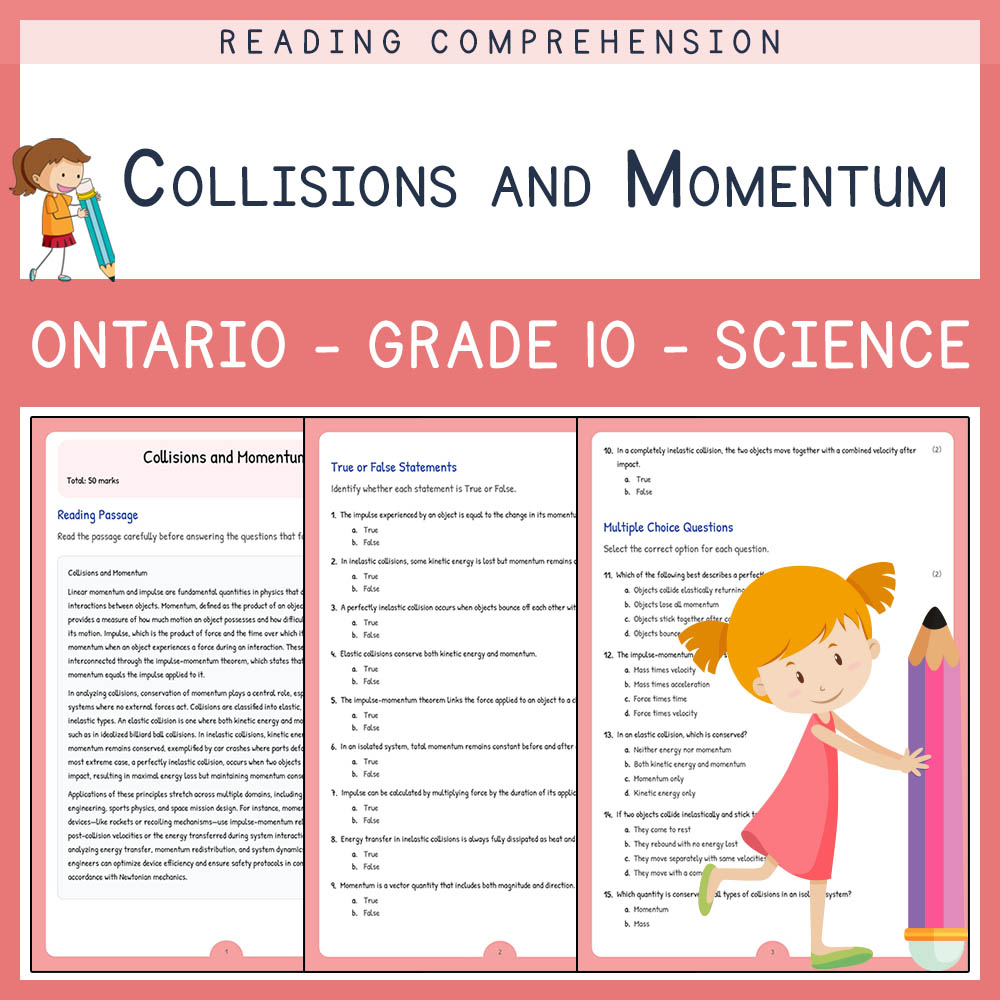
Grade 10 Science | Collisions and Momentum Worksheet | Ontario Standard
Created byLumora LearningLearning Objectives
- Understand the principles of linear momentum, impulse, and their relationship to changes in motion.
- Explain the conservation of momentum in elastic, inelastic, and perfectly inelastic collisions.
- Differentiate between different types of collisions based on energy and momentum transfer.
Also included in: Grade 10 Science | Motion & Forces Lesson Bundle | Ontario Standards
Instant download
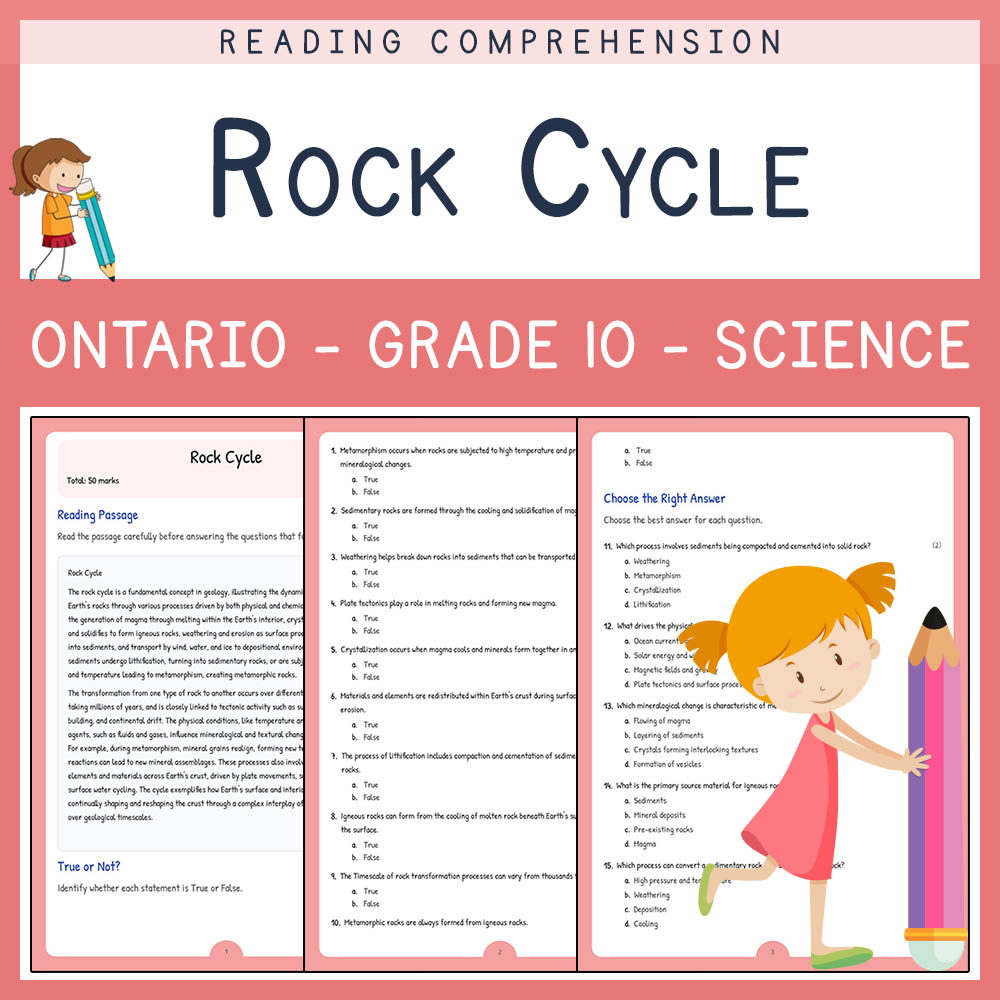
Grade 10 | Rock Cycle Worksheet Elena | Ontario Standards
Created byLumora LearningLearning Objectives
- Describe the processes involved in the rock cycle, including melting, crystallization, weathering, transport, deposition, lithification, and metamorphism.
- Explain the physical and chemical drivers that cause rocks to transform from one type to another.
- Discuss the linkages between the rock cycle, plate tectonics, and surface processes.
Instant download
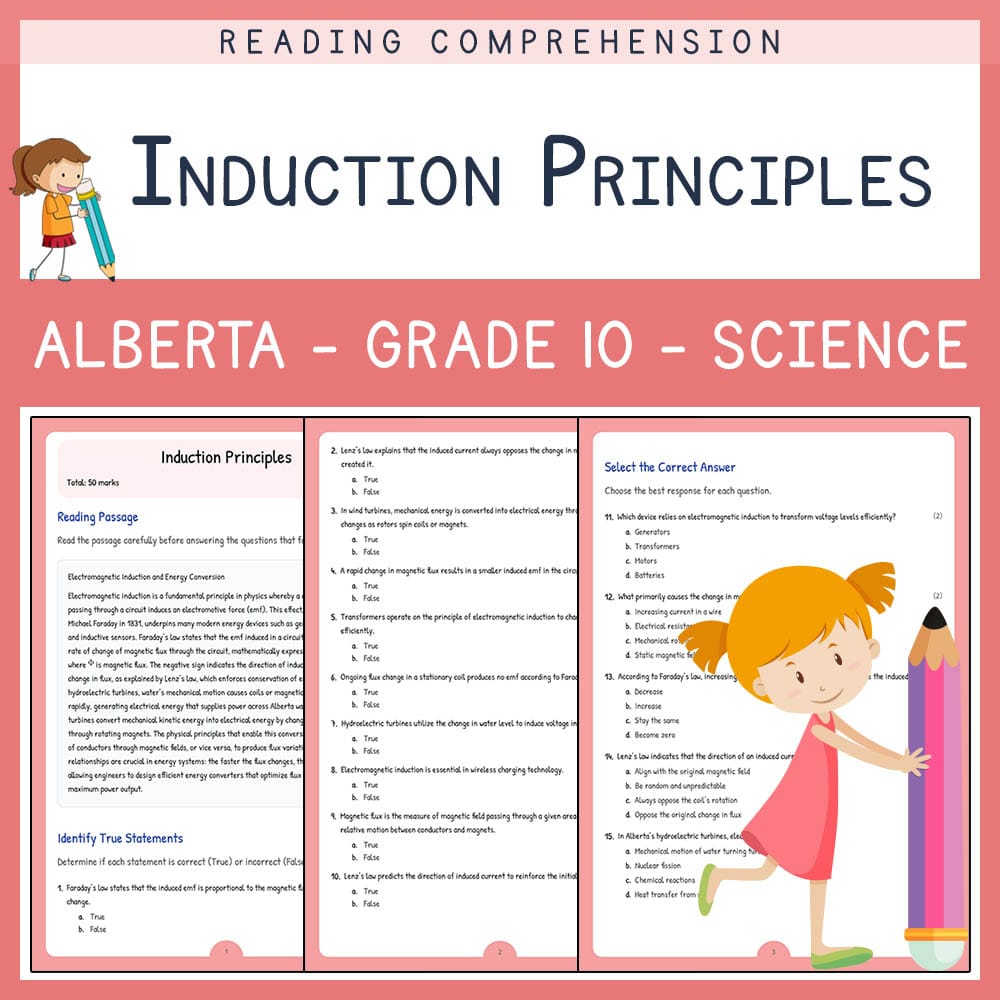
Grade 10 Science | Induction Principles Worksheet | Alberta Standards
Created byLumora LearningLearning Objectives
- Understand the fundamental concepts of electromagnetic induction, including Faraday’s law and Lenz's law.
- Explain how changing magnetic flux induces voltage in conductors.
- Identify real-world energy devices that utilize electromagnetic induction, such as turbines and transformers.
Instant download
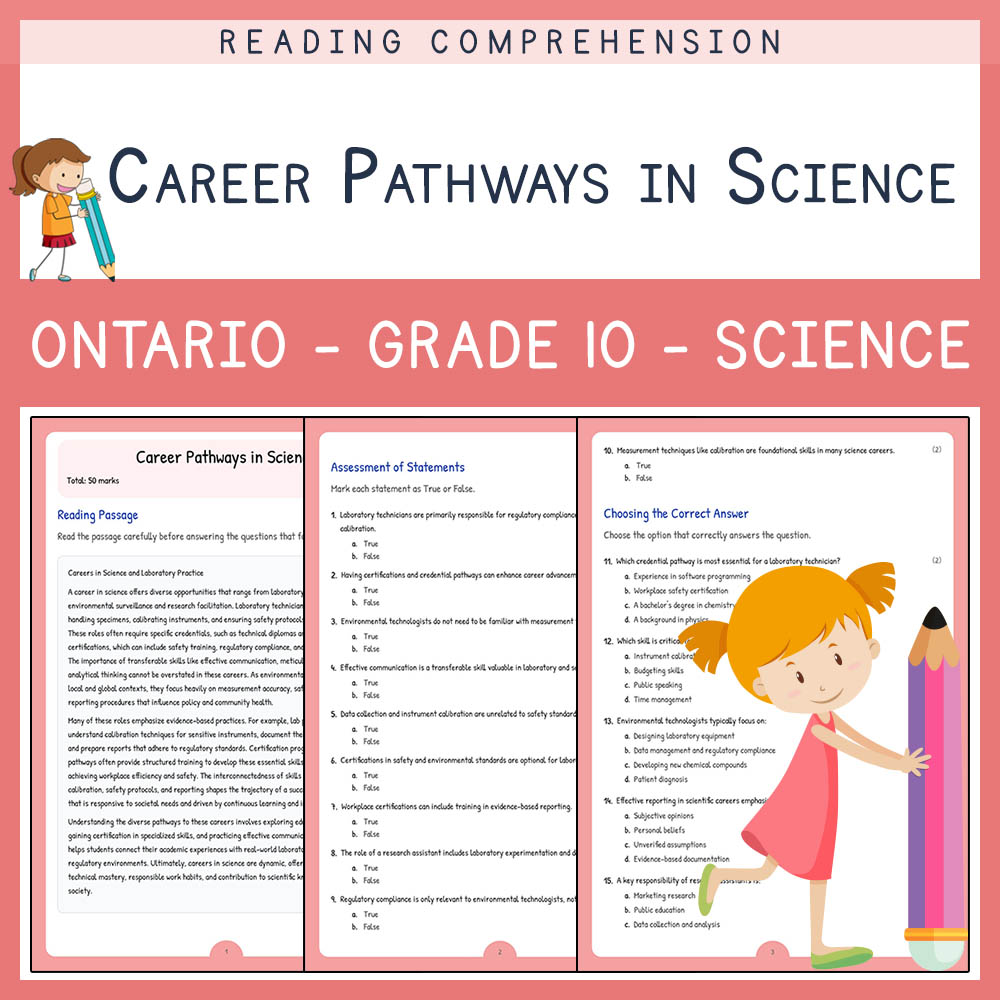
Grade 10 Science | Career Pathways in Science Worksheet Elena | Ontario
Created byLumora LearningLearning Objectives
- Identify various career roles linked to scientific inquiry and laboratory practices.
- Understand credential pathways, workplace certifications, and transferable skills for science-related careers.
- Recognize responsibilities such as data collection, instrument calibration, and regulatory compliance in laboratory settings.
Instant download

Grade 10 Science | Gravity and Orbits Worksheet | NGSSS Aligned
Created byLumora LearningLearning Objectives
- Explain how gravity influences the motion of celestial bodies
- Describe how orbital paths and speeds relate to distance from the central body, including elliptical orbits
- Connect gravitational interactions to observable effects on Earth, such as tides
Instant download
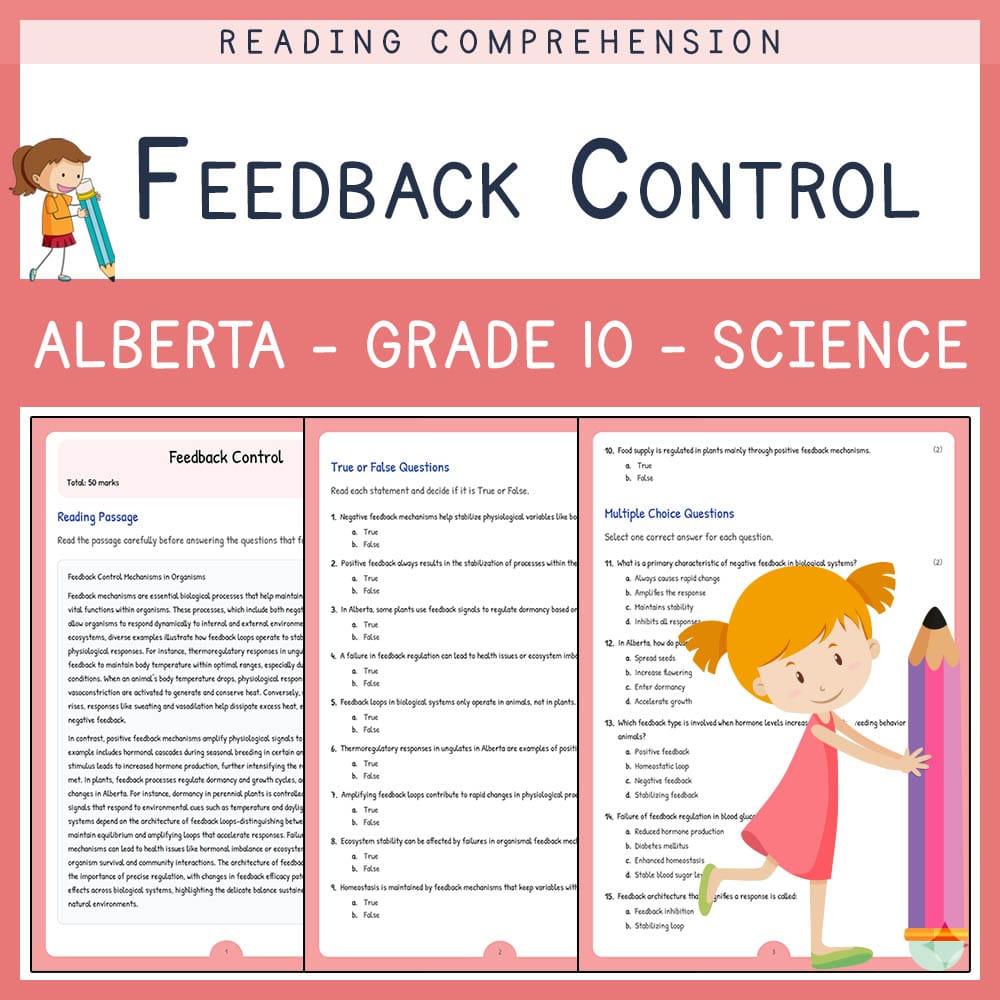
Grade 10 Science | Feedback Control Worksheet | Alberta Standards
Created byLumora LearningLearning Objectives
- Understand the concepts of negative and positive feedback mechanisms in physiological regulation.
- Identify examples of feedback processes in animals and plants, particularly in Alberta environments.
- Analyze the architecture of feedback loops and their influence on stability and amplification.
Also included in: Grade 10 Science | Cells and Systems Custom Bundle Worksheets | Alberta
Instant download

Grade 10 Science | Rock Cycle Processes Worksheet | NGSSS Aligned
Created byLumora LearningLearning Objectives
- Explain how weathering and erosion break down rocks and transport sediments in the rock cycle
- Describe how sedimentary and igneous rocks form through lithification and magma cooling
- Compare metamorphism and melting by using heat, pressure, and mineral structure evidence
Instant download

Grade 10 Science | Earth System Cycles Worksheet | NGSSS Aligned
Created byLumora LearningLearning Objectives
- Explain how the geosphere, hydrosphere, atmosphere, and biosphere interact to cycle matter and transform energy
- Describe how solar energy drives atmospheric circulation and the water cycle
- Explain how internal heat influences plate movement and volcanism
Instant download

Grade 10 Science | Predator Prey Dynamics Worksheet Elena | California Standards
Created byLumora LearningLearning Objectives
- Explain how predator-prey interactions influence population sizes in an ecosystem
- Describe feedback mechanisms that affect growth rates, stability, and carrying capacity
- Analyze how predator and prey changes can reshape community structure and resource use
Instant download
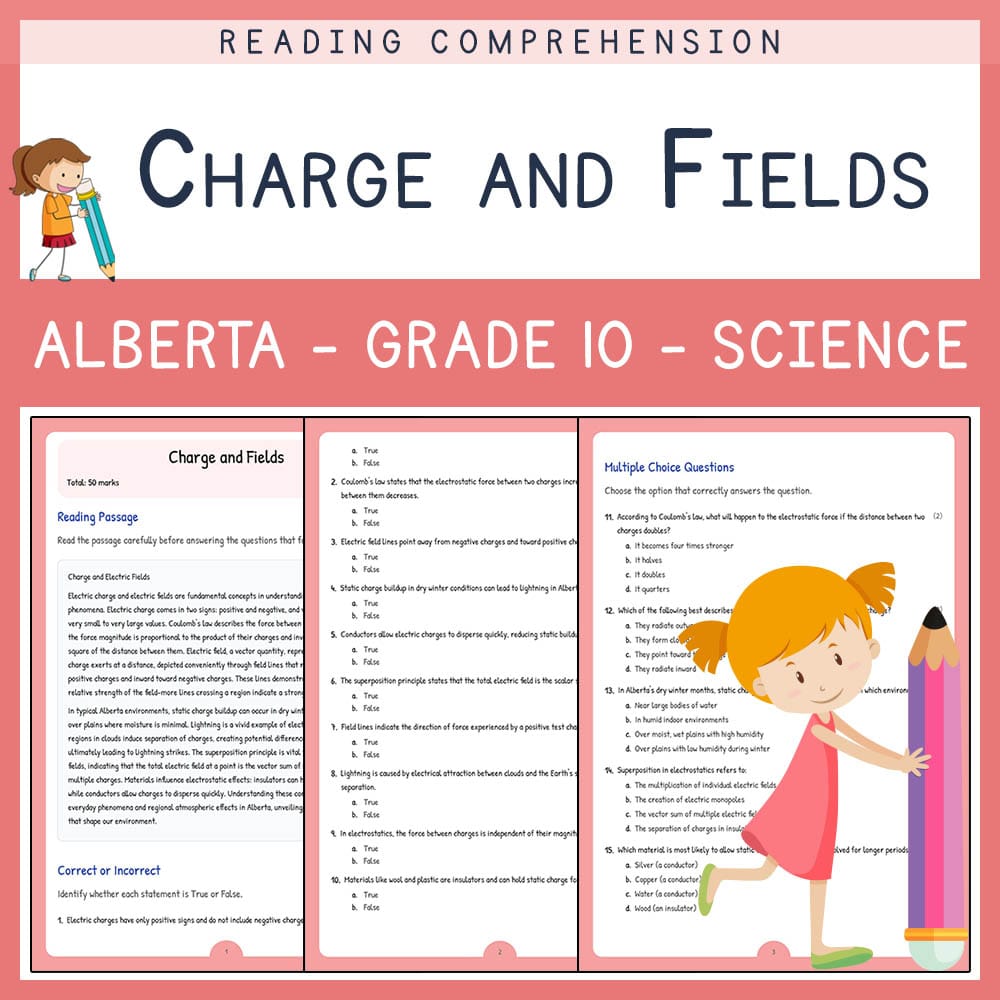
Grade 10 Science | Charge and Fields Worksheet | Alberta Standards
Created byLumora LearningLearning Objectives
- Understand the concept of electric charge, including sign and magnitude.
- Describe the electric field and how field lines represent forces at a distance.
- Explain Coulomb's law and perform force calculations between charges.
Instant download

Grade 10 Science | Positive Feedback Worksheet | TEKS-Aligned
Created byLumora LearningLearning Objectives
- Understand the concept of positive feedback in human physiology.
- Identify examples of positive feedback mechanisms like childbirth and clotting.
- Explain how positive feedback amplifies physiological responses.
Also included in: Grade 10 Science | Homeostasis & Body Systems Lesson Bundle | TEKS Aligned +1 more
Instant download

Grade 10 Science | Energy Flow Worksheet | TEKS Aligned
Created byLumora LearningLearning Objectives
- Understand the process by which energy enters ecosystems primarily through sunlight.
- Explain how energy moves through trophic levels and the concept of energy loss.
- Describe the roles of food chains and food webs in illustrating energy pathways.
Instant download
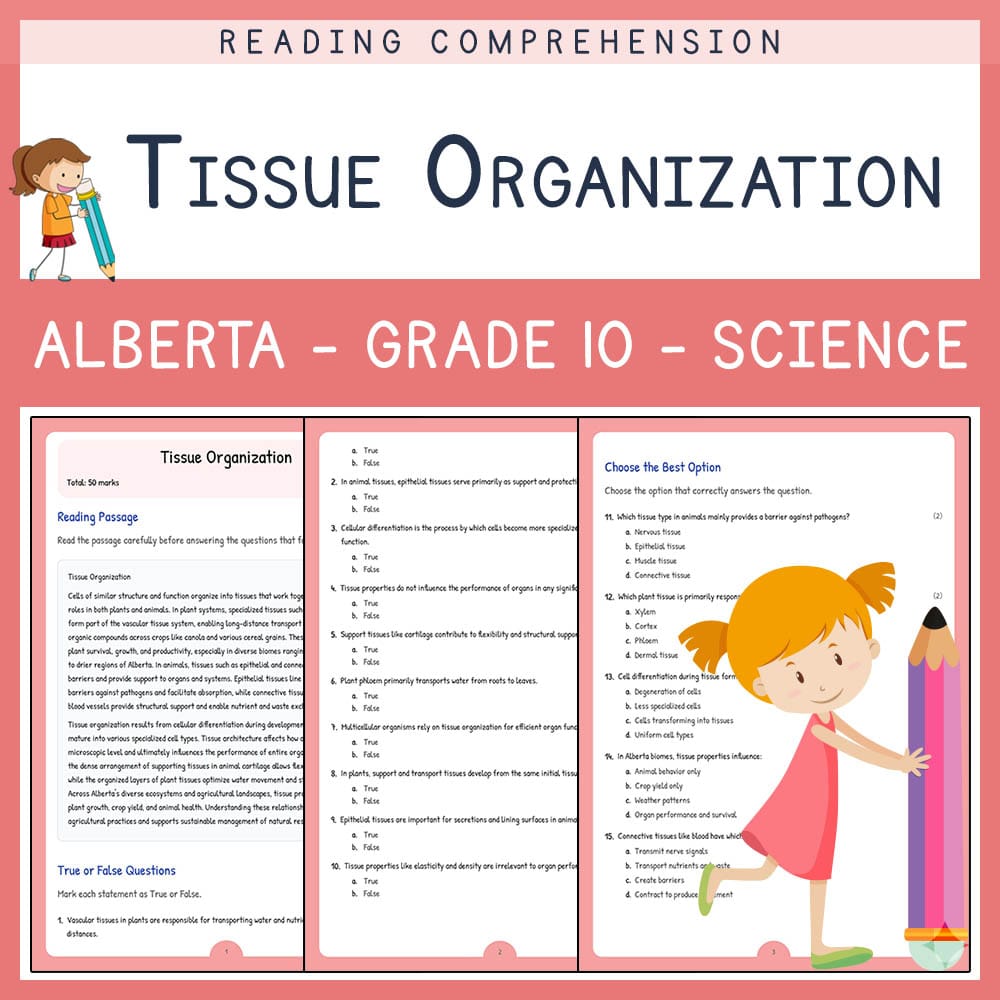
Grade 10 Science Worksheet | Tissue Organization | Alberta Standards
Created byLumora LearningLearning Objectives
- Understand the different types of tissues and their functions in plant and animal systems.
- Explain how tissue properties influence organ performance across various biomes and agricultural settings.
- Identify cellular differentiation and tissue architecture in plant and animal organisms.
Also included in: Grade 10 Science | Cells and Systems Custom Bundle Worksheets | Alberta
Instant download
Browse more categories
About Grade 10 Worksheets
Find Grade 10 worksheets covering algebra, biology, literature, and history. All 9,385 resources download instantly as PDFs for classwork, homework, or review.
MyTeachingSheets worksheets are made by real teacher-authors and checked before they go live. Download any as a print-ready PDF for lessons, homework, or independent practice — most include answer keys, and previews are always free.