
Grade 7 Worksheets
8,459 grade resources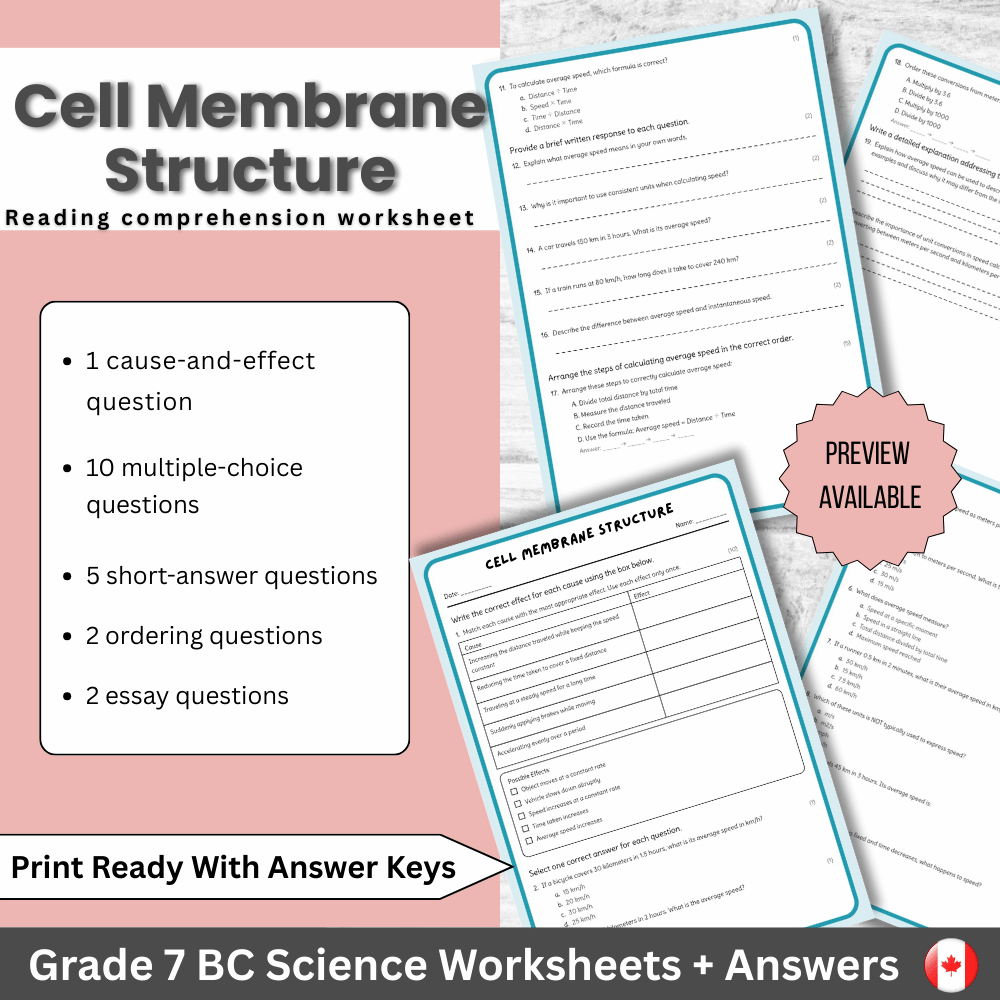
Grade 7 Science | Cell Membrane Structure Worksheet (Answer Key) – BC Standards
 Created byBright Mind Resources
Learning Objectives
- Understand the organization and components of the cell membrane as a fluid mosaic.
- Identify the functions of phospholipids, proteins, cholesterol, and carbohydrates in the membrane.
- Explain how the structure of the membrane maintains selective permeability and cellular communication.
Instant download
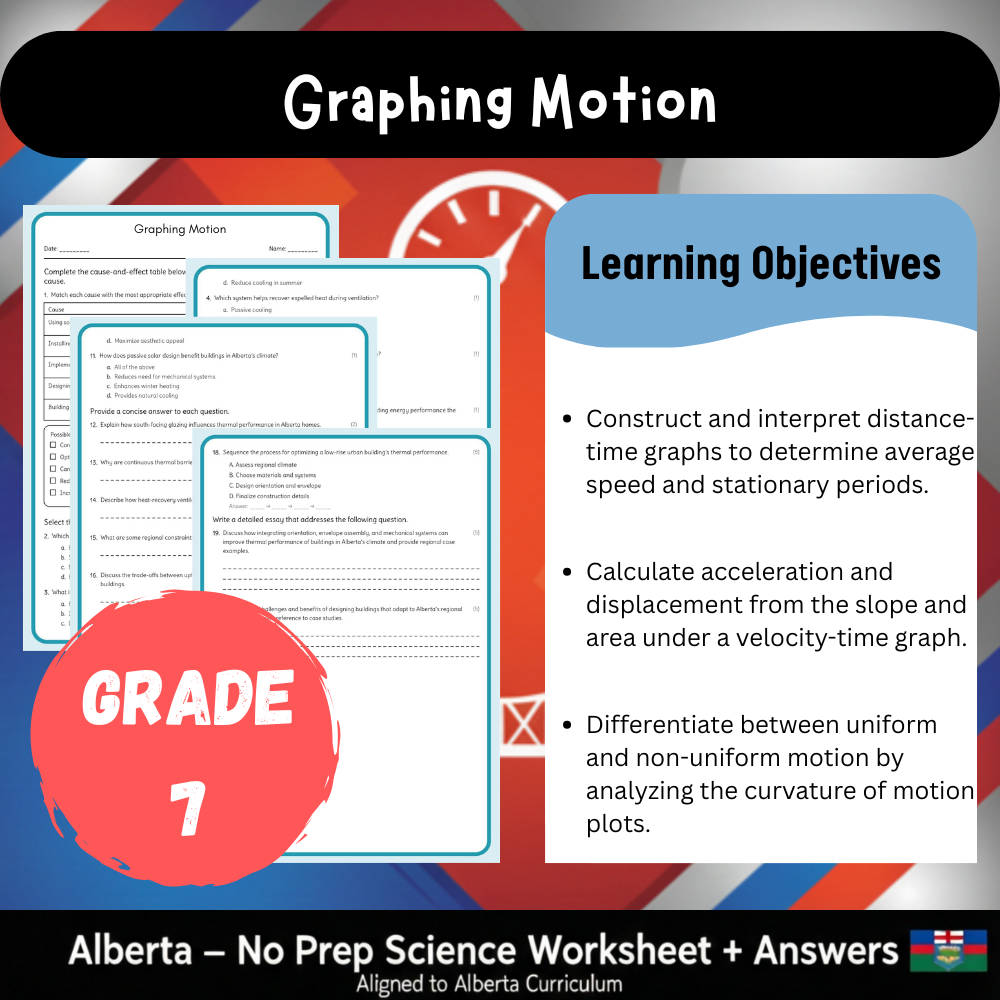
Grade 7 Science | Graphing Motion Worksheet (PDF) – Alberta Standards
Created byBright Mind ResourcesLearning Objectives
- Understand how to interpret and create distance–time and speed–time graphs.
- Identify the meaning of slope and area under curves in motion graphs.
- Learn methods for calculating average and instantaneous rates of motion from graphs.
Instant download
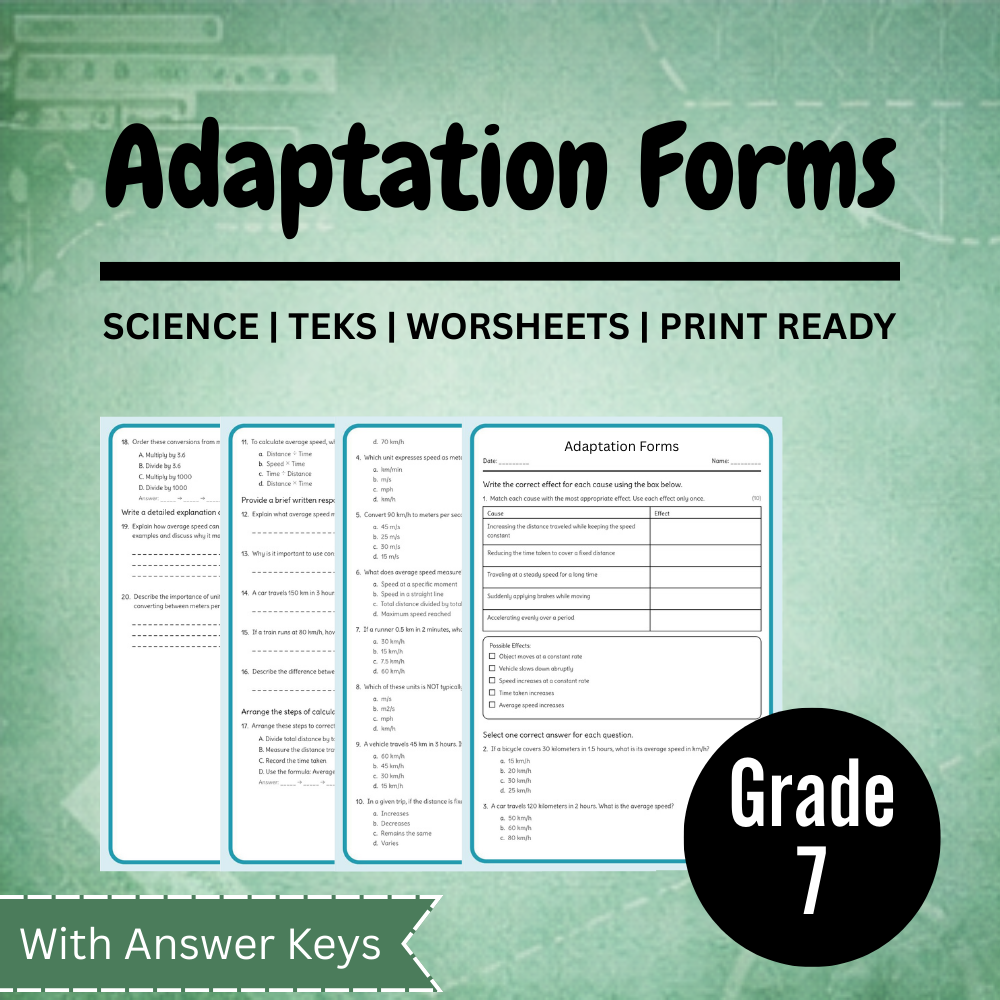
Grade 7 Science – Adaptation Forms Worksheet + Answer Key | TEKS-Aligned
Created byBright Mind ResourcesLearning Objectives
- Define morphological, physiological, and behavioral adaptations with grade-appropriate examples.
- Explain how specific traits improve survival and reproduction in particular environments.
- Distinguish adaptations from acclimatation.
Also included in: Grade 7 Science Unit Bundle – Ecosystems, Adaptation & Environmental Impact +2 more
Instant download
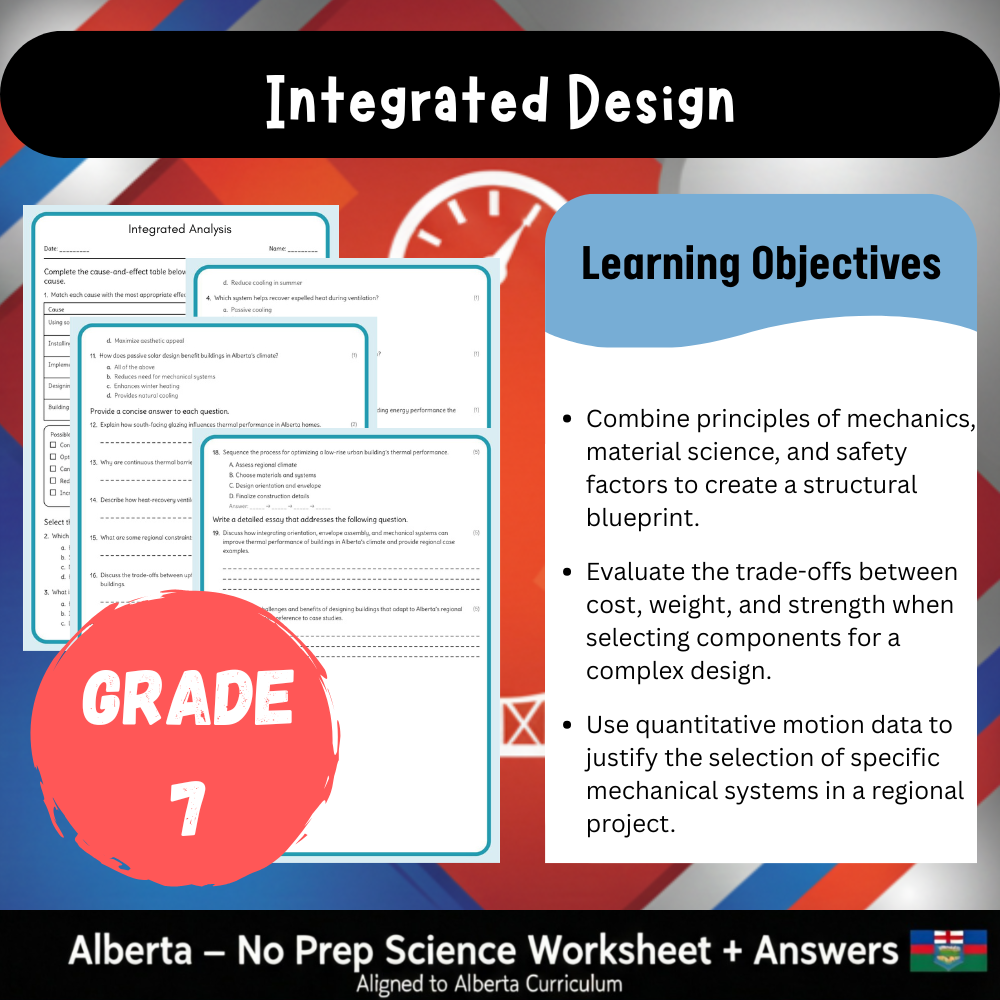
Grade 7 Science – Integrated Design Practice Worksheet (PDF)
Created byBright Mind ResourcesLearning Objectives
- Analyze regional design criteria considering force, wind, snow, and load scenarios.
- Compare alternative mechanical systems based on performance and safety criteria.
- Utilize quantitative motion data and structural assessment to justify design choices.
Instant download
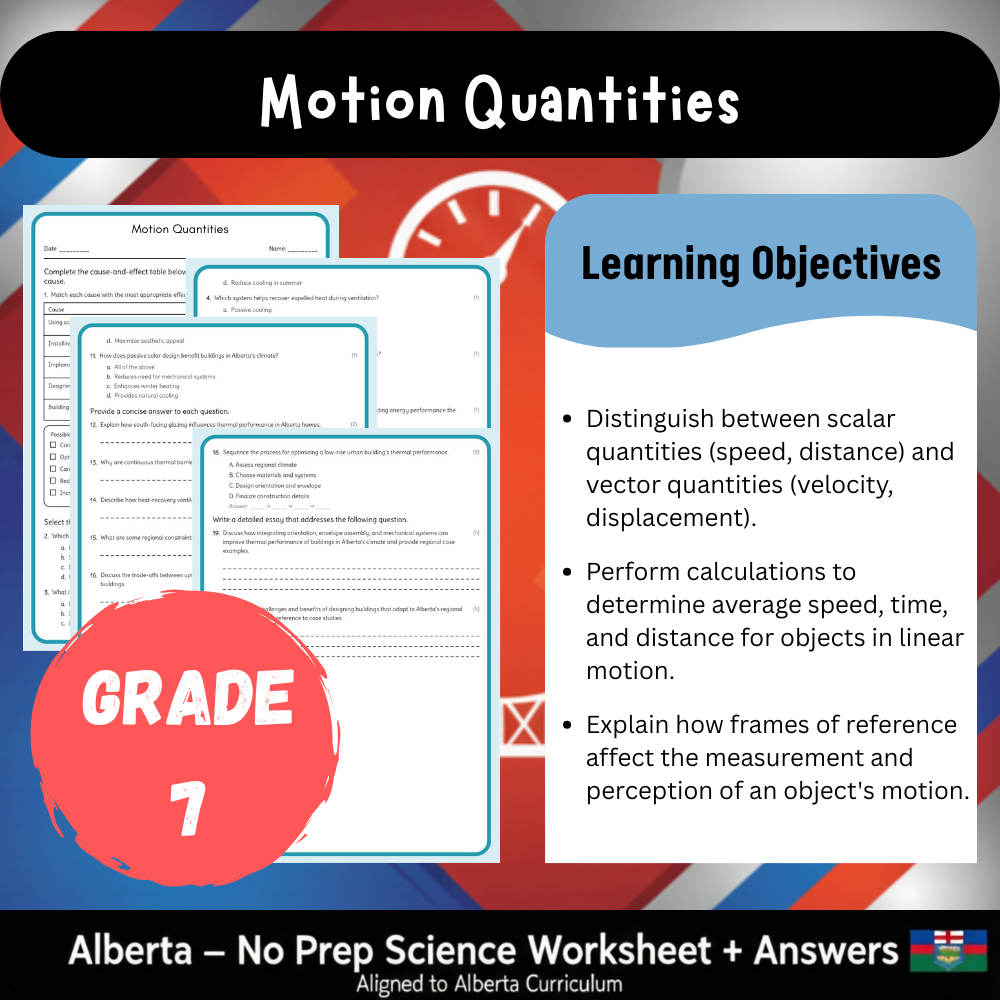
Grade 7 Science – Motion Quantities Worksheet (PDF) – Alberta Standards
Created byBright Mind ResourcesLearning Objectives
- Understand the basic quantities used to describe motion, including distance, time, and speed.
- Learn how to accurately measure and represent motion data.
- Calculate average speed from tabulated data and understand common measurement errors.
Instant download
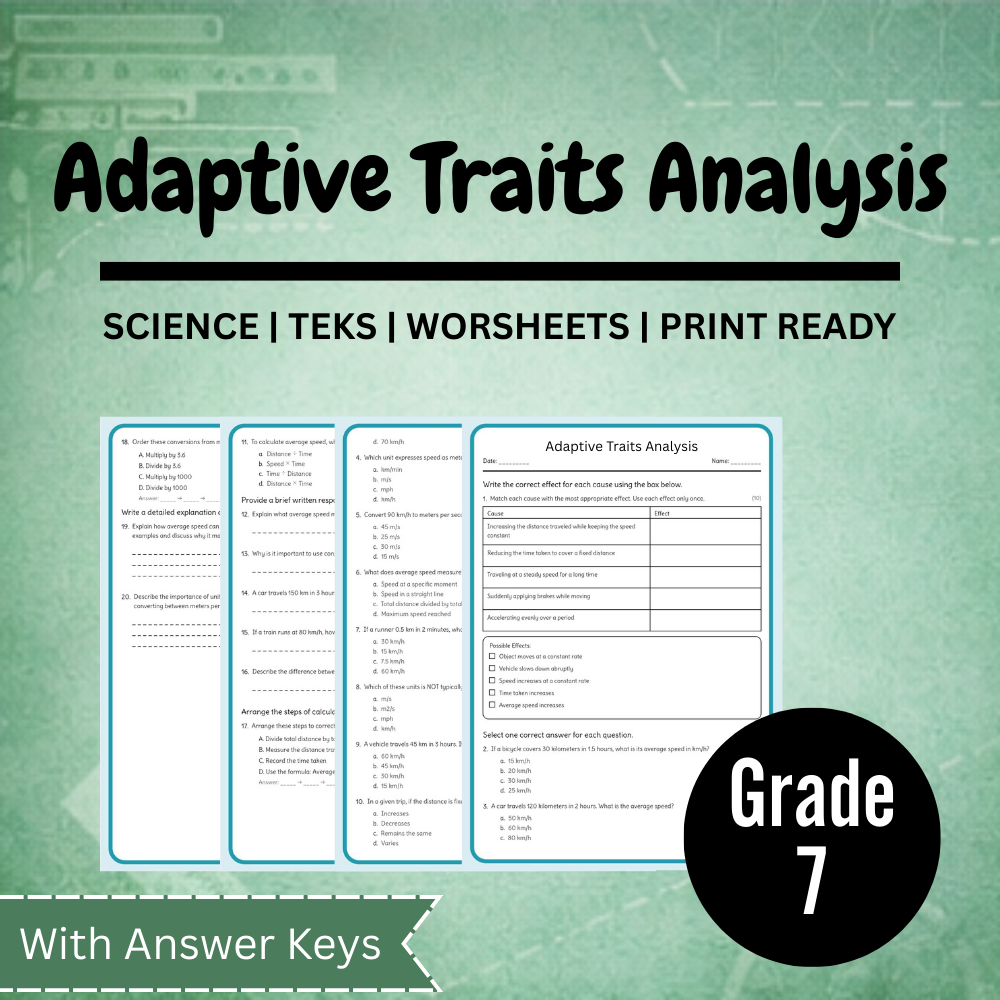
Grade 7 Science | Adaptive Traits Analysis Worksheet (PDF) – TEKS-Aligned
Created byBright Mind ResourcesLearning Objectives
- Understand how adaptive traits become common in populations through natural selection
- Identify examples of selective pressures such as pesticide resistance and camouflage
- Explain the mechanisms of variation, heritability, and differential survival
Also included in: Grade 7 Science Unit Bundle – Ecosystems, Adaptation & Environmental Impact +2 more
Instant download
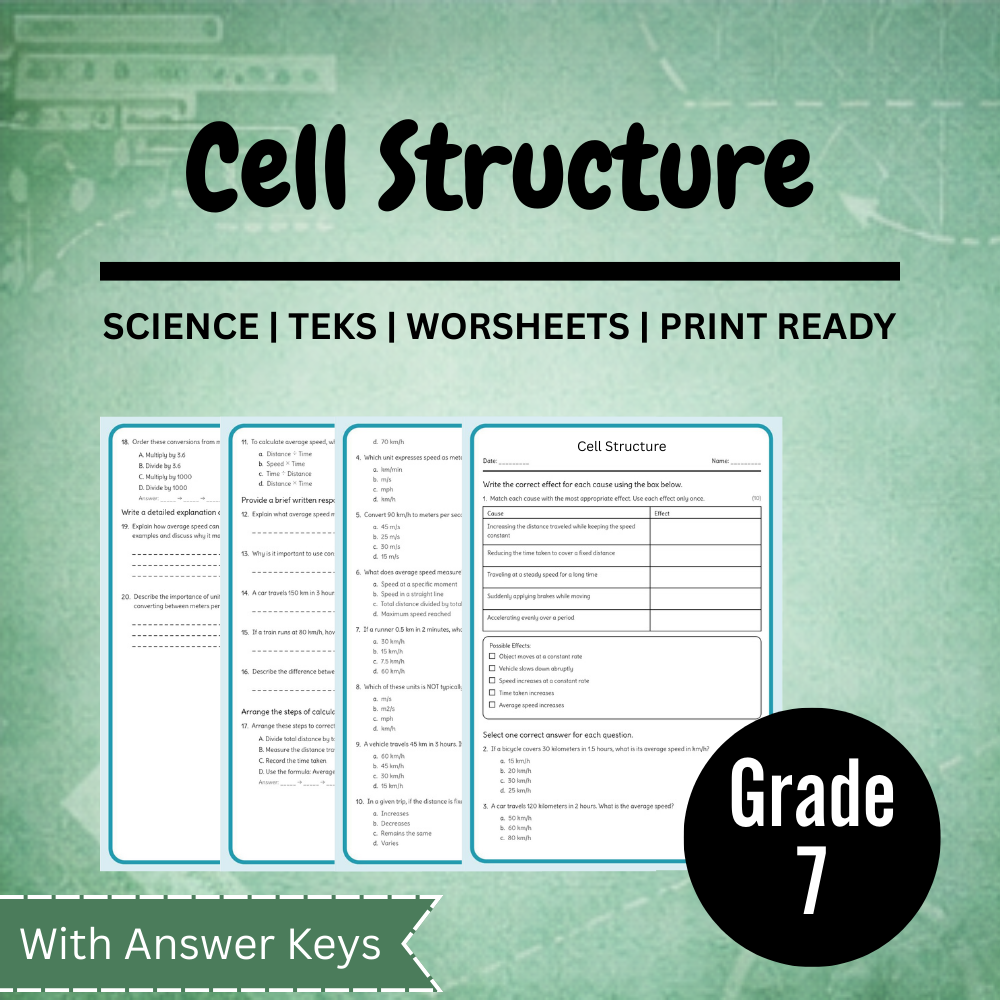
Grade 7 Science | Cell Structure Worksheet (Worksheet + Answer Key) – TEKS Aligned
Created byBright Mind ResourcesLearning Objectives
- Identify and describe major cell organelles and their functions.
- Compare cellular features of producers and consumers.
- Explain how organelle specialization supports survival and ecological interactions.
Also included in: Grade 7 Science Unit Bundle – Ecosystems, Adaptation & Environmental Impact +2 more
Instant download
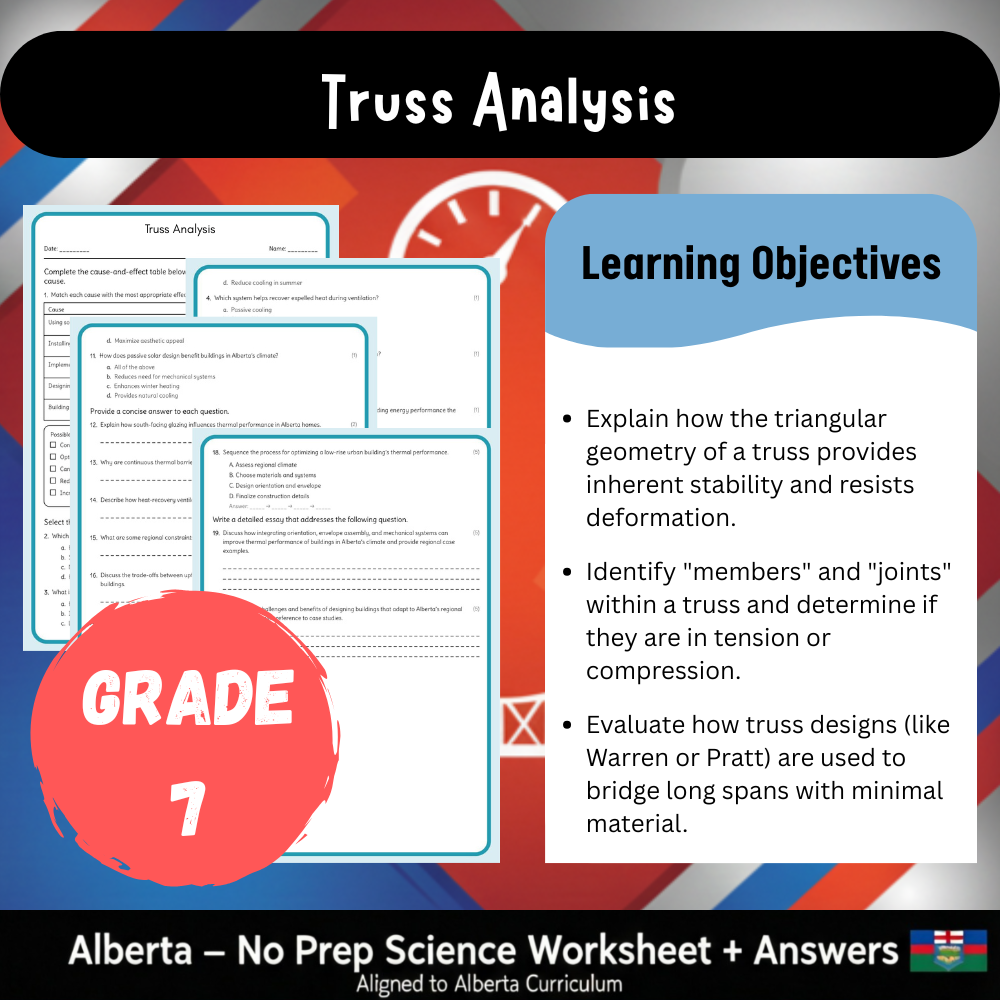
Grade 7 Science | Truss Analysis Worksheet (PDF) – Alberta Standards
Created byBright Mind ResourcesLearning Objectives
- Understand the internal force distribution in truss structures.
- Identify different types of truss forms used in regional bridge and roof designs.
- Evaluate the efficiency and redundancy of various truss configurations.
Instant download
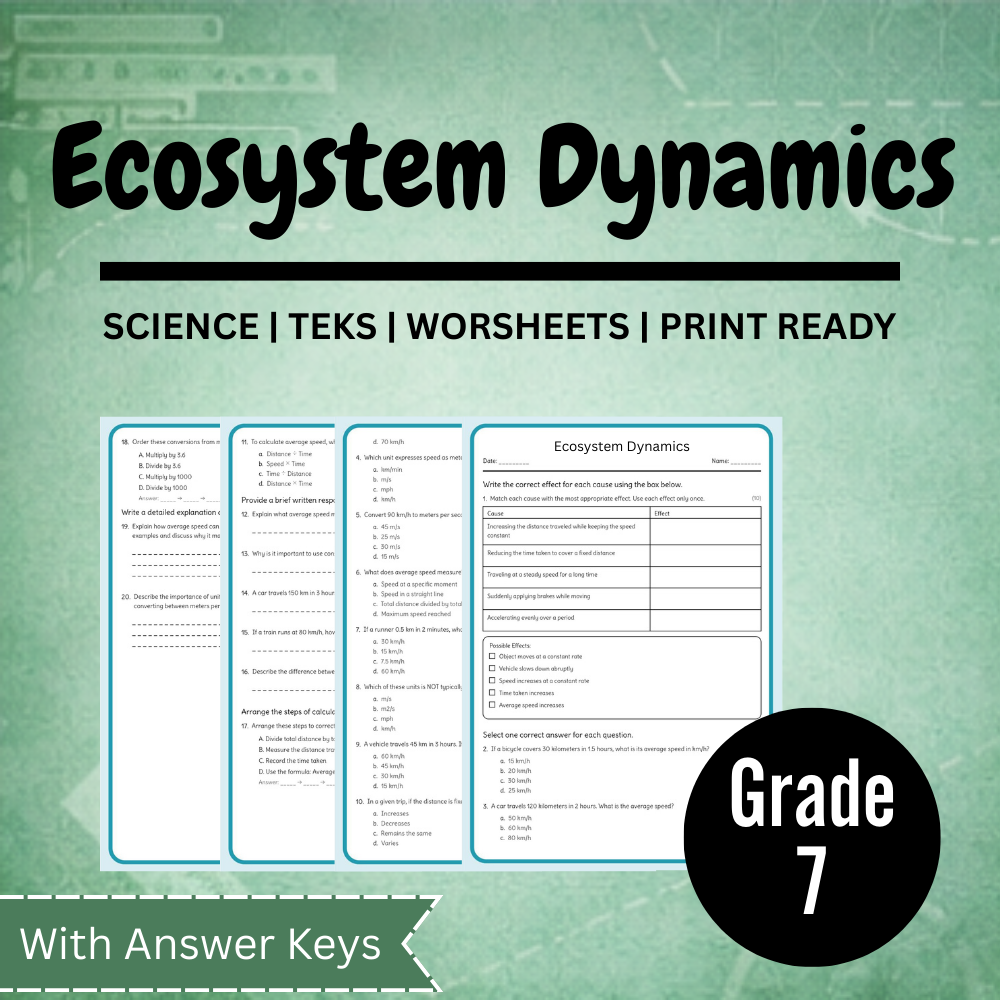
Grade 7 Science | Ecosystem Dynamics Worksheet (Answer Key) – TEKS Aligned
Created byBright Mind ResourcesLearning Objectives
- Describe energy flow and matter cycling within ecosystems using food chains, food webs, and trophic pyramids.
- Explain energy transfer efficiency, primary productivity, and the role of decomposers in nutrient recycling.
- Analyze how alterations in inputs or energy pathways affect community composition and ecosystem processes.
Also included in: Grade 7 Science Unit Bundle – Ecosystems, Adaptation & Environmental Impact +2 more
Instant download
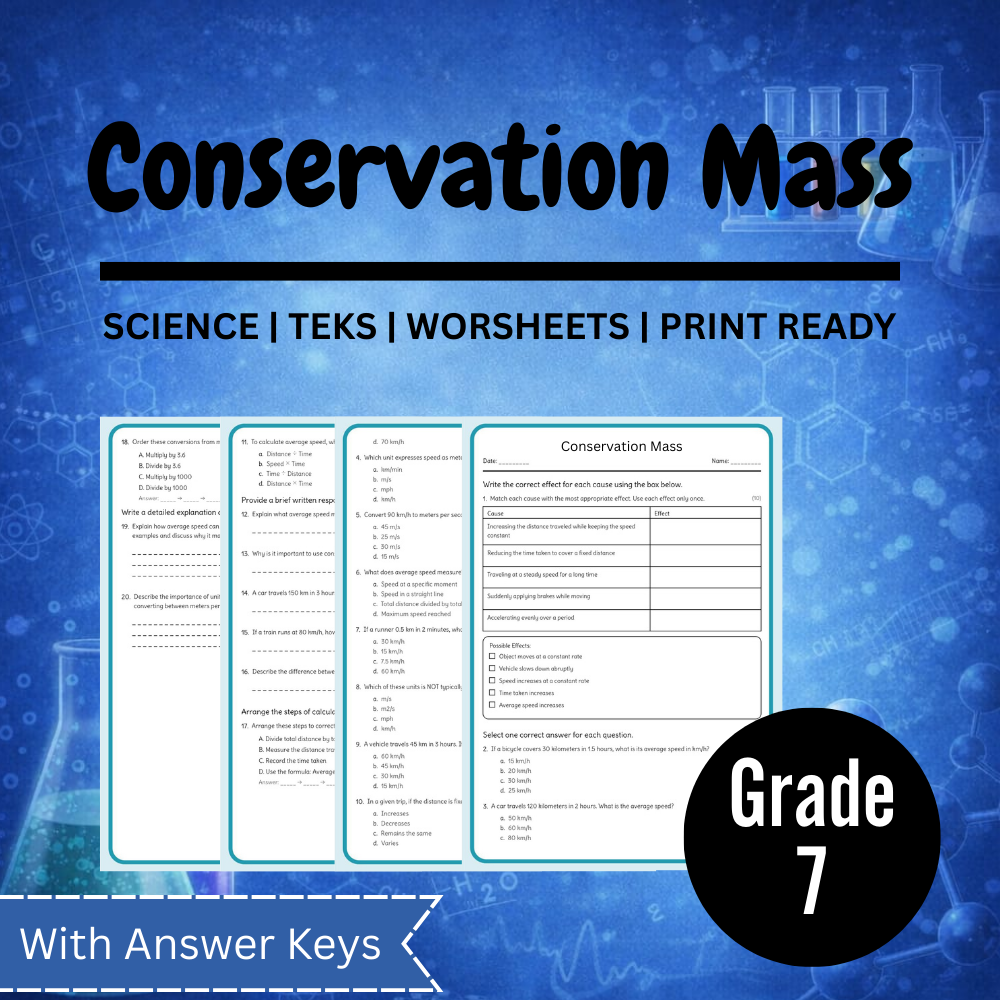
Grade 7 Science | Conservation of Mass Worksheet (Answer Key) – TEKS-Aligned
Created byBright Mind ResourcesLearning Objectives
- Understand the principle of conservation of mass in physical and chemical changes.
- Apply mass accounting to reactions and processes within a closed system.
- Balance simple chemical formulas to illustrate mass relationships.
Also included in: Grade 7 Science Unit Bundle | States of Matter & Atomic Structure Worksheets +2 more
Instant download
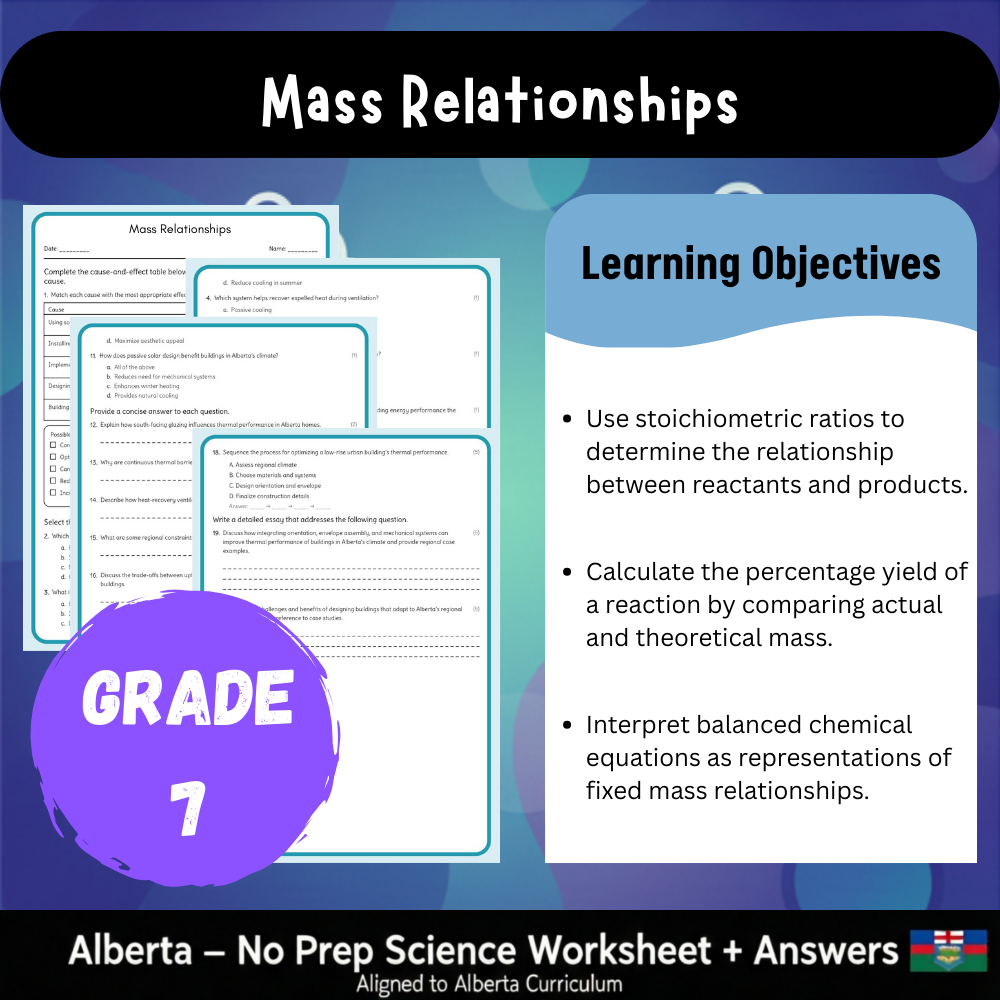
Grade 7 Science | Mass Relationships Worksheet (Worksheet + Answer Key) – Alberta Standards
Created byBright Mind ResourcesLearning Objectives
- Understand the principles of conservation of mass in chemical reactions.
- Interpret mass relationships to predict reaction yields.
- Balance inputs and outputs in closed-system reactions.
Instant download
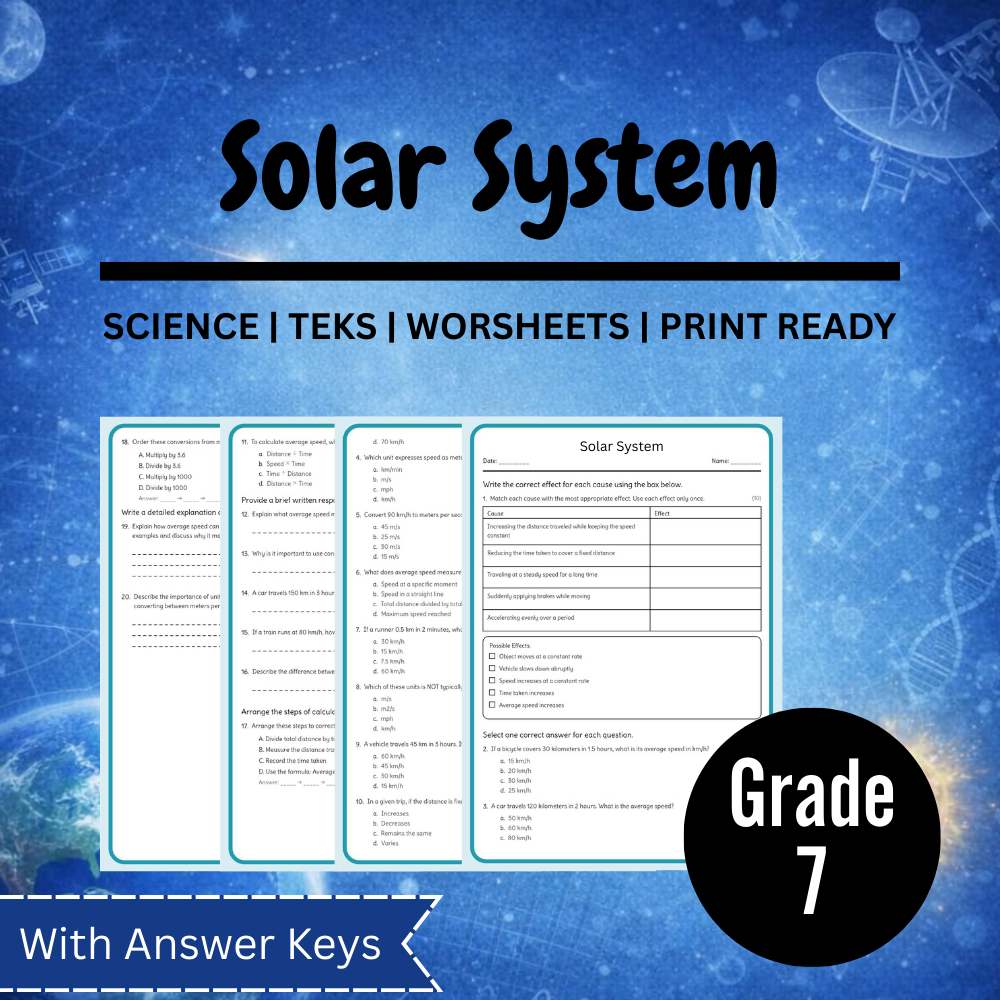
Grade 7 Science | Solar System Key Concepts Worksheet (Worksheet + Answer Key)
Created byBright Mind ResourcesLearning Objectives
- Describe the formation and origin of the solar system.
- Identify key properties of planets and their orbital features.
- Compare terrestrial planets with gas giants based on their features.
Also included in: Grade 7 Science Unit Bundle | Earth's Processes, Space & Resources TEKS Aligned +2 more
Instant download
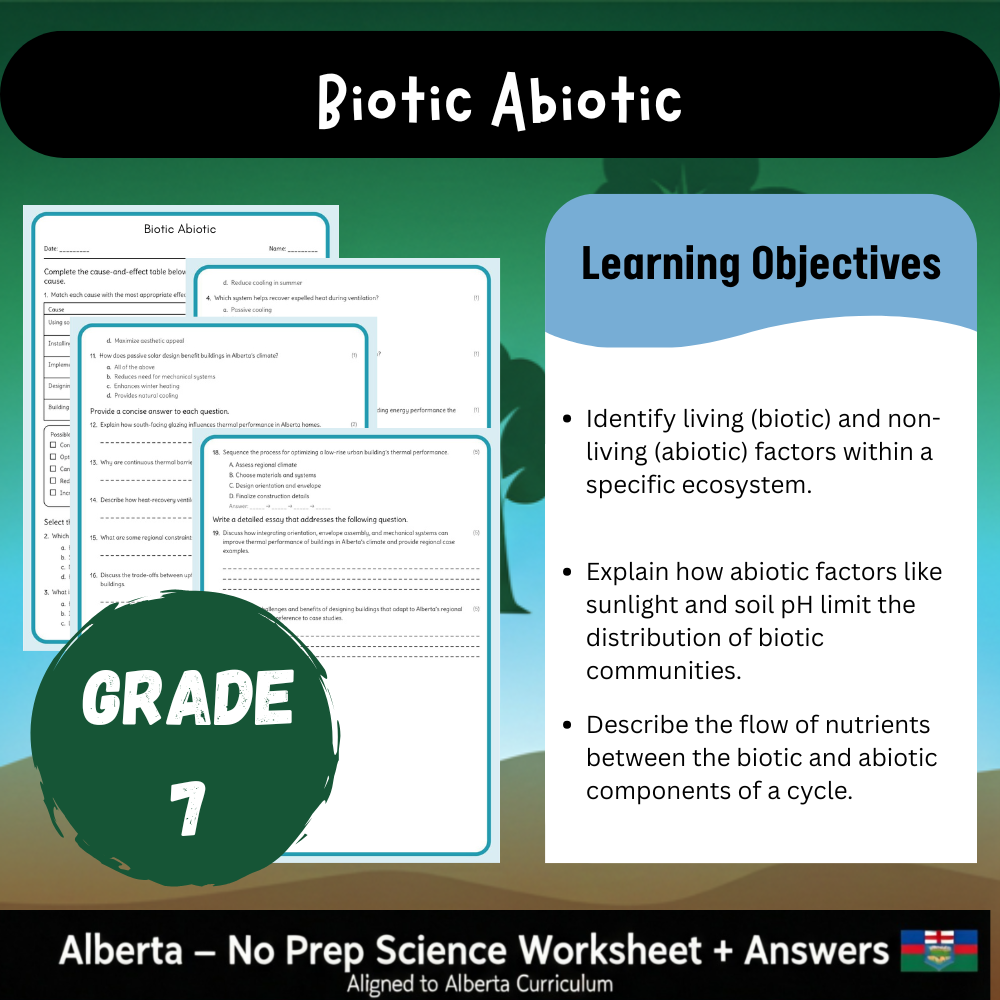
Grade 7 Science – Biotic & Abiotic Factors Worksheet (PDF)
Created byBright Mind ResourcesLearning Objectives
- Describe the relationships between living organisms and non-living elements in ecosystems.
- Identify how environmental factors influence resource access, shelter, and survival.
- Explain cause-and-effect links that shape community patterns across regions.
Instant download
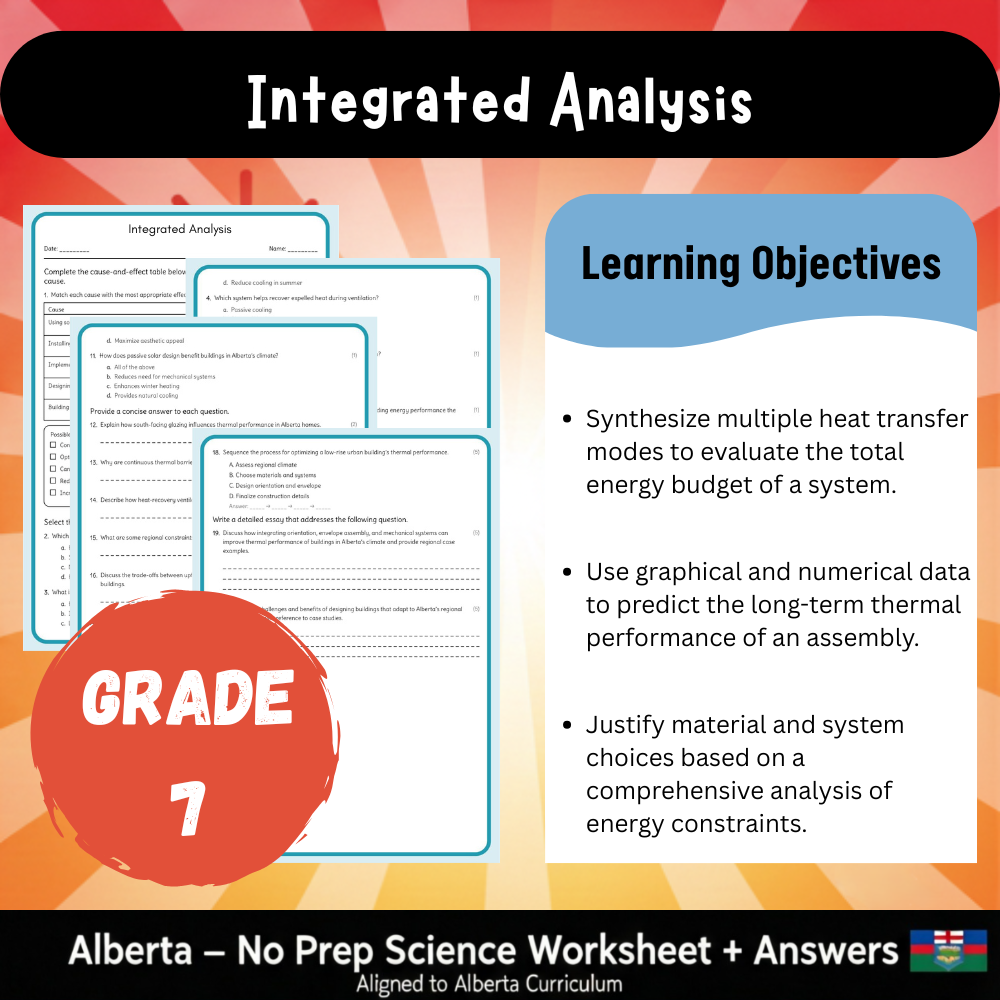
Grade 7 Science | Integrated Energy Analysis Worksheet (PDF + Google Form)
Created byBright Mind ResourcesLearning Objectives
- Understand how material properties, transfer modes, and conservation principles combine to analyze energy systems.
- Interpret energy budgets including conduction, convection, radiation, storage, and conversion losses.
- Apply numerical and graphical methods to evaluate energy performance in regional design.
Instant download
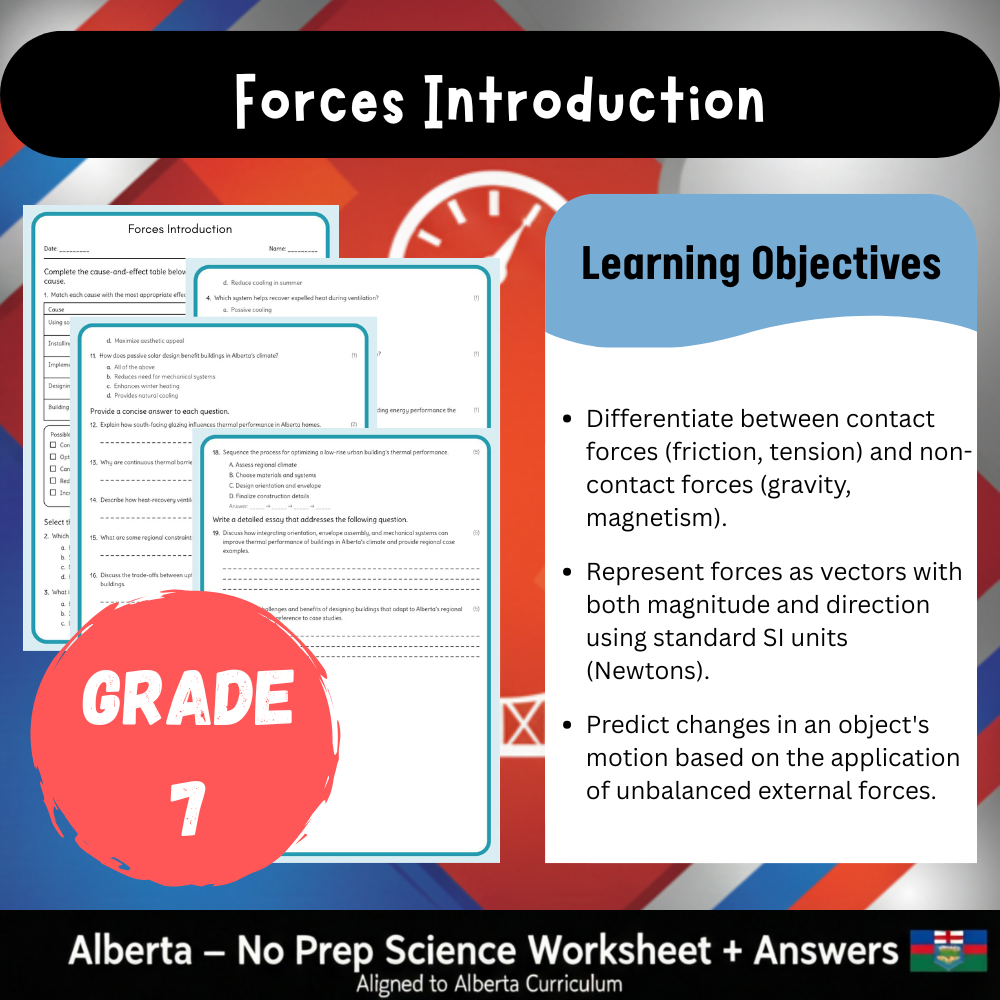
Grade 7 Science – Forces Introduction (Worksheet + Answer Key) | Alberta Standard
Created byBright Mind ResourcesLearning Objectives
- Define contact and non-contact forces and give real-world examples.
- Explain how net force influences the motion of objects.
- Identify factors affecting acceleration and motion in regional contexts.
Instant download
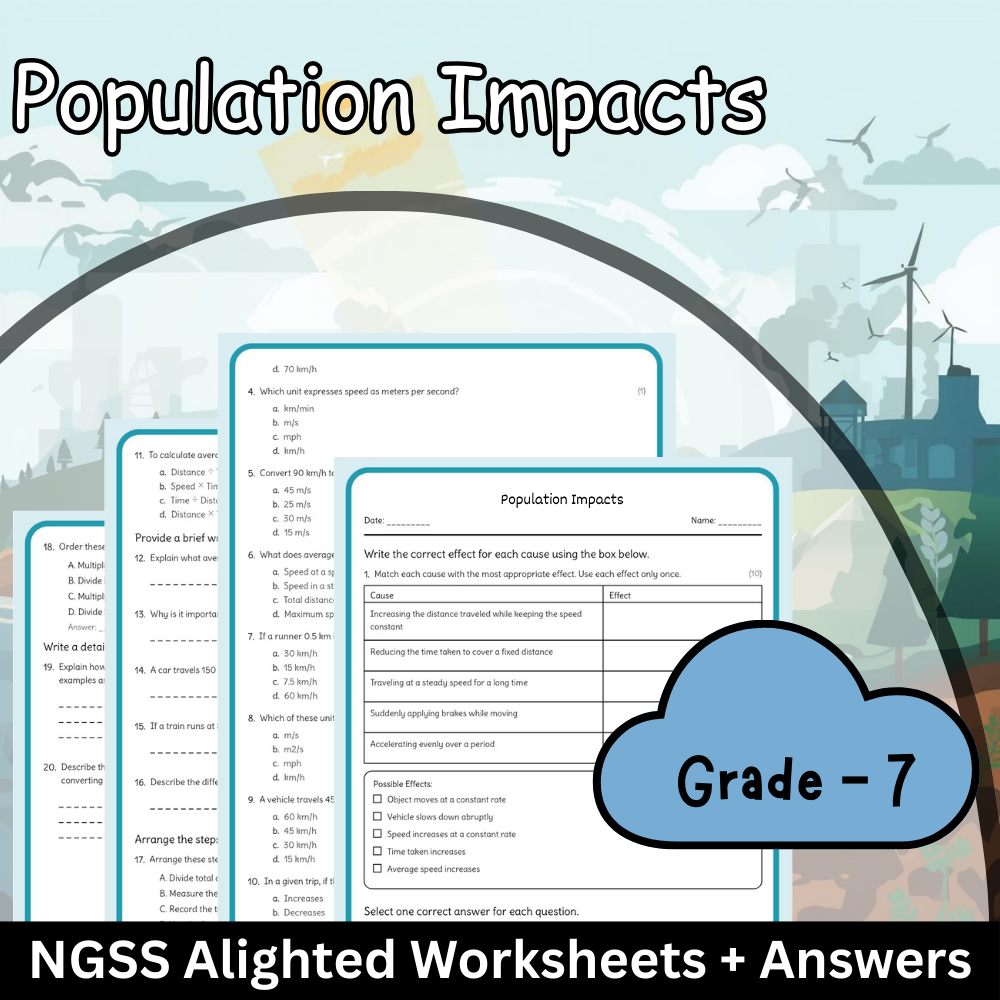
Grade 7 Science | Population Impacts Worksheet – NGSS-Aligned (PDF)
Created byBright Mind ResourcesLearning Objectives
- Analyze how increasing human populations affect demand for water, energy, land, and resources.
- Evaluate environmental consequences such as biodiversity loss, water scarcity, and carbon emissions.
- Understand regional examples demonstrating how consumption patterns influence ecological pressures.
Instant download
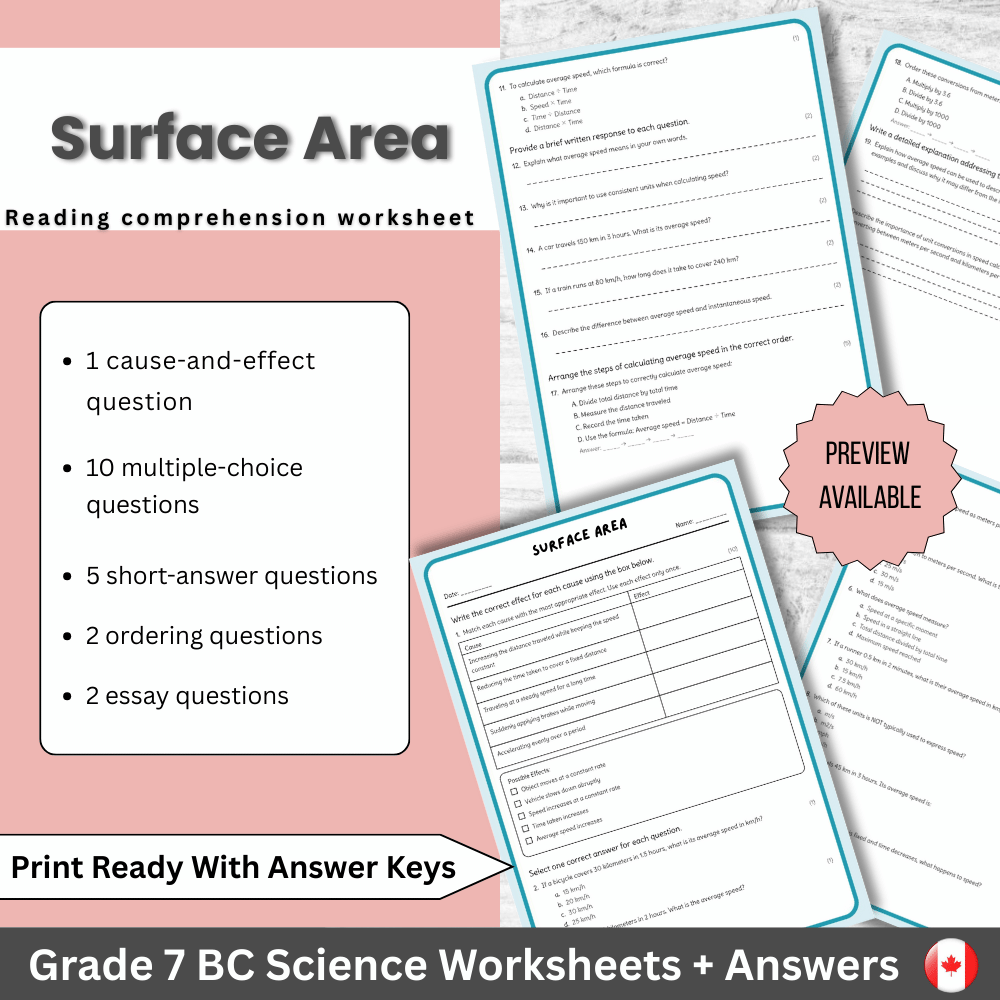
Grade 7 Science Surface Area Worksheet – Cell Size & Adaptations (PDF)
Created byBright Mind ResourcesLearning Objectives
- Explain how surface-area-to-volume ratio affects cell size and function.
- Identify adaptations that increase exchange surface area in cells and organisms.
- Describe how multicellular organisms overcome surface area limitations through specialized structures.
Instant download
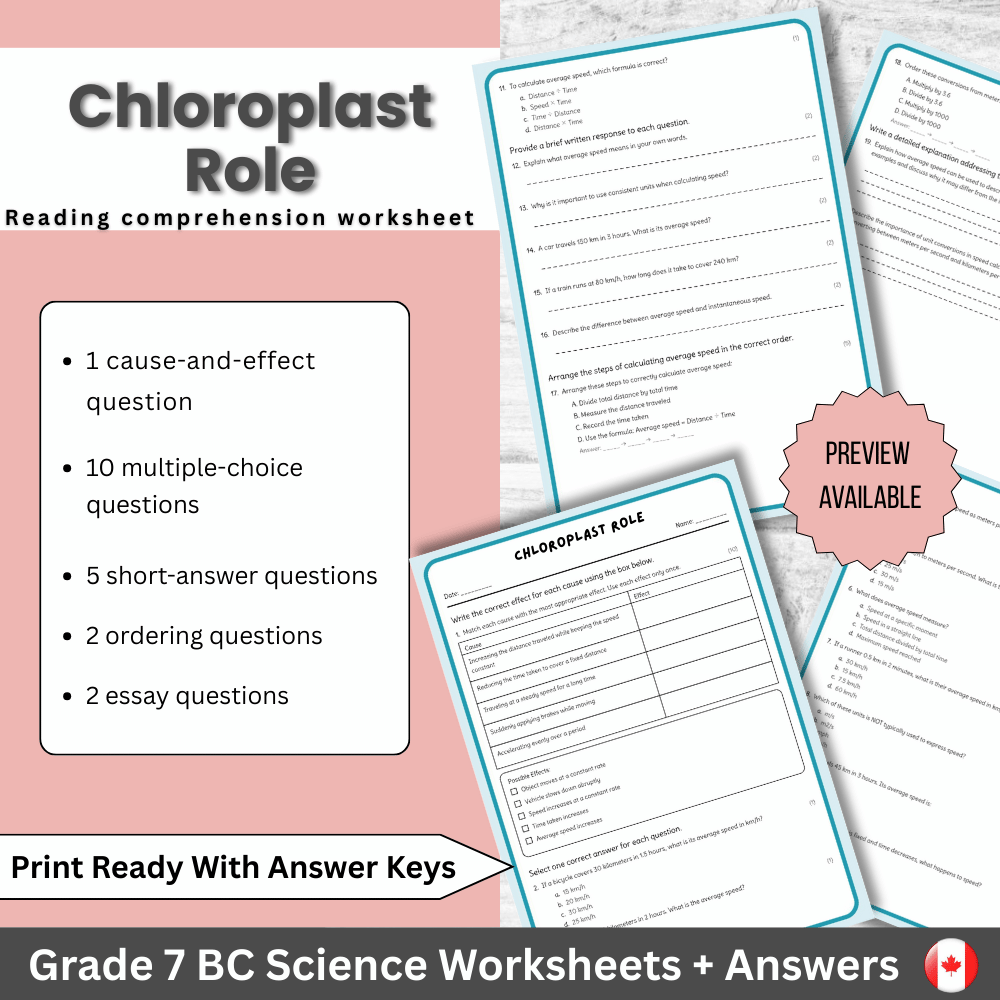
Grade 7 Science | Chloroplast Role Worksheet with Answer Key (PDF)
Created byBright Mind ResourcesLearning Objectives
- Describe the function of chloroplasts in photosynthesis.
- Explain how pigments in thylakoid membranes absorb light energy.
- Identify the process of carbon fixation in the stroma of chloroplasts.
Instant download
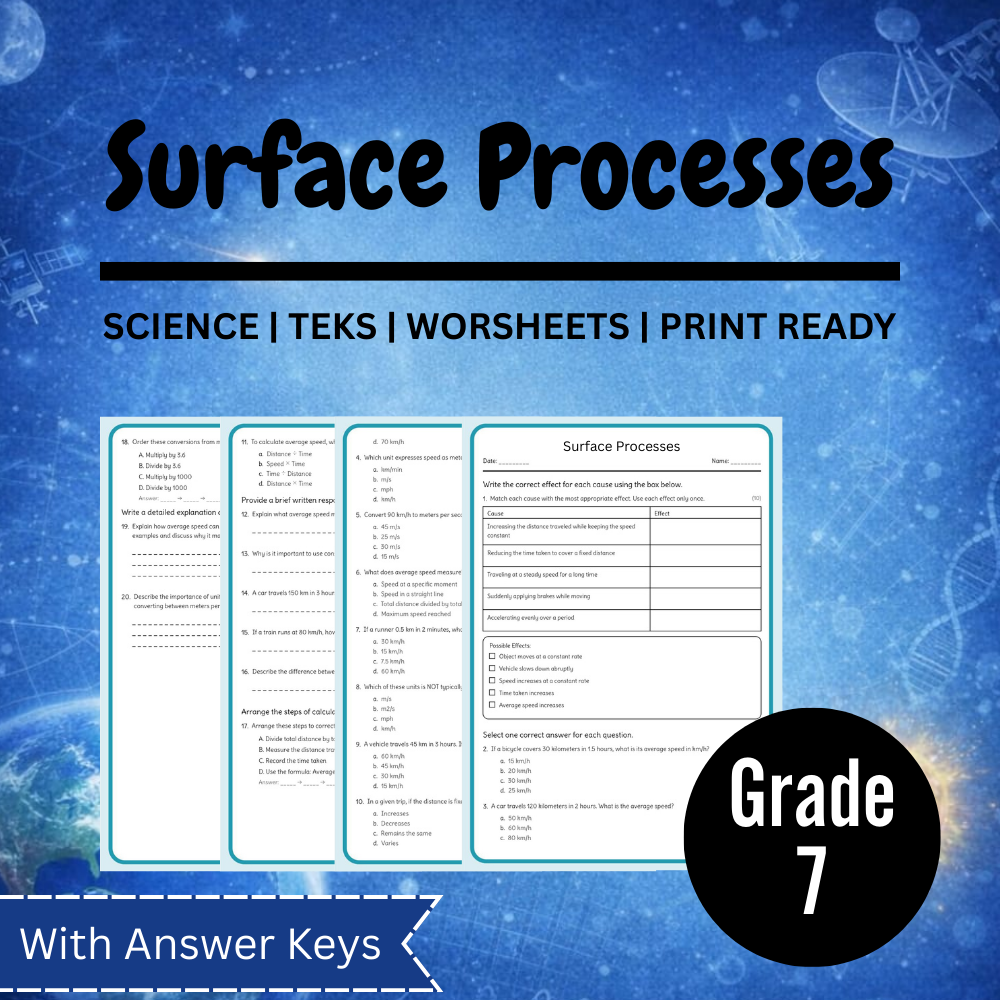
Grade 7 Science – Surface Processes Worksheet (Worksheet + Answer Key) | TEKS Aligned
Created byBright Mind ResourcesLearning Objectives
- Describe the physical and chemical processes shaping Earth's surface including weathering, erosion, and deposition.
- Identify driving forces such as water flow, wind, glaciers, and gravity that influence surface changes.
- Link observable landforms like deltas, canyons, and dunes to surface processes.
Also included in: Grade 7 Science Unit Bundle | Earth's Processes, Space & Resources TEKS Aligned +2 more
Instant download
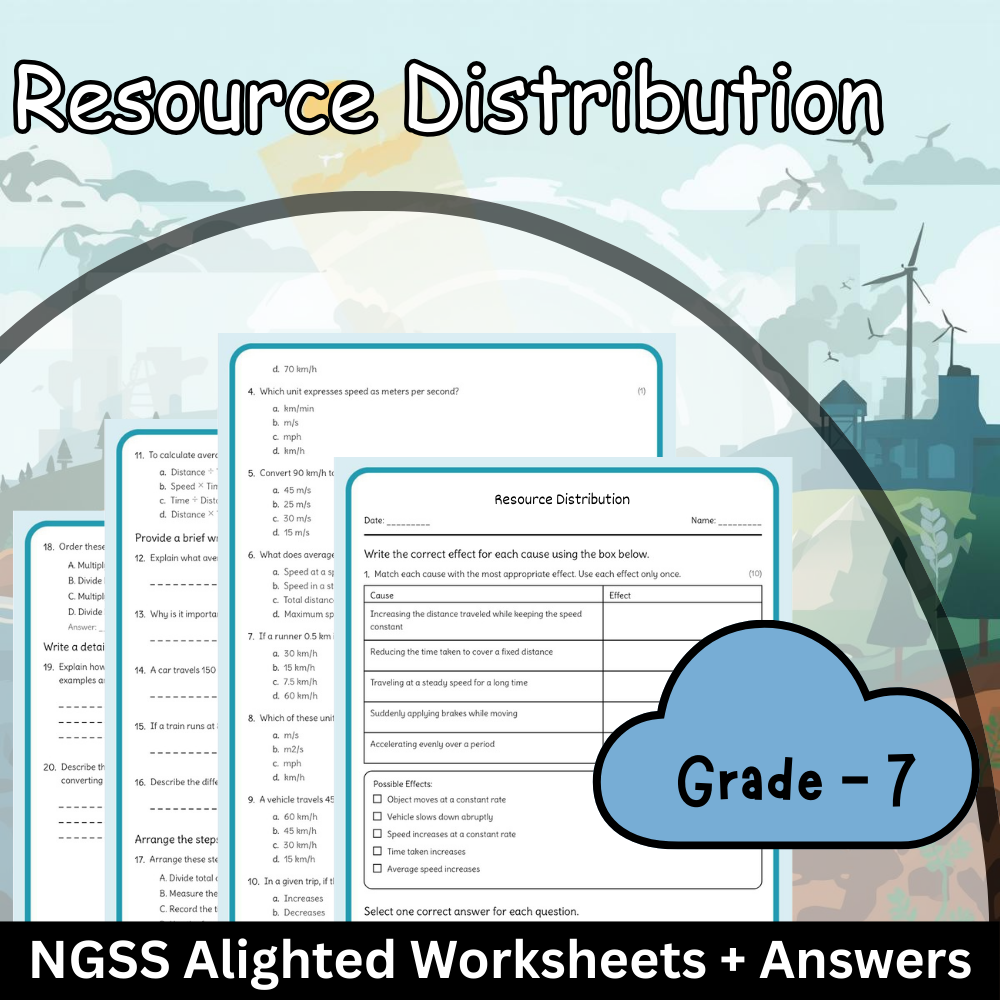
Grade 7 Science | Resource Distribution Worksheet (NGSS) - PDF
Created byBright Mind ResourcesLearning Objectives
- Understand how geologic processes influence the uneven distribution of mineral, energy, and groundwater resources.
- Connect plate tectonics, sedimentation, weathering, and biological activity to resource locations.
- Evaluate the impacts of resource extraction and consider sustainability and access issues.
Instant download
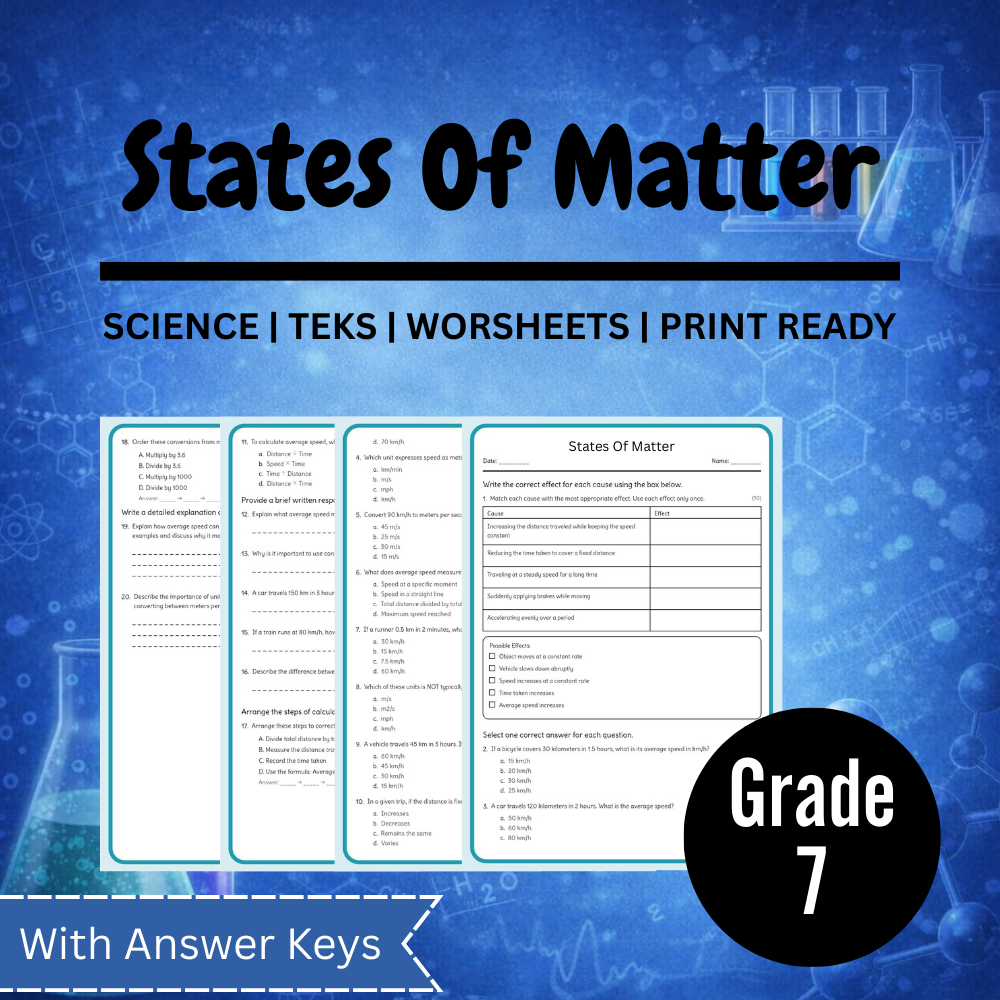
Grade 7 Science – States of Matter Worksheet (Worksheet + Answer Key) | TEKS Aligned
Created byBright Mind ResourcesLearning Objectives
- Define and characterize the three main states of matter: solid, liquid, and gas.
- Explain the processes of phase changes such as melting, freezing, vaporization, condensation, and sublimation.
- Relate temperature and pressure to phase transitions and measurable properties like density and viscosity.
Also included in: Grade 7 Science Unit Bundle | States of Matter & Atomic Structure Worksheets +2 more
Instant download
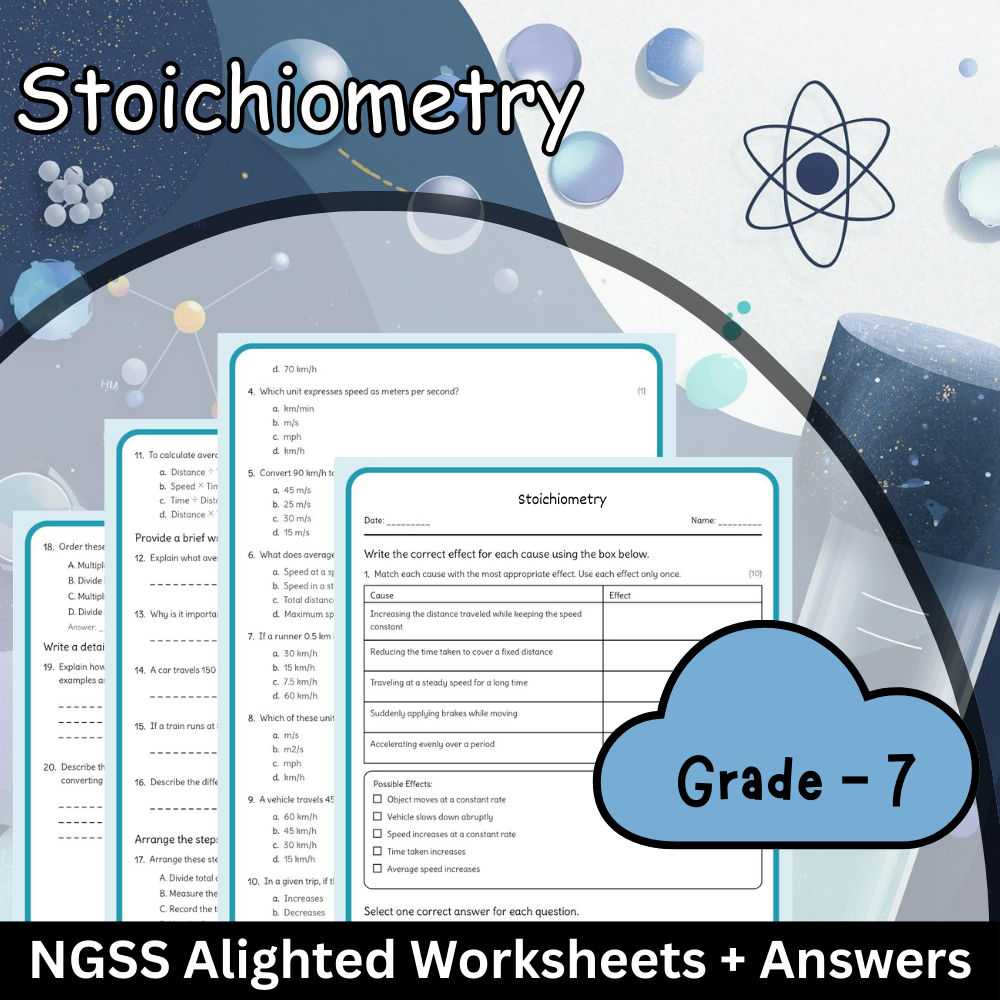
Grade 7 Science – Stoichiometry Worksheet (Answer Key) | NGSS Aligned
Created byBright Mind ResourcesLearning Objectives
- Understand how to interpret and use balanced symbolic equations in stoichiometry.
- Calculate molar and mass ratios of reactants and products in chemical reactions.
- Apply conservation principles to predict reagent needs and product yields.
Instant download
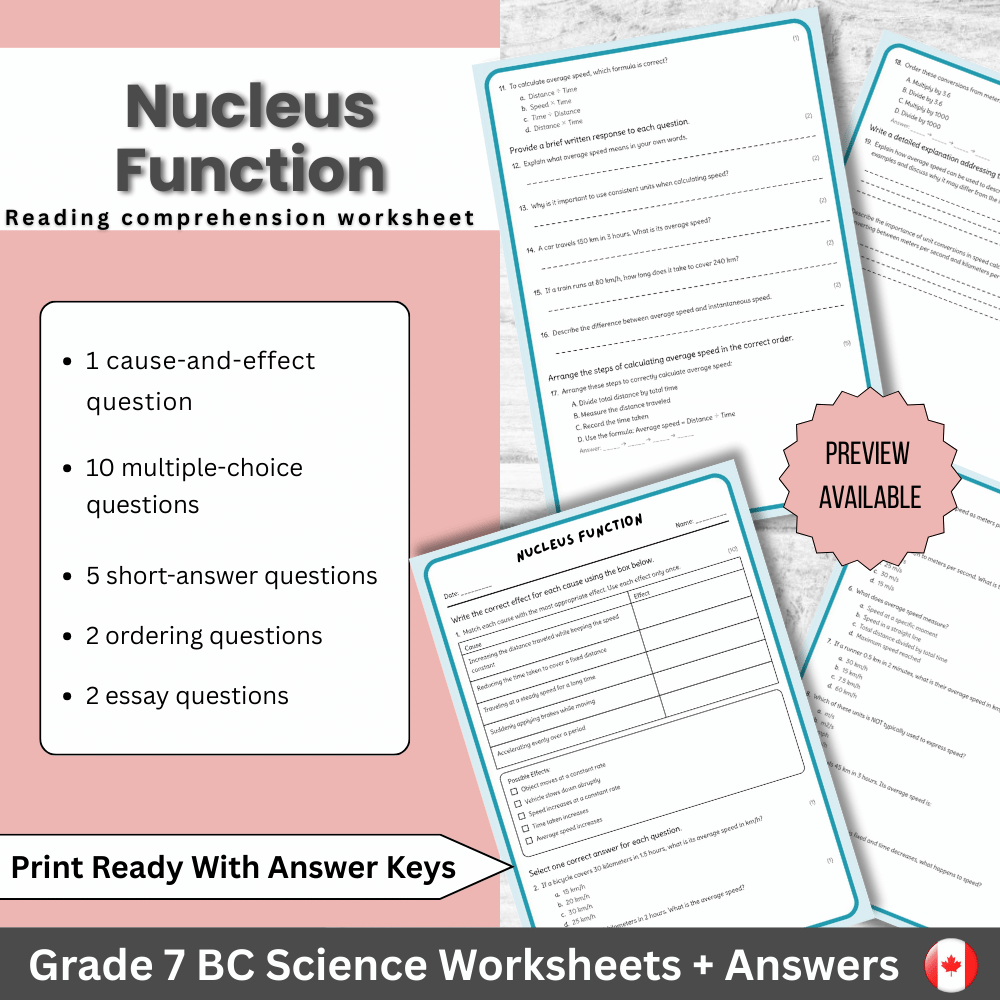
Grade 7 Science | Nucleus Function Worksheet + Answer Key | for BC Standards
Created byBright Mind ResourcesLearning Objectives
- Understand the role of the nucleus in cellular activities.
- Identify structures related to genetic material inside the nucleus.
- Explain how the nuclear envelope and pores regulate activity.
Instant download
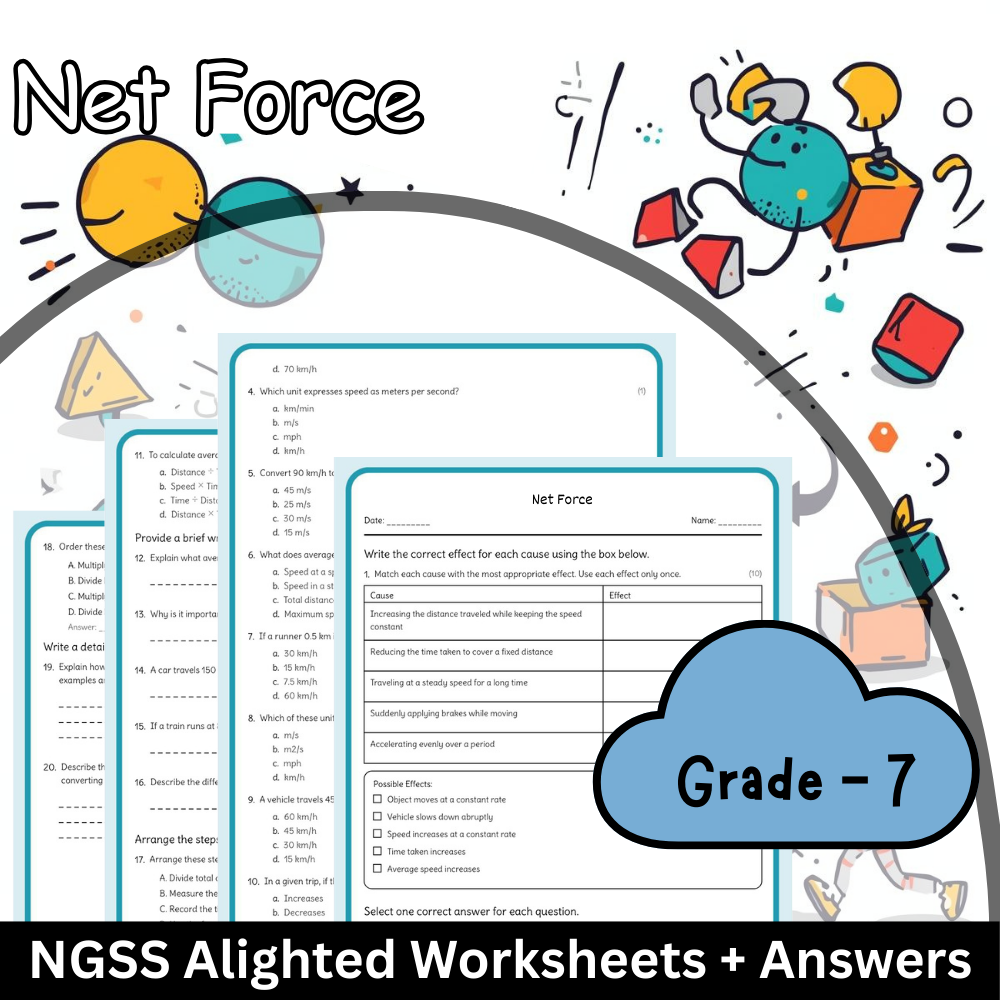
7th Grade Science | Net Force Worksheet (Worksheet + Answer Key) – NGSS Aligned
Created byBright Mind ResourcesLearning Objectives
- Define net force as the vector sum of all forces acting on an object.
- Explain how unbalanced forces can change an object's motion.
- Describe the relationship between net force, mass, and acceleration through examples and diagrams.
Instant download
Grade 7 Science – Mixtures and Solutions Worksheet + Answer Key | NGSS-Aligned
Created byBright Mind ResourcesLearning Objectives
- Differentiate between homogeneous and heterogeneous mixtures, solutions, colloids, and suspensions.
- Explain solubility, saturation, and colligative effects in mixtures and solutions.
- Identify real-world examples of mixtures and solutions, including saltwater, emulsions, and granular mixtures.
Instant download
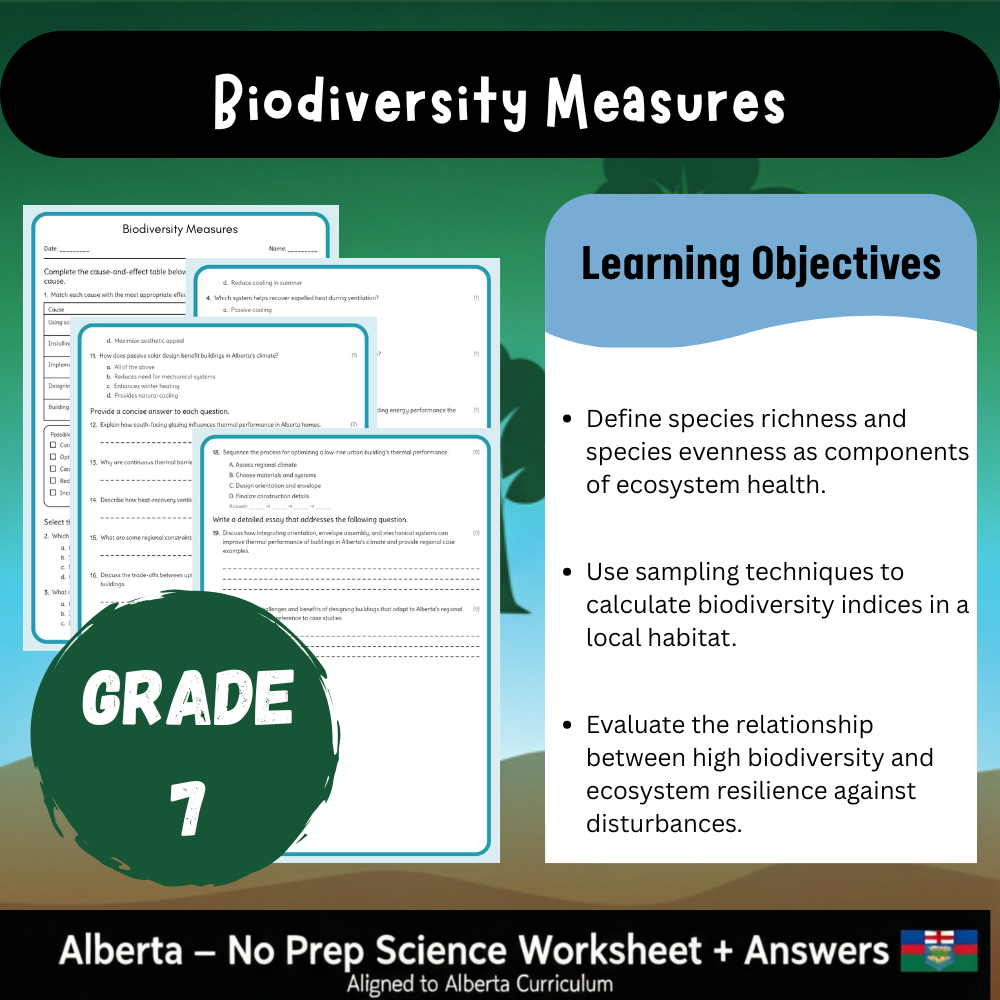
Grade 7 Science – Biodiversity Measures Worksheet (PDF) – Alberta Standard
Created byBright Mind ResourcesLearning Objectives
- Define different metrics of biodiversity such as richness, evenness, and habitat heterogeneity.
- Interpret what various biodiversity metrics reveal about ecosystem resilience and function.
- Evaluate the relationship between habitat complexity and species assemblages.
Instant download
Grade 7 Science – Atomic Models Worksheet (Worksheet + Answer Key) NGSS Aligned
Created byBright Mind ResourcesLearning Objectives
- Describe how atoms are represented in particle, ball-and-stick, and lattice models.
- Explain the significance of covalent and ionic bonding in molecular and extended structures.
- Connect subatomic particles and atomic number to material properties and formula notation.
Instant download
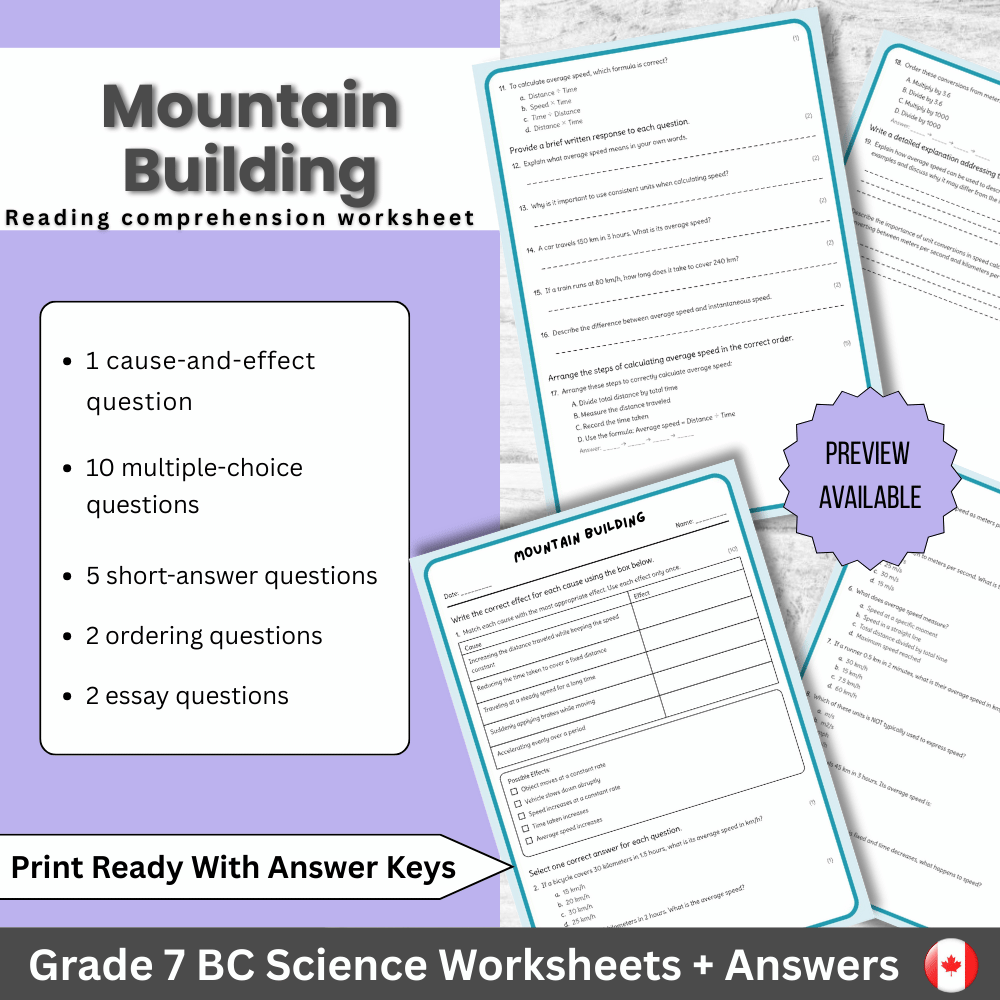
Grade 7 Science | Mountain Building Worksheet + Answer Key (PDF)
Created byBright Mind ResourcesLearning Objectives
- Explain the processes involved in mountain building through plate tectonics.
- Identify key features of orogeny, including crustal deformation, uplift, and volcanic activity.
- Describe surface processes like erosion and isostatic adjustment that shape mountain ranges.
Instant download
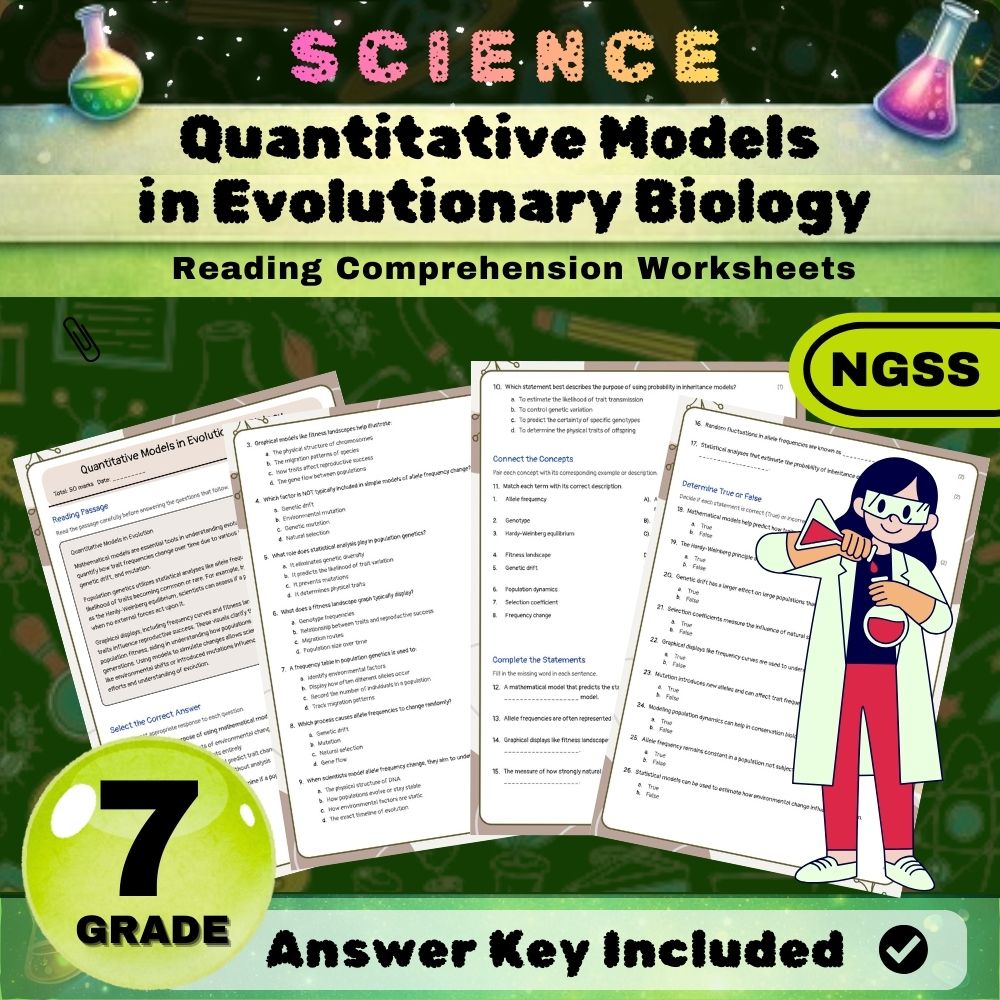
Grade 7 Science | Quantitative Models in Evolutionary Biology NGSS Worksheet
 Created byMaple Path Learning
Learning Objectives
- Explain how mathematical models describe changes in trait frequencies within populations.
- Interpret statistical data and graphical displays related to population dynamics and selection.
- Apply Hardy-Weinberg principles and frequency calculations to support hypotheses about evolution.
Also included in: Grade 7 Science | Evolution & Adaptation NGSS Worksheet Bundle +1 more
Instant download
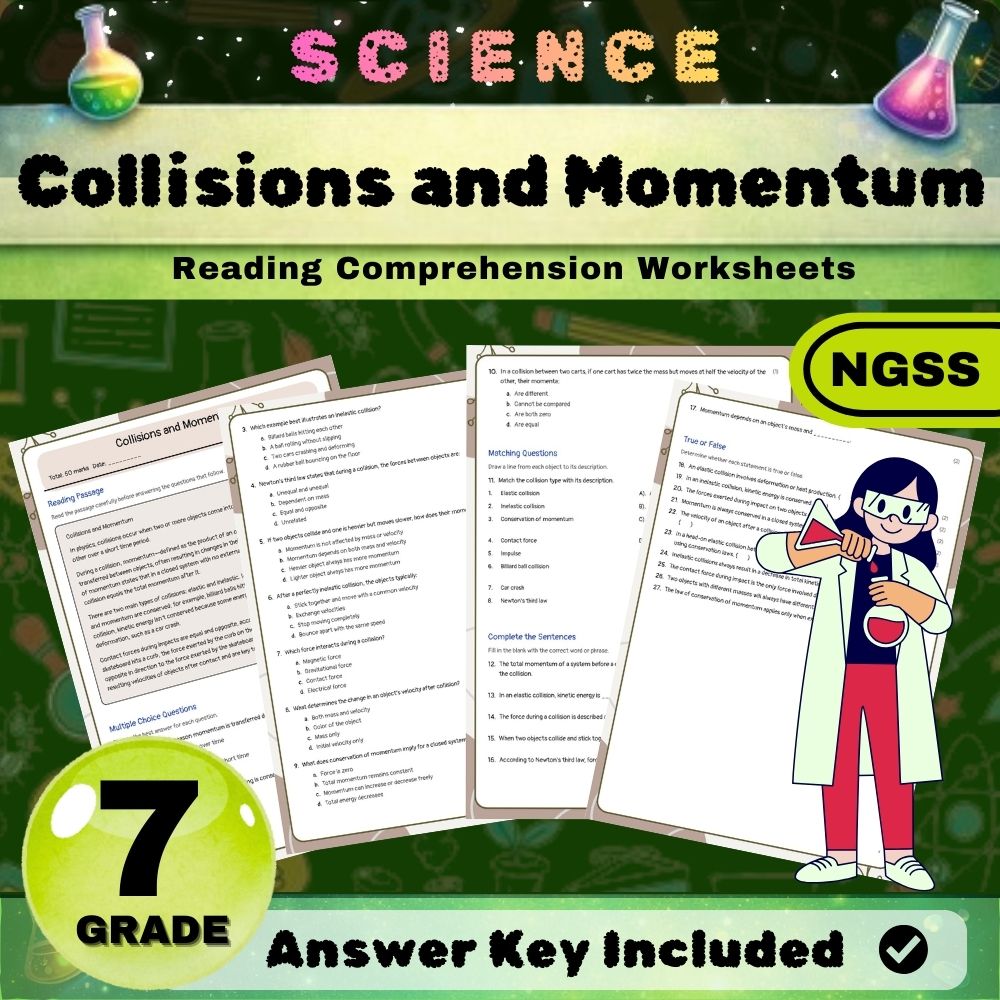
Grade 7 Science | Collisions and Momentum NGSS Worksheet (PDF) with Answer Key
Created byMaple Path LearningLearning Objectives
- Understand the principles of momentum conservation during collisions.
- Differentiate between elastic and inelastic collisions.
- Apply quantitative examples to analyze how mass and velocity affect momentum.
Instant download
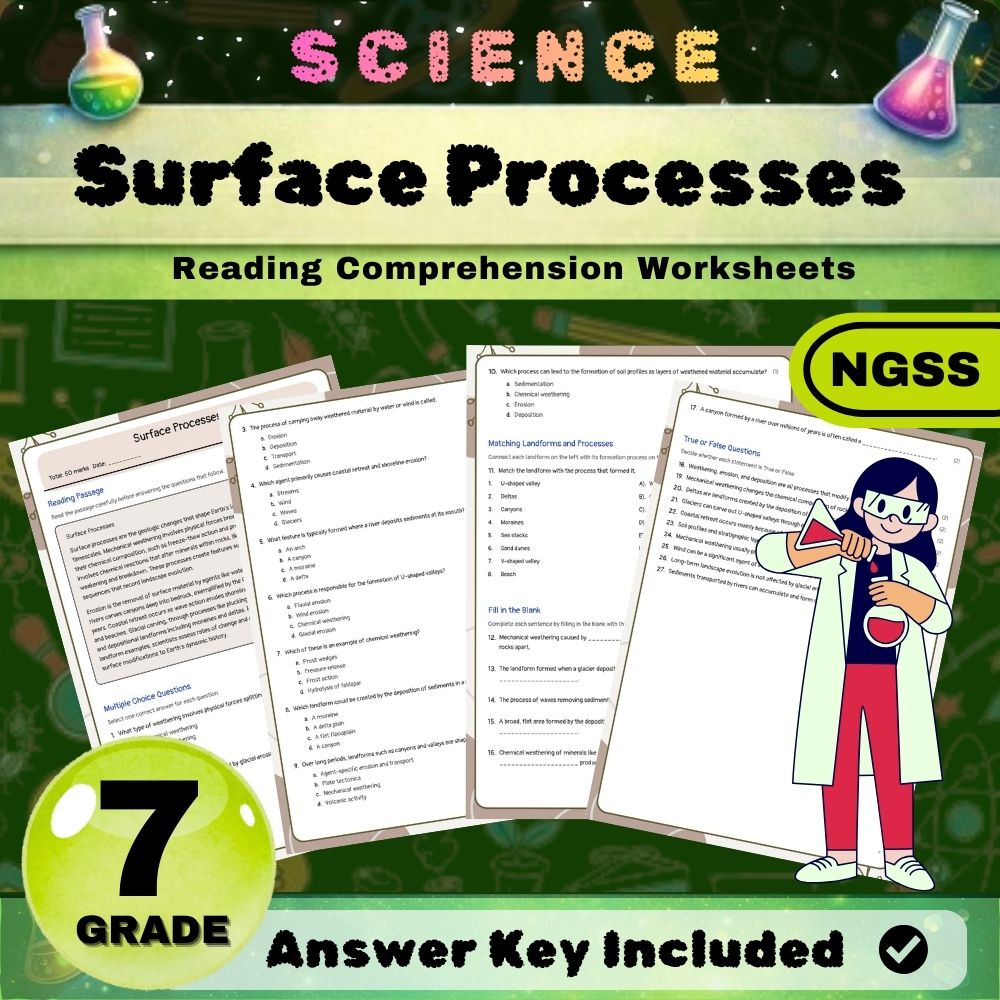
Grade 7 Science | Surface Processes Worksheet (NGSS) – Engaging PDF & Answer Key
Created byMaple Path LearningLearning Objectives
- Explain how mechanical and chemical weathering modify Earth's surface over time.
- Describe the roles of erosion, transport, and deposition in landscape change.
- Identify landforms created by river, glacier, and coastal processes.
Instant download
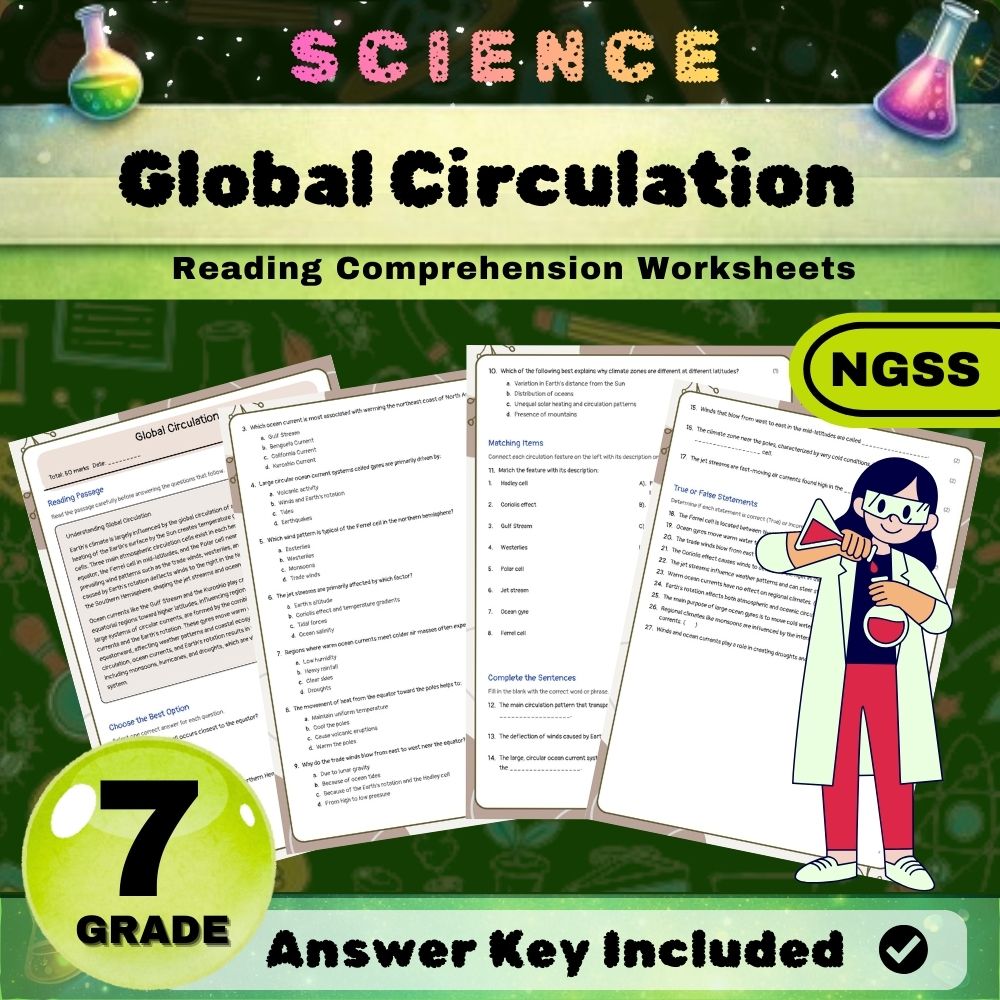
7th Grade Science | Global Circulation NGSS Worksheet (Answer Key) PDF
Created byMaple Path LearningLearning Objectives
- Describe the main atmospheric circulation cells and their influence on climate.
- Explain how Earth's rotation and the Coriolis effect shape prevailing winds and ocean currents.
- Identify major ocean gyres and their role in heat redistribution worldwide.
Instant download
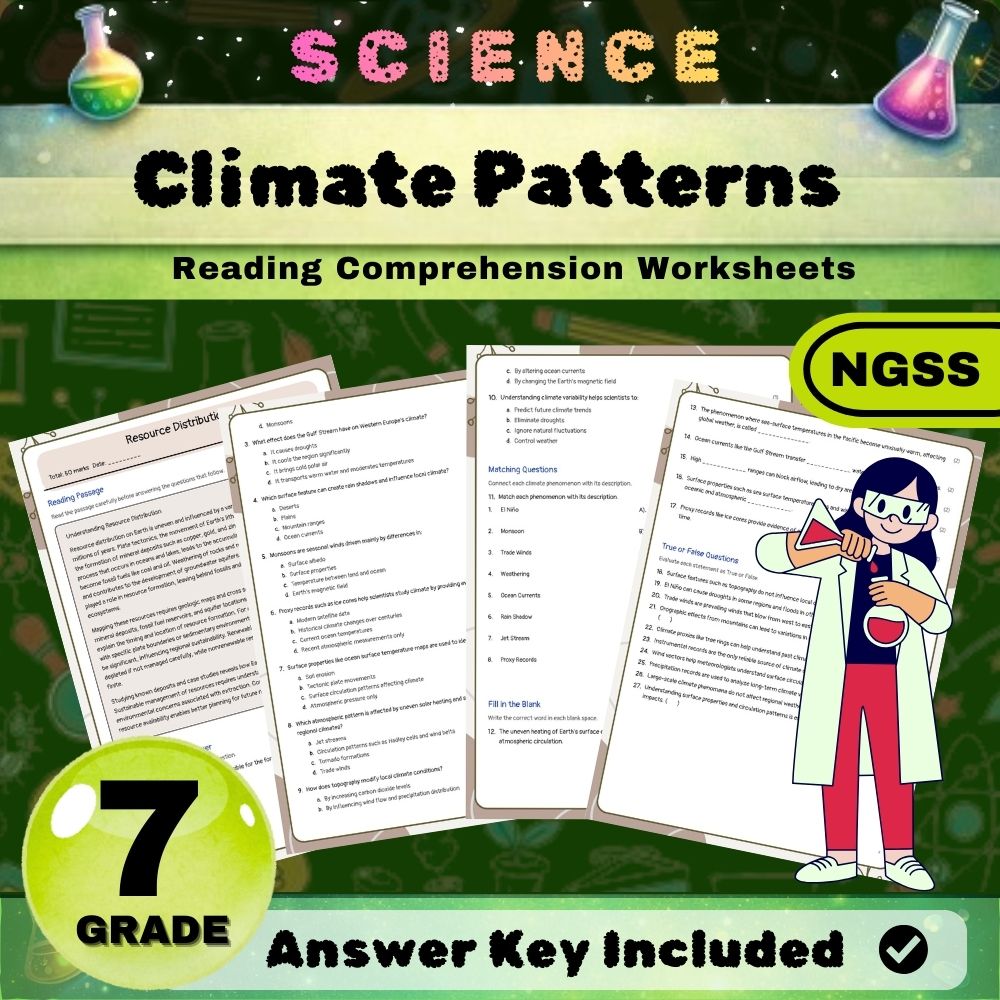
7th Grade Science | Climate Patterns NGSS Worksheet (PDF) – Standards Aligned
Created byMaple Path LearningLearning Objectives
- Describe how uneven solar heating influences regional climate conditions.
- Interpret temperature and wind maps to identify circulation patterns such as El Niño and monsoons.
- Explain how surface properties, topography, and ocean currents modify local climates.
Instant download
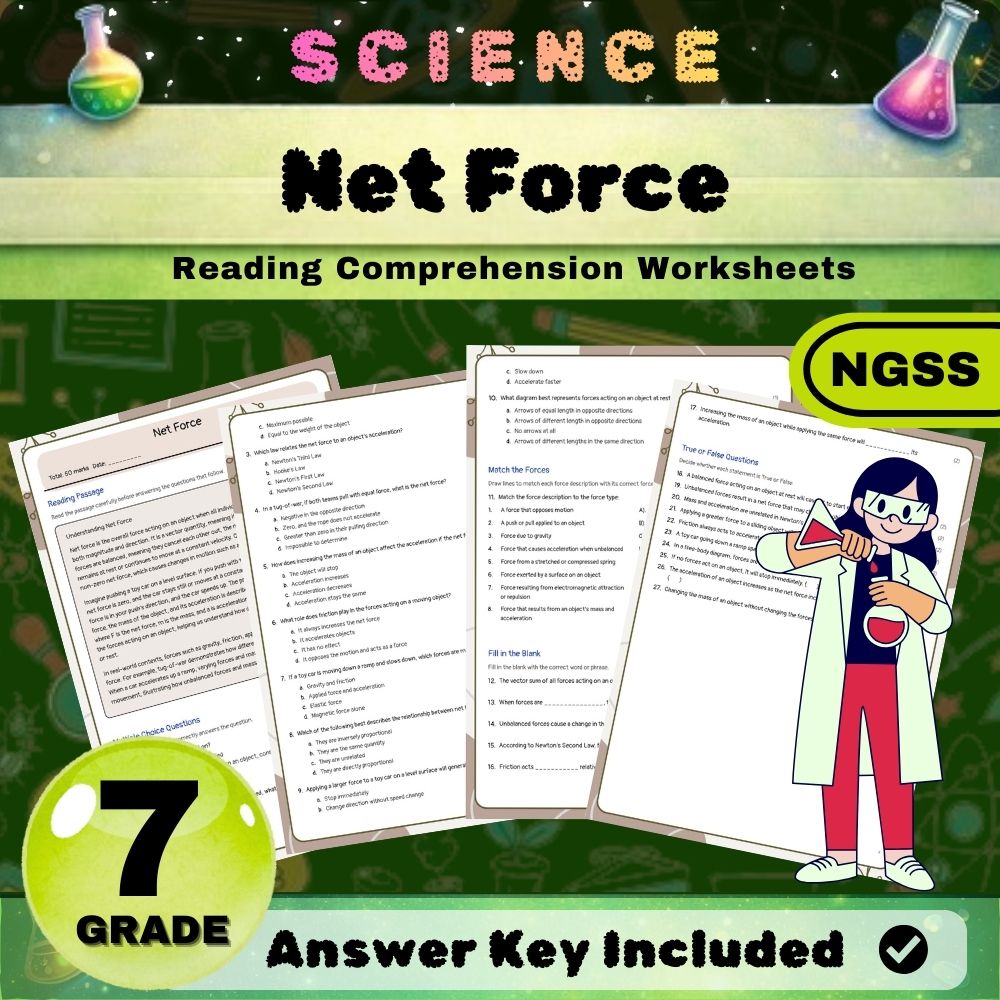
Grade 7 Science | Net Force Worksheet (NGSS-Aligned) – Answer Key PDF
Created byMaple Path LearningLearning Objectives
- Define net force as the vector sum of all forces acting on an object.
- Describe how unbalanced forces cause changes in an object's motion.
- Interpret free-button diagrams to analyze forces acting on objects.
Instant download
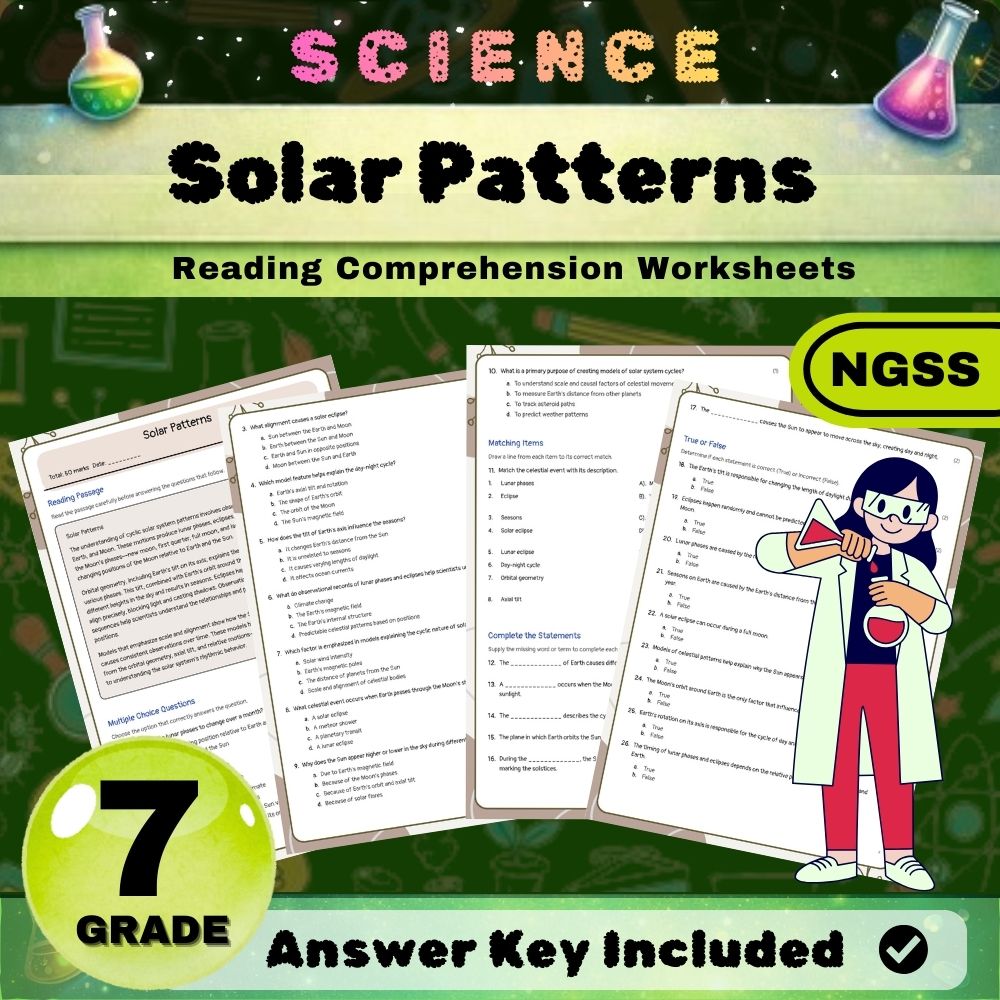
Grade 7 Science – Solar Patterns Worksheet (PDF) NGSS Aligned
Created byMaple Path LearningLearning Objectives
- Explain how relative motions of the Sun, Earth, and Moon lead to observable lunar phases, eclipses, and seasonal changes.
- Describe orbital geometry and axial tilt effects on day-night cycles and phase timing.
- Analyze observational records and phase sequences to understand predictable patterns in the solar system.
Instant download
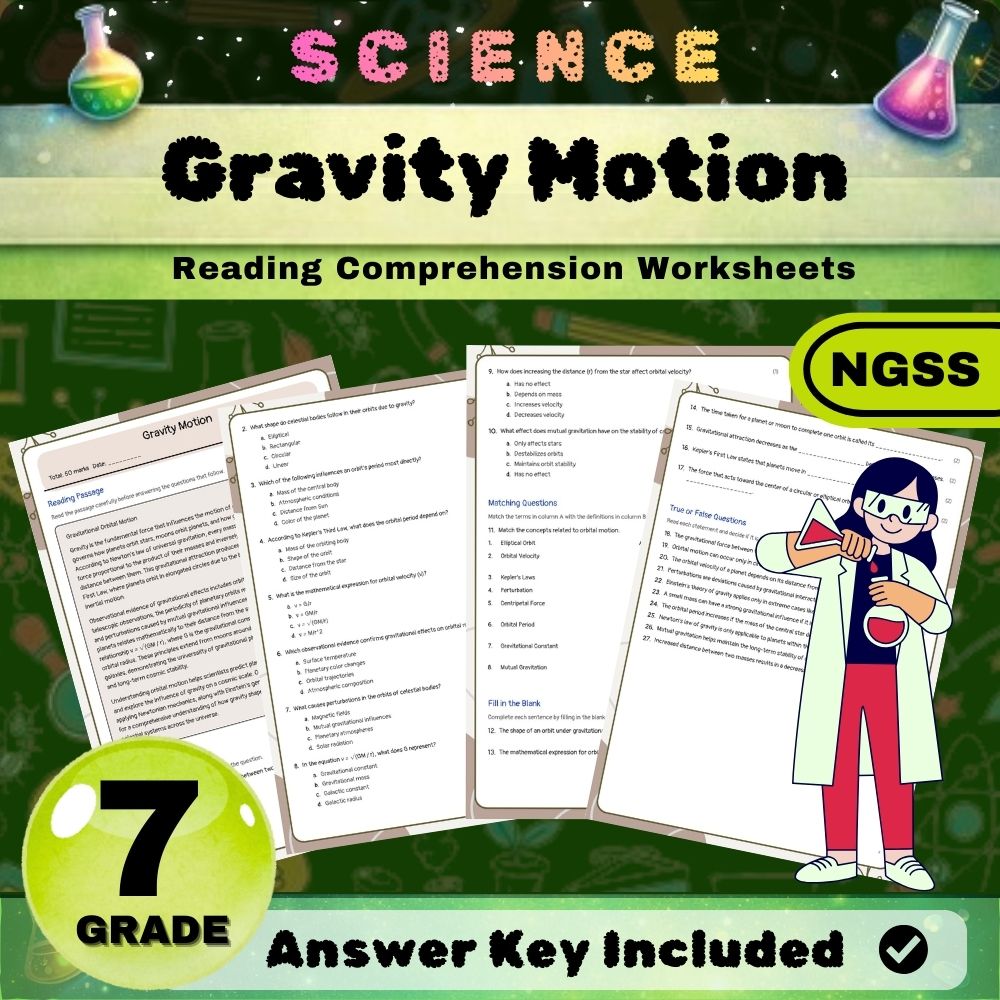
Grade 7 Science | Gravity & Orbital Motion Worksheet (Answer Key) NGSS
Created byMaple Path LearningLearning Objectives
- Understand how gravity governs orbital motion within the solar system and galaxies.
- Explain the relationship between mass, distance, and orbital velocity.
- Identify observational evidence such as orbital trajectories and Keplerian patterns that support gravitational models.
Instant download
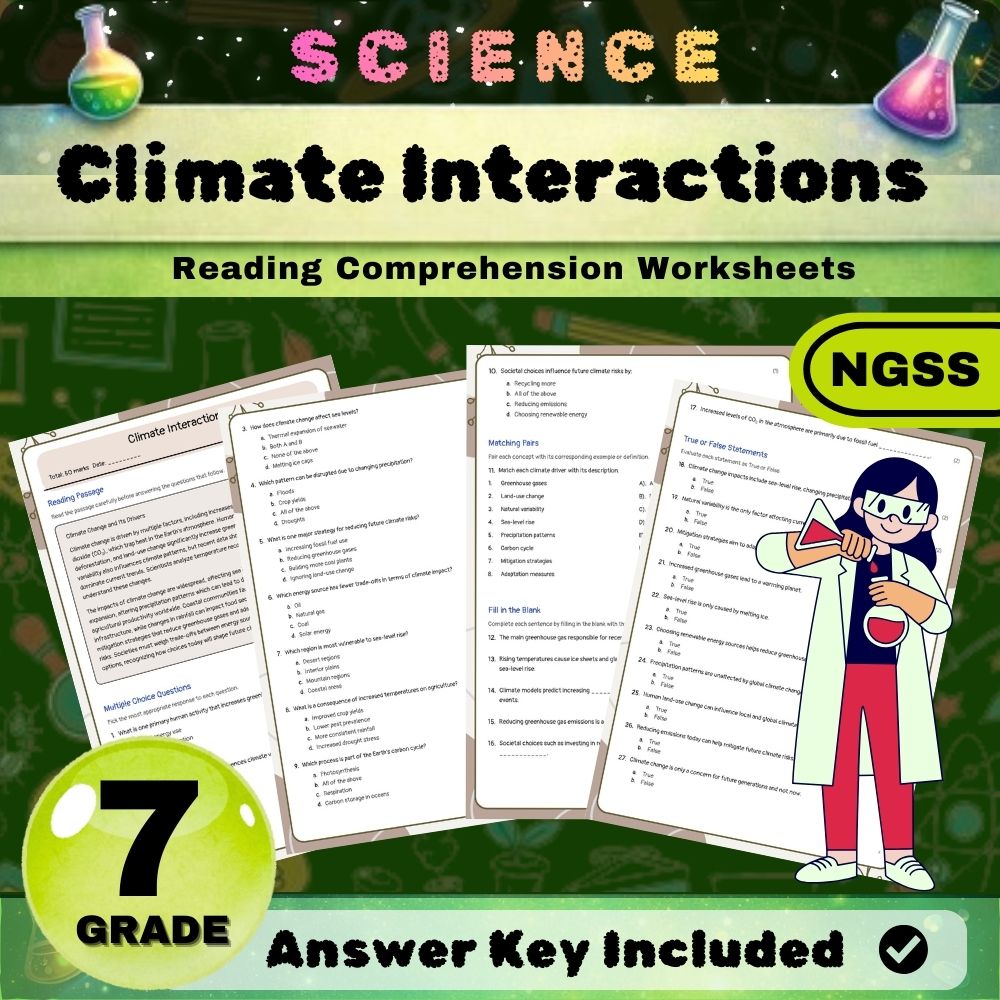
Grade 7 Science | Climate Interactions NGSS Worksheet (PDF)
Created byMaple Path LearningLearning Objectives
- Analyze evidence for climate change drivers including greenhouse gases, land-use change, and natural variability.
- Assess impacts of climate change on sea level, precipitation, agriculture, and human systems.
- Evaluate mitigation and adaptation strategies and understand societal influences on future climate risks.
Also included in: Grade 7 Science Bundle| Ecosystem Impacts & Climate Interactions NGSS Worksheets +1 more
Instant download
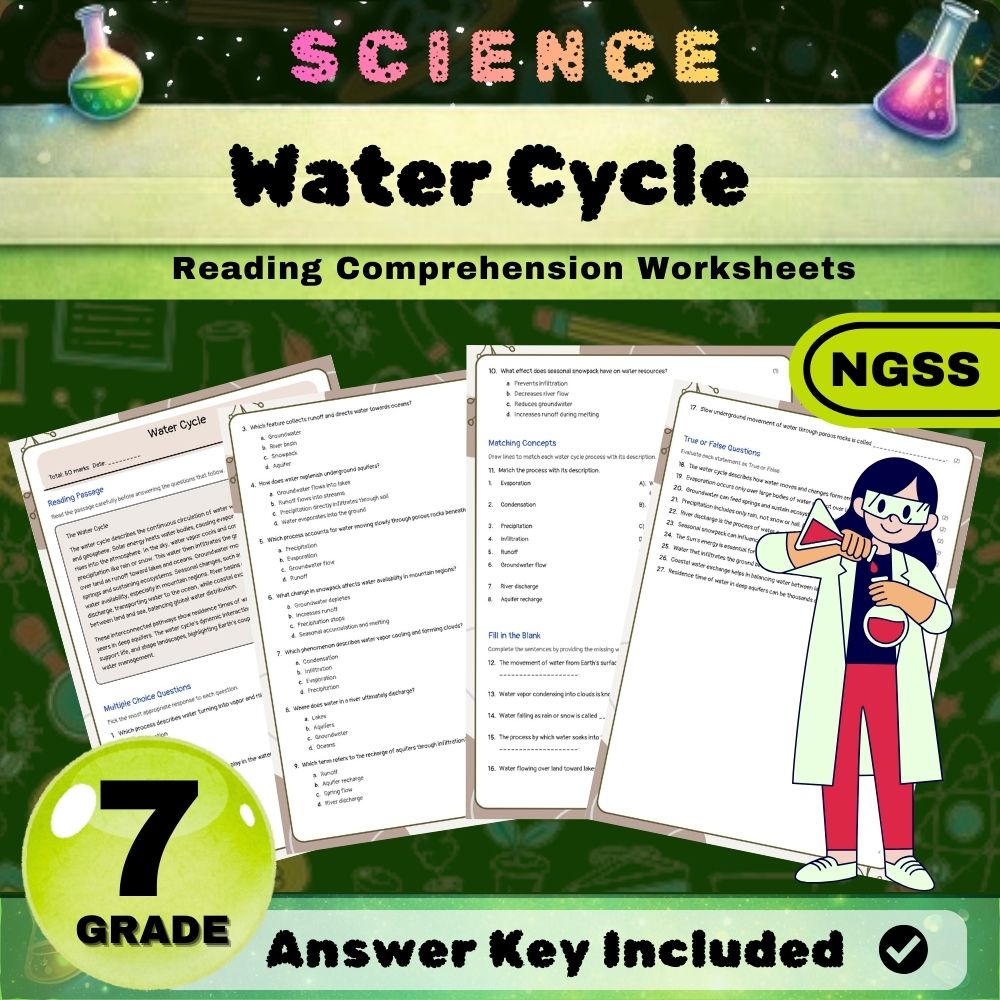
7th Grade Science | Water Cycle Worksheet (NGSS) + Answer Key for Teach
Created byMaple Path LearningLearning Objectives
- Describe the processes involved in the water cycle, including evaporation, condensation, precipitation, infiltration, runoff, and groundwater flow.
- Explain how solar energy and gravity drive water movement among Earth's spheres.
- Identify interactions such as river discharge to oceans, groundwater contributions to springs, and seasonal changes in snowpack.
Instant download

Text Summaries Worksheet Pack | Grade 7 ELA Practice and Assessment
 Created bySunny Desk Resources
Learning Objectives
- Identify the main idea and key details needed for an accurate summary
- Write a coherent summary that connects key events or points without adding new interpretations
- Use wording that reflects the original meaning while reducing supporting details
Also included in: Reading and Viewing Lesson Bundle | Grade 7 ELA | Alberta Framework +1 more
Instant download

Strategic Media Support Worksheet Grade 7 ELA Media Literacy Activity
Created bySunny Desk ResourcesLearning Objectives
- Identify how visuals support spoken information without distracting the audience.
- Explain how timing and alignment between a speaker’s words and visuals help listeners track claims and evidence.
- Use strategies to interpret key terms, timelines, comparisons, and evidence shown in media.
Also included in: Speaking and Listening Lesson Bundle | Grade 7 ELA | General ELA +1 more
Instant download
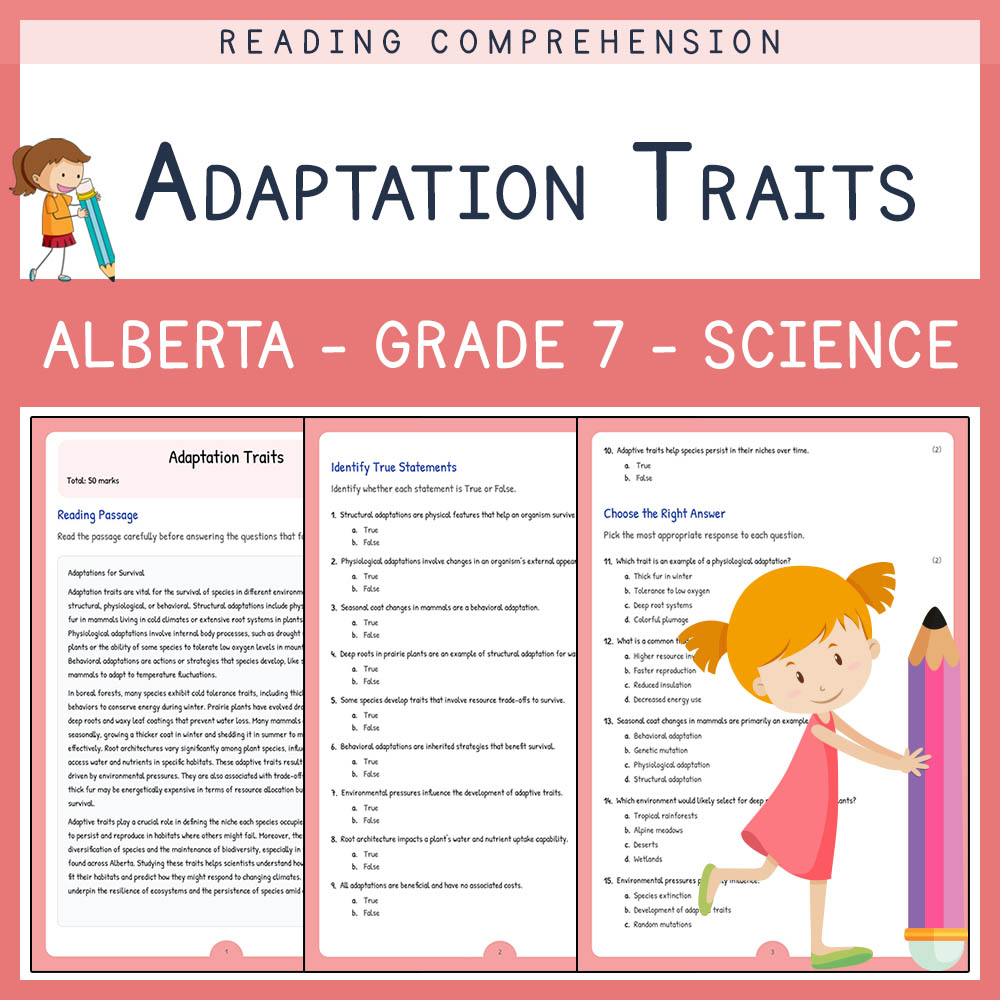
Grade 7 Science | Adaptation Traits Worksheet | Alberta Standard
 Created byLumora Learning
Learning Objectives
- Understand the concept of adaptive traits and how they contribute to survival.
- Identify different types of adaptations in various species.
- Analyze how traits are influenced by environmental pressures.
Also included in: Grade 7 Science | Interactions & Ecosystems Custom Bundle | Alberta
Instant download
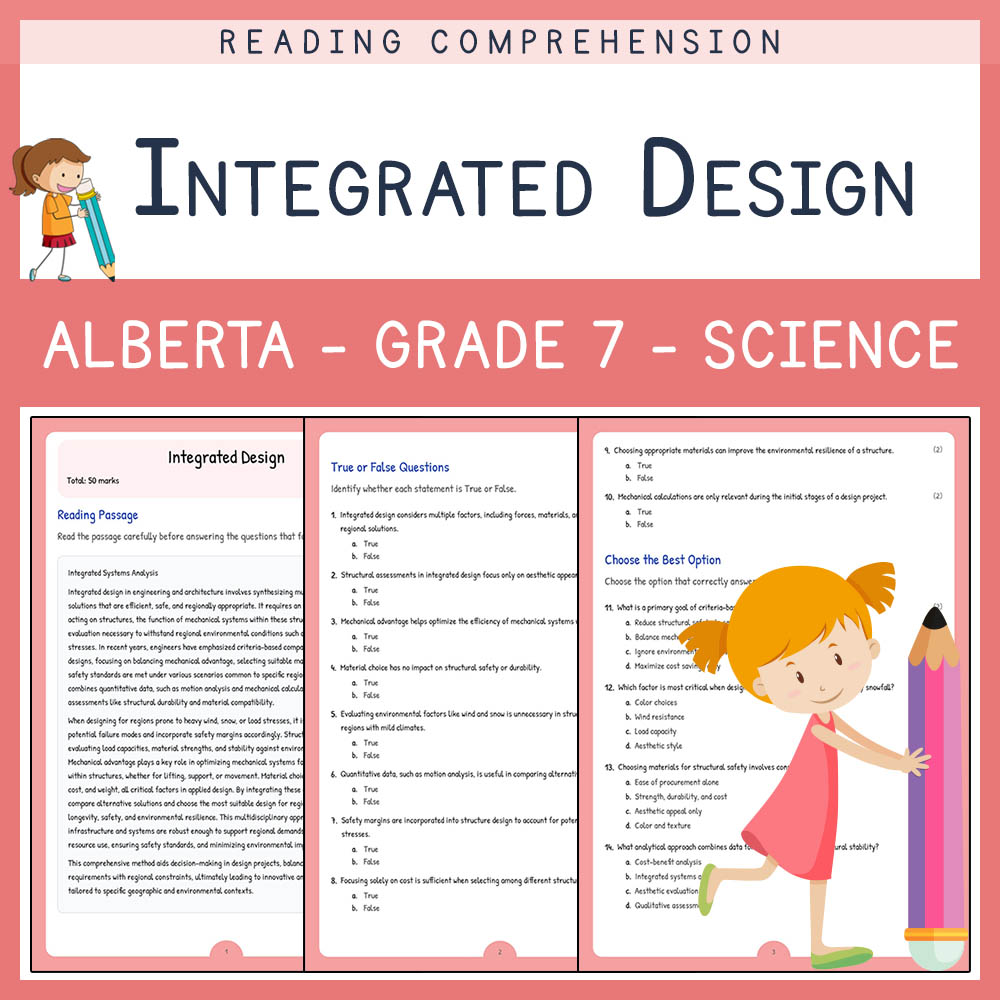
Grade 7 Science | Integrated Design | Alberta Standard
Created byLumora LearningLearning Objectives
- Analyze integrated systems by understanding forces, machine functions, and structural evaluation.
- Compare alternative design solutions based on criteria such as mechanical advantage, material choice, and safety.
- Synthesize motion data, mechanical calculations, and structural assessments for regional applications.
Instant download

Grade 7 Science | Evidence Arguments Worksheet | General Standards
Created byLumora LearningLearning Objectives
- Explain how scientific evidence supports a claim by connecting observations, data, and reasoning in a clear chain.
- Identify whether an argument uses specific evidence (data values, graph features, or direct observations) rather than unsupported statements.
- Revise an evidence argument to address limitations and avoid incorrect cause-and-effect claims.
Instant download

Grade 7 Science | Earth System Spheres Worksheet | General Standard-Aligned
Created byLumora LearningLearning Objectives
- Explain how the atmosphere, hydrosphere, geosphere, and biosphere interact as Earth’s systems
- Describe how matter and energy move between spheres through processes like evaporation, precipitation, weathering, and transpiration
- Predict how changes in one sphere can cause effects in other spheres using cause-and-effect reasoning
Instant download

Grade 7 Science | Earth System Interactions Worksheet | NGSSS Aligned
Created byLumora LearningLearning Objectives
- Explain how the geosphere, hydrosphere, atmosphere, and biosphere interact through the movement of matter and energy
- Use examples (erosion, precipitation, evaporation, and transpiration) to describe cause-and-effect links between Earth systems
- Identify how changes in one Earth system can lead to changes in another over time
Instant download
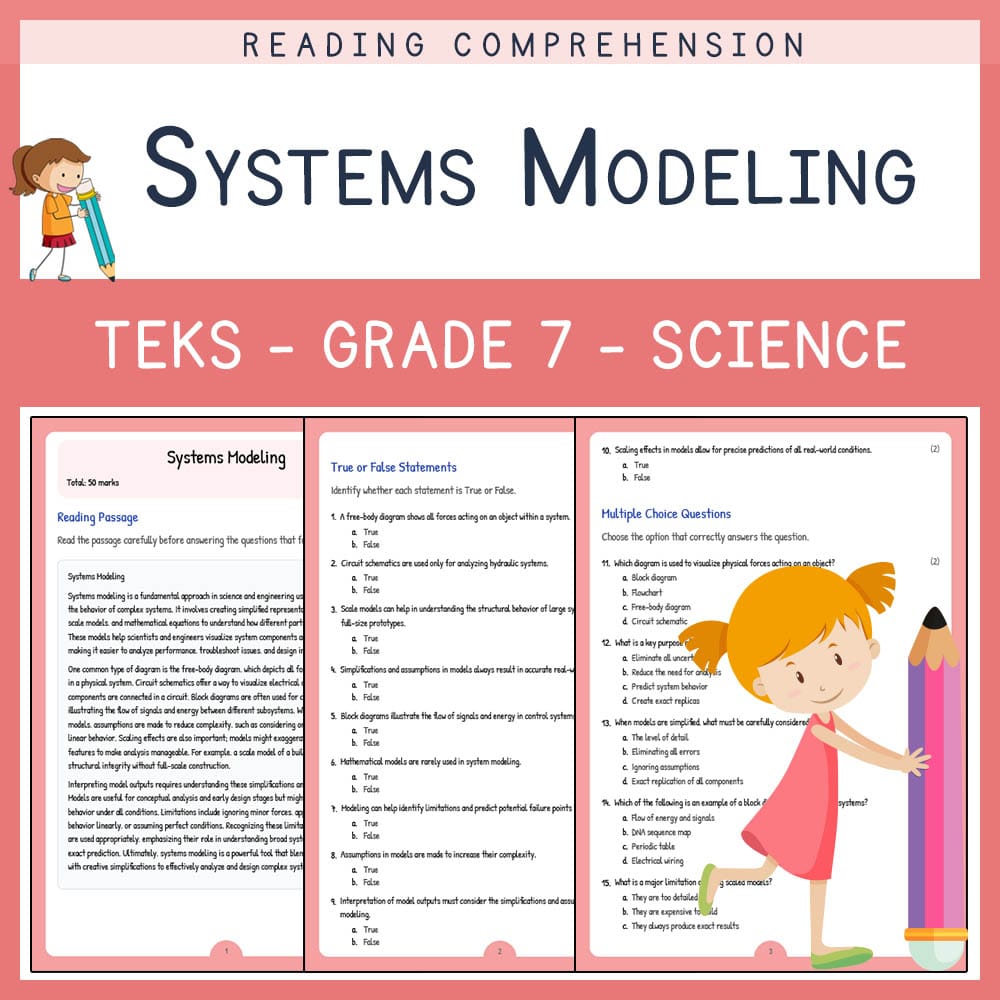
Grade 7 Science | Systems Modeling Worksheet | TEKS Alligned
Created byLumora LearningLearning Objectives
- Understand the purpose and types of systems models used in science and engineering.
- Identify various diagrams and visual representations such as free-body diagrams, circuit schematics, and block diagrams.
- Explain the importance of assumptions, scaling effects, and simplifications when creating models.
Instant download

Grade 7 Science | Genotype and Phenotype Worksheet | Florida NGSSS Aligned
Created byLumora LearningLearning Objectives
- Explain the difference between genotype and phenotype in terms of genes and observable traits
- Use dominant and recessive allele ideas to predict how genotype can affect phenotype
- Describe how environmental factors can influence phenotype even when genotype is known
Instant download

Grade 7 Science | Reaction Evidence Worksheet | NGSSS Aligned
Created byLumora LearningLearning Objectives
- Identify observable signs that indicate a chemical reaction has occurred
- Differentiate chemical change evidence from physical change evidence
- Connect particle rearrangement to macroscopic observations such as gas, precipitates, and color change
Instant download
Browse more categories
About Grade 7 Worksheets
Find Grade 7 worksheets covering math, ELA, science, and social studies. All 8,459 resources download instantly as PDFs for classwork, homework, or review.
MyTeachingSheets worksheets are made by real teacher-authors and checked before they go live. Download any as a print-ready PDF for lessons, homework, or independent practice — most include answer keys, and previews are always free.