
Grade 9 Worksheets
9,322 grade resources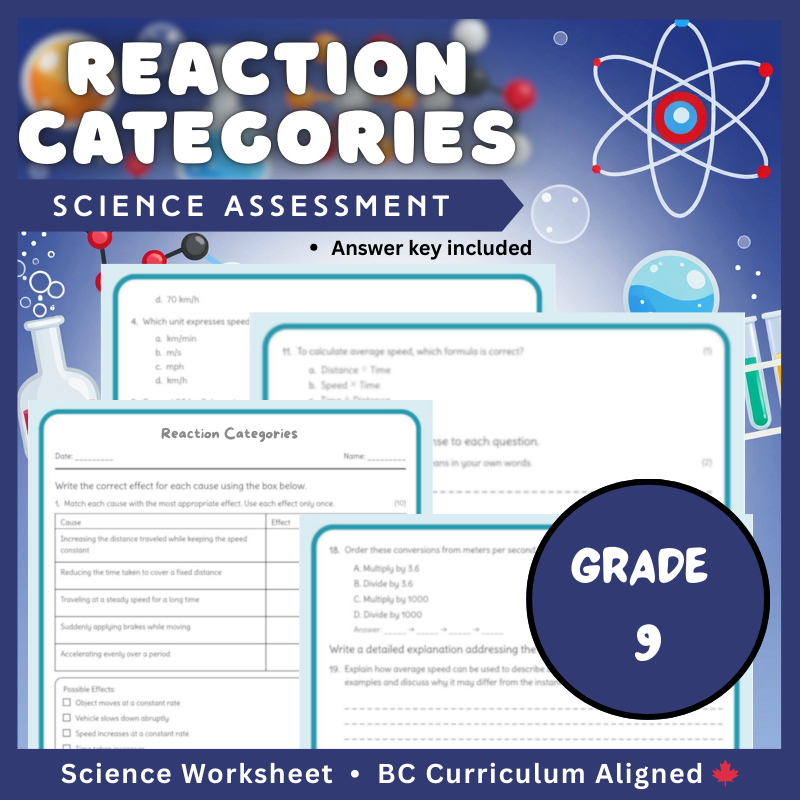
Grade 9 Science | Reaction Categories Worksheet (Answer Key) – BC Standard
 Created byBright Mind Resources
Learning Objectives
- Identify and describe the different categories of chemical reactions.
- Recognize characteristic reactant patterns and products in various reactions.
- Classify reactions into synthesis, decomposition, displacement, and combustion based on their features.
Instant download
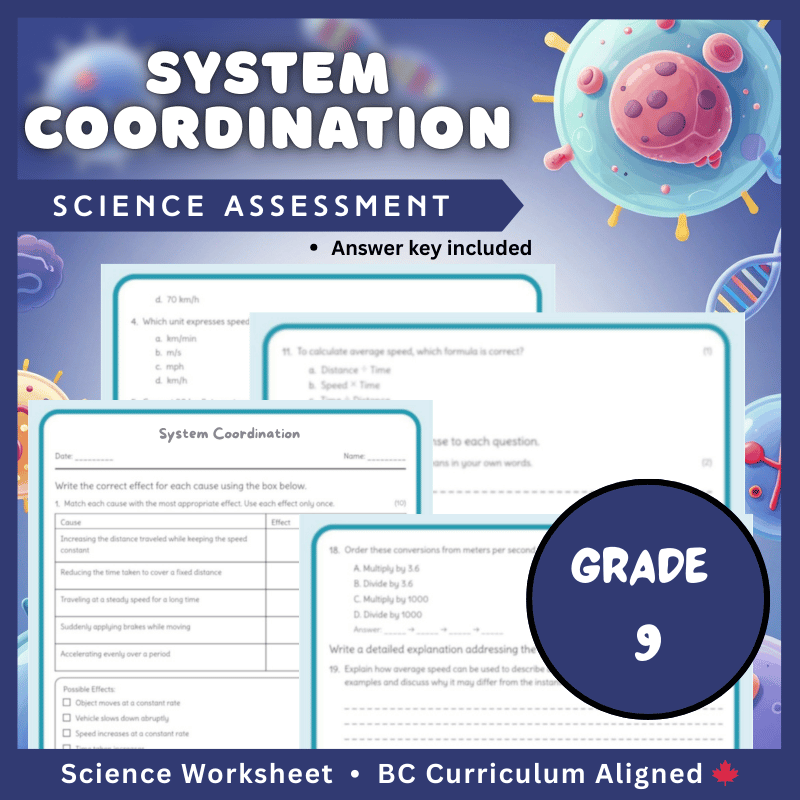
Grade 9 Science | System Coordination Worksheet (PDF) with Answer Key
Created byBright Mind ResourcesLearning Objectives
- Understand how feedback loops, redundancy, and cross-regulation contribute to multi-system coordination.
- Describe how exercise affects respiratory, cardiovascular, and metabolic responses via neural, hormonal, and local signals.
- Explain the impact of disruptions in one organ system on overall homeostasis and health outcomes.
Instant download
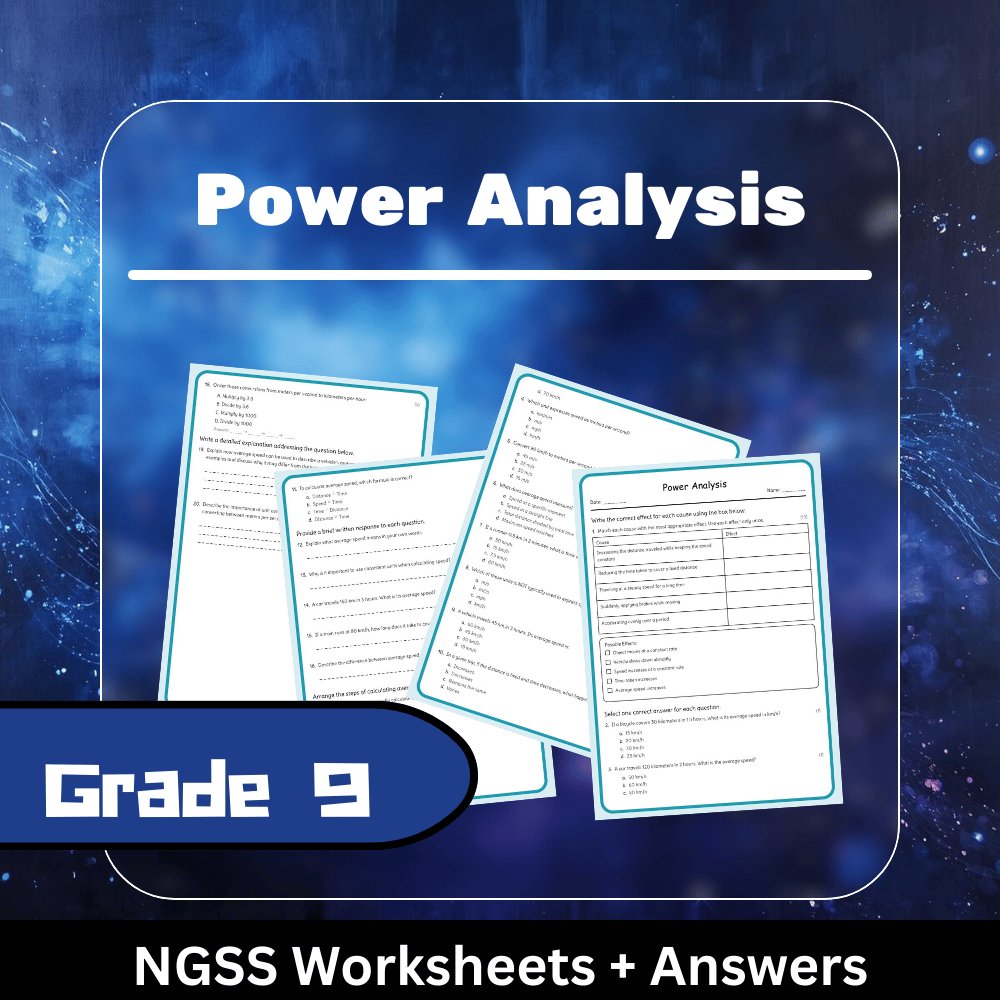
Grade 9 Science | Power Analysis Worksheet (Answer Key) aligned with NGSS
Created byBright Mind ResourcesLearning Objectives
- Understand the concepts of power, energy, and efficiency in technological systems.
- Calculate energy demand over time and assess system performance related to power output.
- Analyze energy loss and conversion efficiency in electrical systems.
Instant download
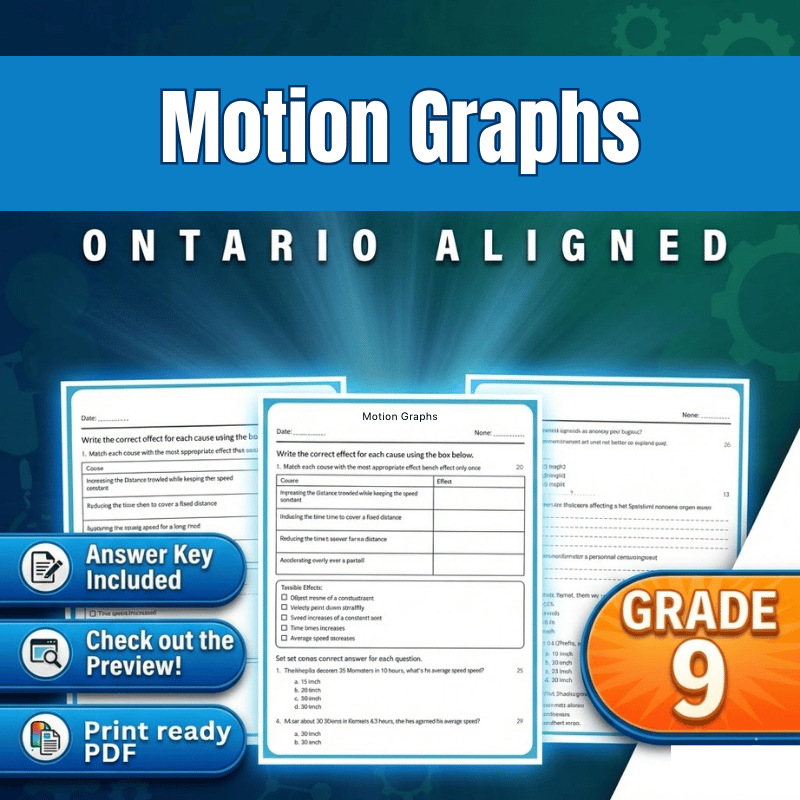
Grade 9 Science – Motion Graphs Worksheet (Ontario – Science) (PDF)
Created byBright Mind ResourcesLearning Objectives
- Interpret position–time and velocity–time graphs to describe motion.
- Understand the significance of slopes and areas under graphs in kinematics.
- Link graphical representations to algebraic formulas of velocity and acceleration.
Instant download
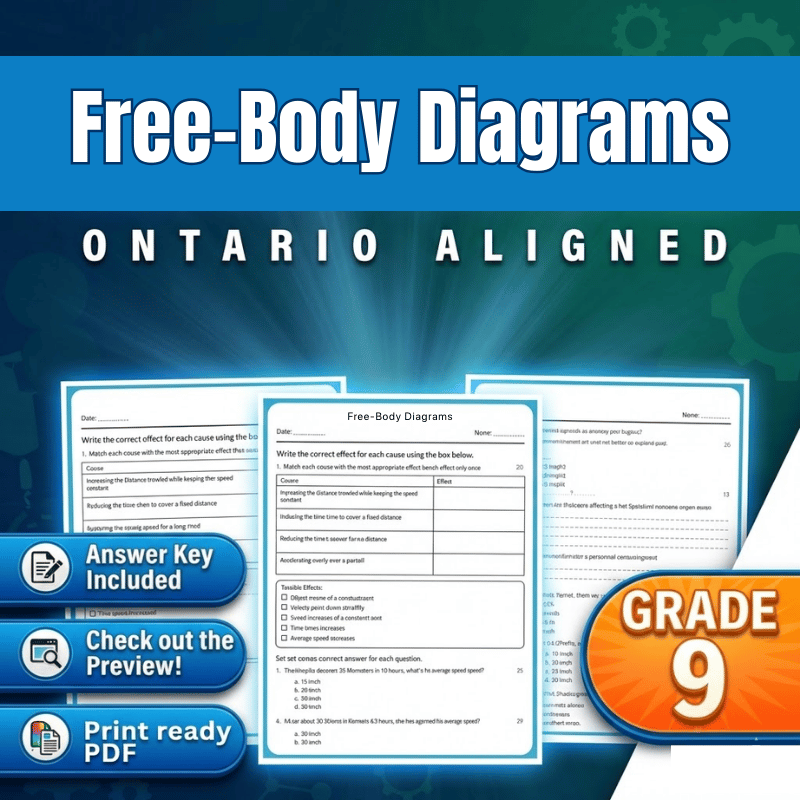
Grade 9 Science – Free-Body Diagrams Worksheet (Ontario, PDF)
Created byBright Mind ResourcesLearning Objectives
- Understand the conventions for representing forces in free-body diagrams.
- Identify and label common forces such as weight, normal force, tension, and friction.
- Apply free-body diagrams to analyze situations involving equilibrium and acceleration.
Instant download
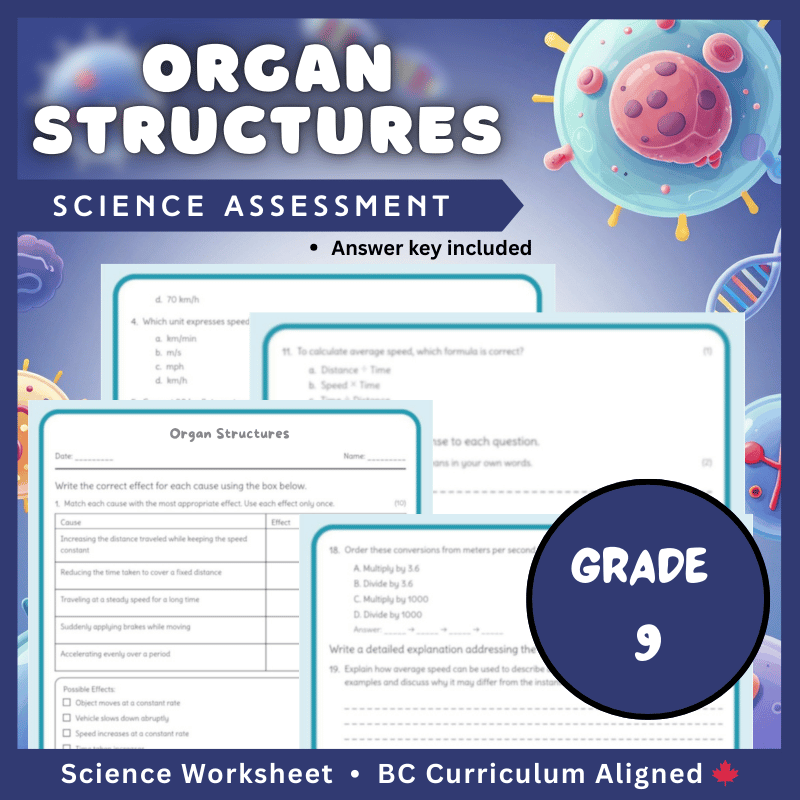
Grade 9 Science | Organ Structures Worksheet + Answer Key (PDF) | BC Standards
Created byBright Mind ResourcesLearning Objectives
- Identify the organization of tissues within organs.
- Understand how organs and systems collaborate to sustain the organism.
- Describe the relationship between tissue types, organs, and organ systems.
Instant download
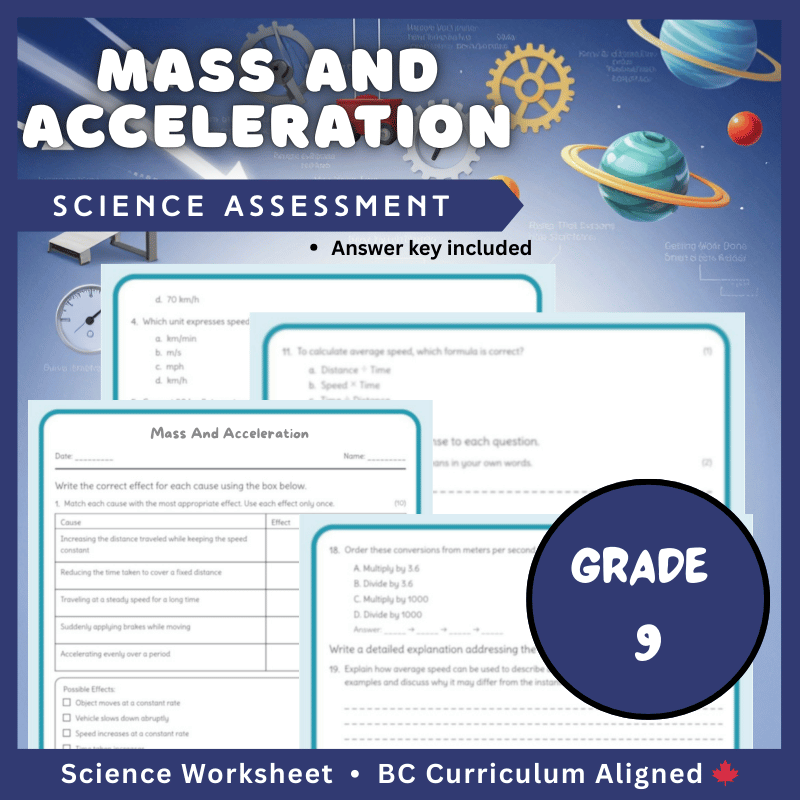
Grade 9 Science | Net Force Concept Worksheet (Answer Key) | BC Standards
Created byBright Mind ResourcesLearning Objectives
- Understand that net force is the vector sum of all forces acting on an object.
- Describe how balanced and unbalanced forces affect motion.
- Solve problems involving resolving forces into components and calculating resulting acceleration.
Instant download
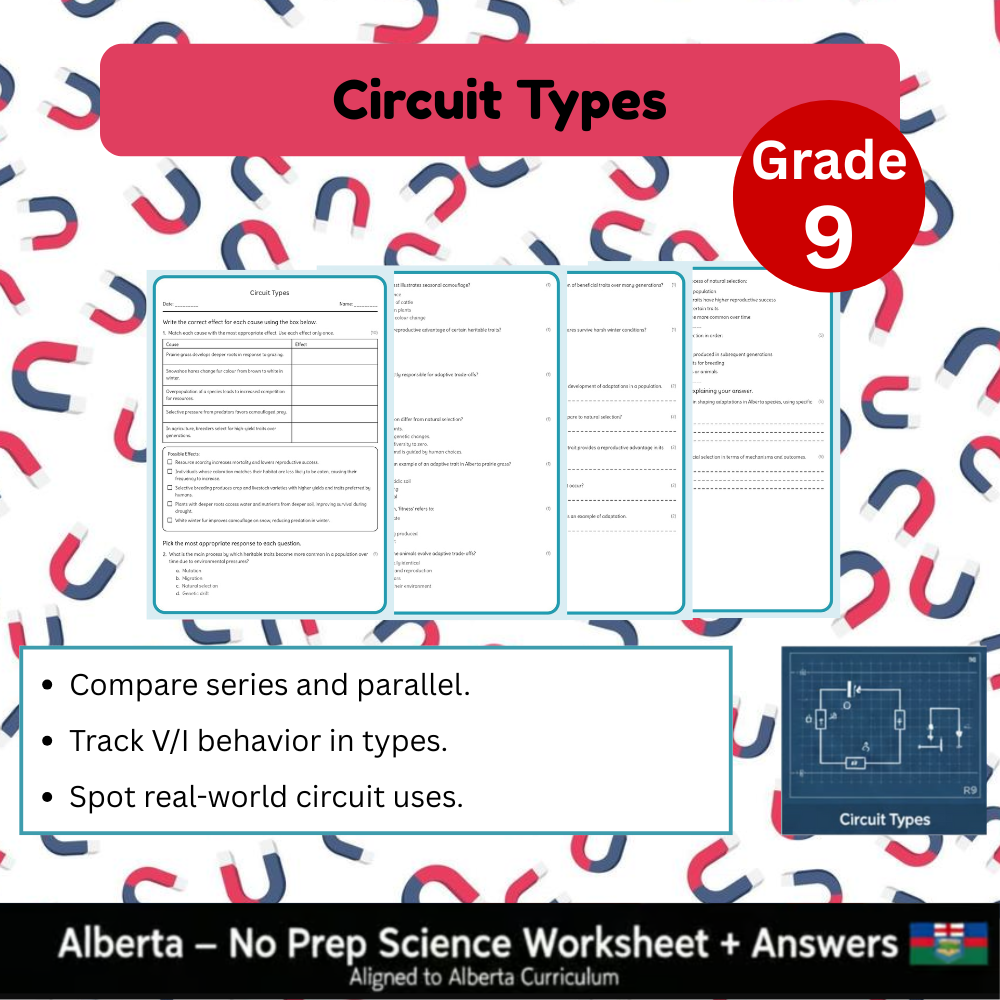
Grade 9 Science – Circuit Types Worksheet (PDF) | Alberta Standard
Created byBright Mind ResourcesLearning Objectives
- Understand the differences between series and parallel circuits.
- Identify how current and voltage behave in different circuit arrangements.
- Recognize real-world examples of series and parallel circuits.
Instant download
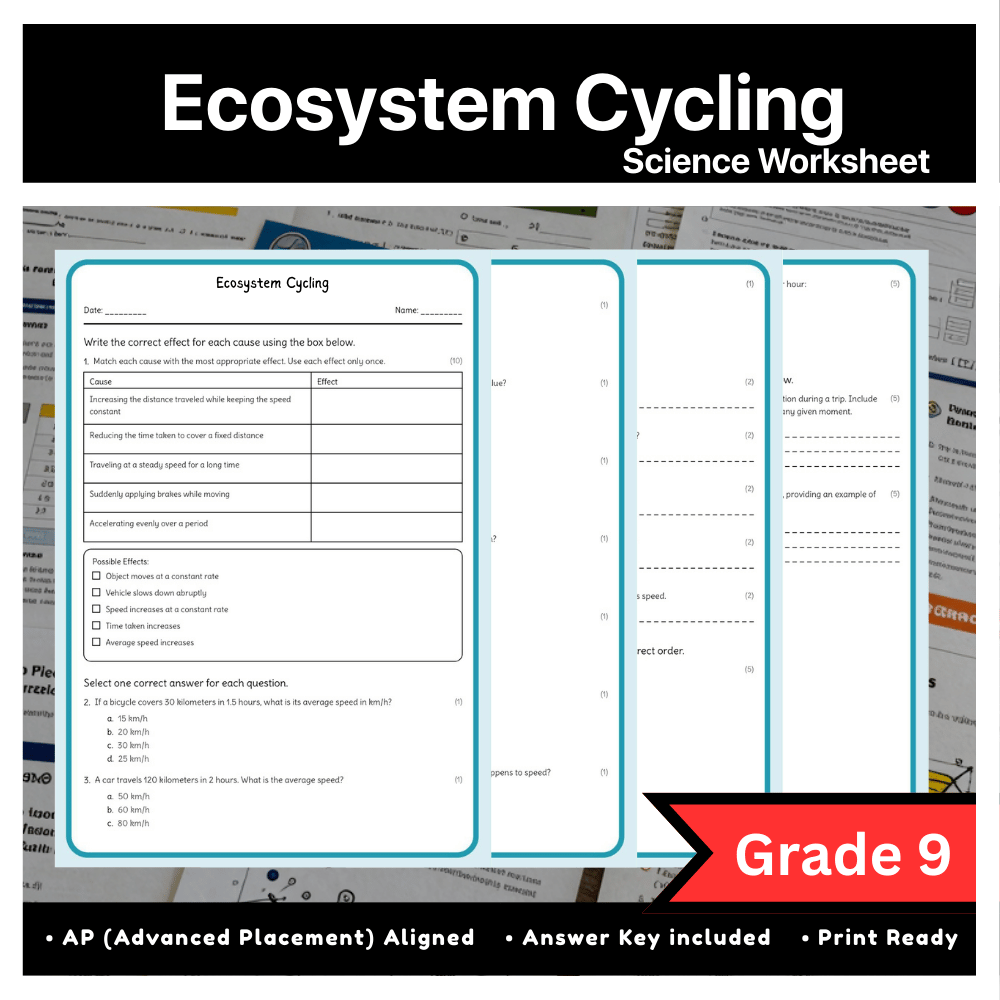
Grade 9 Science | Ecosystem Cycling Worksheet (AP Standards) PDF
Created byBright Mind ResourcesLearning Objectives
- Describe interactions among organisms and abiotic components that drive material cycling and energy flow in ecosystems.
- Explain the processes of carbon and nitrogen cycles, trophic transfer, and stoichiometric constraints.
- Analyze the impacts of perturbations such as nutrient enrichment, habitat alteration, and invasive species on ecosystem function.
Instant download
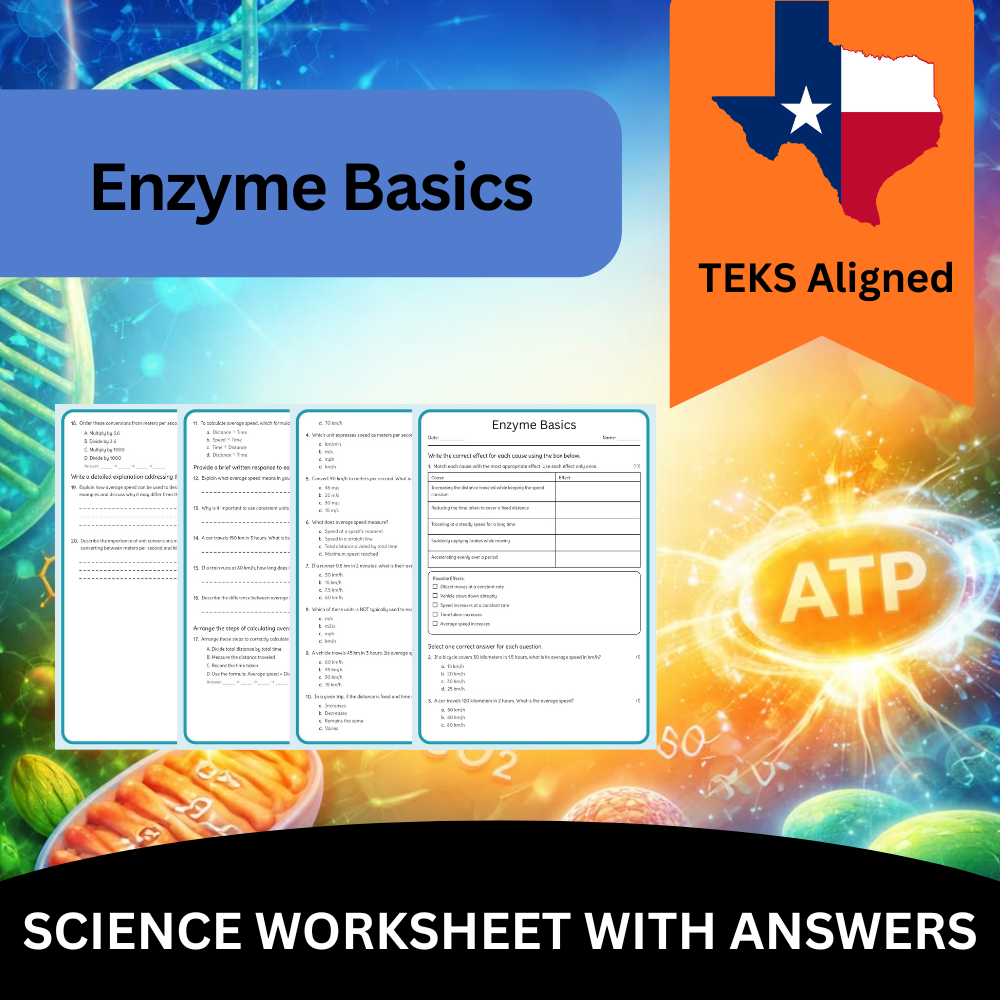
Grade 9 Science | Enzyme Basics Worksheet (Answer Key) – TEKS Standards
Created byBright Mind ResourcesLearning Objectives
- Explain how enzymes act as biological catalysts and lower activation energy in metabolic reactions.
- Understand the role of enzyme structure and active sites in substrate specificity and catalysis.
- Describe the functions of cofactors and coenzymes in enzyme activity.
Also included in: Grade 9 Science | Photosynthesis & Metabolic Pathways Unit Bundle (TEKS Aligned) +3 more
Instant download
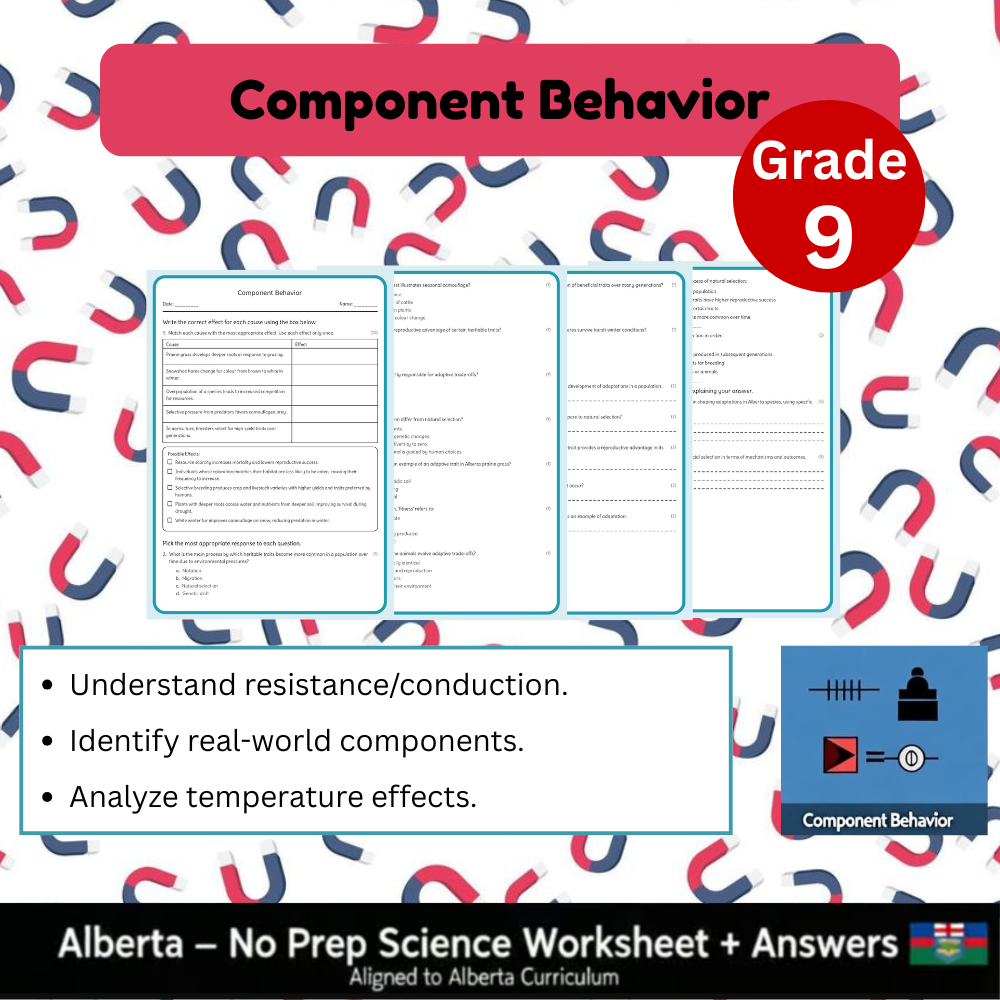
Grade 9 Science – Component Behavior Worksheet (PDF) – Alberta Standards
Created byBright Mind ResourcesLearning Objectives
- Understand how electrical components exhibit characteristic behaviors such as resistance and nonlinear conduction.
- Identify real-world examples of electrical components and their behaviors.
- Analyze the effects of temperature and load changes on component performance.
Instant download
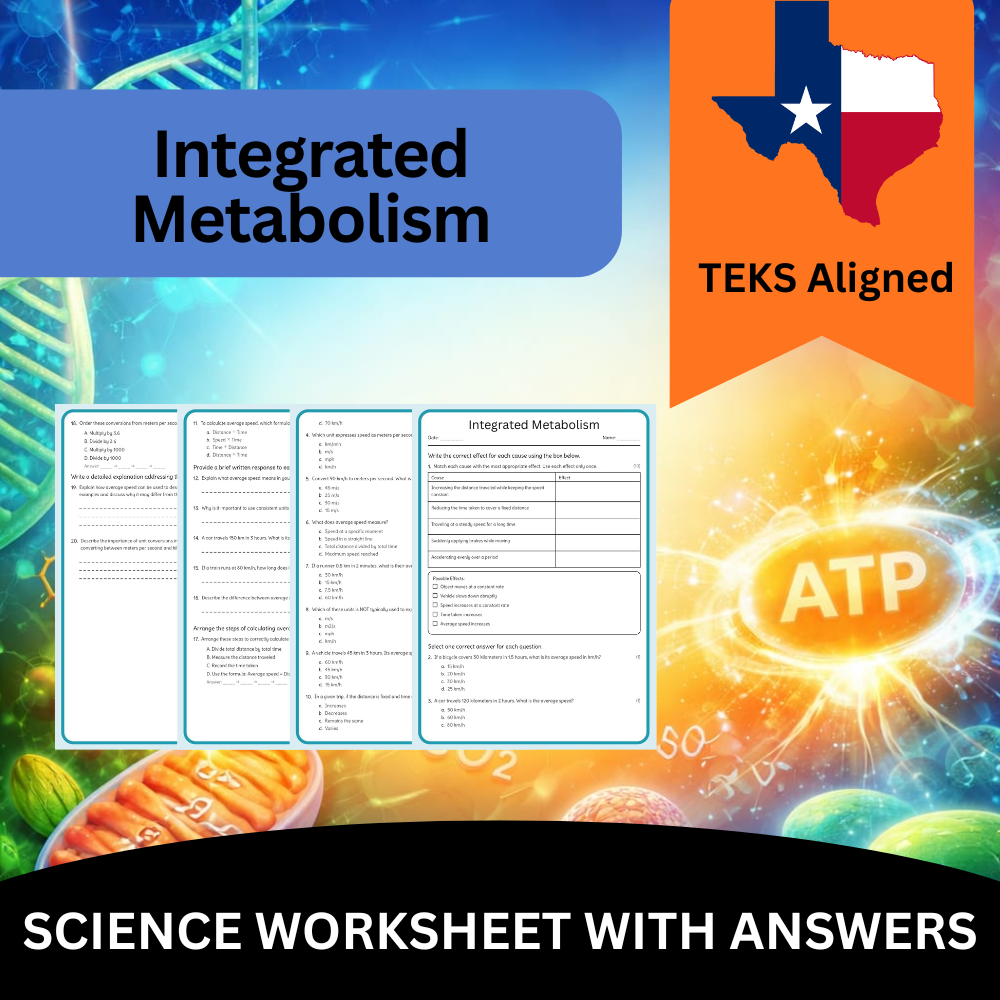
Grade 9 Science | Integrated Metabolism Worksheet – TEKS Standards (PDF)
Created byBright Mind ResourcesLearning Objectives
- Understand how catabolic and anabolic pathways are interconnected
- Explain how hormonal signals and nutrient availability influence metabolism
- Describe rapid and long-term metabolic regulation mechanisms
Also included in: Grade 9 Science | Photosynthesis & Metabolic Pathways Unit Bundle (TEKS Aligned) +3 more
Instant download
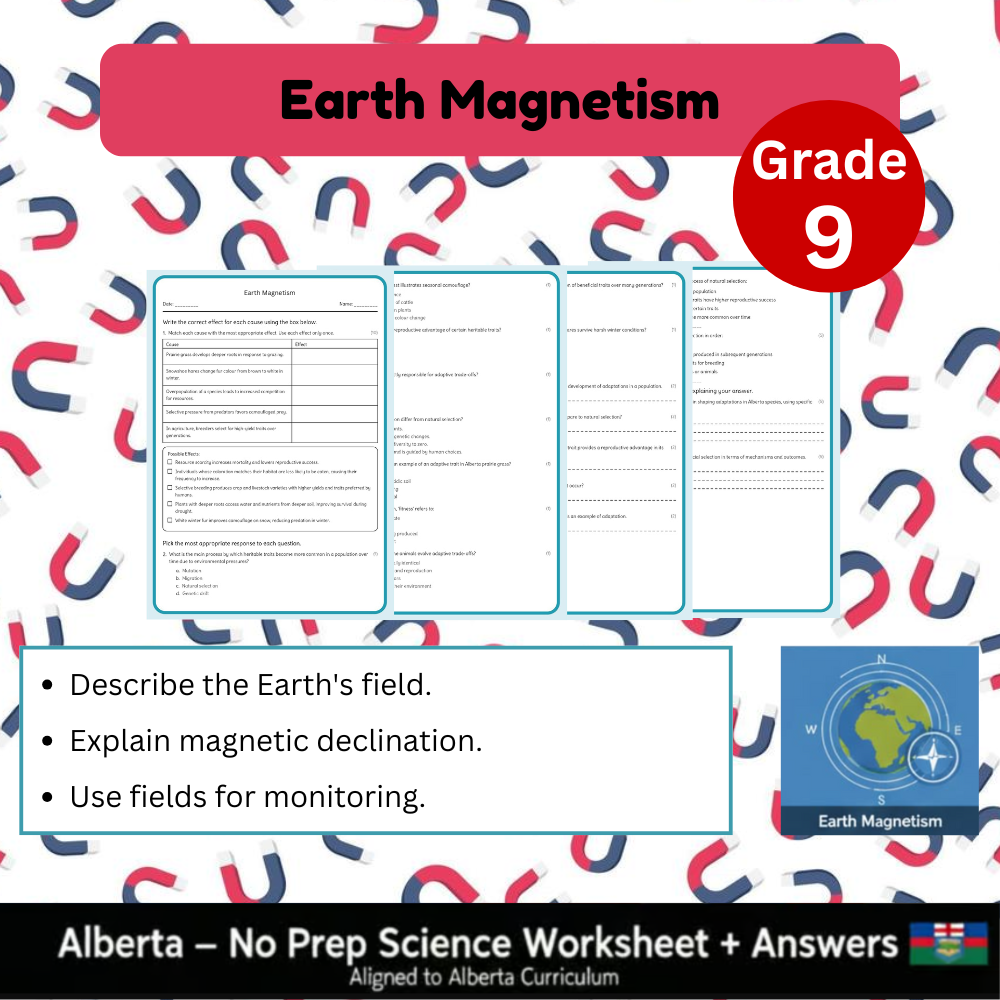
Grade 9 Science | Earth Magnetism (Worksheet + Answer Key) – Alberta Standards
Created byBright Mind ResourcesLearning Objectives
- Understand the origin and nature of Earth's magnetic field.
- Describe regional variation in magnetic declination and its implications.
- Explain how magnetic field measurements are used in geological and environmental monitoring.
Instant download
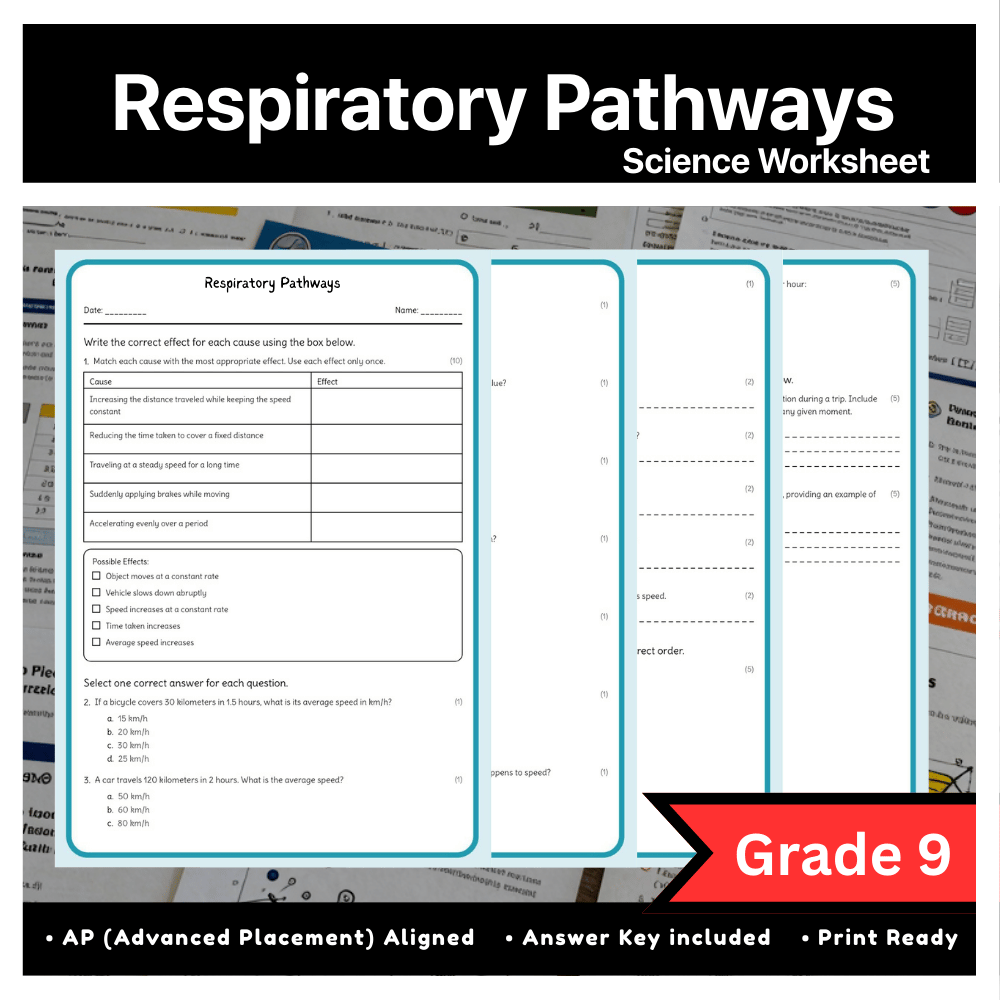
Grade 9 Science | Respiratory Pathways Worksheet (AP Standard) – PDF
Created byBright Mind ResourcesLearning Objectives
- Describe the main pathways involved in cellular respiration, including glycolysis, the citric acid cycle, and electron transport chain.
- Explain how substrate-level and oxidative phosphorylation contribute to ATP production.
- Compare aerobic and anaerobic respiration in terms of ATP yield and metabolic outcomes.
Instant download
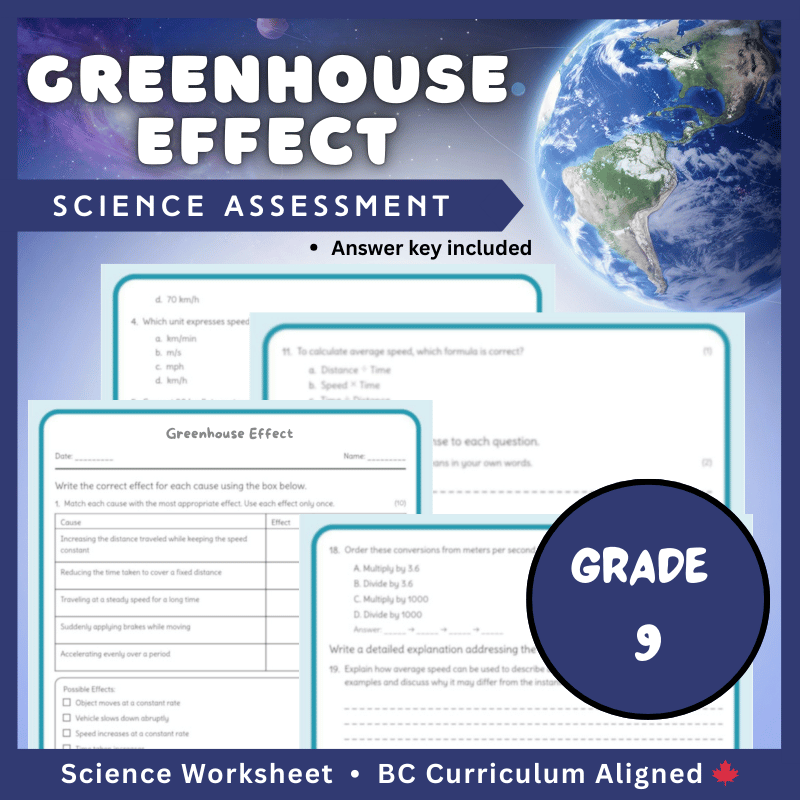
Grade 9 Science | Understanding the Greenhouse Effect Worksheet (Answer Key)
Created byBright Mind ResourcesLearning Objectives
- Understand how greenhouse gases trap outgoing radiation and influence Earth's surface temperature.
- Identify natural and human sources of greenhouse gases and their effects on climate.
- Explain how small changes in atmospheric composition can alter the energy balance and climate responses.
Instant download
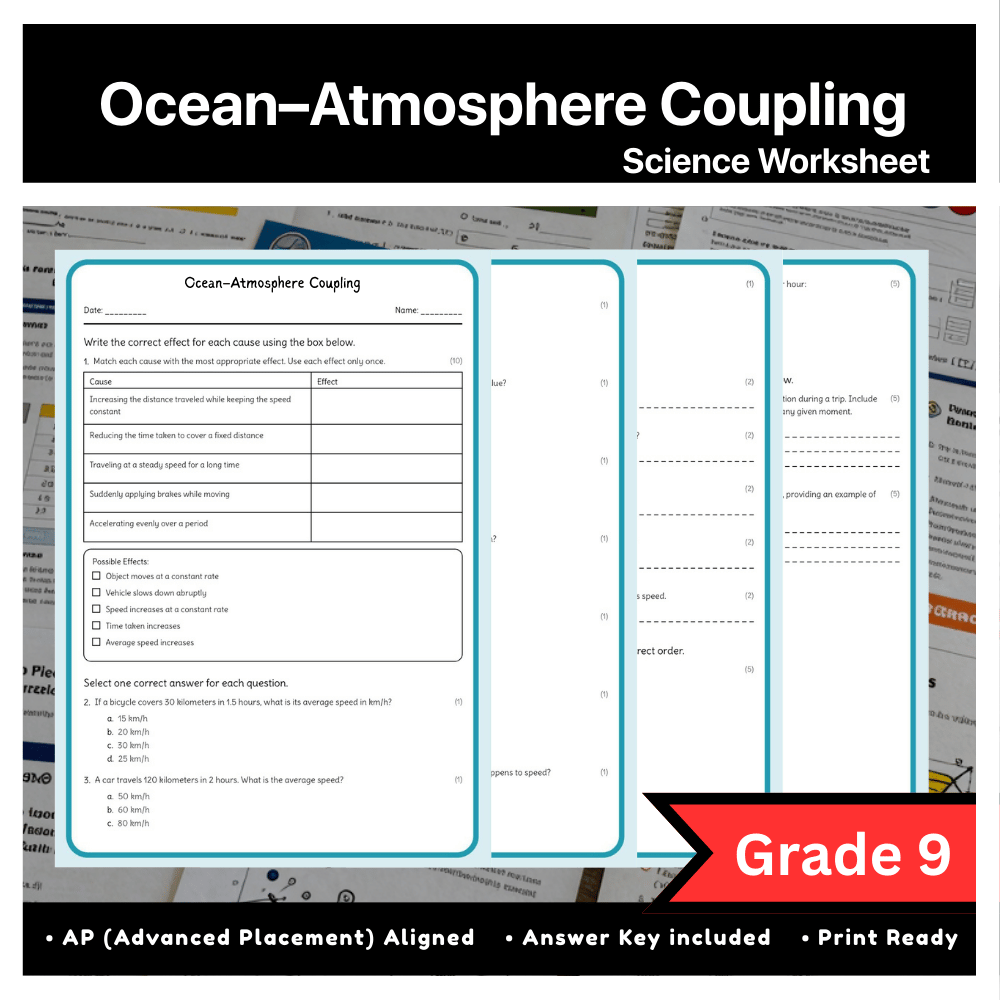
Grade 9 Science | Ocean-Atmosphere Coupling Worksheet (AP Standards) PDF
Created byBright Mind ResourcesLearning Objectives
- Understand the mechanisms linking ocean surface temperatures and atmospheric variability.
- Identify phenomena such as ENSO and their impacts on regional and global climate patterns.
- Describe methods like time-series analysis and lag-correlation to study ocean-atmosphere interactions.
Instant download
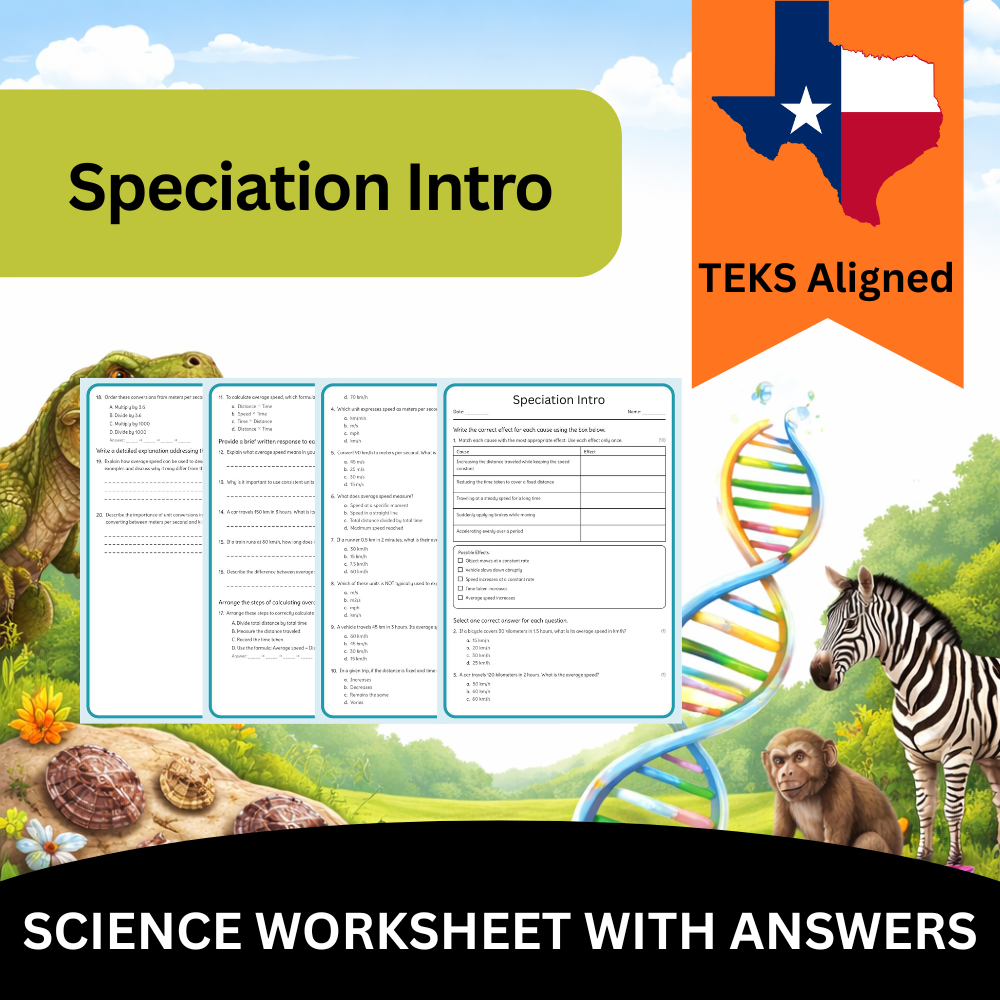
Grade 9 Science | Speciation Introduction Worksheet (Answer Key) – TEKS Aligned
Created byBright Mind ResourcesLearning Objectives
- Understand the process of speciation and how it contributes to biodiversity.
- Identify different reproductive barriers and mechanisms involved in speciation.
- Differentiate between allopatric and sympatric speciation and their causes.
Also included in: Grade 9 Science Unit | Evolution, Speciation & Genetics Worksheet Pack - TEKS +3 more
Instant download
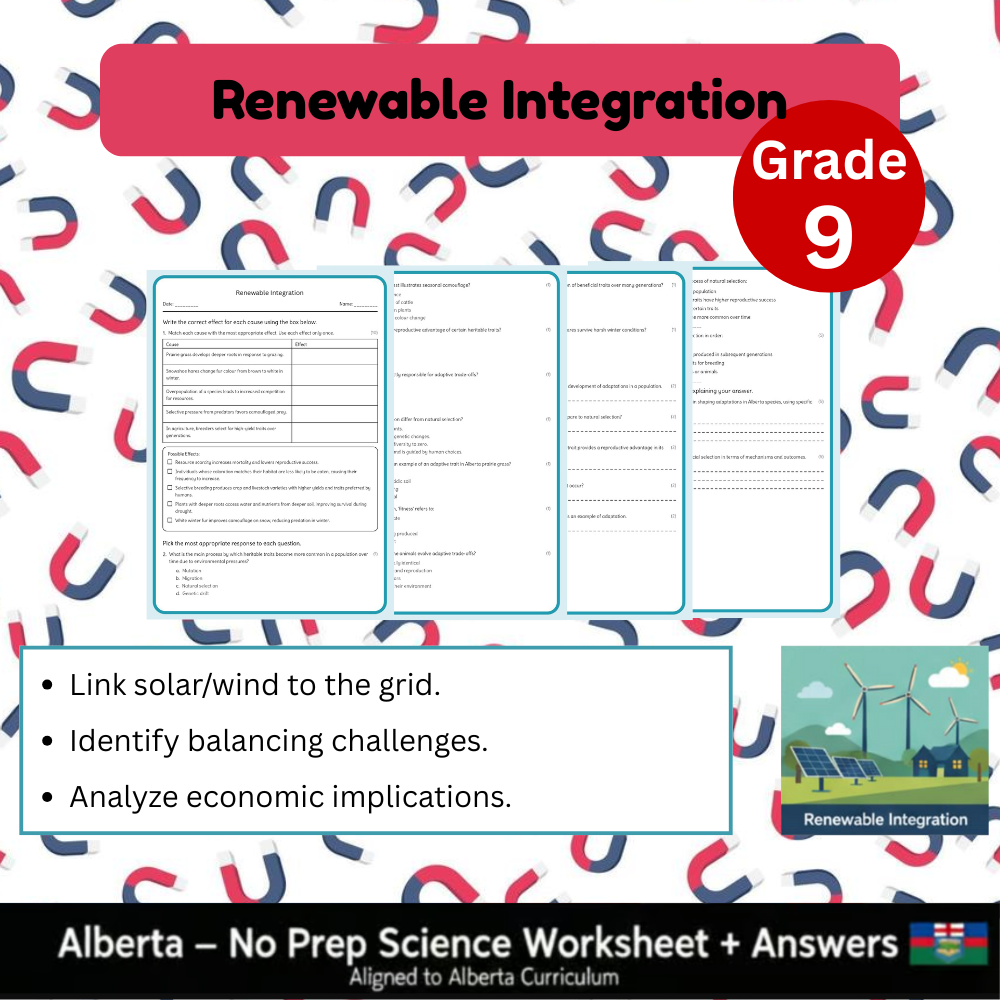
Grade 9 Science – Renewable Integration Worksheet (PDF) – Alberta Standards
Created byBright Mind ResourcesLearning Objectives
- Understand how wind and solar resources are integrated into the electrical grid.
- Identify challenges such as intermittency and balancing mechanisms.
- Analyze the environmental and economic implications of renewable energy sources.
Instant download
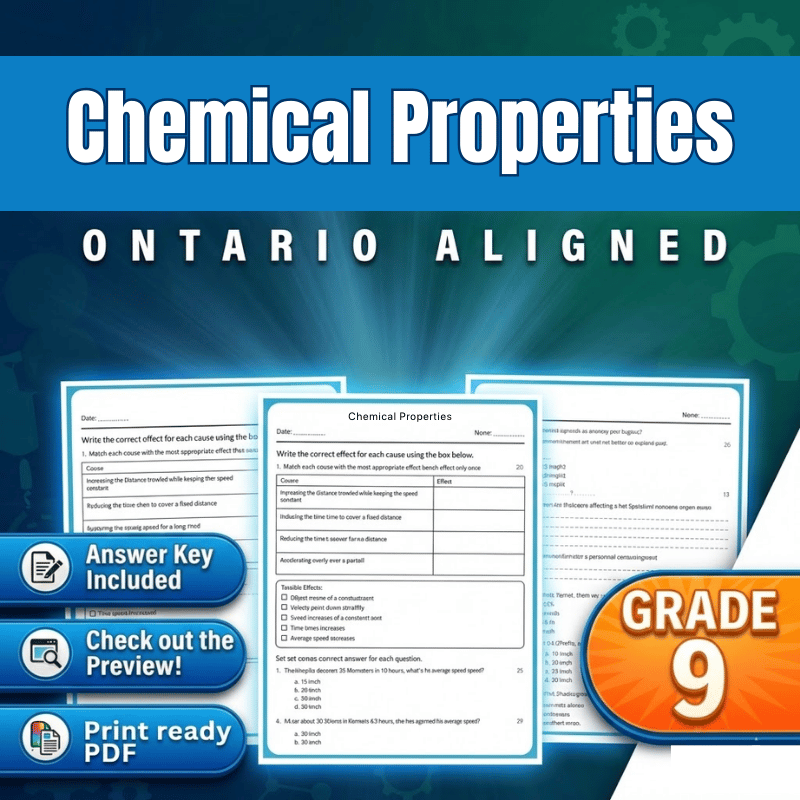
Grade 9 Science | Chemical Properties Worksheet (Ontario Standards) (PDF)
Created byBright Mind ResourcesLearning Objectives
- Define chemical properties and identify examples in real substances.
- Describe how observations such as gas evolution and color change signify chemical reactions.
- Differentiate between physical and chemical changes based on reaction products.
Instant download
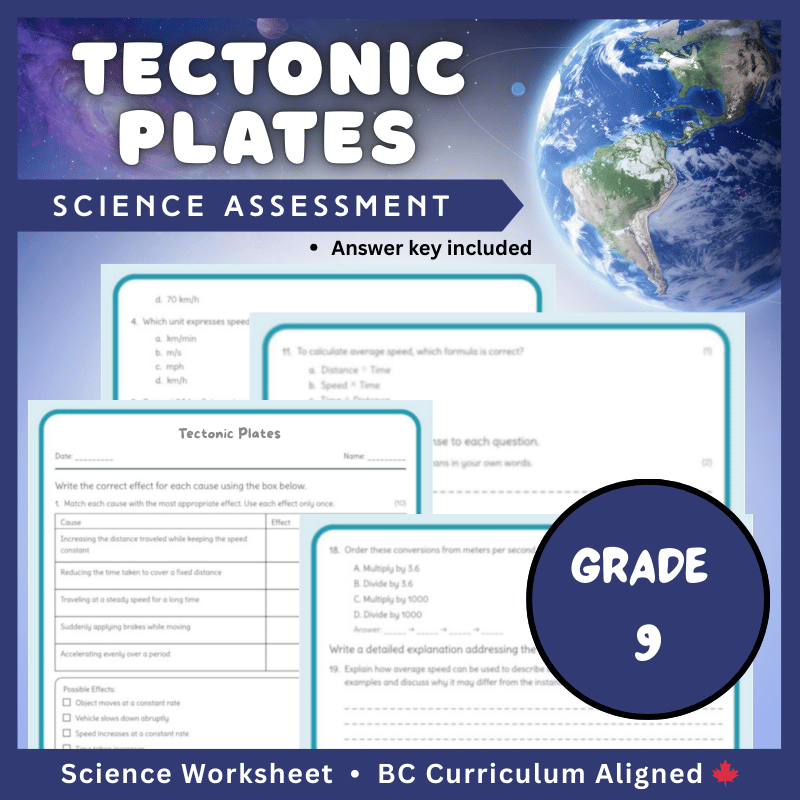
Grade 9 Science | Tectonic Plates Worksheet (Answer Key) – BC Standards
Created byBright Mind ResourcesLearning Objectives
- Understand the composition and movement of Earth's tectonic plates.
- Identify the forces responsible for plate movements such as mantle convection, slab pull, and ridge push.
- Explain how plate interactions cause earthquakes, volcanoes, and mountain formations.
Instant download
Grade 9 Science | Mineral Properties Worksheet (Ontario, PDF)
Created byBright Mind ResourcesLearning Objectives
- Identify and describe diagnostic physical properties of common rock-forming minerals.
- Explain how mineral composition relates to formation environment and stability.
- Connect mineral assemblages to petrogenetic histories and economic significance.
Instant download
Grade 9 Science – Energy Pathways Worksheet (Answer Key) | AP Standard
Created byBright Mind ResourcesLearning Objectives
- Describe the main processes involved in energy transfer within the atmosphere and oceans.
- Interpret diagrams and tables illustrating the global energy budget and fluxes.
- Explain how differential heating influences atmospheric circulation and climate patterns.
Instant download
Grade 9 Science | Rock Cycle Worksheet (AP Standards) – Science 1 (PDF)
Created byBright Mind ResourcesLearning Objectives
- Describe the processes involved in the rock cycle, including melting, crystallization, weathering, transport, deposition, and metamorphism.
- Explain the physical and chemical mechanisms that drive transformations among igneous, sedimentary, and metamorphic rocks.
- Relate rock-forming processes to tectonic settings such as mid-ocean ridges, subduction zones, and continental interiors.
Instant download
Grade 9 Science | Cell Components Worksheet (Ontario Standard) (PDF)
Created byBright Mind ResourcesLearning Objectives
- Identify major organelles of eukaryotic cells and their functions.
- Explain how structural features like membrane folding and compartmentalization influence cell activity.
- Relate the features of cell components to their specific roles in metabolism and exchange processes.
Instant download
Grade 9 Science | Mixtures and Solutions Worksheet (PDF) – Alberta Standards
Created byBright Mind ResourcesLearning Objectives
- Differentiate between heterogeneous mixtures and homogeneous solutions.
- Identify key components such as solute and solvent in a mixture.
- Understand how concentration affects the appearance and behavior of solutions.
Instant download
Grade 9 Science | Graphing Motion (Worksheet + Answer Key) – Alberta Standards
Created byBright Mind ResourcesLearning Objectives
- Understand how to interpret displacement–time, velocity–time, and acceleration–time graphs.
- Learn how the slope of a graph relates to physical quantities like speed and acceleration.
- Identify curved segments on graphs to recognize changing acceleration.
Instant download
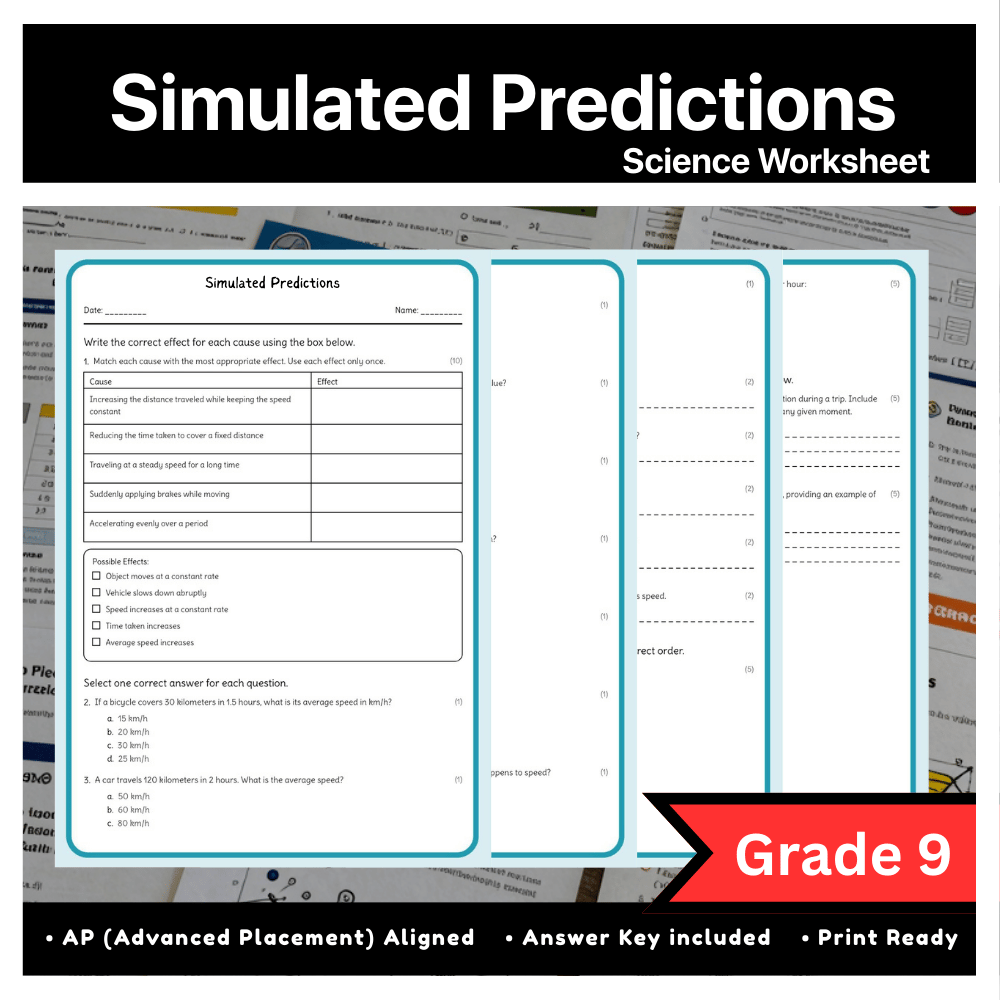
Grade 9 Science – Simulated Predictions Worksheet + Answer Key | AP Standard
Created byBright Mind ResourcesLearning Objectives
- Explain the role of simple computational simulations and numerical models in generating predictions.
- Identify how parameters influence simulation outcomes and the importance of scenario comparison.
- Describe how ensembles and visualizations represent forecast uncertainty.
Instant download
Grade 9 Science | Speciation Processes Worksheet - Answer Key (NGSS Standards)
Created byBright Mind ResourcesLearning Objectives
- Understand the mechanisms that lead to new species formation, including reproductive isolation and genetic divergence.
- Identify and differentiate between allopatric and sympatric speciation models and their examples.
- Explain the significance of hybrid zones, polyploidy, and adaptive radiation in speciation.
Instant download
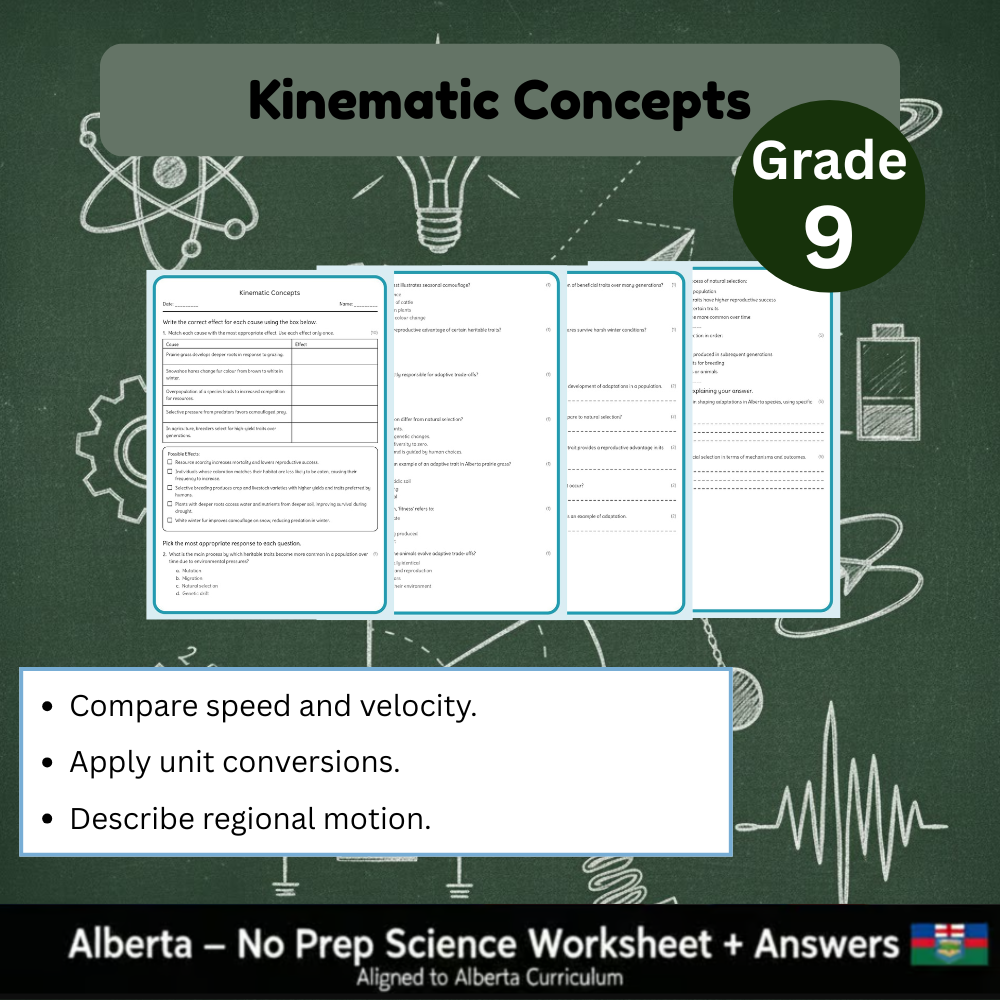
Grade 9 Science | Kinematic Concepts Worksheet (PDF) – Alberta Standards
Created byBright Mind ResourcesLearning Objectives
- Define and differentiate among speed, velocity, and acceleration
- Apply unit conversions and sign conventions in motion analysis
- Describe real-world examples of kinematic measures in regional contexts
Instant download
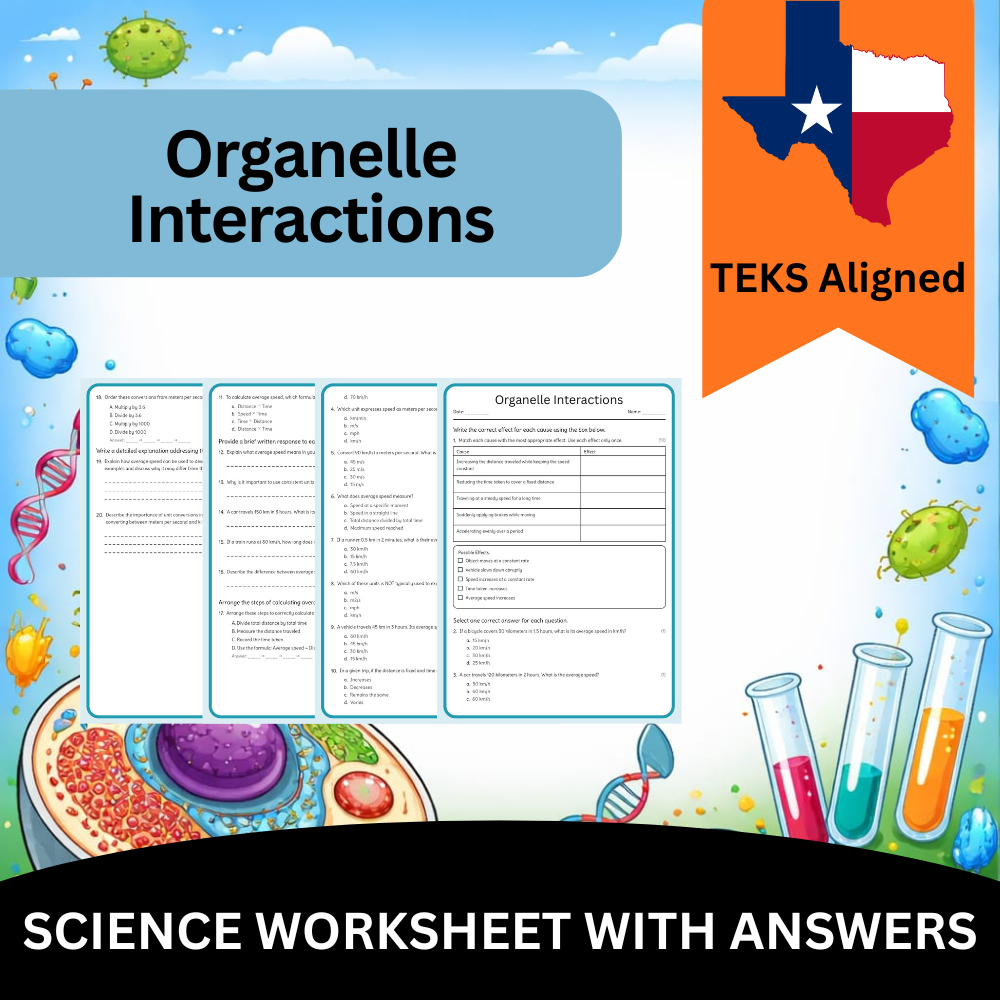
Grade 9 Science | Organelles Interactions Worksheet – TEKS Standards (PDF)
Created byBright Mind ResourcesLearning Objectives
- Understand how different organelles coordinate to support cellular functions.
- Identify the pathway of genetic information and protein trafficking within a cell.
- Explain the roles of mitochondria, lysosomes, and peroxisomes in maintaining homeostasis.
Also included in: Grade 9 Science Unit | Cell Structures & Transport Mechanisms Pack(TEKS-Aligned) +3 more
Instant download
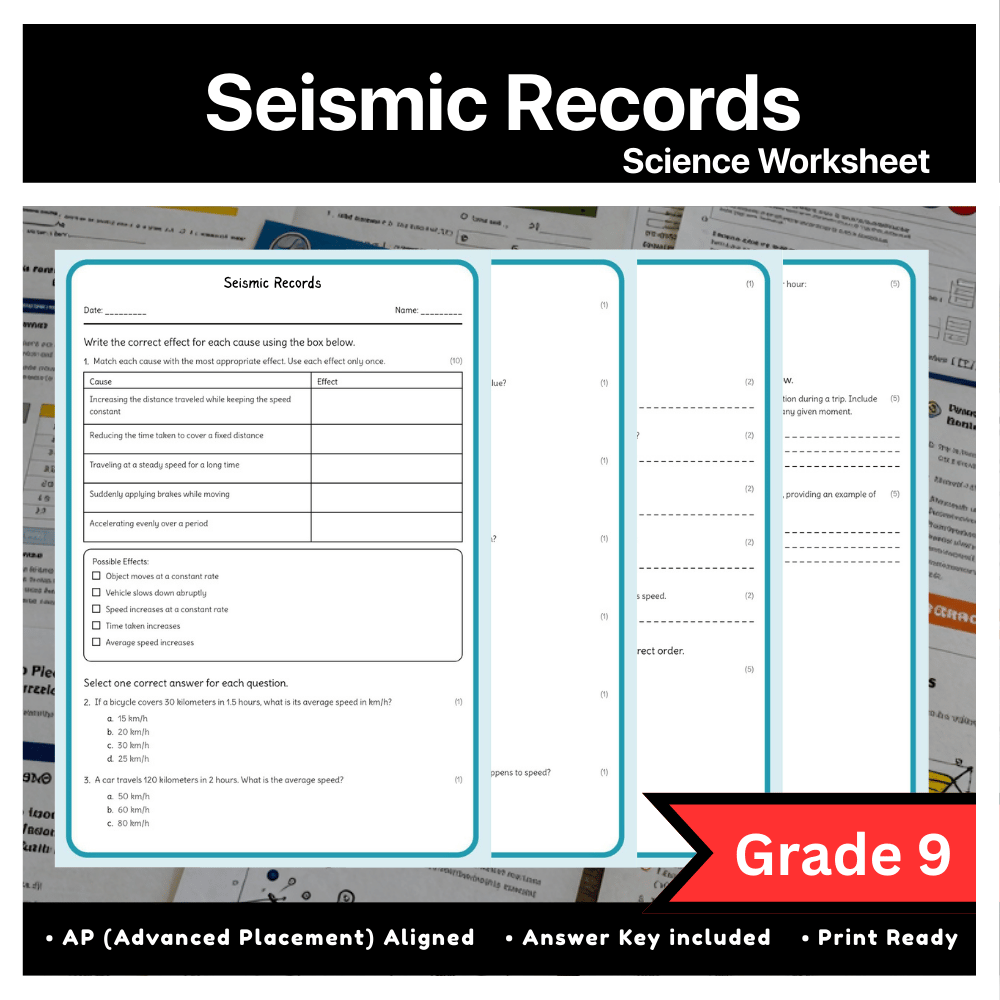
Grade 9 Science – Seismic Records Worksheet (AP Standards + Answer Key)
Created byBright Mind ResourcesLearning Objectives
- Interpret earthquake waveforms, travel-time curves, and epicenter maps to analyze subsurface structures.
- Distinguish between shallow and deep seismic events using waveform characteristics.
- Compare P- and S-wave arrivals to locate earthquake epicenters and understand fault behavior.
Instant download
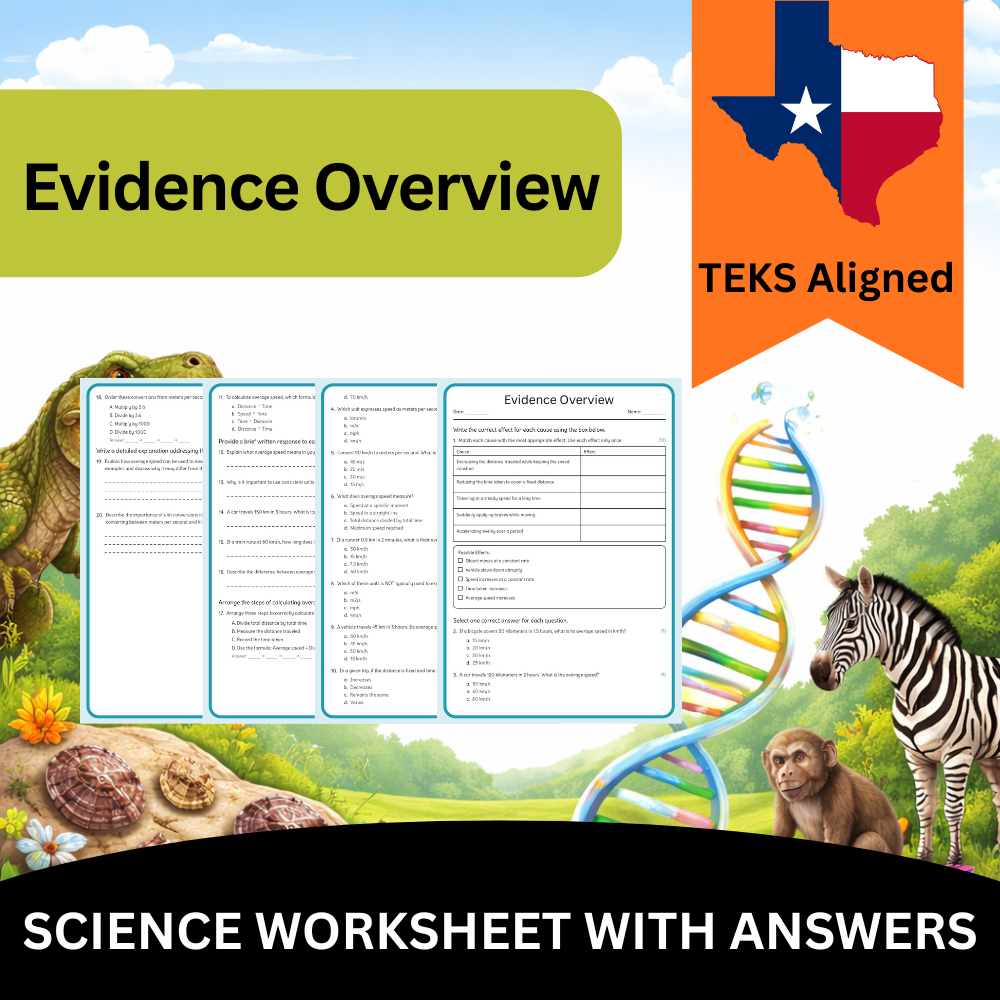
Grade 9 Science | Evidence Overview Worksheet (Worksheet + Answer Key) - TEKS Aligned
Created byBright Mind ResourcesLearning Objectives
- Understand how fossil, anatomical, and molecular evidence support evolutionary relationships.
- Analyze different lines of evidence to infer common ancestry among organisms.
- Interpret data from fossil records, anatomical comparisons, and molecular sequences.
Also included in: Grade 9 Science Unit | Evolution, Speciation & Genetics Worksheet Pack - TEKS +3 more
Instant download
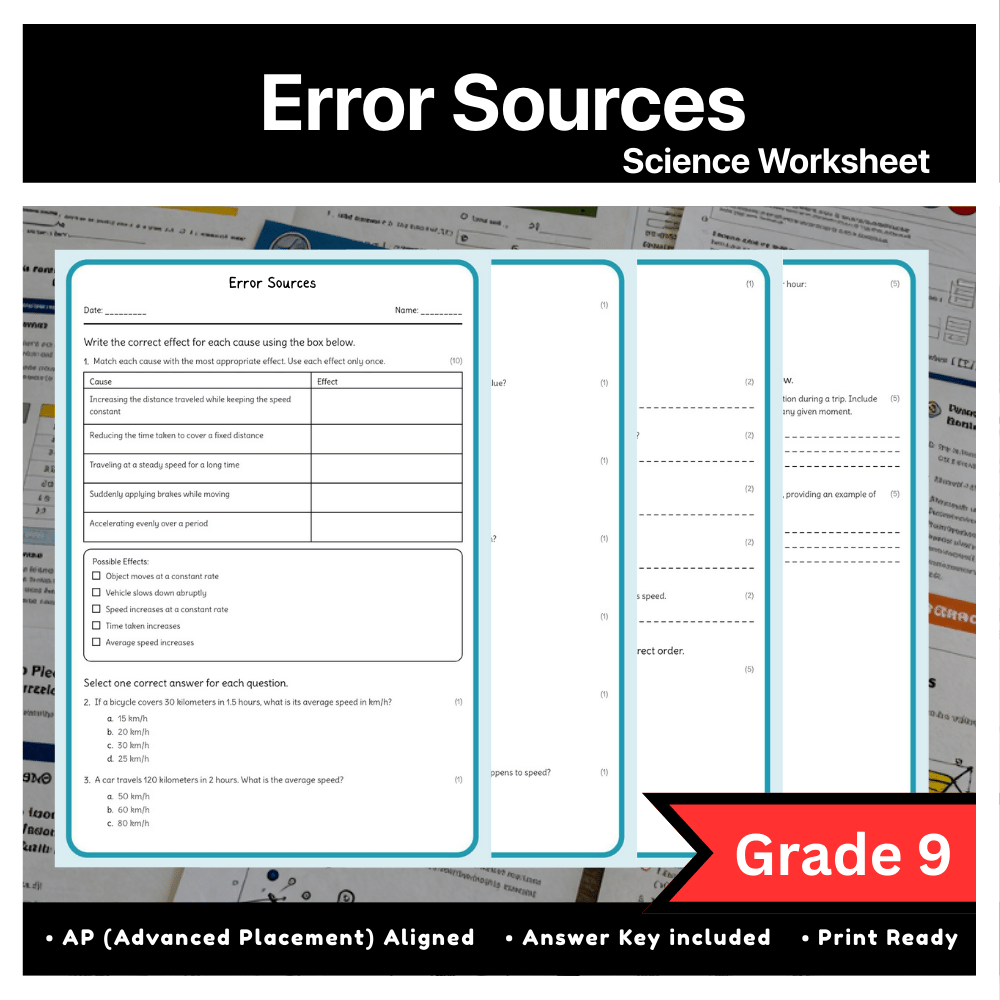
Grade 9 Science – Error Sources Worksheet (AP Standard) with Answer Key (PDF)
Created byBright Mind ResourcesLearning Objectives
- Identify common sources of systematic and random error in scientific research.
- Describe methods for detecting and quantifying bias and error.
- Explain how error contributes to overall uncertainty in data interpretation.
Instant download
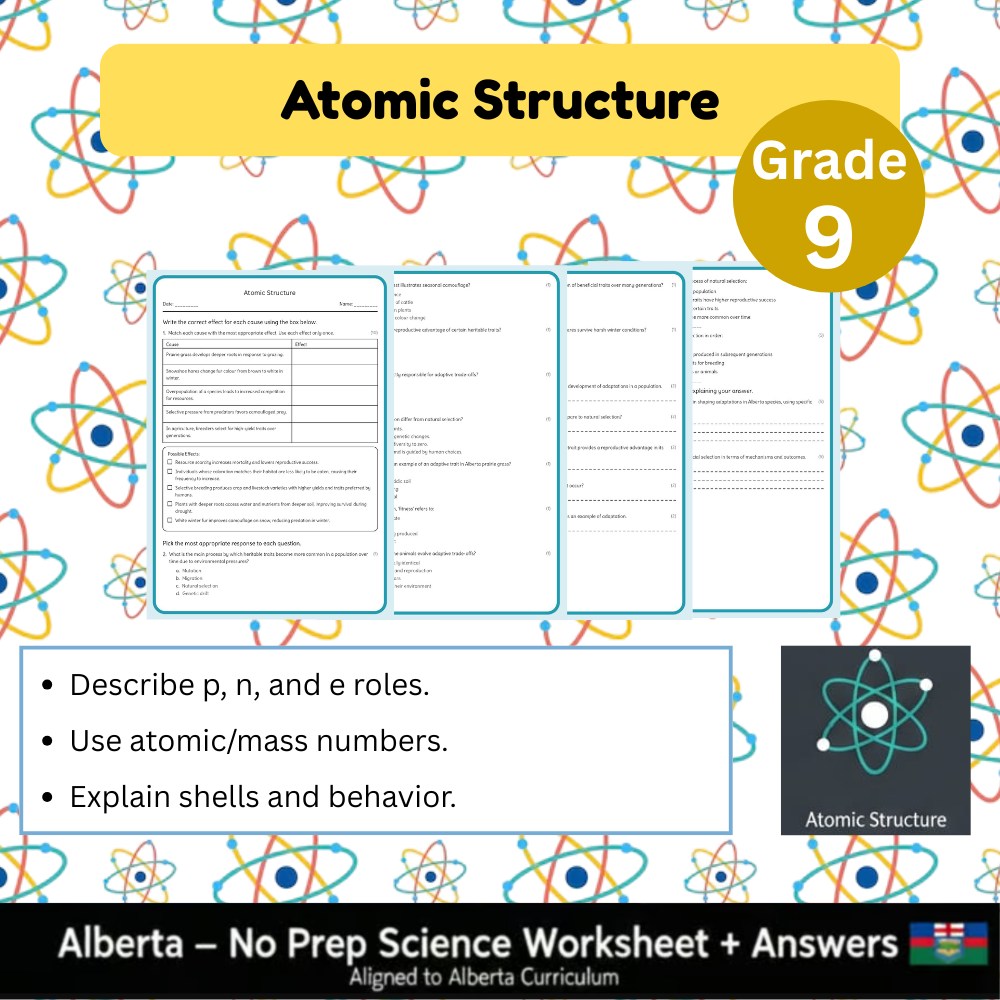
Grade 9 Science | Atomic Structure Worksheet (PDF) - Alberta Standards
Created byBright Mind ResourcesLearning Objectives
- Describe the composition of atoms in terms of protons, neutrons, and electrons.
- Understand how atomic number and mass number define isotopes and element identity.
- Explain models of atomic nuclei and electron shells to predict chemical behavior.
Instant download
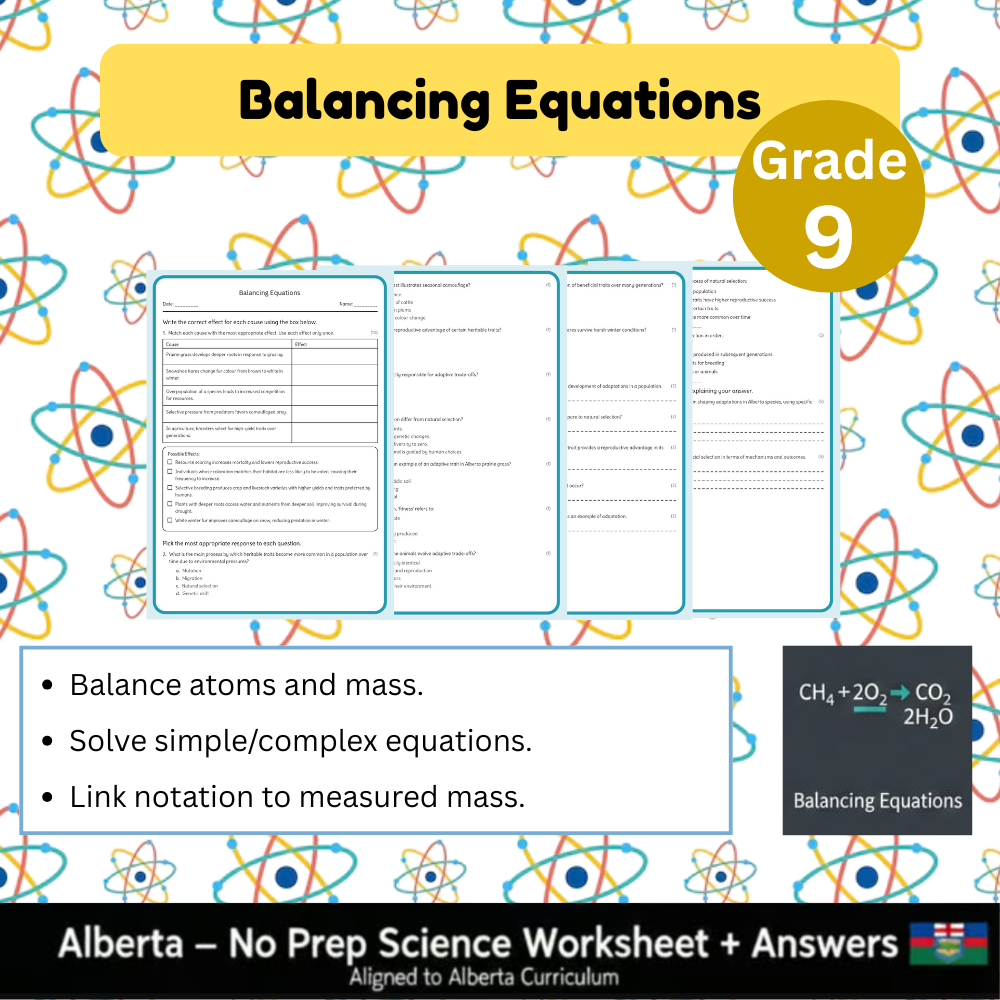
Grade 9 Science | Balancing Equations Worksheet (PDF) – Alberta Standards
Created byBright Mind ResourcesLearning Objectives
- Understand the importance of balancing chemical equations to conserve atoms and mass.
- Learn how to balance simple and complex chemical equations accurately.
- Recognize the relationship between formula notation and measurable mass.
Instant download
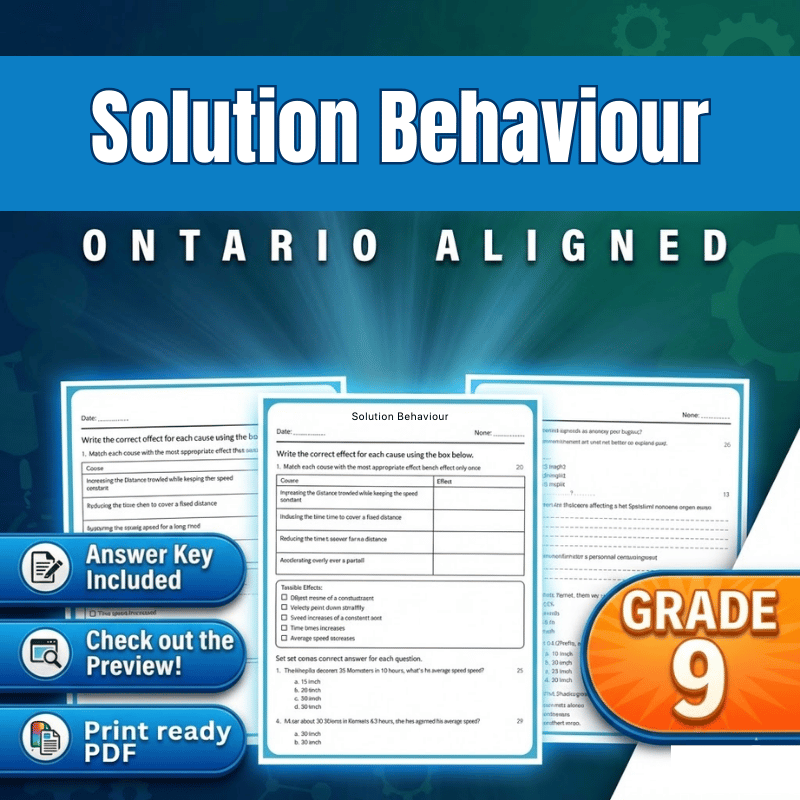
Grade 9 Science | Solution Behaviour Worksheet (Ontario Standards) (PDF)
Created byBright Mind ResourcesLearning Objectives
- Understand the process of solution formation and the interactions between solutes and solvents.
- Identify factors that influence the solubility of substances, such as temperature and agitation.
- Differentiate between saturated, unsaturated, and supersaturated solutions with examples.
Instant download
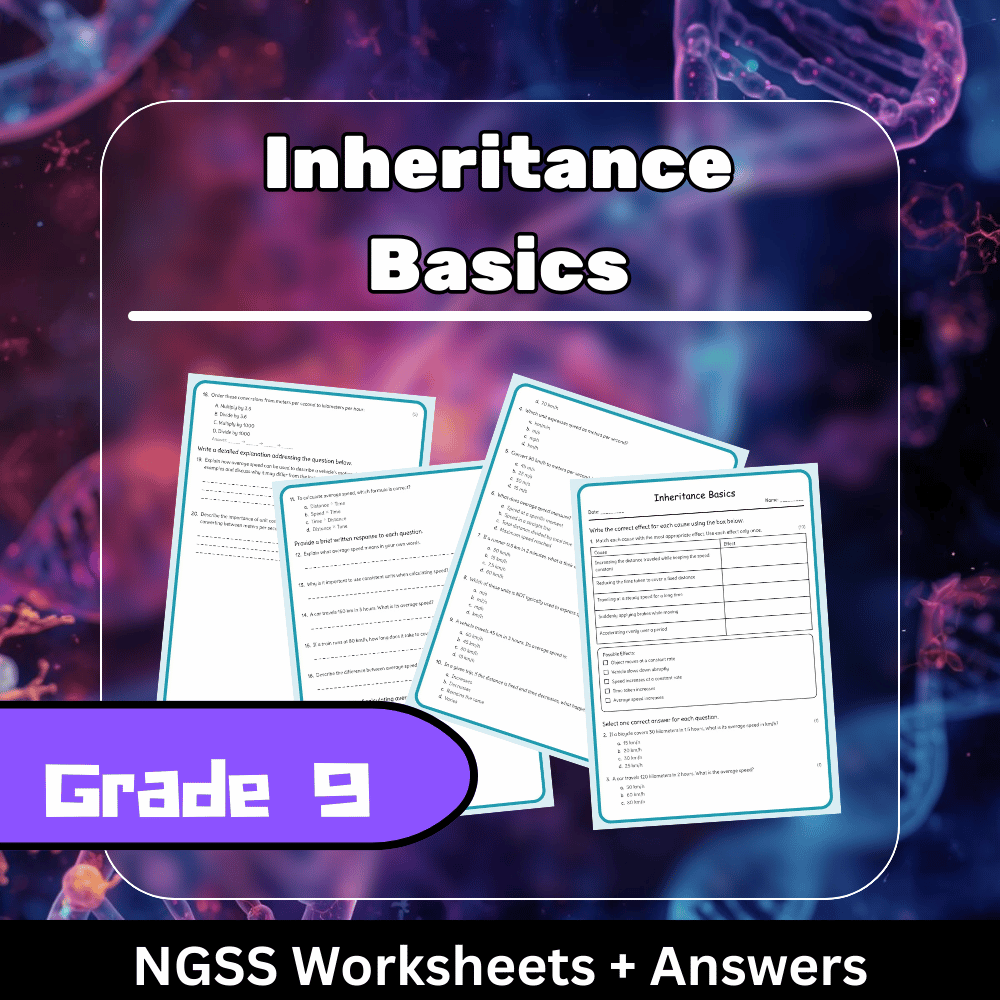
Grade 9 Science | Inheritance Basics Worksheet (Answer Key) – NGSS Aligned
Created byBright Mind ResourcesLearning Objectives
- Understand the structure of DNA and its role in inheritance.
- Describe the process of chromosome transmission during meiosis.
- Explain how genetic information is passed from parents to offspring.
Instant download
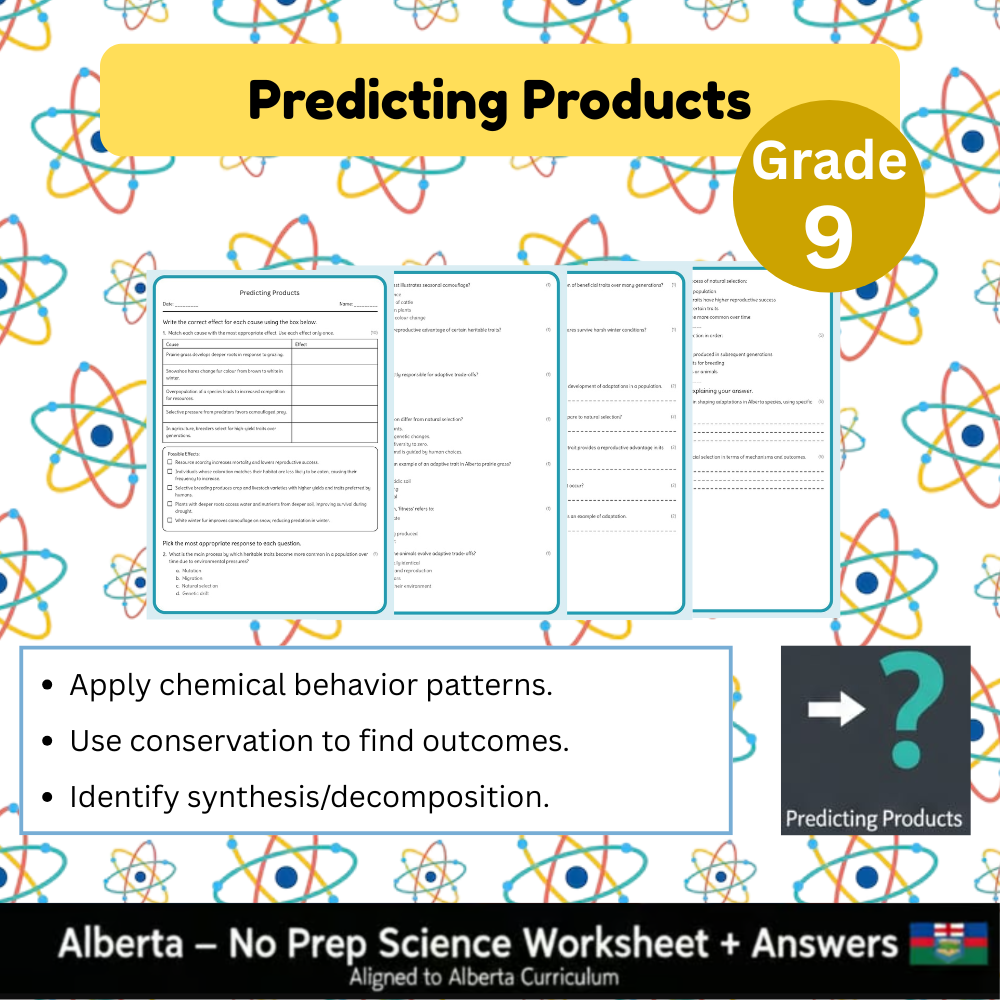
Grade 9 Science – Predicting Products Worksheet (PDF) | Alberta Standards
Created byBright Mind ResourcesLearning Objectives
- Apply patterns of chemical behaviour to predict products of reactions.
- Use conservation principles to foresee likely reaction outcomes.
- Identify product formation in common reaction types such as synthesis and decomposition.
Instant download
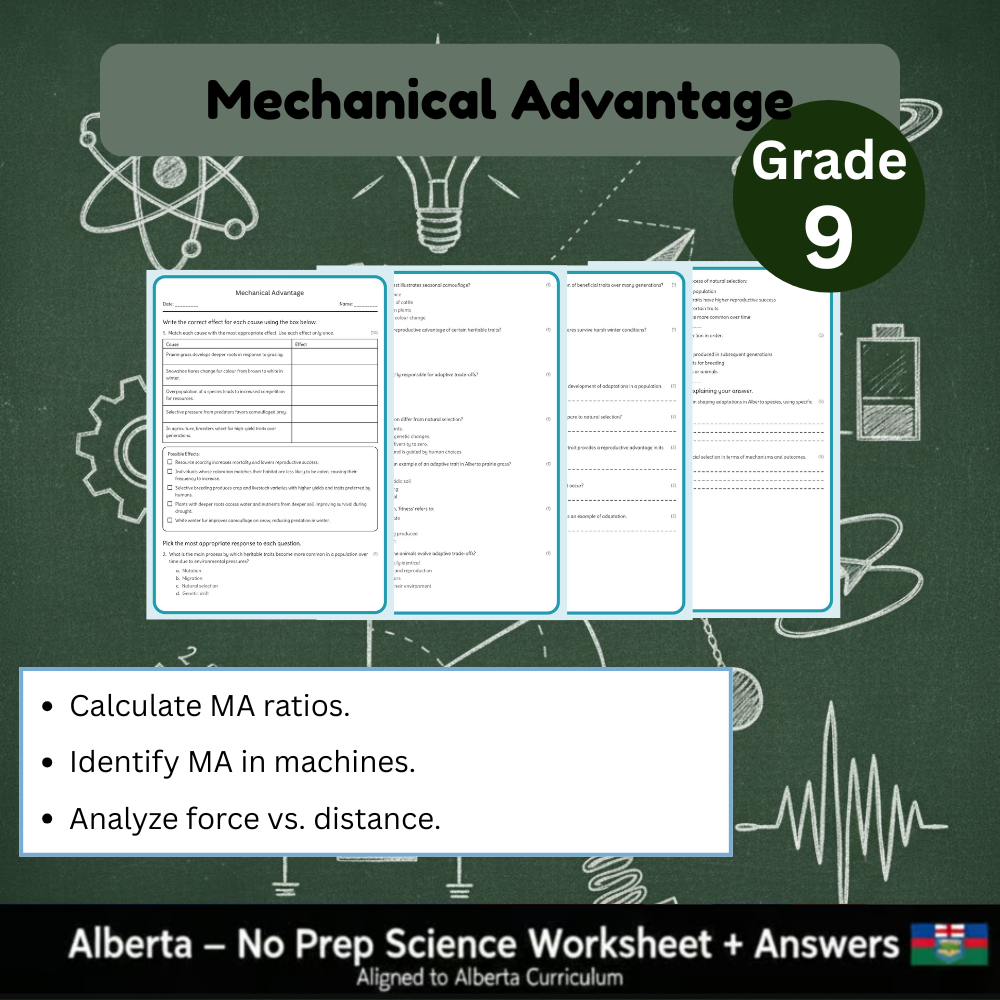
Grade 9 Science – Mechanical Advantage Worksheet (PDF) – Alberta Standards
Created byBright Mind ResourcesLearning Objectives
- Understand the concept of mechanical advantage and how it is calculated.
- Identify different types of machines that utilize mechanical advantage.
- Analyze the trade-offs between force reduction and displacement in pulley and lever systems.
Instant download
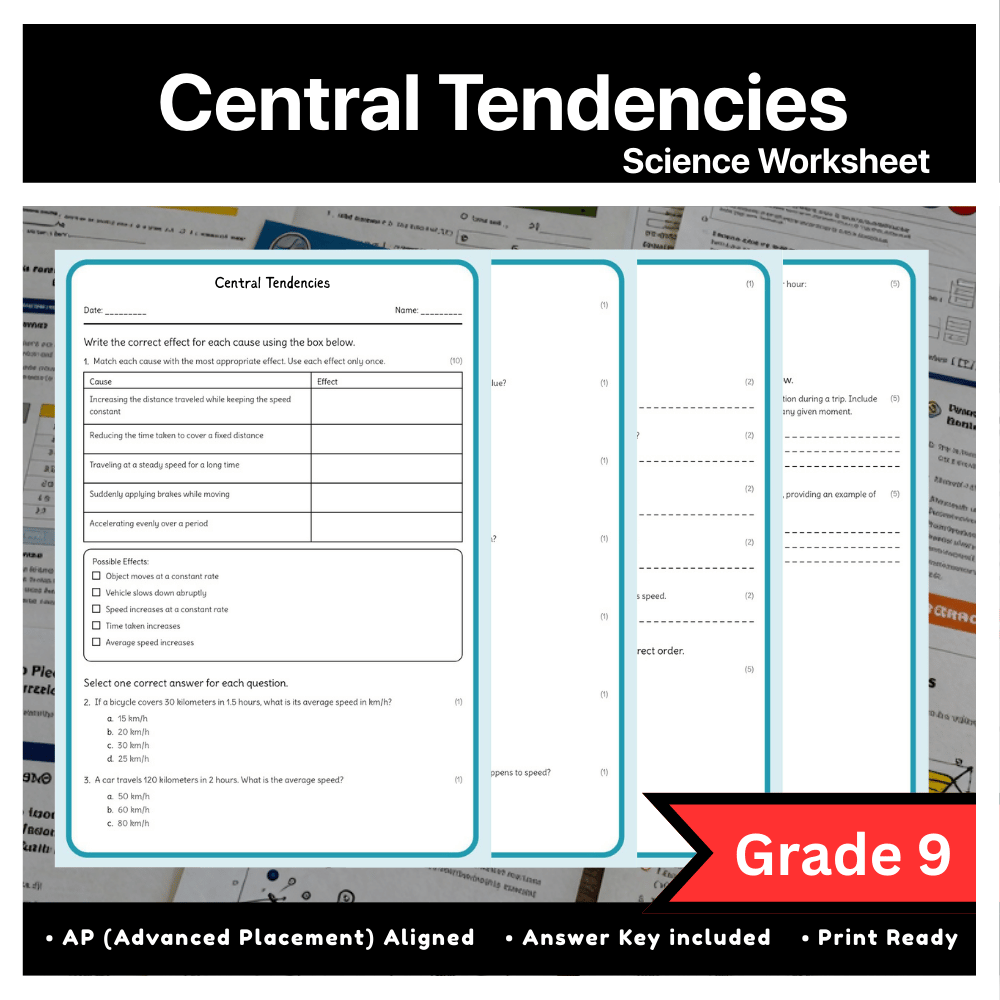
Grade 9 Science | Central Tendencies Worksheet (AP Standard) - PDF
Created byBright Mind ResourcesLearning Objectives
- Describe measures of central tendency and their appropriate uses.
- Differentiate between mean, median, and mode, and understand their sensitivities.
- Connect the choice of a central tendency to data distribution and context.
Instant download
Grade 9 Science | Fault Diagnosis Worksheet (PDF) – Alberta Standards
Created byBright Mind ResourcesLearning Objectives
- Understand the principles of diagnostic reasoning for electrical faults.
- Identify symptoms and measurement data associated with common faults.
- Apply logical inference to determine probable failure modes such as open circuits, short circuits, or component degradation.
Instant download
Grade 9 Science | Subduction Zones Worksheet + Answer Key (PDF)
Created byBright Mind ResourcesLearning Objectives
- Explain how subduction zones form and their features.
- Identify the processes involved in subduction zone activity.
- Describe the geological hazards associated with subduction zones, such as earthquakes and tsunamis.
Instant download
Grade 9 Science | Molecular Inheritance AP Worksheet (PDF) with Answer Key
Created byBright Mind ResourcesLearning Objectives
- Explain how DNA replication maintains fidelity and its impact on genetic information.
- Describe the processes of transcription and translation and their roles in gene expression.
- Identify how sequence variations and mutations can alter protein function and phenotype.
Instant download
Grade 9 Science – Element Symbols & Chemical Formulas Worksheet (PDF)
Created byBright Mind ResourcesLearning Objectives
- Understand the meaning and structure of element symbols and chemical formulas.
- Identify common chemical formulas such as H2O, NaCl, and CaCO3.
- Explain how chemical formulas represent the composition of substances.
Instant download
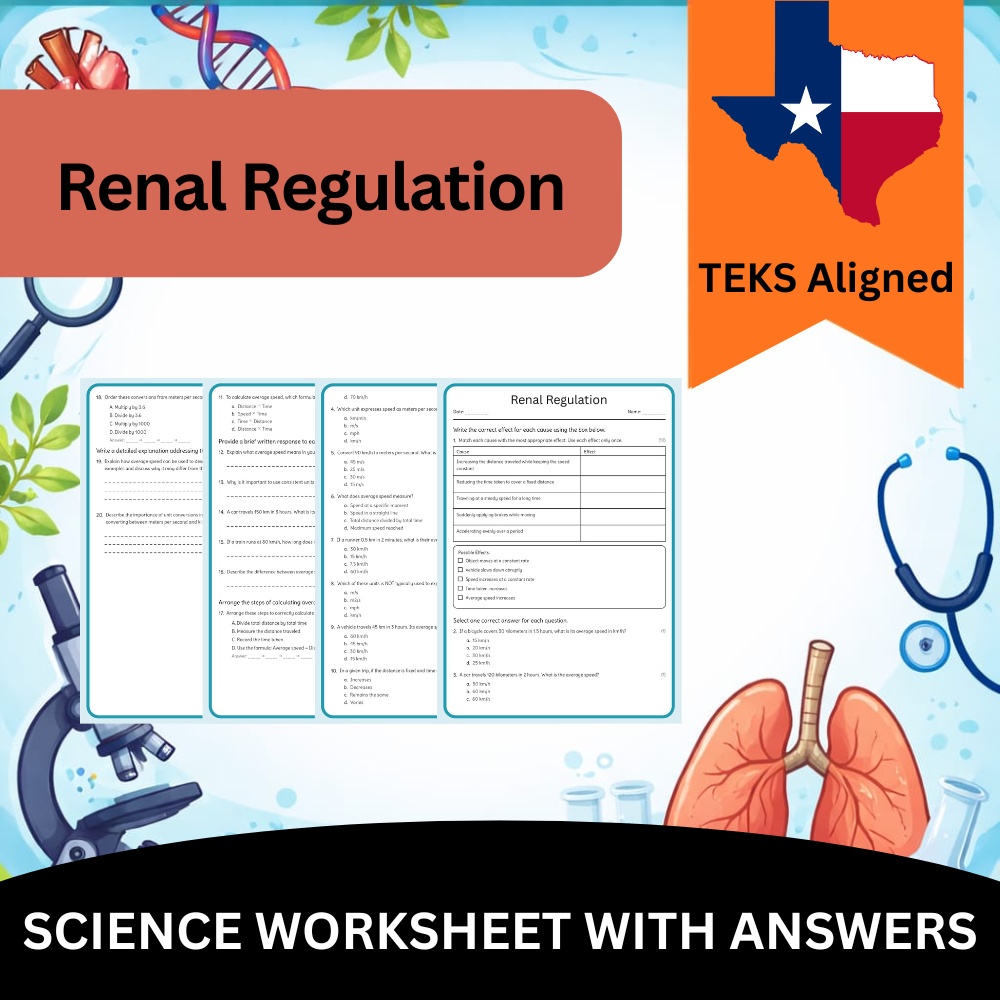
Grade 9 Science | Renal Regulation Worksheet (PDF) Aligns with TEKS
Created byBright Mind ResourcesLearning Objectives
- Describe the processes of glomerular filtration, tubular reabsorption, and secretion in the kidneys.
- Explain how hormones like antidiuretic hormone and the renin-angiotensin-aldosterone system regulate fluid and electrolyte balance.
- Understand the mechanisms the body uses to maintain blood pressure and osmolarity through renal control.
Also included in: Grade 9 Science Unit | Human Body Systems Worksheets & TEKS Aligned Bundle +3 more
Instant download
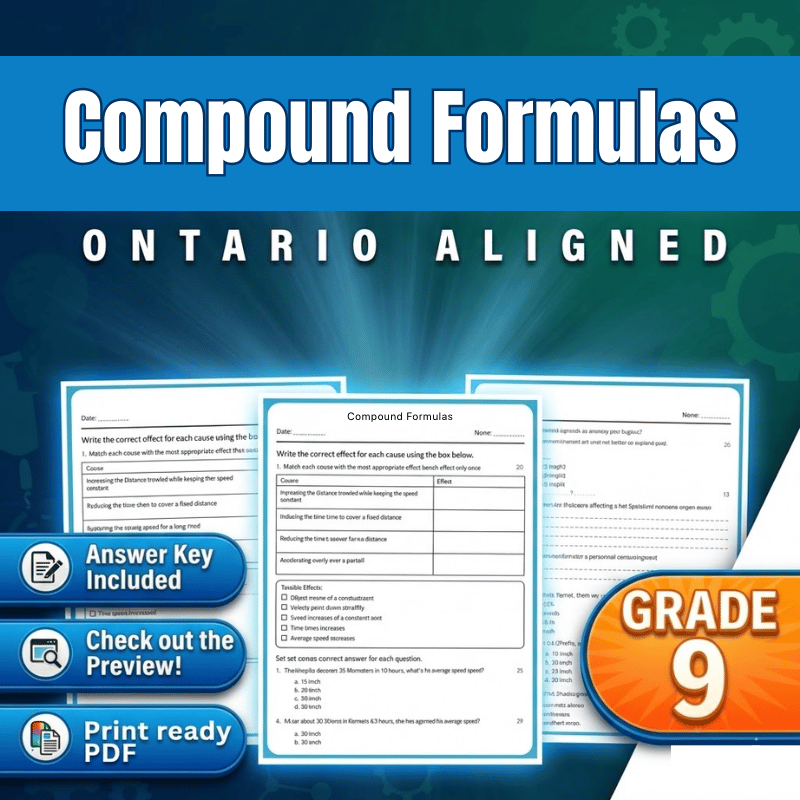
Grade 9 Science Worksheet | Compound Formulas & Bonding (Ontario) (PDF)
Created byBright Mind ResourcesLearning Objectives
- Understand the concept of chemical compounds and their fixed elemental ratios.
- Identify the different types of bonding—ionic and covalent—and how they influence properties of compounds.
- Explain the law of definite composition and how chemical formulas represent element ratios.
Instant download
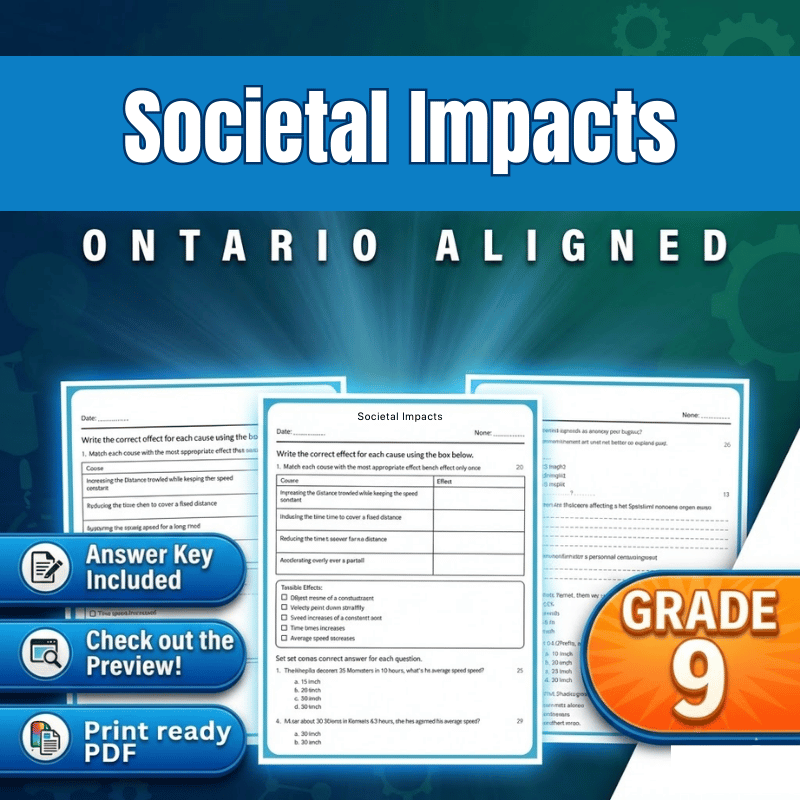
Grade 9 Science – Societal Impacts of Chemicals Worksheet (PDF)
Created byBright Mind ResourcesLearning Objectives
- Assess societal uses, benefits, and risks of everyday chemicals.
- Understand how chemical properties influence environmental and health impacts.
- Explore trade-offs between utility and safety in chemical use.
Instant download
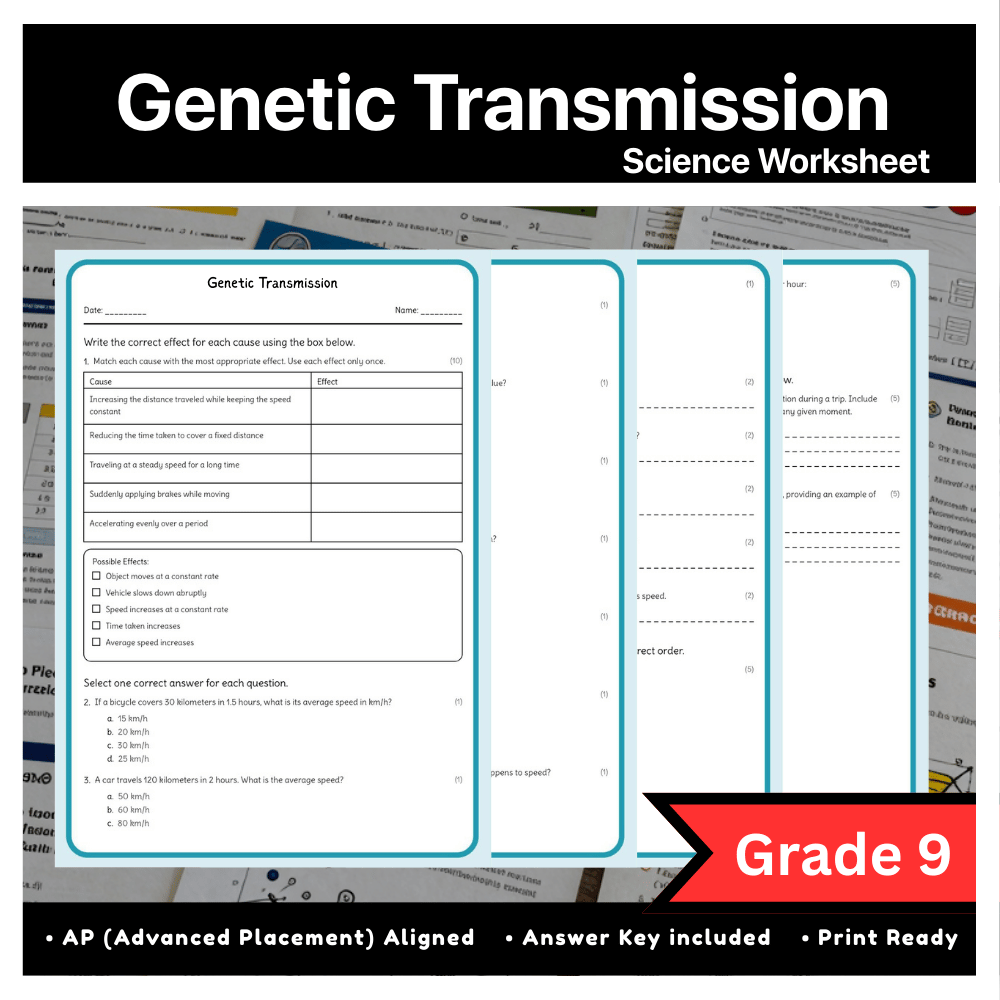
Grade 9 Science | Genetic Transmission Worksheet & Answer Key (AP Standard)
Created byBright Mind ResourcesLearning Objectives
- Understand how chromosomes behave during meiosis and relate this to Mendelian inheritance patterns.
- Explain deviations such as incomplete dominance, codominance, and linkage and their effects on traits.
- Use pedigree analysis, Punnett squares, and probability calculations to predict genotypic and phenotypic ratios.
Instant download
Browse more categories
About Grade 9 Worksheets
Browse 9,322 printable Grade 9 worksheets across algebra, biology, literature, and history — each a ready-to-print PDF with optional answer keys.
Every worksheet on MyTeachingSheets is created by independent teacher-authors and reviewed before publication. All resources download as printable PDFs for classroom, homework, or at-home practice, and many include answer keys. Preview any worksheet free before buying.