
Grade 9 Worksheets
9,322 grade resources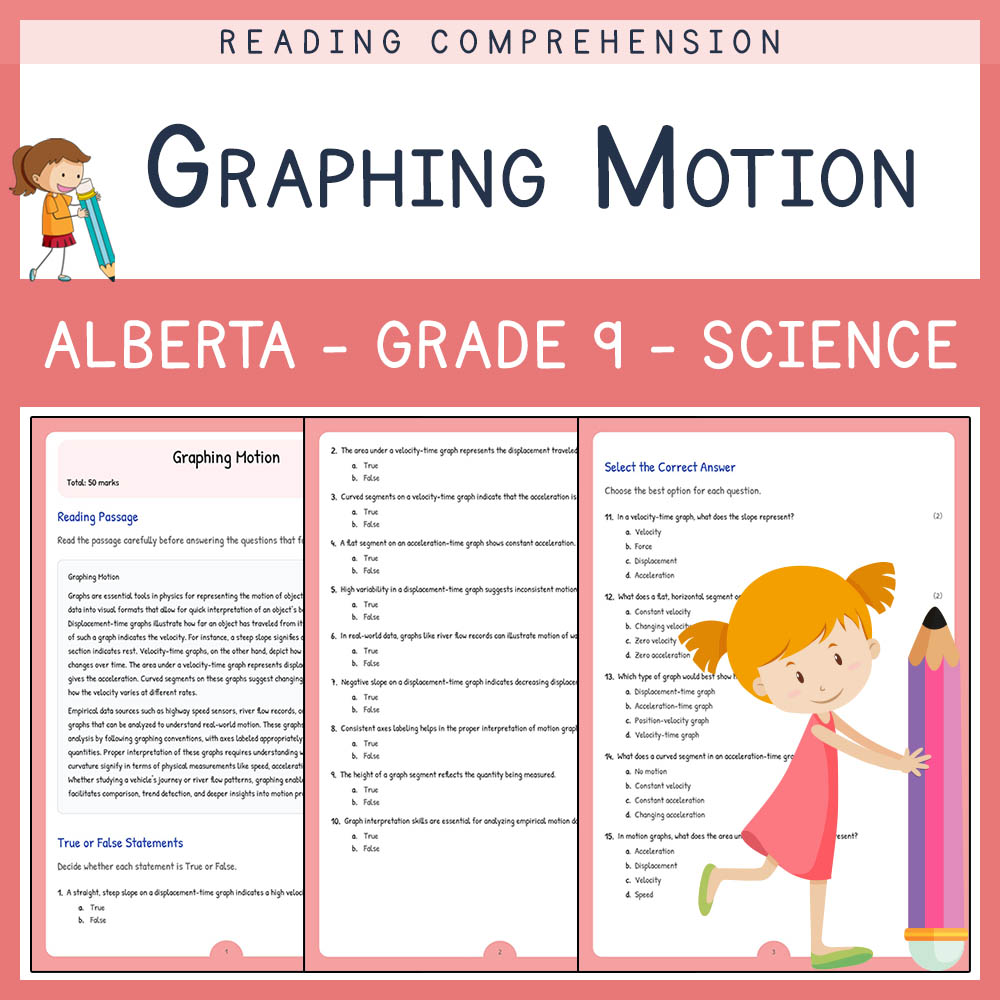
Grade 9 Science | Graphing Motion Worksheet | Alberta Standards
 Created byLumora Learning
Learning Objectives
- Understand how to interpret displacement–time, velocity–time, and acceleration–time graphs.
- Identify the physical quantities represented by the slope and area in motion graphs.
- Recognize changing acceleration through curved segments on graphs.
Instant download
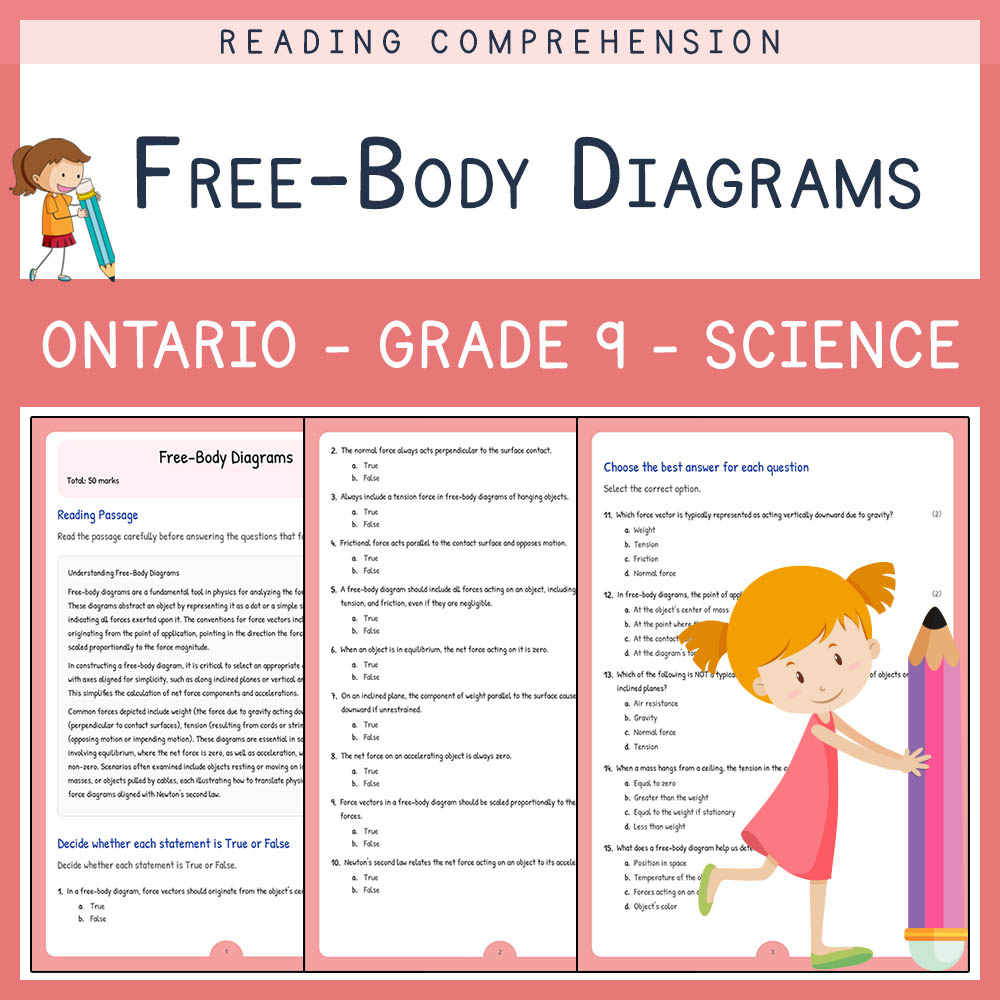
Grade 9 Science Assessment | Free-Body Diagrams Worksheet | Ontario
Created byLumora LearningLearning Objectives
- Understand the conventions for representing forces in free-body diagrams.
- Identify and accurately depict common forces such as weight, normal force, tension, and friction.
- Apply free-body diagrams to analyze equilibrium and acceleration in various scenarios.
Instant download

Grade 9 Science | Alleles Inheritance Worksheet | NGSSS Aligned
Created byLumora LearningLearning Objectives
- Explain how alleles are different forms of a gene and how inherited allele combinations influence traits.
- Describe how dominance relationships affect phenotype outcomes in offspring.
- Analyze how multiple genes and multiple alleles in a population contribute to continuous variation.
Instant download
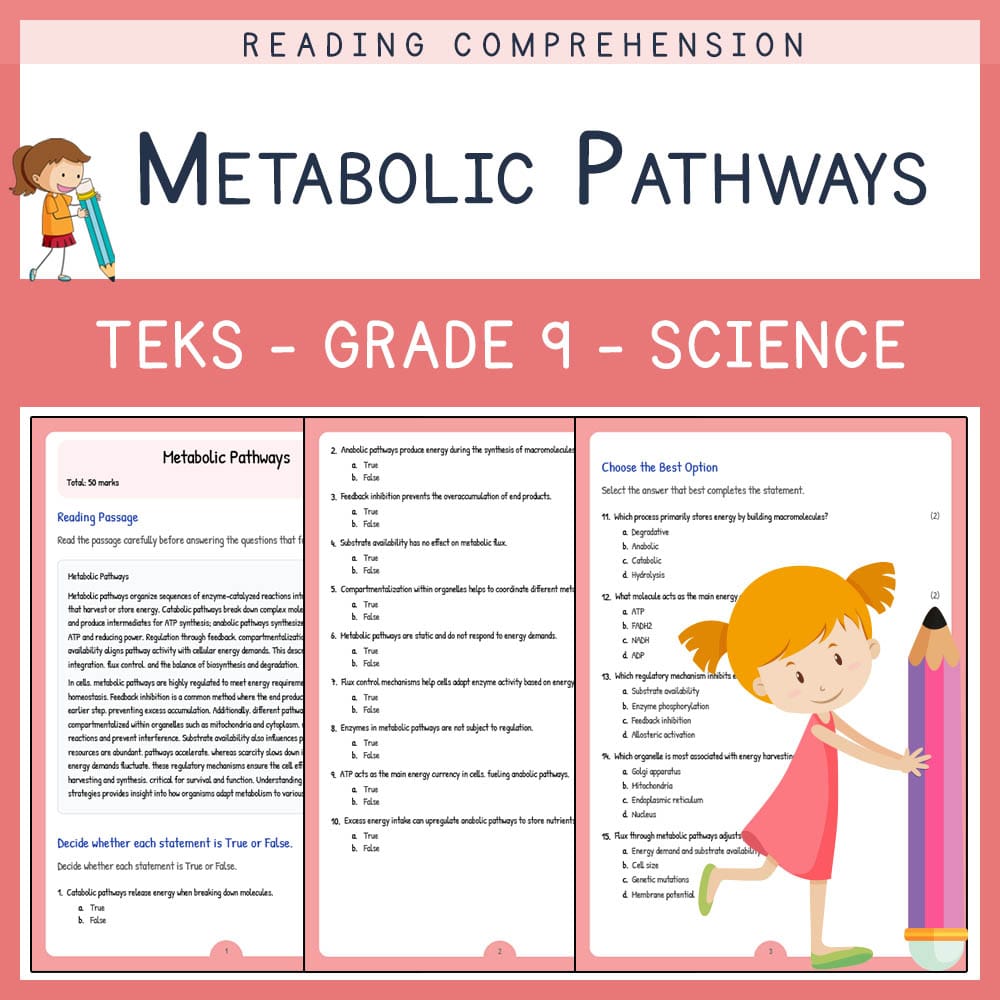
Grade 9 Science | Metabolic Pathways Worksheet | TEKS-Aligned
Created byLumora LearningLearning Objectives
- Understand the interconnected nature of metabolic pathways and enzyme catalysis.
- Differentiate between catabolic and anabolic pathways and their roles in energy management.
- Explain how energy regulation aligns pathway activity with cellular needs.
Instant download
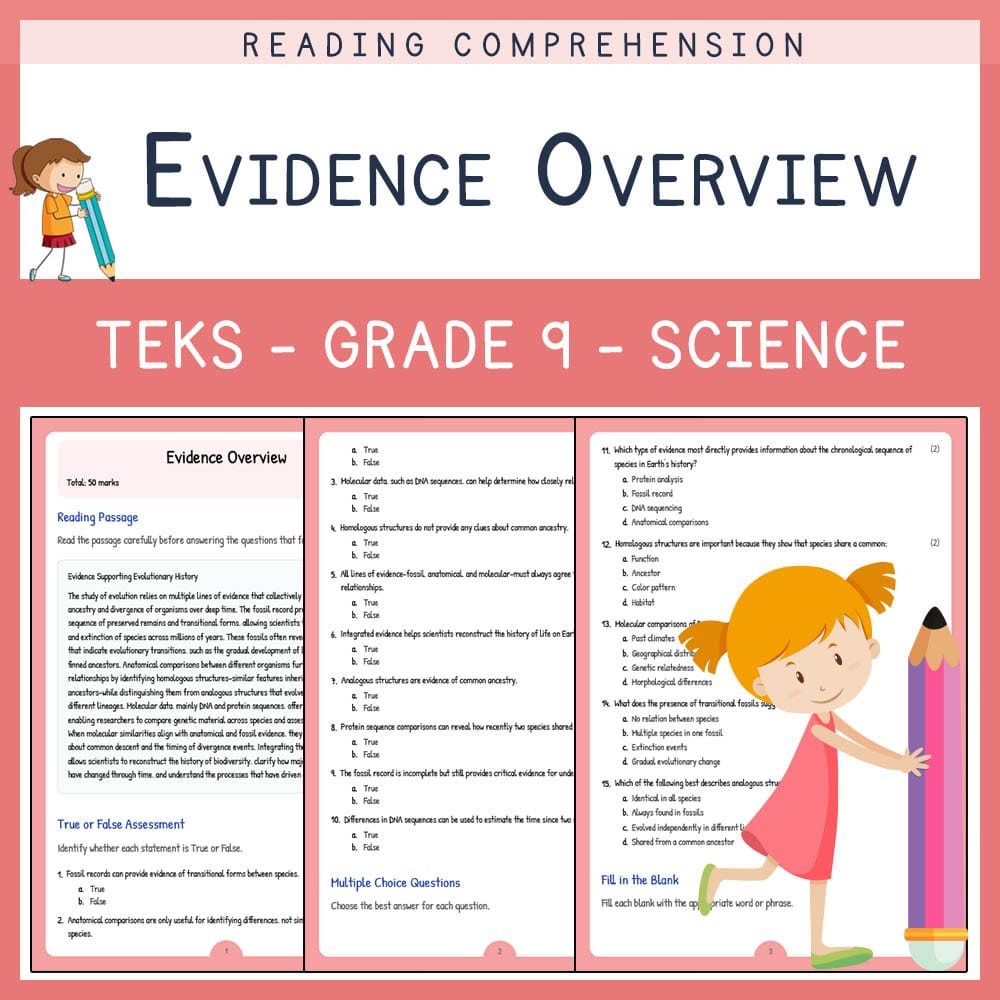
Grade 9 Science | Evidence Overview Worksheet | TEKS Aligned
Created byLumora LearningLearning Objectives
- Understand how multiple lines of evidence support evolutionary relationships.
- Identify the types of fossil, anatomical, and molecular data used in evolutionary studies.
- Analyze how fossil, anatomical, and molecular evidence are integrated to reconstruct past biodiversity.
Instant download

Grade 9 Science | Evolving Knowledge Worksheet | NGSSS Aligned
Created byLumora LearningLearning Objectives
- Explain how scientific knowledge depends on evidence, models, and measurement rather than a single method.
- Identify how technology, perspective, and uncertainty can influence scientific observations and conclusions.
- Describe why transparency, assumptions/limitations, and peer evaluation improve the reliability of scientific claims.
Instant download

Grade 9 Science | Energy Pathways Worksheet | AP Aligned
Created byLumora LearningLearning Objectives
- Describe the process of ATP production in cellular respiration and photosynthesis.
- Explain the coupling of catabolic and anabolic reactions in energy transfer.
- Compare the roles of photosynthetic and respiratory electron transport chains.
Also included in: Grade 9 Science | Biology and Ecosystems Custom Bundle | AP Worksheets
Instant download
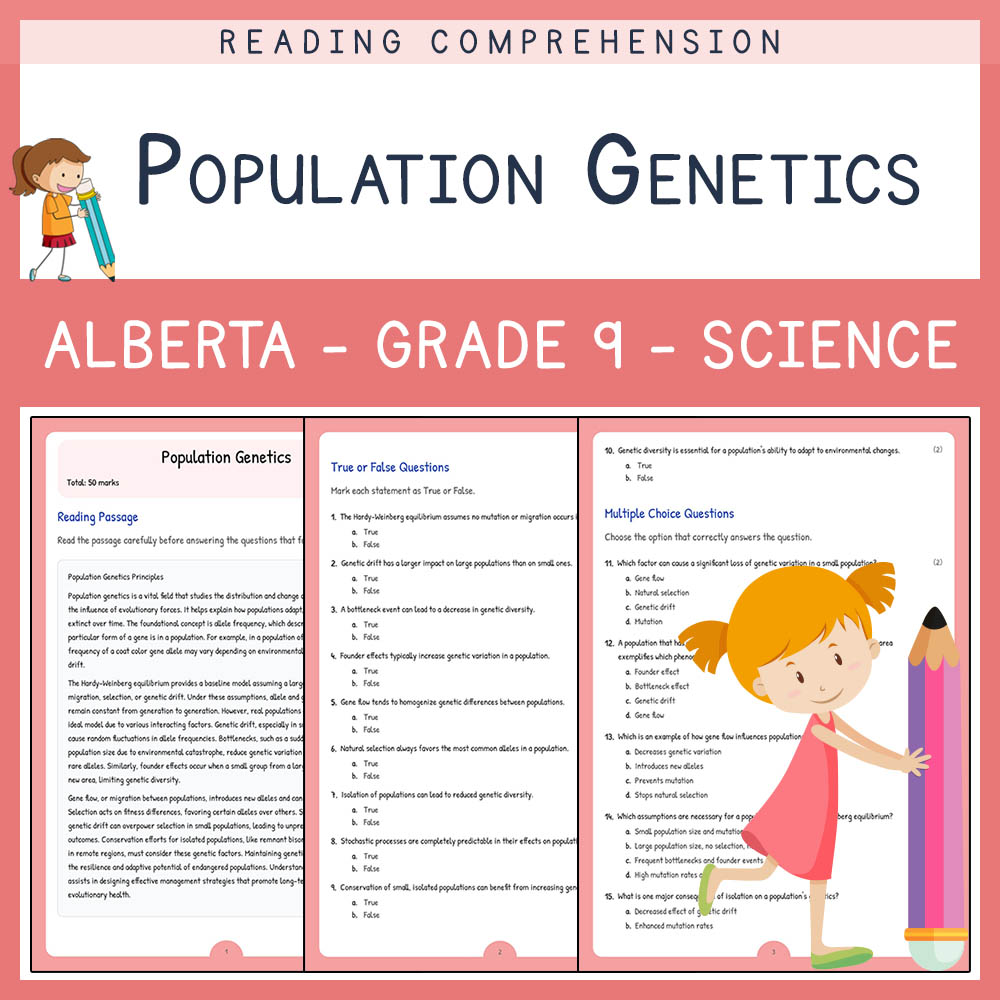
Grade 9 Science | Population Genetics Worksheet | Alberta Standards
Created byLumora LearningLearning Objectives
- Understand the core principles of population genetics, including allele frequency and genetic drift.
- Describe the assumptions of Hardy-Weinberg equilibrium and factors that disrupt it.
- Explain the effects of bottlenecks, founder effects, and gene flow on genetic diversity.
Instant download
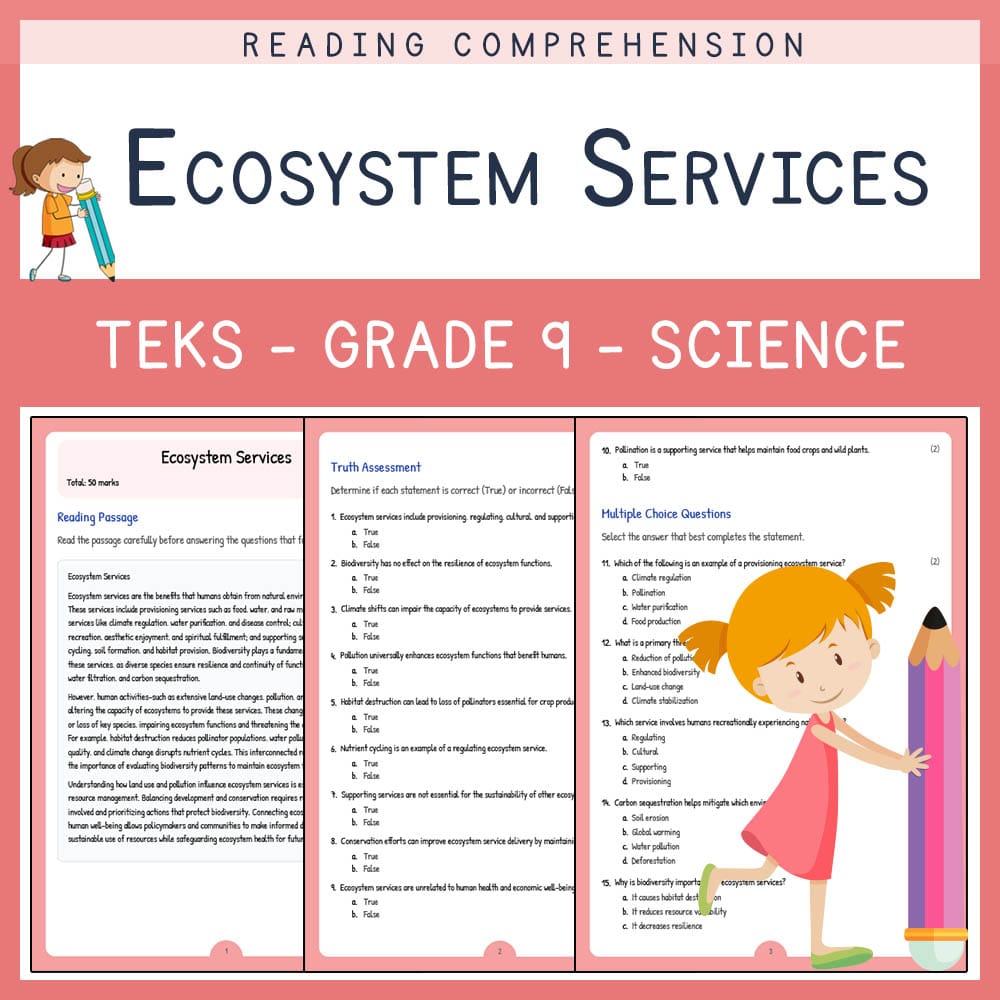
Grade 9 Science | Ecosystem Services Worksheet | TEKS Aligned
Created byLumora LearningLearning Objectives
- Define ecosystem services and their categories: provisioning, regulating, cultural, and supporting.
- Explain the role of biodiversity in ecosystem service provision, such as pollination and water purification.
- Evaluate how human activities like land-use change and pollution impact ecosystem services.
Instant download
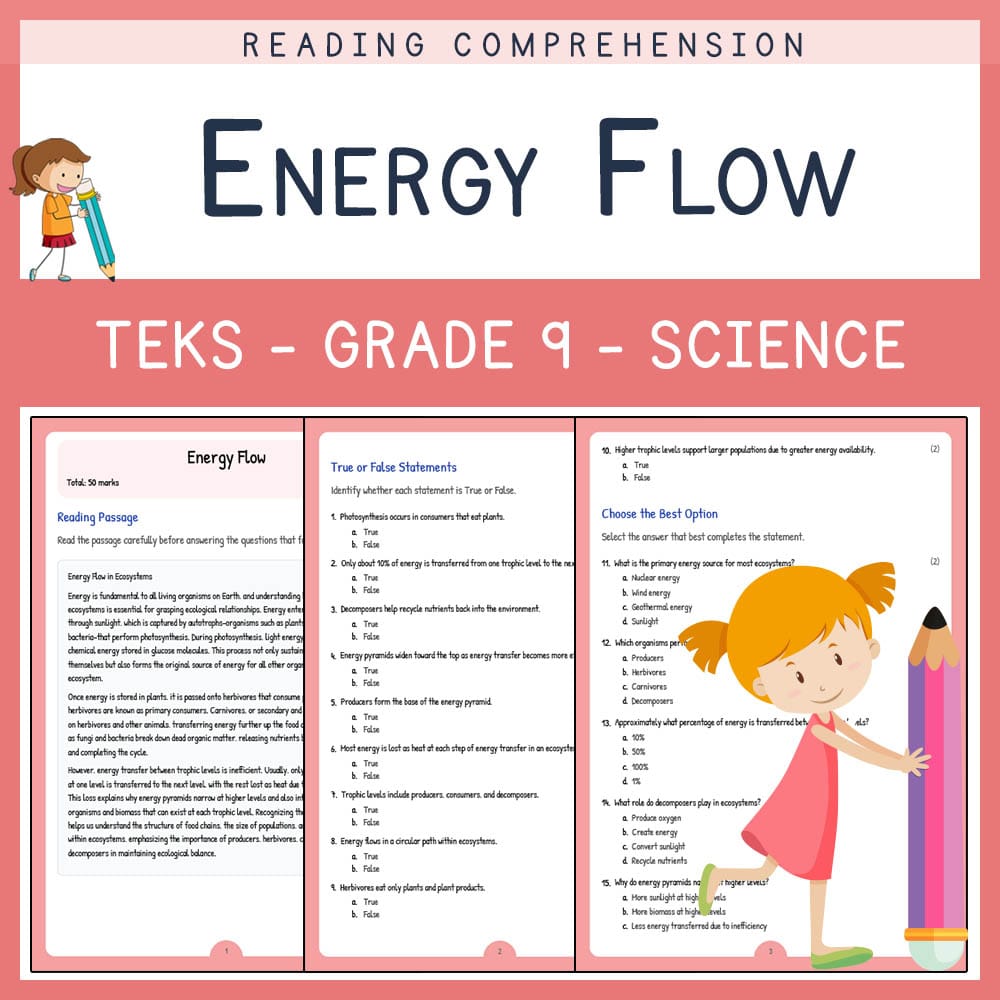
Grade 9 Science | Energy Flow Worksheet | TEKS-Aligned
Created byLumora LearningLearning Objectives
- Describe how energy flows through ecosystems from primary producers to consumers and decomposers.
- Explain the process of photosynthesis and its role in energy transfer.
- Identify different trophic levels and understand the energy loss at each level.
Instant download
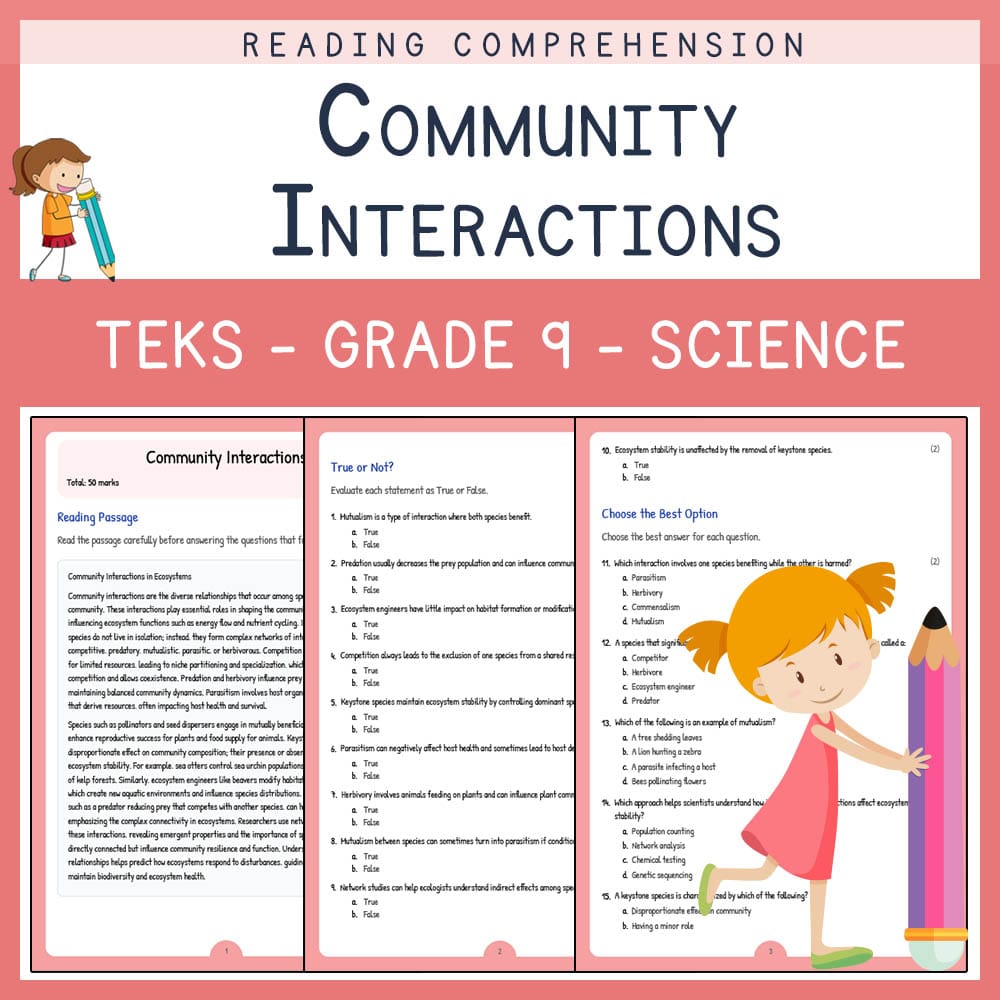
Grade 9 Science | Community Interactions Worksheet | TEKS-Aligned
Created byLumora LearningLearning Objectives
- Explain how different species interact within a community and the effects on ecosystem stability.
- Identify and describe various types of species interactions such as competition, predation, and mutualism.
- Understand the roles of keystone species and ecosystem engineers in shaping community structure.
Instant download

Grade 9 Science | Coastal Dynamics Worksheet | AP Standards
Created byLumora LearningLearning Objectives
- Understand the processes of coastal erosion, sediment transport, and shoreline response to environmental forces.
- Analyze the impact of sea-level change on coastal morphology and habitats.
- Evaluate human and engineered modifications in coastal environments and their effects.
Also included in: Grade 9 Science | Earth and Space Science Custom Bundle | AP Aligned
Instant download
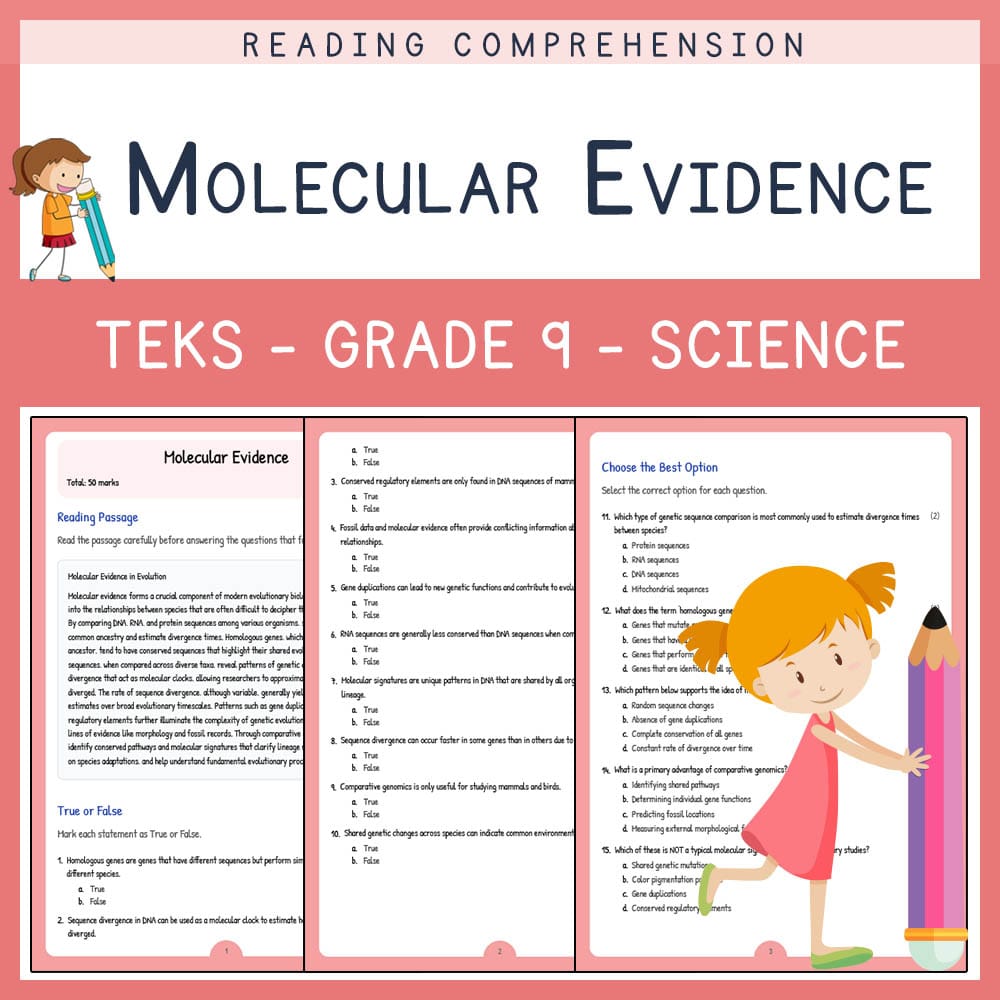
Grade 9 Science | Molecular Evidence Worksheet | TEKS Aligned
Created byLumora LearningLearning Objectives
- Understand how DNA, RNA, and protein sequences are used to infer evolutionary relationships.
- Explain the concept of homologous genes and sequence divergence as molecular clocks.
- Identify patterns of shared genetic changes, gene duplications, and conserved elements that inform lineage relationships.
Instant download
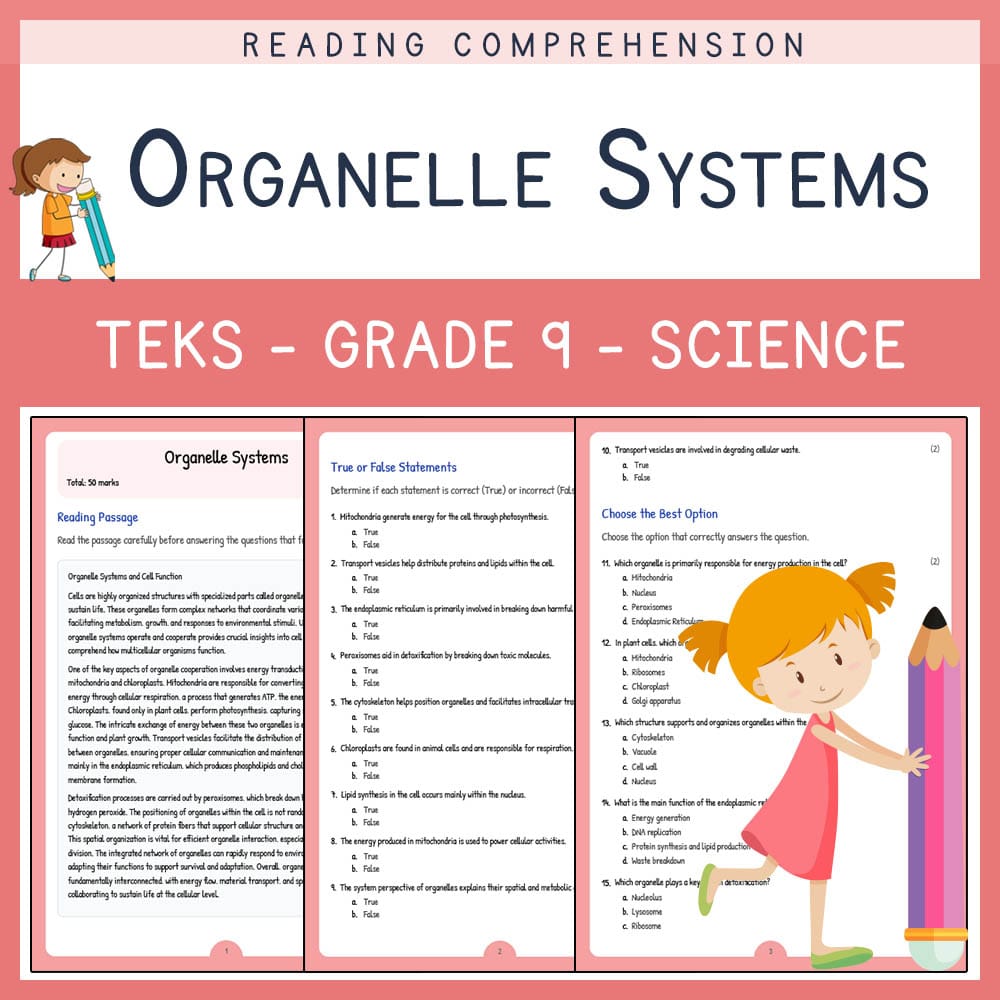
Grade 9 Science | Organelle Systems Worksheet | TEKS-Aligned
Created byLumora LearningLearning Objectives
- Understand and describe the interconnected functions of organelle systems within cells.
- Identify the roles of energy transduction, lipid synthesis, detoxification, and transport vesicles.
- Explain how spatial organization of organelles supports cell growth, division, and responses to the environment.
Also included in: Grade 9 Science | Cell Structure & Function Lesson Bundle | TEKS Aligned
Instant download
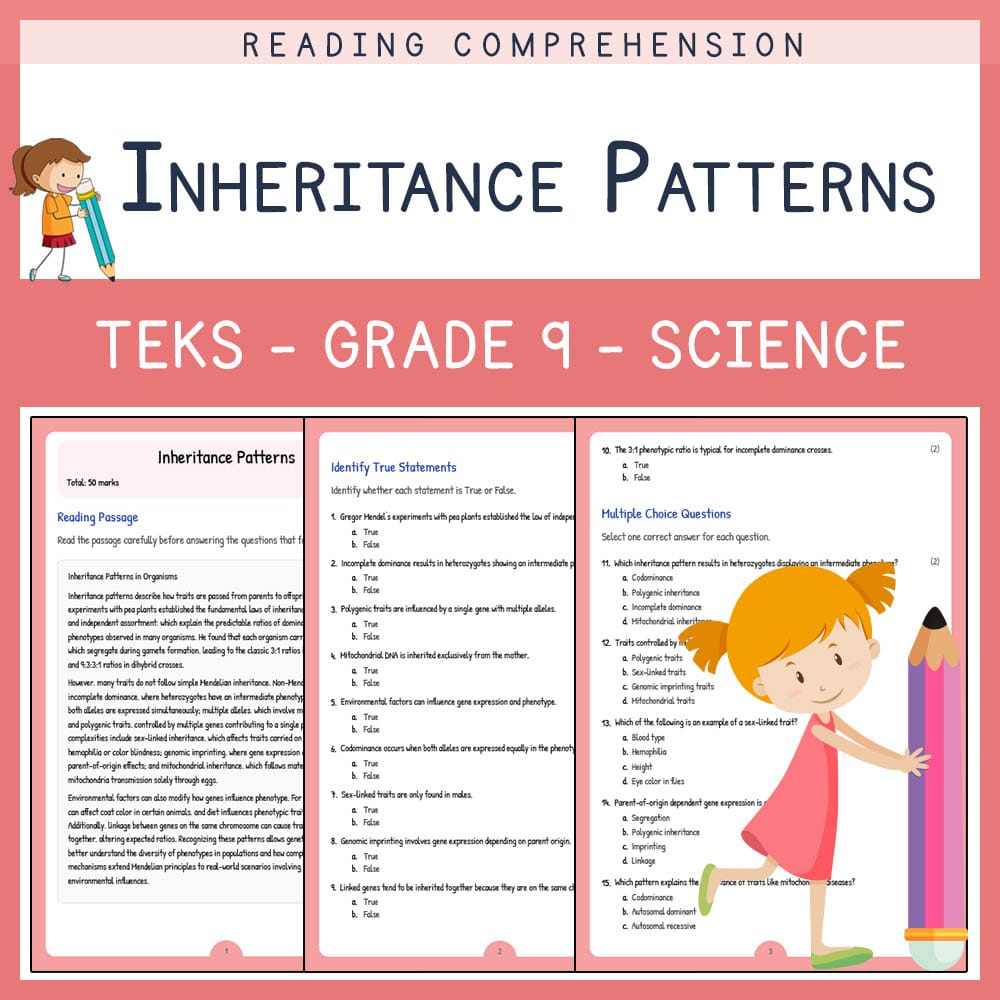
Grade 9 Science | Inheritance Patterns Worksheet | TEKS Aligned
Created byLumora LearningLearning Objectives
- Understand Mendelian and Non-Mendelian inheritance patterns.
- Identify different types of inheritance such as incomplete dominance, codominance, and sex-linked traits.
- Explain how environmental factors and gene linkage influence trait expression.
Also included in: Grade 9 Science | Genetics & Biotechnology Lesson Bundle | TEKS Aligned
Instant download

Grade 9 Science | Organelle Function Worksheet | AP Aligned
Created byLumora LearningLearning Objectives
- Describe the roles of major organelles such as mitochondria, chloroplasts, endoplasmic reticulum, and lysosomes in cellular processes.
- Explain how internal structures like folded membranes and stacks relate to their functions such as ATP production and light capture.
- Compare the functions of different organelles and how compartmentation optimizes reaction rates and metabolic pathways.
Also included in: Grade 9 Science | Biology and Ecosystems Custom Bundle | AP Worksheets
Instant download
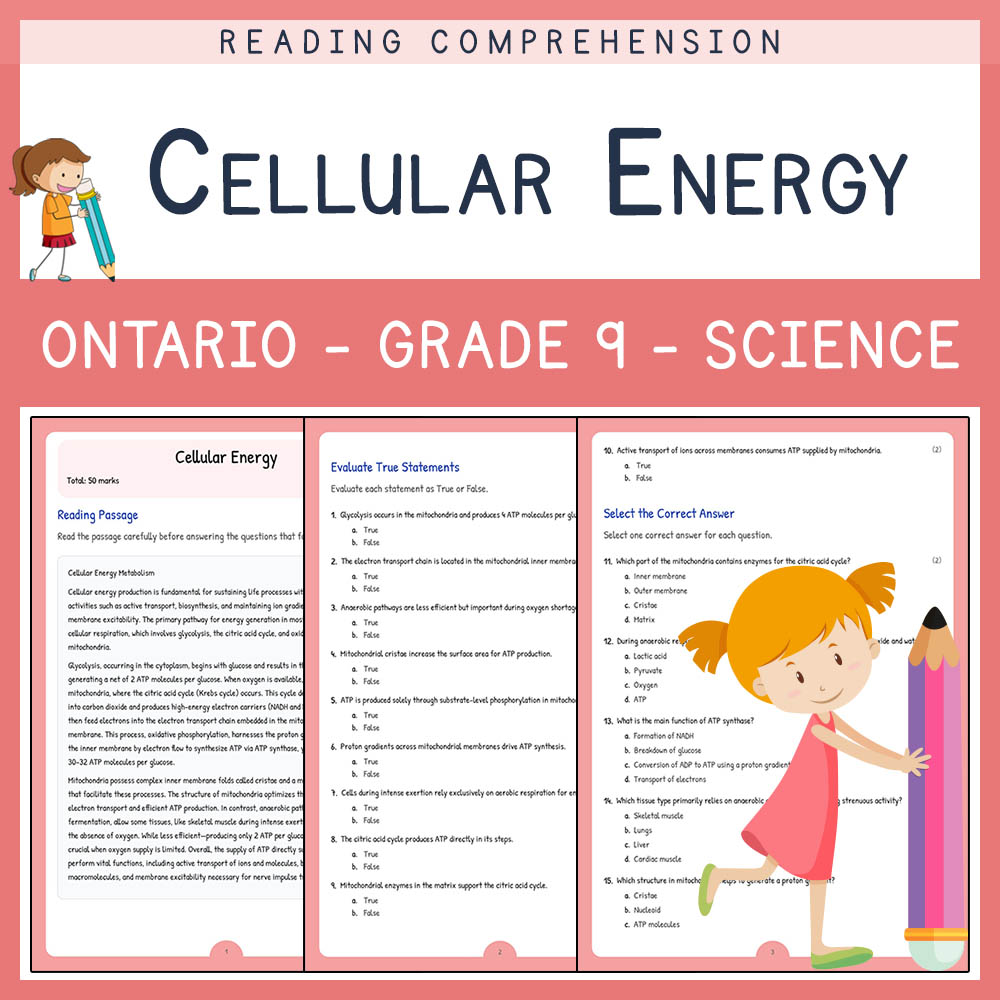
Grade 9 Science | Cellular Energy Worksheet Elena | Ontario Standards
Created byLumora LearningLearning Objectives
- Explain the processes of glycolysis, the citric acid cycle, and oxidative phosphorylation.
- Describe how mitochondrial structure supports ATP synthesis.
- Contrast aerobic and anaerobic pathways and their tissue-specific roles.
Also included in: Grade 9 Science | Life Systems Lesson Bundle | Ontario Framework
Instant download
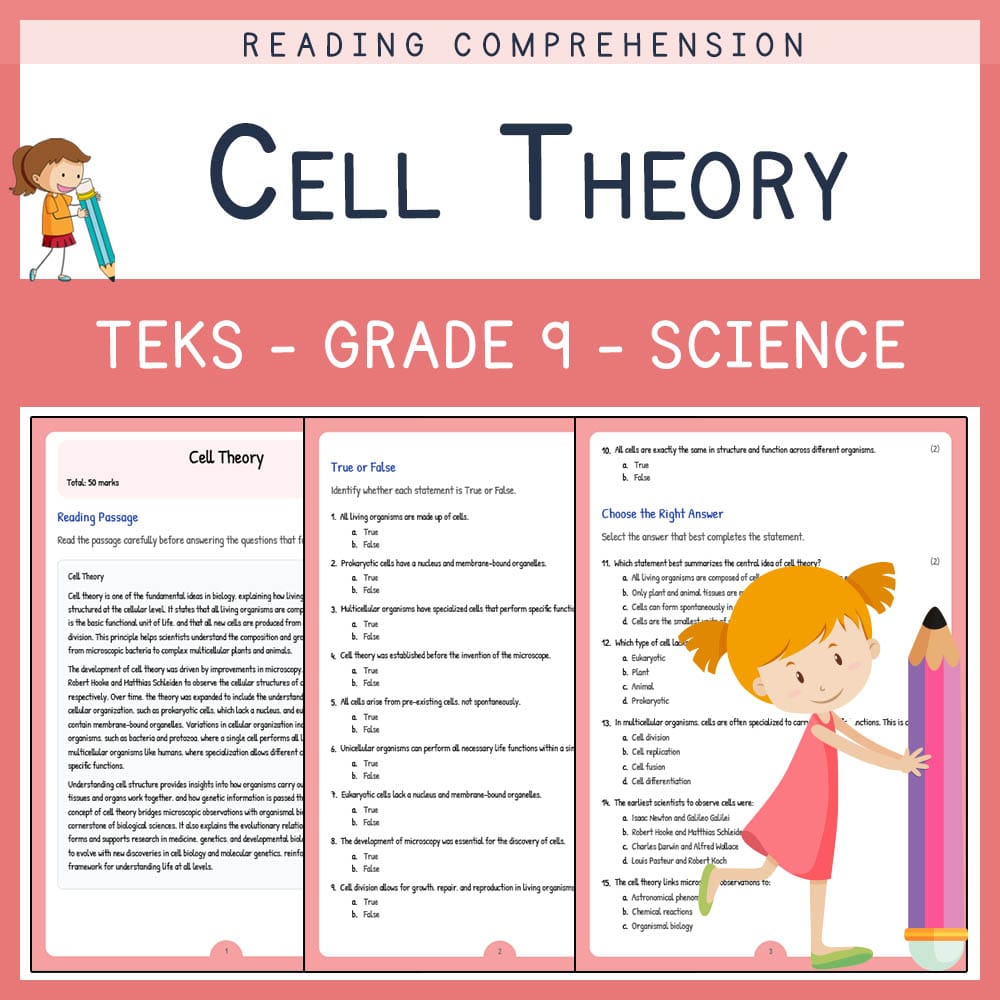
Grade 9 Science | Cell Theory Worksheet | TEKS Aligned
Created byLumora LearningLearning Objectives
- Describe the fundamental principles of cell theory.
- Differentiate between unicellular and multicellular organisms.
- Explain the differences between prokaryotic and eukaryotic cells.
Also included in: Grade 9 Science | Cell Structure & Function Lesson Bundle | TEKS Aligned
Instant download
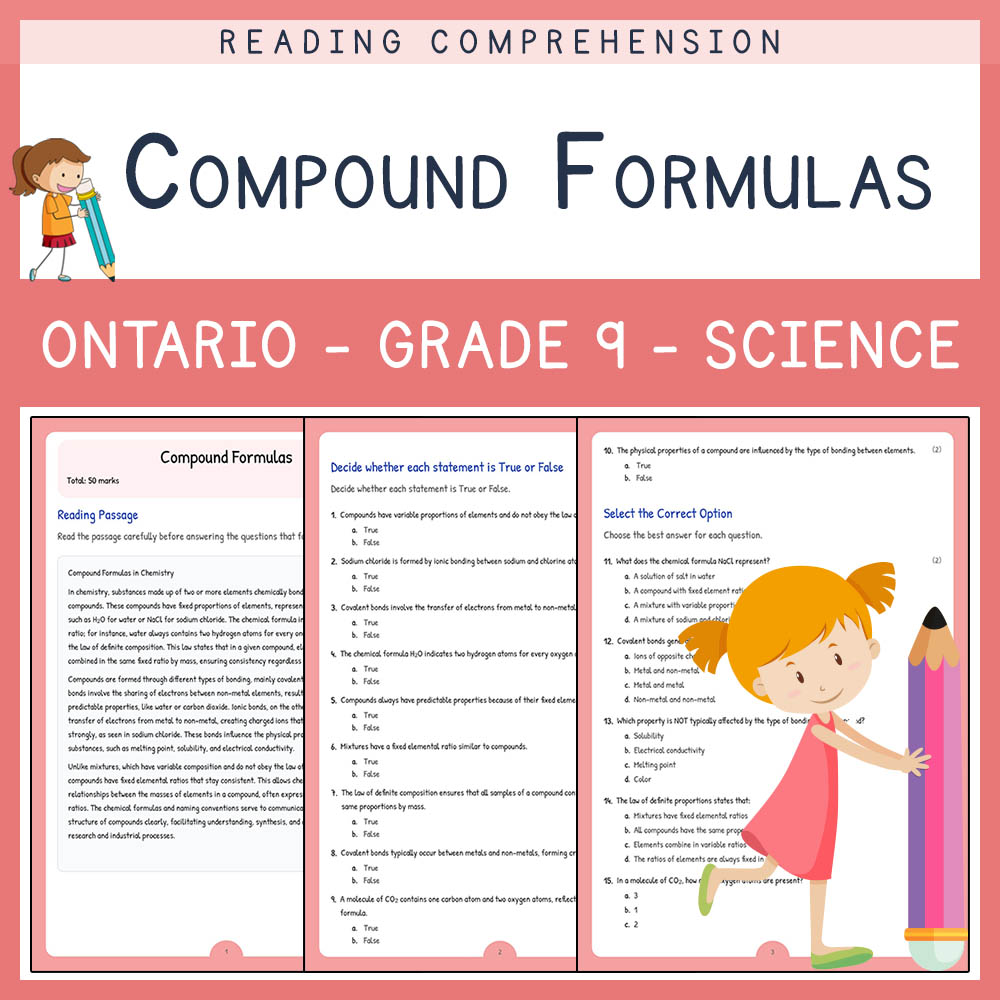
Grade 9 Science Practice | Compound Formulas Worksheet Elena | Ontario
Created byLumora LearningLearning Objectives
- Understand how compounds are represented by chemical formulas and names.
- Explain the difference between ionic and covalent bonding and their effects on properties.
- Learn the law of definite composition and how it relates to compound stoichiometry.
Instant download

Grade 9 Science | Ecosystem Cycling Worksheet | AP Standards
Created byLumora LearningLearning Objectives
- Describe the processes of carbon and nitrogen cycles within ecosystems.
- Explain how energy flows through food webs and how trophic transfer influences biodiversity.
- Assess the effects of perturbations such as nutrient enrichment and habitat alteration on ecosystem function.
Also included in: Grade 9 Science | Biology and Ecosystems Custom Bundle | AP Worksheets
Instant download
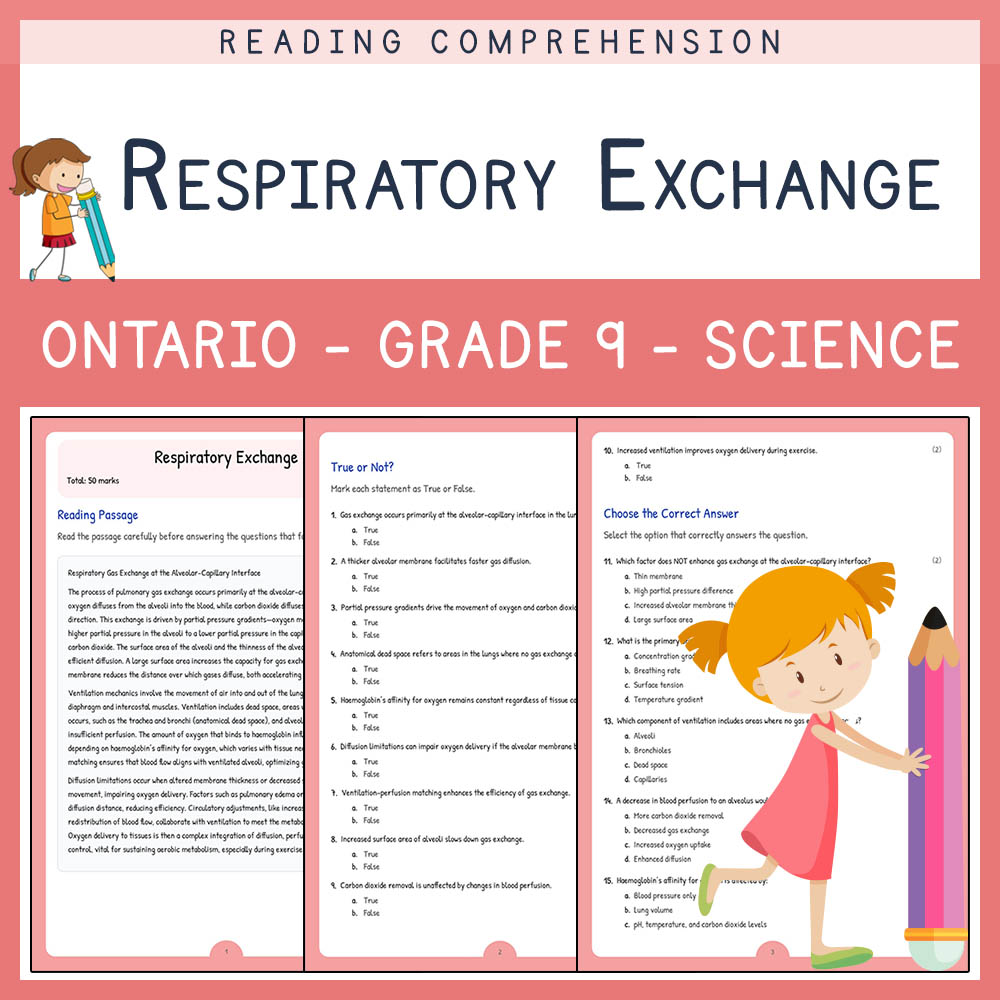
Grade 9 Science | Respiratory Exchange Worksheet | Ontario Standard
Created byLumora LearningLearning Objectives
- Explain the process of pulmonary gas exchange at the alveolar-capillary interface.
- Identify factors affecting oxygen uptake and carbon dioxide removal.
- Describe the mechanics of ventilation and the concept of dead space.
Also included in: Grade 9 Science | Life Systems Lesson Bundle | Ontario Framework
Instant download
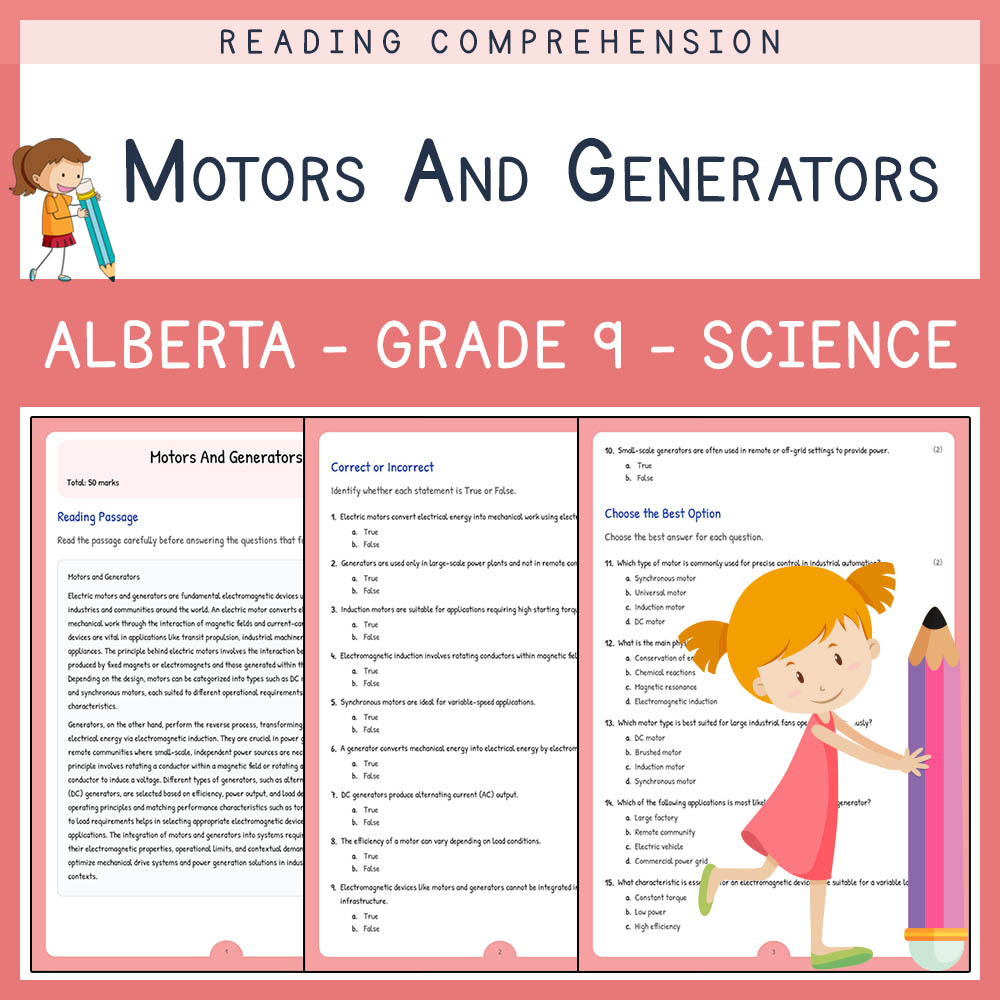
Grade 9 Science | Motors and Generators Worksheet | Alberta Standard
Created byLumora LearningLearning Objectives
- Understand the basic principles of electric motors and generators.
- Identify different types of motors and their applications.
- Explain electromagnetic induction and how it is used in generators.
Instant download

Grade 9 Science | Climate Modeling Worksheet | California Standards
Created byLumora LearningLearning Objectives
- Explain how climate models represent physical processes that control Earth’s energy balance and atmospheric circulation
- Interpret how greenhouse-gas emission scenarios produce different projected temperature and precipitation trajectories
- Describe how climate feedbacks (water vapor, ice cover, and clouds) can amplify or dampen warming
Instant download

Grade 9 Science | Gravity and Orbits Worksheet | California Standards
Created byLumora LearningLearning Objectives
- Explain how gravity influences the motion of orbiting bodies such as planets and moons
- Describe the relationships among mass, distance, and orbital speed in orbital motion
- Use observed orbital patterns to connect gravitational attraction to predictable trajectories
Instant download

Grade 9 Science | Monitoring Pollution Worksheet | California Standards
Created byLumora LearningLearning Objectives
- Explain how monitoring data can reveal changes in air and water quality over time
- Describe how monitoring evidence (chemical indicators, flow conditions, and spatial patterns) links pollution to sources and processes
- Use measurement results to evaluate pollution mitigation and prevention strategies
Instant download

Grade 9 Science | Population Trait Variation Worksheet | California Standards
Created byLumora LearningLearning Objectives
- Explain how allele frequency and trait distributions describe genetic variation in populations
- Determine how random processes, heritable mutations, and gene interactions contribute to variability
- Describe how natural selection can shift allele frequencies from one generation to the next
Instant download

Grade 9 Science | Impulse and Momentum Worksheet | California Standards
Created byLumora LearningLearning Objectives
- Explain how impulse relates to change in momentum, including the role of net force and time interval
- Use the idea of impulse to predict how different force–time combinations can produce the same momentum change
- Determine how direction affects impulse and momentum change
Instant download

Grade 9 Science | Constraint Analysis Worksheet | California Standards
Created byLumora LearningLearning Objectives
- Explain how constraints shape feasible engineering designs
- Translate constraints into measurable requirements and identify trade-offs
- Evaluate design options for a system under power, flow, cost, regulatory, and environmental limits
Instant download

Grade 9 Science | Impact Evaluation Worksheet Elena | California Standards
Created byLumora LearningLearning Objectives
- Explain what impact evaluation is and why it considers benefits, risks, and tradeoffs over time
- Identify common impact-evaluation criteria such as environmental effects, health outcomes, resource use, and unintended consequences
- Apply impact-evaluation thinking to compare two engineering or technology options using reliability, emissions, land impacts, and sustainability
Instant download

Grade 9 Science | Resources and Landforms Worksheet | California Standards
Created byLumora LearningLearning Objectives
- Explain how tectonic activity, erosion, sedimentation, and weathering form major landforms and influence resource distribution
- Analyze how timescales of Earth processes affect land stability and the availability of resources
- Connect geologic history to real-world groundwater and ecosystem resources
Instant download

Grade 9 Science | Cell Components Worksheet | AP Aligned
Created byLumora LearningLearning Objectives
- Describe the structure and function of various cell organelles and membranes.
- Explain how cellular compartmentalization affects metabolic processes.
- Analyze how alterations in membrane composition influence diffusion and transport.
Also included in: Grade 9 Science | Biology and Ecosystems Custom Bundle | AP Worksheets
Instant download
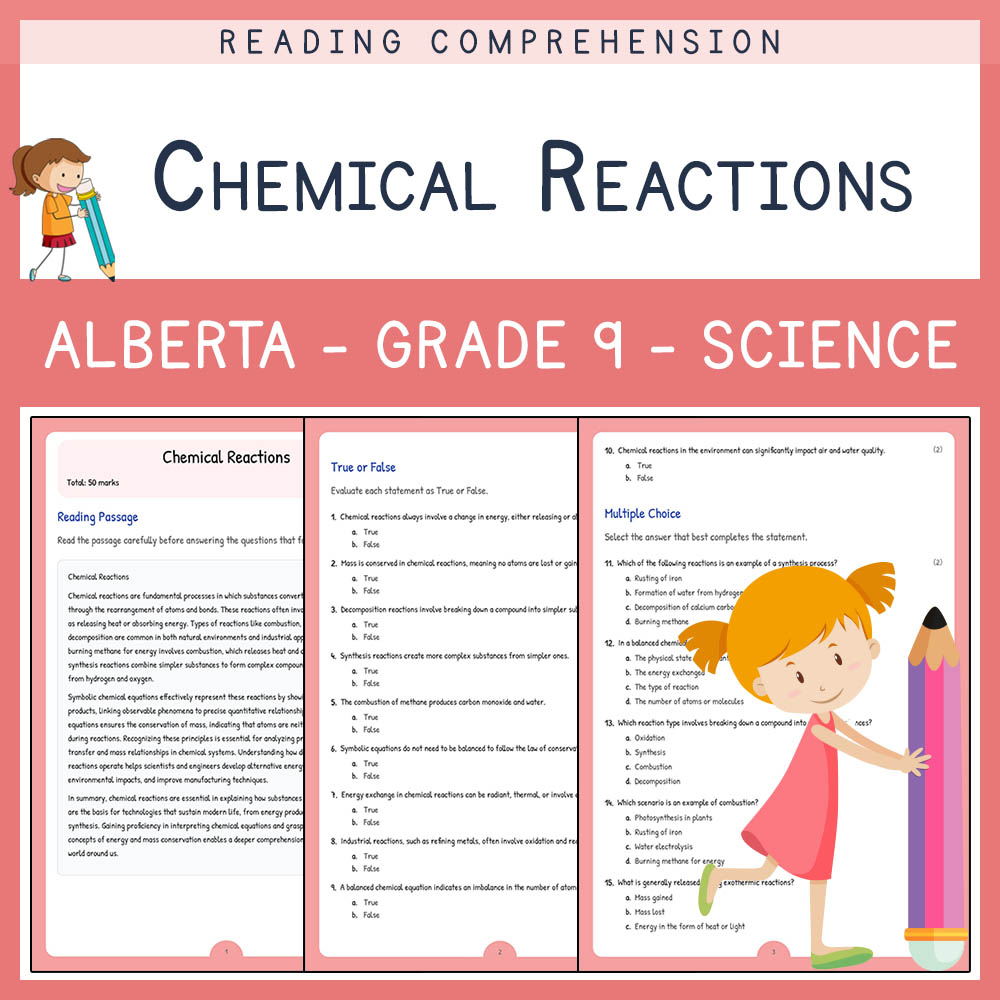
Grade 9 Science | Chemical Reactions Worksheet | Alberta Standards
Created byLumora LearningLearning Objectives
- Understand the different types of chemical reactions such as combustion, synthesis, and decomposition.
- Interpret symbolic chemical equations and relate them to real-world reactions.
- Explain energy exchange in chemical processes and the principle of mass conservation.
Instant download

Grade 9 Science | One-Dimensional Motion Worksheet | AP Aligned
Created byLumora LearningLearning Objectives
- Understand the core relationships among displacement, velocity, and acceleration in motion along a straight line.
- Interpret position–time and velocity–time graphs to analyze motion.
- Apply constant-acceleration equations to solve kinematic problems.
Also included in: Grade 9 Science | Physics Principles Science Custom Bundle | AP Aligned
Instant download

Grade 9 Science | Organelles Specialization Worksheet | BC Aligned
Created byLumora LearningLearning Objectives
- Understand the functional roles of different eukaryotic cell organelles.
- Identify how organelle specialization supports cellular efficiency and metabolic coordination.
- Describe the processes carried out by mitochondria, ribosomes, endoplasmic reticulum, Golgi apparatus, lysosomes, and peroxisomes.
Instant download

Grade 9 Science | Carbon Records Worksheet | BC Standards
Created byLumora LearningLearning Objectives
- Understand how ice cores, sediments, and proxies reconstruct past atmospheric changes.
- Interpret ratios of gases, isotopes, and fluxes to analyze past climate variability.
- Differentiate between natural variability and recent anthropogenic impacts on carbon levels.
Also included in: Grade 9 Science | Earth Systems Unit Bundle | BC Aligned Worksheets
Instant download
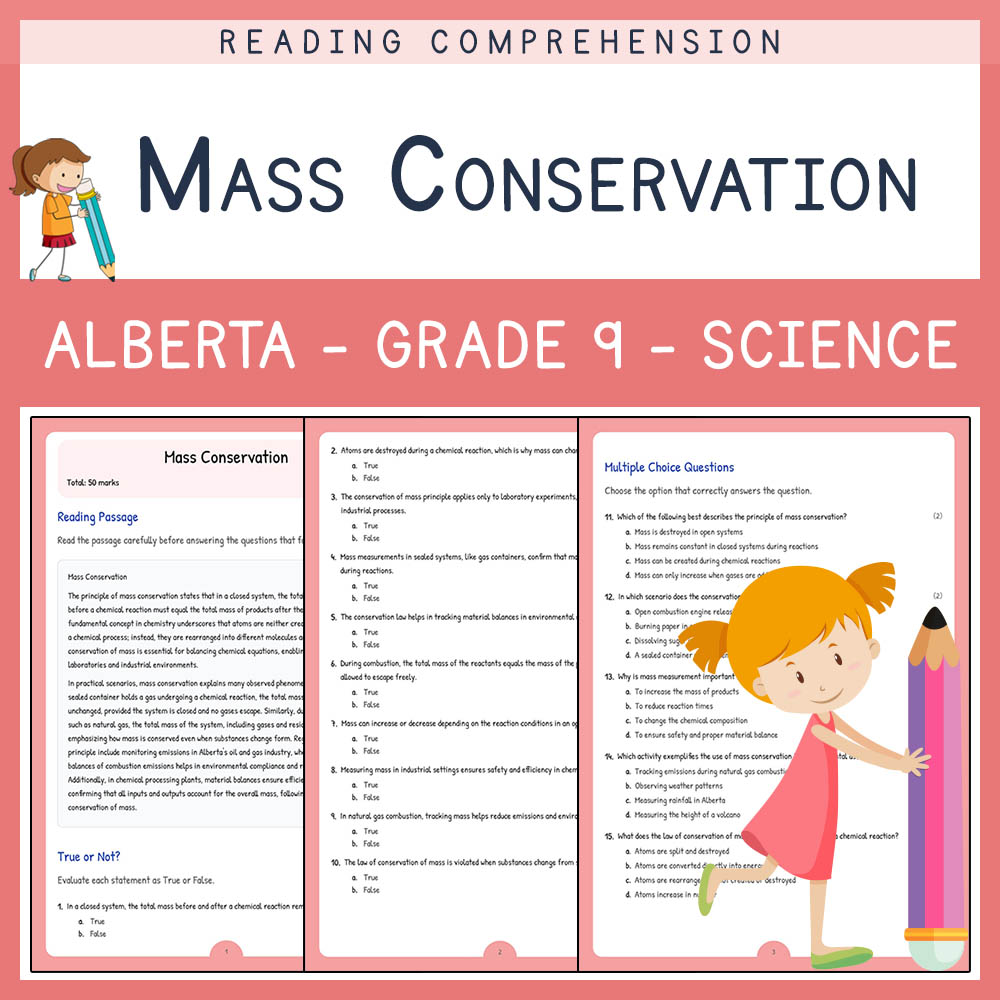
Grade 9 Science | Mass Conservation Worksheet | Alberta Standards
Created byLumora LearningLearning Objectives
- Understand the principle of conservation of mass in chemical reactions.
- Explain how mass remains constant in closed systems during chemical processes.
- Apply the conservation of mass concept to real-world regional contexts such as emissions and resource processing.
Instant download

Grade 9 Science | Tidal Forces Worksheet | BC Aligned
Created byLumora LearningLearning Objectives
- Explain the origins of tidal forces resulting from gravitational interactions among the Moon, Sun, and Earth.
- Describe how the relative positions of the Sun and Moon influence spring and neap tides.
- Identify how local coastline geometry, ocean depth, and resonant basins affect tidal amplitudes.
Also included in: Grade 9 Science | Earth Systems Unit Bundle | BC Aligned Worksheets
Instant download

Grade 9 Science | Climate Drivers Worksheet | BC Standards
Created byLumora LearningLearning Objectives
- Understand the key components that influence Earth's climate, including the atmosphere, oceans, ice, land surface, and living organisms.
- Explain how solar energy and internal Earth's heat contribute to climate patterns.
- Identify factors such as aerosols, greenhouse gases, ocean circulation, and land surface properties that cause climate variability.
Also included in: Grade 9 Science | Earth Systems Unit Bundle | BC Aligned Worksheets
Instant download

Grade 9 Science | Fluid Balance Worksheet | BC Aligned
Created byLumora LearningLearning Objectives
- Understand the role of kidneys in osmoregulation and fluid balance.
- Identify processes such as filtration, reabsorption, secretion, and concentration in the nephron.
- Explain how hormones like antidiuretic hormone (ADH) and aldosterone regulate fluid and ion balance.
Instant download

Grade 9 Science | Greenhouse Effect Worksheet | BC Aligned
Created byLumora LearningLearning Objectives
- Understand the greenhouse effect and its role in maintaining Earth's temperature.
- Identify key gases involved in the greenhouse effect and their sources.
- Explain how human activities influence greenhouse gas concentrations.
Also included in: Grade 9 Science | Earth Systems Unit Bundle | BC Aligned Worksheets
Instant download

Grade 9 Science | Plate Boundaries Worksheet | AP Aligned
Created byLumora LearningLearning Objectives
- Explain the mechanisms behind divergent, convergent, and transform plate boundaries.
- Identify surface expressions and features associated with each type of plate boundary.
- Analyze evidence such as seafloor age patterns, paleomagnetic stripes, and earthquake distributions to interpret plate movements.
Also included in: Grade 9 Science | Earth and Space Science Custom Bundle | AP Aligned
Instant download
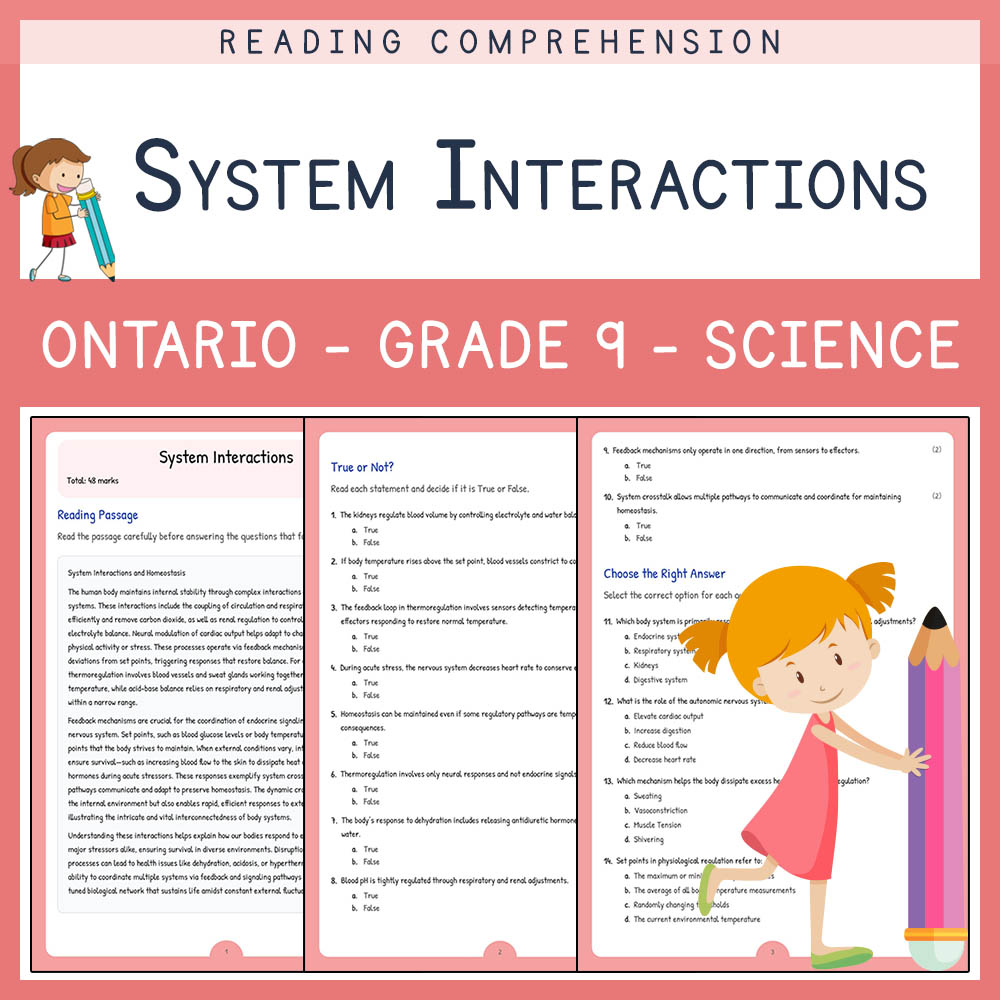
Grade 9 Science Assessment | System Interactions Worksheet | Ontario Standard
Created byLumora LearningLearning Objectives
- Analyze how body systems interact to maintain homeostasis under various conditions.
- Explain feedback mechanisms, set points, and the coordination between endocrine and autonomic responses.
- Describe examples such as thermoregulation, acid-base balance, and responses to stress.
Also included in: Grade 9 Science | Life Systems Lesson Bundle | Ontario Framework
Instant download
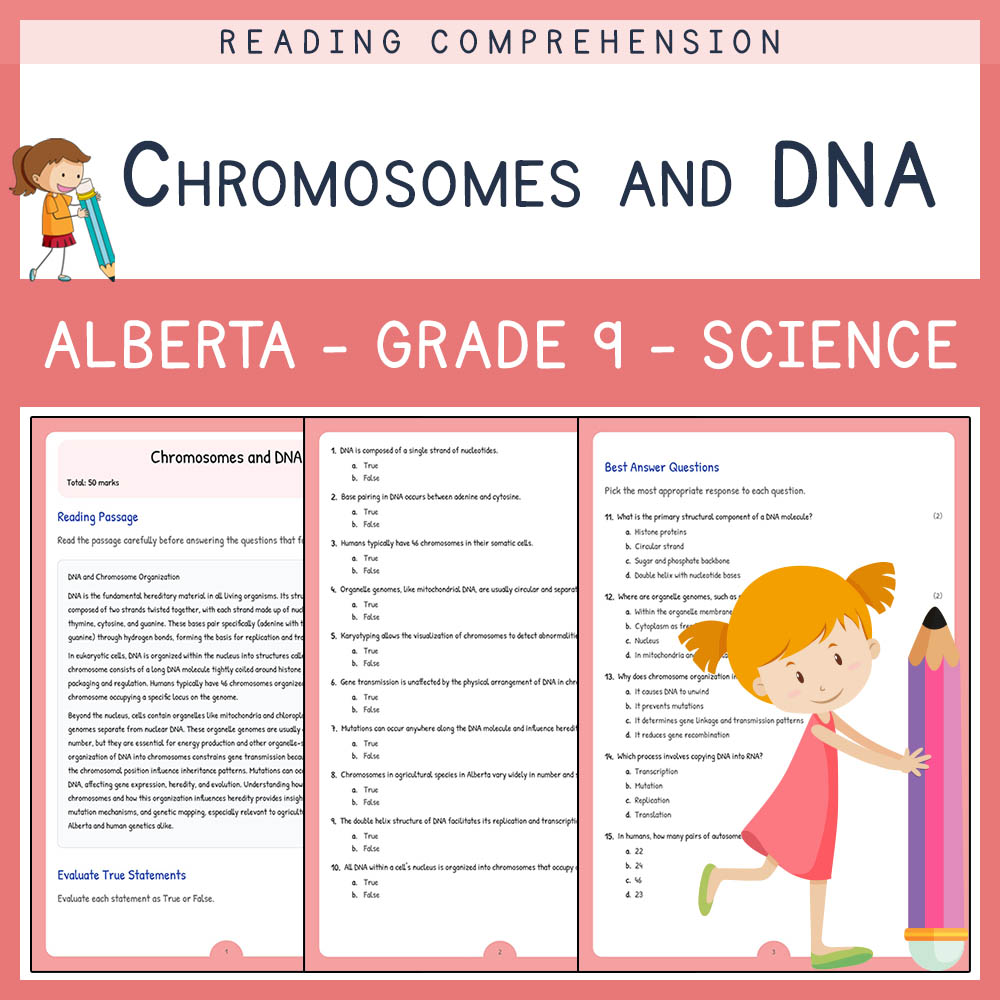
Grade 9 Science | Chromosomes and DNA Worksheet | Alberta Standards
Created byLumora LearningLearning Objectives
- Explain the structure and function of DNA and chromosomes.
- Describe how genetic material is organized within cells.
- Distinguish between nuclear and organelle genomes.
Instant download
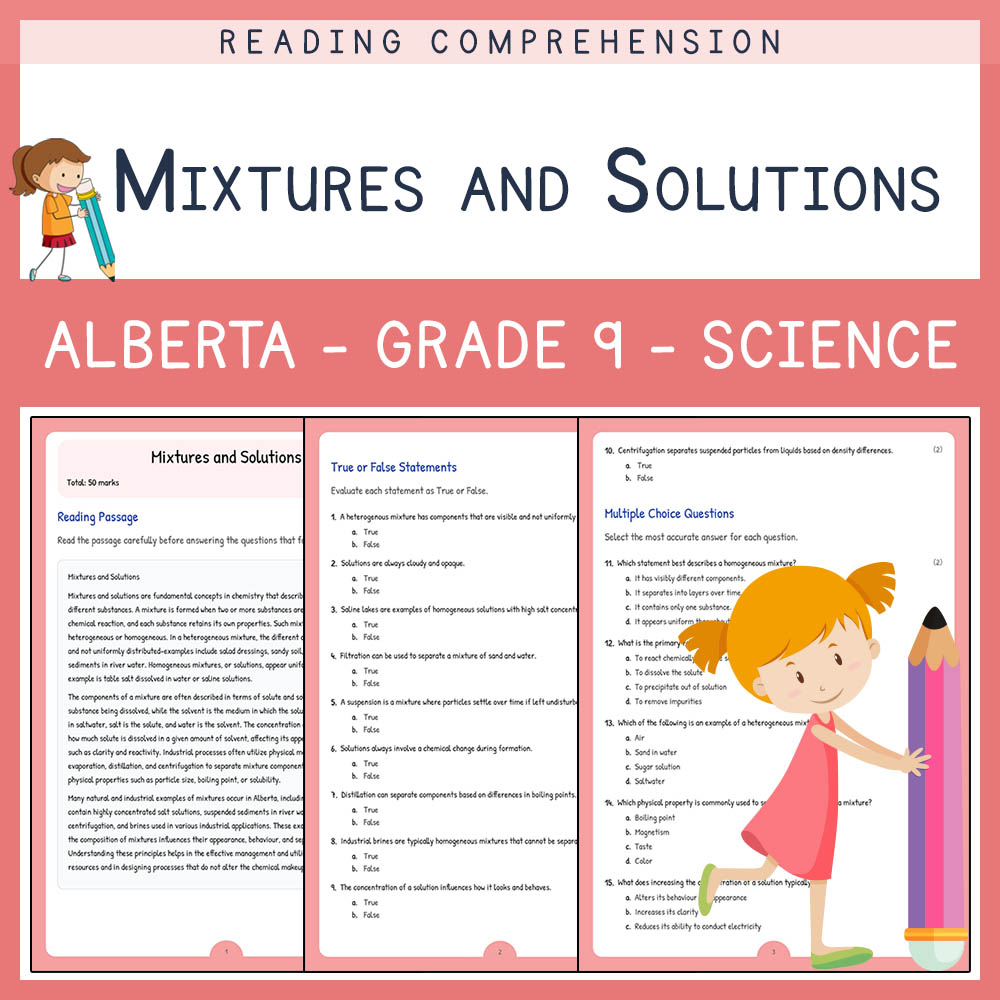
Grade 9 Science | Mixtures and Solutions Worksheet | Alberta Standards
Created byLumora LearningLearning Objectives
- Differentiate between heterogeneous mixtures and homogeneous solutions based on their properties.
- Identify key components of mixtures and solutions, such as solute and solvent.
- Understand how concentration affects the appearance and behaviour of mixtures.
Instant download
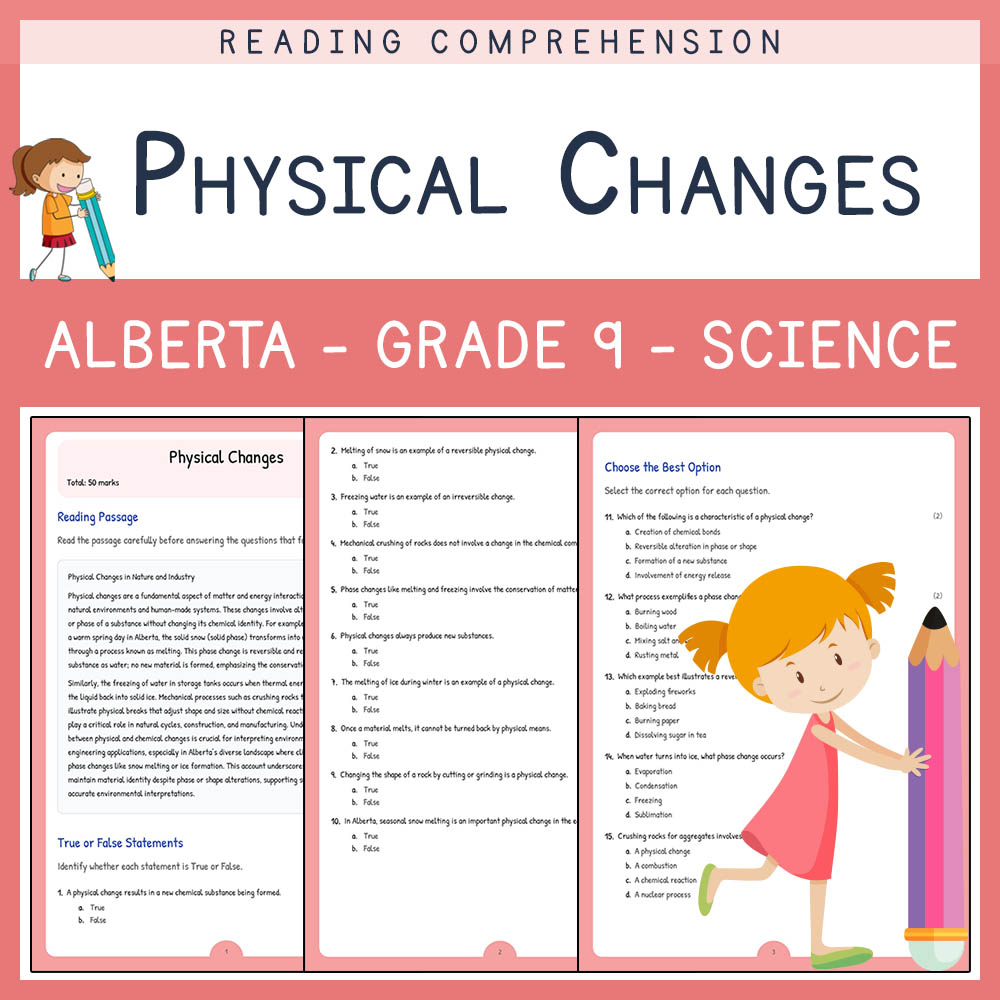
Grade 9 Science | Physical Changes Worksheet | Alberta Standards
Created byLumora LearningLearning Objectives
- Define and differentiate between physical changes and chemical transformations.
- Identify examples of reversible physical changes in everyday scenarios.
- Analyze the effects of phase shifts like melting and freezing in natural and engineered processes.
Instant download
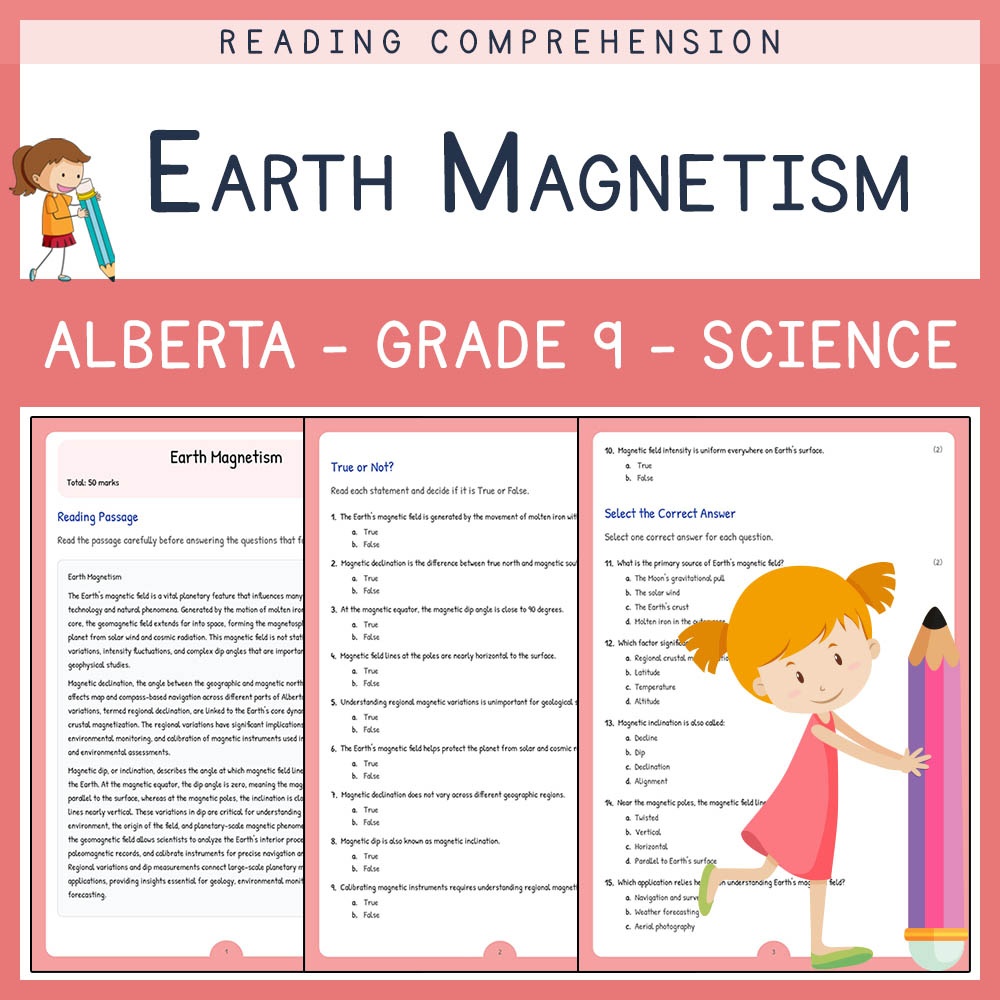
Grade 9 Science | Earth Magnetism Worksheet Elena | Alberta Standards
Created byLumora LearningLearning Objectives
- Understand the origin and characteristics of Earth's magnetic field.
- Explain regional variations in magnetic declination and their implications.
- Describe how magnetic dip and field behavior relate to planetary magnetism.
Instant download

Grade 9 Science | Tissue Types Worksheet | BC Aligned
Created byLumora LearningLearning Objectives
- Understand the different types of tissues and their functions.
- Identify characteristics of epithelial, connective, muscle, and nervous tissues.
- Explain how tissue structure relates to function in organs.
Instant download

Grade 9 Science | Friction and Drag Worksheet Elena | NGSSS Aligned
Created byLumora LearningLearning Objectives
- Explain how friction and drag oppose relative motion and affect acceleration
- Identify the direction of friction and drag forces using everyday scenarios and free-body reasoning
- Describe how friction depends on normal force and surface conditions, and how drag depends on speed and shape
Instant download
Browse more categories
About Grade 9 Worksheets
Browse 9,322 printable Grade 9 worksheets across algebra, biology, literature, and history — each a ready-to-print PDF with optional answer keys.
Every worksheet on MyTeachingSheets is created by independent teacher-authors and reviewed before publication. All resources download as printable PDFs for classroom, homework, or at-home practice, and many include answer keys. Preview any worksheet free before buying.