
Reading comprehension Worksheets
40,284 type resources
Data Representation Assessment | TEKS Grade 7 Science Standards-Aligned
 Created byPrism Point Learning
Learning Objectives
- Understand various methods of organizing and displaying data to identify trends and relationships.
- Select appropriate graph types for different data sets and interpret their features.
- Calculate summary statistics such as mean and median to analyze data sets.
Also included in: Scientific Inquiry Reasoning Grade 7 Science Lesson Bundle TEKS Unit
Instant download
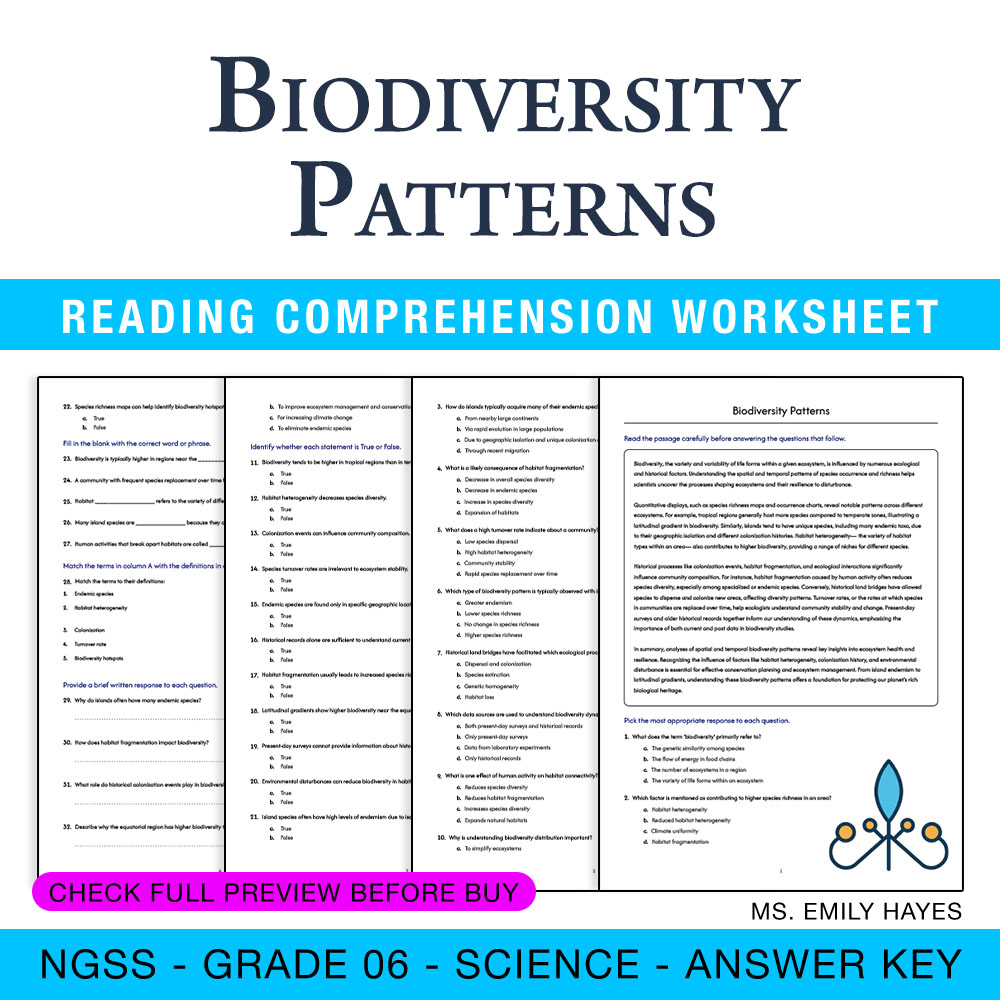
6th Grade Science | Biodiversity Patterns Worksheet (PDF + Answer Key)
 Created byCopper Leaf Classroom
Learning Objectives
- Understand how species occurrence and richness reveal spatial and temporal biodiversity patterns across ecosystems.
- Interpret data displays such as charts and maps related to biodiversity in different habitats.
- Analyze ecological and historical factors influencing biodiversity distribution, including habitat fragmentation and colonization.
Instant download
Grade 10 Science | Natural Selection Worksheet (NGSS) – PDF
 Created byMaple Path Learning
Learning Objectives
- Understand how variation in heritable traits influences natural selection.
- Explain the role of environmental pressures in shaping adaptive changes in populations.
- Identify real-world examples of evolution due to selective mechanisms, such as antibiotic resistance and industrial melanism.
Also included in: Grade 10 Science | Biological Evolution Unity and Diversity Lesson Bundle | NGSS +1 more
Instant download
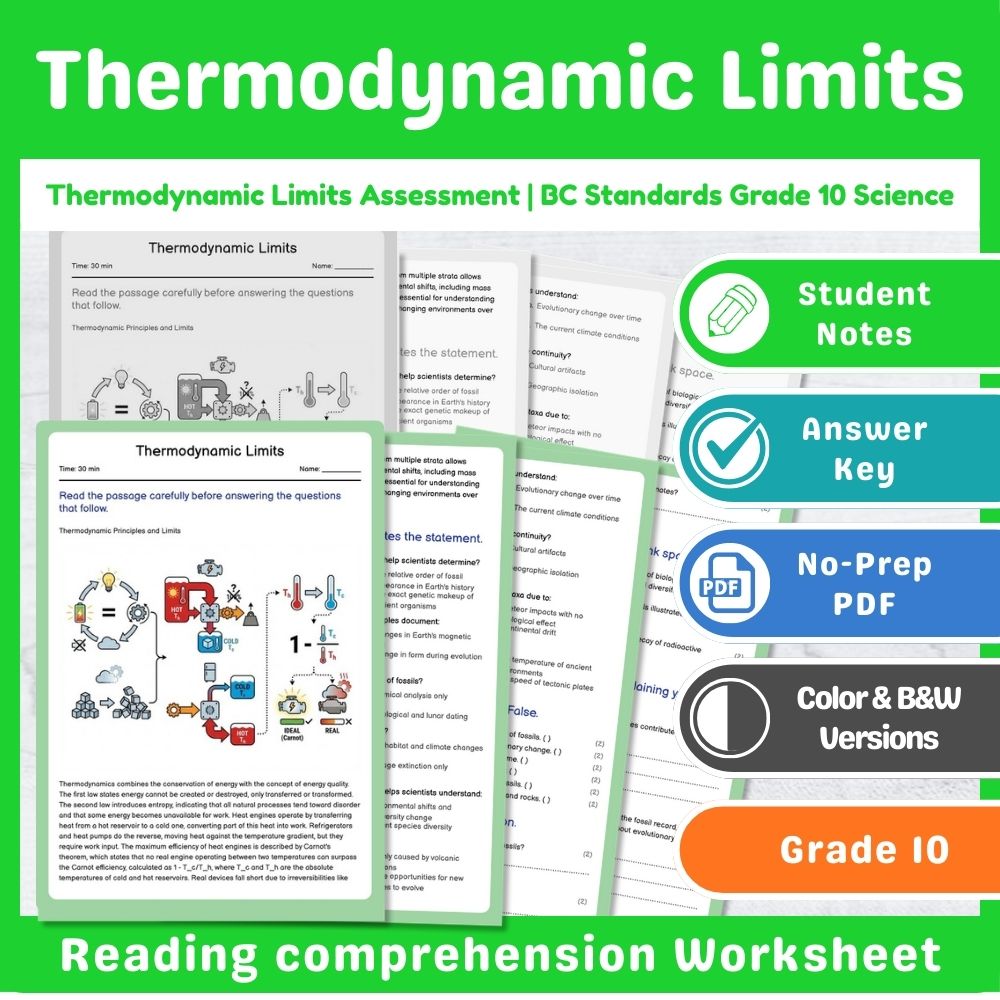
Thermodynamic Limits Assessment | BC Grade 10 Science Standards
Created byPrism Point LearningLearning Objectives
- Explain the fundamental principles of thermodynamics, including energy conservation and entropy.
- Describe how heat engines and refrigerators operate between temperature reservoirs.
- Calculate the maximum efficiency of heat engines based on Carnot's theorem.
Also included in: Grade 10 Science | Energy Assessment - BC Standards-Aligned Mini Bundle
Instant download
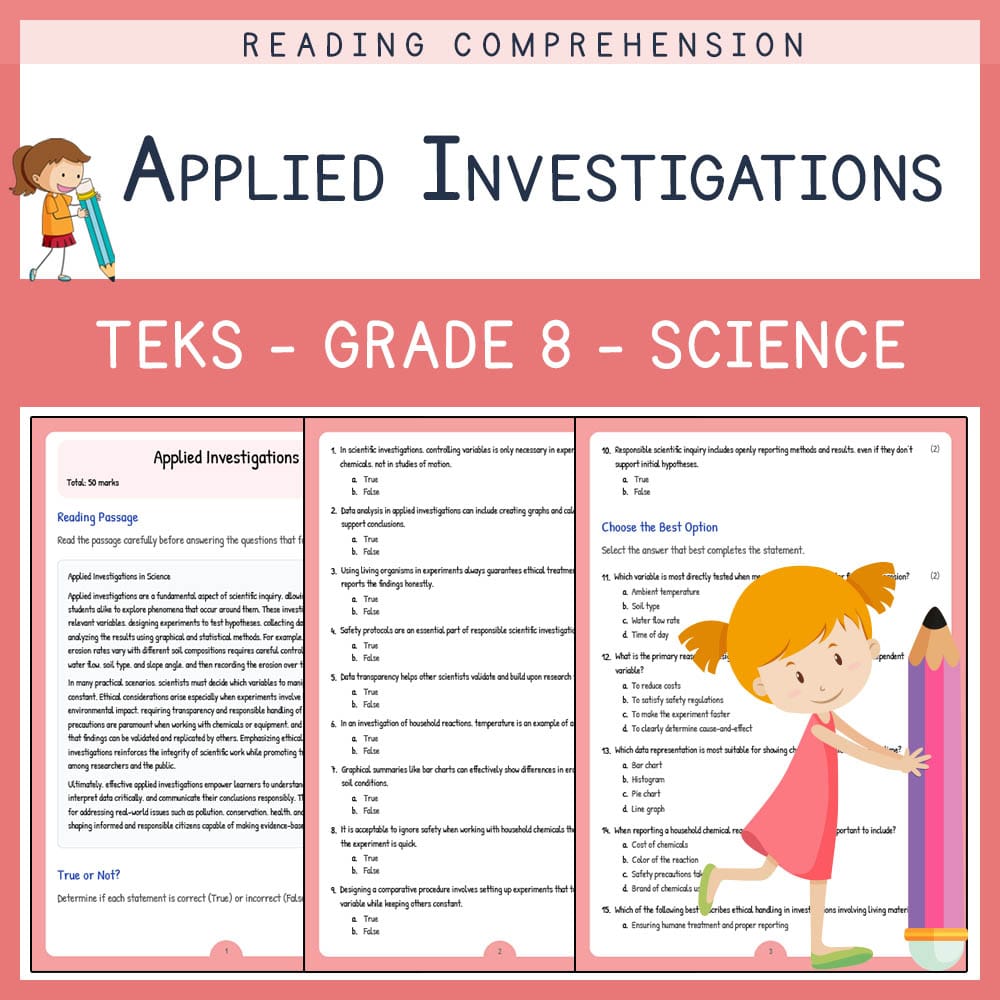
Grade 8 Science | Applied Investigations Worksheet | TEKS Aligned
 Created byLumora Learning
Learning Objectives
- Understand the process of designing scientific investigations involving variables and controls.
- Learn to analyze data through graphical and statistical methods to draw valid conclusions.
- Evaluate ethical and safety considerations when working with living materials and chemicals.
Also included in: Grade 8 Science | Science Concepts/Skills Lesson Bundle | TEKS Aligned
Instant download
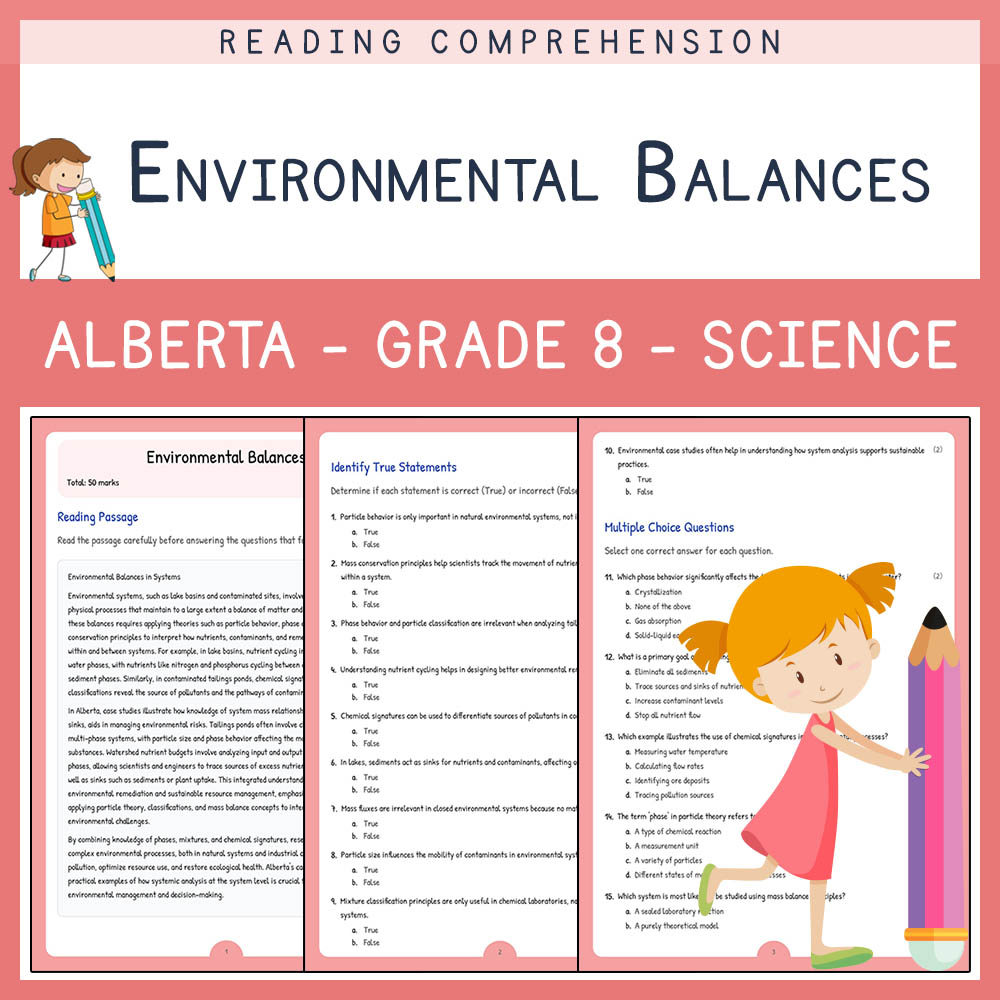
Grade 8 Science | Environmental Balances Worksheet | Alberta Standard
Created byLumora LearningLearning Objectives
- Understand how particle theory applies to environmental processes.
- Classify chemical components and understand mass conservation principles.
- Interpret environmental systems such as nutrient cycling and contamination transport.
Instant download
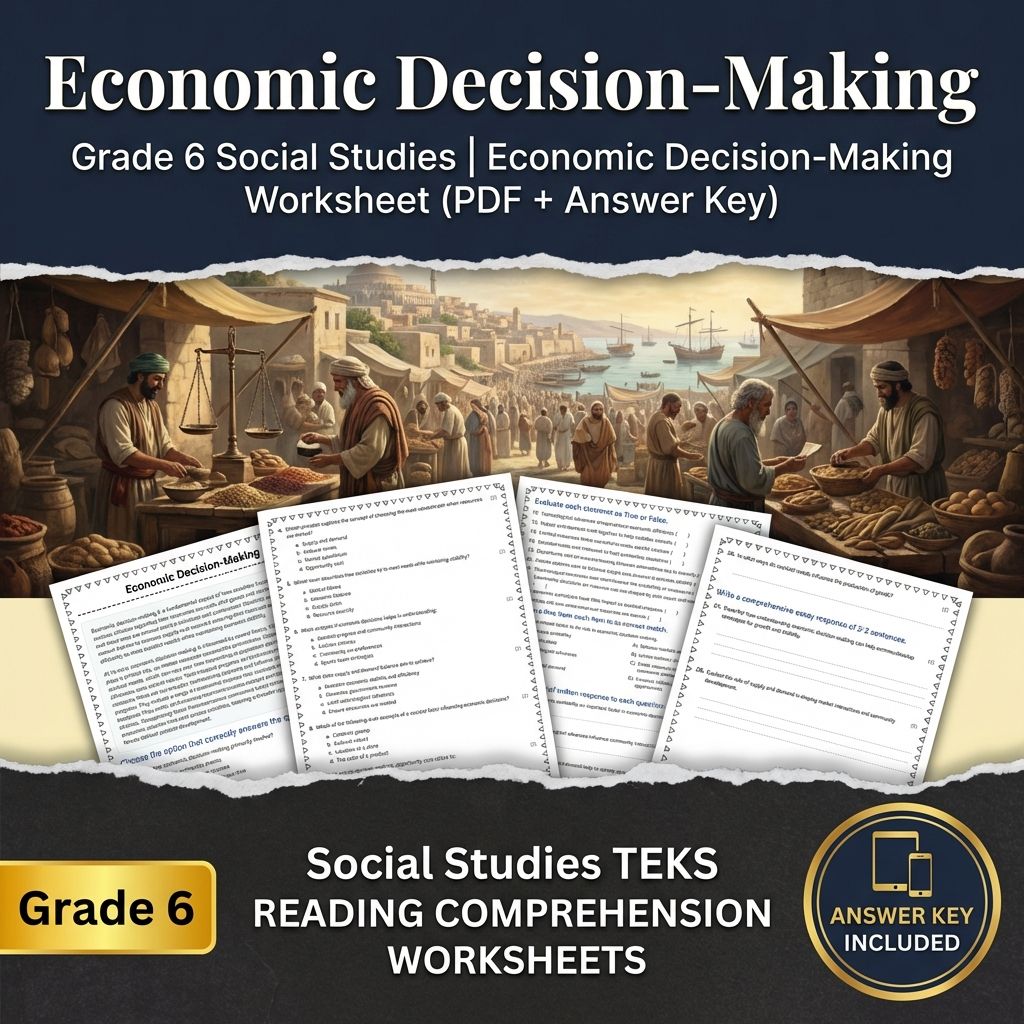
Grade 6 Social Studies | Economic Decision-Making Worksheet (PDF + Answer Key)
JCreated byJ.S SheetsLearning Objectives
- Understand the key concepts involved in economic decision-making within societies.
- Identify factors that influence resource allocation, production, and consumption.
- Analyze how societal needs and technological advances impact economic choices.
Also included in: Grade 6 Social Studies Unit Bundle | Trade, Scarcity & Economic Institutions +1 more
Instant download

Collision Safety Worksheet | Grade 9 Science Printable PDF & Assessment
Learning Objectives
- Understand the principles of impulse and force-time relationships in collisions.
- Analyze the effectiveness of various crash mitigation strategies like crumple zones and airbags.
- Interpret force‑time graphs to evaluate impact forces during collisions.
Also included in: Grade 9 Science: Motion and Stability Forces and Interactions Lesson Bundle +1 more
Instant download

Grade 9 Science | Molecular Geometry Worksheet | BC Aligned
Created byLumora LearningLearning Objectives
- Understand the principles governing molecular shape based on electron pair repulsion.
- Identify common molecular geometries such as linear, trigonal planar, tetrahedral, and bent.
- Explain how molecular shape influences polarity and intermolecular forces.
Instant download
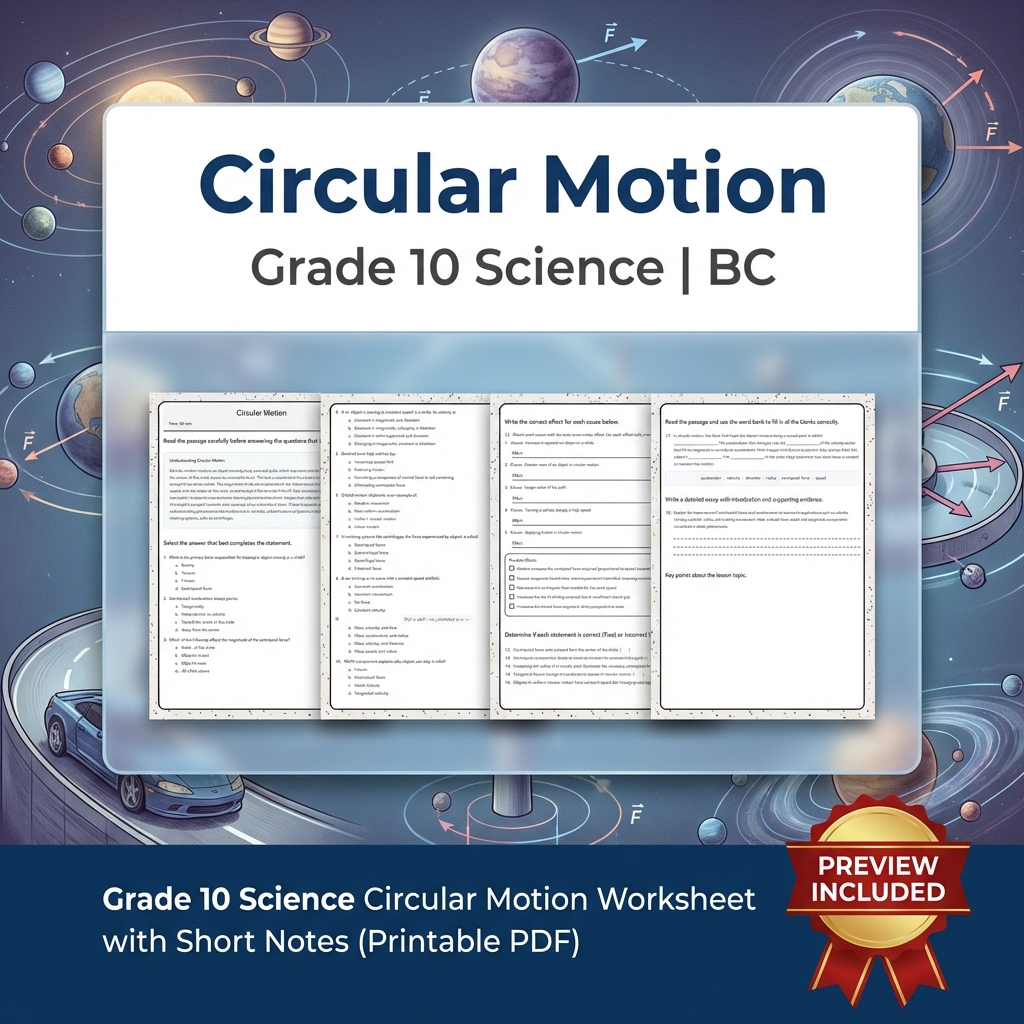
Grade 10 Science Circular Motion Worksheet with Short Notes (Printable PDF)
 Created byMeadowlark Worksheets
Learning Objectives
- Understand the concept of centripetal force and its role in circular motion.
- Describe the difference between centripetal acceleration and tangential acceleration.
- Explain how radial and tangential components affect phenomena like banked turns and orbital motion.
Also included in: Grade 10 Science Lesson Bundle | Physics and Forces Worksheets | BC Framework +1 more
Instant download
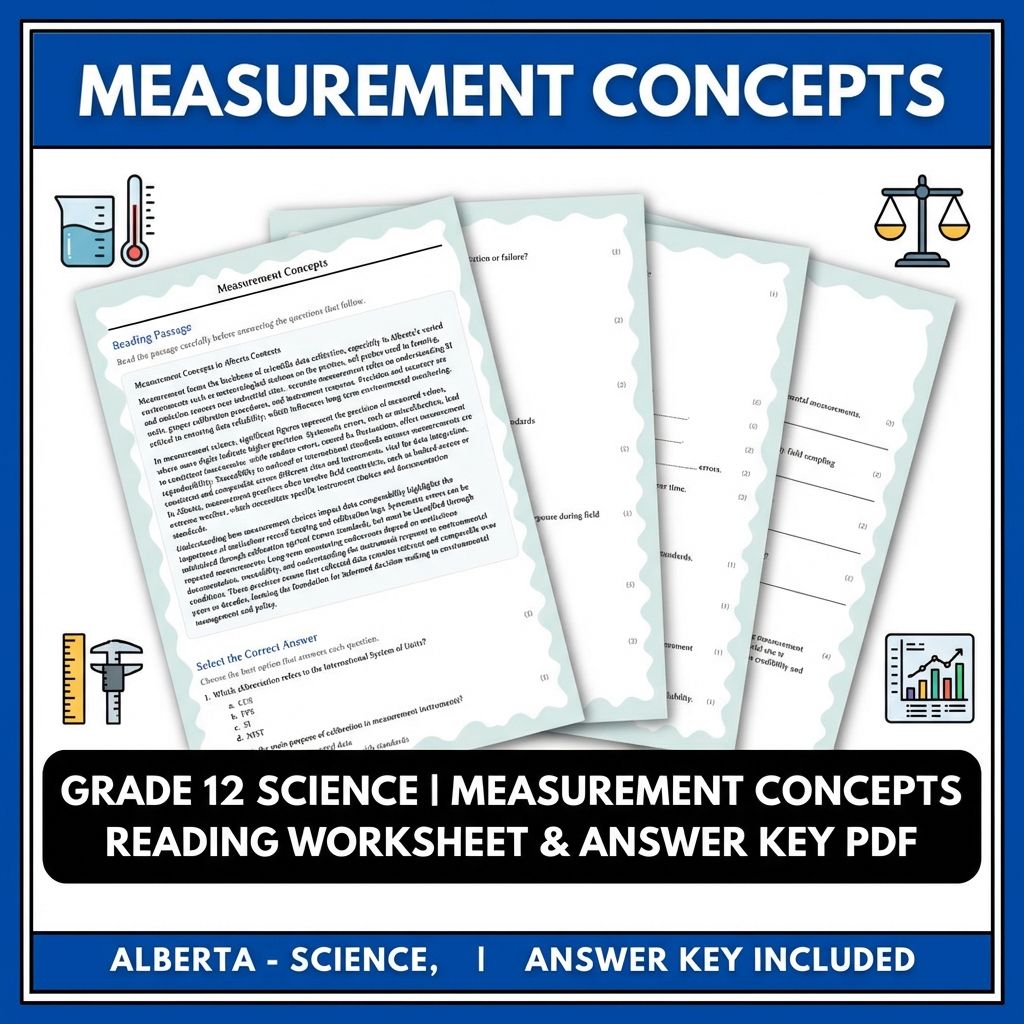
Grade 12 Science | Measurement Concepts Reading Worksheet & Answer Key PDF
JCreated byJ.S SheetsLearning Objectives
- Understand key SI units and their applications in Alberta contexts
- Explain calibration, precision, accuracy, and instrument response in measurement
- Interpret significant figures and error types to evaluate data quality
Also included in: Grade 12 Science Bundle | Environmental and Technical Concepts (Worksheet Pack) +1 more
Instant download
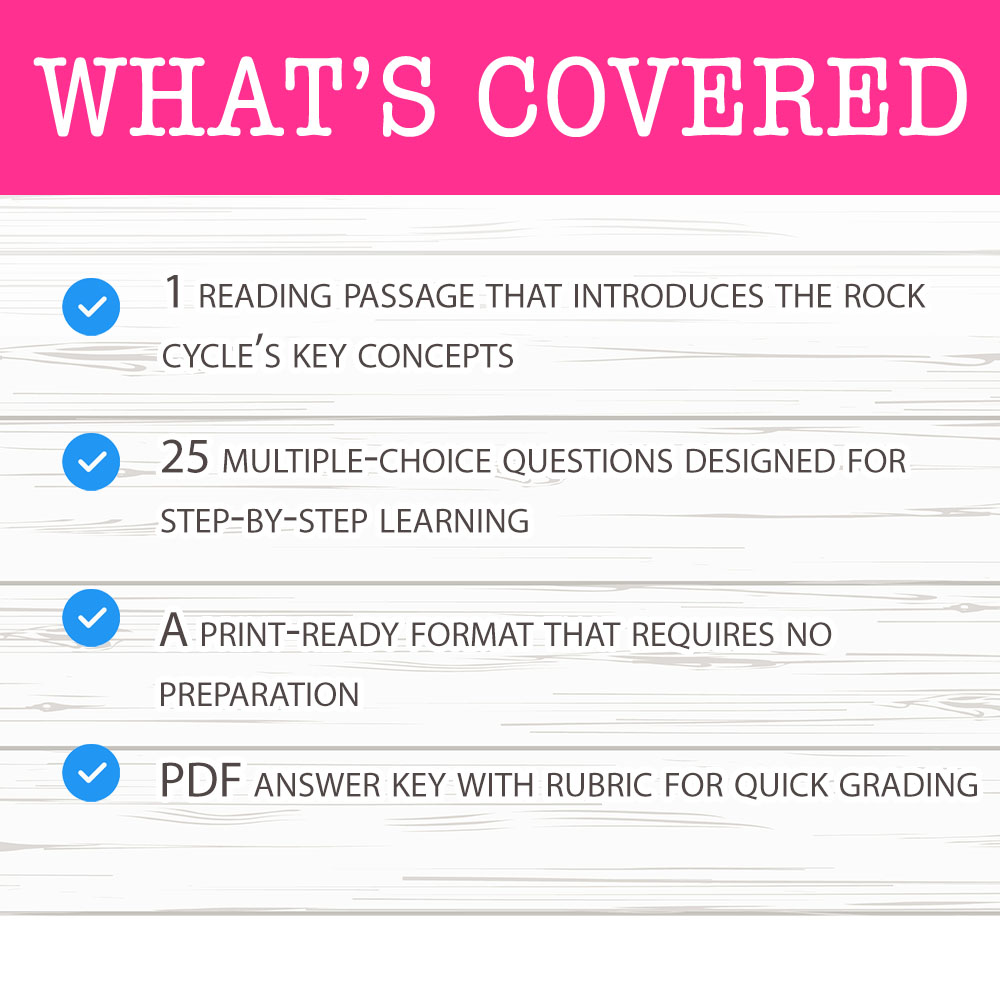
Grade 12 Science — Rock Cycle Worksheet MCQ Paper for Mastery
 Created byThe Resource Hub
Learning Objectives
- Understand the processes involved in the rock cycle and how different types of rocks transform.
- Identify the key environmental and geological processes that drive the formation and transformation of rocks.
- Describe the interactions among Earth's spheres involved in the rock cycle.
Also included in: Grade 12 Science | Earth Science BC Worksheet Bundle (15-Worksheet MCQ Pack) +1 more
Instant download
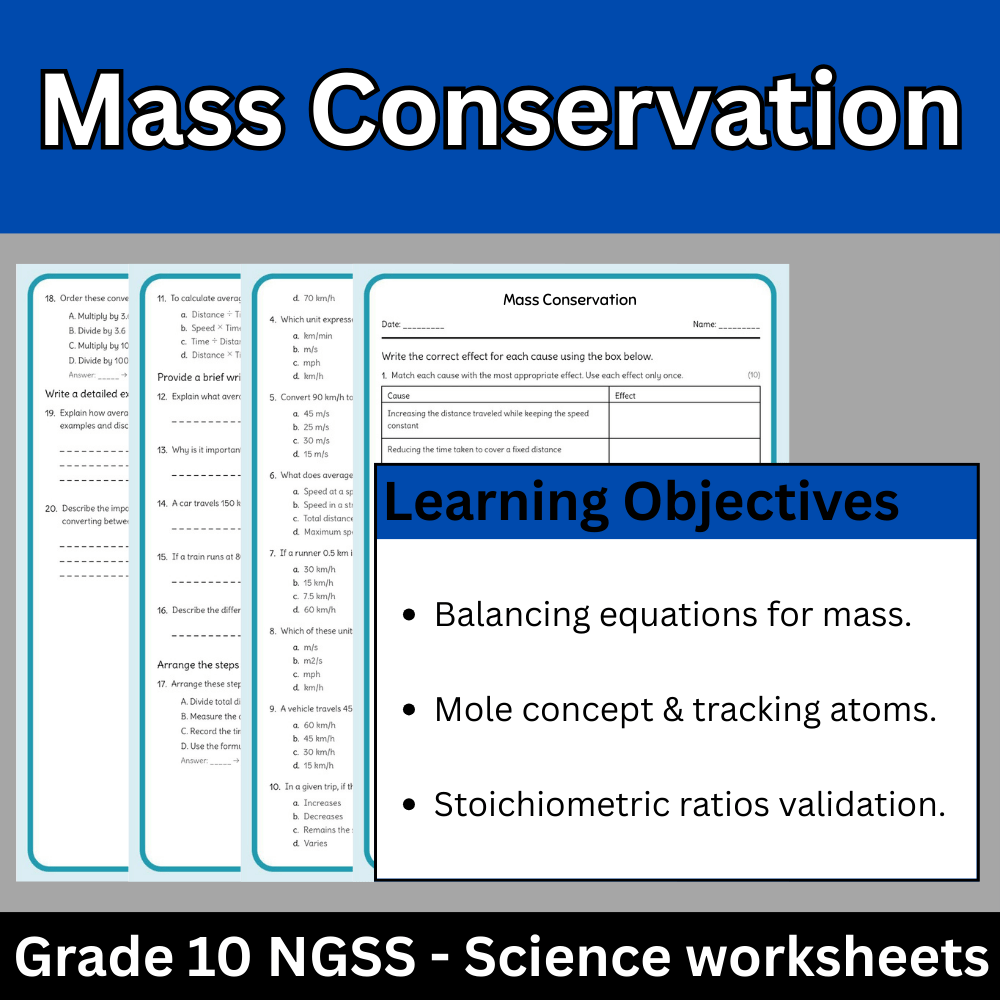
Grade 10 Science | Mass Conservation Worksheet (Answer Key) – NGSS Standards
 Created byBright Mind Resources
Learning Objectives
- Understand how to balance chemical equations to demonstrate atom and mass conservation.
- Apply the mole concept and molar masses to track atoms and verify mass invariance.
- Use quantitative representations, such as stoichiometric ratios, to support the principle of mass conservation in reactions.
Instant download
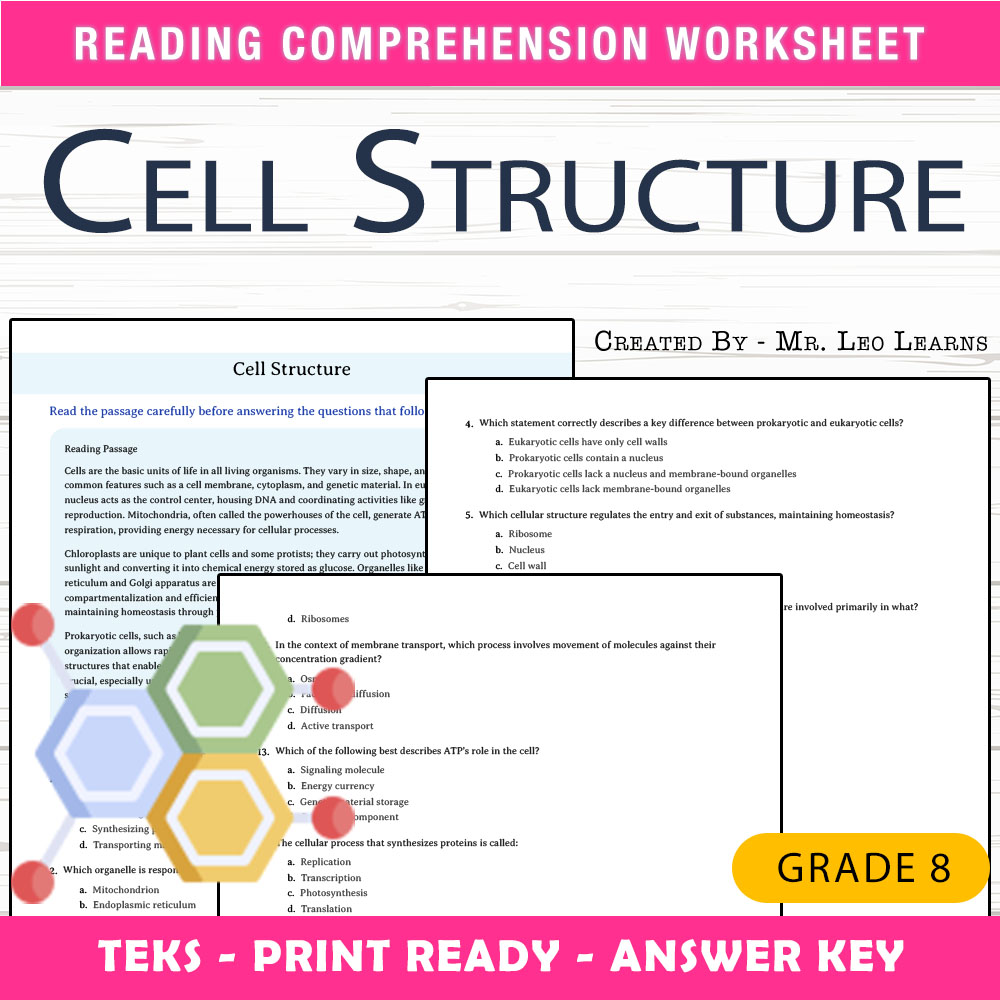
Grade 8 Science – Cell Structure Worksheet for Mastery | PDF + Answer Key
Created byThe Resource HubLearning Objectives
- Describe the organization of cellular components such as membranes, cytoplasm, and organelles.
- Explain the roles of nucleus, mitochondria, chloroplasts, and other organelles in maintaining cell function and homeostasis.
- Understand the relationship between membrane transport, compartmentalization, and cellular activity.
Also included in: Grade 8 Science Unit | Ecosystems, Evolution & Cell Processes Worksheet Pack +1 more
Instant download

Grade 10 Science | Plant Systems: Roots & Transport - Daily Reading Practice
 Created byCoral Reef Learning
Learning Objectives
- Identify and describe the structure of plant roots
- Explain how root architecture adapts to different soil conditions
- Understand the role of roots in water and nutrient absorption
Also included in: Cells and Systems Lesson Bundle | Grade 10 Science | Alberta Framework +1 more
Instant download

Grade 8 Social Studies Worksheet | Emancipation Policies (California Standards) (PDF)
 Created bySunny Desk Resources
Learning Objectives
- Explain how emancipation policies, including the Emancipation Proclamation, changed the stated purpose of the Civil War.
- Describe social impacts of emancipation policies on civilian morale and soldiers’ attitudes in both the North and South.
- Identify how emancipation helped shape civil rights aspirations during and after the war.
Also included in: Grade 8 Secession, Union & Emancipation Social Studies Lesson Bundle (California) +1 more
Instant download

Force and Acceleration Test Prep Printables | Grade 11 Science
Created byPrism Point LearningLearning Objectives
- Use Newton’s second law (F = ma) to relate net force, mass, and acceleration in different situations.
- Interpret motion scenarios (free fall, projectiles, inclined planes, and uniform circular motion) to identify net force and direction of acceleration.
- Connect algebraic relationships and vector ideas of forces to real motion trajectories and graphs.
Instant download

Biogeochemical Cycles Worksheet Pack | Grade 10 Science Activities
Created byPrism Point LearningLearning Objectives
- Explain how carbon, nitrogen, phosphorus, and water cycle through living organisms and Earth systems
- Describe how biological processes (photosynthesis, respiration, decomposition) transform matter in biogeochemical cycles
- Analyze how human activities can disrupt or speed up nutrient cycling and affect ecosystem productivity
Instant download
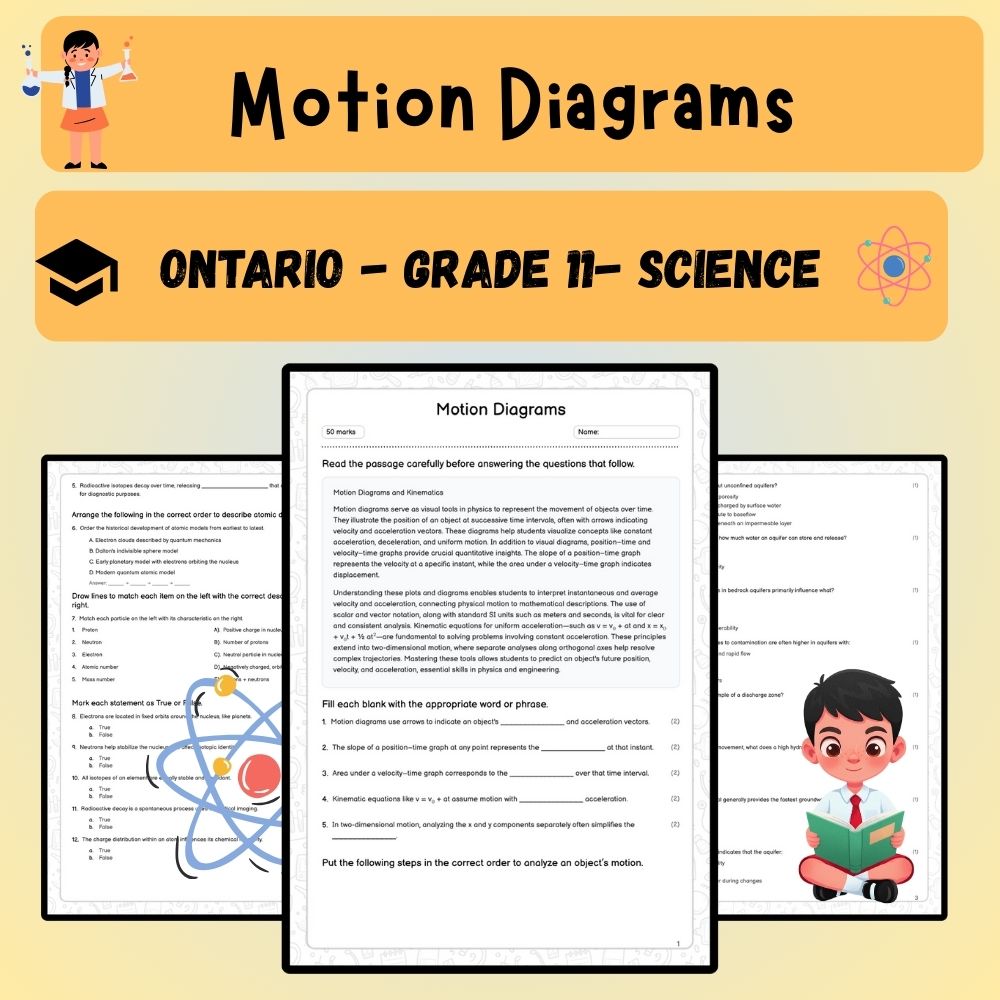
Grade 11 Science | Motion Diagrams Worksheet (PDF) – Ontario Standard Practice
Created byPrism Point LearningLearning Objectives
- Understand how to interpret position, velocity, and acceleration in motion diagrams.
- Analyze and construct velocity–time and position–time plots to determine instantaneous and average quantities.
- Apply kinematic equations for constant acceleration in straight-line motion.
Also included in: Grade 11 Science Unit Bundle | Motion, Energy & Waves Worksheets +1 more
Instant download
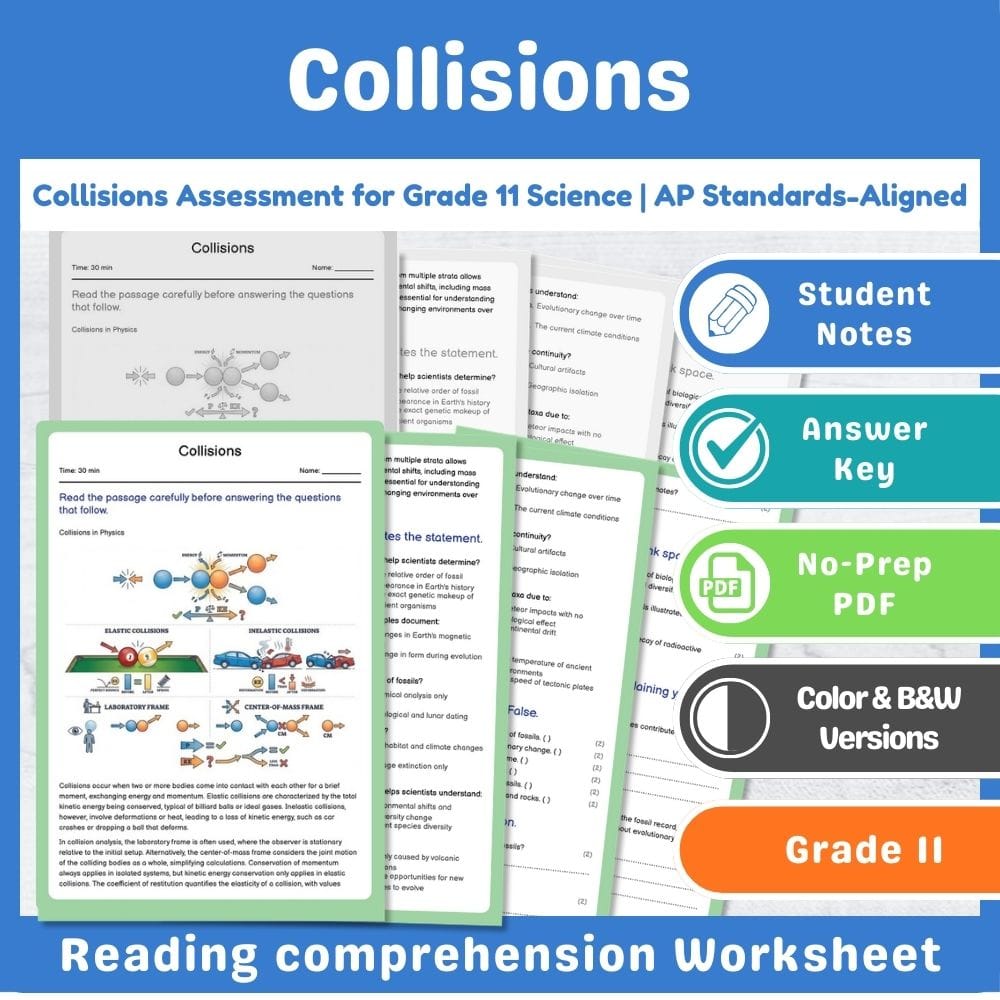
Collisions Assessment for Grade 11 Science | AP Standards-Aligned
Created byPrism Point LearningLearning Objectives
- Analyze elastic and inelastic collisions in one and two dimensions using conservation of momentum and kinetic energy.
- Compare laboratory and center-of-mass reference frames in collision analysis.
- Employ algebraic and vector methods to predict post-collision velocities.
Instant download
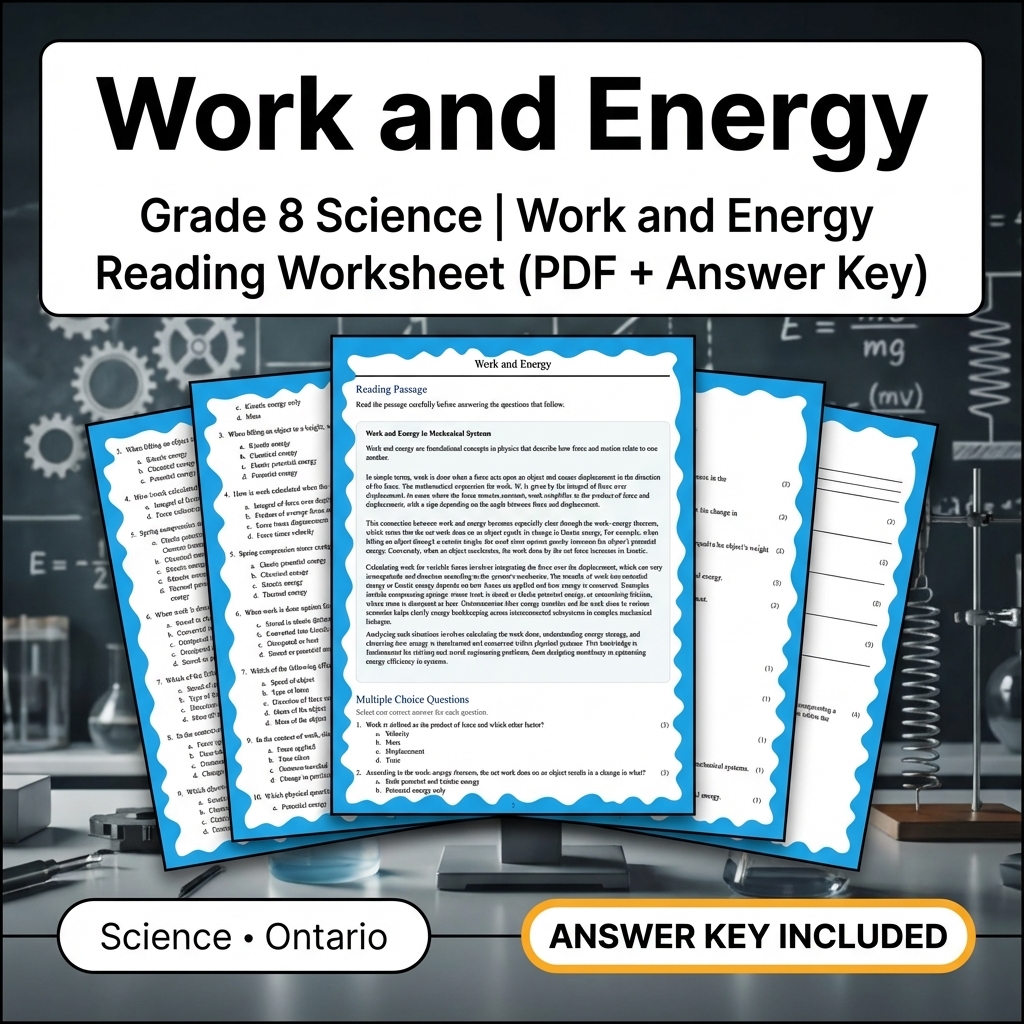
Grade 8 Science | Work and Energy Reading Worksheet (PDF + Answer Key)
JCreated byJ.S SheetsLearning Objectives
- Understand the concept of work as force applied over a displacement.
- Connect work to changes in kinetic and potential energy via the work–energy theorem.
- Perform calculations of work involving constant and variable forces.
Also included in: Grade 8 Science | Energy & Forces Unit Worksheet Pack (Answer Keys Included) +1 more
Instant download
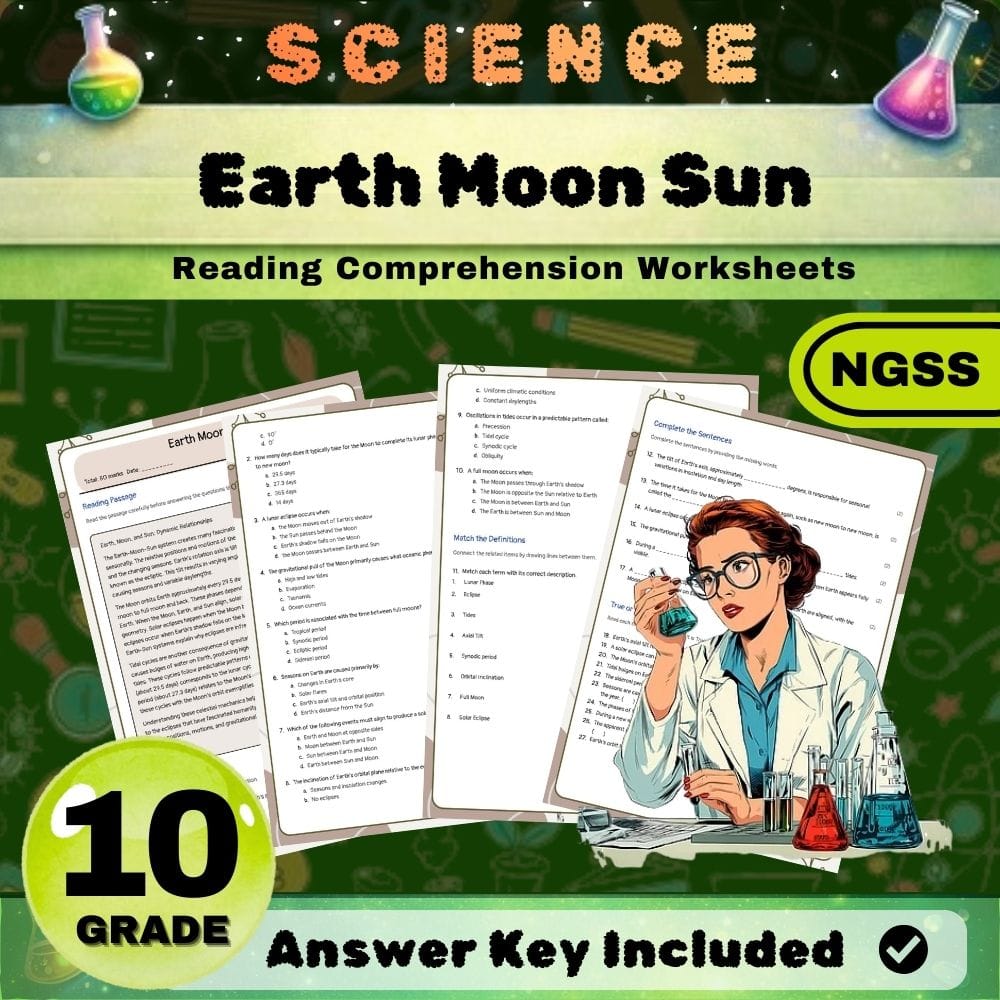
Grade 10 Science | Earth Moon Sun System Worksheet (NGSS) PDF
Created byMaple Path LearningLearning Objectives
- Explain the relative positions and motions of Earth, Moon, and Sun that produce lunar phases, eclipses, and seasons.
- Describe how axial tilt and orbital inclination influence daylength and insolation variations.
- Analyze the geometric conditions that produce solar and lunar eclipses.
Instant download
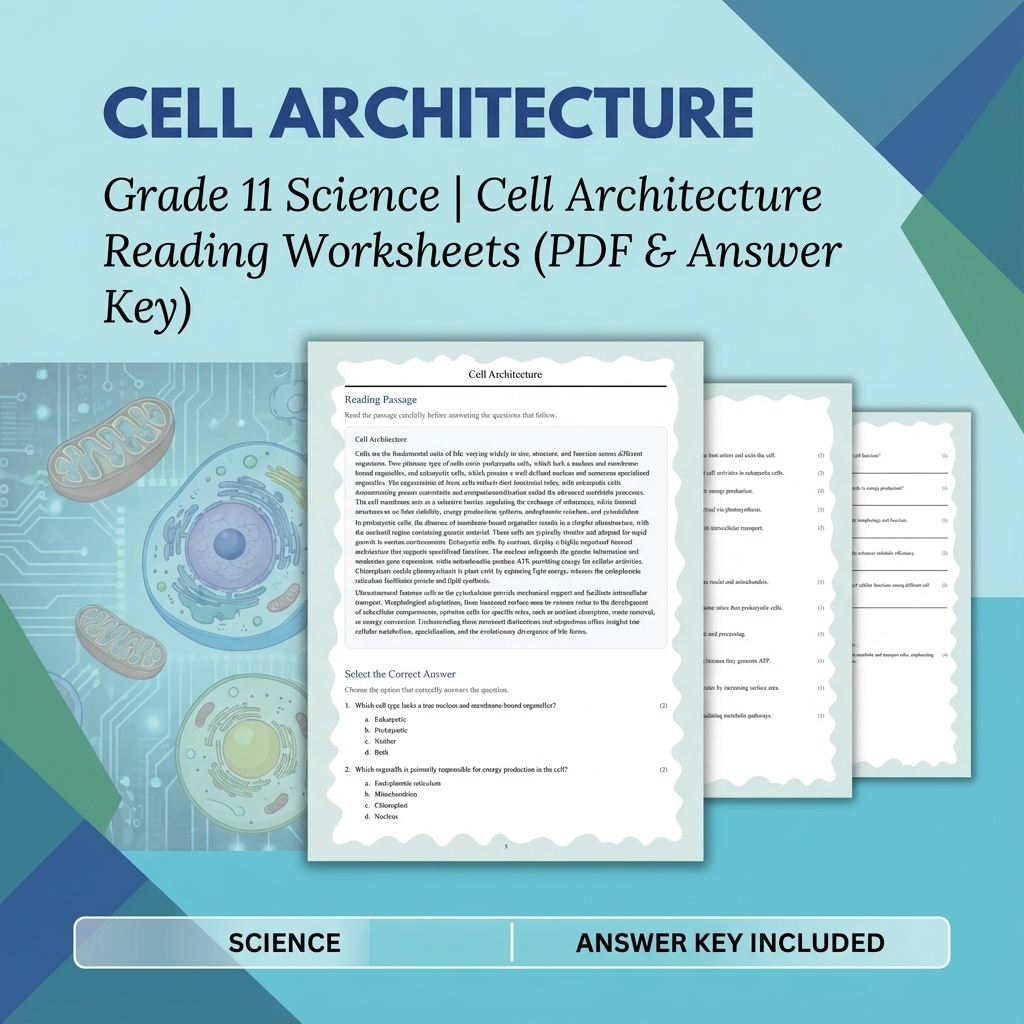
Grade 11 Science | Cell Architecture Reading Worksheets (PDF & Answer Key)
JCreated byJ.S SheetsLearning Objectives
- Compare and contrast prokaryotic and eukaryotic cell structures.
- Describe the functions of key organelles such as nucleus, mitochondrion, and chloroplast.
- Explain how ultrastructural features support cellular metabolic and transport roles.
Also included in: Grade 11 Science UNIT Bundle | Cellular Processes & Metabolic Pathways +1 more
Instant download
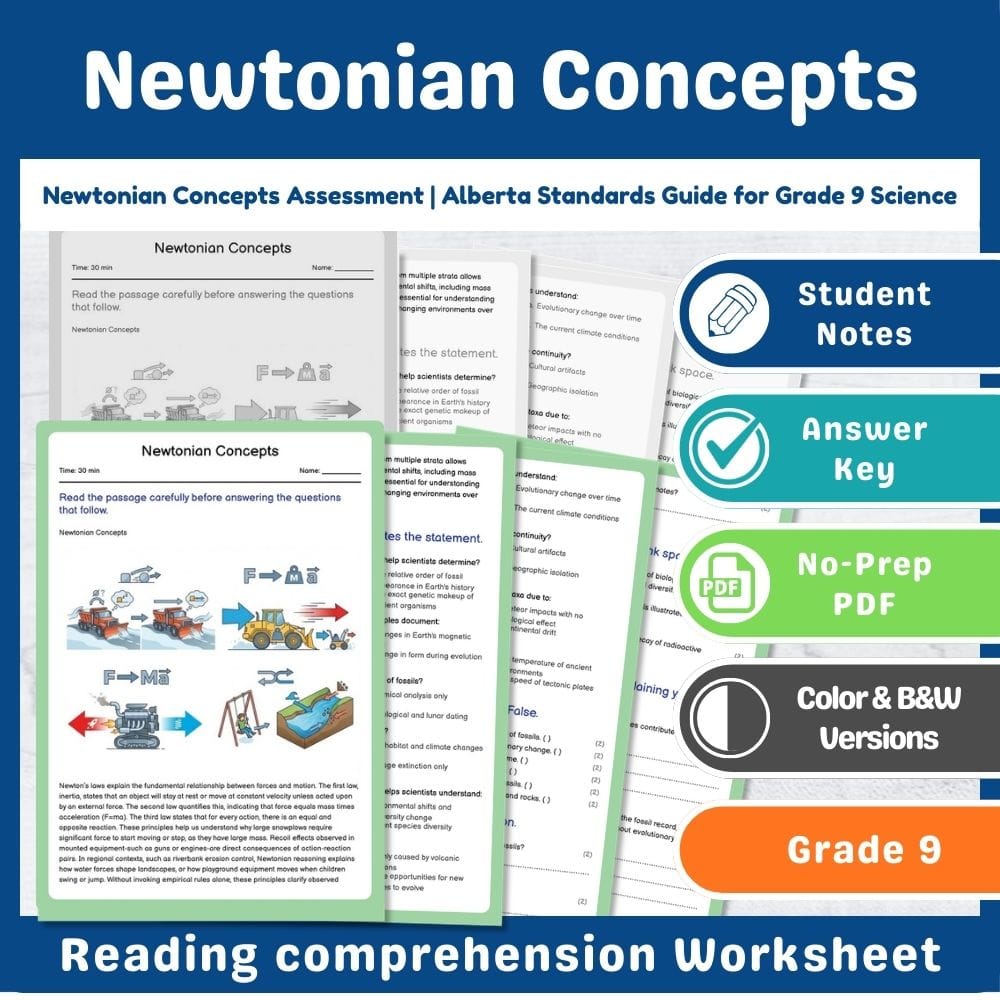
Newtonian Concepts Assessment | Alberta Standards Guide for Grade 9 Science
Created byPrism Point LearningLearning Objectives
- Understand Newton's three laws of motion and their practical implications.
- Identify real-world examples demonstrating Newtonian principles.
- Explain how forces influence motion in common regional contexts.
Also included in: Grade 9 Forces and Motion Science Lesson Bundle Alberta Framework +1 more
Instant download
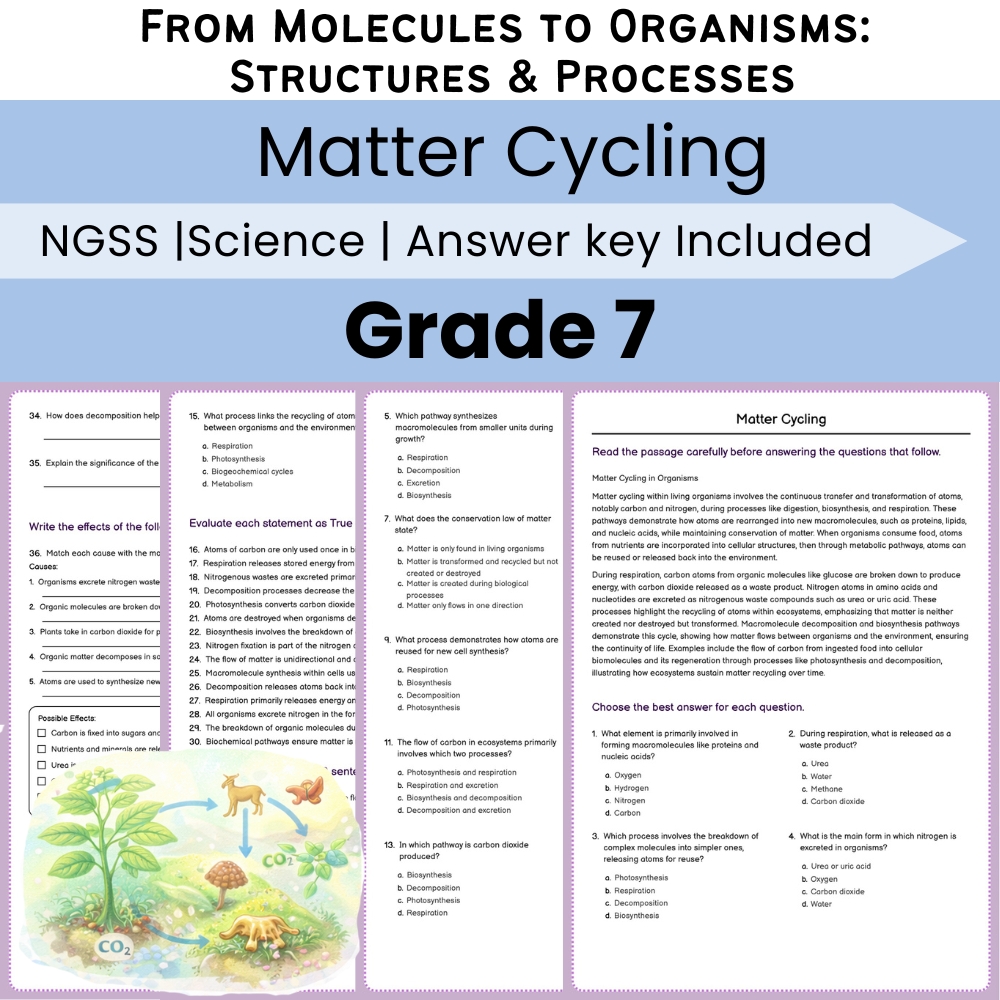
Matter Cycling Worksheet | Grade 7 Science printable PDF | NGSS aligned
Learning Objectives
- Explain how matter is conserved and recycled within organisms during biological processes.
- Describe the flow of carbon and nitrogen in metabolic pathways such as digestion, biosynthesis, and respiration.
- Identify biochemical pathways involved in matter transformation and recycling in ecosystems.
Also included in: Grade 7 Science Lesson Bundle | From Molecules to Organisms NGSS +1 more
Instant download
Grade 10 Science – Adaptive Radiation TEKS Worksheet (PDF) with Answer Key
Created byBright Mind ResourcesLearning Objectives
- Explain the concept of adaptive radiation and its significance in evolution.
- Identify factors that promote rapid diversification of species.
- Describe examples of adaptive radiation in nature, such as island archipelagos and lakes.
Also included in: Grade 10 Science | Evolution & Heredity Unit Worksheet Bundle (TEKS Aligned) +5 more
Instant download
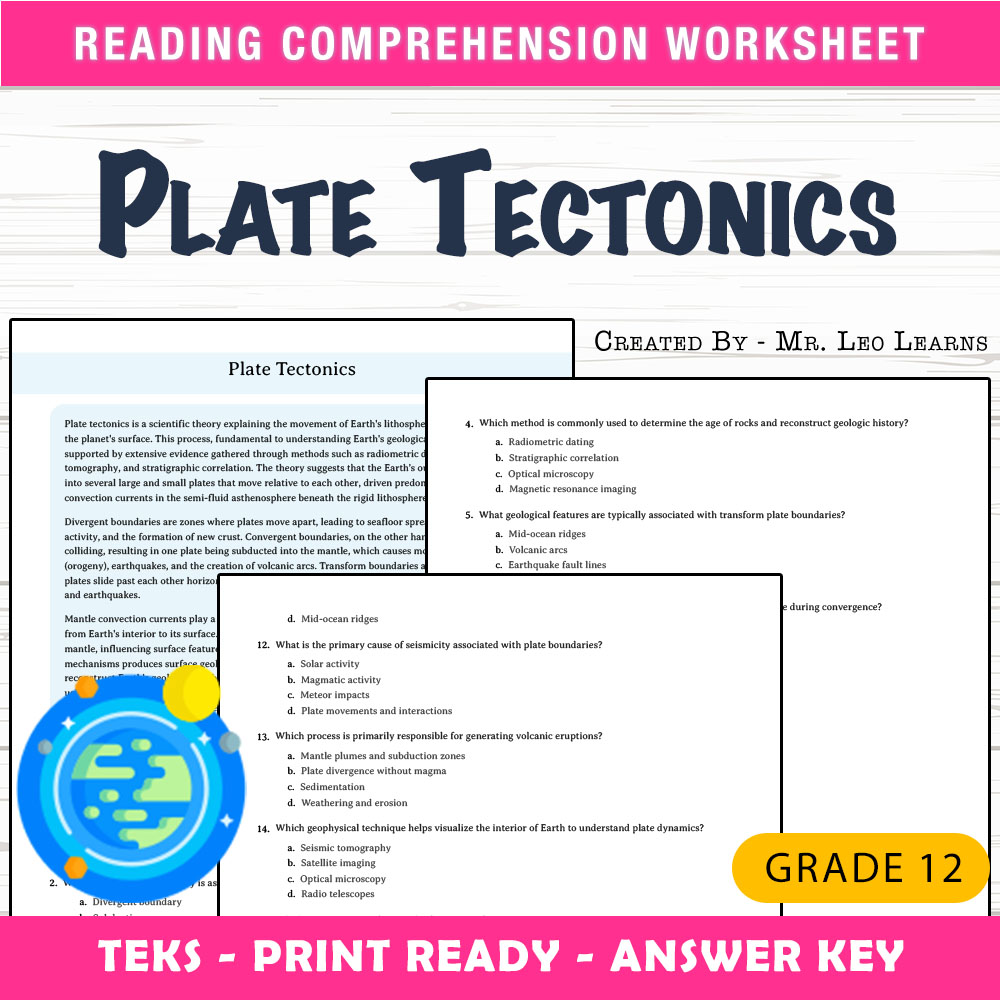
Grade 12 Science – Plate Tectonics Worksheet for Mastery
Created byThe Resource HubLearning Objectives
- Understand the mechanisms of lithospheric plate movements and their effects on surface geology.
- Identify different types of plate boundaries and their associated geological features.
- Explain the evidentiary methods used to reconstruct Earth's geologic history.
Also included in: Grade 12 Science | Earth & Space Systems Worksheet Bundle (Custom Study Pack) +1 more
Instant download
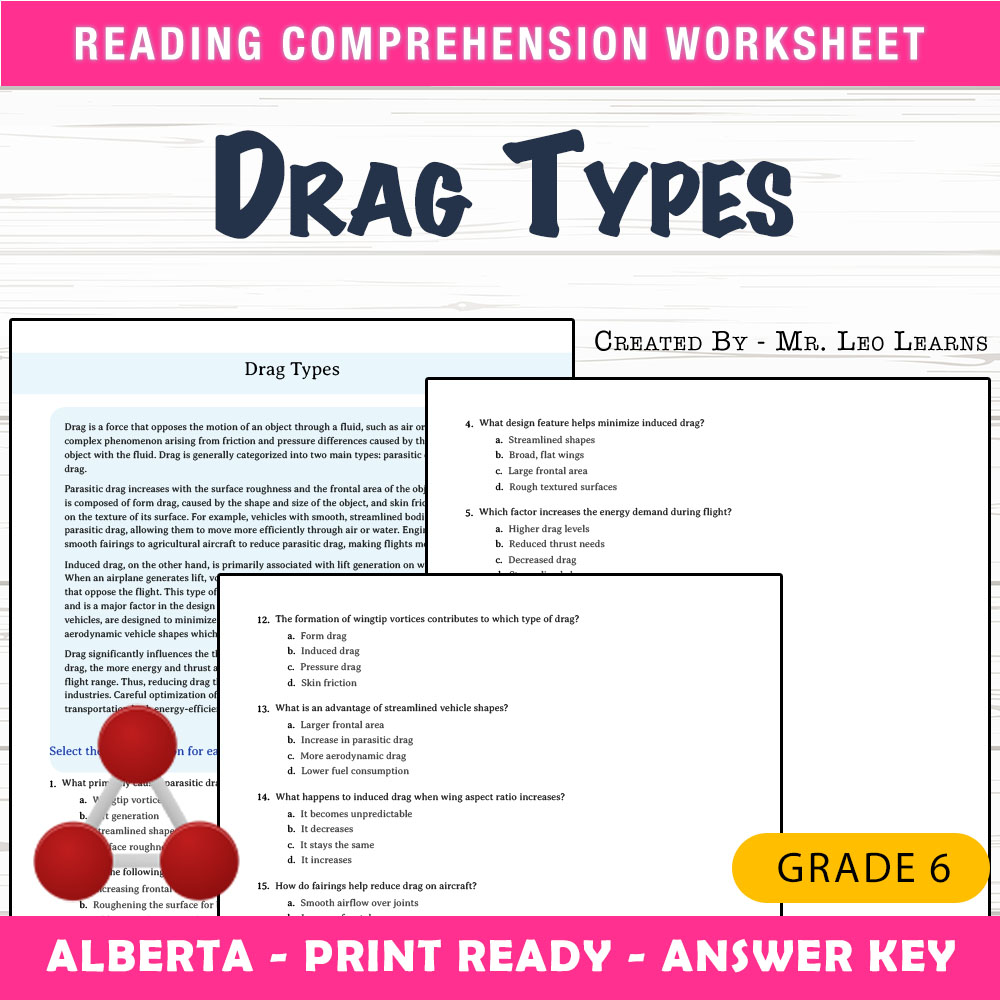
Grade 6 Science — Drag Types Worksheet MCQ Paper for Mastery
Created byThe Resource HubLearning Objectives
- Understand the different types of drag acting on objects in flight and movement.
- Identify factors that influence parasitic and induced drag.
- Analyze design strategies used to reduce drag on vehicles and aircraft.
Also included in: Grade 6 Science | Air and Aerodynamics UNIT Worksheet Bundle (Alberta Framework) +1 more
Instant download

Wave Properties Worksheet | Grade 11 Physics Science Activity
Created byPrism Point LearningLearning Objectives
- Explain how amplitude, frequency, wavelength, and wave speed relate to energy transfer in waves
- Predict how reflection, refraction, and diffraction change a wave’s direction or pattern
- Use interference and resonance ideas to describe regions of constructive/destructive overlap and amplified oscillations
Instant download
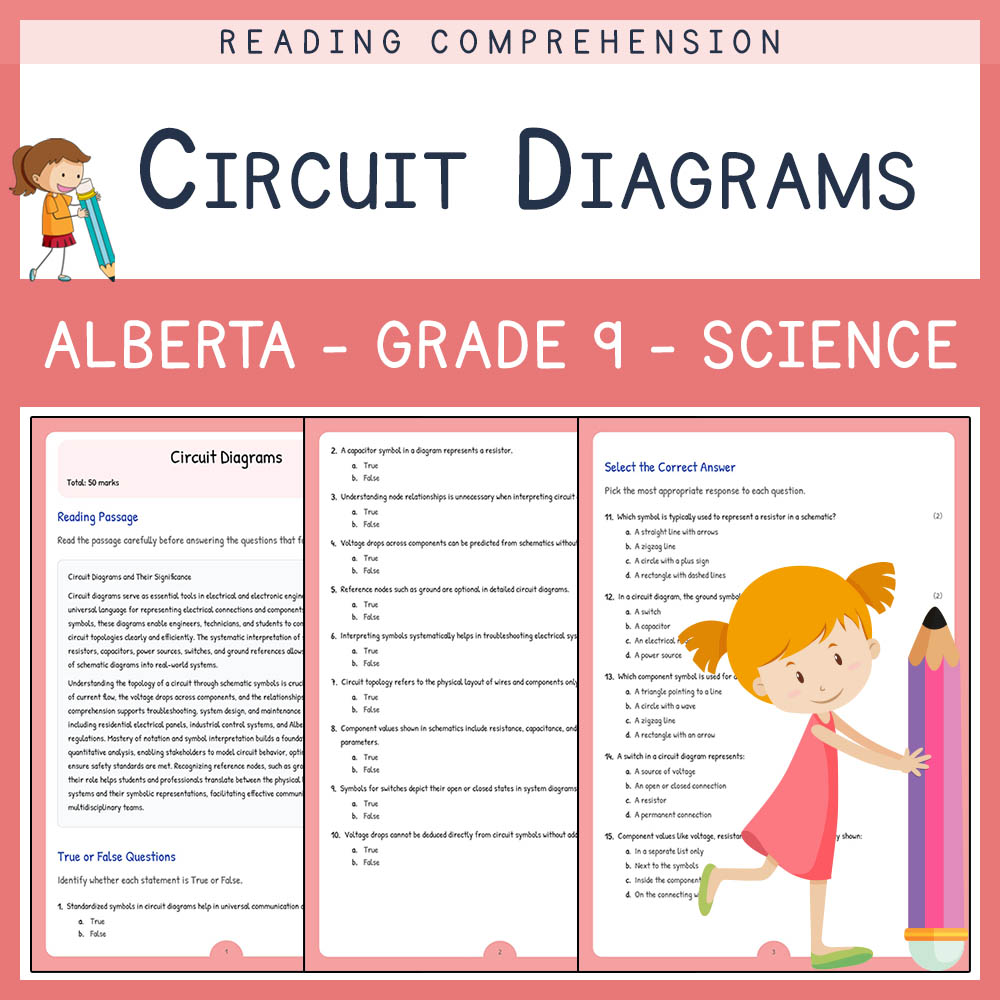
Grade 9 | Circuit Diagrams Worksheet | Alberta Standards
Created byLumora LearningLearning Objectives
- Understand and interpret standardized symbols used in circuit diagrams.
- Identify the relationship between circuit symbols and physical components.
- Translate schematic representations into physical systems and vice versa.
Instant download

Grade 10 Science | Graphical Statistics Worksheet (PDF)
 Created byEvergreen Desk Education
Learning Objectives
- Choose appropriate graphs (line, scatter, histogram, box plot) based on variable types and the question being asked
- Interpret key graph features such as center, spread, clusters, trends, and outliers to support conclusions
- Compare groups using consistent scales and statistical summaries shown on graphs
Also included in: Grade 10 Uncertainty & Evidence Data Science Lesson Bundle (General) +1 more
Instant download

Models And Explanations Assessment | Florida NGSSS Grade 10 Science
Created byPrism Point LearningLearning Objectives
- Explain how scientific models represent complex systems and predict system behavior using evidence.
- Use multiple lines of representation (diagrams, relationships, and simulations) to connect observations to mechanisms.
- Evaluate where a model works well and where it fails, including realistic limitations.
Also included in: Grade 10 Scientific Reasoning Science Lesson Bundle – Florida NGSSS +1 more
Instant download

Grade 11 Social Studies | Impact of World War I Worksheet (TEKS)
Created bySunny Desk ResourcesLearning Objectives
- Explain how World War I affected the United States’ military, economy, and daily life.
- Identify key changes in U.S. foreign policy and government authority during and after World War I.
- Evaluate how the war expanded roles for women and minorities in the workforce.
Also included in: Grade 11 20th-Century Social Change Social Studies Lesson Bundle for TEKS +1 more
Instant download
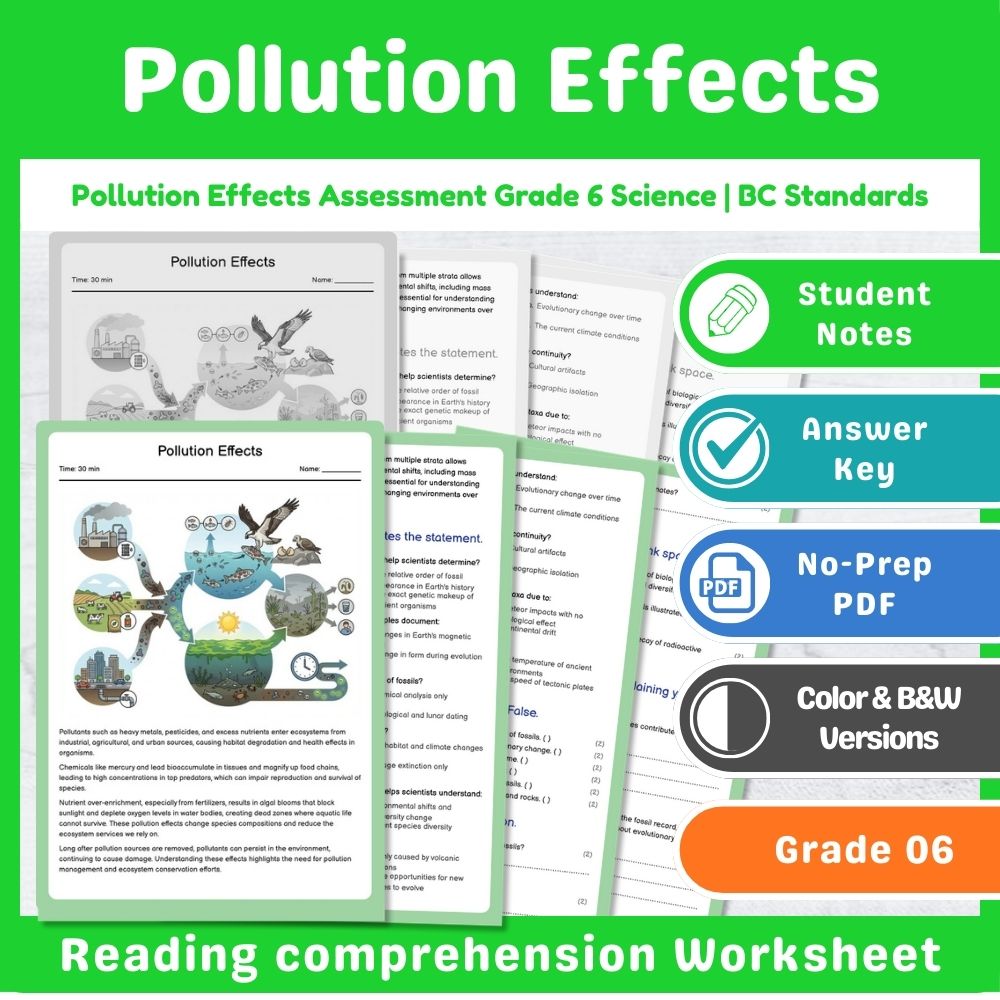
Pollution Effects Assessment | BC Standards Grade 6 Science
Created byPrism Point LearningLearning Objectives
- Understand how pollutants impact ecosystems and organisms.
- Identify bioaccumulation and biomagnification processes.
- Learn the effects of nutrient over-enrichment in aquatic environments.
Instant download
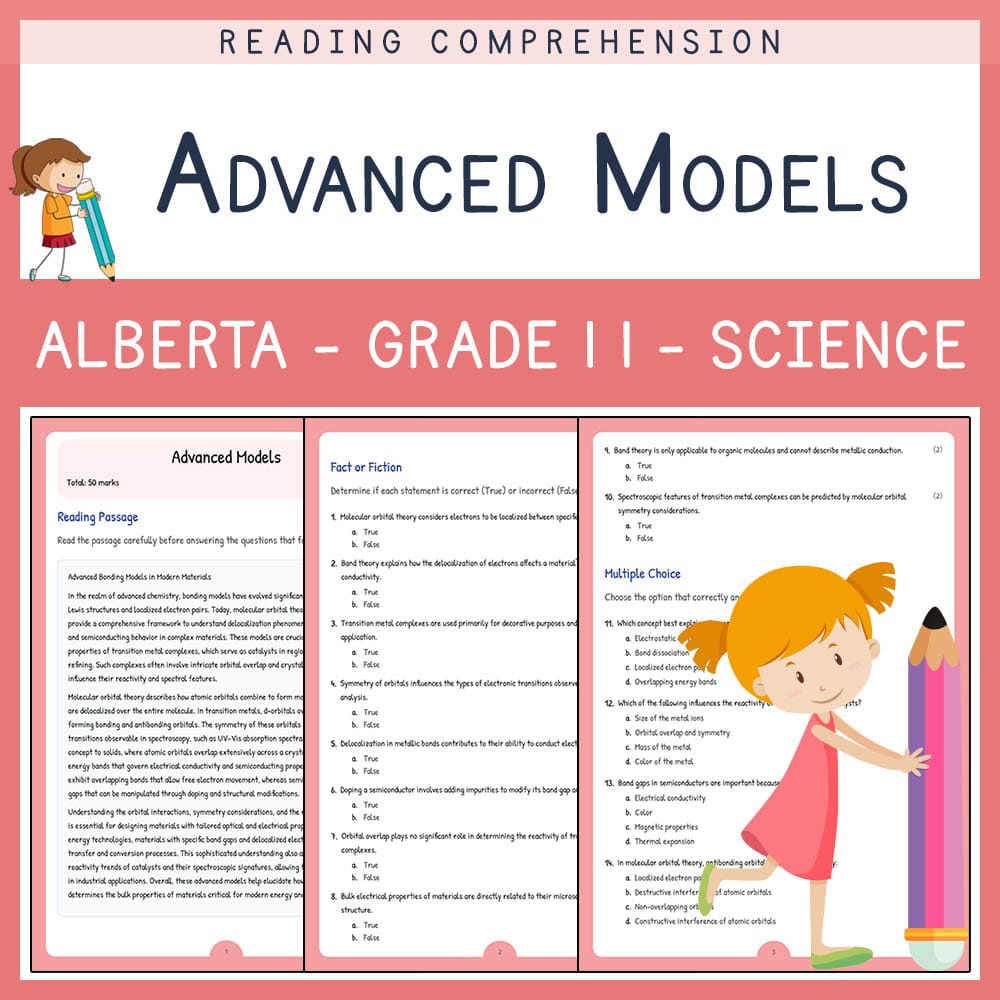
Grade 11 Science | Advanced Models Worksheet | Alberta Standards
Created byLumora LearningLearning Objectives
- Understand how molecular orbital and band theory explain complex bonding, delocalization, and electronic properties.
- Analyze how orbital overlap, symmetry, and band structure influence spectroscopic features and reactivity.
- Apply advanced bonding concepts to transition metal complexes in catalysis and materials used in energy applications.
Also included in: Grade 11 Science | Matter and Chemical Bonding Custom Bundle | Alberta
Instant download
Grade 6 Science – Abiotic Influences Worksheet for Mastery
Created byThe Resource HubLearning Objectives
- Understand how abiotic factors such as temperature, water, and soil influence habitats and organism distribution.
- Identify examples of physical environmental gradients and their effects on ecosystems.
- Explain how abiotic conditions interact with biological processes to shape communities.
Also included in: Grade 6 Science Unit Bundle | Ecosystems & Environmental Relationships
Instant download
Grade 8 Science — Evolutionary Patterns Worksheet for Mastery | PDF + Answer Key
Created byThe Resource HubLearning Objectives
- Understand the sources of genetic variation and their role in evolution.
- Identify the effects of selective pressures on traits within populations.
- Interpret data from trait distributions, fitness comparisons, and lineage divergence.
Also included in: Grade 8 Science Unit | Ecosystems, Evolution & Cell Processes Worksheet Pack +1 more
Instant download
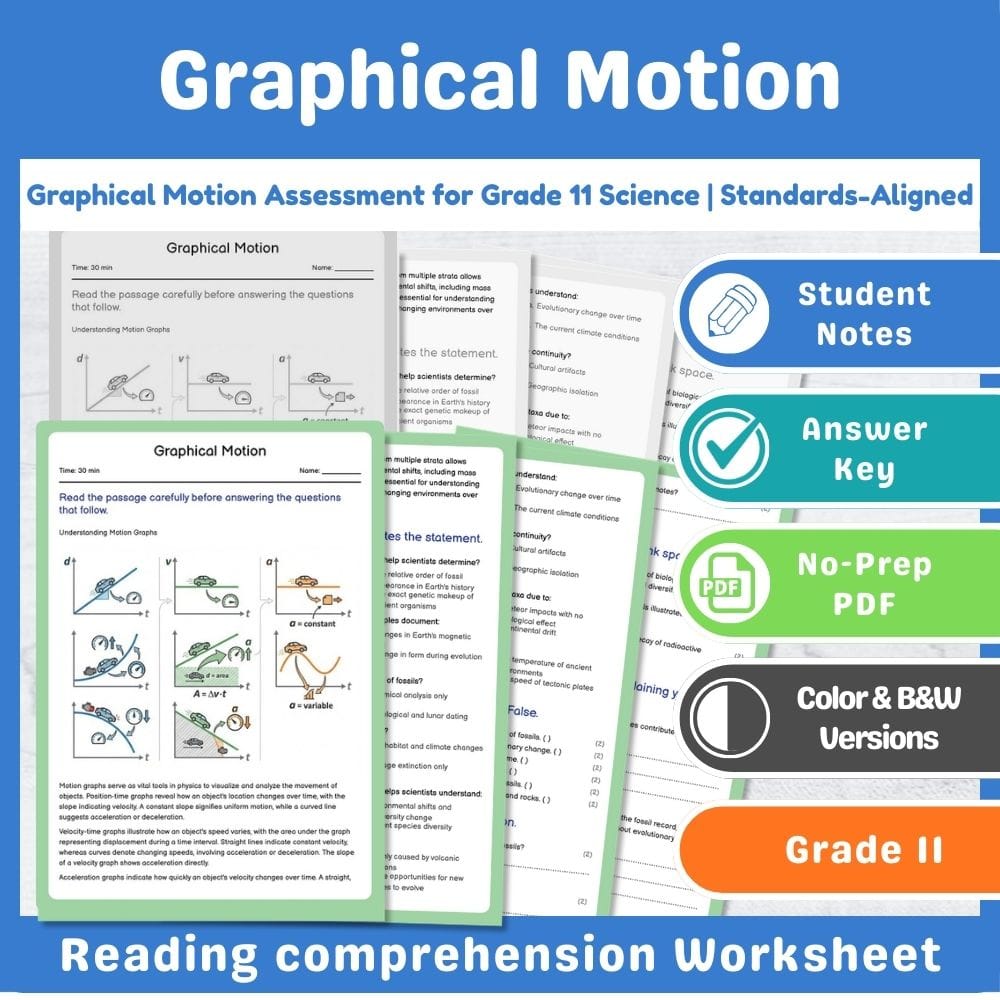
Graphical Motion Assessment for Grade 11 Science | Standards-Aligned
Created byPrism Point LearningLearning Objectives
- Interpret and analyze position, velocity, and acceleration graphs in various motion scenarios.
- Construct and interpret different types of motion graphs, including piecewise and curved plots.
- Understand the relationship between graph slopes, areas, and kinematic quantities like velocity and displacement.
Instant download

Grade 8 Science – Integrated Management of Water Resources | Reading Worksheet
Created byBright Mind ResourcesLearning Objectives
- Understand the concept of integrated water resources management
- Identify key components such as allocation, supply planning, and governance
- Explore how scientific understanding informs policy-making
Also included in: Grade 8 Water Systems Science Daily Reading Worksheets Lesson Bundle | Ontario +1 more
Instant download

Grade 9 Science | Two-Dimensional Motion Worksheet | AP Aligned
Created byLumora LearningLearning Objectives
- Understand how vector decomposition helps analyze motion in a plane.
- Apply parametric equations to describe projectile trajectories.
- Use vector addition to predict range, maximum height, and time-of-flight.
Also included in: Grade 9 Science | Physics Principles Science Custom Bundle | AP Aligned
Instant download
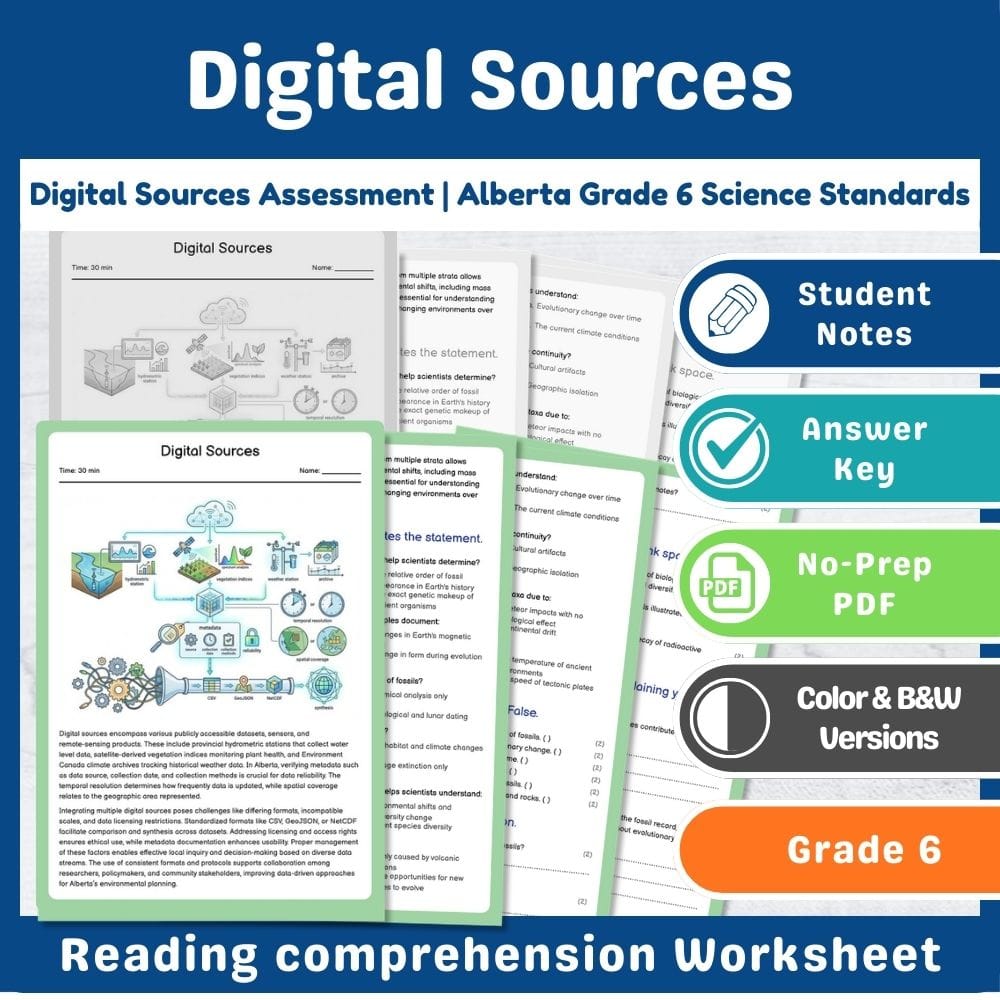
Digital Sources Assessment | Alberta Grade 6 Science Standards
Created byPrism Point LearningLearning Objectives
- Understand examples of digital data sources relevant to local inquiry.
- Identify how metadata, temporal resolution, and spatial coverage are verified for digital datasets.
- Recognize the challenges of integrating digital sources from multiple providers.
Also included in: Lesson Grade 6 Science Mini Bundle | Evidence and Investigation
Instant download

Grade 8 Science – Nutrient Cycling & Ecosystems | Daily Reading Worksheet
Created byBright Mind ResourcesLearning Objectives
- Understand the pathways of carbon and nitrogen through ecosystems
- Recognize the roles of decomposers, mineralization, and fixation processes
- Describe how environmental factors influence nutrient cycling
Also included in: Grade 8 Ecosystems Science Daily Reading Worksheets Lesson Bundle | Alberta +2 more
Instant download

Grade 11 Science – Ecosystems & Biogeochemical Cycles | Daily Reading Worksheet
Created byBright Mind ResourcesLearning Objectives
- Identify components of ecological systems and their interactions
- Explain population dynamics and community interactions
- Discuss biogeochemical cycling and energy flow in ecosystems
Also included in: Grade 11 Daily Reading & Graphs Science lesson bundle Worksheets | Ontario +1 more
Instant download

Grade 11 Science | Molecular Evidence Worksheet (PDF+ Answer Key)
Created byCopper Leaf ClassroomLearning Objectives
- Understand and describe the molecular techniques used in studying heredity and evolution.
- Identify different types of molecular markers and their applications in genetics.
- Analyze sequence data to infer evolutionary relationships and genetic variation.
Instant download
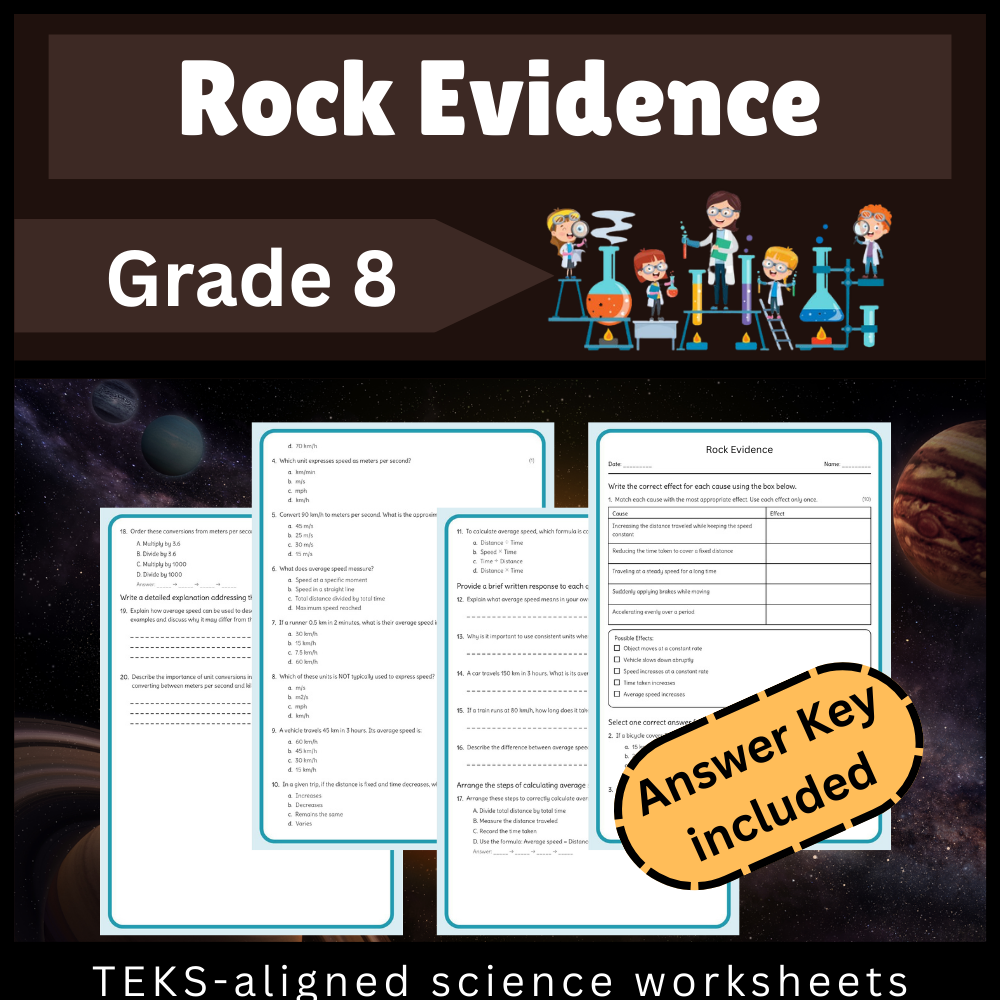
Grade 8 Science – Rock Evidence Worksheet (PDF) | TEKS-Aligned Science 1
Created byBright Mind ResourcesLearning Objectives
- Identify and classify different types of rocks: igneous, sedimentary, and metamorphic.
- Describe the processes in the rock cycle, including melting, cooling, sedimentation, compaction, and metamorphism.
- Recognize geological evidence such as strata, fossils, and radiometric dating used to interpret Earth's history.
Also included in: Grade 8 Science UNIT Bundle | Weather, Solar System & Earth - TEKS Aligned +1 more
Instant download
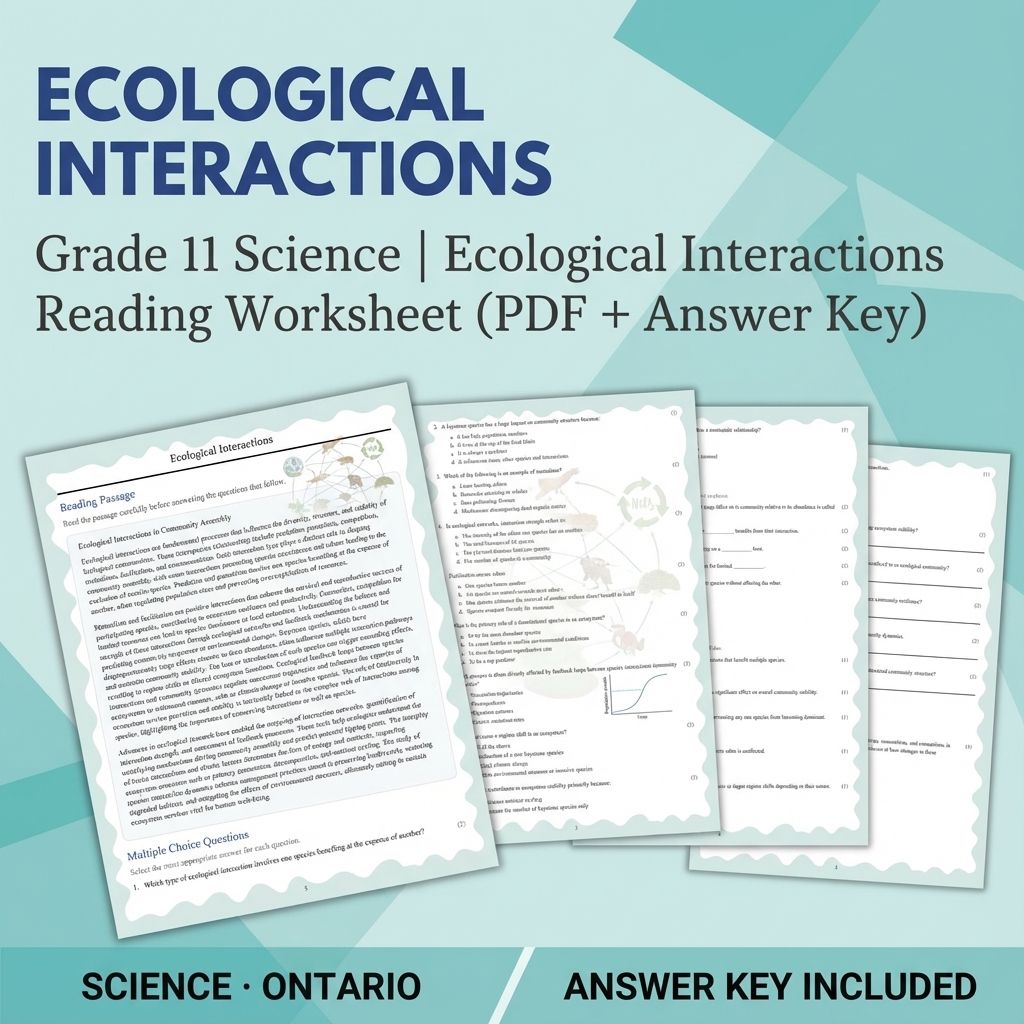
Grade 11 Science | Ecological Interactions Reading Worksheet (PDF + Answer Key)
JCreated byJ.S SheetsLearning Objectives
- Describe different types of ecological interactions such as predation, parasitism, competition, mutualism, facilitation, and commensalism.
- Explain the roles of keystone and foundational species in shaping community structure and ecosystem processes.
- Analyze ecological networks, including interaction strength and feedback loops, and their influence on community stability and succession.
Also included in: Grade 11 Science | Ecosystem Dynamics & Sustainability Bundle (PDF + Rubric) +1 more
Instant download
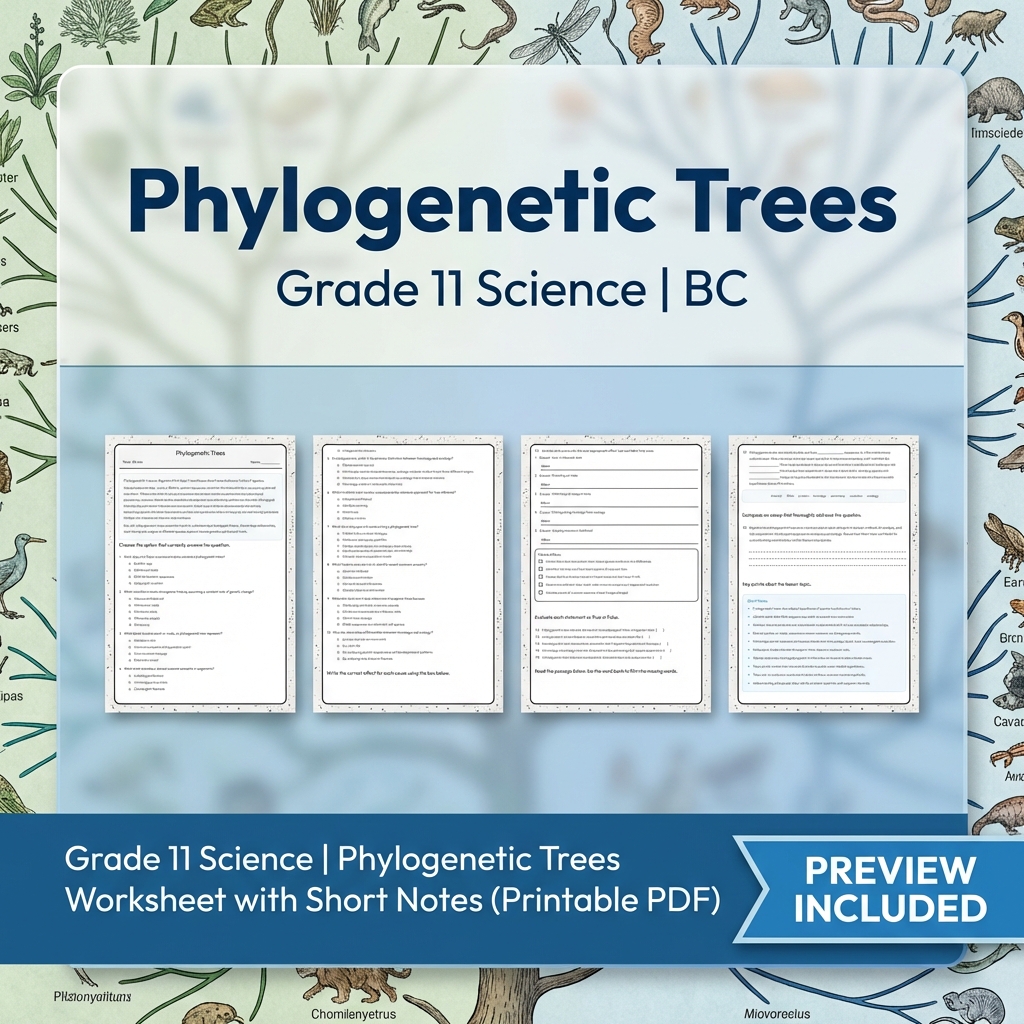
Grade 11 Science | Phylogenetic Trees Worksheet with Short Notes (Printable PDF)
Created byMeadowlark WorksheetsLearning Objectives
- Understand the concept and purpose of phylogenetic trees in evolutionary biology.
- Identify different methods used to infer evolutionary relationships.
- Interpret branching patterns and what they reveal about common ancestry.
Also included in: Grade 11 Science Lesson Bundle BC Framework Worksheets for Biology and Genetics +1 more
Instant download

Forces and Motion Assessment for Grade 8 Science | Standards-Aligned
Created byPrism Point LearningLearning Objectives
- Understand how forces affect the motion of objects.
- Identify different types of forces and their effects.
- Explain the difference between balanced and unbalanced forces.
Also included in: Grade 8 Physical Science Science Lesson Bundle – General Framework
Instant download
Browse more categories
About Reading comprehension Worksheets
Find reading comprehension worksheets for class practice, homework, or self-study. All 40,284 are instant PDF downloads.
Each resource here is built by an independent educator and reviewed for quality. Worksheets print straight from PDF and suit classroom use, homework, or extra practice; most come with answer keys, and you can preview before purchasing.