
Reading comprehension Worksheets
40,284 type resources
Thermodynamic Limits Worksheet | Grade 10 Science Practice
 Created byPrism Point Learning
Learning Objectives
- Explain how the first and second laws of thermodynamics constrain energy use and work production
- Use Carnot’s relationship to describe the maximum efficiency between two temperature reservoirs
- Describe how irreversibility (entropy production) reduces the performance of real heat engines and refrigerators
Also included in: Grade 10 Energy, Efficiency & Conservation Science Lesson Bundle | BC +1 more
Instant download
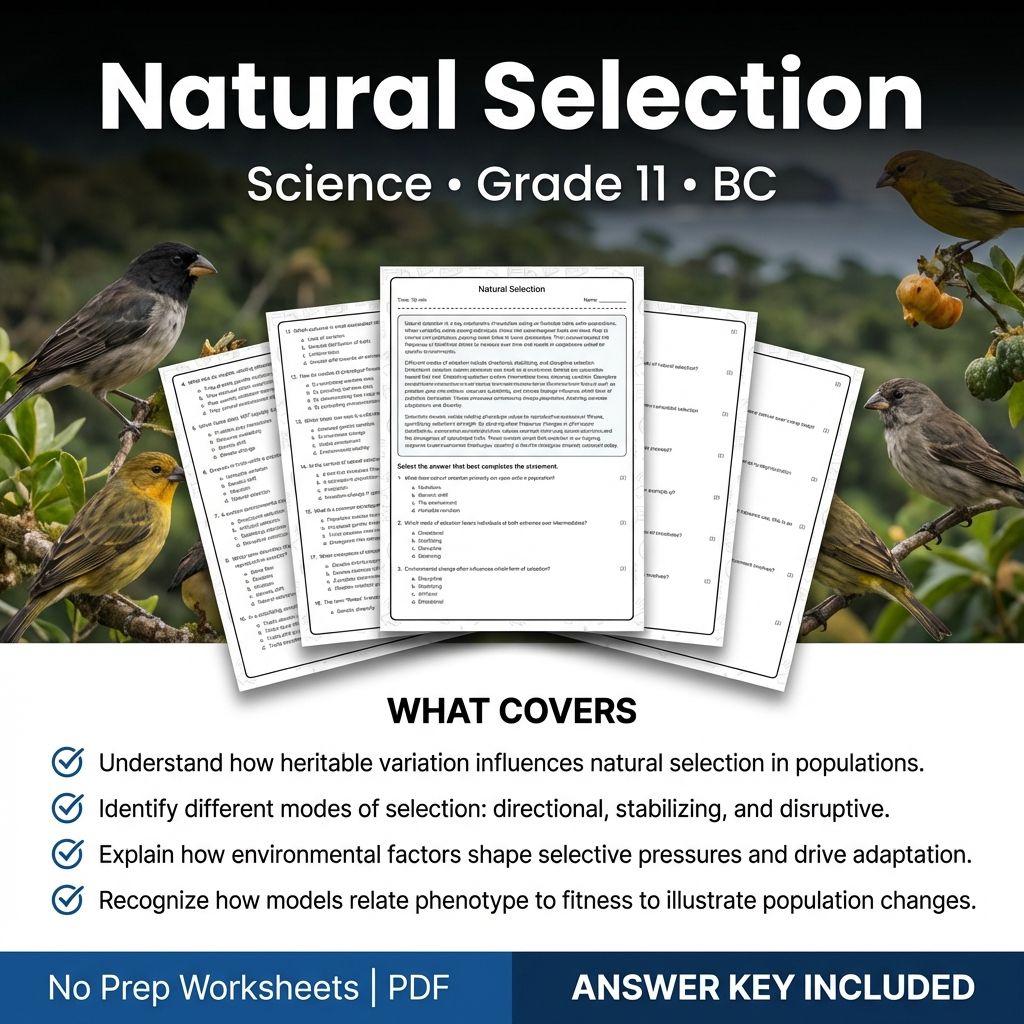
Grade 11 Science | Natural Selection Worksheet & Answer Key (Printable PDF)
 Created byCoral Reef Learning
Learning Objectives
- Understand how heritable variation influences natural selection in populations.
- Identify different modes of selection: directional, stabilizing, and disruptive.
- Explain how environmental factors shape selective pressures and drive adaptation.
Instant download
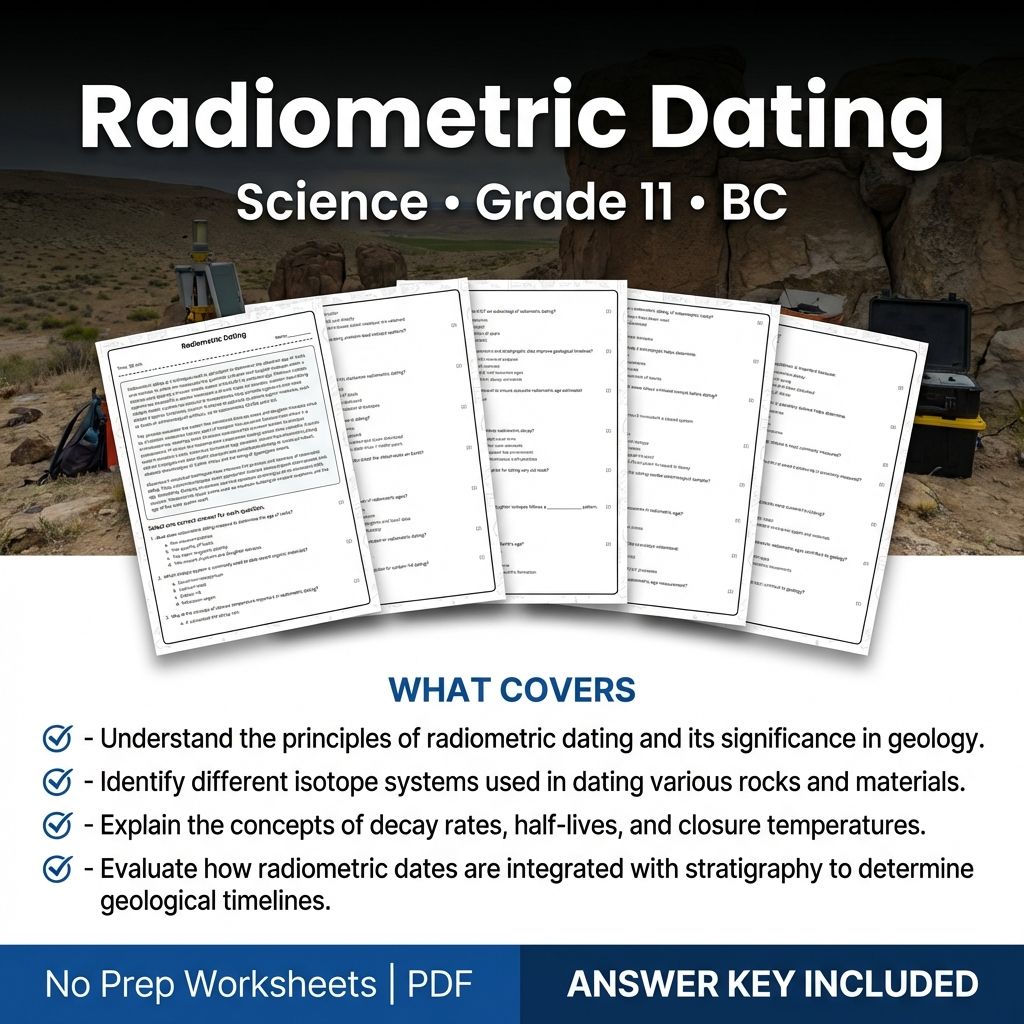
Grade 11 Science | Radiometric Dating Worksheet & Answer Key (Printable PDF)
Created byCoral Reef LearningLearning Objectives
- Understand the principles of radiometric dating and its significance in geology.
- Identify different isotope systems used in dating various rocks and materials.
- Explain the concepts of decay rates, half-lives, and closure temperatures.
Instant download
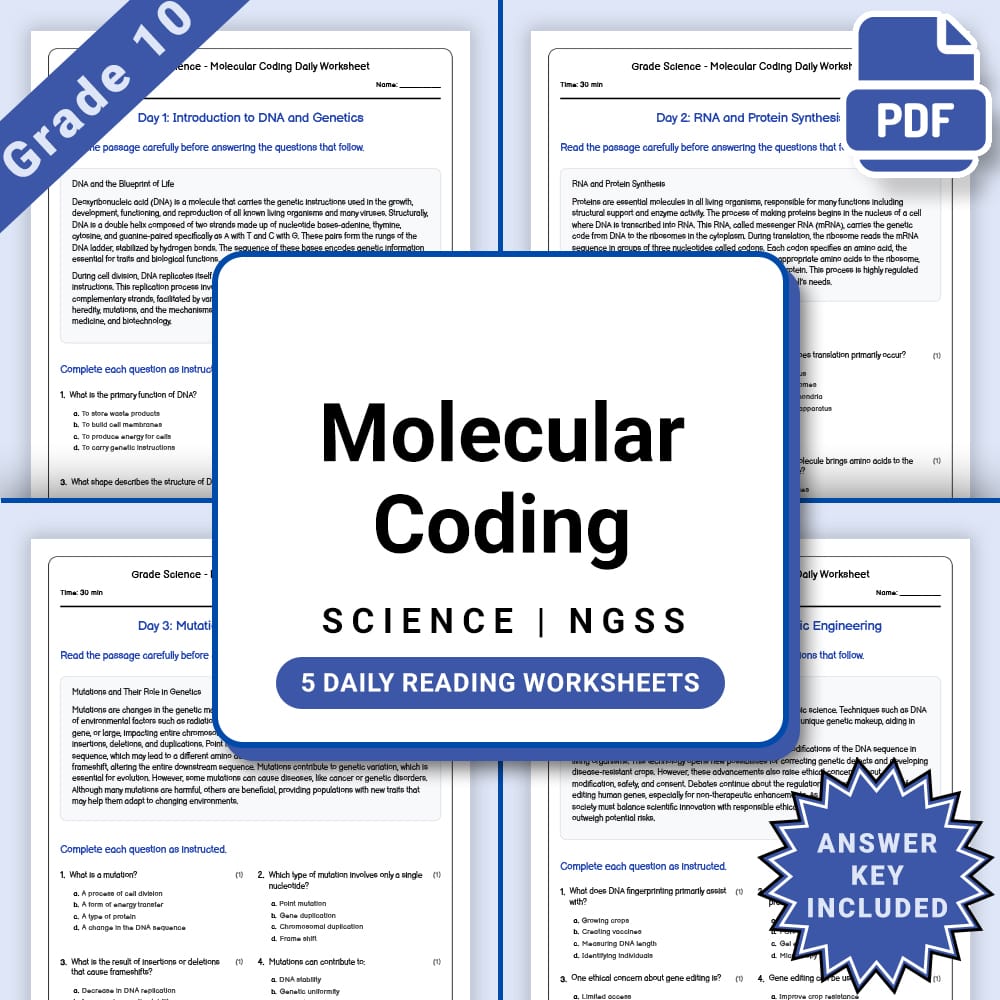
Grade 10 Science – Molecular Coding Daily Worksheet (PDF +Answer Key)
 Created byCopper Leaf Classroom
Learning Objectives
- Understand key concepts related to Science
- Apply knowledge through practice questions
- Demonstrate comprehension of the material
Instant download

Grade 8 Science – Force Balance & Unbalanced Forces | Daily Reading Worksheet
 Created byBright Mind Resources
Learning Objectives
- Understand the concept of balanced and unbalanced forces
- Identify static equilibrium in real-world objects
- Analyze force vectors to determine net force
Also included in: Grade 8 Science Systems Forces Daily Reading Worksheets Lesson Bundle | Alberta +2 more
Instant download

Molecules & Lattices Test Prep Practice | Grade 9 Science
Created byPrism Point LearningLearning Objectives
- Compare ionic lattices, covalent networks, and molecular solids using particle arrangement and electrical interactions.
- Predict how melting point, electrical conductivity, hardness, and solubility relate to interparticle forces.
- Use evidence from material properties to identify the likely structure of an unknown solid.
Also included in: Grade 9 Reaction Stoichiometry and Rates Science Lesson Bundle | NGSS
Instant download
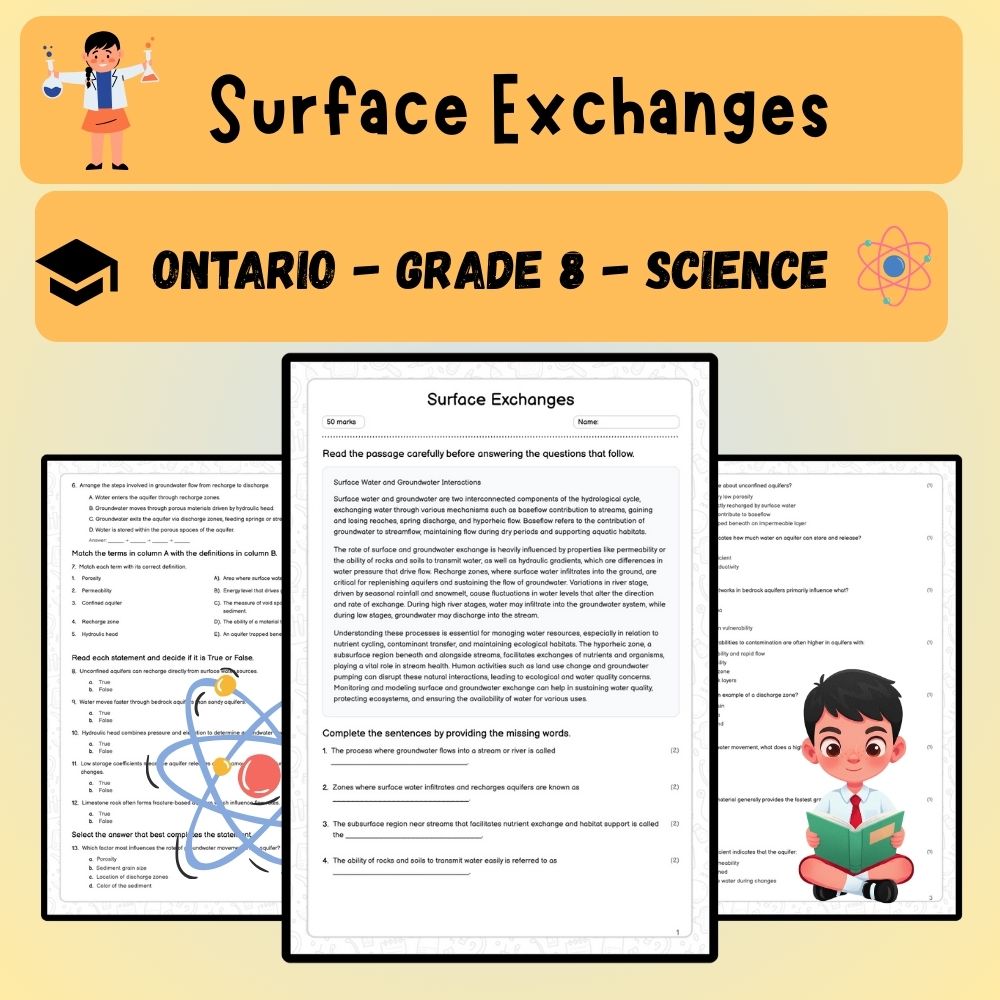
Grade 8 Science | Surface Exchanges Worksheet (PDF) for Ontario Standards
Created byPrism Point LearningLearning Objectives
- Understand the mechanisms of surface water and groundwater interactions, including baseflow contribution and hyporheic flow.
- Explain how permeability, hydraulic gradients, and recharge zones influence exchange rates.
- Describe the effects of river stage and seasonal variability on surface and groundwater exchange.
Also included in: Grade 8 Science Water Management Unit Watershed and Water Resources +1 more
Instant download

Understanding Uncertainty Ranges Assessment for Grade 10 Science
Created byPrism Point LearningLearning Objectives
- Explain how measurement spread indicates uncertainty in data.
- Differentiate between central tendency and variability in measurements.
- Compare ranges to assess if differences are due to random variation.
Instant download
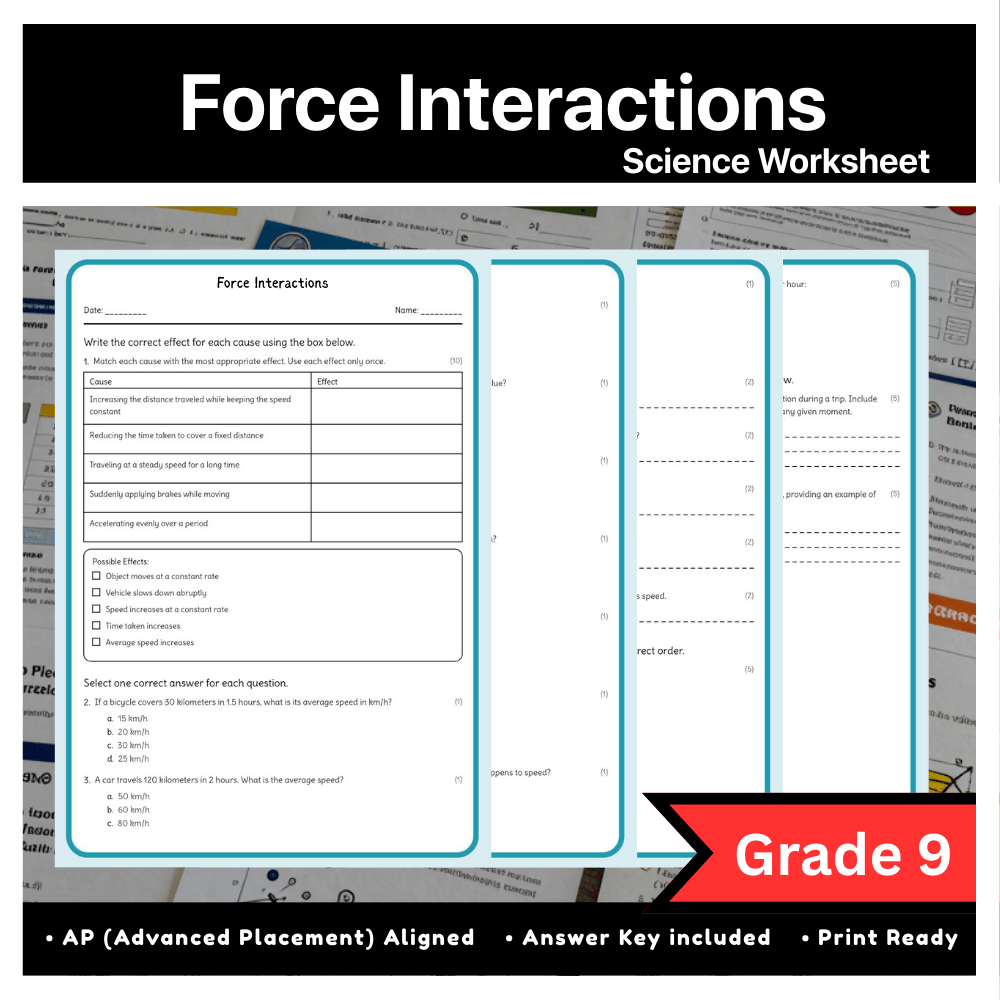
Grade 9 Science | Force Interactions Worksheet (AP Standard) – PDF
Created byBright Mind ResourcesLearning Objectives
- Explain how net external forces affect the motion of objects.
- Interpret force diagrams and free-body diagrams to analyze interactions.
- Use Newton's laws to describe scenarios involving contact and field forces.
Instant download
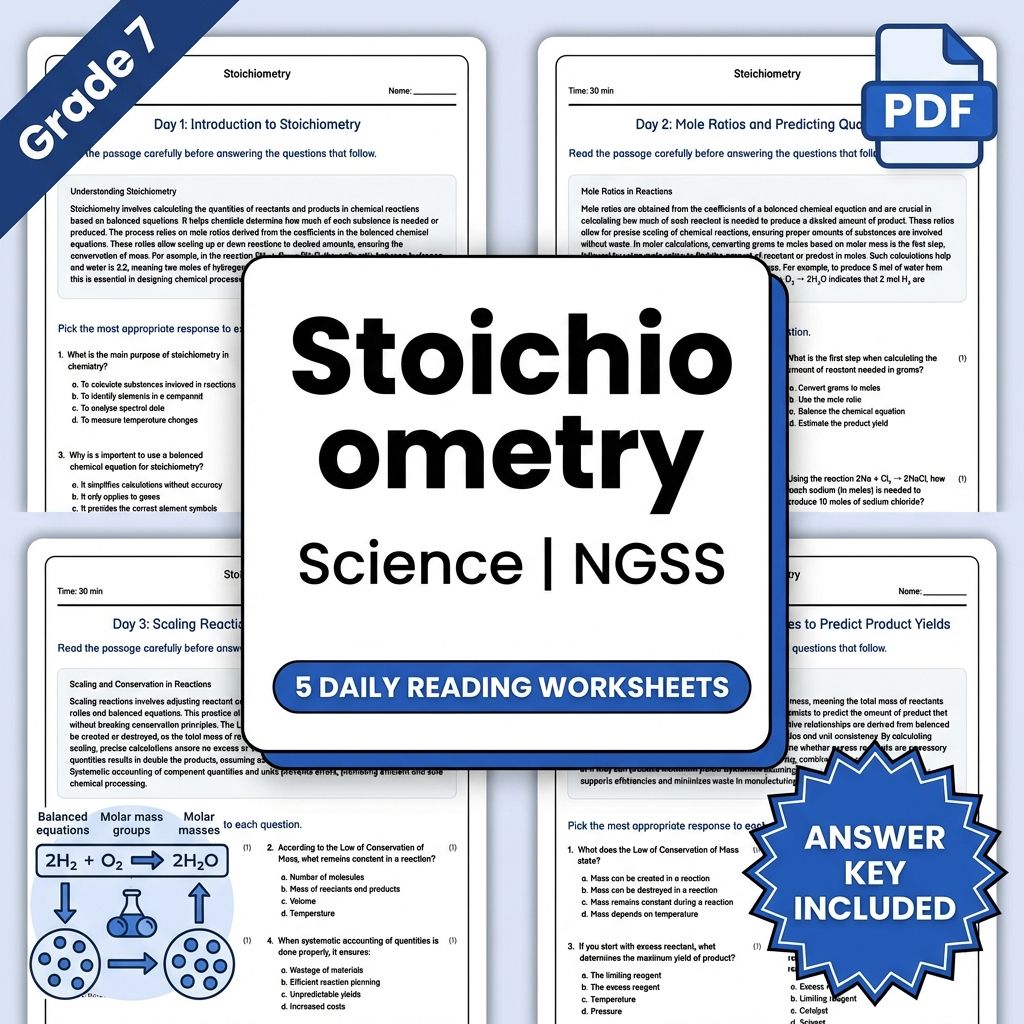
Grade 7 Science – Stoichiometry Daily Reading Worksheet(PDF + Answer Key)
Created byCopper Leaf ClassroomLearning Objectives
- Describe the concept of stoichiometry and its role in chemical reactions.
- Use balanced chemical equations to determine mole ratios of reactants and products.
- Apply ratio reasoning to predict quantities of substances involved in reactions.
Instant download
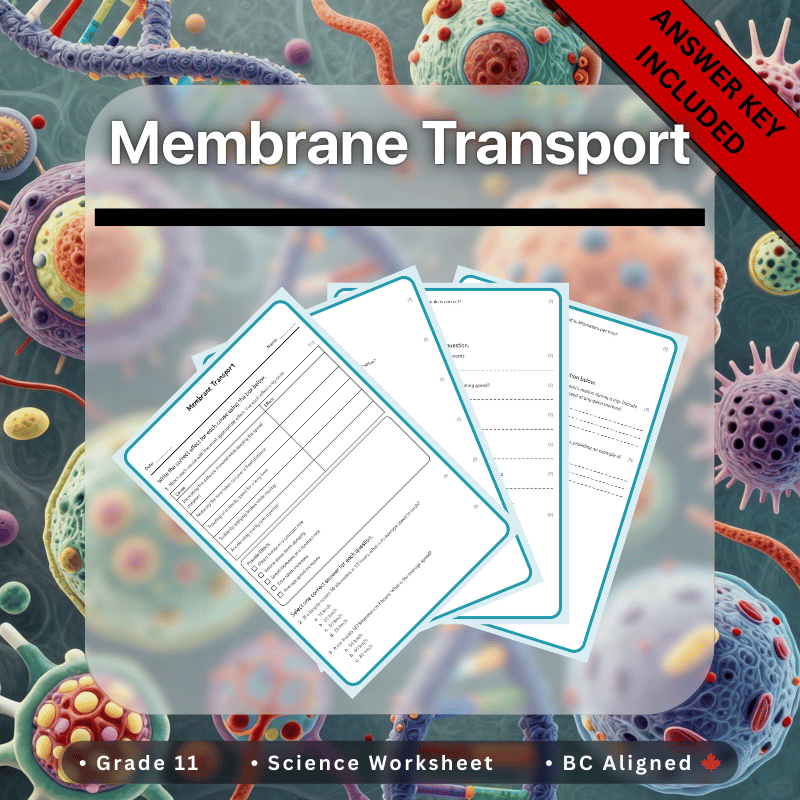
Grade 11 Science | Membrane Transport Worksheet (Answer Key) – BC Standards
Created byBright Mind ResourcesLearning Objectives
- Describe the mechanisms of diffusion, osmosis, facilitated diffusion, and active transport in cells.
- Explain how membrane permeability and ion gradients regulate substance movement across cell boundaries.
- Analyze the role of membrane proteins and ion pumps in maintaining internal cell conditions.
Instant download

Grade 8 Science | Model-Based Refinement in Science - Daily Reading Practice
Created byCoral Reef LearningLearning Objectives
- Understand the use of models in scientific testing and design.
- Identify different types of scientific models and their applications.
- Explain how model outputs guide improvements in design features.
Instant download

Grade 12 Science | Energy Transformations - Daily Reading Comprehension
Created byCoral Reef LearningLearning Objectives
- Describe the process of photosynthesis, including light-dependent and light-independent reactions.
- Identify key biochemical pathways involved in energy capture and conversion.
- Explain the role of electron transport chains and ATP synthesis in cellular respiration.
Also included in: Grade 12 Science Daily Reading Worksheets Full-Year Bundle | TEKS
Instant download
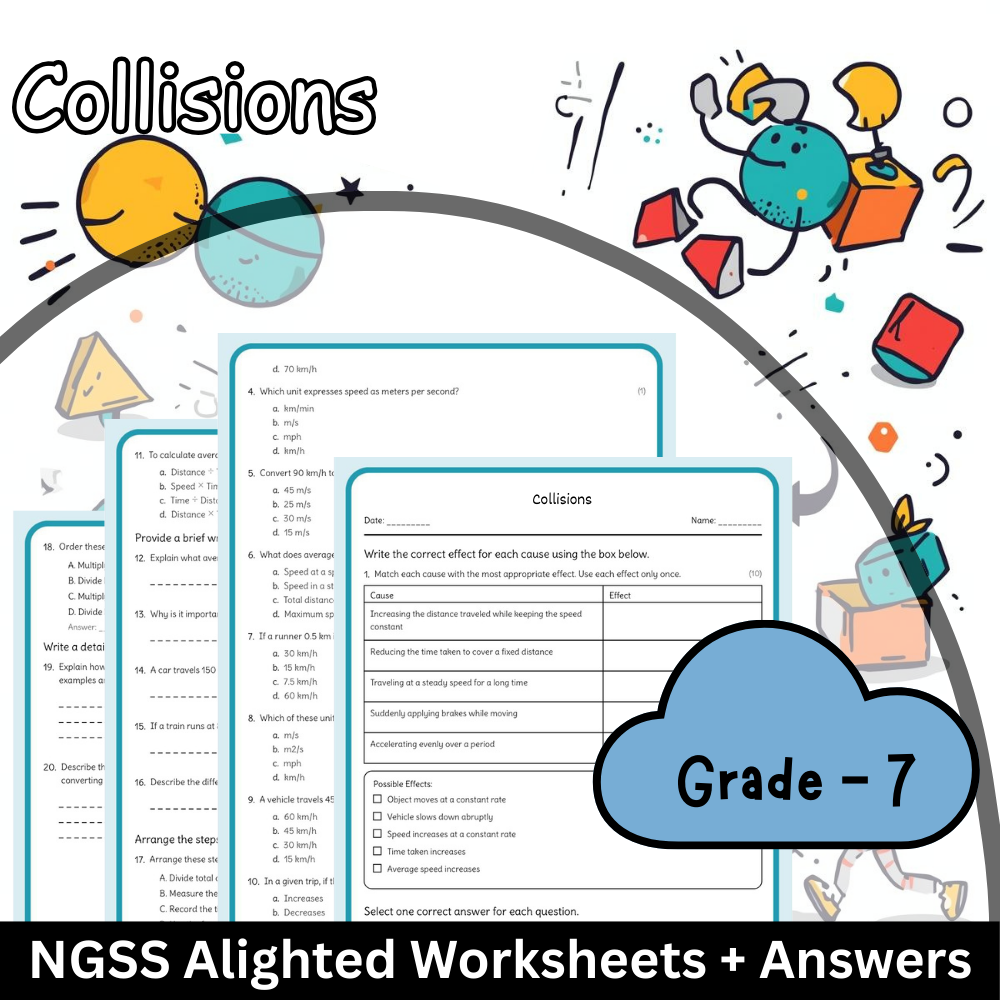
Grade 7 Science | Collisions Worksheet (Worksheet + Answer Key) NGSS
Created byBright Mind ResourcesLearning Objectives
- Understand the principles of momentum conservation during collisions.
- Differentiate between elastic and inelastic collisions.
- Calculate post-collision velocities using mass, velocity, and momentum concepts.
Instant download

Grade 6 Revising for Clarity Worksheet | ELA Editing & Writing Skills
 Created bySunny Desk Resources
Learning Objectives
- Revise a draft by improving content, organization, and style to make meaning clearer
- Identify sentence-level changes that reduce redundancy and increase precision
- Use revision questions to strengthen how ideas connect for a specific audience and purpose
Also included in: Grade 6 Writing Lesson Bundle | General ELA | Editing, Narrative, Argument +1 more
Instant download

Endothermic Processes Worksheet Grade 12 NGSSS Chemistry Practice
 Created byEvergreen Desk Education
Learning Objectives
- Distinguish endothermic and exothermic processes using energy flow between a system and its surroundings.
- Interpret reaction energy profiles to explain whether products are at higher or lower energy than reactants.
- Connect changes in temperature observations to bond breaking and bond formation during chemical reactions.
Instant download

Grade 7 Science | Understanding Meiosis & Genetic Variation - Reading Practice
Created byCoral Reef LearningLearning Objectives
- Define meiosis and understand its role in producing reproductive cells.
- Explain how genetic variation arises during meiosis.
- Recognize why siblings are genetically different despite having the same parents.
Instant download

Energy Loss and Efficiency Worksheet | Grade 10 Science CA Standards
Created byEvergreen Desk EducationLearning Objectives
- Explain how real systems involve useful energy transfer and unavoidable energy losses
- Interpret efficiency as the fraction of total energy transfer that produces the intended outcome
- Use energy accounting ideas to justify why reducing loss mechanisms improves performance
Instant download

Grade 11 Science | Genetic Mutation Worksheet (PDF) BC Standards
Created byEvergreen Desk EducationLearning Objectives
- Explain how genetic mutations can change DNA sequence or chromosome structure.
- Identify major sources of mutations and describe how they may affect genes and regulation.
- Evaluate how mutation effects can be neutral, harmful, or beneficial depending on context and selection.
Instant download

Grade 7 Science – Changes in Matter & Chemical Changes | Daily Reading Worksheet
Created byBright Mind ResourcesLearning Objectives
- Understand the differences between physical changes and chemical changes in matter
- Identify examples of physical changes in everyday life
- Recognize indicators of chemical changes such as color change, gas production, precipitates, and temperature change
Also included in: Grade 7 Daily Reading Science Worksheets Lesson Bundle | Florida NGSSS +1 more
Instant download
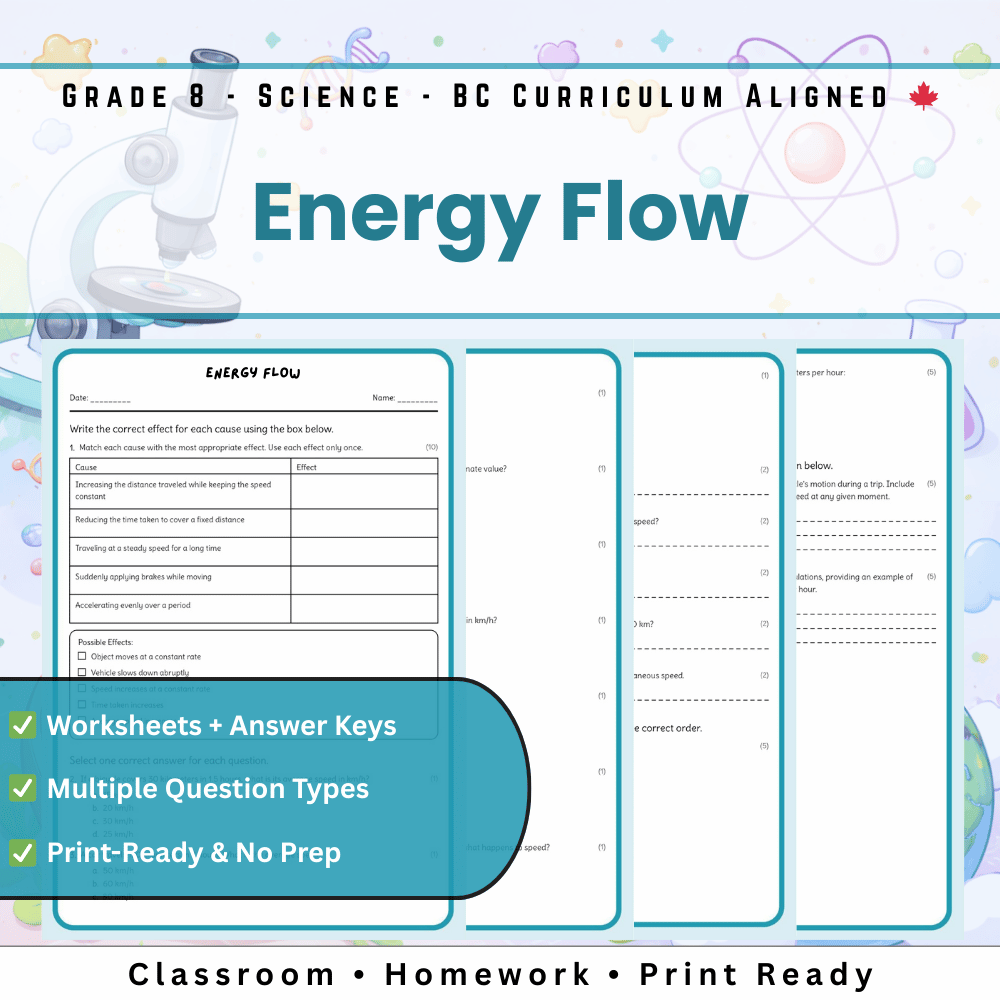
Grade 8 Science | Energy Flow Worksheet + Answer Key (BC Standards & Practice)
Created byBright Mind ResourcesLearning Objectives
- Describe how energy enters and moves through ecosystems.
- Explain the concept of energy transfer and energy loss at each trophic level.
- Identify the roles of producers, consumers, and predators in energy flow.
Instant download

Grade 10 Science | Mutations & Traits - Daily Reading Comprehension
Created byCoral Reef LearningLearning Objectives
- Understand the concept of mutations and how they alter DNA
- Identify different types of mutations and their effects on genes
- Explain how mutations can influence traits and evolution
Instant download
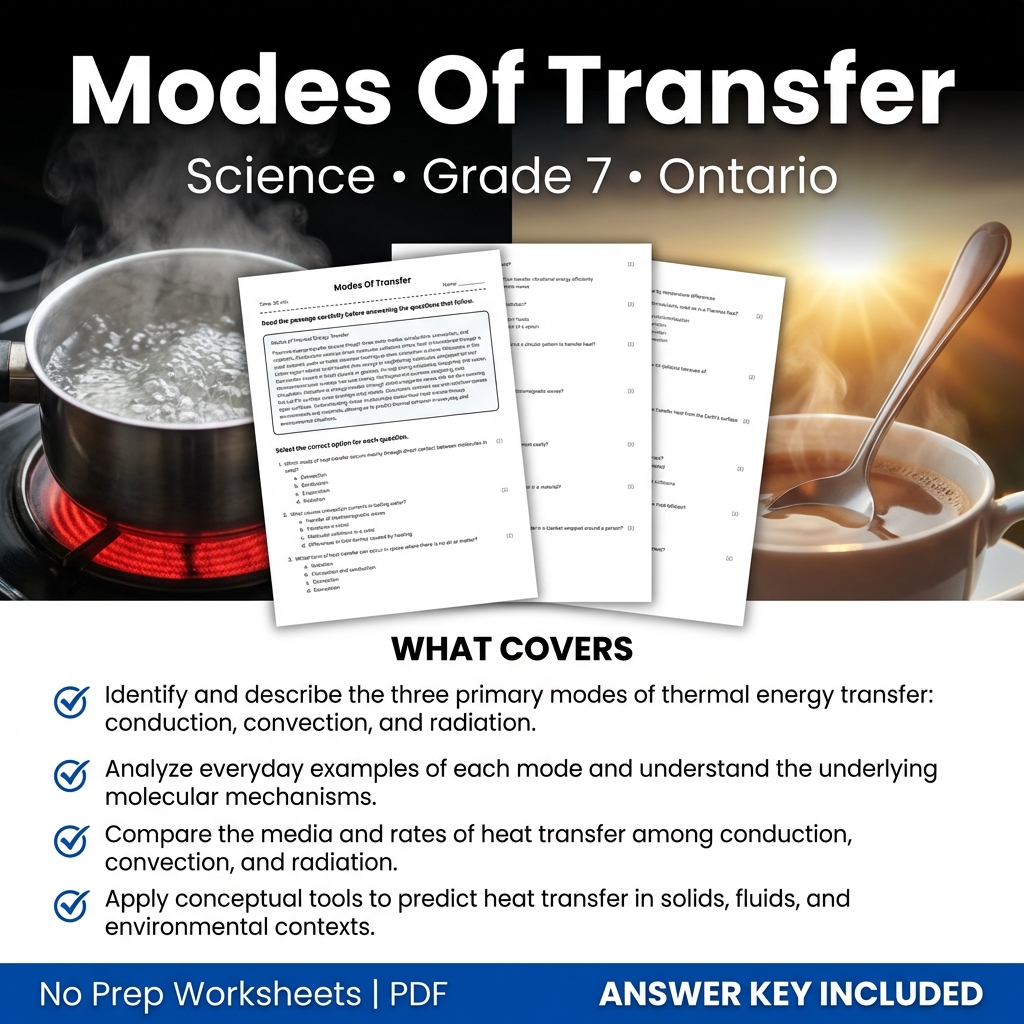
Modes Of Transfer Grade 7 Science Worksheet | Ontario | Printable PDF
Created byCoral Reef LearningLearning Objectives
- Identify and describe the three primary modes of thermal energy transfer: conduction, convection, and radiation.
- Analyze everyday examples of each mode and understand the underlying molecular mechanisms.
- Compare the media and rates of heat transfer among conduction, convection, and radiation.
Instant download
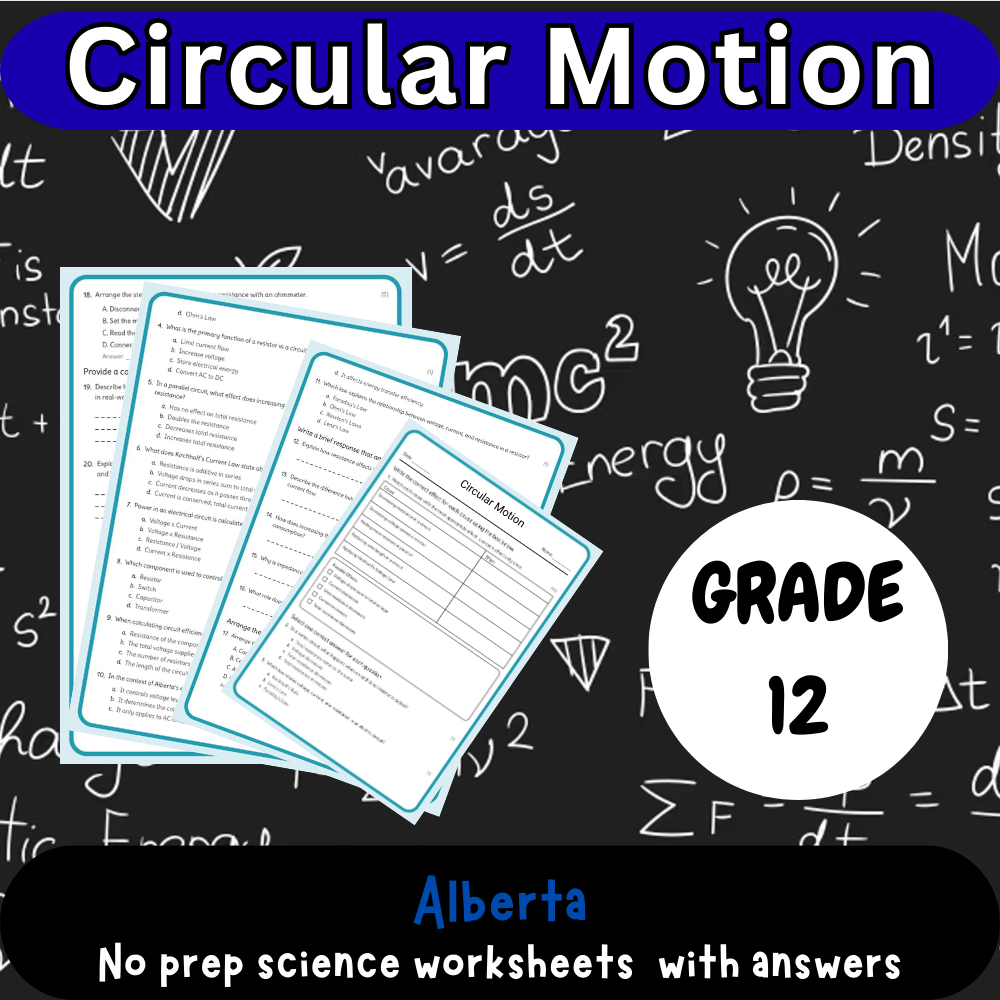
Grade 12 Science – Circular Motion Worksheet (PDF) – Alberta Standards
Created byBright Mind ResourcesLearning Objectives
- Understand the concept of centripetal acceleration in circular motion.
- Apply mathematical relationships involving angular velocity, period, and centripetal force to analyze rotational stability.
Instant download
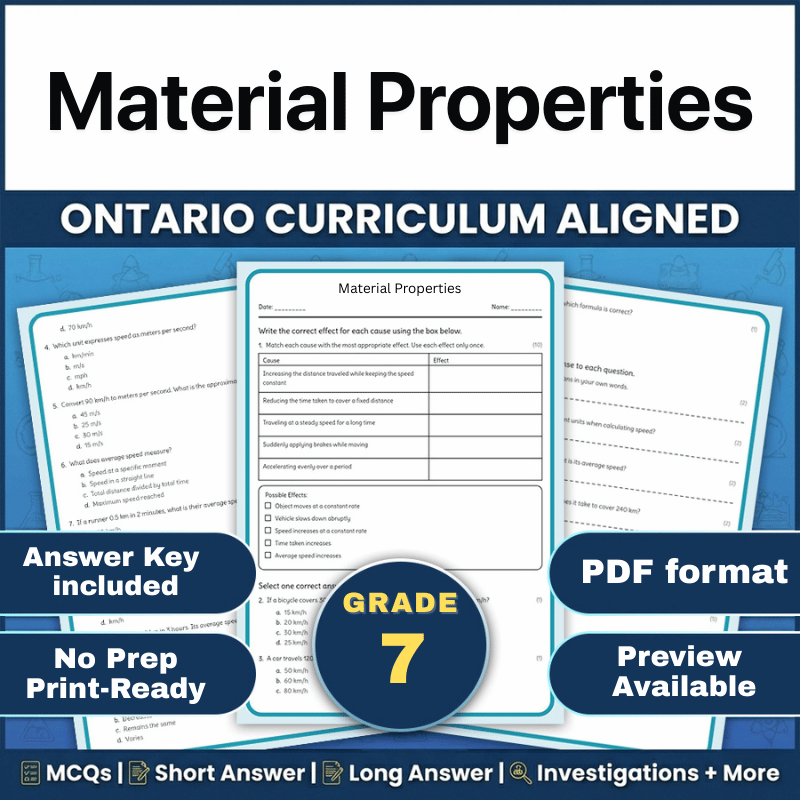
Grade 7 Science | Material Properties Worksheet (Ontario, PDF)
Created byBright Mind ResourcesLearning Objectives
- Define key material properties such as density, tensile and compressive strength, stiffness, ductility, toughness, and thermal expansion.
- Explain how these properties influence structural performance and failure modes.
- Contrast common construction materials—wood, steel, and reinforced concrete—in terms of strength-to-weight ratio, deformation, and failure.
Instant download

Grade 12 Science | Modeling Systems Worksheet (PDF) TEKS Aligned
Created byEvergreen Desk EducationLearning Objectives
- Construct and justify conceptual and quantitative models for real-world systems using parameters and assumptions.
- Estimate model parameters from data and validate model predictions against empirical measurements.
- Use dimensional analysis, scaling, and sensitivity testing to improve model robustness and interpret simulation results.
Instant download
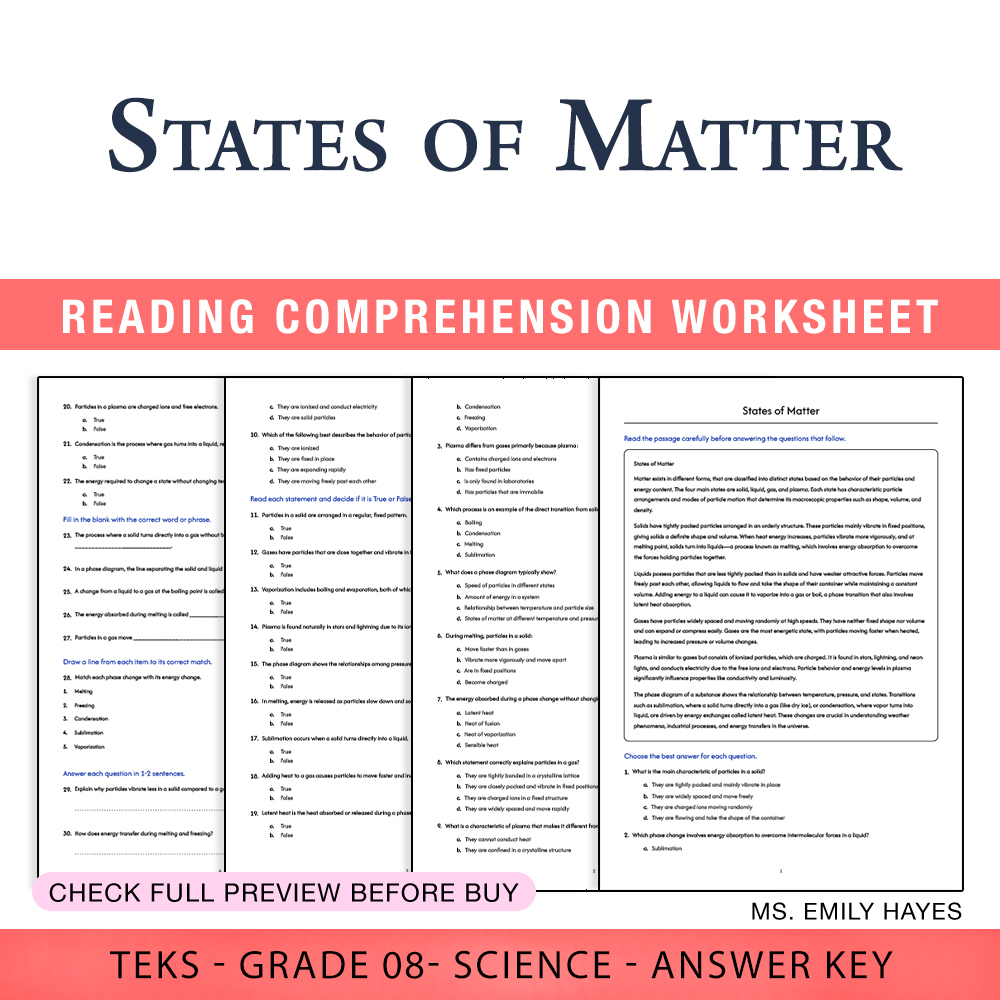
Grade 8 Science | States of Matter Worksheet (PDF+ Answer Key)
Created byCopper Leaf ClassroomLearning Objectives
- Describe the different states of matter: solid, liquid, gas, and plasma.
- Explain the molecular motion and particle arrangement in each state of matter.
- Understand the energy changes involved in phase transitions such as melting, boiling, condensation, and sublimation.
Instant download

Grade 12 Evidence for Evolution Worksheet | Biology Evolution Activity
Created byEvergreen Desk EducationLearning Objectives
- Explain how multiple lines of evidence (fossils, homology, biogeography, and molecular data) support evolution.
- Interpret how transitional forms and homologies indicate common ancestry.
- Use basic reasoning to connect DNA sequence relationships and molecular phylogenies to speciation over deep time.
Instant download

Grade 11 Science | Forces & Net Results - Daily Reading Comprehension
Created byCoral Reef LearningLearning Objectives
- Understand different types of forces acting on objects
- Learn how to interpret free-body diagrams
- Calculate net force from multiple vectors
Instant download

Grade 7 Science | Conservation of Matter Worksheet | California Standards
 Created byLumora Learning
Learning Objectives
- Explain conservation of matter in a closed system using the atomic model
- Distinguish between physical changes and chemical changes in terms of atoms and mass
- Use mass measurements of reactants and products to support the law of conservation of matter
Instant download

Grades 11- 12 Holiday Personal Reflection on Mothers Worksheet | Assessment
Learning Objectives
- Reflect on how maternal figures (including nontraditional caregivers) influence personal values and choices.
- Identify emotions and values connected to gratitude, love, and responsibility in interpersonal relationships.
- Practice empathy by considering different perspectives on what “motherhood” can mean.
Also included in: Grades 11 - 12 Holiday Mothers Literary Reflections ELA Lesson Bundle +2 more
Instant download

Measurement Practices Worksheet Grade 9 Science NGSSS Lab Skills
Created byEvergreen Desk EducationLearning Objectives
- Explain how scientific measurements use appropriate tools, units, and consistent reference standards to create usable data.
- Distinguish between precision and accuracy and interpret what each term implies about measurement results.
- Describe how repeatability and calibration improve the reliability of experimental data.
Instant download

Grade 11 Science | Periodic Trends Worksheet (Ontario) Practice PDF
Created byEvergreen Desk EducationLearning Objectives
- Explain how effective nuclear charge, shielding, and orbital penetration affect atomic radius, ionization energy, and electronegativity across periods and groups.
- Use periodic trends to predict and justify changes in ion formation, lattice-type behavior, and chemical reactivity.
- Identify and rationalize common deviations from ideal periodic trends using orbital and electron-structure factors.
Also included in: Grade 11 Chemistry Practice Science Lesson Bundle – Ontario Worksheets +1 more
Instant download

Form Fit Evidence Use Worksheet Pack | Grade 10 ELA Practice
Created bySunny Desk ResourcesLearning Objectives
- Identify how evidence type and selection change across informational, persuasive, and expressive writing forms.
- Explain how evidence supports the purpose of a specific claim or theme within a chosen form.
- Adjust style and organization so they align with the expectations of the form.
Also included in: Grade 10 Writing Lesson Bundle – ELA Skills BC Framework +1 more
Instant download

Grade 10 Science — Worksheet MCQ Paper for Mastering Motion Graphs
 Created byThe Resource Hub
Learning Objectives
- Understand how the slope of position vs. time graphs relates to velocity.
- Interpret areas under velocity graphs to determine displacement.
- Connect features of acceleration graphs to changes in velocity and force.
Also included in: Grade 10 Science AP Bundle – Comprehensive Curriculum with 60 Worksheets
Instant download

Evidence Integration Worksheet | Grade 8 ELA Practice & Assessment
Created bySunny Desk ResourcesLearning Objectives
- Explain how integrated evidence supports an author’s claim or idea
- Identify the difference between standalone facts and evidence that is blended into reasoning
- Use an introduction, integrated quotation or statistic, and an explanation to clarify relationships between evidence and ideas
Also included in: Grade 8 Writing Lesson Bundle | Alberta ELA: Voice, Evidence, Coherence +1 more
Instant download

Grade 9 Science – Investigation Design Controls | Daily Reading Worksheet
Created byBright Mind ResourcesLearning Objectives
- Understand the importance of variables in scientific investigations.
- Identify independent and dependent variables in an experiment.
- Learn how controlling variables enhances the reliability of experimental results.
Also included in: Uncertainty in Graphs & Evidence Lesson Bundle | Grade 9 Science General +1 more
Instant download

Work and Kinetic Energy Worksheet | Grade 11 Physics Science Activity
Created byPrism Point LearningLearning Objectives
- Explain how work depends on the component of force along the direction of motion.
- Use the work–energy relationship to predict how kinetic energy changes when forces do positive or negative work.
- Connect everyday motion (acceleration, braking, collisions) to energy reasoning.
Instant download

Grade 9 Science – Uncertainty in Graphs Reading Worksheet | Standards-Aligned
Created byBright Mind ResourcesLearning Objectives
- Understand what error bars and uncertainty bands represent in scientific graphs.
- Interpret measurement uncertainty and its impact on data patterns.
- Analyze whether differences in data are meaningful considering uncertainty.
Also included in: Uncertainty in Graphs & Evidence Lesson Bundle | Grade 9 Science General +1 more
Instant download

Coherent Drafting Worksheet Pack | Grade 3 ELA Practice
Created bySunny Desk ResourcesLearning Objectives
- Write a draft with an introduction, body details, and a concluding statement that reinforce the central idea.
- Arrange related sentences in an order that makes sense to a reader to improve coherence.
- Use clear connections between sentences (words/phrases and repeated main idea) to reduce confusion.
Also included in: Coherent Writing & Revision Lesson Bundle | Grade 3 ELA | British Columbia +1 more
Instant download

Grade 6 Social Studies — Spatial Relationships Worksheet for Mastery
Created byThe Resource HubLearning Objectives
- Describe spatial relationships using distance, direction, and location
- Use map features (scale, legend, compass directions) to interpret geographic information
- Explain how natural features and political features influence trade, settlement, and regional development
Also included in: Maps & Physical/Political Features Lesson Bundle | Grade 6 Social Studies | TEKS +1 more
Instant download

Forces and Change Assessment | General Standards Grade 7 Science
Created byPrism Point LearningLearning Objectives
- Understand how forces act as causes of motion changes.
- Differentiate between balanced and unbalanced forces.
- Explain how friction, air resistance, and gravity influence motion.
Also included in: Grade 7 Physical Science Science Lesson Bundle: General Framework
Instant download
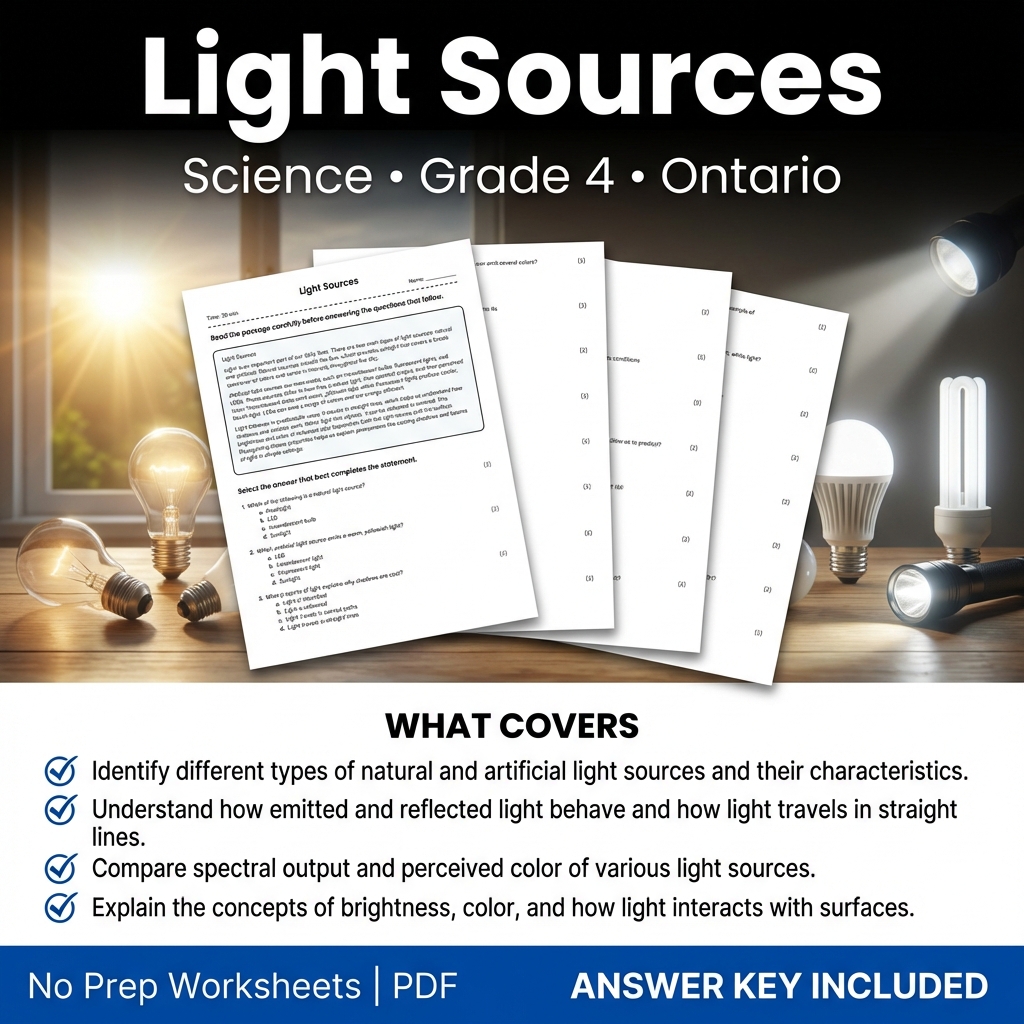
Light Sources Worksheet for Grade 4 Science | Ontario Standards
Created byCoral Reef LearningLearning Objectives
- Identify different types of natural and artificial light sources and their characteristics.
- Understand how emitted and reflected light behave and how light travels in straight lines.
- Compare spectral output and perceived color of various light sources.
Instant download

Molecular Geometry Worksheet Pack | AP Grade 10 Chemistry Practice
Created byPrism Point LearningLearning Objectives
- Define molecular geometry using electron-domain (VSEPR) ideas and explain how bonding and nonbonding electron domains control 3D shape.
- Use simple orbital hybridization and electron-domain reasoning to predict molecular shapes.
- Explain how molecular shape affects molecular polarity and can influence macroscopic properties like boiling point and solvent interactions.
Instant download
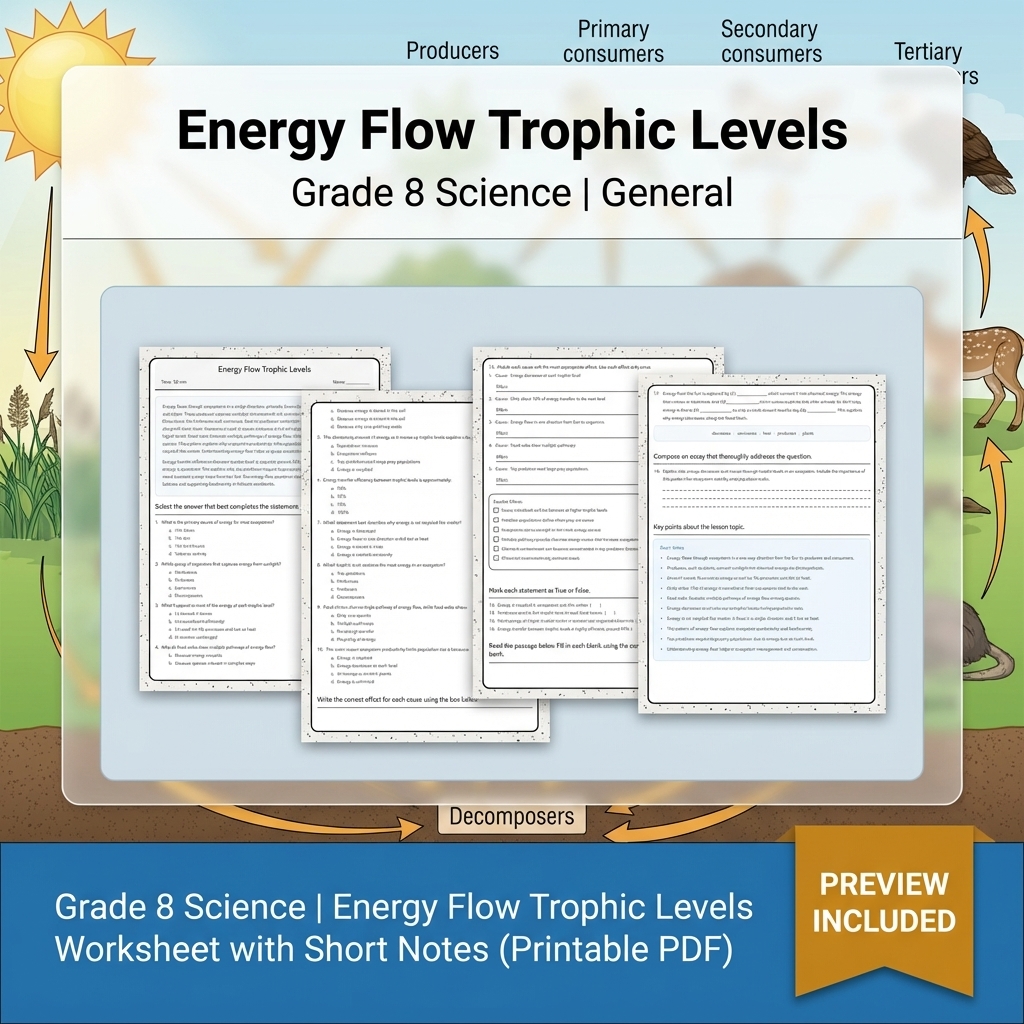
Grade 8 Science | Energy Flow Trophic Levels Worksheet with Short Notes
 Created byMeadowlark Worksheets
Learning Objectives
- Understand how energy flows through ecosystems from the Sun to different trophic levels.
- Identify the concept of energy decrease at each trophic level in a food chain.
- Explain the difference between food chains and food webs.
Also included in: Grade 8 Interactions, Homeostasis & Genetics Science Lesson Bundle (General) +1 more
Instant download

Grade 10 Science – Paleoclimate Evidence & Climate Records | Reading Worksheet
Created byBright Mind ResourcesLearning Objectives
- Identify various proxy records used in paleoclimate studies.
- Explain how isotopic ratios, microfossil assemblages, and sedimentary facies provide climate information.
- Compare paleoclimate records with instrumental data to understand climate change.
Also included in: Earth Systems Grade 10 Science Daily Reading Worksheets Bundle | NGSS +2 more
Instant download

Grade 11 Science | Cellular Respiration Worksheet | BC-Aligned
Created byLumora LearningLearning Objectives
- Explain the process of cellular respiration and its stages.
- Identify key molecules involved in energy production.
- Describe how oxygen functions as the final electron acceptor.
Also included in: Grade 11 Science | Biology Custom Bundle | BC-Aligned
Instant download

Grade 7 Science | Material Testing Methods in Science - Reading Comprehension
Created byCoral Reef LearningLearning Objectives
- Identify different methods used to test materials' properties.
- Understand the purpose of tensile, compression, and bending tests.
- Recognize non-destructive testing techniques such as ultrasonic and hardness measurements.
Instant download
Browse more categories
About Reading comprehension Worksheets
Find reading comprehension worksheets for class practice, homework, or self-study. All 40,284 are instant PDF downloads.
Each resource here is built by an independent educator and reviewed for quality. Worksheets print straight from PDF and suit classroom use, homework, or extra practice; most come with answer keys, and you can preview before purchasing.