
Grade 10 Worksheets
9,385 grade resources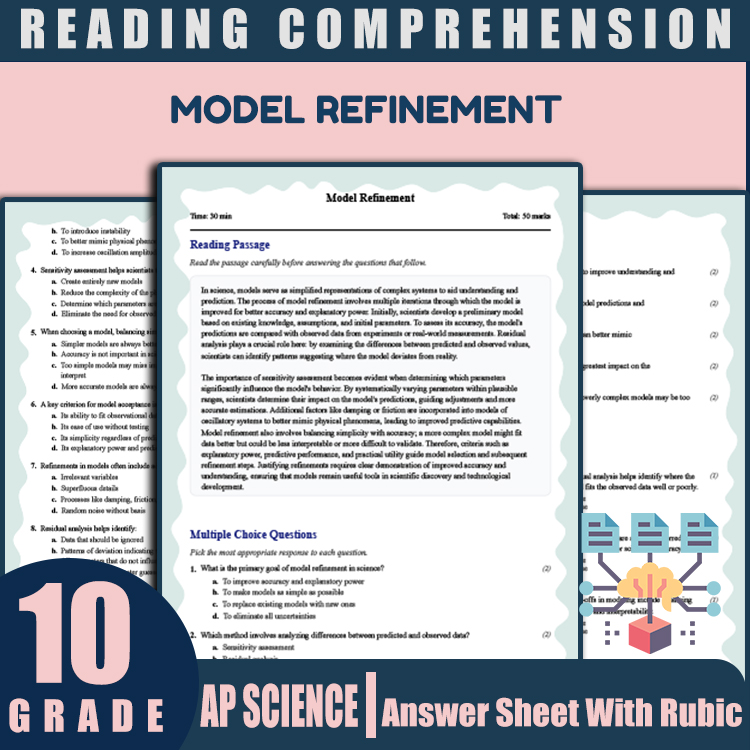
Grade 10 Science Reading Worksheets | Model Refinement Practice PDF (Answer Key)
JCreated byJ.S SheetsLearning Objectives
- Understand the iterative process of refining scientific models based on observed data and comparisons.
- Recognize methods such as residual analysis and sensitivity assessment to guide model improvements.
- Evaluate criteria for selecting appropriate models considering simplicity and accuracy.
Also included in: Grade 10 Science Unit Worksheet Pack – Data Analysis & Scientific Reasoning +1 more
Instant download
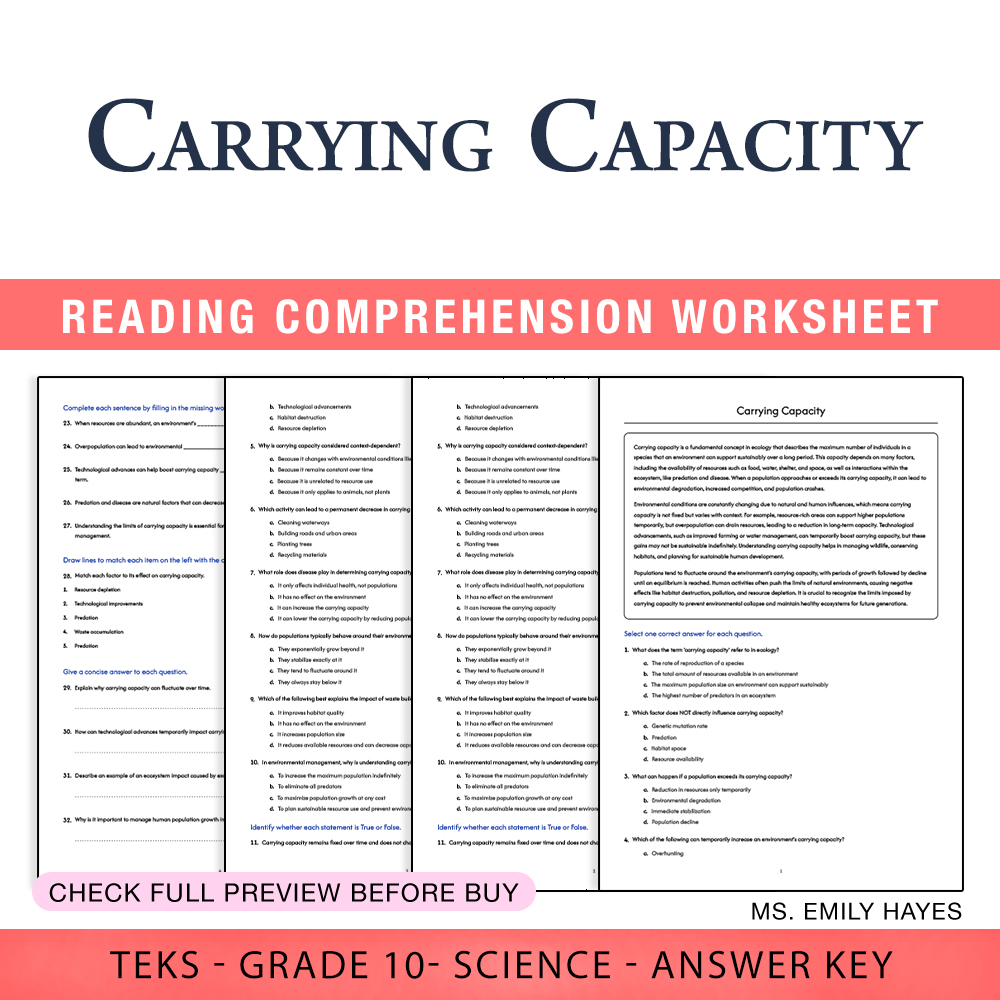
10th Grade Science | Carrying Capacity Worksheet (PDF+ Answer Key)
 Created byCopper Leaf Classroom
Learning Objectives
- Define carrying capacity and explain its significance in ecosystems.
- Describe factors that influence an environment's carrying capacity.
- Analyze how resource limitations, predation, disease, and waste impact populations.
Instant download
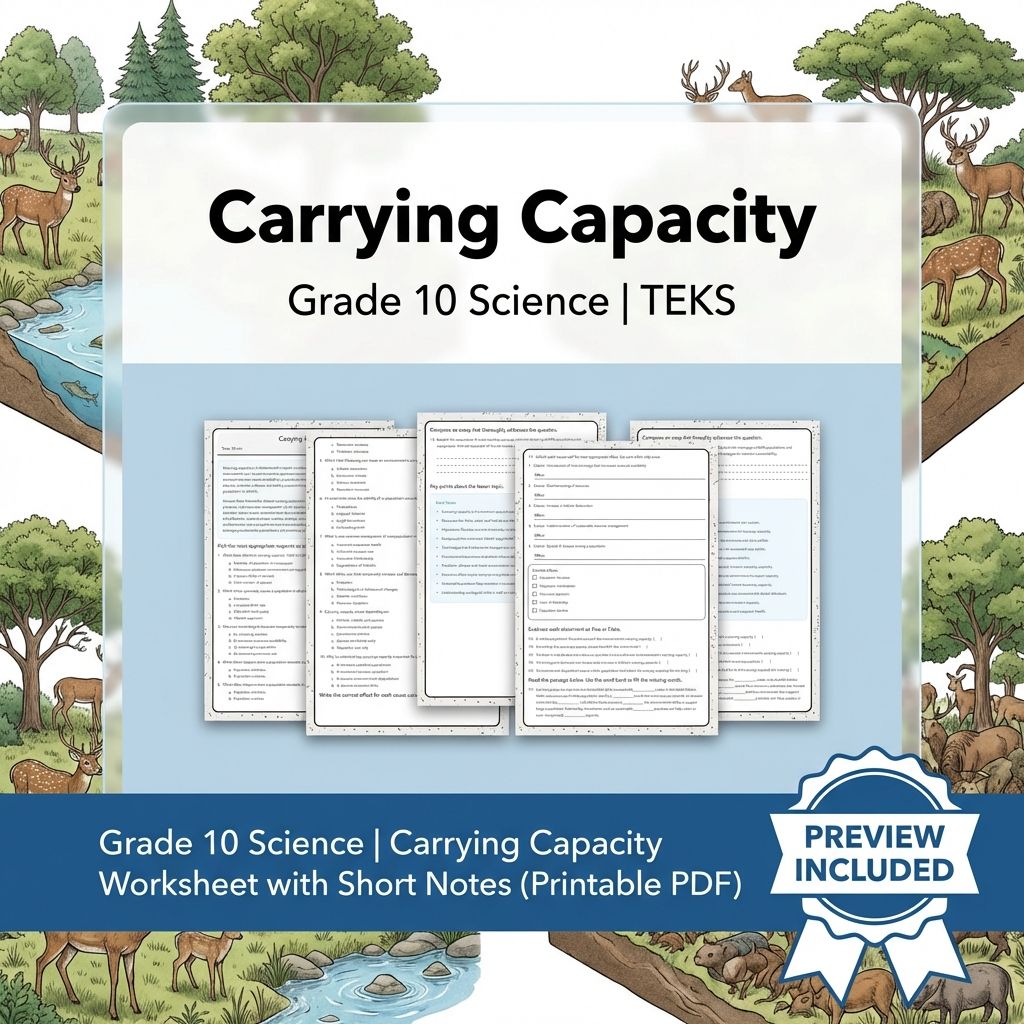
Grade 10 Science | Carrying Capacity Worksheet with Short Notes (PDF)
 Created byMeadowlark Worksheets
Learning Objectives
- Define carrying capacity and explain its significance in ecology.
- Identify factors that influence an environment's carrying capacity.
- Analyze how human activities can impact population sustainability.
Instant download

Grade 10 Health – Mental Well-Being & Stress Management Daily Reading Worksheet
 Created byQuiet Forest Education
Learning Objectives
- Understand what stress is and identify common stress triggers.
- Recognize the physical and emotional effects of stress on mental health.
- Learn strategies to manage and reduce stress effectively.
Also included in: Healthy Living Grade 10 Health Daily Reading Worksheets Bundle | Ontario +2 more
Instant download
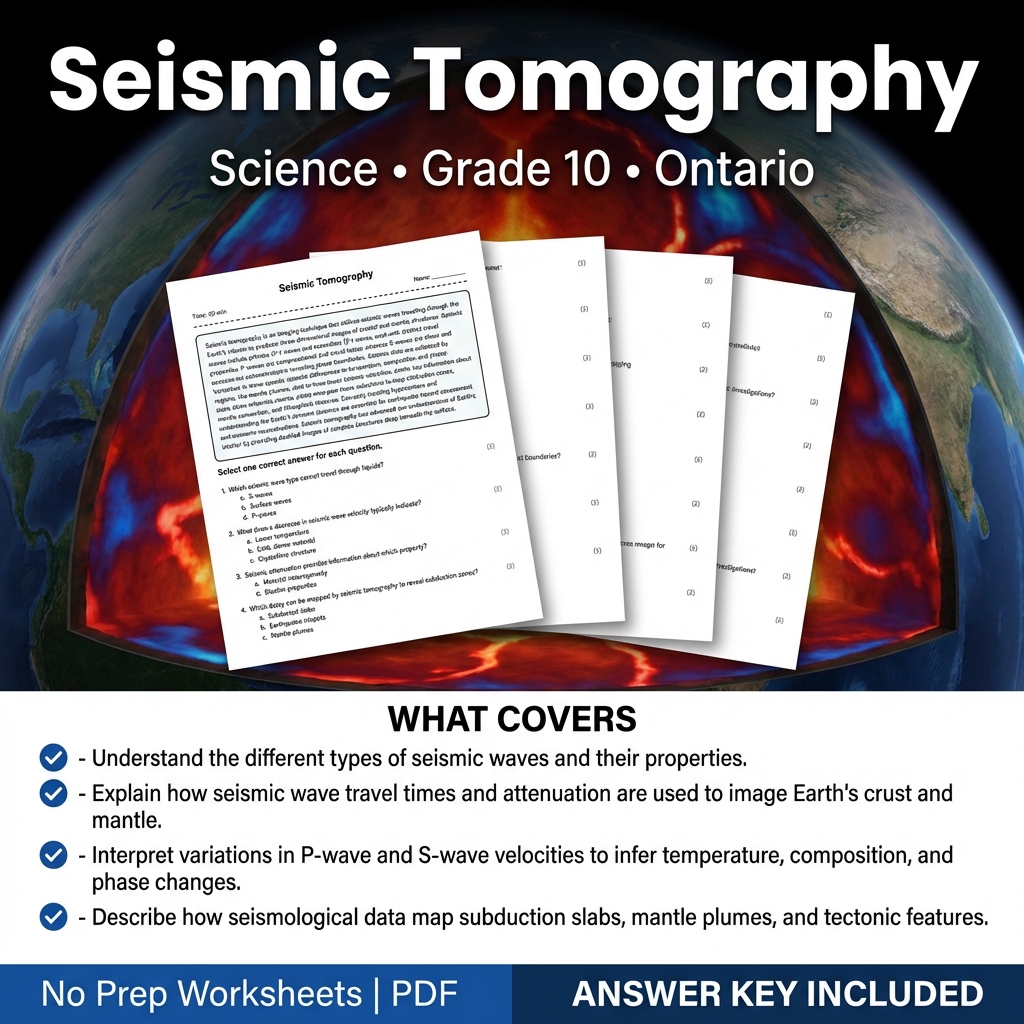
Grade 10 Science Worksheet on Seismic Tomography | Ontario Standards
 Created byCoral Reef Learning
Learning Objectives
- Understand the different types of seismic waves and their properties.
- Explain how seismic wave travel times and attenuation are used to image Earth's crust and mantle.
- Interpret variations in P-wave and S-wave velocities to infer temperature, composition, and phase changes.
Instant download

Grade 10 Health – Biological Factors Worksheet (Ontario Standards) (PDF)
 Created bySunny Desk Resources
Learning Objectives
- Explain how genetics, physical development, and hormones influence health across life stages
- Identify examples of normal biological changes versus possible health concerns
- Describe how inherited traits can affect health risk and guide early prevention strategies
Also included in: Grade 10 Decision-Making Health Lesson Bundle | Ontario Framework +1 more
Instant download

Grade 10 Health – Emotional Factors Worksheet (Ontario Standards) (PDF)
Created bySunny Desk ResourcesLearning Objectives
- Explain how emotional health affects decision-making, relationships, and coping at different life stages.
- Identify practical strategies for managing stress and strengthening emotional resilience.
- Evaluate common statements about emotional factors and mental well-being for accuracy.
Also included in: Grade 10 Decision-Making Health Lesson Bundle | Ontario Framework +1 more
Instant download

Grade 10 Health Worksheet | Mental Well-Being (PDF) for Ontario Standards
Created bySunny Desk ResourcesLearning Objectives
- Explain how stress management, emotional regulation, and resilience contribute to mental well-being
- Identify healthy coping strategies and support systems that strengthen psychological resilience
- Analyze how lifestyle and social connections can influence mood, stress levels, and coping
Also included in: Grade 10 Decision-Making Health Lesson Bundle | Ontario Framework +1 more
Instant download

Grade 10 Health Worksheet | Harm Reduction Strategies (PDF)
Created bySunny Desk ResourcesLearning Objectives
- Explain harm reduction and how it applies to substance use (alcohol, drugs, and medications).
- Identify key warning signs of abuse, overdose, and escalating risk, and describe safer responses.
- Describe mental-health supports and safe consumption practices that reduce harm and promote well-being.
Also included in: Grade 10 Decision-Making Health Lesson Bundle | Ontario Framework +1 more
Instant download
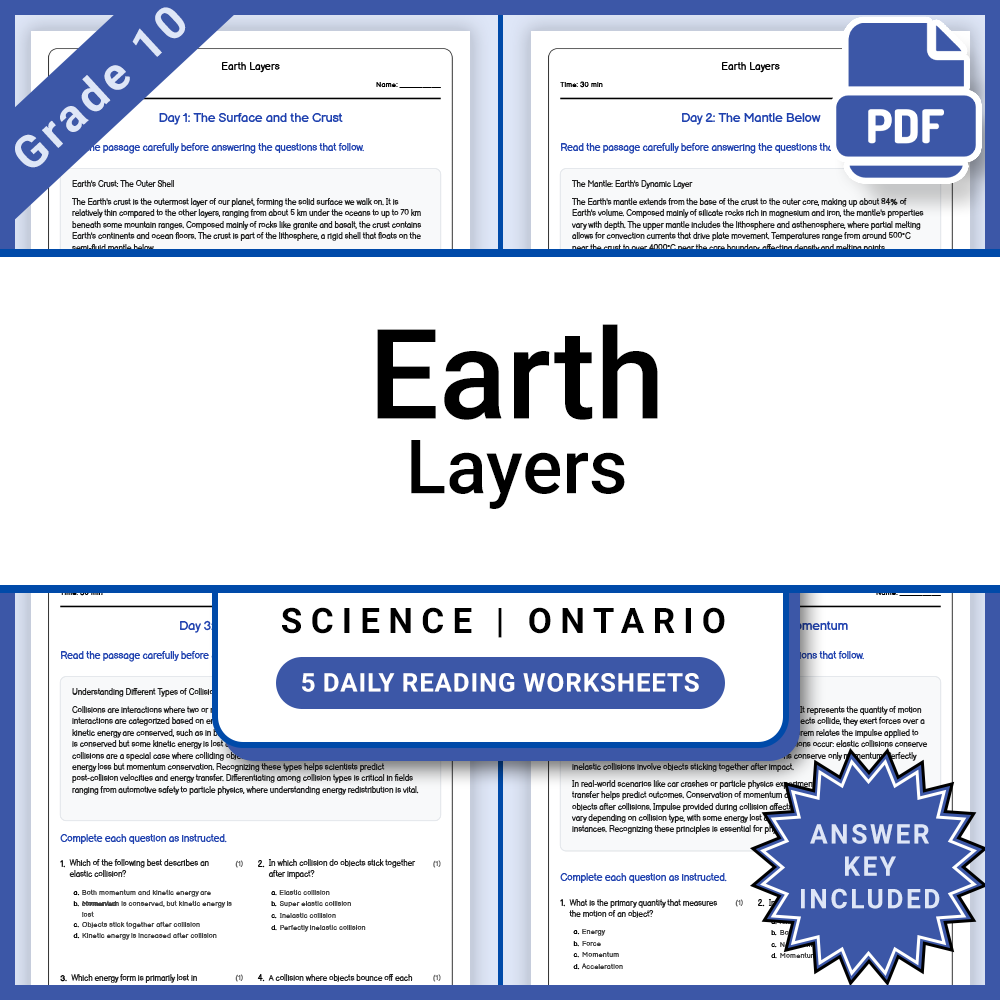
Grade 10 Science – Earth Layers Daily Reading Worksheet + Answer Key
JCreated byJ.S SheetsLearning Objectives
- Identify Earth's crust and distinguish it from other layers.
- Understand the composition and characteristics of Earth's crust.
- Learn how seismic waves inform scientists about Earth's internal structure.
Also included in: Grade 10 Science Lesson Bundle | Earth and Resource Management +1 more
Instant download
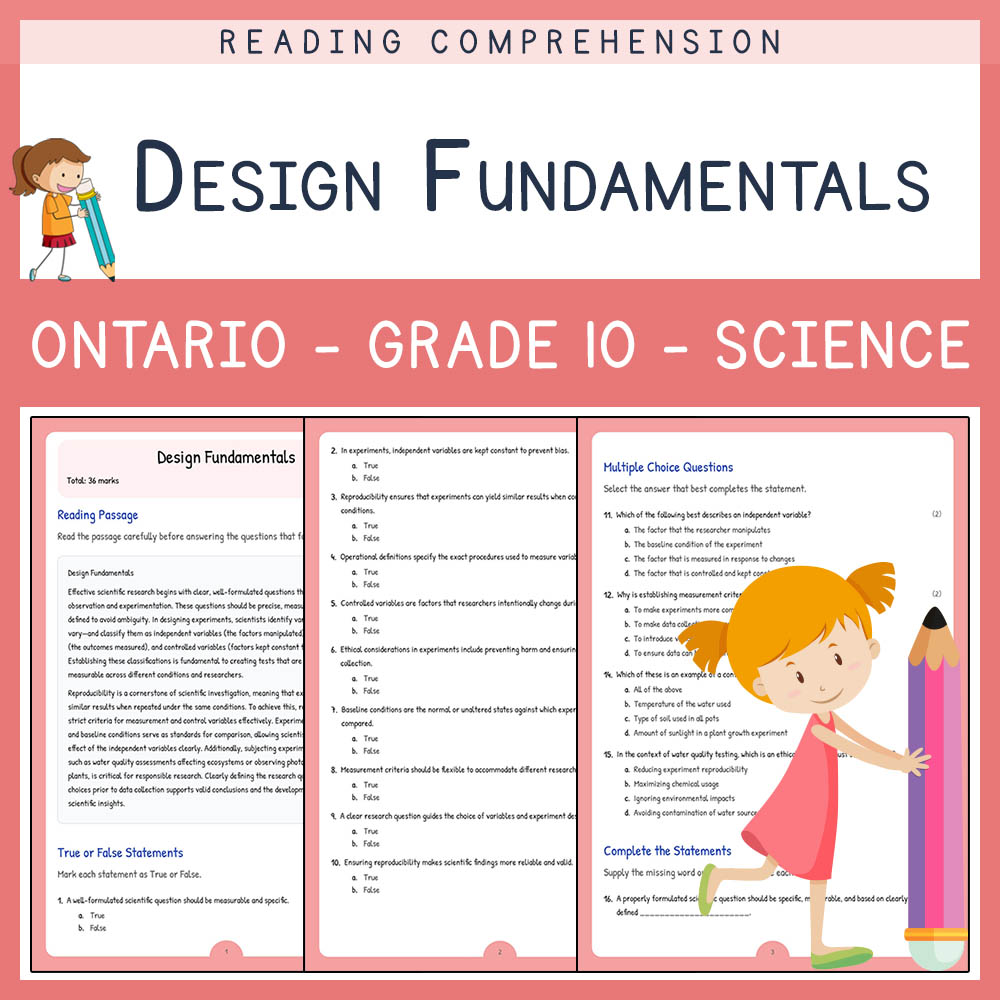
Grade 10 |Science | Design Fundamentals Worksheet Elena | Ontario Standards
 Created byLumora Learning
Learning Objectives
- Understand the core principles behind formulating testable scientific questions.
- Define and apply operational definitions to variables.
- Classify variables as independent, dependent, or controlled in experiments.
Instant download
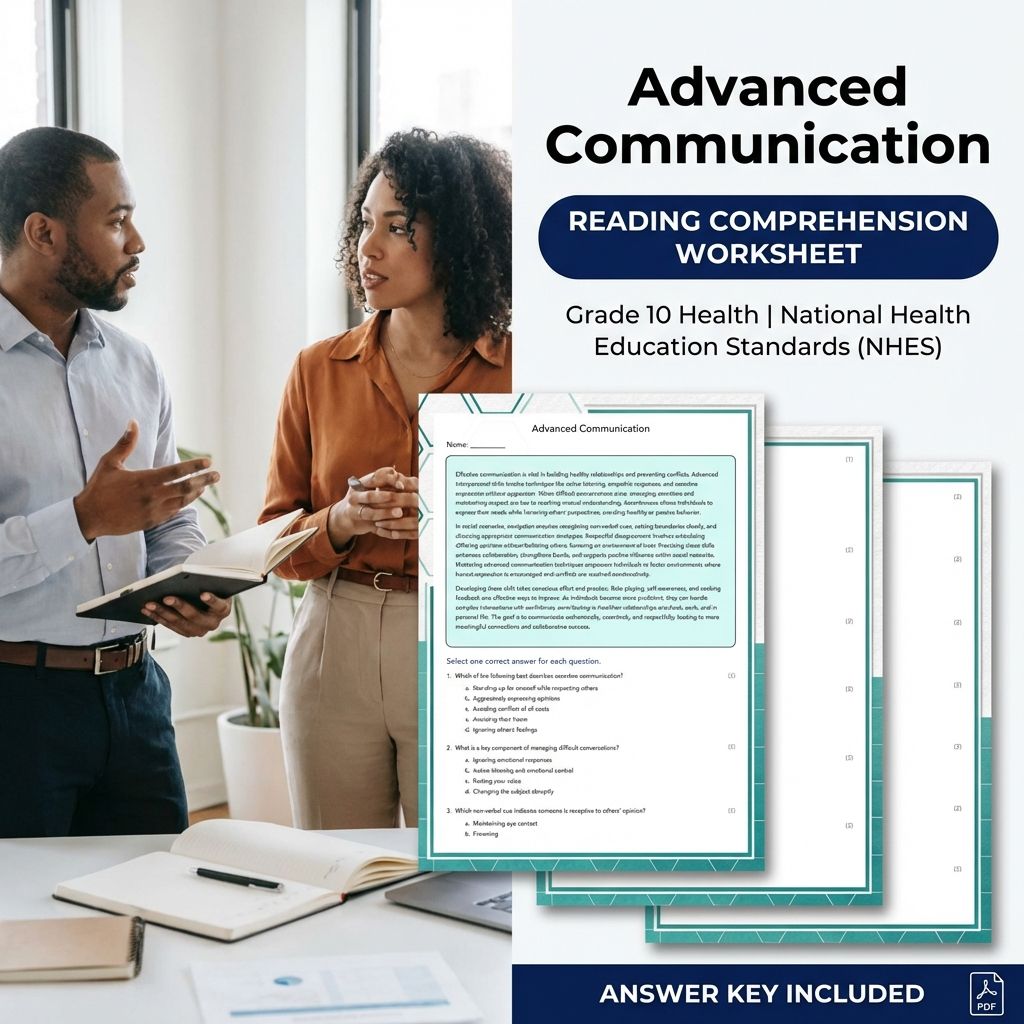
10th Grade Health | Advanced Communication Worksheet (Answer Key & PDF)
 Created bySkylark Worksheets
Learning Objectives
- Learn techniques for managing difficult conversations effectively.
- Understand how to assert oneself without aggression.
- Navigate complex social scenarios with confidence.
Also included in: Grade 10 Health | Interpersonal Communication Skills Unit Bundle (NHES Aligned) +1 more
Instant download

Healthy Routines Worksheet Grade 10 Health Education NHES Activity
 Created byPrism Point Learning
Learning Objectives
- Explain how balanced eating, regular activity, and adequate sleep support physical and mental health.
- Identify strategies for managing stress to improve daily functioning.
- Apply healthy routine habits to prevent health problems and build long-term resilience.
Instant download
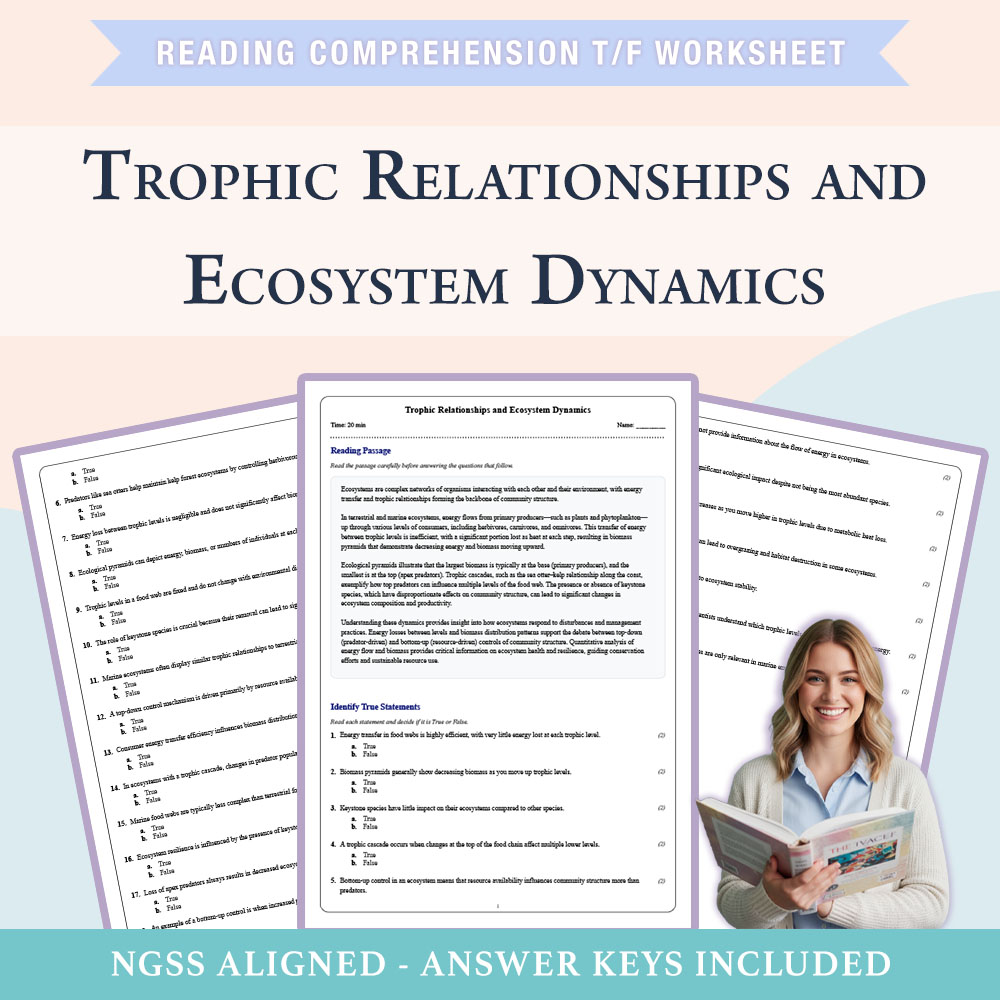
10th Grade Science | Trophic Relationships and Ecosystem Dynamics (PDF +Answers)
Created byCopper Leaf ClassroomLearning Objectives
- Understand the concept of trophic levels and energy transfer within food webs.
- Identify key features of biomass pyramids and their implications for ecosystem structure.
- Recognize the roles of keystone species and trophic cascades in maintaining community stability.
Also included in: Grade 10 Science Unit | Ecosystem Dynamics & Biodiversity (PDF +Answer Key) +1 more
Instant download

Grade 10 Science – Plate Boundaries & Divergent Boundaries | Reading Worksheet
 Created byBright Mind Resources
Learning Objectives
- Explain what divergence at plate boundaries involves.
- Identify key features associated with divergent boundaries.
- Describe the process of seafloor spreading and mid-ocean ridge formation.
Also included in: Earth Systems Grade 10 Science Daily Reading Worksheets Bundle | NGSS +2 more
Instant download
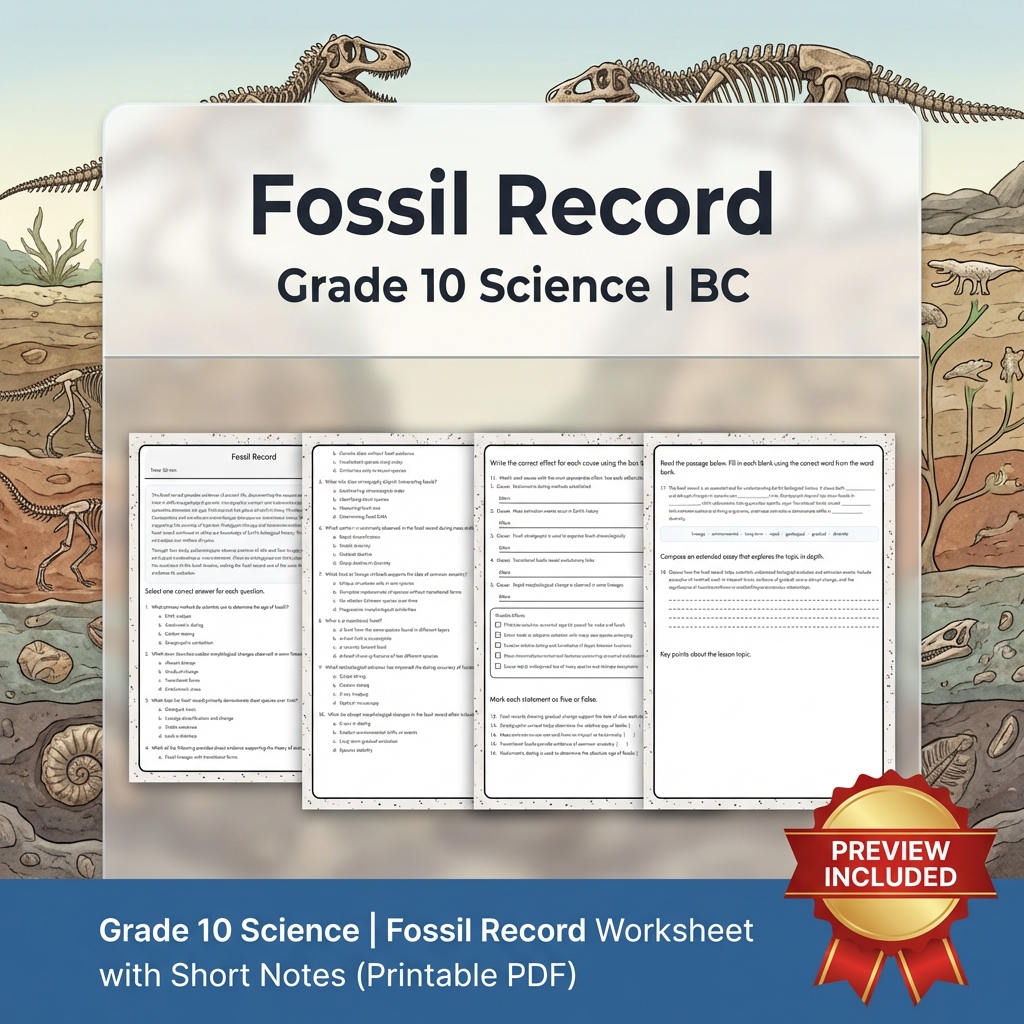
Grade 10 Science | Fossil Record Worksheet with Short Notes (Printable PDF)
Created byMeadowlark WorksheetsLearning Objectives
- Understand how the fossil record documents morphological change over geological time.
- Learn methods used to interpret the chronological sequence of fossils.
- Identify the differences between gradual and abrupt changes in fossil lineages.
Also included in: Grade 10 Science | BC Framework Lesson Group Worksheet Pack +1 more
Instant download
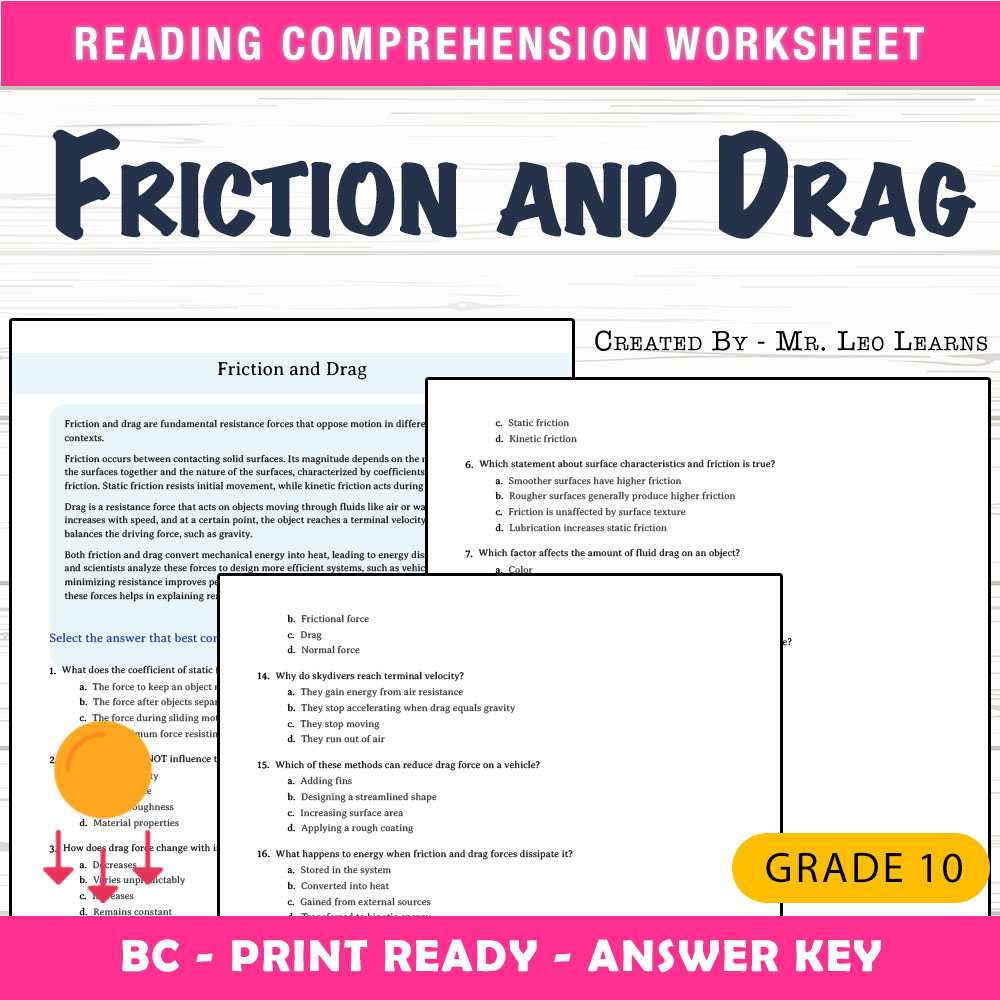
Grade 10 Science — Friction and Drag Worksheet MCQ Practice
 Created byThe Resource Hub
Learning Objectives
- Understand the mechanisms of friction and drag and their effects on motion.
- Identify factors influencing the magnitude of friction and drag forces.
- Explain the concept of terminal velocity resulting from drag forces.
Also included in: Grade 10 Science | Forces, Motion & Fields UNIT Worksheet Bundle +1 more
Instant download
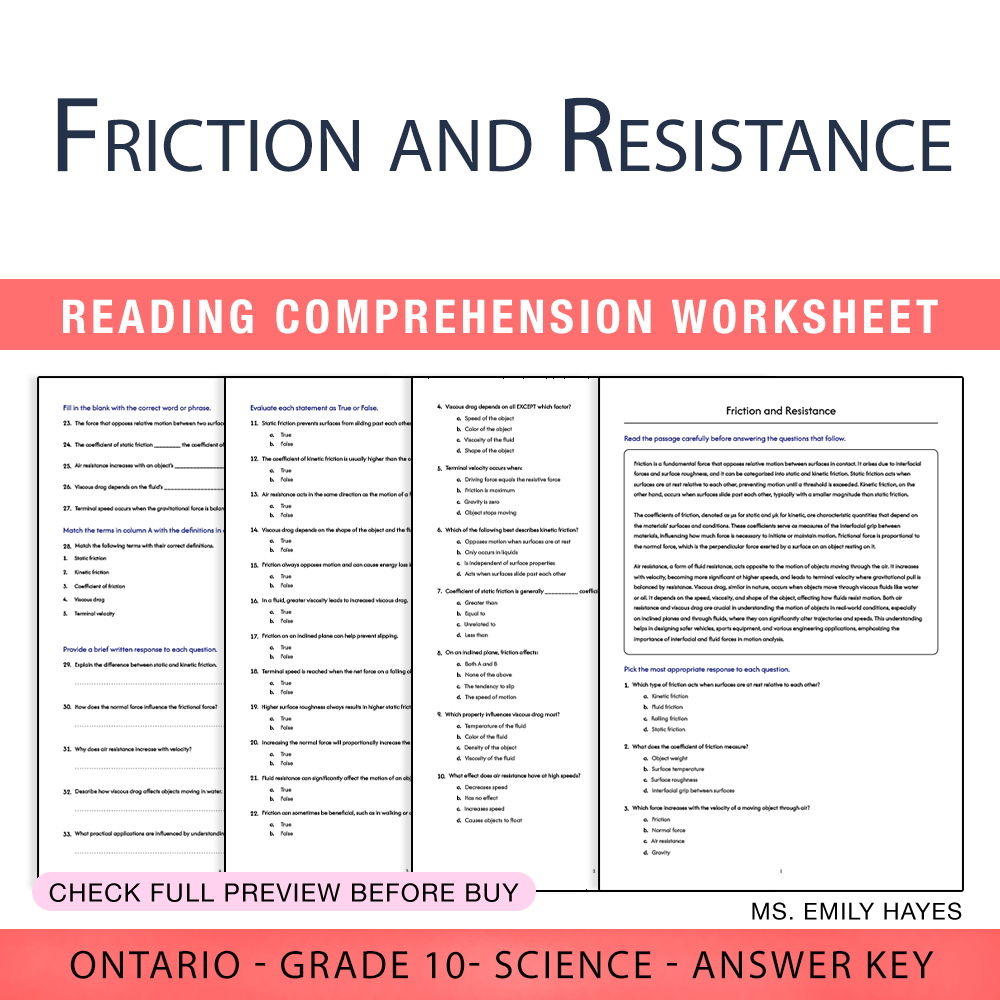
Grade 10 Science | Friction and Resistance Worksheet (PDF + Answer Key)
Created byCopper Leaf ClassroomLearning Objectives
- Describe the types of friction and their differences.
- Explain how the coefficients of friction relate to surface properties.
- Assess the effects of air resistance and viscous drag on moving objects.
Instant download
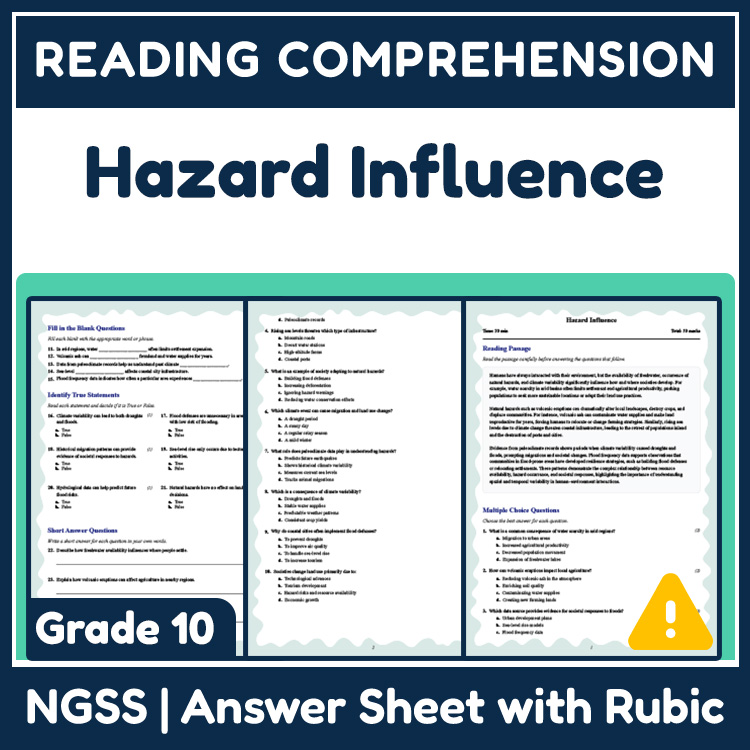
10th Grade Science | Hazard Influence Reading Worksheet & Answer Key (PDF)
JCreated byJ.S SheetsLearning Objectives
- Explain how freshwater availability affects human settlement patterns.
- Describe the impact of natural hazards like volcanic eruptions and sea-level rise on land use.
- Analyze evidence from paleoclimate and historical data to understand societal responses to hazards.
Also included in: Grade 10 Science | Climate Change & Land Use Unit Worksheet Bundle
Instant download
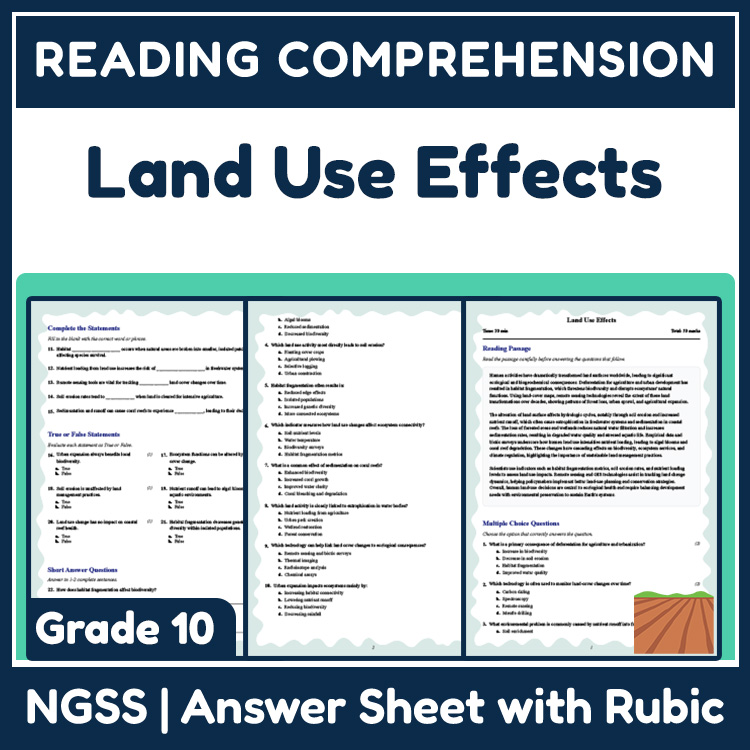
10th Grade Science | Land Use Effects Reading Worksheet (PDF & Rubric)
JCreated byJ.S SheetsLearning Objectives
- Understand how land-use changes impact ecosystems and Earth systems
- Identify indicators of land-use impacts such as habitat fragmentation and soil erosion
- Analyze empirical data from land cover maps and remote sensing to interpret ecological consequences
Also included in: Grade 10 Science | Climate Change & Land Use Unit Worksheet Bundle
Instant download
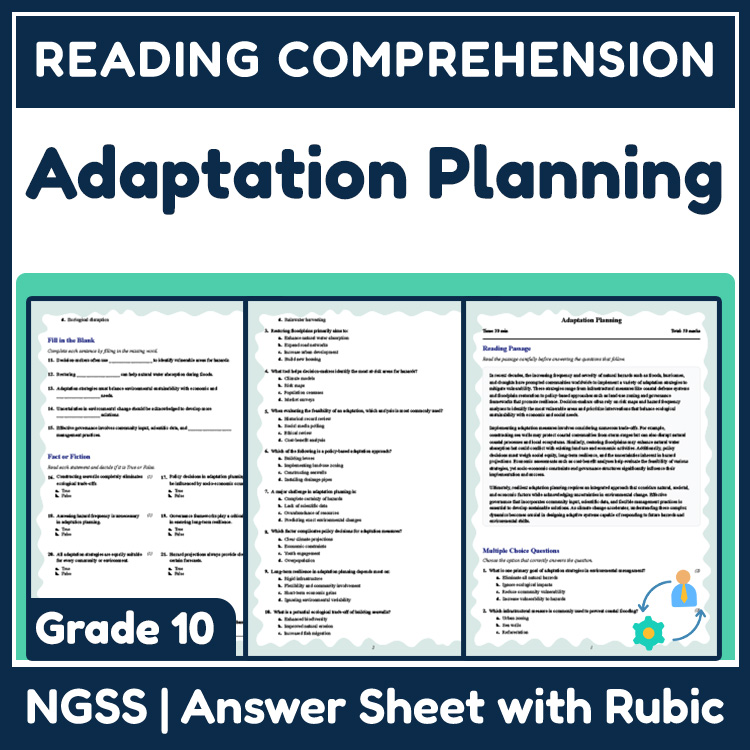
10th Grade Science | Adaptation Planning Reading Worksheet & Answer Key (PDF)
JCreated byJ.S SheetsLearning Objectives
- Understand the concept of environmental adaptation responses to natural hazards.
- Evaluate the trade-offs involved in infrastructural and policy responses to reduce vulnerability.
- Analyze risk maps, hazard analyses, and governance frameworks to assess adaptation feasibility.
Also included in: Grade 10 Science | Climate Change & Land Use Unit Worksheet Bundle
Instant download
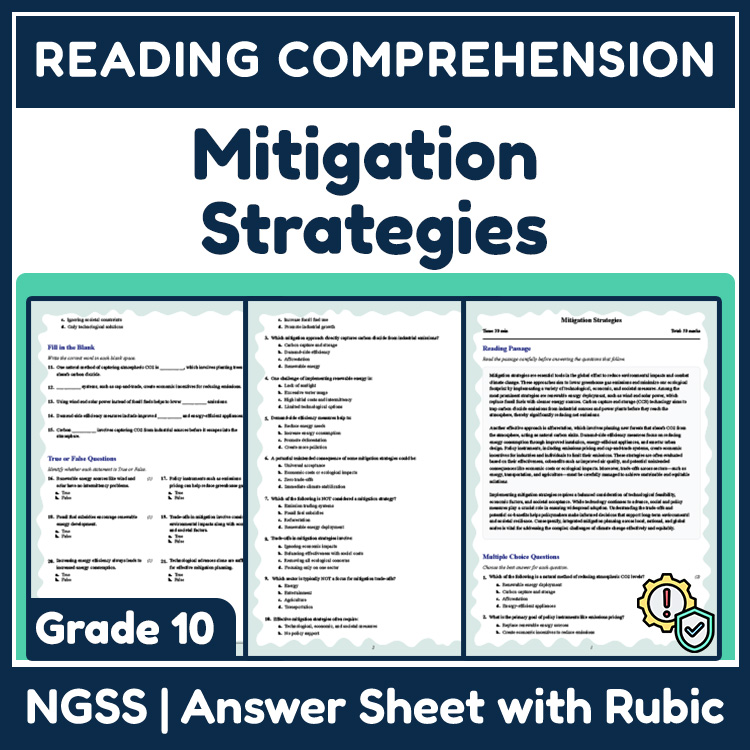
10th Grade Science | Mitigation Strategies Reading Worksheet with Answer Key
JCreated byJ.S SheetsLearning Objectives
- Understand various mitigation strategies to reduce environmental impacts and greenhouse gases.
- Analyze the effectiveness and trade-offs of different mitigation approaches across sectors.
- Evaluate technological, economic, and societal constraints affecting mitigation options.
Also included in: Grade 10 Science | Climate Change & Land Use Unit Worksheet Bundle
Instant download
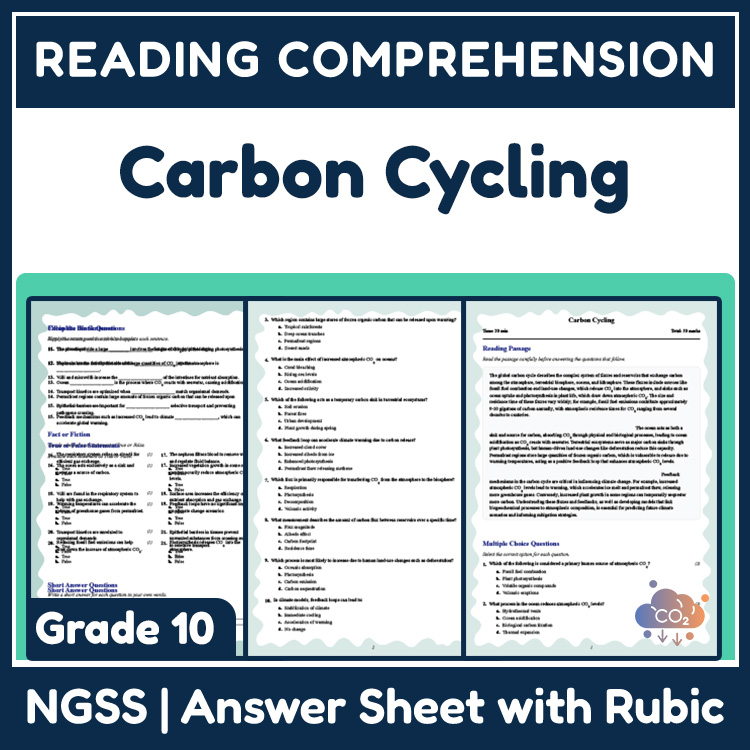
10th Grade Science | Carbon Cycling Reading Worksheet (PDF & Answer Key)
JCreated byJ.S SheetsLearning Objectives
- Explain the components and processes involved in the carbon cycle.
- Analyze the impact of human activities on atmospheric carbon levels and climate change.
- Describe feedback mechanisms within the carbon cycle and their effects on global climate.
Also included in: Grade 10 Science | Climate Change & Land Use Unit Worksheet Bundle
Instant download
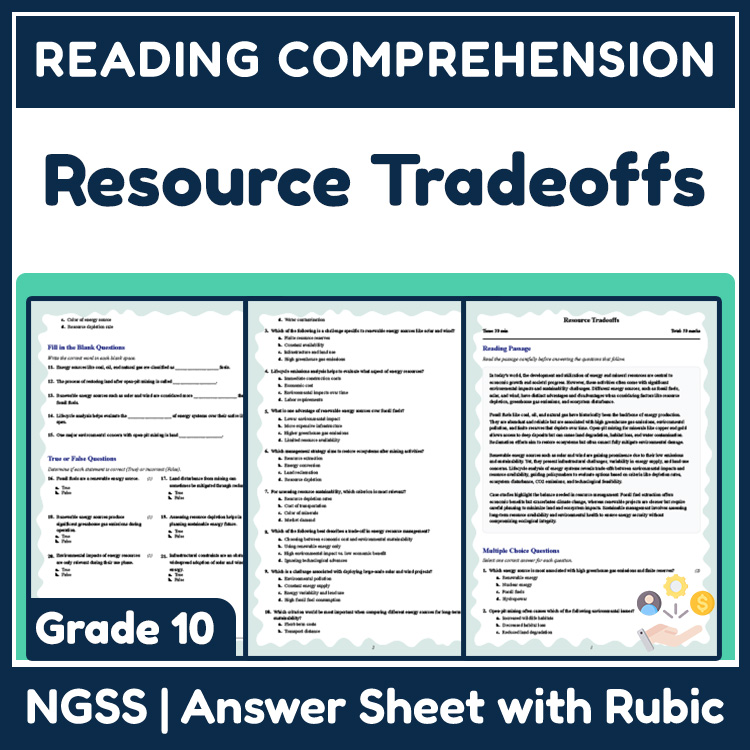
10th Grade Science | Resource Tradeoffs Reading Worksheet & Answer Key (PDF)
JCreated byJ.S SheetsLearning Objectives
- Understand the different types of energy and mineral resources and their impacts on the environment and economy.
- Evaluate trade-offs involved in resource development and management strategies.
- Analyze case studies involving fossil fuels, renewable energy, and mining impacts to compare sustainability and environmental effects.
Also included in: Grade 10 Science | Climate Change & Land Use Unit Worksheet Bundle
Instant download
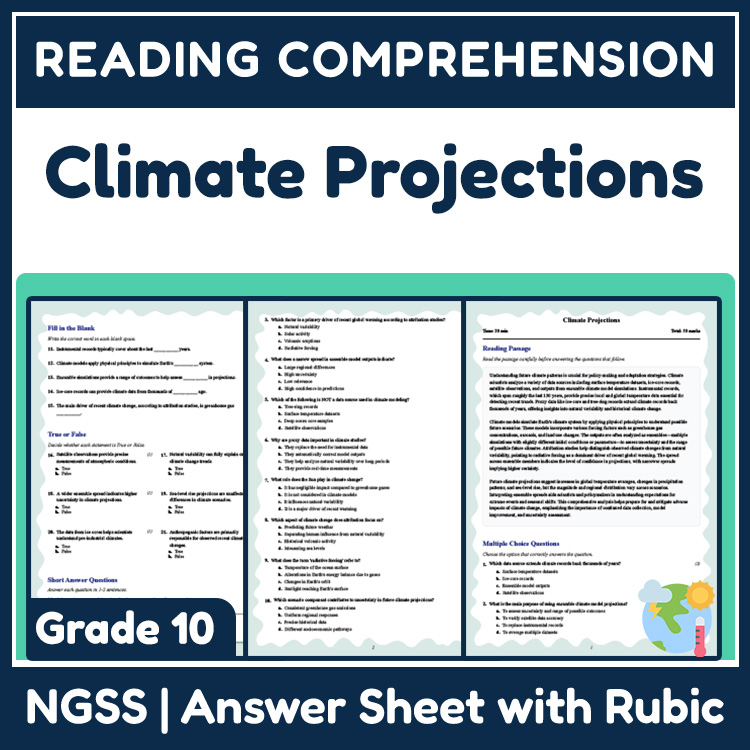
Grade 10 Science | Climate Projections Reading Worksheet & Answer Key (PDF)
JCreated byJ.S SheetsLearning Objectives
- Understand how instrumental records, proxy data, and model outputs contribute to climate trend analysis.
- Interpret differences between observed climate data and model projections.
- Identify key factors influencing global and regional climate changes and uncertainties.
Also included in: Grade 10 Science | Climate Change & Land Use Unit Worksheet Bundle
Instant download
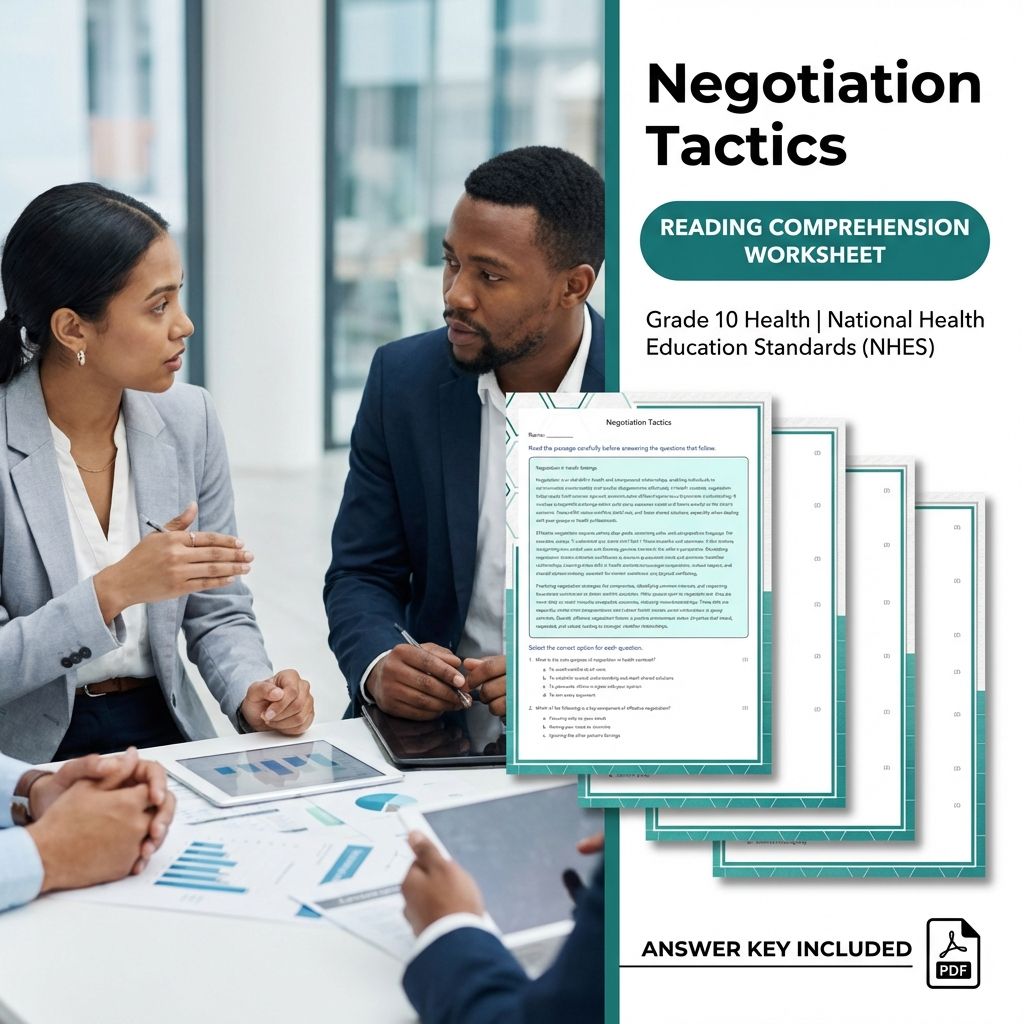
10th Grade Health | Negotiation Tactics Worksheet (PDF & Answer Key)
Created bySkylark WorksheetsLearning Objectives
- Understand key negotiation strategies used in health contexts.
- Identify effective communication techniques to reach mutual agreements.
- Recognize the importance of empathy and active listening during negotiations.
Also included in: Grade 10 Health | Interpersonal Communication Skills Unit Bundle (NHES Aligned) +1 more
Instant download
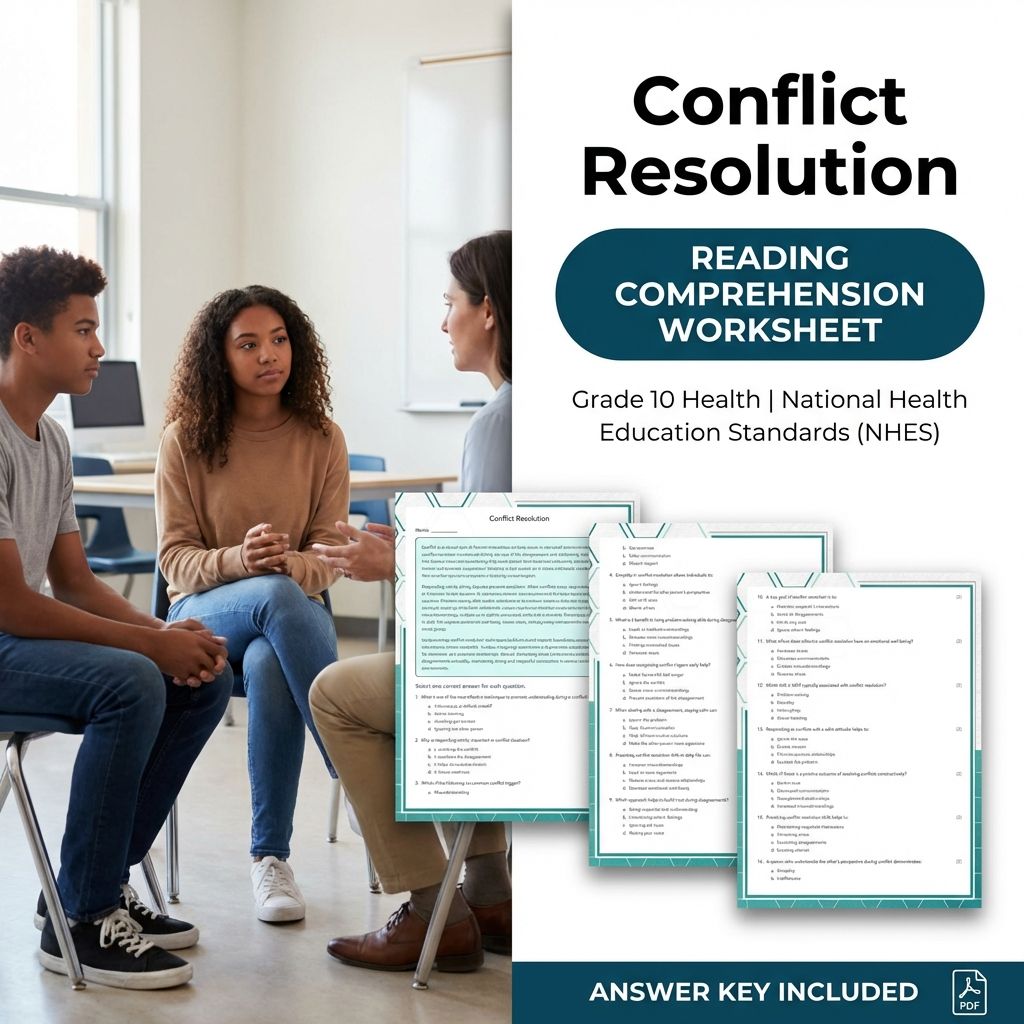
Grade 10 Health | Conflict Resolution Worksheet & Answer Key (Printable)
Created bySkylark WorksheetsLearning Objectives
- Understand strategies for effectively resolving conflicts.
- Recognize triggers that escalate disagreements.
- Develop skills in active listening, empathy, and problem-solving.
Also included in: Grade 10 Health | Interpersonal Communication Skills Unit Bundle (NHES Aligned) +1 more
Instant download

Grade 10 April Fools Day for Mastering The History of April Fools|PDF+Answer Key
 Created byShaNova Worksheets
Learning Objectives
- Explore the origins and evolution of April Fools' Day across different cultures.
- Analyze how humor reflects societal values, norms, and historical events.
- Develop vocabulary related to satire, deception, and social critique.
Instant download
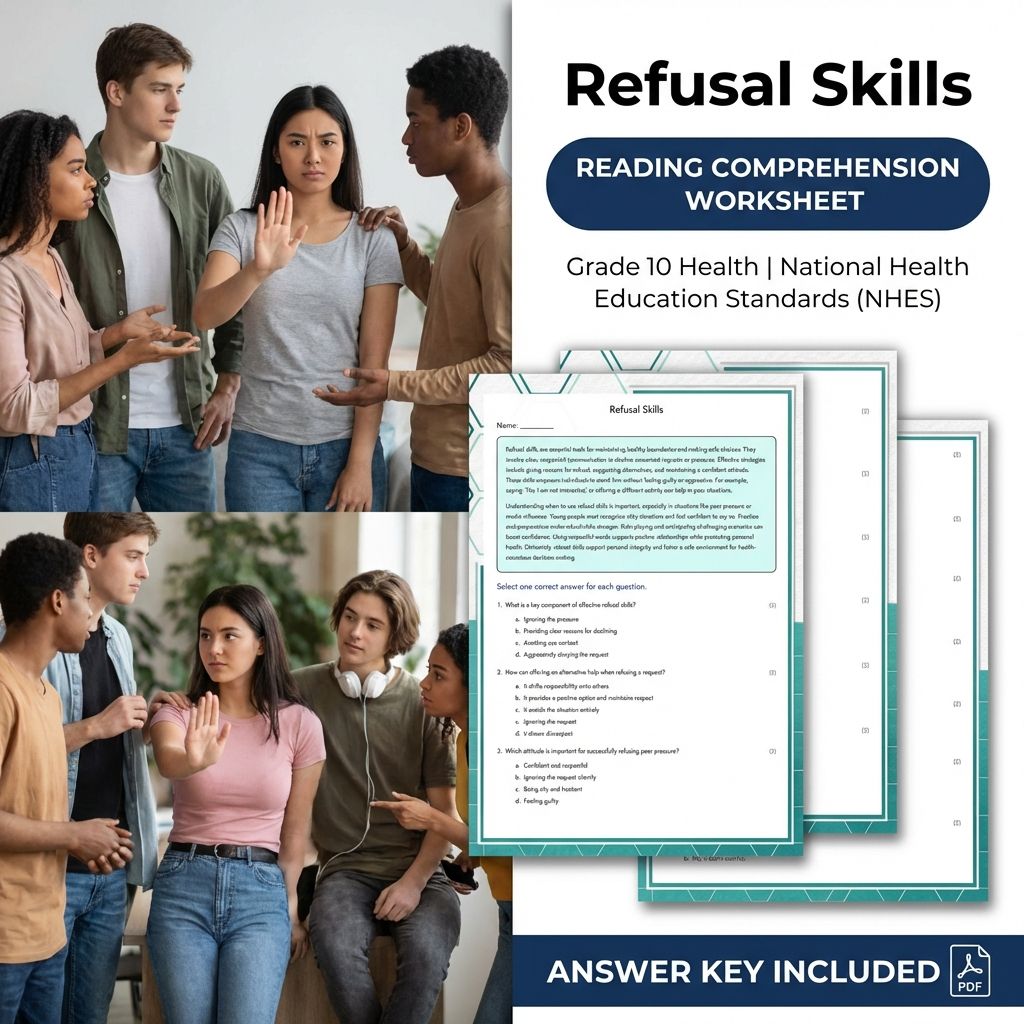
10th Grade Health | Refusal Skills Worksheet for Effective Decision-Making
Created bySkylark WorksheetsLearning Objectives
- Define refusal skills and understand their importance in maintaining personal health.
- Identify effective strategies for refusing unwanted requests or pressures.
- Recognize situations where refusal skills are necessary, such as peer pressure or media influence.
Also included in: Grade 10 Health | Interpersonal Communication Skills Unit Bundle (NHES Aligned) +1 more
Instant download
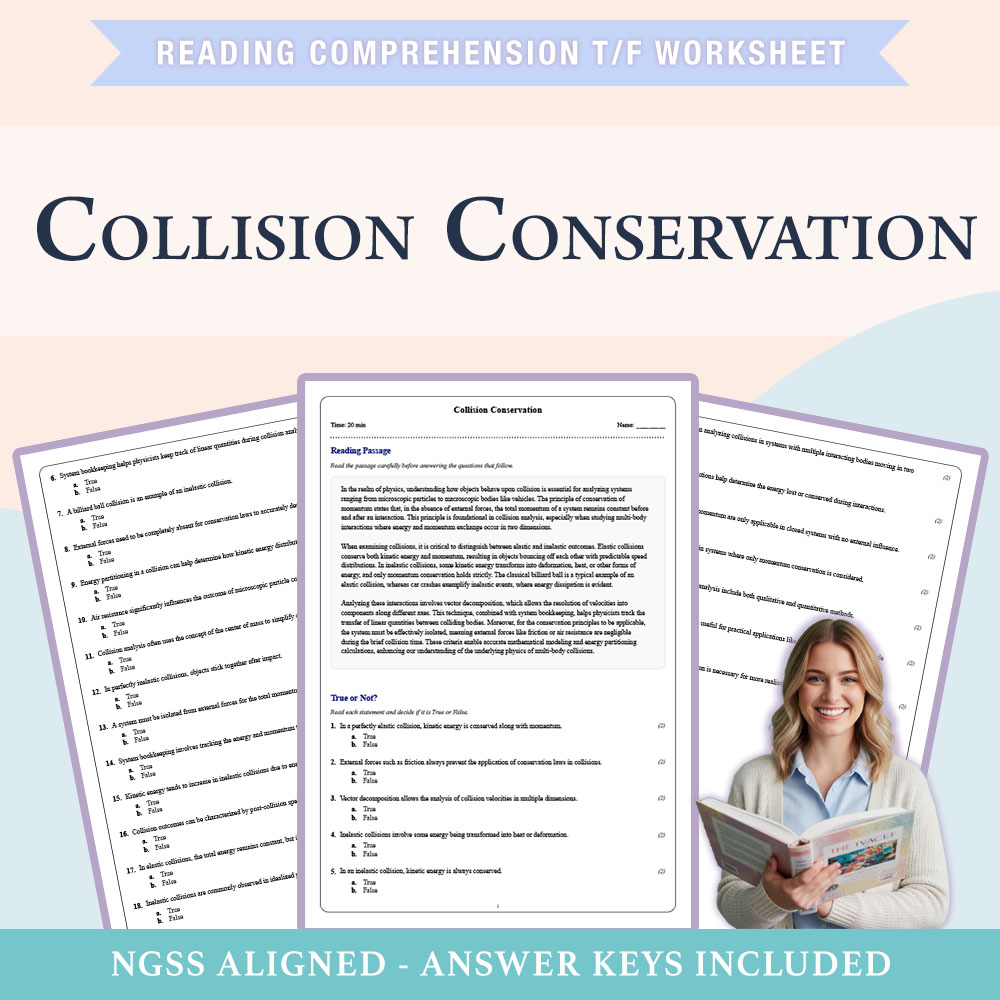
10th Grade Science | Collision Conservation Worksheet (PDF + Answer Key)
Created byCopper Leaf ClassroomLearning Objectives
- Understand the principles of conservation in multi-body collisions, including momentum and energy
- Differentiate between elastic and inelastic collision outcomes through speed and energy distribution analysis
- Apply vector decomposition and system bookkeeping to analyze two-dimensional collisions
Also included in: Grade 10 Science Bundle | Forces, Motion & Fields Worksheets (PDF + Answer Keys) +1 more
Instant download
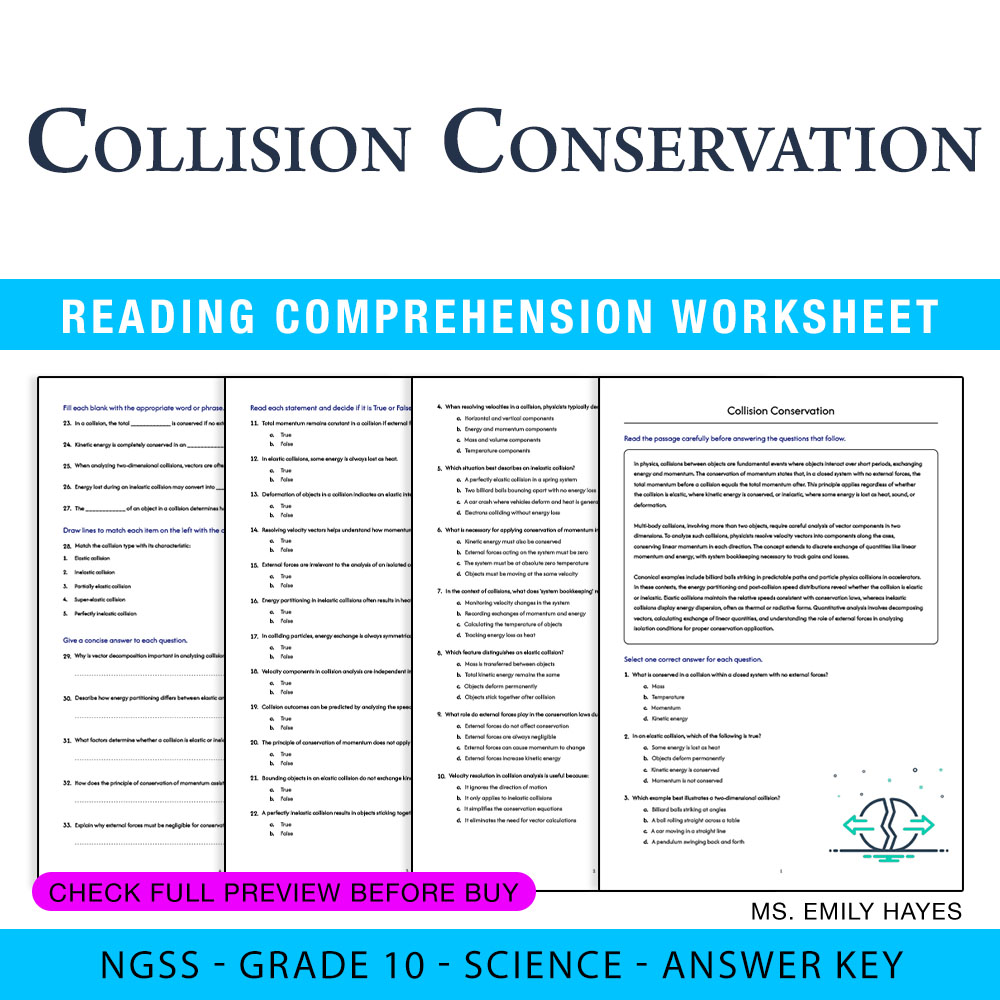
10th Grade Science | Collision Conservation Worksheet (PDF+ Answer Key)
Created byCopper Leaf ClassroomLearning Objectives
- Understand the principles of conservation of momentum and energy in multi-body collisions.
- Analyze two-dimensional collision components using vector resolution.
- Differentiate between elastic and inelastic collisions based on energy and speed distributions.
Instant download
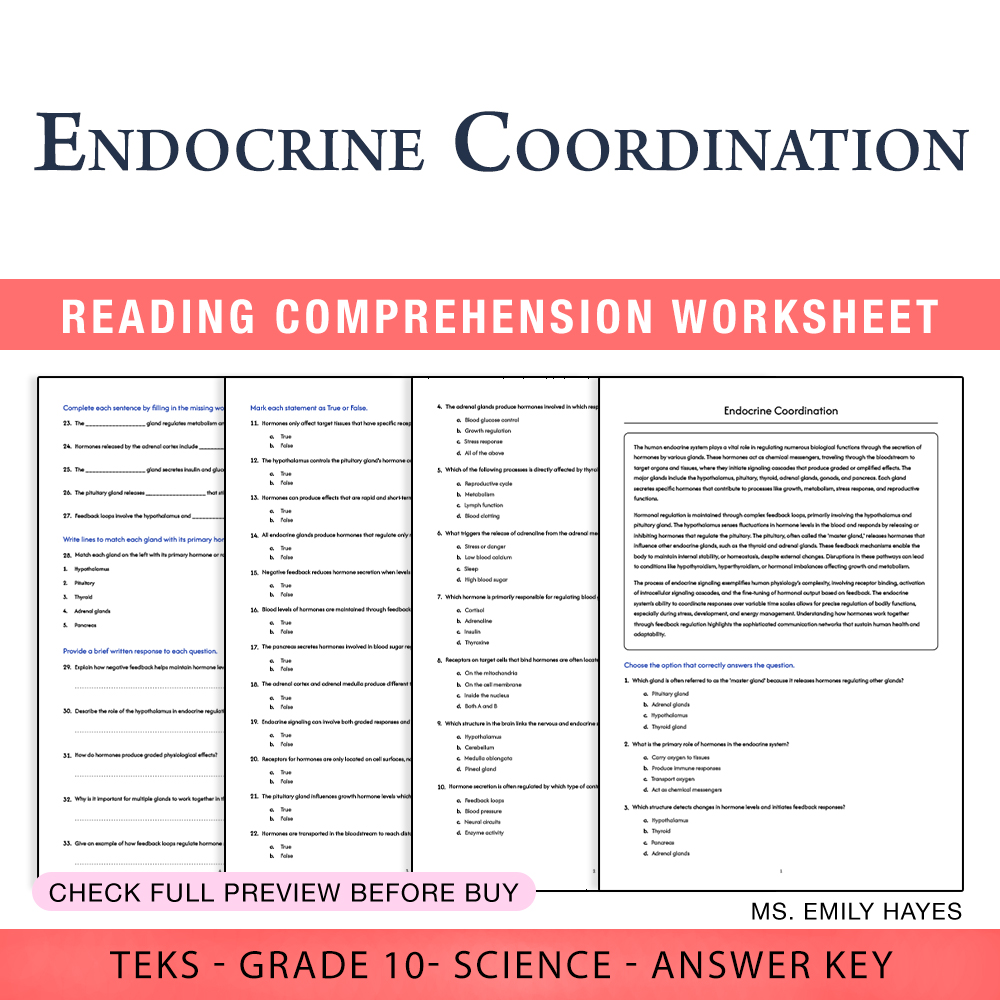
Grade 10 Science | Endocrine Coordination Worksheet (PDF+ Answer Key)
Created byCopper Leaf ClassroomLearning Objectives
- Explain how hormones regulate growth, metabolism, and reproductive processes.
- Describe the feedback mechanisms involving the hypothalamus and pituitary gland.
- Identify different glands involved in endocrine coordination and their functions.
Instant download
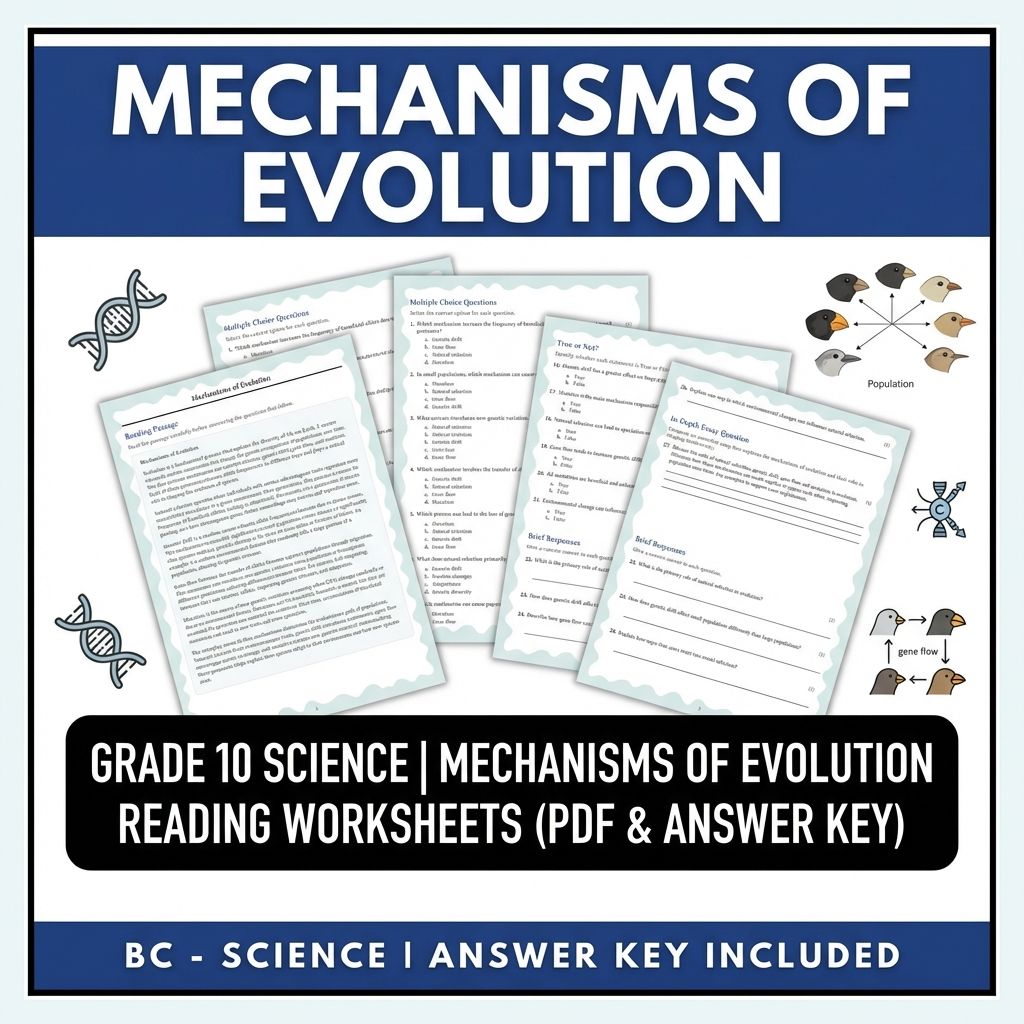
Grade 10 Science | Mechanisms of Evolution Reading Worksheets (PDF & Answer Key)
JCreated byJ.S SheetsLearning Objectives
- Understand the four main mechanisms of evolution: natural selection, genetic drift, gene flow, and mutation.
- Explain how each mechanism alters allele frequencies within populations.
- Describe the role of natural selection in adaptation and reproductive advantage.
Instant download
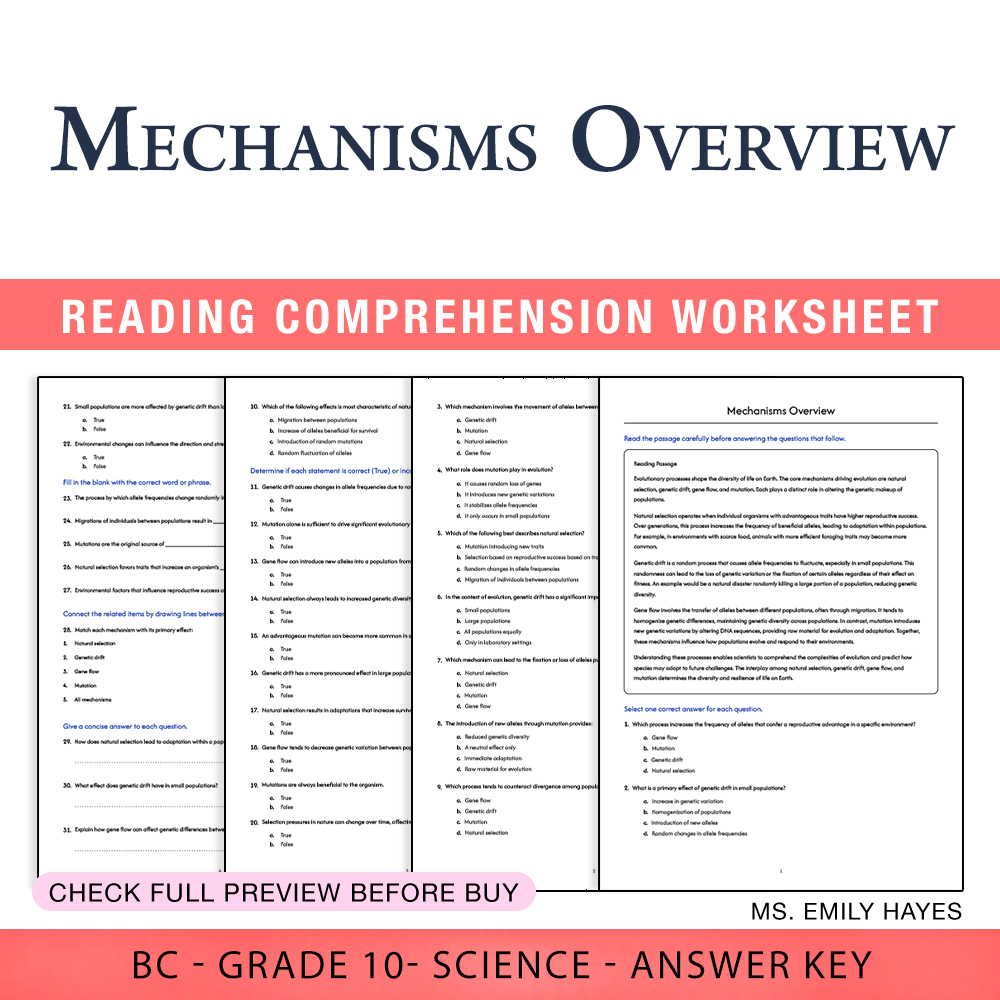
Grade 10 Science | Mechanisms of Evolution Worksheet (PDF+ Answer Key)
Created byCopper Leaf ClassroomLearning Objectives
- Identify and describe the four main mechanisms of evolution: natural selection, genetic drift, gene flow, and mutation.
- Explain how each mechanism influences allele frequencies within populations.
- Analyze the effects of natural selection and genetic drift on population adaptation and variation.
Also included in: Grade 10 Science BC | Evolution, Biodiversity & Ecology (PDF + Answer Key) +1 more
Instant download

Grade 10 Worksheet B: Particle Interactions Practice | NGSS PDF
 Created byClear Sky Classroom
Learning Objectives
- Explain how crystal structure and particle arrangement influence bulk properties such as melting point, solubility, and electrical conductivity.
- Compare ionic, molecular (covalent), and metallic solids using intermolecular/interionic forces (lattice energy, dispersion forces, and hydrogen bonding).
- Relate the strength and type of particle attractions to macroscopic phase transitions and electrical behavior.
Also included in: Grade 10 Reaction Rates & Chemical Change Science Lesson Bundle – NGSS +1 more
Instant download

Grade 10 Worksheet B: Chemical Equilibrium and Le Chatelier’s Principle | NGSS
Created byClear Sky ClassroomLearning Objectives
- Explain chemical equilibrium as a dynamic, rate-balanced process and relate it to measurable outcomes.
- Predict how changes in pressure, concentration, and temperature shift equilibria using Le Chatelier’s principle.
- Interpret the equilibrium constant K as a quantitative description of equilibrium composition at a given temperature.
Also included in: Grade 10 Reaction Rates & Chemical Change Science Lesson Bundle – NGSS +1 more
Instant download

Grade 10 Worksheet B: Reaction Evidence Practice | NGSS PDF
Created byClear Sky ClassroomLearning Objectives
- Explain chemical reaction outcomes using conservation of atoms and atomic rearrangement.
- Connect observable evidence (gas, color, temperature, precipitate) to predicted products.
- Use balanced formulations to support evidence-based claims about reactions.
Also included in: Grade 10 Reaction Rates & Chemical Change Science Lesson Bundle – NGSS +1 more
Instant download

Grade 10 Worksheet B: Mass Conservation in Chemical Reactions Practice | NGSS
Created byClear Sky ClassroomLearning Objectives
- Explain mass conservation using balanced chemical equations and atomic accounting.
- Use coefficients, mole concepts, and molar masses to relate reactant and product amounts.
- Verify that total mass of reactants equals total mass of products by tracking atom counts in examples.
Also included in: Grade 10 Reaction Rates & Chemical Change Science Lesson Bundle – NGSS +1 more
Instant download
Grade 10 Science | Genetic Mutations Practice Worksheet (Answer Key) – TEKS Aligned
Created byBright Mind ResourcesLearning Objectives
- Understand the different types of genetic mutations and their effects on genes and proteins.
- Identify examples of point mutations, insertions, deletions, and chromosomal alterations.
- Explain how mutations can influence phenotype and hereditary disorders.
Also included in: Grade 10 Science | Genetics & DNA Unit Worksheet Pack (TEKS Aligned) +5 more
Instant download
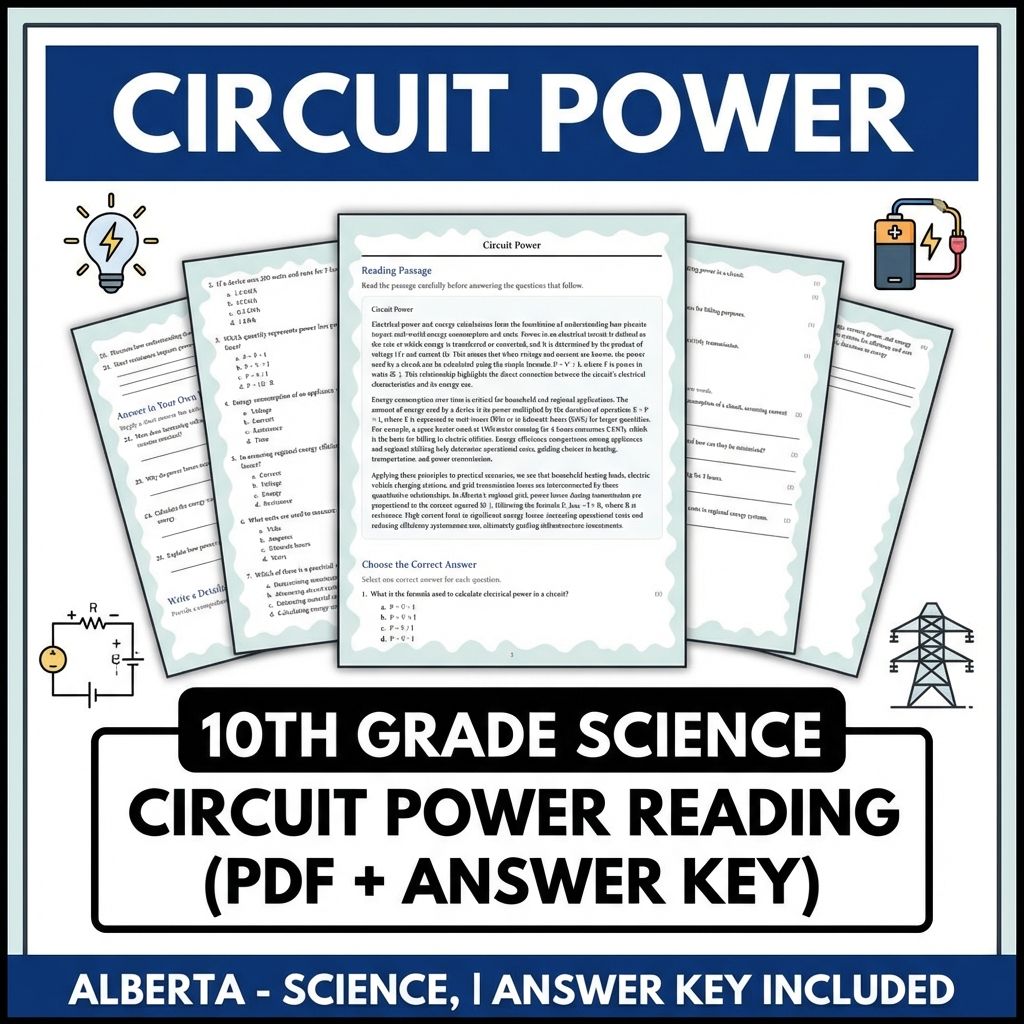
10th Grade Science | Circuit Power Reading Worksheets (PDF + Answer Key)
JCreated byJ.S SheetsLearning Objectives
- Define electrical power in terms of voltage and current.
- Explain how energy consumption relates to circuit quantities over time.
- Apply power and energy calculations to household and regional electrical scenarios.
Also included in: Grade 10 Science Bundle | Energy, Circuits & Mechanics (Answer Keys Included) +1 more
Instant download
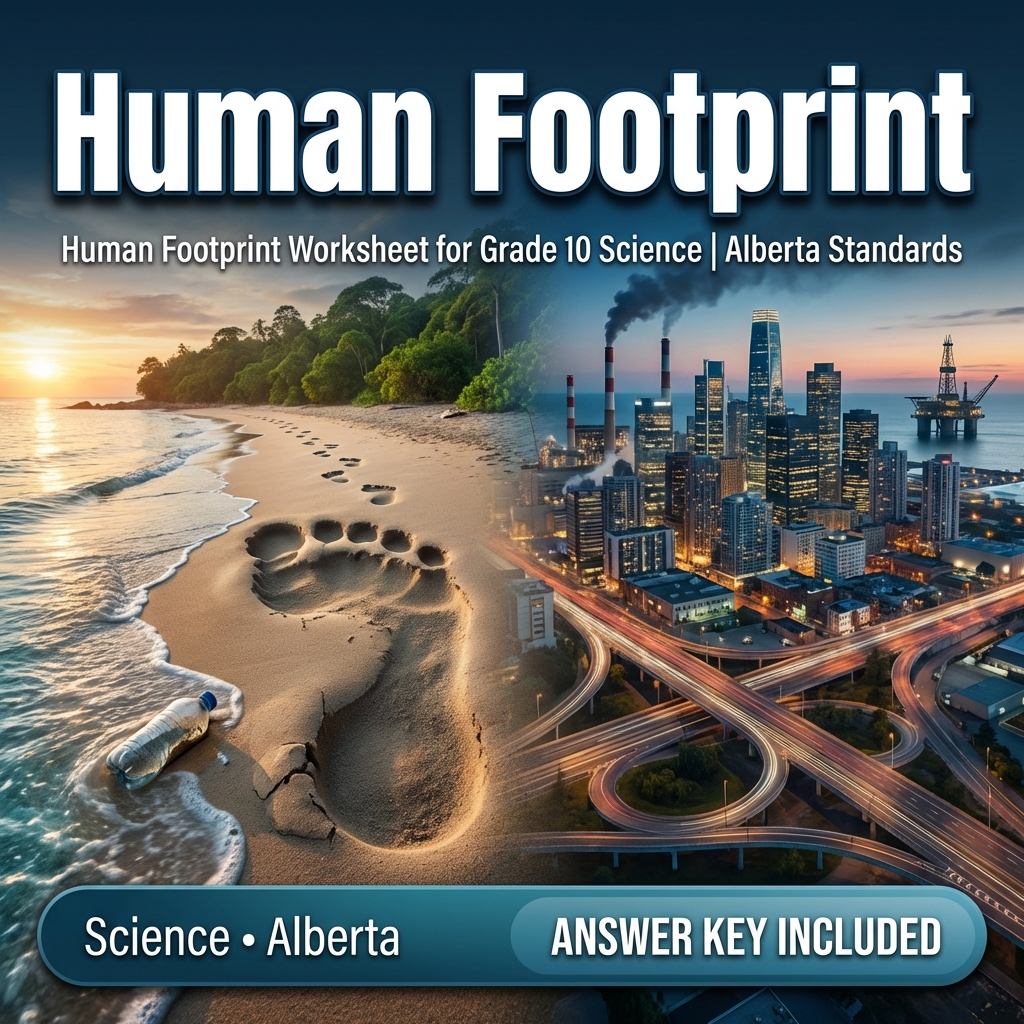
Human Footprint Worksheet for Grade 10 Science | Alberta Standards
Created byCoral Reef LearningLearning Objectives
- Understand how human activities impact Earth systems including land, water, and atmosphere.
- Identify regional examples of land-use change and resource extraction effects.
- Evaluate the long-term environmental consequences of urban expansion and resource development.
Instant download
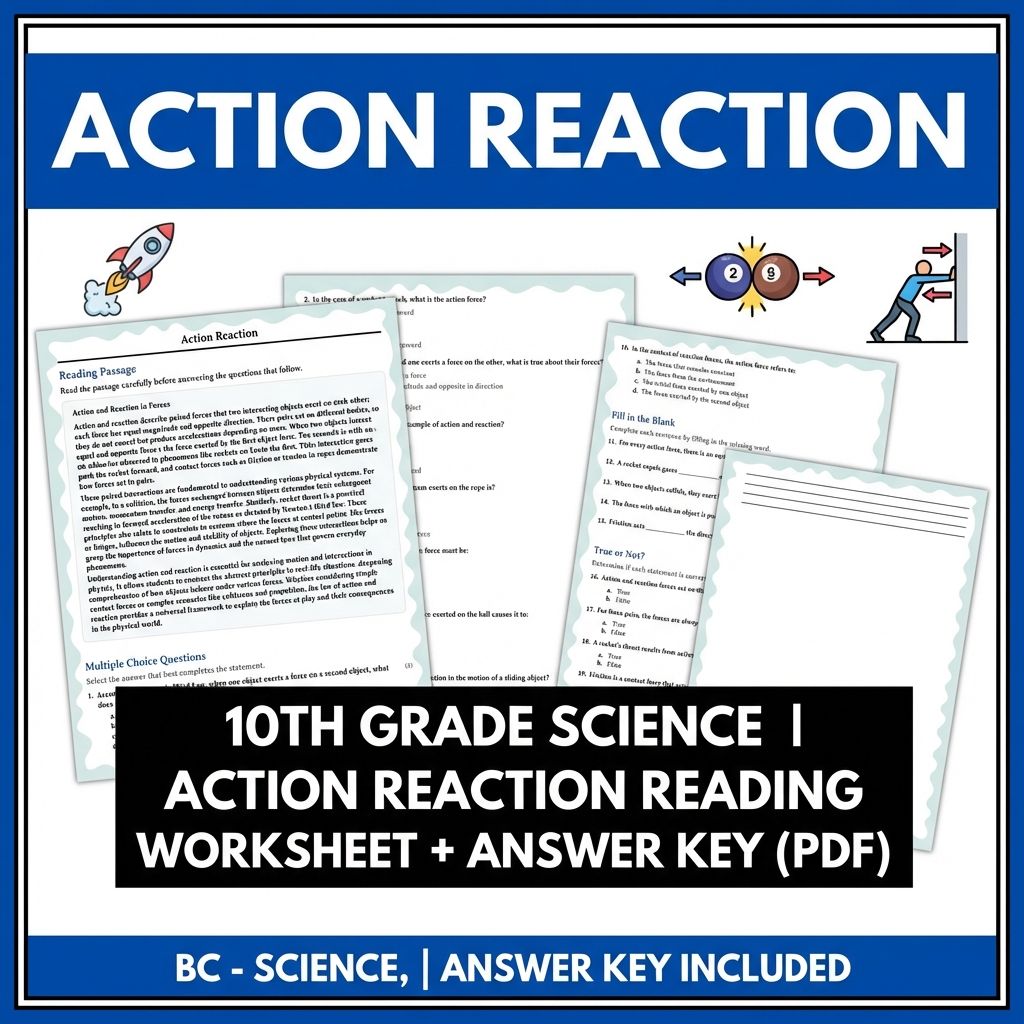
10th Grade Science | Action Reaction Reading Worksheet + Answer Key (PDF)
JCreated byJ.S SheetsLearning Objectives
- Explain the concept of paired forces in action and reaction.
- Describe how equal and opposite forces affect different objects.
- Analyze real-world examples like collisions and rocket thrust using Newton's Third Law.
Instant download
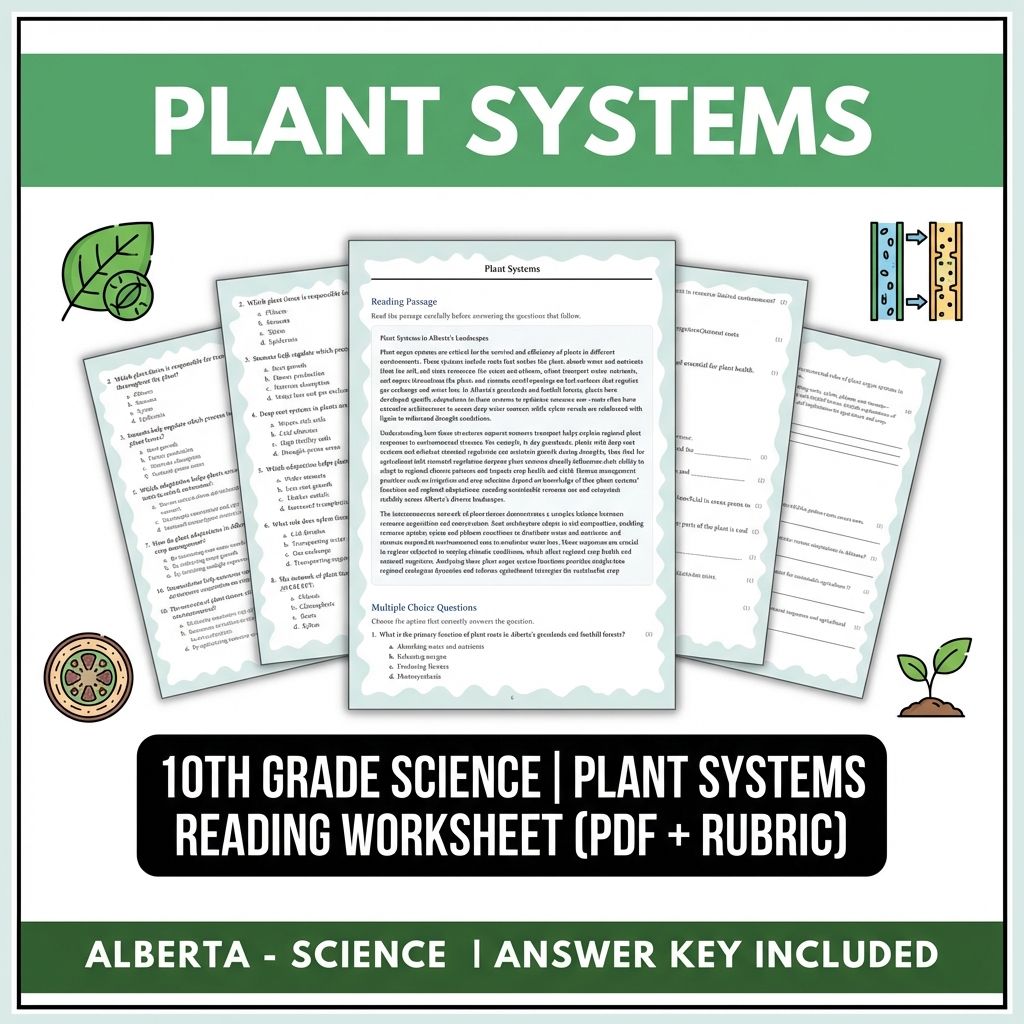
10th Grade Science | Plant Systems Reading Worksheet (PDF + Rubric)
JCreated byJ.S SheetsLearning Objectives
- Describe the structure and function of plant organ systems in water, nutrient, and resource transport.
- Explain how plant adaptations for resource acquisition vary in Alberta's grasslands and foothill forests.
- Identify the roles of roots, xylem, phloem, and stomata in plant water and nutrient movement.
Also included in: Grade 10 Science | Cell Systems, Energy, & Homeostasis (Standards-Aligned) +1 more
Instant download
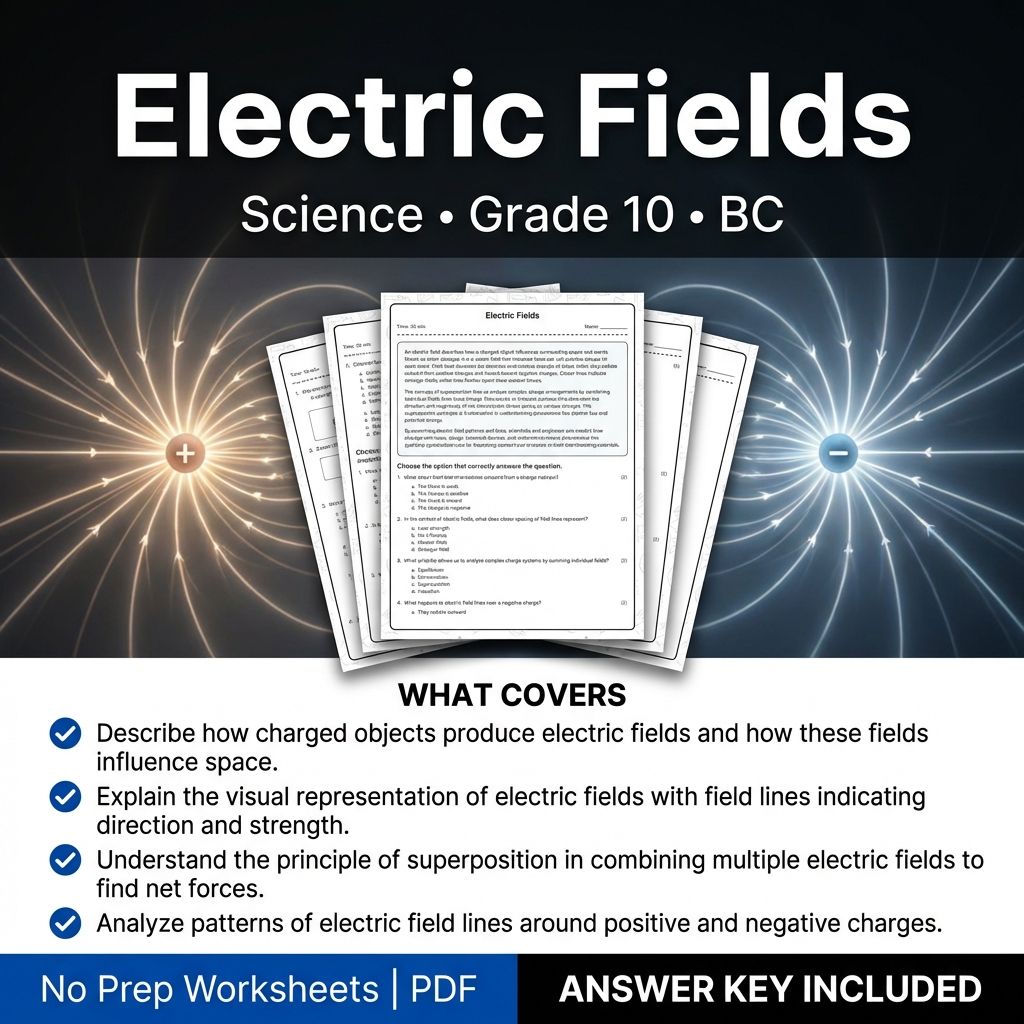
10th Grade Science | Electric Fields Worksheet with Answer Key (Printable PDF)
Created byCoral Reef LearningLearning Objectives
- Describe how charged objects produce electric fields and how these fields influence space.
- Explain the visual representation of electric fields with field lines indicating direction and strength.
- Understand the principle of superposition in combining multiple electric fields to find net forces.
Instant download

10th Grade Science | Impulse and Momentum Worksheet (PDF+ Answer Key)
Created byCopper Leaf ClassroomLearning Objectives
- Explain the concept of impulse and how it relates to change in momentum.
- Understand the conservation of momentum in isolated collisions.
- Differentiate between elastic, inelastic, and perfectly inelastic collisions.
Also included in: Grade 10 Science AP | Physics & Energy Concepts (PDF+ Answer Key) +1 more
Instant download
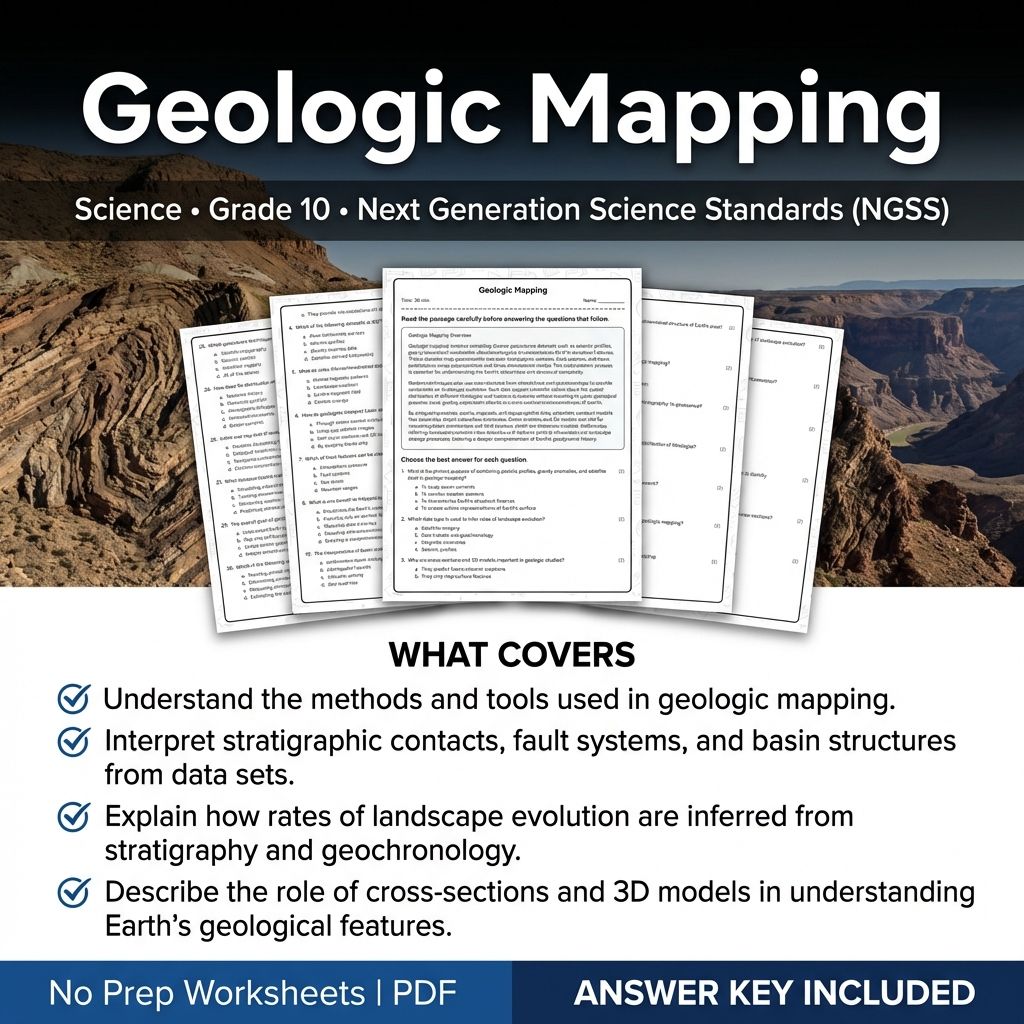
10th Grade Science | Geologic Mapping Worksheet & Answer Key (Printable PDF)
Created byCoral Reef LearningLearning Objectives
- Understand the methods and tools used in geologic mapping.
- Interpret stratigraphic contacts, fault systems, and basin structures from data sets.
- Explain how rates of landscape evolution are inferred from stratigraphy and geochronology.
Also included in: Grade 10 Science Unit Bundle – Earth's Surface Atmosphere & Geology Worksheets +1 more
Instant download
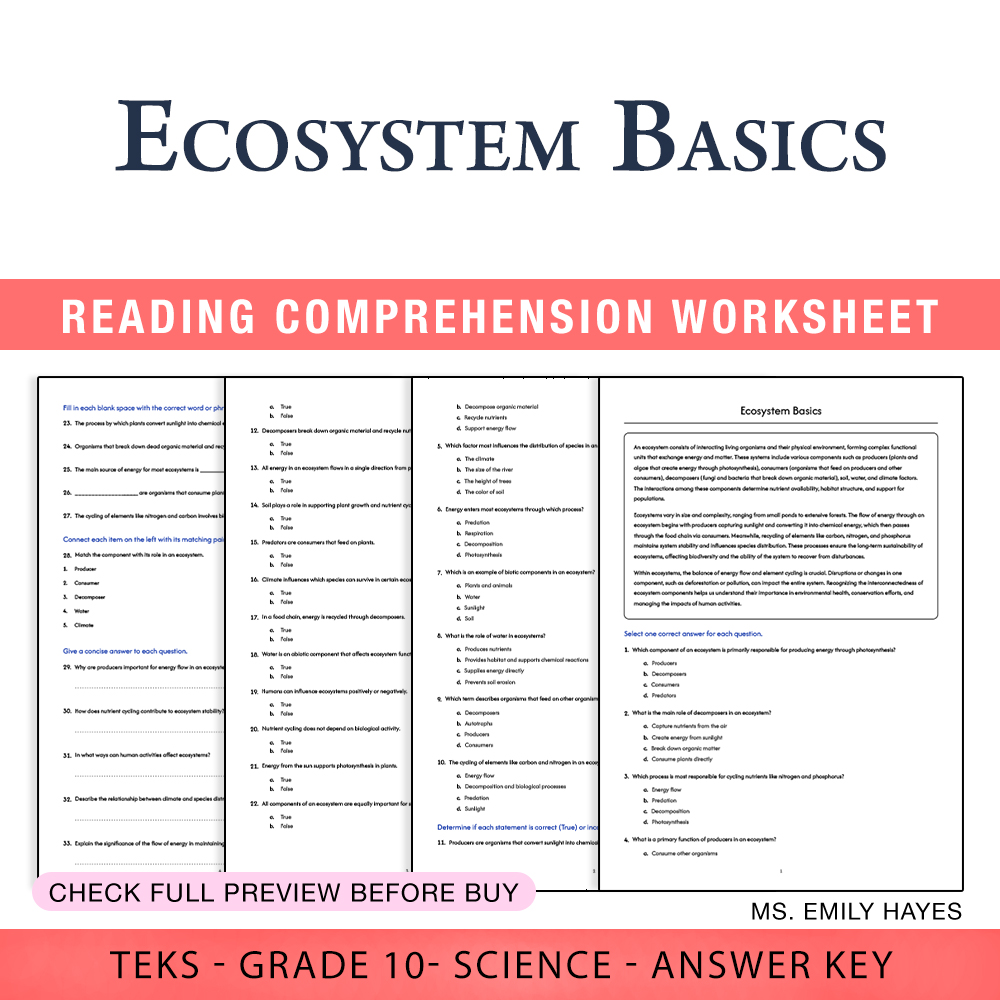
10th Grade Science | Ecosystem Basics Worksheet (PDF+ Answer Key)
Created byCopper Leaf ClassroomLearning Objectives
- Define and describe the components of an ecosystem.
- Explain the interactions among producers, consumers, decomposers, and the environment.
- Identify the flow of energy and cycling of elements within different ecosystems.
Instant download
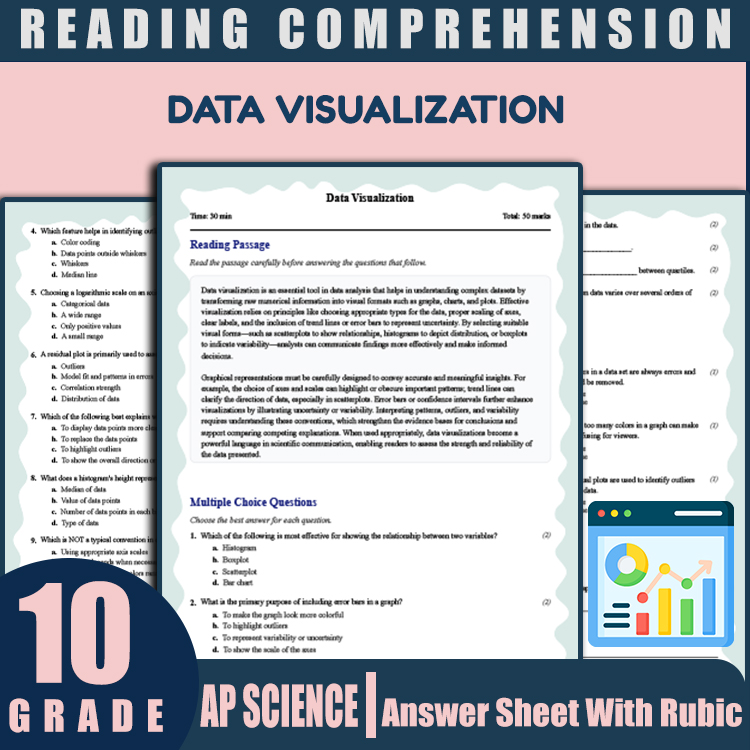
Grade 10 Science | Data Visualization Reading Worksheet (PDF + Rubric)
JCreated byJ.S SheetsLearning Objectives
- Understand principles and conventions of graphical and tabular data representation.
- Identify different types of data visualizations such as scatterplots, histograms, and boxplots.
- Interpret data patterns, variability, outliers, and assess the strength of evidence from visualizations.
Also included in: Grade 10 Science Unit Worksheet Pack – Data Analysis & Scientific Reasoning +1 more
Instant download
Browse more categories
About Grade 10 Worksheets
Find Grade 10 worksheets covering algebra, biology, literature, and history. All 9,385 resources download instantly as PDFs for classwork, homework, or review.
MyTeachingSheets worksheets are made by real teacher-authors and checked before they go live. Download any as a print-ready PDF for lessons, homework, or independent practice — most include answer keys, and previews are always free.