
Reading comprehension Worksheets
40,241 type resources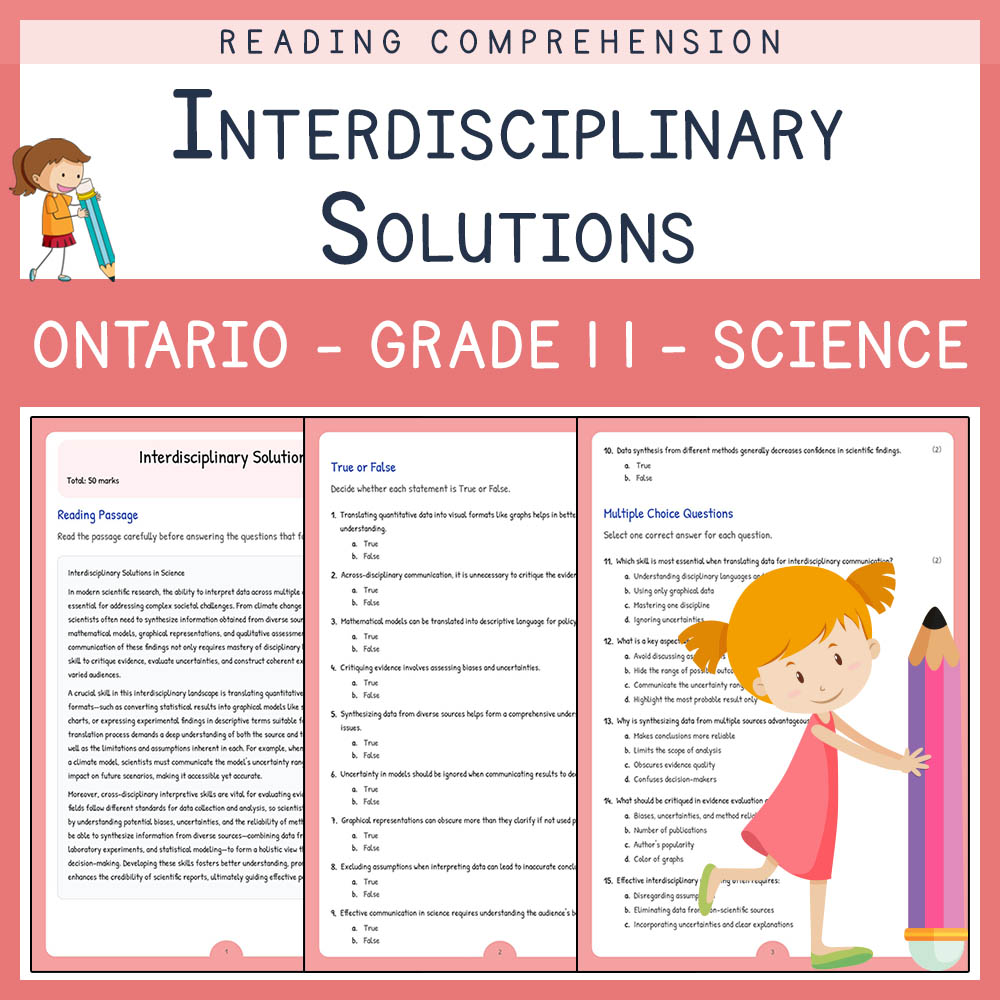
Grade 11 Science | Interdisciplinary Solutions Worksheet | Ontario Assessment
 Created byLumora Learning
Learning Objectives
- Interpret and communicate scientific information through various graphical, mathematical, and structured formats.
- Translate quantitative findings between different disciplinary languages while critiquing evidence quality.
- Construct clear, discipline-appropriate explanations that incorporate uncertainty and assumptions in scientific contexts.
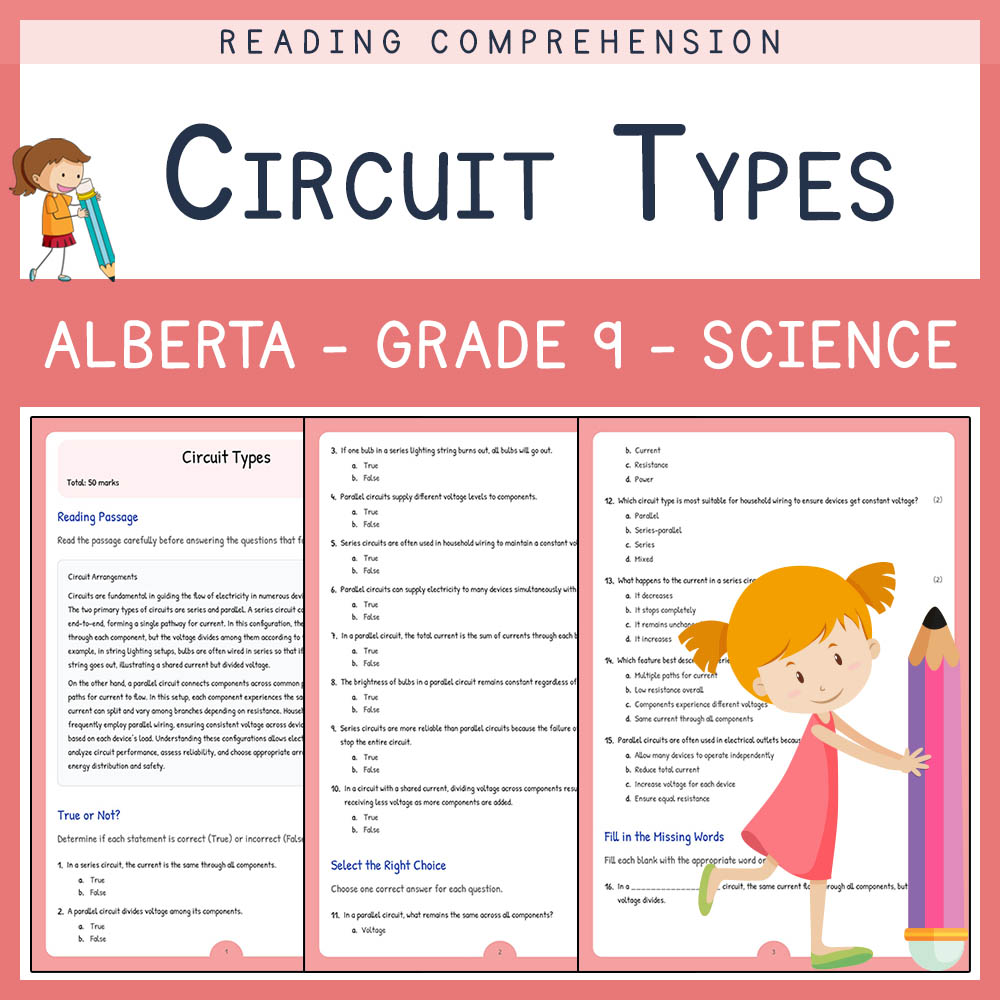
Grade 9 Science | Circuit Types Worksheet Elena | Alberta Standards
Created byLumora LearningLearning Objectives
- Understand the difference between series and parallel circuits.
- Identify circuit behavior based on component arrangements.
- Explain how current and voltage behave in series and parallel circuits.
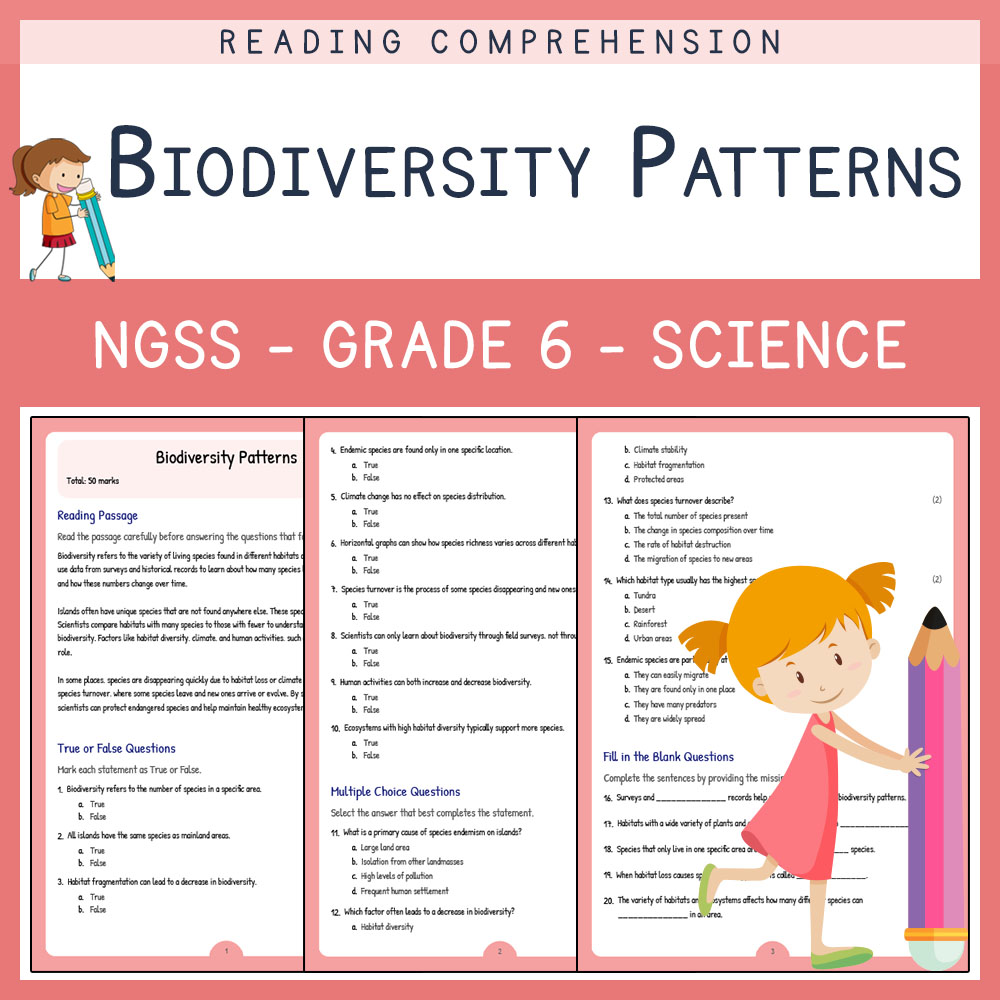
Grade 6 Science | Biodiversity Patterns Worksheet (PDF) | NGSS Aligned
Created byLumora LearningLearning Objectives
- Understand how species occurrence varies across different ecosystems
- Identify factors that influence biodiversity and species richness
- Analyze data displays related to biodiversity patterns
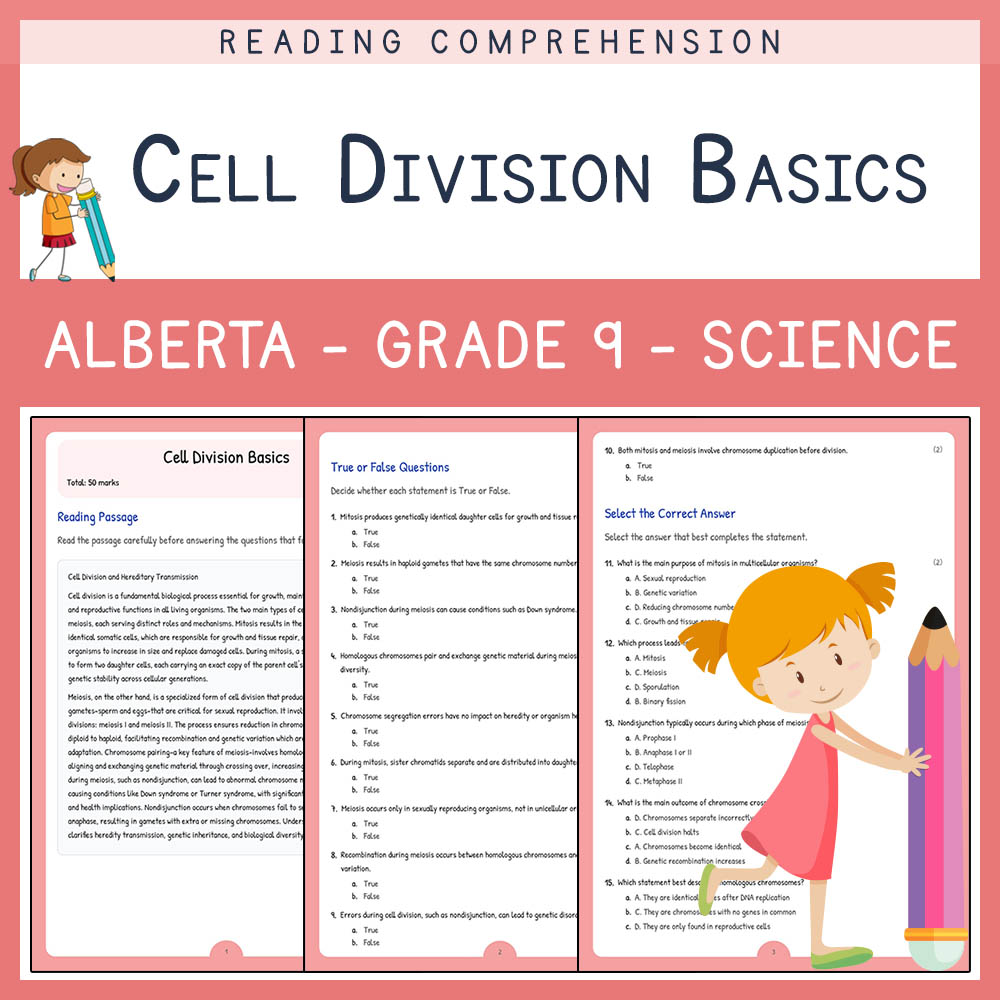
Grade 9 Science | Cell Division Basics Worksheet | Alberta Standards
Created byLumora LearningLearning Objectives
- Understand the roles of mitosis and meiosis in growth, repair, and reproduction.
- Describe the processes of chromosome pairing, segregation, and potential errors such as nondisjunction.
- Explain how heredity transmission and variation are influenced by cell division mechanisms.
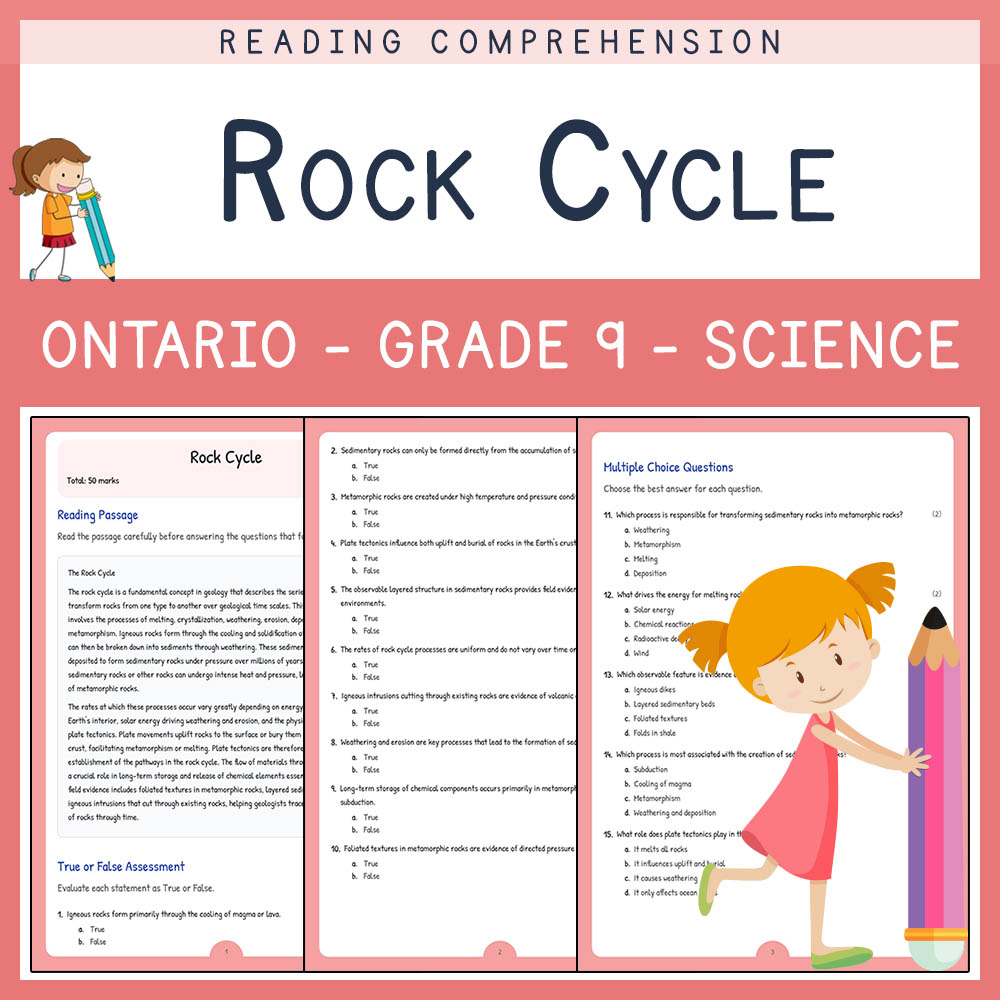
Grade 9 Science Assessment | Rock Cycle Worksheet Elena | Ontario Standard
Created byLumora LearningLearning Objectives
- Understand the interconnected processes involved in the rock cycle.
- Identify the different types of rocks and their formation pathways.
- Explain the role of plate tectonics and energy sources in rock transformations.

Grade 9 Science | Redox Concepts Worksheet | BC Standards
Created byLumora LearningLearning Objectives
- Explain the fundamental principles of oxidation and reduction in chemical reactions.
- Identify electron transfer events and changes in oxidation states during redox reactions.
- Track oxidation state changes to determine oxidizing and reducing agents in chemical equations.
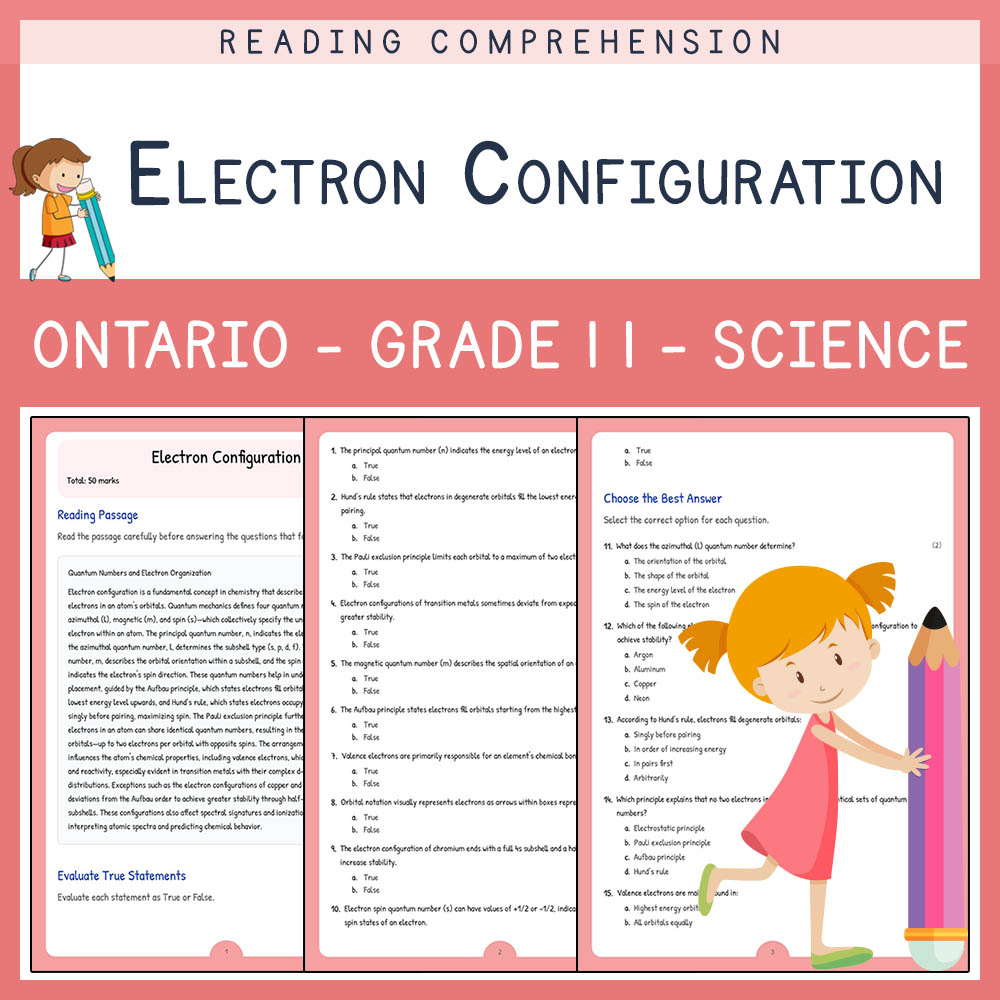
Grade 11 Science | Electron Configuration Worksheet Elena | Ontario Standard
Created byLumora LearningLearning Objectives
- Understand the organization of electrons in atoms according to quantum numbers, shells, and subshells.
- Explain the principles of Aufbau order, Hund’s rule, and Pauli exclusion principle in electron filling.
- Connect electron configuration patterns with valence structures and predict chemical behavior.
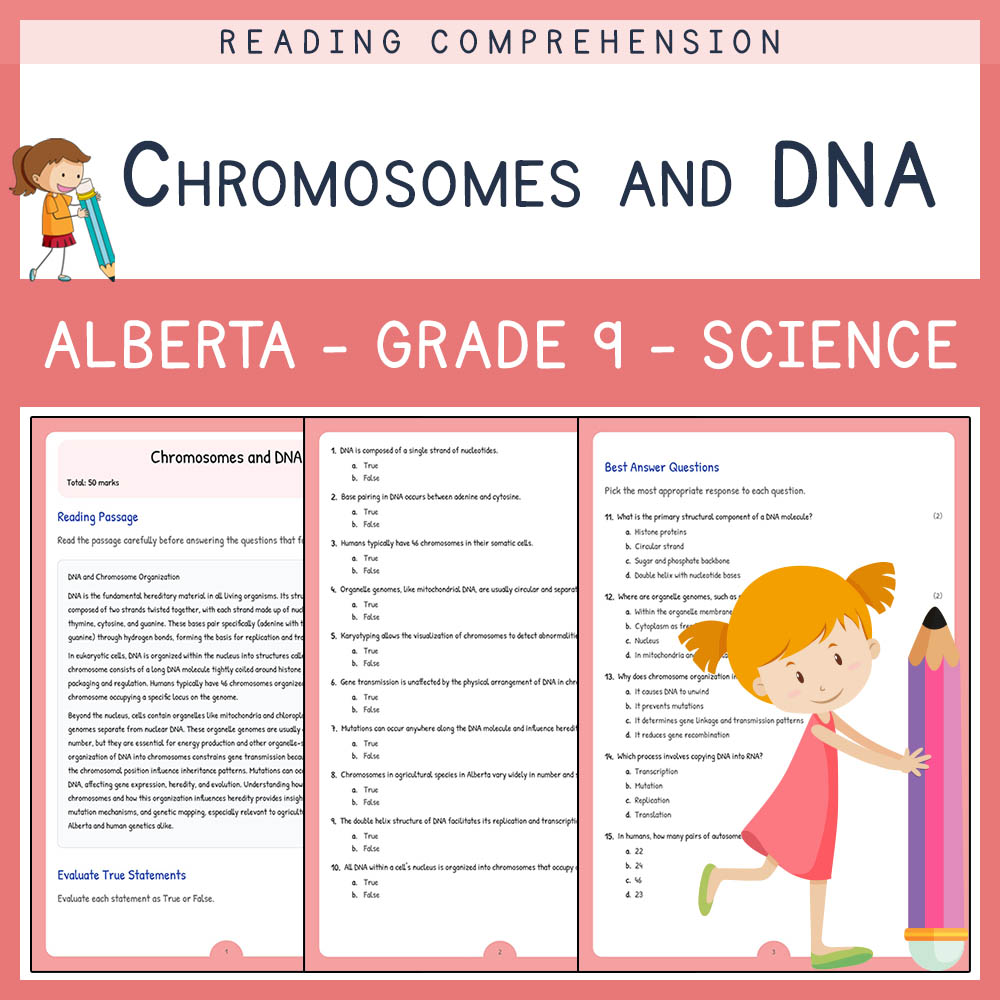
Grade 9 Science | Chromosomes and DNA Worksheet | Alberta Standards
Created byLumora LearningLearning Objectives
- Explain the structure and function of DNA and chromosomes.
- Describe how genetic material is organized within cells.
- Distinguish between nuclear and organelle genomes.

Grade 11 Science | Stoichiometric Calculations Worksheet | BC-Aligned
Created byLumora LearningLearning Objectives
- Understand and perform mole-to-mole, mass-to-mass, and mass-to-mole conversions using molar masses and balanced equations.
- Identify limiting reagents and calculate the theoretical and actual yields in chemical reactions.
- Apply conservation of mass principles through stoichiometric analysis in various chemical processes.

Grade 11 Science | Thermochemistry Worksheet | BC-Aligned
Created byLumora LearningLearning Objectives
- Explain energy changes during chemical reactions in terms of enthalpy and bond energies.
- Calculate reaction enthalpy changes using standard enthalpies of formation and Hess’s law.
- Differentiate between endothermic and exothermic reactions based on enthalpy changes.

Grade 11 Science | Fossil Evidence Worksheet | TEKS-Aligned
Created byLumora LearningLearning Objectives
- Understand how fossil evidence records morphological change over geological time.
- Explain the methods used to determine the age of fossils, including stratigraphy and radiometric dating.
- Identify features of transitional forms and their significance in evolution.

Grade 11 Science | Natural Selection Worksheet | TEKS-Aligned
Created byLumora LearningLearning Objectives
- Understand the mechanisms of natural selection and how they influence evolution.
- Identify different modes of selection and their effects on traits within populations.
- Recognize examples of natural selection, such as antibiotic resistance and camouflage.
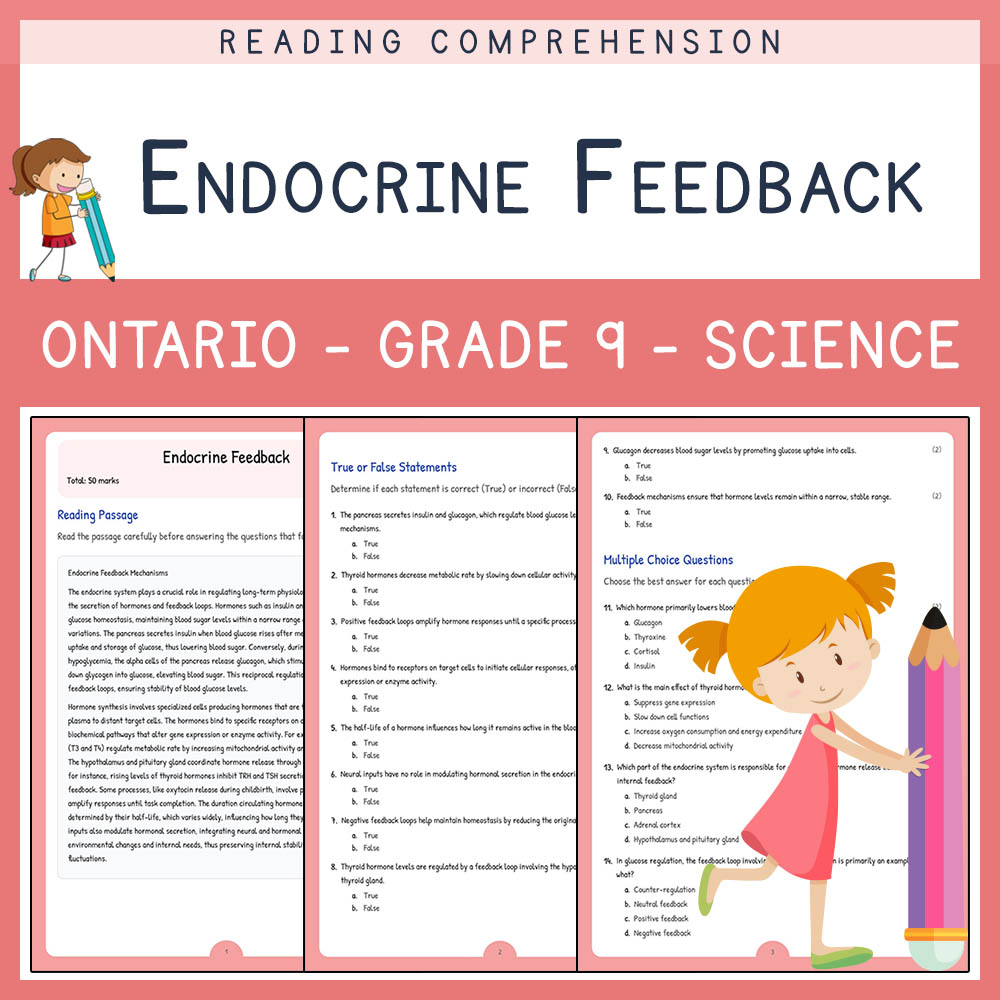
Grade 9 Science | Endocrine Feedback Worksheet | Ontario Standard
Created byLumora LearningLearning Objectives
- Understand the role of hormonal feedback mechanisms in maintaining homeostasis.
- Explain how insulin and glucagon regulate blood glucose levels via negative feedback loops.
- Describe the thyroid gland's control of metabolic rate through hormonal regulation.
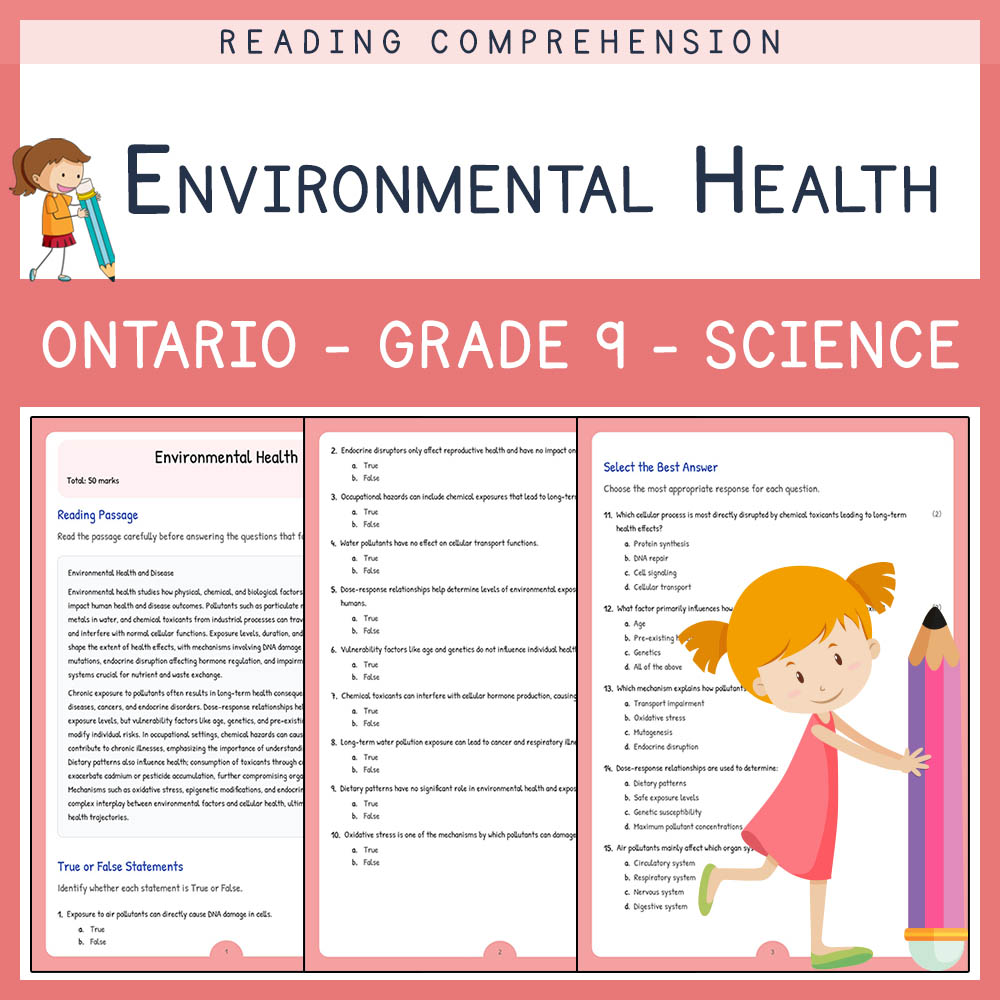
Grade 9 Science | Environmental Health Worksheet Elena | Ontario Standards
Created byLumora LearningLearning Objectives
- Understand how environmental exposures influence cellular processes and long-term health.
- Identify types of pollutants and hazards affecting human health.
- Describe mechanisms by which pollutants cause DNA damage, endocrine disruption, and transport impairment.

Grade 9 Science | Communicating Uncertainty Worksheet | AP Alignment
Created byLumora LearningLearning Objectives
- Understand conventions for conveying quantitative uncertainty in scientific reports.
- Identify different methods such as interval estimates, effect sizes, and likelihood statements.
- Recognize visualizations that portray variability and their interpretation.

Grade 9 Science | Simulated Predictions Worksheet | AP Aligned
Created byLumora LearningLearning Objectives
- Explain how simple computational simulations generate predictions based on hypothesized mechanisms.
- Describe the role of parameter sensitivity and scenario comparison in modeling.
- Understand how ensembles and visualizations represent uncertainty in forecasts.
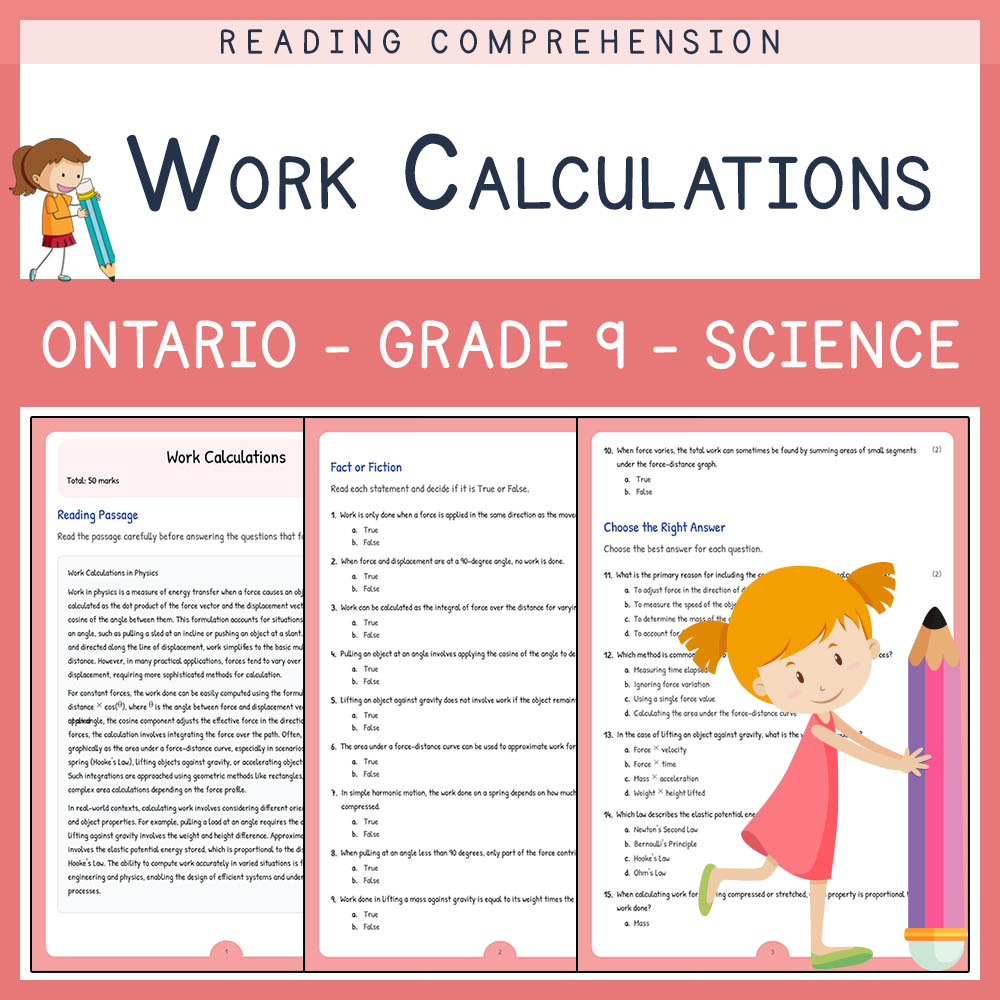
Grade 9 Science Assessment | Work Calculations Worksheet | Ontario Standard
Created byLumora LearningLearning Objectives
- Understand the concept of work as the dot product of force and displacement, including the role of the cosine of the angle between them.
- Calculate work done by constant forces at an angle, including lifting against gravity and pulling objects.
- Compare methods for calculating work when forces vary, including using the area under force–distance curves in common approximations.
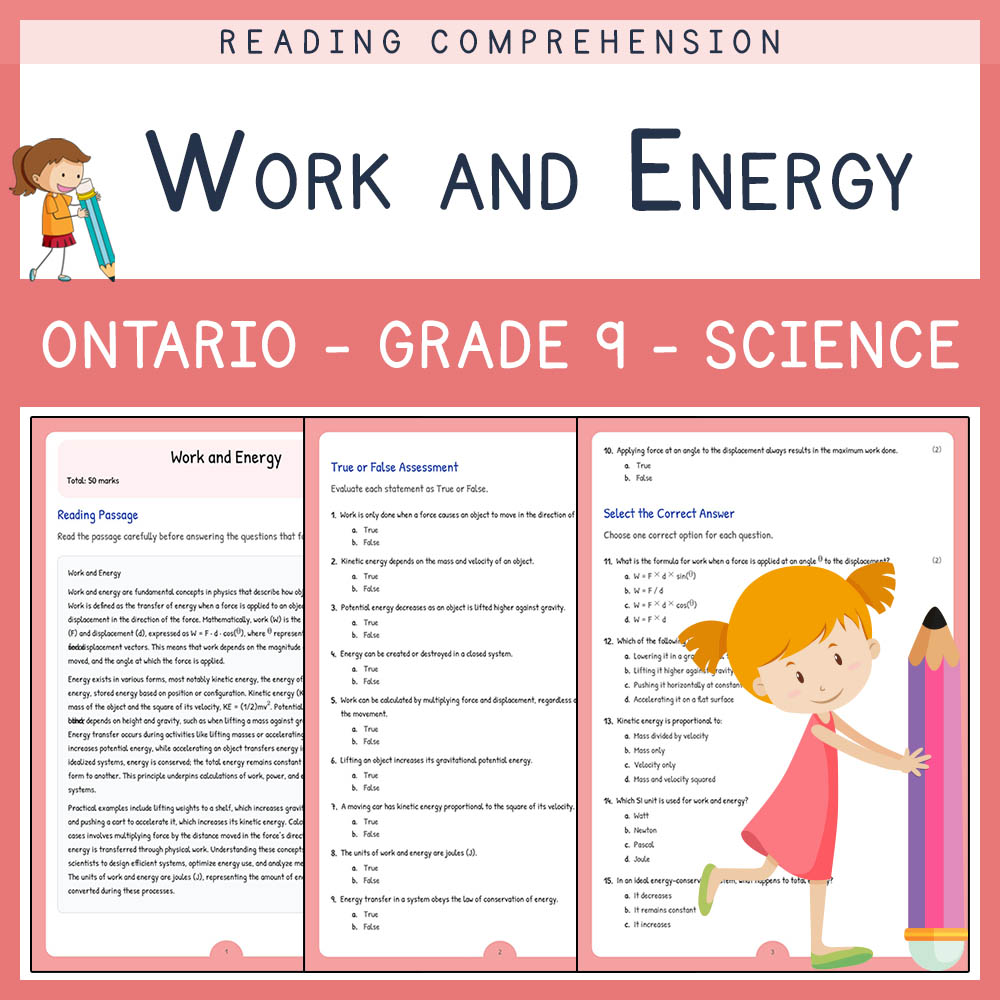
Grade 9 Science Assessment | Work and Energy Worksheet Elena | Ontario Standard
Created byLumora LearningLearning Objectives
- Define and distinguish between work, kinetic energy, and potential energy
- Understand the calculation of work for constant forces
- Explain energy transfer in mechanical systems such as lifting and accelerating objects
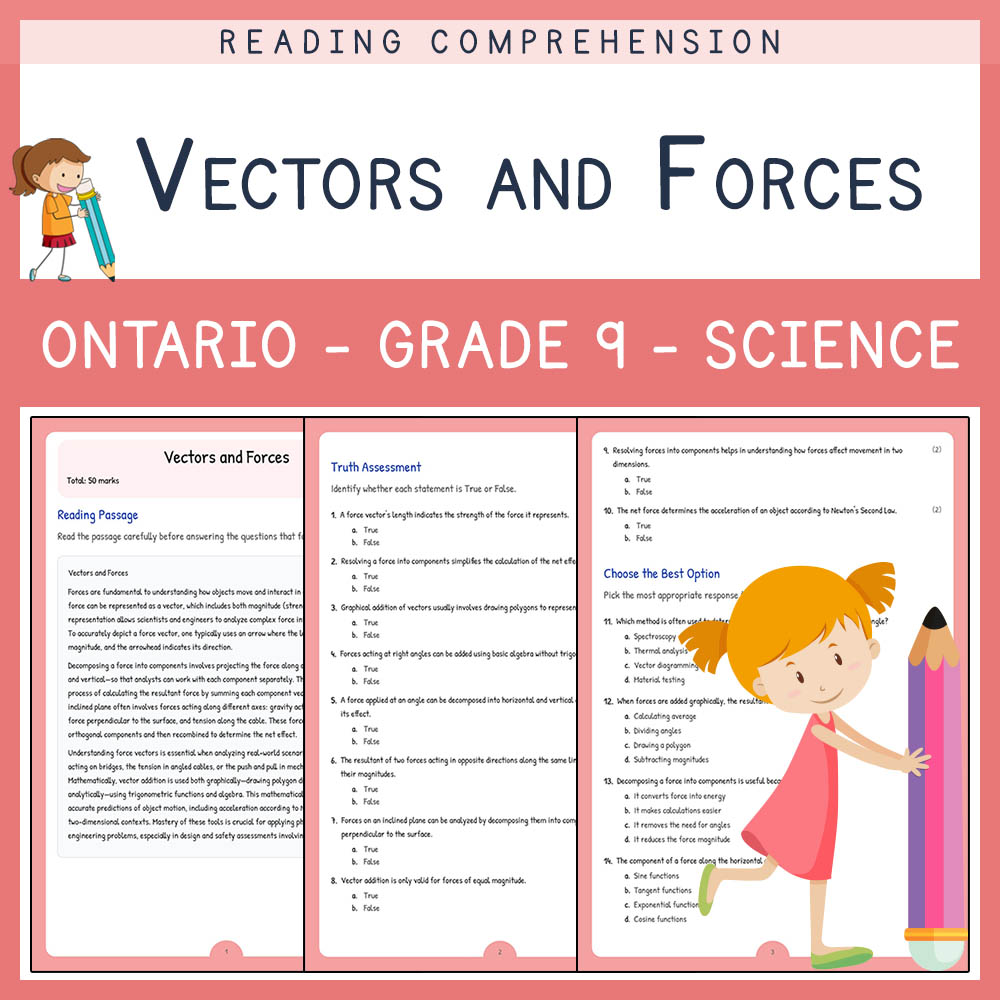
Grade 9 Science | Vectors and Forces Worksheet Elena | Ontario Standard
Created byLumora LearningLearning Objectives
- Understand the representation of forces as vectors including magnitude and direction.
- Learn to decompose forces into components and compute resultant forces graphically and analytically.
- Apply vector addition to force interactions in two-dimensional contexts such as inclined planes and angled cables.
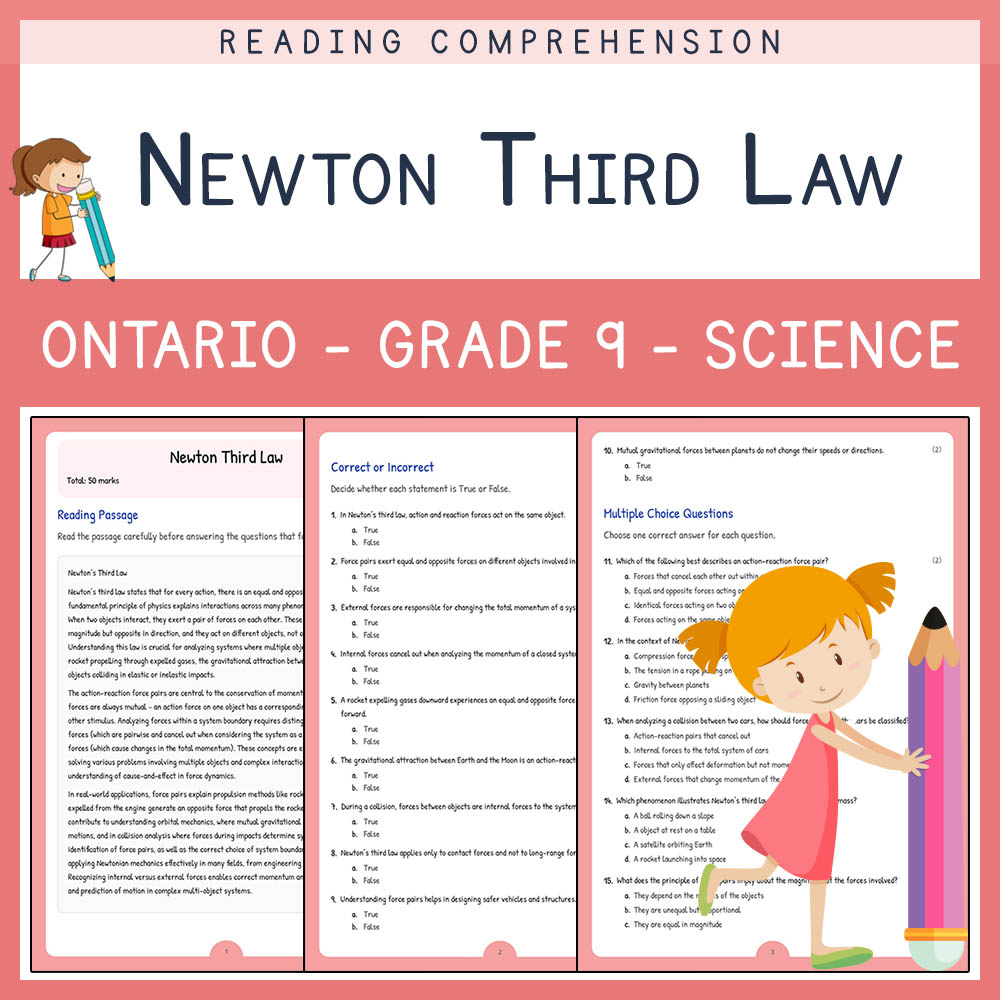
Grade 9 Science Assessment | Newton Third Law Worksheet Elena | Ontario
Created byLumora LearningLearning Objectives
- Understand the concept of action–reaction force pairs in Newton's third law.
- Identify equal magnitude and opposite direction forces in various interactions.
- Analyze phenomena such as propulsion, gravitational attraction, and collisions through force pairs.
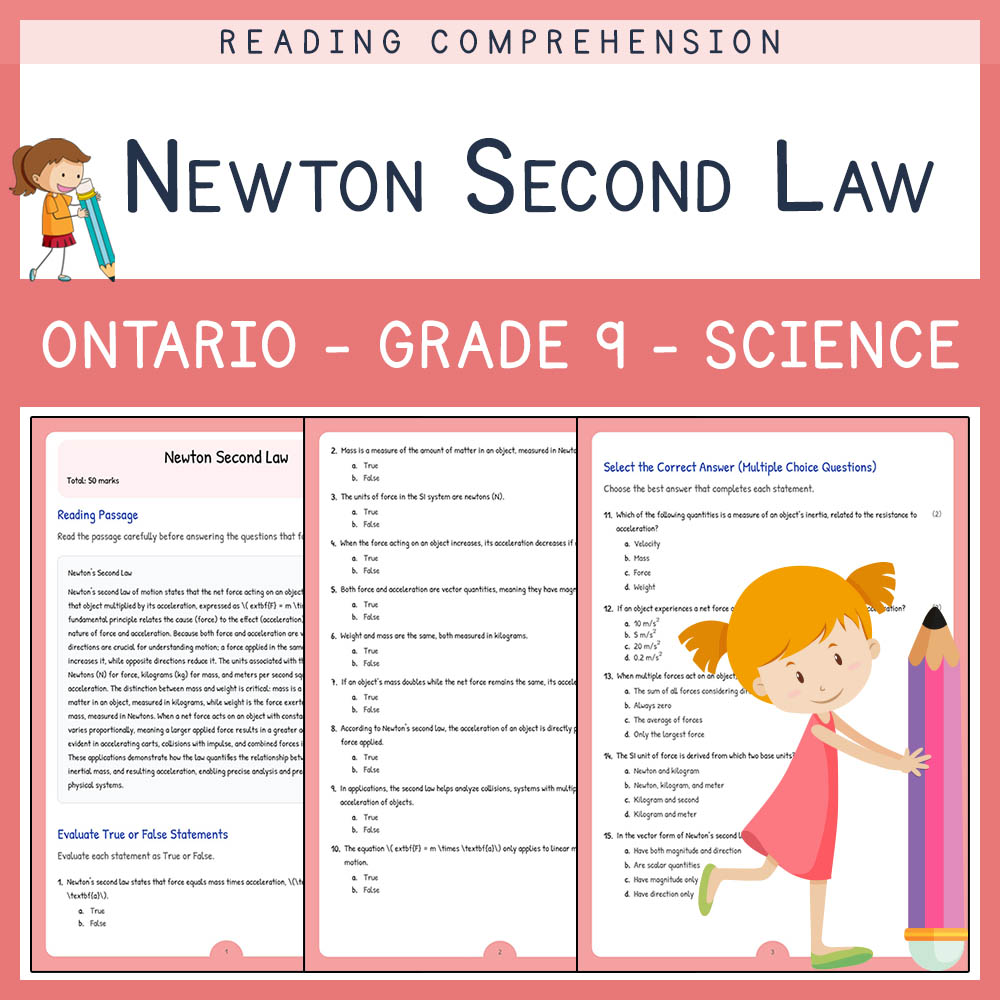
Grade 9 Science Assessment | Newton Second Law Worksheet | Ontario
Created byLumora LearningLearning Objectives
- Explain Newton's second law and its formula relating force, mass, and acceleration.
- Differentiate between mass and weight and understand their units.
- Apply the principle of vector quantities in force and acceleration analysis.
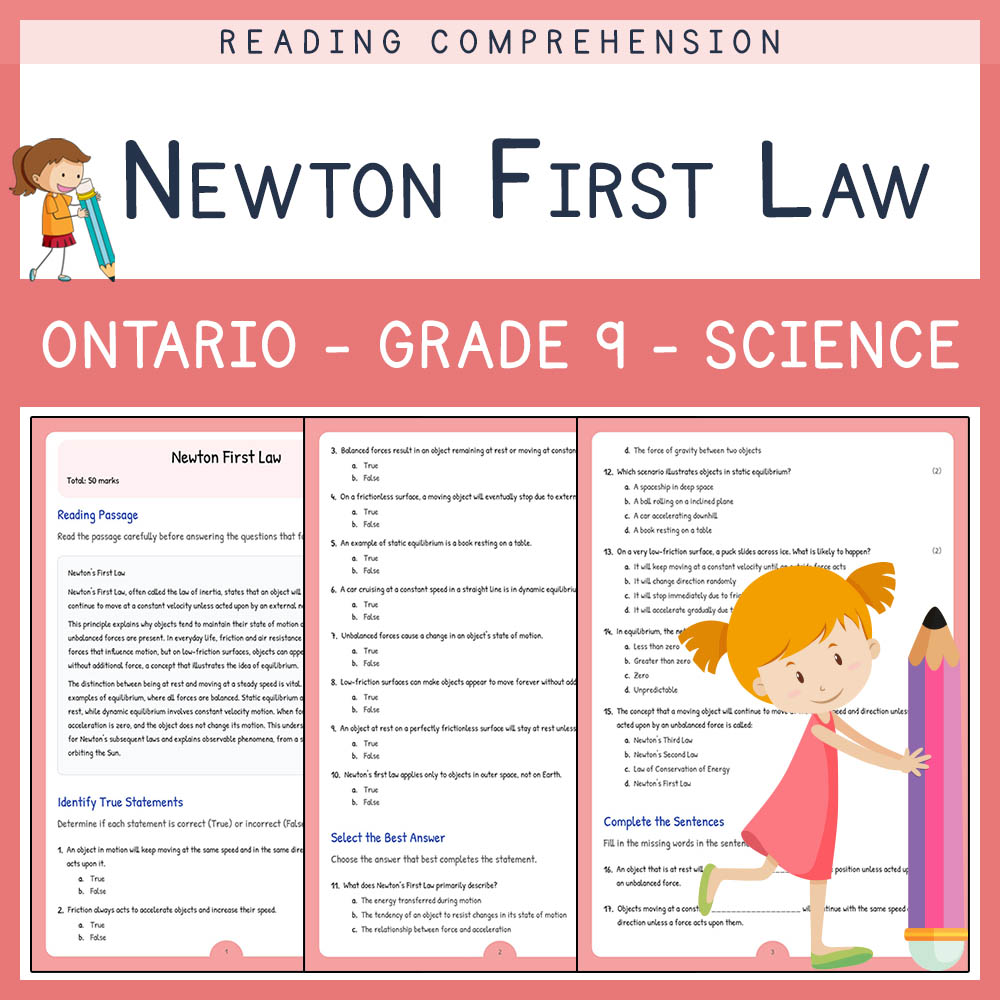
Grade 9 Science | Newton First Law Worksheet Elena | Ontario Standard
Created byLumora LearningLearning Objectives
- Explain Newton's First Law as a statement about inertia and the relationship between net external force and motion.
- Differentiate between objects at rest and those moving at constant velocity.
- Describe the role of balanced forces in static and dynamic equilibrium.
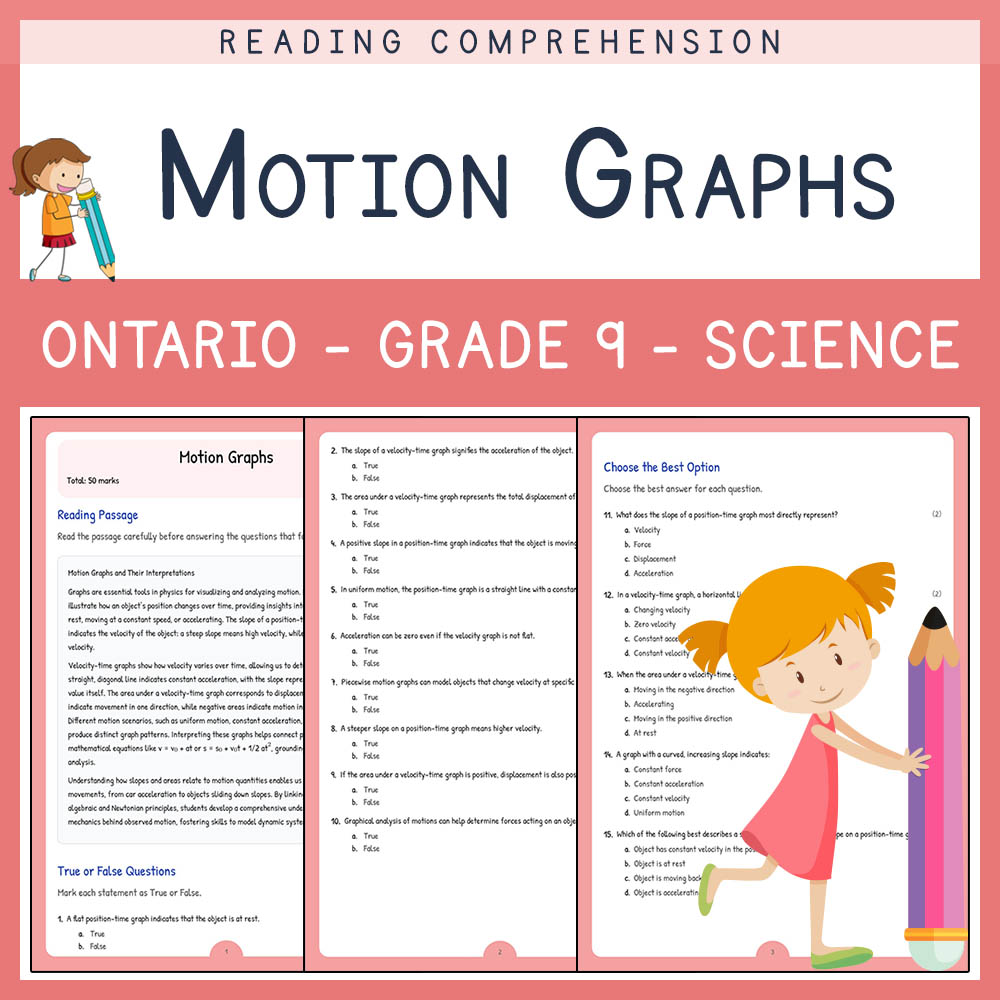
Grade 9 Science Assessment | Motion Graphs Worksheet Elena | Ontario Standard
Created byLumora LearningLearning Objectives
- Interpret position–time and velocity–time graphs in various motion scenarios.
- Understand how slopes of graphs relate to physical quantities like velocity and acceleration.
- Calculate displacement from areas under velocity–time graphs.
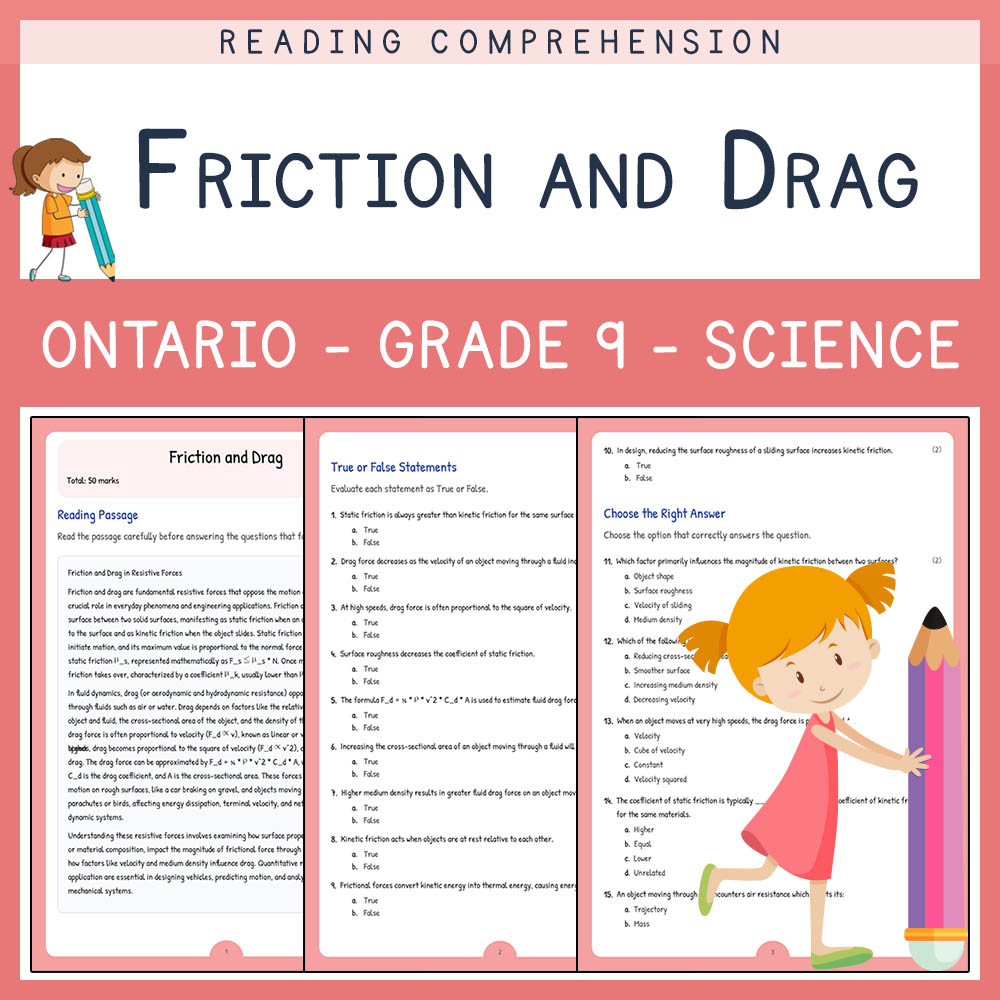
Grade 9 Science | Friction and Drag Worksheet Elena | Ontario Standard
Created byLumora LearningLearning Objectives
- Explain the differences between static and kinetic friction and how surface properties affect them.
- Describe the role of fluid drag and how it depends on velocity, surface area, and medium density.
- Apply quantitative relations involving μ coefficients and drag dependencies to real-world motion scenarios.

Grade 11 Science | Species Interactions Worksheet | TEKS-Aligned
Created byLumora LearningLearning Objectives
- Understand different types of species interactions including competition, predation, mutualism, and parasitism.
- Identify how abiotic factors influence species interactions and community structure.
- Describe trophic interactions and their effects through top-down and bottom-up processes.

Grade 11 Science | Boundary Types Worksheet | BC-Aligned
Created byLumora LearningLearning Objectives
- Describe the different types of plate boundaries and their features.
- Explain how divergent, convergent, and transform boundaries contribute to tectonic activity and landform development.
- Connect global seismic and volcanic distributions to plate boundary locations.
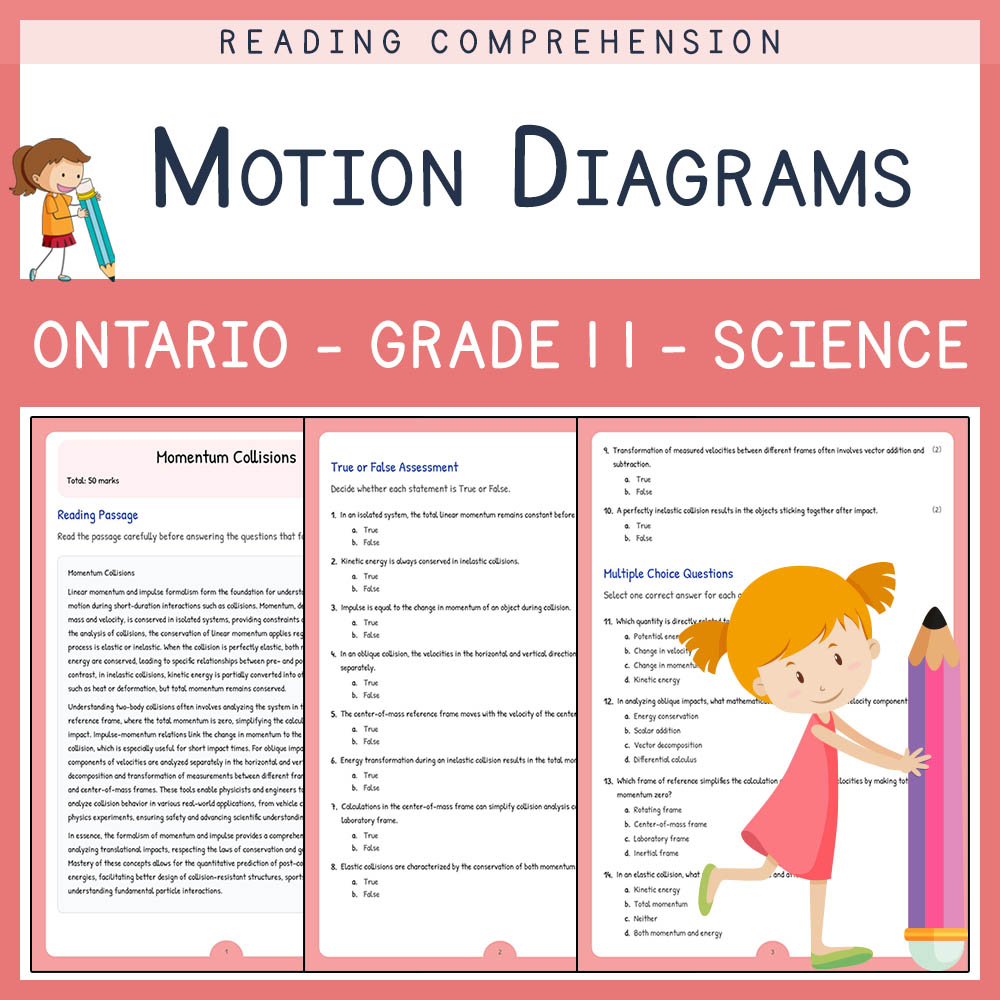
Grade 11 Science | Motion Diagrams Worksheet Elena | Ontario Standard
Created byLumora LearningLearning Objectives
- Understand how position, velocity, and acceleration are represented through motion diagrams and kinematic graphs.
- Interpret position–time and velocity–time plots to determine displacement, velocity, and acceleration.
- Apply SI units and kinematic equations for uniform acceleration in straight-line and two-dimensional motion.
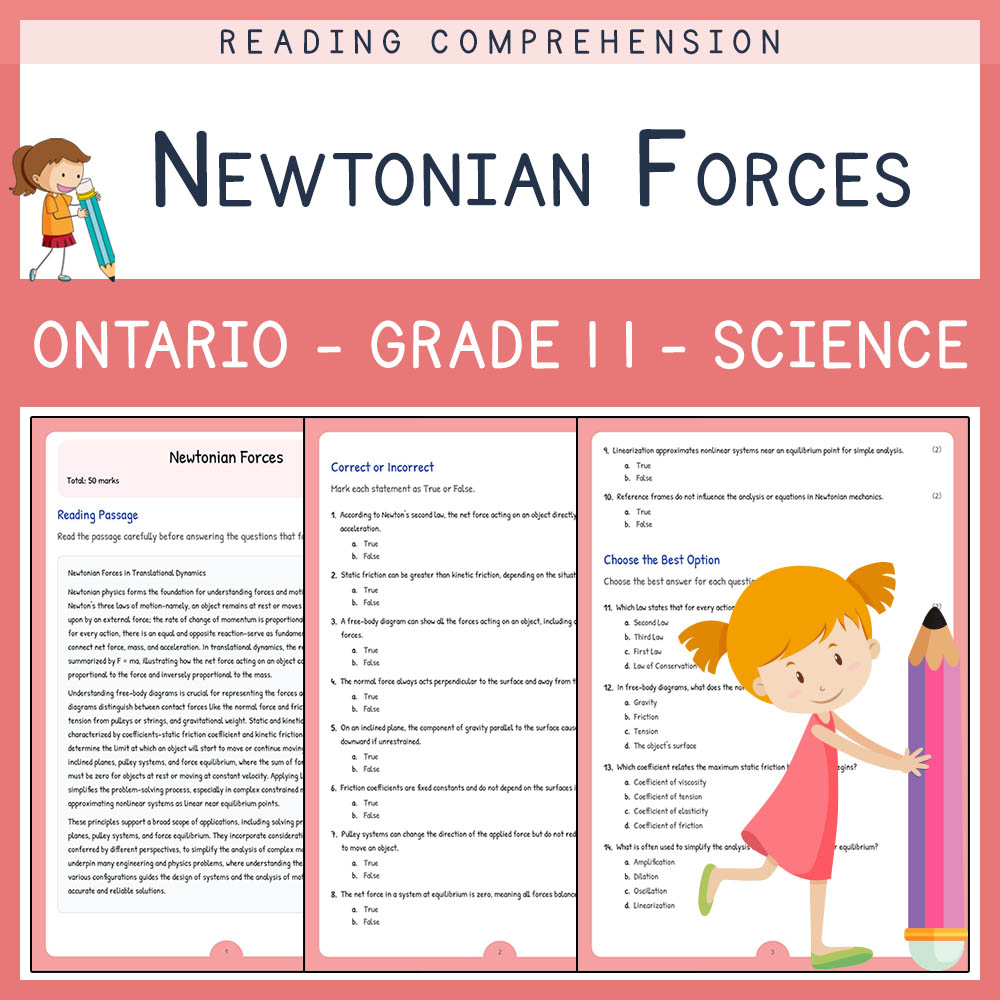
Grade 11 Science Assessment | Newtonian Forces Worksheet Elena | Ontario
Created byLumora LearningLearning Objectives
- Understand the application of Newton's three laws to translational dynamics and net force.
- Identify and interpret free-body diagrams including contact forces, normal and frictional components, tension, and weight.
- Analyze static and kinetic friction and the conditions governing impending motion on inclined planes and pulleys.
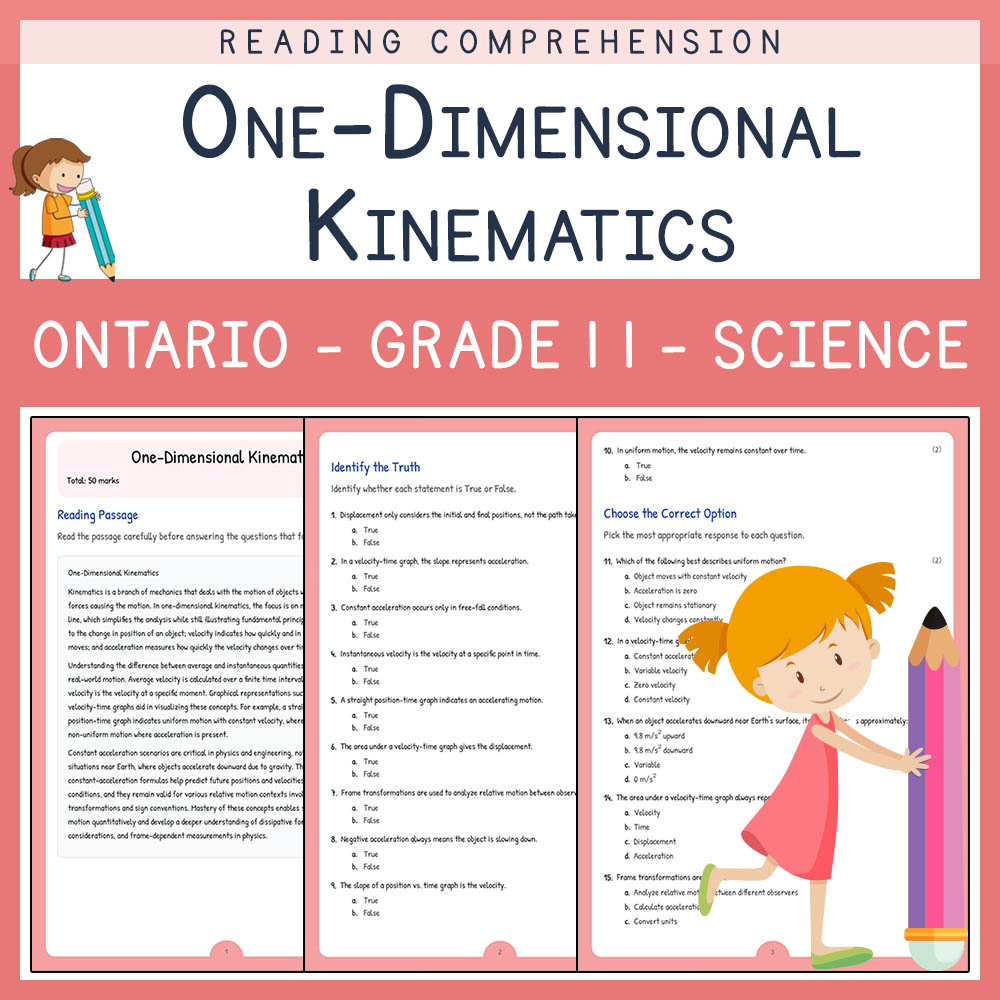
Grade 11 Science | One-Dimensional Kinematics Worksheet Elena | Ontario
Created byLumora LearningLearning Objectives
- Comprehend the concepts of displacement, velocity, and acceleration as functions of time.
- Distinguish between uniform and non-uniform motion using algebraic and graphical methods.
- Apply constant-acceleration formulas to real-world problems including free-fall and relative motion scenarios.
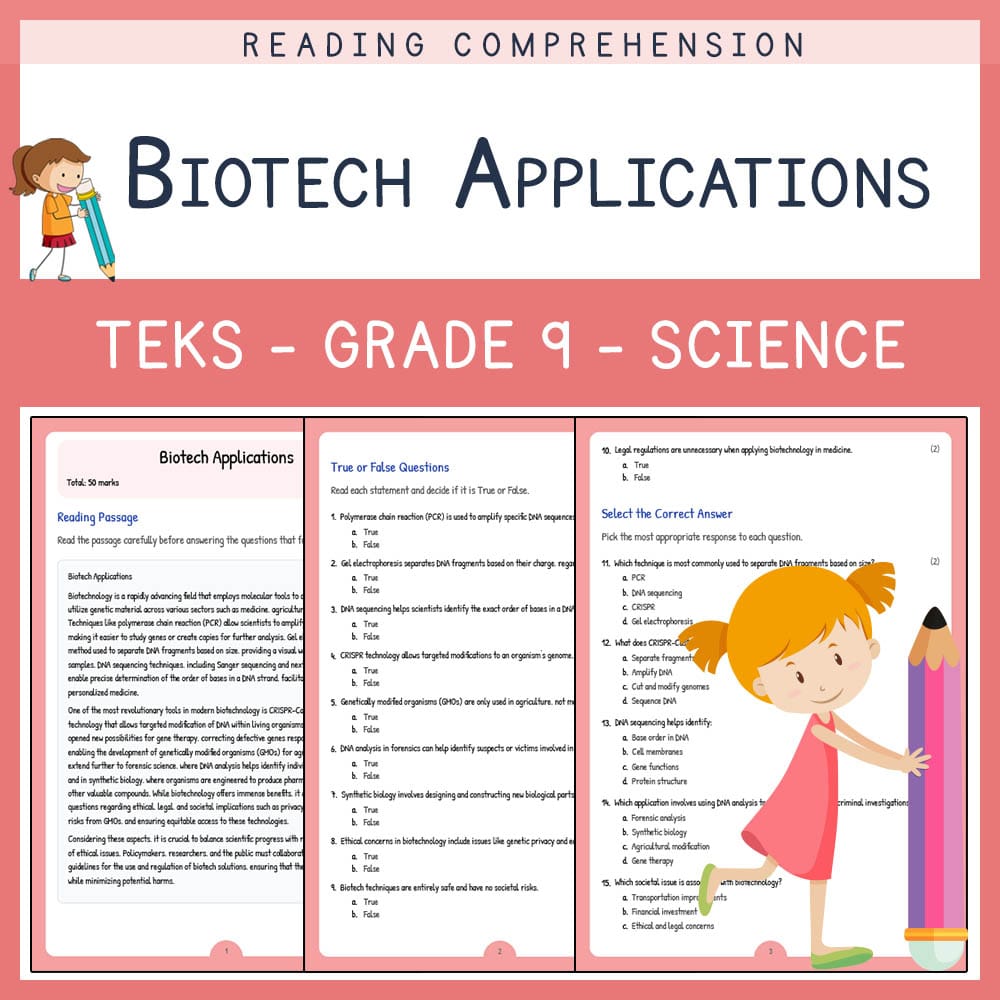
Grade 9 Science | Biotech Applications Worksheet | TEKS Aligned
Created byLumora LearningLearning Objectives
- Explain key molecular techniques used in biotechnology such as PCR, gel electrophoresis, DNA sequencing, and CRISPR genome editing.
- Identify various applications of biotechnology in research, medicine, agriculture, and forensics.
- Discuss ethical, legal, and societal considerations associated with biotechnological advancements.
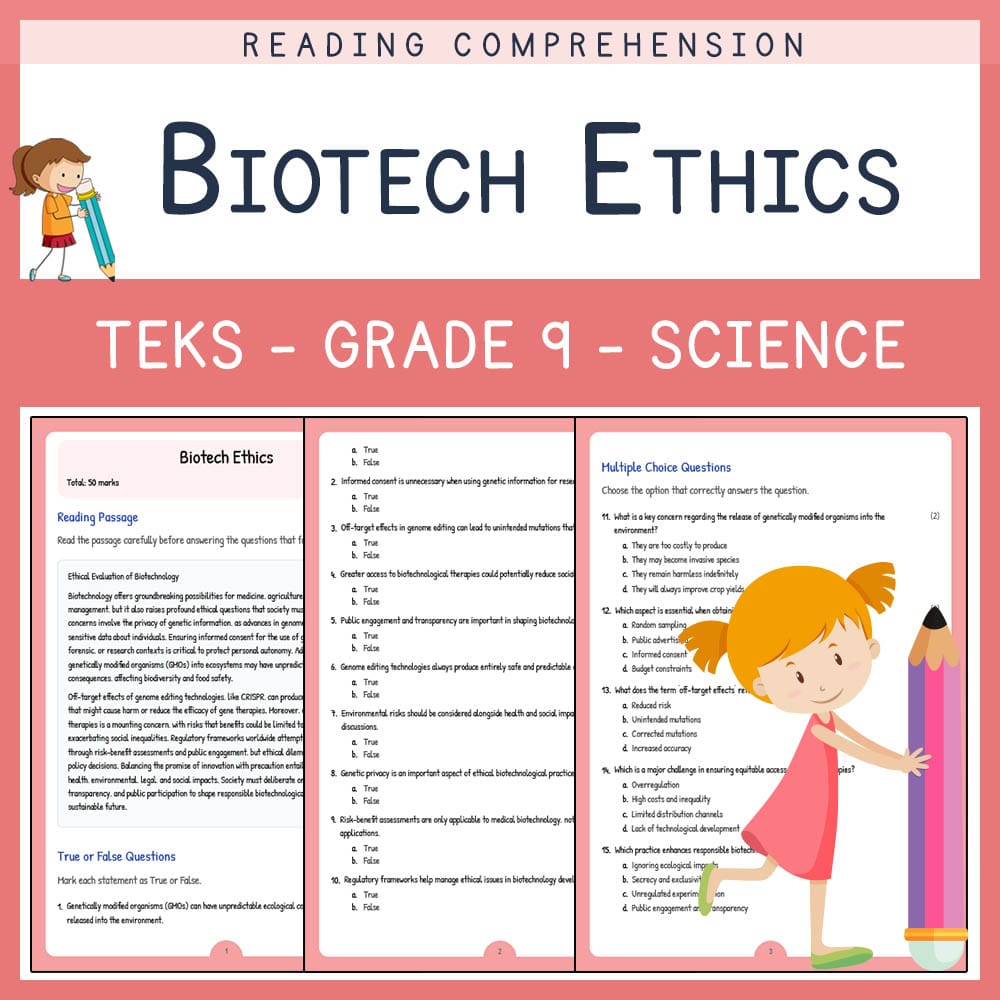
Grade 9 Science | Biotech Ethics Worksheet | TEKS Aligned
Created byLumora LearningLearning Objectives
- Understand key ethical considerations in biotechnology, including privacy, consent, and ecological impact.
- Analyze societal implications and regulatory frameworks related to genetic manipulation.
- Evaluate risks and benefits associated with biotechnological advancements.
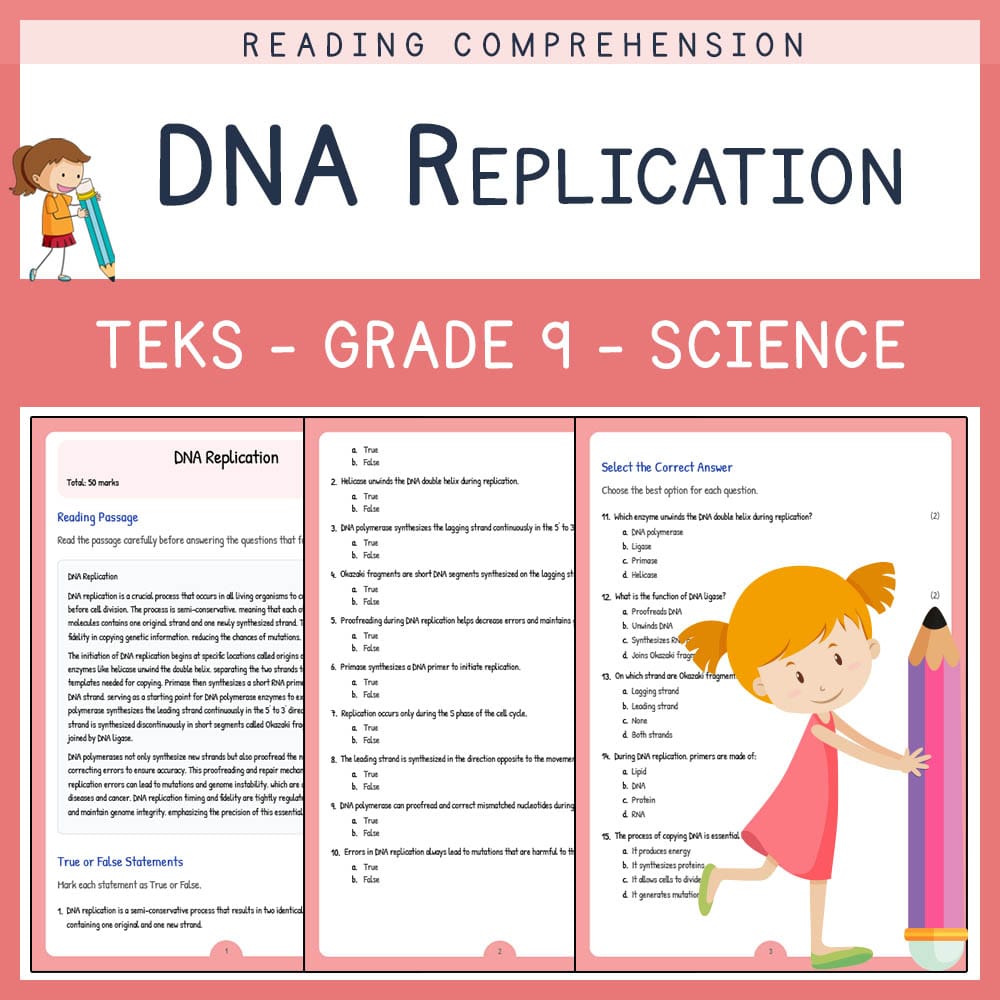
Grade 9 Science | DNA Replication Worksheet | TEKS Aligned
Created byLumora LearningLearning Objectives
- Explain the semi-conservative nature of DNA replication.
- Identify the roles of enzymes such as helicase, primase, and DNA polymerase during replication.
- Describe the processes of leading and lagging strand synthesis, including Okazaki fragments.
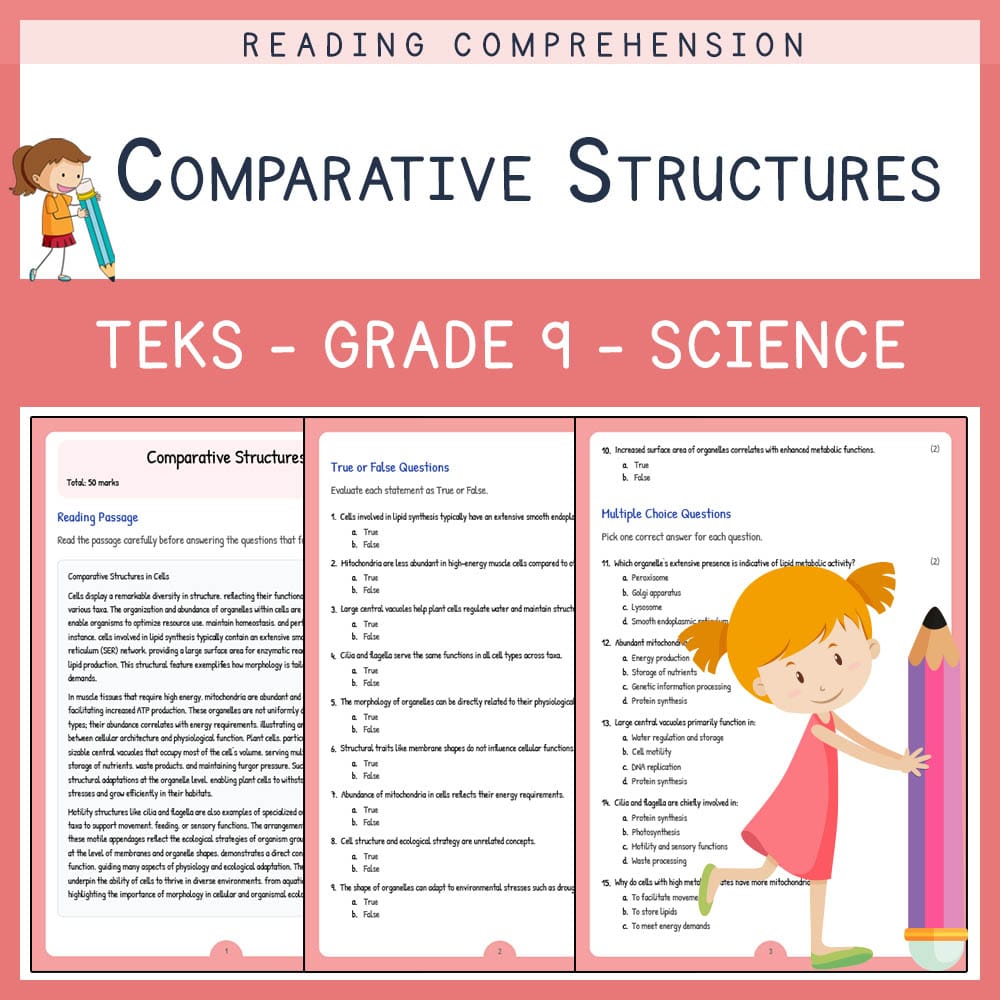
Grade 9 Science | Comparative Structures Worksheet | TEKS Aligned
Created byLumora LearningLearning Objectives
- Understand how organelle morphology varies across different cell types and taxa.
- Identify examples of cellular adaptations relating structure to function.
- Relate form and abundance of organelles to specialized physiological roles.
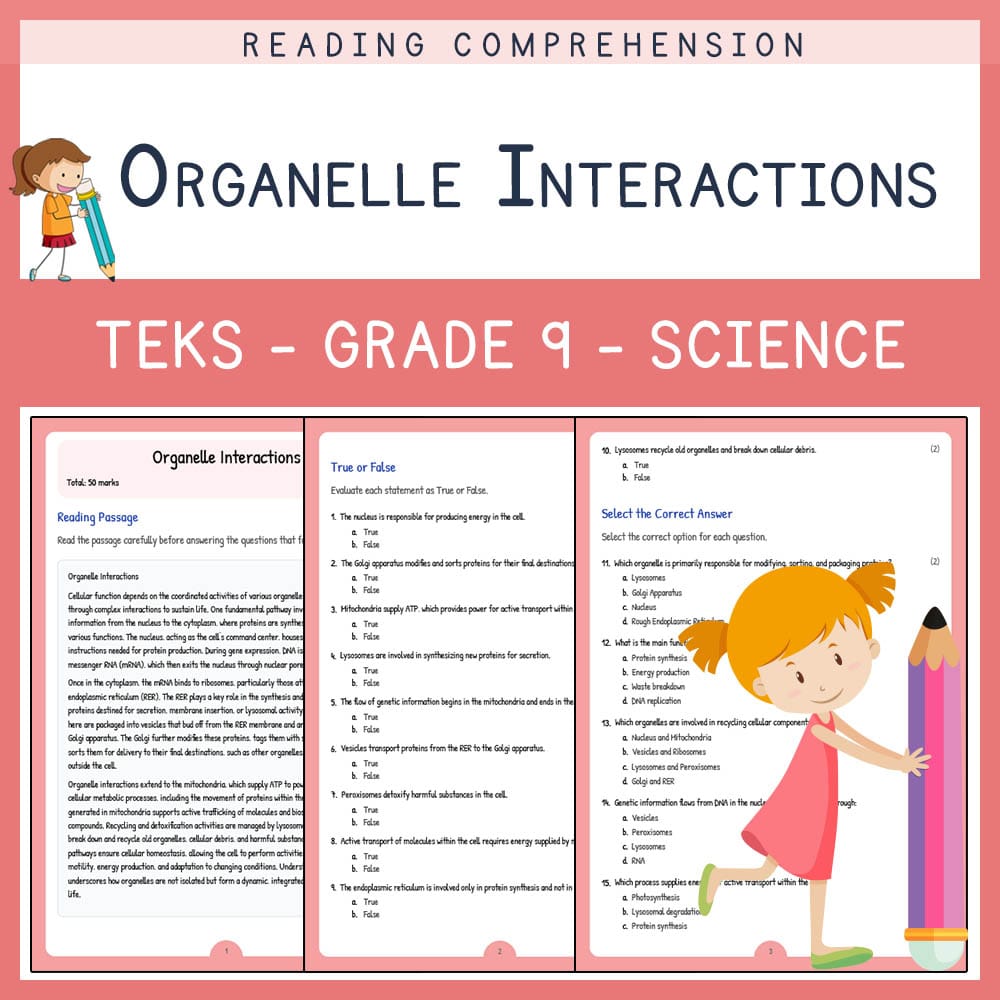
Grade 9 Science | Organelle Interactions Worksheet | TEKS Aligned
Created byLumora LearningLearning Objectives
- Explain how different organelles work together to maintain cellular functions.
- Describe the pathways of genetic information flow and protein trafficking within a cell.
- Identify the roles of mitochondria, lysosomes, and the Golgi apparatus in cellular processes.
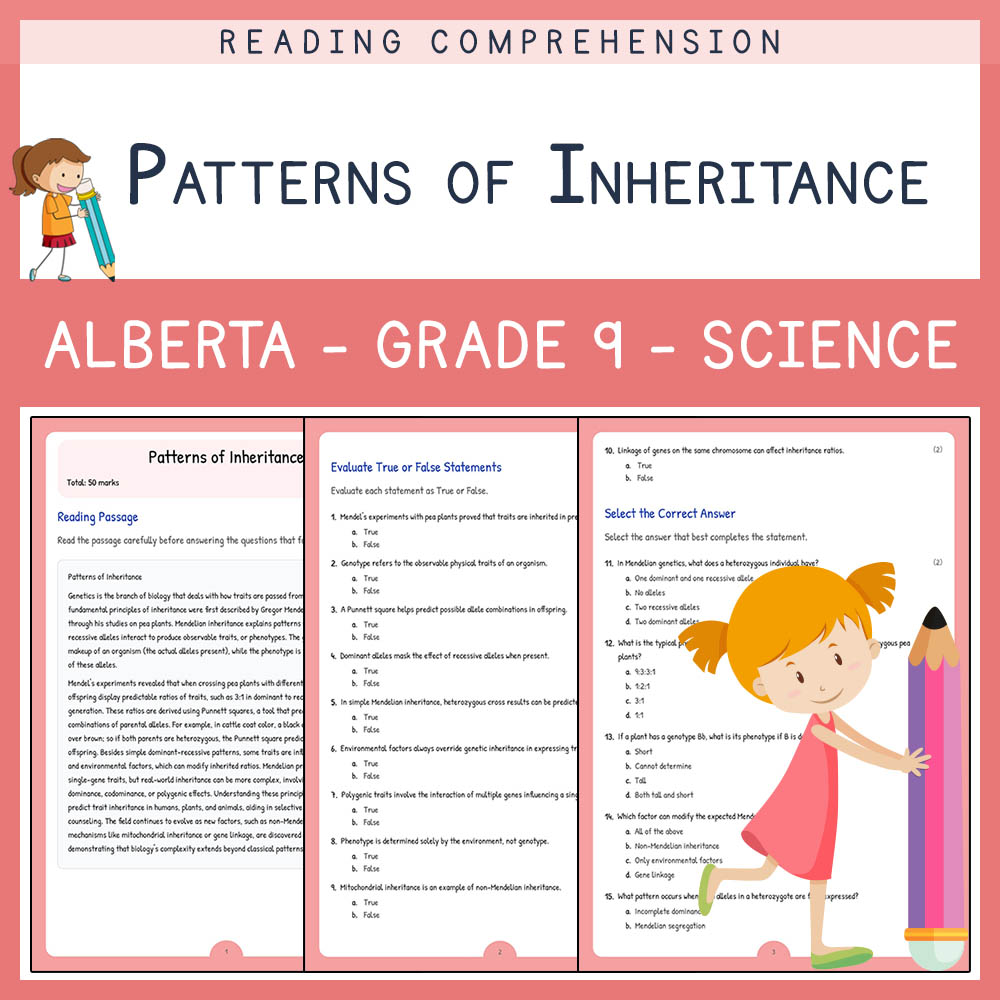
Grade 9 Science | Patterns of Inheritance Worksheet | Alberta Standards
Created byLumora LearningLearning Objectives
- Understand the principles of Mendelian inheritance, including dominant and recessive alleles.
- Distinguish between genotype and phenotype in genetic traits.
- Explain how Punnett squares predict trait segregation ratios.
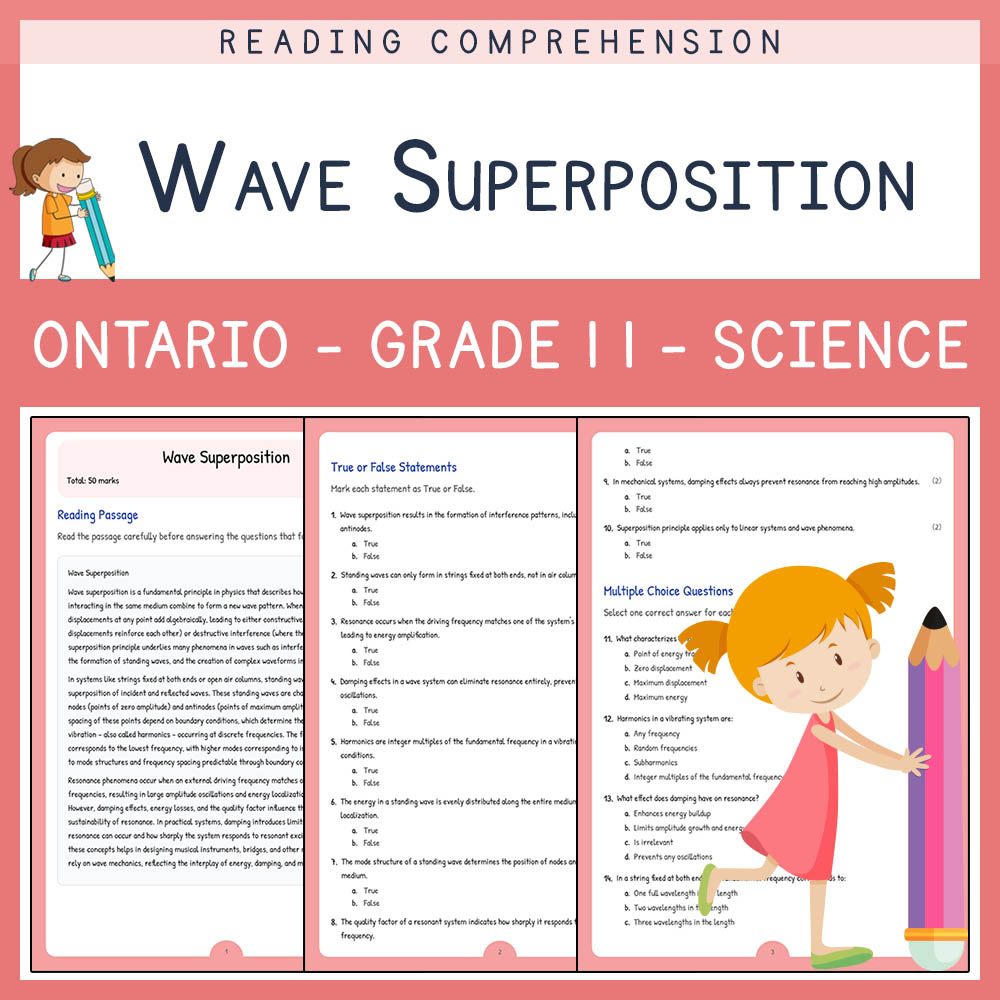
Grade 11 Science | Wave Superposition Worksheet Elena | Ontario Standard
Created byLumora LearningLearning Objectives
- Explain the principle of wave superposition and how it leads to interference patterns.
- Identify the formation of nodes and antinodes in standing waves.
- Describe resonant frequencies, harmonics, and the mode structures in bounded media.
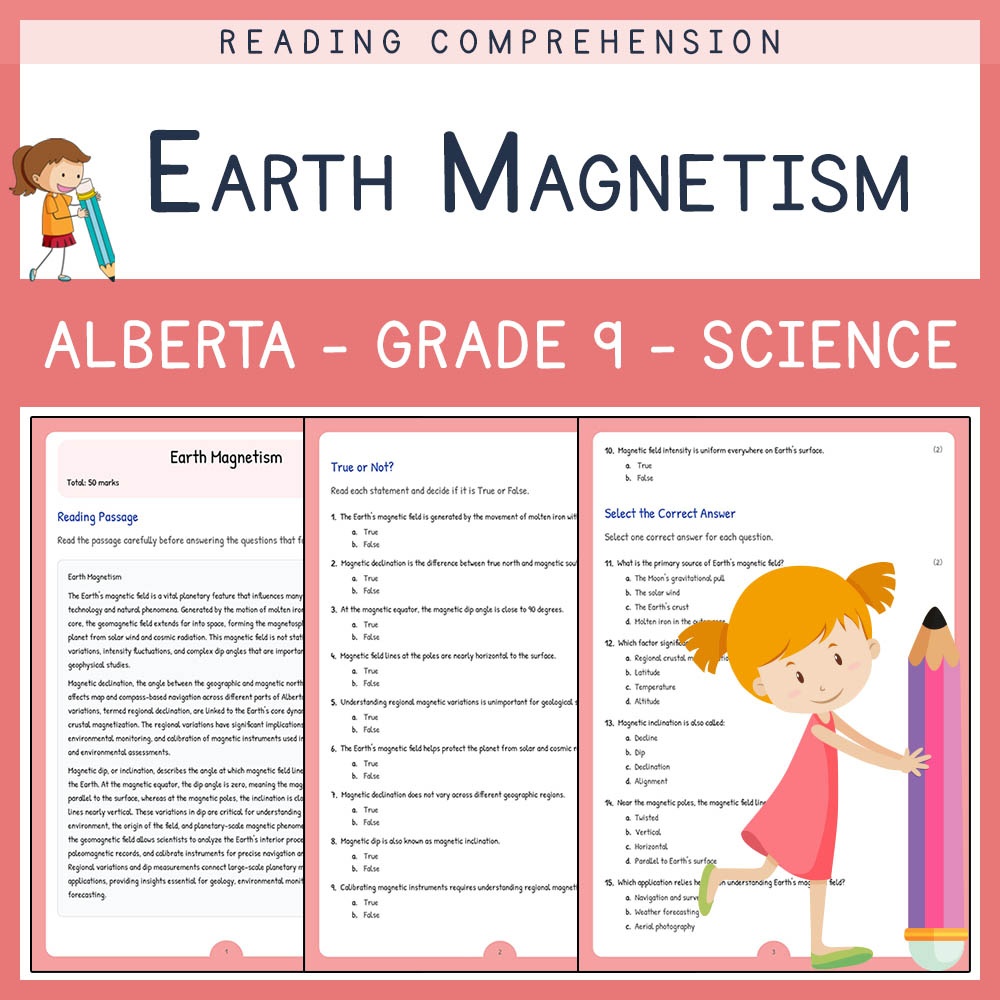
Grade 9 Science | Earth Magnetism Worksheet Elena | Alberta Standards
Created byLumora LearningLearning Objectives
- Understand the origin and characteristics of Earth's magnetic field.
- Explain regional variations in magnetic declination and their implications.
- Describe how magnetic dip and field behavior relate to planetary magnetism.
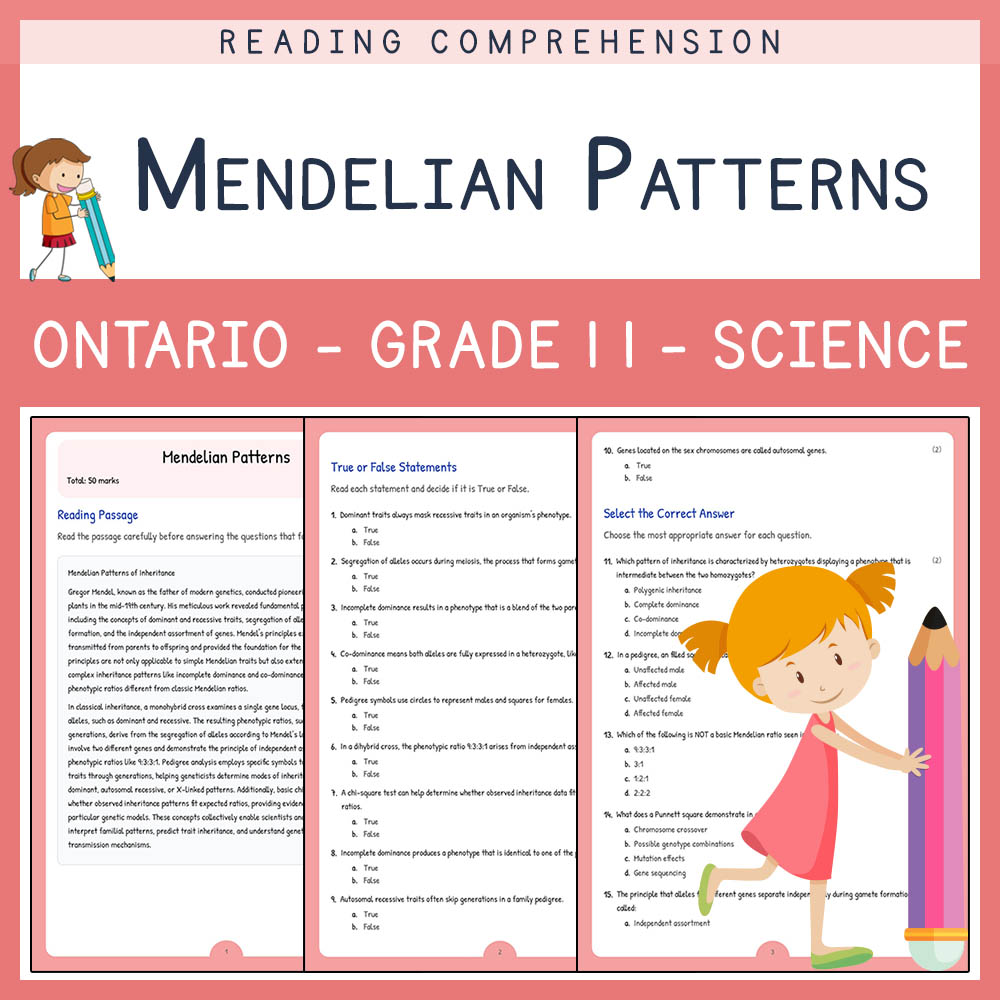
Grade 11 Science | Mendelian Patterns Worksheet Elena | Ontario Standards
Created byLumora LearningLearning Objectives
- Explain monohybrid and dihybrid inheritance patterns.
- Describe segregation and independent assortment in genetics.
- Interpret phenotypic ratios and genetic notation in inheritance patterns.
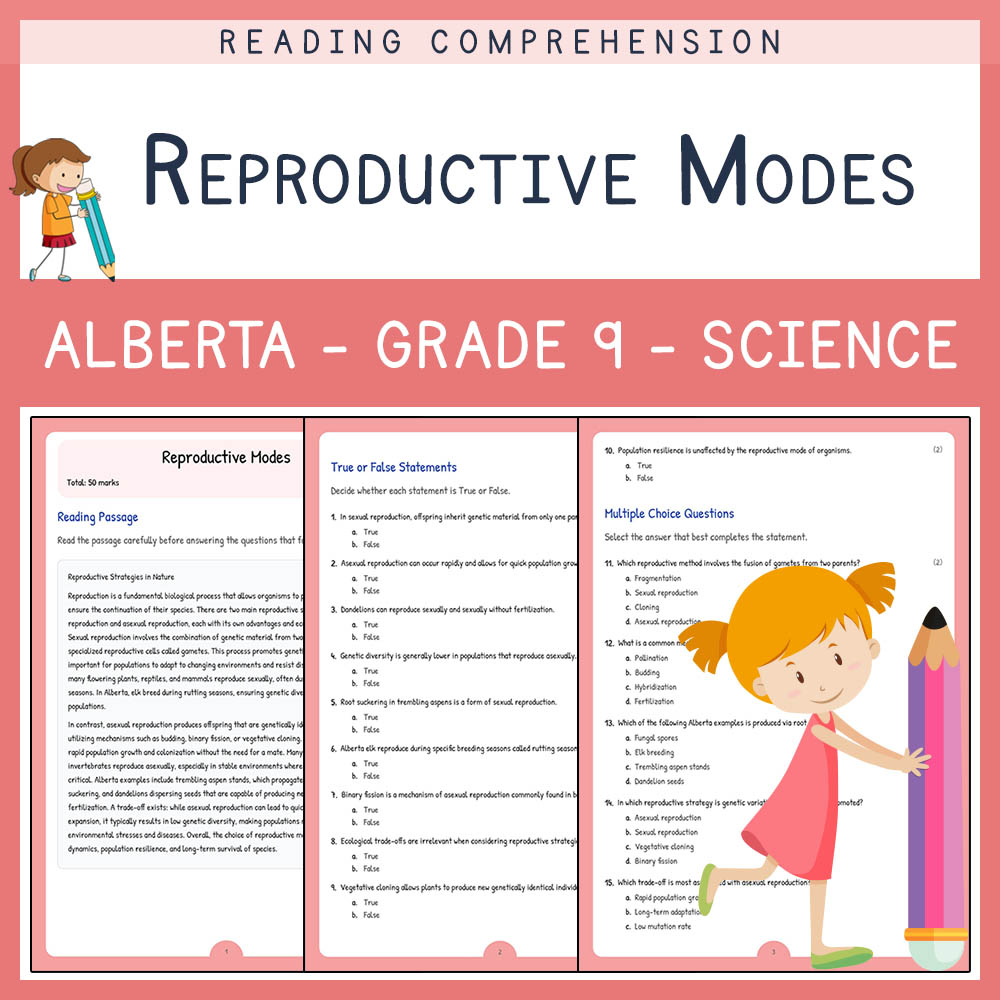
Grade 9 Science | Reproductive Modes Worksheet | Alberta Standards
Created byLumora LearningLearning Objectives
- Understand the differences between sexual and asexual reproduction.
- Identify examples of reproductive strategies used by organisms in Alberta.
- Compare ecological trade-offs related to reproductive methods.
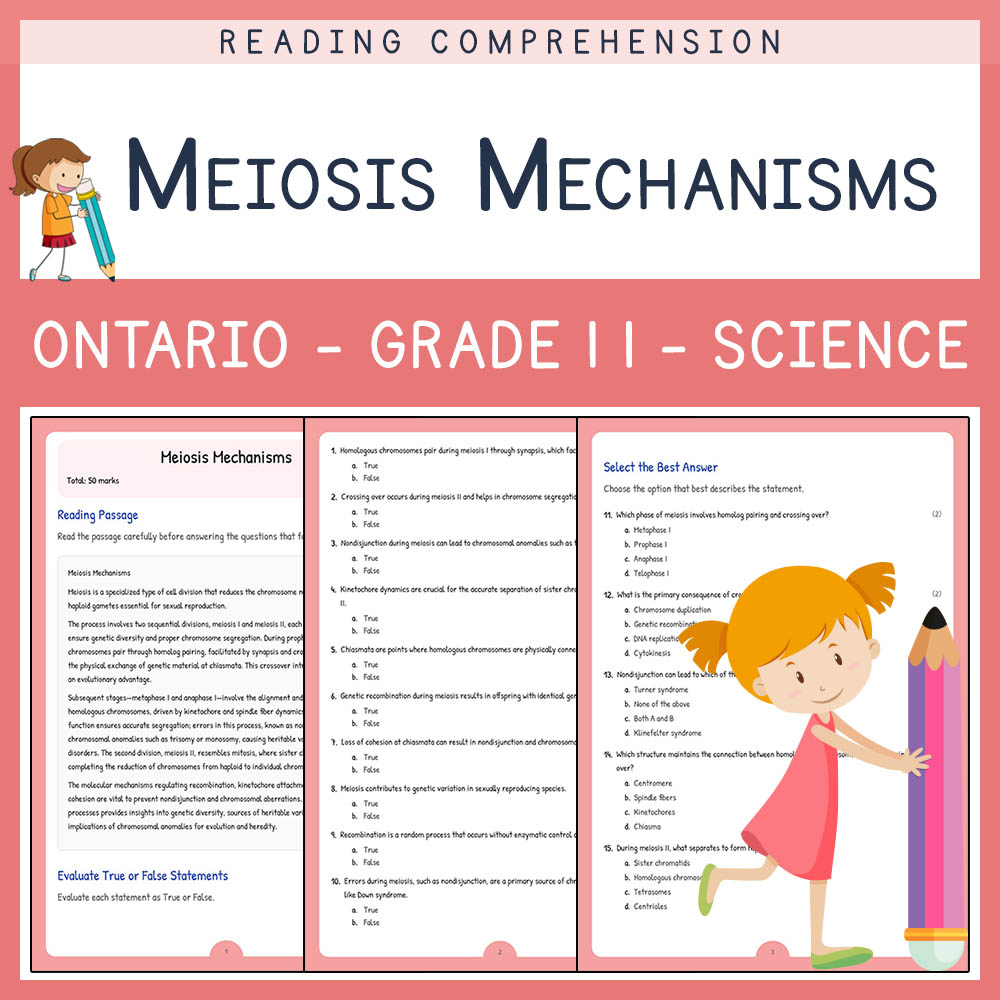
Grade 11 Science | Meiosis Mechanisms Worksheet Elena | Ontario Standards
Created byLumora LearningLearning Objectives
- Describe the stages and processes involved in meiosis, including homolog pairing, synapsis, and crossing over.
- Explain the molecular basis of recombination and how chiasmata formation influences genetic variation.
- Analyze the consequences of nondisjunction events and chromosomal anomalies for inheritance and evolution.
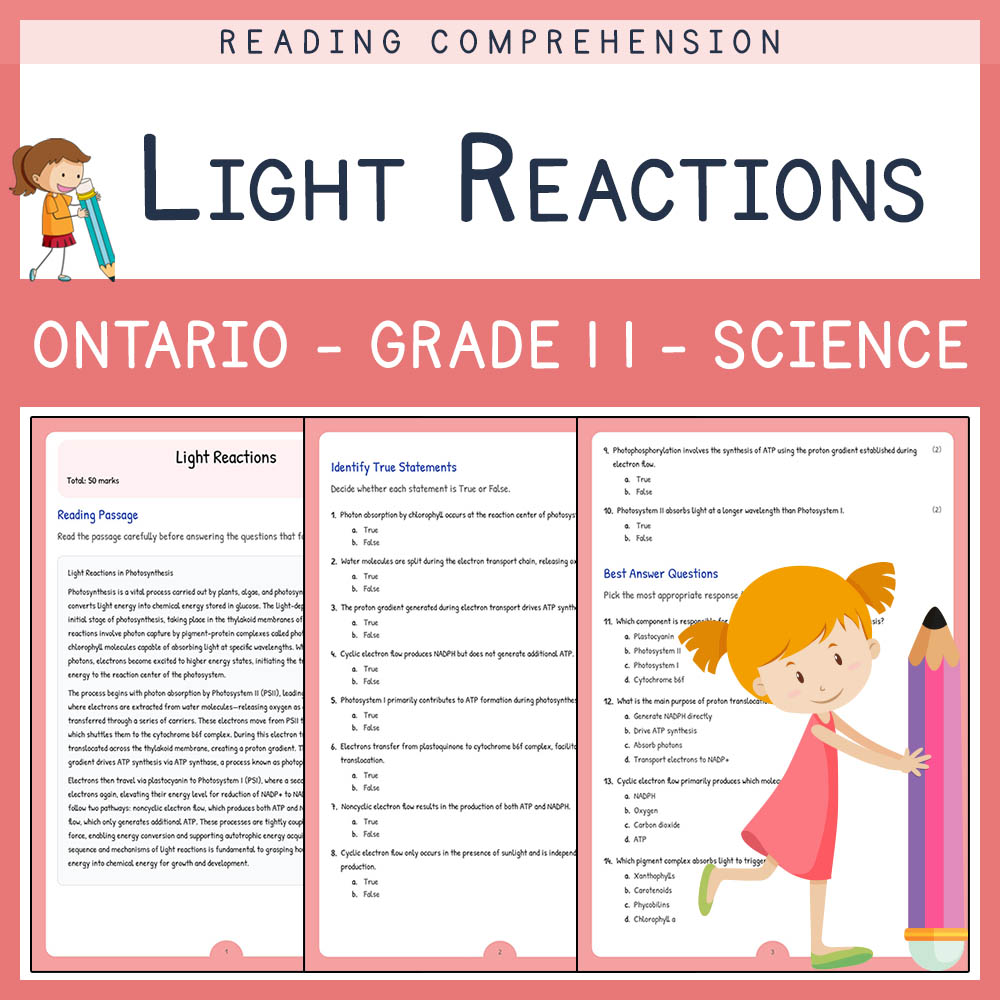
Grade 11 Science Assessment | Light Reactions Worksheet Elena | Ontario
Created byLumora LearningLearning Objectives
- Describe how photon energy is captured and transferred during light reactions.
- Explain the electron transport sequence involving photosystems, plastoquinone, cytochrome b6f, and plastocyanin.
- Identify the processes of proton translocation and photophosphorylation occurring during light reactions.
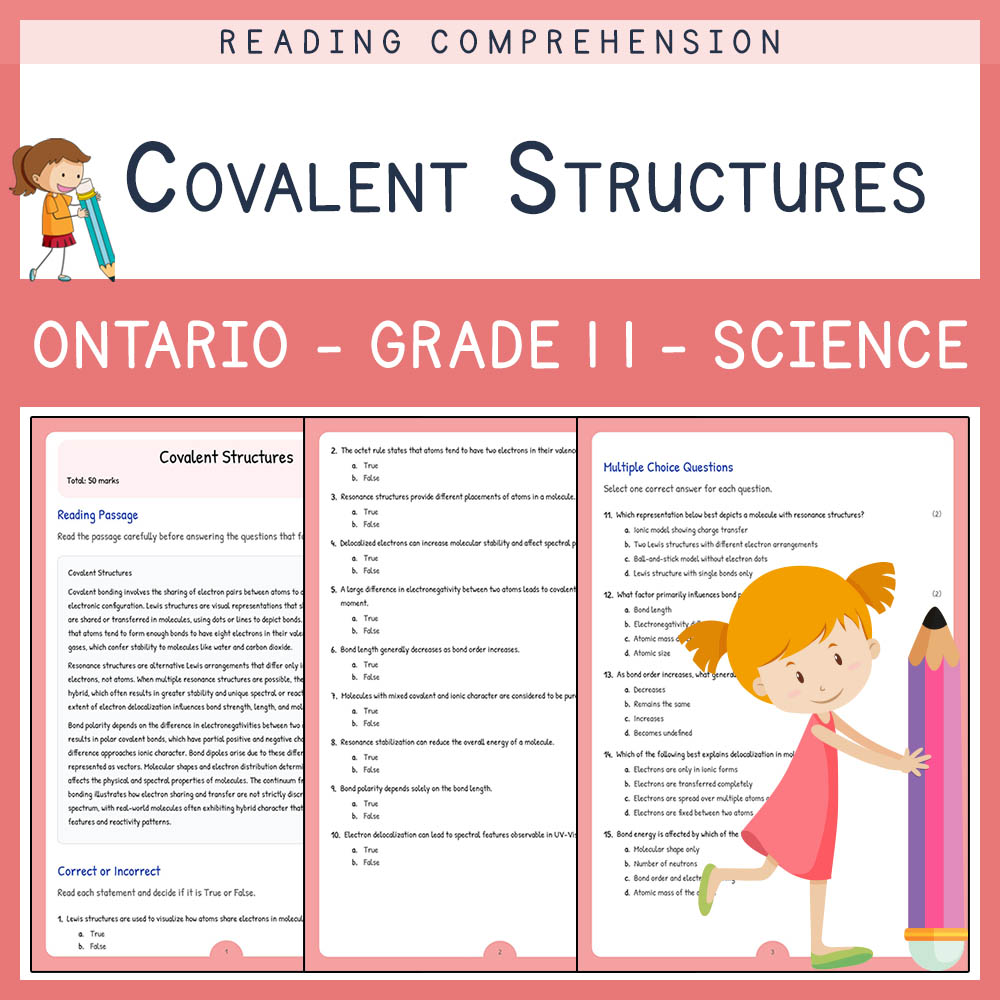
Grade 11 Science Assessment | Covalent Structures Worksheet Elena | Ontario
Created byLumora LearningLearning Objectives
- Explain shared-electron bonding through Lewis representations and octet rules.
- Assess formal charges and resonance structures to predict molecular stability.
- Understand the relationship between electronegativity differences and bond polarity.
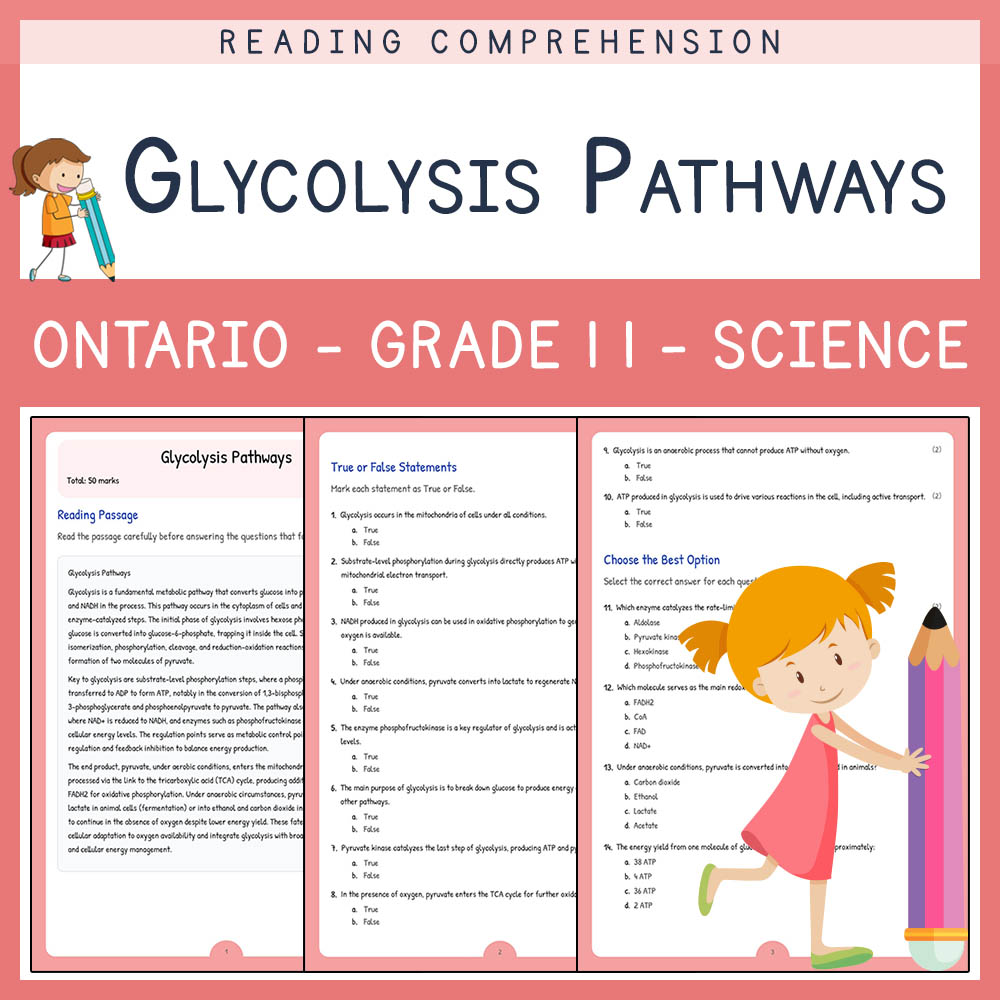
Grade 11 Science | Glycolysis Pathways Worksheet Elena | Ontario Standard
Created byLumora LearningLearning Objectives
- Describe the steps of glycolysis, including substrate-level phosphorylation and cofactor changes.
- Explain the regulation points of glycolysis and enzyme control mechanisms.
- Compare the metabolic fates of pyruvate under aerobic and anaerobic conditions.
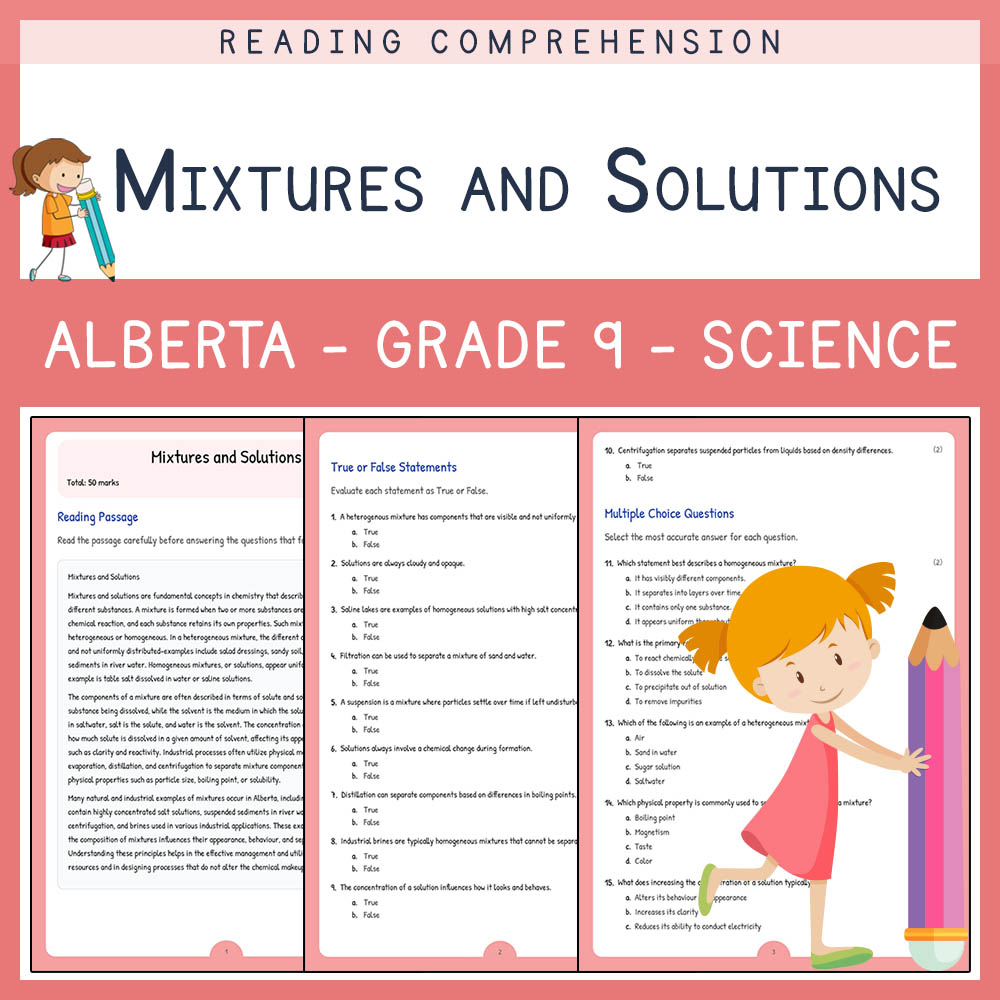
Grade 9 Science | Mixtures and Solutions Worksheet | Alberta Standards
Created byLumora LearningLearning Objectives
- Differentiate between heterogeneous mixtures and homogeneous solutions based on their properties.
- Identify key components of mixtures and solutions, such as solute and solvent.
- Understand how concentration affects the appearance and behaviour of mixtures.
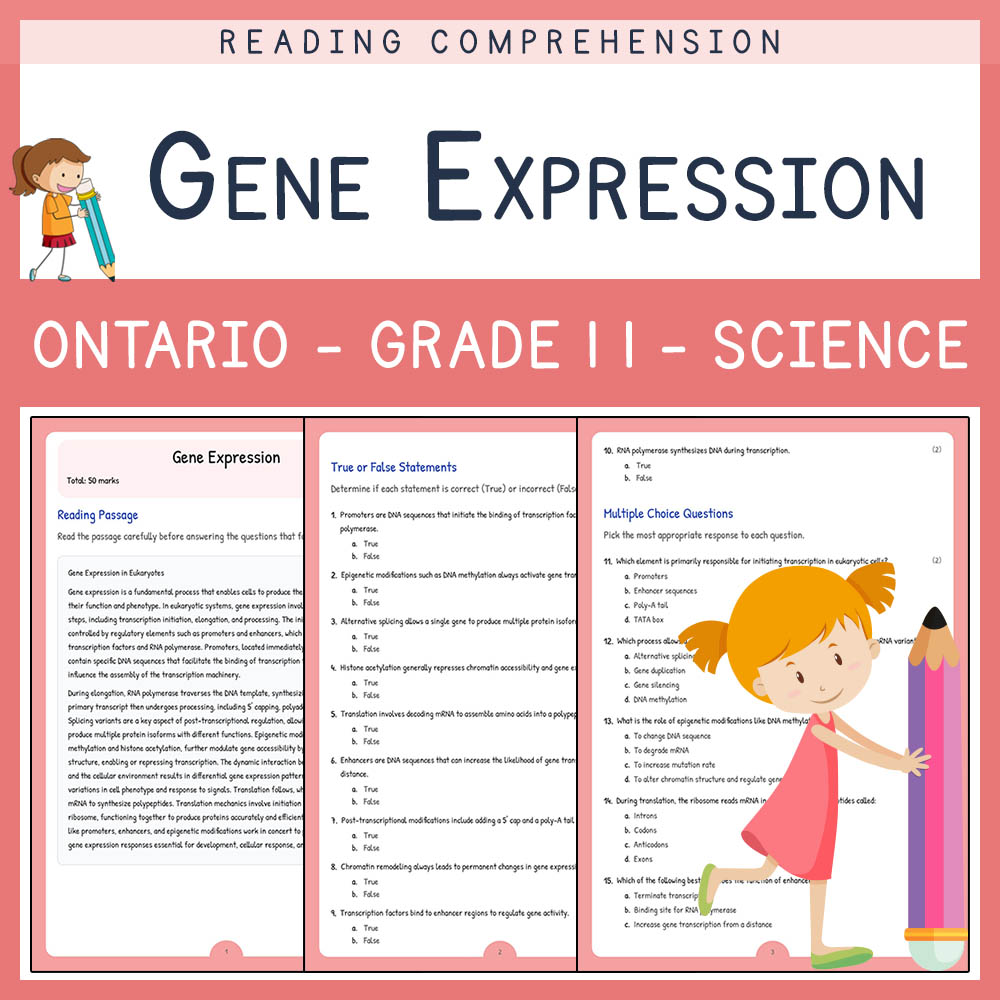
Grade 11 Science | AssessmentGene Expression Worksheet Elena | Ontario
Created byLumora LearningLearning Objectives
- Understand the processes involved in transcriptional and translational regulation in eukaryotic cells.
- Identify key elements such as promoters, enhancers, and epigenetic modifications that control gene expression.
- Explain mechanisms of gene regulation, including transcription factor binding and chromatin remodeling.
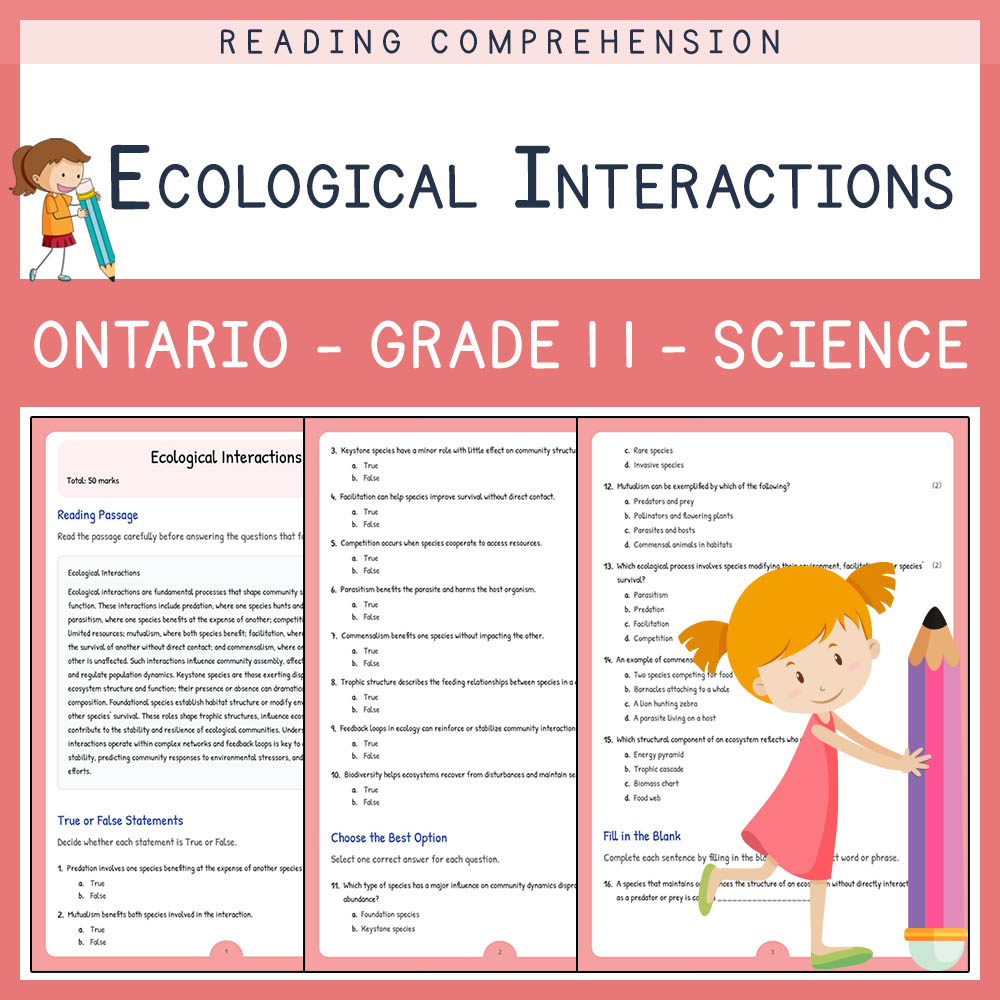
Grade 11 Science | Ecological Interactions Worksheet Elena | Ontario Standard
Created byLumora LearningLearning Objectives
- Explain various types of species interactions including predation, parasitism, competition, mutualism, facilitation, and commensalism.
- Describe the roles of keystone and foundational species in community and ecosystem dynamics.
- Analyze ecological networks, interaction strengths, and feedback loops affecting community stability.
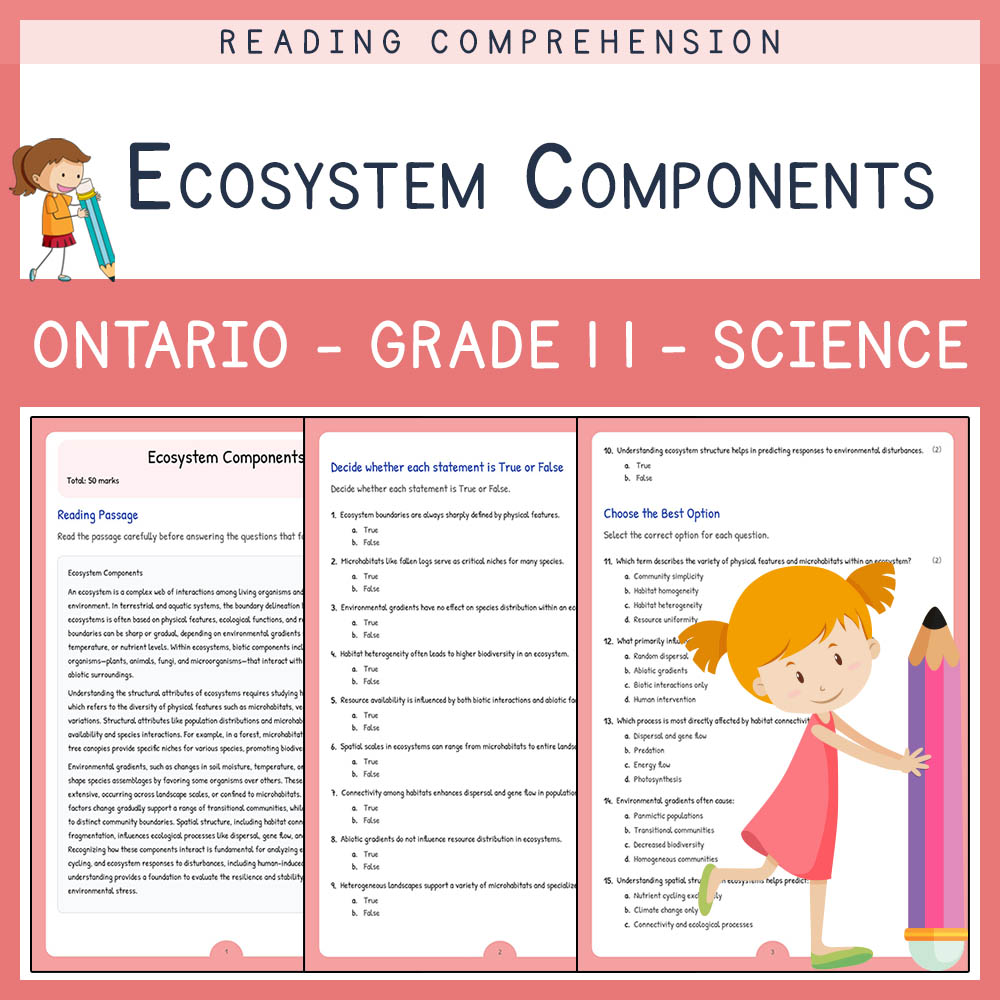
Grade 11 Science Assessment | Ecosystem Components Worksheet | Ontario
Created byLumora LearningLearning Objectives
- Define biotic and abiotic components within ecosystems.
- Explain how environmental gradients influence species distribution.
- Describe the role of spatial scales and structural attributes in ecosystems.
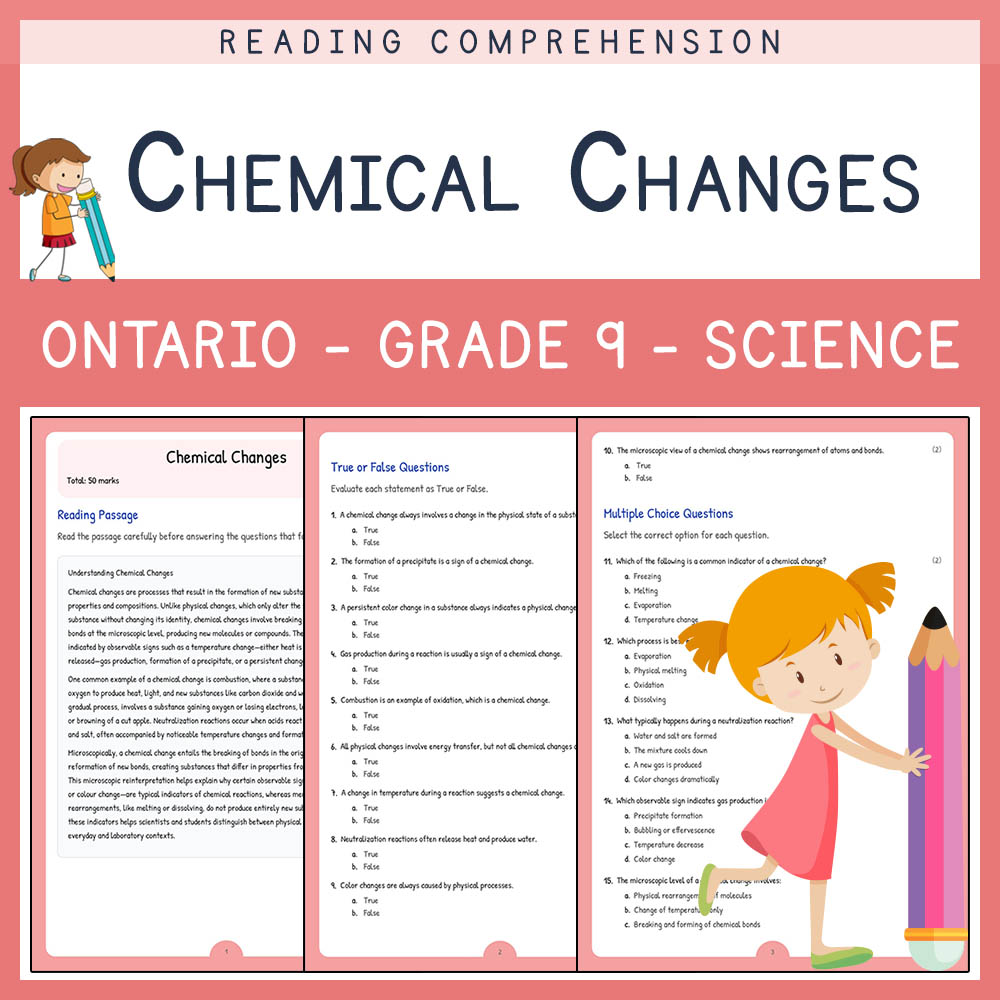
Grade 9 Science | Chemical Changes Worksheet Elena | Ontario Assessment
Created byLumora LearningLearning Objectives
- Understand what constitutes a chemical change and how it produces new substances.
- Identify common indicators of chemical change such as temperature change, gas production, precipitate formation, and persistent colour change.
- Differentiate between microscopic transformations of reactants and observable evidence of chemical reactions.
Browse more categories
About Reading comprehension Worksheets
Find reading comprehension worksheets for class practice, homework, or self-study. All 40,241 are instant PDF downloads.
Each resource here is built by an independent educator and reviewed for quality. Worksheets print straight from PDF and suit classroom use, homework, or extra practice; most come with answer keys, and you can preview before purchasing.