
Reading comprehension Worksheets
40,241 type resources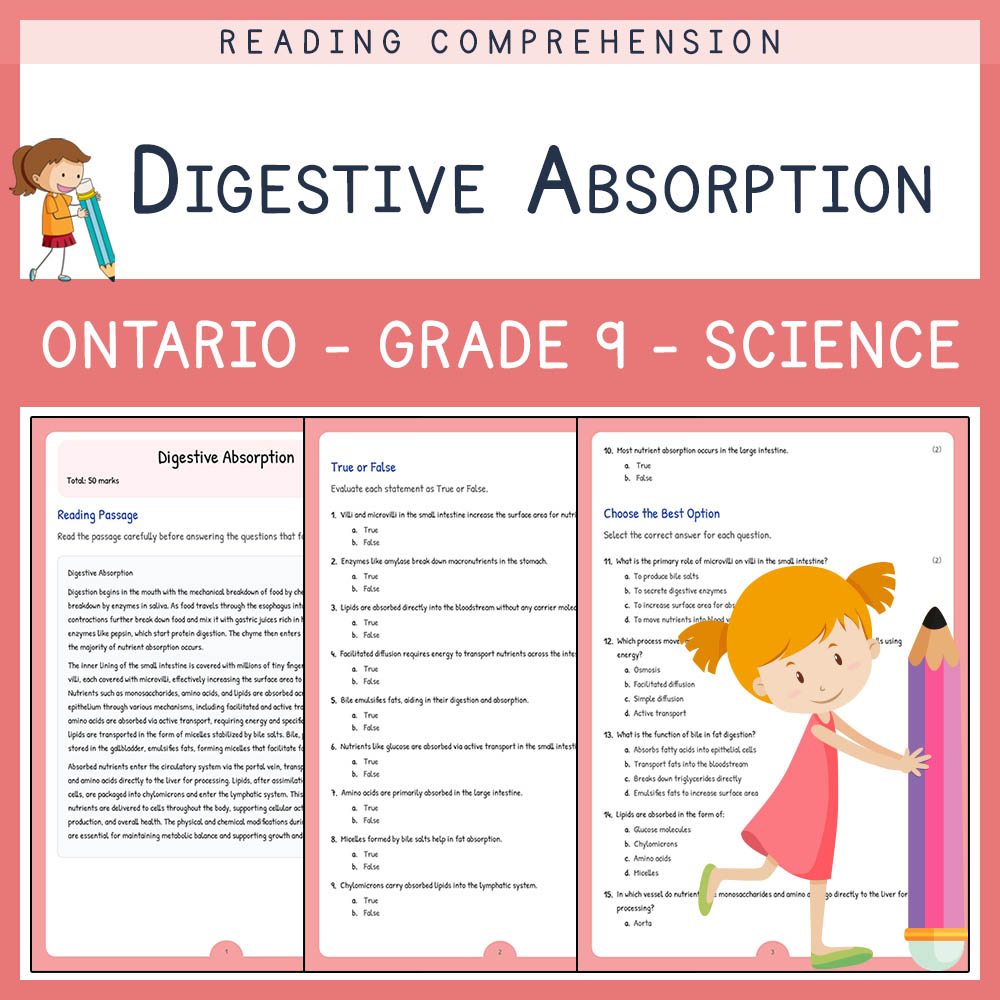
Grade 9 Science | Digestive Absorption Worksheet | Ontario Standard
 Created byLumora Learning
Learning Objectives
- Explain the mechanical and chemical processes involved in digestion and nutrient absorption.
- Describe the structure and function of villi and microvilli in increasing surface area for absorption.
- Understand how enzymes facilitate the hydrolysis of macronutrients into absorbable units.
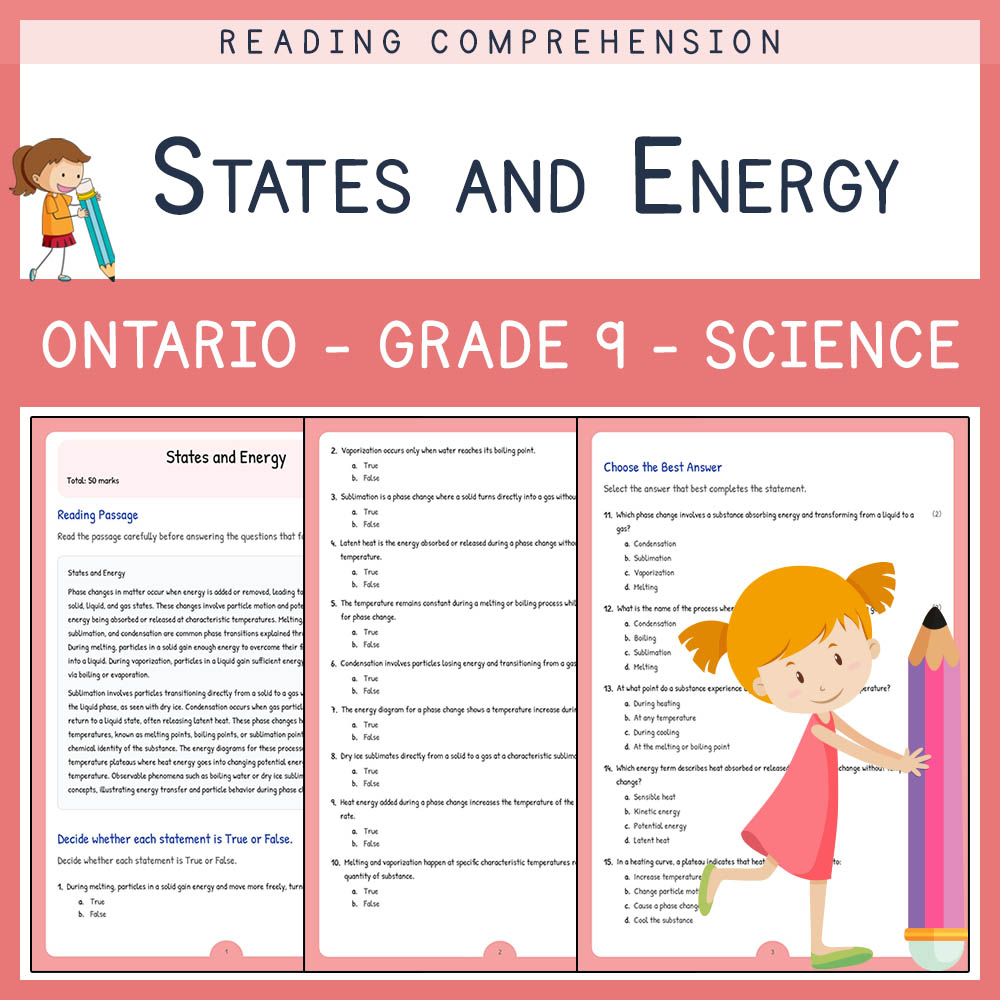
Grade 9 Science | States and Energy Worksheet Elena | Ontario Standard
Created byLumora LearningLearning Objectives
- Explain phase changes in terms of energy transfer and particle motion.
- Identify the processes of melting, vaporization, sublimation, and condensation.
- Understand how heat energy affects particle potential and kinetic energy during phase transitions.
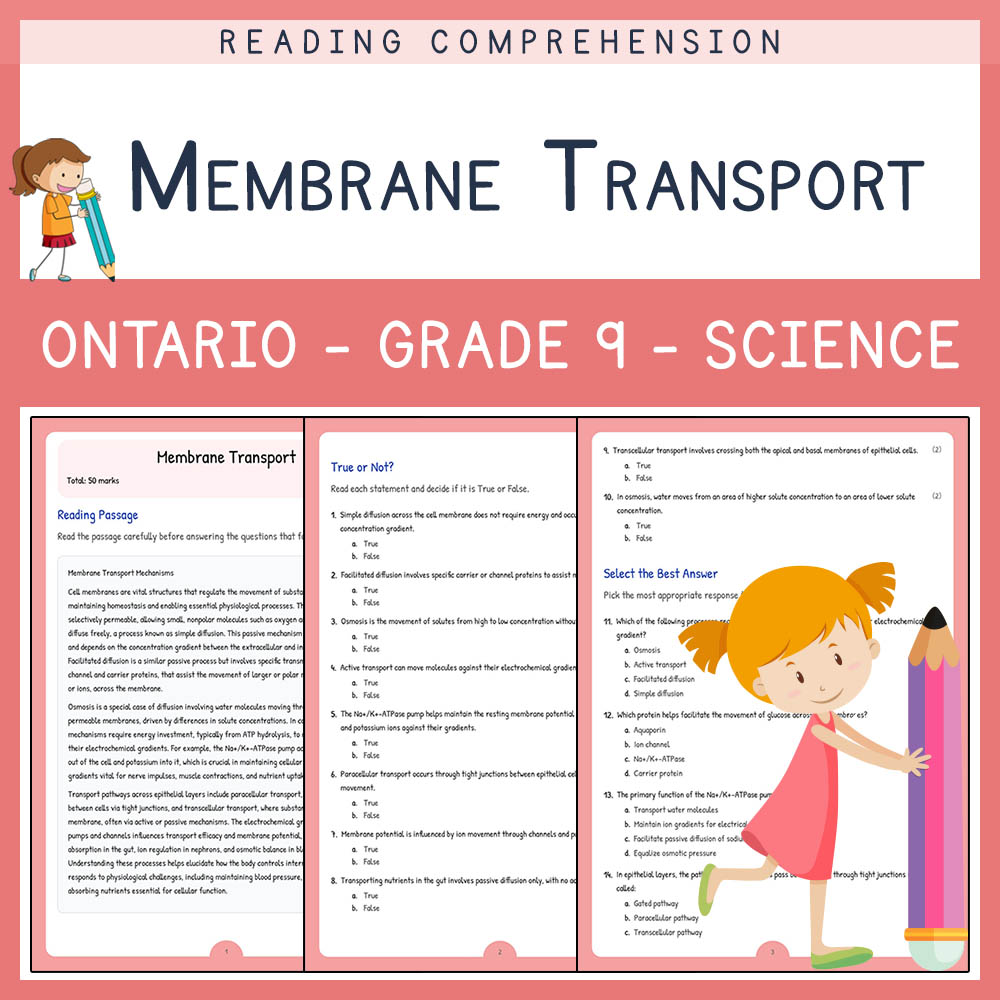
Grade 9 Science | Membrane Transport Worksheet Elena | Ontario Standard
Created byLumora LearningLearning Objectives
- Explain the mechanisms of molecular movement across cellular membranes, including diffusion, facilitated diffusion, osmosis, and active transport.
- Describe how electrochemical gradients and membrane potentials influence transport processes.
- Differentiate between paracellular and transcellular pathways in epithelial layers.
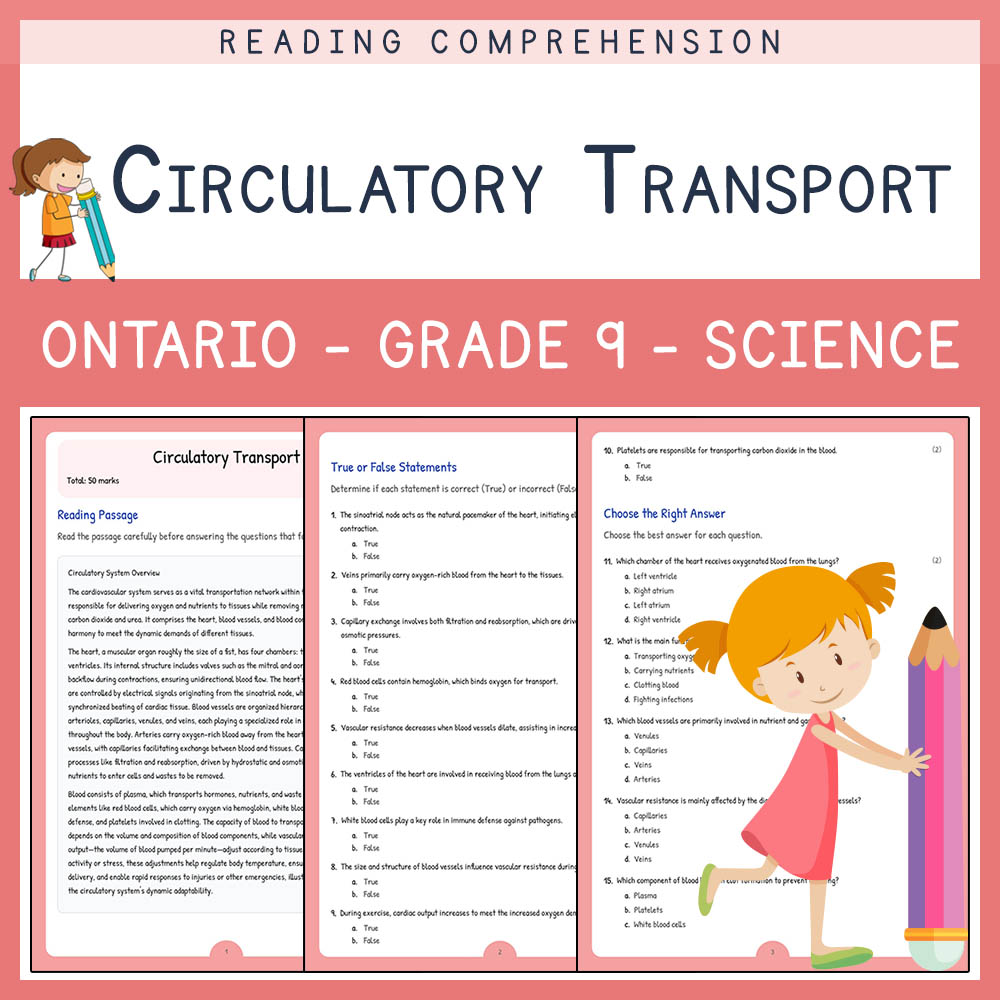
Grade 9 Science Worksheet | Circulatory Transport | Ontario Standards
Created byLumora LearningLearning Objectives
- Describe the structure and function of the heart, blood vessels, and blood components.
- Explain the mechanisms of blood flow, capillary exchange, and vascular resistance.
- Identify how the cardiovascular system maintains homeostasis during physiological stress.
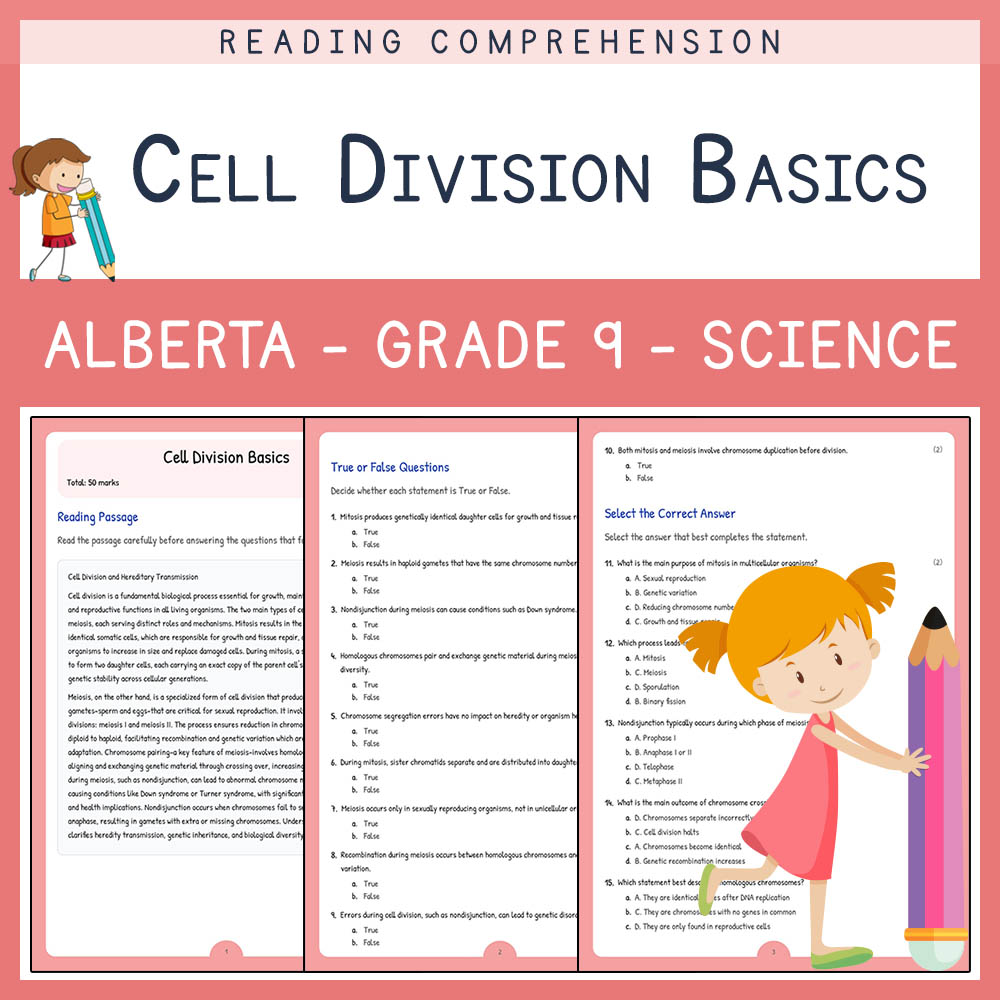
Grade 9 Science | Cell Division Basics Worksheet | Alberta Standards
Created byLumora LearningLearning Objectives
- Understand the roles of mitosis and meiosis in growth, repair, and reproduction.
- Describe the processes of chromosome pairing, segregation, and potential errors such as nondisjunction.
- Explain how heredity transmission and variation are influenced by cell division mechanisms.

Grade 9 Science | Patterns of Inheritance Worksheet | Alberta Standards
Created byLumora LearningLearning Objectives
- Understand the principles of Mendelian inheritance, including dominant and recessive alleles.
- Distinguish between genotype and phenotype in genetic traits.
- Explain how Punnett squares predict trait segregation ratios.
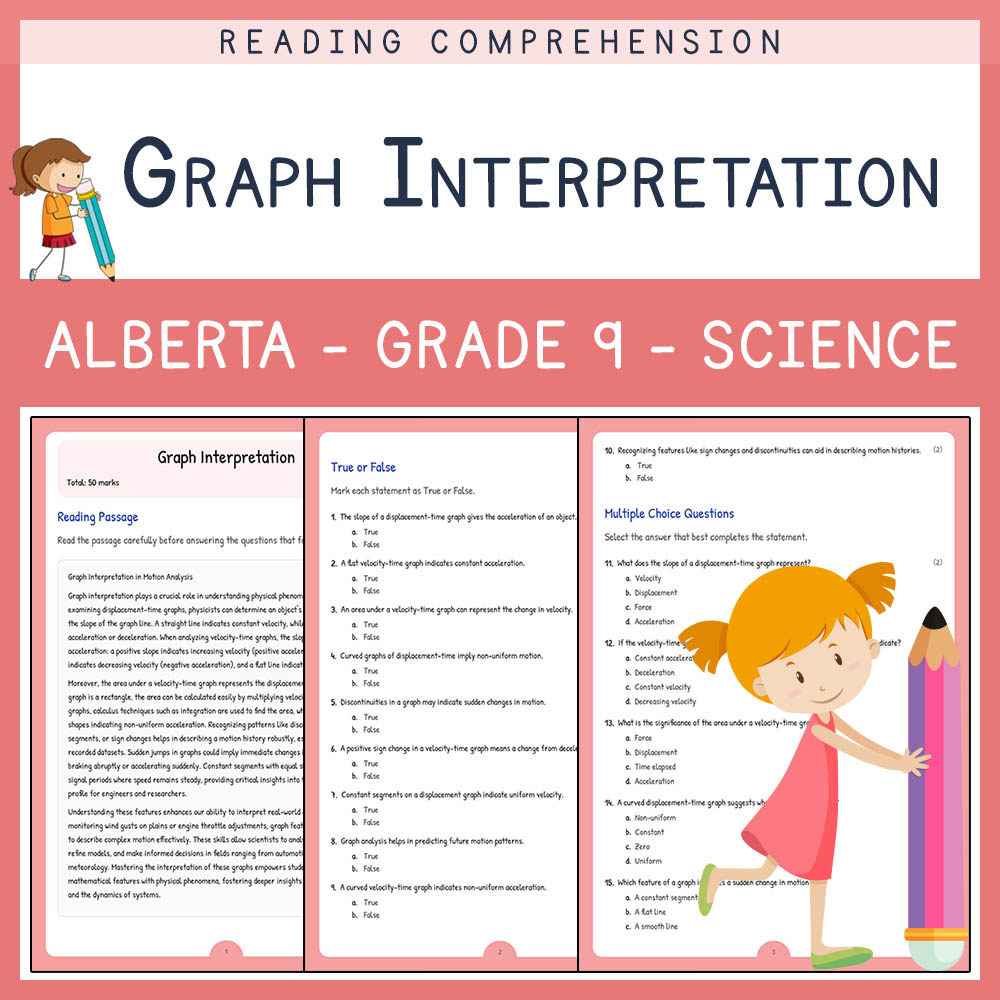
Grade 9 Science | Graph Interpretation Worksheet | Alberta Standards
Created byLumora LearningLearning Objectives
- Understand how the slope of displacement-time graphs relates to velocity.
- Interpret areas under velocity-time graphs to determine displacement.
- Identify non-uniform acceleration from curved graphs and discontinuities.
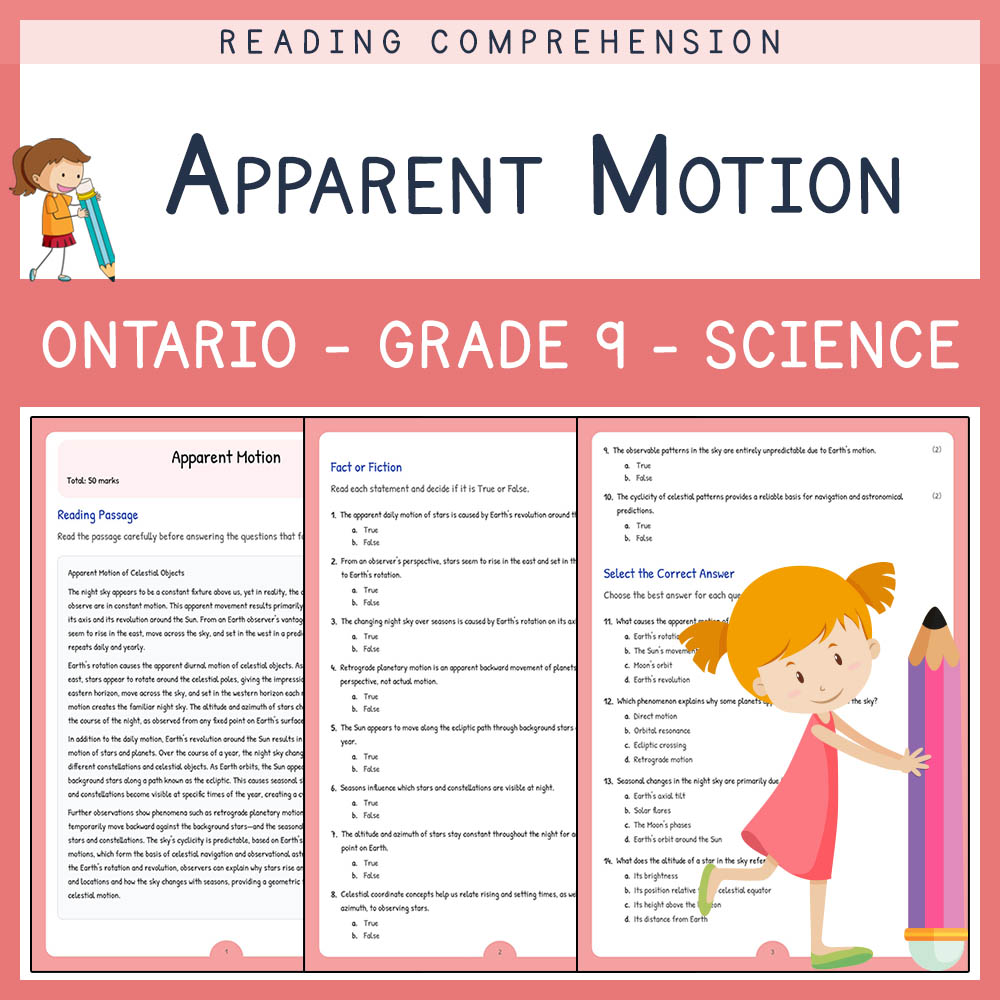
Grade 9 Science | Apparent Motion Worksheet | Ontario | Assessment PDF
Created byLumora LearningLearning Objectives
- Understand the causes of apparent diurnal and annual motion of celestial objects from Earth's perspective.
- Describe how Earth's rotation and revolution lead to observable sky changes over nights and seasons.
- Apply celestial coordinate concepts such as rising, setting, altitude, and azimuth to explain observed phenomena.
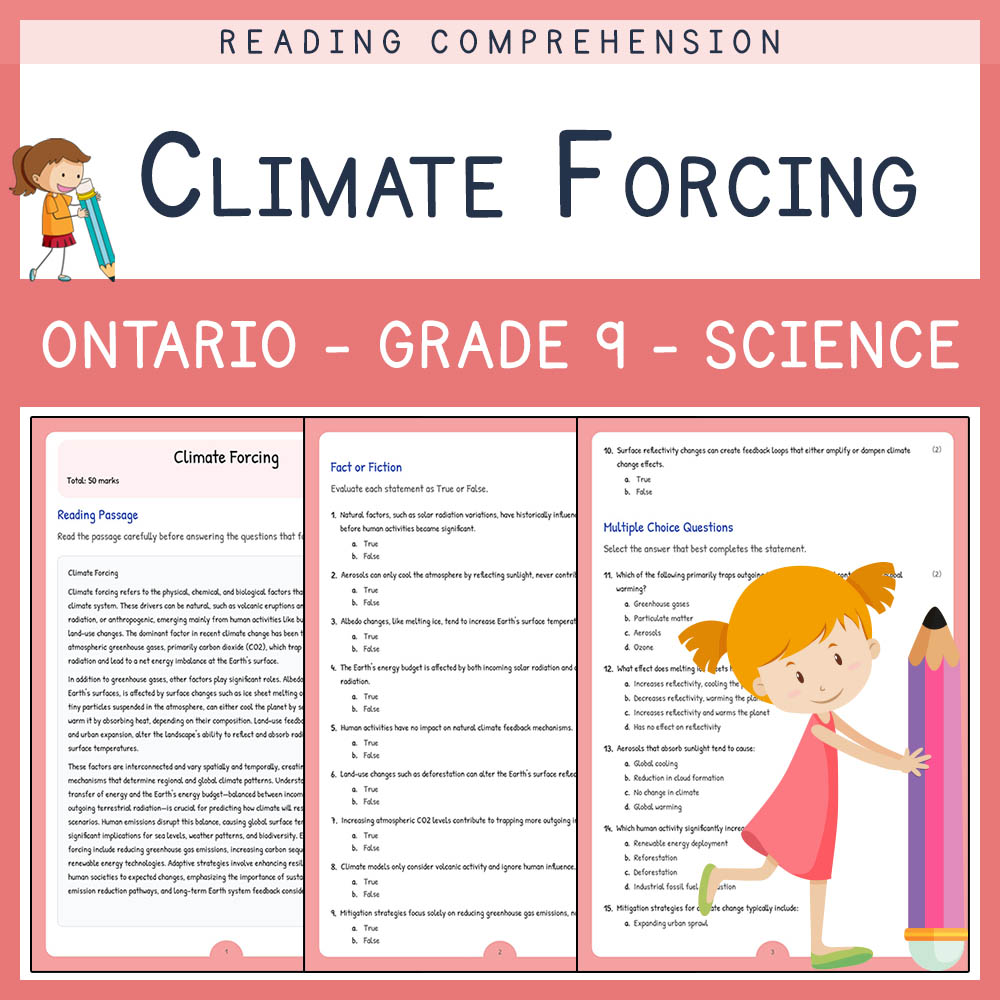
Grade 9 Science | Climate Forcing Worksheet Elena | Ontario Standards
Created byLumora LearningLearning Objectives
- Understand the various drivers of climate change including greenhouse gases, albedo changes, aerosols, and land-use feedbacks.
- Explain basic radiative transfer concepts and how they influence the Earth's energy budget.
- Assess the impact of human emissions on the carbon cycle and projected climate responses.
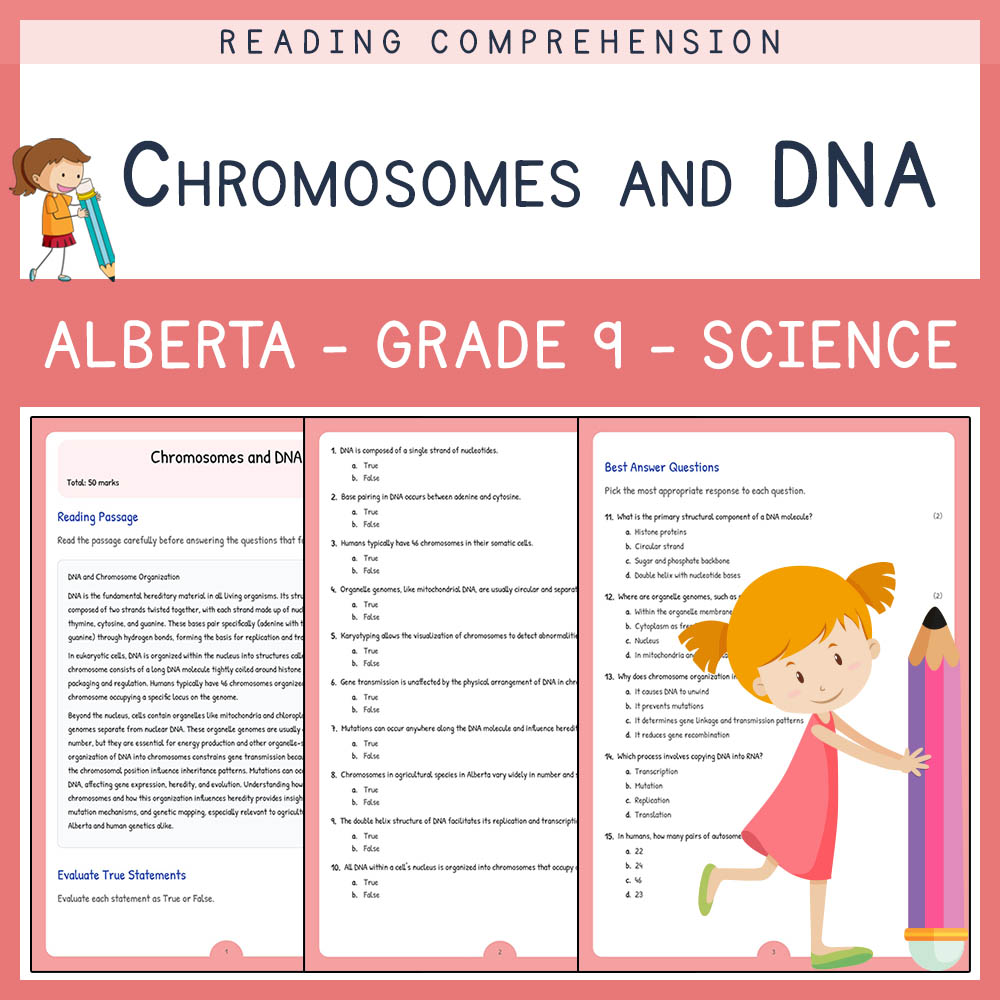
Grade 9 Science | Chromosomes and DNA Worksheet | Alberta Standards
Created byLumora LearningLearning Objectives
- Explain the structure and function of DNA and chromosomes.
- Describe how genetic material is organized within cells.
- Distinguish between nuclear and organelle genomes.
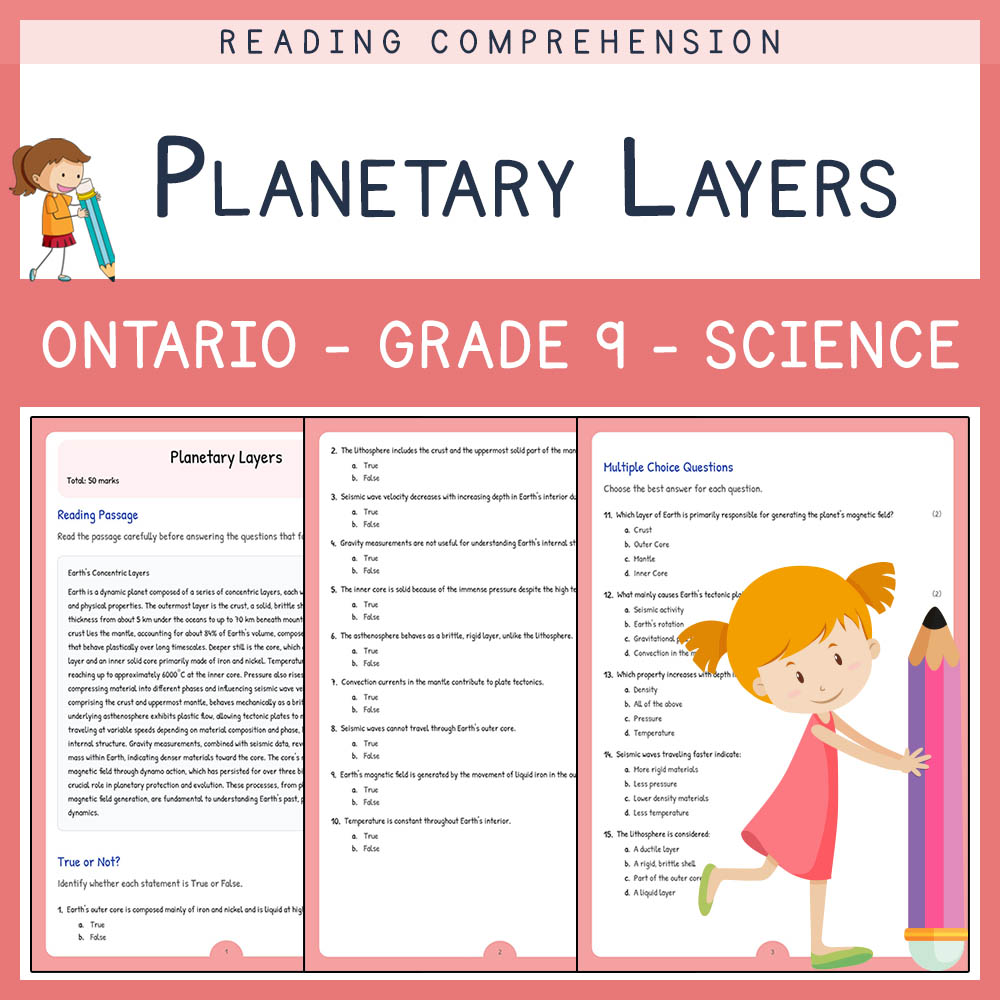
Grade 9 Science Worksheet | Planetary Layers | Ontario Standards
Created byLumora LearningLearning Objectives
- Describe Earth's main concentric layers and their properties.
- Explain differences between lithosphere and asthenosphere in mechanical behavior.
- Analyze how density, temperature, and pressure vary with depth inside Earth.

Grade 9 Science | Kinetic and Potential Energy Worksheet | NGSSS Aligned
Created byLumora LearningLearning Objectives
- Explain the relationship between kinetic energy and the speed of an object
- Describe how gravitational potential energy depends on height and a chosen reference level
- Interpret energy transfers between potential and kinetic energy in real systems such as roller coasters
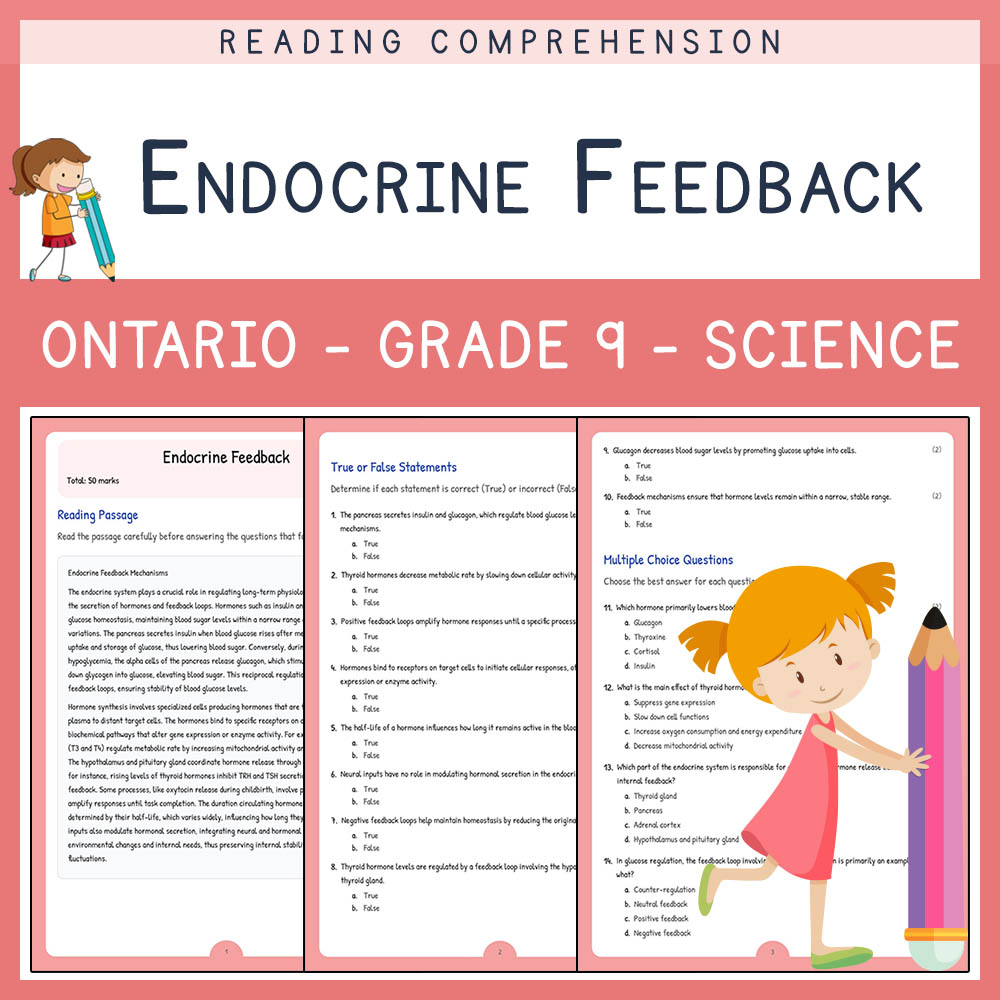
Grade 9 Science | Endocrine Feedback Worksheet | Ontario Standard
Created byLumora LearningLearning Objectives
- Understand the role of hormonal feedback mechanisms in maintaining homeostasis.
- Explain how insulin and glucagon regulate blood glucose levels via negative feedback loops.
- Describe the thyroid gland's control of metabolic rate through hormonal regulation.

Grade 12 Science | Atomic Structure Worksheet | BC-Aligned
Created byLumora LearningLearning Objectives
- Understand the components and structure of the atom, including protons, neutrons, and electrons.
- Describe electron configurations, energy levels, and orbitals in atoms.
- Explain how valence electrons affect element reactivity and periodic trends.
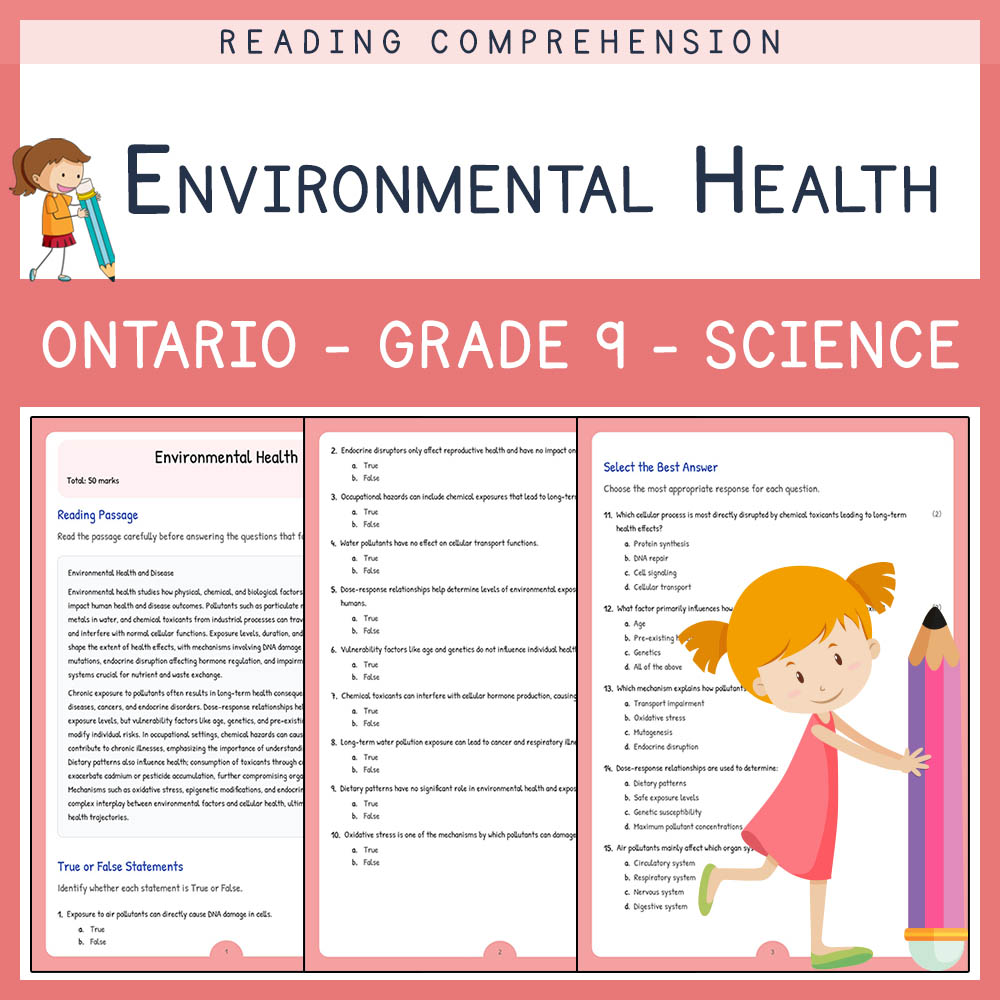
Grade 9 Science | Environmental Health Worksheet Elena | Ontario Standards
Created byLumora LearningLearning Objectives
- Understand how environmental exposures influence cellular processes and long-term health.
- Identify types of pollutants and hazards affecting human health.
- Describe mechanisms by which pollutants cause DNA damage, endocrine disruption, and transport impairment.

Grade 9 Science | Integrated Modeling Worksheet | AP Aligned
Created byLumora LearningLearning Objectives
- Understand the components and interactions within coupled environmental models.
- Analyze how model structure, parameter sensitivity, and uncertainty influence environmental projections.
- Evaluate multi-variable outputs and indicator metrics to compare hypotheses.
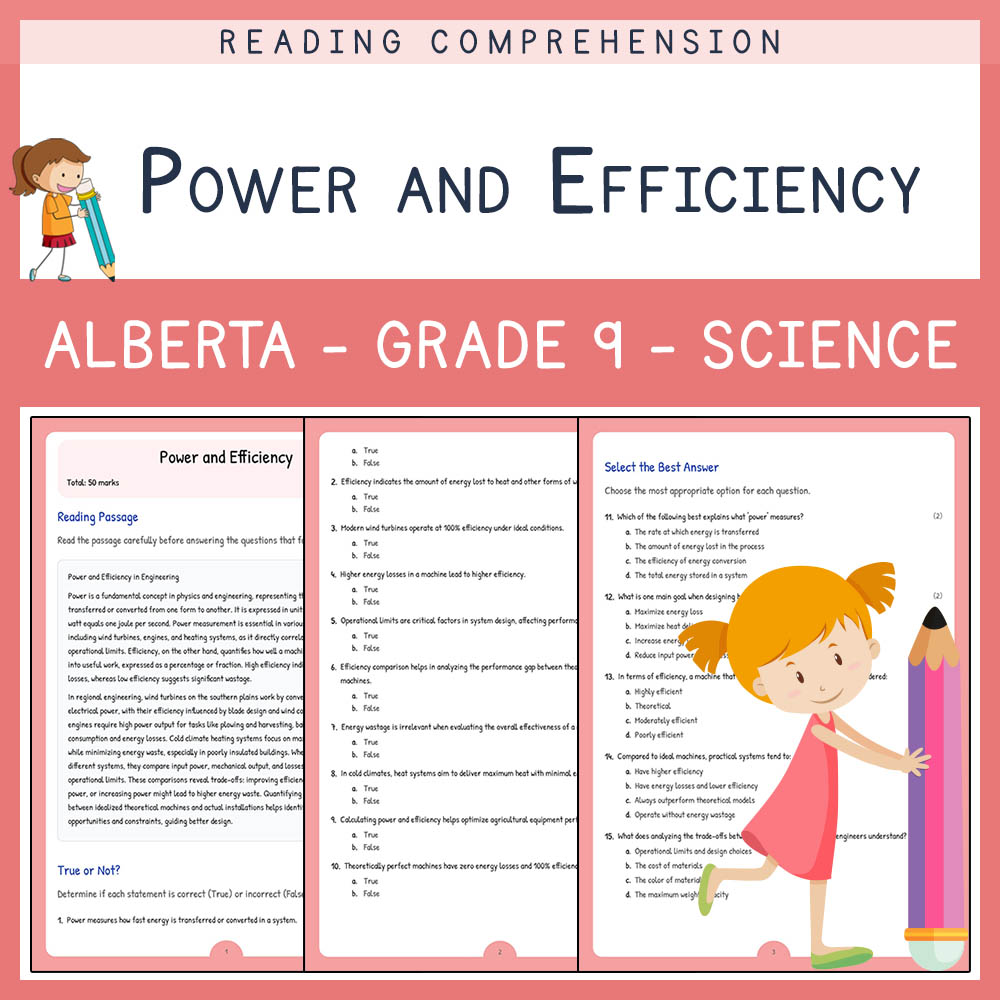
Grade 9 Science | Power and Efficiency Worksheet | Alberta Standards
Created byLumora LearningLearning Objectives
- Understand the definitions of power and efficiency in energy transfer systems.
- Analyze regional engineering examples related to power output and energy losses.
- Compare input power, mechanical output, and energy wastage in various machines.

Grade 9 Science | Electron Configuration Worksheet | BC Aligned
Created byLumora LearningLearning Objectives
- Describe how electrons are distributed among energy levels and orbitals in an atom.
- Explain the significance of valence electrons in chemical reactivity and bonding.
- Understand the shell filling order and its relation to periodic trends.
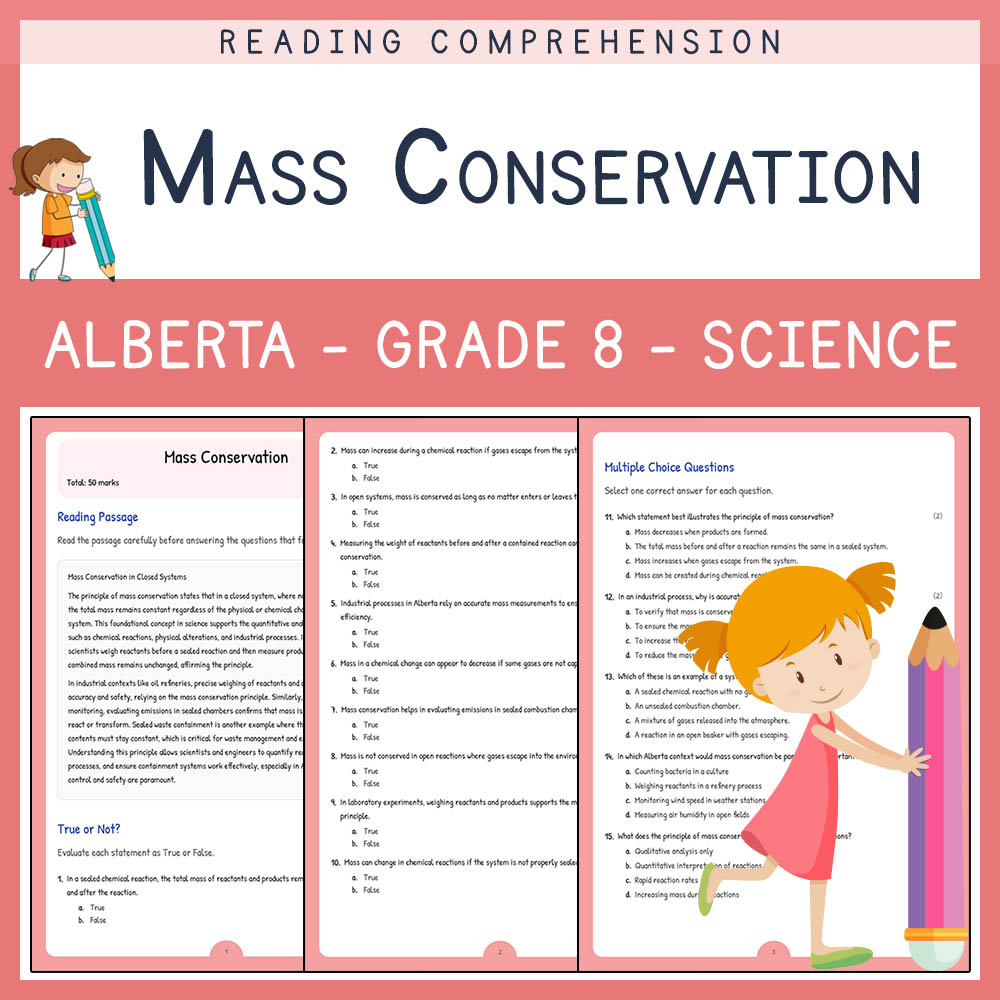
Grade 8 Science | Mass Conservation Worksheet Elena | Alberta Standard
Created byLumora LearningLearning Objectives
- Understand the principle of conservation of mass in physical and chemical changes.
- Identify real-world examples of mass conservation in industrial and environmental contexts.
- Explain how mass is accounted for in sealed systems during transformations.

Grade 12 Science | Molecular Genetics Worksheet Elena | TEKS-Aligned
Created byLumora LearningLearning Objectives
- Understand the structure and function of DNA and how it relates to heredity.
- Describe the processes of DNA replication, transcription, and translation.
- Identify types of mutations and their effects on gene expression and phenotype.
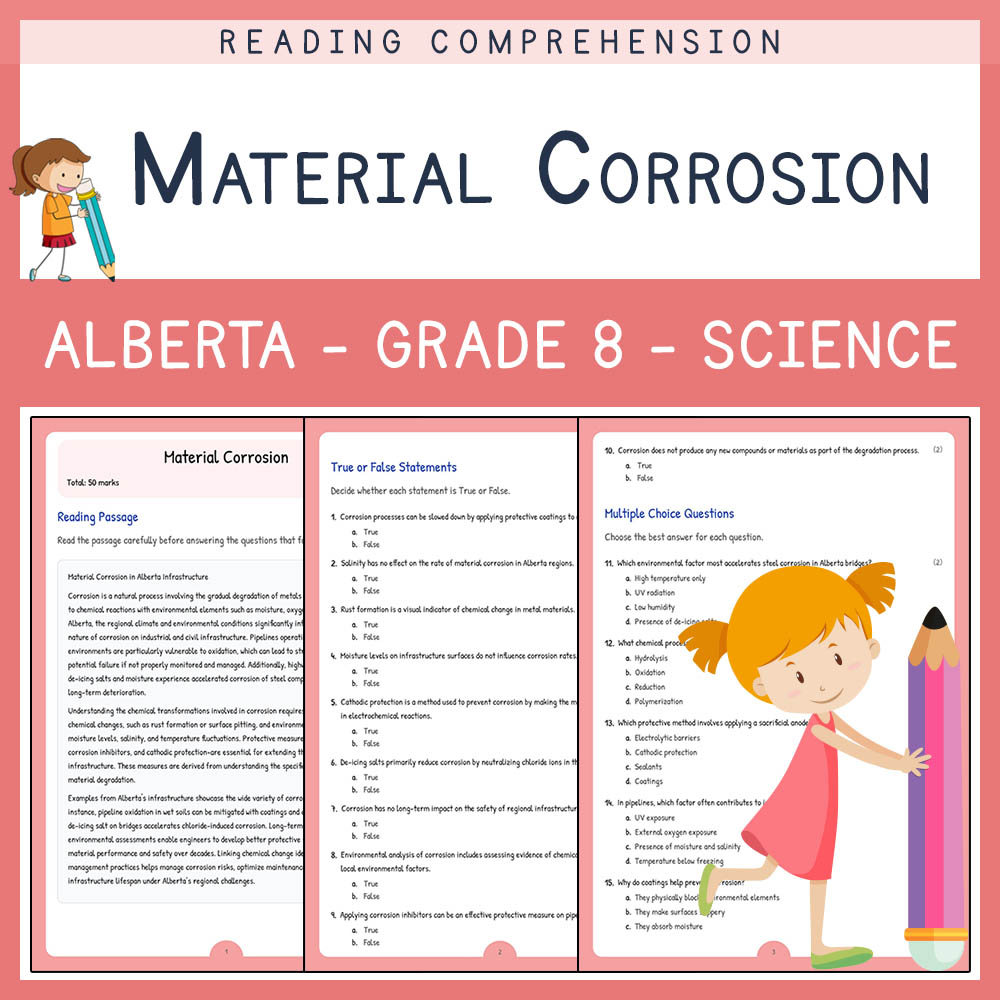
Grade 8 Science | Material Corrosion Worksheet Elena | Alberta Standard
Created byLumora LearningLearning Objectives
- Understand the chemical and environmental factors contributing to material corrosion.
- Identify signs of corrosion and analyze environmental influences on infrastructure degradation.
- Evaluate protective measures and materials used to prevent or reduce corrosion in regional structures.
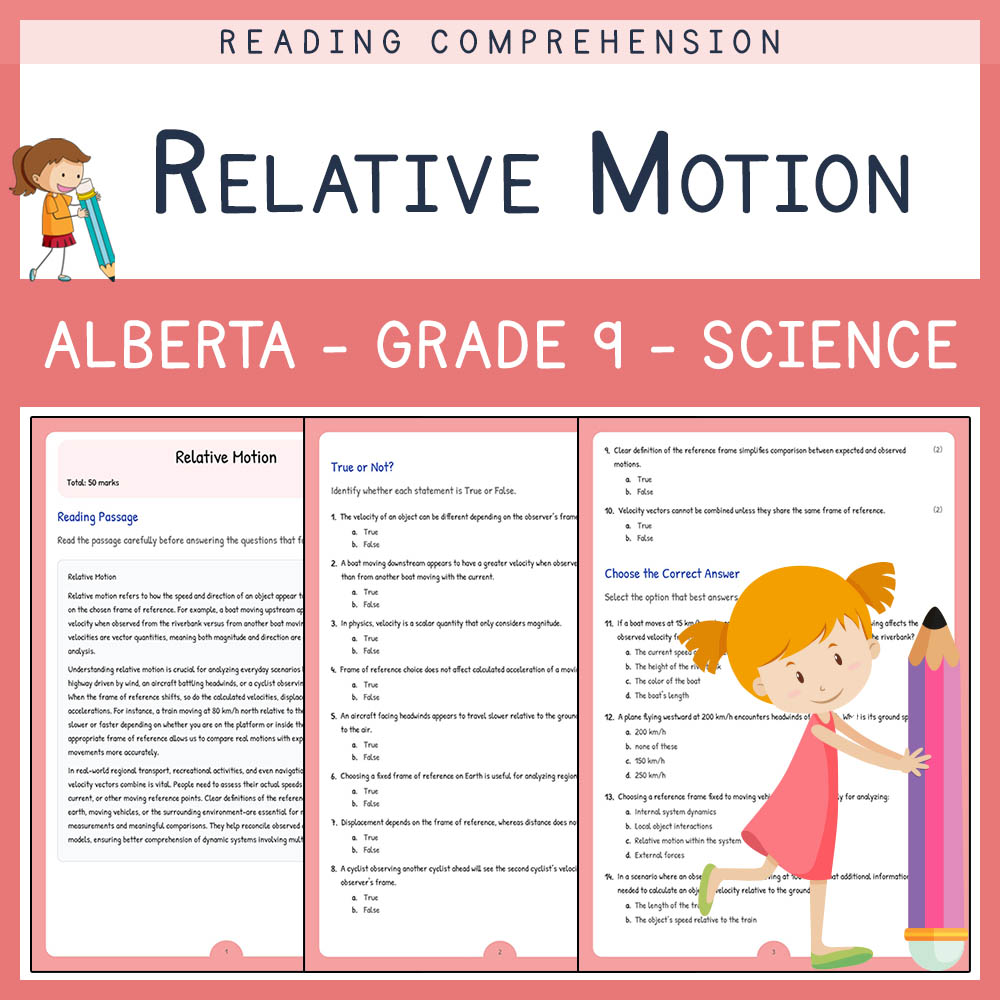
Grade 9 Science | Relative Motion Worksheet | Alberta Standards
Created byLumora LearningLearning Objectives
- Explain how observed speed and direction depend on the reference frame.
- Describe scenarios illustrating vector addition of velocities in relative motion.
- Analyze how frame choices impact calculations of displacement, speed, and acceleration.
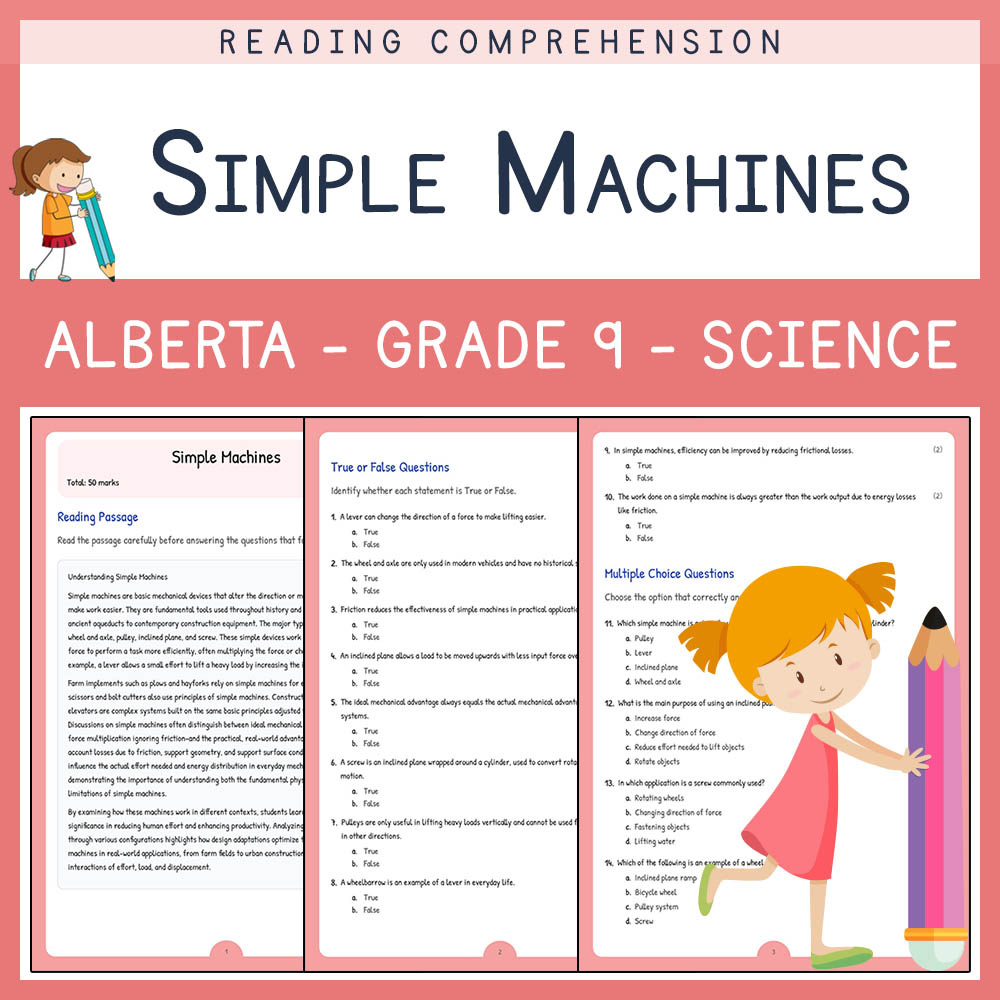
Grade 9 Science | Simple Machines Worksheet | Alberta Standards
Created byLumora LearningLearning Objectives
- Understand the fundamental concepts of simple machines and how they reduce effort.
- Identify common examples and applications of lever, wheel and axle, pulley, inclined plane, and screw.
- Explain the difference between ideal mechanical advantage and actual mechanical advantage considering friction and support geometry.
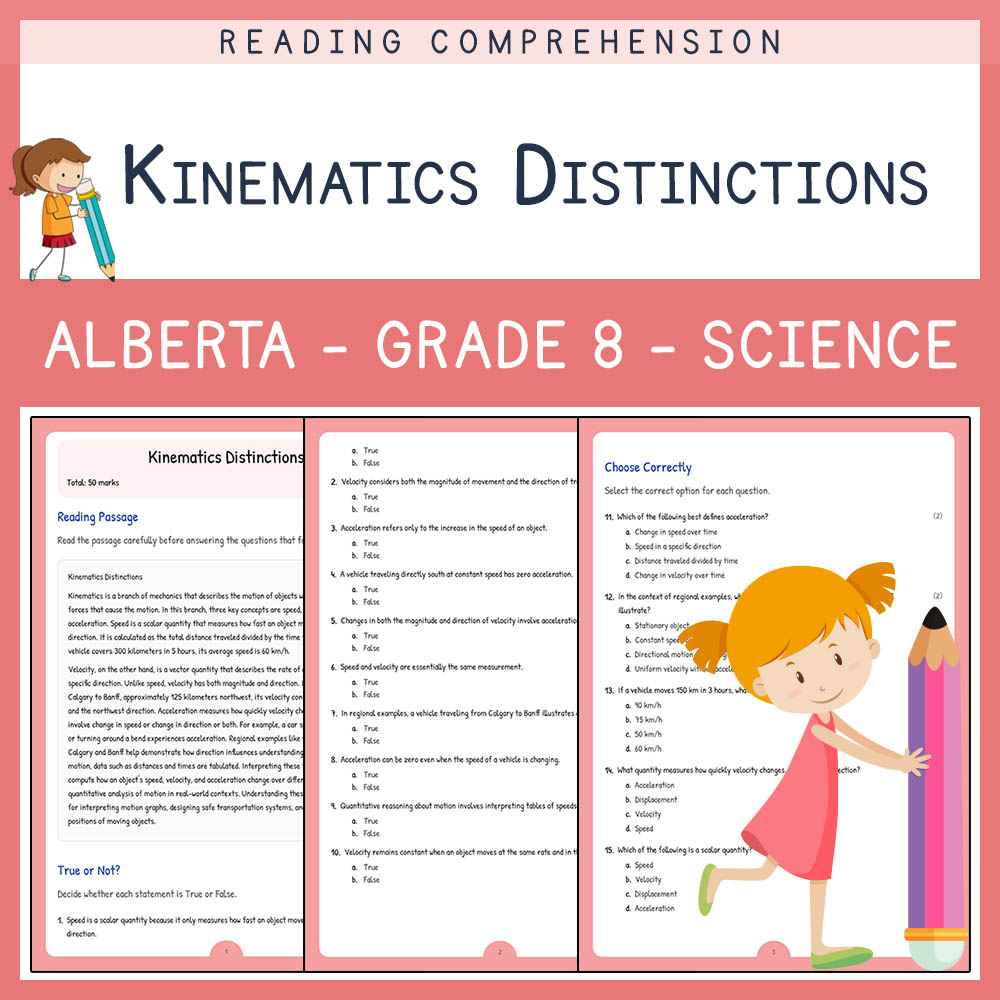
Grade 8 Science | Kinematics Distinctions Worksheet | Alberta Standard
Created byLumora LearningLearning Objectives
- Define speed, velocity, and acceleration with precision and differentiate their characteristics.
- Illustrate examples of motion, such as vehicle travel between regions, to understand directional and non-directional movement.
- Interpret data from tables of distances and times to analyze changing magnitudes and directions of motion.
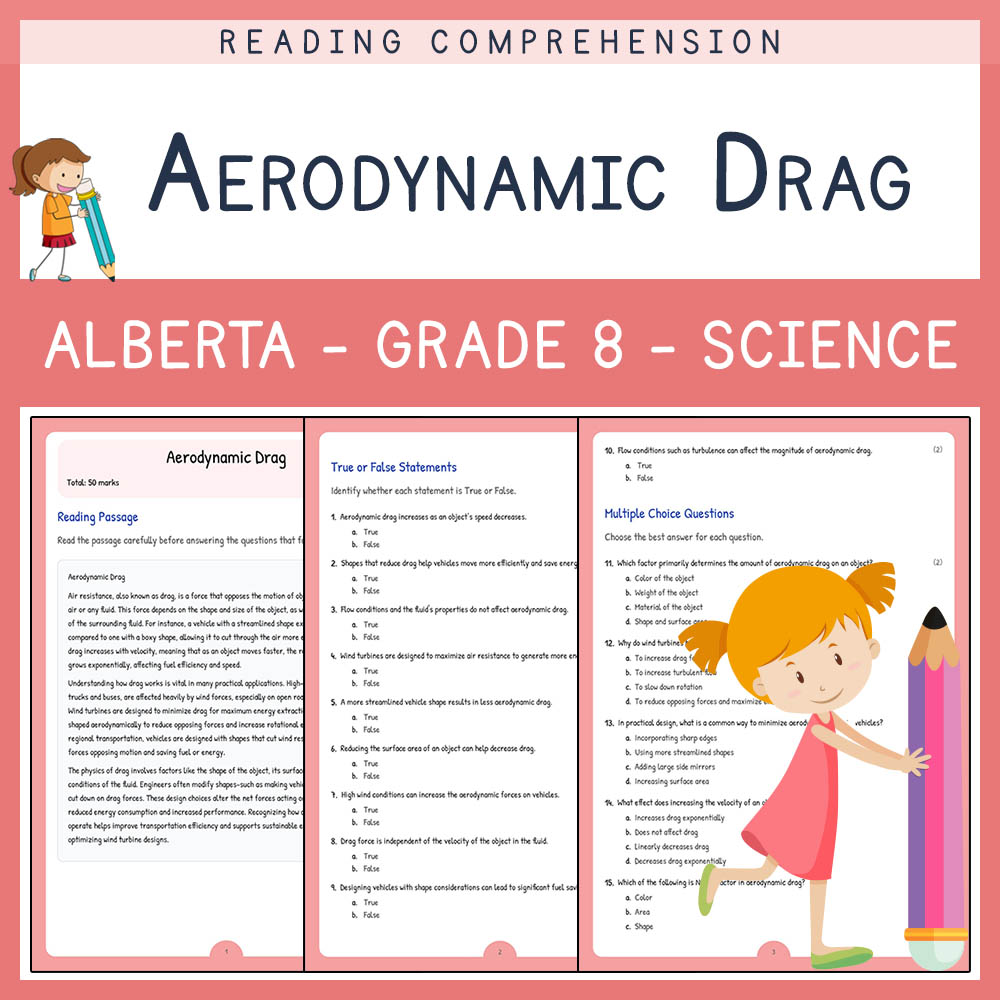
Grade 8 Science Worksheet | Aerodynamic Drag | Alberta-Aligned Practice
Created byLumora LearningLearning Objectives
- Understand the concept of aerodynamic drag and how it opposes motion through a fluid.
- Identify factors influencing air resistance such as shape, area, and flow conditions.
- Recognize practical applications where drag affects vehicle design, wind turbines, and transportation.
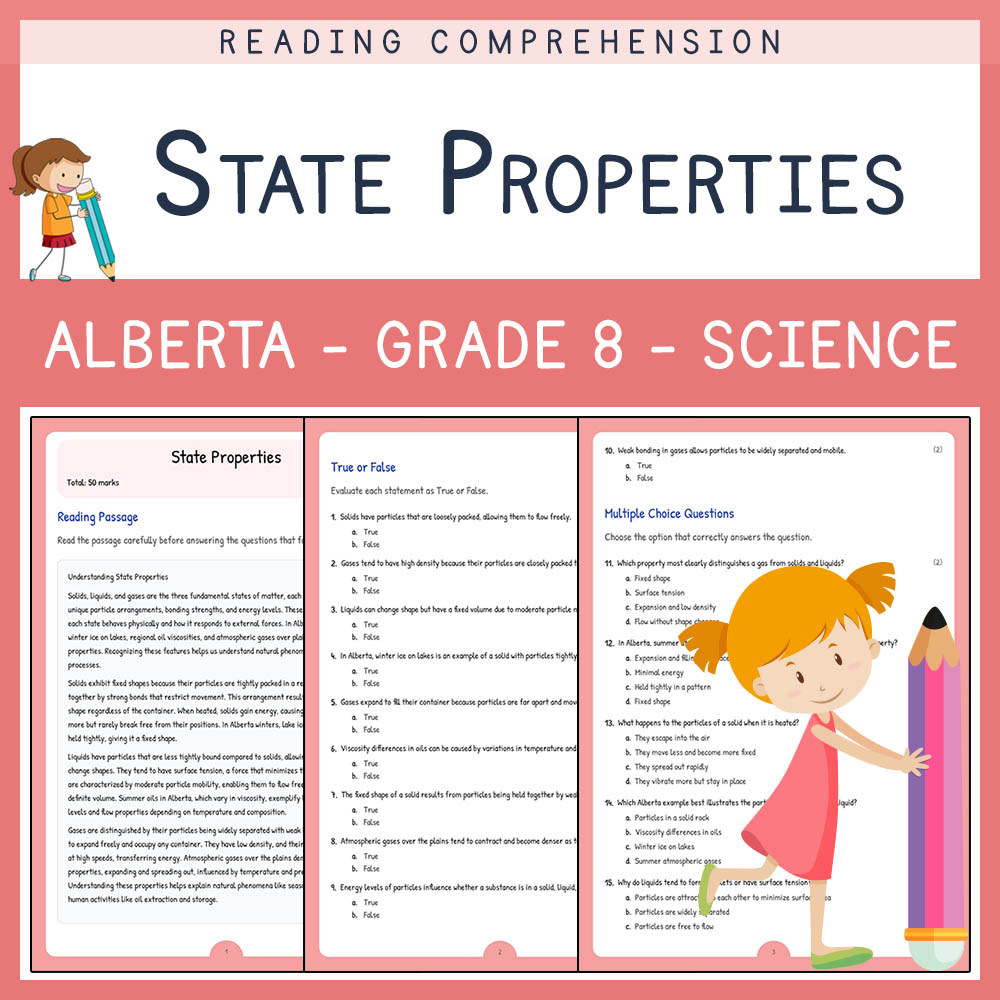
Grade 8 Science | State Properties Worksheet Elena | Alberta Standard
Created byLumora LearningLearning Objectives
- Describe the particle arrangements of solids, liquids, and gases.
- Explain how particle bonding strength and energy influence state properties.
- Identify examples of different states of matter in Alberta environments.

Grade 12 Science | Intermolecular Forces Worksheet | BC-Aligned
Created byLumora LearningLearning Objectives
- Explain the different types of intermolecular forces and their roles in molecular behavior.
- Identify and differentiate between London dispersion, dipole-dipole, and hydrogen bonding.
- Understand how intermolecular forces influence boiling points, solubility, and surface tension.

Grdae 9 Science | Energy Pathways Worksheet | AP Aligned
Created byLumora LearningLearning Objectives
- Describe the main processes involved in atmospheric and oceanic energy transfer.
- Interpret global energy budget diagrams and flux tables to understand climate variability.
- Relate energy partitioning to observable climate indicators such as surface temperature and sea surface temperature anomalies.
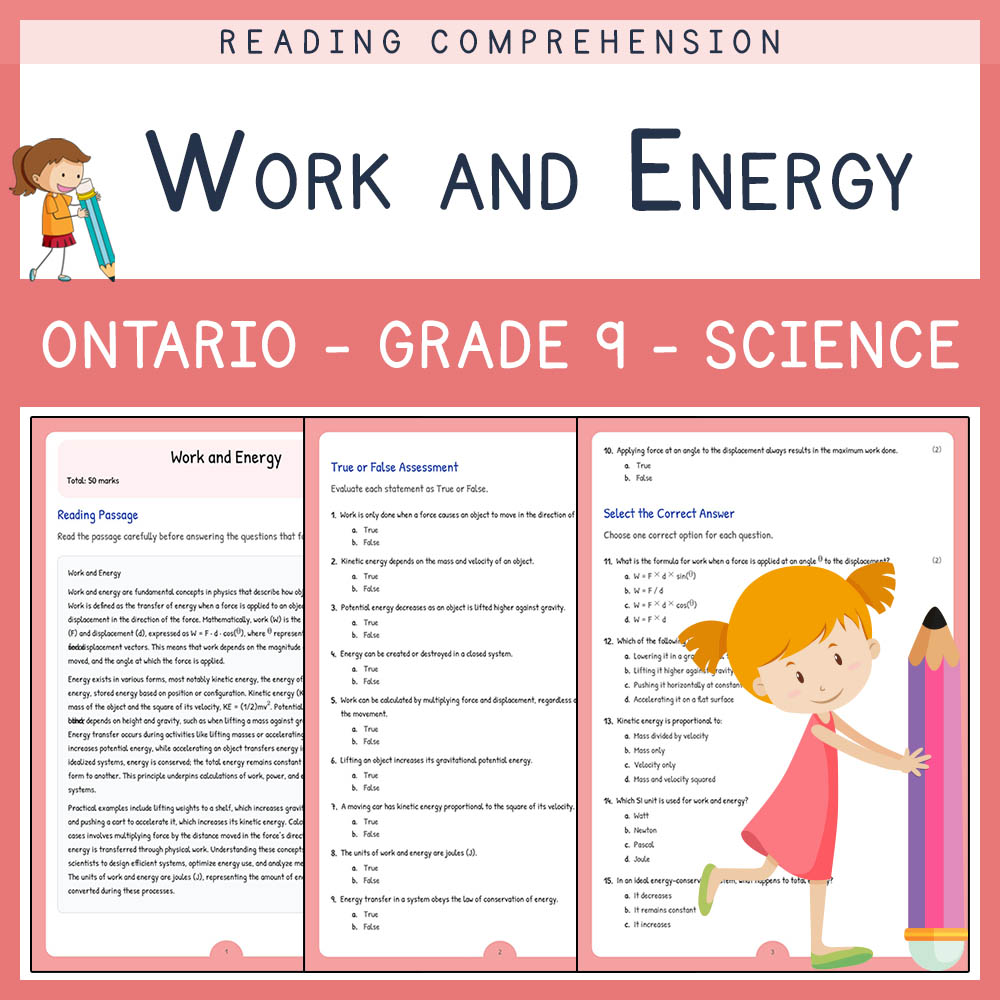
Grade 9 Science Assessment | Work and Energy Worksheet Elena | Ontario Standard
Created byLumora LearningLearning Objectives
- Define and distinguish between work, kinetic energy, and potential energy
- Understand the calculation of work for constant forces
- Explain energy transfer in mechanical systems such as lifting and accelerating objects
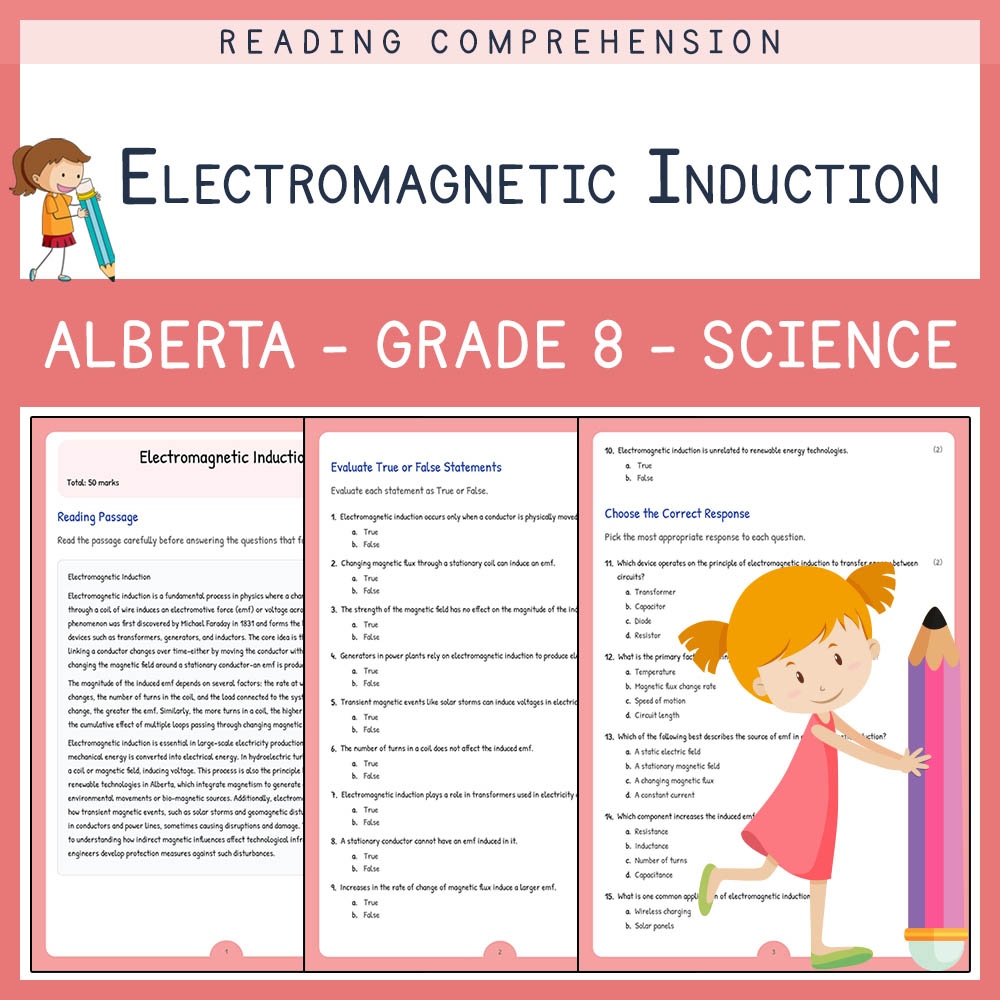
Grade 8 Science | Electromagnetic Induction Worksheet | Alberta Standards
Created byLumora LearningLearning Objectives
- Understand the fundamental principles of electromagnetic induction.
- Describe how changing magnetic flux induces voltage in conductors.
- Explain the applications of electromagnetic induction in generators and transformers.

Grade 12 Science | Instrumentation Use Worksheet | TEKS-Aligned
Created byLumora LearningLearning Objectives
- Understand the principles of sensor selection and calibration in measurement systems.
- Analyze signal processing techniques and resolution limits for accurate data acquisition.
- Evaluate sampling rates, aliasing considerations, and interfacing procedures in scientific instrumentation.
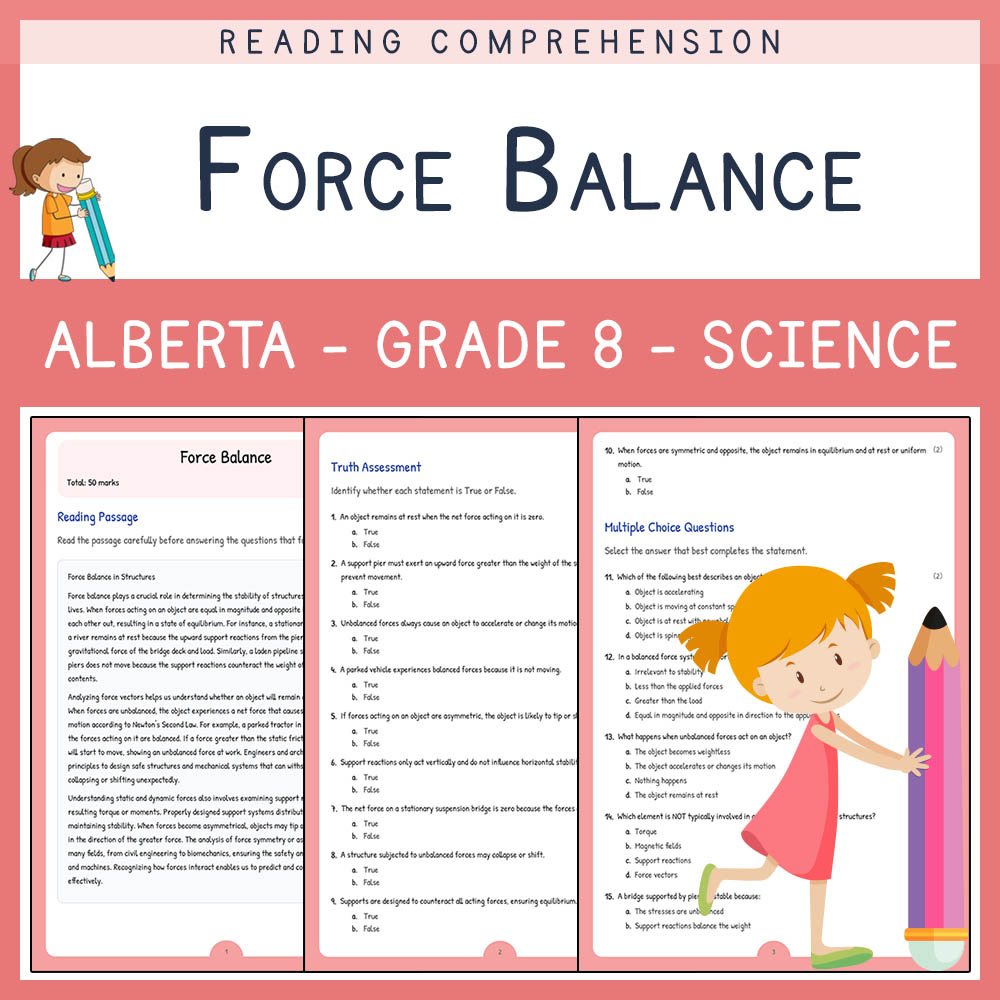
Grade 8 Science | Force Balance Worksheet Elena | Alberta Standard
Created byLumora LearningLearning Objectives
- Understand the concept of balanced and unbalanced forces and their effects on objects.
- Analyze force vectors, support reactions, and resulting motion or equilibrium.
- Identify examples of static and dynamic force systems in real-world scenarios.

Grade 12 Science | Reasoned Claims Worksheet | TEKS-Aligned
Created byLumora LearningLearning Objectives
- Understand the principles of scientific reasoning and argumentation.
- Learn how to formulate claims grounded in evidence with appropriate warrants and qualifiers.
- Evaluate competing hypotheses and assess the strength of evidence supporting claims.

Grade 9 Science | Metabolic Regulation Worksheet | AP Aligned
Created byLumora LearningLearning Objectives
- Understand the regulatory mechanisms that coordinate metabolic pathways, including allosteric control, covalent modification, and compartmentalization.
- Explain feedback inhibition and hormonal signals that shift metabolic flux between catabolism and anabolism.
- Model how enzyme kinetics and substrate concentrations influence pathway rates.

Grade 9 Science | Paleoclimate Proxies Worksheet | AP Aligned
Created byLumora LearningLearning Objectives
- Understand how ice cores, tree rings, marine sediments, and speleothems serve as proxies for past climate conditions.
- Interpret proxy indicators such as isotopic ratios, growth increments, and microfossil assemblages to reconstruct climate history.
- Relate proxy records to temporal climate patterns, including glacial-interglacial cycles and abrupt climate events.
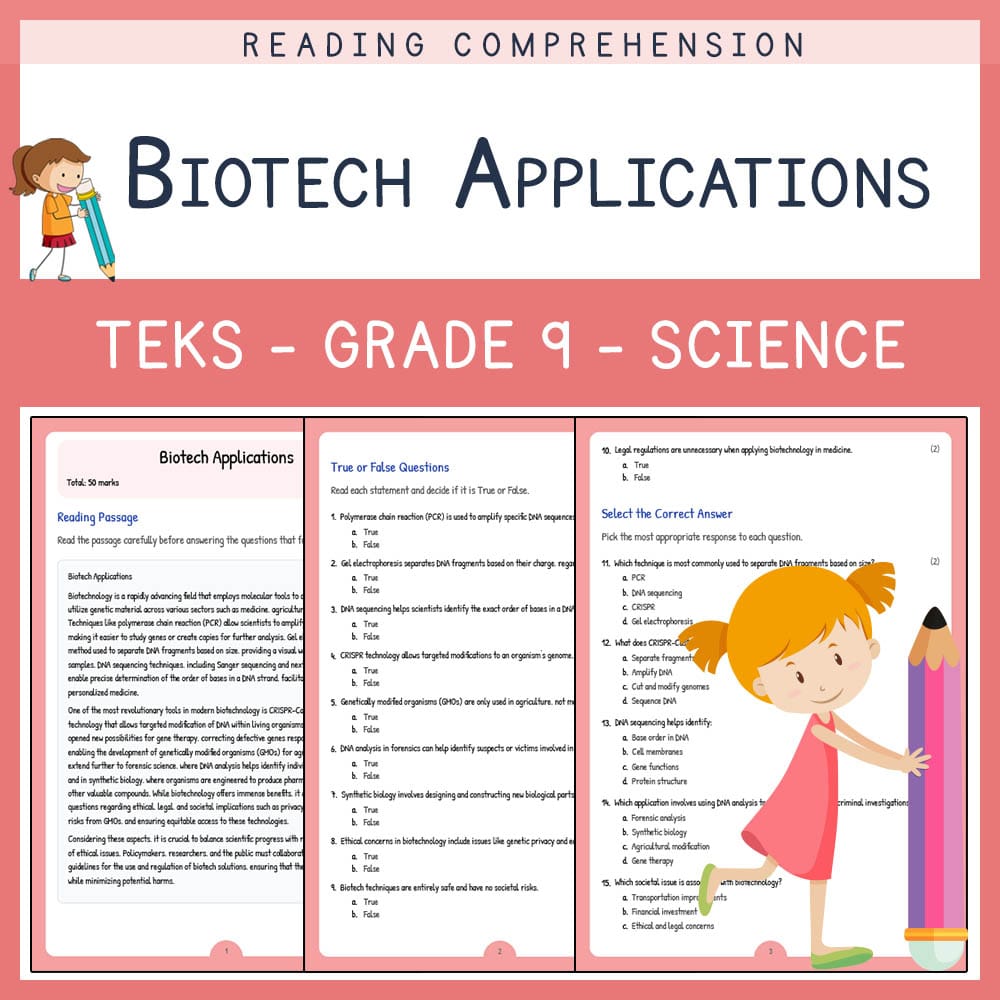
Grade 9 Science | Biotech Applications Worksheet | TEKS Aligned
Created byLumora LearningLearning Objectives
- Explain key molecular techniques used in biotechnology such as PCR, gel electrophoresis, DNA sequencing, and CRISPR genome editing.
- Identify various applications of biotechnology in research, medicine, agriculture, and forensics.
- Discuss ethical, legal, and societal considerations associated with biotechnological advancements.

Grade 12 Science | Measurement Uncertainty Worksheet | TEKS Aligned
Created byLumora LearningLearning Objectives
- Understand the concepts of precision, accuracy, and systematic vs. random errors in measurements.
- Learn how to calibrate instruments and propagate measurement uncertainties through calculations.
- Apply significant figures and reporting conventions for confidence intervals and error bounds.

Grade 12 Science | Population Genetics Worksheet | BC-Aligned
Created byLumora LearningLearning Objectives
- Understand the mechanisms that influence allele frequencies in populations.
- Identify the factors contributing to genetic variation and structure.
- Explain the concepts of gene flow, genetic drift, and selection in evolution.

Grade 9 Science | Spheres Connectivity Worksheet | AP Aligned
Created byLumora LearningLearning Objectives
- Understand the interactions among the geosphere, hydrosphere, atmosphere, and biosphere.
- Explain material and energy exchanges such as nutrient transport, gas fluxes, and ocean upwelling.
- Use conceptual models and diagrams to interpret coupled environmental phenomena.

Grade 12 Science | Genetic Variation Worksheet | BC-Aligned
Created byLumora LearningLearning Objectives
- Understand the molecular mechanisms that generate genetic variation such as mutations and recombination.
- Explain how genetic variation influences phenotypes and evolution.
- Differentiate between single-gene inheritance and polygenic traits.

Grade 12 Science | Phylogenetic Trees Worksheet | BC-Aligned
Created byLumora LearningLearning Objectives
- Understand the concept and purpose of phylogenetic trees in evolutionary biology.
- Identify features used to construct phylogenetic trees, including morphological and molecular data.
- Differentiate between homologous and analogous traits in evolutionary analysis.

Grade 9 Science | Graphical Literacy Worksheet | AP Data Analysis Practice
Created byLumora LearningLearning Objectives
- Understand how to interpret various types of graphs including scatterplots, histograms, line graphs, and residual displays.
- Learn how to evaluate axis scaling, labeling, and binning choices to accurately interpret data patterns.
- Identify how visual features such as outliers, trends, and correlation inform model selection and analysis.
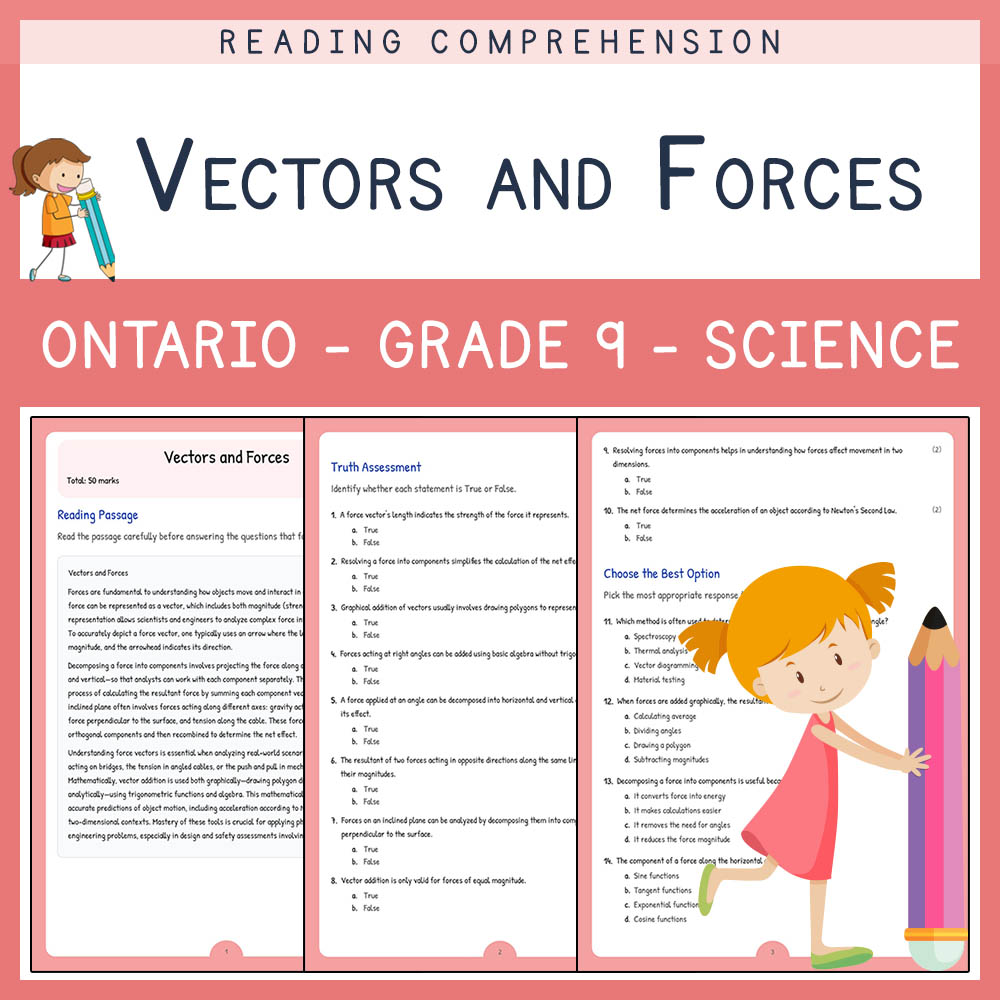
Grade 9 Science | Vectors and Forces Worksheet Elena | Ontario Standard
Created byLumora LearningLearning Objectives
- Understand the representation of forces as vectors including magnitude and direction.
- Learn to decompose forces into components and compute resultant forces graphically and analytically.
- Apply vector addition to force interactions in two-dimensional contexts such as inclined planes and angled cables.

Grade 9 Science | Mountain Building | AP Aligned
Created byLumora LearningLearning Objectives
- Explain the processes involved in mountain building, including crustal shortening, thickening, and metamorphism.
- Describe how isostatic adjustment influences mountain formation and landscape evolution.
- Analyze the relationship between plate convergence and surface topography using geologic evidence.
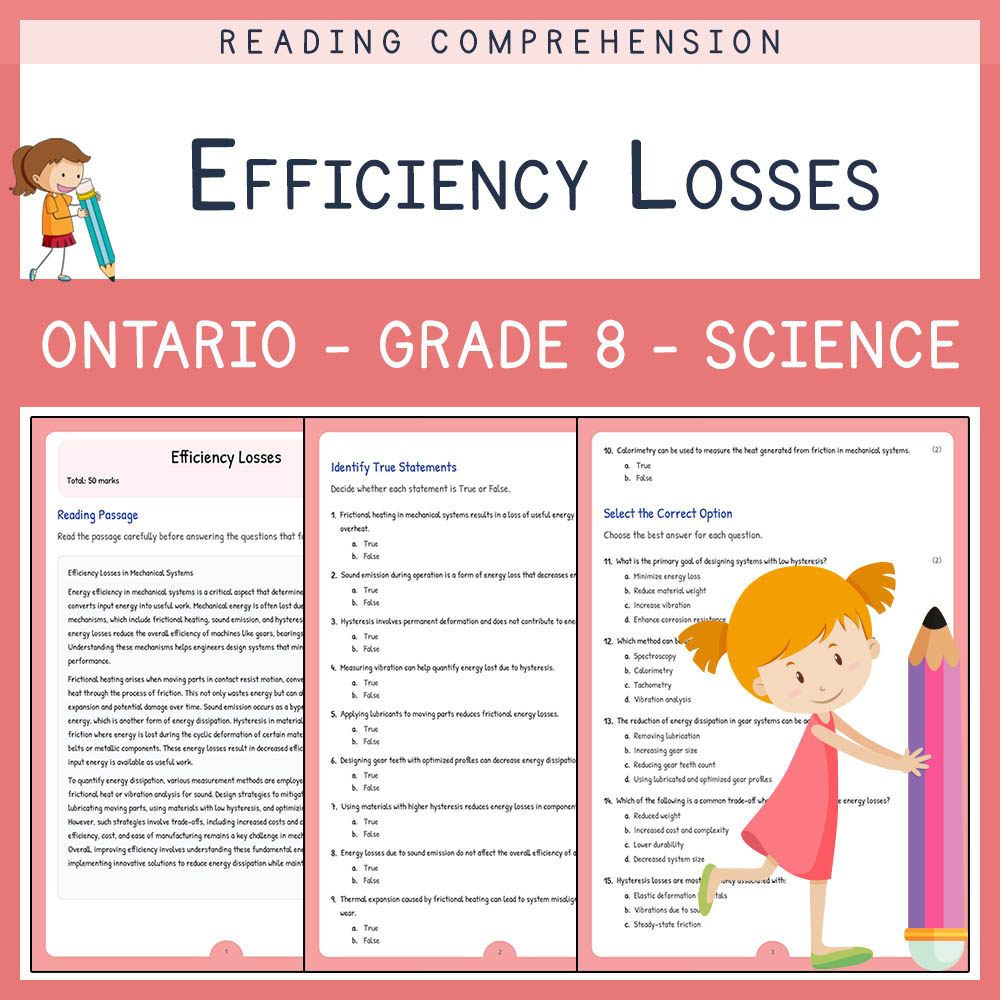
Grade 8 Science | Efficiency Losses Worksheet | Ontario Standards
Created byLumora LearningLearning Objectives
- Understand energy dissipation mechanisms such as frictional heating, sound emission, and hysteresis in mechanical systems.
- Define and calculate mechanical efficiency as useful output energy divided by input energy.
- Identify common causes of reduced efficiency in gears, bearings, and belt drives.
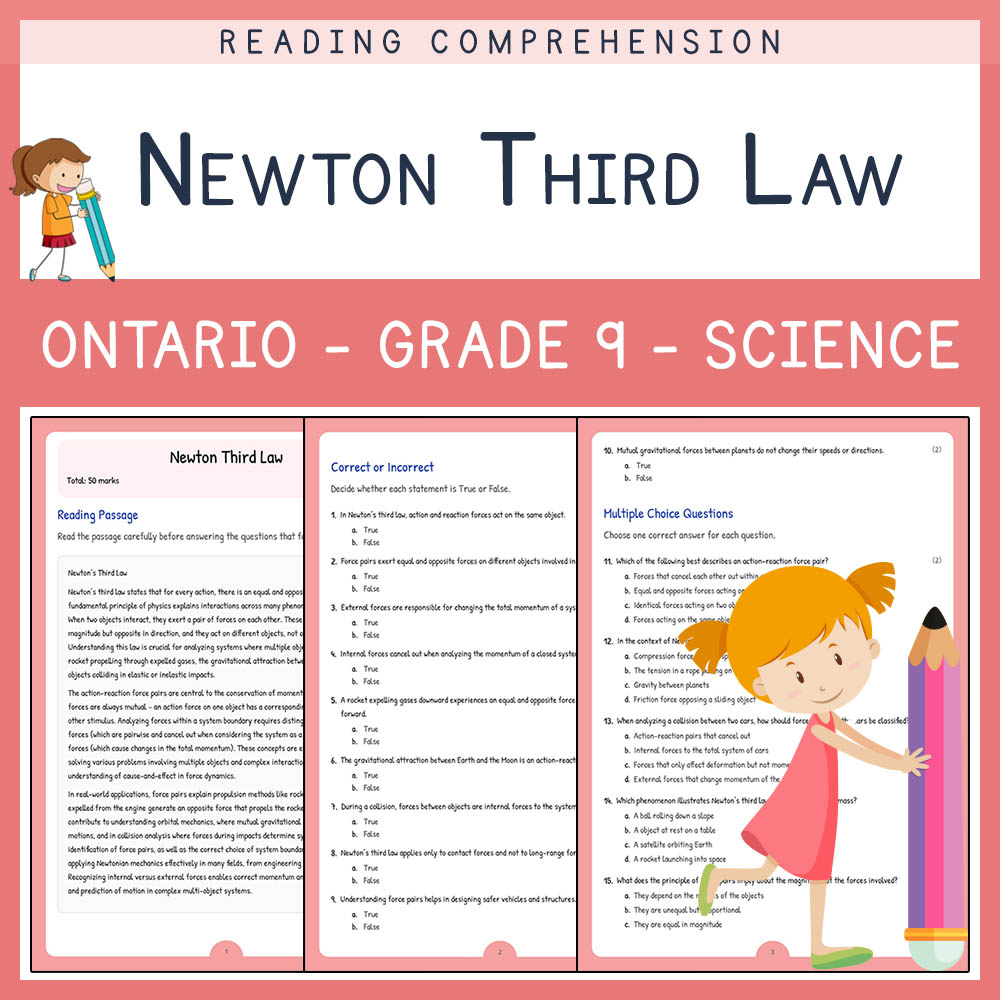
Grade 9 Science Assessment | Newton Third Law Worksheet Elena | Ontario
Created byLumora LearningLearning Objectives
- Understand the concept of action–reaction force pairs in Newton's third law.
- Identify equal magnitude and opposite direction forces in various interactions.
- Analyze phenomena such as propulsion, gravitational attraction, and collisions through force pairs.
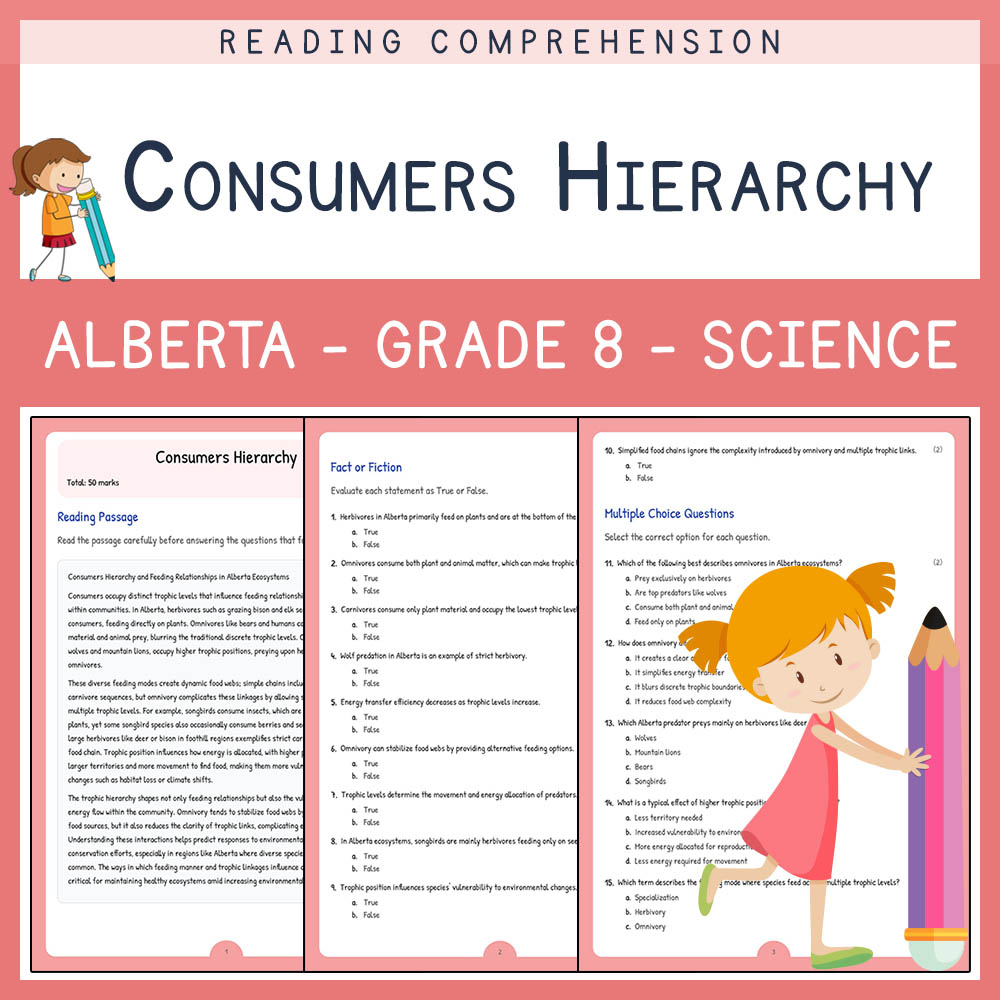
Grade 8 Science | Consumers Hierarchy Worksheet | Alberta Standards
Created byLumora LearningLearning Objectives
- Describe the roles of herbivores, omnivores, and carnivores in Alberta ecosystems.
- Explain how feeding modes influence trophic relationships and energy transfer.
- Analyze how omnivory blurs discrete trophic levels and affects food chain complexity.
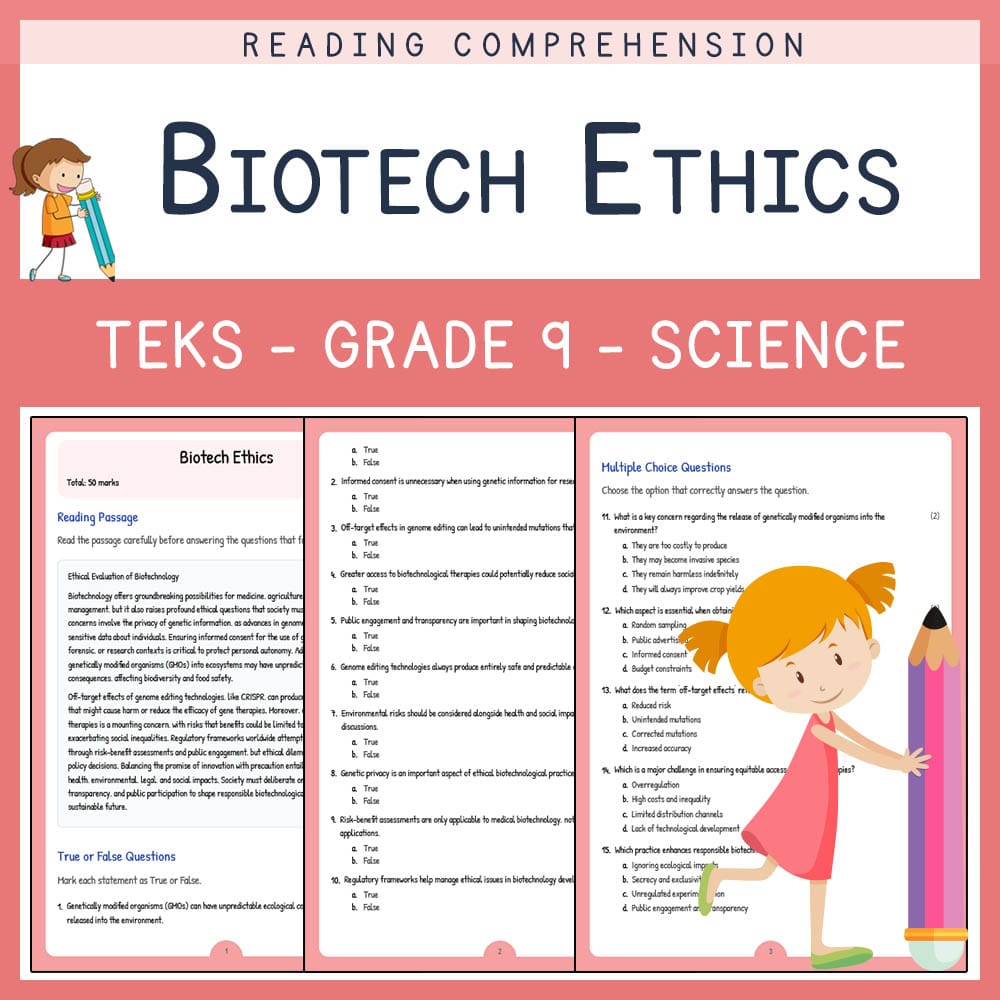
Grade 9 Science | Biotech Ethics Worksheet | TEKS Aligned
Created byLumora LearningLearning Objectives
- Understand key ethical considerations in biotechnology, including privacy, consent, and ecological impact.
- Analyze societal implications and regulatory frameworks related to genetic manipulation.
- Evaluate risks and benefits associated with biotechnological advancements.
Browse more categories
About Reading comprehension Worksheets
Find reading comprehension worksheets for class practice, homework, or self-study. All 40,241 are instant PDF downloads.
Each resource here is built by an independent educator and reviewed for quality. Worksheets print straight from PDF and suit classroom use, homework, or extra practice; most come with answer keys, and you can preview before purchasing.