
Grade 11 Science Worksheets
6,616 worksheets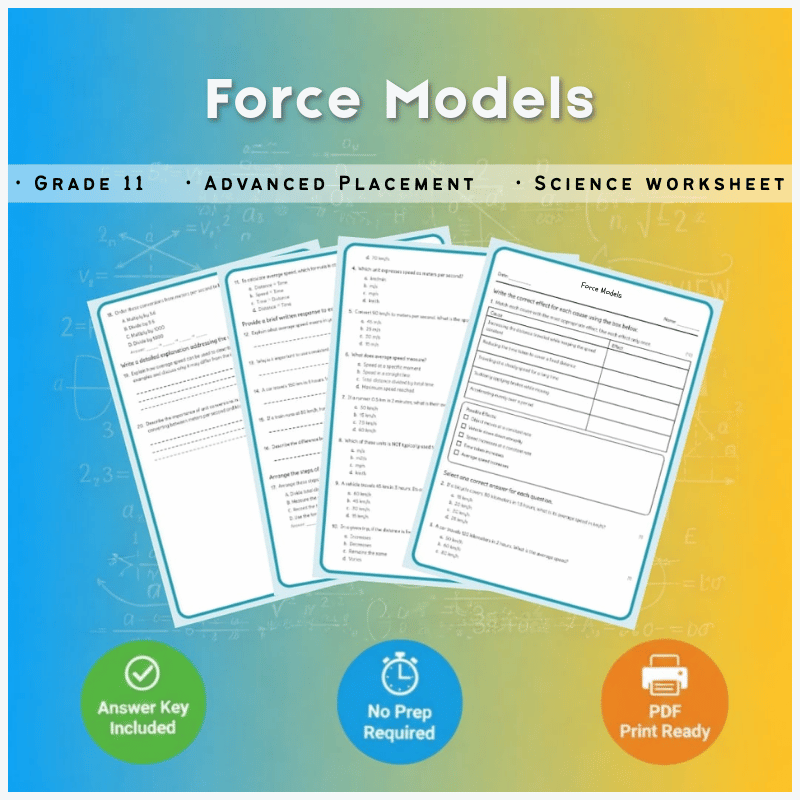
Grade 11 Science | Force Models Assessment (Answer Key) for AP Standards
 Created byBright Mind Resources
Learning Objectives
- Describe force as an interaction between objects and how it is represented in Newtonian mechanics.
- Distinguish between contact forces and long-range forces such as gravity.
- Understand how net force relates to mass and acceleration using Newton's second law.
Instant download
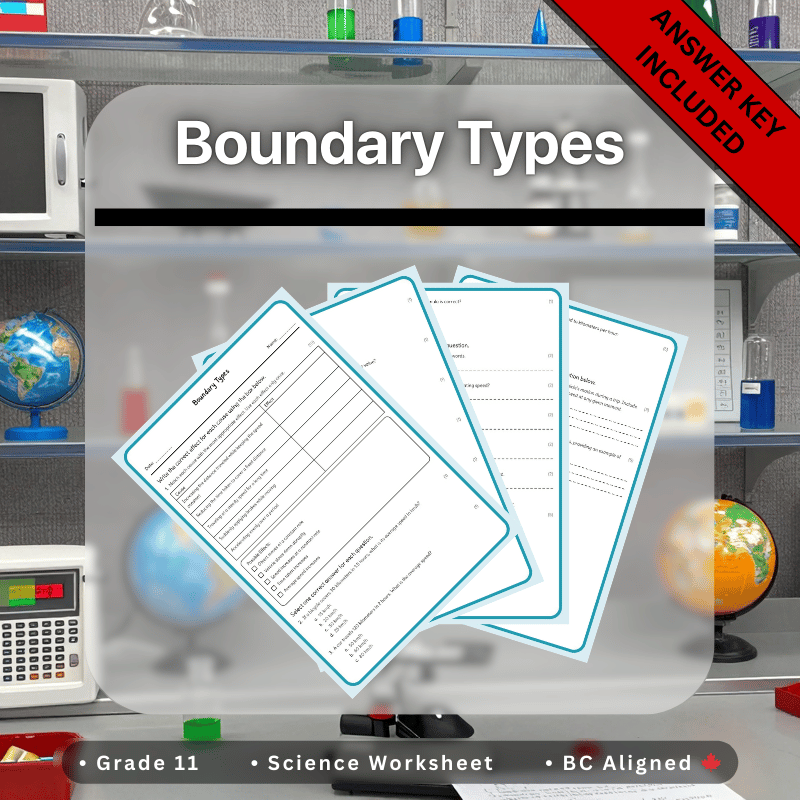
Grade 11 Science | Boundary Types Worksheet (Answer Key) – BC Standards
Created byBright Mind ResourcesLearning Objectives
- Describe the three main types of plate boundaries and their characteristics.
- Explain landforms, seismic activity, and volcanic features associated with each boundary type.
- Link surface geological features to underlying tectonic processes.
Instant download
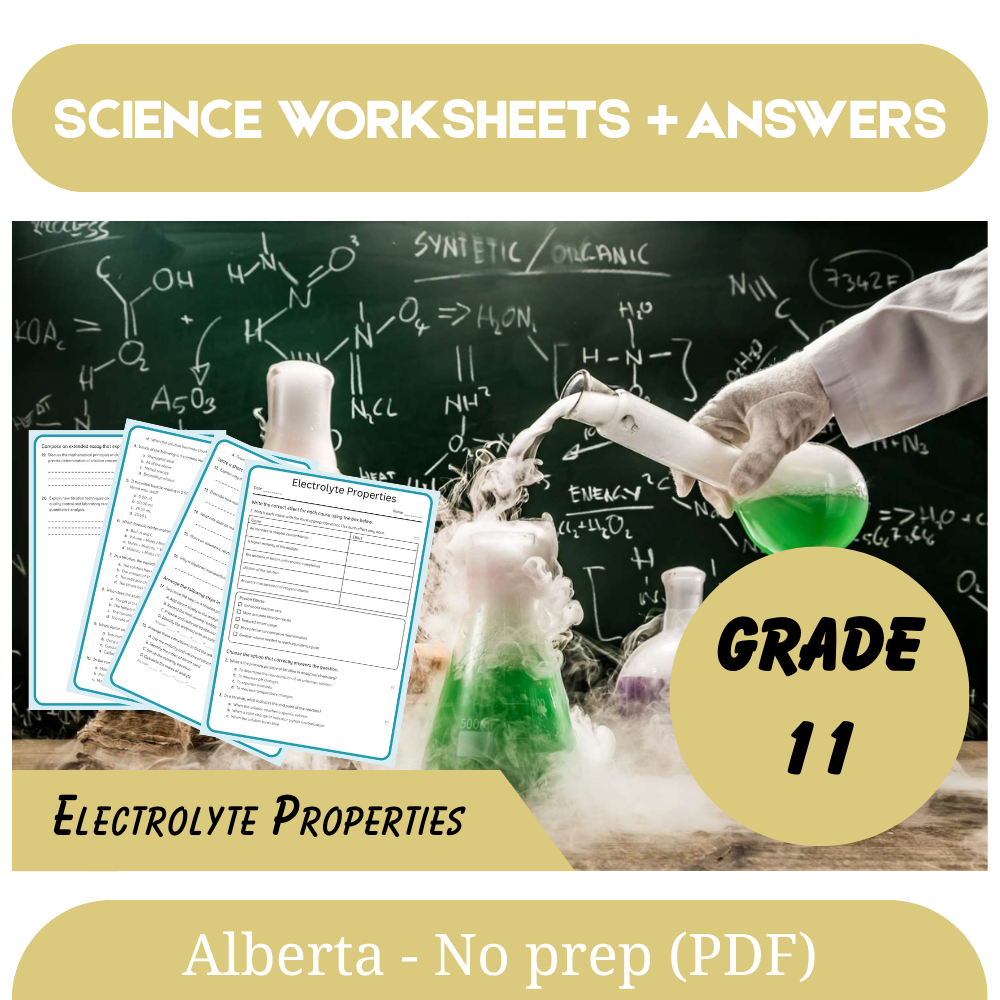
Grade 11 Science – Electrolyte Properties Worksheet (PDF)
Created byBright Mind ResourcesLearning Objectives
- Understand the difference between electrolytes and nonelectrolytes and their ability to conduct electricity.
- Analyze how electrolyte strength, ion concentration, and solute particles influence colligative properties such as freezing point depression.
Instant download
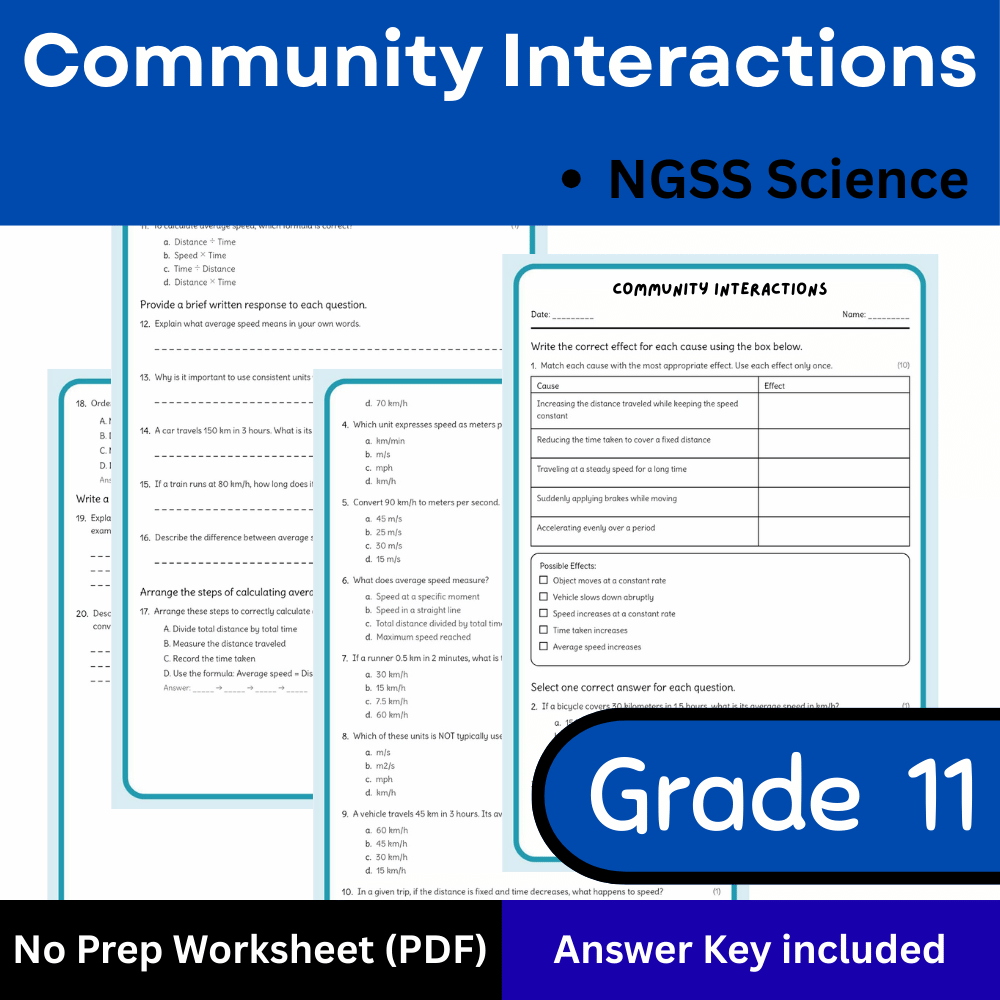
Grade 11 Science | Community Interactions Worksheets (NGSS Aligned + PDF)
Created byBright Mind ResourcesLearning Objectives
- Analyze various species interactions such as competition, mutualism, predation, parasitism, facilitation, and niche partitioning.
- Understand the roles of keystone species and trophic cascades in shaping community structure.
- Examine real-world examples like sea otter-kelp forest dynamics and pollinator networks.
Instant download
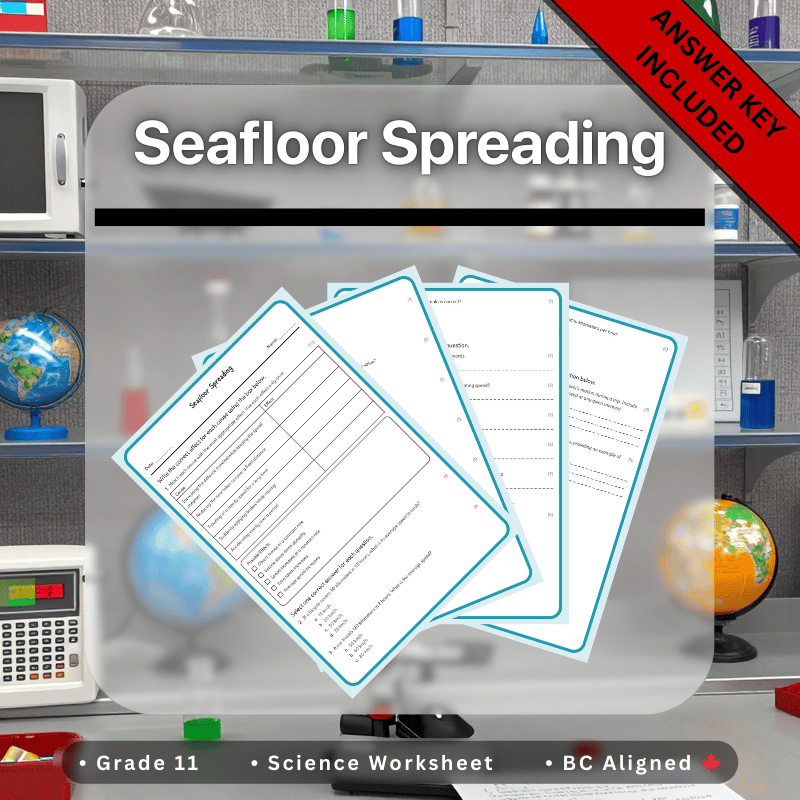
Grade 11 Science | Seafloor Spreading Worksheet – BC Standards (PDF)
Created byBright Mind ResourcesLearning Objectives
- Understand the process of seafloor spreading and how it shapes ocean basins.
- Identify the evidence supporting seafloor spreading, including magnetic stripes and crust age.
- Explain how oceanic crust records Earth's magnetic field over time.
Instant download
Grade 11 Science | Classification Methods Worksheet (Answer Key) – TEKS-Aligned
Created byBright Mind ResourcesLearning Objectives
- Understand different approaches used in biological classification such as morphological, molecular, and computational methods.
- Describe how cladistic analysis identifies monophyletic groups based on shared derived characters.
- Compare phenetic and cladistic approaches to taxonomy and classification.
Also included in: Grade 11 Science | Evolution & Phylogenetics Worksheet Bundle (TEKS Aligned) +2 more
Instant download
Grade 11 Science | Statistical Reasoning Worksheet (AP Standards) – Science(PDF)
Created byBright Mind ResourcesLearning Objectives
- Understand the concepts of sampling distributions and hypothesis framing.
- Interpret p-values, effect sizes, and confidence intervals in ecological and material testing contexts.
- Evaluate sample size adequacy and the assumptions behind statistical tests.
Instant download
Grade 11 Science | Population Genetics AP Worksheet + Answer Key (PDF)
Created byBright Mind ResourcesLearning Objectives
- Explain the principles of allele frequency change in populations.
- Apply the Hardy-Weinberg equilibrium model to real-world scenarios.
- Identify the effects of selection, drift, migration, and mutation on genetic variation.
Instant download
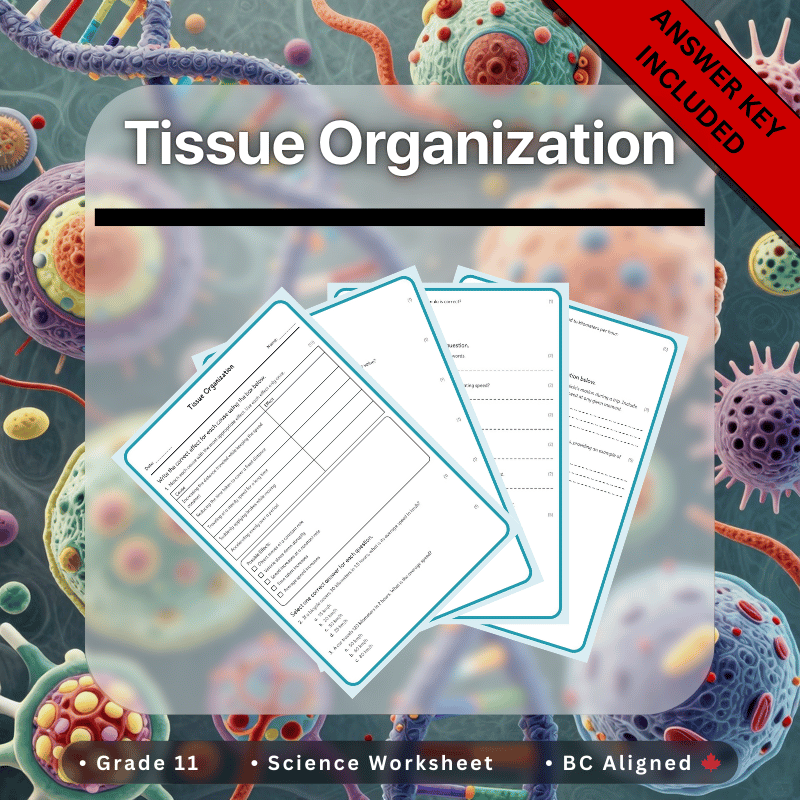
Grade 11 Science | Tissue Organization Worksheet (PDF) BC Standard/Framework
Created byBright Mind ResourcesLearning Objectives
- Understand the hierarchical organization of tissues, organs, and organ systems in multicellular organisms.
- Explain how cellular differentiation leads to specialized structures and functions.
- Describe models of tissue architecture and intercellular communication in physiological processes.
Instant download
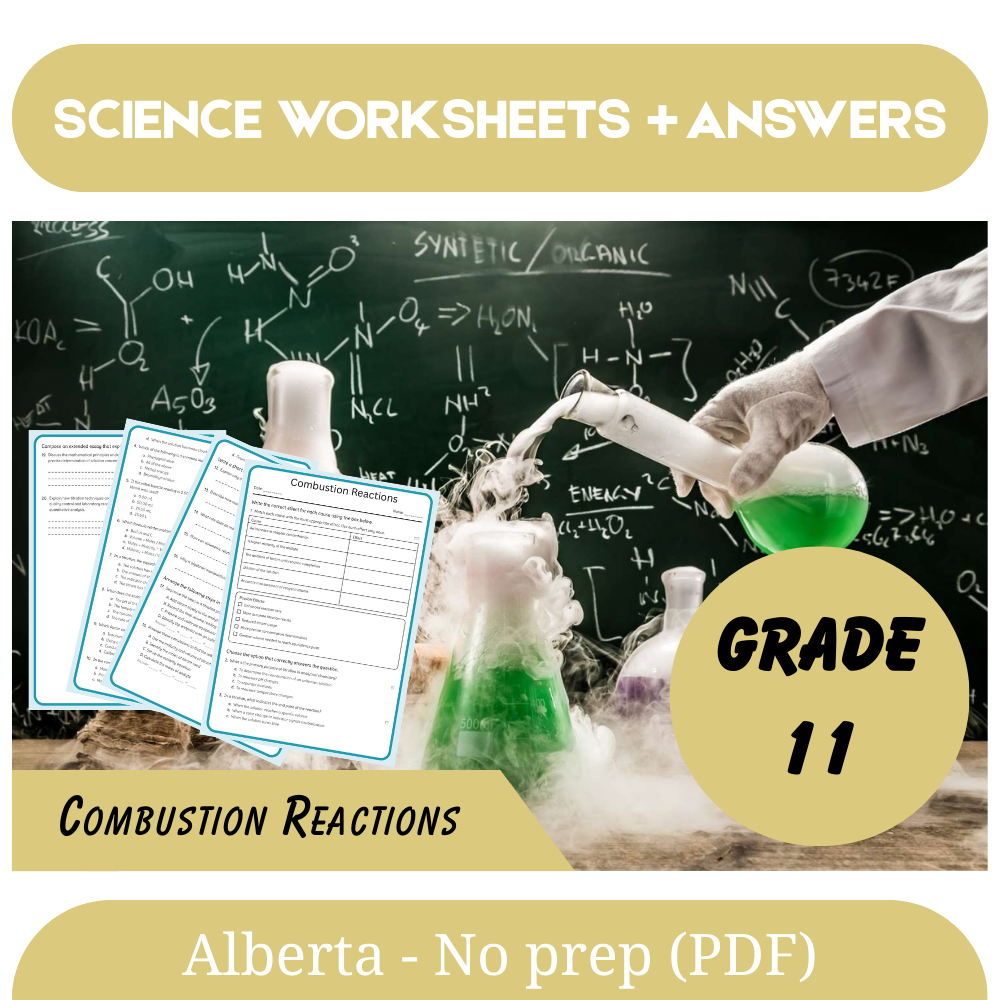
Grade 11 Science – Combustion Reactions Worksheet (PDF) – Alberta Standards
Created byBright Mind ResourcesLearning Objectives
- Understand the process of combustion and oxidation of fuels
- Identify the pollutants generated during combustion and their environmental impact
- Calculate oxygen demand and interpret emissions data for combustion processes
Instant download
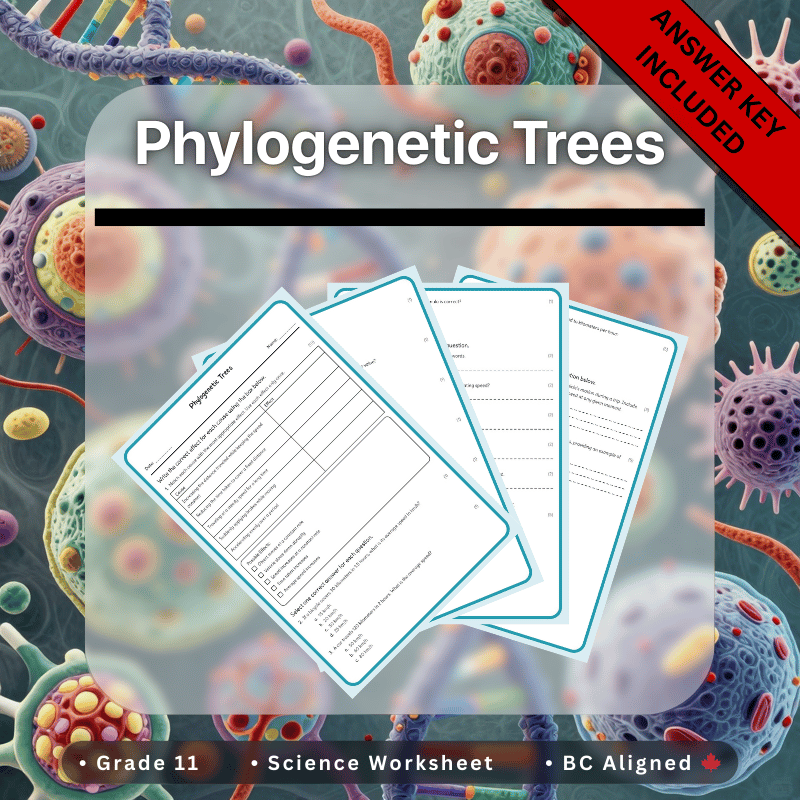
Grade 11 Science | Phylogenetic Trees Worksheet (Answer Key) – BC Standards
Created byBright Mind ResourcesLearning Objectives
- Understand how phylogenetic trees illustrate hypotheses of evolutionary relationships.
- Identify different methods used to infer evolutionary histories, such as parsimony and molecular clock.
- Distinguish between homologous traits and analogous traits in evolutionary analysis.
Instant download
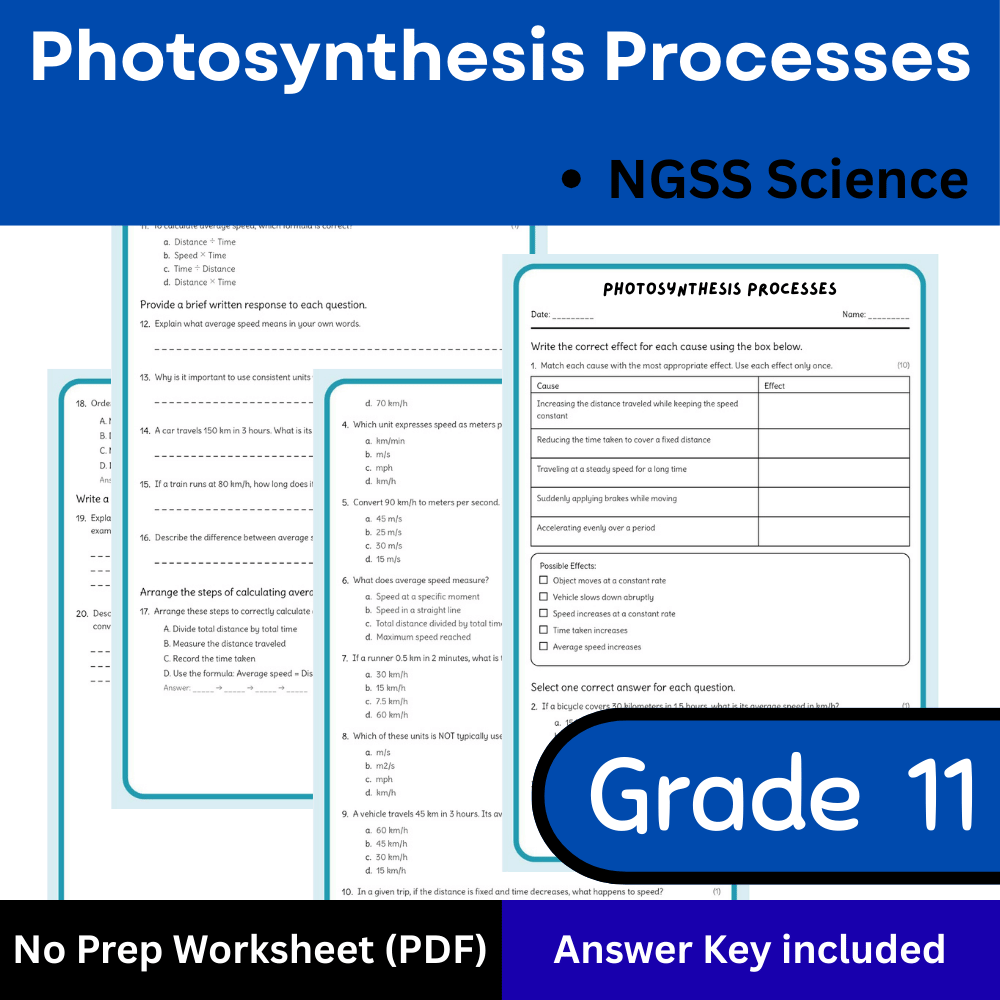
Grade 11 Science – Photosynthesis Processes Worksheet (NGSS Aligned, PDF)
Created byBright Mind ResourcesLearning Objectives
- Explain the light-driven and biochemical stages of photosynthesis, including electron transport, photophosphorylation, and the Calvin cycle.
- Describe the roles of chloroplasts, mitochondria, and gas exchange in energy transfer and metabolism.
- Understand the stoichiometry of CO2 uptake and O2 release during photosynthesis and respiration.
Instant download
Grade 11 Science | Genetic Code Worksheet (AP Standard + Answer Key) (PDF)
Created byBright Mind ResourcesLearning Objectives
- Understand the molecular structure and base-pairing rules of nucleic acids.
- Describe the processes of transcription and translation in protein synthesis.
- Identify different mutation types and their effects on gene expression and phenotype.
Instant download
Grade 11 Science – Cell Structure Worksheet (PDF) | BC Standard & Answer Key
Created byBright Mind ResourcesLearning Objectives
- Identify the key components of a cell and their functions.
- Explain differences between prokaryotic and eukaryotic cells.
- Understand how microscopy and models represent cellular structures.
Instant download
Grade 11 Science | Long Range Forces Worksheet + Answer Key (NGSS Aligned)
Created byBright Mind ResourcesLearning Objectives
- Understand and apply Newton's law of universal gravitation and Coulomb's law using inverse-square relationships.
- Use vector addition to compute net forces and predict particle motion.
- Analyze complex systems of interacting bodies, including two-body, multi-body, and point-charge arrangements.
Instant download
Grade 11 Science – Oscillatory Motion Worksheet (AP Standard + PDF)
Created byBright Mind ResourcesLearning Objectives
- Explain the principles of simple harmonic motion in mass–spring systems and pendula.
- Derive the equations of motion for oscillatory systems and connect linear restoring forces to sinusoidal solutions.
- Describe energy interchange between kinetic and potential forms during oscillations.
Instant download
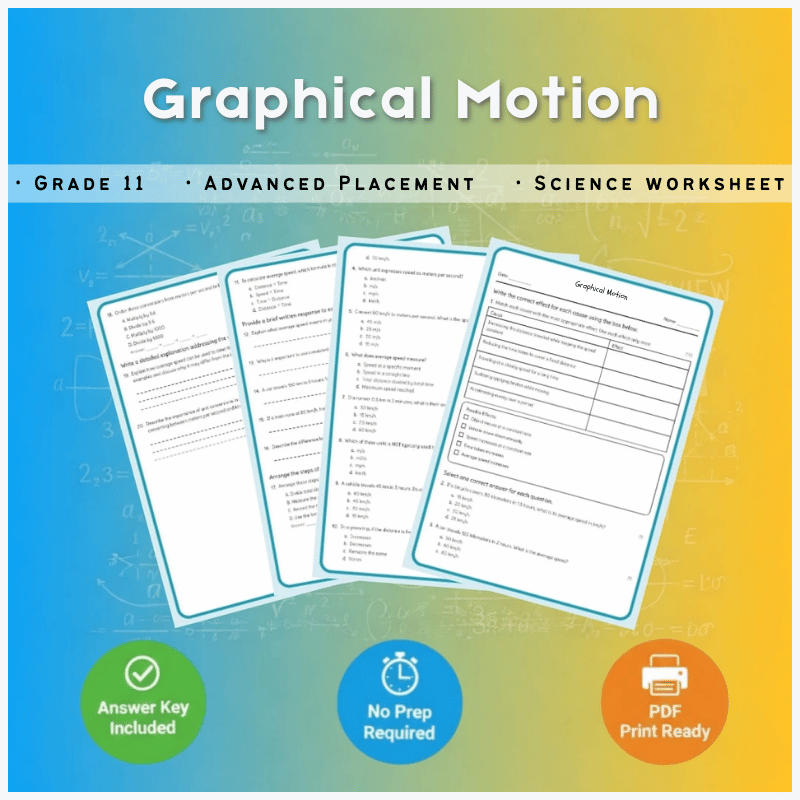
Grade 11 Science – Graphical Motion Worksheet (AP Standard) & Answer Key
Created byBright Mind ResourcesLearning Objectives
- Interpret and construct position, velocity, and acceleration graphs.
- Relate slopes and areas under graphs to instantaneous and average quantities.
- Distinguish constant and variable acceleration through graphical analysis.
Instant download
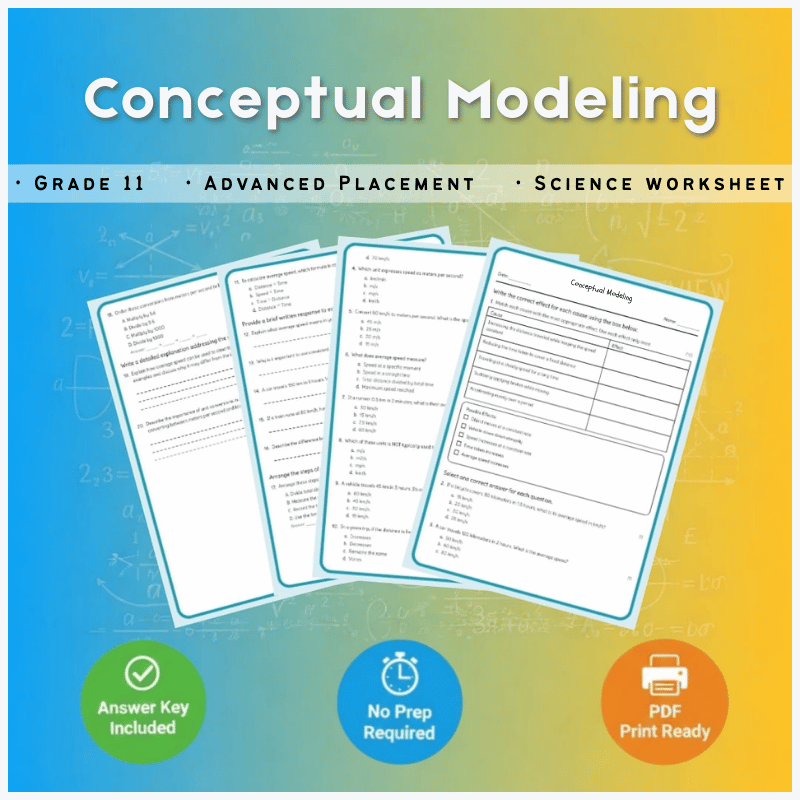
Grade 11 Science | Conceptual Modeling Worksheet (AP Standards) – PDF
Created byBright Mind ResourcesLearning Objectives
- Understand what a conceptual model represents and how it connects mechanisms to observable phenomena.
- Identify components, assumptions, scope, and qualitative predictions in conceptual models.
- Differentiate between discrete and continuous formulations in modeling.
Instant download
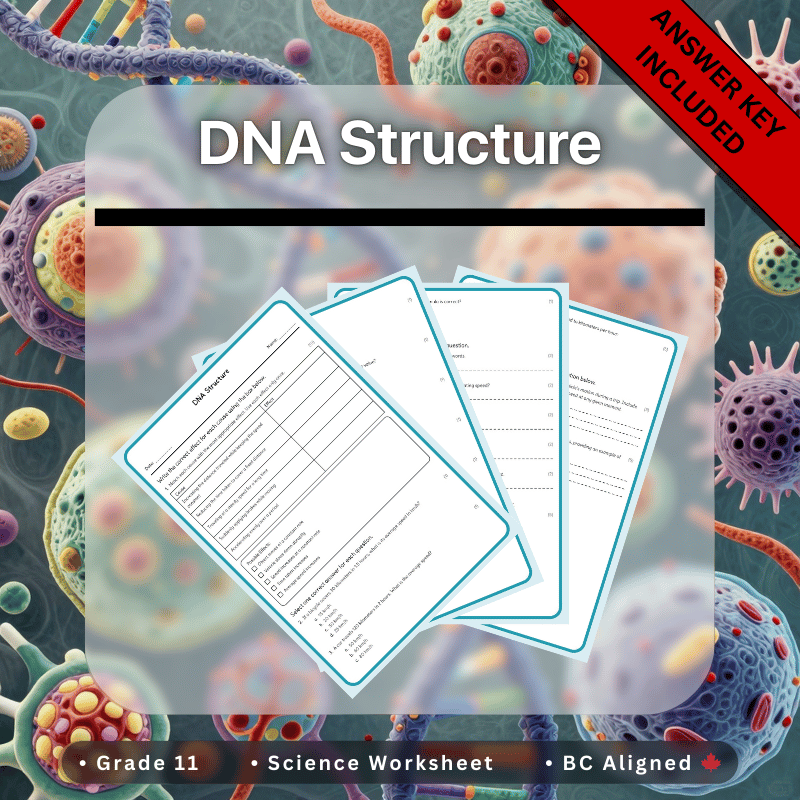
Grade 11 Science | DNA Structure Worksheet + Answer Key – BC Standards (PDF)
Created byBright Mind ResourcesLearning Objectives
- Describe the fundamental components of DNA and their functions.
- Explain the significance of complementary base pairing and the double helix structure.
- Analyze how mutations such as substitutions, insertions, and deletions affect genetic information.
Instant download
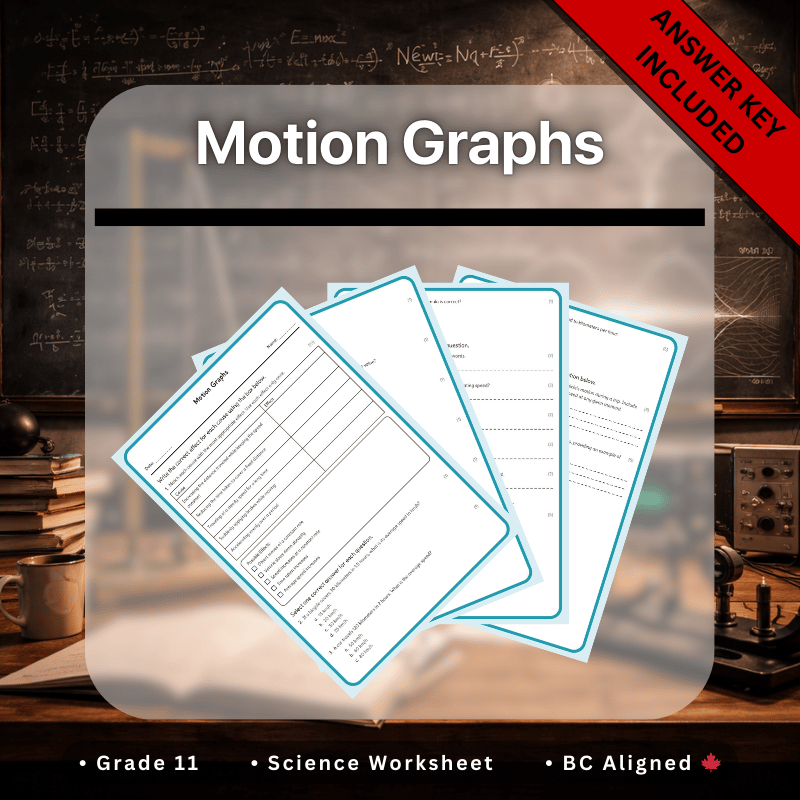
Grade 11 Science | Motion Graphs Worksheet + Answer Key – BC Standards (PDF)
Created byBright Mind ResourcesLearning Objectives
- Understand how position–time and velocity–time graphs visually represent motion.
- Interpret the slopes and areas under graphs to determine velocity and displacement.
- Identify types of motion such as uniform velocity, constant acceleration, and instantaneous events using graphs.
Instant download
Grade 11 Science | Fossil Record Analysis Worksheet (Answer Key) – BC Standards
Created byBright Mind ResourcesLearning Objectives
- Understand how the fossil record documents evolutionary change over deep time.
- Identify key methods used to date fossils and establish temporal sequences.
- Explain the significance of transitional fossils in supporting descent with modification.
Instant download
Grade 11 Science | Light Reactions Worksheet (PDF) – TEKS Aligned Science 1
Created byBright Mind ResourcesLearning Objectives
- Explain the process of light-dependent reactions in photosynthesis.
- Identify the major components and steps involved in electron transport within thylakoid membranes.
- Describe how proton gradients are formed and utilized to synthesize ATP.
Also included in: Grade 11 Science Unit Bundle – Cell Function, Respiration & Photosynthesis-TEKS +2 more
Instant download
Grade 11 Science | Collisions Types Worksheet (Puzzle & Explanation) PDF
Created byBright Mind ResourcesLearning Objectives
- Understand the difference between elastic and inelastic collisions in terms of energy and momentum conservation.
- Apply conservation equations to analyze one- and two-dimensional collisions.
- Interpret physical scenarios involving collisions using center-of-mass frames and energy distribution concepts.
Instant download
Grade 11 Science | Energy Molecules TEKS Worksheet (PDF) with Answer Key
Created byBright Mind ResourcesLearning Objectives
- Describe the function of ATP as the primary energy carrier in cells.
- Explain how cells produce ATP through different metabolic pathways.
- Identify the processes that utilize ATP energy for cellular functions.
Also included in: Grade 11 Science Unit Bundle – Cell Function, Respiration & Photosynthesis-TEKS +2 more
Instant download
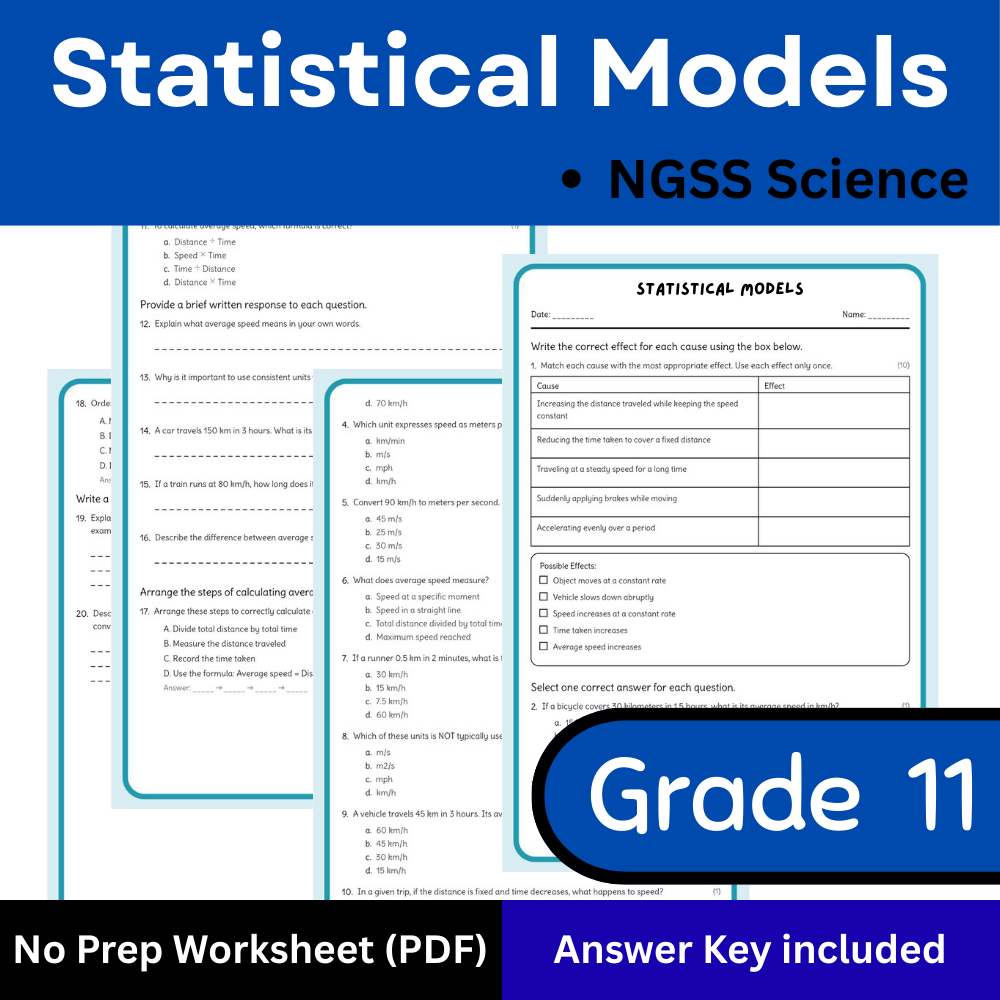
Grade 11 Science | Statistical Models & Population Genetics Worksheet (PDF)
Created byBright Mind ResourcesLearning Objectives
- Understand how statistical and probabilistic methods apply to allele frequencies and trait distributions.
- Develop and interpret Hardy–Weinberg equilibrium conditions and calculations.
- Use chi-square tests and confidence intervals to evaluate genetic data departures from expectations.
Instant download
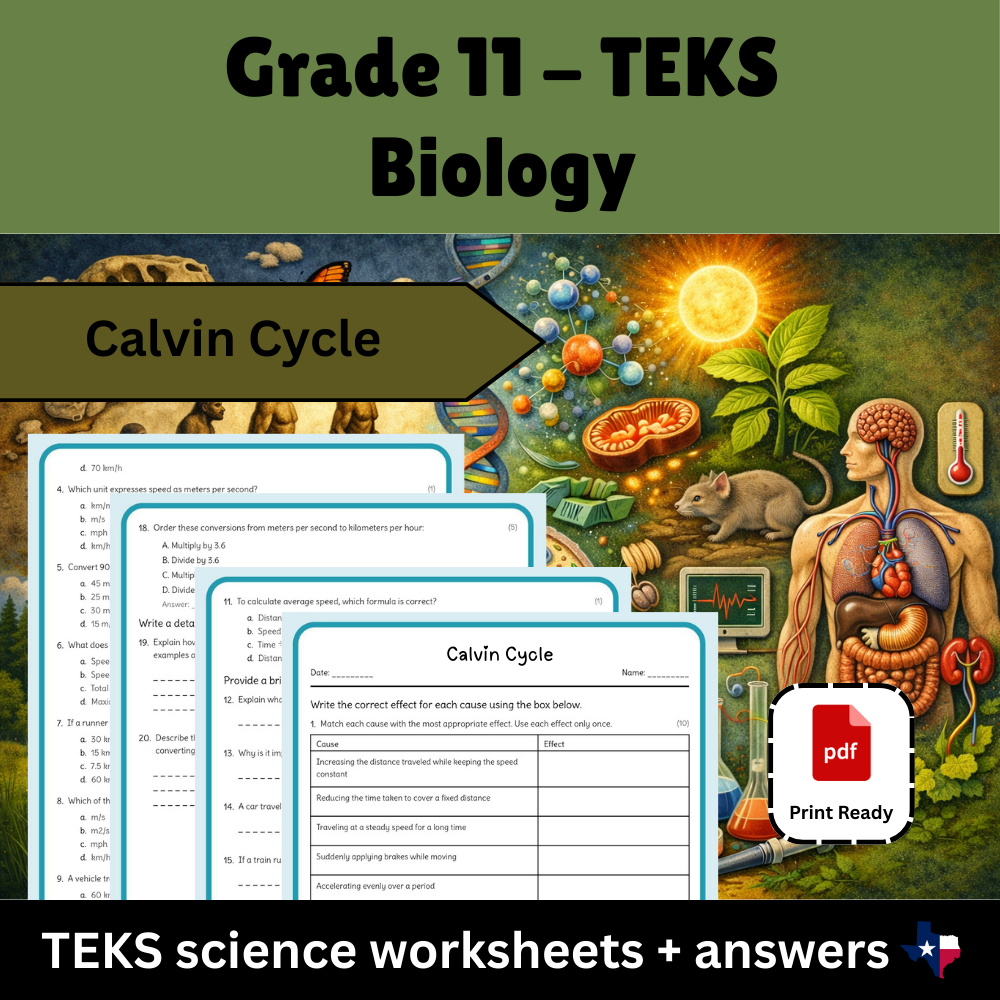
Grade 11 Science | Calvin Cycle Worksheet (Answer Key) – TEKS Aligned
Created byBright Mind ResourcesLearning Objectives
- Explain the key steps and enzyme functions involved in the Calvin cycle.
- Identify the molecules and energy sources utilized in the process.
- Describe the output products formed from the Calvin cycle and their significance.
Also included in: Grade 11 Science Unit Bundle – Cell Function, Respiration & Photosynthesis-TEKS +2 more
Instant download
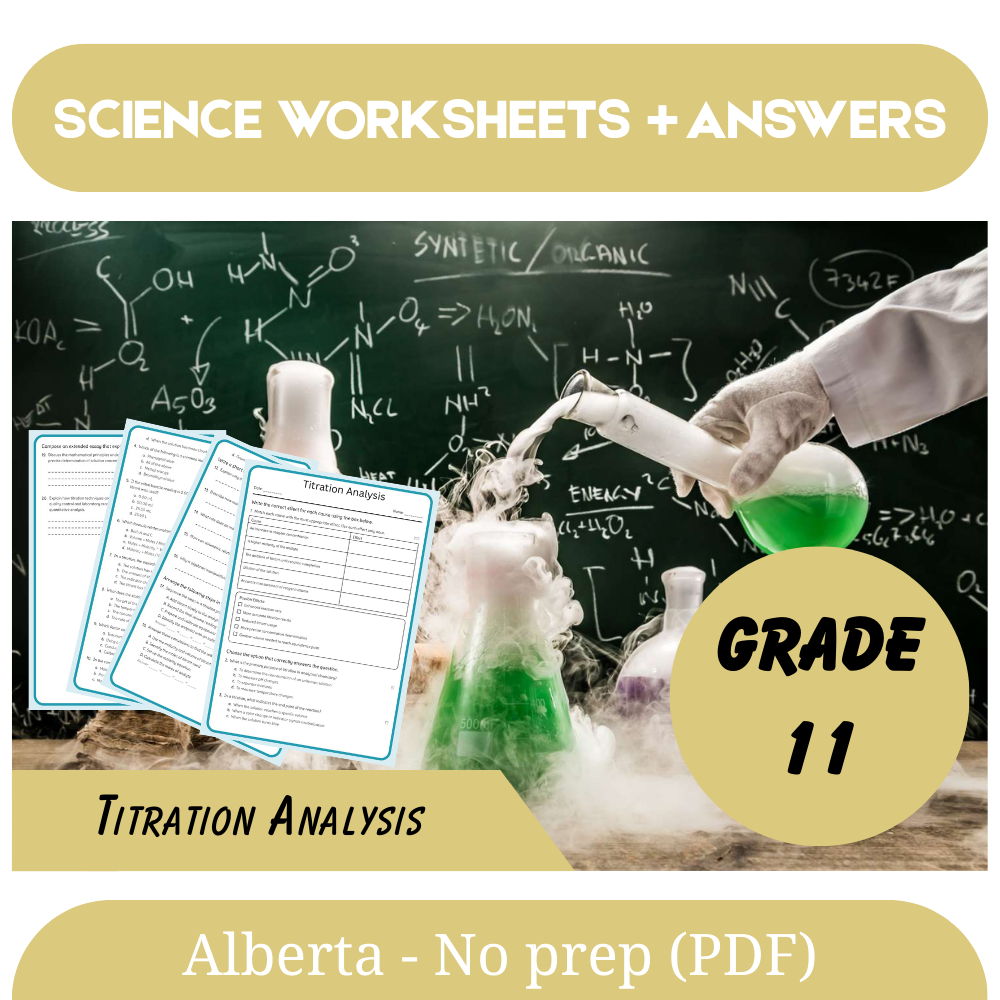
Grade 11 Science – Titration Analysis Worksheet (PDF) | Alberta Standards
Created byBright Mind ResourcesLearning Objectives
- Understand the mathematical basis of titration calculations using molarity and reaction stoichiometry.
- Apply algebraic manipulation to determine unknown concentrations in titration scenarios.
- Interpret equivalence relationships to understand the quantitative connections in titration analysis.
Instant download
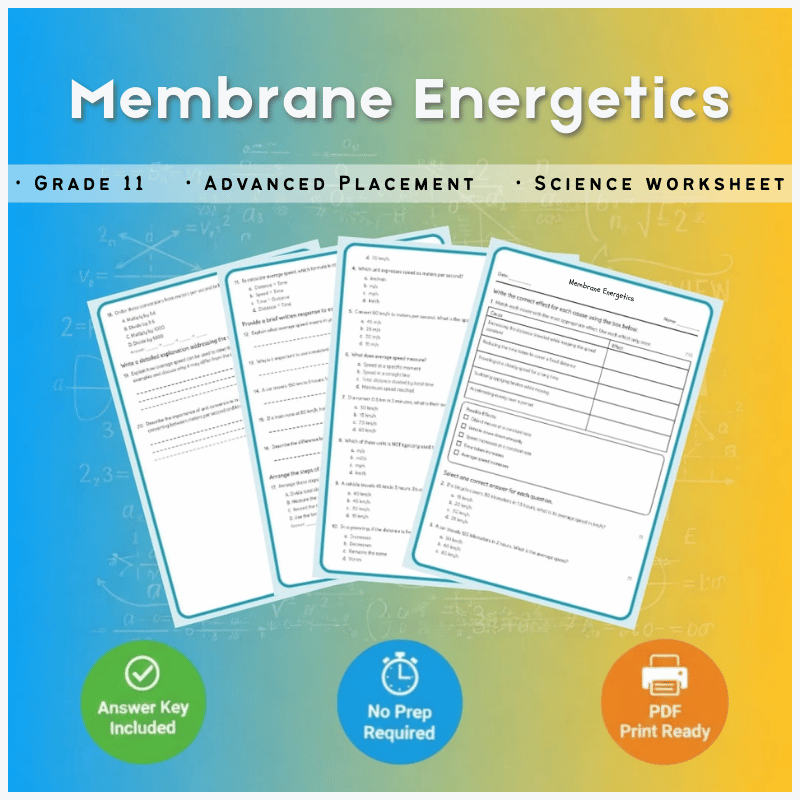
Grade 11 Science | Membrane Energetics Worksheet (AP Standard) PDF
Created byBright Mind ResourcesLearning Objectives
- Understand the principles of bioenergetics related to membrane energy transduction.
- Describe how proton gradients and electron transport chains generate ATP in aerobic and photosynthetic systems.
- Analyze electrochemical potentials and redox diagrams to relate electron flow to ATP yield.
Instant download
Grade 11 Science | Gene Regulation Worksheet (Answer Key) – TEKS Aligned
Created byBright Mind ResourcesLearning Objectives
- Understand the mechanisms controlling gene expression, including cis-regulatory elements, chromatin modifications, and post-transcriptional processes.
- Identify the roles of promoters, enhancers, DNA methylation, and histone modifications in gene regulation.
- Explain how gene regulation influences cell differentiation, development, and response to environmental stimuli.
Also included in: Grade 11 Science DNA & Genetics Unit Worksheet Pack+ Answer Key (TEKS-Aligned) +2 more
Instant download
Grade 11 Science – Kinematics Foundations Worksheet (AP Standard) (PDF)
Created byBright Mind ResourcesLearning Objectives
- Define and distinguish between position, displacement, speed, velocity, and acceleration in linear motion.
- Apply algebraic formulas and graphical representations including position–time and velocity–time graphs to analyze motion.
- Use constant-acceleration equations to solve problems involving uniformly accelerated motion.
Instant download
Grade 11 Science | Phase Behavior Worksheet (AP Standard) with Answer Key (PDF)
Created byBright Mind ResourcesLearning Objectives
- Interpret phase diagrams, vapor pressure curves, and colligative property trends in relation to intermolecular interactions.
- Connect solute–solvent interactions, vapor–liquid equilibria, and freezing-point depression to cohesive forces.
- Use quantitative relations for boiling point elevation and osmotic behavior while considering deviations due to molecular interactions.
Instant download
Grade 11 Science | Speciation Mechanisms Worksheet (Answer Key) – TEKS Aligned
Created byBright Mind ResourcesLearning Objectives
- Explain how reproductive isolation leads to speciation
- Identify different mechanisms and barriers involved in speciation
- Distinguish between geographic, ecological, and environmental gradient speciation
Also included in: Grade 11 Science | Evolution & Phylogenetics Worksheet Bundle (TEKS Aligned) +2 more
Instant download
Grade 11 Science | Balancing Reactions Worksheet (Answer Key) – BC Standards
Created byBright Mind ResourcesLearning Objectives
- Understand the importance of balancing chemical equations to conserve mass and atoms.
- Identify the mole ratios from balanced equations for quantitative calculations.
- Apply rules for balancing ionic and redox reactions accurately.
Instant download
Grade 11 Science – Newtonian Forces Worksheet (Science 1) Ontario Standard (PDF)
Created byBright Mind ResourcesLearning Objectives
- Understand Newton's three laws of motion and their application to forces.
- Interpret free-body diagrams and identify contact, normal, frictional, tension, and gravitational forces.
- Explain the concepts of static and kinetic friction, including coefficients and limiting conditions.
Instant download
Grade 11 Science | Quantum Models Worksheet + Answer Key (AP Standard) PDFs
Created byBright Mind ResourcesLearning Objectives
- Understand the development of atomic theory including wave–particle duality and orbital hybridization.
- Describe how energy quantization is evidenced by spectra and relate nodal patterns to chemical bonding.
- Apply mathematical representations of orbitals to predict electron configurations and chemical properties.
Instant download
Grade 11 Science – Kinetics Principles Worksheet (AP Standard) | PDF
Created byBright Mind ResourcesLearning Objectives
- Describe and interpret rate laws, reaction order, and integrated rate expressions.
- Connect collision theory and transition-state ideas to temperature dependence and activation energy.
- Relate Arrhenius parameters to observable rate changes.
Instant download
Grade 11 Science | Circulation Dynamics Worksheet (AP Standard) PDF
Created byBright Mind ResourcesLearning Objectives
- Understand the principles of atmospheric and oceanic circulation patterns.
- Interpret streamfunction plots, velocity fields, and schematic models related to circulation.
- Link jet streams, trade winds, and thermohaline circulation to climate and heat redistribution.
Instant download
Grade 11 Science – Saturation States Worksheet (PDF) – Alberta Standard
Created byBright Mind ResourcesLearning Objectives
- Understand the concept of saturation states as unsaturated, saturated, and supersaturated solutions.
- Identify conditions leading to precipitation, dissolution, and nucleation in natural and industrial contexts.
- Describe the dynamic equilibrium between dissolved ions and solid phases.
Instant download
Grade 11 Science | Reaction Energetics Worksheet (Answer Key) | AP Standards
Created byBright Mind ResourcesLearning Objectives
- Understand enthalpy changes and how calorimetry measures reaction heat.
- Explain Hess’s law and how energy steps are combined to determine overall reaction enthalpy.
- Relate bond enthalpies and formation energies to reaction stability and macroscopic enthalpy.
Instant download
Grade 11 Science | Computational Simulation Worksheet (AP Standard) - PDF
Created byBright Mind ResourcesLearning Objectives
- Understand the basic numerical methods used to simulate dynamic systems.
- Identify sources of numerical error and their impact on simulation fidelity.
- Compare simulated outputs with analytical solutions and observational data.
Instant download
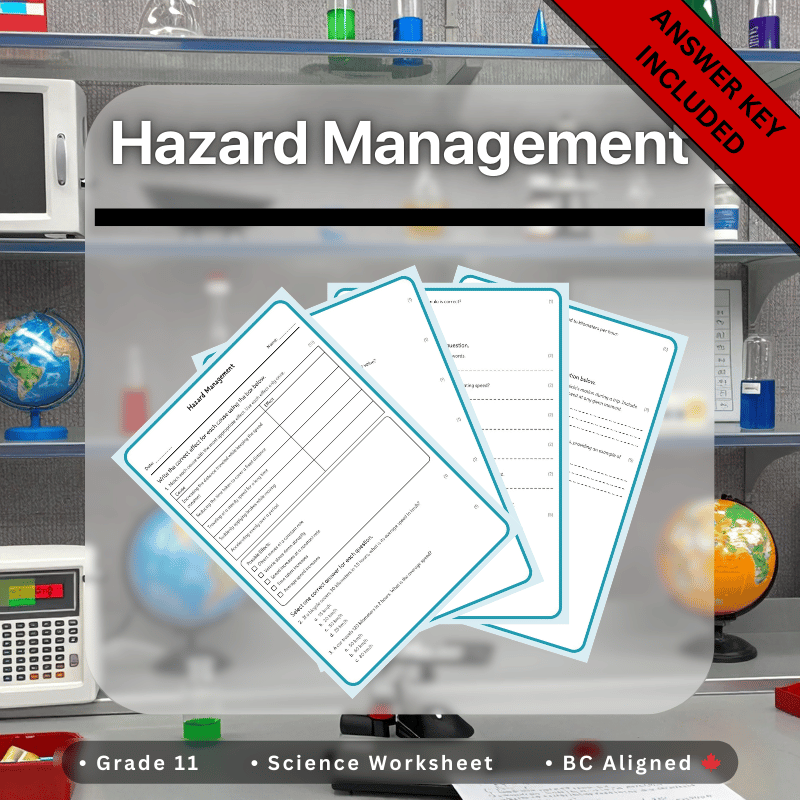
Grade 11 Science – Hazard Management Worksheet (Answer Key) | BC Standards
Created byBright Mind ResourcesLearning Objectives
- Understand techniques used in hazard susceptibility mapping and risk assessment.
- Identify mitigation measures for natural hazards such as earthquakes, volcanic eruptions, landslides, and tsunamis.
- Evaluate the balance between economic benefits and hazard exposure in planning and resource management.
Instant download
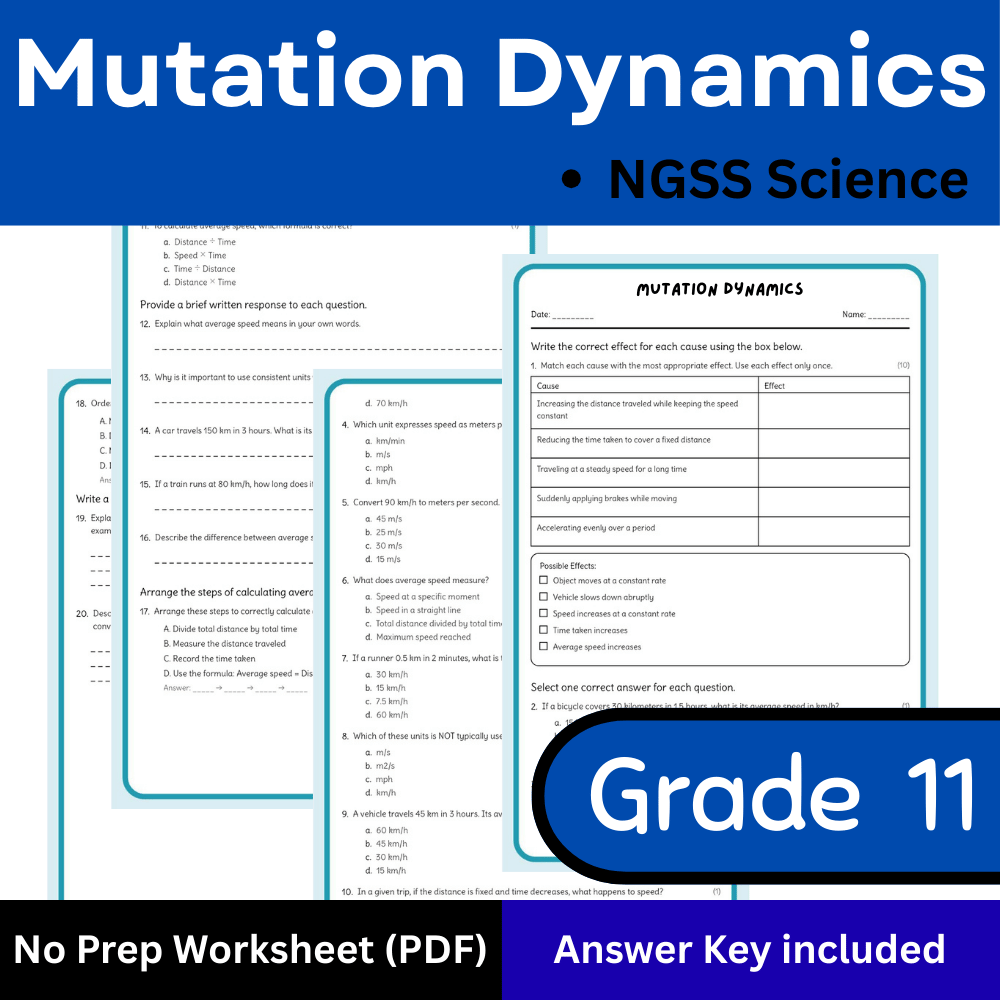
Grade 11 Science – Mutation Dynamics Worksheet (NGSS Aligned PDF)
Created byBright Mind ResourcesLearning Objectives
- Describe sources and mechanisms of genetic mutations and chromosomal alterations.
- Identify different types of mutations and their effects on proteins.
- Explain how mutation rates influence genetic variation within populations.
Instant download
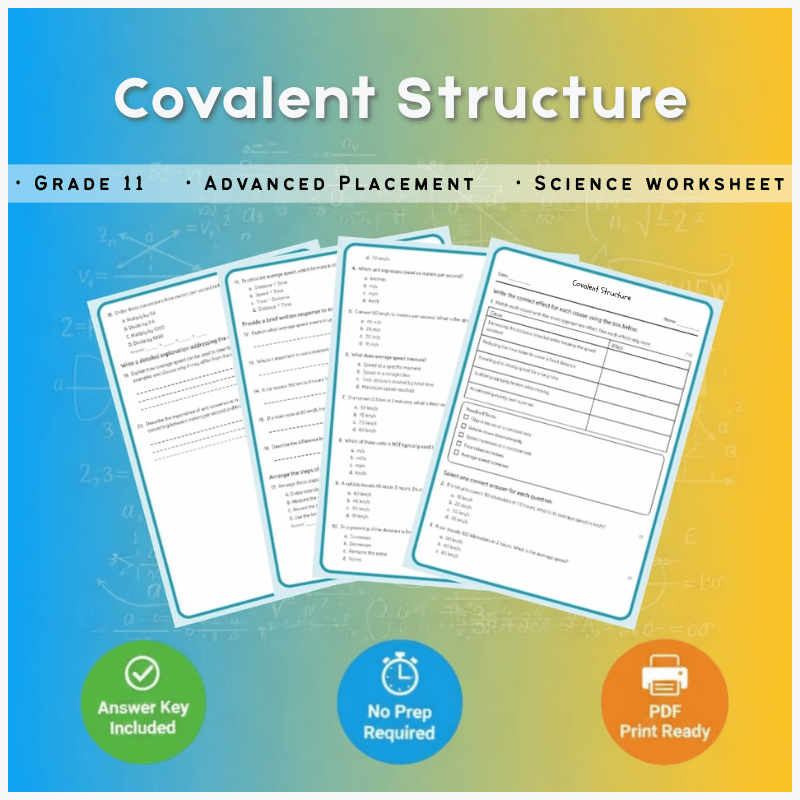
Grade 11 Science | Covalent Structure Worksheet + Answer Key (AP Standard)
Created byBright Mind ResourcesLearning Objectives
- Understand molecular geometry, orbital overlap, hybridization, and resonance as frameworks for chemical bonding.
- Interpret Lewis structures, VSEPR models, and molecular orbital diagrams to predict bond angles, bond order, and polarity.
- Relate bonding models to spectroscopic signatures and reactivity patterns in organic and inorganic molecules.
Instant download
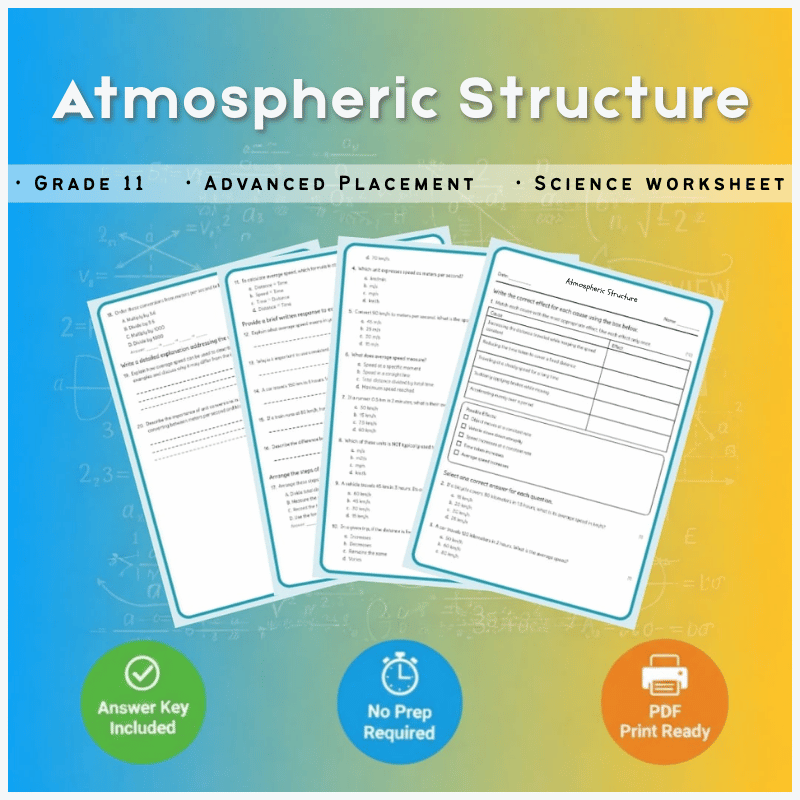
Grade 11 Science – Atmospheric Structure Worksheet (AP Standard + PDF)
Created byBright Mind ResourcesLearning Objectives
- Describe the vertical and horizontal layers of Earth's atmosphere including composition, pressure, and temperature profiles.
- Interpret sounding profiles, pressure maps, and radiative balance diagrams to understand weather and climate zones.
- Connect thermodynamic principles with phenomena like lapse rates and inversion layers to explain atmospheric responses.
Instant download
Grade 11 Science | Atomic Structure Worksheet (AP Standard PDF)
Created byBright Mind ResourcesLearning Objectives
- Identify the fundamental subatomic particles and their roles within an atom.
- Explain how evidence from emission spectra and mass spectrometry supports discrete energy levels and isotopic variation.
- Describe quantum numbers and electron orbital models as representations of electron distribution.
Instant download
Grade 11 Science | Energy Balance Worksheet (AP Standards) – Science (PDF)
Created byBright Mind ResourcesLearning Objectives
- Explain the concept of Earth's energy budget and the role of radiative forcing in climate variability.
- Interpret phenomena such as seasonal cycles and polar amplification through differential heating and feedback mechanisms.
- Analyze observational data from satellites and surface records to evaluate climate models' energy transport and surface temperature responses.
Instant download
Grade 11 Science | Stoichiometry Basics Worksheet (Answer Key) - AP Standards
Created byBright Mind ResourcesLearning Objectives
- Understand mole relationships, molar mass, and their applications in chemical equations.
- Interpret balanced equations to determine quantities and mass relationships.
- Calculate limiting reagents, percent yield, and derive empirical/molecular formulas.
Instant download
Grade 11 Science – Intermolecular Forces Worksheet (AP Standards) – PDF
Created byBright Mind ResourcesLearning Objectives
- Describe different types of intermolecular forces: dispersion, dipole–dipole, and hydrogen bonding.
- Explain how intermolecular forces influence boiling point, vapor pressure, and solubility.
- Relate molecular polarity and surface interactions to phase behavior and macroscopic trends.
Instant download
About Grade 11 Science Worksheets
Browse 6,616 printable Grade 11 Science worksheets — ready-to-print PDFs with answer keys where available.
Each resource here is built by an independent educator and reviewed for quality. Worksheets print straight from PDF and suit classroom use, homework, or extra practice; most come with answer keys, and you can preview before purchasing.