
Grade 6 Worksheets
8,578 grade resources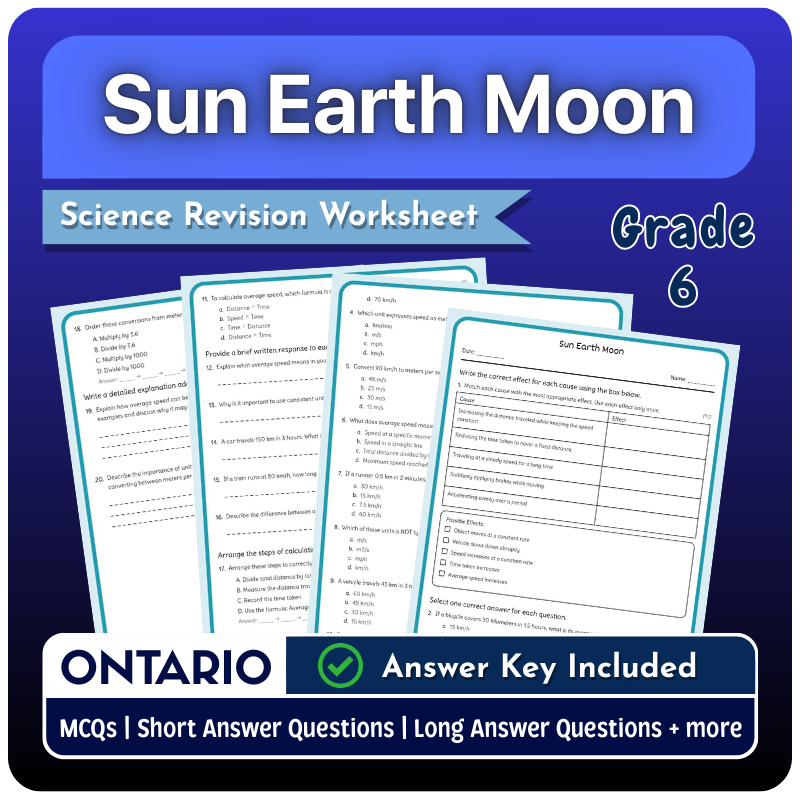
Grade 6 Science | Sun Earth Moon Worksheet (Ontario Standard) (PDF)
 Created byBright Mind Resources
Learning Objectives
- Describe the relative sizes, masses, and distances among the Sun, Earth, and Moon.
- Explain how gravitational interactions determine the orbital relationships in the Sun-Earth-Moon system.
- Understand the concept of the Earth–Moon barycenter and the Sun's role as the dominant gravitational influence.
Instant download
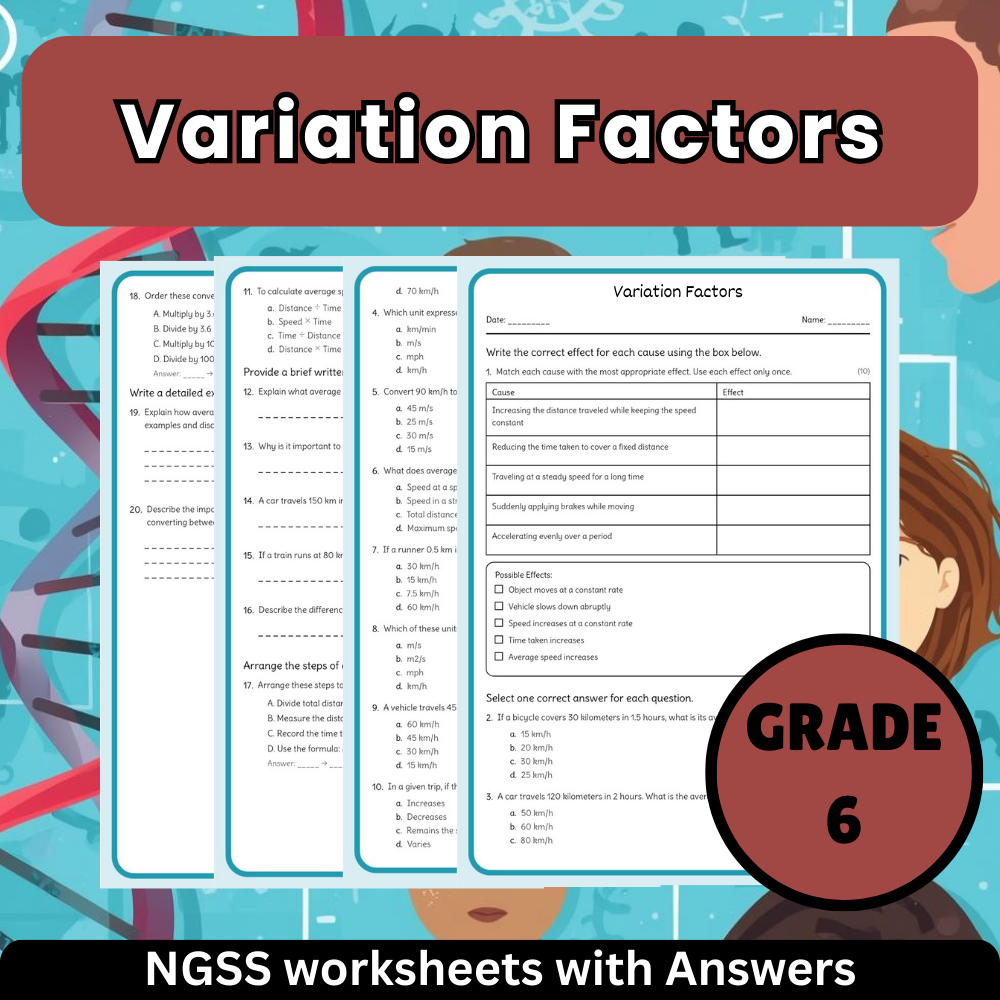
Grade 6 Science | Variation Factors Worksheet (Answer Key) aligned with NGSS
Created byBright Mind ResourcesLearning Objectives
- Understand how genetic factors contribute to observable variation among individuals.
- Explain how environmental factors influence phenotypic traits.
- Recognize models of allele combinations and mutation impacts on traits.
Also included in: Grade 6 Science Unit Bundle | Variation & Inheritance Worksheets (NGSS Aligned) +2 more
Instant download
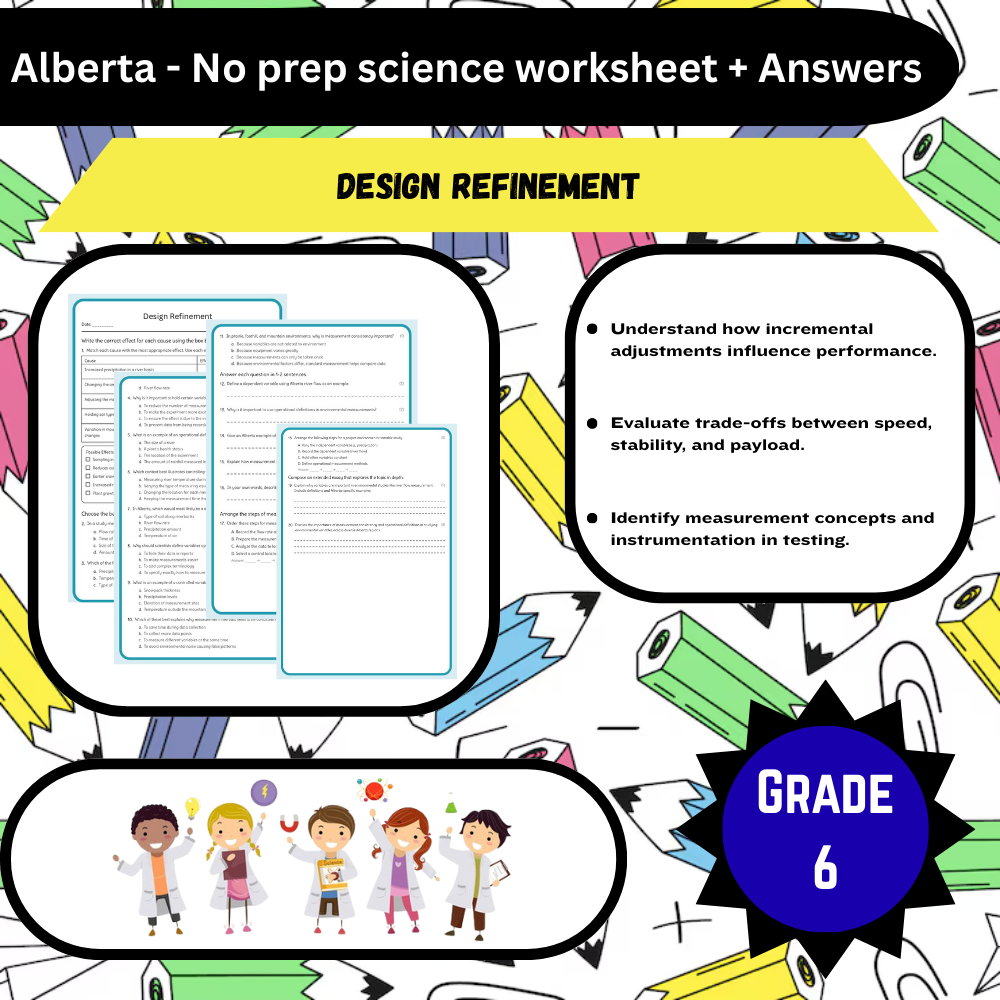
Grade 6 Science | Design Refinement (Worksheet + Answer Key) | Alberta Standards
Created byBright Mind ResourcesLearning Objectives
- Understand how incremental adjustments to aerodynamics influence performance and safety.
- Evaluate trade-offs between speed, stability, and payload in design modifications.
- Identify measurement concepts such as consistent observation and simple instrumentation in testing flight paths.
Instant download
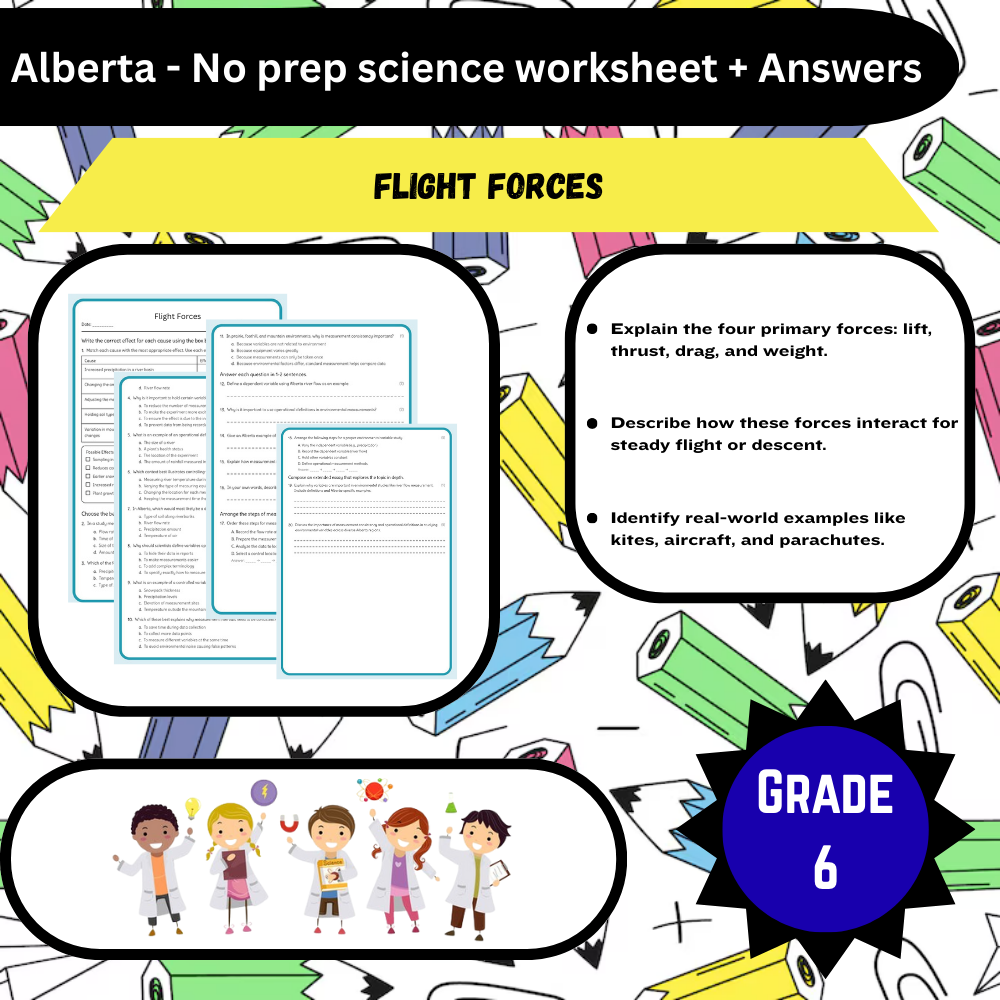
Grade 6 Science – Flight Forces Comprehensive Worksheet (PDF)
Created byBright Mind ResourcesLearning Objectives
- Explain the four primary forces of flight: lift, thrust, drag, and weight.
- Describe how these forces interact to create steady flight or descent.
- Identify real-world examples of flight forces, such as kites, aircraft, and parachutes.
Instant download
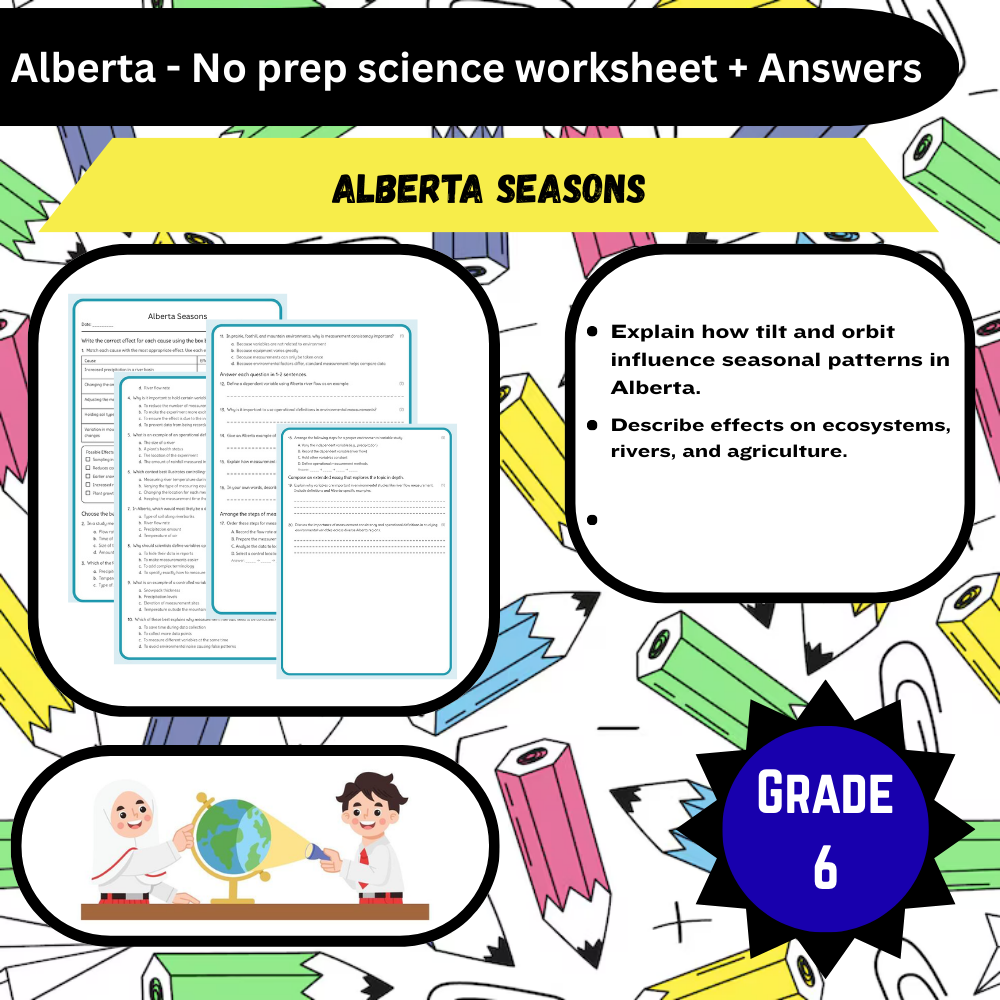
Grade 6 Science | Alberta Seasons Worksheet (PDF) – Standard-Aligned
Created byBright Mind ResourcesLearning Objectives
- Explain how Earth's tilt and orbit influence seasonal patterns in Alberta.
- Describe the effects of seasonal changes on ecosystems, rivers, and agriculture in Alberta.
Instant download
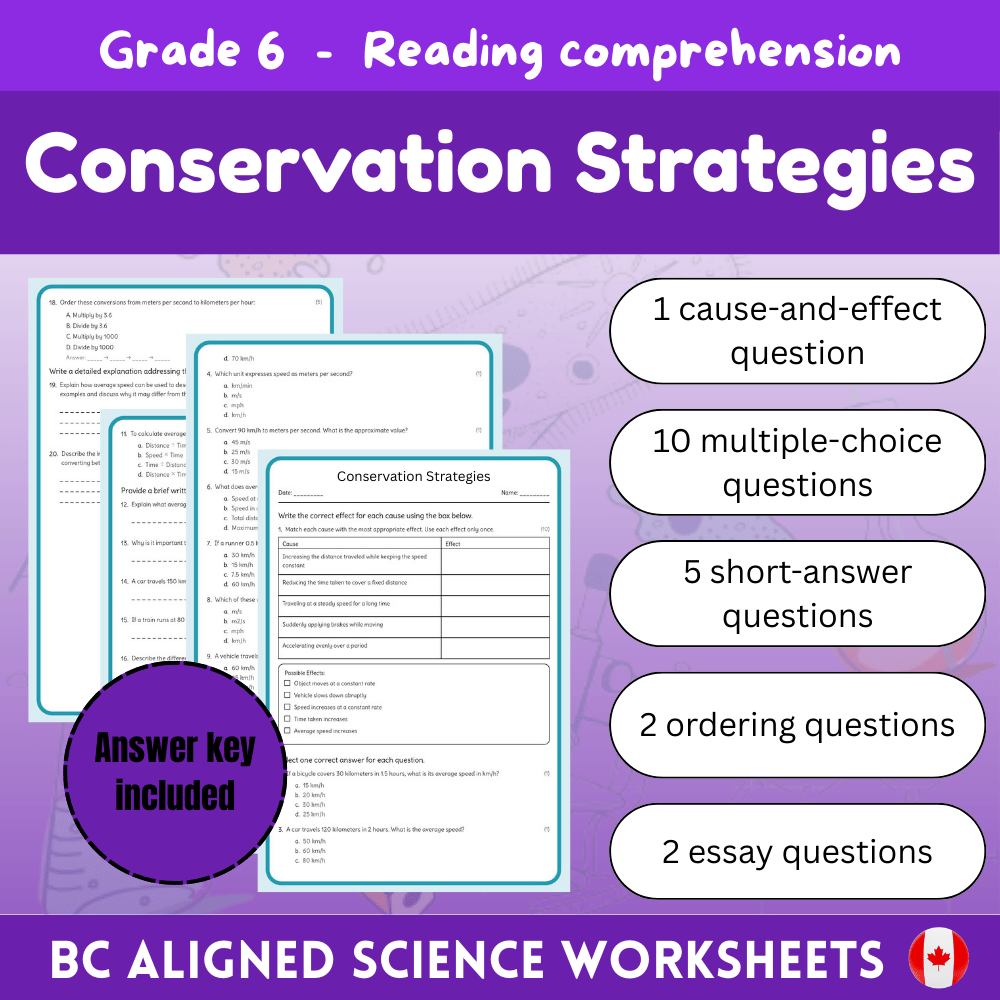
6th Grade Science | Conservation Strategies Worksheet (PDF) | BC Standards
Created byBright Mind ResourcesLearning Objectives
- Identify different conservation strategies used to protect ecosystems.
- Understand how each strategy contributes to ecosystem restoration and maintenance.
- Analyze trade-offs involved in conservation efforts.
Instant download
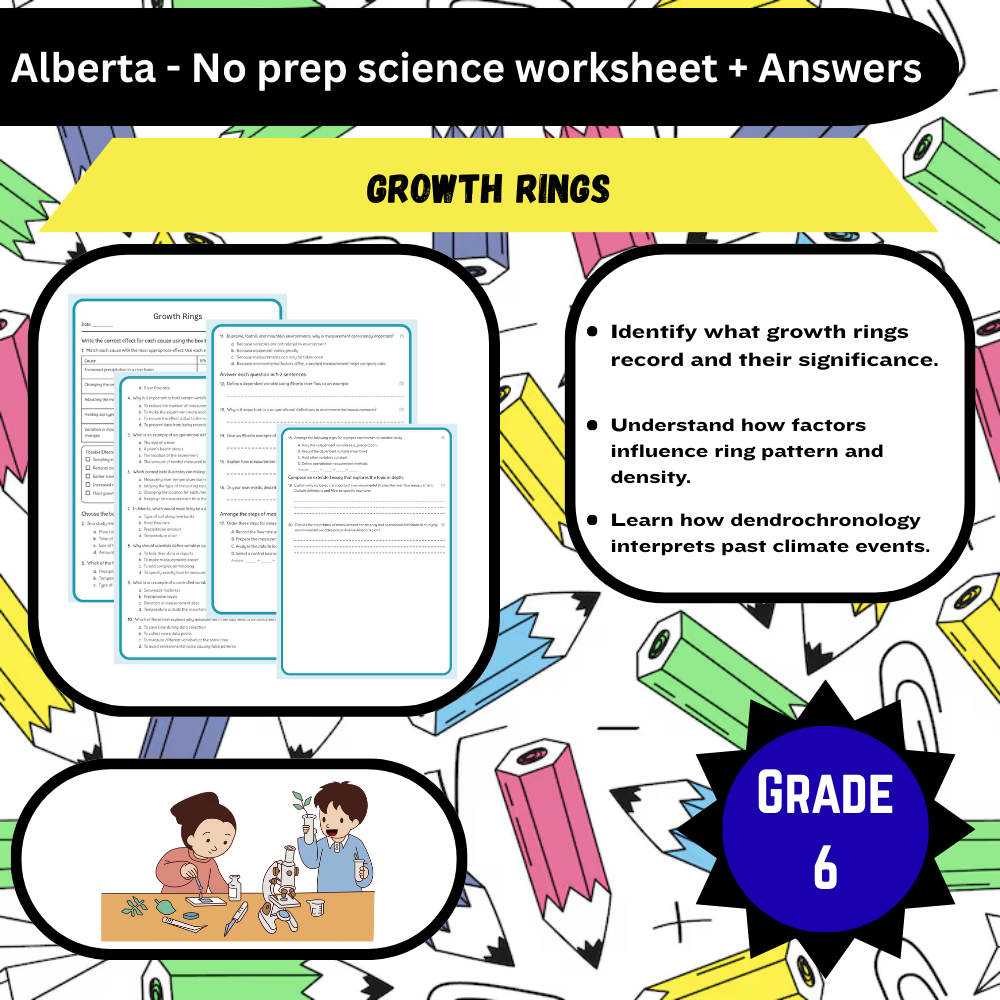
Grade 6 Science – Growth Rings Worksheet (PDF) | Alberta Standards
Created byBright Mind ResourcesLearning Objectives
- Identify what growth rings record in trees and their significance.
- Understand how environmental factors influence growth ring patterns and density.
- Learn how dendrochronology is used to interpret past climate and environmental events.
Instant download
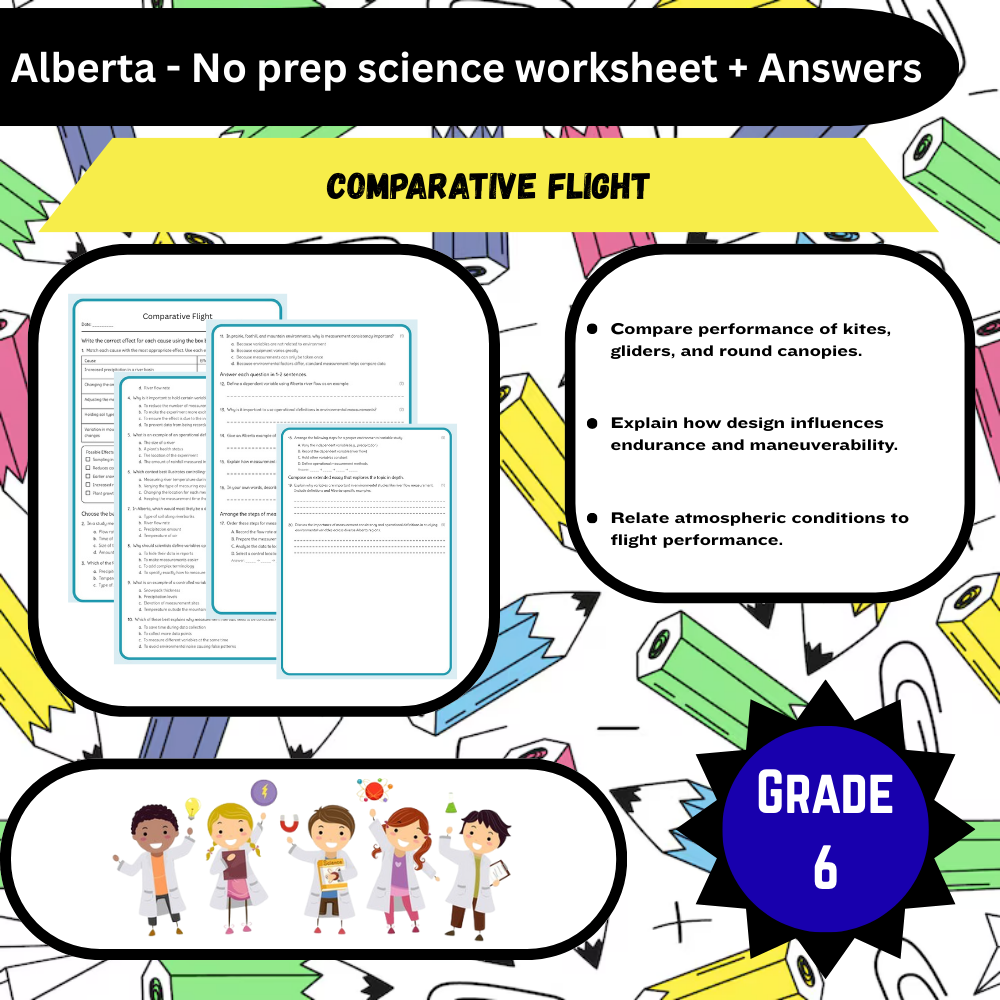
Grade 6 Science | Comparative Flight Analysis Worksheet (PDF)
Created byBright Mind ResourcesLearning Objectives
- Compare the aerodynamics and performance features of kites, gliders, and round canopies.
- Explain how design parameters influence endurance and maneuverability in flying devices.
- Relate regional atmospheric conditions, such as prairie crosswinds and valley thermals, to flight performance.
Instant download
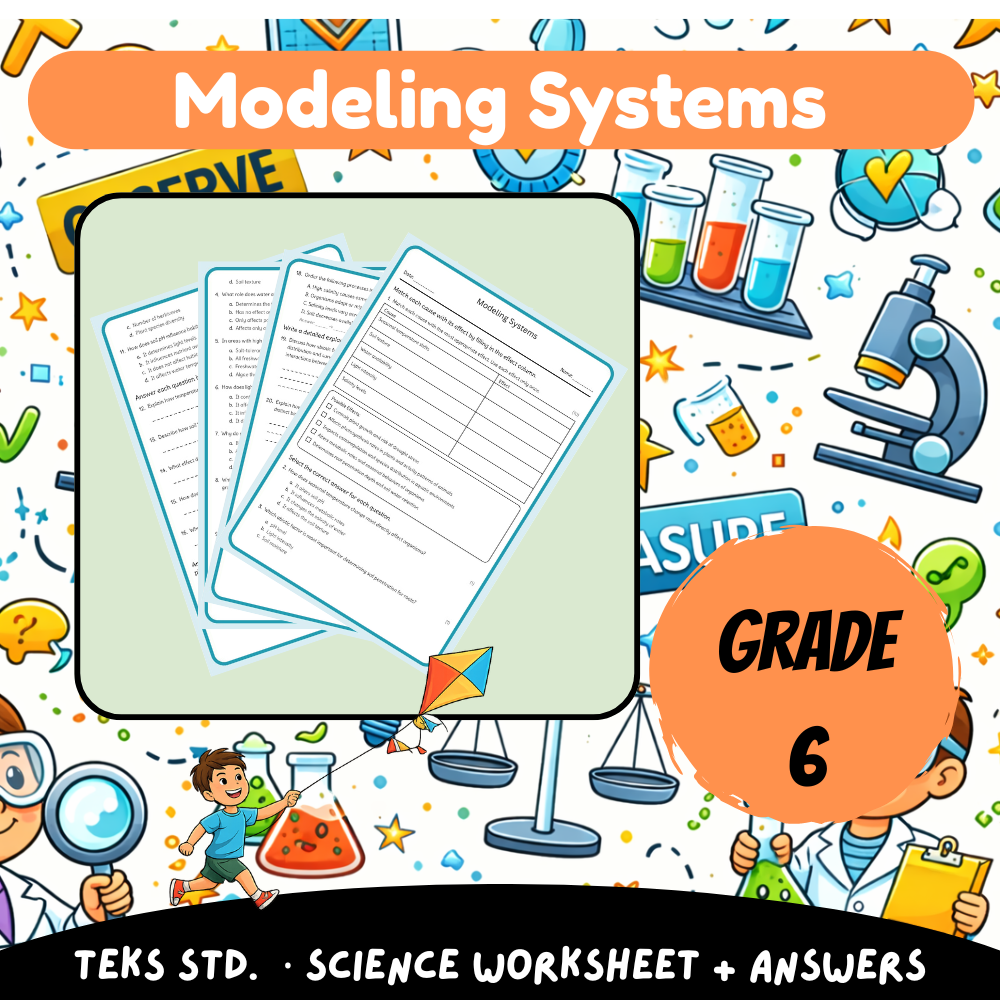
6th Grade Science | Modeling Systems (Worksheet + Answer Key) – TEKS Aligned
Created byBright Mind ResourcesLearning Objectives
- Understand how physical and conceptual models represent scientific systems.
- Identify criteria for evaluating models and their limitations.
- Analyze examples of models used in understanding water cycles, particle mixtures, and motion.
Instant download
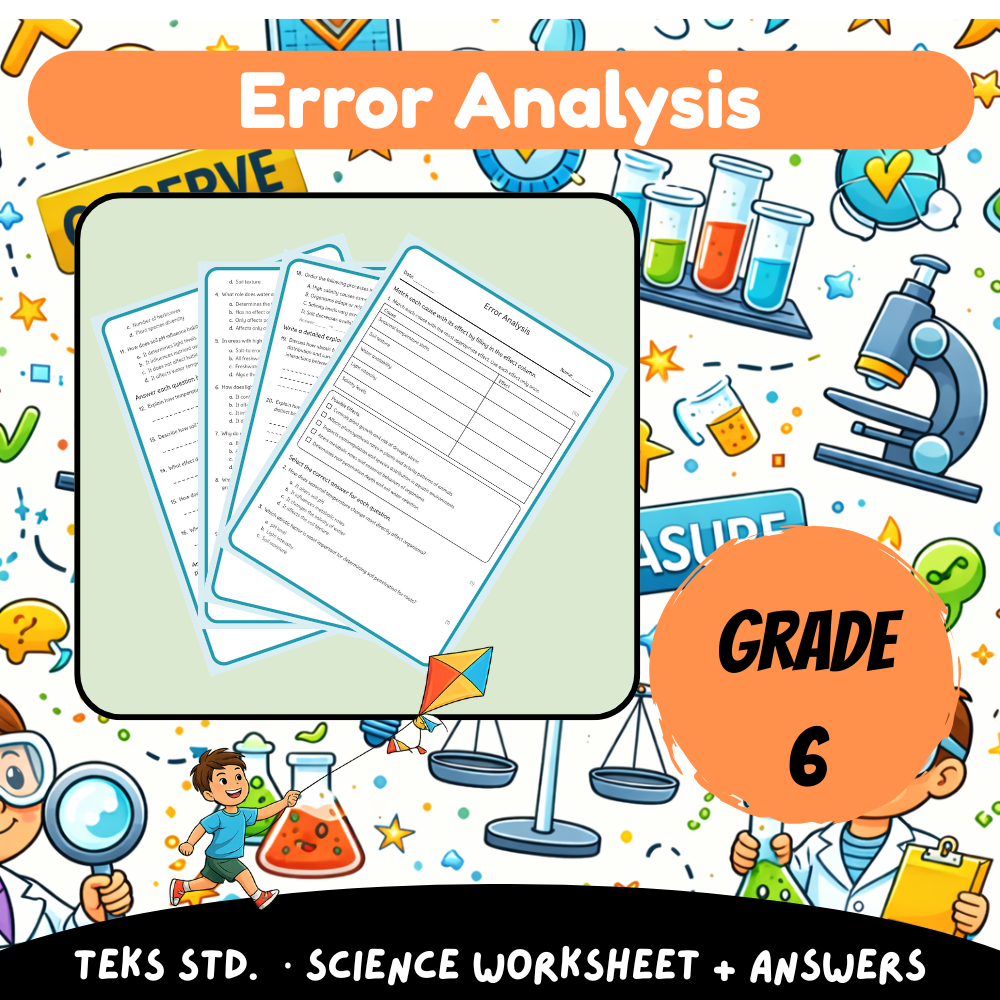
6th Grade Science | Error Analysis Worksheet (Worksheet + Answer Key) for TEKS Standards
Created byBright Mind ResourcesLearning Objectives
- Identify different sources of errors in scientific data collection.
- Distinguish between random and systematic errors.
- Understand methods to estimate the impact of errors in experiments.
Instant download

Grade 6 Science Worksheet – Food Webs & Ecosystem Concepts (Ontario) (PDF)
Created byBright Mind ResourcesLearning Objectives
- Identify the components of a food web, including producers, consumers, and decomposers.
- Explain energy flow and matter cycling within different ecosystems.
- Understand the impact of species removal or proliferation on food webs.
Instant download
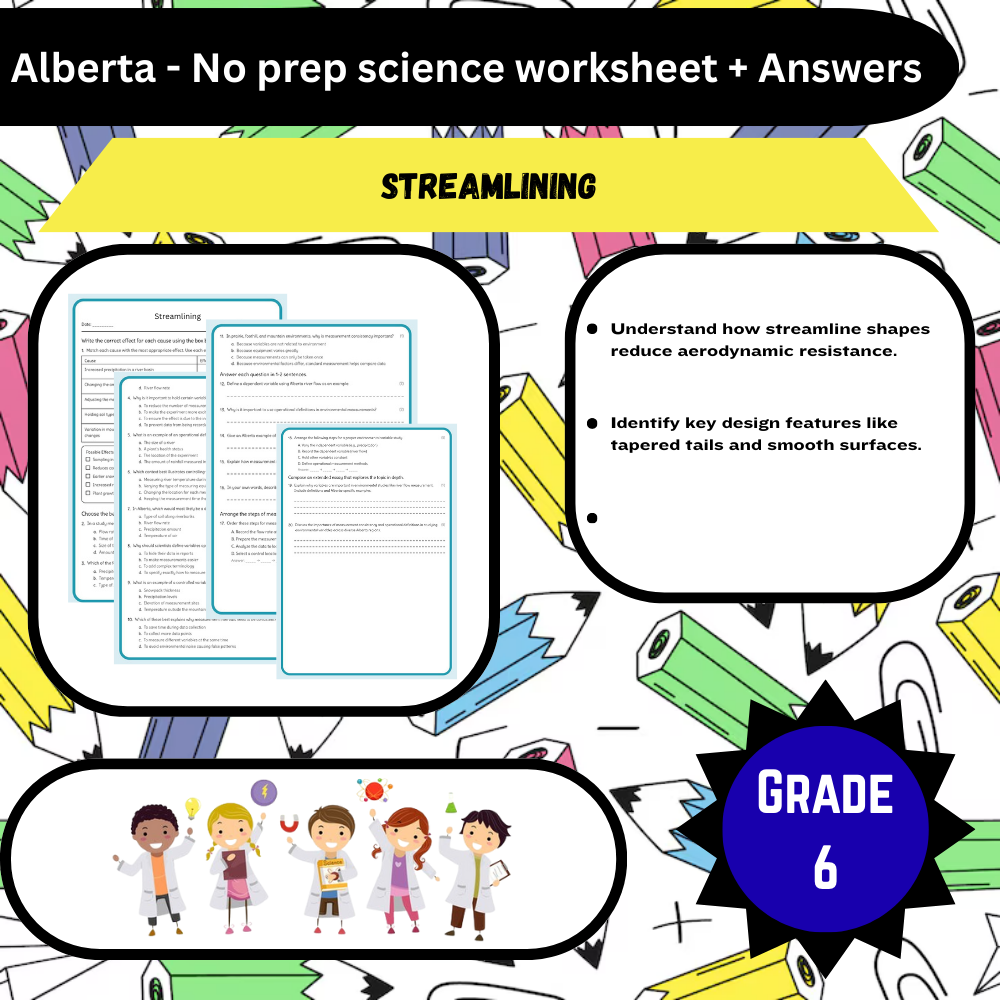
Grade 6 Science – Streamlining Shapes & Aerodynamics Worksheet (PDF)
Created byBright Mind ResourcesLearning Objectives
- Understand how streamline shapes reduce aerodynamic resistance in objects like aircraft and vehicles.
- Identify key design features that improve airflow, such as tapered tails and smooth surfaces.
Instant download
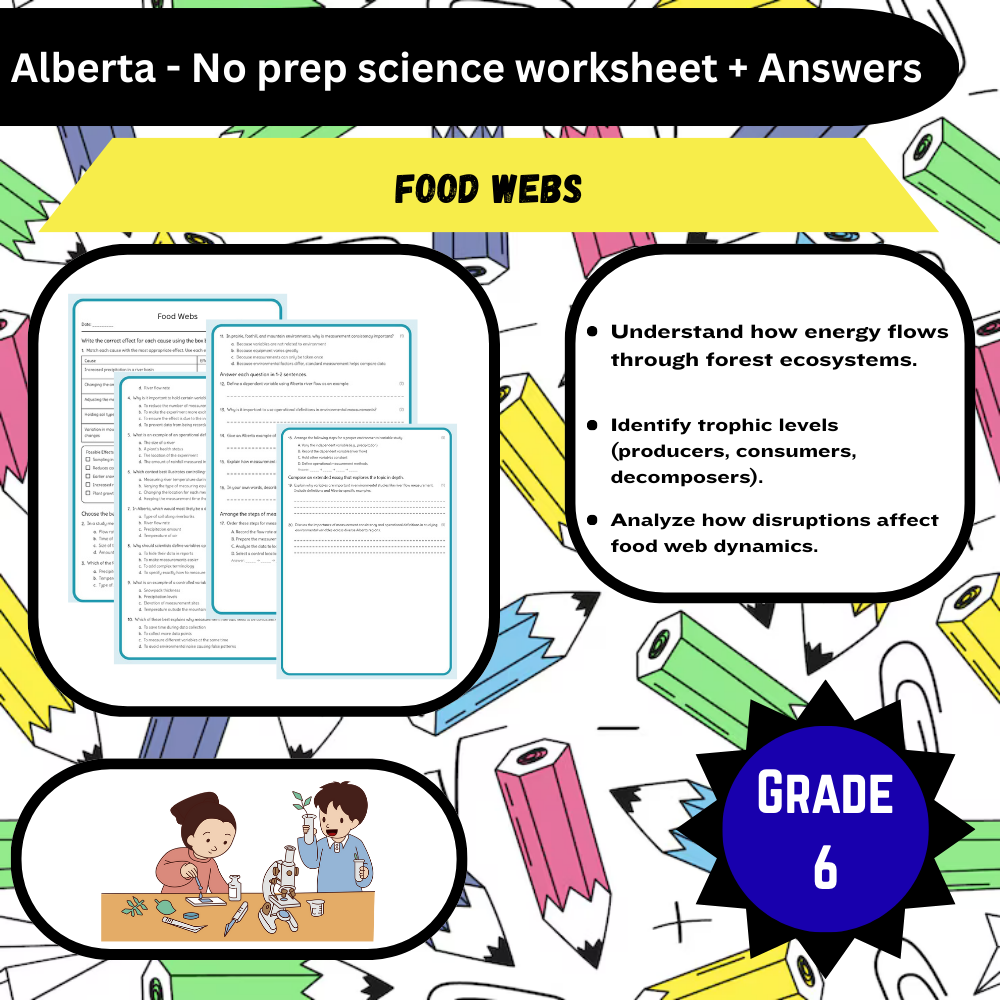
6th Grade Science – Food Webs Worksheet (PDF) aligned with Alberta standards
Created byBright Mind ResourcesLearning Objectives
- Understand how energy flows through food webs in forest ecosystems.
- Identify different trophic levels such as producers, consumers, and decomposers.
- Analyze how disruptions affect food web dynamics.
Instant download
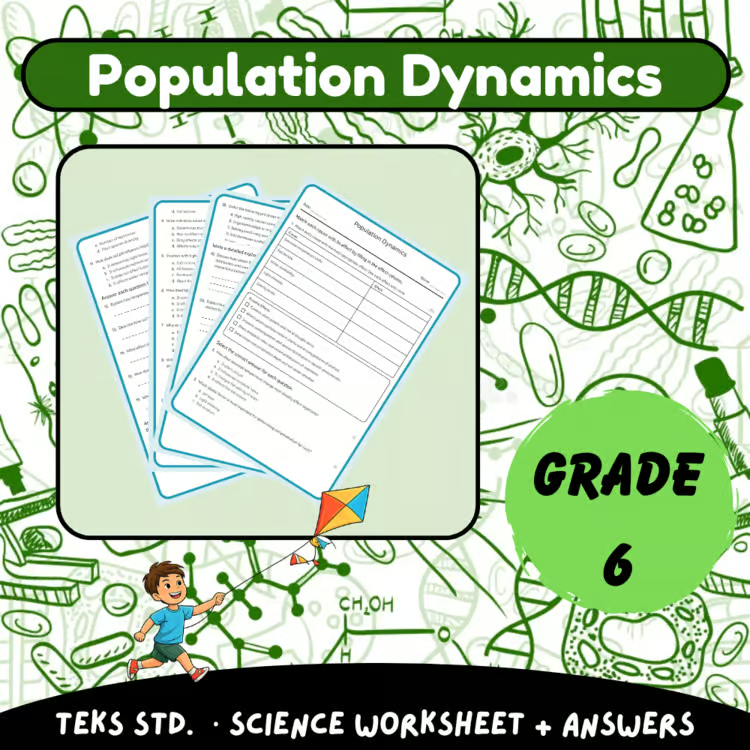
6th Grade Science | Population Dynamics Worksheet + Answer Key (PDF)
Created byBright Mind ResourcesLearning Objectives
- Understand the principles of exponential and logistic growth curves in populations.
- Define carrying capacity and factors influencing population size.
- Differentiate between density-dependent and density-independent factors affecting populations.
Instant download
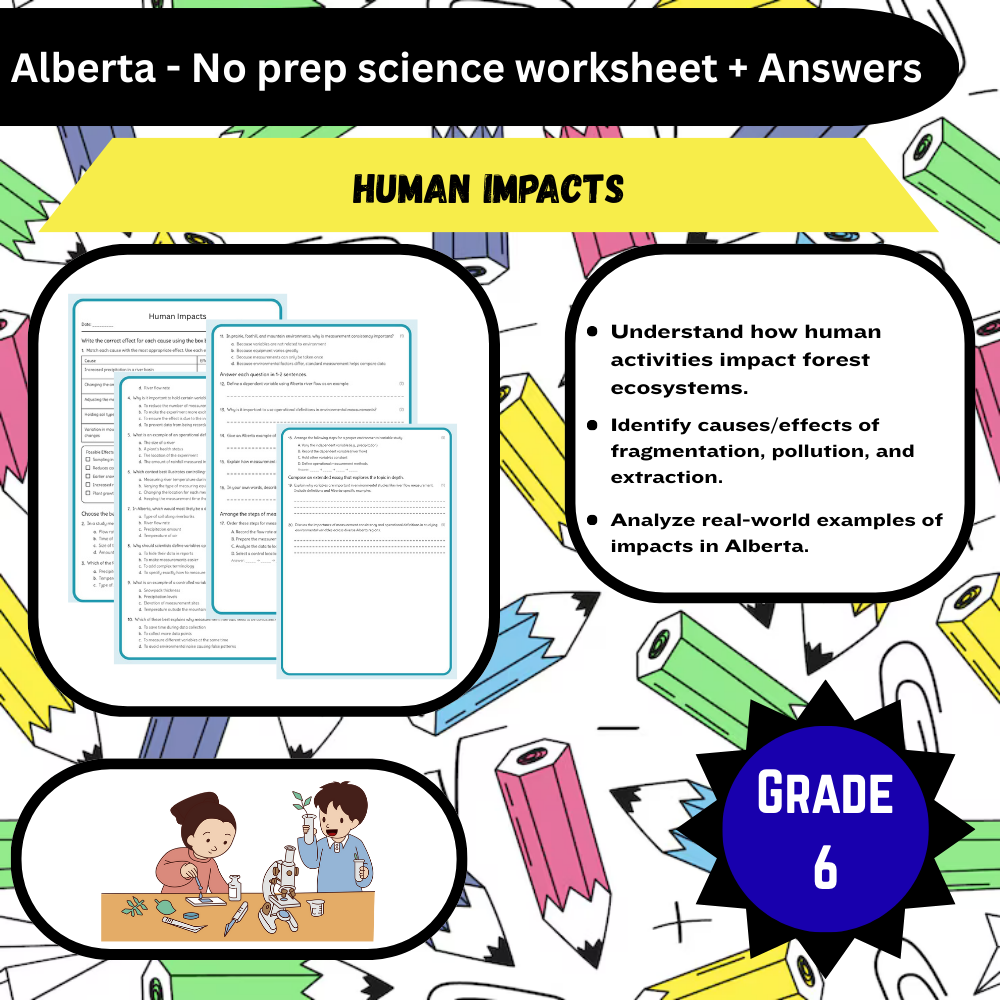
Grade 6 Science | Human Impacts Worksheet (PDF) – Alberta Standards
Created byBright Mind ResourcesLearning Objectives
- Understand different ways human activities impact forest ecosystems
- Identify causes and effects of habitat fragmentation, pollution, and resource extraction
- Analyze real-world examples of human impacts on forests in Alberta
Instant download
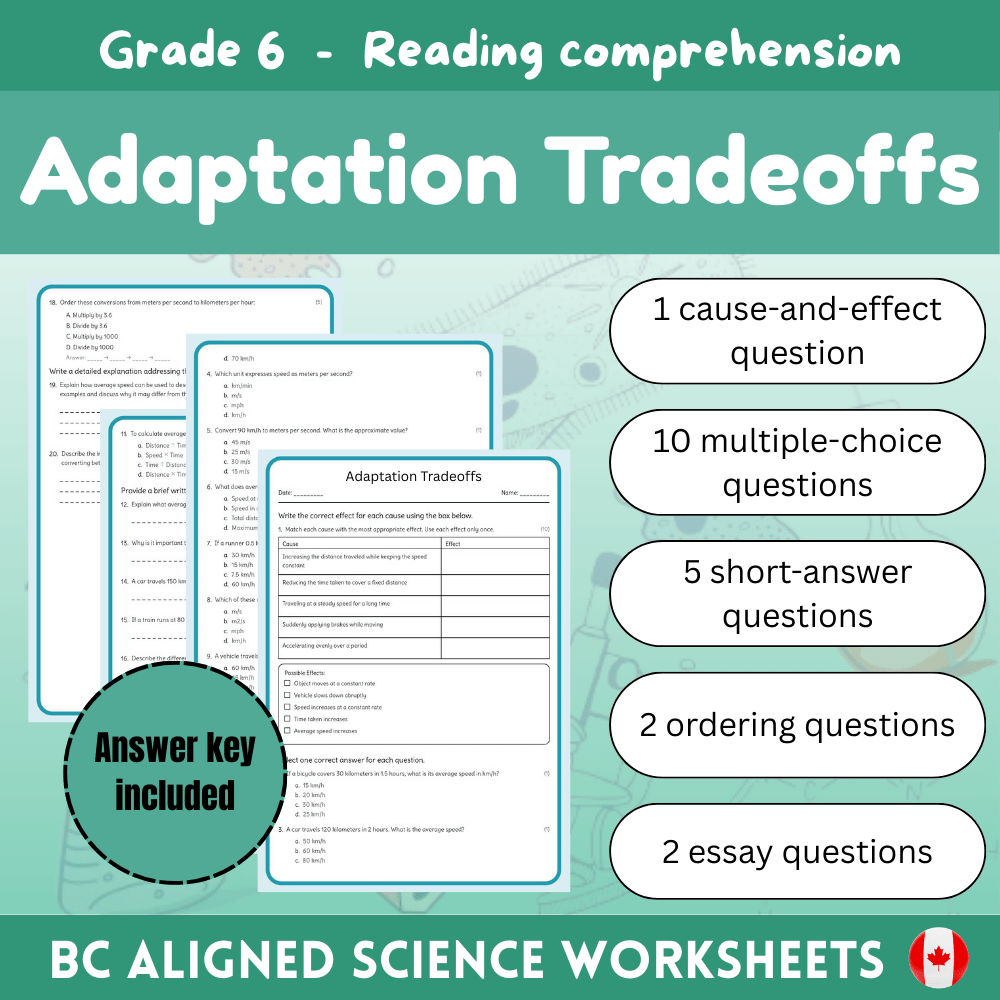
Grade 6 Science | Adaptation Tradeoffs Worksheet (Answer Key) – BC Standards
Created byBright Mind ResourcesLearning Objectives
- Explain the concept of adaptation trade-offs in animals and plants.
- Identify examples of how structural features can have costs and benefits.
- Evaluate how environmental pressures influence the evolution of trade-offs.
Instant download
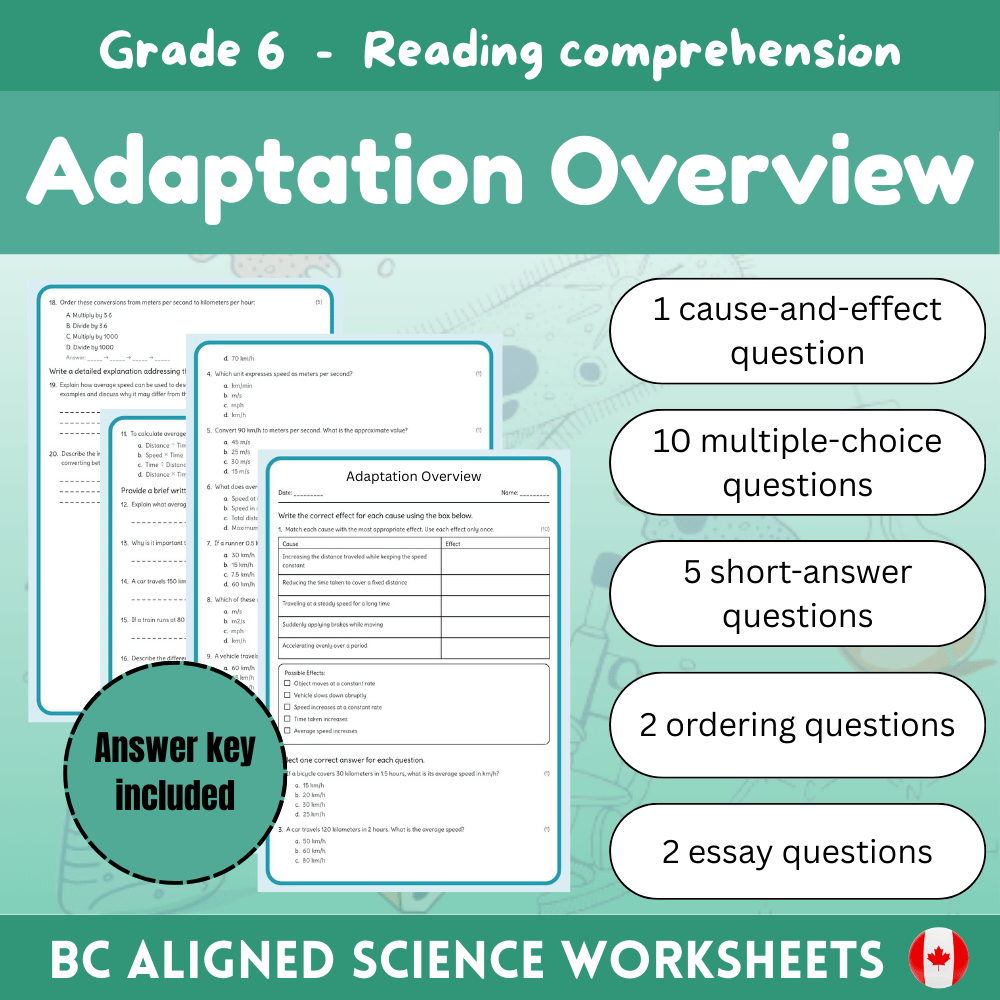
6th Grade Science | Adaptation Overview Worksheet (Answer Key) – BC Standards
Created byBright Mind ResourcesLearning Objectives
- Understand the different types of adaptations and their functions in animals and plants.
- Identify structural features that help organisms survive in their environments.
- Explain how natural selection favors traits that enhance resource gathering, defense, or reproduction.
Instant download
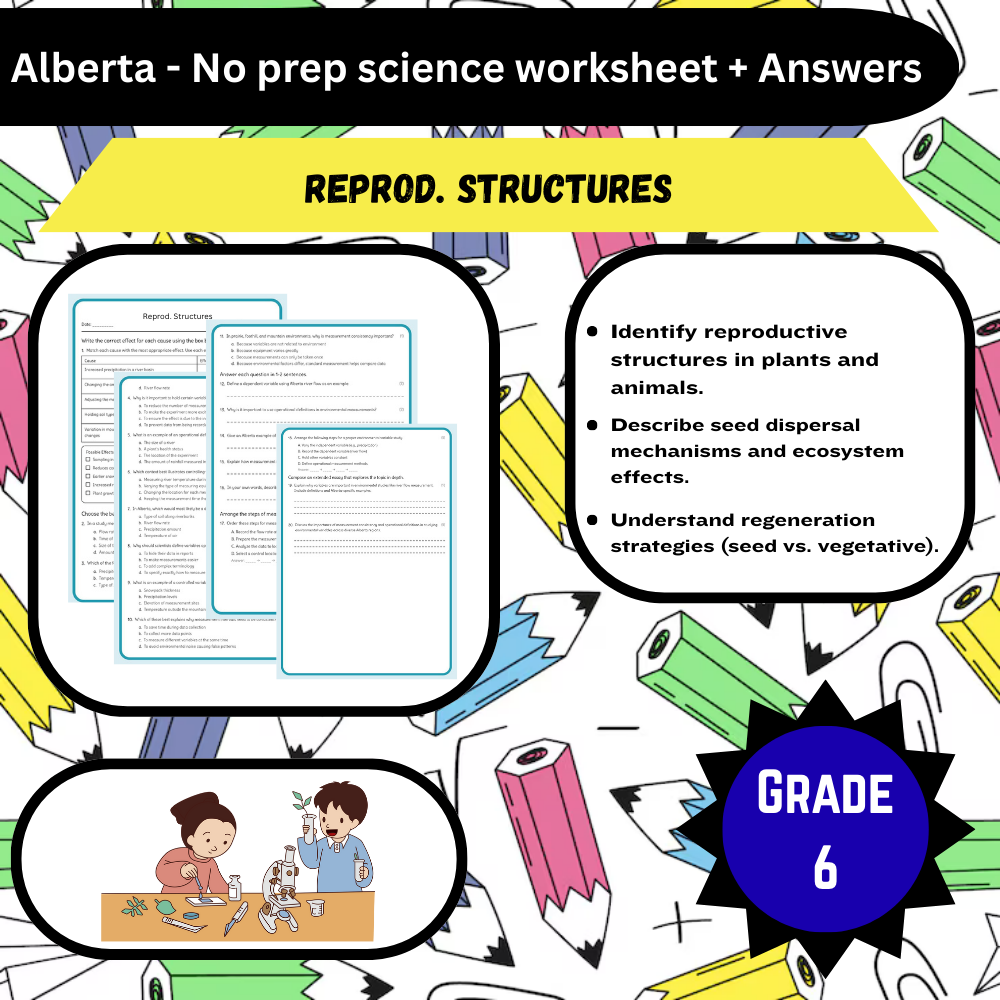
6th Grade Science | Reproductive Structures Worksheet (PDF)
Created byBright Mind ResourcesLearning Objectives
- Identify different reproductive structures in plants and animals
- Describe seed dispersal mechanisms and their effects on ecosystems
- Understand regeneration strategies such as seed release and vegetative propagation
Instant download
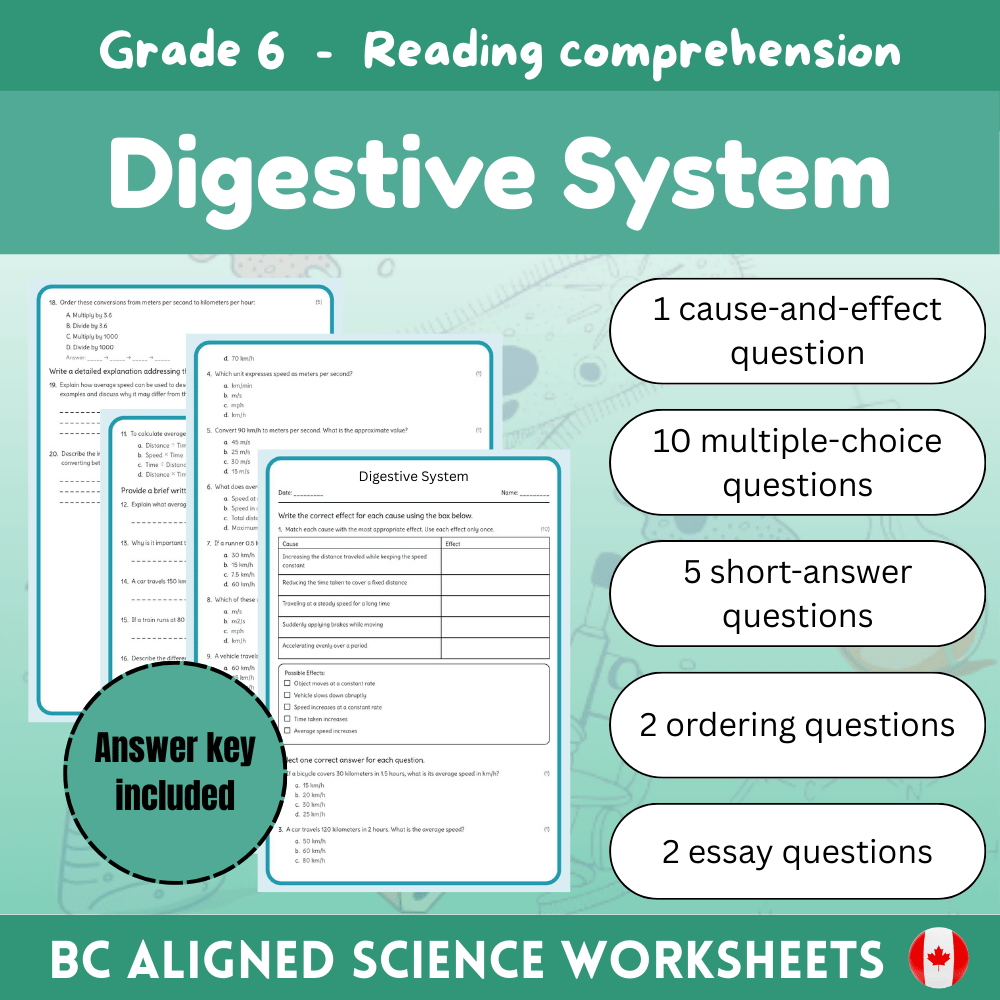
Grade 6 Science | Digestive System Worksheet + Answer Key – BC standards
Created byBright Mind ResourcesLearning Objectives
- Describe the main organs involved in the digestion process.
- Explain how enzymes and acids help break down food into absorbable nutrients.
- Identify how nutrients cross into blood or lymph for distribution.
Instant download
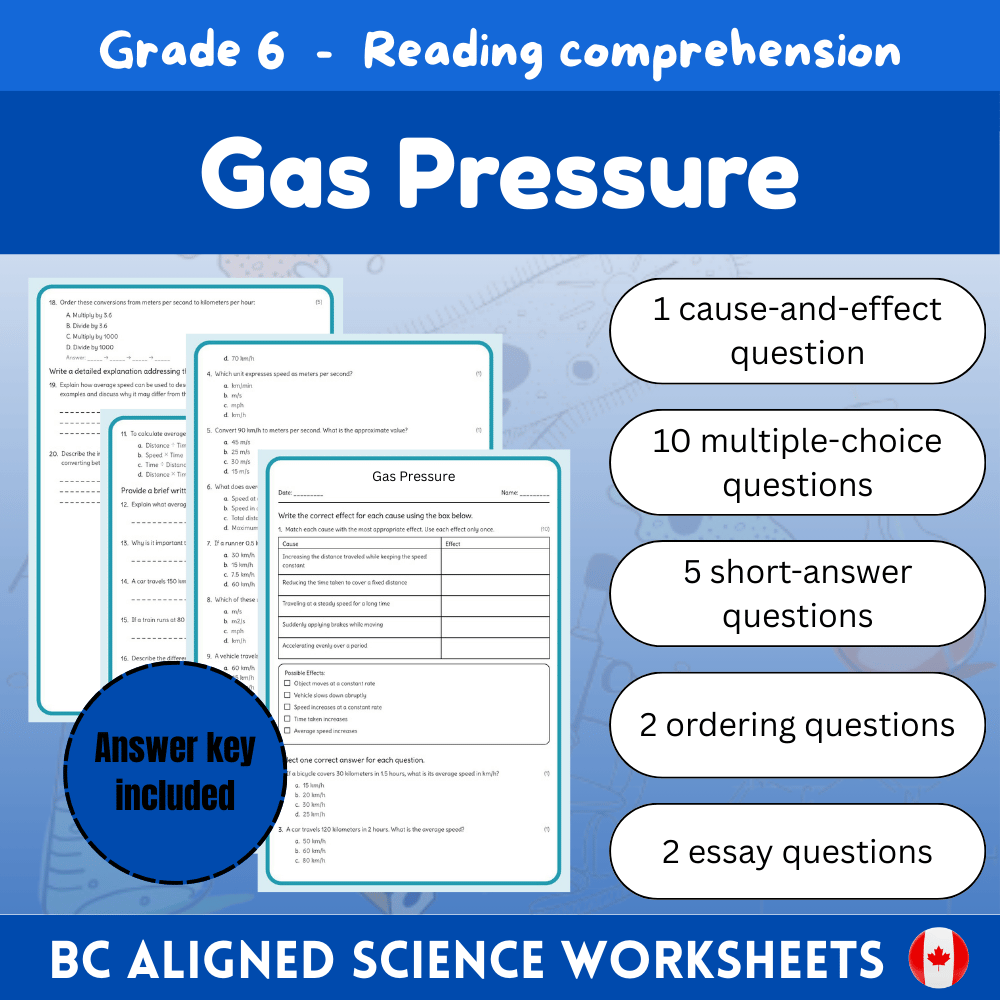
6th Grade Science | Gas Pressure Concepts Worksheet + Answer Key – BC Standards
Created byBright Mind ResourcesLearning Objectives
- Explain how gas pressure results from particle collisions with container walls.
- Describe how changes in temperature and volume affect gas pressure.
- Use the particle model to understand gas behaviours such as compression and expansion.
Instant download
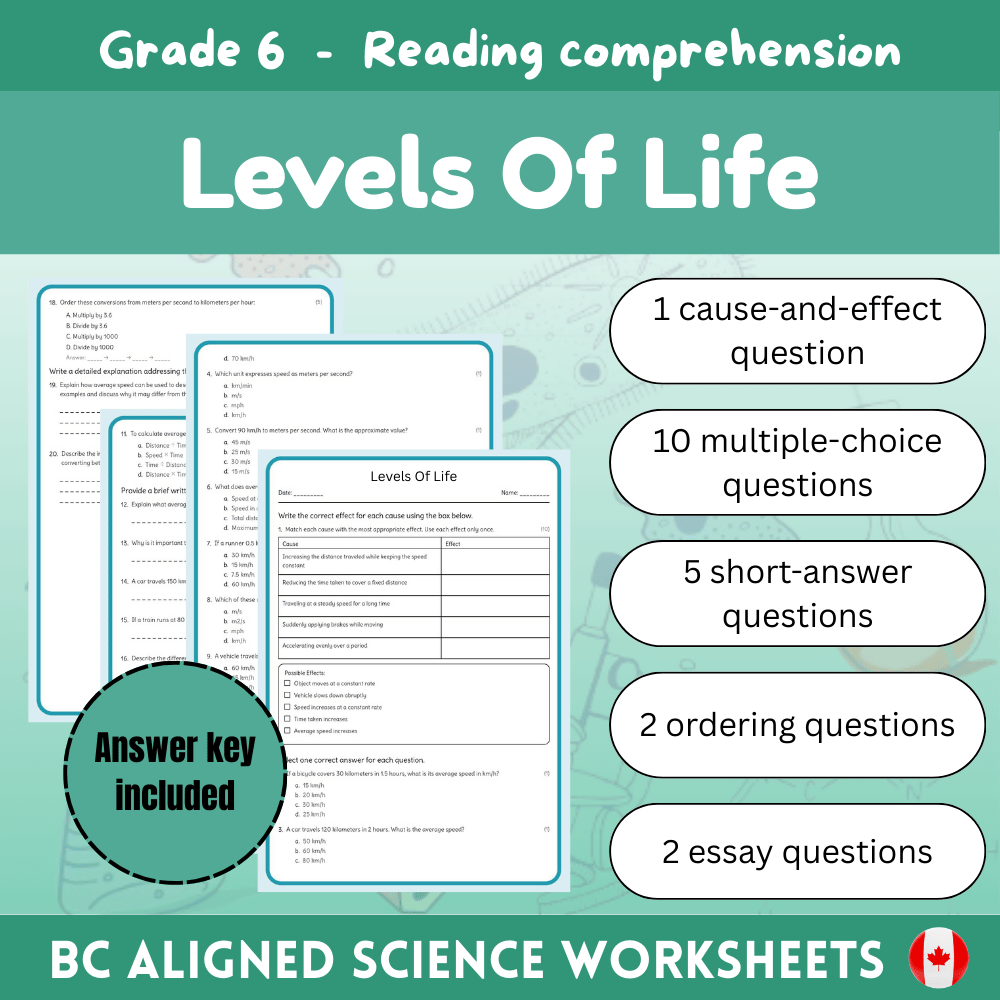
6th Grade Science | Levels Of Life Worksheet (PDF) – BC Standards
Created byBright Mind ResourcesLearning Objectives
- Identify the different levels of biological organization from cells to organisms.
- Explain how cells, tissues, organs, and organ systems work together.
- Describe how disruptions at one level can affect the entire organism.
Instant download
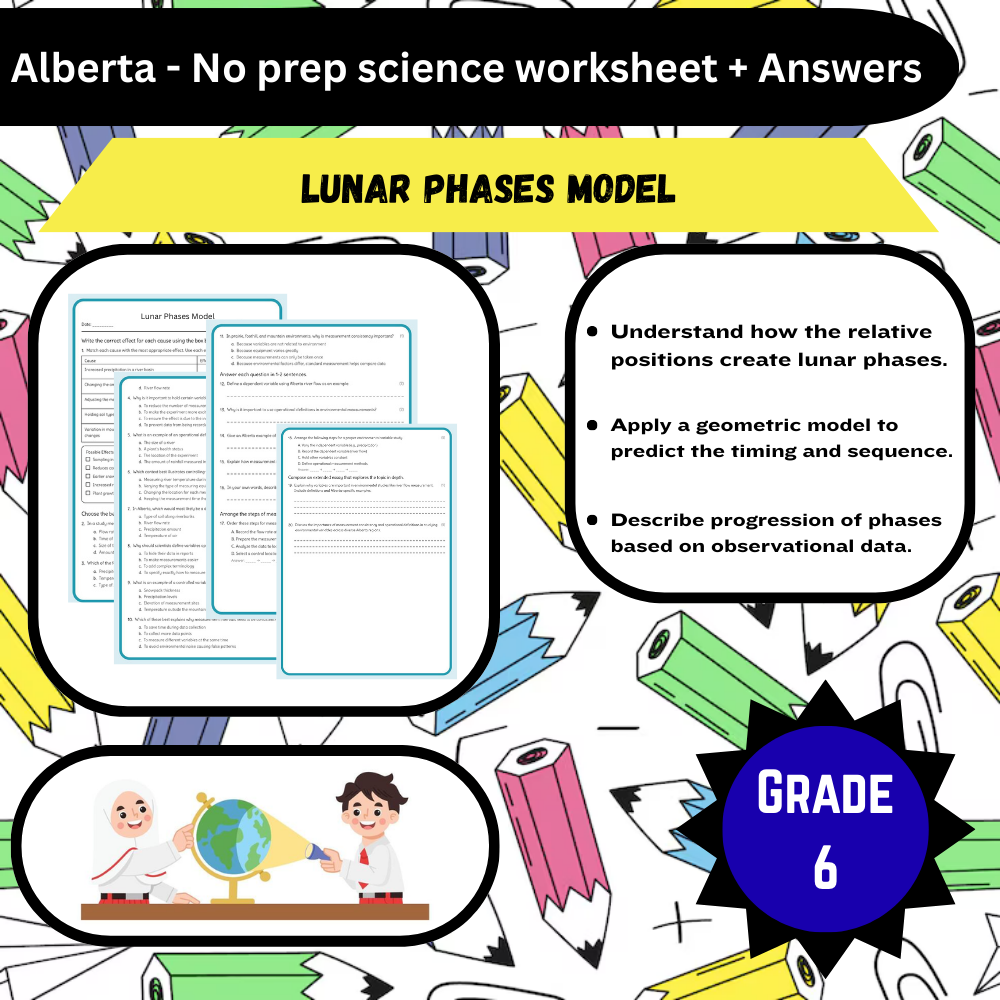
Grade 6 Science | Lunar Phases Model Worksheet (PDF) – Alberta Standards
Created byBright Mind ResourcesLearning Objectives
- Understand how the relative positions of the Sun, Earth, and Moon create lunar phases.
- Apply a geometric model to predict the timing and sequence of lunar phases from observations.
- Describe the progression and timing of lunar phases based on observational data.
Instant download
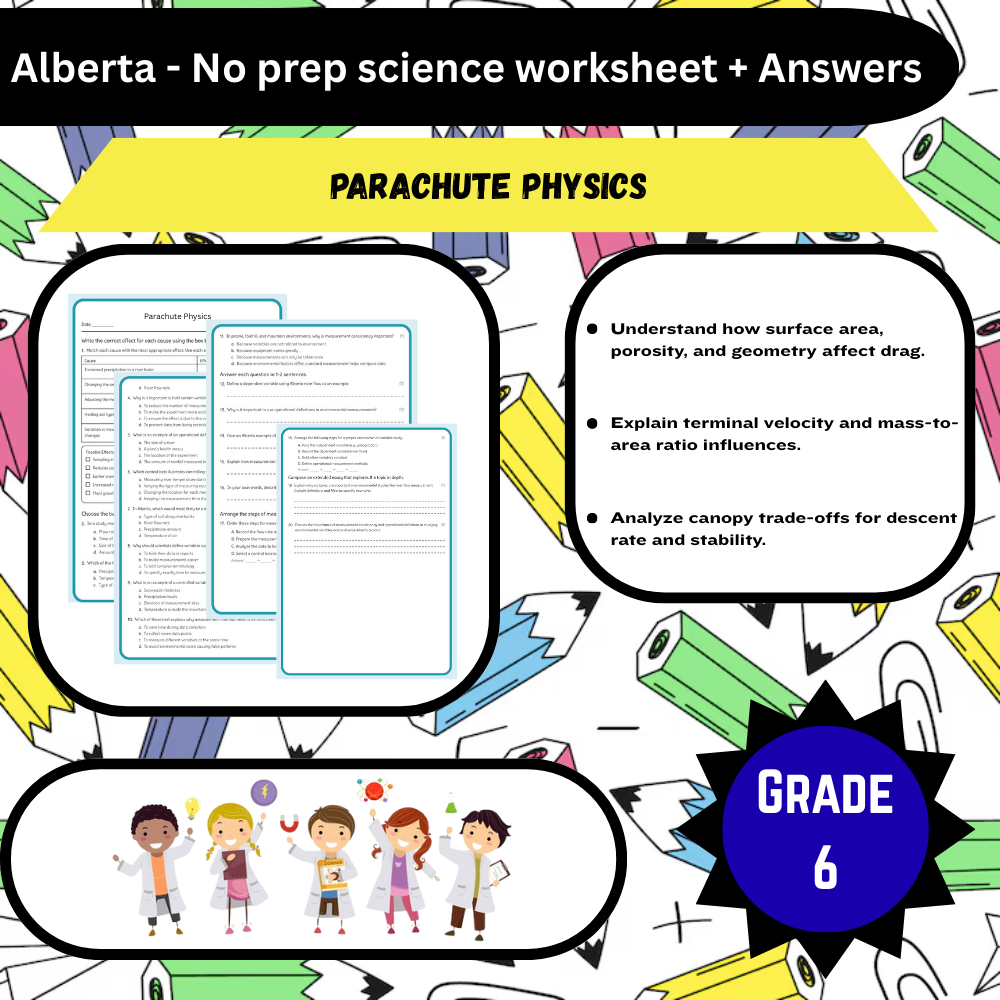
Grade 6 Science | Parachute Physics(Worksheet + Answer Key) – Alberta Standards
Created byBright Mind ResourcesLearning Objectives
- Understand how surface area, porosity, and suspension geometry affect drag in parachutes.
- Explain the concepts of terminal velocity and how mass-to-area ratio influences descent speed.
- Analyze how canopy design trade-offs impact descent rate and stability in different atmospheric conditions.
Instant download
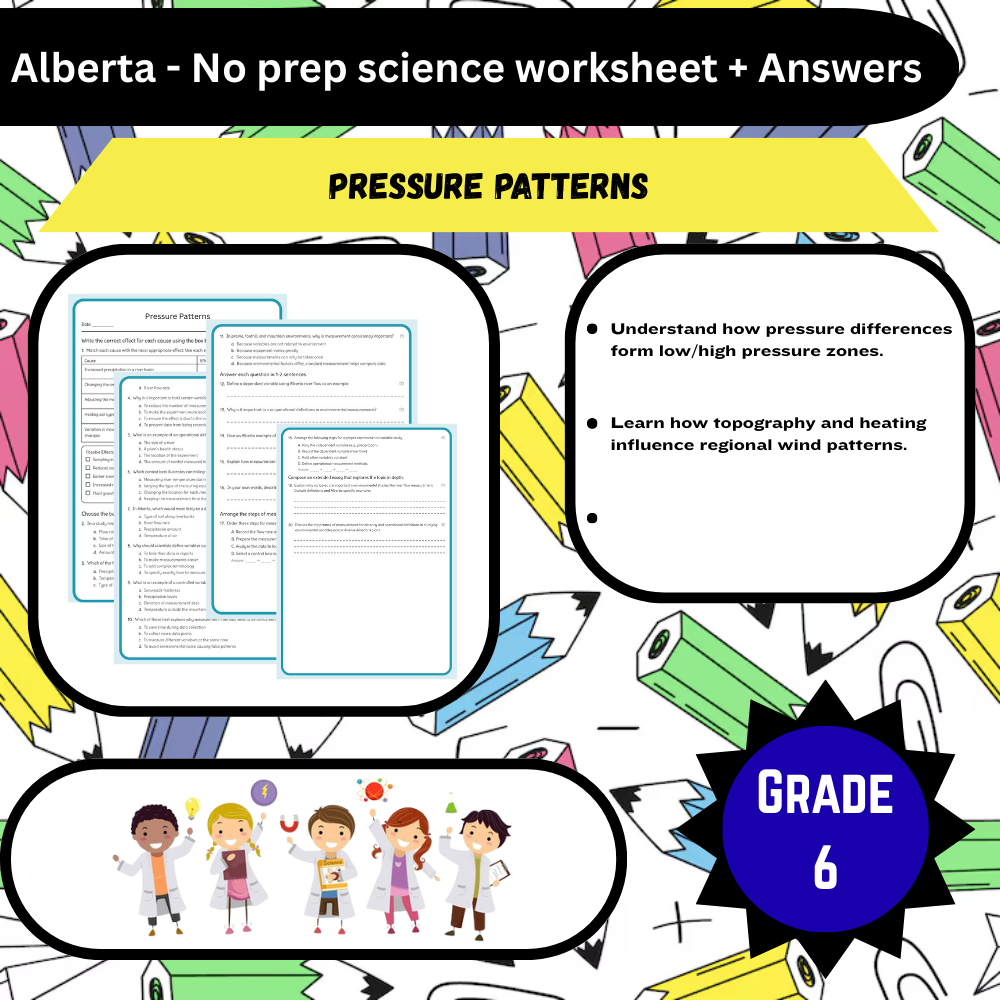
Grade 6 Science – Pressure Patterns Worksheet (PDF) | Alberta Standards
Created byBright Mind ResourcesLearning Objectives
- Understand how pressure differences form low and high pressure zones in the atmosphere.
- Learn how topography and uneven heating influence regional wind patterns and weather.
Instant download
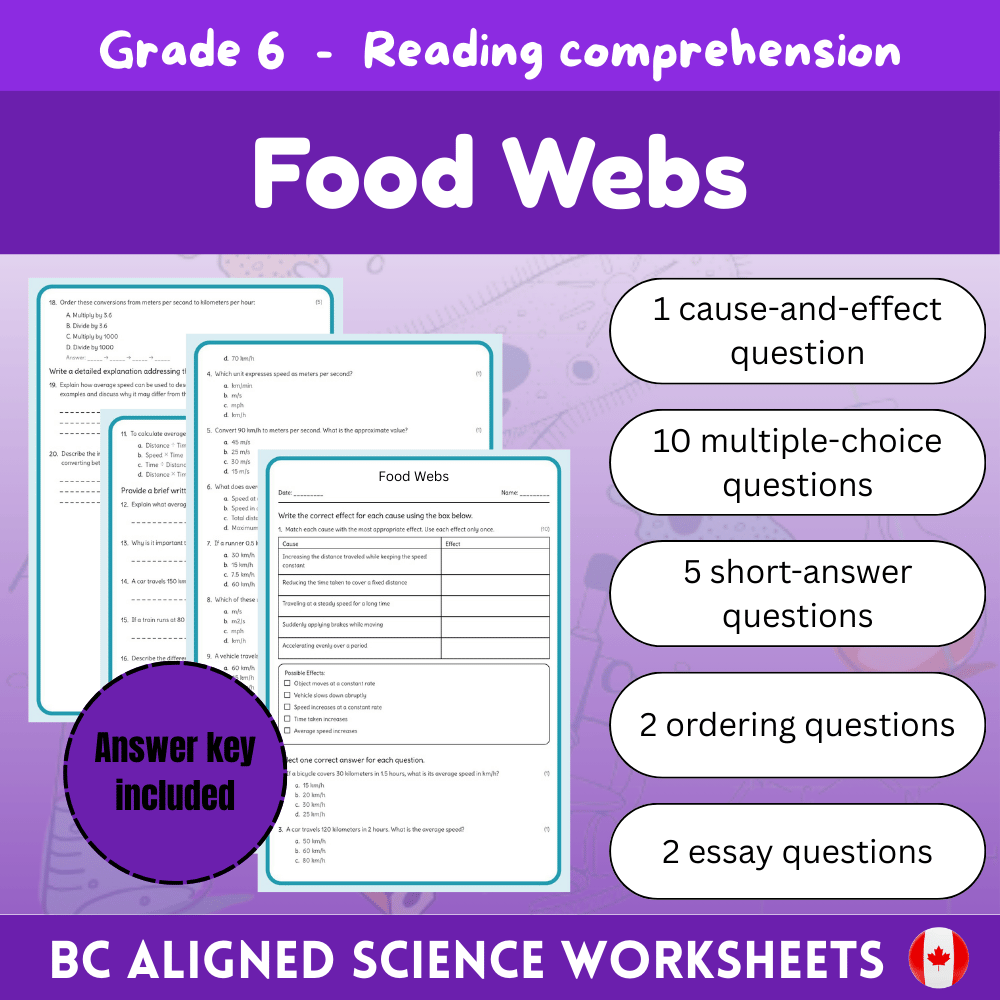
Grade 6 Science – Food Webs Worksheet (Worksheet + Answer Key) | BC Standards
Created byBright Mind ResourcesLearning Objectives
- Understand the structure and components of a food web.
- Identify how energy flows through ecosystems via food webs.
- Describe the impact of species removal on ecosystem stability.
Instant download
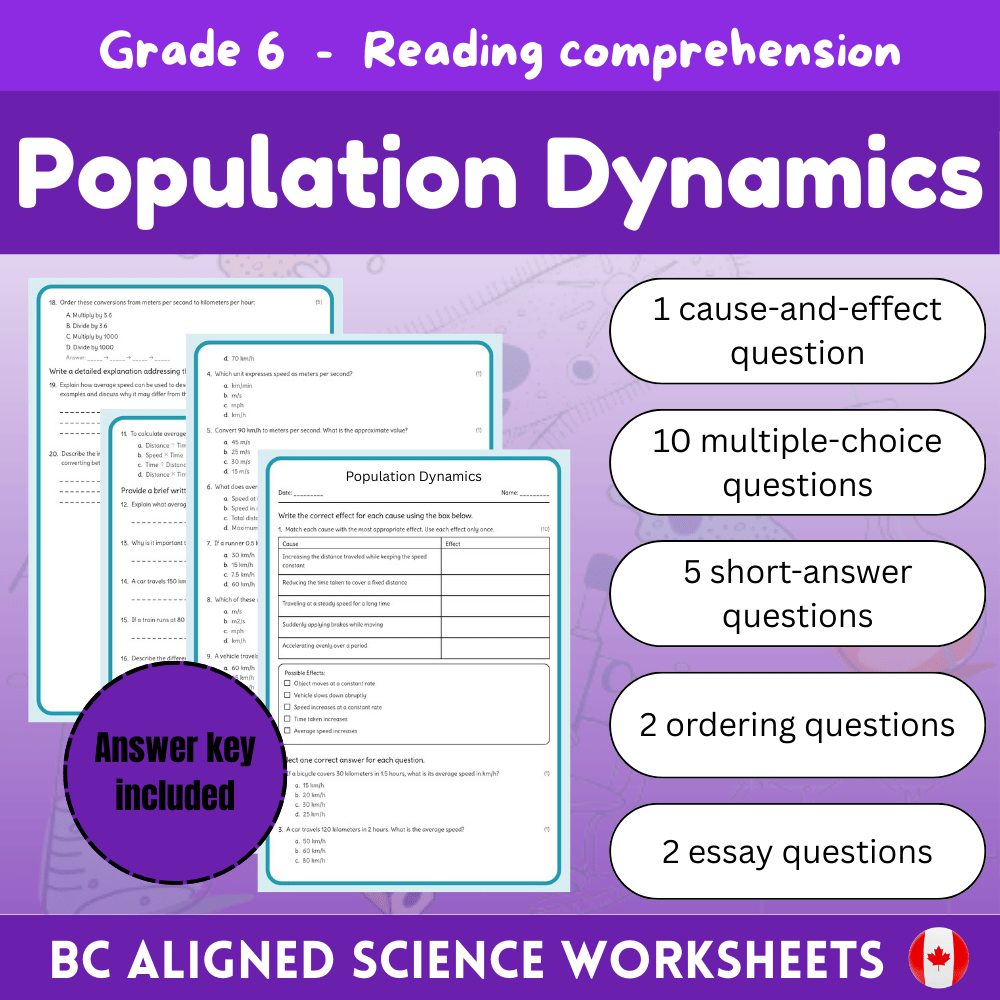
6th Grade Science | Population Dynamics Worksheet (Answer Key) for BC Standards
Created byBright Mind ResourcesLearning Objectives
- Understand factors that influence population change such as birth, death, immigration, and emigration.
- Identify different growth models like exponential and logistic growth.
- Describe factors affecting population density, including density-dependent and density-independent factors.
Instant download
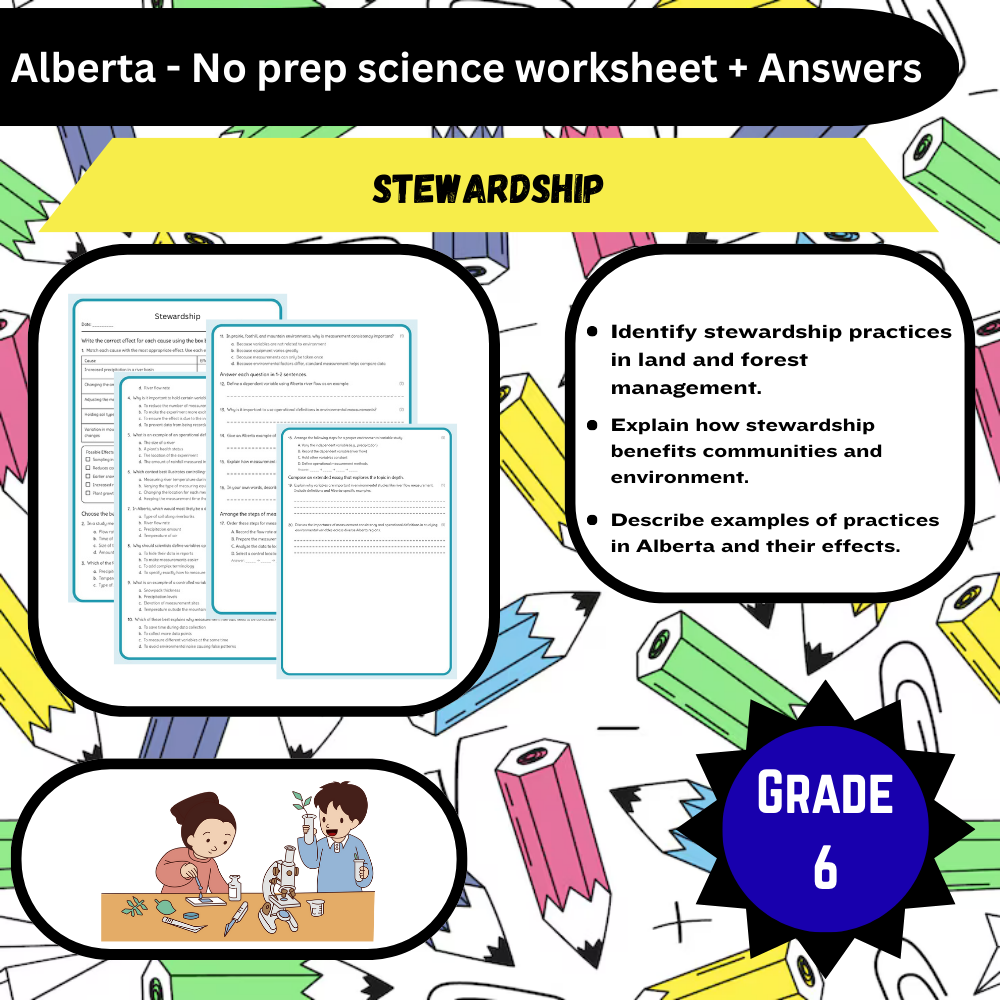
Grade 6 Science | Stewardship Practices Worksheet (PDF) - Alberta Standards
Created byBright Mind ResourcesLearning Objectives
- Identify different stewardship practices used in land and forest management.
- Explain how stewardship activities benefit local communities and the environment.
- Describe examples of stewardship practices in Alberta and their effects.
Instant download
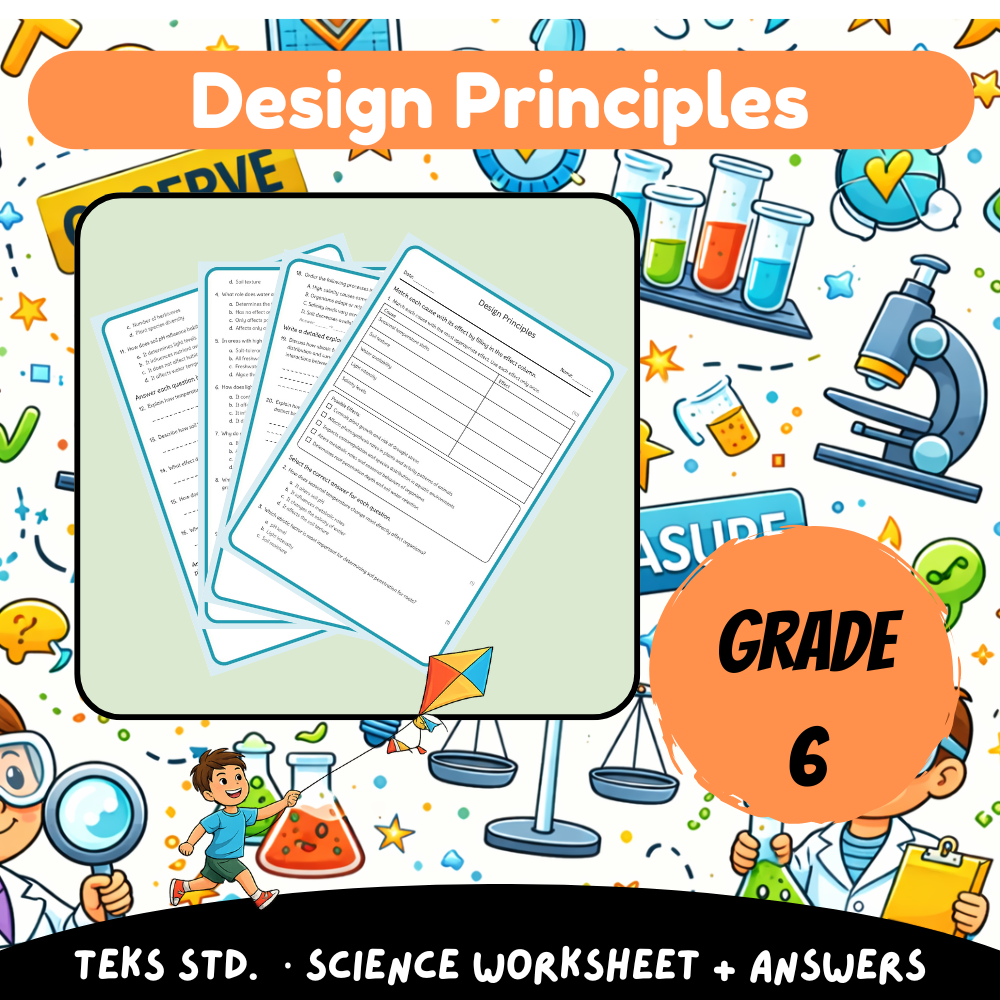
6th Grade Science | Design Principles Worksheet (PDF) – TEKS Standards
Created byBright Mind ResourcesLearning Objectives
- Understand key design principles for valid controlled experiments.
- Identify appropriate control groups and variables.
- Evaluate the importance of sample size and replication in testing.
Instant download
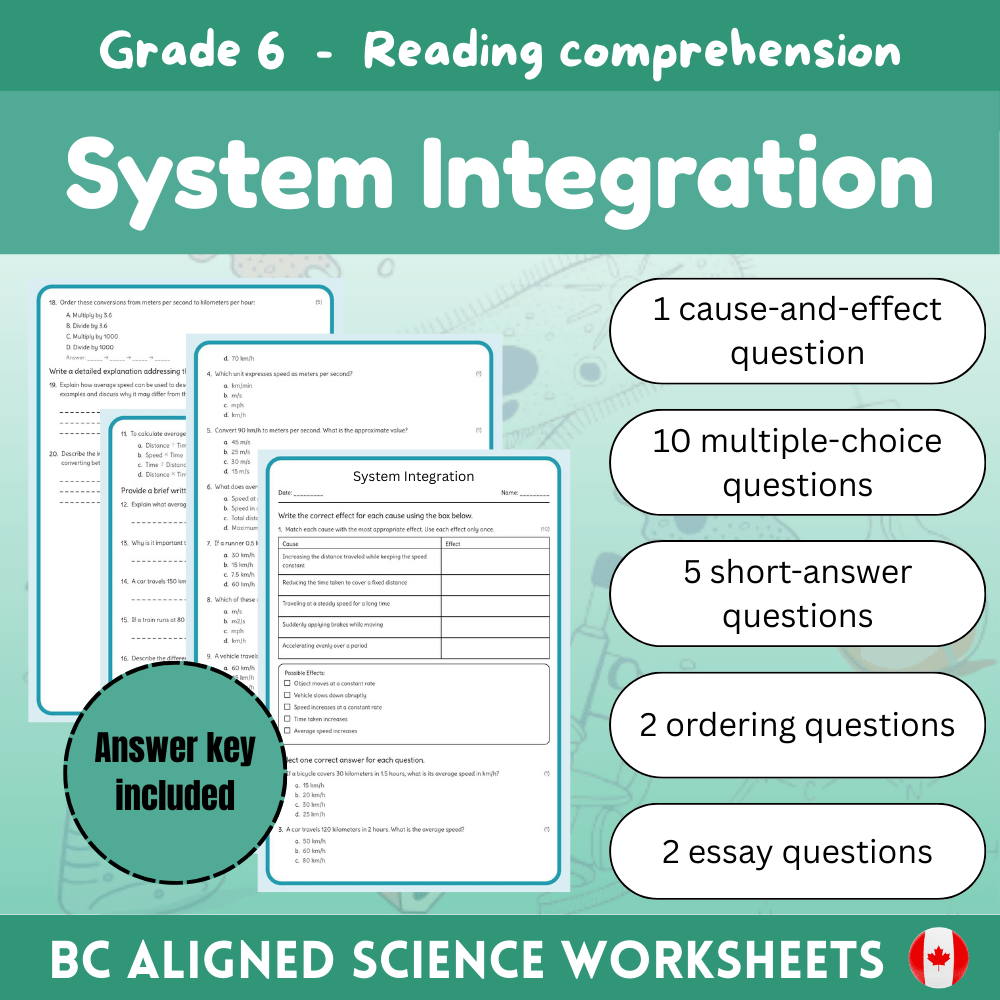
Grade 6 Science – System Integration Worksheet (Worksheet + Answer Key) PDF
Created byBright Mind ResourcesLearning Objectives
- Explain how different organ systems work together to maintain homeostasis.
- Identify feedback mechanisms involved in regulating internal body conditions.
- Describe examples of homeostatic processes such as temperature regulation and blood glucose control.
Instant download
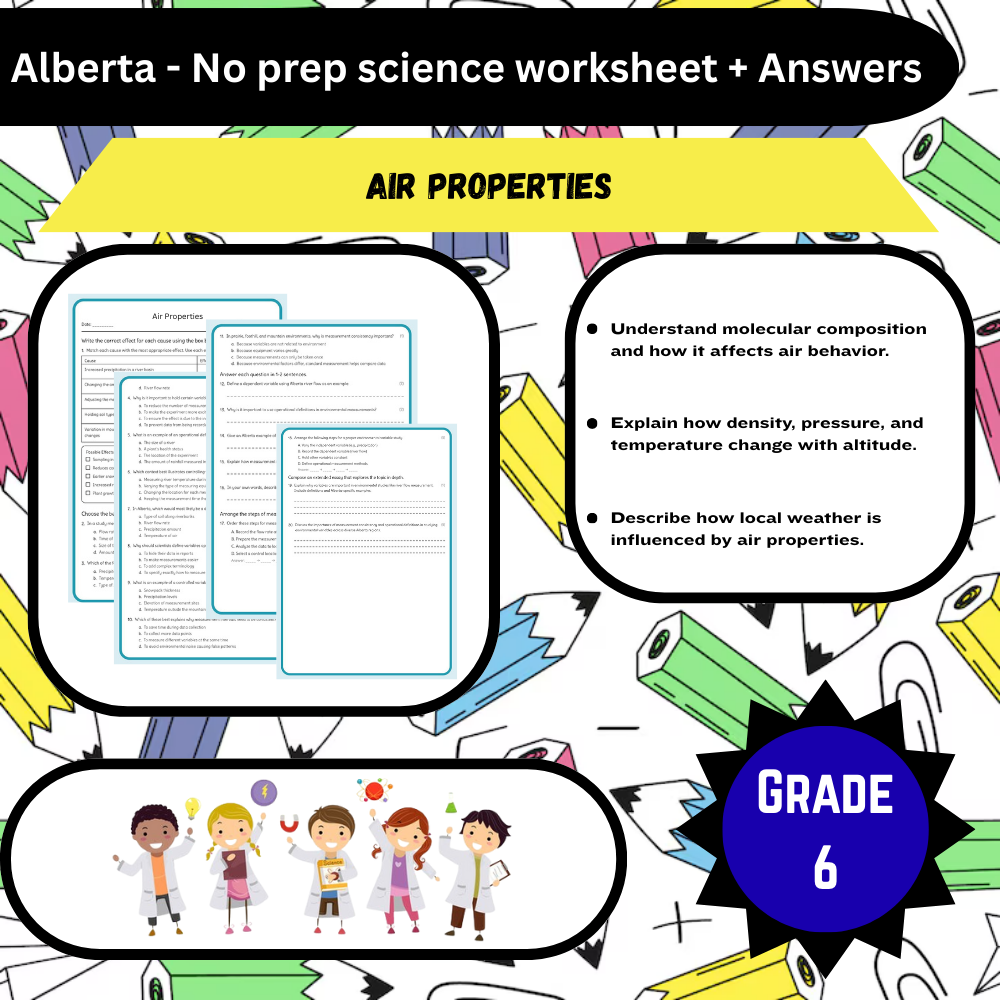
Grade 6 Science | Air Properties Worksheet (PDF) – Alberta Standards
Created byBright Mind ResourcesLearning Objectives
- Understand the molecular composition and how it affects air behavior
- Explain how air density, pressure, and temperature change with altitude and regional conditions
- Describe how local weather phenomena are influenced by air properties
Instant download
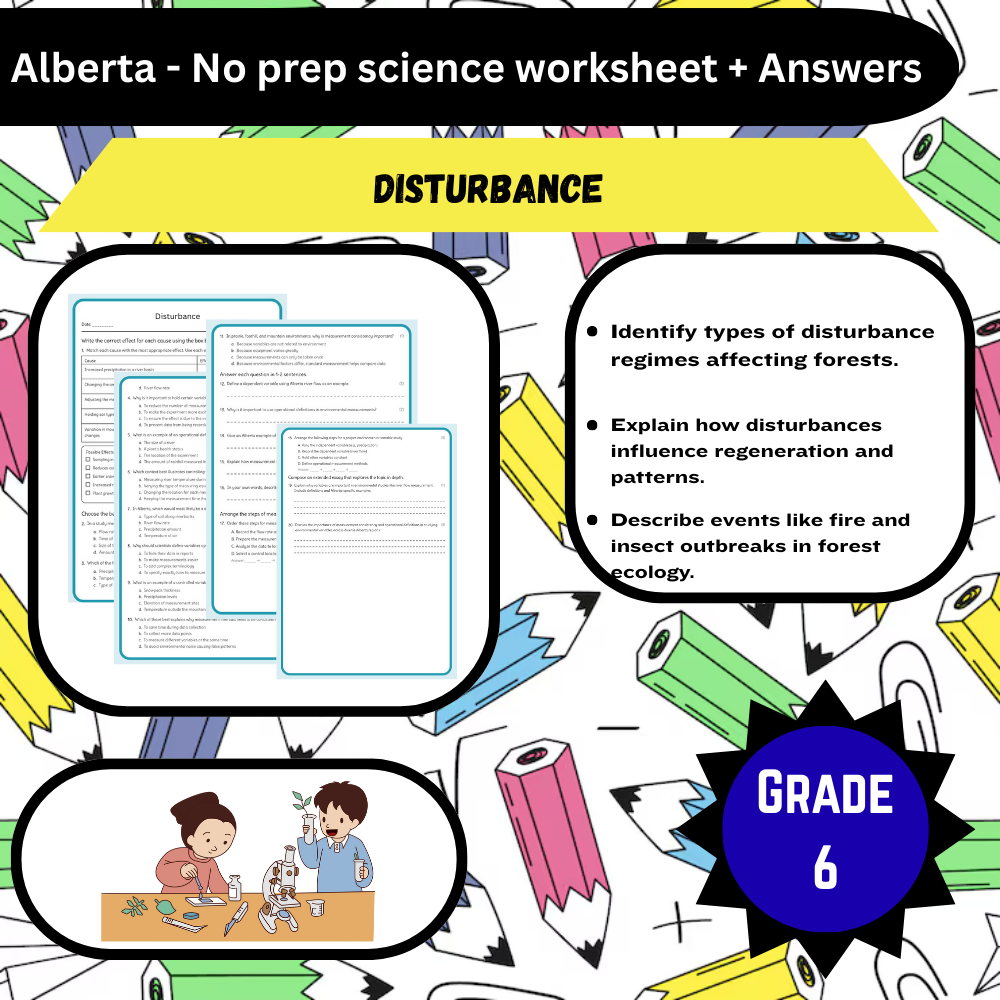
6th Grade Science – Disturbance Regimes Worksheet (PDF)
Created byBright Mind ResourcesLearning Objectives
- Identify different types of disturbance regimes that affect forests
- Explain how disturbance characteristics influence forest regeneration and landscape patterns
- Describe specific disturbance events such as fire and insect outbreaks in forest ecology
Instant download
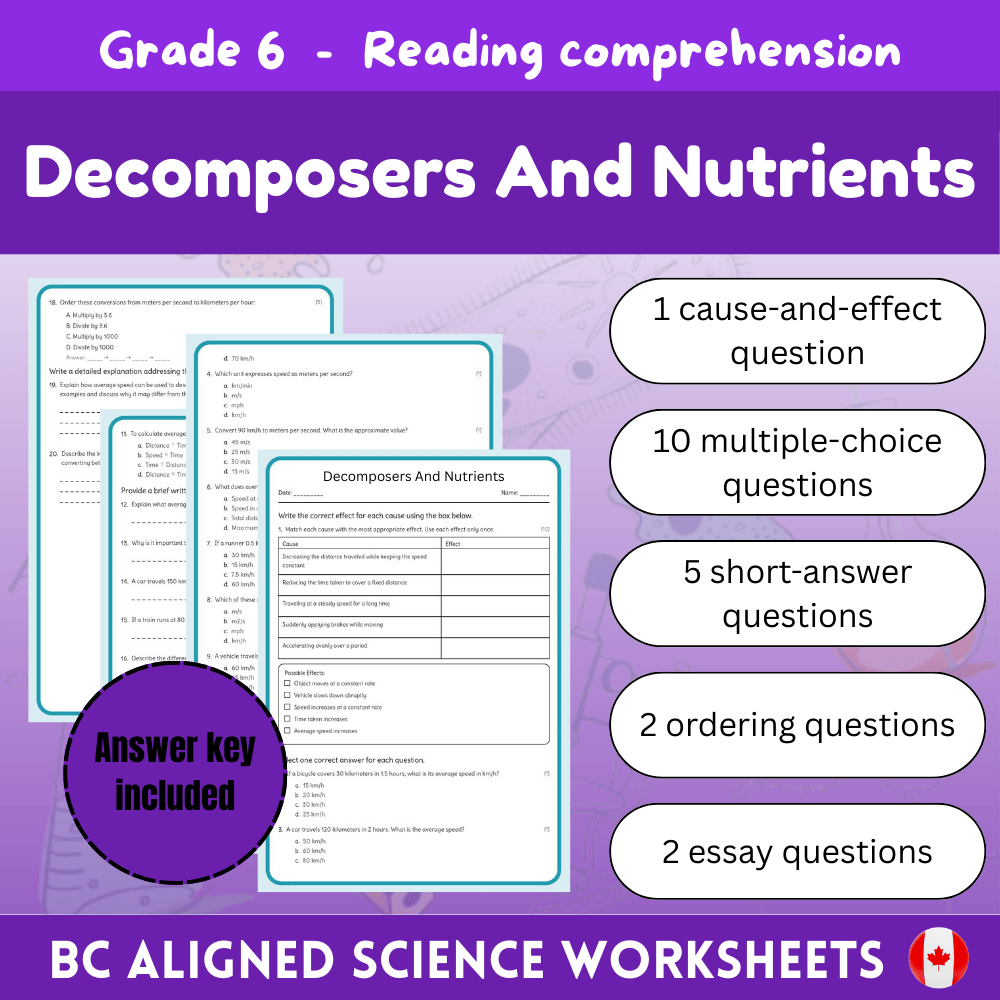
6th Grade Science | Decomposers and Nutrients Experiment Worksheet (PDF)
Created byBright Mind ResourcesLearning Objectives
- Understand the role of decomposers in breaking down organic matter and returning nutrients to the environment.
- Identify environmental factors that affect decomposer efficiency.
- Explain how decomposer activity influences soil health, nutrient cycling, and ecosystem balance.
Instant download
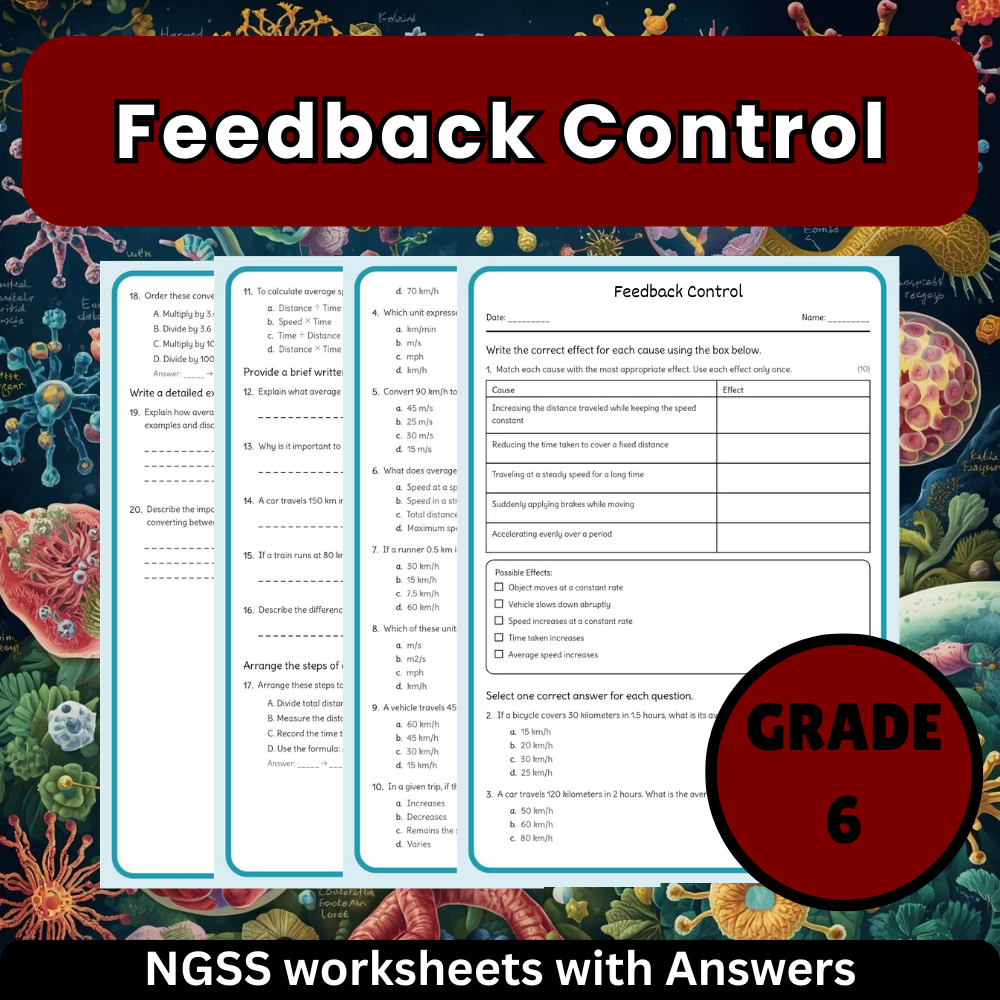
Grade 6 Science – Feedback Control Worksheet (PDF) | NGSS-Aligned & Engaging
Created byBright Mind ResourcesLearning Objectives
- Explain how feedback mechanisms regulate internal stability in the human body.
- Differentiate between negative and positive feedback processes with examples.
- Describe how disruption in feedback control systems can affect organ function and homeostasis.
Also included in: Grade 6 Science UNIT Bundle | Cell Functions, Energy & Systems NGSS Worksheets +2 more
Instant download
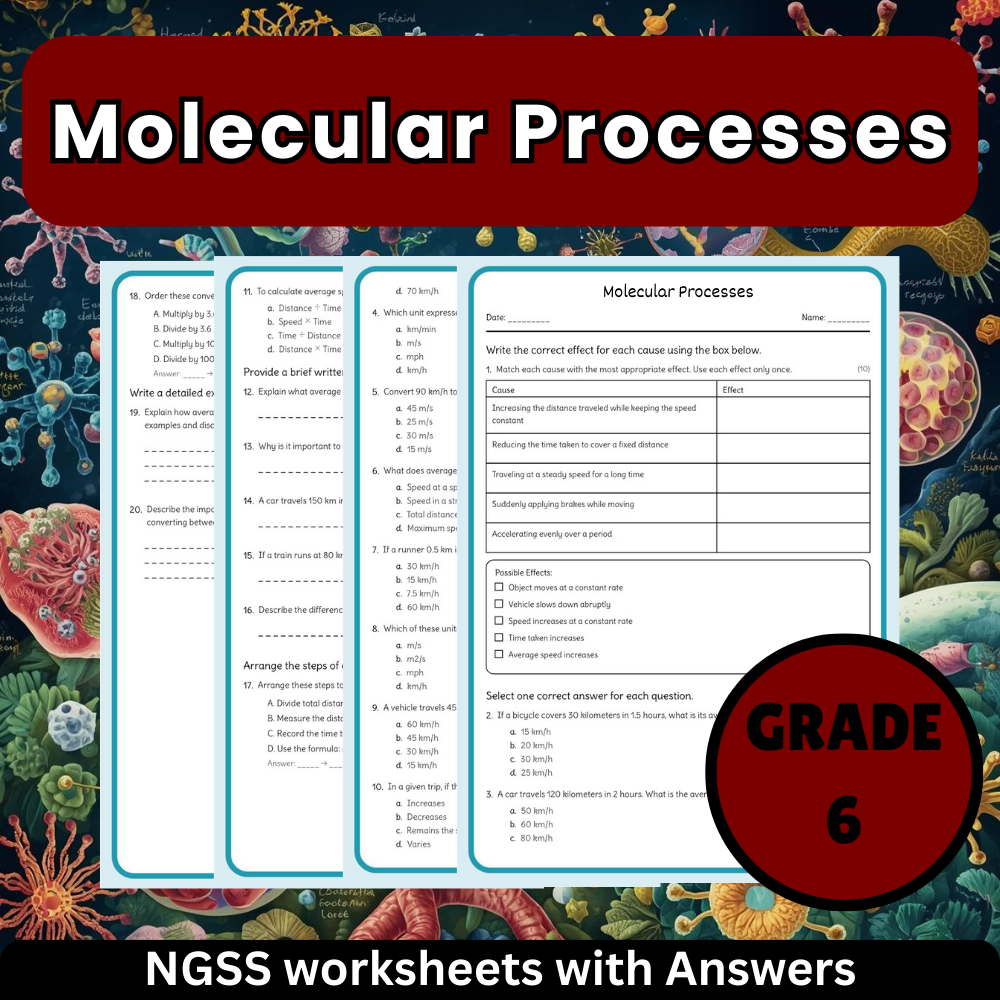
Grade 6 Science | Molecular Processes Worksheet (NGSS-Aligned, PDF)
Created byBright Mind ResourcesLearning Objectives
- Identify the key molecular building blocks such as amino acids, nucleotides, fatty acids, and monosaccharides.
- Explain how monomers assemble into polymers through condensation reactions.
- Describe the roles of macromolecules—proteins, nucleic acids, lipids, and carbohydrates—in biological structure and function.
Also included in: Grade 6 Science UNIT Bundle | Cell Functions, Energy & Systems NGSS Worksheets +2 more
Instant download
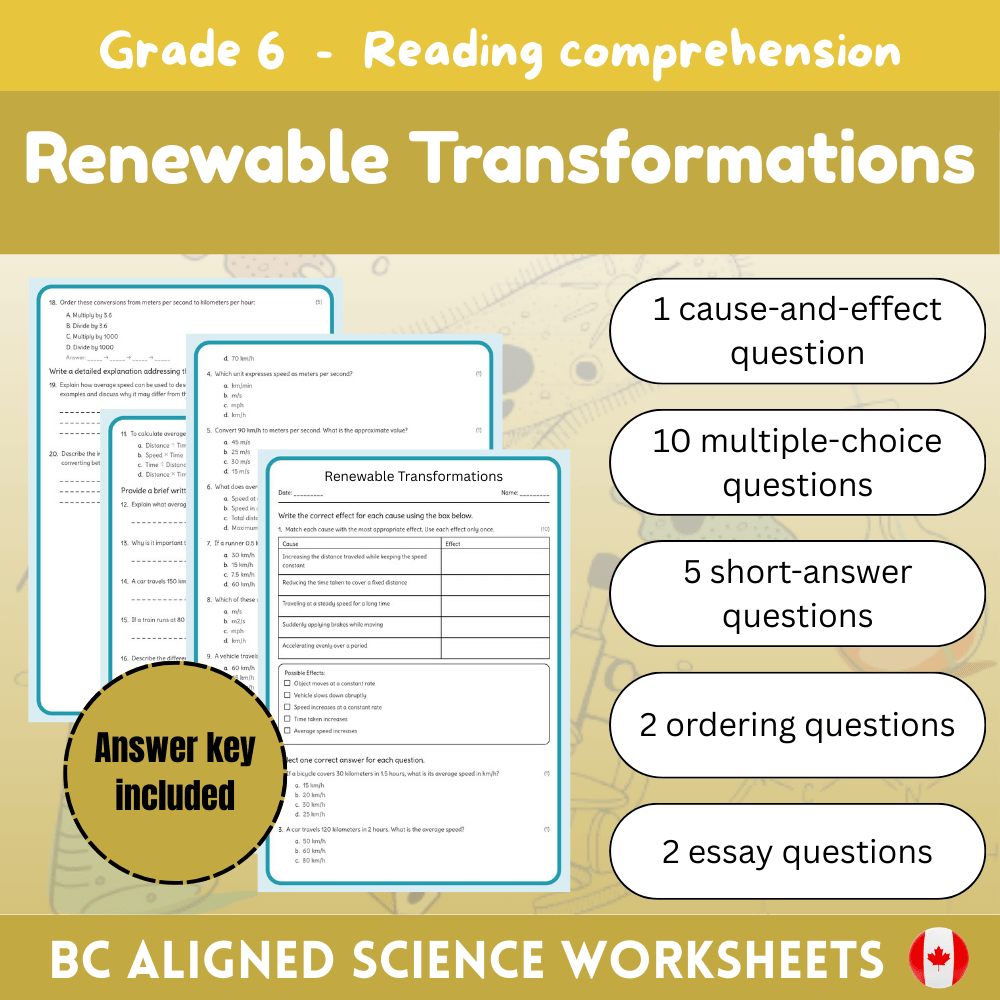
Grade 6 Science | Renewable Transformations Worksheet (PDF) — BC Standard
Created byBright Mind ResourcesLearning Objectives
- Describe how photovoltaic cells, wind turbines, and hydro systems convert environmental sources into electrical energy.
- Explain the energy losses involved at each stage of renewable energy transformations.
- Analyze how storage and conversion choices impact net usable energy in renewable systems.
Instant download
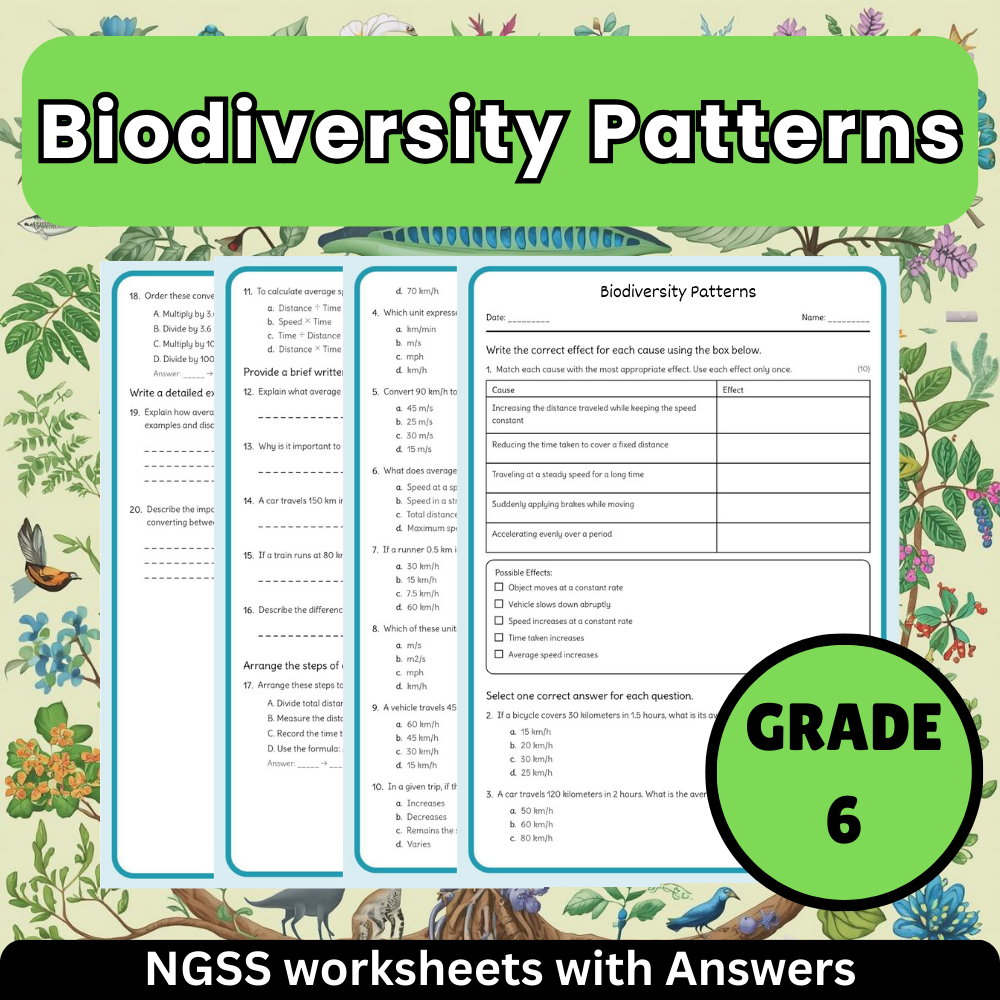
Grade 6 Science | Biodiversity Patterns Worksheet (Answer Key) - NGSS Aligned
Created byBright Mind ResourcesLearning Objectives
- Understand how spatial and temporal data reveal biodiversity patterns across ecosystems.
- Identify factors influencing species diversity and endemism.
- Analyze ecological and historical factors affecting community composition.
Also included in: Grade 6 Science Unit Bundle | Evolution, Genetics & Biodiversity NGSS Worksheets +2 more
Instant download
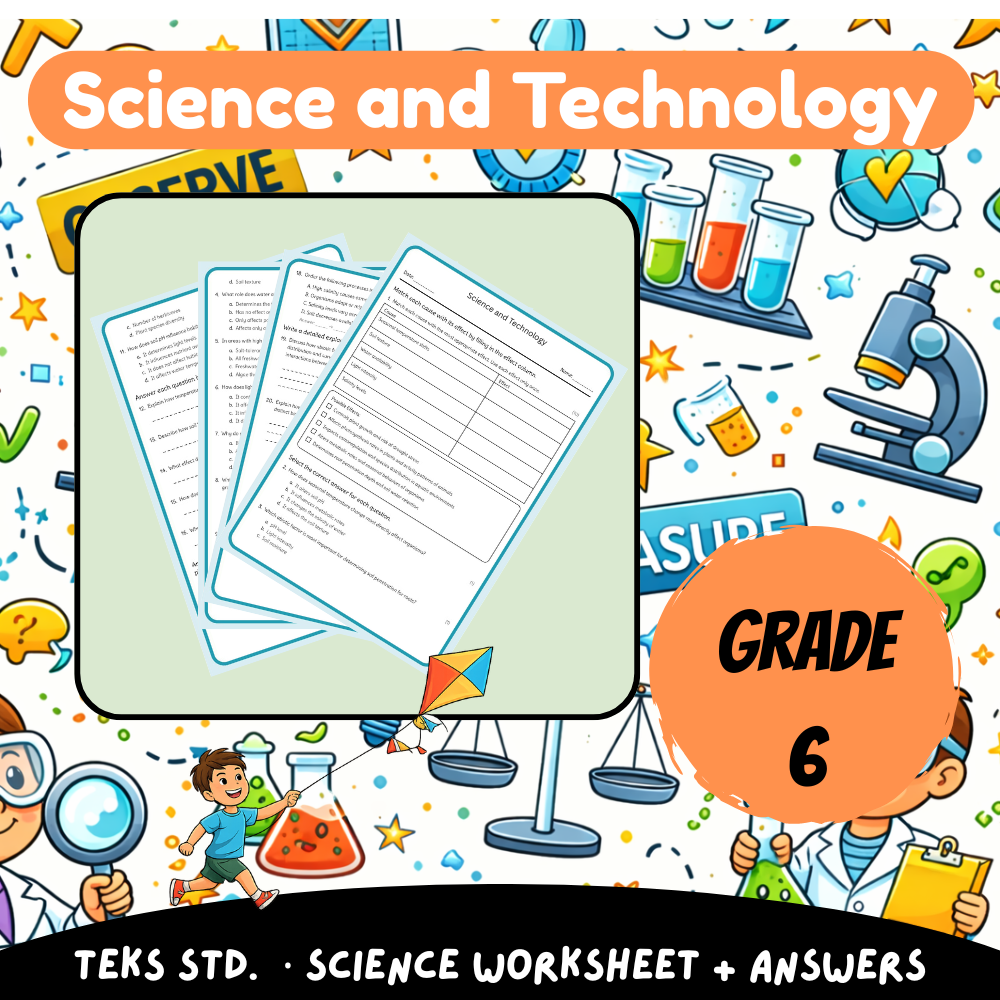
Grade 6 Science | Technology in Science Worksheet (Worksheet + Answer Key) PDF
Created byBright Mind ResourcesLearning Objectives
- Understand how scientific investigation drives technological development.
- Identify tools and instruments used in scientific observation and measurement.
- Explain the reciprocal relationship between science and technology, including cause-and-effect.
Instant download
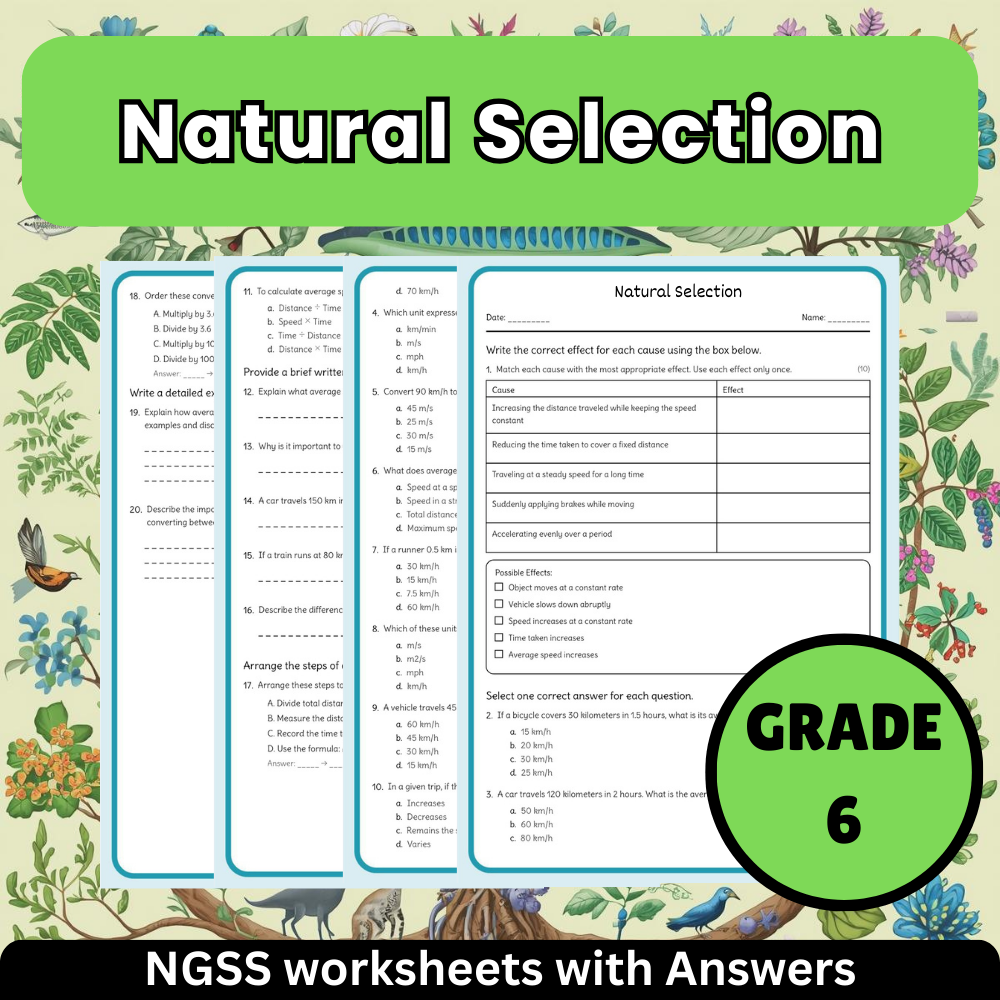
6th Grade Science | Natural Selection Worksheet + Answer Key (NGSS Aligned)
Created byBright Mind ResourcesLearning Objectives
- Understand how variation in heritable traits influences survival and reproduction.
- Identify examples of natural selection affecting populations.
- Explain the linkage between trait advantage and population-level genetic changes.
Also included in: Grade 6 Science Unit Bundle | Evolution, Genetics & Biodiversity NGSS Worksheets +2 more
Instant download
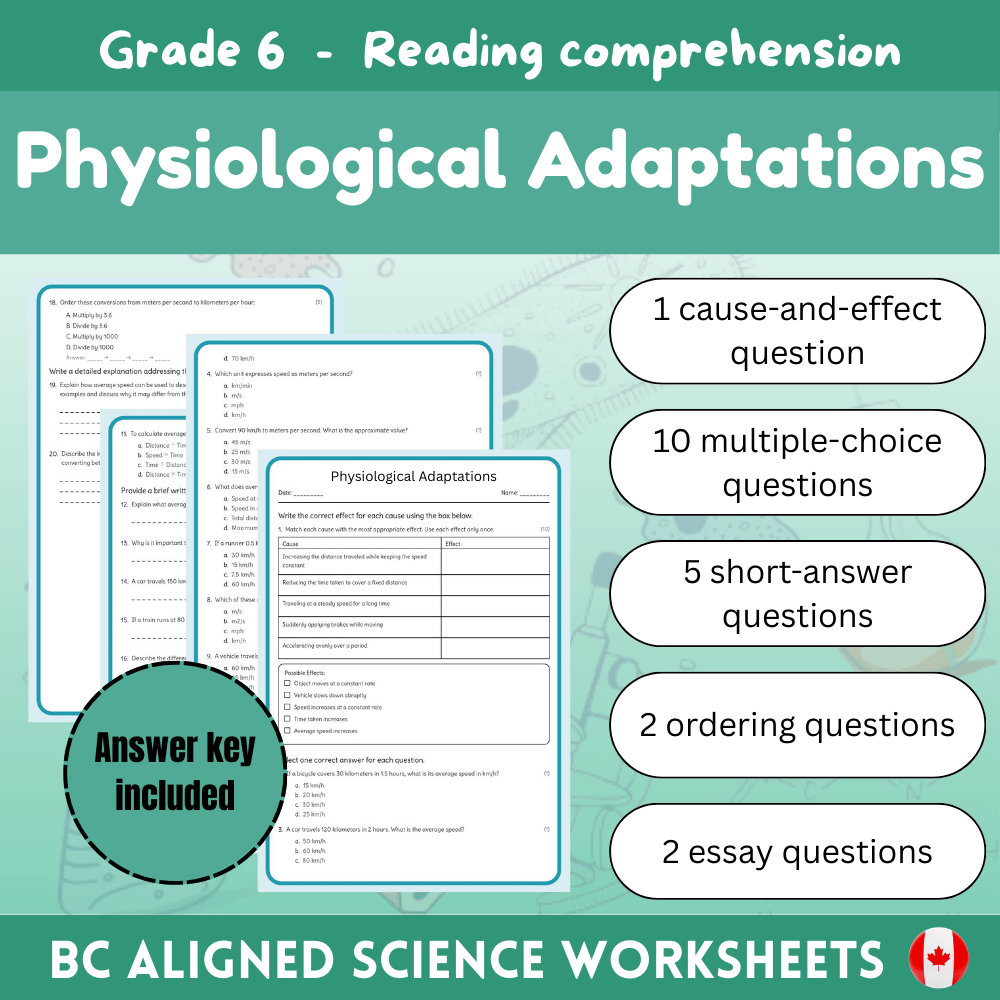
Grade 6 Science | Physiological Adaptations Worksheet(Answer Key) - BC Standards
Created byBright Mind ResourcesLearning Objectives
- Understand internal processes that enable animals to survive in extreme environments.
- Identify examples of physiological adaptations such as heat exchange, urine concentration, and metabolic regulation.
- Explain how hormonal mechanisms help regulate body temperature, hydration, and energy during challenging conditions.
Instant download
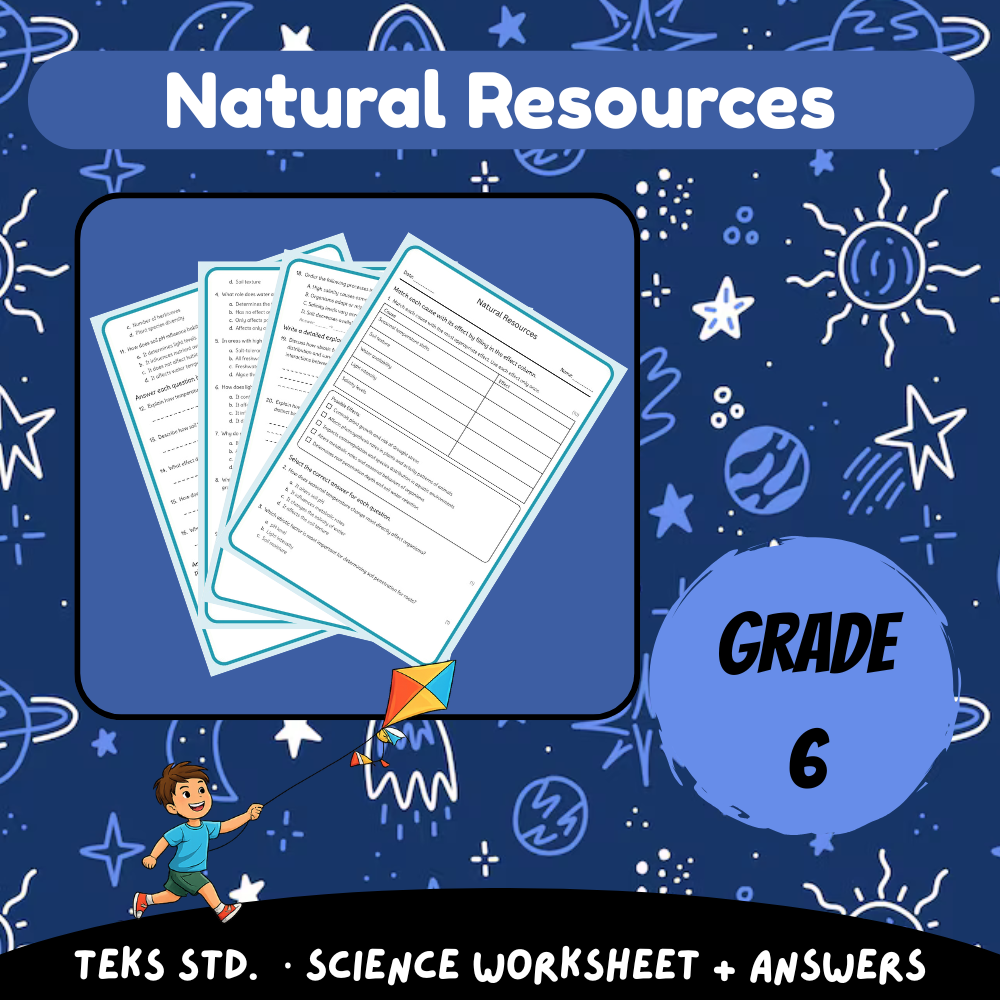
6th Grade Science | Natural Resources (Worksheet + Answer Key) - TEKS-Aligned
Created byBright Mind ResourcesLearning Objectives
- Identify different types of natural resources and understand their origins and distributions.
- Analyze the environmental and economic implications of renewable and nonrenewable resources.
- Evaluate sustainable resource use principles and trade-offs involved in resource development.
Instant download
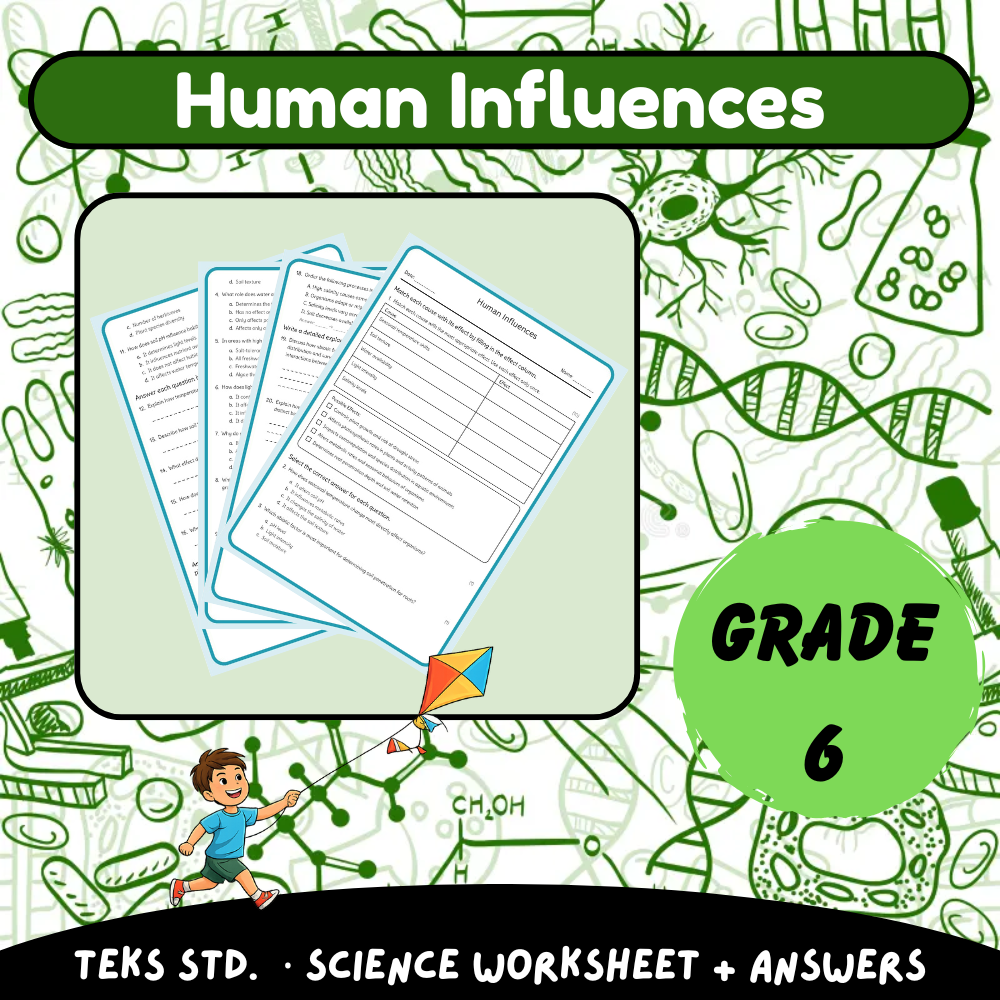
6th Grade Science | Human Influences Worksheet (PDF) – TEKS Standards
Created byBright Mind ResourcesLearning Objectives
- Identify different human activities that impact natural ecosystems.
- Explain effects of habitat fragmentation, pollution, and resource extraction.
- Recognize mitigation strategies such as conservation and restoration.
Instant download
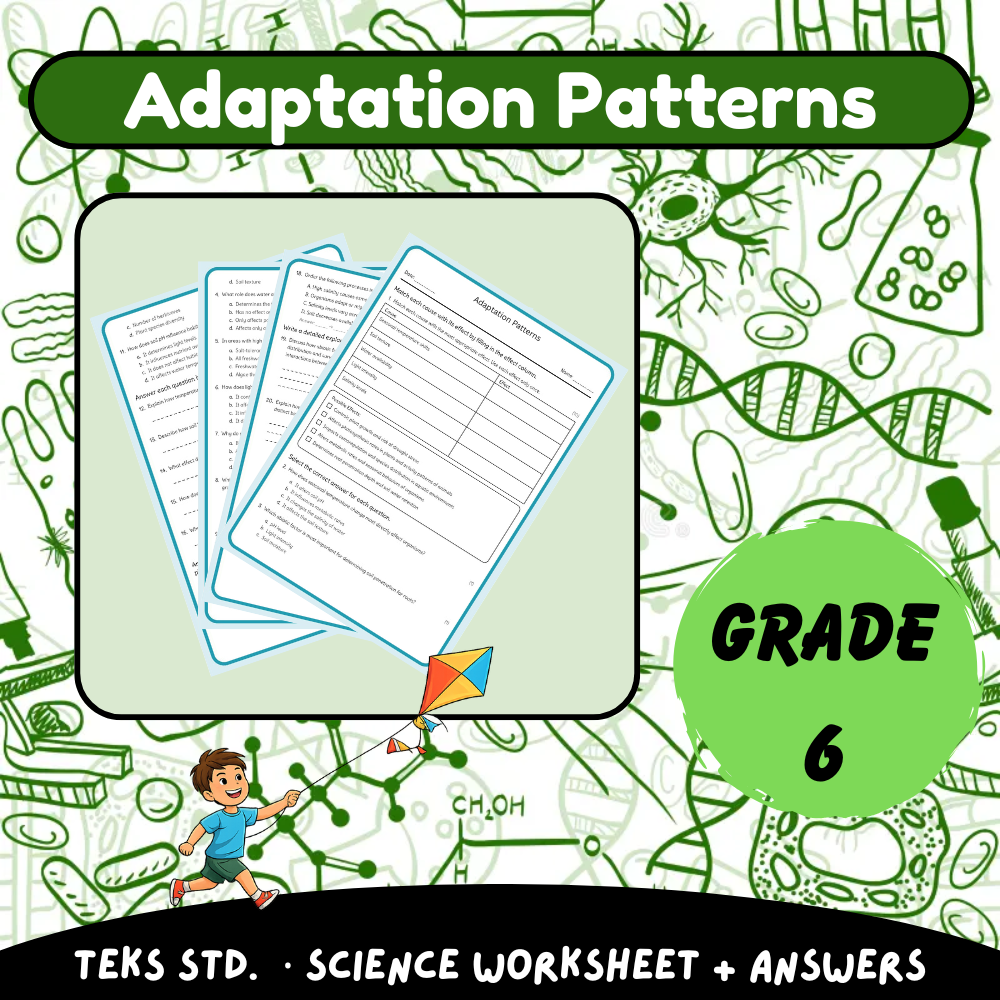
6th Grade Science | Adaptation Patterns Worksheet (PDF) — TEKS Aligned
Created byBright Mind ResourcesLearning Objectives
- Identify different types of adaptations such as morphological, physiological, and behavioral.
- Understand how adaptations help organisms survive in specific environments.
- Explain examples of traits like succulent stems, leaf modifications, fur insulation, and beak variation.
Instant download
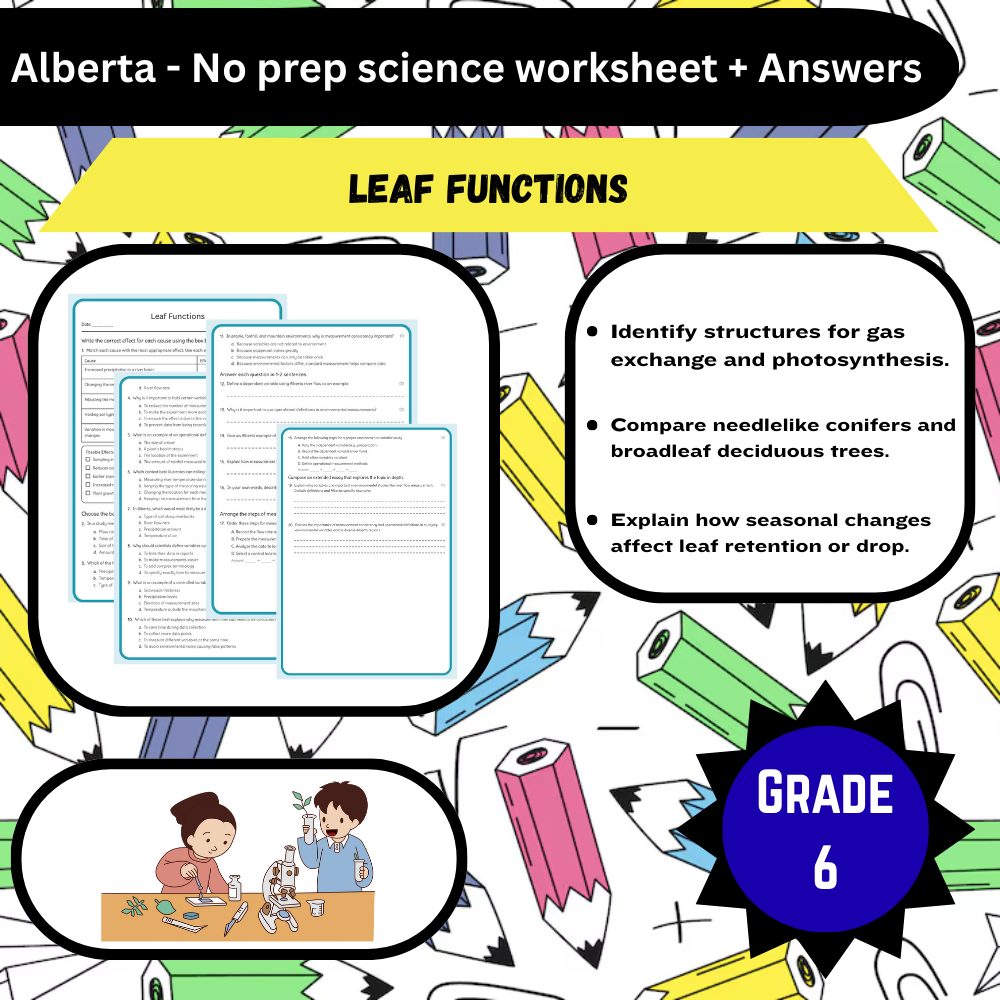
Grade 6 Science | Leaf Functions Worksheet – Photosynthesis & Adaptations (PDF)
Created byBright Mind ResourcesLearning Objectives
- Identify the different structures of leaves and their functions in gas exchange, photosynthesis, and transpiration.
- Compare leaf adaptations between needlelike conifers and broadleaf deciduous trees.
- Explain how seasonal changes affect leaf retention and leaf drop in Alberta's tree species.
Instant download
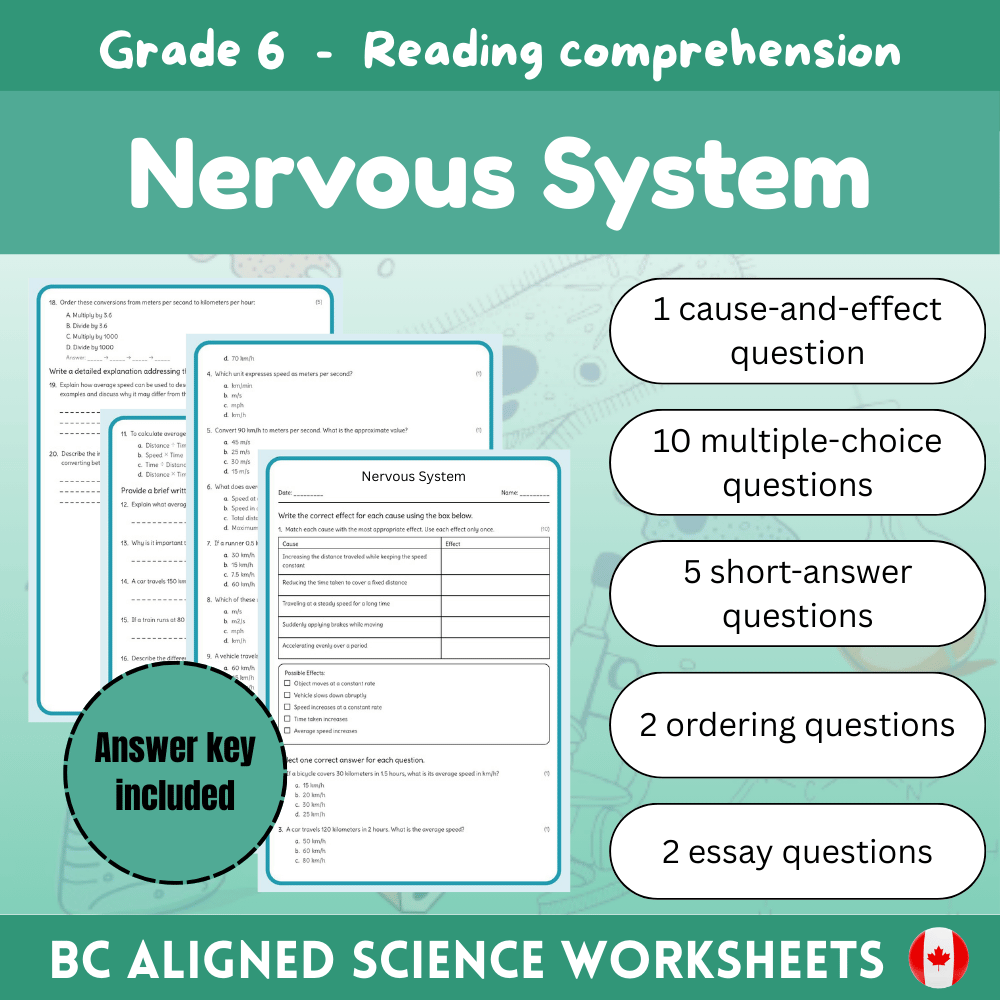
6th Grade Science | Nervous System Worksheet + Answer Key – BC Standards
Created byBright Mind ResourcesLearning Objectives
- Describe the basic functions of the nervous system in collecting and processing information.
- Identify the roles of neurons, synapses, and integration centers in nervous system function.
- Explain how the nervous system coordinates responses with muscles and glands.
Instant download
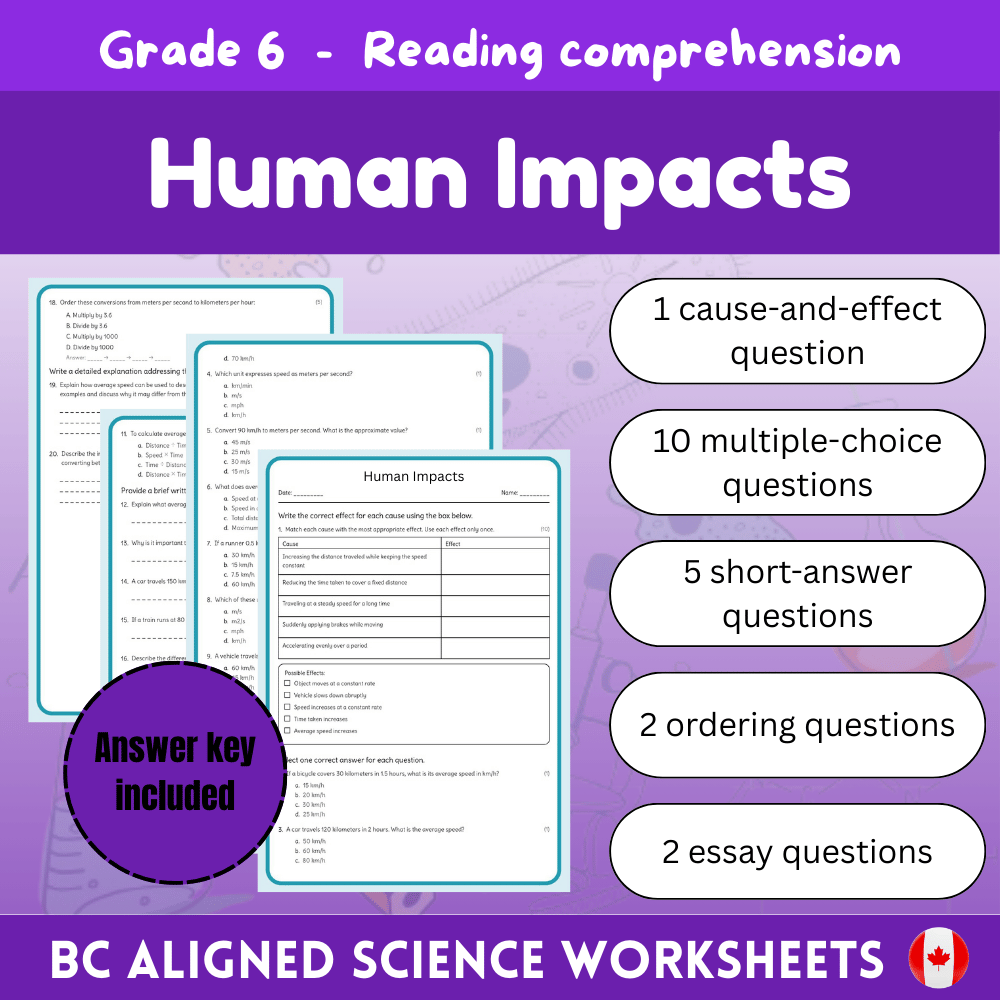
6th Grade Science | Human Impacts Worksheet + Answer Key (PDF)
Created byBright Mind ResourcesLearning Objectives
- Understand how human activities affect ecosystems and biodiversity.
- Identify specific impacts of land clearing, pollution, resource extraction, and invasive species.
- Explain consequences of ecosystem alterations such as habitat loss and nutrient cycle disruption.
Instant download
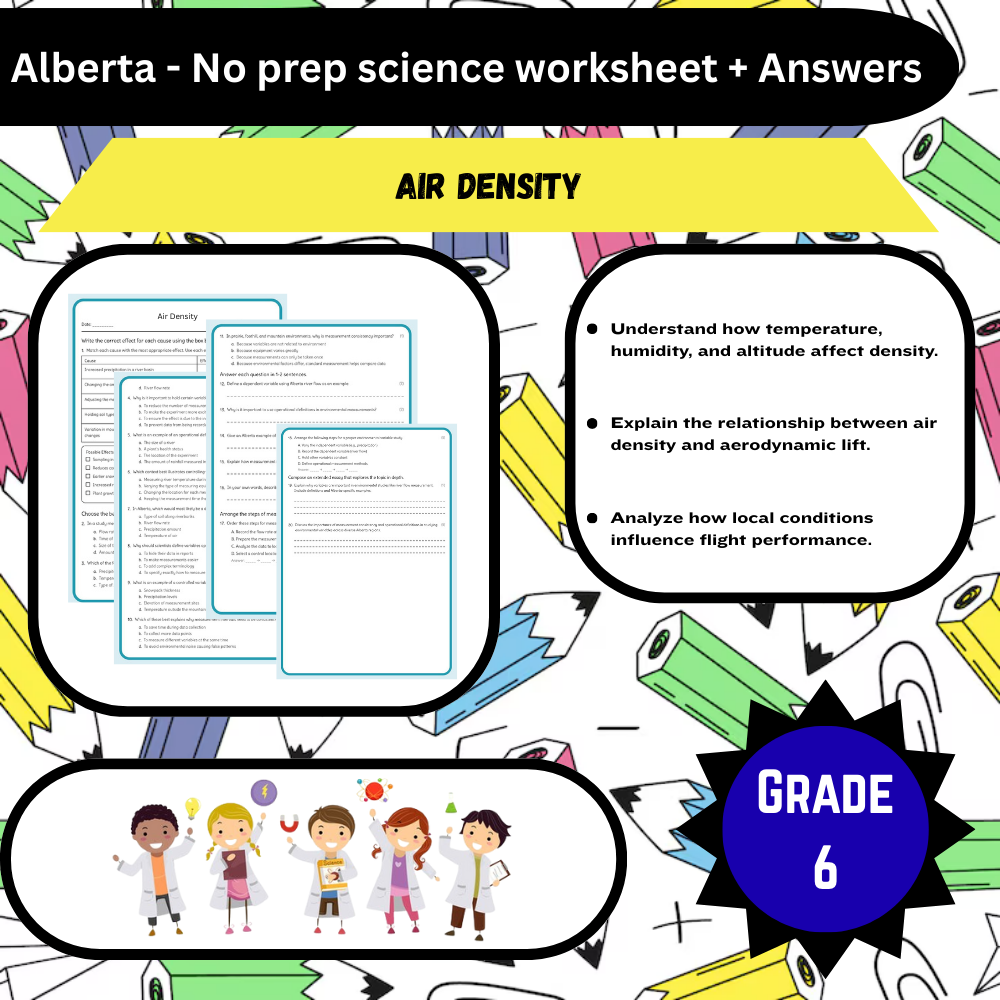
Grade 6 Science – Air Density Worksheet (PDF) | Alberta Standards
Created byBright Mind ResourcesLearning Objectives
- Understand how changes in temperature, humidity, and altitude affect air density.
- Explain the relationship between air density and aerodynamic lift.
- Analyze how local atmospheric conditions influence flight performance in different environments.
Instant download
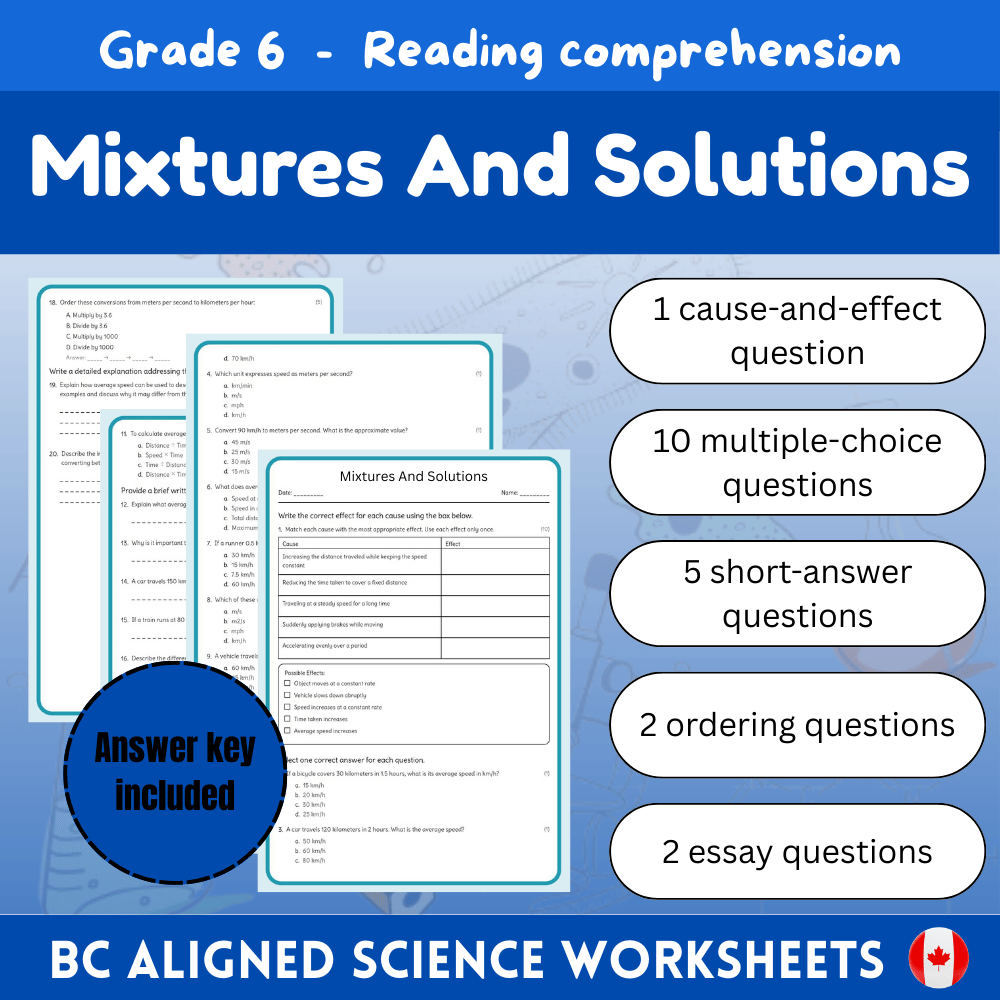
Grade 6 Science | Mixtures and Solutions Worksheet (PDF) – BC Standards
Created byBright Mind ResourcesLearning Objectives
- Understand the difference between mixtures and solutions.
- Identify methods used to separate components of mixtures.
- Explain characteristics of homogeneous and heterogeneous mixtures.
Instant download

6th Grade Science Worksheet – Materials For Performance (Worksheet + Answer Key)
 Created byMaple Path Learning
Learning Objectives
- Understand how material properties influence their suitability for different applications.
- Compare the effects of membrane thickness, pore size, and durability on water filtration performance.
- Identify practical considerations such as cost, availability, and ease of shaping when selecting materials.
Instant download
Browse more categories
About Grade 6 Worksheets
Browse 8,578 printable Grade 6 worksheets across math, ELA, science, and social studies — each a ready-to-print PDF with optional answer keys.
MyTeachingSheets worksheets are made by real teacher-authors and checked before they go live. Download any as a print-ready PDF for lessons, homework, or independent practice — most include answer keys, and previews are always free.