
Grade 6 Worksheets
8,578 grade resources
Grade 6 Science | Pattern From Graphs Worksheet | General Standard
 Created byLumora Learning
Learning Objectives
- Describe patterns on graphs using precise quantitative language (increasing, decreasing, plateau, scatter, or curved change).
- Interpret relationships between variables by comparing graph shapes and trend directions.
- Use evidence from a graph to make predictions or justify conclusions about patterns.
Instant download

Grade 6 Science | Prototype Evaluation Worksheet | General Standard
Created byLumora LearningLearning Objectives
- Explain how prototype evaluation uses data, observations, and constraints to judge a design.
- Identify measurements and failure observations that can be used as evidence for improvement.
- Use evaluation criteria to compare a prototype’s performance and determine whether it meets limits.
Instant download

Grade 6 Science | Physiological Traits Worksheet | NGSSS Aligned
Created byLumora LearningLearning Objectives
- Explain how physiological adaptations help organisms survive in specific environments
- Identify examples of physiological traits related to water balance, metabolism, and ion/oxygen regulation
- Use evidence from statements or scenarios to classify traits as physiological adaptations
Instant download

Grade 6 Science | Weather Elements Worksheet | NGSSS Aligned
Created byLumora LearningLearning Objectives
- Explain that weather describes short-term atmospheric conditions using elements such as temperature, precipitation, wind, cloud cover, and humidity.
- Describe how measuring multiple weather elements helps scientists and meteorologists build an up-to-date picture of regional conditions.
- Recognize that weather elements can change quickly, which can cause forecasts to be updated as new observations arrive.
Instant download

Grade 6 Science | Inherited Adaptations Worksheet | Florida NGSSS Aligned
Created byLumora LearningLearning Objectives
- Explain how inherited adaptations help organisms survive and reproduce in specific environments
- Identify examples of adaptations that improve feeding, protection, or tolerance to temperature and moisture
- Describe how environmental pressures (living and nonliving factors) increase the usefulness of certain traits
Instant download

Grade 6 Science | Energy From Sun Worksheet Elena | Florida NGSSS
Created byLumora LearningLearning Objectives
- Explain how the angle of incoming solar energy affects temperature differences on Earth
- Describe how unequal heating drives changes in air movement and ocean circulation
- Connect energy transfers in the atmosphere and oceans to daily weather and seasonal climate patterns
Instant download

Grade 6 Science | El Niño Effects Worksheet | Florida NGSSS Aligned
Created byLumora LearningLearning Objectives
- Explain how changes in sea surface temperatures in the tropical Pacific can affect evaporation, cloud formation, and wind circulation
- Describe how El Niño and La Niña can shift rainfall and temperature patterns in distant regions
- Use evidence-based observations (precipitation, wind, and temperature trends) to connect ocean changes to broader climate impacts
Instant download

Grade 6 Science | Niche Relationships Worksheet | NGSSS Aligned
Created byLumora LearningLearning Objectives
- Explain what a niche is and how it differs from an organism’s habitat
- Describe how two species can coexist through niche differences and reduced niche overlap
- Use examples to predict how competition changes when resources become limited
Instant download

Grade 6 Science | Mixtures and Solutions Worksheet | BC Aligned
Created byLumora LearningLearning Objectives
- Understand the difference between mixtures and solutions.
- Identify the components of different types of mixtures.
- Explain methods used to separate mixture components based on their properties.
Instant download

Grade 6 Science | Earth System Interactions Worksheet | NGSSS Aligned
Created byLumora LearningLearning Objectives
- Identify the four Earth systems (atmosphere, hydrosphere, geosphere, and biosphere) and describe how they interact.
- Explain how energy flow (heating and cooling) and matter movement (water, sediments) connect Earth systems.
- Use examples to predict how a change in one sphere can affect other spheres over time.
Instant download

Grade 6 Holiday Worksheet | Ethical Internet Use | January Standards
Created byLumora LearningLearning Objectives
- Explain why sharing personal information online can affect privacy and safety.
- Identify responsible behaviors for interacting and researching online with respect for others.
- Evaluate common online scenarios using ethical digital citizenship principles.
Instant download

Grade 6 Science | Levels of Life Worksheet | BC-Aligned
Created byLumora LearningLearning Objectives
- Understand the different biological levels from cells to organisms.
- Identify how cells combine into tissues and organs, and how organ systems support life.
- Recognize how disruptions at one level affect the entire organism.
Instant download

Grade 6 Science | Organ Definition Worksheet | BC Aligned
Created byLumora LearningLearning Objectives
- Understand the structure and function of organs in the human body.
- Identify different tissue types and their roles within organs.
- Describe how tissues interact within organs to perform specific functions.
Instant download
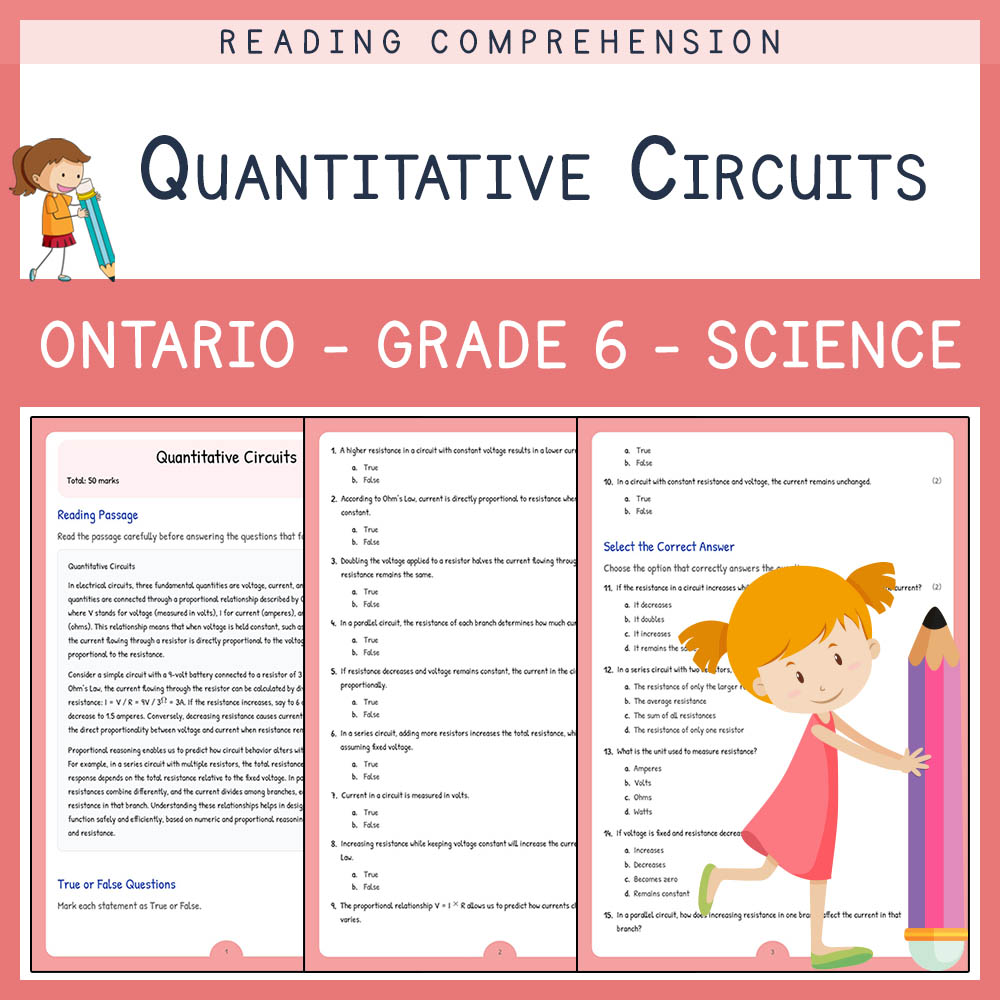
Grade 6 Science | Quantitative Circuits Worksheet & Answer Key | Ontario
Created byLumora LearningLearning Objectives
- Understand how voltage, current, and resistance are related through proportional relationships.
- Apply simple calculations to determine circuit element characteristics using measured values.
- Explain how changes in resistance affect current in a circuit with a fixed voltage.
Also included in: Grade 6 Science | Electricity Unit Custom Bundle | Ontario Framework
Instant download
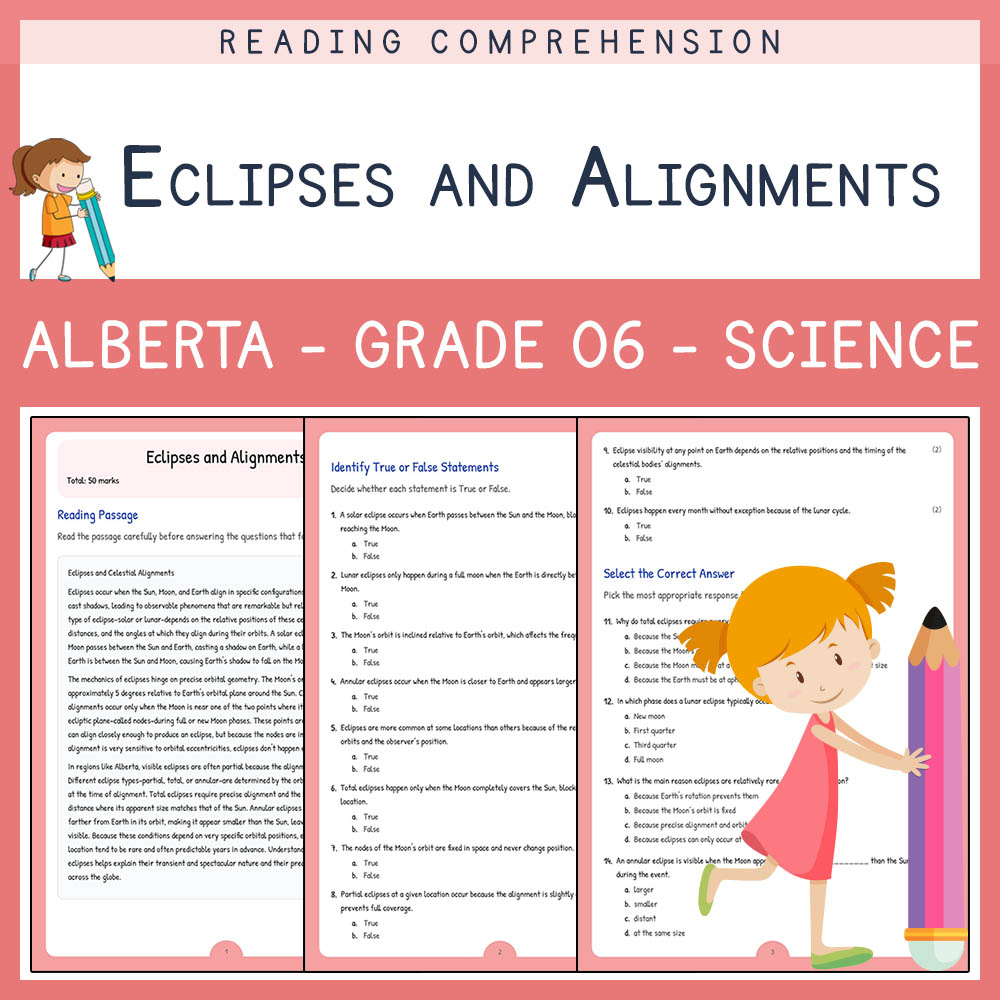
Grade 6 Science Assessment | Eclipses and Alignments Worksheet | Alberta
Created byLumora LearningLearning Objectives
- Understand the celestial mechanics behind solar and lunar eclipses.
- Describe the conditions necessary for partial, total, and annular eclipses.
- Explain why eclipses are relatively rare at specific locations like Alberta.
Instant download
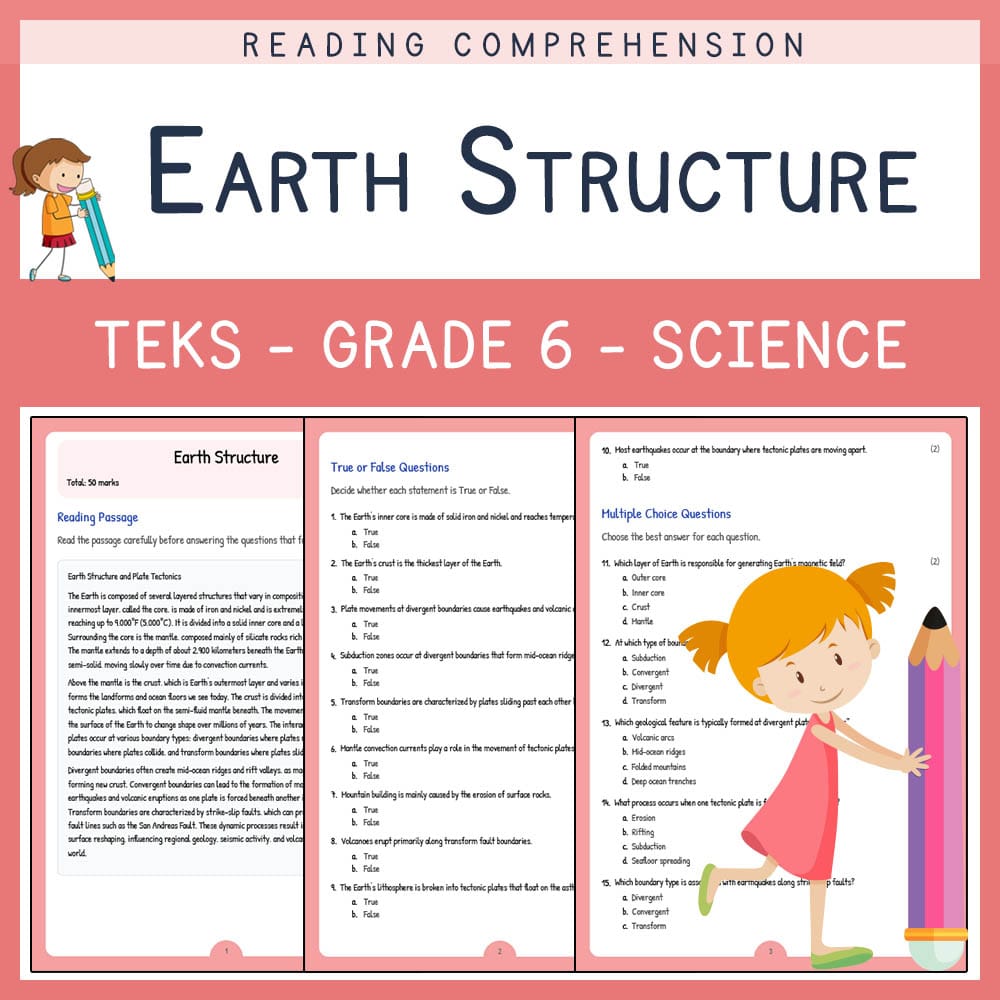
Grade 6 Science | Earth Structure Worksheet | TEKS-Aligned
Created byLumora LearningLearning Objectives
- Describe the internal layers of the Earth and their characteristics.
- Identify different types of plate boundaries and their associated geological features.
- Explain how tectonic processes such as mantle convection and crustal deformation drive geological phenomena.
Also included in: Grade 6 Science | Earth and Space Science Unit Bundle | TEKS Standard
Instant download
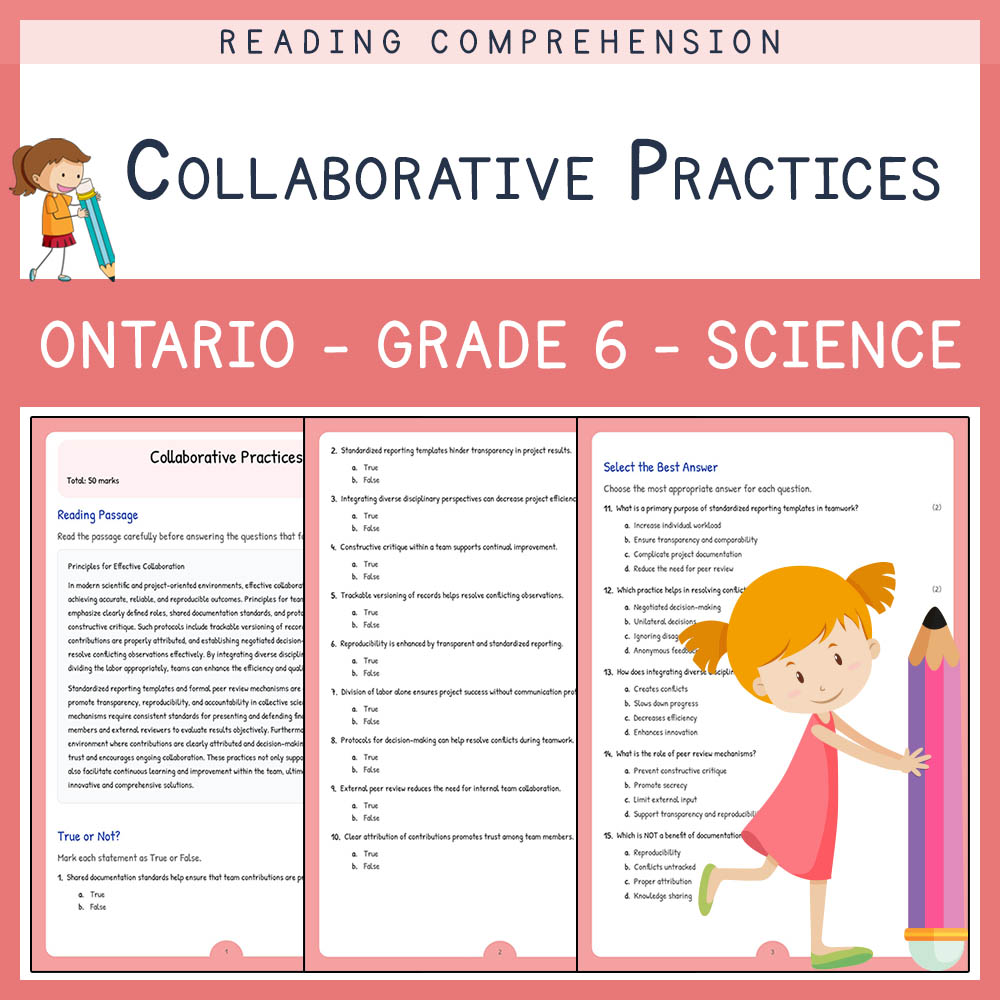
Grade 6 Science | Collaborative Practices Worksheet & Answer Key (PDF)
Created byLumora LearningLearning Objectives
- Understand principles of effective team-based organization and communication.
- Identify standards for documentation and contribution attribution.
- Explain the importance of peer review and report standardization in collaborative science.
Instant download

Grade 6 Science | Building Knowledge Worksheet | NGSSS Aligned
Created byLumora LearningLearning Objectives
- Explain how scientific knowledge can change when new evidence conflicts with earlier ideas
- Differentiate scientific theories and scientific laws
- Describe how communication, peer evaluation, and reproducibility strengthen scientific evidence
Instant download

Grade 6 Science | Survival Changes Worksheet | NGSSS-Aligned
Created byLumora LearningLearning Objectives
- Explain how environmental changes (temperature, drought, and food availability) affect which traits help organisms survive.
- Describe how differences in traits can change survival and reproduction within a population over time.
- Connect adaptation to ecosystem change by identifying how shifts in resources can alter which organisms remain.
Instant download

Grade 6 Science | Food Molecules in Living Things | California Standards
Created byLumora LearningLearning Objectives
- Explain how food molecules provide both stored energy and chemical building materials for the body
- Describe how digestion breaks large food molecules into smaller molecules that can be absorbed
- Connect different kinds of food molecules to specific needs in cells (structure, growth, quick energy)
Instant download

Grade 6 Science | Ocean Currents Worksheet | Florida NGSSS
Created byLumora LearningLearning Objectives
- Explain how wind patterns and Earth’s rotation drive ocean currents
- Describe how ocean currents transport heat and moisture and influence regional climates
- Use cause-and-effect reasoning to connect ocean current temperature to coastal weather
Instant download

Grade 6 Science | Growth and Stored Energy | California Standards
Created byLumora LearningLearning Objectives
- Explain how photosynthesis provides energy and chemical building materials for plant growth
- Describe how plants store chemical energy (such as in starch) and use it later
- Connect stored energy to growth, repair, and reproduction when light is limited
Instant download

Grade 6 Science | Before and After Properties Worksheet | California Standards
Created byLumora LearningLearning Objectives
- Compare properties of substances before and after an interaction to identify likely physical or chemical changes
- Use evidence (gas release, solid formation, new color, new matter) to support conclusions about whether new substances formed
- Distinguish between changes that can be reversed or separated and changes that produce new materials with different properties
Instant download

Grade 6 Science |Precipitation and Infiltration Worksheet | California Standards
Created byLumora LearningLearning Objectives
- Explain how precipitation returns water to Earth’s surface and identify different types of precipitation
- Describe infiltration and how it contributes to soil moisture and groundwater recharge
- Compare infiltration and runoff using factors such as gravity, landscape, soil type, and vegetation
Instant download
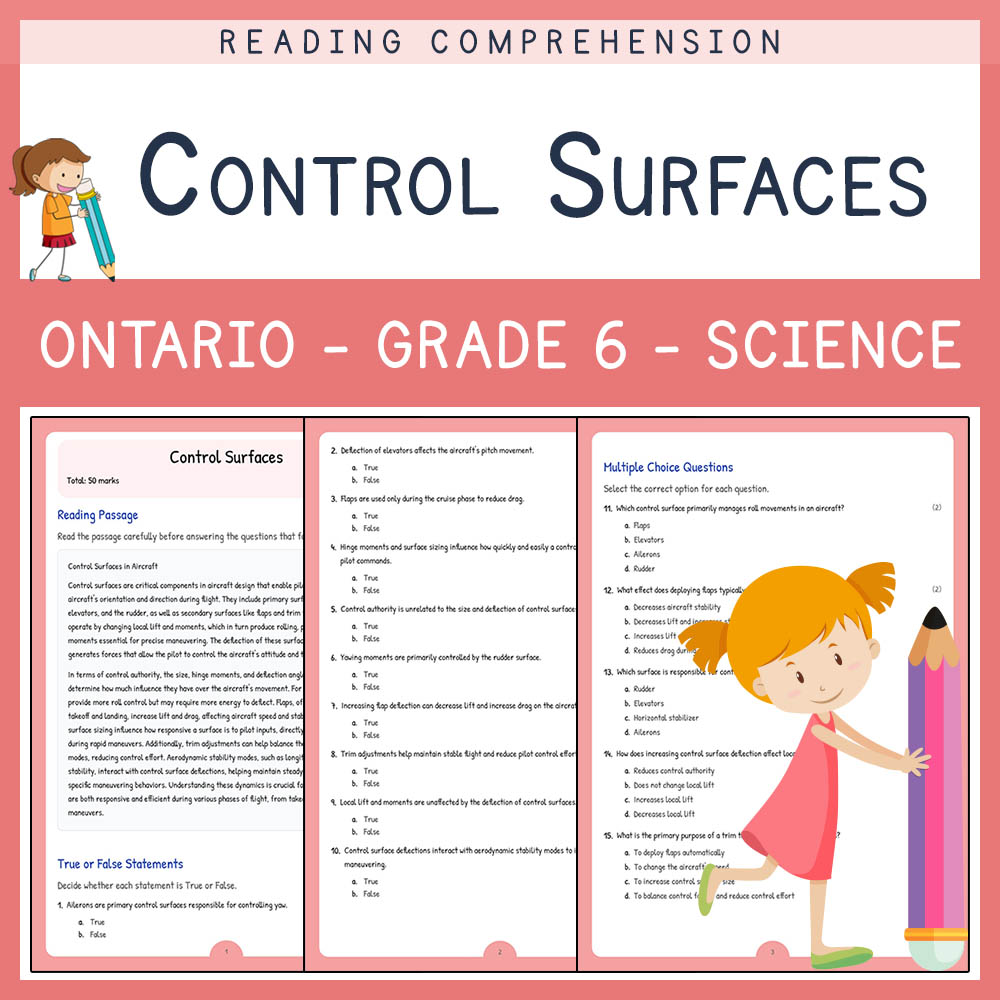
Grade 6 Science | Control Surfaces Worksheet with Answer Key (PDF)
Created byLumora LearningLearning Objectives
- Understand the primary and secondary control surfaces and their roles in aircraft maneuvering.
- Explain how deflections of ailerons, elevators, rudders, and flaps affect roll, pitch, and yaw.
- Describe the concepts of control authority and aerodynamic stability as related to control surfaces.
Also included in: Grade 6 Science | Flight Custom Bundle | Ontario Standards
Instant download
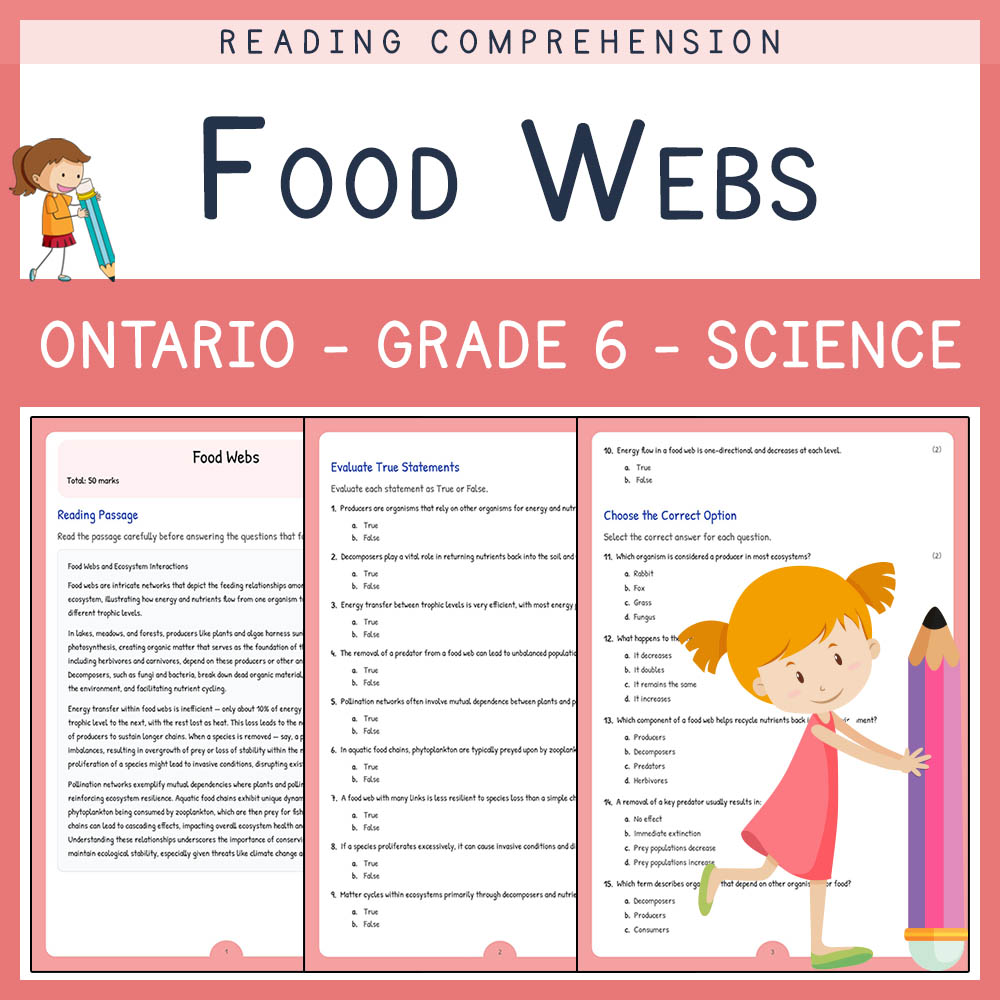
Grade 6 Science | Food Webs Worksheet with Answer Key (PDF) – Ecosystem Relationships
Created byLumora LearningLearning Objectives
- Understand the components of food webs and their roles in ecosystems.
- Trace energy flow and matter cycling through trophic levels.
- Analyze the impact of species removal or proliferation on ecological communities.
Also included in: Grade 6 Science | Biodiversity Custom Unit Resource | Ontario Framework
Instant download
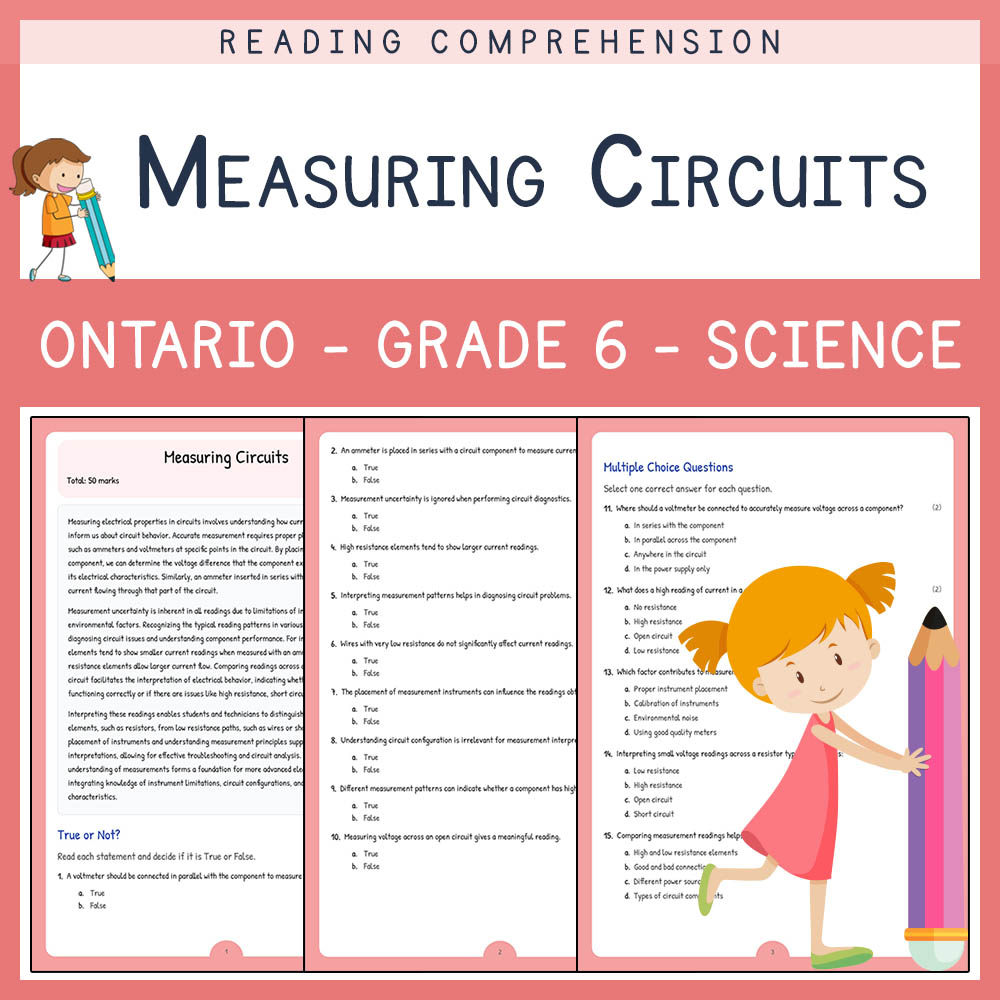
Grade 6 Science | Measuring Circuits Worksheet (Answer Key) Ontario Standards
Created byLumora LearningLearning Objectives
- Understand how current and voltage measurements characterize circuit performance.
- Identify the proper placement of measurement instruments in circuits.
- Interpret reading patterns in various circuit configurations.
Also included in: Grade 6 Science | Electricity Unit Custom Bundle | Ontario Framework
Instant download
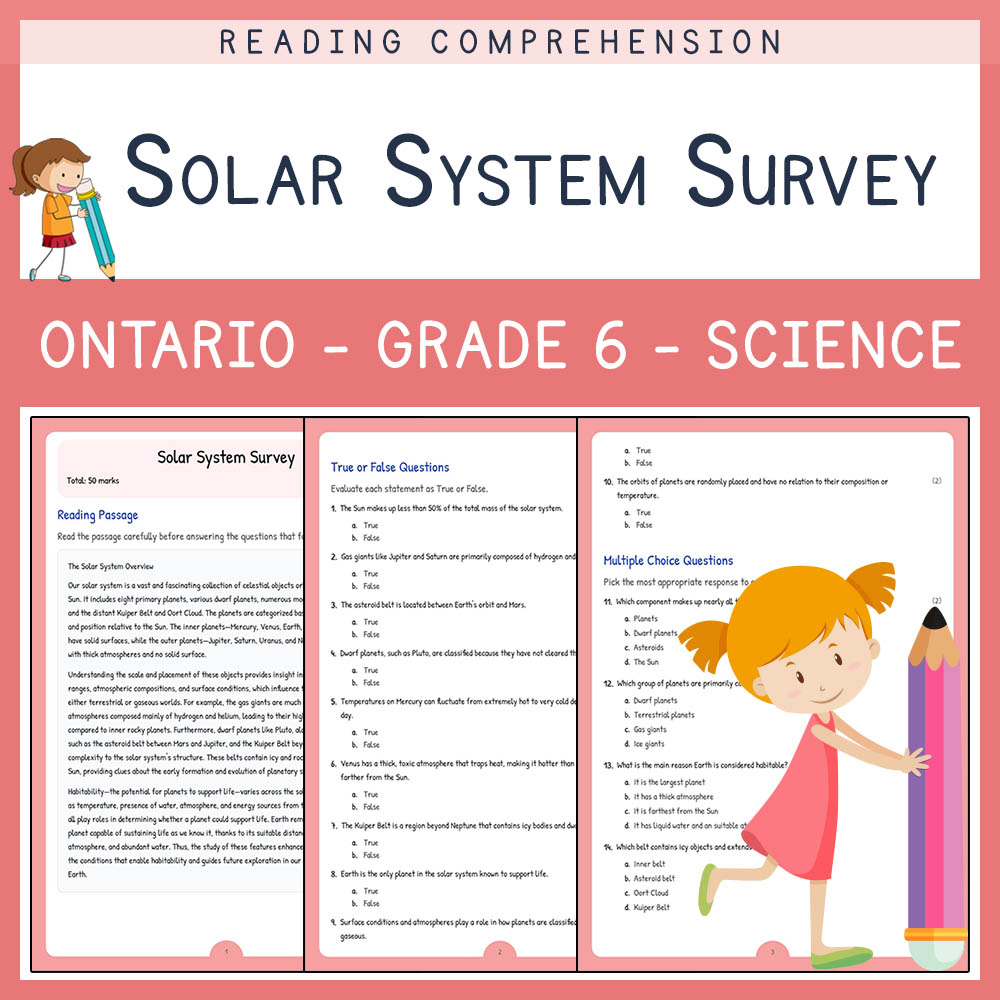
Grade 6 Science | Solar System Survey Worksheet & Answer Key (PDF) | Ontario
Created byLumora LearningLearning Objectives
- Describe the major components of the solar system including planets, dwarf planets, and belts.
- Differentiate between terrestrial planets and gas giants in terms of composition and surface conditions.
- Understand the orbital zones, temperature ranges, and atmospheres that influence planetary classification.
Also included in: Grade 6 | Space Science Lesson Bundle Worksheets | Ontario Framework
Instant download
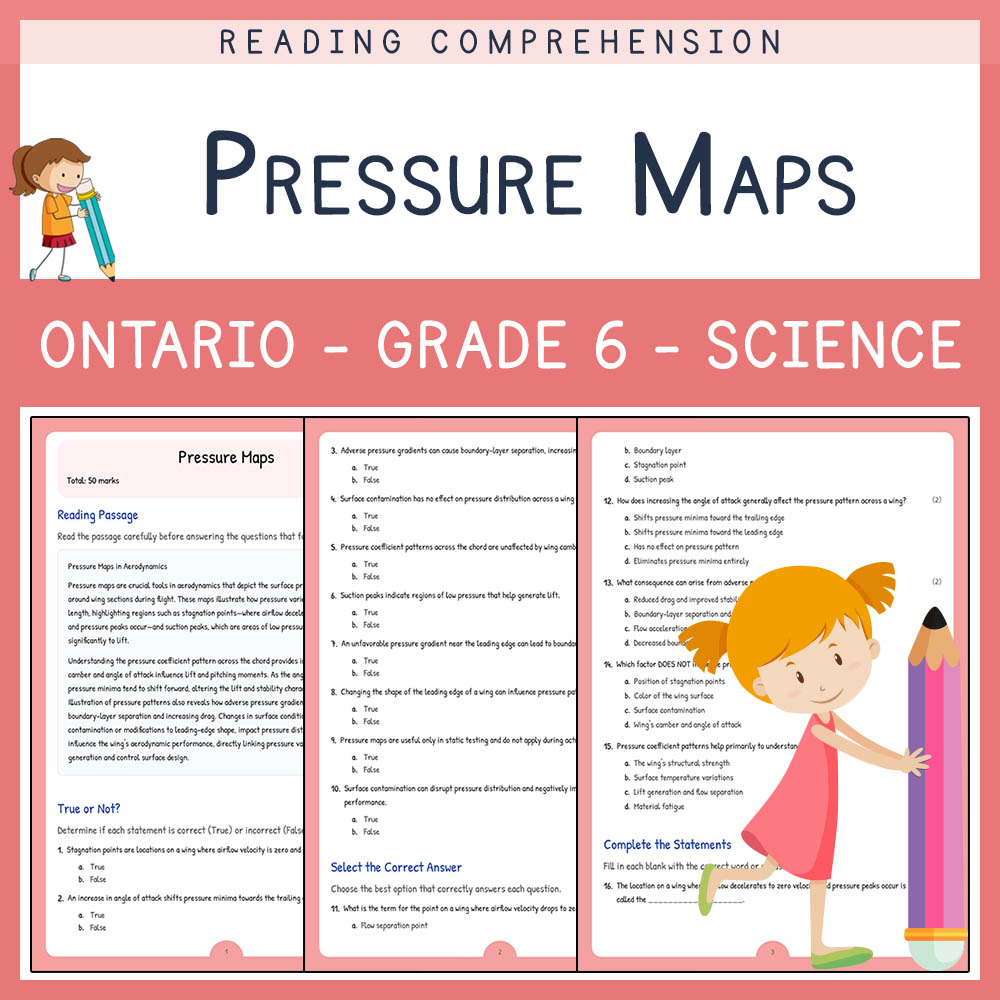
Grade 6 Science | Pressure Maps Worksheet (Answer Key) for Ontario Standards
Created byLumora LearningLearning Objectives
- Explain the concept of surface pressure distribution around wing sections.
- Identify key features such as stagnation points and suction peaks and their significance.
- Describe pressure coefficient patterns across the chord and how they relate to wing shape and angle of attack.
Also included in: Grade 6 Science | Flight Custom Bundle | Ontario Standards
Instant download
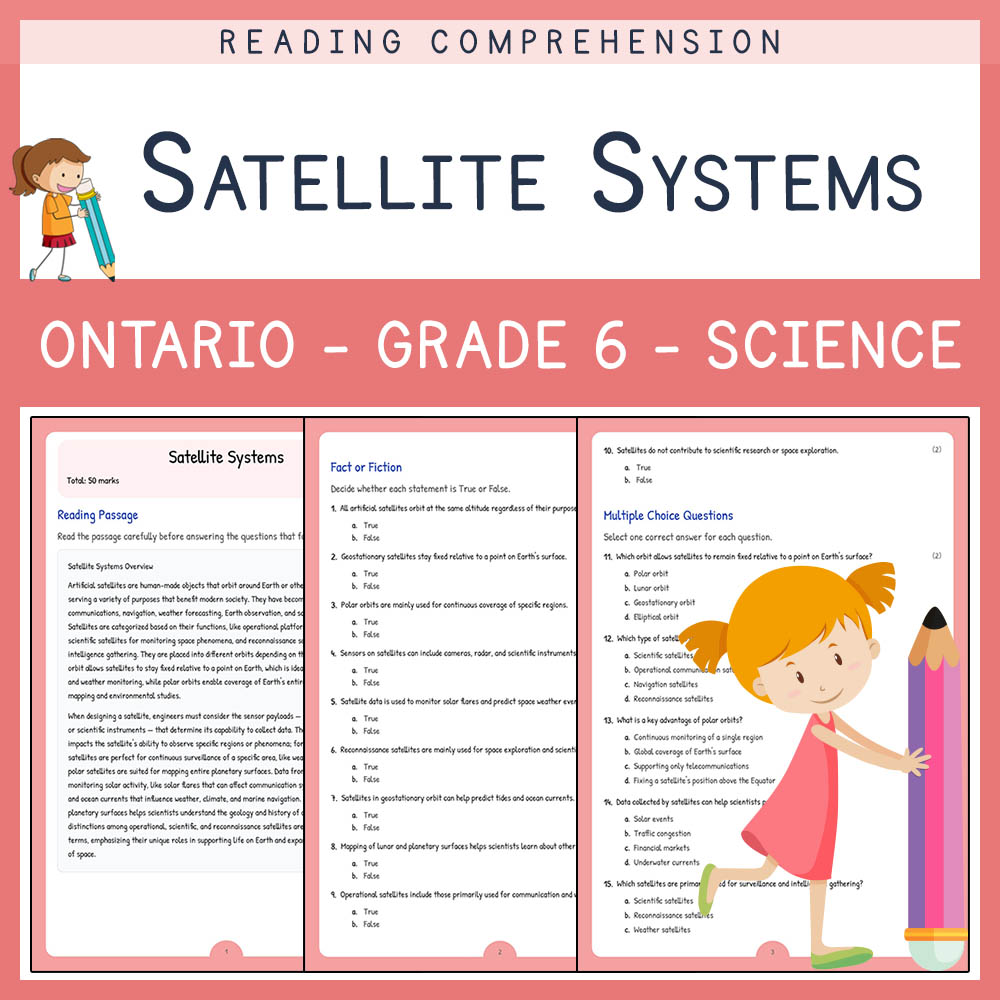
Grade 6 Science | Satellite Systems Worksheet + Answer Key – Ontario Standards
Created byLumora LearningLearning Objectives
- Understand the functions and categories of artificial satellites.
- Describe orbital choices such as geostationary and polar orbits.
- Recognize the roles of satellites in Earth observation, communication, navigation, and scientific monitoring.
Also included in: Grade 6 | Space Science Lesson Bundle Worksheets | Ontario Framework
Instant download
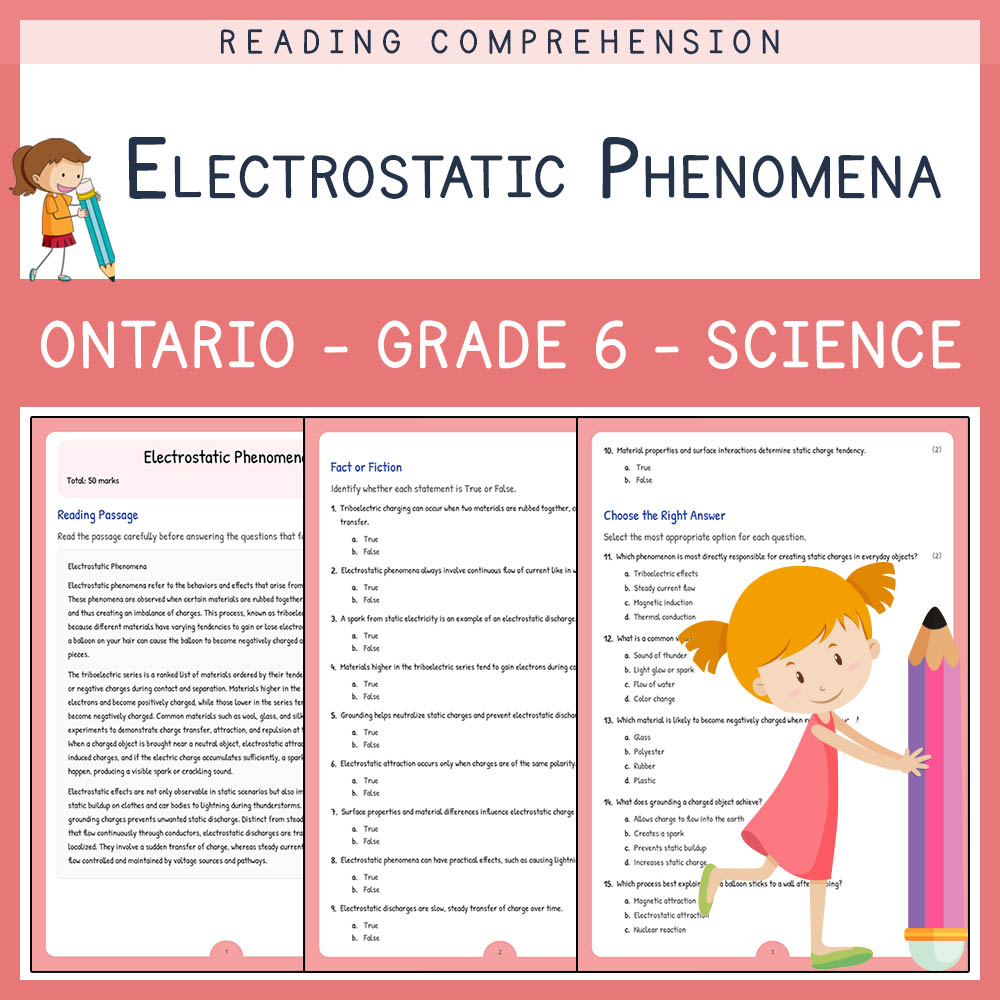
Grade 6 Science | Electrostatic Phenomena Worksheet with Answer Key (PDF)
Created byLumora LearningLearning Objectives
- Understand how charge transfer occurs between materials through triboelectric effects.
- Describe the concept of electrostatic discharge and its common manifestations.
- Identify the materials in the triboelectric series and their tendencies to gain or lose electrons.
Also included in: Grade 6 Science | Electricity Unit Custom Bundle | Ontario Framework
Instant download
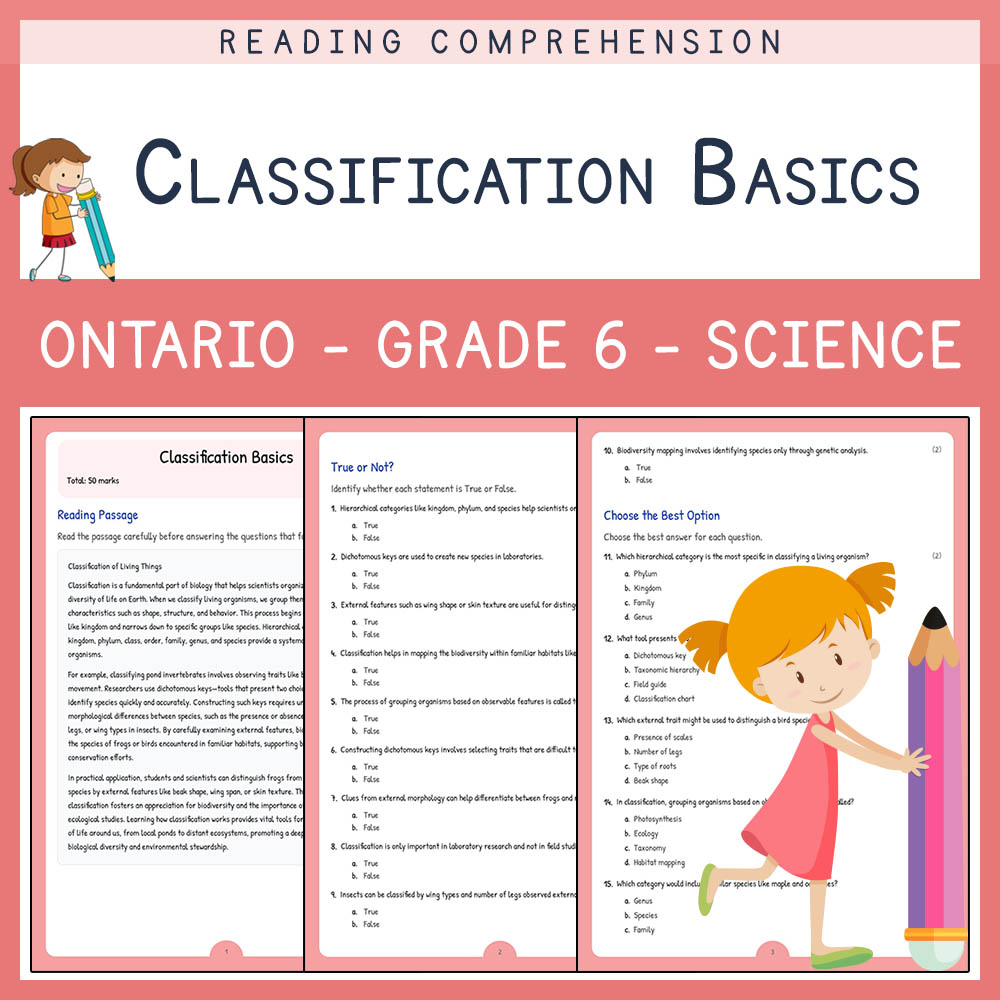
Grade 6 Science | Classification Basics Worksheet & Answer Key (PDF)
Created byLumora LearningLearning Objectives
- Understand the hierarchical categories used in biological classification.
- Learn how to observe and describe morphological features for species identification.
- Use dichotomous keys to classify local species such as pond invertebrates, insects, and trees.
Also included in: Grade 6 Science | Biodiversity Custom Unit Resource | Ontario Framework
Instant download
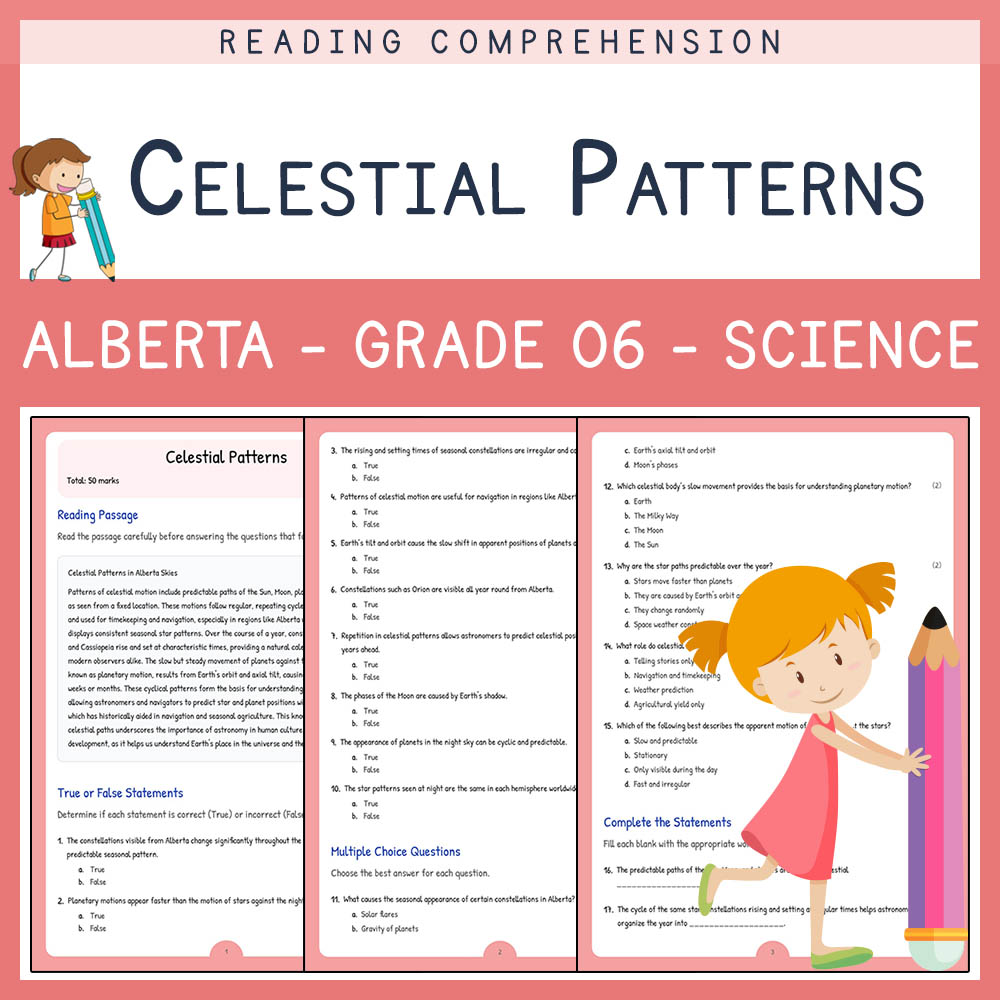
Grade 6 Science | Celestial Patterns Worksheet Elena | Alberta Standard
Created byLumora LearningLearning Objectives
- Identify and describe the predictable paths of celestial bodies such as the Sun, Moon, planets, and constellations.
- Explain how seasonal constellations and planetary motions can be used for timekeeping and navigation.
- Recognize the repeating patterns of celestial motions as observed from Alberta skies.
Instant download
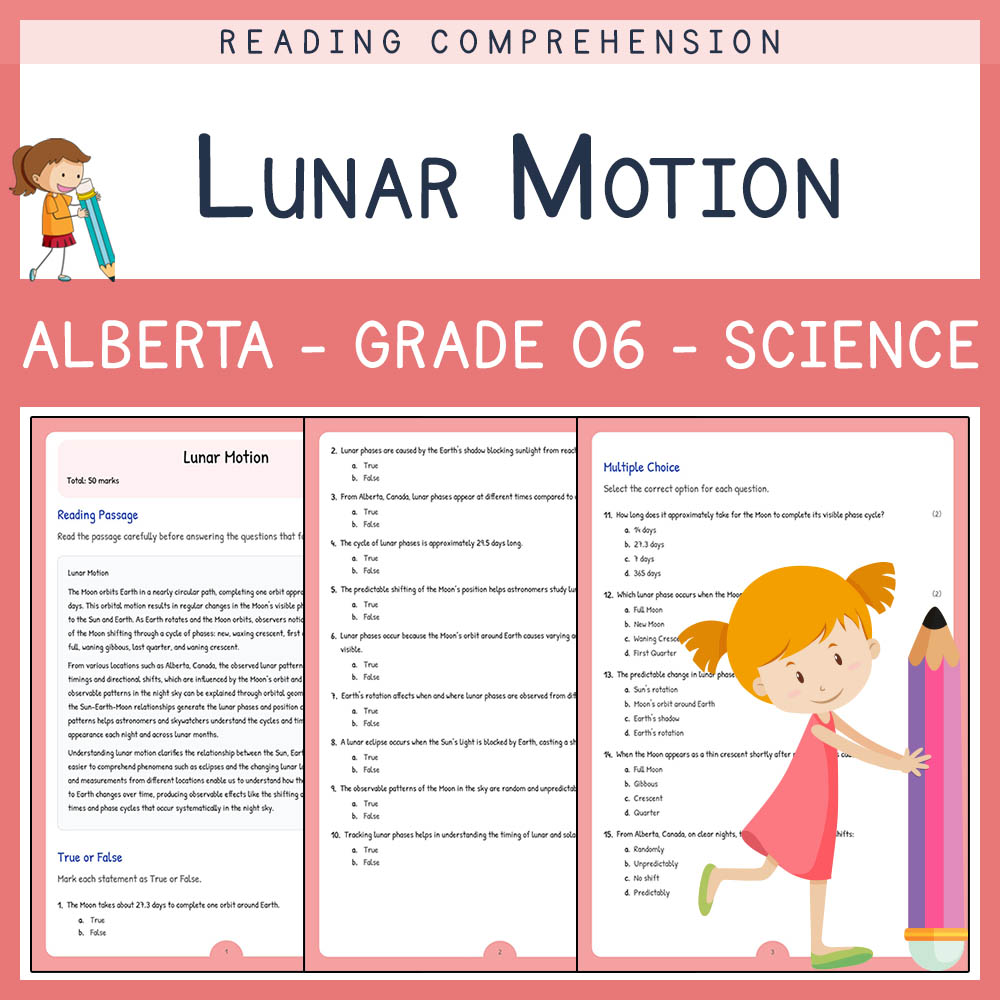
Grade 6 Science Worksheet | Lunar Motion | Alberta Standards
Created byLumora LearningLearning Objectives
- Understand the Moon's orbit around Earth and how it causes lunar phases.
- Describe the relationships between the Sun, Earth, and Moon observed from different locations.
- Explain the observable patterns in the night sky related to lunar motion.
Instant download
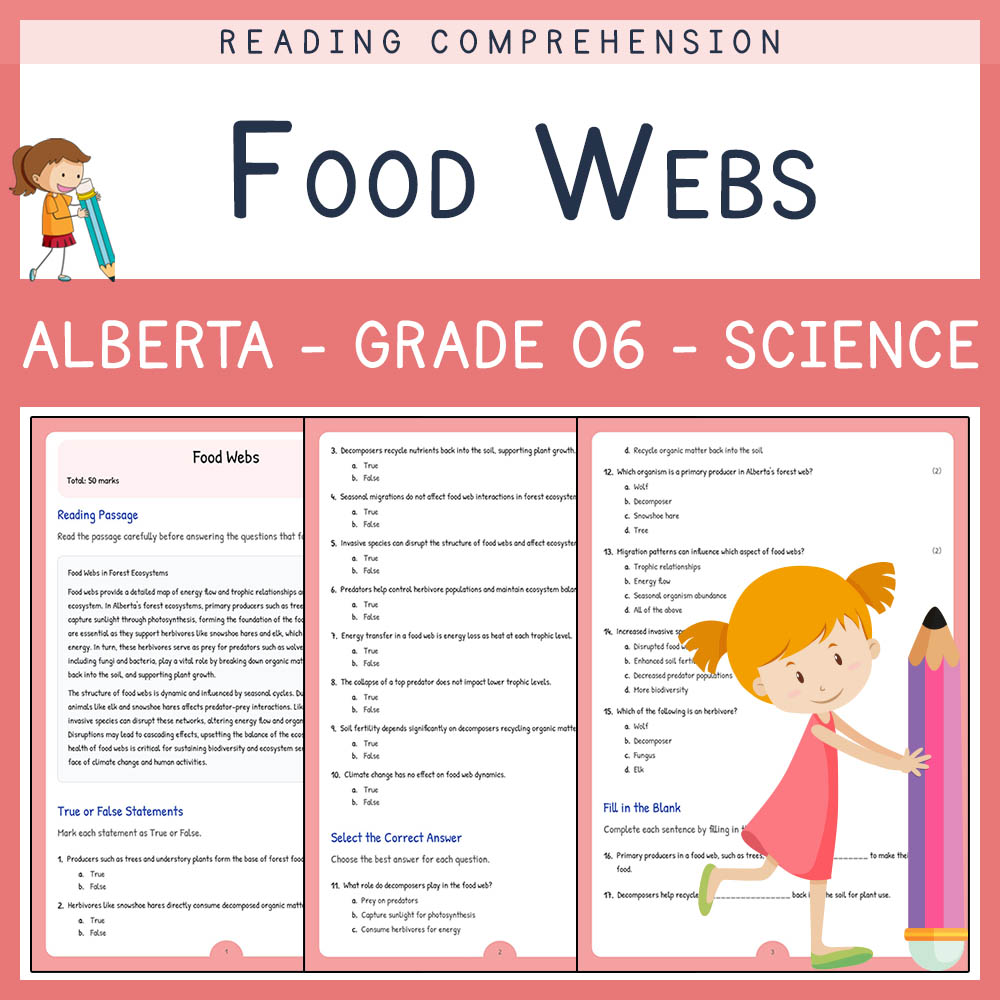
Grade 6 Science Assessment | Food Webs Worksheet Elena | Alberta
Created byLumora LearningLearning Objectives
- Understand the components and structure of food webs in forest ecosystems.
- Identify the roles of producers, consumers, and decomposers within ecological networks.
- Explain how seasonal changes and disruptions affect food web relationships.
Instant download
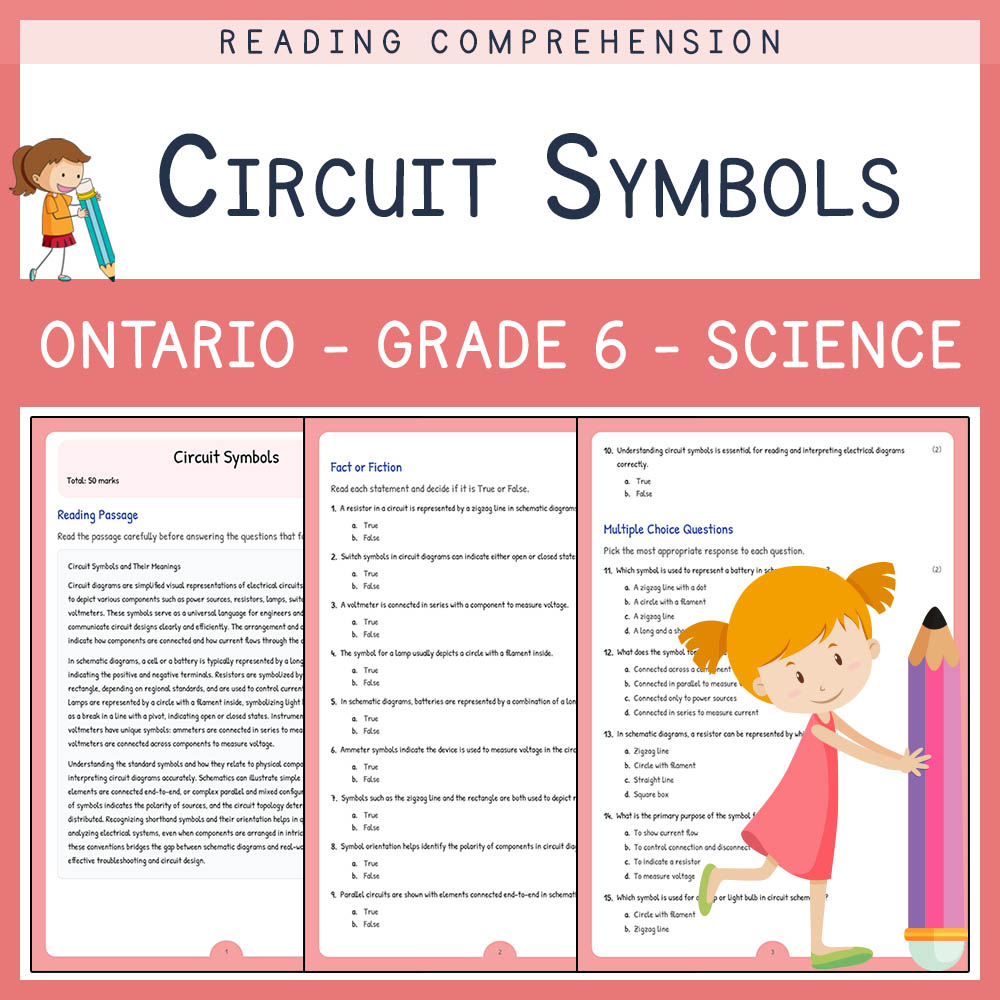
Grade 6 Science | Circuit Symbols Worksheet (PDF + Answer Key) Ontario Standard
Created byLumora LearningLearning Objectives
- Identify standard circuit symbols used in schematic diagrams.
- Interpret diagrams to predict circuit behavior and connections.
- Understand how symbols relate to physical electronic components.
Also included in: Grade 6 Science | Electricity Unit Custom Bundle | Ontario Framework
Instant download
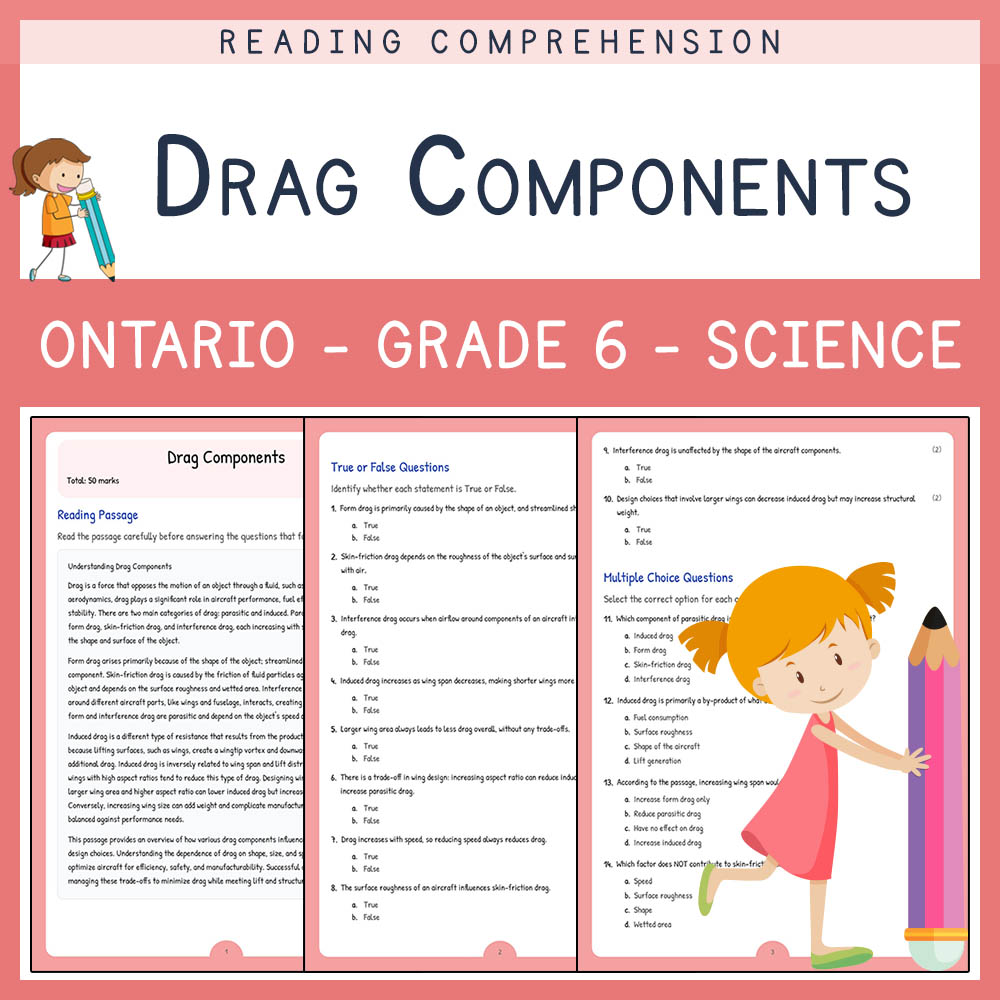
Grade 6 Science | Drag Components Worksheet (PDF + Answer Key)
Created byLumora LearningLearning Objectives
- Understand the different sources of drag in aerodynamics.
- Distinguish between parasitic and induced drag components.
- Explain how shape, speed, and wing design influence drag production.
Also included in: Grade 6 Science | Flight Custom Bundle | Ontario Standards
Instant download
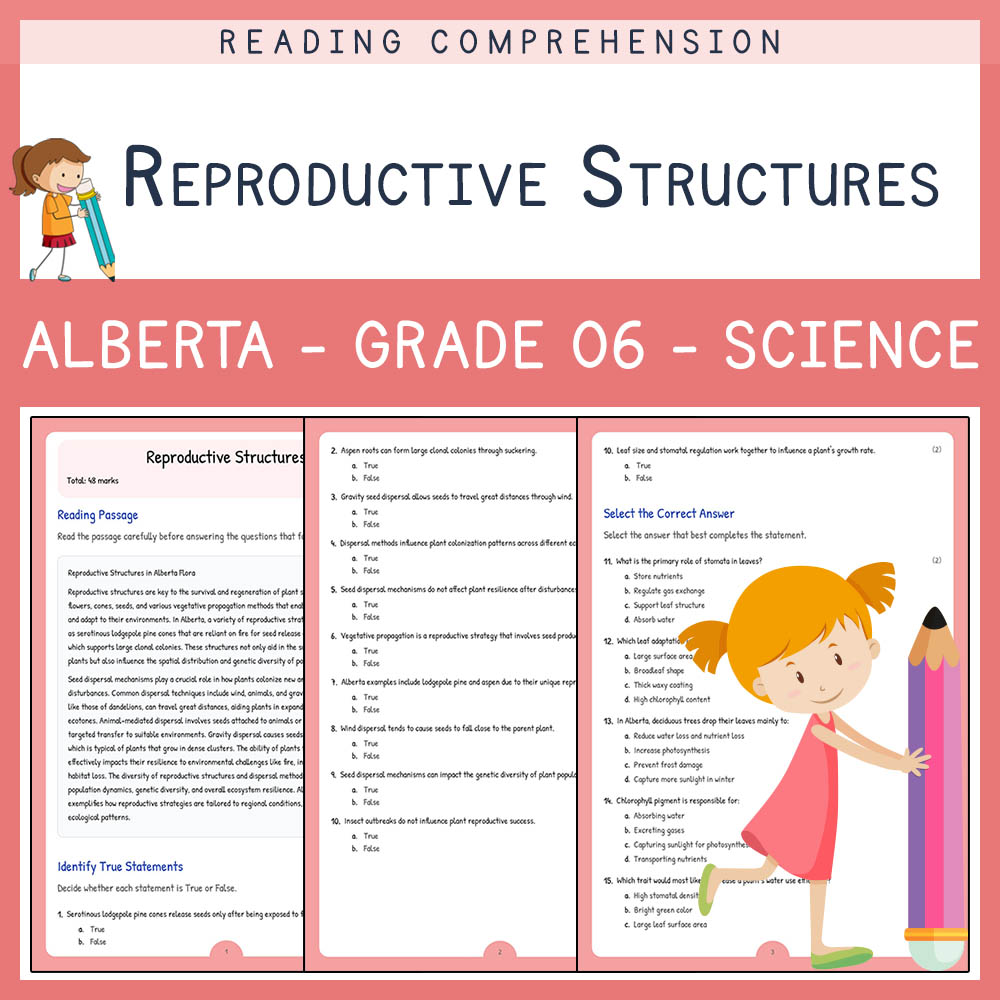
Grade 6 Science Worksheet | Reproductive Structures | Alberta Standards
Created byLumora LearningLearning Objectives
- Understand the different reproductive structures in plants and conifers.
- Identify seed dispersal mechanisms and their effects on plant colonization.
- Recognize examples of Alberta's flora, such as lodgepole pine cones and aspen root suckering.
Instant download
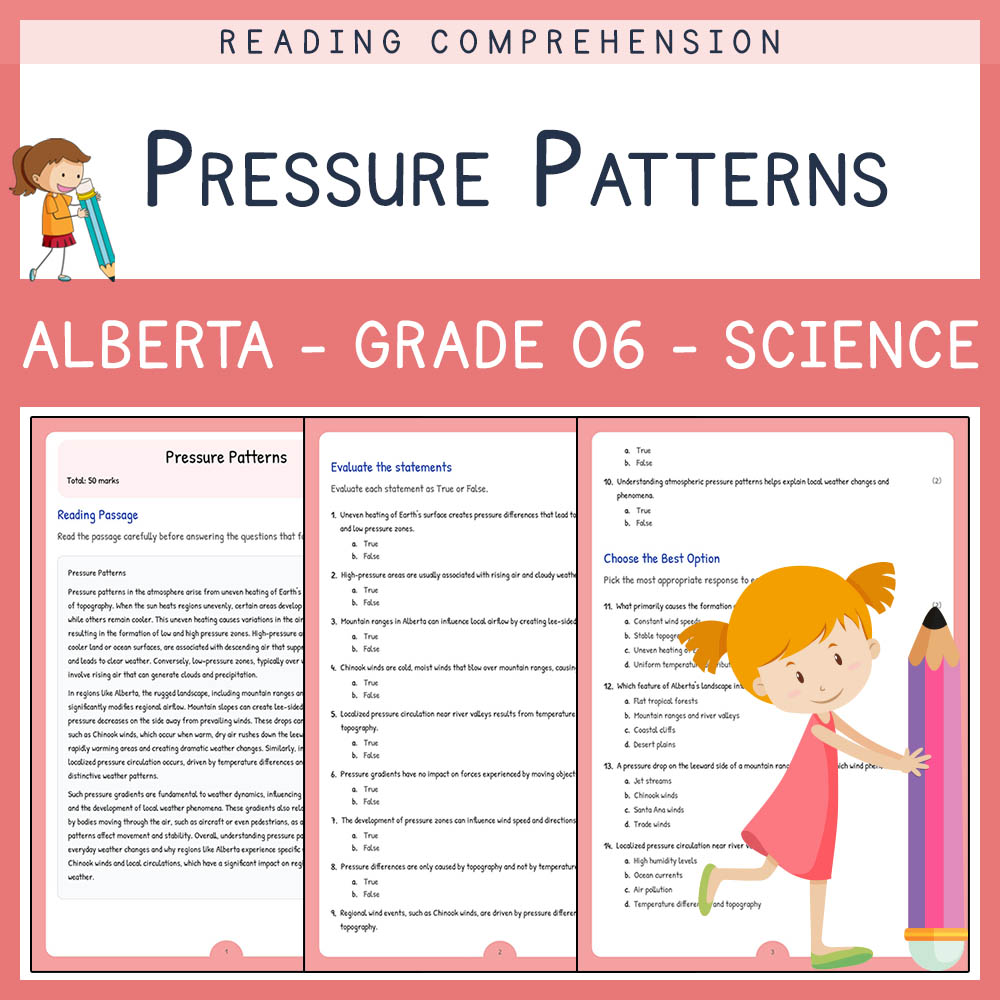
Grade 6 Science Assessment | Pressure Patterns Worksheet Elena | Alberta
Created byLumora LearningLearning Objectives
- Understand how pressure differences are caused by uneven heating and topography.
- Identify the formation of low and high pressure zones and their effects on weather.
- Explain how mountain ranges and plains in Alberta influence regional airflow.
Also included in: Grade 6 Science | Air and Aerodynamics Science Lesson Bundle | Alberta
Instant download
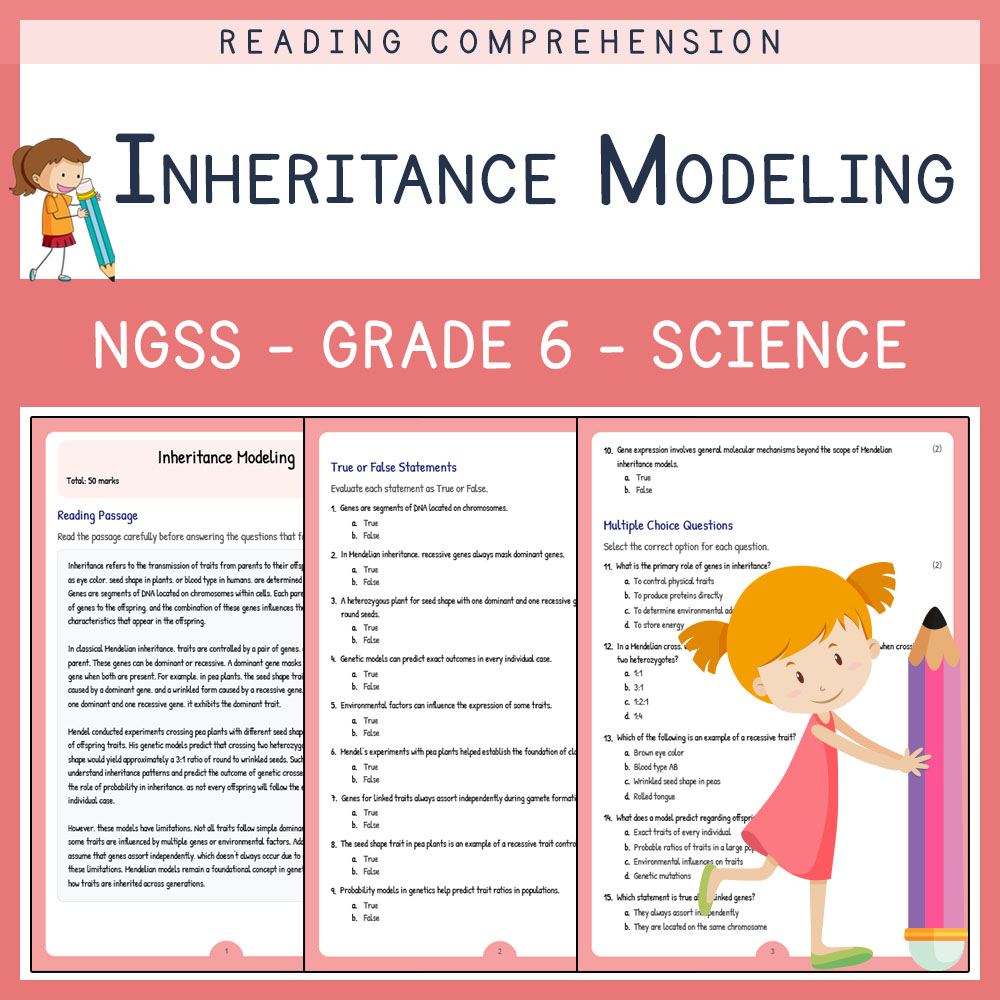
Grade 6 Science | Inheritance Modeling Worksheet & Answer Key | NGSS-Aligned
Created byLumora LearningInstant download
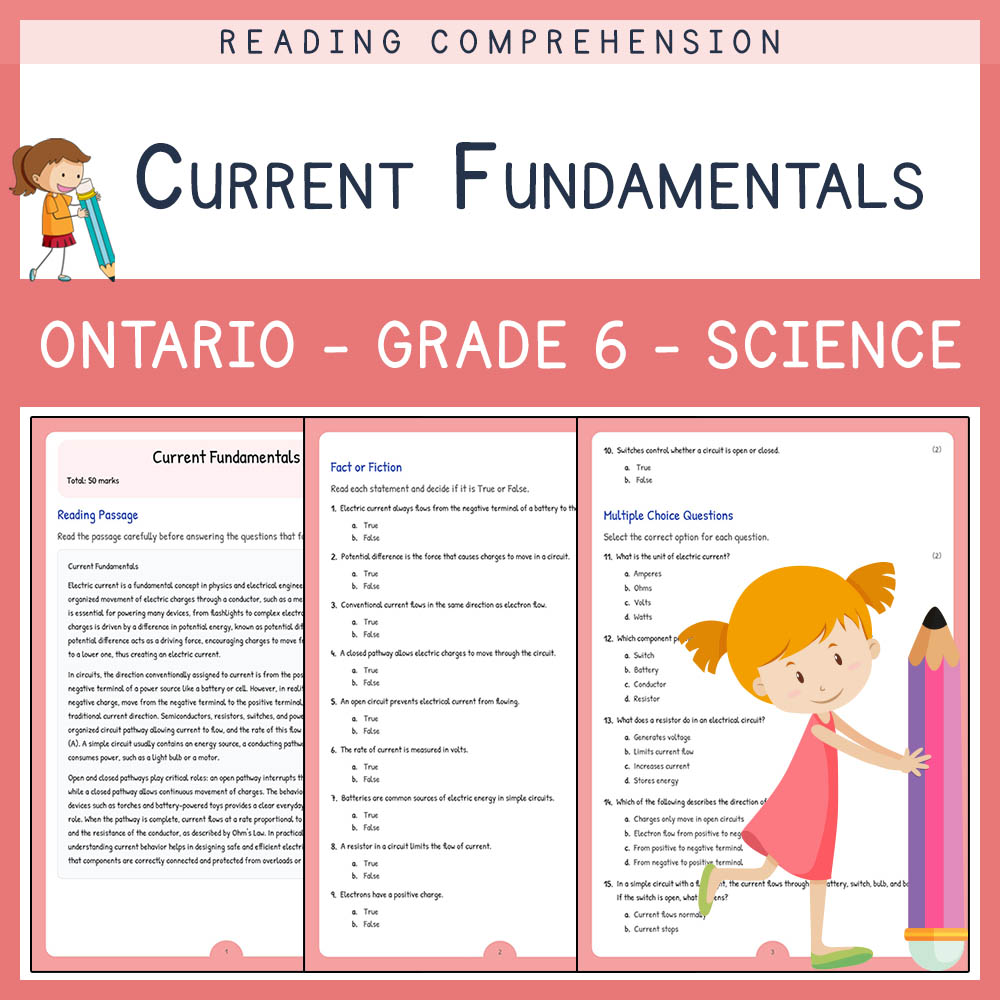
Grade 6 Science | Current Fundamentals Worksheet (Answer Key & Rubric) - Ontario Standard
Created byLumora LearningLearning Objectives
- Describe electric current as an organized movement of charges through a conductor.
- Distinguish between conventional current direction and electron flow.
- Explain potential difference as the driving force behind current.
Also included in: Grade 6 Science | Electricity Unit Custom Bundle | Ontario Framework
Instant download
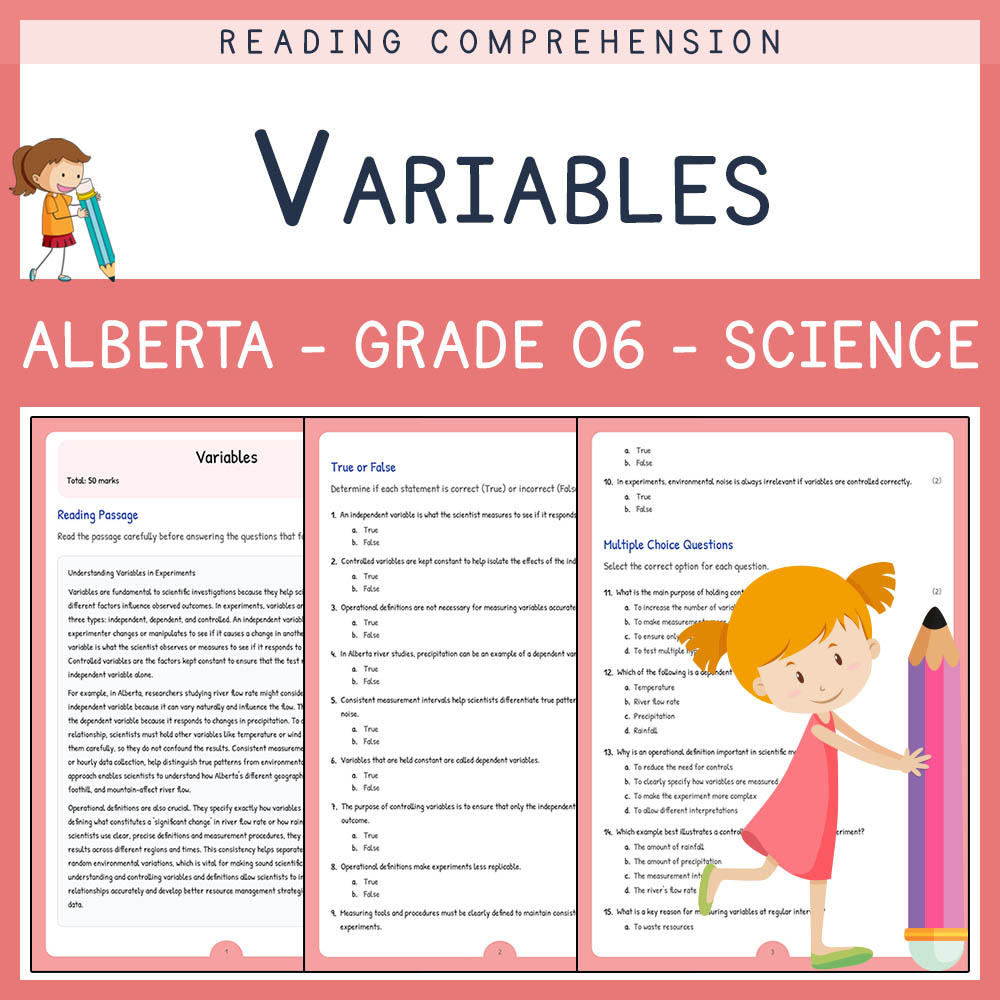
Grade 6 Science | Variables Worksheet Elena | Alberta
Created byLumora LearningLearning Objectives
- Define and distinguish between independent, dependent, and controlled variables.
- Explain the importance of operational definitions and measurement consistency in experiments.
- Apply contextual examples, such as river flow rate, to understand variable relationships.
Also included in: Grade 6 Science | Evidence and Investigation Custom Bundle | Alberta
Instant download
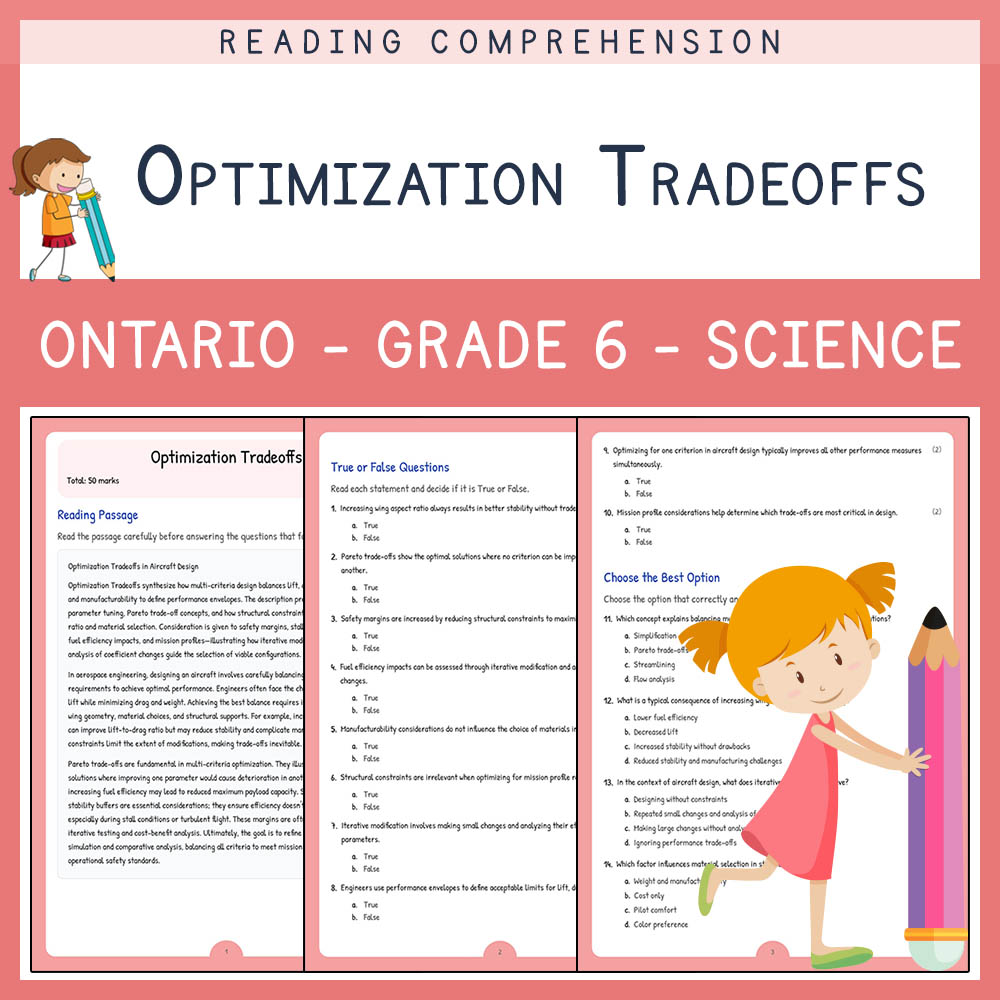
Grade 6 Science | Optimization Tradeoffs Worksheet with Answer Key (PDF)
Created byLumora LearningLearning Objectives
- Understand how multi-criteria design balances lift, drag, weight, and stability in aircraft performance.
- Identify methods for parameter tuning and Pareto trade-offs in engineering design.
- Explain how structural constraints influence wing aspect ratio and material choices.
Also included in: Grade 6 Science | Flight Custom Bundle | Ontario Standards
Instant download
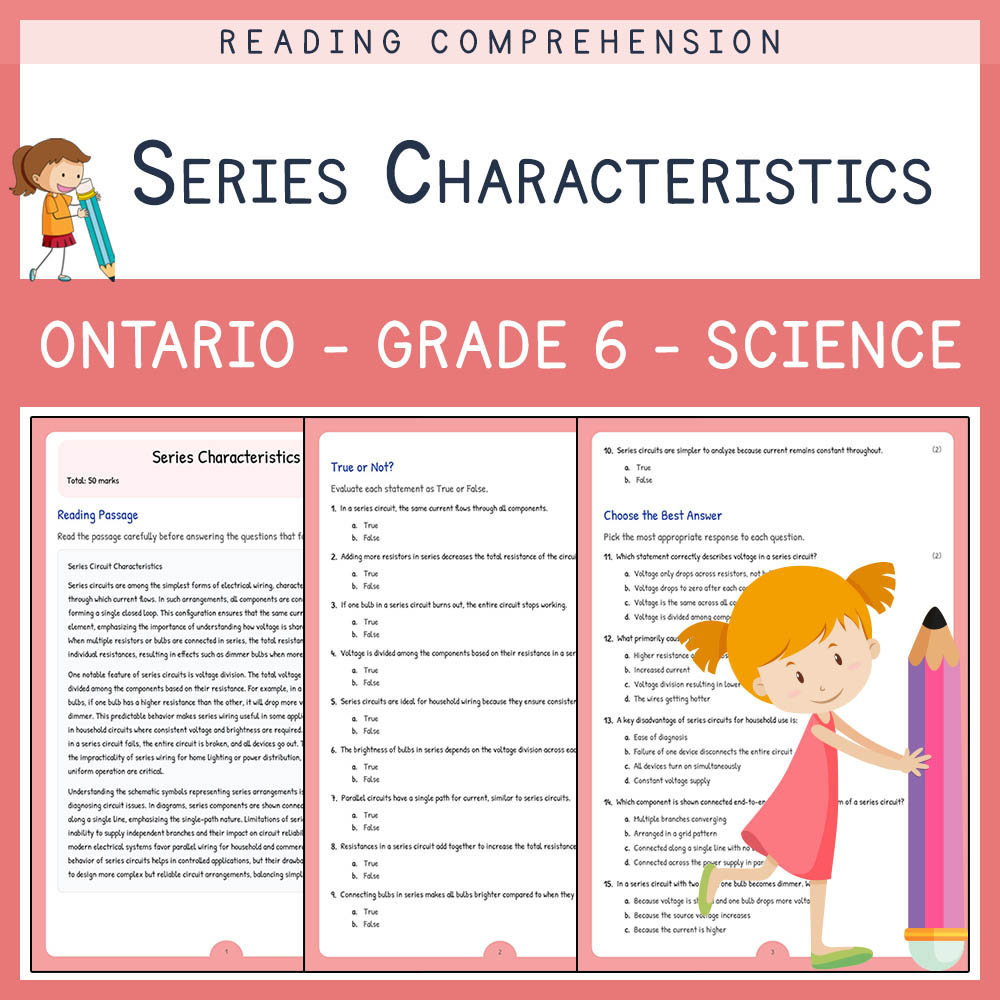
Grade 6 Science | Series Characteristics Worksheet | Electricity & Circuits
Created byLumora LearningLearning Objectives
- Understand the concepts of series circuits, including single-path configuration and current flow.
- Explain how voltage divides among components in a series circuit.
- Describe how resistance affects brightness in incandescent bulbs connected in series.
Also included in: Grade 6 Science | Electricity Unit Custom Bundle | Ontario Framework
Instant download
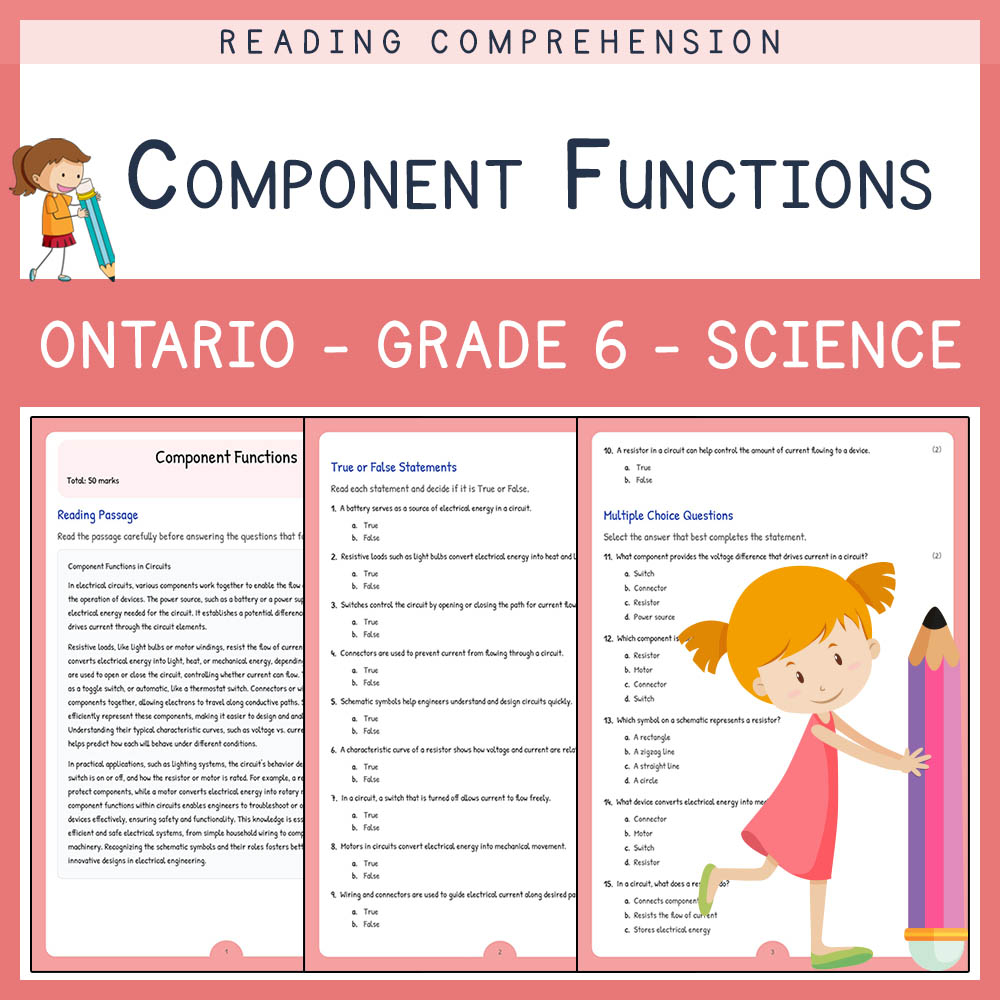
Grade 6 Science | Component Functions Worksheet & Answer Key (PDF)
Created byLumora LearningLearning Objectives
- Identify the roles of common circuit components such as power sources, resistive loads, switches, and connectors.
- Explain how each component influences the behavior of electrical circuits.
- Interpret schematic symbols associated with circuit components.
Also included in: Grade 6 Science | Electricity Unit Custom Bundle | Ontario Framework
Instant download
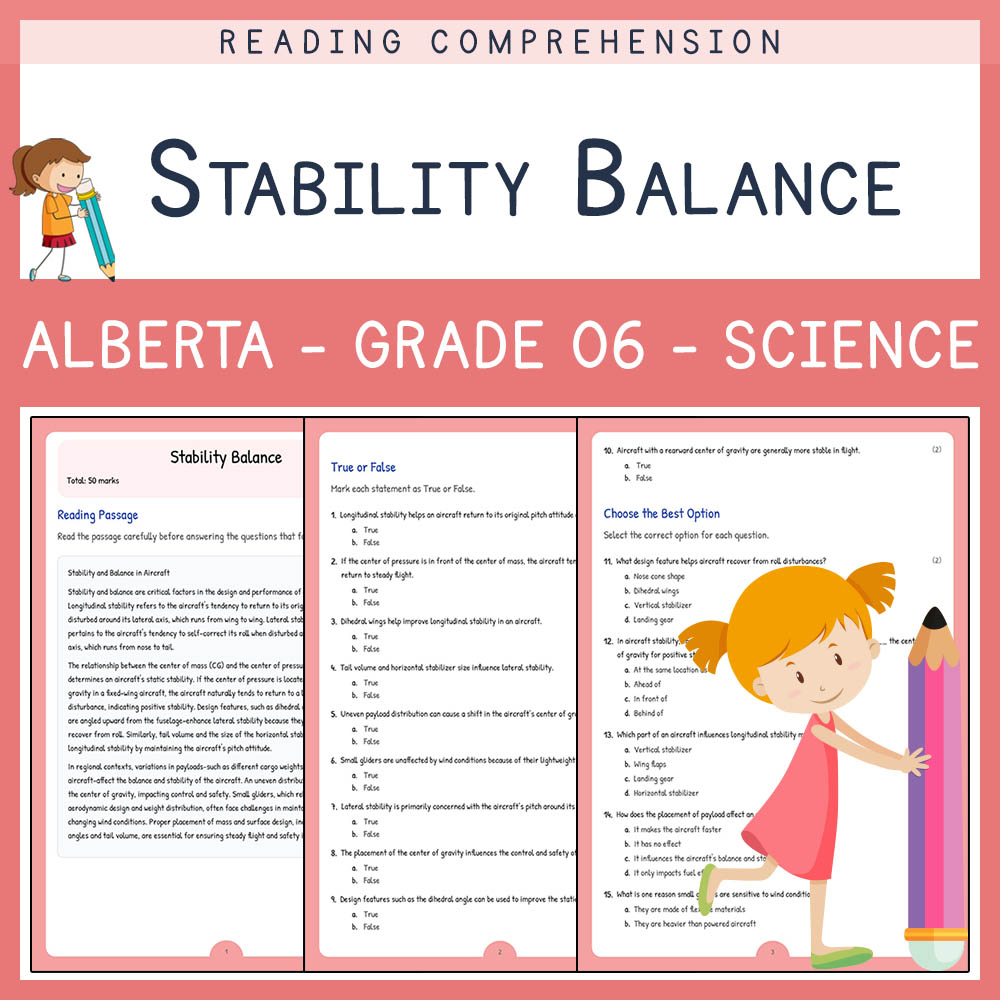
Grade 6 Science Assessment | Stability Balance Worksheet | Alberta Standards
Created byLumora LearningLearning Objectives
- Understand the principles of longitudinal and lateral stability in aircraft and gliders.
- Explain how the center of mass and center of pressure influence static stability.
- Identify design features such as dihedral angles and tail volume that contribute to stability.
Also included in: Grade 6 Science | Air and Aerodynamics Science Lesson Bundle | Alberta
Instant download
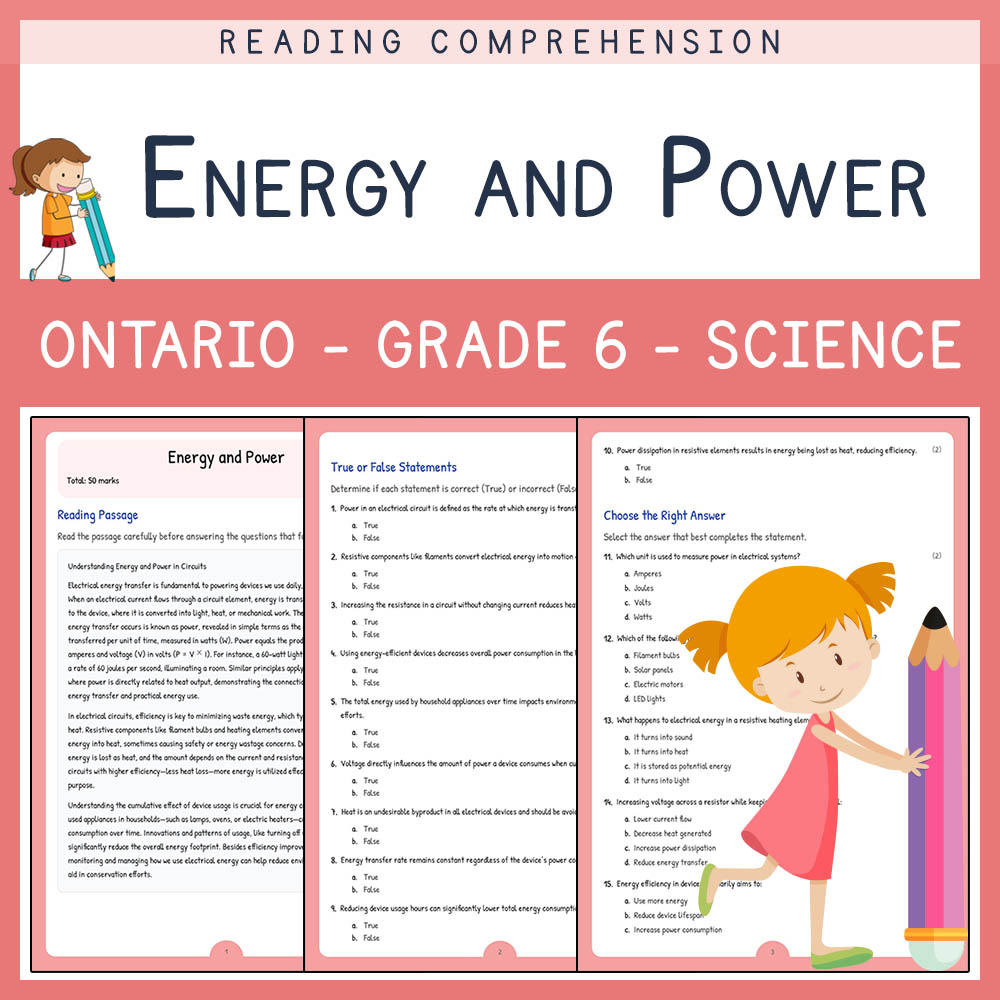
Grade 6 Science | Energy and Power Worksheet (PDF + Answer Key) for Ontario
Created byLumora LearningLearning Objectives
- Describe how electrical energy transfer relates to power dissipation in circuit components.
- Explain the concept of power as the rate of energy transfer and its connection to current and voltage.
- Identify everyday examples of electrical power usage such as lighting and heating devices.
Also included in: Grade 6 Science | Electricity Unit Custom Bundle | Ontario Framework
Instant download
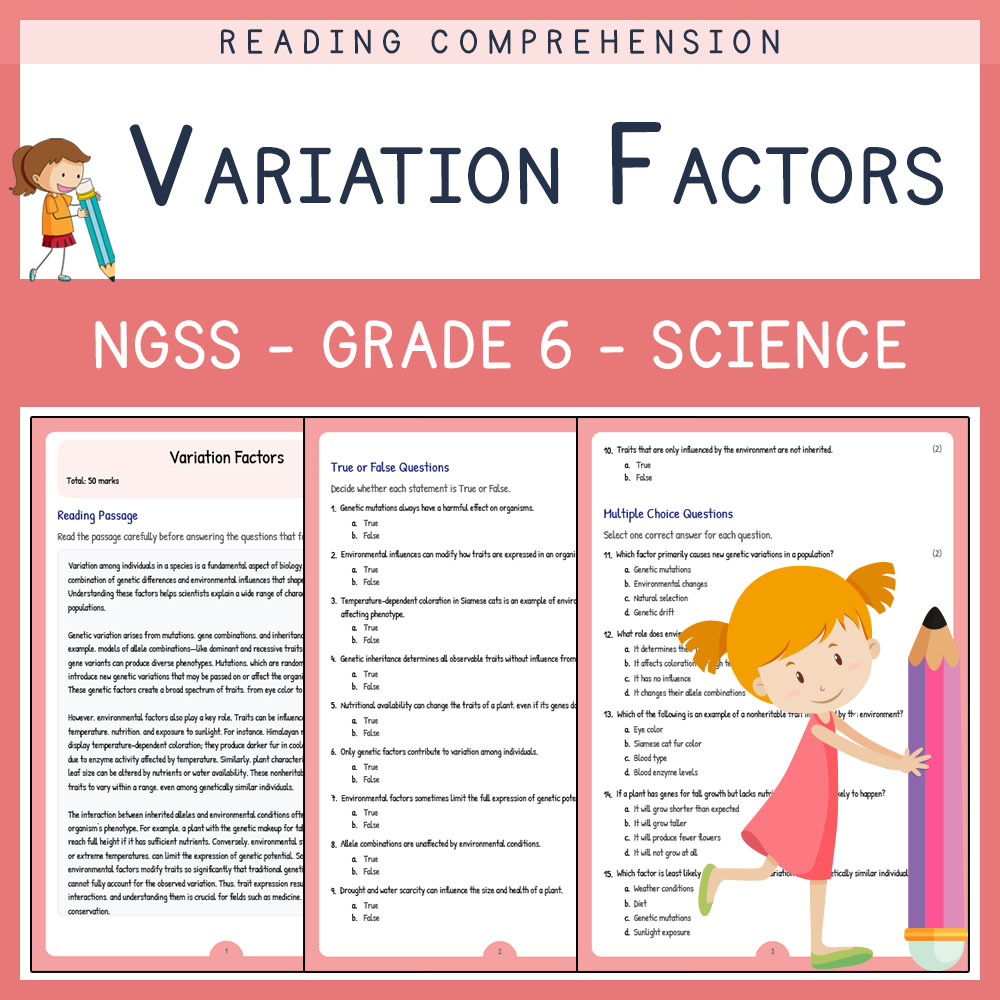
Grade 6 Science | Variation Factors Worksheet (PDF + Answer Key) | NGSS Aligned
Created byLumora LearningLearning Objectives
- Understand how genetic differences and environmental factors contribute to observable variation among individuals.
- Explain how models of allele combinations and mutation impact demonstrate genetic variation.
- Describe nonheritable influence factors such as temperature-dependent coloration and nutrient effects on traits.
Instant download
Browse more categories
About Grade 6 Worksheets
Browse 8,578 printable Grade 6 worksheets across math, ELA, science, and social studies — each a ready-to-print PDF with optional answer keys.
MyTeachingSheets worksheets are made by real teacher-authors and checked before they go live. Download any as a print-ready PDF for lessons, homework, or independent practice — most include answer keys, and previews are always free.