
Grade 6 Social Studies Worksheets
564 worksheets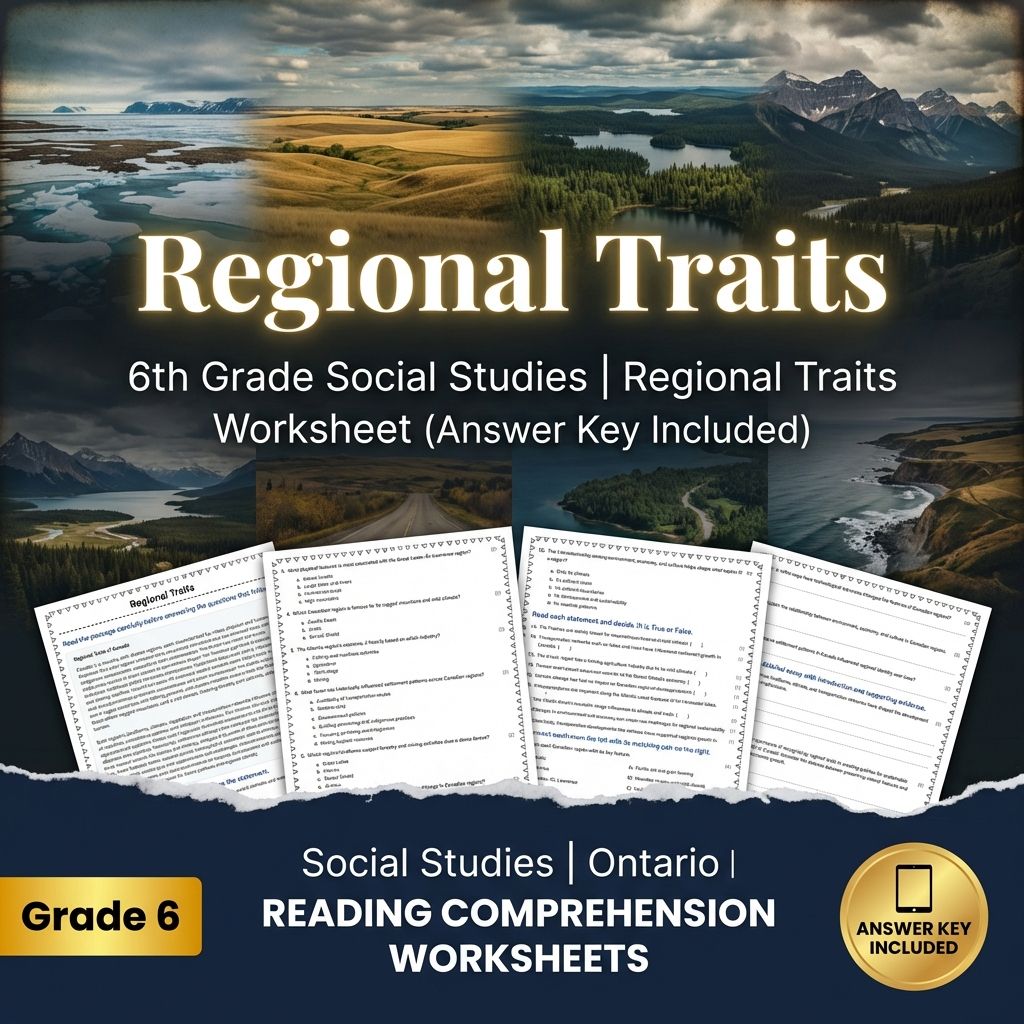
Grade 6 Social Studies | Regional Traits & Canadian Geography Worksheet (PDF + Answer Key)
JCreated byJ.S SheetsLearning Objectives
- Identify major landforms, climates, and vegetation zones in Canadian regions.
- Explain how landforms and climate influence human activities and settlement patterns.
- Analyze the relationship between environment, economy, and cultural practices across regions.
Also included in: Grade 6 Social Studies Unit Bundle | Canadian Resources, Climate & Environment +1 more
Instant download
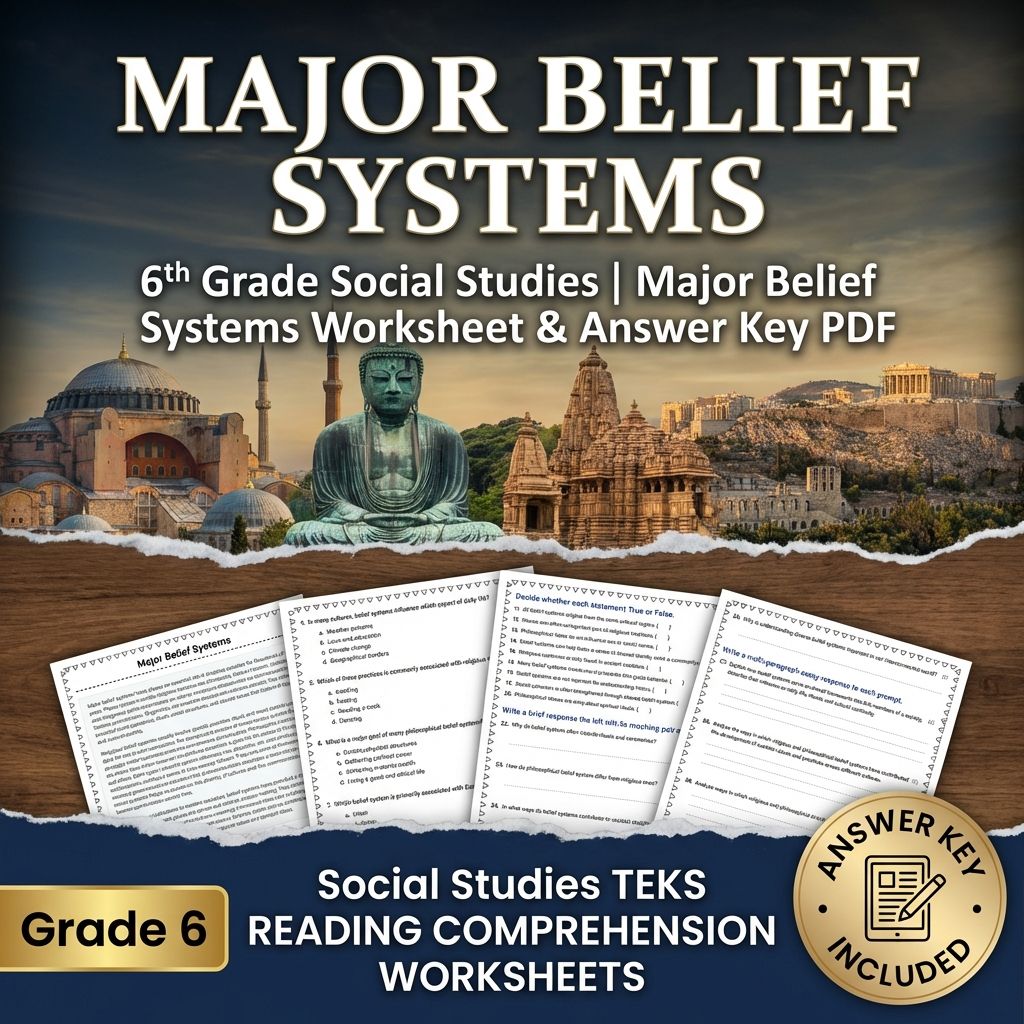
6th Grade Social Studies | Major Belief Systems Worksheet & Answer Key PDF
JCreated byJ.S SheetsLearning Objectives
- Identify different major belief systems and their origins.
- Understand how belief systems influence cultural practices and societal values.
- Analyze the role of belief systems in promoting social cohesion and group identity.
Also included in: Grade 6 Social Studies Unit – Major Belief Systems & Cultural Exchange +1 more
Instant download

6th Grade Social Studies Worksheet | Social and Economic Structures (PDF)
 Created bySunny Desk Resources
Learning Objectives
- Explain how social hierarchies shaped everyday life in ancient India and China.
- Compare the economic roles that supported agriculture, craftsmanship, and trade in both civilizations.
- Use evidence from maps and timelines to describe how organization affected stability and governance.
Also included in: Grade 6 Trade & Cultural Exchange Social Studies Lesson Bundle California +1 more
Instant download

6th Grade Social Studies | Knowledge and Change Worksheet (TEKS) (Download PDF)
Created bySunny Desk ResourcesLearning Objectives
- Explain how scientific knowledge led to changes in production, communication, and transportation systems.
- Describe cause-and-effect relationships between new technologies and economic growth.
- Analyze how improved connectivity changed daily life and organizational infrastructure.
Also included in: Grade 6 Technological Innovations Social Studies lesson bundle TEKS worksheets +1 more
Instant download
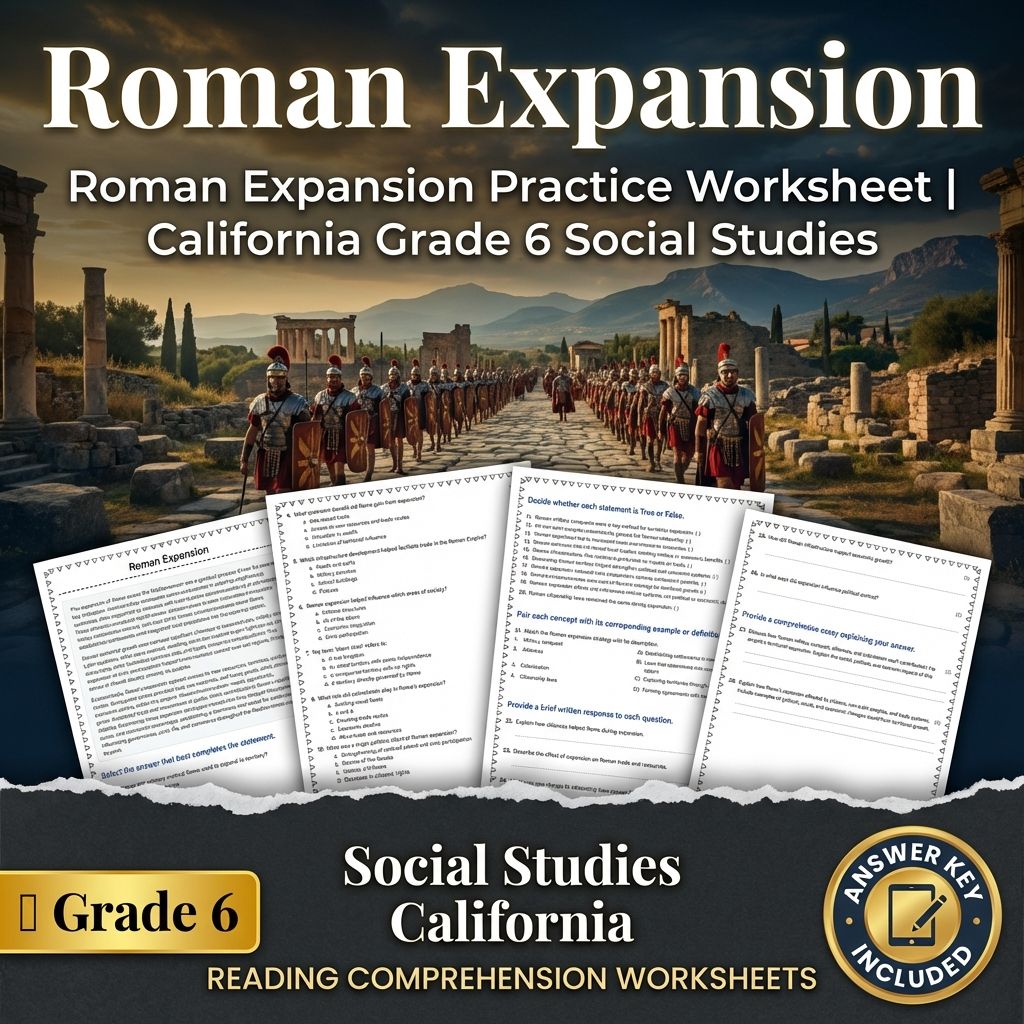
Roman Expansion Practice Worksheet | California Grade 6 Social Studies
JCreated byJ.S SheetsLearning Objectives
- Describe the methods Romans used to expand their territory, including military conquests, alliances, and colonization.
- Explain how Roman expansion impacted citizenship laws, allowing non-Latin peoples greater rights.
- Analyze the economic effects of Roman territorial growth, such as increased trade and access to resources.
Also included in: Grade 6 Social Studies Unit Bundle – Ancient Greece & Rome | Standards-Aligned +1 more
Instant download
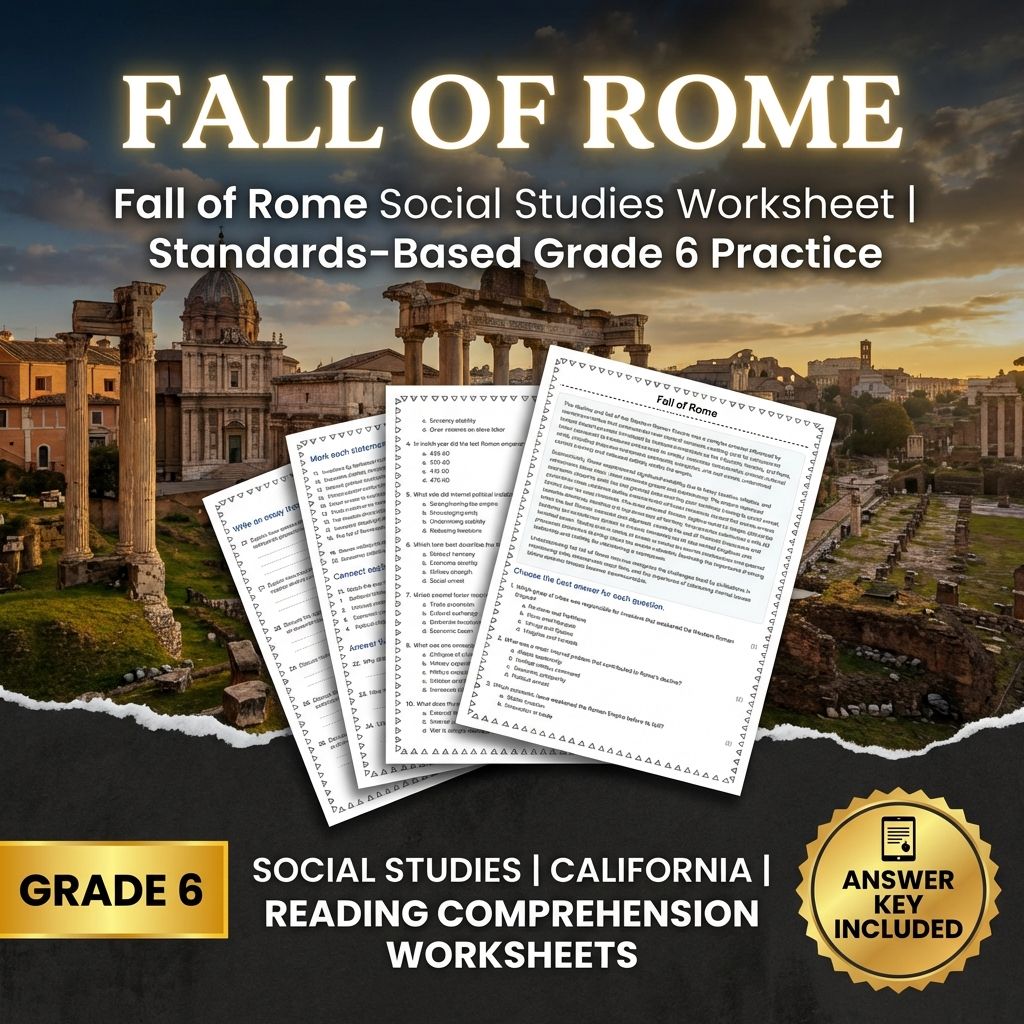
Fall of Rome Social Studies Worksheet | Standards-Based Grade 6 Practice
JCreated byJ.S SheetsLearning Objectives
- Understand the key factors that contributed to the decline of the Western Roman Empire.
- Analyze the chronological development of events leading to the fall of Rome.
- Evaluate the impact of invasions, political instability, and economic issues on Rome's collapse.
Also included in: Grade 6 Social Studies Unit Bundle – Ancient Greece & Rome | Standards-Aligned +1 more
Instant download
6th Grade Social Studies | Technological Innovations Practice (PDF + Answer Key)
JCreated byJ.S SheetsLearning Objectives
- Understand the key technological innovations such as the steam engine and printing press.
- Analyze how these innovations influenced economic growth and social structures.
- Evaluate the societal changes caused by technological tools, including increased mobility and access to information.
Also included in: Grade 6 Social Studies Unit Bundle – Technological Innovations & More +1 more
Instant download
6th Grade Social Studies | Knowledge and Change Practice (PDF & Answer Key)
JCreated byJ.S SheetsLearning Objectives
- Analyze how scientific knowledge has driven changes in production, communication, and transportation systems.
- Explain the impact of technological advances such as telegraphs, railroads, and industrial machinery on society.
- Understand how scientific progress contributed to economic expansion and societal connectivity.
Also included in: Grade 6 Social Studies Unit Bundle – Technological Innovations & More +1 more
Instant download
6th Grade Social Studies | Life and Infrastructure Practice (PDF + Key)
JCreated byJ.S SheetsLearning Objectives
- Understand how technological and scientific advances have transformed daily life and societal frameworks.
- Identify examples of infrastructure developments such as sanitation, electric lighting, and medical innovations.
- Analyze the impact of technological progress on social routines and organizational structures.
Also included in: Grade 6 Social Studies Unit Bundle – Technological Innovations & More +1 more
Instant download
Chronology and Change Worksheet for Grade 6 Social Studies | BC Standards
JCreated byJ.S SheetsLearning Objectives
- Understand the importance of chronological order in history.
- Construct and interpret timelines of historical events.
- Analyze cause-and-effect relationships through sequencing.
Also included in: Grade 6 Social Studies | Analyzing Evidence & Narratives Bundle +1 more
Instant download
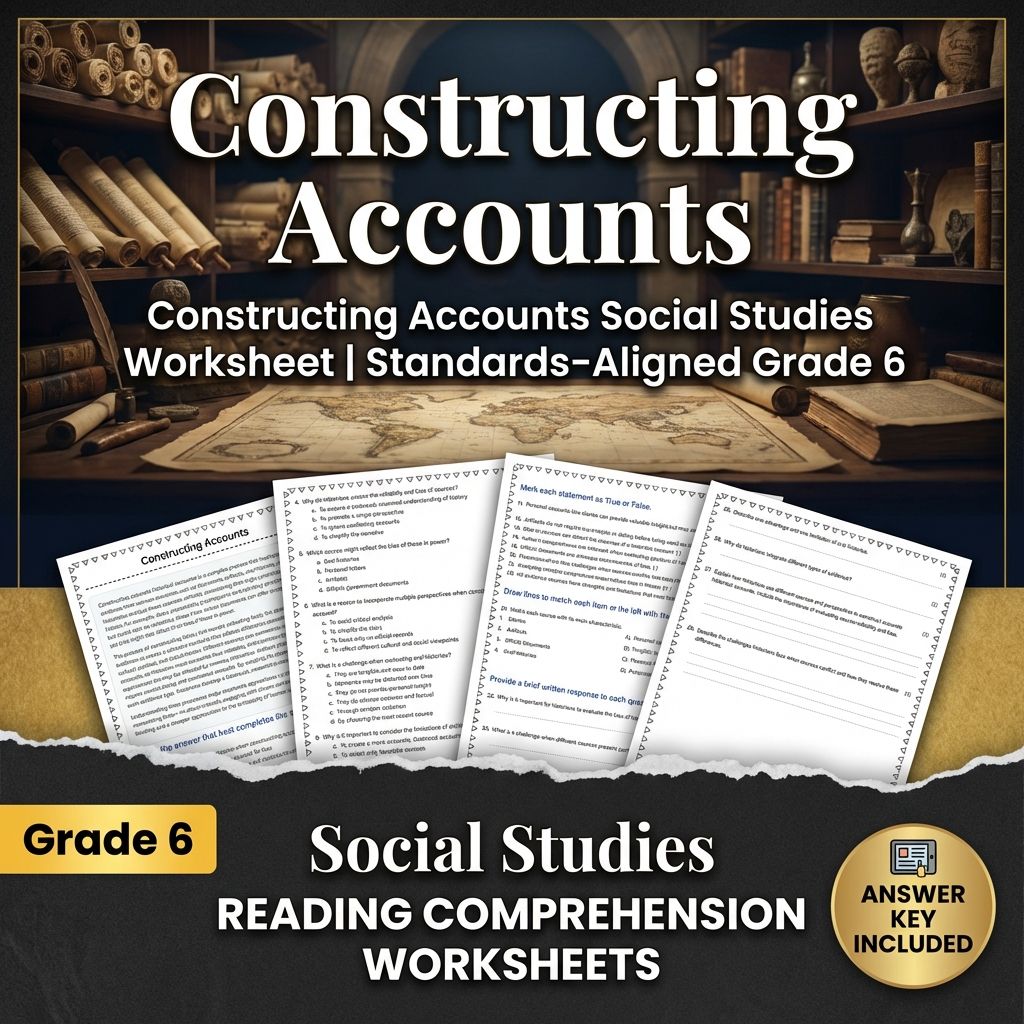
Constructing Accounts Social Studies Worksheet | Standards-Aligned Grade 6
JCreated byJ.S SheetsLearning Objectives
- Understand how historians gather and evaluate evidence from multiple sources.
- Identify different sources used in constructing historical accounts and assess their reliability.
- Analyze how perspectives and bias influence the construction of narratives.
Also included in: Grade 6 Social Studies | Analyzing Evidence & Narratives Bundle +1 more
Instant download
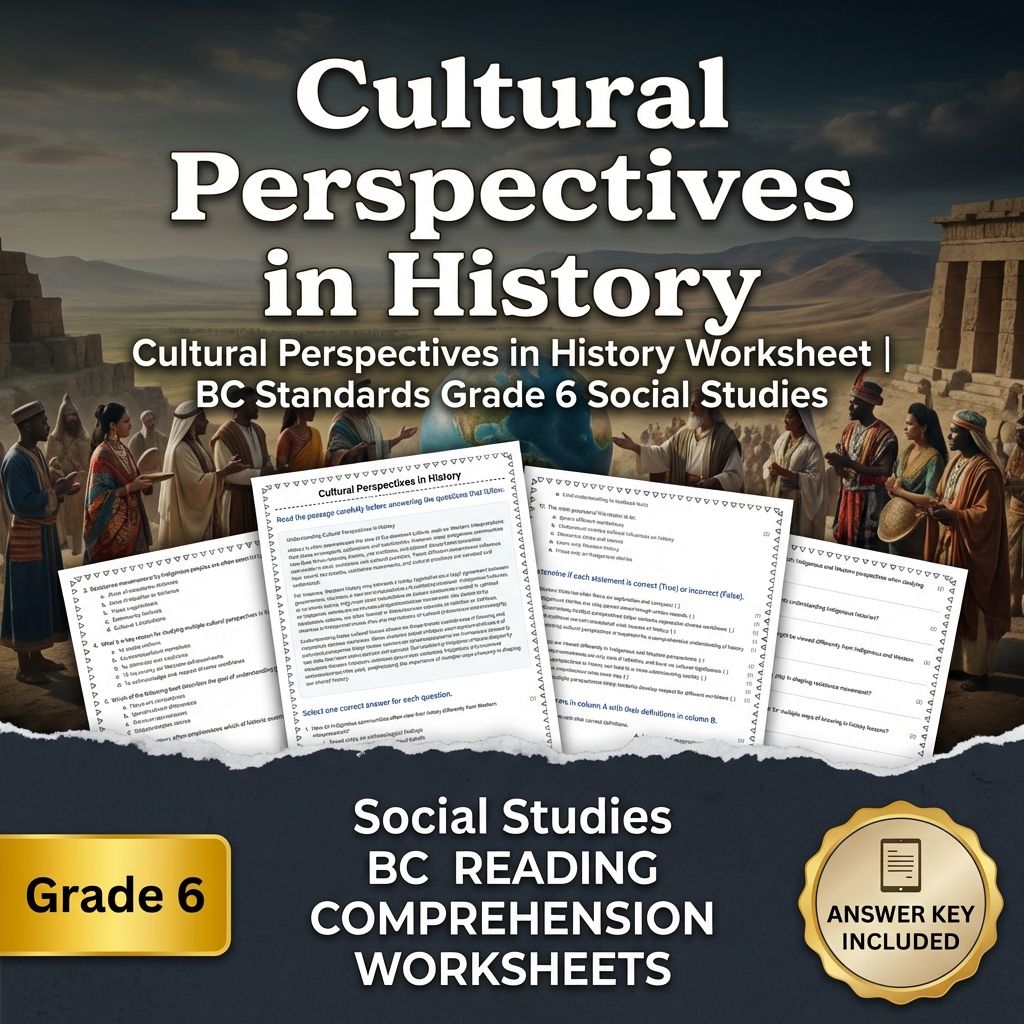
Cultural Perspectives in History Worksheet | BC Standards Grade 6 Social Studies
JCreated byJ.S SheetsLearning Objectives
- Understand how cultural backgrounds influence the way historical events are perceived and retold.
- Identify differences between Indigenous and Western worldview approaches to history.
- Analyze how cultural lenses shape narratives of important events such as resistance, practices, and treaties.
Also included in: Grade 6 Social Studies | Analyzing Evidence & Narratives Bundle +1 more
Instant download
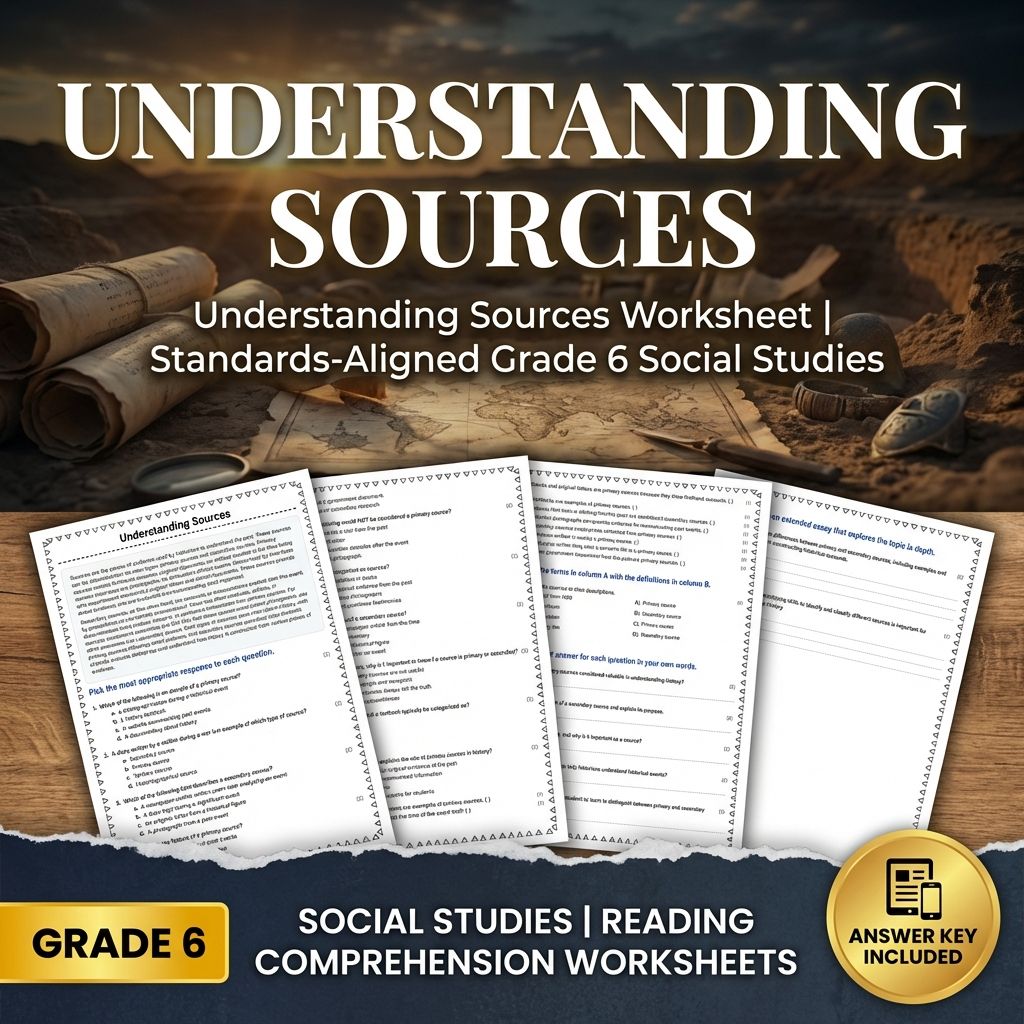
Understanding Sources Worksheet | Standards-Aligned Grade 6 Social Studies
JCreated byJ.S SheetsLearning Objectives
- Identify different types of historical sources, including primary and secondary sources.
- Differentiate between firsthand documents, artifacts, and later retellings.
- Classify various evidence such as photographs, diaries, and textbooks.
Also included in: Grade 6 Social Studies | Analyzing Evidence & Narratives Bundle +1 more
Instant download
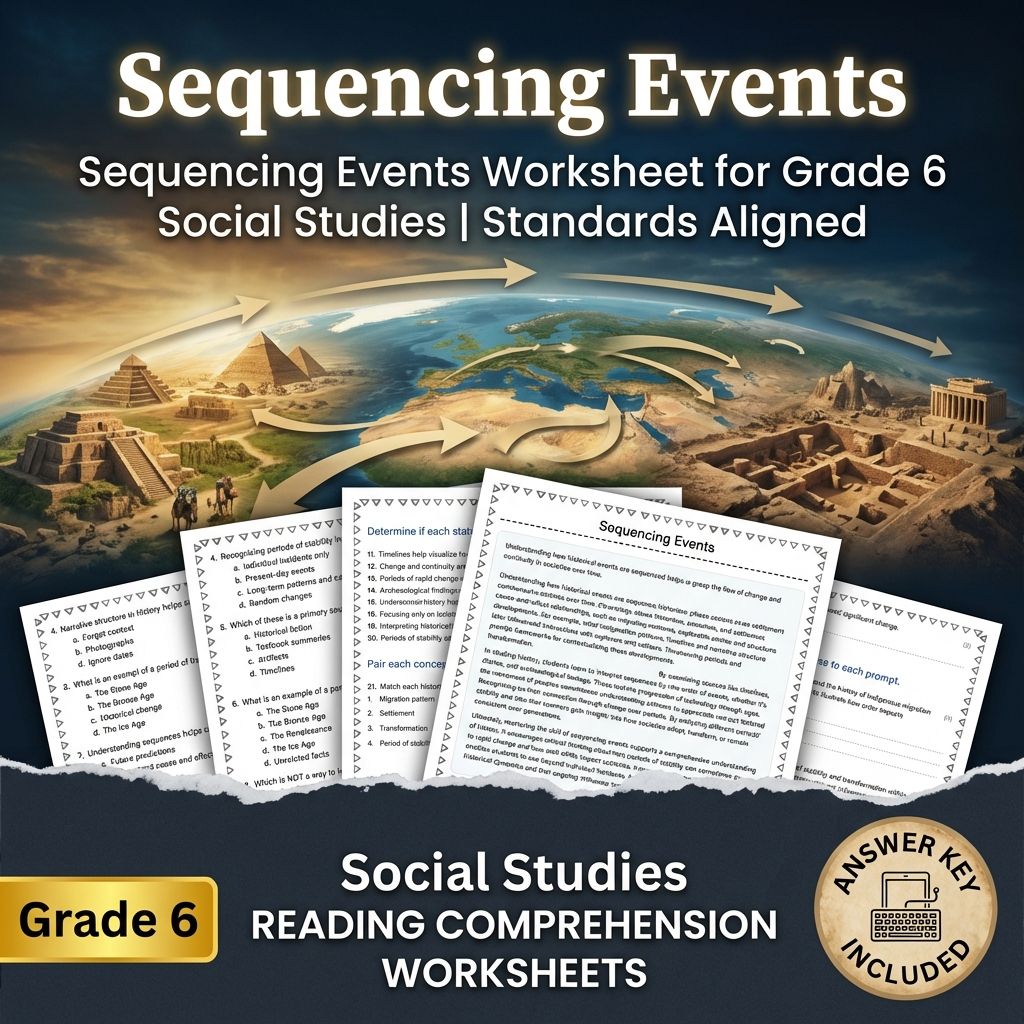
Sequencing Events Worksheet for Grade 6 Social Studies | Standards Aligned
JCreated byJ.S SheetsLearning Objectives
- Understand the importance of chronological order in history.
- Identify key events in a timeline and arrange them correctly.
- Interpret how sequences of events influence historical understanding.
Also included in: Grade 6 Social Studies | Analyzing Evidence & Narratives Bundle +1 more
Instant download
Fact, Opinion, Inference Worksheet | BC Standards Grade 6 Social Studies
JCreated byJ.S SheetsLearning Objectives
- Develop skills in analyzing sources to distinguish between facts, opinions, and inferences.
- Learn to identify objective evidence versus subjective interpretation in quotes, articles, and records.
- Enhance critical thinking skills for evaluating credibility and bias in historical sources.
Also included in: Grade 6 Social Studies | Analyzing Evidence & Narratives Bundle +1 more
Instant download
Multiple Perspectives in History Social Studies Worksheet | BC Standards Grade 6
JCreated byJ.S SheetsLearning Objectives
- Understand the importance of Indigenous, settler, and immigrant viewpoints in shaping historical narratives.
- Analyze how different perspectives influence interpretations of events like treaties and land dispossession.
- Evaluate the subjectivity of historical stories and the need for inclusivity in constructing history.
Also included in: Grade 6 Social Studies | Analyzing Evidence & Narratives Bundle +1 more
Instant download
6th Grade Social Studies | Comparative Perspectives Worksheet & Answer Key PDF
JCreated byJ.S SheetsLearning Objectives
- Analyze how geography influences social and economic development in different communities.
- Compare and contrast the social structures and cultural practices of coastal, prairie, and Indigenous communities.
- Understand how shared processes can lead to different community outcomes and evolving identities.
Also included in: Grade 6 Social Studies UNIT Bundle – Communities, History, & Culture (PDF) +1 more
Instant download
6th Grade Social Studies | Individual Rights Practice Worksheet & Answer Key
JCreated byJ.S SheetsLearning Objectives
- Understand the core concepts of individual rights such as voting, free speech, and property ownership.
- Analyze historical examples of societies that recognized individual rights, including ancient democracies and modern movements.
- Evaluate how individual rights influence social interactions, societal development, and cohesion.
Also included in: Grade 6 Social Studies Bundle – Laws, Rights & Civic Engagement (Answer Keys) +1 more
Instant download
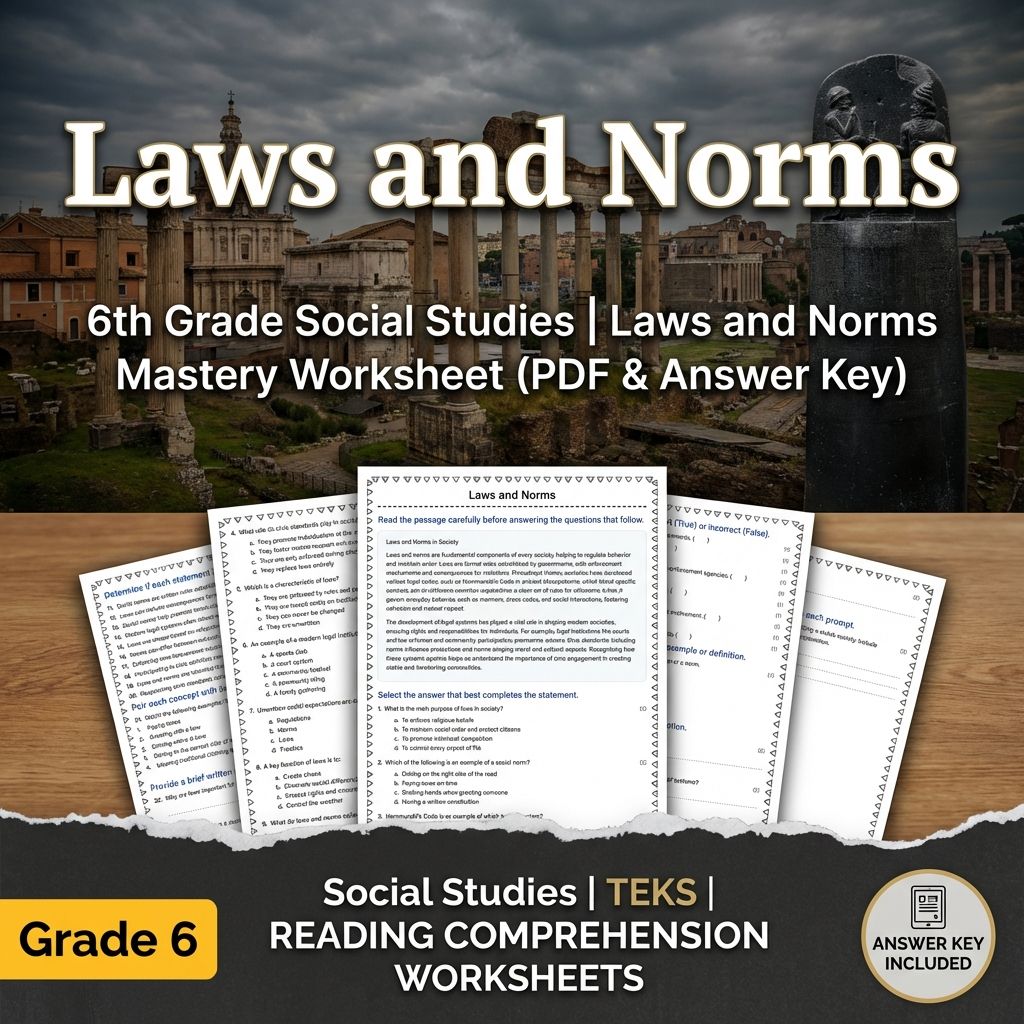
6th Grade Social Studies | Laws and Norms Mastery Worksheet (PDF & Answer Key)
JCreated byJ.S SheetsLearning Objectives
- Understand the difference between laws and social norms in maintaining social order.
- Identify historical and modern examples of laws and norms.
- Explain how laws and norms influence citizens' rights and responsibilities.
Also included in: Grade 6 Social Studies Bundle – Laws, Rights & Civic Engagement (Answer Keys) +1 more
Instant download
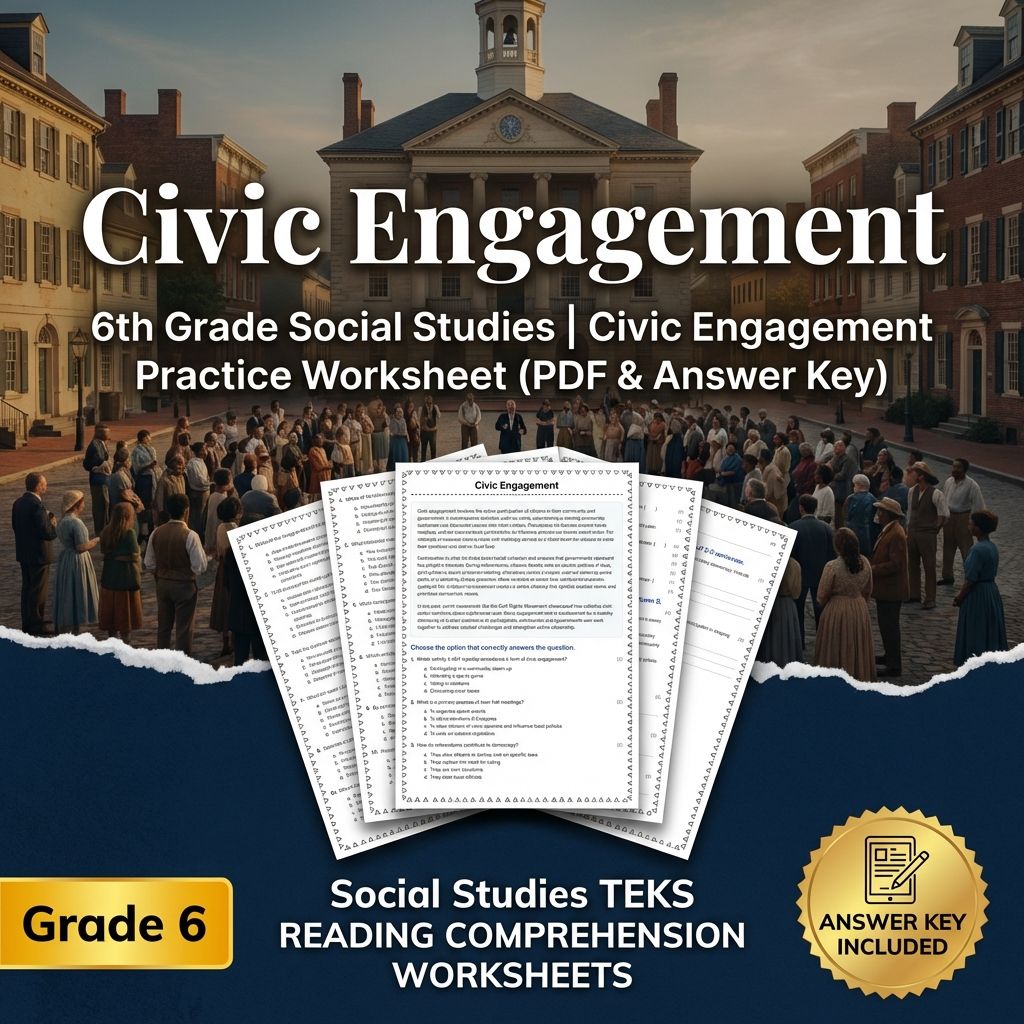
6th Grade Social Studies | Civic Engagement Practice (PDF & Answer Key)
JCreated byJ.S SheetsLearning Objectives
- Define civic engagement and identify different ways people participate in civic life.
- Explain the importance of town hall meetings, referendums, and community service in shaping policies.
- Analyze how active participation impacts societal norms and government functions.
Also included in: Grade 6 Social Studies Bundle – Laws, Rights & Civic Engagement (Answer Keys) +1 more
Instant download
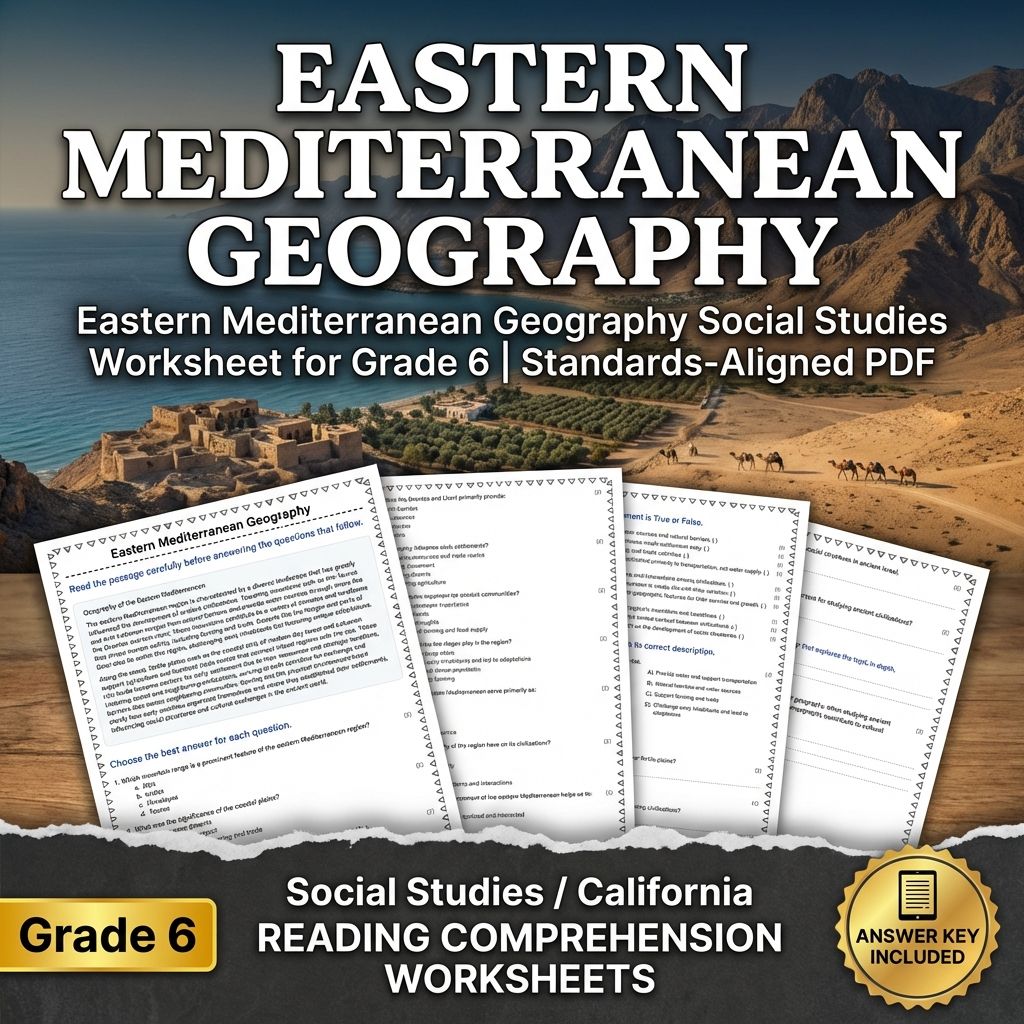
Eastern Mediterranean Geography Social Studies Worksheet for Grade 6
JCreated byJ.S SheetsLearning Objectives
- Identify key geographical features of the eastern Mediterranean region.
- Explain how mountains, rivers, and deserts influenced early settlement patterns.
- Describe the role of fertile areas like coastal plains in supporting communities.
Also included in: Grade 6 Social Studies | Ancient Israel and Judaism Unit Bundle +1 more
Instant download
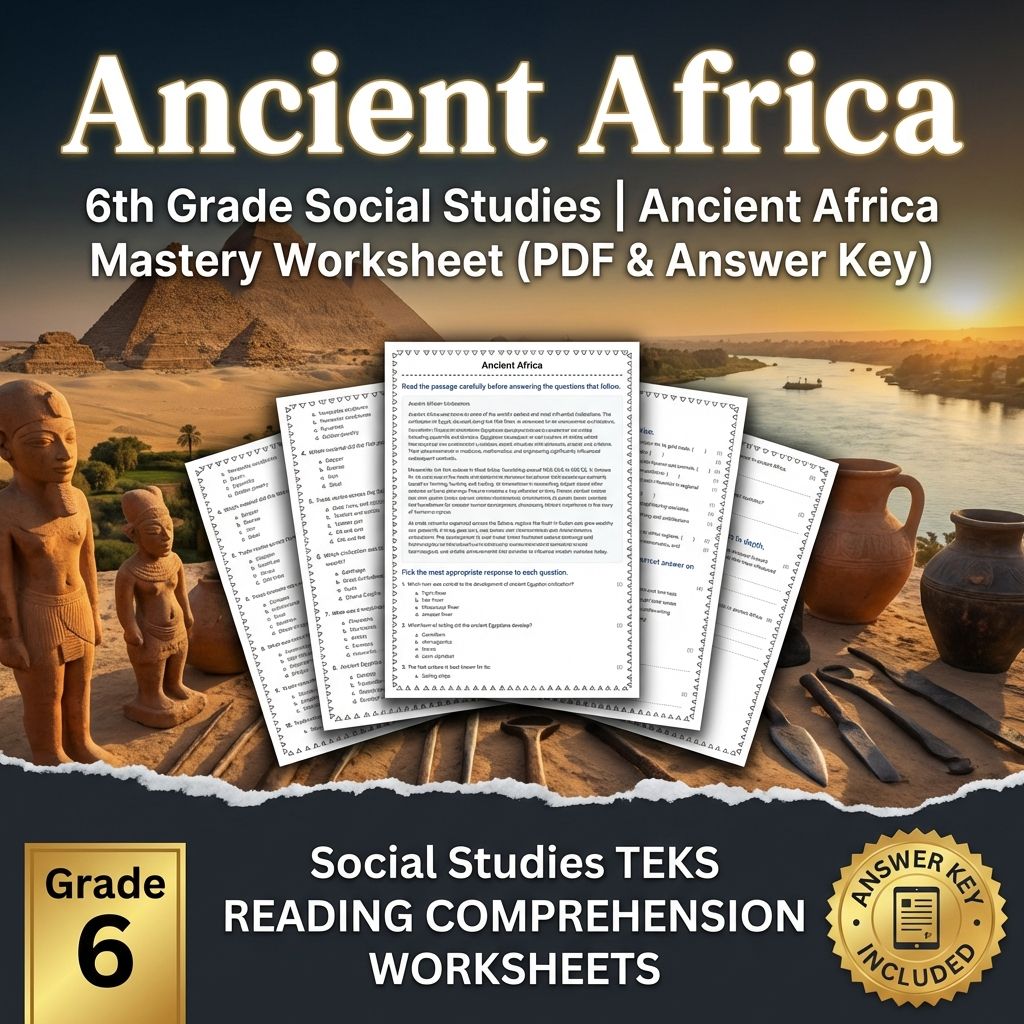
6th Grade Social Studies | Ancient Africa Mastery Worksheet (PDF & Answer Key)
JCreated byJ.S SheetsLearning Objectives
- Understand the major civilizations of ancient Africa, such as Egypt and Nok.
- Identify the social structures and innovations of these civilizations.
- Explore the contributions of ancient African societies to human history.
Also included in: Grade 6 Social Studies Bundle – Ancient Empires & Cultural Diffusion +1 more
Instant download
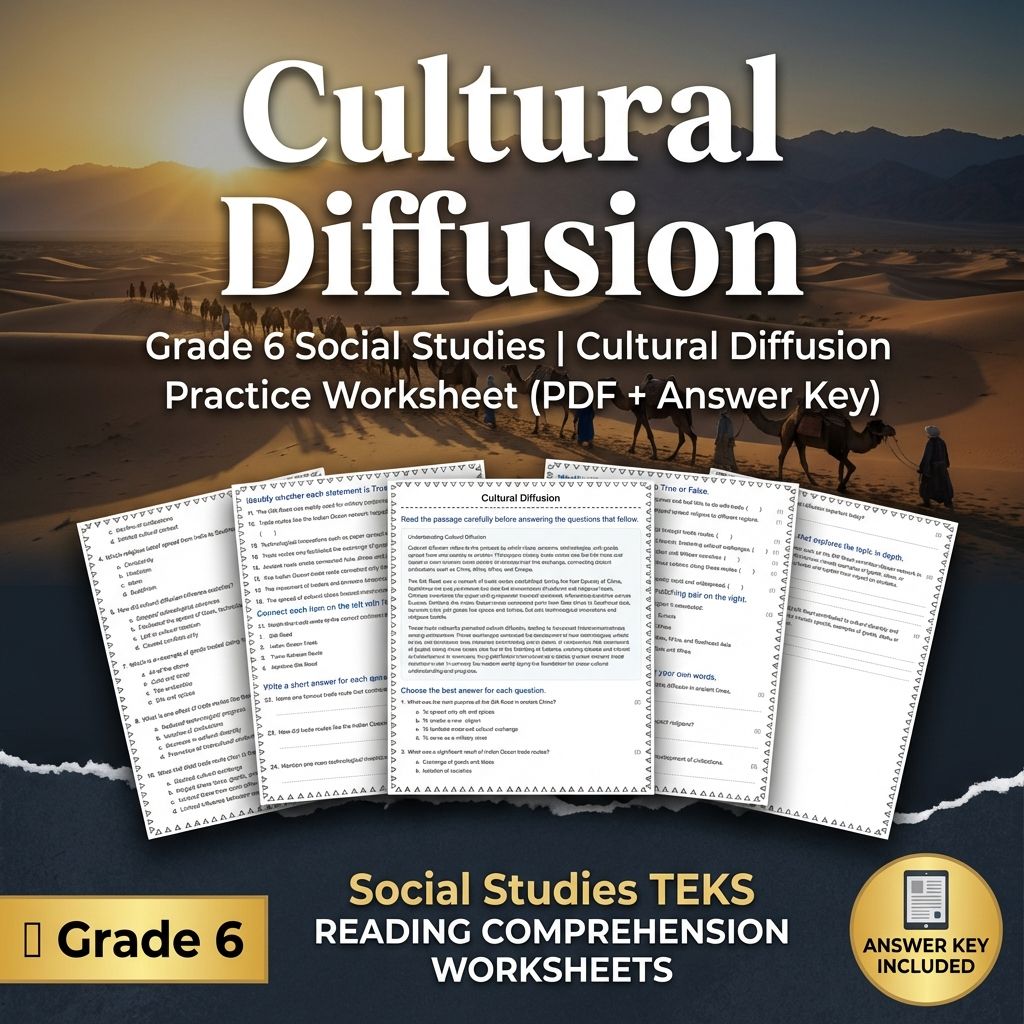
Grade 6 Social Studies | Cultural Diffusion Practice (PDF + Answer Key)
JCreated byJ.S SheetsLearning Objectives
- Understand the concept of cultural diffusion and how it spreads ideas, goods, and technologies among civilizations.
- Identify examples such as the Silk Road and Indian Ocean trade routes that facilitated cultural exchange.
- Explain the impact of cultural diffusion on the development of societies and global interconnectedness.
Also included in: Grade 6 Social Studies Bundle – Ancient Empires & Cultural Diffusion +1 more
Instant download
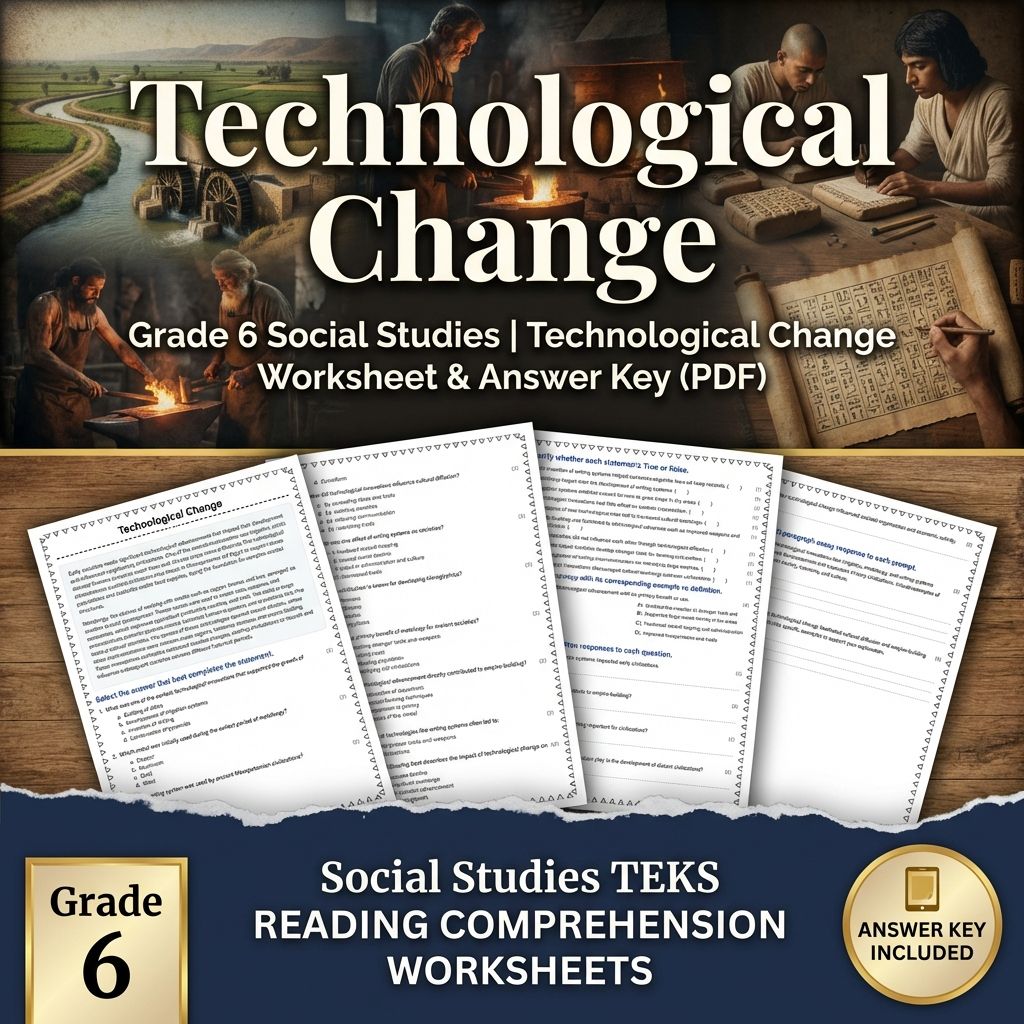
Grade 6 Social Studies | Technological Change Worksheet & Answer Key (PDF)
JCreated byJ.S SheetsLearning Objectives
- Understand how early societies developed irrigation, metallurgy, and writing systems.
- Assess the impact of technological innovations on societal organization and economy.
- Analyze how technological change facilitated cultural diffusion and empire-building.
Also included in: Grade 6 Social Studies Bundle – Ancient Empires & Cultural Diffusion +1 more
Instant download
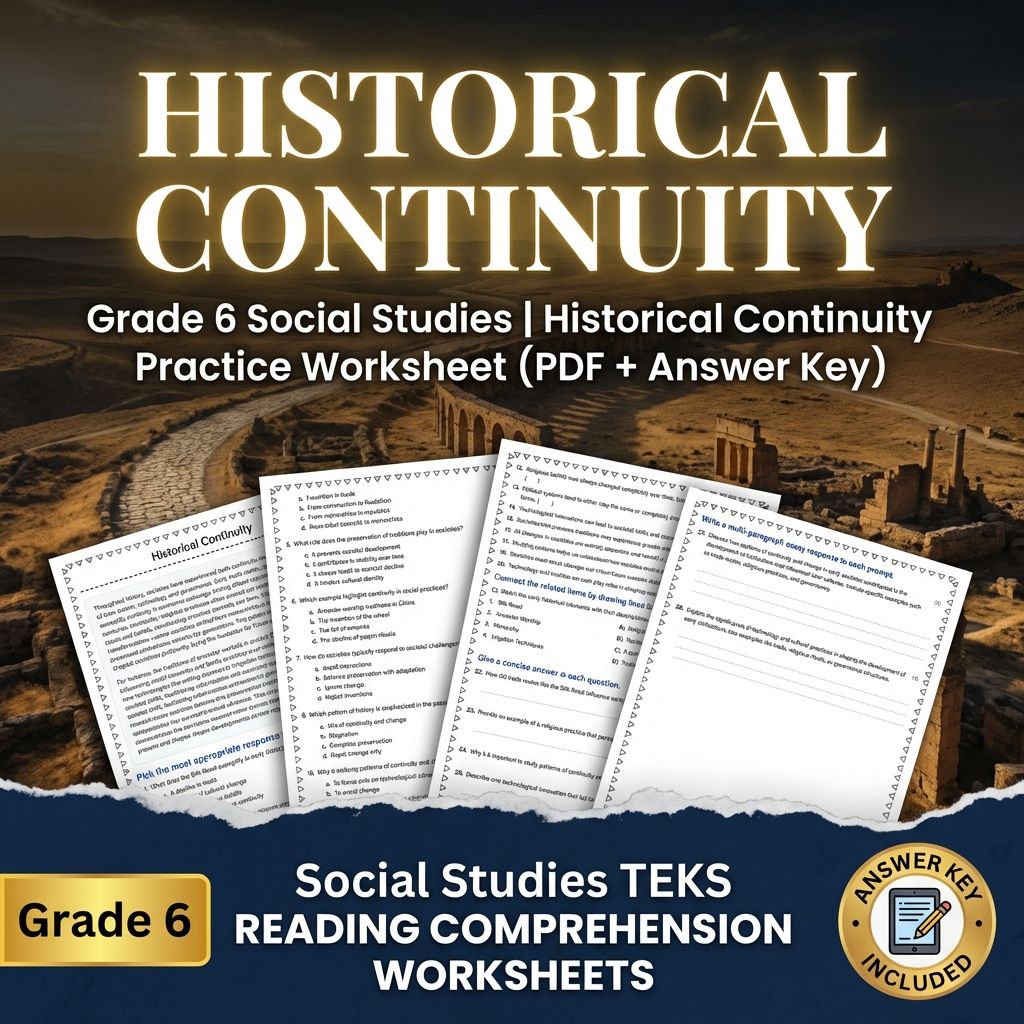
Grade 6 Social Studies | Historical Continuity Practice (PDF + Answer Key)
JCreated byJ.S SheetsLearning Objectives
- Analyze how cultural, technological, and political elements persisted or transformed across different early historical periods.
- Identify patterns of continuity and change in trade routes, religious practices, and governance structures.
- Evaluate how these patterns influenced the development of societies and their impact on later civilizations.
Also included in: Grade 6 Social Studies Bundle – Ancient Empires & Cultural Diffusion +1 more
Instant download
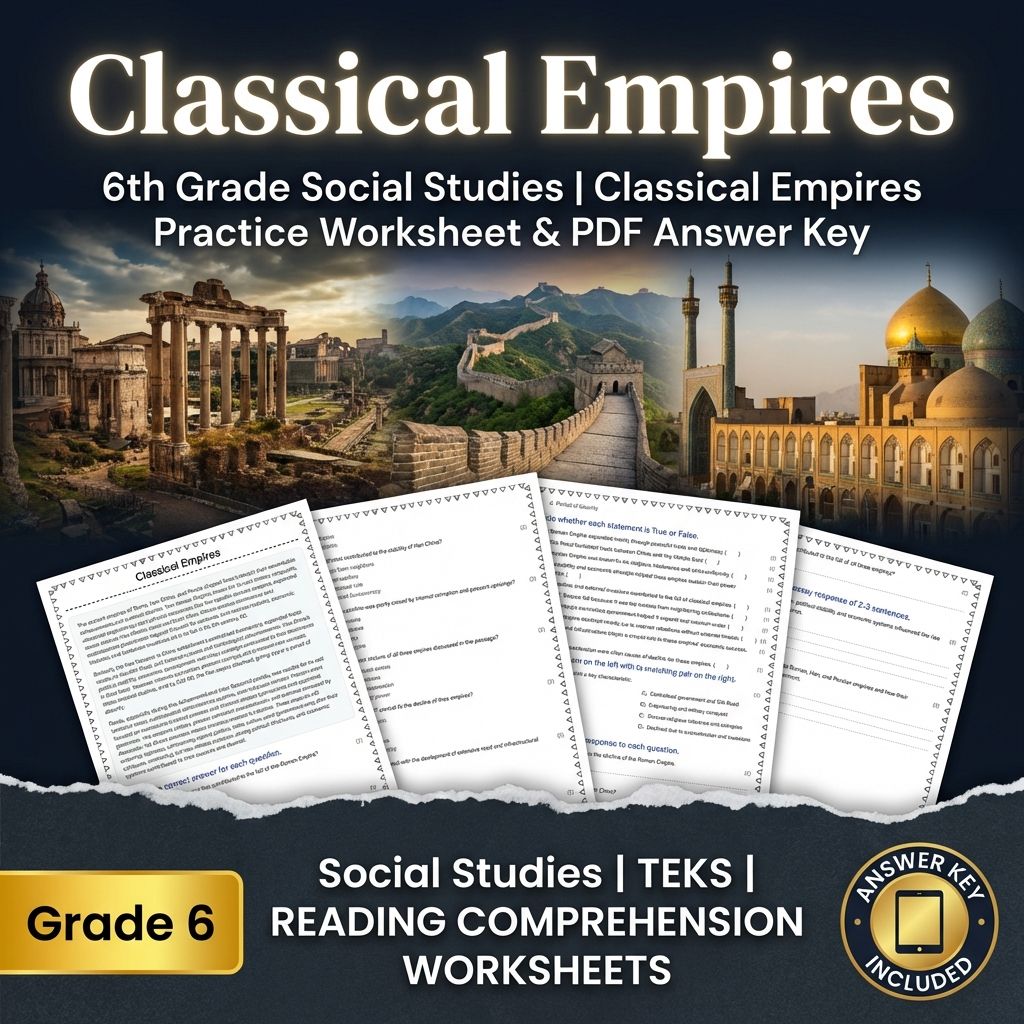
6th Grade Social Studies | Classical Empires Practice Worksheet & PDF Answer Key
JCreated byJ.S SheetsLearning Objectives
- Understand the factors contributing to the rise of ancient empires like Rome, Han, and Persia.
- Identify key causes for the decline of these civilizations.
- Analyze how military, political, and economic systems influenced empire longevity.
Also included in: Grade 6 Social Studies Bundle – Ancient Empires & Cultural Diffusion +1 more
Instant download

Grade 6 Social Studies | Heritage Sites Worksheet (Ontario Standards) (PDF)
Created bySunny Desk ResourcesLearning Objectives
- Explain why heritage sites (built heritage, monuments, and commemorative spaces) matter to community memory and identity.
- Analyze how preservation and neglect can be influenced by cultural groups, politics, and tourism.
- Evaluate the reliability of source narratives about heritage sites and their meaning.
Also included in: Grade 6 Communities Through Time Social Studies Lesson Bundle for Ontario +1 more
Instant download

6th Grade Social Studies | Environmental Impacts Worksheet (Ontario PDF)
Created bySunny Desk ResourcesLearning Objectives
- Identify major environmental impacts caused by regional economic activities, including land degradation, water contamination, habitat loss, and greenhouse gas emissions.
- Explain causes and consequences of industrial and agricultural practices and describe at least one mitigation or regulatory response.
- Analyze how economic drivers, cultural values, and ecosystem services can be interconnected in regional sustainability.
Also included in: Grade 6 Resource Patterns Social Studies Lesson Bundle | Ontario Framework +1 more
Instant download

Evaluating Perspectives Worksheet | TEKS Aligned Grade 6 Social Studies
JCreated byJ.S SheetsLearning Objectives
- Explain how different perspectives can shape interpretations of the same historical evidence.
- Evaluate source credibility by considering authorship, purpose, and audience.
- Identify bias and distinguish between opinion and evidence in historical accounts.
Instant download
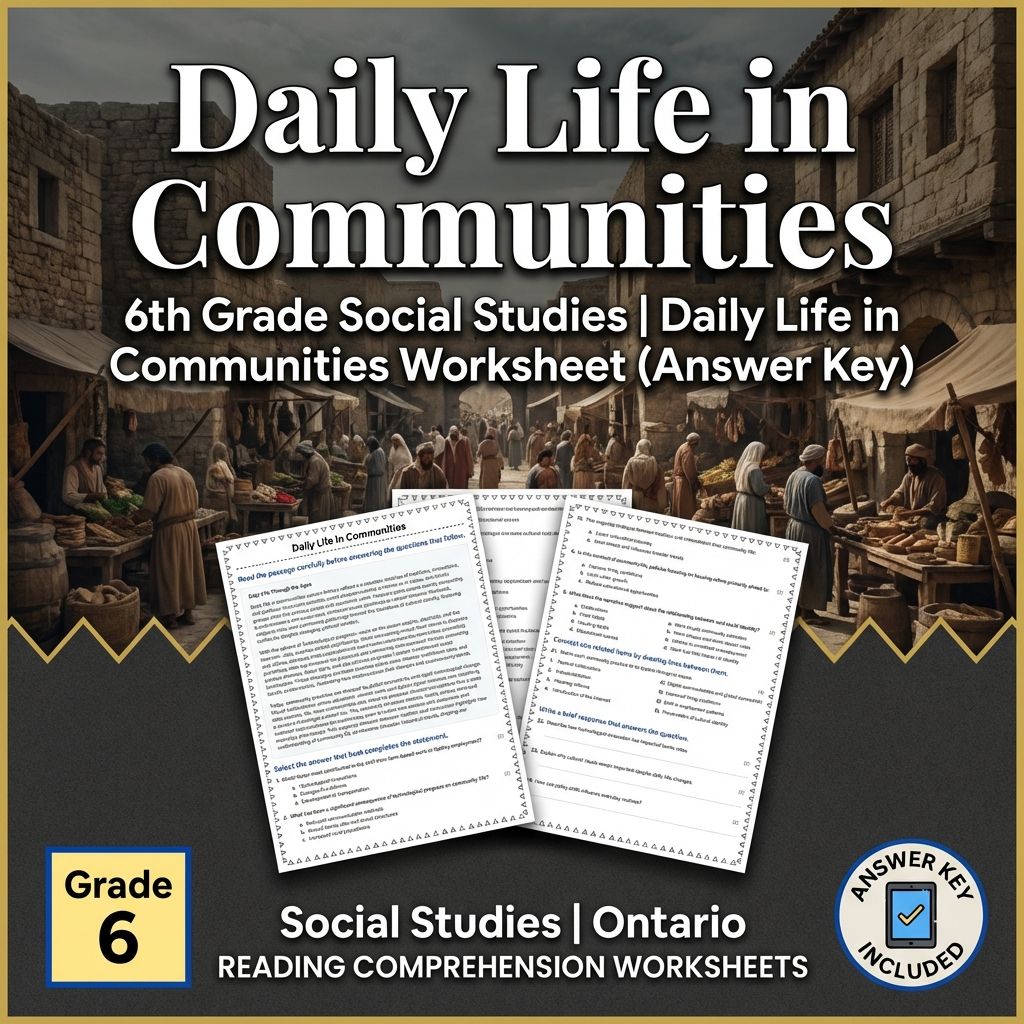
Grade 6 Social Studies | Daily Life in Communities Worksheet & Answer Key (PDF)
JCreated byJ.S SheetsLearning Objectives
- Understand how routine practices such as work, education, and housing have evolved over time.
- Analyze the causes and effects of changes in community lifestyles, including technological and policy influences.
- Explore the relationship between family roles, social identity, and cultural rituals in different time periods.
Also included in: Grade 6 Social Studies UNIT Bundle – Communities, History, & Culture (PDF) +1 more
Instant download
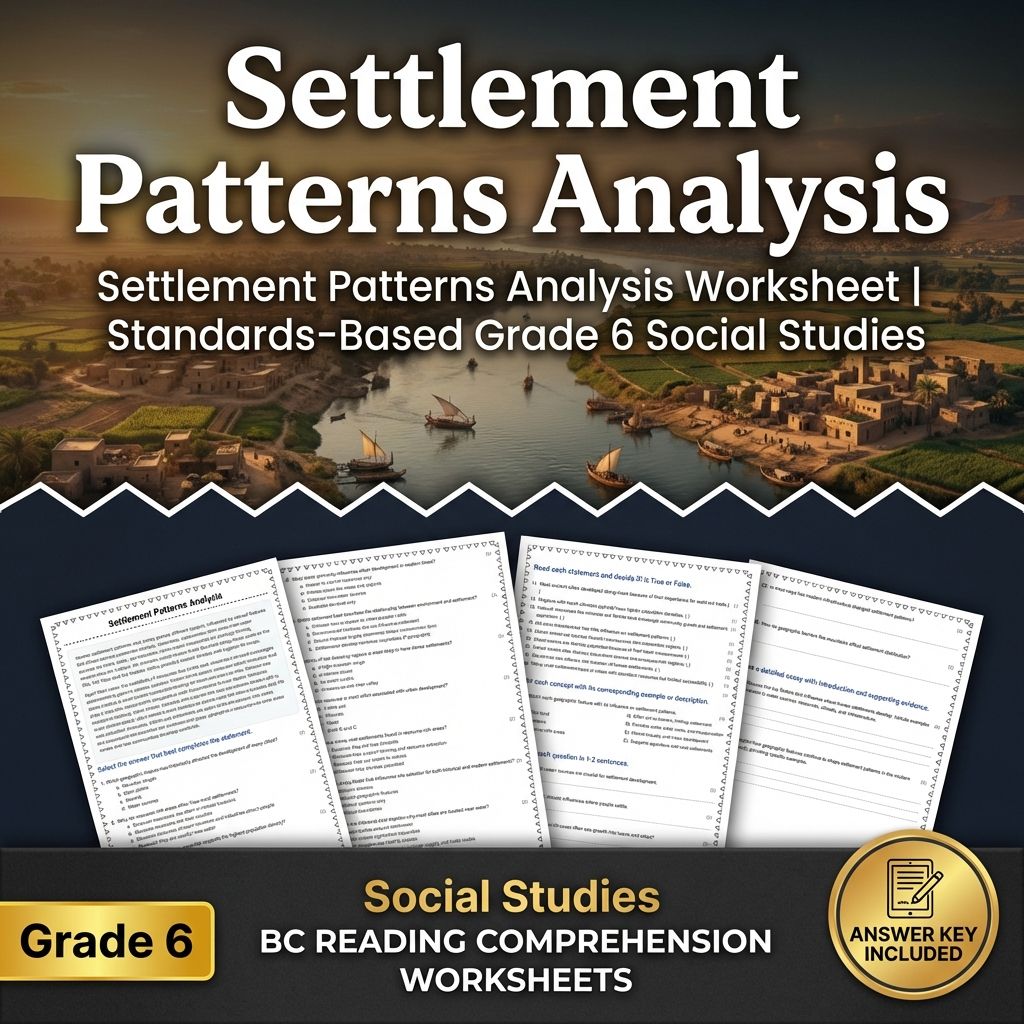
Settlement Patterns Analysis Worksheet | Standards-Based Grade 6 Social Studies
JCreated byJ.S SheetsLearning Objectives
- Analyze how geographic features influence settlement locations and community layouts.
- Interpret spatial patterns related to climate, resources, and access to water sources.
- Evaluate the significance of settlement distribution in different regions based on geographic data.
Also included in: Grade 6 Social Studies | Human Systems & Settlements Bundle (Standards-Aligned) +1 more
Instant download
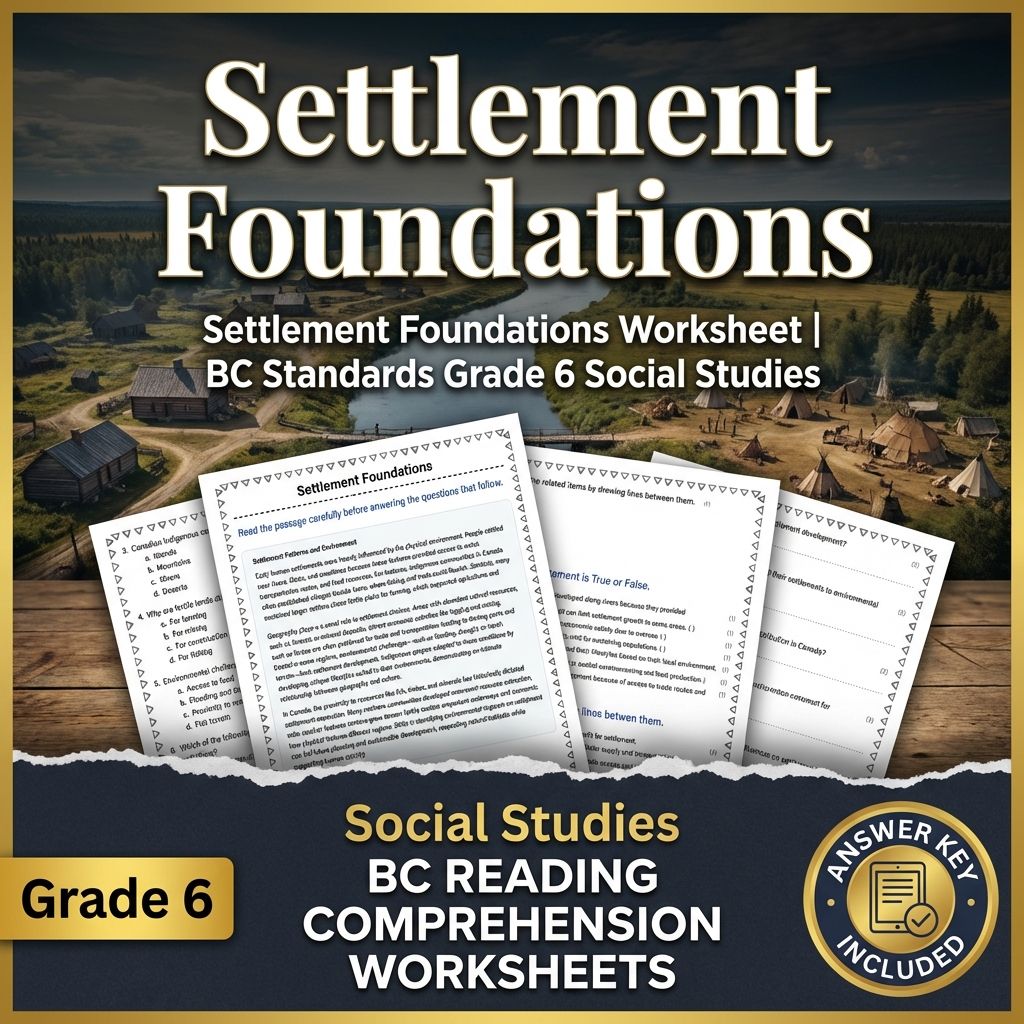
Settlement Foundations Worksheet | BC Standards Grade 6 Social Studies
JCreated byJ.S SheetsLearning Objectives
- Identify geographic features that influence human settlement patterns.
- Explain how resource availability affects where communities develop.
- Assess the relationship between physical environment and economic activities.
Also included in: Grade 6 Social Studies | Human Systems & Settlements Bundle (Standards-Aligned) +1 more
Instant download
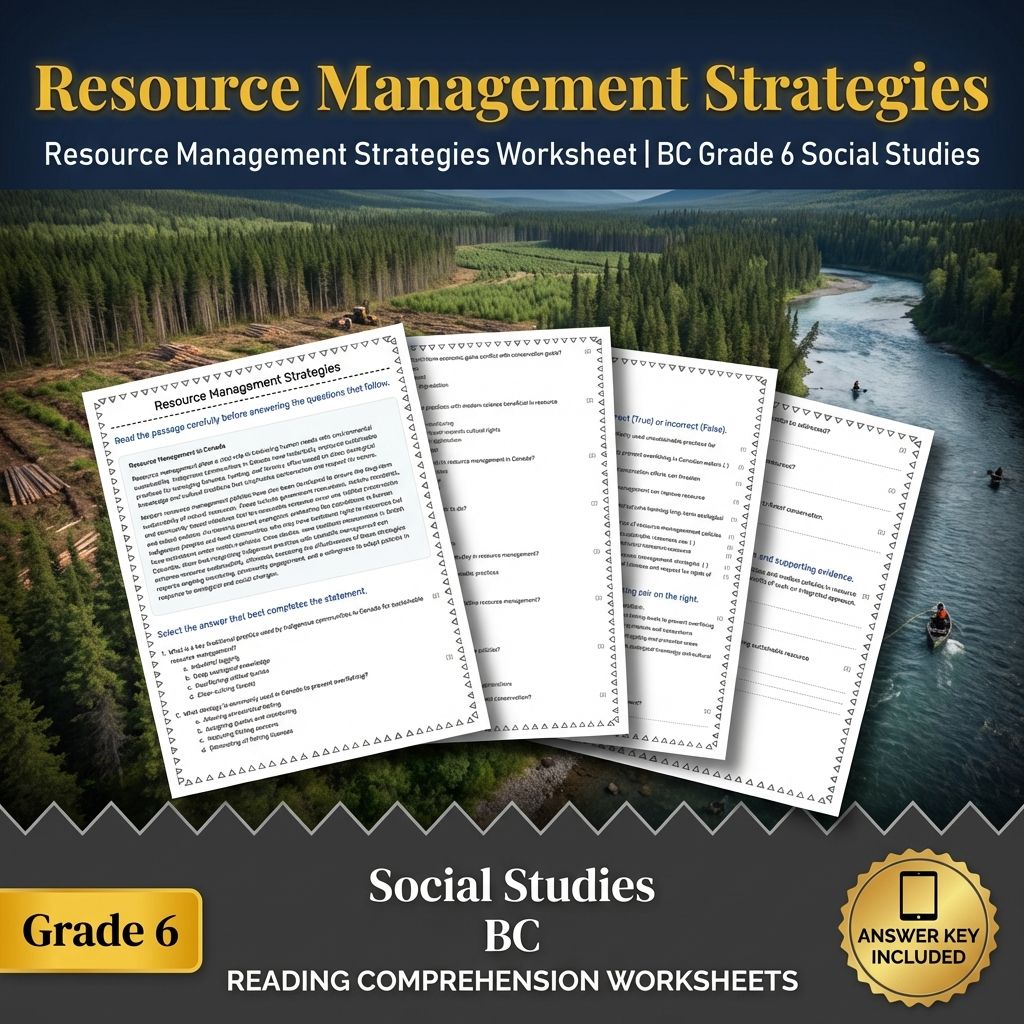
Resource Management Strategies Worksheet | BC Grade 6 Social Studies
JCreated byJ.S SheetsLearning Objectives
- Understand various strategies for managing natural resources.
- Evaluate the effectiveness of conservation methods and policies.
- Analyze case studies related to fisheries and forest conservation in Canada.
Also included in: Grade 6 Social Studies | Human Systems & Settlements Bundle (Standards-Aligned) +1 more
Instant download
Environmental Interactions for Grade 6 Social Studies | Standards-Aligned
JCreated byJ.S SheetsLearning Objectives
- Analyze how human activities such as agriculture, infrastructure, and resource extraction impact the environment.
- Identify cause-and-effect relationships between human actions and ecological changes.
- Interpret indigenous perspectives on environmental stewardship and sustainability.
Also included in: Grade 6 Social Studies | Human Systems & Settlements Bundle (Standards-Aligned) +1 more
Instant download
Resource Use and Management Worksheet | BC Standards Grade 6 Social Studies
JCreated byJ.S SheetsLearning Objectives
- Understand different strategies for resource use in communities and their environmental impacts.
- Evaluate the benefits and drawbacks of sustainable versus industrial resource management approaches.
- Compare indigenous stewardship practices with modern resource extraction methods in Canada.
Also included in: Grade 6 Social Studies | Human Systems & Settlements Bundle (Standards-Aligned) +1 more
Instant download
Sustainable Development Worksheet for Grade 6 Social Studies | BC Standards
JCreated byJ.S SheetsLearning Objectives
- Understand the concept of sustainable development and its importance.
- Identify examples of renewable energy projects and conservation efforts.
- Evaluate the role of indigenous knowledge in environmental stewardship.
Also included in: Grade 6 Social Studies | Human Systems & Settlements Bundle (Standards-Aligned) +1 more
Instant download
Human-Environment Impact Social Studies Worksheet | Standards-Based Grade 6
JCreated byJ.S SheetsLearning Objectives
- Analyze how human activities such as urban development and resource extraction affect local ecosystems.
- Evaluate the social and ecological consequences of infrastructure projects on communities.
- Interpret case studies to understand human-environment interactions.
Also included in: Grade 6 Social Studies | Human Systems & Settlements Bundle (Standards-Aligned) +1 more
Instant download

Daily Life Worksheet | Social Studies Grade 6 | Ontario Standards
JCreated byJ.S SheetsLearning Objectives
- Describe how daily routines in work, education, housing, and celebration help define community life across time.
- Explain how technological innovation and policy shifts can change habitual practices and social roles.
- Compare continuity and change in cultural rituals and labor patterns using evidence from community examples.
Instant download

Land Claims & Treaties Grade 6 Social Studies BC Worksheet + Answer Key
 Created byQuiet Forest Education
Learning Objectives
- Understand key concepts related to Social Studies
- Apply knowledge through practice questions
- Demonstrate comprehension of the material
Also included in: Indigenous Territories & Responsibilities Bundle | Grade 6 Social Studies | BC +1 more
Instant download
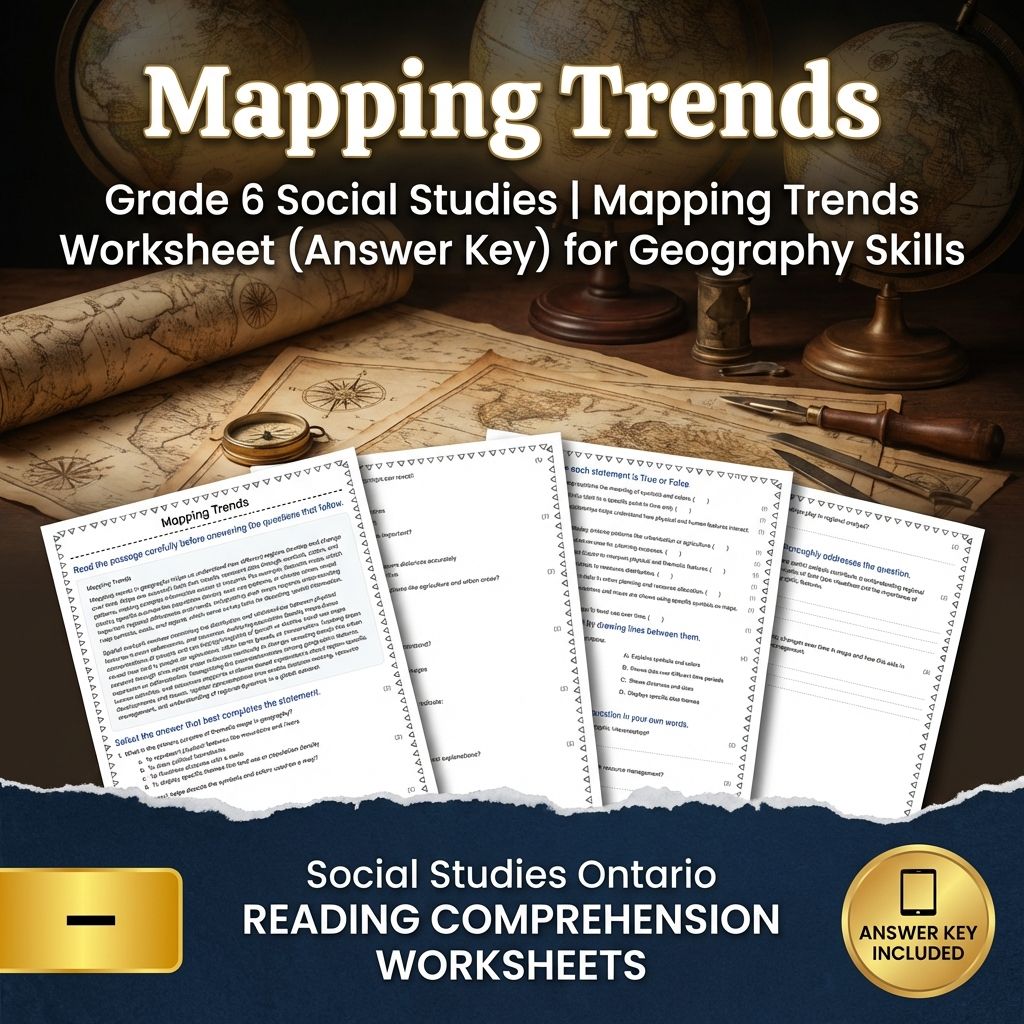
6th Grade Social Studies | Mapping Trends Practice Worksheet (PDF + Rubric)
JCreated byJ.S SheetsLearning Objectives
- Understand how to interpret geographic data and map symbols.
- Analyze spatial patterns such as population density and land use.
- Explore the significance of thematic maps in revealing regional trends.
Also included in: Grade 6 Social Studies Unit Bundle | Canadian Resources, Climate & Environment +1 more
Instant download
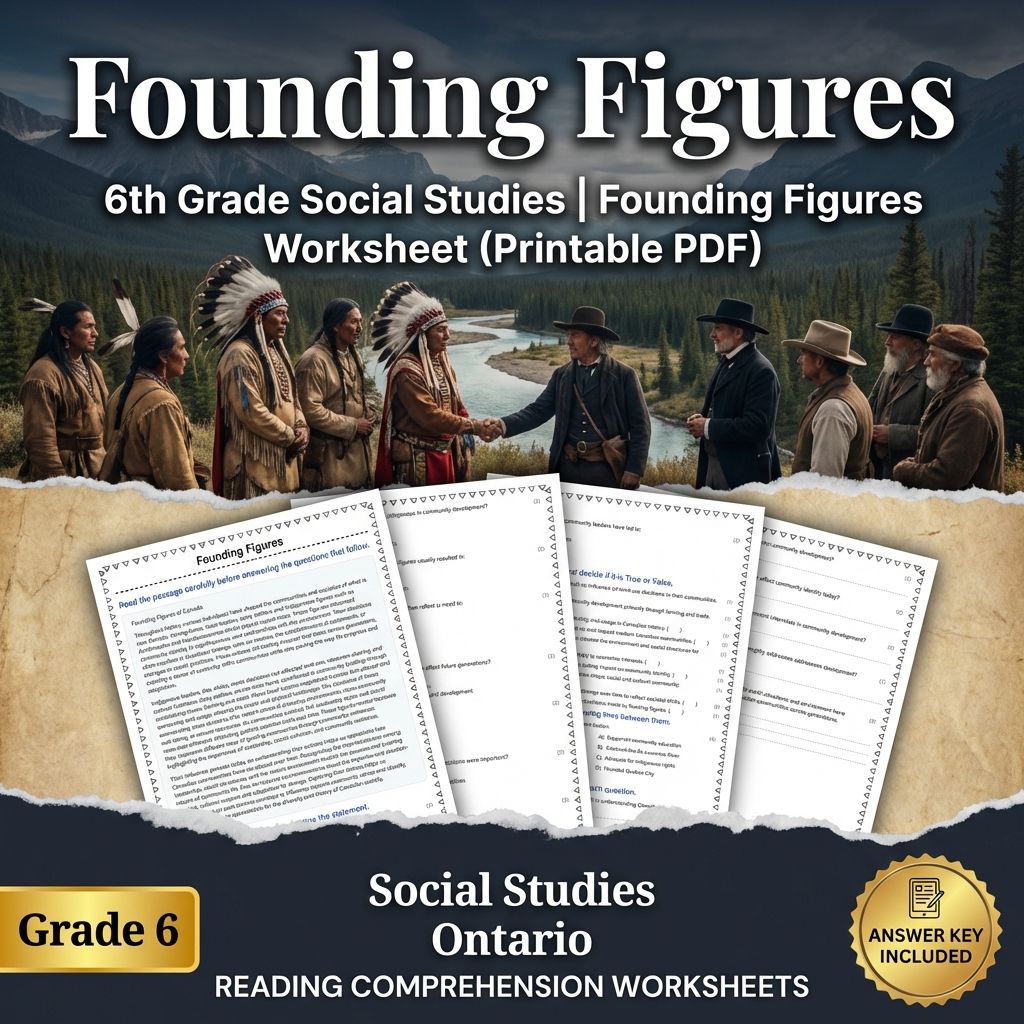
Grade 6 Social Studies | Founding Figures Practice Worksheet & Answer Key (PDF)
JCreated byJ.S SheetsLearning Objectives
- Identify key individuals who influenced the development of Canadian communities.
- Understand how decisions by founding figures led to social and community changes.
- Trace the continuity and change in leadership roles across generations.
Also included in: Grade 6 Social Studies UNIT Bundle – Communities, History, & Culture (PDF) +1 more
Instant download

Founding Figures Worksheet | Social Studies Practice for Grade 6 | Ontario
JCreated byJ.S SheetsLearning Objectives
- Explain how founding figures influenced Canadian communities through leadership decisions
- Describe cause-and-effect relationships between actions and changes in community life
- Compare continuity and change in community identity across generations
Instant download

Knowledge Systems Worksheet for Grade 6 Social Studies
JCreated byJ.S SheetsLearning Objectives
- Explain what Indigenous knowledge systems are and how they connect learning to responsibility.
- Describe how relationships with land, water, and animals guide stewardship decisions.
- Use examples to show reciprocal obligations in traditional ecological practices.
Instant download
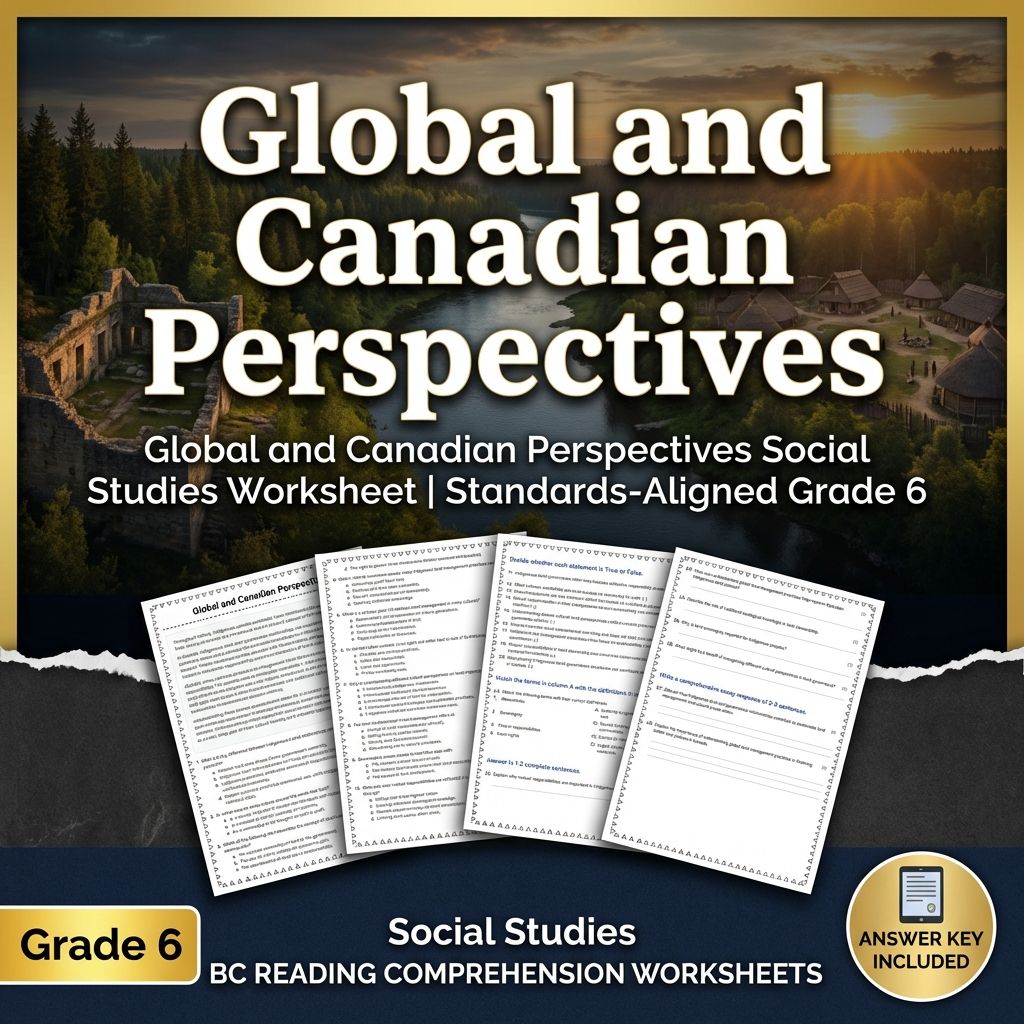
Global and Canadian Perspectives Social Studies | Standards-Aligned Grade 6
JCreated byJ.S SheetsLearning Objectives
- Understand Indigenous land and governance relationships within the Canadian context.
- Compare Indigenous and global land stewardship practices and governance structures.
- Explore themes of land rights, sovereignty, and mutual responsibilities across cultures.
Also included in: Grade 6 Social Studies | Indigenous Land Responsibilities Bundle +1 more
Instant download
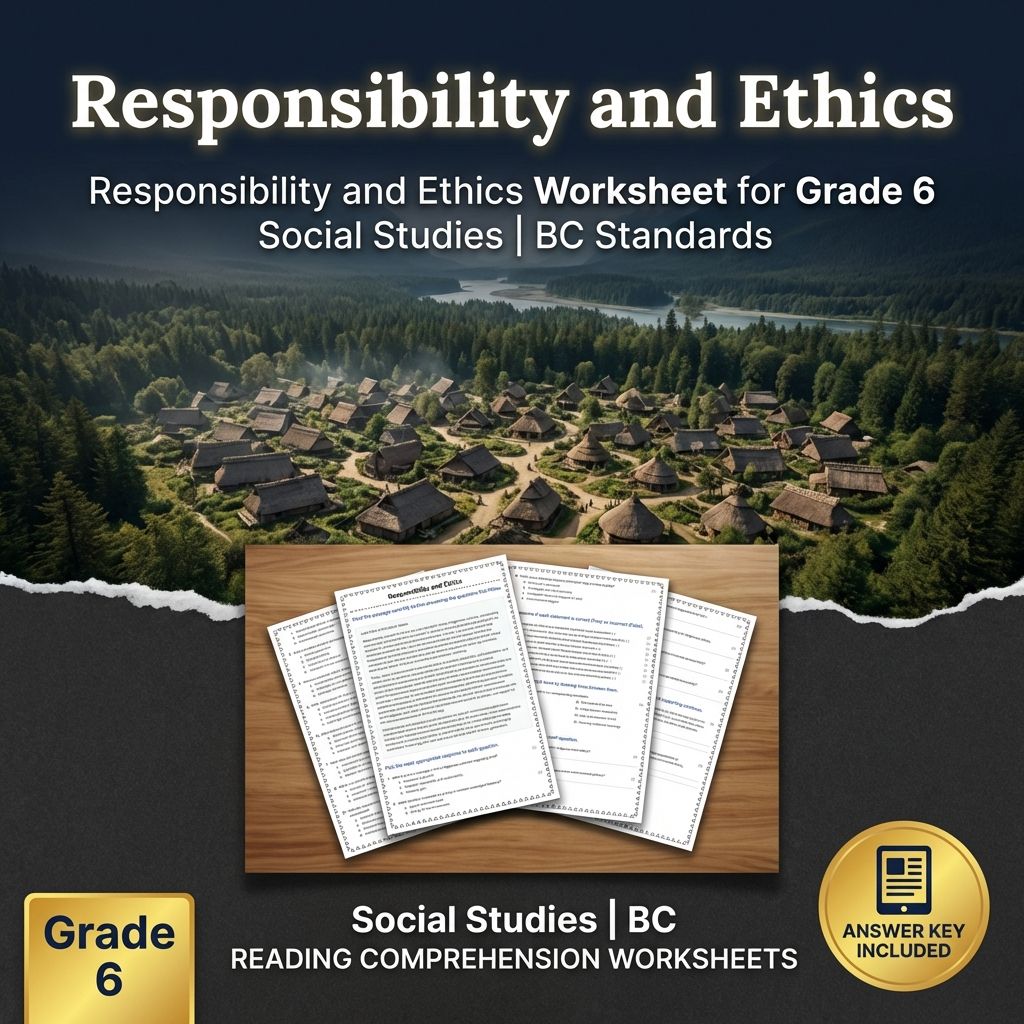
Responsibility and Ethics Worksheet for Grade 6 Social Studies | BC Standards
JCreated byJ.S SheetsLearning Objectives
- Understand the key concepts of land care and environmental responsibility within Indigenous values.
- Recognize contemporary ethical issues relating to resource use and cultural preservation.
- Analyze the community’s role in maintaining respectful relationships with the land.
Also included in: Grade 6 Social Studies | Indigenous Land Responsibilities Bundle +1 more
Instant download
Land and Knowledge Ties Worksheet | Standards-Aligned Grade 6 Social Studies
JCreated byJ.S SheetsLearning Objectives
- Understand how Indigenous worldviews perceive land as a source of identity, spirituality, and knowledge.
- Identify traditional stories, ceremonies, and practices that demonstrate connections to specific territories.
- Explain the role of land as a living entity that guides and teaches within Indigenous knowledge systems.
Also included in: Grade 6 Social Studies | Indigenous Land Responsibilities Bundle +1 more
Instant download
Indigenous Knowledge Systems | Standards-Aligned Grade 6 Social Studies
JCreated byJ.S SheetsLearning Objectives
- Understand the concept of Indigenous knowledge systems and their role in land and resource stewardship.
- Recognize traditional ways of understanding and caring for the environment.
- Explore the interconnectedness of land, water, animals, and community responsibilities in Indigenous worldviews.
Also included in: Grade 6 Social Studies | Indigenous Land Responsibilities Bundle +1 more
Instant download
Indigenous Governance Practice Worksheet | BC Standards Grade 6 Social Studies
JCreated byJ.S SheetsLearning Objectives
- Locate and describe various Indigenous governance structures and their historical context.
- Explain traditional leadership roles and self-governance initiatives within Indigenous nations.
- Analyze treaty agreements and their impact on Indigenous sovereignty and relationships.
Also included in: Grade 6 Social Studies | Indigenous Land Responsibilities Bundle +1 more
Instant download
About Grade 6 Social Studies Worksheets
Explore Grade 6 Social Studies worksheets for classwork, homework, or review. Our 564 printables download instantly as PDFs.
MyTeachingSheets worksheets are made by real teacher-authors and checked before they go live. Download any as a print-ready PDF for lessons, homework, or independent practice — most include answer keys, and previews are always free.