
Grade 6 Social Studies Worksheets
564 worksheets
6th Grade Social Studies Worksheet – Agricultural Shift (PDF) – California Standards
 Created bySunny Desk Resources
Learning Objectives
- Explain how the agricultural revolution changed how people obtained food.
- Describe how farming and domestication affected social organization and specialization.
- Analyze how stable food supplies supported population growth and larger settlements.
Also included in: 6th Grade Water & Land Migration Social Studies Lesson Bundle: California +1 more
Instant download
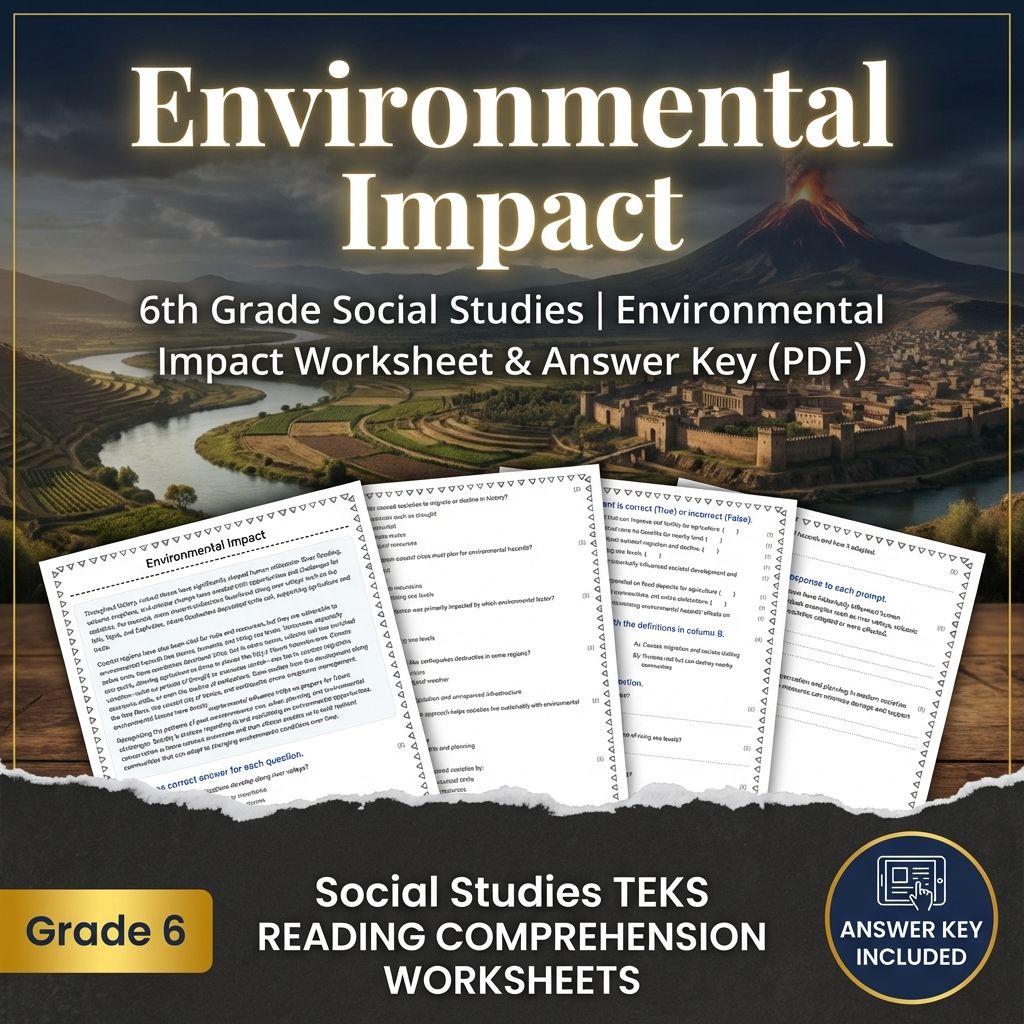
6th Grade Social Studies | Environmental Impact Worksheet & Answer Key (PDF)
JCreated byJ.S SheetsLearning Objectives
- Understand how natural processes like flooding and volcanic activity influence human settlements.
- Identify case studies of environmental impact on societies.
- Analyze the interconnectedness of environmental and human factors in societal development.
Also included in: Grade 6 Social Studies Unit Bundle – Maps, Resources & Environmental Impact +1 more
Instant download

6th Grade Social Studies | Water & Land Worksheet (California Standards) (PDF)
Created bySunny Desk ResourcesLearning Objectives
- Explain how access to rivers and fertile land supported early river valley civilizations.
- Describe how irrigation and floodplain farming helped people grow enough food to form larger settlements.
- Identify ways that controlling water resources influenced social organization and government.
Also included in: 6th Grade Water & Land Migration Social Studies Lesson Bundle: California +1 more
Instant download
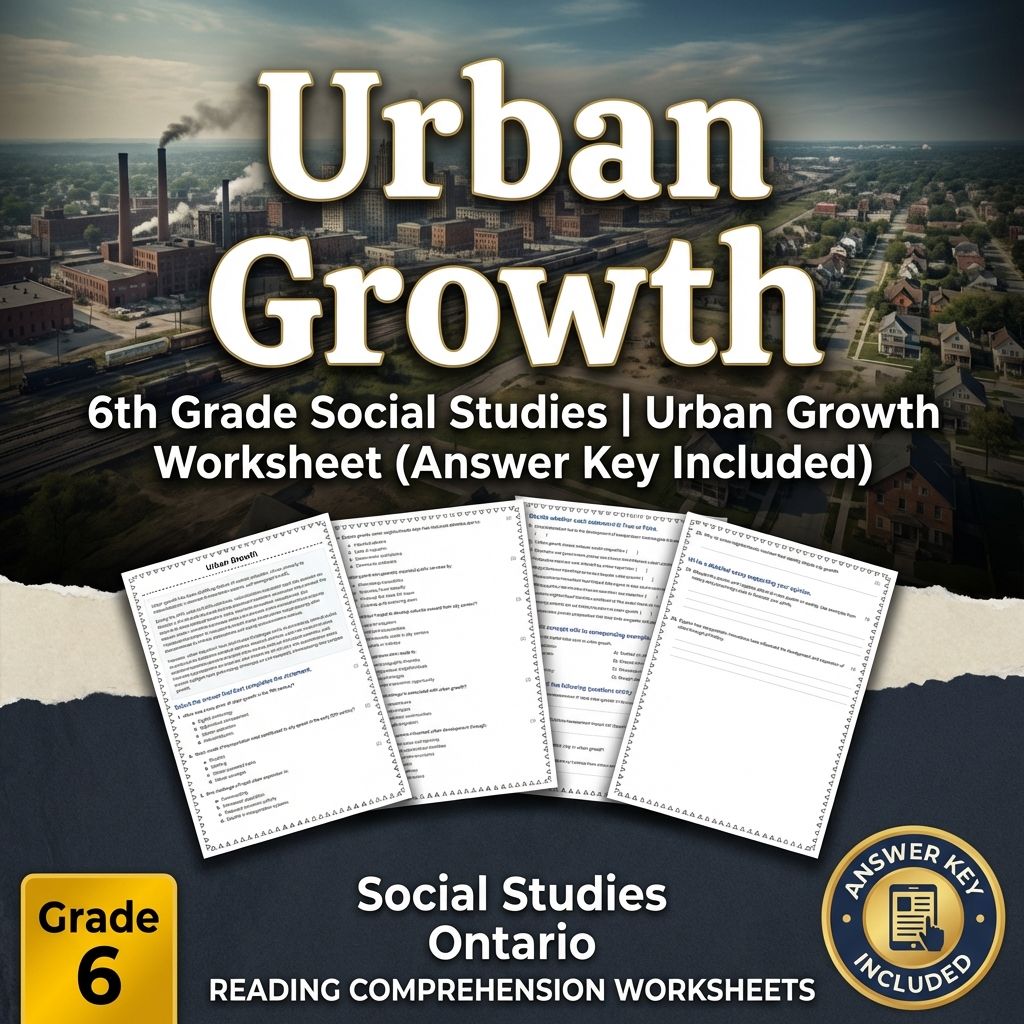
6th Grade Social Studies | Urban Growth Practice Worksheet & Answer Key (PDF)
JCreated byJ.S SheetsLearning Objectives
- Understand the factors that contribute to urban expansion such as industrialization and transportation developments.
- Analyze the social and economic consequences of urban growth on housing, labor, and public services.
- Examine the historical continuities like neighborhood identities amidst change.
Also included in: Grade 6 Social Studies UNIT Bundle – Communities, History, & Culture (PDF) +1 more
Instant download

Grade 6 Social Studies | Renewable Resources Worksheet (Ontario PDF)
Created bySunny Desk ResourcesLearning Objectives
- Explain how renewable resources such as forests, fisheries, and water power can be used without being permanently depleted.
- Describe how management tools like quotas, reforestation, and watershed protection support long-term sustainability.
- Analyze causes and consequences of overuse and regulation in resource systems.
Also included in: Grade 6 Resource Patterns Social Studies Lesson Bundle | Ontario Framework +1 more
Instant download
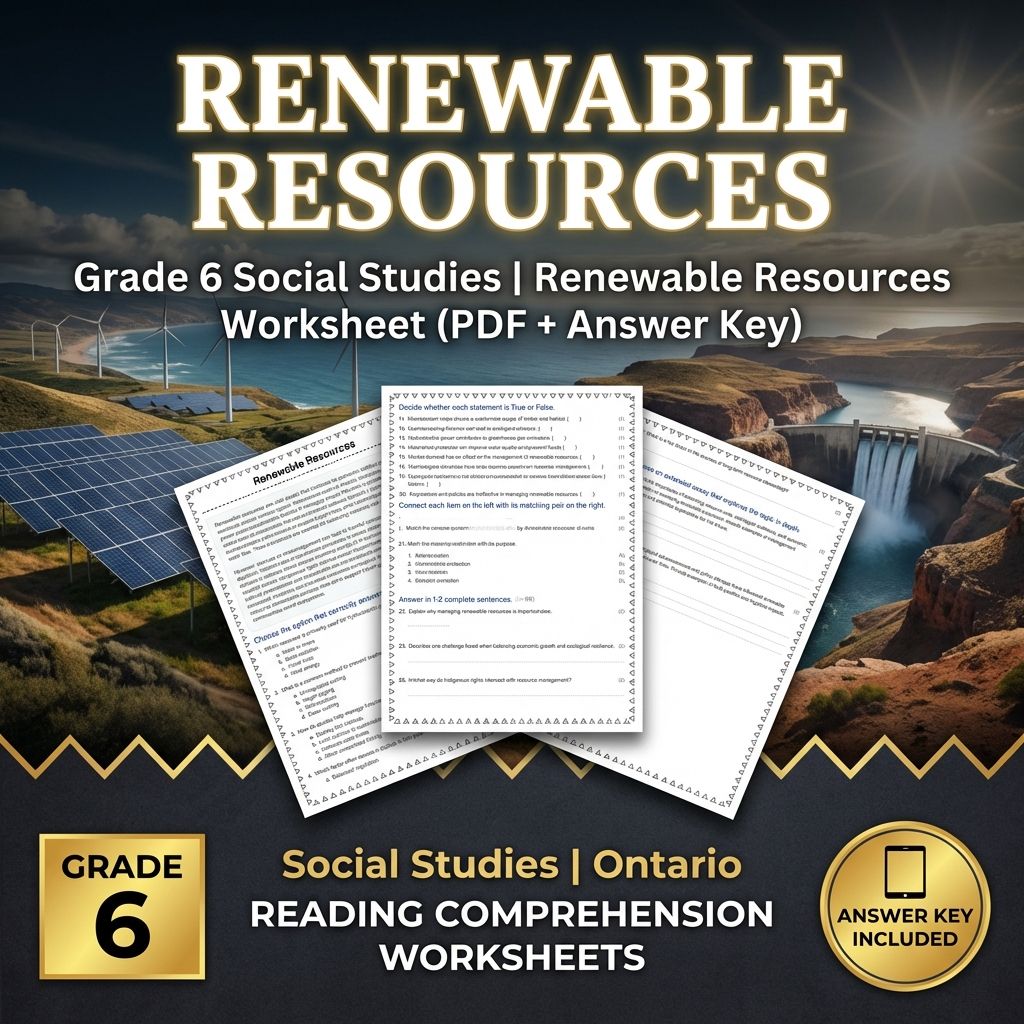
Grade 6 Social Studies | Renewable Resources Worksheet & Answer Key (PDF)
JCreated byJ.S SheetsLearning Objectives
- Understand different types of renewable resources such as forestry, fisheries, and hydroelectric power.
- Analyze the management systems used to regulate renewable resources, including quotas, reforestation, and watershed protection.
- Assess the economic and ecological significance of renewable resources in regional development.
Also included in: Grade 6 Social Studies Unit Bundle | Canadian Resources, Climate & Environment +1 more
Instant download

Constructing Accounts Worksheet | Standards-Aligned Grade 6 Social Studies
JCreated byJ.S SheetsLearning Objectives
- Explain how historians use primary and secondary sources to build historical accounts
- Evaluate evidence by considering reliability, context, and possible bias
- Organize historical information using chronological reasoning and cause-and-effect thinking
Instant download

Constructing Accounts Historical Evidence Worksheet | Grade 6 BC
 Created byQuiet Forest Education
Learning Objectives
- Identify and distinguish between primary and secondary sources.
- Understand how historians use different sources to construct historical narratives.
- Analyze the reliability and bias of various historical evidence.
Also included in: Chronology & Change Grade 6 Social Studies Daily Reading Worksheets Bundle | BC +1 more
Instant download

Roman Expansion Worksheet | Standards-Aligned Grade 6 Social Studies PDF
JCreated byJ.S SheetsLearning Objectives
- Explain how Rome expanded its territory through conquest, alliances, and colonization.
- Describe how Roman expansion influenced citizenship laws for non-Latin peoples.
- Analyze how Roman expansion changed trade and access to resources across the Mediterranean.
Instant download
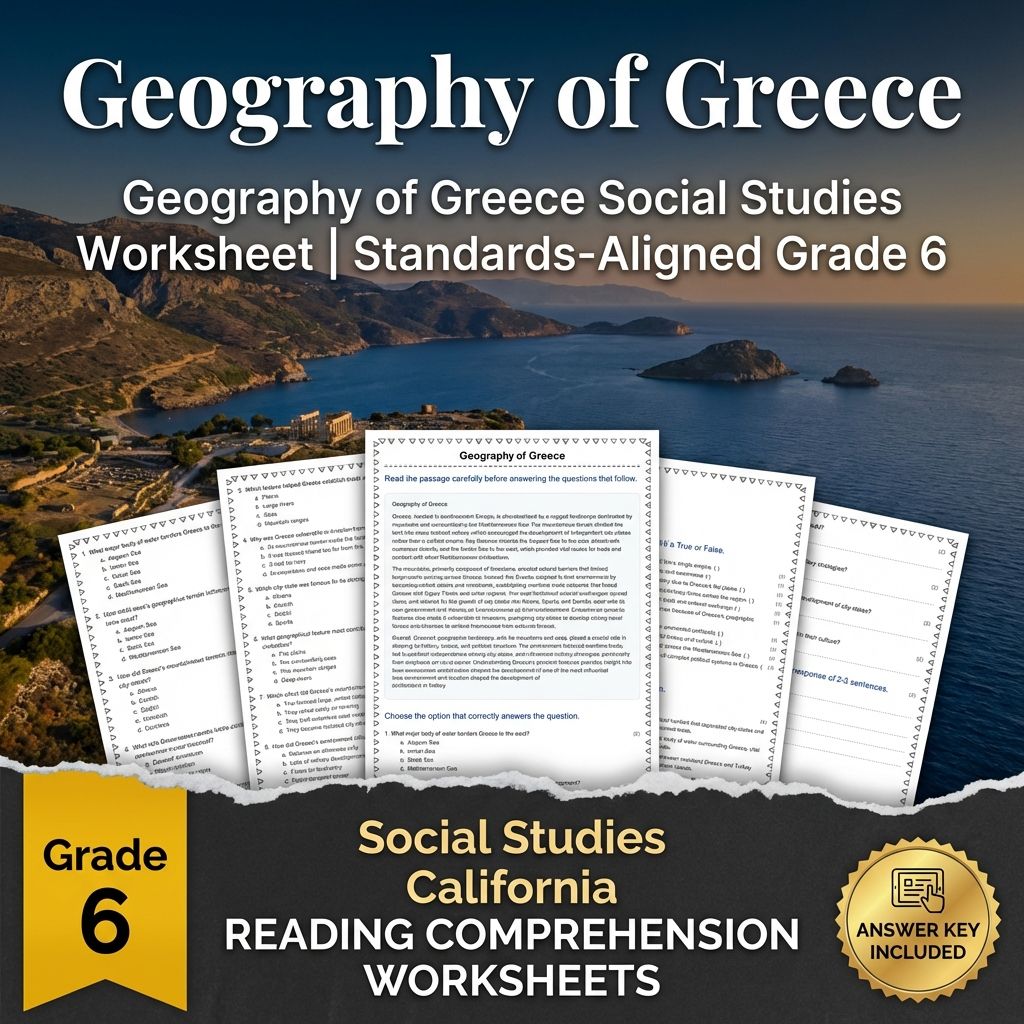
Geography of Greece Social Studies Worksheet | Standards-Aligned Grade 6
JCreated byJ.S SheetsLearning Objectives
- Understand the major geographic features of Greece and their impact on ancient Greek civilization.
- Identify key bodies of water and mountainous regions in Greece and analyze their influence on trade and settlement.
- Explain how Greece's environment shaped its political and military interactions among city-states.
Also included in: Grade 6 Social Studies Unit Bundle – Ancient Greece & Rome | Standards-Aligned +1 more
Instant download

Geography of Greece Worksheet | Standards-Aligned Grade 6 Social Studies
JCreated byJ.S SheetsLearning Objectives
- Explain how Greece’s seas (Aegean and Ionian) supported maritime travel and trade.
- Describe how mountainous terrain affected where Greeks settled and how city-states developed.
- Analyze how geography influenced conflict and cooperation among Greek city-states.
Instant download

Indigenous Relations Worksheet | Social Studies Grade 6 | Ontario Standard
JCreated byJ.S SheetsLearning Objectives
- Explain how trade, treaties, conflict, and cooperation shaped relationships among First Nations, Métis, and Inuit and other groups.
- Analyze causes and impacts of contact, including changes to land use and cultural exchange.
- Describe how Indigenous governance and legal frameworks show continuity and change over time.
Instant download

Multiple Perspectives in History Worksheet Grade 6 Social Studies BC
Created byQuiet Forest EducationLearning Objectives
- Understand the concept of multiple viewpoints in historical narratives.
- Identify different perspectives such as Indigenous, settler, and immigrant viewpoints.
- Analyze how diverse perspectives influence historical interpretation.
Also included in: Chronology & Change Grade 6 Social Studies Daily Reading Worksheets Bundle | BC +1 more
Instant download

Understanding Facts, Opinions & Inference Worksheet | Grade 6 BC
Created byQuiet Forest EducationLearning Objectives
- Differentiate between facts and opinions in sources.
- Make inferences based on textual evidence.
- Analyze quotes from historical figures and articles critically.
Also included in: Chronology & Change Grade 6 Social Studies Daily Reading Worksheets Bundle | BC +1 more
Instant download

6th Grade Social Studies | Archival Records Worksheet (Ontario Standards)
Created bySunny Desk ResourcesLearning Objectives
- Explain how documentary archival records (censuses, maps, letters, and municipal minutes) help historians reconstruct community history
- Identify ways biases and omissions in records can shape interpretations of the past
- Compare continuity and change across successive versions of archival records
Also included in: Grade 6 Communities Through Time Social Studies Lesson Bundle for Ontario +1 more
Instant download

6th Grade Social Studies Worksheet | Oral Histories & Cultural Persistence (Ontario Standards)
Created bySunny Desk ResourcesLearning Objectives
- Explain how oral traditions and testimonies function as primary sources that preserve community memory
- Describe why narratives can change over time in oral history accounts
- Compare reliability and perspective in oral and written sources
Also included in: Grade 6 Communities Through Time Social Studies Lesson Bundle for Ontario +1 more
Instant download

6th Grade Social Studies Worksheet | Continuity Patterns (Ontario Standards) (PDF)
Created bySunny Desk ResourcesLearning Objectives
- Identify examples of continuity and change in community life (family roles, seasonal practices, and governance).
- Explain how environment, economy, and culture interact to keep some traditions stable over time.
- Analyze consequences of continuity and change for community identity and historical perspective.
Also included in: Grade 6 Communities Through Time Social Studies Lesson Bundle for Ontario +1 more
Instant download

Grade 6 Social Studies | Migration Waves Worksheet (Ontario Standards) (PDF)
Created bySunny Desk ResourcesLearning Objectives
- Explain push and pull factors that drive immigration and internal migration.
- Describe how migration changes demographics, culture, and local labor systems over time.
- Analyze how government policy and community responses shape settlement patterns and continuity/change.
Also included in: Grade 6 Communities Through Time Social Studies Lesson Bundle for Ontario +1 more
Instant download

Fall of Rome Worksheet | Standards-Aligned Grade 6 Social Studies
JCreated byJ.S SheetsLearning Objectives
- Identify major causes of the fall of the Western Roman Empire, including invasions, economic problems, and political conflict.
- Explain how these causes developed over time and weakened central authority.
- Analyze how multiple factors worked together to contribute to the transition to medieval Europe.
Instant download
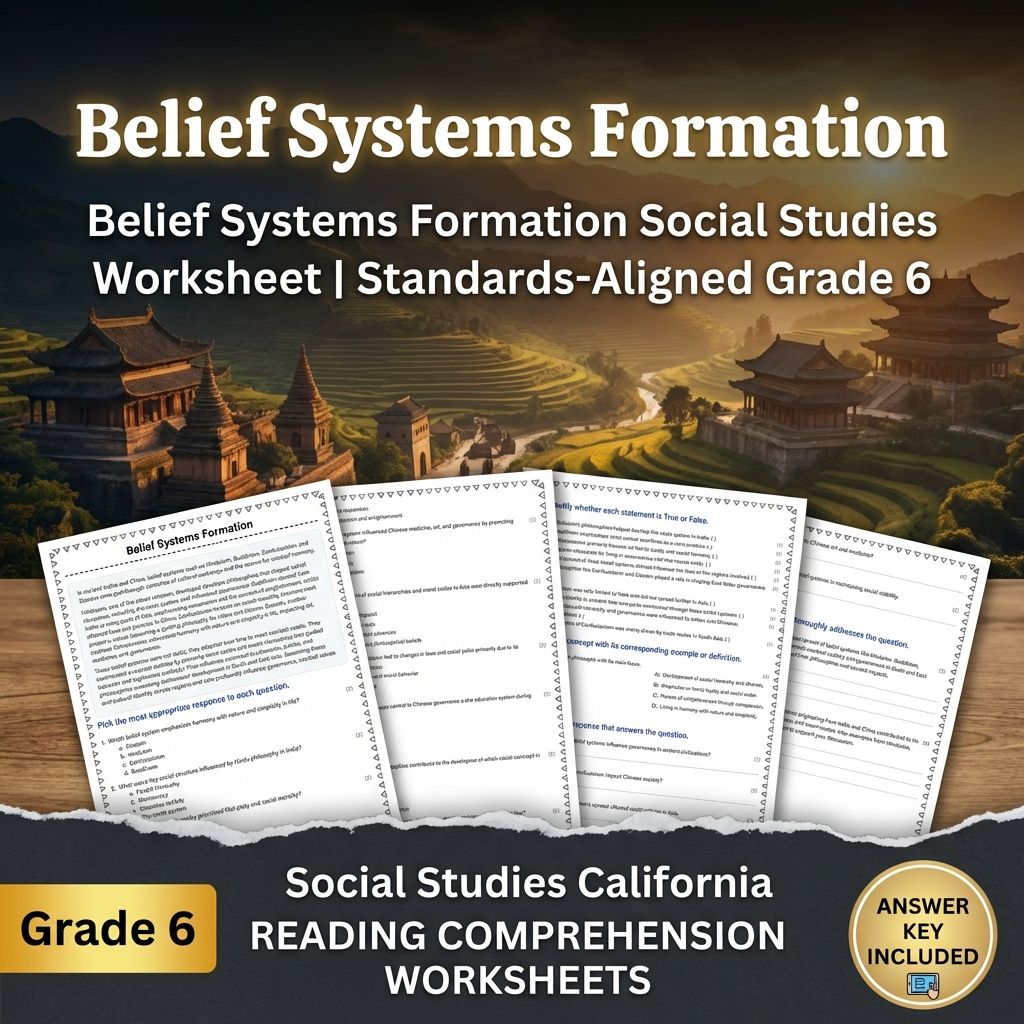
Belief Systems Formation Social Studies Worksheet | Standards-Aligned Grade 6
JCreated byJ.S SheetsLearning Objectives
- Understand how belief systems like Hinduism, Buddhism, Confucianism, and Daoism originated from cultural exchanges in Asia.
- Identify the influence of these philosophies on governance, social order, and societal values in South and East Asia.
- Analyze how these belief systems contributed to stability, social hierarchy, and moral codes in historic civilizations.
Also included in: Grade 6 Social Studies Unit | Ancient India & China Worksheet Bundle +1 more
Instant download
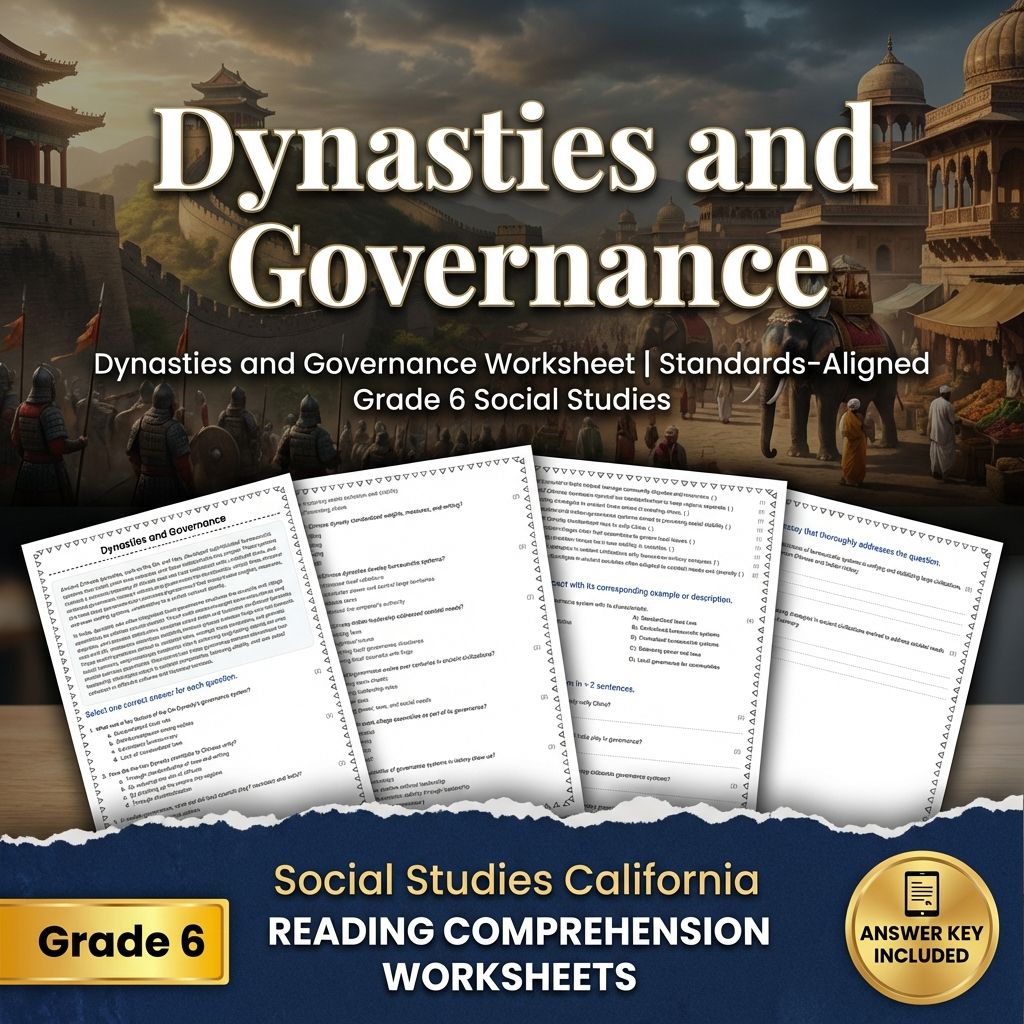
Dynasties and Governance Worksheet | Standards-Aligned Grade 6 Social Studies
JCreated byJ.S SheetsLearning Objectives
- Understand the role of ancient Chinese dynasties like Qin and Han in establishing bureaucratic systems.
- Identify how dynasties in India addressed societal needs through governance structures.
- Analyze the ways leadership strategies promote social cohesion, stability, and unity over centuries.
Also included in: Grade 6 Social Studies Unit | Ancient India & China Worksheet Bundle +1 more
Instant download
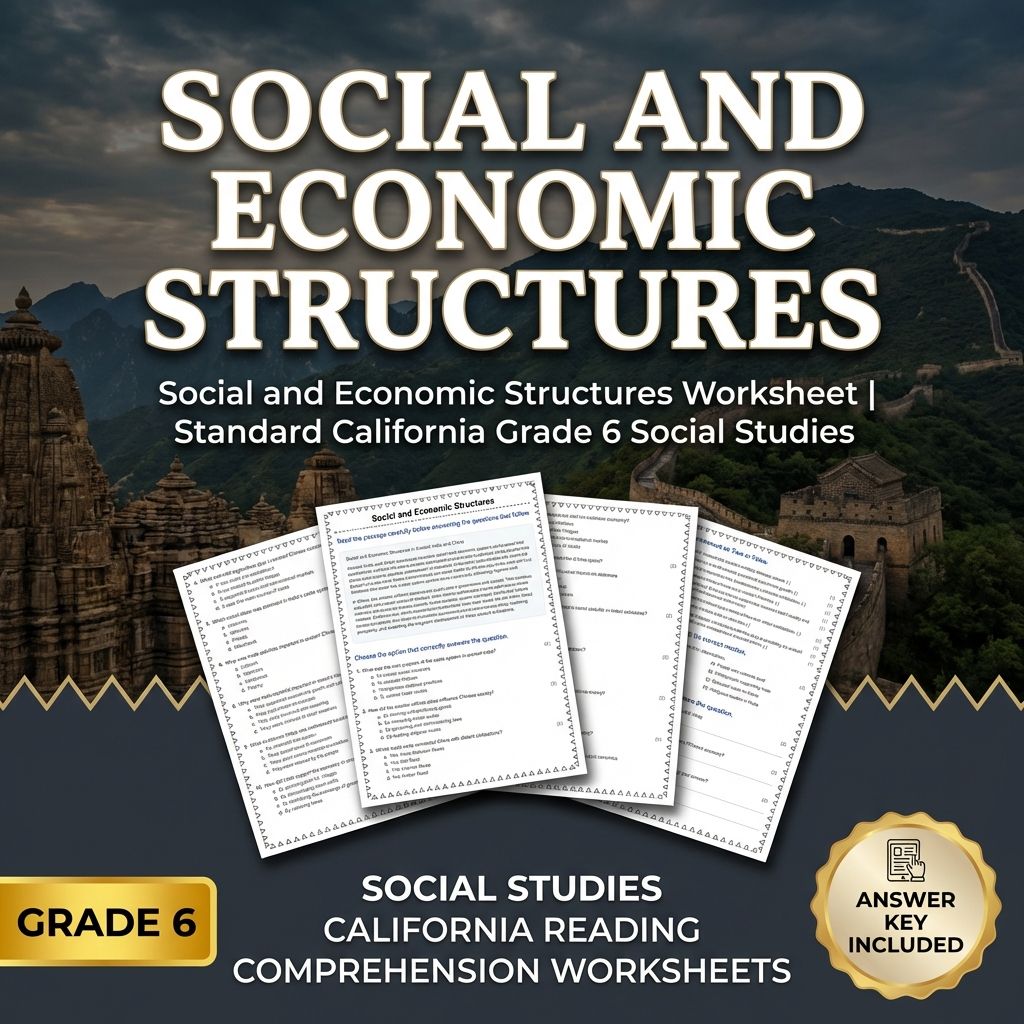
Social and Economic Structures Worksheet | California Grade 6 Social Studies
JCreated byJ.S SheetsLearning Objectives
- Analyze social hierarchies and their influence on ancient civilizations.
- Compare the roles of social classes in India and China.
- Understand the significance of trade activities in supporting economies.
Also included in: Grade 6 Social Studies Unit | Ancient India & China Worksheet Bundle +1 more
Instant download
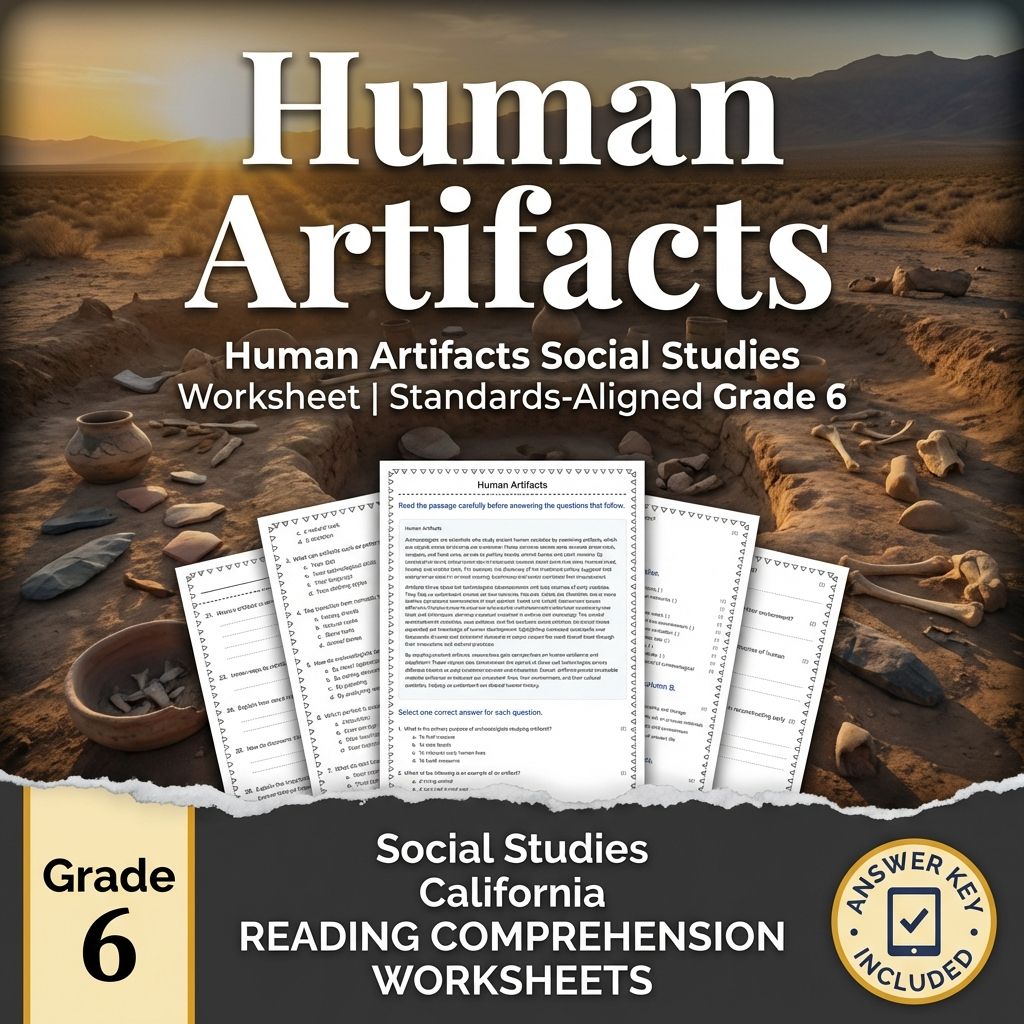
Human Artifacts Social Studies Worksheet | Standards-Aligned Grade 6
JCreated byJ.S SheetsLearning Objectives
- Understand what artifacts are and how archaeologists analyze them.
- Describe the role of artifacts in learning about early human societies.
- Identify different types of artifacts and their significance.
Also included in: Grade 6 Social Studies | Early Civilizations & Agricultural Revolution Bundle +1 more
Instant download

Grade 6 Social Studies Worksheet | Stewardship in Action (PDF)
Created bySunny Desk ResourcesLearning Objectives
- Explain what stewardship means in Indigenous worldviews and how it connects to land health.
- Identify stewardship practices that support ecological responsibility, conservation, and sustainable resource management.
- Analyze a case study to describe how reciprocal relationships guide ethical community involvement.
Also included in: Grade 6 Indigenous Governance & Land Social Studies Lesson Bundle (BC) +1 more
Instant download

Formation of Society Worksheet | Standards-Aligned Grade 6 Social Studies
JCreated byJ.S SheetsLearning Objectives
- Explain how early Israelite society developed from tribes to more centralized governance under kings
- Identify how social organization and political authority changed in response to challenges and needs
- Use a timeline perspective to describe relationships between conflict, governance, and community identity
Instant download
Grade 6 Social Studies | Maps and Change Practice Worksheet (PDF + Answer Key)
JCreated byJ.S SheetsLearning Objectives
- Understand how maps are produced to reflect territorial change, settlement, and land use.
- Identify how representation choices reflect social and political power.
- Analyze the consequences of mapped boundaries and land claims.
Also included in: Grade 6 Social Studies UNIT Bundle – Communities, History, & Culture (PDF) +1 more
Instant download

Social and Economic Structures Worksheet | Standards-Based Grade 6
JCreated byJ.S SheetsLearning Objectives
- Compare how social hierarchies in ancient India and China shaped daily life and governance
- Identify economic roles (agriculture, craftsmanship, and trade) and explain how they supported civilization stability
- Use evidence from maps and timelines to make claims about why social and economic systems mattered
Instant download

Dynasties and Governance Worksheet for Grade 6 Social Studies
JCreated byJ.S SheetsLearning Objectives
- Explain how ancient Chinese dynasties used bureaucratic systems to govern large territories.
- Compare dynastic rule and local governance methods used in India to manage diverse populations.
- Identify how laws and administrative strategies helped promote stability and unity over time.
Instant download
Geographical Features Worksheet | Social Studies Grade 6 | Standards-Aligned
JCreated byJ.S SheetsLearning Objectives
- Understand the significance of major river regions in South Asia and East Asia.
- Identify how rivers influenced early settlement and civilization development.
- Analyze the relationship between geography and social, economic, and political life.
Also included in: Grade 6 Social Studies Unit | Ancient India & China Worksheet Bundle +1 more
Instant download

6th Grade Social Studies | Physical & Political Features Worksheet (TEKS) (Worksheet + Answer Key)
Created bySunny Desk ResourcesLearning Objectives
- Identify major physical features (mountain ranges, rivers, plains) and describe their basic characteristics.
- Explain how physical geography can influence political boundaries such as countries, states, and cities.
- Compare how physical and political features work together to shape transportation routes and regional identities.
Also included in: Grade 6 Maps & Spatial Skills Social Studies Lesson Bundle Worksheets TEKS +1 more
Instant download

6th Grade Social Studies – Environmental Impact Worksheet (PDF)
Created bySunny Desk ResourcesLearning Objectives
- Explain how natural processes (like flooding, volcanism, and climate variation) can shape where people live and work
- Describe how human choices can increase or reduce environmental risks over time
- Evaluate how resources and economic activities change when environments shift
Also included in: Grade 6 Maps & Spatial Skills Social Studies Lesson Bundle Worksheets TEKS +1 more
Instant download

6th Grade Social Studies | Using Maps Worksheet (TEKS) PDF
Created bySunny Desk ResourcesLearning Objectives
- Explain how map legends, symbols, and scale help people interpret geographic information.
- Identify how aerial imagery and map features reveal spatial patterns in regions and settlements.
- Use maps to describe relationships between transportation networks, landforms, and where people live.
Also included in: Grade 6 Maps & Spatial Skills Social Studies Lesson Bundle Worksheets TEKS +1 more
Instant download

6th Grade Social Studies – Technological Change Worksheet (PDF) TEKS Aligned
Created bySunny Desk ResourcesLearning Objectives
- Explain how key early technologies (irrigation, metallurgy, and writing) supported economic activity and daily life in past societies.
- Describe how technological change influenced social organization and the growth of governments and empires.
- Analyze how innovations spread through cultural diffusion and connection between communities.
Instant download

6th Grade Social Studies Worksheet | Exploring Historical Contact (PDF)
Created bySunny Desk ResourcesLearning Objectives
- Describe how trade, exploration, migration, and colonization shaped relationships between societies.
- Explain how historical contact can lead to cultural exchange, adaptation, and conflict.
- Use evidence from a historical contact case to support claims about changing identities over time.
Also included in: Grade 6 Culture and Traditions Social Studies Lesson Bundle – BC Worksheets +1 more
Instant download

6th Grade Social Studies – Terrain and Soils Worksheet (Ontario Standard)
Created bySunny Desk ResourcesLearning Objectives
- Explain how Canadian Shield bedrock and glacial history influence landforms and soil development
- Compare major soil types and describe how erosion and soil depletion affect environments and human use
- Analyze how geology, vegetation patterns, and regional economic activities are interconnected
Also included in: Grade 6 Resource Patterns Social Studies Lesson Bundle | Ontario Framework +1 more
Instant download

Grade 6 Human-Environment Impact Urban Development Worksheet BC
Created byQuiet Forest EducationLearning Objectives
- Understand how urban growth affects local environments
- Identify examples of human activities that alter ecosystems
- Analyze the consequences of city expansion on community well-being
Also included in: Human Systems & Settlements Grade 6 Social Studies Daily Lesson Bundle | BC +1 more
Instant download

Cultural Change Worksheet | Standards-Based Practice for Grade 6 Social Studies
JCreated byJ.S SheetsLearning Objectives
- Explain how globalization, technology, and migration can contribute to cultural change over time.
- Analyze how cultural change affects cultural expression, identity, and social structures in communities.
- Describe why cultures are dynamic and continue adapting to internal and external influences.
Instant download

Grade 6 Social Studies — Land and Knowledge Ties Worksheet MCQ Paper
 Created byThe Resource Hub
Learning Objectives
- Understand how Indigenous worldviews perceive land as a source of identity and spirituality.
- Identify traditional stories, ceremonies, and practices that demonstrate connections to specific territories.
- Explain the role of land as a living entity that provides guidance and embodies Indigenous knowledge systems.
Also included in: Grade 6 Social Studies BC: Indigenous Relationships & Knowledge Systems Bundle +1 more
Instant download

6th Grade Social Studies Worksheet | Major Belief Systems (TEKS)
Created bySunny Desk ResourcesLearning Objectives
- Describe major belief systems and where they originated.
- Explain how belief systems influence cultural practices and daily life.
- Analyze how shared beliefs help build social cohesion and identity across generations.
Also included in: 6th Grade Culture Social Studies Lesson Bundle for TEKS (2 Worksheets) +1 more
Instant download

6th Grade Social Studies | Sequencing Events Worksheet (PDF) – BC Standards
Created bySunny Desk ResourcesLearning Objectives
- Explain how chronological order helps historians understand change and continuity over time.
- Use timelines and event clues to sequence historical events accurately.
- Identify cause-and-effect relationships that connect events in a historical timeline.
Also included in: Grade 6 Historical Evidence & Chronology Social Studies Lesson Bundle - BC +1 more
Instant download

6th Grade Social Studies Worksheet – Economic Institutions TEKS (PDF)
Created bySunny Desk ResourcesLearning Objectives
- Identify how markets, banks, and governments act as economic institutions
- Explain how different exchange methods (barter and currency) meet societal needs
- Analyze how economic institutions support stability, investment, and trade
Also included in: Grade 6 Economic Trade & Decision-Making Social Studies Lesson Bundle - TEKS +1 more
Instant download

6th Grade Social Studies | Spatial Relationships Worksheet (TEKS) PDF
Created bySunny Desk ResourcesLearning Objectives
- Explain how spatial relationships among natural and human-made features influence regional development and trade routes.
- Interpret geographic tools and data (maps, GPS, GIS) to recognize patterns in a region.
- Analyze how political features and environmental influences affect cultural connections and stability over time.
Also included in: Grade 6 Maps & Spatial Skills Social Studies Lesson Bundle Worksheets TEKS +1 more
Instant download
6th Grade Social Studies | Rural Patterns Worksheet & Answer Key (PDF)
JCreated byJ.S SheetsLearning Objectives
- Identify different types of rural settlement patterns such as dispersed farms, service towns, and resource camps.
- Explain how agricultural suitability and resource locations influence community development in rural areas.
- Assess the impact of demographic changes and mechanization on rural economies and land use.
Also included in: Grade 6 Social Studies Unit Bundle | Canadian Resources, Climate & Environment +1 more
Instant download
6th Grade Social Studies | Indigenous Perspectives Worksheet & Answer Key PDF
JCreated byJ.S SheetsLearning Objectives
- Understand the traditional territories, stewardship practices, and cultural connections of Indigenous Nations such as Mi'kmaq, Cree, Haida, and Anishinaabe.
- Analyze the causes and consequences of colonial settlement on land use and Indigenous societies.
- Explore the roles of Indigenous governance, resource management, and regional economies in historical and contemporary contexts.
Also included in: Grade 6 Social Studies Unit Bundle | Canadian Resources, Climate & Environment +1 more
Instant download
Cultural Evolution Social Studies Worksheet | Standards-Aligned Grade 6
JCreated byJ.S SheetsLearning Objectives
- Understand how traditional cultural practices adapt over time within communities.
- Identify external influences that contribute to cultural change.
- Evaluate the benefits and challenges associated with cultural transformation.
Also included in: Grade 6 Social Studies | Cultures and Identities Unit Bundle (Standards-Aligned) +1 more
Instant download
Indigenous Perspectives Social Studies Worksheet | Standards-Aligned Grade 6
JCreated byJ.S SheetsLearning Objectives
- Understand the cultural practices, beliefs, and traditions of Indigenous communities.
- Explore how Indigenous peoples maintain their identity and resilience amidst external influences.
- Recognize efforts in cultural revitalization and intergenerational transmission of traditions.
Also included in: Grade 6 Social Studies | Cultures and Identities Unit Bundle (Standards-Aligned) +1 more
Instant download

6th Grade Social Studies Worksheet | Migration Patterns – California Standards (PDF)
Created bySunny Desk ResourcesLearning Objectives
- Explain how rivers, mountain ranges, and climate zones influence early human migration routes and settlement patterns.
- Identify how geography can act as both a pathway (corridor) and a barrier (obstacle) to movement.
- Use evidence and maps to describe likely migration pathways and reasons groups settled in specific areas.
Also included in: 6th Grade Water & Land Migration Social Studies Lesson Bundle: California +1 more
Instant download

Reciprocal Responsibilities in Community Worksheet | Grade 6 Social Studies BC
Created byQuiet Forest EducationLearning Objectives
- Understand the concept of reciprocity and mutual responsibilities.
- Identify examples of reciprocal responsibilities within Indigenous communities.
- Reflect on personal roles and responsibilities in their own communities.
Also included in: Indigenous Territories & Responsibilities Bundle | Grade 6 Social Studies | BC +1 more
Instant download
About Grade 6 Social Studies Worksheets
Explore Grade 6 Social Studies worksheets for classwork, homework, or review. Our 564 printables download instantly as PDFs.
MyTeachingSheets worksheets are made by real teacher-authors and checked before they go live. Download any as a print-ready PDF for lessons, homework, or independent practice — most include answer keys, and previews are always free.