
Grade 9 Science Worksheets
6,926 worksheets
Light Reactions Worksheet | Grade 9 Science Activities
 Created byPrism Point Learning
Learning Objectives
- Explain how light energy is converted into chemical energy during the light reactions of photosynthesis.
- Describe the roles of thylakoid membranes, photosystems, and electron carriers in photochemistry.
- Relate electron flow to proton gradient formation and ATP synthase activity.
Instant download
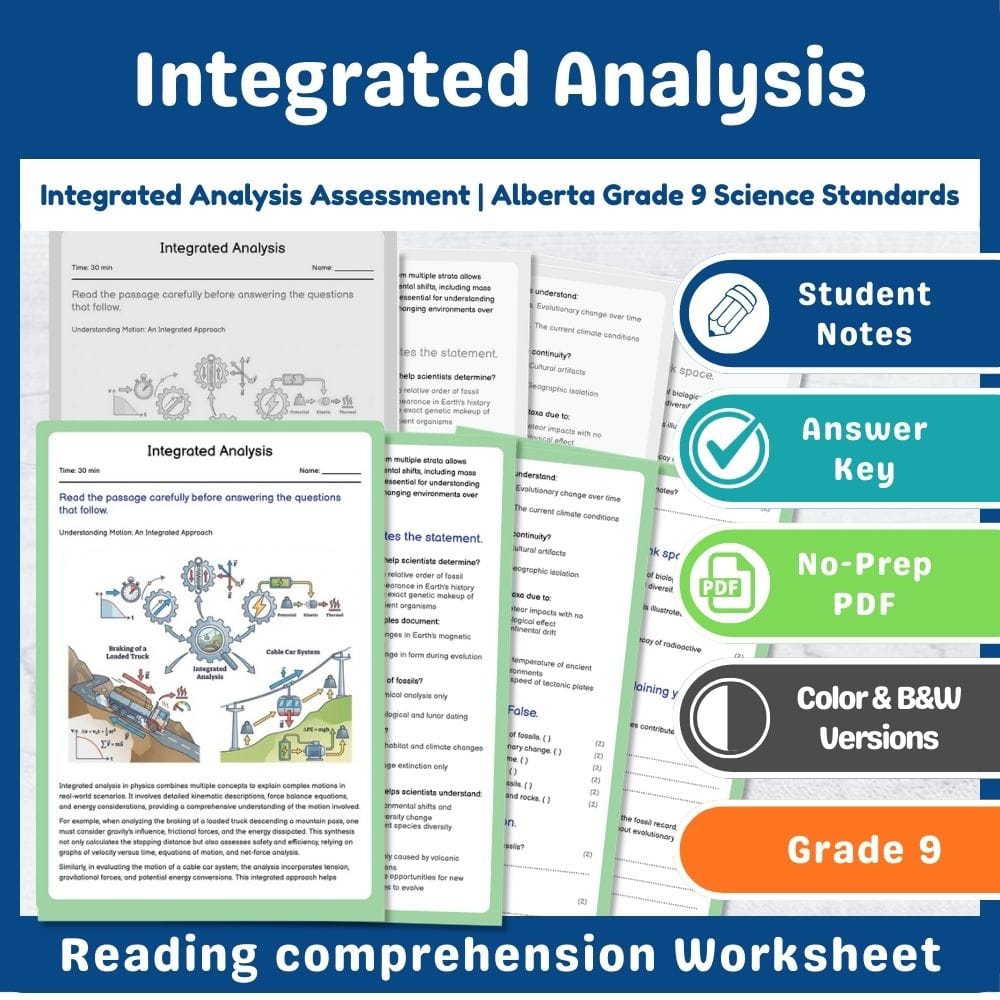
Integrated Analysis Assessment | Alberta Grade 9 Science Standards
Created byPrism Point LearningLearning Objectives
- Explain how kinematic descriptions, force balances, and energy considerations integrate to analyze complex motion scenarios.
- Apply graphs, equations, and net-force reasoning to predict motion outcomes in transport contexts.
- Interpret combined physical principles in real-world Alberta transportation and recreational situations.
Also included in: Grade 9 Forces and Motion Science Lesson Bundle Alberta Framework +1 more
Instant download
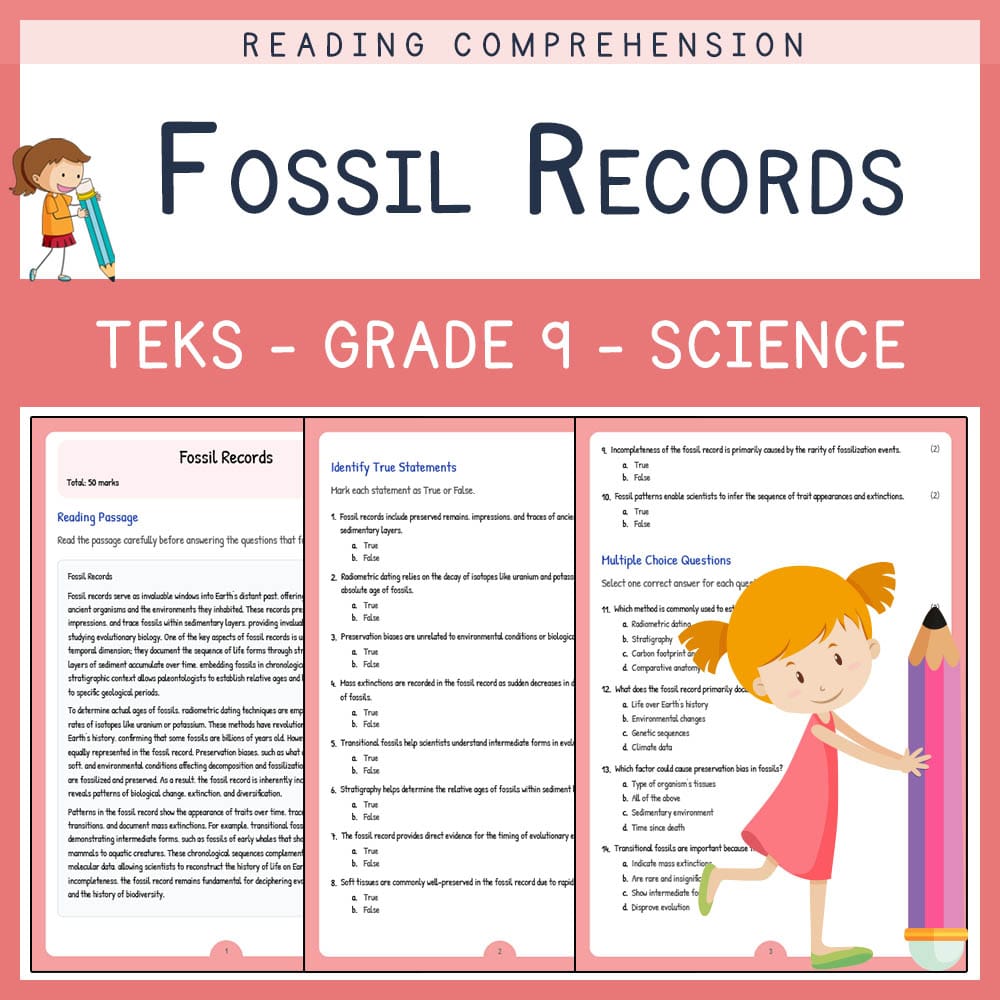
Grade 9 Science | Fossil Records Worksheet | TEKS Aligned
 Created byLumora Learning
Learning Objectives
- Describe how fossil records provide evidence of past life and evolution.
- Identify key methods used to date fossils and determine their ages.
- Explain how taphonomy and preservation bias affect the fossil record.
Instant download
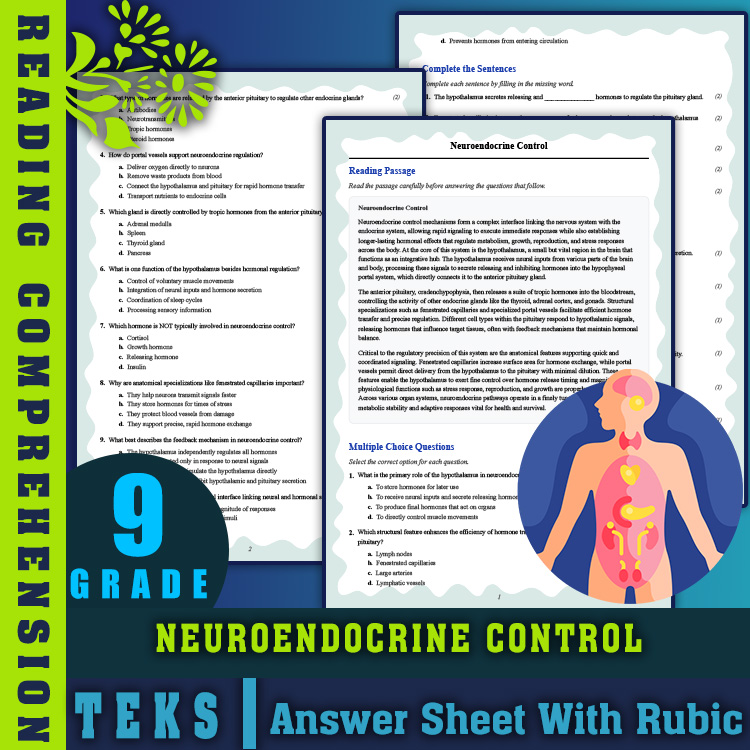
9th Grade Science | Neuroendocrine Control Reading Worksheet (PDF + Answer Key)
JCreated byJ.S SheetsLearning Objectives
- Understand the structure and function of neuroendocrine pathways in the body.
- Explain how the hypothalamus and pituitary gland coordinate hormonal responses.
- Identify key anatomical features that support neuroendocrine regulation.
Instant download
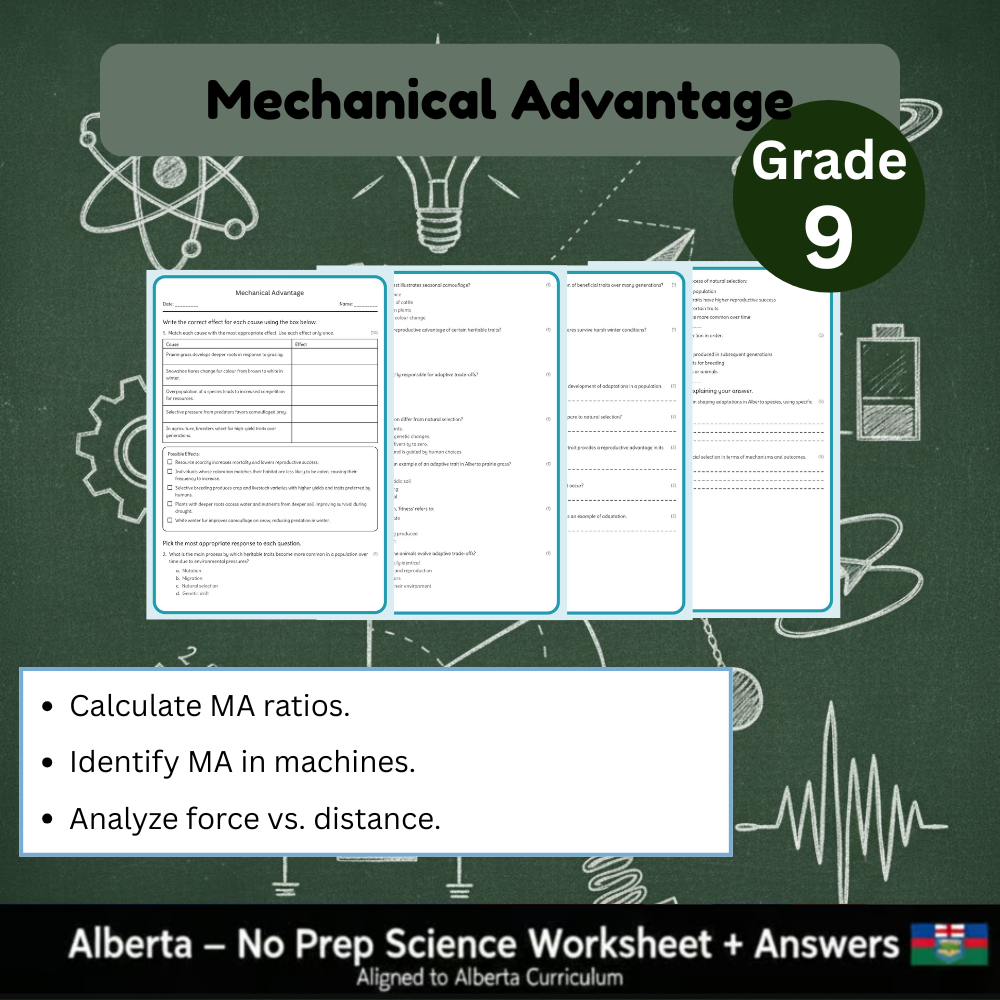
Grade 9 Science – Mechanical Advantage Worksheet (PDF) – Alberta Standards
 Created byBright Mind Resources
Learning Objectives
- Understand the concept of mechanical advantage and how it is calculated.
- Identify different types of machines that utilize mechanical advantage.
- Analyze the trade-offs between force reduction and displacement in pulley and lever systems.
Instant download

Grade 9 Science – Subduction Zones Worksheet (BC Standard) (PDF)
 Created byEvergreen Desk Education
Learning Objectives
- Explain how oceanic lithosphere subducts and why deep trenches and volcanic arcs form
- Describe how slab dehydration influences melting and arc volcanism
- Relate megathrust earthquakes to tsunamis at subduction interfaces
Instant download
Grade 9 Science – Patterns of Mendelian Inheritance Worksheet(PDF + Answer Key)
 Created byCopper Leaf Classroom
Learning Objectives
- Identify dominant and recessive traits in Punnett squares
- Understand Mendel's laws of segregation and independent assortment
- Analyze genetic crosses to predict genotype and phenotype ratios
Instant download
Power Analysis Assessment Grade 9 | NGSS Science Worksheet
Created byPrism Point LearningLearning Objectives
- Understand the difference between power and energy in system analysis.
- Calculate energy demand over time considering efficiency and system losses.
- Compare the power ratings of household appliances and their impact on energy consumption.
Instant download
9th Grade Science | Population Regulation Reading Worksheet & Answer Key (PDF)
JCreated byJ.S SheetsLearning Objectives
- Understand the factors that influence population sizes and dynamics.
- Explain models such as logistic growth and predator-prey cycles.
- Analyze the impact of human activity on population regulation and resilience.
Also included in: Grade 9 Science | Ecosystems & Biodiversity Unit Worksheet Bundle (PDF)
Instant download
9th Grade Science | Trophic Dynamics Reading Worksheet with Answer Key (PDF)
JCreated byJ.S SheetsLearning Objectives
- Understand the flow of energy through different trophic levels in an ecosystem.
- Analyze and interpret food web structures including biomass distribution and ecological efficiency.
- Evaluate predator-prey relationships and the concepts of top-down and bottom-up control.
Also included in: Grade 9 Science | Ecosystems & Biodiversity Unit Worksheet Bundle (PDF)
Instant download
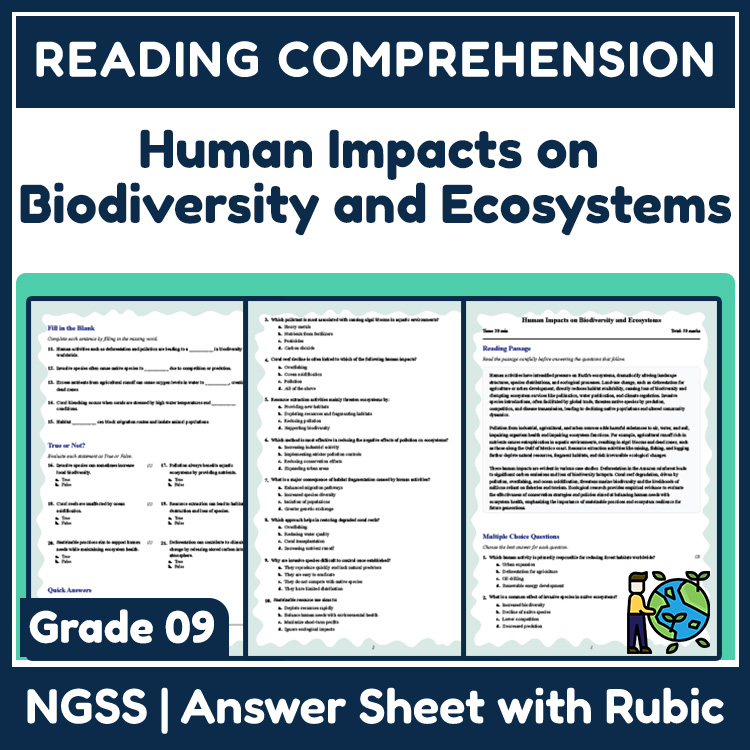
9th Grade Science | Human Impacts on Biodiversity & Ecosystems Reading Worksheet
JCreated byJ.S SheetsLearning Objectives
- Understand how land-use change, invasive species, pollution, and resource extraction impact biodiversity and ecosystems.
- Analyze case studies such as deforestation, coral reef degradation, and agricultural runoff to evaluate environmental impacts.
- Interpret empirical data to assess trade-offs between conservation efforts and socioecological outcomes.
Also included in: Grade 9 Science | Ecosystems & Biodiversity Unit Worksheet Bundle (PDF)
Instant download
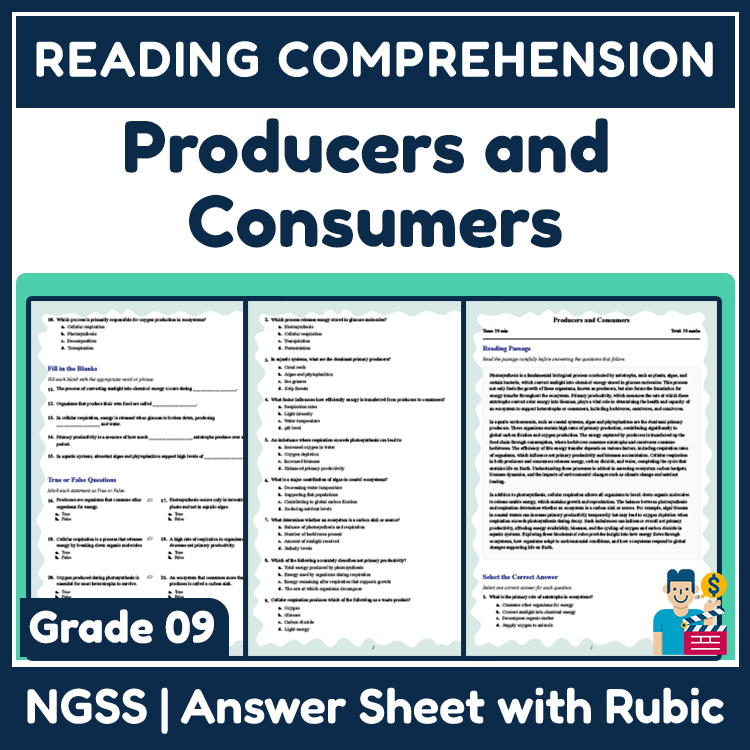
9th Grade Science | Producers and Consumers Reading Worksheet (PDF + Rubric)
JCreated byJ.S SheetsLearning Objectives
- Understand the roles of producers and consumers in ecosystems.
- Explain the processes of photosynthesis and cellular respiration.
- Analyze how energy flows through food webs and affects biomass.
Also included in: Grade 9 Science | Ecosystems & Biodiversity Unit Worksheet Bundle (PDF)
Instant download

Grade 9 Science | Inheritance Patterns - Daily Reading Comprehension
 Created byCoral Reef Learning
Learning Objectives
- Understand the principles of Mendelian genetics, including dominant and recessive inheritance
- Identify different inheritance patterns such as incomplete dominance and codominance
- Recognize the role of non-Mendelian patterns in phenotypic variation
Instant download
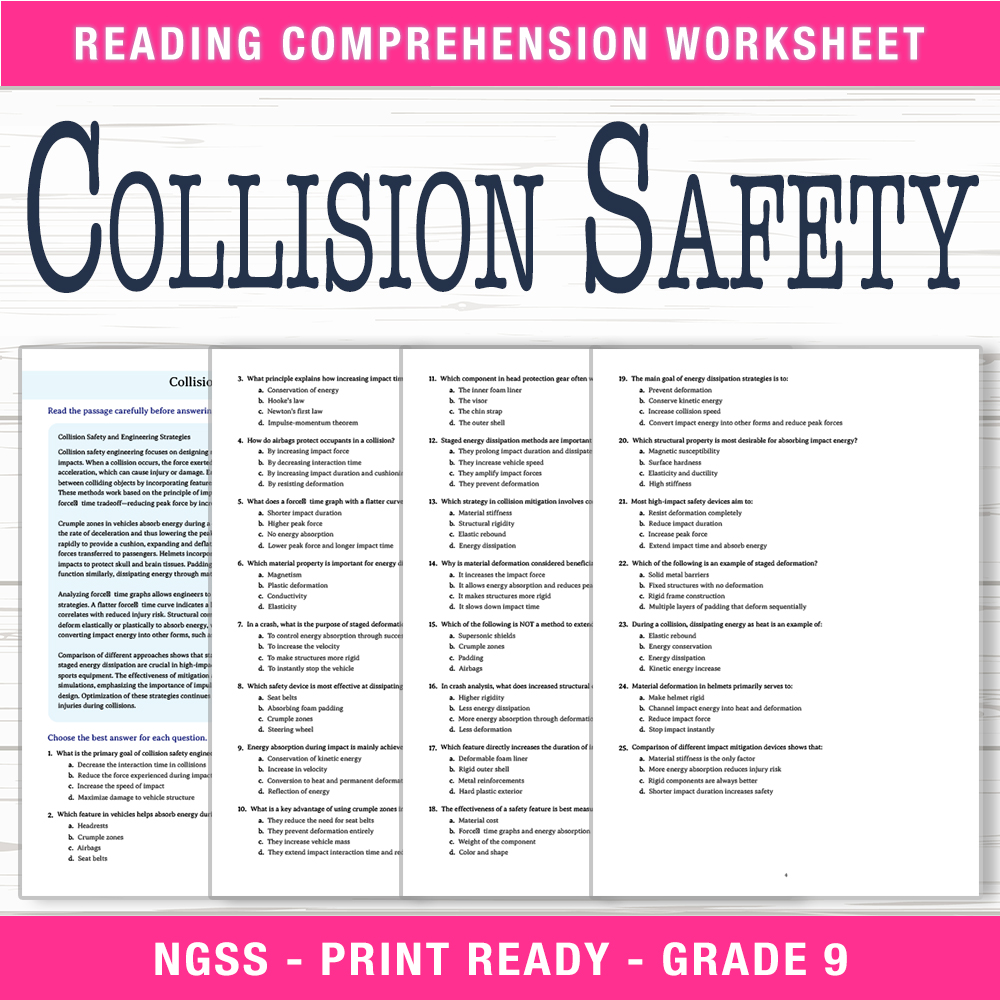
Grade 9 Science | Collision Safety Worksheet (PDF + Answer Key)
 Created byRiverstone Classroom
Learning Objectives
- Understand how impulse and force-time tradeoffs are used in engineering design to reduce collision impacts.
- Identify materials and structures used in safety features such as crumple zones, airbags, helmets, and padding.
- Analyze force‑time graphs to evaluate the effectiveness of different collision mitigation strategies.
Instant download

Grade 9 Science | Impulse and Momentum Worksheet | California Standards
Created byLumora LearningLearning Objectives
- Explain how impulse relates to change in momentum, including the role of net force and time interval
- Use the idea of impulse to predict how different force–time combinations can produce the same momentum change
- Determine how direction affects impulse and momentum change
Instant download
Grade 9 Science | Metabolic Pathways Worksheet (Answer Key) Aligned with TEKS
Created byBright Mind ResourcesLearning Objectives
- Describe the differences between catabolic and anabolic pathways.
- Explain how energy is harvested or stored during metabolic reactions.
- Identify mechanisms regulating pathway activity such as feedback inhibition and substrate availability.
Also included in: Grade 9 Science | Photosynthesis & Metabolic Pathways Unit Bundle (TEKS Aligned) +3 more
Instant download
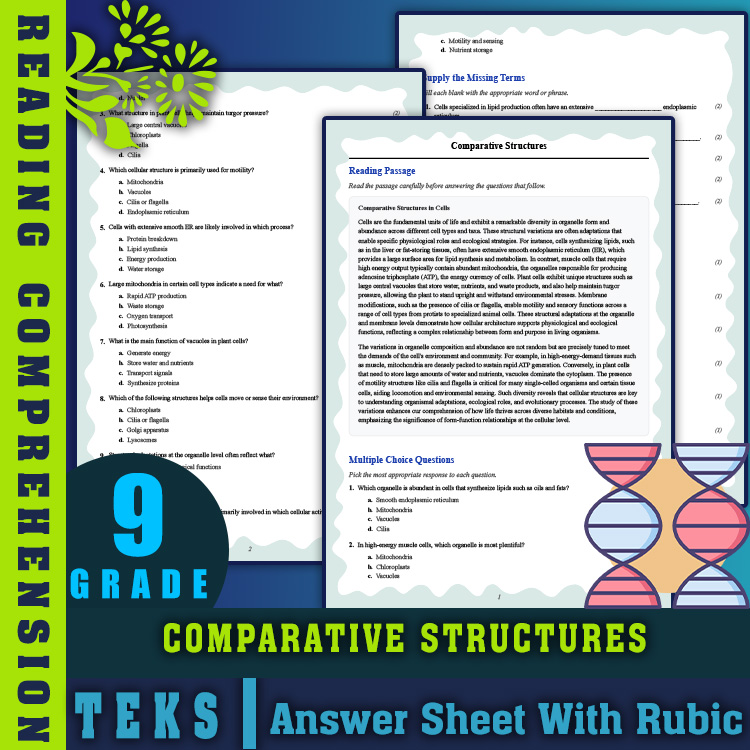
9th Grade Science | Comparative Cell Structures Reading Worksheet & Answer Key
JCreated byJ.S SheetsLearning Objectives
- Understand how organelle structures vary among different cell types and taxa.
- Relate cellular morphology to specialized functions and ecological strategies.
Instant download
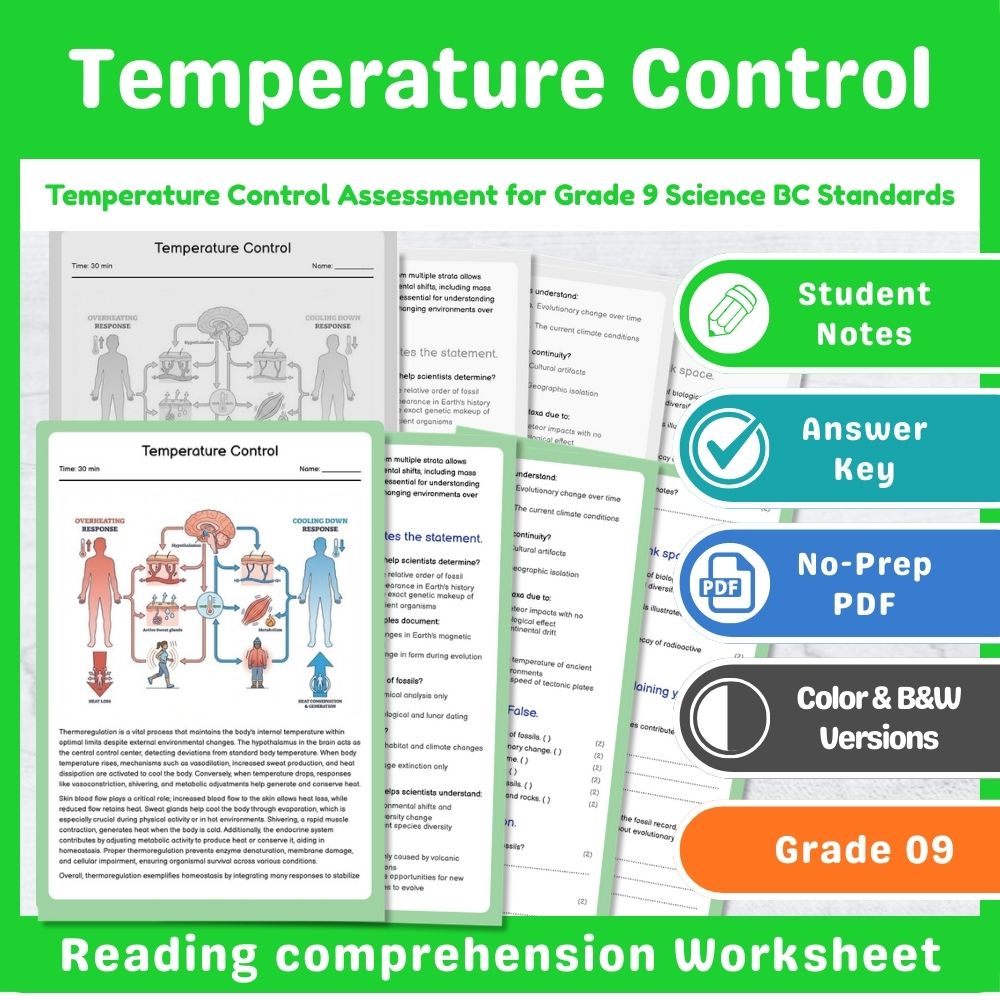
Temperature Control Assessment for Grade 9 Science BC Standards
Created byPrism Point LearningLearning Objectives
- Understand how the body maintains internal temperature through thermoregulation.
- Identify key mechanisms such as sweating, shivering, and blood flow adjustments.
- Explain the role of the hypothalamus in temperature regulation.
Instant download
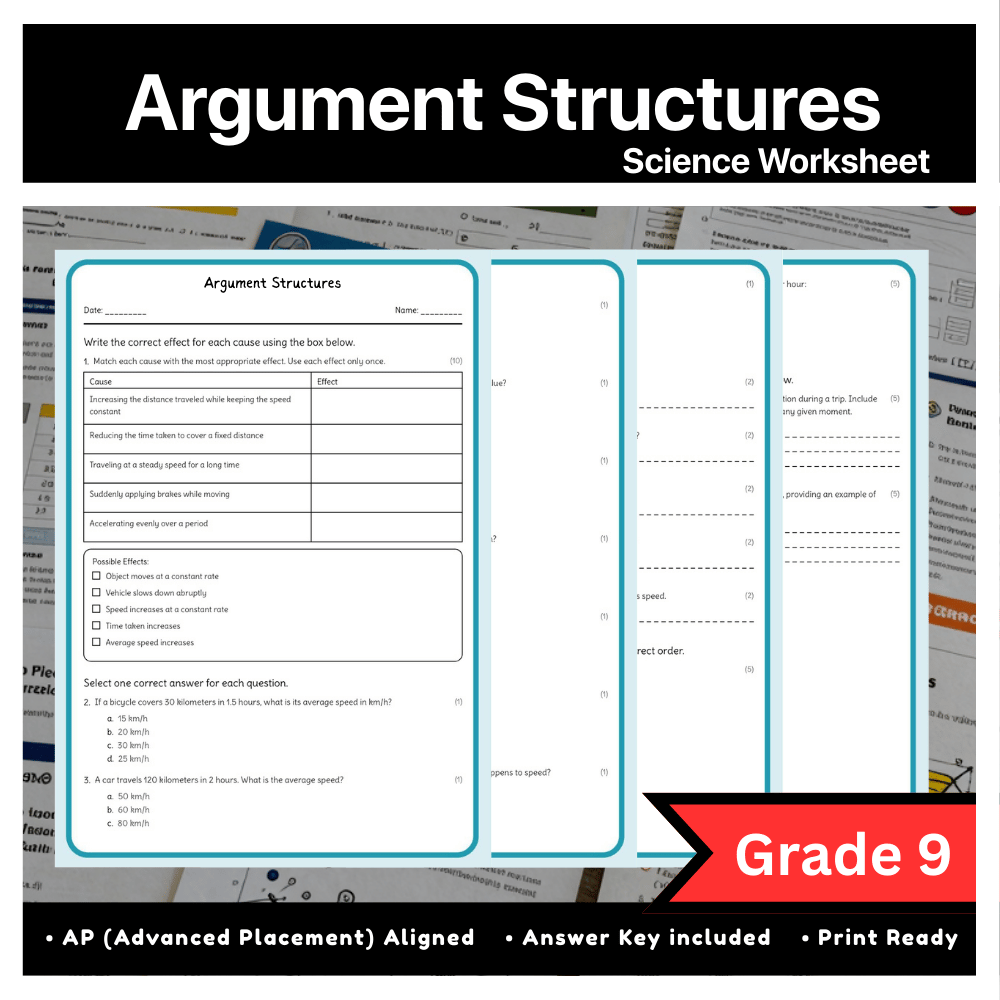
Grade 9 Science – Argument Structures in Scientific Reasoning (AP Standard)
Created byBright Mind ResourcesLearning Objectives
- Understand construction and critique of scientific arguments using claim-evidence-reasoning structures.
- Identify coherence, relevance, and consideration of alternative explanations in scientific arguments.
- Evaluate how quantitative evidence and model comparisons strengthen arguments.
Instant download
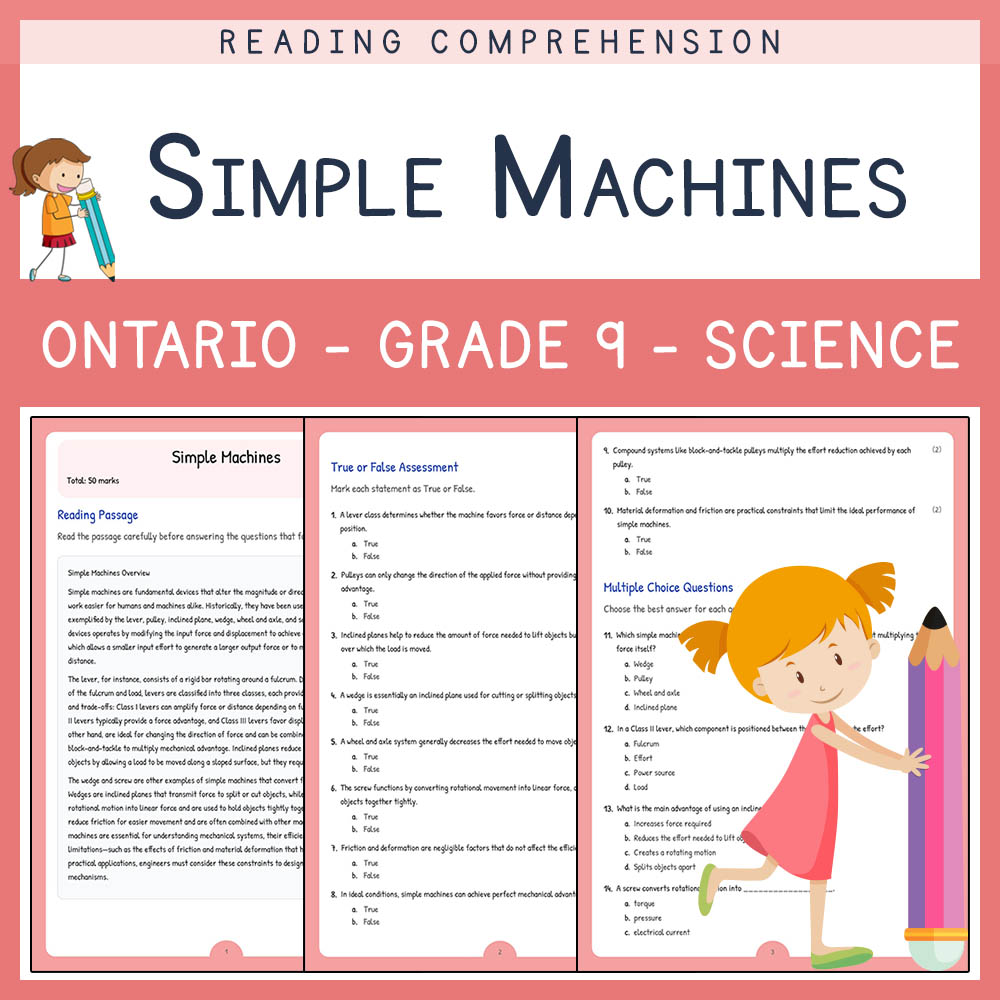
Grade 9 Science | Simple Machines Worksheet Elena | Ontario Standard
Created byLumora LearningLearning Objectives
- Understand the basic types of simple machines and their roles in modifying force and displacement.
- Explain the concepts of mechanical advantage, including ideal mechanical advantage and real-world constraints.
- Identify and compare different simple machines such as levers, pulleys, inclined planes, wedges, wheels and axles, and screws.
Instant download

Grade 9 Science – Glucose Regulation & Hormonal Feedback | Reading Worksheet
Created byBright Mind ResourcesLearning Objectives
- Understand how blood glucose levels fluctuate after eating.
- Identify hormones involved in glucose regulation.
- Describe the negative feedback mechanism maintaining energy balance.
Also included in: Grade 9 Homeostasis & Body Systems Science Lesson Bundle Daily Reading | TEKS +2 more
Instant download
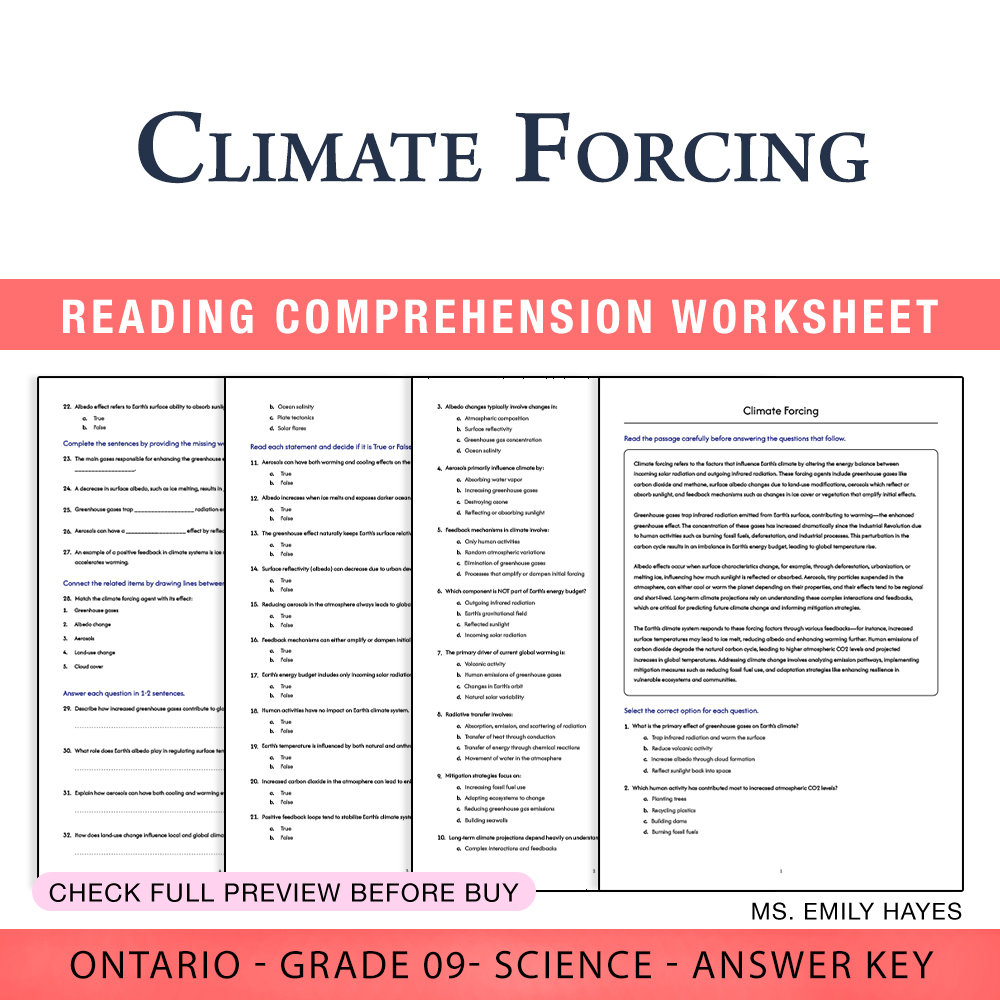
9th Grade Science | Climate Forcing Worksheet (PDF + Answer Key)
Created byCopper Leaf ClassroomLearning Objectives
- Explain the key drivers of climate change including greenhouse gases, albedo effect, and aerosols.
- Describe the basic concepts of radiative transfer and Earth's energy budget.
- Analyze human influence on the carbon cycle and climate projections.
Instant download
Grade 9 Science | Tissue Structure Worksheet (Worksheet + Answer Key) – TEKS Aligned
Created byBright Mind ResourcesLearning Objectives
- Understand how cellular organization supports functions within various tissues.
- Identify different tissue types and their microscopic features.
- Explain the roles of epithelial, connective, muscle, and nervous tissues in organ systems.
Also included in: Grade 9 Science Unit | Human Body Systems Worksheets & TEKS Aligned Bundle +3 more
Instant download
Grade 9 Science – Neuroendocrine Control Worksheet with Answer Key (PDF)
Created byBright Mind ResourcesLearning Objectives
- Describe how the hypothalamus interfaces with the pituitary gland to regulate hormones.
- Identify anatomical features supporting neuroendocrine signaling.
- Explain how hormonal responses influence metabolism, growth, and stress.
Also included in: Grade 9 Science Unit | Human Body Systems Worksheets & TEKS Aligned Bundle +3 more
Instant download
Grade 9 Science | Glucose Regulation Worksheet (Worksheet + Answer Key) – TEKS Aligned
Created byBright Mind ResourcesLearning Objectives
- Describe how hormonal feedback regulates blood glucose levels.
- Explain the roles of insulin and glucagon in maintaining energy balance.
- Identify the effects of insulin and glucagon on liver and muscle tissues.
Also included in: Grade 9 Science Unit | Human Body Systems Worksheets & TEKS Aligned Bundle +3 more
Instant download
Grade 9 Science | Feedback Principles Worksheet – TEKS Aligned (PDF)
Created byBright Mind ResourcesLearning Objectives
- Understand the components and functions of homeostatic feedback loops.
- Distinguish between negative and positive feedback mechanisms.
- Identify the signaling pathways and transport processes involved in feedback loops.
Also included in: Grade 9 Science Unit | Human Body Systems Worksheets & TEKS Aligned Bundle +3 more
Instant download
Grade 9 Science | Organ Systems Worksheet (PDF) – TEKS Aligned Practice
Created byBright Mind ResourcesLearning Objectives
- Describe the major organ systems and their functions.
- Explain how organ systems collaborate to maintain physiological stability.
- Identify cross-system communication mechanisms involved in homeostasis.
Also included in: Grade 9 Science Unit | Human Body Systems Worksheets & TEKS Aligned Bundle +3 more
Instant download
Grade 9 Science | Renal Regulation Worksheet (PDF) Aligns with TEKS
Created byBright Mind ResourcesLearning Objectives
- Describe the processes of glomerular filtration, tubular reabsorption, and secretion in the kidneys.
- Explain how hormones like antidiuretic hormone and the renin-angiotensin-aldosterone system regulate fluid and electrolyte balance.
- Understand the mechanisms the body uses to maintain blood pressure and osmolarity through renal control.
Also included in: Grade 9 Science Unit | Human Body Systems Worksheets & TEKS Aligned Bundle +3 more
Instant download
Grade 9 Science | Cell Signaling Worksheet (Answer Key) – TEKS Aligned
Created byBright Mind ResourcesLearning Objectives
- Describe how receptor proteins bind ligands to initiate cell signaling.
- Identify different types of cell signaling pathways and their functions.
- Explain how signal transduction pathways alter cellular responses like gene expression and metabolism.
Also included in: Grade 9 Science Unit | Human Body Systems Worksheets & TEKS Aligned Bundle +3 more
Instant download
Grade 9 Science – Cardiopulmonary Interaction Worksheet (Answer Key) | TEKS Aligned
Created byBright Mind ResourcesLearning Objectives
- Understand how the cardiovascular and respiratory systems work together to deliver oxygen and remove carbon dioxide.
- Identify the roles of chemoreceptors in regulating breathing and circulation.
- Describe the physiological responses to changes in blood gas levels.
Also included in: Grade 9 Science Unit | Human Body Systems Worksheets & TEKS Aligned Bundle +3 more
Instant download
Grade 9 Science | Membrane Transport Worksheet (Answer Key) – TEKS Aligned
Created byBright Mind ResourcesLearning Objectives
- Describe passive and active processes of molecular transport across membranes.
- Explain the role of various transport mechanisms in maintaining cellular homeostasis.
- Identify examples of vesicular transport such as endocytosis and exocytosis.
Also included in: Grade 9 Science Unit | Human Body Systems Worksheets & TEKS Aligned Bundle +3 more
Instant download

Grade 9 Inheritance Patterns Daily Reading Worksheet | TEKS Biology
 Created byBRIGHT PATH RESOURCES
Learning Objectives
- Identify dominant and recessive phenotypes from a simple inheritance cross.
- Explain how a monohybrid cross produces a predictable phenotypic ratio.
- Use evidence from genotype to infer expected outcomes in offspring.
Also included in: Grade 9 Genetics Molecular Biology Science Reading Worksheets Bundle | TEKS +1 more
Instant download
Grade 9 Science | Cell Components Worksheet (Ontario Standard) (PDF)
Created byBright Mind ResourcesLearning Objectives
- Identify major organelles of eukaryotic cells and their functions.
- Explain how structural features like membrane folding and compartmentalization influence cell activity.
- Relate the features of cell components to their specific roles in metabolism and exchange processes.
Instant download
Grade 9 Science | Molecular Evidence Worksheet with Short Notes (PDF)
 Created byMeadowlark Worksheets
Learning Objectives
- Understand how DNA, RNA, and protein sequences are compared to infer evolutionary relationships.
- Identify the significance of homologous genes and conserved sequences in evolutionary history.
- Describe how sequence divergence rates serve as molecular clocks to estimate divergence times.
Instant download
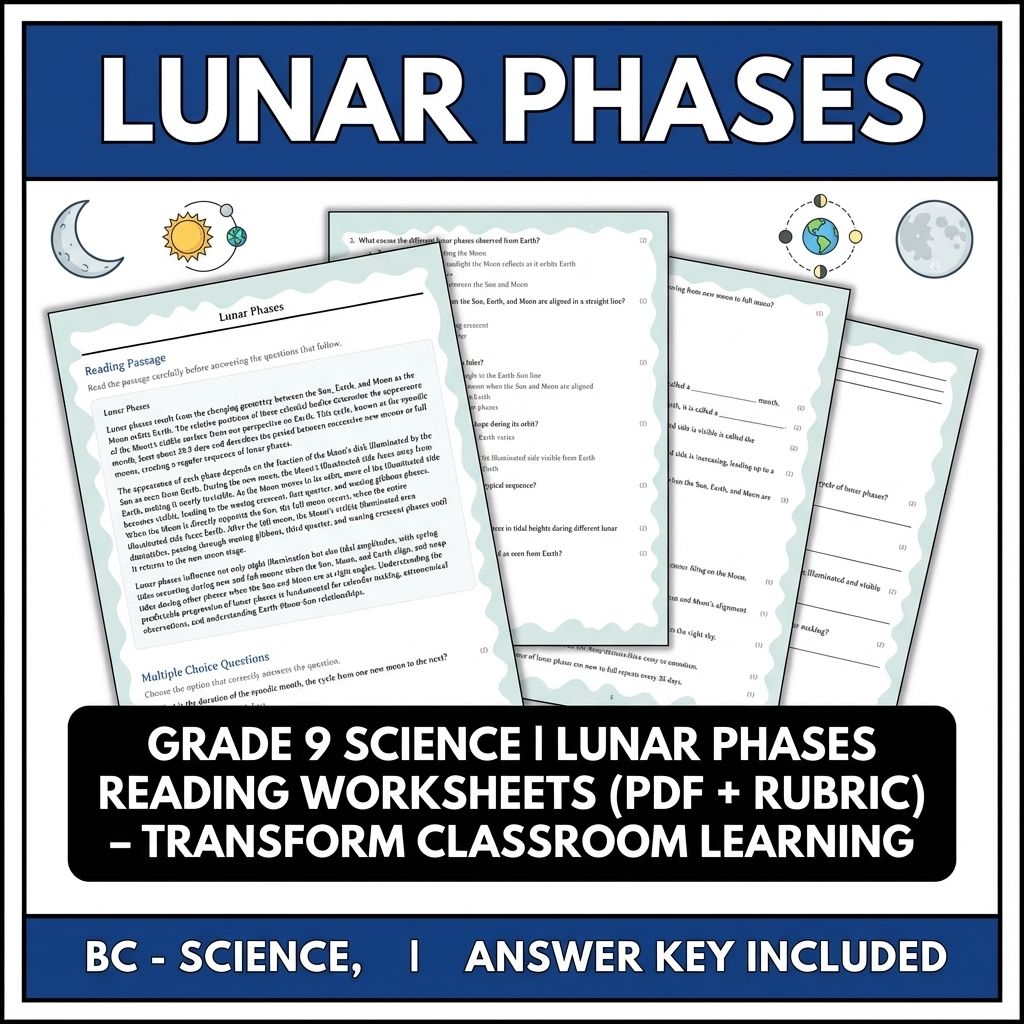
Grade 9 Science | Lunar Phases Reading Worksheets (PDF + Rubric)
JCreated byJ.S SheetsLearning Objectives
- Understand the geometric relationship between the Sun, Earth, and Moon during different lunar phases.
- Describe the cycle of lunar phases and what causes the sequence from new to full and back.
- Explain how lunar phases influence nocturnal illumination and tides.
Instant download

Population Ecology Worksheet for Grade 9 Science | Standards-Aligned Practice
JCreated byJ.S SheetsLearning Objectives
- Explain how births, deaths, immigration, and emigration affect population size over time
- Distinguish density-dependent and density-independent factors and predict their effects on growth
- Describe how carrying capacity shapes population trajectories and community interactions
Instant download
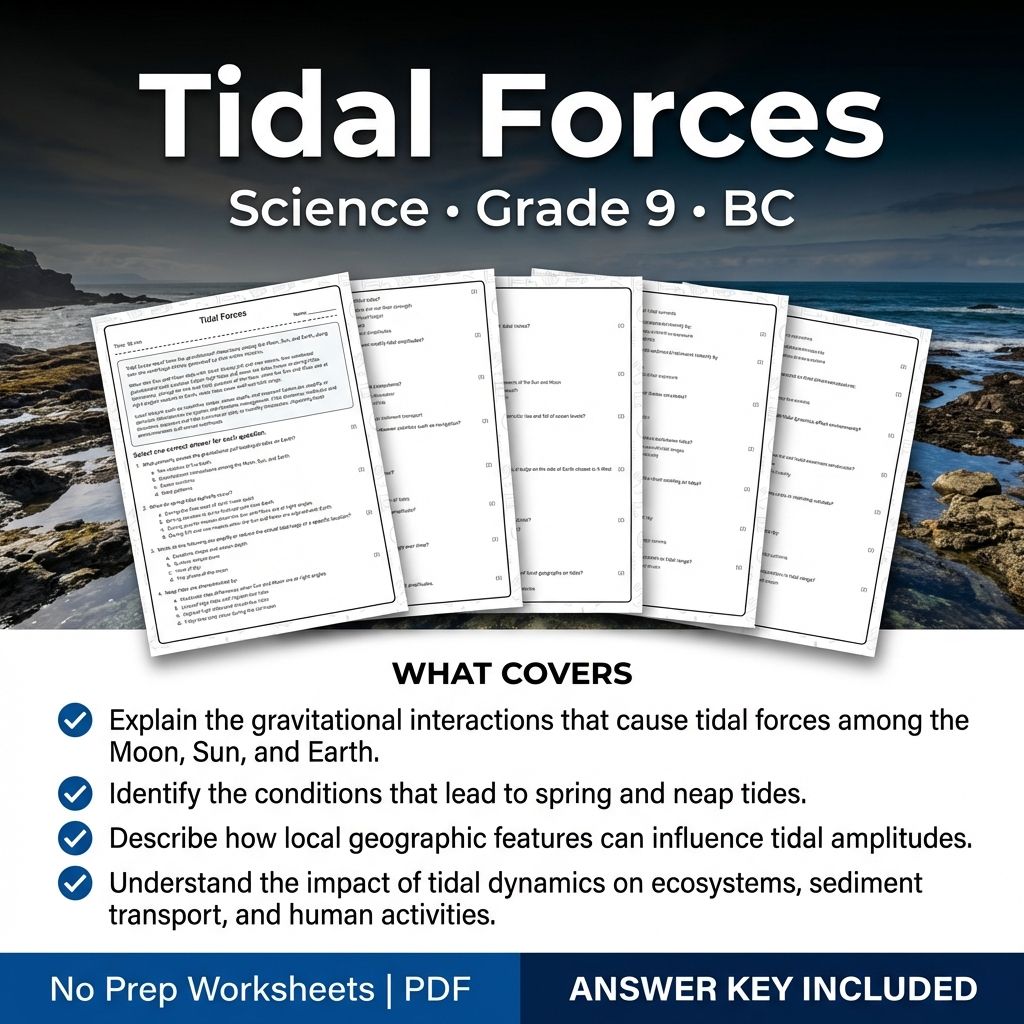
Grade 9 Science | Tidal Forces Worksheet with Answer Key (PDF)
Created byCoral Reef LearningLearning Objectives
- Explain the gravitational interactions that cause tidal forces among the Moon, Sun, and Earth.
- Identify the conditions that lead to spring and neap tides.
- Describe how local geographic features can influence tidal amplitudes.
Instant download
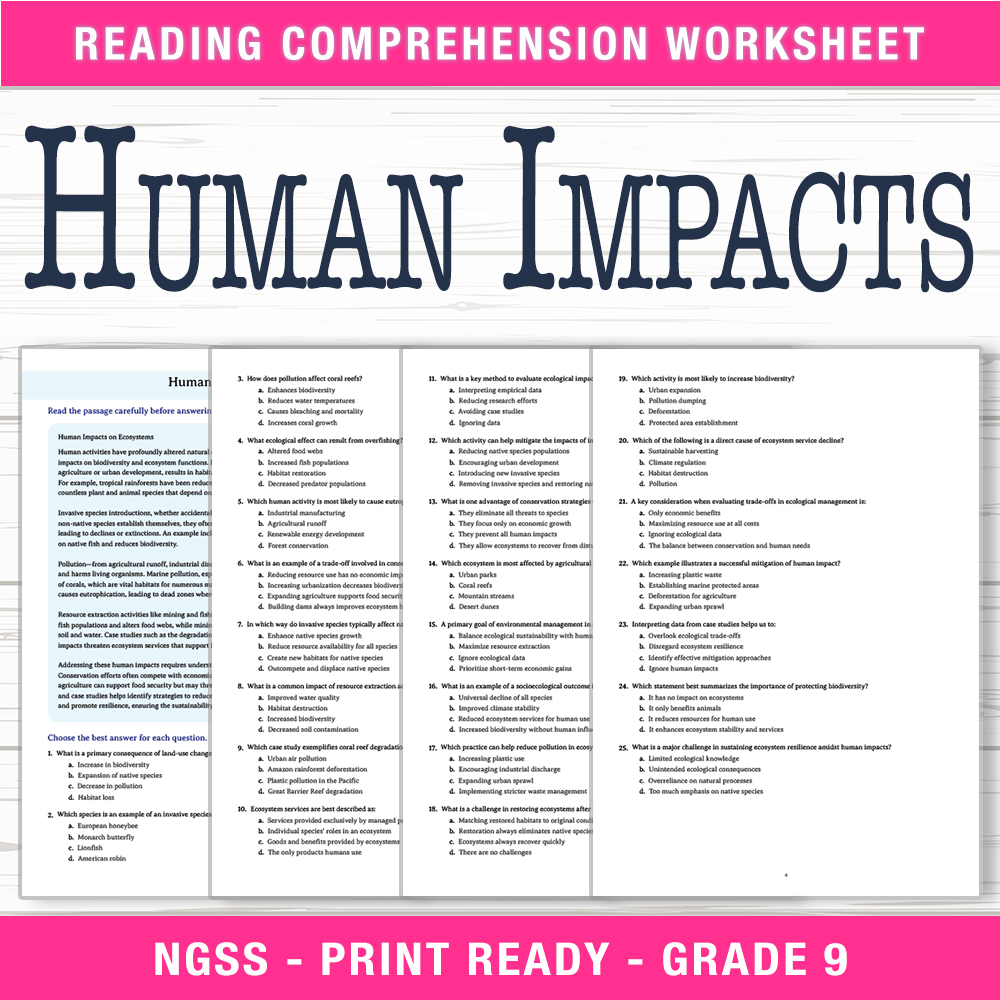
Grade 9 Science | Human Impacts Worksheet (PDF + Answer Key)
Created byRiverstone ClassroomLearning Objectives
- Understand how land-use change, invasive species, pollution, and resource extraction impact biodiversity and ecosystems.
- Interpret empirical data from case studies like deforestation and coral reef degradation to evaluate ecological consequences.
- Assess trade-offs among conservation efforts, provisioning services, and socioecological outcomes.
Instant download
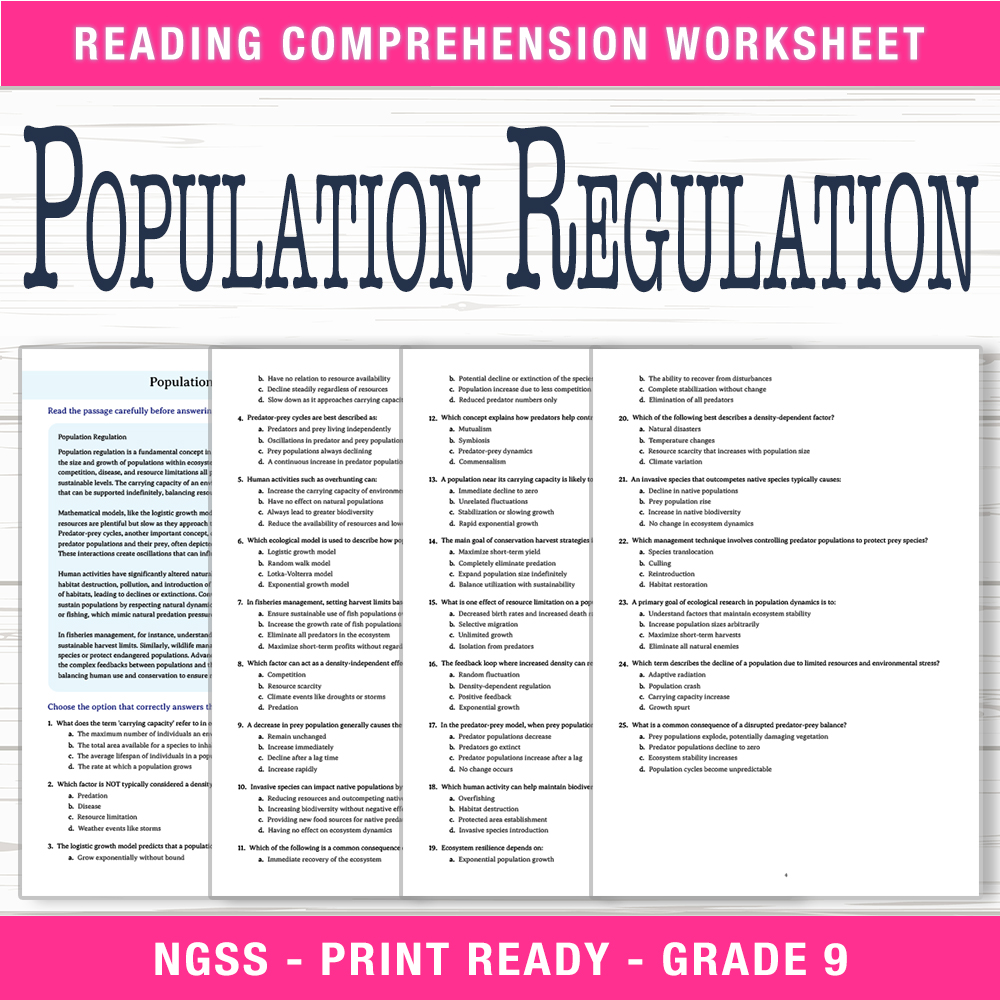
Grade 9 Science | Population Regulation Worksheet (PDF + Answer Key)
Created byRiverstone ClassroomLearning Objectives
- Explain the factors that influence population growth and size, including carrying capacity, predation, competition, and resource availability.
- Analyze mathematical models such as logistic growth and predator-prey cycles to understand population dynamics.
- Evaluate the impact of human activities on natural populations and discuss conservation strategies related to population regulation.
Instant download
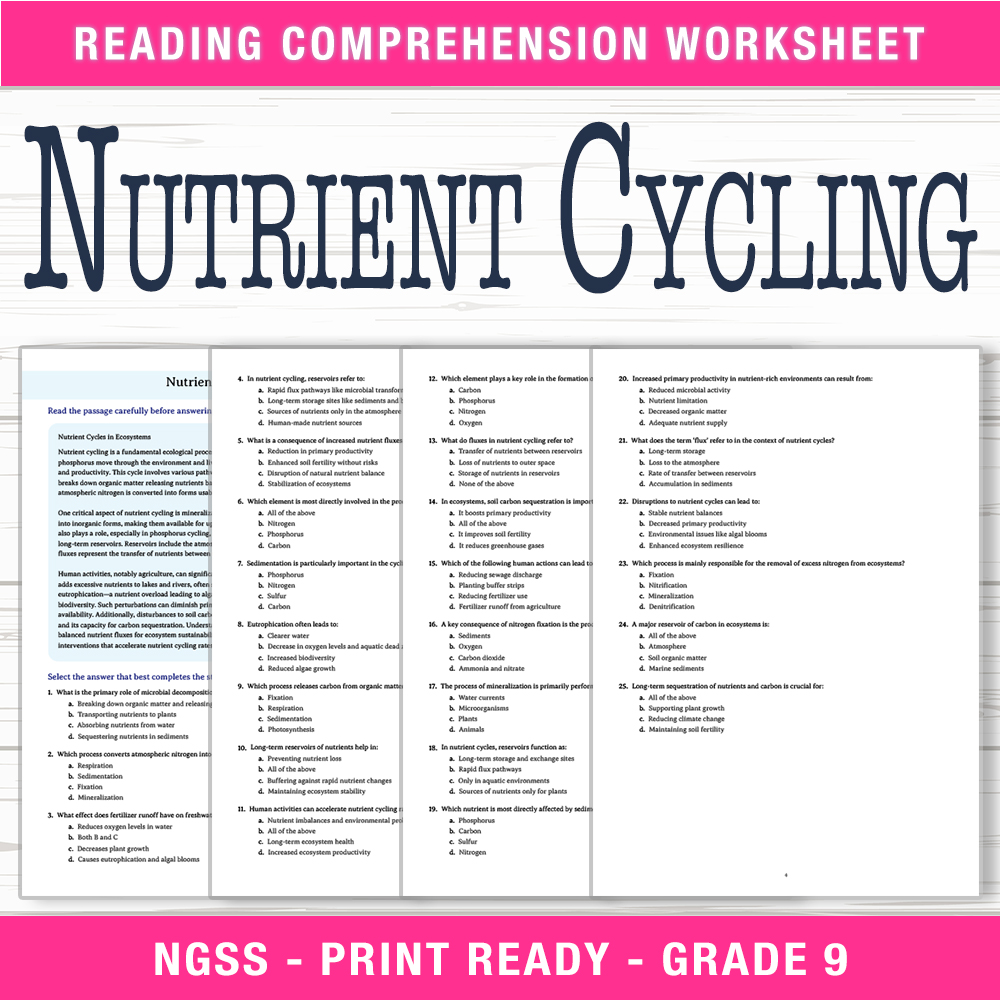
Grade 9 Science | Nutrient Cycling Worksheet (PDF + Answer Key)
Created byRiverstone ClassroomLearning Objectives
- Understand the key processes involved in nutrient cycling within ecosystems, including microbial decomposition, fixation, mineralization, and sedimentation.
- Explain how human activities, such as fertilizer runoff, disrupt nutrient cycles and lead to phenomena like eutrophication.
- Analyze the role of reservoirs and fluxes in nutrient cycling and how alterations affect primary productivity and long-term ecosystem health.
Instant download

Grade 9 Science | Producers and Consumers Worksheet (PDF + Answer Key)
Created byRiverstone ClassroomLearning Objectives
- Explain the roles of producers and consumers in energy transfer within ecosystems.
- Analyze how photosynthesis and cellular respiration impact carbon and oxygen cycling.
- Evaluate factors that affect net primary productivity and biomass accumulation.
Instant download

Grade 9 Science | Trophic Dynamics Worksheet (PDF + Answer Key)
Created byRiverstone ClassroomLearning Objectives
- Describe the flow of energy through different trophic levels in an ecosystem.
- Explain the structure and function of food webs and trophic pyramids.
- Analyze how energy transfer efficiency affects biomass distribution and ecosystem productivity.
Instant download
Grade 9 Science | Resource Impacts Worksheet (Ontario Standards) (PDF)
Created byBright Mind ResourcesLearning Objectives
- Analyze how resource extraction affects landforms, ecosystems, and material cycles.
- Identify environmental effects of mining, fossil fuel extraction, and water use.
- Evaluate sustainability criteria such as resource renewal, environmental effects, and reclamation.
Instant download

Grade 9 Science – Ocean Circulation & Currents | Daily Reading Worksheet
Created byBright Mind ResourcesLearning Objectives
- Understand how surface currents are generated and their role in redistributing heat.
- Identify key features of ocean circulation such as gyres, upwelling zones, and boundary currents.
- Explain how ocean circulation influences regional climates and interacts with atmospheric systems.
Also included in: Grade 9 Earth Systems Science Daily Reading Worksheets Lesson Bundle | BC +1 more
Instant download
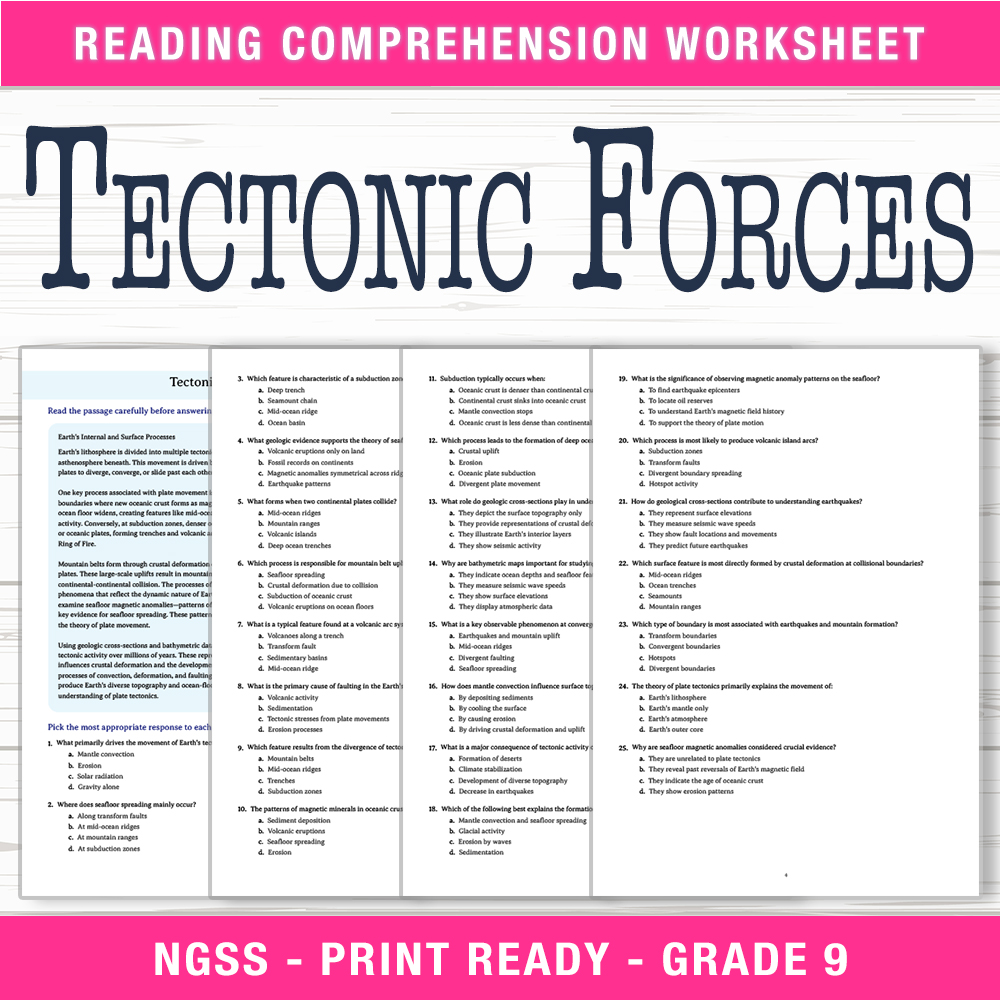
Grade 9 Science – Tectonic Forces Worksheet (PDF + Answer Key)
Created byRiverstone ClassroomLearning Objectives
- Explain the processes of seafloor spreading, subduction zones, and volcanic arc systems.
- Describe how mantle convection connects to surface features like mountain belts and ocean basins.
- Identify evidence such as seafloor magnetic anomalies and geologic cross-sections that support plate tectonics.
Also included in: Grade 9 Science Unit | Earth Processes & Climate Worksheet Bundle
Instant download
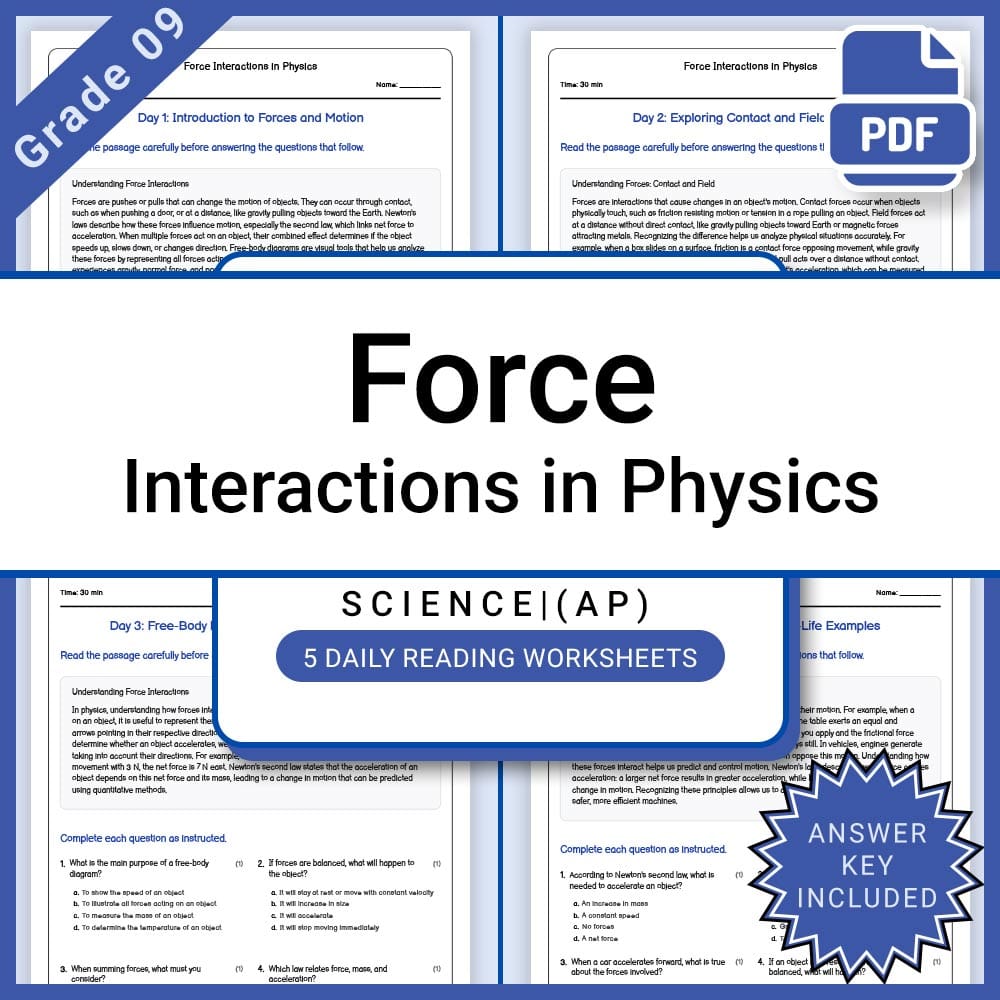
Grade 9 Science – Force Interactions Daily Reading Worksheet with Answer Key
JCreated byJ.S SheetsLearning Objectives
- Understand the basic concepts of force and motion.
- Identify different types of forces such as contact and field forces.
- Interpret free-body diagrams and apply Newton's second law.
Also included in: Grade 9 Science Lesson Group: AP Motion & Force Daily Reading Worksheets +1 more
Instant download

Power Analysis worksheet | NGSS Grade 9 Science printable PDF assessment
Learning Objectives
- Understand the distinction between power, energy, and system efficiency in technological systems.
- Calculate energy demand over time using power ratings and operational durations.
- Assess the impact of conversion losses and system inefficiencies on overall energy throughput.
Also included in: Grade 9 Science Energy Bundle | NGSS Lesson Worksheets +1 more
Instant download

Land Sustainability Worksheet | Grade 9 Science Printable PDF Assessments
Learning Objectives
- Understand the interactions between land use, water management, and ecosystem health.
- Identify indicators of soil and water ecosystem resilience.
- Evaluate sustainable agriculture practices and their trade-offs.
Also included in: Grade 9 Science Earth and Human Activity NGSS Lesson Bundle +1 more
Instant download
About Grade 9 Science Worksheets
Find Science worksheets built for Grade 9. All 6,926 cover core skills, practice, and review, each an instant PDF download.
Every worksheet on MyTeachingSheets is created by independent teacher-authors and reviewed before publication. All resources download as printable PDFs for classroom, homework, or at-home practice, and many include answer keys. Preview any worksheet free before buying.