
Grade 10 Science Worksheets
7,038 worksheets
Microbial Ecosystem Roles and Biogeochemical Cycling Worksheets
 Created byPrism Point Learning
Learning Objectives
- Explain how microorganisms contribute to decomposition and nutrient cycling
- Describe how nitrogen fixation supports plant growth and productivity
- Explain how mycorrhizal fungi improve water and mineral absorption
Also included in: Grade 10 Science Worksheets Ontario | Life Systems Cell Bundle
Instant download

ATP Energy Coupling and Regeneration Worksheets | Grade 10 Science
Created byPrism Point LearningLearning Objectives
- Describe ATP structure and explain energy release during hydrolysis
- Explain how ATP couples exergonic reactions to endergonic work
- Compare substrate-level and oxidative phosphorylation pathways
Also included in: Grade 10 Science Worksheets Ontario | Life Systems Cell Bundle
Instant download

Ionic and Molecular Compound Nomenclature Worksheets Grade 10 Science
Created byPrism Point LearningLearning Objectives
- Construct ionic formulas using balanced positive and negative charges
- Name ionic compounds with polyatomic ions and variable oxidation states
- Apply numerical prefixes to name molecular compounds
Also included in: Matter & Chemical Change Grade 10 Science Worksheets Ontario Bundle
Instant download
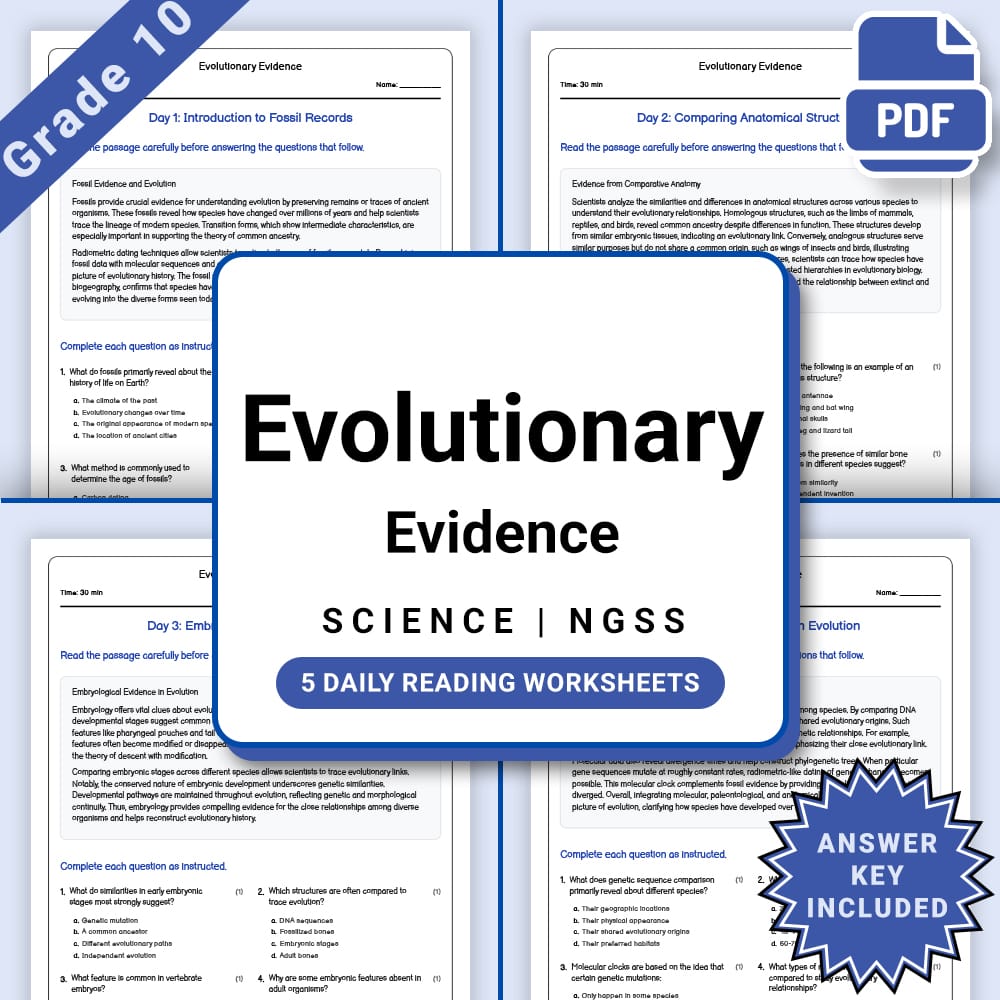
Grade 10 Science – Evolutionary Evidence Worksheet (PDF +Answer Key)
 Created byCopper Leaf Classroom
Learning Objectives
- Understand key concepts related to Science
- Apply knowledge through practice questions
- Demonstrate comprehension of the material
Instant download
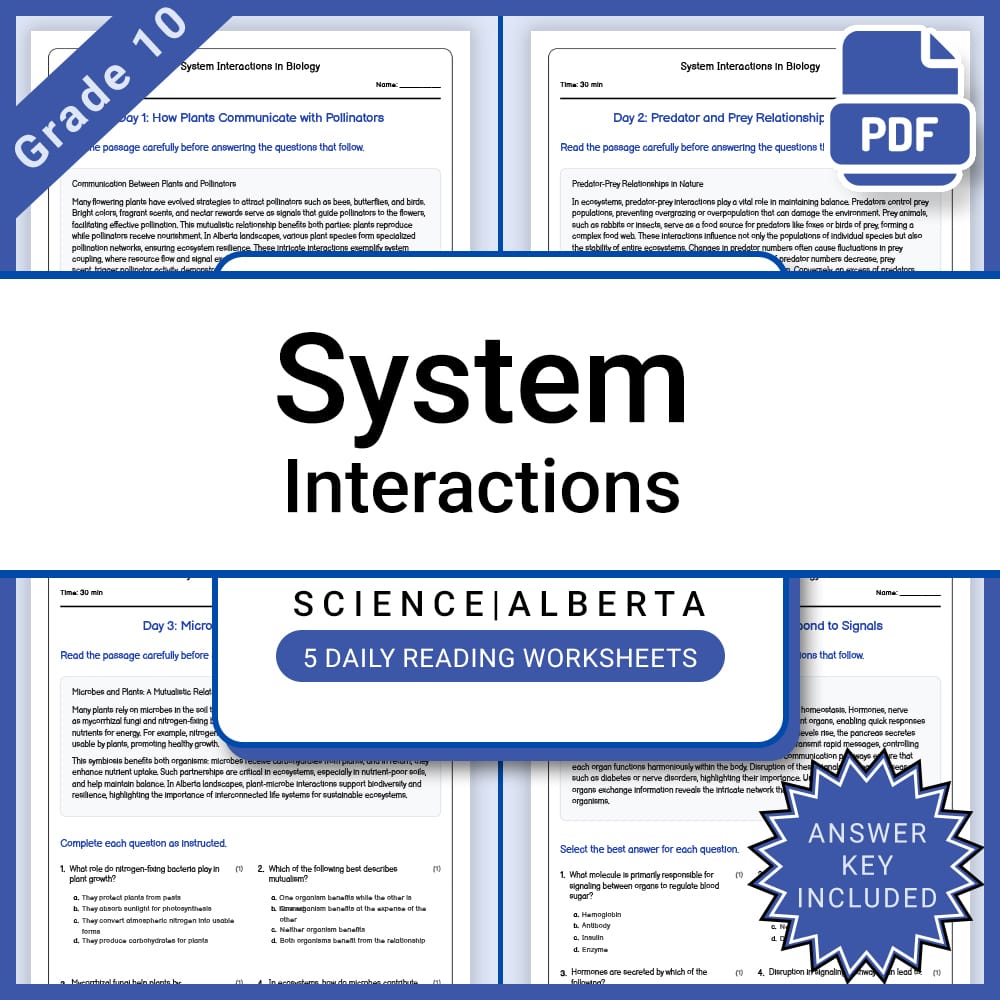
Grade 10 Science – System Interactions Worksheet + Answer Key
JCreated byJ.S SheetsLearning Objectives
- Understand how plants communicate with pollinators.
- Identify ecological interactions and their significance.
- Analyze the role of pollination networks in ecosystems.
Also included in: Grade 10 Science Lesson Group: Alberta Curriculum — Daily Reading Worksheets +1 more
Instant download
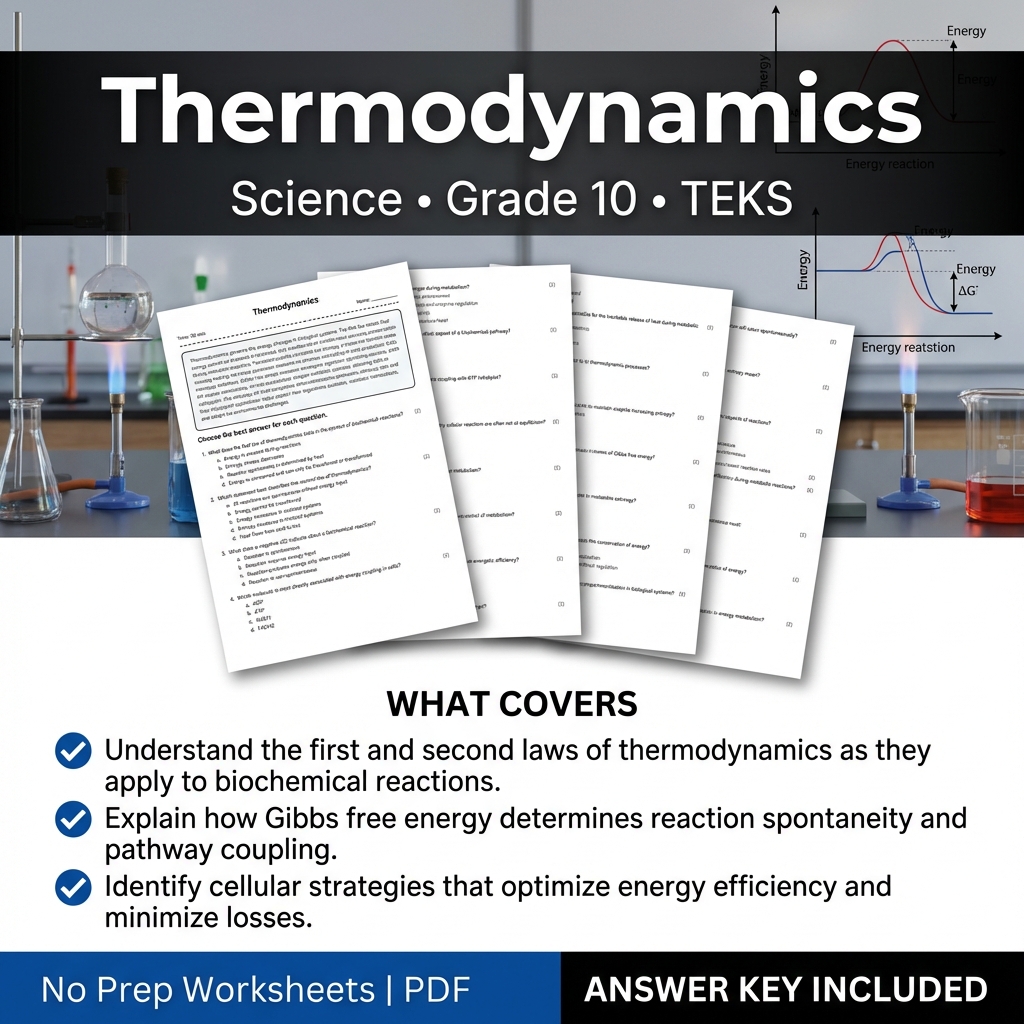
Thermodynamics Science Worksheet Grade 10 | TEKS-Aligned Practice
 Created byCoral Reef Learning
Learning Objectives
- Understand the first and second laws of thermodynamics as they apply to biochemical reactions.
- Explain how Gibbs free energy determines reaction spontaneity and pathway coupling.
- Identify cellular strategies that optimize energy efficiency and minimize losses.
Instant download
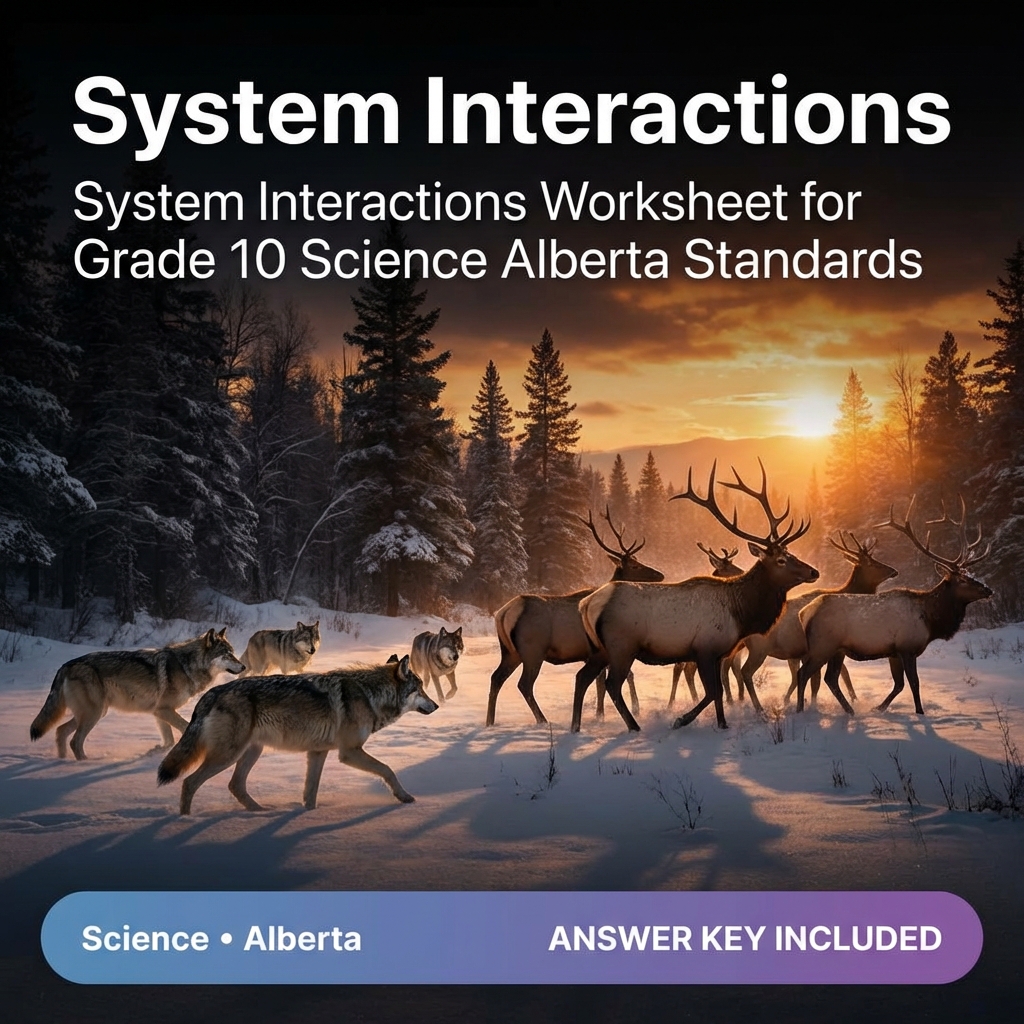
System Interactions Worksheet for Grade 10 Science Alberta Standards
Created byCoral Reef LearningLearning Objectives
- Understand how biological systems exchange materials and information.
- Describe examples of system coupling in ecosystems and organismal responses.
- Analyze how interconnected systems influence resilience and ecological function.
Instant download

Climate Feedback Loops Worksheets: Water Vapor, Albedo & Aerosols
 Created byBRIGHT PATH RESOURCES
Learning Objectives
- Explain how greenhouse gases can increase warming through water-vapor feedback
- Describe how changes in ice and snow affect albedo and absorbed solar energy
- Compare positive and negative feedback effects involving clouds and aerosols
Also included in: Grade 10 Earth Science Worksheets Bundle | Climate & Earth Systems +4 more
Instant download
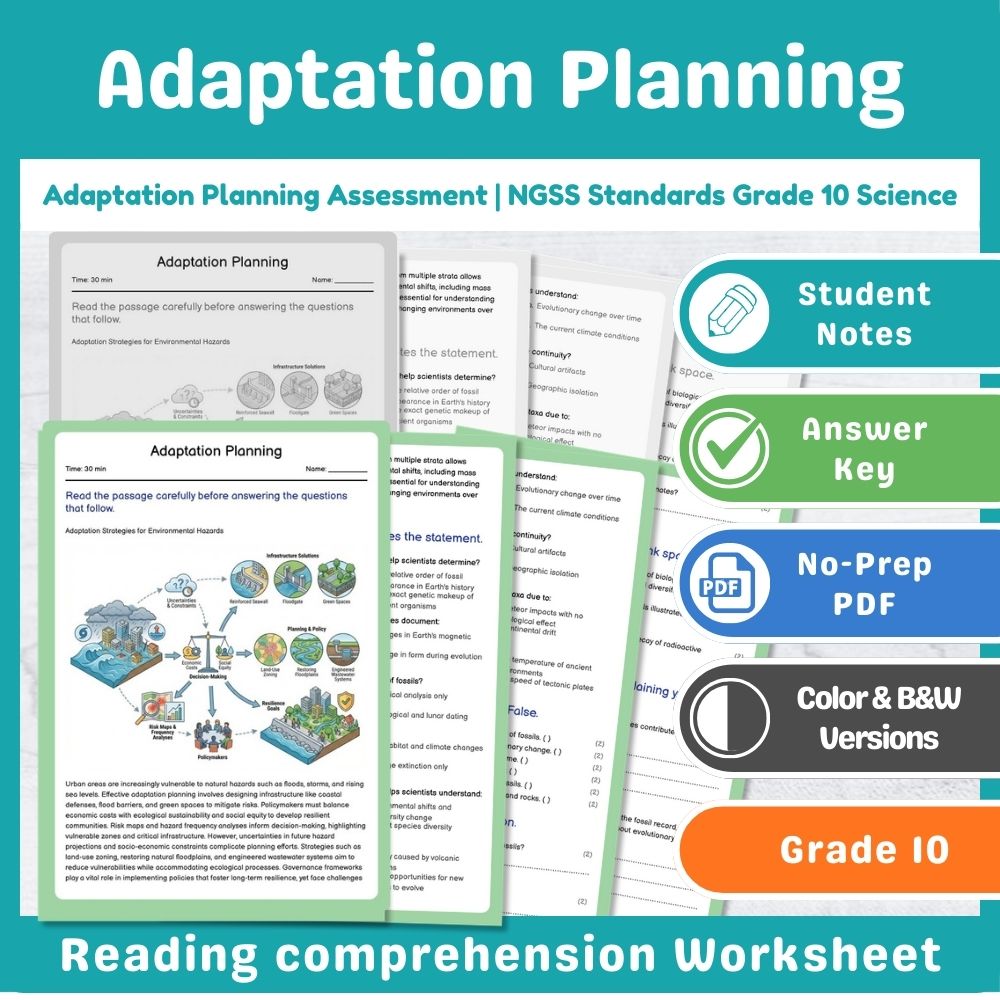
Adaptation Planning Assessment | NGSS Standards Grade 10 Science
Created byPrism Point LearningLearning Objectives
- Evaluate infrastructural and policy responses to natural hazards and environmental change.
- Analyze trade-offs involved in adaptation strategies considering economic, social, and ecological factors.
- Interpret risk maps, hazard analyses, and cost–benefit data to assess adaptation feasibility.
Also included in: Grade 10 Science Resource Tradeoffs Assessment | NGSS Standards-Aligned
Instant download
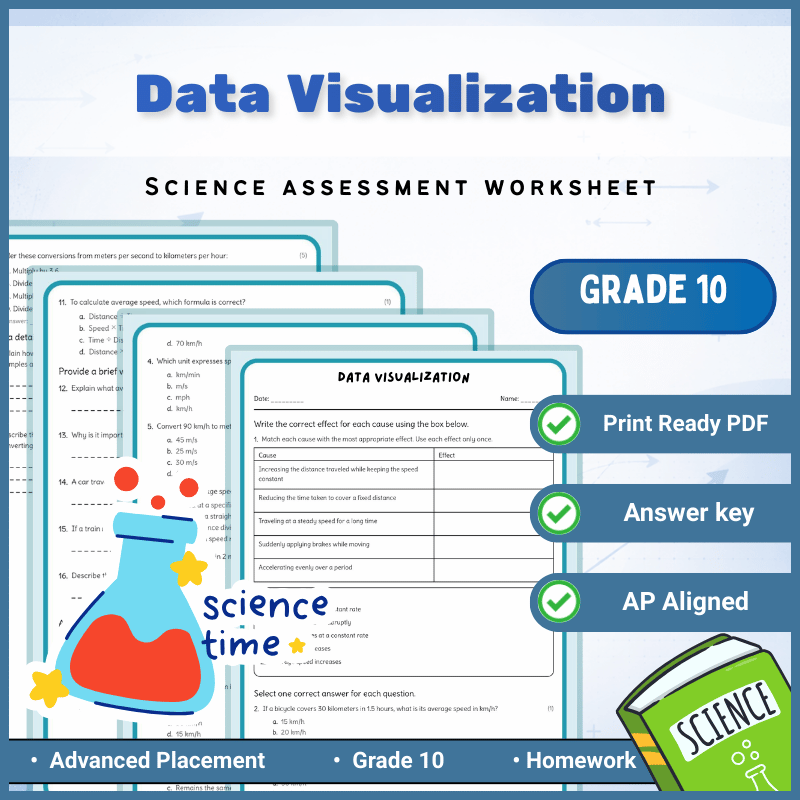
Grade 10 Science | Data Visualization Worksheet (AP Standards) – PDF
 Created byBright Mind Resources
Learning Objectives
- Understand principles and conventions of graphical and tabular data representation.
- Identify different types of data visualizations such as scatterplots, histograms, and boxplots.
- Interpret patterns, variability, and outliers in data visualizations.
Instant download

Grade 10 Science | Energy Technologies Worksheet (PDF) BC Standards
 Created byEvergreen Desk Education
Learning Objectives
- Explain how different energy technologies convert energy into usable electricity or mechanical power
- Evaluate energy technologies using efficiency, renewability, lifecycle emissions, and waste considerations
- Use energy return on investment (EROI) and related metrics to compare technologies for specific applications
Instant download

Photosynthesis Energy Conversion Worksheets | Grade 10 Science
Created byPrism Point LearningLearning Objectives
- Explain how light reactions produce ATP and NADPH
- Identify the role of thylakoid membranes in photosynthesis
- Describe how carbon fixation connects to the Calvin cycle
Also included in: Grade 10 Science Worksheets Ontario | Life Systems Cell Bundle
Instant download

Stoichiometry Basics Practice Worksheet | Grade 10 Science
Created byPrism Point LearningLearning Objectives
- Explain how the mole concept and Avogadro number connect particle counts to measurable amounts.
- Use molar mass to convert between grams and moles for substances in chemical problems.
- Apply balanced chemical equations to determine molar ratios and perform mass-to-mass stoichiometry conceptually.
Instant download
Momentum Transfer Worksheet for Grade 10 Science | Alberta Standards
Created byCoral Reef LearningLearning Objectives
- Explain the concepts of linear momentum and impulse in collision analysis.
- Describe the conservation of momentum in closed systems during interactions.
- Analyze how mass and velocity changes redistribute momentum during collisions.
Instant download

Selection Types Worksheet | Science Assessment for Grade 10 BC Standards
JCreated byJ.S SheetsLearning Objectives
- Identify and describe the three main types of natural selection: directional, stabilizing, and disruptive.
- Explain how frequency-dependent and sexual selection influence population traits and adaptation.
- Analyze examples of selection types and predict their effects on trait distributions in populations.
Instant download

Enzymes and Reaction Rate Worksheets | Grade 10 Science
Created byPrism Point LearningLearning Objectives
- Explain how enzymes lower activation energy using active sites
- Predict enzyme activity changes caused by temperature and pH
- Interpret substrate concentration effects on reaction rate
Also included in: Grade 10 Science Worksheets Ontario | Life Systems Cell Bundle
Instant download

Rock Cycle Energy Flow Worksheet | Grade 10 Earth Science | CA Standards
Created byEvergreen Desk EducationLearning Objectives
- Explain how energy from Earth’s interior and external processes drives changes in rock through the rock cycle.
- Connect rock-cycle processes (melting, cooling, erosion, deposition, and metamorphism) to energy flow and rate changes.
- Use evidence (outcrops, fossils, and geochemical signatures) to infer past environments while recognizing conservation of atoms.
Instant download

Bond Energetics and Reaction Energy Worksheet | Grade 10 NGSS Science
 Created byAmber Owl Education
Learning Objectives
- Explain how bond formation and bond breaking relate to energy changes in chemical reactions.
- Classify reactions as exothermic or endothermic using bond enthalpy ideas and energy diagrams.
- Compare strengths of single, double, and triple bonds in terms of typical energy required to break them.
Instant download

Evaluating Engineering Solutions Worksheet Grade 10 Science STEM
Created byPrism Point LearningLearning Objectives
- Use criteria and constraints to compare proposed solutions
- Identify tradeoffs and failure points when a design is stressed or exposed
- Justify how evaluation results can guide improvements to a next prototype
Instant download

Circuit Fundamentals Worksheet | Grade 10 Science Activities
Created byPrism Point LearningLearning Objectives
- Explain how current, voltage, and resistance relate in a closed circuit
- Apply Ohm’s law to predict changes in circuit behavior
- Predict how series and parallel connections affect total current and voltage drops
Also included in: Grade 10 Work, Energy & Electricity Lesson Bundle | Alberta Science
Instant download
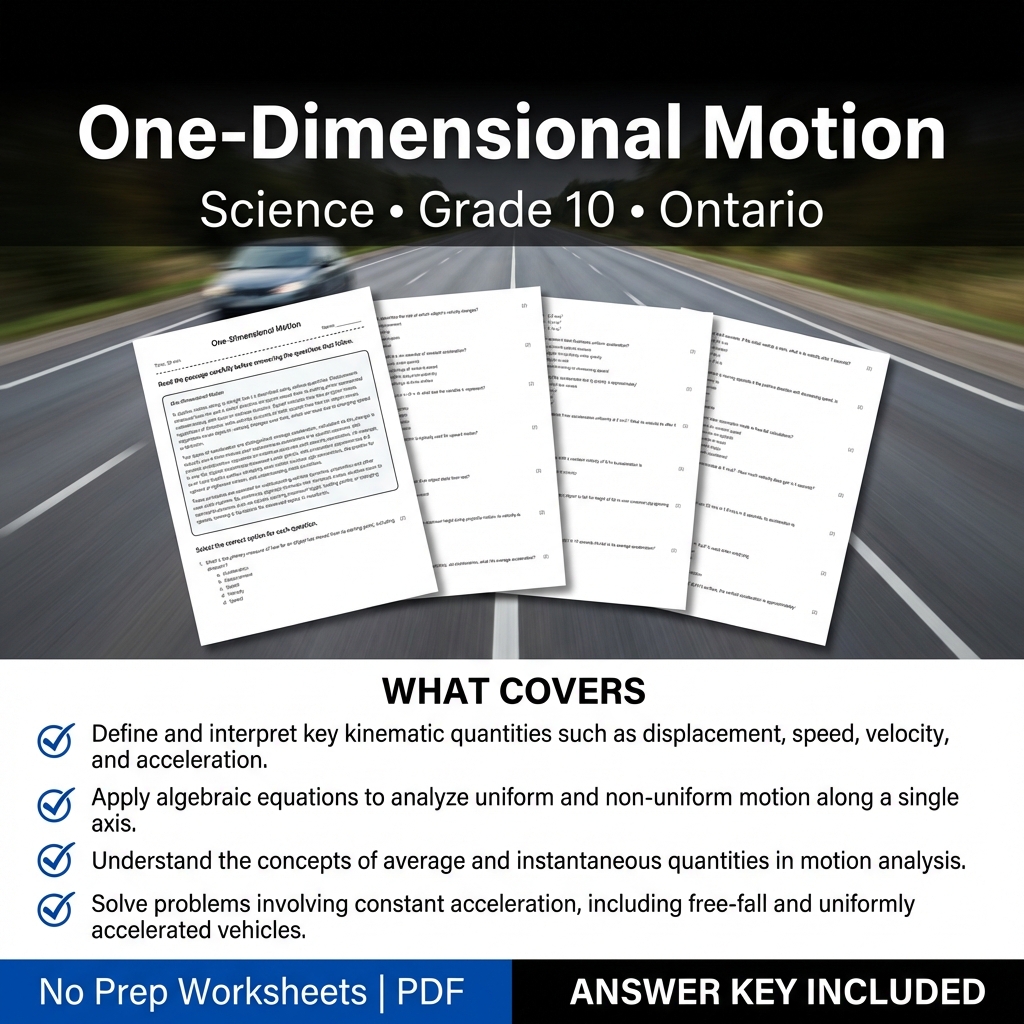
Grade 10 Science Worksheet on One-Dimensional Motion | Ontario Standards
Created byCoral Reef LearningLearning Objectives
- Define and interpret key kinematic quantities such as displacement, speed, velocity, and acceleration.
- Apply algebraic equations to analyze uniform and non-uniform motion along a single axis.
- Understand the concepts of average and instantaneous quantities in motion analysis.
Instant download

Plate Tectonics Worksheets: Plate Boundaries & Evidence Grade 10
Created byPrism Point LearningLearning Objectives
- Describe plate motion at divergent, convergent, and transform boundaries
- Explain how mantle convection and slab pull drive plate motion
- Connect plate interactions to seafloor spreading and subduction
Also included in: Earth and Space Systems Grade 10 Science Ontario Bundle
Instant download

Scientific Explanations Worksheets: Evidence & Reasoning Grade 10
Created byBRIGHT PATH RESOURCESLearning Objectives
- Explain how scientific claims connect to supporting evidence
- Describe observations and interpret patterns using scientific language
- Justify conclusions by connecting evidence to scientific claims
Also included in: Grade 10 Science Worksheets Bundle | Scientific Inquiry & Evidence +1 more
Instant download

Percent Yield and Limiting Reagent Worksheets | Grade 10 Science
Created byPrism Point LearningLearning Objectives
- Identify the limiting reagent from reactant amounts
- Distinguish theoretical yield from actual yield
- Calculate percent yield from theoretical and actual yields
Also included in: Matter & Chemical Change Grade 10 Science Worksheets Ontario Bundle
Instant download

Model Evidence and Validation Worksheets: Grade 10 Science
Created byPrism Point LearningLearning Objectives
- Explain how conceptual and quantitative models connect theory with data
- Estimate model parameters from observed measurements
- Interpret residual size and patterns as evidence of model fit
Also included in: Grade 10 Science Worksheets Ontario Scientific Investigation Bundle
Instant download

Chemical Bonding and Structure-Property Relationships Worksheets Grade 10
Created byPrism Point LearningLearning Objectives
- Compare ionic, covalent, and metallic bonding models
- Relate lattice structure to melting point and hardness
- Explain how bonding affects electrical conductivity and solubility
Also included in: Matter & Chemical Change Grade 10 Science Worksheets Ontario Bundle
Instant download
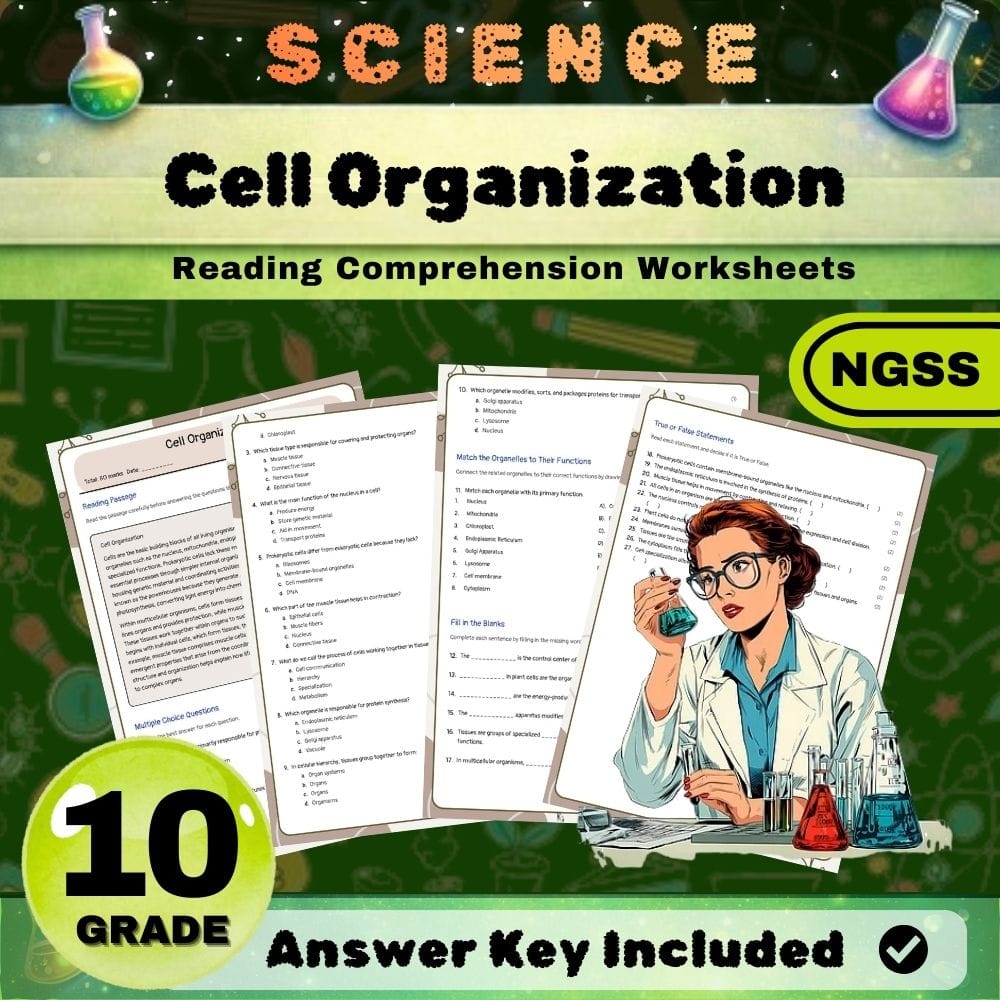
Grade 10 Science | Cell Organization NGSS Worksheet (PDF)
 Created byMaple Path Learning
Learning Objectives
- Understand the structure and functions of membrane-bound organelles in eukaryotic and prokaryotic cells.
- Compare cellular compartmentalization and specialization in different cell types.
- Describe the hierarchical organization from cells to tissues and organs, with examples.
Also included in: Grade 10 Science From Molecules to Organisms Lesson Bundle | NGSS +1 more
Instant download

Grade 10 Circuit Fundamentals Worksheet | Alberta Practice & PDF
 Created byClear Sky Classroom
Learning Objectives
- Explain how current, voltage, and resistance are defined and how they relate in a closed circuit
- Apply Ohm’s law to solve for missing values of voltage, current, or resistance
- Predict how series and parallel circuit configurations change total current and voltage across components
Instant download
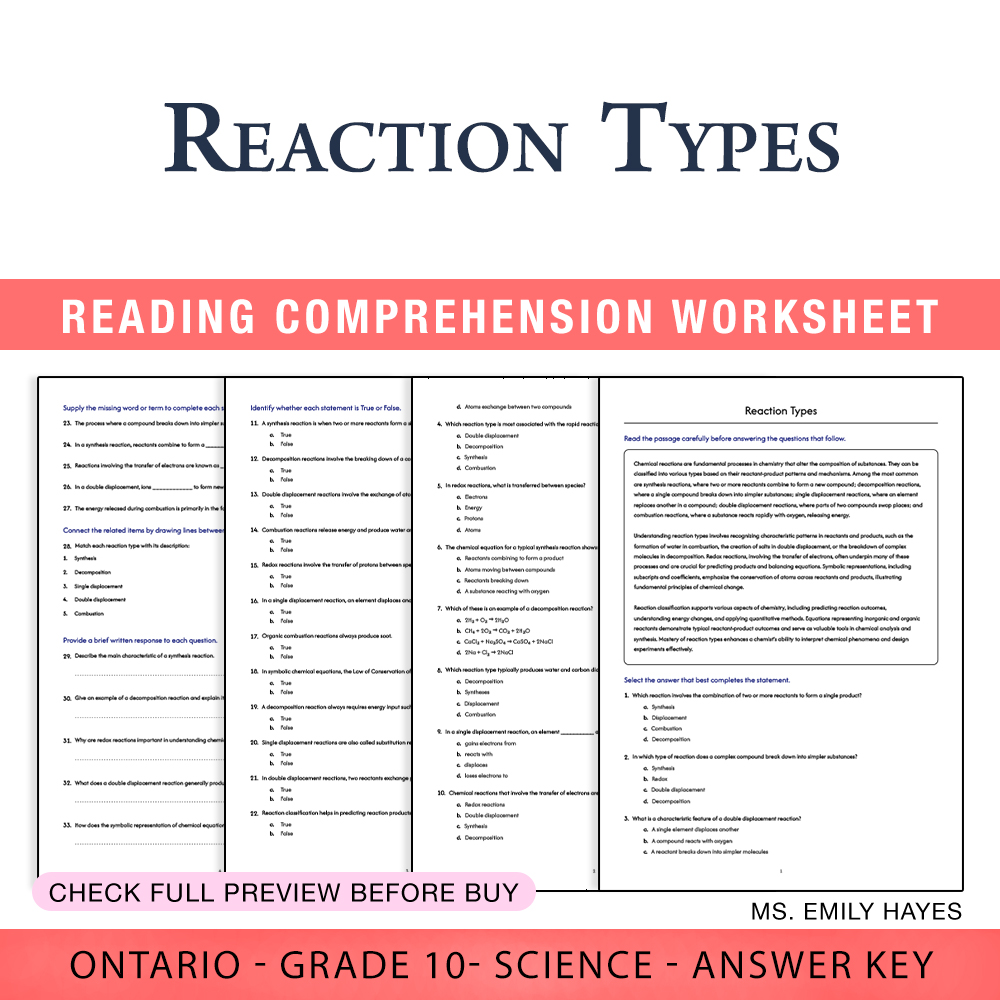
Grade 10 Science | Reaction Types Worksheet (PDF + Answer Key)
Created byCopper Leaf ClassroomLearning Objectives
- Identify and classify different types of chemical reactions such as synthesis, decomposition, single and double displacement, and combustion.
- Understand the characteristic reactant and product patterns associated with each reaction type.
- Explain how redox considerations influence reaction classification and prediction.
Instant download
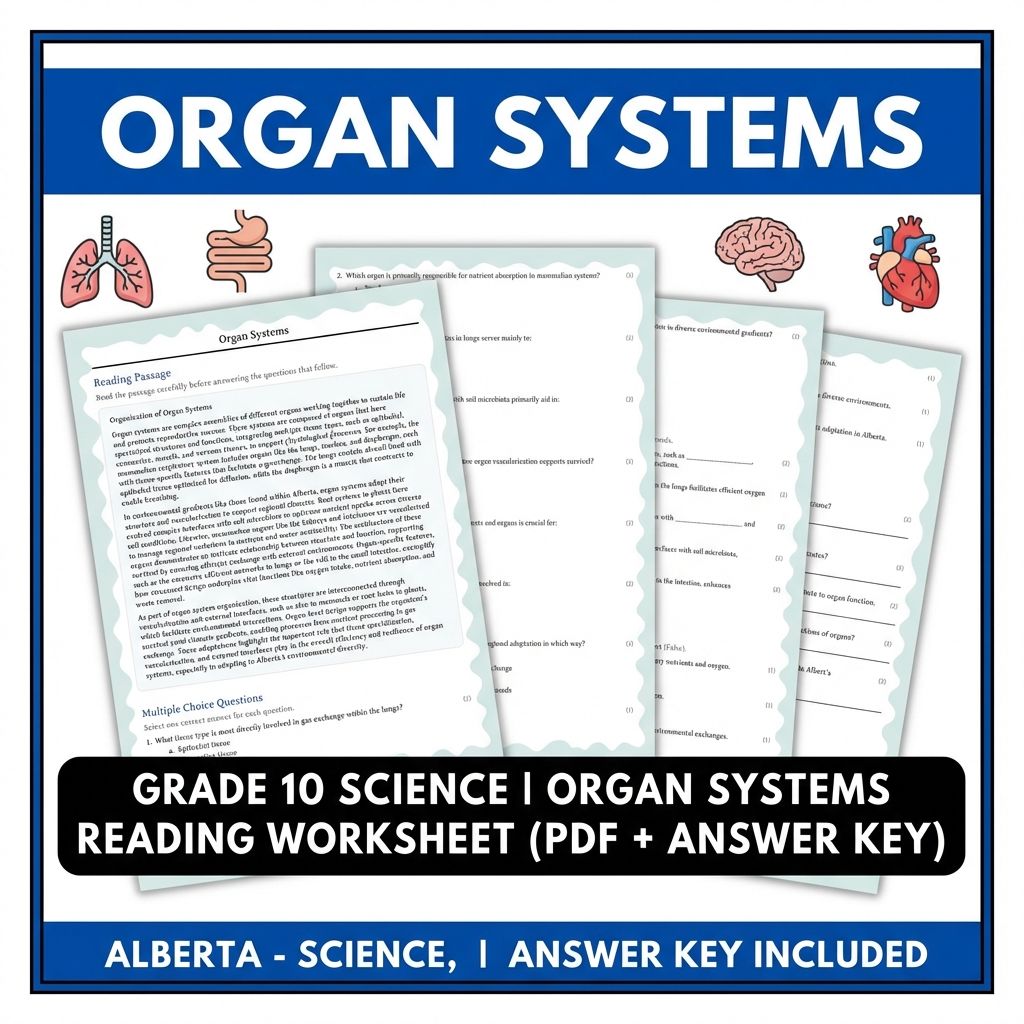
Grade 10 Science | Organ Systems Reading Worksheet (PDF + Answer Key)
JCreated byJ.S SheetsLearning Objectives
- Describe how organs integrate multiple tissue types to perform complex functions.
- Identify examples of organ-specific structure-function relationships.
- Explain how vascularization and external interfaces support organ function.
Also included in: Grade 10 Science | Cell Systems, Energy, & Homeostasis (Standards-Aligned) +1 more
Instant download

Grade 10 Limiting Resources Worksheet | California Science Standards
Created byEvergreen Desk EducationLearning Objectives
- Explain how limiting resources affect population growth and carry capacity
- Compare how different species life stages may be limited by different resources
- Interpret statements about limiting factors using cause-and-effect reasoning
Instant download

Design Foundations Practice Worksheet | Grade 10 Science NGSS
Created byPrism Point LearningLearning Objectives
- Explain how engineers define criteria and constraints to scope complex design problems.
- Use measurable performance metrics to evaluate and compare solution concepts.
- Construct and use models to test ideas before building full-scale systems.
Also included in: Grade 10 NGSS Science Design & Systems Review Practice Lesson Bundle
Instant download
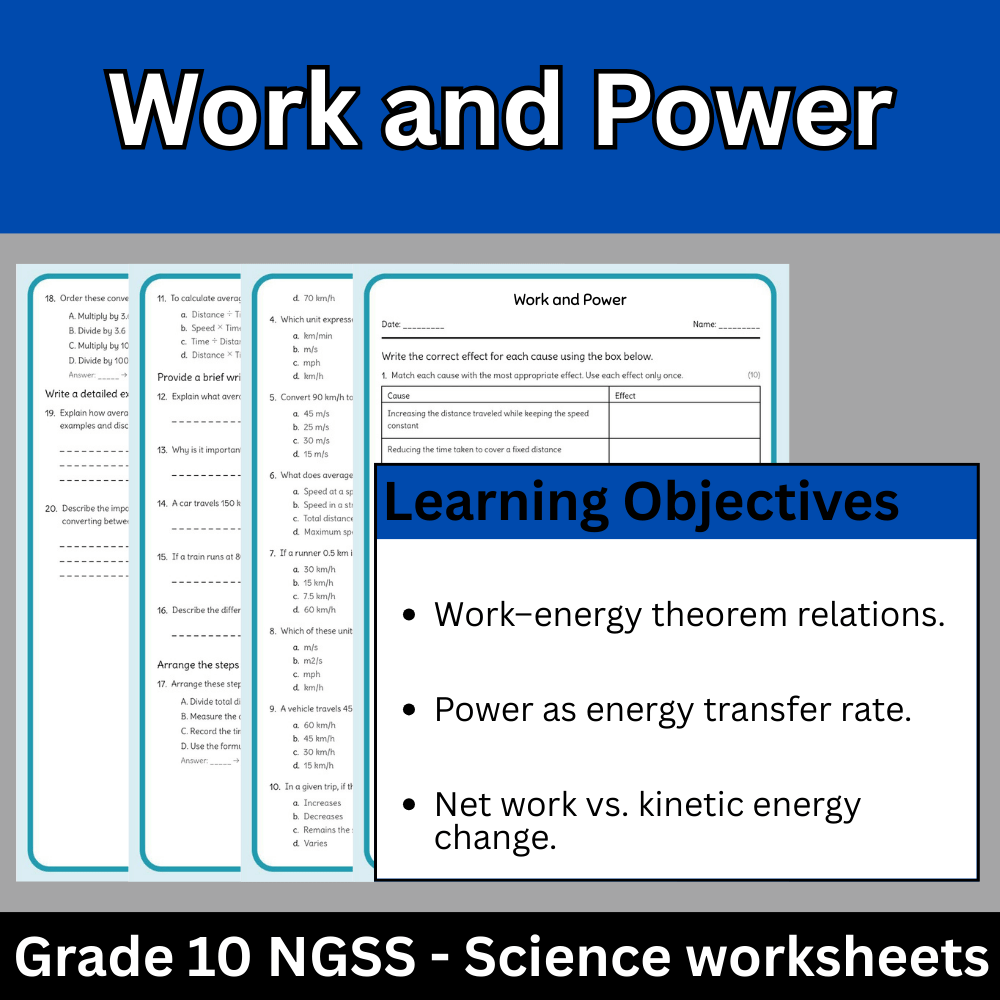
Grade 10 Science | Work and Power NGSS Worksheet (Answer Key) for Engagement
Created byBright Mind ResourcesLearning Objectives
- Explain the relationship between work, force, and displacement using the work–energy theorem.
- Calculate power as the rate of energy transfer in various physical contexts.
- Relate net work to changes in kinetic energy for moving objects.
Instant download

Motor and Generator Energy Conversion Worksheets | Grade 10 Science
 Created bySunny Desk Resources
Learning Objectives
- Explain how electromagnetic forces create torque in electric motors
- Describe how current-carrying coils interact with magnetic fields
- Compare energy flow in motor and generator operation
Also included in: Energy, Electricity & Momentum Transfer Lesson Bundle | Grade 10 Science | Alberta +1 more
Instant download

Ocean-Atmosphere Heat and Moisture Coupling Worksheets | Grade 10
Created byBRIGHT PATH RESOURCESLearning Objectives
- Explain how the ocean stores heat more slowly than the atmosphere and how that affects temperature contrasts
- Describe how sea-surface temperature changes shift evaporation, storm development, and rainfall belts
- Connect El Niño and La Niña to regional wind and precipitation changes
Also included in: Grade 10 Earth Science Worksheets Bundle | Climate & Earth Systems +4 more
Instant download
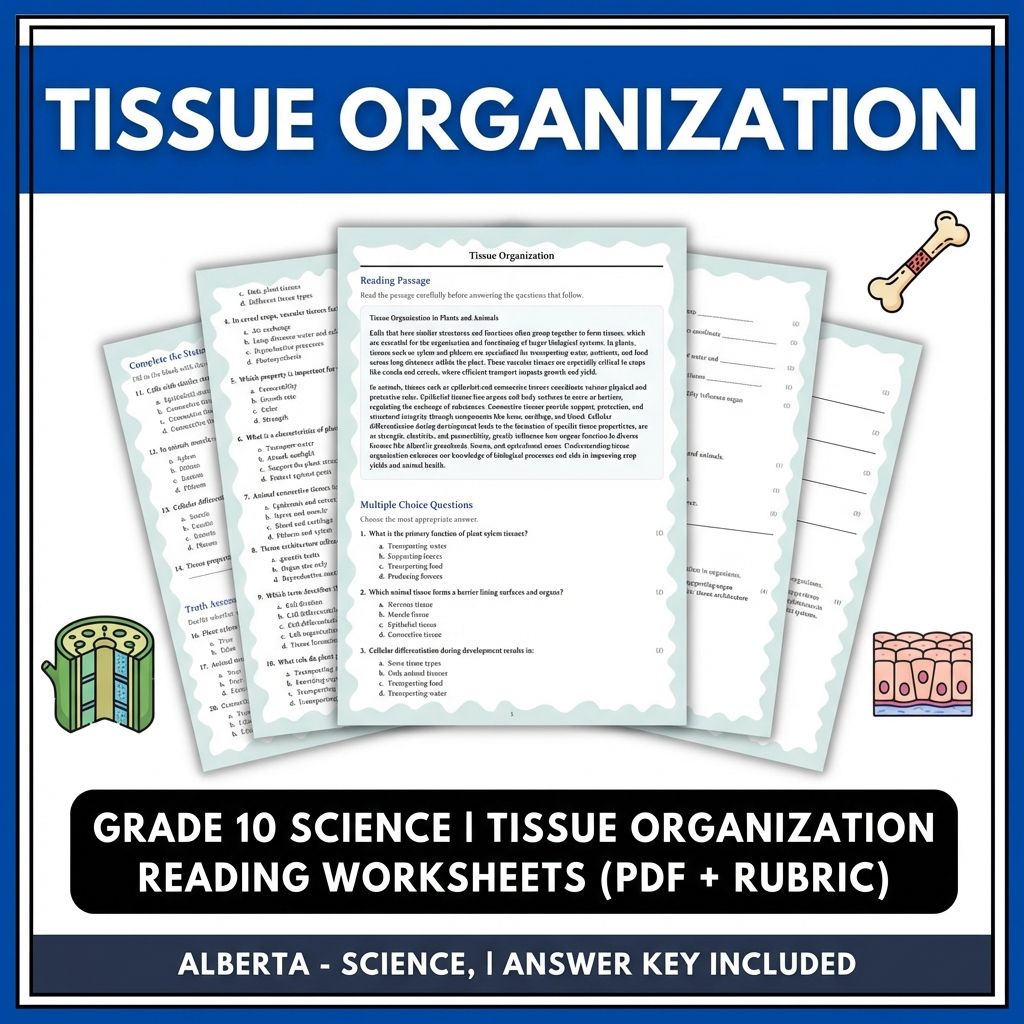
Grade 10 Science | Tissue Organization Reading Worksheets (PDF + Rubric)
JCreated byJ.S SheetsLearning Objectives
- Understand how cells of similar structure and function assemble into tissues.
- Describe the roles of plant vascular tissues and animal epithelial and connective tissues.
- Explain how tissue properties influence organ performance across different biomes and agricultural systems.
Also included in: Grade 10 Science | Cell Systems, Energy, & Homeostasis (Standards-Aligned) +1 more
Instant download

Grade 10 Science Reaction Energetics Worksheet – BC Standards (PDF)
Created byEvergreen Desk EducationLearning Objectives
- Explain exothermic and endothermic reactions using energy profiles and the sign of enthalpy (ΔH).
- Use bond energies to reason about whether a reaction should release or absorb energy.
- Predict observable temperature changes and discuss how reaction direction relates to ΔH and activation energy.
Instant download
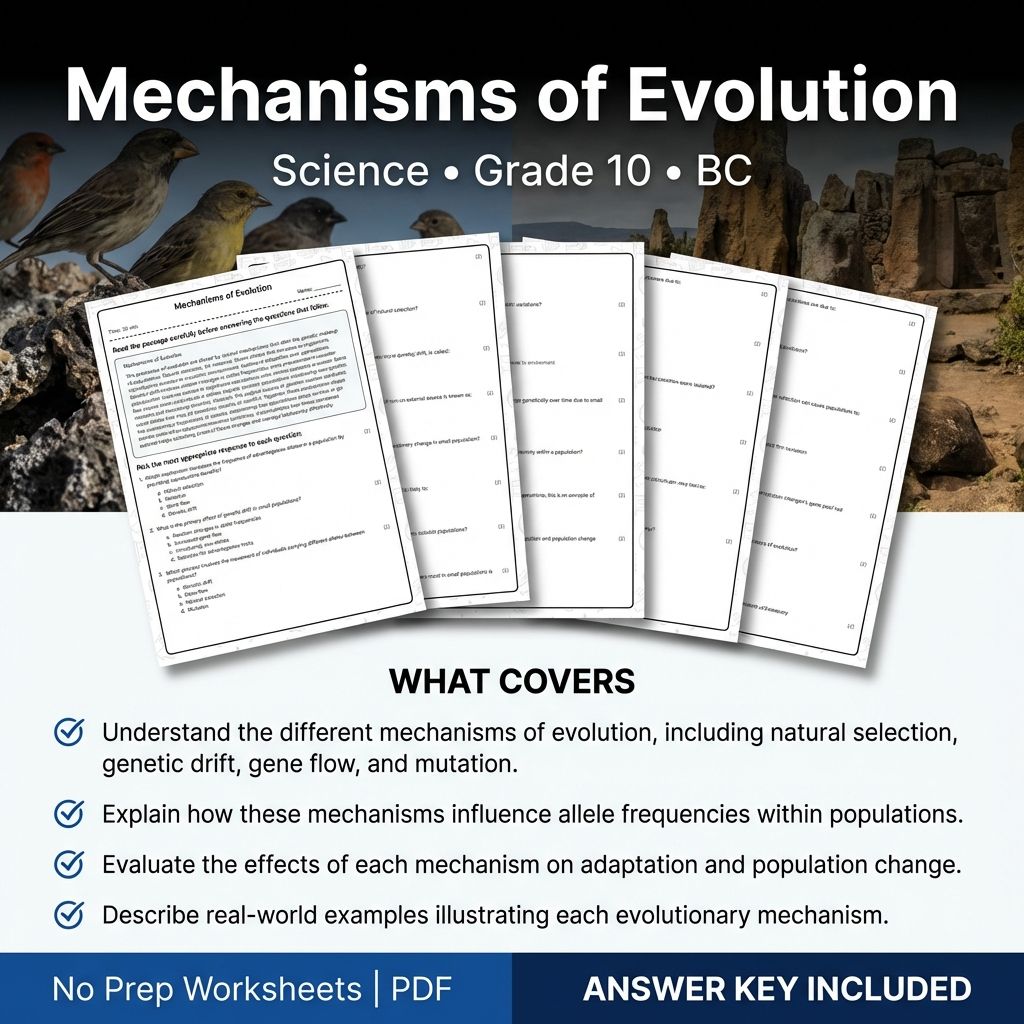
Grade 10 Science | Mechanisms of Evolution Worksheet & Answer Key(Printable PDF)
Created byCoral Reef LearningLearning Objectives
- Understand the different mechanisms of evolution, including natural selection, genetic drift, gene flow, and mutation.
- Explain how these mechanisms influence allele frequencies within populations.
- Evaluate the effects of each mechanism on adaptation and population change.
Instant download

Evaluating Solutions Worksheet for Grade 10 Science | Standards-Aligned Practice
JCreated byJ.S SheetsLearning Objectives
- Understand the process of evaluating proposed solutions against established criteria and constraints.
- Identify key factors in assessing the safety, performance, and weaknesses of engineering designs.
- Analyze tradeoffs and constraints to improve solution effectiveness.
Also included in: Grade 10 Engineering Design Optimization Science Lesson Bundle +1 more
Instant download

Experimental Control Strategies Worksheets | Grade 10 Science Practice
Created byPrism Point LearningLearning Objectives
- Explain how control groups isolate causal effects
- Describe how randomization reduces systematic differences between groups
- Identify when blocking can control an important nuisance variable
Also included in: Grade 10 Science Worksheets Ontario Scientific Investigation Bundle
Instant download

Evolutionary Predictions Worksheets: Natural Selection Grade 10
Created byBRIGHT PATH RESOURCESLearning Objectives
- Explain how natural selection changes allele frequencies across generations
- Connect environmental shifts to predicted trait distribution changes
- Use molecular, fossil, and variation evidence for predictions
Also included in: Grade 10 Life Science Worksheets Bundle | Evolution & Genetics +1 more
Instant download

Grade 10 Worksheet B: Work and Power Practice | NGSS PDF
Created byClear Sky ClassroomLearning Objectives
- Apply the work–energy theorem to relate net work to changes in kinetic energy.
- Use power as the rate of energy transfer to calculate average and instantaneous power.
- Perform unit conversions among joules, watts, and common engineering time/distance units.
Also included in: Grade 10 Energy and Work Science Lesson Bundle Worksheets Set | NGSS +1 more
Instant download

Projectile Motion Worksheets: Kinematics in Two Dimensions Grade 10
Created byPrism Point LearningLearning Objectives
- Resolve initial velocity into horizontal and vertical components
- Calculate projectile time of flight using vertical motion
- Determine horizontal range from velocity and flight time
Also included in: Grade 10 Science Worksheets Ontario Forces and Motion Bundle
Instant download

Intensive vs Extensive Physical Properties Worksheets | Grade 10
Created byPrism Point LearningLearning Objectives
- Classify physical properties as intensive or extensive
- Explain how sample size affects extensive physical properties
- Distinguish physical changes from changes that form new substances
Also included in: Matter & Chemical Change Grade 10 Science Worksheets Ontario Bundle
Instant download

Cell Organelles and Compartmentalization Worksheets | Grade 10 Science
Created byPrism Point LearningLearning Objectives
- Identify structural features of major eukaryotic cell organelles
- Compare membrane-bound compartments in prokaryotic and eukaryotic cells
- Explain how compartmentalization supports cellular complexity
Also included in: Grade 10 Science Worksheets Ontario | Life Systems Cell Bundle
Instant download

Grade 10 Science | Work and Power Worksheet (Alberta Standards) (PDF)
 Created bySilver Birch Teaching
Learning Objectives
- Explain and apply the relationship between work, force, and displacement (W = Fd cosθ) in physics and everyday situations
- Relate power to energy transfer per unit time and interpret how changing time affects power
- Use basic problem-solving skills to calculate work and power using units and numerical values
Instant download
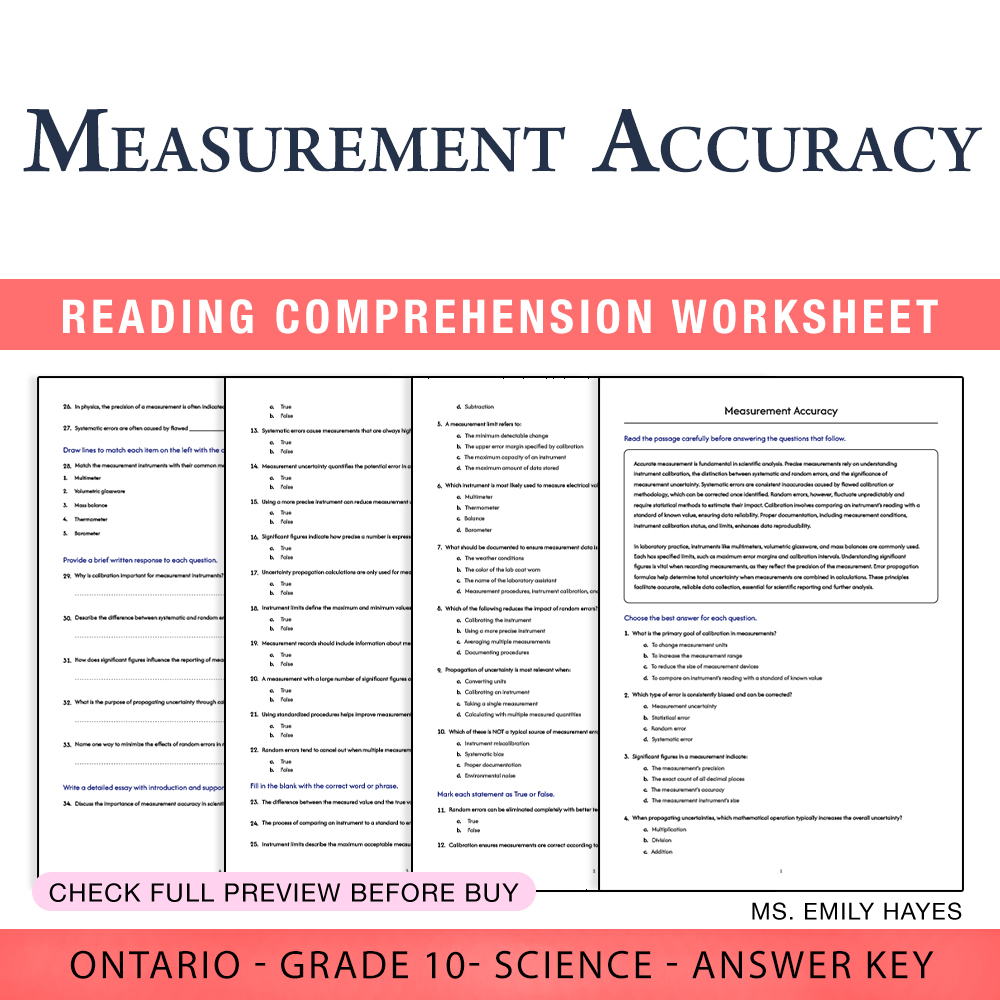
Grade 10 Science | Measurement Accuracy Worksheet (PDF + Answer Key)
Created byCopper Leaf ClassroomLearning Objectives
- Explain the principles of measurement accuracy and precision.
- Describe different types of measurement errors and how to minimize them.
- Apply proper methods for documenting measurement procedures and uncertainties.
Instant download

Science Worksheet: Design Fundamentals for Grade 10 | Ontario Standards
JCreated byJ.S SheetsLearning Objectives
- Classify variables in an investigation as independent, dependent, or controlled
- Write operational definitions that make measurements and procedures reproducible
- Identify baseline conditions, control treatments, and ethical limits for safe and defensible experiments
Instant download
About Grade 10 Science Worksheets
Find Science worksheets built for Grade 10. All 7,038 cover core skills, practice, and review, each an instant PDF download.
Every worksheet on MyTeachingSheets is created by independent teacher-authors and reviewed before publication. All resources download as printable PDFs for classroom, homework, or at-home practice, and many include answer keys. Preview any worksheet free before buying.