
Grade 10 Science Worksheets
7,038 worksheets
Grade 10 Science – Understanding System Optimization Worksheet (PDF +Answer Key)
 Created byCopper Leaf Classroom
Learning Objectives
- Understand key concepts related to Science
- Apply knowledge through practice questions
- Demonstrate comprehension of the material
Instant download
Grade 10 Science | Seismic Tomography Worksheet (Ontario) (Science 1)
 Created byBright Mind Resources
Learning Objectives
- Understand the types of seismic waves and how they travel through Earth's interior.
- Interpret seismic wave velocities, travel times, and attenuation to infer subsurface structures.
- Explain how seismic data are used to map crustal and mantle features such as subduction slabs and mantle plumes.
Instant download
Grade 10 Science | Photosynthesis Basics Worksheet (Ontario Standards) (PDF)
Created byBright Mind ResourcesLearning Objectives
- Explain the main stages of photosynthesis, including light-dependent reactions and the Calvin cycle.
- Identify the roles of chloroplast structures and pigments in capturing light energy.
- Describe how environmental factors like light intensity, CO2, and temperature affect photosynthesis.
Instant download
Grade 10 Science – Plate Boundaries Worksheet (PDF +Answer Key)
Created byCopper Leaf ClassroomLearning Objectives
- Identify and describe the three main types of plate boundaries: divergent, convergent, and transform.
- Understand the geological features associated with each boundary type, such as mid-ocean ridges, subduction zones, and fault lines.
- Explain how mantle convection and stress accumulation lead to earthquakes and volcanic activity.
Instant download
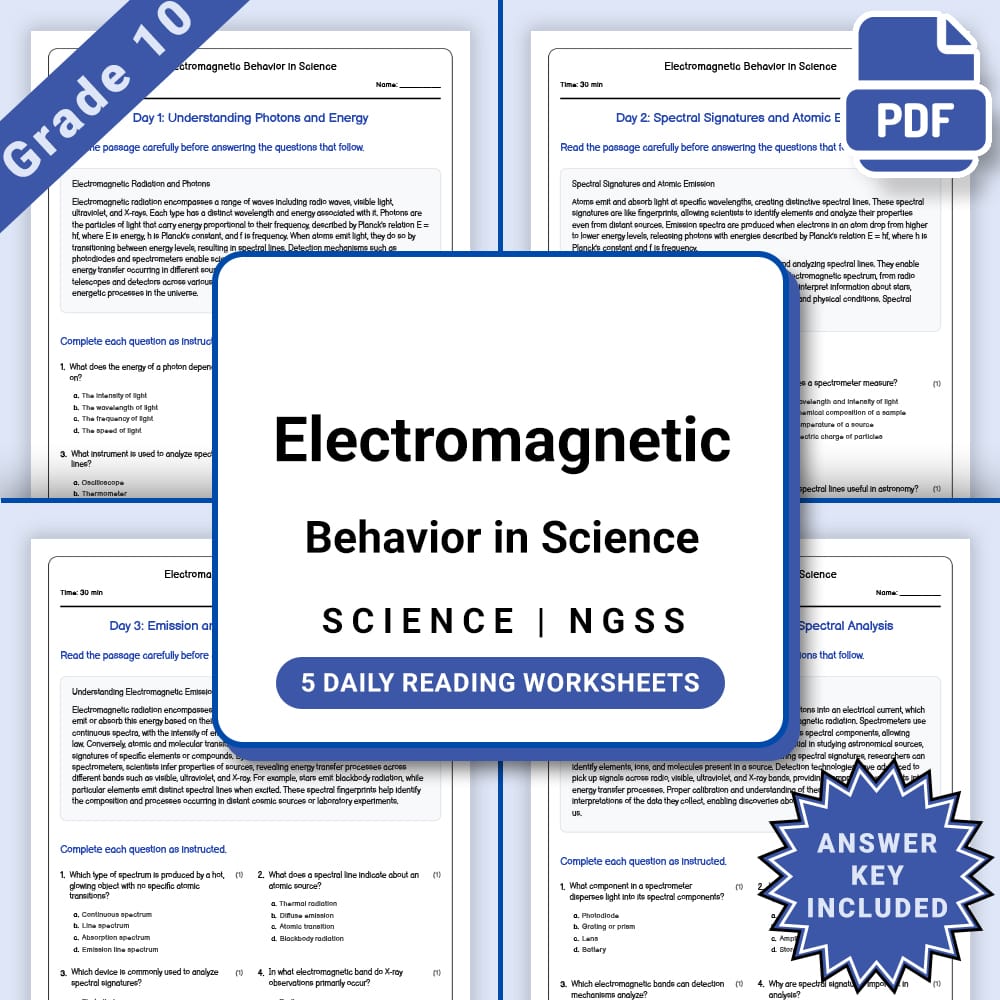
Grade 10 Science – Electromagnetic Behavior Worksheet (PDF +Answer Key)
Created byCopper Leaf ClassroomLearning Objectives
- Understand the properties of electromagnetic radiation.
- Explain photon energy using Planck’s relation E = hf.
- Interpret spectral signatures and emission spectra.
Instant download
Grade 10 Science – Control Strategies Worksheet (Ontario) (PDF)
Created byBright Mind ResourcesLearning Objectives
- Understand the purpose and application of control groups, randomization, blocking, and replication in experiments.
- Identify common sources of bias and confounding factors in experimental design.
- Explain rationale for selecting controls and levels of control in scientific procedures.
Instant download
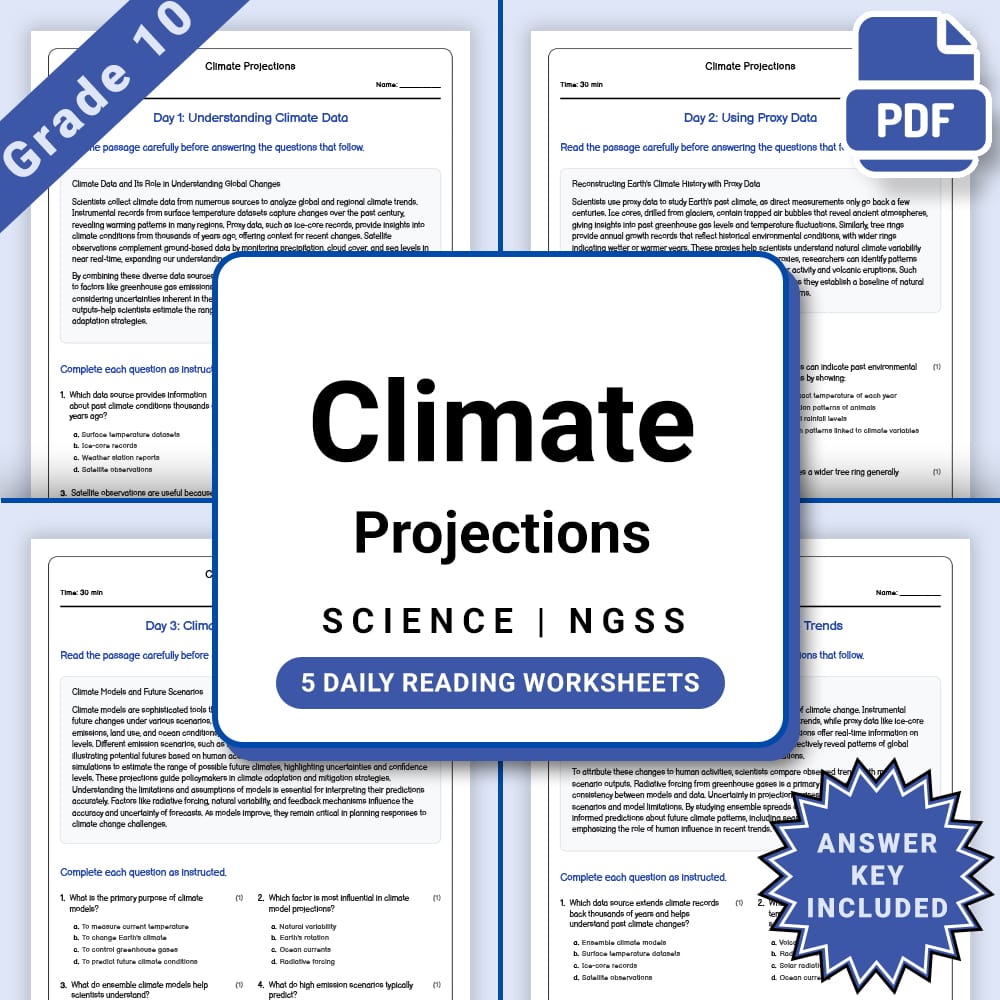
Grade 10 Science – Climate Projections Worksheet (PDF +Answer Key)
Created byCopper Leaf ClassroomLearning Objectives
- Understand key concepts related to Science
- Apply knowledge through practice questions
- Demonstrate comprehension of the material
Instant download
Grade 10 Science | Ethics and Safety Worksheet (PDF) – Ontario Standards
Created byBright Mind ResourcesLearning Objectives
- Understand the importance of ethical responsibilities in maintaining safety and integrity in scientific work.
- Identify key ethical considerations such as data honesty, consent, humane treatment, and reporting obligations.
- Evaluate how ethical practices influence the credibility and trustworthiness of scientific findings.
Instant download
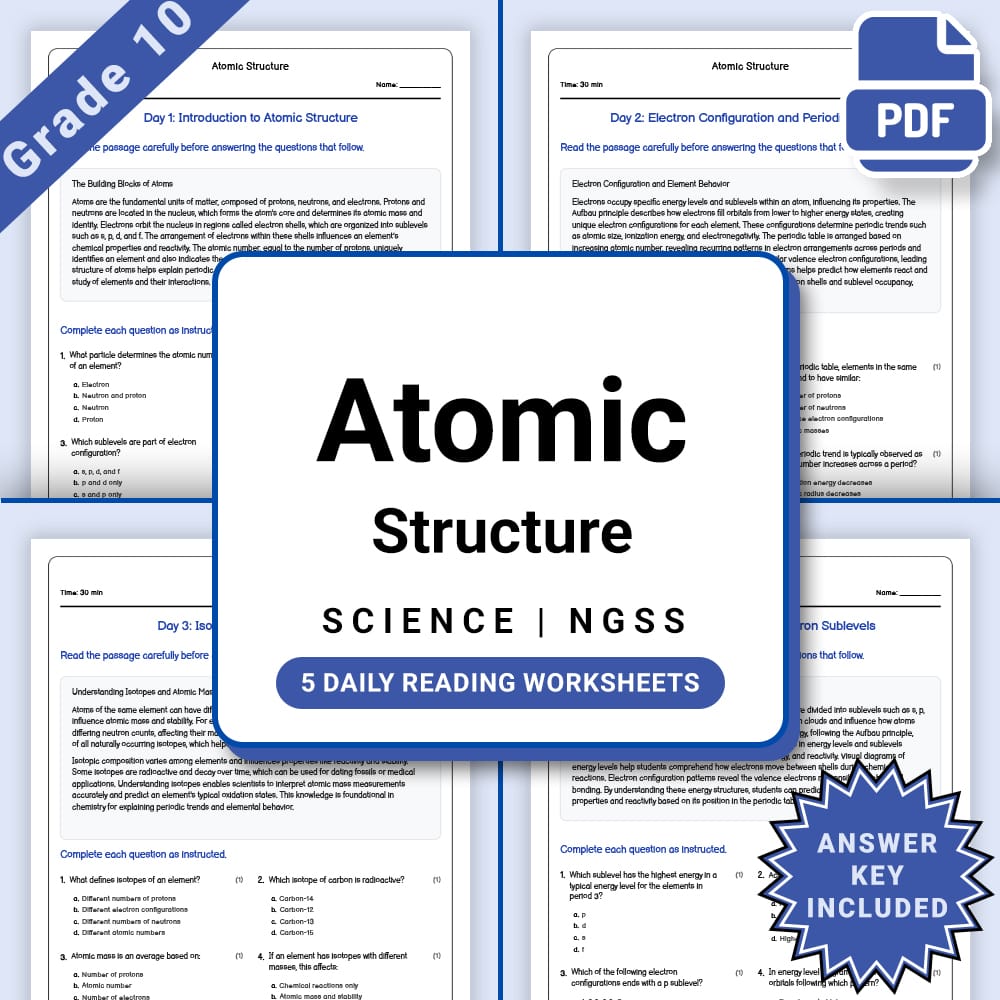
Grade 10 Science – Atomic Structure Worksheet (PDF +Answer Key)
Created byCopper Leaf ClassroomLearning Objectives
- Understand the basic components of an atom, including protons, neutrons, and electrons.
- Describe electron shells, sublevels, and how electrons are arranged in an atom.
- Explain the significance of atomic number and atomic mass in element properties.
Instant download
Grade 10 Science – Reaction Yield Worksheet (Ontario) with Answer Key
Created byBright Mind ResourcesLearning Objectives
- Understand the concept of limiting reagent and how it affects reaction yield.
- Calculate theoretical and actual yields based on chemical equations and measurements.
- Compute percent yield and analyze factors impacting reaction efficiency.
Instant download
Grade 10 Science | Science Careers Pathways Worksheet (Ontario, PDF)
Created byBright Mind ResourcesLearning Objectives
- Identify various scientific careers and their roles within laboratory and research settings.
- Understand the credential pathways and certifications required for science-related careers.
- Explore transferable skills such as measurement, safety, and reporting in scientific work.
Instant download
Grade 10 Science | Balancing Equations Worksheet – Ontario (PDF)
Created byBright Mind ResourcesLearning Objectives
- Understand the principle of conservation of mass in chemical reactions.
- Learn how to systematically balance chemical equations with coefficients.
- Distinguish between coefficients and subscripts in chemical formulas.
Instant download
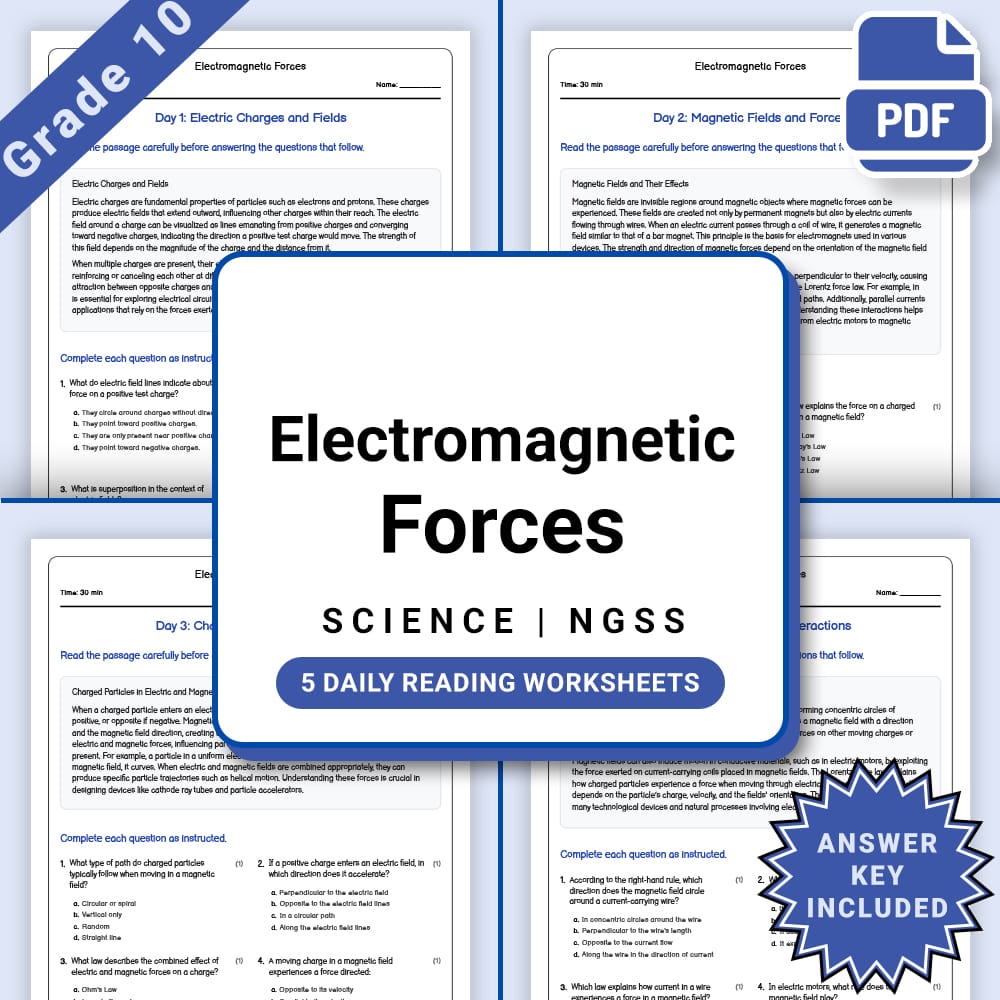
Grade 10 Science – Electromagnetic Forces Worksheet (PDF +Answer Key)
Created byCopper Leaf ClassroomLearning Objectives
- Understand how electric charges create electric fields around them.
- Explain the interaction between magnetic fields and electric currents.
- Describe the principles of the Lorentz force law in simple contexts.
Instant download
Grade 10 Science Surface Processes Worksheet | AP Standards (PDF) Practice Set
Created byBright Mind ResourcesLearning Objectives
- Understand key surface processes such as weathering, erosion, sediment transport, and deposition.
- Interpret how climate, lithology, and human activity influence landscape evolution.
- Identify observable signatures of surface processes, including sediment grain-size distributions and channel profiles.
Instant download
Grade 10 Science | Energy Changes Worksheet (AP Standard + Answer Key) (PDF)
Created byBright Mind ResourcesLearning Objectives
- Explain the concepts of endothermic and exothermic reactions in terms of energy transfer.
- Describe how bond breaking and forming influence reaction heat and potential energy diagrams.
- Understand the basic ideas of enthalpy and reaction spontaneity.
Instant download
Grade 10 Science – Systems Interactions Worksheet (Worksheet + Answer Key) | TEKS Aligned
Created byBright Mind ResourcesLearning Objectives
- Describe how multiple organ systems coordinate to maintain homeostasis during physiological challenges.
- Identify signaling pathways and feedback mechanisms involved in organ system interactions.
- Explain the concept of emergent properties arising from combined system actions.
Also included in: Grade 10 Science | Body Systems & Homeostasis Worksheet Bundle (TEKS Aligned) +5 more
Instant download
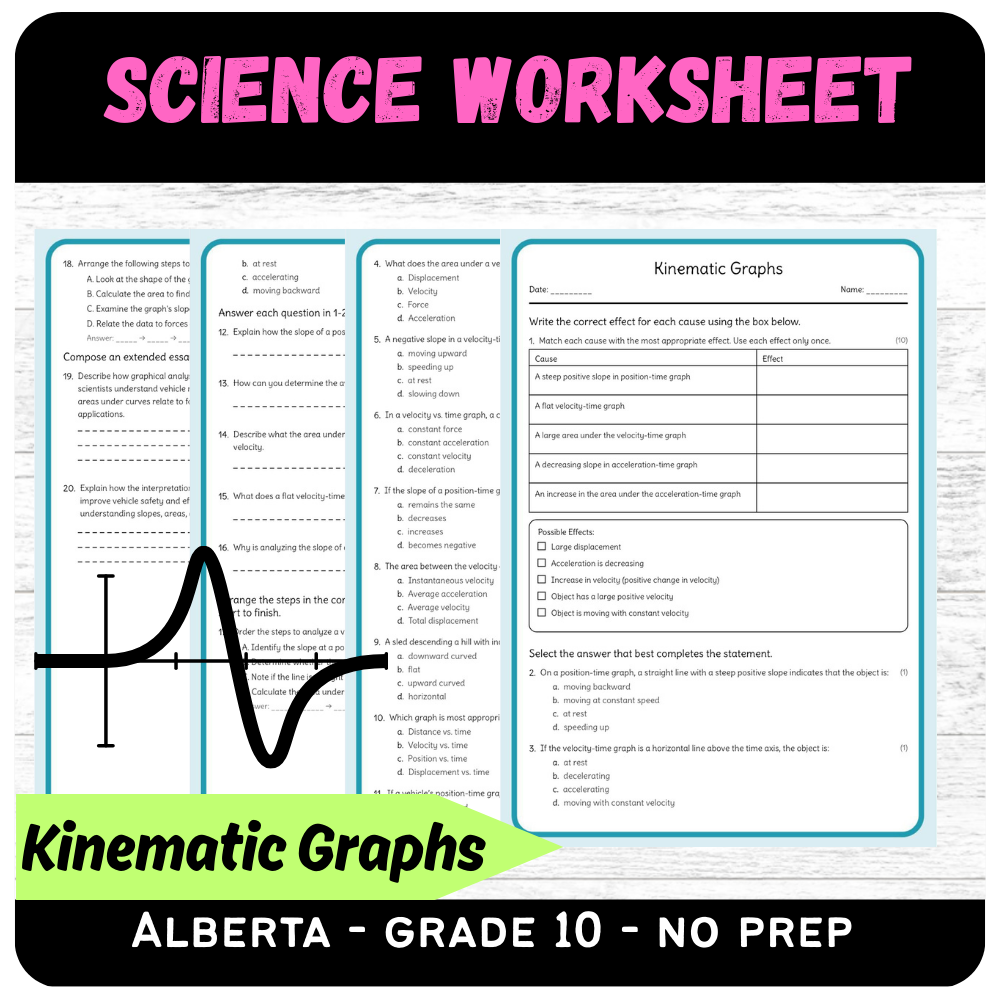
Grade 10 Science – Kinematic Graphs Worksheets (PDF) | Alberta Standards
Created byBright Mind ResourcesLearning Objectives
- Understand how position, velocity, and acceleration graphs represent motion.
- Learn to interpret slopes and areas under kinematic curves to analyze instantaneous and average quantities.
- Apply graphical analysis to real-world vehicle and sled motion scenarios.
Instant download
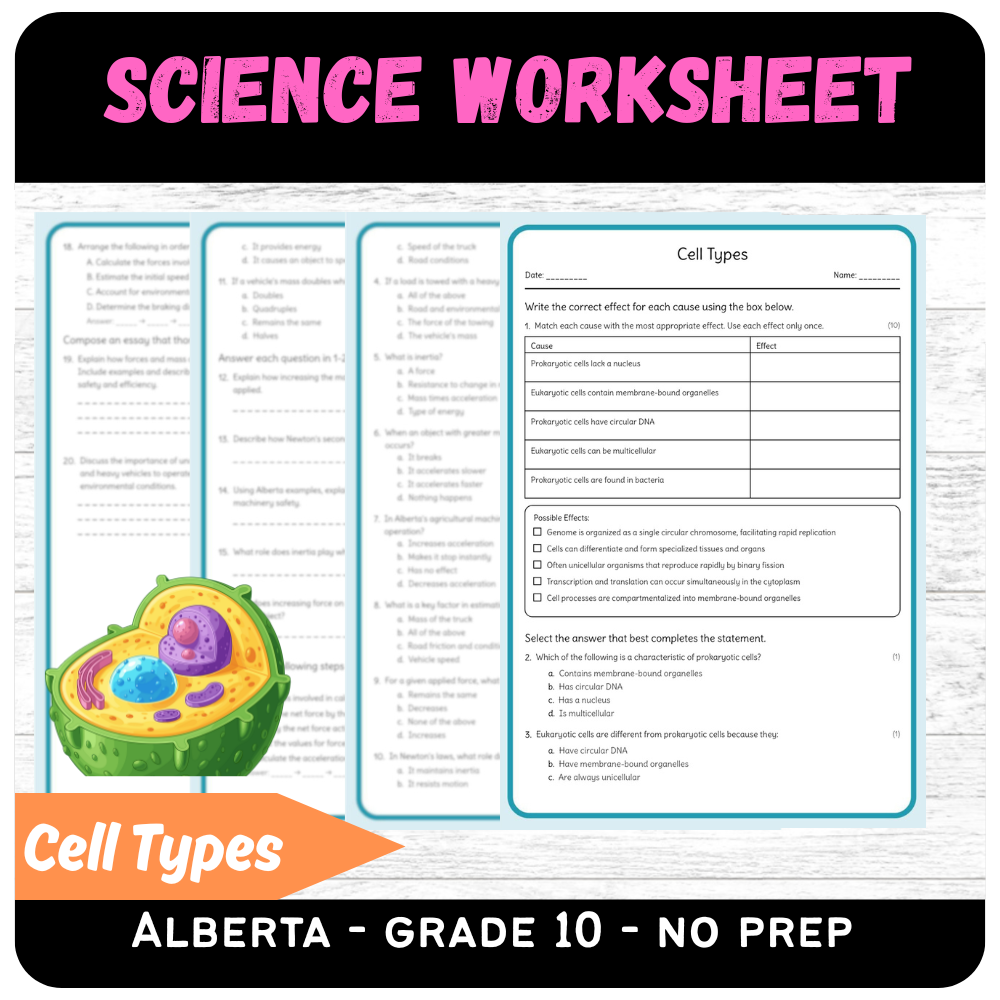
Grade 10 Science - Cell Types Worksheet (Worksheet) | Alberta Standards
Created byBright Mind ResourcesLearning Objectives
- Identify the structural differences between prokaryotic and eukaryotic cells.
- Explain how cell structure influences cellular functions such as reproduction and genetic control.
- Compare examples of prokaryotic and eukaryotic organisms within regional ecological contexts.
Instant download
Grade 10 Science | Variations and Heredity Worksheet (Worksheet + Answer Key) – TEKS Aligned
Created byBright Mind ResourcesLearning Objectives
- Understand how genetic variation arises from mutation, recombination, and gene flow.
- Explain how heritable traits influence organism survival and reproduction.
- Describe how natural selection acts on existing variation to change populations over generations.
Also included in: Grade 10 Science | Evolution & Heredity Unit Worksheet Bundle (TEKS Aligned) +5 more
Instant download
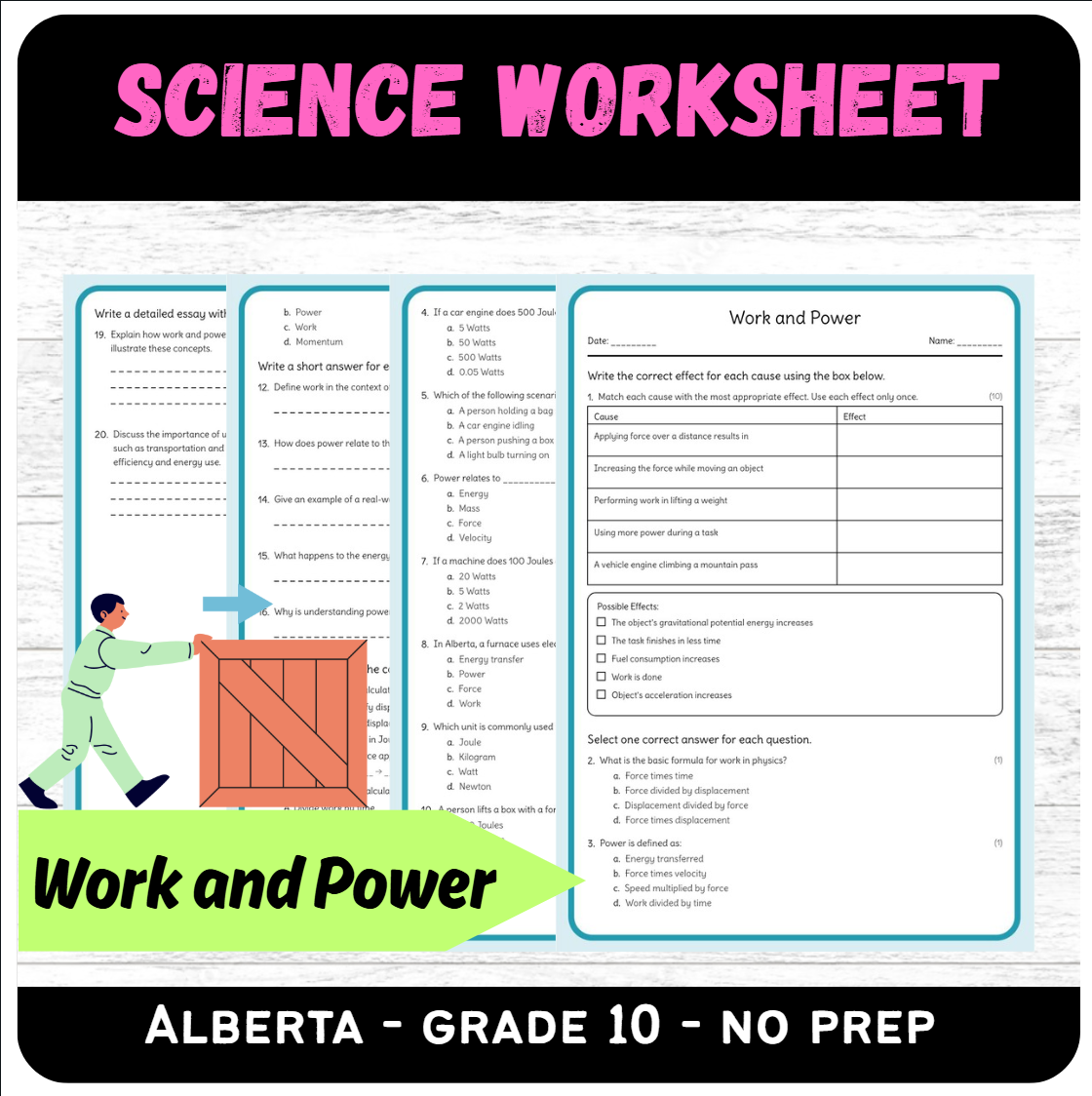
Grade 10 Science | Work and Power Worksheet – Alberta Standards (PDF)
Created byBright Mind ResourcesLearning Objectives
- Understand the definitions of work and power in physics.
- Calculate work done based on force and displacement.
- Explain how power relates to energy transfer over time.
Instant download
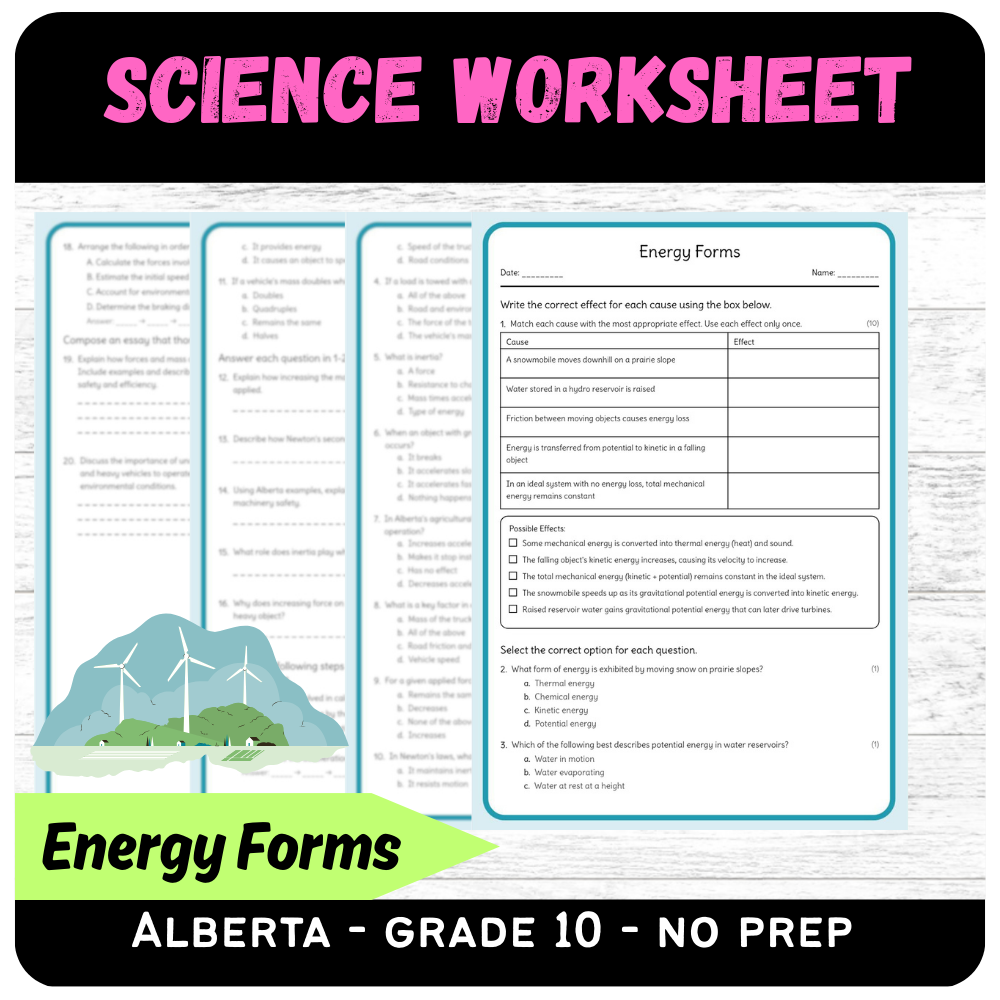
Grade 10 Science – Energy Forms Worksheet | Alberta Standards
Created byBright Mind ResourcesLearning Objectives
- Define kinetic and potential energy with real-world examples.
- Explain the conservation of mechanical energy in idealized systems.
- Describe how non-conservative forces affect energy distribution.
Instant download
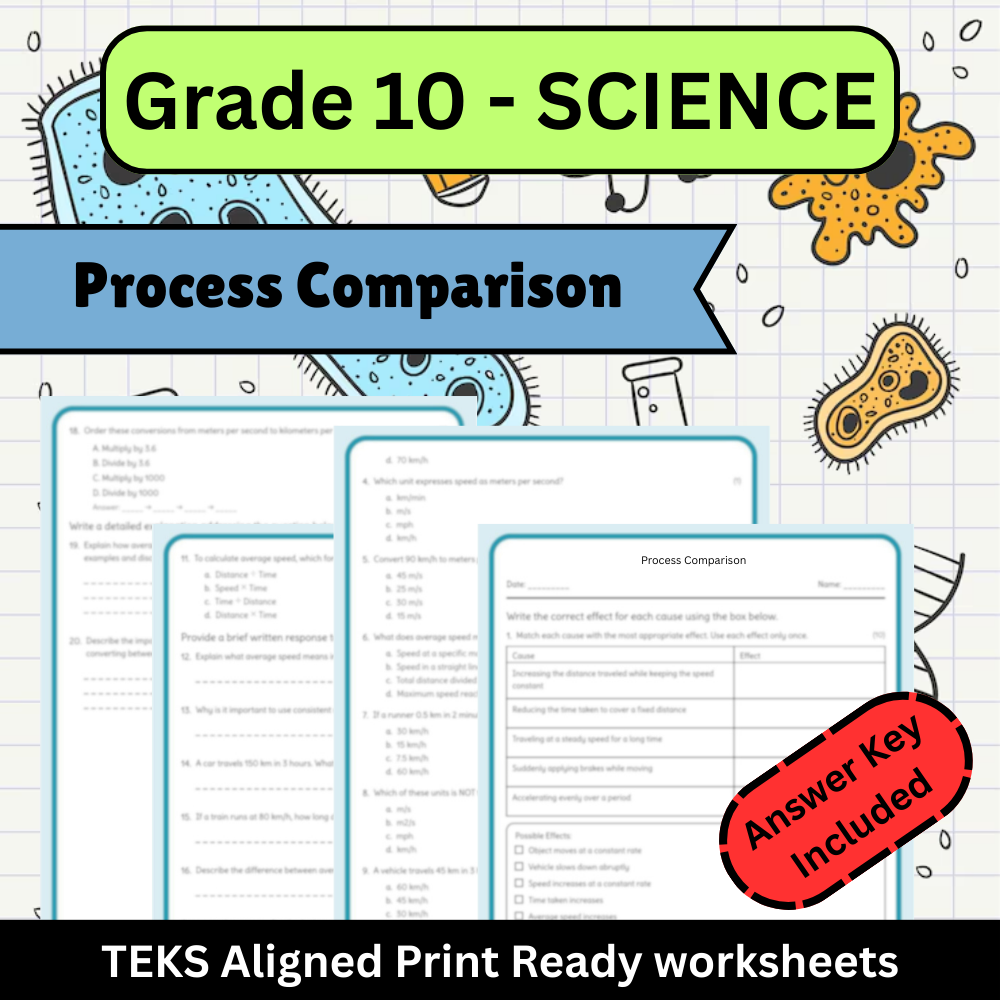
Grade 10 Science – Comparing Photosynthesis & Cellular Respiration Worksheet (PDF)
Created byBright Mind ResourcesLearning Objectives
- Compare the inputs and outputs of photosynthesis and cellular respiration.
- Identify the roles of carbon and energy flow in biological systems.
- Explain reciprocal relationships between autotrophs and heterotrophs in ecosystems.
Also included in: Grade 10 Science Unit Bundle – Photosynthesis, Respiration & Energy TEKS +5 more
Instant download
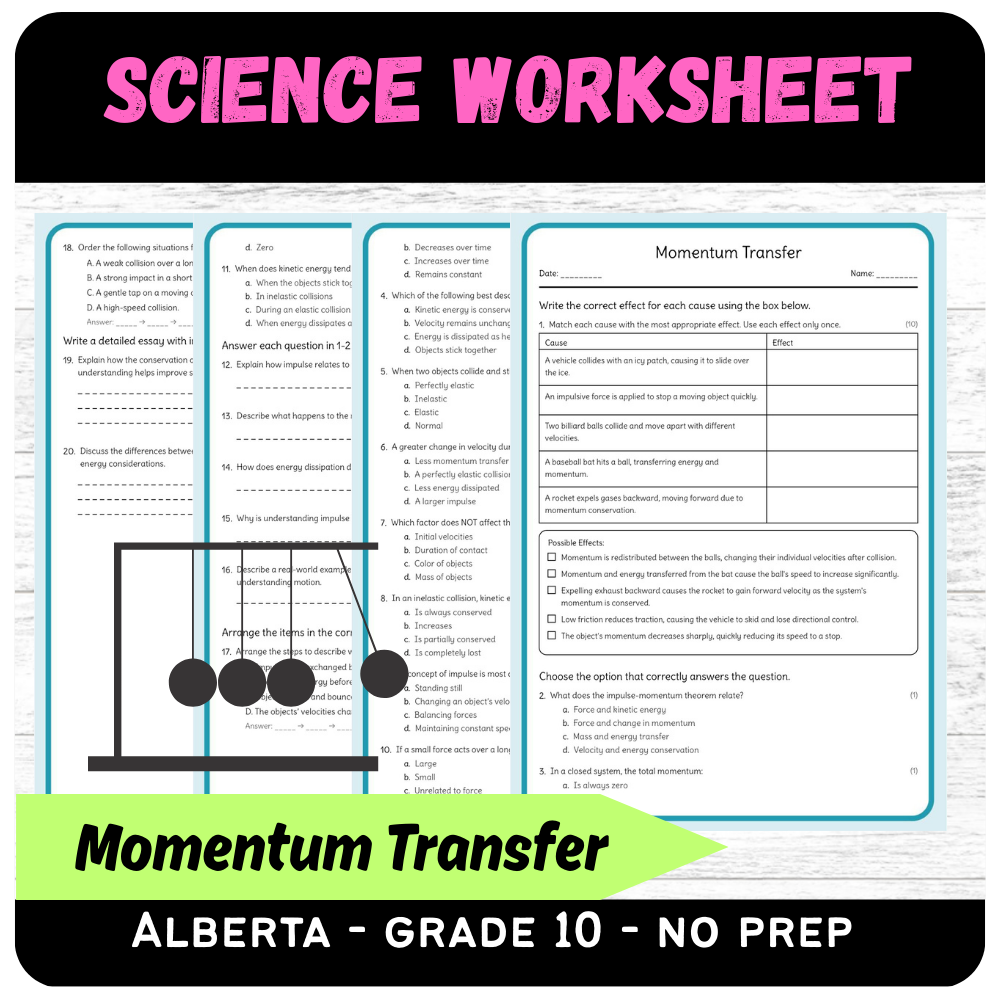
Grade 10 Science – Momentum Transfer Worksheet (Answer Key) | Alberta Standards
Created byBright Mind ResourcesLearning Objectives
- Understand the principle of conservation of momentum in closed systems.
- Analyze collisions and interactions where forces act over time.
- Explain the relationship between impulse and momentum during collisions.
Instant download
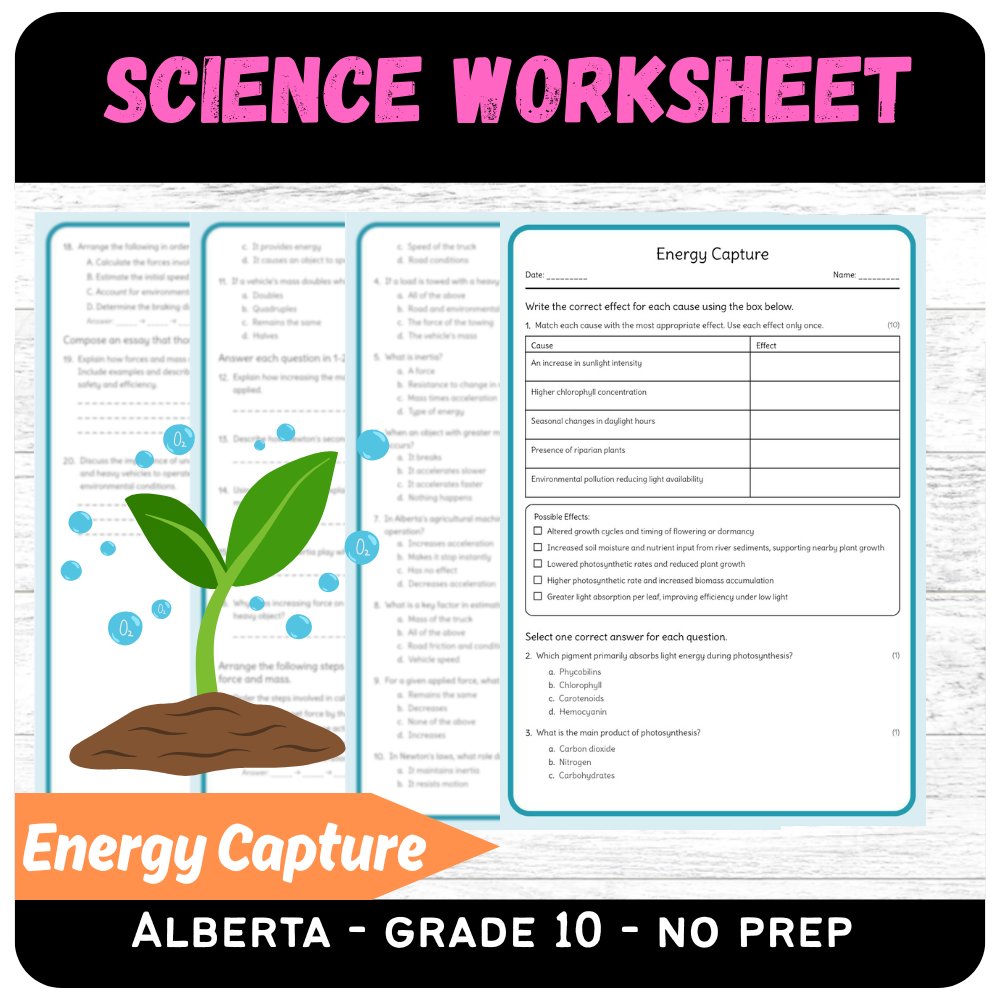
Grade 10 Science – Energy Capture Worksheet (PDF) | Alberta Standards
Created byBright Mind ResourcesLearning Objectives
- Explain the process of photosynthesis and how light energy is converted into chemical energy.
- Identify the roles of chlorophyll and other pigments in capturing light energy.
- Describe environmental influences on energy capture efficiency in plants.
Instant download
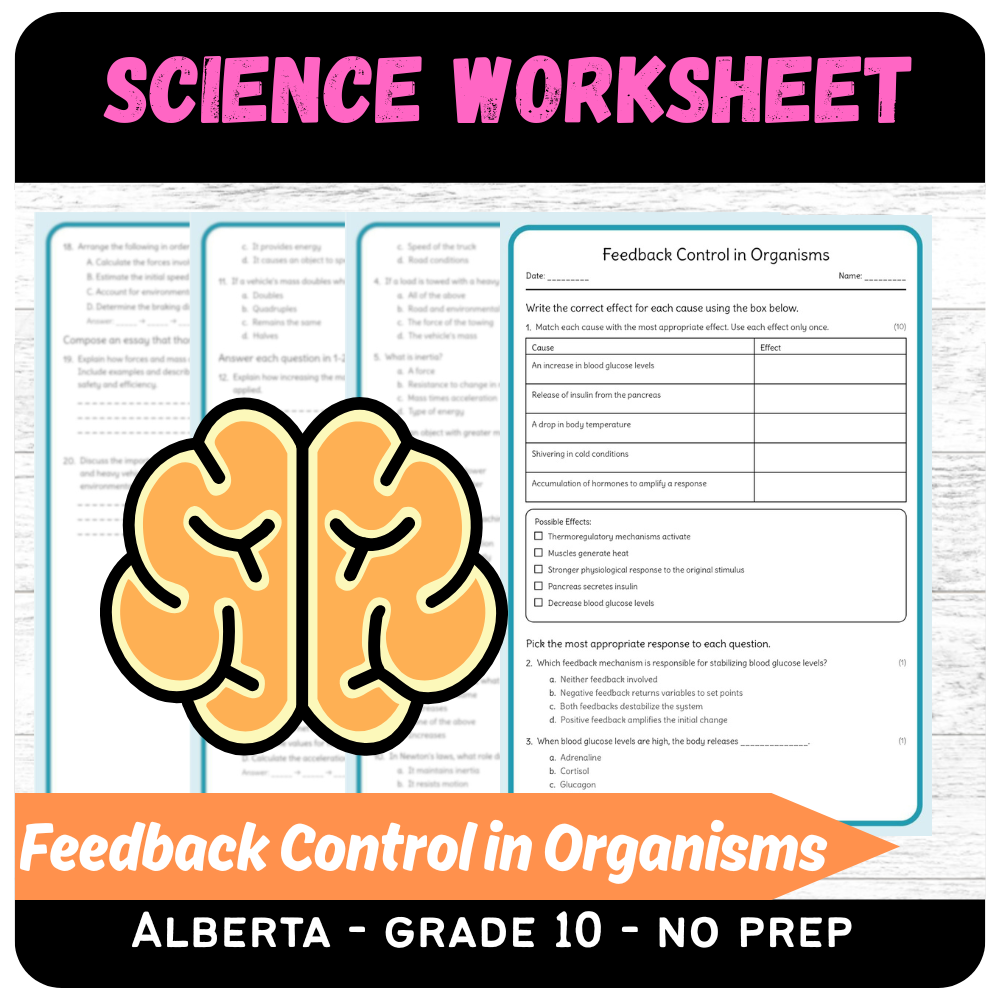
Grade 10 Science | Feedback Control in Organisms Worksheet (PDF)
Created byBright Mind ResourcesLearning Objectives
- Explain the mechanisms of negative and positive feedback in physiological processes.
- Compare different feedback loops and their roles in homeostasis and physiological regulation.
- Illustrate the consequences of failure in feedback regulation for organism health and ecosystems.
Instant download
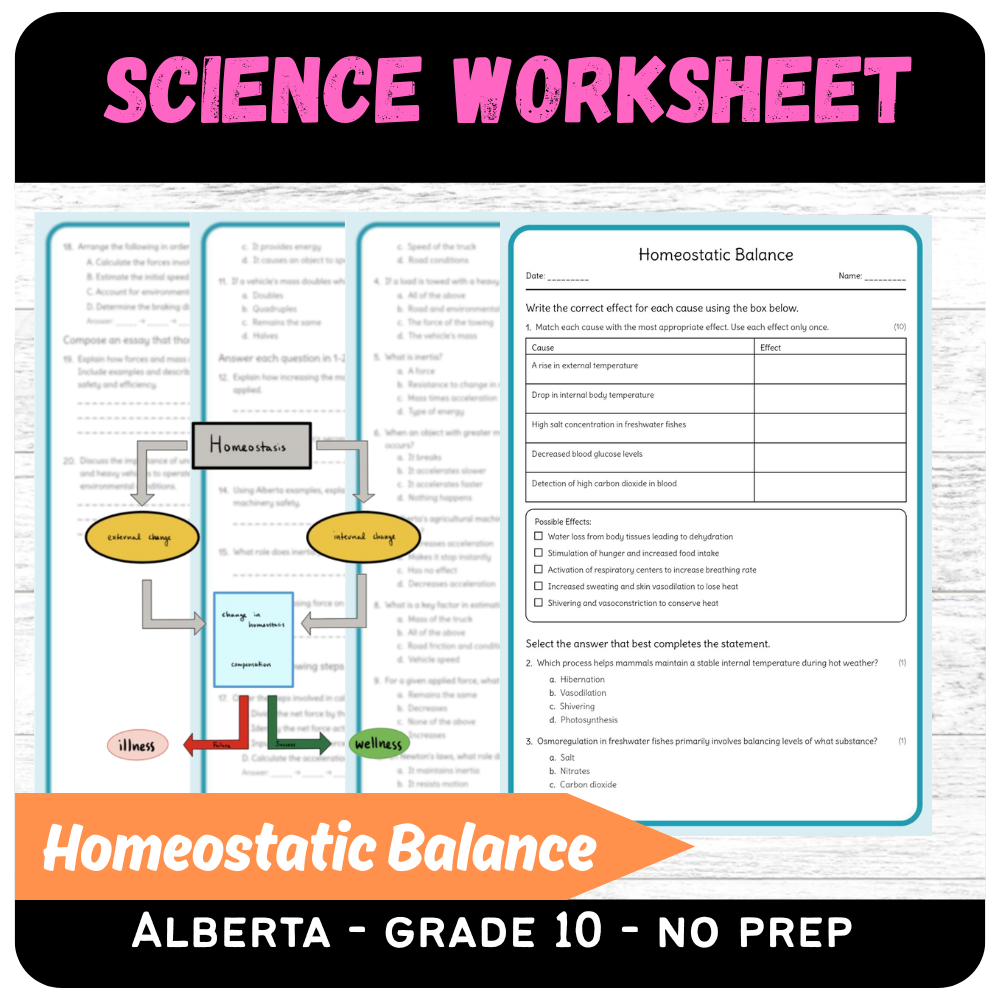
Grade 10 Science – Homeostatic Balance Worksheet (PDF) – Alberta Standards
Created byBright Mind ResourcesLearning Objectives
- Explain the mechanisms that maintain internal stability in organisms.
- Identify examples of homeostasis in different environmental contexts.
- Describe the physiological trade-offs involved in maintaining homeostatic set points.
Instant download
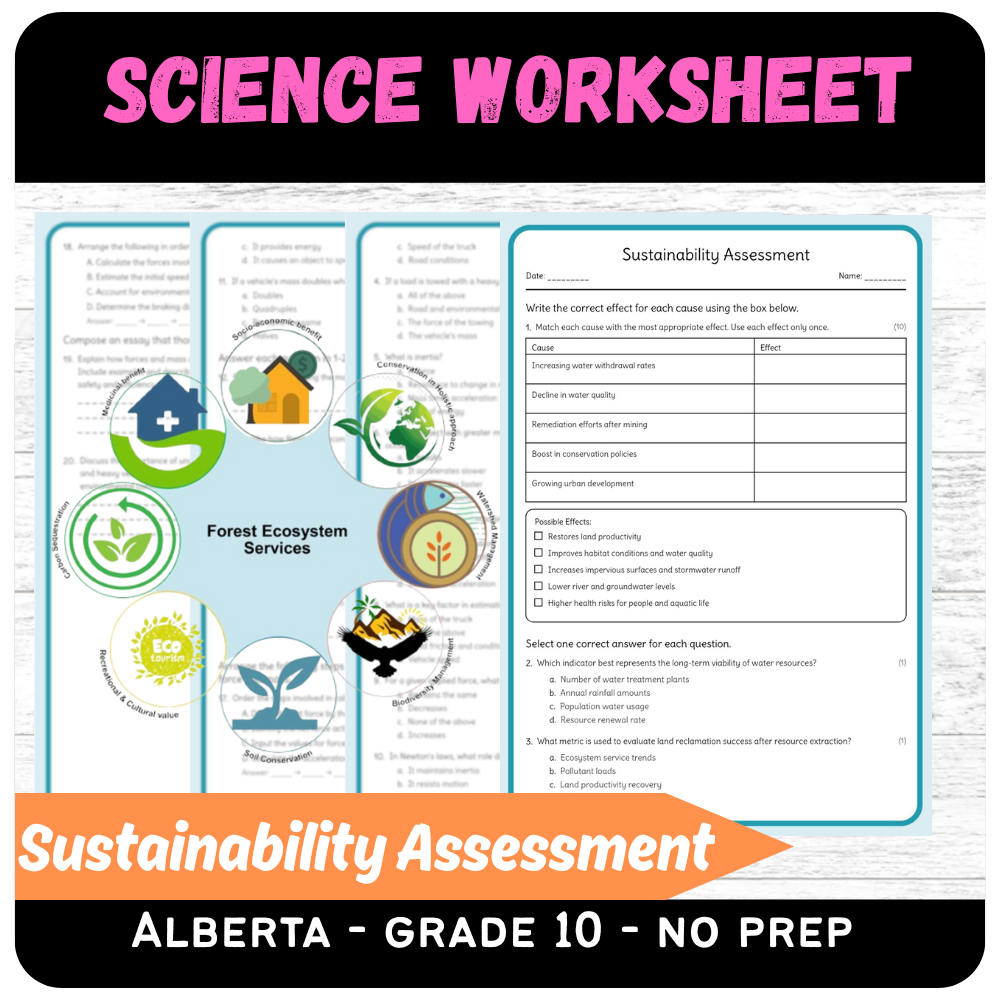
Grade 10 Science – Sustainability Assessment Worksheet (PDF) – Alberta Standards
Created byBright Mind ResourcesLearning Objectives
- Understand how environmental, economic, and social indicators are used to evaluate resource sustainability.
- Analyze frameworks for water allocation, land reclamation, and the effects of development to make informed decisions about resource management.
- Interpret metrics such as resource renewal rates, pollutant loads, and ecosystem service trends to assess sustainability.
Instant download
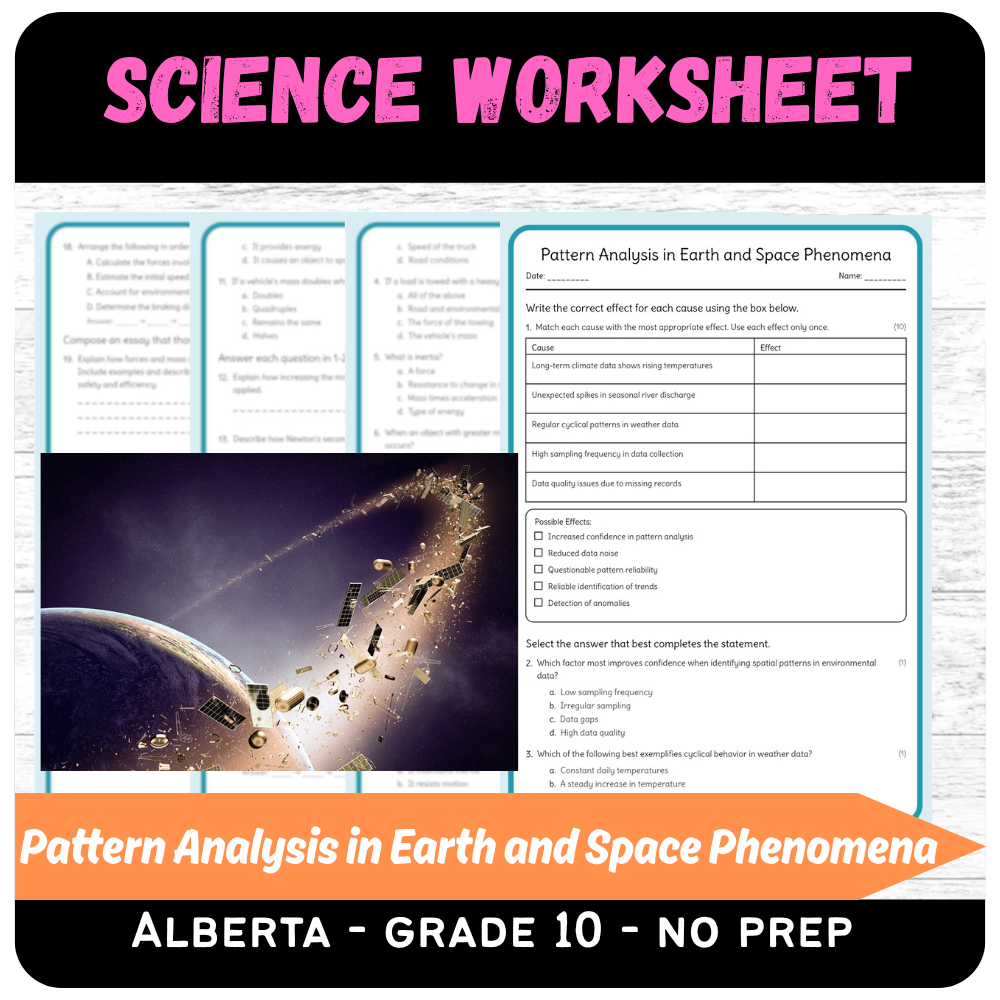
Grade 10 Science – Pattern Analysis in Earth and Space Phenomena (Worksheet + Answer Key)
Created byBright Mind ResourcesLearning Objectives
- Understand how to recognize and interpret temporal and spatial patterns in environmental data.
- Learn methods for analyzing regional climate, river discharge, and meteorological data to identify regularities and anomalies.
- Explore how data quality, sampling frequency, and statistical summaries influence confidence in pattern detection.
Instant download
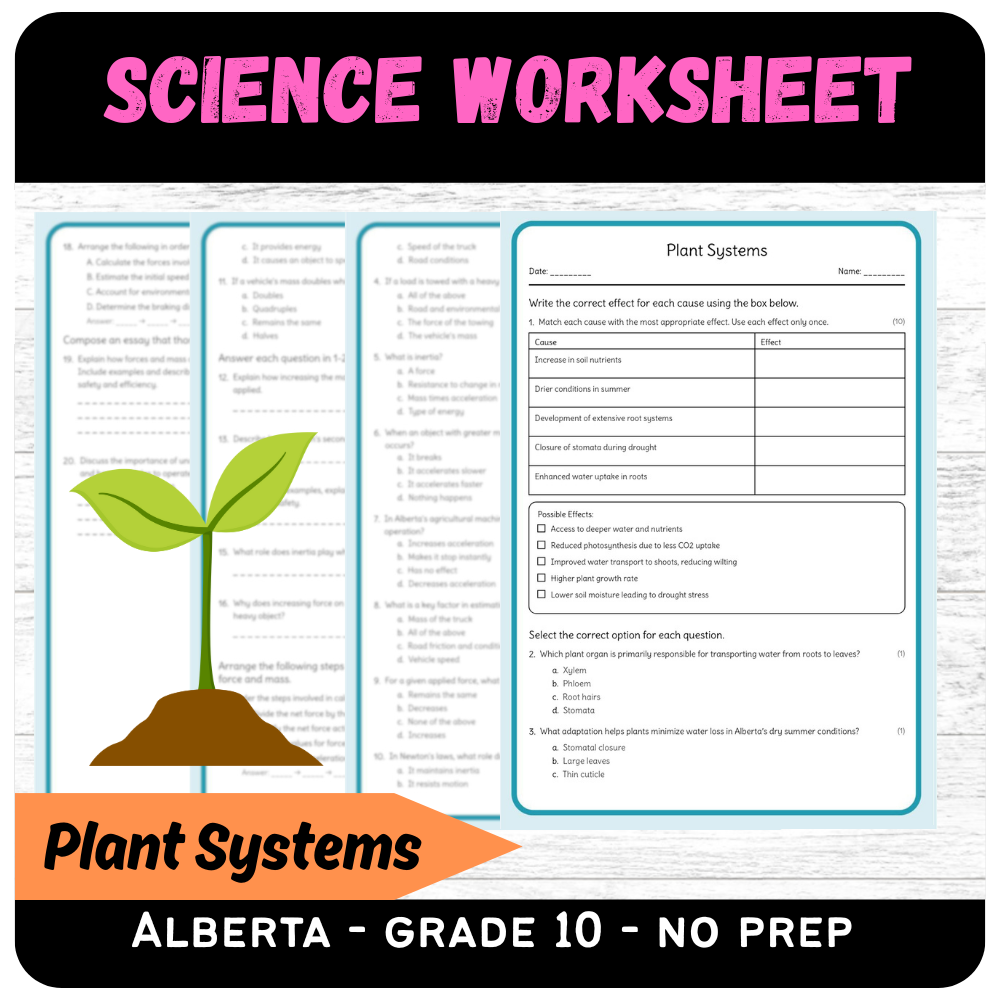
Grade 10 Science | Plant Systems Worksheet (Answer Key) – Alberta Standard
Created byBright Mind ResourcesLearning Objectives
- Describe the structure and function of key plant organ systems in resource acquisition, transport, and reproduction.
- Explain how plant systems adapt to different environmental conditions, particularly in Alberta's regional landscapes.
- Analyze the relationship between plant anatomy and environmental responses or agricultural practices.
Instant download
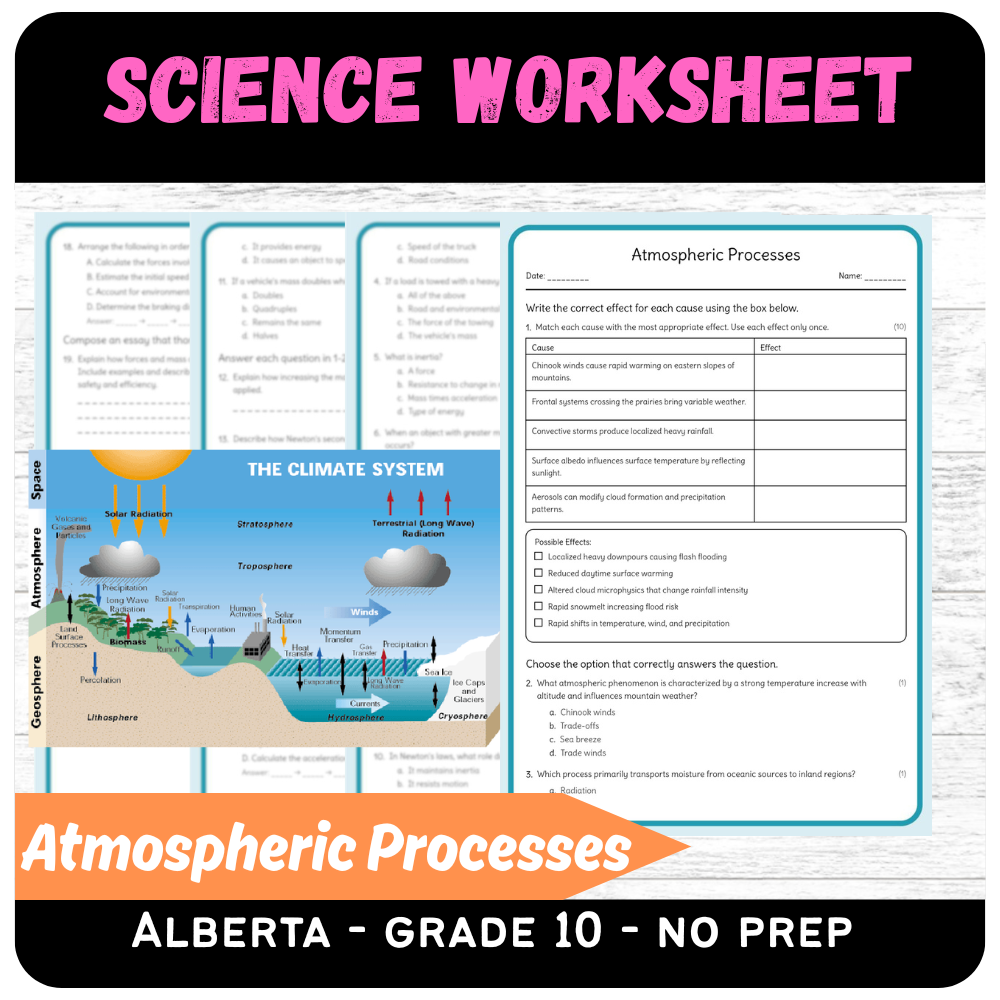
Grade 10 Science | Atmospheric Processes Worksheet (PDF) — Alberta Standards
Created byBright Mind ResourcesLearning Objectives
- Explain how pressure patterns, moisture transport, and thermal gradients influence weather systems and climate.
- Identify regional atmospheric phenomena and their effects on precipitation and weather variability.
- Describe how atmospheric composition, aerosols, and surface albedo modulate Earth's energy balance.
Instant download
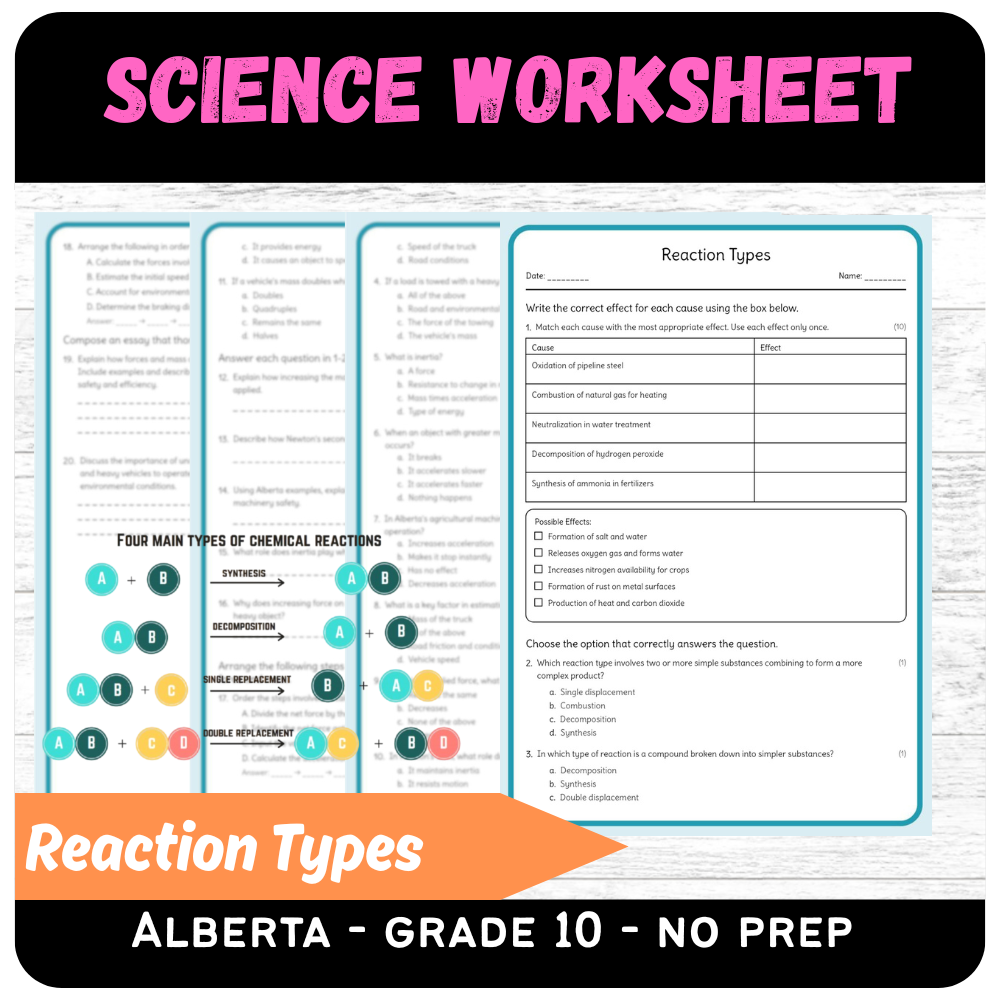
Grade 10 Science – Reaction Types Worksheet (PDF) – Alberta Standards
Created byBright Mind ResourcesLearning Objectives
- Understand the different types of chemical reactions including synthesis, decomposition, single and double displacement, and combustion.
- Identify reaction patterns and predict products based on reaction type using Alberta-relevant examples.
- Interpret chemical equations and classify reactions under typical provincial environmental conditions.
Instant download
Grade 10 Science – Physical Properties of Substances Worksheet (PDF)
Created byBright Mind ResourcesLearning Objectives
- Identify and differentiate between intensive and extensive physical properties.
- Explain the significance of physical and chemical properties in material selection and environmental behavior.
- Apply knowledge of physical and chemical properties to real-world examples.
Instant download
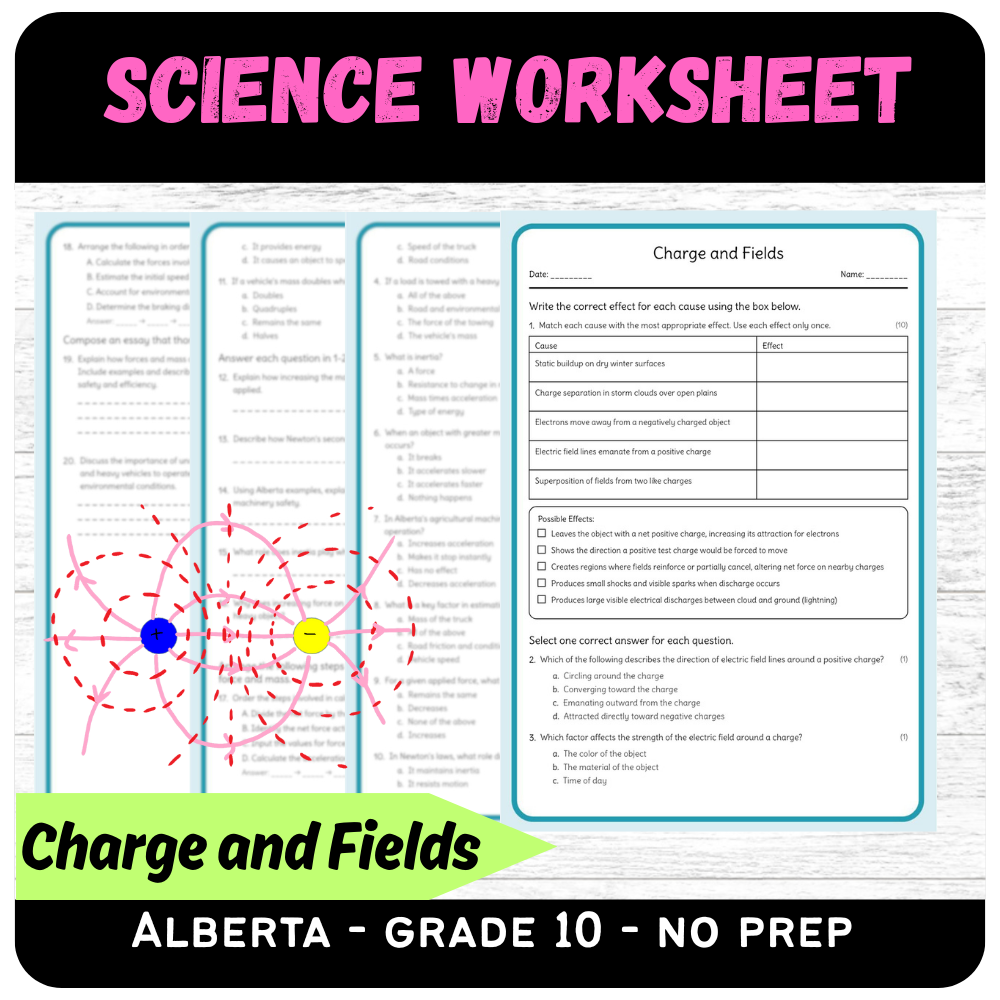
Grade 10 Science | Charge and Electric Fields Worksheet (PDF)
Created byBright Mind ResourcesLearning Objectives
- Understand the concept of electric charge, its sign and magnitude.
- Explain how electric field lines represent the strength and direction of forces between charges.
- Apply superposition principles to analyze electric fields from multiple charges.
Instant download
Grade 10 Science – Biotic and Abiotic Factors Worksheet (Answer Key) | TEKS
Created byBright Mind ResourcesLearning Objectives
- Identify the differences between biotic and abiotic factors in ecosystems.
- Explain how biotic and abiotic factors interact to influence habitats and communities.
- Describe how abiotic gradients affect species ranges and populations.
Also included in: Grade 10 Science | Ecosystems & Biodiversity Unit Worksheet Bundle(TEKS-Aligned) +5 more
Instant download
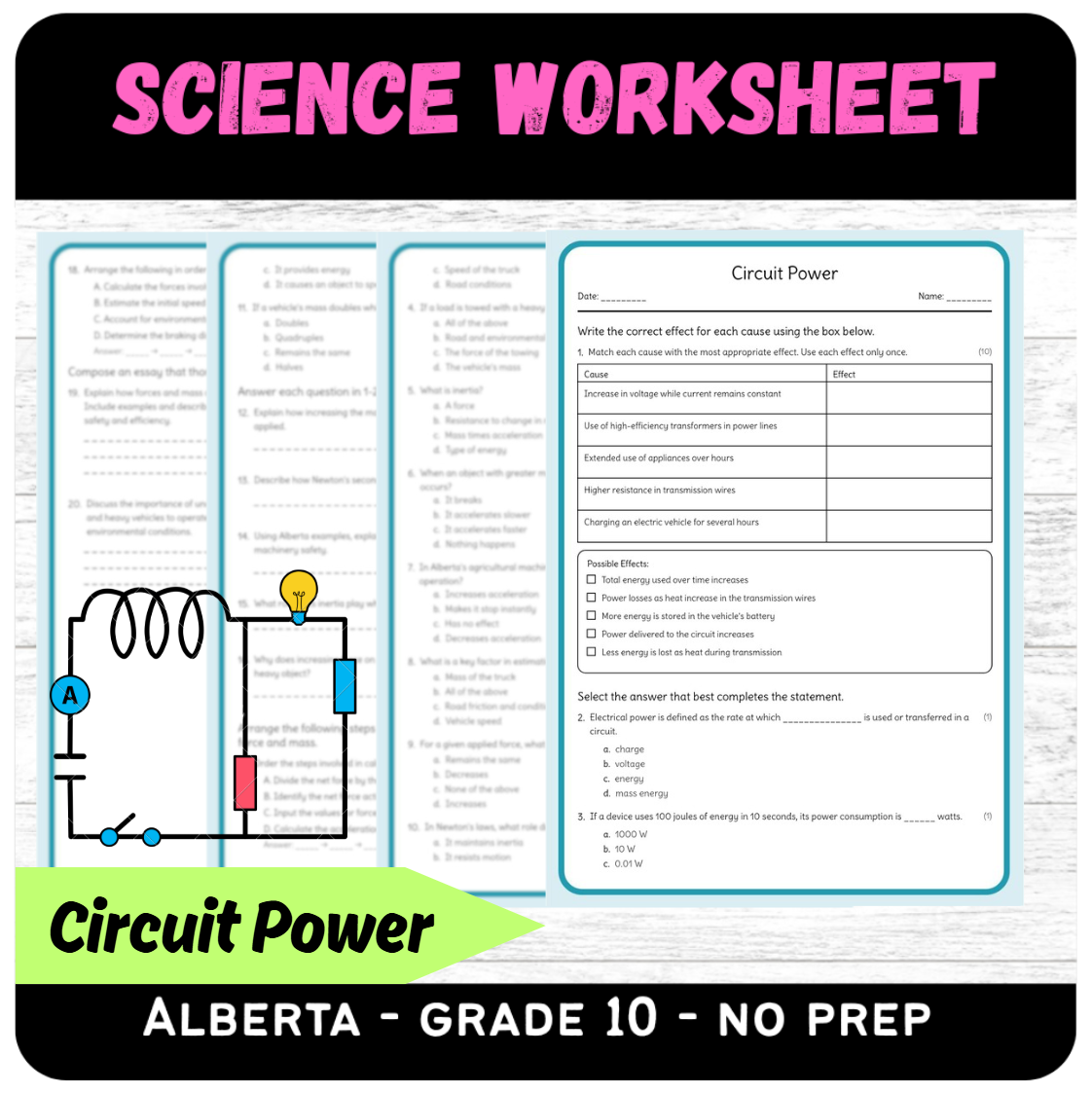
Grade 10 Science | Circuit Power Worksheet (PDF) – Alberta Standards
Created byBright Mind ResourcesLearning Objectives
- Understand the concept of electrical power in circuits and how voltage and current relate to energy consumption.
- Calculate electrical energy used over time in household and regional contexts.
- Apply the principles of power and energy to practical examples such as heating loads and electric vehicle charging.
Instant download
Grade 10 Science – Energy Diagrams Worksheet (PDF) – Alberta Standard
Created byBright Mind ResourcesLearning Objectives
- Interpret energy diagrams and bar charts to analyze energy transfer between different forms in various processes.
- Identify sources and sinks of energy in mechanical and thermal phenomena using visual representations.
- Link graph and diagram data to conservation principles in regional and engineered systems.
Instant download
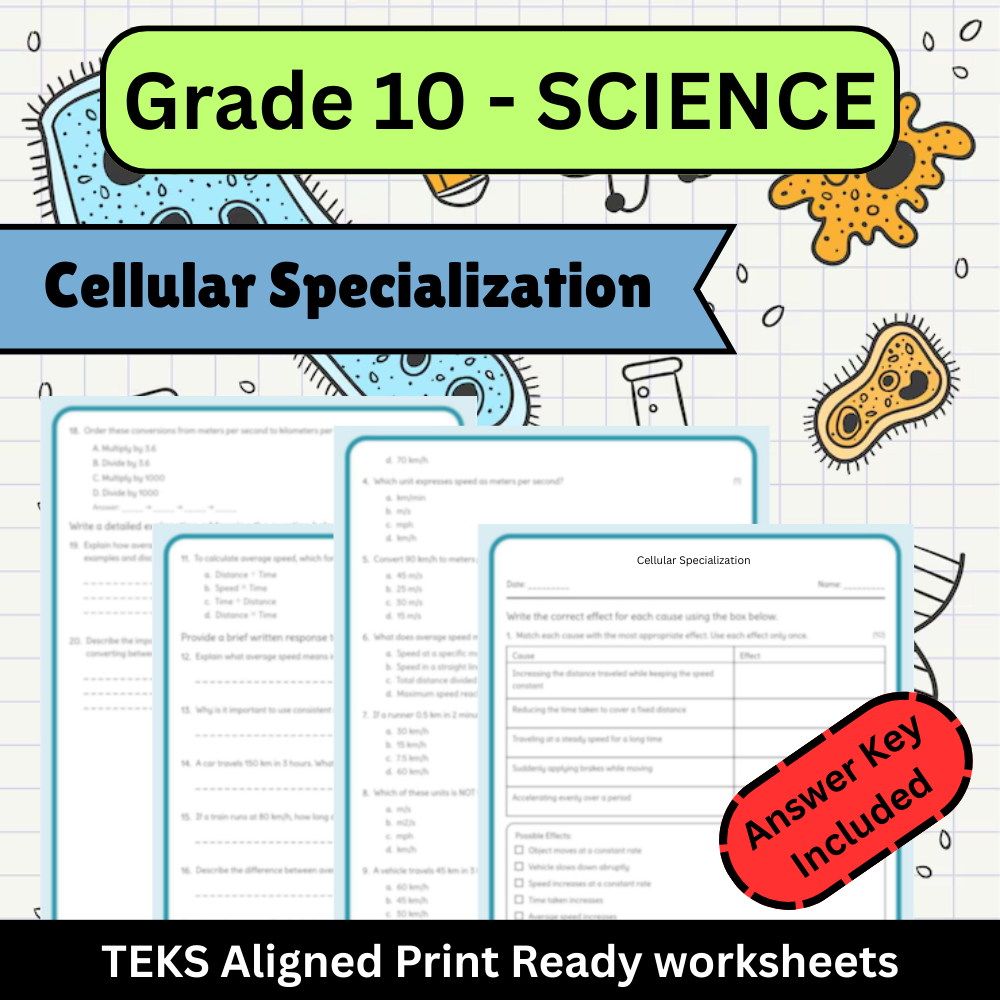
Grade 10 Science – Cellular Specialization Worksheet (Worksheet + Answer Key) | TEKS Alignment
Created byBright Mind ResourcesLearning Objectives
- Understand how organelles are specialized for specific cellular functions.
- Identify relationships between organelle abundance and cell function.
- Explain how cells form tissues and organ systems in multicellular organisms.
Also included in: Grade 10 Science | Cell Structure & Function Unit Worksheet Bundle(TEKS-Aligned) +5 more
Instant download
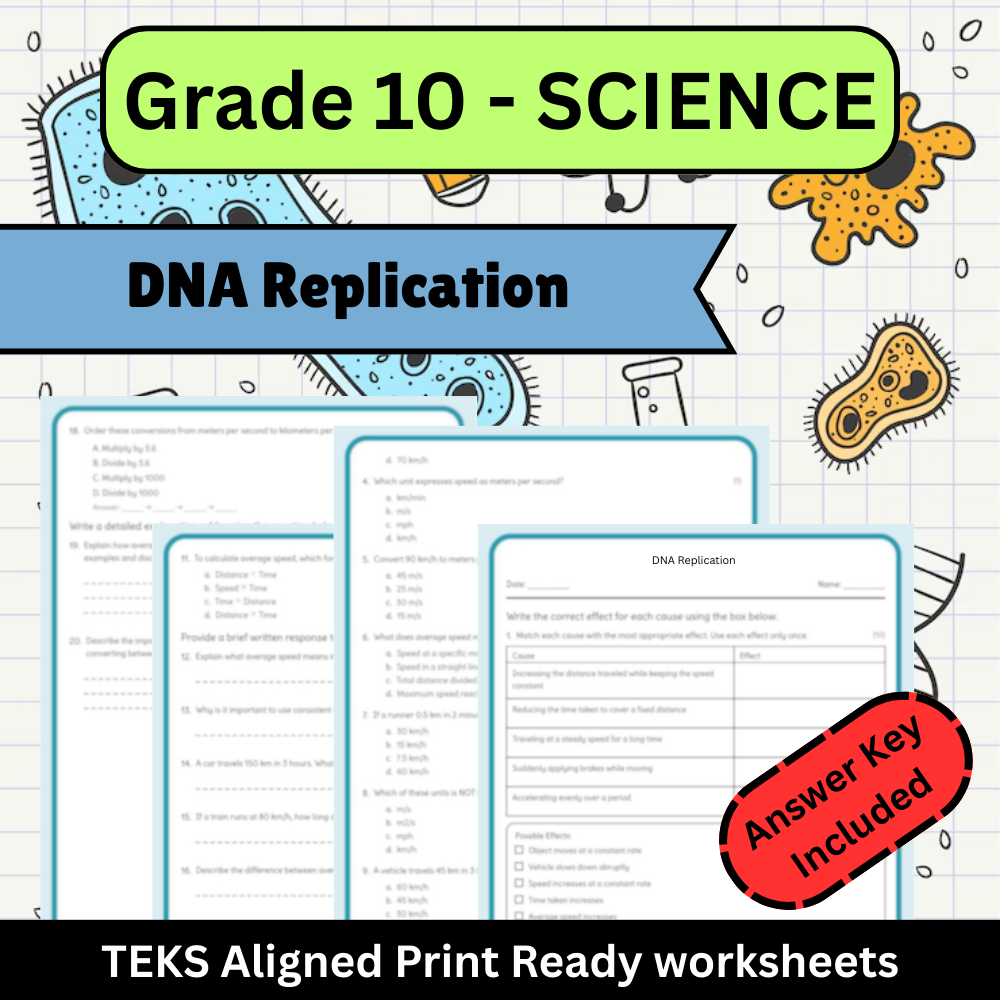
Grade 10 Science – DNA Replication Instructional Worksheet (Worksheet + Answer Key)
Created byBright Mind ResourcesLearning Objectives
- Describe the process of DNA replication, including the roles of key enzymes.
- Explain the semiconservative nature of DNA replication.
- Identify the differences between leading and lagging strands during replication.
Also included in: Grade 10 Science | Genetics & DNA Unit Worksheet Pack (TEKS Aligned) +5 more
Instant download
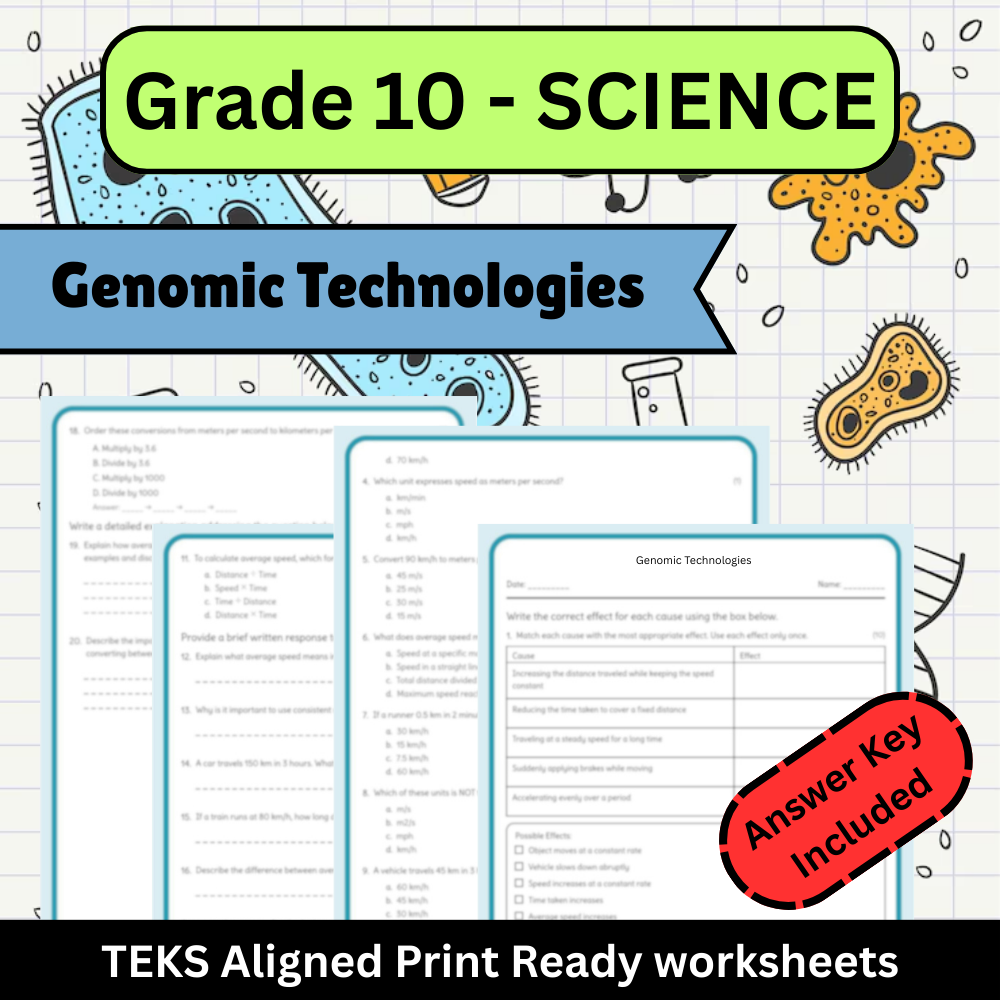
Grade 10 Science | Genomic Technologies Worksheet (Worksheet + Answer Key) – TEKS Aligned
Created byBright Mind ResourcesLearning Objectives
- Understand key genomic technologies such as PCR, DNA sequencing, and CRISPR.
- Explain how recombinant DNA techniques are used in biotechnology.
- Evaluate the societal and ecological impacts of genomic editing tools.
Also included in: Grade 10 Science | Genetics & DNA Unit Worksheet Pack (TEKS Aligned) +5 more
Instant download
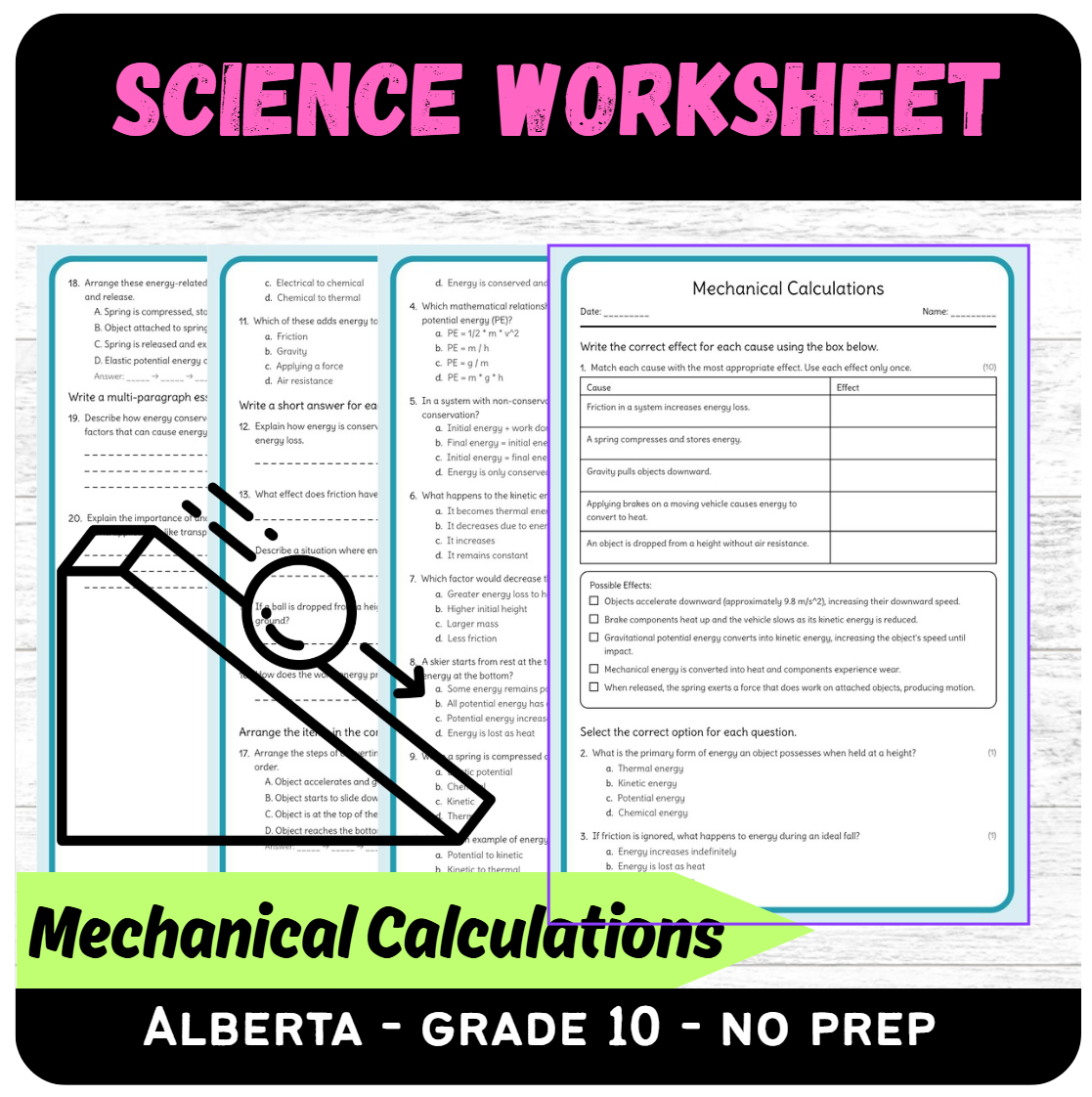
Grade 10 Science – Mechanical Calculations Worksheet (PDF) – Alberta Standards
Created byBright Mind ResourcesLearning Objectives
- Understand how energy is conserved and transformed in mechanical systems involving friction, springs, and gravity.
- Apply mathematical formulas to calculate potential and kinetic energy in real-world scenarios.
- Analyze the effects of non-conservative forces like friction on energy transfer.
Instant download
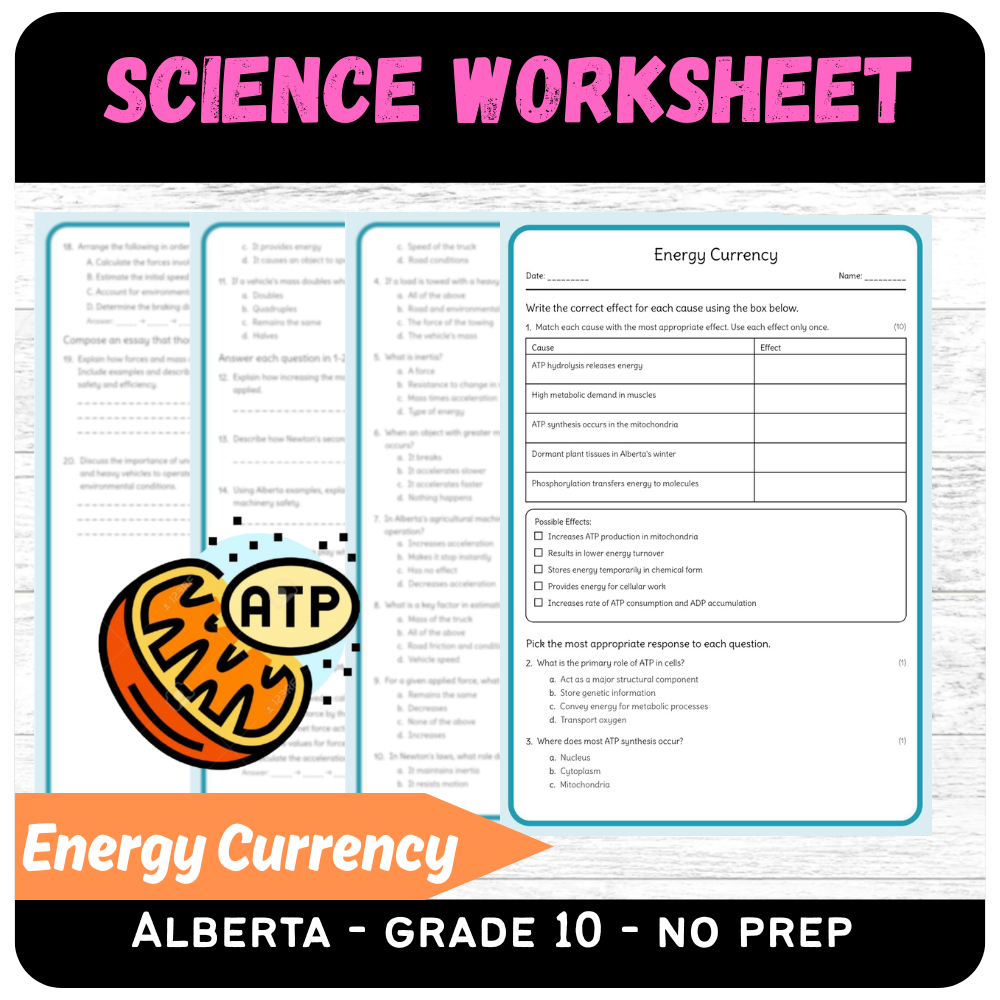
Grade 10 Science | Energy Currency Worksheet (PDF) – Alberta Standards
Created byBright Mind ResourcesLearning Objectives
- Explain the role of ATP as the primary energy currency in cellular processes.
- Describe how ATP synthesis and hydrolysis support metabolic reactions.
- Analyze differences in ATP turnover rates in various tissues and environments.
Instant download
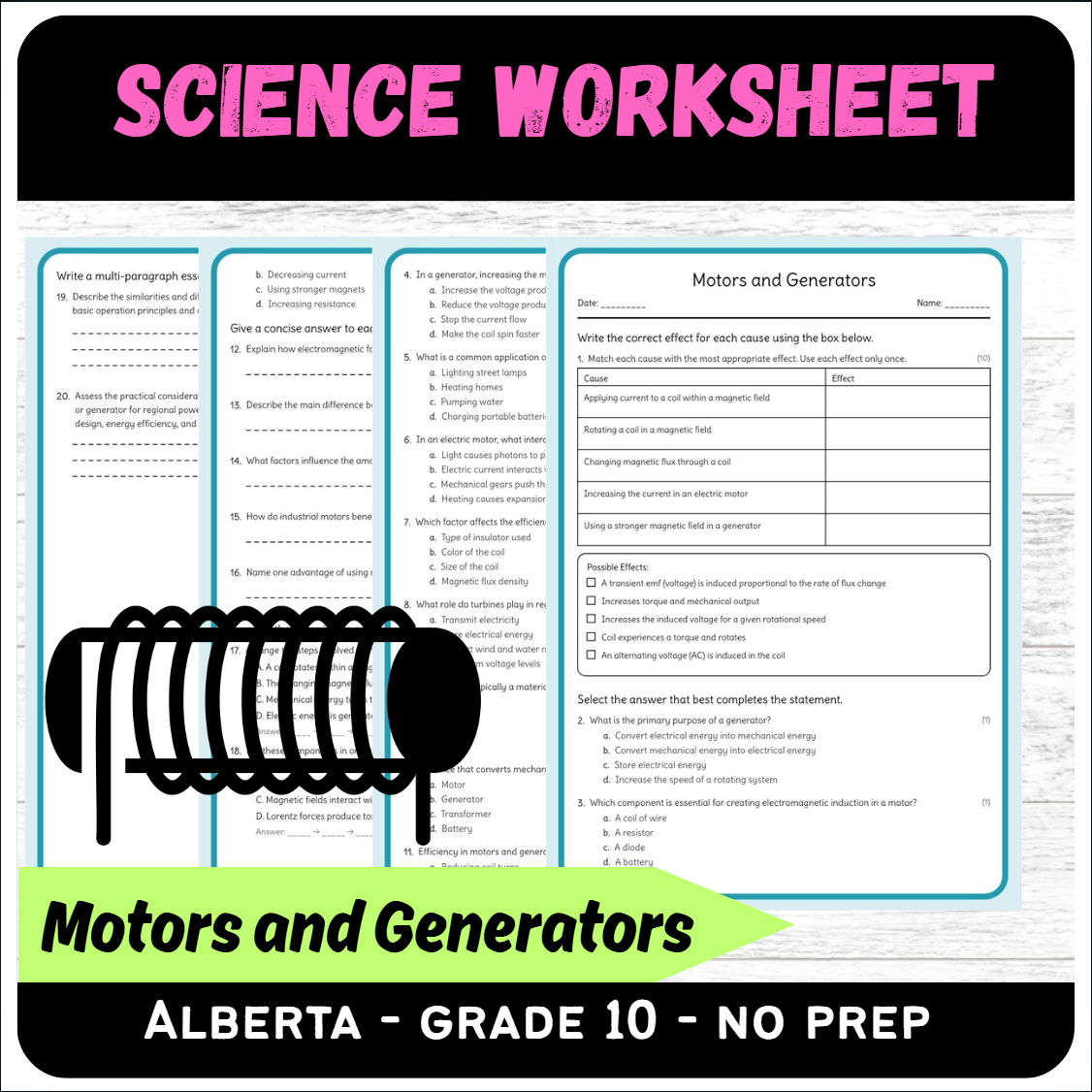
Grade 10 Science | Motors and Generators Worksheet (PDF) – Alberta Standards
Created byBright Mind ResourcesLearning Objectives
- Understand how motors and generators convert electrical energy into mechanical energy and vice versa.
- Explain the principles of electromagnetic induction involved in motor and generator operation.
- Analyze the relationship between electrical current, magnetic fields, and mechanical output in electromechanical devices.
Instant download
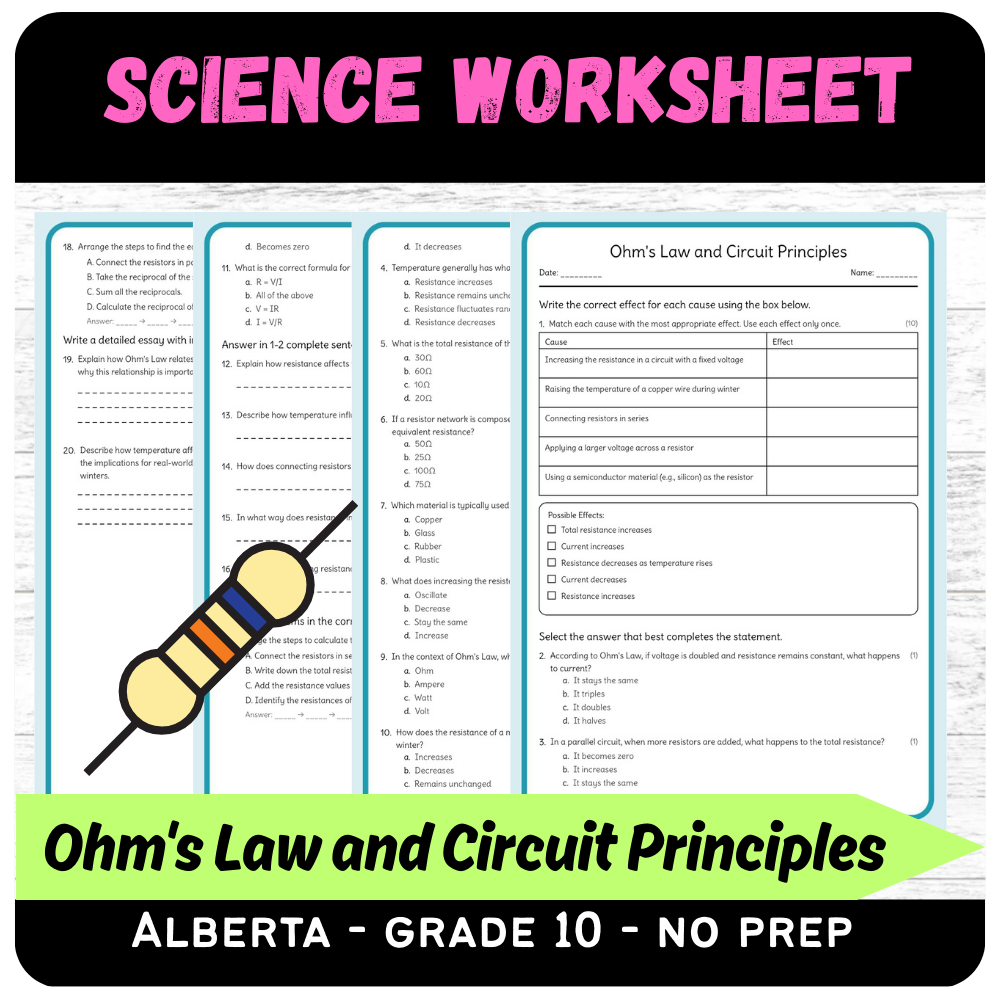
Grade 10 Science | Ohm's Law & Circuit Principles Worksheet (PDF)
Created byBright Mind ResourcesLearning Objectives
- Understand the relationship between voltage, current, and resistance as described by Ohm's Law.
- Calculate equivalent resistance in series and parallel resistor networks.
- Analyze how temperature affects the resistance of different materials.
Instant download
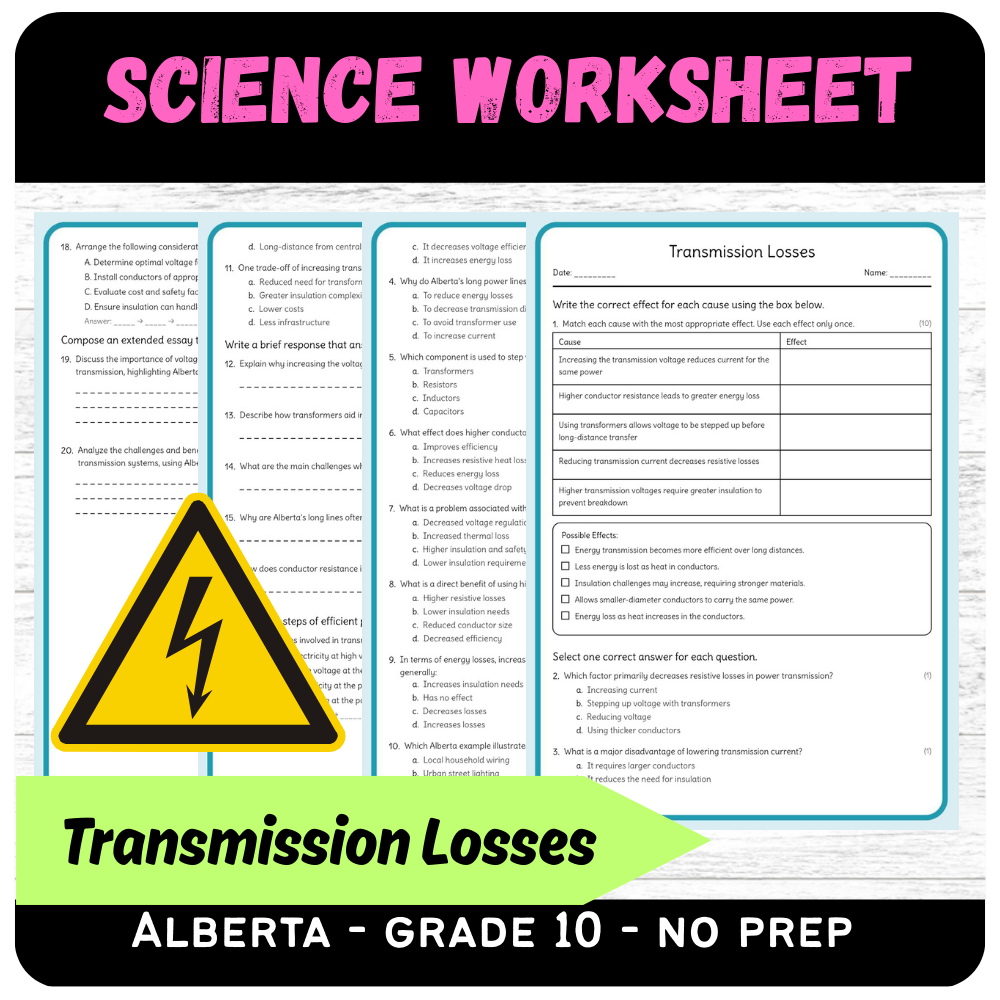
Grade 10 Science – Transmission Losses Worksheet (PDF) – Alberta Standards
Created byBright Mind ResourcesLearning Objectives
- Explain how current and conductor resistance affect energy losses in power transmission.
- Describe strategies such as voltage regulation and transformer use to improve transmission efficiency.
- Analyze Alberta examples of long-distance power lines and interprovincial energy transfers.
Instant download
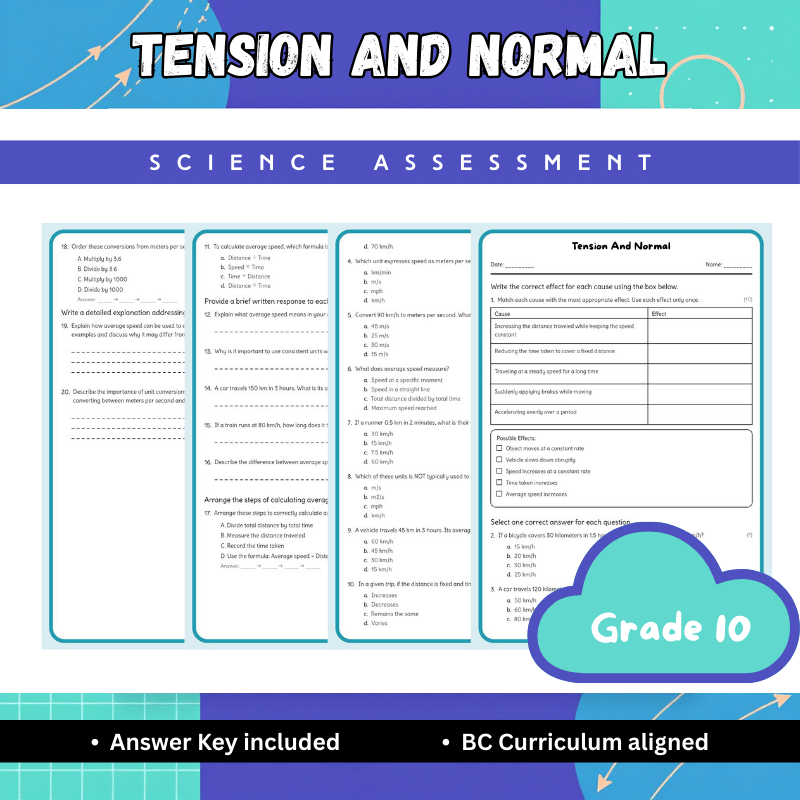
Grade 10 Science | Tension and Normal Forces Worksheet (PDF) – BC Standards
Created byBright Mind ResourcesLearning Objectives
- Understand the concept of tension and how it transmits forces in connectors.
- Explain the normal force and its role in supporting objects on inclined surfaces.
- Analyze free-body diagrams involving tension and normal forces to determine object motion.
Instant download
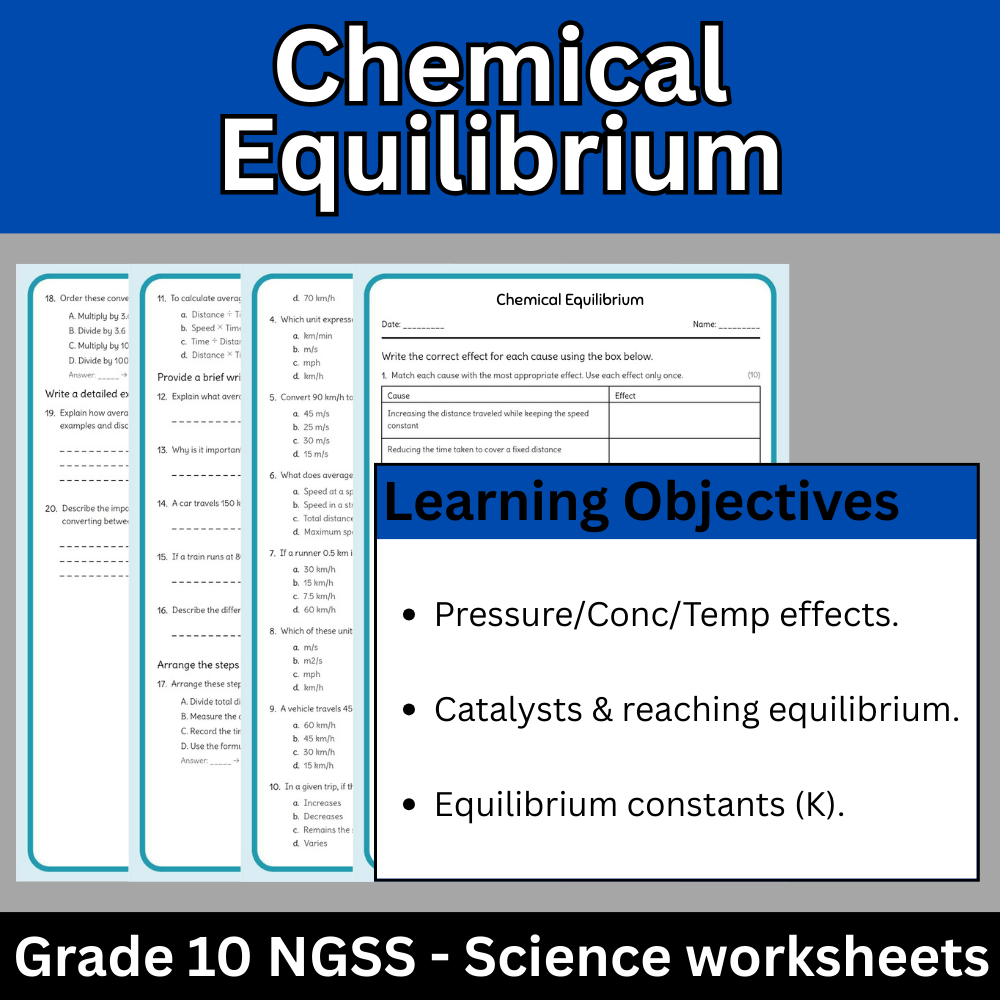
Grade 10 Science | Chemical Equilibrium Worksheet (Answer Key) – NGSS Standards
Created byBright Mind ResourcesLearning Objectives
- Understand how changes in pressure, concentration, and temperature affect chemical equilibria.
- Explain the role of catalysts in reaching equilibrium faster.
- Describe the significance of equilibrium constants as quantitative measures of reactions.
Instant download
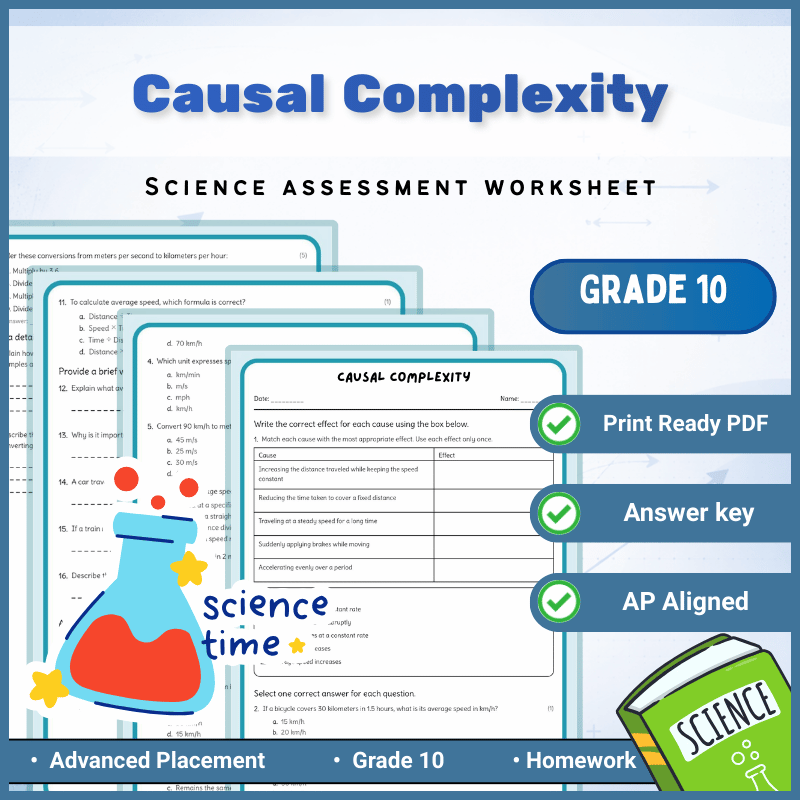
Grade 10 Science – Causal Complexity Worksheet (AP Standards | PDF)
Created byBright Mind ResourcesLearning Objectives
- Understand strategies for disentangling multivariable causal relationships
- Learn how to interpret control matrices, causal graphs, and stratified comparisons
- Identify confounding factors and interaction effects in complex systems
Instant download
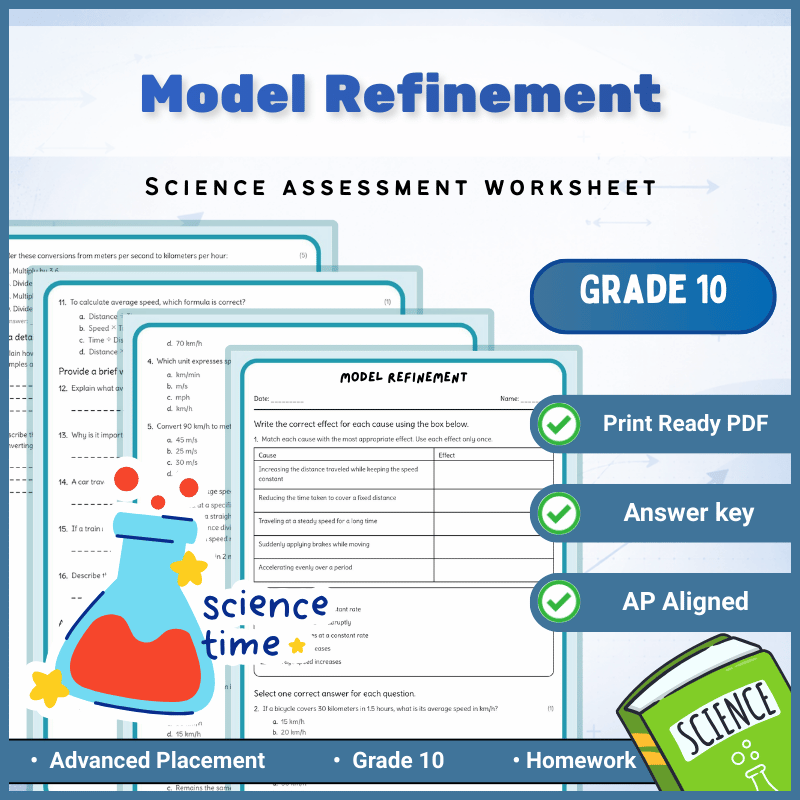
Grade 10 Science – Model Refinement Worksheet (AP Standards) | PDF
Created byBright Mind ResourcesLearning Objectives
- Understand the process of iterative model improvement through comparison with observed behavior.
- Identify methods for parameter estimation and inclusion of additional processes like damping or friction.
- Evaluate how residual analysis and sensitivity assessment guide model adjustments.
Instant download
About Grade 10 Science Worksheets
Find Science worksheets built for Grade 10. All 7,038 cover core skills, practice, and review, each an instant PDF download.
Every worksheet on MyTeachingSheets is created by independent teacher-authors and reviewed before publication. All resources download as printable PDFs for classroom, homework, or at-home practice, and many include answer keys. Preview any worksheet free before buying.