
Grade 7 Worksheets
8,498 grade resources
Grade 7 Science Worksheet Material Properties in Structures
JCreated byJ.S SheetsLearning Objectives
- Define key material properties (density, tensile/compressive strength, stiffness, ductility, toughness, thermal expansion) and describe what each property influences in structures.
- Compare wood, steel, and reinforced concrete in terms of strength-to-weight ratio, deformation under load, and typical failure modes.
- Apply material property reasoning to beam and column examples for serviceability, durability, and anticipated loading conditions.
Instant download

Grade 7 Social Studies Worksheet | Regional Interconnections (PDF) TEKS
 Created bySunny Desk Resources
Learning Objectives
- Explain how geographic features like waterways and mountain passes connect regions through economic, social, and environmental systems.
- Analyze how shared resources can lead to cooperation or conflict between regions.
- Use evidence from maps and historical examples to describe patterns of cultural exchange and political alliances.
Also included in: Regional Interconnections Grade 7 Social Studies Lesson Bundle – TEKS Worksheets +1 more
Instant download

Grade 7 Social Studies | Migration Patterns Worksheet (TEKS PDF)
Created bySunny Desk ResourcesLearning Objectives
- Explain how geographical features can guide or limit historical migration and travel routes.
- Describe how trade routes can connect regions and encourage cultural and economic exchange.
- Analyze how migration and movement patterns can influence regional development and the growth of cities.
Also included in: Regional Interconnections Grade 7 Social Studies Lesson Bundle – TEKS Worksheets +1 more
Instant download

Grade 7 Social Studies – Location and Power Worksheet (TEKS) PDF
Created bySunny Desk ResourcesLearning Objectives
- Explain how geographic location can create strategic advantages for cities and regions.
- Describe how coastal and inland locations can shape political and economic development.
- Use cause-and-effect reasoning to connect “place” to power and economic activity over time.
Also included in: Regional Interconnections Grade 7 Social Studies Lesson Bundle – TEKS Worksheets +1 more
Instant download

Grade 7 Science – Physical Properties Worksheet (PDF) Aligned with Ontario Standards
 Created byEvergreen Desk Education
Learning Objectives
- Define physical properties and describe how they are measured without changing a substance’s chemical identity
- Use physical properties (mass, volume, density, melting/boiling points, conductivity, and optical clarity) to classify materials
- Explain how phase-change temperatures and density can help identify purity and differentiate substances
Also included in: Grade 7 Substances and Mixtures Science Lesson Bundle Worksheet (Ontario) +1 more
Instant download
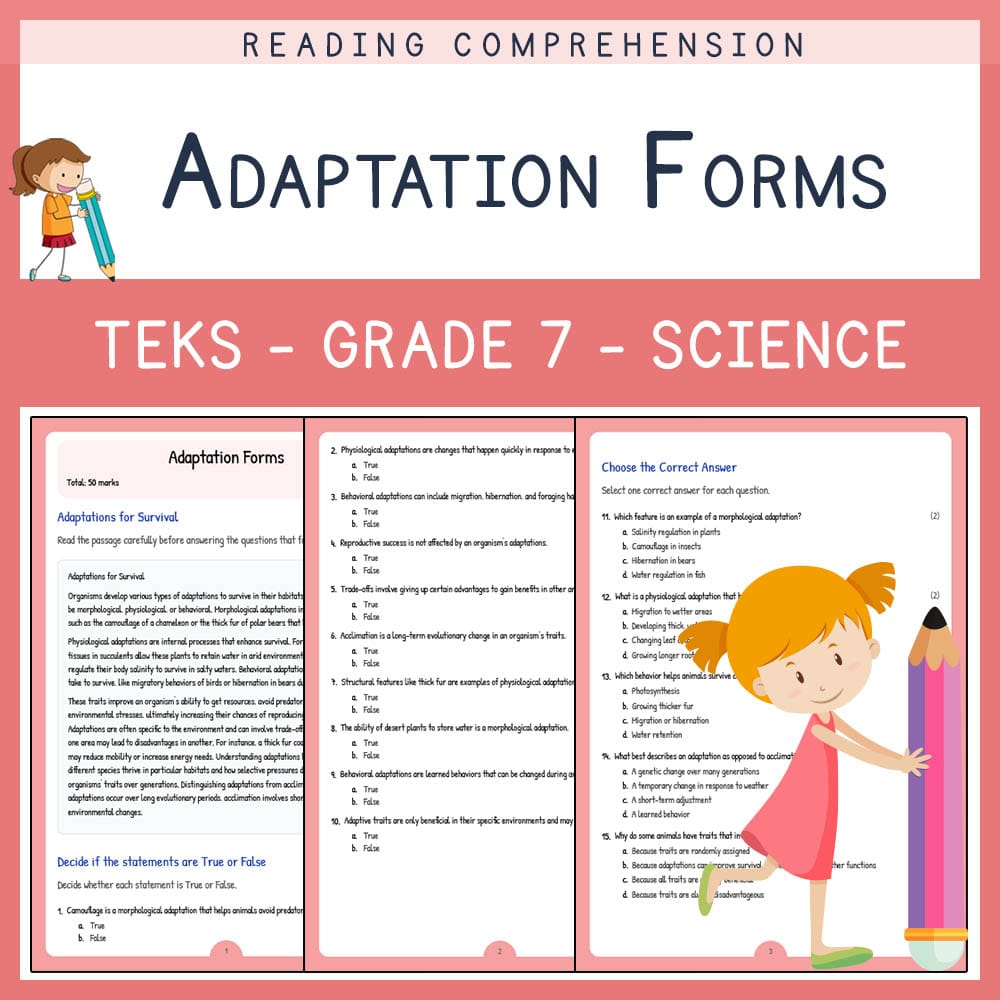
Grade 7 Science | Adaptation Forms Worksheet | TEKS Aligned
 Created byLumora Learning
Learning Objectives
- Define morphological, physiological, and behavioral adaptations with grade-appropriate examples.
- Explain how specific traits enhance survival and reproductive success in different environments.
- Distinguish between adaptations and acclimation.
Instant download

Grade 7 Social Studies — Colonial Rivalries Worksheet MCQ Paper for Mastery
 Created byThe Resource Hub
Learning Objectives
- Explain how imperial rivalries and treaties (1713–1763) affected land control in eastern North America
- Analyze causes and consequences of military contests and agreements for population movements and settlement patterns
- Compare continuity and change in colonial governance as empires competed for power
Also included in: Grade 7 Canadian History Social Studies Lesson Bundle: Ontario MCQ +1 more
Instant download

Grade 7 Science – Particle Model & Matter | Daily Reading Worksheet
 Created byBright Mind Resources
Learning Objectives
- Understand that all matter is made up of tiny particles called atoms and molecules.
- Describe how particles behave and interact in different states of matter.
- Explain the basic principles of chemical change at the particle level.
Also included in: Grade 7 States of Matter & Reactions Science Daily Reading Lesson Bundle | BC +1 more
Instant download
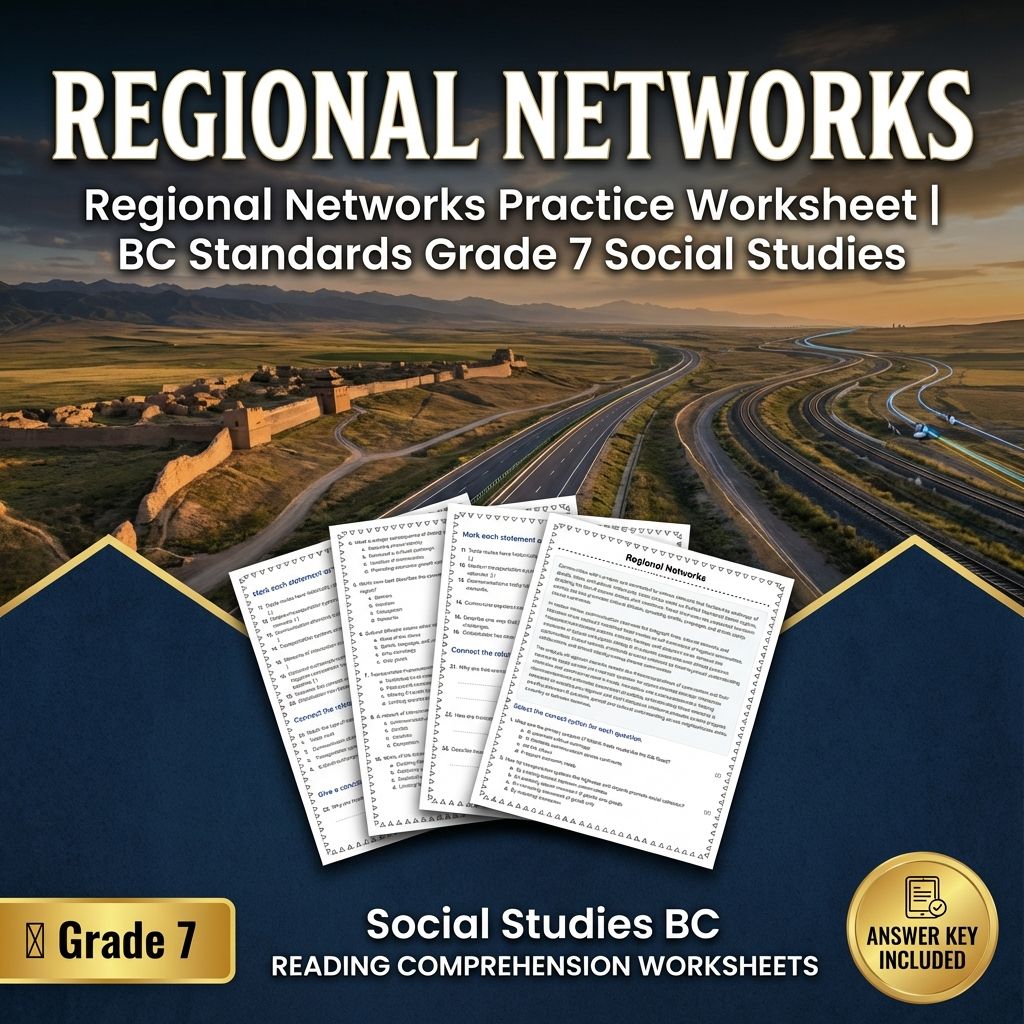
Regional Networks Practice Worksheet | BC Standards Grade 7 Social Studies
JCreated byJ.S SheetsLearning Objectives
- Understand how communities are connected through trade routes, communication channels, and transportation systems.
- Analyze the role of networks in promoting economic development and social cohesion.
- Identify different types of regional interaction and their impacts on local and larger social systems.
Instant download

Grade 7 Science Resource Availability Worksheet | CA Standards PDF
Created byEvergreen Desk EducationLearning Objectives
- Explain how natural processes and human needs influence the availability of Earth’s resources (land, freshwater, and air).
- Describe how precipitation patterns, groundwater storage, and ecosystem capacity affect access to resources.
- Analyze how droughts and floods, along with human use, can increase stress on shared systems.
Instant download
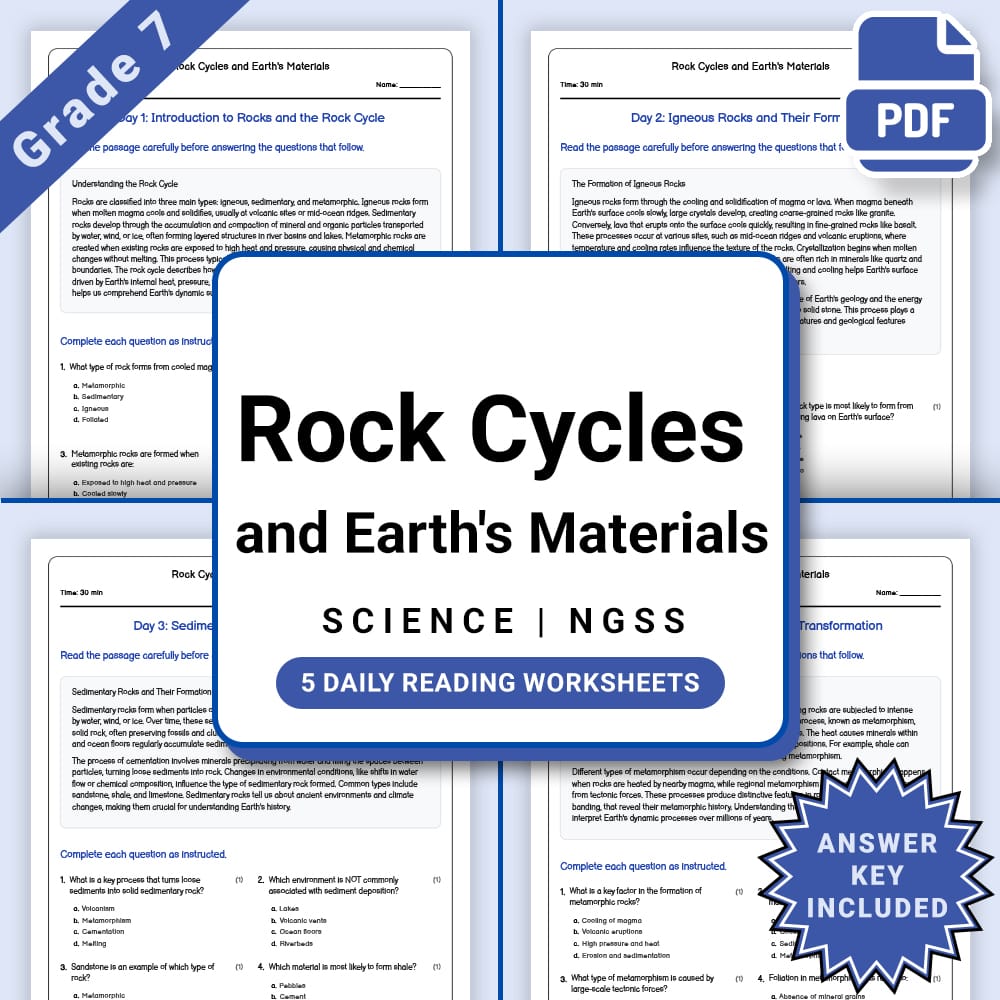
Grade 7 Science – Rock Cycles and Earth's Materials Worksheet(PDF + Answer Key)
 Created byCopper Leaf Classroom
Learning Objectives
- Identify different types of rocks and describe their characteristics
- Understand the basic processes involved in the rock cycle
- Recognize how rocks transform among igneous, sedimentary, and metamorphic types
Instant download
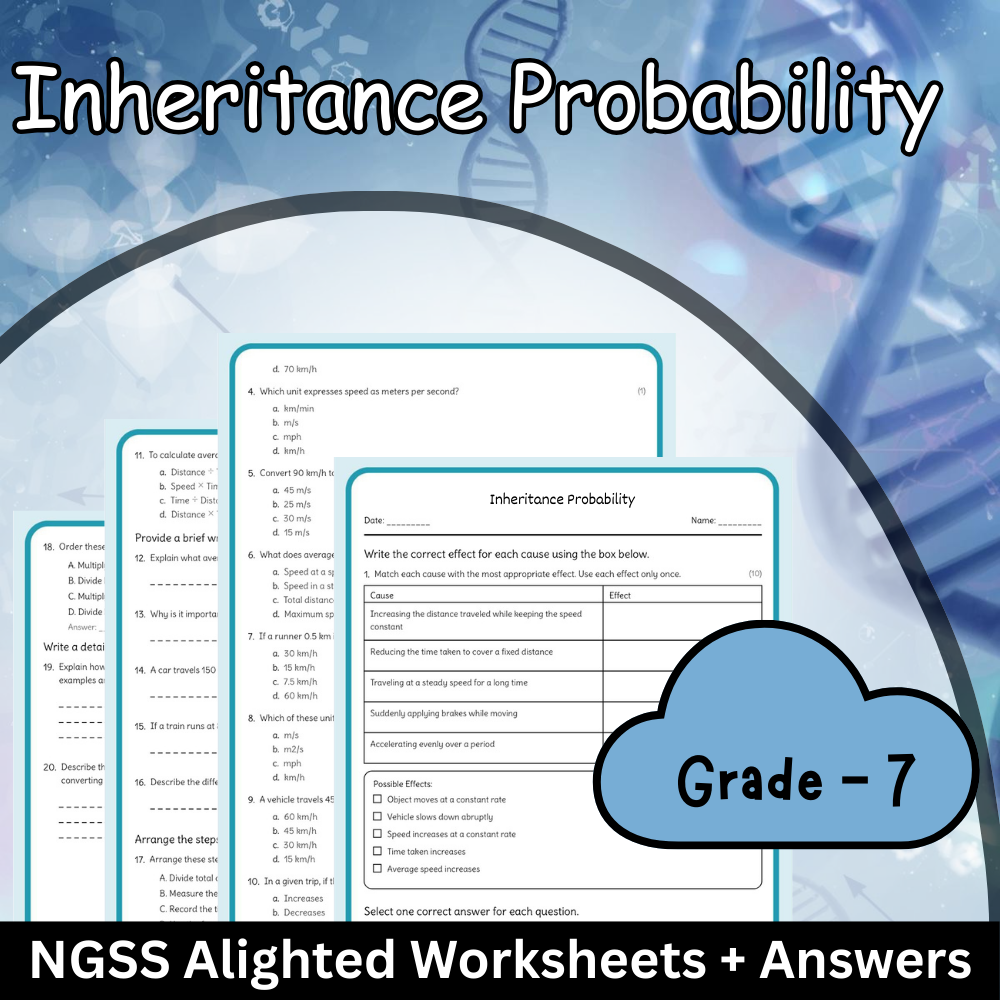
Grade 7 Science – Inheritance Probability Worksheet (PDF) Aligned with NGSS
Created byBright Mind ResourcesLearning Objectives
- Apply probability concepts to predict genetic variation among offspring from a parental pair.
- Interpret genotype and phenotype ratios using Punnett squares and probability models.
- Understand monohybrid crosses, dominant and recessive alleles, and calculate expected inheritance proportions.
Instant download

Standards and Safety Worksheet | Grade 7 Science TEKS Aligned
JCreated byJ.S SheetsLearning Objectives
- Explain how safety standards and codes help reduce risks in technological designs.
- Identify examples of compliance practices such as load ratings, grounding, and personal protective measures.
- Describe the purpose of safety factors and how they support reliable performance.
Instant download

Grade 7 Social Studies — European Exploration Economics Worksheet
Created byThe Resource HubLearning Objectives
- Explain how economic goals such as trade routes and valuable resources motivated European exploration
- Describe how competition between European nations shaped exploration and claims to new territories
- Analyze how colonization systems affected indigenous populations and global trade exchanges
Instant download
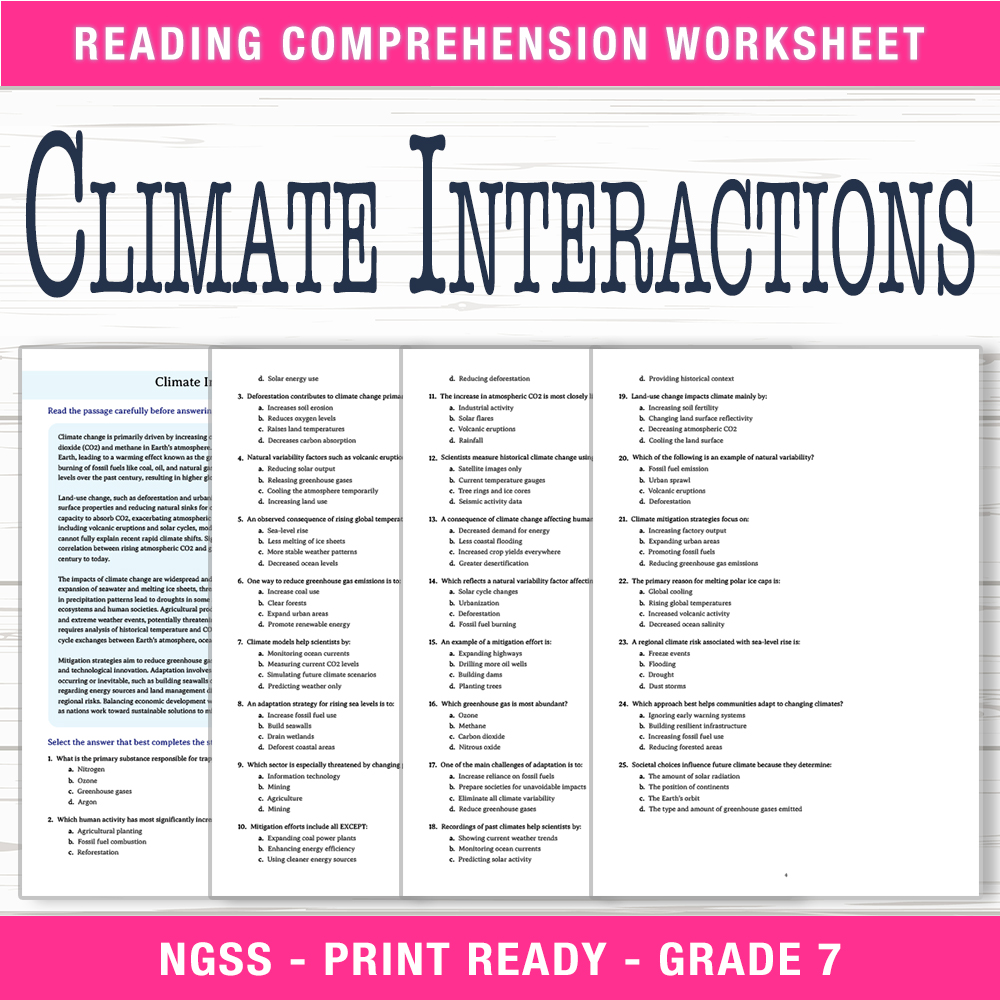
Grade 7 Science | Climate Interactions Worksheet (PDF + Answer Key)
 Created byRiverstone Classroom
Learning Objectives
- Identify key drivers of climate change, including greenhouse gases, land-use changes, and natural variability.
- Analyze evidence from temperature and CO2 records to understand climate system responses.
- Assess impacts of climate change on sea levels, precipitation, and agriculture.
Instant download

Grade 7 Social Studies — Resource Management MCQ Worksheet PDF + Answer Key
Created byThe Resource HubLearning Objectives
- Understand traditional and Indigenous methods of resource management.
- Compare modern practices with traditional approaches.
- Explain how sustainable resource stewardship contributes to community resilience.
Also included in: Grade 7 Social Studies BC : Technology, Resources & Economic Systems +1 more
Instant download
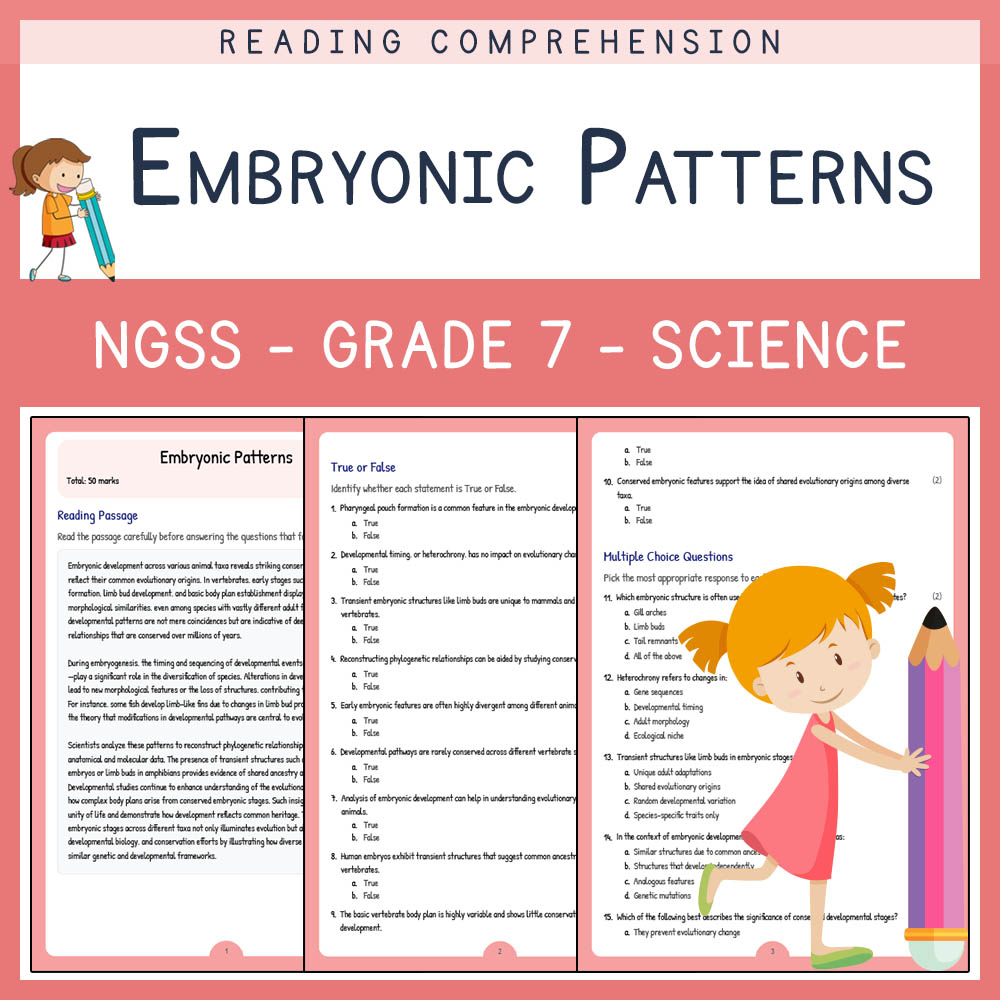
Grade 7 Science | Embryonic Patterns Worksheet PDF | NGSS-Aligned
Created byLumora LearningLearning Objectives
- Understand the key stages in embryonic development across different taxa.
- Identify conserved embryonic structures and their significance in evolution.
- Analyze developmental timing and patterning to infer phylogenetic relationships.
Instant download

Grade 7 Social Studies — Community Resources Worksheet MCQ Paper
Created byThe Resource HubLearning Objectives
- Understand how communities utilize local natural resources such as minerals, forests, and water.
- Analyze the social and environmental impacts of resource extraction and management.
- Explore Indigenous and local perspectives on resource stewardship.
Also included in: Grade 7 Social Studies BC : Technology, Resources & Economic Systems +1 more
Instant download

Grade 7 Health – Nutrition & Growth | Daily Reading Worksheet
 Created byQuiet Forest Education
Learning Objectives
- Understand key concepts related to Health
- Apply knowledge through practice questions
- Demonstrate comprehension of the material
Also included in: Healthy Living Grade 7 Health Daily Reading Worksheets Bundle | Ontario +2 more
Instant download

Meaningful Summaries Worksheet Grade 7 ELA TEKS Reading Activity
 Created byGolden Apple Studio
Learning Objectives
- Identify the most important ideas, events, or claims in literary and informational texts.
- Write summaries that avoid unnecessary repetition while keeping the overall meaning consistent.
- Clarify relationships among details by using precise linking language (e.g., because, therefore, however).
Also included in: Grade 7 ELA Reading Skills & Evidence Lesson Bundle | TEKS +1 more
Instant download

Grade 7 Social Studies | Resource Management Worksheet (BC Standards) (PDF)
Created bySunny Desk ResourcesLearning Objectives
- Compare traditional and Indigenous resource management practices with modern approaches.
- Explain how sustainable resource management supports environmental health and community resilience.
- Describe how resource stewardship can strengthen social cohesion and relationships with the environment.
Also included in: Grade 7 Technology and Change Social Studies Lesson Bundle for BC +1 more
Instant download

Grade 7 Social Studies — Community Foundations Worksheet MCQ Paper
Created byThe Resource HubLearning Objectives
- Understand how indigenous settlement patterns influenced early community development.
- Analyze the relationship between environmental resources and community growth.
- Evaluate the factors that contribute to sustainability and resilience in communities.
Also included in: Grade 7 Social Studies BC Curriculum Bundle – Regional Networks & Interdependence +1 more
Instant download

Grade 7 Social Studies — Worksheet MCQ Paper for Mastering Economic Interchanges
Created byThe Resource HubLearning Objectives
- Understand the concept of economic interdependence among communities.
- Identify different forms of regional and local trade and exchange.
- Analyze how economic activities influence community resilience and growth.
Also included in: Grade 7 Social Studies BC Curriculum Bundle – Regional Networks & Interdependence +1 more
Instant download

Grade 7 Social Studies — Mastering Historical Interdependence
Created byThe Resource HubLearning Objectives
- Understand how geographic and historical evidence demonstrate interdependence in social and economic life.
- Analyze causes and consequences of historical trade networks and resource exchanges.
- Evaluate how interdependence influences regional identities and economic systems over time.
Also included in: Grade 7 Social Studies BC Curriculum Bundle – Regional Networks & Interdependence +1 more
Instant download

Grade 7 Energy Accounting Worksheet | Energy Conservation | NGSS Science
 Created byBRIGHT PATH RESOURCES
Learning Objectives
- Understand how different types of energy transfer occur during motion changes.
- Recognize examples such as braking a car, inelastic collisions, and bouncing balls to illustrate energy transfers.
- Articulate reasoning linking changes in an object's motion energy to energy transfers into or out of the object.
Also included in: Energy & Heat Transfer Grade 7 Science Lesson Bundle Daily Reading | NGSS +2 more
Instant download

Fur Trade Networks Worksheet | Social Studies Grade 7 Ontario Standards
JCreated byJ.S SheetsLearning Objectives
- Explain how fur trade networks connected Indigenous hunting economies with European commercial markets between 1713 and 1850.
- Analyze how European demand for pelts affected Indigenous mobility, alliances, and relationships at trading hubs.
- Describe continuity and change in trading practices as French and British companies competed and expanded exchange systems.
Instant download
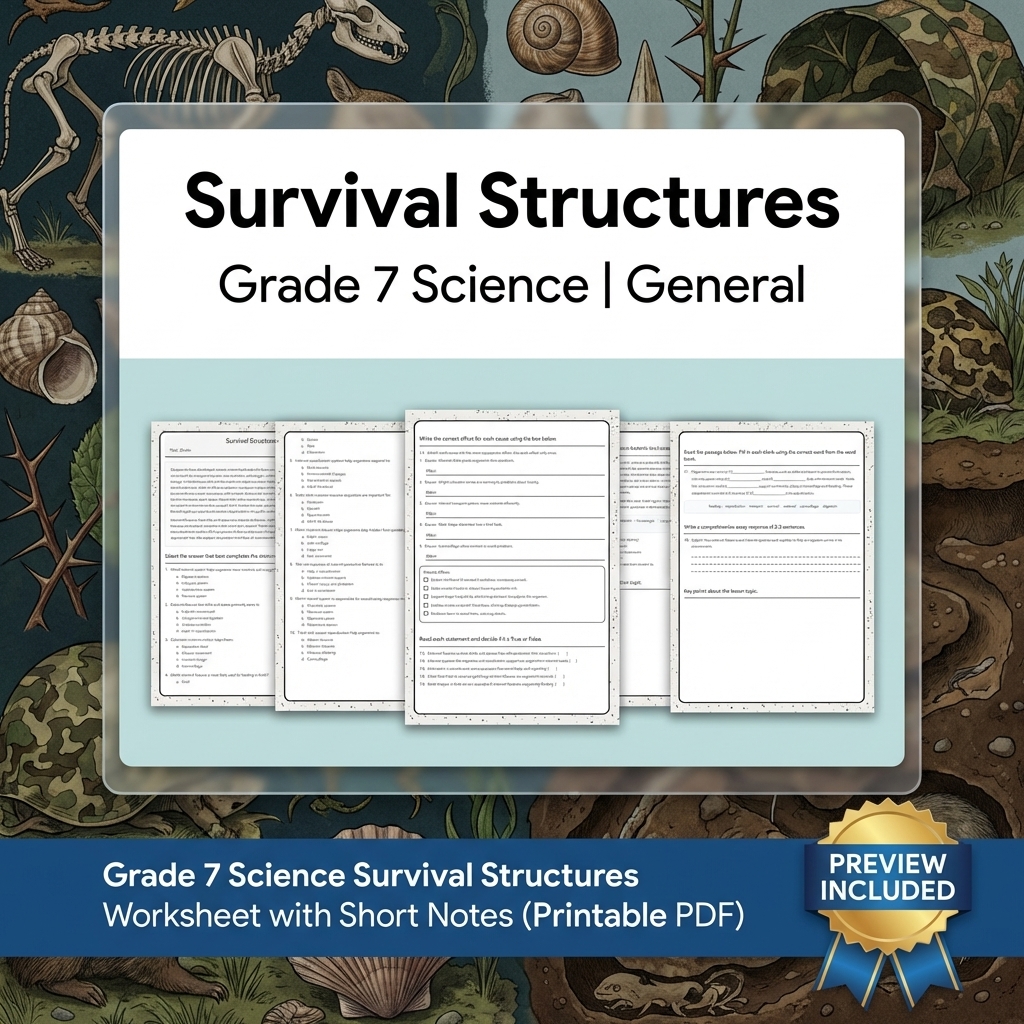
Grade 7 Science Survival Structures Worksheet with Short Notes (Printable PDF)
 Created byMeadowlark Worksheets
Learning Objectives
- Understand how internal and external structures support organism survival.
- Identify different internal systems like transport, digestion, and coordination.
- Describe external features such as shells, spines, coloration, and beak forms.
Also included in: Grade 7 Ecosystem Dynamics Science Lesson Bundle: General Framework +1 more
Instant download

Grade 7 Speech Giving Worksheet (May) – Holiday Presentation Skills (PDF)
 Created bySilver Birch Teaching
Learning Objectives
- Identify key parts of an effective graduation speech (greeting, main points, and closing).
- Use speech techniques such as pacing, volume, eye contact, and purposeful structure to deliver ideas clearly.
- Explain how gratitude and future goals can connect a speaker to the audience and community.
Also included in: Grade 7 Holiday Lesson Bundle: May Portfolio, Speech, Reflection Skills +1 more
Instant download
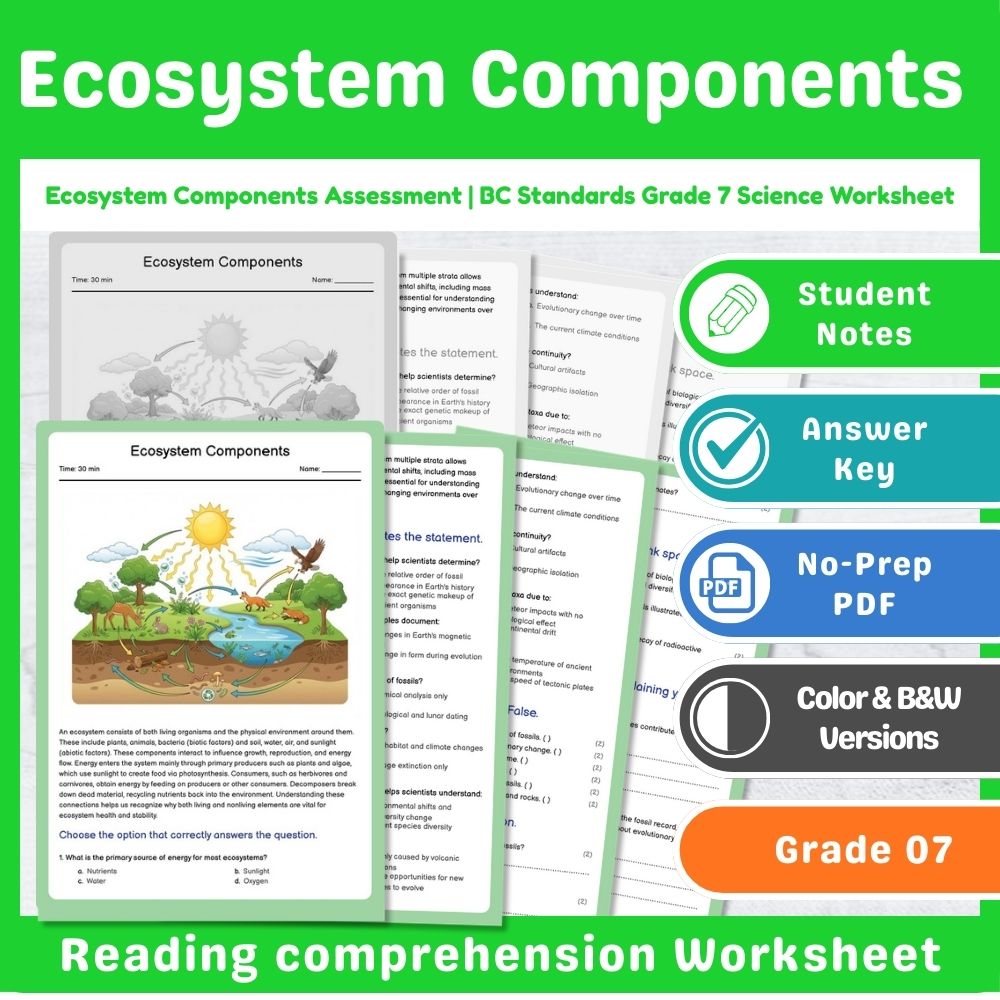
Ecosystem Components Assessment | BC Standards Grade 7 Science Worksheet
 Created byPrism Point Learning
Learning Objectives
- Describe the key components of an ecosystem, including both living and nonliving factors.
- Explain how biotic and abiotic components interact within an ecosystem.
- Understand the flow of energy through producers and consumers in an ecosystem.
Instant download

Design Process Worksheet for Grade 7 Science | Standards-Aligned Practice
JCreated byJ.S SheetsLearning Objectives
- Explain the technological design process as an iterative cycle: define the problem, set criteria and constraints, brainstorm, prototype, evaluate, and optimize.
- Use criteria and constraints to justify design decisions and to compare trade-offs between competing goals.
- Describe how measurements and performance metrics guide refinement of prototypes over multiple iterations.
Instant download

Grade 7 Science – States Of Matter Daily Reading Worksheet | TEKS Aligned
Created byBright Mind ResourcesLearning Objectives
- Identify and describe the three main states of matter: solid, liquid, and gas.
- Understand phase changes such as melting, freezing, vaporization, condensation, and sublimation.
- Relate temperature and pressure influences to phase transition points and measurable properties.
Also included in: 7th Grade States of Matter Science Daily Reading Lesson Bundle | TEKS +2 more
Instant download

Grade 7 Science Risk Assessment Worksheet | Ontario Curriculum
 Created byChalk and Compass
Learning Objectives
- Explain the difference between a hazard and a risk during laboratory or field activities.
- Describe how to use an SDS to identify hazards and select appropriate controls.
- Evaluate potential hazards by considering likelihood and severity and choosing mitigation strategies.
Also included in: Grade 7 Science Scientific Inquiry & Data Analysis Lesson Bundle | Ontario +1 more
Instant download

Grade 7 Holiday Mothers Day for Mastering Community Helpers | PDF + Answer Key
 Created byShaNova Worksheets
Learning Objectives
- Explain how different community helpers contribute to well-being and social harmony
- Practice gratitude by connecting community helpers to family, school, and local support
- Use reading comprehension to identify key ideas about cooperation and kindness
Instant download

Scientific Inquiry and Measurement Worksheets Grade 7 Science
Created byPrism Point LearningLearning Objectives
- Formulate a testable hypothesis using clear investigation criteria
- Define variables operationally for fair scientific comparisons
- Explain how reproducible methods improve investigation reliability
Also included in: Scientific Inquiry & Data Practices Lesson Bundle | Grade 7 Science | Ontario +1 more
Instant download

Model-Based Predictions Assessment | Standards-Aligned Grade 7 Science
Created byPrism Point LearningLearning Objectives
- Understand how models translate observations into representations for predictions.
- Identify different types of models: physical, diagrammatic, and computational.
- Explain the role of diagrams linking Earth, Moon, and Sun in lunar phases.
Also included in: Grade 7 Scientific Inquiry Practices Science Lesson Bundle: General
Instant download

Reading Comprehension Monitoring Worksheets Grade 7 ELA
Created byGolden Apple StudioLearning Objectives
- Identify strategies for monitoring meaning during reading
- Explain how rereading supports comprehension when meaning is unclear
- Use context to resolve confusion during reading
Also included in: Grade 7 ELA Reading Worksheets | Text Features, Theme & Author Craft +1 more
Instant download

Morphological Strategies Worksheet | CCSS Grade 7 ELA Practice and Assessment
JCreated byJ.S SheetsLearning Objectives
- Identify how prefixes, roots, and suffixes contribute to word meaning
- Use word-part clues to infer the meaning of unfamiliar words
- Explain how morphological analysis can expand vocabulary and improve comprehension
Instant download

Grade 7 Science – Earth Sun Cycles & Orbit | Daily Reading Worksheet
Created byBright Mind ResourcesLearning Objectives
- Understand how Earth's orbit and tilt affect seasons
- Identify patterns of daylight variation throughout the year
- Explain how Earth's position relative to the sun influences climate and timekeeping
Also included in: Weather, Earth Systems & Human Feedbacks Grade 7 Science Lesson Bundle | General +1 more
Instant download

Grade 7 Social Studies — Lower Canada Society Worksheet MCQ Paper for Mastery
Created byThe Resource HubLearning Objectives
- Explain how seigneurial landholding and French legal traditions influenced daily life in Lower Canada
- Analyze causes and consequences of legislative tensions between francophone communities and British authorities
- Describe continuity and change in language and legal practices from 1713 to 1850
Also included in: Grade 7 Canadian History Social Studies Lesson Bundle: Ontario MCQ +1 more
Instant download
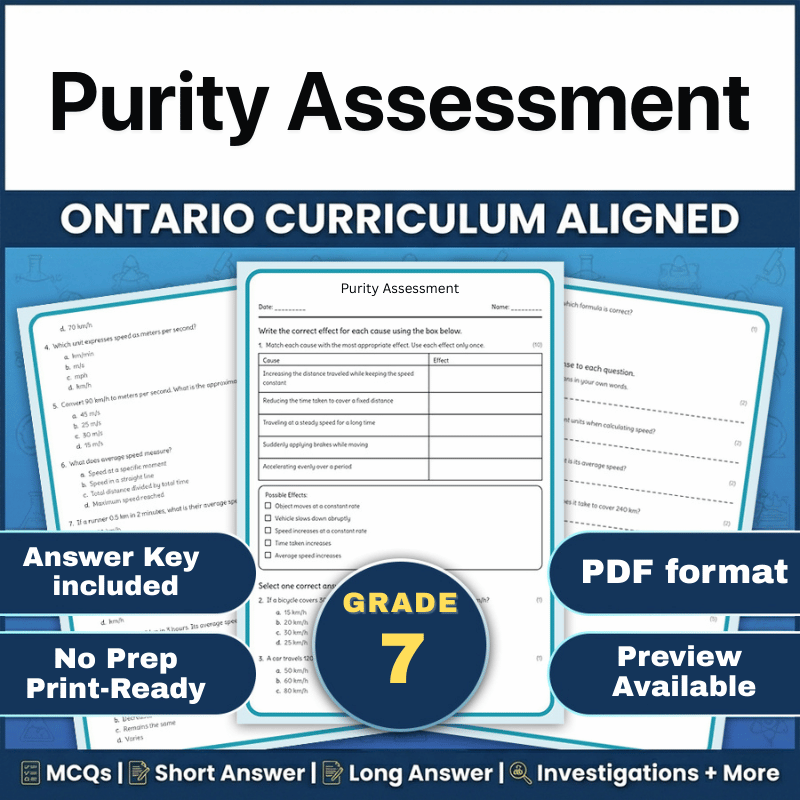
Grade 7 Science | Purity Assessment Worksheet (Ontario Standard) (PDF)
Created byBright Mind ResourcesLearning Objectives
- Understand various analytical indicators used to assess material purity.
- Identify methods to detect contamination in substances.
- Evaluate advantages and limitations of different purity assessment techniques.
Instant download
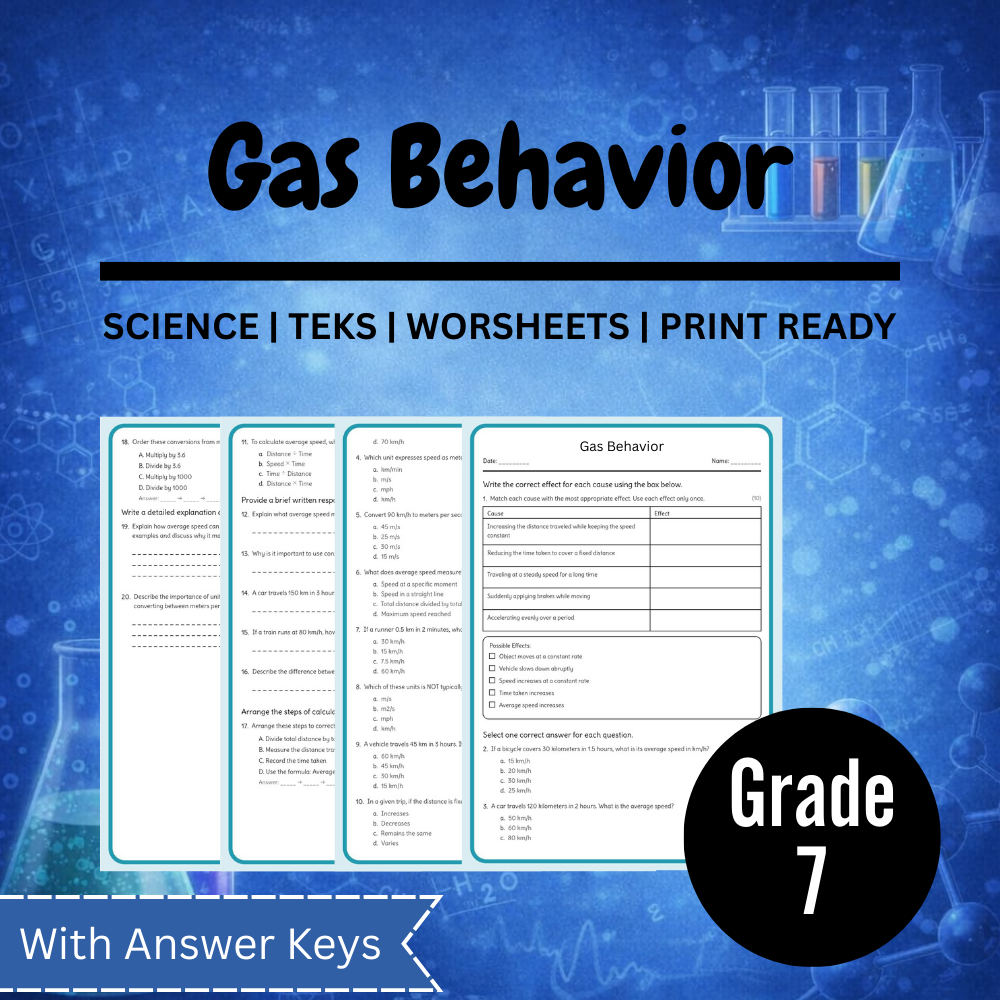
Grade 7 Science | Gas Behavior Worksheet + Answer Key (TEKS Aligned, PDF)
Created byBright Mind ResourcesLearning Objectives
- Explain qualitatively how pressure, volume, and temperature of gases are interrelated.
- Describe phenomena such as diffusion and compressibility in gases.
- Relate macroscopic observations like pressure changes under applied force and confinement.
Also included in: Grade 7 Science Unit Bundle | States of Matter & Atomic Structure Worksheets +2 more
Instant download
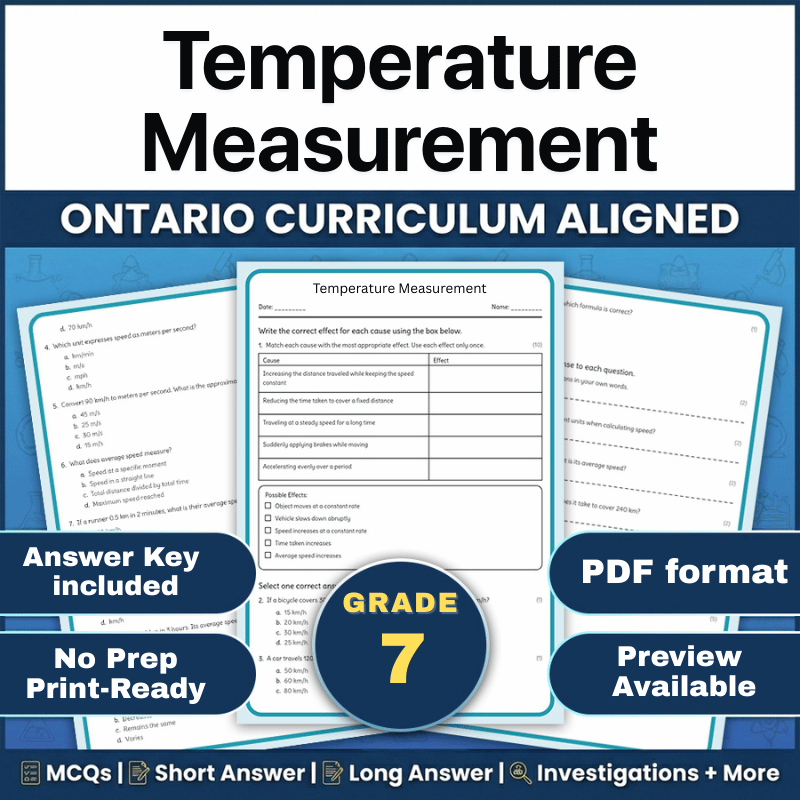
Grade 7 Science Worksheet – Temperature Measurement (PDF) – Ontario Standards
Created byBright Mind ResourcesLearning Objectives
- Understand principles of temperature measurement and characteristics of different thermometers.
- Identify appropriate temperature measurement instruments for specific ranges and accuracies.
- Explain Celsius scale conventions, fixed points, and calibration importance.
Instant download

Science Grade 7 Collisions and Momentum Worksheet | NGSS Aligned Grade 7 Science
 Created bySkylark Worksheets
Learning Objectives
- Explain how momentum is conserved during collisions using mass and velocity.
- Differentiate elastic and inelastic collisions and predict changes in motion.
- Use conservation of momentum to calculate or compare post-collision velocities.
Also included in: Grade 7 Forces & Motion Science Lesson Bundle: NGSS Worksheets +1 more
Instant download
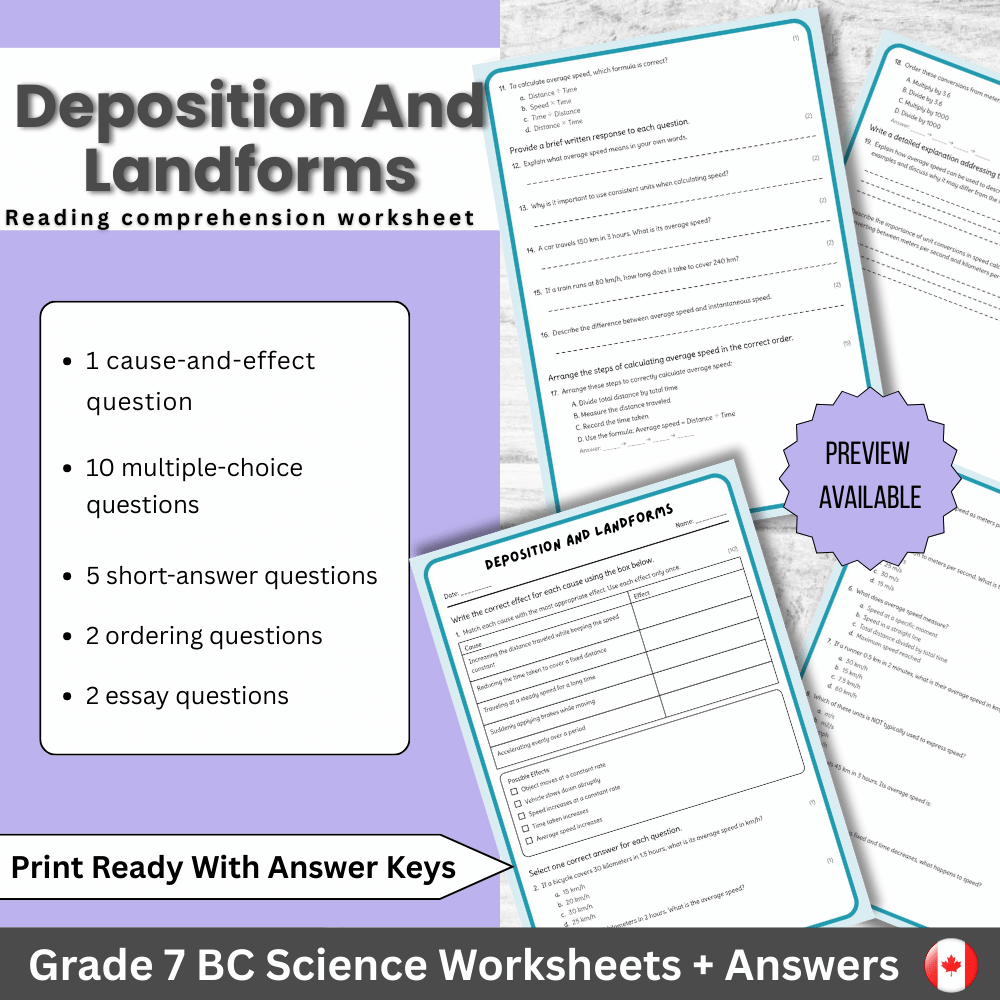
Grade 7 Science | Deposition & Landforms Worksheet (Answer Key) – BC Standards
Created byBright Mind ResourcesLearning Objectives
- Understand the processes of deposition and their role in landform creation.
- Identify different depositional environments and features.
- Describe characteristics of sediment layers and depositional processes.
Instant download
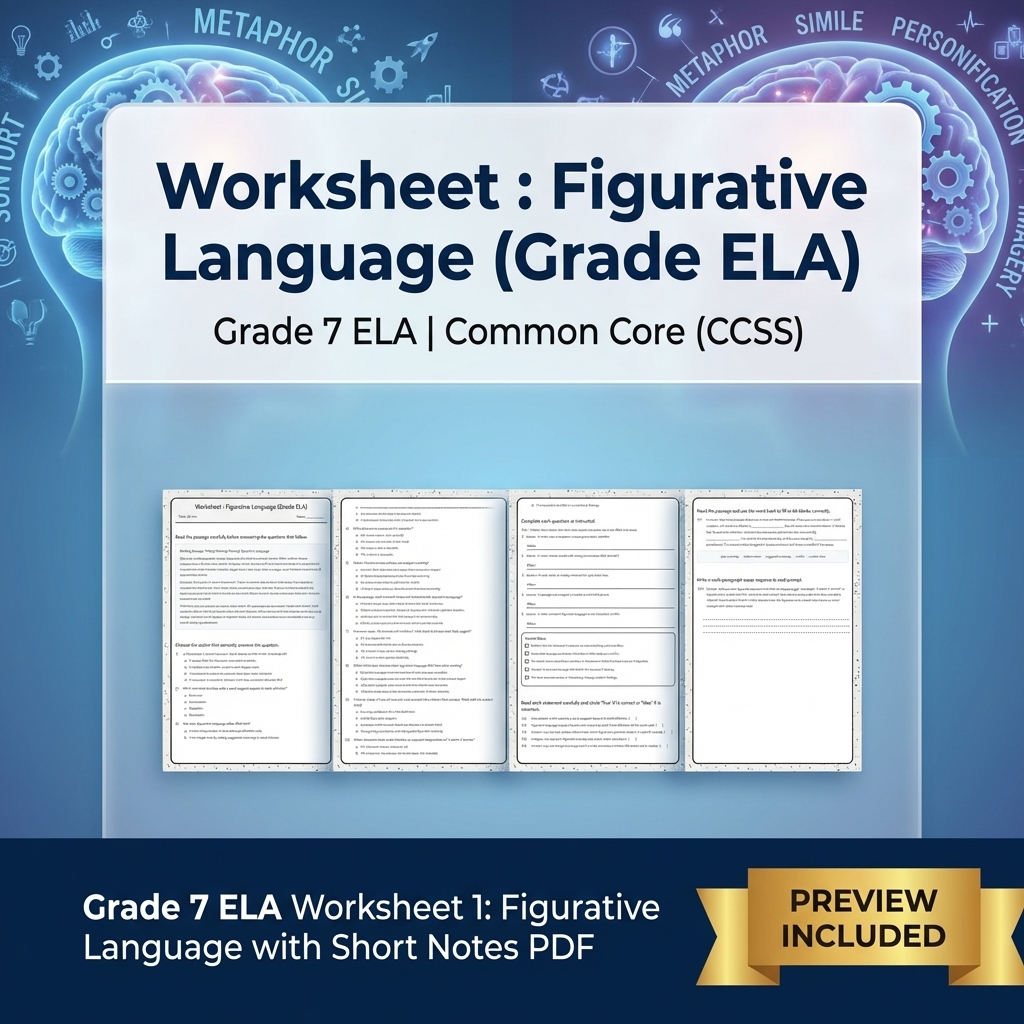
Grade 7 ELA Worksheet 1: Figurative Language with Short Notes PDF
Created byMeadowlark WorksheetsLearning Objectives
- Identify how figurative language (metaphor, simile, and imagery) extends literal meaning
- Explain how connotation influences tone and interpretation
- Analyze how context clues help determine what a figurative expression means
Also included in: Grade 7 Theme, Point of View & Evidence Literary ELA Lesson Bundle (CCSS) +1 more
Instant download

Decomposer Recycling Worksheet Grade 7 Science | Nutrient Cycles Activity
Created byPrism Point LearningLearning Objectives
- Explain how decomposers return nutrients to soil and water by breaking down dead organisms and waste.
- Describe how decomposition supports the continuity of matter in an ecosystem.
- Identify the roles of decomposers such as fungi and bacteria in nutrient recycling.
Also included in: Life Science - Grade 7 Bundle
Instant download

Grade 7 Science | Surface Changes Over Time Worksheet | NGSSS Aligned
Created byLumora LearningLearning Objectives
- Explain how rapid processes (storms, heavy rainfall, earthquakes, and volcanic activity) can change Earth’s surface locally.
- Describe how gradual processes can also reshape landscapes over longer times.
- Use evidence from surface changes (erosion, deposition, flooding, dunes and beaches) to connect causes to observable effects.
Instant download
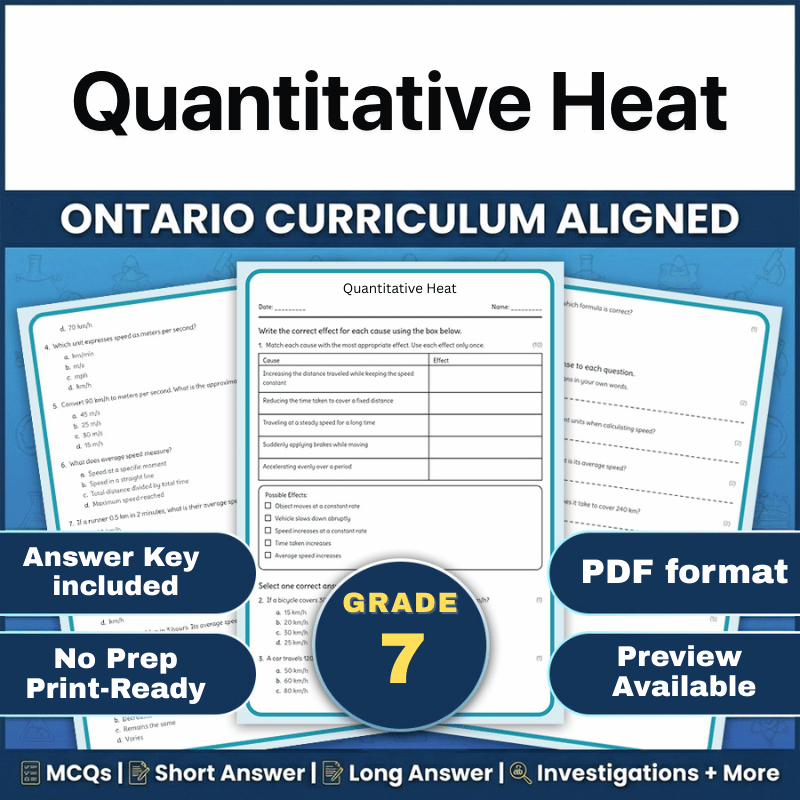
Grade 7 Science | Quantitative Heat Worksheet (Ontario) (PDF)
Created byBright Mind ResourcesLearning Objectives
- Understand the relationship between heat, mass, and temperature change using the formula Q = mcΔT.
- Identify units such as joules and watts used in heat calculations.
- Calculate the amount of heat energy required to change the temperature of common substances.
Instant download
Browse more categories
About Grade 7 Worksheets
Find Grade 7 worksheets covering math, ELA, science, and social studies. All 8,498 resources download instantly as PDFs for classwork, homework, or review.
MyTeachingSheets worksheets are made by real teacher-authors and checked before they go live. Download any as a print-ready PDF for lessons, homework, or independent practice — most include answer keys, and previews are always free.