
Grade 9 Science Worksheets
6,926 worksheets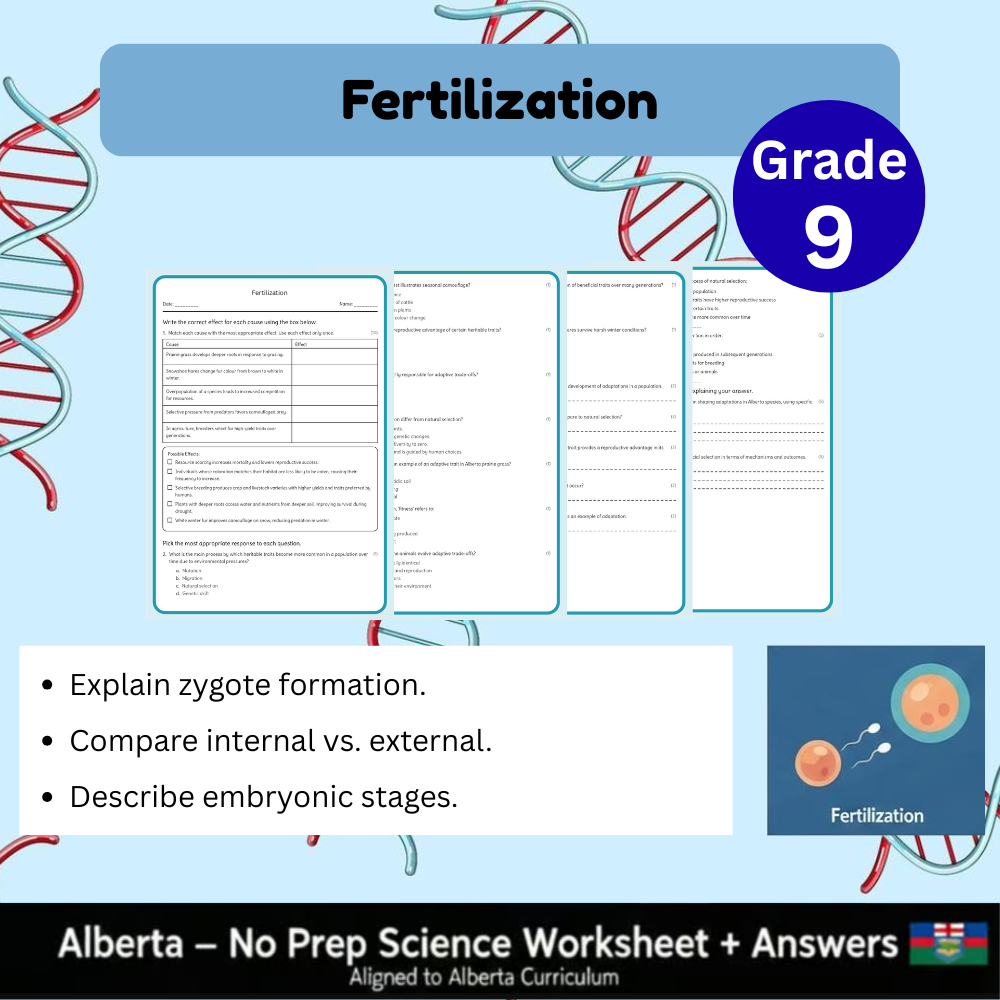
Grade 9 Science | Fertilization & Development Science 1 Worksheet (PDF)
 Created byBright Mind Resources
Learning Objectives
- Explain the process of fertilization and zygote formation.
- Differentiate between internal and external fertilization strategies.
- Describe embryonic stages, cell differentiation, and morphogenesis.
Instant download
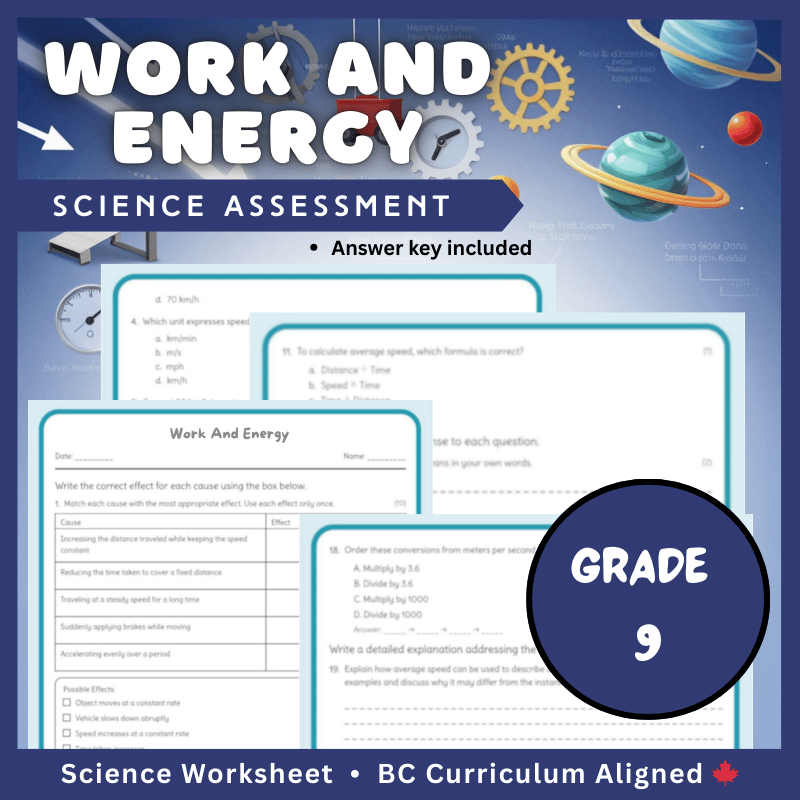
Grade 9 Science | Work and Energy Worksheet (PDF) – BC Standards & Practice
Created byBright Mind ResourcesLearning Objectives
- Explain the concept of work as energy transfer involving force and displacement.
- Identify the factors that influence the amount of work done on an object.
- Differentiate between positive and negative work in various scenarios.
Instant download

Grade 9 Science | Energy Pathways Worksheet (AP Standard, PDF)
Created byBright Mind ResourcesLearning Objectives
- Describe the process of ATP production during cellular respiration and photosynthesis.
- Explain how catabolic and anabolic reactions are coupled in energy transfer.
- Compare the roles of electron transport chains in photosynthesis and cellular respiration.
Instant download
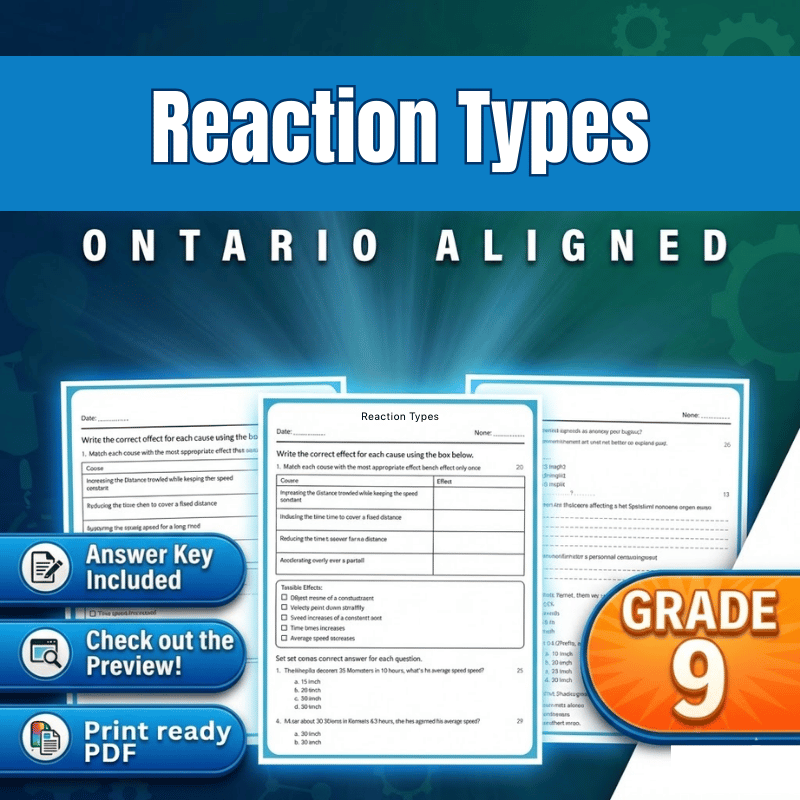
Grade 9 Science – Reaction Types Worksheet (Ontario | PDF)
Created byBright Mind ResourcesLearning Objectives
- Identify and classify different types of chemical reactions such as synthesis, decomposition, single and double displacement, and combustion.
- Describe observable outcomes and patterns in reactant-product relationships for each reaction type.
- Explain how reaction classification helps in predicting products and understanding conservation of mass.
Instant download
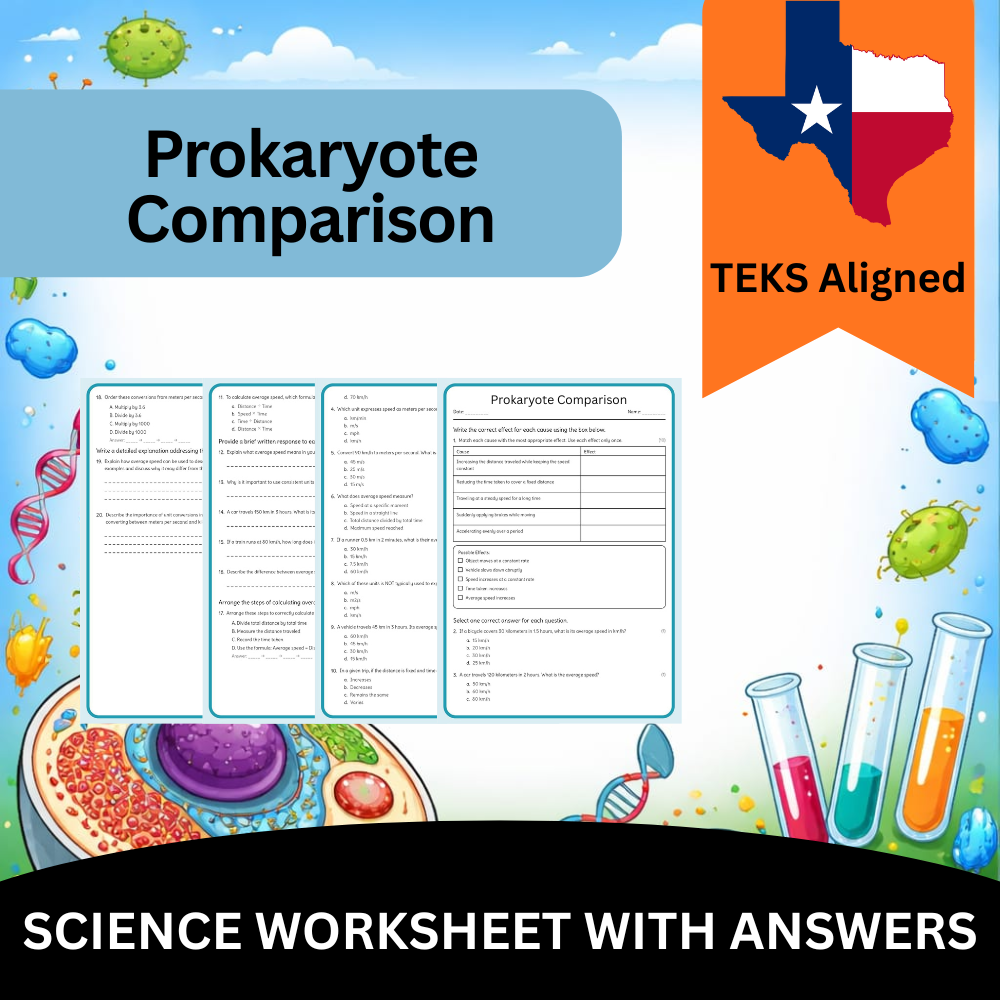
Grade 9 Science | Prokaryote Comparison Worksheet (Answer Key) – TEKS Aligned
Created byBright Mind ResourcesLearning Objectives
- Compare the structural features of bacterial, archaeal, and eukaryotic cells.
- Identify key differences in size, compartmentalization, and genetic material among these cell types.
- Explain how cell organization affects metabolic processes and complexity.
Also included in: Grade 9 Science Unit | Cell Structures & Transport Mechanisms Pack(TEKS-Aligned) +3 more
Instant download
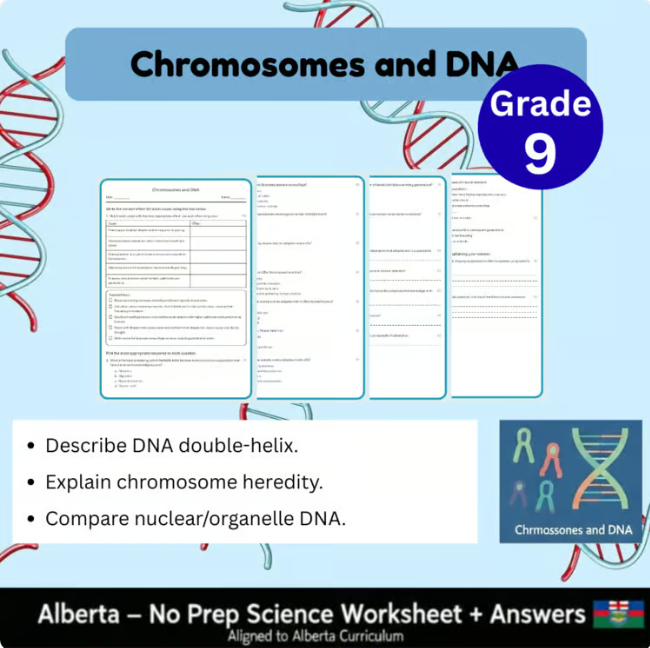
Grade 9 Science – Chromosomes & DNA Detailed Worksheet (PDF)
Created byBright Mind ResourcesLearning Objectives
- Describe the structure of DNA and its double-helix organization
- Explain the concept of chromosomes and their role in heredity
- Differentiate between nuclear and organelle genomes
Instant download
Grade 9 Science | Water Cycling Worksheet (Ontario) – Practice Set (PDF)
Created byBright Mind ResourcesLearning Objectives
- Explain the processes involved in the water cycle, including evaporation, condensation, precipitation, infiltration, runoff, and groundwater flow.
- Describe residence times of water in different reservoirs and the fluxes that control water availability.
- Analyze how watershed characteristics, porosity, and permeability affect water flow and distribution.
Instant download
Grade 9 Science | Vectors and Forces Worksheet (PDF) | Ontario Standards
Created byBright Mind ResourcesLearning Objectives
- Understand how to represent forces using vectors, including magnitude and direction.
- Learn to resolve forces into components and compute the resultant vector.
- Apply graphical and analytical methods to analyze forces in two-dimensional contexts.
Instant download
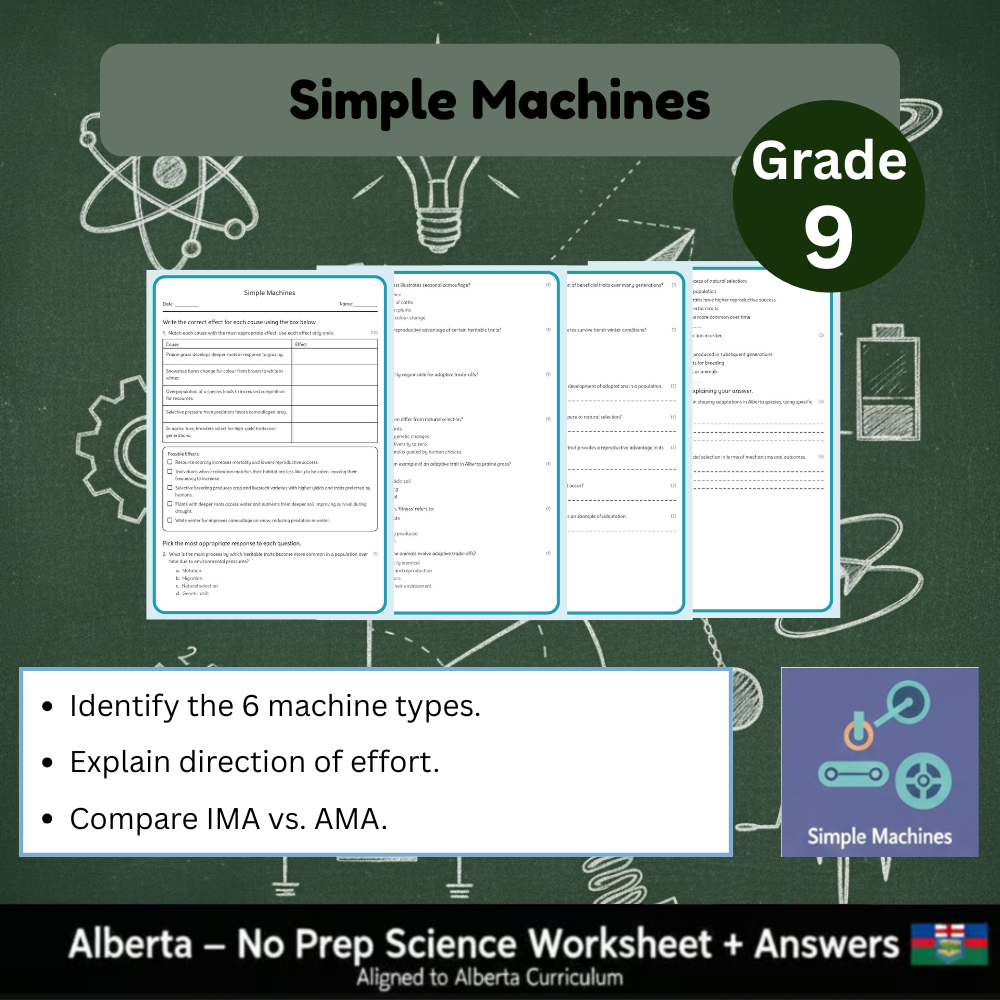
Grade 9 Science | Simple Machines (Worksheet + Answer Key) – Alberta Standards
Created byBright Mind ResourcesLearning Objectives
- Identify and describe the six types of simple machines: lever, wheel and axle, pulley, inclined plane, screw, and wedge.
- Explain how simple machines transfer force and change the direction of effort to make work easier.
- Differentiate between ideal and actual mechanical advantage in simple machines.
Instant download
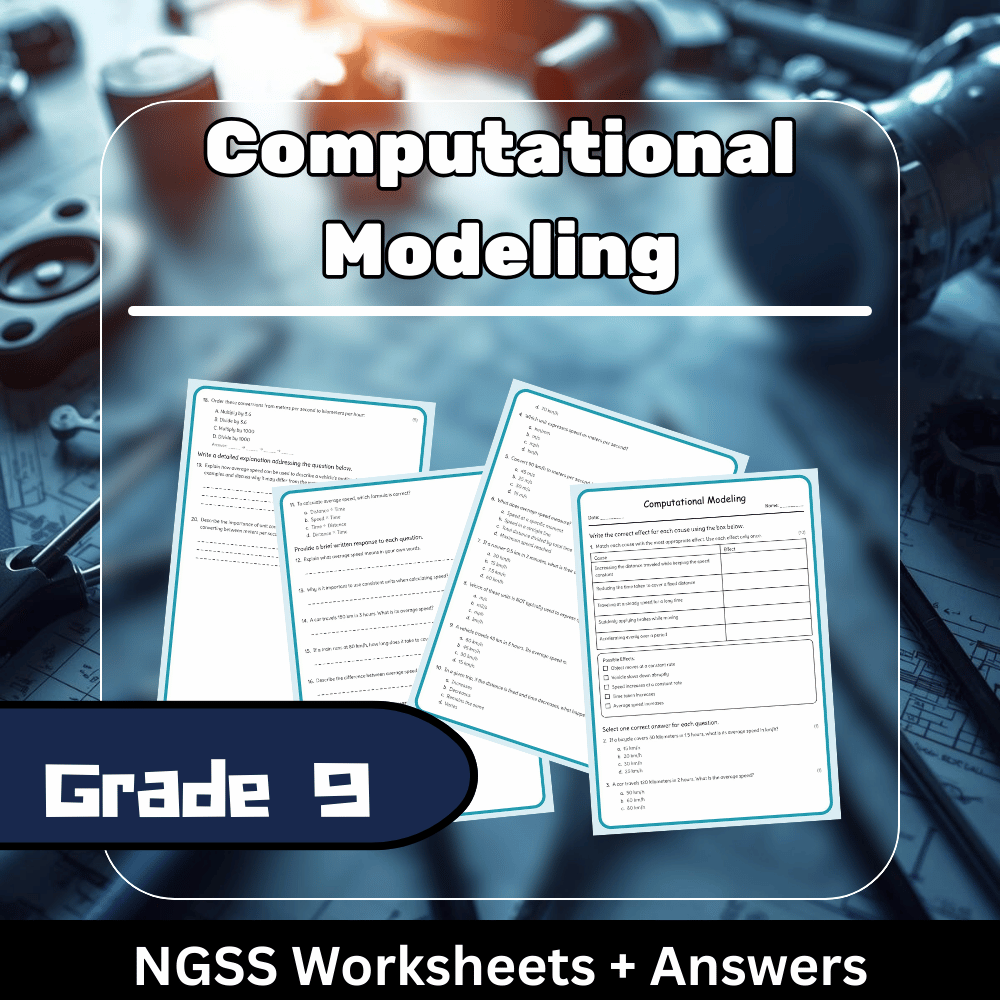
Grade 9 Science | Computational Modeling Worksheet (Answer Key) NGSS Aligned
Created byBright Mind ResourcesLearning Objectives
- Understand the role of mathematical and computational methods in system modeling.
- Learn how to formulate models, estimate parameters, and perform numerical tuning.
- Apply sensitivity analysis to evaluate design variables in engineering systems.
Instant download
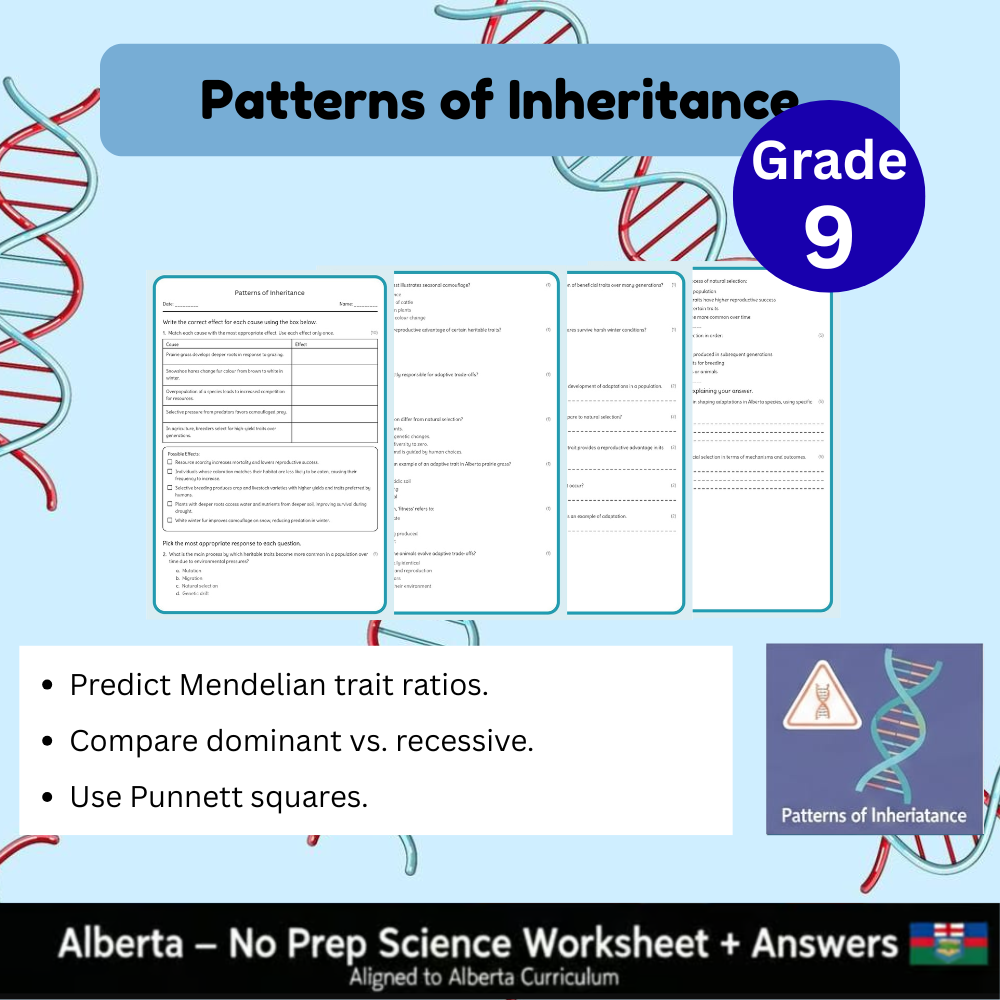
Grade 9 Science | Patterns of Inheritance Worksheet (PDF)
Created byBright Mind ResourcesLearning Objectives
- Understand how basic Mendelian inheritance patterns predict trait ratios in offspring.
- Distinguish between dominant and recessive alleles and their effects on phenotype.
- Use Punnett squares to predict probabilities of inherited traits.
Instant download
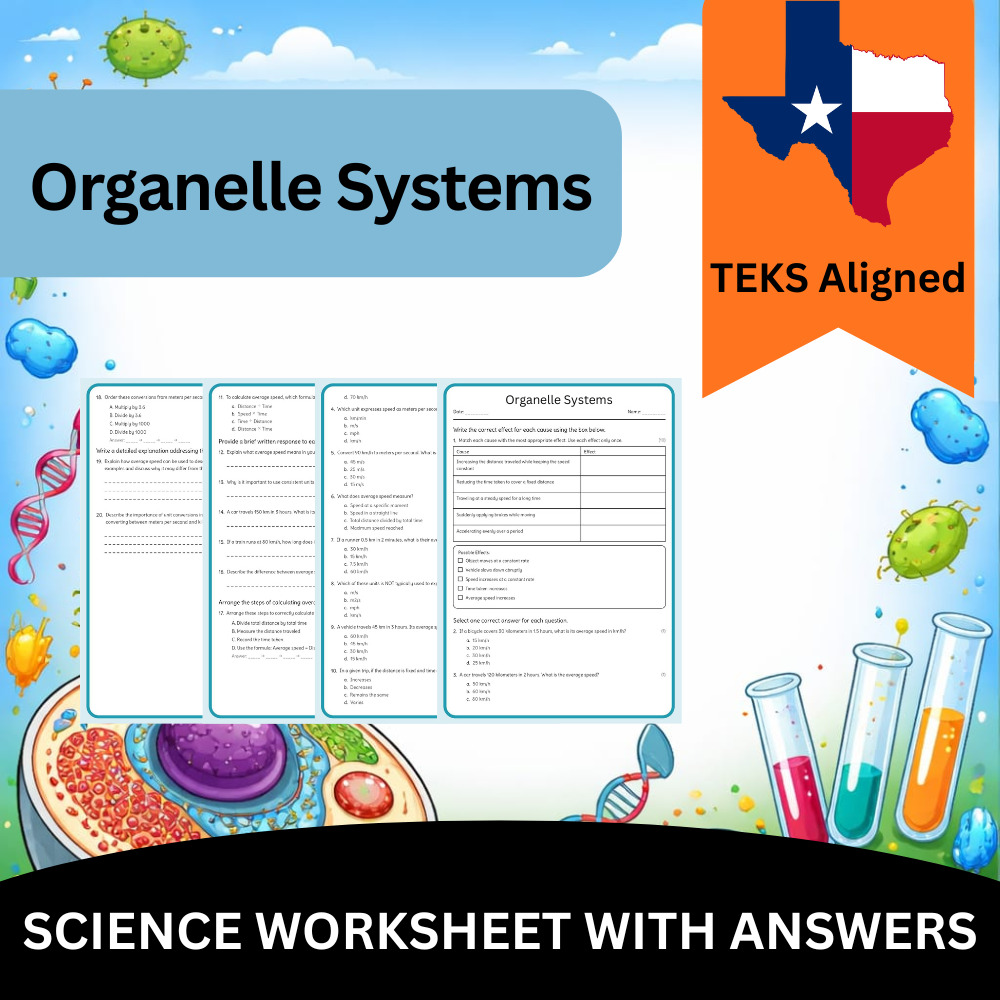
Grade 9 Science – Organelle Systems Worksheet (Worksheet + Answer Key) | TEKS Aligned
Created byBright Mind ResourcesLearning Objectives
- Explain how organelle systems coordinate functions within a cell.
- Identify key organelles involved in energy transduction, lipid synthesis, and detoxification.
- Describe the role of transport vesicles and cytoskeletal elements in organelle function.
Also included in: Grade 9 Science Unit | Cell Structures & Transport Mechanisms Pack(TEKS-Aligned) +3 more
Instant download
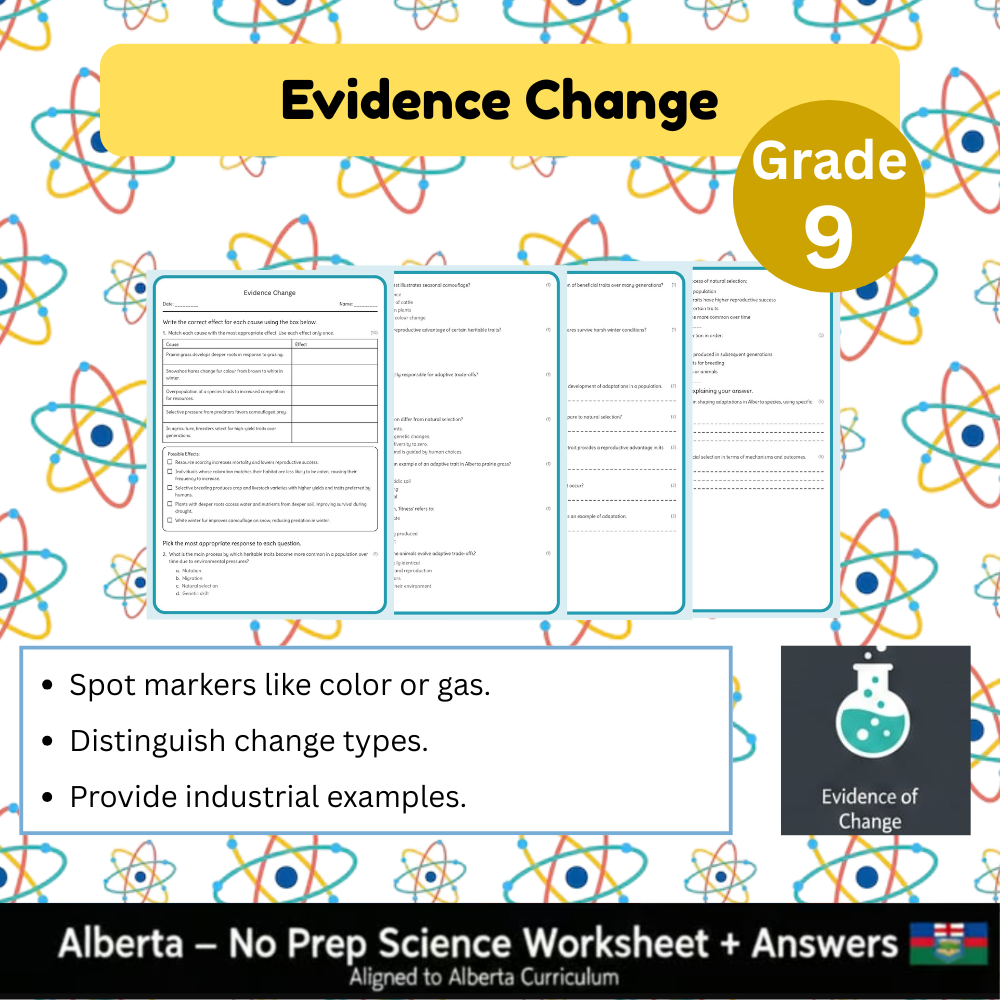
Grade 9 Science Worksheet – Evidence of Chemical Changes (PDF)
Created byBright Mind ResourcesLearning Objectives
- Identify observable markers of chemical change such as color shifts, gas evolution, precipitate formation, temperature change, and irreversibility.
- Distinguish between physical and chemical changes based on evidences observed.
- Provide real-world examples of chemical changes from environmental and industrial contexts.
Instant download
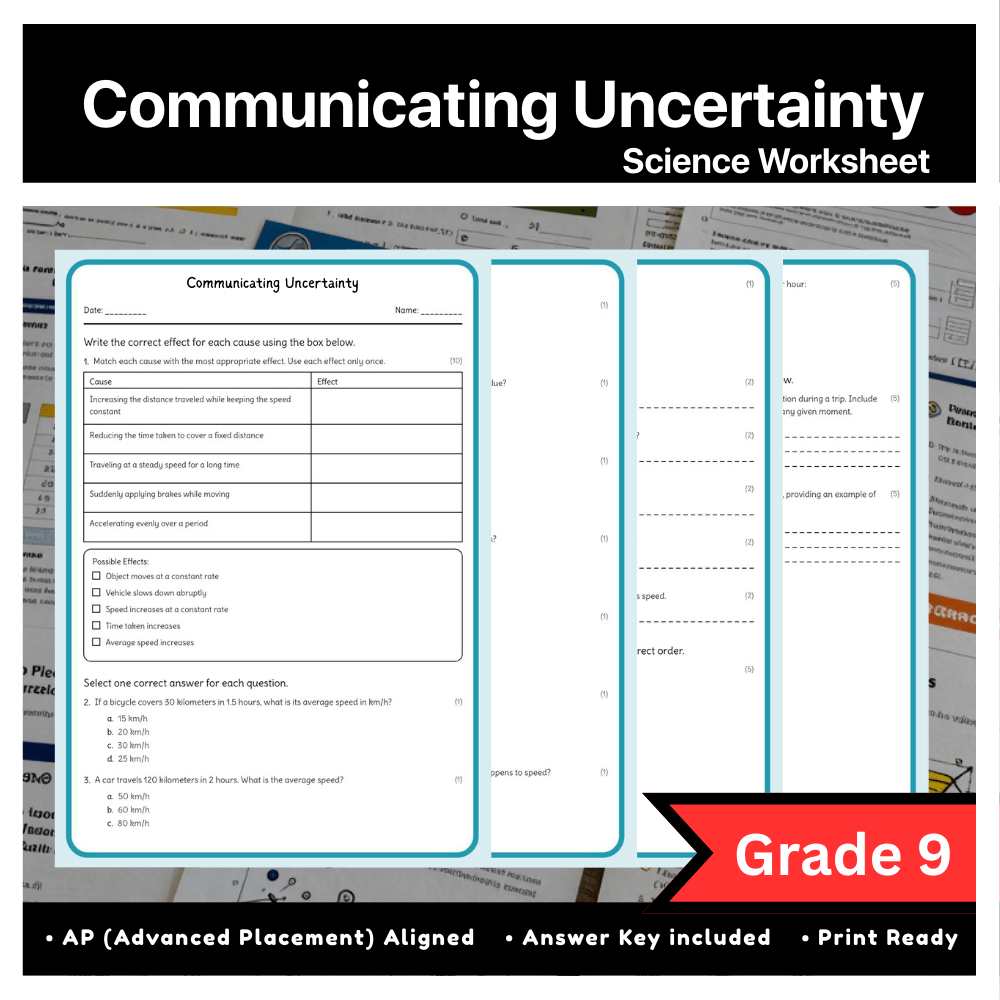
Grade 9 Science | Communicating Scientific Uncertainty Worksheet (AP Standard)
Created byBright Mind ResourcesLearning Objectives
- Understand the conventions for conveying quantitative uncertainty and confidence in scientific reports.
- Identify different methods for representing variability, effect sizes, and likelihoods.
- Evaluate how assumptions and limitations affect interpretations of models and data.
Instant download
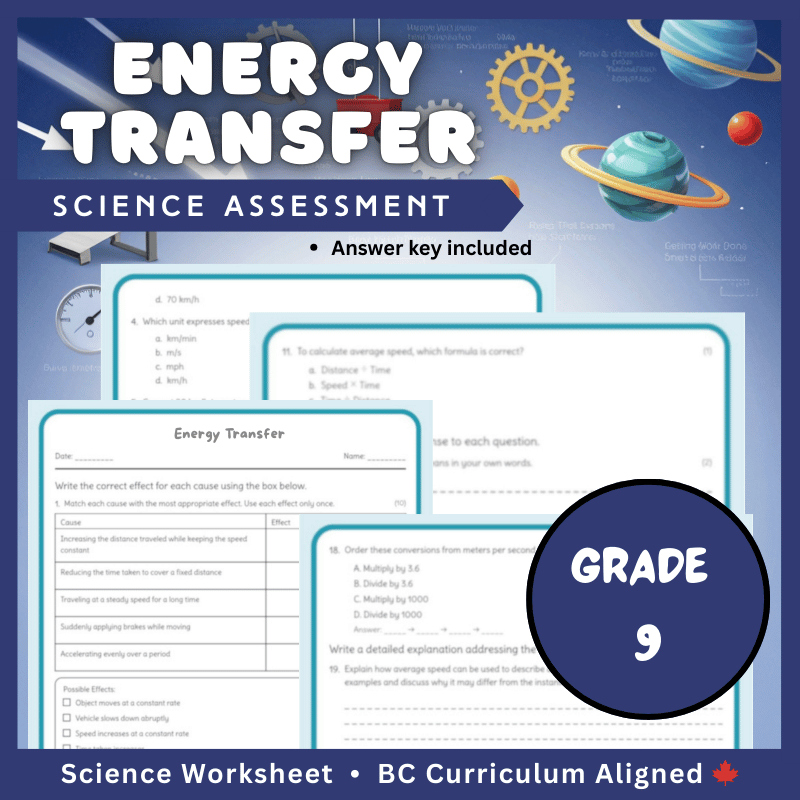
Grade 9 Science | Energy Transfer Worksheets + Answer Key – BC Standards
Created byBright Mind ResourcesLearning Objectives
- Understand how mechanical systems transfer energy through work, collisions, and friction.
- Explain how energy is gained or lost in motion and the transformation of energy into heat.
- Identify real-world examples illustrating energy conversion pathways and energy accounting.
Instant download
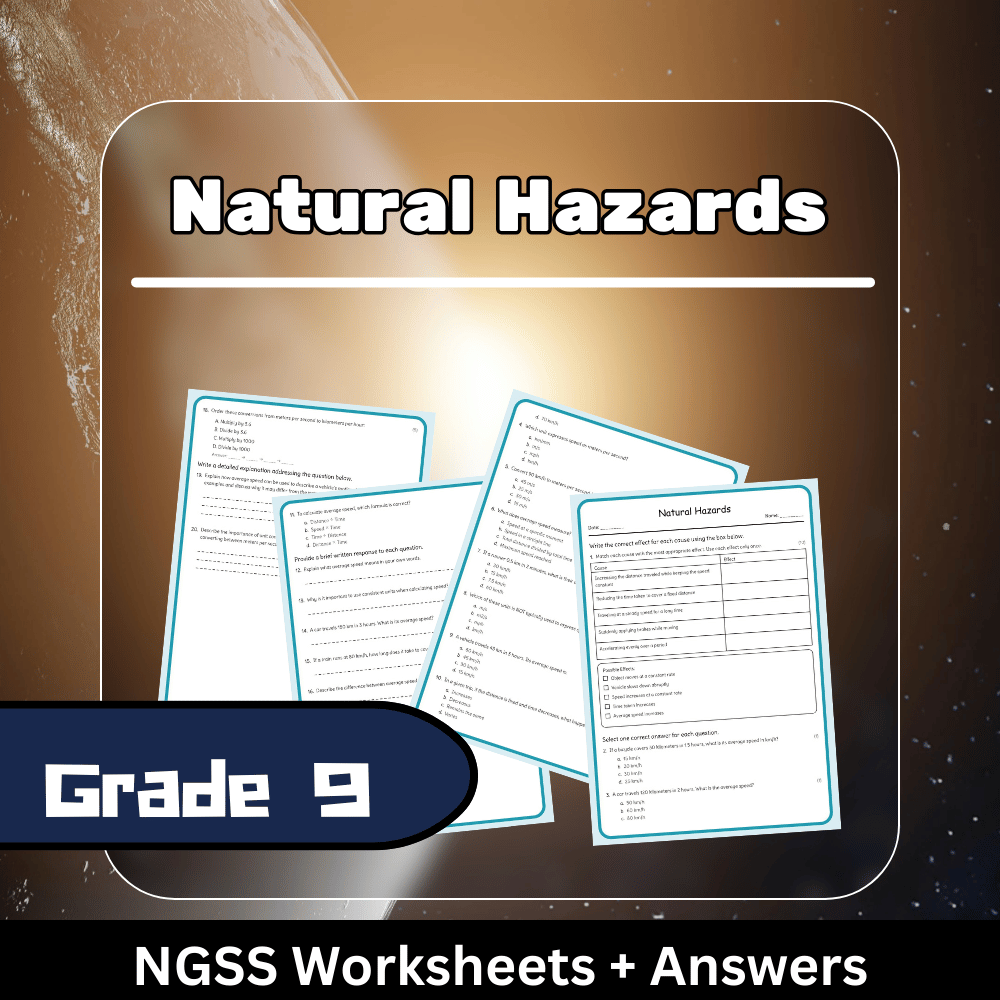
Grade 9 Science | Natural Hazards Worksheet + Answer Key (NGSS-Aligned, PDF)
Created byBright Mind ResourcesLearning Objectives
- Understand the different types of natural hazards and their triggers.
- Analyze geologic and atmospheric indicators used to assess hazards.
- Interpret hazard maps, recurrence intervals, and paleoevidence to evaluate risks.
Instant download
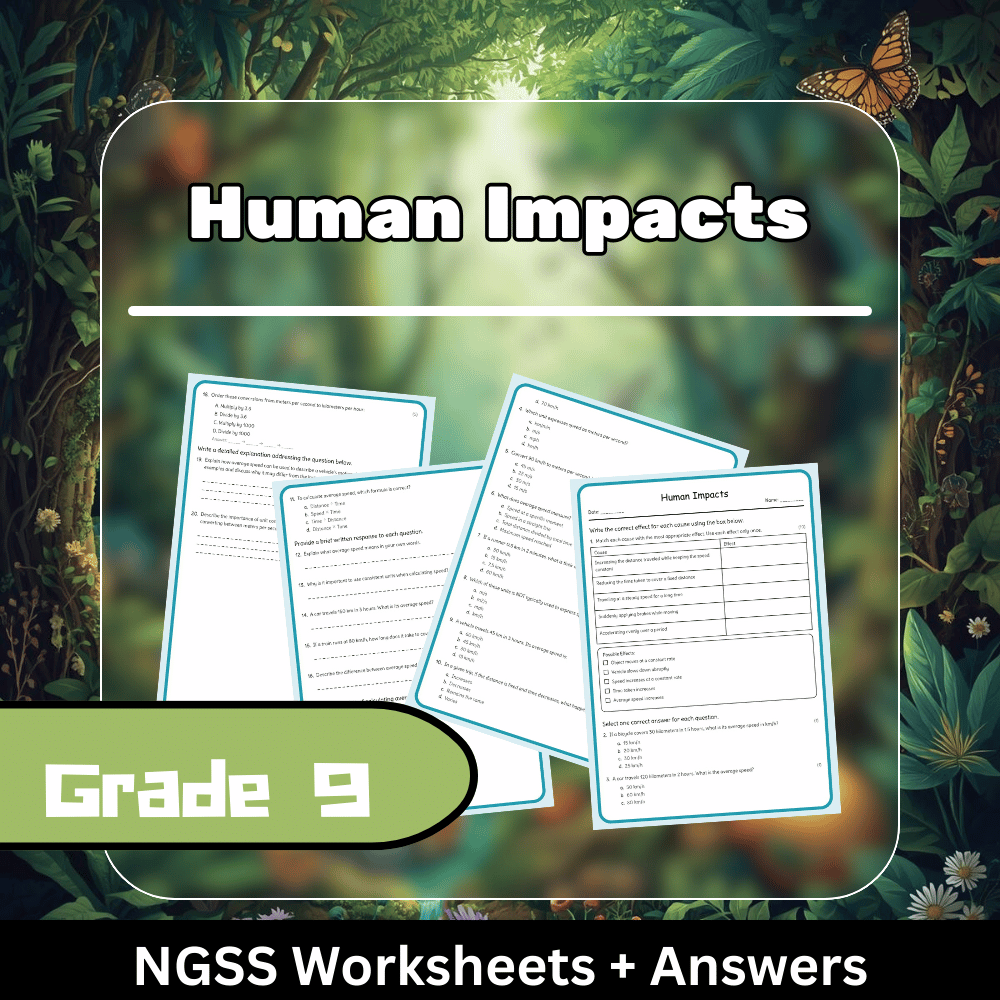
Grade 9 Science | Human Impacts Worksheet (Answer Key) – NGSS Aligned
Created byBright Mind ResourcesLearning Objectives
- Analyze how land-use change, invasive species, pollution, and resource extraction affect biodiversity and ecosystems.
- Interpret empirical data from case studies such as deforestation and coral reef degradation.
- Evaluate trade-offs among conservation, ecosystem services, and socioecological outcomes.
Instant download
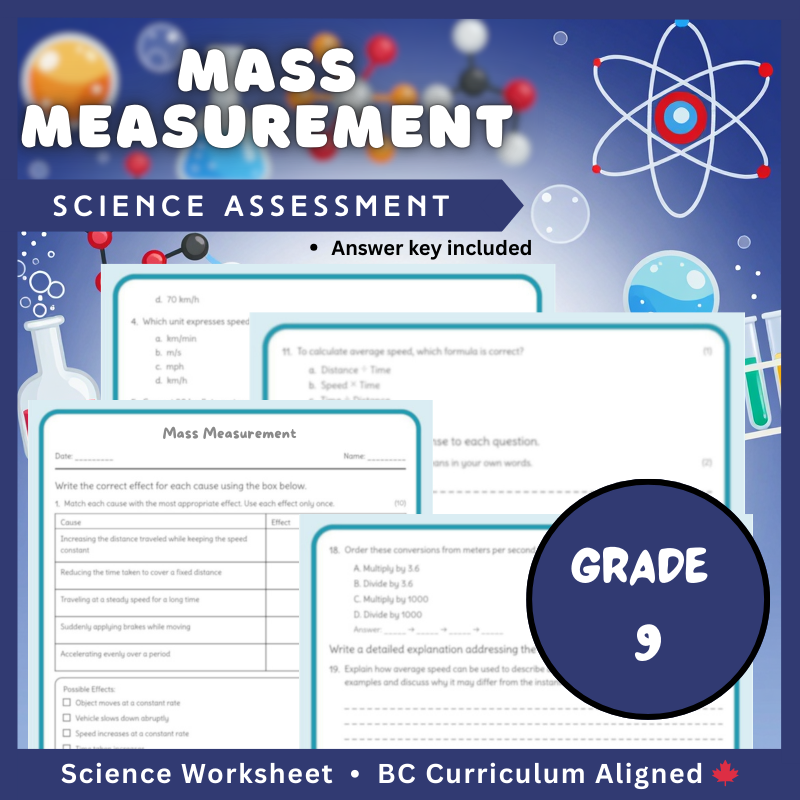
Grade 9 Science | Mass Measurement Worksheet (PDF) – BC Standards & Practice
Created byBright Mind ResourcesLearning Objectives
- Explain how measured mass changes during chemical reactions reflect the conservation of atoms within system boundaries.
- Identify causes of apparent mass loss in open systems involving gaseous products.
- Describe methods to account for all phases and containment to verify mass conservation.
Instant download
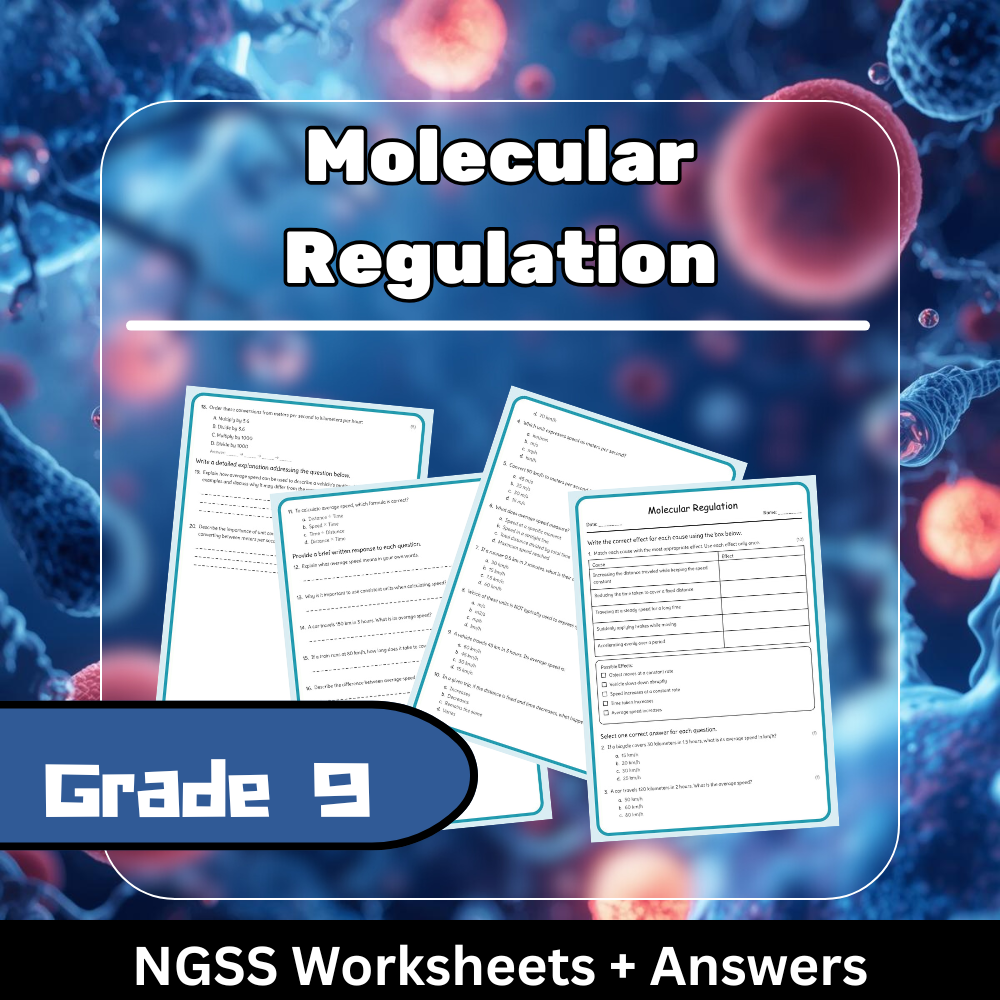
Grade 9 Science | Molecular Regulation Worksheet (Answer Key) NGSS-Aligned
Created byBright Mind ResourcesLearning Objectives
- Understand the mechanisms of gene expression regulation and signal transduction pathways.
- Identify key molecular components involved in intercellular communication.
- Analyze how mutations and pharmacological inhibitors affect cellular signaling and systemic functions.
Instant download
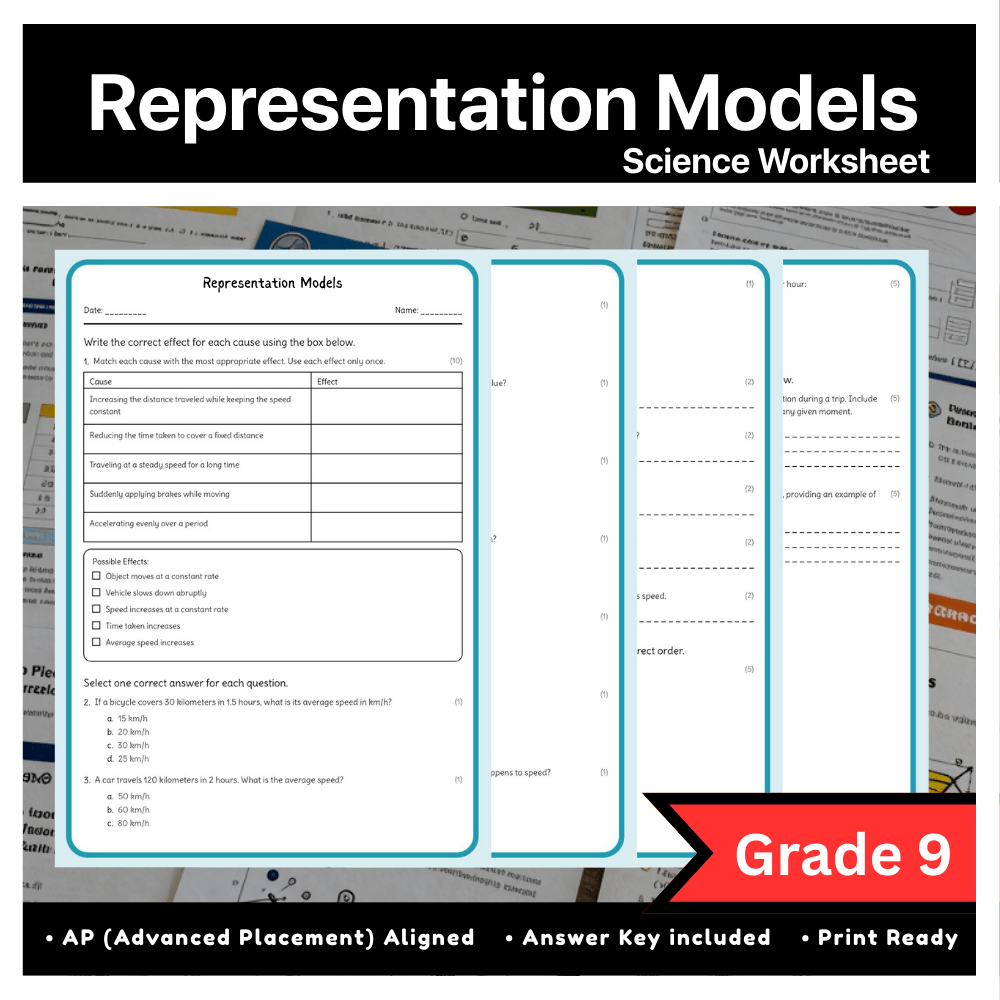
Grade 9 Science | Representation Models Worksheet (AP Standard) – PDF
Created byBright Mind ResourcesLearning Objectives
- Identify different types of models used in science, including mathematical, graphical, schematic, and computational representations.
- Understand how models are selected based on fidelity, simplicity, and predictive ability.
- Explain how mapping model components to measurements helps interpret system behaviors.
Instant download
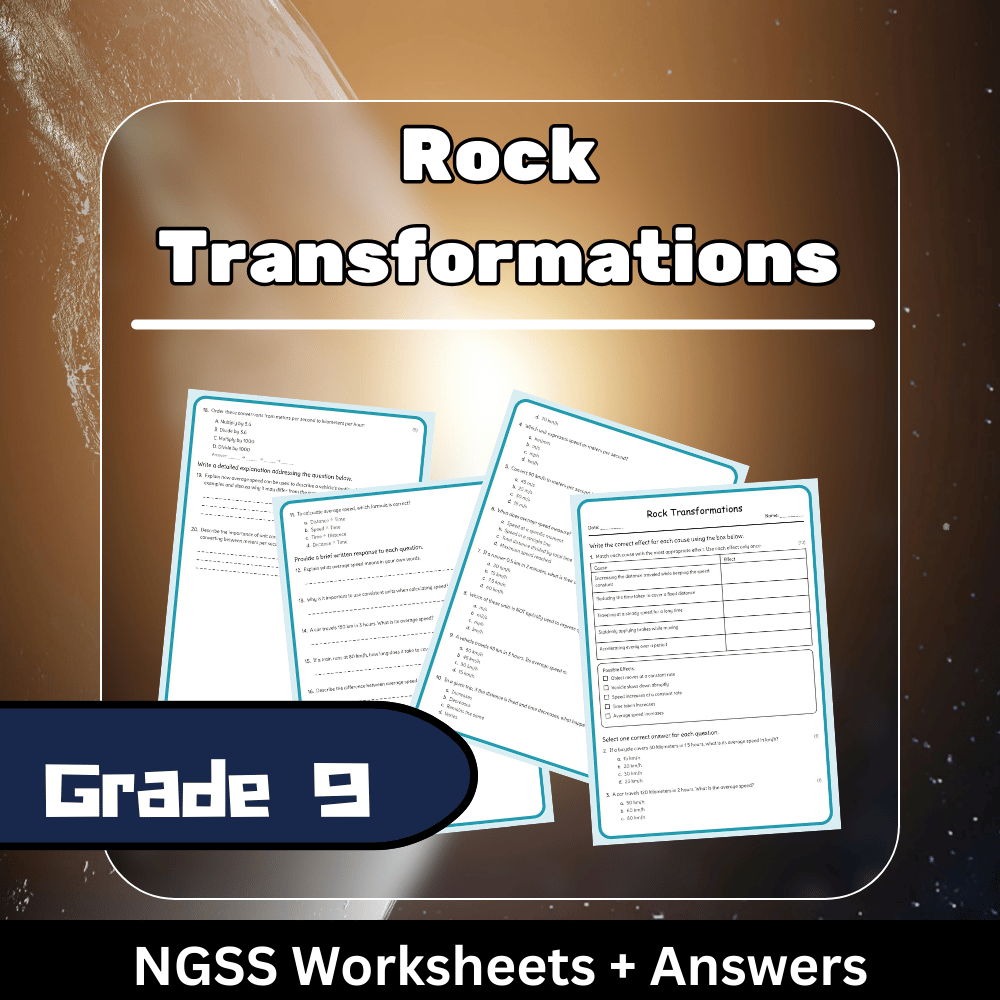
Grade 9 Science | Rock Transformations Worksheet (NGSS Aligned, PDF)
Created byBright Mind ResourcesLearning Objectives
- Describe the processes involved in the rock cycle, including melting, crystallization, erosion, and metamorphism.
- Identify examples of rock transformations, such as basalt formation and sandstone deposition.
- Explain how pressure, temperature, and time influence mineral and rock changes.
Instant download
Grade 9 Science | Producers & Consumers NGSS Worksheet (PDF) – Science
Created byBright Mind ResourcesLearning Objectives
- Explain the roles of producers and consumers in the ecosystem.
- Describe how photosynthesis and respiration transfer energy and cycle oxygen and carbon.
- Analyze the impact of net primary productivity and biomass on energy flow.
Instant download
Grade 9 Science | Earth's Interior NGSS Worksheet (Worksheet + Answer Key)
Created byBright Mind ResourcesLearning Objectives
- Describe the layered structure of Earth's interior based on seismic, gravity, and heat-flow evidence.
- Interpret the behavior of P-waves and S-waves and their implications for Earth's composition and structure.
- Explain how density contrasts and mantle temperature gradients drive convective processes within Earth.
Instant download
Grade 9 Science | Unit Analysis Worksheet (PDF) | AP Standards Practice
Created byBright Mind ResourcesLearning Objectives
- Understand and apply the principles of dimensional analysis to check the consistency of physical quantities.
- Recognize how unit-checking helps identify algebraic errors and constrains possible models.
- Derive relationships and scale laws using units to verify plausibility of equations.
Instant download
Grade 9 Science | Crystal Lattices Worksheet (Answer Key) - BC Standards
Created byBright Mind ResourcesLearning Objectives
- Explain the concept of crystal lattices and their atomic arrangements.
- Identify different types of lattice structures such as ionic, metallic, and covalent networks.
- Describe how lattice types influence material properties like hardness, conductivity, and melting points.
Instant download
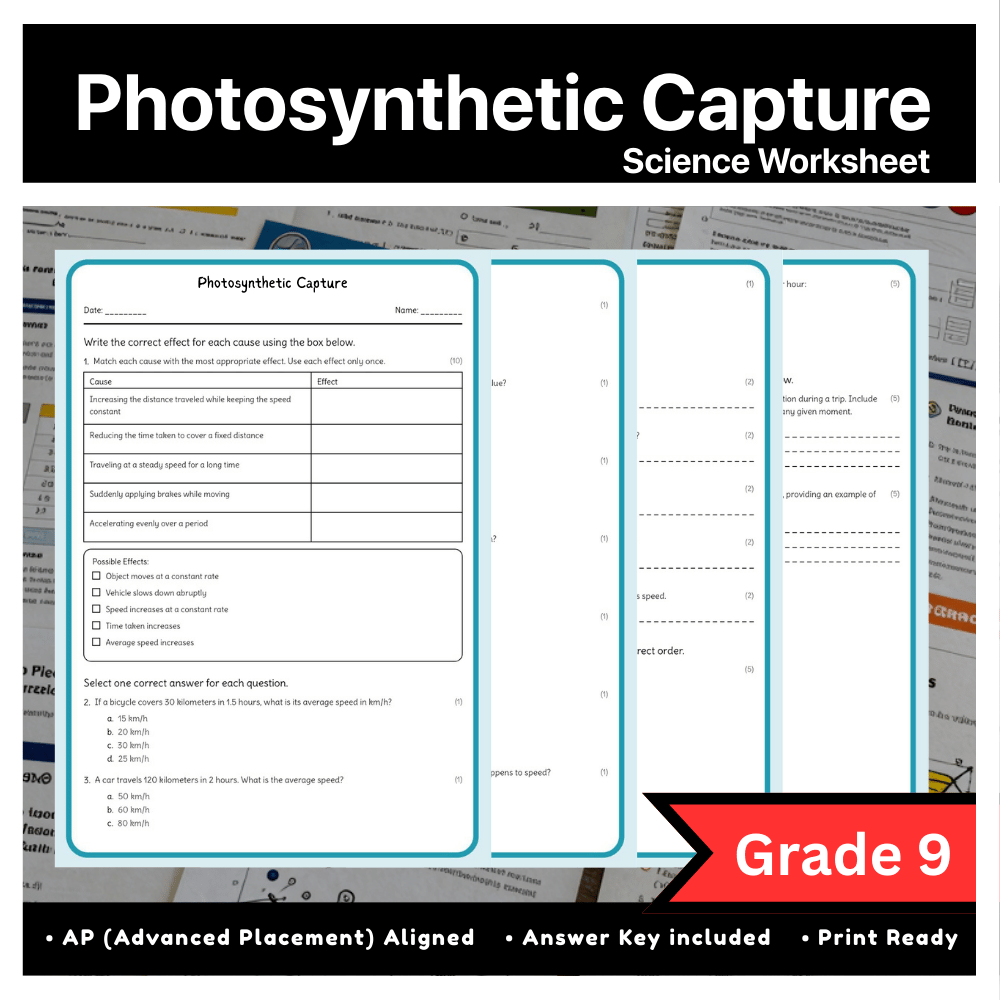
Grade 9 Science | Photosynthetic Capture Worksheet (Answer Key) – AP Standard
Created byBright Mind ResourcesLearning Objectives
- Describe the molecular basis of photosynthetic light capture.
- Explain pigment absorption spectra and energy transfer among pigments.
- Discuss how reaction centers convert light energy into chemical energy.
Instant download
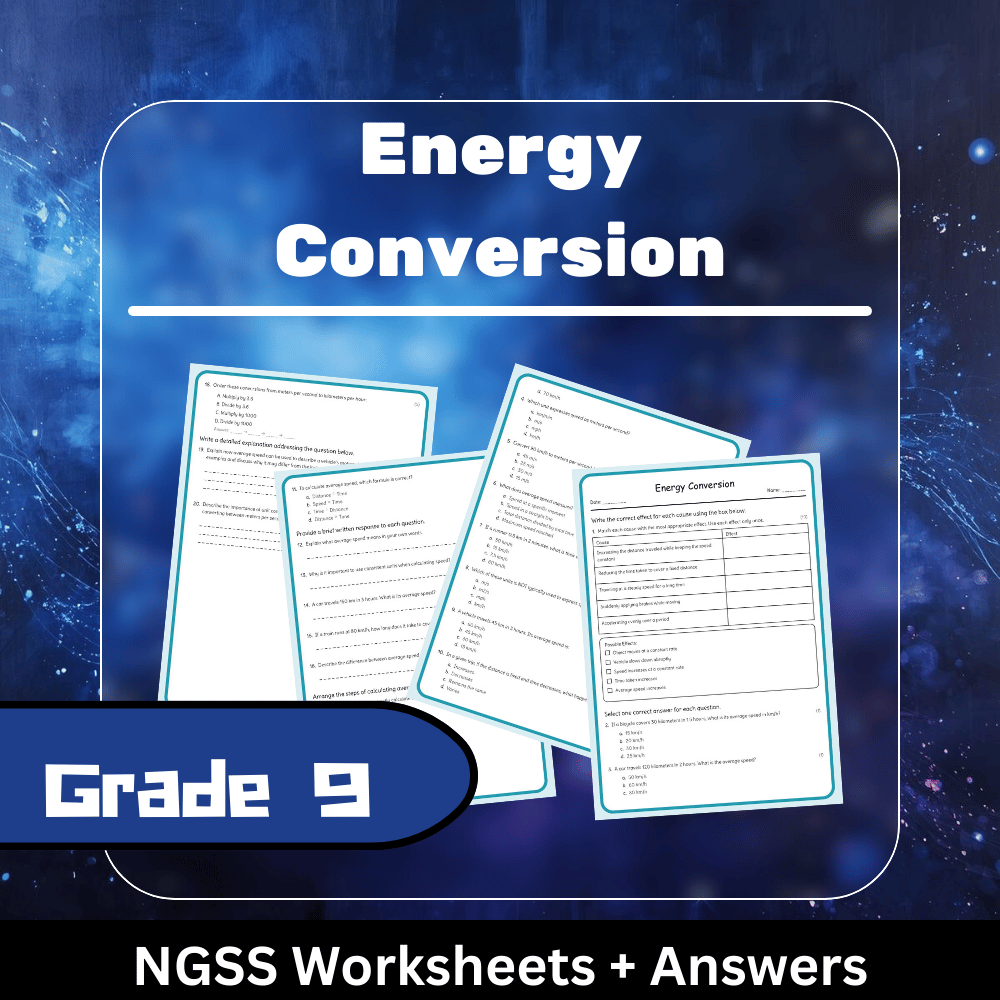
Grade 9 Science | Energy Conversion Worksheet (Answer Key) NGSS-Aligned
Created byBright Mind ResourcesLearning Objectives
- Understand different types of energy conversion devices and processes.
- Identify key examples of energy conversion such as photovoltaic cells, thermoelectric modules, and electrochemical cells.
- Analyze energy efficiency and account for losses during conversion.
Instant download
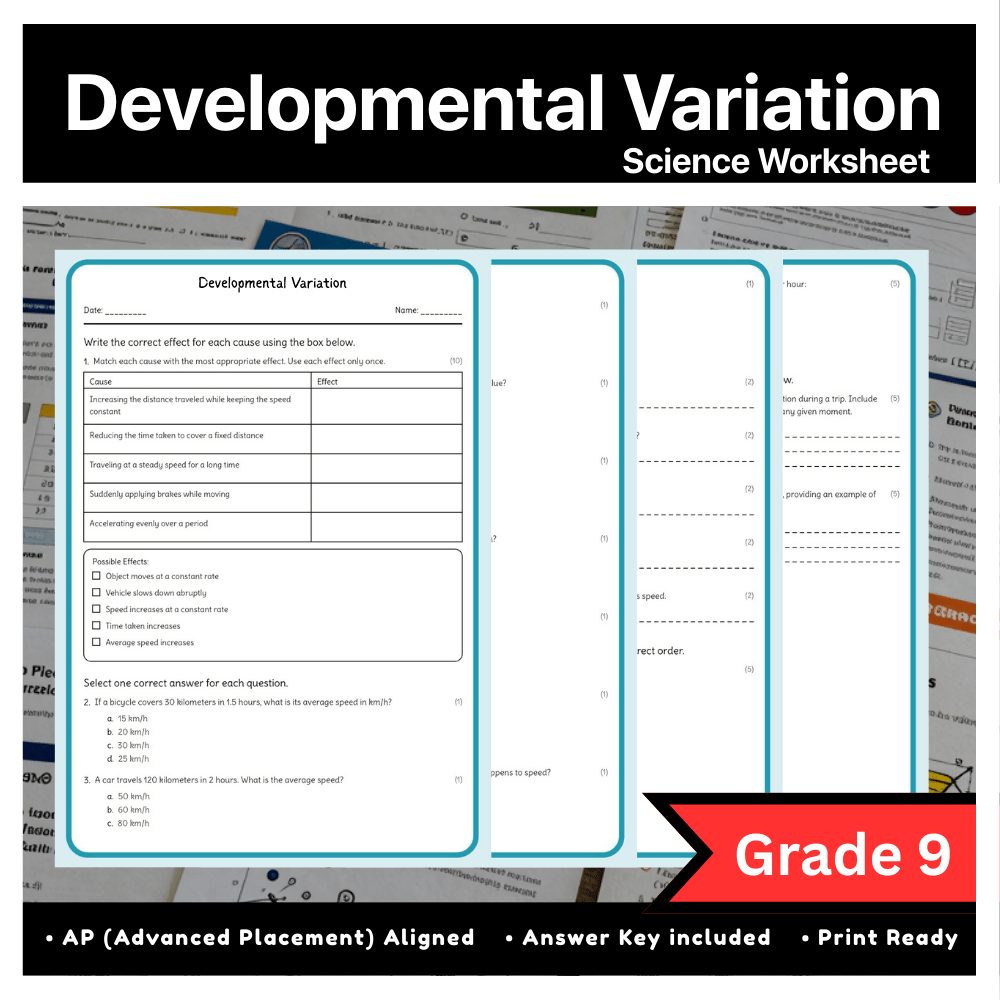
Grade 9 Science | Developmental Variation Worksheet (AP Standards + Answer Key)
Created byBright Mind ResourcesLearning Objectives
- Explain how genetic and epigenetic mechanisms contribute to phenotypic diversity.
- Identify different developmental processes that influence morphological and physiological traits.
- Compare developmental pathways to understand convergent evolution and developmental bias.
Instant download
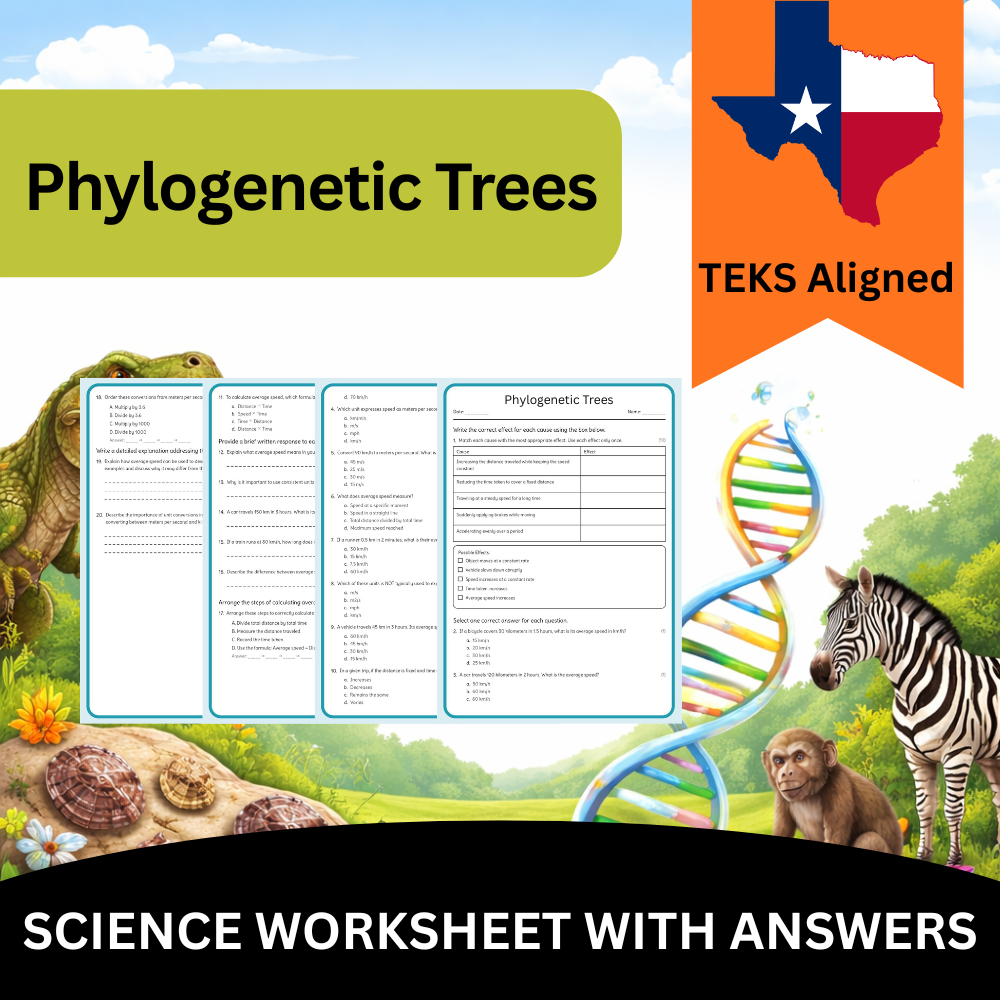
Grade 9 Science | Phylogenetic Trees Worksheet (Answer Key) – TEKS Aligned
Created byBright Mind ResourcesLearning Objectives
- Understand the concept of phylogenetic trees and their purpose in illustrating evolutionary relationships.
- Interpret different types of phylogenetic trees, including rooted and unrooted trees.
- Identify monophyletic, paraphyletic, and polyphyletic groups within trees.
Also included in: Grade 9 Science Unit | Evolution, Speciation & Genetics Worksheet Pack - TEKS +3 more
Instant download
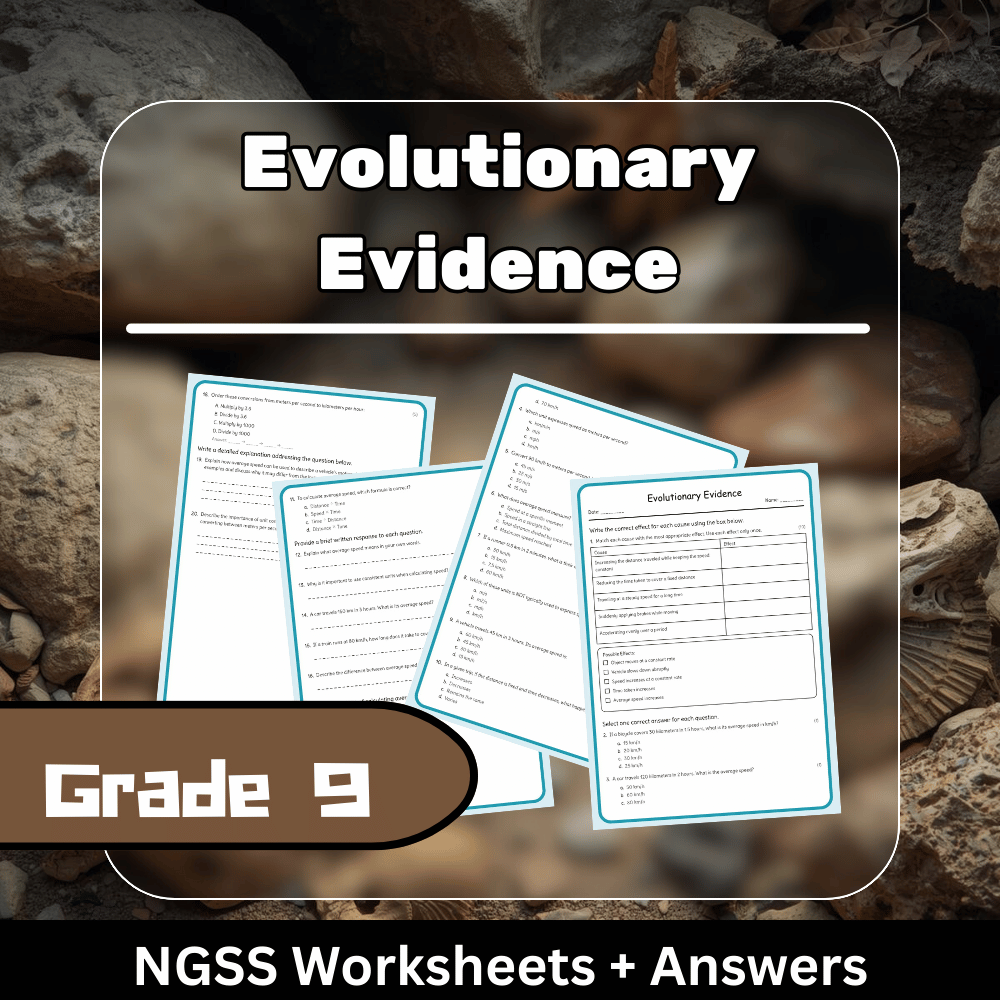
Grade 9 Science – Evolutionary Evidence Worksheet (NGSS Aligned) PDF
Created byBright Mind ResourcesLearning Objectives
- Identify different lines of empirical evidence supporting evolution, including fossil, anatomical, and molecular data.
- Explain how comparative anatomy and genetic sequences provide evidence for common ancestry.
- Describe the significance of transitional fossils and biogeographic distributions in understanding evolution.
Instant download
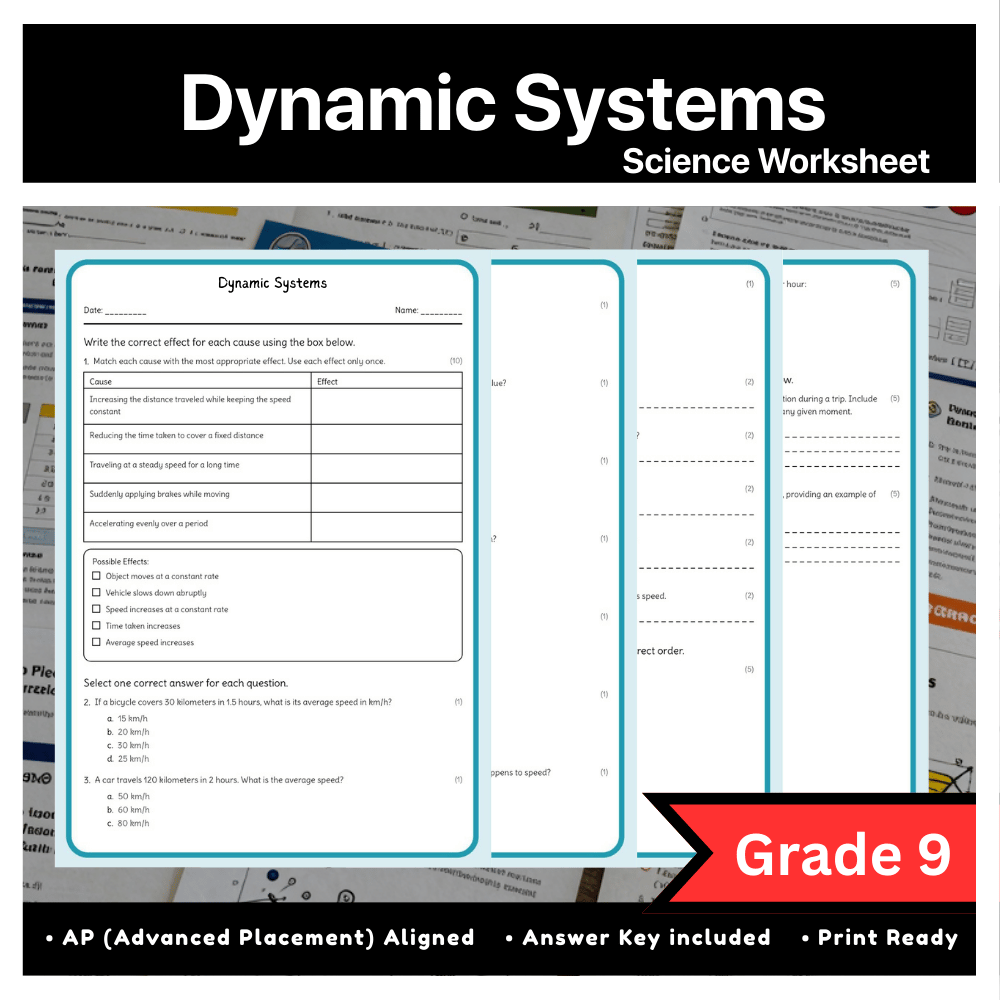
Grade 9 Science | Dynamic Systems Worksheet (AP Standard + Answer Key) (PDF)
Created byBright Mind ResourcesLearning Objectives
- Describe how temporal data reflects rates, feedback loops, and equilibrium in dynamic systems.
- Interpret time-series data and simple phase diagrams to identify transient and steady-state behaviors.
- Understand how causal structures manifest in temporal patterns and how models constrain data interpretation.
Instant download
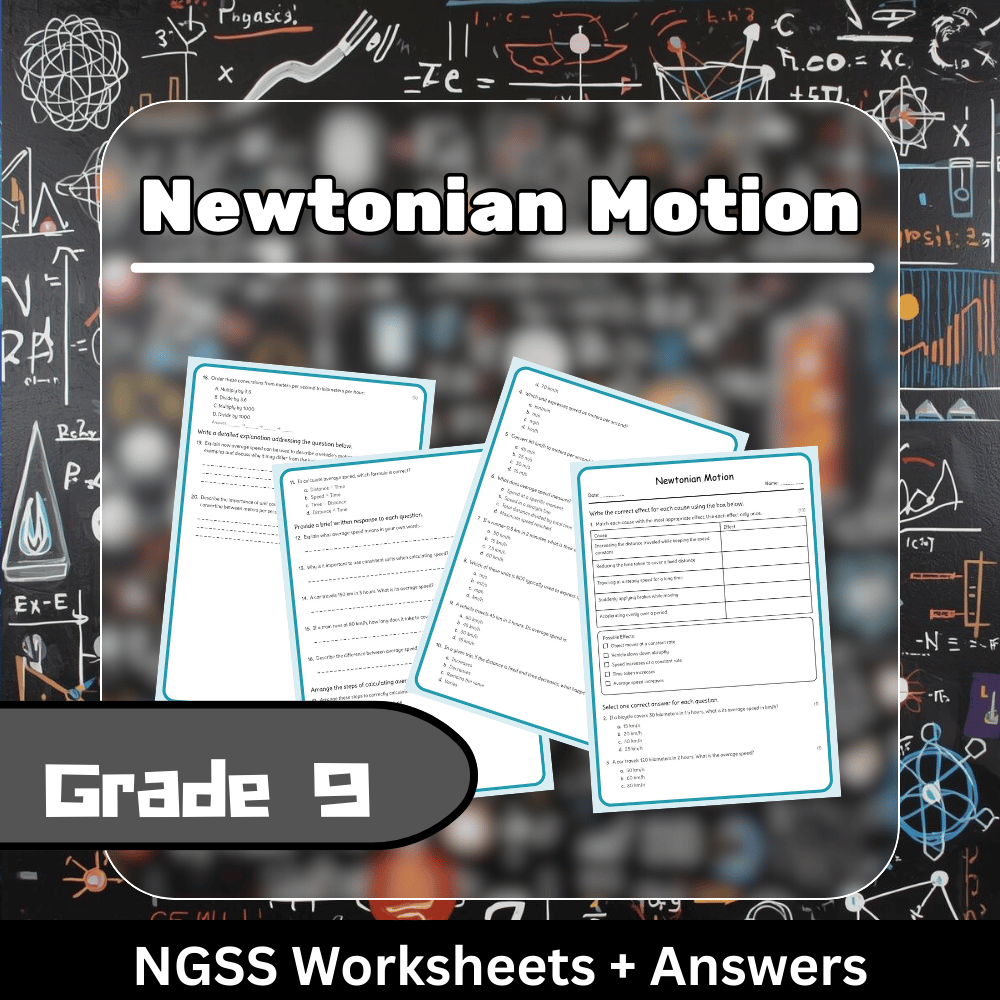
Grade 9 Science | Newtonian Motion Worksheet (Answer Key) – NGSS Aligned
Created byBright Mind ResourcesLearning Objectives
- Understand the relationship between net force, mass, and acceleration as described by Newton's laws.
- Analyze free-body diagrams and force components in various motion scenarios.
- Apply proportionality between net force and acceleration to solve problems involving constant mass systems.
Instant download
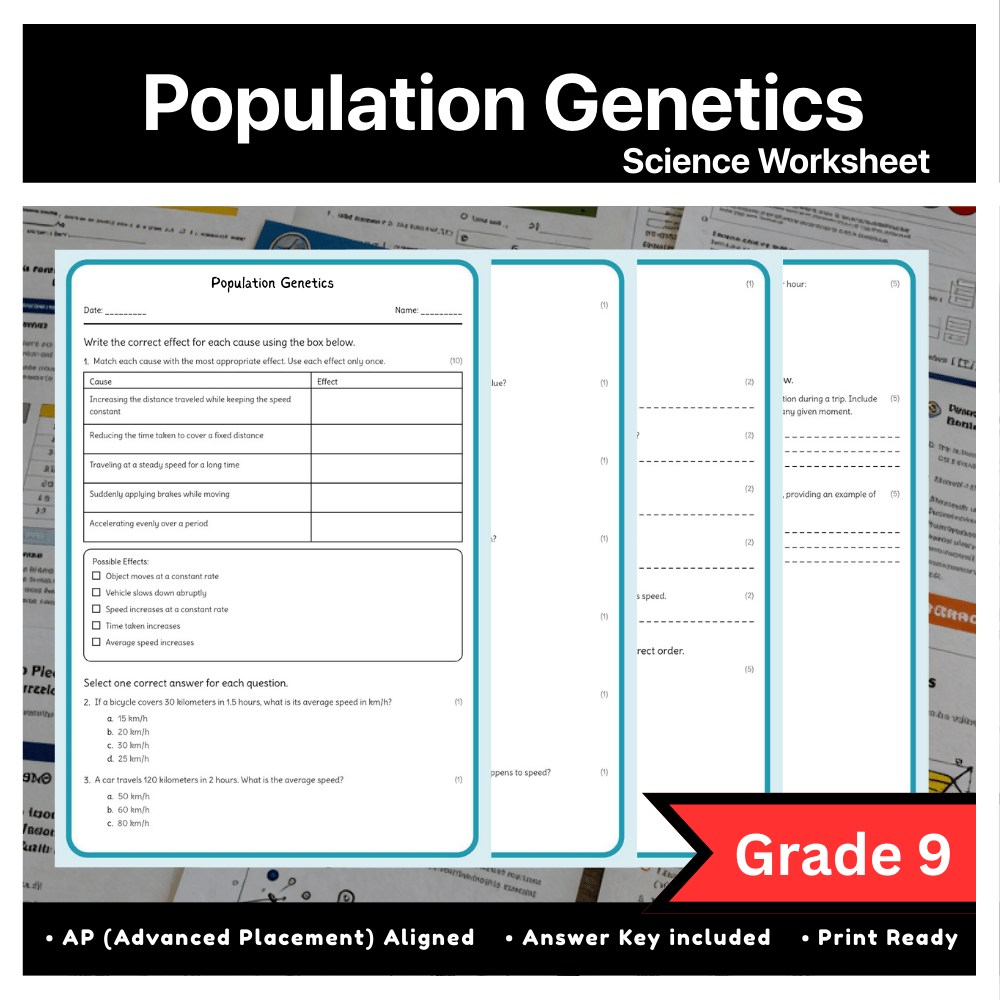
Grade 9 Science | Population Genetics Worksheet + Answer Key (AP Standard)
Created byBright Mind ResourcesLearning Objectives
- Describe how allele frequencies change under selection, drift, migration, and mutation.
- Explain the Hardy-Weinberg equilibrium as a null model for populations.
- Analyze the effects of bottlenecks and founder events on genetic variation.
Instant download
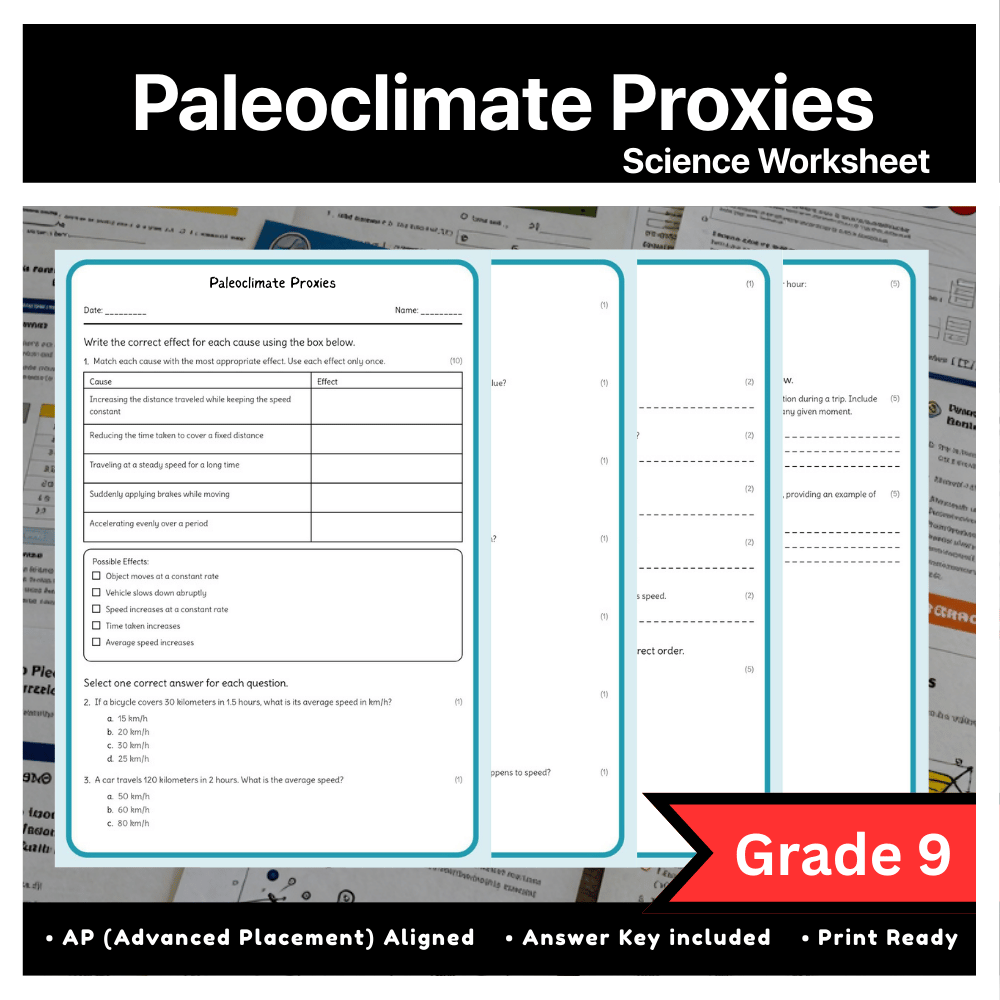
Grade 9 Science – Paleoclimate Proxies Worksheet (AP Standard, PDF)
Created byBright Mind ResourcesLearning Objectives
- Interpret paleoclimate evidence from various proxy indicators such as isotopic ratios, growth increments, and microfossil assemblages.
- Relate proxy records to past climate patterns including glacial-interglacial cycles and abrupt events.
- Employ age models and quantify uncertainty to link proxy signals to climate forcing mechanisms.
Instant download
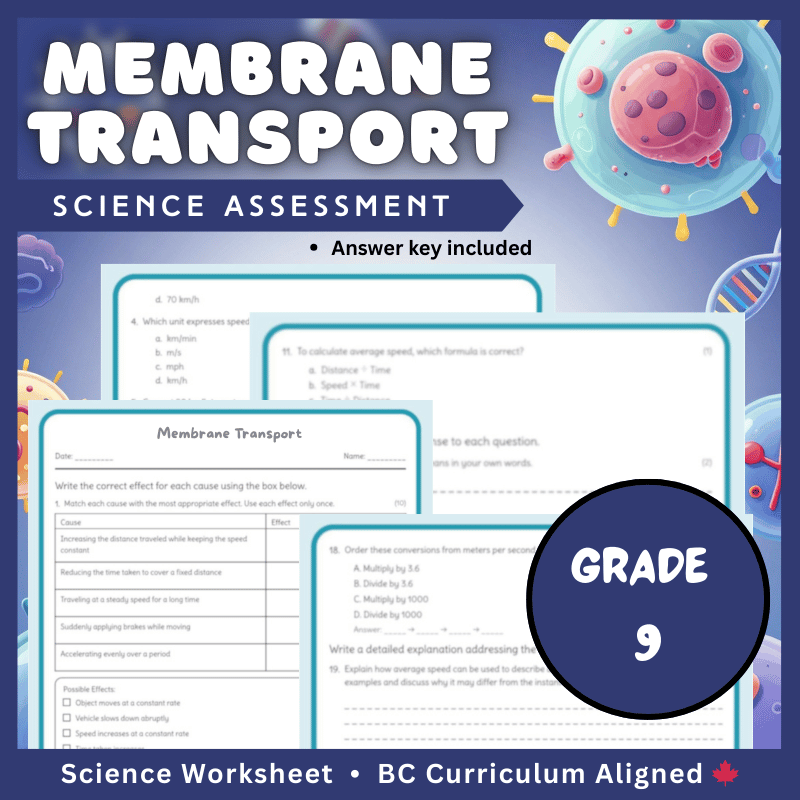
Grade 9 Science | Membrane Transport Worksheet (Answer Key) – BC Standards
Created byBright Mind ResourcesLearning Objectives
- Describe the structure of the plasma membrane and its role in selective permeability.
- Differentiate between passive and active transport processes across membranes.
- Identify various membrane proteins involved in transport and communication.
Instant download
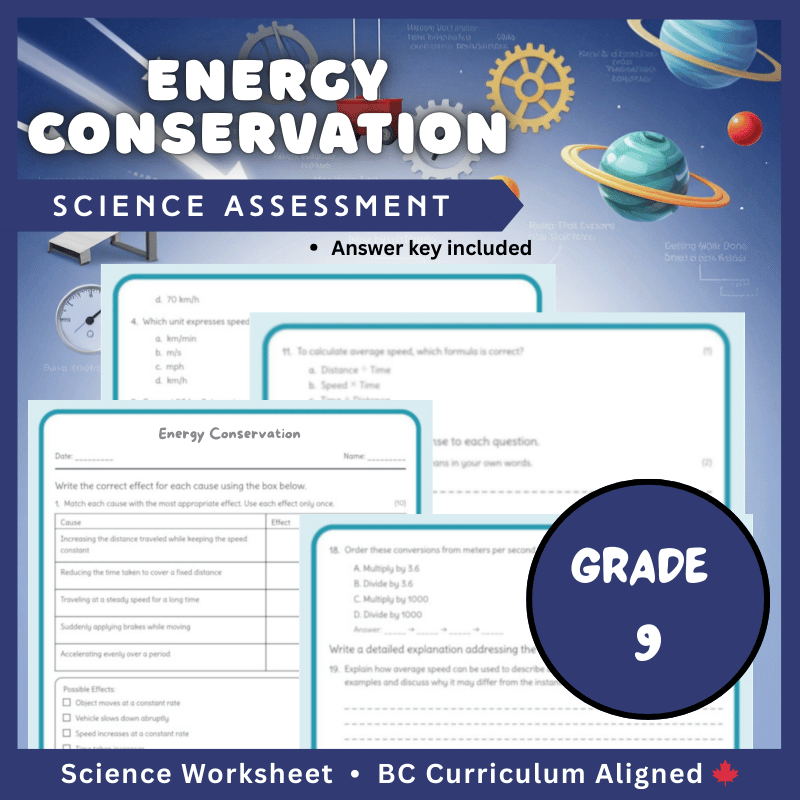
Grade 9 Science – Energy Conservation Worksheet with Answer Key (PDF)
Created byBright Mind ResourcesLearning Objectives
- Understand the principle of conservation of energy in isolated systems.
- Identify how energy shifts between kinetic and potential forms in real-world scenarios.
- Explain the role of nonconservative forces like friction in dissipating mechanical energy.
Instant download
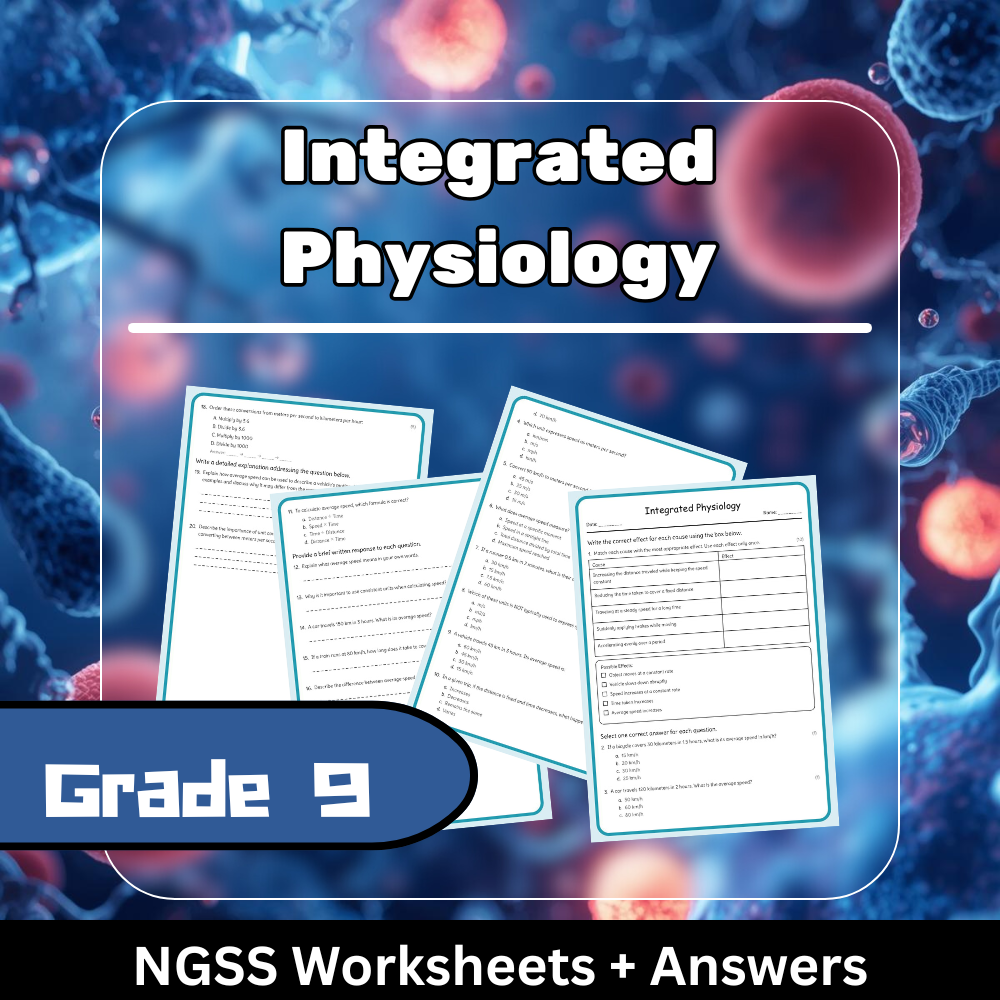
Grade 9 Science | Integrated Physiology Worksheet (Answer Key) - NGSS Aligned
Created byBright Mind ResourcesLearning Objectives
- Understand how molecular and cellular interactions influence organ system function.
- Link genetic variations to physiological responses and clinical outcomes.
- Interpret biochemical, histological, and organ performance data related to organism health.
Instant download
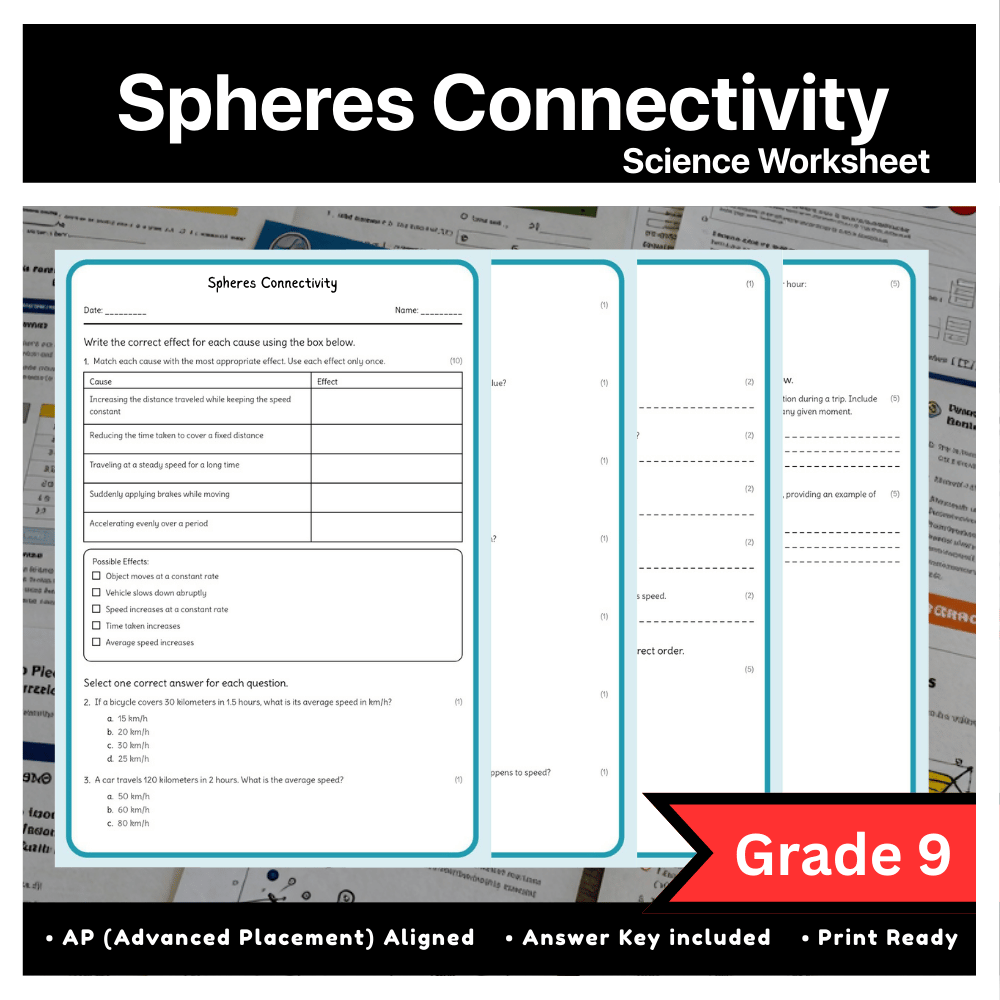
Grade 9 Science | Spheres Connectivity Worksheet (AP Standard, PDF)
Created byBright Mind ResourcesLearning Objectives
- Explain the interactions among the geosphere, hydrosphere, atmosphere, and biosphere using models and diagrams.
- Identify material and energy exchanges such as nutrient transport, gas fluxes, and ocean upwelling.
- Analyze how surface processes affect transient environmental signals through spatial and causal frameworks.
Instant download
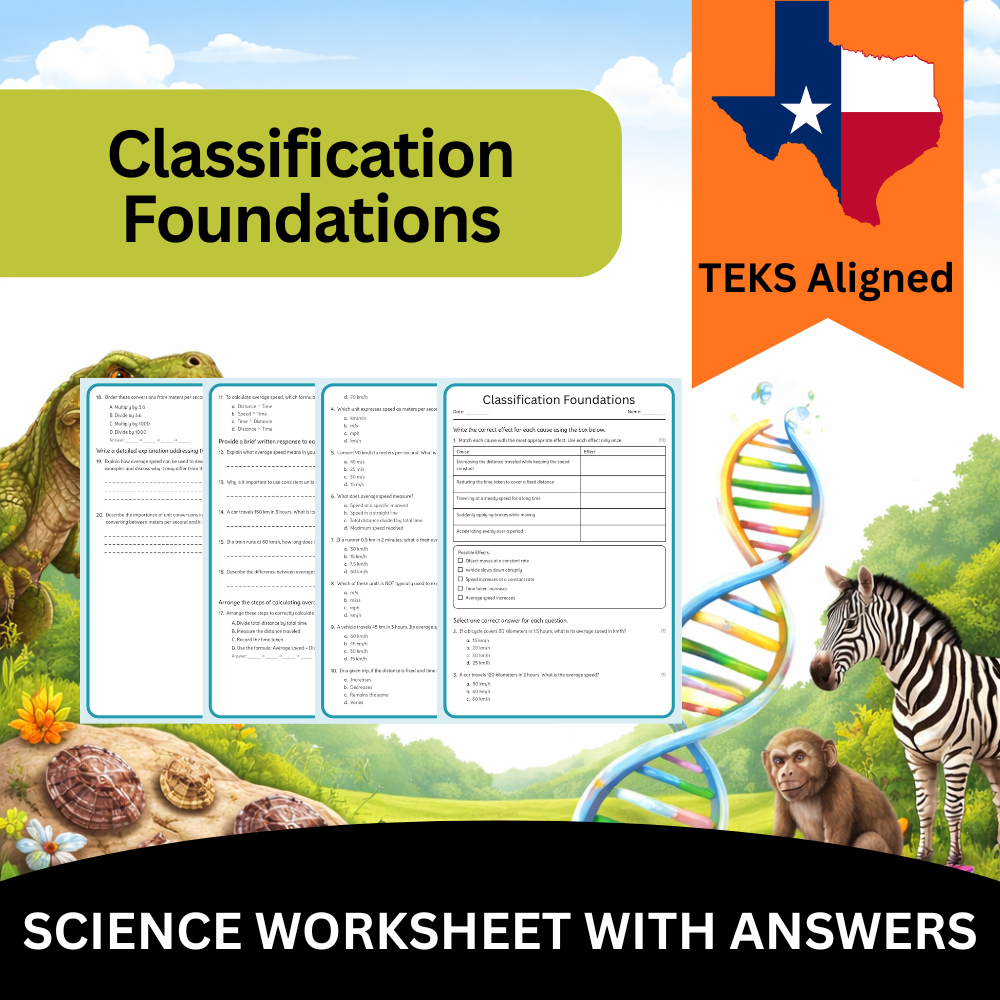
Grade 9 Science | Classification Foundations Worksheet (Answer Key) – TEKS Aligned
Created byBright Mind ResourcesLearning Objectives
- Understand the hierarchical structure of biological classification systems.
- Identify key taxonomic ranks and their characteristics.
- Differentiate between traditional and modern classification approaches.
Also included in: Grade 9 Science Unit | Evolution, Speciation & Genetics Worksheet Pack - TEKS +3 more
Instant download
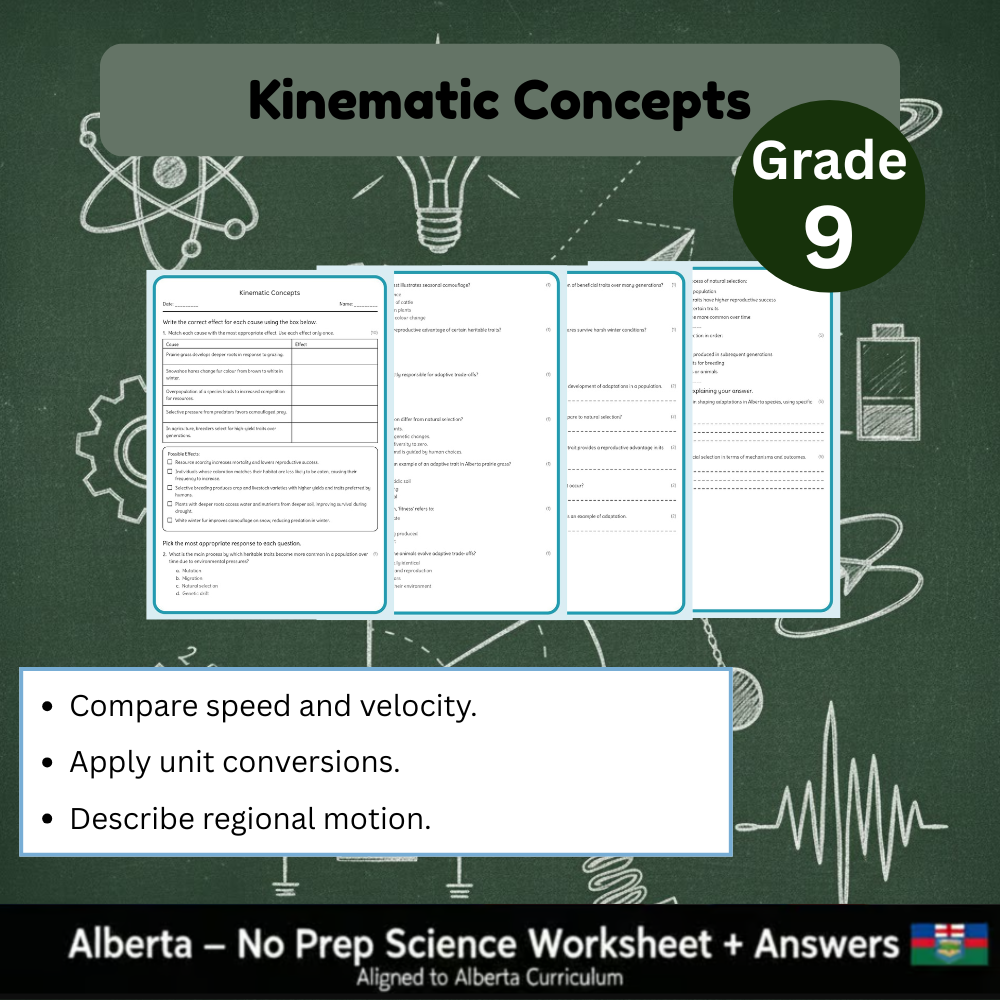
Grade 9 Science | Kinematic Concepts Worksheet (PDF) – Alberta Standards
Created byBright Mind ResourcesLearning Objectives
- Define and differentiate among speed, velocity, and acceleration
- Apply unit conversions and sign conventions in motion analysis
- Describe real-world examples of kinematic measures in regional contexts
Instant download
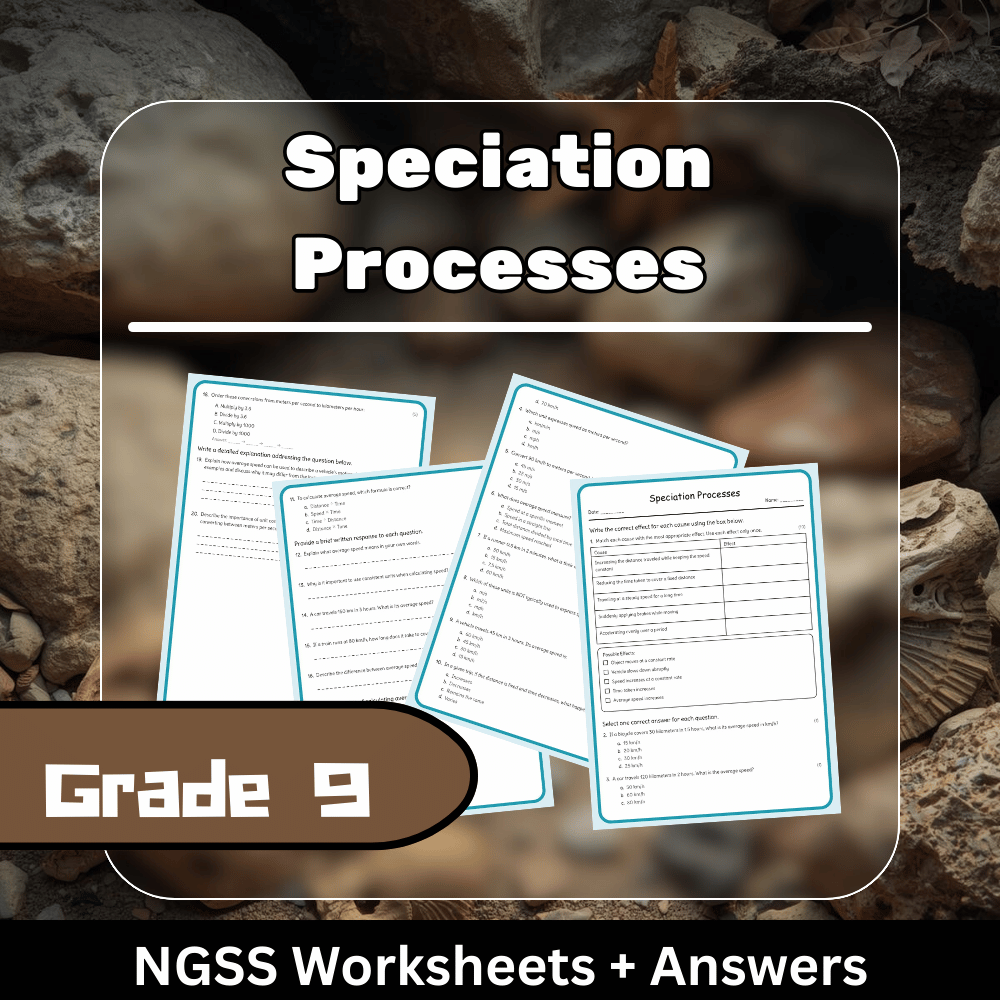
Grade 9 Science | Speciation Processes Worksheet - Answer Key (NGSS Standards)
Created byBright Mind ResourcesLearning Objectives
- Understand the mechanisms that lead to new species formation, including reproductive isolation and genetic divergence.
- Identify and differentiate between allopatric and sympatric speciation models and their examples.
- Explain the significance of hybrid zones, polyploidy, and adaptive radiation in speciation.
Instant download
Grade 9 Science | Chemical Properties Worksheet (Ontario Standards) (PDF)
Created byBright Mind ResourcesLearning Objectives
- Define chemical properties and identify examples in real substances.
- Describe how observations such as gas evolution and color change signify chemical reactions.
- Differentiate between physical and chemical changes based on reaction products.
Instant download
Grade 9 Science – Energy Conservation Worksheet (Ontario) – PDF
Created byBright Mind ResourcesLearning Objectives
- Understand the principles of mechanical energy conservation in ideal systems.
- Identify conditions under which total mechanical energy remains constant.
- Explore the role of non-conservative work, such as friction, in energy dissipation.
Instant download
Grade 9 Science – Motion Graphs Worksheet (Ontario – Science) (PDF)
Created byBright Mind ResourcesLearning Objectives
- Interpret position–time and velocity–time graphs to describe motion.
- Understand the significance of slopes and areas under graphs in kinematics.
- Link graphical representations to algebraic formulas of velocity and acceleration.
Instant download
Grade 9 Science – Component Behavior Worksheet (PDF) – Alberta Standards
Created byBright Mind ResourcesLearning Objectives
- Understand how electrical components exhibit characteristic behaviors such as resistance and nonlinear conduction.
- Identify real-world examples of electrical components and their behaviors.
- Analyze the effects of temperature and load changes on component performance.
Instant download
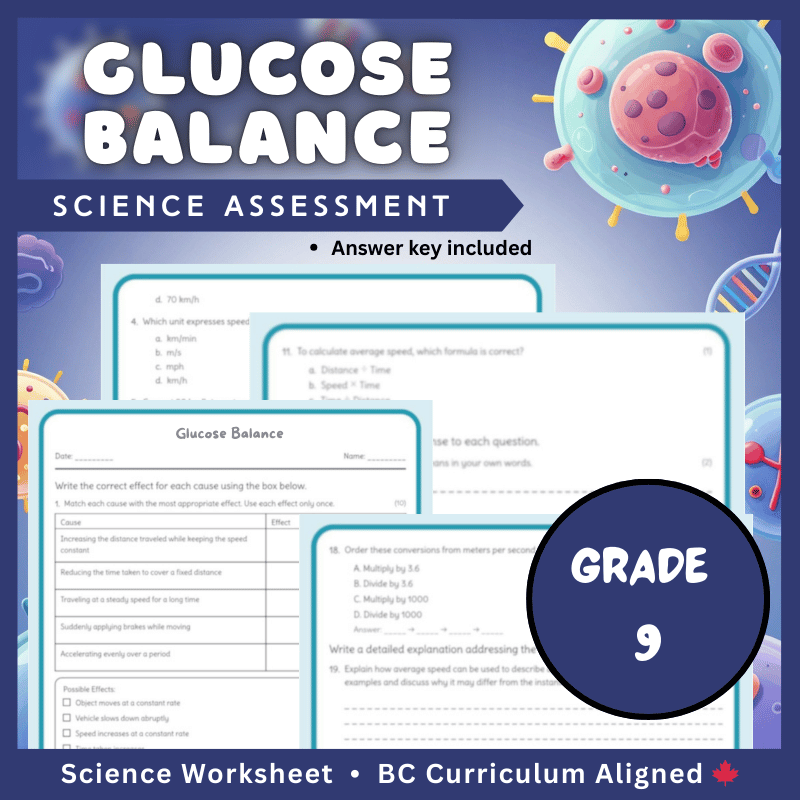
Grade 9 Science| Glucose Balance Worksheet (Answer Key) – Blood Sugar Regulation
Created byBright Mind ResourcesLearning Objectives
- Explain how insulin and glucagon regulate blood glucose levels.
- Identify the roles of liver, muscle, and adipose tissues in glucose metabolism.
- Describe endocrine feedback loops involved in glucose homeostasis.
Instant download
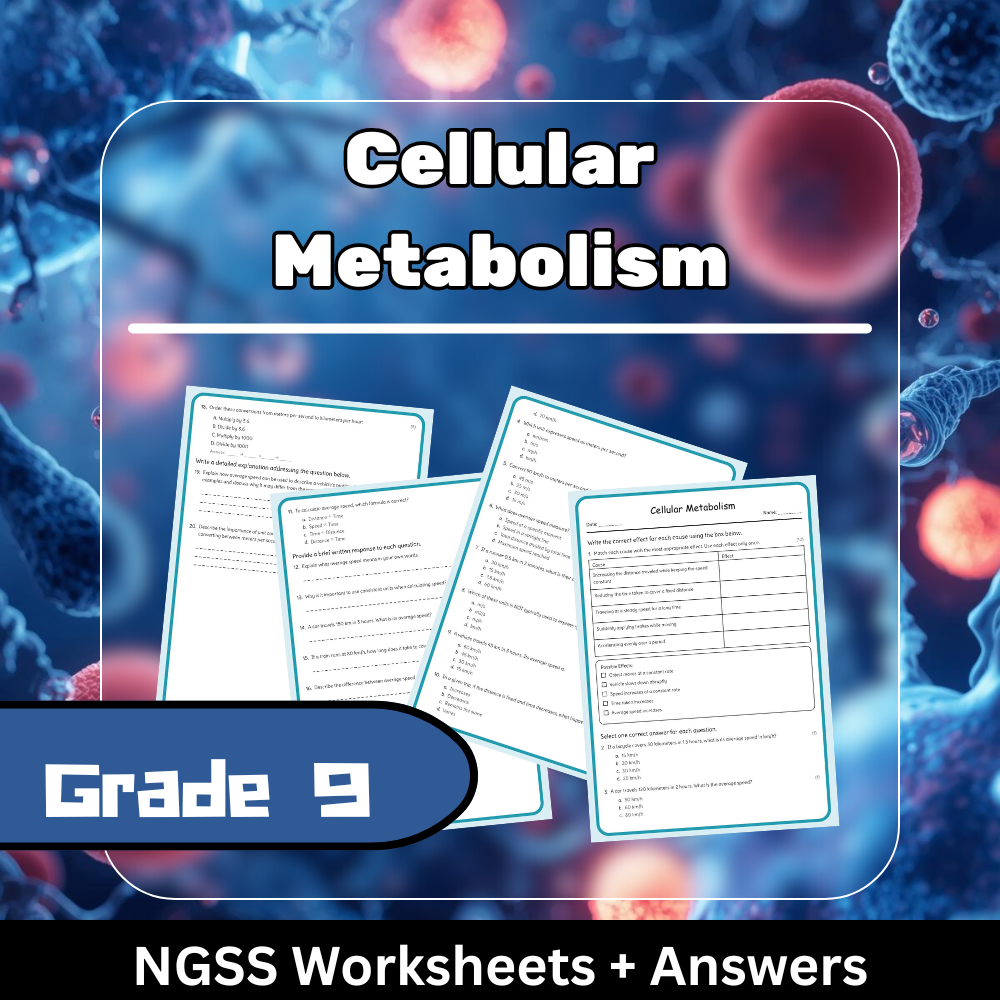
Grade 9 Science | Cellular Metabolism Worksheet & Answer Key (PDF) NGSS Aligned
Created byBright Mind ResourcesLearning Objectives
- Describe the biochemical pathways involved in cellular respiration, including glycolysis, the citric acid cycle, and electron transport.
- Explain how ATP is produced through energy coupling in cells.
- Relate mitochondrial and chloroplast functions to metabolic processes like respiration and photosynthesis.
Instant download
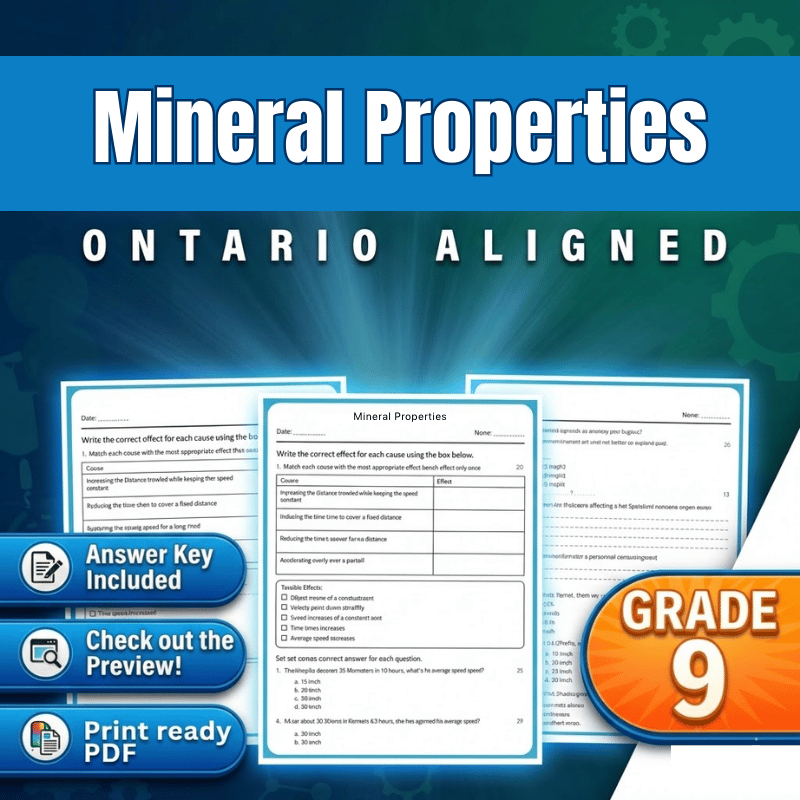
Grade 9 Science | Mineral Properties Worksheet (Ontario, PDF)
Created byBright Mind ResourcesLearning Objectives
- Identify and describe diagnostic physical properties of common rock-forming minerals.
- Explain how mineral composition relates to formation environment and stability.
- Connect mineral assemblages to petrogenetic histories and economic significance.
Instant download
About Grade 9 Science Worksheets
Find Science worksheets built for Grade 9. All 6,926 cover core skills, practice, and review, each an instant PDF download.
Every worksheet on MyTeachingSheets is created by independent teacher-authors and reviewed before publication. All resources download as printable PDFs for classroom, homework, or at-home practice, and many include answer keys. Preview any worksheet free before buying.