
Grade 9 Science Worksheets
6,926 worksheets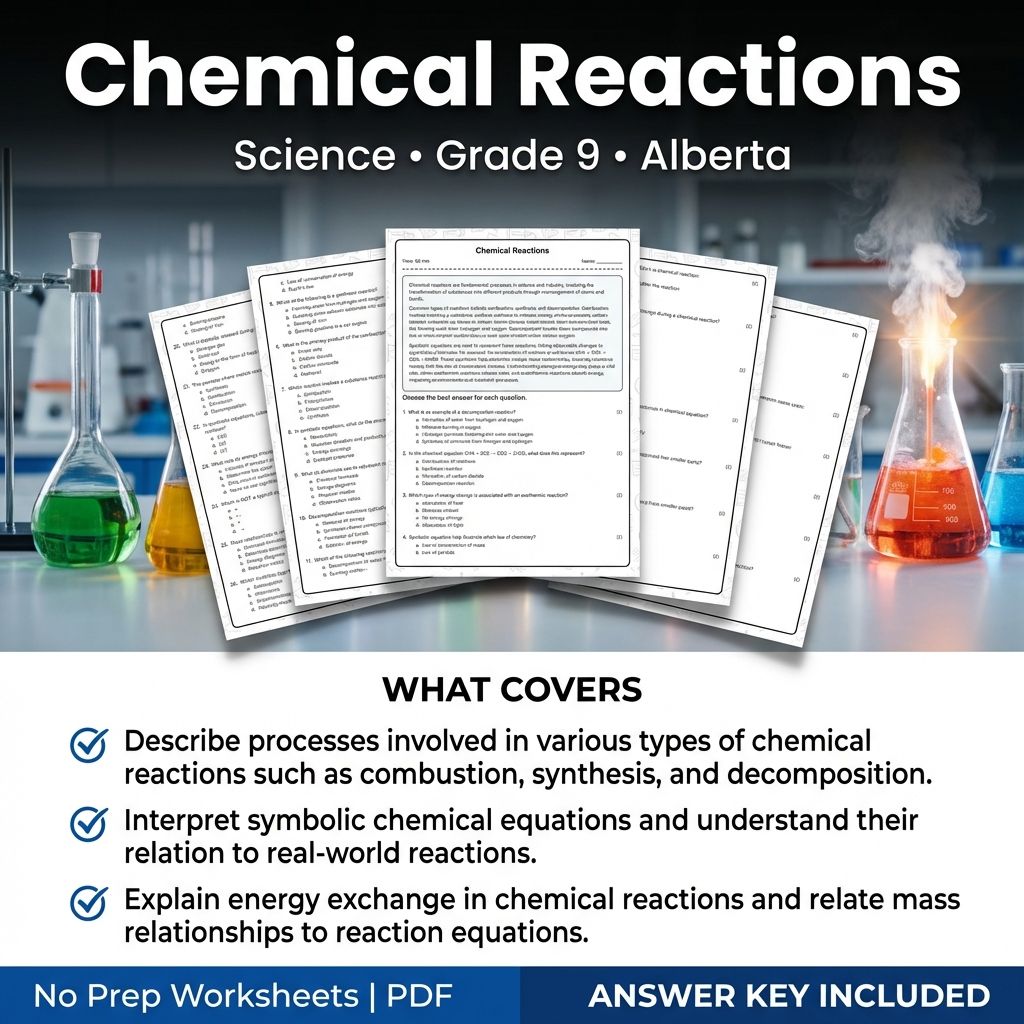
Chemical Reactions Worksheet for Grade 9 Science | Alberta Standards
 Created byCoral Reef Learning
Learning Objectives
- Describe processes involved in various types of chemical reactions such as combustion, synthesis, and decomposition.
- Interpret symbolic chemical equations and understand their relation to real-world reactions.
- Explain energy exchange in chemical reactions and relate mass relationships to reaction equations.
Instant download

Grade 9 Science Worksheet | Energy in Changes – Standard Practice (PDF)
 Created byEvergreen Desk Education
Learning Objectives
- Compare physical and chemical changes in terms of energy transfer and system–surroundings interactions.
- Explain how endothermic and exothermic processes relate to temperature changes.
- Use particle-bond ideas to describe what changes during physical vs. chemical processes.
Also included in: Grade 9 Waves, Forces, and Energy Science Lesson Bundle | General +1 more
Instant download
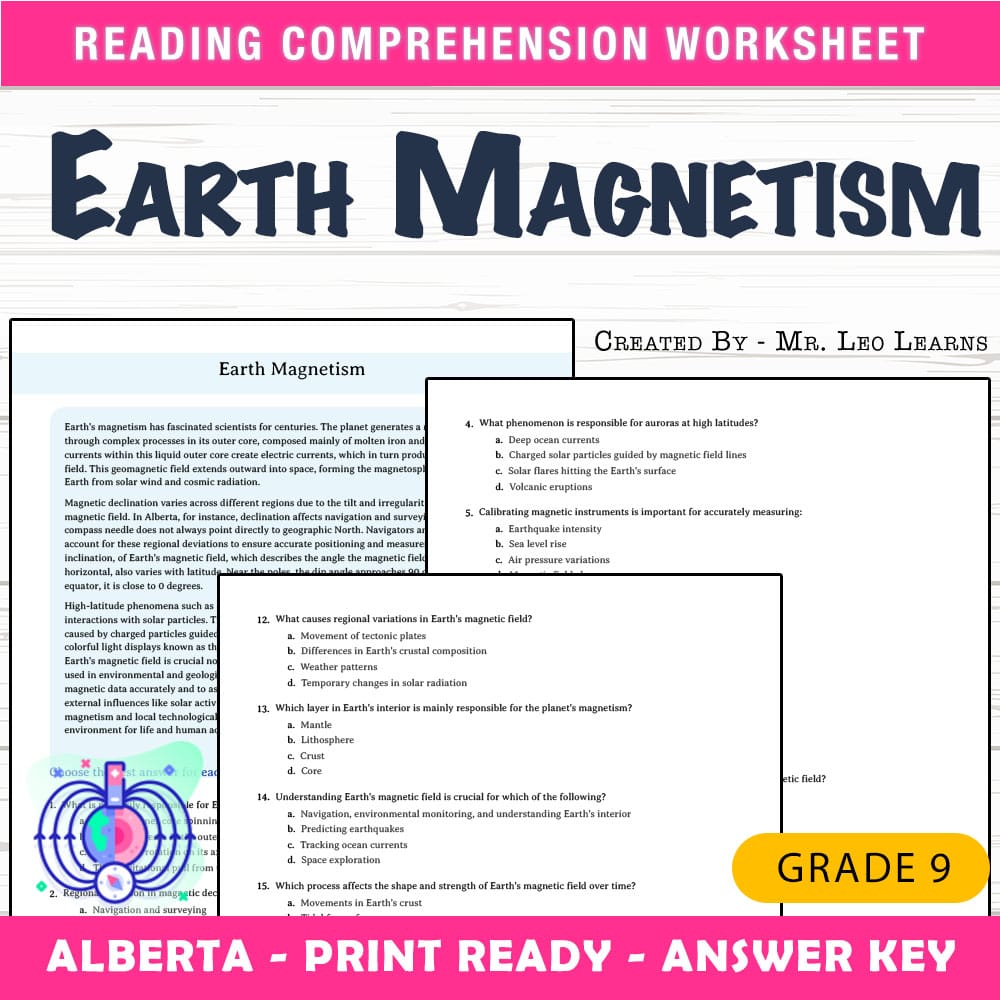
Grade 9 Science—Earth Magnetism Worksheet for Mastery
 Created byThe Resource Hub
Learning Objectives
- Understand the origin and nature of Earth's magnetic field.
- Identify the regional variation in magnetic declination and its effects.
- Explain how Earth's magnetic properties influence navigation and environmental monitoring.
Also included in: Grade 9 Science Electricity and Magnetism Worksheet Bundle | Alberta Curriculum +1 more
Instant download
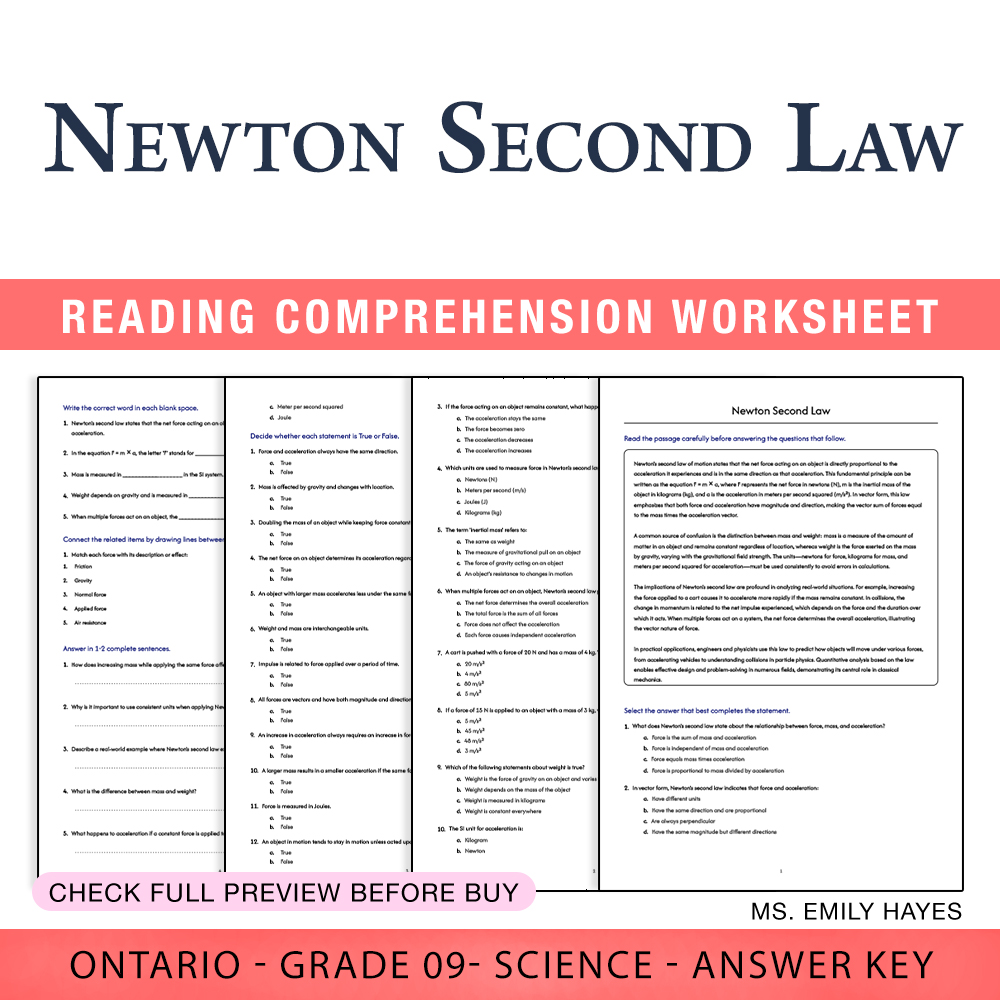
9th Grade Science | Newton Second Law Worksheet (PDF + Answer Key)
 Created byCopper Leaf Classroom
Learning Objectives
- Explain the relationship between net force, mass, and acceleration as described by Newton's second law.
- Differentiate between mass and weight and understand their implications in force and acceleration.
- Apply the principles of Newton's second law to analyze various physical situations such as accelerating carts and collisions.
Instant download
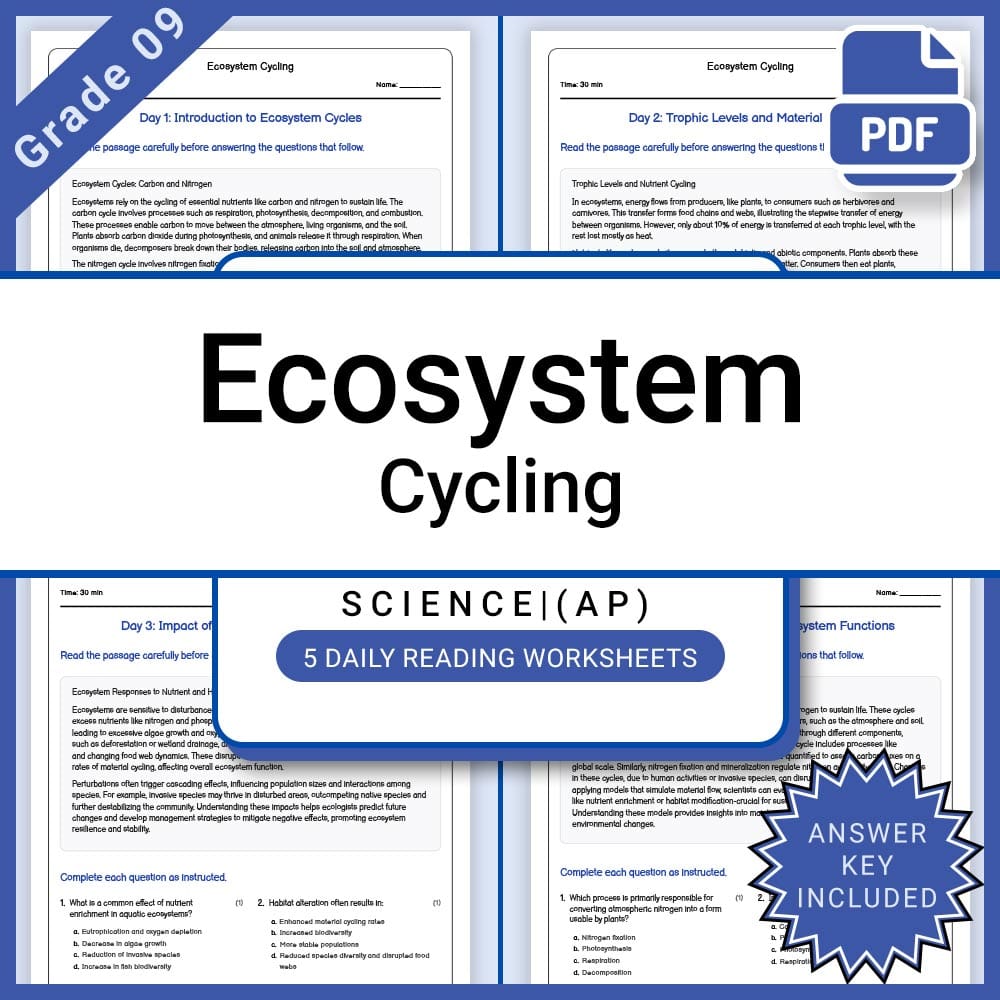
Grade 9 Science – Ecosystem Cycling Daily Reading Worksheet with Answer Key
JCreated byJ.S SheetsLearning Objectives
- Understand the basic concepts of carbon and nitrogen cycles
- Identify the roles of organisms and abiotic factors in material cycling
- Explain how energy flows through ecosystems
Also included in: Grade 9 Science Lesson Bundle | AP Curriculum Worksheets for Key Topics +1 more
Instant download
Grade 9 Science – Developmental Variation in GeneticsWorksheet + Answer Key
JCreated byJ.S SheetsLearning Objectives
- Understand key concepts related to Science
- Apply knowledge through practice questions
- Demonstrate comprehension of the material
Also included in: Grade 9 Science Lesson Bundle | AP Curriculum Worksheets for Key Topics +1 more
Instant download
Grade 9 Science – Organelle Function Daily Reading Worksheet + Answer Key
JCreated byJ.S SheetsLearning Objectives
- Identify the structure and function of mitochondria
- Explain how mitochondria produce energy in cells
- Understand the significance of mitochondrial structure in energy synthesis
Also included in: Grade 9 Science Lesson Bundle | AP Curriculum Worksheets for Key Topics +1 more
Instant download
Grade 9 Science – Energy Pathways Daily Reading Worksheet + Answer Key
JCreated byJ.S SheetsLearning Objectives
- Understand the basic concepts of cellular energy production.
- Identify the roles of ATP in cellular processes.
- Compare photosynthetic and respiratory electron transport chains.
Also included in: Grade 9 Science Lesson Bundle | AP Curriculum Worksheets for Key Topics +1 more
Instant download

Grade 9 Science – Genetic Transmission Daily Reading Worksheet + Answer Key
JCreated byJ.S SheetsLearning Objectives
- Understand the basic principles of genes and inheritance
- Learn how chromosomes behave during meiosis to pass traits
- Recognize Mendelian patterns and deviations such as incomplete dominance and codominance
Also included in: Grade 9 Science Lesson Bundle | AP Curriculum Worksheets for Key Topics +1 more
Instant download

Grade 9 Science – Population Genetics: Allele Frequencies Worksheet + Answer Key
JCreated byJ.S SheetsLearning Objectives
- Understand key concepts related to Science
- Apply knowledge through practice questions
- Demonstrate comprehension of the material
Also included in: Grade 9 Science Lesson Bundle | AP Curriculum Worksheets for Key Topics +1 more
Instant download
Grade 9 Science – Understanding Orbital Motion Worksheet(PDF + Answer Key)
Created byCopper Leaf ClassroomLearning Objectives
- Explain the basic concepts of gravity and how it influences orbital motion.
- Describe Kepler's laws of planetary motion.
- Understand the relationship between orbital period and semi-major axis.
Instant download
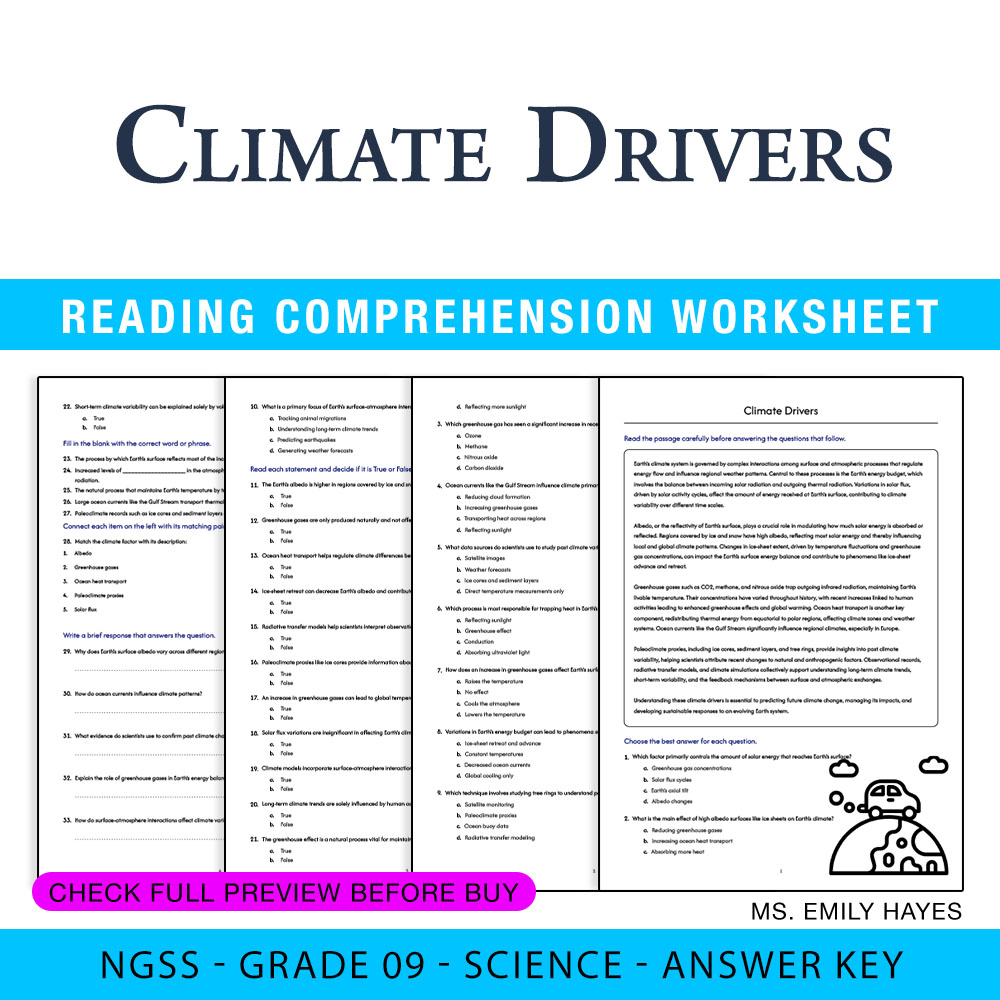
9th Grade Science | Climate Drivers Worksheet (PDF+ Answer Key)
Created byCopper Leaf ClassroomLearning Objectives
- Understand the key factors influencing Earth's climate such as solar flux, albedo, and greenhouse gases.
- Explain how Earth's energy budget affects regional weather patterns and climate variability.
- Analyze observational and paleoclimate data to interpret climate change and short-term variability.
Instant download
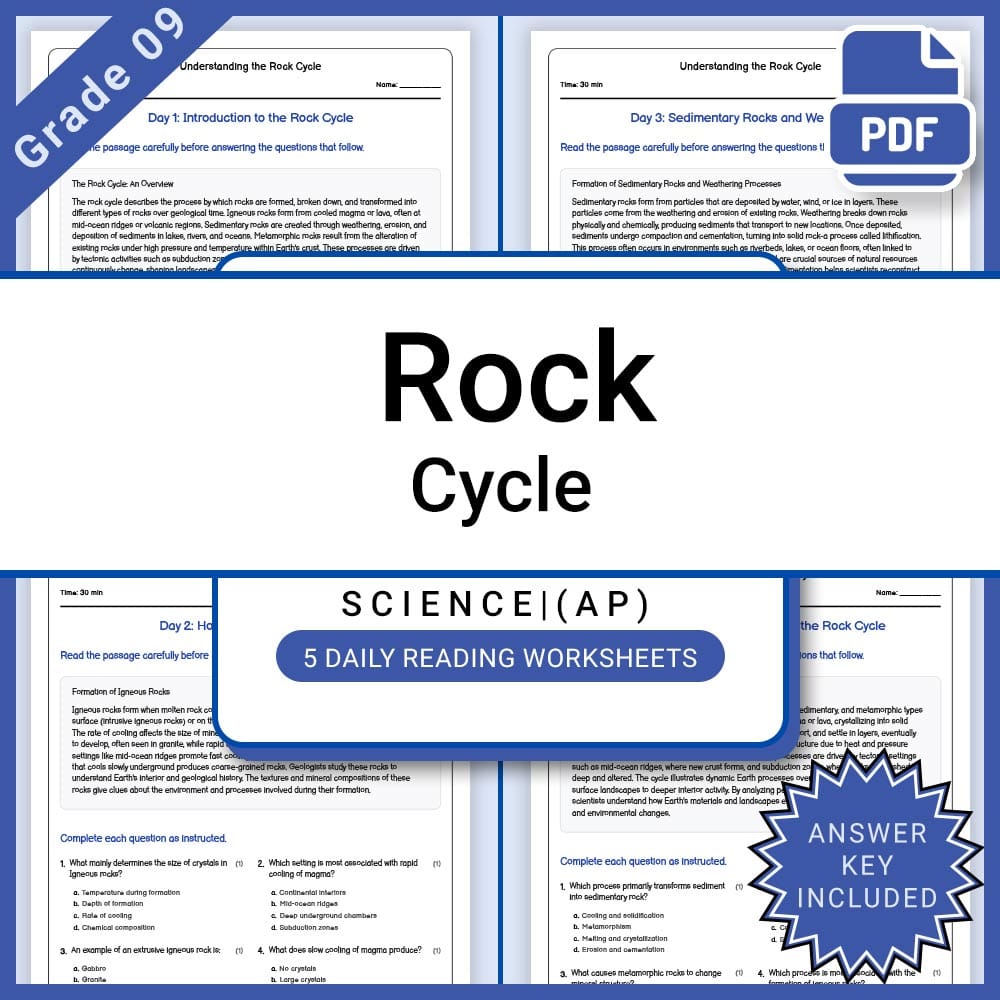
Grade 9 Science – Rock Cycle Daily Reading Worksheet + Answer Key
JCreated byJ.S SheetsLearning Objectives
- Understand key concepts related to Science
- Apply knowledge through practice questions
- Demonstrate comprehension of the material
Also included in: Grade 9 Science Lesson Bundle – AP Framework Daily Reading Worksheets +1 more
Instant download
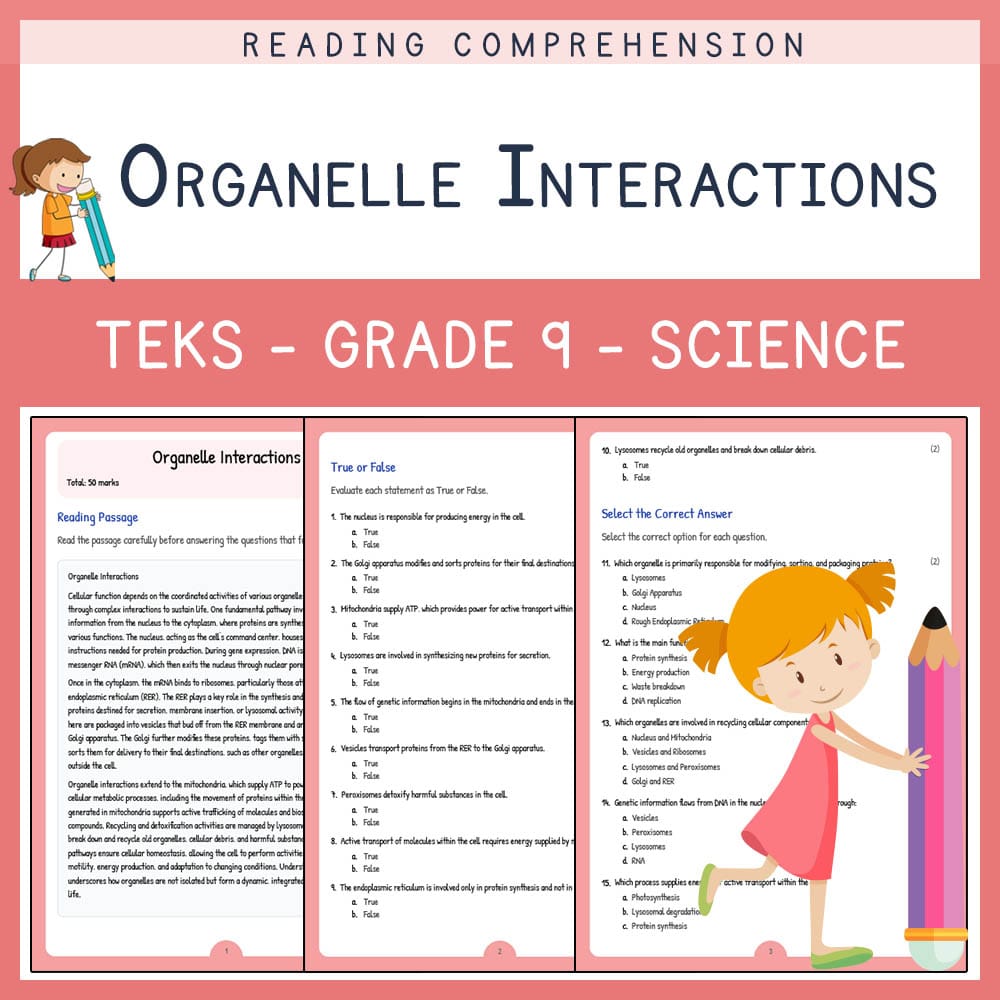
Grade 9 Science | Organelle Interactions Worksheet | TEKS Aligned
 Created byLumora Learning
Learning Objectives
- Explain how different organelles work together to maintain cellular functions.
- Describe the pathways of genetic information flow and protein trafficking within a cell.
- Identify the roles of mitochondria, lysosomes, and the Golgi apparatus in cellular processes.
Also included in: Grade 9 Science | Cell Structure & Function Lesson Bundle | TEKS Aligned
Instant download
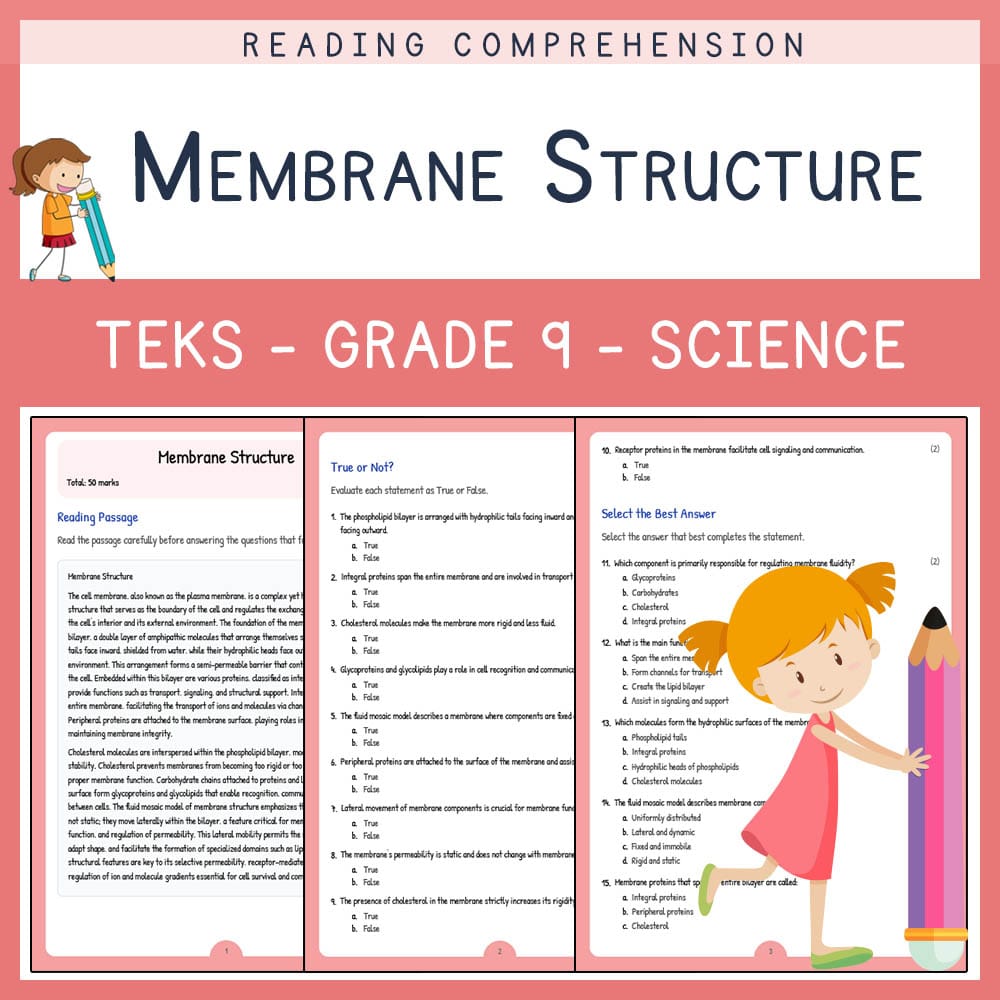
Grade 9 Science | Membrane Structure Worksheet | TEKS Aligned
Created byLumora LearningLearning Objectives
- Describe the basic components of the cell membrane and their roles.
- Explain the fluid mosaic model and its significance in membrane function.
- Identify how membrane components influence permeability, signaling, and ion regulation.
Also included in: Grade 9 Science | Cell Structure & Function Lesson Bundle | TEKS Aligned
Instant download
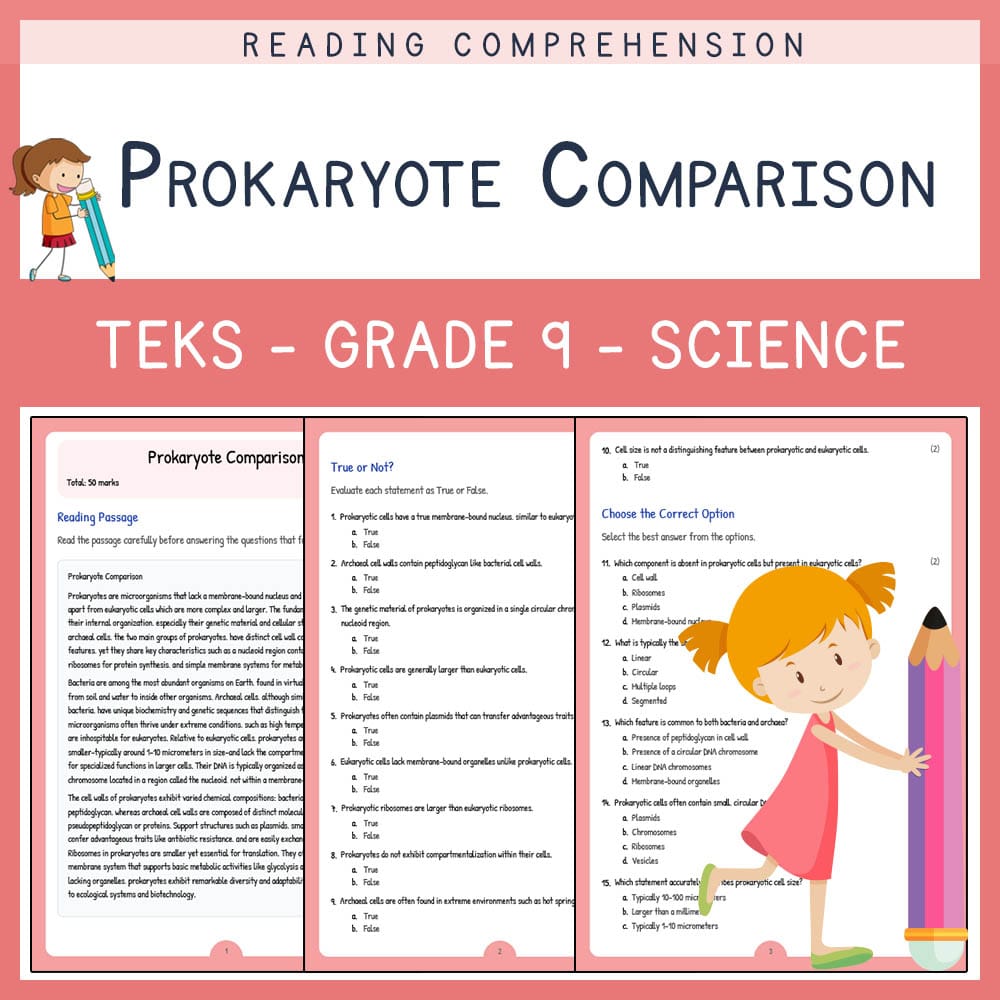
Grade 9 Science | Prokaryote Comparison Worksheet | TEKS Alignment
Created byLumora LearningLearning Objectives
- Understand the differences between prokaryotic and eukaryotic cells in terms of size, organization, and genetic structure.
- Identify features unique to bacterial and archaeal cells compared to eukaryotic cells.
- Explain the significance of cell compartmentalization and genetic arrangement in cellular functions.
Also included in: Grade 9 Science | Cell Structure & Function Lesson Bundle | TEKS Aligned
Instant download

Grade 9 Science – Climate Variability Reading Worksheet | Standard Practice
 Created byBright Mind Resources
Learning Objectives
- Understand how long-term temperature patterns relate to climate variability.
- Identify the significance of data such as temperature records, precipitation, and wind in climate studies.
- Analyze how phenomena like El Niño influence regional weather patterns over time.
Also included in: Earth & Space Systems Grade 9 Science Daily Reading Worksheets Bundle | General +1 more
Instant download

Grade 9 Science – Earth System Cycles & Daily Reading Worksheet | Daily Reading
Created byBright Mind ResourcesLearning Objectives
- Understand how water moves through Earth's systems
- Identify the processes involved in the water cycle
- Recognize the role of solar energy in driving Earth's processes
Also included in: Earth & Space Systems Grade 9 Science Daily Reading Worksheets Bundle | General +1 more
Instant download

Grade 9 Science worksheet – Membrane Structure TEKS (Worksheet + Answer Key)
Created byEvergreen Desk EducationLearning Objectives
- Explain how the phospholipid bilayer provides selective permeability through hydrophobic and hydrophilic regions.
- Describe the roles of integral and peripheral membrane proteins in transport, signaling, and structural support.
- Connect membrane components (cholesterol and carbohydrate chains) to changes in fluidity and cell recognition.
Instant download

Chemical Bonding Worksheet for Grade 9 Science | Assessment & Student Practice PDF
Learning Objectives
- Explain the different types of chemical bonds: ionic, covalent, and metallic.
- Describe how Lewis structures illustrate electron sharing and transfer.
- Relate atomic electron configurations to properties like melting point and conductivity.
Also included in: Grade 9 Science Lesson Bundle on Matter and Its Interactions +1 more
Instant download
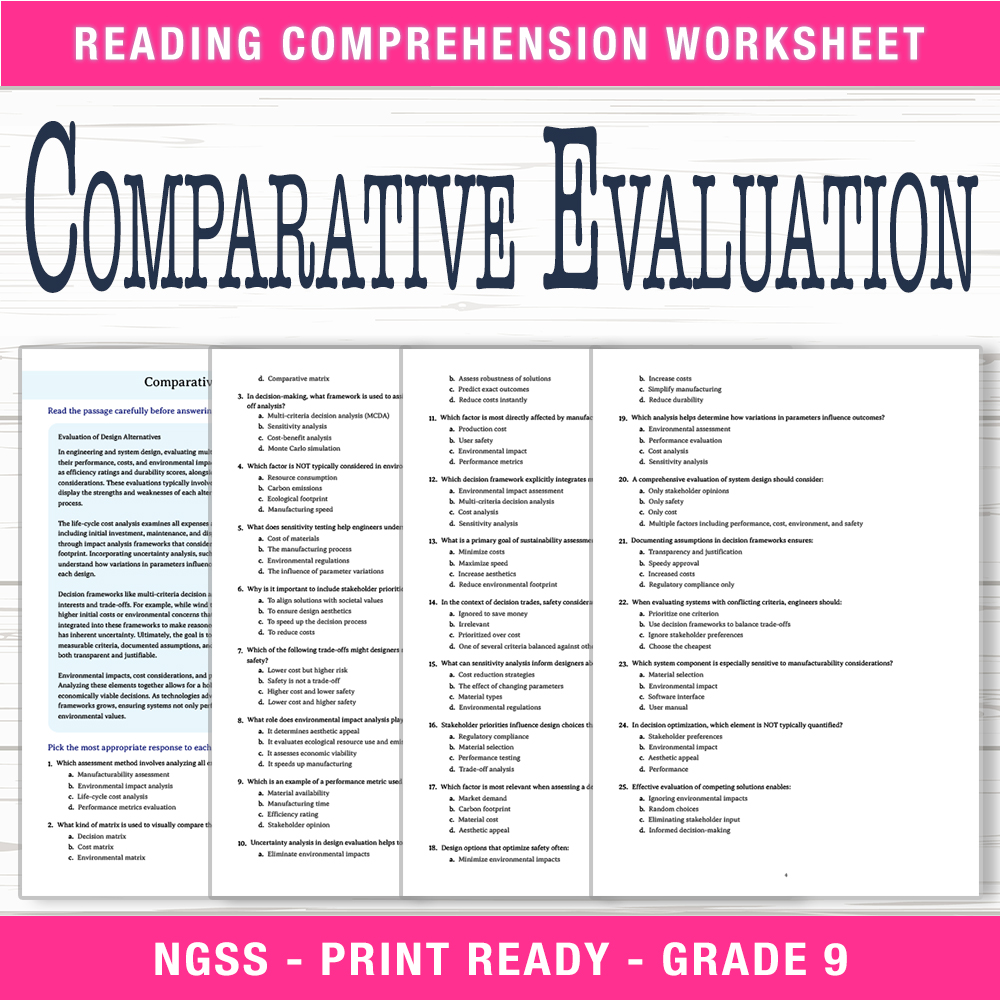
Grade 9 Science | Evaluating System Options Worksheet (PDF + Answer Key)
 Created byRiverstone Classroom
Learning Objectives
- Understand the key factors involved in evaluating competing design solutions.
- Apply quantitative and qualitative assessment methods to system performance metrics.
- Develop decision frameworks that consider trade-offs among efficiency, durability, cost, and safety.
Also included in: Grade 9 Science | Engineering Design & System Evaluation Unit Bundle
Instant download
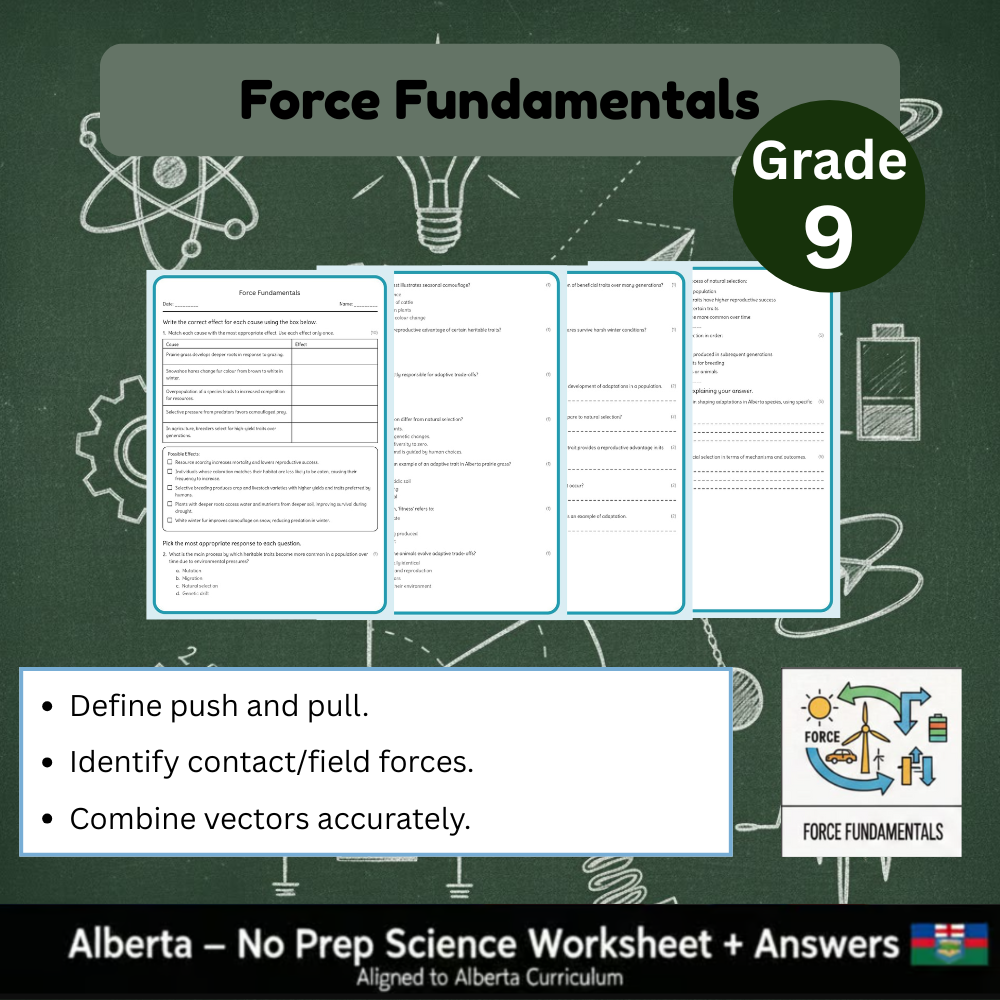
Grade 9 Science | Force Fundamentals Worksheet (PDF) – Alberta Standards
Created byBright Mind ResourcesLearning Objectives
- Understand the basic interactions involved in forces such as push and pull
- Identify contact and non-contact forces in real-world Alberta settings
- Explain how magnitude and direction of forces combine vectorially
Instant download
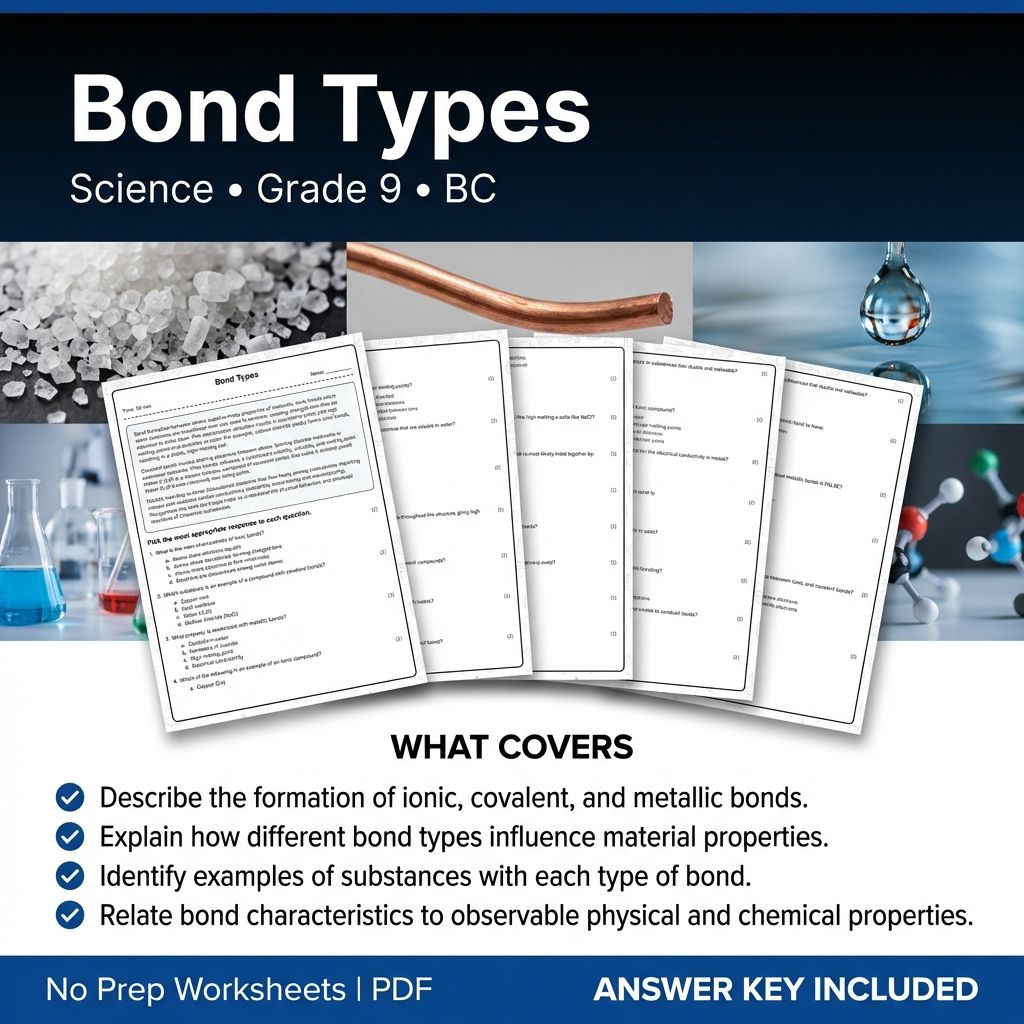
9th Grade Science | Bond Types Worksheet & Answer Key for Classroom Practice
Created byCoral Reef LearningLearning Objectives
- Describe the formation of ionic, covalent, and metallic bonds.
- Explain how different bond types influence material properties.
- Identify examples of substances with each type of bond.
Instant download
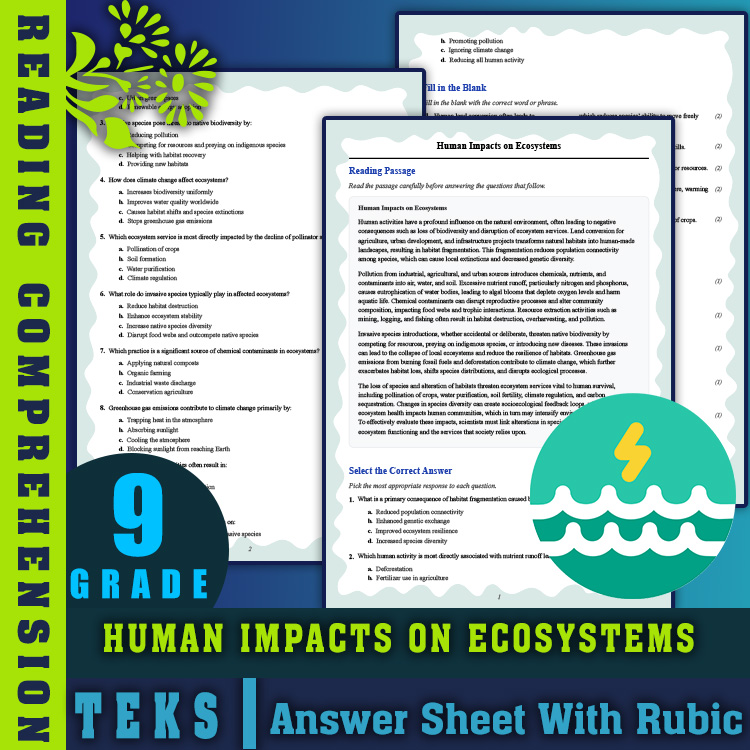
9th Grade Science | Human Impacts on Ecosystems Reading (PDF + Answer Key)
JCreated byJ.S SheetsLearning Objectives
- Understand how human activities affect biodiversity and ecosystem services.
- Identify specific human actions that lead to habitat alteration and resource depletion.
- Analyze the ecological consequences of human impacts on ecosystems.
Instant download

Grade 9 Science | Bond Formation | California Standards
Created byLumora LearningLearning Objectives
- Explain how valence electron behavior leads to atomic bond formation
- Differentiate ionic bonding from covalent bonding using electron transfer vs. electron sharing
- Predict material properties (melting point, conductivity, and strength) based on bond type and structure
Instant download
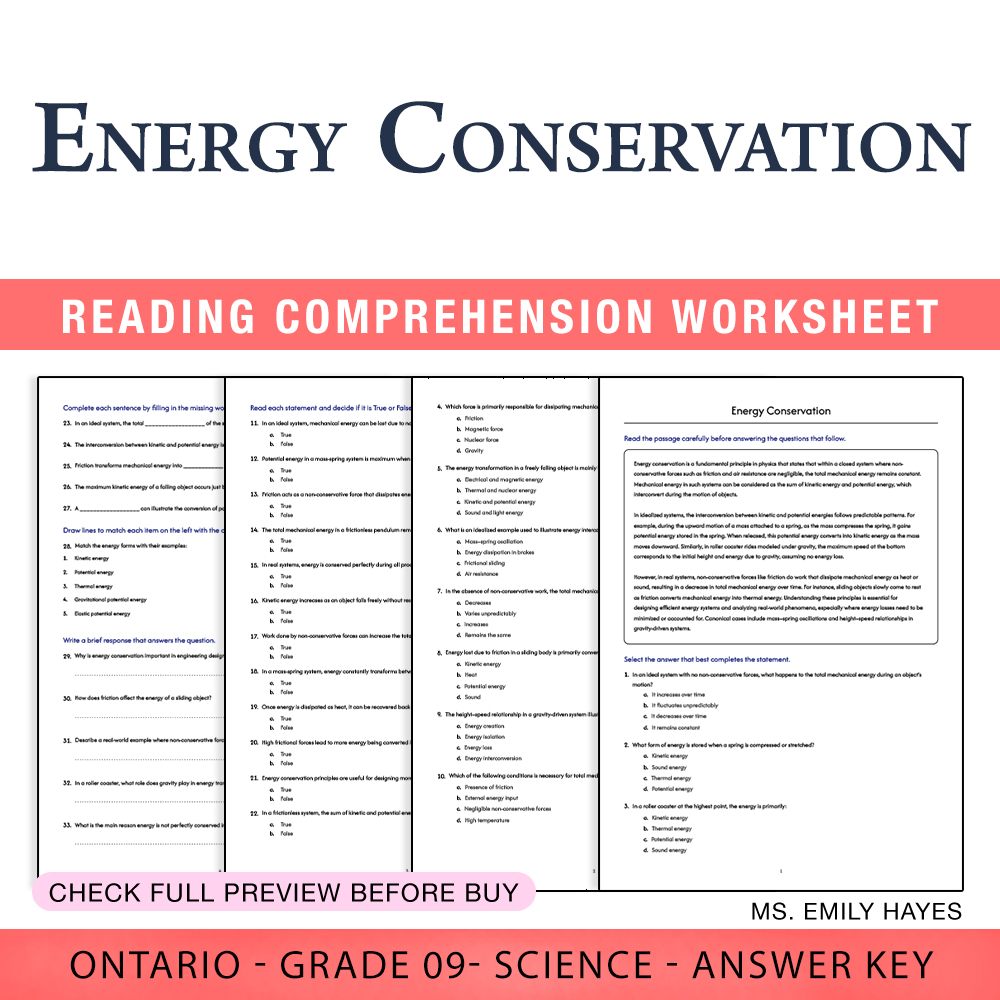
Grade 9 Science | Energy Conservation Worksheet (PDF + Answer Key)
Created byCopper Leaf ClassroomLearning Objectives
- Describe the principle of conservation of mechanical energy in systems where non-conservative forces are negligible.
- Explain the interconversion between kinetic and potential energies in various physical scenarios.
- Identify conditions under which total mechanical energy remains constant.
Instant download
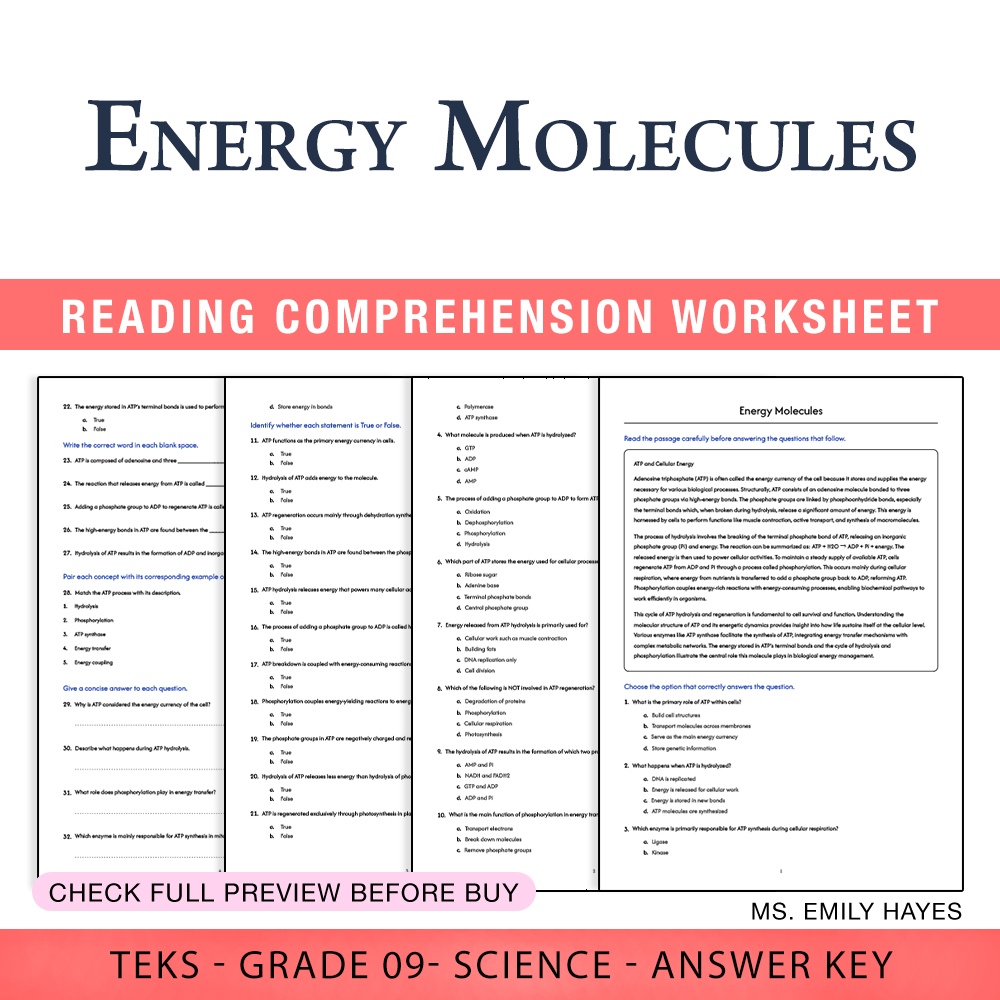
9th Grade Science | Energy Molecules Worksheet (PDF+ Answer Key)
Created byCopper Leaf ClassroomLearning Objectives
- Describe the structure of ATP and its role as the primary energy currency within cells.
- Explain how hydrolysis of ATP releases energy for cellular processes.
- Understand the process of ATP regeneration through phosphorylation.
Instant download
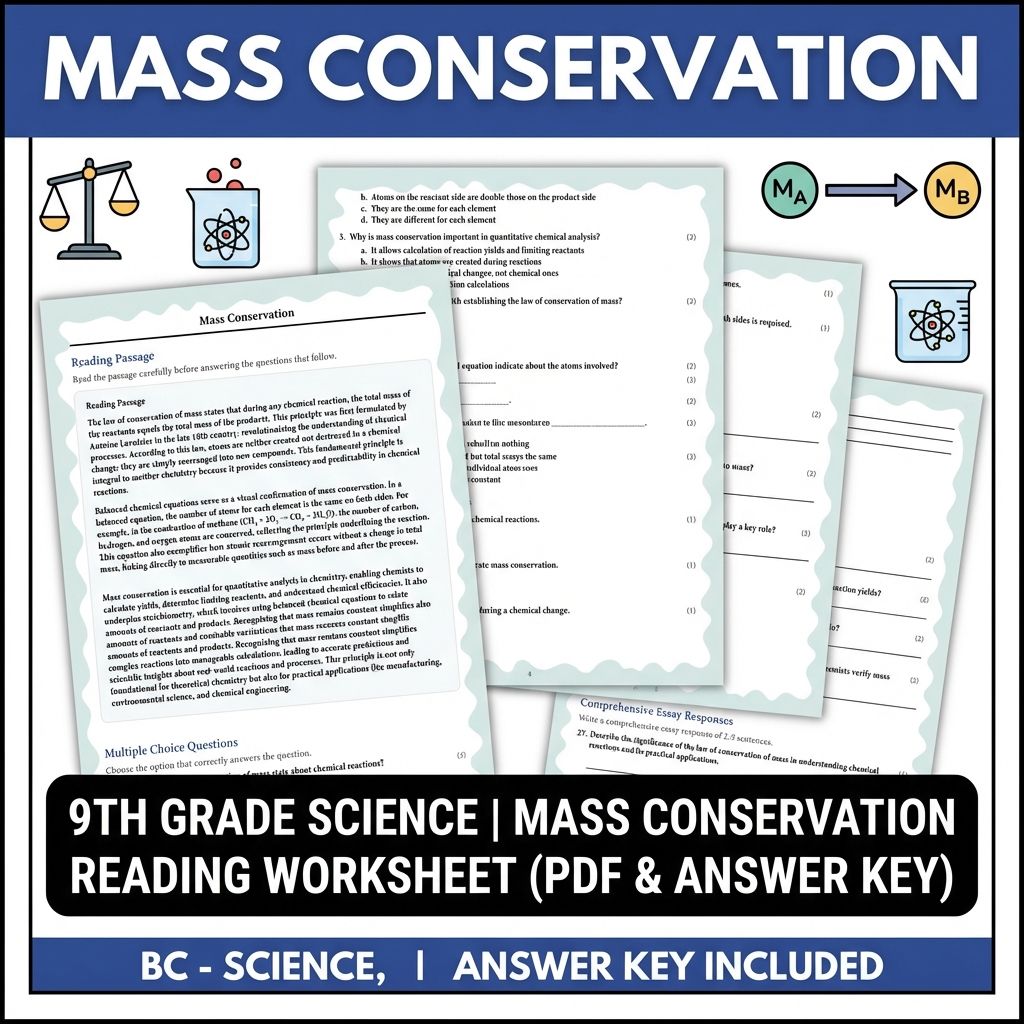
9th Grade Science | Mass Conservation Reading Worksheet (PDF & Answer Key)
JCreated byJ.S SheetsLearning Objectives
- Understand the law of conservation of mass during chemical changes.
- Identify how balanced chemical equations reflect mass conservation.
- Explain the significance of mass conservation in stoichiometry and reactions.
Instant download
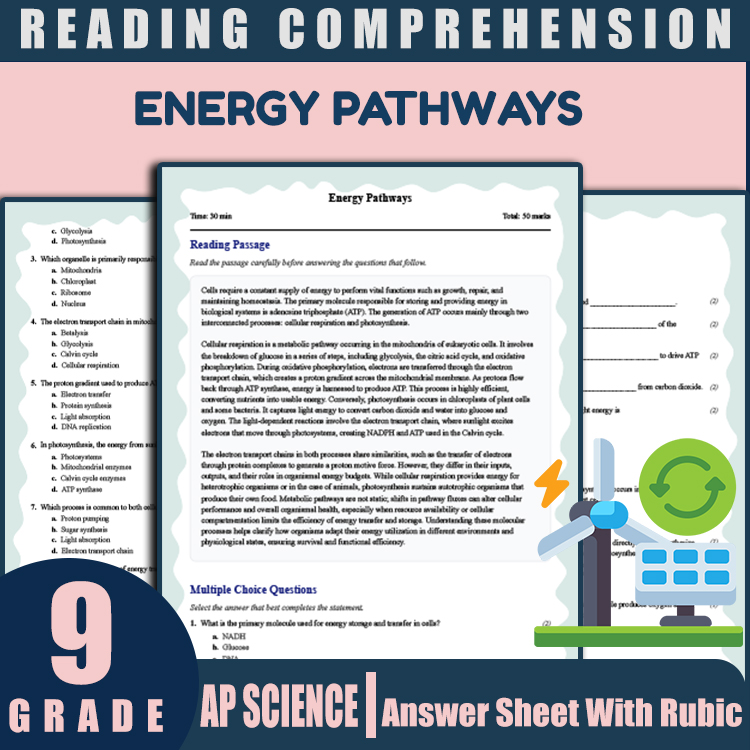
Grade 9 Science | Energy Pathways Reading Worksheet (PDF + Answer Key)
JCreated byJ.S SheetsLearning Objectives
- Understand the processes of ATP production in cellular respiration and photosynthesis.
- Explain how energy is transferred and coupled in metabolic reactions.
- Compare the roles of electron transport chains in photosynthesis and cellular respiration.
Instant download
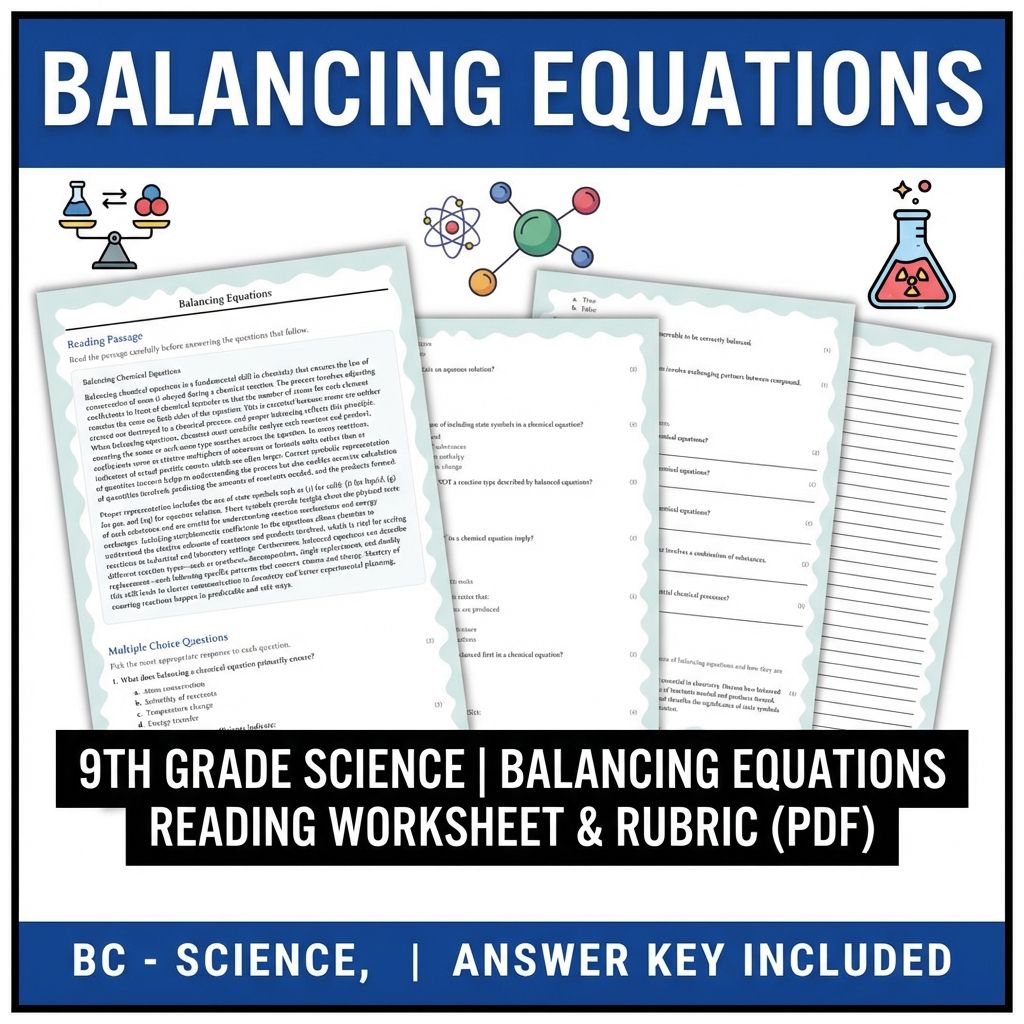
9th Grade Science | Balancing Equations Reading Worksheet & Rubric (PDF)
JCreated byJ.S SheetsLearning Objectives
- Understand the importance of balancing chemical equations to reflect atomic conservation.
- Identify coefficients and symbols that accurately represent reactions.
- Learn how to interpret balanced symbolic equations for predicting reaction outcomes.
Instant download
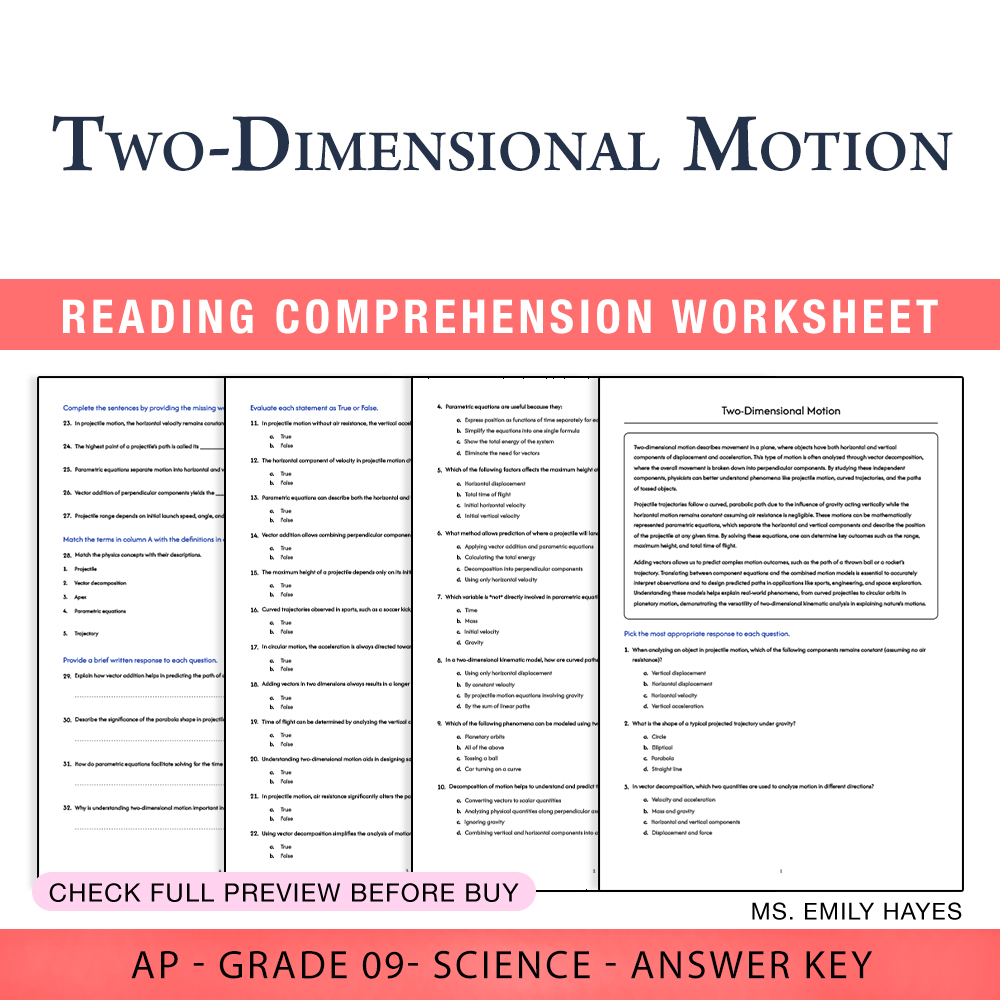
Grade 9 Science | Two-Dimensional Motion Worksheet (PDF+ Answer Key)
Created byCopper Leaf ClassroomLearning Objectives
- Understand the principles of motion in a plane using vector decomposition.
- Apply parametric equations to analyze projectile trajectories and predict motion outcomes.
- Use vector addition to determine range, apex, and time-of-flight for projectiles.
Also included in: Grade 9 Science | Motion & Force Concepts Worksheet(PDF+ Answer Key) +1 more
Instant download
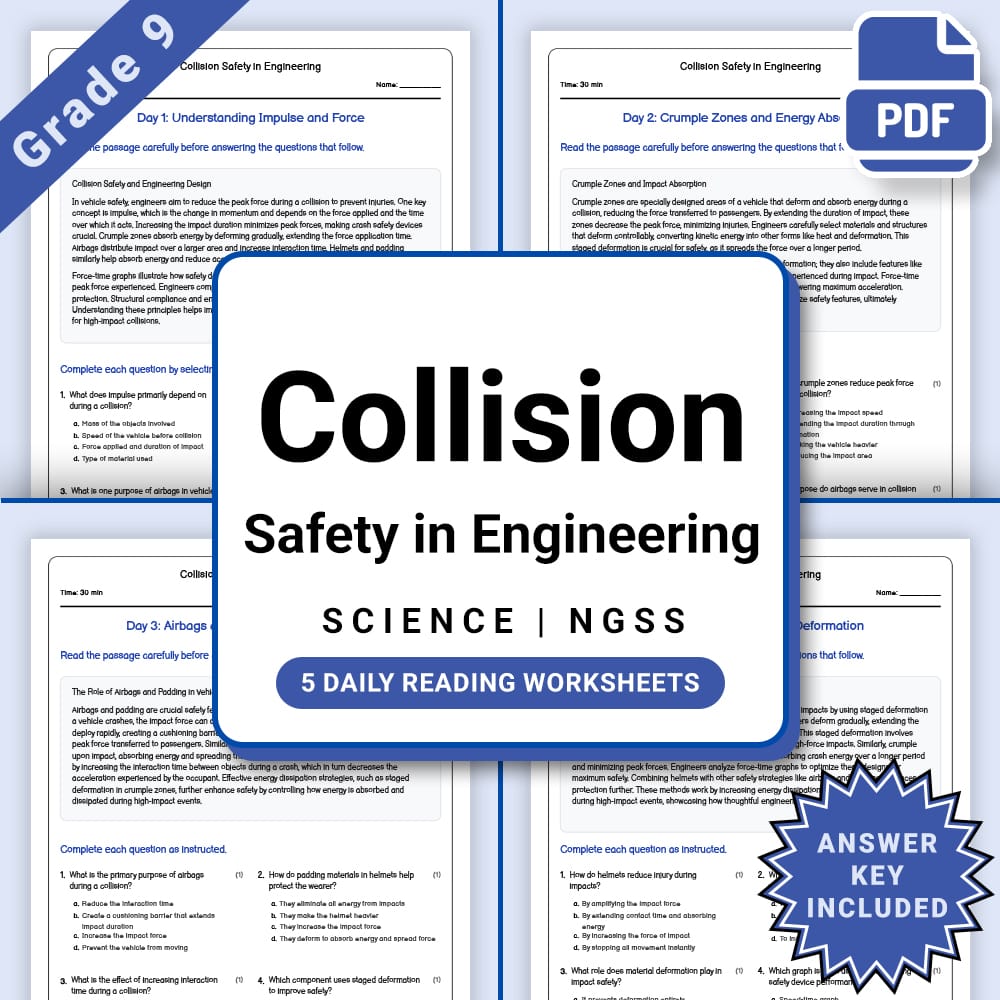
Grade 9 Science – Collision Safety in Engineering Worksheet(PDF + Answer Key)
Created byCopper Leaf ClassroomLearning Objectives
- Understand the concept of impulse and its role in collision safety.
- Analyze force-time graphs to evaluate impact forces.
- Describe engineering strategies like crumple zones and airbags to reduce injury during collisions.
Instant download
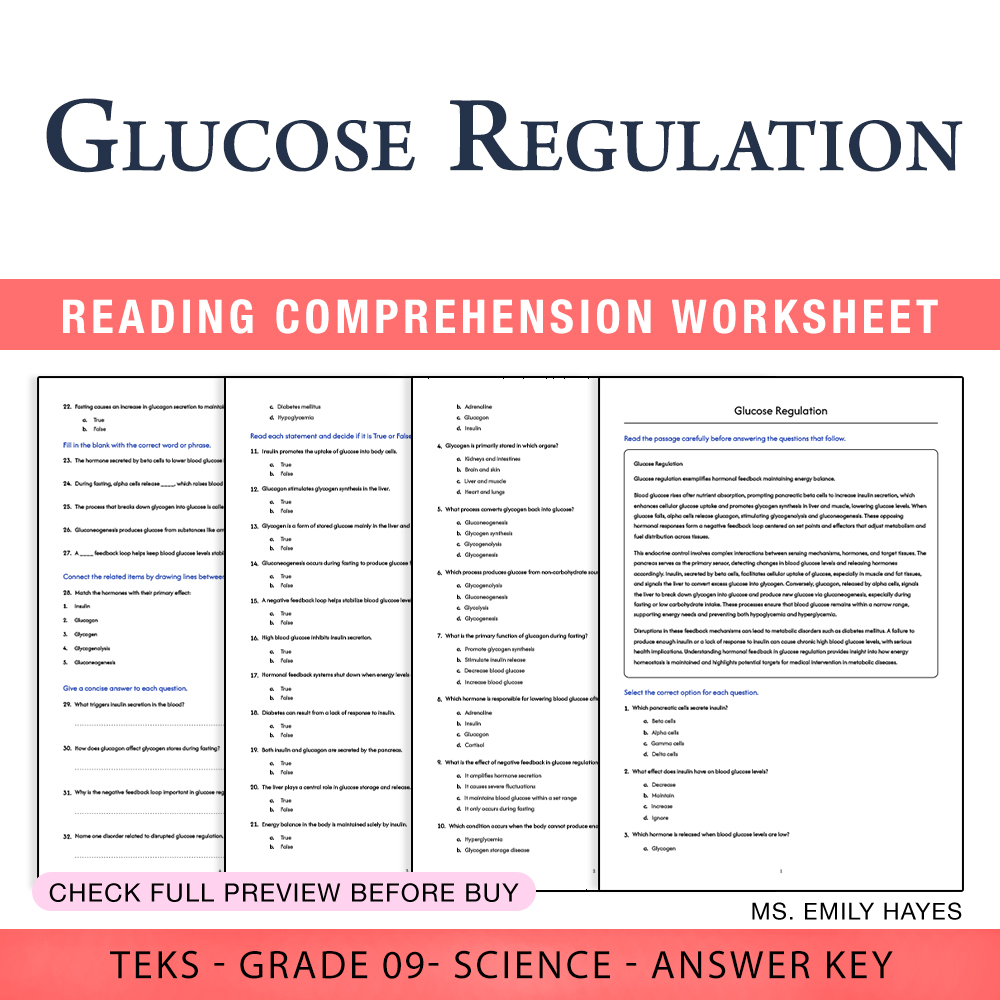
9th Grade Science | Glucose Regulation Worksheet (PDF+ Answer Key)
Created byCopper Leaf ClassroomLearning Objectives
- Understand the hormonal feedback mechanisms involved in glucose regulation.
- Identify the roles of insulin and glucagon in maintaining blood glucose levels.
- Describe the processes of glycogen synthesis, glycogenolysis, and gluconeogenesis.
Instant download
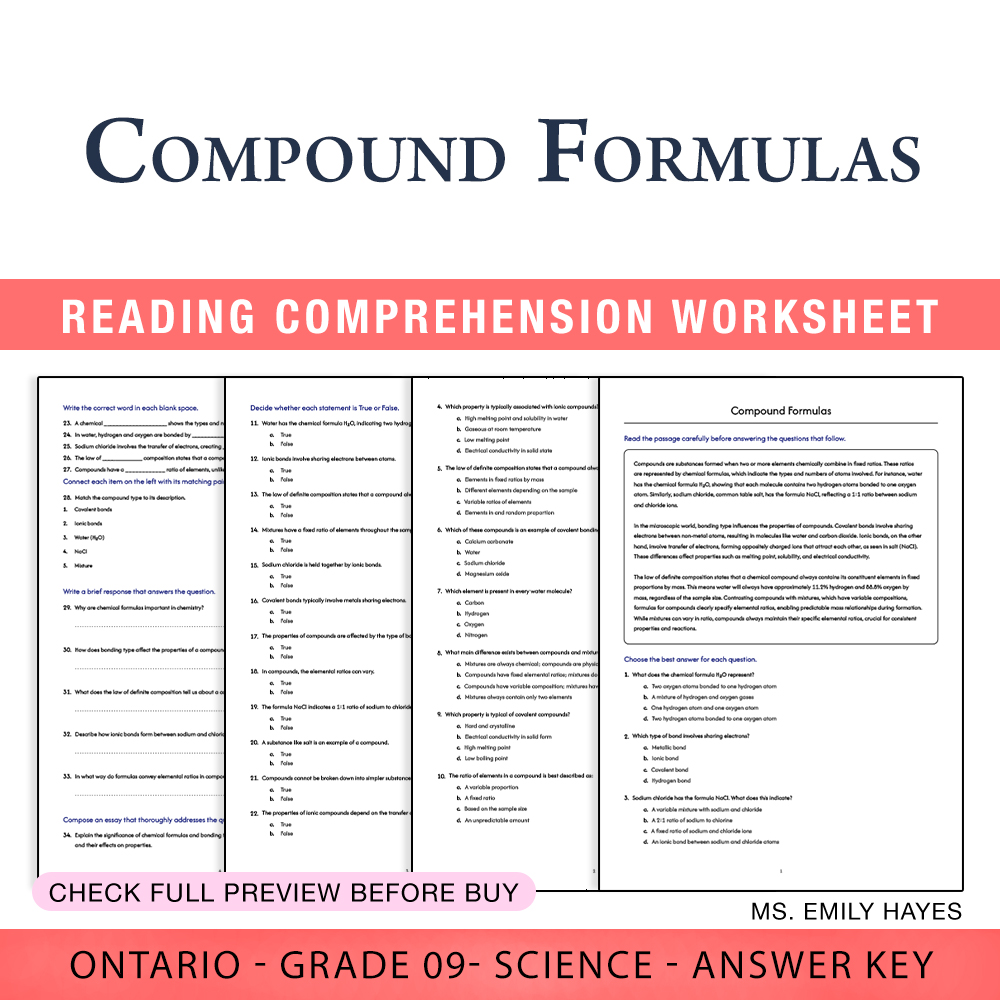
9th Grade Science | Compound Formulas Worksheet (PDF + Answer Key)
Created byCopper Leaf ClassroomLearning Objectives
- Understand what compounds are and how they are composed of fixed ratios of elements.
- Learn to interpret and write chemical formulas for common compounds.
- Distinguish between covalent and ionic bonds and their effects on properties.
Instant download
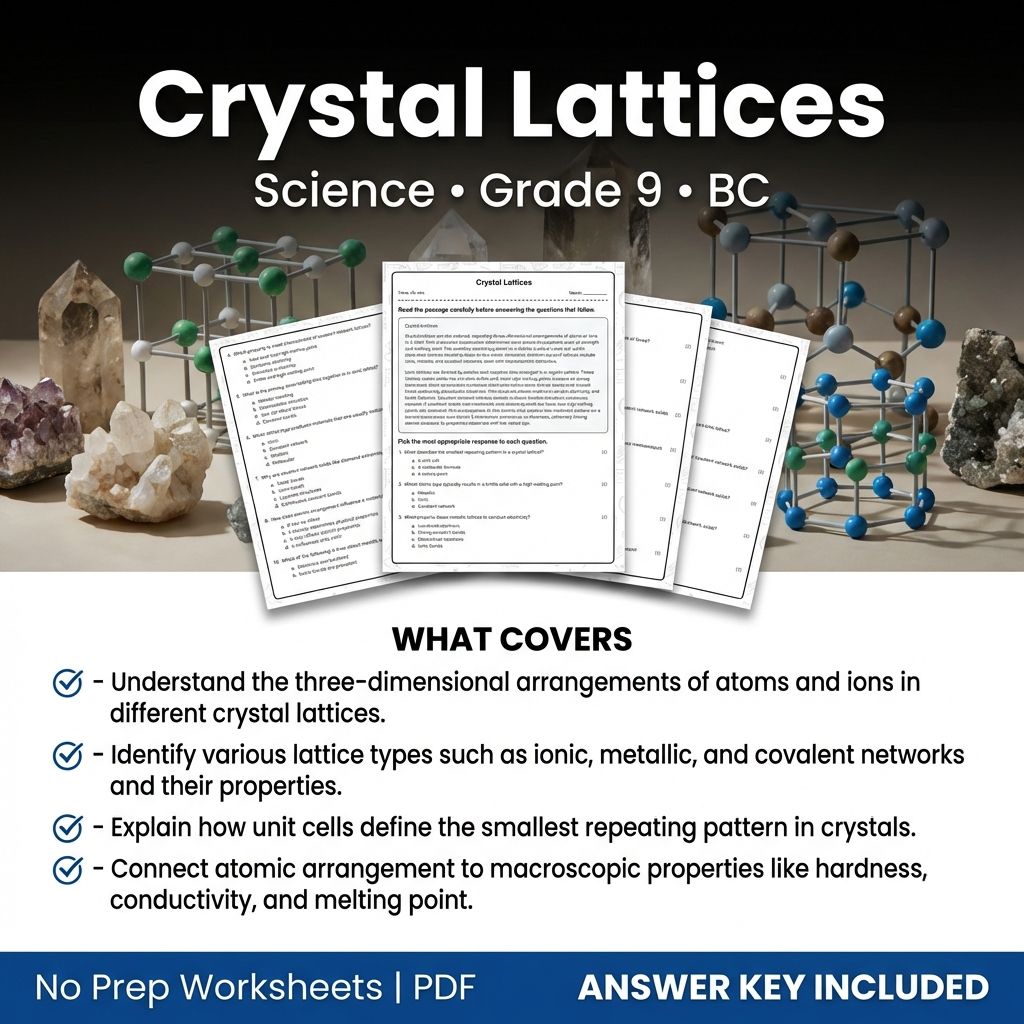
9th Grade Science | Crystal Lattices Worksheet & Answer Key (Printable PDF)
Created byCoral Reef LearningLearning Objectives
- Understand the three-dimensional arrangements of atoms and ions in different crystal lattices.
- Identify various lattice types such as ionic, metallic, and covalent networks and their properties.
- Explain how unit cells define the smallest repeating pattern in crystals.
Instant download
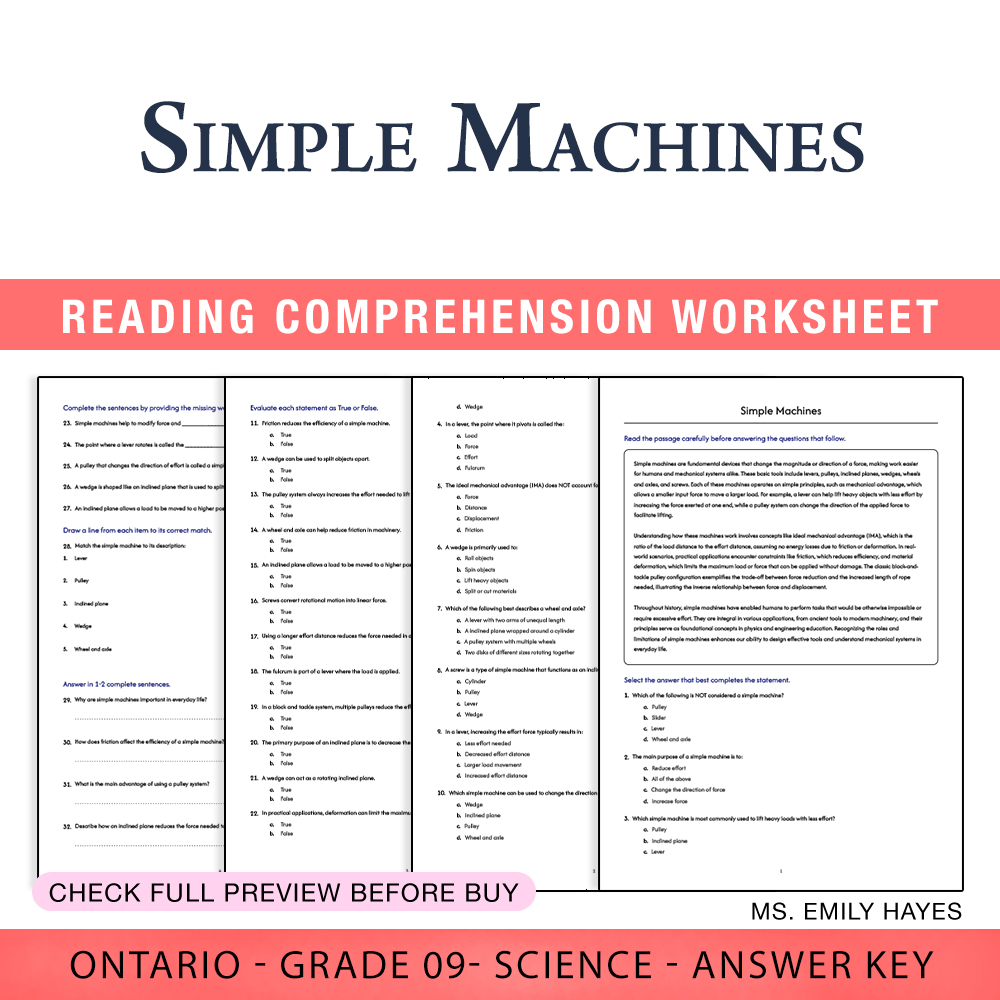
9th Grade Science | Simple Machines Worksheet (PDF + Answer Key)
Created byCopper Leaf ClassroomLearning Objectives
- Understand the basic types of simple machines and their functions.
- Explain how simple machines modify force and displacement to achieve mechanical advantage.
- Identify different classes of levers, pulley systems, inclined planes, wedges, wheels and axles, and screws.
Instant download
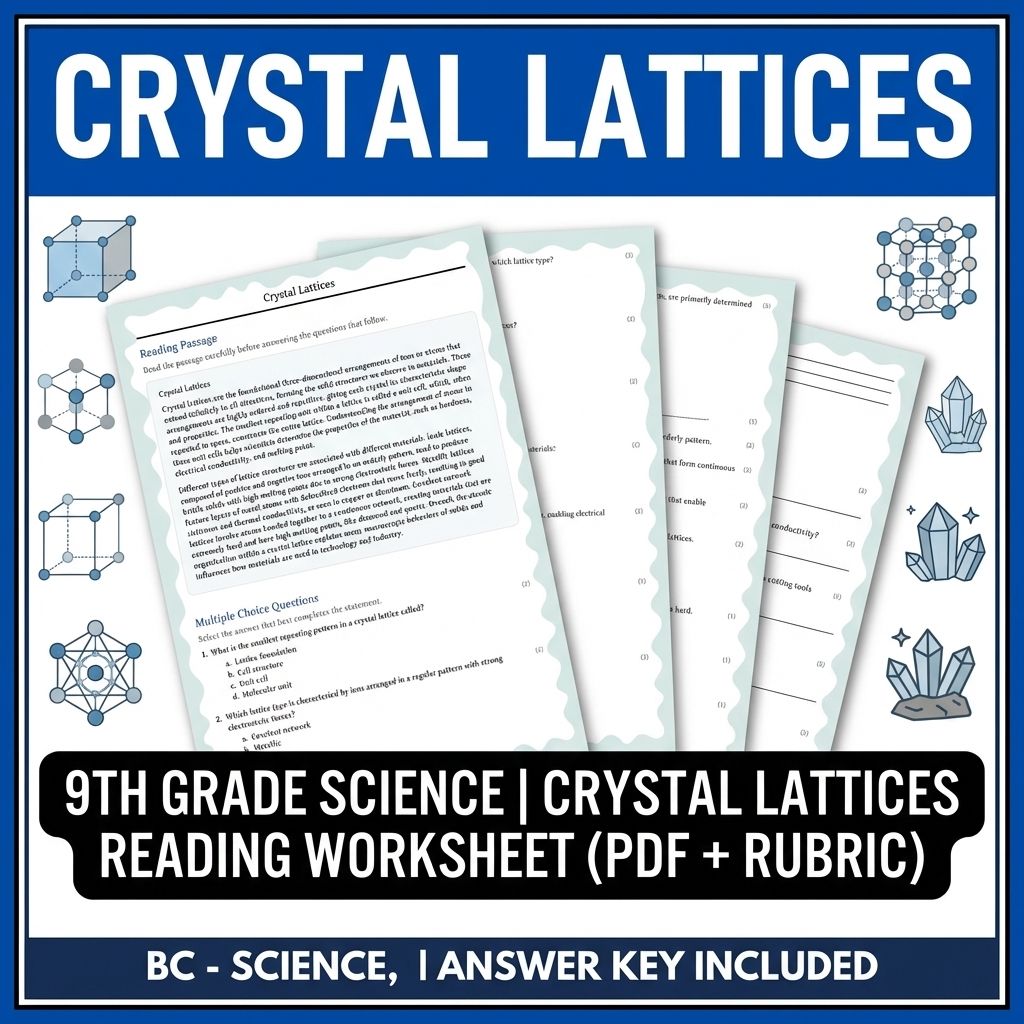
9th Grade Science | Crystal Lattices Reading Worksheet (PDF + Rubric)
JCreated byJ.S SheetsLearning Objectives
- Describe the structure and arrangement of atoms or ions in different crystal lattices.
- Explain how unit cells define the smallest repeating pattern in solids.
- Identify lattice types such as ionic, metallic, and covalent networks and their properties.
Instant download
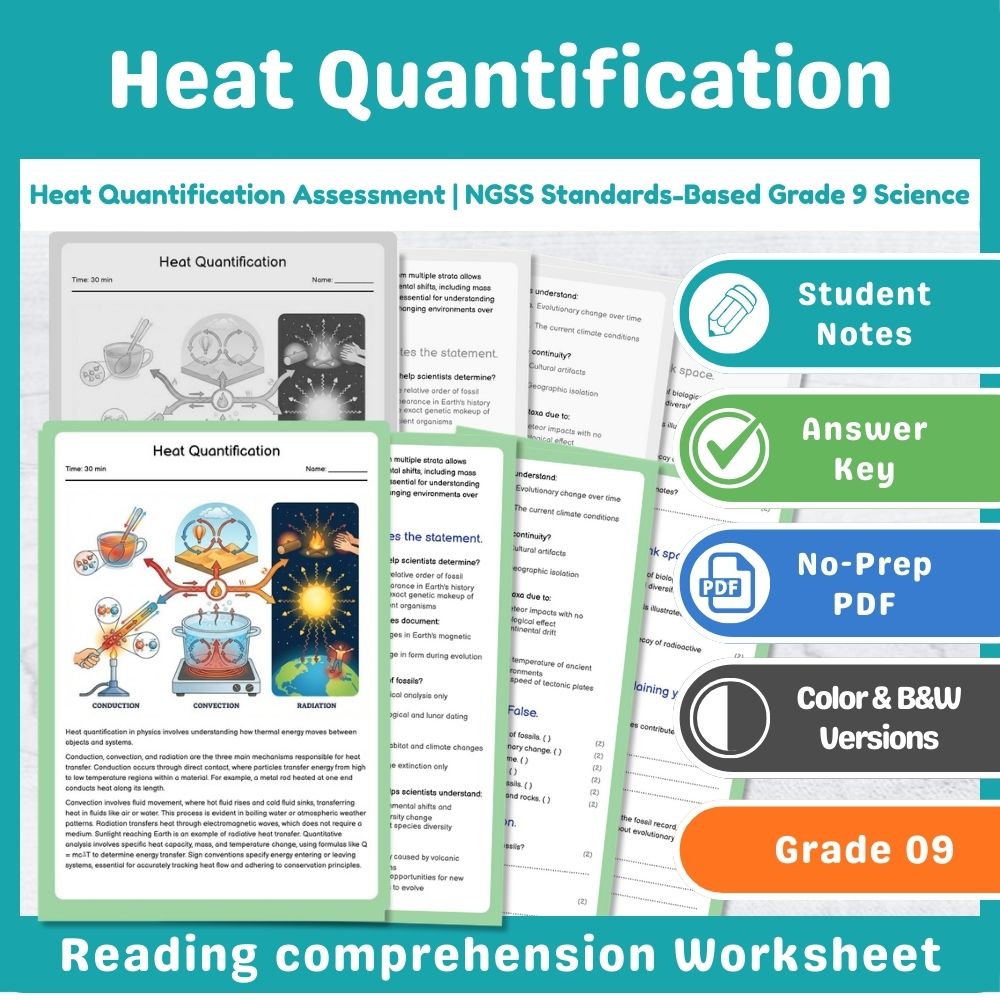
Energy Conversion Assessment | NGSS Standards Grade 9 Science
 Created byPrism Point Learning
Learning Objectives
- Explain the different types of energy conversion devices and processes.
- Analyze how energy transfer involves losses and efficiency considerations.
- Evaluate real-world examples of energy conversion such as photovoltaic cells, thermoelectric modules, and electrochemical cells.
Instant download
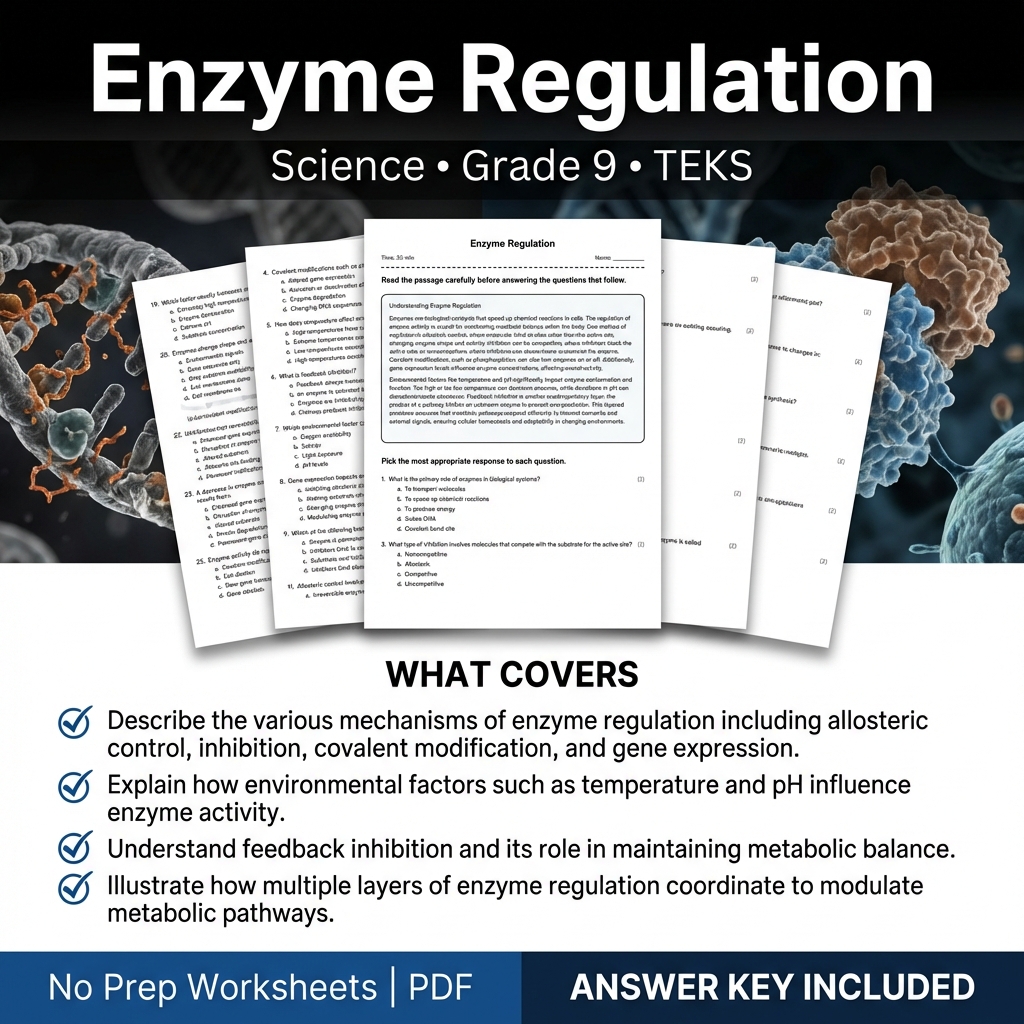
Grade 9 Science Worksheet on Enzyme Regulation | TEKS Aligned Practice
Created byCoral Reef LearningLearning Objectives
- Describe the various mechanisms of enzyme regulation including allosteric control, inhibition, covalent modification, and gene expression.
- Explain how environmental factors such as temperature and pH influence enzyme activity.
- Understand feedback inhibition and its role in maintaining metabolic balance.
Instant download
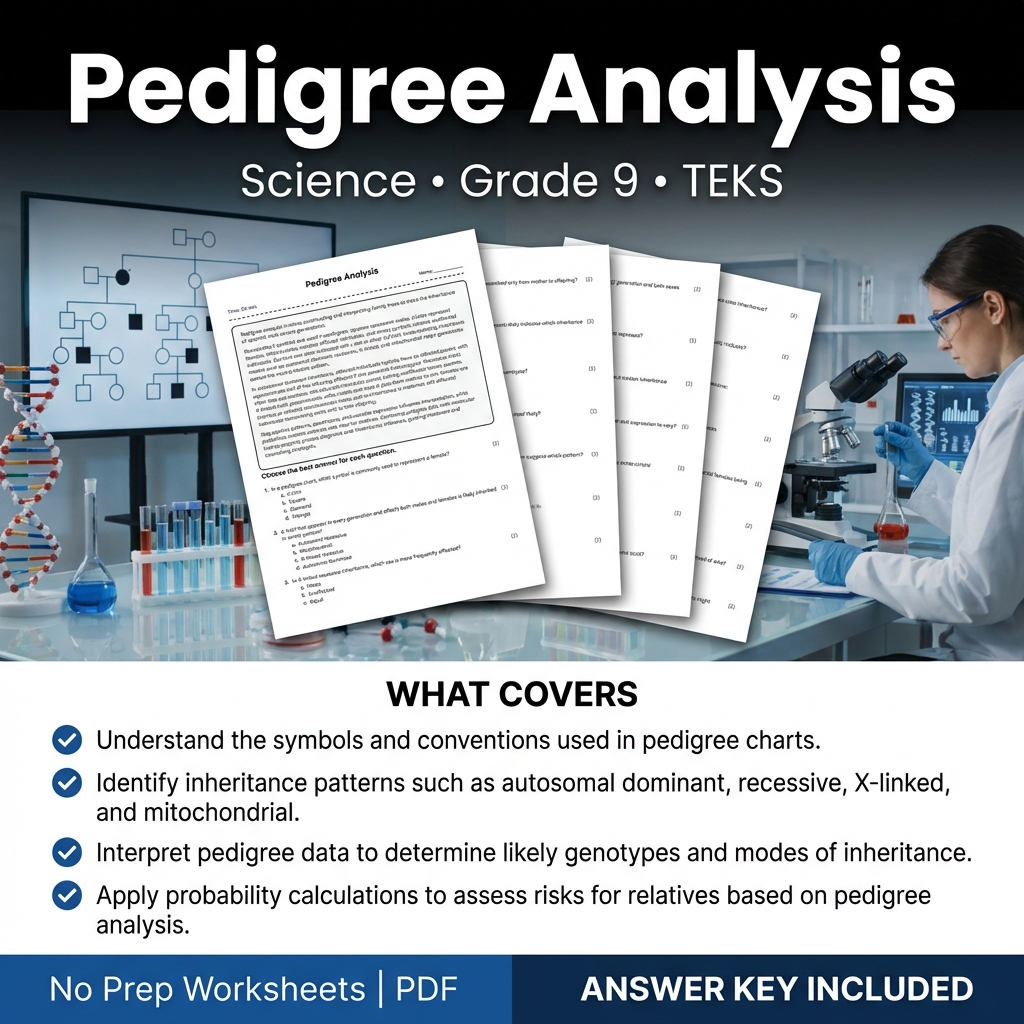
Grade 9 Science Pedigree Analysis Worksheet with Answer Key PDF
Created byCoral Reef LearningLearning Objectives
- Understand the symbols and conventions used in pedigree charts.
- Identify inheritance patterns such as autosomal dominant, recessive, X-linked, and mitochondrial.
- Interpret pedigree data to determine likely genotypes and modes of inheritance.
Instant download
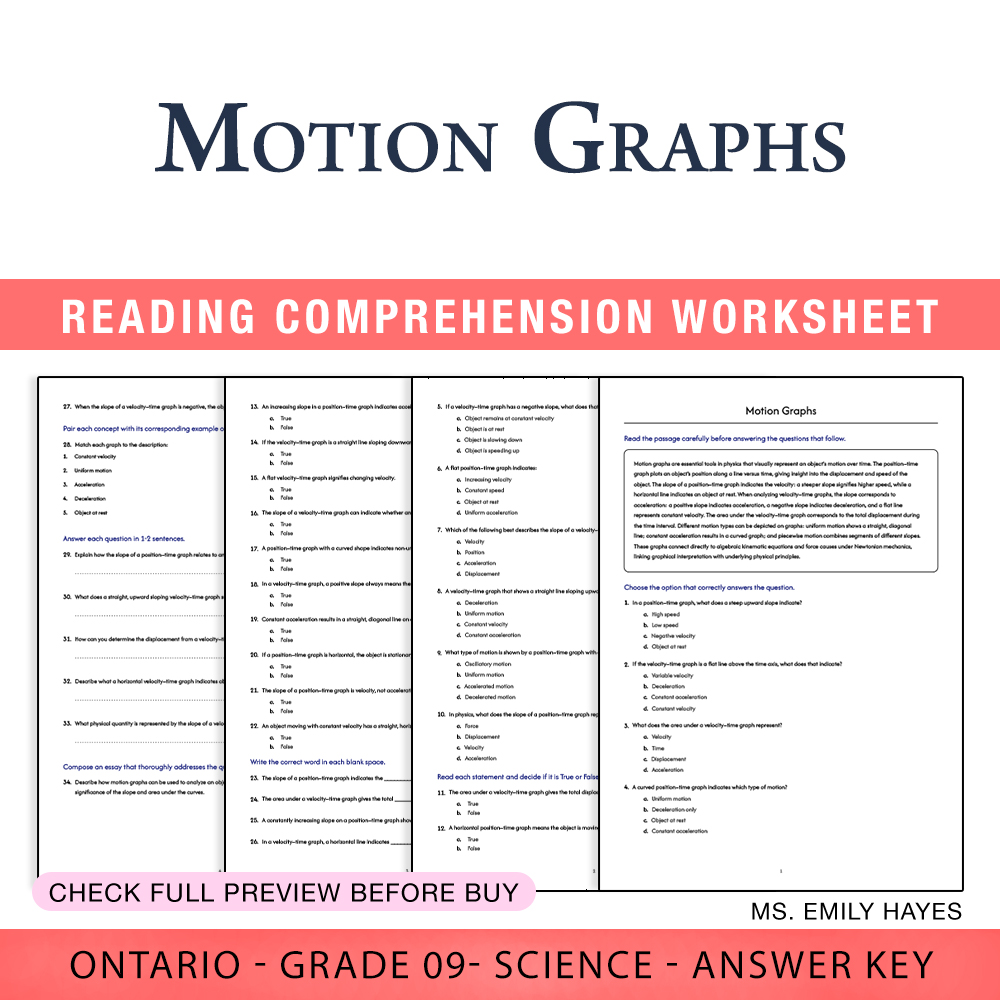
9th Grade Science | Motion Graphs Worksheet (PDF + Answer Key)
Created byCopper Leaf ClassroomLearning Objectives
- Interpret position–time graphs to determine an object's motion and understand what the slope indicates about velocity.
- Explain how the slope of a velocity–time graph relates to acceleration.
- Calculate displacement from the area under a velocity–time graph.
Instant download
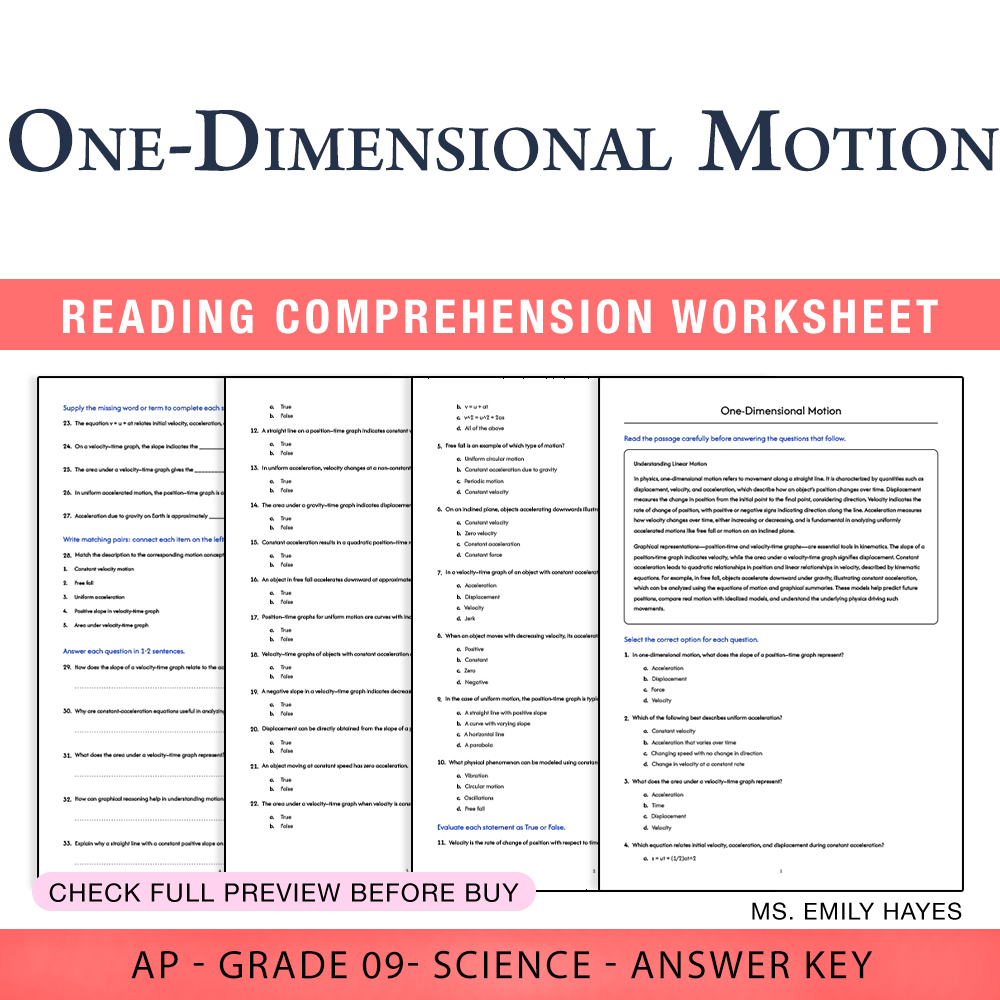
9th Grade Science | One-Dimensional Motion Worksheet (PDF+ Answer Key)
Created byCopper Leaf ClassroomLearning Objectives
- Understand the fundamental relationships among displacement, velocity, and acceleration for linear motion.
- Interpret position–time and velocity–time graphs to analyze motion patterns.
- Apply constant-acceleration equations to different types of motion, including free fall and inclined planes.
Also included in: Grade 9 Science | Motion & Force Concepts Worksheet(PDF+ Answer Key) +1 more
Instant download
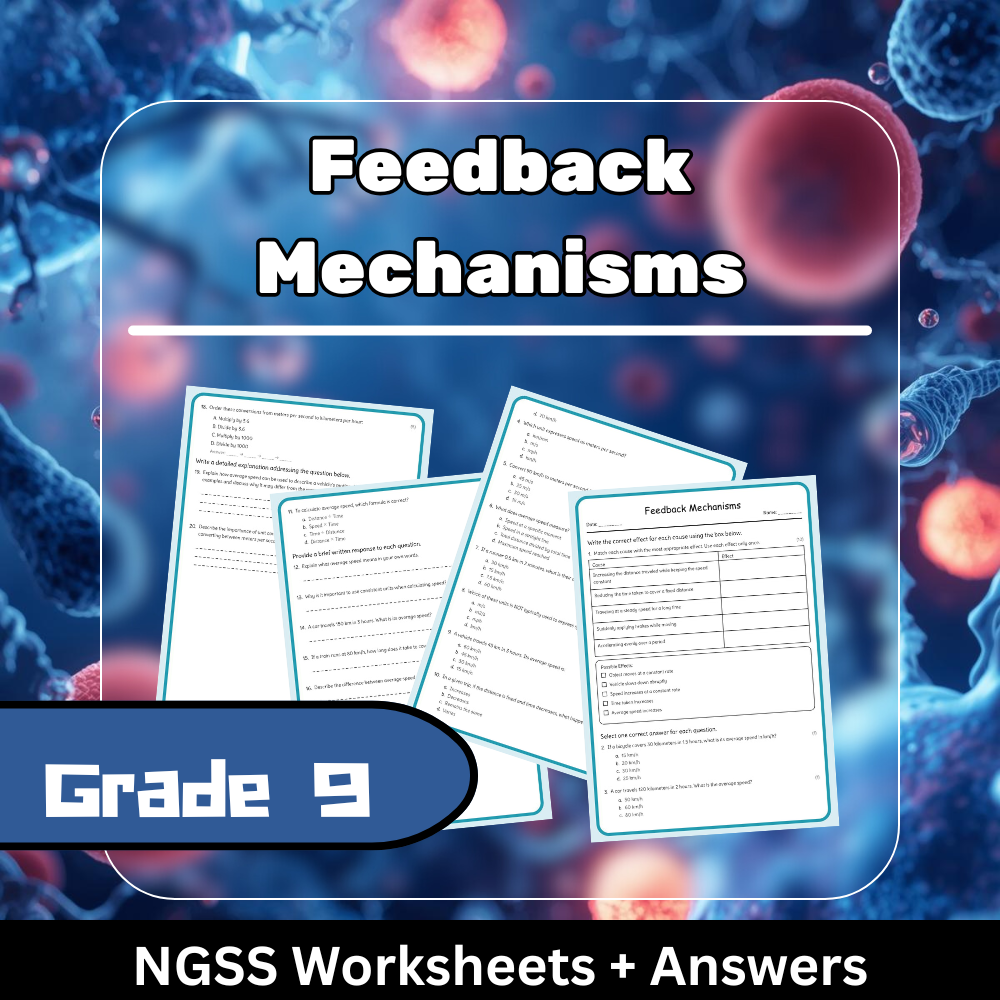
Grade 9 Science | Feedback Mechanisms Worksheet (Worksheet + Answer Key) NGSS
Created byBright Mind ResourcesLearning Objectives
- Understand the concepts of negative and positive feedback and their roles in maintaining internal stability.
- Identify and describe specific physiological feedback processes such as thermoregulation, blood glucose control, and osmoregulation.
- Explain set points, sensor-effector loops, and the timing differences between rapid and slow feedback responses.
Instant download
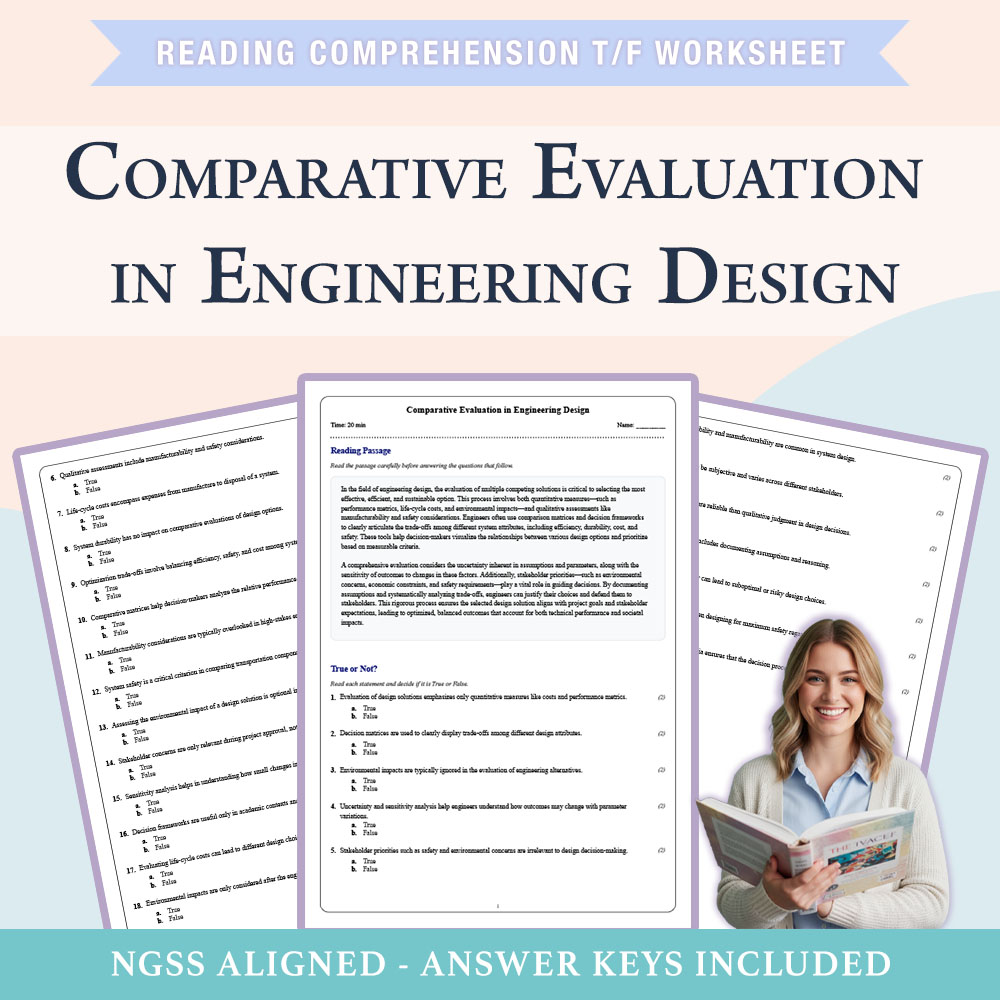
Grade 9 Science | Comparative Evaluation in Engineering Design (PDF + Answers)
Created byCopper Leaf ClassroomLearning Objectives
- Understand the principles of evaluating competing design solutions using quantitative and qualitative metrics.
- Recognize the importance of decision frameworks and matrices in selecting optimal systems based on multiple criteria.
- Assess the role of uncertainty and stakeholder priorities in engineering evaluations.
Also included in: Grade 9 Science | Engineering Design & Modeling Bundle (PDF + Answer Key) +1 more
Instant download

Grade 9 Science | Mass Conservation - Daily Reading Comprehension
Created byCoral Reef LearningLearning Objectives
- Understand the principle of mass conservation in chemical reactions
- Identify examples of mass conservation in real-world scenarios
- Learn to apply the concept to simple chemical equations
Also included in: Matter and Chemical Change Lesson Bundle – Grade 9 Science Alberta +1 more
Instant download

Grade 9 Science | States of Matter - Daily Reading Comprehension
Created byCoral Reef LearningLearning Objectives
- Identify the three main states of matter: solid, liquid, and gas.
- Describe the characteristic properties of each state of matter.
- Understand how temperature and pressure influence state changes.
Also included in: Matter and Chemical Change Lesson Bundle – Grade 9 Science Alberta +1 more
Instant download
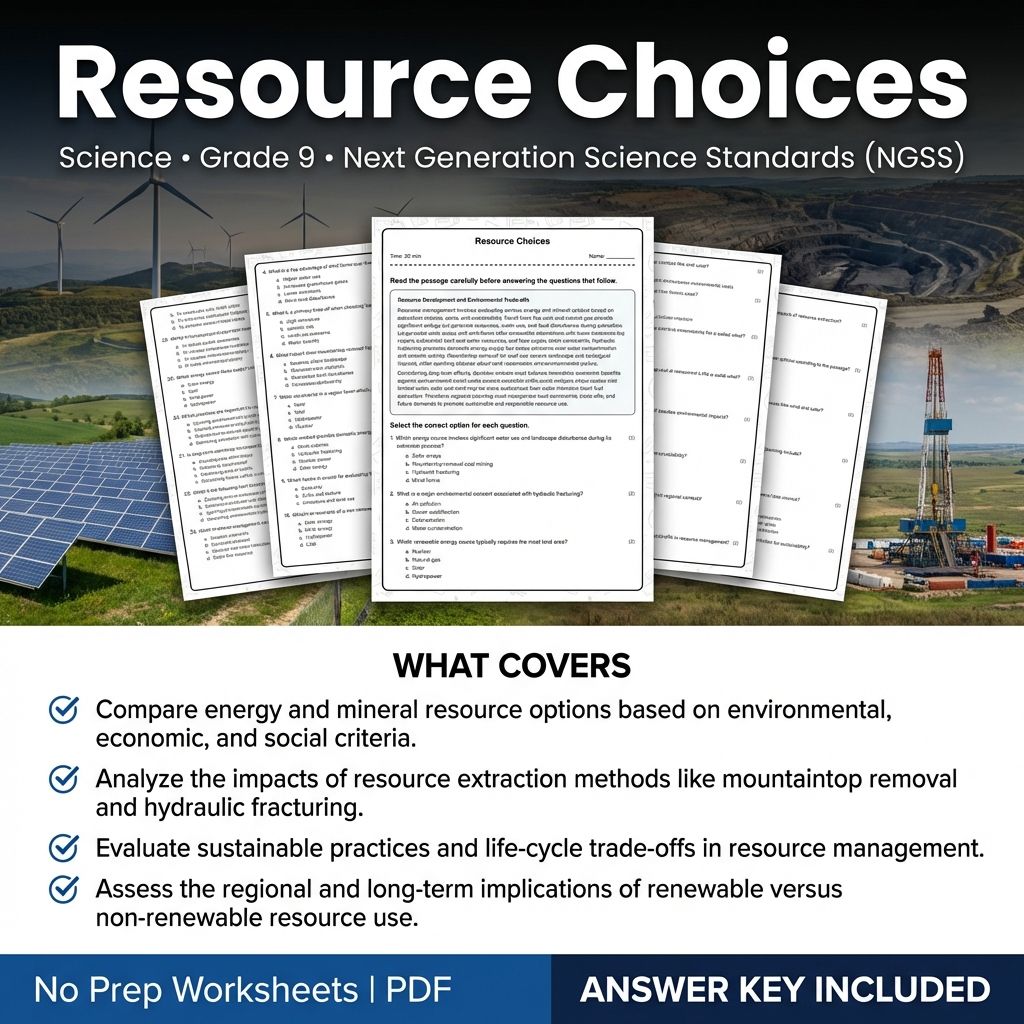
9th Grade Science | Resource Choices Worksheet + Answer Key (Printable PDF)
Created byCoral Reef LearningLearning Objectives
- Compare energy and mineral resource options based on environmental, economic, and social criteria.
- Analyze the impacts of resource extraction methods like mountaintop removal and hydraulic fracturing.
- Evaluate sustainable practices and life-cycle trade-offs in resource management.
Also included in: Grade 9 Science UNIT Worksheet Pack-Resource Management & Energy Decarbonization +1 more
Instant download
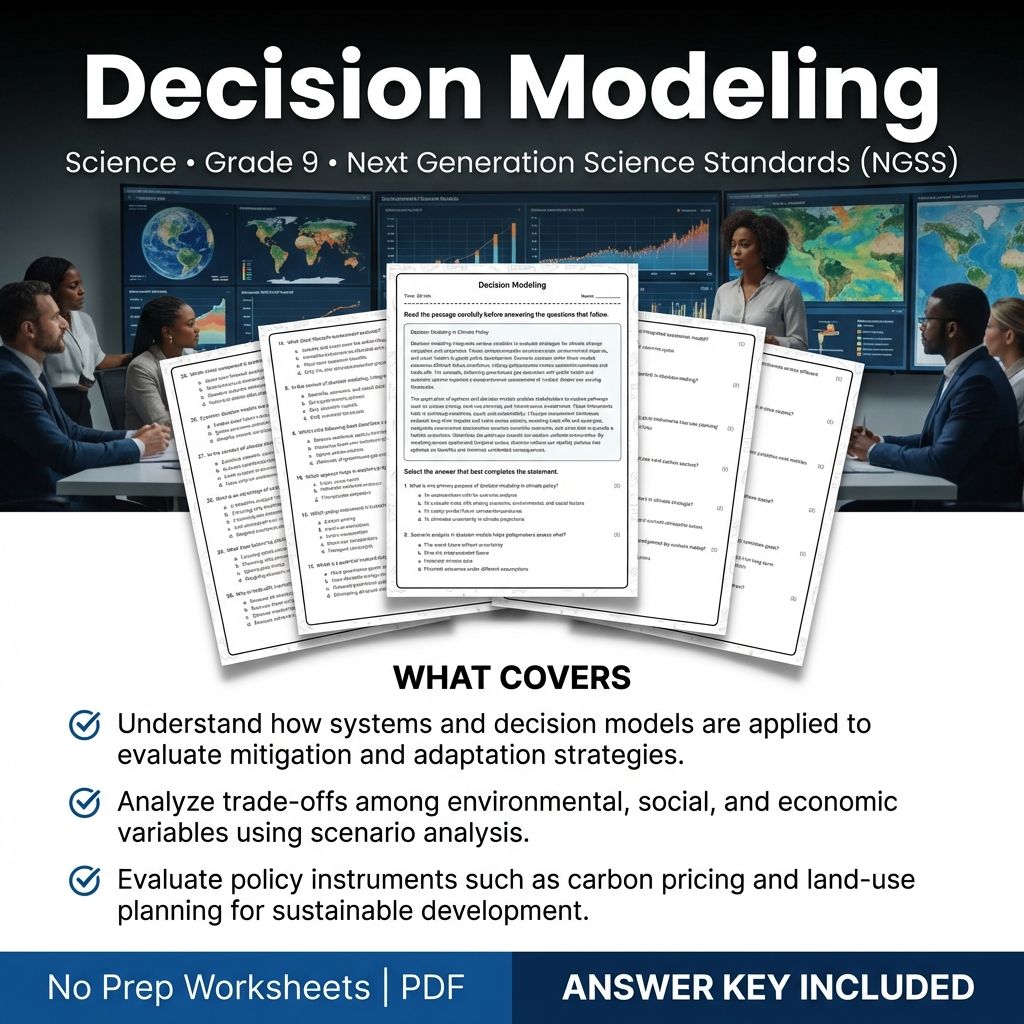
Grade 9 Science | Decision Modeling Worksheet & Answer Key (Printable PDF)
Created byCoral Reef LearningLearning Objectives
- Understand how systems and decision models are applied to evaluate mitigation and adaptation strategies.
- Analyze trade-offs among environmental, social, and economic variables using scenario analysis.
- Evaluate policy instruments such as carbon pricing and land-use planning for sustainable development.
Also included in: Grade 9 Science UNIT Worksheet Pack-Resource Management & Energy Decarbonization +1 more
Instant download
About Grade 9 Science Worksheets
Find Science worksheets built for Grade 9. All 6,926 cover core skills, practice, and review, each an instant PDF download.
Every worksheet on MyTeachingSheets is created by independent teacher-authors and reviewed before publication. All resources download as printable PDFs for classroom, homework, or at-home practice, and many include answer keys. Preview any worksheet free before buying.