
Science Worksheets
42,859 subject resources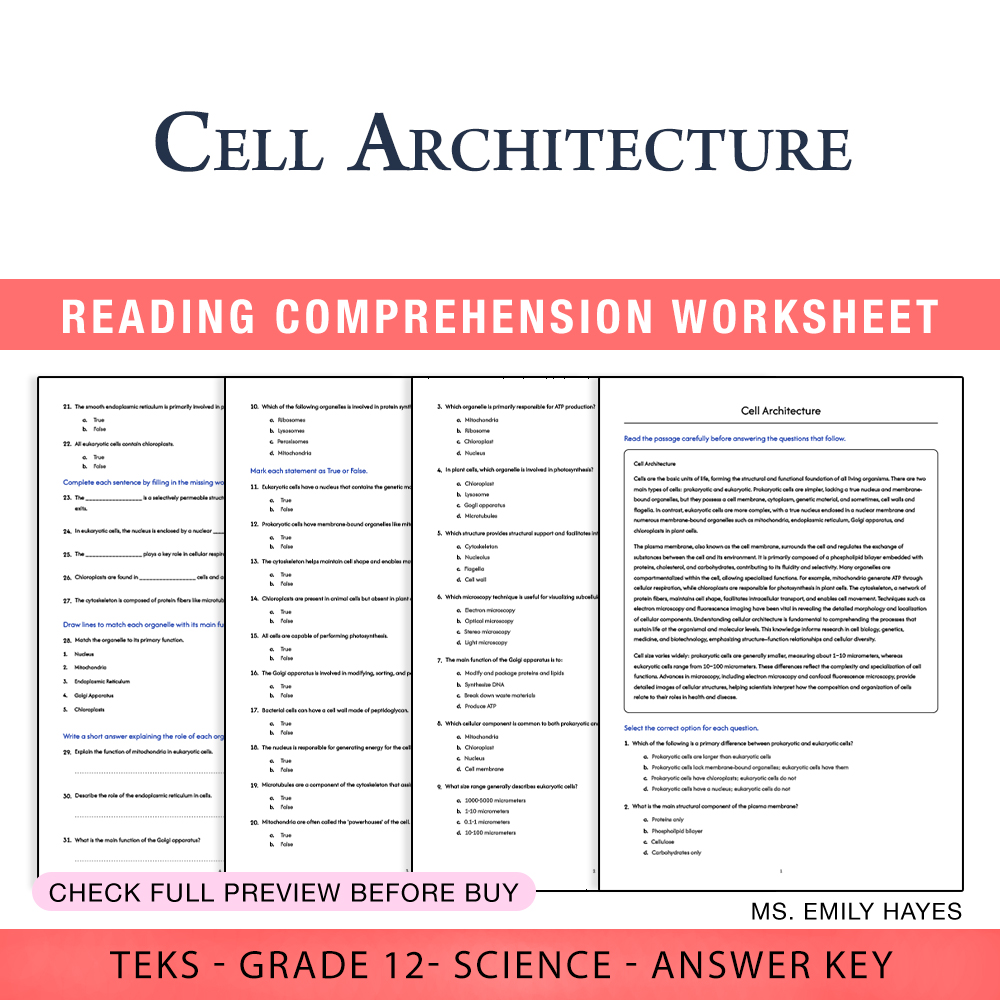
Grade 12 Science | Cell Architecture Worksheet (PDF+ Answer Key)
 Created byCopper Leaf Classroom
Learning Objectives
- Describe the structural differences between prokaryotic and eukaryotic cells.
- Identify and explain the functions of major organelles in eukaryotic cells.
- Compare cellular features related to structure and function, including membranes and cytoskeleton.
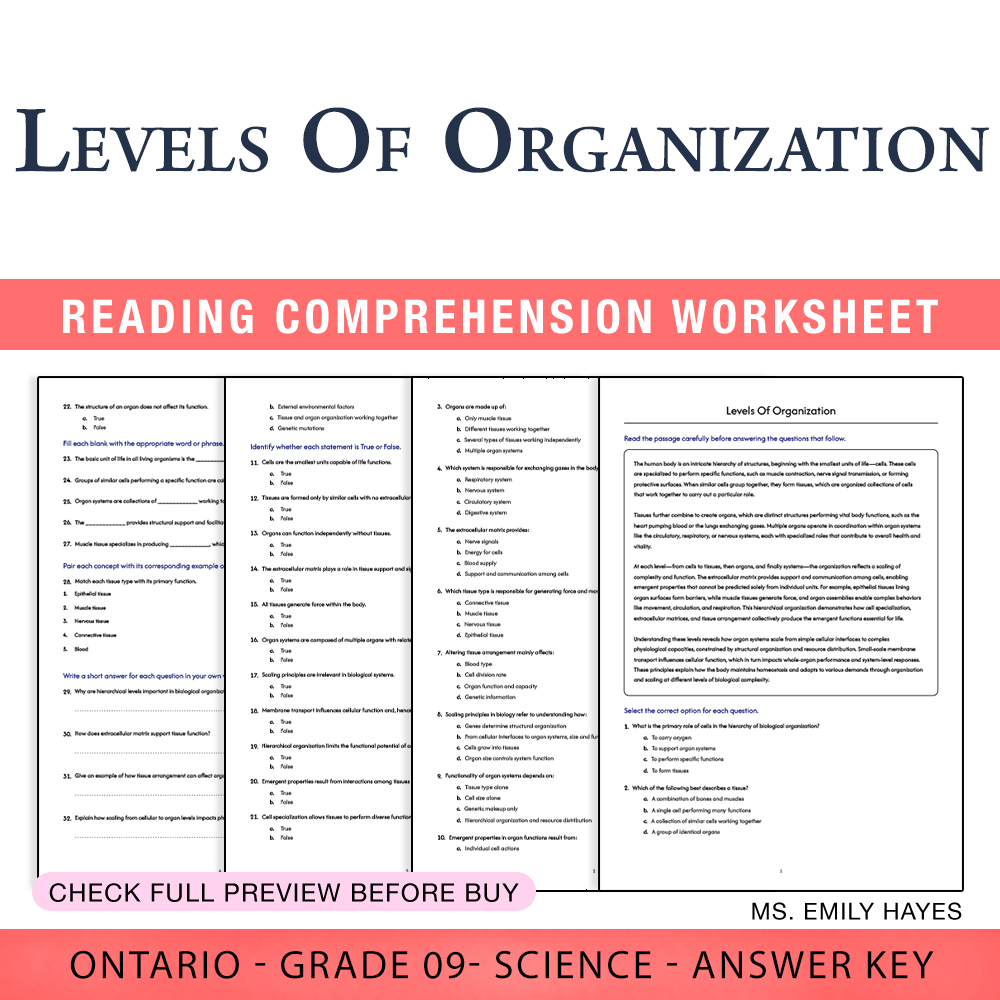
9th Grade Science | Levels Of Organization Worksheet (PDF + Answer Key)
Created byCopper Leaf ClassroomLearning Objectives
- Explain the hierarchical levels from cells to organ systems in the human body.
- Describe how different tissue types contribute to organ functions and systems.
- Understand the principles of scaling from cellular interfaces to whole organ systems in physiology.
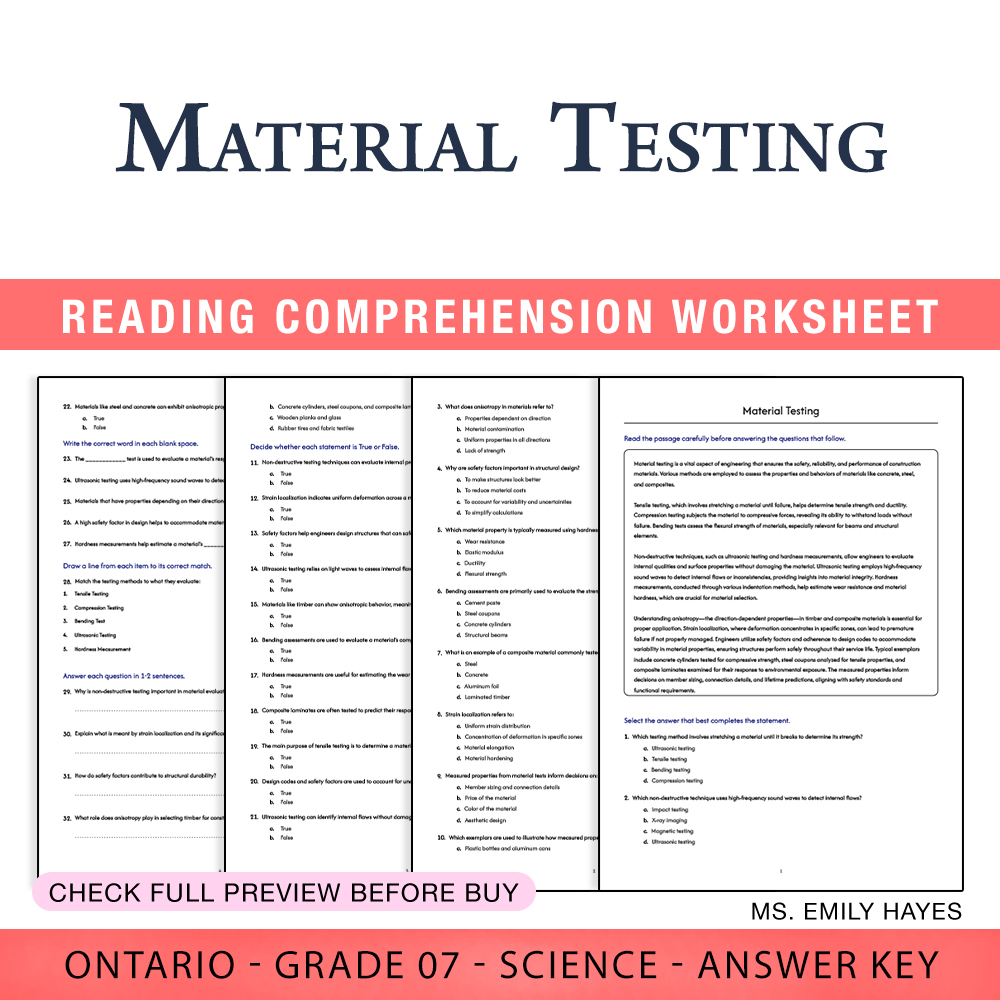
7th Grade Science | Material Testing Worksheet (PDF+ Answer Key)
Created byCopper Leaf ClassroomLearning Objectives
- Understand characteristic methods used in testing material behavior such as tensile, compression, and bending assessments.
- Learn about non-destructive testing techniques including ultrasonic and hardness measurements.
- Explain the concept of anisotropy in timber and composites and understand strain localization.
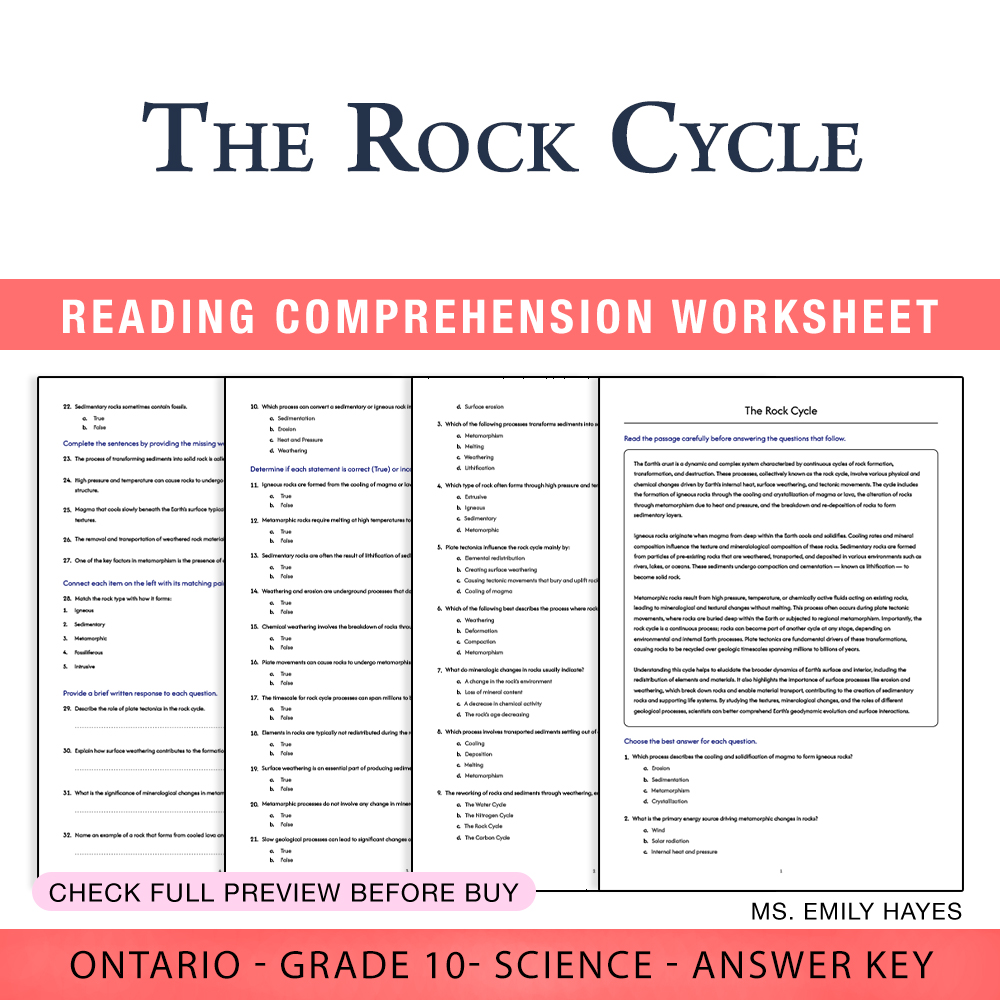
10th Grade Science | The Rock Cycle Worksheet (PDF + Answer Key)
Created byCopper Leaf ClassroomLearning Objectives
- Describe the processes involved in the rock cycle, including melt generation, crystallization, weathering, transport, deposition, lithification, and metamorphism.
- Explain the physical and chemical drivers of transformations in rocks and how these relate to plate tectonics.
- Identify and differentiate among igneous, sedimentary, and metamorphic rocks based on textural and mineralogical changes.
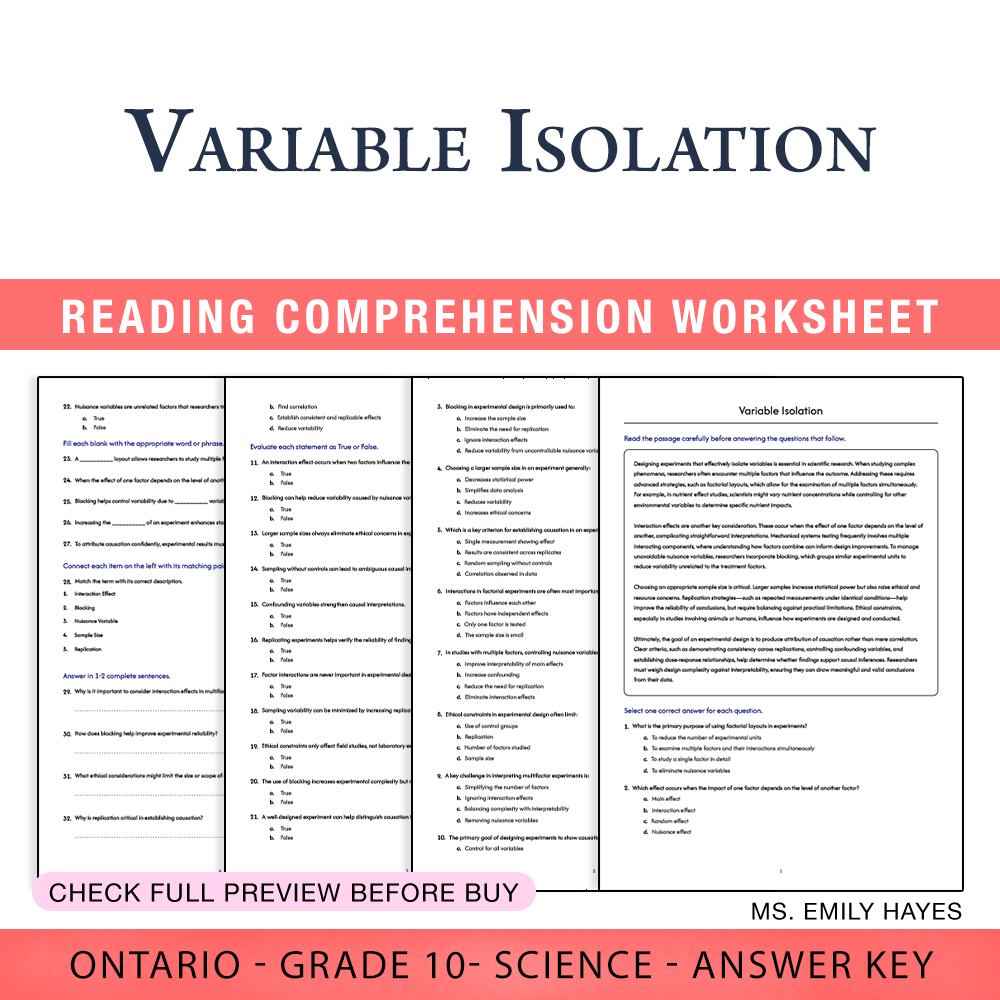
10th Grade Science | Variable Isolation Worksheet (PDF + Answer Key)
Created byCopper Leaf ClassroomLearning Objectives
- Understand the concept of variable isolation in experimental design.
- Analyze the effects of multiple factors and interactions in complex experiments.
- Evaluate design trade-offs such as complexity versus interpretability.
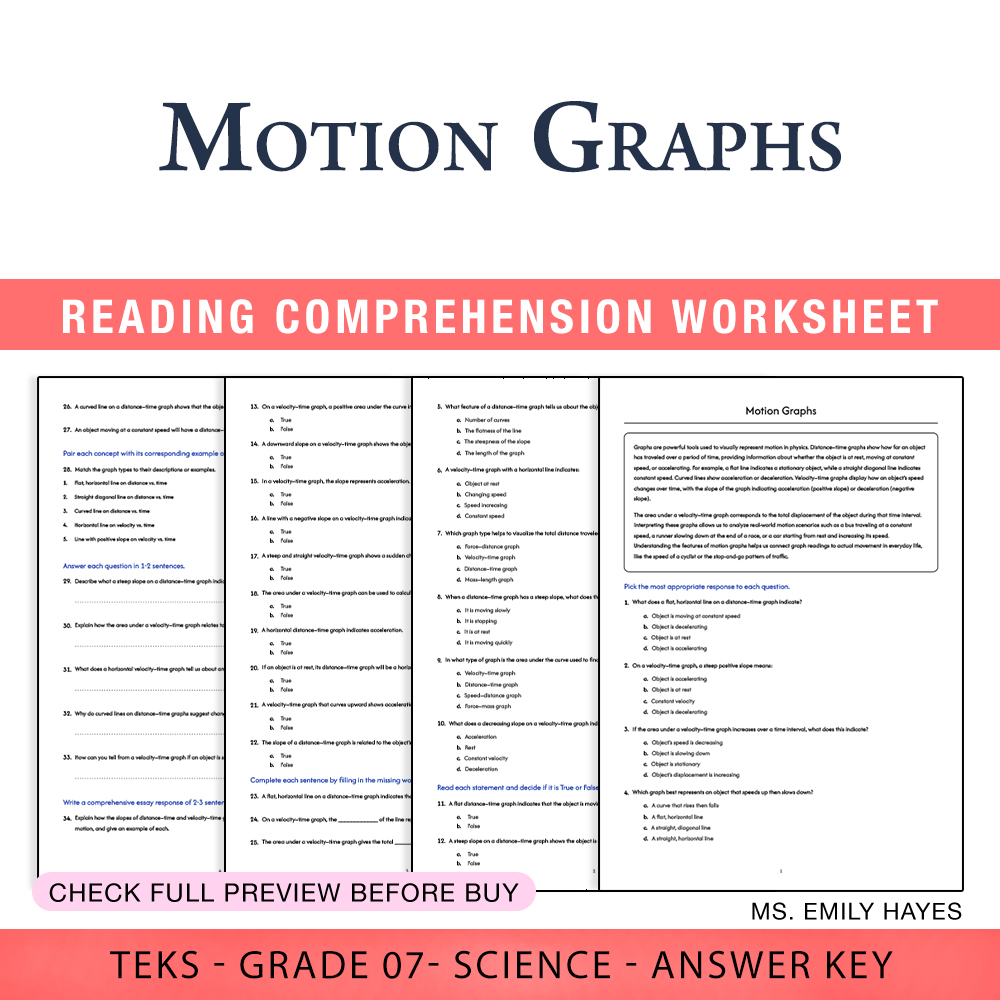
7th Grade Science | Motion Graphs Worksheet (PDF+ Answer Key)
Created byCopper Leaf ClassroomLearning Objectives
- Interpret and analyze distance–time graphs to identify patterns like constant speed, acceleration, and rest periods.
- Understand velocity–time graphs and relate slopes to speed changes and areas to displacement.
- Compare different types of graphs qualitatively and relate them to real-world motion scenarios such as bus routes and running laps.
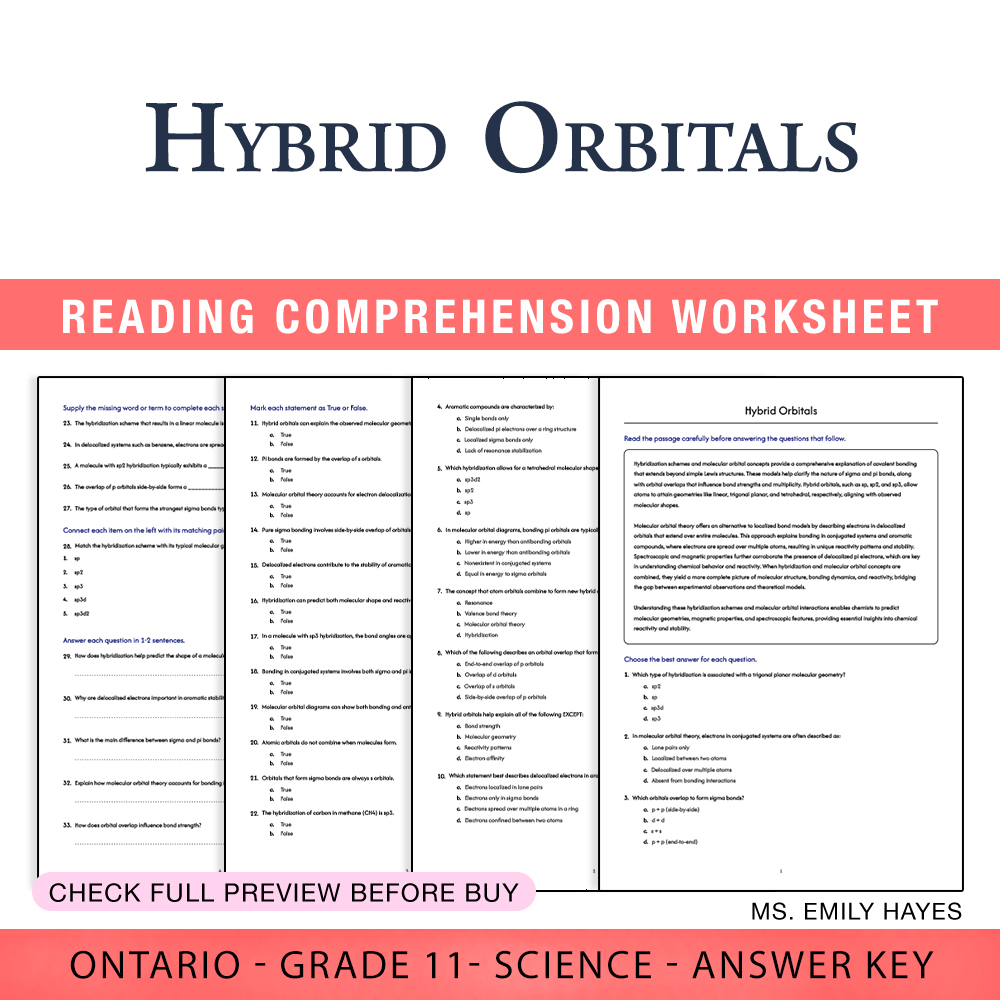
11th Grade Science | Hybrid Orbitals Worksheet (PDF + Answer Key)
Created byCopper Leaf ClassroomLearning Objectives
- Understand the concept of hybridization schemes and their role in molecular bonding.
- Explain molecular orbital theory including sigma and pi interactions.
- Compare localized bonding models with delocalized molecular orbitals, especially in conjugated and aromatic systems.
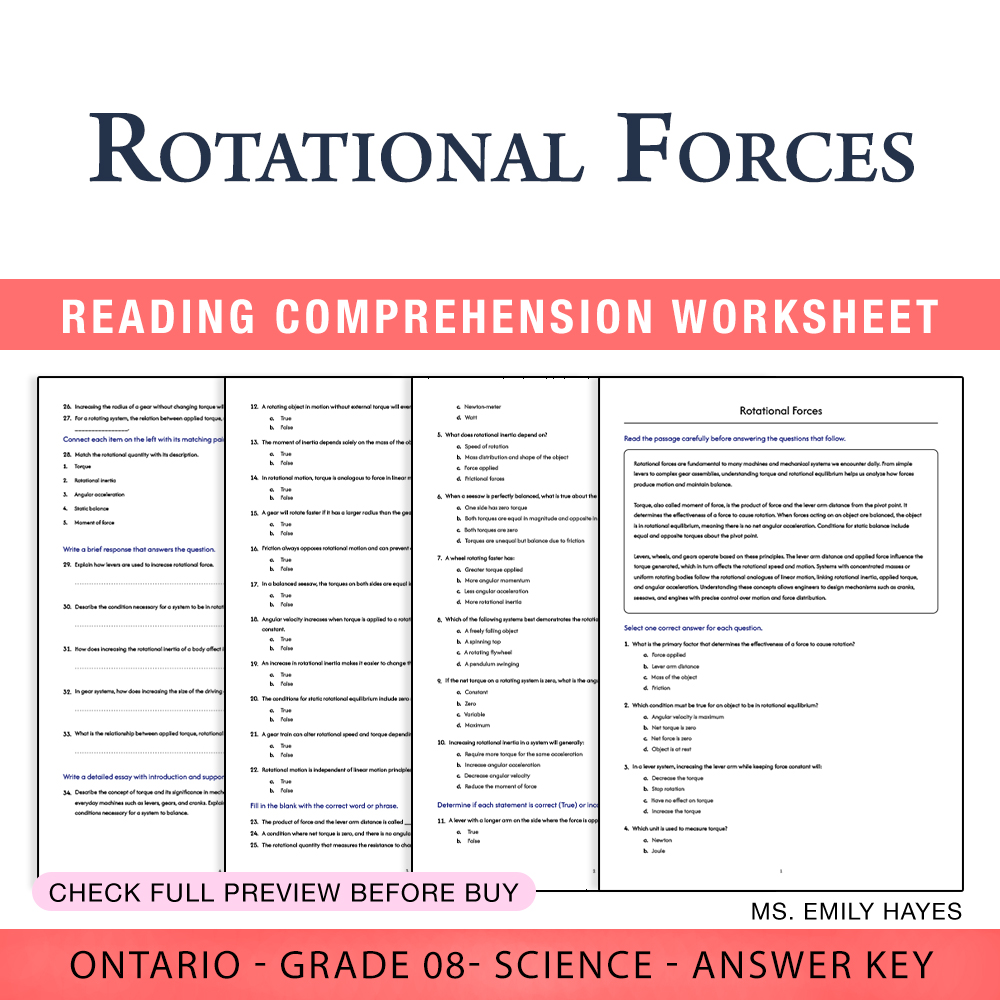
Grade 8 Science | Rotational Forces Worksheet (PDF + Answer Key)
Created byCopper Leaf ClassroomLearning Objectives
- Explain the concept of torque and how it relates to rotational forces.
- Describe the conditions for rotational equilibrium and static balance in levers and assemblies.
- Calculate the moment of force for various systems involving gears, wheels, and levers.
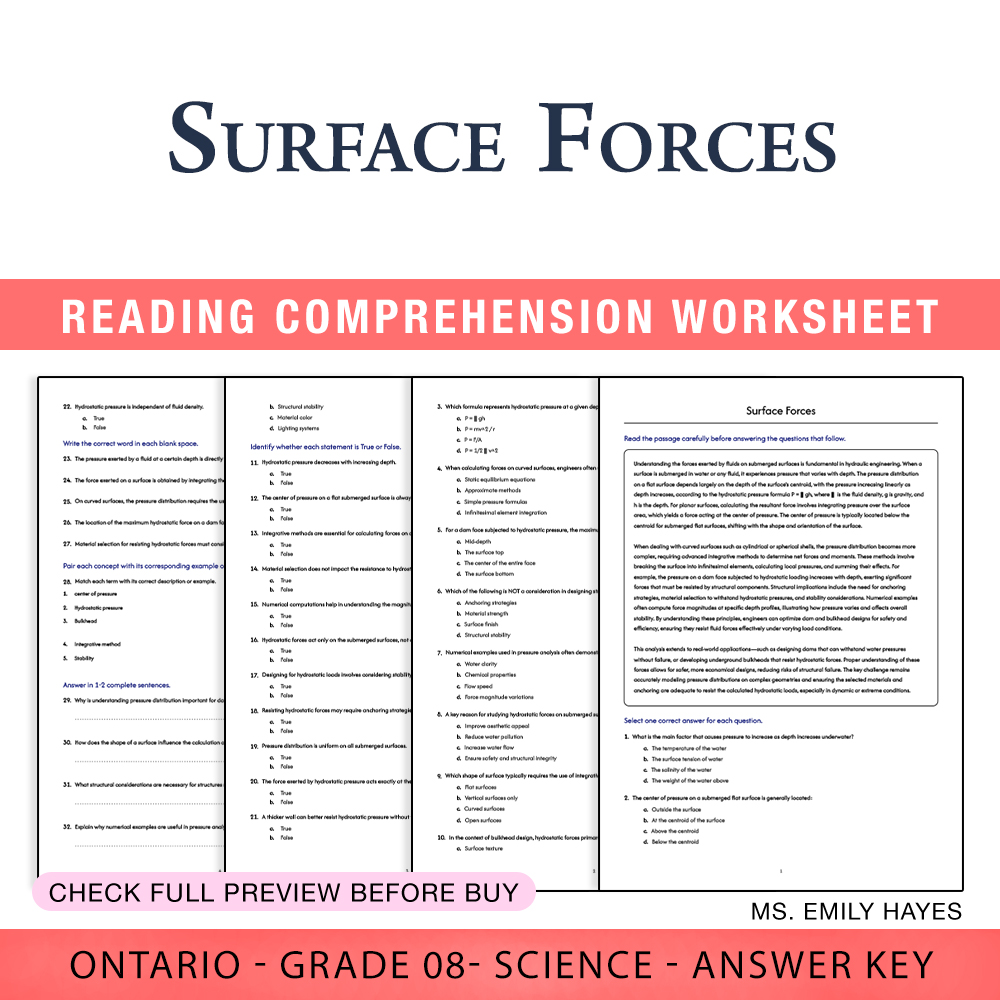
8th Grade Science | Surface Forces Worksheet (PDF+ Answer Key)
Created byCopper Leaf ClassroomLearning Objectives
- Understand the principles of pressure distribution on submerged surfaces
- Analyze how forces act on planar and curved surfaces underwater
- Apply integrative methods to calculate net forces and centers of pressure
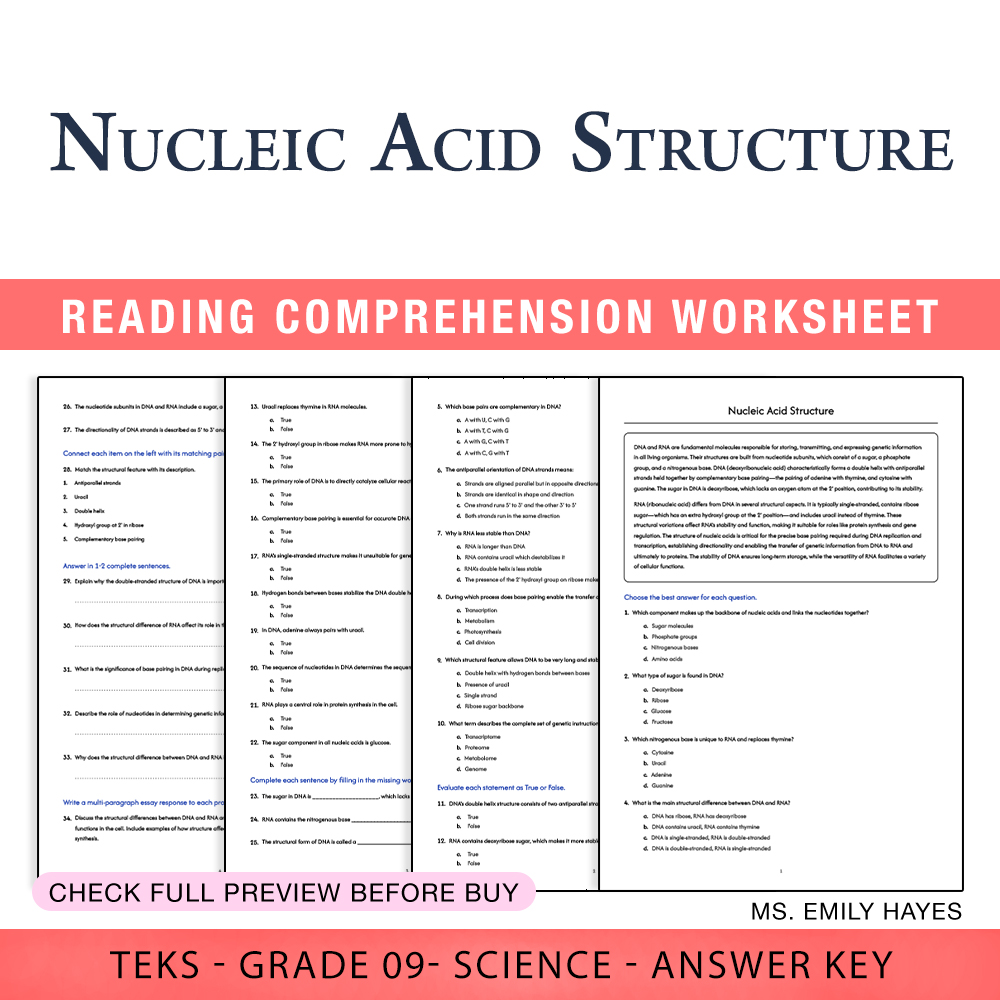
9th Grade Science | Nucleic Acid Structure Printable Worksheet (PDF+ Answer Key)
Created byCopper Leaf ClassroomLearning Objectives
- Describe the chemical structures of DNA and RNA and their nucleotide components.
- Compare the structural features of DNA and RNA, including strand orientation and sugar content.
- Explain how nucleic acid structures enable specific base pairing during processes like replication and transcription.
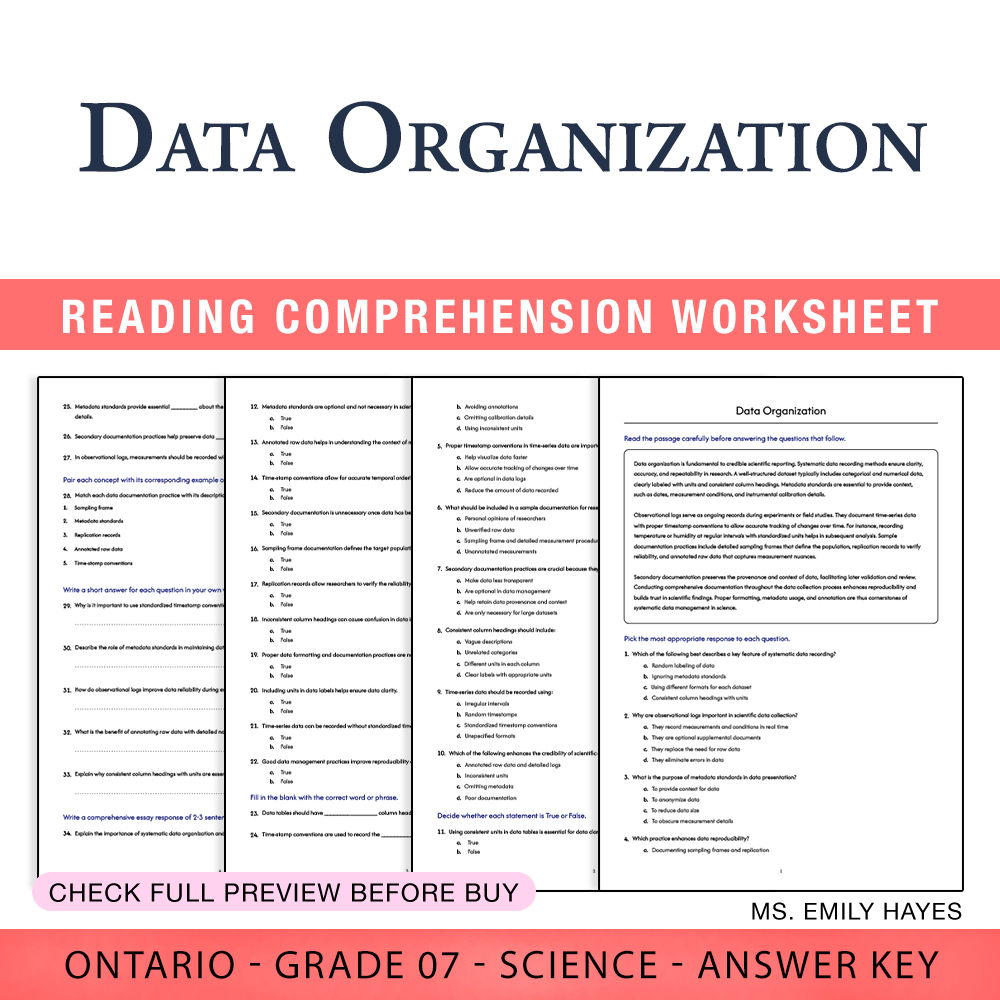
Grade 7 Science | Data Organization Worksheet (PDF+ Answer Key)
Created byCopper Leaf ClassroomLearning Objectives
- Understand systematic methods for recording scientific data, including types of data and organization formats.
- Identify key components of metadata and observational logs used in data presentation.
- Apply best practices for documenting sampling frames, replication, and raw data annotations.
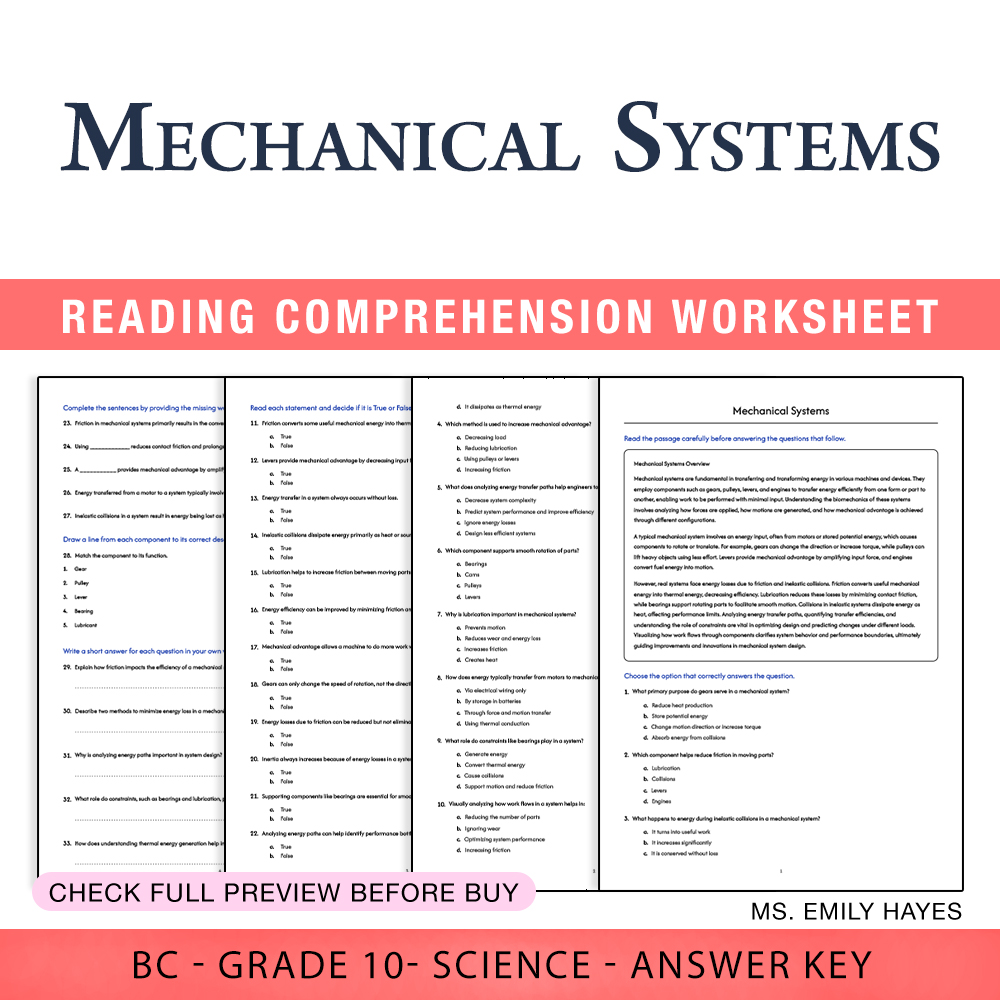
10th Grade Science | Mechanical Systems Worksheet (PDF + Answer Key)
Created byCopper Leaf ClassroomLearning Objectives
- Describe how mechanical systems transfer and transform energy using forces, gears, pulleys, and levers.
- Analyze the roles of energy input, friction, and collisions in mechanical efficiency.
- Visualize energy paths and understand how system components influence performance.
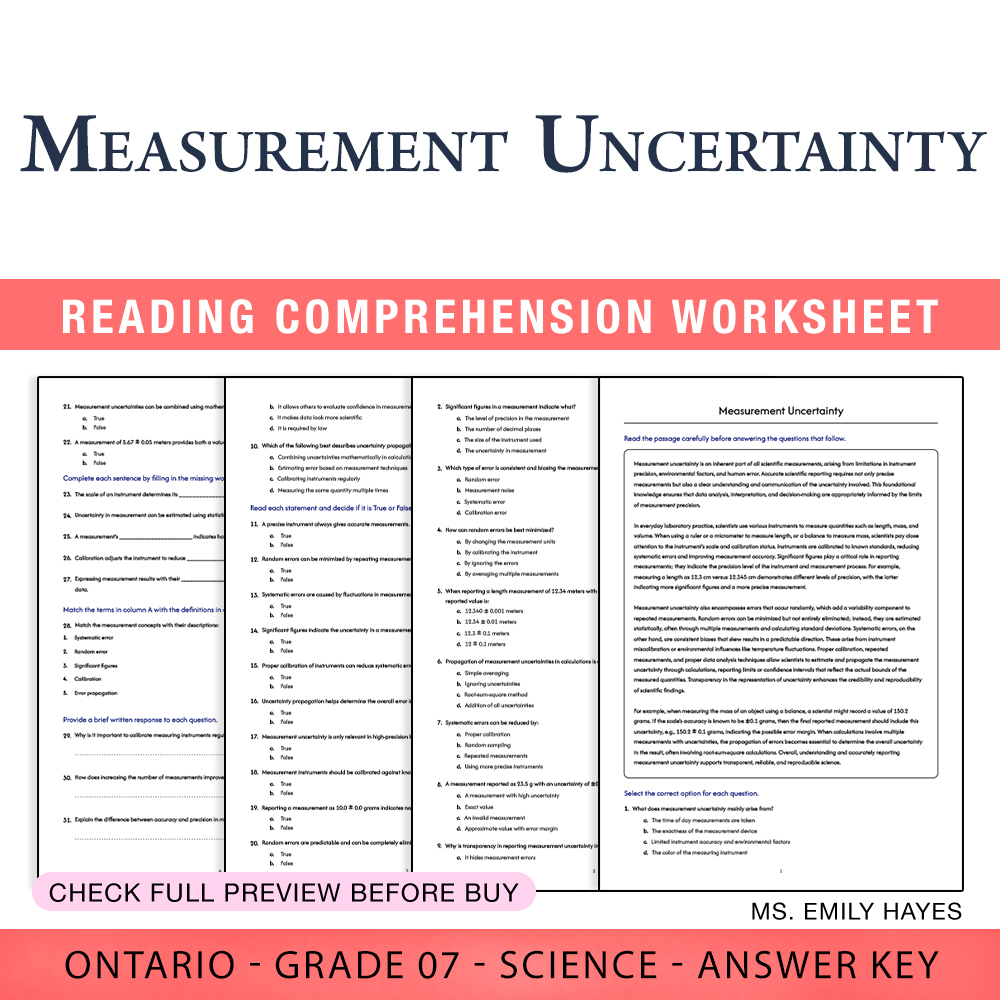
7th Grade Science | Measurement Uncertainty Worksheet (PDF+ Answer Key)
Created byCopper Leaf ClassroomLearning Objectives
- Understand the concept of measurement uncertainty and its importance in scientific measurements.
- Identify and distinguish between sources of systematic and random errors in measurements.
- Learn how to interpret significant figures and proper reporting of measurement results.
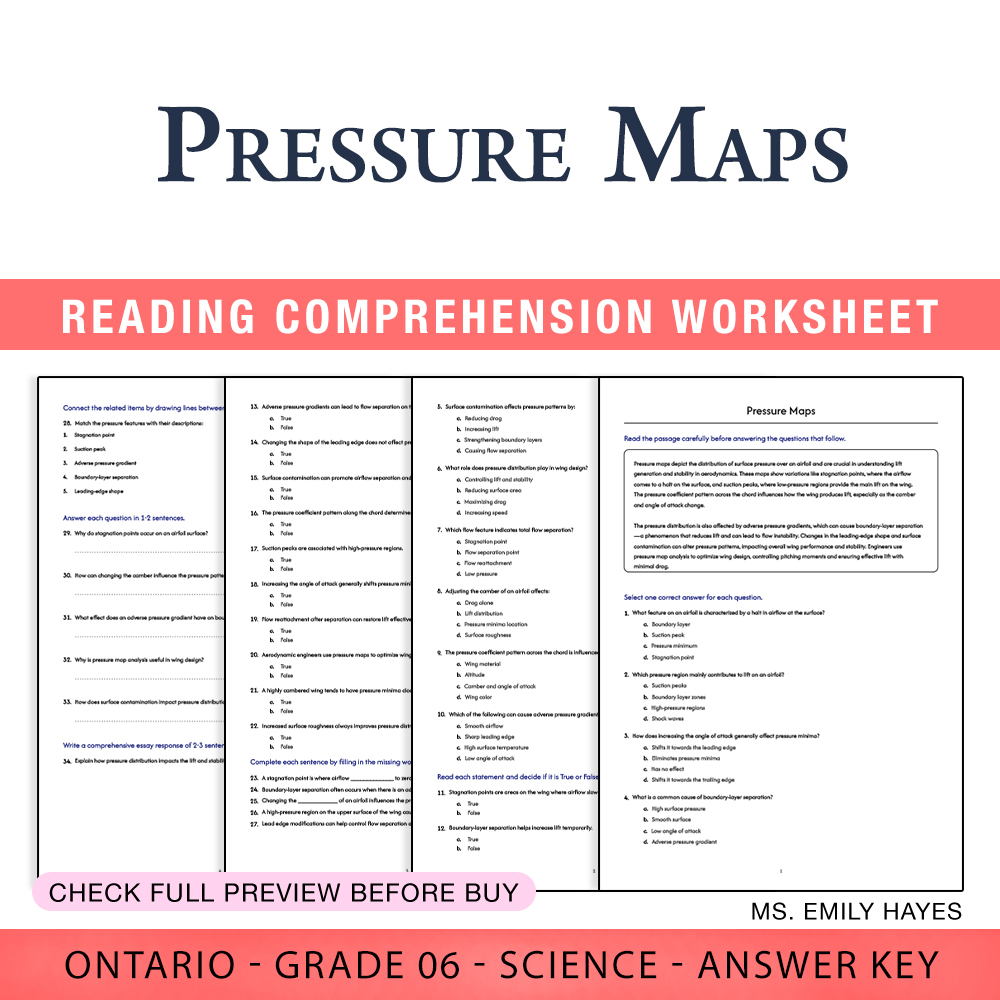
6th Grade Science | Pressure Maps Worksheet (PDF + Answer Key)
Created byCopper Leaf ClassroomLearning Objectives
- Understand the concept of surface pressure distribution around wing sections and how it affects lift and pitching moments.
- Identify and explain key pressure features such as stagnation points, suction peaks, and pressure coefficient patterns.
- Analyze how camber and angle of attack influence the placement of pressure minima and the resulting aerodynamic forces.
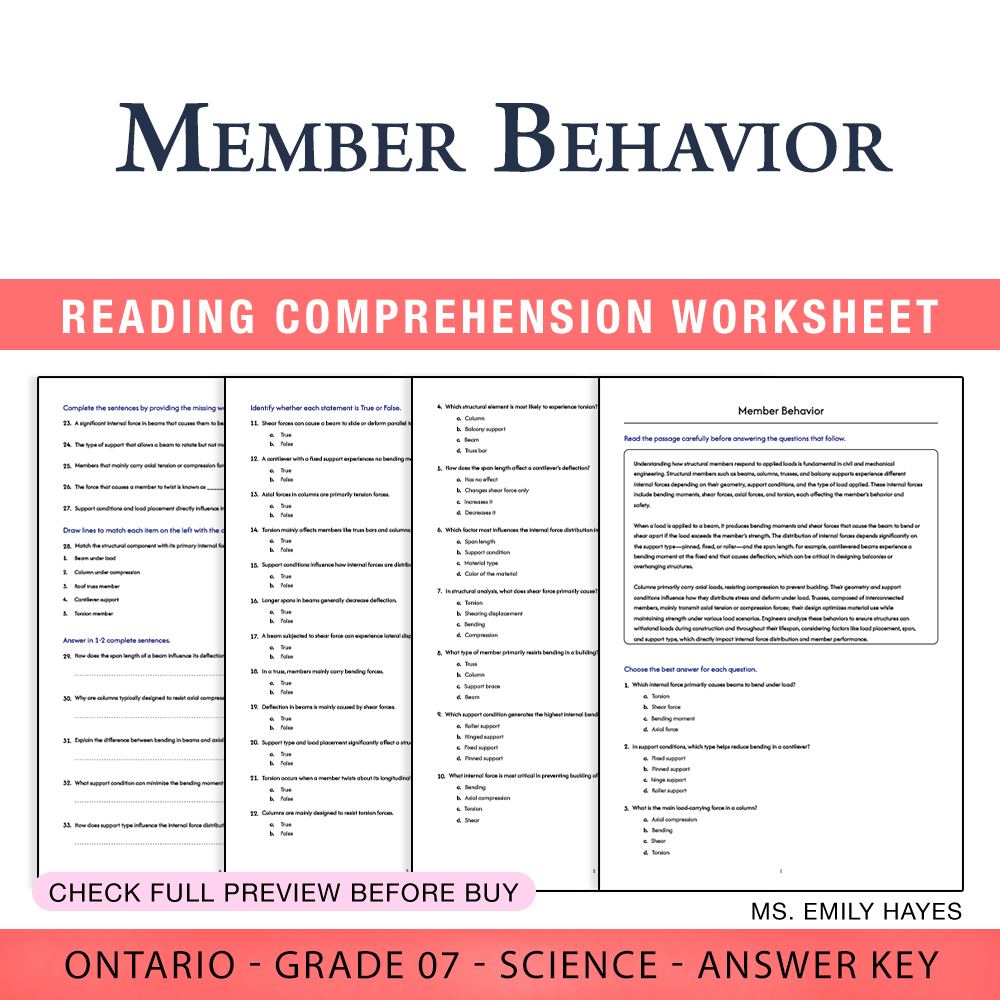
Grade 7 Science | Member Behavior Worksheet (PDF+ Answer Key)
Created byCopper Leaf ClassroomLearning Objectives
- Describe how structural members respond to loads through bending, shear, axial force, and torsion.
- Relate geometry and support conditions to internal force distribution in beams and columns.
- Explain the effects of bending moment and shear force on deflection and serviceability in beams and cantilevers.
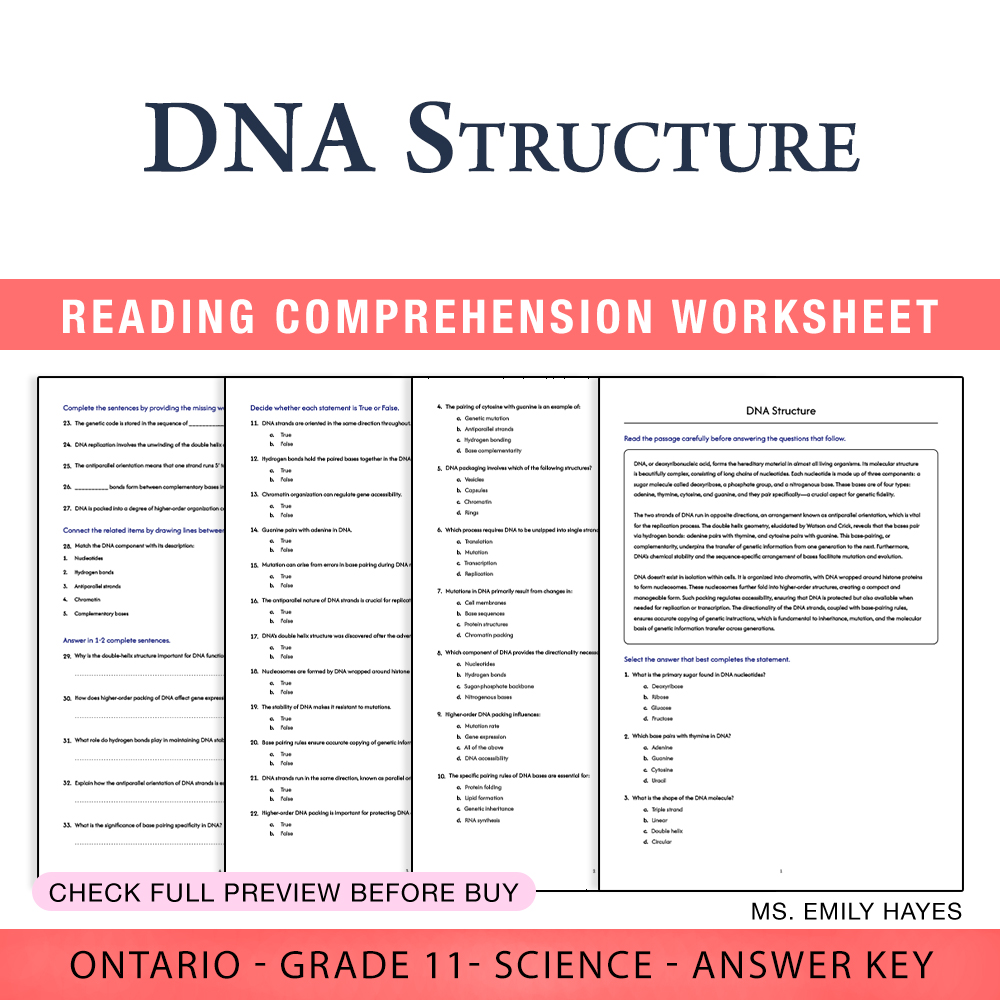
11th Grade Science | DNA Structure Worksheet (PDF + Answer Key)
Created byCopper Leaf ClassroomLearning Objectives
- Understand the molecular composition and structure of DNA, including nucleotides, antiparallel strands, and double helix geometry.
- Explain the base-pairing rules and their role in genetic inheritance and mutation.
- Describe how chromatin organization and higher-order packing influence DNA accessibility for replication and transcription.
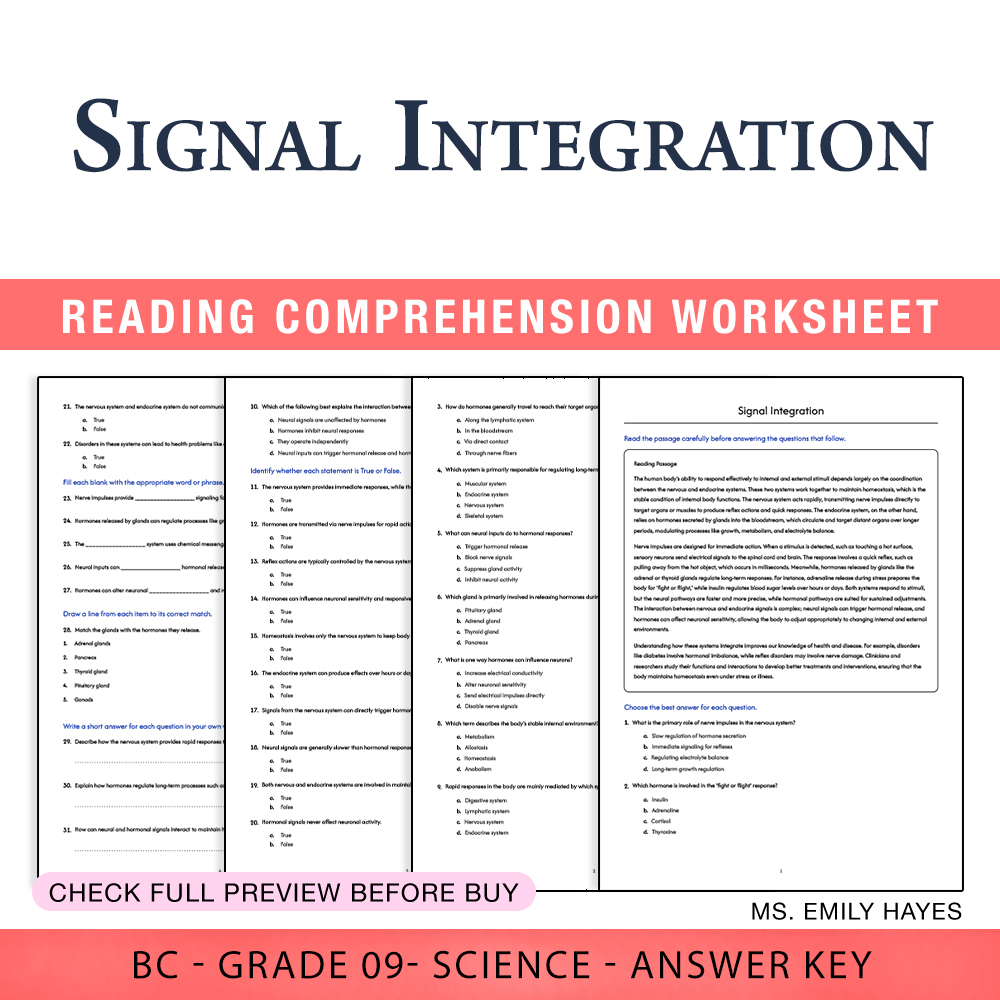
Grade 9 Science | Signal Integration Worksheet (PDF+ Answer Key)
Created byCopper Leaf ClassroomLearning Objectives
- Understand how the nervous and endocrine systems coordinate responses to stimuli.
- Identify different signals and their roles in maintaining homeostasis.
- Compare rapid nerve responses with slower hormonal responses.
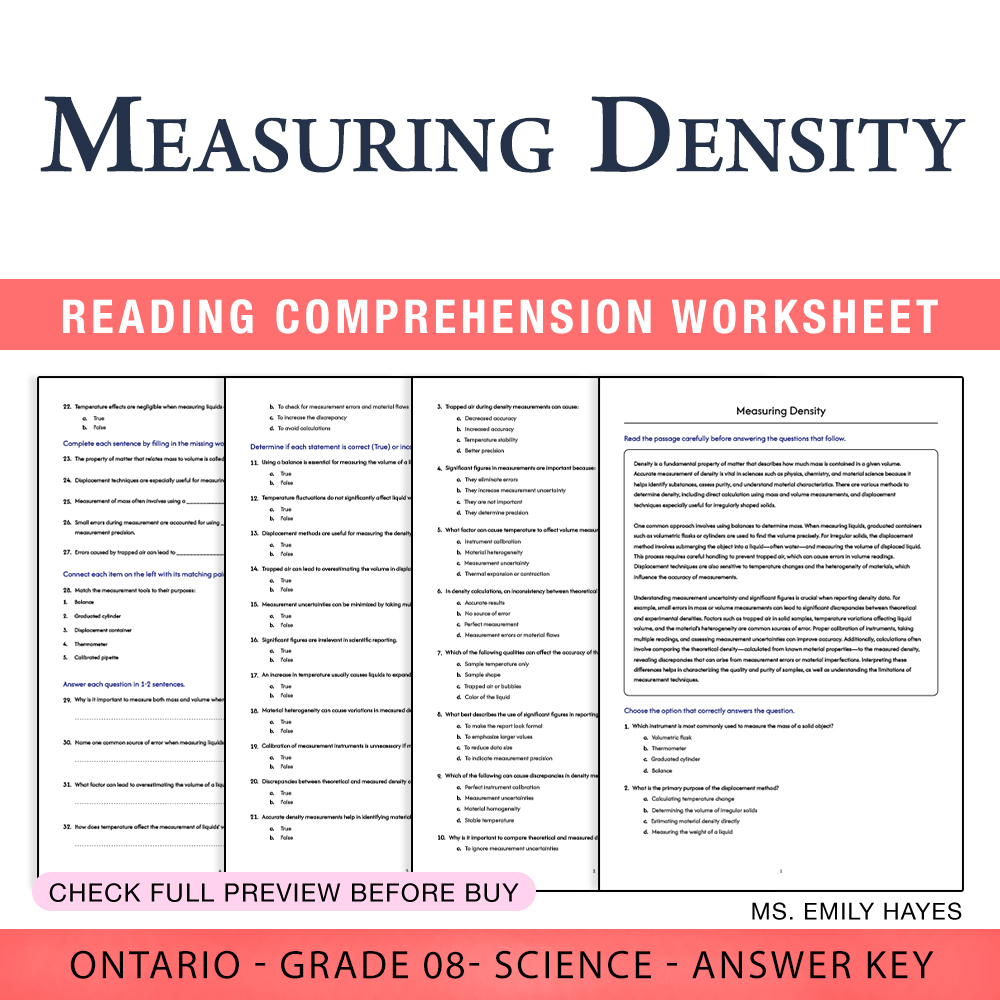
8th Grade Science | Measuring Density Worksheet (PDF+ Answer Key)
Created byCopper Leaf ClassroomLearning Objectives
- Understand different methods for measuring the density of solids and liquids.
- Apply direct calculation and displacement techniques to determine density.
- Interpret measurement data, including uncertainties and significant figures.
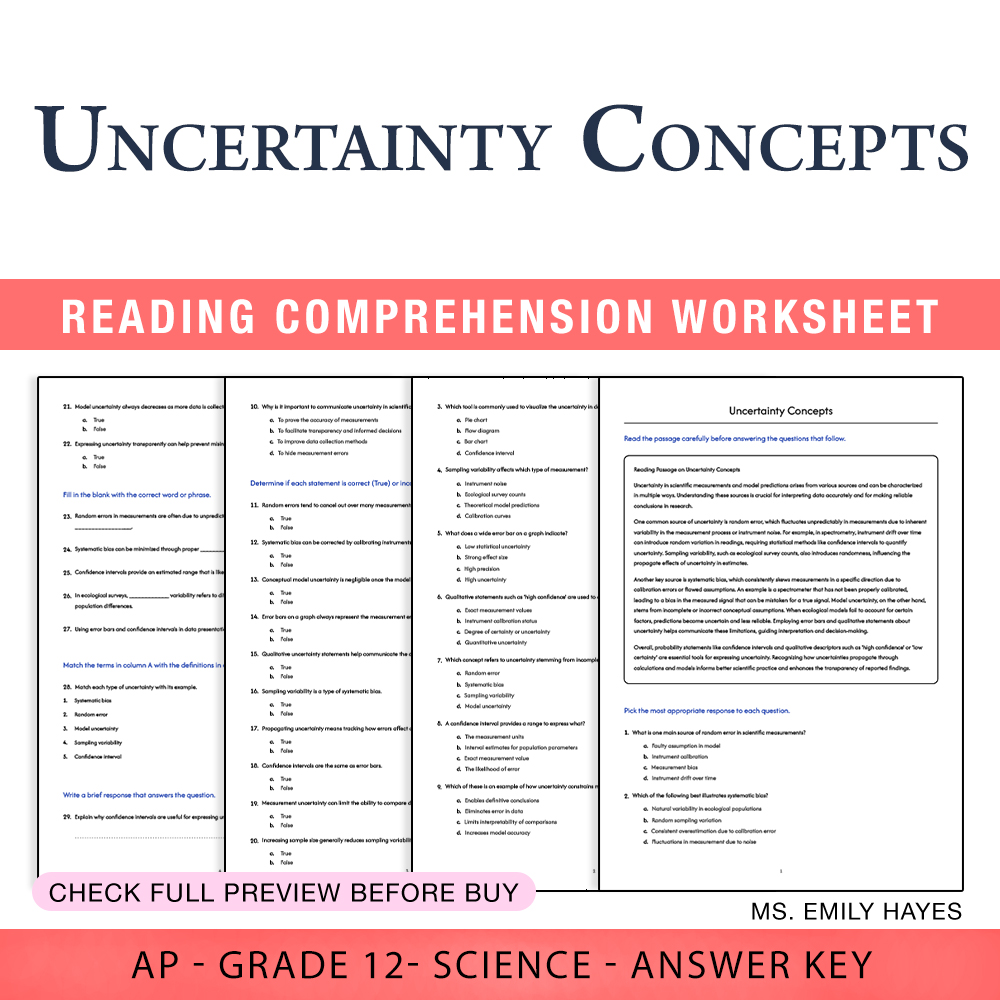
Grade 12 Science | Uncertainty Concepts Worksheet (PDF+ Answer Key)
Created byCopper Leaf ClassroomLearning Objectives
- Identify different sources and types of uncertainty in scientific measurements and models.
- Distinguish between systematic bias, random error, and conceptual model uncertainty using real-world examples.
- Understand and interpret statistical and qualitative expressions of uncertainty such as confidence intervals and error bars.
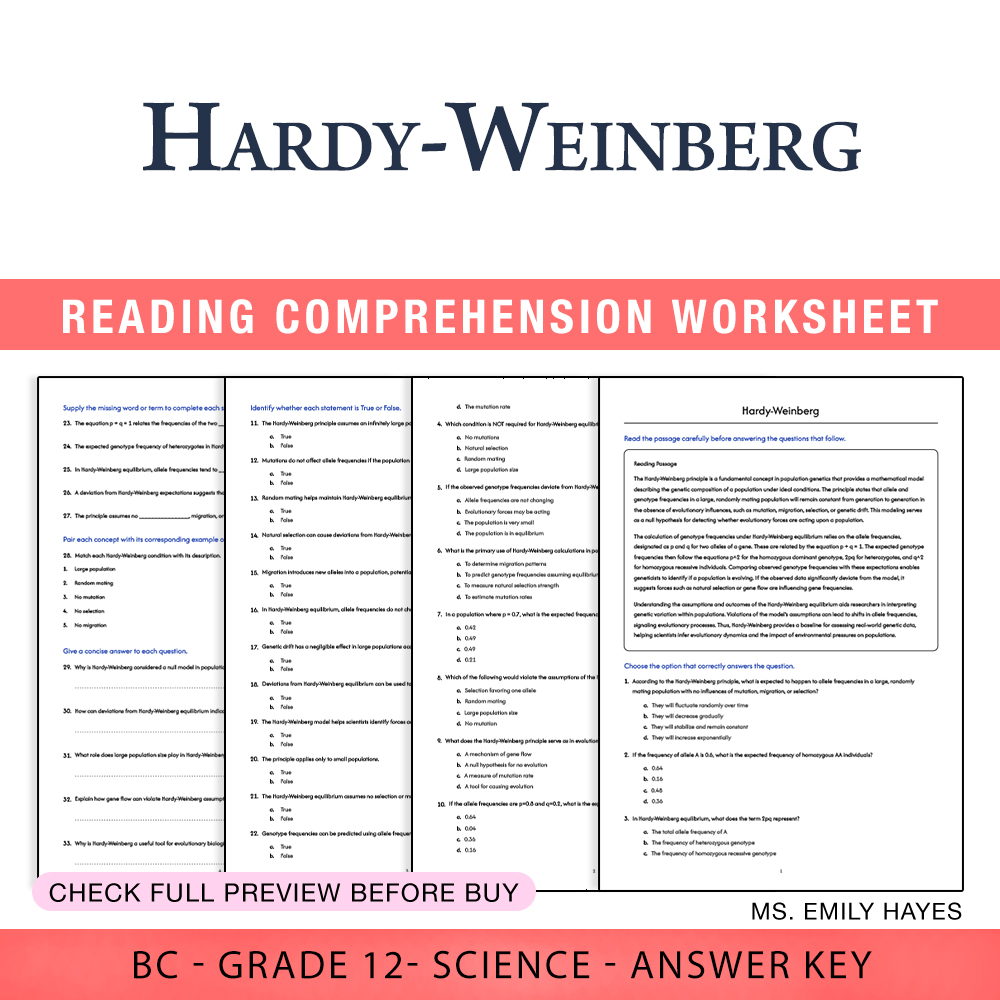
12th Grade Science | Hardy-Weinberg Population Genetics Worksheet (PDF + Answer
Created byCopper Leaf ClassroomLearning Objectives
- Understand the principles underlying Hardy-Weinberg equilibrium and its mathematical foundation.
- Identify the conditions required for a population to be in Hardy-Weinberg equilibrium.
- Calculate expected genotype and allele frequencies using p^2, 2pq, and q^2 formulas.
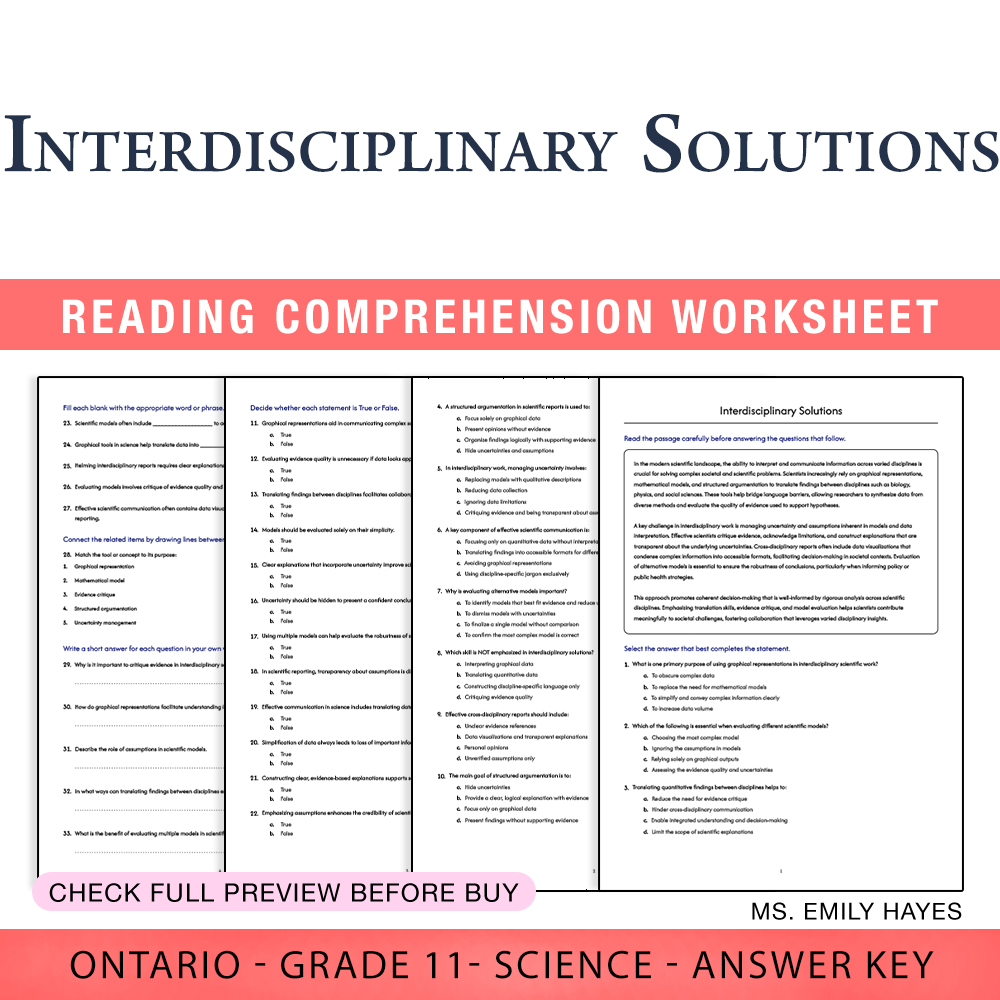
11th Grade Science | Interdisciplinary Solutions Worksheet (PDF + Answer Key)
Created byCopper Leaf ClassroomLearning Objectives
- Interpret and communicate scientific information across contexts through graphical representation and mathematical models.
- Critique evidence quality and construct clear, discipline-appropriate explanations that incorporate uncertainty and assumptions.
- Translate quantitative findings between disciplinary languages and evaluate alternative models for decision-making.
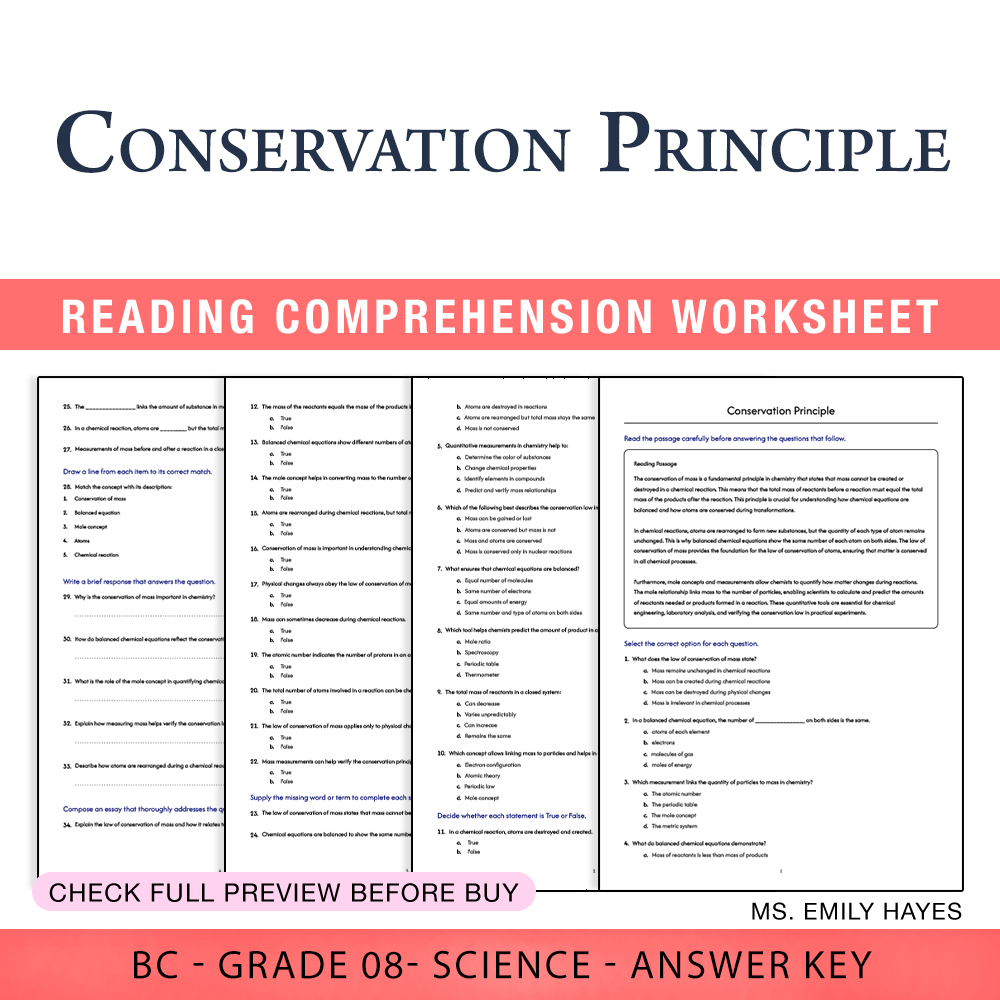
8th Grade Science | Conservation Principle Worksheet (PDF+ Answer Key)
Created byCopper Leaf ClassroomLearning Objectives
- Understand the law of conservation of mass and its significance in chemical reactions.
- Interpret balanced chemical equations to identify the conservation of atoms and mass.
- Apply mole concepts and quantitative measurements to predict mass relationships in chemical processes.
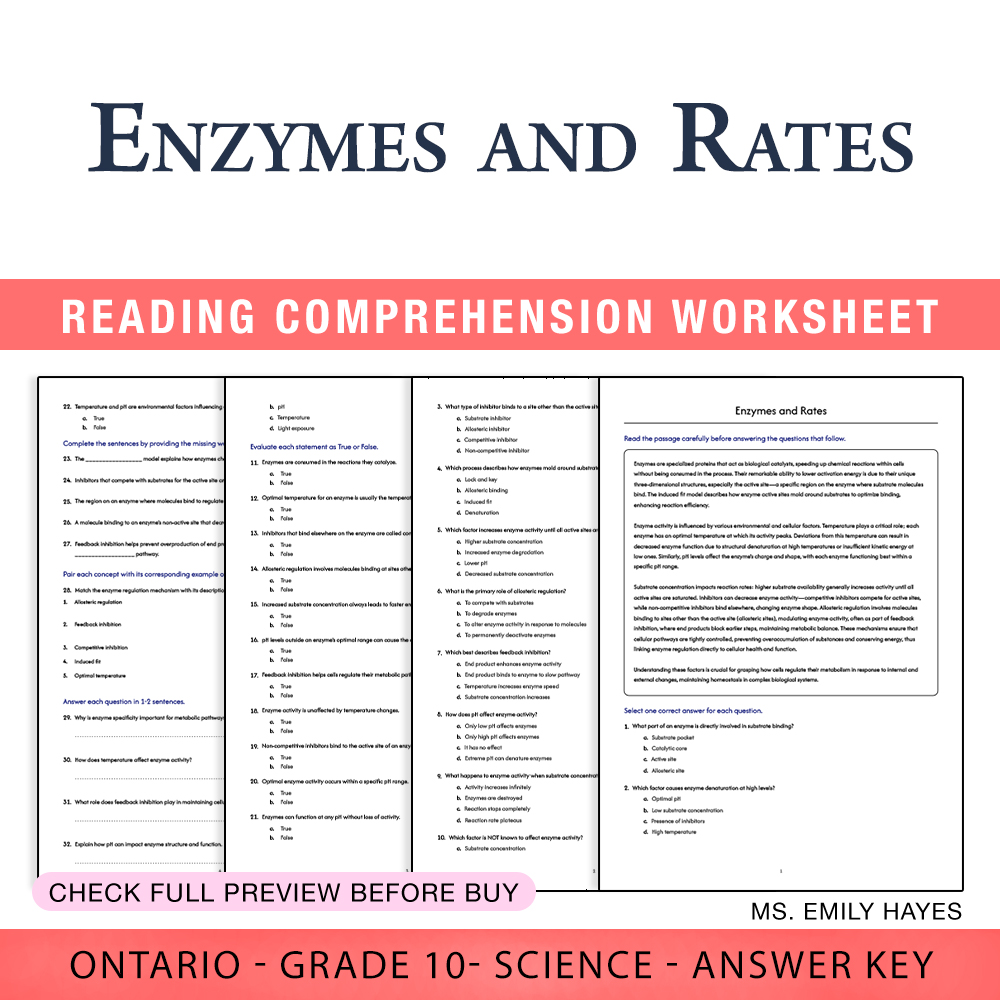
Grade 10 Science | Enzymes and Rates Worksheet (PDF + Answer Key)
Created byCopper Leaf ClassroomLearning Objectives
- Describe the properties and functions of enzymes in biological systems.
- Explain how factors like temperature, pH, substrate concentration, and inhibitors affect enzyme activity.
- Discuss mechanisms like allosteric regulation and feedback inhibition and their roles in metabolic pathways.
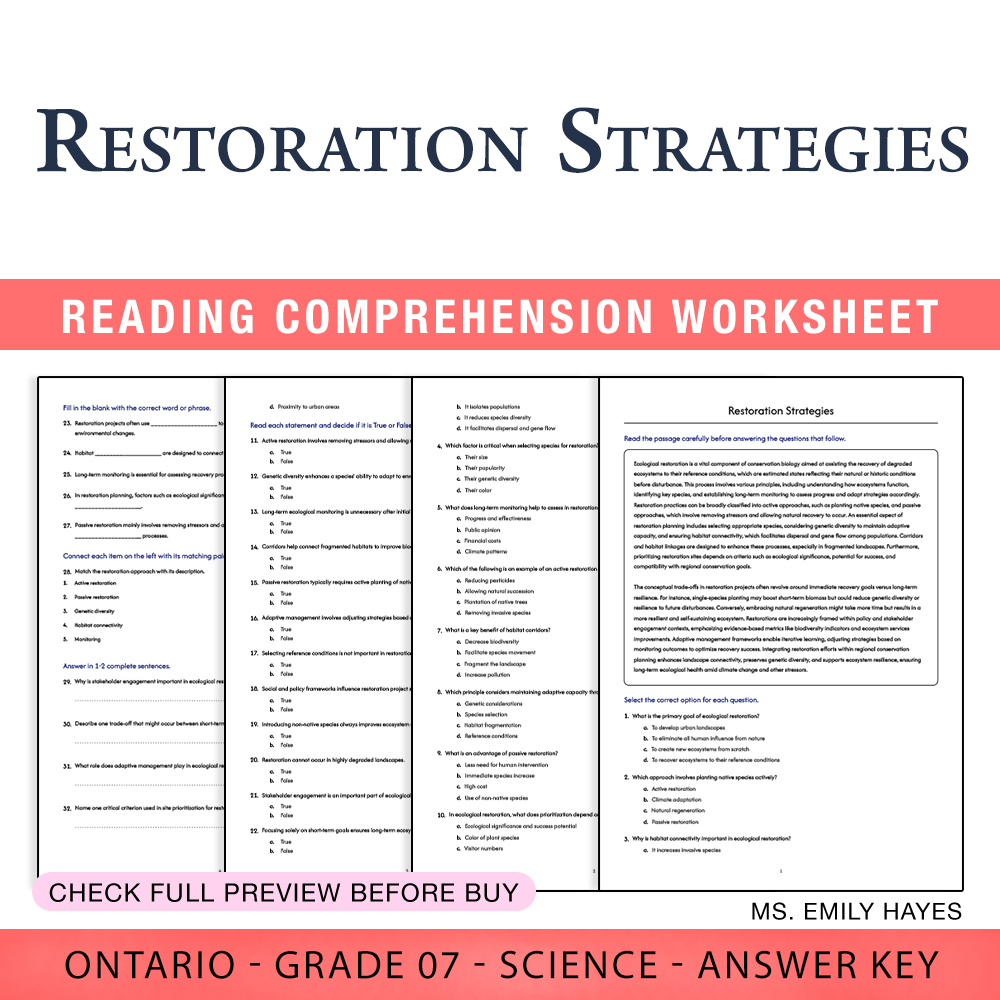
7th Grade Science | Restoration Strategies Worksheet (PDF+ Answer Key)
Created byCopper Leaf ClassroomLearning Objectives
- Explain the principles of ecological restoration, including reference conditions and long-term monitoring.
- Identify and differentiate active versus passive restoration approaches and their applications.
- Analyze factors such as habitat connectivity, species selection, and genetic considerations in restoration planning.
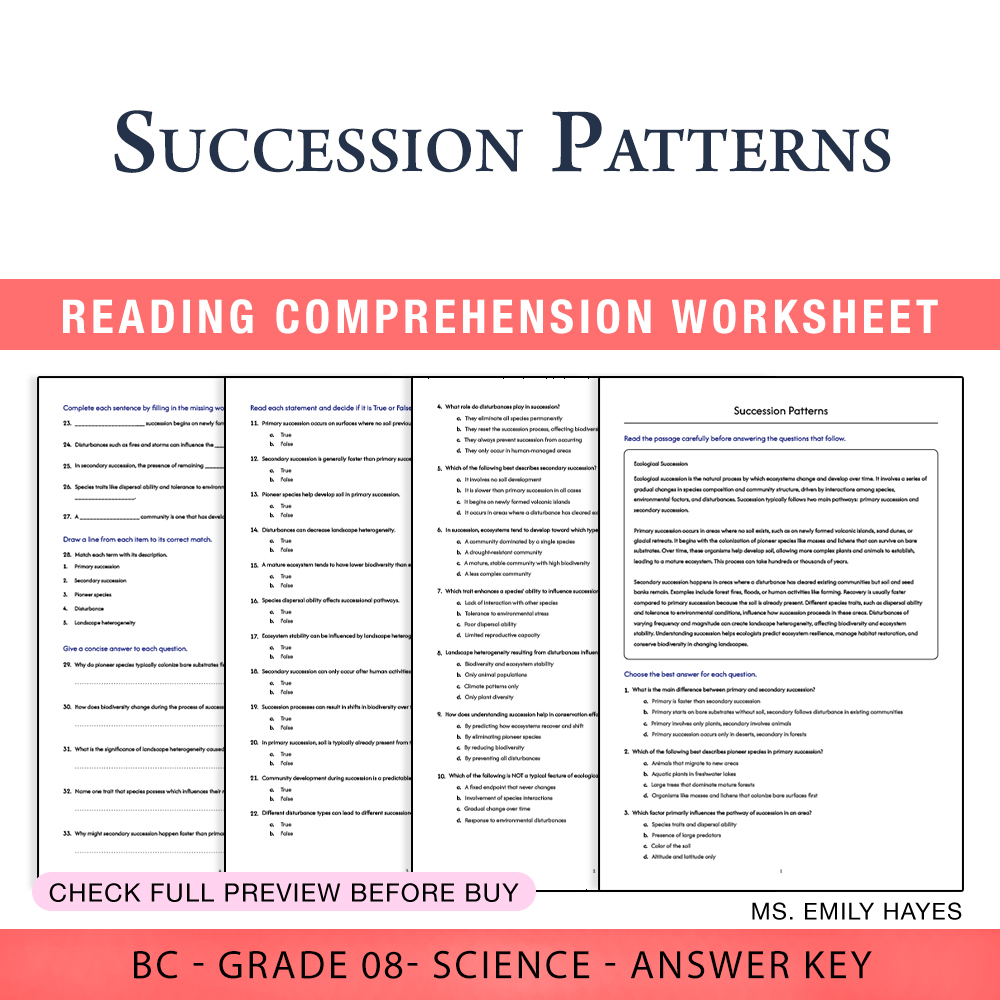
Grade 8 Science | Succession Patterns Worksheet (PDF+ Answer Key)
Created byCopper Leaf ClassroomLearning Objectives
- Understand the process of ecological succession and its stages.
- Differentiate between primary and secondary succession.
- Identify species traits that influence successional pathways.
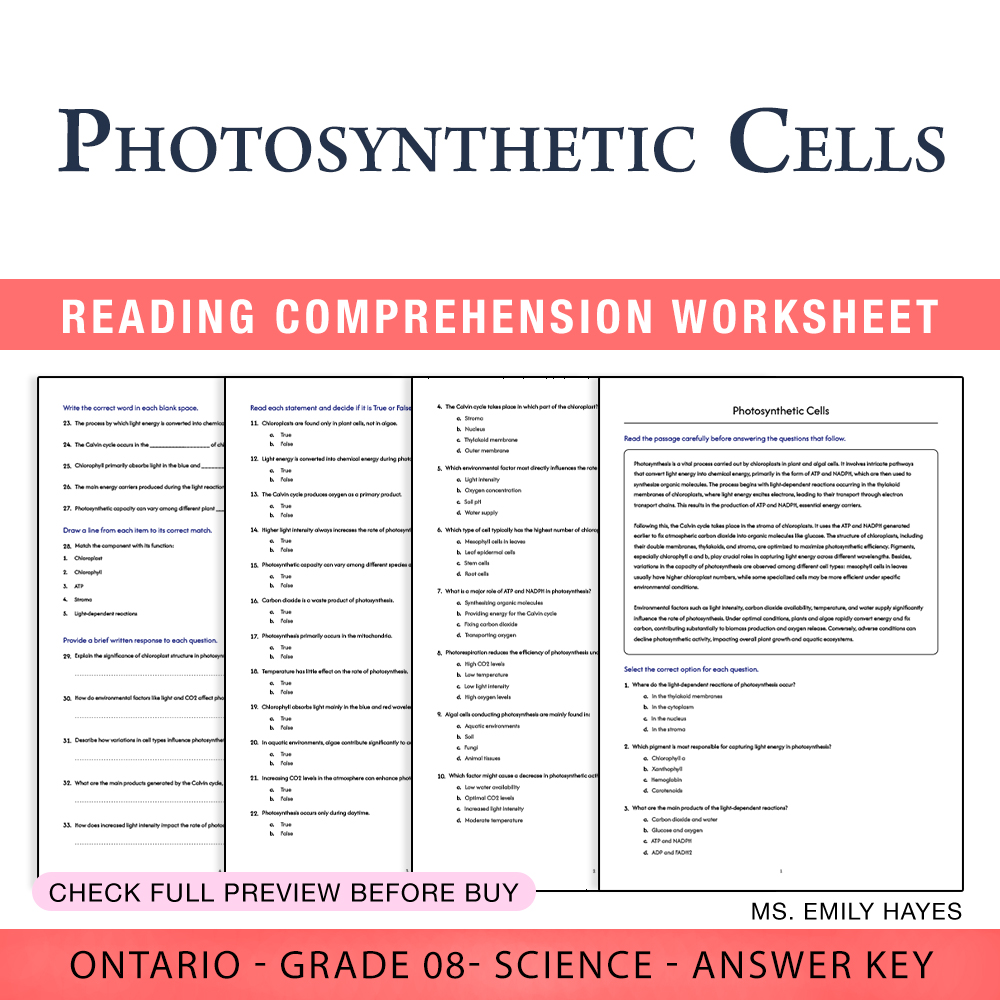
Grade 8 Science | Photosynthetic Cells Worksheet (PDF+ Answer Key)
Created byCopper Leaf ClassroomLearning Objectives
- Describe the structure of chloroplasts and their role in photosynthesis.
- Explain the light-dependent reactions and the Calvin cycle.
- Identify factors affecting photosynthetic efficiency in plant and algal cells.
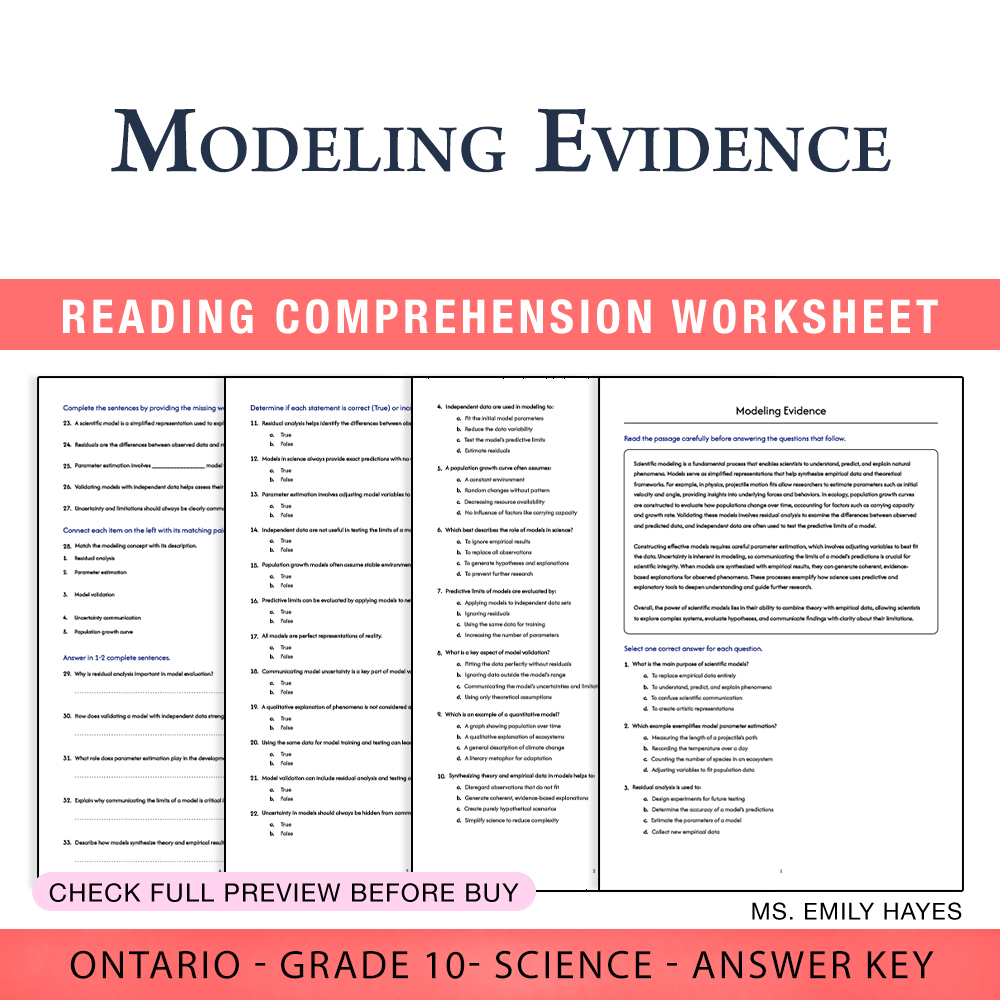
10th Grade Science | Modeling Evidence Worksheet (PDF + Answer Key)
Created byCopper Leaf ClassroomLearning Objectives
- Understand how to construct and interpret scientific models for observed phenomena.
- Evaluate and analyze the accuracy and reliability of different types of models.
- Apply parameter estimation, residual analysis, and model validation techniques.
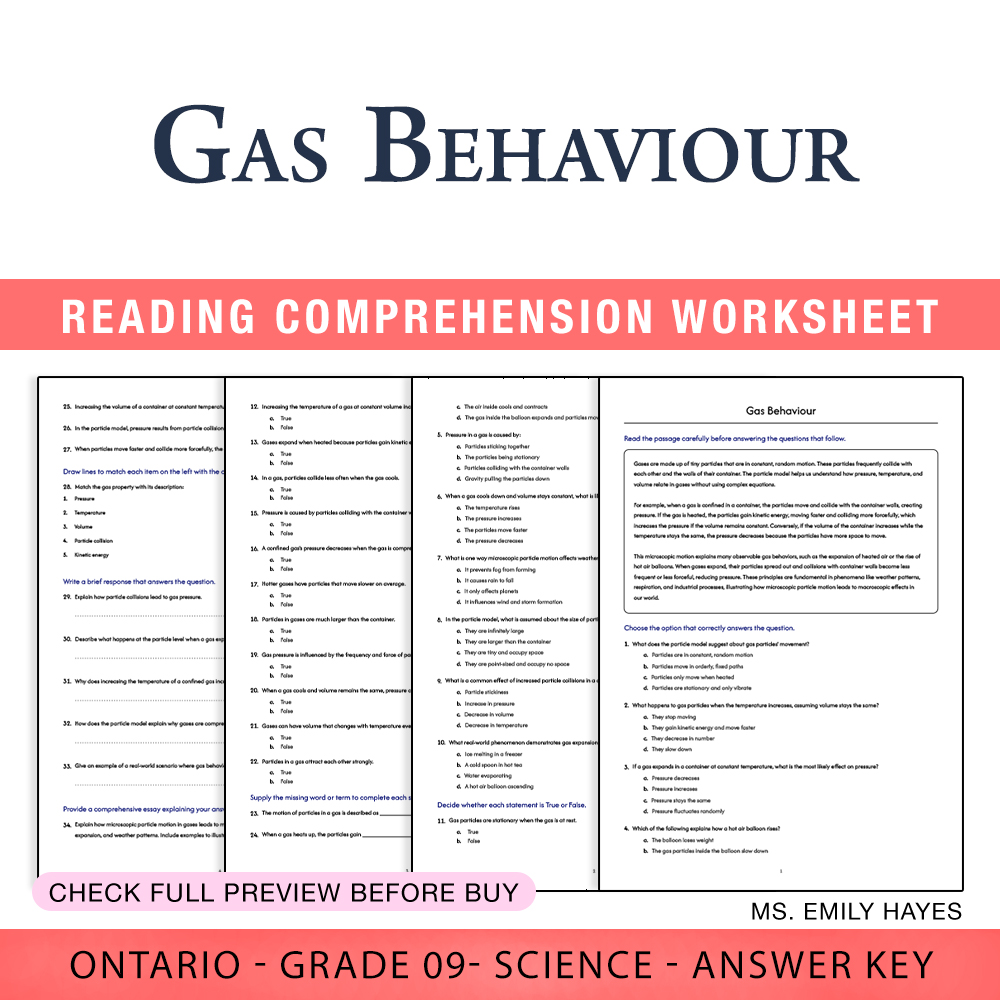
Grade 9 Science | Gas Behaviour Worksheet (PDF + Answer Key)
Created byCopper Leaf ClassroomLearning Objectives
- Understand how the particle model explains gas properties such as pressure, volume, and temperature.
- Describe how microscopic particle motions relate to macroscopic gas laws and observable phenomena.
- Analyze real-world examples of gas behavior, including pressure changes and gas expansion.
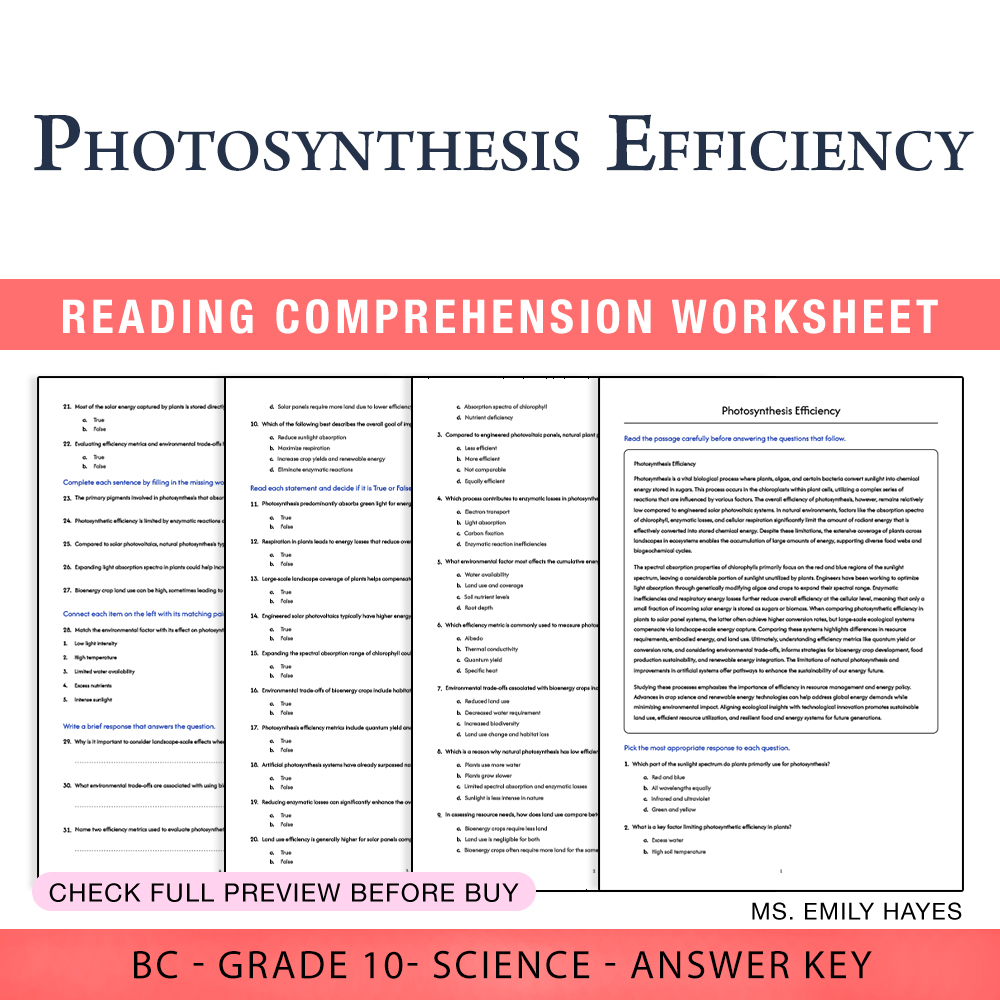
Grade 10 Science | Photosynthesis Efficiency Worksheet (PDF + Answer Key)
Created byCopper Leaf ClassroomLearning Objectives
- Understand the factors that influence the efficiency of photosynthesis in plants.
- Compare natural photosynthetic systems and engineered solar technologies.
- Evaluate environmental and resource trade-offs in bioenergy and renewable energy sources.
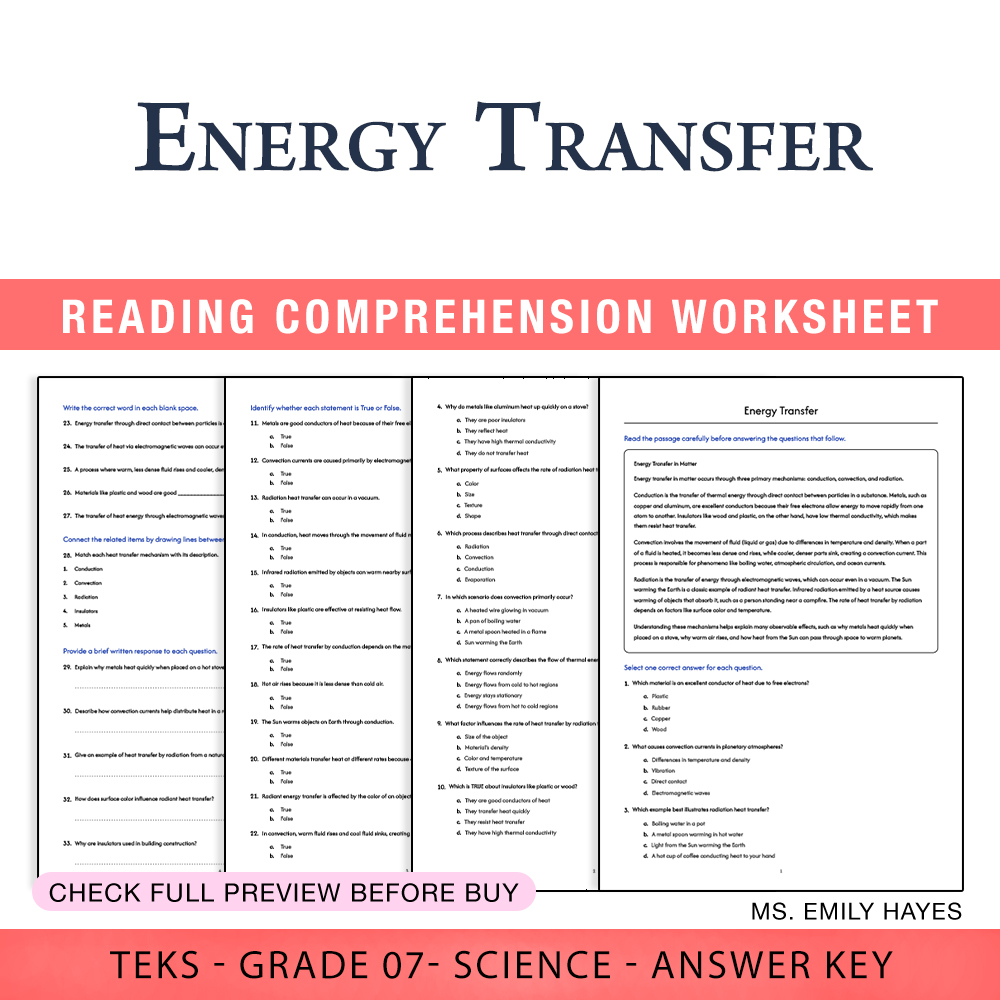
7th Grade Science | Energy Transfer Worksheet (PDF+ Answer Key)
Created byCopper Leaf ClassroomLearning Objectives
- Describe the mechanisms of energy transfer in matter: conduction, convection, and radiation.
- Relate thermal energy flow to temperature gradients, specific heat, and phase changes.
- Identify observable phenomena related to heat transfer, such as conductivity differences and convective currents.
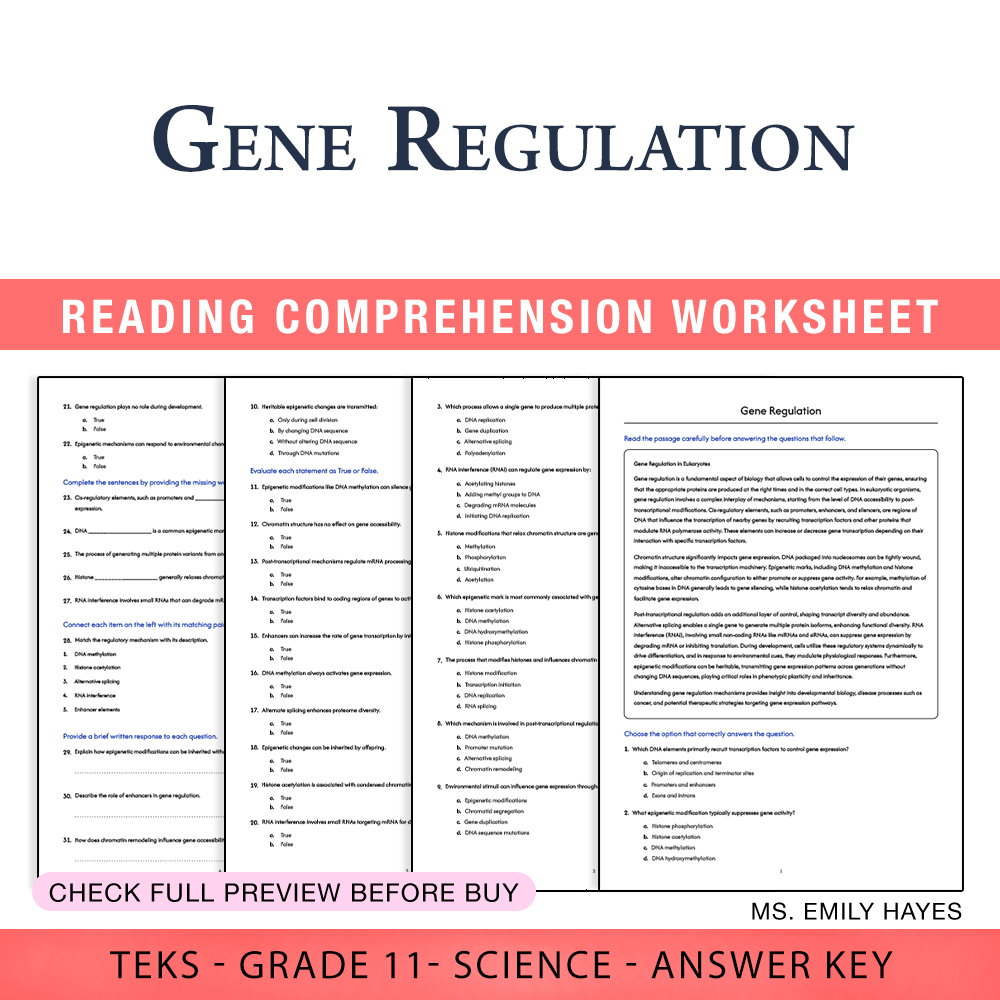
11th Grade Science | Gene Regulation Worksheet (PDF+ Answer Key)
Created byCopper Leaf ClassroomLearning Objectives
- Explain the mechanisms of gene regulation, including cis-regulatory elements and epigenetic modifications.
- Describe how chromatin structure influences gene expression.
- Analyze post-transcriptional regulation processes such as alternative splicing and RNA interference.
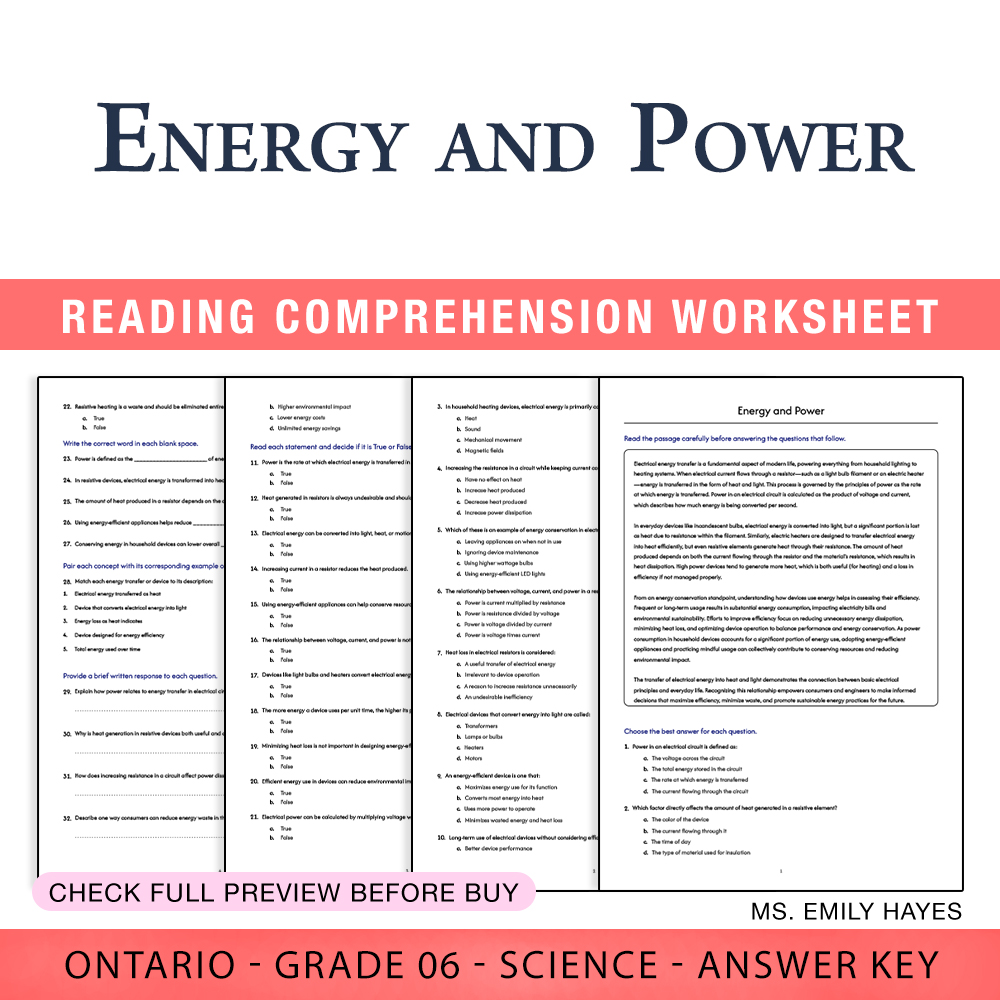
6th Grade Science | Energy and Power Worksheet (PDF + Answer Key)
Created byCopper Leaf ClassroomLearning Objectives
- Explain the concept of power as the rate of energy transfer in electrical circuits.
- Describe how electrical energy is converted into heat and light in various devices.
- Analyze the relationship between current, voltage, and power in resistive elements.
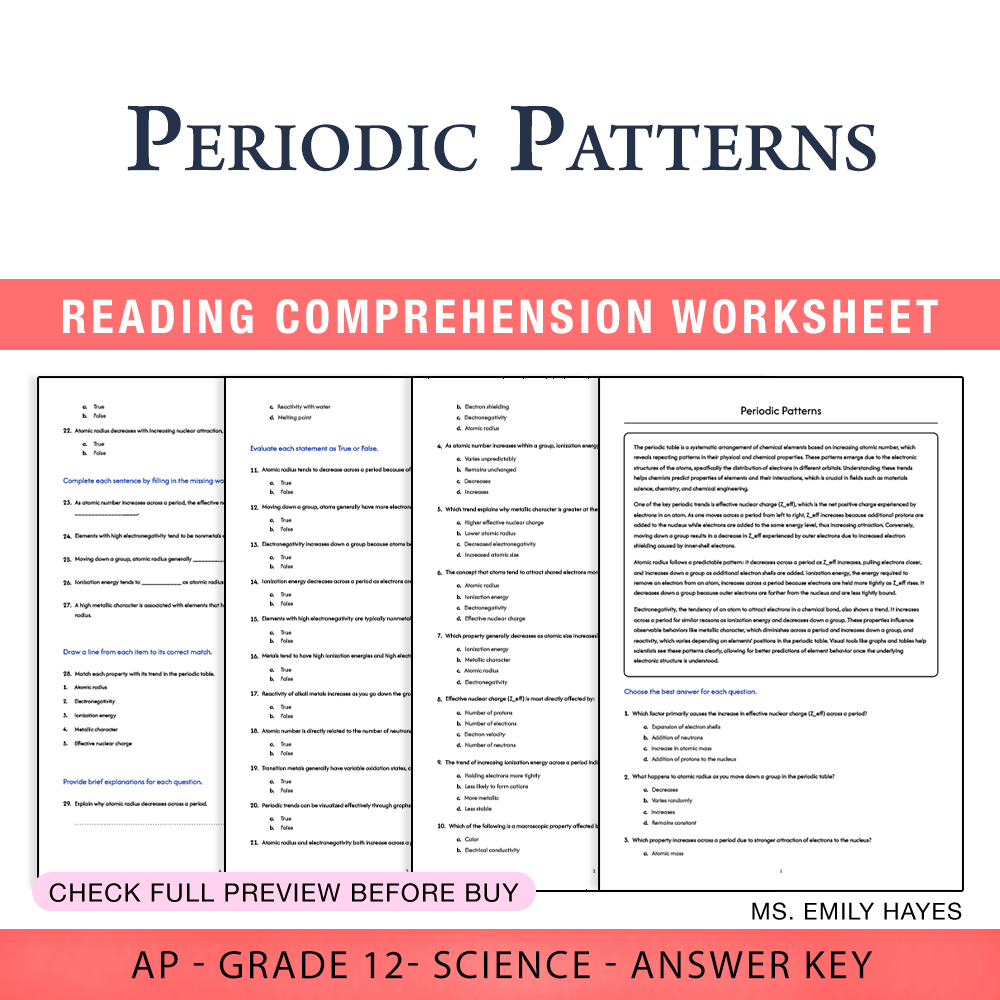
12th Grade Science | Periodic Patterns Worksheet (PDF+ Answer Key)
Created byCopper Leaf ClassroomLearning Objectives
- Understand the trends of effective nuclear charge, atomic radius, ionization energy, and electronegativity across the periodic table.
- Relate periodic properties to electronic structure and observable macroscopic properties like reactivity.
- Interpret tabular and graphical data to predict element behavior based on periodic trends.
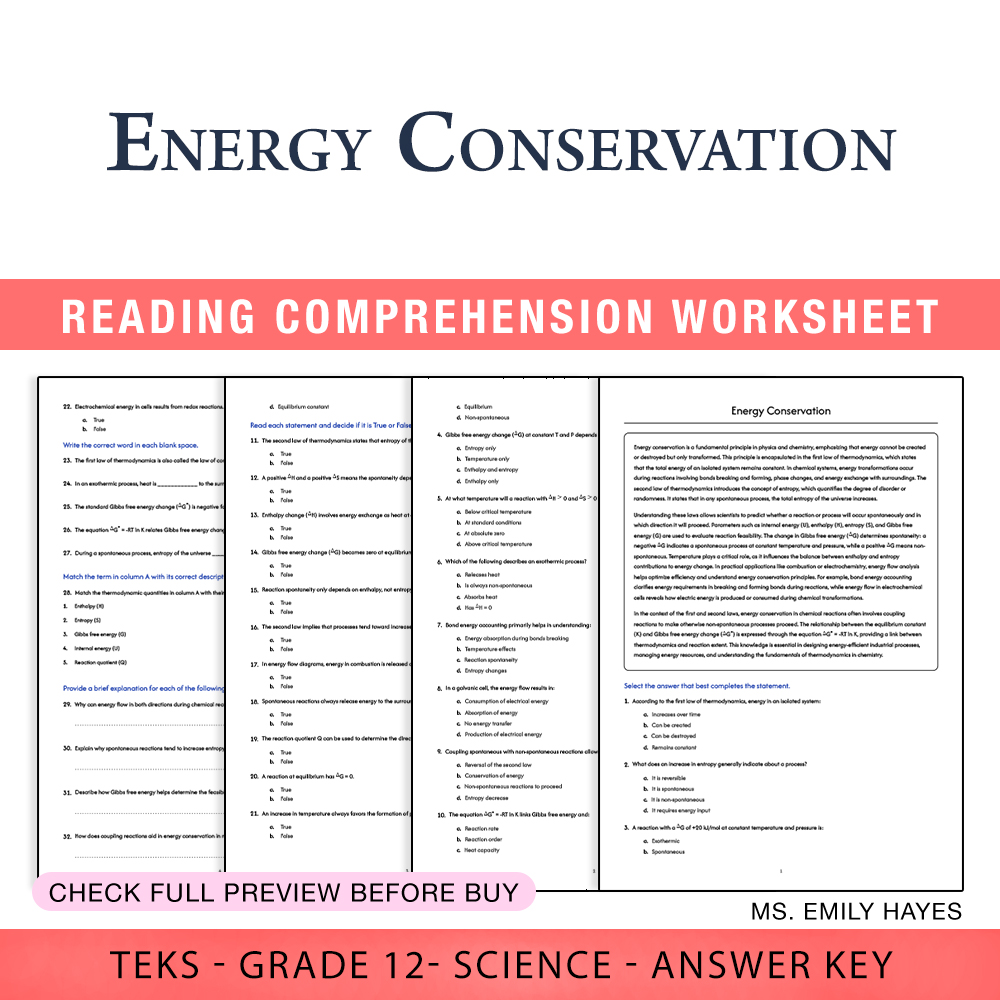
Grade 12 Science | Energy Conservation Worksheet (PDF+ Answer Key)
Created byCopper Leaf ClassroomLearning Objectives
- Explain the first and second laws of thermodynamics and their application to chemical systems.
- Analyze how internal energy, enthalpy, entropy, and Gibbs free energy predict reaction spontaneity and equilibrium.
- Interpret free energy changes from equilibrium constants in various processes.
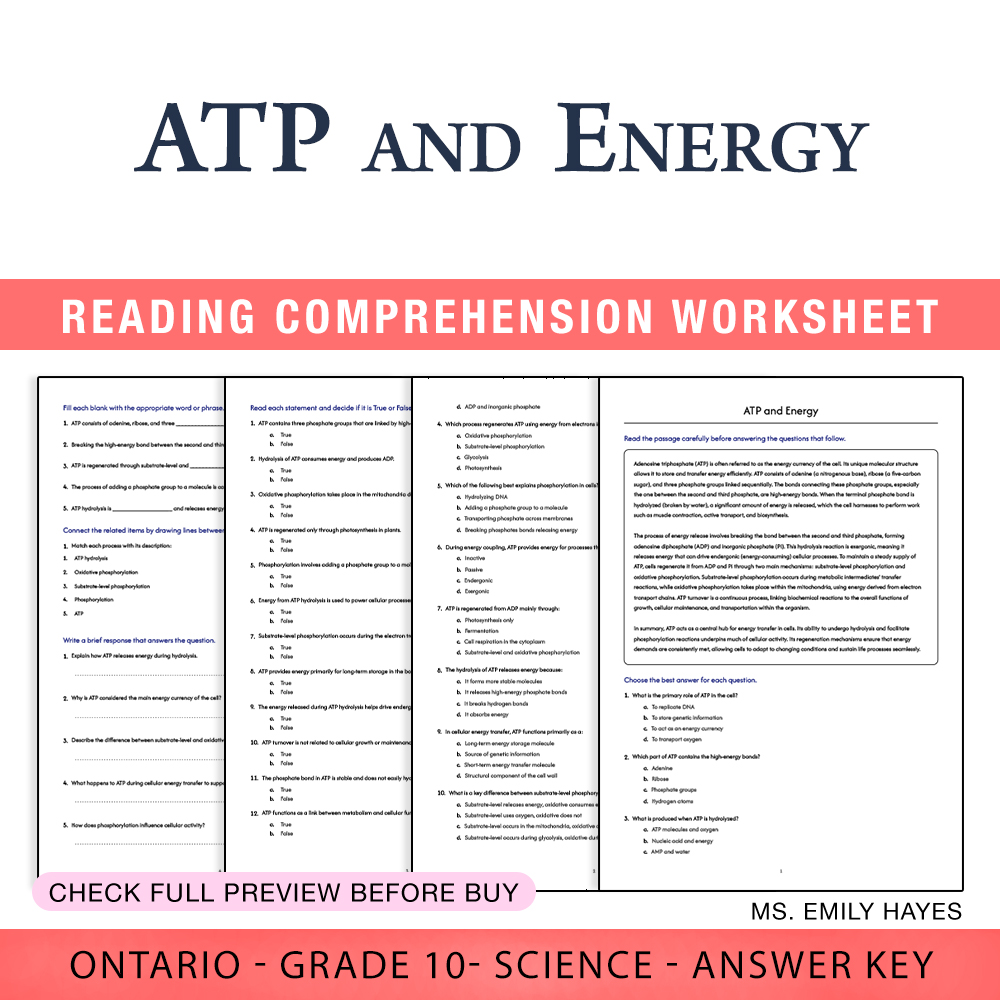
10th Grade Science | ATP and Energy Worksheet (PDF + Answer Key)
Created byCopper Leaf ClassroomLearning Objectives
- Describe the molecular structure of ATP and its role as the central energy carrier in cells.
- Explain how ATP releases energy through phosphate bond hydrolysis and how this energy is coupled to cellular processes.
- Understand mechanisms of ATP regeneration via substrate-level and oxidative phosphorylation.

Grade 11 Science | Plate Tectonics Worksheet (PDF + Answer Key)
Created byCopper Leaf ClassroomLearning Objectives
- Understand the fundamental principles and evidence supporting plate tectonics.
- Identify different types of plate boundaries and associated geological features.
- Explain the mechanisms driving plate movements and their geological consequences.
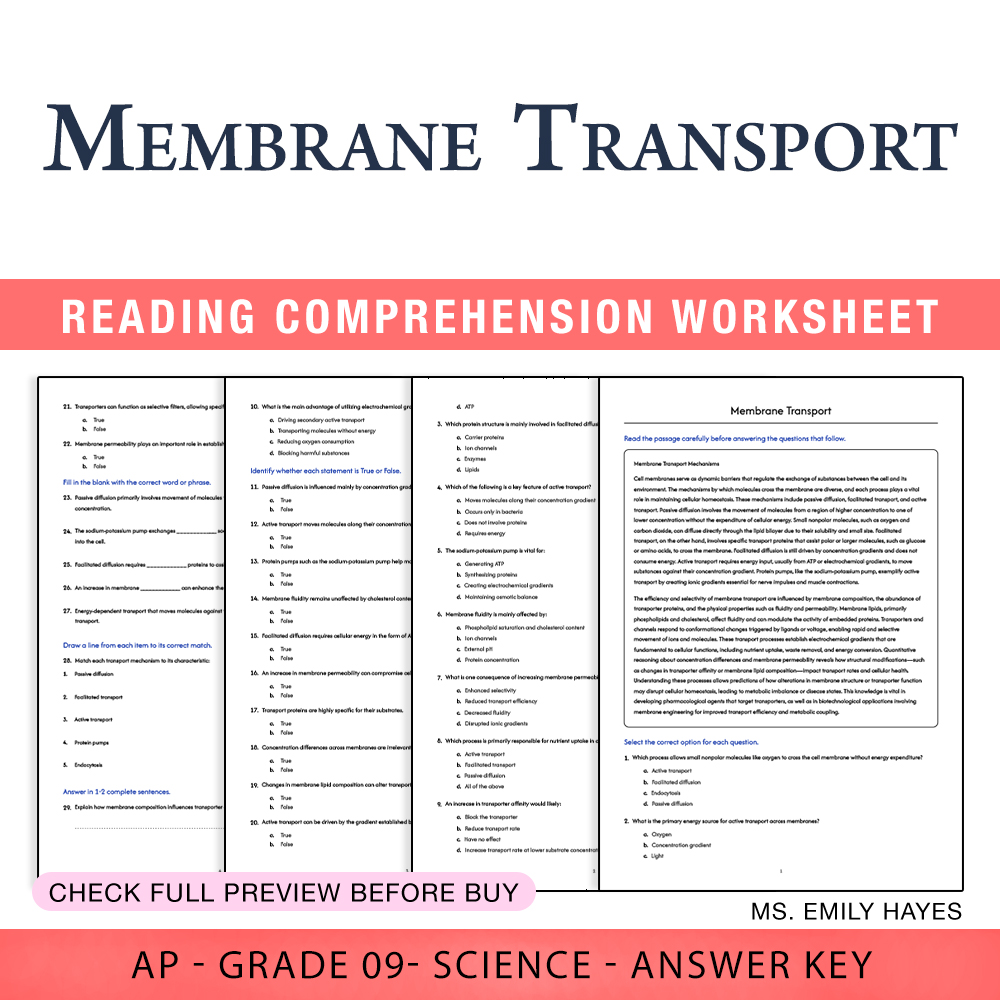
9th Grade Science | Membrane Transport Worksheet (PDF+ Answer Key)
Created byCopper Leaf ClassroomLearning Objectives
- Describe mechanisms of transmembrane movement including passive diffusion, facilitated transport, and active transport.
- Explain the role of membrane composition and transport proteins in cellular homeostasis.
- Analyze how concentration gradients and membrane permeability influence transport efficiency.
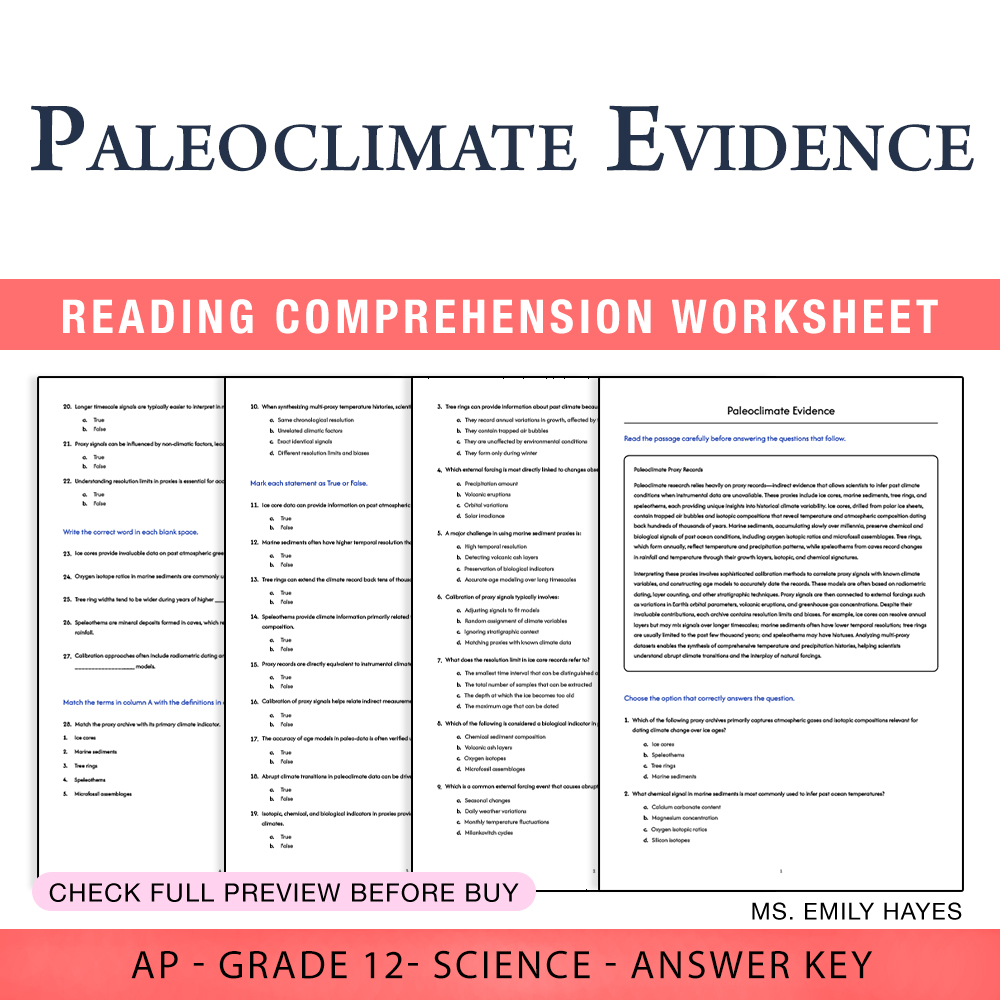
Grade 12 Science | Paleoclimate Evidence Worksheet (PDF+ Answer Key)
Created byCopper Leaf ClassroomLearning Objectives
- Understand how proxy records from ice cores, marine sediments, tree rings, and speleothems are used to reconstruct past climate variability.
- Identify key isotopic, chemical, and biological indicators used in paleoclimate studies.
- Explain calibration approaches and the construction of age models in paleo-data analysis.
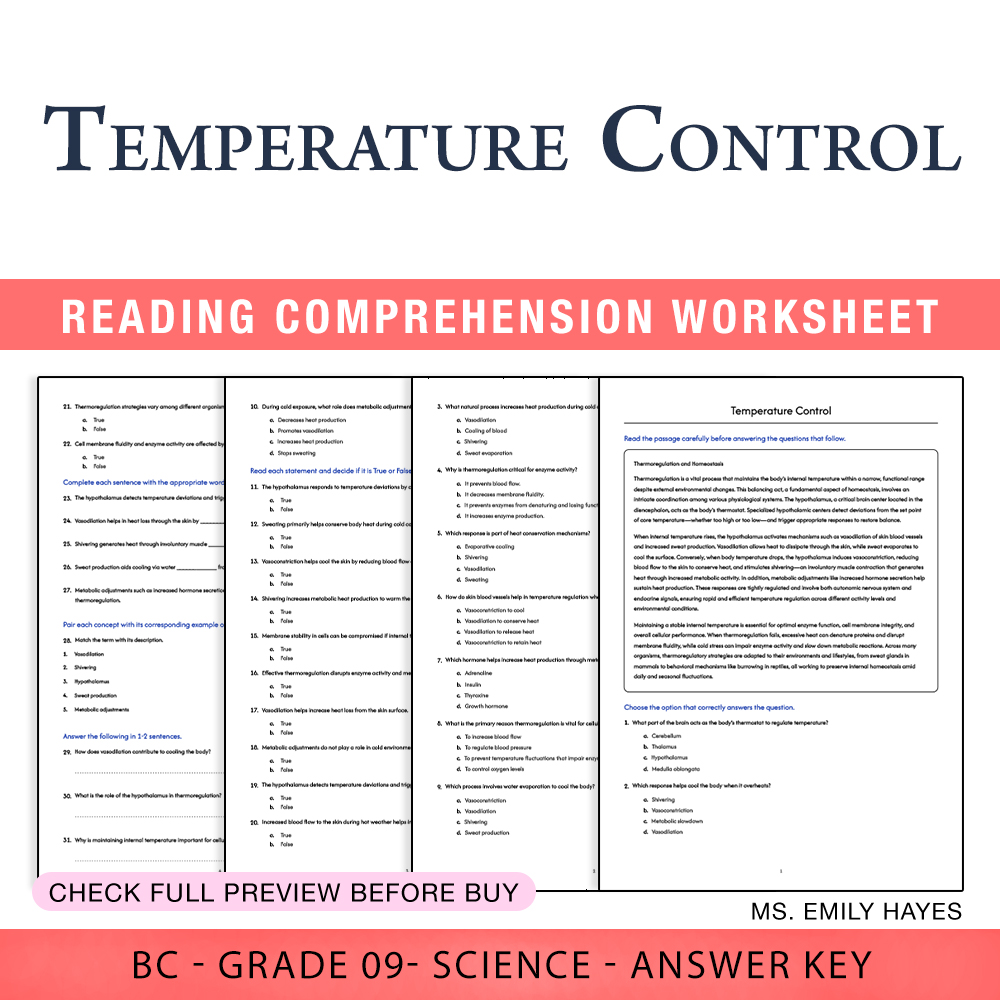
Grade 9 Science | Temperature Control Worksheet (PDF+ Answer Key)
Created byCopper Leaf ClassroomLearning Objectives
- Explain how hypothalamic centers regulate internal body temperature.
- Describe the physiological responses involved in thermoregulation.
- Identify the roles of skin blood flow, sweat production, shivering, and metabolic adjustments.
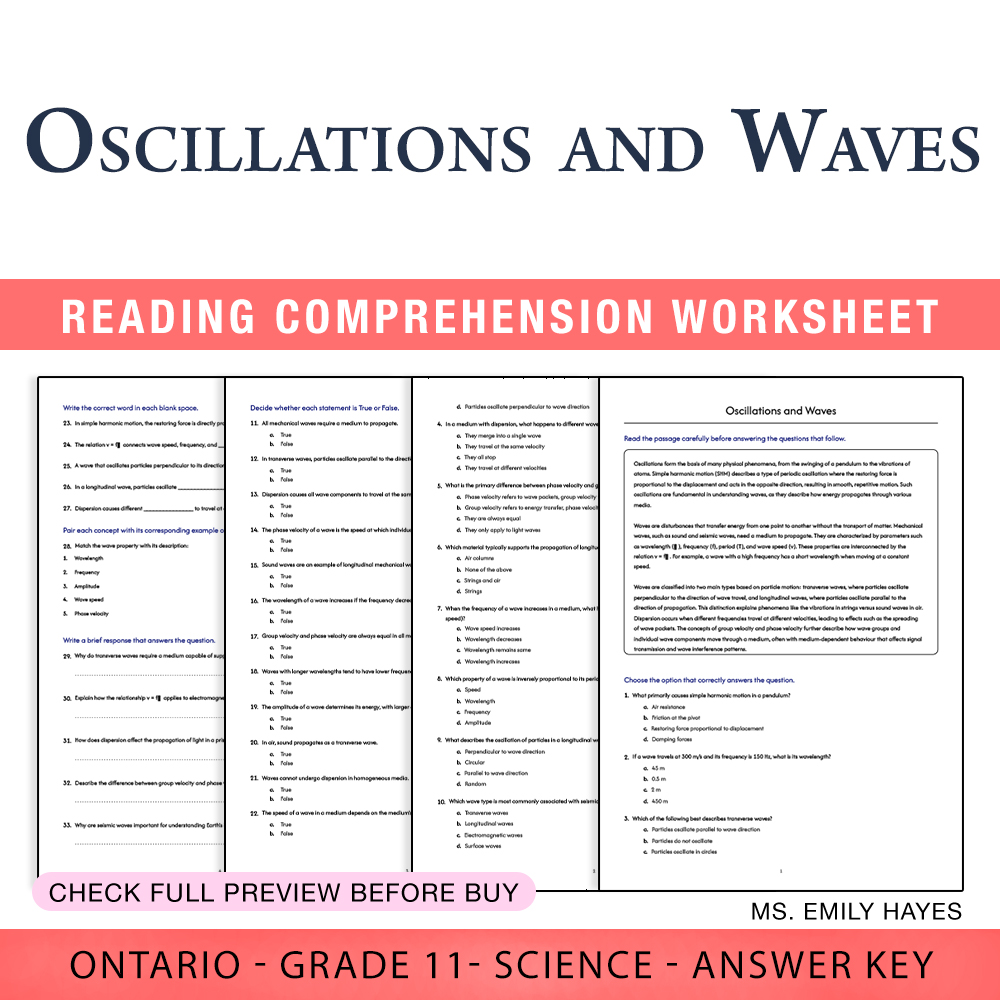
Grade 11 Science | Oscillations and Waves Worksheet (PDF + Answer Key)
Created byCopper Leaf ClassroomLearning Objectives
- Understand the principles of simple harmonic motion and periodic oscillations.
- Explain wave properties such as wavelength, frequency, period, and speed and their relationships.
- Differentiate between transverse and longitudinal waves and their propagation characteristics.
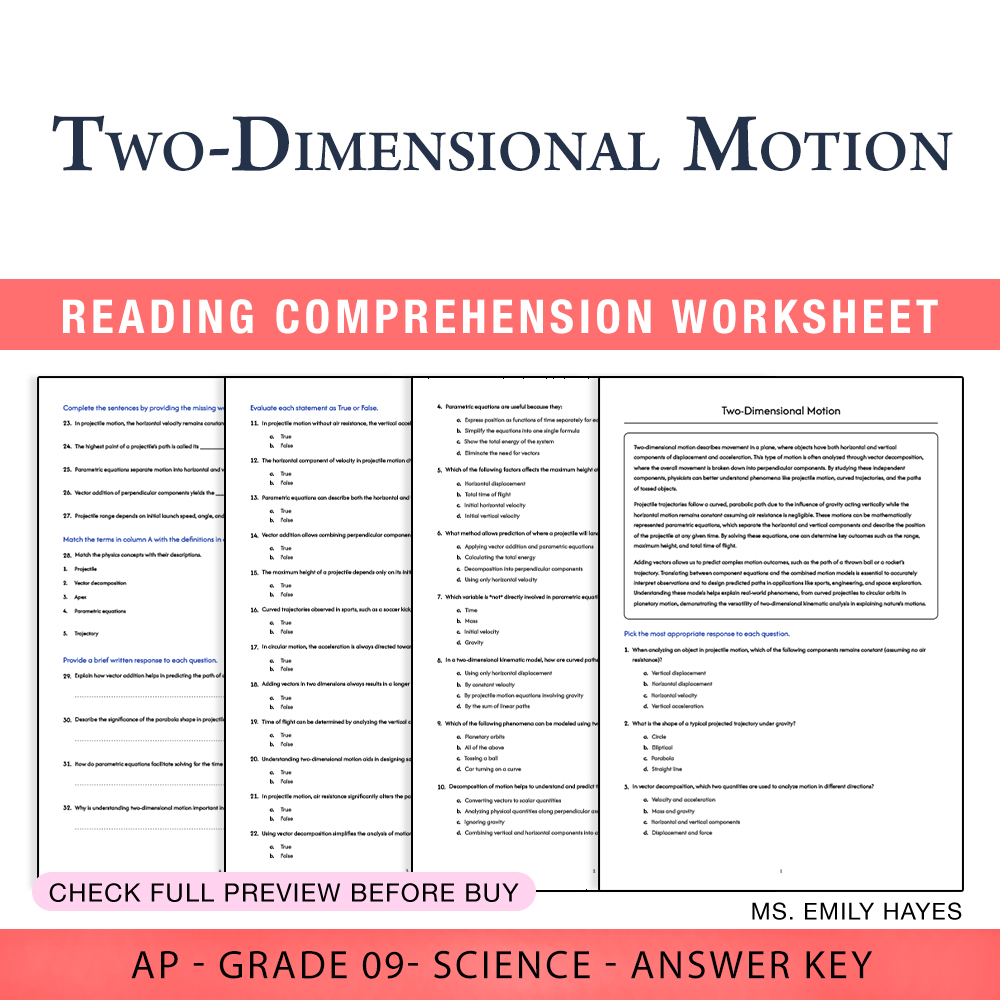
Grade 9 Science | Two-Dimensional Motion Worksheet (PDF+ Answer Key)
Created byCopper Leaf ClassroomLearning Objectives
- Understand the principles of motion in a plane using vector decomposition.
- Apply parametric equations to analyze projectile trajectories and predict motion outcomes.
- Use vector addition to determine range, apex, and time-of-flight for projectiles.
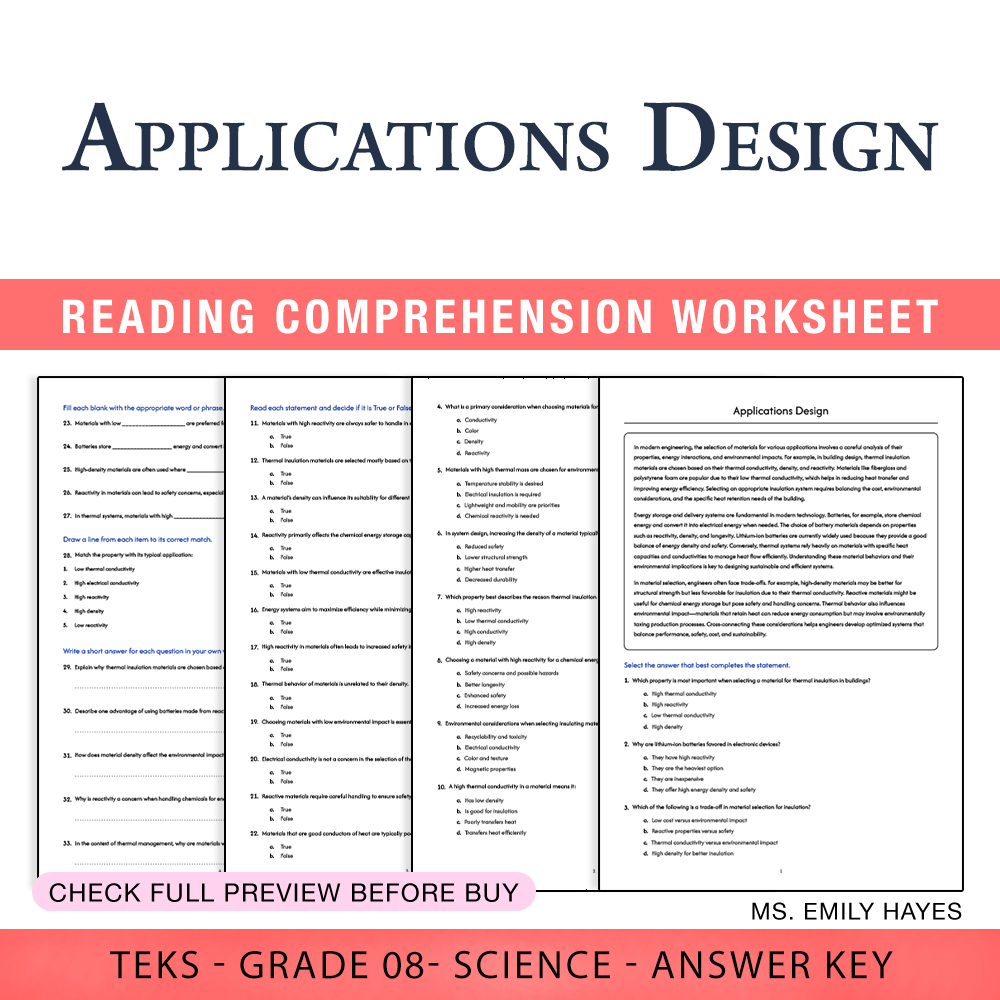
Grade 8 Science | Applications Design Worksheet (PDF+ Answer Key)
Created byCopper Leaf ClassroomLearning Objectives
- Understand the role of material properties such as density, conductivity, reactivity, and thermal behavior in engineering applications.
- Evaluate trade-offs among different material characteristics in the context of energy storage, insulation, and separation systems.
- Connect concepts of chemical energy storage versus electrical energy delivery, including real-world examples like batteries and thermal insulation.
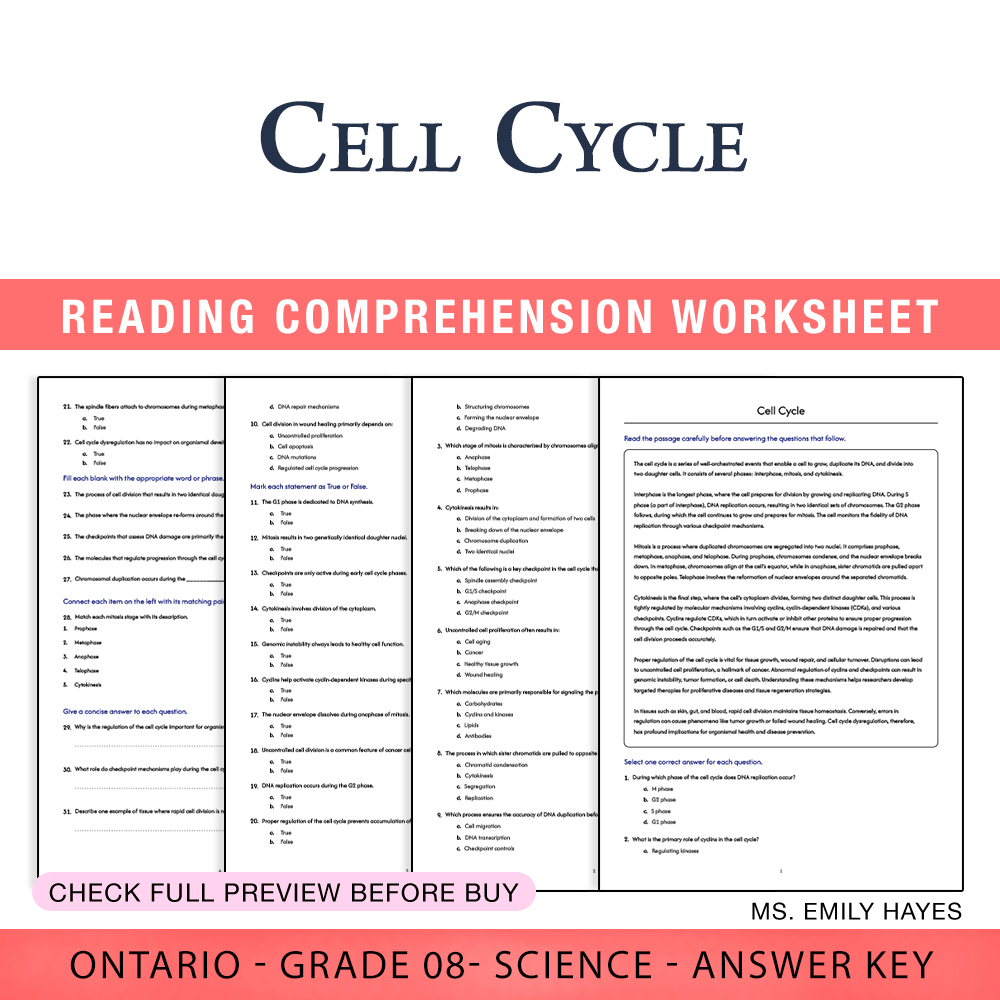
8th Grade Science | Cell Cycle Worksheet (PDF+ Answer Key)
Created byCopper Leaf ClassroomLearning Objectives
- Describe the phases of the cell cycle, including interphase, mitosis, and cytokinesis.
- Explain the molecular mechanisms regulating the cell cycle, focusing on cyclins, kinases, and checkpoints.
- Identify examples of tissue growth and regeneration related to cell division.
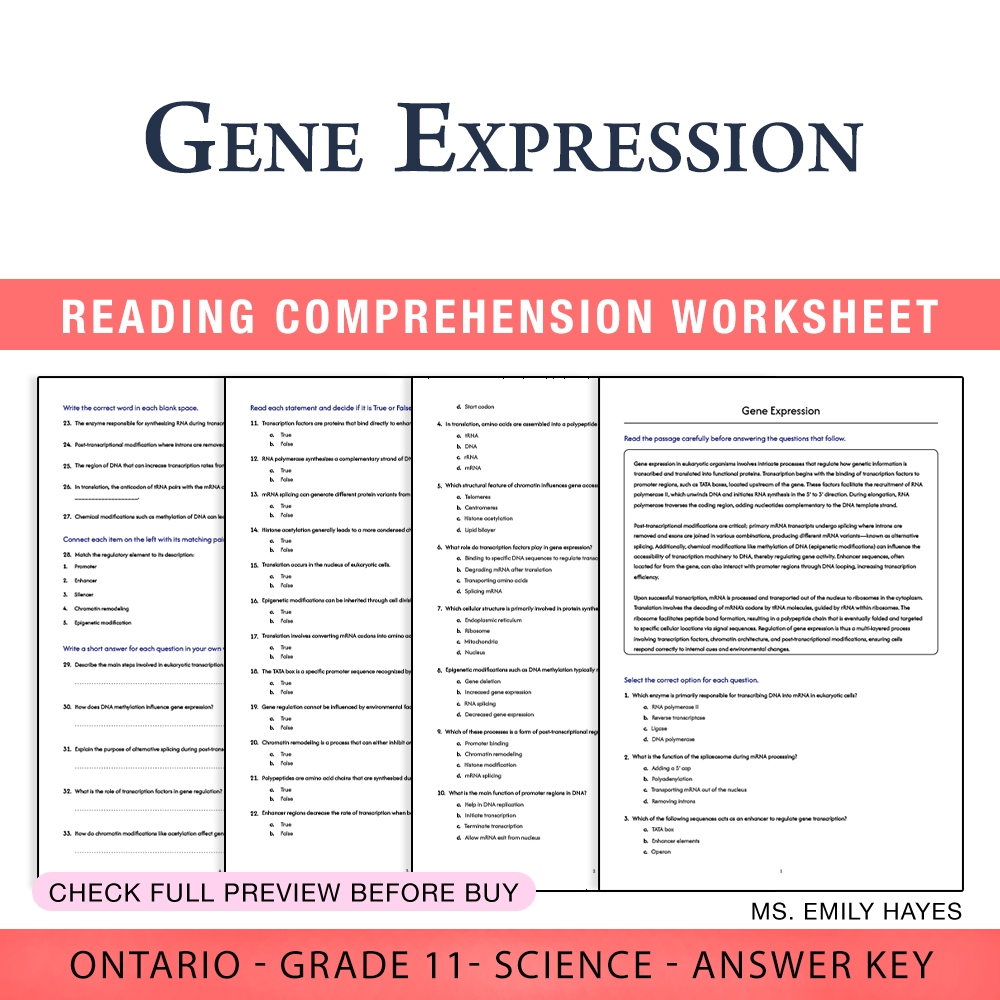
11th Grade Science | Gene Expression Worksheet (PDF + Answer Key)
Created byCopper Leaf ClassroomLearning Objectives
- Explain the processes of transcriptional initiation, elongation, and post-transcriptional processing in eukaryotic cells.
- Describe the mechanisms of translation, including the role of ribosomes and polypeptide targeting.
- Identify regulatory elements such as promoters, enhancers, and epigenetic modifications and their functions.
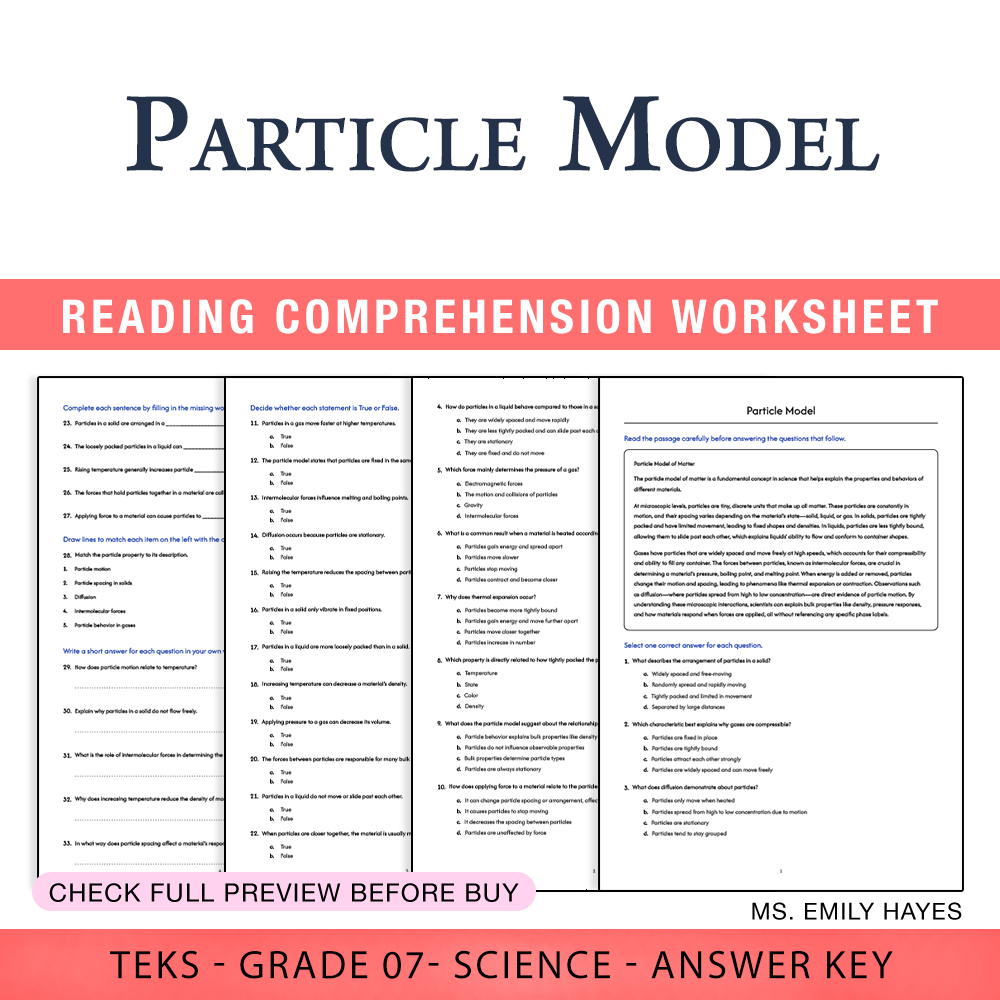
7th Grade Science | Particle Model Worksheet (PDF+ Answer Key)
Created byCopper Leaf ClassroomLearning Objectives
- Explain the basic principles of the particle model of matter and how particles behave in different states
- Describe how particle spacing, motion, and forces account for observable properties like density, pressure, and compressibility
- Relate micro-scale particle interactions to macro-scale measurements such as diffusion, thermal expansion, and response to applied forces
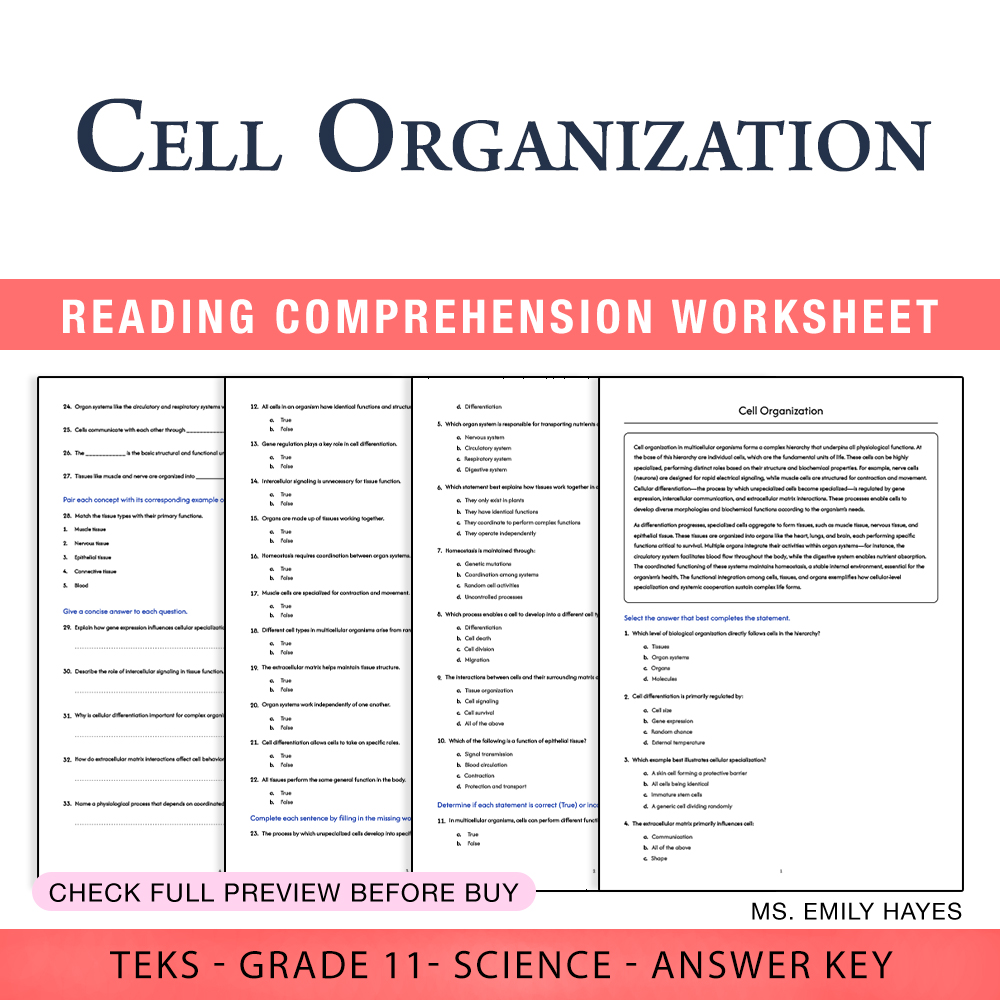
11th Grade Science | Cell Organization Worksheet (PDF+ Answer Key)
Created byCopper Leaf ClassroomLearning Objectives
- Understand the hierarchical levels of cell organization from cells to organ systems.
- Describe how cellular differentiation leads to specialized functions in multicellular organisms.
- Explain mechanisms of cellular specialization such as gene expression and intercellular signaling.
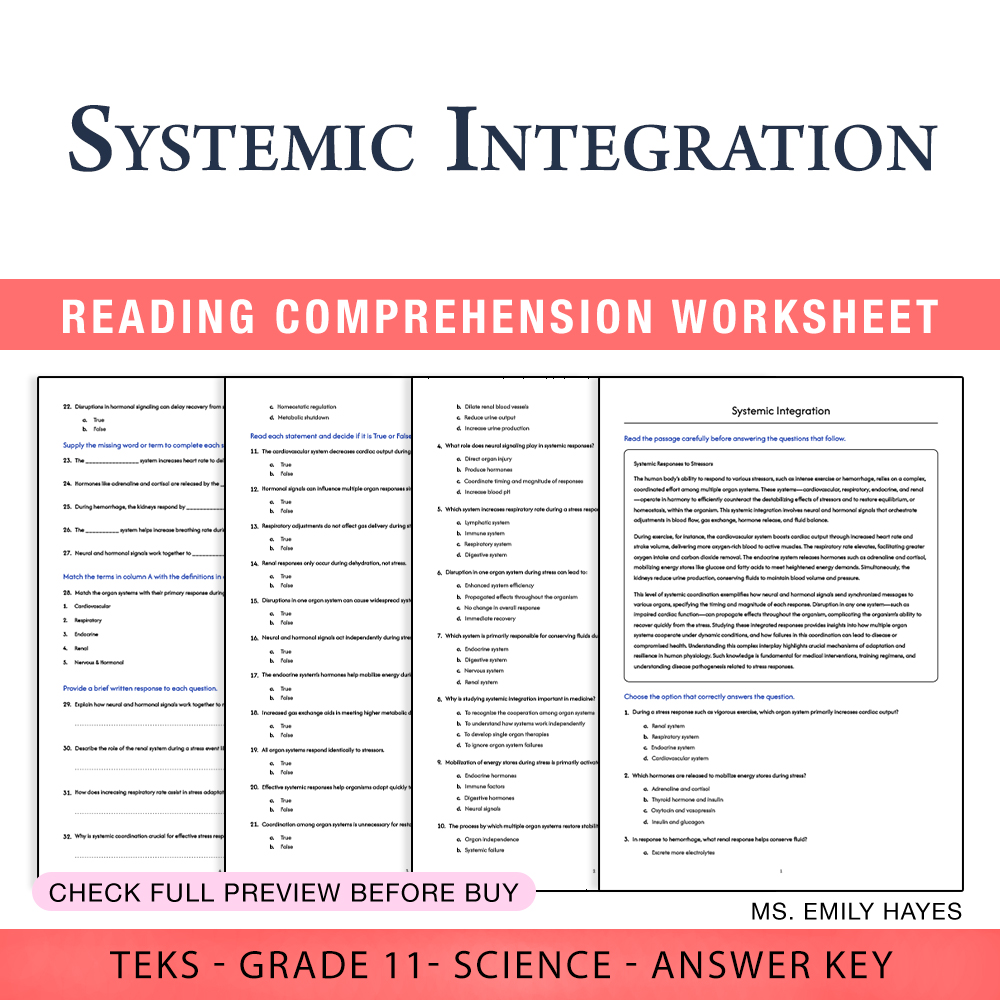
11th Grade Science | Systemic Integration Worksheet (PDF+ Answer Key)
Created byCopper Leaf ClassroomLearning Objectives
- Understand the coordination among physiological systems during stress responses.
- Describe how organ systems communicate to restore homeostasis under stress.
- Analyze the roles of cardiovascular, respiratory, endocrine, and renal systems in stress adaptation.
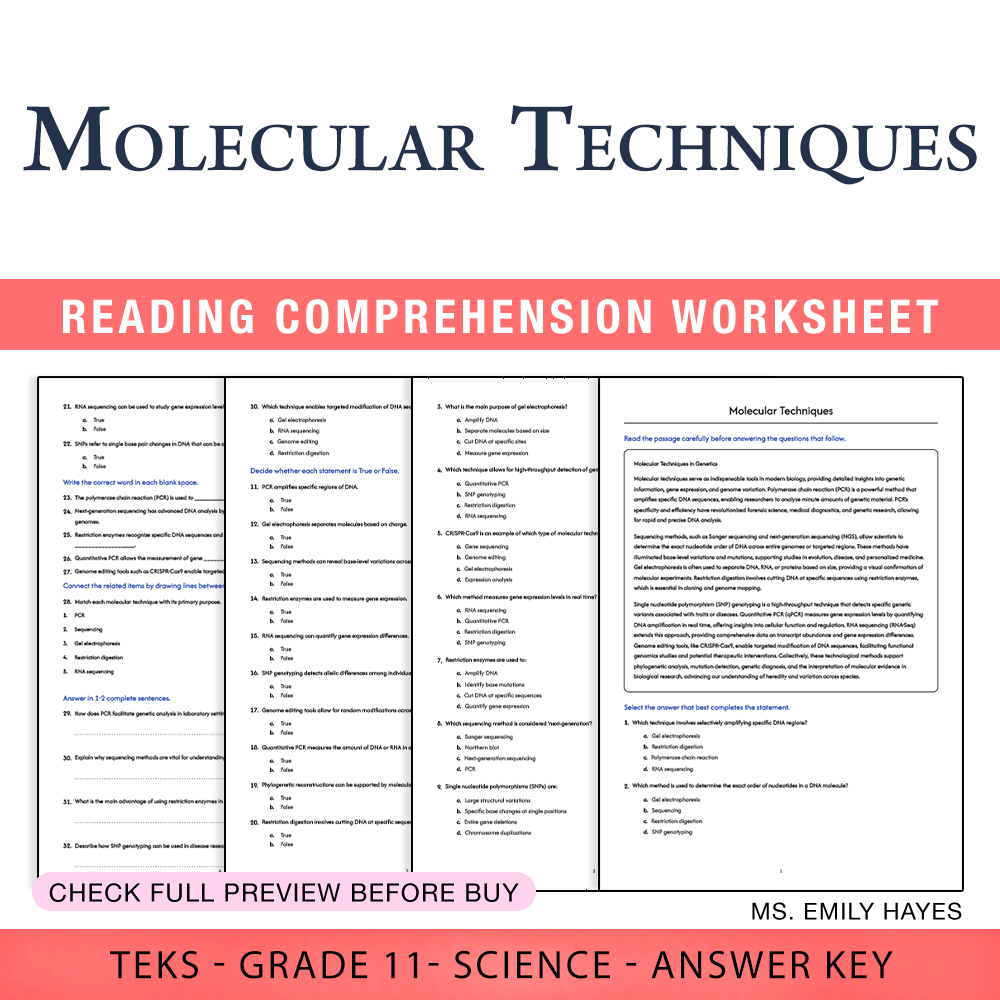
Grade 11 Science | Molecular Techniques Worksheet (PDF+ Answer Key)
Created byCopper Leaf ClassroomLearning Objectives
- Understand various molecular techniques used in genetics research.
- Identify the purpose and applications of methods like PCR, sequencing, and gel electrophoresis.
- Compare different molecular methods in terms of their function and significance.
Browse more categories
About Science Worksheets
Find Science worksheets spanning core skills, practice, and review. All 42,859 resources are instant PDF downloads for the classroom or home.
Every worksheet on MyTeachingSheets is created by independent teacher-authors and reviewed before publication. All resources download as printable PDFs for classroom, homework, or at-home practice, and many include answer keys. Preview any worksheet free before buying.