
Science Worksheets
42,822 subject resources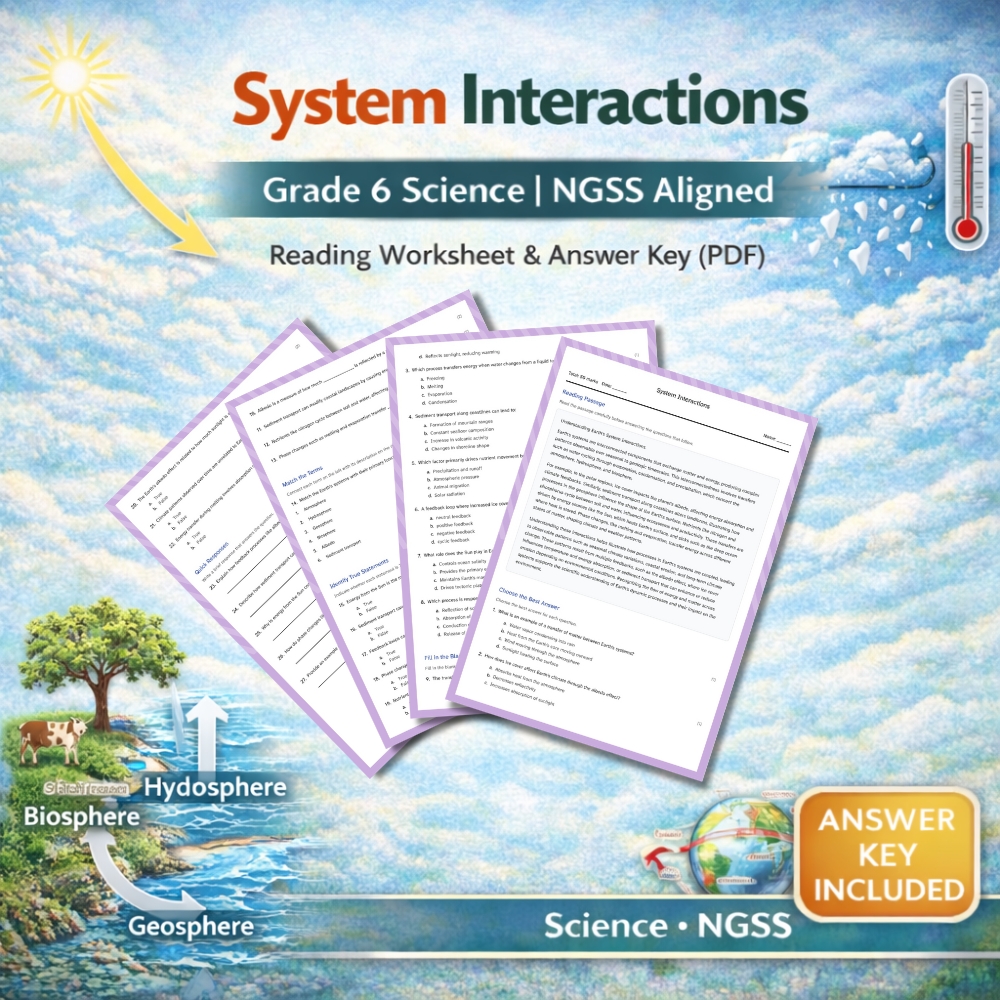
6th Grade Science | System Interactions | NGSS ( Worksheet + Answer Key )
 Created byCedar Grove Learning
Learning Objectives
- Describe how Earth's systems transfer matter and energy within and between geosphere, hydrosphere, atmosphere, and biosphere.
- Explain feedback mechanisms such as albedo changes from ice cover, sediment transport, and nutrient movement.
- Understand energy sources, sinks, phase-change energy transfers, and how processes produce system-level patterns over time.
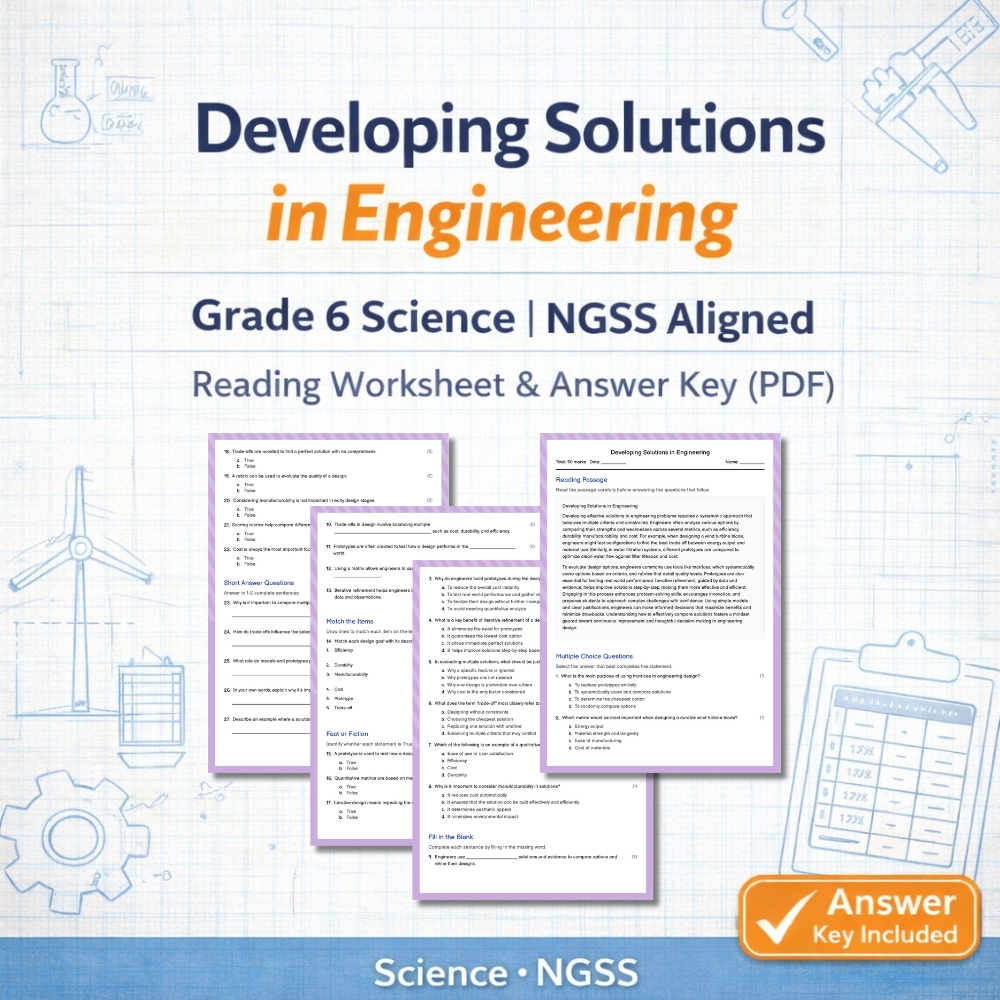
6th Grade Science | Developing Solutions in Engineering | NGSS aligned
Created byCedar Grove LearningLearning Objectives
- Compare multiple design solutions against established criteria and constraints using matrices and rubrics.
- Apply quantitative and qualitative metrics such as efficiency, durability, manufacturability, and cost during solution development.
- Use models and evidence-based justification to rank options and identify promising features for refinement.
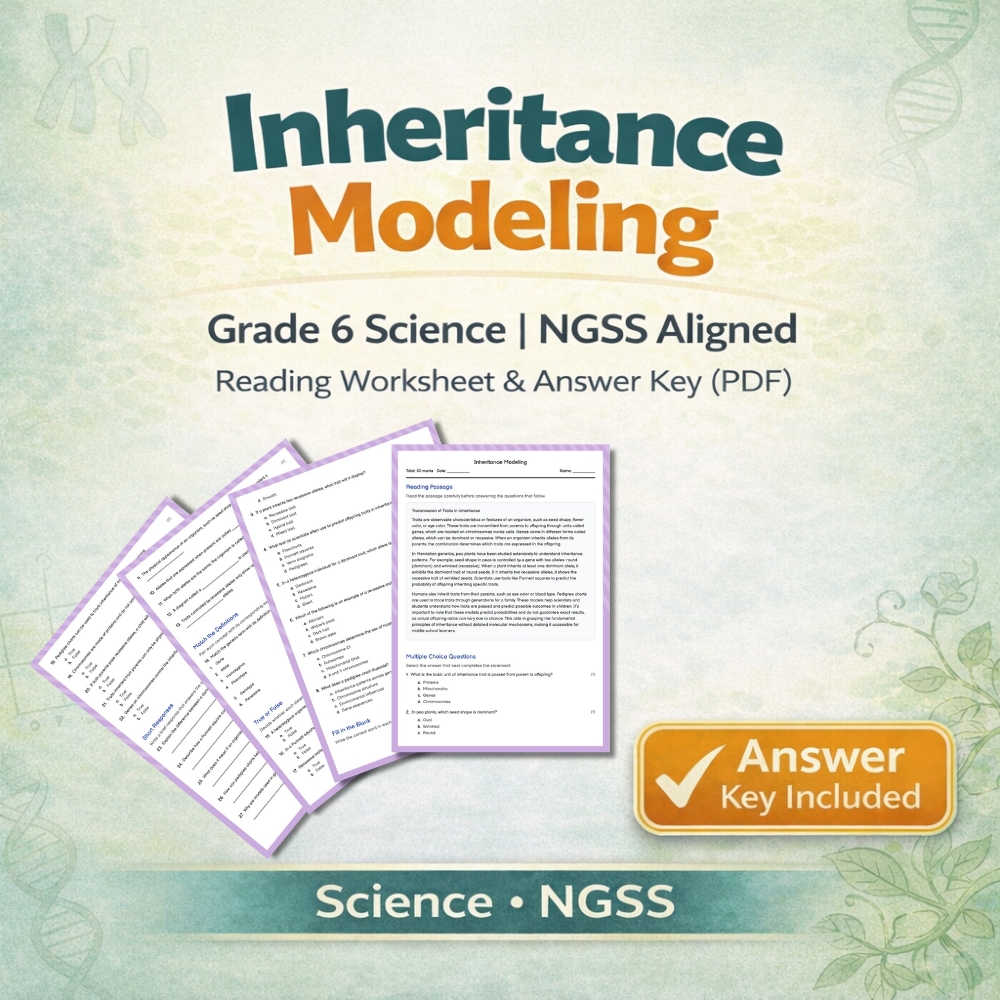
6th Grade Science | Inheritance Modeling | Worksheet & Answer Key (NGSS Aligned)
Created byCedar Grove LearningLearning Objectives
- Understand that traits are transmitted from parents to offspring through genes located on chromosomes.
- Model inheritance patterns using Punnett squares and simple probability.
- Distinguish between dominant and recessive traits through classical Mendelian examples.
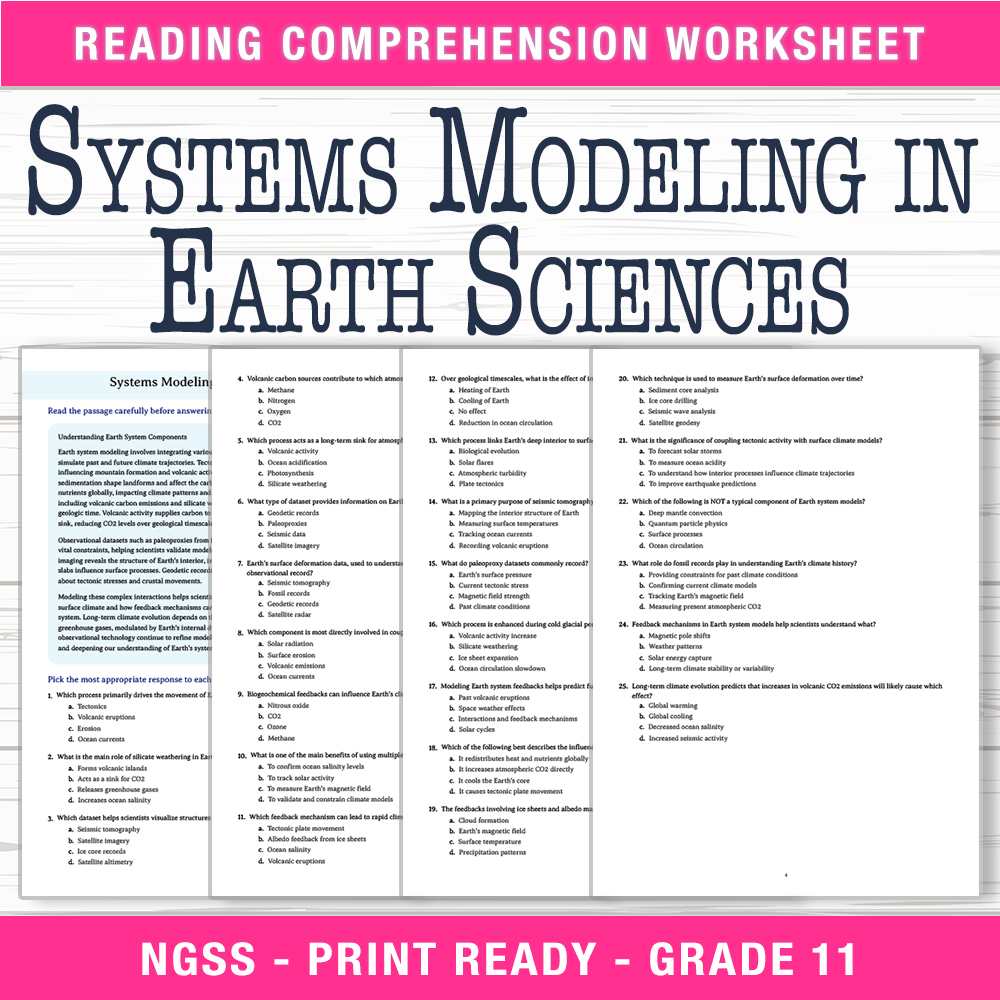
Grade 11 Science | Systems Modeling in Earth Sciences Worksheet (PDF)
 Created byRiverstone Classroom
Learning Objectives
- Understand the components and processes involved in Earth system modeling, including tectonics, surface processes, ocean circulation, and biogeochemical feedbacks.
- Identify how observational datasets like paleoproxies, seismic tomography, and geodetic records inform and constrain models of Earth's climate and geodynamics.
- Explain the interactions between deep-Earth processes, surface processes, and climate evolution over multiple timescales.
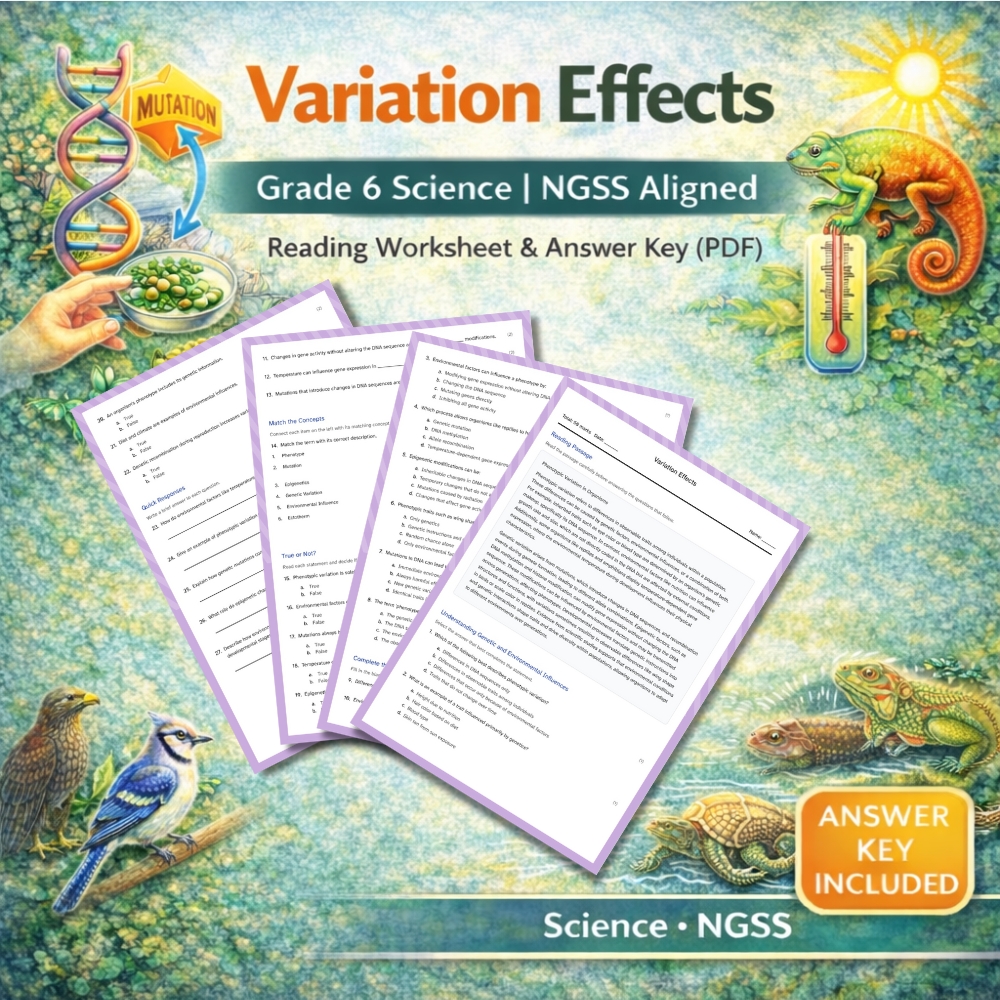
6th Grade Science | Variation Effects | Worksheet & Answer Key – NGSS Standards
Created byCedar Grove LearningLearning Objectives
- Understand how genetic and environmental factors influence organism traits.
- Explain the processes linking DNA, gene expression, and phenotypic variation.
- Identify examples of phenotypic variation caused by inherited and environmental factors.
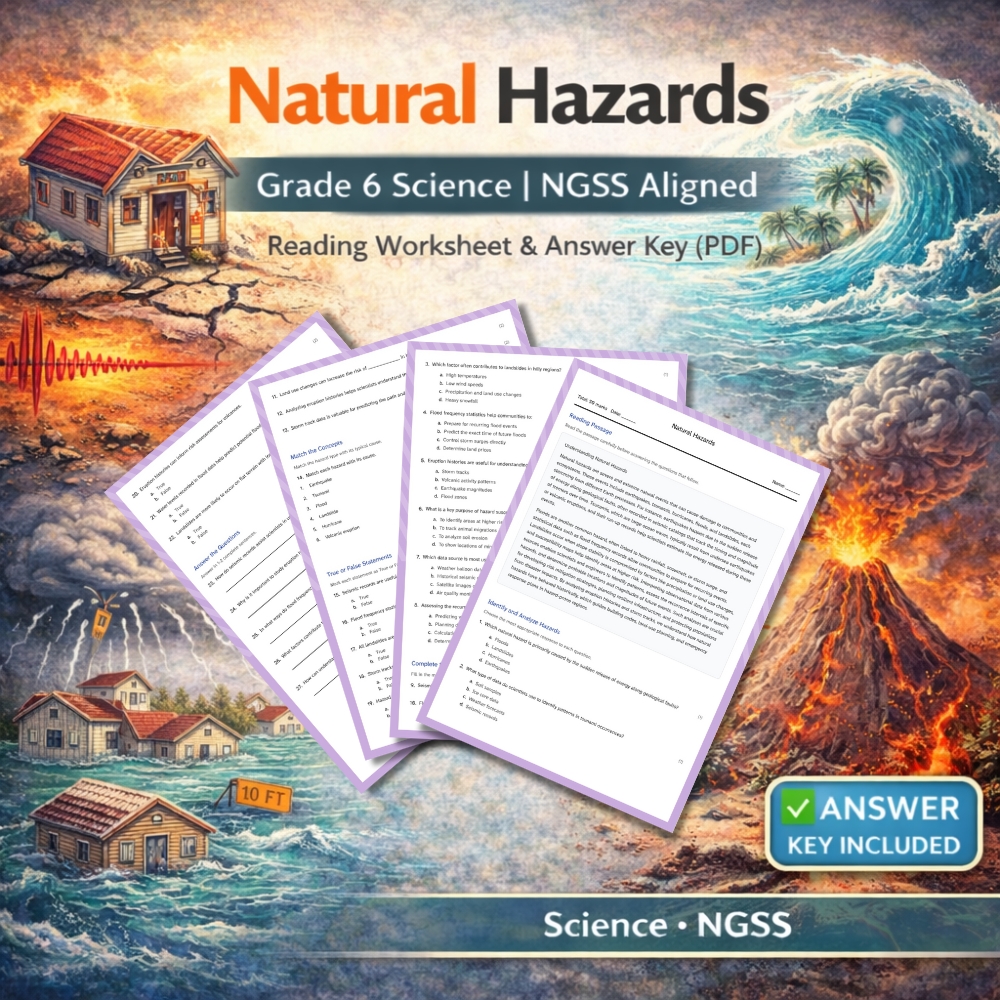
6th Grade Science | Natural Hazards (Worksheet + Answer Key) NGSS Aligned
Created byCedar Grove LearningLearning Objectives
- Analyze observational and instrumental data related to natural hazards such as earthquakes, tsunamis, floods, and landslides.
- Identify patterns and recurrence intervals of natural hazard events to assess risks and inform response strategies.
- Interpret examples like seismic records, eruption histories, storm tracks, and flood statistics to understand hazard impacts.
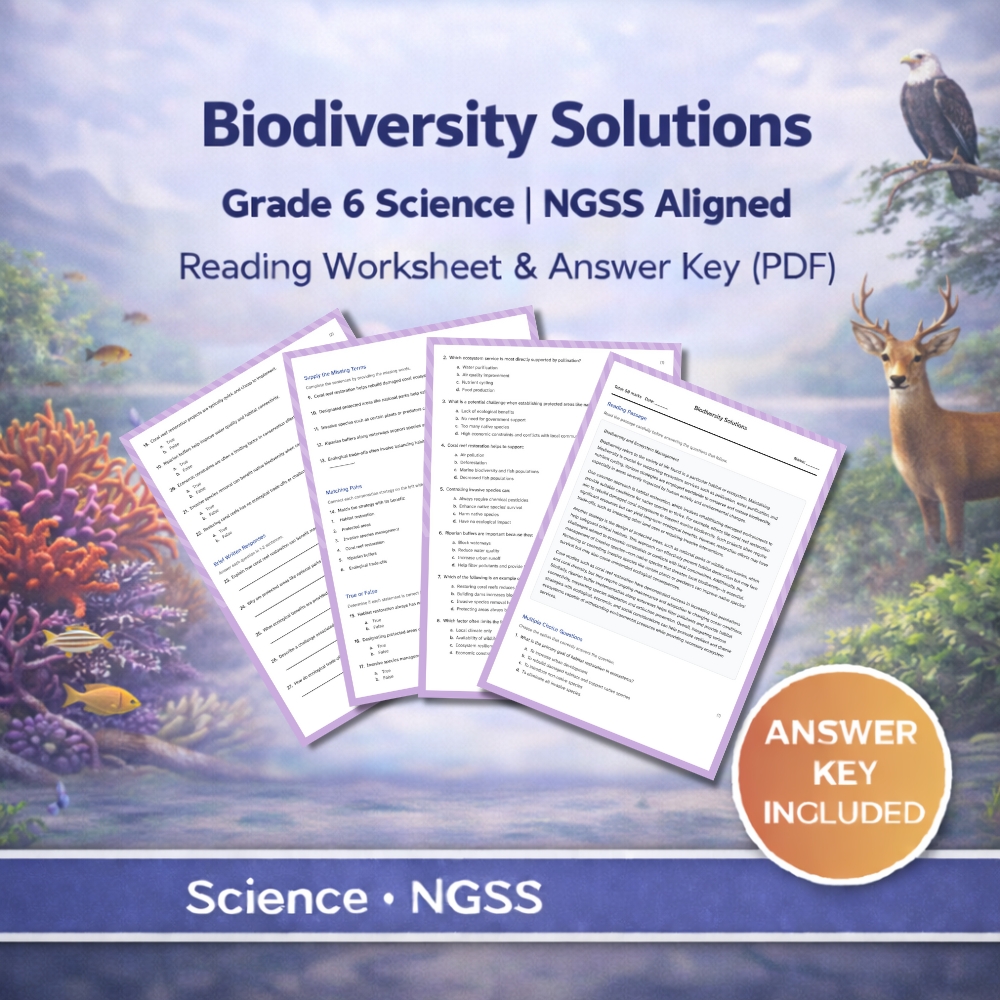
6th Grade Science | Biodiversity Solutions | Worksheet (NGSS Aligned)
Created byCedar Grove LearningLearning Objectives
- Compare different conservation strategies and understand their ecological trade-offs.
- Evaluate case studies of habitat restoration and invasive species management.
- Analyze effectiveness and feasibility of biodiversity solutions under environmental pressures.
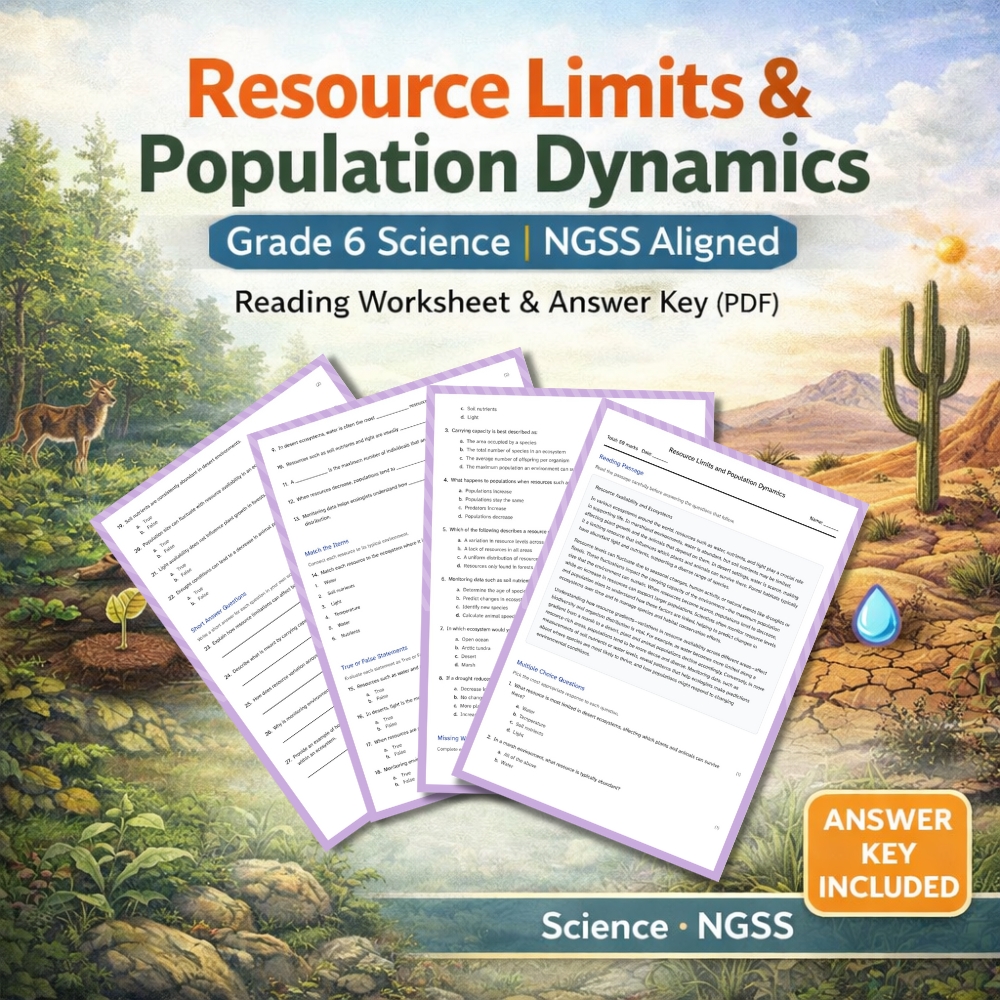
Grade 6 Science | Resource Limits & Population Dynamics | Worksheet (NGSS)
Created byCedar Grove LearningLearning Objectives
- Understand how resource availability affects individual organisms and population sizes.
- Interpret quantitative data related to resource distribution and population patterns.
- Identify limiting resources in different ecosystems such as marsh, desert, and forest habitats.
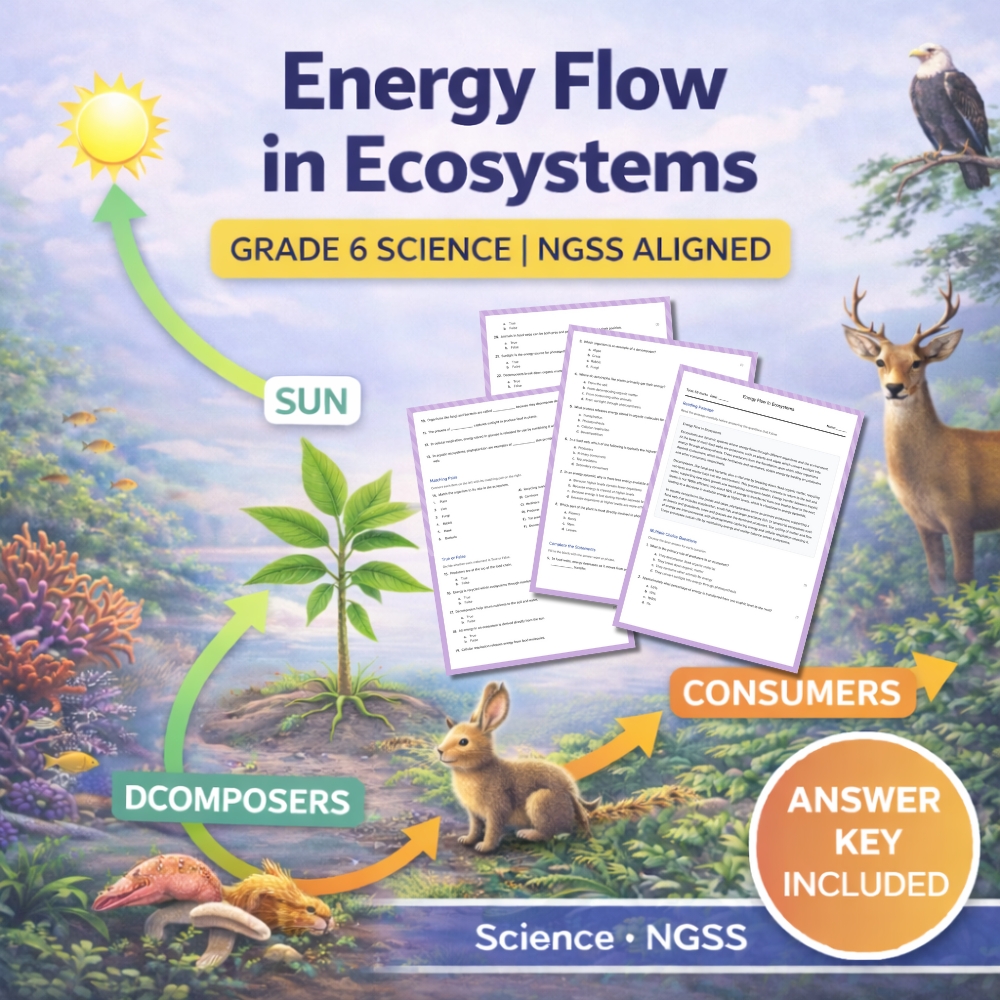
Grade 6 Science | Energy Flow in Ecosystems | NGSS (Worksheet + Answer Key)
Created byCedar Grove LearningLearning Objectives
- Describe the components of food webs and energy flow within terrestrial and aquatic ecosystems.
- Explain how energy diminishes across trophic levels in food pyramids.
- Identify the roles of producers, consumers, and decomposers in energy and matter cycling.
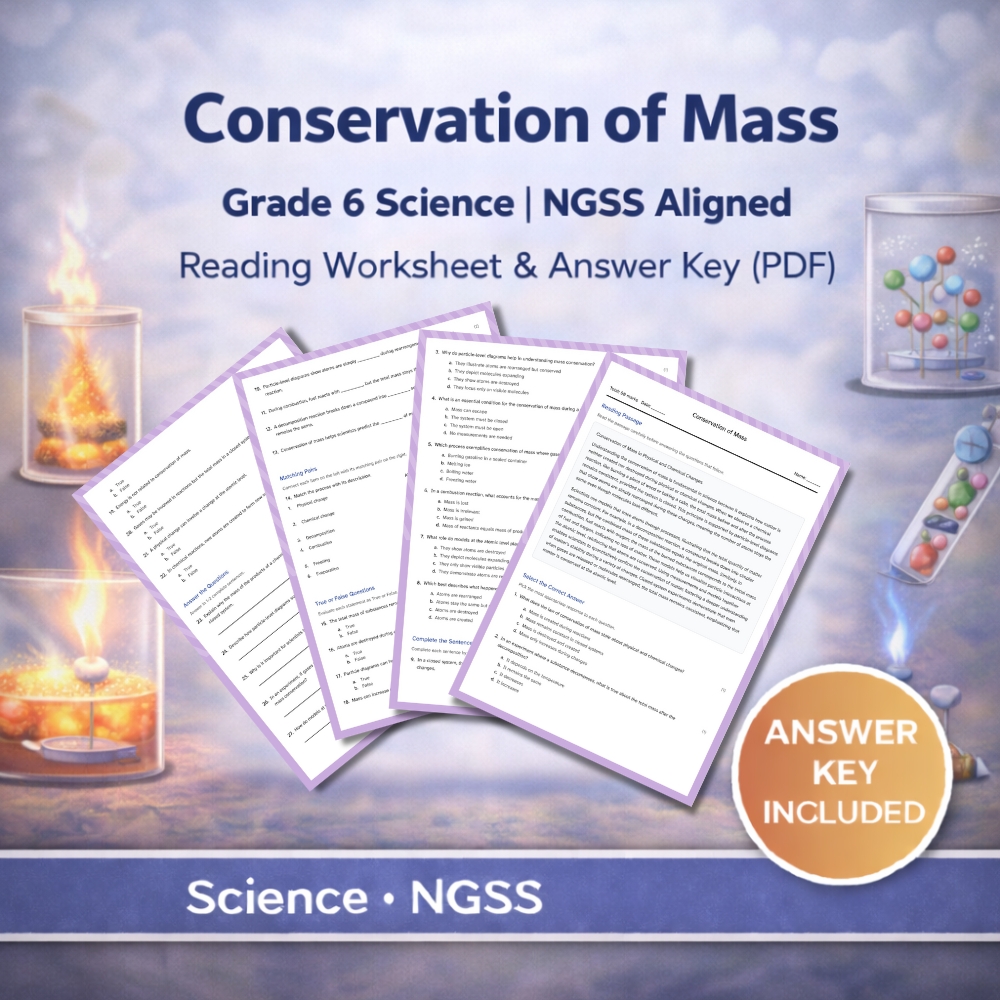
6th Grade Science | Conservation of Mass | Worksheet & Answer Key (NGSS Aligned)
Created byCedar Grove LearningLearning Objectives
- Develop and interpret models that demonstrate the conservation of mass during physical and chemical changes.
- Connect mass measurements before and after changes to atom counts and model particle-level diagrams.
- Explain how atoms are conserved even when molecules rearrange during processes like combustion and decomposition.
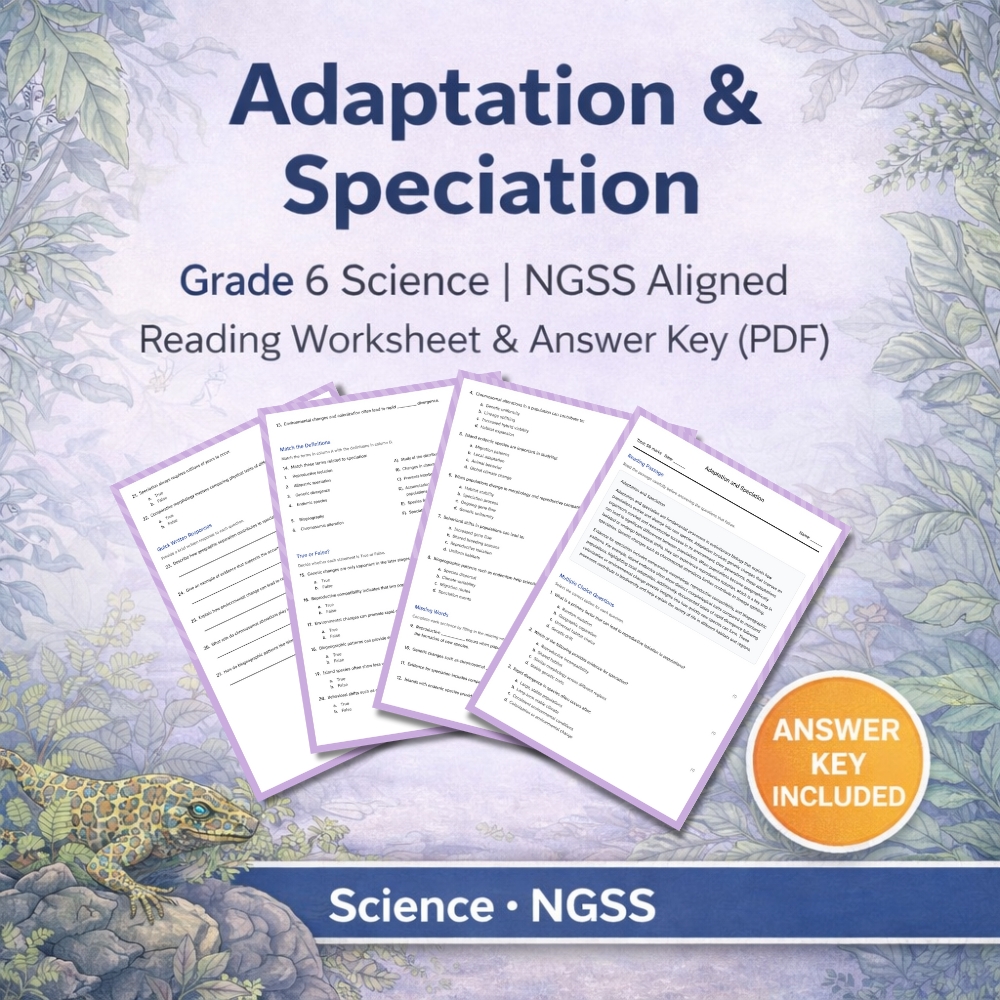
6th Grade Science | Adaptation and Speciation | NGSS Worksheets with Answer Key
Created byCedar Grove LearningLearning Objectives
- Explain the processes of adaptation and how they lead to speciation in populations.
- Describe evidence that supports the occurrence of speciation events in different environments.
- Identify factors such as geographic separation, behavioral shifts, and genetic changes that contribute to lineage divergence.
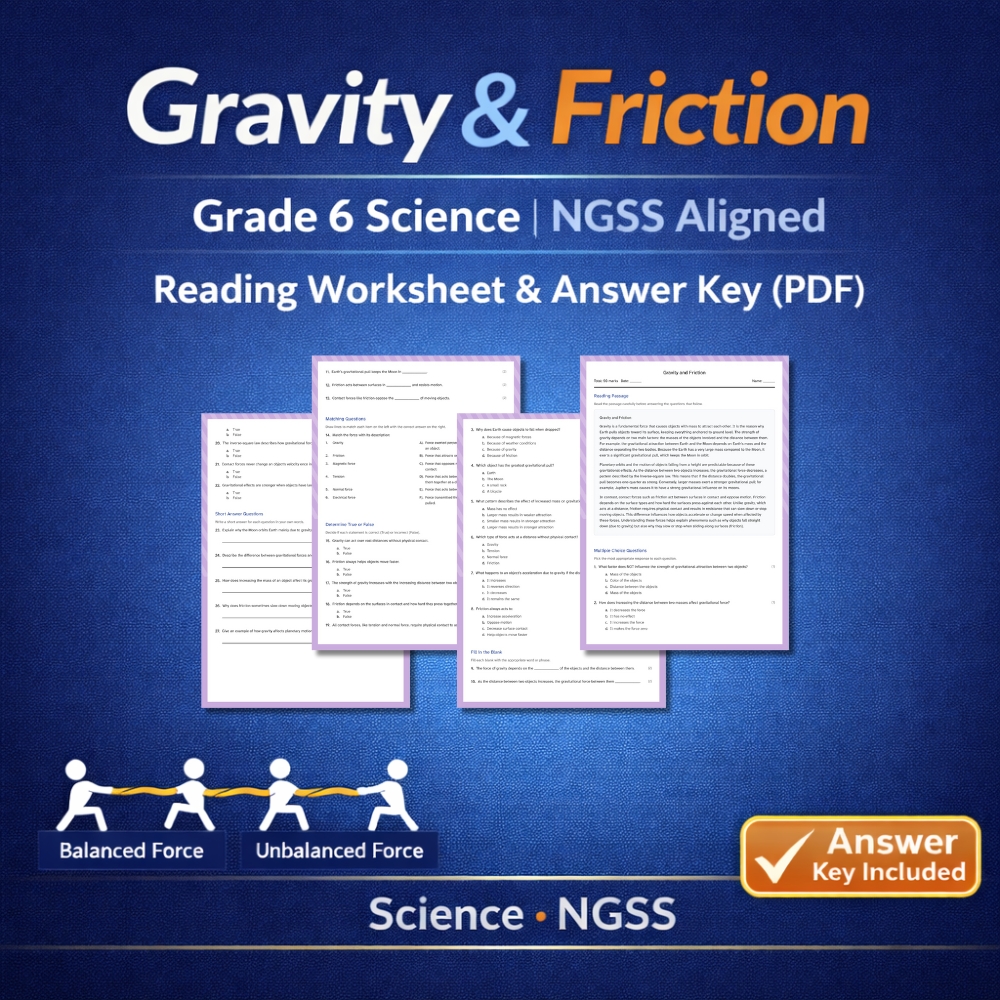
6th Grade Science | Gravity and Friction | NGSS ( Worksheet + Answer Key )
Created byCedar Grove LearningLearning Objectives
- Explain how gravitational attraction depends on mass and distance between objects.
- Compare and contrast gravitational forces with contact forces like friction.
- Use examples to argumentatively evaluate how gravity influences planetary orbits and falling objects.
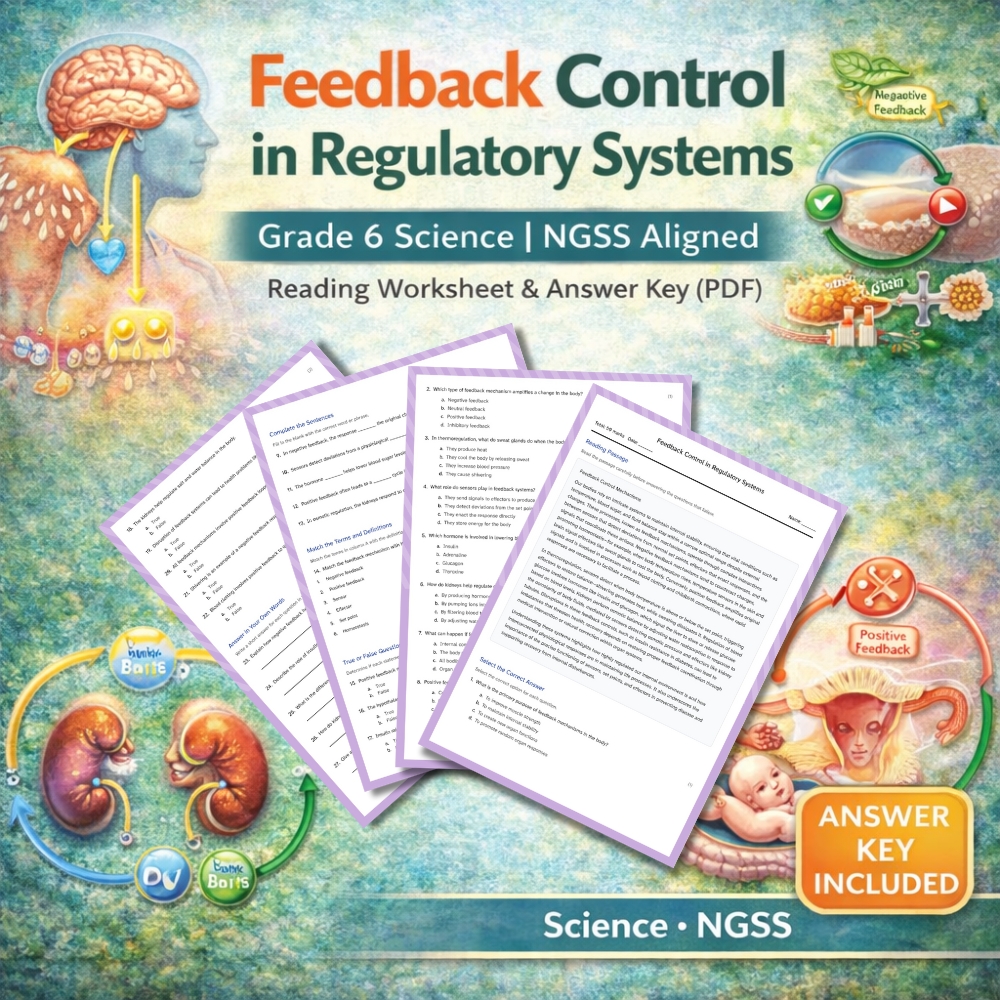
6th Grade Science | Feedback Control in Regulatory Systems | NGSS Worksheet
Created byCedar Grove LearningLearning Objectives
- Describe how negative and positive feedback mechanisms maintain internal stability in the body.
- Identify examples of feedback control such as thermoregulation, blood glucose regulation, and osmotic balance.
- Explain the roles of sensors, set points, and effectors in physiological feedback systems.
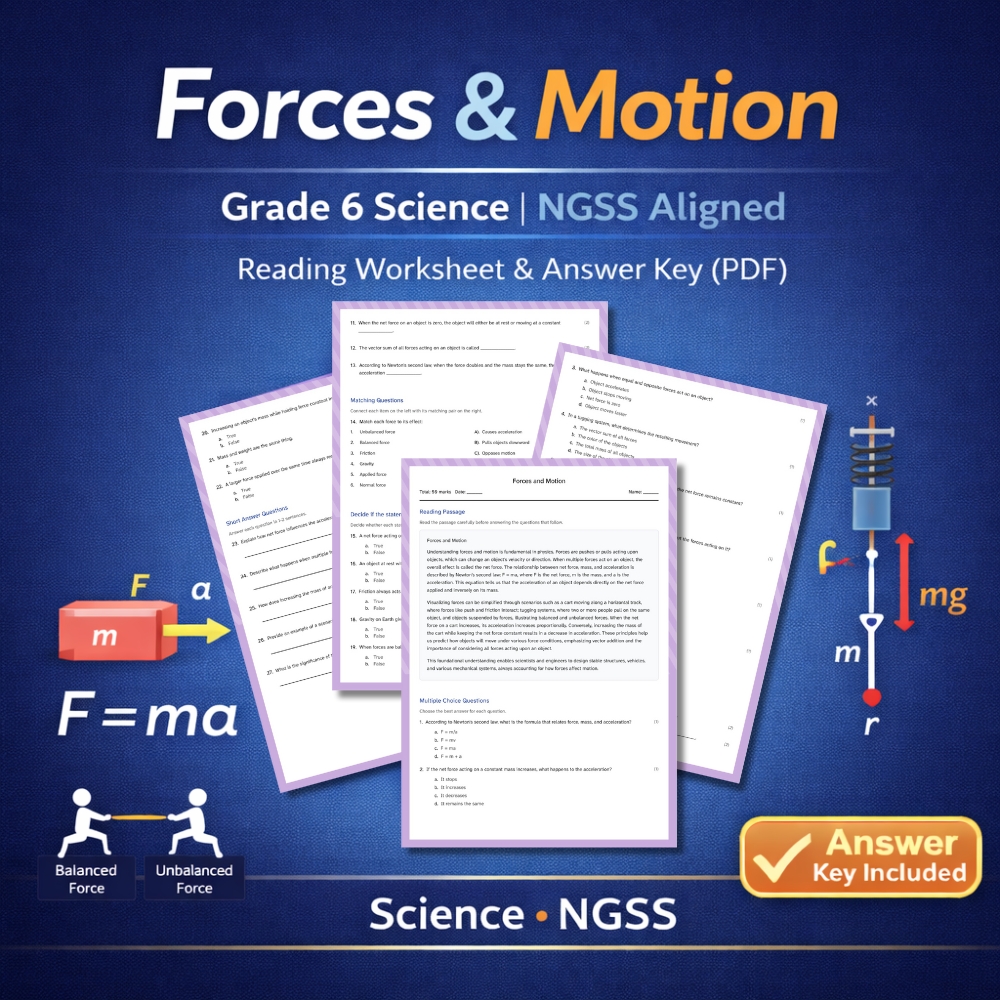
6th Grade Science | Forces and Motion Worksheet – NGSS Standards
Created byCedar Grove LearningLearning Objectives
- Explain how net force affects the motion of objects.
- Describe the relationship between force, mass, and acceleration using the equation F = ma.
- Identify scenarios illustrating the vector sum of forces and predict resulting motion.
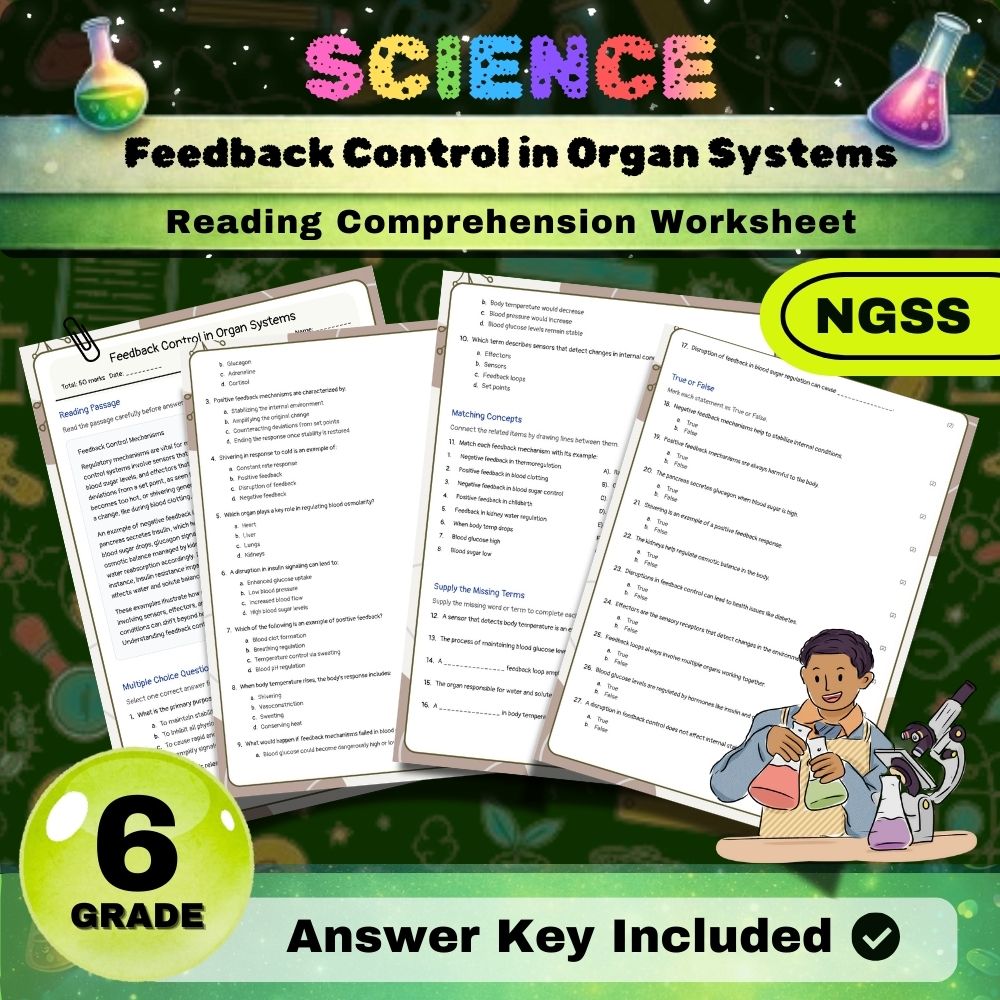
Grade 6 Science – Feedback Control in Organ Systems Worksheet (Answer Key + PDF)
 Created byMaple Path Learning
Learning Objectives
- Understand the concept of negative and positive feedback mechanisms in maintaining internal stability.
- Identify examples of feedback control such as thermoregulation, blood glucose regulation, and osmotic balance.
- Explain how sensors and effectors work together to regulate physiological set points.
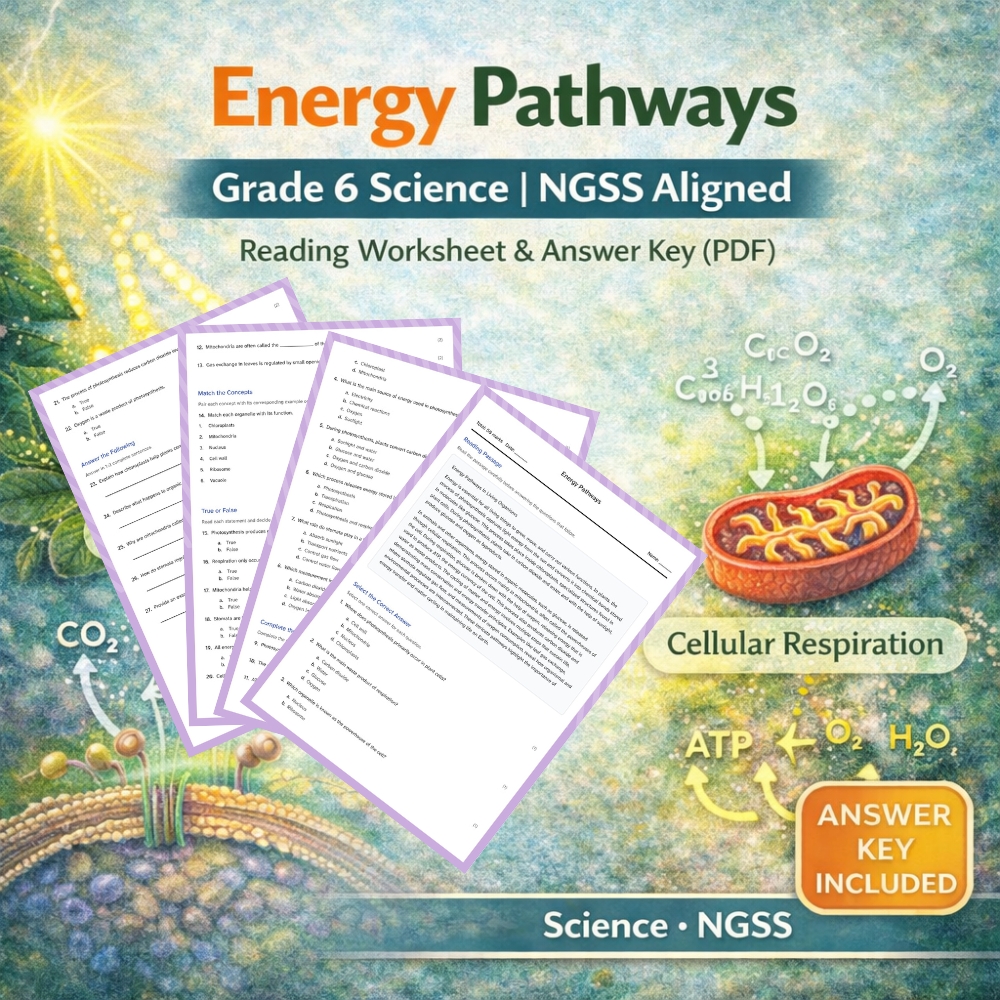
6th Grade Science | Energy Pathways | Worksheet & Answer Key ( NGSS )
Created byCedar Grove LearningLearning Objectives
- Understand how photosynthesis converts light energy into chemical energy in plants.
- Explain how organisms break down organic molecules to release energy through respiration.
- Identify the roles of chloroplasts and mitochondria in energy transfer processes.
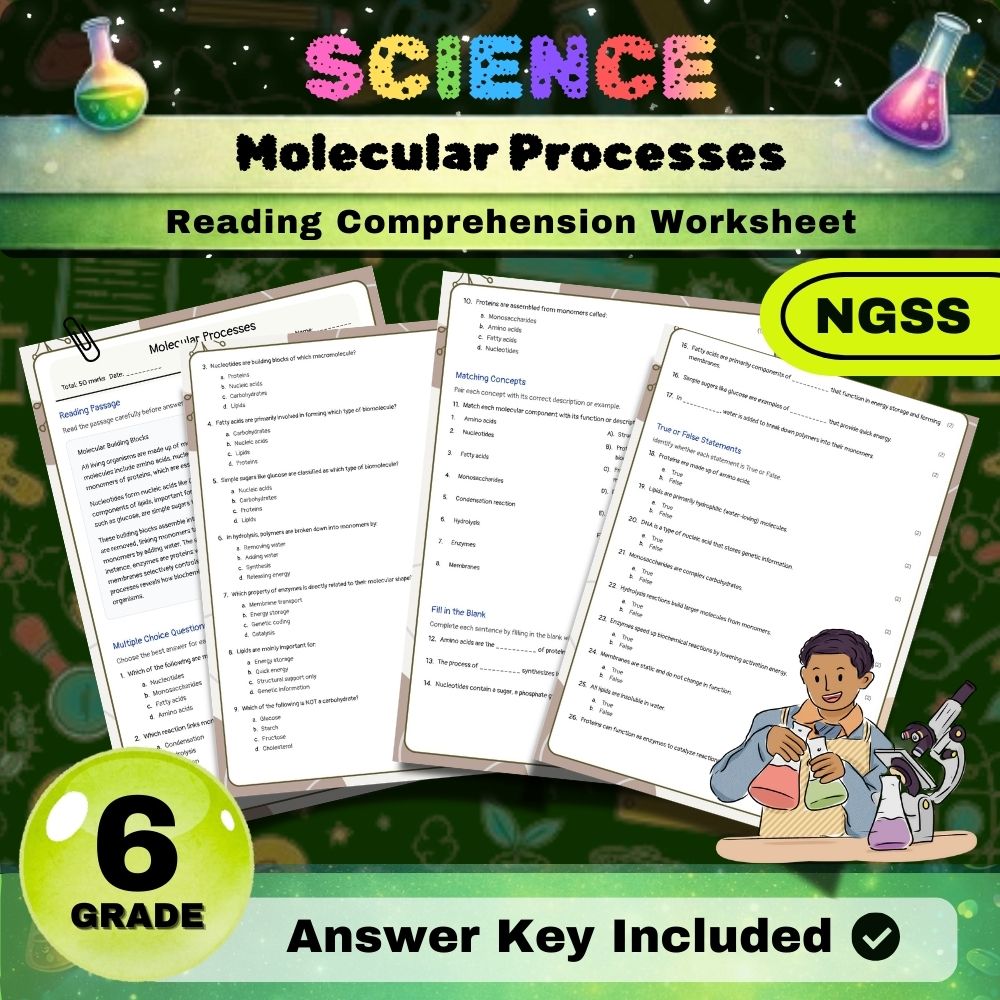
6th Grade Science | Molecular Processes Worksheet (PDF- NGSS Aligned)
Created byMaple Path LearningLearning Objectives
- Explain the role of monomers such as amino acids, nucleotides, fatty acids, and monosaccharides in forming macromolecules.
- Describe how condensation reactions build polymers and hydrolysis breaks them down.
- Relate molecular structure of biomolecules to their properties and functions in living organisms.
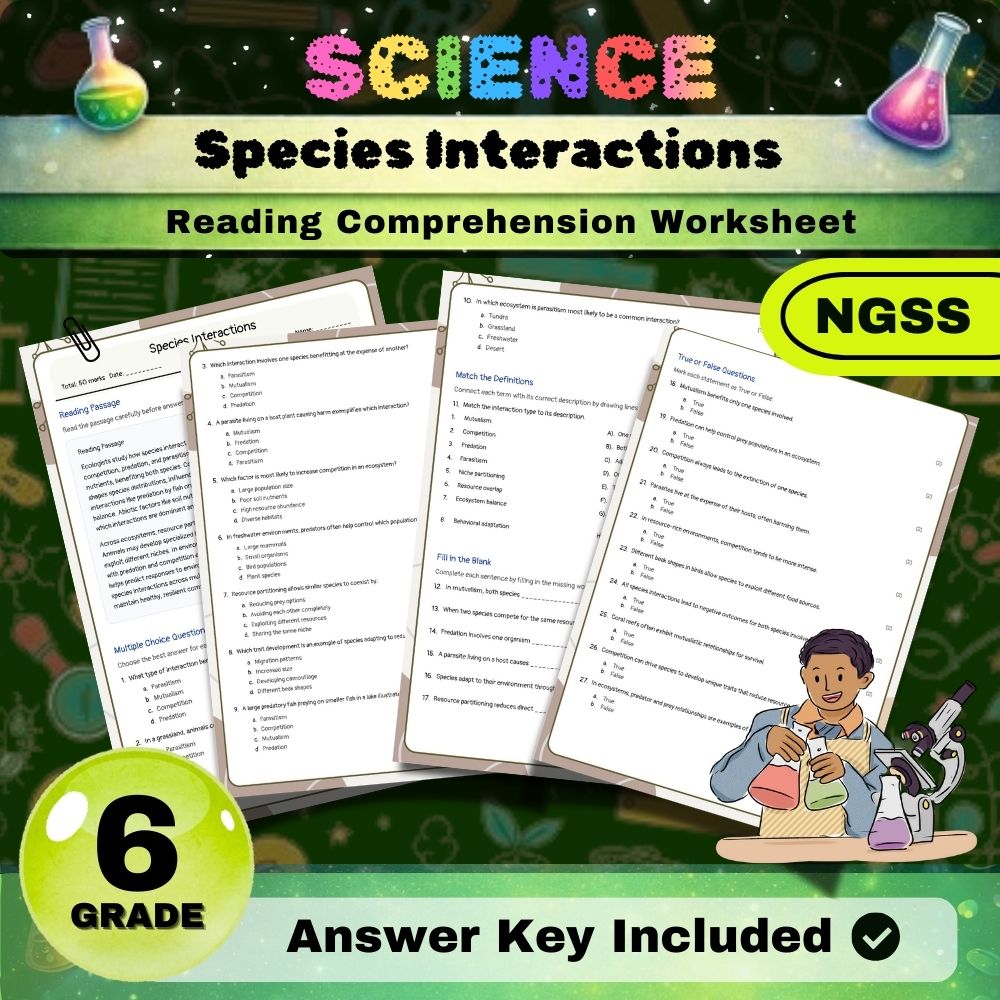
6th Grade Science | Species Interactions NGSS Worksheet (PDF)
Created byMaple Path LearningLearning Objectives
- Construct explanations predicting species interaction patterns across different ecosystems.
- Identify and differentiate between mutualism, competition, predation, and parasitism.
- Compare how abiotic conditions influence species interactions and community structures.
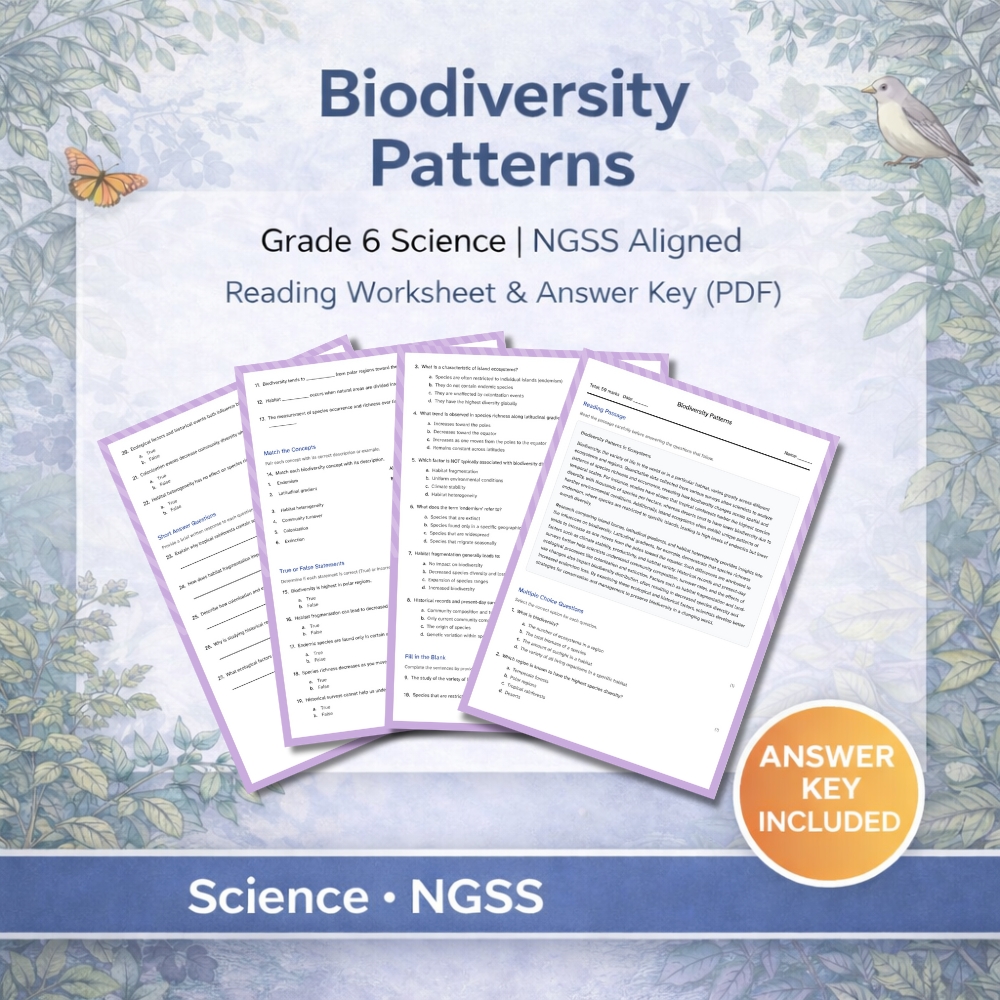
6th Grade Science | Biodiversity Patterns | NGSS Worksheet & Answer Key
Created byCedar Grove LearningLearning Objectives
- Understand how species occurrence and richness reveal biodiversity patterns across different ecosystems.
- Analyze and interpret data related to biodiversity, endemism, and community composition.
- Compare biodiversity variations across islands, latitudinal gradients, and habitats.
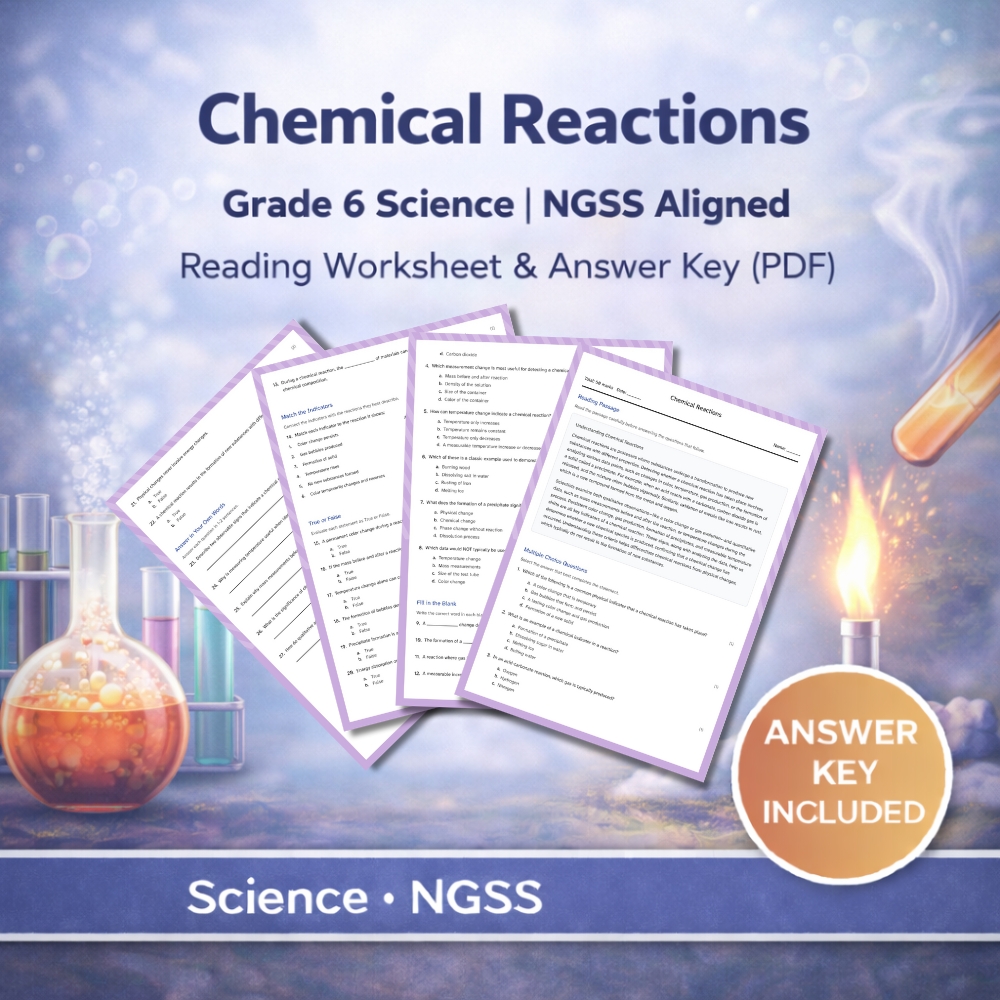
6th Grade Science | Chemical Reactions | Worksheet & Answer Key (NGSS Aligned)
Created byCedar Grove LearningLearning Objectives
- Identify criteria that indicate a chemical reaction based on observable data.
- Analyze quantitative and qualitative data to determine if a new substance forms during a reaction.
- Interpret pre- and post-interaction measurements, including mass, temperature, and composition data.
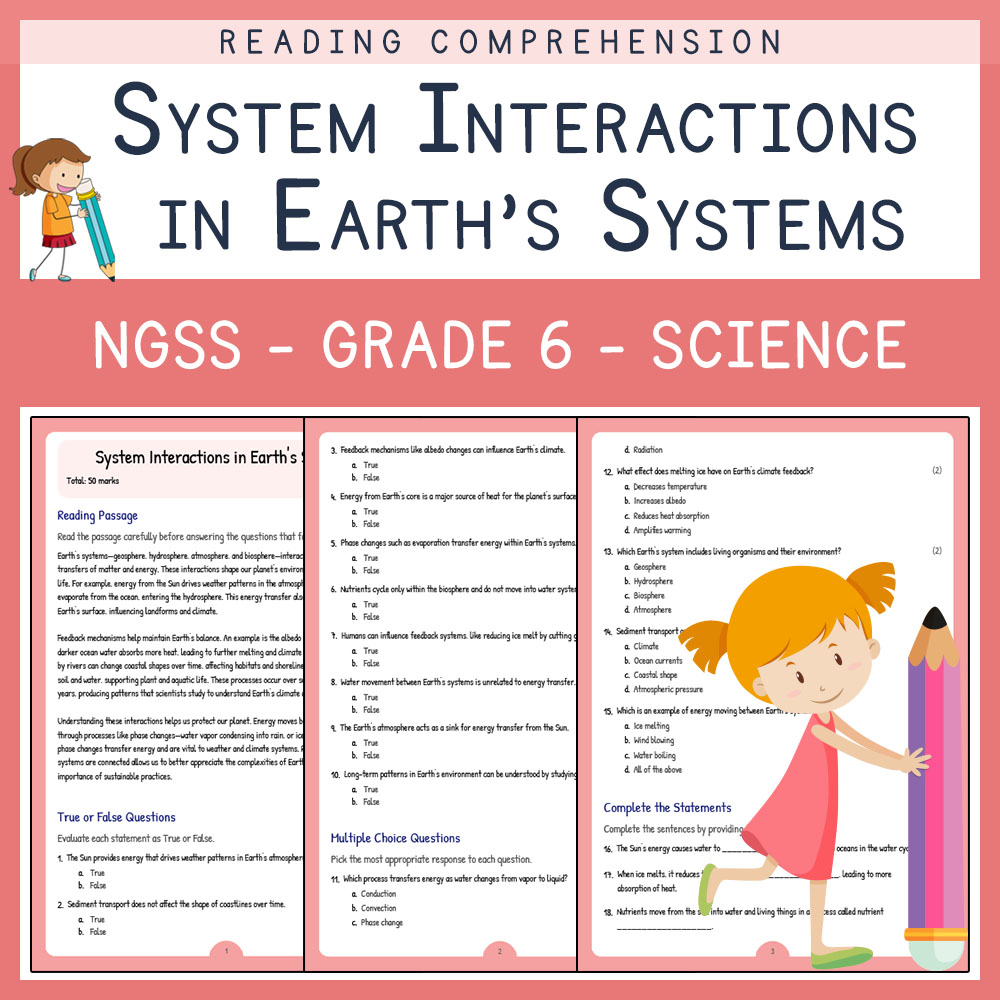
Grade 6 Science | Earth's Systems Interactions Worksheet (PDF) | NGSS Aligned
 Created byLumora Learning
Learning Objectives
- Understand how Earth's systems interact through the transfer of matter and energy.
- Identify examples of feedback mechanisms like albedo changes, sediment transport, and nutrient movement.
- Describe the flow of energy within Earth's systems including sources, sinks, and phase changes.
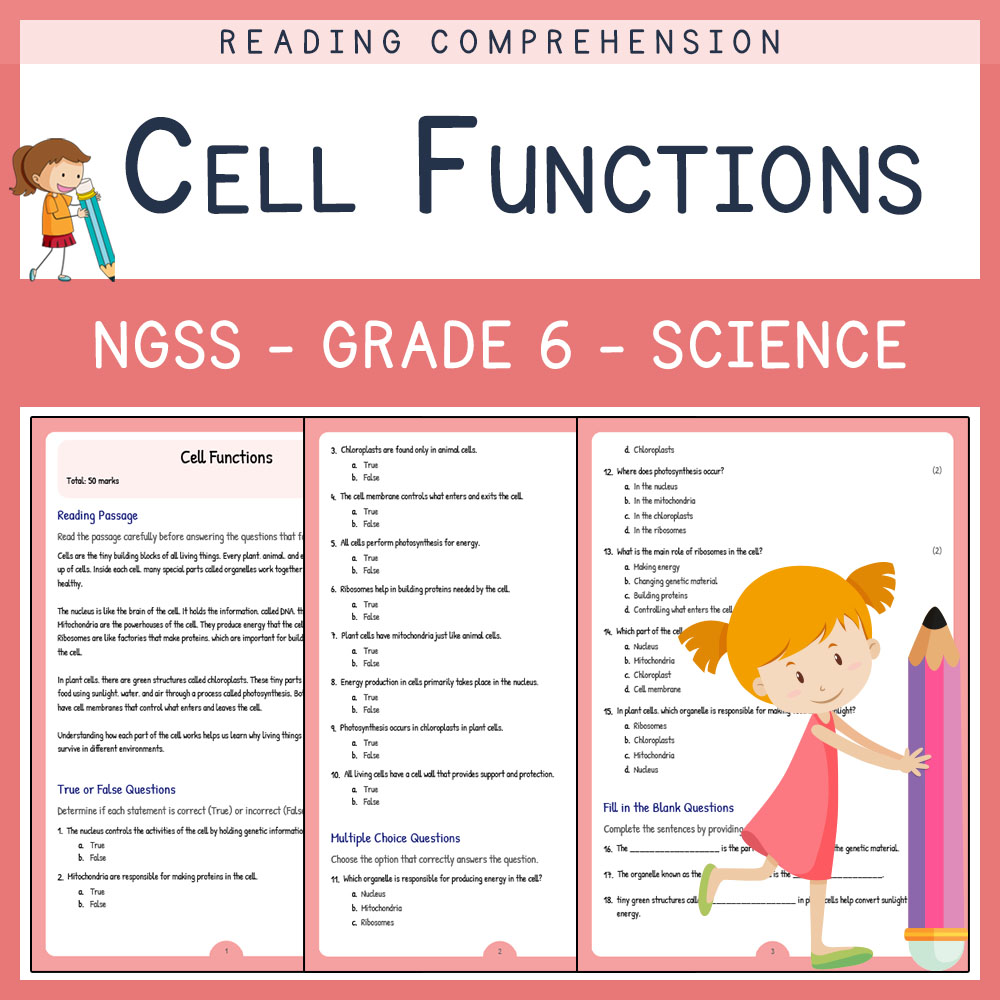
Grade 6 Science | Cell Functions Worksheet (PDF) | NGSS Aligned
Created byLumora LearningLearning Objectives
- Understand the structure and function of different cell organelles
- Identify the roles of nucleus, mitochondria, ribosomes, and chloroplasts
- Compare plant and animal cells to see how they are specialized
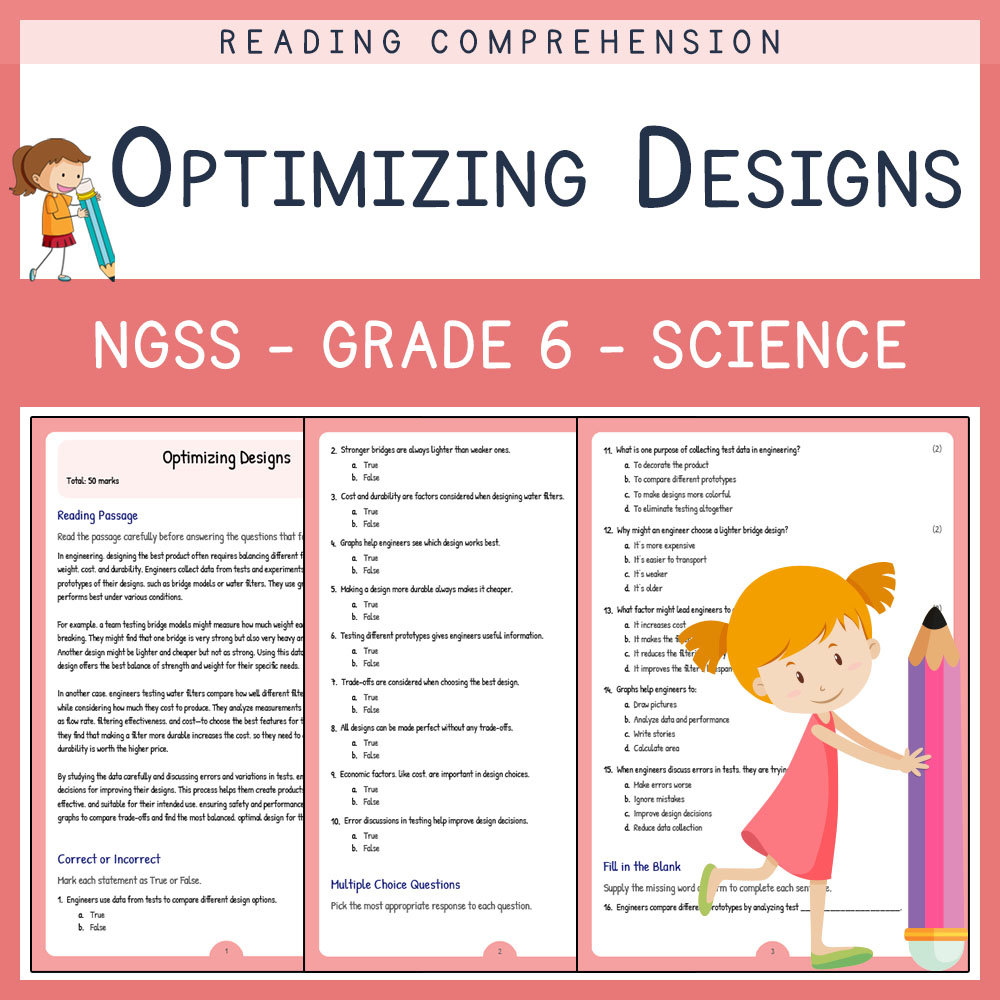
Grade 6 Science | Optimizing Designs Worksheet (Answer Key) | NGSS Aligned
Created byLumora LearningLearning Objectives
- Understand how data can be used to compare different design options.
- Learn to read graphs and analyze performance measurements.
- Identify trade-offs when selecting optimal design features.
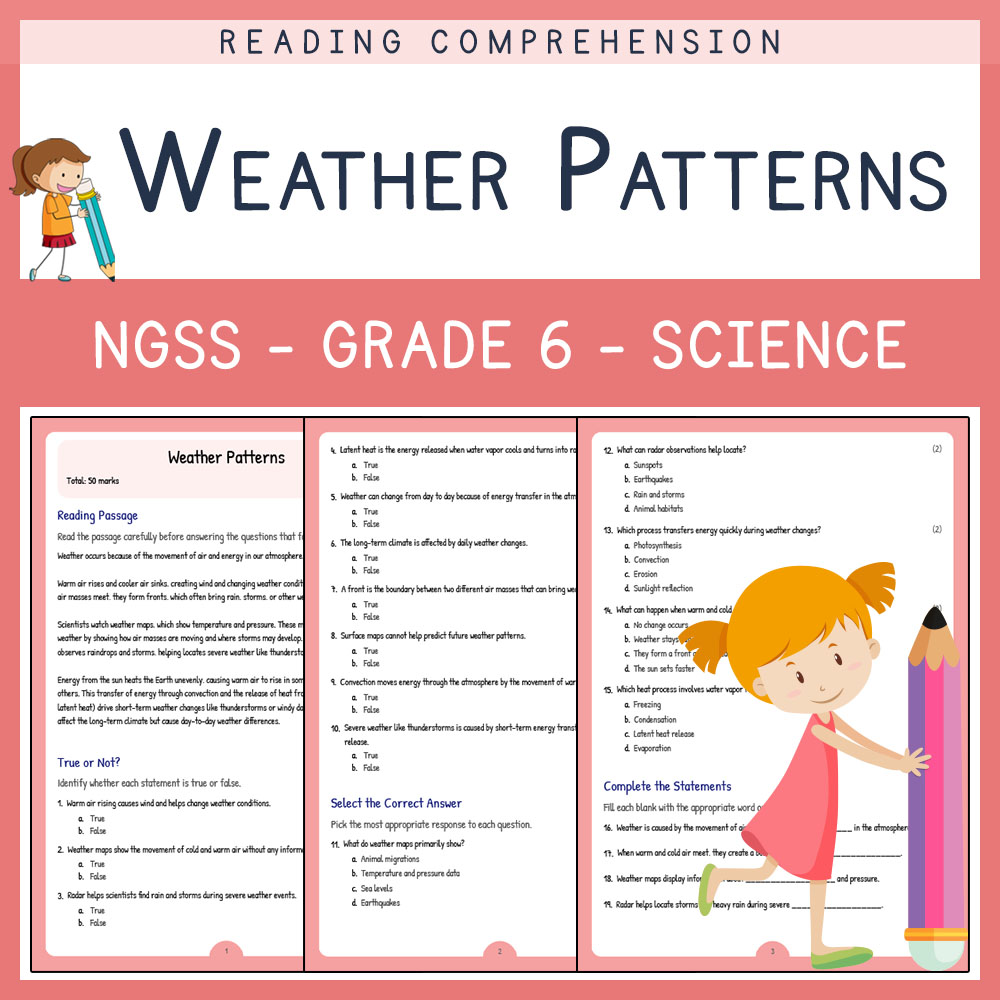
Grade 6 Science | Weather Patterns Worksheet (PDF) | NGSS Aligned
Created byLumora LearningLearning Objectives
- Understand how atmospheric processes influence weather.
- Interpret surface maps, temperature, and pressure data.
- Identify types of weather phenomena such as storms and fronts.
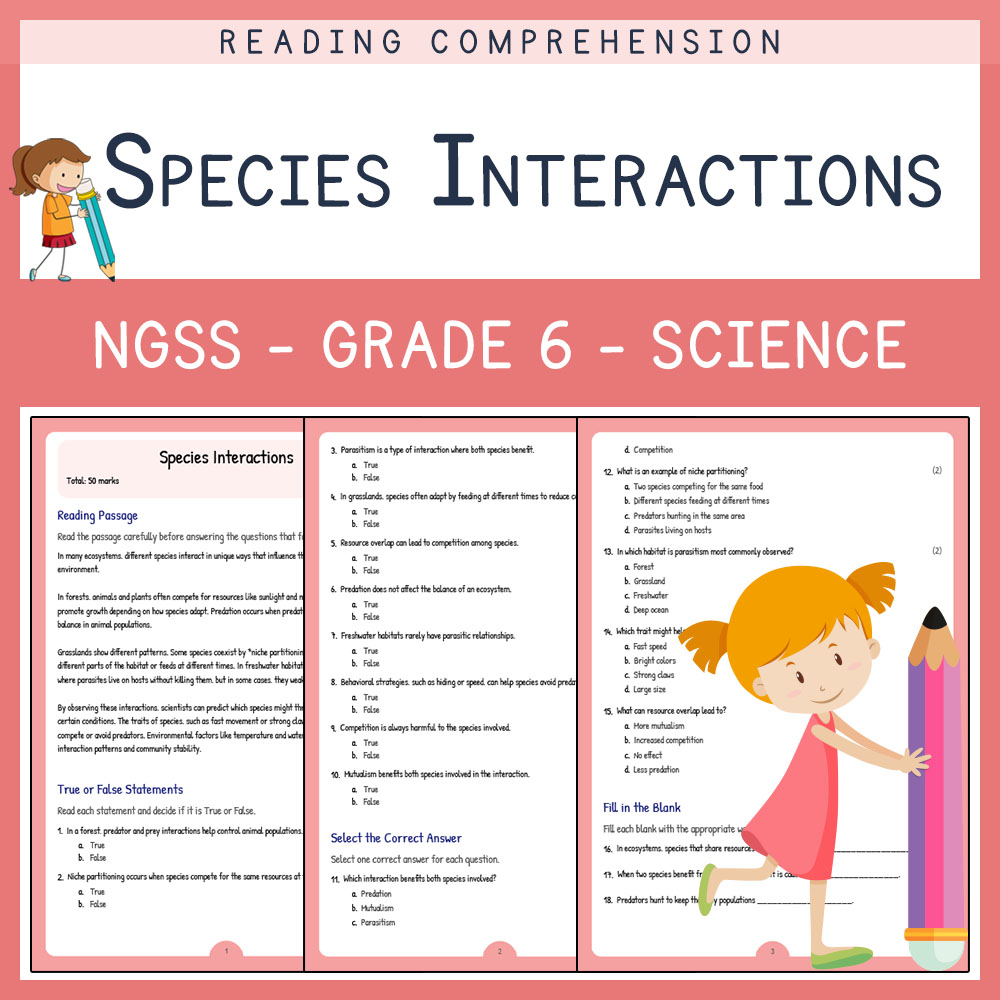
Grade 6 Science | Species Interactions Worksheet (PDF) | NGSS Aligned
Created byLumora LearningLearning Objectives
- Construct explanations predicting patterns of species interactions across ecosystems
- Identify types of species interactions such as mutualism, competition, predation, and parasitism
- Compare interaction outcomes in forest, grassland, and freshwater environments
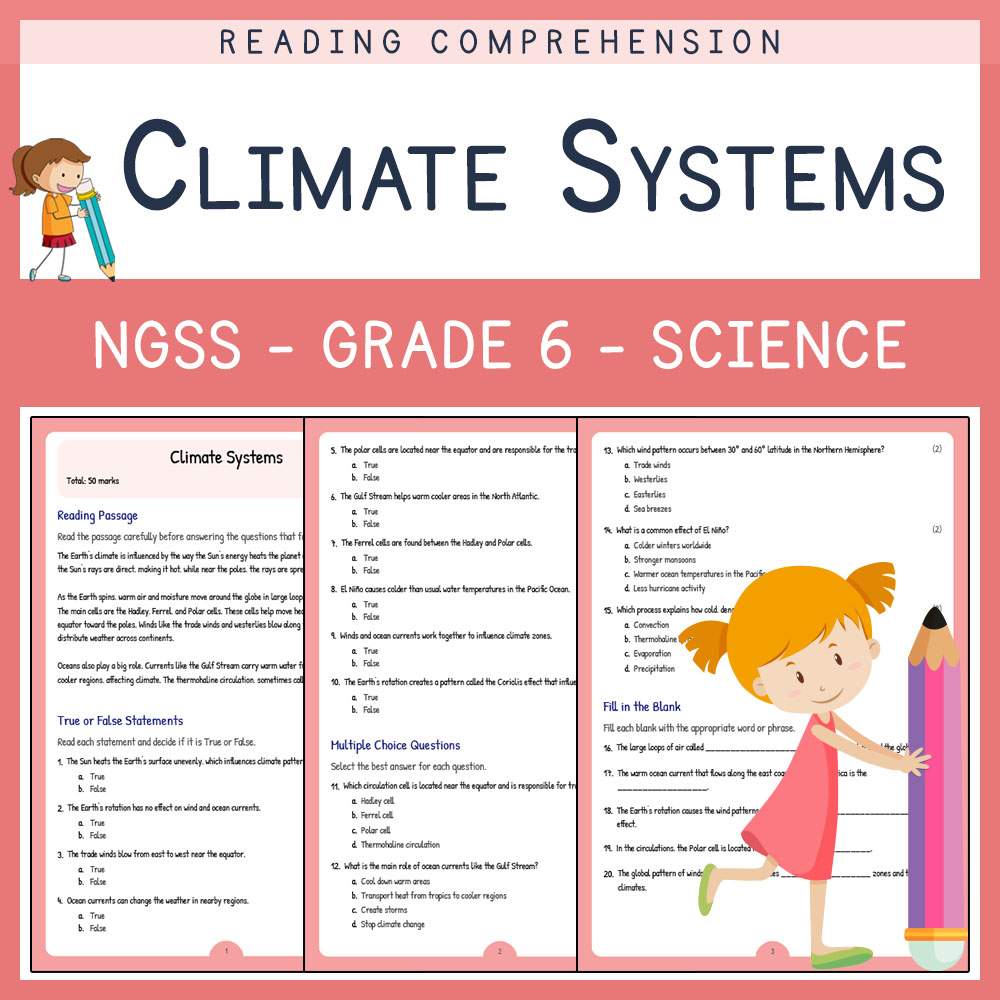
Grade 6 Science | Climate Systems Worksheet (PDF) | NGSS Aligned
Created byLumora LearningLearning Objectives
- Understand how the Earth's rotation and unequal heating create global wind and ocean patterns.
- Identify different atmospheric cells and their roles in climate zones.
- Learn about major ocean currents and their effect on regional weather.
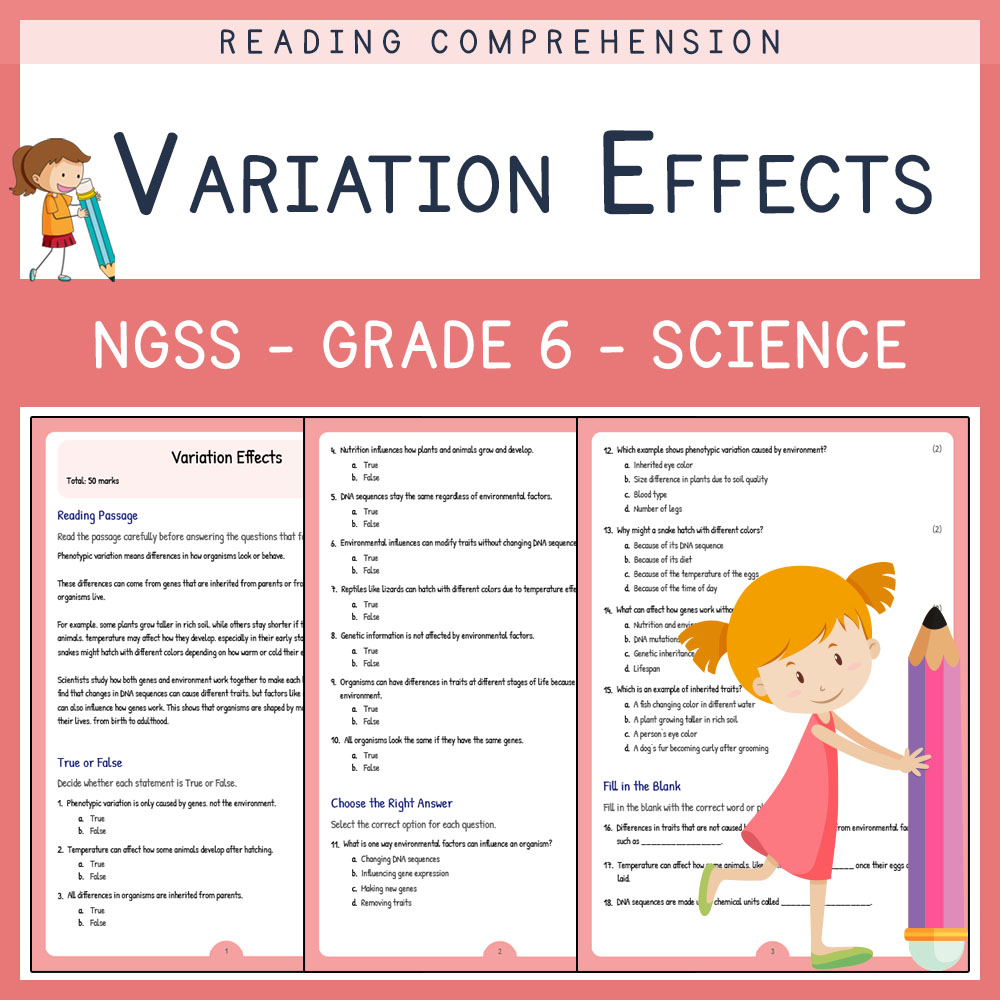
Grade 6 Science | Variation Effects Worksheet with Answer Key | NGSS Aligned
Created byLumora LearningLearning Objectives
- Understand that phenotypic variation arises from genetic and environmental influences.
- Identify examples of inherited traits, growth differences linked to nutrition, and temperature-dependent gene expression.
- Explain how DNA and environmental factors interact to produce differences in organism characteristics.
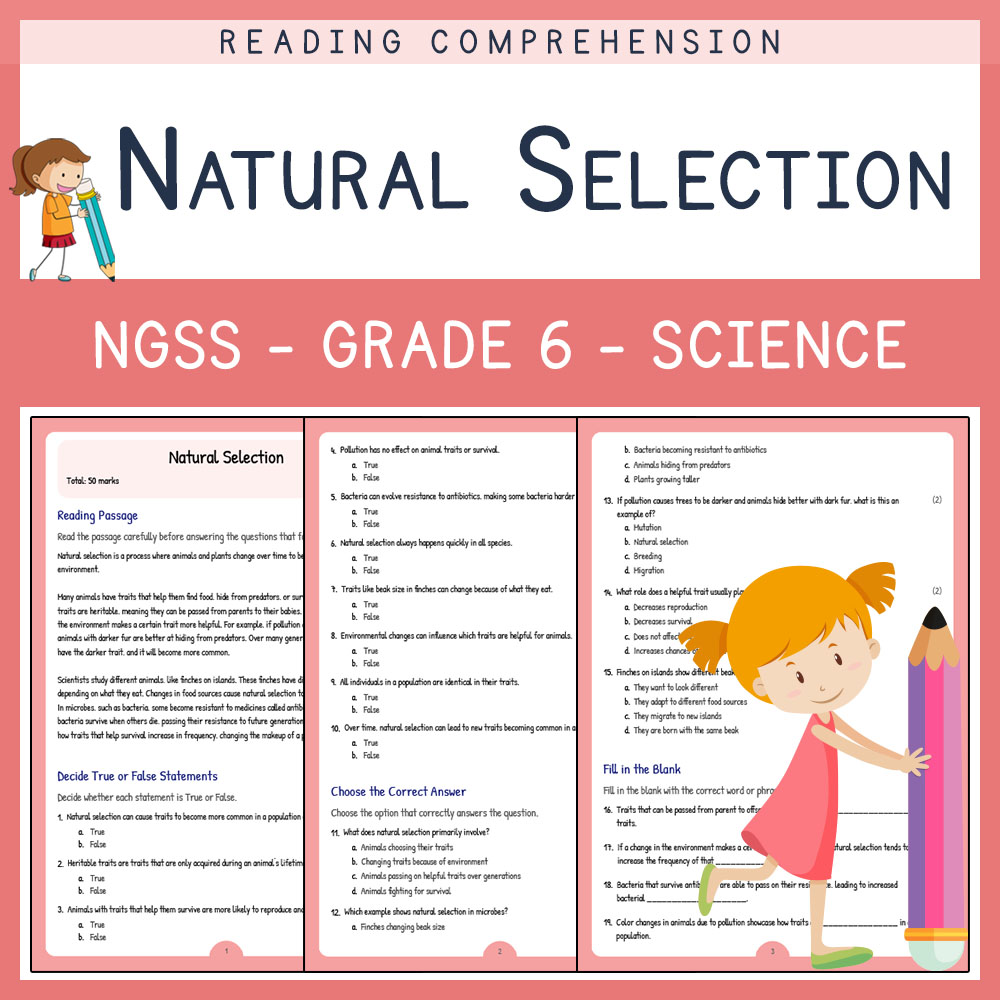
Grade 6 Science | Natural Selection Worksheet (PDF) | NGSS Aligned
Created byLumora LearningLearning Objectives
- Understand that variation in heritable traits affects survival and reproduction.
- Identify how environmental pressures influence trait frequencies in populations.
- Recognize real-world examples of natural selection, such as coloration changes and antibiotic resistance.
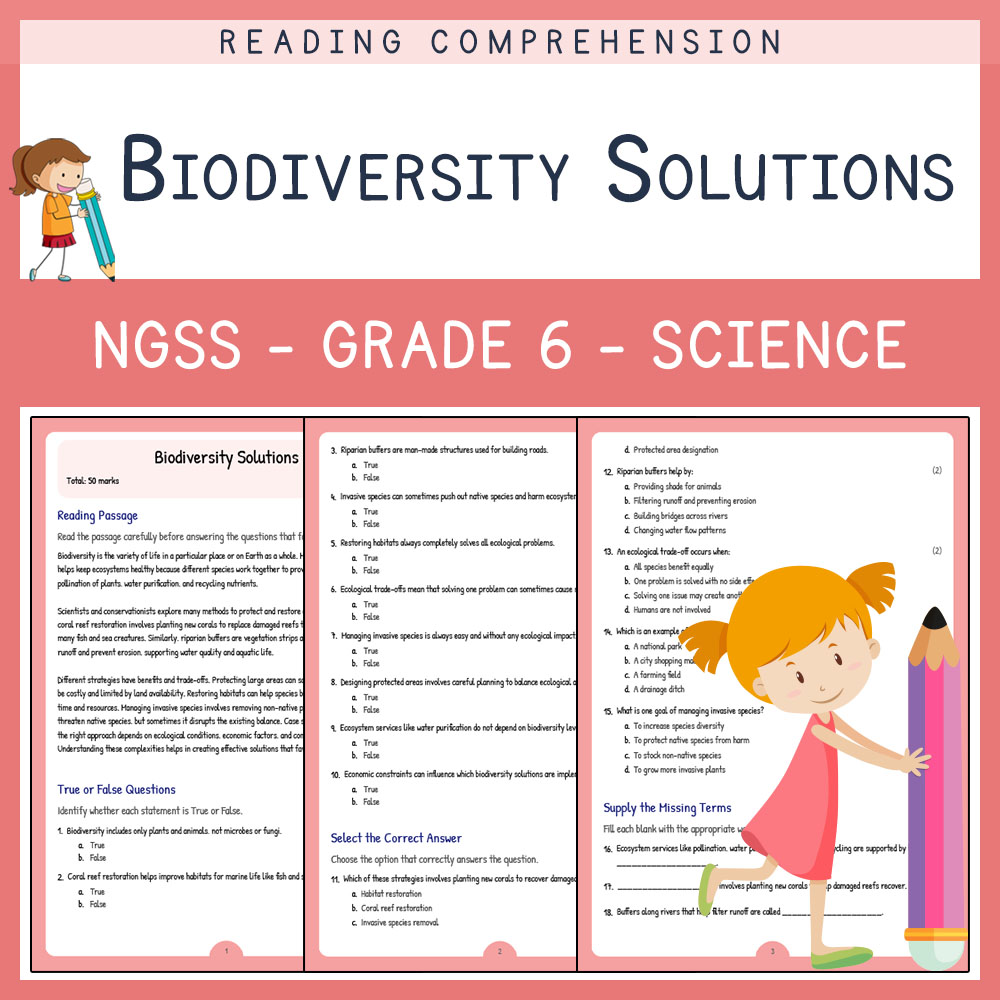
Grade 6 Science | Biodiversity Solutions Worksheet (PDF) | NGSS Aligned
Created byLumora LearningLearning Objectives
- Compare different conservation strategies for maintaining biodiversity
- Understand ecological trade-offs and feasibility of different solutions
- Analyze case studies such as coral reef restoration and riparian buffers
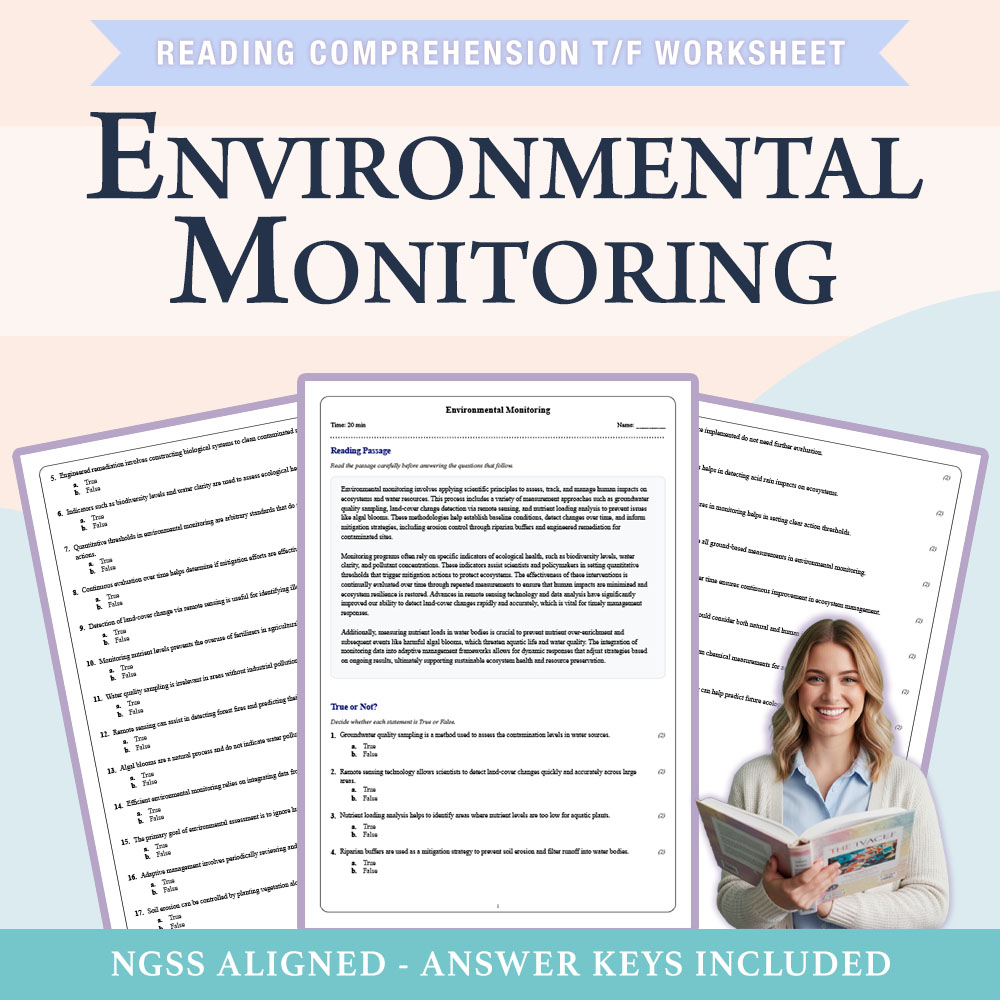
Grade 8 Science | Environmental Monitoring Worksheet (PDF +Answer Key)
 Created byCopper Leaf Classroom
Learning Objectives
- Understand scientific methods used in environmental monitoring
- Identify indicators of ecosystem health
- Know mitigation strategies for human impacts on water resources
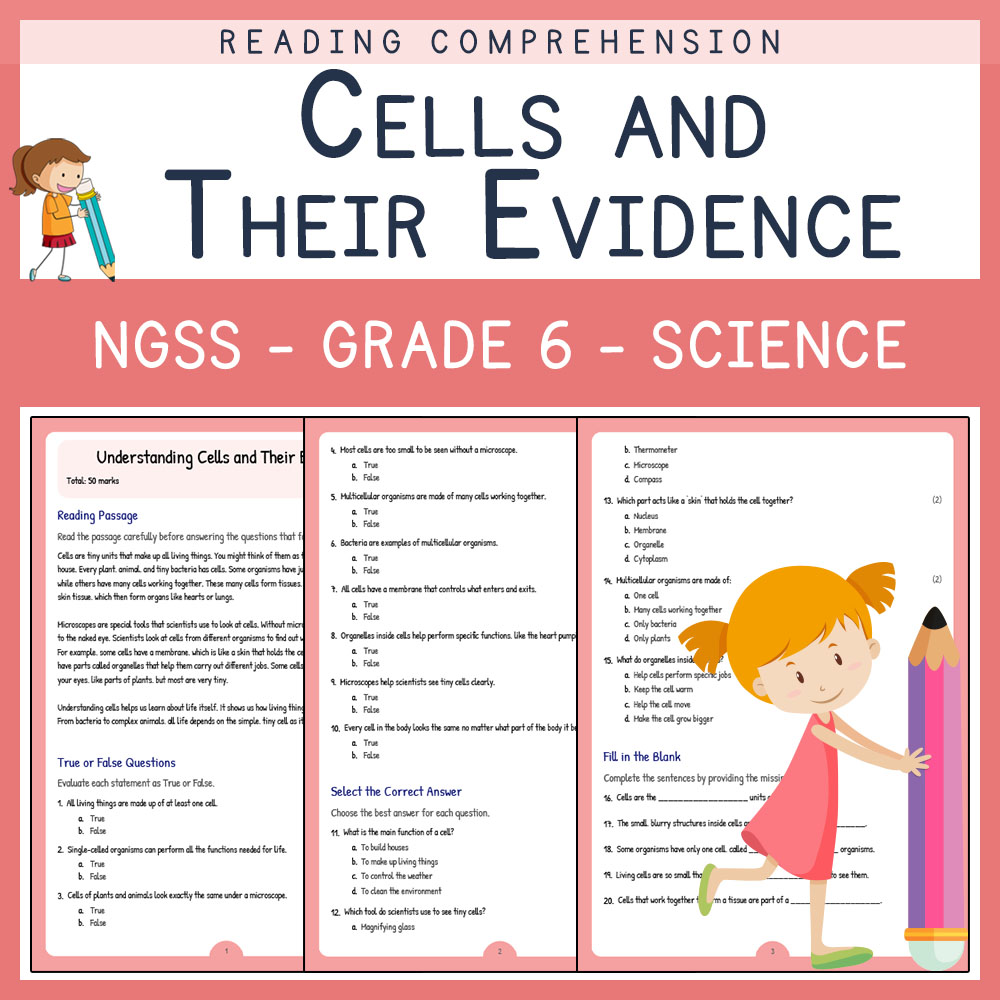
Grade 6 Science | Understanding Cells and Their Evidence Worksheet (PDF) | NGSS
Created byLumora LearningLearning Objectives
- Identify basic characteristics of cells as the units of life
- Distinguish between single-celled and multicellular organisms
- Recognize different cell types and their features using observations
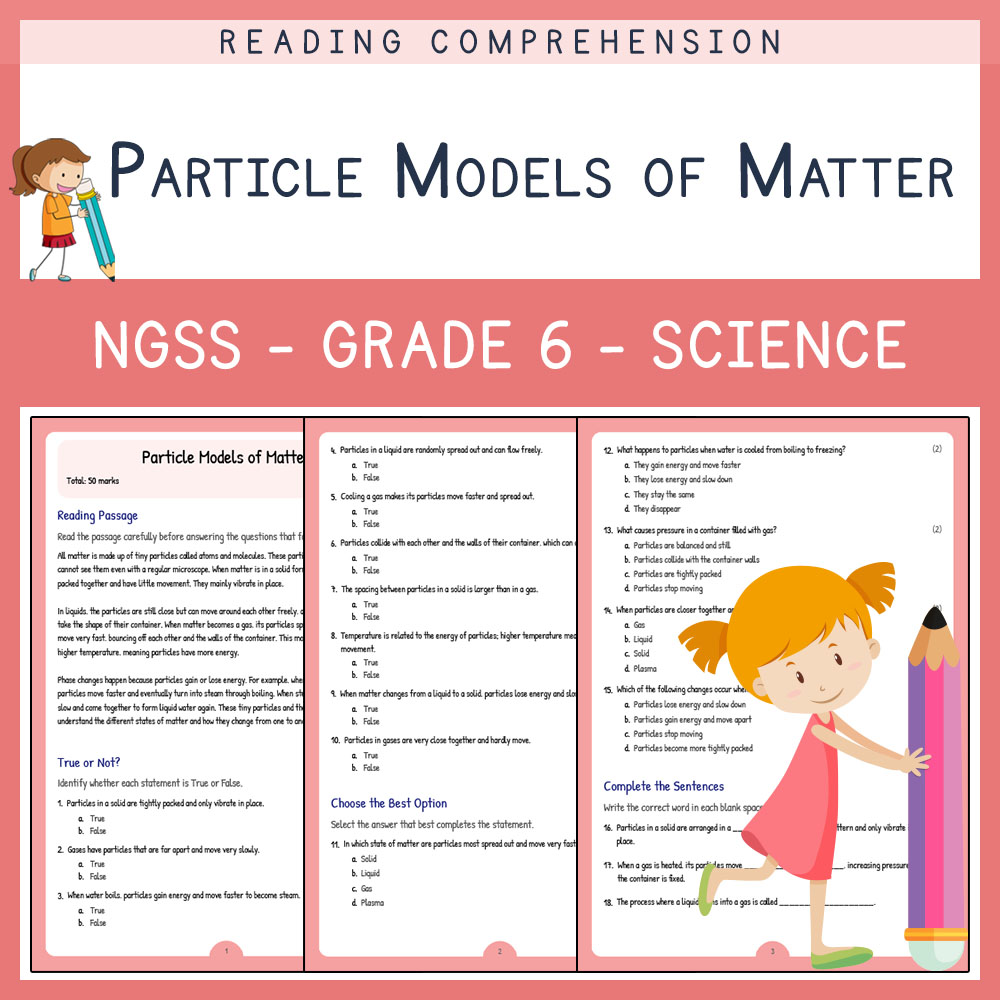
Grade 6 Science | Particle Models of Matter Worksheet (PDF) | NGSS Aligned
Created byLumora LearningLearning Objectives
- Describe matter as made up of tiny particles
- Explain how particle motion relates to temperature and states of matter
- Use particle models to understand phase changes like melting, freezing, boiling, and condensation
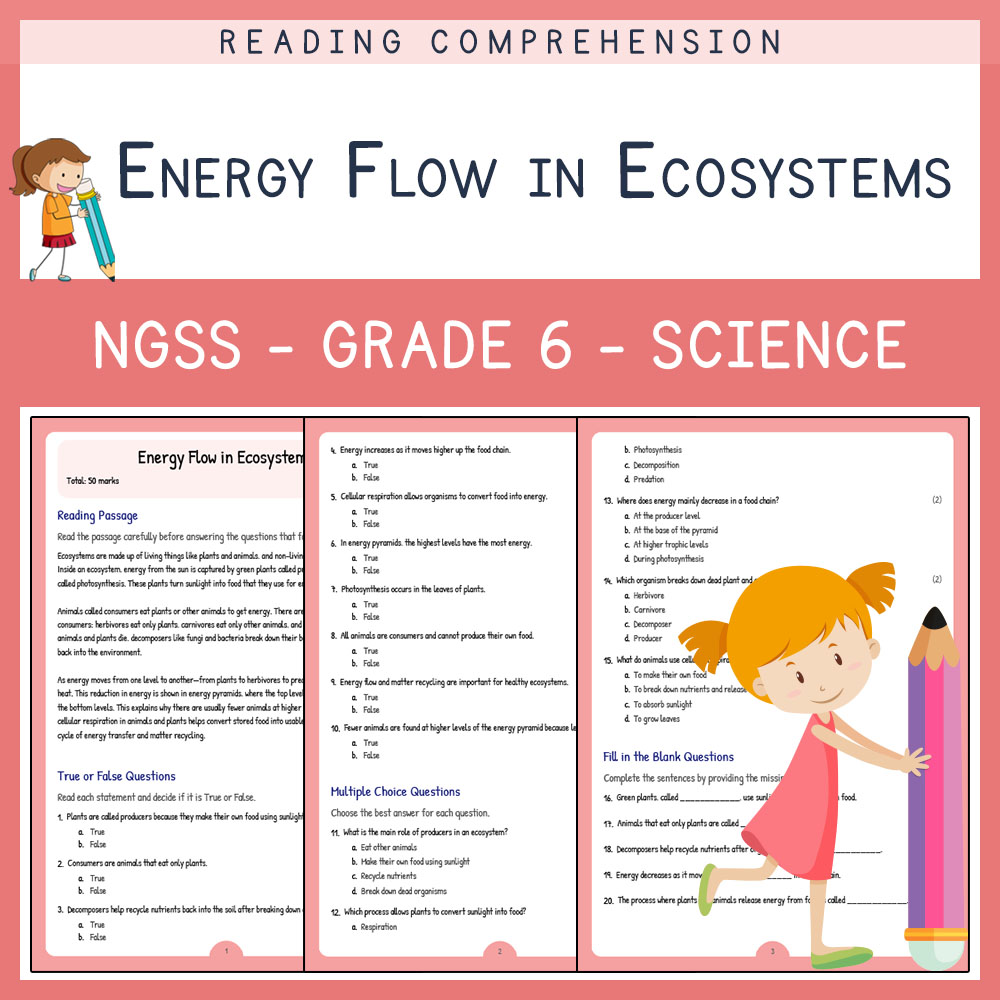
Grade 6 Science | Energy Flow in Ecosystems Worksheet (PDF) | NGSS Aligned
Created byLumora LearningLearning Objectives
- Understand the flow of energy through food webs in different ecosystems.
- Identify producers, consumers, and decomposers in food chains.
- Explain how energy diminishes at higher trophic levels.
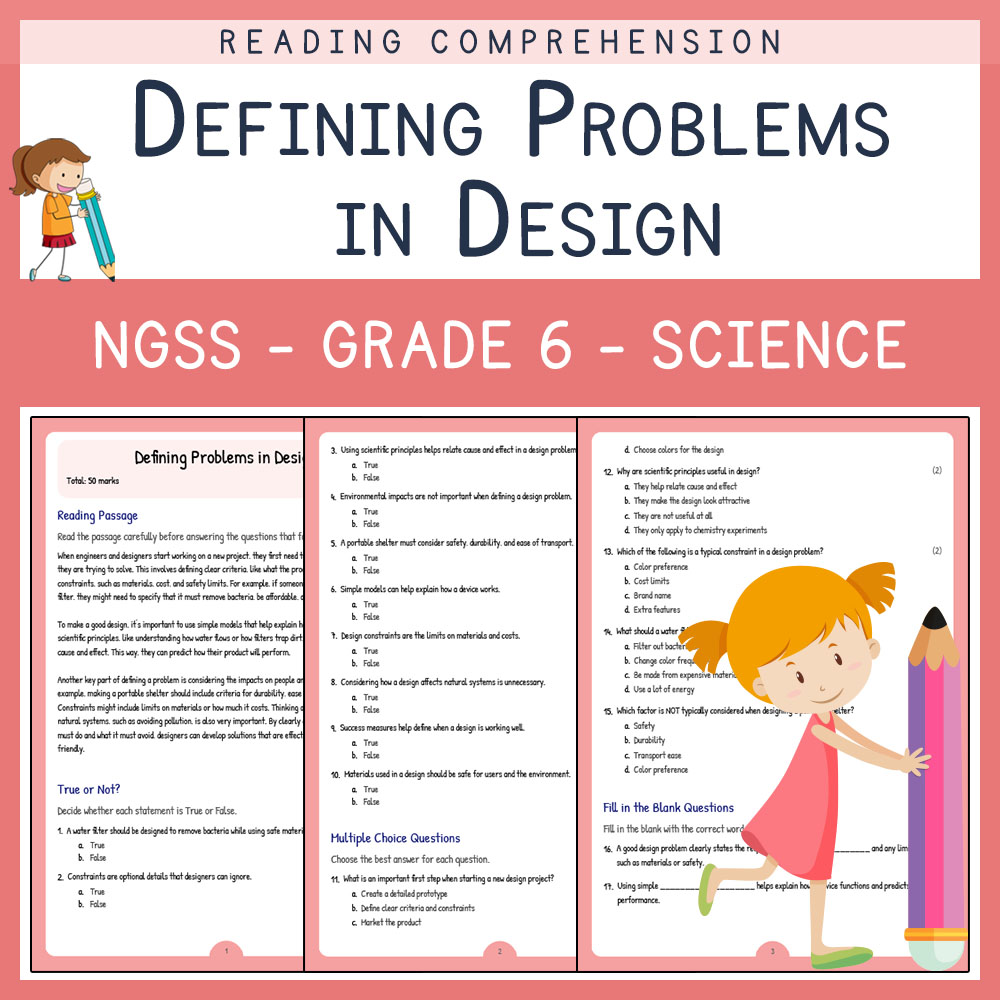
Grade 6 Science | Defining Problems in Design Worksheet (PDF + Answer Key)
Created byLumora LearningLearning Objectives
- Understand how to specify criteria and constraints for a design problem
- Learn to identify required functions, success measures, and limits
- Use simple models and scientific principles to relate cause and effect
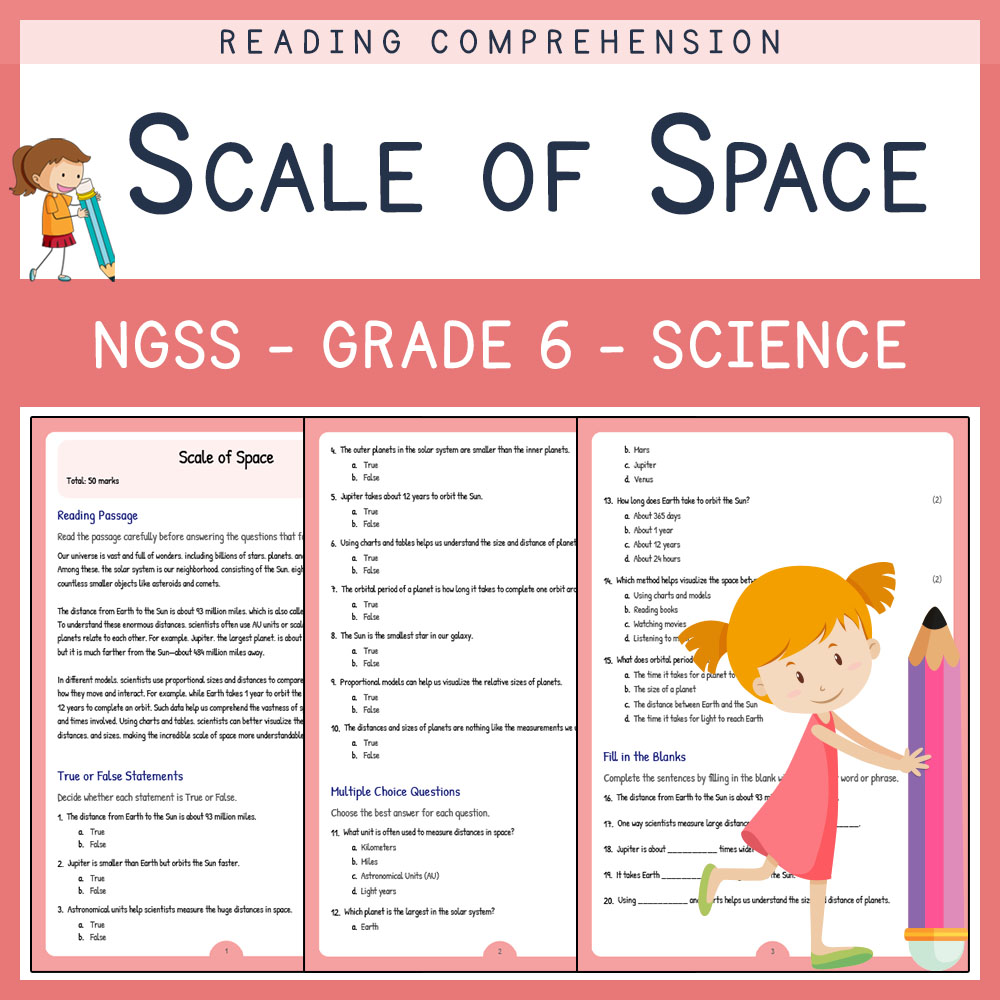
Grade 6 Science | Scale of Space Worksheet (PDF) | NGSS Aligned
Created byLumora LearningLearning Objectives
- Understand the relative sizes and distances of planets in the solar system.
- Learn about astronomical units and how they are used to measure space.
- Compare the sizes and orbital periods of planets like Earth and Jupiter.
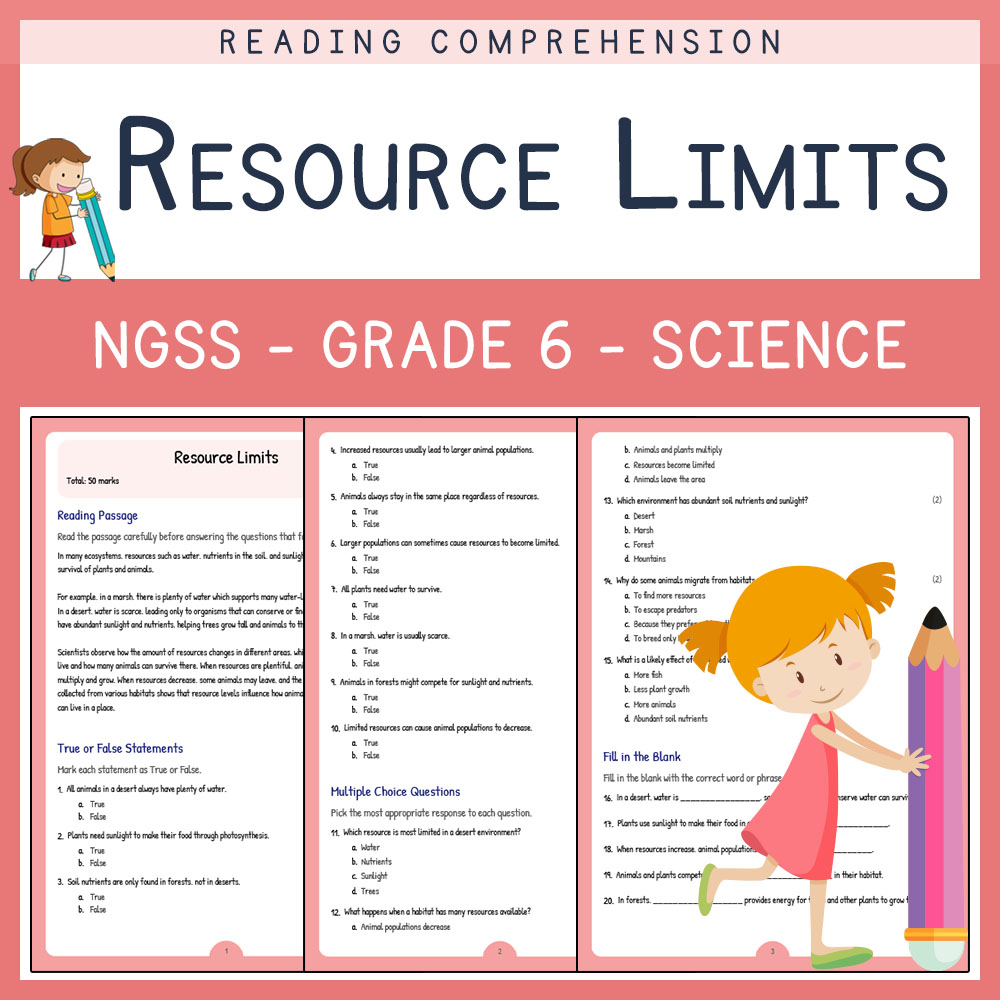
Grade 6 Science | Resource Limits Worksheet (PDF) | NGSS Aligned
Created byLumora LearningLearning Objectives
- Understand how resource availability affects individual organisms and populations.
- Interpret data patterns related to resource distribution in different environments.
- Identify limiting resources such as water, soil nutrients, and light across habitats.
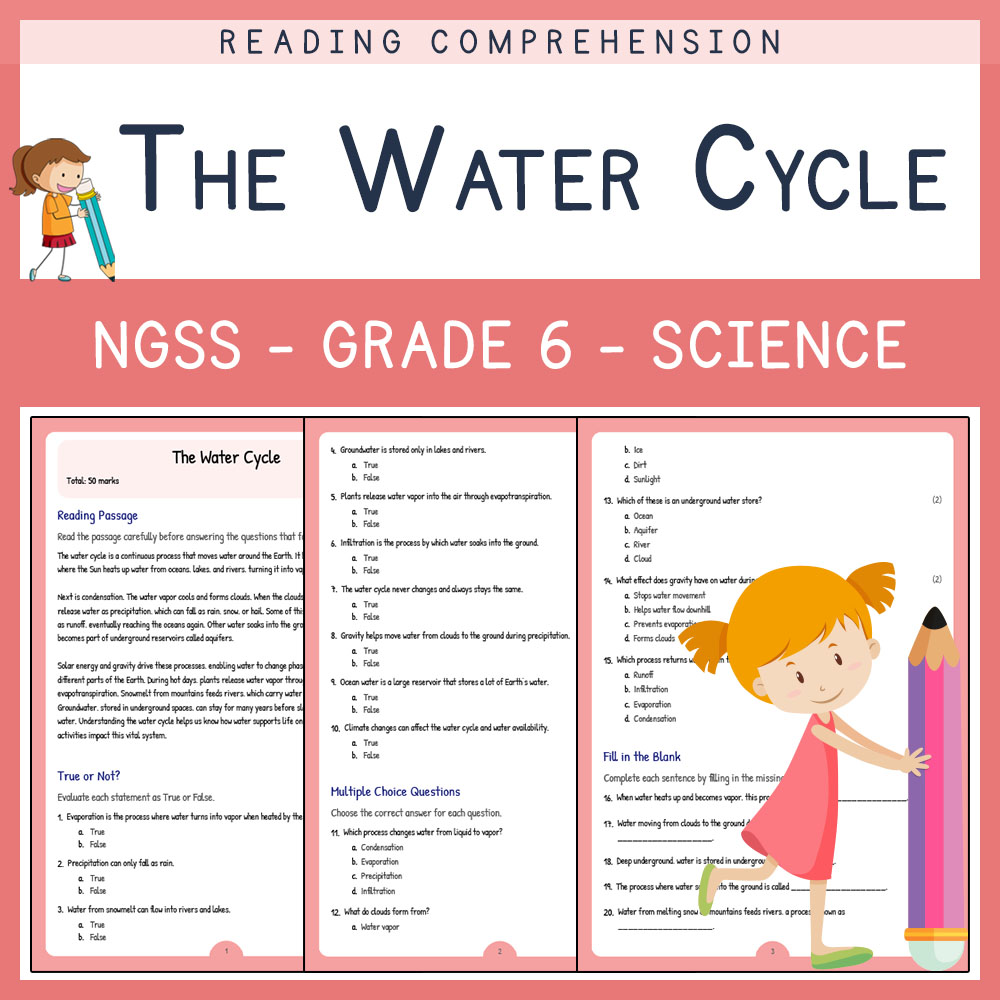
Grade 6 Science | The Water Cycle Worksheets (PDF) | NGSS Aligned
Created byLumora LearningLearning Objectives
- Understand the stages of the water cycle: evaporation, condensation, precipitation, runoff, infiltration, and groundwater storage.
- Identify how solar energy and gravity drive the water cycle processes.
- Recognize the importance of reservoirs like oceans, ice, and groundwater in storing water.
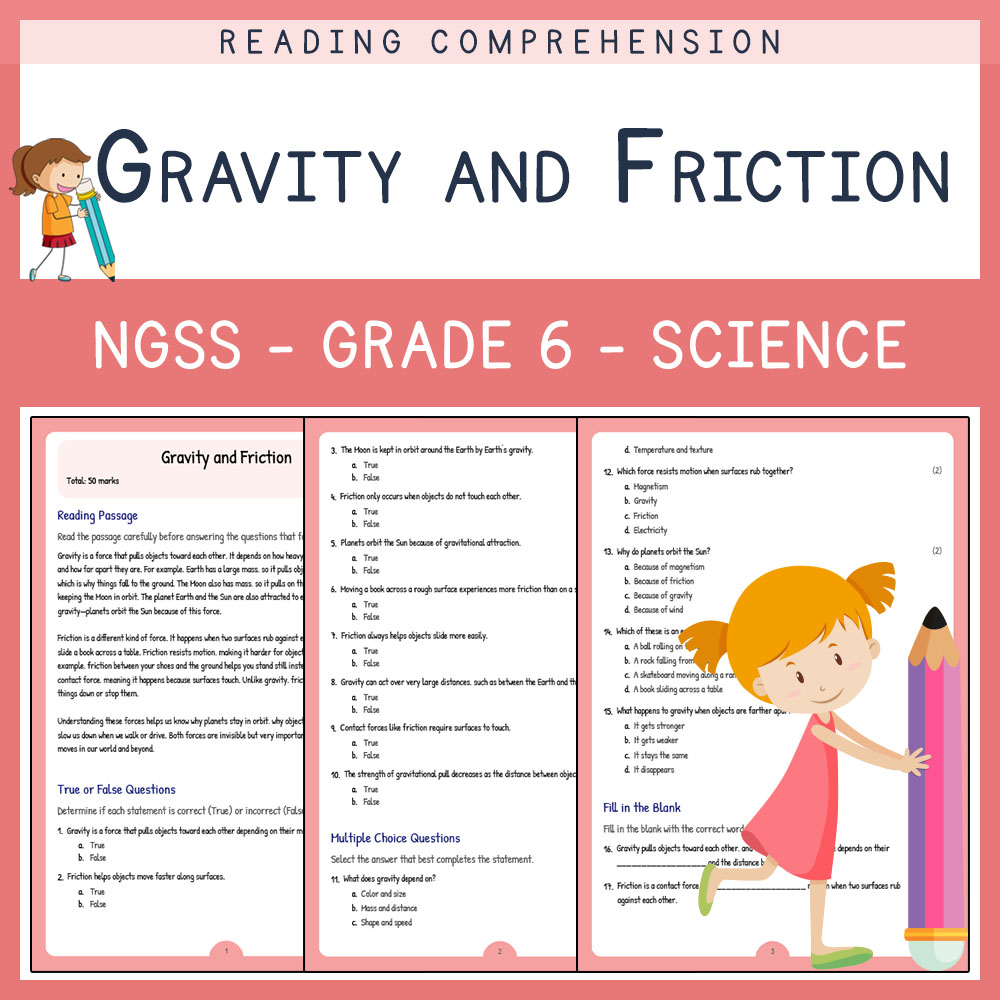
Grade 6 Science | Gravity and Friction Worksheets (PDF + Answer Key) | NGSS
Created byLumora LearningLearning Objectives
- Understand how gravity depends on mass and distance
- Differentiate between gravitational forces and contact forces like friction
- Identify examples of gravitational and frictional forces in everyday life
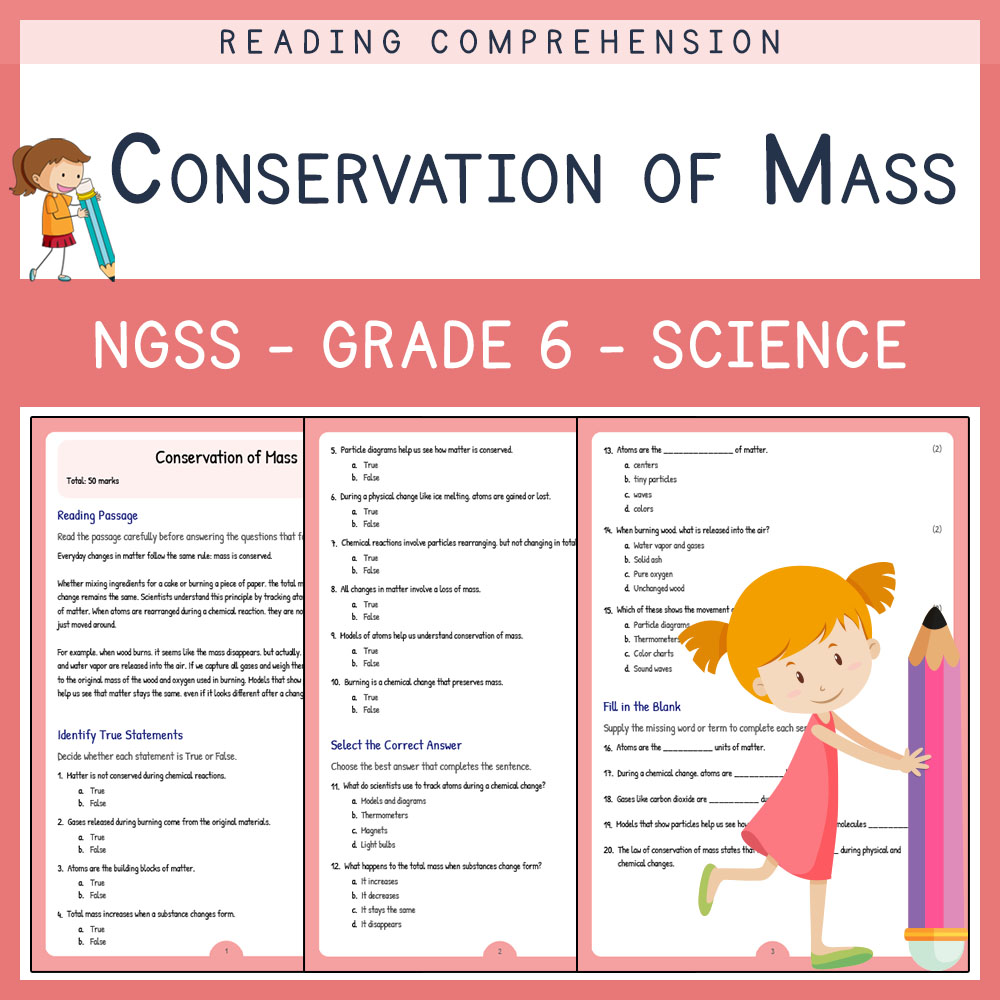
Grade 6 Science | Conservation of Mass Worksheet (PDF) | NGSS Aligned
Created byLumora LearningLearning Objectives
- Understand that matter is conserved during physical and chemical changes.
- Trace atoms and mass through different reactions to see that total mass stays the same.
- Use particle diagrams and models to explain how mass and atoms are conserved.
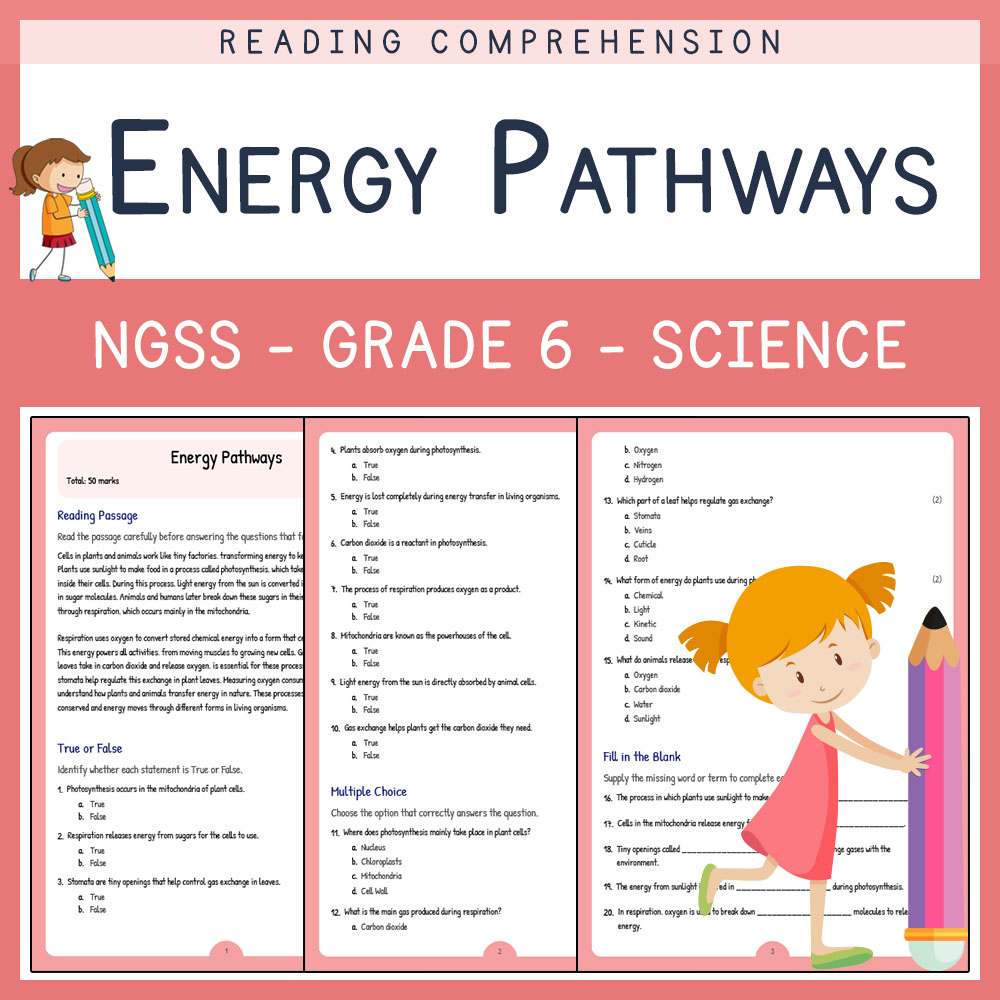
Grade 6 Science | Energy Pathways Worksheet (PDF) | NGSS Aligned
Created byLumora LearningLearning Objectives
- Understand how plants and animals transfer and transform energy in their cells.
- Learn how photosynthesis and respiration are connected processes.
- Identify how light energy is converted into chemical energy in plants.
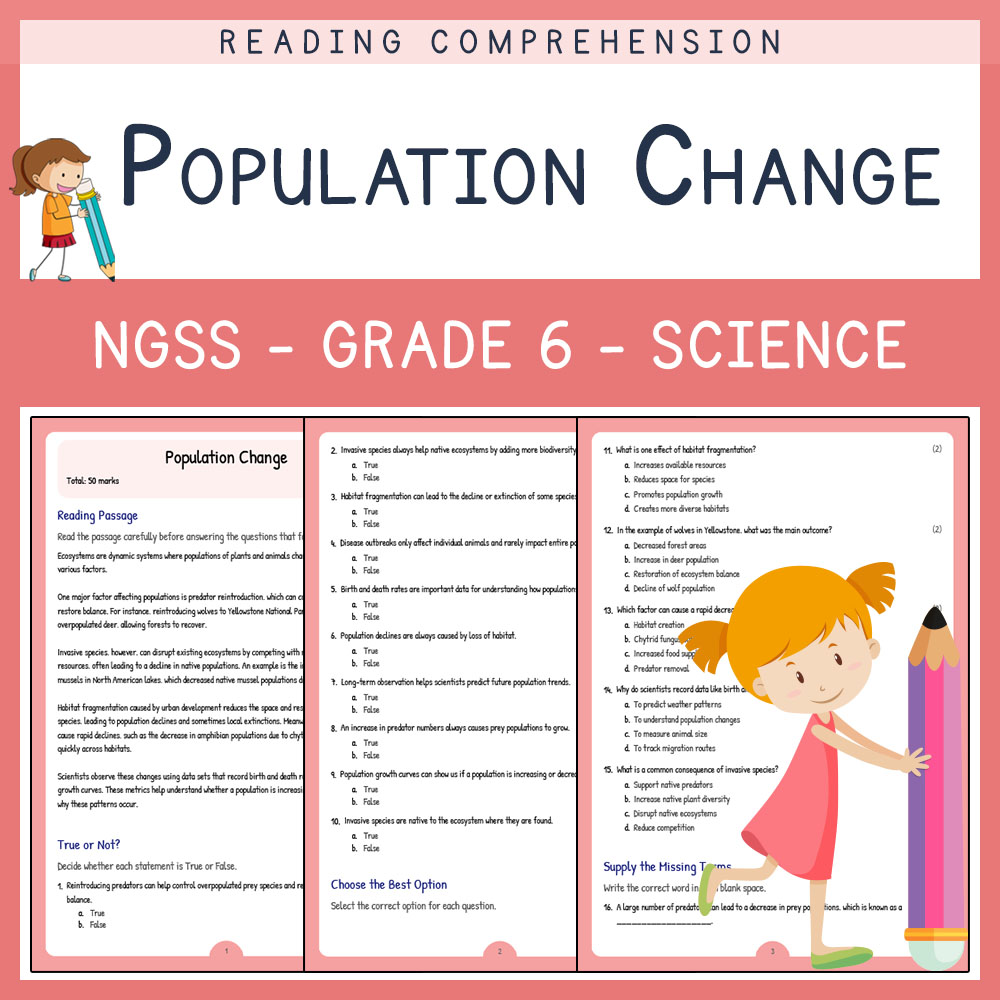
Grade 6 Science | Population Change Worksheet (PDF) | NGSS Aligned
Created byLumora LearningLearning Objectives
- Construct evidence-based arguments about factors influencing population changes in ecosystems.
- Interpret case studies concerning predator reintroduction, invasive species, habitat fragmentation, and disease outbreaks.
- Use empirical data and quantitative metrics to analyze population responses and patterns.
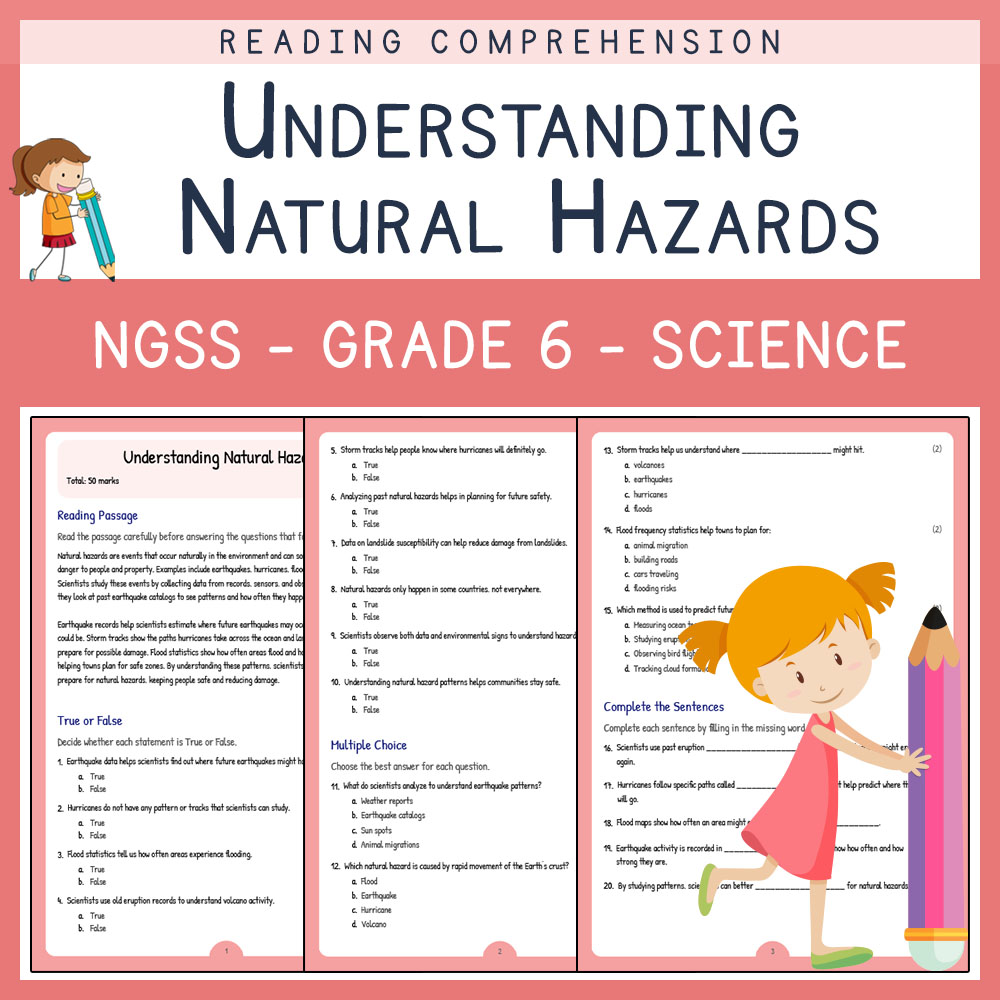
Grade 6 Science | Understanding Natural Hazards Worksheet (PDF) | NGSS Aligned
Created byLumora LearningLearning Objectives
- Learn to identify different types of natural hazards.
- Understand how scientists observe and analyze natural hazards.
- Recognize patterns and recurrence of events like earthquakes and storms.
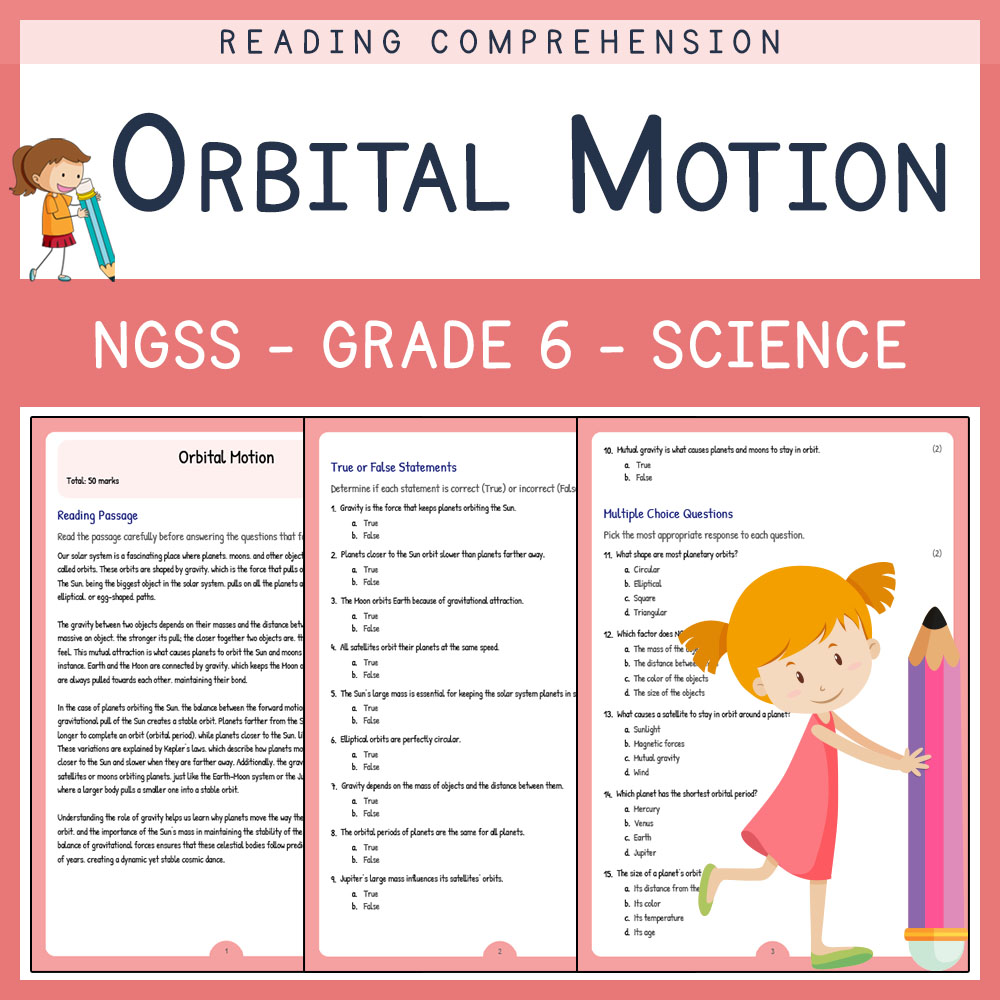
Grade 6 Science | Orbital Motion Worksheets (PDF) | NGSS Aligned
Created byLumora LearningLearning Objectives
- Understand that gravity is the force that keeps planets in orbit around the Sun.
- Describe elliptical orbits and how mutual gravity affects planetary motion.
- Explain the concepts of orbital periods and variations in orbital speed.
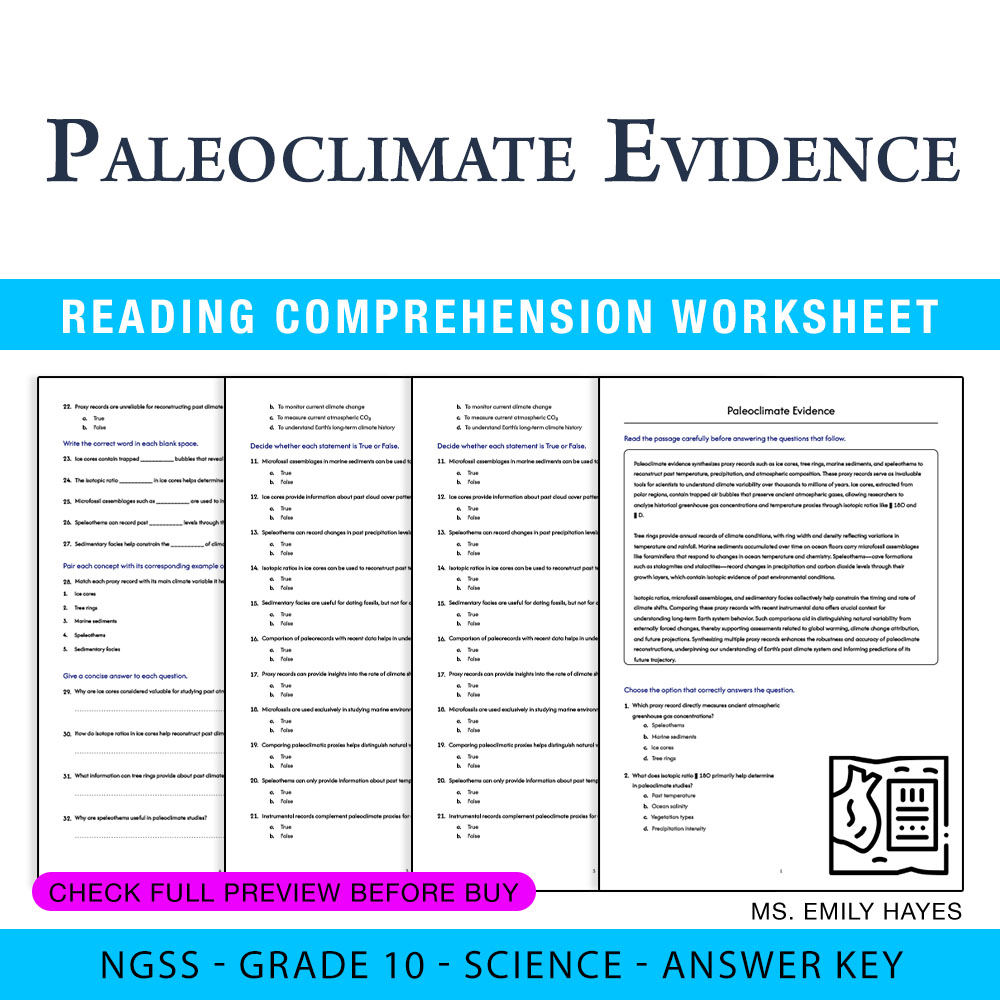
10th Grade Science | Paleoclimate Evidence Worksheet (PDF+ Answer Key)
Created byCopper Leaf ClassroomLearning Objectives
- Understand the types of proxy records used in paleoclimate reconstruction
- Analyze how isotopic ratios and microfossil assemblages provide insights into past climates
- Evaluate the importance of comparing paleorecords with instrumental data to assess climate trends
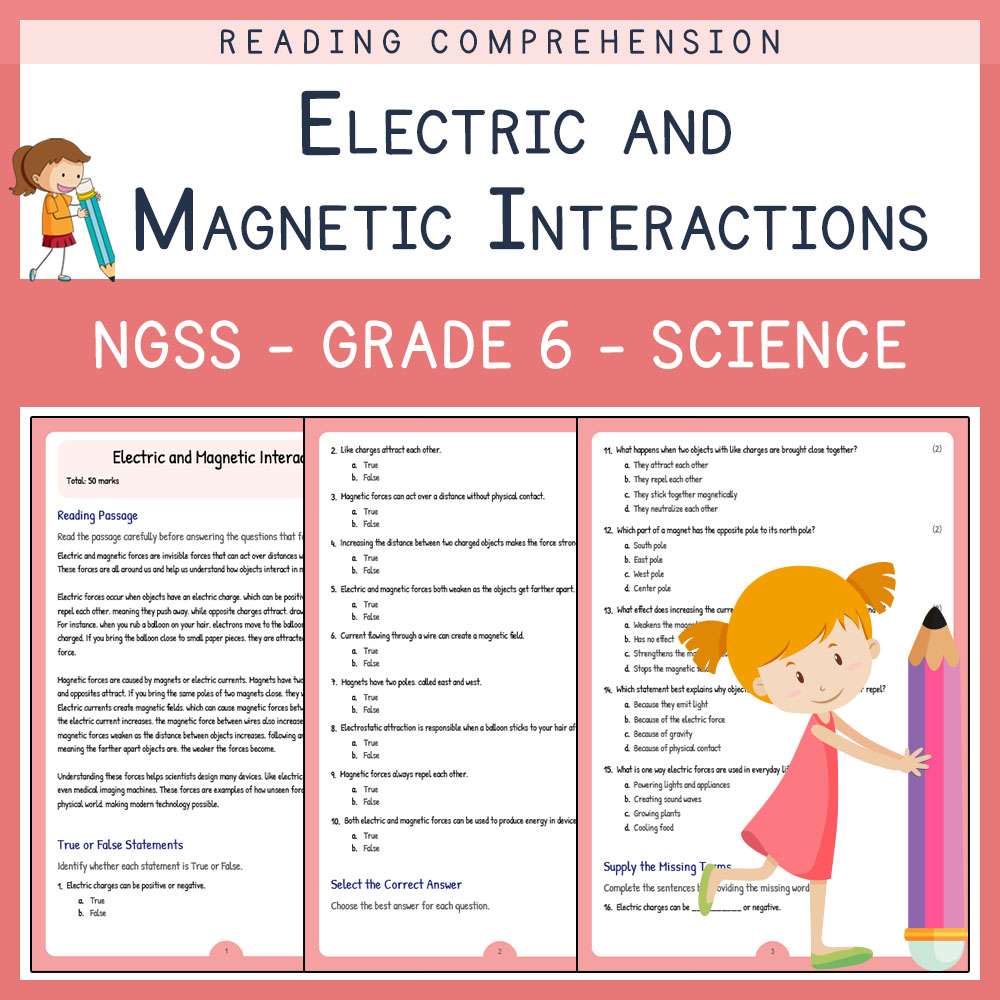
Grade 6 Science | Electric and Magnetic Interactions Worksheet (PDF) | NGSS
Created byLumora LearningLearning Objectives
- Understand the basic principles of electric forces and magnetic forces
- Identify how force strength depends on source strength and distance
- Differentiate between electrostatic attraction/repulsion and magnetic force
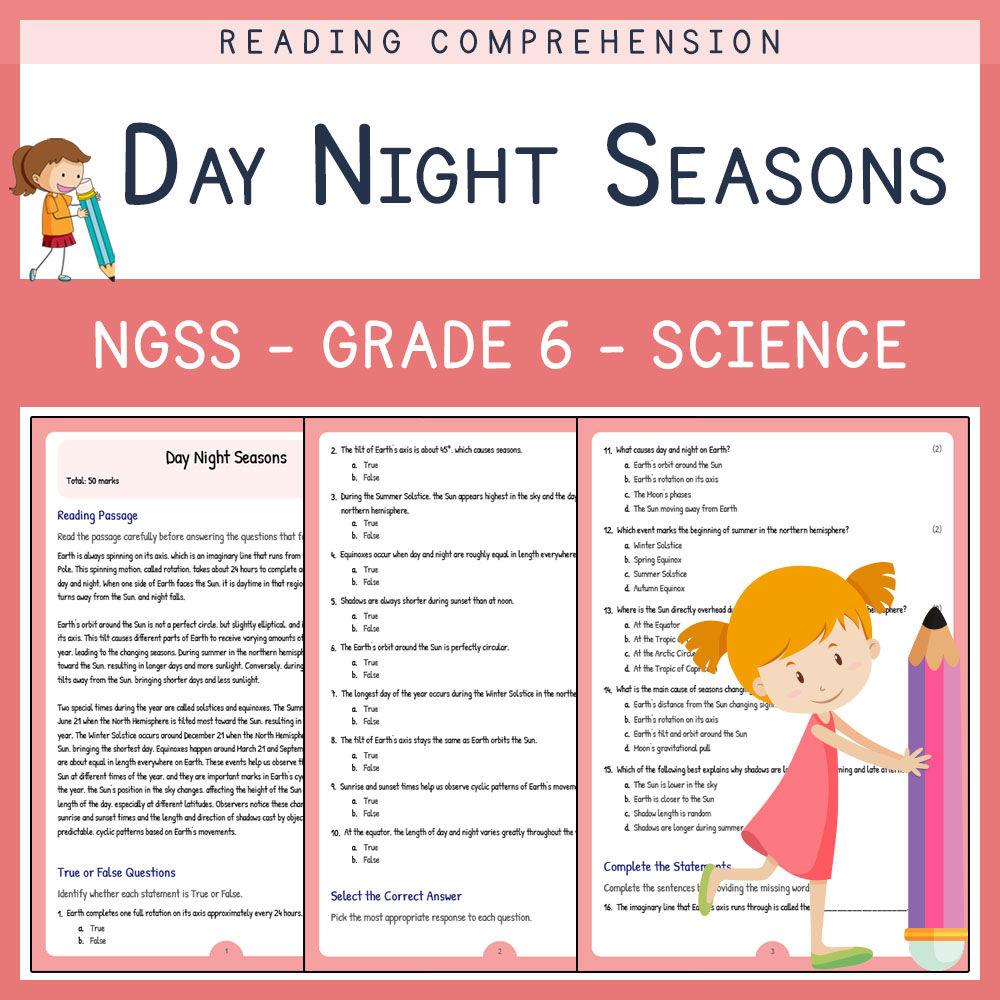
Grade 6 Science | Day, Night & Seasons Worksheet (PDF) | NGSS Aligned
Created byLumora LearningLearning Objectives
- Understand Earth's rotation and orbit
- Identify key phenomena like day and night, seasons, solstices, and equinoxes
- Explain how sunlight and shadow patterns relate to Earth's position
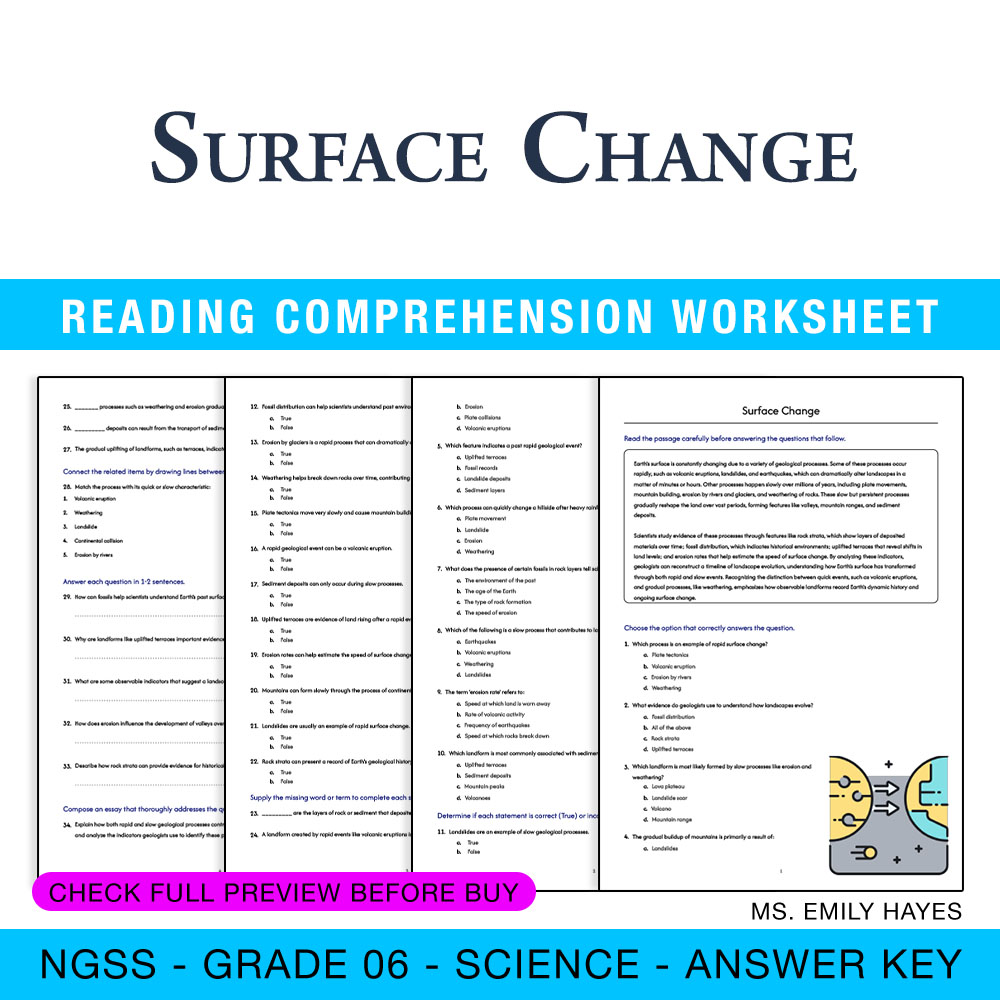
6th Grade Science | Surface Change Worksheet (PDF + Answer Key)
Created byCopper Leaf ClassroomLearning Objectives
- Explain the processes that modify Earth's surface, including both rapid and slow geological events.
- Identify evidence such as rock strata, fossil distribution, and landforms that help explain landscape evolution.
- Contrast the characteristics and effects of rapid surface change events like volcanic eruptions and landslides with slow processes like weathering and continental collision.
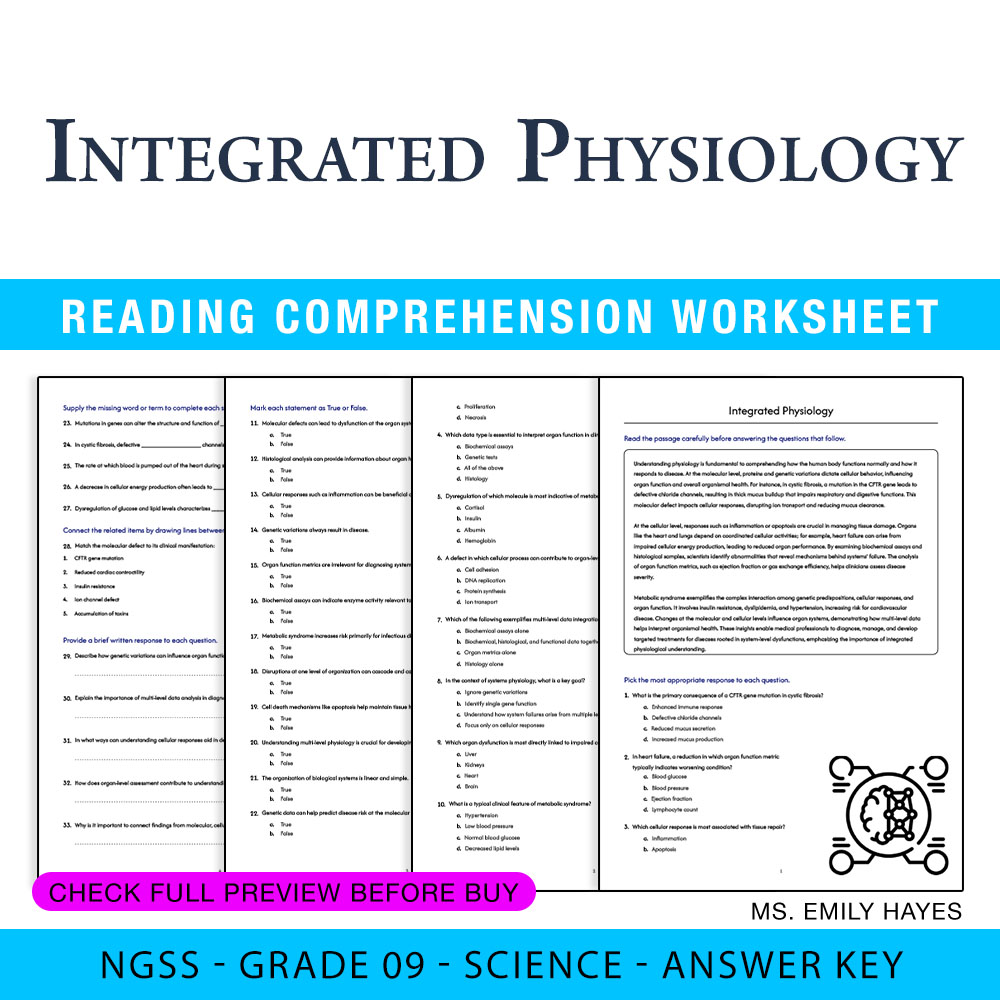
Grade 9 Science | Integrated Physiology Worksheet (PDF+ Answer Key)
Created byCopper Leaf ClassroomLearning Objectives
- Understand how molecular, cellular, and organ-level interactions contribute to physiological functions and health.
- Analyze clinical and natural exemplars such as cystic fibrosis, heart failure, and metabolic syndrome to understand system dysfunction.
- Construct explanatory accounts connecting genetic variation to cellular responses and organ system performance.
Browse more categories
About Science Worksheets
Find Science worksheets spanning core skills, practice, and review. All 42,822 resources are instant PDF downloads for the classroom or home.
Every worksheet on MyTeachingSheets is created by independent teacher-authors and reviewed before publication. All resources download as printable PDFs for classroom, homework, or at-home practice, and many include answer keys. Preview any worksheet free before buying.