
Science Worksheets
42,685 subject resources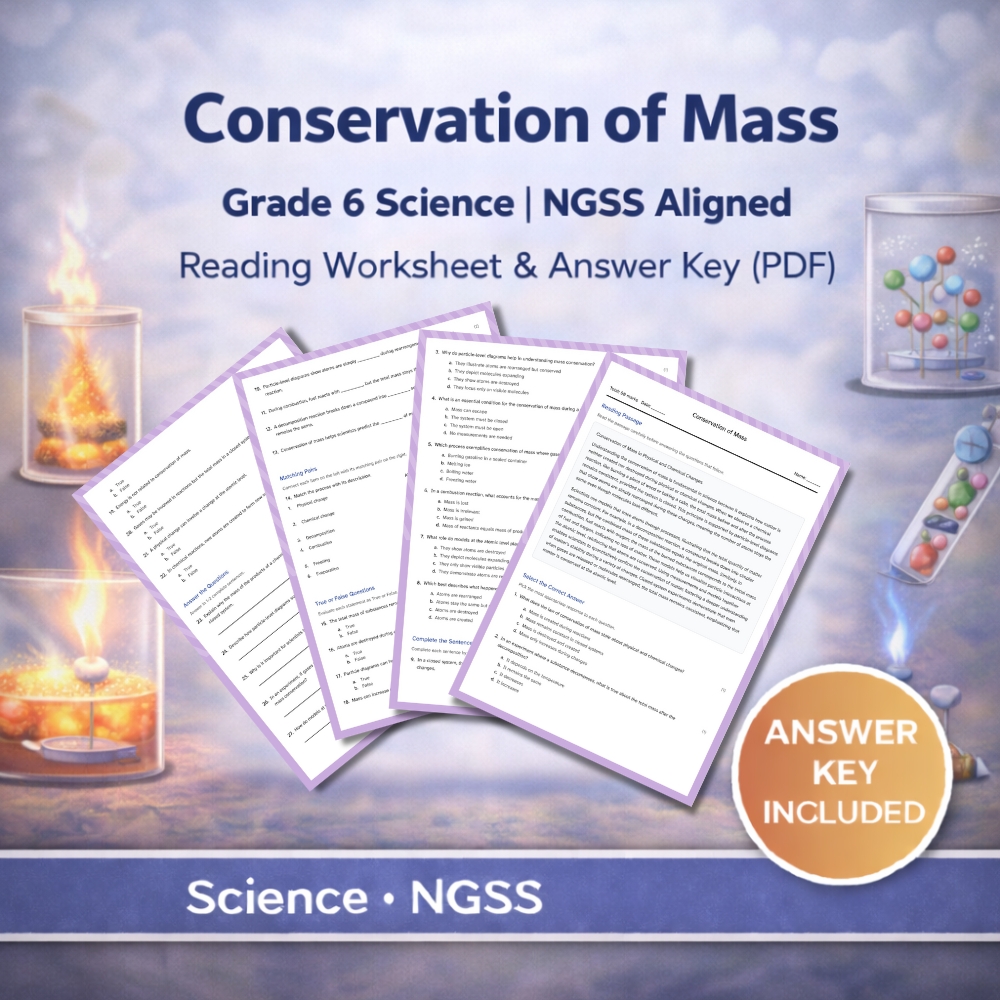
6th Grade Science | Conservation of Mass | Worksheet & Answer Key (NGSS Aligned)
 Created byCedar Grove Learning
ScienceGrade 6
Learning Objectives
- Develop and interpret models that demonstrate the conservation of mass during physical and chemical changes.
- Connect mass measurements before and after changes to atom counts and model particle-level diagrams.
- Explain how atoms are conserved even when molecules rearrange during processes like combustion and decomposition.
$5.00
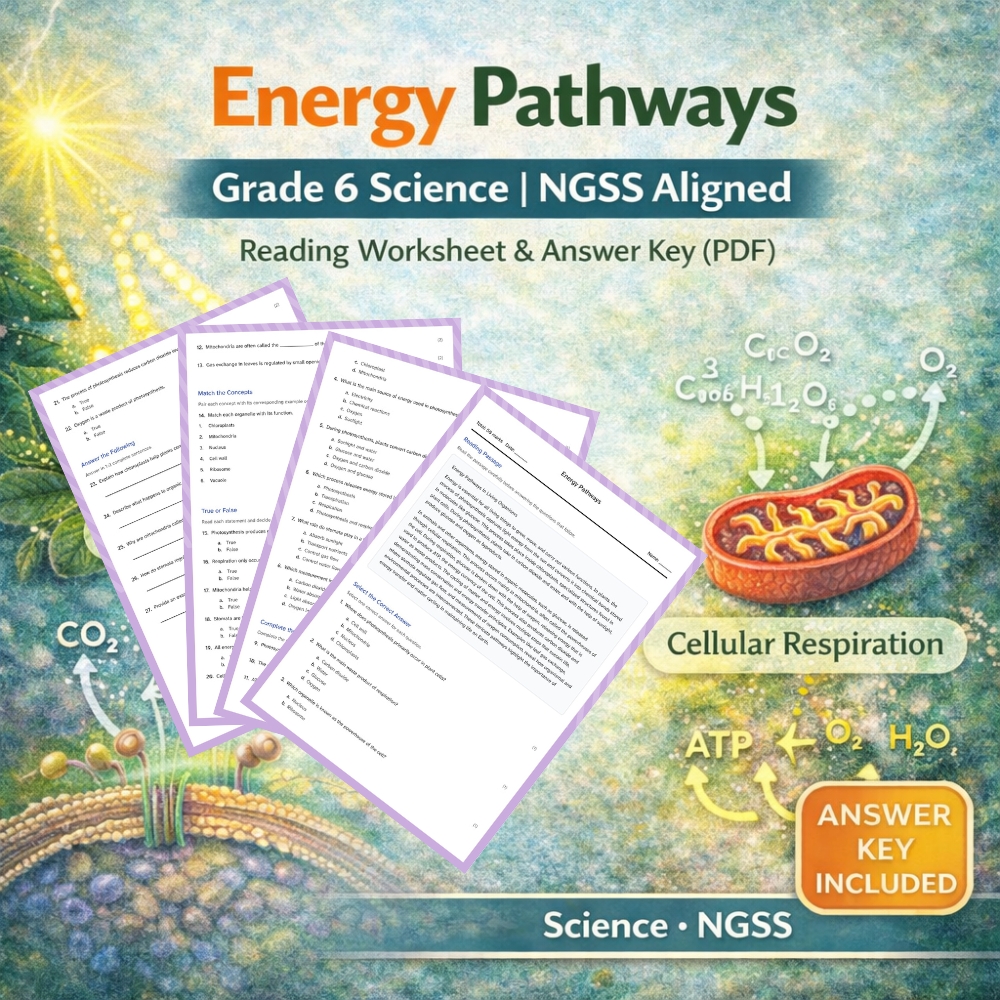
6th Grade Science | Energy Pathways | Worksheet & Answer Key ( NGSS )
Created byCedar Grove LearningScienceGrade 6
Learning Objectives
- Understand how photosynthesis converts light energy into chemical energy in plants.
- Explain how organisms break down organic molecules to release energy through respiration.
- Identify the roles of chloroplasts and mitochondria in energy transfer processes.
$5.00
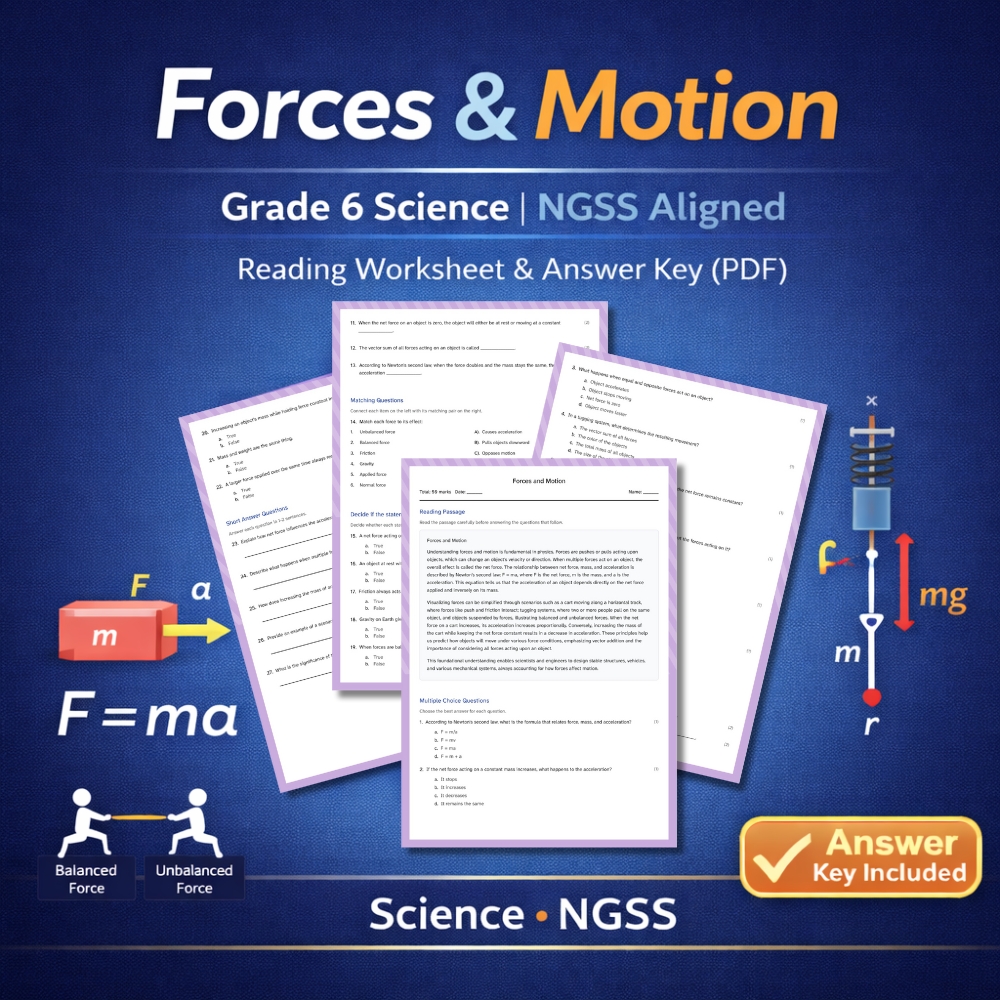
6th Grade Science | Forces and Motion Worksheet – NGSS Standards
Created byCedar Grove LearningScienceGrade 6
Learning Objectives
- Explain how net force affects the motion of objects.
- Describe the relationship between force, mass, and acceleration using the equation F = ma.
- Identify scenarios illustrating the vector sum of forces and predict resulting motion.
$5.00
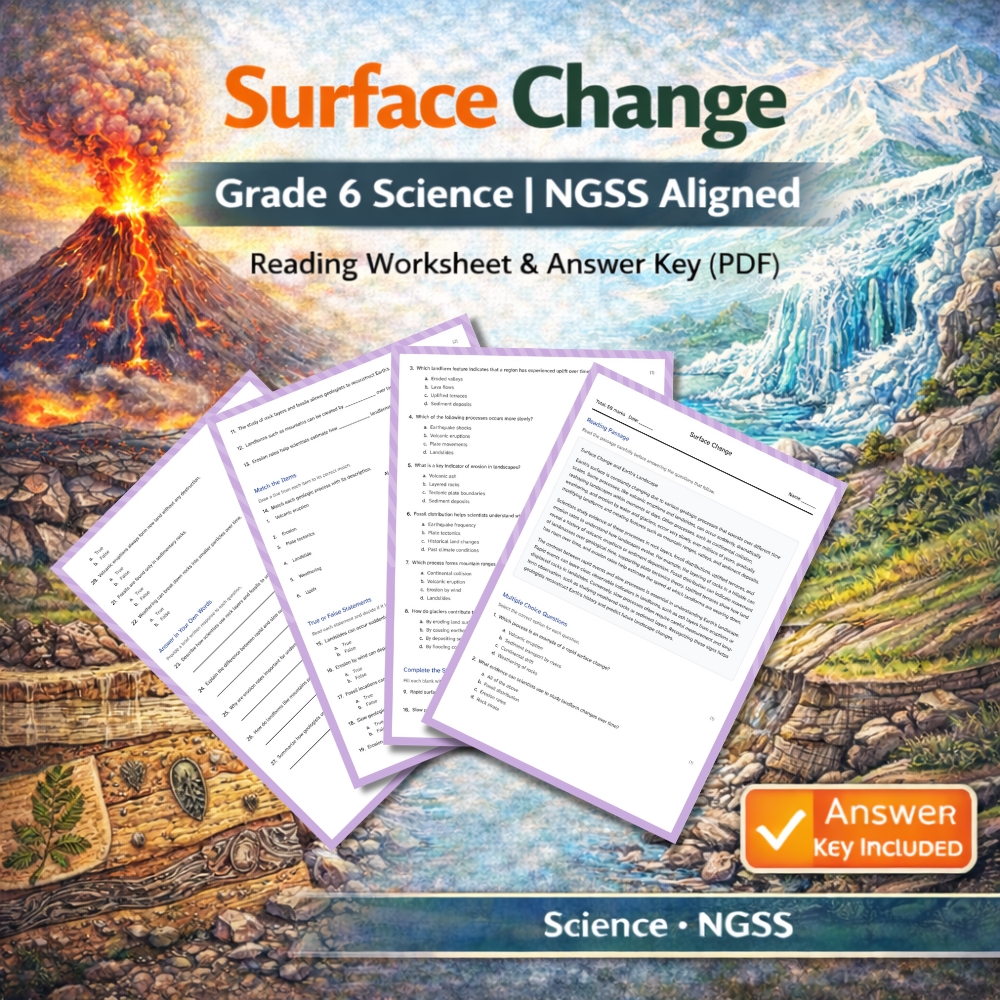
Grade 6 Science | Surface Change | NGSS ( Worksheet + Answer Key )
Created byCedar Grove LearningScienceGrade 6
Learning Objectives
- Understand and describe geologic processes that modify Earth's surface over various time scales.
- Identify evidence such as rock strata, fossils, and landforms that indicate landscape evolution.
- Compare rapid and slow surface change events and their observable indicators.
$5.00
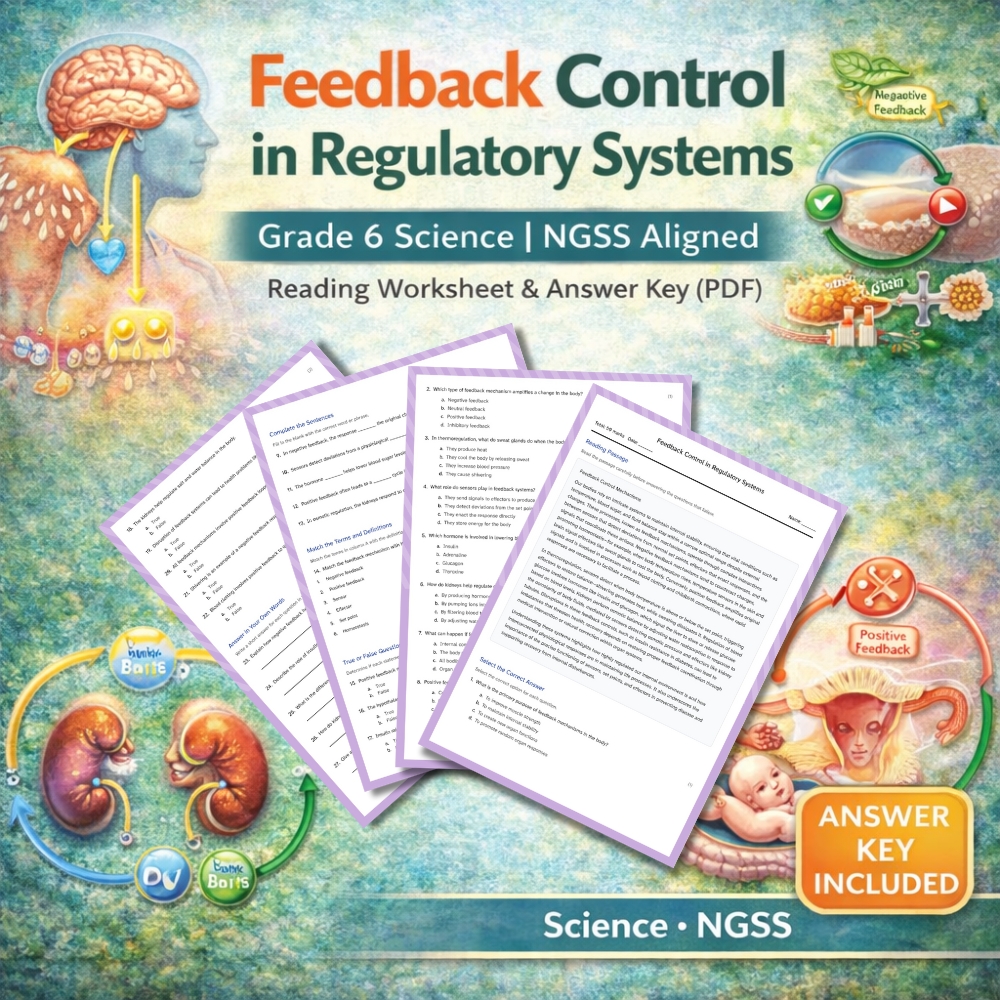
6th Grade Science | Feedback Control in Regulatory Systems | NGSS Worksheet
Created byCedar Grove LearningScienceGrade 6
Learning Objectives
- Describe how negative and positive feedback mechanisms maintain internal stability in the body.
- Identify examples of feedback control such as thermoregulation, blood glucose regulation, and osmotic balance.
- Explain the roles of sensors, set points, and effectors in physiological feedback systems.
$5.00
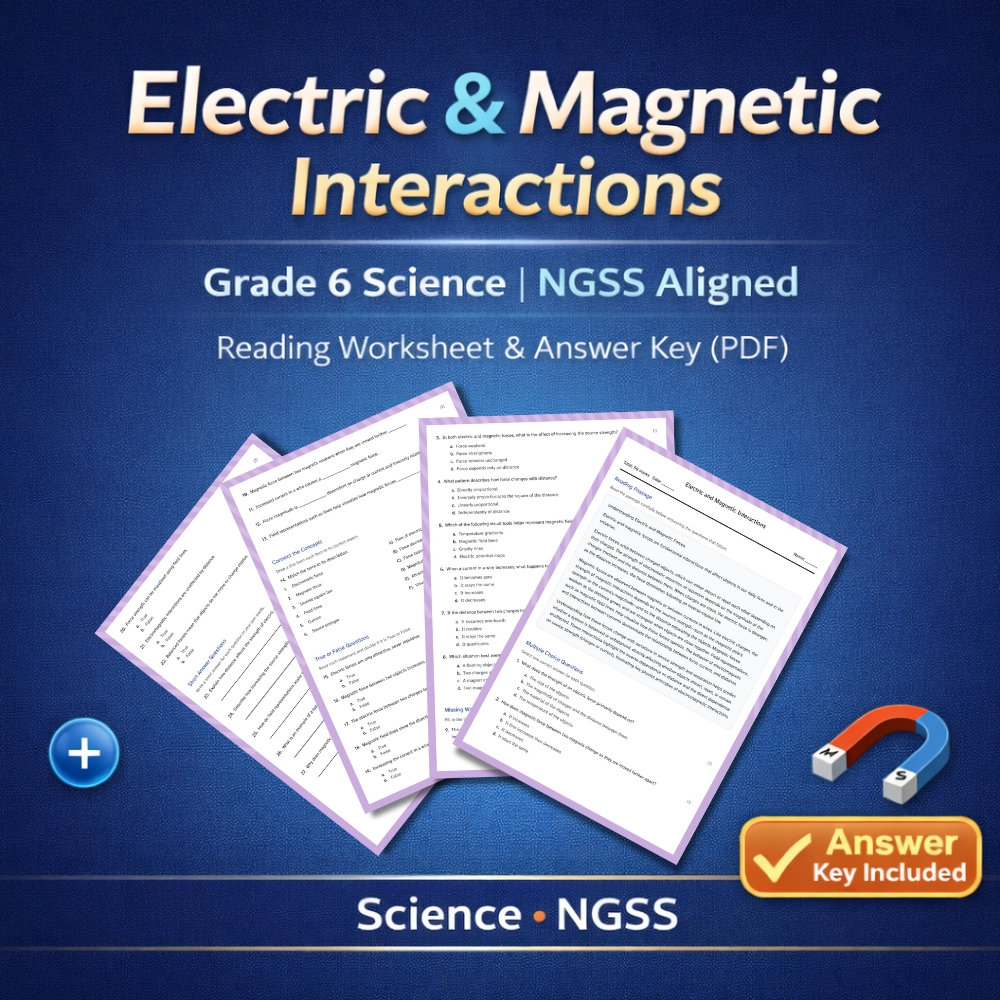
6th Grade Science | Electric & Magnetic Interaction | NGSS Worksheet
Created byCedar Grove LearningScienceGrade 6
Learning Objectives
- Understand how force magnitude depends on source strength and separation in electric and magnetic interactions.
- Identify examples of electrostatic and magnetic forces, including attraction and repulsion.
- Describe how force strength varies inversely with distance and directly with charge or current.
$5.00
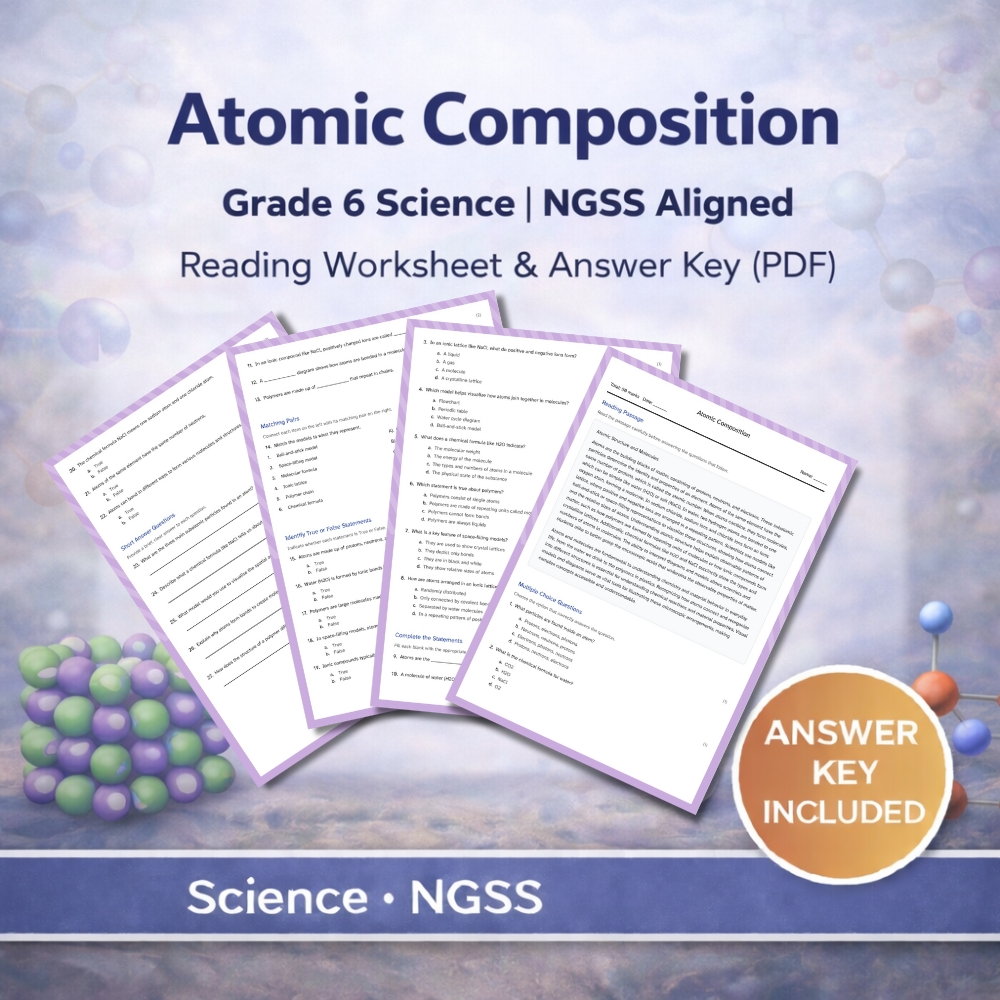
6th Grade Science | Atomic Composition | Worksheet & Answer Key (NGSS Aligned)
Created byCedar Grove LearningScienceGrade 6
Learning Objectives
- Understand the basic structure of atoms and how they form molecules.
- Use models and representations to describe simple molecules like H2O and NaCl.
- Recognize patterns in the structure of polymers and ionic lattices.
$5.00
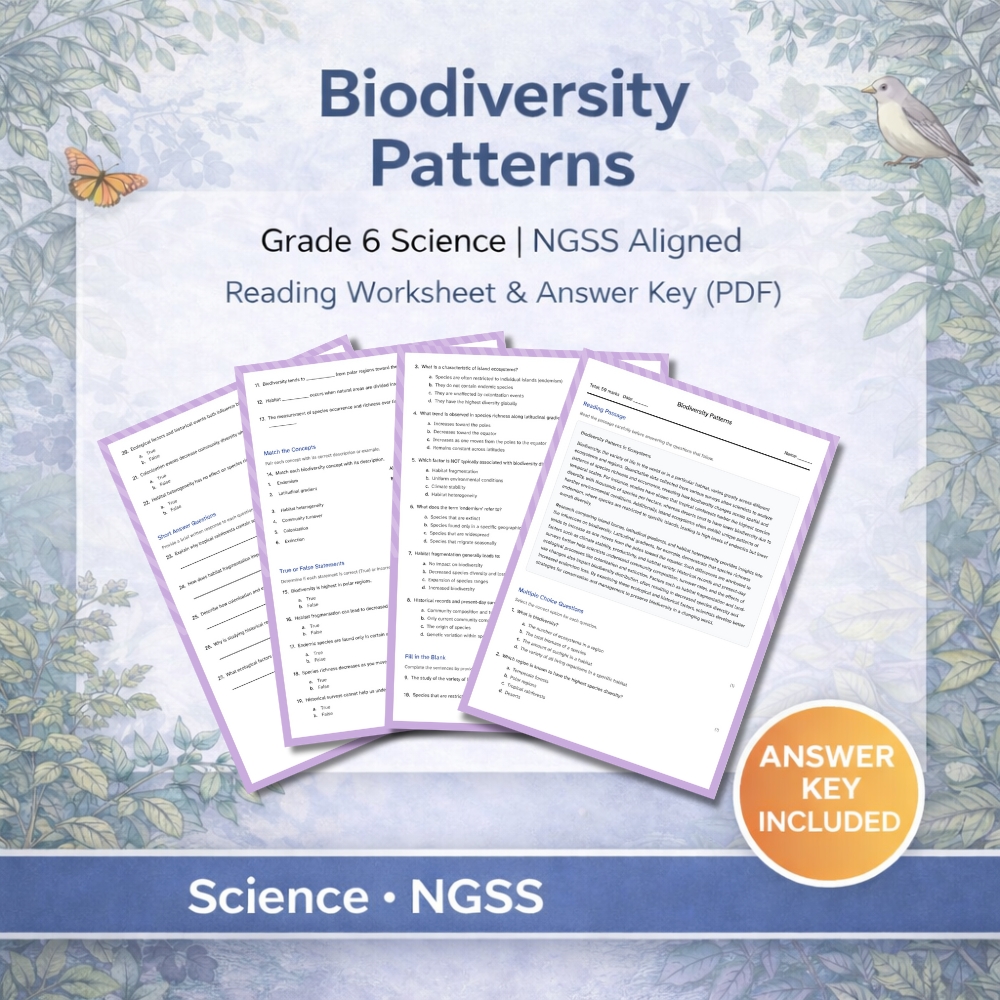
6th Grade Science | Biodiversity Patterns | NGSS Worksheet & Answer Key
Created byCedar Grove LearningScienceGrade 6
Learning Objectives
- Understand how species occurrence and richness reveal biodiversity patterns across different ecosystems.
- Analyze and interpret data related to biodiversity, endemism, and community composition.
- Compare biodiversity variations across islands, latitudinal gradients, and habitats.
$5.00
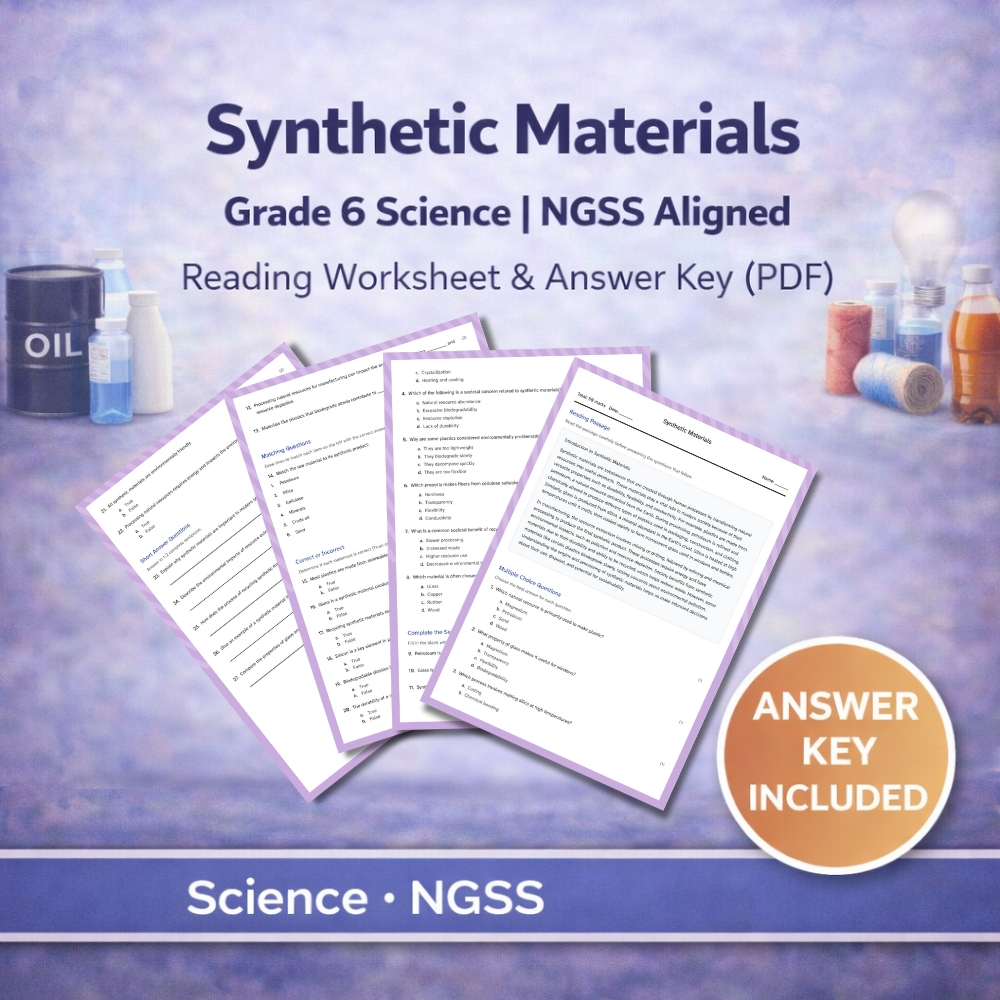
6th Grade Science | Synthetic Materials | Worksheet & Answer Key (NGSS)
Created byCedar Grove LearningScienceGrade 6
Learning Objectives
- Understand the origins of synthetic materials and how natural resources are transformed into manufactured products.
- Compare the properties of different materials such as plastic, fiber, and glass, and relate these to their uses and societal impacts.
- Explain the processes of resource extraction and processing involved in producing synthetic materials.
$5.00
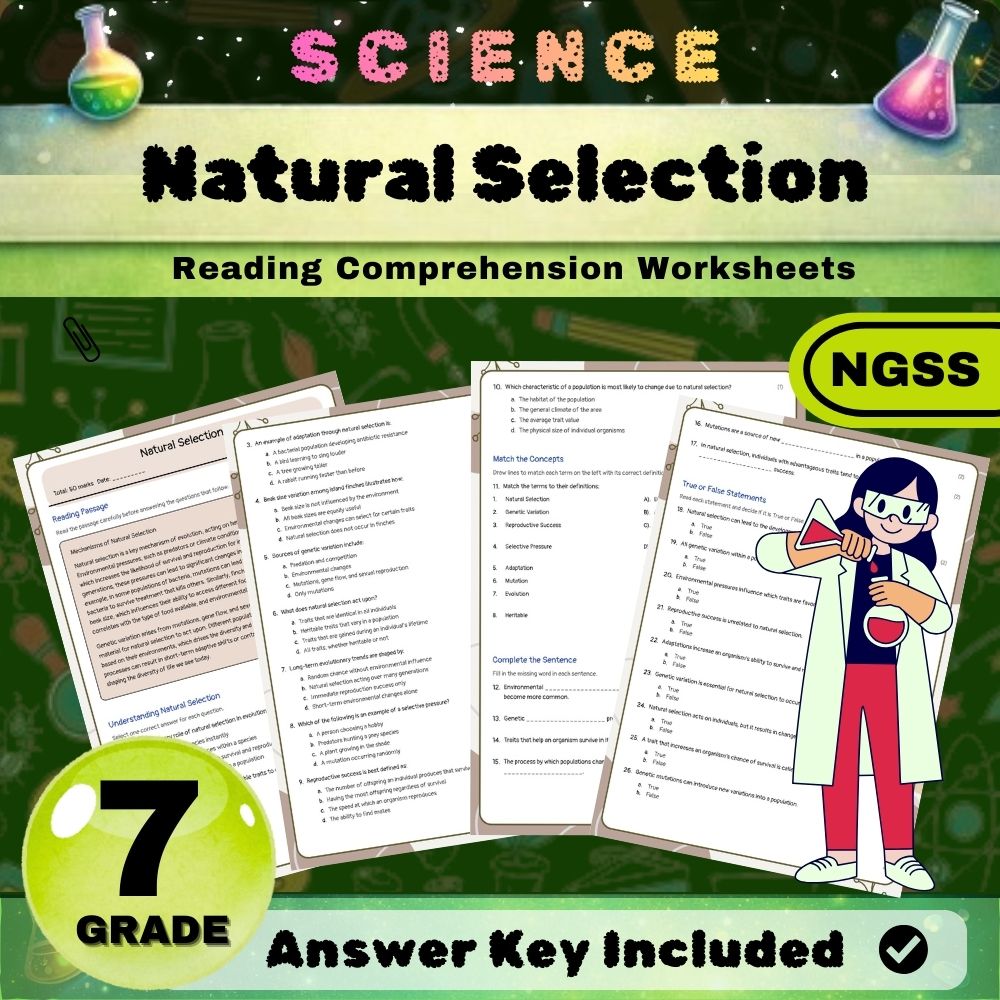
Grade 7 Science | Natural Selection NGSS Worksheet (PDF)
 Created byMaple Path Learning
ScienceGrade 7
Learning Objectives
- Describe how heritable variation and environmental pressures influence natural selection and adaptation.
- Explain how differential survival and reproduction lead to changes in trait distributions over generations.
- Identify examples of adaptation, such as antibiotic resistance and beak size variation in finches.
$5.00
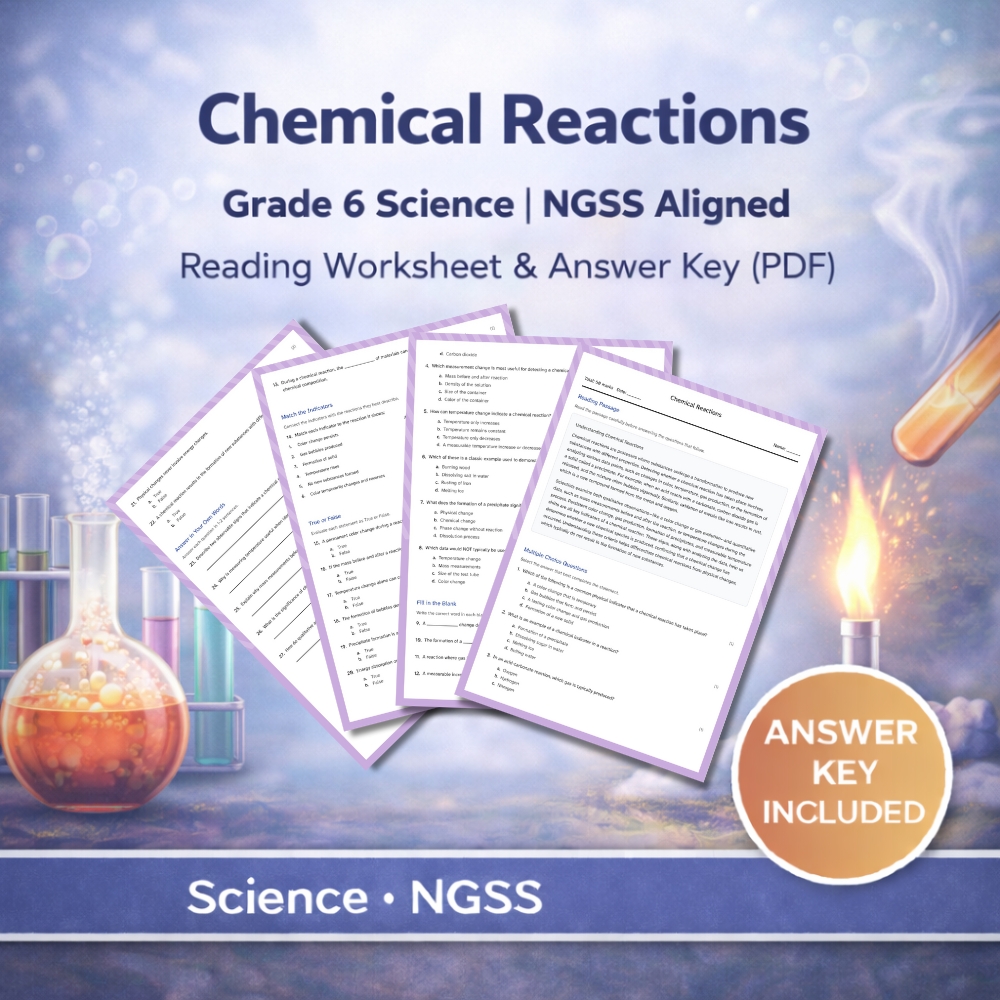
6th Grade Science | Chemical Reactions | Worksheet & Answer Key (NGSS Aligned)
Created byCedar Grove LearningScienceGrade 6
Learning Objectives
- Identify criteria that indicate a chemical reaction based on observable data.
- Analyze quantitative and qualitative data to determine if a new substance forms during a reaction.
- Interpret pre- and post-interaction measurements, including mass, temperature, and composition data.
$5.00
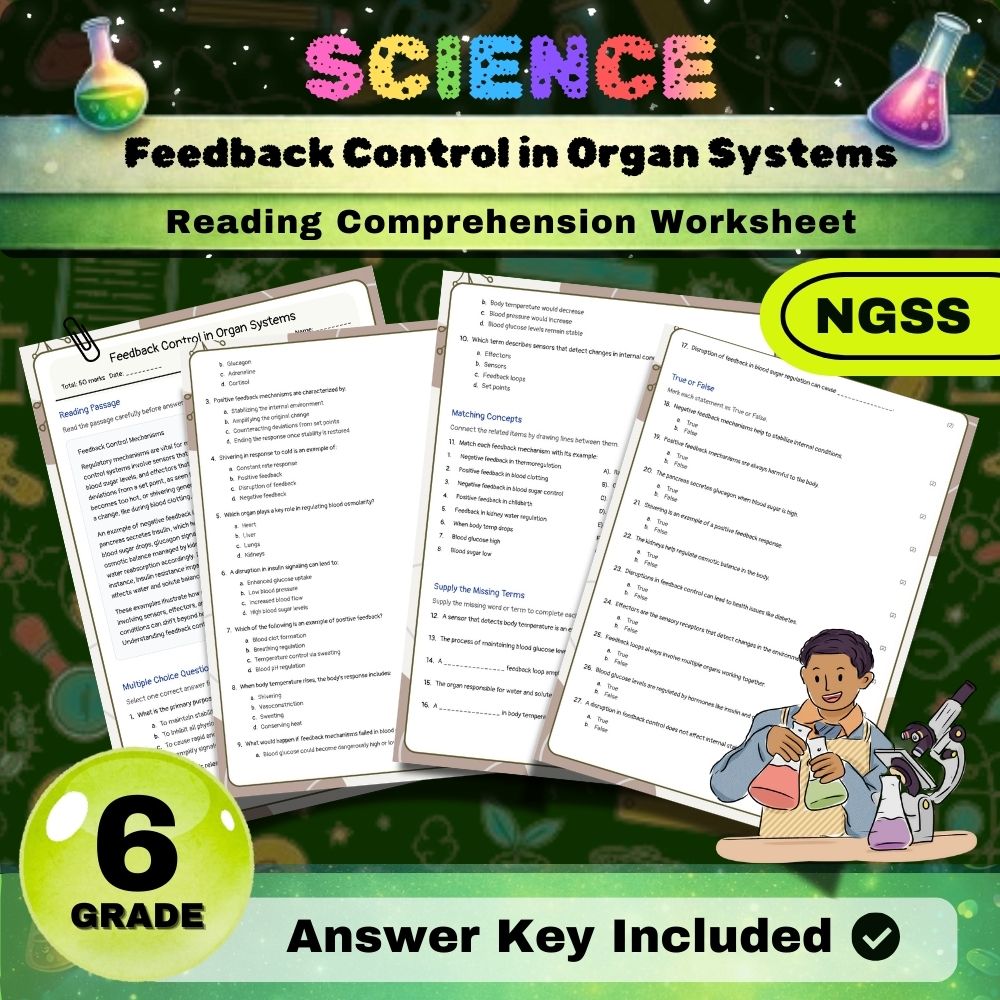
Grade 6 Science – Feedback Control in Organ Systems Worksheet (Answer Key + PDF)
Created byMaple Path LearningScienceGrade 6
Learning Objectives
- Understand the concept of negative and positive feedback mechanisms in maintaining internal stability.
- Identify examples of feedback control such as thermoregulation, blood glucose regulation, and osmotic balance.
- Explain how sensors and effectors work together to regulate physiological set points.
$5.00
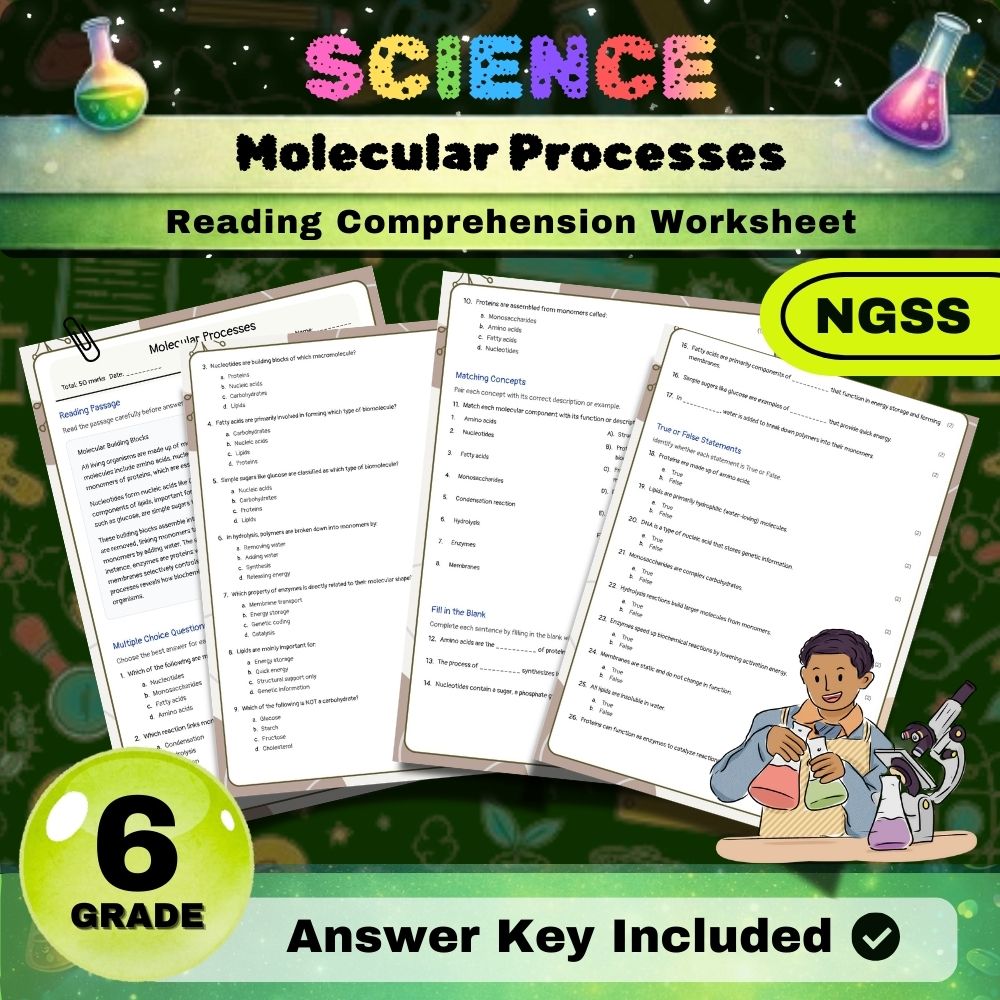
6th Grade Science | Molecular Processes Worksheet (PDF- NGSS Aligned)
Created byMaple Path LearningScienceGrade 6
Learning Objectives
- Explain the role of monomers such as amino acids, nucleotides, fatty acids, and monosaccharides in forming macromolecules.
- Describe how condensation reactions build polymers and hydrolysis breaks them down.
- Relate molecular structure of biomolecules to their properties and functions in living organisms.
$5.00
Browse more categories
About Science Worksheets
Find Science worksheets spanning core skills, practice, and review. All 42,685 resources are instant PDF downloads for the classroom or home.
Every worksheet on MyTeachingSheets is created by independent teacher-authors and reviewed before publication. All resources download as printable PDFs for classroom, homework, or at-home practice, and many include answer keys. Preview any worksheet free before buying.