
Reading comprehension Worksheets
40,284 type resources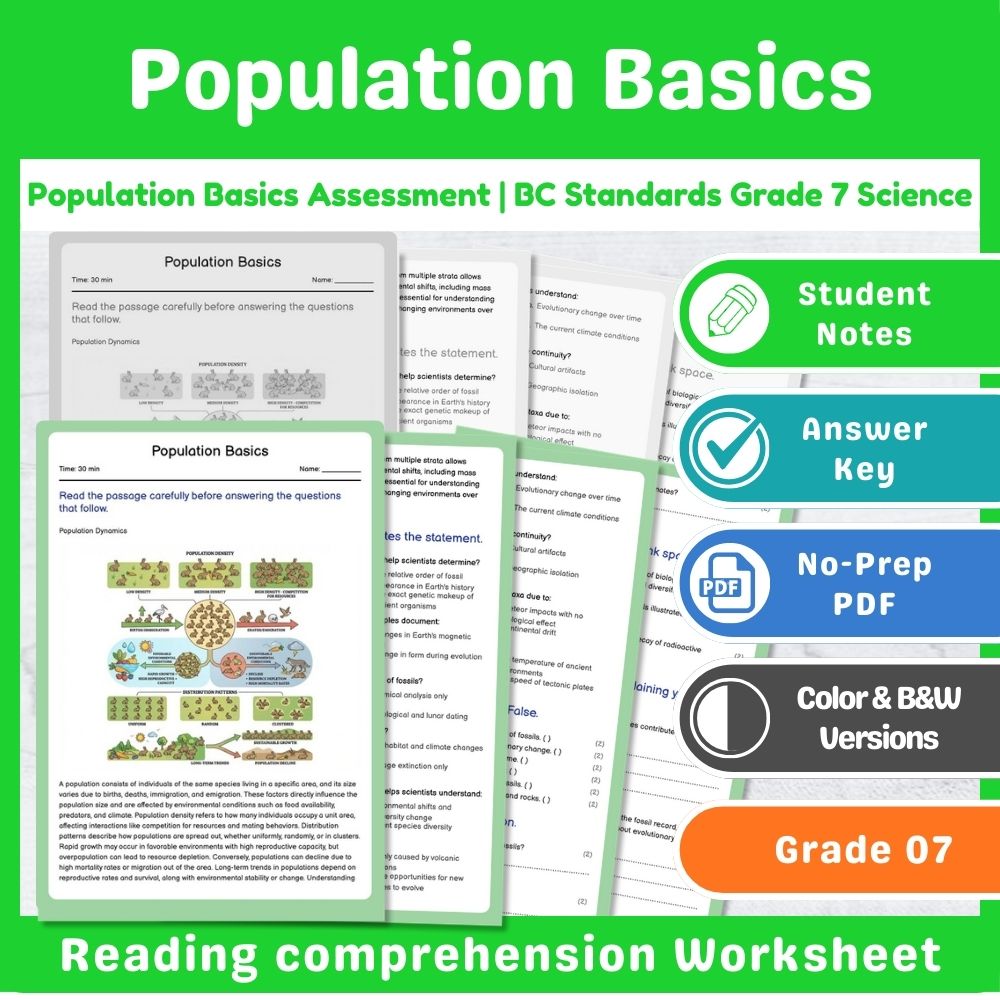
Population Basics Assessment | BC Standards Grade 7 Science
 Created byPrism Point Learning
Learning Objectives
- Understand the core metrics used to describe populations, such as size, density, and distribution patterns.
- Explain how demographic factors like births, deaths, immigration, and emigration influence population change.
- Analyze how environmental conditions interact with population dynamics over short-term and long-term scales.
Instant download

Grade 7 Science – Population Basics & Concepts | Daily Reading Worksheet
 Created byBright Mind Resources
Learning Objectives
- Understand the definition of a population in biology.
- Identify factors that influence population size and distribution.
- Recognize key metrics used to describe populations.
Also included in: Grade 7 Ecosystems & Population Ecology Science Lesson Bundle | BC +1 more
Instant download

Grade 12 Science | Societal Tradeoffs Worksheet | TEKS Aligned
 Created byLumora Learning
Learning Objectives
- Analyze the societal implications of scientific and technological choices.
- Evaluate case studies involving energy, health, and data ethics.
- Understand the trade-offs among benefits, harms, and distributional effects.
Instant download
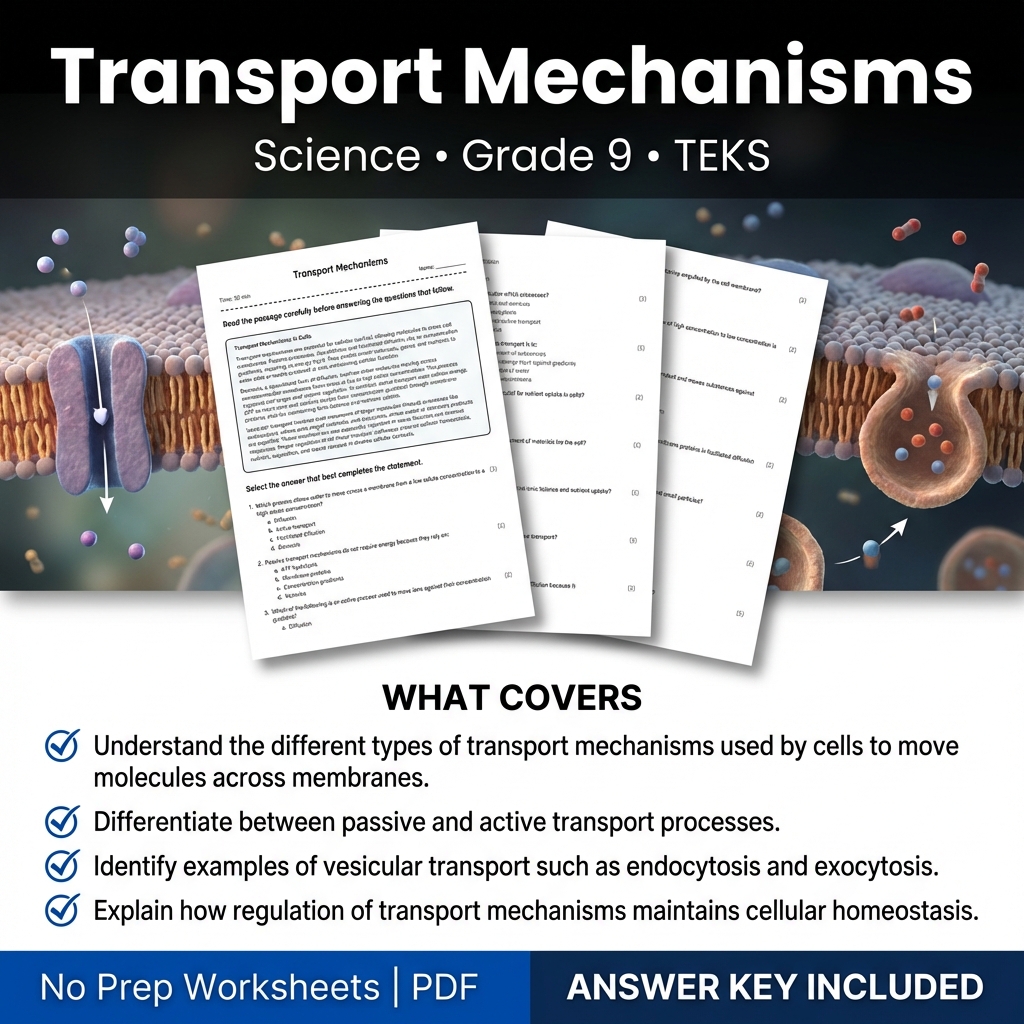
Transport Mechanisms Worksheet for Grade 9 Science TEKS Practice
 Created byCoral Reef Learning
Learning Objectives
- Understand the different types of transport mechanisms used by cells to move molecules across membranes.
- Differentiate between passive and active transport processes.
- Identify examples of vesicular transport such as endocytosis and exocytosis.
Instant download
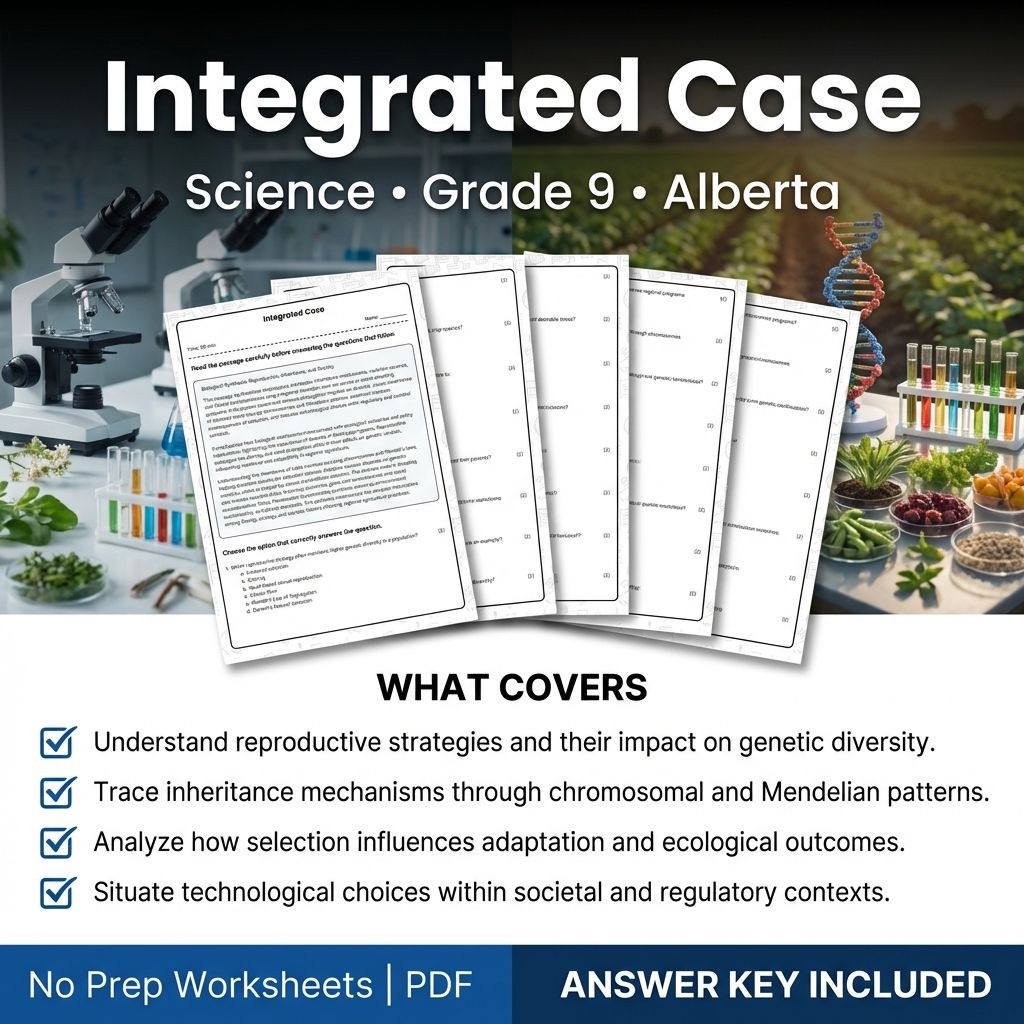
Grade 9 Science Worksheet on Integrated Case | Alberta Standards
Created byCoral Reef LearningLearning Objectives
- Understand reproductive strategies and their impact on genetic diversity.
- Trace inheritance mechanisms through chromosomal and Mendelian patterns.
- Analyze how selection influences adaptation and ecological outcomes.
Instant download

Radiation Energy Transfer Worksheet | Grade 10 Heat Transfer Practice
Created byPrism Point LearningLearning Objectives
- Explain how electromagnetic radiation transfers energy without direct contact
- Describe how absorption of radiation can change the temperature or state of matter
- Connect properties of radiation (e.g., wavelength/energy) to the effects observed in materials
Instant download

Risks and Benefits Worksheet Pack | Grade 9 Science Activities
Created byPrism Point LearningLearning Objectives
- Identify ecological, economic, and health risks and benefits linked to genetic technologies
- Explain how risk assessment, mitigation, and long-term monitoring reduce uncertainty
- Evaluate trade-offs using Alberta-relevant examples such as canola and cattle genetics
Instant download
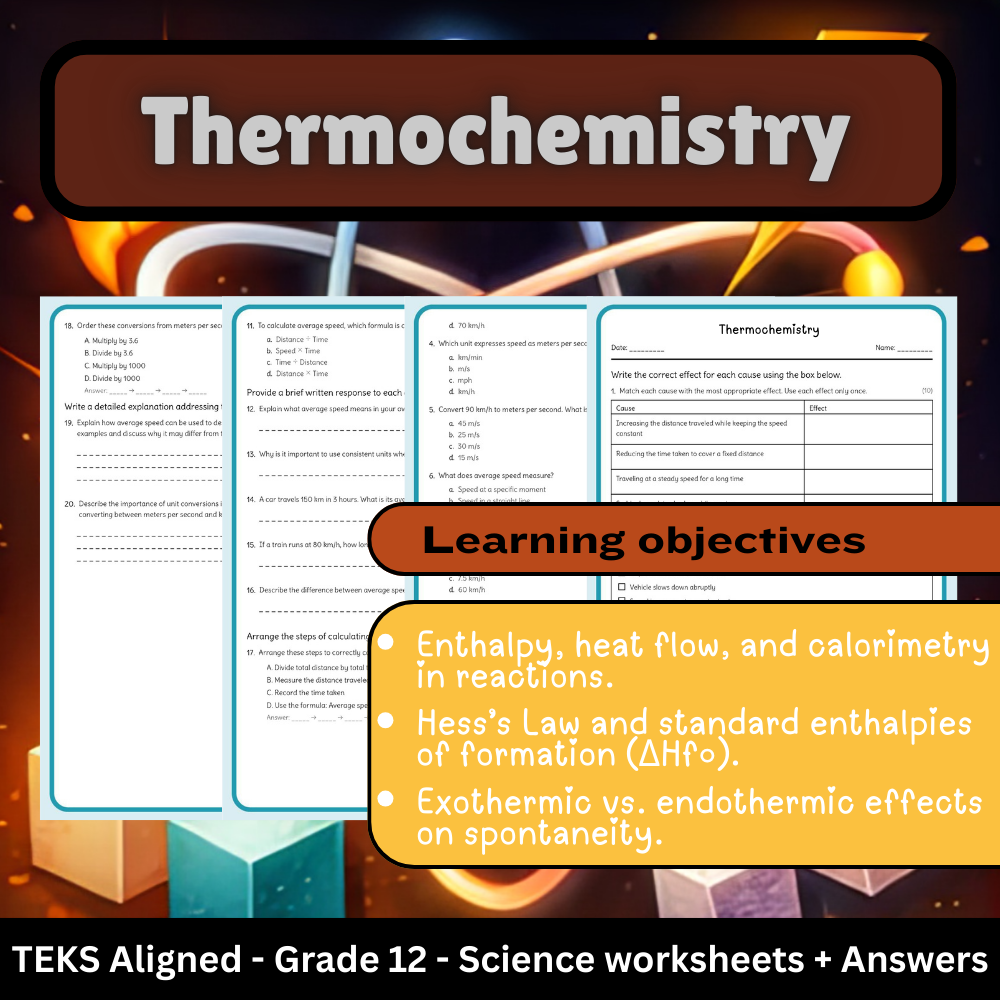
Grade 12 Science | Thermochemistry Worksheet + Answer Key (PDF) | TEKS Aligned
Created byBright Mind ResourcesLearning Objectives
- Explain key concepts of enthalpy, heat flow, and calorimetry in chemical reactions.
- Apply Hess’s law and standard enthalpies of formation to calculate reaction energies.
- Differentiate between exothermic and endothermic processes and understand their effect on spontaneity.
Instant download
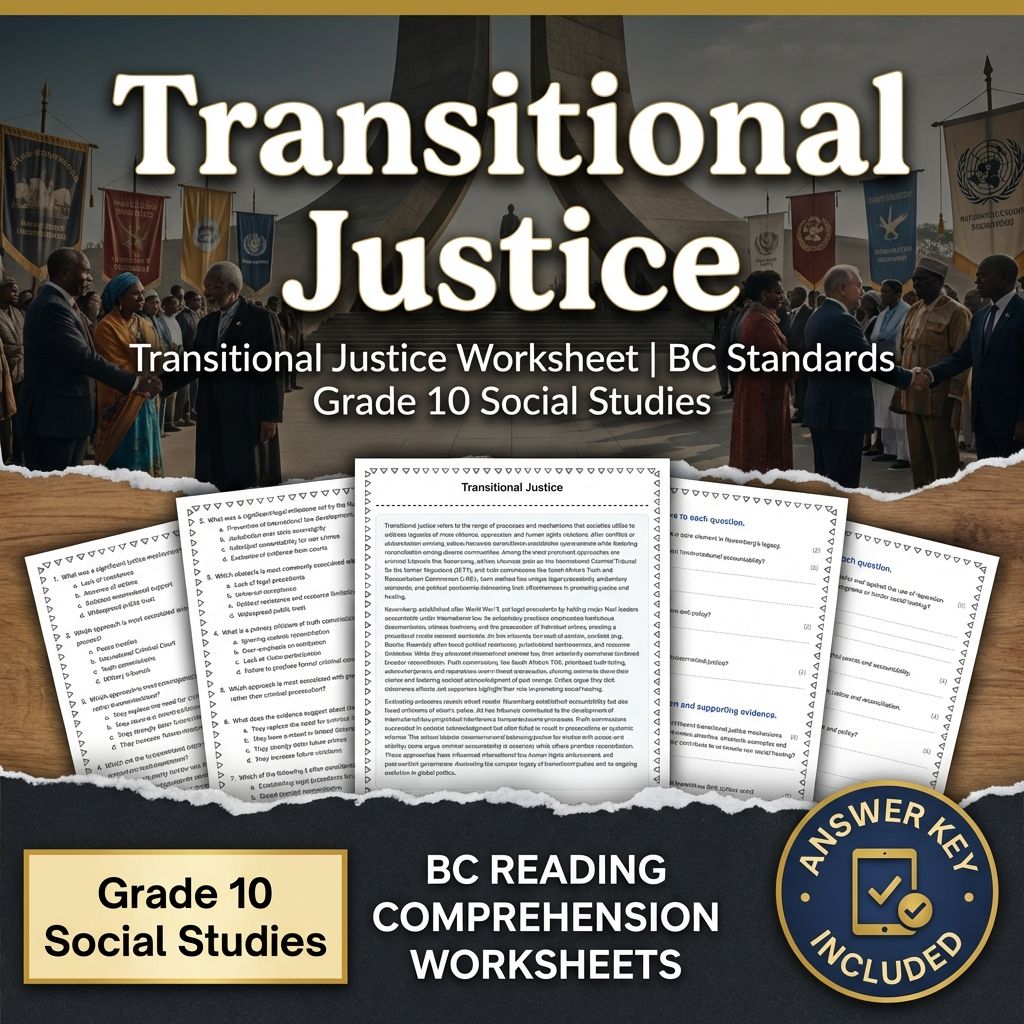
Transitional Justice Worksheet | BC Standards Grade 10 Social Studies
JCreated byJ.S SheetsLearning Objectives
- Understand the various mechanisms used in post-conflict accountability, such as tribunals and truth commissions.
- Compare different approaches to justice, reconciliation, and reparation after mass atrocities.
- Evaluate case studies to analyze their impacts on international law and human rights.
Instant download
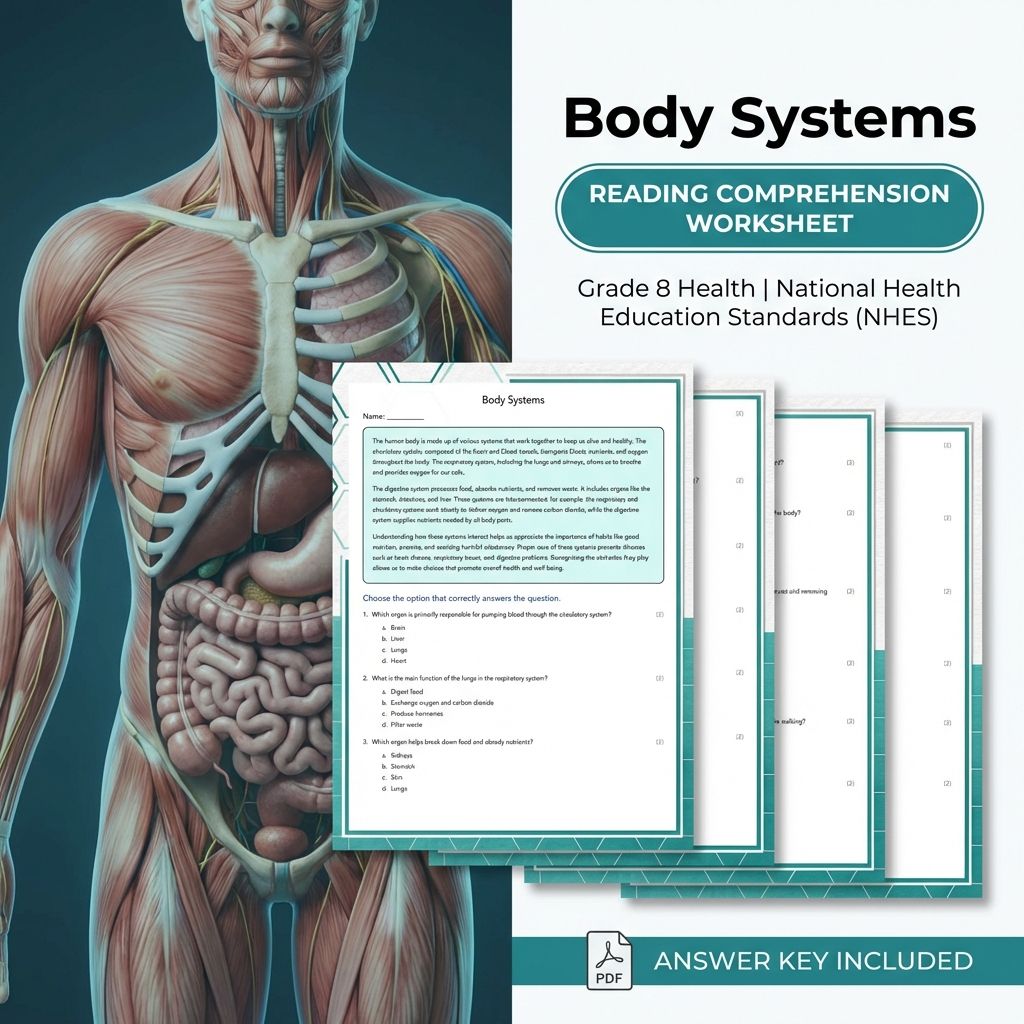
8th Grade Health | Body Systems Worksheet (Answer Key) for Student Mastery
 Created bySkylark Worksheets
Learning Objectives
- Identify the major human body systems and their functions.
- Explain how different body systems work together to maintain health.
- Recognize common habits that support bodily health and disease prevention.
Instant download

Grade 6 Science – Societal Impacts & Water Treatment | Daily Reading Worksheet
Created byBright Mind ResourcesLearning Objectives
- Understand how water treatment processes improve public health
- Analyze the societal benefits of environmental regulations
- Evaluate scientific data related to resource management
Also included in: Grade 6 Science and Society Lesson Bundle Daily Reading Worksheets | TEKS +2 more
Instant download
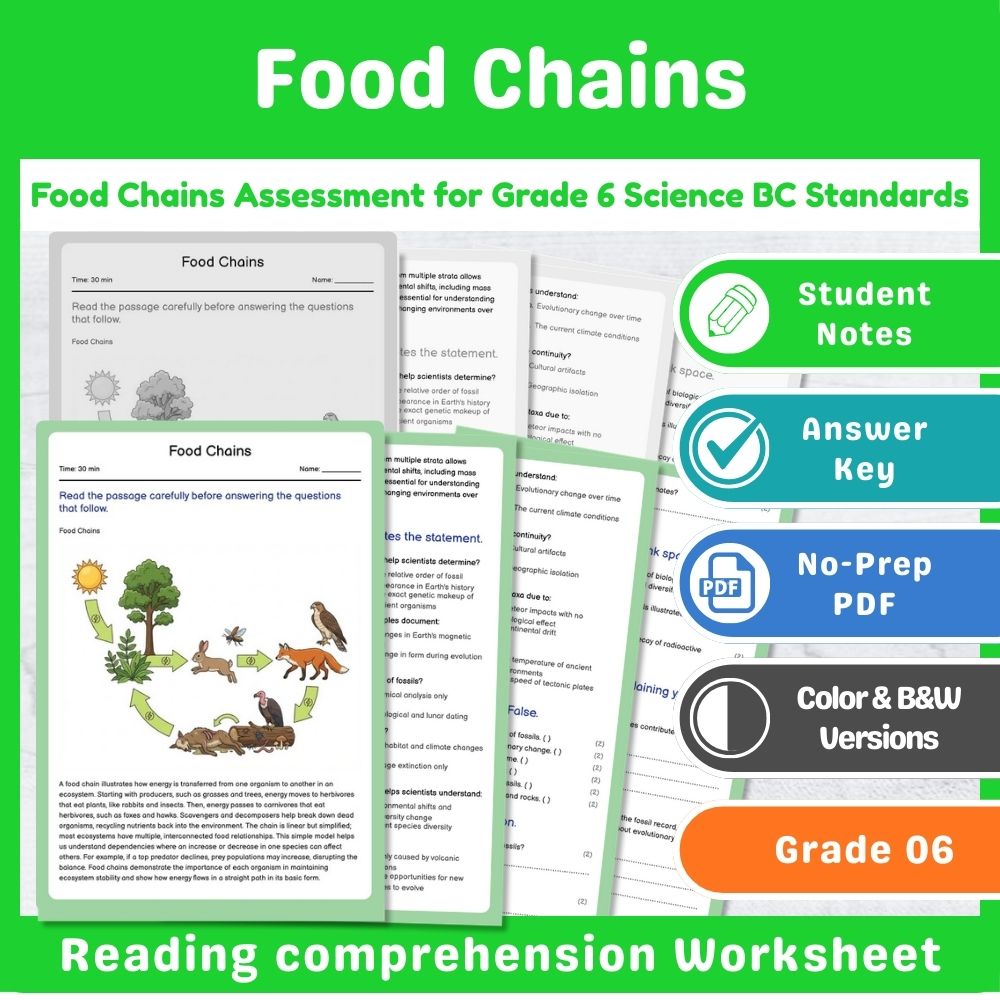
Food Chains Assessment for Grade 6 Science BC Standards
Created byPrism Point LearningLearning Objectives
- Describe the concept of a food chain and how energy transfers from producers to consumers.
- Identify examples of organisms at different trophic levels in a food chain.
- Understand the dependencies between organisms in a food chain and how changes affect ecosystems.
Instant download
10th Grade Science | Stoichiometric Analysis Worksheet (PDF+ Answer Key)
 Created byCopper Leaf Classroom
Learning Objectives
- Develop algebraic and unit-based strategies for complex stoichiometric relationships.
- Apply mole ratios and limiting reagent concepts to solve multi-step reactions.
- Convert solution concentrations and determine empirical formulas from mass or percent data.
Also included in: Grade 10 Science -Atomic Structure & Chemical Reactions (PDF+ Answer Key) +1 more
Instant download
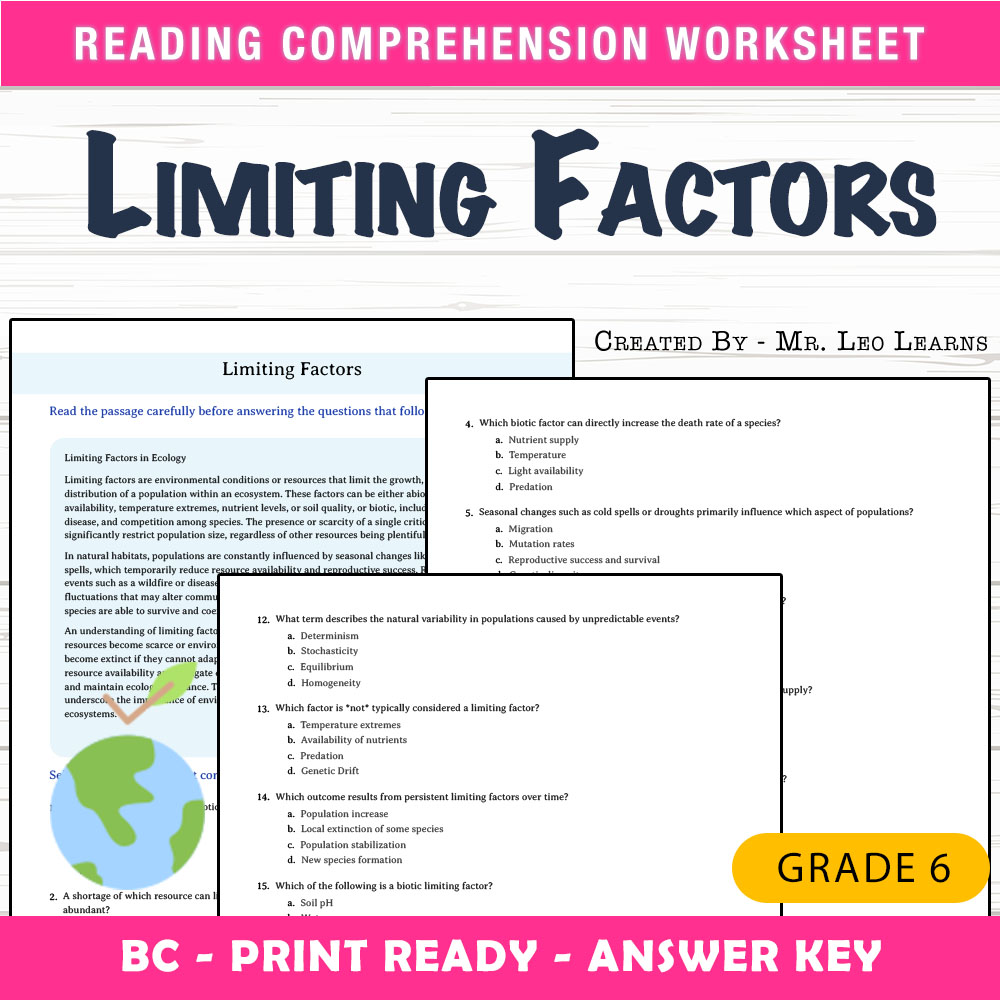
Grade 6 Science — Limiting Factors Worksheet MCQ for Mastery
 Created byThe Resource Hub
Learning Objectives
- Understand what limiting factors are and how they affect populations.
- Identify different abiotic and biotic limiting factors.
- Explain the impact of resource shortages and environmental changes on species survival.
Also included in: Grade 6 Science Ecosystems & Interdependence Worksheet Bundle – BC Curriculum +1 more
Instant download
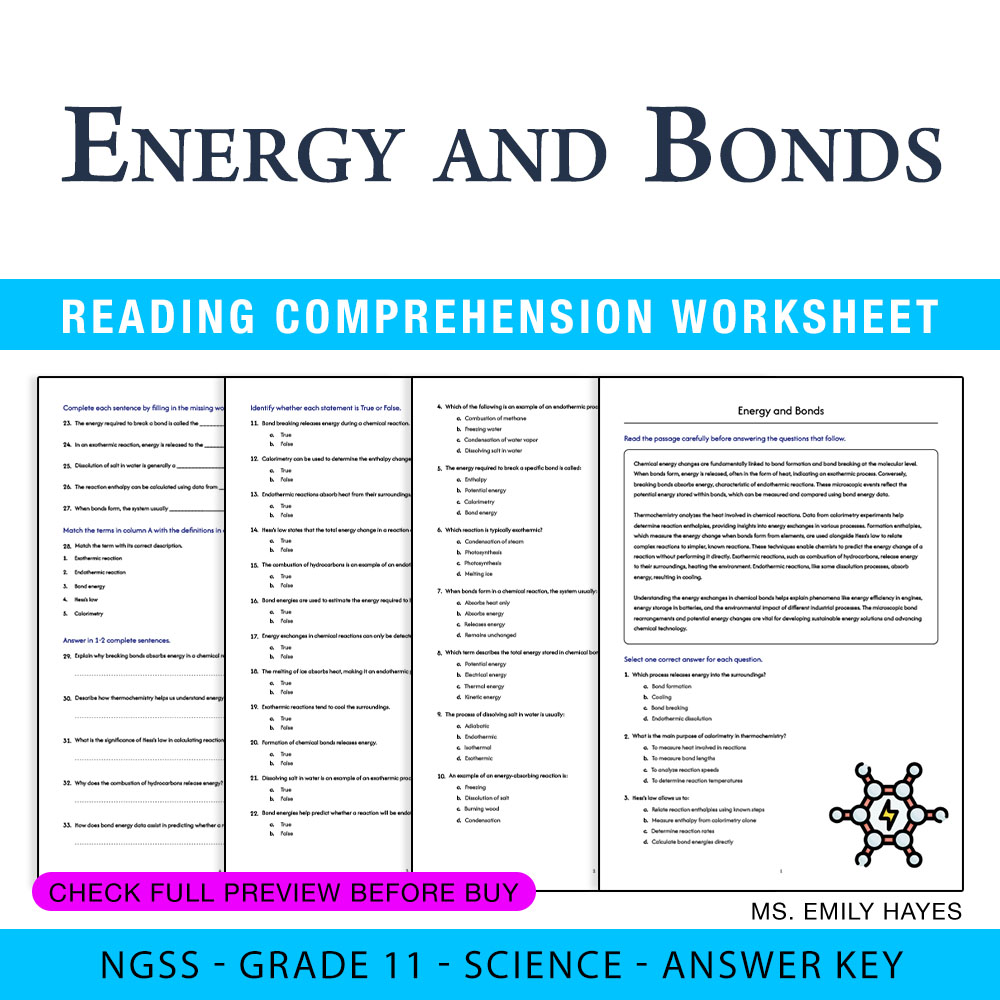
11th Grade Science | Energy and Bonds Worksheet (PDF + Answer Key)
Created byCopper Leaf ClassroomLearning Objectives
- Understand how chemical energy changes involve bond formation and breaking.
- Explain how thermochemical data are used to determine reaction enthalpies.
- Differentiate between exothermic and endothermic reactions with examples.
Instant download

Mass And Acceleration Worksheet | Grade 9 Science Practice
Created byPrism Point LearningLearning Objectives
- Explain how mass affects acceleration when the net force is fixed using the idea of an inverse relationship.
- Distinguish inertial mass from gravitational effects and relate each to force, acceleration, and weight.
- Use F = ma to predict acceleration changes when mass or net force changes.
Also included in: Forces and Motion Lesson Bundle – Grade 9 Science Framework BC +1 more
Instant download

Juneteenth: Voices of History Reading Comprehension Lesson | Grades 3–5
Learning Objectives
- Identify key ideas about courage, hope, and perseverance from a historical reading.
- Use evidence from the text to answer questions about how words can inspire change.
- Compare viewpoints by describing what a speaker or writer wanted others to understand.
Also included in: Juneteenth: Freedom & Equality Bundle | Reading Comprehension Activities | Grades 3–5 +1 more
Instant download
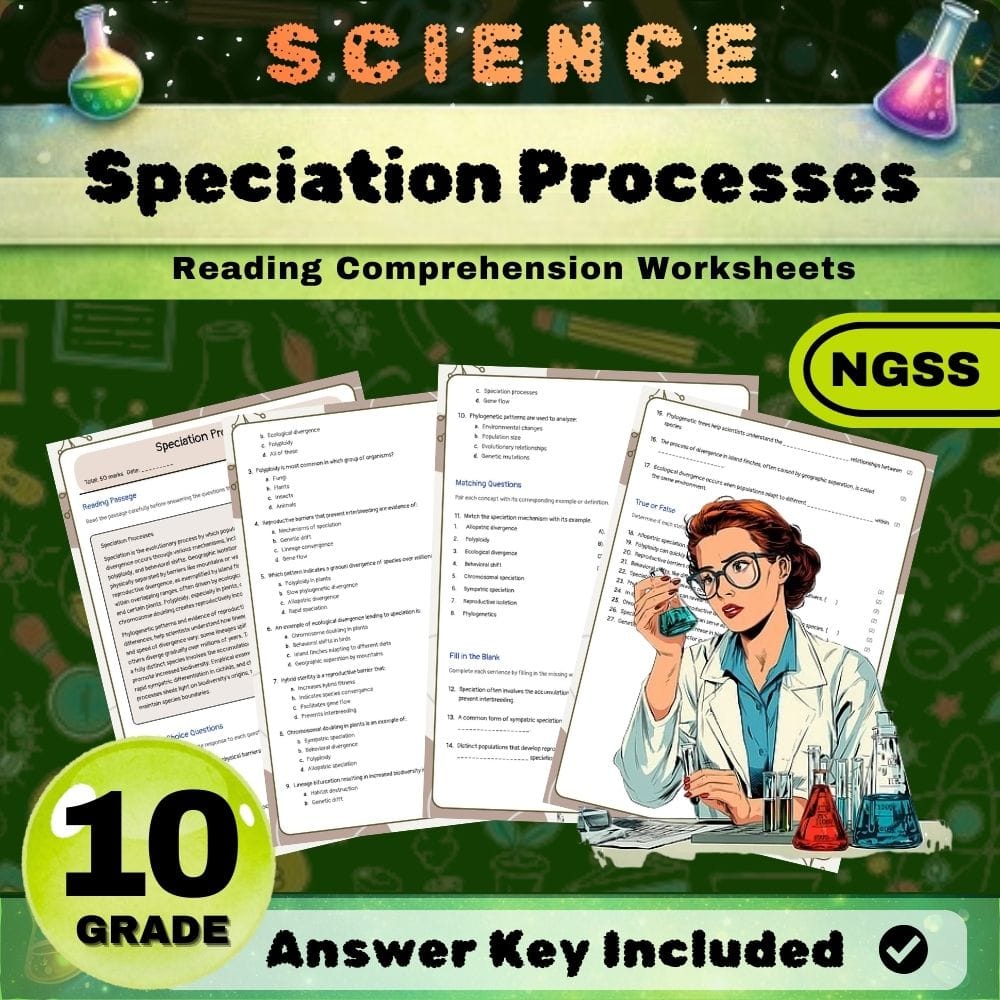
Grade 10 Science | Speciation Processes NGSS Worksheet (PDF)
 Created byMaple Path Learning
Learning Objectives
- Understand the mechanisms of reproductive isolation leading to speciation.
- Identify empirical examples of different speciation processes.
- Analyze phylogenetic patterns and reproductive barriers to determine mechanisms of lineage splitting.
Also included in: Grade 10 Science | Biological Evolution Unity and Diversity Lesson Bundle | NGSS +1 more
Instant download

Electoral Systems Worksheet | Voting Methods Grade 11 Social Studies BC
 Created byQuiet Forest Education
Learning Objectives
- Understand different types of electoral systems and their characteristics.
- Compare and contrast proportional, majoritarian, and mixed electoral systems.
- Analyze how electoral system design influences representation, policy outcomes, and civic engagement.
Instant download
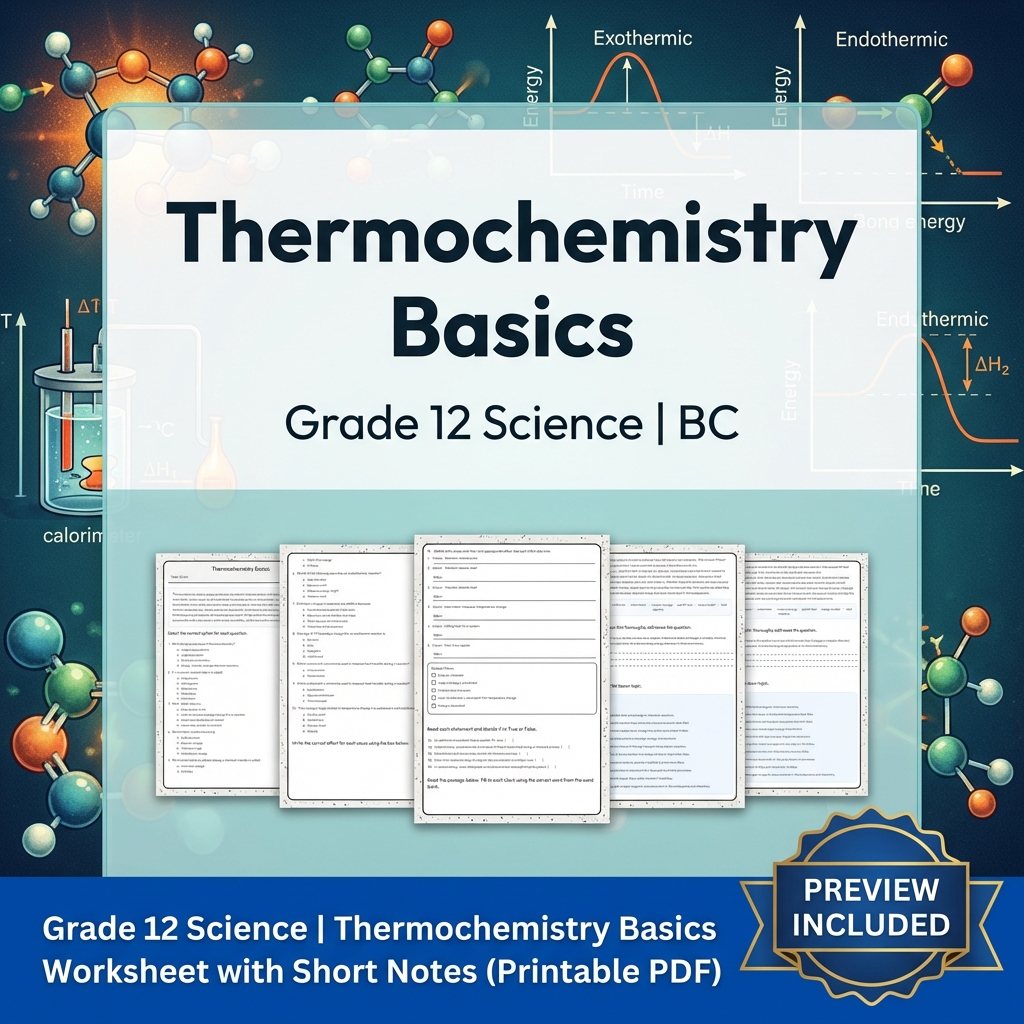
Grade 12 Science | Thermochemistry Basics Worksheet with Short Notes (PDF)
 Created byMeadowlark Worksheets
Learning Objectives
- Understand energy changes during chemical reactions and the concept of enthalpy.
- Categorize reactions as exothermic or endothermic based on heat transfer.
- Apply calorimetric concepts and specific heat to relate temperature changes to energy.
Also included in: Grade 12 Science Lesson Bundle | BC Framework Thermochemistry & More +1 more
Instant download
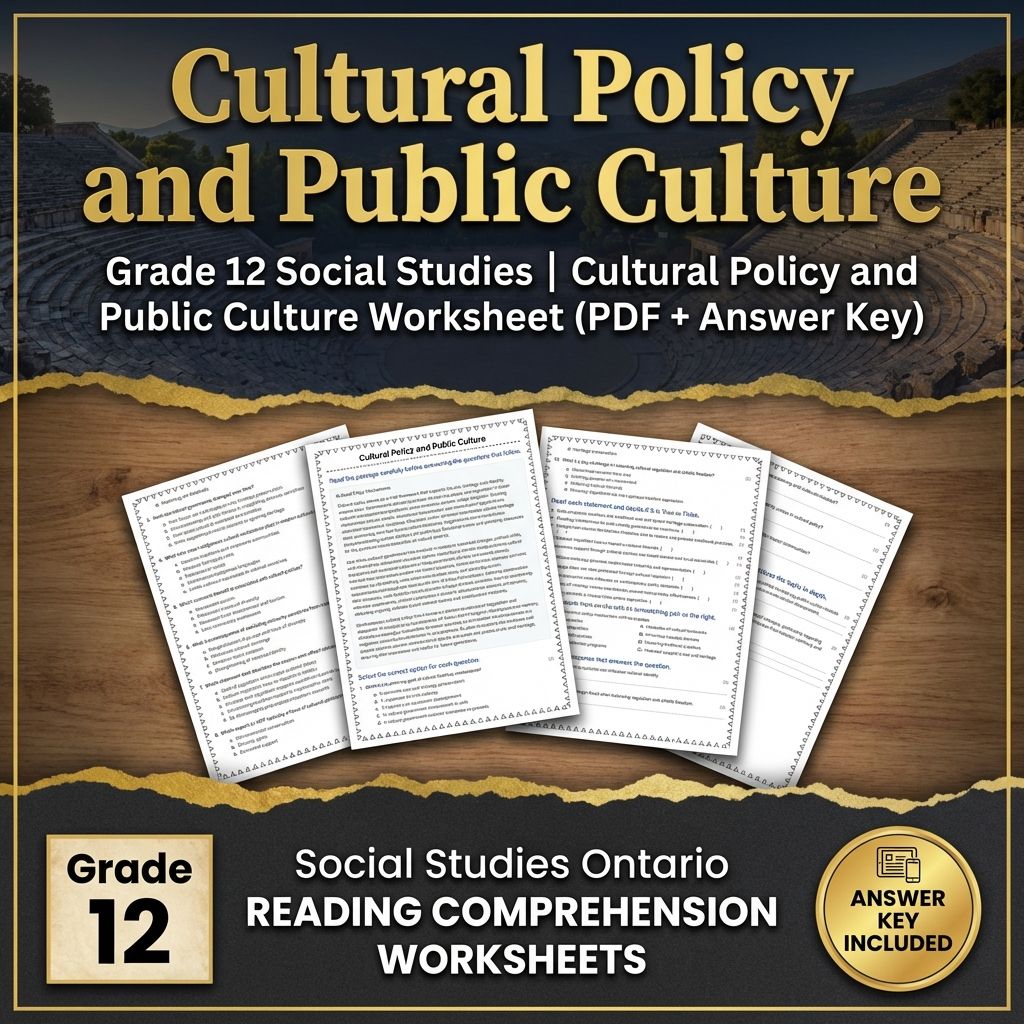
Grade 12 Social Studies | Cultural Policy and Public Culture (PDF + Answer Key)
JCreated byJ.S SheetsLearning Objectives
- Understand the mechanisms of cultural policy that support arts, heritage, and identity preservation.
- Analyze the causes and consequences of cultural funding and regulation.
- Trace changes in cultural governance and their impact on national and minority narratives.
Instant download
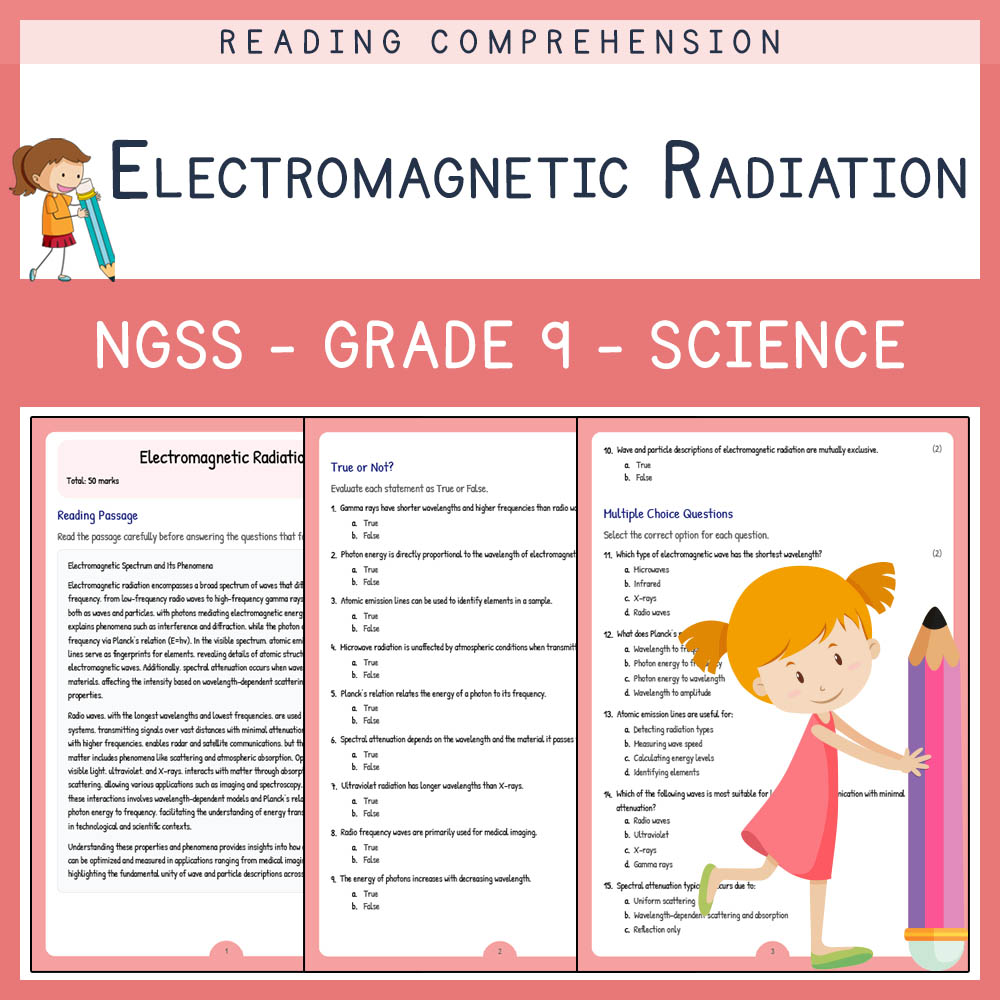
Grade 9 Science | Electromagnetic Radiation Worksheet (Answer Key + Rubric)
Created byLumora LearningLearning Objectives
- Understand the wave and photon descriptions of electromagnetic signals across the spectrum.
- Relate frequency to photon energy and their interactions with matter.
- Identify characteristic phenomena such as atomic emission and absorption lines, and spectral attenuation.
Instant download
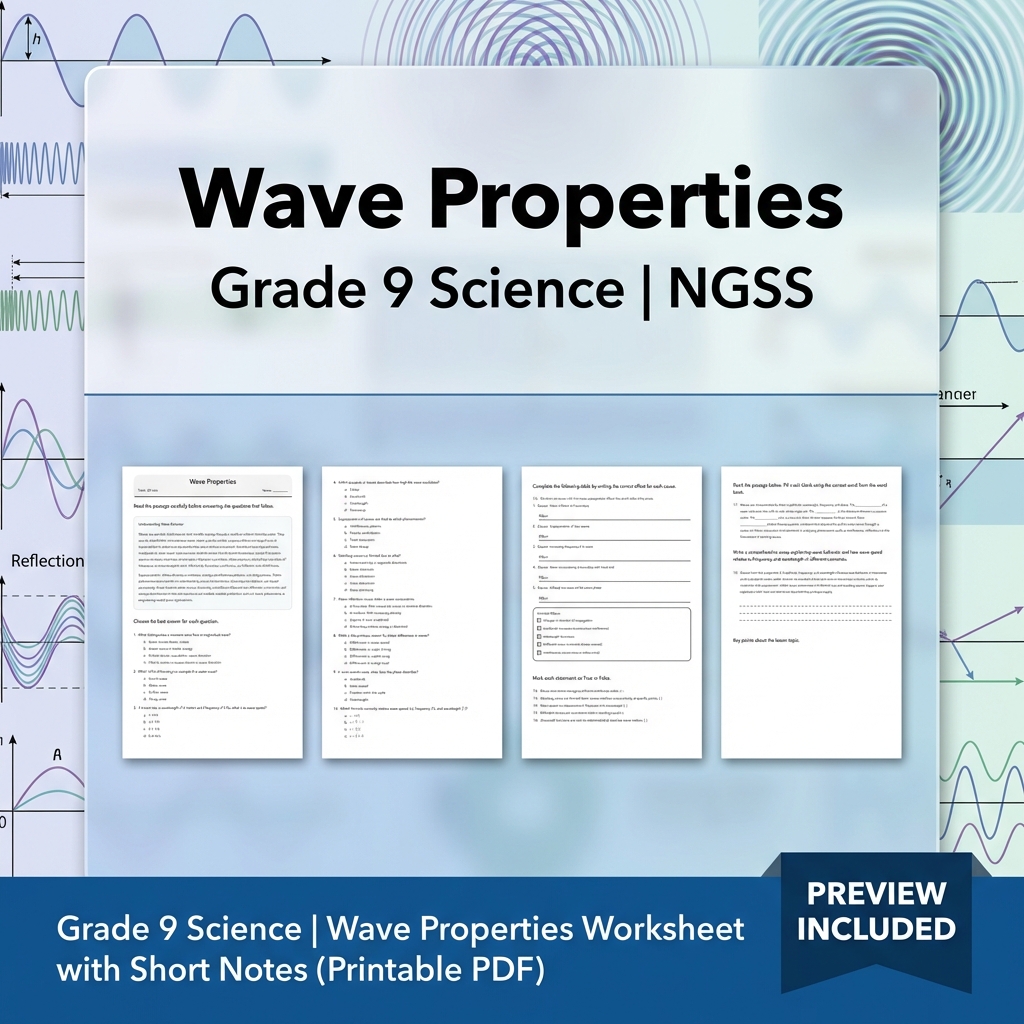
Grade 9 Science | Wave Properties Worksheet with Short Notes (Printable PDF)
Created byMeadowlark WorksheetsLearning Objectives
- Understand the mathematical representations of wave behavior, including amplitude, frequency, wavelength, and phase.
- Relate wave speed to frequency and wavelength in various types of waves.
- Explain superposition, interference, and standing waves using sinusoidal functions and calculations.
Also included in: Grade 9 Science | Waves and Their Applications Unit Bundle (NGSS Aligned) +1 more
Instant download
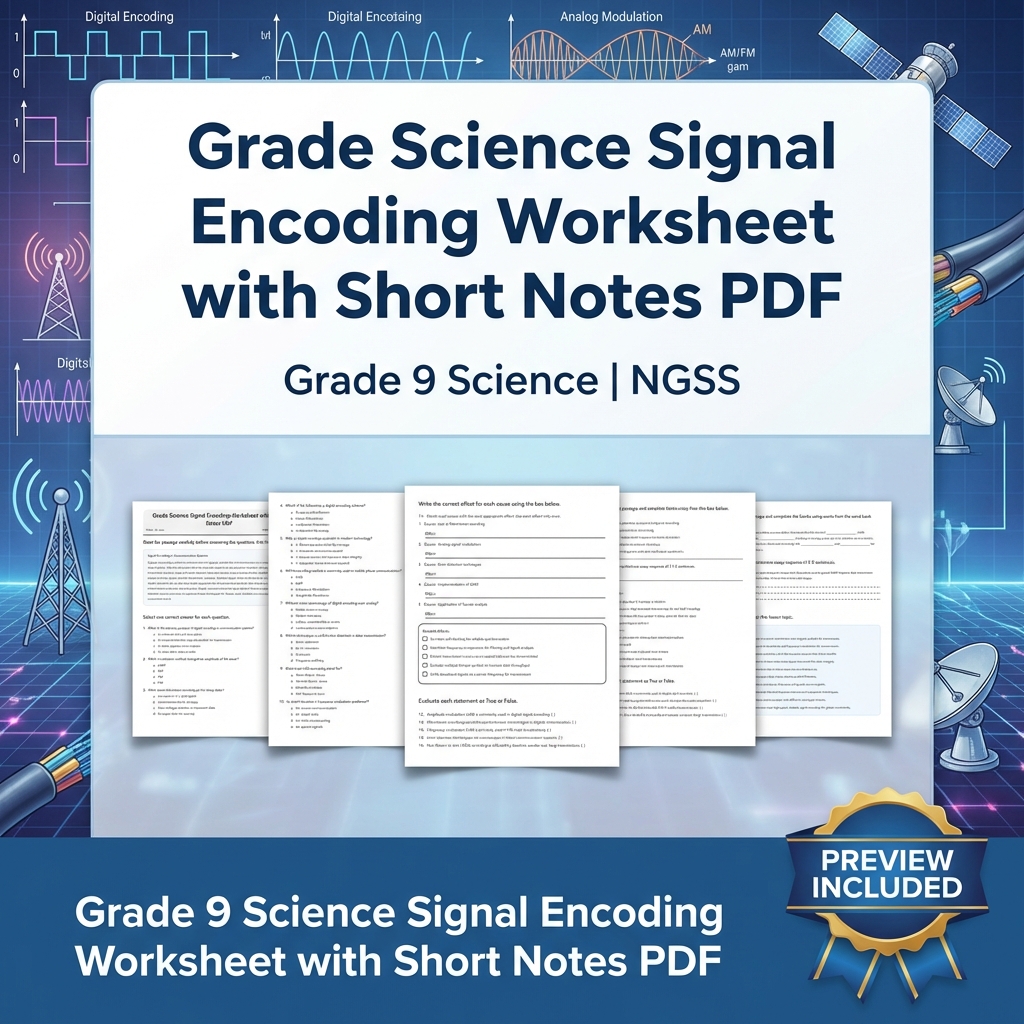
Grade 9 Science Signal Encoding Worksheet with Short Notes PDF
Created byMeadowlark WorksheetsLearning Objectives
- Understand the fundamentals of signal encoding in communication systems.
- Identify different types of signal encoding methods used in digital and analog communication.
- Explain the importance of encoding techniques in reducing errors and increasing efficiency.
Also included in: Grade 9 Science | Waves and Their Applications Unit Bundle (NGSS Aligned) +1 more
Instant download
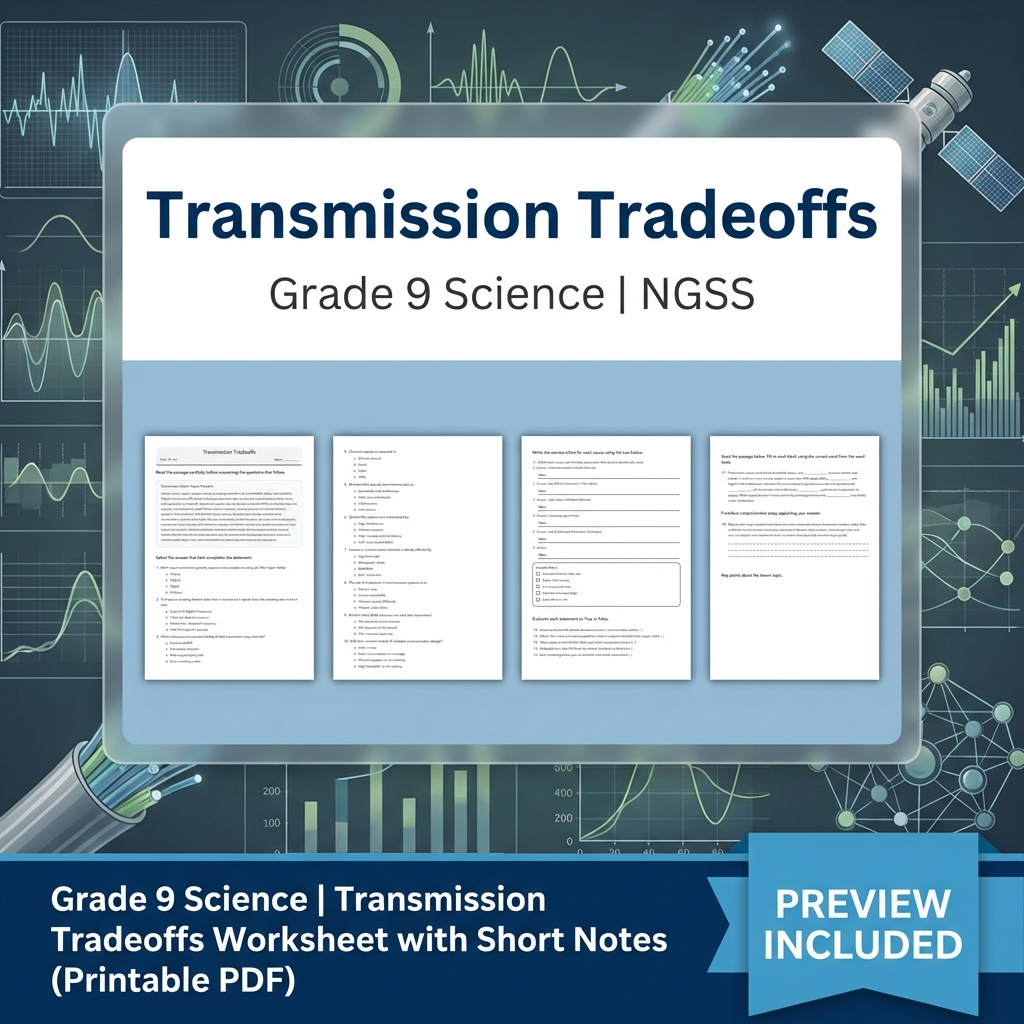
Grade 9 Science | Transmission Tradeoffs Worksheet with Short Notes (PDF)
Created byMeadowlark WorksheetsLearning Objectives
- Understand the design tradeoffs in digital and analog communication systems.
- Evaluate the impact of bandwidth constraints, signal-to-noise ratio, and error correction techniques on system performance.
- Analyze quantitative metrics like channel capacity and bit error rate in different transmission media.
Also included in: Grade 9 Science | Waves and Their Applications Unit Bundle (NGSS Aligned) +1 more
Instant download

Grade 11 Health – Basic Communication Worksheet (NHES) PDF
 Created bySunny Desk Resources
Learning Objectives
- Explain how verbal and nonverbal cues affect the meaning of a message
- Use active listening strategies to confirm understanding
- Practice clear and respectful self-expression to reduce misunderstandings
Also included in: Grade 11 Refusal & Communication Health Lesson Bundle Worksheets - NHES +1 more
Instant download
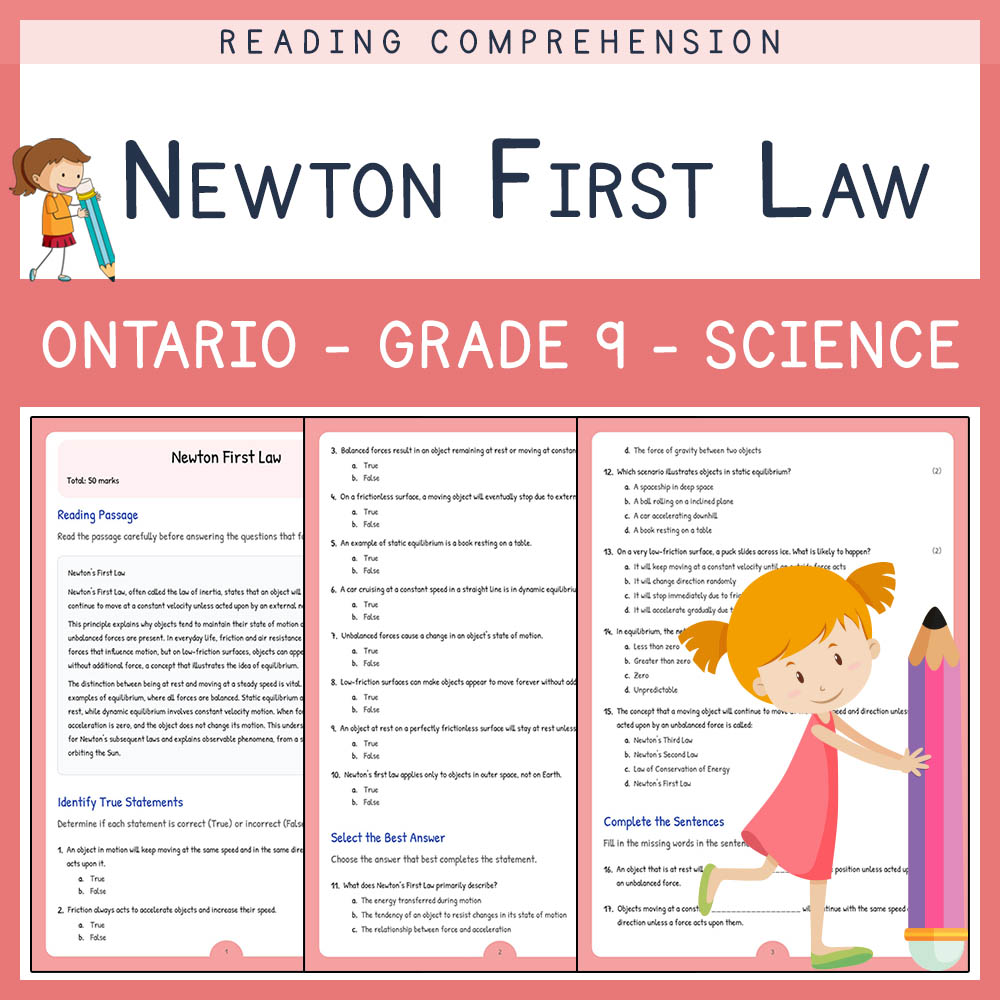
Grade 9 Science | Newton First Law Worksheet Elena | Ontario Standard
Created byLumora LearningLearning Objectives
- Explain Newton's First Law as a statement about inertia and the relationship between net external force and motion.
- Differentiate between objects at rest and those moving at constant velocity.
- Describe the role of balanced forces in static and dynamic equilibrium.
Instant download
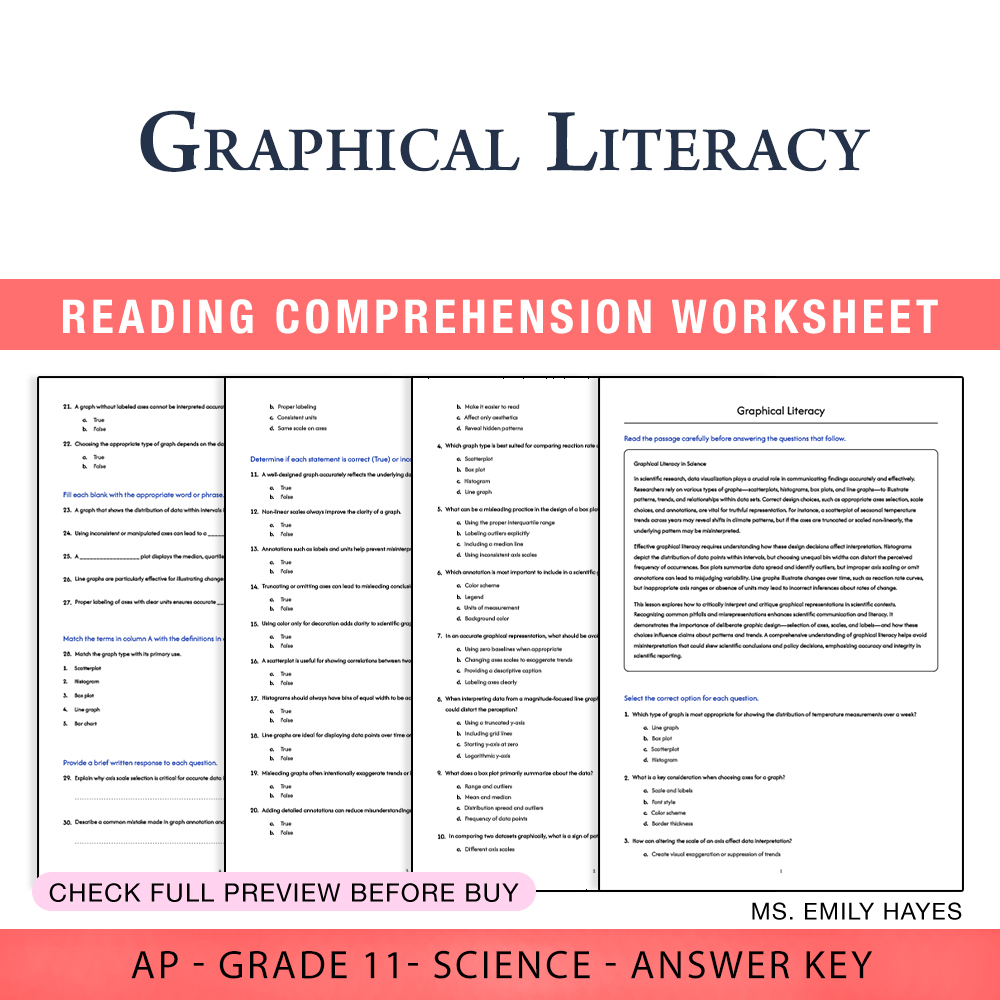
11th Grade Science | Graphical Literacy Assessment Worksheet (PDF+ Answer Key)
Created byCopper Leaf ClassroomLearning Objectives
- Identify and interpret different types of scientific graphs including scatterplots, histograms, box plots, and line graphs.
- Evaluate the design choices and scales used in graphical representations and their impact on data interpretation.
- Critically analyze how graphical choices can influence conclusions about scientific phenomena.
Also included in: Grade 11 Science AP | Science Practices & Inquiry Skills(PDF+ Answer Key) +1 more
Instant download
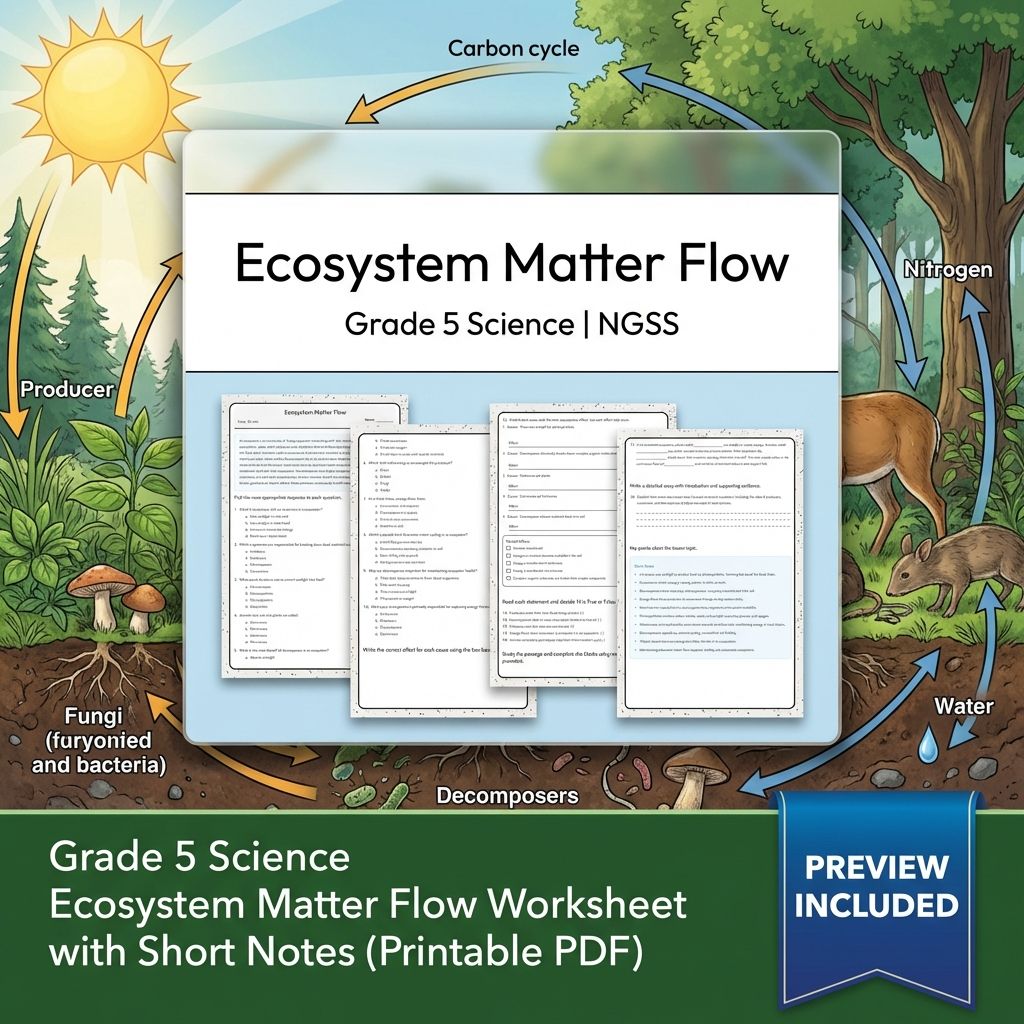
Grade 5 Science Ecosystem Matter Flow Worksheet with Short Notes (PDF)
Created byMeadowlark WorksheetsLearning Objectives
- Explain how energy and nutrients flow through a terrestrial ecosystem.
- Identify the roles of producers, consumers, and decomposers in matter cycling.
- Describe processes such as photosynthesis, feeding, and decomposition.
Also included in: Grade 5 Science Ecosystems Interactions Energy & Dynamics UNIT Bundle +1 more
Instant download
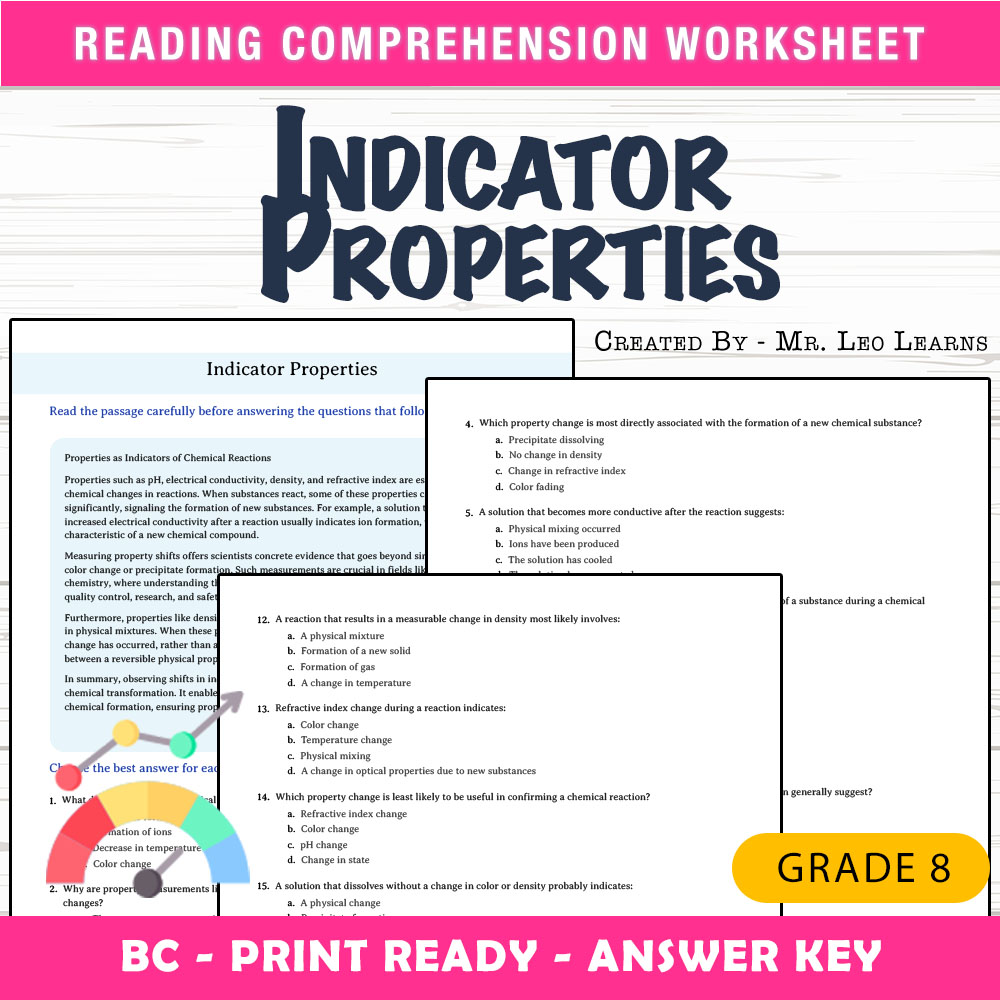
Grade 8 Science — Worksheet MCQ Paper for Understanding Indicator Properties
Created byThe Resource HubLearning Objectives
- Understand how properties such as pH, conductivity, density, and refractive index indicate chemical changes.
- Identify property shifts that signal the formation of new substances during reactions.
- Distinguish between physical and chemical changes based on indicator property measurements.
Also included in: Grade 8 Science | Matter & Chemical Change UNIT Worksheet Pack (BC Framework) +1 more
Instant download
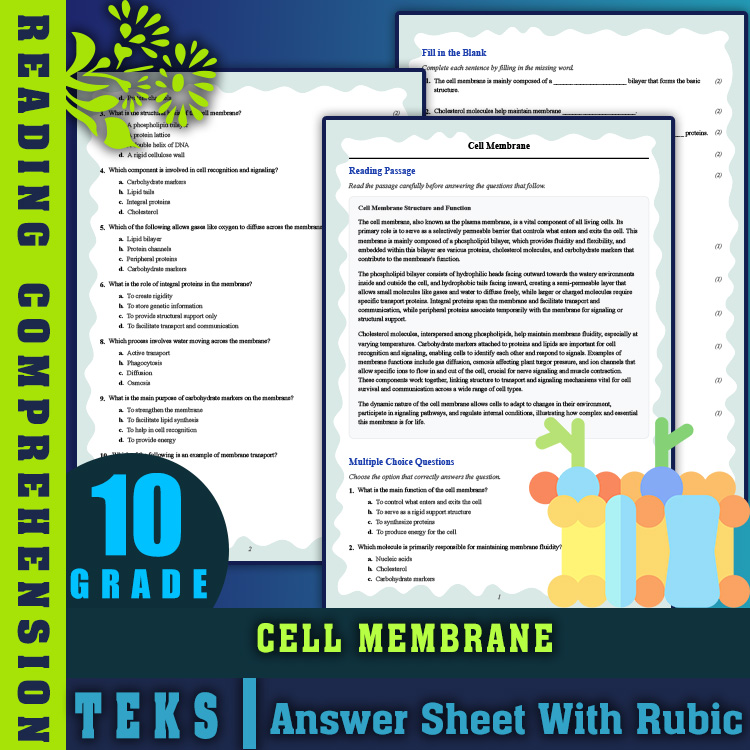
Grade 10 Science | Cell Membrane Reading Worksheet (PDF + Rubric)
JCreated byJ.S SheetsLearning Objectives
- Understand the structure and components of the cell membrane
- Explain how membrane components influence cell function
- Identify examples of membrane transport and signaling processes
Instant download
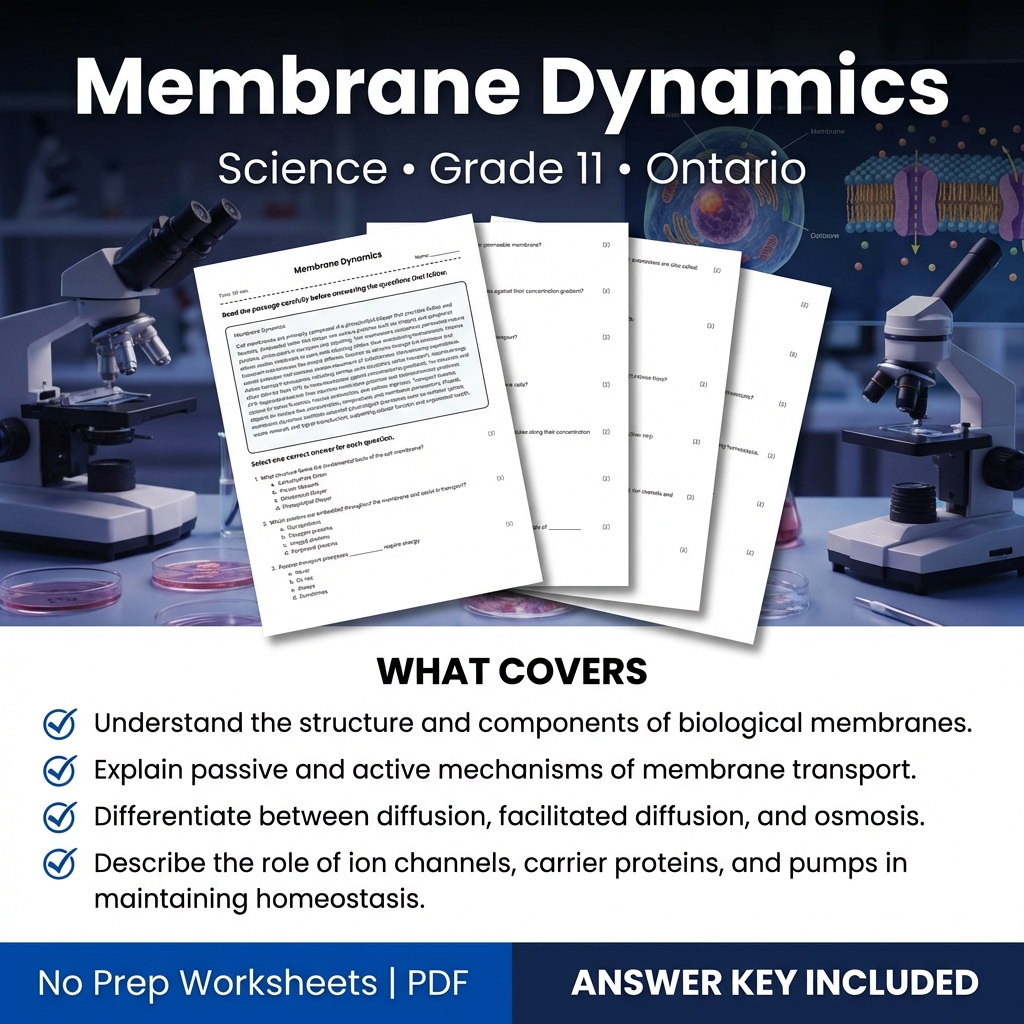
Membrane Dynamics Worksheet for Grade 11 Science | Ontario Standard
Created byCoral Reef LearningLearning Objectives
- Understand the structure and components of biological membranes.
- Explain passive and active mechanisms of membrane transport.
- Differentiate between diffusion, facilitated diffusion, and osmosis.
Instant download

Nutrition and Movement Worksheet Grade 11 NHES Balanced Choices
Created byPrism Point LearningLearning Objectives
- Identify major nutrient types and explain how they support body functions
- Apply portion control and healthy eating habits to daily choices
- Describe recommended physical activity levels and connect movement to health outcomes
Instant download
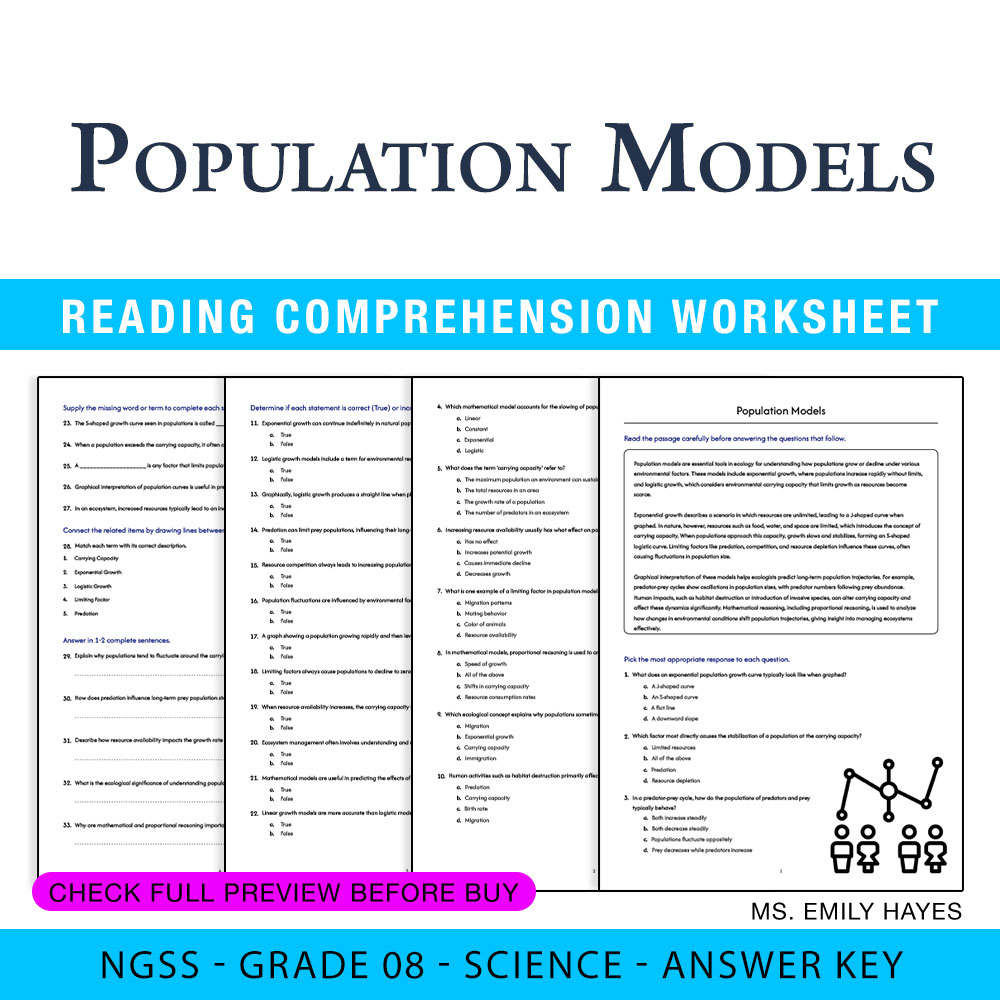
8th Grade Science | Population Models Worksheet (PDF+ Answer Key)
Created byCopper Leaf ClassroomLearning Objectives
- Understand the mathematical principles behind exponential and logistic growth models in populations.
- Interpret population growth graphs and relate them to real-world ecological scenarios.
- Explain factors such as carrying capacity, predation, and resource availability that influence population dynamics.
Instant download
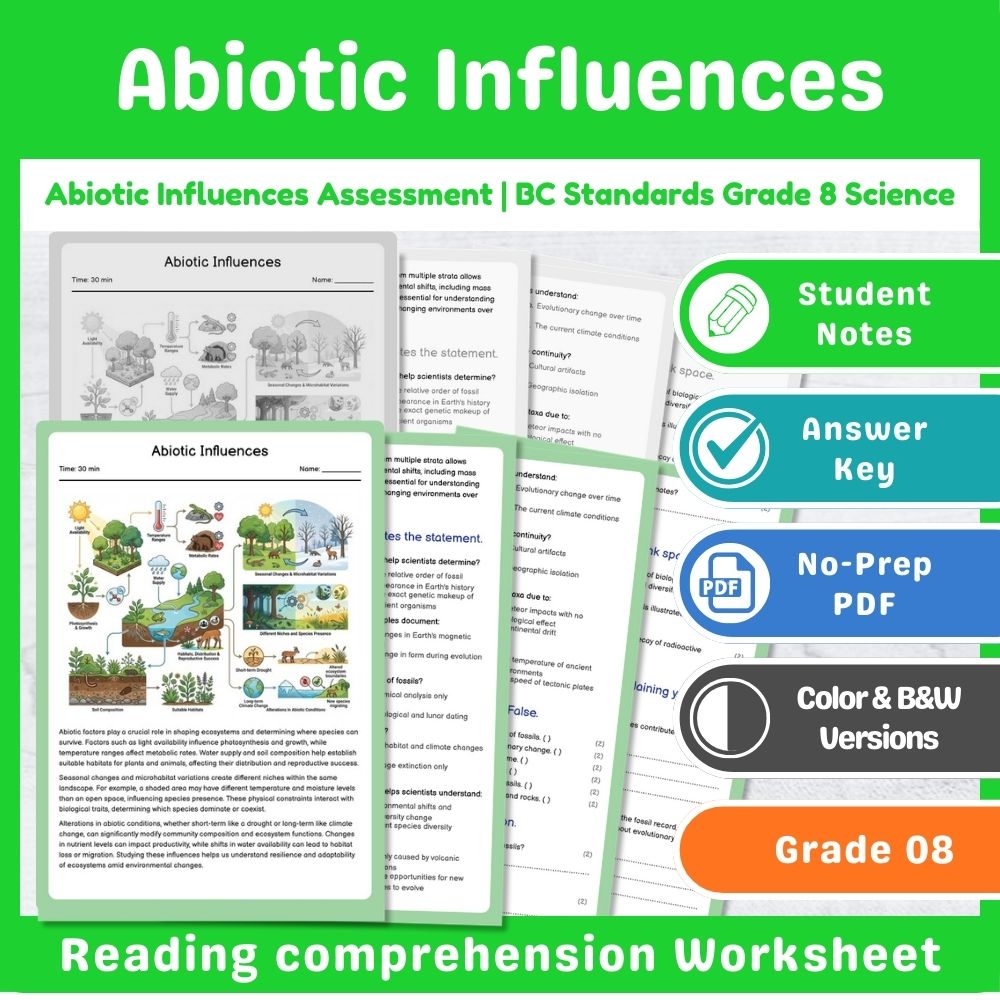
Abiotic Influences Assessment | BC Standards Grade 8 Science
Created byPrism Point LearningLearning Objectives
- Understand how abiotic factors influence species distribution and physiology.
- Identify different abiotic factors such as light, temperature, water, and soil composition.
- Analyze the impact of seasonal and microhabitat variations on ecosystems.
Instant download
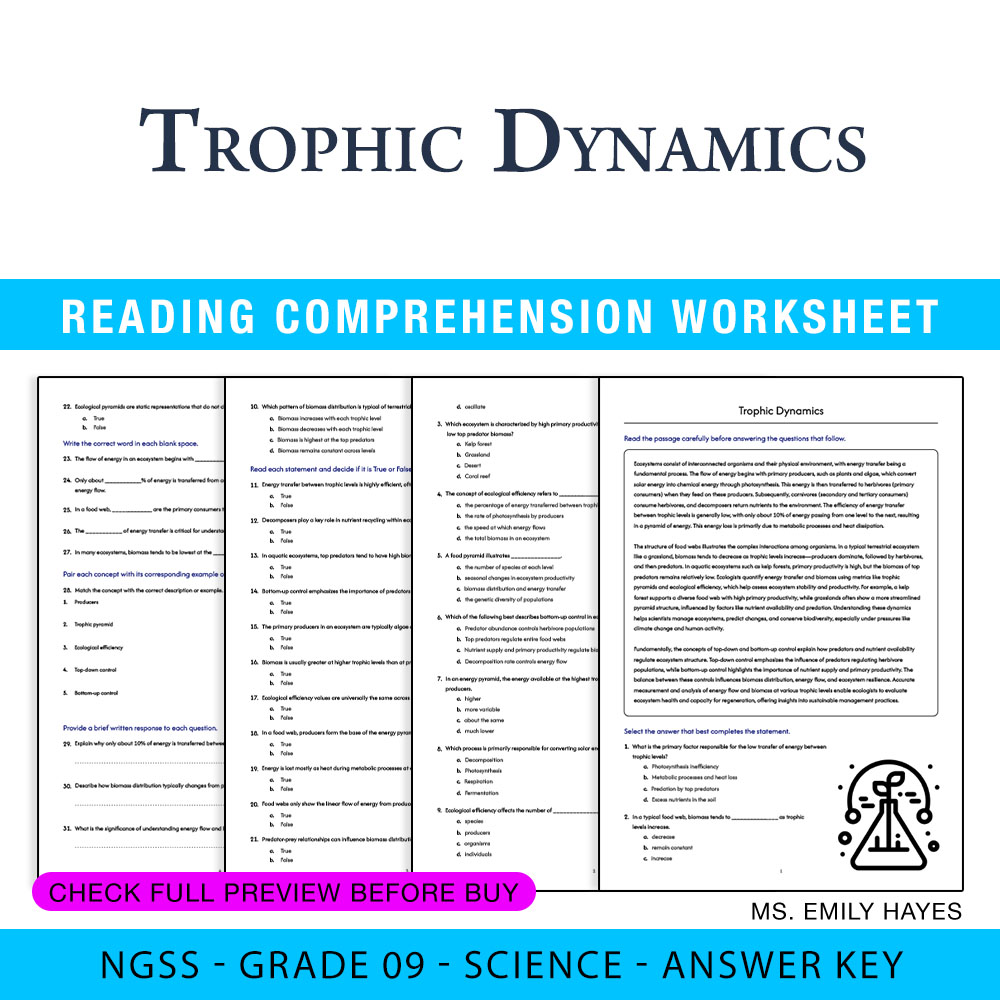
9th Grade Science | Trophic Dynamics Worksheet (PDF+ Answer Key)
Created byCopper Leaf ClassroomLearning Objectives
- Understand the flow of energy through trophic levels in ecosystems.
- Identify the structure of food webs and the concept of energy loss across trophic levels.
- Explain the role of biomass distribution and ecological efficiency in ecosystem stability.
Instant download
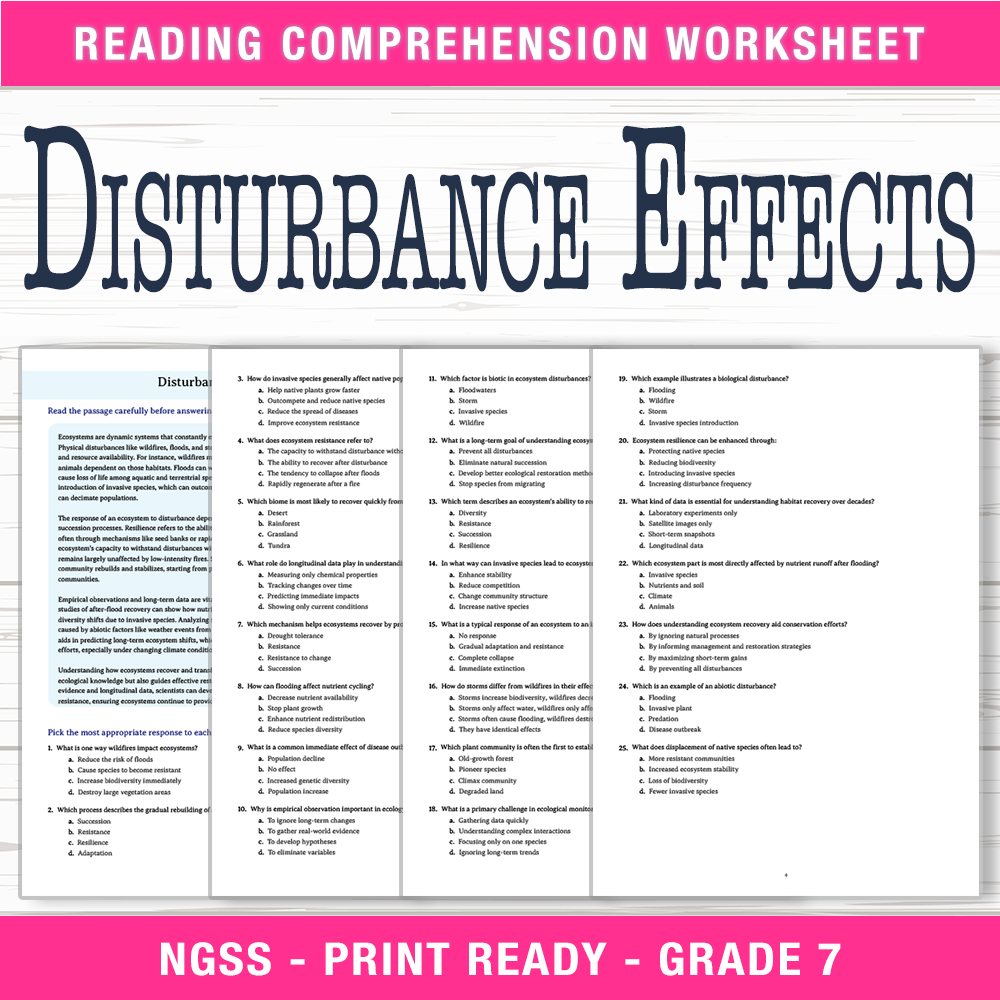
Grade 7 Science – Disturbance Effects Worksheet (PDF + Answer Key)
 Created byRiverstone Classroom
Learning Objectives
- Understand how physical and biological disturbances impact ecosystems and populations
- Interpret empirical observations and longitudinal data to analyze ecosystem changes
- Explain mechanisms of resilience, resistance, and succession after disturbances
Also included in: Grade 7 Science | Ecosystems & Biodiversity Unit Worksheet Pack
Instant download
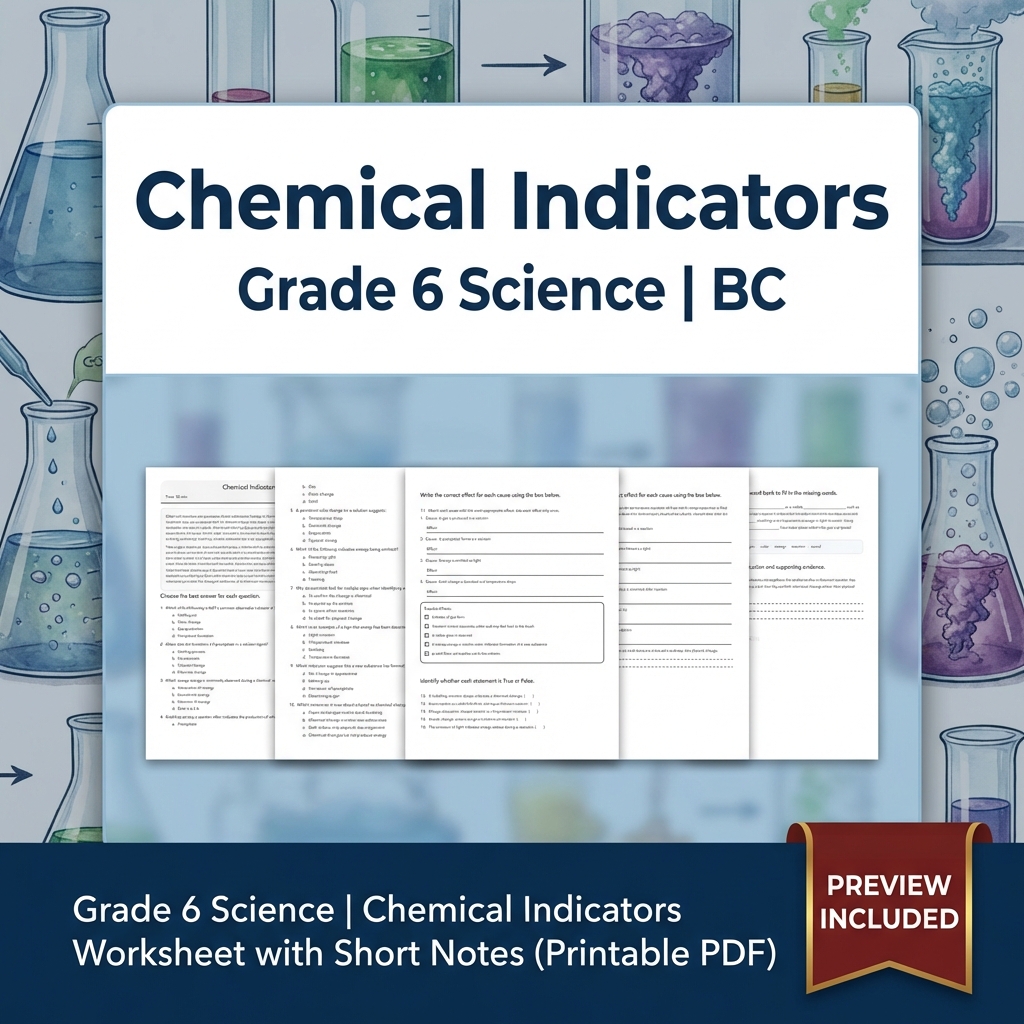
Grade 6 Science | Chemical Indicators Worksheet with Short Notes (Printable PDF)
Created byMeadowlark WorksheetsLearning Objectives
- Identify observable signs that indicate a chemical reaction has occurred.
- Understand various chemical indicators such as gas production, precipitates, and energy changes.
- Explain why multiple indicators provide stronger evidence of chemical change.
Also included in: Grade 6 Science | Matter, Properties & Change UNIT Worksheet Bundle +1 more
Instant download
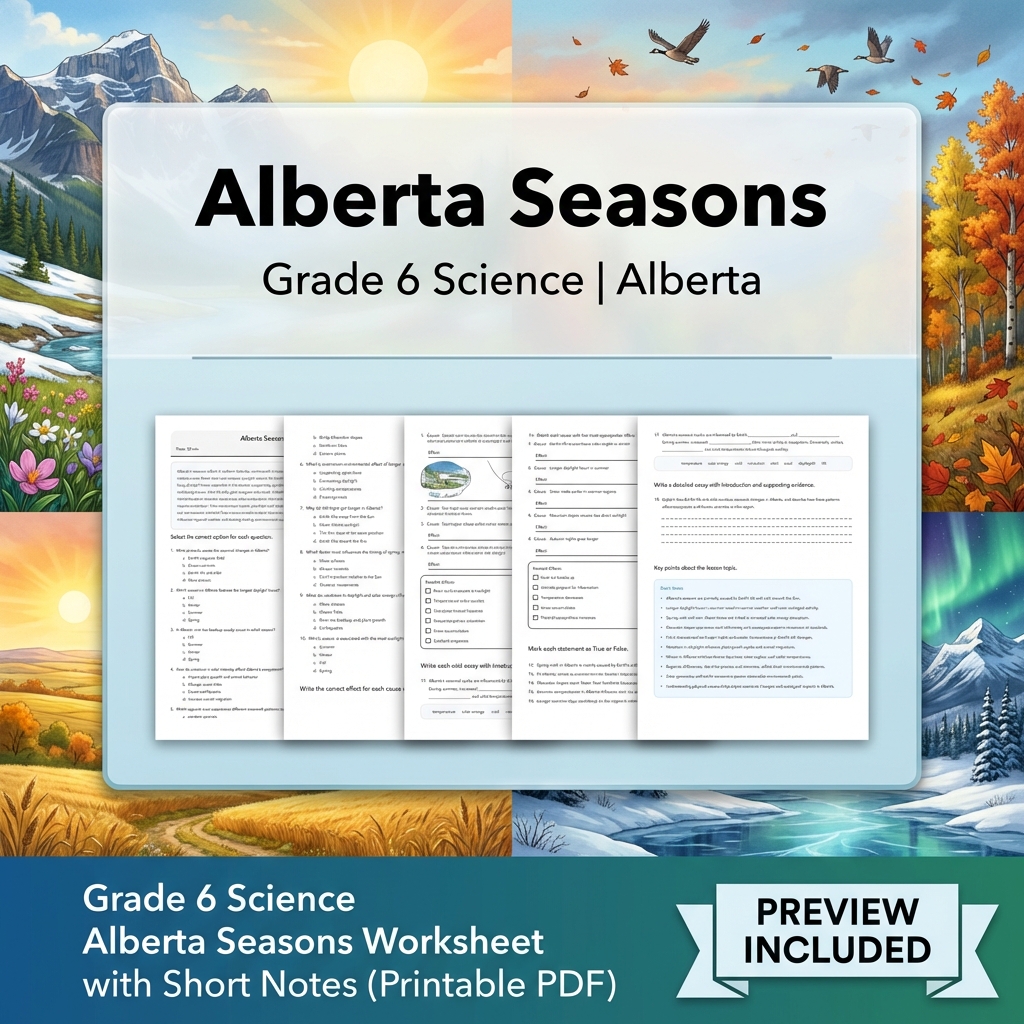
Grade 6 Science Alberta Seasons Worksheet with Short Notes (Printable PDF)
Created byMeadowlark WorksheetsLearning Objectives
- Describe seasonal patterns in Alberta and their causes.
- Link astronomical factors like Earth's tilt and solar geometry to environmental cycles.
- Explain how daylight and solar intensity affect ecosystems and human activities in Alberta.
Also included in: Grade 6 Science Sky Science Unit Bundle | Alberta Curriculum Worksheets +1 more
Instant download
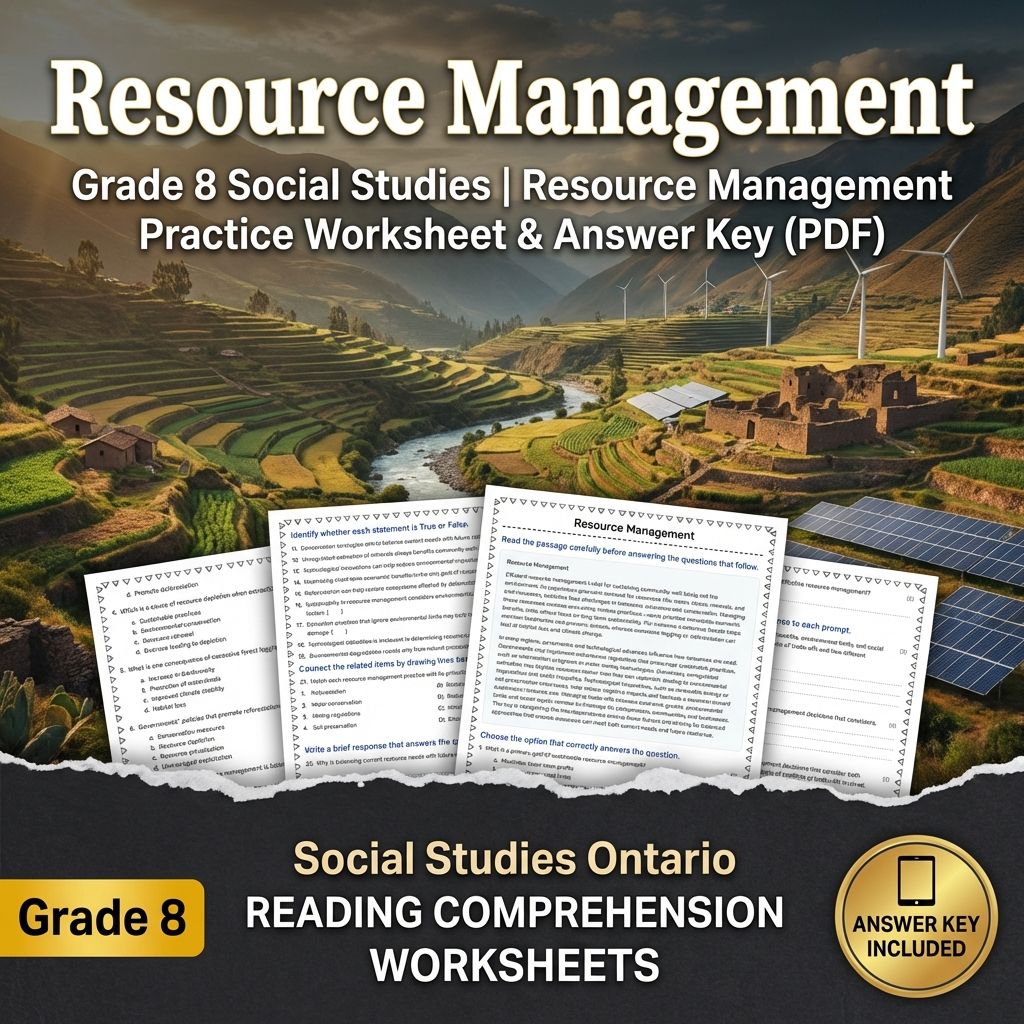
Grade 8 Social Studies | Resource Management Practice Worksheet & Answer Key
JCreated byJ.S SheetsLearning Objectives
- Understand key concepts of resource management including sustainability and conservation.
- Compare practices for water, forests, minerals, and soils in terms of sustainable use.
- Evaluate the social, economic, and environmental impacts of resource extraction and conservation.
Also included in: Grade 8 Social Studies Bundle – Regional Economies & Human–Environment Skills +1 more
Instant download
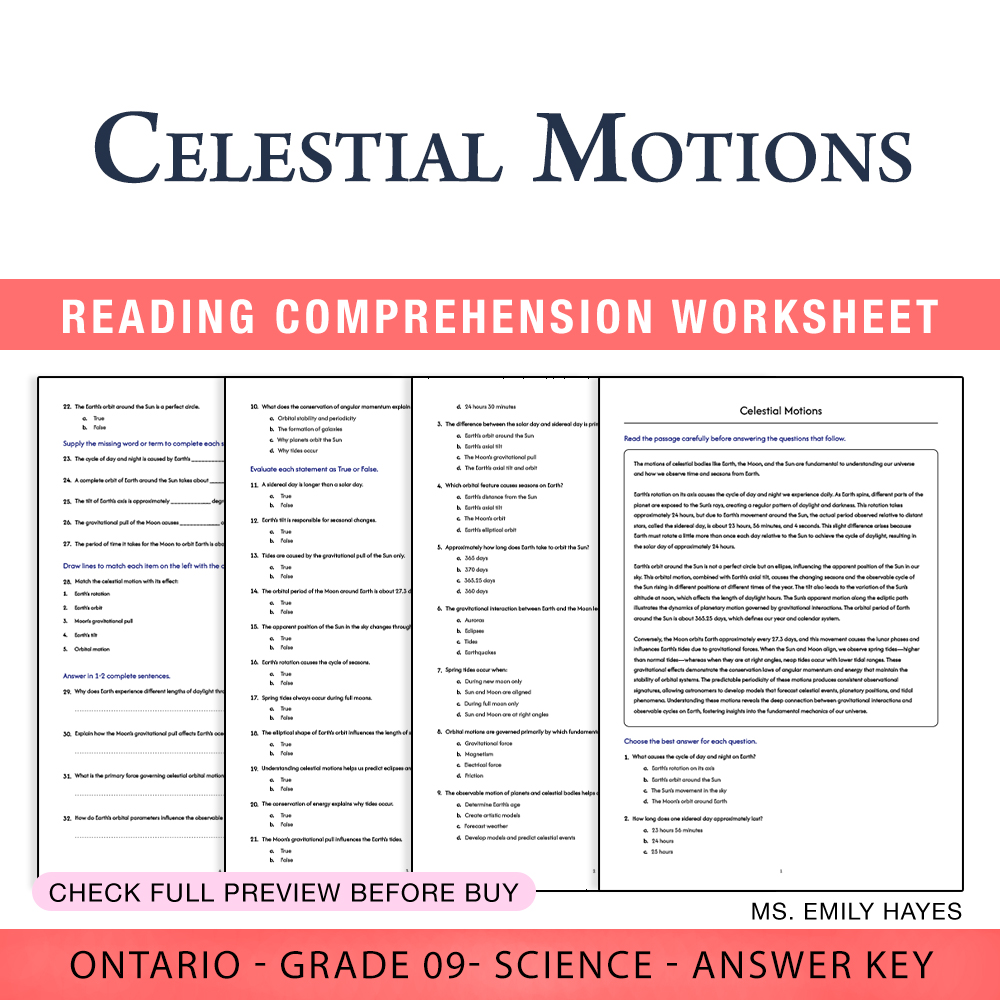
Grade 9 Science | Celestial Motions Worksheet (PDF + Answer Key)
Created byCopper Leaf ClassroomLearning Objectives
- Understand the relationship between Earth's rotation, orbital motion, and observed day-night cycles.
- Explain the causes of different periods such as sidereal and solar days and their significance.
- Describe how gravitational interactions between Earth, Moon, and Sun influence tides and orbital stability.
Instant download
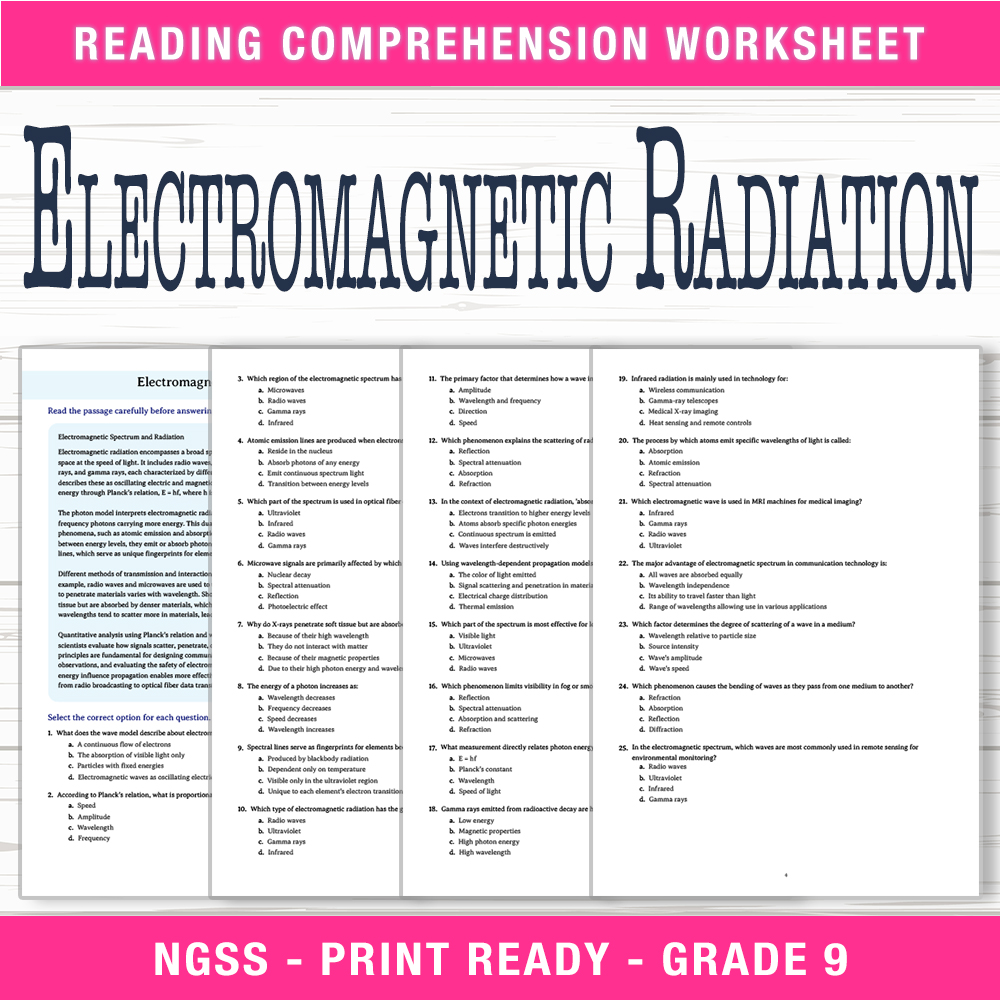
Grade 9 Science | Electromagnetic Radiation Worksheet (PDF + Answer Key)
Created byRiverstone ClassroomLearning Objectives
- Explain the wave and photon models of electromagnetic radiation and their relationship to frequency and energy.
- Describe characteristic phenomena such as atomic emission lines, absorption, and spectral attenuation.
- Apply Planck’s relation and wavelength-dependent properties to evaluate signal penetration and scattering.
Instant download
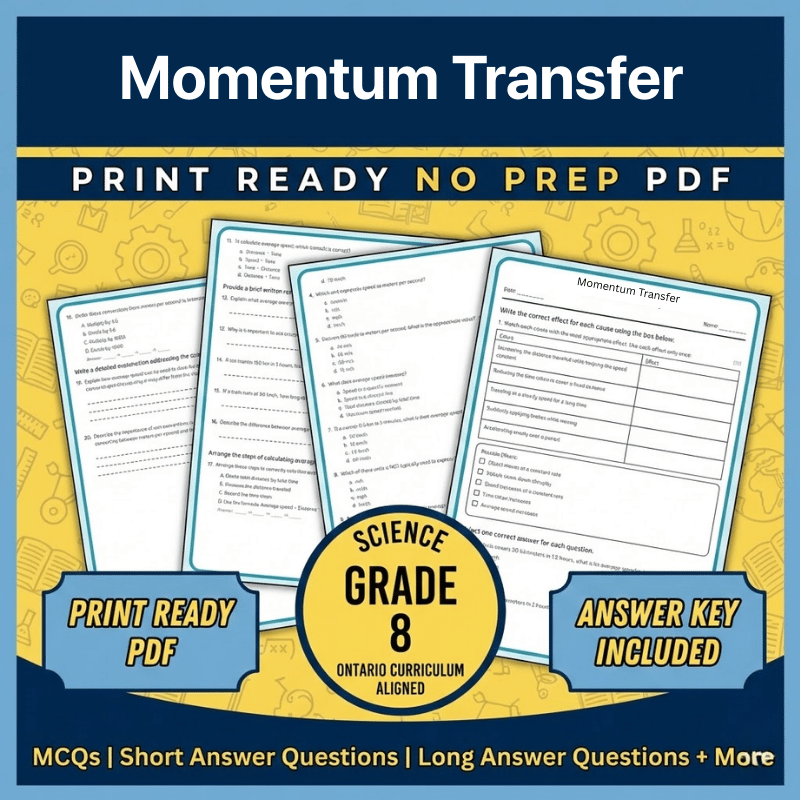
Grade 8 Science | Momentum Transfer Worksheet (Ontario Standards) (PDF)
Created byBright Mind ResourcesLearning Objectives
- Explain the concept of linear momentum and how it is transferred during collisions.
- Distinguish between elastic and inelastic collisions at classroom-relevant scales.
- Apply conservation of momentum principles to predict post-collision velocities.
Instant download
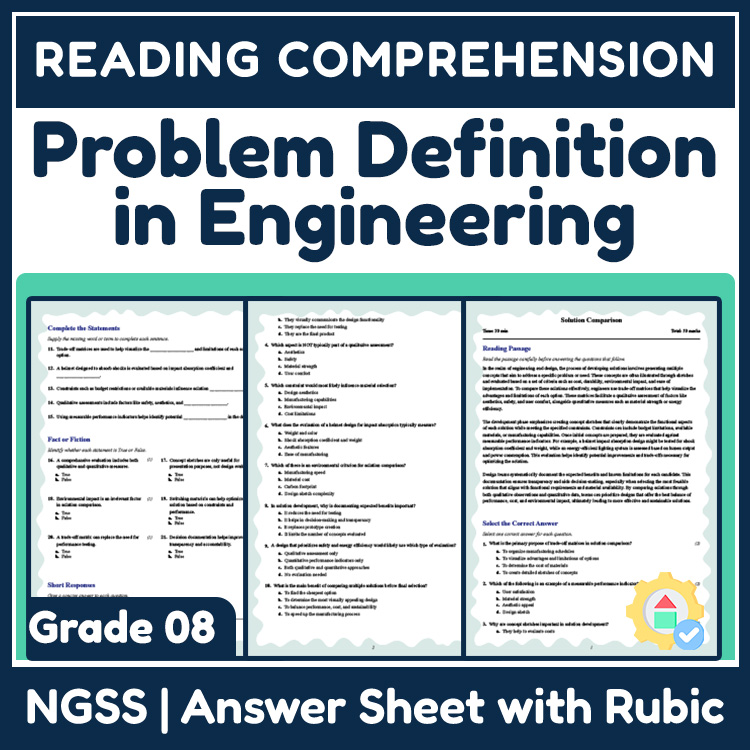
Grade 8 Science | Solution Comparison Reading Worksheet (PDF + Rubric)
JCreated byJ.S SheetsLearning Objectives
- Understand the process of developing and comparing multiple design concepts.
- Recognize criteria, constraints, and performance indicators in solution evaluation.
- Differentiate qualitative and quantitative assessment methods.
Instant download

Testing and Refining Solutions Worksheet Grade 9 Computer Science
Created byPrism Point LearningLearning Objectives
- Explain how testing helps validate an algorithm and find errors in edge cases and unexpected inputs.
- Use test results to refine steps and improve correctness, clarity, and reliability.
- Validate that changes do not break earlier behavior by retesting with multiple scenarios.
Instant download
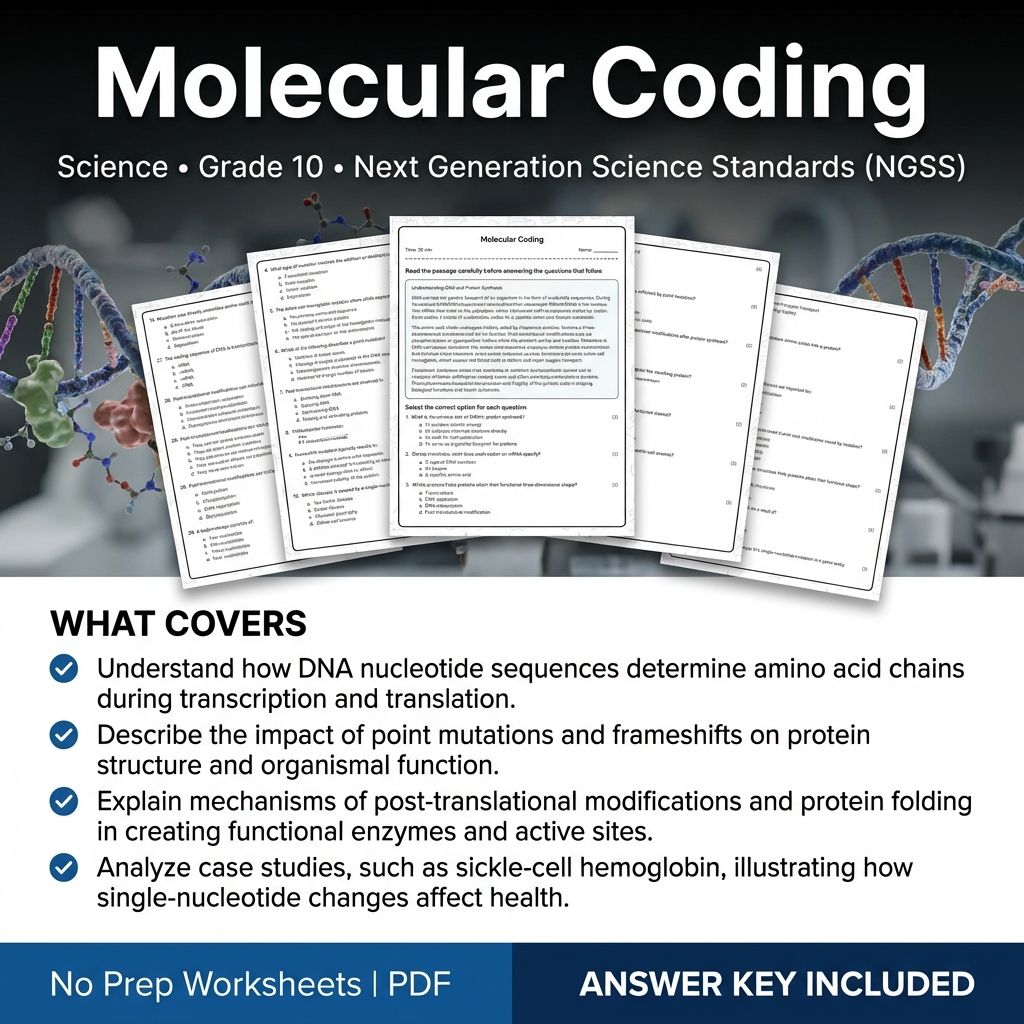
Grade 10 Science | Molecular Coding Worksheet & Answer Key (Printable PDF)
Created byCoral Reef LearningLearning Objectives
- Understand how DNA nucleotide sequences determine amino acid chains during transcription and translation.
- Describe the impact of point mutations and frameshifts on protein structure and organismal function.
- Explain mechanisms of post-translational modifications and protein folding in creating functional enzymes and active sites.
Also included in: Grade 10 Science UNIT Worksheet Pack – Signal Integration, Physiology & Genetics +1 more
Instant download

Grade 6 Science | Conservation of Mass - Daily Reading Comprehension
Created byCoral Reef LearningLearning Objectives
- Understand the principle of conservation of mass in physical and chemical changes.
- Identify how atoms and molecules rearrange during different processes without changing total mass.
- Model mass changes using particle diagrams and symbolic representations.
Instant download
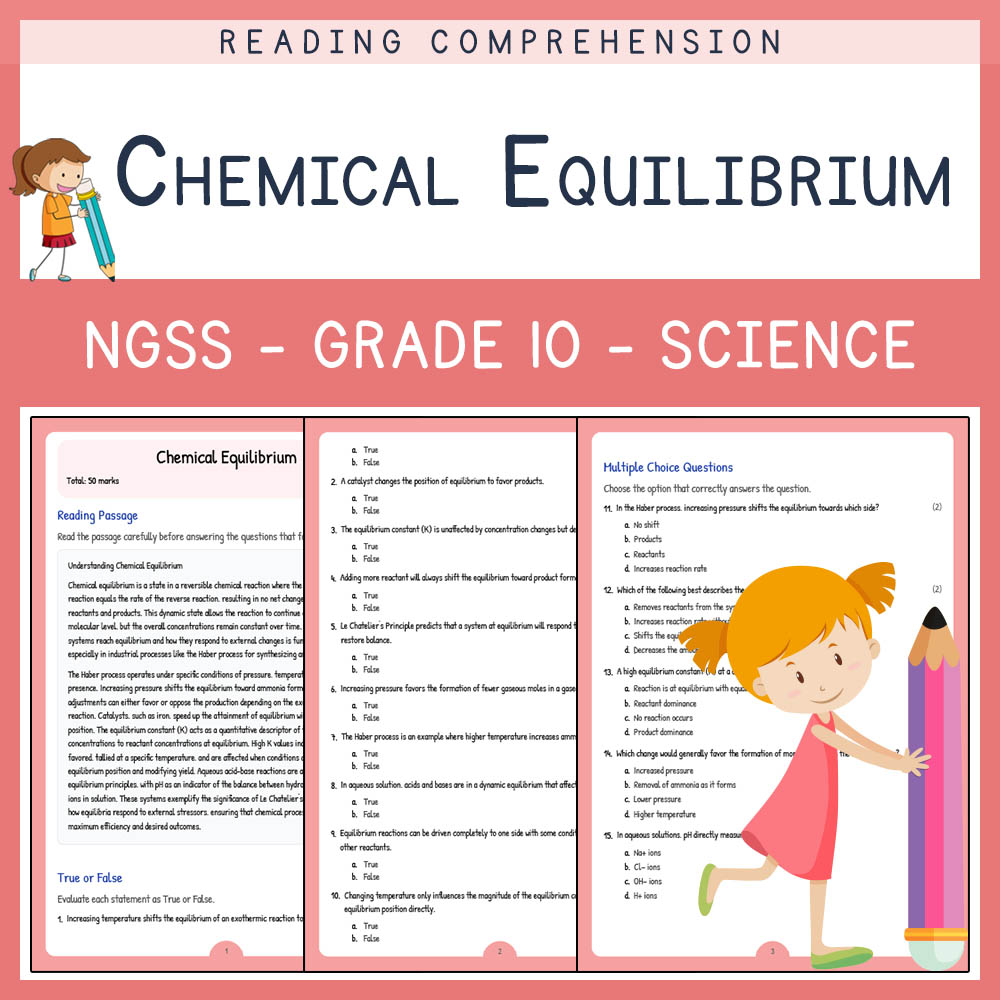
Grade 10 Science | Chemical Equilibrium Worksheet & Answer Key (NGSS Aligned)
Created byLumora LearningLearning Objectives
- Understand the concept of dynamic chemical equilibrium and how it responds to changes in conditions.
- Describe the role of catalysts, equilibrium constants, and the impact of temperature and pressure modifications on the position of equilibrium.
- Apply Le Chatelier's Principle to predict shifts in equilibrium in various chemical systems.
Instant download
Browse more categories
About Reading comprehension Worksheets
Find reading comprehension worksheets for class practice, homework, or self-study. All 40,284 are instant PDF downloads.
Each resource here is built by an independent educator and reviewed for quality. Worksheets print straight from PDF and suit classroom use, homework, or extra practice; most come with answer keys, and you can preview before purchasing.