
Grade 6 Science Worksheets
5,969 worksheets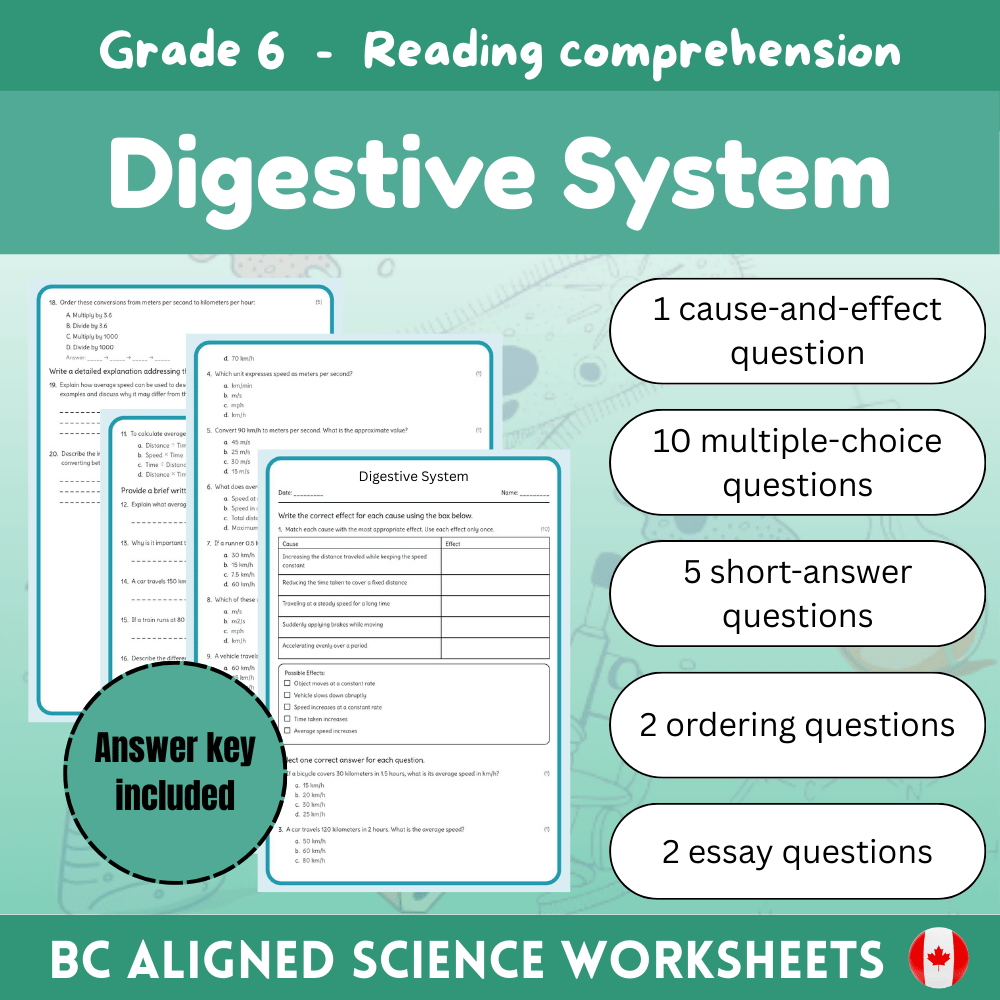
Grade 6 Science | Digestive System Worksheet + Answer Key – BC standards
 Created byBright Mind Resources
Learning Objectives
- Describe the main organs involved in the digestion process.
- Explain how enzymes and acids help break down food into absorbable nutrients.
- Identify how nutrients cross into blood or lymph for distribution.
Instant download
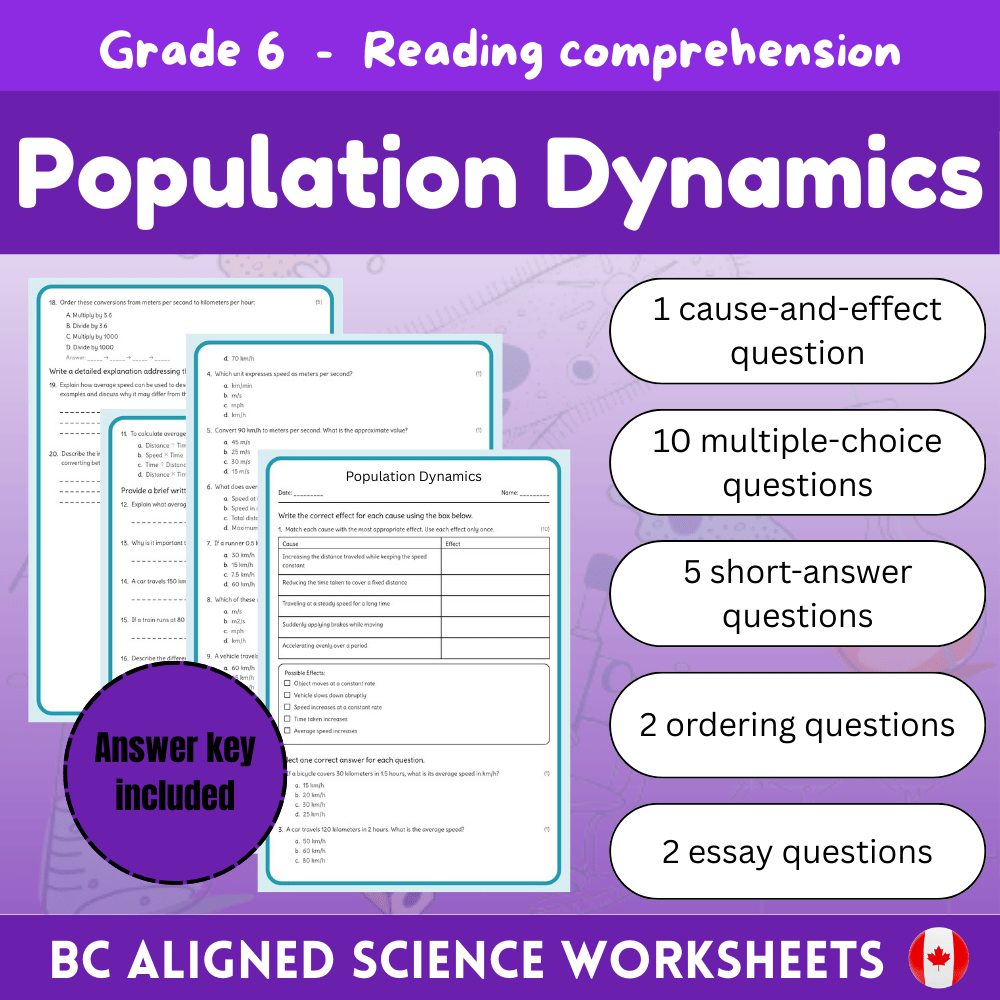
6th Grade Science | Population Dynamics Worksheet (Answer Key) for BC Standards
Created byBright Mind ResourcesLearning Objectives
- Understand factors that influence population change such as birth, death, immigration, and emigration.
- Identify different growth models like exponential and logistic growth.
- Describe factors affecting population density, including density-dependent and density-independent factors.
Instant download
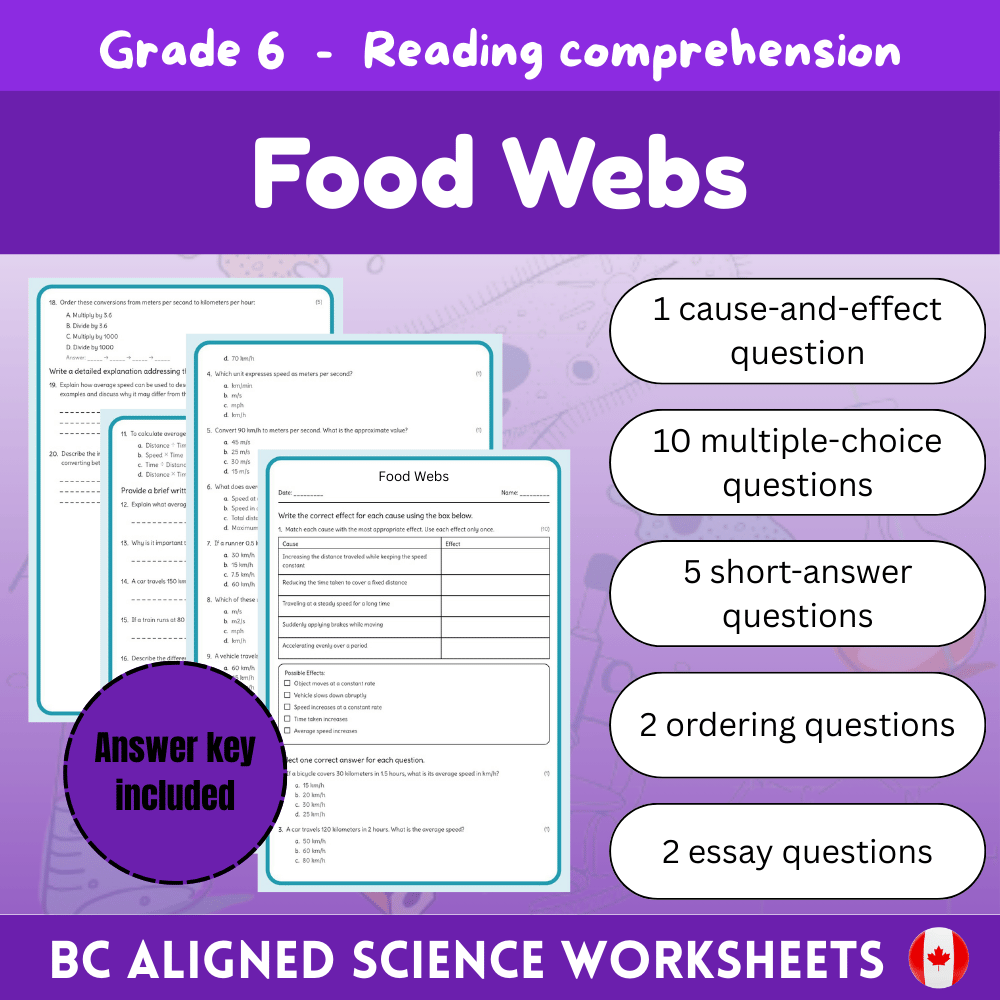
Grade 6 Science – Food Webs Worksheet (Worksheet + Answer Key) | BC Standards
Created byBright Mind ResourcesLearning Objectives
- Understand the structure and components of a food web.
- Identify how energy flows through ecosystems via food webs.
- Describe the impact of species removal on ecosystem stability.
Instant download
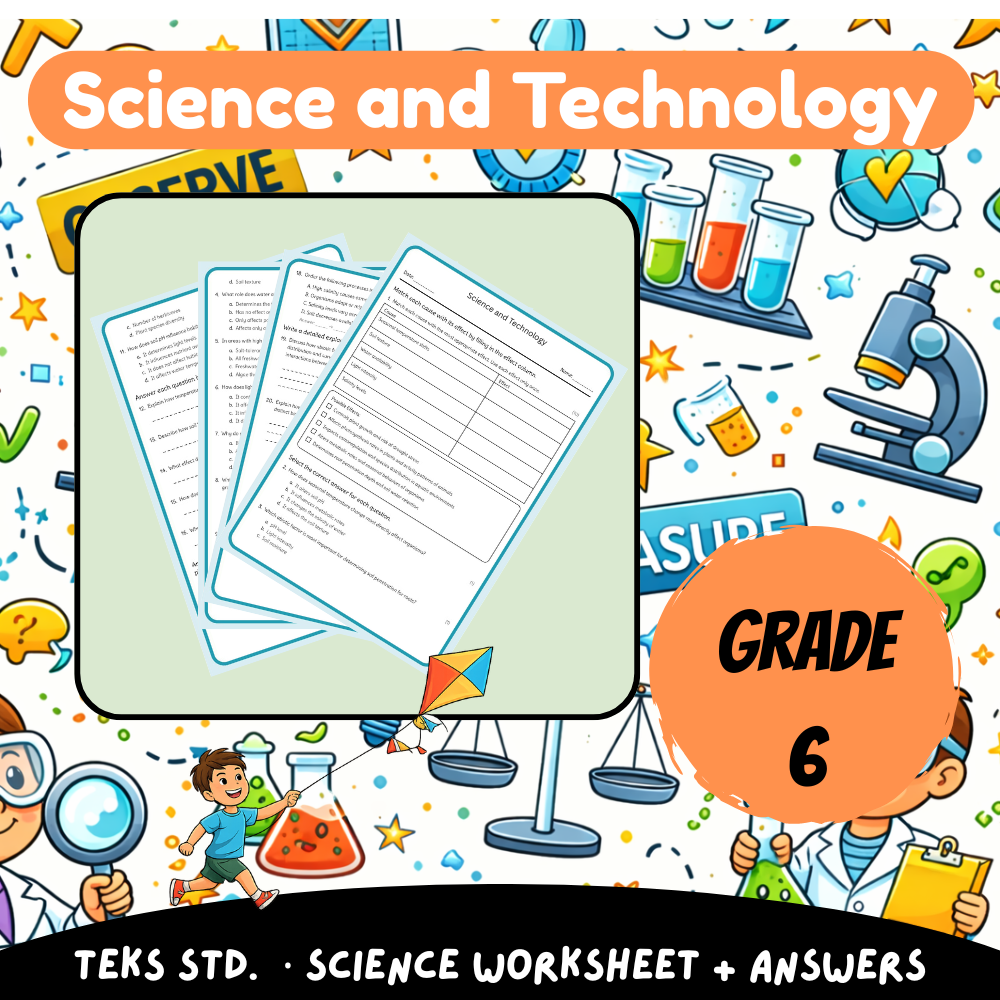
Grade 6 Science | Technology in Science Worksheet (Worksheet + Answer Key) PDF
Created byBright Mind ResourcesLearning Objectives
- Understand how scientific investigation drives technological development.
- Identify tools and instruments used in scientific observation and measurement.
- Explain the reciprocal relationship between science and technology, including cause-and-effect.
Instant download
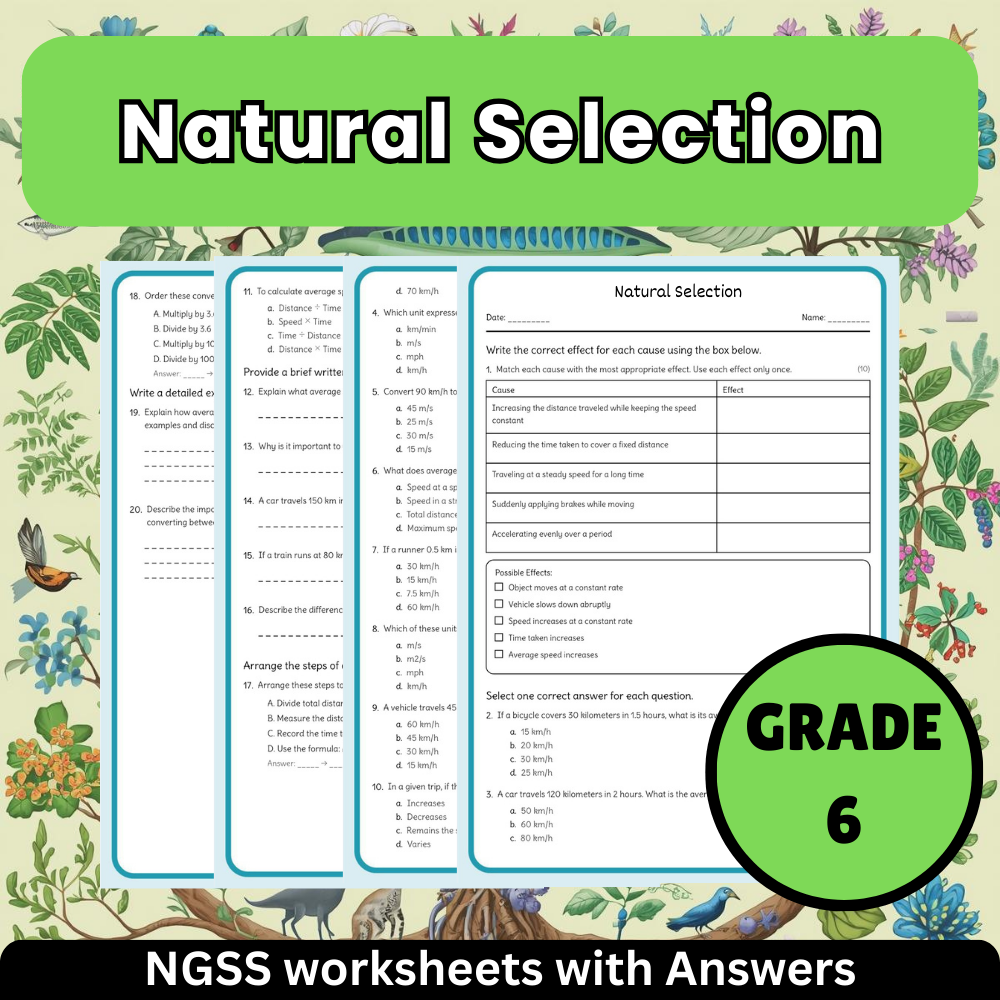
6th Grade Science | Natural Selection Worksheet + Answer Key (NGSS Aligned)
Created byBright Mind ResourcesLearning Objectives
- Understand how variation in heritable traits influences survival and reproduction.
- Identify examples of natural selection affecting populations.
- Explain the linkage between trait advantage and population-level genetic changes.
Also included in: Grade 6 Science Unit Bundle | Evolution, Genetics & Biodiversity NGSS Worksheets +2 more
Instant download
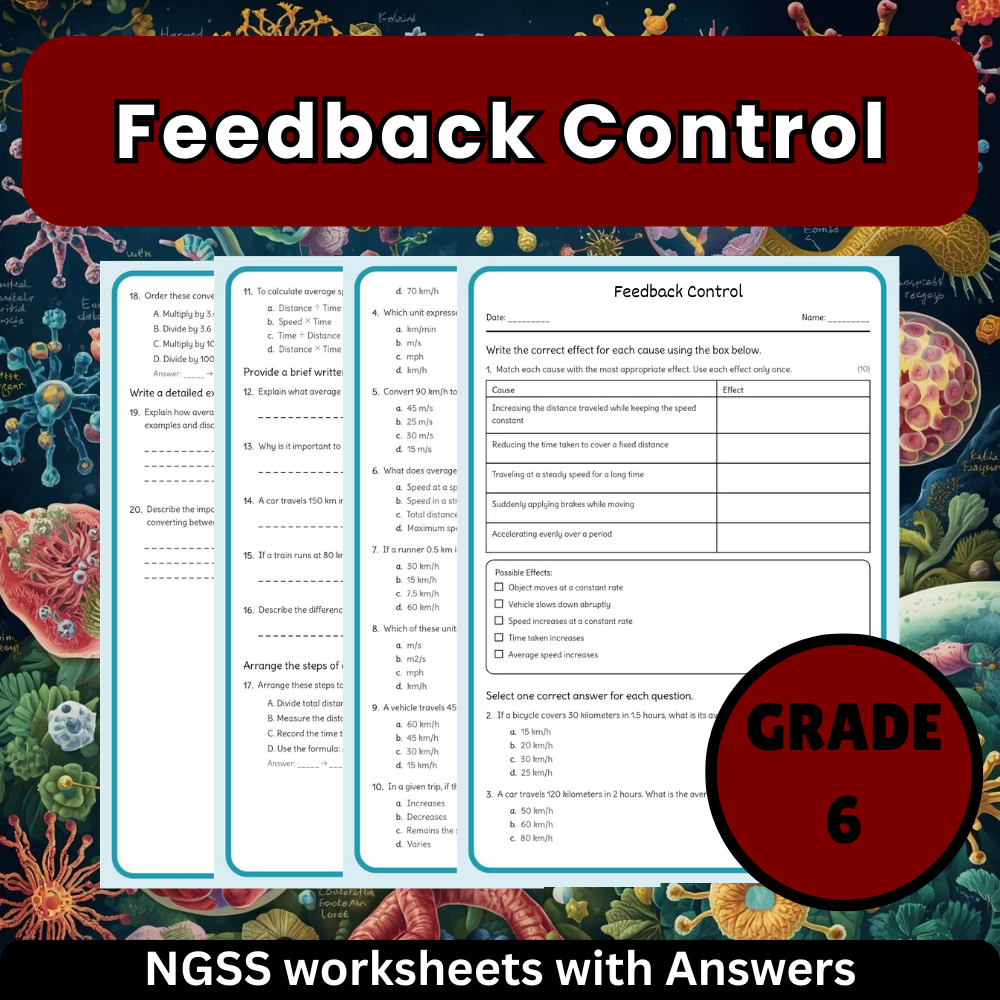
Grade 6 Science – Feedback Control Worksheet (PDF) | NGSS-Aligned & Engaging
Created byBright Mind ResourcesLearning Objectives
- Explain how feedback mechanisms regulate internal stability in the human body.
- Differentiate between negative and positive feedback processes with examples.
- Describe how disruption in feedback control systems can affect organ function and homeostasis.
Also included in: Grade 6 Science UNIT Bundle | Cell Functions, Energy & Systems NGSS Worksheets +2 more
Instant download
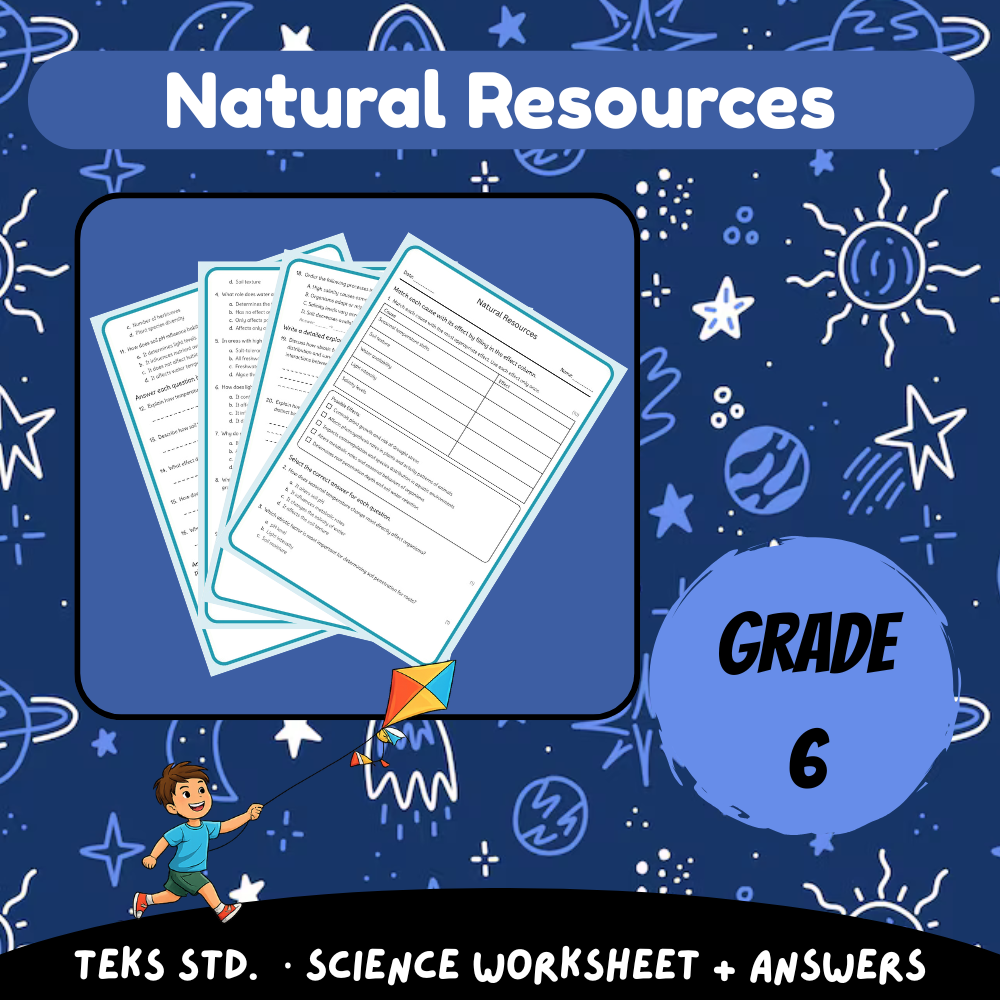
6th Grade Science | Natural Resources (Worksheet + Answer Key) - TEKS-Aligned
Created byBright Mind ResourcesLearning Objectives
- Identify different types of natural resources and understand their origins and distributions.
- Analyze the environmental and economic implications of renewable and nonrenewable resources.
- Evaluate sustainable resource use principles and trade-offs involved in resource development.
Instant download
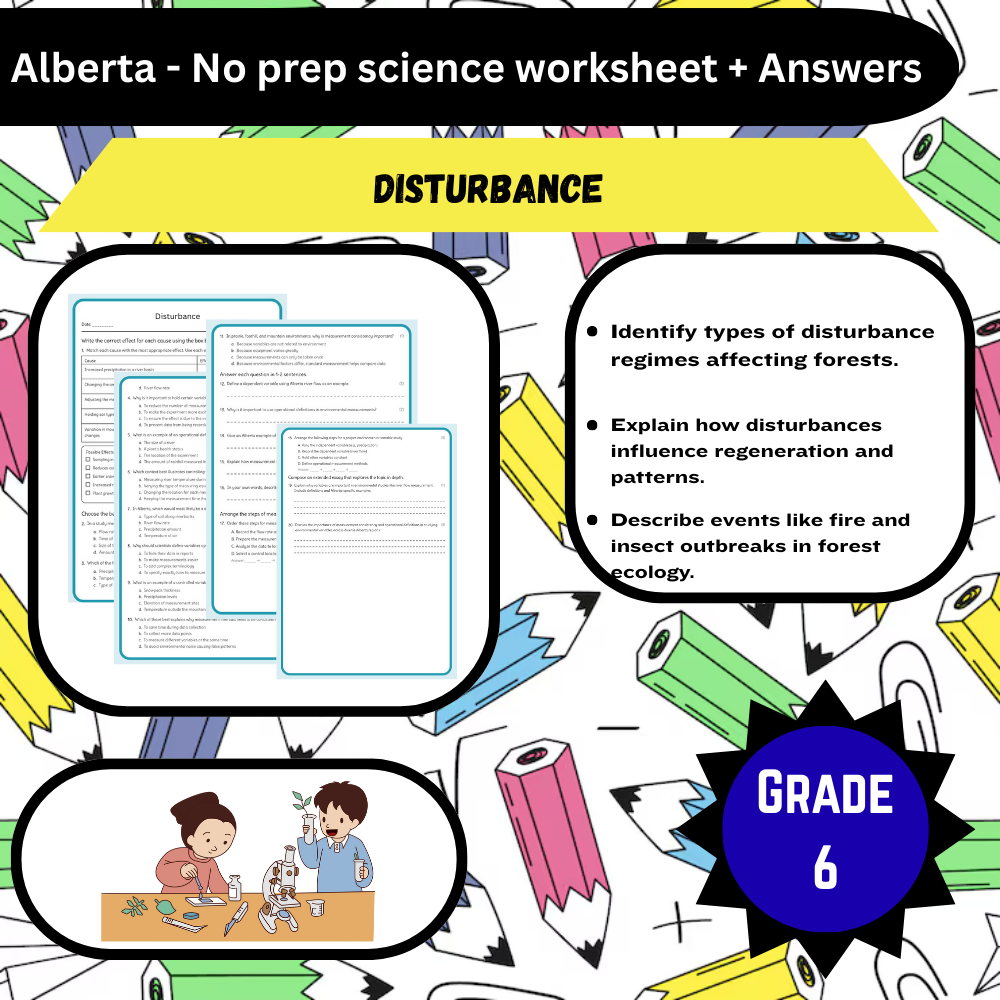
6th Grade Science – Disturbance Regimes Worksheet (PDF)
Created byBright Mind ResourcesLearning Objectives
- Identify different types of disturbance regimes that affect forests
- Explain how disturbance characteristics influence forest regeneration and landscape patterns
- Describe specific disturbance events such as fire and insect outbreaks in forest ecology
Instant download
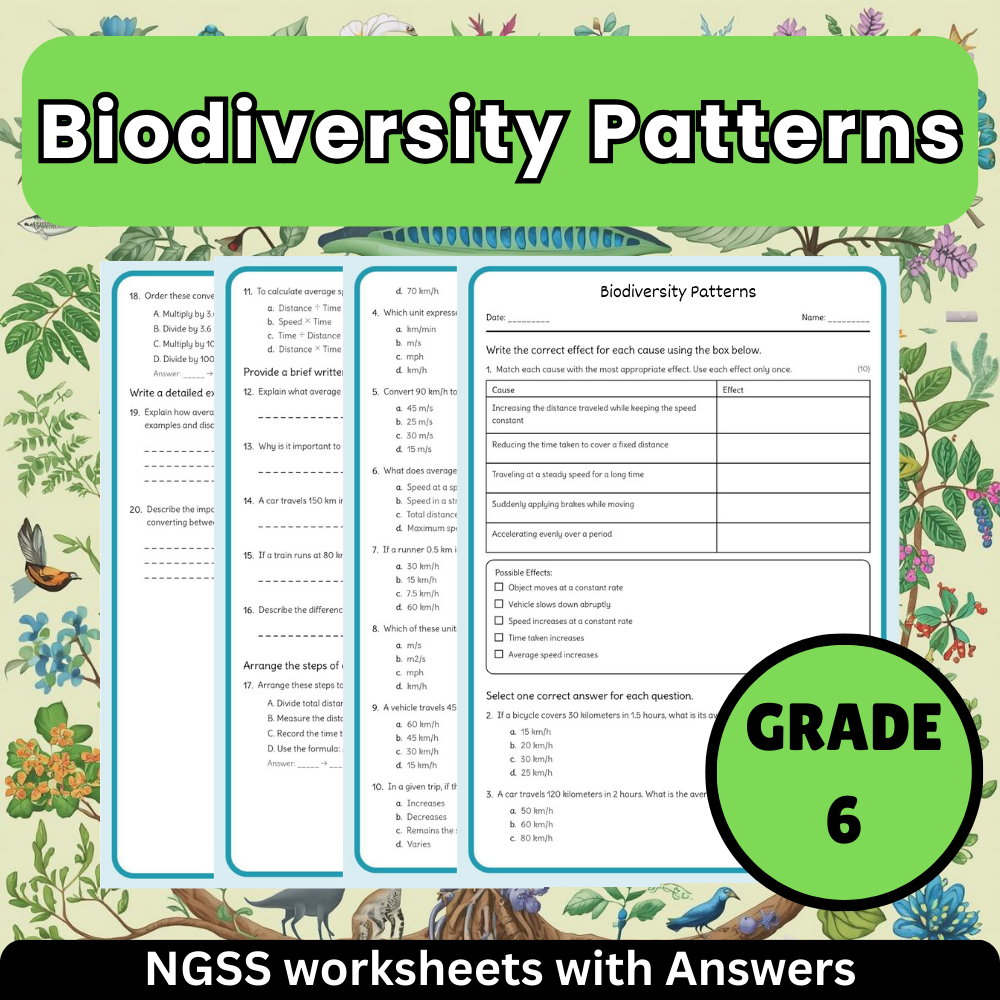
Grade 6 Science | Biodiversity Patterns Worksheet (Answer Key) - NGSS Aligned
Created byBright Mind ResourcesLearning Objectives
- Understand how spatial and temporal data reveal biodiversity patterns across ecosystems.
- Identify factors influencing species diversity and endemism.
- Analyze ecological and historical factors affecting community composition.
Also included in: Grade 6 Science Unit Bundle | Evolution, Genetics & Biodiversity NGSS Worksheets +2 more
Instant download
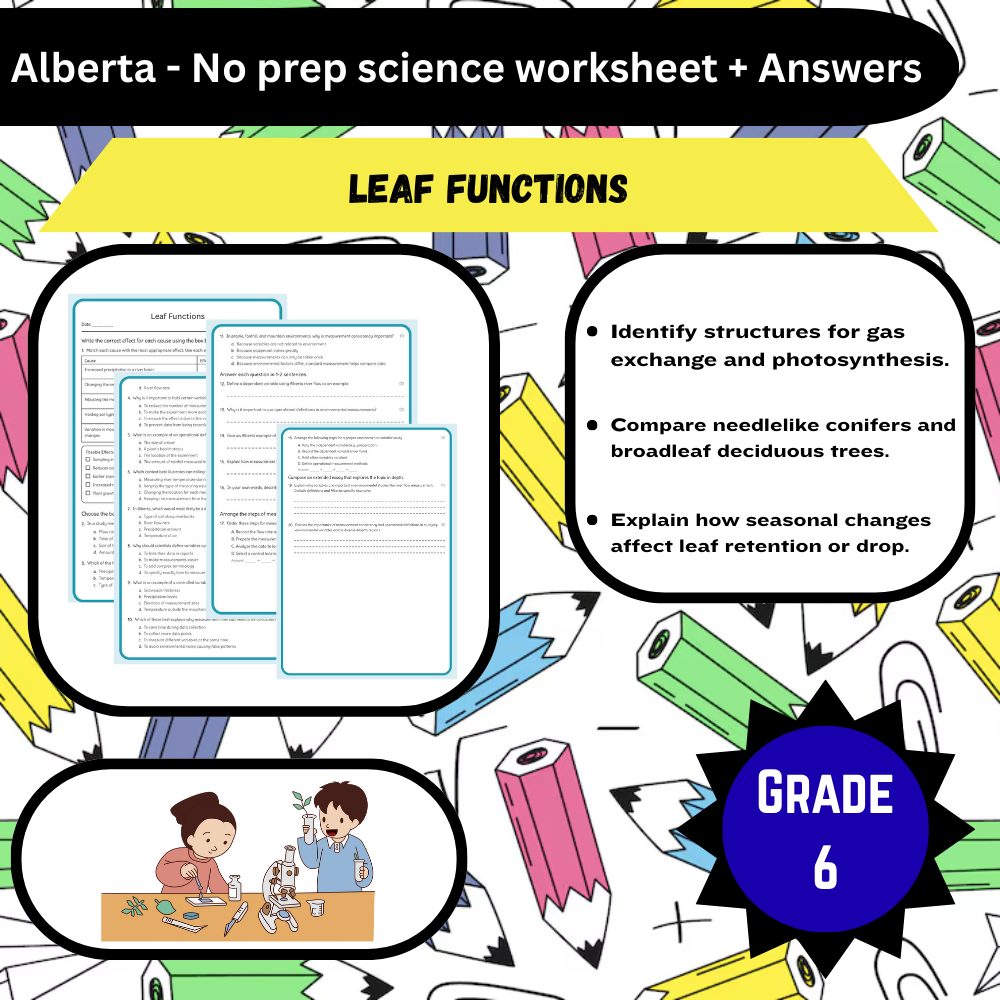
Grade 6 Science | Leaf Functions Worksheet – Photosynthesis & Adaptations (PDF)
Created byBright Mind ResourcesLearning Objectives
- Identify the different structures of leaves and their functions in gas exchange, photosynthesis, and transpiration.
- Compare leaf adaptations between needlelike conifers and broadleaf deciduous trees.
- Explain how seasonal changes affect leaf retention and leaf drop in Alberta's tree species.
Instant download
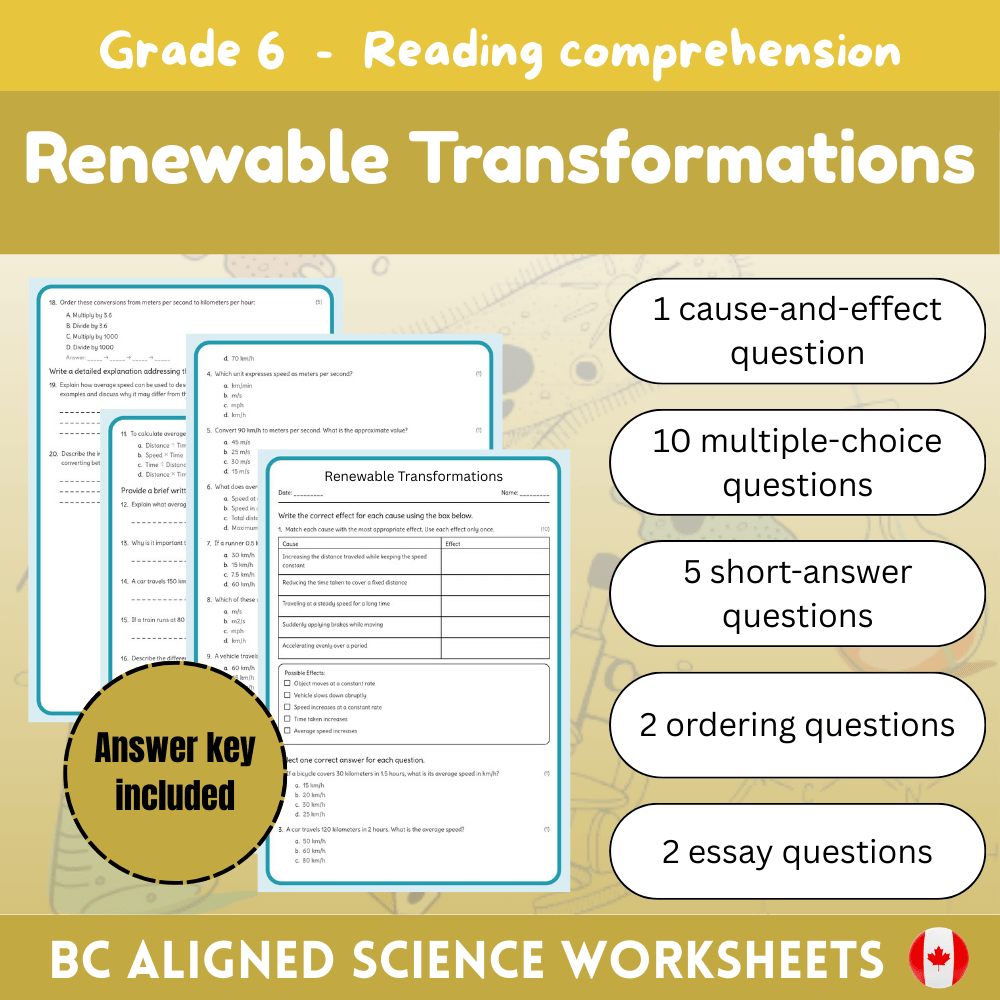
Grade 6 Science | Renewable Transformations Worksheet (PDF) — BC Standard
Created byBright Mind ResourcesLearning Objectives
- Describe how photovoltaic cells, wind turbines, and hydro systems convert environmental sources into electrical energy.
- Explain the energy losses involved at each stage of renewable energy transformations.
- Analyze how storage and conversion choices impact net usable energy in renewable systems.
Instant download
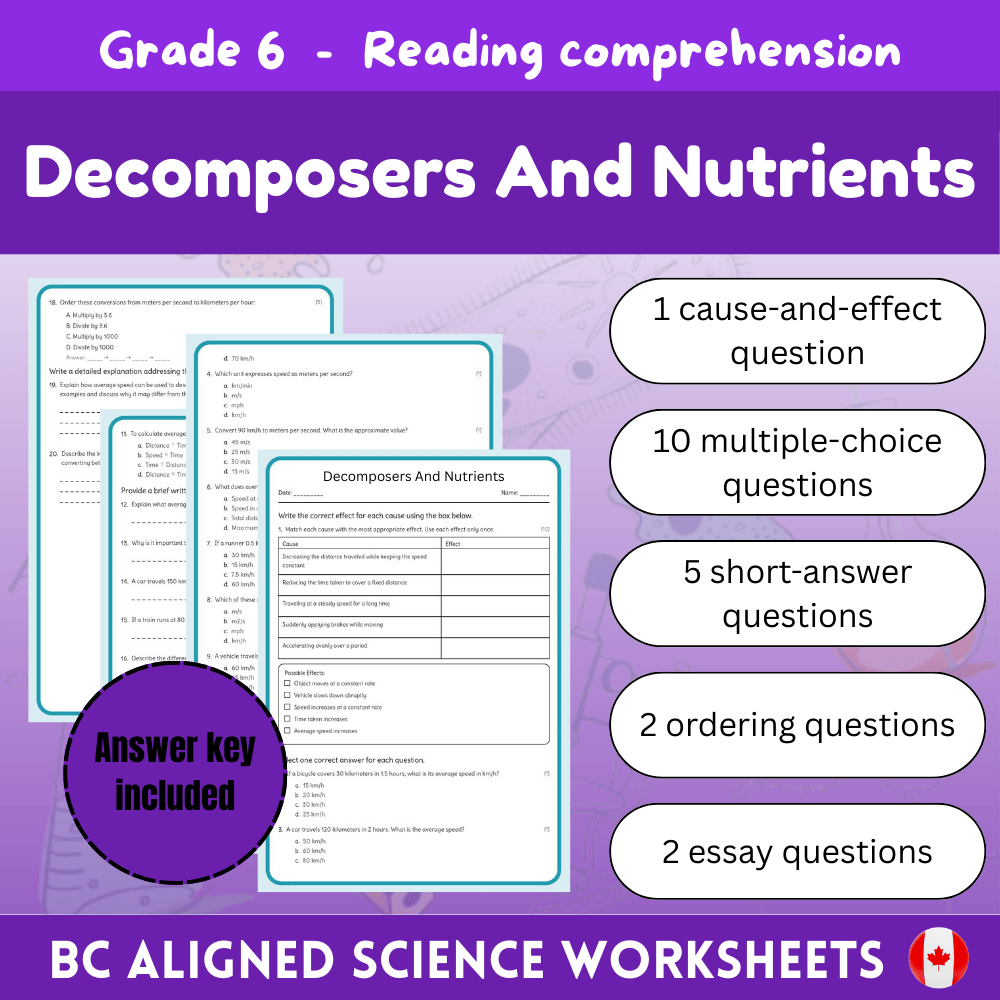
6th Grade Science | Decomposers and Nutrients Experiment Worksheet (PDF)
Created byBright Mind ResourcesLearning Objectives
- Understand the role of decomposers in breaking down organic matter and returning nutrients to the environment.
- Identify environmental factors that affect decomposer efficiency.
- Explain how decomposer activity influences soil health, nutrient cycling, and ecosystem balance.
Instant download
Grade 6 Science | Physiological Adaptations Worksheet(Answer Key) - BC Standards
Created byBright Mind ResourcesLearning Objectives
- Understand internal processes that enable animals to survive in extreme environments.
- Identify examples of physiological adaptations such as heat exchange, urine concentration, and metabolic regulation.
- Explain how hormonal mechanisms help regulate body temperature, hydration, and energy during challenging conditions.
Instant download
6th Grade Science | Adaptation Patterns Worksheet (PDF) — TEKS Aligned
Created byBright Mind ResourcesLearning Objectives
- Identify different types of adaptations such as morphological, physiological, and behavioral.
- Understand how adaptations help organisms survive in specific environments.
- Explain examples of traits like succulent stems, leaf modifications, fur insulation, and beak variation.
Instant download
6th Grade Science | Human Influences Worksheet (PDF) – TEKS Standards
Created byBright Mind ResourcesLearning Objectives
- Identify different human activities that impact natural ecosystems.
- Explain effects of habitat fragmentation, pollution, and resource extraction.
- Recognize mitigation strategies such as conservation and restoration.
Instant download
Grade 6 Science | Molecular Processes Worksheet (NGSS-Aligned, PDF)
Created byBright Mind ResourcesLearning Objectives
- Identify the key molecular building blocks such as amino acids, nucleotides, fatty acids, and monosaccharides.
- Explain how monomers assemble into polymers through condensation reactions.
- Describe the roles of macromolecules—proteins, nucleic acids, lipids, and carbohydrates—in biological structure and function.
Also included in: Grade 6 Science UNIT Bundle | Cell Functions, Energy & Systems NGSS Worksheets +2 more
Instant download
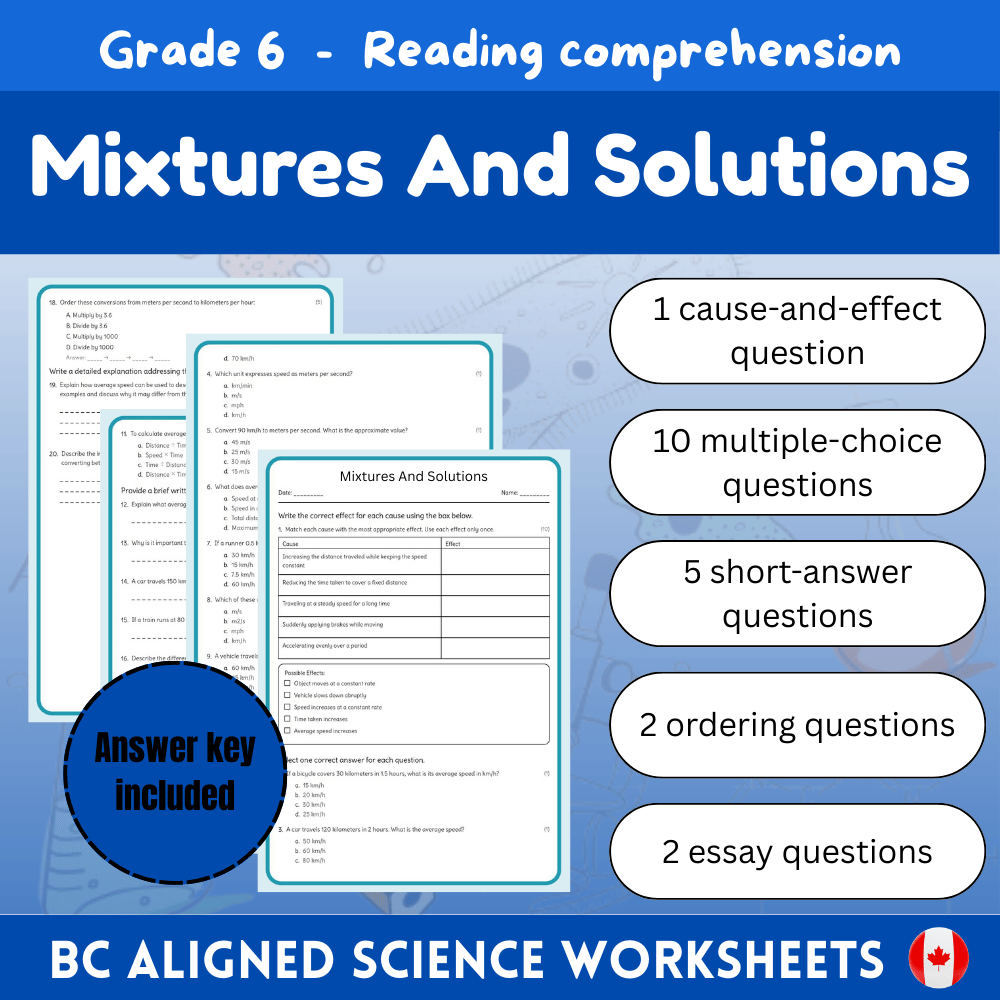
Grade 6 Science | Mixtures and Solutions Worksheet (PDF) – BC Standards
Created byBright Mind ResourcesLearning Objectives
- Understand the difference between mixtures and solutions.
- Identify methods used to separate components of mixtures.
- Explain characteristics of homogeneous and heterogeneous mixtures.
Instant download
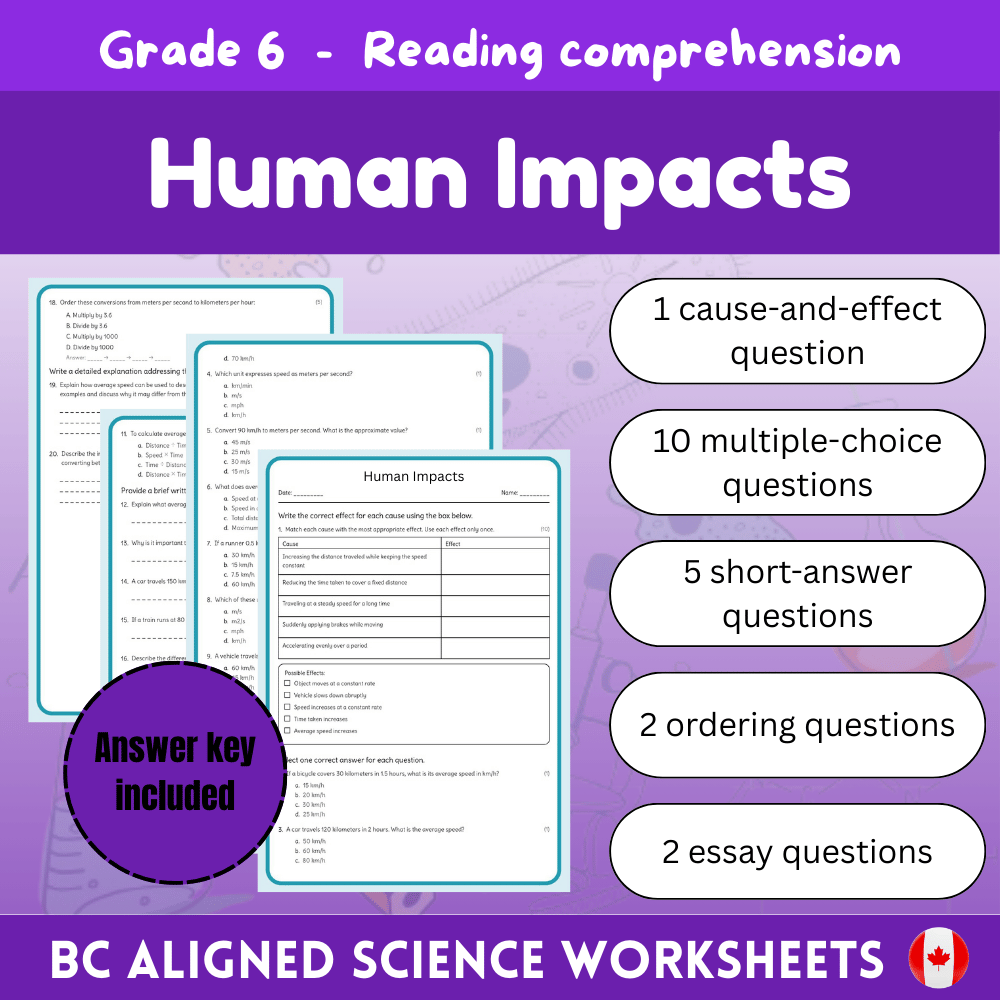
6th Grade Science | Human Impacts Worksheet + Answer Key (PDF)
Created byBright Mind ResourcesLearning Objectives
- Understand how human activities affect ecosystems and biodiversity.
- Identify specific impacts of land clearing, pollution, resource extraction, and invasive species.
- Explain consequences of ecosystem alterations such as habitat loss and nutrient cycle disruption.
Instant download
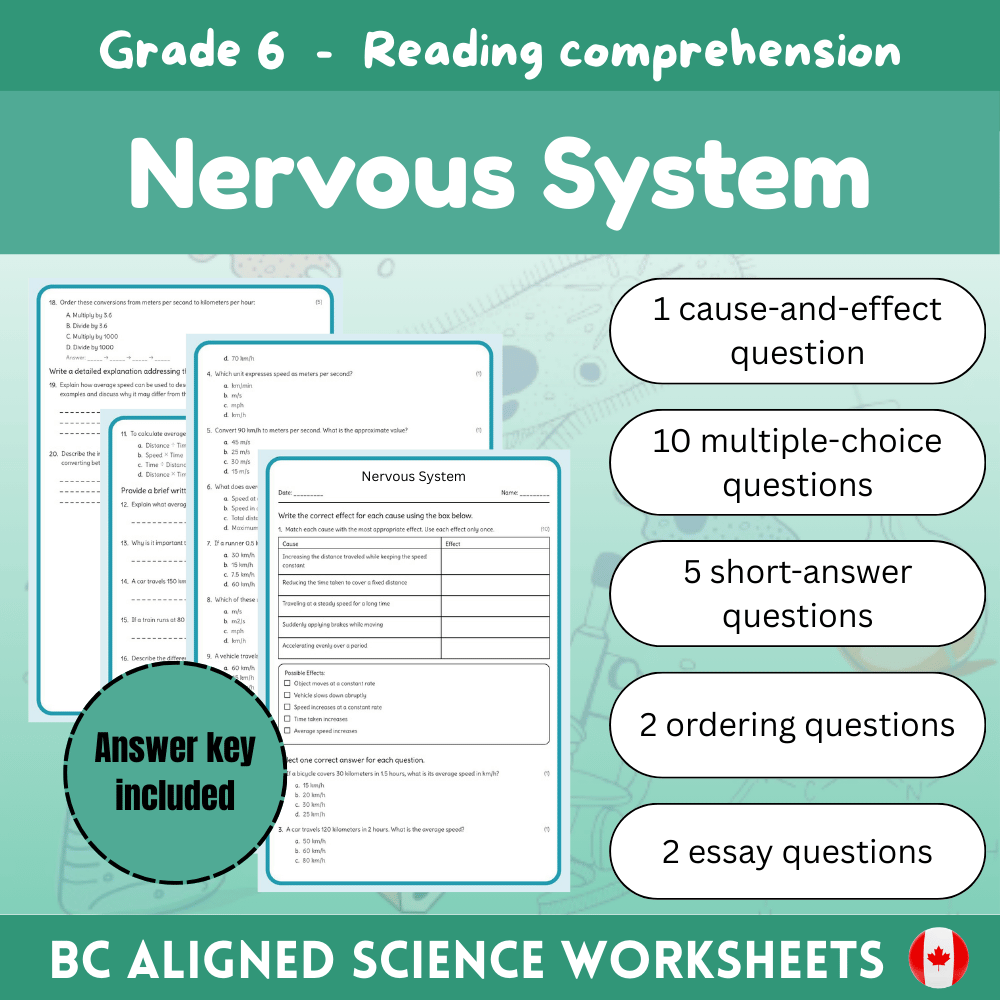
6th Grade Science | Nervous System Worksheet + Answer Key – BC Standards
Created byBright Mind ResourcesLearning Objectives
- Describe the basic functions of the nervous system in collecting and processing information.
- Identify the roles of neurons, synapses, and integration centers in nervous system function.
- Explain how the nervous system coordinates responses with muscles and glands.
Instant download
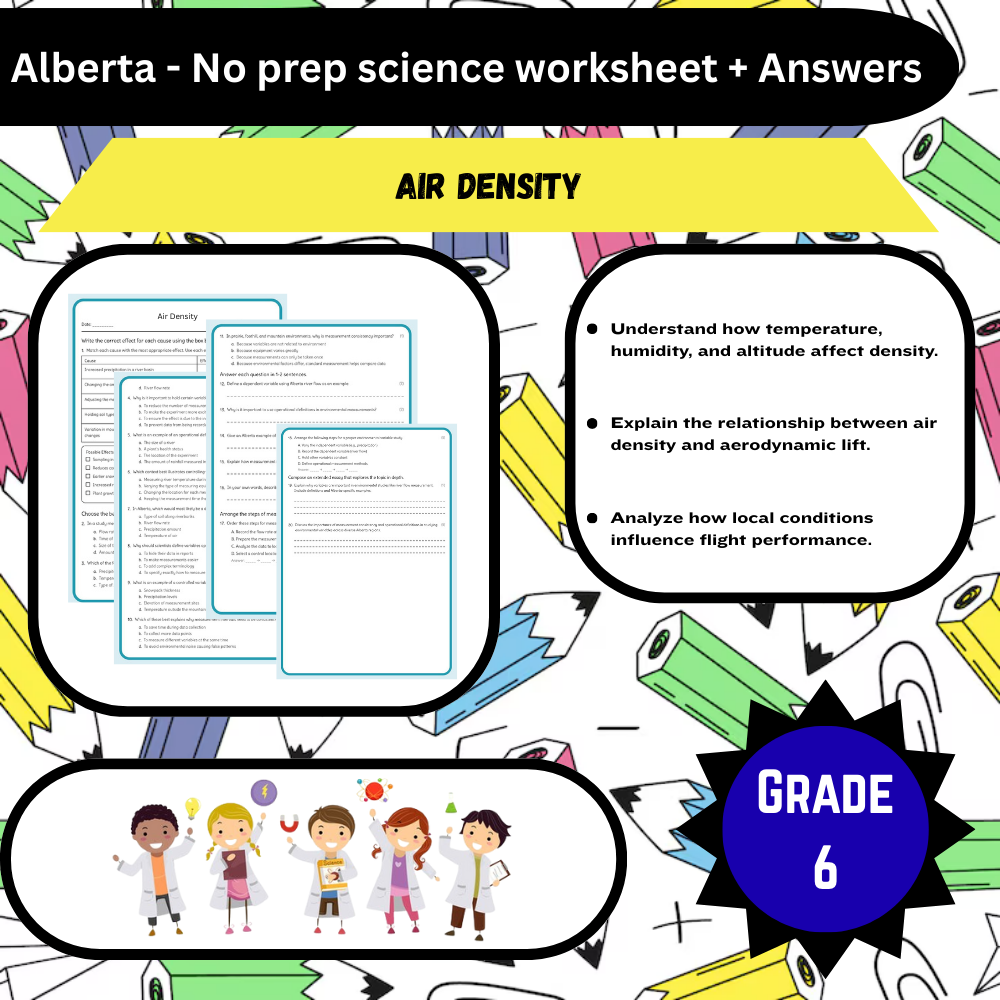
Grade 6 Science – Air Density Worksheet (PDF) | Alberta Standards
Created byBright Mind ResourcesLearning Objectives
- Understand how changes in temperature, humidity, and altitude affect air density.
- Explain the relationship between air density and aerodynamic lift.
- Analyze how local atmospheric conditions influence flight performance in different environments.
Instant download

Grade 6 Science | Pattern From Graphs Worksheet | General Standard
 Created byLumora Learning
Learning Objectives
- Describe patterns on graphs using precise quantitative language (increasing, decreasing, plateau, scatter, or curved change).
- Interpret relationships between variables by comparing graph shapes and trend directions.
- Use evidence from a graph to make predictions or justify conclusions about patterns.
Instant download
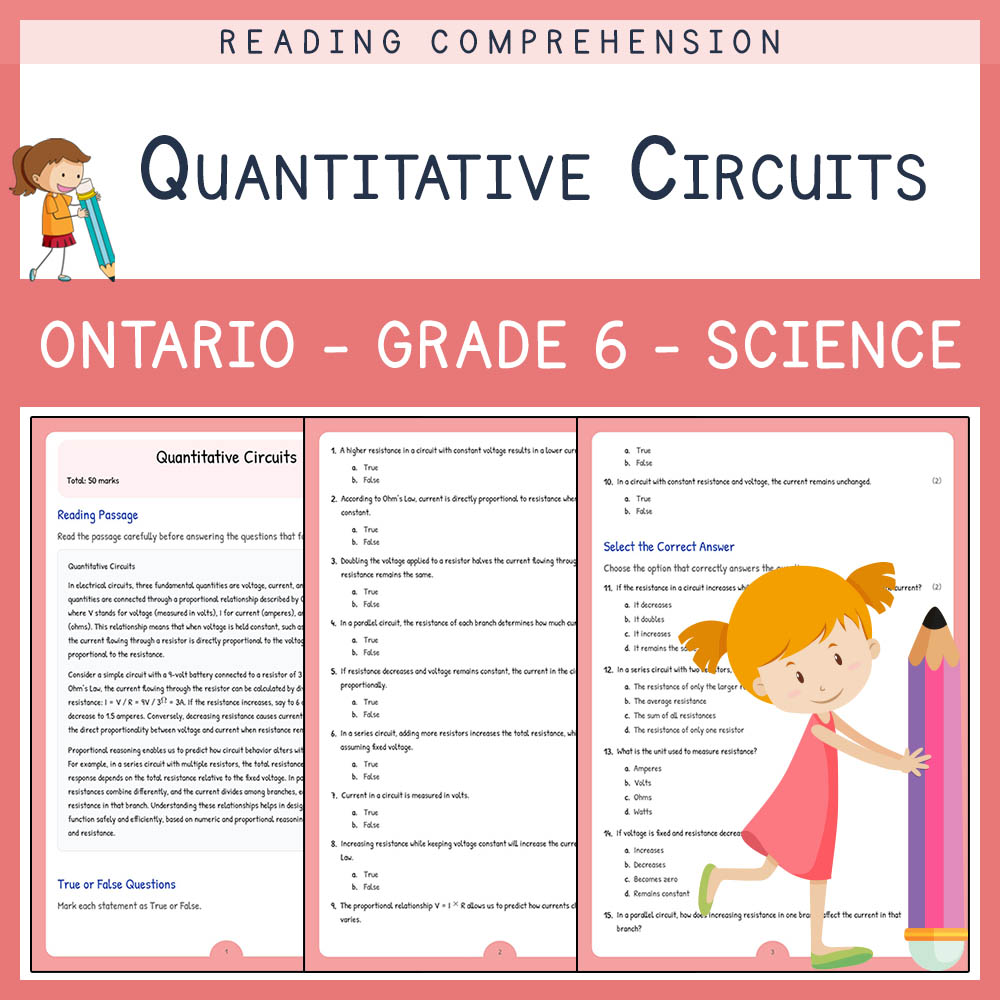
Grade 6 Science | Quantitative Circuits Worksheet & Answer Key | Ontario
Created byLumora LearningLearning Objectives
- Understand how voltage, current, and resistance are related through proportional relationships.
- Apply simple calculations to determine circuit element characteristics using measured values.
- Explain how changes in resistance affect current in a circuit with a fixed voltage.
Also included in: Grade 6 Science | Electricity Unit Custom Bundle | Ontario Framework
Instant download

Grade 6 Science | Weather Elements Worksheet | NGSSS Aligned
Created byLumora LearningLearning Objectives
- Explain that weather describes short-term atmospheric conditions using elements such as temperature, precipitation, wind, cloud cover, and humidity.
- Describe how measuring multiple weather elements helps scientists and meteorologists build an up-to-date picture of regional conditions.
- Recognize that weather elements can change quickly, which can cause forecasts to be updated as new observations arrive.
Instant download

Grade 6 Science | El Niño Effects Worksheet | Florida NGSSS Aligned
Created byLumora LearningLearning Objectives
- Explain how changes in sea surface temperatures in the tropical Pacific can affect evaporation, cloud formation, and wind circulation
- Describe how El Niño and La Niña can shift rainfall and temperature patterns in distant regions
- Use evidence-based observations (precipitation, wind, and temperature trends) to connect ocean changes to broader climate impacts
Instant download

Grade 6 Science | Earth System Interactions Worksheet | NGSSS Aligned
Created byLumora LearningLearning Objectives
- Identify the four Earth systems (atmosphere, hydrosphere, geosphere, and biosphere) and describe how they interact.
- Explain how energy flow (heating and cooling) and matter movement (water, sediments) connect Earth systems.
- Use examples to predict how a change in one sphere can affect other spheres over time.
Instant download

Grade 6 Science | Levels of Life Worksheet | BC-Aligned
Created byLumora LearningLearning Objectives
- Understand the different biological levels from cells to organisms.
- Identify how cells combine into tissues and organs, and how organ systems support life.
- Recognize how disruptions at one level affect the entire organism.
Instant download

Grade 6 Science | Energy From Sun Worksheet Elena | Florida NGSSS
Created byLumora LearningLearning Objectives
- Explain how the angle of incoming solar energy affects temperature differences on Earth
- Describe how unequal heating drives changes in air movement and ocean circulation
- Connect energy transfers in the atmosphere and oceans to daily weather and seasonal climate patterns
Instant download

Grade 6 Science | Physiological Traits Worksheet | NGSSS Aligned
Created byLumora LearningLearning Objectives
- Explain how physiological adaptations help organisms survive in specific environments
- Identify examples of physiological traits related to water balance, metabolism, and ion/oxygen regulation
- Use evidence from statements or scenarios to classify traits as physiological adaptations
Instant download

Grade 6 Science | Prototype Evaluation Worksheet | General Standard
Created byLumora LearningLearning Objectives
- Explain how prototype evaluation uses data, observations, and constraints to judge a design.
- Identify measurements and failure observations that can be used as evidence for improvement.
- Use evaluation criteria to compare a prototype’s performance and determine whether it meets limits.
Instant download

Grade 6 Science | Mixtures and Solutions Worksheet | BC Aligned
Created byLumora LearningLearning Objectives
- Understand the difference between mixtures and solutions.
- Identify the components of different types of mixtures.
- Explain methods used to separate mixture components based on their properties.
Instant download

Grade 6 Science | Inherited Adaptations Worksheet | Florida NGSSS Aligned
Created byLumora LearningLearning Objectives
- Explain how inherited adaptations help organisms survive and reproduce in specific environments
- Identify examples of adaptations that improve feeding, protection, or tolerance to temperature and moisture
- Describe how environmental pressures (living and nonliving factors) increase the usefulness of certain traits
Instant download

Grade 6 Science | Niche Relationships Worksheet | NGSSS Aligned
Created byLumora LearningLearning Objectives
- Explain what a niche is and how it differs from an organism’s habitat
- Describe how two species can coexist through niche differences and reduced niche overlap
- Use examples to predict how competition changes when resources become limited
Instant download

Grade 6 Science | Organ Definition Worksheet | BC Aligned
Created byLumora LearningLearning Objectives
- Understand the structure and function of organs in the human body.
- Identify different tissue types and their roles within organs.
- Describe how tissues interact within organs to perform specific functions.
Instant download
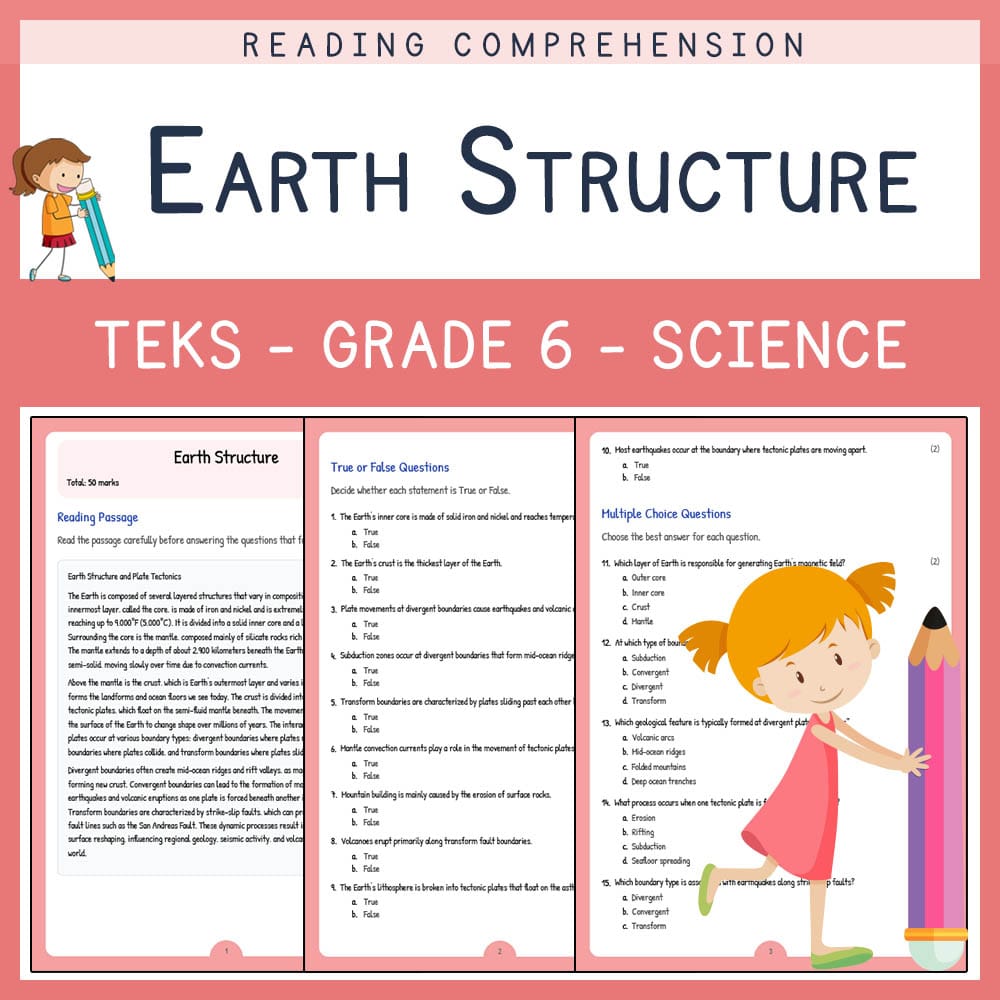
Grade 6 Science | Earth Structure Worksheet | TEKS-Aligned
Created byLumora LearningLearning Objectives
- Describe the internal layers of the Earth and their characteristics.
- Identify different types of plate boundaries and their associated geological features.
- Explain how tectonic processes such as mantle convection and crustal deformation drive geological phenomena.
Also included in: Grade 6 Science | Earth and Space Science Unit Bundle | TEKS Standard
Instant download

Grade 6 Science | Survival Changes Worksheet | NGSSS-Aligned
Created byLumora LearningLearning Objectives
- Explain how environmental changes (temperature, drought, and food availability) affect which traits help organisms survive.
- Describe how differences in traits can change survival and reproduction within a population over time.
- Connect adaptation to ecosystem change by identifying how shifts in resources can alter which organisms remain.
Instant download

Grade 6 Science | Building Knowledge Worksheet | NGSSS Aligned
Created byLumora LearningLearning Objectives
- Explain how scientific knowledge can change when new evidence conflicts with earlier ideas
- Differentiate scientific theories and scientific laws
- Describe how communication, peer evaluation, and reproducibility strengthen scientific evidence
Instant download
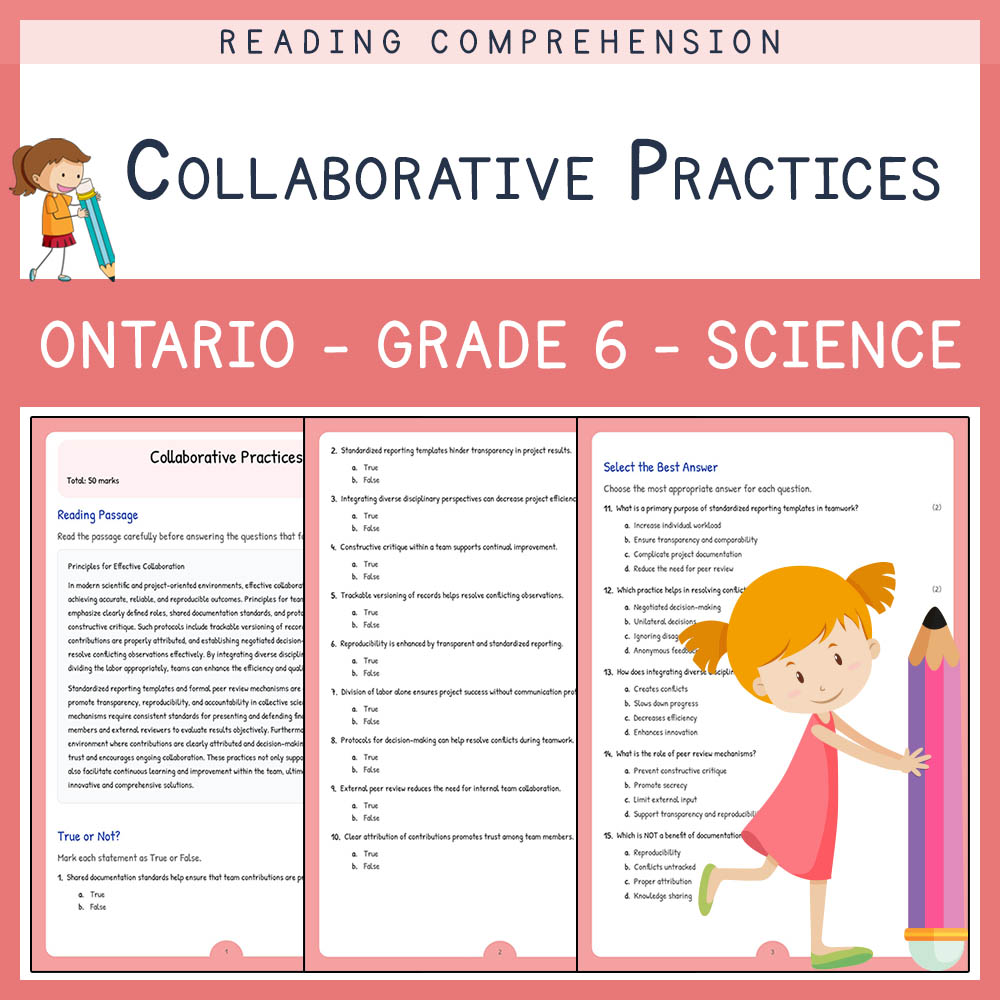
Grade 6 Science | Collaborative Practices Worksheet & Answer Key (PDF)
Created byLumora LearningLearning Objectives
- Understand principles of effective team-based organization and communication.
- Identify standards for documentation and contribution attribution.
- Explain the importance of peer review and report standardization in collaborative science.
Instant download

Grade 6 Science | Growth and Stored Energy | California Standards
Created byLumora LearningLearning Objectives
- Explain how photosynthesis provides energy and chemical building materials for plant growth
- Describe how plants store chemical energy (such as in starch) and use it later
- Connect stored energy to growth, repair, and reproduction when light is limited
Instant download

Grade 6 Science |Precipitation and Infiltration Worksheet | California Standards
Created byLumora LearningLearning Objectives
- Explain how precipitation returns water to Earth’s surface and identify different types of precipitation
- Describe infiltration and how it contributes to soil moisture and groundwater recharge
- Compare infiltration and runoff using factors such as gravity, landscape, soil type, and vegetation
Instant download

Grade 6 Science | Food Molecules in Living Things | California Standards
Created byLumora LearningLearning Objectives
- Explain how food molecules provide both stored energy and chemical building materials for the body
- Describe how digestion breaks large food molecules into smaller molecules that can be absorbed
- Connect different kinds of food molecules to specific needs in cells (structure, growth, quick energy)
Instant download

Grade 6 Science | Before and After Properties Worksheet | California Standards
Created byLumora LearningLearning Objectives
- Compare properties of substances before and after an interaction to identify likely physical or chemical changes
- Use evidence (gas release, solid formation, new color, new matter) to support conclusions about whether new substances formed
- Distinguish between changes that can be reversed or separated and changes that produce new materials with different properties
Instant download
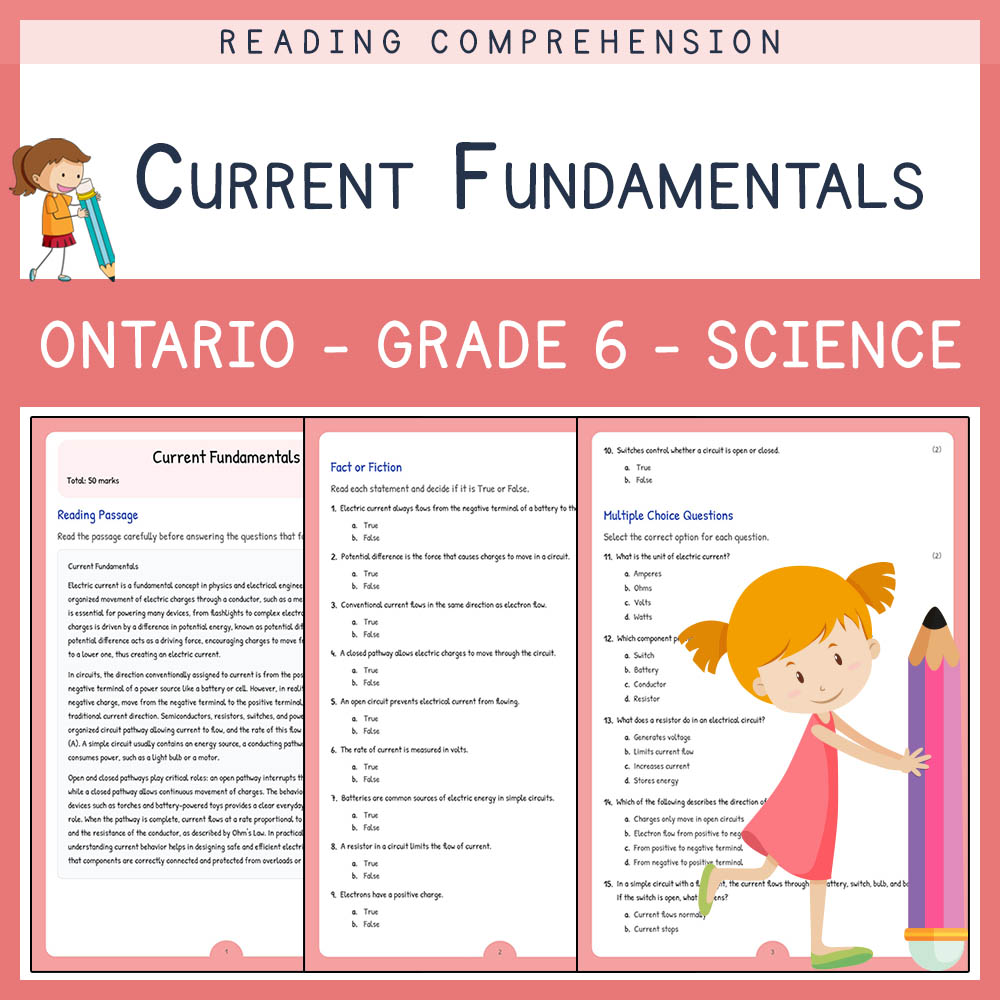
Grade 6 Science | Current Fundamentals Worksheet (Answer Key & Rubric) - Ontario Standard
Created byLumora LearningLearning Objectives
- Describe electric current as an organized movement of charges through a conductor.
- Distinguish between conventional current direction and electron flow.
- Explain potential difference as the driving force behind current.
Also included in: Grade 6 Science | Electricity Unit Custom Bundle | Ontario Framework
Instant download
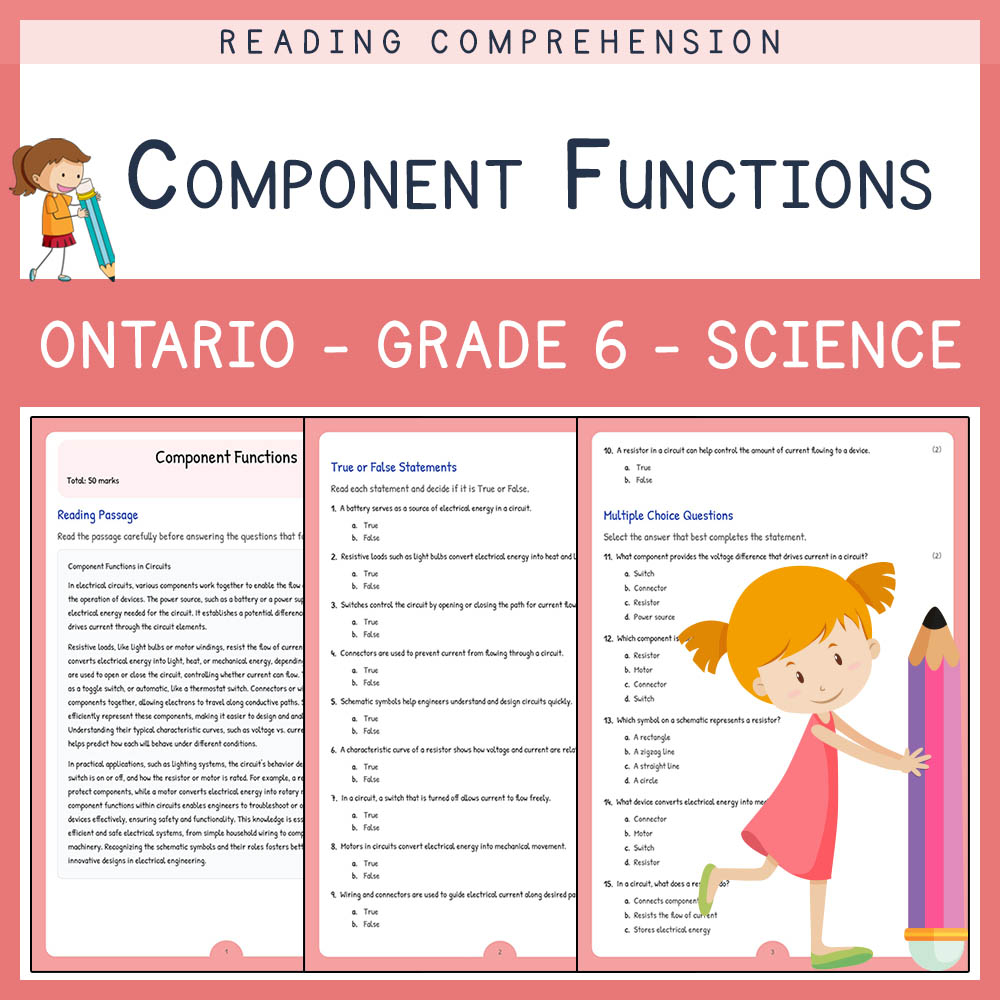
Grade 6 Science | Component Functions Worksheet & Answer Key (PDF)
Created byLumora LearningLearning Objectives
- Identify the roles of common circuit components such as power sources, resistive loads, switches, and connectors.
- Explain how each component influences the behavior of electrical circuits.
- Interpret schematic symbols associated with circuit components.
Also included in: Grade 6 Science | Electricity Unit Custom Bundle | Ontario Framework
Instant download
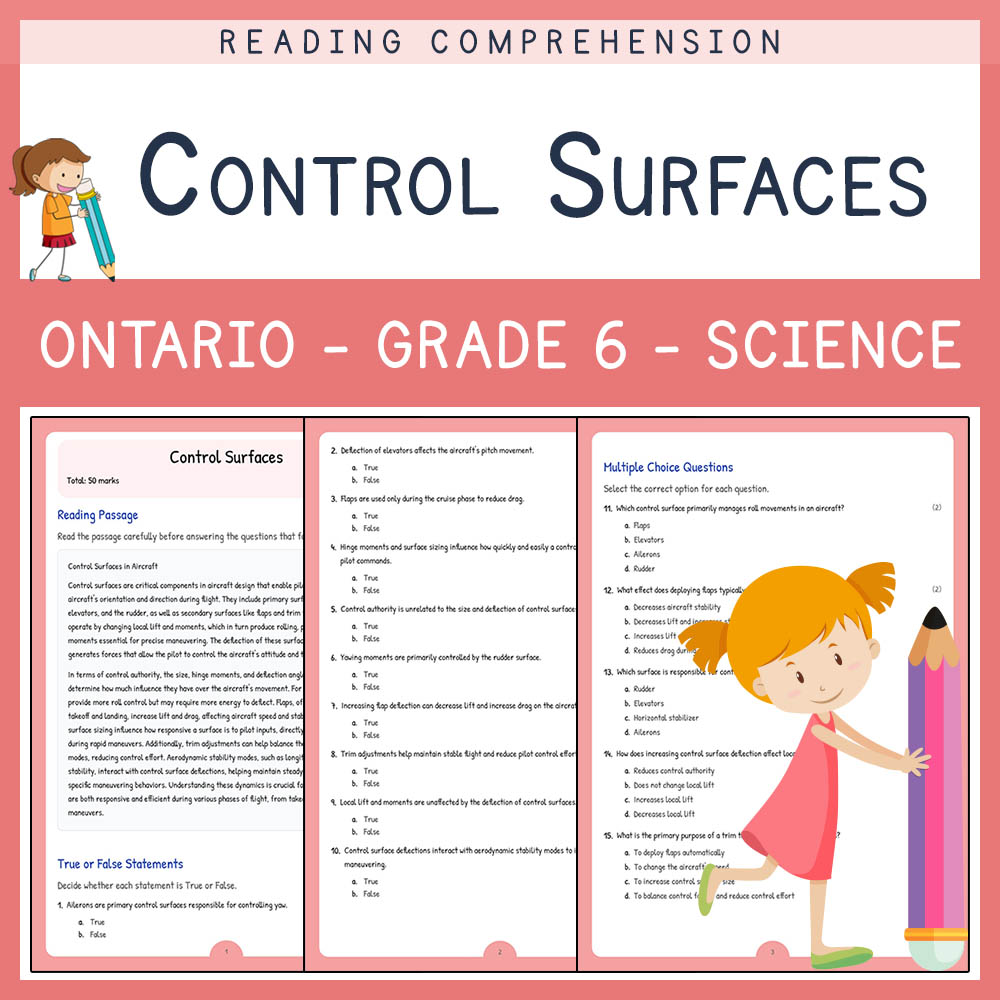
Grade 6 Science | Control Surfaces Worksheet with Answer Key (PDF)
Created byLumora LearningLearning Objectives
- Understand the primary and secondary control surfaces and their roles in aircraft maneuvering.
- Explain how deflections of ailerons, elevators, rudders, and flaps affect roll, pitch, and yaw.
- Describe the concepts of control authority and aerodynamic stability as related to control surfaces.
Also included in: Grade 6 Science | Flight Custom Bundle | Ontario Standards
Instant download
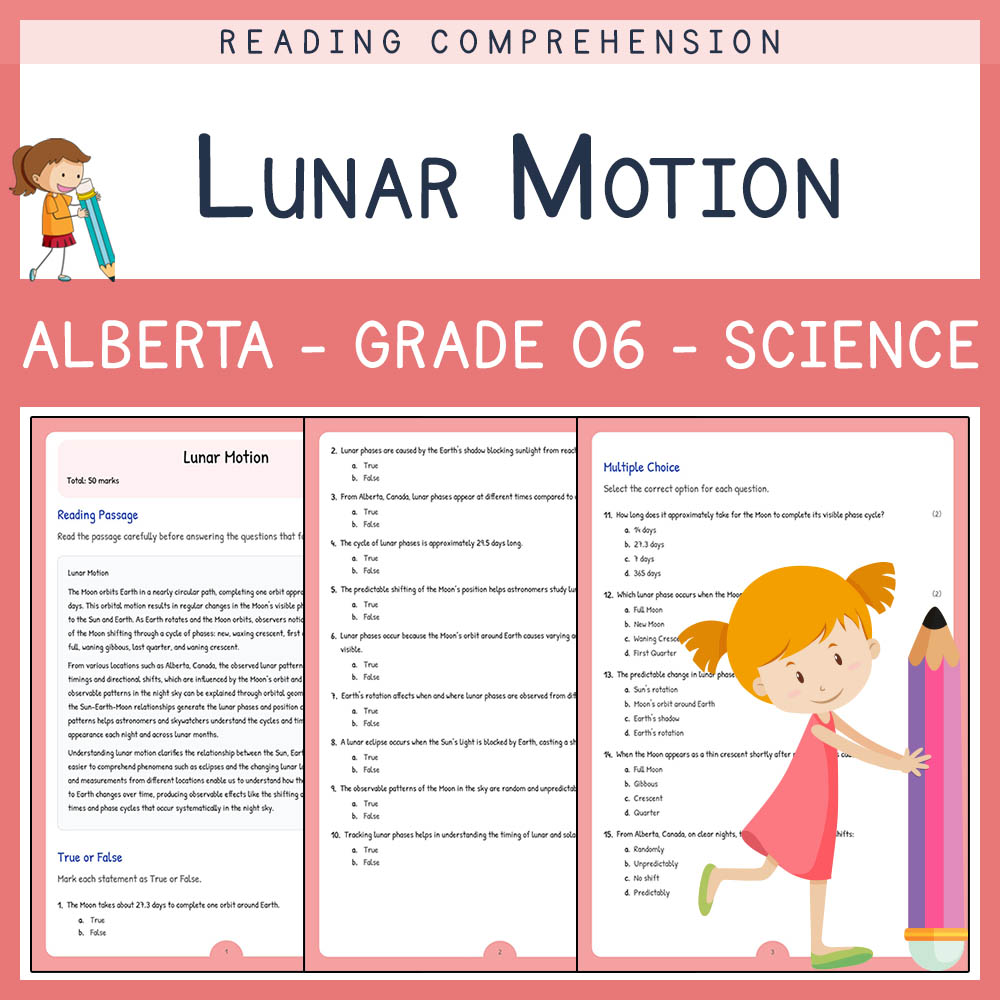
Grade 6 Science Worksheet | Lunar Motion | Alberta Standards
Created byLumora LearningLearning Objectives
- Understand the Moon's orbit around Earth and how it causes lunar phases.
- Describe the relationships between the Sun, Earth, and Moon observed from different locations.
- Explain the observable patterns in the night sky related to lunar motion.
Instant download
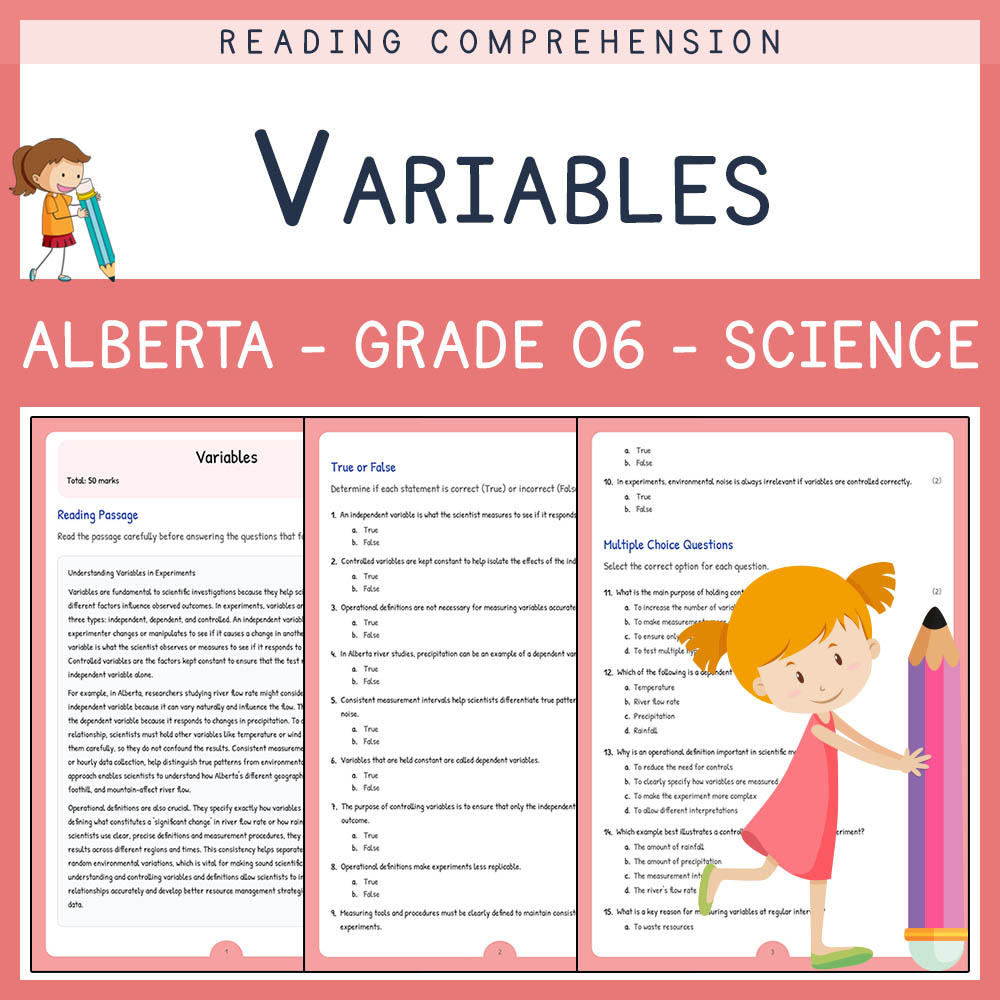
Grade 6 Science | Variables Worksheet Elena | Alberta
Created byLumora LearningLearning Objectives
- Define and distinguish between independent, dependent, and controlled variables.
- Explain the importance of operational definitions and measurement consistency in experiments.
- Apply contextual examples, such as river flow rate, to understand variable relationships.
Also included in: Grade 6 Science | Evidence and Investigation Custom Bundle | Alberta
Instant download
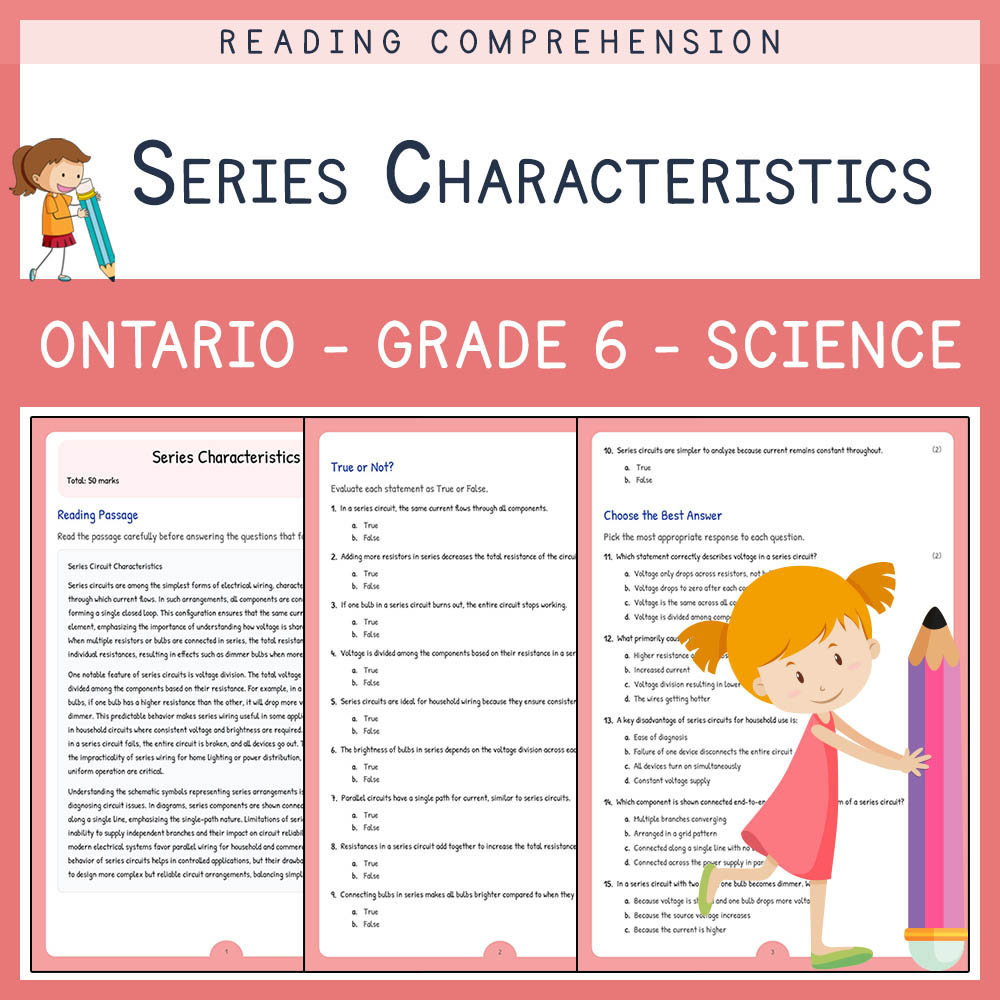
Grade 6 Science | Series Characteristics Worksheet | Electricity & Circuits
Created byLumora LearningLearning Objectives
- Understand the concepts of series circuits, including single-path configuration and current flow.
- Explain how voltage divides among components in a series circuit.
- Describe how resistance affects brightness in incandescent bulbs connected in series.
Also included in: Grade 6 Science | Electricity Unit Custom Bundle | Ontario Framework
Instant download
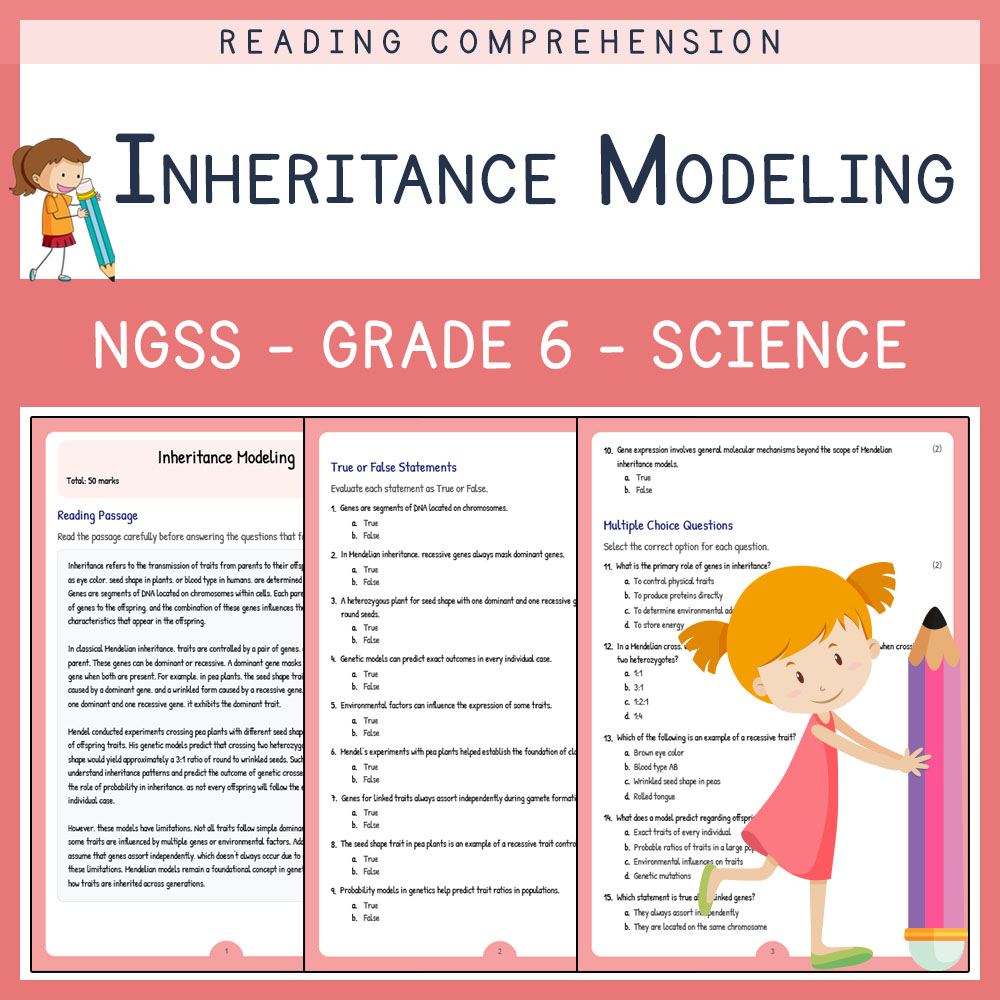
Grade 6 Science | Inheritance Modeling Worksheet & Answer Key | NGSS-Aligned
Created byLumora LearningInstant download
About Grade 6 Science Worksheets
Explore Grade 6 Science worksheets for classwork, homework, or review. Our 5,969 printables download instantly as PDFs.
MyTeachingSheets worksheets are made by real teacher-authors and checked before they go live. Download any as a print-ready PDF for lessons, homework, or independent practice — most include answer keys, and previews are always free.