
Grade 7 Worksheets
8,459 grade resources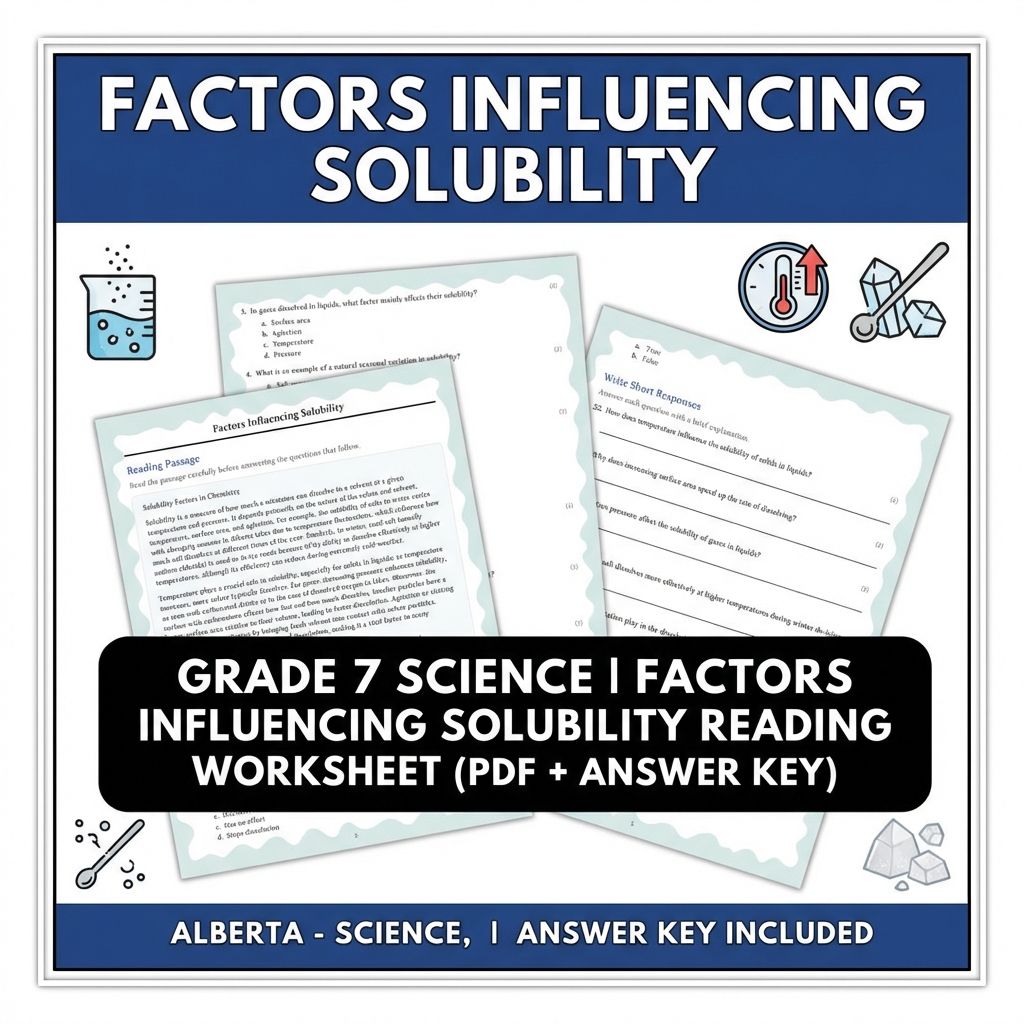
Grade 7 Science | Factors Influencing Solubility Worksheet (PDF + Answer Key)
JCreated byJ.S SheetsLearning Objectives
- Understand the factors that affect the solubility of substances.
- Explain how temperature, surface area, pressure, and agitation influence solubility.
- Apply knowledge of solubility factors to real-world examples like seasonal salt variation and de-icing procedures.
Also included in: Grade 7 Science UNIT Worksheet Bundle | Matter, Solutions & Physical Changes +1 more
Instant download
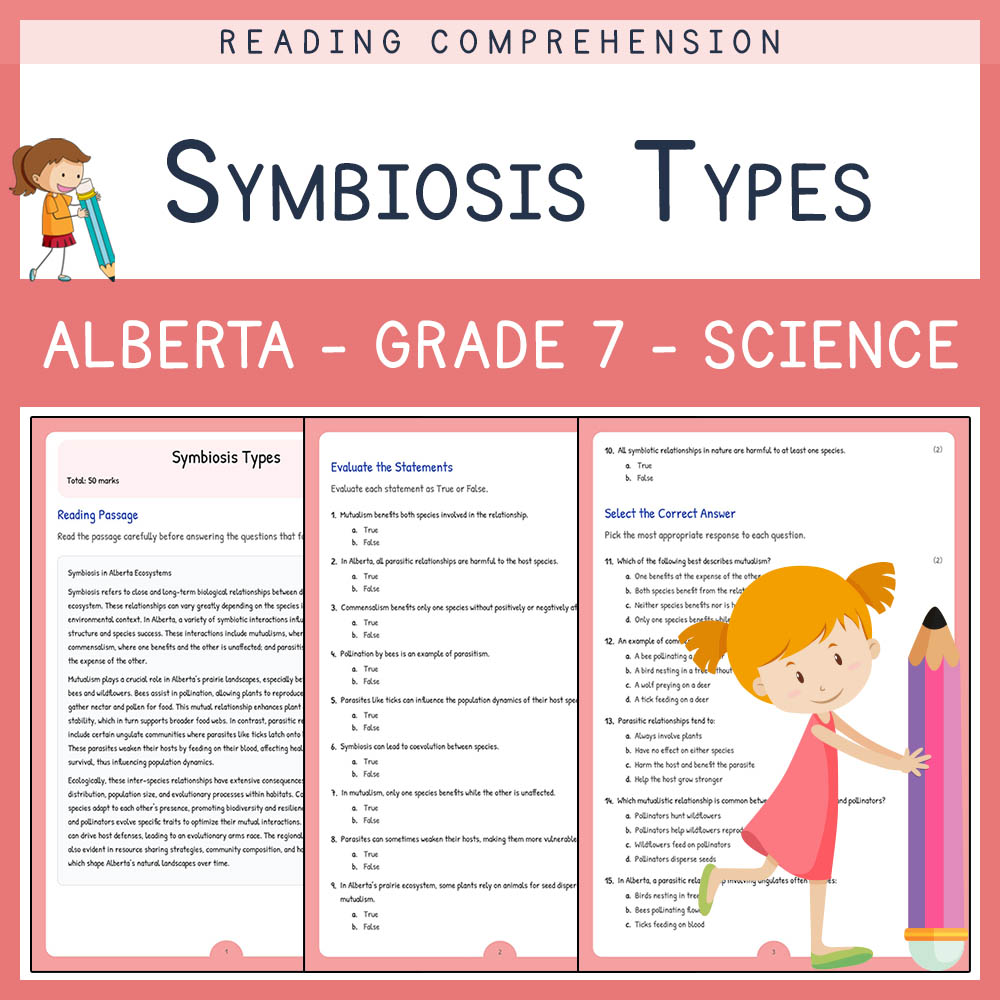
Grade 7 Science Assessment | Symbiosis Types Worksheet Elena | Alberta
 Created byLumora Learning
Learning Objectives
- Describe the different types of symbiosis: mutualism, commensalism, and parasitism.
- Identify Alberta-relevant examples of each symbiosis type, such as pollinator-plant interactions and parasitic relationships.
- Explain ecological consequences of symbiosis on population dynamics, resource sharing, and coevolution in regional habitats.
Also included in: Grade 7 Science | Interactions & Ecosystems Custom Bundle | Alberta
Instant download
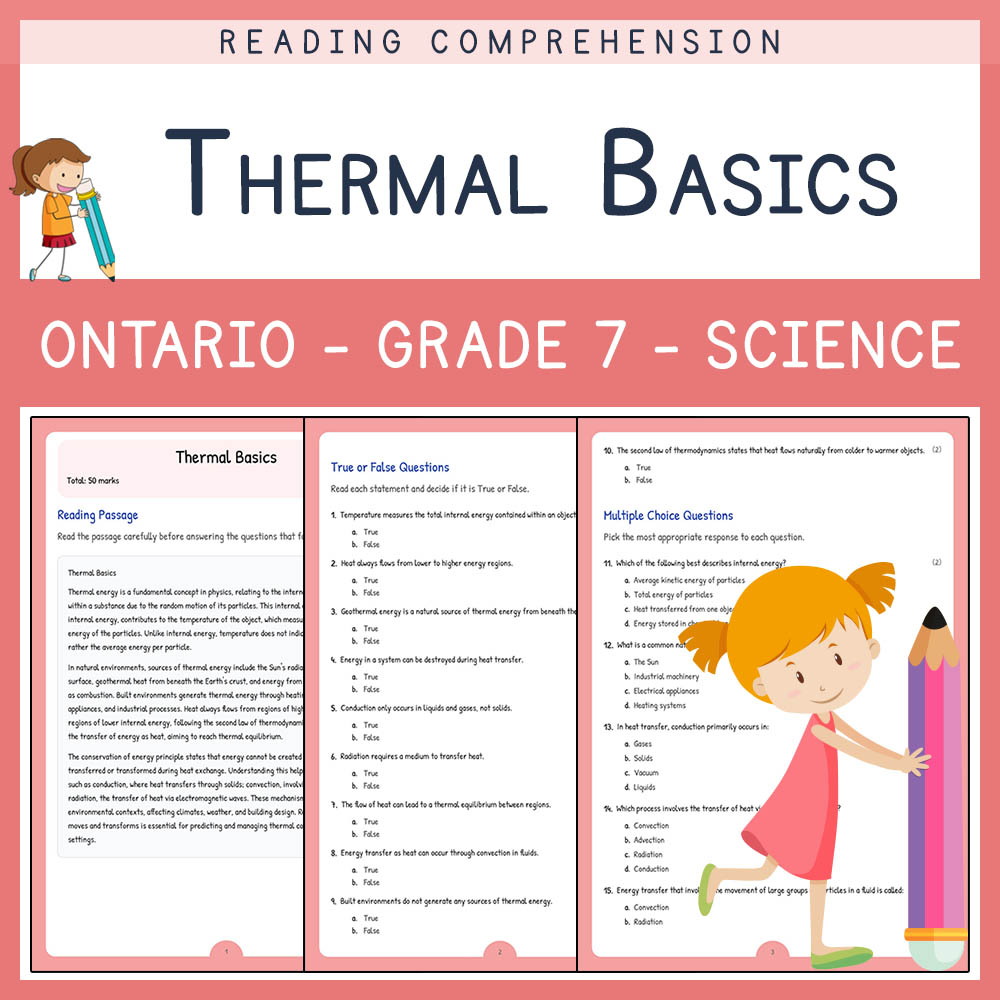
Grade 7 Science Assessment | Thermal Basics Worksheet Elena | Ontario
Created byLumora LearningLearning Objectives
- Explain the difference between internal energy and temperature as measures of particle motion.
- Identify common sources of thermal energy in natural and built environments.
- Describe the directional flow of heat from higher to lower energy regions.
Instant download
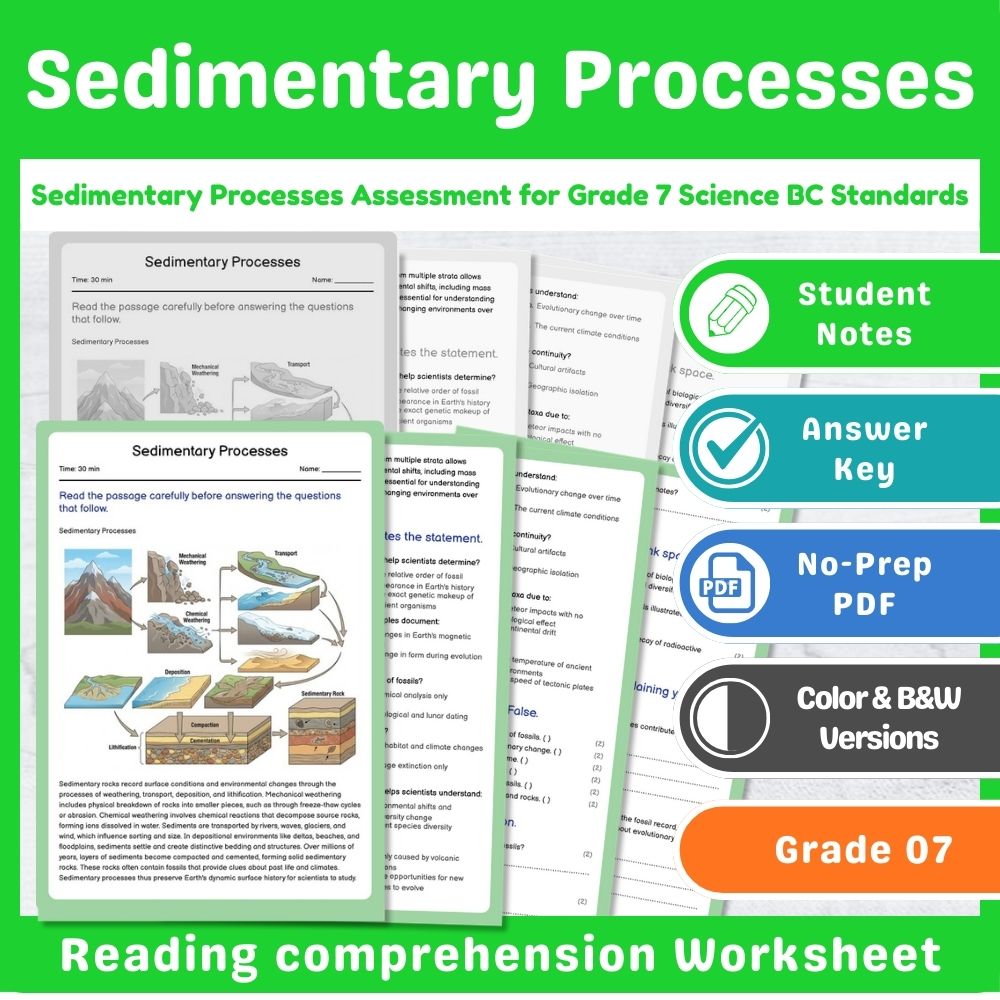
Sedimentary Processes Assessment for Grade 7 Science BC Standards
 Created byPrism Point Learning
Learning Objectives
- Describe the processes involved in the formation of sedimentary rocks.
- Identify different types of weathering and how they contribute to sediment formation.
- Explain how sediments are transported and deposited in various environments.
Also included in: Grade 7 Science Lesson – Earth Processes Assessment & Landforms Bundle
Instant download

Grade 7 Mandela International Day Worksheet For Social Justice |PDF + Answer Key
 Created byShaNova Worksheets
Learning Objectives
- Explain how Nelson Mandela’s values of dignity, reconciliation, and equal rights connect to social justice
- Identify examples of empathy, fairness, and anti-discrimination actions in real-life situations
- Use reasoning to distinguish statements that support social justice from those that undermine it
Instant download
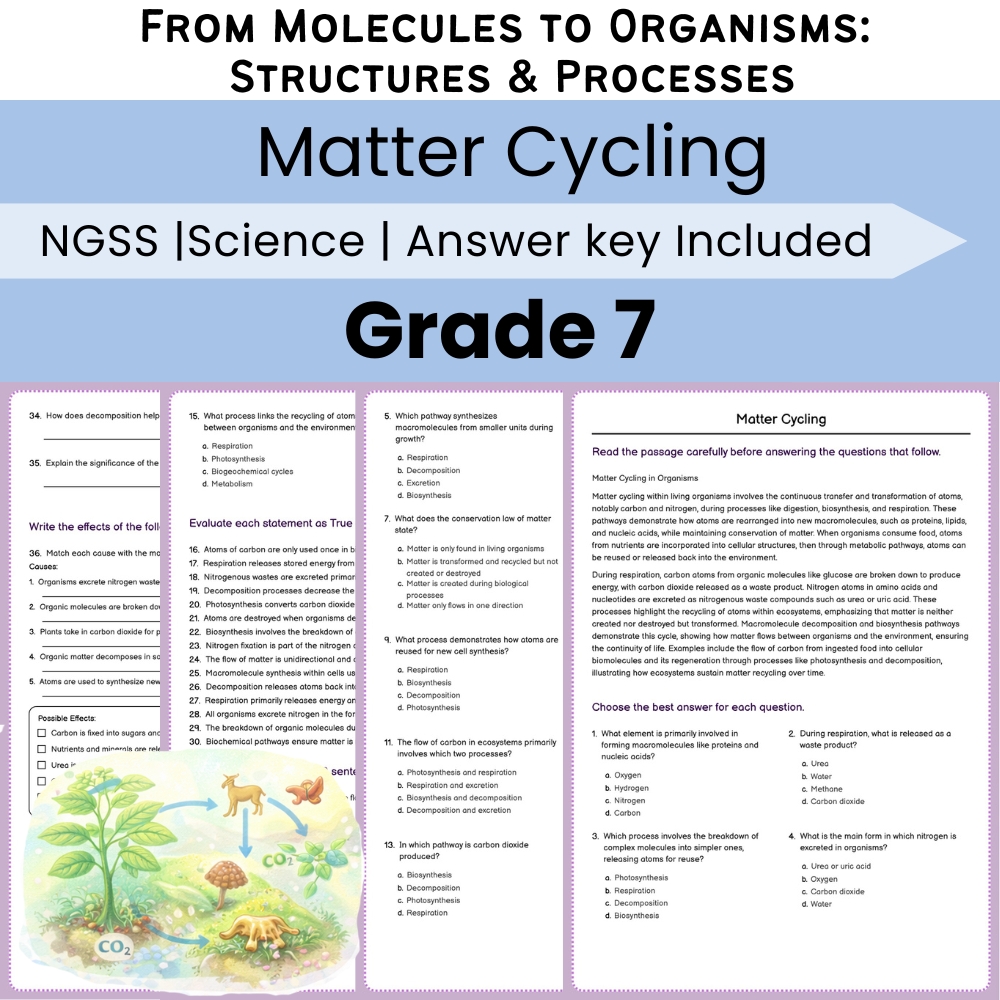
Matter Cycling Worksheet | Grade 7 Science printable PDF | NGSS aligned
Learning Objectives
- Explain how matter is conserved and recycled within organisms during biological processes.
- Describe the flow of carbon and nitrogen in metabolic pathways such as digestion, biosynthesis, and respiration.
- Identify biochemical pathways involved in matter transformation and recycling in ecosystems.
Also included in: Grade 7 Science Lesson Bundle | From Molecules to Organisms NGSS +1 more
Instant download

Grade 7 Climate Interactions Worksheet | NGSS Science Activity with Answer Key
 Created byNorthstar Worksheets
Learning Objectives
- Explain key evidence for climate change drivers using temperature and CO2 records and carbon-cycle ideas.
- Describe how land-use change and natural variability can affect climate patterns.
- Analyze impacts of climate change on sea level, precipitation, and agricultural productivity.
Also included in: Earth & Environmental Systems: Grade 7 Science Lesson Bundle | NGSS +1 more
Instant download

Grade 7 Material Properties Worksheet | NGSS Physical & Chemical Properties
Created byNorthstar WorksheetsLearning Objectives
- Distinguish physical properties from chemical properties using measurable and observable descriptors.
- Interpret property data (e.g., density, melting point, solubility, conductivity, reactivity, flammability) to support material identification.
- Use quantitative and qualitative evidence to predict how materials respond to temperature changes and chemical contact.
Also included in: Grade 7 Physical Science: Matter & Chemical Reactions Lesson Bundle | NGSS +1 more
Instant download

Grade 7 Science | Understanding the Carbon Cycle - Daily Reading Comprehension
 Created byCoral Reef Learning
Learning Objectives
- Describe how carbon moves through different parts of the environment.
- Explain the processes of photosynthesis, respiration, and decomposition.
- Identify the roles of organisms and the atmosphere in the carbon cycle.
Instant download

Grade 7 Embryonic Patterns Worksheet NGSS Evolution Activity Answer Key
Created byNorthstar WorksheetsLearning Objectives
- Describe how pharyngeal pouches and limb buds develop early in vertebrates and why they can be evolutionarily informative
- Compare embryonic development across taxa using evidence from developmental timing and patterning
- Explain how conserved developmental stages can support reconstruction of phylogenetic relationships
Also included in: Grade 7 Evolution Evidence & Patterns Lesson Bundle | NGSS Science +1 more
Instant download
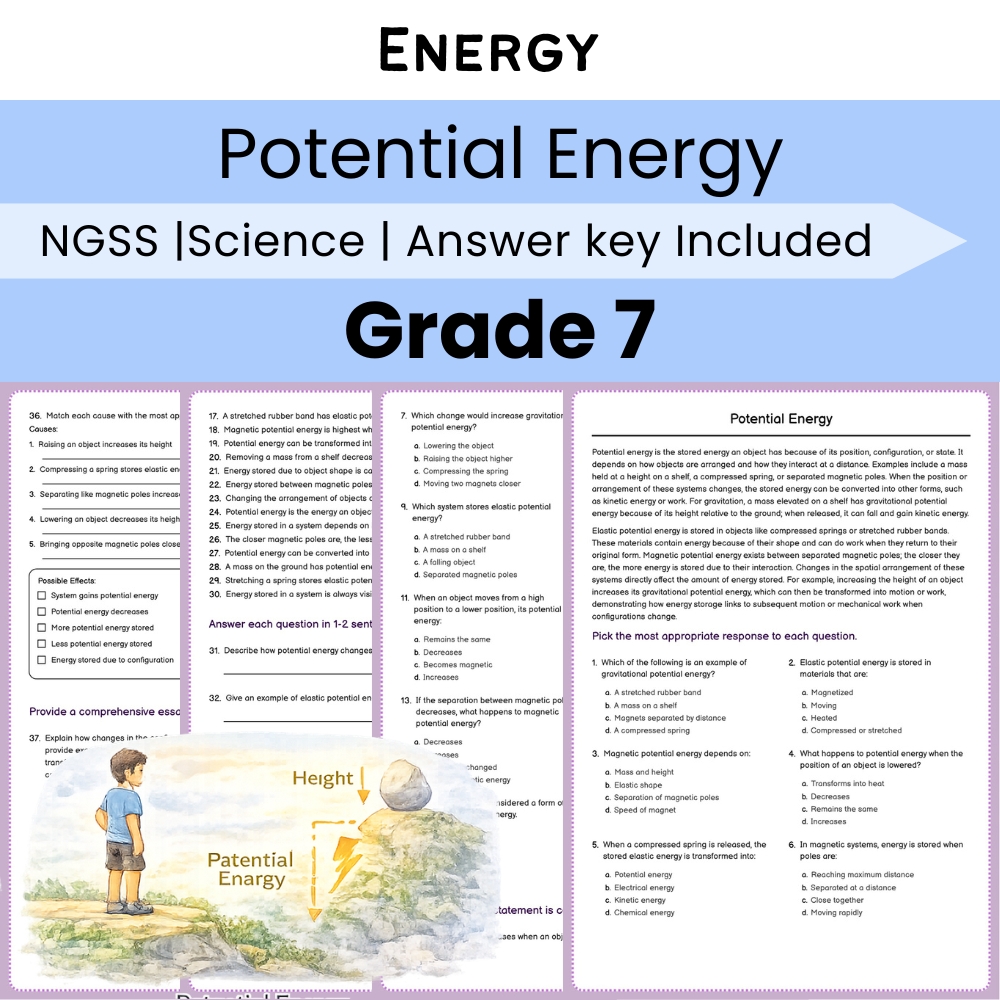
Potential Energy Worksheet for Grade 7 Science | NGSS Printable PDF
Learning Objectives
- Explain the concept of potential energy as stored energy based on object arrangement and interactions.
- Identify different types of potential energy, such as gravitational, elastic, and magnetic.
- Describe how changes in spatial configuration affect stored potential energy.
Also included in: Grade 7 Science NSGS Energy Lesson Bundle | Worksheets & Assessments +1 more
Instant download
Grade 7 Science | Matter Basics Worksheet with Short Notes (Printable PDF)
 Created byMeadowlark Worksheets
Learning Objectives
- Define and distinguish between pure substances, mixtures, and solutions.
- Identify examples of each classification from real-world scenarios.
- Understand measurable properties like melting points and how they relate to substance classification.
Also included in: Grade 7 Science | Matter & Chemical Change UNIT Worksheet Bundle
Instant download

Grade 7 Science – Building Envelope & Energy Efficiency | Reading Worksheet
 Created byBright Mind Resources
Learning Objectives
- Identify key components of a building's walls and their thermal functions.
- Understand how insulation, barriers, and ventilation affect thermal performance.
- Assess how interfaces, thermal bridging, and air infiltration influence energy efficiency.
Also included in: Heat Transfer Grade 7 Science Daily Reading Worksheets Lesson Bundle | Ontario +1 more
Instant download

Grade 7 Science | Beam Behavior in Structural Engineering - Daily Reading Comp.
Created byCoral Reef LearningLearning Objectives
- Define the key terms related to beams, such as span, support conditions, and load types.
- Identify different types of loads and support conditions in beams.
- Describe how various loads affect beam performance including bending, shear, and deflection.
Also included in: Forces, Structures and Motion Lesson Bundle | Grade 7 Science Alberta +1 more
Instant download
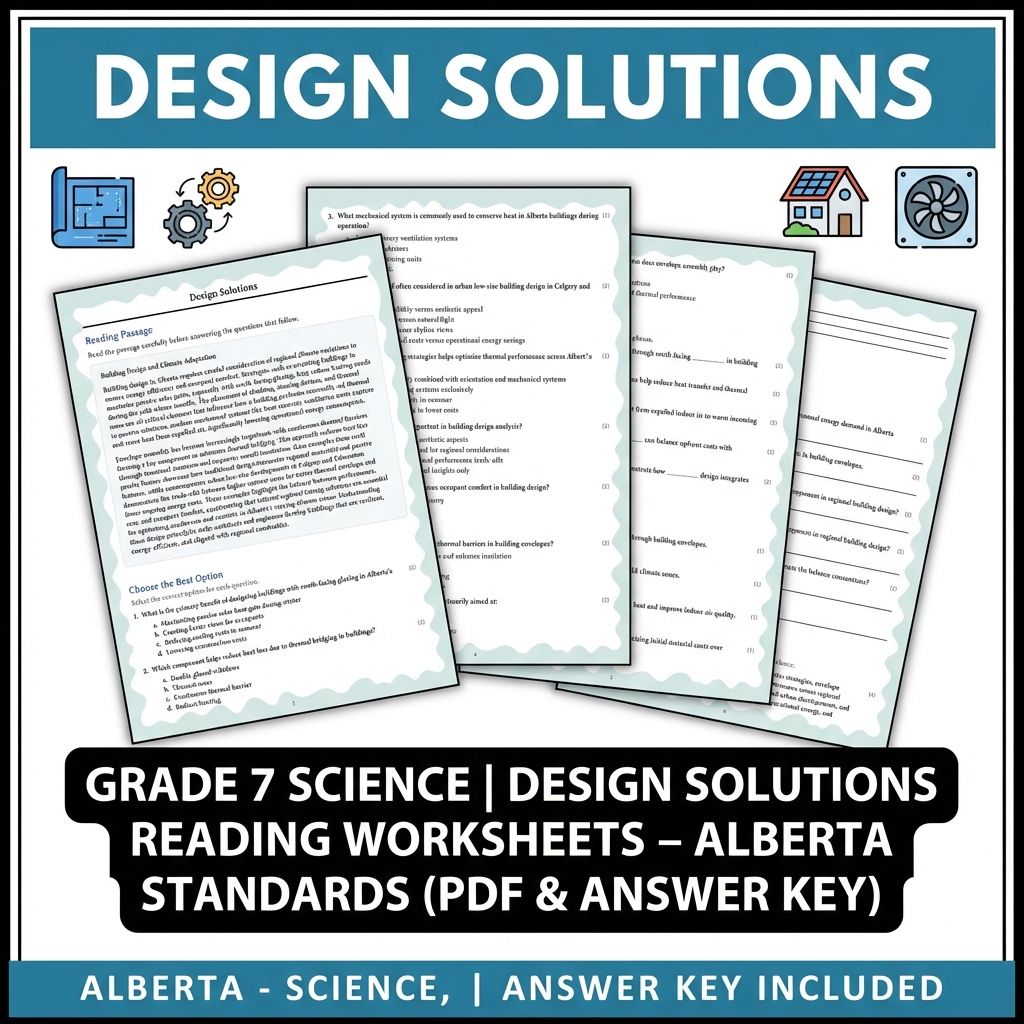
Grade 7 Science | Design Solutions Worksheets – Alberta (PDF & Answer Key)
JCreated byJ.S SheetsLearning Objectives
- Understand how building design integrates orientation, envelope assembly, and mechanical systems to optimize thermal performance across Alberta's climate zones.
- Identify strategies such as passive solar gains, thermal barriers, and heat-recovery ventilation used in sustainable building design.
- Analyze case examples from rural prairie houses and urban developments in Calgary and Edmonton to evaluate performance trade-offs.
Also included in: Grade 7 Science UNIT Bundle | Heat Transfer, Convection & Energy Worksheets +1 more
Instant download
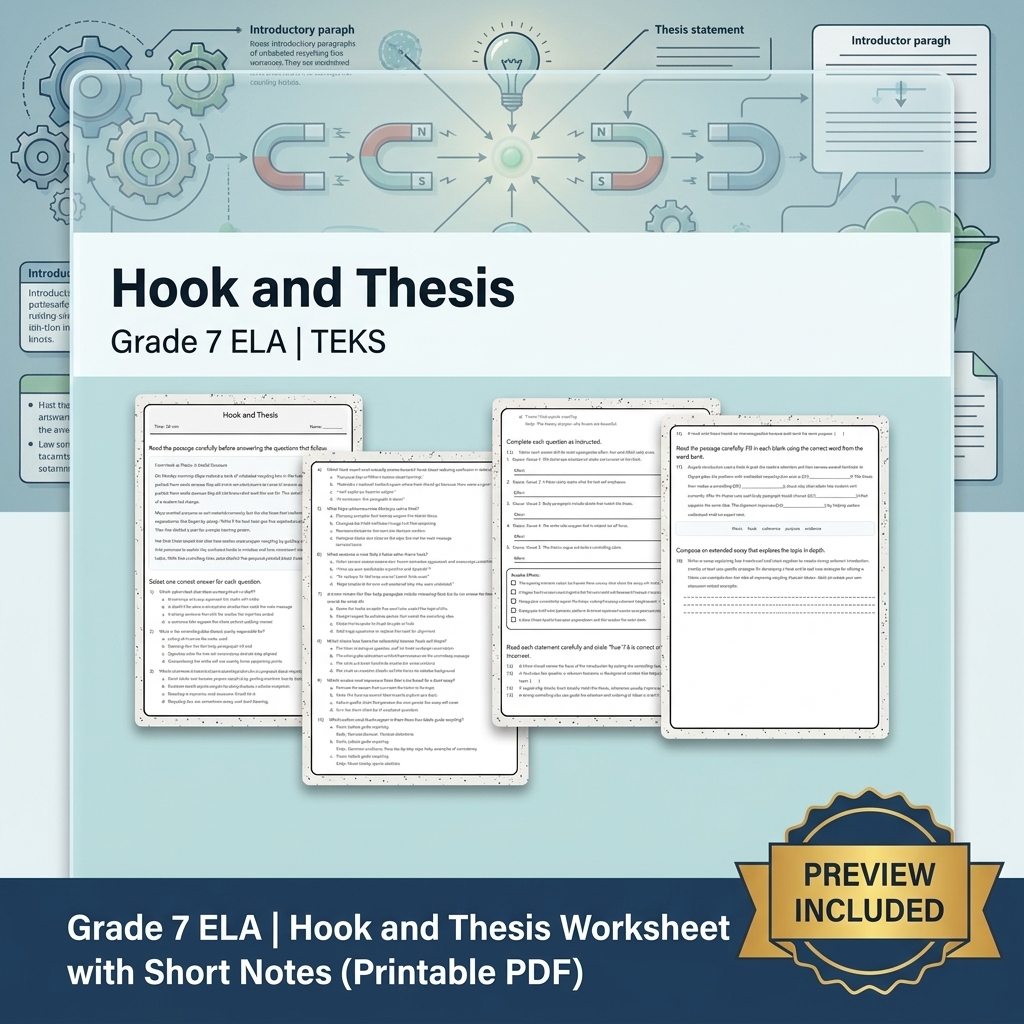
Grade 7 ELA | Hook and Thesis Worksheet with Short Notes (Printable PDF)
Created byMeadowlark WorksheetsLearning Objectives
- Identify how a hook and a controlling thesis work together in an academic paragraph or essay.
- Write a hook that draws the reader in and then narrows toward a clear controlling idea.
- Create a thesis statement that signals the main focus and the direction of supporting details.
Also included in: Grade 7 Voice, Thesis, and Coherence Writing in ELA Lesson Bundle – TEKS +1 more
Instant download
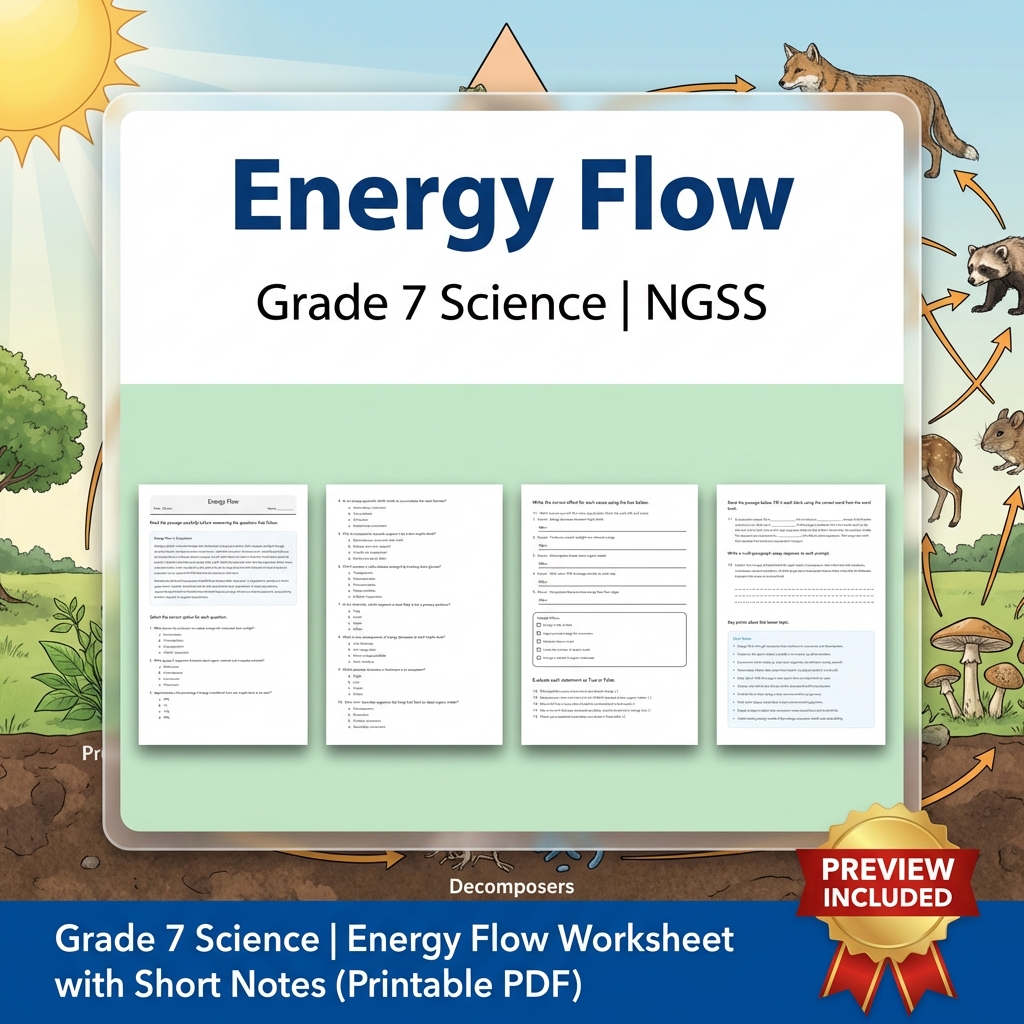
Grade 7 Science | Energy Flow Worksheet with Short Notes (Printable PDF)
Created byMeadowlark WorksheetsLearning Objectives
- Explain how energy is transferred through trophic levels in food webs.
- Describe the roles of producers, consumers, and decomposers in ecosystems.
- Analyze the mechanisms of photosynthesis and cellular respiration for energy capture and release.
Also included in: Grade 7 Science Ecosystems Unit | Interactions, Energy & Dynamics NGSS Bundle +1 more
Instant download
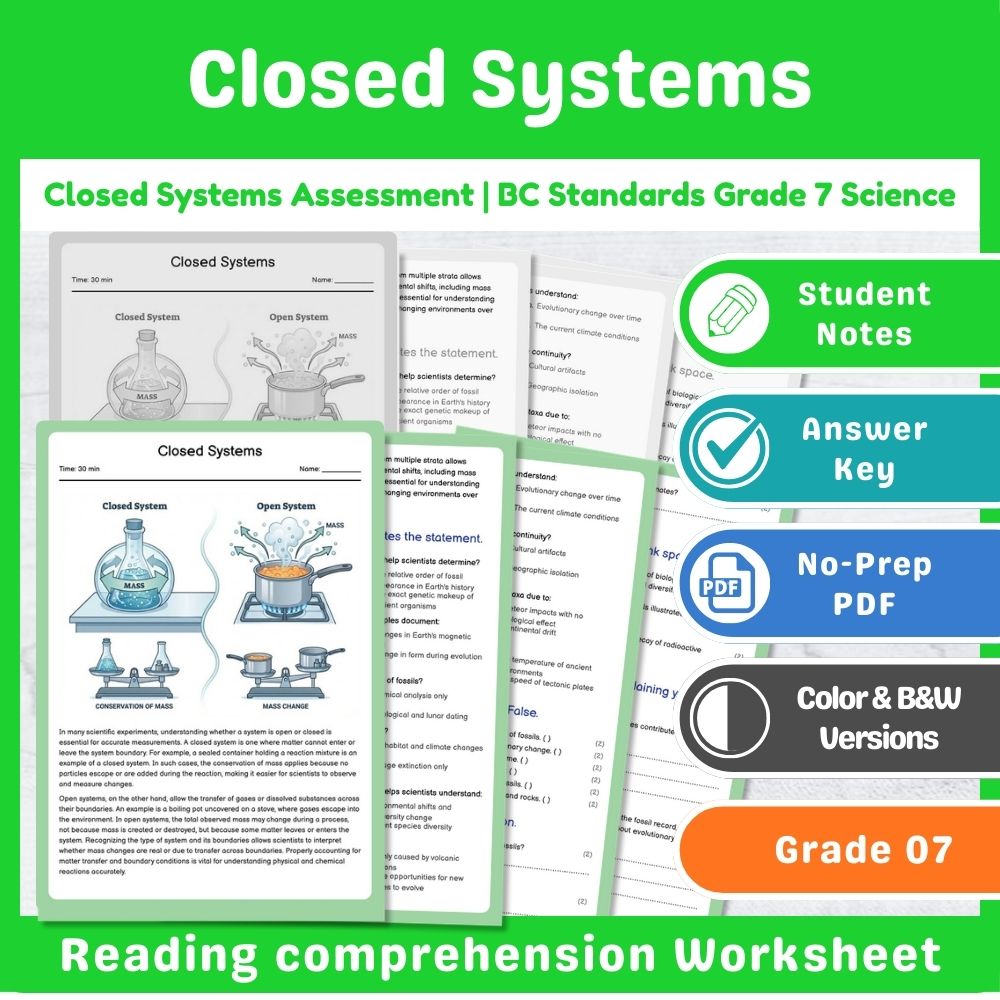
Closed Systems Assessment | BC Standards Grade 7 Science
Created byPrism Point LearningLearning Objectives
- Understand the difference between closed and open systems in relation to matter transfer.
- Explain how mass is conserved in closed systems during reactions.
- Identify system boundaries and how they affect observed mass changes in open systems.
Instant download

The Solar System Assessment | TEKS Grade 7 Science Standards
Created byPrism Point LearningLearning Objectives
- Describe the origins and formation processes of the solar system.
- Compare properties of terrestrial and gas giant planets, including atmospheres and surface features.
- Explain planetary motions, phases, and eclipses using observational data.
Also included in: Grade 7 Earth and Space Systems Science Lesson Bundle TEKS Worksheets
Instant download

Density Separation Methods Worksheets Grade 7 Science
Created byPrism Point LearningLearning Objectives
- Describe how density differences separate components of mixtures
- Compare decanting, floatation, and centrifugation using density principles
- Explain how particle size affects sedimentation rate
Also included in: Pure Substances, Mixtures & Separation Lesson Bundle | Grade 7 Science | Ontario +1 more
Instant download
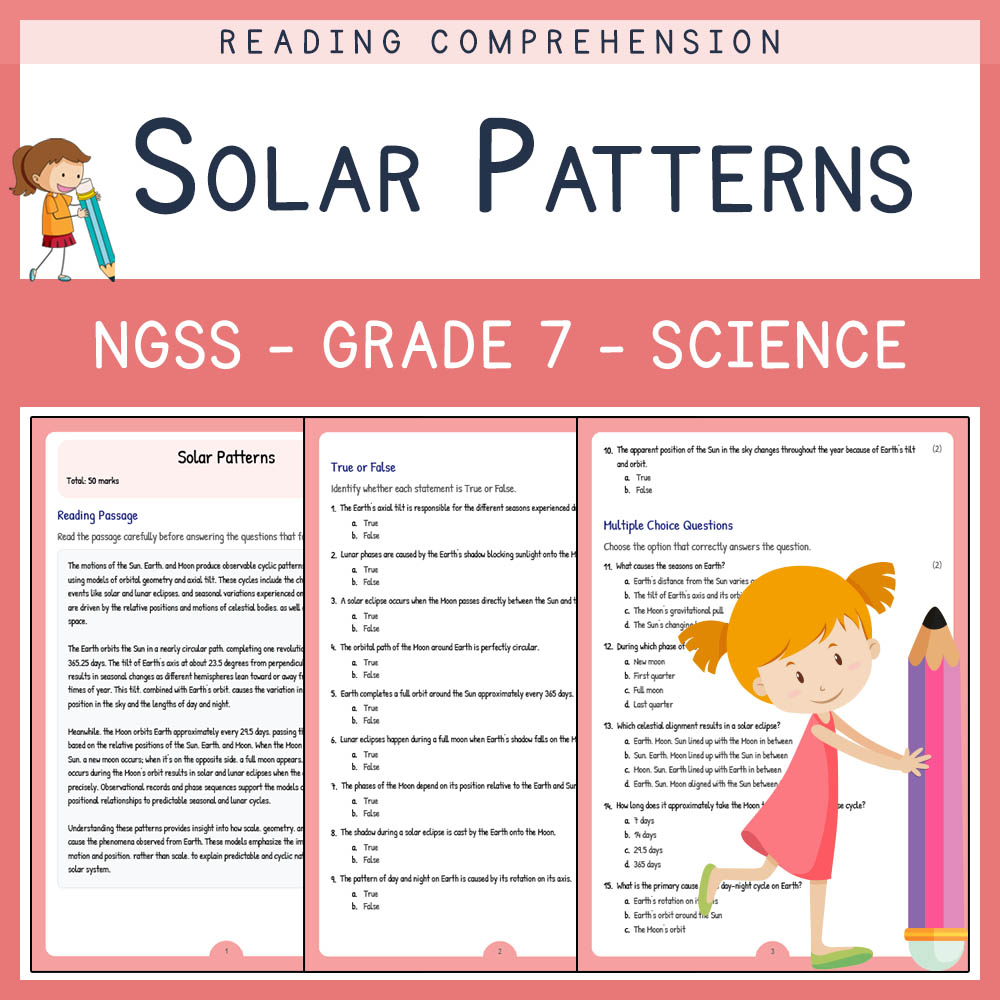
Grade 7 Science | Solar Patterns Worksheet (PDF + Answer Key) Aligned with NGSS
Created byLumora LearningLearning Objectives
- Describe the cyclic patterns produced by the relative motions of the Sun, Earth, and Moon.
- Explain how orbital geometry and axial tilt account for day-night cycles and phases.
- Identify observable evidence of solar system patterns and explain their causal relationships.
Instant download
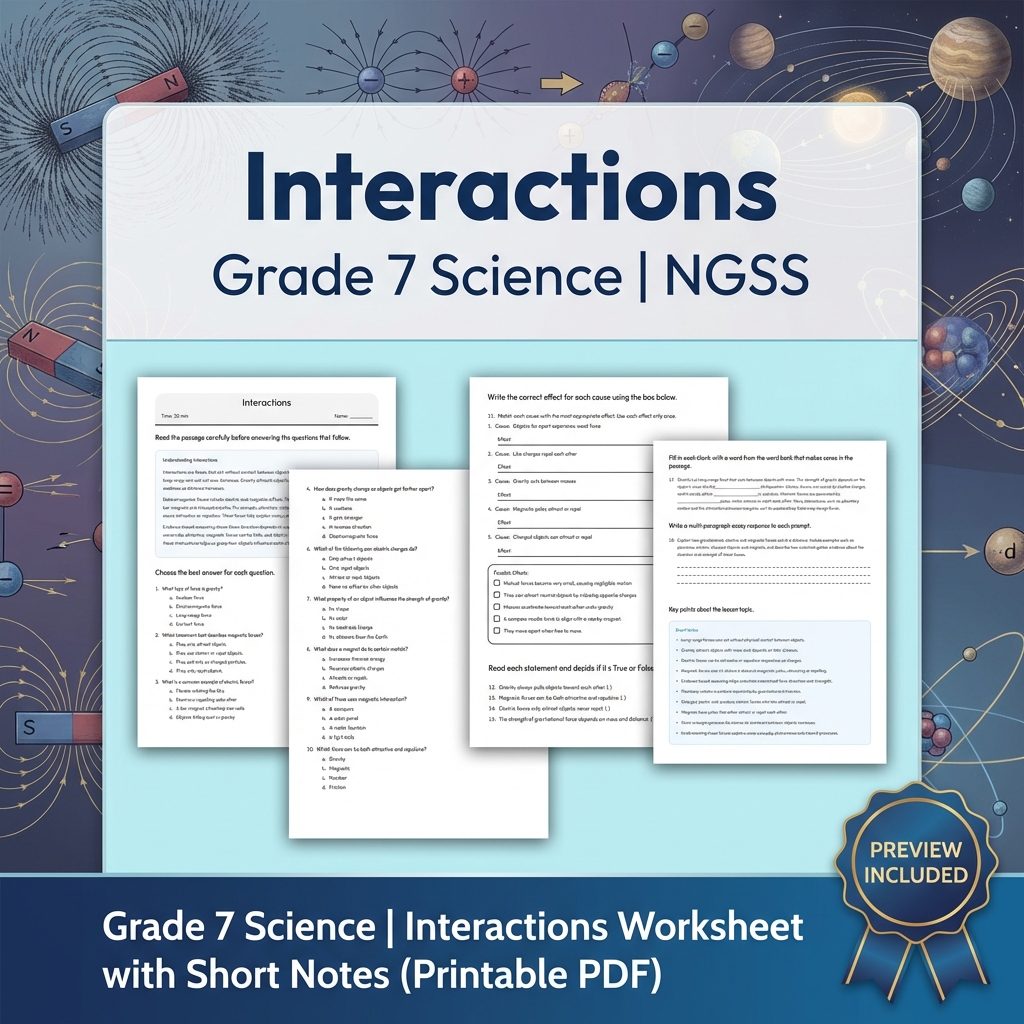
Grade 7 Science | Interactions Worksheet with Short Notes (Printable PDF)
Created byMeadowlark WorksheetsLearning Objectives
- Understand the different types of long-range forces, including gravity, electric, and magnetic interactions.
- Describe how gravitational force depends on mass and distance qualitatively.
- Identify examples of electromagnetic phenomena such as planetary motion, falling objects, and bar magnets.
Also included in: Grade 7 Science | Motion and Stability Forces & Interactions NGSS Unit Bundle +1 more
Instant download
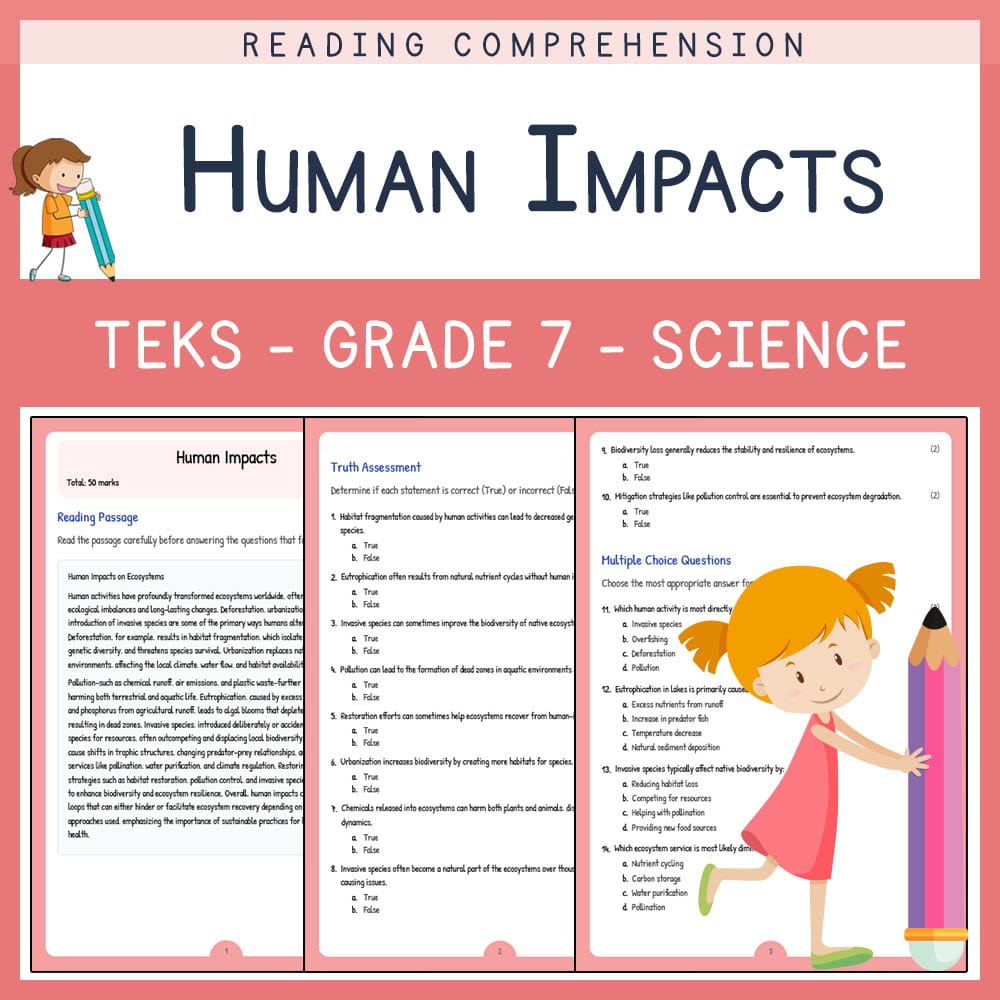
Grade 7 Science | Human Impacts Worksheet | TEKS-Aligned
Created byLumora LearningLearning Objectives
- Understand major human-induced alterations to ecosystems such as habitat fragmentation, pollution, and invasive species.
- Identify examples like deforestation and eutrophication and their effects on biodiversity.
- Explain how human activities impact ecosystem services, trophic structures, and community composition.
Instant download
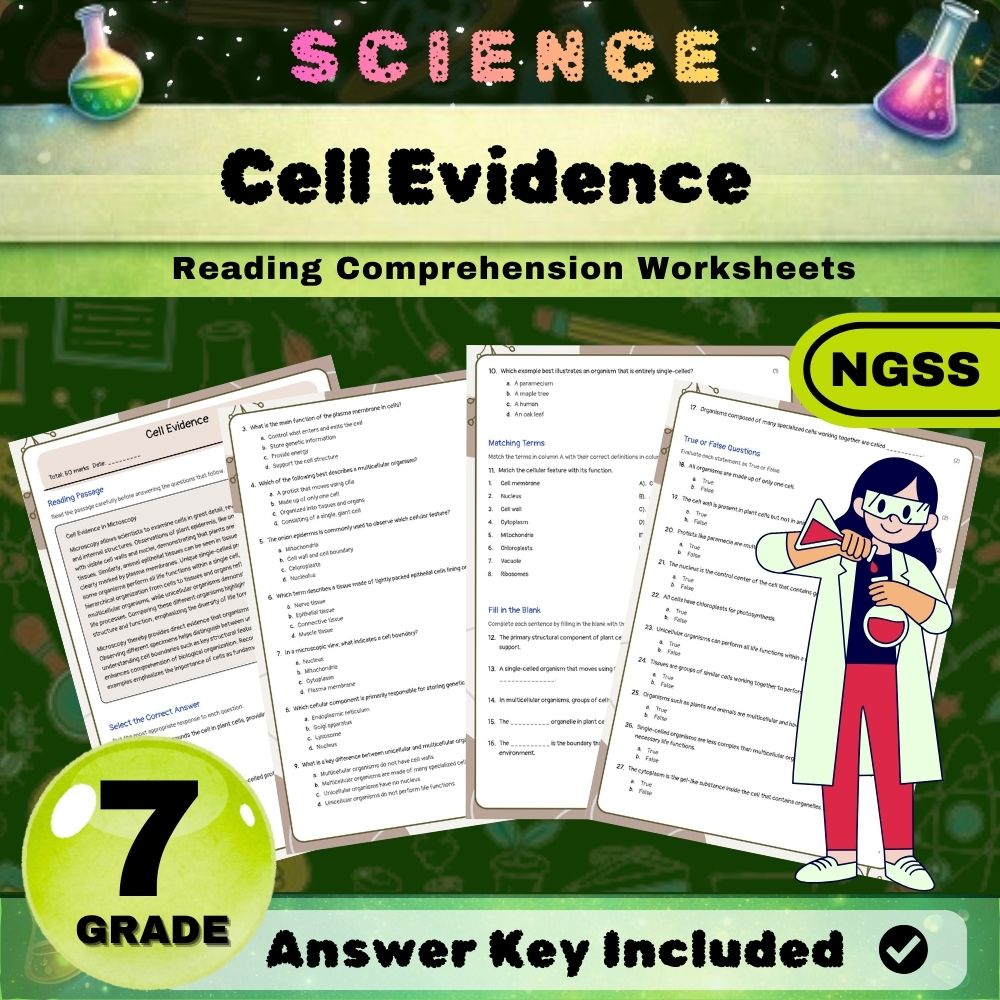
Grade 7 Science | Cell Evidence NGSS Worksheet (PDF)
 Created byMaple Path Learning
Learning Objectives
- Understand that organisms are composed of discrete cellular units demonstrated through microscopy.
- Differentiate between unicellular and multicellular organisms using anatomical examples.
- Identify structures such as plasma membranes, cell walls, and hierarchical organization in cells, tissues, and organs.
Instant download
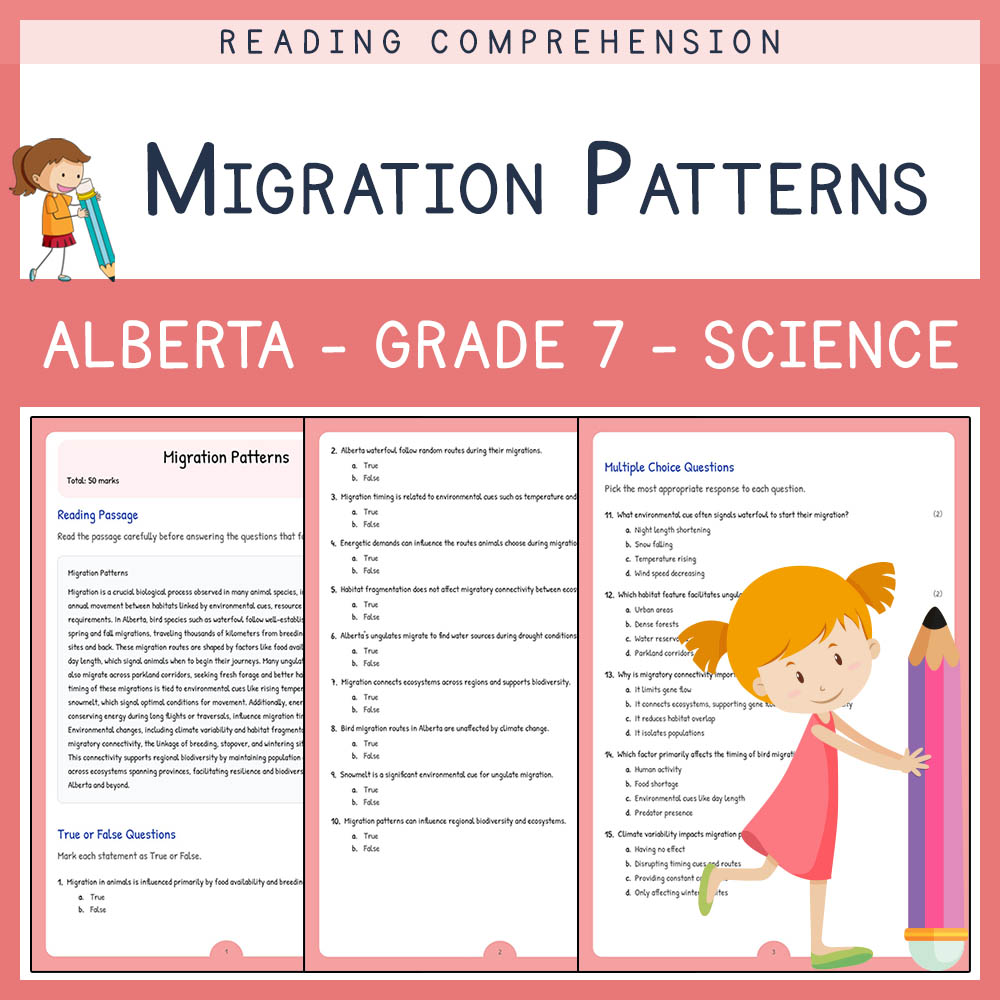
Grade 7 Science Assessment | Migration Patterns Worksheet Elena | Alberta
Created byLumora LearningLearning Objectives
- Understand the factors influencing migration patterns in animals across landscapes.
- Identify examples of migration in Alberta waterfowl and ungulate populations.
- Explain how timing cues, energetic demands, and connectivity influence migration.
Also included in: Grade 7 Science | Interactions & Ecosystems Custom Bundle | Alberta
Instant download
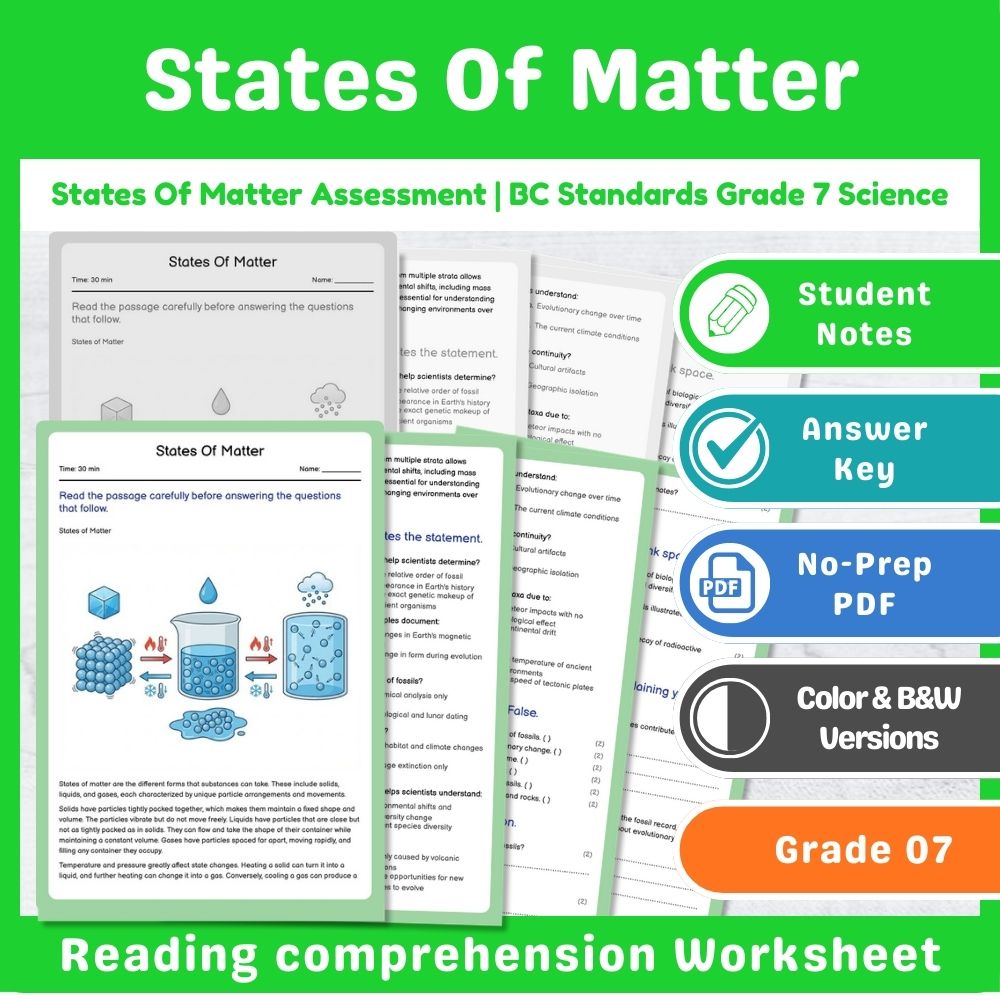
States Of Matter Assessment | BC Standards Grade 7 Science
Created byPrism Point LearningLearning Objectives
- Identify and describe the main characteristics of solids, liquids, and gases.
- Explain how particle arrangement, spacing, and movement differ among the states of matter.
- Understand how temperature and pressure influence changes between states.
Instant download
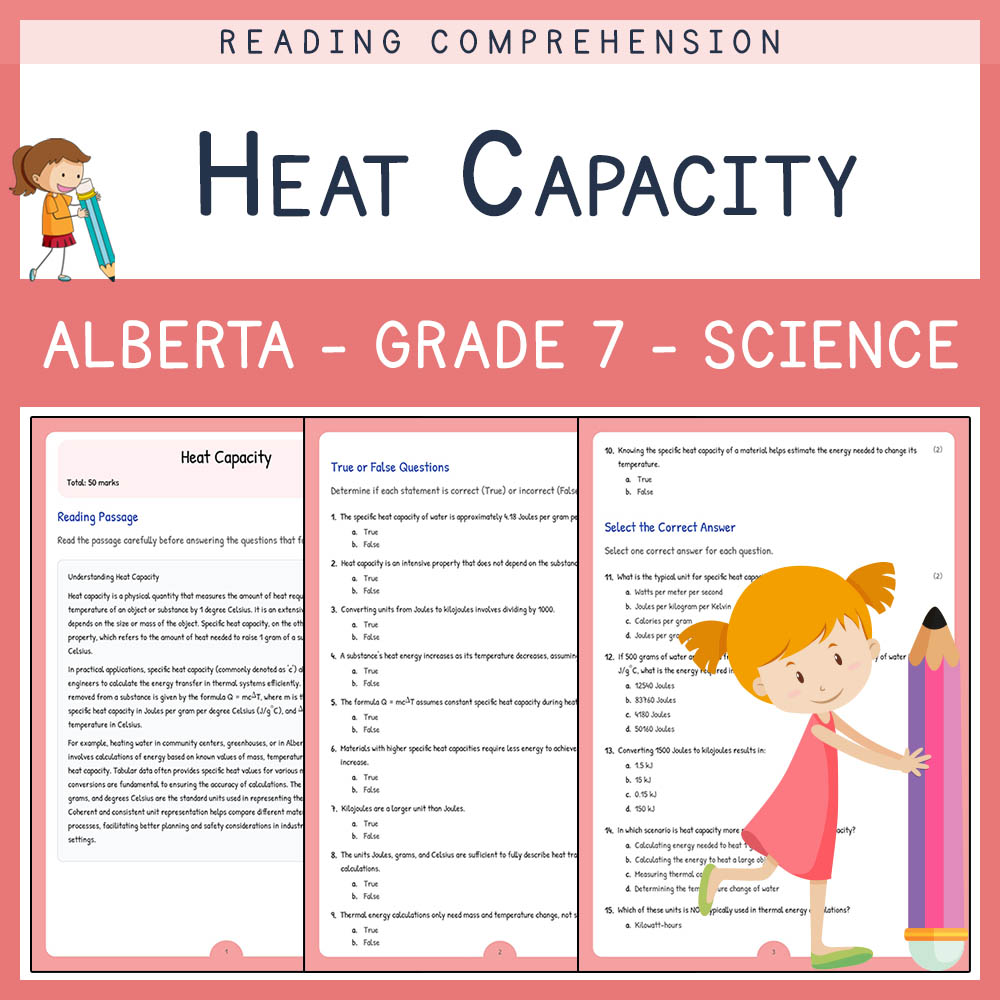
Grade 7 Science | Heat Capacity Worksheet | Alberta Standard
Created byLumora LearningLearning Objectives
- Understand the concept of specific heat capacity and its importance in thermal calculations.
- Apply formulas involving mass, specific heat, and temperature change to compute energy transfer.
- Convert units between Joules, kilojoules, grams, and degrees Celsius for thermal calculations.
Instant download

Grade 7 Science Worksheet – Material Properties with Ontario Standards (PDF)
 Created byEvergreen Desk Education
Learning Objectives
- Define and compare key material properties: density, tensile strength, compressive strength, stiffness (modulus), ductility, toughness, and thermal expansion.
- Explain how material properties influence structural performance and design choices for beams and columns.
- Contrast wood, steel, and reinforced concrete by strength-to-weight ratio, deformation under load, and typical failure modes.
Also included in: Grade 7 Engineering Design & Materials Science Lesson Bundle Ontario +1 more
Instant download
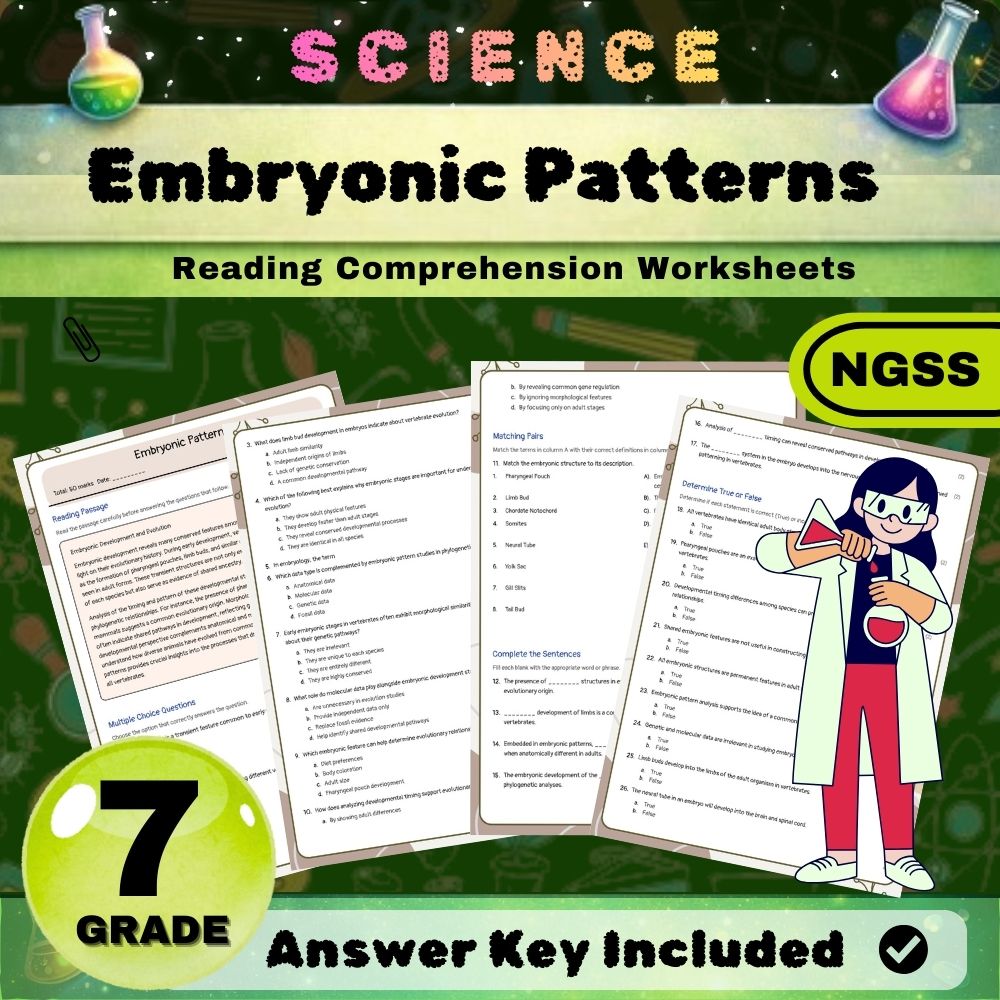
Grade 7 Science | Embryonic Development Patterns NGSS Worksheet (PDF)
Created byMaple Path LearningLearning Objectives
- Describe conserved developmental stages across different animal taxa.
- Identify morphological similarities in embryonic development that reflect evolutionary relationships.
- Analyze developmental timing and patterning to understand phylogenetic connections.
Also included in: Grade 7 Science | Evolution & Adaptation NGSS Worksheet Bundle +1 more
Instant download
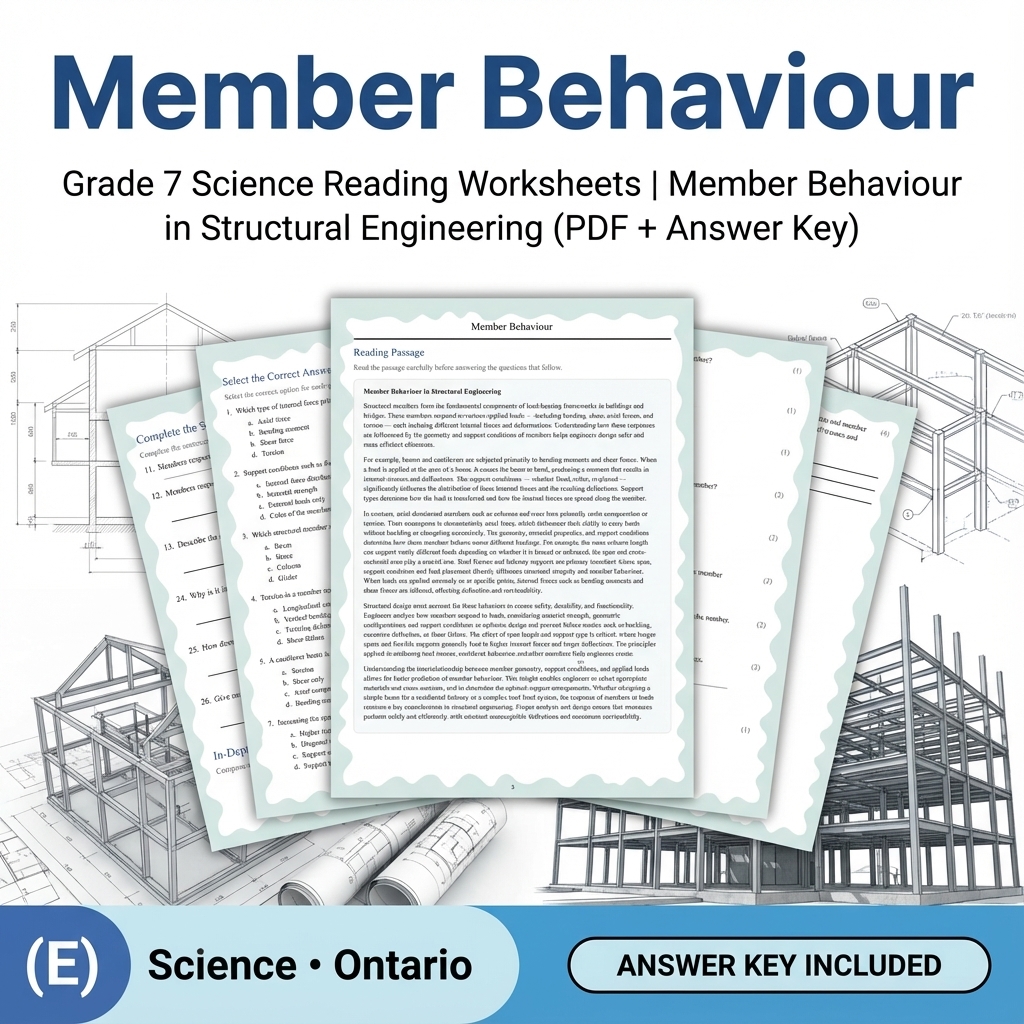
Grade 7 Science | Member Behaviour in Structural Engineering (PDF + Answer Key)
JCreated byJ.S SheetsLearning Objectives
- Understand how structural members respond to different types of loads such as bending, shear, axial force, and torsion.
- Relate the geometry and support conditions of members to internal force distribution in structural elements.
- Describe how bending moments and shear forces affect deflection and serviceability in beams and cantilevers.
Also included in: Grade 7 Science Unit Bundle – Structural Engineering & Material Testing +1 more
Instant download
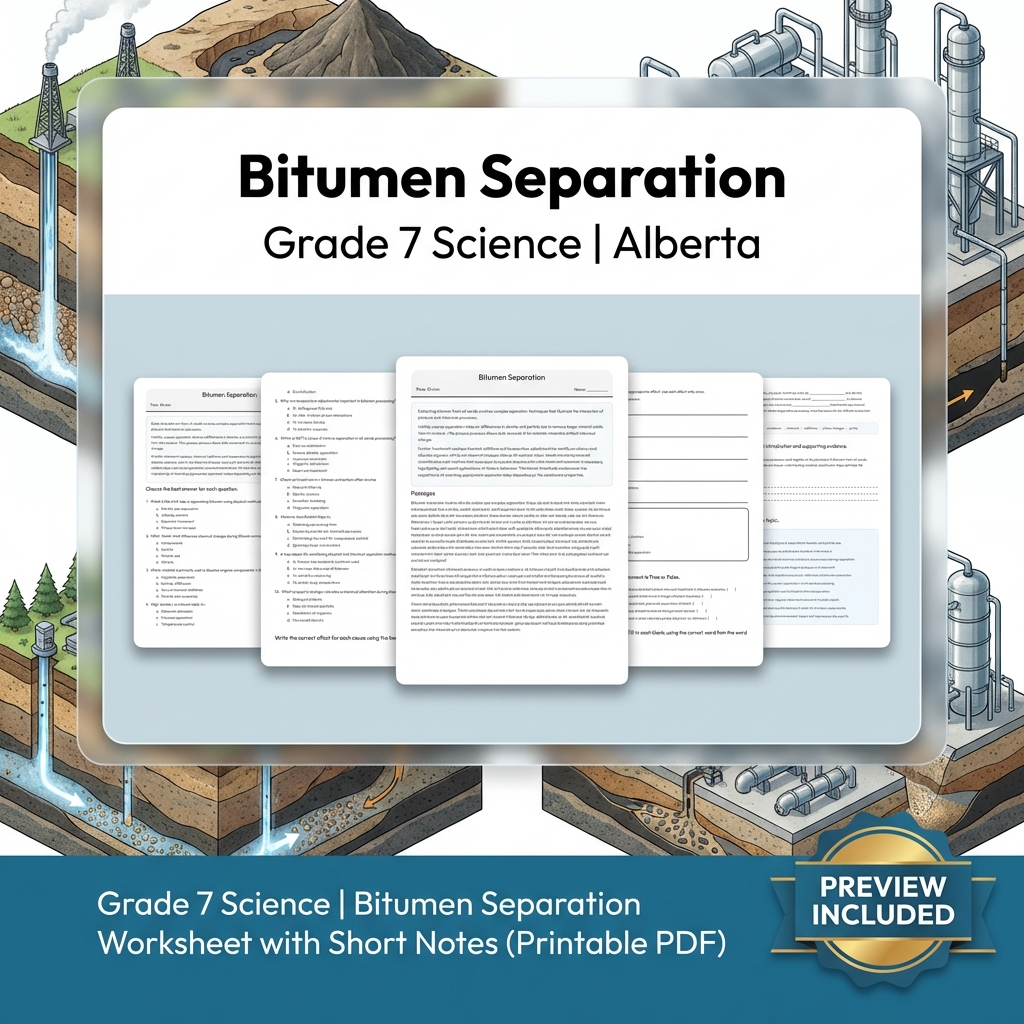
Grade 7 Science | Bitumen Separation Worksheet with Short Notes (Printable PDF)
Created byMeadowlark WorksheetsLearning Objectives
- Understand the physical and chemical methods used in separating bitumen from oil sands.
- Identify and differentiate between physical separation and chemical treatment processes.
- Analyze how temperature, density, and additives influence the separation process.
Also included in: Grade 7 Science | Matter & Chemical Change UNIT Worksheet Bundle
Instant download
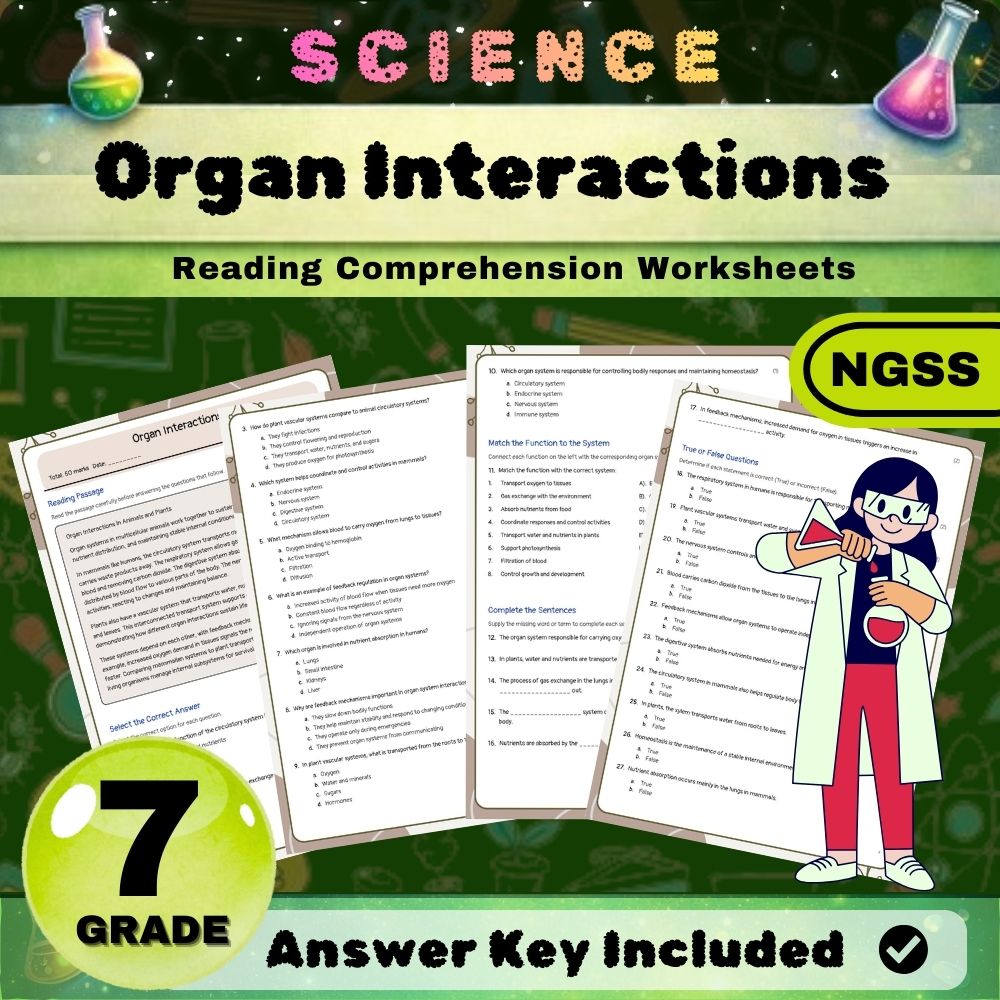
Grade 7 Science | Organ Interactions Worksheet (PDF) NGSS Alignment
Created byMaple Path LearningLearning Objectives
- Describe the key organ systems in multicellular animals and their functions.
- Explain how different organ systems cooperate to support processes like gas exchange, nutrient distribution, and homeostasis.
- Compare human systems and plant vascular transport mechanisms to understand system dependencies and feedback.
Instant download
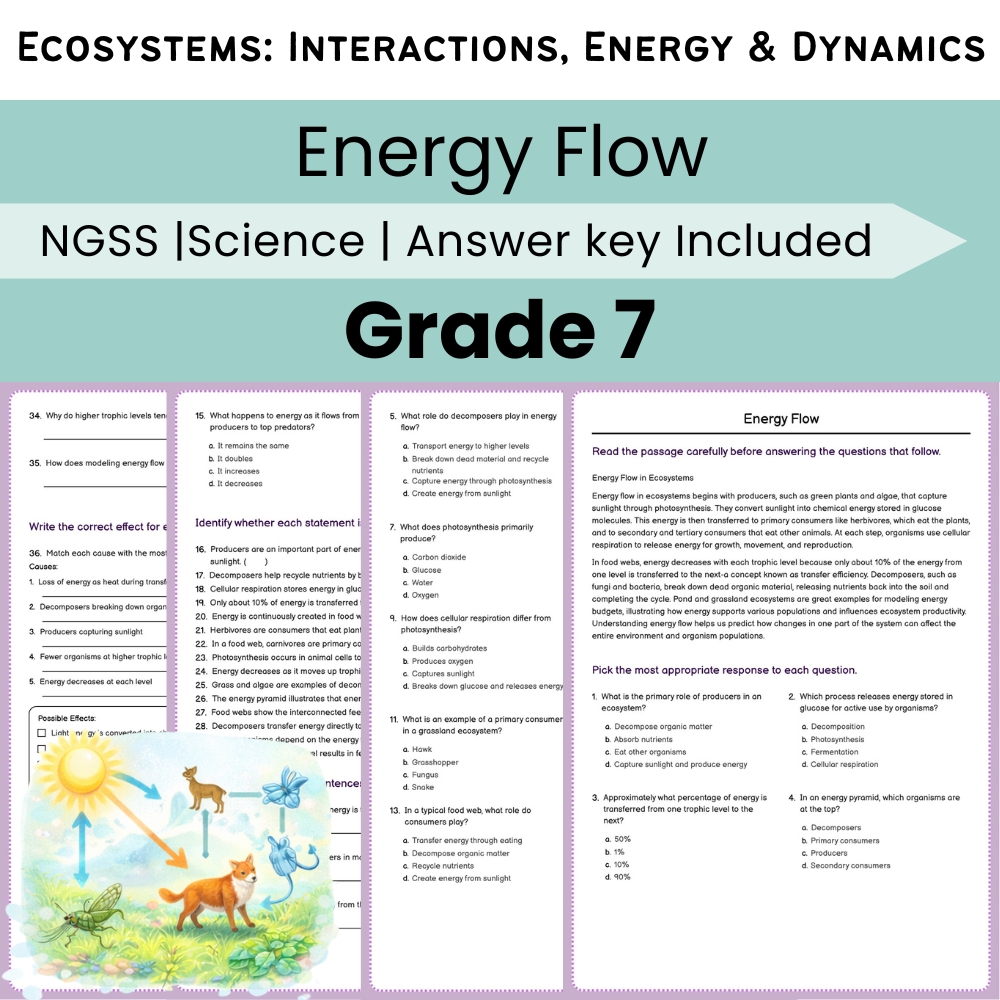
Energy Flow Worksheet for Grade 7 Science | NGSS Assessment & Student Practice
Learning Objectives
- Describe how energy transfers through different trophic levels in ecosystems.
- Explain the roles of producers, consumers, and decomposers in energy pyramids and food webs.
- Analyze the processes of photosynthesis and cellular respiration as mechanisms for energy capture and release.
Also included in: Grade 7 Science Ecosystems Lesson Bundle | NGSS Interactions & Energy +1 more
Instant download

Grade 7 Inheritance Probability Worksheet | Punnett Squares | NGSS Genetics
 Created byAmber Owl Education
Learning Objectives
- Use probability to predict expected genotype and phenotype ratios from a monohybrid cross
- Connect Punnett square outcomes to the likelihood of offspring inheriting specific alleles
- Explain how larger populations tend to better match expected genetic ratios
Also included in: Grade 7 Science NGSS Genetics Lesson Bundle | Punnett Squares & DNA (NGSS) +1 more
Instant download

Grade 7 Science Assessment | Material Properties Worksheet Elena | Alberta
Created byLumora LearningLearning Objectives
- Understand key material properties such as strength, stiffness, and density in load-bearing structures.
- Compare how timber, steel, and concrete perform under various environmental conditions.
- Analyze the behavior of different materials under compression, tension, and bending stresses.
Instant download
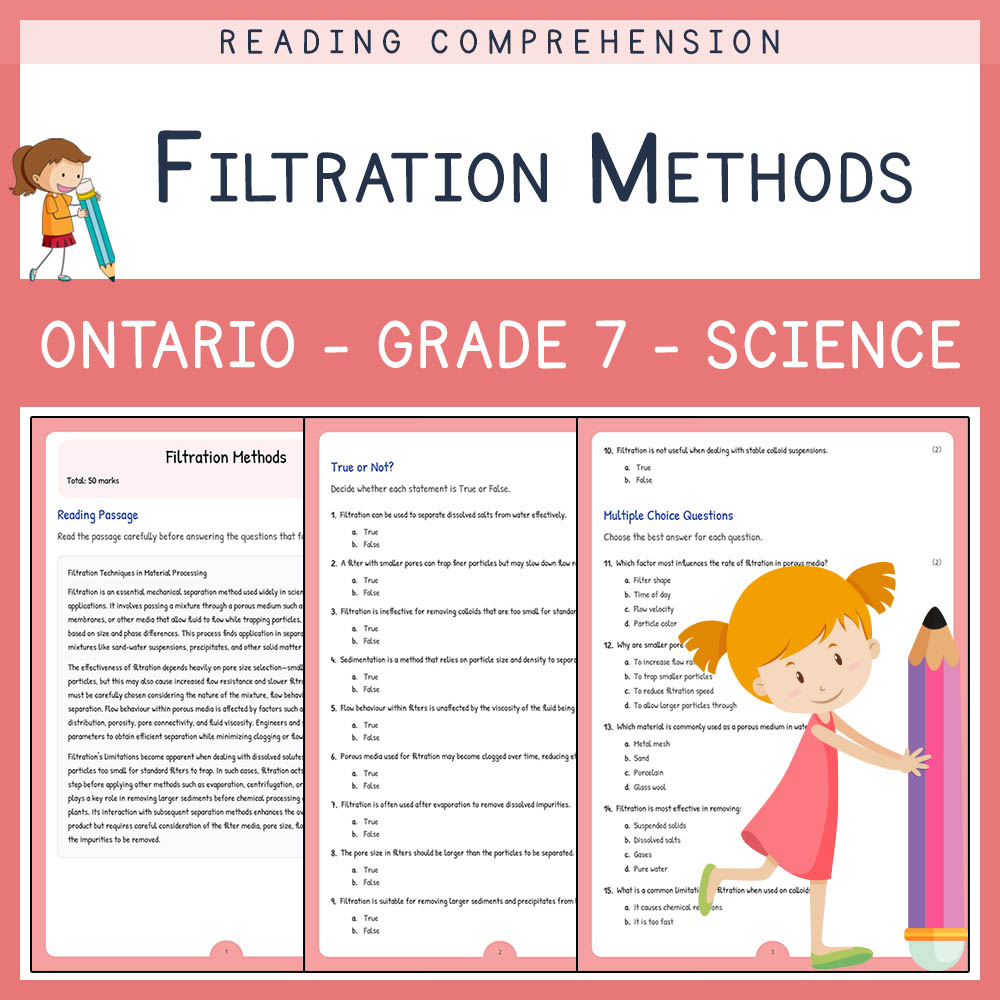
Grade 7 Science | Filtration Methods Worksheet Elena | Ontario Standard
Created byLumora LearningLearning Objectives
- Understand the principles of filtration and sedimentation in separating mixtures.
- Identify different pore sizes and their applications in filtration techniques.
- Describe the flow behaviour through porous media and factors affecting it.
Also included in: Grade 7 Science | Pure Substances and Mixtures Unit Bundle | Ontario
Instant download

Grade 7 Science | Temperature Measurement Reading Worksheets (PDF + Answer Key)
JCreated byJ.S SheetsLearning Objectives
- Understand the principles of temperature measurement and instrument characteristics.
- Differentiate between liquid-in-glass, bimetallic, and digital thermometers and their appropriate applications.
- Explain the Celsius scale, fixed points, and the importance of calibration for reliable temperature readings.
Also included in: Grade 7 Science | Thermal Energy & Transfer Worksheet Bundle +1 more
Instant download

Grade 7 Science – Urban Heat Island Phenomena Worksheet + Answer Key
JCreated byJ.S SheetsLearning Objectives
- Understand the causes of urban heat islands.
- Identify how surface materials, vegetation, and human activities contribute to urban heat.
- Explore mitigation strategies to reduce urban heat effects.
Also included in: Grade 7 Science Lesson Group: Ontario Curriculum | Thermal & Heat Transfer +1 more
Instant download

Equilibrium Worksheet | Grade 7 Science Printable PDF | NGSS Aligned
Learning Objectives
- Define and characterize static and dynamic equilibrium in physical systems.
- Identify forces such as gravity, tension, and normal force involved in equilibrium scenarios.
- Use vector principles to analyze whether forces balance in different situations.
Also included in: Grade 7 Science Lesson Bundle | Motion and Stability: Forces and Interactions +1 more
Instant download

Grade 7 Science | Conservation Applications Reading Worksheet & Answer Key (PDF)
JCreated byJ.S SheetsLearning Objectives
- Explain the principles of mass conservation and their importance in chemical and environmental systems.
- Identify real-world applications of mass conservation in reaction stoichiometry and environmental monitoring.
- Describe how mass budgets and balances are used in closed or near-closed systems.
Also included in: Grade 7 Science UNIT Worksheet Bundle | Matter, Solutions & Physical Changes +1 more
Instant download
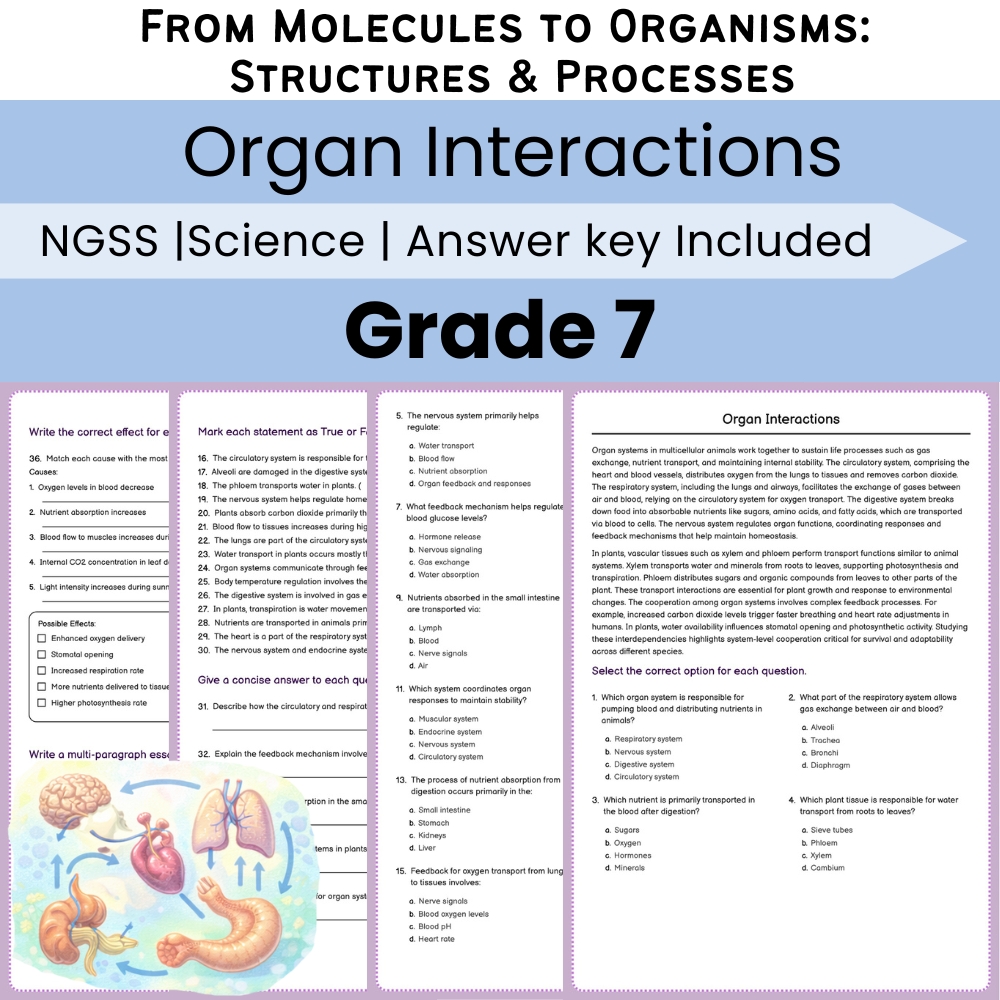
Organ Interactions Worksheet | Grade 7 Science printable PDF | NGSS science assessment
Learning Objectives
- Describe the interactions between organ systems in multicellular animals, including circulation, respiration, digestion, and nervous systems.
- Explain system-level dependencies and feedback mechanisms that support gas exchange, nutrient distribution, and homeostasis.
- Compare human and plant vascular systems to understand similarities and differences in transport interactions.
Also included in: Grade 7 Science Lesson Bundle | From Molecules to Organisms NGSS +1 more
Instant download
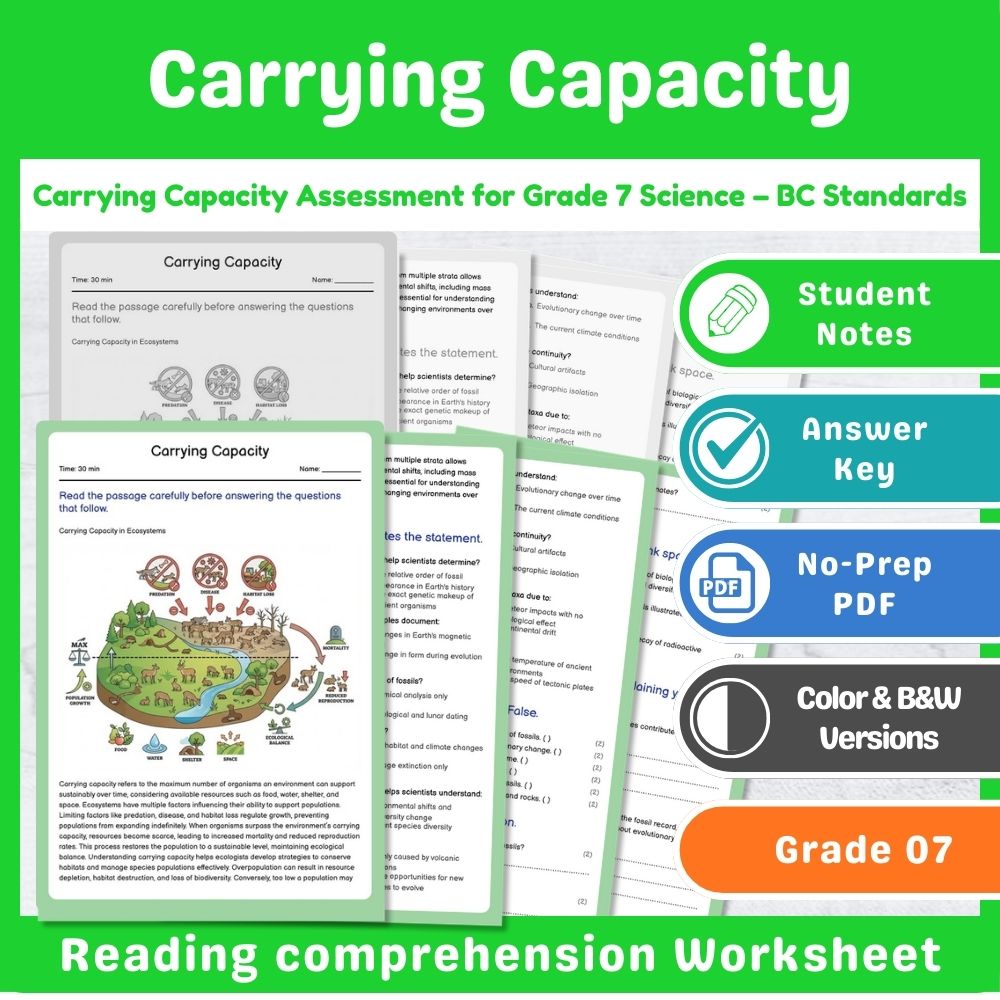
Carrying Capacity Assessment for Grade 7 Science – BC Standards
Created byPrism Point LearningLearning Objectives
- Define carrying capacity and explain its significance in ecosystems.
- Identify limiting factors that influence population growth.
- Describe the effects of exceeding carrying capacity in natural environments.
Instant download

Grade 7 Science | Levels of Organization Worksheet | TEKS Alligned
Created byLumora LearningLearning Objectives
- Describe the hierarchical levels of biological organization from individuals to the biosphere.
- Identify roles of producers, consumers, and decomposers in ecosystems.
- Explain how energy flows through trophic levels and affects ecosystem stability.
Instant download

Grade 7 Science | Fossil Patterns Worksheet with Short Notes (Printable PDF)
Created byMeadowlark WorksheetsLearning Objectives
- Analyze patterns in the fossil record to infer evolutionary relationships.
- Identify and explain the significance of index fossils and transitional forms.
- Understand stratigraphic sequences and their role in dating fossils.
Also included in: Grade 7 Science | Biological Evolution Bundle – Unity & Diversity (NGSS Aligned) +1 more
Instant download

Grade 7 Science | Insulation Principles Worksheet | Alberta Standard
Created byLumora LearningLearning Objectives
- Understand material properties that influence thermal resistance and energy efficiency.
- Identify regional examples of insulation applications in Alberta.
- Explain how R-values, thermal bridging, and lifecycle energy use affect building performance.
Instant download

Grade 7 Science – Natural Selection & Evolution | Daily Reading Worksheet
Created byBright Mind ResourcesLearning Objectives
- Understand the basic concept of natural selection
- Identify examples of natural selection in nature
- Describe how heritable traits influence survival and reproduction
Also included in: Populations & Traits Grade 7 Science Daily Reading Lesson Bundle | Florida NGSSS +1 more
Instant download

Grade 7 Social Studies — Trade and Commerce Worksheet MCQ Paper
 Created byThe Resource Hub
Learning Objectives
- Explain how merchant networks connected ports, inland trading posts, and Atlantic markets between 1713 and 1850
- Analyze how credit, tariffs, and navigation policies affected local economies and trade outcomes
- Describe continuity and change in trading practices and evaluate how different groups shaped economic flows
Also included in: Grade 7 Canadian History Social Studies Lesson Bundle: Ontario MCQ +1 more
Instant download
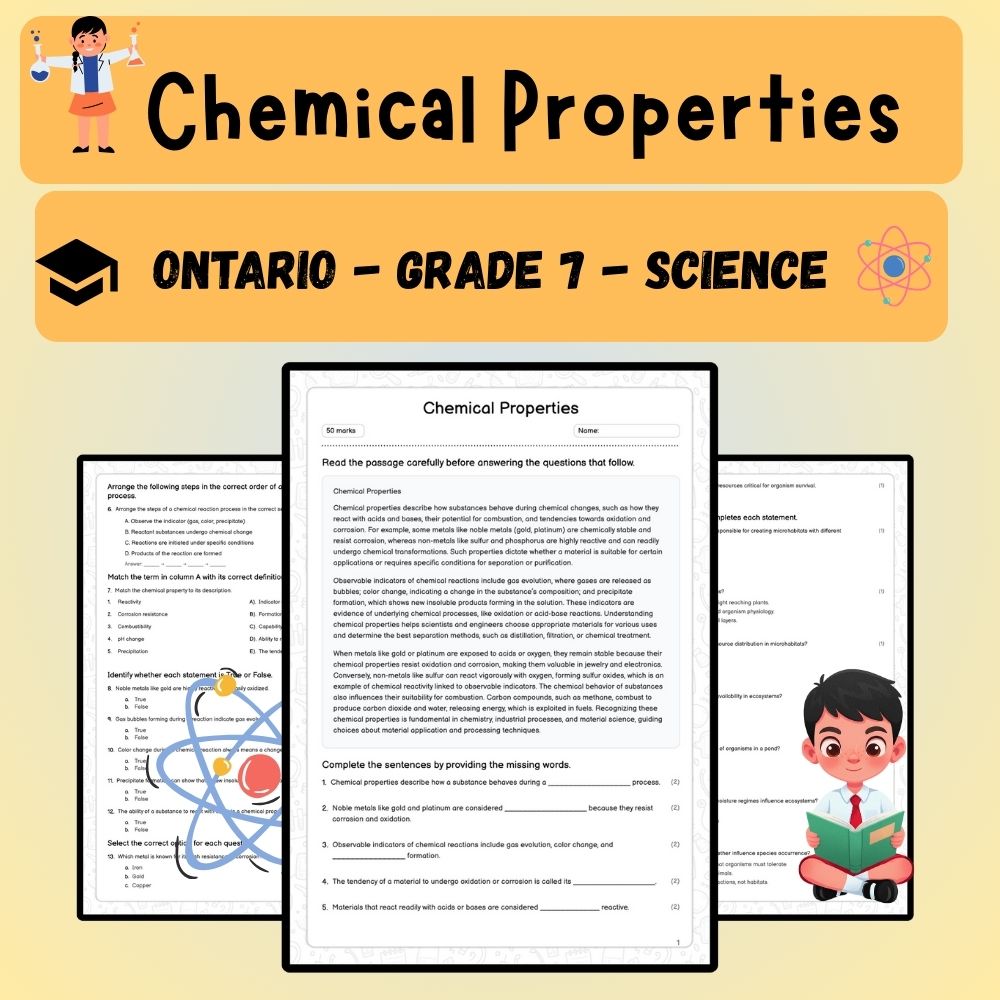
Grade 7 Science | Chemical Properties Worksheet (PDF ) – Ontario Standards
Created byPrism Point LearningLearning Objectives
- Explain what chemical properties are and how they influence material behavior.
- Identify observable indicators of chemical reactions, such as gas evolution, color change, and precipitate formation.
- Compare the chemical stability of noble metals with reactive non-metals.
Also included in: Grade 7 Science Unit Bundle | Substances, Mixtures & Properties Worksheets +1 more
Instant download
Browse more categories
About Grade 7 Worksheets
Find Grade 7 worksheets covering math, ELA, science, and social studies. All 8,459 resources download instantly as PDFs for classwork, homework, or review.
MyTeachingSheets worksheets are made by real teacher-authors and checked before they go live. Download any as a print-ready PDF for lessons, homework, or independent practice — most include answer keys, and previews are always free.