
Grade 8 Science Worksheets
6,006 worksheets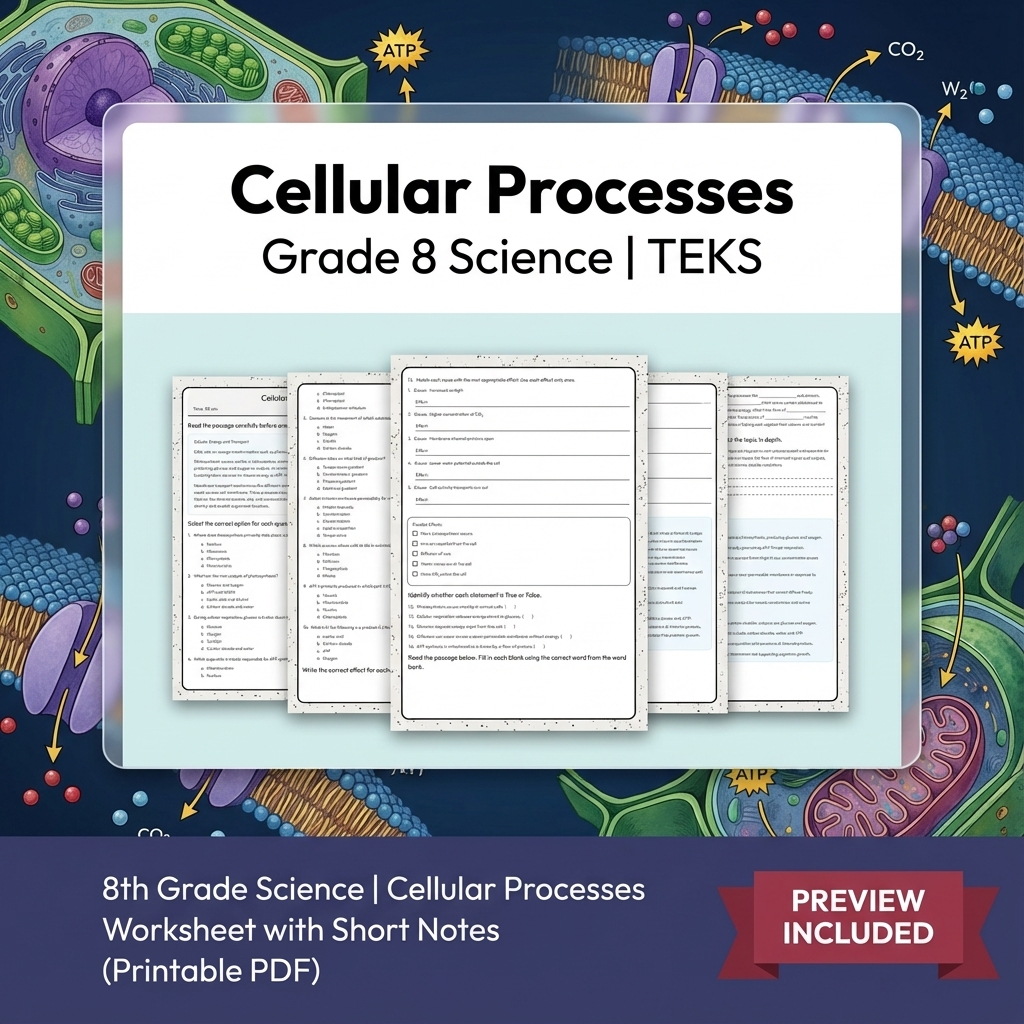
8th Grade Science Cellular Processes Worksheet with Short Notes (Printable PDF)
 Created byMeadowlark Worksheets
Learning Objectives
- Explain the energy transformations involved in photosynthesis and cellular respiration.
- Describe how membrane transport processes regulate internal cell conditions.
- Identify the chemical inputs and outputs of photosynthesis and respiration.
Instant download
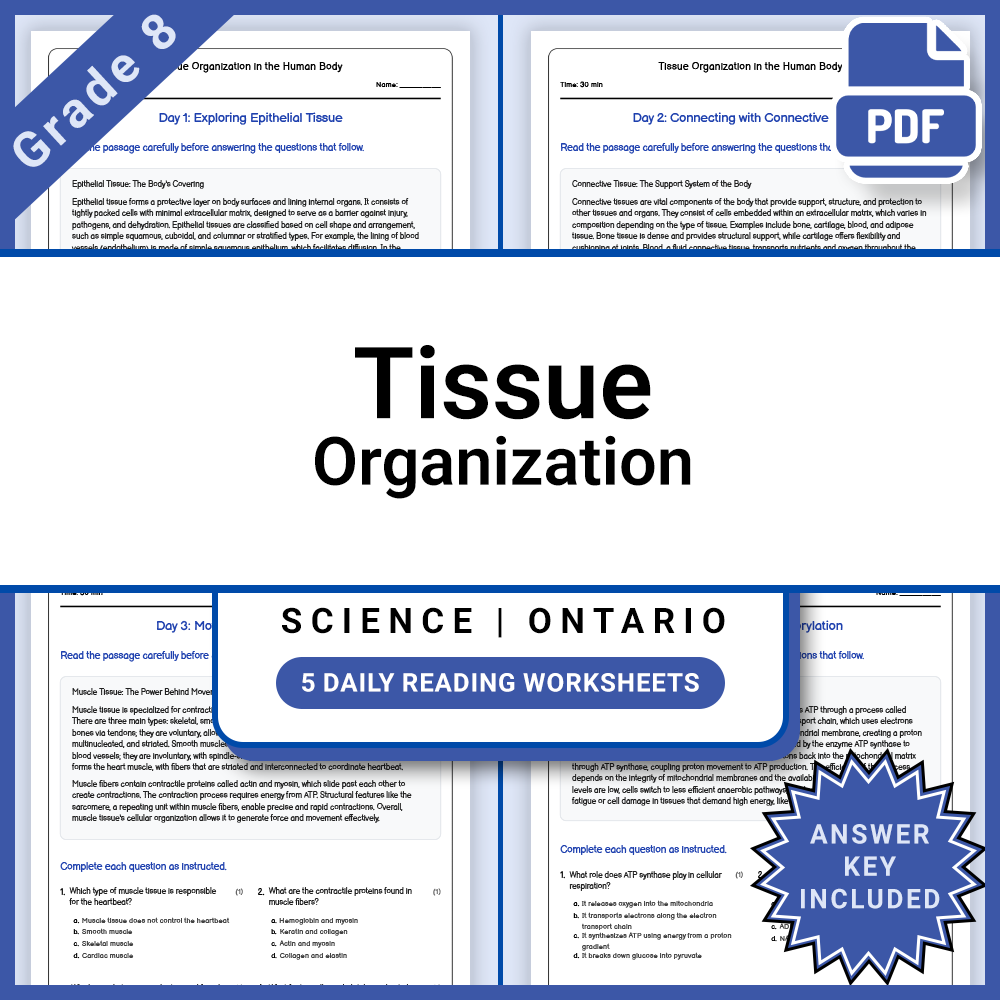
Grade 8 Science – Tissue Organization Daily Reading Worksheet with Answer Key
JCreated byJ.S SheetsLearning Objectives
- Understand the major types of tissues: epithelial, connective, muscle, and nervous.
- Identify key features and functions of epithelial tissue.
- Describe the structural components and roles of connective tissue.
Also included in: Grade 8 Science Lesson Group: Ontario Curriculum Reading Worksheets Bundle +1 more
Instant download
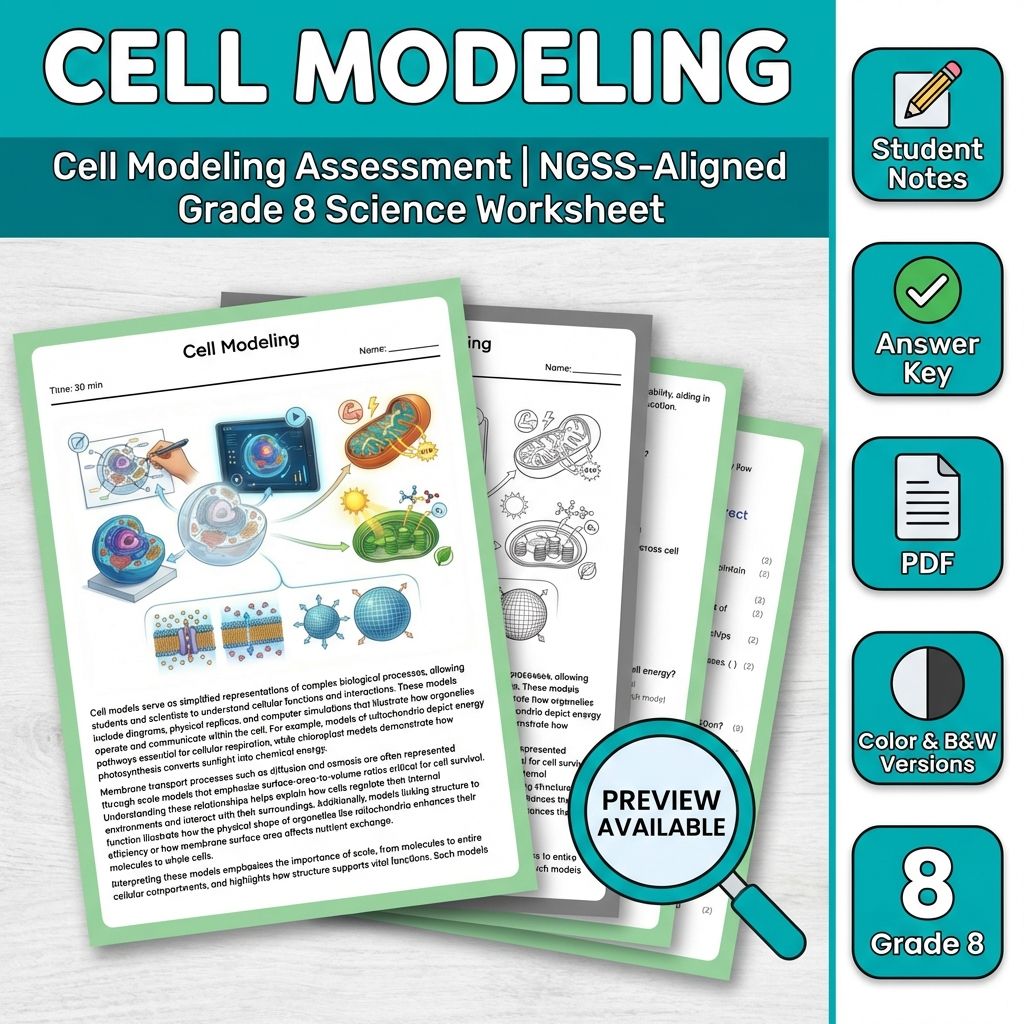
Cell Modeling Assessment | NGSS-Aligned Grade 8 Science Worksheet
 Created byPrism Point Learning
Learning Objectives
- Describe different models used to represent cellular processes and structures.
- Explain the roles of organelles like mitochondria and chloroplasts in cell function.
- Interpret how membrane transport mechanisms relate to cell viability and overall function.
Also included in: Grade 8 Science Mini Bundle – Structure & Processes Unit (NGSS Aligned) +1 more
Instant download
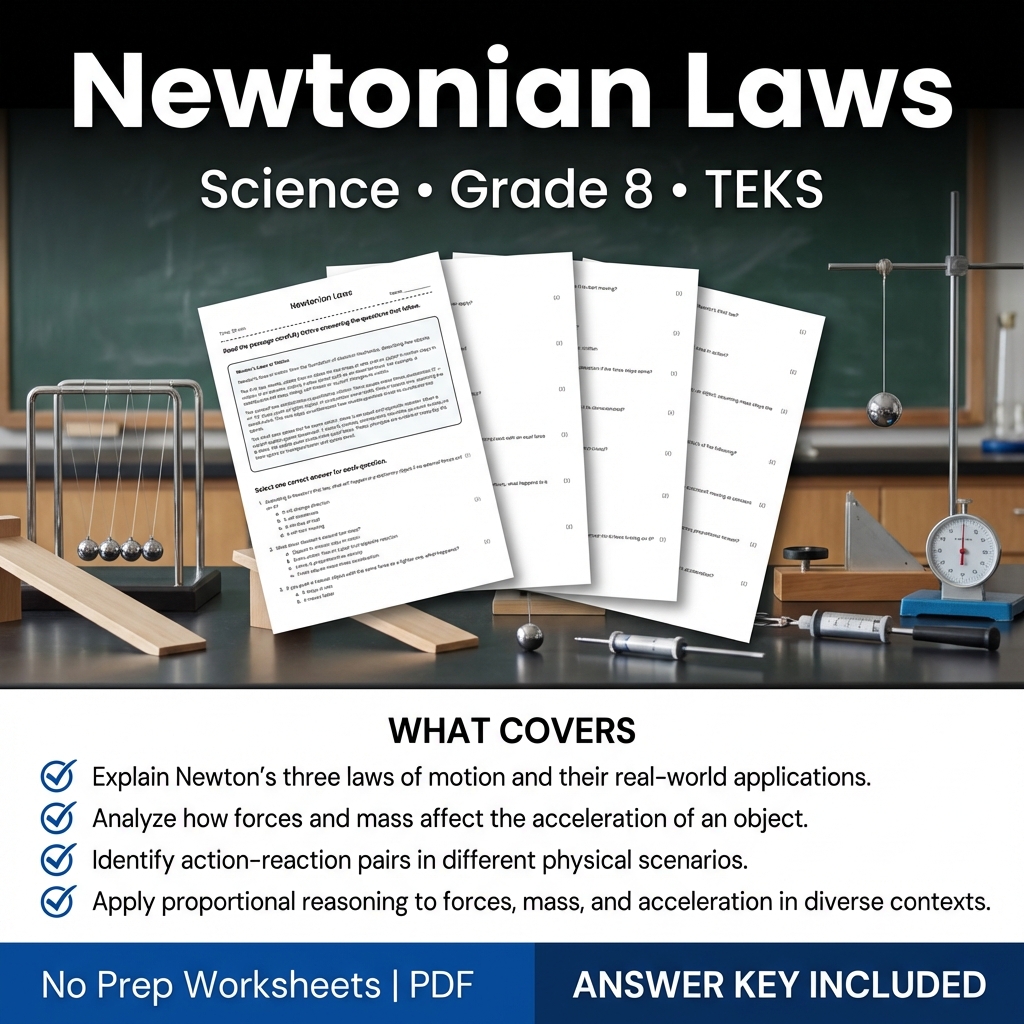
Grade 8 Science Worksheet on Newtonian Laws | TEKS Aligned Practice
 Created byCoral Reef Learning
Learning Objectives
- Explain Newton's three laws of motion and their real-world applications.
- Analyze how forces and mass affect the acceleration of an object.
- Identify action–reaction pairs in different physical scenarios.
Instant download
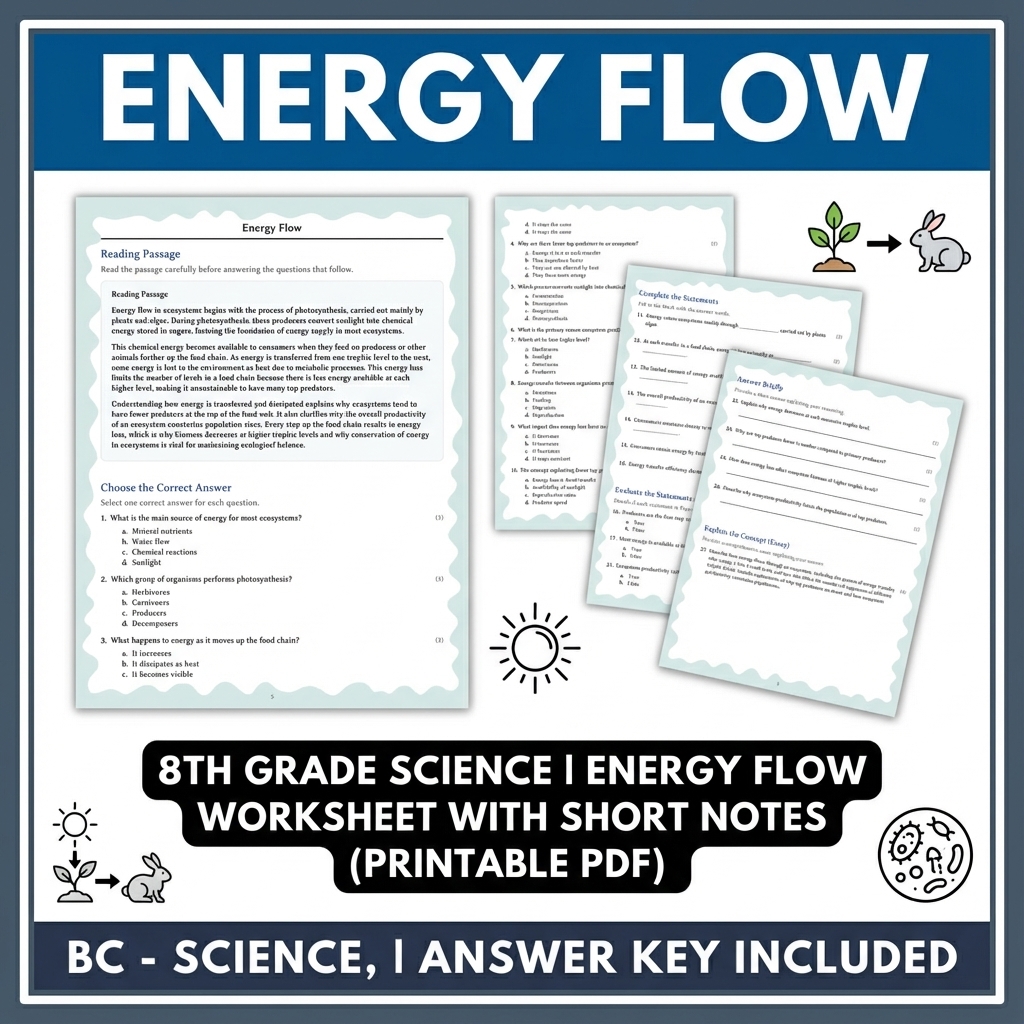
8th Grade Science | Energy Flow Reading Worksheet (PDF + Rubric)
JCreated byJ.S SheetsLearning Objectives
- Understand how energy enters and transfers within ecosystems.
- Identify the role of photosynthesis and food webs in energy flow.
- Explain why energy dissipation limits the number of trophic levels.
Instant download

8th Grade Science | Models and Systems Worksheet (PDF+ Answer Key)
 Created byCopper Leaf Classroom
Learning Objectives
- Explain the role of models and systems in understanding complex scientific phenomena.
- Identify components and interactions within various ecological and physical systems.
- Analyze examples of energy transfer, conservation of mass, and forces using diagrams and models.
Instant download
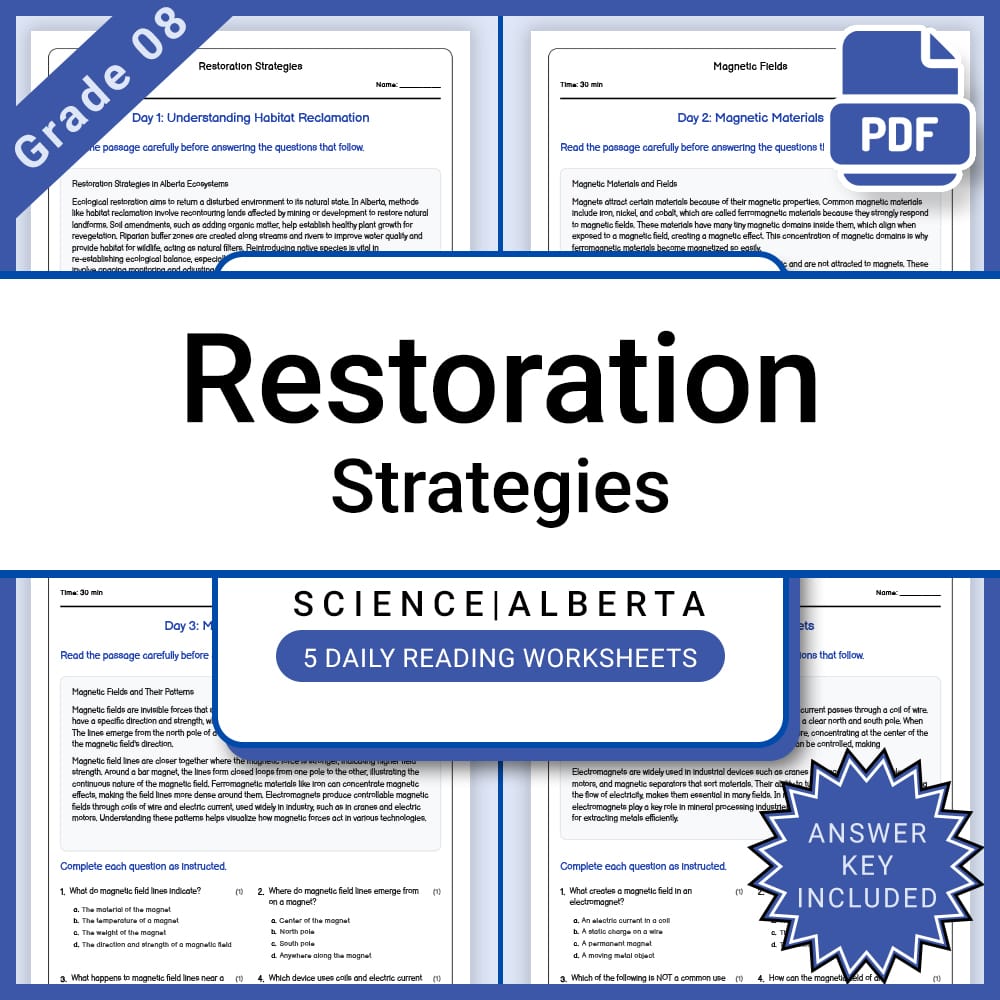
Grade 8 Science – Restoration Strategies Daily Reading Worksheet + Answer Key
JCreated byJ.S SheetsLearning Objectives
- Understand the key principles of ecological restoration in Alberta.
- Identify various habitat reclamation methods.
- Develop comprehension skills through reading and answering questions.
Also included in: Grade 8 Science Lesson Bundle | Ecosystems, Energy, and Environmental Impact +1 more
Instant download
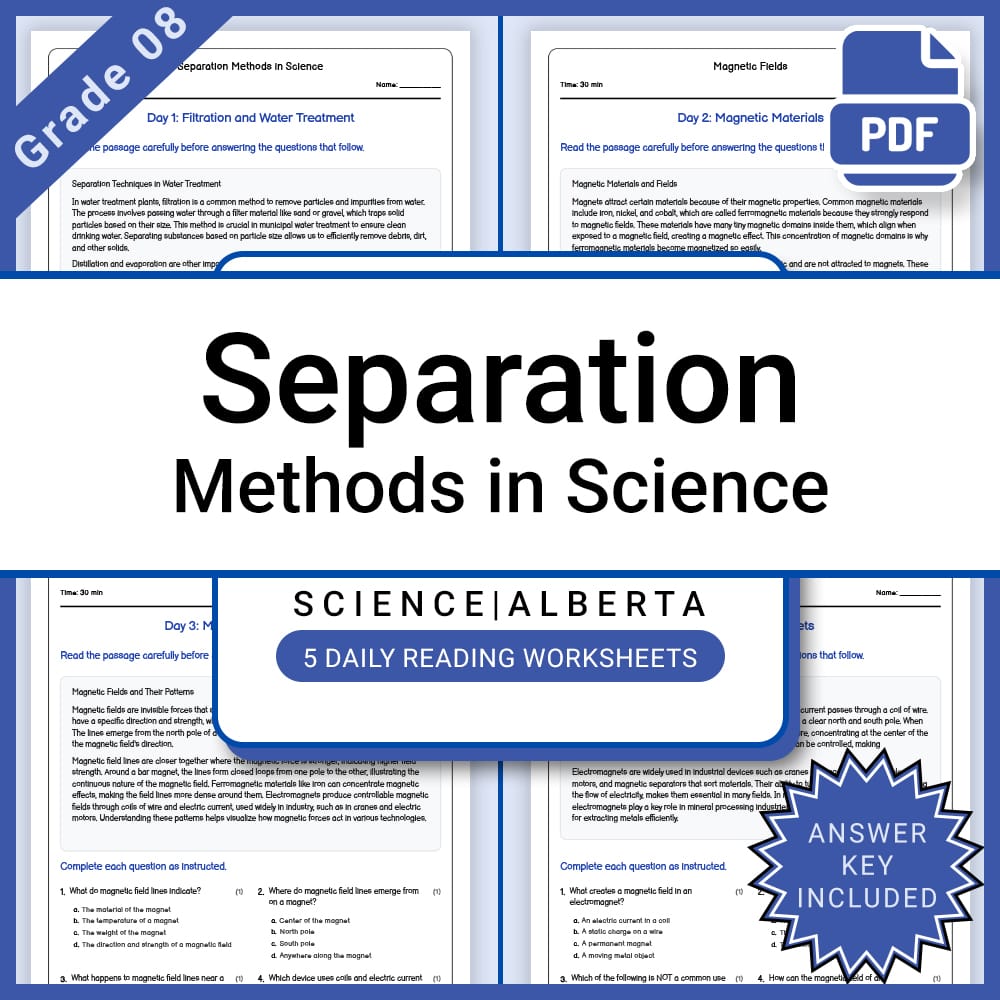
Grade 8 Science – Separation Methods Daily Reading Worksheet with Answer Key
JCreated byJ.S SheetsLearning Objectives
- Understand different separation techniques such as filtration, evaporation, and distillation.
- Learn how physical properties like particle size, solubility, boiling point, and magnetic susceptibility are used for separation.
- Interpret real-world applications of separation methods in water treatment, oil refining, and mineral processing.
Also included in: Grade 8 Science Lesson Group Bundle | Alberta Framework +1 more
Instant download
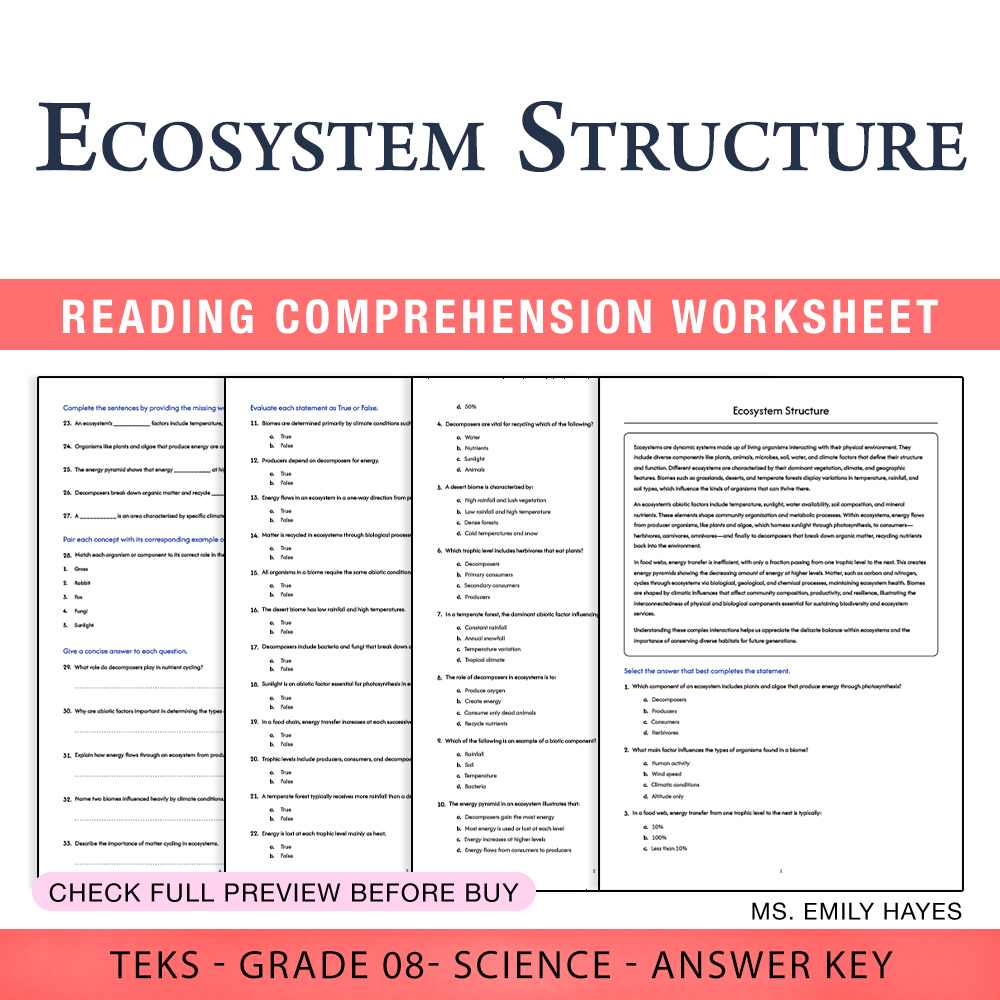
8th Grade Science | Ecosystem Structure Worksheet (PDF+ Answer Key)
Created byCopper Leaf ClassroomLearning Objectives
- Describe the components and organization of ecosystems and biomes.
- Identify abiotic factors that influence community composition.
- Understand the roles of producers, consumers, and decomposers in food webs and energy flow.
Instant download
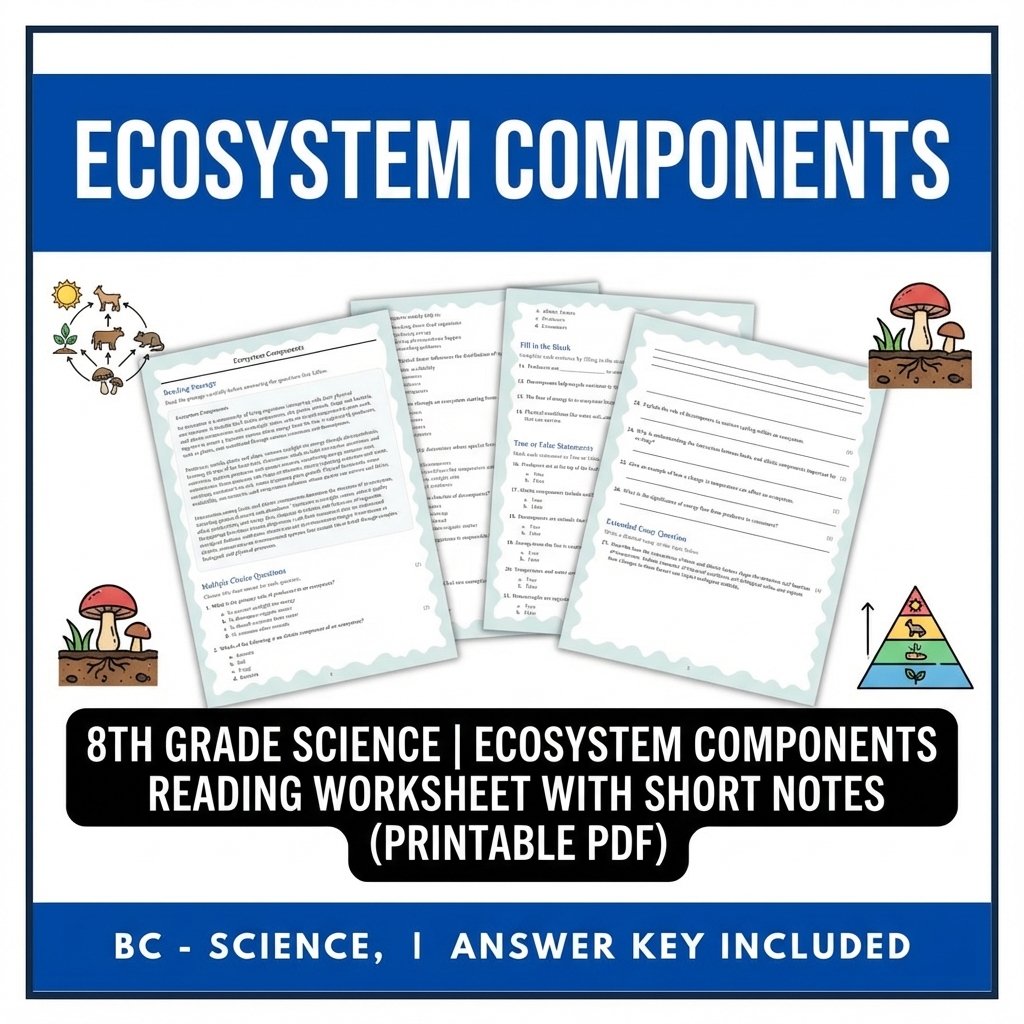
Grade 8 Science | Ecosystem Components Reading Worksheets (PDF + Answer Key)
JCreated byJ.S SheetsLearning Objectives
- Identify and describe the main parts of an ecosystem, including biotic and abiotic elements.
- Explain how producers, consumers, and decomposers cycle energy and matter.
- Analyze the influence of physical conditions like sunlight, water, soil, and temperature on ecosystems.
Instant download
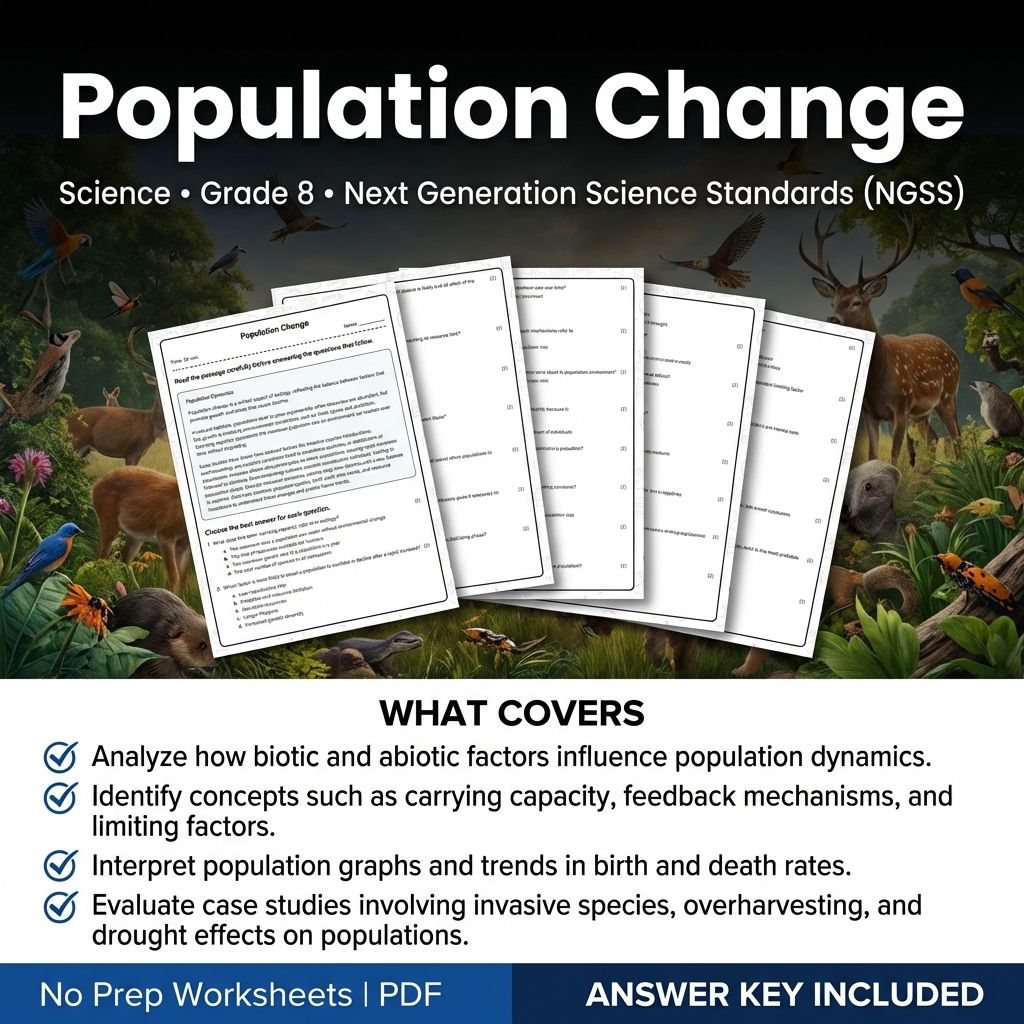
8th Grade Science | Population Change Worksheet & Answer Key (Printable PDF)
Created byCoral Reef LearningLearning Objectives
- Analyze how biotic and abiotic factors influence population dynamics.
- Identify concepts such as carrying capacity, feedback mechanisms, and limiting factors.
- Interpret population graphs and trends in birth and death rates.
Instant download

Grade 8 Science | Hydrostatic Pressure - Daily Reading Comprehension
Created byCoral Reef LearningLearning Objectives
- Understand key concepts related to Science
- Apply knowledge through practice questions
- Demonstrate comprehension of the material
Instant download
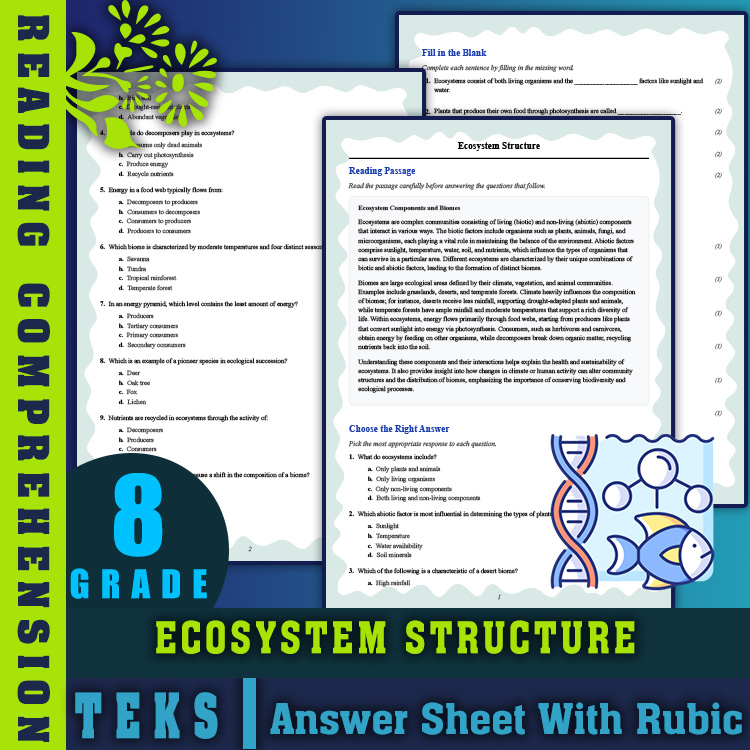
8th Grade Science | Ecosystem Structure Reading Worksheet & Answer Key (PDF)
JCreated byJ.S SheetsLearning Objectives
- Understand the components and types of ecosystems and biomes
- Identify abiotic and biotic factors influencing ecosystems
- Explain the roles of producers, consumers, and decomposers in energy flow and nutrient cycling
Instant download

States of Matter Worksheet | TEKS Aligned Grade 8 Science Practice
JCreated byJ.S SheetsLearning Objectives
- Describe solids, liquids, gases, and plasma in terms of particle arrangement and motion.
- Explain phase changes using the kinetic molecular (particle) model of matter.
- Connect thermal energy changes to melting, boiling, condensation, freezing, and sublimation.
Instant download
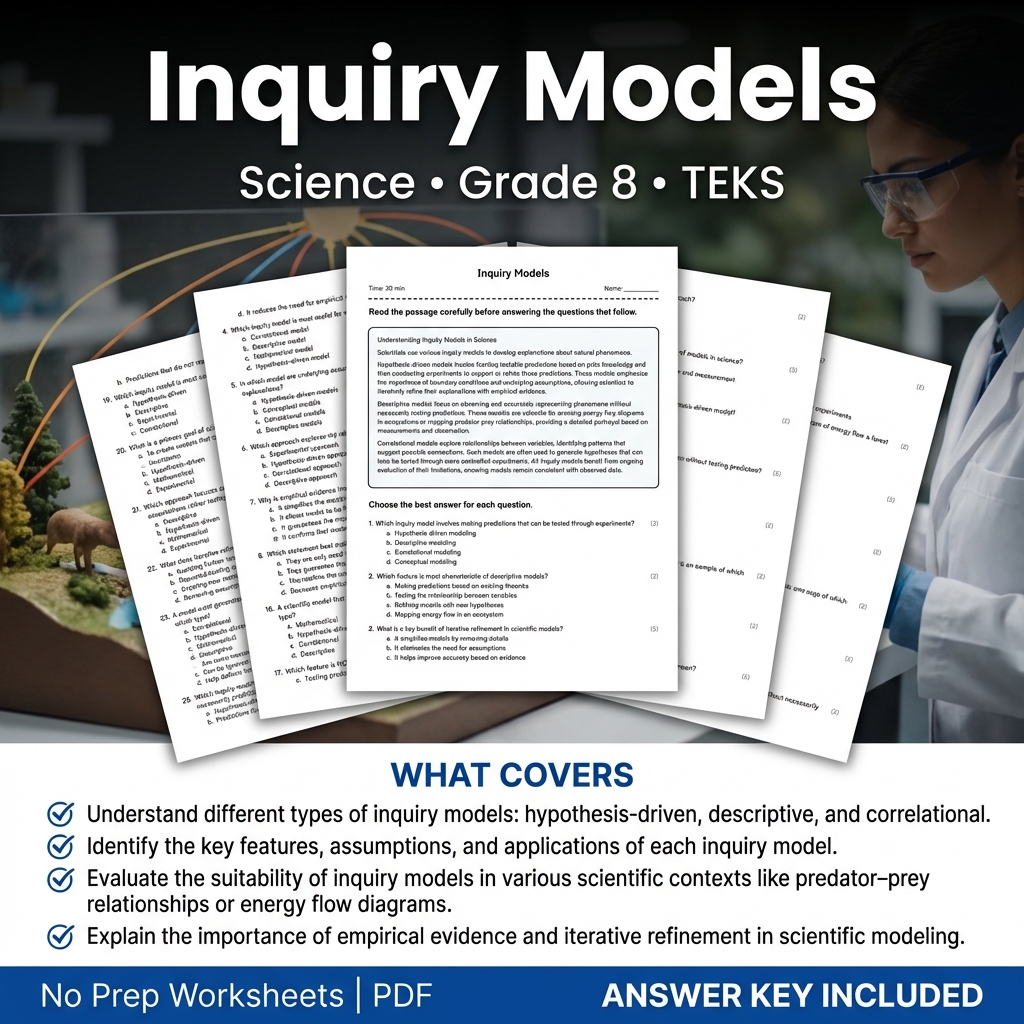
Inquiry Models Worksheet PDF with Answer Key | TEKS Grade 8 Science
Created byCoral Reef LearningLearning Objectives
- Understand different types of inquiry models: hypothesis-driven, descriptive, and correlational.
- Identify the key features, assumptions, and applications of each inquiry model.
- Evaluate the suitability of inquiry models in various scientific contexts like predator–prey relationships or energy flow diagrams.
Instant download
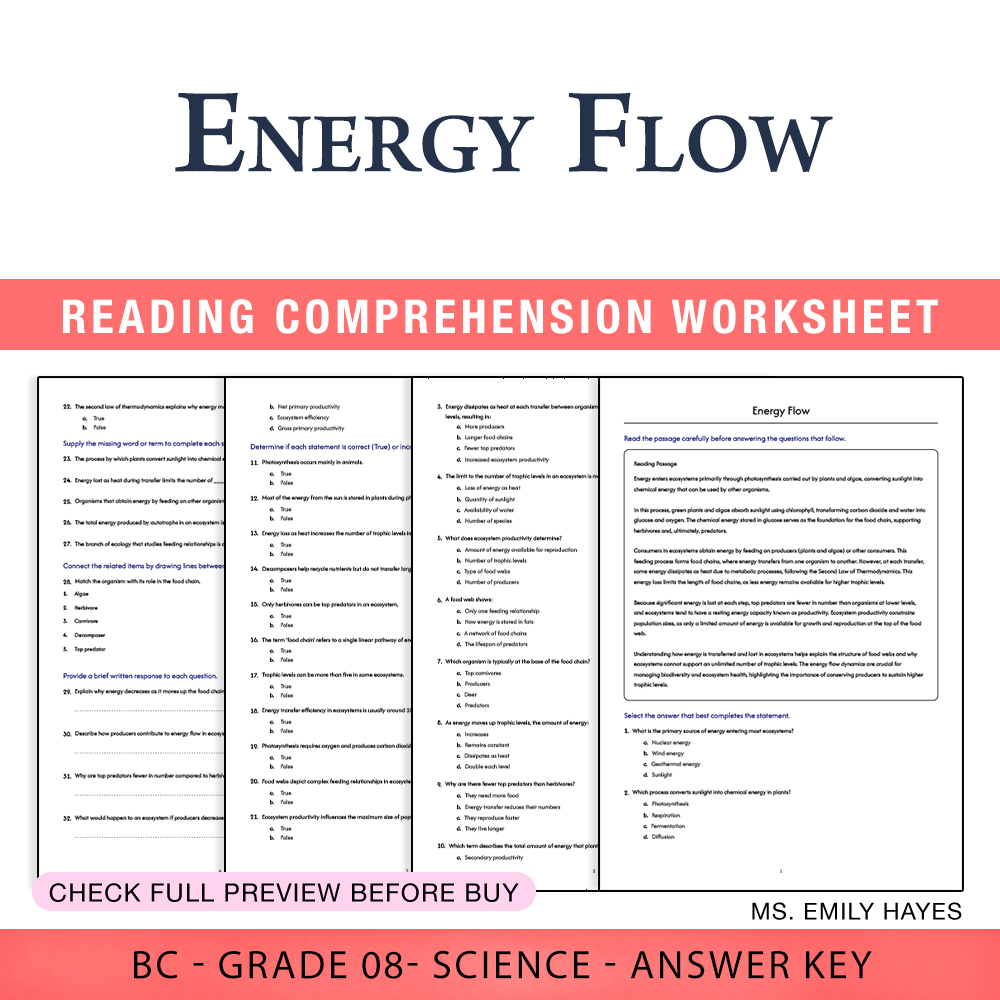
8th Grade Science | Energy Flow Worksheet (PDF+ Answer Key)
Created byCopper Leaf ClassroomLearning Objectives
- Explain how energy enters ecosystems through photosynthesis.
- Describe the transfer and loss of energy at each trophic level.
- Understand the reasons behind the limited number of top predators and ecosystem productivity constraints.
Also included in: Grade 8 Science– Ecology, Biodiversity & Environmental Impact (PDF + Answer Key) +1 more
Instant download

Ecosystem Structure Assessment for Grade 8 Science | TEKS Standards
Created byPrism Point LearningLearning Objectives
- Describe components and biomes of ecosystems, including abiotic factors.
- Explain trophic roles of producers, consumers, and decomposers within food webs.
- Analyze energy flow and matter cycling patterns in different biomes.
Instant download

Population Dynamics Assessment for Grade 8 Science TEKS Standards
Created byPrism Point LearningLearning Objectives
- Analyze factors that influence population size and distribution.
- Explain growth patterns and oscillations in populations using graphs and data.
- Evaluate case examples of invasive species impacts and recovery after disturbances.
Instant download

Grade 8 Cratered vs Resurfaced Worlds Worksheet | General Practice PDF
 Created byClear Sky Classroom
Learning Objectives
- Compare how crater density helps scientists infer the relative ages of planetary surfaces
- Explain how resurfacing processes (like lava flows) produce smoother regions with fewer visible craters
- Use relationships between impact features and surrounding materials to support claims about geologic activity
Instant download

Grade 8 Solution Comparison Worksheet | NGSS Practice PDF
Created byClear Sky ClassroomLearning Objectives
- Understand the development and evaluation of multiple design concepts using selection criteria.
- Differentiate solutions based on measurable performance indicators and constraints.
- Apply qualitative and quantitative assessment methods to compare competing solutions.
Also included in: Grade 8 Engineering Design Tradeoff Analysis Science Lesson Bundle NGSS +1 more
Instant download
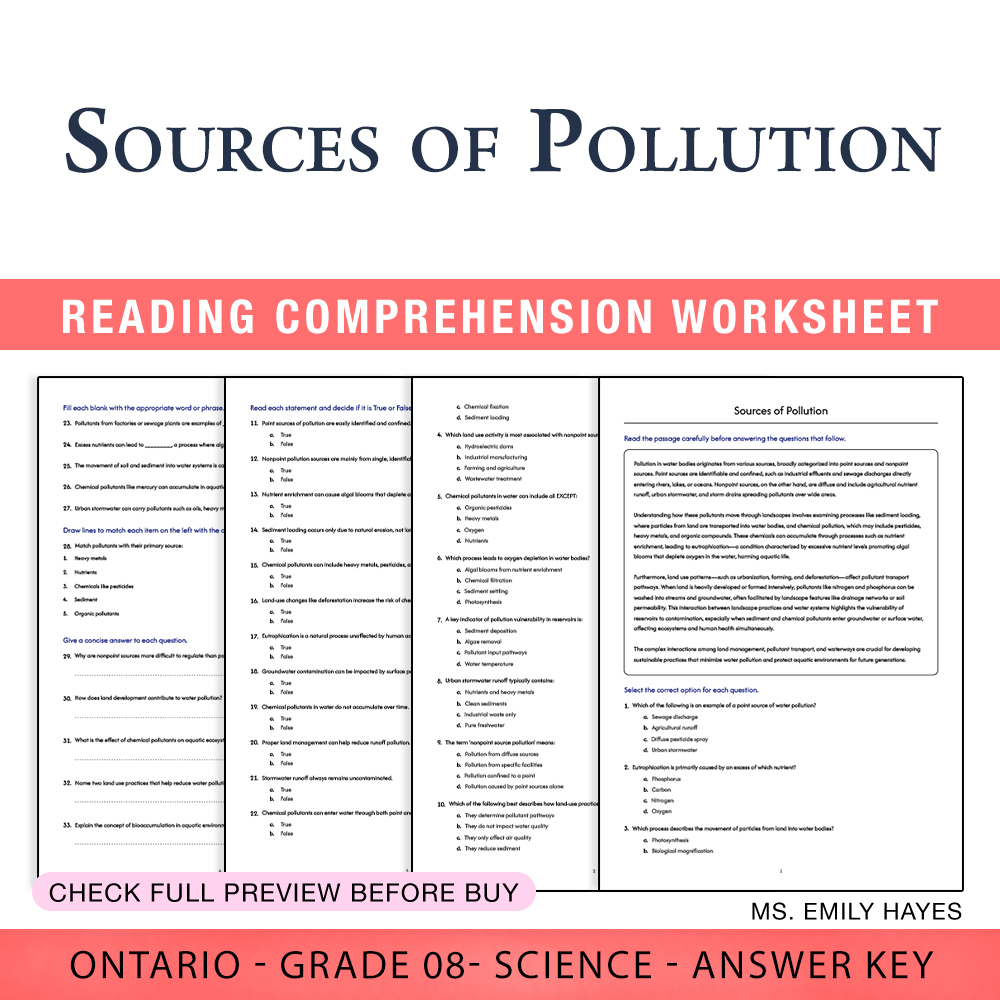
8th Grade Science | Sources of Pollution Worksheet (PDF + Answer Key)
Created byCopper Leaf ClassroomLearning Objectives
- Differentiate between point and nonpoint sources of pollution with examples.
- Explain the processes of nutrient enrichment, eutrophication, and oxygen depletion in water bodies.
- Describe how land use and landscape practices influence pollutant transport pathways.
Instant download
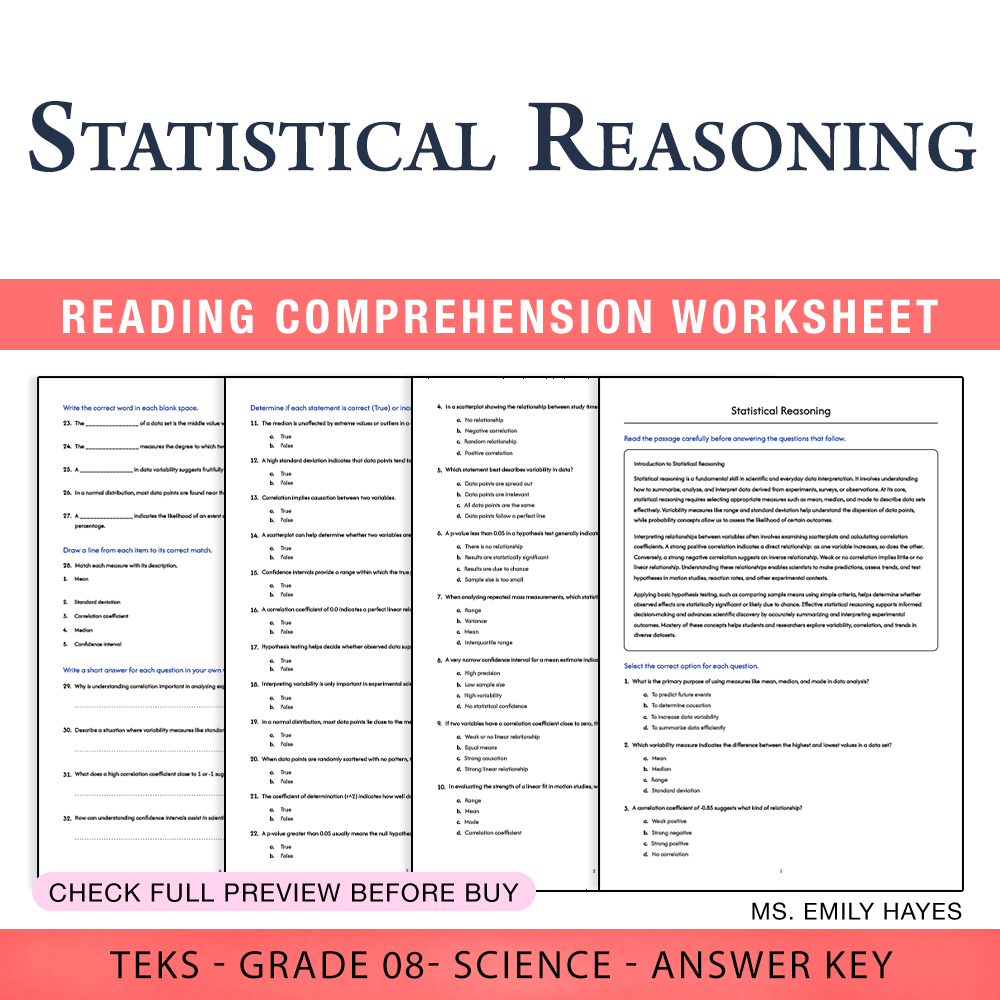
8th Grade Science | Statistical Reasoning Worksheet (PDF+ Answer Key)
Created byCopper Leaf ClassroomLearning Objectives
- Understand basic concepts of probability, variability, and correlation in data analysis.
- Identify appropriate measures of central tendency and dispersion for data sets.
- Interpret scatterplots and correlation coefficients to evaluate relationships between variables.
Instant download
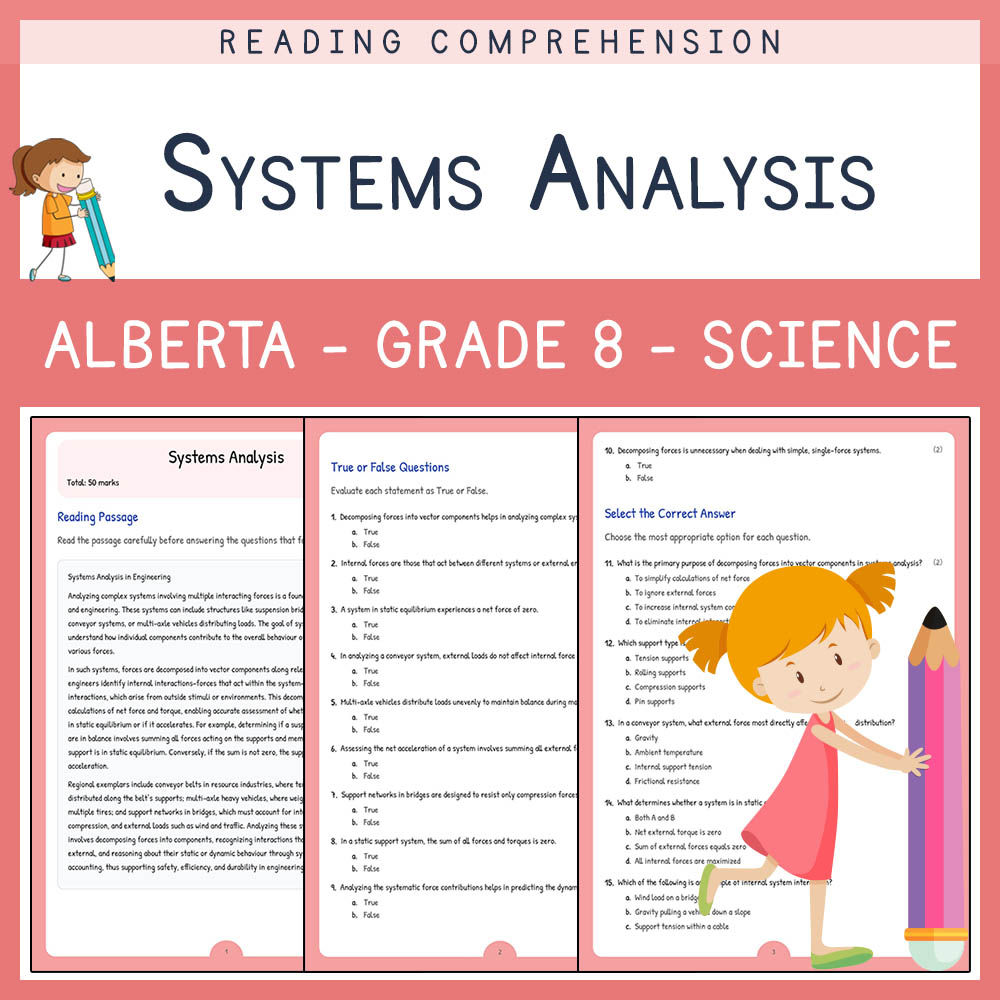
Grade 8 Science | Systems Analysis Worksheet | Alberta Standard
 Created byLumora Learning
Learning Objectives
- Understand the components and forces involved in complex systems such as bridges, conveyor belts, and vehicle load distributions.
- Learn to decompose system forces into their vector components and analyze the effects of internal and external interactions.
- Assess whether systems are in static equilibrium or experiencing net acceleration based on systematic force accounting.
Instant download

Grade 8 Science | Statistical Reasoning Worksheet (TEKS) + Answer Key
 Created byEvergreen Desk Education
Learning Objectives
- Choose appropriate summary statistics (mean, median, range, standard deviation) to describe variability in experimental data
- Interpret distributions and identify how spread and outliers affect conclusions
- Explain what a correlation coefficient does (and does not) tell you about two variables
Instant download

Grade 8 Science – Simple Machines Daily Reading Worksheet | BC Standards
 Created byBright Mind Resources
Learning Objectives
- Identify parts of a lever and explain how it works
- Understand the concept of mechanical advantage
- Describe how simple machines like levers, pulleys, and gears transfer energy
Also included in: Grade 8 Motion Forces Energy Science Daily Reading Lesson Bundle | BC +1 more
Instant download

Grade 8 Science – Population Growth Worksheet (PDF) | BC Standards
Created byEvergreen Desk EducationLearning Objectives
- Explain how birth rates, death rates, immigration, and emigration affect population growth patterns
- Distinguish intrinsic growth factors (reproductive strategies and age structure) from extrinsic factors (density-dependent and density-independent)
- Use counts, estimates, and simple demographic models to interpret population change over time
Instant download
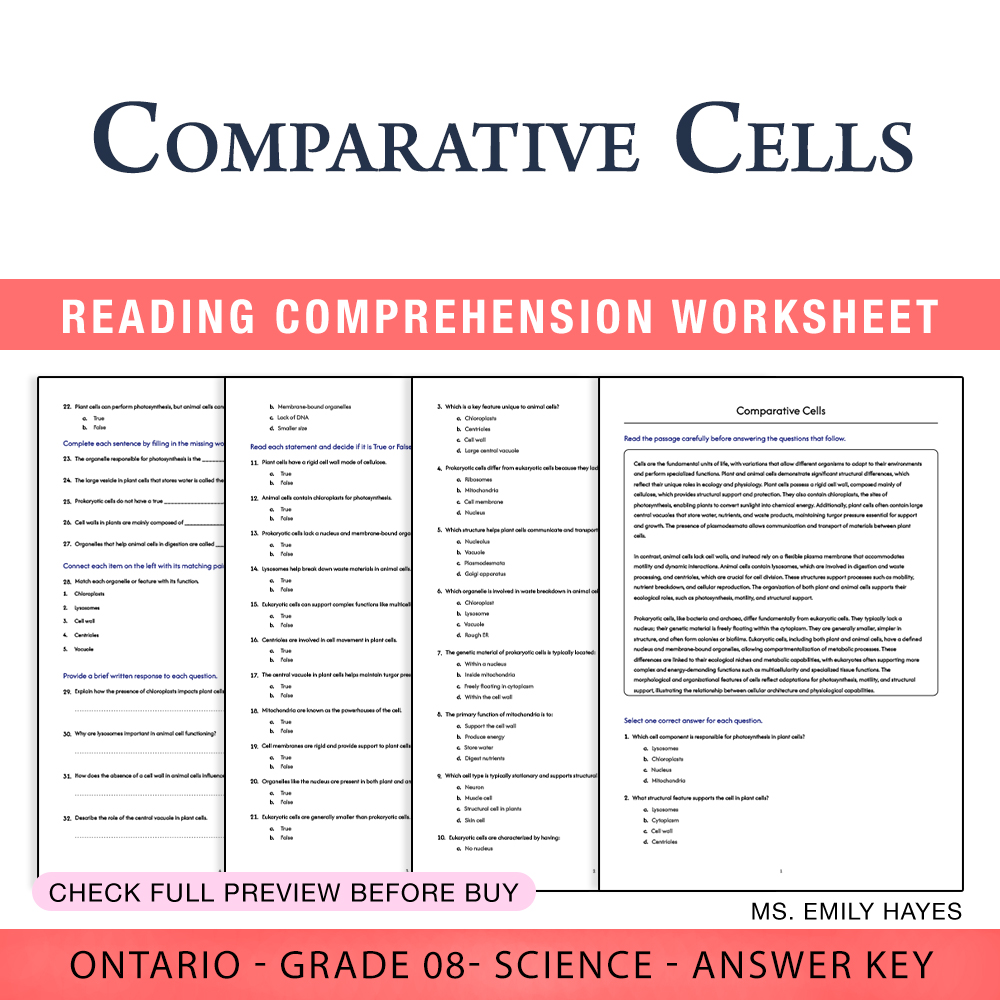
Grade 8 Science | Comparative Cells Worksheet (PDF+ Answer Key)
Created byCopper Leaf ClassroomLearning Objectives
- Describe the structural differences between plant and animal cells and their functional significance.
- Compare prokaryotic and eukaryotic cellular organization and explain how these differences relate to ecological roles.
- Identify and explain the significance of key cellular features such as cell walls, chloroplasts, lysosomes, and centrioles.
Instant download

Mendelian Patterns Worksheet | NGSS Grade 8 Genetics Punnett Squares
 Created byAmber Owl Education
Learning Objectives
- Explain how allele combinations determine dominant and recessive traits and how genotype relates to phenotype
- Use Punnett squares and basic probability to predict offspring trait ratios for simple Mendelian crosses
- Interpret segregation patterns in heredity and apply them to pedigree-style reasoning
Also included in: Grade 8 Science Genetics Lesson Bundle – Next Generation Science Standards +1 more
Instant download
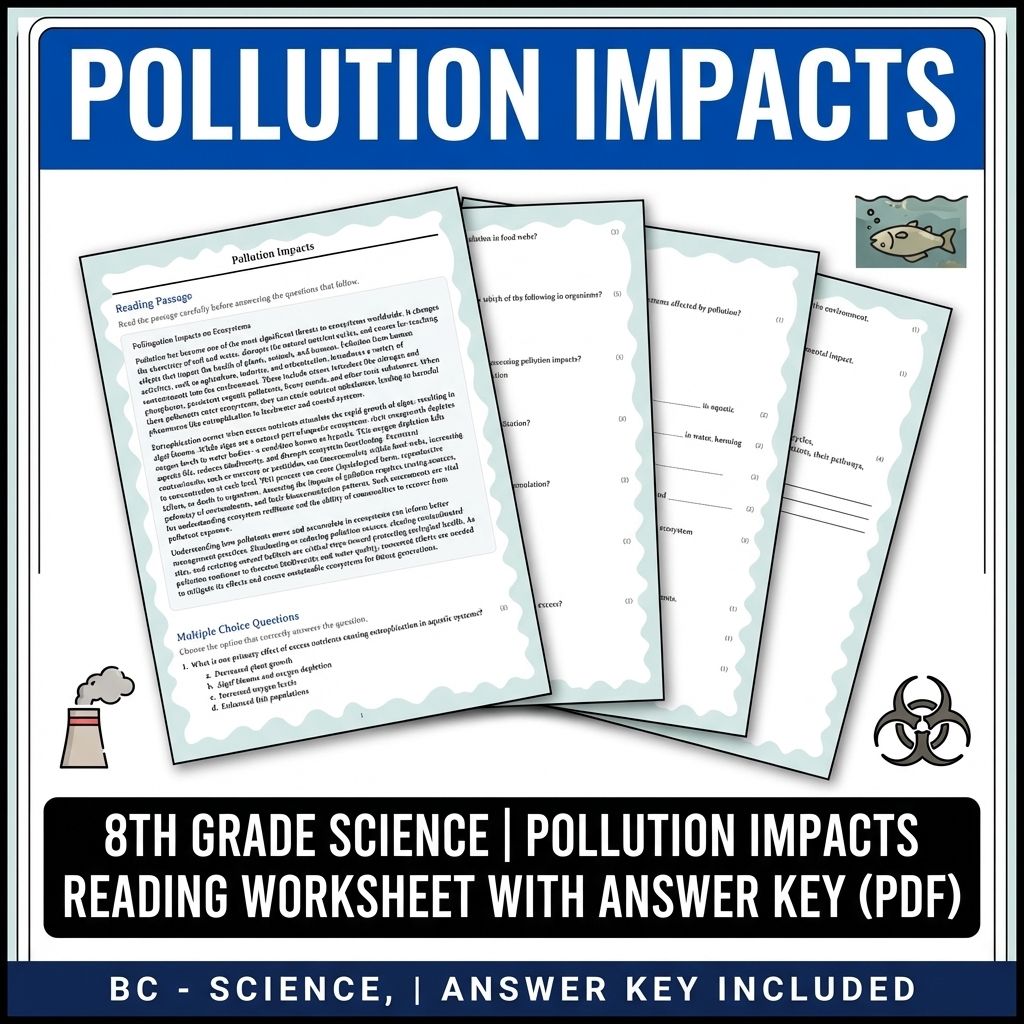
8th Grade Science | Pollution Impacts Reading Worksheet with Answer Key (PDF)
JCreated byJ.S SheetsLearning Objectives
- Understand how pollution alters ecosystem chemistry and nutrient cycles.
- Identify the consequences of pollution on water quality, soil fertility, and organism health.
- Explain the process of eutrophication and its effects on aquatic systems.
Instant download
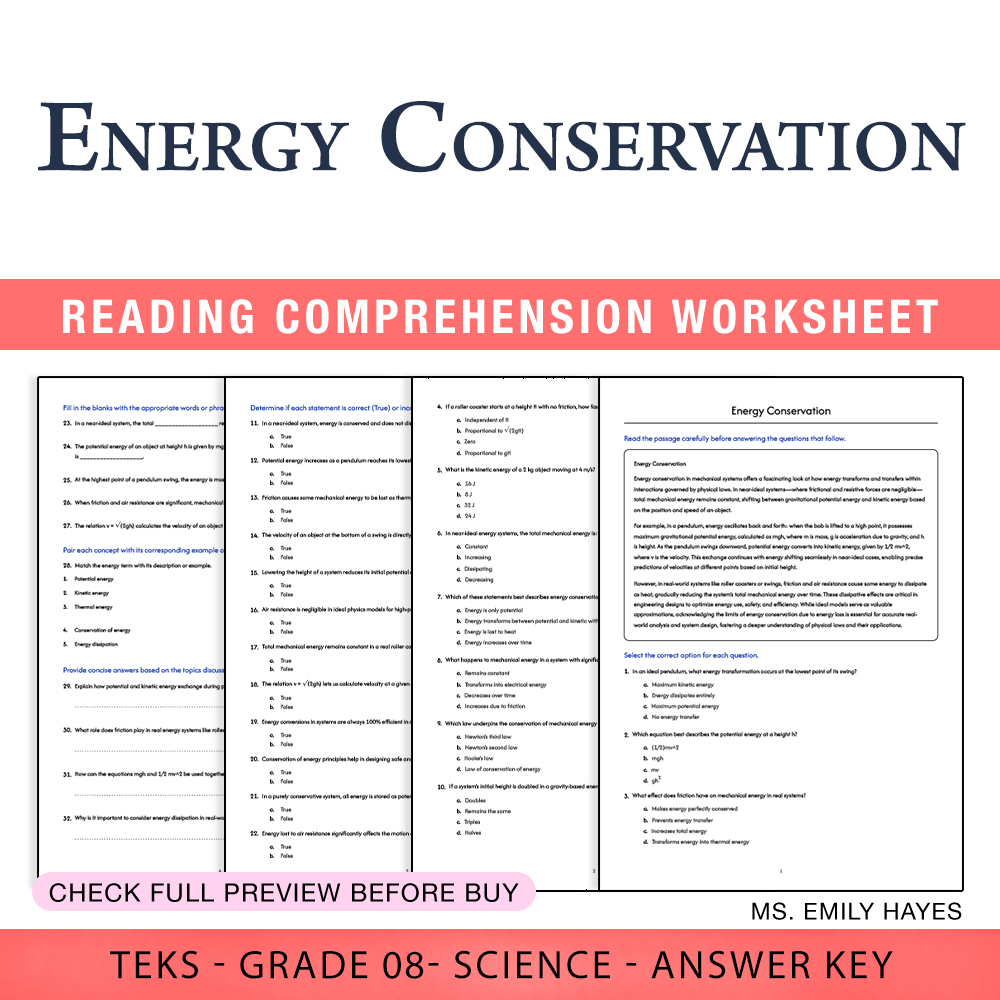
Grade 8 Science | Energy Conservation Worksheet (PDF+ Answer Key)
Created byCopper Leaf ClassroomLearning Objectives
- Explain the principles of mechanical energy conservation in near-ideal systems such as pendulums and roller coasters.
- Identify how energy transforms between potential and kinetic forms based on height and speed.
- Discuss how energy dissipates into thermal forms due to friction and air resistance.
Instant download
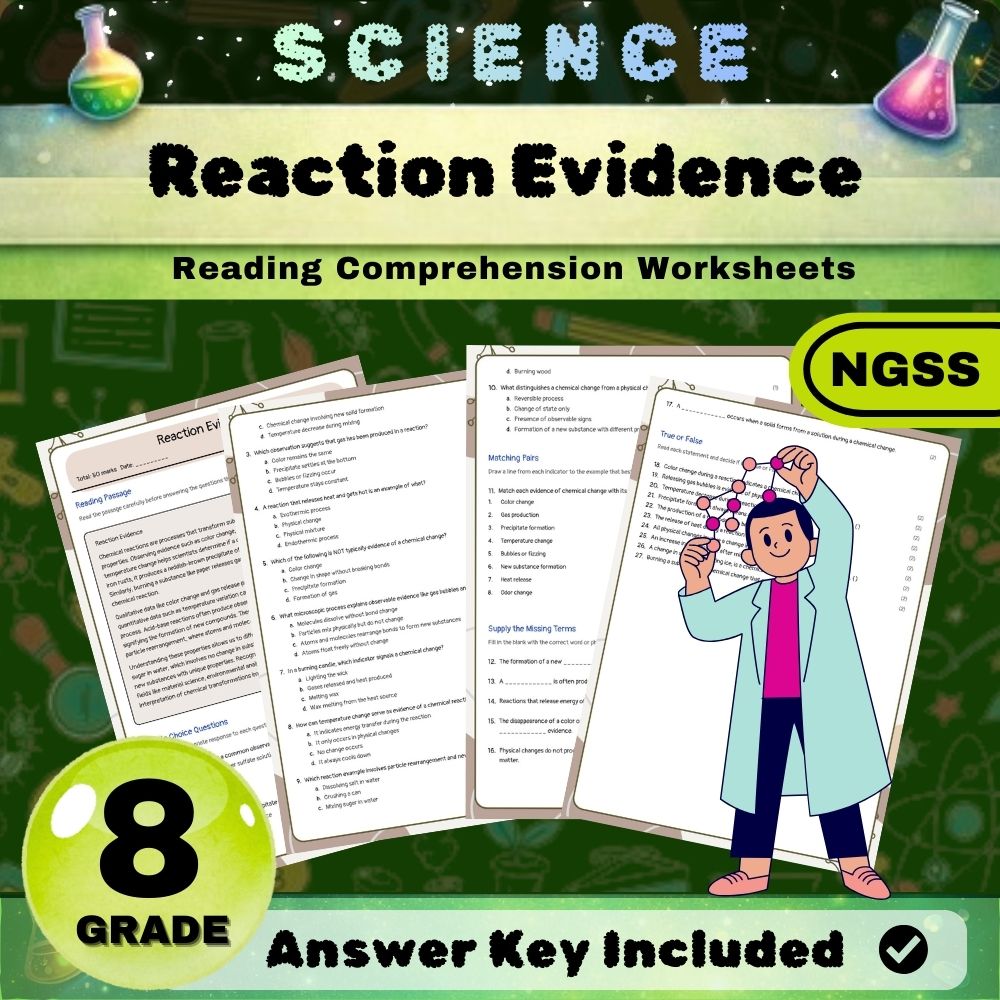
Grade 8 Science | Reaction Evidence Worksheet (PDF) NGSS Aligned
 Created byMaple Path Learning
Learning Objectives
- Understand and identify observable indicators of chemical change such as color change, gas production, precipitate formation, and temperature change.
- Analyze qualitative and quantitative data from various reactions like metal corrosion, combustion, and acid-base interactions.
- Differentiate chemical transformations from physical mixing based on macroscopic evidence.
Also included in: Grade 8 Science | Matter and Its Interactions NGSS Unit Bundle (Worksheet Pack) +1 more
Instant download
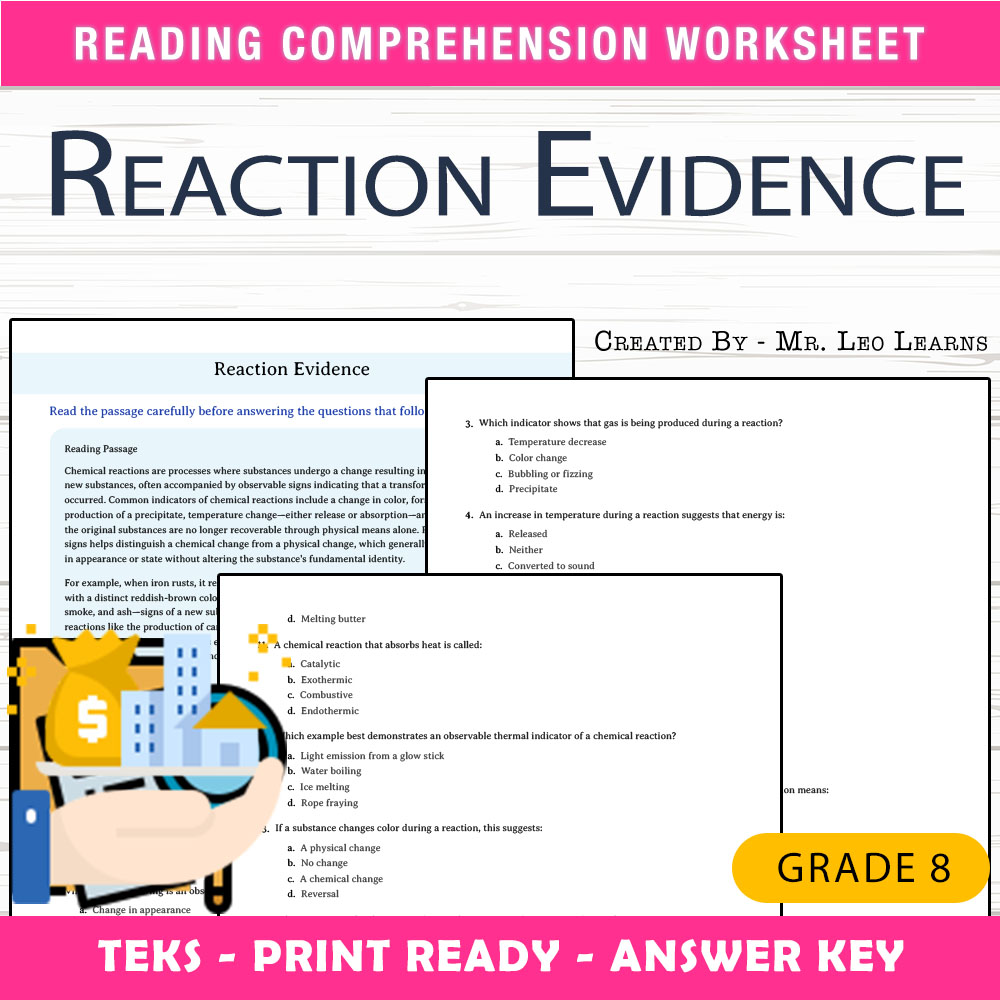
Grade 8 Science — Reaction Evidence Worksheet for Mastery | PDF + Answer Key
 Created byThe Resource Hub
Learning Objectives
- Identify observable indicators of chemical reactions such as color change, gas evolution, precipitate formation, temperature change, and irreversible transformations.
- Distinguish between chemical and physical changes based on observable evidence.
- Explain how conservation concepts are involved in chemical reactions within closed systems.
Also included in: Grade 8 Science Unit Bundle – Matter, Reaction Rates & Energy Mastery Worksheets +1 more
Instant download

Grade 8 Mass Conservation Worksheet | NGSS Chemical Reactions Activity
Created byAmber Owl EducationLearning Objectives
- Explain mass conservation in chemical reactions by tracking atoms in a closed system.
- Use particulate models and balanced chemical equations to connect microscopic atom conservation to macroscopic mass measurements.
- Predict outcomes in sealed-container reactions by accounting for all matter as reactants and products.
Also included in: Grade 8 Science Thermal Effects & Chemical Reactions Lesson Bundle | NGSS +1 more
Instant download

Human Impacts on Earth Systems Worksheet | Grade 8 Science Activities
Created byPrism Point LearningLearning Objectives
- Explain how human activities can change Earth systems by altering energy and matter in the atmosphere, hydrosphere, and geosphere
- Describe how greenhouse-gas emissions can influence temperature patterns and then affect precipitation and storms
- Evaluate environmental solutions using evidence, while considering tradeoffs
Also included in: Earth Systems & Climate Lesson Bundle | Grade 8 Science | Florida NGSSS
Instant download

Grade 8 Science – Atmospheric Structure Daily Reading Worksheet with Answer Key
JCreated byJ.S SheetsLearning Objectives
- Identify and describe the major layers of Earth's atmosphere.
- Understand the composition and thermal profiles of atmospheric layers.
- Recognize the roles of ozone and greenhouse gases in climate regulation.
Also included in: Grade 8 Science Lesson Bundle | TEKS Standards Worksheets for Earth & Space +1 more
Instant download

Material Origins Worksheet for Grade 8 Science | NGSS-Aligned Assessment
JCreated byJ.S SheetsLearning Objectives
- Explain how natural resources are transformed into synthetic materials.
- Describe how processing and composition influence material properties.
- Compare properties of natural and synthetic materials and consider environmental impacts.
Also included in: Grade 8 Chemical Reactions Science Lesson Bundle NGSS: Worksheet Set +1 more
Instant download

Reaction Evidence Worksheet | NGSS-Aligned Grade 8 Science Practice
JCreated byJ.S SheetsLearning Objectives
- Identify observable indicators of chemical reactions such as color change, gas production, precipitate formation, and temperature change.
- Interpret qualitative and quantitative data from different reactions to determine if a chemical change has occurred.
- Connect macroscopic evidence to particle rearrangement and formation of new substances with distinct properties.
Also included in: Grade 8 Chemical Reactions Science Lesson Bundle NGSS: Worksheet Set +1 more
Instant download

Systems Analysis Worksheet for Grade 8 Science | TEKS Standards Practice
JCreated byJ.S SheetsLearning Objectives
- Use net force to predict how the motion of a mechanical system changes (acceleration).
- Connect energy transfer (work, kinetic energy, losses) to observed motion outcomes.
- Analyze real systems by including friction, efficiency, and material limits in quantitative reasoning.
Instant download
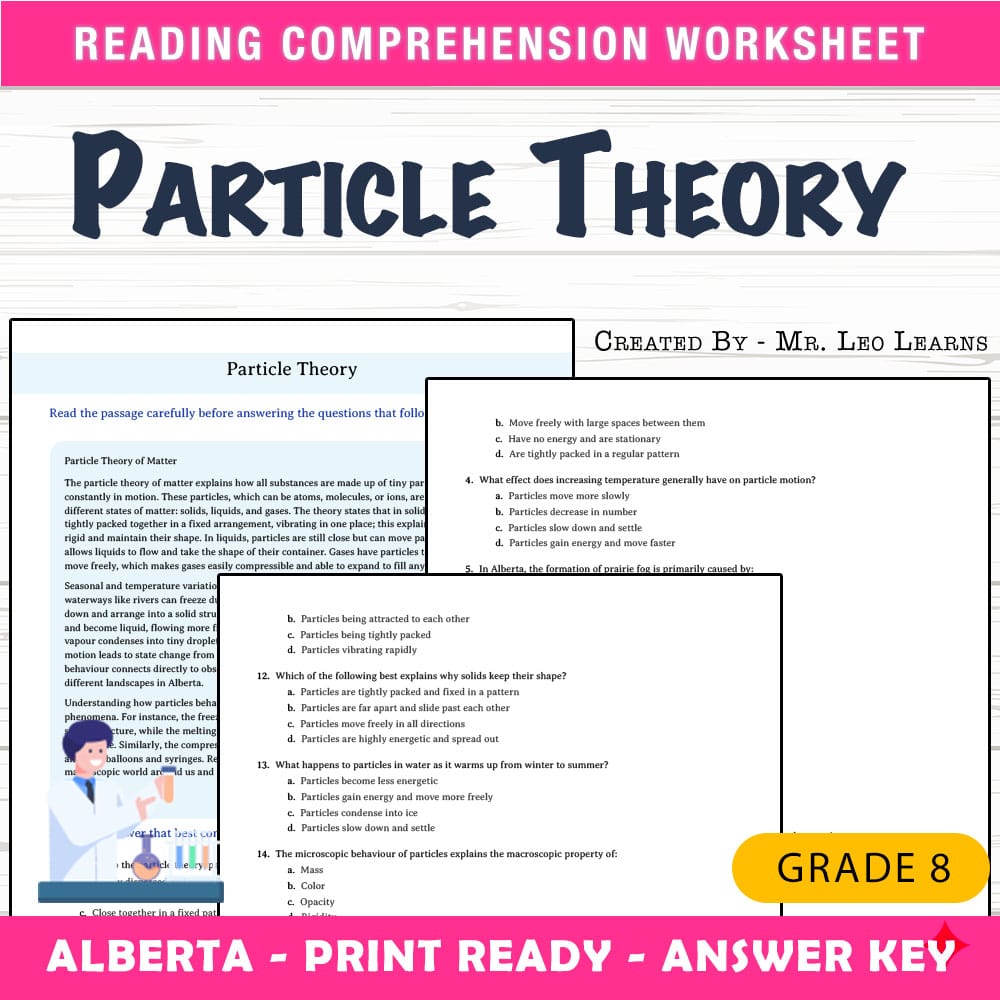
Grade 8 Science — Particle Theory Worksheet MCQ Paper for Mastery
Created byThe Resource HubLearning Objectives
- Understand the basic principles of the particle theory of matter.
- Describe how particle arrangement and motion determine the properties of solids, liquids, and gases.
- Connect microscopic particle behaviour to observable traits such as rigidity, flow, and compressibility.
Also included in: Grade 8 Science Bundle | Matter and Chemical Change Worksheets +1 more
Instant download

Energy Transformations Worksheet for Grade 8 Science | NGSSS Aligned
JCreated byJ.S SheetsLearning Objectives
- Explain how energy can change forms within a system during energy transformations.
- Use examples (bouncing balls, electric motors, and friction/heating) to identify potential, kinetic, electrical, and thermal energy.
- Describe how energy is transferred and redistributed even when motion changes.
Also included in: Grade 8 Energy, Motion, and Matter Changes Science Lesson Bundle: Florida NGSSS +1 more
Instant download

Science Grade 8 Force and Motion Worksheet | Standards-Aligned Assessment
JCreated byJ.S SheetsLearning Objectives
- Explain how forces can change an object’s motion (starting, stopping, or changing direction).
- Describe how net force and its direction influence how motion changes over time.
- Use evidence from examples to connect force interactions to observable motion changes.
Also included in: Grade 8 Energy, Motion, and Matter Changes Science Lesson Bundle: Florida NGSSS +1 more
Instant download

Science Phase Changes Worksheet | Standards-Aligned Grade 8 Science Practice
JCreated byJ.S SheetsLearning Objectives
- Explain how energy transfer drives phase changes such as melting, freezing, evaporation, and condensation
- Describe how particle arrangement and particle motion change during phase changes
- Use real-life examples to distinguish between solid, liquid, and gas behaviors during phase changes
Also included in: Grade 8 Energy, Motion, and Matter Changes Science Lesson Bundle: Florida NGSSS +1 more
Instant download

Grade 8 Science Worksheet: Particle Model of Matter | Standards-Aligned Practice
JCreated byJ.S SheetsLearning Objectives
- Explain the particle model using constant motion and intermolecular forces (attractive and repulsive).
- Relate particle spacing and particle motion to the properties of solids, liquids, and gases.
- Use the particle model to predict how temperature affects diffusion and compressibility.
Also included in: Grade 8 Energy, Motion, and Matter Changes Science Lesson Bundle: Florida NGSSS +1 more
Instant download

Forms of Energy Worksheet Grade 8 Science | Standards-Aligned Practice PDF
JCreated byJ.S SheetsLearning Objectives
- Identify different forms of energy, including kinetic, potential, thermal, light, and electrical energy
- Explain how energy can transfer and transform in everyday situations
- Use evidence from observations (like a lit lamp or a warmed pan) to describe the type of energy involved
Also included in: Grade 8 Energy, Motion, and Matter Changes Science Lesson Bundle: Florida NGSSS +1 more
Instant download
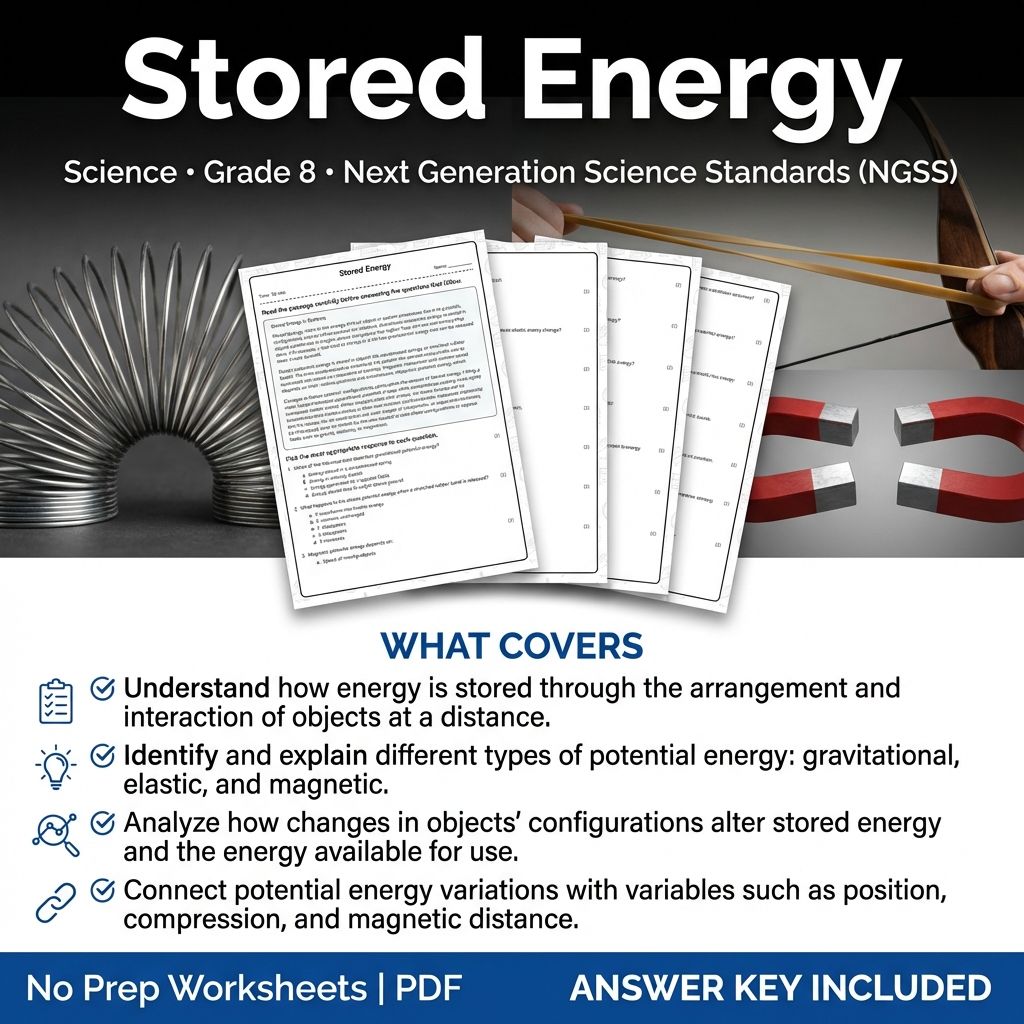
Grade 8 Science | Stored Energy Worksheet & Answer Key (Printable PDF)
Created byCoral Reef LearningLearning Objectives
- Understand how energy is stored through the arrangement and interaction of objects at a distance.
- Identify and explain different types of potential energy: gravitational, elastic, and magnetic.
- Analyze how changes in objects' configurations alter stored energy and the energy available for use.
Instant download
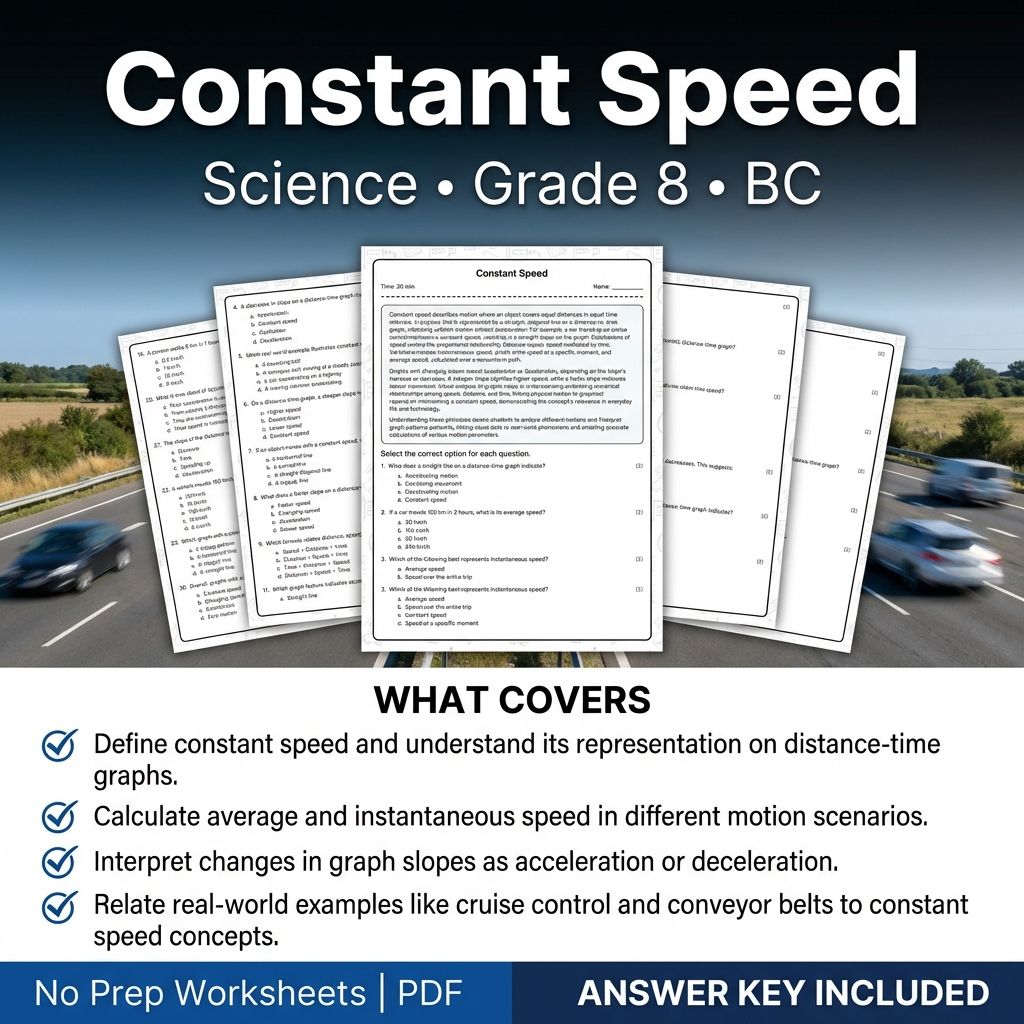
Grade 8 Science | Constant Speed Worksheet & Answer Key (Printable PDF)
Created byCoral Reef LearningLearning Objectives
- Define constant speed and understand its representation on distance-time graphs.
- Calculate average and instantaneous speed in different motion scenarios.
- Interpret changes in graph slopes as acceleration or deceleration.
Instant download
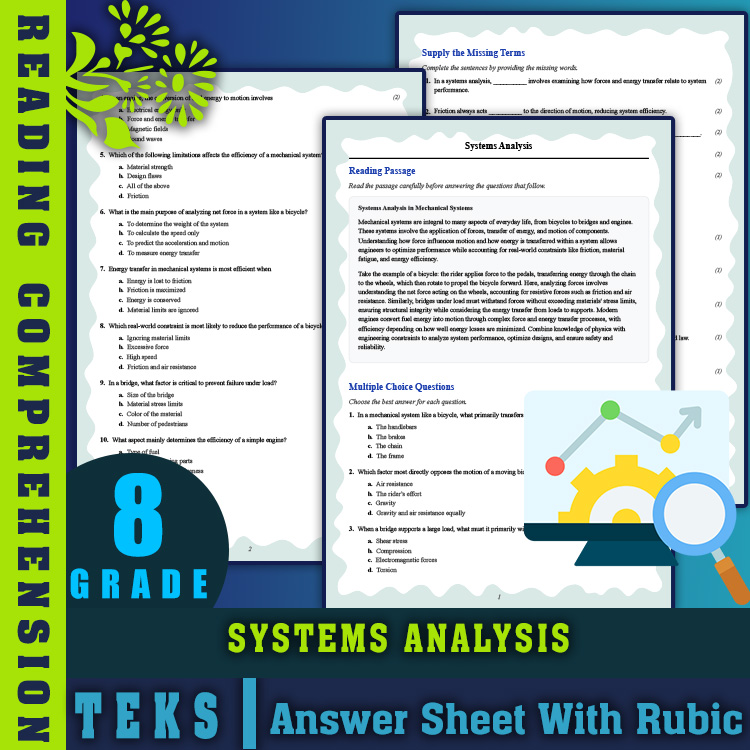
8th Grade Science | Systems Analysis Reading Worksheet with Answer Key (PDF)
JCreated byJ.S SheetsLearning Objectives
- Understand how force, motion, and energy interact within mechanical systems.
- Analyze real-world systems using concepts of net force, energy transfer, and motion outcomes.
- Apply quantitative reasoning to evaluate performance constraints like friction, material limits, and efficiency.
Instant download

Grade 8 Water Cycle Worksheet | California Science Standards PDF Activity
Created byEvergreen Desk EducationLearning Objectives
- Explain how the Sun provides energy and gravity provides force to drive the water cycle.
- Describe key processes of the water cycle, including evaporation, condensation, precipitation, runoff, and infiltration.
- Trace how water moves through Earth’s systems and how energy transfer relates to weather and climate.
Instant download
About Grade 8 Science Worksheets
Explore Grade 8 Science worksheets for classwork, homework, or review. Our 6,006 printables download instantly as PDFs.
Each resource here is built by an independent educator and reviewed for quality. Worksheets print straight from PDF and suit classroom use, homework, or extra practice; most come with answer keys, and you can preview before purchasing.