
Grade 8 Science Worksheets
5,999 worksheets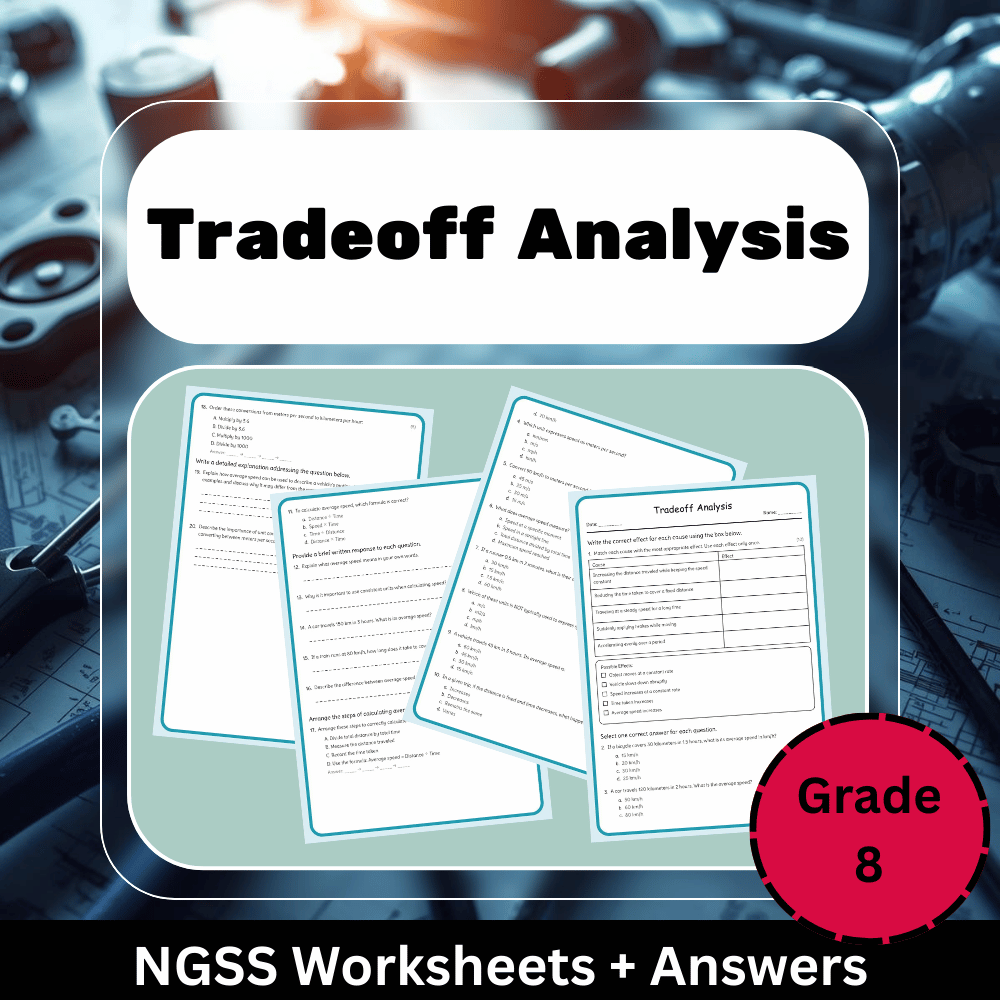
Grade 8 Science | Tradeoff Analysis Worksheet (NGSS) – Science (PDF)
 Created byBright Mind Resources
Learning Objectives
- Understand how to evaluate multiple criteria in decision-making processes.
- Apply tools like weighted scoring and pareto comparisons to real-world problems.
- Analyze sustainability, manufacturability, and performance considerations when selecting designs.
Also included in: Grade 8 Science | Data Analysis & Engineering Design Unit Worksheet Bundle +2 more
Instant download
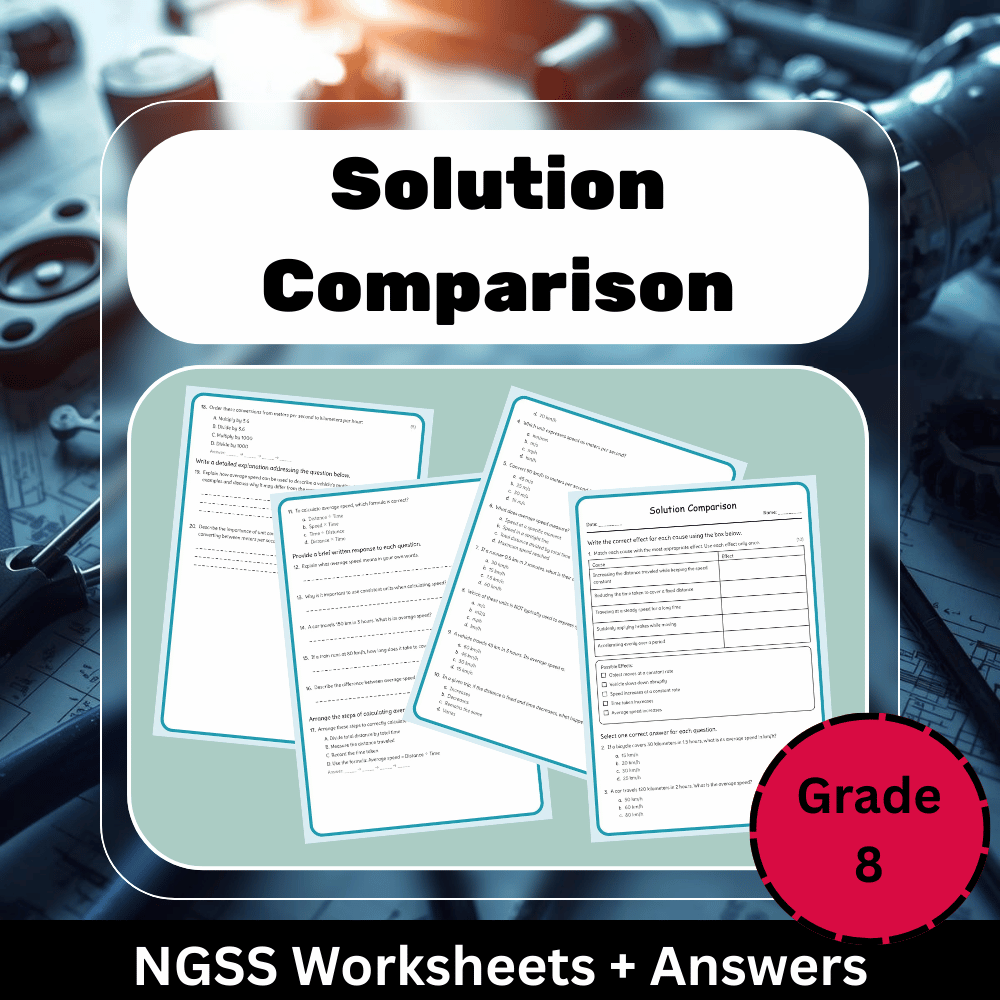
Grade 8 Science | Solution Comparison Worksheet (NGSS-Aligned) PDF
Created byBright Mind ResourcesLearning Objectives
- Understand the development and evaluation of multiple design concepts using selection criteria.
- Identify measurable performance indicators for solution comparison.
- Differentiate qualitative and quantitative assessments in solution analysis.
Also included in: Grade 8 Science | Data Analysis & Engineering Design Unit Worksheet Bundle +2 more
Instant download
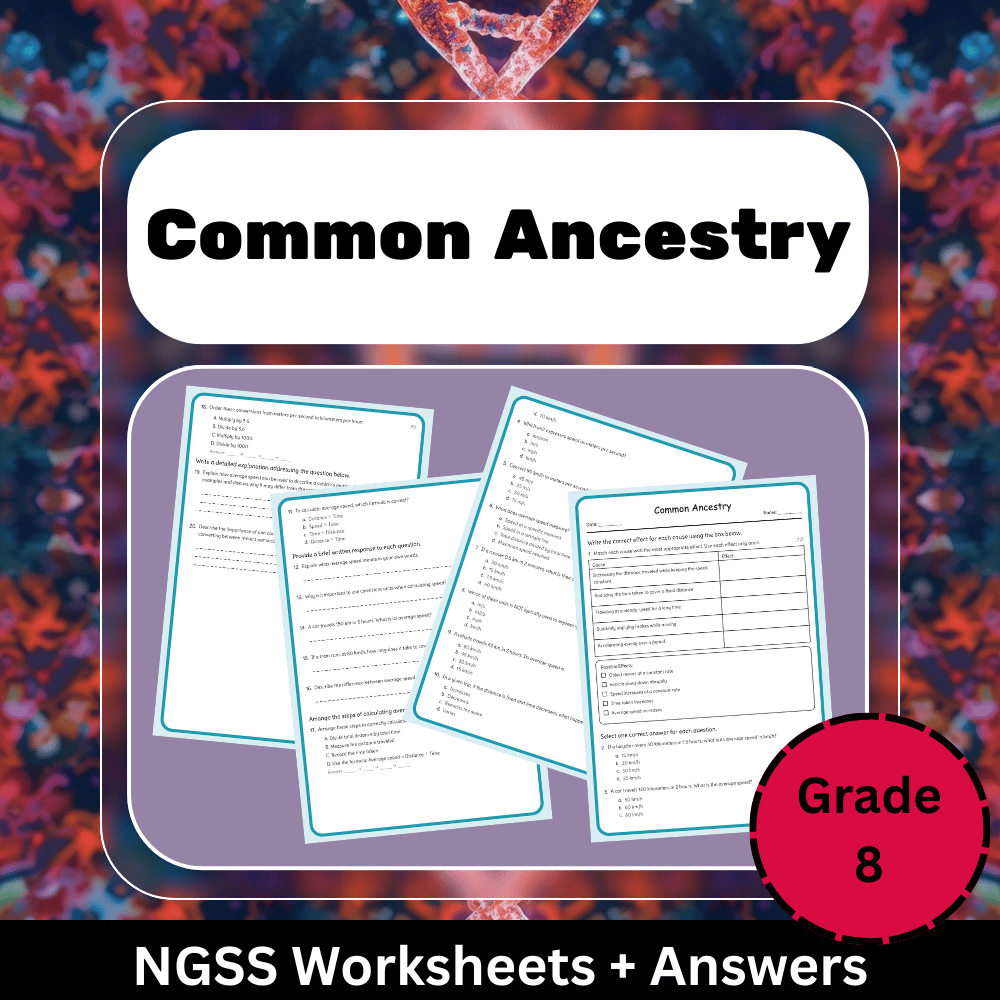
Grade 8 Science – Common Ancestry Worksheet (NGSS Aligned + Answer Key) (PDF)
Created byBright Mind ResourcesLearning Objectives
- Understand how fossil, anatomical, embryological, and molecular evidence support hypotheses of shared ancestry.
- Analyze patterns of unity and diversity in evolutionary relationships through data interpretation.
- Identify transitional fossils, homologous structures, conserved developmental stages, and DNA similarities.
Also included in: Grade 8 Science | Evolution & Speciation Unit Bundle (NGSS-Aligned Worksheets) +2 more
Instant download
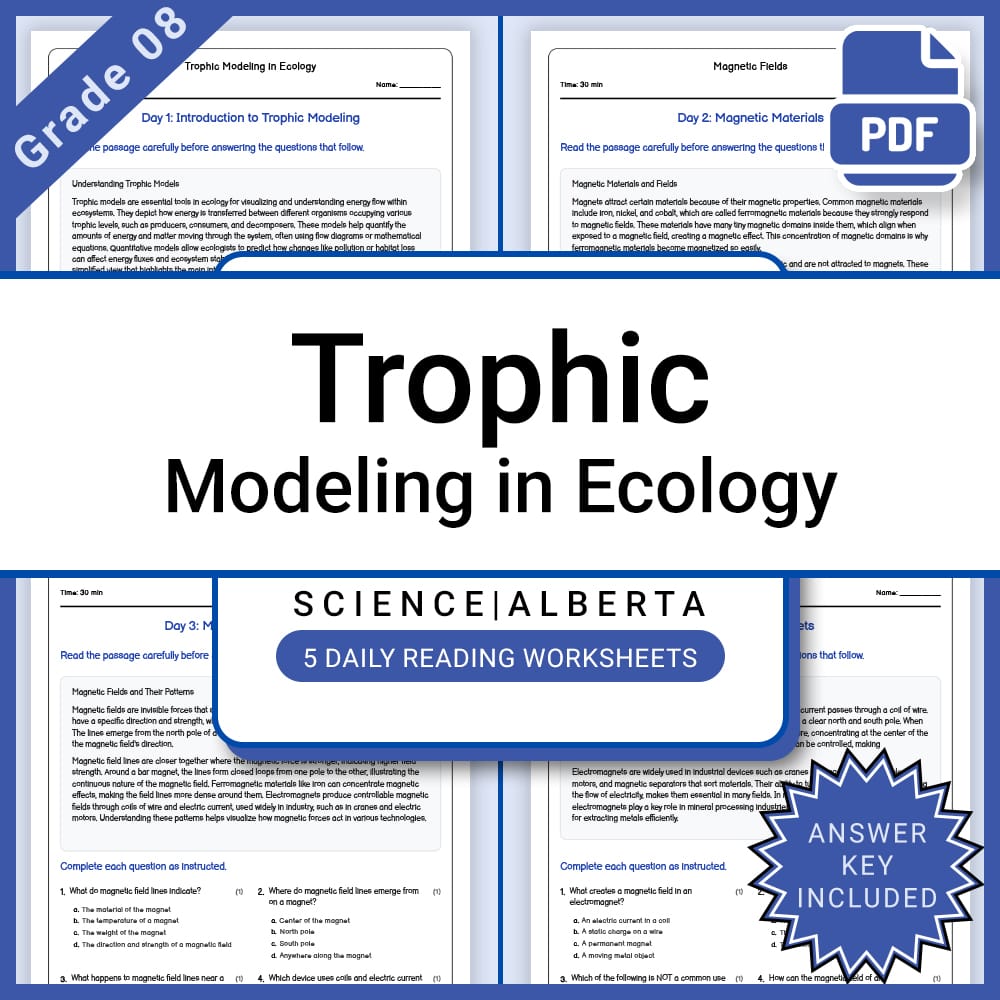
Grade 8 Science – Ecosystems Model Frameworks Daily Worksheet with Answer Key
JCreated byJ.S SheetsLearning Objectives
- Understand the concept of trophic levels in ecosystems
- Interpret food chain models to identify energy flow
- Recognize the assumptions and limitations of ecological models
Also included in: Grade 8 Science Lesson Bundle | Ecosystems, Energy, and Environmental Impact +1 more
Instant download

Grade 8 Science | Understanding Invasive Species - Daily Reading Comprehension
 Created byCoral Reef Learning
Learning Objectives
- Define invasive species and recognize their characteristics.
- Identify common pathways through which invasive species are introduced.
- Understand the ecological impacts of invasive species on native ecosystems.
Instant download

Grade 8 Population Growth Worksheet | BC Practice & PDF
 Created byClear Sky Classroom
Learning Objectives
- Explain how birth rate, death rate, immigration, and emigration affect population growth patterns.
- Describe how intrinsic and extrinsic factors influence population change over time.
- Use population counts and basic demographic ideas to interpret growth, stability, and decline.
Instant download
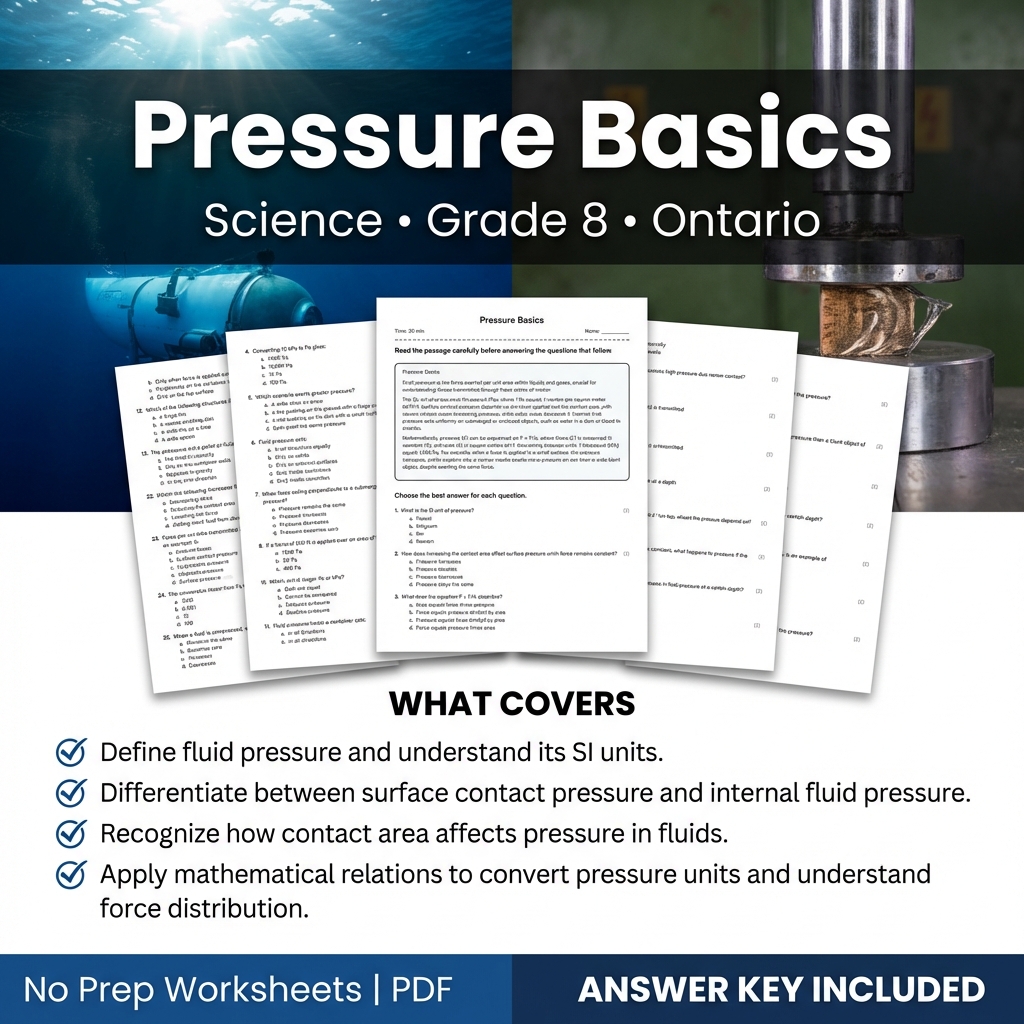
Pressure Basics Worksheet for Grade 8 Science | Ontario Standards
Created byCoral Reef LearningLearning Objectives
- Define fluid pressure and understand its SI units.
- Differentiate between surface contact pressure and internal fluid pressure.
- Recognize how contact area affects pressure in fluids.
Instant download
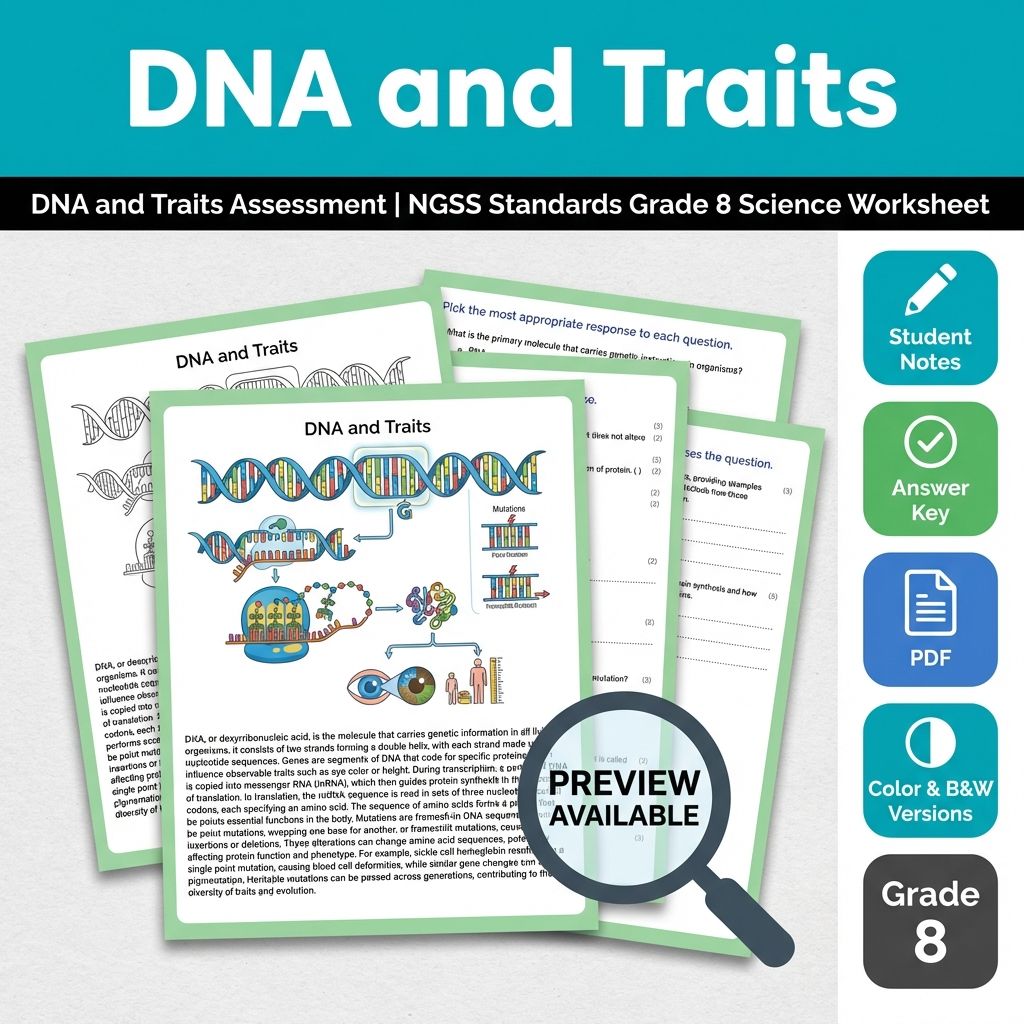
DNA and Traits Assessment | NGSS Standards Grade 8 Science Worksheet
 Created byPrism Point Learning
Learning Objectives
- Explain the relationship between DNA sequences and protein synthesis.
- Identify how mutations can alter amino acid sequences and affect traits.
- Describe gene structure, transcription, translation, and mutation effects.
Also included in: Grade 8 Science Mini Bundle – Heredity: Inheritance and Variation Not specified +1 more
Instant download
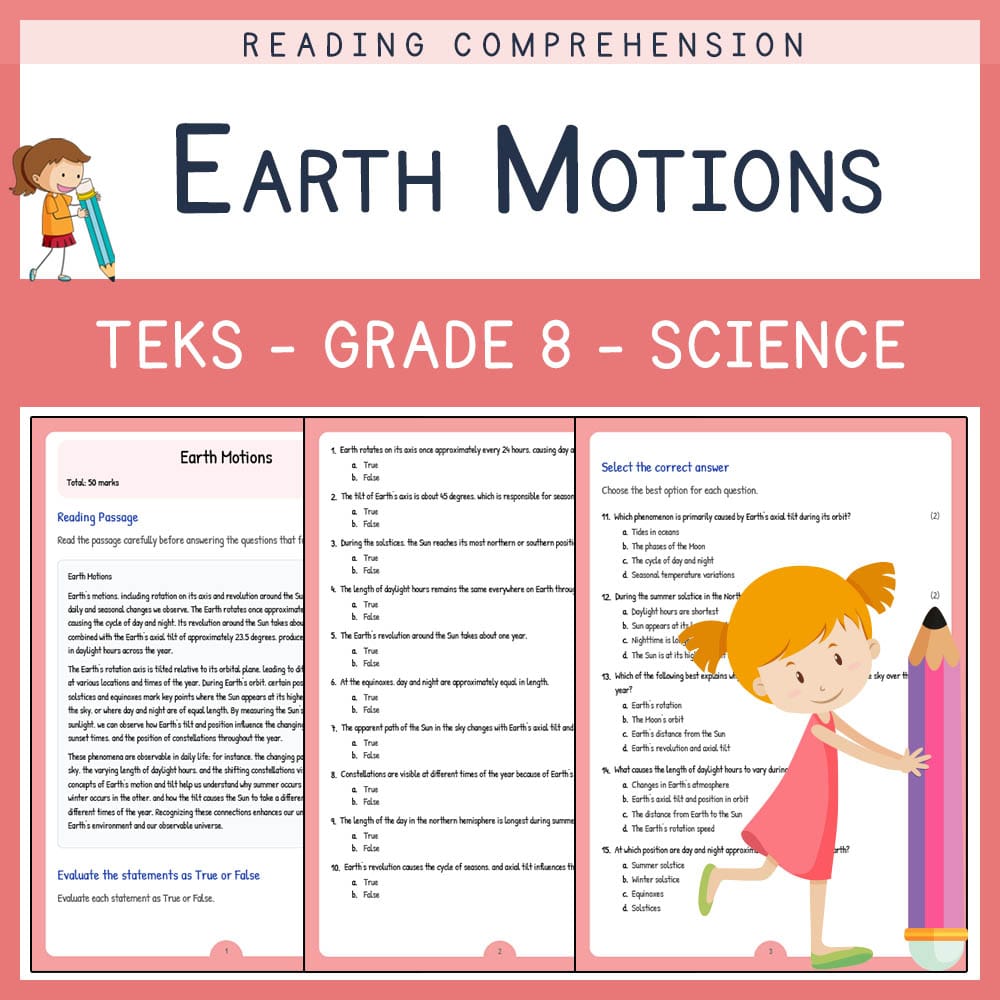
Grade 8 Science | Earth Motions Worksheet | TEKS-Aligned
 Created byLumora Learning
Learning Objectives
- Explain how Earth's rotation causes day and night.
- Describe Earth's revolution and how it leads to seasons.
- Understand the effects of axial tilt and orbital motion on sunlight and temperature variations.
Also included in: Grade 8 Science | Earth and Space Systems Lesson Bundle | TEKS Aligned
Instant download

Grade 8 Science | Plate Tectonics Worksheet Elena | NGSSS Aligned
Created byLumora LearningLearning Objectives
- Explain how tectonic plates move and how those movements reshape Earth’s landforms over geologic time
- Differentiate divergent, convergent, and transform plate boundaries and predict what each boundary can produce
- Use evidence such as matching coastlines, seafloor features, and earthquake/volcano locations to support the idea of plate interactions
Instant download

Grade 8 Science | Population and Stability Worksheet | California Standards
Created byLumora LearningLearning Objectives
- Explain how predation, competition, disease, and mutualism can change population sizes in an ecosystem
- Describe how changes in population balance can affect energy flow and matter cycling
- Use evidence from scenarios to predict ecosystem responses and levels of resilience
Instant download
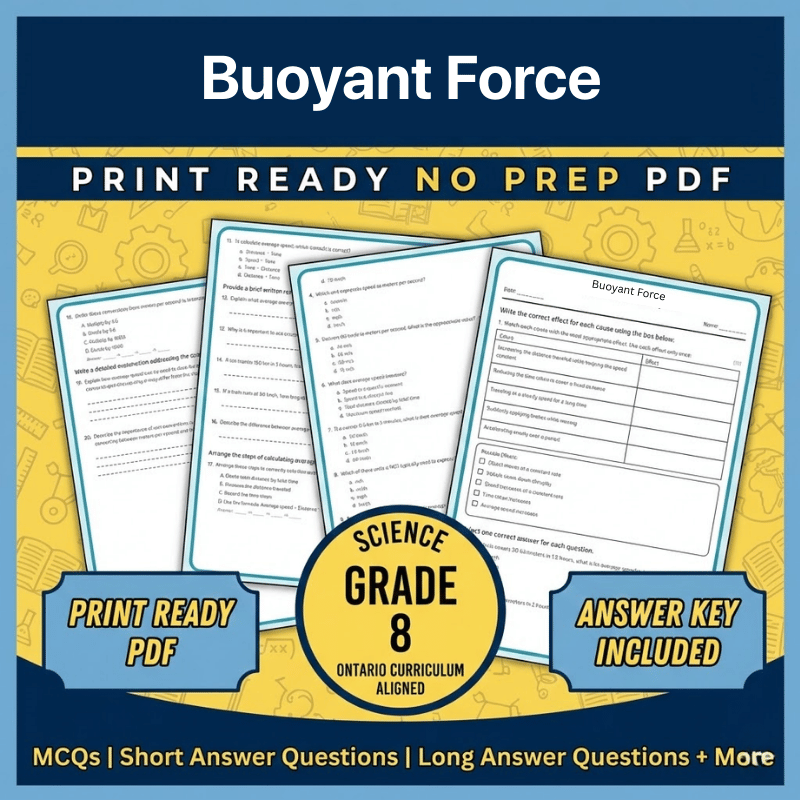
Grade 8 Science Worksheet – Buoyant Force & Archimedes' Principle (Ontario)(PDF)
Created byBright Mind ResourcesLearning Objectives
- Understand Archimedes' principle and how buoyant force relates to displaced fluid weight.
- Explain the difference between apparent weight in air and when submerged.
- Apply density relationships to determine whether objects will float, sink, or attain neutral buoyancy.
Instant download
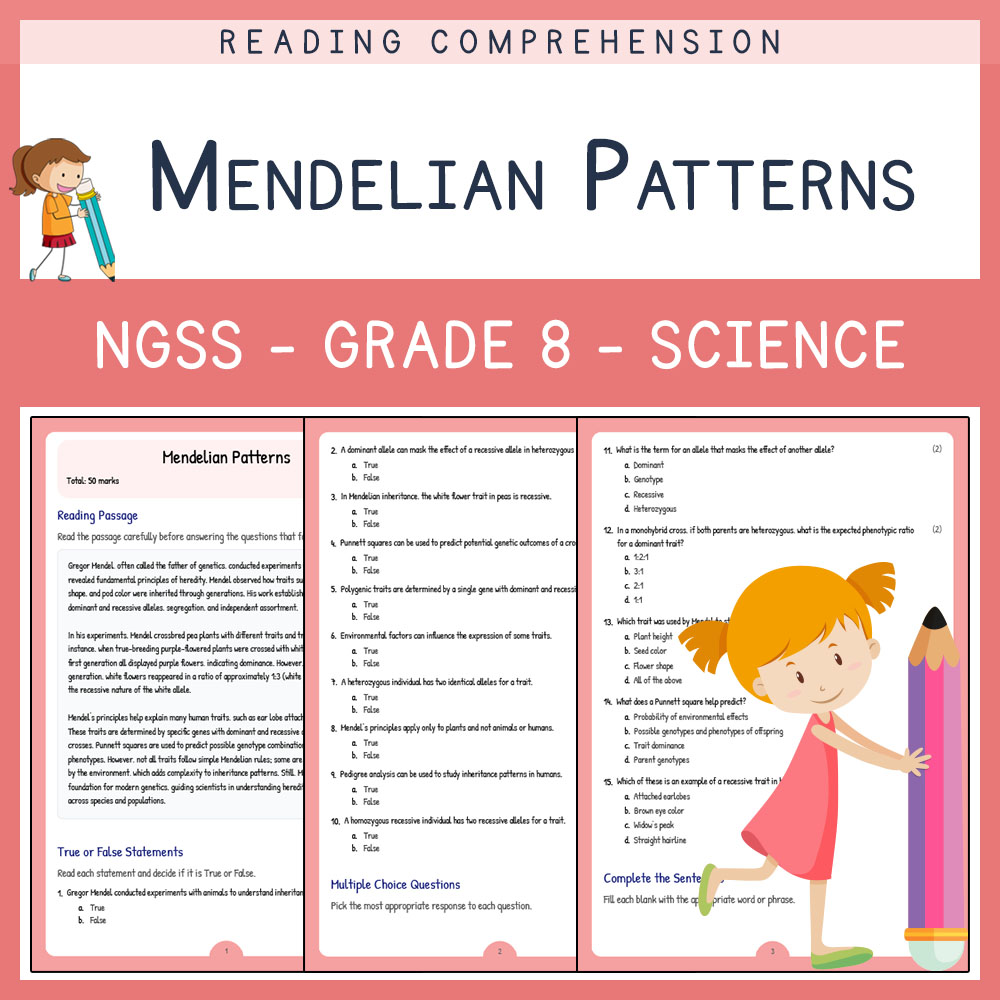
Grade 8 Science | Mendelian Patterns Worksheet (Answer Key & Rubric)
Created byLumora LearningLearning Objectives
- Understand how dominant and recessive alleles influence observable traits.
- Predict genotypic and phenotypic ratios using Punnett squares.
- Explain the segregation of alleles during inheritance.
Instant download

Population Effects Worksheet | NGSS Grade 8 Science Assessment
 Created byCedar Grove Learning
Learning Objectives
- Analyze how population growth influences resource consumption and Earth system changes.
- Evaluate evidence linking demographic and consumption patterns to climate, water, and biodiversity impacts.
- Synthesize data trends, cause-effect relationships, and indicators related to environmental change.
Instant download
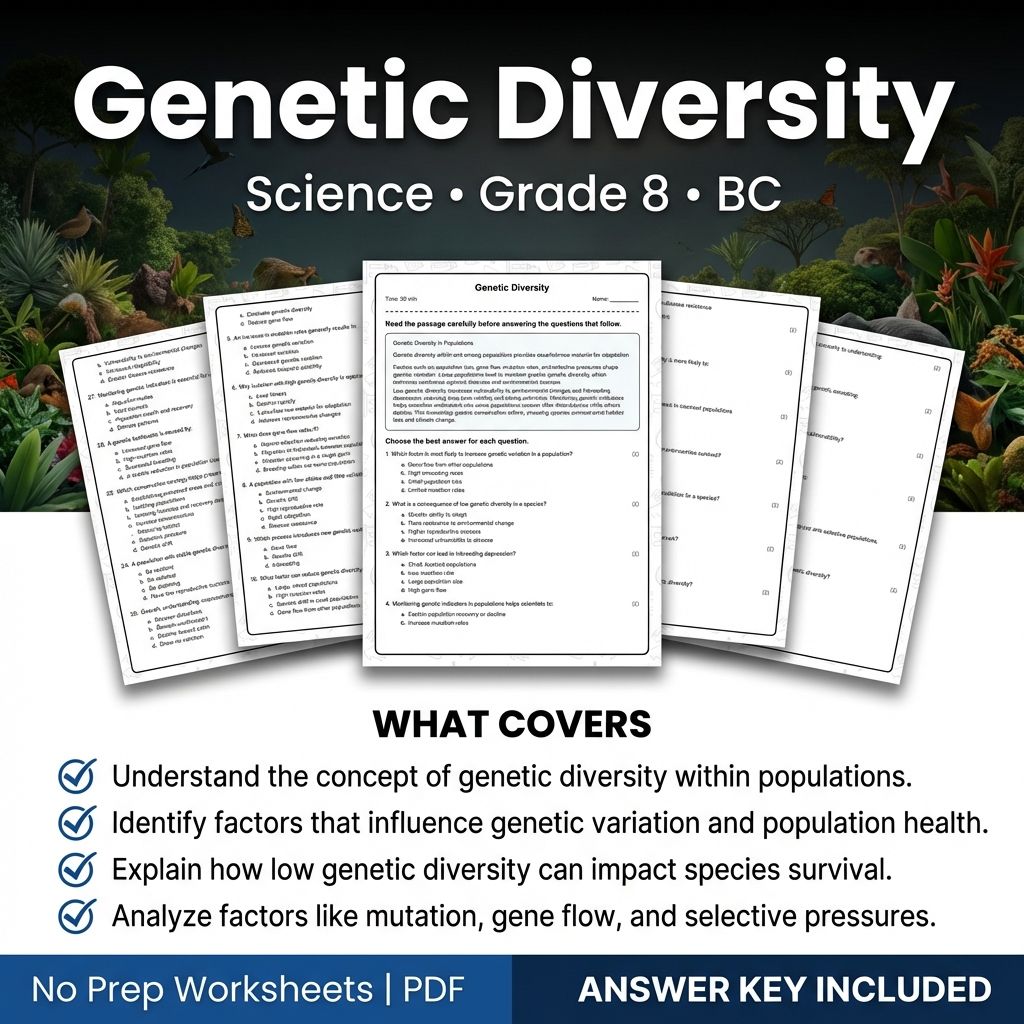
8th Grade Science | Genetic Diversity Worksheet with Answer Key (Printable PDF)
Created byCoral Reef LearningLearning Objectives
- Understand the concept of genetic diversity within populations.
- Identify factors that influence genetic variation and population health.
- Explain how low genetic diversity can impact species survival.
Instant download
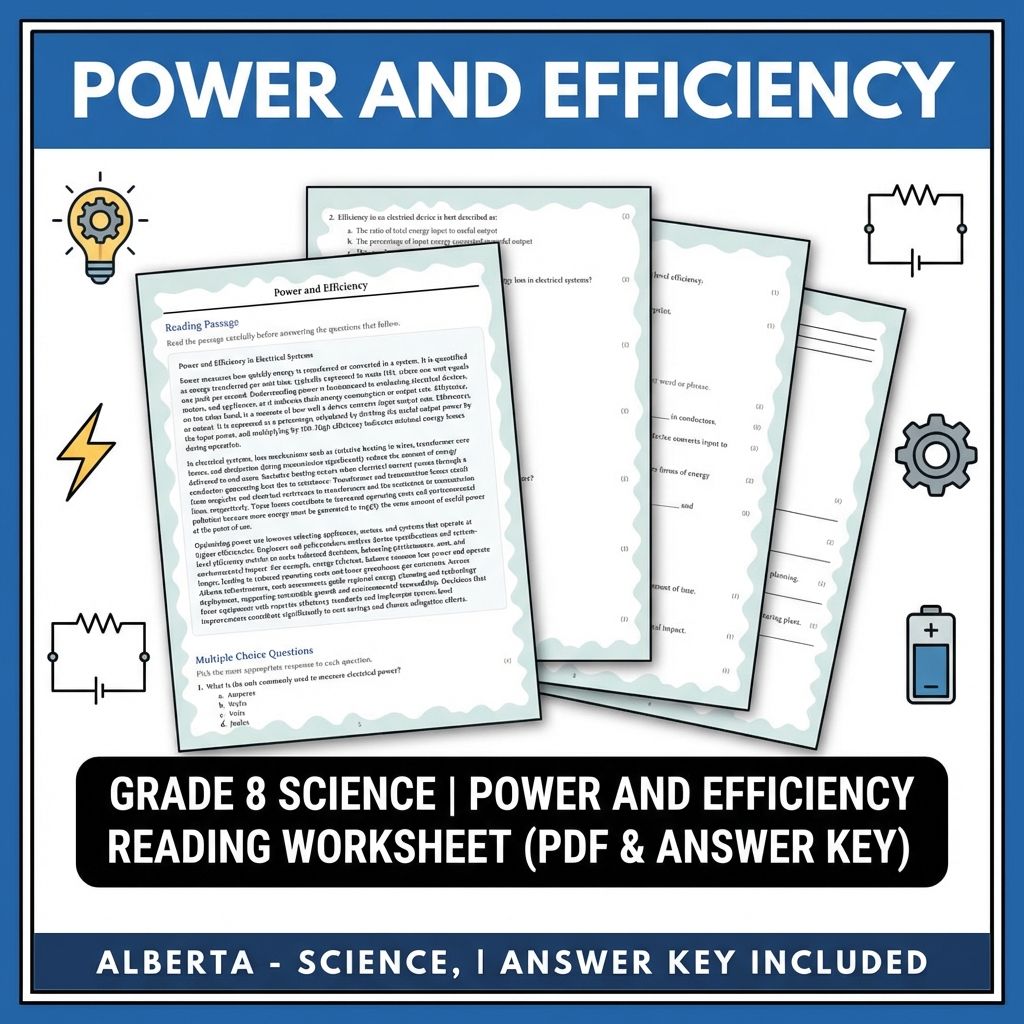
Grade 8 Science | Power and Efficiency Reading Worksheet (PDF & Answer Key)
JCreated byJ.S SheetsLearning Objectives
- Define power as energy transfer per unit time and understand its measurement units.
- Explain the concept of efficiency and how it compares useful output to input in electrical devices.
- Identify common loss mechanisms such as resistive heating, transformer losses, and transmission dissipation.
Also included in: Grade 8 Science | Electricity & Magnetism Worksheet Bundle (Standards-Aligned) +1 more
Instant download
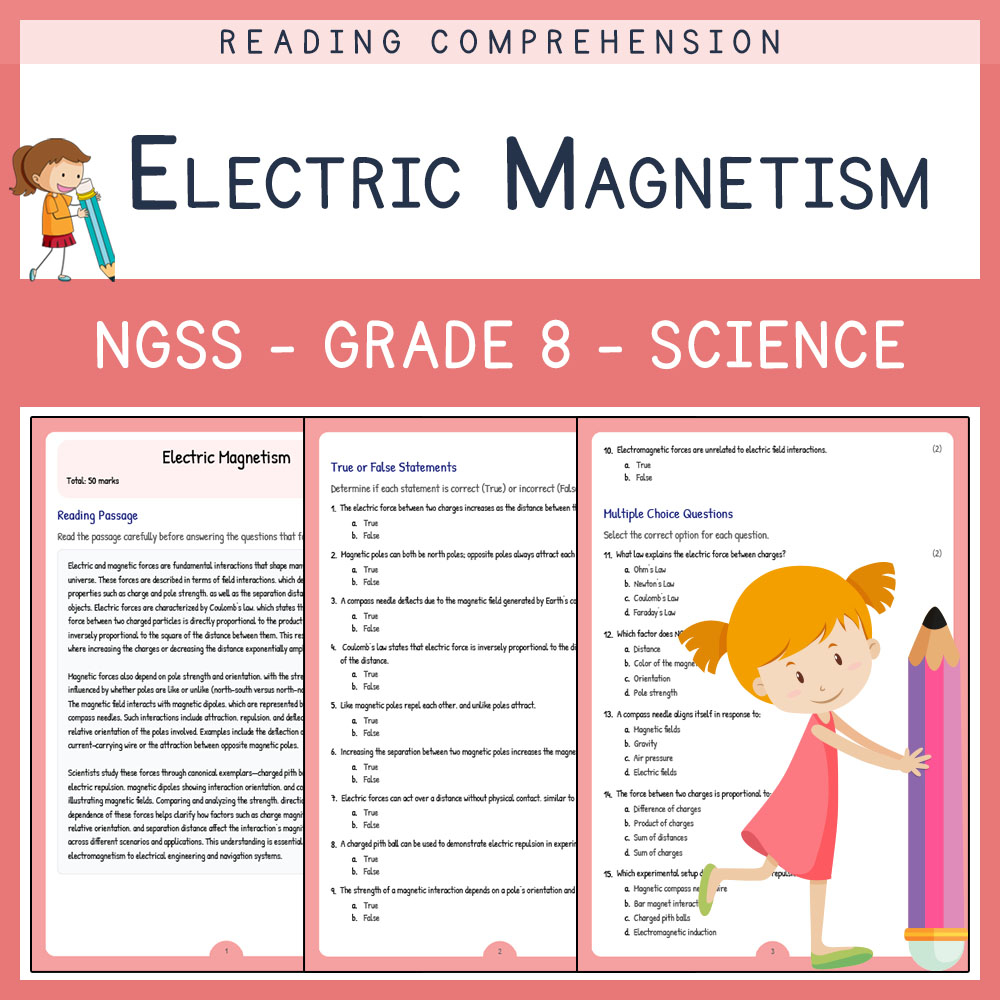
Grade 8 Science | Electric Magnetism Worksheet PDF & Answer Key (NGSS Aligned)
Created byLumora LearningLearning Objectives
- Understand the principles of electric and magnetic forces and how they interact with field concepts.
- Learn the relationships between charge, pole strength, distance, and force magnitude.
- Identify and compare factors that influence electric and magnetic interactions.
Instant download
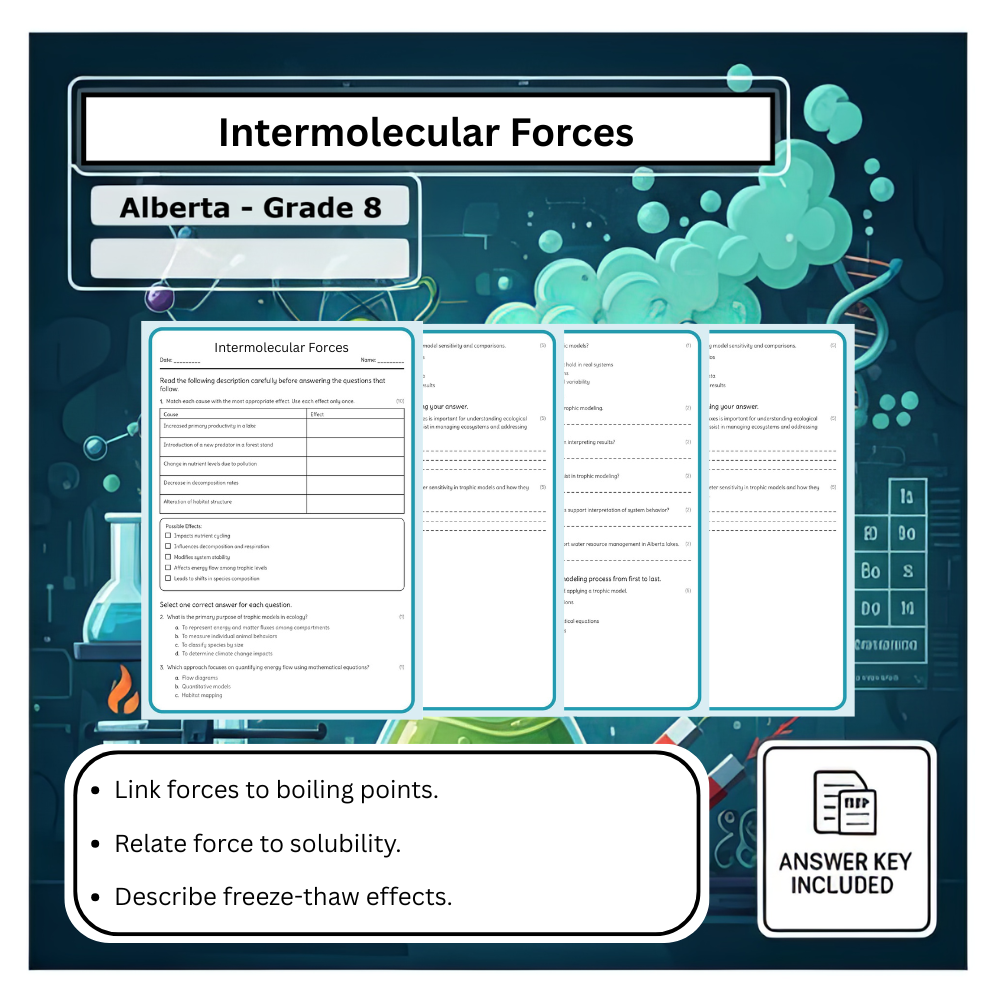
Grade 8 Science | Homogeneous Mixtures Worksheet (PDF) – Alberta Standards
Created byBright Mind ResourcesLearning Objectives
- Understand the concept of homogeneous mixtures and their characteristics.
- Identify common examples of homogeneous mixtures.
- Learn about factors like solubility, concentration, and colligative properties influencing mixtures.
Instant download
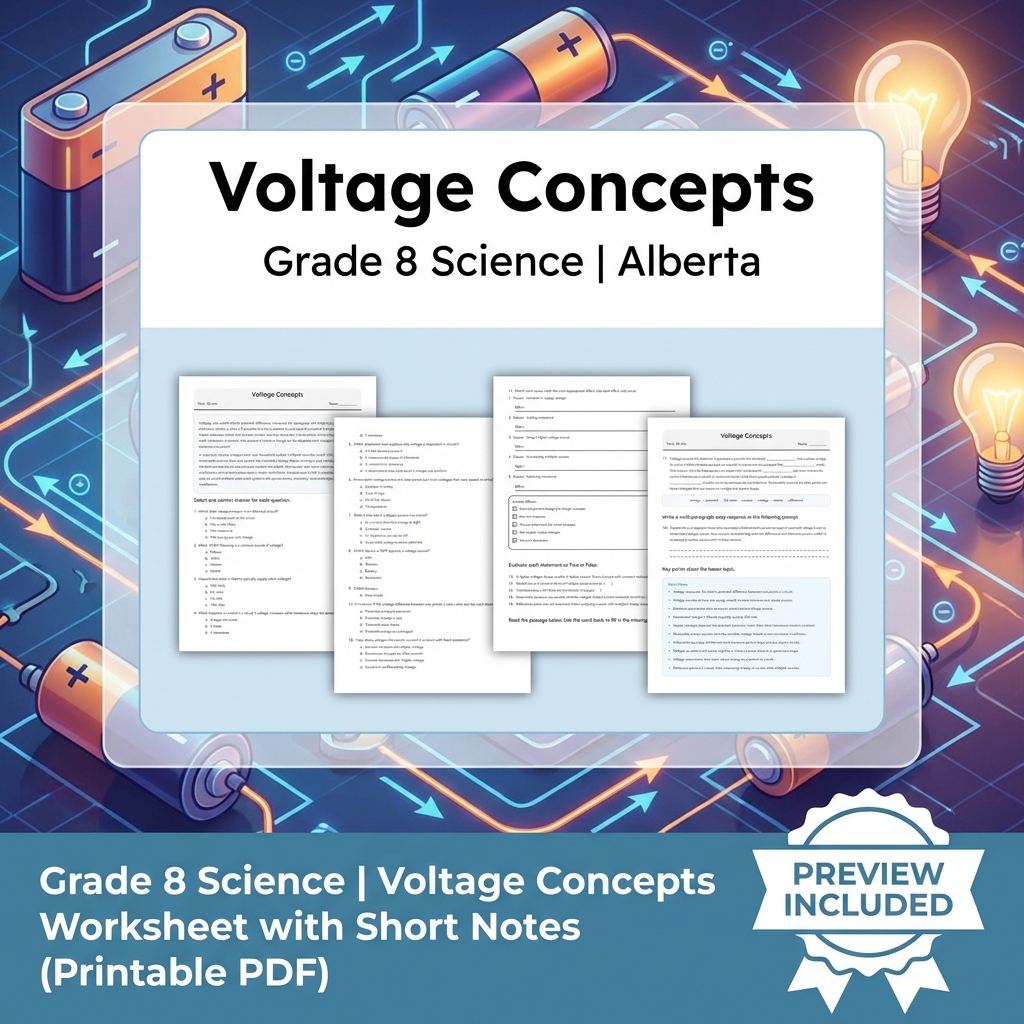
Grade 8 Science | Voltage Concepts Worksheet with Short Notes (Printable PDF)
 Created byMeadowlark Worksheets
Learning Objectives
- Understand the concept of voltage and its role in electrical circuits.
- Identify different sources of voltage such as batteries and generators.
- Analyze how voltage affects current flow and circuit operations.
Also included in: Grade 8 Science | Electricity & Magnetism UNIT Worksheet Bundle +1 more
Instant download
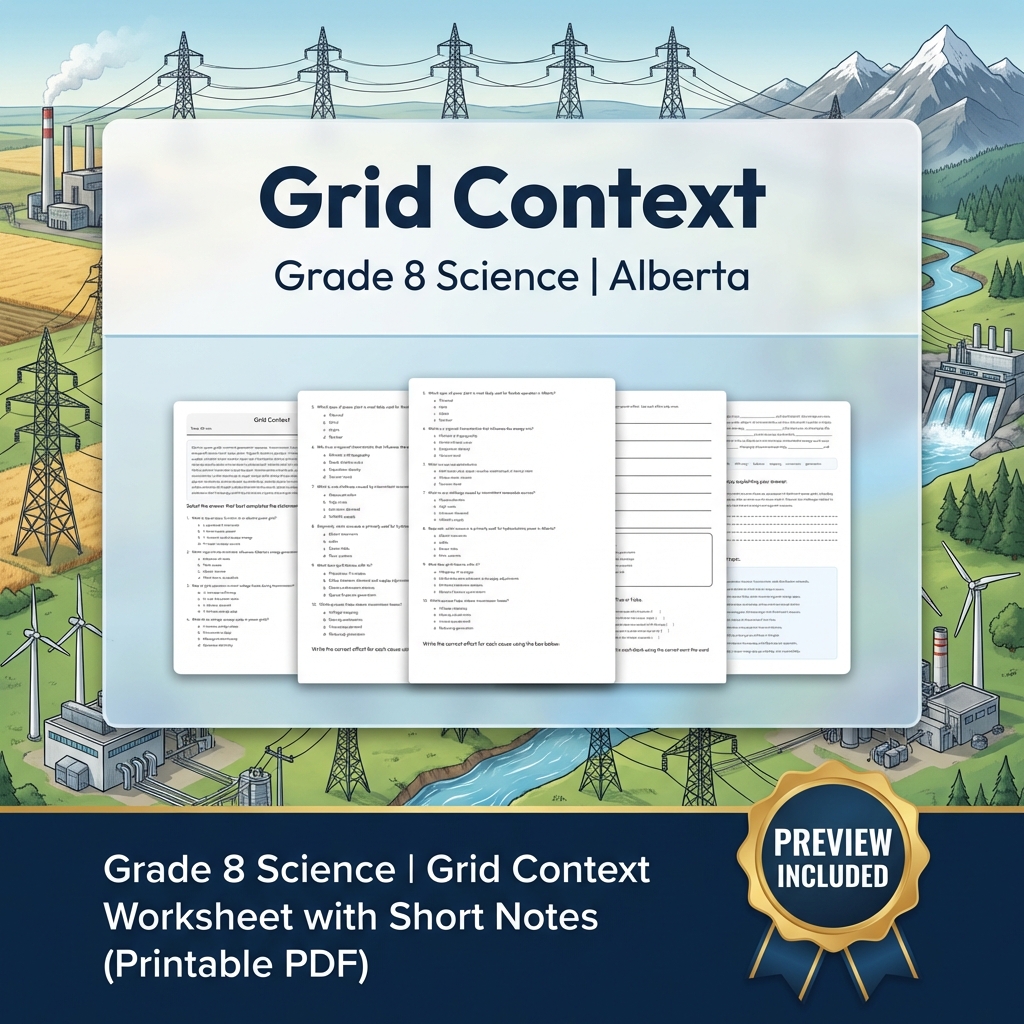
Grade 8 Science | Grid Context Worksheet with Short Notes (Printable PDF)
Created byMeadowlark WorksheetsLearning Objectives
- Understand the components and functions of the electric power grid.
- Identify regional characteristics influencing energy generation.
- Explain grid operations including voltage stepping and energy transmission.
Also included in: Grade 8 Science | Electricity & Magnetism UNIT Worksheet Bundle +1 more
Instant download
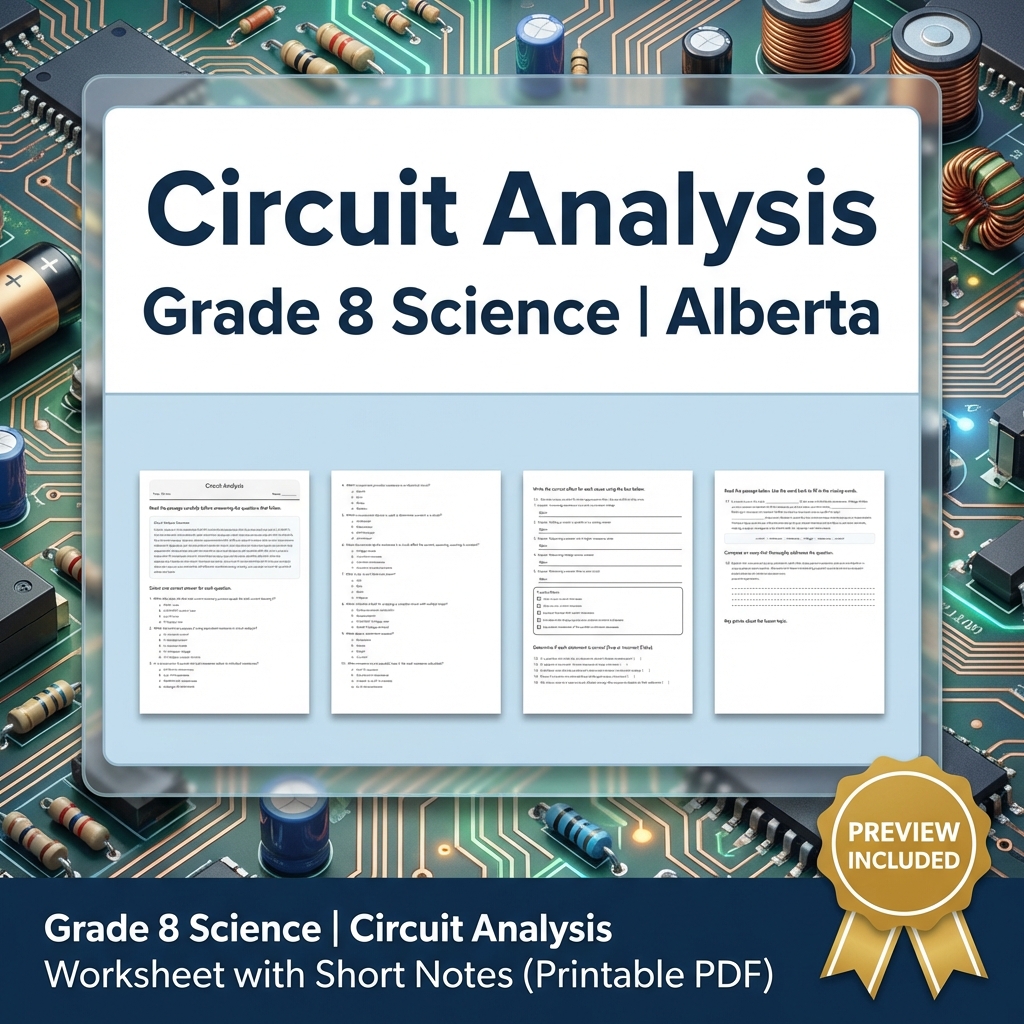
Grade 8 Science | Circuit Analysis Worksheet with Short Notes (Printable PDF)
Created byMeadowlark WorksheetsLearning Objectives
- Understand the principles of circuit analysis, including Ohm's Law and conservation of energy.
- Apply systematic methods to analyze different circuit configurations and calculate voltages, currents, and power.
- Utilize schematic diagrams to interpret and troubleshoot electrical circuits accurately.
Also included in: Grade 8 Science | Electricity & Magnetism UNIT Worksheet Bundle +1 more
Instant download
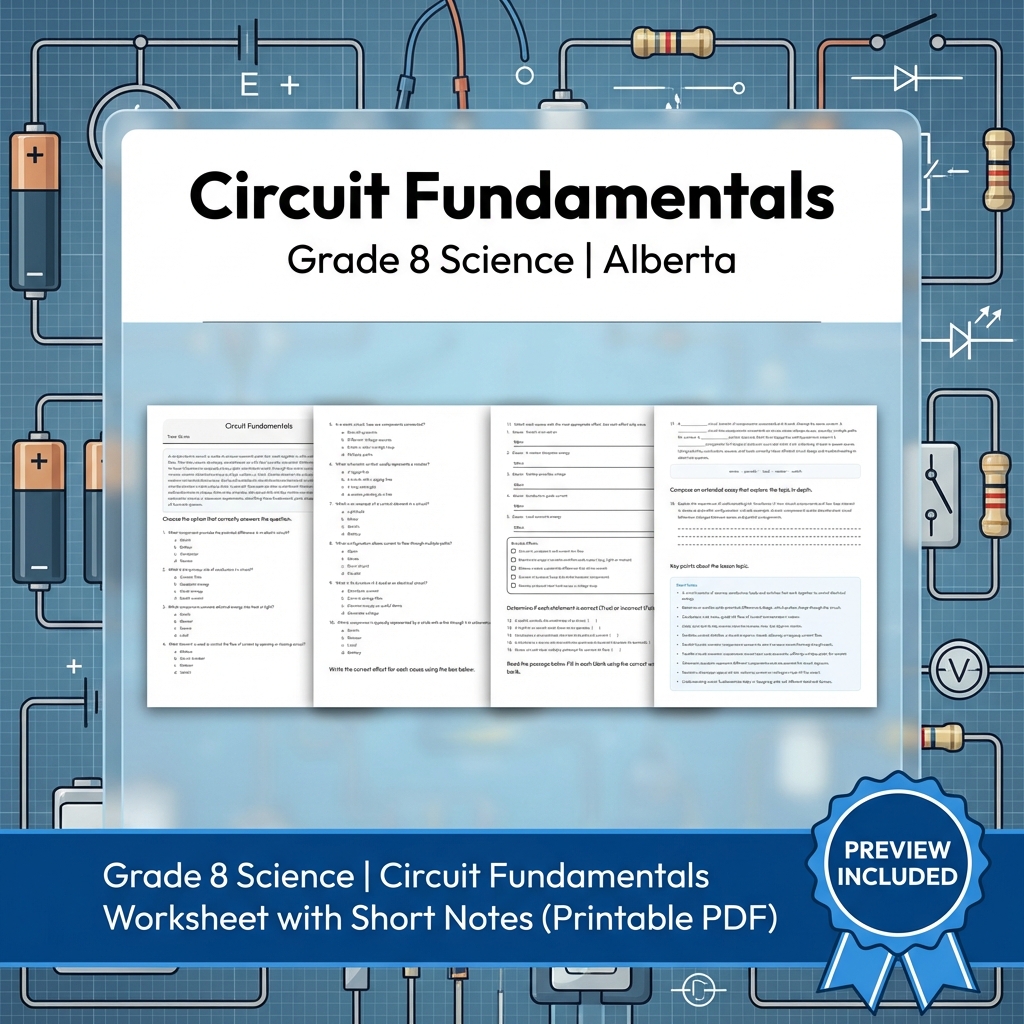
Grade 8 Science | Circuit Fundamentals Worksheet with Short Notes (PDF)
Created byMeadowlark WorksheetsLearning Objectives
- Understand the basic components of a simple electric circuit.
- Identify the functions of sources, conductors, loads, and control elements.
- Recognize schematic symbols used to represent circuit components.
Also included in: Grade 8 Science | Electricity & Magnetism UNIT Worksheet Bundle +1 more
Instant download
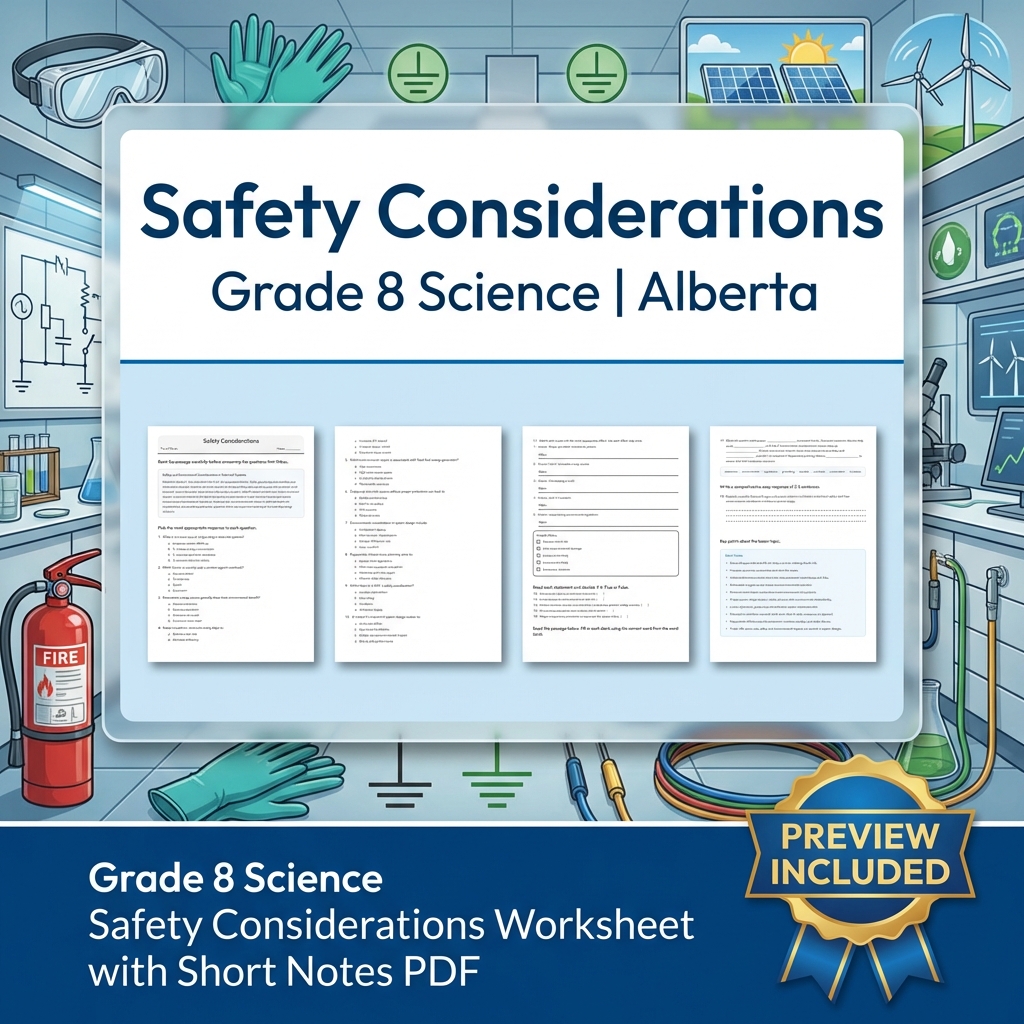
Grade 8 Science Safety Considerations Worksheet with Short Notes PDF
Created byMeadowlark WorksheetsLearning Objectives
- Understand key safety features in electrical system design such as grounding, insulation, and overload protection.
- Identify environmental impacts of energy sources and infrastructure.
- Analyze trade-offs between safety and environmental considerations in electrical system planning.
Also included in: Grade 8 Science | Electricity & Magnetism UNIT Worksheet Bundle +1 more
Instant download
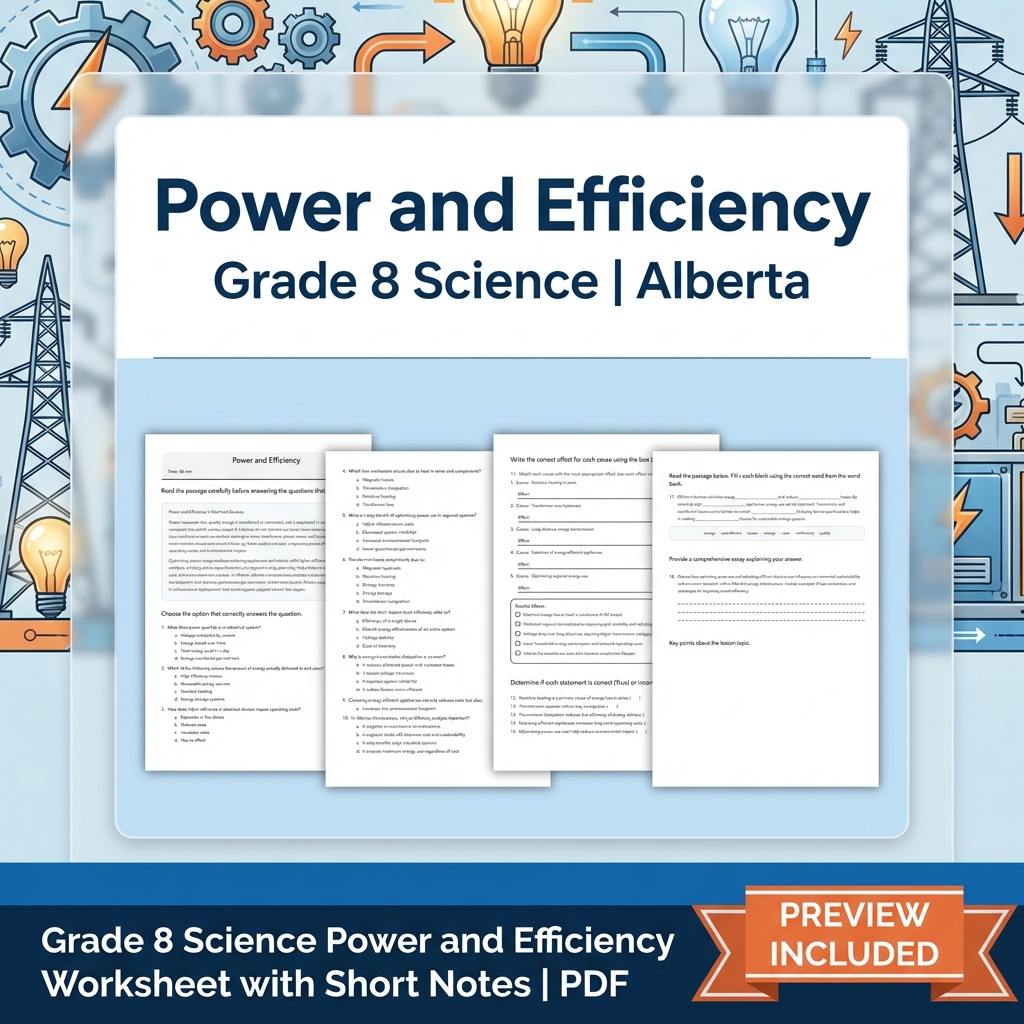
Grade 8 Science Power and Efficiency Worksheet with Short Notes | PDF
Created byMeadowlark WorksheetsLearning Objectives
- Understand the concepts of power transfer and efficiency in electrical systems.
- Identify common loss mechanisms such as resistive heating, transformer losses, and transmission dissipation.
- Learn how optimizing power use and selecting efficient devices can impact cost and environment.
Also included in: Grade 8 Science | Electricity & Magnetism UNIT Worksheet Bundle +1 more
Instant download
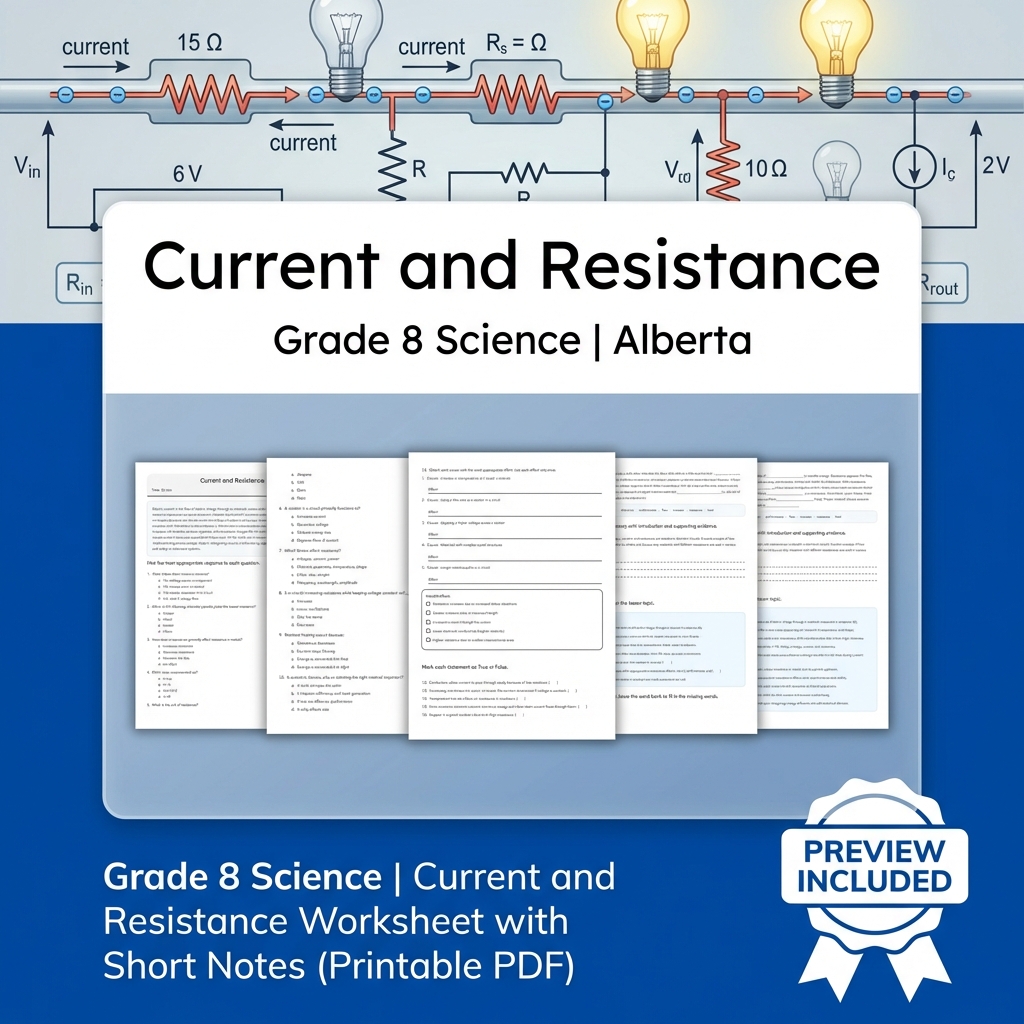
Grade 8 Science | Current and Resistance Worksheet with Short Notes (PDF)
Created byMeadowlark WorksheetsLearning Objectives
- Understand the concept of electric current as the rate of charge flow.
- Identify factors affecting electrical resistance in materials.
- Explain the relationship between voltage, current, and resistance in circuits.
Also included in: Grade 8 Science | Electricity & Magnetism UNIT Worksheet Bundle +1 more
Instant download
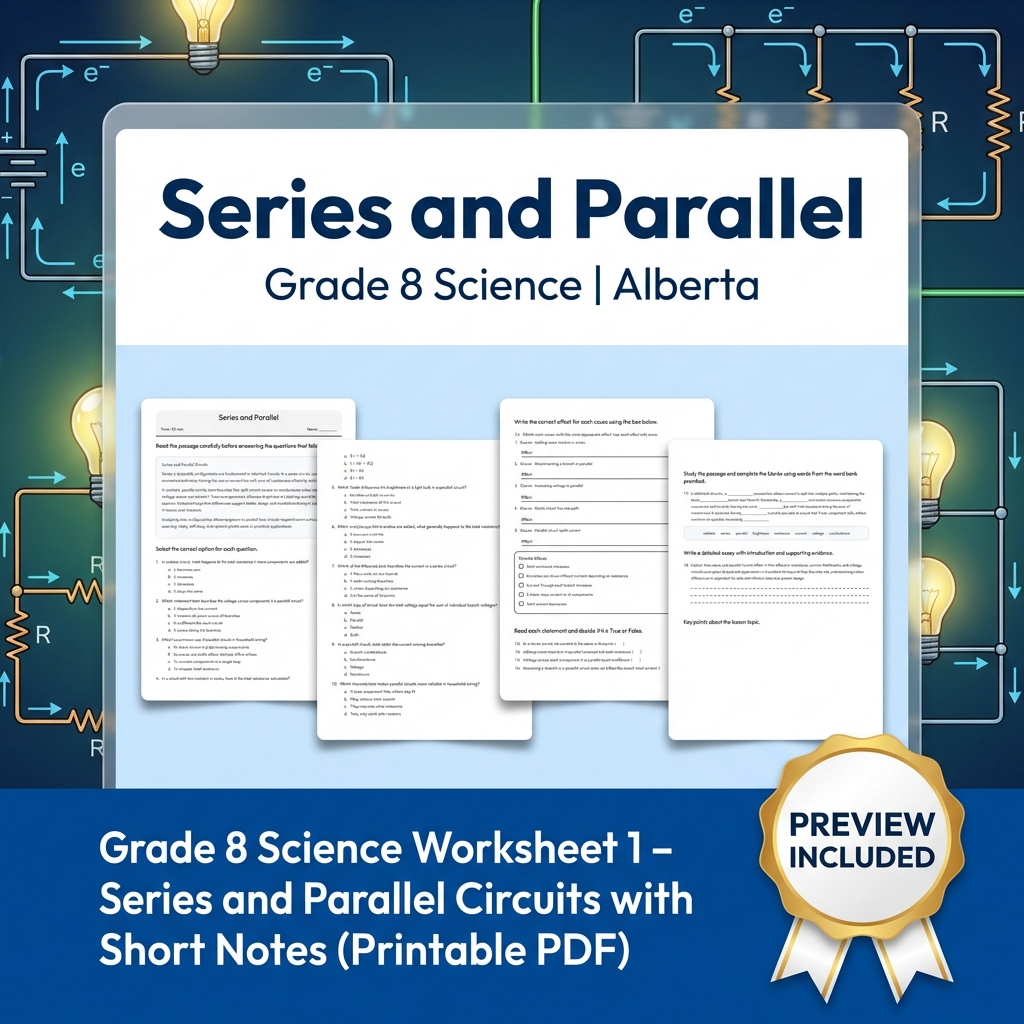
Grade 8 Science Series and Parallel Circuits with Short Notes (Printable PDF)
Created byMeadowlark WorksheetsLearning Objectives
- Understand the differences between series and parallel circuits in terms of resistance, current distribution, and voltages.
- Analyze how series and parallel arrangements affect brightness and system redundancy.
- Predict circuit behavior in household applications using systematic comparisons of series and parallel networks.
Also included in: Grade 8 Science | Electricity & Magnetism UNIT Worksheet Bundle +1 more
Instant download
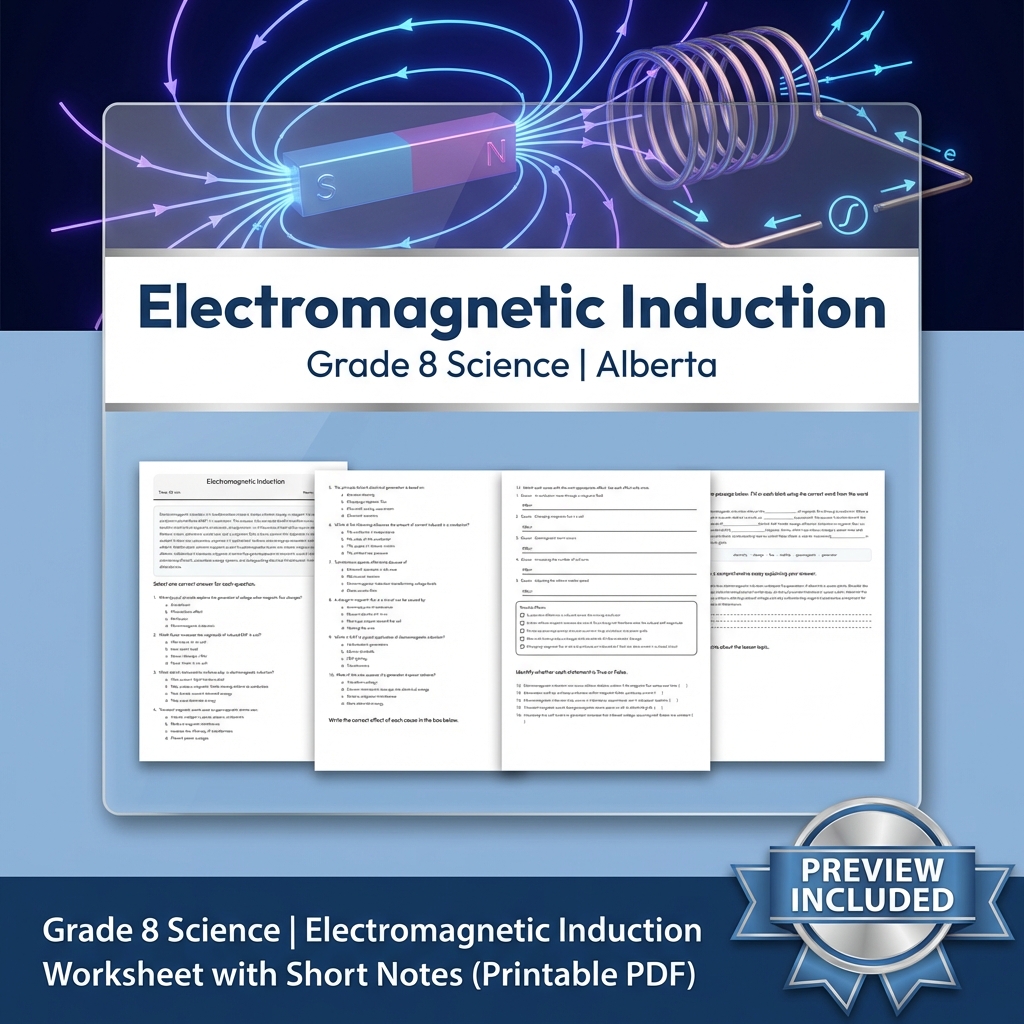
Grade 8 Science | Electromagnetic Induction Worksheet with Short Notes (PDF)
Created byMeadowlark WorksheetsLearning Objectives
- Understand the principle of electromagnetic induction and how changing magnetic flux generates voltage.
- Identify factors affecting the magnitude of induced current in a circuit.
- Explain real-world applications of electromagnetic induction, such as transformers and generators.
Also included in: Grade 8 Science | Electricity & Magnetism UNIT Worksheet Bundle +1 more
Instant download
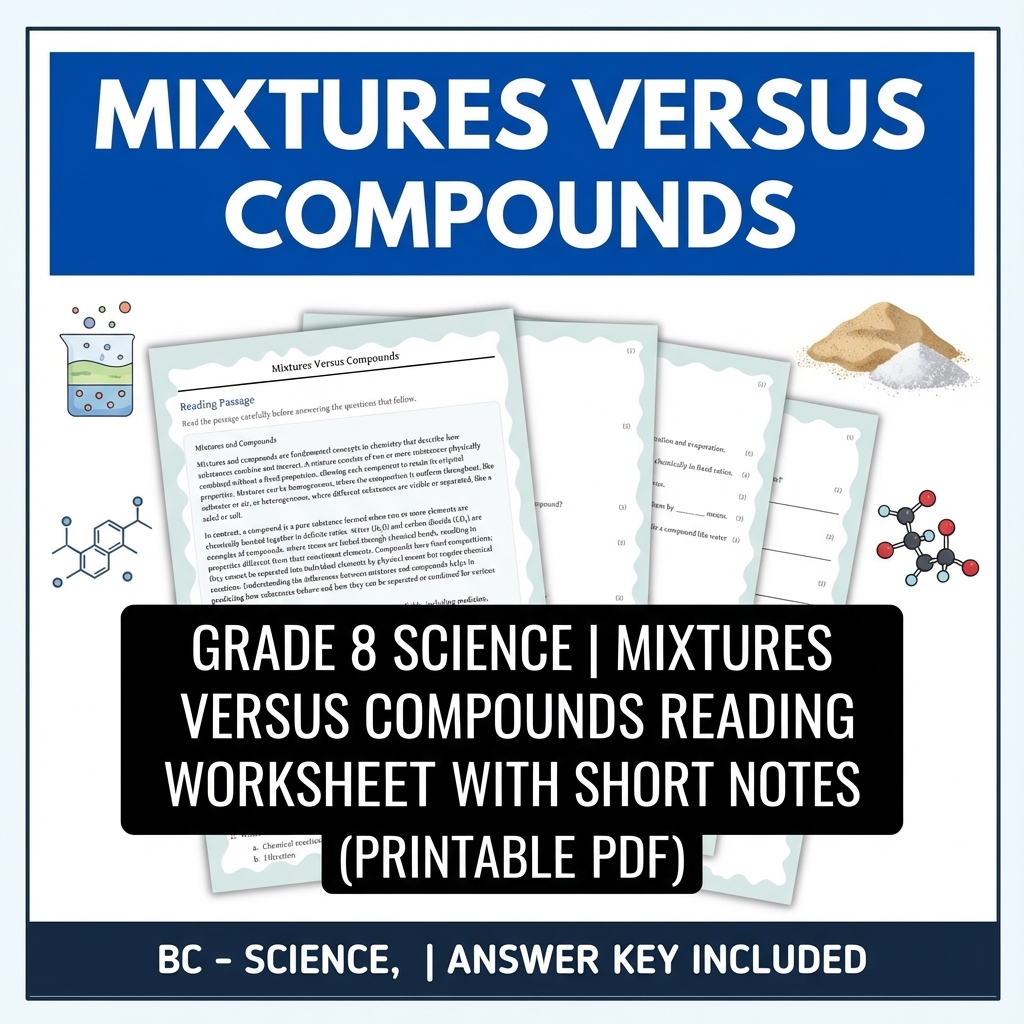
Grade 8 Science | Mixtures Versus Compounds Reading Worksheet & Answer Key
JCreated byJ.S SheetsLearning Objectives
- Define and distinguish between mixtures and compounds in matter.
- Identify properties of mixtures and compounds.
- Explain methods to separate mixtures and compounds.
Instant download

Cell Modeling Worksheet | NGSS Grade 8 Science printable PDF assessment
Learning Objectives
- Understand how models illustrate cellular structures and processes.
- Identify functions of organelles and membrane systems in cell health.
- Interpret relationships between cell structure and function in biological models.
Also included in: Grade 8 Science Lesson Bundle on Molecules, Cells, and Organ Systems +1 more
Instant download

Grade 8 Climate Circulation NGSS Science Worksheet | Earth Science Activity
 Created byBRIGHT PATH RESOURCES
Learning Objectives
- Identify main atmospheric and oceanic circulation cells
- Understand the roles of Hadley, Ferrel, and polar cells
- Explain how Coriolis effect influences wind patterns
Also included in: Earth Science Grade 8 Science Daily Reading Worksheets Lesson Bundle | NGSS +2 more
Instant download

Grade 8 Natural Selection Science Worksheet | NGSS Evolution Life Science
Created byBRIGHT PATH RESOURCESLearning Objectives
- Identify phenotypic variations in species.
- Understand how environmental factors influence adaptation.
- Explain mechanisms of natural selection such as differential survival and reproduction.
Also included in: Speciation Patterns Grade 8 Science Daily Reading Worksheets Bundle | ngss +2 more
Instant download

Grade 8 Resource Distribution in Geology NGSS Science Worksheet Activity
Created byBRIGHT PATH RESOURCESLearning Objectives
- Understand how geological processes influence mineral and water resource formation.
- Identify various types of mineral deposits and aquifers.
- Analyze geologic maps, rock records, and stratigraphy to explain resource locations.
Also included in: Earth Systems Grade 8 Science Daily Reading Worksheets Lesson Bundle | NGSS +2 more
Instant download

Grade 8 Climate Drivers NGSS Science Worksheet | Earth Science Activity
Created byBRIGHT PATH RESOURCESLearning Objectives
- Identify natural and human factors influencing climate change.
- Understand evidence sources such as ice cores and temperature datasets.
- Differentiate between natural and anthropogenic climate influences.
Also included in: Earth Systems Grade 8 Science Daily Reading Worksheets Lesson Bundle | NGSS +2 more
Instant download
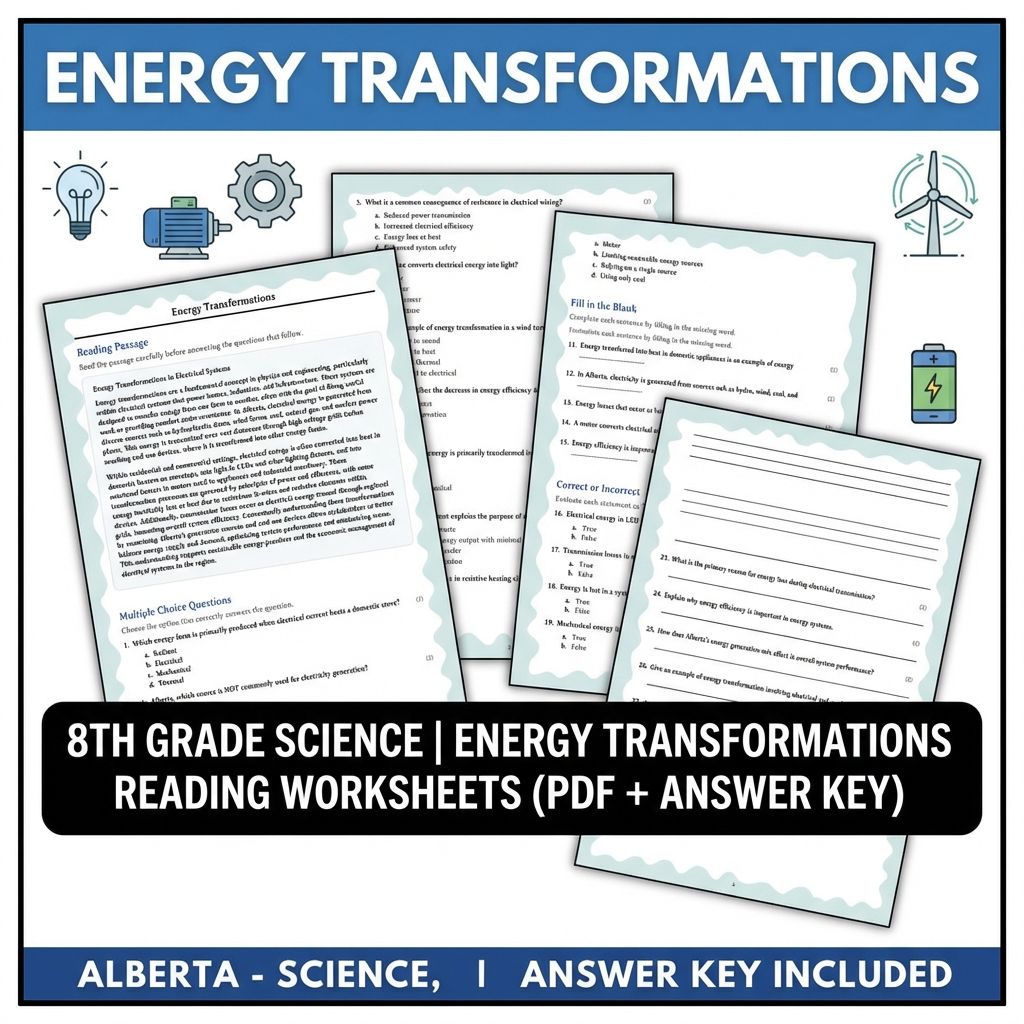
8th Grade Science | Energy Transformations Reading Worksheets (PDF + Answer Key)
JCreated byJ.S SheetsLearning Objectives
- Understand how electrical systems transfer and convert energy into thermal, radiant, and mechanical forms.
- Identify common examples of energy transformations in domestic and industrial contexts.
- Explain the concept of energy losses in electrical transmission and devices.
Also included in: Grade 8 Science | Electricity & Magnetism Worksheet Bundle (Standards-Aligned) +1 more
Instant download
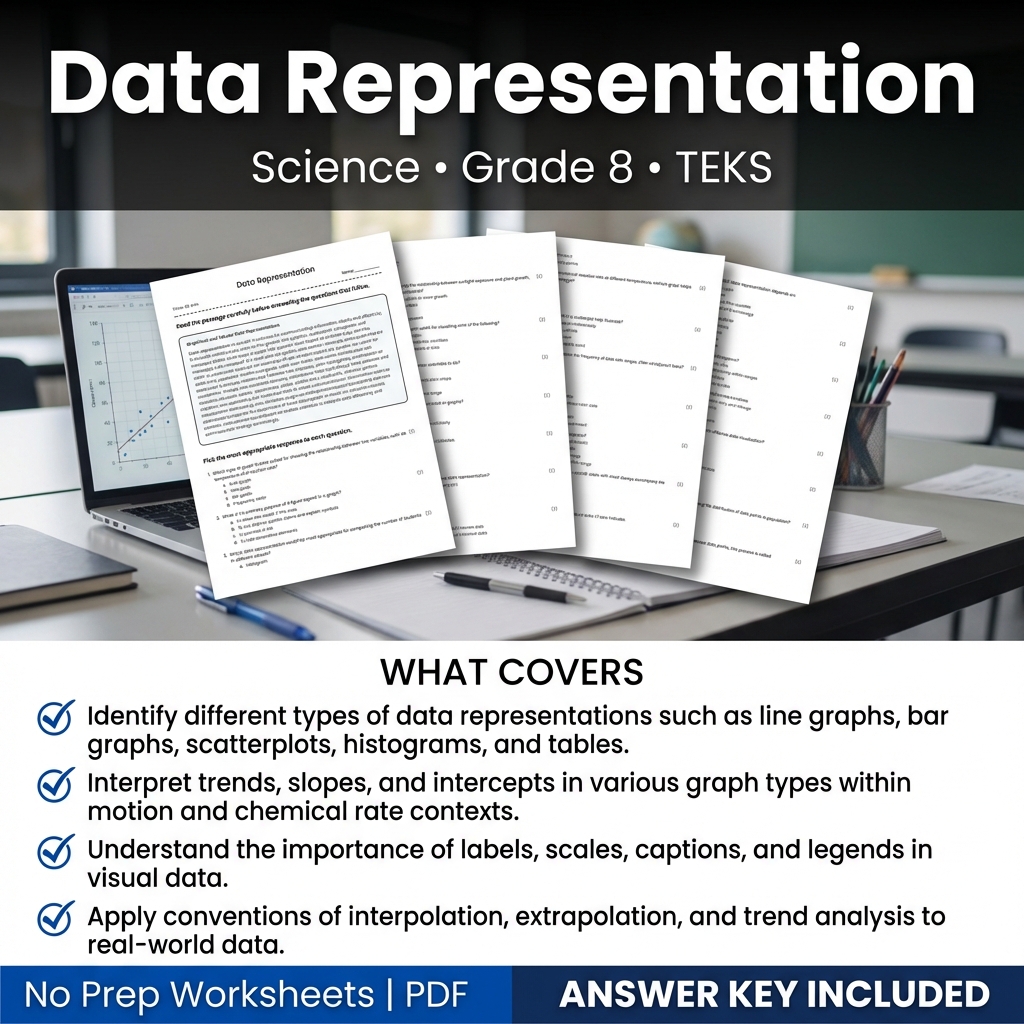
Data Representation Worksheet for Grade 8 Science TEKS Practice PDF
Created byCoral Reef LearningLearning Objectives
- Identify different types of data representations such as line graphs, bar graphs, scatterplots, histograms, and tables.
- Interpret trends, slopes, and intercepts in various graph types within motion and chemical rate contexts.
- Understand the importance of labels, scales, captions, and legends in visual data.
Instant download

Grade 8 Science – Energy Conservation & Mechanical Systems | Reading Worksheet
Created byBright Mind ResourcesLearning Objectives
- Understand the concepts of gravitational potential energy and kinetic energy.
- Identify how energy transforms between potential and kinetic forms in ideal systems.
- Analyze real-world factors that cause energy dissipation and affect conservation assumptions.
Also included in: Grade 8 Energy & Motion Science Daily Reading Worksheets Lesson Bundle | TEKS +2 more
Instant download

Grade 8 Science Worksheet | Plate Motion Evidence & Tectonics Analysis (CA Standards)
 Created byEvergreen Desk Education
Learning Objectives
- Describe how multiple geologic features (rock ages, mountain belts, trenches, and ridges) provide evidence of past plate movement
- Match specific evidence types (fossils, minerals, rock patterns) to what they suggest about once-adjacent landmasses
- Explain how combining lines of evidence leads to a coherent model of plate rearrangement over time
Instant download
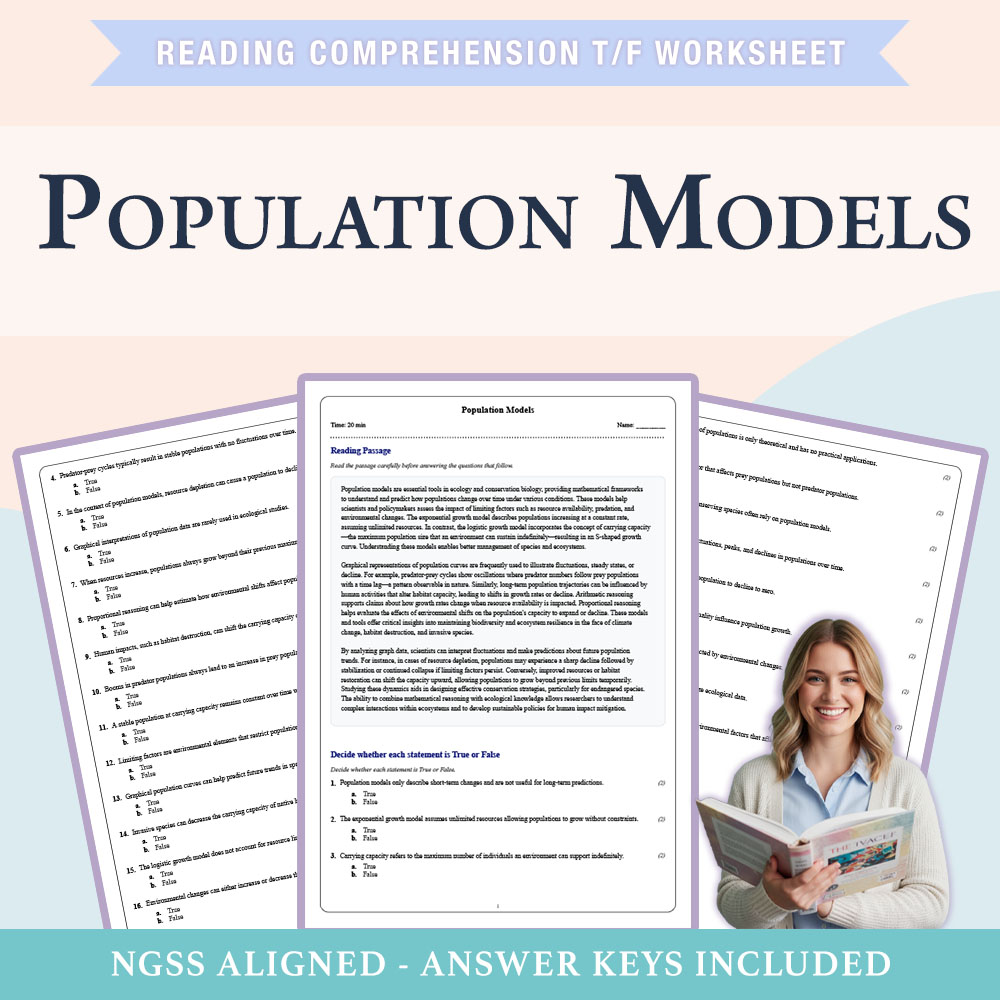
Grade 8 Science | Population Models Worksheet (PDF + Answer Key)
 Created byCopper Leaf Classroom
Learning Objectives
- Understand the different types of population growth models, including exponential and logistic growth.
- Identify factors influencing population size, such as resource availability and predation.
- Interpret graphical representations of population changes over time.
Also included in: Grade 8 Science | Evolution & Natural Selection Bundle (PDF + Answer Key) +1 more
Instant download
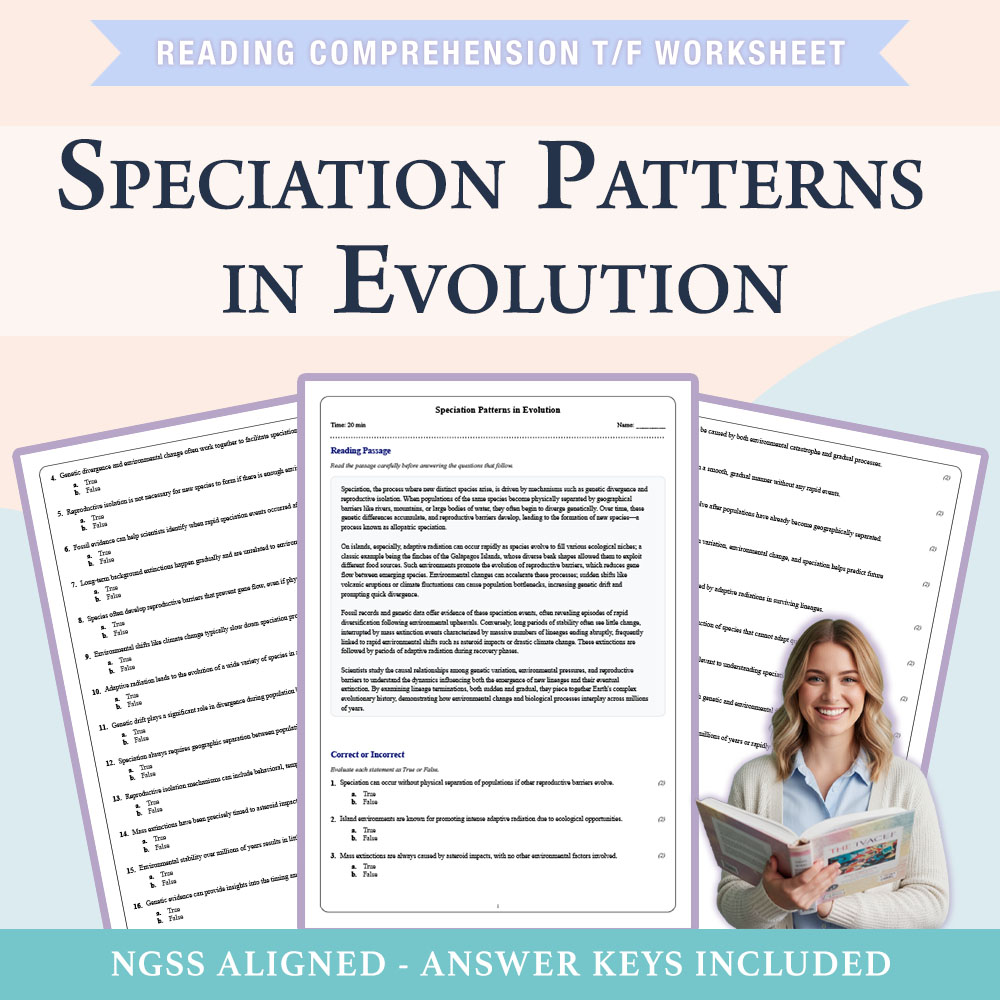
8th Grade Science |Speciation Patterns in Evolution Worksheet (PDF + Answer Key)
Created byCopper Leaf ClassroomLearning Objectives
- Understand processes that create new species through genetic divergence and reproductive isolation.
- Recognize the role of geographic isolation, adaptive radiation, and selection in speciation.
- Identify fossil and genetic evidence supporting episodes of diversification and mass extinction.
Also included in: Grade 8 Science | Evolution & Natural Selection Bundle (PDF + Answer Key) +1 more
Instant download
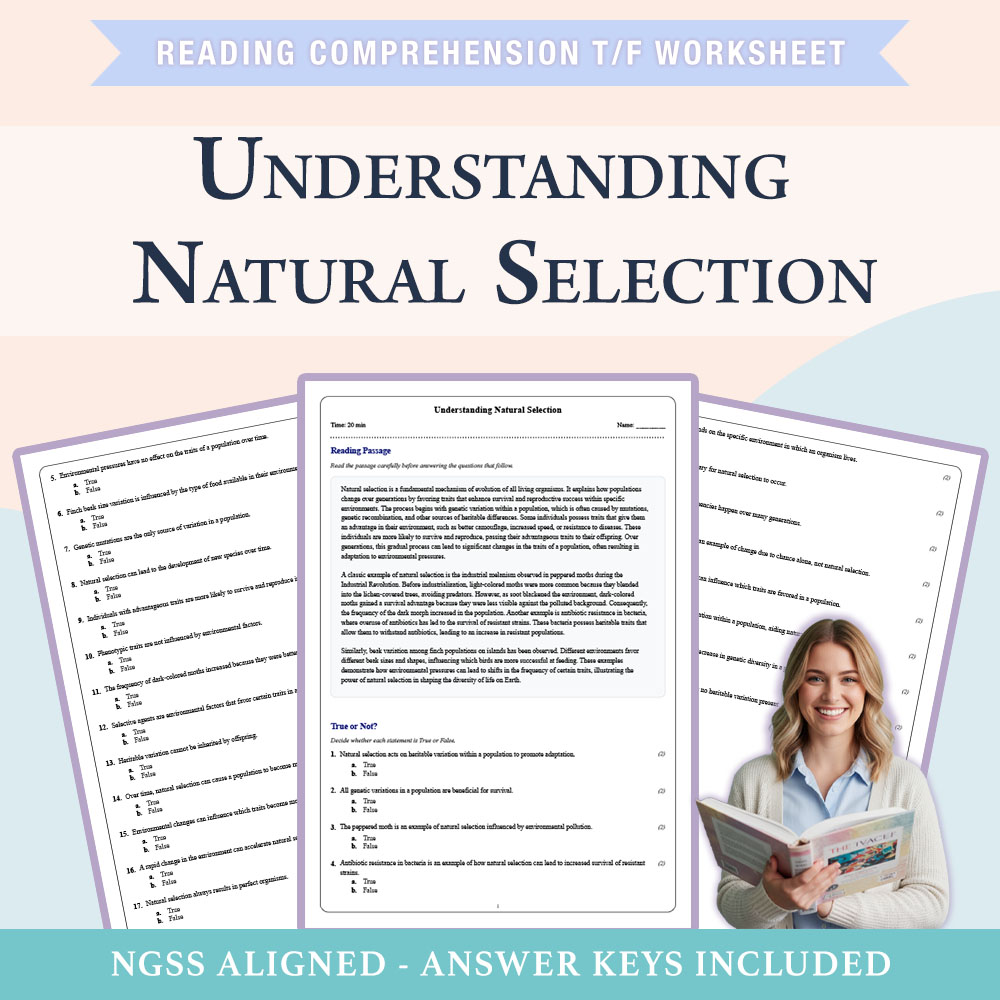
8th Grade Science | Understanding Natural Selection Worksheet (PDF + Answer Key)
Created byCopper Leaf ClassroomLearning Objectives
- Define the concept of natural selection and its role in evolution.
- Identify heritable variations and their importance in adaptation.
- Recognize examples of natural selection in nature.
Also included in: Grade 8 Science | Evolution & Natural Selection Bundle (PDF + Answer Key) +1 more
Instant download
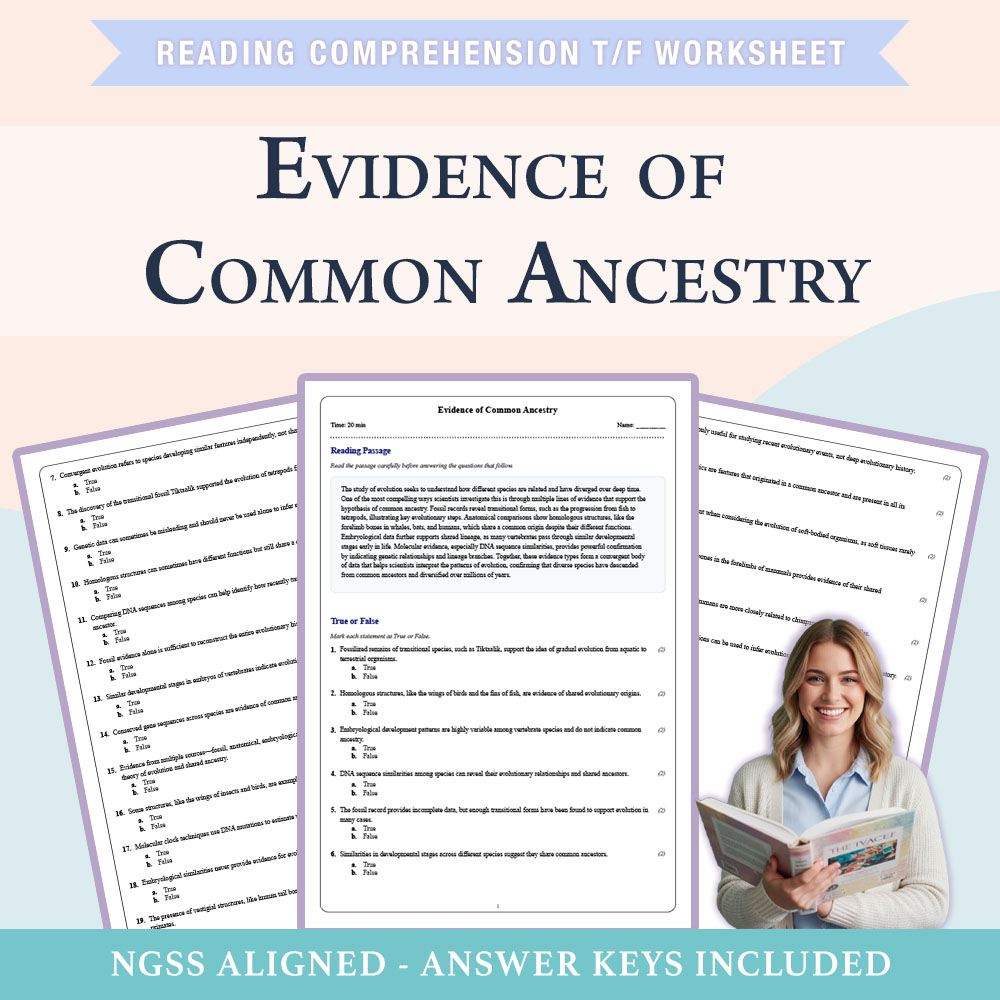
8th Grade Science | Evidence of Common Ancestry Worksheet (PDF + Answer Key)
Created byCopper Leaf ClassroomLearning Objectives
- Understand different lines of evidence that support shared ancestry among species
- Interpret data patterns from fossil, anatomical, embryological, and molecular records
- Evaluate statements about evolutionary relationships using true or false questions
Also included in: Grade 8 Science | Evolution & Natural Selection Bundle (PDF + Answer Key) +1 more
Instant download
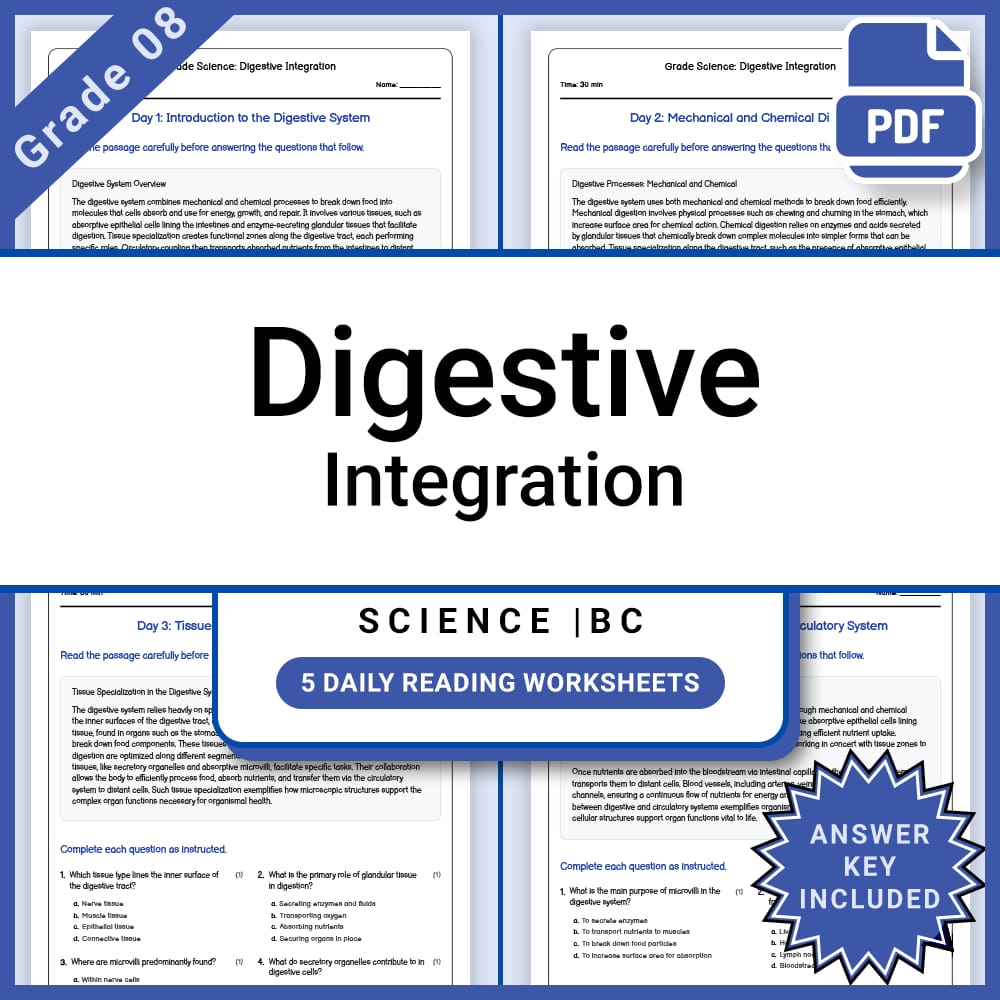
Grade 8 Science – Digestive System Daily Reading Worksheet with Answer Key
JCreated byJ.S SheetsLearning Objectives
- Understand the structure and functions of the digestive system
- Identify the roles of tissue specialization in digestion
- Explain how nutrients are transported throughout the body
Also included in: Grade 8 Science Lesson Group BC Framework | Daily Reading Worksheets +1 more
Instant download

Orbital Cycles Worksheet | NGSS Grade 8 Science Printable PDF Assessment
Learning Objectives
- Explain the relative positions and motions of the Earth, Moon, and Sun that cause lunar phases, eclipses, and seasonal changes.
- Describe how Earth's axial tilt and orbital geometry influence observable sky patterns and calendar cycles.
- Understand the timing and sequence of lunar phases, eclipses, and seasons based on celestial motions.
Also included in: Grade 8 Science Earth's Place in the Universe Lesson Bundle NGSS +1 more
Instant download
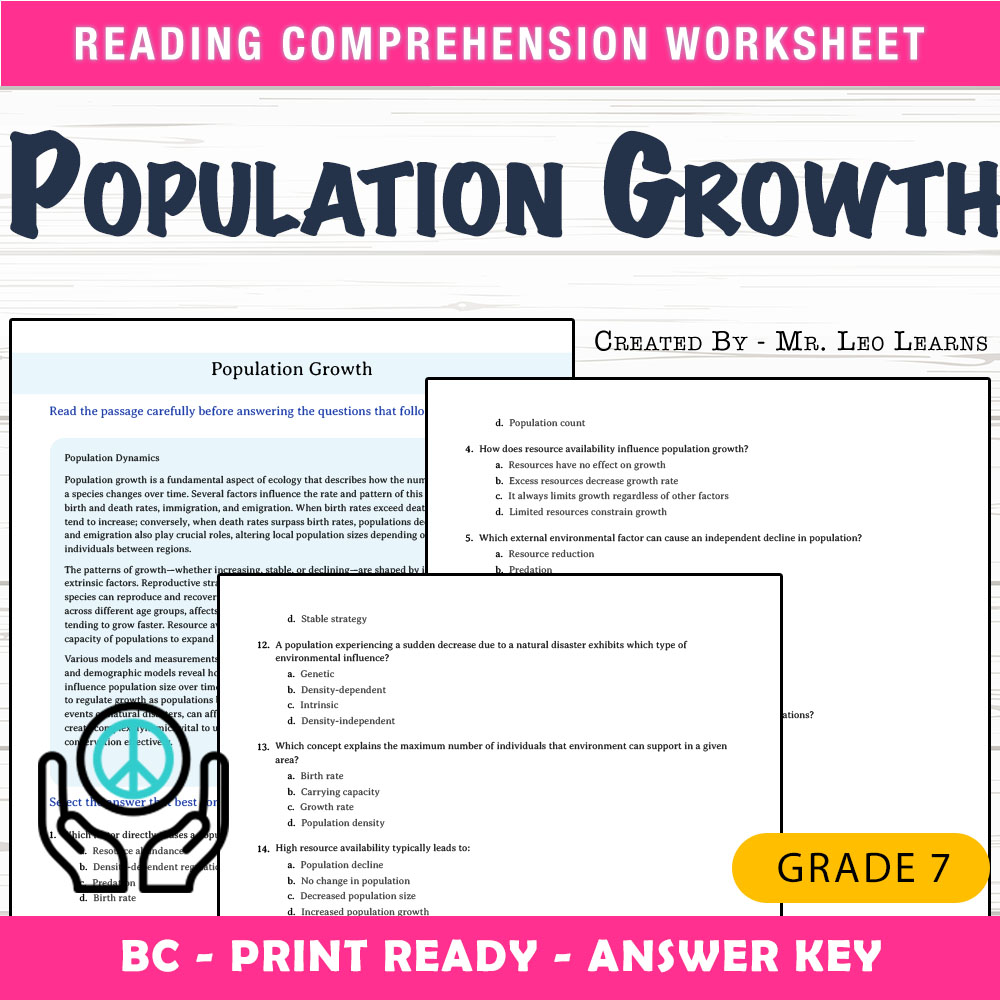
Grade 8 Science — Population Growth Worksheet MCQ Paper
 Created byThe Resource Hub
Learning Objectives
- Understand the factors influencing population increase, stability, and decline.
- Identify reproductive strategies, age structures, and resource impacts on growth rates.
- Analyze how environmental pressures modulate population trajectories.
Also included in: Grade 8 Science Ecosystems & Biodiversity UNIT Bundle – BC Framework +1 more
Instant download
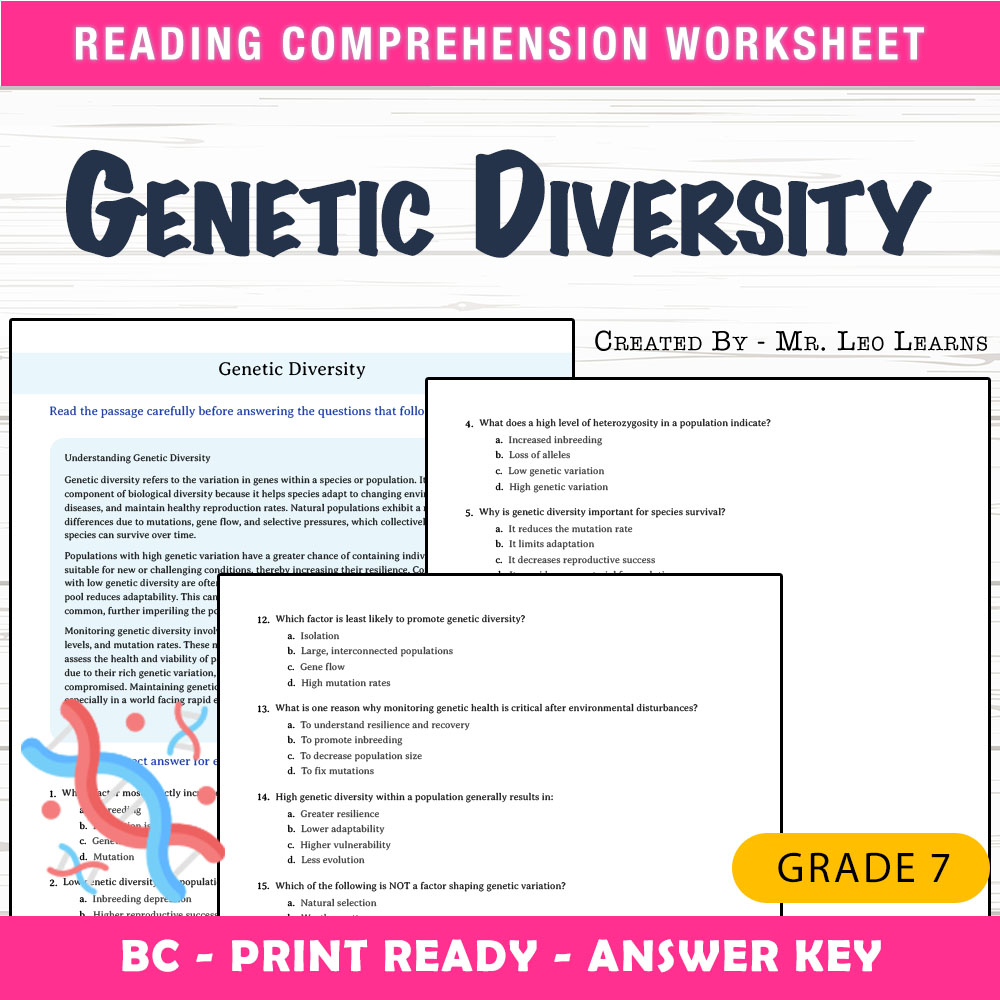
Grade 8 Science — Genetic Diversity Worksheet MCQ Paper for Mastery
Created byThe Resource HubLearning Objectives
- Understand the concept of genetic diversity within and among populations.
- Identify factors that influence genetic variation and population resilience.
- Explain how low genetic diversity affects species' adaptability and survival.
Also included in: Grade 8 Science Ecosystems & Biodiversity UNIT Bundle – BC Framework +1 more
Instant download
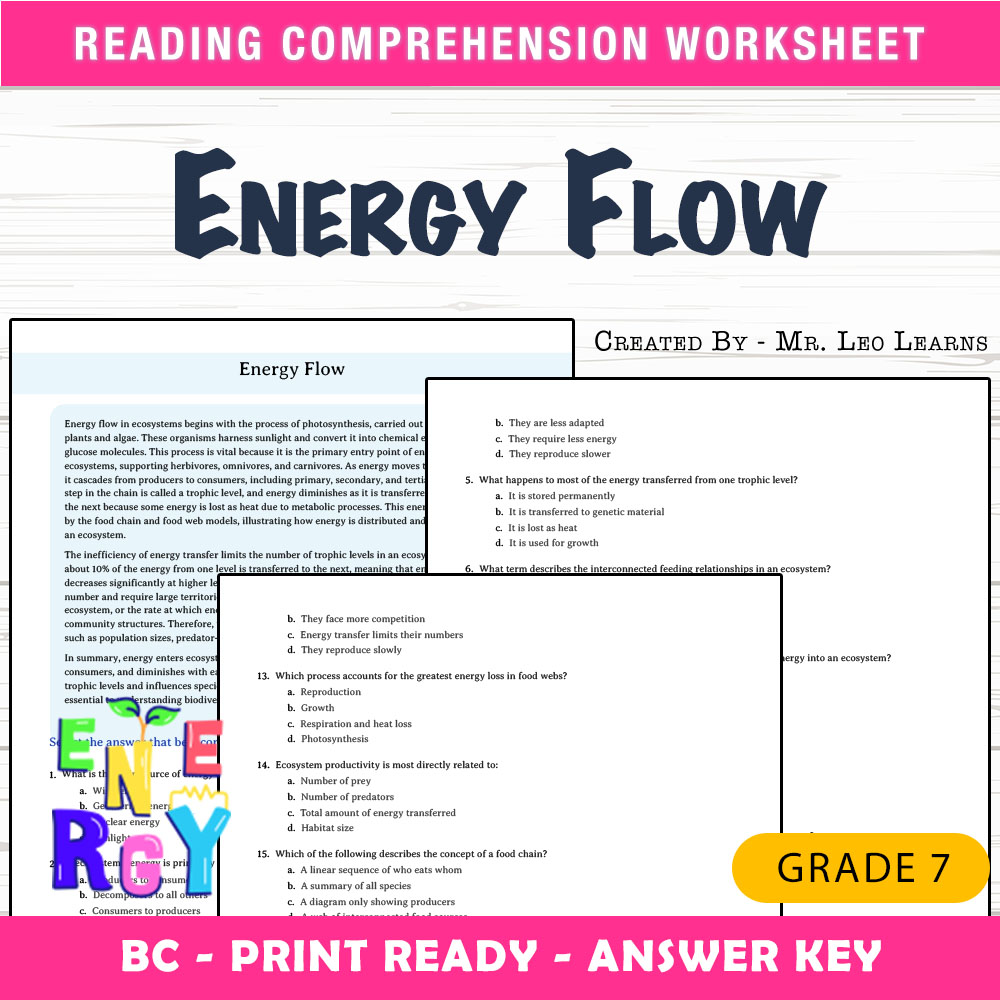
Grade 8 Science — Worksheet MCQ Paper for Mastering Energy Flow
Created byThe Resource HubLearning Objectives
- Understand how energy enters and moves through ecosystems.
- Identify the process of energy transfer and energy loss at each trophic level.
- Explain why top predators are fewer in number due to energy constraints.
Also included in: Grade 8 Science Ecosystems & Biodiversity UNIT Bundle – BC Framework +1 more
Instant download
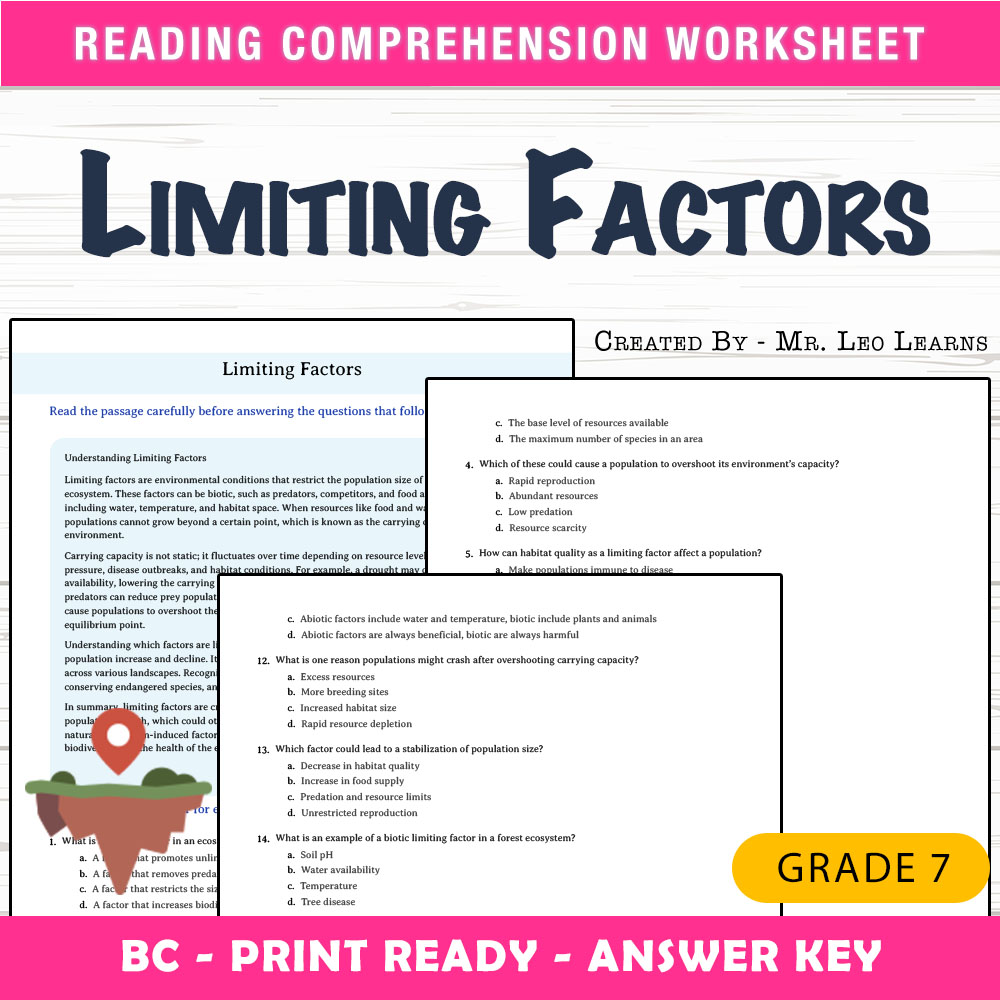
Grade 8 Science — Worksheet MCQ Paper for Mastering Limiting Factors
Created byThe Resource HubLearning Objectives
- Understand the concept of limiting factors and their impact on populations.
- Identify biotic and abiotic factors that regulate population size.
- Explain how limiting factors influence carrying capacity and population dynamics.
Also included in: Grade 8 Science Ecosystems & Biodiversity UNIT Bundle – BC Framework +1 more
Instant download
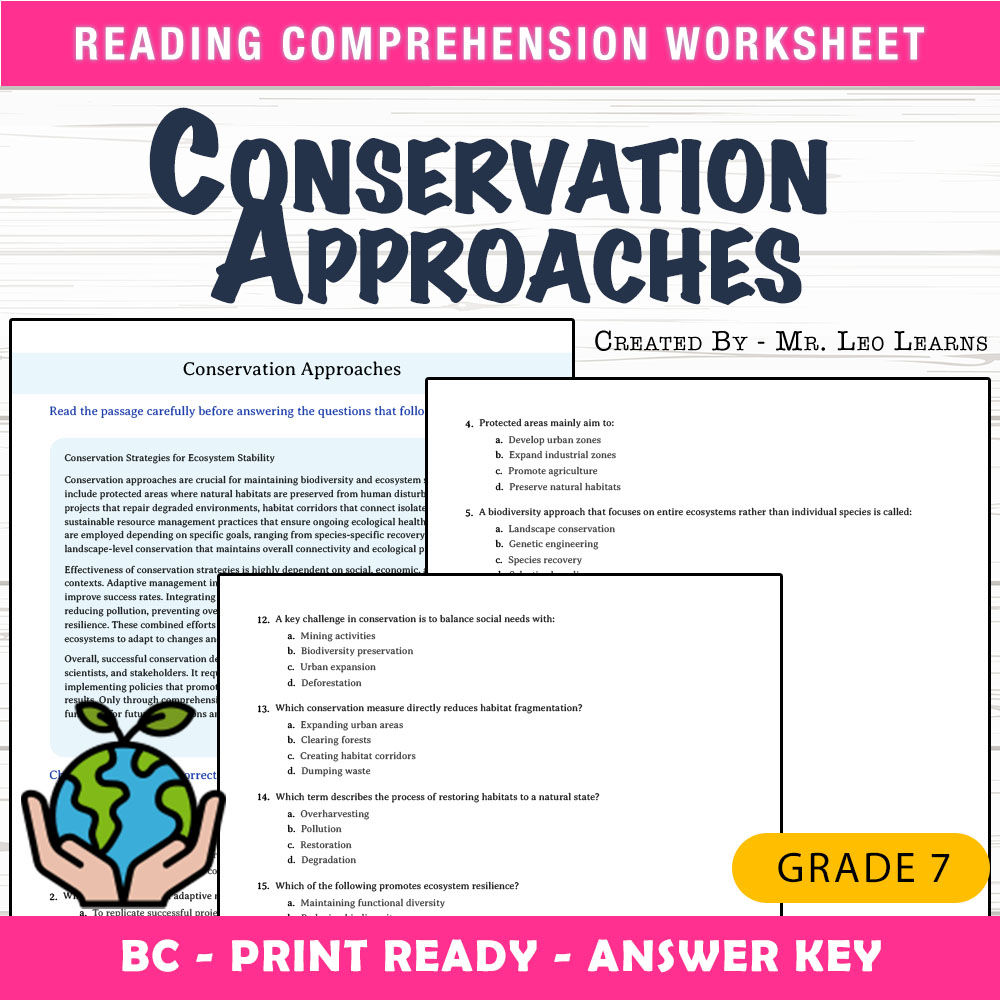
Grade 8 Science — Worksheet MCQ Paper for Mastering Conservation Approaches
Created byThe Resource HubLearning Objectives
- Understand various conservation strategies and their roles in maintaining ecosystem stability.
- Identify different methods used for conservation at species and landscape levels.
- Recognize factors influencing the effectiveness of conservation approaches.
Also included in: Grade 8 Science Ecosystems & Biodiversity UNIT Bundle – BC Framework +1 more
Instant download
About Grade 8 Science Worksheets
Explore Grade 8 Science worksheets for classwork, homework, or review. Our 5,999 printables download instantly as PDFs.
Each resource here is built by an independent educator and reviewed for quality. Worksheets print straight from PDF and suit classroom use, homework, or extra practice; most come with answer keys, and you can preview before purchasing.